


Abstract
Industrial heritage, as a vital carrier of industrial civilization, is a key resource for advancing regional sustainable development. Understanding its spatial distribution and influencing factors is essential for effective conservation and revitalization. This study examines 207 industrial heritage sites in Hebei Province, one of the birthplaces of modern industry in China. By integrating multiple spatial analytical methods, it explores the spatial patterns and influencing factors of industrial heritage. A progressive analytical framework combining GeoDetector, Ordinary Least Squares, and Geographically Weighted Regression models was established to interpret formation mechanisms from factor identification to global and local heterogeneity. Results show that industrial heritage in Hebei forms high-density clusters along the eastern coast and southwestern hinterland, with lower densities in the north and central regions. The spatial centroid shifted from the center to the northeast, then to the southwest, and finally returned to the center. The distribution is shaped by the synergistic interaction of multiple factors: railway networks exert the strongest influence, natural conditions provide fundamental constraints, cultural factors play a reinforcing role, and historical development and policy orientation act as regulatory forces. Region-specific strategies are proposed to guide the conservation and sustainable transformation of industrial heritage in old industrial cities.
1. Introduction
As a vital carrier of human industrial civilization, industrial heritage has become a key issue in global sustainable development concerning its preservation and adaptive reuse. The Nizhny Tagil Charter for the Industrial Heritage, adopted by the International Committee for the Conservation of the Industrial Heritage (TICCIH) in 2003, first defined industrial heritage as “the remains of industrial culture which are of historical, technological, social, architectural, or scientific value [1].” Subsequently, the International Council on Monuments and Sites (ICOMOS) further advanced the concept of holistic conservation in the Dublin Principles (2011) [2], emphasizing the close interconnection between industrial heritage, the natural environment, and regional development. In the context of China’s new urbanization and industrial transformation, the National Development and Reform Commission, together with four other ministries, jointly issued the Implementation Plan for Promoting the Protection and Utilization of Industrial Heritage in Old Industrial Cities in 2020 (Document No. 839 [2020]) [3]. The plan explicitly incorporated industrial heritage into the urban renewal framework and encouraged the integration of culture and tourism to stimulate endogenous vitality in “rust belt” regions. Increasingly, industrial heritage is regarded as a crucial resource for sustainable urban development—not only for its historical memory and cultural significance but also for its contemporary role in driving industrial transformation, spatial regeneration, and social cohesion.
In recent years, China has made active progress in the protection and adaptive reuse of industrial heritage. At the policy level, since the promulgation of the Wuxi Recommendation in 2006, the protection of industrial heritage has gradually become institutionalized. The Ministry of Industry and Information Technology has recognized 232 national industrial heritage sites in six batches and issued the Implementation Plan for Promoting the Development of Industrial Culture (2021–2025) to advance the integration of industrial culture with innovation in industrial tourism [4]. At the academic level, scholars have conducted extensive and multidimensional research on topics such as tourism development [5,6,7], adaptive reuse potential [8], strategies and economic benefits [9,10], public participation [11,12], and sustainable development of industrial heritage [13]. These studies have enriched the theoretical foundation of industrial heritage conservation from various perspectives, including technical evaluation, operational models, and spatial design. At the practical level, successful cases such as the Shougang Park in Beijing, the Yangpu Riverside in Shanghai, and the Erling No. II Factory in Chongqing demonstrate the unique value and enduring vitality of industrial heritage in urban regeneration and industrial transformation [14,15,16].
With the deepening of practical exploration, academic research on industrial heritage in China has gradually become more systematic and spatially oriented [17,18,19,20,21,22]. In recent years, GIS-based spatial analysis techniques have been widely applied to studies on the distribution of industrial heritage in representative regions such as Southwest China [23], Shaanxi Province [24], and the old industrial bases in Northeast China [25,26], preliminarily revealing the fundamental patterns shaped by the combined influences of natural geography and historical processes. Yet current research still has certain limitations. On the one hand, the spatial coverage of study areas remains uneven, with insufficient systematic attention given to North China—particularly Hebei Province, one of the birthplaces of modern Chinese industry. On the other hand, most studies rely primarily on descriptive statistics and global models, which are inadequate for uncovering the spatial heterogeneity of influencing factors and for conducting in-depth examinations of multi-factor interactions.
Meanwhile, the international scholarship has developed a diverse set of analytical approaches for studying the spatial patterns, regional transformation, and influencing factors of industrial heritage. In Europe, for example, Yan et al. conducted spatial identification of representative industrial heritage across EU regions and demonstrated that natural environmental conditions impose fundamental constraints on their distribution, while cultural and socio-economic factors further shape the spatial structure [27]. In traditional mining areas of Spain, Somoza-Medina et al. argued that transforming industrial sites into tourism destinations is not a universally viable strategy, especially for remote areas far from major economic centers [28]. Research in northwestern Italy shows that the sustainable regeneration of former industrial districts hinges on safeguarding collective memory, which is achieved through community participation and intergenerational dialogue. This approach ensures that industrial heritage is continuously reinterpreted in contemporary contexts rather than reshaped solely by economic interests [29]. In Latin America, González-Albornoz et al. used spatial simulation to evaluate industrial heritage conservation strategies, emphasizing the ongoing influence of urban expansion, land-use change, and policy interventions [30]. Overall, these studies highlight that industrial heritage revitalization is driven by diverse factors such as resource endowments, transportation networks, planning institutions, and community engagement. Together, they underscore the importance of multi-scalar and interdisciplinary frameworks for understanding spatial patterns and regional transformation in industrial heritage.
As one of the birthplaces of modern industry in China, Hebei Province gave rise to numerous national “firsts,” establishing its pioneering position in the country’s industrial history and leaving behind a wealth of industrial remains that comprehensively document the process of China’s industrialization. In recent years, Hebei has actively explored pathways for the protection and revitalization of industrial heritage through brownfield remediation, functional transformation, and cultural empowerment, promoting the spatial renewal and value regeneration of industrial sites. These efforts have gradually shaped an emerging renewal model oriented toward cultural–tourism integration and the creative industries. Even so, current conservation practices remain focused primarily on individual building restoration and small-scale localized projects, lacking systematic and holistic planning. In addition, issues such as homogeneous renewal models, limited public awareness and participation, unbalanced resource allocation, and uneven regional outcomes have significantly constrained the effectiveness of heritage reuse. It is therefore necessary to undertake an in-depth analysis of the overall spatial pattern and formative mechanisms of industrial heritage. Based on this understanding, a multi-level and sustainable regeneration framework should be developed through scientific evaluation and policy guidance to support the coordinated development of heritage conservation and industrial transformation in resource-based cities. A systematic study of the spatiotemporal evolution and influencing factors of industrial heritage in Hebei Province is not only academically necessary to fill a regional research gap but also practically valuable in providing strategic insights for the industrial transformation and sustainable development of other resource-based old industrial cities with similar contexts.
To overcome the limitations of existing studies, this research introduces an innovative analytical approach that integrates the GeoDetector and Geographically Weighted Regression methods. The GeoDetector effectively identifies the explanatory power and interactions of influencing factors, revealing the synergistic mechanisms among multiple drivers [31]. GWR, in turn, captures the spatial non-stationarity of these factors, enabling an examination of how their impacts vary across different regions [32]. The combined application of these two methods allows for both the identification of key determinants of industrial heritage distribution and the exploration of regional variations in their effects, thereby providing a more comprehensive understanding of the underlying spatial mechanisms.
This study aims to systematically reveal the spatiotemporal distribution patterns and formation mechanisms of industrial heritage in Hebei Province through methodological innovation, focusing on three core questions:
- (1)
- What are the spatial patterns and spatiotemporal evolution paths of industrial heritage?
- (2)
- What are the key influencing factors shaping the dominant spatial patterns, and how do they interact?
- (3)
- How do these influencing factors differ spatially, and what are their localized mechanisms of influence?
The findings will provide a scientific basis for the protection of industrial heritage and regional sustainable development in Hebei Province, while also offering a methodological reference for heritage research in other old industrial regions with similar contexts.
2. Materials and Methods
2.1. Study Area
Hebei Province lies in the northern section of the North China Plain, with the Bohai Sea on its eastern side, the Taihang Mountains to the west, and the Inner Mongolia Plateau extending to the north, encircling the municipalities of Beijing and Tianjin. It is one of the provinces in China with the greatest diversity of landforms (Figure 1). The industrial development of Hebei provides a complete record of China’s industrial evolution, spanning traditional handicrafts, mechanized mass production, and the emergence of intelligent manufacturing. The existing industrial heritage in Hebei encompasses major sectors such as coal, steel, textiles, railways, cement, and pharmaceuticals, forming a comprehensive spatiotemporal sequence of industrial development. To date, Hebei has 13 nationally recognized industrial heritage sites, ranking among the top provinces in China.
Figure 1.
Location map of Hebei Province. Source: Authors. (The base map is derived from the 1:6,000,000-scale Standard Map of China, Review No. GS(2019)1651, provided by the National Standard Map Service Platform. The base map has not been modified).
2.2. Data Sources and Processing
Industrial heritage data: This study focuses on 207 industrial heritage sites in Hebei Province. The data were compiled from multiple authoritative sources, including: The National Industrial Heritage List (Batches 1–7) issued by the Ministry of Industry and Information Technology of the People’s Republic of China; The List of Protected Industrial Heritage in China (Batches 1–3) published by the Urban Planning Society of China; The Provincial Industrial Heritage List of Hebei Province (Batches 1–2) released by the Industry and Information Technology Department of Hebei Province; Industrial building sites designated as cultural relic protection units at the provincial, municipal, and county levels; The List of National Key Cultural Relic Protection Sites (Batches 1–8) issued by the State Council of the People’s Republic of China; Industrial buildings included among historical architecture announced by the Hebei Provincial Department of Housing and Urban–Rural Development and the Department of Culture and Tourism; Industrial sites listed in the Register of Immovable Revolutionary Cultural Relics of Hebei Province (Batches 1–2) published by the Hebei Cultural Relics Bureau; existing literature and field survey data collected by the authors.
Other data: Elevation, hydrography, railway, and road were sourced from the Geospatial Data Cloud Platform (http://www.gscloud.cn, accessed on 10 June 2025), with slope data extracted from the elevation dataset. Economic and population data were sourced from the Hebei Statistical Yearbook (http://tjj.hebei.gov.cn, accessed on 10 June 2025). Data on A-level tourist attractions were collected from the Department of Culture and Tourism of Hebei Province (https://whly.hebei.gov.cn, accessed on 20 June 2025). Information on the National Key Cultural Relic Protection Sites (Batches 1–8) was obtained from the State Council of the People’s Republic of China (https://www.gov.cn, accessed on 20 June 2025). Data on Chinese Traditional Villages (Batches 1–6) were sourced from the Ministry of Housing and Urban–Rural Development of the People’s Republic of China (https://www.mohurd.gov.cn, accessed on 20 June 2025). Mineral resource data were obtained from the China Geological Survey (https://www.cgs.gov.cn, accessed on 20 June 2025).
Data processing: Before conducting the GeoDetector analysis, the independent variables were classified into five levels using the Natural Breaks (Jenks). In constructing the OLS and GWR models, all variables were standardized using the Z-score method to eliminate differences in measurement scales among factors.
2.3. Historical Stages and Industrial Categories of Industrial Heritage in Hebei Province
To facilitate analysis, this study classifies Hebei’s industrial heritage from two perspectives: historical period and industrial category. Based on key milestones in China’s modern industrial development and relevant literature [33,34,35,36,37,38], the industrial evolution of Hebei Province is divided into five historical stages (Table 1).
Table 1.
Industrial development process of Hebei Province. Source: Authors.
Pre-industrial period (ancient times–1860): During this period, industrial activities in Hebei relied mainly on traditional handicrafts and agricultural production. Traditional industries such as ceramics, textiles, metallurgy, and agricultural product processing were relatively developed. Production activities depended heavily on local natural resources and the agrarian economy, and large-scale industrialization had not yet begun. The spatial distribution of industries was highly dispersed and closely associated with raw material sources.
Early stage of modern industrialization (1861–1911): Beginning with the Westernization Movement, Hebei introduced Western technologies and equipment, establishing modern industrial enterprises such as the Kaiping Mining Bureau. This catalyzed the development of industries such as transportation, metallurgy, and building materials, laying the foundation for Hebei’s modernization and marking the formal onset of industrialization in both the province and North China as a whole.
National industrial development period (1912–1936): In the early Republican era, national industries entered a “golden age” of development. Indigenous enterprises such as the Daxing Spinning Mill and Botou Match Factory emerged, and light industries including textiles, food processing, and matches expanded rapidly. Heavy industries such as electricity and coal also developed, while railways and bridges improved transportation infrastructure. A multi-sector industrial system began to take shape during this stage.
Wartime industrial stagnation period (1937–1948): Following the onset of the full-scale War of Resistance Against Japanese Aggression, Hebei’s industrial system suffered severe destruction, and normal production largely came to a halt. During both the Resistance Against Japanese Aggression War and the War of Liberation, military production became the dominant form of industrial activity in Hebei’s revolutionary base areas [34]. As a key rear region in North China’s resistance efforts, the Shanxi–Chahar–Hebei and Shanxi–Hebei–Shandong–Henan border regions established numerous wartime facilities such as arsenals and uniform factories in the Taihang Mountains, forming the foundation of Hebei’s red wartime industry. In the later Liberation War period, while industries in Kuomintang-controlled areas declined under oppressive policies, those in liberated areas were revived through active protection of private enterprises and organized production resumption, providing essential material support for the front lines.
Modern industrial construction period (1949–1978): Following the establishment of the People’s Republic of China, Hebei entered a stage of large-scale, state-led industrial construction and comprehensive industrial development. In the early years, the province rapidly repaired damaged infrastructure and factories. During the First Five-Year Plan, priority was given to coal, power, and textile industries, leading to the construction of key projects such as the Shijiazhuang Thermal Power Plant and North China Pharmaceutical Plant, which established Hebei’s industrial base. Although affected by the Great Leap Forward and the Cultural Revolution, industries such as steel, fertilizer, machinery, and petroleum continued to expand, forming major industrial bases in cities like Shijiazhuang, Tangshan, and Handan. The 1976 Tangshan earthquake dealt a heavy blow to industrial production, yet overall, Hebei had developed into a major national hub for heavy industry and energy production.
In terms of industrial categories, we classified the industrial heritage sites according to the sectors to which they belong. Considering that the typology of industrial heritage differs from modern industrial categories, this study refers to the National Economic Industry Classification and Codes (issued in 1984) [39], along with current standards [40] and relevant literature such as Chinese Industrial Heritage Historic Records·Hebei Volume [34]. Accordingly, the industrial heritage of Hebei Province is divided into 17 categories: transportation industry, mining industry, military industry, financial industry, machinery manufacturing industry, food industry, water conservancy engineering, building materials industry, printing and publishing industry, textile industry, electric power industry, chemical industry, metallurgical industry, ceramics industry, telecommunications industry, other service industries, and other manufacturing industries (including pharmaceuticals, papermaking, and agricultural product processing).
2.4. Research Methods
This study aims to analyze the spatial distribution characteristics and influencing factors of industrial heritage in Hebei Province. The overall research framework follows a logical sequence of spatial pattern identification—evolutionary feature analysis—influencing factor detection—comprehensive mechanism interpretation (Figure 2). First, spatial statistical methods were applied to identify the distribution characteristics and clustering patterns of industrial heritage in Hebei. Using the Average Nearest Neighbor, Kernel Density Estimation, Getis-Ord Gi*, local Moran’s I, and Standard Deviational Ellipse, we systematically characterized the spatiotemporal distribution of industrial heritage in terms of distribution morphology, clustering intensity, spatial correlation, and directional evolution. Second, eleven potential influencing factors were selected from four major dimensions—natural geography, transportation, economy, and culture. A progressive analytical framework combining the GeoDetector, OLS, and GWR models was constructed. The GeoDetector was used to examine the significance and interactions of influencing factors; the OLS model was employed for multicollinearity testing; and the GWR model further revealed the spatial non-stationarity and local variations in the effects of these factors.
Figure 2.
Research framework. Source: Authors.
2.4.1. Average Nearest Neighbor
The Average Nearest Neighbor (ANN) method is used to determine the spatial distribution pattern of industrial heritage—whether it exhibits a clustered, random, or dispersed distribution [41]. This method evaluates the spatial pattern by comparing the observed mean nearest-neighbor distance with the expected mean distance under a hypothetical random distribution. The formula is as follows:
where represents the observed mean nearest-neighbor distance, is the expected mean distance under a random distribution, denotes the total number of features, and is the area of the study region. When , the distribution is clustered; when , it is random; and when , it is dispersed [42,43,44].
2.4.2. Kernel Density Estimation
Kernel Density Estimation (KDE) is used to reveal the spatial distribution density and clustering intensity of industrial heritage by calculating the density of sample points around each grid cell within the study area [45,46,47]. The formula is expressed as follows:
where represents the total number of features, is the bandwidth, is the kernel function, and denotes the distance between the center of the grid cell and the sample point . A higher kernel density value indicates a higher concentration of industrial heritage sites within that area.
2.4.3. Getis–Ord Gi*
The Getis–Ord Gi* is used to identify statistically significant high-value clusters (hot spots) and low-value clusters (cold spots) of industrial heritage [48]. The formula is expressed as follows:
where represents the total number of features, is the attribute value of feature , and denotes the spatial weight between features and . A statistically significant positive z-value indicates a high-value cluster (hot spot), while a statistically significant negative z-value indicates a low-value cluster (cold spot).
2.4.4. Local Moran’s I
The Local Moran’s I is used to detect local spatial autocorrelation patterns of industrial heritage, identifying four types of spatial associations: high–high (HH) and low–low (LL) clusters, as well as high–low (HL) and low–high (LH) outliers [49,50]. The formula is expressed as follows:
where represents the total number of features, is the attribute value of feature , is the mean value of the attribute, and denotes the spatial weight between features and .
2.4.5. Standard Deviational Ellipse
The Standard Deviational Ellipse (SDE) is used to analyze the directional trends and centroid migration of industrial heritage distribution [51,52]. The center of the ellipse represents the spatial centroid of the distribution, while the major and minor axes indicate the principal orientation and degree of dispersion, respectively [53]. The shifts in ellipse centers over different historical periods reveal the migration path of the industrial heritage distribution centroid in Hebei Province. First, the centroid of the ellipse is calculated using the following formula:
where and represent the coordinates of each feature, and denote the arithmetic mean centers, and and are the coordinates of the ellipse center. Next, the orientation of the ellipse is determined, with the x-axis as the reference direction (0° at true north, rotating clockwise), and calculated as follows:
where and are the deviations between the mean center and the x and y coordinates. Finally, the lengths of the x- and y-axes are determined using the following formula:
2.4.6. GeoDetector
The GeoDetector is a statistical approach designed to detect spatial differentiation phenomena and their influencing factors. Its working principle is based on the assumption that if an independent variable significantly influences a dependent variable, their spatial distributions will exhibit a certain degree of similarity [31]. In this study, the factor detector and interaction detector modules were primarily employed. The p-value from the factor detector results is used to assess statistical significance, while the q-value measures the explanatory power of each factor. The formula is expressed as follows:
where and represent the sample size and variance of stratum , respectively, and and denote the total sample size and overall variance [54].
The interaction detector is used to identify whether the combined effect of two factors strengthens or weakens their explanatory power on the dependent variable. Its principle is to compare the q-values of individual factors with the joint q-value q(A∩B), thereby determining the type of interaction (e.g., enhancement, weakening, or nonlinear enhancement).
2.4.7. Geographically Weighted Regression
Geographically Weighted Regression (GWR) is an extension of the ordinary least squares regression model that incorporates spatial location into the regression equation to account for spatial heterogeneity in the effects of influencing factors [32,55]. Through GWR, the spatial distribution of regression coefficients for each factor can be obtained, revealing regional variations in their impacts. The formula is expressed as follows:
where represent the spatial coordinates of sample point , and denotes the local regression coefficient of the independent variable at that location.
3. Results
3.1. Spatial Distribution Characteristics
To quantitatively analyze the spatial distribution pattern of industrial heritage in Hebei Province, this study first employed the Average Nearest Neighbor tool in ArcGIS 10.8 to analyze the spatial clustering pattern of heritage sites. The results show that the nearest neighbor ratio is 0.58657, which is significantly less than 1, indicating a clustered spatial pattern. The z-score of −11.379369 is smaller than −2.58, suggesting that the result is significant at the 99% confidence level. The p-value, far below 0.01, further confirms that the observed pattern is not random. The mean observed distance between sites is 8850.62 m, substantially shorter than the expected mean distance of 15,088.77 m under a random distribution. Therefore, the spatial distribution of industrial heritage in Hebei Province is not random but exhibits a significant clustering pattern.
Subsequently, the Kernel Density Estimation method was applied to visualize the spatial density of industrial heritage sites (Figure 3). As shown in the figure, high-value kernel density areas are mainly concentrated in the southwestern and eastern coastal regions of Hebei Province, forming three major core clusters in Tangshan, Shijiazhuang, and Handan, which are also among the birthplaces of modern industry in China. By comparison, Zhangjiakou, Baoding, and Chengde show secondary clustering with relatively lower overall density, while the central and northern regions display sparse distributions without clear aggregation trends. This indicates that the spatial distribution of industrial heritage in Hebei is uneven, presenting a distinct pattern of high-density distribution in the eastern coastal and southwestern regions and low-density distribution in the northern and central regions.
Figure 3.
Kernel density distribution of industrial heritage in Hebei Province. Source: Authors.
Furthermore, Getis-Ord Gi* and Local Moran’s I were applied to explore the significance and spatial correlation of industrial heritage clusters in Hebei (Figure 4). The Getis–Ord Gi* results (Figure 4a) show that high-confidence hot spot areas are mainly concentrated in Shijiazhuang, Handan, Tangshan, and Qinhuangdao, where heritage sites are both numerous and densely distributed. These areas represent the key zones for industrial heritage protection and adaptive reuse. In contrast, other regions with fewer heritage sites exhibit relatively uniform distributions, mostly showing statistically insignificant areas without apparent hot or cold spots.
Figure 4.
(a) Spatial distribution of hot and cold spots of industrial heritage in Hebei Province. (b) Local spatial autocorrelation (LISA) agglomeration diagram. Source: Authors.
The Local Moran’s I results reveal three types of local spatial clusters: High–High, Low–High, and Low–Low (Figure 4b). The High–High clusters, where both the area and its surroundings exhibit high site densities, are mainly located in Shijiazhuang, Handan, and western Tangshan, which closely correspond to the KDE and Getis-Ord Gi* analysis results. This consistency further confirms these areas as the core clusters of industrial heritage in Hebei Province, reflecting their advantages in resource endowment, transportation accessibility, and market demand that historically attracted industrial development. The Low–Low clusters, characterized by low site densities both within and around the region, are mainly distributed in Langfang, Baoding, Cangzhou, Hengshui, Xingtai, and parts of northeastern Handan. These areas possess few industrial heritage sites, indicating spatial gaps caused by limited resource endowments or lower levels of industrialization. The Low–High outliers represent areas with relatively low local densities but surrounded by high-density regions, typically located on the periphery of High–High clusters in the LISA aggregation diagram. The formation of these areas is partly influenced by the siphon effect generated by adjacent high-density clusters.
3.2. Evolution and Spatial Migration of Industrial Centers
3.2.1. Directional Distribution Characteristics of Industrial Heritage in Different Periods
Hebei Province’s industrial development has undergone a long historical process, exhibiting distinct spatial distribution patterns and shifts in its industrial center across different periods. To systematically reveal the spatiotemporal evolution of Hebei’s industrial heritage, this section employs the Standard Deviational Ellipse and Kernel Density Estimation methods to analyze the dominant directions and clustering patterns of industrial heritage during various stages of development.
Figure 5 illustrates the spatial distribution density of industrial heritage across different periods. During the pre-industrial period (ancient times–1860) (Figure 5a), a total of 18 new industrial heritage sites emerged in Hebei Province, including 3 in Baoding; 2 each in Cangzhou, Handan, Qinhuangdao, Shijiazhuang, Xingtai, and Zhangjiakou; and 1 each in Chengde, Hengshui, and Langfang. The Kernel Density Estimation indicates a multi-centered and dispersed distribution pattern. The standard deviational ellipse in this period shows the lowest flattening ratio (Table 2), suggesting the weakest directional tendency among all stages. This reflects a spatial organization pattern that was relatively balanced yet fragmented, shaped by strong dependence on local resources and limited transportation conditions.
Figure 5.
Kernel density distribution of industrial heritage across different periods. (a) Ancient–1860. (b) 1861–1911. (c) 1912–1936. (d) 1937–1948. (e) 1949–1978. Source: Authors.
Table 2.
Parameters of standard deviational ellipses for different periods. Source: Authors.
In the early stage of modern industrialization (1861–1911) (Figure 5b), 60 new industrial heritage sites were added, distributed across all 11 prefecture-level cities. Tangshan hosted 19 sites, Qinhuangdao 11, Shijiazhuang 9, Zhangjiakou 8, and both Cangzhou and Xingtai 4 each, while the remaining five cities had one site each. Industrial heritage from this period was dominated by transportation and mining industries, with core clusters forming along the coastal areas of Tangshan and Qinhuangdao. The distribution pattern shifted from the previously scattered multi-point layout to a belt-shaped clustering along railways and ports.
During the national industrial development period (1912–1936) (Figure 5c), 25 new industrial heritage sites were established, including 7 in Shijiazhuang, 6 in Qinhuangdao, 4 in Zhangjiakou, 3 in Chengde, 2 in Cangzhou, and 1 each in Baoding, Tangshan, and Xingtai. The spatial structure of industrial heritage gradually expanded inland from the earlier coastal–railway corridor, forming a triangular clustering zone with Qinhuangdao, Zhangjiakou, and Shijiazhuang as its vertices. Correspondingly, the standard deviational ellipse expanded slightly compared with the previous stage.
In the wartime industrial stagnation period (1937–1948) (Figure 5d), 50 new industrial heritage sites were recorded, including 19 in Handan, 15 in Shijiazhuang, 5 in Baoding, 4 each in Tangshan and Xingtai, 2 in Chengde, and 1 in Zhangjiakou. Influenced by the War of Resistance Against Japanese Aggression and the War of Liberation, industrial systems in the coastal and northern regions suffered severe destruction, while the mountainous areas of southern Hebei, characterized by complex terrain and relative isolation, became crucial industrial bases in the rear of the anti-Japanese front. Most industrial heritage from this period was related to military production, and the spatial pattern was constrained by wartime conditions. The standard deviational ellipse area was the smallest among all periods, indicating the strongest spatial clustering, mainly concentrated along the eastern foothills of the Taihang Mountains, forming a high-density industrial belt centered on Shijiazhuang–Xingtai–Handan.
During the modern industrial construction period (1949–1978) (Figure 5e), 54 new industrial heritage sites were added, including 14 in Shijiazhuang, 10 in Handan, 8 in Baoding, 7 in Chengde, 5 in Xingtai, 4 in Tangshan, 3 in Zhangjiakou, 2 in Cangzhou, and 1 in Qinhuangdao. After the founding of the People’s Republic of China, Hebei entered a period of rapid industrial growth, and its industrial system became increasingly comprehensive. This stage featured the most diverse range of industrial types, with the spatial pattern evolving from previously localized concentrations to a multi-core structure, reflecting a more balanced spatial organization.
3.2.2. Migration Trends of Industrial Heritage Centroids in Different Periods
Figure 6 illustrates the mean centers of industrial heritage and their migration trajectories across different historical periods in Hebei Province. Overall, the spatial centroid of industrial heritage shows an evolutionary trend that shifts from the central region toward the northeast, then southwest, and finally returns to the central area.
Figure 6.
(a) Standard deviational ellipses for each historical period. (b) Mean centers. Source: Authors.
During the traditional handicraft period (ancient times–1860), industrial heritage sites were evenly but sparsely distributed, with the centroid located in eastern Baoding, in the central part of Hebei Province. From 1861 to 1911, with the advancement of the Westernization Movement, modern industry began to emerge. The establishment of the Kaiping Coal Mine and the construction of railways such as Tangxu and Beijing–Zhangjiakou promoted industrial clustering along the coastal areas and railway corridors, resulting in a northeastward shift of the industrial centroid to eastern Langfang. During 1912–1936, as national industries flourished, industrial development expanded inland from the coast, causing the centroid to shift slightly back toward the central region. In the wartime industrial stagnation period (1937–1948), the centroid moved significantly southwestward, from the central plains to the Taihang Mountain region, with the mean center located in southern Shijiazhuang. This shift reflected the wartime relocation of industries to safer hinterland areas. In the modern industrial construction period (1949–1978), industrialization entered a phase of comprehensive development, and the centroid migrated northeastward once again, returning to southern Baoding.
3.3. Distribution Characteristics of Industrial Heritage Types
The industrial heritage of Hebei Province was analyzed by industry type through statistical and spatial methods (Figure 7 and Figure 8). In terms of proportion, the transportation industry has the largest number of heritage sites, totaling 56, accounting for 27% of all sites. Most were formed during the early stage of modern industrialization and are distributed in a belt-shaped clustering pattern along major railway lines such as the Beijing–Fengtian, Beijing–Zhangjiakou, and Zhengding–Taiyuan railways, as well as around the transportation hubs of the Beijing–Tianjin–Hebei region. This pattern reflects the pioneering and connective role of railways, highways, and ports in the development of modern industry in Hebei.
Figure 7.
Temporal distribution of industrial heritage types. Source: Authors.
Figure 8.
Kernel density distribution of different types of industrial heritage. (a) Transportation Industry. (b) Mining Industry. (c) Military Industry. (d) Financial Industry. (e) Machinery Manufacturing Industry. (f) Food Industry. (g) Water Conservancy Engineering. (h) Building Materials Industry. (i) Printing and Publishing Industry. (j) Textile Industry. (k) Electric Power Industry. (l) Chemical Industry. (m) Metallurgical Industry. (n) Ceramics Industry. (o) Telecommunications Industry. (p) Other Service Industries. (q) Other Manufacturing Industries. Source: Authors.
The mining industry ranks second, with 22 sites (10.6%), and its kernel density hot spots are concentrated in the Kaiping coalfield of Tangshan and the Jingxing mining area of Shijiazhuang, showing a typical resource-oriented distribution. The military industry ranks third, with 21 sites (10.1%), most of which were formed during the War of Resistance Against Japanese Aggression and the War of Liberation, with a few established in the early years of the People’s Republic of China. These sites are mainly distributed along the eastern foothills of the Taihang Mountains, in Shijiazhuang and Handan, and their spatial pattern closely corresponds to the wartime situation in modern China. The financial and printing and publishing industries account for 15 (7.2%) and 8 (3.9%) sites, respectively, with high-density areas overlapping those of military industries. These are largely associated with the economic and cultural strategies implemented by the Communist Party of China in wartime base areas.
Both the machinery manufacturing and food industries have 12 sites each (5.8%). Machinery manufacturing is mainly concentrated in Shijiazhuang and Tangshan, where transportation accessibility and rich coal and iron resources provided a strong foundation for equipment manufacturing. The food industry, by contrast, exhibits a relatively balanced spatial distribution, largely dependent on agricultural resources and urban markets. The water conservancy Engineering, building materials, and textile industries each contain 8 sites (3.9%). Water conservancy heritage sites are mainly located along the Grand Canal and North Canal basins. The building materials industry is concentrated in Tangshan and Qinhuangdao, shaped by both abundant limestone and coal resources and strong urban construction demand. The textile industry is mainly found in central and southern Hebei, particularly in Baoding, Shijiazhuang, and Handan, where cotton cultivation was historically prominent. The electric power industry comprises 7 sites (3.4%) and is relatively evenly distributed, often co-developing with other industrial sectors.
The chemical, metallurgical, and ceramics industries each include 6 sites (2.9%). Chemical industries are primarily distributed across the central Hebei Plain; metallurgical industries are concentrated in the southern cities of Shijiazhuang and Handan and in the northern mineral regions of Tangshan and Chengde; and ceramic industries are mainly found in Baoding, Shijiazhuang, Xingtai, and Handan in central and southern Hebei, many of which originated during the pre-industrial handicraft era. The telecommunications industry, other service industries, and other manufacturing industries (including pharmaceuticals, papermaking, and agricultural product processing) each have 4 sites (1.9%). Telecommunications heritage sites are distributed mainly in southern Hebei, including Shijiazhuang, Xingtai, and Handan. Other service industries are located at port and railway nodes such as Shijiazhuang, Tangshan, and Qinhuangdao, reflecting the formation of auxiliary service systems during industrialization. Other manufacturing industries are scattered across Baoding, Shijiazhuang, and Handan in central and southern Hebei, most of which were established after the founding of the People’s Republic of China and are closely related to the industrial development strategies of early New China.
3.4. Analysis of Influencing Factors
The formation and distribution of industrial heritage are shaped by multiple factors, including not only the constraints of natural geographical conditions but also the influences of socioeconomic development, transportation accessibility, and historical policies. To systematically explore the influencing factors underlying the spatial pattern of industrial heritage in Hebei Province, this study selected 11 potential influencing variables across four dimensions: natural geography, transportation, economy, and culture. The selection was informed by both the province’s industrial development context and existing research. These factors include elevation (X1), slope (X2), water system density (X3), railway density (X4), road density (X5), mineral resource density (X6), traditional village density (X7), A-level scenic spot density (X8), population density (X9), GDP (X10), and density of national key cultural relic protection sites (X11) (Table 3).
Table 3.
Summary of Explanatory Variables. Source: Authors.
Methodologically, the GeoDetector was first applied to quantify the overall explanatory power of each influencing factor on the spatial distribution of industrial heritage, to identify statistically significant factors, and to analyze the interaction types among them. On this basis, both the OLS and GWR models were constructed to examine the spatial non-stationarity and local variations in the explanatory power of each factor, thereby providing a more comprehensive understanding of the complex influences shaping the spatial distribution of industrial heritage in Hebei Province.
3.4.1. GeoDetector
- (1)
- Factor Detection
The results of the factor detection using the GeoDetector (Table 4) indicate that all eleven influencing factors are statistically significant (p < 0.05), suggesting that each factor has explanatory power for the spatial differentiation of industrial heritage in Hebei Province and can be included in the subsequent OLS and GWR model construction. Among them, the top three factors with the highest q-values are railway density, density of national key cultural relic protection sites, and A-level scenic spot density, which have relatively strong explanatory power. However, none of the q-values exceeds 0.5, implying that no single factor can fully dominate the spatial pattern of industrial heritage. Instead, its formation results from the combined influence of multiple factors.
Table 4.
Results of factor detection using GeoDetector. Source: Authors.
- (2)
- Interaction Detection
The interaction detector of the GeoDetector was used to further analyze the synergistic relationships among the influencing factors (Figure 9). The results show that the interactive q-value of any two factors is higher than that of each factor individually, indicating that the spatial distribution of industrial heritage in Hebei is significantly affected by the synergistic influence of multiple factors, exhibiting a general enhancement effect. Some interactions demonstrate a nonlinear enhancement, meaning that the combined explanatory power of two factors exceeds the sum of their individual powers, while most exhibit a bivariate enhancement, where the combined explanatory power is greater than that of either factor alone. Among all factor pairs, the combinations of railway density and national key cultural relic protection sites (q = 0.5696), railway density and traditional village density (q = 0.5500), and railway density and A-level scenic spot density (q = 0.5127) show the highest q-values. This suggests that the development of the railway network has strengthened the spatial linkage between industrial areas and cultural heritage sites, making railway corridors key zones where industrial development and cultural accumulation coexist, and thus the main influencing forces behind the spatial clustering of industrial heritage in Hebei Province.
Figure 9.
Results of interaction detection using GeoDetector. Source: Authors.
3.4.2. OLS Model
Based on the 11 significant factors identified through GeoDetector screening, an OLS model was first constructed to examine multicollinearity among the explanatory variables and to assess whether the underlying model assumptions were satisfied. To evaluate linear relationships between variables, a Pearson correlation analysis was conducted (Table 5). The results indicate varying degrees of correlation among most variable pairs, with an especially high correlation coefficient of 0.984 between population density and GDP, suggesting a strong risk of multicollinearity. This finding is further supported by the variance inflation factor (VIF) test, in which both variables exhibit VIF values well above the threshold of 7.5 (Table 6), indicating that removal is warranted [56]. Given that GDP shows substantially stronger explanatory power than population density in the GeoDetector results, GDP was retained while population density was excluded from the model. After re-estimation, the VIF values of all remaining variables fell below 7.5, indicating that multicollinearity was effectively controlled.
Table 5.
Pearson correlation matrix among explanatory variables. Source: Authors.
Table 6.
Variance Inflation Factor (VIF) Values. Source: Authors.
The OLS diagnostic results are presented in Table 7. The Jarque–Bera test is statistically significant (JB = 18.82, p < 0.001), indicating that the residuals deviate from a normal distribution. The Breusch–Pagan test is not significant (BP LM = 15.73, p = 0.108), whereas the White test is significant (LM = 92.59, p = 0.014), suggesting the possible presence of heteroskedasticity or model misspecification. In addition, the Moran’s I statistic for the OLS residuals is 0.35 (p < 0.001), showing significant positive spatial autocorrelation. This result indicates that the OLS model has limited ability to capture spatial dependence and spatial non-stationarity in the data.
Table 7.
OLS Model Diagnostic Tests. Source: Authors.
Overall, OLS proves useful for identifying multicollinearity among explanatory variables, but its ability to capture spatial effects remains limited. To further investigate the spatial variability of influencing factors and to assess the extent to which spatial dependence affects model performance, it is necessary to introduce the spatial lag model (SLM), the spatial error model (SEM), and the geographically weighted regression (GWR) model with higher spatial resolution for comparative analysis.
3.4.3. GWR Model
After removing variables with strong multicollinearity, this study applied geographically weighted regression to the remaining ten explanatory variables to explore regional differences in the strength and direction of their effects. An adaptive kernel bandwidth was adopted, and the optimal bandwidth was determined by minimizing the corrected Akaike Information Criterion (AICc), resulting in a neighborhood size of 124. Compared with the OLS model, the GWR model shows a substantial improvement in performance, with the AICc reduced to 194.02 and the R2 increased to 0.8680, indicating a markedly enhanced explanatory power.
To examine the sensitivity of model performance to bandwidth selection, this study conducted a comparative analysis using alternative bandwidths within approximately −20%, −10%, and +10% of the optimal value, corresponding to 100, 112, and 136 neighboring units. The results indicate that smaller bandwidths lead to improved model fit (Table 8), as reflected by lower AICc values and higher R2 and adjusted R2. However, the Condition Number exceeds 30 under these settings, suggesting an increased risk of local multicollinearity. In contrast, larger bandwidths provide greater model stability but are associated with reduced explanatory power. Importantly, the overall spatial patterns of the regression coefficients remain largely unchanged across different bandwidths, with consistent spatial differentiation trends observed. This indicates that the model is structurally robust in terms of spatial configuration. Balancing model fit and stability, a bandwidth of 124 was ultimately selected for the main analysis.
Table 8.
Sensitivity analysis of GWR model performance under alternative bandwidth settings.
To further identify the types of spatial effects, this study conducted a comparative analysis of the OLS, spatial lag model (SLM), spatial error model (SEM), and GWR (Table 9). The AIC values of SLM and SEM (228.48 and 220.13) are lower than that of OLS, and their R2 values are higher (0.8000 and 0.8121), indicating the presence of spatial lag and spatial error effects in the data. Although these two models improve overall statistical performance, they rely on globally fixed parameters and therefore cannot capture spatial heterogeneity in the effects of explanatory variables. By contrast, GWR achieves the lowest AICc and the highest R2, suggesting that spatial non-stationarity plays a more central role in explaining the spatial distribution of industrial heritage.
Table 9.
Comparison of model performance based on AIC/AICc and R2. Source: Authors.
The results of residual spatial autocorrelation further highlight the differences among the models (Table 10). The OLS residuals exhibit a significantly positive Moran’s I value (0.35, p < 0.001), indicating pronounced spatial clustering. In contrast, the residual Moran’s I values for the SLM and SEM are −0.03 (p = 0.248) and 0.04 (p = 0.096), respectively, both of which are statistically insignificant. This suggests that these two models effectively address the systematic spatial dependence arising from spatial lag effects and spatially correlated errors. The residual Moran’s I of the GWR model remains significantly positive (0.21, p < 0.001), yet it is approximately 40% lower than that of the OLS model. This indicates that although GWR does not fully eliminate residual spatial clustering, it captures a substantial portion of the spatial heterogeneity that is not identified by OLS, thereby markedly enhancing the model’s ability to explain regional differences.
Table 10.
Global Moran’s I Test for OLS, GWR, SEM and SLM Residuals. Source: Authors.
In the GWR model, statistical significance was assessed using local t-values, calculated as the coefficient divided by its standard error, with |t| > 1.96 indicating significance. The results (Table 11) show that railway density and the density of nationally protected cultural relic sites exert statistically significant effects across the entire province, and the regression coefficients of railway density are markedly higher than those of other variables. In contrast, elevation, slope, mineral resource density, traditional village density, road density, A-level scenic spot density, and water system density exhibit significance only in limited areas, reflecting pronounced spatial heterogeneity. GDP does not reach statistical significance anywhere in the province and therefore fails to provide a stable explanation for the distribution of industrial heritage. Based on these findings, regional mechanisms are further analyzed from three dimensions: transportation conditions, the natural geographic environment, and cultural resources.
Table 11.
Summary of GWR Coefficients and Significance Levels. Source: Authors.
- (1)
- Transportation Factors
As the backbone of the modern industrial transport system, railways directly shape the efficiency of raw material inflow and product outflow. Industrial belts often develop along railway corridors, making them a foundational driver of industrial site selection and spatial clustering. The GWR results indicate that railway density exerts a statistically significant effect across the entire province, with coefficients ranging from 0.3030 to 0.6969 (Figure 10a). The northern and eastern regions of Hebei show notably higher coefficients, suggesting that railways play a particularly strong role in promoting industrial heritage clustering in these areas. These regions represent the birthplace of modern railways and industrialization in China, where railway construction directly stimulated the development of mining, metallurgy, and port-related industries, ultimately shaping a railway-oriented pattern of industrial heritage distribution [57]. Coefficients in the central and southern cities, including Cangzhou, Hengshui, Xingtai, and Handan, are relatively low, indicating weaker explanatory power of railways. Overall, the influence of railways increases from south to north, reflecting the spatial evolution of Hebei’s industrial heritage: northern railway- and port-based industrial sites are closely tied to early railway development, while the industrial heritage patterns in the southern region have been shaped more profoundly by cultural context and historical events.
Figure 10.
Spatial Distribution of GWR Coefficients and Significance Levels. (a) Railway density. (b) Road density. The model uses an adaptive kernel bandwidth (optimal bandwidth = 124 neighbors), and significance is determined by |t| > 1.96. Source: Authors.
Road networks serve as crucial channels for regional economic interaction and product circulation. Road density reflects local transportation accessibility, which plays an important role in shaping industrial development as well as the preservation and reuse of industrial heritage. The GWR results show that road density is statistically significant mainly in the central and southern plains of Hebei, with coefficients ranging from 0.1309 to 0.3518 (Figure 10b). This indicates a significant positive relationship between road accessibility and industrial heritage in areas where traditional industries are concentrated and urbanization is relatively advanced, meaning that districts and counties with better road access tend to develop industrial clusters and retain more industrial relics. Meanwhile, the southwestern Taihang Mountains, northern mountainous regions, and eastern coastal areas do not exhibit statistical significance, suggesting that road conditions have no stable relationship with the spatial distribution of industrial heritage in these areas. In the northern mountainous areas, the terrain is complex and the population is sparse. Under national spatial strategies, these regions have long served as ecological barriers and leisure–tourism zones [58]. As a result, road networks are primarily oriented toward rural–urban connectivity and tourism travel, and their spatial pattern does not show a stable correspondence with the formation of industrial heritage. In coastal cities such as Tangshan and Qinhuangdao, early industrial development relied mainly on railways and ports, so the road network did not play a determining role in shaping the distribution of industrial heritage. With ongoing industrial restructuring, the function of road networks has increasingly shifted from supporting traditional industries to serving coastal tourism and port-related logistics, further weakening their statistical association with the spatial pattern of industrial heritage.
- (2)
- Natural Geographic Factors
Elevation reflects the combined influence of topography, climate, and transportation accessibility, serving as a key constraint on industrial layout. Low-altitude areas, characterized by flat terrain, convenient transportation, and favorable development conditions, are more suitable for industrial activities. High-altitude regions, with rugged terrain and high construction costs for infrastructure, are less conducive to industrial development and the preservation of industrial heritage. The GWR results show that the effect of elevation reaches statistical significance only in the southwestern Taihang Mountains, with coefficients consistently negative and ranging from −0.5999 to −0.1870 (Figure 11a). Notably, although the western mountainous areas of Shijiazhuang and Handan, along the eastern foothills of the Taihang Mountains, contain a large number of industrial heritage sites, their regression coefficients are among the lowest. This phenomenon is not primarily caused by topographical conditions but rather by historical policy factors. During several key historical periods such as the War of Resistance Against Japanese Aggression, the War of Liberation, and the early years of the People’s Republic of China under the First Five-Year Plan and the Third Front Construction, a large number of military-industrial projects were established in mountainous and peripheral regions, forming clusters of red industrial heritage. To enhance concealment, many factories were located in valley areas at relatively low elevations, resulting in a strong negative correlation between elevation and the spatial distribution of industrial heritage in these regions.
Figure 11.
Spatial Distribution of GWR Coefficients and Significance Levels. (a) Elevation. (b) Slope. (c) Water system density. (d) Mineral resource density. The model uses an adaptive kernel bandwidth (optimal bandwidth = 124 neighbors), and significance is determined by |t| > 1.96. Source: Authors.
Slope represents terrain variability and is a key geographic factor affecting the feasibility and cost of industrial construction. The GWR results indicate that the significant influence of slope is spatially concentrated in the southwestern Taihang Mountains, similar to the pattern observed for elevation (Figure 11b). Within the significant region, slope coefficients are distinctly positive, ranging from 0.1696 to 0.5681. This suggests that areas with more rugged terrain tend to host more industrial heritage sites. This positive association does not imply that steep slopes inherently attract industrial construction; instead, it reflects historical industrial deployment strategies. Mountainous environments offer natural concealment and defensive advantages, which made them preferred locations for military, mechanical, and telecommunications industries during wartime and planned-economy periods.
Water system density reflects the spatial distribution of hydrological conditions and has a potential influence on early industrial site selection and production water demand. The GWR results show that the influence of river density is extremely limited, reaching statistical significance only in the southwestern Taihang Mountains, while most other regions show no significant effect (Figure 11c). In the significant areas, the coefficients are small, ranging from −0.1788 to −0.0628, indicating a weak negative association. Overall, river density exerts only a minor impact on the spatial distribution of industrial heritage.
Mineral resources provided the material foundation for Hebei’s early industrial development. Mineral resource density reflects spatial differences in the availability of raw materials for heavy industry and is therefore an important natural factor shaping the formation and distribution of industrial heritage. The GWR results show that the influence of mineral resource density is statistically significant in central Hebei and parts of the north, while most southern areas do not reach significance. Coefficients are uniformly positive, ranging from 0.0828 to 0.5759 (Figure 11d). The strongest effects occur in central Hebei, which serves as a key hub linking the Taihang Mountain resource belt with the coastal industrial and port zones. On the one hand, abundant mineral resources supported the growth of heavy industry; on the other hand, the region’s advantageous position facilitated the collection, processing, and transport of raw materials. As mining operations, smelters, repair workshops, and related facilities accumulated over time, the region developed a pronounced positive relationship between mineral resource density and industrial heritage distribution.
- (3)
- Cultural Factors
Traditional villages are closely associated with handicrafts, subsistence industries, and early commercial activities. Regions with a higher density of traditional villages often contain early forms of mining, brewing, and textile production, which later evolved into industrial heritage sites. The GWR results show that the influence of traditional village density is statistically significant mainly in south-central Hebei, with coefficients ranging from 0.0721 to 0.4732 (Figure 12a). This region hosts a large concentration of traditional villages, where village-based handicraft and proto-industrial systems emerged early, providing the foundations for subsequent industrial development; hence its strong positive association. By contrast, the northern mountainous areas and the eastern coastal region are dominated by modern, mechanized industries, with relatively few traditional handicraft remnants, resulting in no statistically meaningful correlation with industrial heritage patterns.
Figure 12.
Spatial Distribution of GWR Coefficients and Significance Levels Elevation. (a) Traditional village density. (b) A-level scenic spot density. (c) Density of national key cultural relic protection sites. The model uses an adaptive kernel bandwidth (optimal bandwidth = 124 neighbors), and significance is determined by |t| > 1.96. Source: Authors.
The density of A-level scenic spot reflects the intensity of regional tourism development and the clustering of landscape resources, and is generally regarded as a potential condition for promoting the integrated development of industrial heritage and tourism. The GWR results indicate that statistical significance occurs only in parts of south-central Hebei, while northern and coastal areas show no significant effect (Figure 12b). In the significant regions, all coefficients are negative, ranging from −0.3517 to −0.1430. This negative relationship reflects the spatial structure of industry and landscape in south-central Hebei: industrial heritage tends to cluster in old industrial cities, whereas A-level scenic sites are primarily natural or historical landscape attractions. Their spatial mismatch leads to a negative spatial association between the two.
The density of national key cultural relic protection units represents the degree of historical accumulation and the concentration of traditional cultural resources. Regions with a deep cultural heritage often achieved early industrial development and therefore retain more industrial heritage. According to the GWR results, this factor is statistically significant across the entire province, with consistently positive coefficients ranging from 0.1940 to 0.4574 (Figure 12c). Higher coefficients appear in southern Hebei, particularly in Hengshui, Xingtai, and Handan, where historical sites and industrial heritage coexist and traditional and industrial cultures reinforce each other. Coefficients are lower in the north, suggesting weaker spatial associations. Overall, the influence of this factor decreases from south to north, indicating that industrial heritage and traditional culture are more closely intertwined in the southern part of the province.
4. Discussion
4.1. Overall Model Performance and Applicability Evaluation
This study integrates the GeoDetector and Geographically Weighted Regression models to systematically reveal the formation mechanisms of the spatial distribution of industrial heritage in Hebei Province from both global and local perspectives. The GeoDetector plays an essential role in factor selection and interaction identification. Its results indicate that the spatial pattern of industrial heritage is not dominated by a single factor but is jointly shaped by multiple elements, including natural geography, transportation accessibility, economic development, and cultural accumulation. This finding shares common features with studies on the spatial distribution of industrial heritage in other regions such as Shaanxi and Tianjin [24,59]. The interaction between any two factors exhibits an enhancement effect, further confirming the synergistic and complex nature of the influencing factors. On this basis, the OLS model provides a means to test multicollinearity among variables and assess their overall linear effects, laying the foundation for spatial heterogeneity analysis. The GWR model further reveals the spatial non-stationarity of influencing factors, allowing for a quantitative interpretation of regional differences in the drivers of industrial heritage distribution.
By combining OLS and GWR models, it becomes evident that the formation mechanism of industrial heritage in Hebei is influenced by both global structural factors and local environmental variations. The GWR model demonstrates a significantly higher goodness of fit and a substantially lower AICc value than the OLS model, indicating that the inclusion of spatial weighting markedly improves the model’s explanatory power and better accounts for spatial heterogeneity. In other words, the spatial distribution of industrial heritage in Hebei Province shows pronounced regional differentiation, with the direction and strength of factor influences varying considerably across spatial units. This spatial variability highlights the diverse and complex formation mechanisms of industrial heritage patterns and confirms that a single global model is insufficient to fully explain them.
In previous studies on the driving mechanisms of industrial heritage spatial patterns, descriptive analysis [24,25,60,61,62] and the GeoDetector [59,63,64] have been widely applied. Yet these approaches mainly focus on overall correlations and fail to capture spatial variations in factor effects across different regions. In recent years, the GWR model has increasingly been introduced into spatial analyses of cultural heritage and traditional villages [65]. Some scholars have attempted to combine the GeoDetector and GWR [66], but these methods are often applied independently and lack systematic integration and analytical continuity. Building on this, the present study develops a progressive analytical framework “GeoDetector–OLS–GWR” to achieve a systematic analysis path from factor identification to global mechanism interpretation and local heterogeneity characterization.
In industrial heritage research, different objects of study require different perspectives and analytical approaches. In our previous work [67], we adopted a historical–geographical perspective to examine the spatial patterns and formative pathways of Hebei’s red industrial heritage. By comparison, this study takes a methodological perspective by introducing an integrated GeoDetector–OLS–GWR framework and incorporating a broader set of quantifiable spatial variables to analyze the spatial distribution of industrial heritage across Hebei Province and the spatial heterogeneity of the factors influencing it. Compared with a single model, this integrated approach combines the advantages of both global and local models, offering greater explanatory power, stability, and spatial sensitivity. It provides a generalizable methodological framework for exploring the mechanisms of complex geographical phenomena and offers a replicable paradigm for industrial heritage conservation and spatial planning in Hebei and beyond.
4.2. Spatiotemporal Evolution Pattern of Industrial Heritage
Through spatial analysis and statistical modeling, this study systematically reveals the spatiotemporal distribution characteristics and influencing factors of industrial heritage in Hebei Province. The results show that the industrial heritage in Hebei exhibits a distinct spatial differentiation pattern characterized by high-density clusters in the eastern coastal and southwestern hinterland regions and low-density distributions in the northern and central regions, with Shijiazhuang, Tangshan, and Handan forming the three major core clusters. The formation of this pattern is not dominated by any single factor but results from the combined influence of natural geographic conditions, transportation infrastructure, regional economic development, and cultural accumulation.
From a historical perspective, the spatial center of industrial heritage in Hebei has undergone a migration trajectory shifting from the central region to the northeast, then to the southwest, and finally returning to the central area. This reflects the transformation of industrialization processes and regional development strategies across different historical stages. During the pre-industrial period, industrial activities relied heavily on local resources and displayed a dispersed spatial layout. Since the modern industrialization period, with the advancement of the Westernization Movement and the construction of railway networks, the industrial center shifted toward coastal and railway-oriented areas. During the wartime period, driven by military needs and rear-area defense requirements, industrial layouts contracted toward the inland mountainous regions. After the founding of the People’s Republic of China, the implementation of national industrialization strategies led to a gradual improvement of the industrial system and a more balanced spatial structure. Therefore, this spatiotemporal pattern records the developmental trajectory of Hebei’s transition from traditional handicrafts to modern industry, essentially reflecting a long-term evolutionary process shaped by the interaction between natural geographic environments and socioeconomic forces across different historical stages.
4.3. Synergistic Effects and Spatial Differences of Influencing Factors
The results of the GeoDetector and Geographically Weighted Regression models indicate that the spatial distribution of industrial heritage in Hebei Province is driven by the synergistic effects of multiple factors, and that different types of factors exhibit significant spatial non-stationarity.
(1) The Core Role of Transportation Factors: Both the q-value and GWR regression coefficients of railway density rank highest, suggesting that transport accessibility serves as the primary influencing force behind the spatial clustering of industrial heritage in Hebei. Railways not only facilitated the inflow of raw materials and the outflow of industrial products but also strengthened the spatial connections between industrial heritage sites, ports, and urban nodes. The coordination between railways and ports further promoted industrial agglomeration in cities such as Tangshan and Qinhuangdao. By contrast, the promoting effect of road density is concentrated primarily in the central plains, reflecting the spatially differentiated influence of different transportation elements.
(2) The Fundamental Constraints of Natural Geographic Factors: Natural geographic conditions largely determined the initial spatial layout of industrial heritage. Yet the influences of elevation, slope, hydrology, and mineral resources are not uniform but display significant spatial heterogeneity, often interacting with other factors such as historical policies and transportation conditions. Although flat terrain and abundant water systems generally favor industrial development, the GWR results reveal some deviations from this expectation. For example, in the southern Taihang Mountain region of central Hebei, the complex topography with its defensive advantages facilitated the clustering of military industrial heritage, resulting in a locally positive correlation with slope. This preference for concealed terrain is also reflected in studies on the site selection of wartime industrial buildings in Chongqing [68]. Likewise, the influence of mineral resources is shaped by locational and transportation conditions. It exerts the strongest promoting effect in the central hub of Hebei, whereas it fails to reach statistical significance in the resource-rich but poorly connected southern mountain areas. This indicates that although natural geographical factors provide the initial constraints for industrial site selection, their influence evolves across different stages of socio-economic development and policy orientation.
(3) The Reinforcing Effect of Cultural Factors: Cultural factors exhibit a reinforcing effect on the spatial pattern of industrial heritage in Hebei Province. The results of the GeoDetector and GWR models show that the overall explanatory power of cultural variables is relatively high, suggesting that areas with a rich cultural foundation, dense traditional settlements, and numerous historical sites experienced industrialization earlier and subsequently developed a stronger awareness of heritage conservation. In the central and southern parts of Hebei, cities such as Handan, Xingtai, and Baoding, with their long-standing handicraft traditions and abundant historical and cultural resources, gradually nurtured early industrial systems represented by smelting, textile, and brewing industries, which provided both the technical and social foundations for the rise of modern industry. This finding indicates that industrial heritage is not only a material outcome of economic development but also a spatial carrier of regional cultural continuity and collective memory. Through the continuation of traditional craftsmanship, the shaping of local identity, and the reinforcement of historical continuity, cultural factors play a profound and supportive role in the formation and preservation of industrial heritage.
In addition to the three quantifiable dimensions discussed above, the spatial pattern of industrial heritage in Hebei Province has also been shaped by non-quantifiable factors, such as historical transitions and policy orientations. Although these factors are difficult to incorporate directly into quantitative models, they play a crucial moderating role in the evolution of industrial spatial layouts. This section analyzes these influences to provide a more comprehensive understanding of the mechanisms underlying pattern formation.
During the late Qing Dynasty’s Westernization Movement, the establishment of the Kaiping Mining Bureau stimulated the development of machinery, metallurgy, port construction, and railway transportation, laying the industrial foundation for coastal cities such as Tangshan and Qinhuangdao. In the early Republican period, policies that encouraged industry and commerce, together with the outbreak of World War I and the rise of anti-imperialist and anti-feudal patriotic movements, further promoted the growth of national industries in Hebei. Sectors such as textiles, mining, chemicals, and food processing expanded, and industrial development extended toward the inland regions. During the War of Resistance against Japanese Aggression and the War of Liberation, the industrial systems along the coast and in the plains were severely damaged, forcing production to shift toward the Taihang Mountain region, where a wartime industrial system dominated by military manufacturing was established in the rear areas [67]. After the founding of the People’s Republic of China, national policies such as the First Five-Year Plan and the Third Front Construction promoted comprehensive industrial development in Hebei, leading to the formation of a multi-centered industrial pattern. It can be seen that history and policy did not function as independent influencing factors but rather strengthened or weakened the effects of other factors at different stages, jointly shaping the spatial pattern of industrial heritage in Hebei Province.
4.4. Strategies for Conservation and Revitalization
Based on a systematic analysis of the spatiotemporal patterns and influencing factors of industrial heritage in Hebei Province, this study proposes the following conservation and revitalization strategies from the perspective of regional characteristics and practical issues.
(1) Developing Differentiated, Zoning-Guided Strategies: Given the “high-density clustering in the eastern coastal and southwestern hinterland regions” and the “low-density distribution in the northern and central regions” of industrial heritage in Hebei, a zoning-guided approach should be implemented. In the hotspot areas of Shijiazhuang, Handan, Tangshan, and Qinhuangdao, efforts should focus on constructing industrial heritage corridors, linking key heritage nodes through linear spaces such as railways to establish an integrated, chain-like protection system that enhances spatial continuity and narrative integrity. In the northern and central low-density regions, systematic surveys and the cultivation of strategic “anchor sites” should be prioritized, selecting representative heritage sites as cores to drive the revitalization of surrounding relics. By integrating with nearby scenic areas and rural tourism development, the “industrial heritage + eco-tourism” model can be promoted to encourage community participation and small-scale renewal, achieving a synergistic relationship between heritage conservation and regional development.
(2) Strengthening the Synergistic Optimization between Transportation Networks and Industrial Heritage: As a core influencing element of Hebei’s industrial heritage spatial structure, railways play a particularly significant role in the northern and eastern regions. Existing railway trunk lines and abandoned branch lines can be utilized to integrate railway relics, station facilities, and industrial heritage sites along the routes, forming experiential products with a coherent historical narrative. Through immersive scene reconstruction, the historical scenes of Hebei’s modern industrial transportation system can be recreated, realizing the cultural transformation and industrial value regeneration of the transportation system.
(3) Promoting Cultural Empowerment and Community Participation: In the central and southern regions where traditional villages are densely distributed, community co-construction mechanisms should be adopted to support localized conservation of industrial heritage. Building on traditional crafts and existing handicraft industries, locally distinctive intangible cultural heritage experiences such as brewing and textile production can be developed. These initiatives support the modern transformation of traditional techniques within industrial heritage spaces and promote their creative reuse. This approach integrates industrial heritage into a “production–memory–education” cultural cycle.
(4) Promote the deep integration of heritage spaces with the urban public service system: This involves guiding the introduction of key urban functions such as community service centers, social practice bases, and civic cultural facilities into heritage spaces. Such integration helps reduce dependence on single-mode cultural-creative redevelopment and encourages the everyday use and sustained vitality of industrial heritage sites.
4.5. Limitations and Future Work
(1) The criteria for identifying industrial heritage sites are not yet unified, and some potential sites may not have been included in the dataset. Future research could incorporate multiple sources, including local gazetteers and enterprise archives, to further improve the completeness of the heritage database.
(2) This study primarily focuses on the spatial distribution of industrial heritage, without conducting an in-depth analysis of its value assessment, preservation status, or reuse potential. Subsequent research could introduce a multi-criteria evaluation framework to establish a more operational system for graded heritage conservation.
(3) Methodologically, although the GWR model effectively identifies the spatial heterogeneity of influencing factors, it is limited to static spatial relationships and cannot capture how influencing forces evolve over time. In addition, GWR model applies a single bandwidth to all variables, which makes it difficult to reveal potential multi-scale spatial processes associated with different factors. Future research could employ spatiotemporal geographically weighted regression (GTWR) [69], which incorporates both temporal and spatial weights to detect how the influencing factors of industrial heritage change across different periods. It may also be useful to integrate multiscale geographically weighted regression (MGWR) [70], which assigns an independent spatial bandwidth to each predictor and allows for a more refined understanding of the scale differences and spatial reach of various influencing factors.
(4) Qualitative factors such as public perception and policy implementation intensity were not incorporated into the model. Future work could integrate qualitative methods such as interviews and questionnaires, thereby providing a more comprehensive understanding of the social mechanisms underlying the formation and persistence of industrial heritage.
5. Conclusions
This study takes 207 industrial heritage sites in Hebei Province as its research objects and constructs a progressive analytical framework that integrates the GeoDetector and Geographically Weighted Regression models. From the perspectives of spatial pattern, evolutionary characteristics, and influencing factors, it reveals the spatiotemporal distribution features and formation logic of industrial heritage in Hebei. The main conclusions are as follows:
1. The industrial heritage of Hebei Province exhibits a spatial pattern characterized by high-density clusters in the eastern coastal and southwestern hinterland areas, and low-density distribution in the northern and central regions, with Shijiazhuang, Tangshan, and Handan forming the main core areas. The spatial centroid demonstrates a migration trajectory from the central region to the northeast, then southwest, and finally returning to the center, reflecting the dynamic adjustments of industrialization processes and regional development strategies. During the pre-industrial period, industrial activities were dispersed and largely dependent on local natural resources; the Westernization Movement in the late Qing Dynasty promoted industrial concentration along major railway lines and coastal zones; during the War of Resistance Against Japanese Aggression and the War of Liberation, industrial activities shifted to the concealed areas along the eastern foothills of the Taihang Mountains, forming a distinct wartime industrial pattern; after the founding of the People’s Republic of China, the industrial system gradually matured, giving rise to a multi-core spatial structure.
2. The analysis of influencing factors indicates that the spatial pattern of industrial heritage in Hebei Province is shaped by the synergistic interaction of multiple factors, including natural geography, transportation, economy, culture, and historical policies. Railway density exerts the most significant influence, serving as the primary influencing force behind industrial heritage clustering. Natural geographical conditions provide the fundamental spatial constraints, yet their effects are often weakened by historical and policy interventions. Cultural factors demonstrate a pronounced reinforcing effect in central and southern Hebei. Overall, all influencing factors exhibit marked spatial non-stationarity, reflecting substantial regional differences in their effects.
3. Methodologically, this study integrates the GeoDetector and Geographically Weighted Regression models in the analysis of influencing factors, establishing a progressive analytical framework that moves from factor identification to global mechanism interpretation and local heterogeneity characterization. This integrated approach effectively compensates for the limitations of single models in detecting spatial heterogeneity and explaining local mechanisms, providing a more precise and generalizable analytical framework for studies on the spatial mechanisms and regional planning of industrial heritage.
4. At the practical level, based on the analysis of the spatial patterns and influencing factors of industrial heritage, this study proposes targeted strategies for conservation and revitalization. It is recommended to establish zoned and differentiated strategies: in high-density areas such as Shijiazhuang and Tangshan, the construction of industrial heritage corridors should be prioritized to achieve integrated protection; in low-density areas, “anchor-point” development should be adopted to promote small-scale regeneration. The coordination between transportation networks and industrial heritage should be strengthened to create industrial cultural routes with distinctive regional characteristics. In areas with a high concentration of traditional villages, community co-construction and cultural empowerment should be encouraged, enabling the modern transformation of traditional crafts within industrial spaces. Actively guide the integration of basic urban functions into heritage spaces to encourage their everyday use. These strategies provide practical and actionable pathways for the systematic conservation and revitalization of industrial heritage in Hebei Province.
Overall, the spatial pattern of industrial heritage in Hebei is the result of the long-term combined effects of natural geographic constraints, transportation accessibility, cultural accumulation, and historical and policy regulation. Future research could incorporate multi-temporal data and Multiscale Geographically Weighted Regression models to further simulate and predict the dynamic evolution of industrial heritage. Meanwhile, greater emphasis should be placed on holistic conservation research from a Beijing–Tianjin–Hebei regional perspective, providing richer theoretical insights and practical references for the transformation and sustainable development of resource-based cities.
Author Contributions
Conceptualization, X.C. and X.L.; Software, X.C.; Validation, X.C. and X.L.; Formal analysis, X.C.; Investigation, X.C.; Data curation, X.C.; Writing—original draft preparation, X.C.; Writing—review and editing, X.L.; Visualization, X.C.; Supervision, X.L. All authors have read and agreed to the published version of the manuscript.
Funding
This research was funded by Hebei Provincial Social Science Foundation Project: “Research on the Synergistic Effects and Models of Industrial Heritage and the Development of Old Industrial Cities under the Context of Urban Renewal”, grant number HB23YS004.
Data Availability Statement
The datasets generated and analyzed in this study are publicly available online at https://doi.org/10.5281/zenodo.17908113.
Conflicts of Interest
The authors declare no conflicts of interest.
Abbreviations
The following abbreviations are used in this manuscript:
| TICCIH | The International Committee for the Conservation of the Industrial Heritage |
| ICOMOS | The International Council on Monuments and Sites |
| GIS | Geographic Information System |
| OLS | Ordinary Least Squares |
| ANN | Average Nearest Neighbor |
| KED | Kernel Density Estimation |
| SDE | Standard Deviational Ellipse |
| GWR | Geographically Weighted Regression |
| SLM | Spatial Lag Model |
| SEM | Spatial Error Model |
| GTWR | Geographical and Temporal Weighted Regression |
| MGWR | Multiscale Geographically Weighted Regression |
References
- The International Committee for the Conservation of the Industrial Heritage. The Nizhny Tagil Charter for the Industrial Heritage. Available online: https://ticcih.org/about/charter/ (accessed on 20 May 2025).
- The International Committee for the Conservation of the Industrial Heritage. Dublin Principles. Available online: https://ticcih.org/about/about-ticcih/dublin-principles/ (accessed on 20 May 2025).
- National Development and Reform Commission. Notice on Issuing the “Implementation Plan for Promoting the Protection and Utilization of Industrial Heritage in Old Industrial Cities” (Fagai Zhenxing [2020] No. 839). Available online: https://www.ndrc.gov.cn/xxgk/zcfb/tz/202006/t20200609_1231025.html (accessed on 20 May 2025).
- Ministry of Industry and Information Technology of the People’s Republic of China. Notice on Issuing the “Implementation Plan for Promoting the Development of Industrial Culture (2021–2025)”. Available online: https://www.miit.gov.cn/jgsj/zfs/wjfb/art/2021/art_a2444e673ffe4b3a9cb1088bb2c641f0.html (accessed on 20 May 2025).
- Wang, H.; Ge, J.; Chen, X.; Zhou, Q.; Huang, K. Heritage Tourism Development Should Take Care of Industrial Heritage Protection: A Study on the Development Strategy of Industrial Heritage Tourism in Nanjing. Sustainability 2024, 16, 8534. [Google Scholar] [CrossRef] [Scilit]
- Wei, C.; Zhang, T. Authenticity and quality of industrial heritage as the drivers of tourists’ loyalty and environmentally responsible behavior. Sustainability 2023, 15, 8791. [Google Scholar] [CrossRef] [Scilit]
- Fang, Z.; Yao, J.; Shi, J. The Influence of Environmental Factors, Perception, and Participation on Industrial Heritage Tourism Satisfaction—A Study Based on Multiple Heritages in Shanghai. Buildings 2024, 14, 3508. [Google Scholar] [CrossRef] [Scilit]
- Meng, F.; Zhi, Y.; Pang, Y. Assessment of the adaptive reuse potentiality of industrial heritage based on improved entropy TOPSIS method from the perspective of urban regeneration. Sustainability 2023, 15, 7735. [Google Scholar] [CrossRef] [Scilit]
- Zhong, D.; Huang, P.; Xiong, G.; Li, H. Renewal strategies of industrial heritage based on placeness theory: The case of Guangzhou, China. Cities 2024, 155, 105407. [Google Scholar] [CrossRef] [Scilit]
- Han, S.H.; Zhang, H. Can the Renewal of Industrial Heritage Contribute to the Regeneration of China’s Economically Declining Cities?–The Case of the Changying Film Studio in Changchun. Hist. Environ. Policy Pract. 2025, 16, 220–246. [Google Scholar] [CrossRef] [Scilit]
- Zheng, X.; Guo, S.; Heath, T. Directing reused industrial heritage to public taste: The case of 1933 Old Millfun, Shanghai. Sustainability 2023, 15, 13728. [Google Scholar] [CrossRef] [Scilit]
- Zheng, X.; Chen, T.; Zheng, C.; Heath, T. Unlocking Public Engagement in Reused Industrial Heritage: Weighting Point Evaluation Method for Cultural Expression. Buildings 2024, 14, 2695. [Google Scholar] [CrossRef] [Scilit]
- Ni, Z.; Ouyang, T.; Xu, J. Research on the Sustainable Development of Enterprises That Evoke Industrial Heritage—A Case Study of Taoxichuan. Sustainability 2023, 15, 1176. [Google Scholar] [CrossRef] [Scilit]
- Li, R.; Liu, X.; Li, M. Spatial Vitality Assessment of Urban Post-Industrial Landscapes Using Multi-Source Data: A Case Study of Beijing Shougang Park. Land 2025, 14, 1859. [Google Scholar] [CrossRef] [Scilit]
- Chen, J. Study on the Spatial Narrative of the Renewal Design of Yangpu Riverside Industrial Heritage. Master’s Thesis, Jiangnan University, Wuxi, China, 2022. [Google Scholar]
- Zhao, R. Cultural Inheritance of the Industrial Heritage Landscape Regeneration in ChongQing: Taking ChongQing Erling No. II Factory as an Example. ZHUANGSHI 2023, 66, 130–132. [Google Scholar] [CrossRef]
- Zhang, B.; Fan, J.; Zhang, P. Quantitative spatial connectivity of karst industrial heritage sites: A case study of five Guizhou sites. npj Herit. Sci. 2025, 13, 255. [Google Scholar] [CrossRef] [Scilit]
- Xia, J.; Wang, S.; Cheng, A. Industrial heritage and urban renewal: A quantitative study and optimization strategies for Chengdu East Suburb Memory. Front. Environ. Sci. 2025, 13, 1537211. [Google Scholar] [CrossRef] [Scilit]
- Meng, F.; Xiao, X. Spatiotemporal distribution and adaptive Reuse Results assessment of Beijing industrial heritage based on the Sustainable renewal perspective. Land 2025, 14, 384. [Google Scholar] [CrossRef] [Scilit]
- Yao, L.; Gao, C.; Zhuang, Y.; Yang, H.; Wang, X. Exploring the spatiotemporal dynamics and simulating heritage corridors for sustainable development of industrial heritage in Foshan City, China. Sustainability 2024, 16, 5605. [Google Scholar] [CrossRef] [Scilit]
- Gan, T.; Chen, J.; Yao, M.; Cenci, J.; Zhang, J.; He, Y. Frontier Revitalisation of Industrial Heritage with Urban–Rural Fringe in China. Buildings 2024, 14, 1256. [Google Scholar] [CrossRef] [Scilit]
- Ye, P.; Kweon, J.; He, J. Big data analysis and evaluation for vitality factors of public space of regenerated industrial heritage in Luoyang. Int. J. Low-Carbon Technol. 2024, 19, 79–89. [Google Scholar] [CrossRef] [Scilit]
- Chen, H.; Gao, K.; Gong, Z. Spatial and Temporal Distribution Characteristics and Influencing Factors of Industrial Heritage in Southwest China. Chin. Landsc. Archit. 2024, 40, 109–115. [Google Scholar] [CrossRef]
- Lv, J.; Yang, H.; Zhang, X.; Wang, Y.; Zhang, H.; Zhao, Y. Spatial and Temporal Distribution Characteristics and Genealogical Framework of Shaanxi’s Industrial Heritage. Buildings 2024, 14, 2527. [Google Scholar] [CrossRef] [Scilit]
- Sun, B.; Ikebe, K.J.J.o.A.A. Characteristics of heritage of industrial modernization and urban spatial distribution in Shenyang, China. J. Asian Archit. Build. Eng. 2023, 22, 1823–1840. [Google Scholar] [CrossRef] [Scilit]
- Liu, R.; Wang, R.; Dong, J. A Study on the Distribution Characteristics and Value of Industrial Heritage in Harbin. J. Archit. Hist. 2025, 6, 137–150. [Google Scholar]
- Yan, M.; Li, Q.; Zhang, J. Rethinking Industrial Heritage Tourism Resources in the EU: A Spatial Perspective. Land 2023, 12, 1510. [Google Scholar] [CrossRef] [Scilit]
- Somoza-Medina, X.; Monteserín-Abella, O. The Sustainability of Industrial Heritage Tourism Far from the Axes of Economic Development in Europe: Two Case Studies. Sustainability 2021, 13, 1077. [Google Scholar] [CrossRef] [Scilit]
- Chiodi, C.A.M.; De Lucia, R.; Giunchi, C.; Molinari, P. Looking for a Balance Between Memories, Patrimonialization, and Tourism: Sustainable Approaches to Industrial Heritage Regeneration in Northwestern Italy. Sustainability 2025, 17, 905. [Google Scholar] [CrossRef] [Scilit]
- González-Albornoz, P.; López, M.I.; Carmona, P.; Rubio-Manzano, C. Digitalization and Spatial Simulation in Urban Management: Land-Use Change Model for Industrial Heritage Conservation. Appl. Sci. 2024, 14, 7221. [Google Scholar] [CrossRef] [Scilit]
- Wang, J.; Xu, C. Geodetector: Principle and prospective. ACTA Geogr. Sin. 2017, 72, 116–134. [Google Scholar]
- Brunsdon, C.; Fotheringham, A.S.; Charlton, M.E. Geographically weighted regression: A method for exploring spatial nonstationarity. Geogr. Anal. 1996, 28, 281–298. [Google Scholar] [CrossRef] [Scilit]
- Wang, Y. The Industrial Heritage Survey and Value Evaluation of Hebei Province. Master’s Thesis, Hebei University of Engineering, Handan, China, 2018. [Google Scholar]
- Yan, M.; Ma, Z.; Zheng, H. Chinese Industrial Heritage Historic Records· Hebei Volume; South China University of Technology Press: Guangzhou, China, 2022. [Google Scholar]
- Wu, J.; Ma, Z.; Bai, C.; Li, Y. Compilation of Industrial Cultural Resources of Hebei Province; Hebei Science and Technology Press: Shijiazhuang, China, 2022. [Google Scholar]
- Liu, J.; Tang, C. Theory and Practice of Industrial Heritage Regeneration Design in Hebei Province; Harbin Engineering University Press: Harbin, China, 2019. [Google Scholar]
- Liu, B. Investigation, Research, and Preservation of China’s Industrial Heritage; South China University of Technology Press: Guangzhou, China, 2020. [Google Scholar]
- Wang, J. China’s Early Modern Industrial History Data; Science Press: Beijing, China, 1957. [Google Scholar]
- GB 4754-84; Industrial Classification and Codes for National Economic Activities. National Economic Industry Classification and Codes: Beijing, China, 1984.
- GB/T 4754-2017; Industrial Classification for National Economic Activities. National Economic Industry Classification: Beijing, China, 2017.
- Wei, F.; Sun, C.; Ma, J. Analysis of the Spatiotemporal Distribution Characteristics and Influencing Factors of High-Grade Cultural Heritage in the Region Surrounding Mount Song. Buildings 2024, 14, 3259. [Google Scholar] [CrossRef] [Scilit]
- Kou, Z. Research on the Spatial Agglomeration Characteristics and Influencing Factors of Express Delivery Station Based on DNN. Comput. Intell. Neurosci. 2022, 2022, 3817066. [Google Scholar] [CrossRef] [Scilit]
- Li, X.; Ye, L.; Chen, H. The Spatiotemporal Distribution Characteristics and Influencing Factors of Unicorn Companies and Gazelle Companies in Jiangsu Province. Sustainability 2024, 16, 11281. [Google Scholar] [CrossRef] [Scilit]
- Yu, S.; Fan, D.; Ge, M.; Chen, Z. Unraveling the spatial distribution and influencing factors of ‘Bengke’ traditional houses in Luhuo County, Western Sichuan. PLoS ONE 2024, 19, e0314242. [Google Scholar] [CrossRef] [Scilit]
- Li, X. Determination of the temporal–spatial distribution patterns of ancient heritage sites in China and their influencing factors via GIS. Herit. Sci. 2024, 12, 143. [Google Scholar] [CrossRef] [Scilit]
- Xia, J.; Deng, M.; Zhu, L. Assessing the location potential for tourism development of traditional villages in Sichuan province, China. Sci. Rep. 2025, 15, 28239. [Google Scholar] [CrossRef] [Scilit]
- Li, Z.; Yang, M.; Zhou, X.; Li, Z.; Li, H.; Zhai, F.; Zhang, Y.; Zhang, Y. Research on the spatial correlation and formation mechanism between traditional villages and rural tourism. Sci. Rep. 2023, 13, 8210. [Google Scholar] [CrossRef] [Scilit]
- Lian, S.; Lan, A.; Fan, Z.; Feng, B.; Xiao, K. Long-Term Analysis and Multi-Scenarios Simulation of Ecosystem Service Values in Typical Karst River Basins. Land 2025, 14, 824. [Google Scholar] [CrossRef] [Scilit]
- Anselin, L. Local indicators of spatial association—LISA. Geogr. Anal. 1995, 27, 93–115. [Google Scholar] [CrossRef] [Scilit]
- Liu, S.; Liu, Y.; Zhang, R.; Cao, Y.; Li, M.; Zikirya, B.; Zhou, C. Heterogeneity of spatial distribution and factors influencing unattended locker points in Guangzhou, China: The case of hive box. ISPRS Int. J. Geo-Inf. 2021, 10, 409. [Google Scholar] [CrossRef] [Scilit]
- Zhang, J.; Zhuo, L.; Sun, H.; Wang, Y.; Wei, H.; Xu, S.; Aoki, N. Construction of the Chinese Route of Industrial Heritage Based on Spatial and Temporal Distribution Analysis. Buildings 2024, 14, 1065. [Google Scholar] [CrossRef] [Scilit]
- Ma, X.; Yang, Y.; Zhu, H. Spatiotemporal Characteristics and Influencing Factors of Renewable Energy Production Development in Ningxia Hui Autonomous Region, China (2014–2021). Land 2025, 14, 908. [Google Scholar] [CrossRef] [Scilit]
- Lefever, D.W. Measuring geographic concentration by means of the standard deviational ellipse. Am. J. Sociol. 1926, 32, 88–94. [Google Scholar] [CrossRef] [Scilit]
- Wu, K.; Su, W.; Ye, S.A.; Li, W.; Cao, Y.; Jia, Z. Analysis on the geographical pattern and driving force of traditional villages based on GIS and Geodetector: A case study of Guizhou, China. Sci. Rep. 2023, 13, 20659. [Google Scholar] [CrossRef] [Scilit]
- Wang, S.; Gao, S.; Chen, J. Spatial heterogeneity of driving factors of urban haze pollution in China based on GWR model. Geogr. Res. 2020, 39, 651–668. [Google Scholar]
- Esri. Interpreting OLS Results. Available online: https://desktop.arcgis.com/zh-cn/arcmap/latest/tools/spatial-statistics-toolbox/interpreting-ols-results.htm (accessed on 20 May 2025).
- Jin, S.; Xu, W. The Development History of Chinese Railways: 1876–1949; China Railway Publishing House: Beijing, China, 1986. [Google Scholar]
- National Development and Reform Commission. Outline of Hebei Province’s 14th Five-Year Plan for National Economic and Social Development and the Long-Range Objectives Through 2035. Available online: https://www.ndrc.gov.cn/fggz/fzzlgh/dffzgh/202106/t20210611_1283092.html (accessed on 6 October 2025).
- Liu, Y.; Luo, T. Exploring the Temporal, Spatial and Characteristic Trends and Key Influencing Factors of Tianjin’s Industrial Heritage. Sustainability 2024, 16, 9267. [Google Scholar] [CrossRef] [Scilit]
- Zhang, J.; Cenci, J.; Becue, V.; Koutra, S. Analysis of spatial structure and influencing factors of the distribution of national industrial heritage sites in China based on mathematical calculations. Environ. Sci. Pollut. Res. 2022, 29, 27124–27139. [Google Scholar] [CrossRef] [Scilit]
- Fan, X.; Sun, L. Geographic distribution characteristics and influencing factors for industrial heritage sites in Italy based on GIS. Sustainability 2024, 16, 2085. [Google Scholar] [CrossRef] [Scilit]
- Wei, K.; Jiang, X.; Zhu, R.; Duan, X.; Yang, J. Spatial and Temporal Distribution Characteristics of Heritage Buildings in Yangzhou and Influencing Factors and Tourism Development Strategies. Buildings 2025, 15, 1081. [Google Scholar] [CrossRef] [Scilit]
- Zhang, Y.; Yang, M.; Li, Z.; Li, W.; Lu, C.; Li, Z.; Li, H.; Zhai, F. Study on the spatial distribution characteristics and influencing factors in the reuse of national industrial heritage sites in China. Sustainability 2023, 15, 16685. [Google Scholar] [CrossRef] [Scilit]
- Yang, J.; Huang, Z.; Wu, Z.; Fang, Y. Spatial Distribution Characteristics and Influencing Factors of Industrial Heritage in Kunming, China. Buildings 2025, 15, 1726. [Google Scholar] [CrossRef] [Scilit]
- Zhao, H.; Zheng, J.; Ma, S.; Zhao, L.; Xu, P.; Li, J. Spatial distribution and influencing factors analysis of national key rural tourism villages in the Yangtze River Delta region based on geographically weighted regression. PLoS ONE 2023, 18, e0291614. [Google Scholar] [CrossRef] [Scilit]
- Yuan, X.; Li, Y.; Song, Y.; Lu, H.; Wang, Y.; Ge, B.; Wang, J. Spatial distribution characteristics and driving factors of 777 traditional villages in Yunnan Province: A study based on GWR model and geodetector. Land 2024, 13, 2004. [Google Scholar] [CrossRef] [Scilit]
- Cao, X.; Liu, X. Spatial and Temporal Distribution Characteristics and Influencing Factors of Red Industrial Heritage in Hebei, China. Sustainability 2025, 17, 7532. [Google Scholar] [CrossRef] [Scilit]
- Wu, Y. Searching for the heritage of the Second Sino-Japanese War: A study on the site selection strategy of the defence industrial buildings of the National Resources Commission (1937–1945). PLoS ONE 2024, 19, e0311436. [Google Scholar] [CrossRef] [Scilit] [PubMed]
- Fotheringham, A.S.; Crespo, R.; Yao, J. Geographical and temporal weighted regression (GTWR). Geogr. Anal. 2015, 47, 431–452. [Google Scholar] [CrossRef] [Scilit]
- Fotheringham, A.S.; Yang, W.; Kang, W. Multiscale geographically weighted regression (MGWR). Ann. Am. Assoc. Geogr. 2017, 107, 1247–1265. [Google Scholar] [CrossRef] [Scilit]
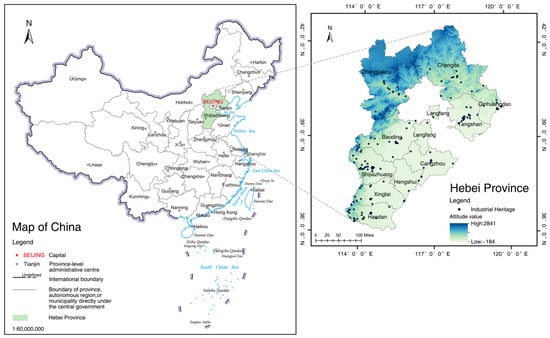
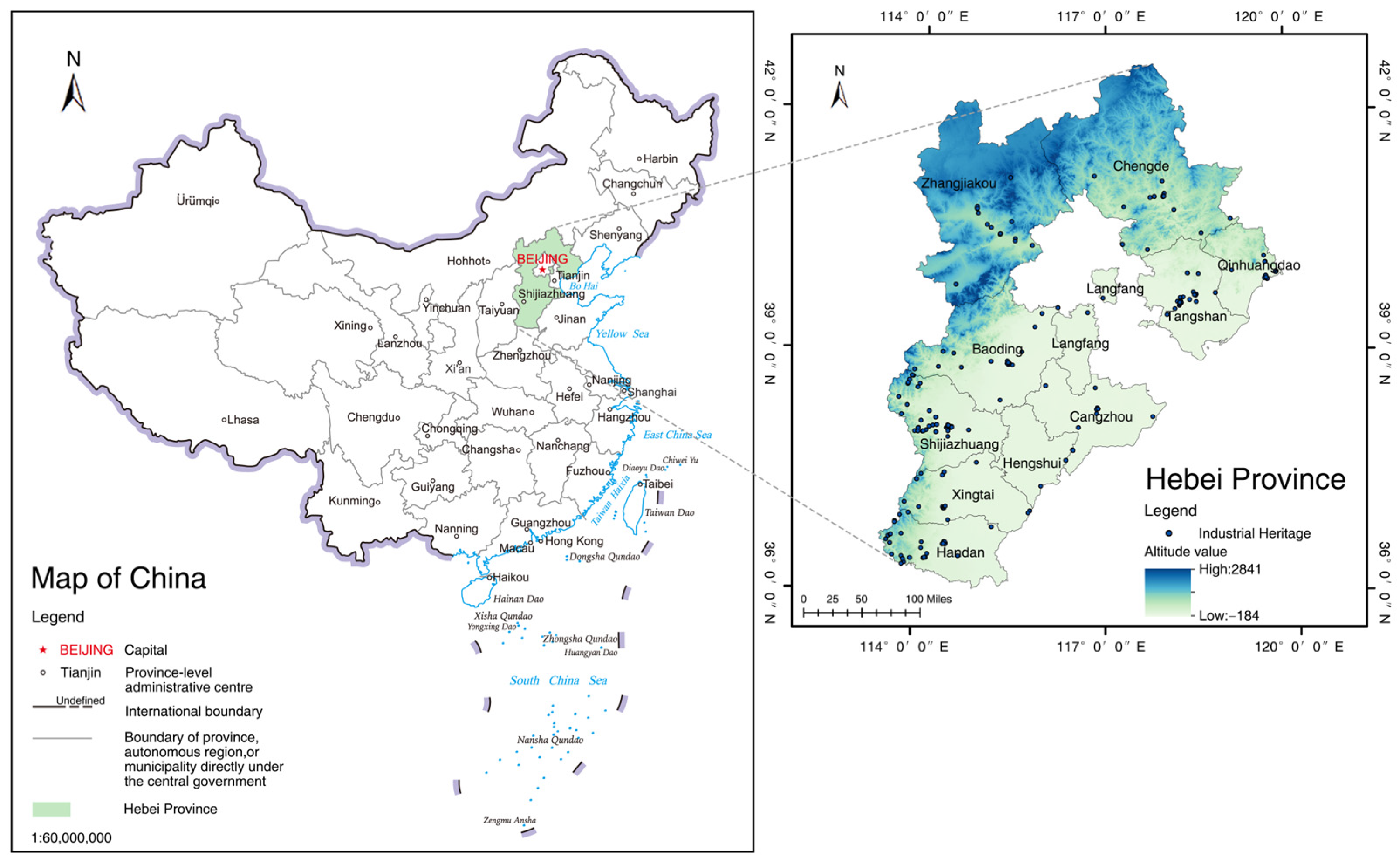
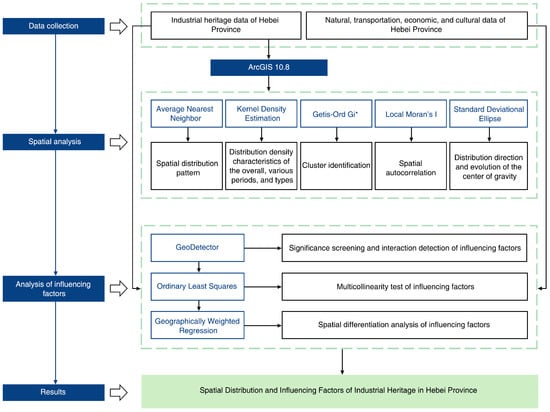
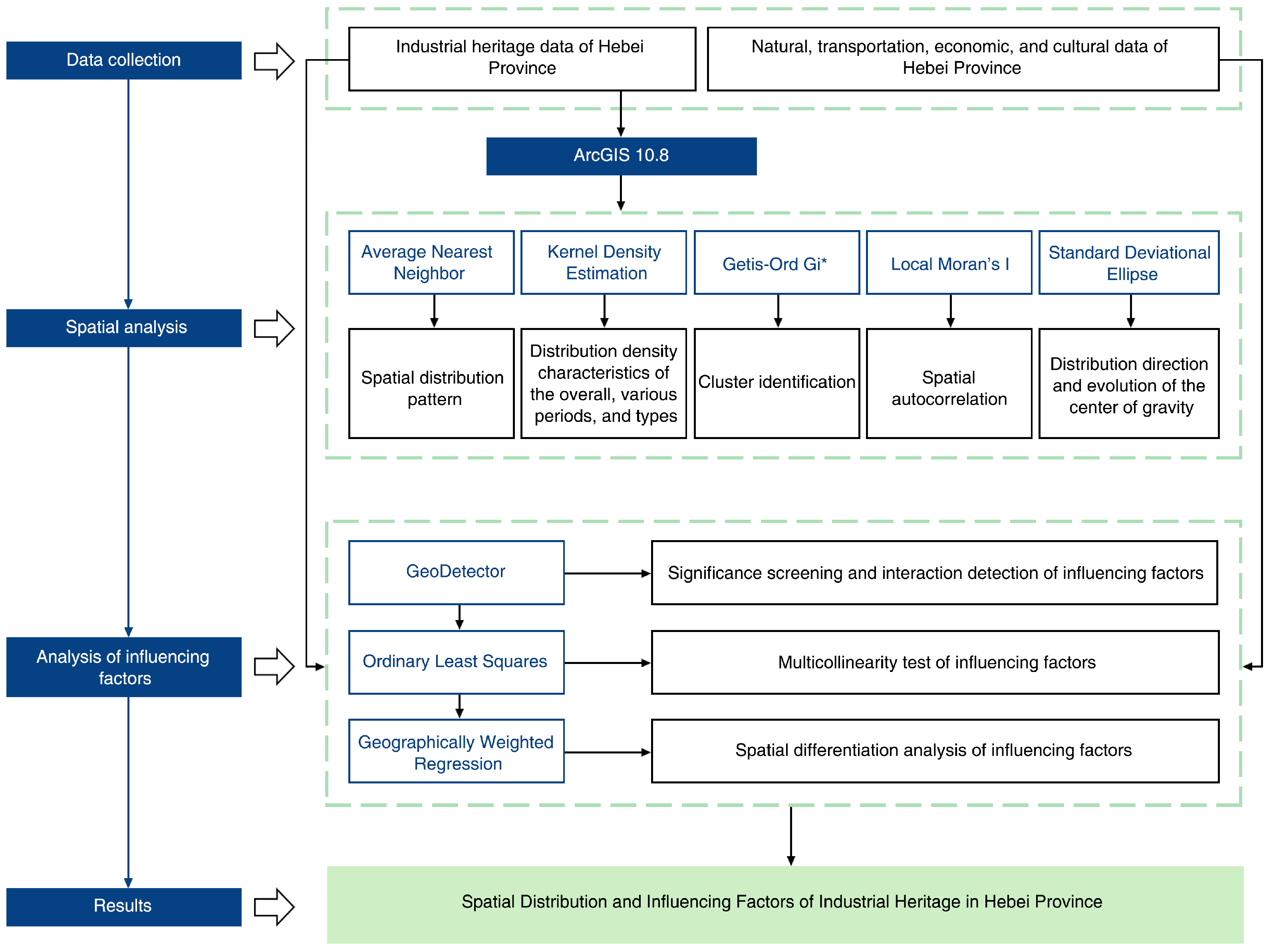
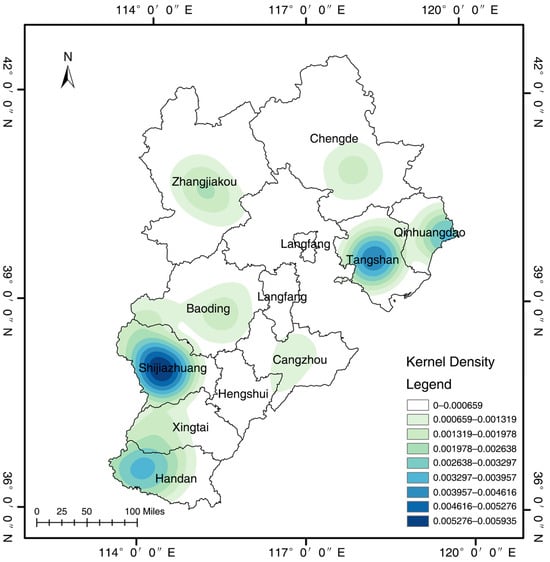
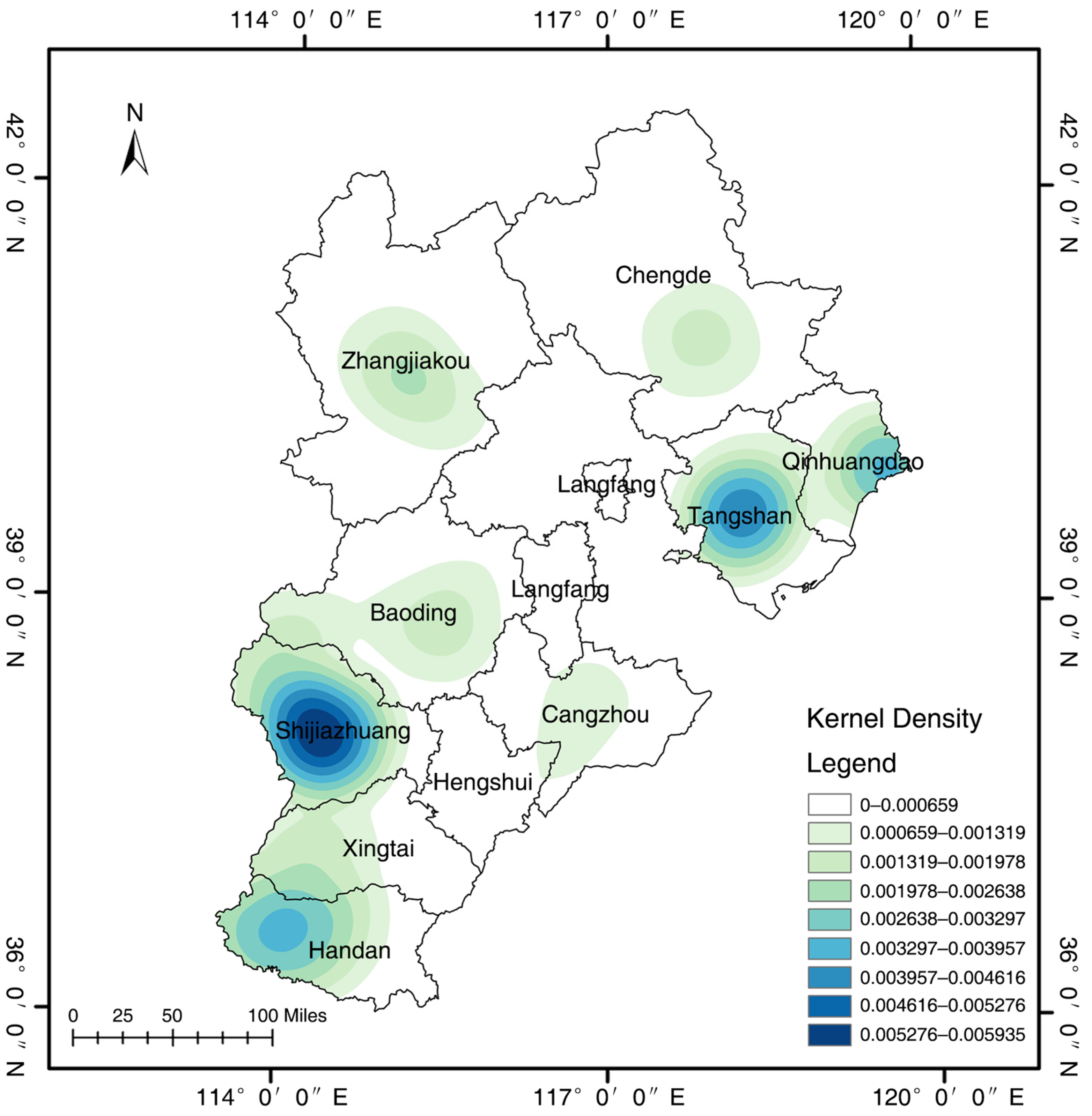
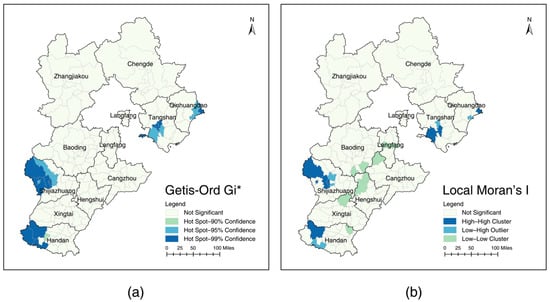
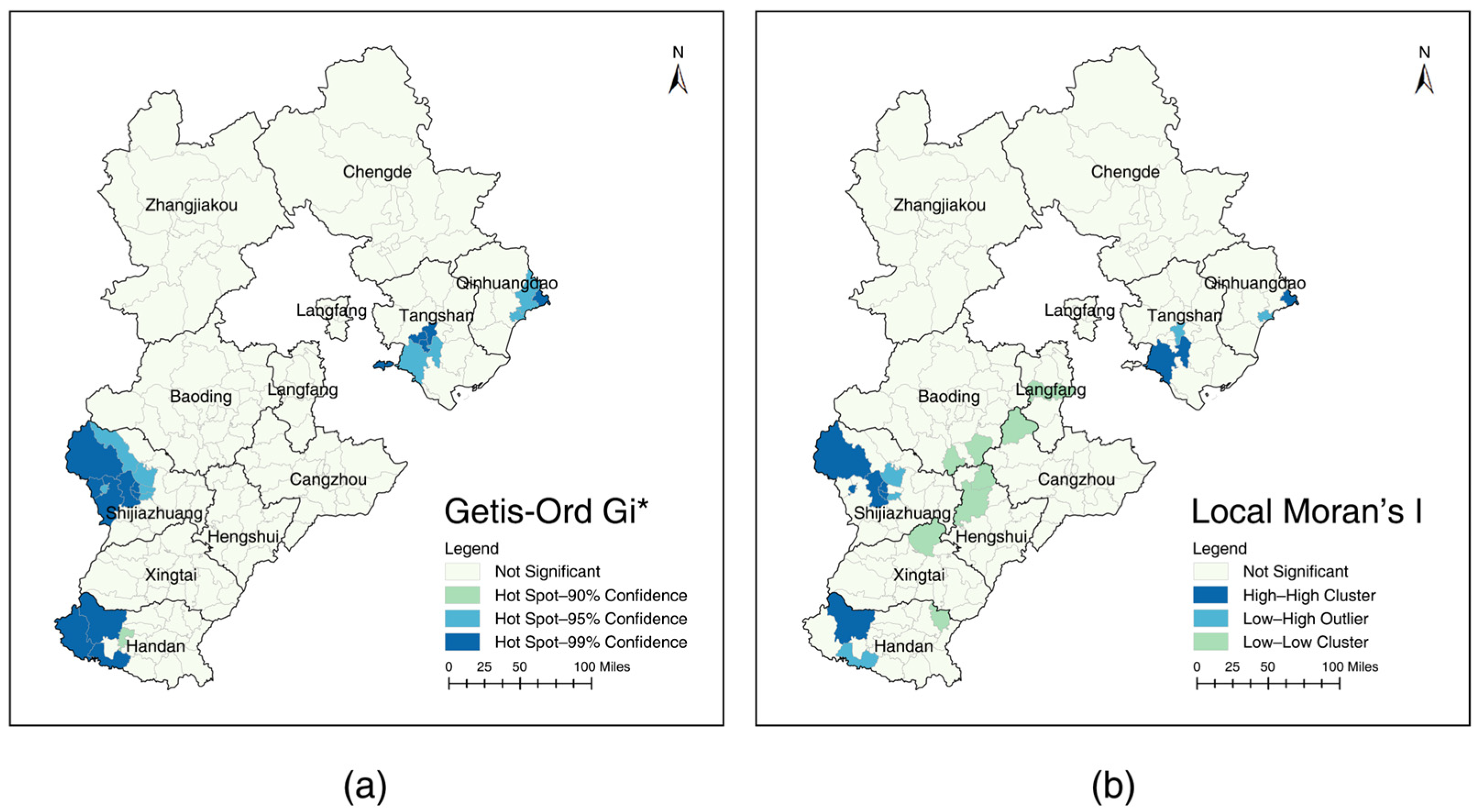
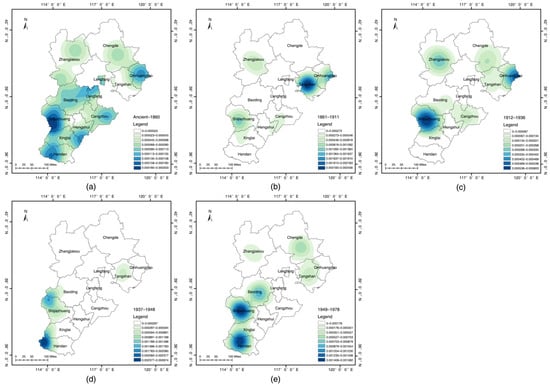
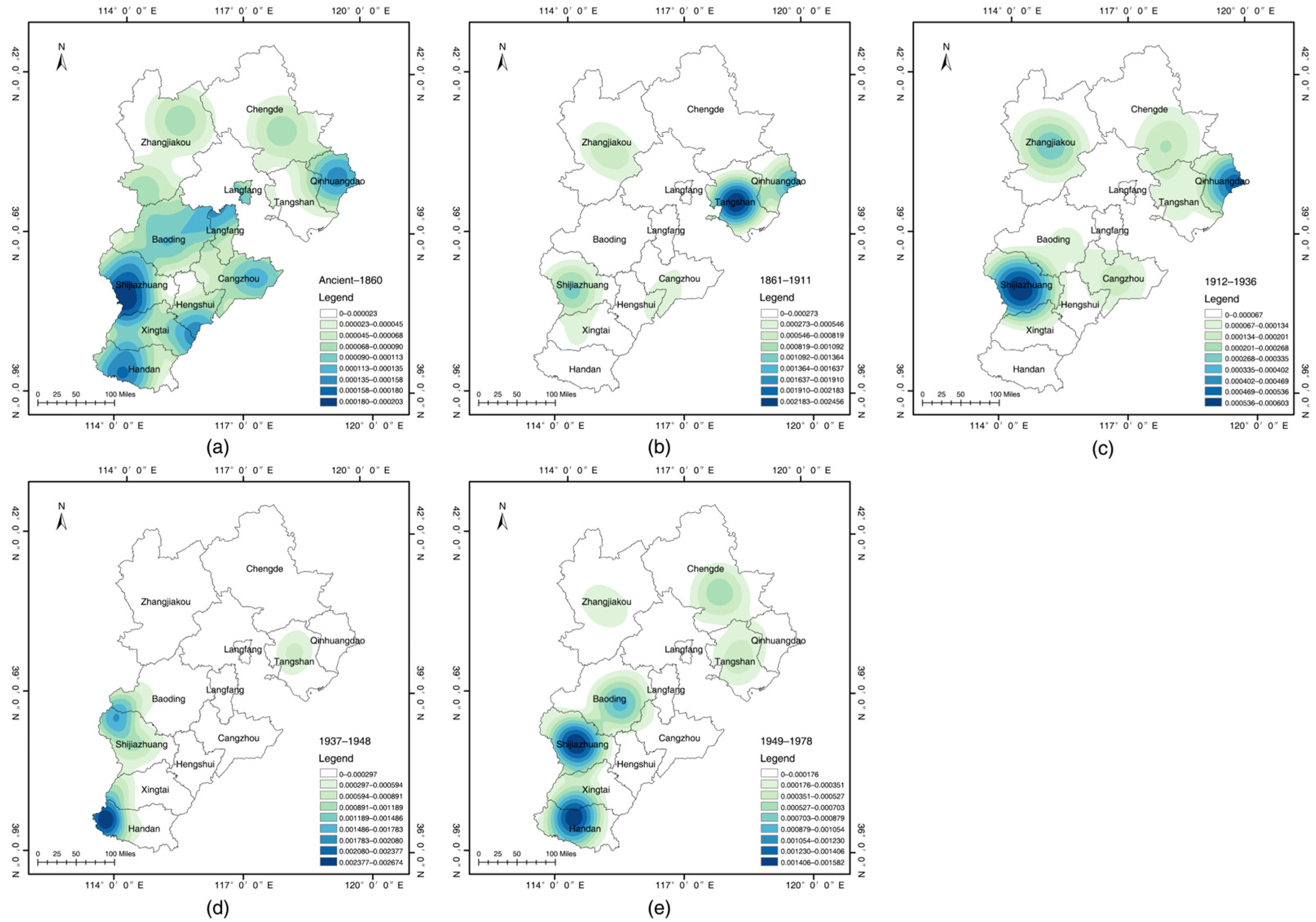
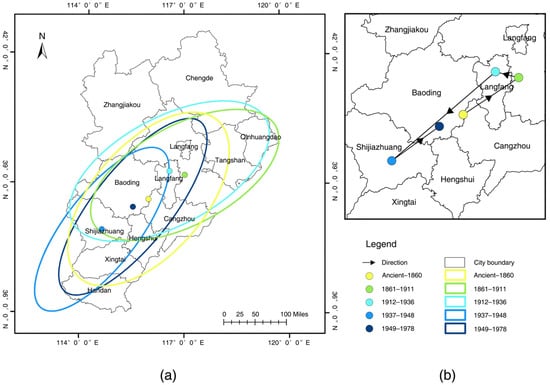
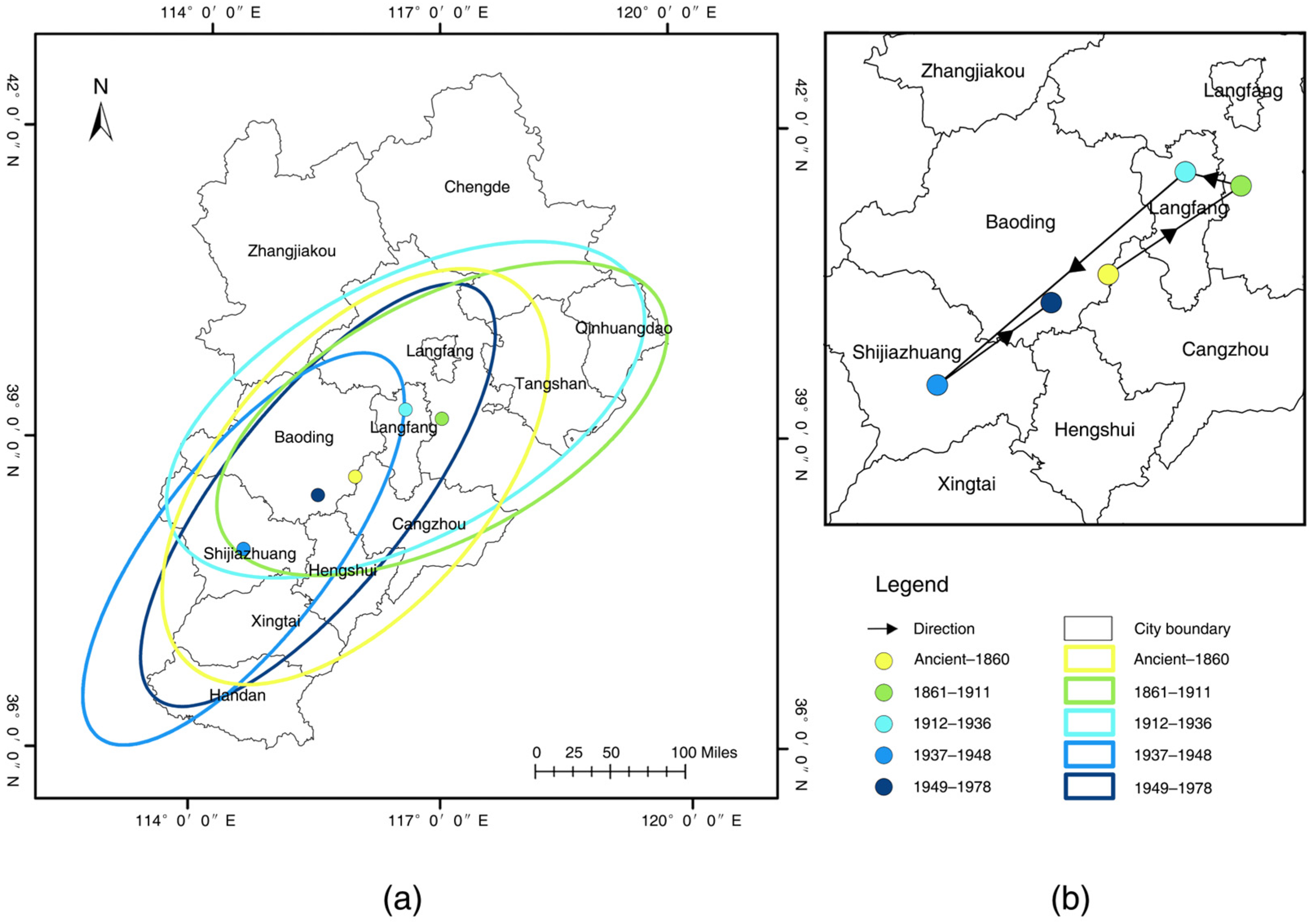
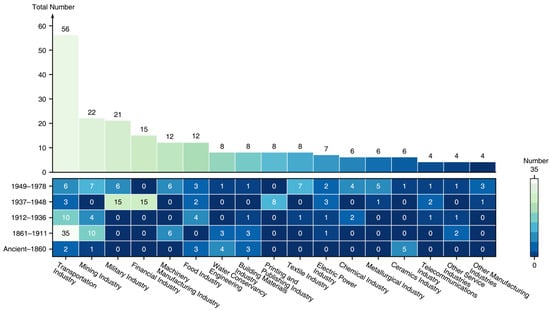
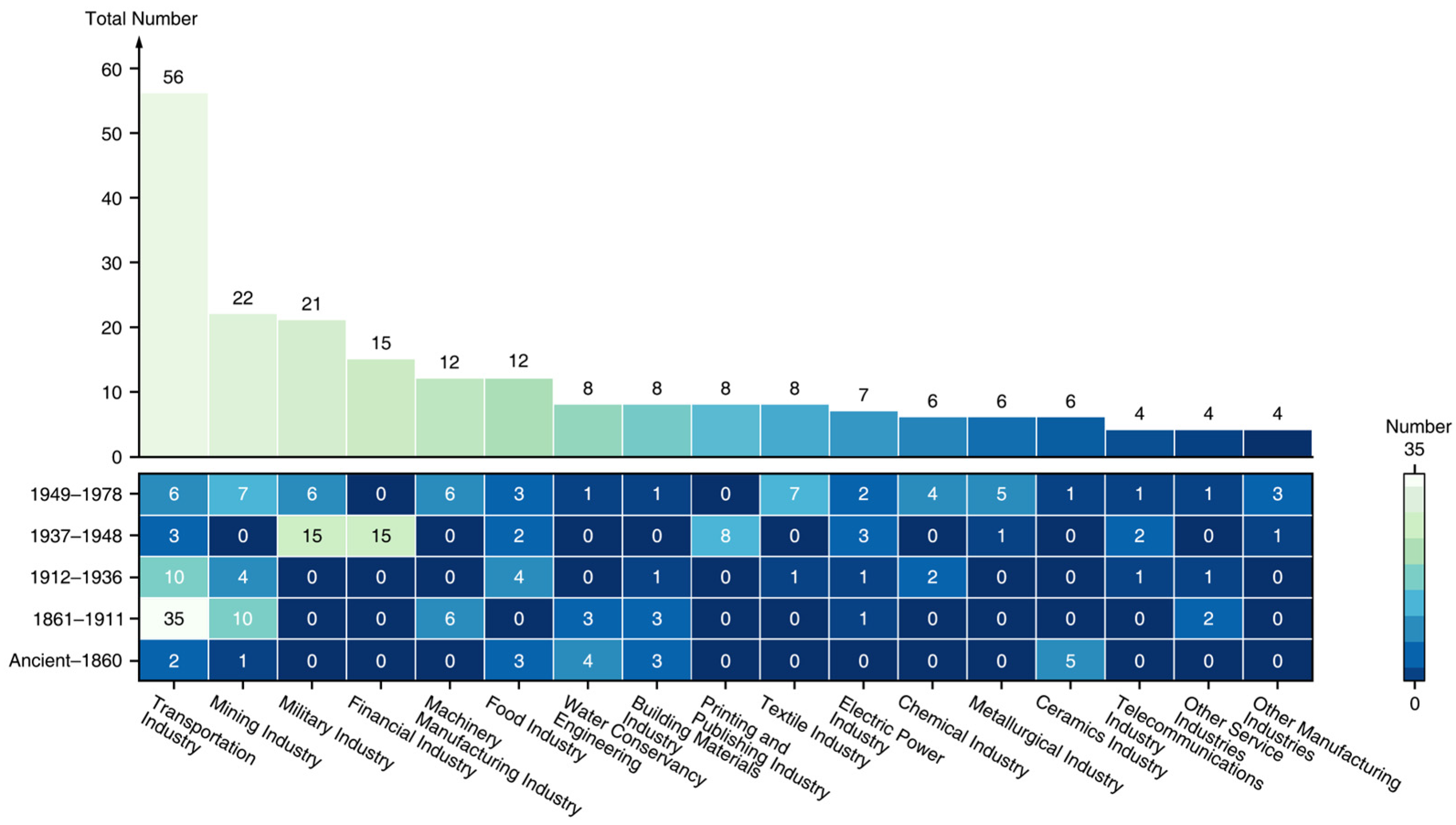
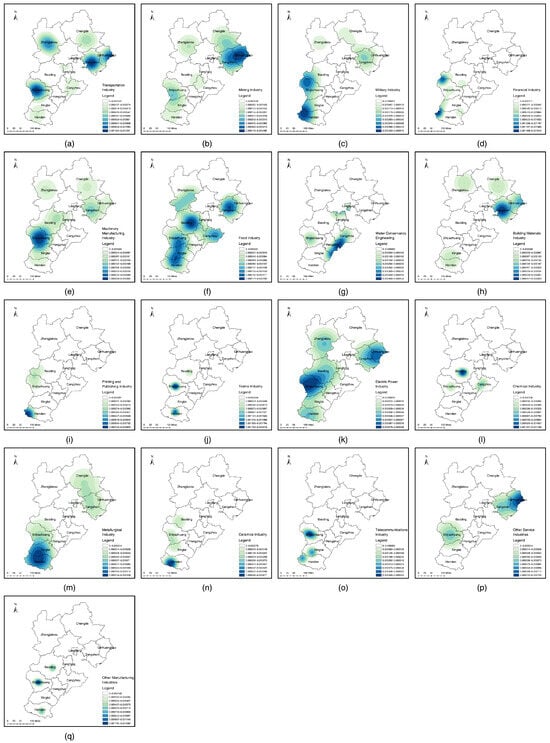
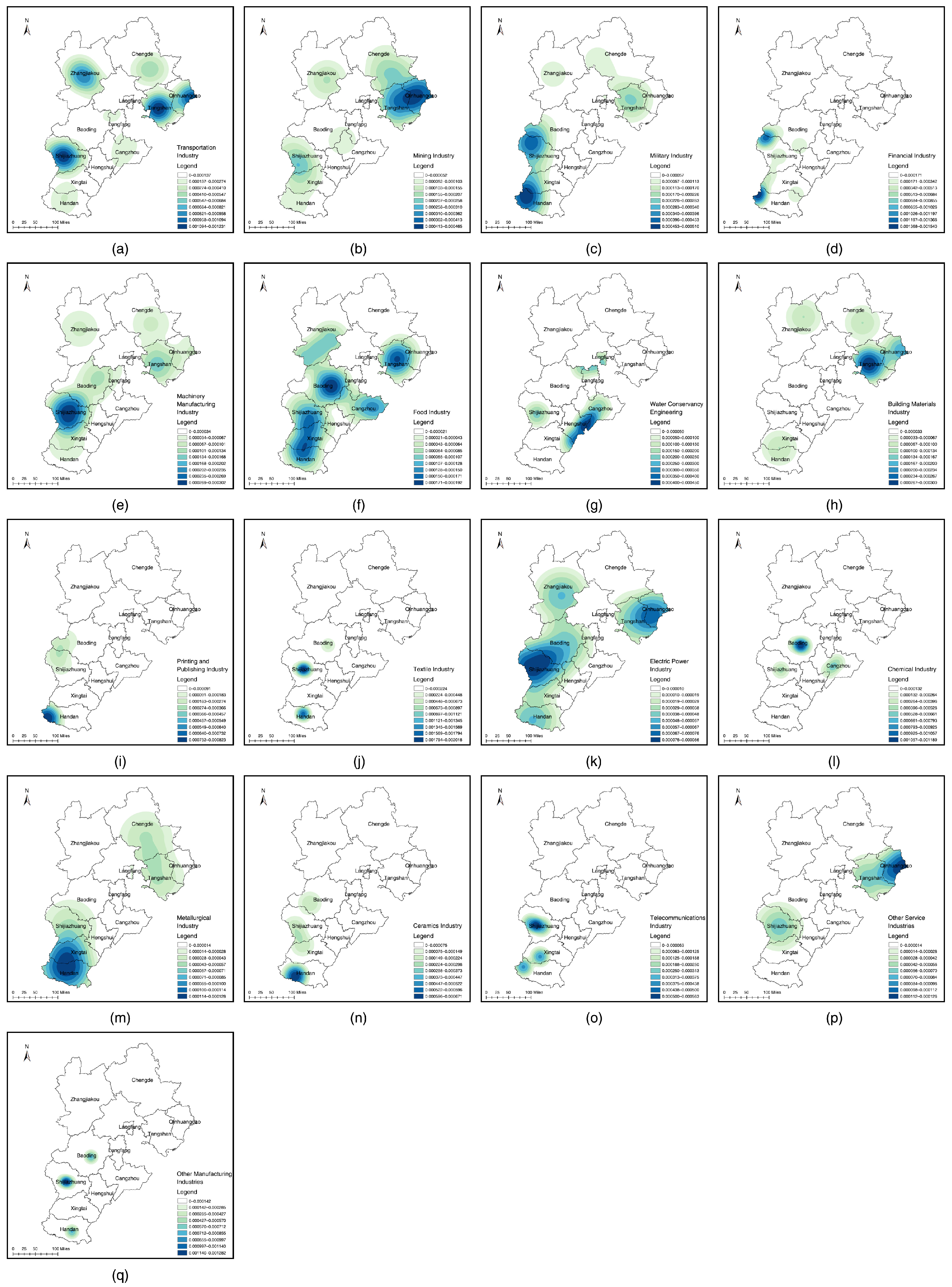
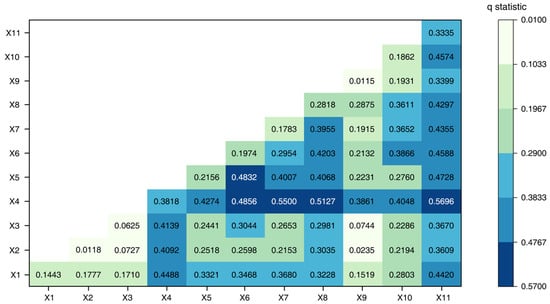
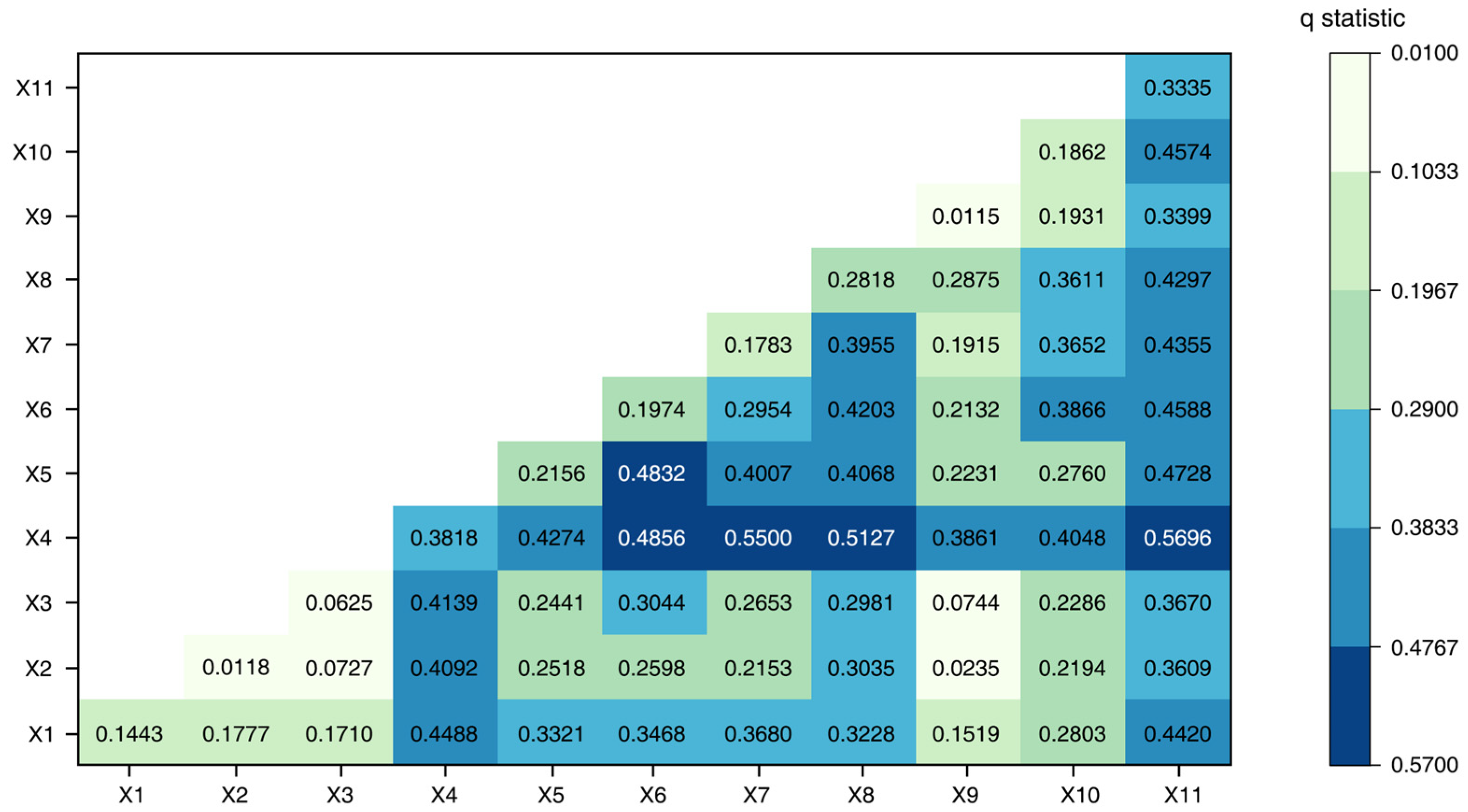
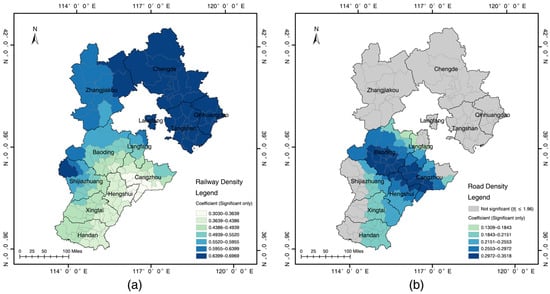
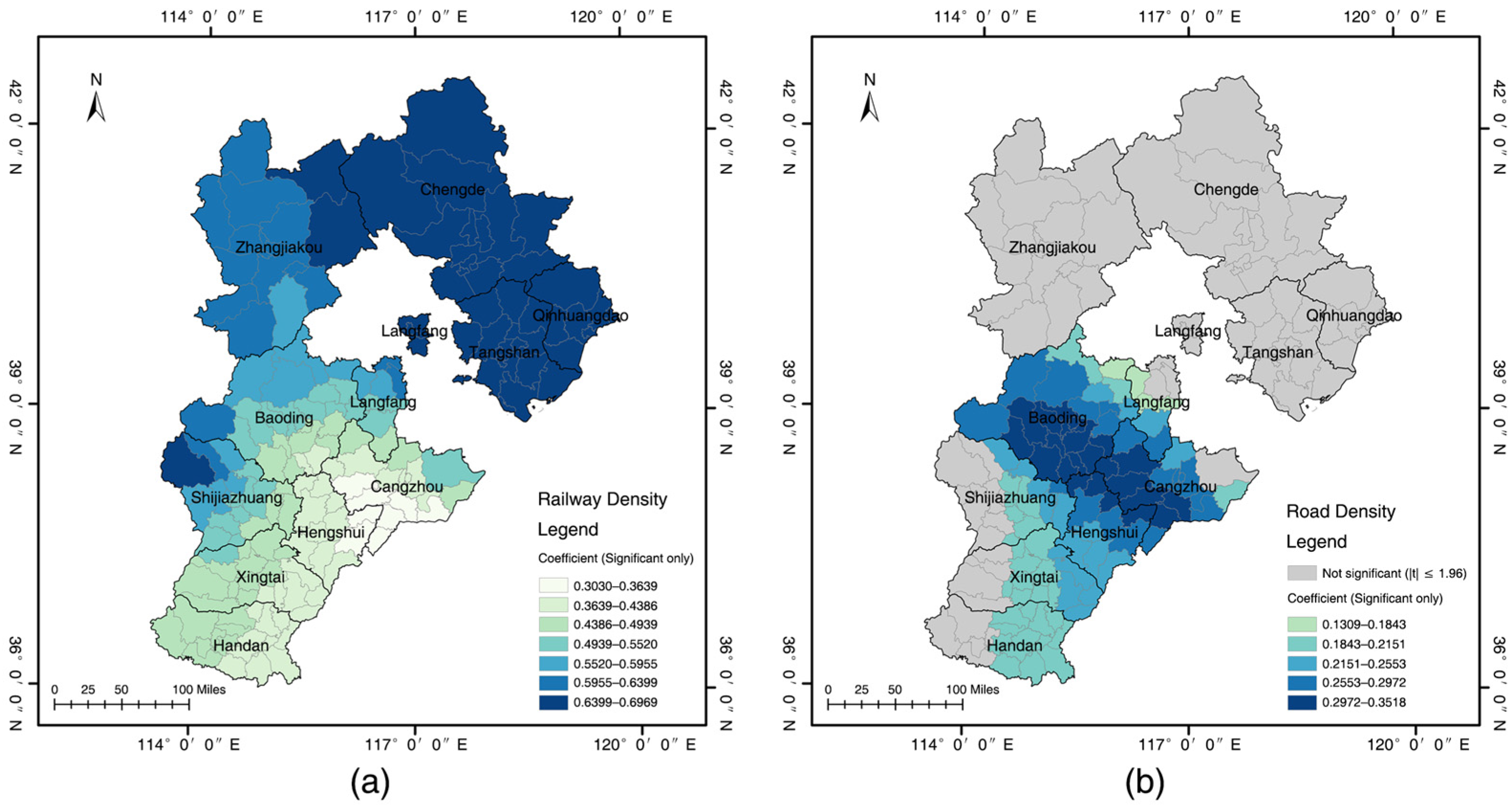
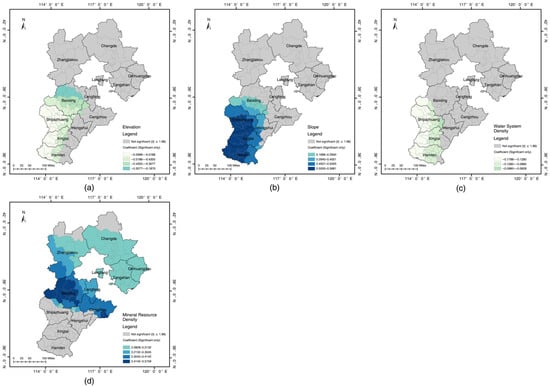
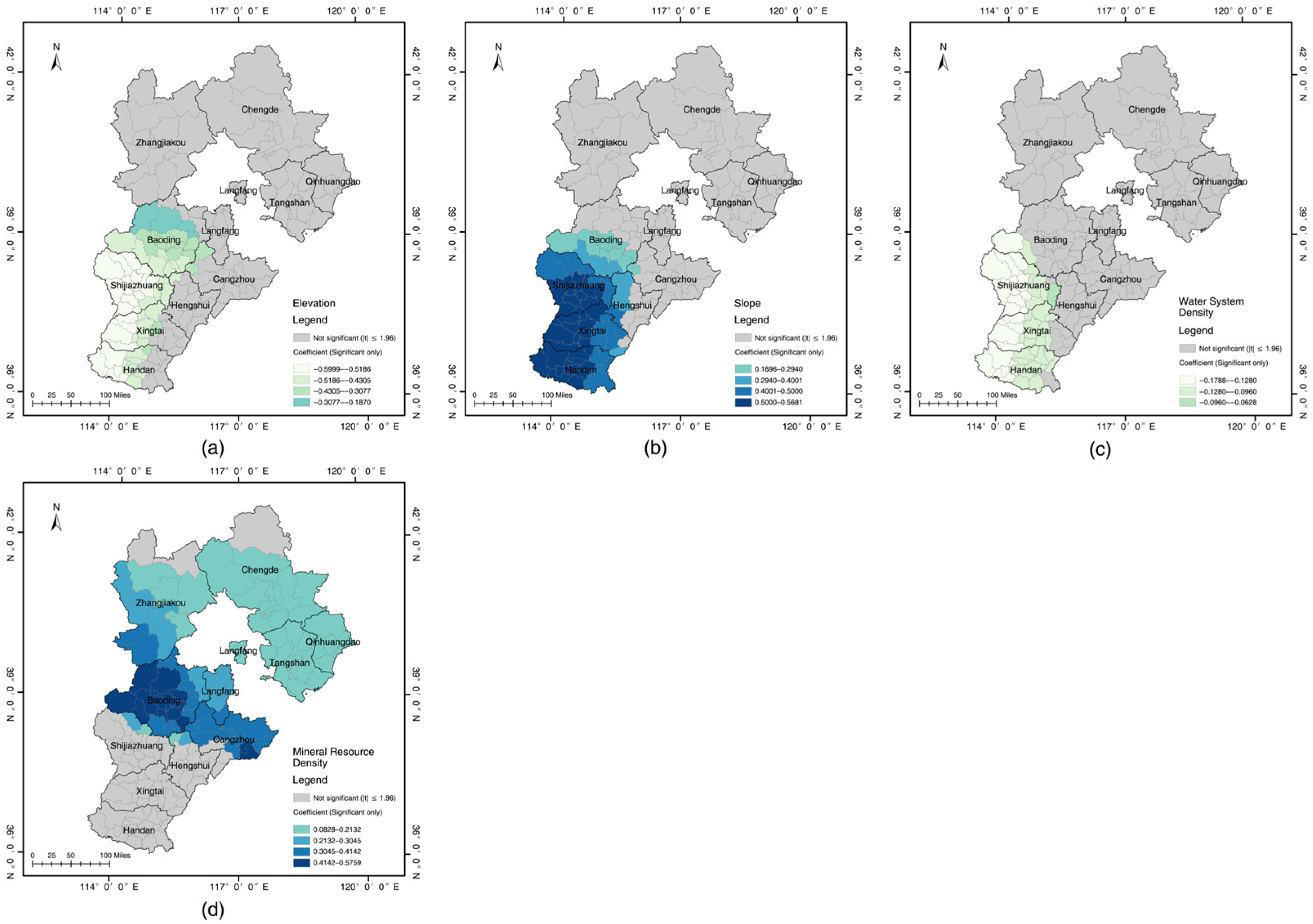
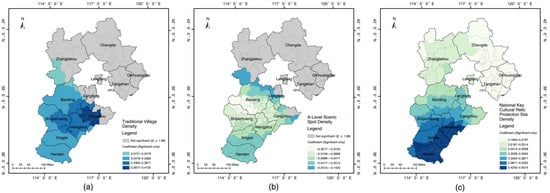
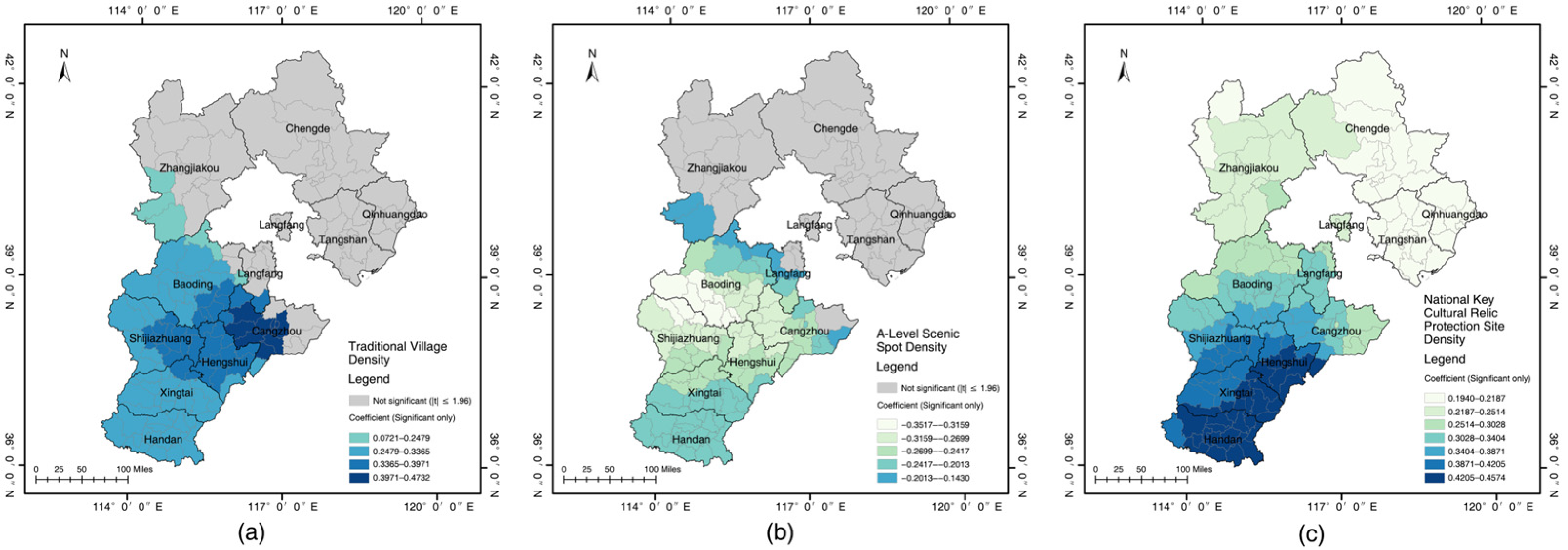

Disclaimer/Publisher’s Note: The statements, opinions and data contained in all publications are solely those of the individual author(s) and contributor(s) and not of MDPI and/or the editor(s). MDPI and/or the editor(s) disclaim responsibility for any injury to people or property resulting from any ideas, methods, instructions or products referred to in the content. |
© 2025 by the authors. Licensee MDPI, Basel, Switzerland. This article is an open access article distributed under the terms and conditions of the Creative Commons Attribution (CC BY) license.