


Abstract
This study investigated the effects of waste steel fiber and high-volume blast furnace slag (BFS) substitution on the mechanical and physical properties of three-dimensional printable concrete (3DPC) to improve its environmental performance. BFS was substituted for cement at 0%, 25%, 50%, and 75% by volume. Waste steel fibers were added to the mixtures at three lengths (5, 10, and 15 mm) and two volumetric ratios (0.5% and 1.0%). Twenty-eight mixtures were optimized based on extrudability, buildability, and shape stability criteria. Parameters such as compressive and flexural strength, surface moisture content, and drying shrinkage were evaluated. The results showed that using up to 0.5% waste steel fibers increased compressive strength by up to 23%, but decreased it to a level of 1%. Fiber reinforcement improved the flexural strength of all blends by up to 53% at both ages, regardless of fiber ratio or length. Increasing the BFS substitution rate generally increased surface moisture however, this value decreased in mixtures containing 75% BFS and silica fume. Furthermore, using steel fibers and in-creasing fiber length significantly improved the drying shrinkage performance of the mixtures.
1. Introduction
Three-dimensional (3D) printing, one of the current production methods of Industry 4.0, has been widely adopted in the construction sector in recent years [1,2,3]. It is stated that complex structural elements can be produced with 3D printing technology, thanks to the geometric flexibility and design possibilities it provides compared to traditional methods [4,5]. Various researchers have described placing concrete in layers by extrusion as one of the most preferred approaches in 3D printing [6,7,8]. Compared to traditional methods used in the construction industry, 3D printing offers several advantages. These include faster production times, reduced labor requirements and workplace accidents, and less material waste, which can lead to lower overall costs [9,10,11].
To ensure extrusion conditions in 3D printable concrete (3DPC) mixtures, the aggregate amount is generally reduced, and the binder ratio is increased accordingly. However, previous studies indicated that the heat of hydration inevitably increases in concrete with high cement dosages [12]. While this positively affects early-age strength, it can also increase crack formation due to autogenous and drying shrinkage. Additionally, it was noted that increasing the cement ratio in 3DPC mixtures has detrimental environmental and economic impacts, which is a significant factor restricting its broader application [13]. Therefore, it is understood that alternative binders that allow for partial replacement of cement in these mixtures should be used. It is stated that the binders preferred in 3DPC mixtures must meet certain properties such as limiting autogenous and drying shrinkage, reducing the heat of hydration, shortening the setting time and increasing the early age strength in order to show appropriate performance in terms of extrusion and printability [11].
In 3DPC applications, it was reported that regular Portland cement can be partially replaced with complementary cementitious materials such as fly ash, granulated blast furnace slag, silica fume, and limestone dust to reduce production costs and improve both fresh- and hardened-state properties [14]. Similar to conventional concrete, mineral admixtures in 3DPC mixtures typically enhance workability and mechanical properties; however, they may lead to reduced early-age strength [15].
Blast furnace slag (BFS) is a binder with pozzolanic properties obtained by rapidly cooling molten slag from iron and steel production with water, granulating it, and then grinding it [16]. Replacing a certain portion of cement with BFS lowers the heat of hydration and limits both autogenous and drying shrinkage [17]. Furthermore, it was demonstrated in various studies that it increases long-term strength and durability [18]. Using BFS can lower carbon emissions and costs by reducing the use of clinker [19]. Its high calcium oxide (CaO) content allows it to replace 80–90% of cement in some cases [20].
Zhang et al. [21] found that BFS extends setting time because it hydrates more slowly than Portland cement. Similarly, Li et al. [22] stated that BFS reduces early-age strengths at 1, 3, and 7 days, but increases strength as a result of pozzolanic reactions that occur at later ages. It was stated that the use of BFS in 3DPC applications improves the fresh green strength by increasing the mechanical interlocking of angular particles, and thus positively affects the buildability of the material. In the literature, it is seen that BFS is used in different substitution ratios in the binder phase in 3DPC mixtures [23]. Studies on 3DPC mixtures show that BFS is used in the binder at different ratios. For example, Xu et al. [24] reported that in a system where 40% of the binder is replaced with BFS, high substitution rates negatively affect fluidity. On the other hand, substitution at approximately 20% increases fluidity by reducing inter-grain friction and water requirements due to the smooth grain morphology. At higher ratios, the increased water requirement reduces fluidity. As is known, reinforcement is used in conventional concrete to increase dimensional stability, mechanical properties, and ductility [25]. However, the absence of molds in 3DPC significantly complicates the reinforcement placement process [26]. Although various studies have been conducted on this subject, a widely accepted application standard is not yet available in the literature. Reinforcement strategies used in 3DPC mixtures are generally categorized into four groups: conventional reinforcement placed after printing [27], reinforcement elements integrated before printing [28], in-process cable placement [29], and mesh placement during printing [30]. These methods restrict design flexibility for complex geometries and require more nozzles, leading to design changes. Due to these limitations, the application area of these approaches remains limited. In the current literature, the use of fibers is more commonly preferred for reinforcement purposes in 3DPC mixtures [31,32,33].
The increased use of plastic products creates serious environmental problems [34]. The amount of waste generated by increased plastic consumption also increases, and unless properly disposed of, this waste leads to environmental pollution. Rajeev et al. [35] investigated the usability of fibers obtained from face masks in 3DPC blends. It was reported that these fibers increased dynamic threshold shear stress, viscosity, and flexural strength, and also improved interlayer adhesion when used at 1%. Furthermore, due to the widespread use of automobiles, large amounts of difficult-to-decompose waste tires are emerging in the environment [36]. In recent years, it was observed that these tires can be recycled and used in fiber-reinforced concrete [37]. Waste steel fiber consists of thin metal wires extracted and cleaned from end-of-life vehicle tires [38]. When incorporated into concrete mixtures at appropriate sizes, they reduce crack formation, increase flexural strength, and improve fracture control [39]. In 3DPC applications, fiber length and quantity directly affect the mixture flow and the risk of nozzle clogging, so proper dosage and size selection are critical. These recycled fibers provide noteworthy benefits, both for the environment and the economy [40]. A study conducted by Zeybek et al. [41] investigated the effect of the use of waste tire fibers (1, 2, and 3%) on the mechanical properties of concrete. The study found that increasing the fiber ratio increased the compressive, tensile, and flexural strengths of the mixtures.
While studies on the effects of BFS on 3DPC mixtures exist in the literature, most of these studies focus on limited variables and do not provide comprehensive information, particularly regarding their use in combination with industrial waste fibers. While waste tire fibers are known to provide positive results in terms of strength and crack control in conventional concrete, no studies have investigated the performance of these fibers in 3DPC mixtures. While existing studies examine the individual effects of both materials, no study was found in the literature evaluating the fresh and hardened properties of a system using BFS and waste tire fiber together. Therefore, in line with sustainability objectives, a holistic study is needed to reveal the effects of the combined use of industrial waste in 3DPC mixtures on the extrudability, buildability, shape stability, and mechanical performance of the material. In this study, waste steel fibers obtained from end-of-life vehicle tires were used at three different volumetric ratios (0, 0.5, and 1.0%) and three different fiber lengths (5, 10, and 15 mm). Additionally, the effects of replacing cement with BFS at 0, 25, 50, and 75% volume were investigated. The mixture ratios were determined based on extrudability, buildability, and shape stability criteria, and the resulting mixtures were comprehensively evaluated in terms of compressive strength, flexural strength, surface moisture, and drying shrinkage.
2. Materials and Methods
2.1. Materials
Table 1 displays the mechanical, chemical, and physical characteristics of the blast furnace slag and CEM I 42.5R Portland cement utilized in the 3DPC mixtures developed for this study.
Table 1.
Chemical composition, physical and mechanical properties of binder materials.
Some properties of the water-reducing admixture used to ensure the required workability in 3DPC mixtures, shared by the manufacturer, are shown in Table 2.
Table 2.
Some properties of water-reducing admixture.
River sand with a maximum particle diameter of 2 mm (Dmax) was used as the fine aggregate. The specific gravity and water absorption capacity of the aggregate were calculated as 2.54 and 0.4%, respectively, in accordance with the EN 1097-6 Standard [42].
The study also used waste steel fibers recovered from end-of-life tires in three different lengths (5, 10, and 15 mm) and two different volume fractions (0.5% and 1.0%). Some properties of the fibers are given in Table 3.
Table 3.
Some properties of waste steel fiber.
2.2. Preparation of Mixtures and Method
2.2.1. Preparation of Mixtures
Parameters suggested by Şahin and Mardani-Aghabaglou [11] for extrudability, buildability and shape stability criteria were taken into account in the design of 3D printable concrete (3DPC) mixtures. In this context, the technique suggested by these authors for the production process was also applied in this study. Mixtures that were easily printed without any clogging in the nozzle were considered extrudable. Mixtures that could be printed in 5 layers and had no surface indentations were considered buildable. Shape stability was examined in mixtures considered suitable for extrudability and buildability. 3DPC mixtures with a shape stability value greater than 95% were considered suitable. Each layer was printed at a length of 21 cm. During printing, time measurements were taken, and the layer placement speed was set to 2.1 cm/s in 10-s periods and all mixtures were optimized with these parameters.
The water/binder ratio was kept constant at 0.40 in all mixtures. The amount of water-reducing admixture has been adjusted to maintain printability criteria. As seen in the mixtures, it can be observed that the need for water-reducing admixture decreases as the BFS ratio increases [8]. Within the scope of the study, a total of 28 series of fiber-reinforced 3DPC mixtures were prepared by adding waste steel fiber at two different ratios (0.5% and 1%) and three different lengths (5, 10, and 15 mm) to the control mixture. The amount of material used in the production of 1 m3 of 3DPC mixtures is shown in Table 4. Fiber mixtures were named based on the BFS usage rate, fiber usage rate, and fiber length. For example, the mixture containing no BFS and containing 0.5% waste steel fiber and a 5 mm length was designated C-0.5-5, while the mixture containing 25% BFS and containing 1% waste steel fiber and a 15 mm length was designated 25-1-15.
Table 4.
Materials and dosages used to prepare 3DPC mixtures.
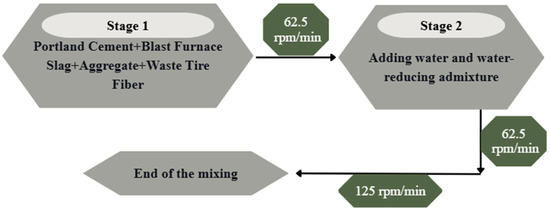
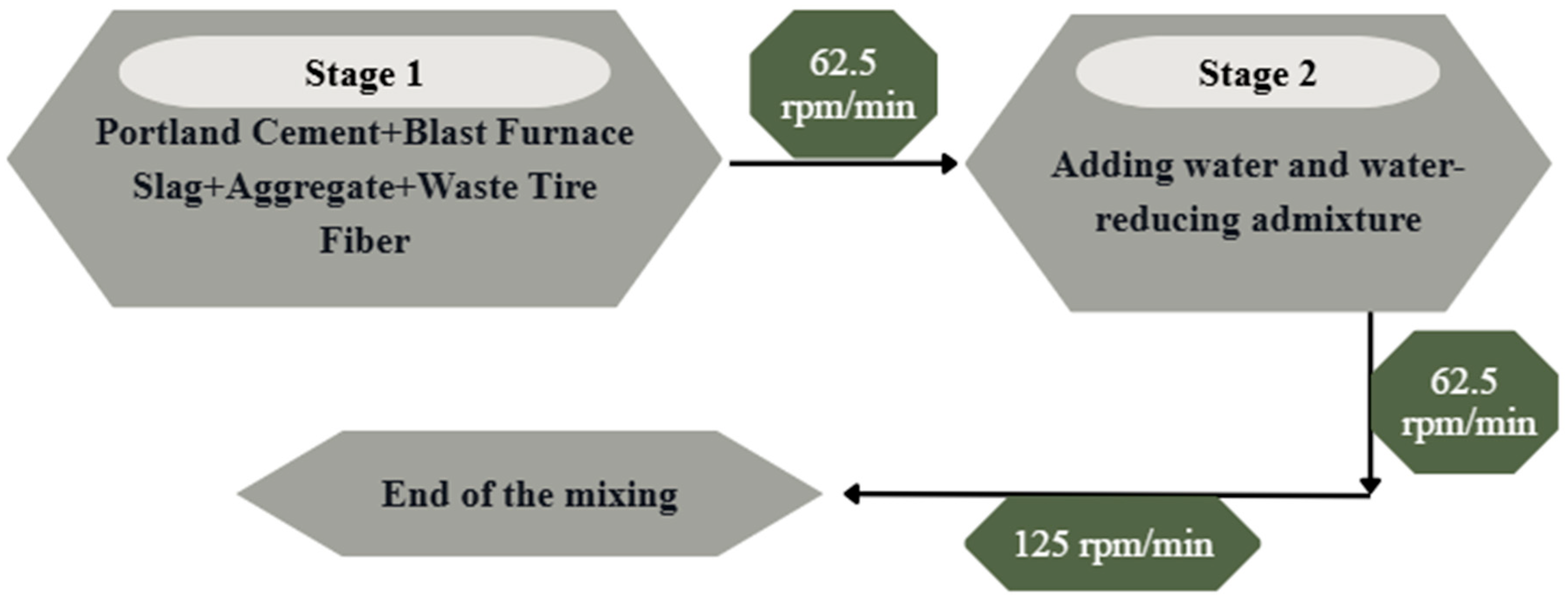
Figure 1 shows the workflow followed to prepare the mixtures. The mixtures were prepared in three stages. First, Portland cement, blast furnace slag, aggregate, and waste steel fiber were mixed in a mixer at 62.5 rpm for 30 s. In the second stage, water and, if necessary, a water-reducing admixture were added and mixed at 62.5 rpm for one minute. Finally, the entire mixture was mixed at 125 rpm for two minutes and compacted in layers.
Figure 1.
Preparation Process of Mixtures.
2.2.2. Microstructural Properties
Microstructural analyses of the samples were performed using a Carl Zeiss Gemini 300 scanning electron microscope (SEM) (Carl Zeiss Microscopy GmbH (ZEISS)—Oberkochen, Germany). Surface morphology and internal structural properties of the materials were evaluated through SEM analyses.
2.2.3. Mechanical and Dimensional Stability Properties
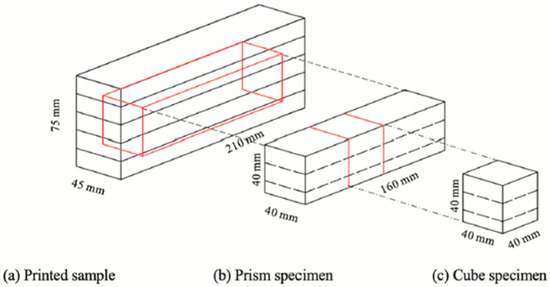
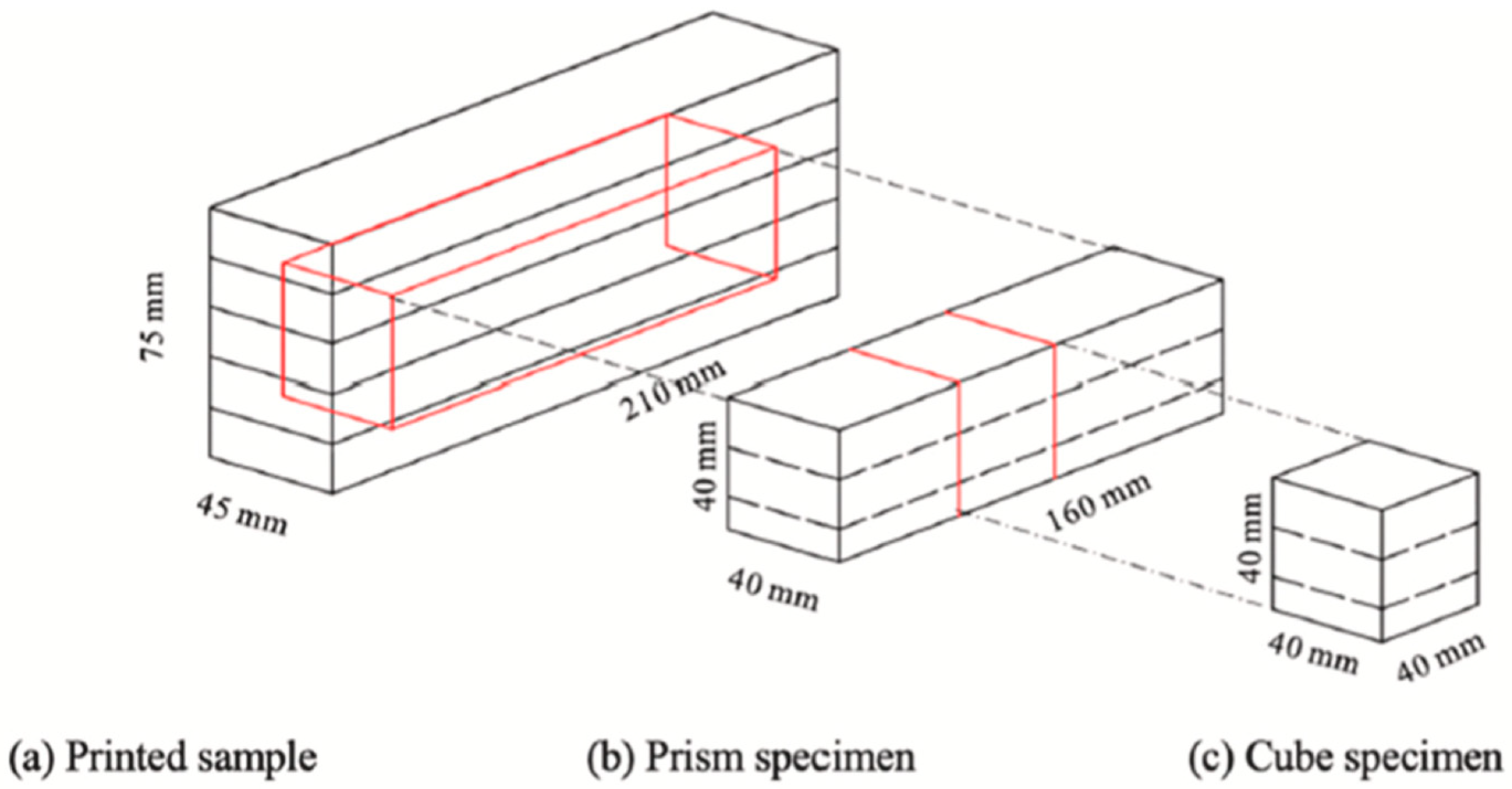
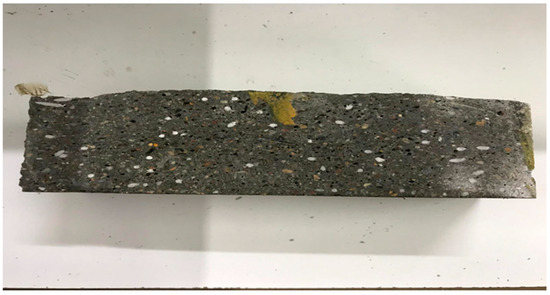
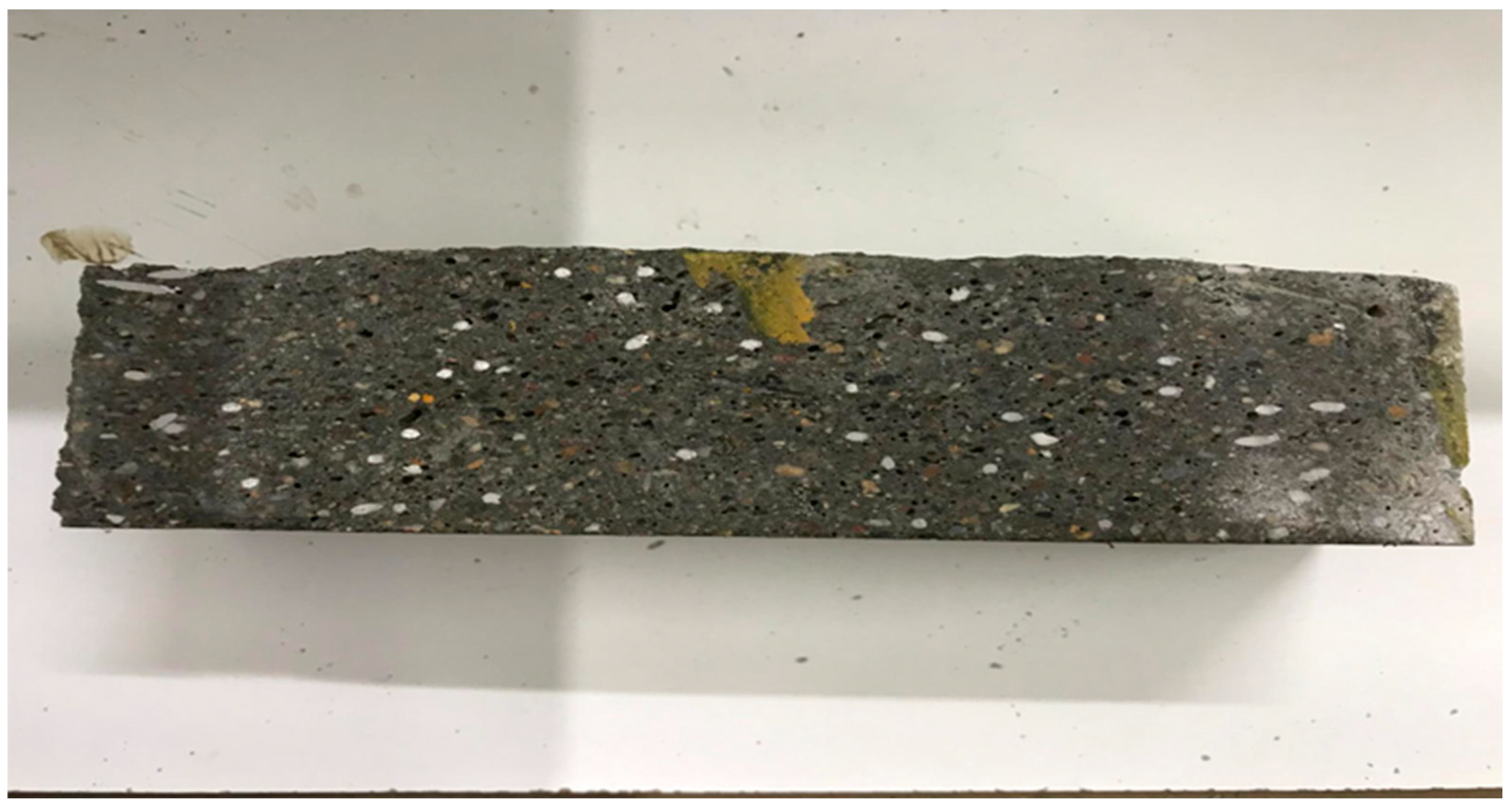
A general view of the printed 3DPC mixtures is shown in Figure 2a. The prism samples to be used in mechanical tests were prepared using a precision cutter as shown in Figure 2b. The draft form of the cube samples to be used in the compressive strength tests is shown in Figure 2c, and a cut sample is shown in Figure 3.
Figure 2.
Schematic illustration of printed filaments, containing the prisms and cubes evaluated under flexural and compressive loading (Şahin et al., 2025) [43].
Figure 3.
Image of the cut sample.
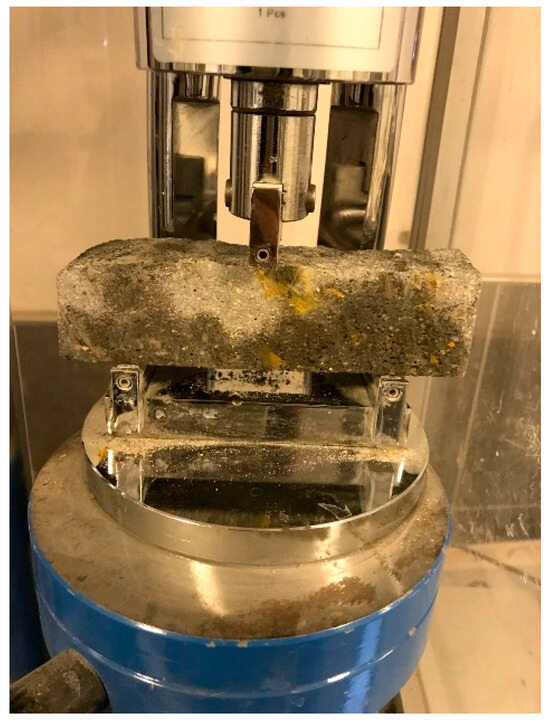
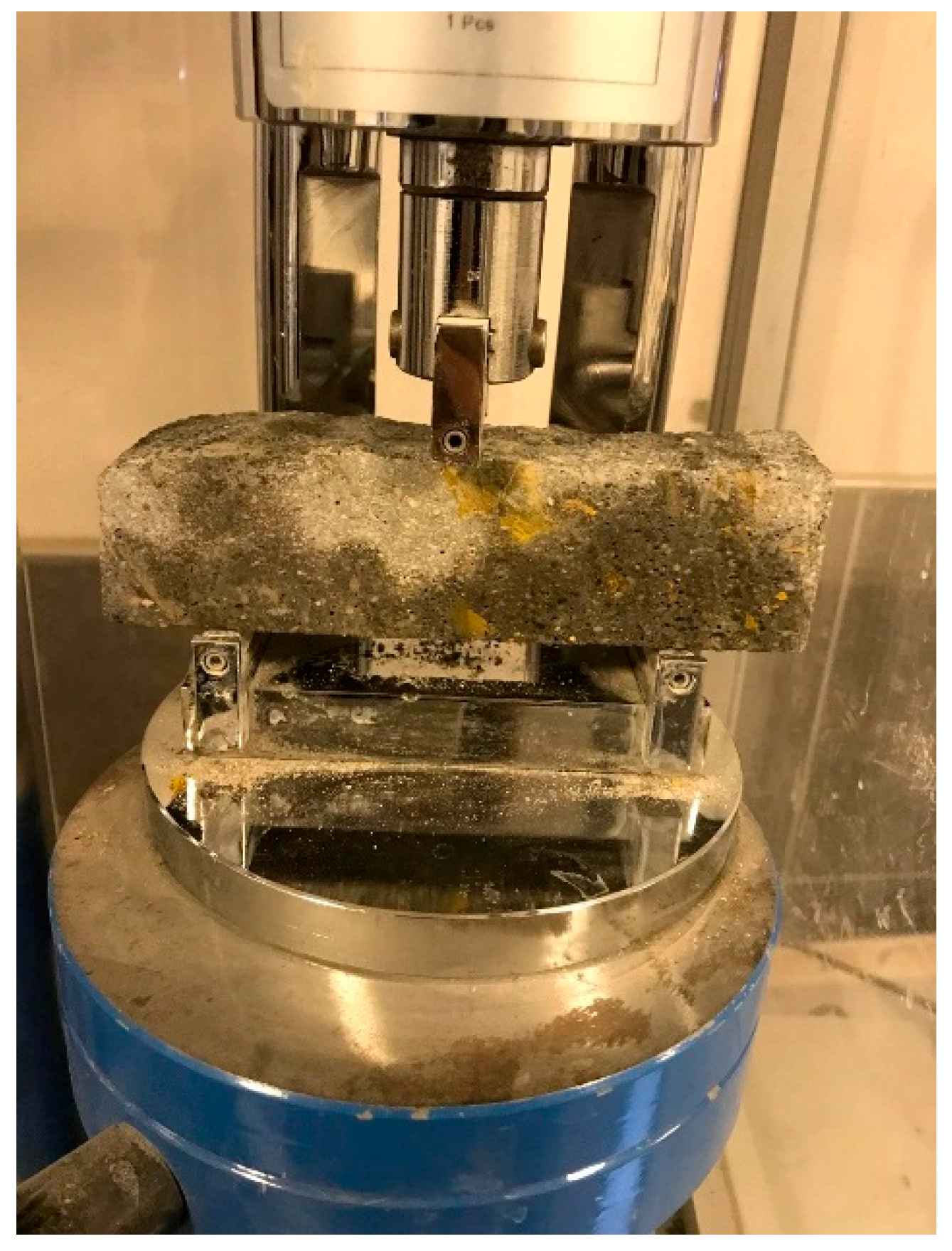
The 7- and 28-day compressive strength and flexural strength of the mixtures were examined. The mechanical performance of the samples was measured based on the TS EN 196-1 Standard [44], with some adaptations to take into account the printing direction. The mechanical performance of the samples was measured based on the TS EN 196-1 Standard, with some adaptations to take into account the printing direction. In this context, samples with 40 × 40 mm surfaces were loaded perpendicular to the printing direction, and their compressive strengths were determined. The flexural strength was determined by three-point bending tests performed on prism samples measuring 40 × 40 × 160 mm. The bending arrangement used is shown in Figure 4.
Figure 4.
Flexural strength test setup of samples.
To investigate the drying-shrinkage behavior of the mixtures, prismatic specimens with dimensions of 25 × 25 × 285 mm were prepared. After 24 h of water curing, the specimens were stored in a cabinet with a relative humidity of 55%.
Here, S represents the shrinkage percentage of the sample, L1 represents the initial measurement value after removal from the curing bath, L represents the periodic measurement value, and L0 represents the initial printed length (effective measuring length), which is 285 mm.
The surface moisture content of the 3DPC layers was determined using the method proposed by Sanjayan et al. [45]. In this method, a 160 × 40 mm paper towel was placed on the top surface of a single-layer printed sample with a height of 40 mm and a cross-section of 40 mm and held for 20 s. At the end of this period, the weight difference of the paper towel was measured to calculate the surface moisture content. At least three repetitions were performed for each sample. To prevent evaporation from affecting the measurements, the samples were kept in a closed environment at 24 °C and 65% relative humidity.
3. Results and Discussion
3.1. Compressive Strength
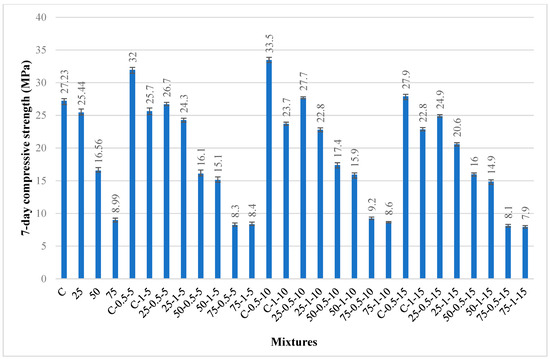
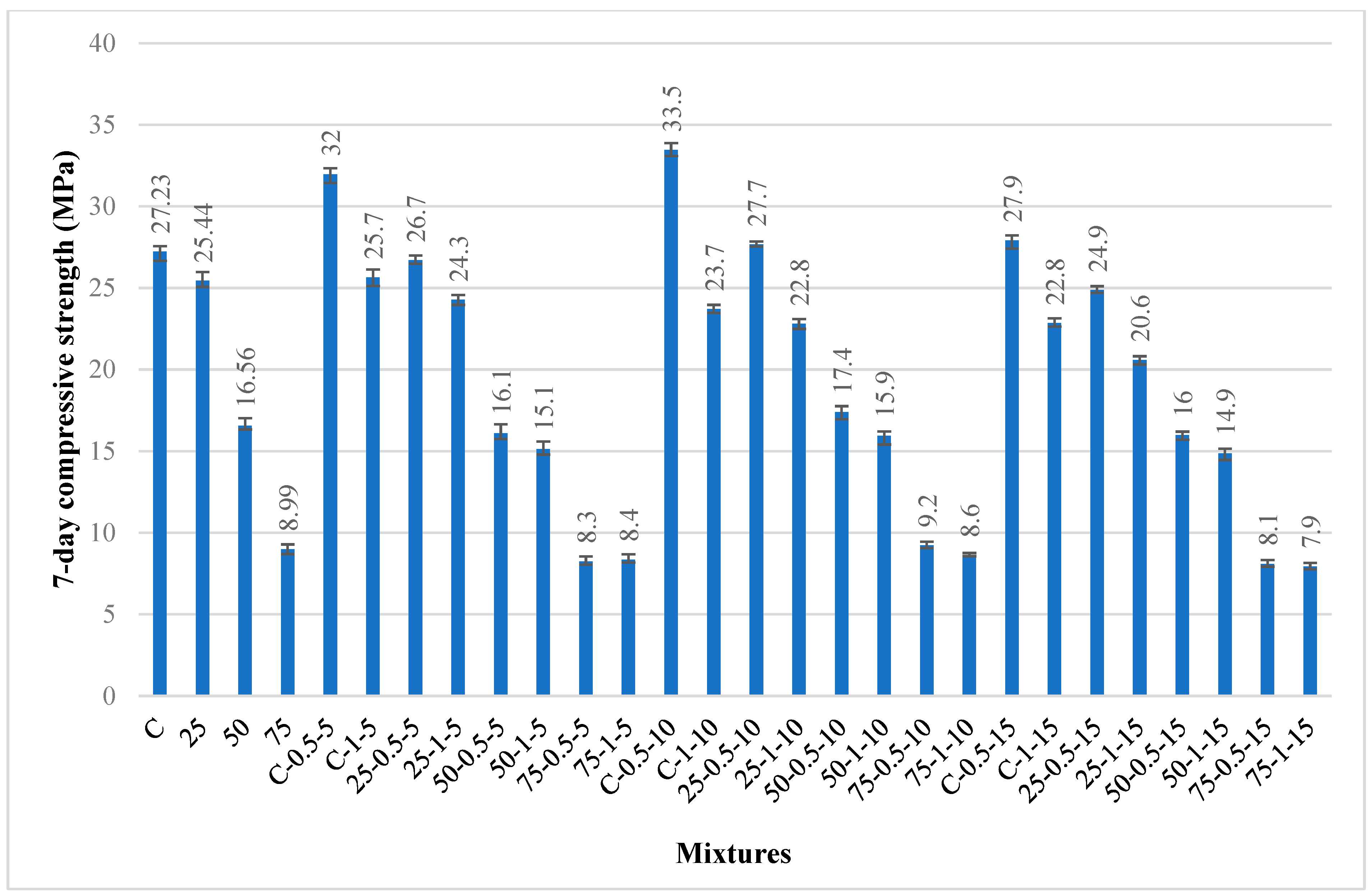
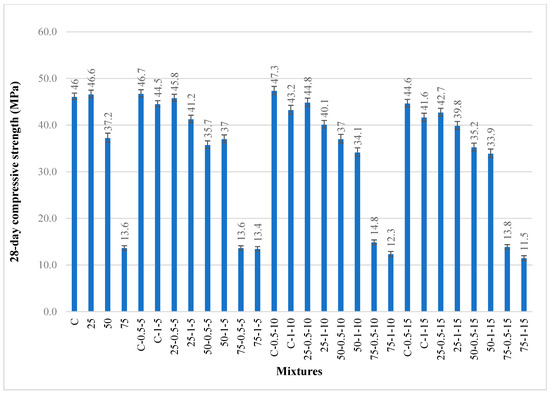
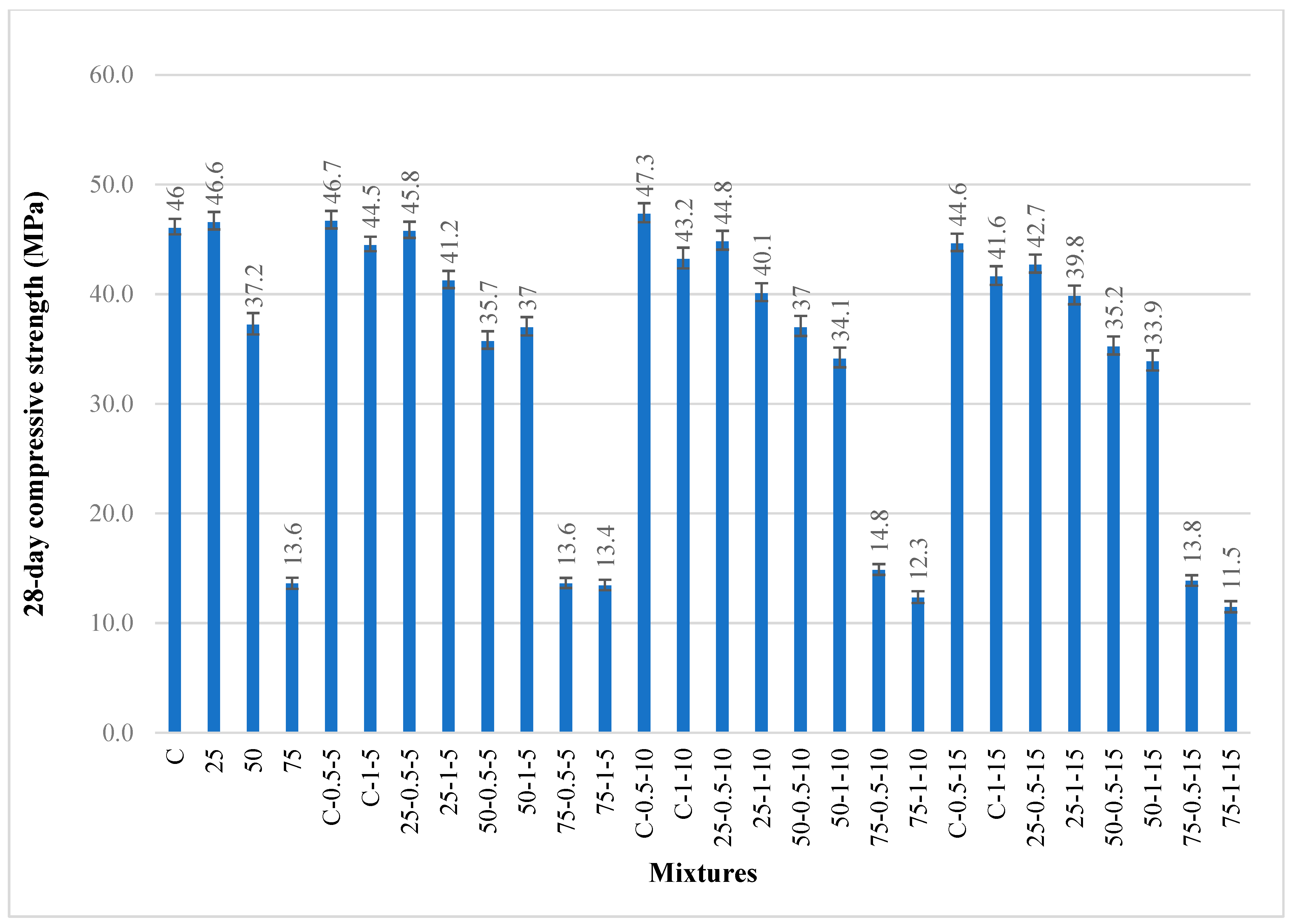
The 7- and 28-day compressive strength results of the 3DPC specimens are shown in Figure 5 and Figure 6. It was noted that the substitution of BFS significantly influenced strength, regardless of the fiber usage rate and length. When the 7-day compressive strength values were examined, it was determined that 25% BFS substitution caused a decrease of approximately 7% compared to the control mixture, and this decrease reached 39% and 67% at 50% and 75% substitution rates, respectively. This decrease in early-age strengths in mixtures containing BFS is due to the slower reaction of BFS compared to Portland cement, as stated in previous studies [46,47].
Figure 5.
7-day compressive strength values of 3DPC mixtures.
Figure 6.
28-day compressive strength values of 3DPC mixtures.
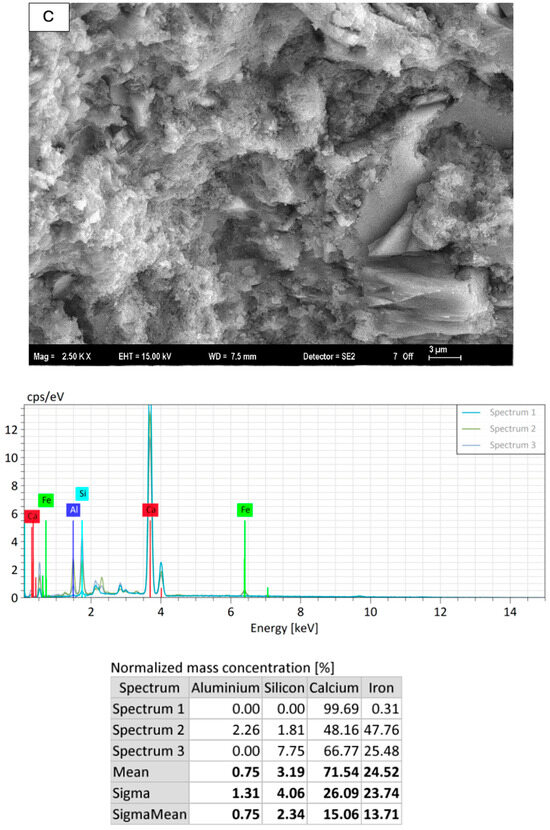
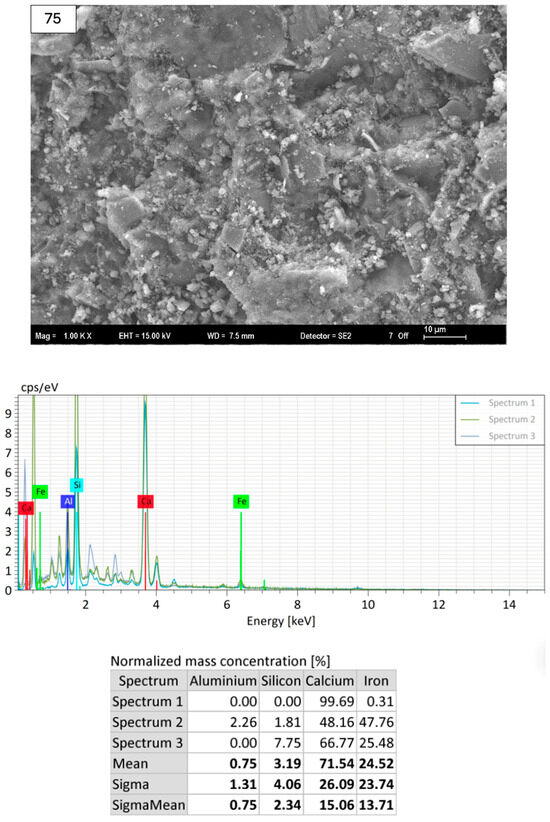
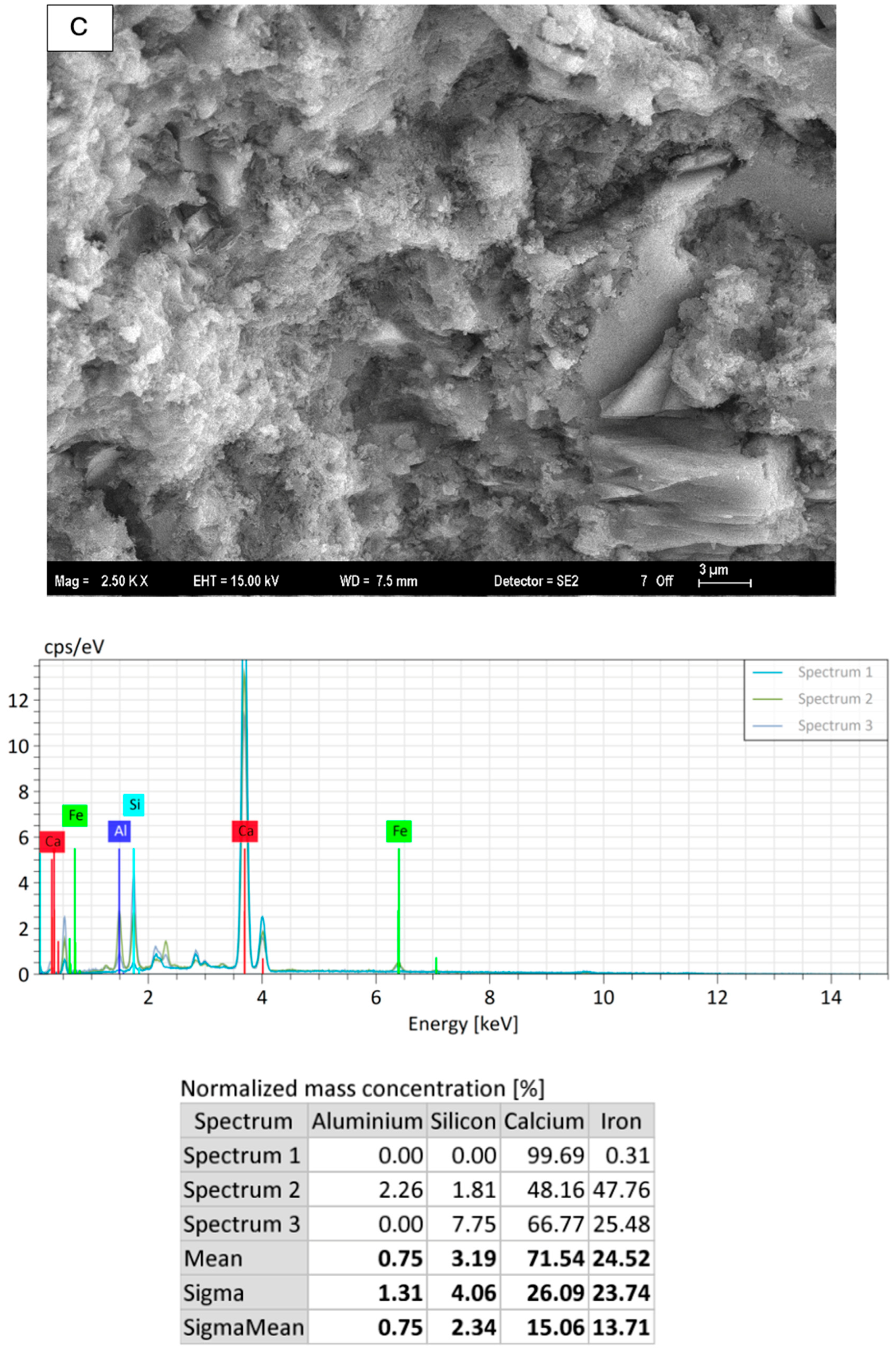
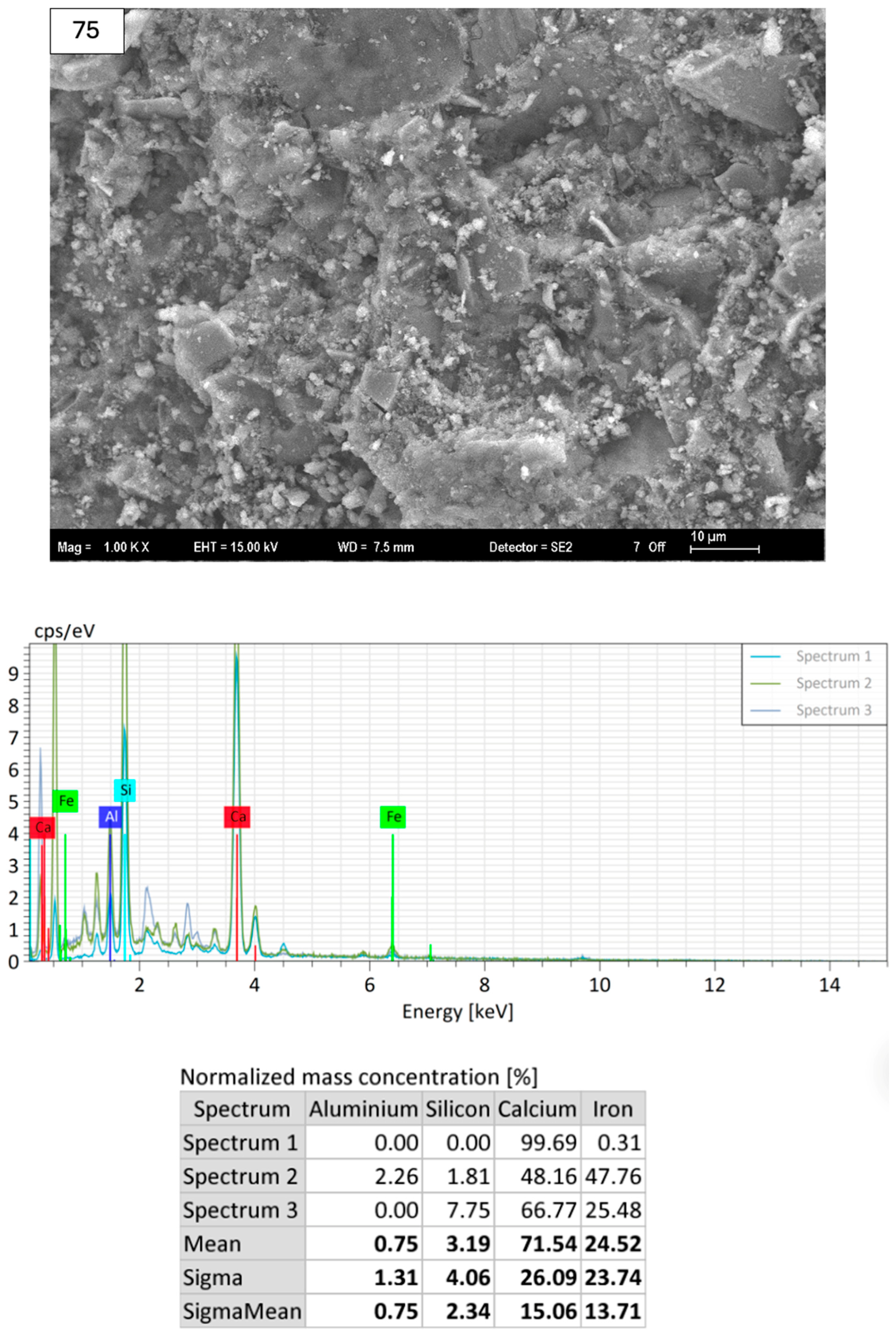
The SEM and EDS analyses presented in Figure 7 clearly reveal the microstructural differences between the control mixture and the 75% BFS-replacement mixture. While the control mixture exhibited a denser, void-free, and well-bonded structure, the 75% BFS-replacement mixture exhibited significant voids and microcracks. This difference is understood to be related to the significantly reduced cement content at the high substitution rate, leading to a decrease in the density of hydration products and weakened matrix integrity.
Figure 7.
SEM image and EDS analysis of mixtures C and 75.
The EDS results show a significant increase in S content in the 75% BFS-replacement mixture. This finding stems from the chemical composition of the BFS and confirms the change in the matrix structure of the mixture. This increase in peak density indicates that secondary reactions supporting C-S-H formation occur to a limited extent at an early age. Therefore, the SEM and EDS findings demonstrate that the compressive strength loss observed with the 75% BFS use has a consistent mechanism not only at the macroscale but also at the microstructural level. These analyses showed that high BFS replacement rates negatively affect the continuity of the binder matrix in 3D printable concrete mixtures, and strength losses become clearly visible at the microscale.
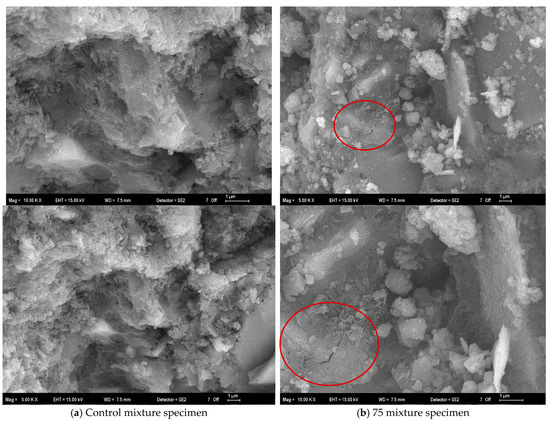
The microstructure images shown in Figure 8 reveal the structural differences between the control mixture and the mixture containing 75% BFS. While the control mixture image shows a denser and more cohesive matrix structure, the mixture containing 75% BFS exhibits noticeable voids and micro-scale segregation. This indicates that at high replacement ratios, the reduction in cement content weakens the integrity of the binder matrix and results in less frequent formation of early-age hydration products. These differences in microstructure are consistent with the significant decrease in compressive strength observed with 75% BFS usage. When evaluating 28-day strength values, no significant change was observed in the control mixture with 25% BFS replacement, while decreases of 19% and 70% were observed at 50% and 75% replacement rates, respectively.
Figure 8.
Microstructure images of mixtures.
It is known that pozzolanic materials contribute to advanced age strength by reacting with calcium hydroxide (CH) formed as a result of cement hydration, thereby increasing C-S-H formation. However, since these reactions proceed more slowly than those of cement, strength losses occur at early ages. Similarly, in a study by Karaduman [48], decreases in both 7-day and 28-day compressive strength values were reported with increasing BFS ratio. Other studies in the literature also support these results [49,50,51].
Each BFS series was evaluated individually to demonstrate the effect of fiber reinforcement. In the control series (0% BFS), the use of 5 mm fibers at a rate of 0.5% resulted in a 17% increase in 7-day strength. This improvement can be explained by the fact that the alignment of the fibers parallel to the extrusion direction contributes to crack bridging. Studies by Nematollahi et al. [52], Chakraborty et al. [53] and Kaya et al. [54] also emphasized that homogeneous fiber distribution positively affects the mechanical properties of cementitious systems. However, increasing the fiber content to 1% resulted in a decrease at both ages.
The use of 10 mm fibers at a rate of 0.5% resulted in a 23% increase in 7-day strength, but no significant change was observed in 28-day strength. Increasing the fiber content to 1% showed no significant change at either age. For 15 mm fibers, using 0.5% did not impact strength, while a decrease was observed at both ages with a 1% usage.
In the series containing 25% BFS, the 7-day strength increased by 5% at a 0.5% use rate of 5 mm fibers, but no change was observed at 28 days. Increasing the fiber content to 1% decreased the 7- and 28-day compressive strength values by 5% and 1%, respectively. The 0.5% use rate of 10 mm fibers resulted in a 9% increase in 7-day compressive strength, while a 3% decrease in 28-day strength was observed. At 1% use, the 7- and 28-day strengths decreased by 10% and 14%, respectively. For the 15 mm fibers, no visible change in 7-day compressive strength was observed with the 0.5% use rate, while an 8% decrease was observed at 28 days. More significant decreases (19% and 14%) were observed at both ages when the use rate was increased to 1%. In the series containing 50% BFS, no significant change was observed at either age with the 0.5% and 1% use rate of 5 mm fibers. A 0.5% use of 10 mm fibers increased 7-day strength by 5% but did not cause a noticeable change in 28-day strength. A 1% use resulted in an 8% decrease in 28-day strength. For 15 mm fibers, a 1% use resulted in a 7- and 28-day strength decrease of 10% and 9%, respectively. In the 75% BFS series, both 0.5% and 1% use of 5- and 10-mm fibers had no significant effect on strength. However, a 10% decrease in 7-day strength was observed with a 0.5% use of 15 mm fibers. When this rate was increased to 1%, the 7- and 28-day strengths decreased by 12% and 16%, respectively.
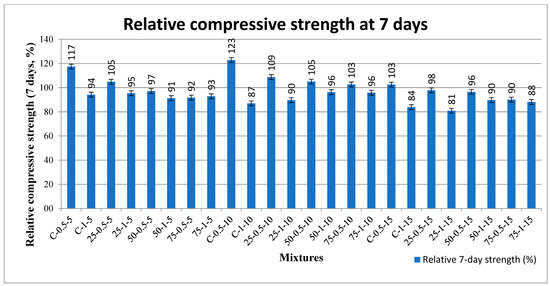
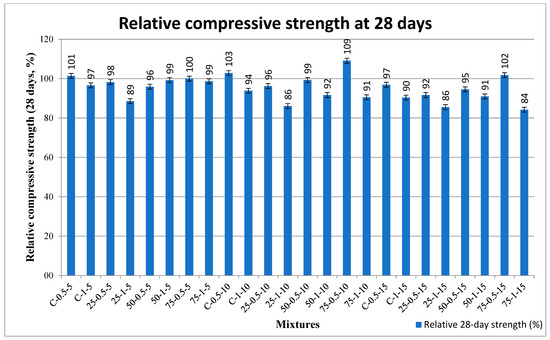
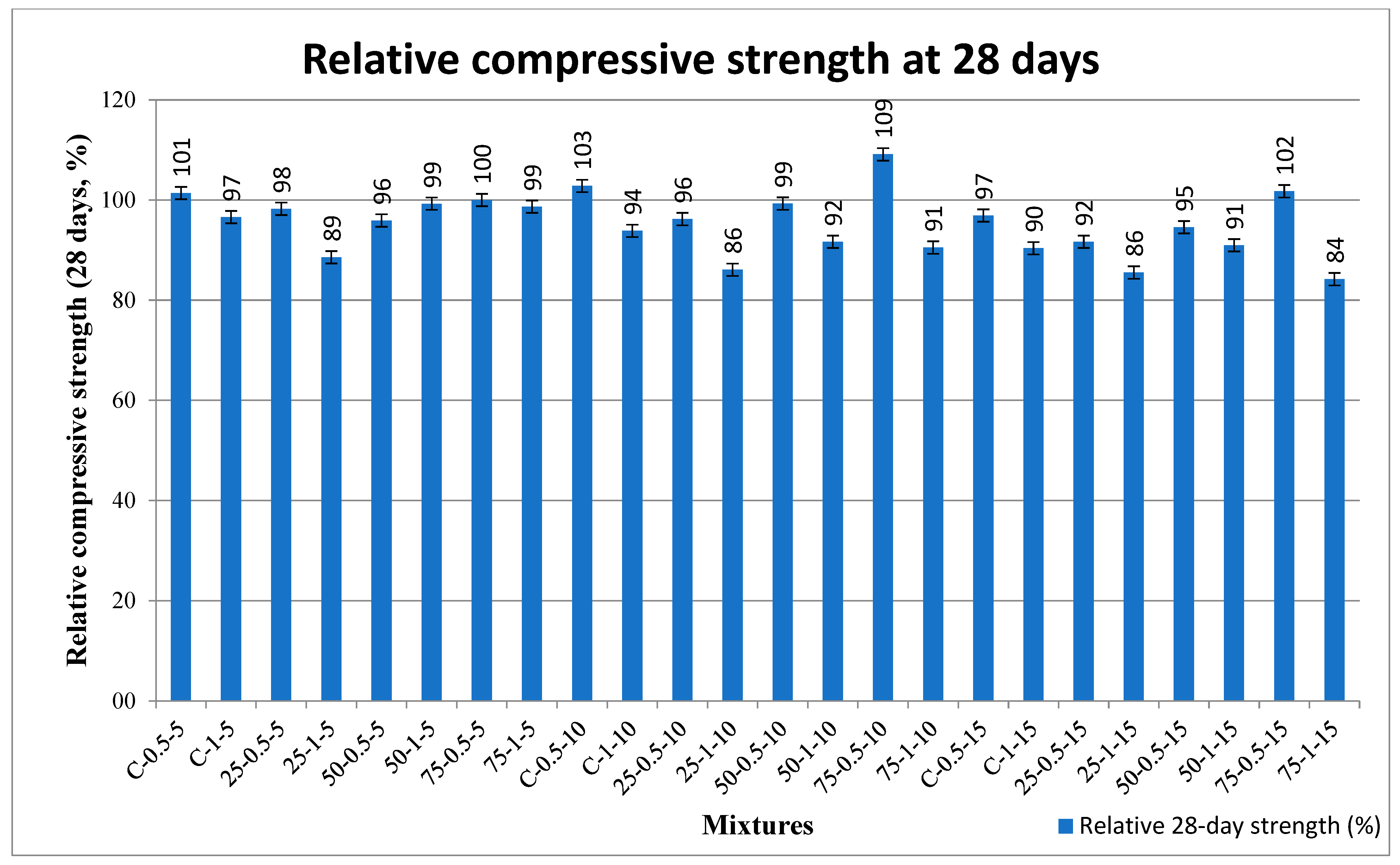
To more clearly demonstrate the effect of fiber reinforcement in the presence of BFS, the relative strength values of mixtures containing fiber compared to those without fiber are presented in Figure 9 and Figure 10. These graphs show that increasing the waste steel fiber usage rate up to 0.5% improves compressive strength values at both ages. This improvement is thought to be related to the fibers limiting lateral deformation of the sample under compressive load [55]. A study by Centonze et al. [56] also reported that using 0.46% waste steel fiber by volume provided a 25% increase in compressive strength. Similar results have been emphasized by many researchers [57,58,59,60].
Figure 9.
7-day relative compressive strength values of fiber-containing specimens compared to those without fibers.
Figure 10.
28-day relative compressive strength values of fiber-containing specimens compared to those without fibers.
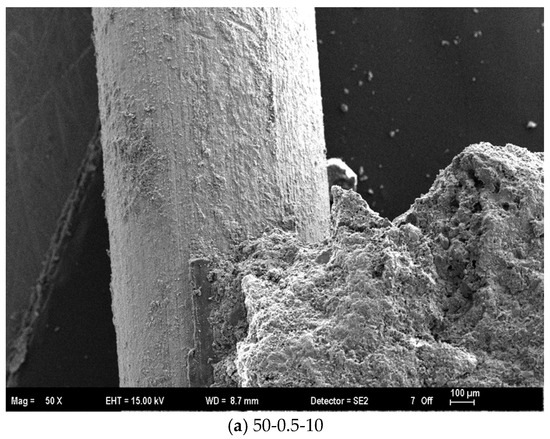
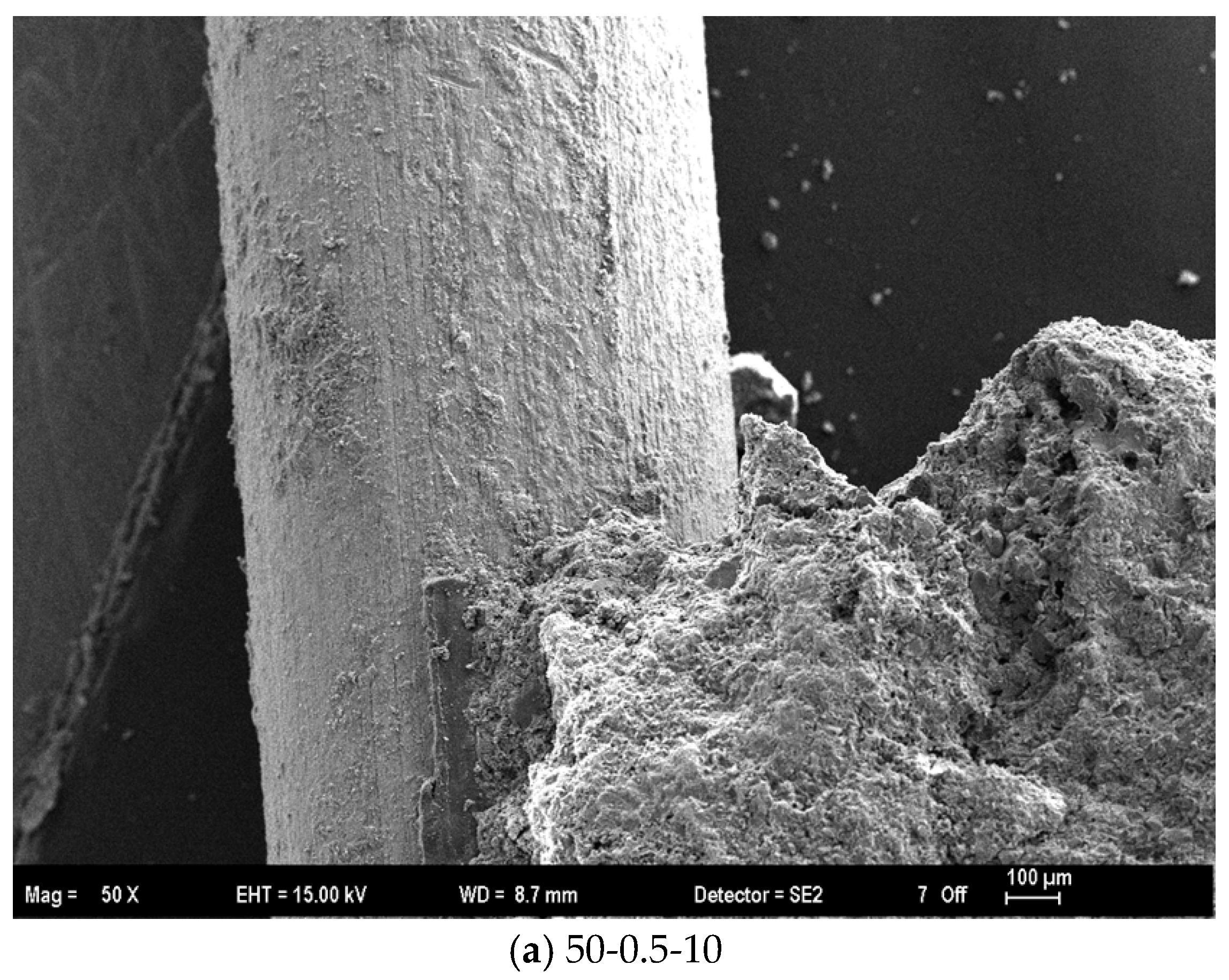
On the other hand, increasing the fiber ratio to 1% resulted in a decrease in the strength values of the mixtures at both ages. This situation is thought to be due to the fibers being distributed more homogeneously in the matrix, thus increasing the void volume [60]. Figure 11 presents microstructure images of two different usage ratios (0.5% and 1%) of 10 mm long waste steel fiber in mixtures containing 50% BFS. The microstructure of the mixture containing 0.5% fiber (Figure 11a) shows that the fibers are more homogeneously distributed within the matrix, void formation is limited, and the structure exhibits a generally more integrated behavior. This is consistent with the increase in compressive strength observed in mixtures with 0.5% fiber content in the strength tests.
Figure 11.
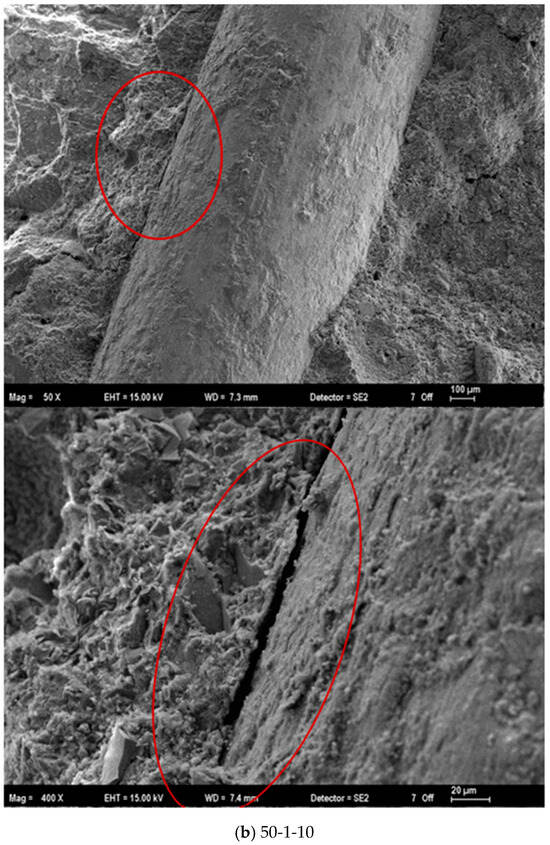
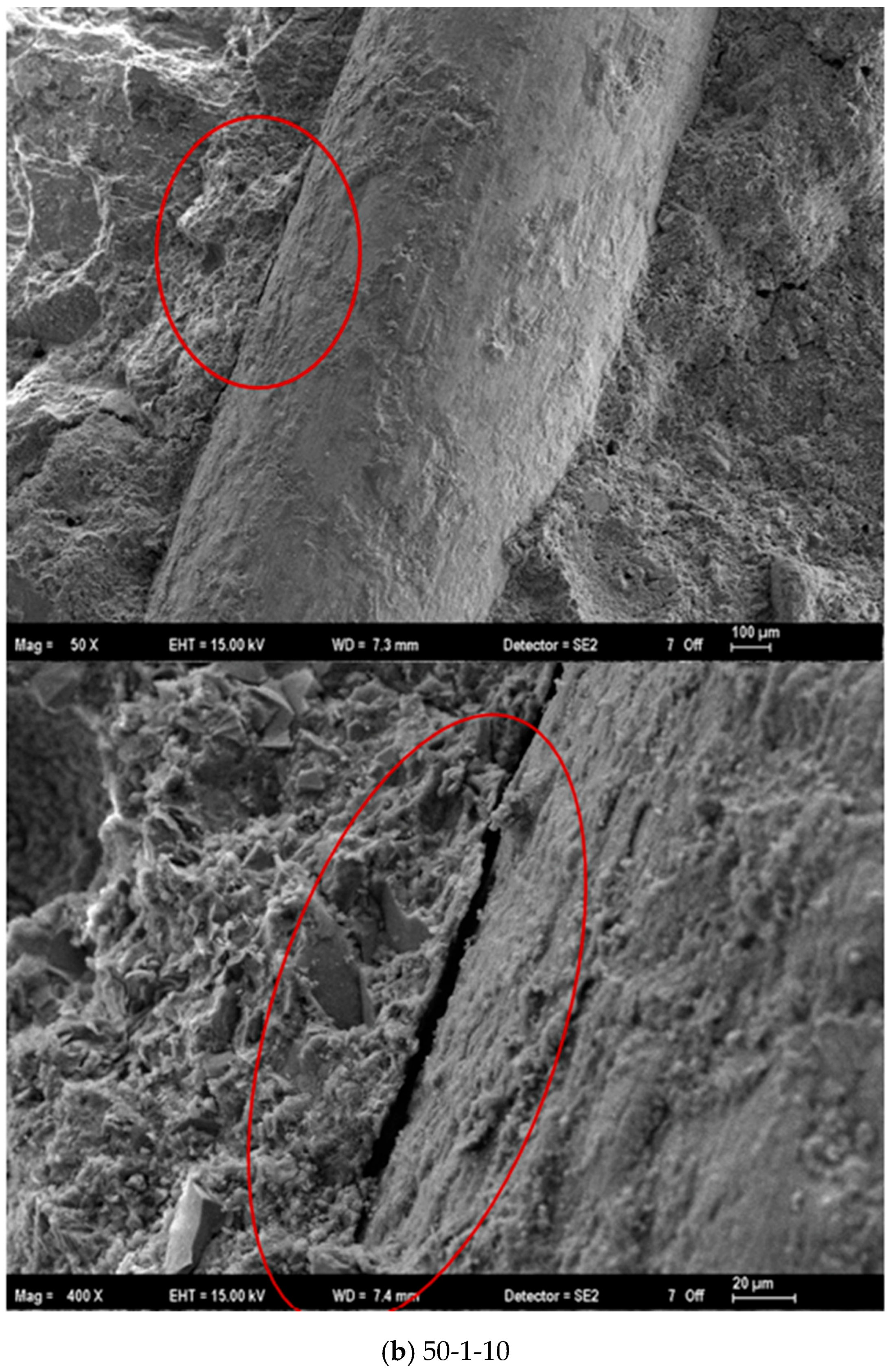
Microstructure images of (a) 50-0.5-10 and (b) 50-1-10 mixtures.
In contrast, in the mixture where the fiber content was increased to 1% (Figure 11b), fiber agglomerations and accompanying microcracks within the matrix became more pronounced. The crack formation in the area circled in red supports the decrease in compressive strength of the mixture with increasing fiber content, as previously stated. The inhomogeneous distribution of fibers and the disruption of matrix continuity negatively affected load transfer, weakening the material’s fracture behavior.
These assessments are consistent with findings in the literature indicating that the use of high amounts of waste steel fiber can negatively affect matrix integrity and lead to a decrease in strength [58,61]. Aghaee et al. [58] reported that the use of 0.75% waste steel fiber by volume caused an 8% decrease in compressive strength. Similarly, it was reported in the literature that fibers in blends containing different types of fiber experience strength losses when they curl or clump [61,62]. Regardless of the fiber and BFS usage ratio, the effect of fiber length on strength was found to be limited. Awal et al. [63] also reported that waste steel fibers of 20-, 30-, and 40-mm length yielded similar strength results. When all the findings were evaluated together, it was determined that the most suitable conditions for using waste steel fiber to increase compressive strength were 0.5% fiber content and 10 mm fiber length.
3.2. Flexural Strength
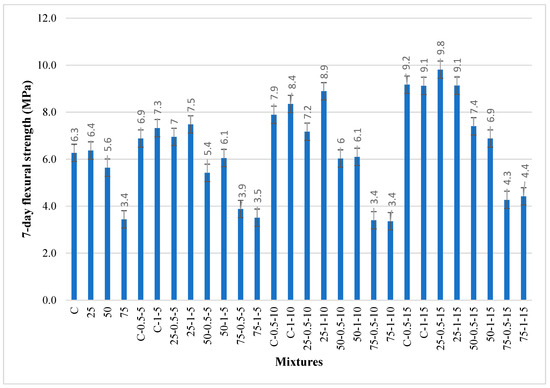
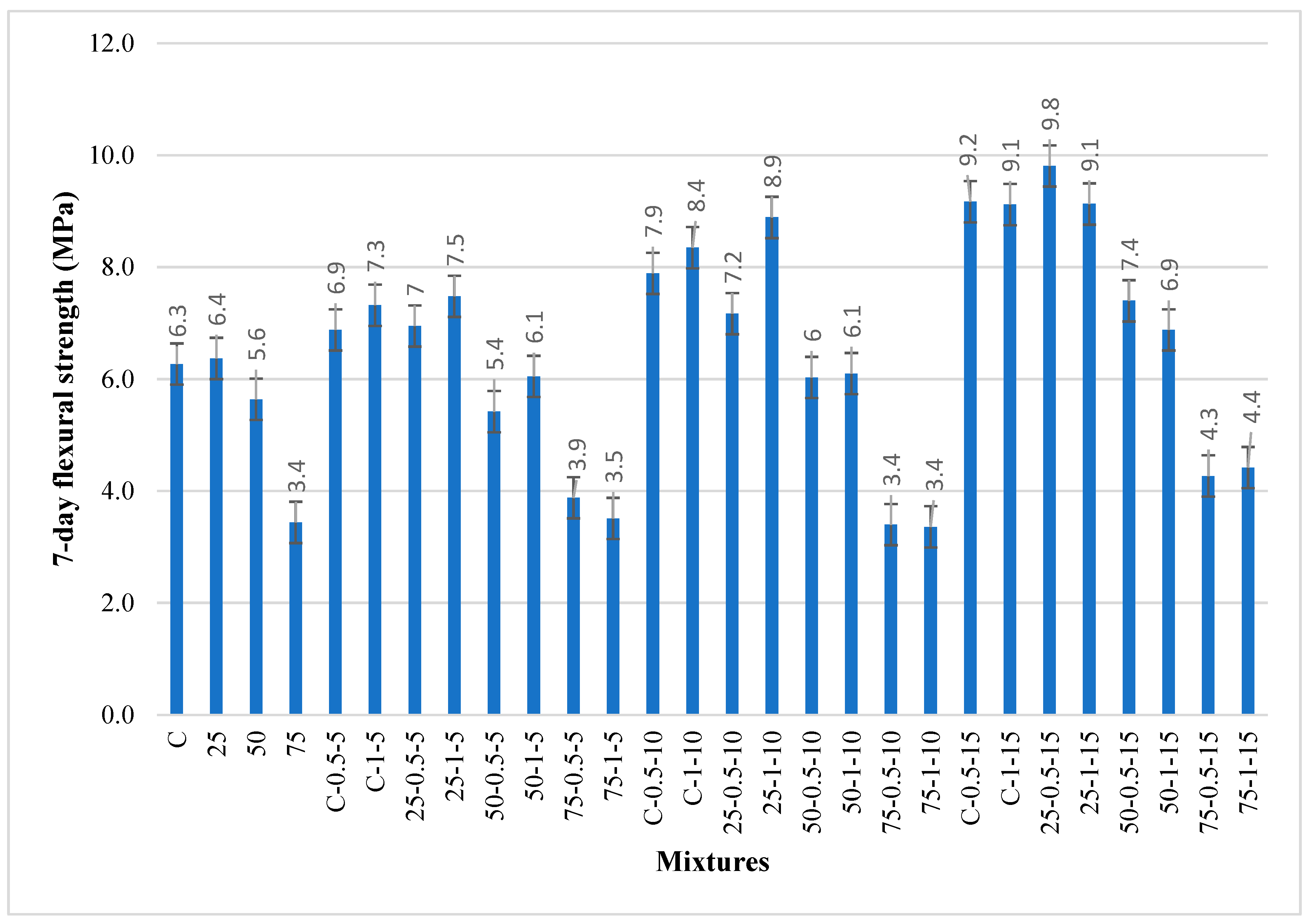
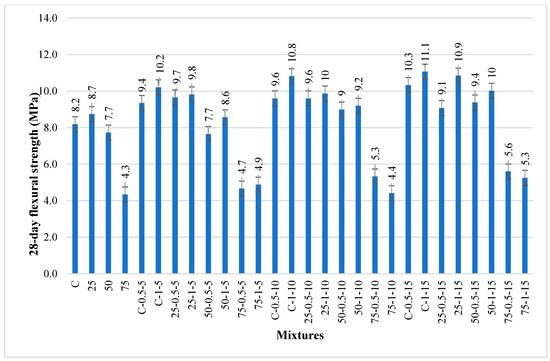
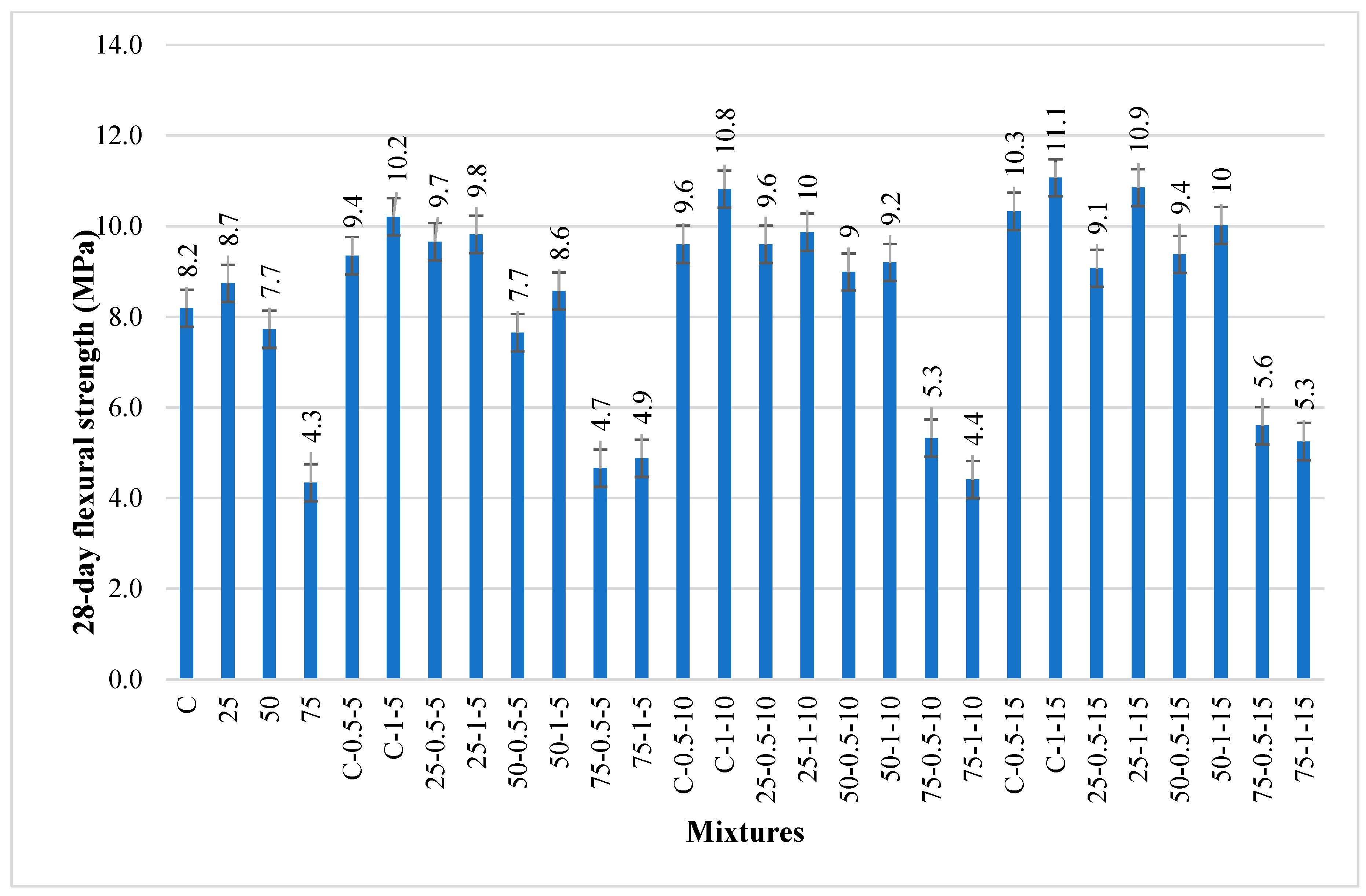
The 7- and 28-day flexural strength values of the produced 3DPC mixtures are presented in Figure 12 and Figure 13. An examination of the table shows that the highest 28-day flexural strength was achieved in the C-1-15 mixture and the lowest in the mixture containing 75% BFS. BFS substitution was found to have a significant effect on the flexural strength of fiber-free mixtures. While 25% BFS substitution did not cause a significant change in 7-day strength compared to the control mixture, it led to a 7% increase in 28-day strength. When the substitution rate was increased to 50%, decreases of 10% and 5% were observed in the 7- and 28-day strengths, respectively. At the 75% BFS substitution rate, significant decreases of approximately 45–47% were observed at both ages. This behavior can be explained by the fact that high rates of BFS substitution slow down the formation rate of C-S-H. This reduction in calcium hydroxide (CH) levels delays the creation of chemical bonds and gel bridges, which are essential for strength in both the dough phase and at the interlayer interface [64]. Therefore, although a partial improvement is observed at 28 days, the flexural strength is delayed until it reaches the control mixture levels. This decreasing trend in flexural strength as BFS substitution increases is similar to the trend observed in compressive strength. In the literature, Jozic et al. [65] reported a decrease in 7-day flexural strength with 40% BFS substitution and a relative improvement at 28 days. Güzelküçük [66] stated that the maximum flexural strength was reached with the combination of 5% fly ash + BFS, while the strength decreased at higher substitution rates. Similarly, Filazi et al. In a study conducted by [67], decreases in 7 and 28-day flexural strengths were observed with a 20% BFS usage rate.
Figure 12.
7-day flexural strength values of 3DPC mixtures.
Figure 13.
28-day flexural strength values of 3DPC mixtures.
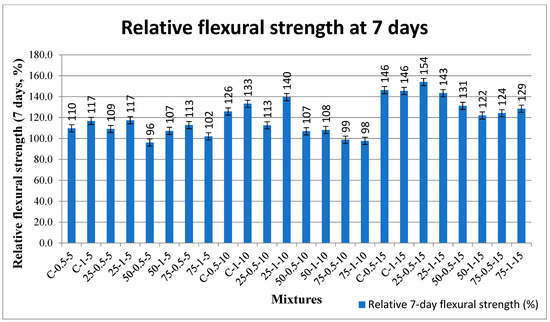
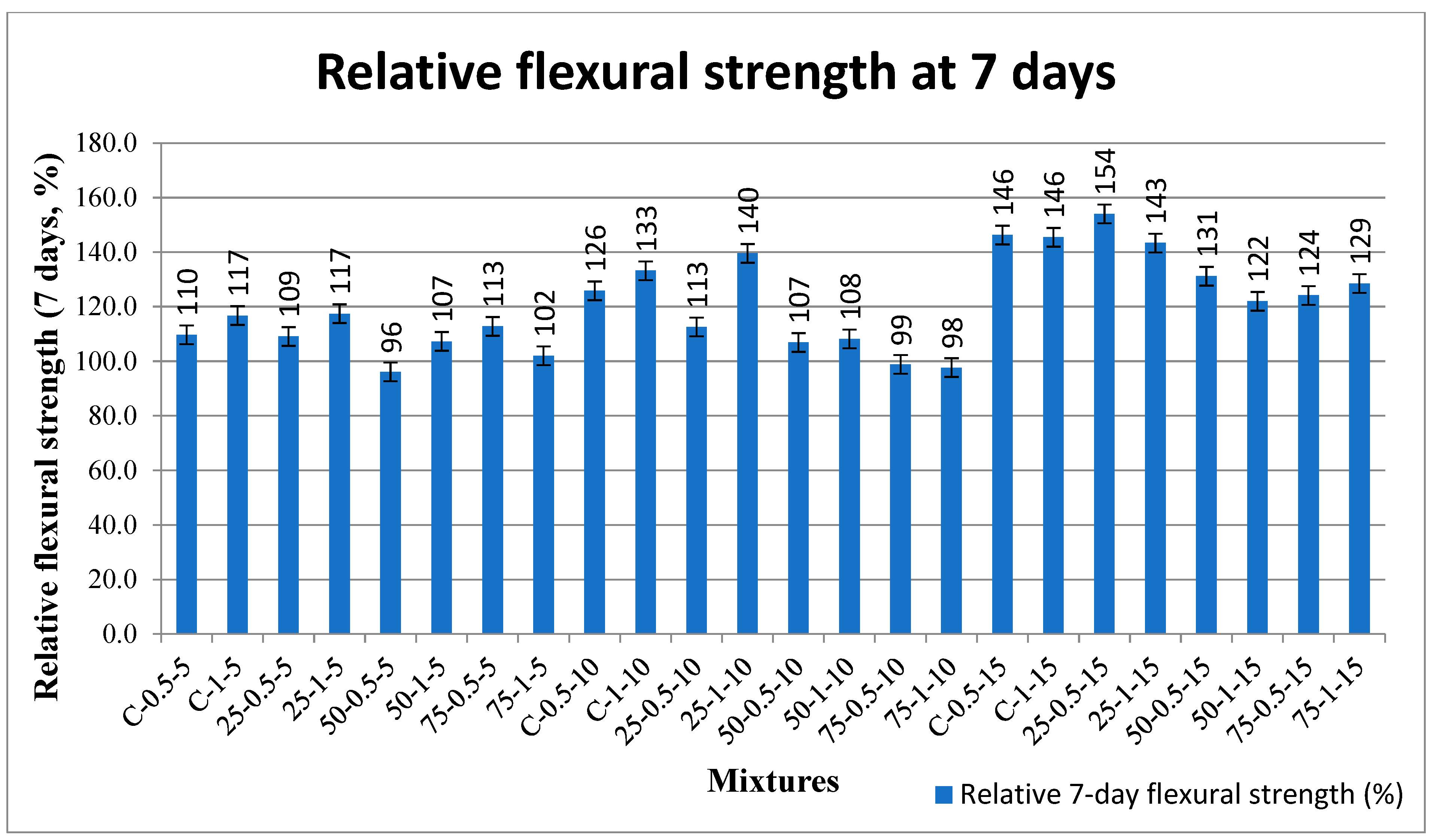
On the other hand, the addition of waste steel fiber caused a loss of strength in BFS. This is clearly seen in Figure 10 and Figure 11, which shows the comparative resistance values of BFS-containing and fiber-reinforced mixtures to fiber changes. For a more detailed examination of the fibers, the BFS series was evaluated within itself. In the BFS change control series, the use of 0.5% 5 mm fibers increased the 7- and 28-day flexural strength changes by 10% and 14%, respectively. When the fiber content was increased to 1%, these increases were 17% and 24%, respectively. For 10 mm fibers, the 0.5% rate increased the unchanged strength at 7 and 28 days by 26% and 17%, respectively, while at 1%, a 33% increase was achieved at both ages. For 15 mm fibers, the increases observed ranged from 26% to 46% compared to the control mixture. In the 25% BFS series, flexural failures of 5 mm fibers at 0.5% and 1% showed increases of 10% and 19% after 7 days, and 10% and 12% after 28 days, respectively, compared to the control mixture. Improvements were achieved in the 10–40% range for both fiber ratios and ages in the blends containing 10 mm fibers. In the 15 mm fibers, a significant 56% increase in 7-day strength was observed with a 0.5% fiber ratio, but this increase reverted to 46% when the fiber ratio was increased to 1%. While there was no significant change in the 0.5% survival rate at 28 days, a 24% increase in the 1% survival rate was observed.
In the 50% BFS series, the 0.5% 5 mm fiber ratio remained unchanged, while the 1% ratio improved by 7% and 11% at 7 and 28 days, respectively. Strength increases with 10 mm fibers at 0.5% and 1% use rates, ranging from 7% to 16%, and from 8% to 19%, respectively. For 15 mm fibers, the 7-day strength increased by 31% at 0.5%, while this increase decreased to 22% when the rate was increased to 1%.
The positive effect of fiber reinforcement was observed even in the lowest strength series containing 75% BFS. A 0.5% increase in 7-day strength and a 12% increase in 28-day strength were achieved with 5 mm fibers. Meanwhile, a 0.5% fiber content with 1% fibers increased 28-day strength by 23%. With 15 mm fiber, a 0.5% fiber content increased the 7- and 28-day strengths by 24% and 29%, respectively. A 1% fiber content resulted in increases of 28% and 21%, respectively.
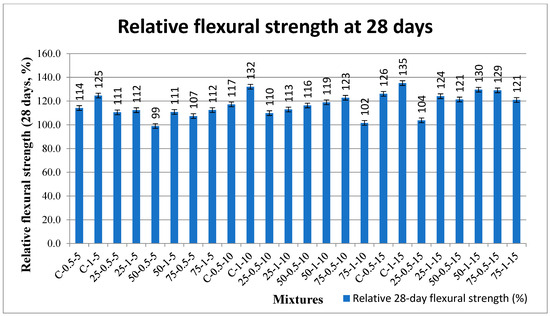
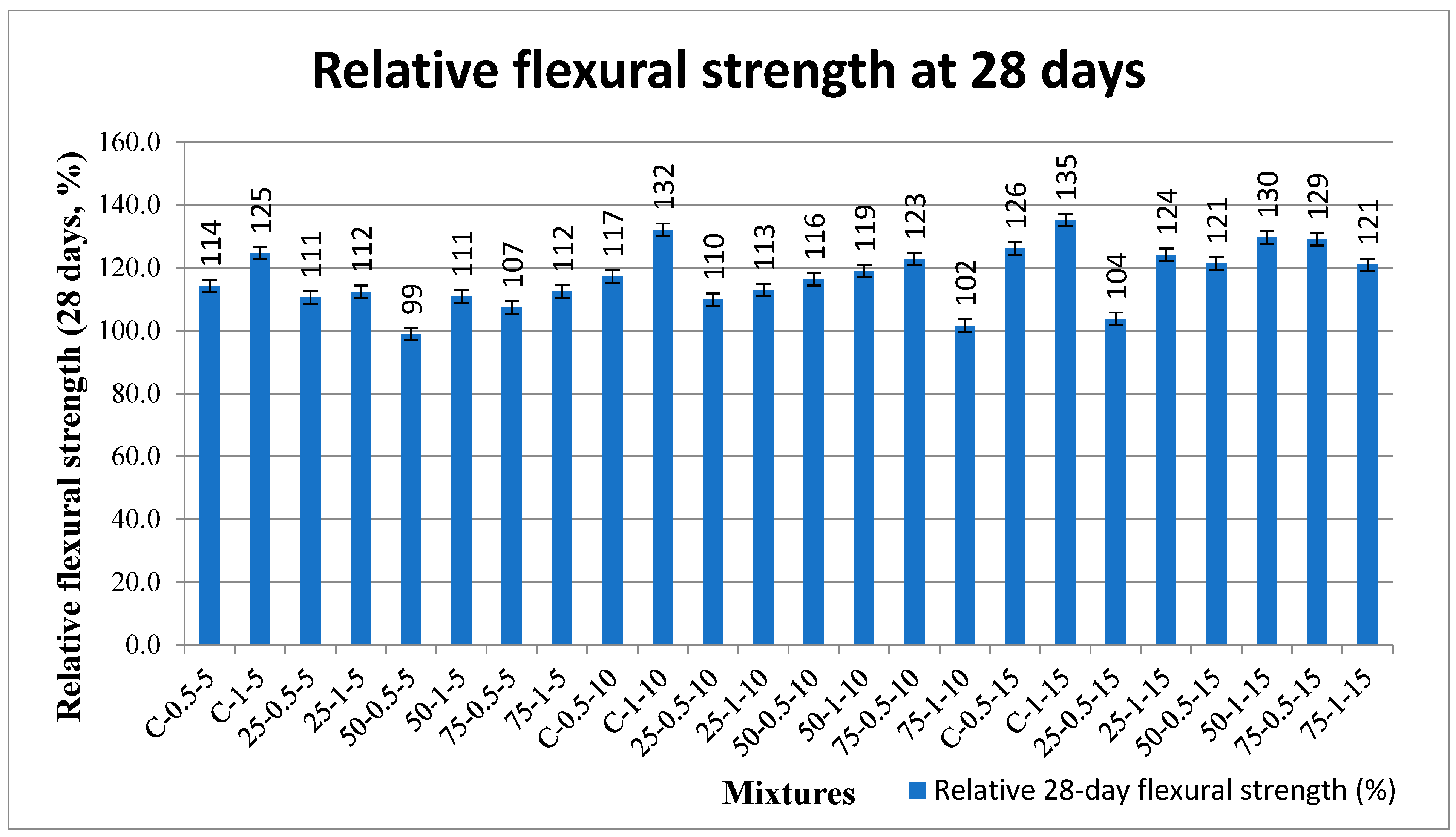
As seen in Figure 14 and Figure 15, regardless of the BFC content, waste steel fiber reinforcement provided a significant increase in the flexural strength of the samples. This finding confirms the well-known positive effect of fiber reinforcement on the mechanical performance of composite materials. However, the results obtained when the fiber content was increased indicate that the strength increase at 1% fiber usage rate was generally lower than that at 0.5% fiber content. This critical situation is associated with microstructural defects such as disruptions in the homogeneous distribution of fibers caused by high fiber concentrations, the potential for agglomeration, and the resulting increase in void volume within the matrix. On the other hand, increasing fiber length generally positively affected the flexural strength. The bridging mechanism provided by the fibers makes a significant contribution to the increase in strength values by successfully arresting crack propagation and limiting microcrack formation. This mechanical improvement was also observed in a recent study conducted on 3D Printed Concrete (3DPC) samples produced with concrete mixes with different contents in different layers; In this study, it was determined that the application of fiber-reinforced 3DPC layers to sub-regions subjected to bending stresses increased flexural performance [68,69]. These findings are consistent with similar studies in the literature [70,71,72,73] and support the results. Consequently, in light of these comprehensive evaluations, the optimum parameters for using waste steel fiber were determined to be 0.5% fiber content and 15 mm fiber length.
Figure 14.
7-day relative flexural strength values of fiber-containing specimens compared to those without fibers.
Figure 15.
28-day relative flexural strength values of fiber-containing specimens compared to those without fibers.
3.3. Surface Moisture
The surface moisture values of the 3D printable concrete mixtures produced in this study are presented in Table 5. A general increasing trend in surface moisture values was observed as the BFS substitution rate increased up to 50%. However, when the substitution rate reached 75%, it was determined that the surface moisture decreased compared to the control mixture. Among all the mixtures examined, the highest surface moisture value belonged to the mixture containing 50% BFS, 5 mm length, and 0.5% fibers, while the lowest value was measured in the 25-1-10 mixture.
Table 5.
Surface moisture values of 3DPC mixtures (kg/m2).
Compared to the mixtures without fibers, the surface moisture of the mixture containing 50% BFS increased by 51% compared to the control mixture, while the mixture containing 75% BFS decreased by 6%. This increase in surface moisture due to the BFS substitution can be attributed to the slower hydration of BFS compared to cement, resulting in a higher amount of free water. The decrease in moisture observed in mixtures containing 75% BFS can be attributed to the addition of silica fume, which is included at 6% by volume. Silica fume has a high specific surface area, allowing it to retain water and consequently reduce the amount of free water present on the surface [74]. Saeidpour et al. [75] determined that samples containing 70% BFS and 10% silica fume retained more water under equal relative humidity conditions compared to pure cement samples. Linderoth et al. [76] reported high moisture retention capacity and low vapor permeability in mixtures with 23–35% fly ash replacement, indicating that the surface area retained moisture for longer periods.
When the effect of waste steel fibers on surface moisture was examined in mixtures containing no BFS, it was observed that increasing the fiber usage rate resulted in very limited changes in moisture values, ranging from 1–5%. Similarly, the change in fiber length remained within a low effect range of 1–7%.
In mixtures containing 25% BFS, changes in fiber content affected surface moisture content by 1–9%, and changes in fiber length by 1–13%. In mixtures containing 50% BFS, these effects were measured at 2–5% and 3–11%, respectively. In mixtures containing 75% BFS, the effects of fiber content and length were quite low, at 0.96–3% and 1.98–6%. Consequently, regardless of the BFS content, the use of waste steel fiber and fiber length did not cause a significant increase in surface moisture values. This is explained by the nearly zero water absorption capacity of metallic steel fibers.
3.4. Drying Shrinkage Performance
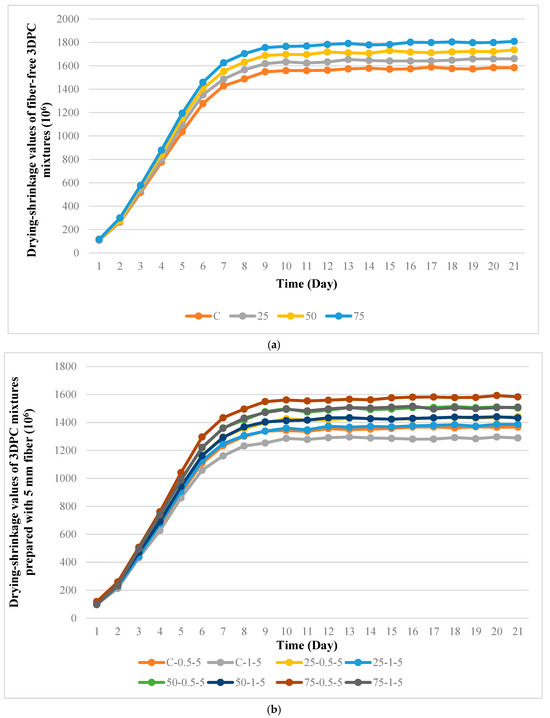
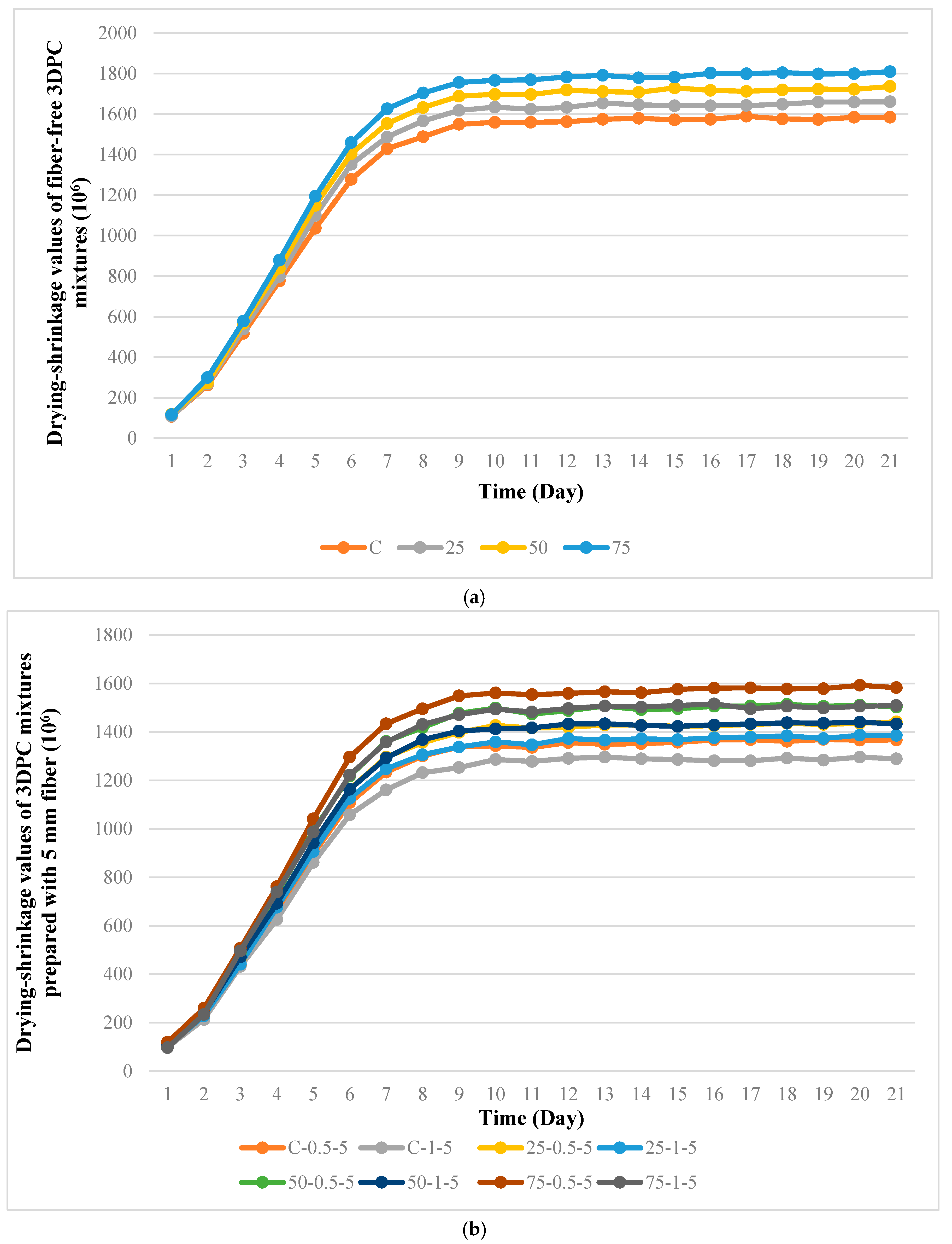
The study examined the 21-day drying shrinkage behavior of the mixtures. The drying shrinkage values of the fiber-free mixtures are shown in Figure 16a. It was observed that the BFS substitution had a significant effect on shrinkage. Compared to the control mixture, the 25% BFS substitution caused an increase in the 7- and 21-day shrinkage values of approximately 6% and 5%, respectively. This increase increased to approximately 10% and 8% on days 7 and 21 with the 50% BFS substitution, while the highest levels were 15% and 12% in the mixtures containing 75% BFS, respectively. Shrinkage in all mixtures increased rapidly during the first 7 days and stabilized from days 10–12 onward.
Figure 16.
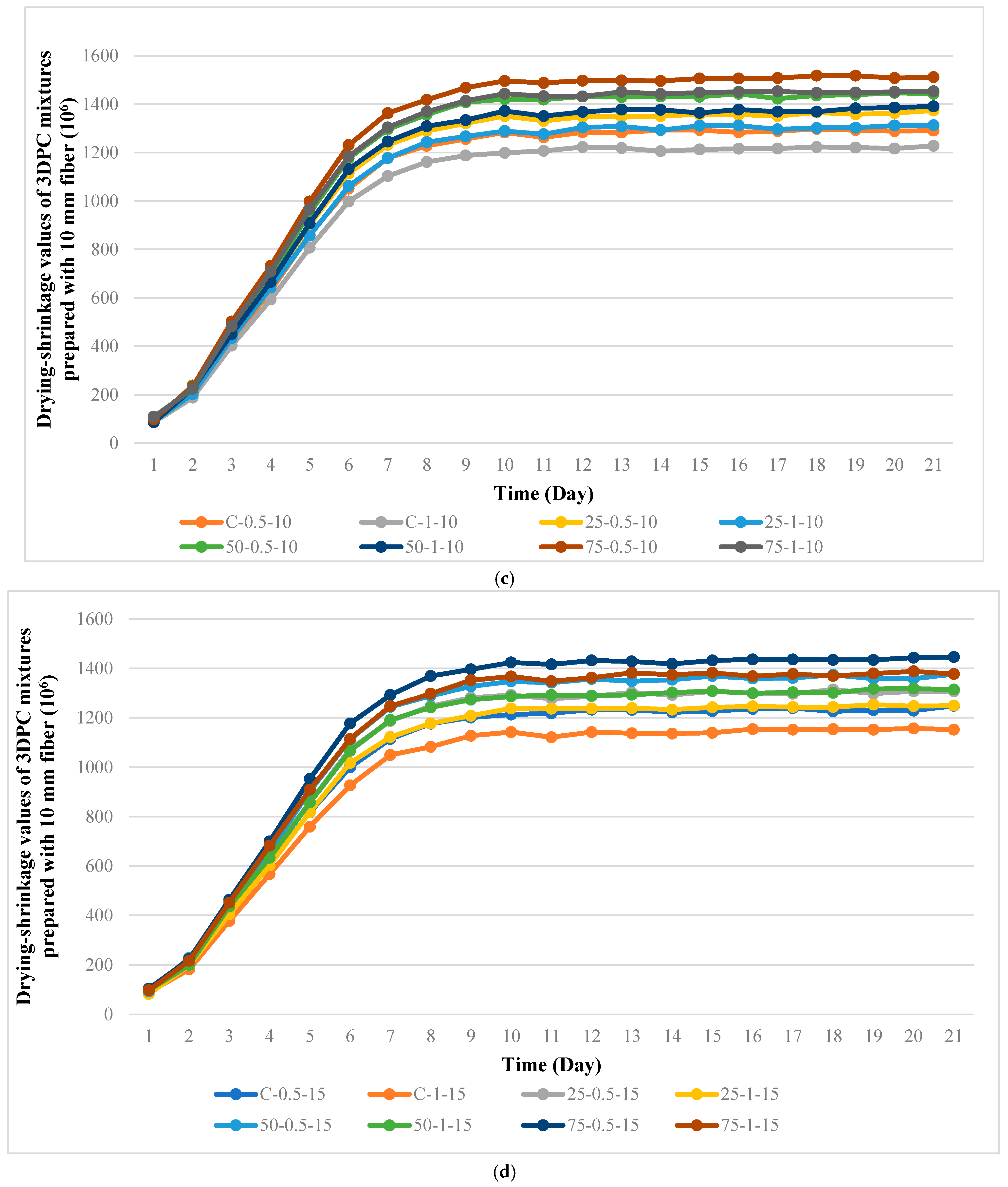
Drying-shrinkage values of 3DPC mixtures (a) Mixture without fiber, (b) containing 5 mm fiber, (c) containing 10 mm fiber and (d) containing 15 mm fiber.
This increase in drying shrinkage values as the BFS substitution rate increases is explained by the increase in the amount of free water not participating in hydration reactions, which evaporates, leading to further volume loss [77]. The significant increase in shrinkage, particularly in mixtures containing 75% BFS, is also attributed to the adsorption of water by the silica fume used in these mixtures, which has a high specific surface area, and the evaporation of this water over time, resulting in additional volume loss [72]. Fulton et al. [78] also reported shrinkage increases of 15% and 50%, respectively, in mixtures with 30% and 70% BFS substitution compared to the control mixture.
To evaluate the effect of using waste steel fiber on shrinkage performance, each fiber length was considered separately.
Shrinkage curves for blends with 5 mm fiber lengths are shown in Figure 16b. In comparison to reference blends without fiber and with the same BFS ratio, a dosage of 0.5% fiber reduced shrinkage on day 21 by approximately 12–14% across all batches. When the fiber ratio was increased to 1%, this reduction reached 16–19%, meaning that an increase in fiber content suppressed shrinkage by an additional 3–5%. Shrinkage values were observed to stabilize after day 10.
The results for blends produced with 10 mm fibers are summarized in Figure 16c. Using 0.5% fiber reduced day 21 shrinkage by an average of 16–19% compared to fiber-free blends at all BFS levels. Increasing the fiber ratio to 1% increased this improvement to 19–23%. The effect became even more pronounced when the fiber length was increased to 15 mm (Figure 16d). A 0.5% fiber dosage resulted in a 20–21% reduction in shrinkage, while a 1% fiber dosage resulted in a 24–27% reduction.
As a result, regardless of the BFS ratio, using waste steel fiber and increasing fiber length consistently improved drying shrinkage. The bridging effect provided by the fibers prevented shrinkage-induced deformations by limiting crack propagation and reducing microcrack formation [79]. The highest performance was achieved with the addition of 1% waste steel fiber at a length of 15 mm to a mixture containing 50% BFS, resulting in a 27% reduction in shrinkage compared to the fiber-free reference. Wang et al. [80] reported that the use of 1% waste steel fiber resulted in a 4.1% reduction in shrinkage, while Bandelj et al. [81] reported that longer steel fibers (30 mm) limited shrinkage more effectively than shorter ones (16 mm).
4. Conclusions
The following findings were obtained from the materials used in the study and the experiments performed:
- The use of waste steel fiber was found to have a significant effect on compressive strength. Increasing the fiber volume fraction to 0.5% improved compressive strength values, while increasing this fraction to 1% resulted in a decrease in strength. A similar trend was observed in water absorption values as in compressive strength.
- It was determined that waste steel fiber reinforcement significantly increased both the 7- and 28-day flexural strength of the mixtures, regardless of the usage rate and length.
- Increasing the BFS replacement rate generally led to an increase in the surface moisture values of the mixtures. However, it was determined that surface moisture decreased in mixtures containing 75% BFS and added silica fume compared to the control mixture.
- It was determined that changes in the waste steel fiber usage rate and fiber length did not have a significant effect on the surface moisture values of the 3DPC mixtures.
- Regardless of the BFC content, the use of waste steel fiber and increasing the fiber length resulted in a significant improvement in the drying shrinkage performance of the mixtures. The bridging effect provided by the fibers limited the formation and propagation of shrinkage cracks, thus contributing to this positive effect.
Author Contributions
Conceptualization, F.E.A., H.G.Ş., T.İ.K. and A.M.; Methodology, F.E.A., H.G.Ş., T.İ.K. and A.M.; Investigation, F.E.A., H.G.Ş., T.İ.K. and A.M.; Writing—original draft, F.E.A., H.G.Ş. and T.İ.K.; Writing—review & editing, A.M. All authors have read and agreed to the published version of the manuscript.
Funding
This research was funded by Bursa Uludağ University Science and Technology Centre (BAP) under grant number FGA-2025-2048.
Data Availability Statement
The data presented in this study are available on request from the corresponding author.
Acknowledgments
The authors would like to thank the Scientific and Technological Research Council of Turkey for supporting project number 124M212, the Bursa Uludag University Science and Technology Center (BAP) for supporting projects number FYL-2025-2130, FDK-2024-1959 and FGA-2025-2048.The first author would like to thank the TUBITAK 2210-A program, the second author the TUBITAK2211-A program, and the fourth author the Turkish Academy of Sciences (TÜBA).
Conflicts of Interest
The authors declare no conflicts of interest.
References
- Tao, Y.; Lesage, K.; Van Tittelboom, K.; Yuan, Y.; De Schutter, G. Twin-pipe pumping strategy for stiffening control of 3D printable concrete: From transportation to fabrication. Cem. Concr. Res. 2023, 168, 107137. [Google Scholar] [CrossRef] [Scilit]
- Xiao, J.; Hou, S.; Duan, Z.; Zou, S. Rheology of 3D printable concrete prepared by secondary mixing of ready-mix concrete. Cem. Concr. Compos. 2023, 138, 104958. [Google Scholar] [CrossRef] [Scilit]
- Dey, D.; Panda, B. An experimental study of thermal performance of 3D printed concrete slabs. Mater. Lett. 2023, 330, 133273. [Google Scholar] [CrossRef] [Scilit]
- Bhattacherjee, S.; Basavaraj, A.S.; Rahul, A.V.; Santhanam, M.; Gettu, R.; Panda, B.; Schlangen, E.; Chen, Y.; Copuroglu, O.; Ma, G.; et al. Sustainable materials for 3D concrete printing. Cem. Concr. Compos. 2021, 122, 104156. [Google Scholar] [CrossRef] [Scilit]
- Şahin, H.G.; Mardani, A. Mechanical properties, durability performance and interlayer adhesion of 3DPC mixtures: A state-of-the-art review. Struct. Concr. 2023, 24, 5481–5505. [Google Scholar] [CrossRef] [Scilit]
- Rahul, A.V.; Santhanam, M. Evaluating the printability of concretes containing lightweight coarse aggregates. Cem. Concr. Compos. 2020, 109, 103570. [Google Scholar] [CrossRef] [Scilit]
- Muthukrishnan, S.; Ramakrishnan, S.; Sanjayan, J. Technologies for improving buildability in 3D concrete printing. Cem. Concr. Compos. 2021, 122, 104144. [Google Scholar] [CrossRef] [Scilit]
- Akgümüş, F.E.; Şahin, H.G.; Mardani, A. Investigation of Waste Steel Fiber Usage Rate and Length Change on Some Fresh State Properties of 3D Printable Concrete Mixtures. Buildings 2025, 15, 3731. [Google Scholar] [CrossRef] [Scilit]
- Ngo, T.D.; Kashani, A.; Imbalzano, G.; Nguyen, K.T.; Hui, D. Additive manufacturing (3D printing): A review of materials, methods, applications and challenges. Compos. Part B Eng. 2018, 143, 172–196. [Google Scholar] [CrossRef] [Scilit]
- Buswell, R.A.; De Silva, W.L.; Jones, S.Z.; Dirrenberger, J. 3D printing using concrete extrusion: A roadmap for research. Cem. Concr. Res. 2018, 112, 37–49. [Google Scholar] [CrossRef] [Scilit]
- Şahin, H.G.; Mardani-Aghabaglou, A. Assessment of materials, design parameters and some properties of 3D printing concrete mixtures; a state-of-the-art review. Constr. Build. Mater. 2022, 316, 125865. [Google Scholar] [CrossRef] [Scilit]
- Hu, J.; Ge, Z.; Wang, K. Influence of cement fineness and water-to-cement ratio on mortar early-age heat of hydration and set times. Constr. Build. Mater. 2014, 50, 657–663. [Google Scholar] [CrossRef] [Scilit]
- Şahin, H.G.; Mardani, A.; Beytekin, H.E. Effect of silica fume utilization on structural build-up, mechanical and dimensional stability performance of fiber-reinforced 3D printable concrete. Polymers 2024, 16, 556. [Google Scholar] [CrossRef] [Scilit]
- Ma, G.; Wang, L.; Ju, Y. State-of-the-art of 3D printing technology of cementitious material—An emerging technique for construction. Sci. China Technol. Sci. 2018, 61, 475–495. [Google Scholar]
- Özen, S.; Durgun, M.Y.; Kobya, V.; Karakuzu, K.; Mardani-Aghabaglou, A. Effect of colemanite ore wastes utilization on fresh properties and compressive strength of cementitious systems. Arab. J. Sci. Eng. 2022, 47, 12873–12887. [Google Scholar] [CrossRef] [Scilit]
- Ananthayya, M.B.; WP, P.K. Effect of partial replacement of sand by iron ore tailing (IOT) and cement by ground granulated blast furnace slag (GGBFS) on the compressive strength of concrete. Esrsa Publ. 2014, 3, 192–197. [Google Scholar]
- Oh, S.; Kim, J.; Song, C.; Choi, S. Effects of fineness and substitution rate of GGBFS on material characteristics of GGBFS-blended cement mortars: Hydration, non-evaporable water, pore structure, mechanical properties, self-desiccation, and autogenous shrinkage. J. Build. Eng. 2024, 92, 109741. [Google Scholar] [CrossRef] [Scilit]
- Miah, M.J.; Huaping, R.; Paul, S.C.; Babafemi, A.J.; Li, Y. Long-term strength and durability performance of eco-friendly concrete with supplementary cementitious materials. Innov. Infrastruct. Solut. 2023, 8, 255. [Google Scholar] [CrossRef] [Scilit]
- Onn, C.C.; Mo, K.H.; Radwan, M.K.; Liew, W.H.; Ng, C.G.; Yusoff, S. Strength, carbon footprint and cost considerations of mortar blends with high volume ground granulated blast furnace slag. Sustainability 2019, 11, 7194. [Google Scholar] [CrossRef] [Scilit]
- Robeyst, N.; Gruyaert, E.; Grosse, C.U.; De Belie, N. Monitoring the setting of concrete containing blast-furnace slag by measuring the ultrasonic p-wave velocity. Cem. Concr. Res. 2008, 38, 1169–1176. [Google Scholar] [CrossRef] [Scilit]
- Zhang, M.H.; Islam, J.; Peethamparan, S. Use of nano-silica to increase early strength and reduce setting time of concretes with high volumes of slag. Cem. Concr. Compos. 2012, 34, 650–662. [Google Scholar] [CrossRef] [Scilit]
- Li, X.; Bizzozero, J.; Hesse, C. Impact of CSH seeding on hydration and strength of slag blended cement. Cem. Concr. Res. 2022, 161, 106935. [Google Scholar] [CrossRef] [Scilit]
- Irshidat, M.; Cabibihan, J.J.; Fadli, F.; Al-Ramahi, S.; Saadeh, M. Waste materials utilization in 3D printable concrete for sustainable construction applications: A review. Emergent Mater. 2025, 8, 1357–1379. [Google Scholar] [CrossRef] [Scilit]
- Xu, Z.; Zhang, D.; Li, H.; Sun, X.; Zhao, K.; Wang, Y. Effect of FA and GGBFS on compressive strength, rheology, and printing properties of cement-based 3D printing material. Constr. Build. Mater. 2022, 339, 127685. [Google Scholar] [CrossRef] [Scilit]
- Mosley, W.H.; Bungey, J.H.; Hulse, R. Reinforced Concrete Design; Macmillan: Basingstoke, UK, 1999. [Google Scholar]
- Freund, N.; Lowke, D. Interlayer reinforcement in shotcrete-3D-printing: The effect of accelerator dosage on the resulting bond behavior of integrated reinforcement bars. Open Conf. Proc. 2022, 1, 83–95. [Google Scholar] [CrossRef] [Scilit]
- Mata Falcón, J.; Gebhard, L.; Lee, M.; Bischof, P. Advances in Structural Applications of Digital Fabrication with Concrete. Vis. Strateg. Reinf. Addit. Manuf. Constr. 2023, 2023, 3. [Google Scholar] [CrossRef] [Scilit]
- Gebhard, L.; Bischof, P.; Anton, A.; Mata-Falcón, J.; Dillenburger, B.; Kaufmann, W. Pre-installed reinforcement for 3D concrete printing. In Proceedings of the RILEM International Conference on Concrete and Digital Fabrication, Loughborough, UK, 27–29 June 2022; Springer International Publishing: Cham, Switzerland, 2022; pp. 430–435. [Google Scholar]
- Bos, F.P.; Ahmed, Z.Y.; Jutinov, E.R.; Salet, T.A. Experimental exploration of metal cable as reinforcement in 3D printed concrete. Materials 2017, 10, 1314. [Google Scholar] [CrossRef] [Scilit] [PubMed]
- Marchment, T.; Sanjayan, J. Mesh reinforcing method for 3D Concrete Printing. Autom. Constr. 2020, 109, 102992. [Google Scholar] [CrossRef] [Scilit]
- Ma, W.; Wang, G.; Zhou, Y.; Xu, Q.; Dai, Y. Polyacrylonitrile fiber reinforced 3D printed concrete: Effects of fiber length and content. J. Build. Eng. 2024, 97, 110869. [Google Scholar] [CrossRef] [Scilit]
- Zeng, J.J.; Hu, X.; Sun, H.Q.; Liu, Y.; Chen, W.J.; Zhuge, Y. Triaxial compressive behavior of 3D printed PE fiber-reinforced ultra-high performance concrete. Cem. Concr. Compos. 2025, 155, 105816. [Google Scholar] [CrossRef] [Scilit]
- Huang, J.; Peng, Z.; Tan, X.; Gong, G.; Yang, H.; Ren, K.; Han, D. Mechanism analysis of the magnetic field assisted 3D printed steel fiber reinforced concrete. Constr. Build. Mater. 2025, 458, 139737. [Google Scholar]
- Björkner, B.; Frick-Engfeldt, M.; Pontén, A.; Zimerson, E. Plastic materials. In Contact Dermatitis; Springer: Berlin/Heidelberg, Germany, 2011; pp. 695–728. [Google Scholar]
- Rajeev, P.; Ramesh, A.; Navaratnam, S.; Sanjayan, J. Using Fibre recovered from face mask waste to improve printability in 3D concrete printing. Cem. Concr. Compos. 2023, 139, 105047. [Google Scholar] [CrossRef] [Scilit]
- Li, G.; Garrick, G.; Eggers, J.; Abadie, C.; Stubblefield, M.A.; Pang, S.S. Waste tire fiber modified concrete. Compos. Part B Eng. 2004, 35, 305–312. [Google Scholar]
- Yildirim, Z.B.; Karacasu, M.; Okur, D.V. Atık Lastik ve Cam Lif ile Modifiye Edilmiş Bitümün Asfalt Betonu Performansına Etkileri. Afyon Kocatepe Üniversitesi Fen Ve Mühendislik Bilim. Derg. 2018, 18, 1019–1027. [Google Scholar]
- Kadela, M.; Małek, M.; Jackowski, M.; Kunikowski, M.; Klimek, A.; Dudek, D.; Rośkowicz, M. Recycling of tire-derived fiber: The contribution of steel cord on the properties of lightweight concrete based on perlite aggregate. Materials 2023, 16, 2124. [Google Scholar] [CrossRef] [Scilit]
- Michalik, A.; Chyliński, F.; Bobrowicz, J.; Pichór, W. Effectiveness of concrete reinforcement with recycled tyre steel fibres. Materials 2022, 15, 2444. [Google Scholar] [CrossRef] [Scilit]
- Gholami, E.; Afshin, H.; Sharghi, M.; Charkhtab Basim, M. The effect of tire-recycled steel fibers on the mechanical, environmental, and economic performance of ultra-high performance and ordinary concretes under steam curing conditions. J. Mater. Civ. Eng. 2023, 35, 04023264. [Google Scholar] [CrossRef] [Scilit]
- Zeybek, Ö.; Özkılıç, Y.O.; Çelik, A.İ.; Deifalla, A.F.; Ahmad, M.; Sabri Sabri, M.M. Performance evaluation of fiber-reinforced concrete produced with steel fibers extracted from waste tire. Front. Mater. 2022, 9, 105712. [Google Scholar] [CrossRef] [Scilit]
- EN 1097-6:2022; Tests for Mechanical and Physical Properties of Aggregates—Part 6: Determination of Particle Density and Water Absorption. European Committee for Standardization (CEN): Brussels, Belgium, 2022.
- Şahin, H.G.; Kaya, Y.; Akgümüş, F.E.; Mardani, N.; Mardani, A.; Assaad, J.; Hamad, B. Degradation of mechanical properties of 3D fiber reinforced printed concrete mixtures exposed to elevated temperatures. Case Stud. Constr. Mater. 2025, 22, e04506. [Google Scholar] [CrossRef] [Scilit]
- TS EN 196-1:2016; Cement Testing Methods—Part 1: Determination of Strength. Turkish Standards Institute (TSE): Ankara, Türkiye, 2016.
- Sanjayan, J.G.; Nematollahi, B.; Xia, M.; Marchment, T. Effect of surface moisture on inter-layer strength of 3D printed concrete. Constr. Build. Mater. 2018, 172, 468–475. [Google Scholar] [CrossRef] [Scilit]
- Altun, M.G.; Özen, S.; Mardani-Aghabaglou, A. Effect of side chain length change of polycarboxylate-ether–based high-range water–reducing admixture on properties of cementitious systems containing fly ash. J. Mater. Civ. Eng. 2021, 33, 04021015. [Google Scholar] [CrossRef] [Scilit]
- Kaya, Y.; Kobya, V.; Mardani, A.; Mardani, N.; Beytekin, H.E. Effect of grinding conditions on clinker grinding efficiency: Ball size, mill rotation speed, and feed rate. Buildings 2024, 14, 2356. [Google Scholar] [CrossRef] [Scilit]
- Karaduman, O. The Survey of the Effects of Blast Furnace Slag on the Performance of Concrete and the Permeability of Chlorine. Master’s Dissertation, Civil Engineering Department, Engineering Faculty, Sakarya University, Sakarya, Turkey, 2010. [Google Scholar]
- Yang, H.M.; Kwon, S.J.; Myung, N.V.; Singh, J.K.; Lee, H.S.; Mandal, S. Evaluation of strength development in concrete with ground granulated blast furnace slag using apparent activation energy. Materials 2020, 13, 442. [Google Scholar] [CrossRef] [Scilit] [PubMed]
- Siddique, S.; Kim, H.; Jang, J.G. Properties of high-volume slag cement mortar incorporating circulating fluidized bed combustion fly ash and bottom ash. Constr. Build. Mater. 2021, 289, 123150. [Google Scholar] [CrossRef] [Scilit]
- Liang, M.; Zhang, Y.; He, S.; Chen, Y.; Schlangen, E.; Šavija, B. On the chemo-mechanical evolution process of high-volume slag cement paste. Constr. Build. Mater. 2023, 400, 132891. [Google Scholar] [CrossRef] [Scilit]
- Nematollahi, B.; Vijay, P.; Sanjayan, J.; Nazari, A.; Xia, M.; Naidu Nerella, V.; Mechtcherine, V. Effect of polypropylene fibre addition on properties of geopolymers made by 3D printing for digital construction. Materials 2018, 11, 2352. [Google Scholar] [CrossRef] [Scilit]
- Chakraborty, S.; Kundu, S.P.; Roy, A.; Basak, R.K.; Adhikari, B.; Majumder, S.B. Improvement of the mechanical properties of jute fibre reinforced cement mortar: A statistical approach. Constr. Build. Mater. 2013, 38, 776–784. [Google Scholar] [CrossRef] [Scilit]
- Kaya, Y.; Biricik, Ö.; Bayqra, S.H.; Mardani, A. Effect of fibre type and utilisation rate on dimensional stability and frost resistance of pavement mortar mixture. Int. J. Pavement Eng. 2023, 24, 2154351. [Google Scholar] [CrossRef] [Scilit]
- Aramburu, A.; Calderon-Uriszar-Aldaca, I.; Puente, I. 3D printing effect on the compressive strength of concrete structures. Constr. Build. Mater. 2022, 354, 129108. [Google Scholar] [CrossRef] [Scilit]
- Centonze, G.; Leone, M.; Aiello, M.A. Steel fibers from waste tires as reinforcement in concrete: A mechanical characterization. Constr. Build. Mater. 2012, 36, 46–57. [Google Scholar] [CrossRef] [Scilit]
- Han, X.; Yan, J.; Liu, M.; Huo, L.; Li, J. Experimental study on large-scale 3D printed concrete walls under axial compression. Autom. Constr. 2022, 133, 103993. [Google Scholar] [CrossRef] [Scilit]
- Aghaee, K.; Yazdi, M.A.; Tsavdaridis, K.D. Investigation into the mechanical properties of structural lightweight concrete reinforced with waste steel wires. Mag. Concr. Res. 2015, 67, 197–205. [Google Scholar] [CrossRef] [Scilit]
- Mardani-Aghabaglou, A.; Yüksel, C.; Hosseinnezhad, H.; Ramyar, K. Performance of steel micro fiber reinforced mortar mixtures containing plain, binary and ternary cementitious systems. J. Green Build. 2016, 11, 109–130. [Google Scholar] [CrossRef] [Scilit]
- Skarżyński, Ł.; Suchorzewski, J. Mechanical and fracture properties of concrete reinforced with recycled and industrial steel fibers using Digital Image Correlation technique and X-ray micro computed tomography. Constr. Build. Mater. 2018, 183, 283–299. [Google Scholar] [CrossRef] [Scilit]
- Poon, C.S.; Shui, Z.H.; Lam, L. Compressive behavior of fiber reinforced high-performance concrete subjected to elevated temperatures. Cem. Concr. Res. 2004, 34, 2215–2222. [Google Scholar] [CrossRef] [Scilit]
- Weng, Y.; Lu, B.; Li, M.; Liu, Z.; Tan, M.J.; Qian, S. Empirical models to predict rheological properties of fiber reinforced cementitious composites for 3D printing. Constr. Build. Mater. 2018, 189, 676–68559. [Google Scholar] [CrossRef] [Scilit]
- Awal, A.A.A.A.A.; Yee, L.L.; Hossain, M.Z. Fresh and hardened properties of concrete containing steel fibre from recycled tire. Malays. J. Civ. Eng. 2013, 25. [Google Scholar] [CrossRef] [Scilit]
- Joseph, S.; Cizer, Ö. Hydration of hybrid cements at low temperatures: A study on portland cement-blast furnace slag—Na2SO4. Materials 2022, 15, 1914. [Google Scholar] [CrossRef] [Scilit]
- Jozić, D.; Ljubičić, B.; Petrović, A.; Čović, A.; Juradin, S. The influence of GGBFS as an additive replacement on the kinetics of cement hydration and the mechanical properties of cement mortars. Buildings 2023, 13, 1960. [Google Scholar] [CrossRef] [Scilit]
- Güzelküçük, S. Microstructural Investigation of the Effect of Sulphate on Cement Mortars with Composite Puzolans. Master’s Dissertation, Civil Engineering Department, Engineering Faculty, Kırıkkale University, Kırıkkale, Turkey, 2014. [Google Scholar]
- Filazi, A.; Tortuk, S.; Pul, M. Determination of optimum blast furnace slag ash and hemp fiber ratio in cement mortars. Structures 2023, 57, 105024. [Google Scholar] [CrossRef] [Scilit]
- Sun, H.Q.; Zeng, J.J.; Hong, G.Y.; Zhuge, Y.; Liu, Y.; Zhang, Y. 3D-printed functionally graded concrete plates: Concept and bending behavior. Eng. Struct. 2025, 327, 119551. [Google Scholar] [CrossRef] [Scilit]
- Sun, H.Q.; Zeng, J.J.; Xie, S.S.; Xia, J.R.; Yu, S.; Zhuge, Y. Mechanical and microstructural characterization of interlayer bonding in multi-material 3D-Printed concrete. Cem. Concr. Compos. 2026, 165, 106308. [Google Scholar] [CrossRef] [Scilit]
- Ma, G.; Li, Z.; Wang, L.; Wang, F.; Sanjayan, J. Mechanical anisotropy of aligned fiber reinforced composite for extrusion-based 3D printing. Constr. Build. Mater. 2019, 202, 770–783. [Google Scholar] [CrossRef] [Scilit]
- Mashrei, M.A.; Sultan, A.A.; Mahdi, A.M. Effects of polypropylene fibers on compressive and flexural strength of concrete material. Int. J. Civ. Eng. Technol. 2018, 9, 2208–2217. [Google Scholar]
- Guo, Z.; Zhuang, C.; Li, Z.; Chen, Y. Mechanical properties of carbon fiber reinforced concrete (CFRC) after exposure to high temperatures. Compos. Struct. 2021, 256, 113072. [Google Scholar] [CrossRef] [Scilit]
- Muthukumarana, T.V.; Arachchi, M.A.V.H.M.; Somarathna, H.M.C.C.; Raman, S.N. A review on the variation of mechanical properties of carbon fibre-reinforced concrete. Constr. Build. Mater. 2023, 366, 130173. [Google Scholar]
- Yazıcı, H. The effect of silica fume and high-volume Class C fly ash on mechanical properties, chloride penetration and freeze–thaw resistance of self-compacting concrete. Constr. Build. Mater. 2008, 22, 456–462. [Google Scholar] [CrossRef] [Scilit]
- Saeidpour, M.; Wadsö, L. Moisture equilibrium of cement based materials containing slag or silica fume and exposed to repeated sorption cycles. Cem. Concr. Res. 2015, 69, 88–95. [Google Scholar] [CrossRef] [Scilit]
- Linderoth, O.; Johansson, P.; Wadsö, L. Development of pore structure, moisture sorption and transport properties in fly ash blended cement-based materials. Constr. Build. Mater. 2020, 261, 120007. [Google Scholar] [CrossRef] [Scilit]
- Saluja, S.; Kaur, K.; Goyal, S.; Bhattacharjee, B. Assessing the effect of GGBS content and aggregate characteristics on drying shrinkage of roller compacted concrete. Constr. Build. Mater. 2019, 201, 72–80. [Google Scholar] [CrossRef] [Scilit]
- Fulton, F.S.; Van Aardt, J.H.P.; Visser, S. The Properties of Portland Cements Containing Milled Granulated Blastfurnace Slag; The Portland Cement Institute: Johannesburg, South Africa, 1974. [Google Scholar]
- Mardani-Aghabaglou, A.; Karakuzu, K.; Kobya, V.; Hatungimana, D. Durability performance and dimensional stability of road concrete containing dry-shake surface hardener admixture. Constr. Build. Mater. 2021, 274, 121789. [Google Scholar] [CrossRef] [Scilit]
- Wang, J.; Zhao, C.; Li, Q.; Song, G.; Hu, Y. The synergistic effect of recycled steel fibers and rubber aggregates from waste tires on the basic properties, drying shrinkage, and pore structures of cement concrete. Constr. Build. Mater. 2025, 470, 140574. [Google Scholar] [CrossRef] [Scilit]
- Bandelj, B.; Saje, D.; Šušteršič, J.; Lopatič, J.; Saje, F. Free shrinkage of high performance steel fiber reinforced concrete. J. Test. Eval. 2011, 39, 166–176. [Google Scholar] [CrossRef] [Scilit]

Disclaimer/Publisher’s Note: The statements, opinions and data contained in all publications are solely those of the individual author(s) and contributor(s) and not of MDPI and/or the editor(s). MDPI and/or the editor(s) disclaim responsibility for any injury to people or property resulting from any ideas, methods, instructions or products referred to in the content. |
© 2025 by the authors. Licensee MDPI, Basel, Switzerland. This article is an open access article distributed under the terms and conditions of the Creative Commons Attribution (CC BY) license (https://creativecommons.org/licenses/by/4.0/).