Article

Deconstructing Seokguram Grotto: Revisiting the Schematic Design

1
#314 Architecture Department Office, Asan Engineering Building, Ewha Womans University, 52, Ewhayeodae-gil, Seodaemun-gu, Seoul 03760, Republic of Korea
2
#1 Design Division, Haeahn Architecture, 236, Bongeusa-ro, Gangnam-gu, Seoul 06135, Republic of Korea
*
Author to whom correspondence should be addressed.
Effective 1 March 2026, the author will be affiliated with the Department of Architecture, Ajou University, Suwon 16499, Republic of Korea.
Buildings 2025, 15(24), 4546; https://doi.org/10.3390/buildings15244546
Submission received: 9 November 2025 / Revised: 8 December 2025 / Accepted: 10 December 2025 / Published: 16 December 2025

Abstract

While the Seokguram Grotto is celebrated in art history for its sculptural mastery, its architectural identity as a constructed stone dome—distinct from excavated caves—remains under-researched. Existing studies have largely relied on geometric analyses based on irrational numbers, which lack a historical basis. This study aims to reconstruct the logical design process of Seokguram by distinguishing between architectural planning and the realities of construction. Methodologically, we employ the concept of design constraints to analyze the grotto’s dimensional system and scene perception. We identify external constraints, such as the recorded dimensions of the Bodhgaya Buddha and cosmological symbolism (rectangular antechamber and circular posterior), and internal constraints, specifically the need for complete visual coordination between the Buddha’s head and the detached nimbus stone. Our analysis reveals that the designers negotiated these constraints through an iterative process. Key findings demonstrate that the pedestal’s height and position were adjusted, and the arched headstone was strategically designed as a threshold to ensure the perfect alignment of the Buddha and the nimbus from the viewer’s perspective. Furthermore, contrary to previous hypotheses proposing the use of irrational numbers (e.g., √2), this study proves that the grotto follows a proportional system based on integer modules (with 12 cheok as the main module) and binary division, which facilitated practical construction. In conclusion, Seokguram is not merely a product of aesthetic intuition but a masterpiece of rational design. In contrast to the vertical transcendence of Western Cathedrals, Seokguram Grotto embodies tectonics of empathy, prioritizing human-scale intimacy and visual harmony.

1. Introduction

1.1. Known Facts

The Buddhist grottoes originated in India, developed extensively in China, and then passed on to the Korean Peninsula. In the middle of the 8th century, when religious devotion to Buddhism was high during the prosperity of the Unified Silla (新羅), Seokbulsa Temple (石佛寺) was established on Mt. Toham (土含) in Gyeongju (慶州). The Seokguram Grotto (石窟庵) was built as a Buddhist Hall of the Seokbulsa Temple associated with the Bulguksa Temple (佛國寺). The stone sculptures and dome structure of the Seokguram Grotto reveal the highest art, architecture, and craftsmanship of the Unified Silla. Due to the extraordinary quality of the design and craftsmanship, scholars often postulate that the Seokguram Grotto represents the highest level of artistry in developing the stone-built Buddhist grotto. In 1995, UNESCO designated the Seokguram Grotto a World Cultural Heritage Site along with the Bulguksa Temple, the first site on the Korean Peninsula, designated under criteria representing a masterpiece of human creative genius and an outstanding architectural ensemble.

1.2. Literature Review & Research Objectives

At first glance, the Seokguram Grotto may appear to be an excavated cave, but it is a stone building. The builders covered the architectural structure with earth to make the exterior look like a cave. Because the stone of Mt. Toham is hard granite, excavation was not feasible; instead, the grotto was constructed by assembling stone blocks to create the intended interior space.
Although it is a building, precedent studies on Seokguram grotto had been mostly done in other fields than architecture. Most of them were in the field of art history and sculpture, represented by researchers such as Pierre Cambon, Woobang Kang, Sooyoung Hwang, Myeongdae Moon, Joohyung Lee, Seonah Choi and Heejeong Kang, because it is a world heritage site with the highest skill of stone sculpture with the theme of Buddhism. Thus, at this juncture it is time to shift the perspective on Seokguram grotto to be based on architectural research to get to know better the whole virtue of Seokguram grotto.
There are some studies that focused on Seokguram grotto with the perspective of architectural planning and design, which are the two most important themes to deal with in the development of architectural schemes. Most of them are focused on finding hidden geometry as a guideline that shaped the plan and section of Seokguram grotto, which can be referred to as schema. In this context, the term ‘schema’ refers to a line drawing used in architectural design, serving a function similar to a sketch in painting, encompassing everything from rough sketches to precise drawings. This concept is derived from Gombrich [1] regarding visualization processes in art, and aligns with Hochberg’s (1983) view [2] on the importance of schemas in psychology.
Yoneda Miyoji [3] was the first to initiate a discussion on the geometric principles embedded in the plan and section of Seokguram grotto. He argued that these designs were based on basic geometric forms such as circles, octagons, and rectangles, assuming the use of √2 and √3 in their construction. Mingu Song [4] expanded on this by interpreting the overall schema of the plan and section as being derived from the combination of rectangles with golden ratio proportions. Similarly, Woobang Kang [5] focused primarily on the section and elevation, referencing Jay Hambridge to support the presence of golden ratio proportions in the design.
Cheonwoo Nam [6] took a different approach, reducing the plan to a combination of simple geometric shapes: a circle, an isosceles triangle with its vertex located at the center of the circle, and a rectangle inscribed within the triangle. Unlike other researchers, Nam also emphasized how the overarching geometry was maintained even in construction details. Younghoon Shin [7] analyzed the plan and section using a 3-cheok modular grid, explaining the spatial relationships between major architectural elements.
In more recent work, Salguero-Andujar et al. [8] proposed that the plan could be tiled with 1632 DIN A4 units, a unique perspective on the geometric arrangement. Finally, Jinho Park [9] questioned the use of √2 and √3, arguing that these concepts did not exist in the Korean peninsula in the 8th century. Instead, he interpreted the plan and section through the lens of the gougu rule, a mathematical principle known to exist during that period.
The limitation of these studies is that they focus on the most probable geometry that the builder of the Seokguram Grotto might have envisioned but do not explore the further relationships between the overall dimensions and the detailed measurements of the constructed building itself. Because throughout the process of planning and designing, overall dimension inevitably affects the detailed dimensions of building, this item should be addressed along with overall geometry, or in other words, schema.
Furthermore, existing research overlooks how builders typically envision their structure from various viewpoints—such as its external appearance or the initial impressions upon entry—to refine these dimensional hierarchies. In the case of Seokguram grotto, for instance, the main Buddha statue is distinctly separated from the surrounding round walls and surmounted by a half-dome structure, while the round lotus motif behind the Buddha’s head is uniquely detached. This configuration allows visitors to experience dynamic variations in focal points through a one-point perspective, a feature that sets Seokguram grotto apart from other grottoes in China, India or Middle Asia.
To bridge this gap between theories and the physical realities of construction and visual experience, this research aims to reconstruct the schematic design process of Seokguram Grotto. Specifically, we focus on the following core objectives: (1) To identify the external and internal design constraints that shaped the grotto, particularly regarding the scale of the Buddha and the visual alignment of the nimbus (2) To demonstrate how the arched headstone functions as a visual threshold and why the pedestal height was adjusted within the scene perception; and (3) To verify whether the dimensional system was based on irrational numbers or a construction-friendly integer module system. By addressing these questions, we intend to reveal the logical design negotiation that defines Seokguram’s architectural identity.
The key contributions of this study are summarized as follows; (1) Methodological Framework: Unlike traditional art historical approaches, this study applies the concept of design constraints to architectural heritage. This framework distinguishes between external requirements (cultural/religious conventions) and internal solutions (visual/spatial adjustments), offering a new logical model for analyzing unprecedented architectural forms. (2) Reinterpretation of Design Elements: This research provides the first architectural rationale for the pedestal’s adjustment and the arched headstone. We demonstrate that these were not arbitrary artistic choices or later additions, but deliberate design solutions to achieve complete visual coordination (alignment of the Buddha and nimbus) within the viewer’s scene perception. (3) Correction of Dimensional Analysis: We refute the long-standing hypothesis of irrational numbers (√2, √3) in Seokguram’s design. Instead, we establish that the grotto was constructed using a rational integer module system (based on the 12-cheok main module) and binary division, aligning with the practical construction technology of the 8th century Unified Silla period.

2. Methodology

2.1. Theoretical Framework: Design Constraints

To address these issues, this study employs the concept of design constraints proposed by Mark D. Gross [10] as an analytical method. According to him, constraints are the rules, requirements, relations, conventions, and principles that define the context of designing. There are many constraints on a design, and they come from different sources. Constraints are imposed by nature, culture, convention, and the marketplace. Some are imposed externally, while others are imposed by the designer. Based on his argument, this study set up external constraints that are imposed by culture and conventions, and internal constraints that are imposed by the designer. This setting helps to better understand the design process of Seokguram grotto.
Scholars often explain that the Seokguram grotto comprises three parts: (1) a main chamber, a cylindrical space covered by a dome roof, (2) an antechamber, a rectangular space with no roof, and (3) a passage, a rectangular transitional space with a barrel vault roof (Figure 1).
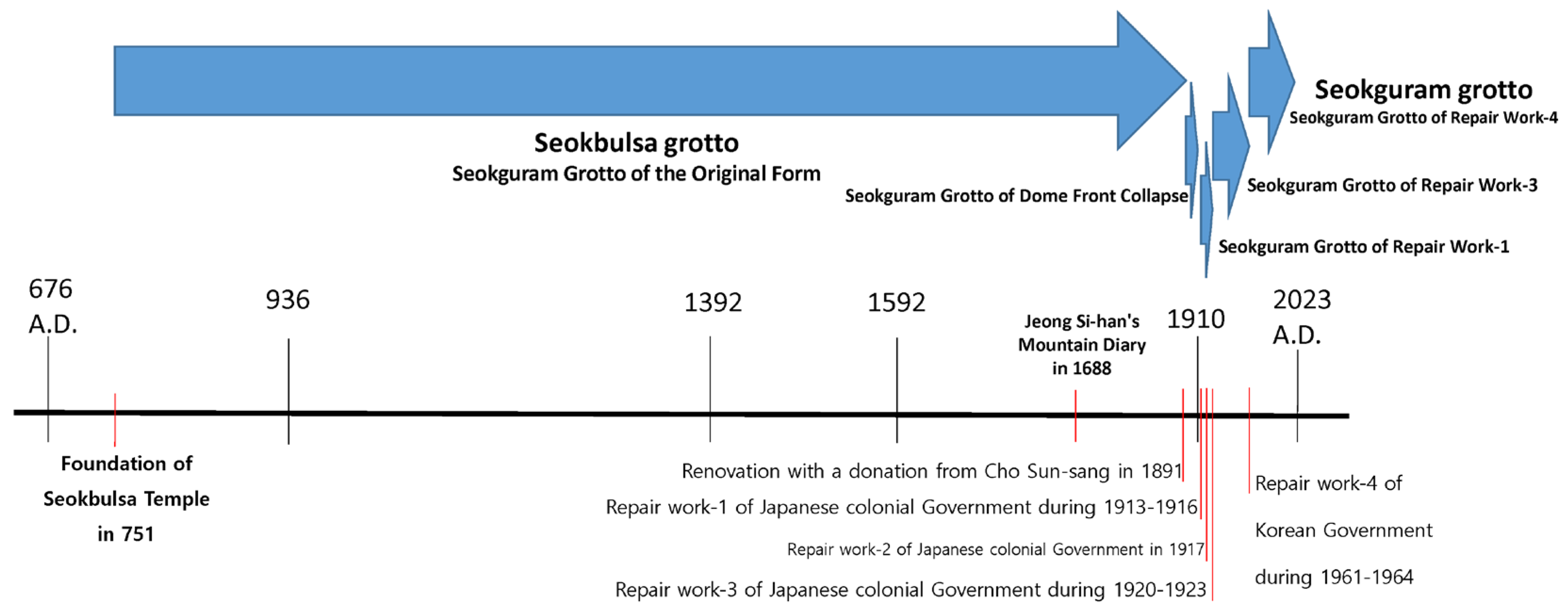
Seokbulsa is the English transliteration of 石佛寺 (석불사), and Seokguram is the English transliteration of 石窟庵 (석굴암). The official English name for 石佛寺 is Seokbulsa Temple, and the official English name for 石窟庵 is Seokguram Grotto. Before the Japanese colonial period (1910–1945), Seokguram Grotto was known as the main hall of Seokbulsa Temple. It became popularly known as ‘Seokguram Grotto’ during the Japanese colonial period. Design adjustments and multiple repairs resulted in changes to the architectural form and space of Seokguram Grotto, both during and after the colonial period. As a result, the final form and space of Seokguram Grotto became very different from its initial form. Due to these various architectural forms resulting from repairs, there has been confusion in identifying a specific architectural form of Seokguram Grotto. Therefore, specific terms need to be devised to clearly indicate the initial form and the final form. In this paper, ‘Seokbulsa grotto’ refers to the initial form, and ‘Seokguram grotto’ refers to the final form after modification. The term ‘Seokguram Grotto,’ with a capitalized ‘G,’ is used as a proper noun when there is no need to differentiate between the two forms (Figure 2).
If one views the Buddha’s head from the central point along the width of the antechamber and passage of the Seokbulsa grotto, it aligns perfectly within the complete circle of the nimbus stone, creating a sense of complete visual coordination. However, this visual alignment is difficult to achieve when standing inside the main chamber. This demonstrates that achieving visual coordination along the longitudinal axis of Seokbulsa grotto was a critical design requirement. In this context, the passage and antechamber must have been designed as a unified, integrated space. Meanwhile, in Seokguram grotto, the passage became recognized as a separate space distinct from the antechamber due to later repairs [11].
By analysing the dimensions of the relief-carved stones and base stones in the main chamber, it becomes evident that the grotto’s construction follows a system of modular stone parts designed to fit together [12]. The grotto is a part-whole system in which stone parts create a hierarchical structure, with a proportional relationship between the shape of each part and the whole. The presence of such modular systems implies that certain design processes took place before construction. It can be speculated that a schematic design of the overall shape, including the walls, upper niches, dome, and roofs, would have been necessary prior to the design of the modular stone parts. In addition, the schematic design of Seokbulsa grotto might have depicted the stone parts as partially integrated shapes. This paper investigates the creative design process of the Seokbulsa grotto by analyzing the unique physical characteristics of the architectural space concerning the Buddha statue and the religious and social demands of that time to reveal how the designers negotiated the grotto’s final design.
Earlier research recognizes multiple design stages at Seokbulsa but does not address whether schematic plans and sections were produced. Given the grotto’s modular stone system and part-whole proportional logic, schematic drawings were likely necessary to coordinate the walls, upper niches, and dome. This paper therefore reconstructs the schematic design process and shows how the designers iterated and resolved alternatives.

2.2. Historical Mathematics and Comparative Models

A critical methodological premise of this study is the historical constraint on mathematical concepts in ancient East Asia. Unlike in ancient Greece, the strict concept of irrational numbers did not exist in East Asia during the 8th century. Instead, arithmetic approximations were used for geometric figures. For instance, the Chinese mathematician Zu Chongzi (祖 沖之, 429~500) who annotated Jiuzhang suanshu (九章算術) [13], calculated a precise approximation of pi (π ≈ 3.141592), suggesting that Unified Silla possessed similar high-level arithmetic knowledge [14]. However, there is no historical evidence that they expressed π or roots (√2, √3) as irrational numbers.
Despite this historical context, previous studies have often relied on modern geometric interpretations. Yoneda Miyoji (米田 美代治) [3] initiated the discussion by arguing that Seokguram’s plan and section were based on irrational numbers. He proposed schemas using √2 (square diagonal) and √3 (equilateral triangle height), assuming these were the guiding principles. Jinho Park [9] later questioned the use of irrational numbers, arguing that such concepts were absent in the Korean peninsula at the time. Instead, he interpreted the design through the gougu rule, a mathematical principle widely known in the region.

2.3. Analytical Approach

This study adopts a comparative analytical approach. We treat the hypotheses of Yoneda and Park not as absolute facts but as comparative models. By superimposing Yoneda’s geometric schema onto high-precision 3D scan data to identify discrepancies and reviewing Park’s proposition as a theoretical context for the integer-based approach, this study establishes a more rigorous basis for analysis. Consequently, we propose an integer module system based on the 12-cheok module and binary division as a more historically plausible and structurally accurate alternative to the irrational number hypothesis.

3. Results

The Buddhists introduced grottoes to the Korean Peninsula as temples, leading to the construction of the Seokbulsa grotto. However, there was no architectural precedent comparable to the Seokbulsa grotto on the Korean Peninsula. In East Asia, models of wooden Buddhist temples were physically handed down, but there is no record that stone grottoes were passed down through media such as wooden models or drawings.
Consequently, the design schemas for Seokbulsa grotto were likely created anew rather than inherited. Here, a distinction must be made between an architectural type, which refers to historically transmitted pictorial information [15], and a design brief, which consists of linguistic information such as words and numbers. Since Seokbulsa grotto was unprecedented, builders could not adopt a typological approach-borrowing schemas from existing types. Instead, they likely employed a programmatic approach, constructing new schemas directly from the design brief [16].
Therefore, it is essential to analyze the architectural program during construction to extract the plan and section schemas. This analysis is grounded in the understanding that the design process is not linear but circular; design concepts emerge as diagrams and evolve into schemas through iterations [10]. By analyzing the design brief and refining it into design constraints, these embedded schemas can be derived. Moreover, such schemas, once visualized, would have enabled practical communication among designers, artisans, and societal stakeholders, facilitating negotiations and refinements in the design.

3.1. Overview of Repair Work and Spatial Changes

Researchers first took photographs of the Seokguram Grotto in 1909. The pictures show the grotto’s collapsed dome front. Builders used the dry method to build the Seokguram Grotto, constructed in the 8th century. However, during repairs in 1913, builders dismantled and reassembled the grotto, pouring concrete over the existing grotto. Japanese traditional architecture experts tried to solve the urgent structural problem of the dome’s collapse with modern materials and technology. However, the concrete sheath completely cut off the air circulation between the inside and outside of the grotto, severely promoting moisture condensation. Moss and dirt buildup followed moisture accumulation, and the high-pressure cleaning methods used to remove them extremely weathered the surface of the relief stone panels. The repair work performed by the colonial government caused catastrophic harm to the sculptures of Seokguram Grotto during the process of trial and error. At that time, the general principle of restoration was ‘authentic restoration,’ which aimed to return the structure to its original state. The project was supervised by Sekino Tadashi (關野 貞), the foremost expert in ancient Japanese architecture and a leader in the field of Korean cultural properties. Utilizing a sizable budget and the most advanced technology available at the time, he determined that there was no possibility that a wooden structure existed above the antechamber and did not install a roof [17].
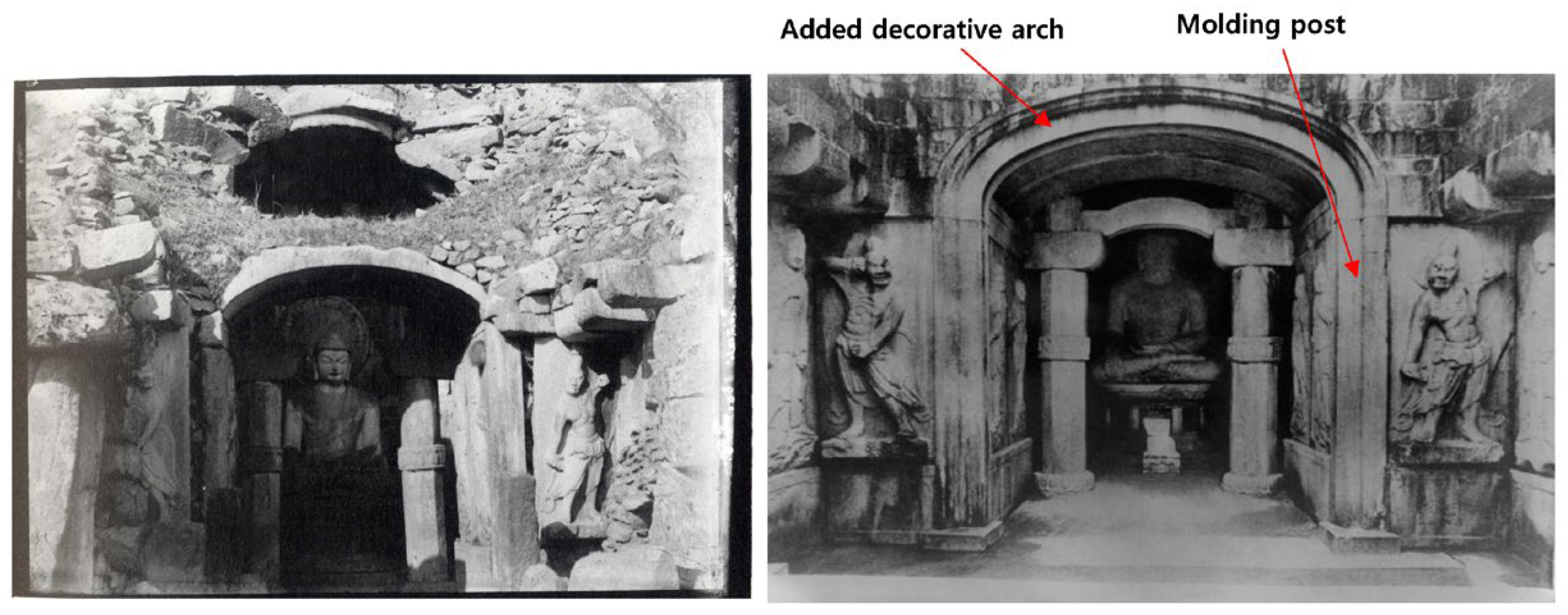
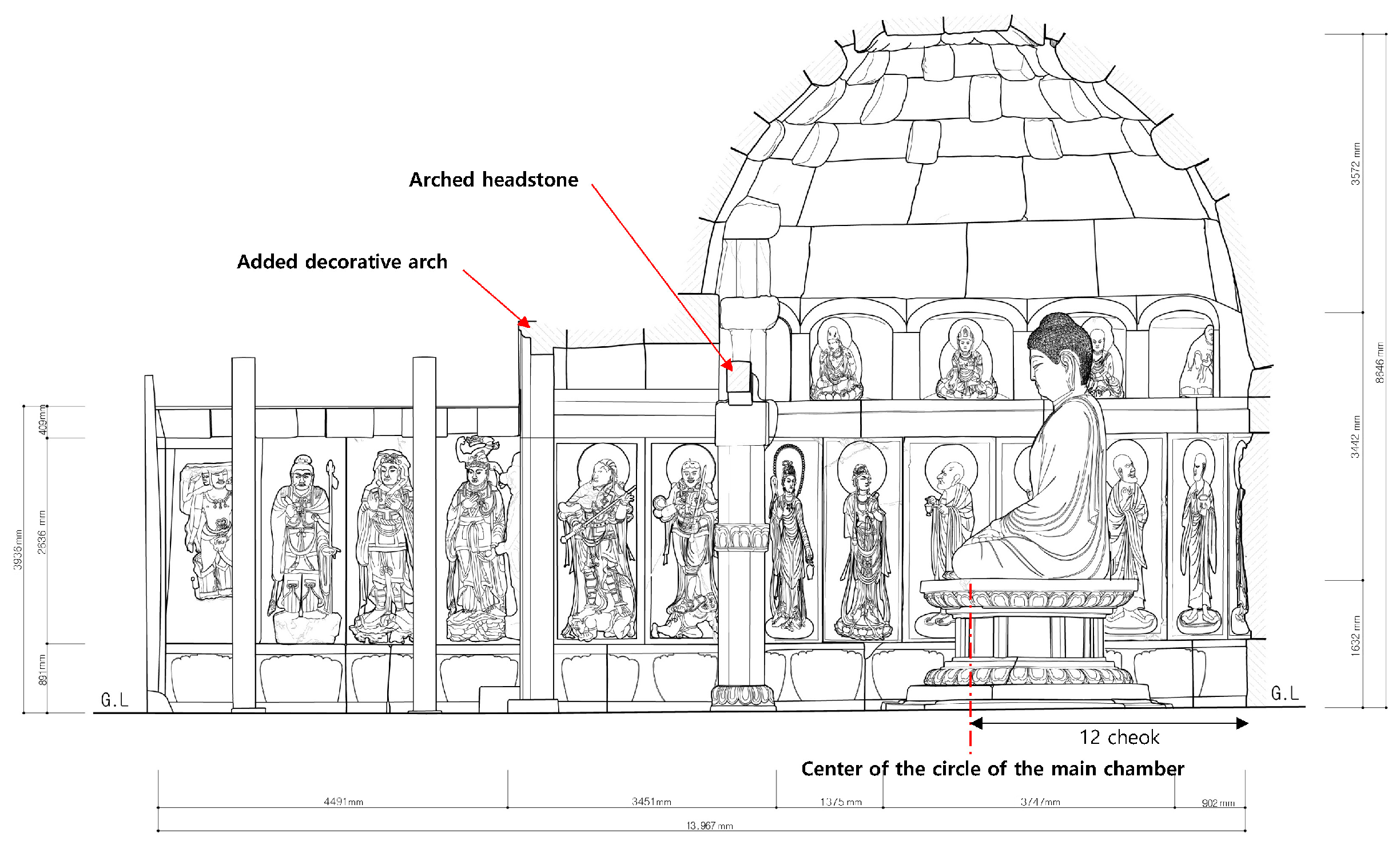
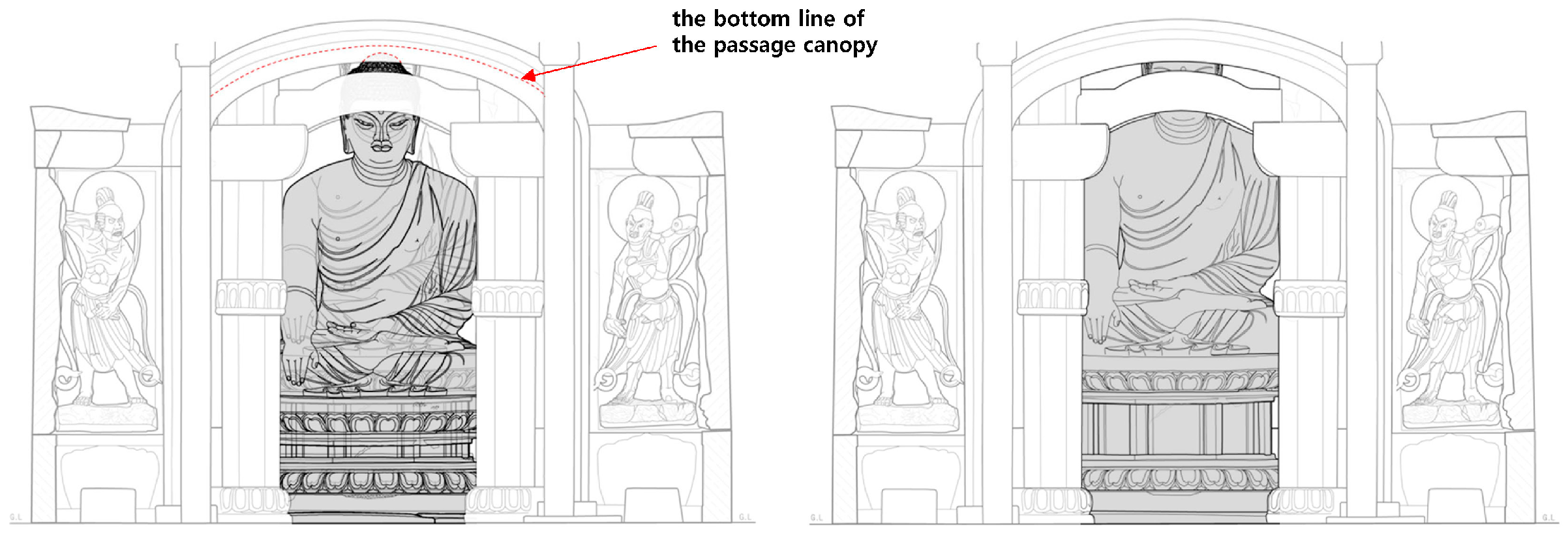
To improve the appearance of the 1920s repair work, builders added an arched decorative stone to the front to hide the section of the semicylindrical passage canopy. The added decorative arch formed a fully integrated opening at the passage’s entrance, with two molding posts supporting it at the corners (see Figure 3 and Figure 4). With the formation of this opening, the boundary separating the passage from the antechamber became clearer. It was a minor local transformation in the architectural form but a significant structural change in terms of the architectural space. In the original design, the passage and antechamber functioned as integrated vestibular spaces. However, the passage came to be understood as an extension of the main chamber, distinct from the antechamber after the 1920s repair work [11].
During the repair work in 1963, builders spread the two folded walls at the entrance of the antechamber and expanded the floor of the antechamber in the direction of the spatial symmetry axis. At the same time, a wooden roof installed on the antechamber transformed it into an indoor space. Therefore, the antechamber is no longer outdoors or exposed to direct sunlight. In addition, when the viewer looks at the Buddha statue from the extended area of the antechamber, the arched headstone at the entrance to the main chamber hides the upper part of the nimbus stone. Therefore, disruptive visual effect occurs in scene perception, breaking the complete visual coordination of Buddha’s head with the nimbus stone. The repair work in 1963 caused sweeping changes in architectural space and form and, in effect, compromised the spatial integrity of the Seokbulsa grotto. The Korean government’s repair work dealt with preserving the Seokguram Grotto from the viewpoint of sculptural preservation of cultural properties, but not in terms of preserving the architectural space and form. Before this renovation, the floor area of the main chamber was sufficiently larger than the sum of the floor areas of the antechamber and passage. However, after this repair work, the sum of the floor areas of the antechamber and passage exceeded the floor area of the main chamber. The relationship between the sizes of the floor areas is reversed [21]. This paper seeks to discuss the critical errors made during these repairs.

3.2. Analysis of External Design Constraints

The dimensions of the Buddha statue in the Seokguram grotto are consistent with the record of Xuanzang (玄奘)’s Da Tang xiyu ji (大唐西域記) [22] regarding the Buddha statue at the Mahabodhi Temple in Bodhgaya [5]. In the record, the height of the seated Buddha is 1 zhang (丈), 1 cheok (尺), and 5 chon (寸), the distance between the knees is 8 cheok and 8 chon, and the width of the shoulder is 6 cheok and 2 chon. The scale of length used in the Tang Dynasty was a unit of the TangCheok (唐尺) system. According to the study by Yoneda Miyoji, the unit of length used in the Seokguram Grotto was also the TangCheok. Cheok (尺) in this paper means TangCheok (≈29.7 cm) [3,23]. The measured dimensions of Seokguram grotto’s seated Buddha are consistent with Xuanzang’s record, with a height of 1 zhang, 1 cheok, and 5 chon, a knee distance of 8 cheok and 8 chon, and a shoulder width of 6 cheok and 6 chon. Therefore, the architectural space accommodating the size of the Bodhgaya Buddha statue would have been a limiting condition in the design of the Seokbulsa grotto [24].
In addition to the three dimensions of the seated Buddha, Xuanzang’s record includes two dimensions of the pedestal. The width of the Bodhgaya pedestal is 1 zhang, 2 cheok, and 5 chon, and its height is 4 cheok and 2 chon. Unlike these dimensions, the height of the pedestal of Seokguram grotto is 5 cheok and 5 chon, and the diameter of its top stone is 9 cheok and 5 chon. Due to these discrepancies in dimensions, researchers overlooked the two measurements related to the Seokguram Grotto’s pedestal. Of the five recorded dimensions, only the three pertaining to the seated Buddha were considered when sculpting the Seokguram Buddha statue. This discrepancy suggests that while the Buddha’s bodily dimensions were treated as an absolute external constraint, the pedestal’s dimensions were considered a variable element, adjusted to resolve internal spatial conflicts.
The floor plan configuration of Seokguram grotto is a rectangular anterior and circular posterior. Regarding the origins of this geometric configuration, art historians have speculated on connections to Indian caves, such as Lomas Rishi, or the Roman Pantheon, citing axial alignment and geometric similarities. However, interpreting these direct precedents is problematic. As Tadgell [25] notes, Indian chaitya halls typically feature horseshoe-shaped plans rather than the distinct circular posterior of Seokuram Grotto. Furthermore, while researchers like Juhyung Rhi [26] have suggested influences from Afghan caves (e.g., Bamiyan), a critical typological distinction exists in terms of tectonics. The Bamiyan caves are rock-cut structures and the Pantheon is constructed of concrete, whereas Seokguram Grotto employs ashlar masonry—a technique of stacking cut stone blocks. Given the lack of historical records connecting Silla directly to India or Afghanistan during this period, and the distinct structural differences, recent studies by Kim and Park [27] suggest it is more plausible to identify the transmission of architectural schemes from Chinese architecture, where ashlar masonry was present in stone chamber tombs.
The proclamation in Zhou Bi Suan Jing (周髀算經) [28] is that “An angled thing belongs to the earth, and a round thing belongs to the sky, and the sky is round, and the earth is angular.” The antechamber has no roof, and a hemispherical dome covers the main chamber’s roof. The shape of the overall floor plan can be observed in ancient Chinese cosmological images, which feature rectangular anterior and circular posterior layouts. Additionally, circular floor plans with domed ceilings are present in stone chambers and brick tombs in China, built after the 6th century [29]. The planned shape, with a rectangular anterior and circular posterior, along with the size of the Buddha statue, would have been limiting condition.
The spatial symmetry axis of the floor plan of Seokguram Grotto coincides with the sunrise direction of the winter solstice. In ancient China, the custom of rituals to the sky during sunrise on the winter solstice was an important event [30]. The origin of ruling power was viewed as an expression of heavenly will. Therefore, sacrifices to heaven-particularly rituals during the winter solstice-served as the symbolic system of kingship to maintain the legitimacy of the empire. These early philosophical and cosmological viewpoints heavily influenced later generations [31,32]. The spatial symmetry axis of the Seokguram Grotto is a record demonstrating the sunrise direction of the winter solstice at the site during its time [14]. Aligning the direction of the spatial symmetry axis with that of the winter solstice sunrise would have also been a limiting condition.
The significance of rituals directed towards the sky at sunrise during the winter solstice, the cosmological concept of a rectangular anterior and circular posterior, and the symbolic dimensions of the Bodhgaya Buddha statue were well understood by intellectuals of the time. These elements can thus be regarded as external design constraints imposed on the design team. By distinguishing these external constraints, one can better identify the internal constraints that arose during the design process. In other words, while societal clients were familiar with the external constraints, the internal limitations were defined by the design team as the project developed. Historically, according to Samgukyusa (三國遺史) [33], the construction was led by Kim Dae-seong, a member of the Silla royal family. Given the vast scale of the project, societal clients here are understood to include royal members and intellectuals initiating the state-led undertaking, while the design team encompasses all craftsmen directly involved in the construction.

3.3. Analysis of Internal Design Constraints

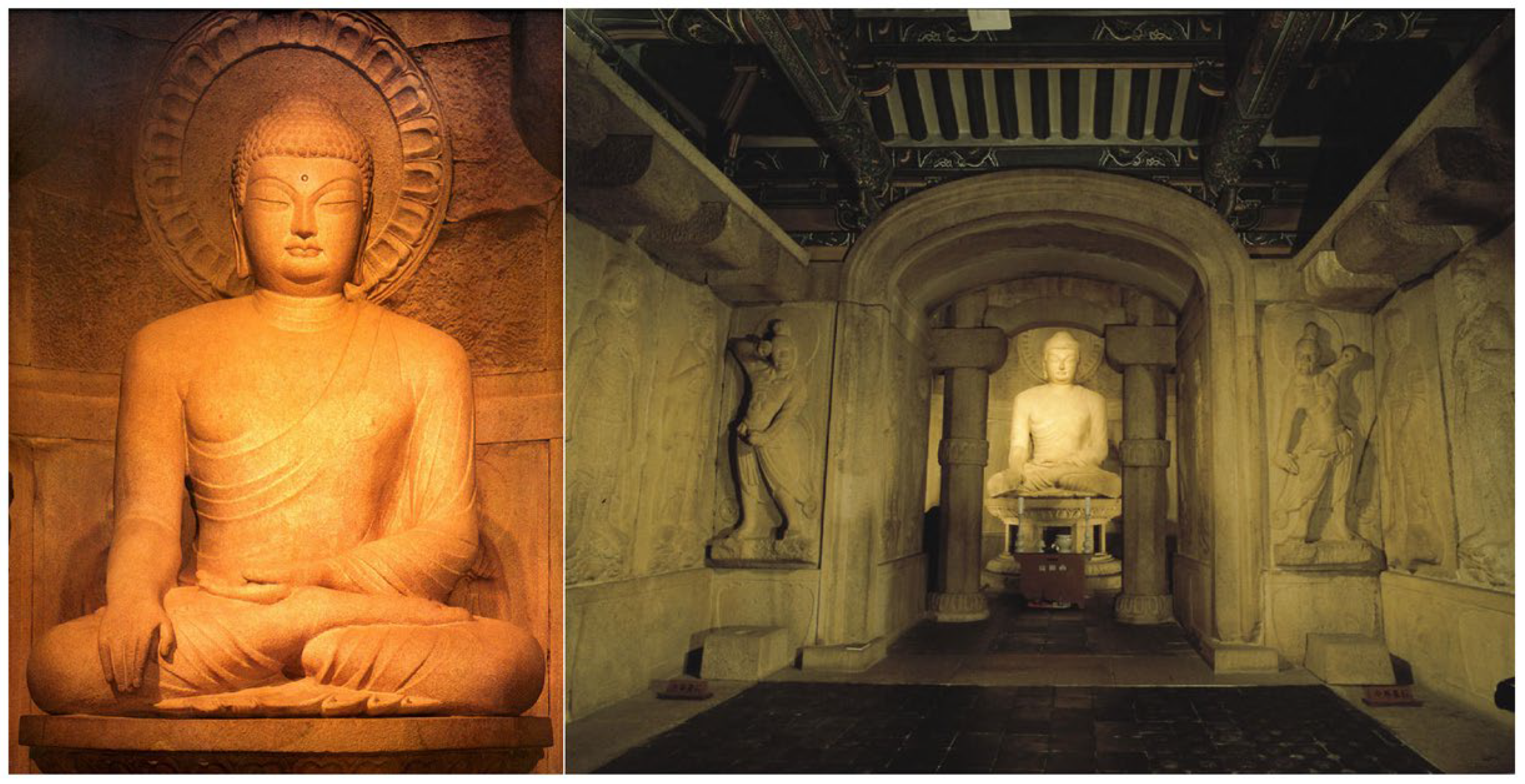
The nimbus is traditionally attached directly to the back of the Buddha. However, in Seokguram Grotto, the nimbus stone is not connected to the Buddha’s head but instead is attached to the wall, approximately 2.1 m behind it. This unique configuration makes Seokguram Grotto exceptional on a global scale. The most innovative aspect of the design Seokbulsa grotto is the spatial separation between the Buddha’s head and the nimbus stone. As a result, the spatial layout had to be meticulously structured to ensure that the Buddha’s head and the nimbus visually align from the viewer’s perspective. Crucial to this visual experience is the interior lighting; research indicates that the floor illuminance of Seokguram Grotto is more than three times brighter than that of the Pantheon in Rome [34]. This superior brightness would have further enhanced the perception of the spatial layout.
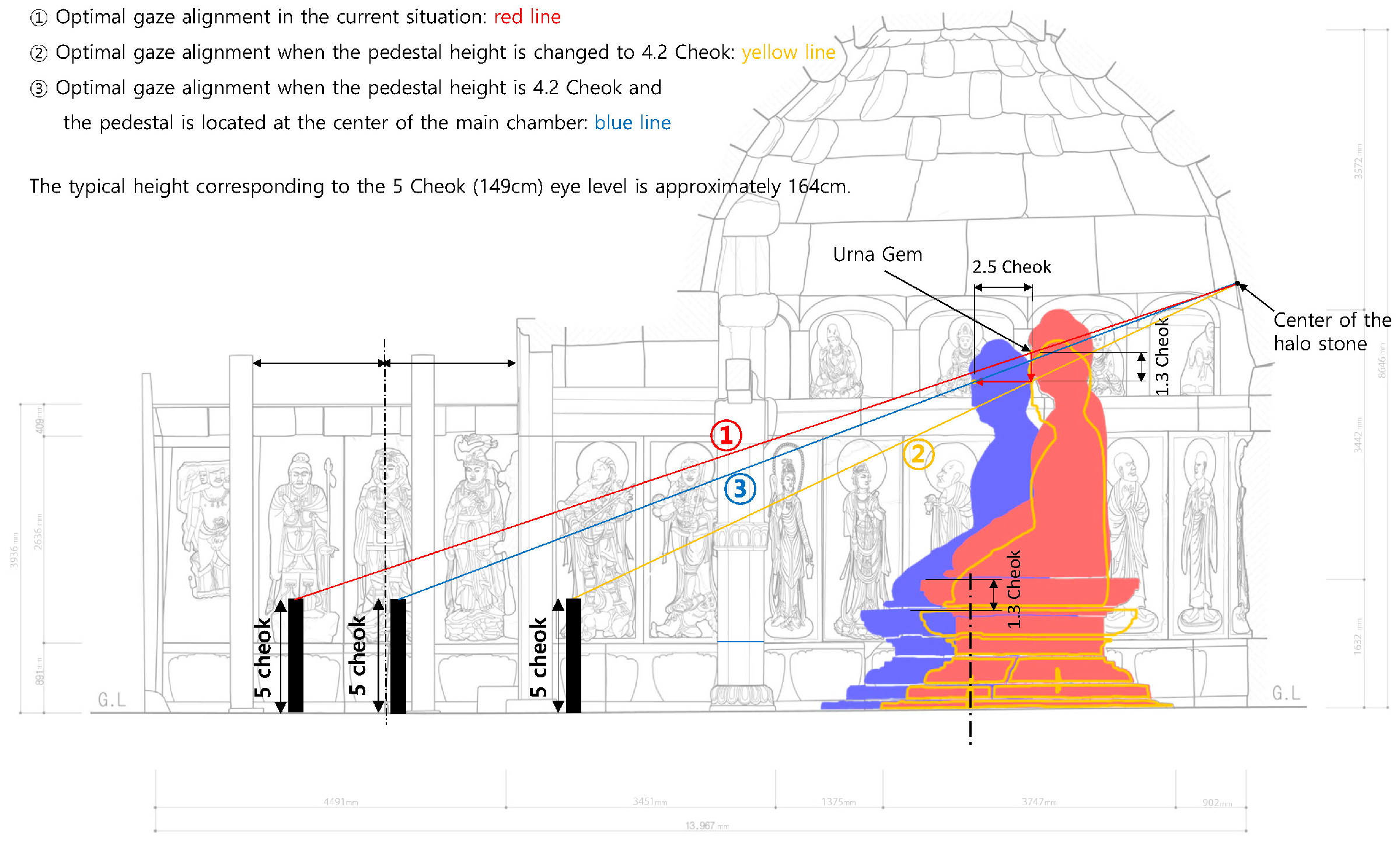
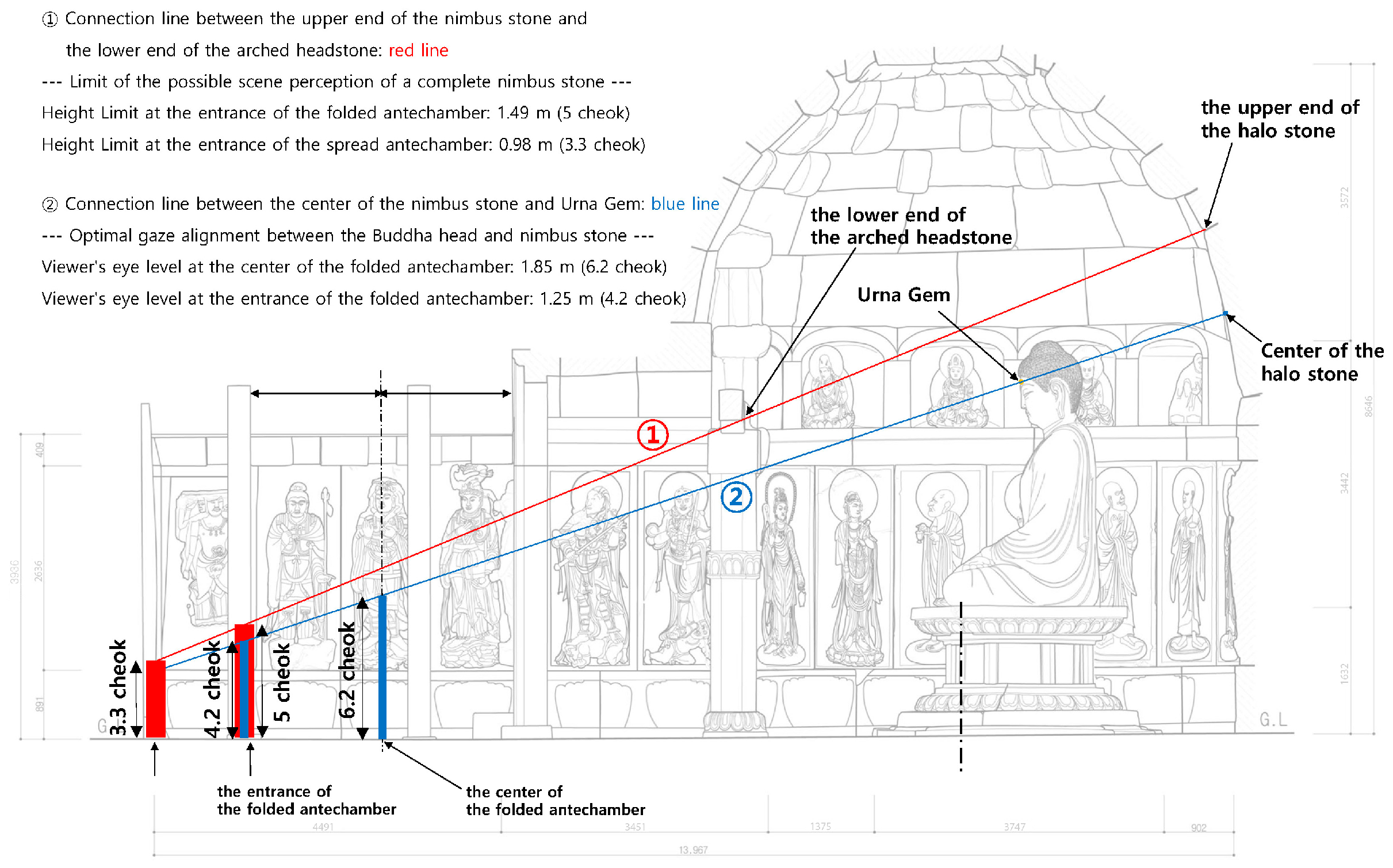
When the center of the nimbus stone aligns with the urna gem on Buddha’s forehead, one achieves the optimal gaze alignment between Buddha’s head and the nimbus stone. This alignment is visible in the longitudinal cross-section of the spatial symmetry axis (see Figure 5). Furthermore, considering the general eye level (1.45 m to 1.75 m), one maintains optimal gaze alignment near the entrance of the folded antechamber. It can be inferred that the condition of scene perception, where the complete circle of the nimbus stone frames Buddha’s head through the viewer’s gaze alignment, served as an internal design constraint.
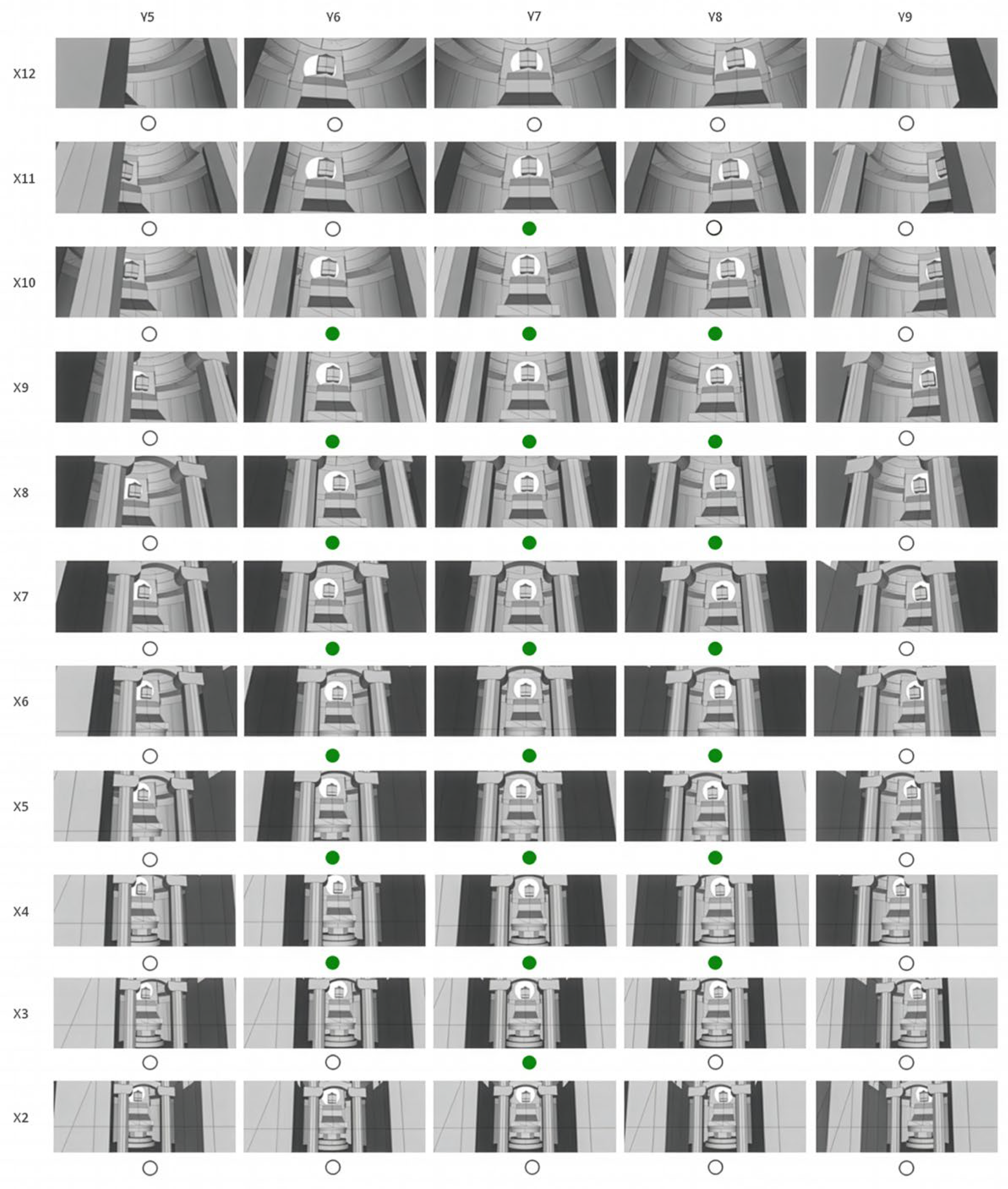
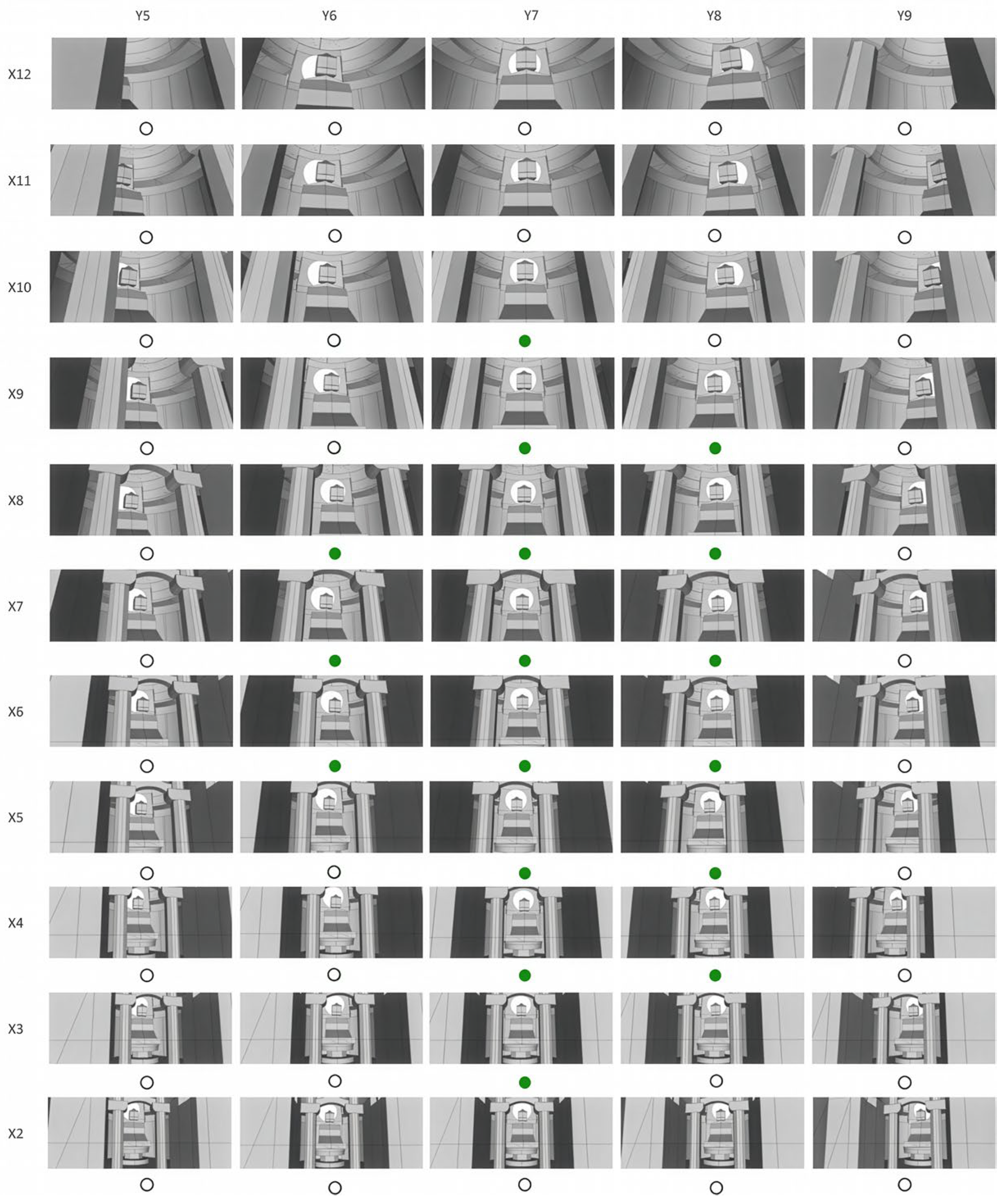
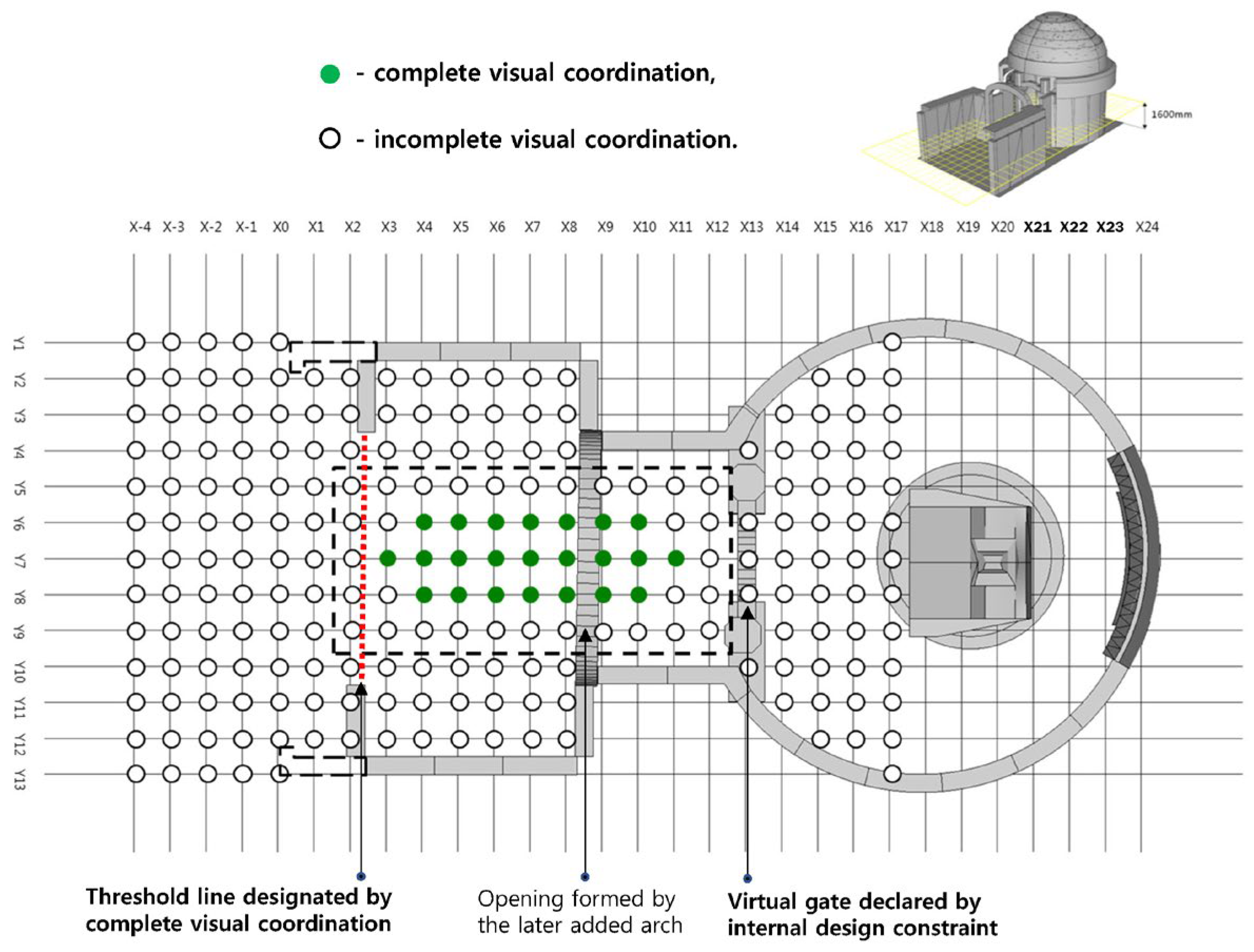
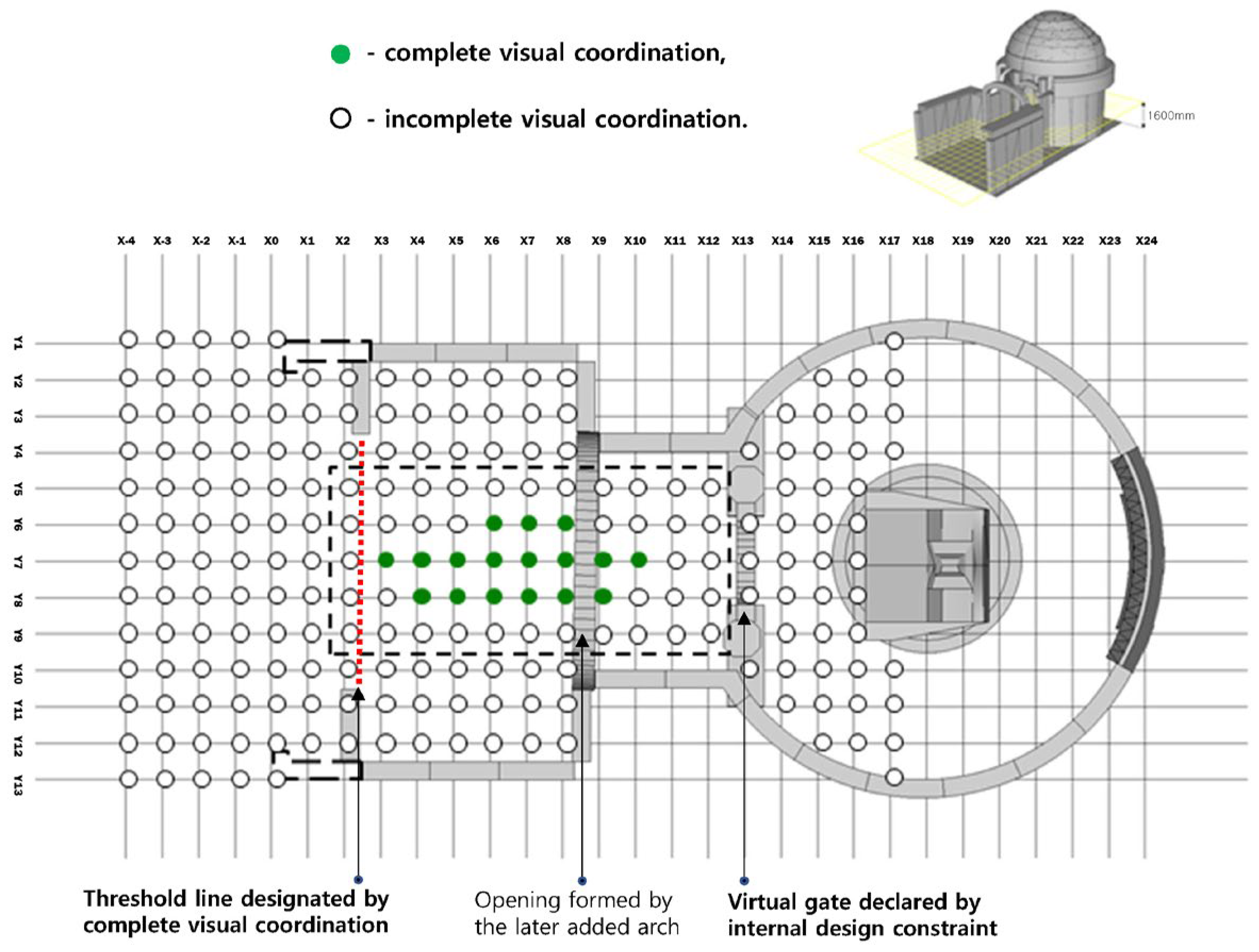
In this study, the two floor plans of the current Seokguram grotto and the initial Seokbulsa grotto are superimposed, overlaying a grid of 60 cm intervals and simulating views of Buddha’s head from an eye level of 1.6 m at the grid points (see Figure 6 and Figure 7). In these simulated scenes, it is possible to concretely confirm the visual coordination of Buddha’s head and the nimbus stone. This simulation achieves complete visual coordination, with Buddha’s head placed in the complete nimbus stone in the central area of the folded antechamber and passage.
However, in the section of the antechamber newly incorporated during the 1963 repair work, the arched headstone obstructs the visual alignment, disrupting the intended visual effect. The headstone blocks the upper portion of the nimbus stone, breaking the complete circle and resulting in a misalignment between Buddha’s head and the nimbus stone, leading to incomplete visual coordination from the viewer’s perspective.
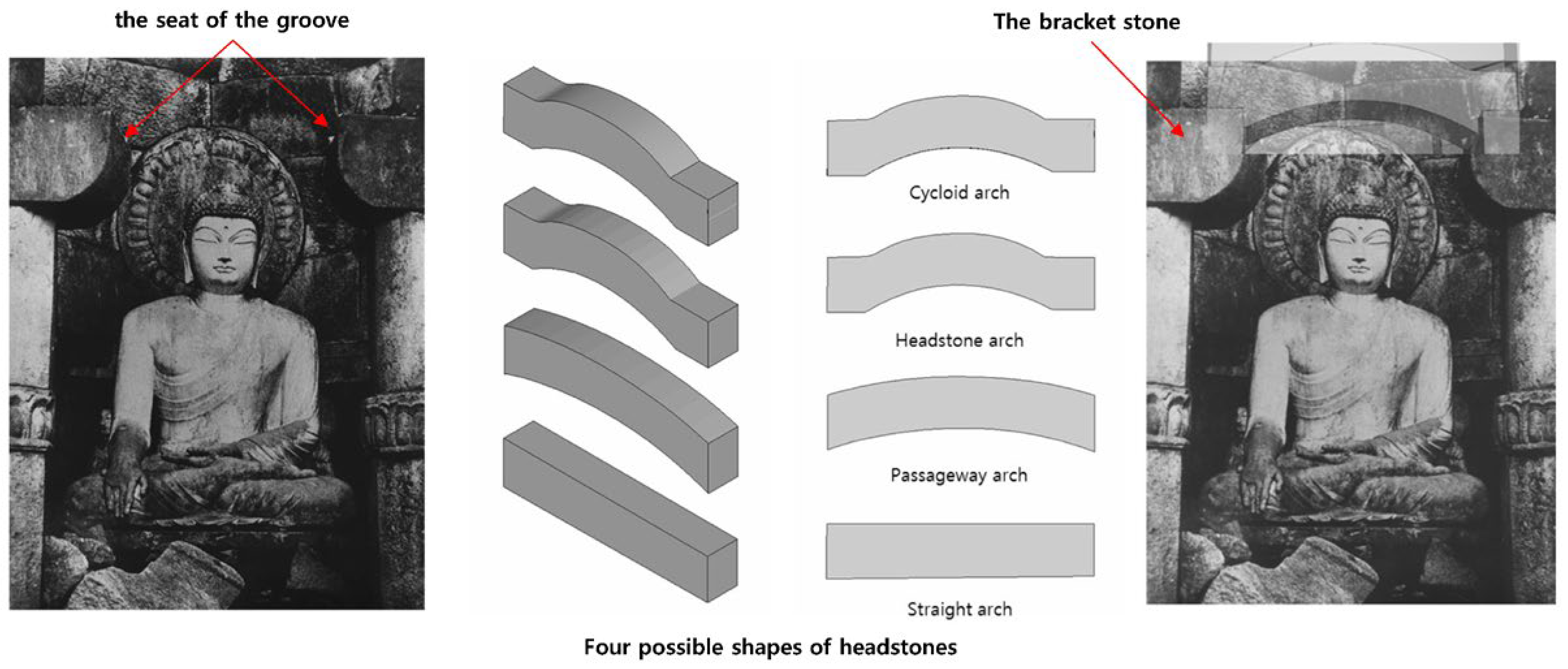
The arched headstone was not visible in the first photographs of the Seokguram Grotto. Builders reportedly recreated and restored the arched headstone with its fragments found at the site during the first repair [35]. In addition to statements pointing out the unusual shape of this headstone, there were claims that it was an arbitrary addition during the Japanese colonial era. However, a precise analysis of the first photographs reveals the groove where builders placed the member connecting the two octagonal columns atop the two bracket stones (see Figure 8).
Architecturally, this arched headstone connects the two octagonal columns at the height of the wall headstones. Its longitudinal cross-section is unique; it is not defined by common geometric features like semicircles, pointed arches, or cycloids. Instead, designers obtained the curved contour by naturally connecting the two endpoints after determining the central peak. This same method was applied to the ceiling arch of the passage space. While the passage ceiling height was set at an integer of 16 cheok (exceeding the 15.7-cheok Buddha), the arched headstone’s central height was determined by the viewer’s gaze alignment, measuring approximately 13.9 cheok (412 cm).
By analyzing the scene perception according to the viewer’s gaze alignment, it is possible to reasonably infer that the threshold line of the folded antechamber was the spatial limit of the antechamber initially set in the design of the Seokbulsa grotto. On the other hand, the repair in 1963 expanding the antechamber ignored the complete visual coordination intended in the scene perception of the grotto design. This failure occurred because the organizers of the repair work lacked the expertise to understand Seokbulsa grotto’s composition regarding architectural space and form [11].
The gate frame made up of the two octagonal columns on both sides of the arched headstone is a virtual boundary that distinguishes the space of the main chamber under the dome from the other area. In the architectural space of the Seokbulsa grotto, the circular main chamber and the rectangular front court are identified and understood as distinct areas, reflecting a deliberate design separation [12]. In this instance, the front court refers to a “vestibular space” that combines the two spaces of the antechamber and passage.
Builders erected an imaginary boundary at the borderline to distinguish the space of the main chamber, which symbolizes a sacred world, from the vestibular space, which represents a secular world. Builders used stones of different shapes to construct the same stone parts to distinguish between the two architectural areas with different meanings. The relief stone panels, base stones, and headstones in the sacred space are curved, whereas the stones of the same kind in the secular area are flat. Alternatively, had the relief stone panels, base stones, and headstones in the main chamber been flat, they would have created segmented walls forming a polygonal rather than a circular space. Additionally, by differentiating the two distinct arrangements in which the relief carvings and ansang (眼象) images correspond, the sacred and secular spaces were further distinguished. In the secular spaces of the front chamber and passage, each ansang image was positioned directly beneath a relief carving. In contrast, within the sacred main chamber, the relief carvings and ansang images were arranged in an alternating pattern (see Figure 4). This alternating arrangement creates a perception of rotational spatial flow encircling the Buddha within the circular space. Furthermore, the stone gate frame at the entrance to the main chamber is an intentional design element introduced to distinguish the sacred and secular spaces semantically. In fact, distinguishing sacred spaces from other areas is a fundamental characteristic of East Asian Buddhist architecture. Similar spatial demarcations using gatehouses, cloisters, or bridges are gound in Horyu-ji (Japan), Buseok-sa (Korea), and the Longmen Grottoes (China). Regarding Seokguram Grotto specifically, structural engineers have argued that the two octagonal pillars were installed primarily for these aesthetic considerations—to define the sacred boundary—rather than functioning as vertical load-bearing supports [37]. Thus, the virtual boundary of the stone gate frame can be regarded as another internal design constraint.
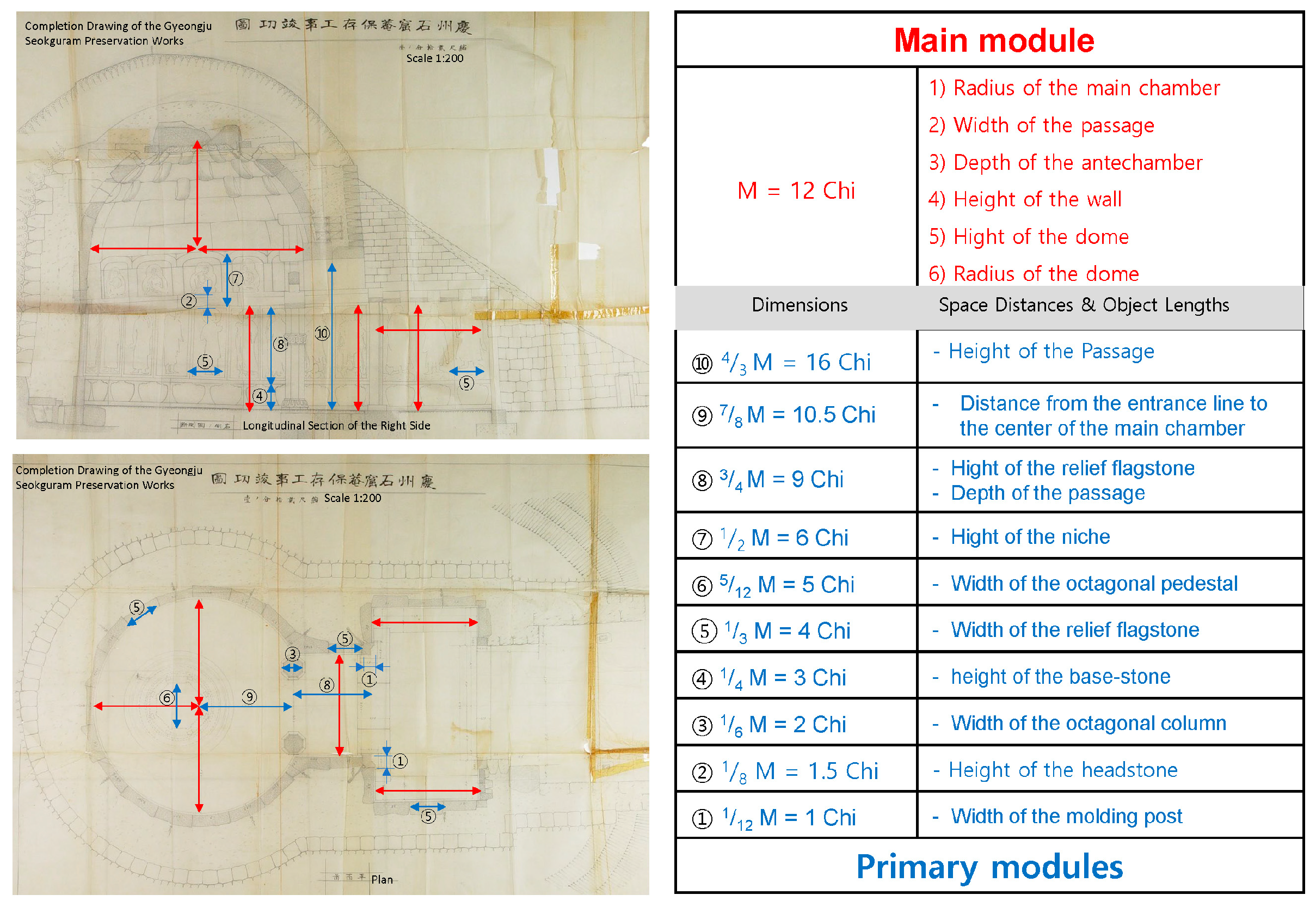
The floor plan of the main chamber has a radius of 12 cheok, and the width of the passage is also 12 cheok. The number 12 can be divided by several factors: 1, 2, 3, 4, 6, and 12. This divisibility has practical uses, as seen in the duodecimal system used for clocks, calendars, and zodiacs. Both the height of the wall formed by the base stone and relief stone panel, as well as the hemispherical dome, measure 12 cheok. The total height of the upper niches in the main chamber is 6 cheok. The width of the relief stone panels is 4 cheok, and the height of the base stone is 3 cheok. The width of the octagonal columns (circumscribed square length) is 2 cheok, while the width of the molding post at the corner, where the antechamber and passage meet, is 1 cheok. These dimensions indicate that the design of the Seokbulsa grotto followed a factoring system based on 12 cheok for spatial distances and object lengths. Therefore, the dimensions of 12 cheok and its factors can be regarded as internal design constraints.

3.4. The Interplay of Internal and External Design Constraints

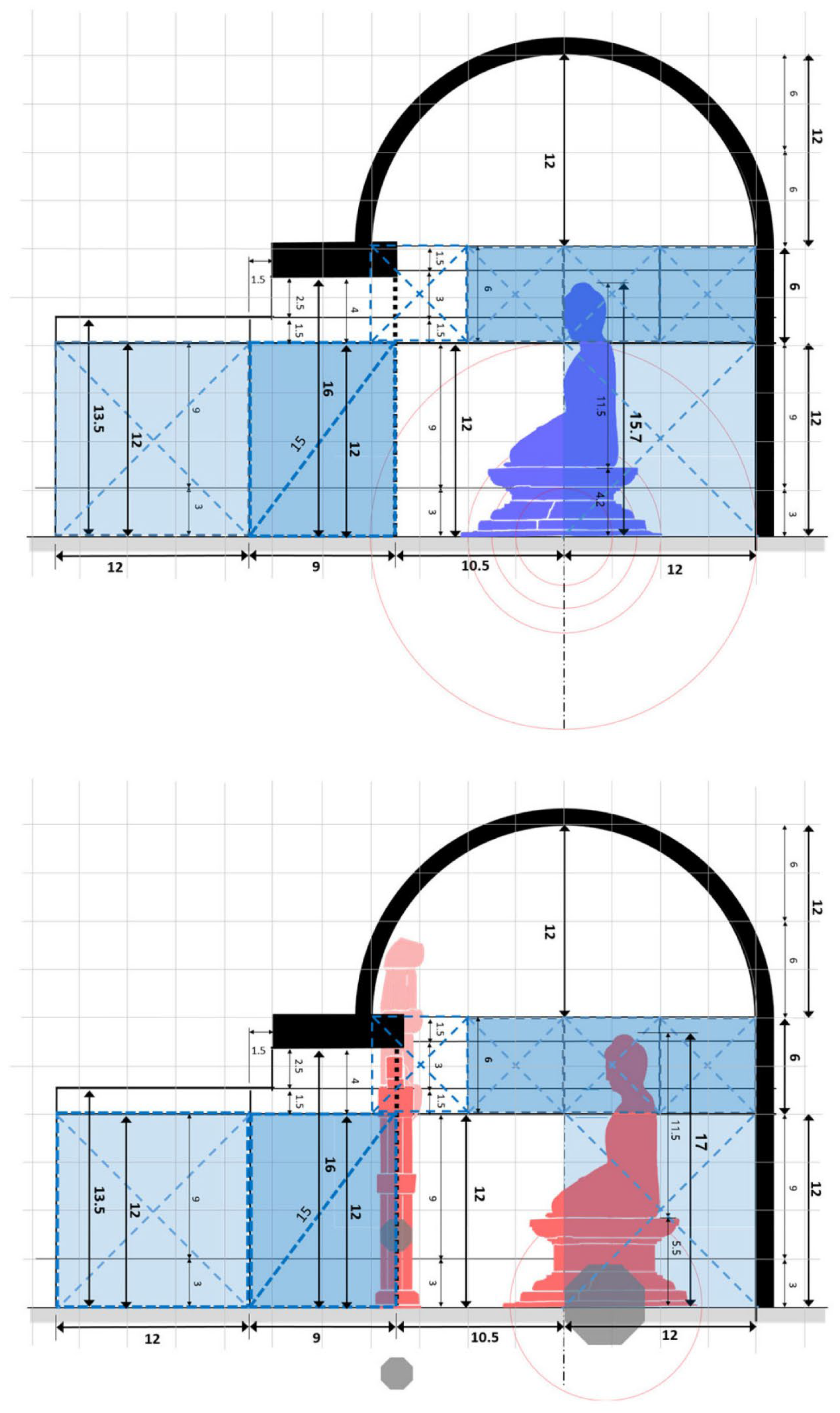
An analysis of Seokguram Grotto’s façade drawing reveals contradictory phenomena that are difficult to explain through commonsense logic. For instance, the measured distance between the two octagonal columns in the passage is approximately 6.6 cheok. Thus, the measurement is the same as the width of the shoulders of the Buddha statue. However, the central height of the passage arch is 16 cheok, while the Buddha statue stands at 17 cheok. Since the Buddha statue is 1 cheok (approximately 29.7 cm) taller than the passage, the upper part of the statue is obscured by the arch when viewed from the front. In other words, while the width of the Buddha statue is fully visible in the façade drawing, its full height is not. In the current frontal view, the added arched decorative stone at the passage entrance obscures the Buddha’s head from below. While the arched headstone covers it from below, looking from above raises questions about vertical misalignment. This analysis supports the view that the present appearance results from a mismatch between the heights of the passage and the statue. If the height dimensions of the Buddha statue of the Seokguram Grotto were the same as those in Xuanzang’s record, then the entire statue is entirely inside the passage of the Seokguram Grotto (see Figure 9). Thus, based on documentary records and an analysis of drawings, it can be concluded that builders likely applied the recorded dimensions of the Bodhgaya Buddha statue in the design of the Seokbulsa Grotto. Specifically, it is important to consider the corrective steps taken during the design process. This suggests a two-stage design process, where the height of the pedestal was initially conceived as 4.2 cheok and later modified to 5.5 cheok.
In the main chamber of the Seokbulsa grotto, builders retracted the pedestal from the center by 2.5 cheok. If they had decreased the height of the pedestal to 4.2 cheok at its current position, then the optimal gaze alignment between Buddha’s head and the nimbus stone would not have been maintained in the antechamber but would occur in the passage (see Figure 10). However, if the pedestal was at the center and the height of the pedestal was 4.2 cheok, then the antechamber would maintain the optimal gaze alignment. Therefore, it can be inferred that the pedestal placement in Xuanzang’s record was originally positioned at the center of the main chamber. Builders moved the pedestal back by 2.5 cheok and modified the height to 5.5 cheok later to maintain the optimal gaze alignment in the antechamber.
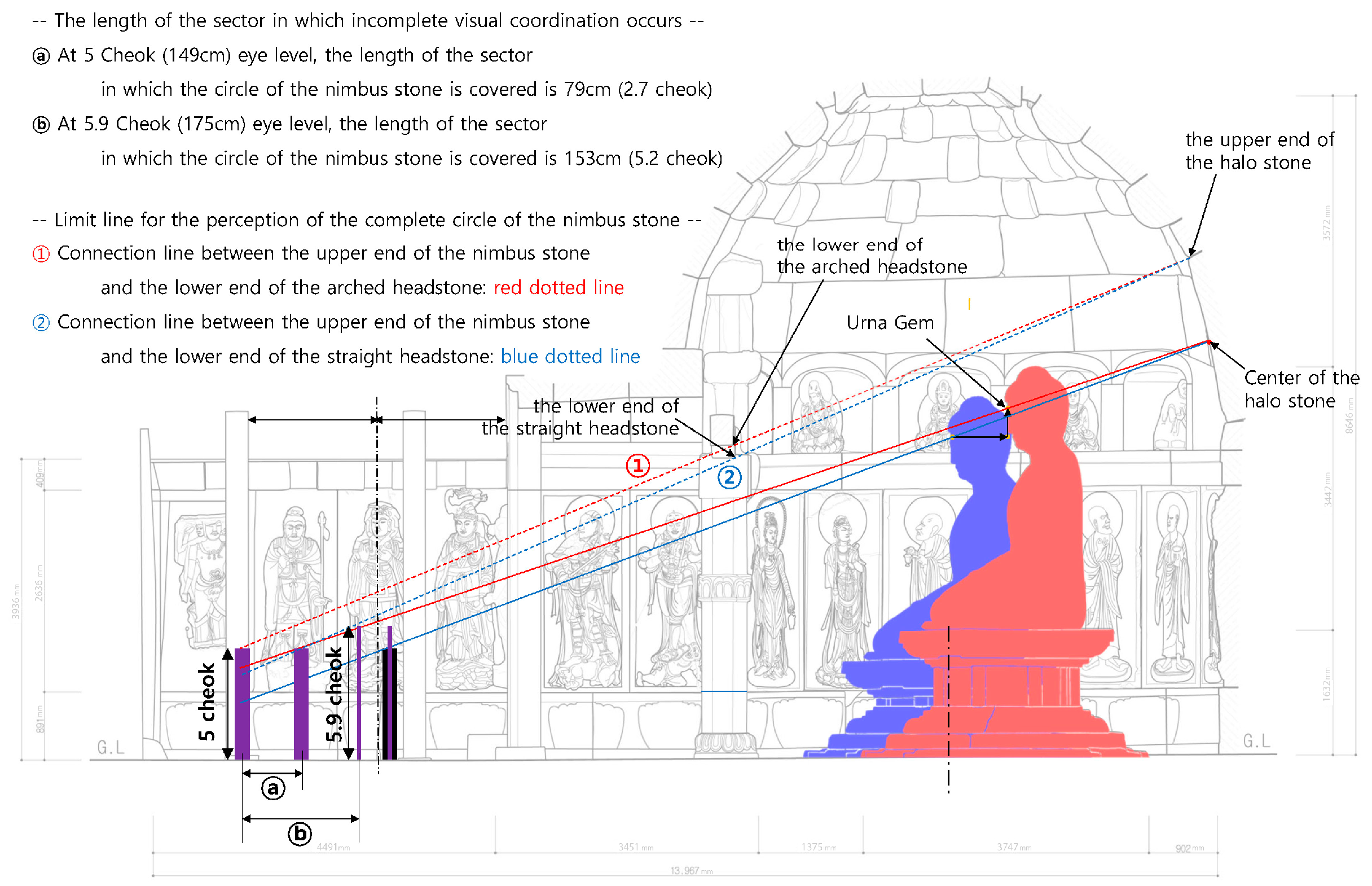
In the initial design stage, when the pedestal was 4.2 cheok high and placed in the center, the view of Buddha’s head from the eye level of approximately 5 cheok at the center of the folded antechamber almost coincided with the optimal gaze alignment (see Figure 10). However, in this initial design stage, if a straight headstone had been installed instead of an arched headstone, even if viewed from an eye level of 1.75 m (=5.9 cheok, or approximately 1.9 m in human height) at the center, the straight headstone would not obscure the nimbus stone. In other words, complete visual coordination is possible at the center of the folded antechamber (see Figure 11). In addition, it seems that a straight headstone could provide stability as the substructure of the dome by forming a complete ring. In this sense, it is necessary to examine the possibility that builders once conceived the arched headstone as a straight line (see Figure 8). This hypothesis is supported by the awkward appearance of the current headstone. Although it connects two octagonal columns, the arch length spans only approximately 65% of the total headstone length, resembling a curved sculpture rather than a functional structural form. Structurally, a straight headstone would have been more logical; it would have connected with the main chamber and passage headstones at the same height to form a complete ring, thereby securing greater stability as a substructure for the dome.
However, while the straight headstone does not obstruct the circle of the nimbus stone when viewed from the center of the folded antechamber, it blocks the circle when viewed from the entrance of the antechamber. Additionally, it is possible to envision a scenario in which a straight headstone is installed, as shown in the earlier simulation scenes. As these imagined scenes demonstrate (see rows X5, X6, and X7 in Figure 7), the straight headstone obstructs the view of the dome space and fails to align with the circular nimbus stone in the background. Therefore, it can be concluded that the straight headstone disrupts the sense of space and the harmony of lines. In the initial design stage, when the pedestal was at the center and its height was 4.2 cheok, the arched headstone would have naturally replaced the straight one.
At the entrance of the folded antechamber, the arched headstone does not obstruct the circle of the nimbus stone at an eye level of 5 cheok (see Figure 11). After selecting the arched headstone, the designers likely envisioned a design modification in which the pedestal was shifted back by 2.5 cheok and its height increased to 5.5 cheok. In this projected alternative, the designers maintained optimal gaze alignment toward the entrance of the folded antechamber, while positioning Buddha’s head closer to the nimbus stone. Consequently, this arrangement allowed for complete visual coordination between Buddha’s head and the nimbus stone across a larger area of the floor plan (compare Figure 6 and Figure 12). By adjusting the position of the pedestal, the designers significantly expanded the area of visual alignment, particularly in the passage.
By sacrificing the external design constraint of the pedestal height from Xuanzang’s record, the designers were able to further reduce the spatial distance between Buddha’s head and the nimbus stone, thereby satisfying the internal design constraint of achieving complete visual coordination between the two. The distance was approximately 9.5 cheok in the initial stage with the pedestal centered and about 7 cheok in the later stage with the pedestal retreated. Refer to Figure 7 and Figure 13 for further details.
Specifically, Xuanzang’s record specifies a pedestal height of 4.2 cheok and a width of 12.5 cheok. Generally, pedestal width refers to the top of a square plan. Although Seokguram Grotto features a circular pedestal, its foundation diameter of approximately 12 cheok suggests that the builders attempted to align with the recorded width. However, calculations imply that increasing the height to 5.5 cheok to match the scale would have raised the pedestal above the average human eye level, creating an overbearing visual effect. Therefore, it can be deduced that the current size and placement were determined by carefully balancing Xuanzang’s record with the need for optimal spatial perception and aesthetic value.
The Seokbulsa grotto was an unprecedented monumental work of architecture, and it is not unreasonable to suggest that its design process be compared with modern architectural design phases. In other words, the design of Seokbulsa grotto was not merely the replication of a fixed model, but rather a cyclical process of revisions, changes, and evaluations. This iterative process of creative design could not have been a one-time procedure; it involved numerous steps of trial and error. Given the external and internal design constraints, the designers likely developed the spatial layout and form through a negotiation of these limitations.

3.5. Analysis of Dimensional System

3.5.1. Plan Dimensions with Binary Division System

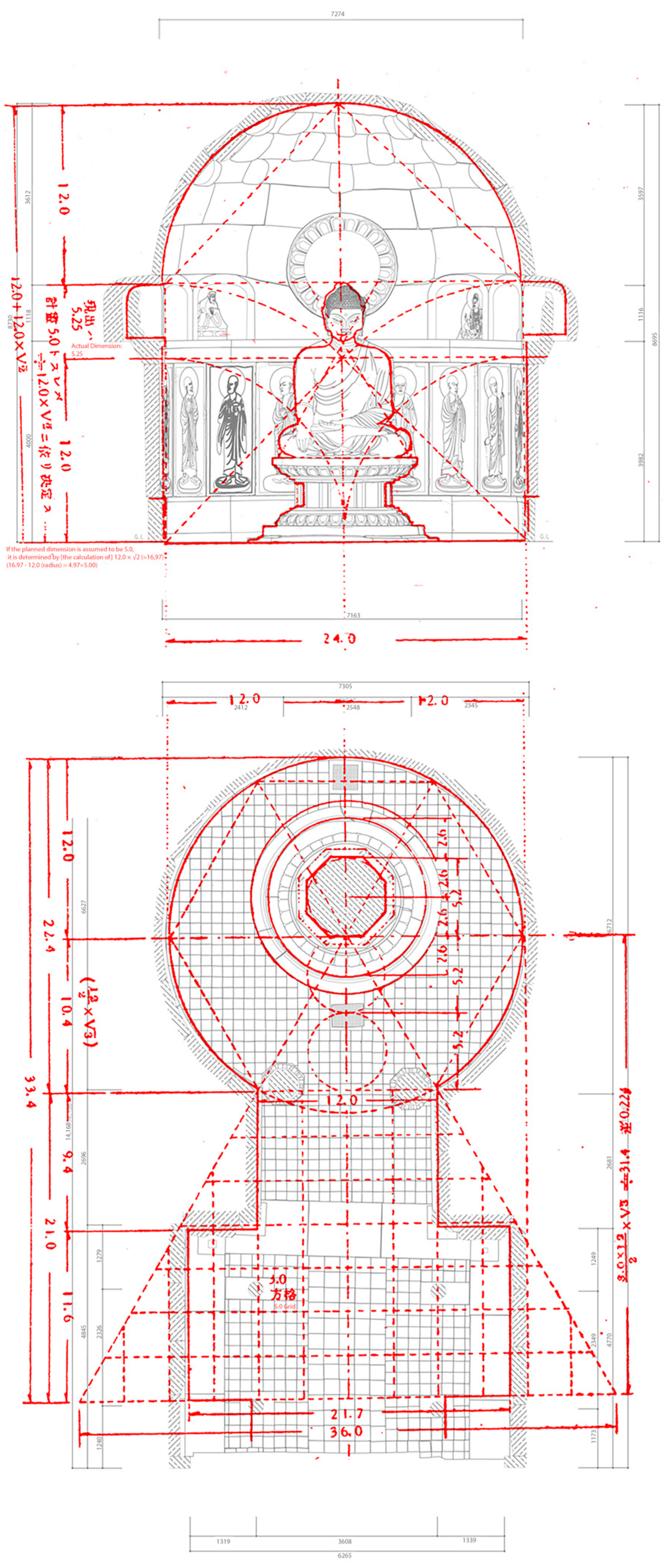
Yoneda Miyoji inferred that the designers superimposed a circle with a diameter of 24 cheok and an equilateral triangle with a length of 36 cheok at the center of the circle and the vertex of the equilateral triangle to determine the outline of the Seokbulsa grotto’s floor plan (see Figure 14). A regular hexagon inscribed in a circle with a radius of 12 cheok comprises six equilateral triangles with a length of 12 cheok. Yoneda analyzed the measurement data meticulously. He associated the measured dimension (10.4 cheok) from the center of the main chamber to its entrance line with the approximate value of an equilateral triangle’s irrational height (6√3 cheok). More precisely, he argued that the designers of the Seokbulsa grotto replaced an irrational value of 6√3 cheok with a rational value of 10.4 cheok [3].
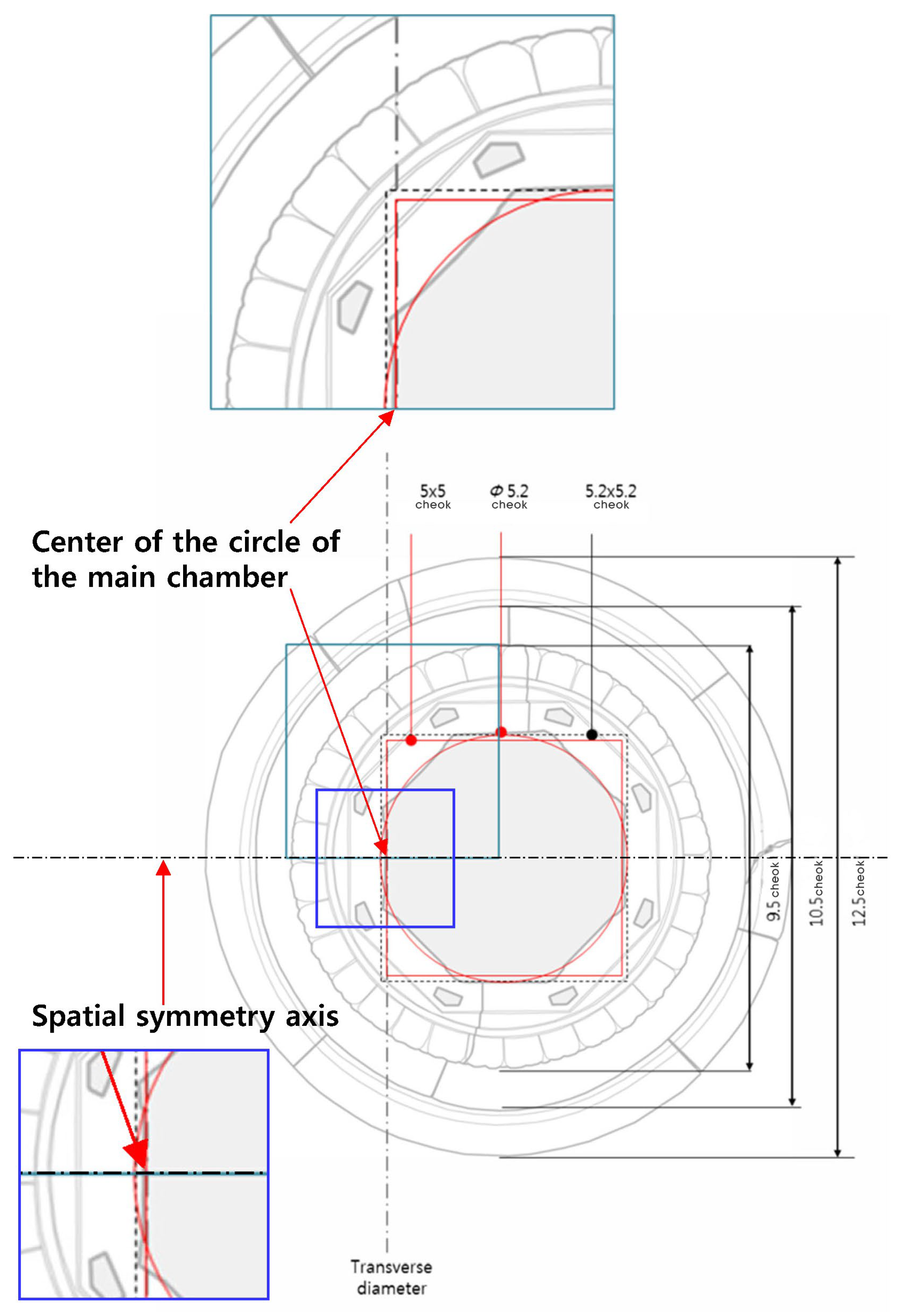
There are three issues in Yoneda Miyoji’s proposed plan schema that need to be reviewed; (1) measurement point of the spatial distance, (2) minimum length unit, and (3) whether the concept of irrational numbers existed in ancient East Asia. Regarding spatial distance, the point designated as the center of the main chamber is on the virtual surface, not on the actual surface, in the octagonal mid-stone of the pedestal (see Figure 15). The distance from the entrance line of the main chamber to the actual side of the mid-stone is 10.5 cheok, while the distance to its virtual side is 10.4 cheok. The difference between the two distances is only 0.1 cheok. Each corner protrudes by 0.1 cheok from the regular octagonal mid-stone to form an imaginary regular octagon. The imaginary regular octagon is inscribed to a square with a side length of 5.2 cheok.
Yoneda took 10.4 cheok as an approximation of 6√3 (≈10.392) and assumed that the center of the main chamber lay on an imaginary plane at that distance. However, because placement in practice is governed by measurements to a real surface, the idea that an approximate value should coincide with an imaginary plane is not convincing. It is also standard that object placement depends on the exact distance to the actual surface. Accordingly, it is more persuasive to explain the pedestal’s location with reference to the real surface of the mid-stone, which lies 10.5 cheok from the entrance line of the main chamber.
Regarding the minimum length unit, a distance of 10.4 cheok means that the pedestal’s placement is with a minimum unit of 0.1 cheok. Compared to a length of 12 cheok (≈3.6 m), which is the radius of the main chamber, 0.1 cheok (≈0.03 m) is also a small unit. The study of the modular design of the Seokbulsa grotto provides several clues suggesting that the minimum unit of length was 1/4 cheok (≈0.075 m). This specific unit derived from construction details: builders retracted relief stone panels by 1/4 cheok on base stones, effectively drawing two concentric circles on the floor plan. Furthermore, they divided the chord length of the base stones into 1/4 cheok units, and the width of the niche columns is 11/4 cheok [14]. Therefore, in the schematic design of the Seokbulsa grotto, the designers could not use 0.1 cheok, which is finer than 1/4 cheok, as a unit of length. According to the analysis of the dimensions used, the length unit of the schematic design would have been 1/2 cheok.
The last issue in Yoneda’s plan schema is whether the concept of irrational numbers existed in ancient East Asia. While Western geometry, in its strict sense, did not exist in ancient East Asia, it holds significant historical importance in Western architecture. Architects from ancient to Renaissance times incorporated geometry into their designs, and the tools of geometry were symbols of the architectural profession. In contrast, the understanding of geometry’s rigor and value, as well as the concept of irrational numbers, was less developed in ancient East Asia. Given that builders in East Asia traditionally did not use compasses in construction, the claim that the designers of the Seokbulsa grotto used an approximation of an irrational number for calculating dimensions remains questionable. Historically, Euclidean geometry was first introduced to East Asia when Matteo Ricci published Jihe yuanben (幾何原本) [38] in 1607—centuries after Seokguram’s construction. Therefore, it is unconvincing to claim that Silla designers used a compass to find the height of an equilateral triangle based on irrational dimensions [14,39]. Figure 16 provides more detail about Seokbulsa grotto’s alternative plan schemas.
The cosmological composition of the rectangular anterior and circular posterior regions was an external design constraint of the Seokbulsa grotto. Another external design constraint was accommodating the actual size of the Bodhgaya Buddha statue. The width of the Bodhgaya pedestal was 12.5 cheok. Therefore, it must have seemed natural to use a diameter of 24 cheok for the circular floor plan of the main chamber. In addition, the floor plan of the main chamber had the approximate shape of a circle, and the floor plan of the vestibular space had a 凸 shape. The width of the passage leading to the main chamber was 12 cheok, and the distance from the center of the main chamber to the entrance was 10.5 cheok. This dimension aligns with the calculation where the common East Asian approximation for √2 (1.4 rather than 1.4142) is applied. Using this same margin of error (ratio of 1.010) to 6√3, it is reasonable to infer the distance as 10.5 cheok [14]. Therefore, the triangle formed by the entrance line and the center of the main chamber is not an equilateral triangle but rather an isosceles triangle.
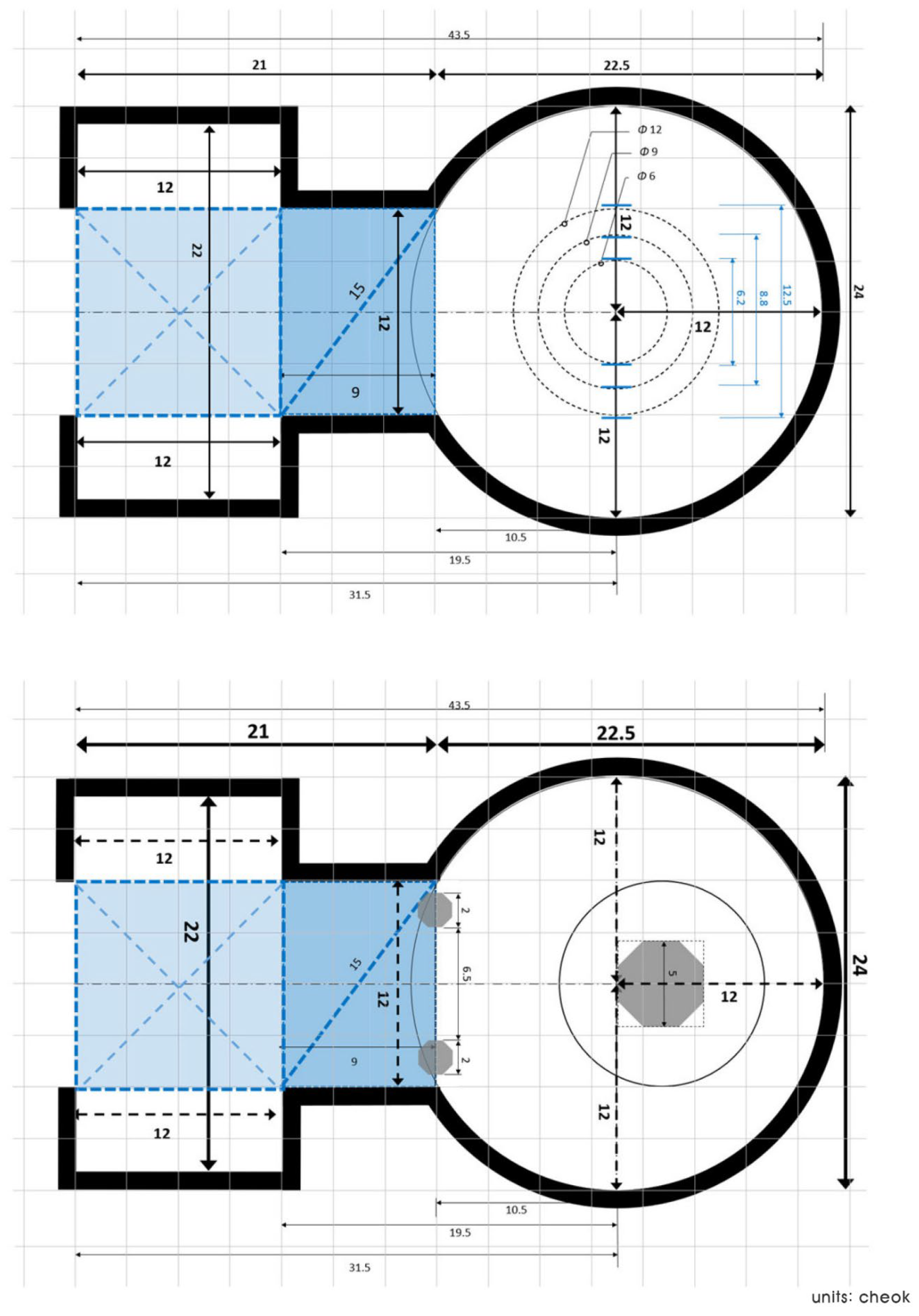
In the initial design stage, designers placed the pedestal at the center of the main chamber, but in a later stage, they retracted it by 2.5 cheok. Additionally, a 5 cheok square inscribed the octagonal mid-stone of the pedestal. Eventually, designers precisely aligned the front face of the octagonal mid-stone with the center of the circular main chamber. (Figure 15) Furthermore, builders symmetrically erected the four relief stone panels of the Four Guardians (四天王) on the left and right sides of the passage. Two molding posts, each 1 cheok wide, were placed at the two corners, bent at right angles at the passage entrance. The depth of the passage is 9 cheok. The floor shape of the passage is a special rectangle with a proportion of 3:4:5 between the two sides and the diagonal.
Builders erected two relief stone panels of Kongōrikishi (金剛力士) in the antechamber symmetrically on the left and right of the passage entrance. Then, in succession, they erected eight relief stone panels of the Eight Parivara (八部神將) symmetrically on the left and right in a folded L-shaped arrangement. Therefore, the width of the antechamber floor is 22 cheok [two Vajra-pani flagstones (4 cheok × 2) + two molding posts (1 cheok × 2) + passage width (12 cheok)], and its depth is 12 cheok [three flagstones (4 cheok × 3)]. The plan schemas of the two design stages can be inferred, as shown in Figure 16.

3.5.2. Section Dimensions with Binary Division System

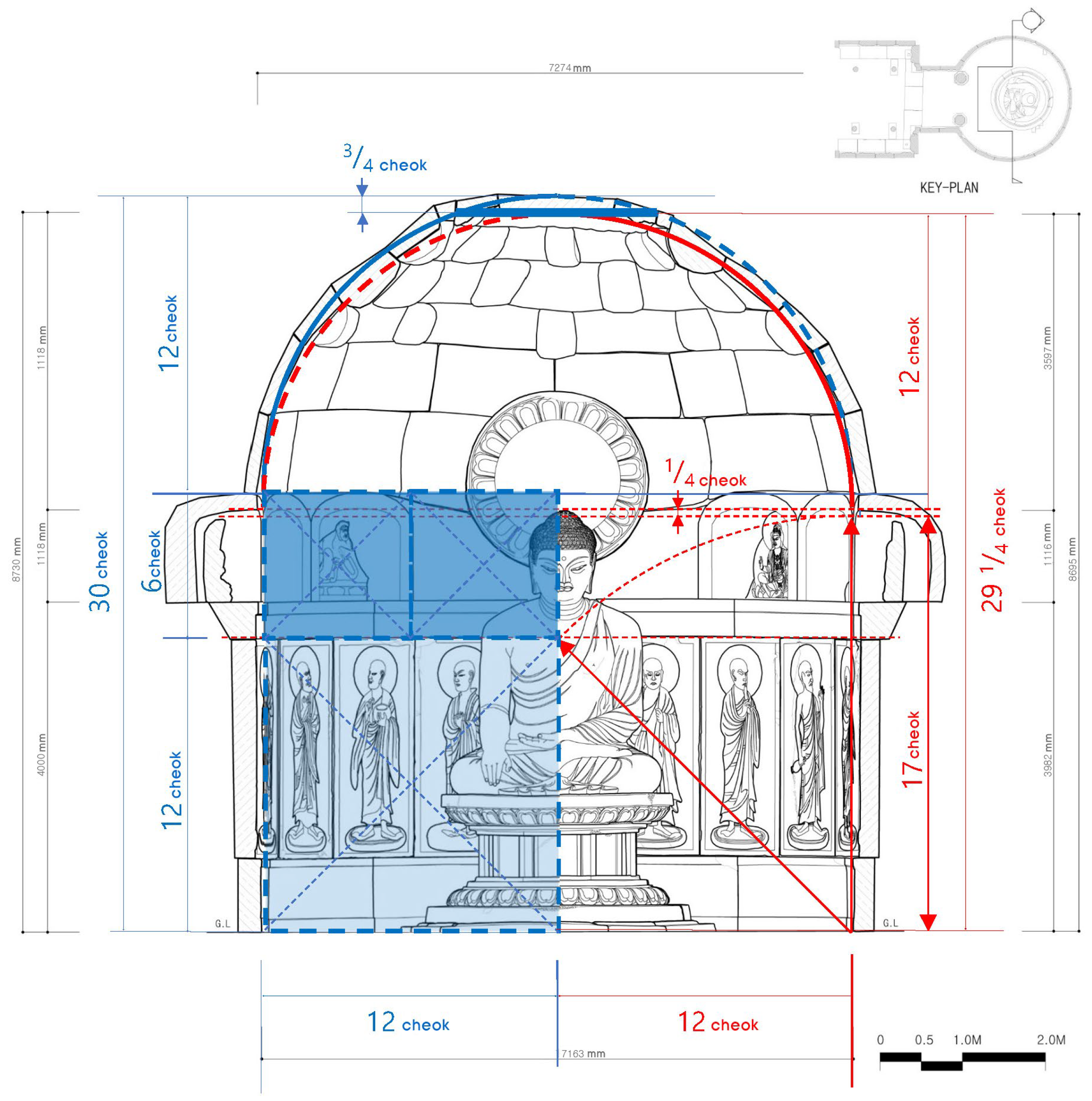
Yoneda Miyoji argued that the section schema of the main chamber comprised a square with a length of 12 cheok on one side, a rectangle with a square diagonal length of 12√2 cheok on the other side, and a semicircle with a diameter of 12 cheok (see Figure 14). Furthermore, he contended that the central height of the niche space measured 17 1/4 cheok, but designers originally designed it to be 17 cheok, which approximates 12√2 cheok. Therefore, Yoneda assumed that the hemispherical dome started to rise from the central peak of the niche space [3].
In his section schema, it is necessary to review the following three aspects. The first is the question of stone construction and the design composition of the niche zone. Yoneda argued that the bottom of the dome aligned with the central peak of the niche space. However, his argument is less persuasive when considering the organizational system of design and construction. The main chamber has three vertical divisions: the wall below, the niche in the middle, and the dome above. Structurally, the wall comprises a base stone and a relief stone panel. The niche consists of a 1.5-cheok-tall base stone, a 3-cheok-tall wall stone, and a 1.5-cheok-tall capstone, totaling 6 cheok in height. The dome and niche are parts of an organization belonging to the same hierarchy. In the overall section design that organizes a hierarchical structure, it is contradictory that the radius of 12 cheok, an external dimension of the dome, should be associated with the maximum height of the niche space, determined by an internal measurement of the capstone. Here, the maximum height of the capstone arch is strictly an internal dimension, distinct from the external dimensions. Since capstones are crafted independently as individual components, their internal dimensions are determined separately from the external structure. Since the internal dimensions of the capstone and the external dimensions of the dome belong to different layers of the organizational structure, it is unlikely that the maximum height of the niche space was associated with the dome’s radius. Refer to Figure 17 for a comparative analysis of the two section schemas.
The second aspect is the problem of arc analysis and construction errors in the relationship between the section schema and measured dimensions. Yoneda reported that the height of the main chamber is 29 cheok in the section schema, but its actual measurement is 291/4 cheok. He determined a construction error of approximately 1/4 cheok (≈7.4 cm). However, when analyzing the exact height of the dome arc according to the 3D scan data, it is reasonable to estimate the height of the main chamber in the section schema to be 30 cheok rather than 29 cheok. Builders covered the top of the dome with a round capstone measuring 8.5 cheok in diameter. Yoneda noted that the arc of the dome touches the bottom of the capstone in the section schema. However, if one draws an arc along the dome’s inner wall, the dome’s semicircle does not touch the bottom of the capstone. Instead, the base of the capstone must form a straight line by cutting the semicircle of the dome. Therefore, in the dome’s semicircle, the height to the bottom of the capstone is 111/4 cheok (≈334.1 cm), and the versine from the top to the base of the capstone is 3/4 cheok (≈22.3 cm). In conclusion, the actual height of the main chamber to the round capstone is 291/4 cheok, but the height of the main chamber in the section schema should be 30 cheok to the top of the hemisphere. This analysis is confirmed by the assembly method: the builders stacked five layers of flat stones to an overall height of 111/4 cheok, accurately maintaining the design dimensions. Thus, contrary to Yoneda’s claim, there was no construction error in the dome of Seokbulsa grotto.
The last aspect concerns the approximation of √2. In ancient East Asia, the concept of irrational numbers did not exist; instead, designers used approximation for geometric figures and dimensions, specifically utilizing the approximation of the diagonal length of a square since BC [40].
In Yoneda’s section schema, the calculated height of the niche zone was 5 cheok, with an assumed construction error of 1/4 cheok. However, using 1.4—which designers then used instead of 1.4142—as an approximation of √2, then approximating 12√2 cheok should be 16.8 cheok rather than 17 cheok. Therefore, the construction error would be larger than 0.45 (0.25 + 0.2) cheok. In the schematic design of Seokbulsa grotto with the minimum length unit of 1/2 cheok, a construction error of 0.45 cheok would not have been acceptable. See Figure 18 for more details.
Builders completed the height of the cylindrical wall at 12 cheok by erecting 9-cheok-tall relief stone panels on top of 3-cheok-tall base stones. In addition, builders located a 6-cheok-tall niche zone and built a 12-cheok-tall hemispherical dome on the wall. Setting a dome upon a cylindrical wall departs from any primitive conical form found in Korean architectural traditions. With no precedent for such a perfect hemisphere, it is plausible to regard the Seokguram dome not as the outcome of empirical trial and error, but as the realization of a precise geometric conception executed with deliberate design intent. The niche zone comprised 1.5-cheok-tall headstones at the bottom, 3-cheok-tall wall stones in the middle, and 1.5-cheok-tall capstones above. In the antechamber, eaves and bracket stones occupied the headstone zone, which is 1.5 cheok tall. The niche zone is a space band separating the upper dome from the lower wall. There are ten niches arranged in a row on the left and right. The floor plan of the niche is semicircular, and its roof is half hemispherical. The maximum height of the niche space is approximately 3.9 cheok (116 cm), its depth is about 2.9 cheok (85 cm), and its width is 4 cheok (119 cm).
The designers chose to separate the dome from the walls by creating niche spaces rather than adding decorations. This design technique produces a high degree of visual effect. The spaces of the niche zone visually separate the hemispherical dome, and the dome appears to float above it, naturally symbolizing a heavenly world and rejecting the material character of the stone. The finishing on top of the dome is a circular capstone with a diameter of 8.5 cheok (252 cm), and the surface of the stone includes decoration of a single petal lotus, suggesting a heavenly place.
When the pedestal was retracted by 2.5 cheok and raised by 1.3 cheok, the height of the Buddha statue increased to 17 cheok. Structurally, since it is not possible to separate the 1.3-cheok-tall part of the five-story pedestal, it can be inferred that the pedestal was designed after determining the retreat arrangement. However, the size of the seated Buddha remained the same. In the initial stage, when the pedestal was in the center, the central height of the passage arch was 16 cheok. Even though the pedestal later retreated, and its height increased, the height of the passage arch remained the same. The section schemas of the two design stages can be inferred, as shown in Figure 18.

4. Discussions

4.1. Primary Modules and Spatial Proportions

The most critical dimension in the design of the Seokbulsa grotto is 12 cheok. This main module (M) dominates the grotto’s architectural space, appearing repeatedly both on its own and through its factoring dimensions. Specifically, in the main chamber, the radius of the circular floor, the height of the cylindrical wall, and the height of the hemispherical dome are all 12 cheok. Furthermore, the width and wall height of the passage, as well as the depth and wall height of the antechamber, are also governed by this 12-cheok module. Additionally, the primary modules include critical dimensions such as 1.5 cheok, 9 cheok, 10.5 cheok, and 16 cheok. Specifically, the distance from the center of the main chamber to the entrance line corresponds to 10.5 cheok (7/8 M), and the central height of the passage arch is 16 cheok (4/3 M). Furthermore, the depth of the passage and the height of the relief stones are set at 9 cheok (3/4 M), while the width of the octagonal midstone is 5 cheok (5/12 M). Lastly, the roof height of the antechamber is 1.5 cheok (1/8 M), which is identical to the height of the headstone (Figure 19).
When entering the main chamber along the spatial symmetry axis, the maximum width of the circular space is 24 cheok (2 M), and the maximum height is 30 cheok (21/2 M). It is important to note that while the actual maximum height is 291/4 cheok (= 21/2 M − 3/4 cheok), the value of 21/2 M serves as the reference dimension in the section schema. The height of the main chamber is 6 cheok (1/2 M), larger than its width. The depth of the main chamber is 22.5 cheok (17/8 M = 2 M − 1/8 M).
When entering the vestibular space along the spatial symmetry axis, its maximum width is the width of the antechamber, which is 22 cheok (15/6 M = 2 M − 1/6 M), and its minimum width is the width of the passage, which is 12 cheok (1 M). The depth of the vestibular space is the sum of the antechamber depth (1 M) and the passage depth (3/4 M), which is 21 cheok (13/4 M = 2 M − 1/4 M). In the vestibular space, the maximum width is one cheok larger than the depth. The antechamber is outdoors, and a barrel vault canopy partially covers the passage. The maximum height of the passage is 16 cheok (11/3 M). The vaulted ceiling starts to rise from 12 cheok (1 M) on the left and right sides of the passage wall. The ratio of the maximum height to the width in the passage is 4:3. Figure 18 provides further details.
In the entire Seokbulsa grotto’s space, the total depth is 43.5 cheok (35/8 M = 4 M − 3/8 M), the maximum width is 24 cheok (2 M), and the minimum width is 12 cheok (1 M). Therefore, the ratio of the minimum width to the total depth is approximately 1:4; the ratio of the maximum width to the total depth is about 1:2. In addition, the depth of the main chamber is longer than that of the vestibular space by 1.5 cheok; the maximum width of the main chamber is larger than the maximum width of the vestibular space by 2 cheok. Furthermore, the maximum height of the main chamber space is approximately twice as high as the maximum height of the passage space. In conclusion, a dependency hierarchy between the main module and primary modules, based on the relative size and proportional relationships of integer dimensions, was consistently established in the architectural design of the Seokbulsa grotto.

4.2. Scene Perception and Proportional System

In ancient East Asia, the design principles of traditional architecture included central axis symmetry, master-servant distinction, and modular coordination. Designers faithfully applied these design principles to the Seokbulsa grotto. By using the sunrise direction during the winter solstice as the axis of spatial symmetry, designers applied central axis symmetry. In addition, the dual shape structure of the rectangular anterior and circular posterior and the boundary gate frame at the entrance of the main chamber embody the distinction between the master and servant. Furthermore, applying the main module of 12 cheok and primary modules to the space distances and shape lengths displayed modular coordination.
However, accommodating the actual dimensions of the Bodhgaya Buddha statue posed an external design constraints that was unusual for the confined space of the Seokbulsa grotto. In parallel, the requirement for complete visual coordination-recognized through scene perception governed by the viewer’s gaze alignment-constituted an internal design constraint developed during the grotto’s design process. The designers appear to have intentionally devised the arched headstone as the threshold of this coordination. Taken together, these considerations suggest that the last pair of relief stone panels at the antechamber entrance of the Seokguram Grotto were folded rather than splayed as they are now (see Figure 6) Viewers moving through the space could then perceive the complete alignment of the Buddha’s head with the nimbus stone.
Scene perception based on a specific viewpoint shares principles with linear perspective, but the information they convey is fundamentally different. While a perspective is a flat, 2D projection like a photograph, ‘scene perception’ involves the human brain’s three-dimensional interpretation of visual inputs. Vision theorist David Marr termed this reconstructed information the “2 1/2D sketch,” a crucial intermediate stage consisting of a 2D map with (1) the distance from the viewer to every visible surface, (2) surface orientation, (3) outlines where a surface ends or is blocked by another (which he termed ‘subjective contours’) and (4) the folds or creases where a single surface bends or changes direction [42]. Michael Kubovy further clarifies that while linear perspective maintains “visual robustness”—meaning the depicted 3D information remains constant regardless of the viewer’s movement—actual scene perception changes dynamically as the viewer moves. In a real space, the visible side of objects and surface directions shift with the viewpoint [43].
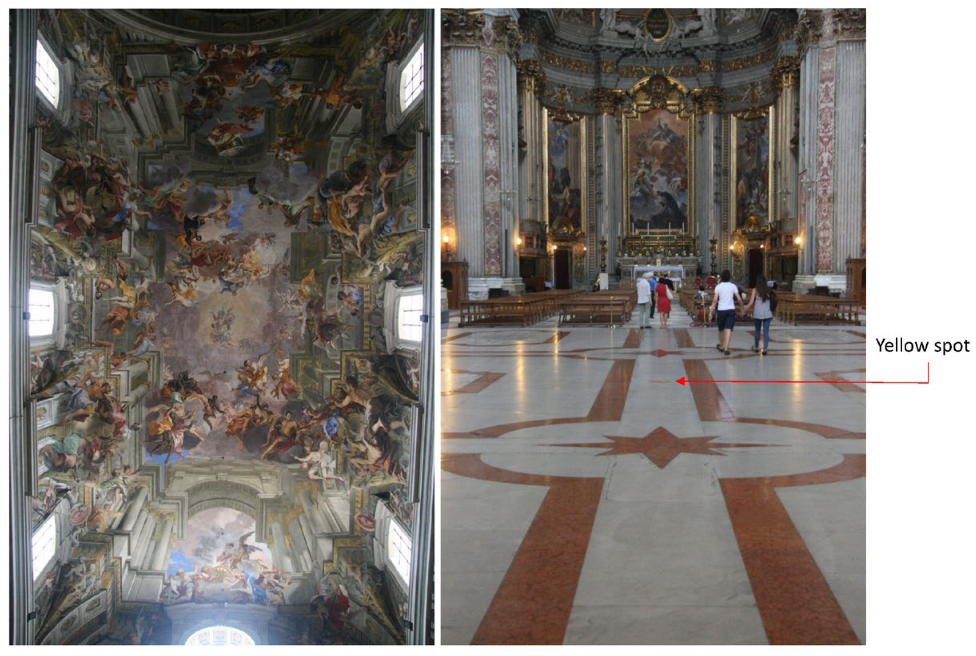
To illustrate this distinction, one can visualize the ceiling fresco painted by Pozzo in the Church of Sant’Ignazio in Rome. A yellow circle on the nave floor of the cathedral marks the optimal viewpoint. Unlike normal perspective, however, this fresco ceiling does not maintain the “visual robustness” of linear perspective. Therefore, by marking the optimal viewing point for complete scene perception when designing the perspective of the fresco, Pozzo allowed the viewer—once they stepped away from that point—to experience for themselves that the scene depicted in the fresco was not reality, but rather a perfect illusion perceived through perspective.
Regarding this illusion, Pirenne argued that visual robustness in Pozzo’s frescoes is easily dismantled because the viewer observes them from too far away. While it is possible to focus on the virtual space drawn on the fresco (focal awareness), it is impossible to perceive the fresco surface itself as subsidiary awareness. Interpreting this through Marr’s theory, the viewer can obtain information on the outlines and edges (items 3 and 4) drawn on the fresco, but cannot perceive the direction (item 2) of each fresco patch or the distance (item 1) [44]. The yellow circle on the floor intentionally marked the optimal viewpoint for perfect visual coordination. Figure 20 provides more details about the cathedral.
Unlike Sant’Ignazio’s Cathedral, the Seokbulsa grotto does not explicitly express the spot at which optimal scene perception occurs. When a worshipper enters the architectural space of the Seokbulsa grotto, the individual has no choice but to be tacitly conscious of the alignment of his eyes with Buddha’s head. Through the perception of the scene from the central area of the vestibular space, one can confirm the complete visual coordination between Buddha’s head and the nimbus stone. When the relief stone panel arrangement was folded in the antechamber before the Korean government’s repair work, one achieved complete visual coordination of Buddha’s head and the nimbus stone through scene perception according to the viewer’s gaze alignment. In contrast, incomplete visual coordination occurs in the space, expanded by spreading the two flagstones in the repair work (see Figure 6 and Figure 7). The arched headstone between the two octagonal columns unquestionably revealed the threshold line of complete visual coordination (see Figure 5).
In conclusion, in the ceiling design of the Sant’Ignazio Cathedral, Pozzo explicitly marked the optimal viewpoint for perfect visual coordination on the floor. In contrast, the designers of the Seokbulsa grotto implicitly revealed the threshold line for complete visual coordination through the arched headstone in the air above (see Figure 21).
Wittkower explained the theory of proportionality in the Renaissance, exemplifying the proportional relationship between the height, length, and width of a room space commonly used by Andrea Palladio. For instance, Palladio’s general proportionality theory recommended using seven selected room shapes. Among these, one shape included an irrational number of √2, but few cases applied this concept at the time [45]. Instead, designers derived the architectural proportions of the Renaissance from the consonant theory of music. The proportion is the relationship created by the natural numbers 1, 2, 3, 4, and 5 that make octaves and the 5th and 4th chords. These ratios should be commensurable and as simple as possible.
Renaissance painters and architects thought that expressing predetermined mathematical harmony in an infinite universe should be like a mirror in a finite architectural space. These artists believed there was no contradiction between a scene’s objective proportions and subjective perception. Geometric evidence and recognizing the maintenance of the objective proportions of a scene in the perspective view gave Renaissance painters and architects confidence [45].
The primary modules established Seokbulsa grotto’s proportional system. In the schematic design of the Seokbulsa grotto, the length dimensions of the primary modules were 1 cheok (1/12 M), 1.5 cheok (1/8 M), 2 cheok (1/6 M), 3 cheok (1/4 M), 4 cheok (1/3 M), 5 cheok (5/12 M), 6 cheok (1/2 M), 9 cheok (3/4 M), 10.5 cheok (7/8 M), 12 cheok (1 M), and 16 cheok (4/3 M) (see Figure 18). When comprehensively analyzed, it can be inferred that the minimum length unit in the schematic design was 1/2 cheok. The main module (M) used in the Seokbulsa grotto can be regarded as a conceptual standard similar to one octave in Renaissance proportional theory. However, the proportional system of Seokbulsa grotto has nothing to do with the theory of tonal music.
Additionally, this system has nothing to do with absolute geometry or mathematics represented by the symbolic meanings of cosmology. There is no historical evidence that such intellectual discourse occurred at the time. That is, there was no social awareness of the symbolic meaning of the proportional system. The proportional system of the Seokbulsa grotto was a means to solve the practical problem of smooth communication and effective construction. It was only a practical tool for translating the master–servant distinction into the planned shape of a rectangular anterior and circular posterior.
Pozzo’s ceiling fresco is 38 m to 42 m from the floor. The diameter of the Pantheon Dome and floor plan is approximately 43 m. However, the total length of the Seokbulsa grotto is 12.9 m in the direction of the spatial symmetry axis. The dome diameter of the grotto is 7.1 m, and the dome height is 8.8 m. The planned size of the Seokguram dome is approximately 1/6 that of the Pantheon dome, while the height of the Seokguram dome is about 1/5 that of the Pantheon dome. The sizes of the main chamber and front court of the Seokbulsa grotto are within 7.6 m. In terms of scene perception within the architectural space, Seokguram’s spaces can be understood as falling within the proxemic distance defined by Edward T. Hall, corresponding to the human scale [46].
While the Pantheon of Rome and the Romanesque or Gothic cathedrals of medieval Europe all transcend the human scale, the Seokguram Grotto in Korea remains resolutely within it. This divergence arises from a difference in the content of empathy that underlies their tectonic intentions. As Chad Schwartz explores in the intersection of design and construction, in the western religious tradition, architecture sought to embody an empathy toward the absolute-to exalt, to ascend, and to approach the transcendent [47]. In contrast, Seokguram manifests an empathy toward the human, a spatial compassion grounded in the ritual of Yojap (Circumambulation)-sharing enlightenment rather than venerating distance [48].
In Western architecture, tectonic expression often materialized as an act of transcendence. The Pantheon’s vast dome, interpreted by Cassius Dio as an imitation of heaven itself where all gods dwell, materialized a cosmological image of divine order through its oculus and celestial geometry [49]. Centuries later, Gothic cathedrals such as Saint-Denis or Chartres extended this aspiration vertically: pointed arches, rib vaults, and flying buttresses became structural instruments that made the divine perceptible in space. The result is tectonics of transcendence—an architecture of empathy toward heaven, expressed through magnitude, luminosity and vertical tension.
Spatial composition of Seokguram Grotto—from the rectangular antechamber through a narrow corridor into the circular main chamber—culminates not in vertical grandeur but in contemplative intimacy. The dome shelters a seated Buddha within near-human reach. Its dry-assembled granite rings and hidden joints transform structure into a medium of immanent empathy: a space for sharing insight rather than ascending beyond it.
According to G. C. Argan, a building type consists of three interrelated components—plan, section and structure [15]. Within this framework, Seokguram achieves an extraordinary synthesis of spatial dramaturgy, yet the building type was never reproduced in later Korean architecture. We propose that while its plan and sectional schema were conceptually transmittable, its structure system proved resistant to transmission. The reason lies not only in the singular and technically demanding nature of its stereotomic construction—cut-granite rings interlocked by concealed joints—but also in a broader ecology that favoured timber tectonics, with limited patronage, workshop organization, and programmatic demand for comparable stone interiors. Absent a sustained, specialized tradition of stereotomy, such structural intelligence was unlikely to be propagated.
Beyond the specific case of Seokguram Grotto, these findings resonate with broader debates in architectural history. First, the identification of the iterative design process questions the view that ancient architecture is often interpreted as a direct replication of specific building types, demonstrating instead a dynamic sequence of rational problem-solving. Second, emphasizing visual coordination shifts the analytical focus from purely iconographic interpretation to an analysis grounded in the actual visual experience of the human observer. Finally, validating the integer-based modular system serves to demystify ancient architecture, advocating for an interpretation grounded in the practical building technologies and arithmetic of the era rather than modern mathematical theories.

5. Conclusions

This study has reconstructed the schematic design process of Seokguram Grotto by analyzing the logical negotiation between design constraints. Unlike previous studies that relied on abstract geometric theories, we grounded our analysis in the physical realities of construction and scene perception.
Our analysis yields three definitive findings regarding the design logic of Seokguram. First, the discrepancy between the recorded dimensions of the Bodhgaya Buddha and the actual statue was a deliberate architectural adjustment. The designers strategically retreated the pedestal and increased its height to resolve the conflict between the external constraint of the Buddha’s scale and the internal constraint of visual depth. Second, the arched headstone was identified not as an arbitrary decoration but as a critical visual threshold. It ensures that the detached nimbus aligns perfectly with the Buddha’s head from the viewer’s gaze in the antechamber, creating a unified sacred scene. Third, the dimensional system of the grotto is based on a practical 12-cheok integer module and binary division, refuting the hypothesis that irrational numbers like √2 was used in 8th century Silla architecture.
These findings redefine Seokguram Grotto not merely as a product of aesthetic intuition, but as a masterpiece of rational logic. The grotto demonstrates how ancient architects utilized modular coordination to translate cosmological symbolism into a constructed reality.
Despite these significant findings, this study is subject to certain limitations. First, regarding the physical data, our analysis relies on the current state of Seokguram, which underwent dismantling and reassembly in the early 20th century. While the dimensions of individual stone members remain constant, the assembly joints and overall alignment may deviate slightly from the original 8th century structure due to these interventions. Since no original design drawings or construction documents from the Unified Silla period have survived, the schematic design process proposed in this study is a theoretical model derived from reverse engineering the build form, rather than an analysis of primary archival evidence.
Ultimately, Seokguram Grotto represents a distinct ‘tectonics of empathy.’ Distinguished from the vertical sublimity of Western Gothic cathedrals that evokes awe, Seokguram priorities the human scale and an intimate visual experience. While this study clarified the schematic design and dimensional system, the structural logic of the stone dome—its stereotomy and load-transfer mechanisms—remains a critical area for further investigation. Future research will focus on these structural aspects to fully elucidate how the material precision of Seokguram Grotto mediates its spiritual intention.

Author Contributions

Conceptualization, C.Y.; Investigation, Y.K.; Writing—original draft, C.Y.; Writing—review & editing, Y.K.; Visualization, Y.K.; Funding acquisition, C.Y. All authors have read and agreed to the published version of the manuscript.

Funding

This research was funded by the National Research Foundation of Korea (NRF) grant funded by the Korea government (No. 2021R1F1A1045742).

Data Availability Statement

Restrictions apply to the availability of these data. Data were obtained from [National Museum of Korea] and are available [https://www.museum.go.kr/modern-history/view.do?seq=27431&aseq=347 (accessed on 9 December 2025)] with the permission of [National Museum of Korea].

Conflicts of Interest

Author Yongchan Kwon was employed by the company Haeahn Architecture. The remaining author declares that the research was conducted in the absence of any commercial or financial relationships that could be construed as a potential conflict of interest.

References

  1. Gombrich, E.H. Art and Illusion: A Study in the Psychology of Pictorial Representation—Millennium Edition; Princeton University Press: Princeton, NJ, USA, 2000. [Google Scholar]
  2. Hochberg, J.E. Visual Perception in Architecture. VIA 1983, 6, 35. [Google Scholar]
  3. Yoneda, M. A Research on Ancient Korean Architecture; Akitaya: Tokyo, Japan, 1944. (In Japanese) [Google Scholar]
  4. Song, M. The Aesthetic Beauty of the Forms in Traditional Korean Architecture; Kimoondang: Seoul, Republic of Korea, 1987. (In Korean) [Google Scholar]
  5. Kang, W. A Study on Iconography of Main Buddha in Sukpulsa Temple. Misuljaryo 1984, 35, 54–57. (In Korean) [Google Scholar]
  6. Nam, C. Seokbulsa: Multistoried Stone Pavilion of Toham Mountain; Iljogak: Seoul, Republic of Korea, 1991. (In Korean) [Google Scholar]
  7. Shin, Y. Seokguram: Heaven Descended and Settled upon the Earth; The Chosun Ilbo: Seoul, Republic of Korea, 2003. (In Korean) [Google Scholar]
  8. Salguero-Andújar, F.; Prat-Hurtado, F.; Rodriguez-Cunill, I.; Cabeza-Lainez, J. Architectural Significance of the Seokguram Buddhist Grotto in Gyeongju (Korea). Buildings 2022, 12, 1003. [Google Scholar] [CrossRef]
  9. Park, J. The Seokguram Grotto in Korea and the Gougu Rule: Rebuttal of the √2 and √3 Hypothesis and a New Interpretation of the Underlying Method. Nexus Netw. J. 2022, 24, 825–842. [Google Scholar] [CrossRef]
  10. Gross, M.D. Design as Exploring Constraints. Ph.D. Thesis, Massachusetts Institute of Technology, Cambridge, MA, USA, 1985. [Google Scholar]
  11. Yoon, C. Thrice Repair Works and Three Space Conceptions in Seokguram. J. Archit. Inst. Korea 2019, 35, 12. (In Korean) [Google Scholar]
  12. Yoon, C. A Critical Review of Modern Repair Works of Seokguram Grotto. In Proceedings of the 6th World Humanities Forum 2, Gyeongju, Republic of Korea, 4–6 November 2020; pp. 378–387. (In Korean). [Google Scholar]
  13. Anonymous. The Nine Chapters on the Mathematical Art; Liu, H., Li, C., Eds.; Zhonghua Shuju: Beijing, China, 1985. (In Chinese) [Google Scholar]
  14. Yoon, C. The Stones of Seokguram Speak: Floor Plan and Wall Design of Seokbulsa Grotto. J. Archit. Hist. 2020, 29, 21–37. (In Korean) [Google Scholar]
  15. Argan, G.C. On the Typology of Architecture. Archit. Des. 1963, 33, 564–565. [Google Scholar]
  16. Yoon, C. Plan Schematization: A Computational Approach to Morphological Structure of Architectural Space. Ph.D. Thesis, Massachusetts Institute of Technology, Cambridge, MA, USA, 1995. [Google Scholar]
  17. Yoon, J.; Yoon, C. Seokbulsa Grotto: Architectural Engineering and Buddha Sculptures; Hakcheon: Seoul, Republic of Korea, 1998. (In Korean) [Google Scholar]
  18. Sungkyunkwan University Museum. The Past and Present of Silla Sites in Gyeongju: Seokguram, Bulguksa, and Namsan; Sungkyunkwan University Museum: Seoul, Republic of Korea, 2007. (In Korean) [Google Scholar]
  19. Government-General of Korea. Bukoku-ji Temple and Sekkutsu-an Cave in Keishu, Chosen; Government-General of Korea: Seoul, Republic of Korea, 1938; Volume 1. [Google Scholar]
  20. Wipco. Digital Cultural Heritage Content Creation Project—Seokguram; Cultural Heritage Administration: Seoul, Republic of Korea, 2012. (In Korean) [Google Scholar]
  21. Bureau of Cultural Property Management. The Seokguram Repair Work Report; Bureau of Cultural Property Management: Seoul, Republic of Korea, 1967. (In Korean) [Google Scholar]
  22. Kuwayama, S. Great Tang Records on the Western Regions; Shokado: Kyoto, Japan, 1999. (In Japanese) [Google Scholar]
  23. Qiu, G. The History of Ancient Chinese Measures and Weights, 1st ed.; Anhui kexue jishu chubanshe: Hefei, China, 2012. (In Chinese) [Google Scholar]
  24. Choi, S. One Prime Object, Different Receptions: “The Auspicious Image of Bodhgaya” in Tang China and Buddha Statue at Seokguram in the Unified Silla. Art Hist. Vis. Cult. 2013, 12, 260–305. (In Korean) [Google Scholar]
  25. Tadgell, C. The History of Architecture in India: From the Dawn of Civilization to the End of the Raj; Architecture, Design, and Technology Press: London, UK, 1990. [Google Scholar]
  26. Rhi, J. Circular Shrines in India/Central Asia and their Relevance to the Seokguram Sanctuary. Cent. Asian Stud. 2006, 11, 141. (In Korean) [Google Scholar]
  27. Kim, Y.; Park, S. Tectonic Traditions in Ancient Chinese Architecture, and Their Development. J. Asian Archit. Build. Eng. 2017, 16, 31–38. [Google Scholar] [CrossRef]
  28. Anonymous. Zhou Bi Suan Jing: Fuyinyi, Annotated ed.; Chao, S., Chen, L., Li, C., Feng, J., Eds.; Zhonghua Shuju: Beijing, China, 1985. (In Chinese) [Google Scholar]
  29. Ni, R. On the Origin and Formation of the Northern Dynasties Circular Stone Tombs. J. Peking Univ. Philos. Soc. Sci. 2010, 47, 135–145. (In Chinese) [Google Scholar]
  30. Kim, I. Oriental Astronomical Thoughts, Human History; Yemunseowon: Seoul, Republic of Korea, 2007. (In Korean) [Google Scholar]
  31. Puett, M. The Ambivalence of Creation: Debates Concerning Innovation and Artifice in Early China; Stanford University Press: Stanford, CA, USA, 2001. [Google Scholar]
  32. Puett, M. To Become a God: Cosmology, Sacrifice, and Self-Divinization in Early China; Harvard University Asia Center: Cambridge, MA, USA, 2002. [Google Scholar]
  33. Iryeon. Samguk Yusa: Memorabilia of the Three Kingdoms; Lee, B., Ed.; Dongguk Munhwasa: Seoul, Republic of Korea, 1956. (In Korean) [Google Scholar]
  34. Yoon, C. A Study on the Mythological Analysis and Architectural Space Restoration of the Seokguram Grotto. J. Archit. Hist. 2023, 32, 7–18. (In Korean) [Google Scholar]
  35. Nakamura, R. Art of Gyeongju in Korea; Kaizō-sha: Tokyo, Japan, 1940. (In Japanese) [Google Scholar]
  36. Lee, M.; Kang, J.; Seon, I. Glass Plates in Seoul National University Museum; Seoul National University Press: Seoul, Repubic of Korea, 2008. (In Korean) [Google Scholar]
  37. Architectural Institute of Korea. A Study on the Safety Diagnosis of Seokguram Structure; Architectural Institute of Korea: Seoul, Republic of Korea, 1997. (In Korean) [Google Scholar]
  38. Ricci, M. Elements of Geometry; Xu, G., Ed.; Zhonghua Shuju: Beijing, China, 1985. [Google Scholar]
  39. Kim, Y.; Kim, Y. The History of Korean Mathematics; Salim Publishing: Paju, Republic of Korea, 2009. (In Korean) [Google Scholar]
  40. Feng, S.-z. Archeoastronomy in China; China Social Sciences Press: Beijing, China, 2007. (In Chinese) [Google Scholar]
  41. National Museum of Korea. Gyeongju Seokguram Restoration Completion Drawings; National Museum of Korea: Seoul, Republic of Korea, 1916. [Google Scholar]
  42. Marr, D. Vision: A Computational Investigation into the Human Representation and Processing of Visual Information; W.H. Freeman: San Francisco, CA, USA, 1982. [Google Scholar]
  43. Kubovy, M. The Psychology of Perspective and Renaissance Art; Cambridge University Press: Cambridge, UK, 1986. [Google Scholar]
  44. Pirenne, M.H. Optics, Painting & Photography; Cambridge U.P.: London, UK, 1970. [Google Scholar]
  45. Wittkower, R. Architectural Principles in the Age of Humanism; Norton: New York, NY, USA, 1971. [Google Scholar]
  46. Hall, E.T. The Hidden Dimension; Anchor Books; Doubleday: New York, NY, USA, 1990. [Google Scholar]
  47. Schwartz, C. Introducing Architectural Tectonics: Exploring the Intersection of Design and Construction; Routledge: New York, NY, USA, 2017. [Google Scholar]
  48. Kang, H. Two Elements of Yojap (Circumambulation around the Buddha Image): The Act of Respectful Bowing and the Creation of Good Karma Between the Buddhists and the Buddha. Art Hist. Vis. Cult. 2011, 10, 142–165. (In Korean) [Google Scholar]
  49. Dio, C. Roman History; Cary, E., Translator; Volume 5, Available online: https://lexundria.com/dio/53.27/cy (accessed on 12 October 2025).
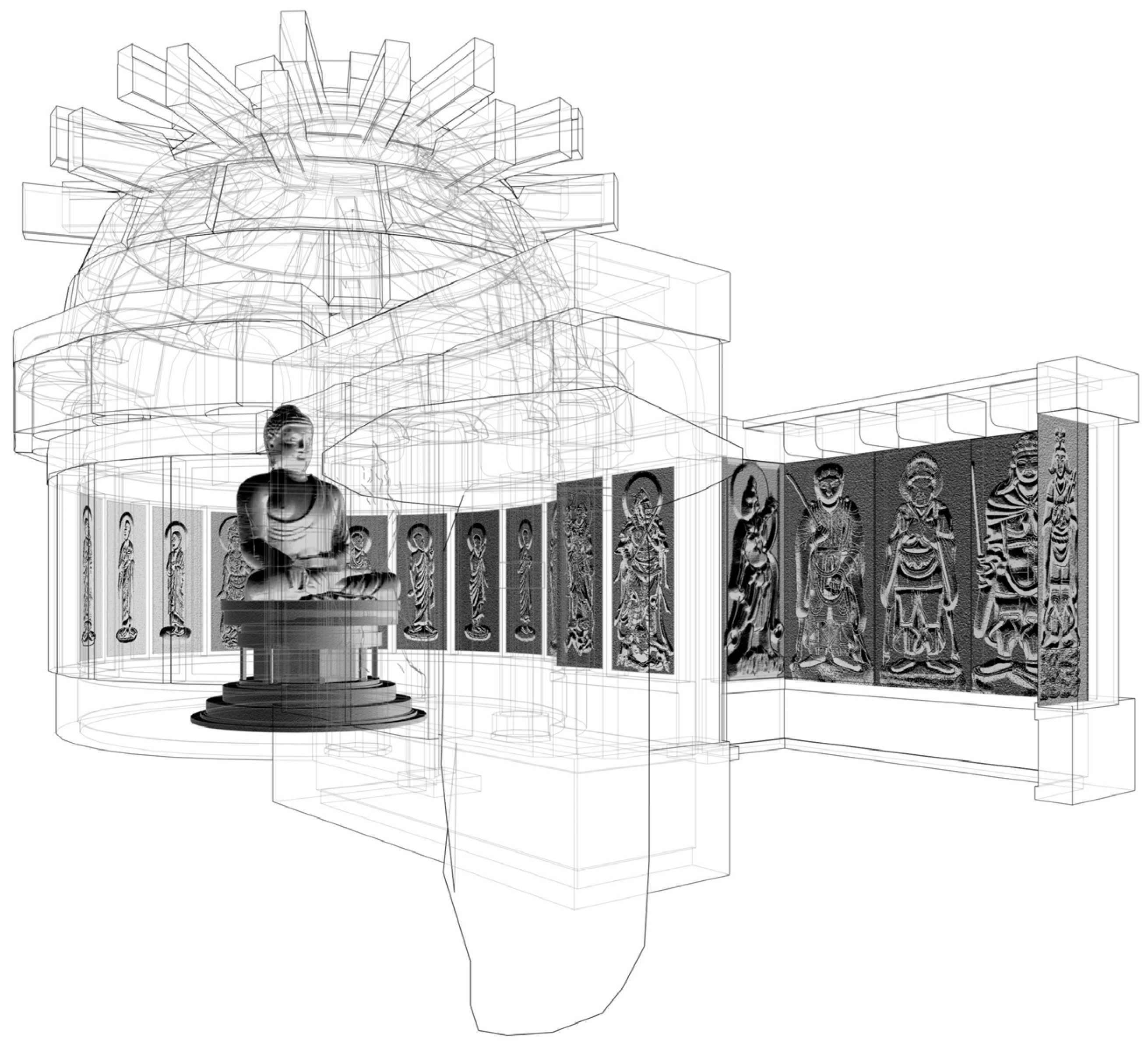
Figure 1. Perspective View of Seokbulsa grotto.
Buildings 15 04546 g001
Figure 2. Chronological Chart of Seokguram Grotto.
Buildings 15 04546 g002
Figure 3. Façade photograph of Seokguram Grotto taken in November 1913 (left) [18]/Façade photograph of Seokguram Grotto taken after the repair work in 1920 (right) [19].
Buildings 15 04546 g003
Figure 4. Section of Seokguram grotto facing south after the repair work in 1963 [20].
Buildings 15 04546 g004
Figure 5. Height Analysis According to the Two Connection Lines along the Spatial Symmetry Axis.
Buildings 15 04546 g005
Figure 6. Analysis Results of the Complete Visual Coordination of Buddha’s Head and Nimbus Stone in the Scene Perception of Each Grid Point.
Buildings 15 04546 g006
Figure 7. Perspective Views that Simulate Scene Perception from Each Grid Point According to the Viewer’s Gaze Alignment of Buddha’s Head. The colored dots below each perspective view correspond to the grid points in Figure 6. The green dots indicate ‘complete visual coordination,’ and the white dots indicate ‘incomplete visual coordination’.
Buildings 15 04546 g007
Figure 8. First Photograph of the Buddha Statue without the Arched Headstone (Left), Four Possible Shapes of the Headstones (Center), and a Simulated Scene with the Arched Headstone Installed (Right) (source: [36], image edited by authors).
Buildings 15 04546 g008
Figure 9. Comparative Analysis of the Two Facades According to the Difference in the Pedestal Height (i.e., a 4.2 cheok pedestal height (left) and a 5.5 cheok pedestal height (right) (source: [20], image edited by authors).
Buildings 15 04546 g009
Figure 10. Analysis of the Process of Inferring the Center Arrangement of the Pedestal While Changing from the Current Pedestal Height to the Recorded Pedestal Height along the Spatial Symmetry Axis.
Buildings 15 04546 g010
Figure 11. Section Analysis of Incomplete Visual Coordination caused by Installation of the Straight Headstone in the Spatial Symmetry Axis.
Buildings 15 04546 g011
Figure 12. Analysis Results of the Complete Visual Coordination of Buddha’s Head and Nimbus Stone in the Scene Perception of the Grid Point in the Initial Design Stage.
Buildings 15 04546 g012
Figure 13. Perspective Views that Simulate Scene Perception of Each Grid Point According to the Viewer’s Gaze Alignment of Buddha’s Head in the Initial Design Stage. The colored dots below each perspective view correspond to the grid points in Figure 12. The green dots indicate ‘complete visual coordination,’ and the white dots indicate ‘incomplete visual coordination’.
Buildings 15 04546 g013
Figure 14. Plan and Section Schemas of Yoneda Miyoji (in red) [3] Superimposed onto the Survey Drawing [20] by the authors. English translations and explanations are provided by the authors.
Buildings 15 04546 g014
Figure 15. Detailed Analysis of the Position of the Pedestal (source: [20], image edited by authors).
Buildings 15 04546 g015
Figure 16. Two Alternatives to the Plan Schema of the Seokbulsa grotto: The Initial Design Stage (Top) and the Later Design Stage (Bottom).
Buildings 15 04546 g016
Figure 17. Comparative Analysis of Two Section Schemas of the Seokbulsa grotto: Author’s Section Schema (Blue Left) and Yoneda’s Section Schema (Red Right) (source: [20], image edited by authors).
Buildings 15 04546 g017
Figure 18. Two Alternative Section Schemas of the Seokbulsa grotto: The Initial Design Stage (Top) and the Later Design Stage (Bottom).
Buildings 15 04546 g018
Figure 19. Main and Primary Modules Applied in the Plan and Section Drawings of Seokbulsa grotto: Main Module (Red Arrows) and Primary Modules (Blue Arrows) (source: [41], edited by authors).
Buildings 15 04546 g019
Figure 20. Perfect Visual Coordination of Pozzo’s Ceiling Fresco (Left) from the Optimal Viewpoint indicated by a Yellow Dot on the Nave Floor of the Church of Sant’Ignazio (Right).
Buildings 15 04546 g020
Figure 21. Complete Visual Coordination with the Circle of the Nimbus Stone Completely Visible (Left) and Incomplete Visual Coordination with the Upper Part of the Nimbus Stone Hidden by the Arched Headstone (Right).
Buildings 15 04546 g021
Disclaimer/Publisher’s Note: The statements, opinions and data contained in all publications are solely those of the individual author(s) and contributor(s) and not of MDPI and/or the editor(s). MDPI and/or the editor(s) disclaim responsibility for any injury to people or property resulting from any ideas, methods, instructions or products referred to in the content.