Abstract
Building Information Modelling (BIM) has increasingly transformed global architectural and construction practices by enhancing collaboration, design accuracy, and project efficiency. However, BIM adoption remains slow in several developing countries, including Nigeria, where architectural firms play a critical role in driving digital transformation across the wider construction sector. This study investigates the current level of BIM implementation within Nigerian architectural practices and identifies key factors that either enable or constrain its uptake. Survey findings (77 responses; 77% response rate), analysed using SPSS 26.0 and the Relative Importance Index (RII), reveal that although some firms have begun integrating BIM tools, many still rely heavily on traditional 2D CAD (Computer-Aided Design) workflows. Major barriers include high software acquisition and maintenance costs, limited technical expertise, and insufficient organisational readiness. The results highlight the urgent need for government incentives, targeted capacity-building programmes, and industry-wide digital skill development to accelerate BIM diffusion among architectural firms, whose early adoption is essential for sector-wide modernisation. Future research should explore how socio-technical alignment can reshape BIM-enabled workflows to generate measurable value for clients, contractors, and end users. Examining collaborative data environments, information exchange standards, and participatory design practices will be crucial for demonstrating BIM’s long-term return on investment and establishing sustainable digital transformation pathways within Nigeria’s architectural and construction industries.
1. Introduction
With the introduction of Building Information Modelling (BIM), the construction industry has undergone a major digital transformation, streamlining processes and improving sustainability, productivity, and multidisciplinary collaboration [1]. As a digital representation of a building’s physical and functional characteristics, BIM integrates diverse project information into a unified platform that enhances decision-making from early design through construction and operation [2,3]. Over the past two decades, BIM has evolved beyond 3D modelling into multi-dimensional environments incorporating time (4D), cost (5D), and operational performance data, and is increasingly enhanced by technologies such as the Internet of Things (IoT), Artificial Intelligence (AI), and Digital Twins [4].
Globally, BIM adoption continues to grow. For instance, more than 70% of architectural and engineering firms in the UK and over 80% in the US now utilise BIM on public-sector projects, largely due to government mandates and strong industry support [5]. However, BIM uptake remains uneven across developing countries, where digital transformation is often constrained by financial, organisational, and capacity limitations [6]. Nigeria is no exception. Although BIM offers clear benefits such as, improved coordination, reduced rework, fewer design errors, and enhanced project delivery performance, adoption within the Nigerian Architecture, Engineering and Construction (AEC) industry remains low [7].
Existing studies reveal that Nigerian construction professionals are increasingly aware of BIM, yet usage is mostly limited to basic 3D visualisation, with advanced functionalities such as 4D scheduling and 5D cost planning rarely utilised [8]. Major barriers include limited technical expertise, insufficient training, lack of client demand, high implementation costs, poor communication cultures, and resistance to organisational change [9,10,11]. While these studies have significantly enhanced understanding of BIM challenges in Nigeria, they focus primarily on the general AEC sector, treating architects, engineers, and contractors as a single group. However, in BIM-enabled projects, architectural firms occupy a uniquely influential position, as they are often responsible for developing the initial conceptual and coordinated digital models that underpin subsequent engineering, cost, and construction workflows. Consequently, the overall success of BIM implementation in any project is strongly influenced by the extent to which architectural practices adopt, integrate, and champion BIM processes. Their readiness to adopt and integrate BIM therefore directly shapes the entire project team’s digital workflows. Yet, despite this central role, the specific BIM adoption readiness, barriers, and enabling conditions affecting Nigerian architectural firms remain underexplored. Previous Nigerian studies (e.g., Olanrewaju et al., 2020; Hamma-adama & Kouider, 2019) have examined BIM adoption across the broader AEC workforce, but they do not adequately capture the distinct organisational structures, client interactions, software needs, training requirements, and design-led processes that shape BIM implementation in architectural practice [10,12]. This represents a critical research gap. Architectural firms particularly micro and small-size practices, which constitute the majority of Nigeria’s design industry face unique constraints such as limited investment capacity, lack of structured digital workflows, reliance on outdated software, and fragmented client demands. These constraints differ significantly from those faced by engineers, contractors, and project managers, yet they remain largely absent from existing BIM adoption studies in Nigeria.
Accordingly, this study seeks to address this gap by focusing specifically on BIM adoption within Nigerian architectural firms, examining the current level of implementation and identifying the key enablers and barriers that influence their progress. Unlike earlier studies that treat the AEC sector holistically, this research provides a targeted, discipline-specific assessment that reflects the practical realities, needs, and challenges of architectural practice. By doing so, the study offers new insights that can support policymakers, professional bodies, and architectural organisations in developing more tailored strategies to promote meaningful and sustainable BIM integration within Nigeria’s design and construction environment.
2. Literature Review
2.1. Global Adaptation and Implementation of BIM
On a global scale, BIM has been widely recognized as an effective tool across the construction industry, particularly in developing countries where government policies mandate its use in public projects. Improvements in project management, procedural accuracy, and cost control through the use of BIM has been reported by the leading BIM adopting countries such as the UK, the US, Singapore, and Scandinavian nations [1,2]. Each country has its own specific approach toward BIM, for instance the US employs a middle-out approach, where both government and industry stakeholders drive BIM adoption, whereas the UK and Australia follow a top-down approach with strong emphasis on government policy support [3]. Conversely, countries such as Finland and Norway have fully mandated BIM implementation for large-scale infrastructure projects [4].
Despite BIM has been recognized internationally as a powerful tool for enhancing stakeholder collaboration and realizing cost-saving potential, some countries still face substantial challenges in its integration. In developing regions such as the Middle East and Africa, as well as in countries like Bulgaria, North Macedonia, Greece and Malta, the pace of BIM adaptation is much slower due to challenges related to technological infrastructure, skilled expertise, and limited government support [5,6]. Nonetheless, the increasing number of nations attempting to adopt BIM is driven by the technology’s capability to reduce project costs, enhance quality, and improve collaboration across stakeholders.
2.2. BIM Adoption in Nigeria
In Nigeria, despite the overall slow pace of BIM adoption, the number of architectural firms showing a growing tendency to integrate BIM into their processes is increasing steadily. Most of these firms operate within major urban centres, where project demands and competition are higher. Recent studies indicate that Nigerian architectural firms are using BIM to enhance design quality, minimise errors, and streamline design revisions, resulting in notable cost savings [7]. BIM tools also facilitate, smoother collaboration and improved decision-making, which further strengthen project management processes and boost client satisfaction (Boje et al., 2022; Ibem et al., 2018) [7,8].
Despite all the increasing attention to BIM capabilities, its implementation in Nigeria continues to face numerous challenges. These include limited technical expertise, high operational and training costs, insufficient organisational investment, and cultural resistance within the construction industry [9,10]. Additionally, the absence of strong government policy frameworks and low client demand significantly hinder BIM adoption, as many projects still rely on traditional 2D drawings and conventional management approaches rather than leveraging BIM’s multi-dimensional functionalities [2,9,10]. In many architectural firms, BIM is used primarily for visualisation and basic modelling [13], with only a small percentage of advancing to more sophisticated applications such as 4D scheduling or 5D cost estimation [14].
A summary of the key challenges to BIM implementation in Nigeria is presented in Table 1 below:
Table 1.
Summary of the key challenges to BIM implementation in Nigeria.
Further to Table 1, in the Nigerian context, the major enablers of BIM adoption, such as cost savings, improved design accuracy, and enhanced stakeholder coordination are often overshadowed by contextual constraints. For example, although firms recognise BIM’s potential to reduce rework and improve efficiency, progress is slowed by inadequate infrastructure and limited access to specialist training. Similarly, while collaboration features of BIM could significantly improve project delivery, these benefits remain underutilised due to fragmented communication practices and a lack of standardised workflows. Highlighting these contextual dynamics helps explain why certain enablers are not yet fully realised and why specific challenges remain particularly pronounced in Nigeria.
2.3. Enabling Factors for BIM Adoption in Nigeria
Regardless of the challenges associated with BIM adoption in Nigeria, several enabling factors can support BIM’s successful implementation within architectural firms. These include targeted staff training, effective information management practices, and an organisational culture that is open to technological change [22]. In addition, research conducted by Babatunde et al. (2020) highlights government support, collaborative procurement approaches, and the availability of trained BIM professionals as critical factors that foster wider BIM adoption [11].
In the Nigerian context, government incentives, regulatory mandates, and policy frameworks have the potential to be transformative, accelerating BIM diffusion across the construction sector. At the same time, architectural firms that invest proactively in capacity building, staff development, and upgrading technological infrastructure are likely to benefit the most from BIM’s ability to increase productivity and streamline workflows [14,23]. Although global literature provides extensive insight into BIM enablers, significant gaps remain in research focused specifically on Nigerian architectural firms. Most existing Nigerian studies examine BIM adoption at the broader Architecture, Engineering, and Construction (AEC) industry level, without engaging deeply with the unique workflows, responsibilities, and constraints faced by architectural firms. This is notable because architects often lead design coordination and typically drive early-stage technology adoption. Understanding their context therefore provides clearer insights into the practical pathways for increasing BIM uptake in Nigeria. Addressing this gap would contribute to developing more targeted BIM implementation frameworks that align with Nigeria’s operational realities and capacity limitations [14,24].
The key enabling factors for BIM implementation in Nigeria are presented in Table 2 below.
Table 2.
Summary of key enabling factors for BIM implementation in Nigeria.
A range of enabling factors can support the wider adoption of BIM in Nigerian architectural firms, many of which emerge from organisational capabilities, industry dynamics, and policy conditions. Studies show that the availability of a skilled workforce plays a central role, as trained BIM professionals enable firms to fully utilise modelling, coordination, and analytical tools [8,15,34]. Demonstrated cost savings, such as reductions in design errors, material waste, and rework have also encouraged firms to consider BIM as a cost-effective investment [24,34]. Increasing awareness of BIM technologies through seminars, academic programmes, and professional training further strengthens adoption, as practitioners become more informed about BIM’s comparative advantages over traditional 2D drafting [15,34]. Client interest in BIM-based deliverables is also growing, prompting firms to upgrade their capabilities to remain competitive [8,15]. Support from professional bodies such as the NIA and NIQS reinforces this momentum through training and guidelines that legitimise BIM practices [34]. In addition, certain project types, such as infrastructure projects or large, complex buildings naturally promote BIM adoption because they benefit significantly from enhanced coordination and visualisation [30,31].
Beyond organisational readiness, broader industry and policy conditions also act as key enablers. Collaborative procurement approaches that encourage early interaction between designers, contractors, and clients align closely with BIM’s integrated nature and have been identified as strong adoption drivers [11,34]. Legislative support, including potential government incentives or mandates, is considered transformative because it reduces uncertainty, promotes standardisation, and pushes firms toward digital transformation [11,15]. A gradual cultural shift in the industry, particularly among younger professionals who are more open to digital tools, further encourages experimentation and reduces resistance to change [34]. The presence of BIM-experienced contractors creates positive network effects, motivating architectural firms to adopt BIM to maintain coordination efficiency [24]. Moreover, documented productivity gains, improvements in build quality, sustainability alignment, reductions in total project cost, and enhanced risk control [24,30,31,32,33] continue to strengthen the business case for BIM adoption in Nigeria. Together, these enablers highlight the substantial potential for BIM to enhance design and construction outcomes when supported by capacity development, policy intervention, and organisational commitment.
3. Research Methods
The aim of this research is to investigate the enabler factors that support BIM implementation in Nigerian architectural firms. To address this goal, a quantitative research design was adopted through a structured questionnaire survey, which was considered the most suitable approach for capturing the breadth of current practices, perceptions, and adoption levels across a large and geographically dispersed population of architectural firms in Nigeria. Unlike qualitative approaches such as interviews or case studies, which offer depth but limited generalisability, a survey enables the collection of standardised data from many respondents simultaneously, ensuring broad representation and allowing for statistical comparison across demographic groups [35]. Similarly, mixed-methods or Delphi techniques, while valuable, require substantial time, expert panels, or iterative rounds that were not feasible for the scope of this study [36]. A structured survey was therefore selected because it provides a systematic and replicable mechanism for evaluating BIM awareness, implementation levels, and perceived enablers and barriers, allowing the study to identify both prevailing trends and statistically significant differences within the Nigerian architectural sector.
The survey targeted a sample of 100 architectural firms across Nigeria using a purposive–convenience sampling approach, which is suitable for a widely dispersed professional population [37]. Firms were identified through the Nigerian Institute of Architects (NIA) directory, LinkedIn professional groups, and publicly available lists of registered practices. Major urban centres such as Lagos, Abuja, and Port Harcourt were prioritised due to their higher concentration of active construction projects and emerging BIM usage. The questionnaire then was divided into four sections: (i) demographic information about respondents, including years of professional experience and organisational size; (ii) assessment of BIM awareness and adoption levels, including questions on perceived benefits, information-sharing methods, and workflow integration; (iii) evaluation of BIM implementation levels using a five-point Likert scale, alongside questions on knowledge of BIM standards and enabling factors; (iv) assessment of BIM implementation challenges using a Likert scale. The questionnaire was distributed among 100 architects across different Nigerian states, via Google Forms, email, and LinkedIn outreach, resulting in 77 valid responses, yielding a 77% response rate.
Eligible respondents included individuals directly involved in design or project delivery, such as Principal Architects, Project Managers, BIM Coordinators, CAD Technicians, and other architectural staff. This ensured that participants had relevant exposure to BIM practices. Although non-random, the sampling strategy captured a diverse representation of firm sizes, roles, and experience levels, offering an appropriate overview of BIM perceptions across the industry. While this method does not provide full statistical generalisability, it is well suited for exploratory BIM adoption research, where the objective is to understand prevailing practices, challenges, and enabling factors across a broad professional base. Data collection was conducted for four months by the research team, ensuring that each participant provided informed consent before completing the survey. All responses were anonymised, stored securely in a password-protected database, and handled in accordance with institutional ethical guidelines. No identifiable information was collected, and participation was voluntary.
Following data collection, ANOVA testing was conducted to validate the significance of the enabling and challenging factors [38]. ANOVA was selected because it allows for the comparison of means across multiple demographic groups (e.g., firm size, years of experience, BIM adoption status), making it appropriate for identifying statistically significant differences in perceptions related to BIM implementation. Factors found significant were then ranked to identify the six most influential enablers and challenges using the Relative Importance Index (RII) [39]. RII was chosen due to its suitability for prioritising factors based on consensus scores from Likert-scale items, a method well established in construction management research for analysing ordinal data across large samples. Finally, Pearson Correlation analysis was used to examine the relationships among the top six influential factors, as it provides a robust method for identifying linear associations and determining how enabling factors relate to BIM implementation success and perceived challenges [40].
Data Analysis was conducted using a combination of descriptive statistics, reliability testing, and advanced statistical techniques to provide a comprehensive understanding of the collected data. Descriptive statistics, including mean and standard deviation, were applied to summarise the responses, providing a snapshot of response distribution and central tendencies. Data visualisation through tables, charts and graphs was performed using SPSS and Microsoft Excel to illustrate emerging trends and patterns.
The reliability of the questionnaire was evaluated using Cronbach’s alpha to ensure internal consistency among the items. A Cronbach’s alpha of 0.76 indicated acceptable reliability, demonstrating that the questionnaire items measured the intended constructs. Following reliability confirmation, the Relative Importance Index (RII) was used to rank the identified enablers and barriers. The RII method is a widely recognised technique for prioritising factors in construction research based on respondents’ ratings [41,42] and is especially suitable for handling Likert-scale data.
The formula for calculating RII is as follows:
where W represents the weight assigned by respondents (1 to 5, with 1 being the least significant and 5 the most significant), A is the highest weight (5), and N is the total number of respondents.
ANOVA (Analysis of Variance) was deployed in SPSS to test hypotheses related to the significance of enabling and challenging factors for BIM implementation. ANOVA was selected due to its robustness in comparing means across multiple demographic groups, enabling identification of statistically significant differences. The analysis examined variations across demographic characteristics such as firm size, years of experience, and BIM adoption level. A significance level of 0.05 was applied, where p-values below 0.05 indicated statistically significant differences [43]. Post hoc tests (Tukey’s HSD) were performed where appropriate to determine which specific groups differed significantly, ensuring clarity in interpreting the results [44].
Pearson Correlation analysis was then conducted in SPSS to explore relationships between key variables. The Pearson coefficient, ranging from −1 to +1, measures the strength and direction of linear associations, with positive values indicating direct relationships and negative values reflecting inverse relationships [45]. Pearson Correlation was chosen because it is well suited for identifying statistically meaningful relationships among continuous or ordinal-treated variables, such as enabling factors, challenges, and BIM adoption levels. The analysis was conducted at a significance level of 0.05, ensuring that only statistically significant correlations were interpreted and reported. By employing both ANOVA and Pearson Correlation tests in SPSS, the study obtained a comprehensive and multi-layered understanding of the dataset. While ANOVA identified statistically significant differences across demographic groups, Pearson Correlation revealed key linear relationships between variables. Together, these analyses provide a more robust and nuanced interpretation of the factors shaping BIM adoption within Nigerian architectural firms, demonstrating how demographic characteristics, enabling factors, and implementation challenges collectively influence BIM integration outcomes.
4. Data Analysis and Results
4.1. Demographic Analysis
The first stage of the data analysis examines the demographic characteristics of the respondents, focusing on their professional experience, organizational size and their roles within architectural firms [35]. Respondents were categorized into four groups based on years of professional experience: less than 5 years, 5–10 years, 11–15 years and over 15 years. The majority (50.8%) have between 11 and 15 years of experience, while only 10.8% have more than 15 years, indicating that most respondents represent mid-career professionals with substantial industry exposure. In terms of firm size, 93.6% of respondents work in small to medium-scaled enterprises (SMEs) with fewer than 200 employees, and only 6.4% are employed in larger firms. This strong representation from SMEs suggests potential resource constraints that could influence BIM adoption, as smaller firms typically face limitations in technological investment, training capacity, and digital infrastructure.
To address differences in professional perspectives, the demographic profile also captured the respondents’ roles within their organisations. The sample included Principal Architects, Senior Architects, Project Managers, BIM Coordinators, CAD Technicians, and junior architectural staff. Principal and Senior Architects formed the largest group, reflecting their strategic involvement in project planning and organisational decision-making. BIM Coordinators and CAD Technicians contributed insights from a technical and operational standpoint, while Project Managers offered perspectives related to project delivery and coordination. This diverse distribution of roles is essential, as perceptions of BIM enablers and challenges, particularly regarding policy support, organisational culture, and technical capacity, can vary significantly depending on hierarchical level and day-to-day responsibilities. Together, these demographic characteristics provide a robust profile of the respondents and strengthen the interpretative reliability of the study’s findings on BIM adoption in Nigerian architectural firms.
4.2. Current State of BIM Implementation in Nigerian Architectural Firms
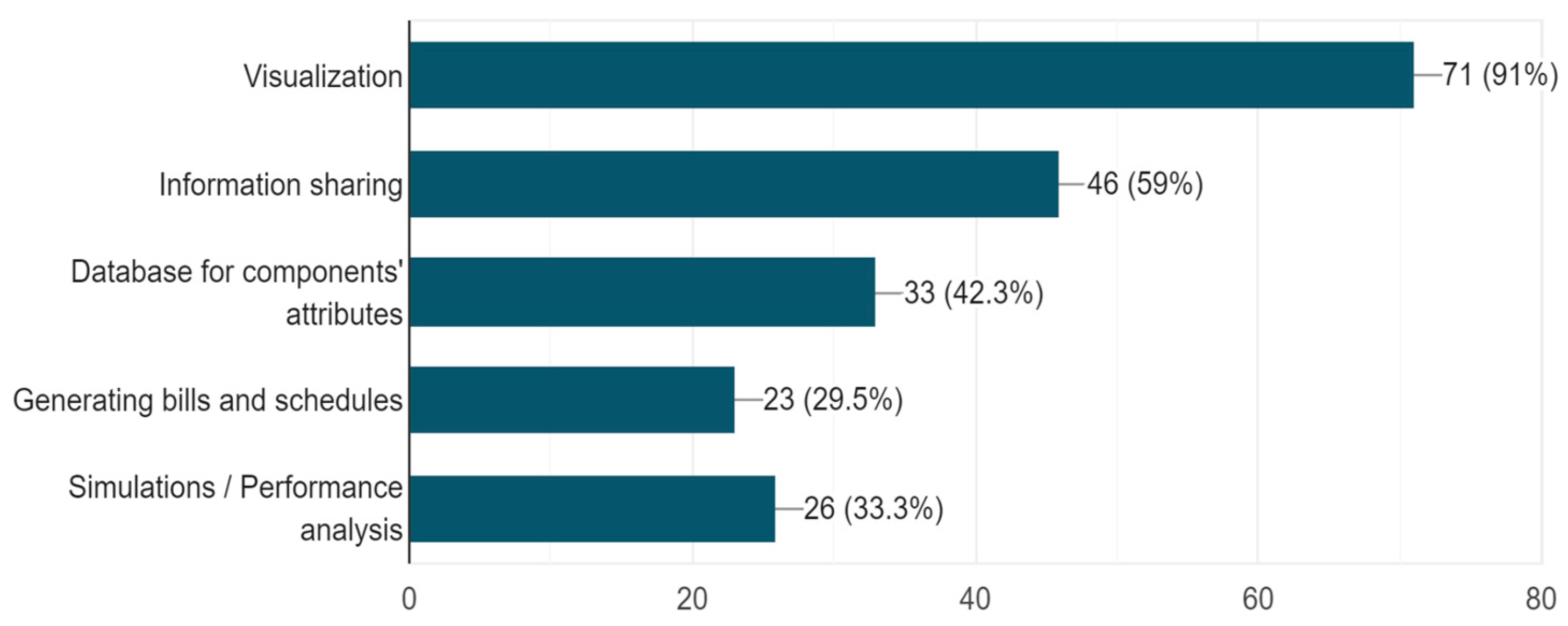
The questionnaire assessed the perceived benefits of BIM among respondents. The most recognized benefit was visualization (91%), followed by information sharing (59%) and database management (42.3%). A smaller proportion identified generation of bills and schedules (29.5%), and simulation/performance analysis (33%) as key advantages (Figure 1). These findings illustrate that BIM is primarily used for basic modelling and visual communication rather than for advanced analytical or project-management functions. In addition, another analysis revealed that 92.3% of firms still depend on traditional communication tools such as email, while only 7.7% use Common Data Environments (CDEs). This reliance on conventional tools reinforces the early stage of BIM adoption in Nigeria and highlights limited engagement with integrated collaboration platforms.
Figure 1.
Benefits of BIM (Author, 2025).
To further assess BIM maturity, respondents were asked about their understanding of BIM using the Micro BIM Adoption Model developed by [46]. Results showed that 44.2% perceive BIM mainly as a modelling tool, while 40.3% view it as a collaboration tool. Only 14.3% regarded BIM as an integration tool, indicating limited awareness of higher-level BIM applications such as multi-system integration or IoT-enabled workflows [47]. This reinforces the need for greater technical training and industry capacity building.
4.3. Hypothesis Testing and Ranking Analysis
This study formulated 30 hypotheses to examine awareness levels, enabling factors, and challenges associated with BIM implementation in Nigerian architectural firms. A summary of the hypotheses is presented in Table 3. These hypotheses were then tested using ANOVA and Relative Importance Index (RII) analysis.
Table 3.
Research hypotheses used to drive the statistical analysis (Author, 2025).
4.3.1. Hypothesis Formulation and Testing
To evaluate the hypotheses, a one-way ANOVA was conducted in SPSS. The results showed no significant differences in awareness of BIM standards (H1–H6), with p-values above 0.05. For enabling factors, most hypotheses were accepted, except H8 (Technology Awareness), H18 (Cost Savings), and H19 (Cultural Change), which had p-values below 0.05, indicating that these factors are not widely perceived as significant enablers in the Nigerian context (Table 4).
Table 4.
ANOVA testing of statistics on BIM standards and enabling factors (SPSS Results).
4.3.2. Ranking and RII Analysis for BIM Standards and Enablers
The Relative Importance Index (RII) was used to rank respondents’ familiarity with BIM standards and perceived enablers. The results indicated that “ISO 19650” was the most familiar standard (RII = 0.46), demonstrating relatively strong awareness of global information management requirements. The “BIM Execution Plan (BEP)” and “Project Information Model (PIM)” ranked second and third (RII, 0.45 and 0.44), reflecting moderate familiarity with project planning documentation. The least familiar standards were the Organisational Information Requirements (OIR) and Exchange Information Requirements (EIR) (RII = 0.39 and 0.40), suggesting limited understanding of organisational-level BIM planning in architectural firms (Table 5).
Table 5.
Ranking of BIM standards using relative importance index (RII).
Using the Relative Importance Index (RII), the study ranked the significance of various enabling factors influencing BIM adoption in Nigeria (Table 6). Respondents rated each factor on a 5-point Likert scale, and the resulting RII values were used to identify the most influential enablers. The findings show that “increased productivity of the design–build process” was the highest-ranked factor (RII = 0.88), indicating that efficiency gains are perceived as a major driver of BIM uptake. This was followed by “increased build quality” (RII = 0.83), reflecting firms’ recognition of BIM’s potential to enhance project outcomes. The “availability of trained professionals” ranked third (RII = 0.80), underscoring the importance of skilled personnel in effective BIM implementation. Other closely ranked enablers included support for sustainability targets (RII = 0.793) and evidence of cost savings (RII = 0.791), suggesting that firms also value BIM’s environmental and financial benefits. At the lower end, “government support through legislation” received the weakest rating (RII = 0.50), indicating that policy-driven incentives are currently perceived as having minimal influence on BIM adoption in the Nigerian context.
Table 6.
Ranking of enabling factors for BIM implementation using RII.
4.4. Evaluating BIM Implementation Challenges in Nigeria
This section identifies the major challenges hindering BIM adoption in Nigerian architectural firms. A combination of ANOVA testing and RII analysis was used to determine the significance and relative ranking of these barriers.
4.4.1. ANOVA Testing
A one-way ANOVA (Table 7) was conducted to examine whether perceptions of BIM challenges varied according to demographic characteristics such as firm size and years of experience. According to Morris (2019), a p-value greater than 0.05 indicates no significant difference between groups [48,49]. For most challenge-related hypotheses (H20–H25), the p-values exceeded 0.05, suggesting broad agreement across respondents that barriers such as lack of expertise, high implementation costs, and insufficient standardisation are universally experienced. However, H26 (Lack of infrastructure) produced a p-value of 0.01, leading to its rejection. This contrasts with Babatunde et al. (2020), who identify infrastructure constraints as a major barrier [11]. The discrepancy may reflect regional variations in infrastructure availability, differences in firm-level technological capacity, or differing interpretations of what constitutes “infrastructure” within BIM workflows.
Table 7.
ANOVA testing of total statistics of challenges to BIM implementation (SPSS).
4.4.2. Ranking and RII Analysis of BIM Challenges
RII results presented in Table 8 show that the most critical barrier to BIM implementation in Nigeria is the “lack of expertise within the project team” (RII = 0.90). This is followed by the “absence of standardization and protocol” (RII = 0.84), “high investment cost” (RII = 0.83), and “lack of collaboration among stakeholders” (RII = 0.82). Together, these top-ranked barriers reflect both technical limitations and organisational weaknesses that hinder effective BIM uptake. Conversely, lower-ranked barriers such as “resistance at the operational level” (RII = 0.69), “uncertainty over return on investment (ROI)” (RII = 0.68), and “legal issues surrounding ownership” (RII = 0.67) are perceived as less critical but remain relevant in understanding the overall implementation landscape.
Table 8.
Ranked table on barriers to BIM implementation in Nigeria.
4.5. Correlation Between Key BIM Enablers and Challenges
To deepen understanding of how the principal enabling factors interact with the major challenges affecting BIM adoption in Nigeria, Pearson’s correlation analysis was conducted. The leading enablers identified through the RII results included improvements in the design–build productivity, build quality, the availability of trained BIM professionals, support for sustainability targets, the suitability of BIM for various project types, and evidence of cost savings from its adoption. Collectively, these enablers demonstrate the perceived value of BIM in enhancing efficiency, quality, and long-term project performance.
In parallel, the main challenges such as the lack of expertise, absence of standards and protocols, high implementation costs, poor stakeholder collaboration, cultural resistance, and lack of government policy highlight structural and cultural constraints that continue to limit BIM diffusion across Nigerian construction sector.
The Pearson correlation results (Table 9) indicate that all correlations between the identified enablers and challenges were positive and above 0.05, suggesting moderate to strong linear relationships. This implies that strengthening enabling conditions-such as improving expertise, increasing the availability of trained professionals, and demonstrating cost benefits-may help mitigate several of the barriers simultaneously. These relationships indicate that enablers can exert a reinforcing effect, gradually reducing systemic and organisational challenges that currently impede effective BIM implementation. The codes used for the analysis are listed below:
Table 9.
Correlation between the identified enablers and challenges.
- Enablers: E1 (build quality), E2 (productivity), E3 (sustainability), E4 (trained professionals), E5 (project type suitability), and E6 (cost savings).
- Challenges: C1 (expertise), C2 (standardisation), C3 (cost), C4 (collaboration), C5 (cultural resistance), and C6 (government policy).
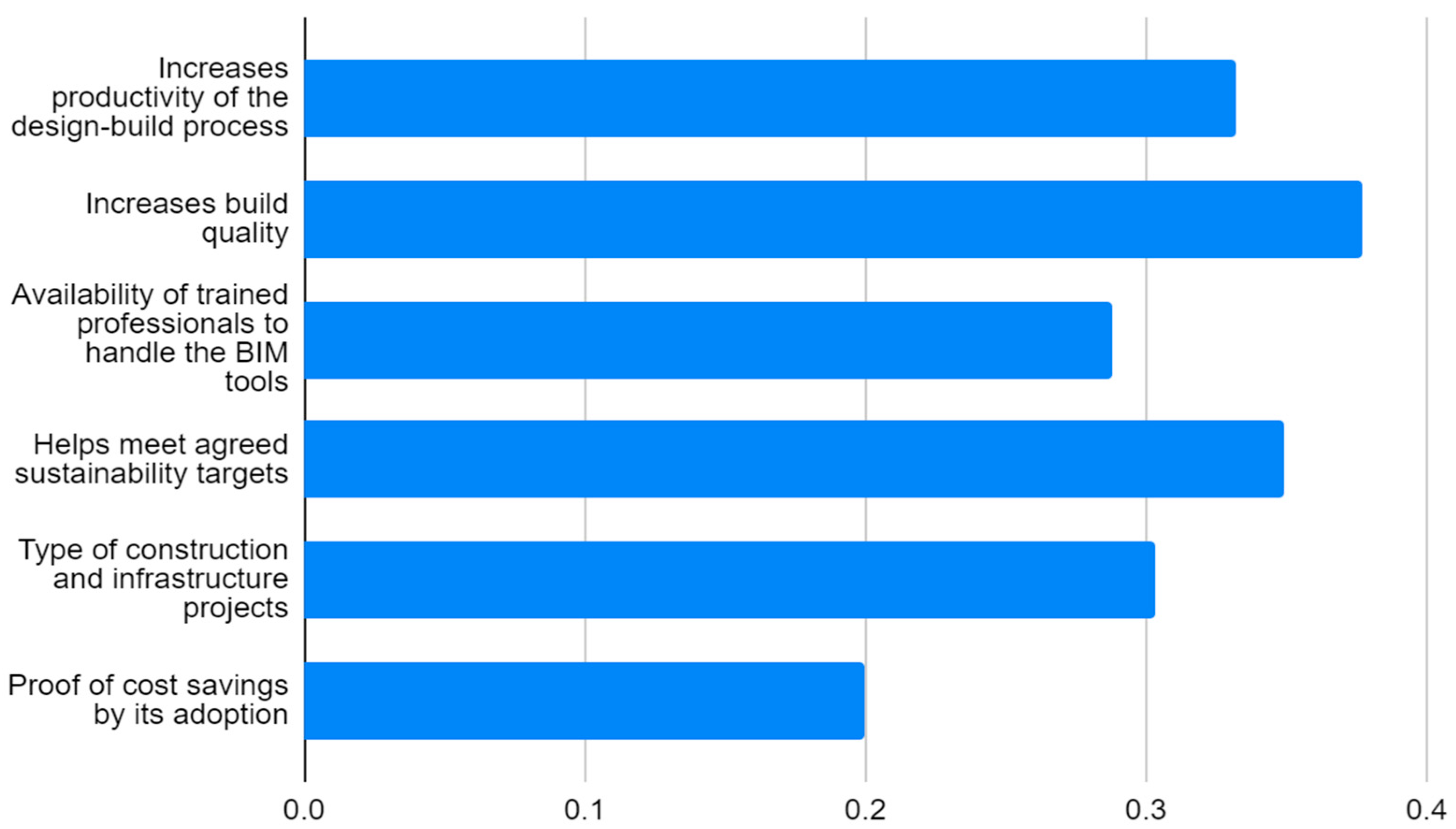
Figure 2 illustrates these correlations, showing that “increases build quality” is the strongest enabling factor, followed by “helps meet agreed sustainability targets” and “increases productivity of the design-build process.” Although still recognised as relevant, “proof of cost savings by its adoption” was identified as the lowest-ranked enabling factor.
Figure 2.
Bart chart of Pearson correlation between enablers and challenges (Author, 2025).
5. Discussion and Practical Implications
5.1. BIM Adoption: Exposing Complexities
The findings demonstrate that while awareness of BIM standards (such as holistic frameworks) and structured planning tools like execution plans appears to be comparatively high among architectural practices in Nigeria, actual implementation remains limited. Specially, critical components such as Exchange Information Requirements (EIR) and formalised collaborative platforms remain under-utilised, reflecting a more superficial than strategic adoption of BIM. This aligns with evidence from developing-country contexts that emphasise the gap between awareness and full workflow integration. For example, ref. [2] found that technical capability deficits, infrastructure limitations and initial investment costs continue to inhibit BIM innovation in developing countries. Moreover, the persistent reliance on non-dedicated communication mechanisms (e.g., emails and shared folders rather than structured Common Data Environments) underscores a significant weakness in collaborative information management, which in central to full BIM deployment. Recent research indicates that in sub-Saharan Africa, organisational, process and technology barriers continue to hinder BIM integration. For instance, ref. [50] identify that modular construction firms in the region struggle with stakeholder collaboration, software interoperability and resource constraints.
A noteworthy insight from the analysis is a discernible shift in perceived barriers: the challenges are no longer solely internal (skills, resources) but increasingly external, involving clients and contractors. This suggests that ecosystem dynamics around architectural practices including upstream and downstream stakeholders, are influential in BIM uptake. Research in developing markets supports this: ref. [51] emphasise that digital transformation initiatives in construction are shaped as much by client demand and supply-chain readiness as by internal firm capacities. Although many firms acknowledge the potential benefits of BIM in terms of productivity, quality and lifecycle performance, effectively communicating these benefits to clients remains problematic, particularly given the long-horizon return on investment typical of BIM. In the Nigerian SME context, ref. [52] identify inadequate client demand/support and stakeholders’ skills gaps as among the top barriers [52].
5.2. Comparative Discussion with Previous Studies
Barriers (C1–C6):
- C1—Lack of skilled personnel: The findings corroborate [37,40], where technical skill deficits were consistently ranked as the most critical barrier. This convergence highlights the persistent human-capacity challenge across the Nigerian AEC sector.
- C2—Cost of BIM implementation: This aligns with [37,38], though its ranking in our study is slightly lower than in general AEC contexts, possibly reflecting architectural firms’ lower scale and project complexity relative to contractors.
- C3—Software interoperability issues: In agreement with [38], interoperability remains a critical technical constraint, particularly in collaborative projects.
- C4—Limited client demand/support: These results strongly emphasise external stakeholder influence, echoing [39,40] and highlighting a growing ecosystem-level barrier not always captured in earlier studies focusing primarily on internal firm capabilities.
- C5—Inadequate infrastructure: Interestingly, this study shows this is less critical than anticipated (rejection of H26), diverging from previous studies that emphasised infrastructure limitations as a top barrier. This divergence may reflect the focus on architectural practices, which typically rely on cloud-based and lightweight BIM tools rather than heavy on-premise setups.
- C6—Resistance to change/internal culture: This barrier converges with previous literature [37,40], reinforcing that organisational mindset remains a persistent constraint.
Enablers (E1–E6):
- E1—Management support: Consistent with prior studies [37,38], leadership commitment remains the most influential enabler.
- E2—Availability of skilled personnel: Mirrors previous findings, reinforcing the dual role of human resources as both barrier and enabler.
- E3—Clear BIM execution plan: Strongly aligns with literature emphasizing structured planning as a prerequisite for successful BIM adoption.
- E4—Stakeholder engagement: Echoes [39], highlighting the growing recognition that external stakeholders shape adoption outcomes.
- E5—Training and capacity building: Reinforces the role of targeted professional development, particularly in SMEs.
- E6—Incremental adoption approach: Converges with studies advocating phased implementation to reduce resistance and cost burden.
This systematic comparison shows both convergence and divergence with previous studies: convergence is seen in human-resource and management-related factors, whereas divergence emerges in infrastructure prioritisation and external stakeholder influence. Such differences suggest that architectural firms, as opposed to contractors or broader AEC players, may prioritise ecosystem engagement and lightweight technological adoption over heavy infrastructure investment. Taken together, these findings imply that advancing BIM adoption within architectural practices in Nigeria will require an implementation framework that not only builds internal readiness (skills, infrastructure, workflows) but also engages and aligns the broader project ecosystem including clients, contractors, and supply-chain participants. Strategic communication of BIM’s value proposition and ecosystem-level coordination may thus be critical enablers. Given the intertwined nature of technological and social barriers, a socio-technical systems perspective offers a holistic pathway forward, recognising the mutual dependency between people, processes, and technologies.
5.3. Framework for BIM Adoption in Architectural Firms in Nigeria
Advancing BIM adoption in Nigeria’s architectural practices requires more than upgrading technologies or enhancing individual competencies; it necessitates an integrated, systematic approach that addresses both the technical and social dimensions of digital transformation [53]. A socio-technical systems (STS) perspective provides this balance by recognising that the success of digital innovation depends on the mutual adaptation between technological tools, human actors, and organisational processes [54,55].
From an enabling standpoint, the STS lens helps to operationalises key drivers of performance, such as building quality [56,57], sustainability [58], and productivity [59]. Enhanced building quality, often influenced by design coordination and stakeholder collaboration, which rely on social cohesion, trust and clear communication among project teams. Sustainability targets are strengthened when technological systems (e.g., BIM-enabled energy analysis and lifecycle modelling) align with social systems that emphasise accountability, learning, and environmental responsibility. Improved productivity, traditionally considered as a process challenge, becomes achievable when digital workflows are embedded in supportive organisational cultures that empower users rather than impose technologies.
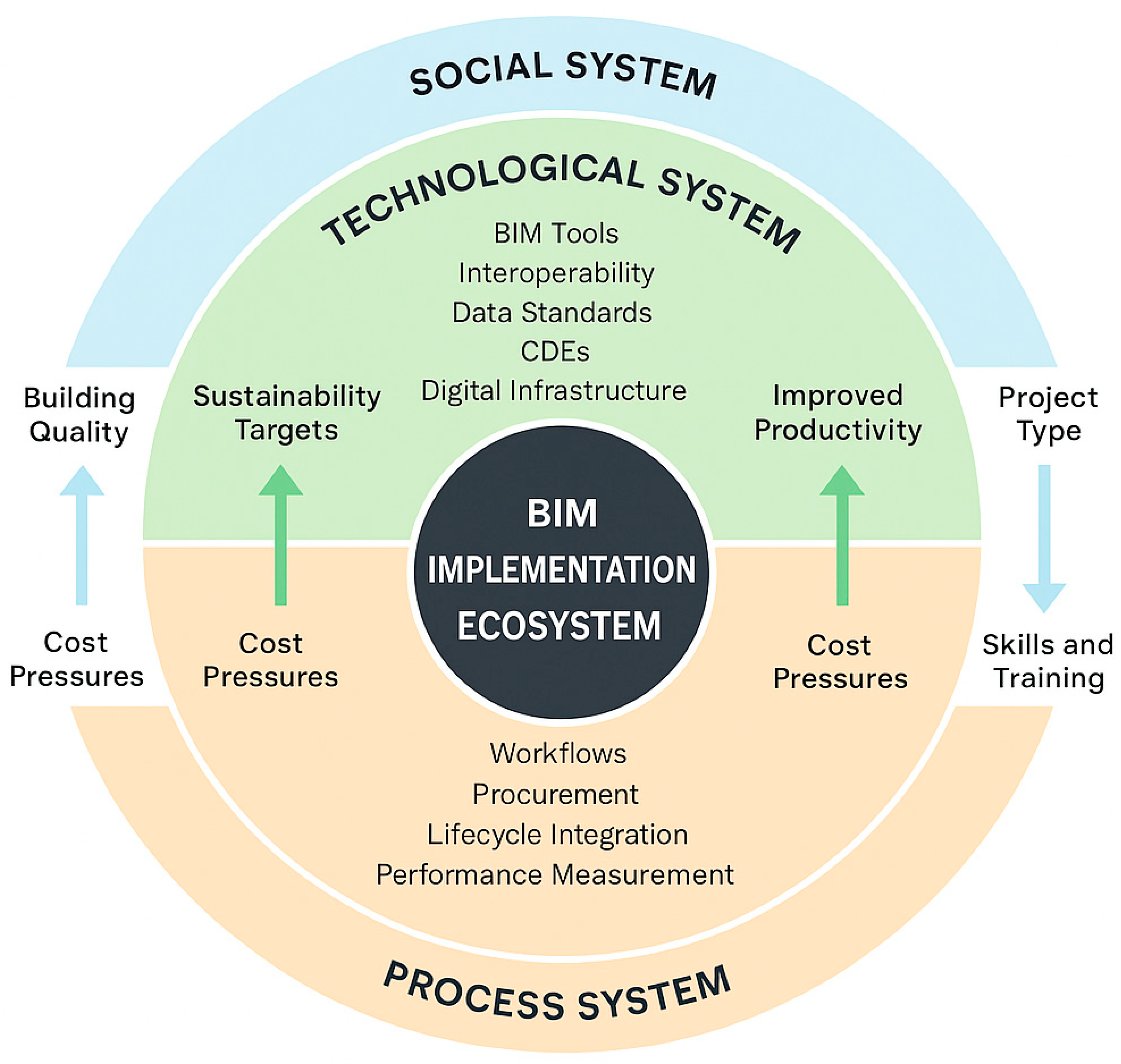
Conversely, persistent challenges such as project-type limitations [60], cost pressures, and skill deficits [11] can also be reframed through the STS lens. Project types traditionally resistant to digital adoption (e.g., small-scale or low-margin developments) can benefit from context-sensitive socio-technical adaptation, where tools are simplified and workflows matched to team capacity. Cost-related concerns [61,62], often stemming from social perceptions of BIM as expensive or slow to deliver ROI, can be mitigated through participatory approaches that visibly demonstrate value across project phases. Skills and training deficiencies require a dual focus: not only on technical proficiency but also on cultivating collaborative mindsets and change-ready organisational structures. Figure 3 provides a visual representation of this framework, highlighting enablers and challenges through an STS lens.
Figure 3.
Proposed framework to support BIM adoption in Architectural practices in Nigeria (Author, 2025).
The framework serves as a practical guide for architectural practices to assess and enhance BIM adoption through coordinated alignment of technological, social, and process systems. Rather than treating BIM as a purely technical upgrade, the framework encourages firms to understand that successful digital adoption requires the balanced evolution of digital tools, organisational culture, and operational workflows. Using the framework, practices can identify where current gaps lie whether in digital infrastructure (e.g., lack of interoperable platforms or structured CDEs), social readiness (e.g., limited leadership commitment or client understanding), or process maturity (e.g., absence of standardised information workflows). This diagnostic approach allows firms to prioritise interventions that yield the greatest systemic improvement. For instance, upgrading digital platforms without fostering a collaborative culture or clear workflows often results in fragmented adoption; conversely, aligning staff training, client engagement, and workflow standardisation ensures that technology investments deliver measurable value.
In practice, firms can map how BIM contributes to enablers such as building quality, sustainability, and productivity, while simultaneously addressing challenges like cost pressures, project-type constraints, and skills gaps. By visualising these socio-technical interactions, the framework enables decision-makers to design context-appropriate strategies such as incremental BIM adoption pathways, targeted capacity-building programmes, and improved client communication on long-term value. Ultimately, the framework positions BIM as a socio-technical transformation rather than a discrete software solution. When used iteratively, it supports continuous improvement, strengthening digital foundations, building collaborative capacity, and embedding efficient workflows, thereby advancing sustainable and contextually grounded BIM implementation in Nigerian architectural practices.
6. Conclusions
This study examined the current state of Building Information Modelling (BIM) adoption among architectural practices in Nigeria, recognising their pivotal role as key drivers of digital transformation within the construction sector. The findings reveal that although awareness of BIM principles and standards is steadily increasing, actual implementation remains modest, with many firms still dependent on traditional 2D CAD tools. Barriers such as high software and training costs, limited technical expertise, and weak client demand persist as major constraints to widespread uptake.
Despite these obstacles, the study identified several enablers including aspirations for improved building quality, sustainability outcomes, and productivity gains that indicate emerging organisational readiness for digital innovation. The analysis underscores that meaningful progress will require an STS approach, in which technological capacity, organisational culture, and process maturity evolve in a coordinated and mutually supportive manner. Such alignment provides a practical pathway for strengthening collaboration, enhancing digital competencies, and embedding efficient and consistent workflows across architectural practices.
While the study provides a robust framework and valuable sector-specific insights, several limitations must be acknowledged. First, the focus on architectural firms in Nigeria may limit the generalisability of findings to other AEC subsectors or regional contexts. Second, the reliance on survey data and RII-based rankings means the results reflect individual perceptions, which may vary depending on respondents’ experience levels and organisational environments. Third, key socio-technical elements—such as informal collaboration networks, tacit knowledge flows, and deeper organisational cultural dynamics—were not quantitatively assessed, suggesting the need for future longitudinal or mixed-methods studies to validate and refine the proposed framework.
Future research should investigate how socio-technical alignment can reshape and optimise BIM-enabled workflows to deliver measurable value for diverse stakeholders, including clients, contractors, and end users. Such research could examine how collaborative data environments, information exchange standards, and participatory design practices influence design quality, cost efficiency, risk mitigation and lifecycle performance. A deeper understanding of these value pathways will be critical for establishing evidence-based models that articulate BIM’s return on investment and long-term benefits within Nigeria’s architectural and wider construction sectors.
Author Contributions
Conceptualization, D.O., M.M., I.A., E.M.A.C.E. and B.Z.; Methodology, D.O. and I.A.; Validation, M.M.; Formal analysis, D.O., M.M. and B.Z.; Investigation, D.O. and E.M.A.C.E.; Writing—original draft, D.O., M.M. and I.A.; Writing—review & editing, M.M., I.A., E.M.A.C.E. and B.Z.; Project administration, E.M.A.C.E. All authors have read and agreed to the published version of the manuscript.
Funding
This research received no external funding.
Institutional Review Board Statement
All subjects gave their informed consent for inclusion before they participated in the study. The study was conducted in accordance with the university ethics regulations and was approved by the department Ethics Committee of Birmingham City University (Built Environment department Academic Ethics Committee -/#7953/sub1/Mod/2020/Oct/CEBE FAEC-BNV7200 Individual Master’s Project (AQC/BQC) on 12 October 2020).
Informed Consent Statement
Informed consent was obtained from all subjects involved in the study.
Data Availability Statement
The original contributions presented in the study are included in the article, further inquiries can be directed to the corresponding author.
Conflicts of Interest
The authors declare no conflict of interest.
References
- Ullah, K.; Lill, I.; Witt, E. An Overview of BIM Adoption in the Construction Industry: Benefits and Barriers. In Proceedings of the 10th Nordic Conference on Construction Economics and Organization; Emerald Publishing Limited: Leeds, UK, 2019; pp. 297–303. [Google Scholar] [CrossRef]
- Ariono, B.; Wasesa, M.; Dhewanto, W. The Drivers, Barriers, and Enablers of Building Information Modeling (BIM) Innovation in Developing Countries: Insights from Systematic Literature Review and Comparative Analysis. Buildings 2022, 12, 1912. [Google Scholar] [CrossRef]
- Al Hammoud, E. Comparing BIM adoption around the world, SYRIA’s current status and future. Int. J. BIM Eng. Sci. 2021, 4, 64–78. [Google Scholar] [CrossRef]
- Charef, R.; Emmitt, S.; Alaka, H.; Fouchal, F. Building Information Modelling adoption in the European Union: An overview. J. Build. Eng. 2019, 25, 100777. [Google Scholar] [CrossRef]
- Stojanovska-Georgievska, L.; Sandeva, I.; Krleski, A.; Spasevska, H.; Ginovska, M.; Panchevski, I.; Ivanov, R.; Perez Arnal, I.; Cerovsek, T.; Funtik, T. BIM in the Center of Digital Transformation of the Construction Sector—The Status of BIM Adoption in North Macedonia. Buildings 2022, 12, 218. [Google Scholar] [CrossRef]
- Bouhmoud, H.; Loudyi, D. Building Information Modeling (BIM) Framework, Potential and Challenges. Int. J. Inf. Sci. Technol. 2021, 5, 24–35. [Google Scholar]
- Boje, C.; Bolshakova, V.; Guerriero, A.; Kubicki, S.; Halin, G. Semantics for linking data from 4D BIM to digital collaborative support. Front. Eng. Manag. 2022, 9, 104–116. [Google Scholar] [CrossRef]
- Ibem, E.O.; Akpoiroro, G.O.; Somtochukwu, M.; Oke, C.A. Building Information Modeling (BIM) Adoption in Architectural Firms in Lagos, NIGERIA. 2018. Available online: https://www.researchgate.net/publication/328272449_Building_information_modeling_BIM_adoption_in_architectural_firms_in_Lagos_Nigeria (accessed on 11 December 2025).
- Rahman, I.A.; Gamil, Y. Assessment of Cause and Effect Factors of Poor Communication in Construction Industry. IOP Conf. Ser. Mater. Sci. Eng. 2019, 601, 012014. [Google Scholar] [CrossRef]
- Olanrewaju, O.I.; Chileshe, N.; Babarinde, S.A.; Sandanayake, M. Investigating the barriers to building information modeling (BIM) implementation within the Nigerian construction industry. Eng. Constr. Archit. Manag. 2020, 27, 2931–2958. [Google Scholar] [CrossRef]
- Babatunde, S.O.; Udeaja, C.; Adekunle, A.O. Barriers to BIM implementation and ways forward to improve its adoption in the Nigerian AEC firms. Int. J. Build. Pathol. Adapt. 2020, 39, 48–71. [Google Scholar] [CrossRef]
- Hamma-adama, M.; Kouider, T. What are the Barriers and Drivers Toward BIM Adoption in Nigeria? In Proceedings of the Creative Construction Conference 2019; Budapest University of Technology and Economics: Budapest, Hungary, 2019; pp. 529–538. [Google Scholar] [CrossRef]
- Ibem, E.O.; Ayo-Vaughan, E.A.; Oluwunmi, A.O.; Alagbe, O.A. Residential Satisfaction Among Low-Income Earners in Government-Subsidized Housing Estates in Ogun State, Nigeria. Urban Forum 2019, 30, 75–96. [Google Scholar] [CrossRef]
- Babatunde, S.O.; Ekundayo, D.; Adekunle, A.O.; Bello, W. Comparative analysis of drivers to BIM adoption among AEC firms in developing countries. J. Eng. Des. Technol. 2020, 18, 1425–1447. [Google Scholar] [CrossRef]
- Abubakar, M.; Ibrahim, Y.M.; Kado, D.; Bala, K. Contractors’ Perception of the Factors Affecting Building Information Modelling (BIM) Adoption in the Nigerian Construction Industry. In Computing in Civil and Building Engineering (2014); American Society of Civil Engineers: Reston, VA, USA, 2014; pp. 167–178. [Google Scholar] [CrossRef]
- Siebelink, S.; Voordijk, H.; Endedijk, M.; Adriaanse, A. Understanding barriers to BIM implementation: Their impact across organizational levels in relation to BIM maturity. Front. Eng. Manag. 2021, 8, 236–257. [Google Scholar] [CrossRef]
- Doan, D.T.; GhaffarianHoseini, A.; Naismith, N.; Ghaffarianhoseini, A.; Zhang, T.; Tookey, J. Examining critical perspectives on Building Information Modelling (BIM) adoption in New Zealand. Smart Sustain. Built Environ. 2021, 10, 594–615. [Google Scholar] [CrossRef]
- Durdyev, S.; Ashour, M.; Connelly, S.; Mahdiyar, A. Barriers to the implementation of Building Information Modelling (BIM) for facility management. J. Build. Eng. 2022, 46, 103736. [Google Scholar] [CrossRef]
- Olanrewaju, O.I.; Kineber, A.F.; Chileshe, N.; Edwards, D.J. Modelling the relationship between Building Information Modelling (BIM) implementation barriers, usage and awareness on building project lifecycle. Build. Environ. 2022, 207, 108556. [Google Scholar] [CrossRef]
- Liu, W.; Zhang, J.; Liu, W. Heuristic Methods for Finance-Based and Resource-Constrained Project Scheduling Problem. J. Constr. Eng. Manag. 2021, 147, 04021141. [Google Scholar] [CrossRef]
- Aka, A.; Iji, J.; Isa, R.B.; Bamgbade, A.A. Assessing the relationships between underlying strategies for effective building information modeling (BIM) implementation in Nigeria construction industry. Archit. Eng. Des. Manag. 2021, 17, 434–446. [Google Scholar] [CrossRef]
- Zakaria, Z.B. Exploring the adoption of building information modelling (BIM) in the Malaysian construction industry: A qualitative approach. Int. J. Eng. Res. Technol. 2013, 2, 384–395. [Google Scholar] [CrossRef]
- Oyewole, E.O.; Dada, J.O. Training gaps in the adoption of building information modelling by Nigerian construction professionals. Built Environ. Proj. Asset Manag. 2019, 9, 399–411. [Google Scholar] [CrossRef]
- Saka, A.B.; Chan, D.W.M. Profound barriers to building information modelling (BIM) adoption in construction small and medium-sized enterprises (SMEs). Constr. Innov. 2020, 20, 261–284. [Google Scholar] [CrossRef]
- Li, C.Z.; Hong, J.; Xue, F.; Shen, G.Q.; Xu, X.; Mok, M.K. Schedule risks in prefabrication housing production in Hong Kong: A social network analysis. J. Clean. Prod. 2016, 134, 482–494. [Google Scholar] [CrossRef]
- Koseoglu, O.; Keskin, B.; Ozorhon, B. Challenges and Enablers in BIM-Enabled Digital Transformation in Mega Projects: The Istanbul New Airport Project Case Study. Buildings 2019, 9, 115. [Google Scholar] [CrossRef]
- Aderibigbe, A.; Umeokafor, N.; Umar, T. Is integrated project delivery sufficient to reduce adversarialism in the UK construction industry? In Proceedings of the 11th World Construction Symposium—2023; Ceylon Institute of Builders: Colombo, Sri Lanka, 2023; pp. 634–644. [Google Scholar] [CrossRef]
- Matarneh, R.; Hamed, S. Barriers to the Adoption of Building Information Modeling in the Jordanian Building Industry. Open J. Civ. Eng. 2017, 7, 325–335. [Google Scholar] [CrossRef]
- Kassem, M.; Dawood, N.; Chavada, R. Construction workspace management within an Industry Foundation Class-Compliant 4D tool. Autom. Constr. 2015, 52, 42–58. [Google Scholar] [CrossRef]
- Kassem, M.; Li, J.; Kumar, B.; Malleson, A.; Gibbs, D.J.; Kelly, G.; Watson, R. Building Information Modelling: Evaluating Tools for Maturity and Benefits Measurement Delivered on Behalf of the Centre for Digital Built Britain in Partnership with the UK BIM Alliance. 2020. Available online: https://www.cdbb.cam.ac.uk/files/bim_evaluating_tools_for_maturity_and_benefits_measurement_report.pdf (accessed on 11 December 2025).
- Pan, Y.; Zhang, L. A BIM-data mining integrated digital twin framework for advanced project management. Autom. Constr. 2021, 124, 103564. [Google Scholar] [CrossRef]
- Jasiński, A. Impact of BIM implementation on architectural practice. Archit. Eng. Des. Manag. 2021, 17, 447–457. [Google Scholar] [CrossRef]
- El Khatib, M.M. BIM as a tool to optimize and manage project risk management. J. Mech. Eng. 2022, 7, 6307–6323. Available online: https://www.researchgate.net/publication/358375029 (accessed on 11 December 2025).
- Afolabi, A.; Ibem, E.; Aduwo, E.; Tunji-Olayeni, P.; Oluwunmi, O. Critical Success Factors (CSFs) for e-Procurement Adoption in the Nigerian Construction Industry. Buildings 2019, 9, 47. [Google Scholar] [CrossRef]
- Creswell, J.W.; Creswell, J.D. Research Design: Qualitative, Quantitative, and Mixed Methods Approaches; SAGE Publications, Inc.: Thousand Oaks, CA, USA, 2018. [Google Scholar]
- Linstone, H.A.; Turoff, M. The Delphi Method: Techniques and Applications; Addison-Wesley: Boston, MA, USA, 1979. [Google Scholar]
- Fowler, F.J. Survey Research Methods; SAGE: Thousand Oaks, CA, USA, 2014. [Google Scholar]
- Field, A. Discovering Statistics Using IBM SPSS Statistics; SAGE Publications: Thousand Oaks, CA, USA, 2018. [Google Scholar]
- Bordens, K.S.; Abbott, B.B. Research Design and Methods: A Process Approach; McGraw-Hill Education: New York, NY, USA, 2014. [Google Scholar]
- Benesty, J.; Chen, J.; Huang, Y.; Cohen, I. Pearson Correlation Coefficient. In Noise Reduction in Speech Processing; Springer: Berlin/Heidelberg, Germany, 2009; pp. 1–4. [Google Scholar] [CrossRef]
- Azman, N.S.; Ramli, M.Z.; Razman, R.; Zawawi, M.H.; Ismail, I.N.; Isa, M.R. Relative importance index (RII) in ranking of quality factors on industrialised building system (IBS) projects in Malaysia. AIP Conf. Proc. 2019, 2129, 020029. [Google Scholar] [CrossRef]
- Eadie, R.; Odeyinka, H.; Browne, M.; Mckeown, C. An Analysis of the Drivers for Adopting Building Information Modelling. Electron. J. Inf. Technol. Constr. 2013, 18, 338–352. Available online: https://www.researchgate.net/publication/272491055 (accessed on 11 December 2025).
- Berkman, E.T.; Reise, S.P. One-Way ANOVA. In A Conceptual Guide to Statistics Using SPSS; SAGE Publications, Inc.: Thousand Oaks, CA, USA, 2012; pp. 73–98. [Google Scholar] [CrossRef]
- Stoll, A. Post Hoc Tests: Tukey Honestly Significant Difference Test. In The SAGE Encyclopedia of Communication Research Methods; SAGE Publications, Inc.: Thousand Oaks, CA, USA, 2017. [Google Scholar] [CrossRef]
- Nettleton, D. Selection of Variables and Factor Derivation. In Commercial Data Mining; Elsevier: Amsterdam, The Netherlands, 2014; pp. 79–104. [Google Scholar] [CrossRef]
- Succar, B.; Kassem, M. Macro-BIM adoption: Conceptual structures. Autom. Constr. 2015, 57, 64–79. [Google Scholar] [CrossRef]
- Nguyen, T.D.; Adhikari, S. The Role of BIM in Integrating Digital Twin in Building Construction: A Literature Review. Sustainability 2023, 15, 10462. [Google Scholar] [CrossRef]
- Morris, T.P.; White, I.R.; Crowther, M.J. Using simulation studies to evaluate statistical methods. Stat. Med. 2019, 38, 2074–2102. [Google Scholar] [CrossRef] [PubMed]
- Morris, D.; Helms, K.; Brewer, J. Impact of a Multisport Recreation Program on Fitness Markers of Youth. J. Phys. Act. Res. 2019, 4, 51–56. [Google Scholar] [CrossRef]
- Saliu, L.O.; Monko, R.; Zulu, S.; Maro, G. Barriers to the Integration of Building Information Modeling (BIM) in Modular Construction in Sub-Saharan Africa. Buildings 2024, 14, 2448. [Google Scholar] [CrossRef]
- Rinchen, S.; Banihashemi, S.; Alkilani, S. Driving digital transformation in construction: Strategic insights into building information modelling adoption in developing countries. Proj. Leadersh. Soc. 2024, 5, 100138. [Google Scholar] [CrossRef]
- Bamgbose, O.A.; Ogunbayo, B.F.; Aigbavboa, C.O. Barriers to Building Information Modelling Adoption in Small and Medium Enterprises: Nigerian Construction Industry Perspectives. Buildings 2024, 14, 538. [Google Scholar] [CrossRef]
- Oesterreich, T.D.; Teuteberg, F. Behind the scenes: Understanding the socio-technical barriers to BIM adoption through the theoretical lens of information systems research. Technol. Forecast. Soc. Change 2019, 146, 413–431. [Google Scholar] [CrossRef]
- Mayouf, M.; Afsar, F.; Iqbal, A.; Javidroozi, V.; Mohandes, S.R. Synergies between digital construction technologies in smart buildings and smart city development to meet building users’ expectations. Heliyon 2024, 10, e28585. [Google Scholar] [CrossRef]
- Tsang, W.C.; Memon, S.A.; Rowlinson, S. Exploring safety violations of the construction workers in Hong Kong: A sociotechnical systems approach. Soc. Impacts 2025, 6, 100141. [Google Scholar] [CrossRef]
- Okwe, E.I.; Olanrewaju, O.I.; Heckman, M.; Chileshe, N. Barriers to building information modelling and facility management practices integration in Nigeria. J. Facil. Manag. 2023, 21, 845–865. [Google Scholar] [CrossRef]
- Sadek, K.; El-Bastawissi, I.; Raslan, R.; Sayary, S. Impact of BIM on building design quality. BAU J.—Creat. Sustain. Dev. 2020, 1, 1. [Google Scholar] [CrossRef]
- Pan, X.; Khan, A.M.; Eldin, S.M.; Aslam, F.; Kashif Ur Rehman, S.; Jameel, M. BIM adoption in sustainability, energy modelling and implementing using ISO 19650: A review. Ain Shams Eng. J. 2024, 15, 102252. [Google Scholar] [CrossRef]
- Colombari, R.; Neirotti, P.; Berbegal-Mirabent, J. Disentangling the socio-technical impacts of digitalization: What changes for shop-floor decision-makers? Int. J. Prod. Econ. 2024, 276, 109377. [Google Scholar] [CrossRef]
- Jiang, Q.; Liu, Y.; Yan, Y.; Mao, X.; Xu, H.; Jiang, X. BIM-Based 3-D Multimodal Reconstruction for Substation Equipment Inspection Images. IEEE Trans. Instrum. Meas. 2024, 73, 1–14. [Google Scholar] [CrossRef]
- Mayouf, M.; Gerges, M.; Cox, S. 5D BIM: An investigation into the integration of quantity surveyors within the BIM process. J. Eng. Des. Technol. 2019, 17, 537–553. [Google Scholar] [CrossRef]
- Elghaish, F.; Abrishami, S.; Hosseini, M.R.; Abu-Samra, S. Revolutionising cost structure for integrated project delivery: A BIM-based solution. Eng. Constr. Archit. Manag. 2021, 28, 1214–1240. [Google Scholar] [CrossRef]
Disclaimer/Publisher’s Note: The statements, opinions and data contained in all publications are solely those of the individual author(s) and contributor(s) and not of MDPI and/or the editor(s). MDPI and/or the editor(s) disclaim responsibility for any injury to people or property resulting from any ideas, methods, instructions or products referred to in the content. |
© 2025 by the authors. Licensee MDPI, Basel, Switzerland. This article is an open access article distributed under the terms and conditions of the Creative Commons Attribution (CC BY) license (https://creativecommons.org/licenses/by/4.0/).