
Article

Spatial Evolution of Narrow-Courtyard Dwellings in Guanzhong Rural Areas of Shaanxi, China, from 1949 to the Present

by
Mengjiao Yang
1,
Bo Gao
1,2,* and
Ruiwen Li
3
1
College of Architecture, Xi’an University of Architecture and Technology, Xi’an 710055, China
2
State Key Laboratory of Green Building, Xi’an 710055, China
3
Foshan Branch, The IT Electronics Eleventh Design & Research Institute Scientific and Technological Engineering Corporation Limited, Chengdu 610021, China
*
Author to whom correspondence should be addressed.
Buildings 2025, 15(24), 4533; https://doi.org/10.3390/buildings15244533
Submission received: 2 November 2025 / Revised: 3 December 2025 / Accepted: 8 December 2025 / Published: 15 December 2025

Abstract

The narrow courtyard houses in the rural areas of Guanzhong region of Shaanxi Province, China, are a spatial representation of the long-term interaction of multiple influencing factors. This study, based on 716 questionnaires and 125 semi-structured interviews, comprehensively employed typology, qualitative analysis, comprehensive fuzzy evaluation, and grey correlation degree analysis methods to analyze the spatial evolution process of 125 typical samples since 1949. The results of research show: (1) In terms of spatial form, the narrow courtyard houses have evolved along a “from single to multiple, from horizontal to vertical, from open to closed” path. Their core has shifted from the symbolic “courtyard” to the functional “hall”, and the value of the main and auxiliary spaces has also undergone reconstruction, reflecting a modern transformation from “priority of etiquette” to “life quality orientation”. (2) The driving path starts from the institutional traction during the “survival stage”, then shifts to the economic dominance during the “growth stage”, and finally turns to the policy guidance and quality pursuit in the “life stage”, which are all coordinated. Policy and industrial structure are the core macro driving forces that run through the entire process. (3) Overall, the modernization transformation of the narrow courtyard houses is a dynamic process driven by external factors, with its path gradually shifting from the traditional endogenous model to external promotion and towards a diversified balance; however, the current “vacuum” state of cultural concepts reveals that the modernization of rural houses is still in the transitional stage between old and new paradigms. Based on this, the core of future rural house construction lies in achieving an internal reshaping from functional form to cultural value, guiding the spatial form to move from “disorderly exploration” to the organic generation of a “new paradigm”, providing a sustainable spatial paradigm for rural revitalization.

1. Introduction

1.1. Research Status

As a crucial perspective in the study of Chinese vernacular architecture, “space” is not an isolated architectural concept or an illusory form of aestheticism [1], but rather a “habitat” formed through long-term interaction between humans and nature. It is a “living container” resulting from the comprehensive balance of elements such as materials, techniques, regional conditions, and cultural customs [2], vividly carrying and reflecting the residents’ views on residence, economy, culture, and ecology at different construction stages. “Evolution” is not a single linear process or simple generational replacement [3], but rather a slow self-adjustment and renewal of the system under the interaction of multiple factors, or a scientific development and evolution based on the understanding of complex principles [4]. It always dynamically coordinates multiple relationships such as inheritance and innovation, local and foreign, nature and artificial. Therefore, the study of “space evolution” is a core issue for understanding the development of rural architecture, aiming to reveal the internal logic and dynamic potential of the physical space, awakening rational cognition of the longitudinal historical evolution laws, and thereby providing a basis for its future scientific evolution.
The narrow courtyard residences in rural areas of the Guanzhong region in Shaanxi are a highly representative form of vernacular architecture in China. Their elongated layout, introverted spatial form, and unique spiritual charm are in perfect harmony with the profound cultural heritage and superior geographical conditions of the Guanzhong region [5]. During the period of spontaneous construction from 1949 (the founding of the People’s Republic of China) to the present, when architects were not yet widely involved, this residential form has had a broad influence on the generation, evolution, and development of rural residences in the Guanzhong Plain and has attracted continuous attention from scholars at home and abroad. Domestic research on the narrow courtyard residences in the Guanzhong region has yielded rich results. However, most of these studies focus on static typological characteristics and technical analyses, mainly including: the spatial layout and ecological experience of traditional narrow courtyard dwellings and their translation in modern regional architectural creation [6,7]; their green construction wisdom, scientific models, and contemporary application approaches [8,9]; as well as the energy-saving systems and courtyard climate adaptability mechanisms of existing narrow courtyard residences [10,11]. Existing research mostly concentrates on the description of spatial forms and technical improvements at specific time points and lacks a systematic exploration of the long-term, continuous spatial evolution process and the underlying social, economic, and cultural driving mechanisms. Although some literature involve historical evolution analysis [6,7], most of the time periods are limited to before 1949 and are scattered in local chapters of books or dissertations. Regarding the research after 1949, some only discuss single influencing factors [12], while others are limited to the case analysis of a single village [13], failing to comprehensively reveal the complex relationship between spatial type evolution and multi-dimensional driving factors. Generally speaking, the existing research mostly focuses on the descriptive sorting of “type evolution”, aiming to answer the questions of “what” and “how” the forms are and change, while lacking in-depth analysis of the “driving mechanism” that explains “why” the changes occur. The differences in problem orientation, research methods, and theoretical depth between the two further lead to the disconnection between phenomenon induction and causal explanation, failing to organically combine morphological changes with the underlying social, economic, policy, and behavioral motivations.
There is a scarcity of specialized research on the narrow courtyard houses in the Guanzhong region abroad, and most studies incorporate them into the macro-research scope of vernacular architecture. Currently, international research on vernacular architecture has transcended static typology and shifted towards the analysis of the dynamic spatial evolution process and complex dynamic mechanisms [14,15,16]. Scholars often adopt a diachronic perspective [17] and combine quantitative and spatial analysis techniques such as GIS, remote sensing image analysis, and landscape index calculation [17,18,19] to associate morphological changes with factors like natural environmental changes [20], socio-economic transformation (e.g., population flow, changes in livelihood patterns), and technological and cultural adaptation [17,18,21]. Relevant research indicates that the driving mechanisms not only include basic environmental adaptation but also involve policy intervention in the modernization process [20], the interaction between globalization and local practices, and the functional and material adjustments of communities in response to new living standards, thus regarding vernacular architecture as a “living entity” under the multiple dynamic forces of the social–ecological system [22,23]. Meanwhile, the long-term and multi-scale spatial morphological evolution methods adopted in other research fields [24,25], such as space syntax [26,27,28], typology [29], principal component analysis [30], fuzzy comprehensive evaluation [31], grey relational analysis [32], etc., and the integration of interdisciplinary perspectives, such as the combination of architecture with human geography, environmental behavior science, and material culture research [33,34,35], also provide diverse approaches for understanding the socio-cultural drivers of spatial evolution. Although foreign research methods have the potential to integrate the analysis of “process” and “mechanism”, there is still a lack of direct and mature solutions on how to apply them to the specific object of the Guanzhong narrow courtyard houses and their specific historical periods, and how to organically connect the “description of type evolution” and the “analysis of driving mechanisms”.
In conclusion, existing research has laid an important foundation for this research project. However, the following key limitations still persist: Most research findings have relatively separated the description of the phenomenon of type evolution from the in-depth explanation of its driving mechanisms, failing to consciously identify and bridge the theoretical gaps between them. Specifically, the limitations are as follows: First, there is a lack of systematic sorting of the complete evolutionary process since 1949, making it difficult to present a continuous and dynamic type spectrum. Second, most research remains at the level of summarizing morphological changes, with insufficient analysis of the interactive effects of multiple driving mechanisms such as social, economic, cultural, policy-related factors and the behaviors of relevant actors. Third, although methodological diversity is evident, a comprehensive analytical framework that can integrate “process description” and “mechanism explanation” while taking into account both the “physical space” and “human subjectivity” still needs to be constructed.
Any evolution follows the rule of transitioning from “natural evolution” to “scientific development” [4]. A deep understanding of the internal logic of natural evolution is the prerequisite for achieving scientific development. In recent years, in the construction practice of narrow courtyard houses in rural areas of Guanzhong, due to a lack of clear understanding of the driving mechanism of their evolution, the development orientation was unclear, and phenomena such as blind imitation of urban houses and imbalance with traditional human settlements occurred. Therefore, bridging the gap between “description of type evolution” and “analysis of driving mechanisms” has become the key to clarifying its modern development path. Based on this, this study aims to respond to the following core questions: How can we systematically trace the evolution trajectory of spatial types of narrow courtyard houses in rural areas of Guanzhong since 1949? How can we go beyond the superficial form and reveal the multi-dimensional driving mechanisms behind their evolution? And how can we construct an analytical framework that can organically connect type evolution and driving mechanisms, integrate “process” and “motivation”, so as to more comprehensively and profoundly clarify their evolution laws and provide theoretical basis and practical guidance for contemporary scientific design and construction?

1.2. Research Area and Sample Source

As one of the core cradles of Chinese civilization, the Guanzhong region is located in the central part of Shaanxi Province, covering five prefecture-level cities of Xi’an, Baoji, Xianyang, Weinan and Tongchuan, as well as the Yangling Demonstration Zone [36] (Figure 1). This region has historically long served as the center of ancient Chinese politics, culture and economy. Its core city, Xi’an, is renowned as the “thirteen dynasties ancient capital”. The profound historical accumulation has provided a unique social and cultural environment for the formation and evolution of traditional residential forms. The total floor area of rural residential buildings in this region is approximately 37,445.18 million square meters, and the permanent population is about 8,052,700 [37]. Among them, the courtyard-style houses represented by narrow courtyards are the main component of the rural built environment. The earliest known courtyard-style architectural site discovered in China to date—the Western Zhou ruins of Fengzhu Village in Qishan—is located in the Guanzhong region. This further establishes the originality of the narrow courtyards in Guanzhong in the evolution history of Chinese courtyard-style dwellings. Meanwhile, compared with the Beijing quadrangle houses that emphasize formal regulations and the Jinzhong courtyard houses that reflect the merchant culture, the traditional narrow courtyard houses in the Guanzhong countryside exhibit distinct characteristics such as “single enclosure, long and narrow courtyards, and axial symmetry” in their spatial form (Figure 2). They are the products of the deep integration of the natural conditions of the Loess Plateau and the ritual culture of the Central Plains. However, since the founding of the People’s Republic of China in 1949, under the joint impetus of intense social changes, adjustments in land policies, and technological innovations in construction, this residential form that had persisted for thousands of years underwent a profound modernization transformation. Its spatial composition, functional organization, and construction methods all underwent significant changes, thus becoming an important empirical sample for studying the changes in rural architecture in China since 1949.
Given the large number of rural areas in the Guanzhong region, a comprehensive census is difficult to conduct. Therefore, this study adopted a stratified purposive sampling method and selected samples from the two cities of Weinan and Xianyang in Shaanxi Province, which have a continuous and complete development history of narrow courtyard houses in rural areas. To ensure that the sample covers the key dimensions and internal variations in the research phenomenon, the sampling process is as follows: Firstly, based on the geographical distribution and rural development types, 5 representative counties/districts were selected in each of the two locations; then, in each county, 7 key towns with different built environment characteristics and development stages were selected; on this basis, 25 sample villages were further determined according to the historical, scale and form characteristics of the villages, and household-by-household questionnaire surveys were conducted; a total of 716 valid questionnaires were recovered; finally, considering the construction age, family structure and renovation situation, 3–7 typical narrow courtyard houses were purposefully selected from each village, and semi-structured interviews were conducted with the residents; a total of 125 valid sample data were obtained (Figure 3).

1.3. Stage Division and Method Path

To systematically reveal the evolutionary trajectory of the narrow courtyard house form over time in response to social changes, the research first divides the time series in a reasonable manner. Starting from 1949, when China witnessed a fundamental transformation of its social system, in terms of specific time periods, we draw on the description of rural construction provided by Chinese scholars Lu Jiansong and Jiang Min in “Spatial Self-Organization and Architectural Regionality” [38], and combine the statistical records from on-site investigations and semi-structured interviews regarding the “time of renovation for narrow courtyard houses in Guanzhong rural areas”, it is found that the periods of 1990–1995 and 2002–2008 were the successive peak periods for rural housing renovation in the Guanzhong region. Therefore, taking the average years of the two renovation waves—1992 and 2005—as the key time points, the evolution process is divided into three stages: 1949–1992, 1992–2005, and since 2005. On this basis, according to the main goals and functional characteristics of residential construction in each stage, they are, respectively, named as “Survival Stage”, “Growth Stage”, and “Life Stage”.
Focusing on the physical spatial form of narrow courtyard houses in rural areas of the Guanzhong region of Shaanxi Province, from a typological perspective, following the research path of “single space-combined space”, combined with the data recorded and drawn in the semi-structured interview texts such as “reconstruction locations”, “reconstruction materials”, “sample floor plans and elevation drawings”, etc., the layout of single spaces and the paths of combined spaces at different stages are classified and summarized to clarify the development history and evolution rules of the spatial form of narrow courtyard houses in Guanzhong.
Regarding the intangible driving mechanisms behind the spatial evolution and their temporal characteristics, based on systematic field investigations and literature reviews, using qualitative analysis, hierarchical structure models, comprehensive fuzzy evaluation methods, and grey correlation degree analysis [39,40,41,42,43,44] (Table 1), following the “identify factors-construct model-statistical processing-quantify correlation” analytical path, the following research is gradually carried out. Firstly, through qualitative analysis of 716 valid questionnaires, 125 semi-structured interview records, and related literature, data screening, coding, and summarization are completed, key influencing factors are identified, and a hierarchical structure model including the target layer, criterion layer, and indicator layer is constructed accordingly. Secondly, calculate the percentage of each indicator’s manifestation in the three evolution stages (1949–1992, 1992–2005, and from 2005 to present), and apply the comprehensive fuzzy evaluation method to normalize the data to eliminate the dimensional differences among the indicators, clarifying the weight distribution and attribute characteristics of the criterion layer and indicator layer in each stage. Finally, introduce the grey correlation degree analysis method to quantify the dynamic correlation between the key influencing factors and the overall degree of spatial evolution, thereby systematically revealing the temporal evolution patterns of the driving mechanism and providing a theoretical basis for the modern design of narrow courtyard houses in the Guanzhong region, promoting their healthy and orderly development.

2. The Typological Evolution of the Individual Spaces in Narrow Courtyard Houses

2.1. The Space of Courtyard

The narrow courtyard houses in the rural areas of Guanzhong, Shaanxi Province are formed by individual buildings and exist in various forms at different stages, with a highly flexible evolution process. Through sample analysis, it is found that the courtyard has six forms: I-shaped, U-shaped, T-shaped, straight-line-shaped, L-shaped and O-shaped. Among them, the first three are mostly remnants and gradually disappeared over time; the latter three are mostly evolved forms, adapting to the changes in residents’ behavior patterns.
As shown in Figure 4, in the survival stage, due to the constraints of material and financial resources, rural narrow courtyard houses mainly adopted single-story single-row houses, two-story houses, and three-story houses. The remnants of four-story houses were in the minority. The courtyard was predominantly in the form of the form of U-shaped, T-shaped and I-shaped, accounting for 38%, 30% and 32%, respectively, and all performed functions such as cooking, drying and leisure. In the growth stage, the emergence of two-story houses increased the height-to-width ratio of the courtyard. The requirement for more rooms led to the elimination of the two-story house form, and the residences took the form of three-story houses and four-story houses. The courtyard forms were straight-line-shaped, L-shaped and T-shaped, accounting for 12%, 28% and 20%, respectively, and performed functions such as transportation and planting. In the life stage, the popularization of new materials, new technologies and new techniques, as well as the transformation of residents’ lifestyles, led to an intensive layout of the residences, with only one side of the house remaining or no side remaining, presenting the forms of three-story houses or two-story houses. The courtyard forms were L-shaped or O-shaped, accounting for 35% and 15%, respectively, and performed functions such as transportation and planting. In general, the rural courtyard has undergone a process of “narrow courtyard → wide courtyard, rich → simple”.

2.2. The Space of Main Room

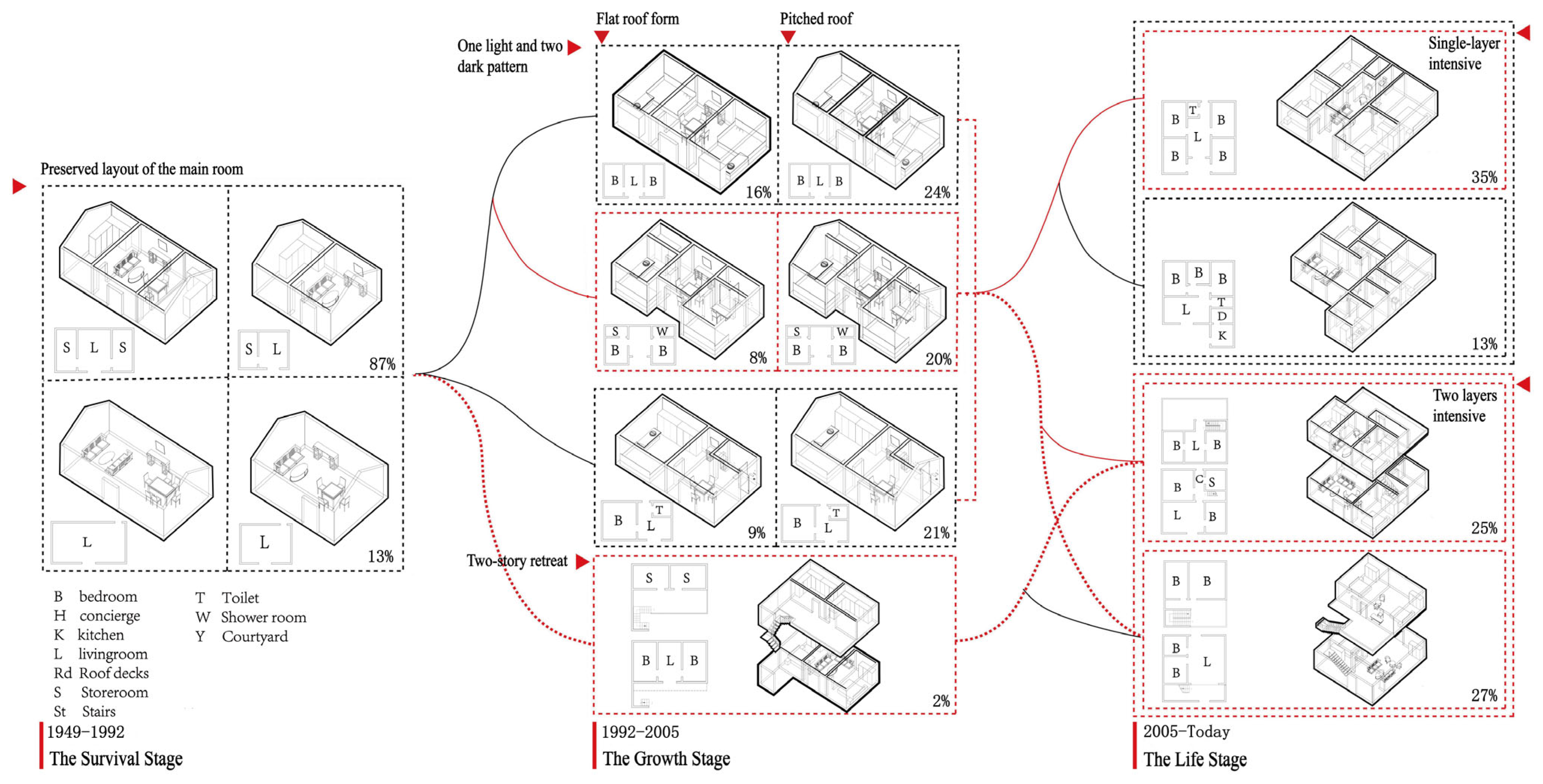
The main house is the highest-ranking building. As factors such as economy, thinking, and behavior change, its functions have evolved from being single to multiple, its layout has shifted from being scattered to diverse, the number of floors has increased from one to two, and the roof has changed from sloping to flat. As shown in Figure 5, in the survival stage, the concept of ritualism was still deeply rooted, and it was mostly used for sacrificial ceremonies and receptions. The layout was mostly in a bright and dark pattern, with simple space division, and the proportion was approximately 87%. There were also overall open-plan styles, with spacious and bright interiors, and the dimensions were mostly 9.9 m × 5 m or 6.6 m × 5 m, accounting for approximately 13%. In the growth stage, thinking gradually became more liberated, the sacrificial function gradually diminished, and the living function was strengthened. However, due to structural and economic limitations, the indoor space division of the main house was relatively simple, with one room per hall or two rooms per hall, and there were differences between flat roofs and sloping roofs. Some samples had auxiliary functional spaces such as bathrooms and storage rooms in the main house interior, revealing a trend of centralized layout. In the living stage, modern living concepts, materials, technologies, and craftsmanship were widely accepted by residents. The depth of the main house interior expanded to 9 m, and the number of floors increased. The interior integrated functions such as bedrooms, living rooms, kitchens, dining areas, bathrooms, and sanitation facilities. The first floor was arranged with two to four bedrooms, a living room, and sanitation facilities, while the second floor was arranged with bedrooms or storage functions. Some had roof platforms left for drying crops. In addition to residential use, there were also forms of industrial development. For example, under the influence of tourism, the first floor of the main house often had public service spaces such as kitchens and dining areas, and the second floor had private spaces such as guest rooms.

2.3. The Annex Room and Gatehouse Space

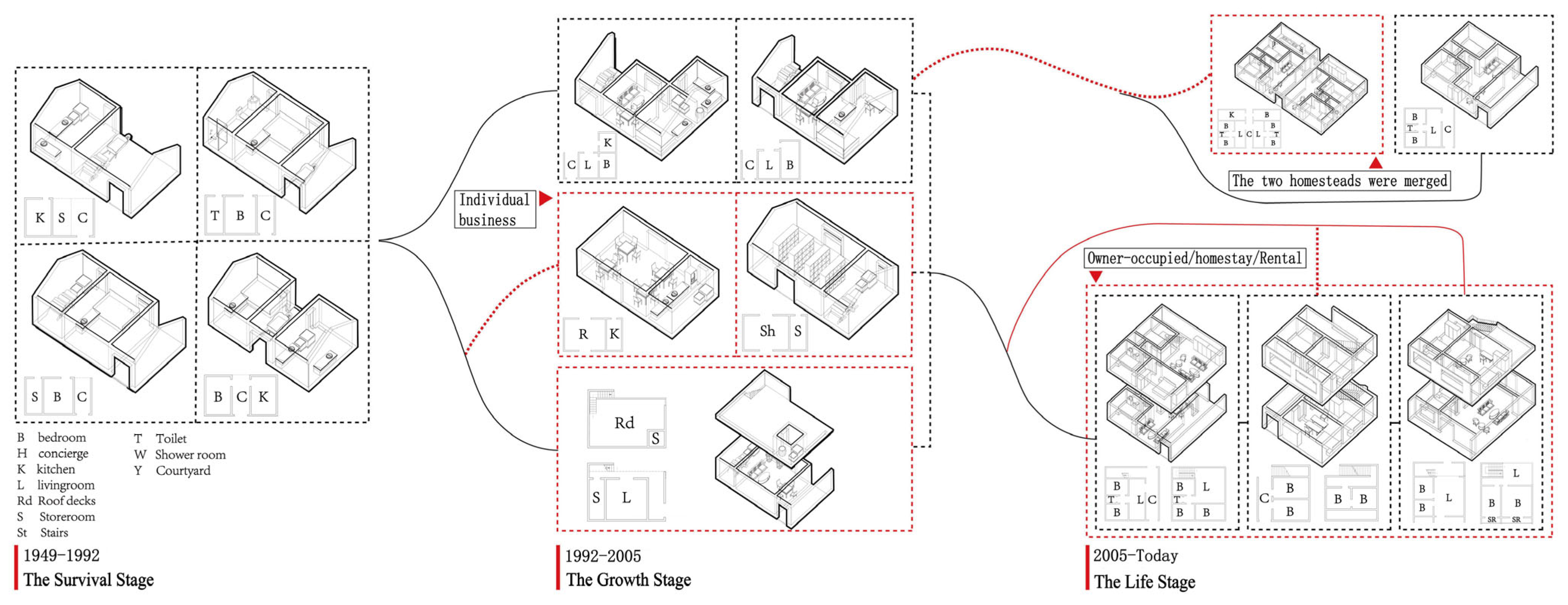
The annex rooms are the main living rooms in traditional dwellings, and their evolution process goes through a process of “from primary to secondary, from presence to absence”. As shown in Figure 6, in the survival stage, the single-row courtyard rooms that survived mostly had single-side annex rooms, arranged east–west, with dimensions of approximately 3 m × 9 m. They had the same function as the side annex rooms in other courtyard types, mainly for living. When arranged on both sides, one side often had a kitchen, with a simple indoor layout, consisting of one room or three rooms with two rooms. In the growth stage, due to insufficient lighting in the east–west bedrooms, the living function gradually weakened, while auxiliary functions gradually strengthened. The overall layout was mainly single-side annex rooms, mostly used for self-residence, and there were forms such as one kitchen and one bathroom, one room and one kitchen, two rooms and one staircase. Among them, one kitchen and one bathroom or one room and one kitchen often had no attic space and were relatively small, 3 m × 4–6 m. Two rooms and one staircase had a larger size, 3 m × 9.9 m, and were of a flat roof form, which could be used as a drying platform. Traditional village dwellings adhere to the concept of protection and continue the traditional bilateral layout. In the life stage, the annex rooms began to disappear. Due to the influence of tourism, the layout and size of the annex rooms were restored and varied between single-side or bilateral arrangements, with dimensions of 3 m × 9 m, in a single-layer form, and were used for commercial service spaces such as restaurants, kitchens or guest rooms.
The gatehouse serves as a transitional space for the connection between the interior and exterior. Over the course of time, it has undergone transformations such as “living → transportation, closed → open, single floor → multi-floor”. As shown in Figure 7, during the survival stage, the gatehouse occupied an area of 4.5 m × 9.9 m. In the elderly residence area, the interior was simply divided, featuring one bedroom and one toilet or one bedroom and one kitchen. During the growth stage, to accommodate the rapid increase in population, the depth increased to 6–8 m. Bedrooms were arranged on both sides, ranging from two to four rooms, and some residential gatehouses, in response to the change in production methods, transformed their living space into commercial space for easier sales. Additionally, under the influence of modern lifestyle, some gatehouses only increased the depth of the side rooms or added functional rooms, forming a complete shape while initially improving the functions of the gatehouse area. During the living stage, the indoor functions of the gatehouse became more complete. Horizontally, there were cases where two homesteads merged into one, resulting in a total area of approximately 17 m × 10.5 m. To adapt to modern living habits, bedrooms, living rooms, dining rooms, kitchens, and bathrooms were centrally arranged. Vertically, this development mostly occurred on independent homesteads, with an area of approximately 12 m × 6 m or 6.6 m × 7.5 m, in a two-story form. The stairs connected the upper and lower floors, and the space was arranged in an intensive manner. Moreover, a sunroom was placed adjacent to the bedroom space.

3. The Typological Evolution of the Space in the Narrow Courtyard Residential Complex

3.1. Daily Life Behavior

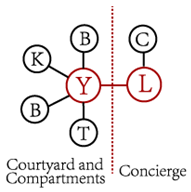
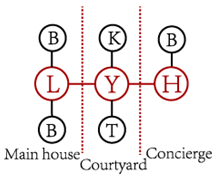
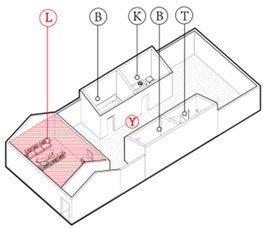
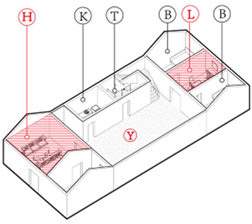
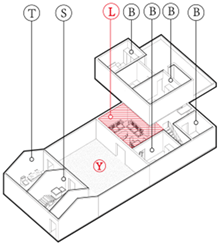
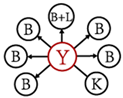
The living space mainly refers to the areas that meet the needs of people’s daily life, such as sleeping, hosting guests, using the toilet and washing, and engaging in leisure and entertainment. These areas correspond to bedrooms, halls, bathrooms, courtyards, etc. Through the analysis of the sample data, the hall space is an important indicator for achieving the separation of sleeping and living. In the early days, it mostly existed independently in a separate form from the bedroom, and evolved into a form adjacent to the bedroom with the change in modern living behaviors (Table 2). That is, during the survival stage, a few traditional courtyard residences retained the concept of ritual-based living and had hall spaces, which were mostly used for sacrifices and hosting guests when located in the main room, and for leisure and entertainment and hosting guests when located in the gatehouse. However, most residences at this time did not have independent hall spaces, and guests were mostly hosted in the bedroom and courtyard. During the growth stage, the residential functions gradually improved, and independent hall spaces such as the entrance hall and living room emerged. The entrance hall was adjacent to the gate, and the living room was adjacent to the bedroom, jointly undertaking the residents’ daily living and living behaviors. During the life stage, the entrance hall gradually weakened, and two-story intensive living spaces became widespread. Spaces such as the living room, bedroom, bathroom, and kitchen were all arranged closely together, meeting the modern residents’ living habits.

3.2. Cooking Behavior

The cooking space mainly refers to the area where people conduct cooking and dining, corresponding to the kitchen and dining room. It is mostly an auxiliary function of residences and undergoes a process of “blurring → clarity”. Specifically, in the survival stage, rural narrow courtyard houses aim to meet basic survival needs, with the space mainly consisting of bedrooms, and the kitchen has not yet had a clear spatial division. Stoves are often set up in the courtyard and cooking is performed outdoors. Dining is also mostly performed in the courtyard or in front of the house. In the growth stage, with the improvement in living standards and the popularization of “coal”, the kitchen gradually has specific spatial limitations. It often exists independently outside the main room and serves as an auxiliary room. However, the dining room still does not have an independent space. In the life stage, the popularity of kitchen appliances such as electric stoves and rice cookers, and the emergence of fuels such as gas and natural gas, the kitchen gradually moves into the main room, adopting the compact layout form of modern urban residences, making it adjacent to the living room. At this time, most residences also have specific dining spaces, and they are often adjacent to the kitchen.

3.3. Other Behavior

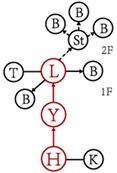
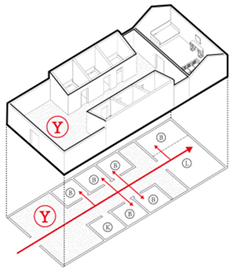
Other behaviors mainly include production behaviors and flow-line behaviors. Regarding production behaviors, most rural residential spaces in the Guanzhong region should meet the needs of agriculture and service industries. During the survival stage, agriculture was the main and sole production activity. The storage and drying of crops were, respectively, located on the attic or within the courtyard of the narrow courtyard residential buildings in the countryside; during the growth stage, agriculture remained the main occupation, but the emergence of service industries prompted the generation of corresponding physical spaces, such as selling spaces and sanitation spaces, which were often independently set up in the gatehouse area to facilitate external operation and service. For agriculture, there were no independent storage and drying spaces yet; crops were randomly piled up in the front yard or back yard or on the roof for storage and drying; during the living stage, the service industry gradually developed. The development of traditional village tourism promoted the diversification of rural narrow courtyard residential spaces, giving rise to service spaces such as guesthouses and dining areas, and during this stage, the production behavior of agriculture relatively weakened, but independent storage spaces emerged. Regarding flow-line behaviors, influenced by the courtyard system and behavioral habits, the flow lines entering the bedrooms mainly include direct type, hall-to-yard type, and hall-to-yard-to-living room type (Table 3). Among them, the hall-to-yard type had the longest duration and appeared in all stages; the direct entry type flow line was the simplest, but it was only present in the courtyard buildings with a gatehouse that retained the living function of the wing rooms in the survival stage; the hall-to-yard-to-living room type flow line was the most complex, but it was the common form adopted in the growth and living stages.

4. The Quantitative Research Results of Spatial Evolution Factors

4.1. The Hierarchical Structure Model of the Indicator System

Based on clarifying the evolution characteristics of the spatial types of narrow courtyards in the Guanzhong area of Shaanxi Province, the study conducted an analysis of the “residents’ self-reported reasons for renovation” from 125 semi-structured interview texts, combined with the qualitative feedback on “why the renovation was carried out” in 532 valid questionnaires, and referred to the relevant literature on the evolution of rural residential spaces [45,46], and initially identified the key factors influencing the evolution of the narrow courtyard residential spaces in this region.
To enhance the scientific rigor and effectiveness of the factors, a systematic screening and categorization process was conducted on the initially extracted factors. Generalized factors with vague expressions and unclear directions (such as “rejecting tackiness” and “pursuit of uniqueness”) were eliminated, as were factors with a relatively weak influence on spatial evolution (such as “inconvenient sewage disposal” and “internal family member conflicts”). Moreover, factors with similar semantics were integrated and their semantics were standardized to ensure logical mutual exclusivity and content integrity among the factors. Subsequently, an evaluation model with a three-level structure, including the “target layer-criterion layer-indicator layer”, was constructed. The criterion layer encompasses eight major categories: natural environment, cultural concepts, social relationships, housing needs, relevant policies, industrial structure, material techniques, and economic sources. Under each category, there are a total of 27 specific indicators. For example, the natural environment dimension includes climate, hydrology, topography, and geomorphology. Further, based on the functional attributes of the factors, the criterion layer is divided into external and internal factors. The natural environment, housing needs, material techniques, and economic sources belong to external factors, which have a direct impact on the spatial form. In contrast, internal factors such as cultural concepts, social relationships, relevant policies, and industrial structure collectively and indirectly drive spatial evolution by shaping residents’ value orientation, cognitive patterns, and behavioral decisions. Based on the above classification, the model has been optimized in terms of ranking, systematically coded, and visually presented (Figure 8), providing a clear structural foundation for subsequent quantitative analysis.

4.2. The Analysis Results of the Weight Proportion

Focusing on the indicator layer, after statistically analyzing the frequency of motivation factors for “why the renovation” in the valid survey questionnaires in different stages, the comprehensive fuzzy evaluation method is introduced. By constructing a membership function, the percentage data of each indicator factor is normalized to eliminate ambiguity and determine its relative importance, thus obtaining the weights of the indicator-layer factors in each stage (i.e., the normalized values of comprehensive membership). Furthermore, the factor weights of the indicator layer are summed up stage-by-stage, category-by-category, and level-by-level to derive the weights of factors of different attributes (internal and external causes) and different categories (eight categories such as natural environment and living needs) in the criterion layer.
(1)
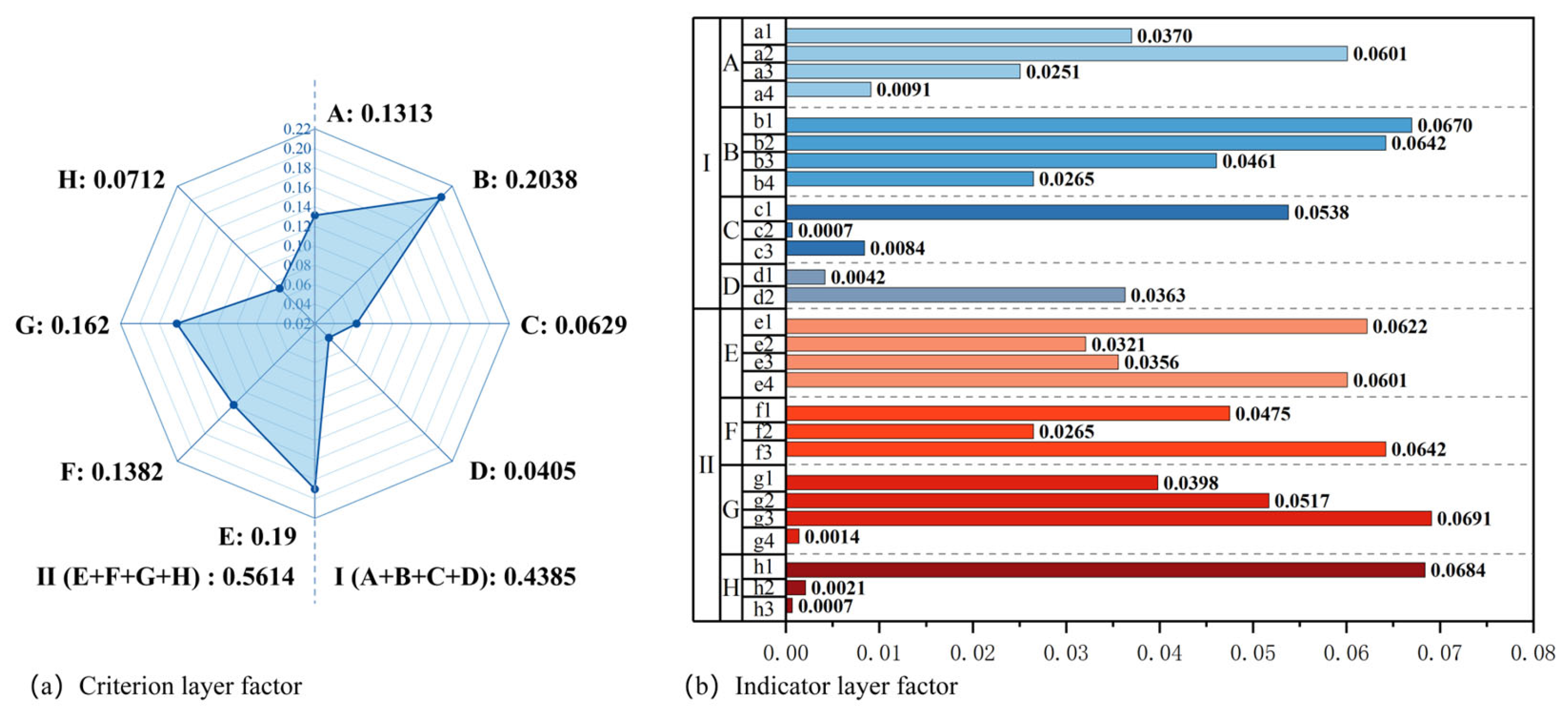
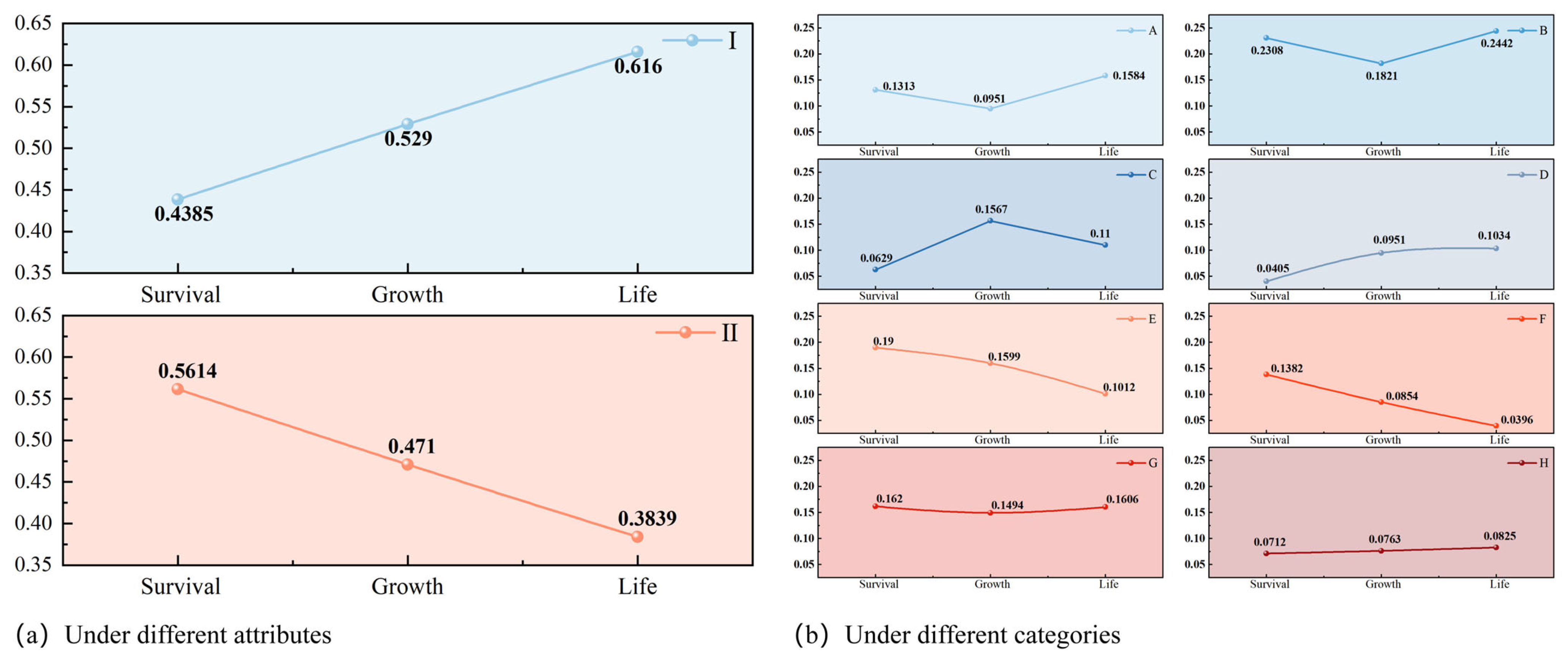
The weight distribution of the survival stage factors is shown in Figure 9: At the criterion layer, within the attribute dimension, the weight of internal factors is the highest ( b = 0.5614 ). In the category dimension, the weight of the living demand is the maximum (the highest) ( b B = 0.2038 ); at the indicator layer, the weight that is the highest is “Land Reform System” ( b g 3 = 0.0691 ), which belongs to the “Policy-related” category within the internal factor dimension, followed by “Spatial Quantity” ( b b 1 = 0.067 ), which belongs to the “Living Demand” category within the external factor dimension. This indicates that the evolution of the narrow courtyard residential space in rural areas of Shaanxi Guanzhong during the life stage exhibits a typical dual characteristic of “system-driven” and “survival-driven”. Specifically, land reform, as the core institutional variable, fundamentally sets the framework for the evolution of the residential space form and scale; while the absolute insufficiency of the living space quantity constitutes the most direct and urgent real motivation for residents to carry out space renovation.
(2)
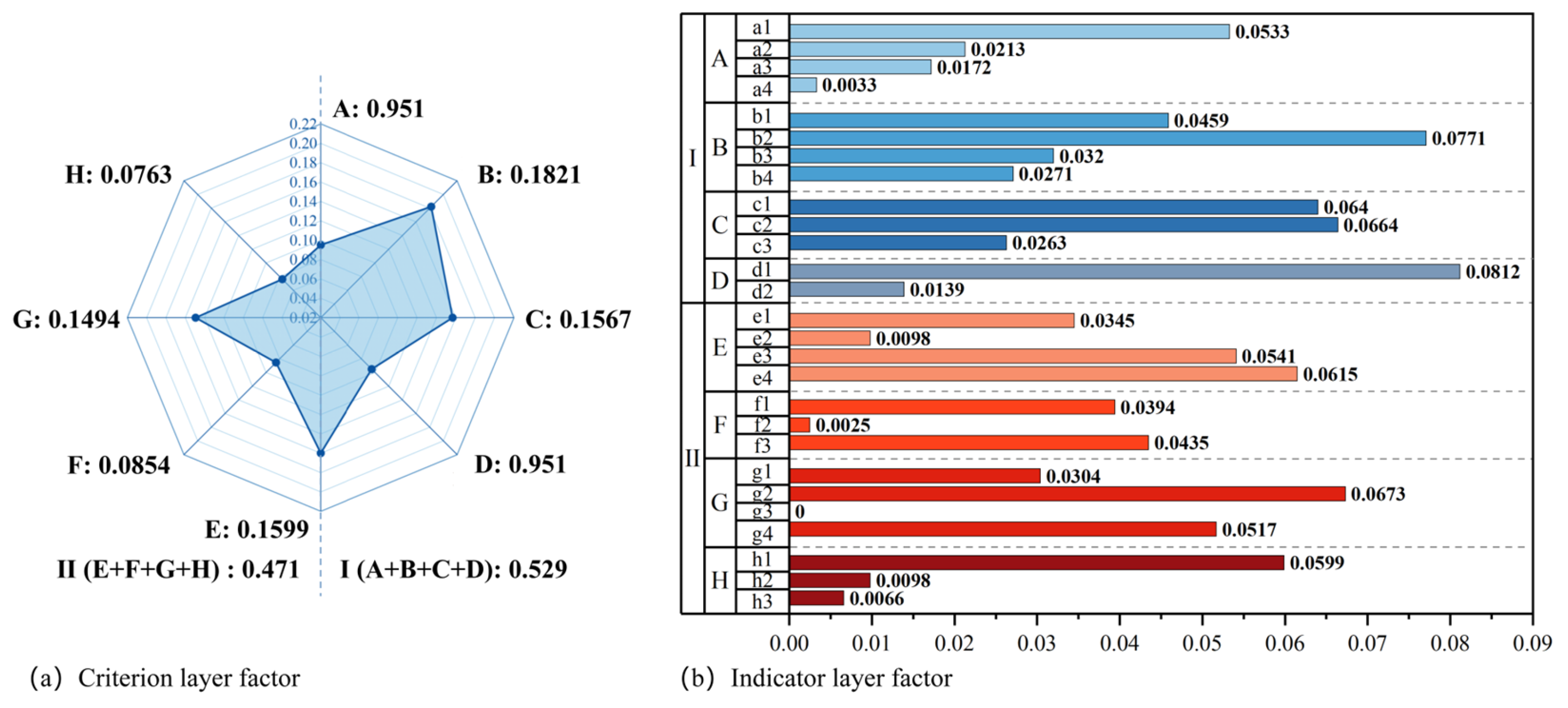
The weight distribution of the growth stage factors is shown in Figure 10: At the criterion level, within the attribute dimension, the weight of external factors is the highest ( b = 0.529 ). Within the category dimension, the weight of the living demand is still the largest ( b B = 0.1821 ); at the indicator level, the category with the highest weight is “Family Income” under the “Economic Source” category ( b d 1 = 0.0812 ), followed by “Space Layout” under the “Living Demand” category ( b b 2 = 0.071 ), both belonging to the external factor dimension. This indicates that in the growth stage, the evolution of the narrow courtyard residential space in rural areas of Shaanxi Guanzhong shows an evolutionary logic of “economic dominance” and “functional optimization” proceeding in parallel. With the economic development and the increase in income levels, residents’ renovation activities have shifted from meeting basic survival needs to pursuing the rationality of space function and layout optimization, reflecting the transformation trend of rural residential forms from solving basic living needs to improving quality of life.
(3)
The weight distribution of life stage factors is illustrated in Figure 11. At the criterion level, within the attribute dimension, external factors still hold the highest weight, while under the category dimension, residential needs remain the most dominant. At the indicator level, the highest weight is attributed to “Conservation and Ecological Development Policies” under the “Relevant Policies” category, which belongs to the internal factor dimension, followed by “Spatial Thermal Comfort” under the “Residential Needs” category. This indicates that during the life stage, the evolution of narrow-courtyard dwellings in rural Guanzhong, Shaanxi, is characterized by a synergistic driving force of “policy guidance” and “quality pursuit.” On one hand, policies related to conservation and ecological development have strengthened the regulation and guidance of construction practices. On the other hand, residents’ heightened focus on the quality of the physical environment, such as thermal comfort, signals a transition in rural housing transformation from merely meeting functional needs to addressing higher-level demands for comfort and sustainability.
Furthermore, based on the weight distribution of factors at the criterion level, a diachronic change diagram (Figure 12) reveals a continuous decline in the influence of internal factors, with the most significant decreases observed in cultural perceptions and social relations. This shift primarily stems from the combined effects of road transportation development, rising education levels, outward migration for work, and the proliferation of communication technologies and the internet. These factors have systematically deconstructed the early endogenous drivers represented by Guanzhong Confucian rituals, hierarchical order, folk culture, and social relations. Simultaneously, the penetration of an external market economy, the promotion of new construction technologies, and the introduction of intensive residential models have further diminished the dominant role of cultural perceptions and social relations in spatial formation, collectively leading to a systematic weakening of the structural influence of internal factors. External factors, meanwhile, exhibit more complex dynamics: except for the natural environment factor, which shows a fluctuating trend of “first declining then rising,” economic sources, material techniques, and residential needs all demonstrate an evolutionary pattern of “first rising then declining,” collectively dominating the spatial evolution process during the growth stage. Moreover, in the later stages of evolution, with the introduction of policy guidance and sustainable development concepts, external drivers have gradually shifted from a singular efficiency orientation toward a comprehensive consideration of regional context and ecological adaptation.

4.3. The Analysis Results of the Grey Correlation Degree

To systematically reveal the dynamic mechanism of the driving forces behind the spatial evolution of narrow courtyard houses in rural areas of the Guanzhong region of Shaanxi Province, the study employed the grey correlation analysis method to calculate the correlation degree throughout the entire evolution process. The specific work was carried out in two levels: At the criterion level, based on the attribute dimension and the category dimension, respectively, the correlation degree between each factor and the overall process of spatial evolution was calculated to identify the key dimensions that dominate the macroscopic evolution trend; At the indicator level, the correlation degree between each specific factor and the overall category of the criterion layer was further calculated, thereby identifying the core influencing factors within each category.
(1)
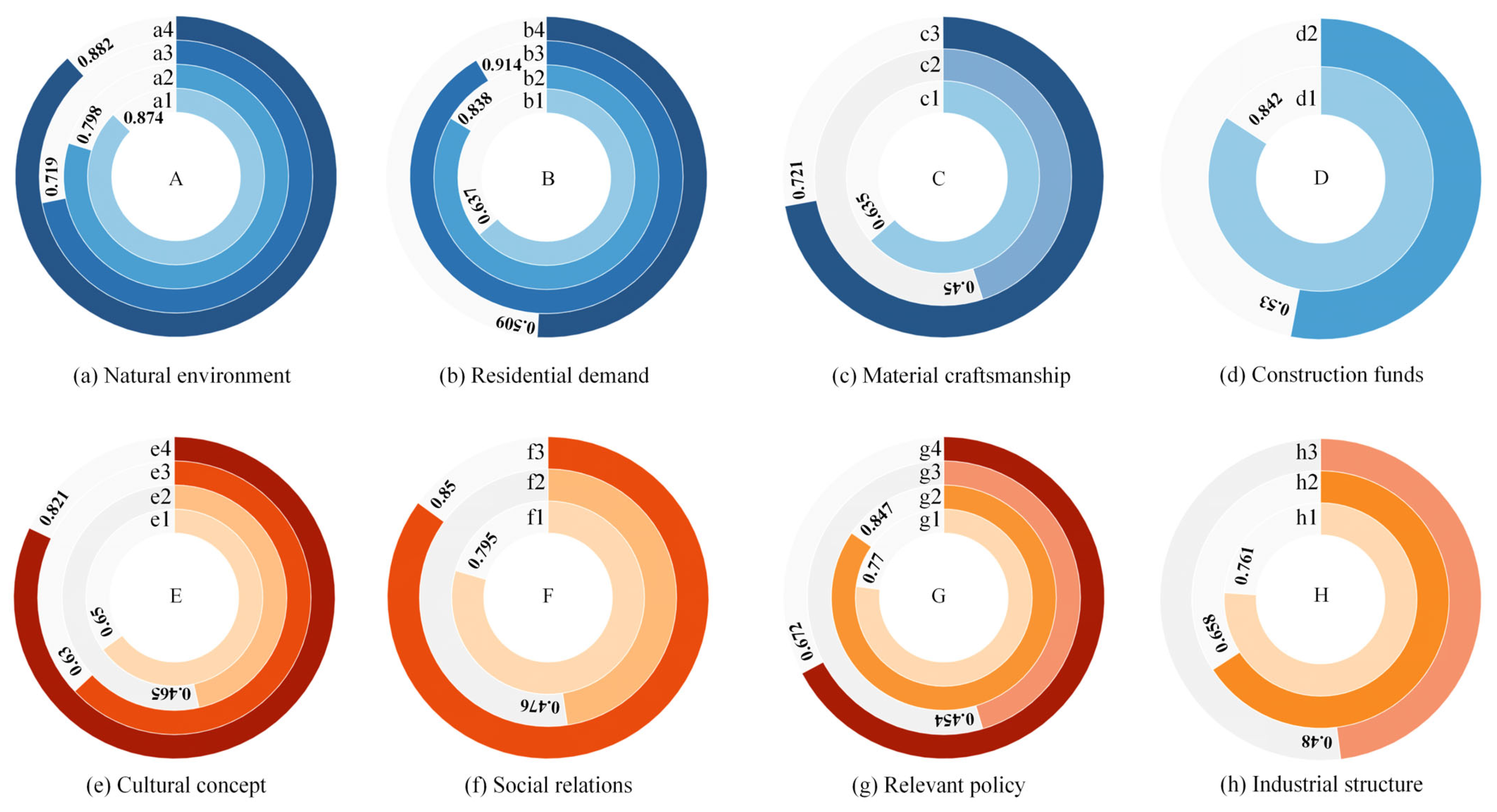
The calculation results of the correlation degree of the criteria layer factors are shown in Figure 13: Under the attribute dimension, the correlation degree of external factors ( r = 0.579 ) is higher than that of internal factors. Under the category dimension, the correlation degrees of each factor from highest to lowest are: relevant policies ( r G = 0.9 ), industrial structure ( r H = 0.862 ), housing demand ( r B = 0.746 ), natural environment ( r A = 0.67 ), cultural concepts ( r E = 0.606 ), material techniques ( r C = 0.603 ), social relationships ( r F = 0.533 ), and economic sources ( r D = 0.488 ).
(2)
The calculation results of the correlation degree of the indicator layer factors are shown in Figure 14: By comparing the correlation degree between each specific factor and the overall category to which it belongs, the core factors that affect the natural environment, living needs, material techniques, economic sources, cultural concepts, social relationships, policies and industrial structure categories ( r a 4 = 0.882 ) are identified as the landform, spatial scale ( r b 3 = 0.914 ), construction techniques ( r c 3 = 0.721 ), family income ( r d 1 = 0.842 ), folk culture ( r e 4 = 0.821 ), bloodline organization ( r f 3 = 0.85 ), homestead system ( r g 2 = 0.847 ) and agriculture ( r h 1 = 0.761 ). The above results indicate that the evolution of the narrow courtyard residential space in the rural areas of Guanzhong region of Shaanxi Province at the micro level is mainly influenced by the in-depth regulation of specific elements, presenting a multi-level and refined driving characteristic. Among them, the geographical conditions and spatial scale, respectively, serve as the core of the natural environment and living demands, laying the background constraints and basic framework for the evolution of the spatial form; construction techniques, family income and folk culture, respectively, act on the functional layout and form expression of the residential space from the technical conditions, economic foundation and cultural identity three dimensions; while the bloodline organization, homestead system and agricultural structure deeply reflect the direct shaping of the spatial organization by the changes in social structure, policy management and production methods. At the same time, the results confirm and refine the macro-level judgments, further revealing that the macro driving forces such as policy regulation and industrial transformation act on the spatial evolution process through specific paths such as the homestead system and agricultural structure.

5. Discussion and Conclusions

Based on a systematic analysis of the evolution types of narrow courtyard houses in rural areas of Guanzhong, Shaanxi Province, as well as the weight of influencing factors and the degree of grey correlation, this study mainly reaches the following conclusions:
(1)
The evolution of the space in narrow courtyard houses is essentially a profound “de-ritualization” of space reconfiguration. This transformation is not only reflected at the morphological level, but more importantly, it is driven by the underlying mechanism: under the multiple modern forces of industrialization, urbanization, and the centralization of family structure, the ritual order and cultural symbols carried by traditional narrow courtyards have been gradually dismantled; and the logical basis of its spatial organization has shifted from following ethical hierarchical norms to a rational response to individual privacy, functional efficiency, and living comfort. This paradigm shift from “courtyard center” to “hall center” not only reflects the modern adaptation of living functions, but also echoes the theoretical discussions in international rural architecture research about the changes in spatial structure and daily life practices, providing empirical evidence for the spatial dimension of the core family-oriented lifestyle, and supplementing the applicability of the “space–society” interaction theory in non-Western contexts.
(2)
The evolution process simultaneously witnessed a re-evaluation of the value of the main and auxiliary spaces: In the narrow courtyard houses of the Guanzhong countryside, the functional complexity and dominance of the main living spaces (including the living room and bedrooms) continued to increase, while the previously neglected auxiliary functional spaces (including the kitchen, bathroom, and staircase) significantly improved in terms of comfort, configuration standards, and space proportion. This change reflects the modern transformation of the living concept from “priority given to etiquette” to “life quality-oriented”, and the overall spatial structure tends to be functionally balanced and human-centered optimized, which is consistent with the common trend of service space upgrading and life space specialization that occurs in the process of global rural architectural modernization.
(3)
The analysis of the impact factor weights objectively reveals its dynamic action pattern—from the “institutional traction” in the survival stage (such as land reform and rural housing policies), to the “economic dominance” in the growth stage (the improvement in family income drives functional optimization), and finally to the “policy guidance and quality pursuit” synergy in the life stage (ecological protection policies and thermal comfort and other quality demands); the grey correlation analysis further indicates that the relevant policies and industrial structure are the core macro factors driving the spatial evolution, clearly outlining how external systems and economic forces deeply reshape the rural residential space pattern layer by layer. This discovery has enriched the empirical research conducted internationally on the mechanism of the interrelationship between institutions, economy and the changes in the form of rural architecture.
(4)
The proportion of the weight given to cultural concepts has significantly decreased. The reason for this is that the core stability of these concepts has undergone a fundamental change. In the early stage, based on the ritual system and local knowledge system, it was relatively stable, and the form of residential space thus closely matched the lifestyle, presenting a unified form and clear prototype characteristics; in the middle and later stages, traditional concepts gradually disappeared, while the new cultural consensus had not yet matured and been fully formed, resulting in a conceptual “vacuum” and disorder; this lack of consensus directly reflects the diversified exploration and paradigm competition of spatial forms, indicating that the current residential form has not yet established a stable adaptation relationship with the lifestyle of the new era. This process reveals the complexity of the coexistence of cultural continuity and discontinuity during the transformation of traditional architecture.
Furthermore, the “de-regulation of rituals” and the reconfiguration of the primary and secondary space values revealed by this study are not merely a local phenomenon of narrow courtyard houses in the narrow courtyard houses of rural areas in Shaanxi Guanzhong region. but can also provide a reference for understanding the rural modernization transformation in similar areas of China. However, the “vacuum” state of cultural concepts reminds us that the modernization of rural residences is not simply a process of “destruction of the old and growth of the new”, but a complex process of conflict, negotiation and integration of new and old cultural elements. The current diversity and ambiguity of spatial forms are a true reflection of the transitional period of rural social identity recognition and cultural direction. From a theoretical perspective, this spatial power transfer from “courtyard” to “hall” is not only a functional center adjustment, but can also be regarded as the modern transformation of the spatial organization logic of the rural society—from the symbolic space centered on ethical order to the functional space centered on daily life. This transformation has reference significance for understanding the adaptive evolution of local residential patterns in the context of globalization and provides an empirical footnote from Chinese rural areas for international rural architectural transformation theories. Therefore, future rural residence construction should go beyond simple considerations of function or form, and attach importance to the reshaping of new cultural connotations and spatial identity, guiding it to evolve organically from “disorderly exploration” to “new paradigms”, providing sustainable spatial support for achieving true rural revitalization.

Author Contributions

Conceptualization, M.Y. and B.G.; methodology, M.Y.; software, R.L.; validation, M.Y., B.G. and R.L.; formal analysis, M.Y.; investigation, M.Y. and R.L.; resources, B.G.; data curation, M.Y.; writing—original draft preparation, M.Y.; writing—review and editing, B.G. and R.L.; visualization, R.L.; supervision, B.G.; project administration, B.G.; funding acquisition, B.G. All authors have read and agreed to the published version of the manuscript.

Funding

(1) National Natural Science Foundation of China, collaborative mechanism and design method of “Construction-culture” of modern urban and rural residential buildings in MAO District of Loess Tableland (Project No.: 52178027); (2) China Shaanxi University Youth Innovation team funding project (2022–2025).

Data Availability Statement

Restrictions apply to the datasets: The datasets presented in this article are not readily available because the data are part of an ongoing study. Requests to access the datasets should be directed to [Spatial Evolution of Narrow-Courtyard Dwellings in Guanzhong Rural Areas of Shaanxi, China, from 1949 to the Present].

Conflicts of Interest

Author Ruiwen Li was employed by the company Foshan Branch, The IT Electronics Eleventh Design & Research Institute Scientific and Technological Engineering Corporation Limited. The remaining authors declare that the research was conducted in the absence of any commercial or financial relationships that could be construed as a potential conflict of interest.

References

  1. Hall, S. Rural & Urban House Typesin North America; Pamphlet Architecture: New York, NY, USA, 1982; pp. 5–6. [Google Scholar]
  2. Shou, T. Elastic Enclosure: Diagramming the Spatial Construction Logic of Vernacular Architecture in Huizhou. Archit. J. 2024, 2, 1–8. (In Chinese) [Google Scholar] [CrossRef]
  3. Darwin, C. On the Origin of Species: With Additional Conjectures on the Top Ten Theories of Evolution; Peking University Press: Beijing, China, 2018. (In Chinese) [Google Scholar]
  4. Yang, L.; Liu, J.P. Inheritance and Regeneration of Cave Dwellings in the Loess Plateau. Archit. Herit. 2021, 2, 22–31. (In Chinese) [Google Scholar] [CrossRef]
  5. Yang, M.J.; Gao, B. The Prototype and Cultural Attributes of Traditional Courtyard Houses in Guanzhong Region from a Memetic Perspective. Archit. Creat. 2022, 6, 163–169. (In Chinese) [Google Scholar] [CrossRef]
  6. Xu, J.S.; Li, Z. Traditional Vernacular Dwellings in Guanzhong and Their Regional Architectural Design Models; China Architecture & Building Press: Beijing, China, 2016. (In Chinese) [Google Scholar]
  7. Li, Z.; Xu, J.S. Adaptive Inheritance Design of Traditional Vernacular Dwellings in Guanzhong; China Architecture & Building Press: Beijing, China, 2016. (In Chinese) [Google Scholar]
  8. Gao, B.; Yang, M.J.; Zhao, S.; Wang, X.Y. Investigation and Research on Green Construction of Vernacular Dwellings in Guanzhong, Shaanxi. Tradit. Chin. Archit. Gard. 2018, 3, 58–63+93. Available online: https://kns.cnki.net/kcms2/article/abstract?v=BbvBZ4vy5aSSV9rVotX3jowKA9baF31BscEayhRACFCJwhsLzHYjVeBGwCTpDGv2E_SubjFyKQgKrtHc3YO8yH7ZbZXuRj1VBvJ1pQT9EdhnWbpPg2pjUIIZXEPV4teSNBRqhMxy6QoEWTUKCOtCQvaopZlVThacpPUOGjTLPDCbW_Ac1lMHPw==&uniplatform=NZKPT&language=CHS (accessed on 3 December 2025). (In Chinese).
  9. Yu, Z.C.; Meng, Y.H. Green Construction of New Rural Dwellings in Guanzhong, Shaanxi. Build. Energy Effic. 2020, 48, 32–38. Available online: https://kns.cnki.net/kcms2/article/abstract?v=BbvBZ4vy5aQ66R0CPo-dM9J2bGBX9eaG6USjqfrw2_OzX4XDuR3SOO-2c8zN9nQ_9gvFXFMaA-OktuayNtBRJMNS9Bs9OfvLT3AP0D6-ggFAVIMy6j_p5QpiT6obK4d-Tt9qA0Qu0JHRJdWDarV0stfFw1YfXhlmYEFMNLg18lT8njvbyxzD5g==&uniplatform=NZKPT&language=CHS (accessed on 3 December 2025). (In Chinese).
  10. Wang, N.Y.; Zhao, J.Y.; Wang, Q. Research on the Building Energy Efficiency System of Rural Dwellings in Guanzhong Region. Build. Energy Effic. 2021, 49, 14–20. Available online: https://kns.cnki.net/kcms2/article/abstract?v=BbvBZ4vy5aS-OrQSUglr282qCiT0TedDZsApyuiE2P2i7m013axvbZwc8WMkv8UMfaXzuxWYKqehKxxP9LtXveqGqcMbM6kD8hLKco9tHXWWyT_RJn6px_V2YC21PrxDnydvYRGz334mawKnokS1gwpDrfO1QhbCZ1SjAPzFJgFVt0qU_X5pfQ==&uniplatform=NZKPT&language=CHS (accessed on 3 December 2025). (In Chinese).
  11. Cui, X.C.; Liu, Y.; Yuan, W.Q.; Liu, Y. Research on the Climatic Adaptability of Guanzhong Courtyards Based on Measured Thermal Environment Data. Build. Energy Effic. 2024, 52, 33–42. (In Chinese) [Google Scholar]
  12. Yang, D. Research on the Spatial Form Transformation of Rural Dwellings in Guanzhong Under the Influence of Land Institution; Xi’an University of Architecture and Technology: Xi’an, China, 2016. (In Chinese) [Google Scholar]
  13. Wang, X.J.; Yang, D.; Li, Z.M. A Century of Spatial Form Changes in Rural Houses and Courtyards in Guanzhong: A Case Study of Xuelu Village in Qian County. Huazhong Archit. 2018, 36, 42–47. (In Chinese) [Google Scholar] [CrossRef]
  14. Wang, J.; Zhao, J.; Wu, T.; Li, J. A Co-Evolution Model of Planning Space and Self-Built Space for Compact Settlements in Rural China. Nexus Netw. J. 2017, 19, 473–501. [Google Scholar] [CrossRef]
  15. Liang, L.; Wen, B.; Xu, F.; Yang, Q. From Poor Buildings to High Performance Buildings: The Spontaneous Green Evolution of Vernacular Architecture. Appl. Sci. 2023, 13, 10162. [Google Scholar] [CrossRef]
  16. Appeaning Addo, I.; Yakubu, I.; Gagnon, A.S.; Beckett, C.T.S.; Huang, Y.; Owusu-Nimo, F.; Brás, A.M.A. Examining change and permanence in traditional earthen construction in Ghana: A case study of Tamale and Wa. Built Herit. 2025, 9, 2. [Google Scholar] [CrossRef]
  17. Athanasiou, K. The Rise and Decline of Settlement Sites and Traditional Rural Architecture on Therasia Island and Their Reciprocal Interaction with the Environment. Heritage 2024, 7, 5660–5686. [Google Scholar] [CrossRef]
  18. Bigiotti, S.; Santarsiero, M.L.; Del Monaco, A.I.; Marucci, A. A Typological Analysis Method for Rural Dwellings: Architectural Features, Historical Transformations, and Landscape Integration: The Case of “Capo Due Rami”, Italy. Land 2025, 14, 374. [Google Scholar] [CrossRef]
  19. Fortenberry, B.R. Digital Documentation in Vernacular Architecture Studies. Build. Landsc. J. Vernac. Archit. Forum 2019, 26, 98–113. [Google Scholar] [CrossRef]
  20. Campisi, T.; Saeli, M. The dammuso: Constructive characters of the traditional stone buildings of the isle of Pantelleria (Sicily). In Word, Heritage and Legacy, Culture Creativity Contamination; Gangemi Editore spa: Rome, Italy, 2019; pp. 93–102. [Google Scholar]
  21. Cervelli, E.; Scotto di Perta, E.; Pindozzi, S. Diachronic Analyses on Land Use Changes and Vernacular Architecture Distribution, to Support Agricultural Landscape Development. J. Cult. Herit. 2025, 71, 242–251. [Google Scholar] [CrossRef]
  22. Petino, G.; Napoli, M.D.; Mattia, M. Landscape, Memory, and Adverse Shocks: The 1968 Earthquake in Belìce Valley (Sicily, Italy): A Case Study. Land 2022, 11, 754. [Google Scholar] [CrossRef]
  23. Hillier, B.; Hanson, J. The Social Logic of Space; Cambridge University Press: Cambridge, UK, 1984. [Google Scholar]
  24. Arari, K.; Amhani, Z.; Tribak, A.; El-Ommal, M.; Laaraj, M.; Azagouagh, K. Analysis of land use changes and soil erosion in the Wadi Larbâa Basin (Eastern Pre-Rif, Morocco): A spatial assessment from 1984 to 2024. Med. Geosc. Rev. 2025, 7, 1007–1025. [Google Scholar] [CrossRef]
  25. Sadat Nickayin, S.; Egidi, G.; Cudlin, P.; Salvati, L. Investigating metropolitan change through mathematical morphology and a dynamic factor analysis of structural and functional land-use indicators. Sci. Rep. 2023, 13, 695. [Google Scholar] [CrossRef]
  26. van Nes, A.; Yamu, C. Introduction to Space Syntax in Urban Studies; Springer Nature Switzerland AG: Cham, Switzerland, 2021. [Google Scholar] [CrossRef]
  27. Jiang, B.; Claramunt, C. Integration of Space Syntax into GIS: New Perspectives for Urban Morphology. Trans. GIS 2002, 6, 295–309. [Google Scholar] [CrossRef]
  28. Şahin Körmeçli, P. Analysis of Walkable Street Networks by Using the Space Syntax and GIS Techniques: A Case Study of Çankırı City. ISPRS Int. J. Geo-Inf. 2023, 12, 216. [Google Scholar] [CrossRef]
  29. Case Scheer, B. The Evolution of Urban Form: Typology for Planners and Architects, 1st ed.; Routledge: Oxfordshire, UK, 2010. [Google Scholar] [CrossRef]
  30. Abuzaid, A.S.; Mazrou, Y.S.A.; El Baroudy, A.A.; Ding, Z.; Shokr, M.S. Multi-Indicator and Geospatial Based Approaches for Assessing Variation of Land Quality in Arid Agroecosystems. Sustainability 2022, 14, 5840. [Google Scholar] [CrossRef]
  31. Bukhari, A.; Alshibani, S.M.; Ali, M.A. Smart City as an Ecosystem to Foster Entrepreneurship and Well-Being: Current State and Future Directions. Sustainability 2024, 16, 11209. [Google Scholar] [CrossRef]
  32. Kose, E.; Vural, D.; Canbulut, G. The most livable city selection in Turkey with the grey relational analysis. Grey Syst. Theory Appl. 2020, 10, 529–544. [Google Scholar] [CrossRef]
  33. Sampson, R.J. Great American City: Chicago and the Enduring Neighborhood Effect; University of Chicago Press: Chicago, IL, USA, 2012. [Google Scholar]
  34. Tafti, F.F.; Rollo, J.; McGann, S. Conceptualising a model for understanding socio-cultural and spatial factors in housing: Insights from a systematic scoping review. Front. Archit. Res. 2025. [Google Scholar] [CrossRef]
  35. Love, S. Architecture as Material Culture: Building Form and Materiality in the Pre-Pottery Neolithic of Anatolia and Levant. J. Anthropol. Archaeol. 2013, 32, 746–758. [Google Scholar] [CrossRef]
  36. Research Group of Shaanxi Provincial Bureau of Statistics. Synergistic Complementation to Identify Gaps: Renewed Efforts for Regional Development. Shaanxi Wang. Available online: https://www.ishaanxi.com/c/2024/0626/3179331.shtml (accessed on 16 June 2024).
  37. Shaanxi Provincial Bureau of Statistics; Survey Office of the National Bureau of Statistics in Shaanxi. Shaanxi Statistical Yearbook 2024; China Statistics Press: Beijing, China, 2024. (In Chinese) [Google Scholar]
  38. Lu, J.S.; Jiang, M. Spatial Self-Organization and Architectural Regionality; China Architecture & Building Press: Beijing, China, 2021. (In Chinese) [Google Scholar]
  39. Hu, G.; Shi, G.; Zhang, R.; Chen, J.; Wang, H.; Wang, J. Assessment of Intelligent Unmanned Maintenance Construction for Asphalt Pavement Based on Fuzzy Comprehensive Evaluation and Analytical Hierarchy Process. Buildings 2024, 14, 1112. [Google Scholar] [CrossRef]
  40. Hu, H.; Ma, Y.; Wu, S. Fuzzy comprehensive evaluation on high-quality development of China’s rural economy based on entropy weight. J. Intell. Fuzzy Syst. 2020, 38, 7531–7539. [Google Scholar] [CrossRef]
  41. The SPSSAU Project. SPSSAU, Version 25.0; Online Application Software; The SPSSAU project: Beijing, China, 2025. Available online: https://www.spssau.com (accessed on 2 December 2025).
  42. Zhou, J.; Ma, S.P. SPSSAU Scientific Research Data Analysis Methods and Applications, 1st ed.; Electronic Industry Press: Beijing, China, 2024. (In Chinese) [Google Scholar]
  43. Guo, X.Y. Application of Grey Relational Analysis in Regional Competitiveness Evaluation. Stat. Decis. 2004, 11, 55–56. (In Chinese) [Google Scholar] [CrossRef]
  44. Wang, Q.; Dai, S.L.; He, J.; Ji, Y.S.; Wang, S. Application of Grey Relational Analysis and Analytic Hierarchy Process in the Selection of Spray Pot Chrysanthemum Varieties. Sci. Agric. Sin. 2012, 45, 3653–3660. Available online: https://kns.cnki.net/kcms2/article/abstract?v=BbvBZ4vy5aS-Uvb1saKzCZndaT0pYo9GyE_y1eemm1syIPWzgJrKGNlL6m4rqoC_GbL033jdvmyYLrrcQqkp5F0r-pKt3UfBQxw7Q9CCexKML_x0uKaIw0XwAbnD1UM4jdvWive9I5H0u5mqW3MaApWIij3U5RPGbNwtd_opw8sqCwtqQQBDFQ==&uniplatform=NZKPT&language=CHS (accessed on 3 December 2025). (In Chinese).
  45. Zhu, F. Research on the Evolution of Rural Settlement Spatial Structure in Central Zhejiang Region EB/OLEB/OL. Available online: http://www.vonarch.com/?p=16540 (accessed on 20 October 2025). (In Chinese).
  46. Mao, Y.L.; Ge, Y.P.; Guan, J.L.; Xie, H.X. Research on the Restructuring Evolution and Driving Factors of Rural Settlements and Farmhouses: A Case Study of Ordinary Villages in Western Henan. Dev. Small Cities Towns 2020, 38, 88–98. (In Chinese) [Google Scholar] [CrossRef]
Figure 1. Geographical Distribution Map of the Guanzhong Region in Shaanxi, China.
Buildings 15 04533 g001
Figure 2. Prototype Drawings and On-site Photographs of Narrow-Courtyard Dwellings in Guanzhong Countryside.
Buildings 15 04533 g002
Figure 3. Distribution of Sampling Samples and Partial Photo Display.
Buildings 15 04533 g003
Figure 4. The typological evolution process of courtyard spaces.
Buildings 15 04533 g004
Figure 5. The typological evolution process of the main room space.
Buildings 15 04533 g005
Figure 6. The typological evolution process of the annex room space.
Buildings 15 04533 g006
Figure 7. The typological evolution process of the gatehouse space.
Buildings 15 04533 g007
Figure 8. Coding and Hierarchical Structure Model of Spatial Evolution Factors for Narrow-Courtyard Dwellings in Rural Guanzhong, Shaanxi.
Buildings 15 04533 g008
Figure 9. Weight Proportions of Spatial Evolution Factors across Criterion and Indicator Levels in the Survival Stage.
Buildings 15 04533 g009
Figure 10. Weight Distribution of Spatial Evolution Factors across Hierarchical Levels in the Growth Stage.
Buildings 15 04533 g010
Figure 11. Weight Distribution of Spatial Evolution Factors across Hierarchical Levels in the Life Stage.
Buildings 15 04533 g011
Figure 12. Variation Trends in the Weight Distribution of Criterion-Level Spatial Evolution Factors across Different Dimensions and the Entire Process.
Buildings 15 04533 g012
Figure 13. Grey Relational Degree of Criterion-Level Spatial Evolution Factors across Different Dimensions.
Buildings 15 04533 g013
Figure 14. Grey Relational Degree of Indicator-Level Spatial Evolution Factors.
Buildings 15 04533 g014
Table 1. Research Methods, Parameter Descriptions and Significance of Spatial Evolution Mechanism.
Research TechniqueAnalysis FormulaParameter SpecificationPurpose or Significance
qualitativeQualitative analysis//Select the indicators that influence the evolution of residential space in narrow courtyards in the Guanzhong area of Shaanxi Province
Hierarchical structure model//Construct a hierarchical structure model for the evolution of residential space in the narrow courtyards of the Guanzhong region of Shaanxi Province
quantifySynthesis fuzzy appraisal b j = b j k = 1 n b k
( k = 1 , 2 n )
b j represents the normalized comprehensive membership degree of this evaluation index; b j represents the original comprehensive degree of the evaluation index; k = 1 n b k represents the sum of the original comprehensive membership degreesThe level of the normalized comprehensive membership degree can directly reflect the relative strength of this evaluation indicator in the overall spatial evolution of the narrow courtyards in the Guanzhong area of Shaanxi Province.
Grey correlation analysis r i = 1 n k = 1 n ξ i ( k ) r i represents the grey correlation degree between the subsequence and the parent sequence; n represents the sequence length; ξ i ( k ) represents the correlation coefficientThe level of the grey correlation degree can directly reflect the consistency or similarity degree of the change trends between the sub-sequence and the parent sequence during the evolution process of the narrow courtyard residential space in the Guanzhong area of Shaanxi Province.
(Table source: Drawn based on references [39,40,41,42,43,44]).
Table 2. Diagram showing the positional relationship between the hall space and the bedroom.
Position RelationSeparation (Individual)Close Proximity (Intensive)
Function Bubble ChartBuildings 15 04533 i001Buildings 15 04533 i002Buildings 15 04533 i003
Model illustrationBuildings 15 04533 i004Buildings 15 04533 i005Buildings 15 04533 i006
Note: L: living room, H: concierge, Y: courtyard, C: conduit, M: entrance door, B: bedroom, K: kitchen, T: toilet.
Table 3. Illustration of the flow behavior types for residents entering the bedroom space.
Behavioral PathCourtyard Direct AccessConcierge–Courtyard EntryConcierge–Courtyard–Living Room Entry
Function Bubble ChartBuildings 15 04533 i007Buildings 15 04533 i008Buildings 15 04533 i009
Model illustrationBuildings 15 04533 i010Buildings 15 04533 i011Buildings 15 04533 i012
Note: L: living room, H: concierge, Y: courtyard, C: conduit, M: entrance door, B: bedroom, K: kitchen, T: toilet.
Disclaimer/Publisher’s Note: The statements, opinions and data contained in all publications are solely those of the individual author(s) and contributor(s) and not of MDPI and/or the editor(s). MDPI and/or the editor(s) disclaim responsibility for any injury to people or property resulting from any ideas, methods, instructions or products referred to in the content.