Article

Life Cycle Perspectives of Fixed and Operable Wooden Windows


1
Department of Wood Structures, Faculty of Wood Sciences and Technology, Technical University in Zvolen, 960 01 Zvolen, Slovakia
2
Department of Wood Processing and Biomaterials, Faculty of Forestry and Wood Sciences, Czech University of Life Sciences, 165 21 Suchdol, Czech Republic
*
Author to whom correspondence should be addressed.
Buildings 2025, 15(24), 4490; https://doi.org/10.3390/buildings15244490
Submission received: 1 November 2025 / Revised: 5 December 2025 / Accepted: 9 December 2025 / Published: 11 December 2025
(This article belongs to the Section Building Energy, Physics, Environment, and Systems)

Abstract

Windows represent a critical component of a building’s envelope, influencing not only thermal performance and natural interior lighting but also the overall environmental impact of the structure. This study applies life cycle assessment to evaluate the impacts of operable and fixed wood-based windows covering the system boundaries of the product stage and maintenance. Scenarios are modelled for different frame surface treatments, regarding varnish layers, paint presence, and aluminium cladding. The impact categories assessed include elements, fossils, and ozone layer depletion; potentials of global warming, acidification, eutrophication; photochemical ozone creation; and toxicity to humans, freshwater and marine water, as well as terrestrial ecotoxicity. The results indicate that the embodied environmental impact of the wood material alone remains relatively small while glazing and aluminium cladding dominate. Regarding the surface treatment, the varnish quantity as well as the presence of paint do not significantly influence the environmental impact. Differences between operable and fixed windows also reflect additional materials and hardware requirements, resulting in operable windows exhibiting higher environmental impacts across all assessed categories. The findings of this study highlight the important role of structural elements and additional components on the overall environmental impact regarding the complexity of a window.

1. Introduction

As integral components of the building envelope, windows represent complex construction elements that determine the long-term performance of buildings. Their functional properties include daylight provision, acoustic protection, air and water tightness, user comfort, condensation prevention, safety and contribution to the building’s energy balance.
In the context of increasing pressure to reduce the environmental impact of building materials and increase the energy efficiency of buildings, windows play an essential role. Although they occupy only 10–25% of the building envelope area, their heat dissipation may account for up to 60% of a building’s heat loss [1,2]. Therefore, the choice of window materials, finishes, and design has a major influence on building sustainability.
Because of both heat losses and heat gains through window areas, windows are often considered the weakest part of the building envelope in terms of thermal insulation [3]. Approximately 30% of the total heat loss through the building envelope of a typical house occurs from windows [4]. Historically, double-glazed windows are considered the standard for energy efficiency, yet they no longer meet current thermal performance requirements. The transition to triple-glazed windows has significantly reduced heat losses during the use stage of buildings, meanwhile increasing the embodied environmental impacts associated with the window production, due to the higher material and energy demands [5]. In this context, smart glazing technologies such as electrochromic windows offer a relevant solution. These systems can adjust solar heat gains and daylight transmission in real time. By reducing overheating and lowering operational energy use, they also decrease the environmental burden associated with window performance [6].
From an environmental perspective, several parameters substantially affect the ecological footprint of window systems, including material composition, manufacturing processes, energy and resource use during operation and maintenance, and end-of-life treatment. These factors influence the embodied energy, greenhouse gas emissions, durability, reparability, and potential for material recovery of window systems, thereby playing a decisive role in the building’s sustainability performance [7,8,9]. End-of-life scenarios determine not only the fate of materials after use but also the quality and availability of secondary raw materials re-entering the production chain. Aluminium components often reach high recycling rates [10], wood waste from constructions can be reused [11], and glass is frequently downcycled [12]. These pathways reduce upstream impacts by lowering the demand for virgin materials and decreasing the embodied impacts of input materials. The application of life cycle assessment (LCA) methodology enables an objective evaluation of the environmental impacts across all life cycle stages of a window system, from raw material extraction to end-of-life processing [13].
In current construction practice, PVC and aluminium windows are widely used due to their durability, low maintenance requirements, good thermal insulation, aesthetic flexibility, and favourable price-to-life ratio [14]. In contrast, wooden windows represent a more environmentally friendly alternative mainly due to their lower embodied energy and renewable origin [15,16]. According to Asif [17], wooden window frames generally show lower embodied energy compared to PVC or aluminium alternatives. Recent developments in window design have introduced innovative invisible windows, which offer lower environmental impacts than traditional wood-based windows by reducing material use and extending service life [18].
Wood-based materials are connected with increased maintenance requirements. Vulnerability to external weather conditions results in the degradation of surface fibres and discolouration, significantly diminishing its visual attractiveness and overall value [19,20]. This drawback requires additional protective measures, such as surface coatings or aluminium cladding. To mitigate these effects and extend the service life of wooden windows, various surface treatment strategies are commonly used.
Under certain climatic and humidity conditions, wood surface coatings may crack and degrade, shortening their service life and increasing maintenance needs [21]. Applying stable polymers or inorganic materials to wood surfaces can improve stability without reducing mechanical performance [22]. Surface coatings, especially acrylic and natural oil-based types, protect the wood while producing volatile organic compounds (VOCs) emissions and contribute to environmental burdens during both production and maintenance stages [23]. Furthermore, according to Marinello Jorba et al. [2], the incorporation of colour pigments increases material consumption and environmental impact, while offering minimal improvements in durability. In this context, Strömberg [24] highlighted waterborne acrylic coatings and stains as the most favourable option regarding both the environmental impact and durability. Most studies on window coatings focus on specific additives aimed at improving coating properties [25,26,27], while limited literature addresses the environmental impacts of acrylic and oil-based coatings [28]. One of the outcomes of the present study is the assessment of how these coatings contribute to environmental impacts across different categories during the production and maintenance stages. Another aspect examined is the amount of paint applied to the wooden frame surface.
The addition of aluminium cladding presents an important feature that not only significantly extends the service life but also embodies the greatest environmental impact of all window components [29]. Deciding between a purely wooden window and a wood-aluminium solution, therefore, requires careful consideration of the life cycle and local maintenance conditions. Therefore, the study encompasses this aspect as a relevant component of the environmental evaluation.
Special attention is given to the comparison of operable and fixed windows of identical dimensions, as the structural differences can significantly affect material demand and the overall environmental impact. This issue is also methodologically relevant, since the Ecoinvent database [30] used as a background data source does not explicitly specify which type of window is represented in the reference dataset. The database provides average values reflecting the production ratio of operable and fixed windows on the market. However, their actual environmental burdens may be significant in determining the exact environmental profile of windows regarding the whole building LCA.
Limited research simultaneously evaluates the combined effects of surface coating options, aluminium cladding, and operability on the embodied environmental impacts of wood-based windows. Existing studies typically analyse these factors separately, creating a methodological gap in understanding their relative contribution. Therefore, this study aims to:
  • Quantify the relative contribution of window elements such as glazing, frame material, surface coatings, and aluminium cladding to overall impacts;
  • Compare the environmental impacts of operable and fixed windows;
  • Evaluate how coating amount and type influence embodied impacts;
  • Identify design configurations that reduce environmental burdens in wood-based window systems.
The study gap is addressed by utilising secondary data from the Ecoinvent database to model three variants of wooden windows differing in the presence of cladding and levels of varnish application. The functional unit is defined as a single window, and the scope covers processes from raw material extraction to frame and glazing production and window maintenance. Although this approach excludes construction process and end-of-life stages, it provides focused insight into the manufacturing and maintenance-related impacts of coatings and informs manufacturers, designers, and policymakers of the ecological burden of wood-based window production and maintenance, as well as supports informed decision making in sustainable construction.

2. Materials and Methods

2.1. General Inventory

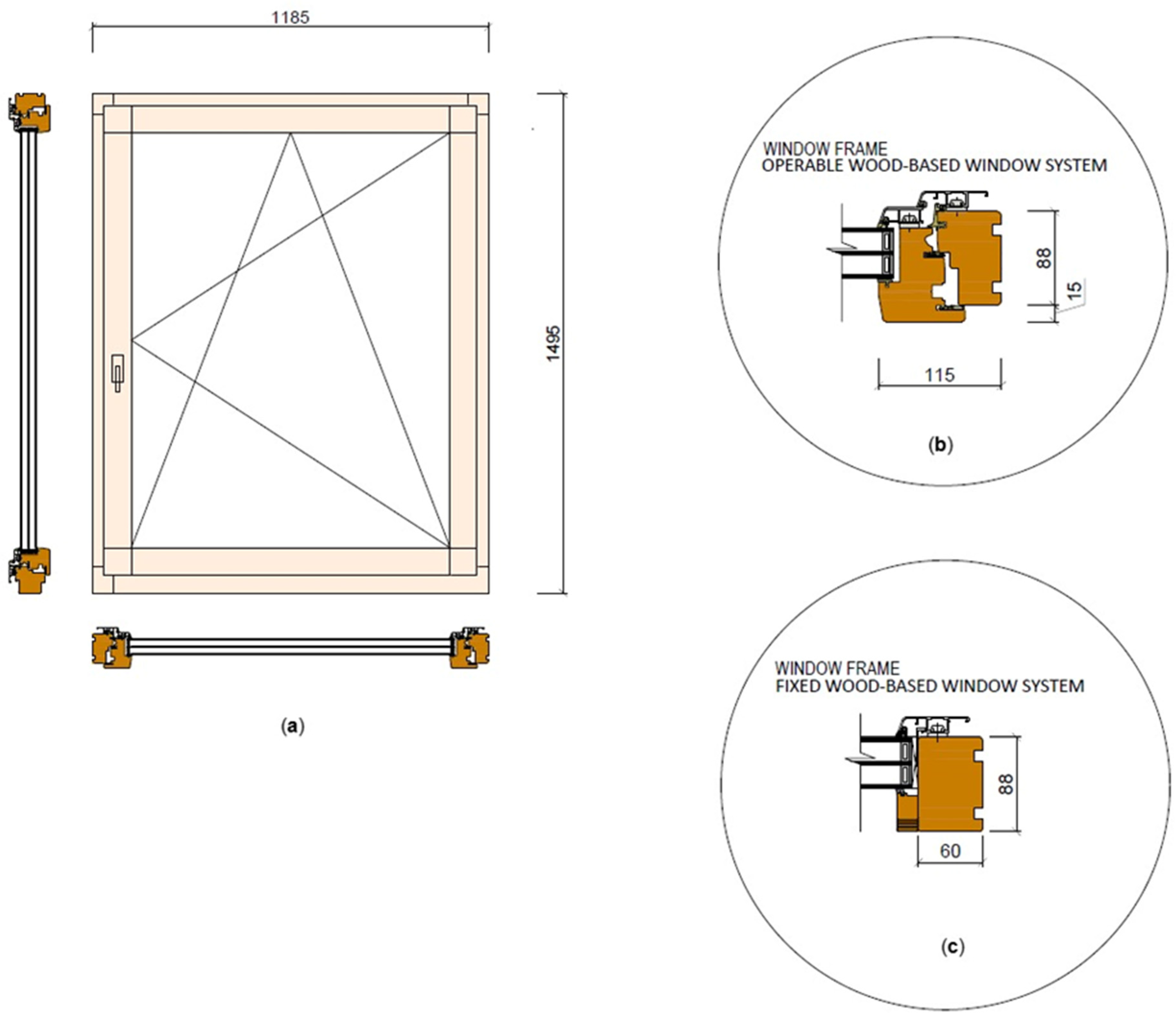
Two types of wood-based windows were analysed—operable and fixed windows. The functional unit was a window with dimensions of 1185 × 1495 mm, representing the typical window size used in wood-based buildings in Slovakia. The design details of the windows are shown in Figure 1, illustrating the modelled window construction in a direct 2D view (a), indicating the visible timber structure of the frame and glazing. Sections (b) and (c) further show the window frame cross-section of operable and fixed window alternatives, respectively.
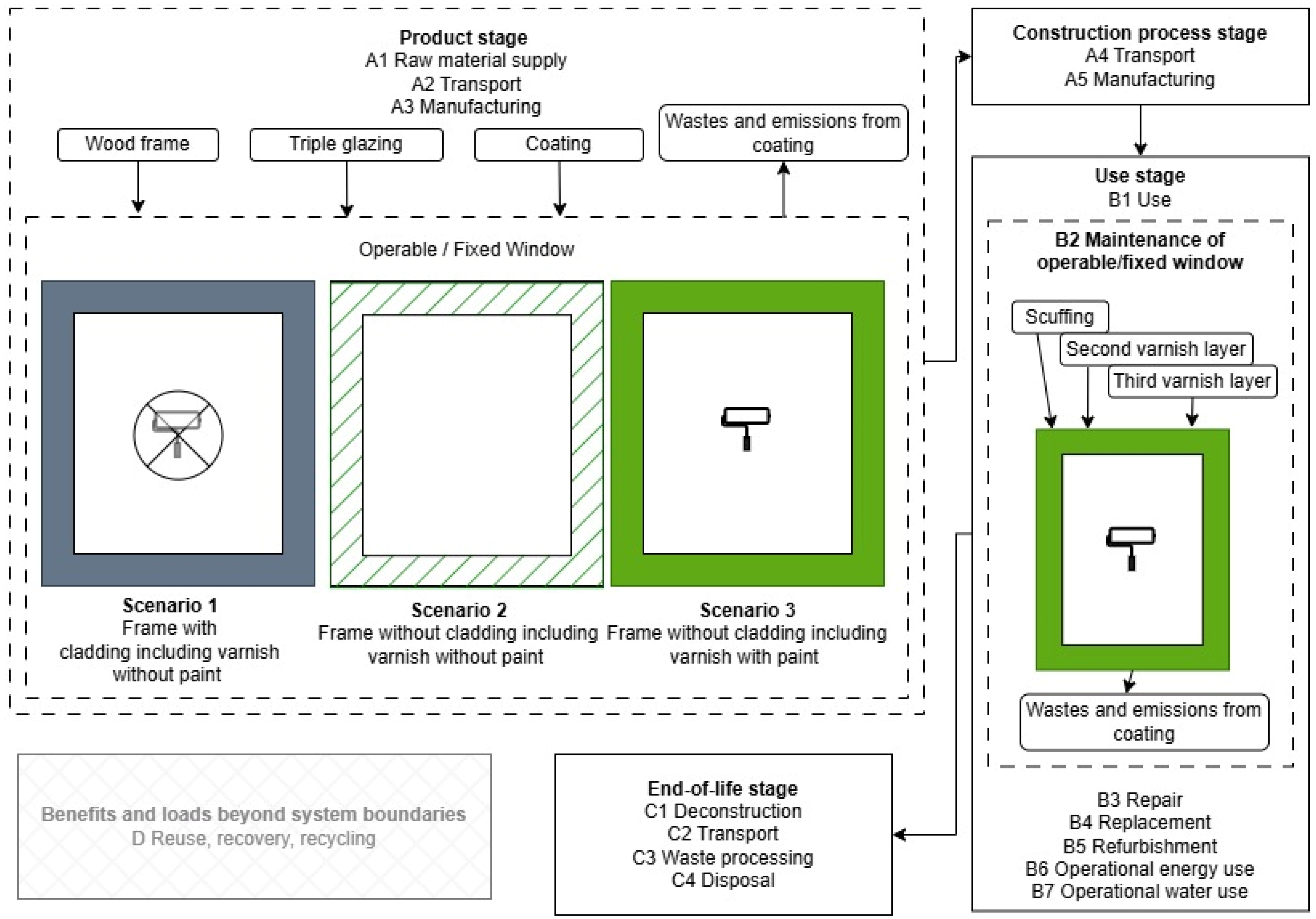
The life cycle is set for 50 years and presents impacts of the product stage A1-A3 and maintenance stage B2 (Figure 2). Primary data are provided by the manufacturer in the Zvolen District in Slovakia. Secondary data on transportation, heat and electricity comes from the Ecoinvent cut-off database [30] using SimaPro Analyst 9.6.0.1 software [31]. The CML-IA baseline v3.10 method [32] is used for the calculation. All input data and calculations are processed following the EN 15804 standard [33]. The results serve as a basis for stakeholders seeking to identify an environmentally friendly window variant.
System boundaries are limited to the manufacturing and maintenance of specific wood-based windows (Figure 2). The product stage covers raw material supply, transport to the manufacturer, and the production of windows out of timber elements, glazing. Surface treatment scenarios are described in the next subsection. Regarding the use stage, maintenance is identified as the crucial life cycle part. It includes acrylic and natural varnish coating variants that are applied to the outer side of the window. Wastes, emissions and auxiliary materials are also covered. Other modules from the use stage, as well as installation (A4–A5) and end-of-life modules (C1–C4), are omitted because these stages involve numerous possible scenarios of how windows can be installed and managed after their service life. Such scenarios depend on many factors such as climatic conditions, installation quality, user behaviour or surface treatment. Addressing this variability lies beyond the scope of the present analysis and will be the subject of a follow-up study. The analysis includes processes from raw material extraction to frame and glass production, including varnishing.

2.2. Product Stage Modelling Assumptions

Spruce from sustainably managed forests in the form of glued solid timber is used as the main building element. The density of 440 kg/m3 is in accordance with the STN EN 338 [34] of structural timber strength classes. This type of construction wood is identified as the most common among Slovak window manufacturers. The transportation distances reflect average European transportation distances for goods, which are 25 km and 187 km travelled by rail and road, respectively. Specific datasets used for the assessment of the product stage can be found in the Appendix A Section (Table A1).
Each frame features a three-layer coating system consisting of water-based acrylic varnish. The first and second layers are the same for all frames. Neither contains ethylene glycol or paint. The third layer is applied in two variants: varnish with and without paint. Both contained ethylene glycol, and only one contained paint. Emissions from coating are calculated in accordance with the WPEM (Wall Paint Exposure Model) methodology [35] developed by the U.S. Environmental Protection Agency, where 25% of the applied weight of each chemical is considered releasable. For the purpose of sensitivity analysis, all three coating layers are modelled at three levels of application: minimum, mean, and maximum, to capture the potential variability in results (Table 1). Additionally, one frame of both operable and fixed windows is sheathed with aluminium cladding.
To sum up the modelled coating systems, for both operable and fixed windows, three types of finishing are modelled. First, the frame with cladding including varnish without paint (Scenario 1); the frame without cladding including varnish without paint (Scenario 2); and the frame without cladding including varnish with paint (Scenario 3).
Scenarios are defined to reflect realistic product alternatives. Their selection is based on local technical practice and guidance from Slovak window manufacturer. A scenario combining aluminium cladding with a third coating layer with paint is intentionally not included in the assessment for both methodological and technical reasons. In wood–aluminium window systems, the exterior side of the frame is protected by aluminium cladding, and manufacturers explicitly state that the timber requires only minimal maintenance. Technical descriptions of these systems emphasise that the primary protection of the wood in exterior conditions is the aluminium layer, hence no exterior paint layer is necessary [36].

2.3. Characteristics of the Maintenance Modelling

Two types of varnish are considered in the maintenance stage: the acrylic and the natural-based one, each given in two variants with or without paint. Each window frame is coated with two layers, referred to as the second and third layers. Acrylic varnish is modelled to be coated every 5 years and natural varnish every 3 years. The composition of natural varnish is shown in Table 2.
The glazing is modelled as a standard triple-glazed unit with the configuration of 4-18-4-18-4. It consists of three 4 mm glass panes separated by two 18 mm cavities. These cavities are filled with argon, an inert gas with low thermal conductivity that improves the thermal insulation of the unit. A low-emissivity coating, made of thin metal-oxide layers, is applied to the outer glass surface. This coating reduces long-wave radiative heat transfer across the gaps, helping to minimise heat loss, providing high thermal performance and achieving the low target U-value of the window system.

2.4. Study Assumptions

Several hypotheses are formulated related to the material and design parameters of the product. The aim is to analyse how individual aspects of production and surface treatment affect the environmental footprint of the product. The assumptions are summarised below:
  • Influence of paint quantity
The total environmental impact of the window system is expected to increase proportionally with the amount of paint applied, due to higher material use and related production emissions.
2.
Influence of paint type
The type and chemical composition of the paint are considered key factors influencing the environmental performance, mainly due to variations in solvent content, production energy demand, and end-of-life processing.
3.
Addition of aluminium cladding
It is assumed that the addition of aluminium cladding to the window frame can be environmentally beneficial if it extends the product’s lifespan or reduces maintenance requirements. The effect is expected to be most significant during the maintenance stage of the life cycle.
4.
Comparison of operable and fixed windows
Opening windows are expected to show a higher environmental impact compared to fixed ones of the same size, primarily because of additional hardware components and a more complex frame design.

3. Results

3.1. Impact Comparison of the Production and Maintenance Stages

Initially, a life cycle comparison is presented for the production stage (A1–A3) and maintenance (B2). Scenario 1 (S1) and Scenario 2 (S2) are chosen to assess the impacts of maintenance using acrylic varnish and natural oil-based varnish on the outer side of the window. For each stage maximum level of varnish is applied.
Common features of the compared window types include the highest environmental impact in the production stage for Scenario 1 (S1), i.e., the window with cladding in all categories except for TE and POC categories, led by the maintenance using natural varnish (Table 3).
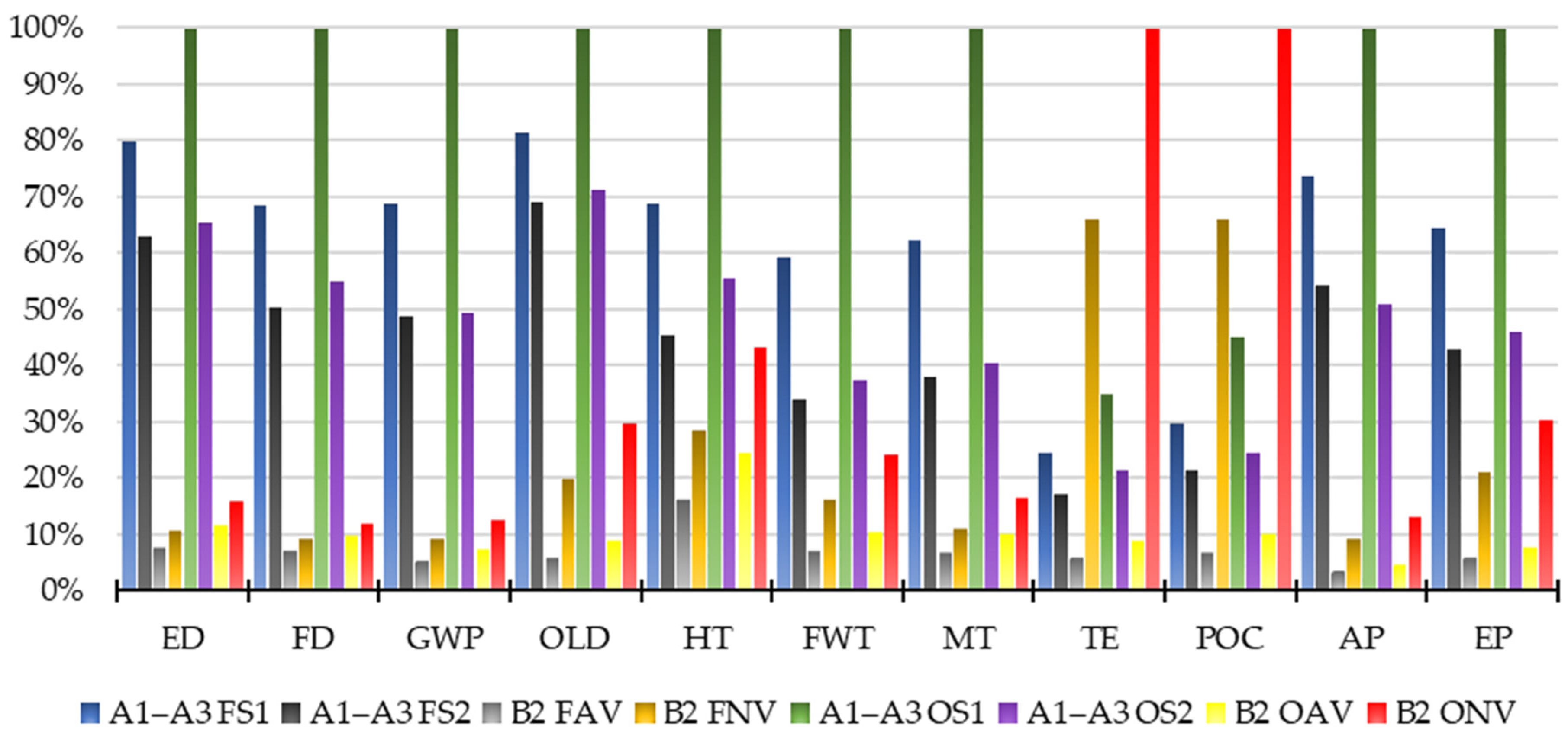
Figure 3 illustrates the differences between window types across the A1–A3 and B2 stage according to the highest impact throughout selected categories. Operable S1 window prevails impacts of the fixed S1 window, bearing the second highest impact. Differences in impact between those windows range from 18% (OLD) to 37% (MT). For both operable and fixed windows, Scenario 2 results in a lower impact than Scenario 1, particularly in the case of the operable window. The highest difference is observed in FWT, MT, EP, GWP and AP, scoring 62%, 59%, 54%, 50% and 49% impact decrease, respectively. The least sensitive category is OLD, reaching only 29% improvement.
While Scenario 1 shows a clear gap between operable and fixed windows, Scenario 2 indicates only minor variations. The operable window demonstrates a slightly higher environmental impact, with an exception occurring in the AP category.
Surprisingly, the maintenance stage has a substantially lower impact on the environment than the production stage. In the case of acrylic varnish, this is proven for each impact category and window type. Natural oil-based varnish reflects worse impacts than the water-based acrylic varnish. Particularly, the impacts of natural varnish application on TE and POC far exceed the impacts of the windows production stage.

3.2. Influence of Coating System on Window Environmental Performance

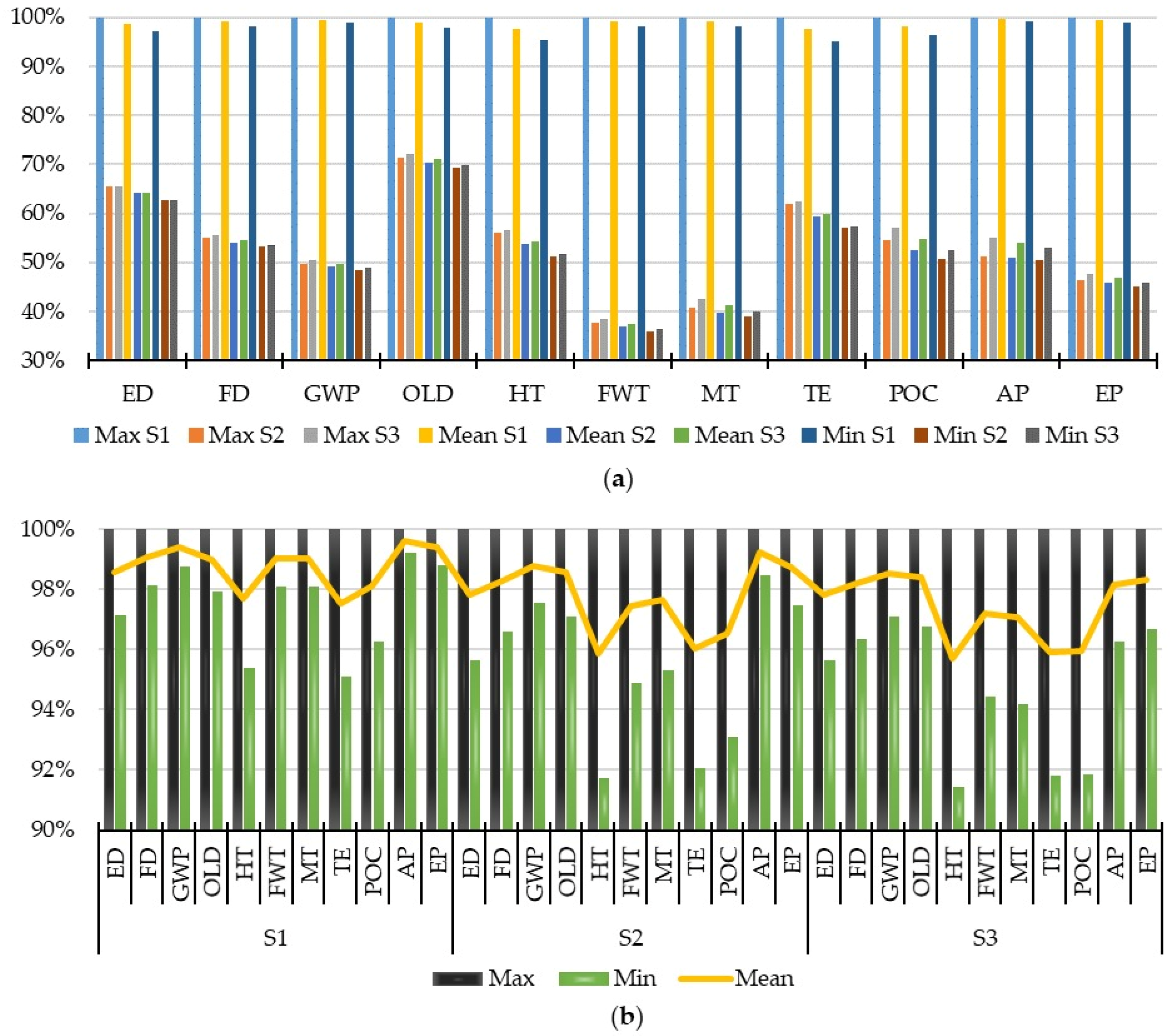
This section investigates how the surface treatment affects the environmental impact of the production stage, assuming three layers of acrylic varnish applied in varying volumes given in Table 1. As shown in Figure 4, the cladding in the S1 considerably influences the window’s environmental performance, while reducing the paint layer results in only a modest decrease in overall production impact.
The environmental burden of scenarios S2 and S3 differs only by a few percent, with Scenario S3 performing slightly worse. The largest discrepancies are observed in the AP and POC categories, whereas the ED category remains nearly identical for both scenarios.
Regarding Figure 4b, the largest differences between the minimum and maximum coating layer scenarios are observed across the specific window configurations. In scenario S1, the change in coating thickness is less pronounced, resulting in a reduction of up to approximately 5% compared to the maximum coating layer within the HT and TE impact categories.
In contrast, the variations in coating quantity are more apparent in scenarios S2 and S3. For S2, the reduction in impact reaches around 8% for the aforementioned categories, approximately 7% for POC, and about 5% for FWT and MT.
The most noticeable decrease associated with the change in coating quantity occurs in S3, particularly in the HT category (nearly 9%), followed by TE and POC (around 8% each), and FWT and MT (approximately 6% each).

3.3. Effect of Frame, Glazing and Varnish Components on Environmental Performance

This section analyses how different components of a window affect its environmental performance across impact categories. Comparing the distribution of impacts across elements allows for better identification of differences between the scenarios and window types studied.
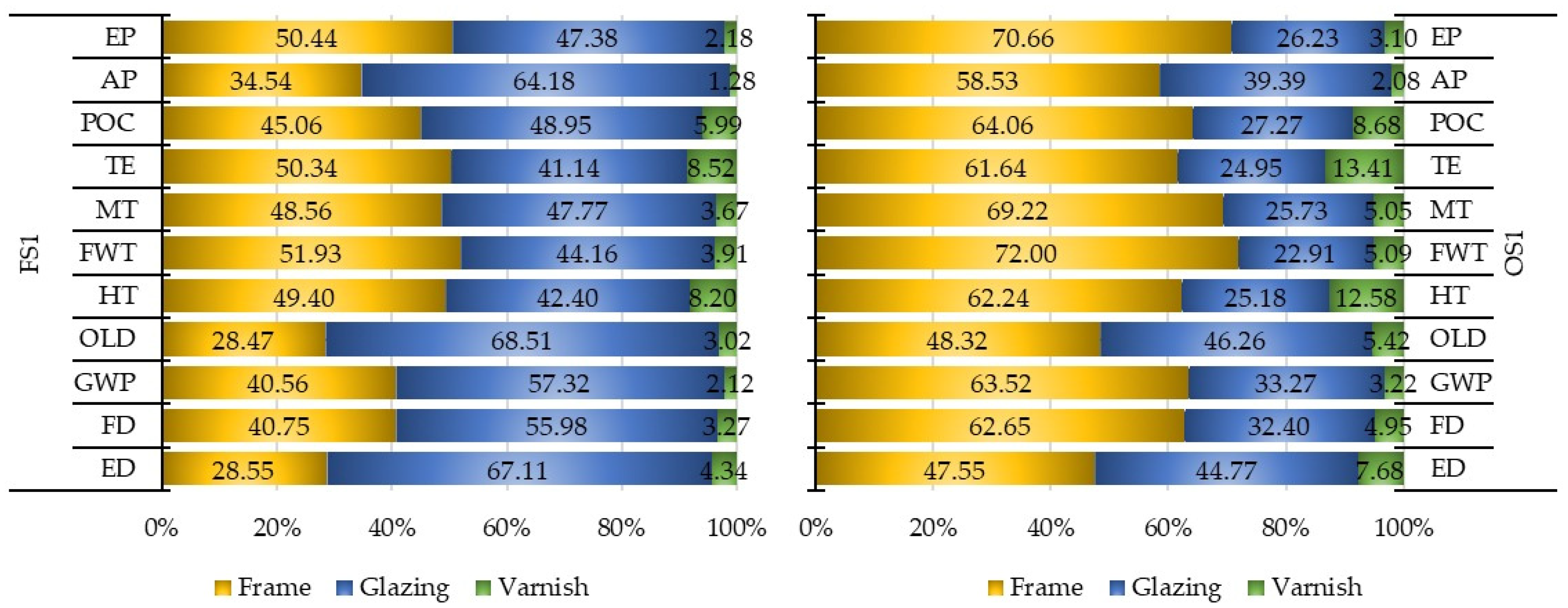
In scenario S1, the frame represents the largest contributor to the overall environmental impact of the operable window, prevailing across all assessed categories (Figure 5). The highest share of the frame is seen in the FWT, EP and MT categories, where it reaches 72%, 70.66% and almost 70%, respectively. In the OLD and ED categories, the difference between the frame and the glazing contributions is marginal. The coating shows the greatest influence in the TE and HT categories, reaching 13.41% and 12.58%, respectively.
For the fixed window in the same scenario (S1), the distribution of environmental impacts shows a slightly different pattern. The frame remains dominant in five categories—FWT, EP, TE, HT, and MT. In contrast, the glazing contributes most significantly in the remaining categories, particularly OLD, ED, and AP, where its share ranges from 68.51% to 64.18%, respectively.
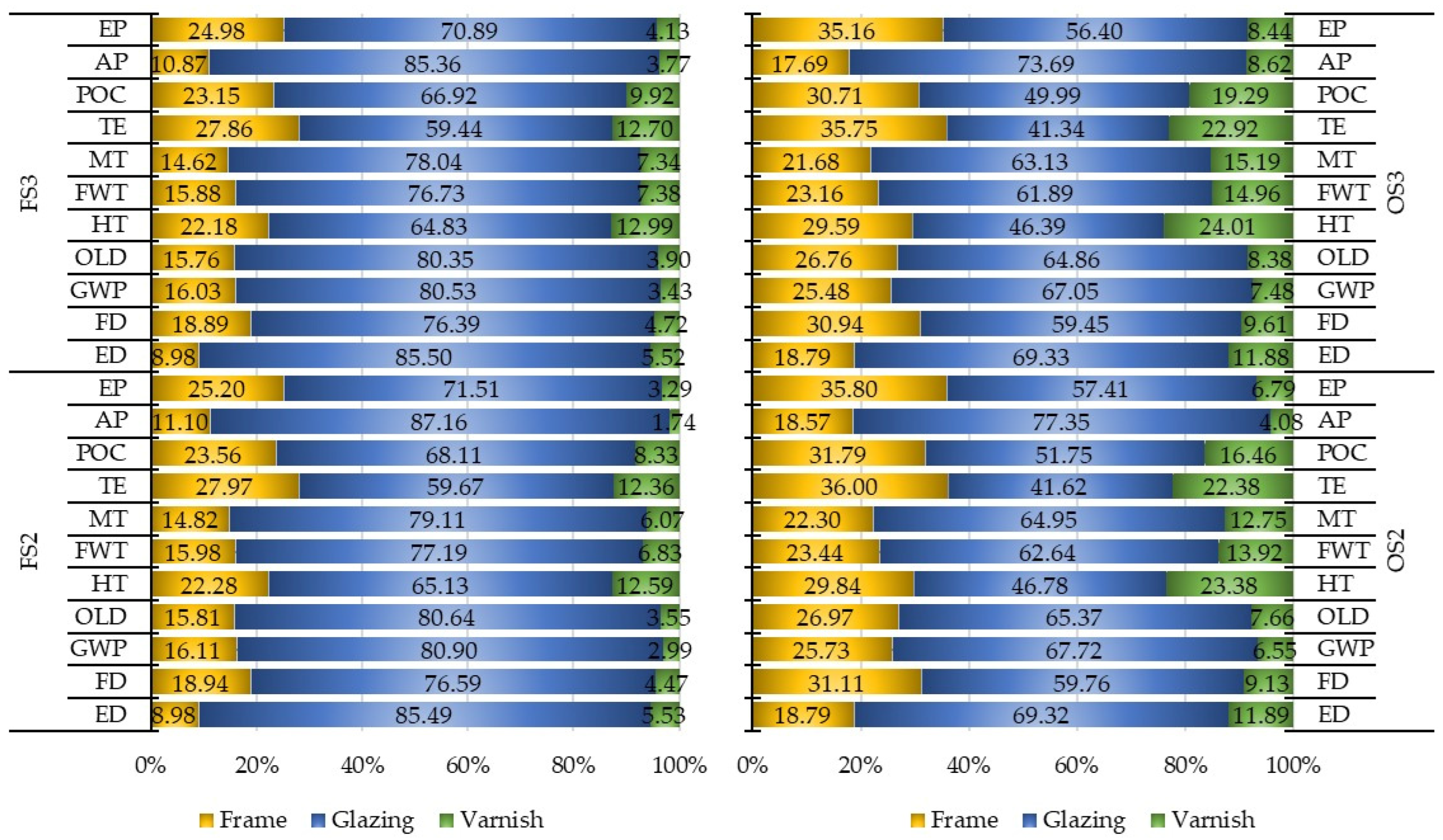
Re-examining the fixed window (Figure 6), the environmental impact in scenarios S2 and S3 is largely driven by the glazing, whose contribution remains significant across all categories. Its minimum share reaches nearly 60% in the TE category for both scenarios. The most pronounced influence occurs in AP and ED, where glazing exceeds 85%, with a maximum of 87.16% recorded for AP in S2. A similar pattern can be observed for the operable window, where the glazing remains the main contributor in both scenarios. However, the proportions differ, as its contribution in the most sensitive TE category drops to less than 42%. The glazing’s impact reaches its highest values in AP, accounting for approximately 77% and 74% in S2 and S3, respectively.
The frame consistently represents the second-highest contributor to the total environmental impact across all scenarios. Its share generally ranges between 9–28% and 19–36% for fixed and operable windows, respectively. The frame’s influence on operable windows is most pronounced in the categories EP, POC, TE, and FD, each exceeding 30% impact contribution.
The varnish remains the least influential element in terms of the environmental impact of a window. Regarding the fixed window, the varnish shows its strongest influence in the TE and HT categories, exceeding 12% in both S2 and S3. In the case of the operable window, its contribution in these categories is even higher, surpassing 22%.

4. Discussion

The production and maintenance of wood-based windows covers frequently discussed topics regarding aesthetics, durability, building energy efficiency and environmental suitability. The Ecoinvent database, commonly used by LCA practitioners, uses average production data and does not differentiate windows by operability. To address the gap, the study examines the differences between operable and fixed frames and their effect on the window’s environmental impact. It also considers whether wooden windows are preferable, despite the relatively higher requirements of maintenance, compared to windows with aluminium cladding.
The glazing refers to the most dominant wood-based window component, shaping the environmental profile, particularly for fixed windows. As expected, larger glazing areas increase the glass’s relative contribution to the total environmental impact. This highlights the strong dependence of window environmental performance on glazing properties and design across scenarios. Similar conclusions regarding the dominant role of glazing are also proven by Marinello Jorba et al. [2] and Agliata et al. [18]. For further comparison, the results reported by Rabbani et al. [6] indicate that electrochromic windows production emits 49.6 kg CO2 eq/m2 of which 9.79 kg CO2 eq comes from the glass production. In our study, the highest impact scenario (S1, operable wooden window with aluminium cladding) shows a considerably higher GWP of 120.55 kg CO2 eq/m2, including 40.10 kg CO2 eq for the triple glazing alone. Considering the S2 operable variant (frame without cladding and without paint), the GWP drops to 59.97 kg CO2 eq/m2, with 40.6 kg CO2 eq attributed to the glazing. Although electrochromic windows have lower impacts related to the glass production, wood-based windows, particularly without aluminium cladding, can achieve comparable impacts per square metre in terms of GWP.
Impact distribution changes in window components on overall environmental performance are particularly evident when external cladding is used (scenario S1). This increases the frame’s impact, especially for operable windows, due to higher material use and structural complexity. Consequently, the operable window exhibits a higher embodied burden than the fixed variant. Comparison of the exterior window designs confirms that the presence of a cladding significantly increases the production stage environmental impact beyond that of maintaining a window without cladding for 50 years.
Similar patterns are reported by Saadatian et al. [16], who observed that in wood-frame windows, the framing contributes less than 30% across all impact categories, while aluminium-frame systems reach 60–80% of total embodied impacts. Triple glazing is found to contribute 22–40% of overall impacts, with glass representing more than 62% of the glazing unit’s embodied burden. Our results closely align with these findings. For the operable wooden window, glazing accounts for approximately 30–75% of the total impacts within the glazing assembly, confirming its dominant role. Within the frame, aluminium cladding contributes 55–83% of environmental impacts, while the wooden frame itself contributes only 3–10%, even when the maximum quantity of varnish is applied. These values demonstrate that both glazing and aluminium components dominate the environmental profile, whereas the influence of the wood-based element remains relatively minor.
The influence of protecting the window frame with acrylic varnish in the production stage consistently shows the smallest share of the total impact of a window. Varnish impacts can vary widely depending on their formulation. The slightly higher environmental impact of S3 surface treatment compared to the S2 scenario is linked to the limited environmental benefit of applying a coloured coating, causing a negligible environmental performance improvement. This agrees with Marinello Jorba et al. [2], suggesting transparent varnishes to be environmentally friendlier than the painted ones. They also observe that darker coatings might increase the environmental impact by up to three times compared to lighter ones.
The change in varnish quantity on frame coating across the window types remains stable, indicating its relatively minor role in the overall environmental performance. However, VOC emissions can disproportionately affect categories of the ozone formation, toxicity on humans and terrestrial ecotoxicity [37,38].
Maintenance requirements follow the coating manufacturer’s recommendations. Weather conditions influence the degradation of the wooden surface and the required maintenance frequency [39]. In this study, maintenance intervals are intentionally set shorter to ensure the windows remain in optimal condition throughout their service life, even though longer intervals may be sufficient [39,40]. The B2 stage contributes far less to the overall environmental impact than the production stage, particularly for water-based acrylic varnishes, which show relatively low burdens across all impact categories and window types. Natural oil-based varnishes show the highest impacts in TE and POC, mainly due to upstream environmental burden in the supply chain. The reliance on agricultural inputs and land use changes in the production of bio-based ingredients contributes significantly to their environmental impact [41], indicating that bio-based materials may not always offer improved sustainability [28]. This illustrates impact shifting, where gains in one category can lead to higher impacts in others, as highlighted by Khadim et al. [42].
The Ecoinvent database does not explicitly specify which type of window is represented in the reference dataset [30]. Based on the analysis of input parameters, it can be assumed that the dataset primarily reflects operable windows. Furthermore, the database provides average values that partially account for the production ratio of operable and fixed windows on the market. The results show that the environmental impact of windows is strongly dependent on the type of window and the material used. Glazing dominates both operable and fixed windows, though in different proportions, while painting accounts for a relatively low but still relevant share in certain categories. The optimisation of materials and construction should therefore be targeted to the type of window and the key environmental categories.

Limitations and Future Perspectives

Although this study provides insights into the environmental performance of different window configurations, several limitations should be acknowledged. Modelled windows use generic databases with average data, adjusted with manufacturer-specific information. The energy performance regarding heat losses and gains of windows during use is not reflected in the assessment. However, the modelled windows meet the design conditions for the highest thermal capacity.
The differences between the database model and the analysed product need to be taken into account. In the Ecoinvent database, the records include the fixing of the window into the building structure, whereas this aspect is not considered in our model. Consequently, the obtained results are expected to show a lower overall environmental impact due to the omission of these additional material inputs. Thus, comparison of the results given by Ecoinvent datasets and the dataset of operable and fixed windows given in this study should not be made.
Some data have been estimated and simplified due to a lack of available data. Due to these assumptions in modelling, certain parameters, such as energy mix and transportation distances, may introduce higher uncertainty than the original background datasets. Regional sourcing of materials, manufacturing technologies, and maintenance practices may vary under some specific production conditions. For example, different regions use various electricity grids that influence the whole life cycle. The datasets used in the study are modelled to reflect average European conditions.
The study focuses primarily on the structural material composition, namely the frame and glazing. Thus, part of the hardware elements are not considered. Together with anchoring systems, polyurethane foam, and sealing materials can be added to the A4 and A5 life cycle stages, which are out of the scope. Window installation is highly dependent on the type of exterior wall, local construction practices, and conditions at the installation site. To avoid unnecessary theoretical assumptions resulting from the large number of possible variations within this stage, the installation is omitted in order to preserve the focus of the study.
According to Carlisle and Friedlander [43], the end-of-life scenarios cannot be considered universal, but rather as indicators of the range of possible outcomes. Their exclusion may misrepresent long-term environmental performance. For example, the dataset of aluminium cladding used in the assessment reflects the average conditions provided in the Ecoinvent dataset, which already assumes approximately 30% recycled aluminium content in the market mix. This partly addresses the potential benefits of recycled aluminium. A report by European Aluminium [10] states that recycled aluminium substantially reduces energy demand and lowers the environmental impacts of aluminium products, suggesting that higher recycled content could further decrease the impacts of the cladded window variant. The studied window models do not explicitly assess scenarios with higher recycled content or fully recycled aluminium solutions. This aspect represents an additional limitation and an opportunity for more detailed sensitivity analysis in future research. The authors intend to conduct a follow-up study including end-of-life scenarios. The environmental dimension analysed in this study should not be considered a definitive measure of sustainability. A comprehensive assessment would require the inclusion of social and economic factors as well.

5. Conclusions

This study evaluates the environmental performance of operable and fixed wood-based windows with dimensions of 1185 × 1495 mm, focusing on the product stage and the maintenance stage over a 50-year life cycle. Three frame finishing scenarios are evaluated, including different varnish and aluminium cladding options. In the maintenance stage, two types of varnish are considered, the acrylic water-based and natural oil-based varnish, each in two variants with or without paint, while production only accounts for the acrylic one.
The results vary depending on the type of window. Generally, operable windows bear a higher environmental burden due to the increased amount of materials for their production. Glazing dominates the overall impact for both operable and fixed windows. However, the contribution of the frame component remains non-negligible, especially when covered with a cladding, which is found to be the most burdensome variant even when maintenance demands are considered.
Regarding the window’s surface treatment, the highest impact is reported for the cladding. The presence of paint in varnish does not play a crucial role in defining the window’s impact. In terms of environmental impact, water-based acrylic varnish appears to be a more sustainable choice, as its production and maintenance have lower impacts in all assessed categories. Contrary, applied natural oil-based varnish excessively affects toxicity to humans, terrestrial ecotoxicity and potential ozone formation.
Optimising materials and construction according to window type and selected environmental indicators can significantly reduce the overall impact. Specifically, prioritising fixed windows, use of water-based acrylic varnish and avoidance of aluminium cladding where possible are recommended to lower the total environmental impacts associated with the wood-based windows production with regard to the maintenance stage. In addition, integrating economic and social dimensions can enhance practical decision making. For example, maintenance schedules, costs and energy efficiency should be considered alongside environmental impacts to reduce both production and operational burdens. These combined considerations provide more actionable guidance for architects, building owners, and facility managers in selecting window systems that balance environmental performance, cost-effectiveness, and user comfort.

Author Contributions

Conceptualization, D.B. and R.V.; methodology, D.B. and R.V.; software, R.V.; validation, D.B. and R.V.; formal analysis, D.B. and R.V.; investigation, R.V.; resources, D.B. and R.V.; data curation, M.G., R.U. and P.S.; writing—original draft preparation, D.B. and R.V.; writing—review and editing, M.G., R.U. and P.S.; visualisation, D.B. and R.V.; supervision, D.B.; project administration, D.B.; funding acquisition, D.B. All authors have read and agreed to the published version of the manuscript.

Funding

The article is supported by the Slovak Research and Development Agency within the project no. APVV-23-0369 “Transparent External Envelopes of Wood-Based Green Buildings Meeting High Standards in Physical and Utility Properties”.

Data Availability Statement

The data presented in this study are available on request from the corresponding author due to confidentiality agreements with the manufacturer who supplied part of the input data.

Conflicts of Interest

The authors declare no conflicts of interest. The funders had no role in the design of the study; in the collection, analyses, or interpretation of data; in the writing of the manuscript; or in the decision to publish the results.

Abbreviations

The following abbreviations are used in this manuscript:
RERRest of Europe dataset geographical coverage
GLOGlobal dataset geographical coverage
Cut-OffSystem model using allocation with a cut-off by classification
UUnit dataset model applied

Appendix A

Table A1. Input parameters of operable and fixed window frames and glazing.
PartParameterDatasetType of Data
Wood FrameWoodGlued solid timber {RER}|market for glued solid timber|Cut-off, UPrimary
SealingSynthetic rubber {GLO}|market for synthetic rubber|Cut-off, UPrimary
CladdingAluminium, wrought alloy {GLO}|market for aluminium, wrought alloy|Cut-off, UPrimary
FixingSteel, chromium steel 18/8, hot rolled {GLO}|market for steel, chromium steel 18/8, hot rolled|Cut-off, UPrimary
Electricity and heatElectricity, medium voltage {RER}|market group for electricity, medium voltage|Cut-off, USecondary
Heat, central or small-scale, other than natural gas {RER}|market group for heat, central or small-scale, other than natural gas|Cut-off, USecondary
OtherMelamine formaldehyde resin {RER}|market for melamine formaldehyde resin|Cut-off, USecondary
Packaging film, low density polyethylene {GLO}|market for packaging film, low density polyethylene|Cut-off, USecondary
Carbon dioxide, non-fossil, resource correctionSecondary
Triple GlazingGlassFlat glass, coated {RER}|market for flat glass, coated|Cut-off, UPrimary
Flat glass, uncoated {RER}|market for flat glass, uncoated|Cut-off, UPrimary
SealingPolysulfide, sealing compound {GLO}|market for polysulfide, sealing compound|Cut-off, UPrimary
Spacer barAluminium, wrought alloy {GLO}|market for aluminium, wrought alloy|Cut-off, UPrimary
DesiccantZeolite, powder {GLO}|market for zeolite, powder|Cut-off, UPrimary
ArgonArgon, liquid {RER}|market for argon, liquid|Cut-off, UPrimary
Electricity and heatElectricity, low voltage {RER}|market group for electricity, low voltage|Cut-off, USecondary
WastesWaste glass {RER}|market group for waste glass|Cut-off, USecondary
Wastewater, unpolluted {CH}|market for wastewater, unpolluted|Cut-off, USecondary
VarnishFirst-layerAcrylic varnish, with water, in 53% solution state {RER}|acrylic varnish production, with water, in 53% solution state|Cut-off, U—adjusted to be ethylene glycol and titanium dioxide freeSecondary
Second-layerAcrylic varnish, with water, in 53% solution state {RER}|acrylic varnish production, with water, in 53% solution state|Cut-off, U—adjusted to be ethylene glycol and titanium dioxide freeSecondary
Third-layerAcrylic varnish, with water, in 53% solution state {RER}|acrylic varnish production, with water, in 53% solution state|Cut-off, USecondary
EmissionsEthylene glycolSecondary
AmmoniaSecondary
Butyl acrylateSecondary
VOC, volatile organic compounds, unspecified originSecondary
Vinyl acetateSecondary

References

  1. Yang, F.; Yang, B.; Guo, X.Z.; Yang, T.G. Energy-saving doors and windows and current technology research status. New Build. Mater. 2012, 1056, 84–89. [Google Scholar]
  2. Marinello Jorba, V.; Palumbo, E.; del Rosario, P.; Traverso, M. Interpreting environmental impacts of wooden windows based on existing EPDs: An application in Italy. Energy Build. 2025, 326, 114987. [Google Scholar] [CrossRef]
  3. Arici, M.; Kan, M. An investigation of flow and conjugate heat transfer in multiple pane windows with respect to gap width, emissivity and gas filling. Renew. Energy 2015, 75, 249–256. [Google Scholar] [CrossRef]
  4. Grynning, S.; Gustavsen, A.; Time, B.; Jelle, B.P. Windows in the buildings of tomorrow: Energy losers or energy gainers? Energy Build. 2013, 61, 185–192. [Google Scholar] [CrossRef]
  5. Monteiro, H.; Freire, F.; Soares, N. Life cycle assessment of a south European house addressing building design options for orientation, window sizing and building shape. J. Build. Eng. 2021, 39, 102276. [Google Scholar] [CrossRef]
  6. Rabbani, M.; Tahti, O.; Essel Arthur, S.; Hopping, M.A.; Barile, C.J.; Hassan Karim, M.; Fahimi, A.; Vahidi, E. Assessing the environmental footprint of electrochromic windows: A comparative LCA with AI-based forecasting. RSC Sustain. 2025, 3, 5653–5664. [Google Scholar] [CrossRef]
  7. Kowalczyk, Z.; Twardowski, S.; Malinowski, M.; Kuboń, M. Life cycle assessment (LCA) and energy assessment of the production and use of windows in residential buildings. Sci. Rep. 2023, 13, 19752. [Google Scholar] [CrossRef]
  8. Sällström Eriksson, L.; Lidelöw, S. Maintaining or replacing a building’s windows: A comparative life cycle study. Int. J. Build. Pathol. 2024, 43, 766–786. [Google Scholar] [CrossRef]
  9. Pushkar, S. Life-cycle assessment of windows in Israel. Proc. Inst. Civ. Eng. Eng. Sustain. 2016, 171, 296–303. [Google Scholar] [CrossRef]
  10. European Aluminium. Environmental Profile Report 2024 v.2.0 Executive Summary. 2025. Available online: https://european-aluminium.eu/wp-content/uploads/2025/07/Environmental-Profile-Report_2024-V20.pdf (accessed on 26 November 2025).
  11. Nasiri, B.; Roy, S.; Hughes, M. Determining the quantity and quality of wood recovered from building demolitions to enable effective allocation. Eur. J. Wood Prod. 2025, 83, 33. [Google Scholar] [CrossRef]
  12. Geboes, E.; Galle, W.; De Temmerman, N. Make or break the loop: A cross-practitioners review of glass circularity. Glass Struct. Eng. 2023, 8, 193–210. [Google Scholar] [CrossRef]
  13. ISO 14040:2006; Environmental Management—Life Cycle Assessment—Principles and Framework. International Organization for Standardization: Geneva, Switzerland, 2006.
  14. Souviron, J.; van Moeseke, G.; Khan, A.Z. Analysing the environmental impact of windows: A review. Build. Environ. 2019, 161, 106268. [Google Scholar] [CrossRef]
  15. Salazar, J.; Sowlati, T. A review of life-cycle assessment of windows. For. Prod. J. 2008, 58, 91–96. [Google Scholar]
  16. Saadatian, S.; Freire, F.; Simões, N. Embodied impacts of window systems: A comparative assessment of framing and glazing alternatives. J. Build. Eng. 2021, 35, 102042. [Google Scholar] [CrossRef]
  17. Asif, M. An empirical study on life cycle assessment of double-glazed aluminium-clad timber windows. Int. J. Build. Pathol. 2019, 37, 547–564. [Google Scholar] [CrossRef]
  18. Agliata, R.; Di Giuseppe, E.; Favi, C.; Munafò, P. Technical and environmental analysis of an innovative window concept based on a hidden frame: Insights from a life cycle perspective. J. Clean. Prod. 2024, 485, 144424. [Google Scholar] [CrossRef]
  19. Feist, W.C.; Hon, D. The chemistry of solid wood. In Chemistry of Weathering and Protection; Rowel, R., Ed.; American Chemical Society: Washington, DC, USA, 1984; pp. 401–450. [Google Scholar]
  20. Yildiz, S.; Tomak, E.D.; Yildiz, U.C.; Ustaomer, D. Effect of artificial weathering on the properties of heat treated wood. Polym. Degrad. Stab. 2013, 98, 1419–1427. [Google Scholar] [CrossRef]
  21. Vidmar, G.; Repič, R.; Lesar, B.; Humar, M. Crack size in coating and moisture problems comparing thermally modified and native spruce window frame profiles using hygrothermal simulations. Eur. J. Wood Prod. 2024, 82, 2109–2119. [Google Scholar] [CrossRef]
  22. Wang, Z.; Yao, L.; Shi, Y.; Zhao, D.; Chen, T. Optimizing the Performance of Window Frames: A Comprehensive Review of Materials in China. Appl. Sci. 2024, 14, 6091. [Google Scholar] [CrossRef]
  23. Sandin, G.A.; Peters, G.; Svanström, M.; Pilgård, A.; Ahniyaz, A.; Fornara, A.; Johansson Salazar-Sandoval, E.; Xu, Y. Environmental evaluation of a clear coating for wood: Toxicological testing and life cycle assessment. In Proceedings of the PRA’s 8th International Woodcoatings Congress, Amsterdam, The Netherlands, 30–31 October 2012. [Google Scholar]
  24. Strömberg, L. Integrated life-cycle design of coatings on exterior wood: Part 2: Life-cycle assessment. Surf. Coat. Int. Part B Coat. Trans. 2004, 87, 211–220. [Google Scholar] [CrossRef]
  25. Raoufi, F.; Montazeri, S.; Rastegar, S.; Asadi, S.; Ranjbar, Z. Optimizing thermal insulation of waterborne acrylic coatings through controlled integration of hydrophobic silica aerogel: Experimental insights and advanced modeling. J. Mater. Res. Technol. 2025, 38, 5630–5638. [Google Scholar] [CrossRef]
  26. Karimzadeh, Z.; Shariatinia, Z. Environmental wood protection against fire, swelling, and degradation using acrylic paint coatings containing ZrO2 nanoparticle. Mater. Today Commun. 2025, 47, 112981. [Google Scholar] [CrossRef]
  27. Puyadena, M.; Etxeberria, I.; Martin, L.; Mugica, A.; Agirre, A.; Cobos, M.; Gonzalez, A.; Barrio, A.; Irusta, L. Polyurethane/acrylic hybrid dispersions containing phosphorus reactive flame retardants as transparent coatings for wood. Prog. Org. Coat. 2022, 170, 107005. [Google Scholar] [CrossRef]
  28. Búryová, D.; Sedlák, P. Life Cycle Assessment of Coated and Thermally Modified Wood Façades. Coatings 2021, 11, 1487. [Google Scholar] [CrossRef]
  29. Menzies, G. Life Cycle Assessment of Timber, Modified Timber and Aluminium-Clad Timber Windows; Institute for Building and Urban Design, Heriot Watt University: Edinburgh, UK, 2013; 24p. [Google Scholar]
  30. Wernet, G.; Bauer, C.; Steubing, B.; Reinhard, J.; Moreno-Ruiz, E.; Weidema, B. The ecoinvent database version 3 (part I): Overview and methodology. Int. J. LCA 2016, 21, 1218–1230. Available online: http://link.springer.com/10.1007/s11367-016-1087-8 (accessed on 9 October 2025). [CrossRef]
  31. Goedkoop, M.; Oele, M.; Leijting, J.; Ponsioen, T.; Meijer, E. Introduction to LCA with SimaPro; PRé Consultants: Amersfoort, The Netherlands, 2013; 80p, Available online: https://pre-sustainability.com/files/2014/05/SimaPro8IntroductionToLCA.pdf (accessed on 20 October 2025).
  32. de Bruijn, J.A.; Gorrée, M.; Heijungs, R.; Huppes, G.; Kleijn, E.G.M.; Sleeswijk, A.W.; de Haes, H.U.; van Duin, J.H.R.; Huijbregts, M.A.J. Handbook on Life Cycle Assessment: Operational Guide to the ISO Standards; Kluwer Academic Publishers: Dordrecht, The Netherlands; Boston, MA, USA, 2002; p. 390. [Google Scholar]
  33. EN 15804:2012+A2:2019; Sustainability of Construction Works—Environmental Product Declarations—Core Rules for the Product Category of Construction Products. iTeh Standards: Newark, NJ, USA, 2019.
  34. EN 338:2016; Structural Timber. Strength Classes. iTeh Standards: Newark, NJ, USA, 2016.
  35. GEOMET Technologies, Inc. Wall Paint Exposure Model (WPEM) Version 3.2 User’s Guide; GEOMET Technologies, Inc.: Germantown, MD, USA, 2001. Available online: https://www.epa.gov/sites/default/files/2015-05/documents/wpemman_0.pdf (accessed on 20 October 2025).
  36. Neumann, D.; Wienbrenner, U.; Hestermann, U.; Rongen, L. Frick/Knöll Baukonstructionslehre 1, 34th ed.; Vieweg + Teubner Verlag: Wiesbaden, Germany, 2006. [Google Scholar] [CrossRef]
  37. Dinh, T.V.; Kim, S.Y.; Son, Y.S.; Choi, I.Y.; Park, S.R.; Sunwoo, Y.; Kim, J.C. Emission characteristics of VOCs emitted from consumer and commercial products and their ozone formation potential. Environ. Sci. Pollut. Res. 2015, 22, 9345–9355. [Google Scholar] [CrossRef] [PubMed]
  38. Zhou, X.; Zhou, X.; Wang, C.; Zhou, H. Environmental and human health impacts of volatile organic compounds: A perspective review. Chemosphere 2023, 313, 137489. [Google Scholar] [CrossRef] [PubMed]
  39. Grüll, G.; Truskaller, M.; Podgorski, L.; Bollmus, S.; Tscherne, F. Maintenance procedures and definition of limit states for exterior wood coatings. Eur. J. Wood Prod. 2011, 69, 443–450. [Google Scholar] [CrossRef]
  40. U.S. Department of Housing and Urban Development. Durability by Design: A Guide for Residential Builders and Designers, 1st ed.; U.S. Department of Housing and Urban Development: Washington, DC, USA, 2002. Available online: https://www.huduser.gov/portal/Publications/pdf/durability_by_design.pdf (accessed on 28 November 2025).
  41. Bonales-Revuelta, J.; Musule, R.; Navarro-Pineda, F.S.; García, C.A. Evaluating the environmental performance of orange production in Veracruz, Mexico: A life cycle assessment approach. J. Clean. Prod. 2022, 343, 131002. [Google Scholar] [CrossRef]
  42. Khadim, N.; Agliata, R.; Han, Q.; Mollo, L. From circularity to sustainability: Advancing the whole building circularity indicator with Life Cycle Assessment (WBCI-LCA). Build. Environ. 2025, 269, 112413. [Google Scholar] [CrossRef]
  43. Carlisle, S.; Friedlander, E. The influence of durability and recycling on life cycle impacts of window frame assemblies. Int. J. Life Cycle Assess. 2016, 21, 1645–1657. [Google Scholar] [CrossRef]
Figure 1. Geometrical overview of the assessed window models: (a) overall dimensions of the window, (b) detailed section of the operable wooden frame, and (c) detailed section of a fixed wooden frame.
Buildings 15 04490 g001
Figure 2. Scope of the analysed operable and fixed wood-based window system.
Buildings 15 04490 g002
Figure 3. Relative environmental impacts of fixed (F) and operable (O) windows life cycle stages of manufacturing (A1–A3) windows regarding Scenario 1 (S1) and Scenario (S2) and maintenance (B2) using acrylic varnish (AV) and natural varnish (NV).
Buildings 15 04490 g003
Figure 4. Impact trend of frame coating on operable window production: (a) effect of maximum, mean and minimum coating amount on environmental impact across Scenarios 1 to 3; (b) magnitude of impact change relative to maximum coating layer.
Buildings 15 04490 g004
Figure 5. Contribution of a frame, glazing and varnish to the overall impact of a Scenario 1 window.
Buildings 15 04490 g005
Figure 6. Percentual contribution of a frame, glazing and varnish to the overall impact of a window in the case of S2 and S3 scenarios.
Buildings 15 04490 g006
Table 1. Coating systems.
Coating SystemAmount Applied (g)Operable WindowFixed Window
First-layer varnishMinimum396.1199.5
Mean435.7181.4
Maximum475.3217.6
Second-layer varnishMinimum792.2362.7
Mean891.2408.1
Maximum990.3453.4
Third-layer varnish (option with or without paint)Minimum1584.4725.5
Mean1980.5906.8
Maximum2376.61088.2
Table 2. Parameters of natural oil-based varnish production.
DatasetAmountUnit
Linseed oil0.59kg
Triethyl amine {GLO}|market for triethyl amine|Cut-off, U0.05kg
Chemical factory, organics {RER}|chemical factory construction, organics|Cut-off, U4 × 10−10p
Ethanol, without water, in 95% solution state, from fermentation {RoW}|market for ethanol, without water, in 95% solution state, from fermentation|Cut-off, U0.05kg
Titanium dioxide {RER}|market for titanium dioxide|Cut-off, U0.26kg
Glycerine {RER}|market for glycerine|Cut-off, U0.05kg
Electricity, medium voltage {RER}|market group for electricity, medium voltage|Cut-off, U0.3kWh
Ethanol emissions to the air25% of applied amount
Triethylamine emissions to air
Table 3. Reference values of environmental categories at the 100% impact point.
Impact CategoryUnitImpact ValueStage/Highest Impact
EDElements’ depletion g Sb eq1.08A1–A3 Operable window/Scenario 1
FDFossils’ depletionGJ2.30
GWPGlobal warming potentialkg CO2 eq213.56
OLDOzone layer depletionmg CFC-11 eq2.11
HTHuman toxicitykg 1,4-DB eq600.09
FWTFreshwater toxicitykg 1,4-DB eq238.80
MTMarine toxicityt 1,4-DB eq623.88
TETerrestrial ecotoxicitykg 1,4-DB eq10.56B2 Operable window/Natural varnish
POCPhotochemical ozone creationg C2H4 eq178.89
APAcidification potentialkg SO2 eq1.25A1–A3 Operable window/Scenario 1
EPEutrophication potentialkg PO43− eq0.39
Disclaimer/Publisher’s Note: The statements, opinions and data contained in all publications are solely those of the individual author(s) and contributor(s) and not of MDPI and/or the editor(s). MDPI and/or the editor(s) disclaim responsibility for any injury to people or property resulting from any ideas, methods, instructions or products referred to in the content.