Improvement of Vernacular Building Spaces for Human Thermal Comfort in Hot Arid Climate of Egypt
 , and
, and 
Abstract
1. Introduction
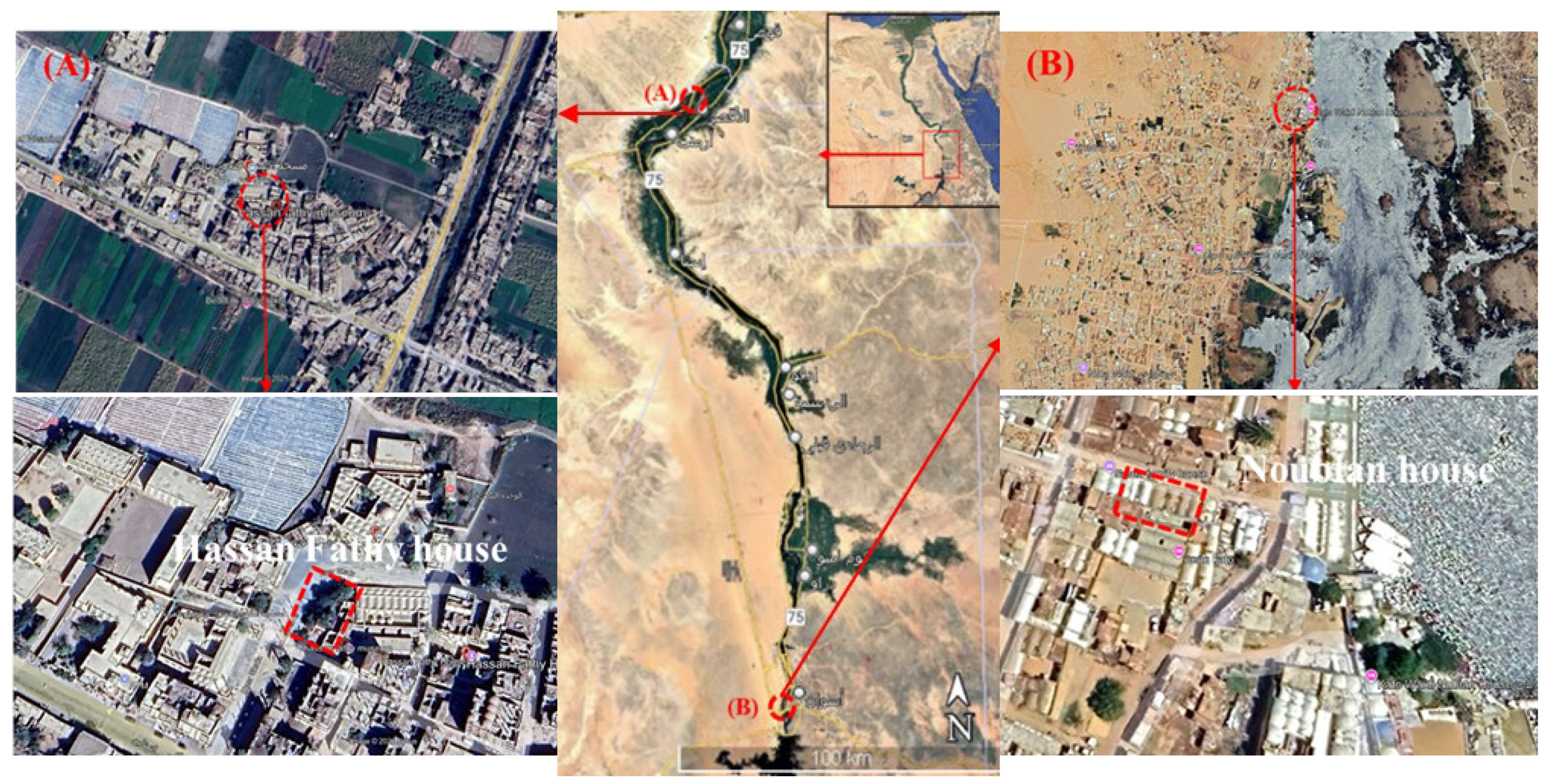
2. Case Study Location and Description
2.1. Hassan Fathy House, New Gourna, Luxor
- a.
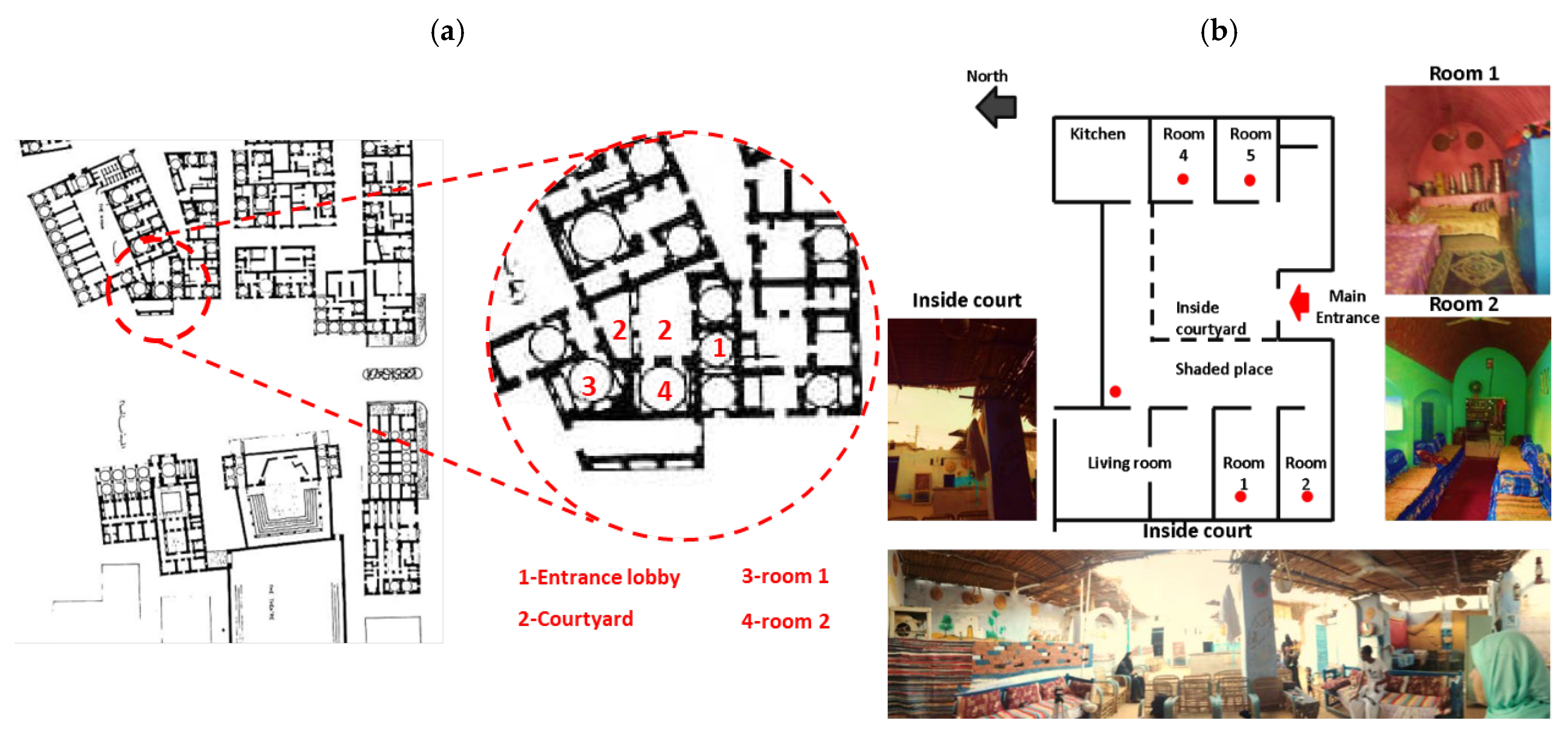
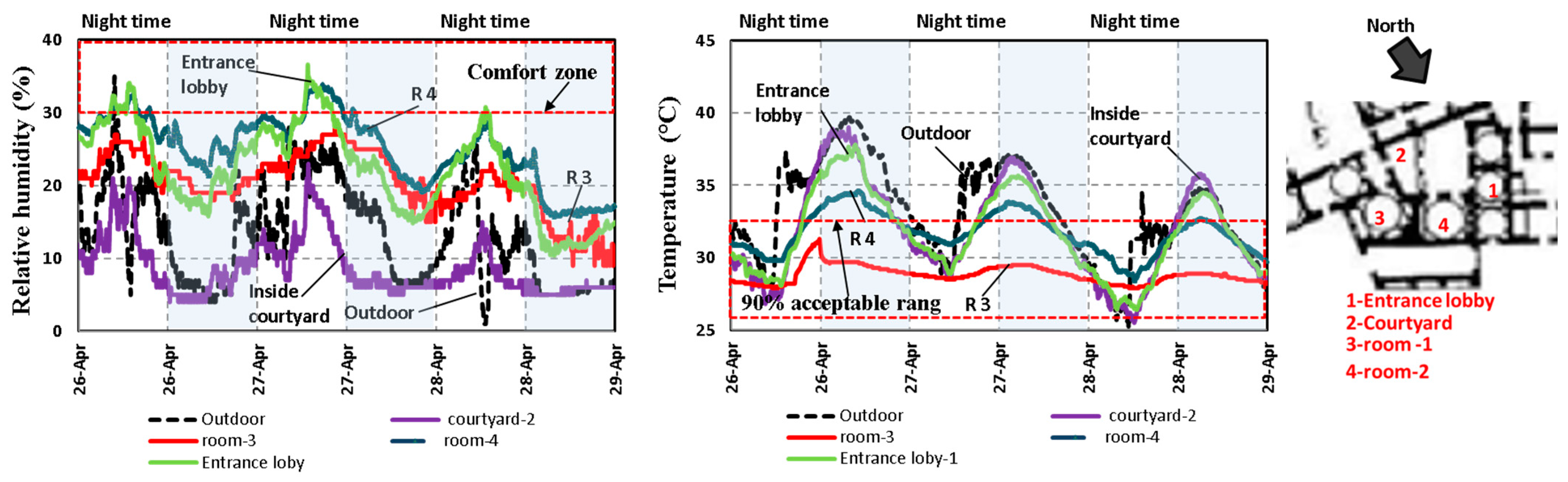
- The Entrance Lobby: Positioned at the center of the main facade, leading directly to the courtyard.
- b.
- The courtyard: The central space where most family activities occur, connecting the various rooms of the house. It features a large, open, unroofed area.
- c.
- Bedrooms: Two rooms.
- d.
- The Kitchen: A small, often overlooked area.
- e.
- The Toilets: Located inside the house.
2.2. The Nubian House, West Sohail, Aswan
- (a)
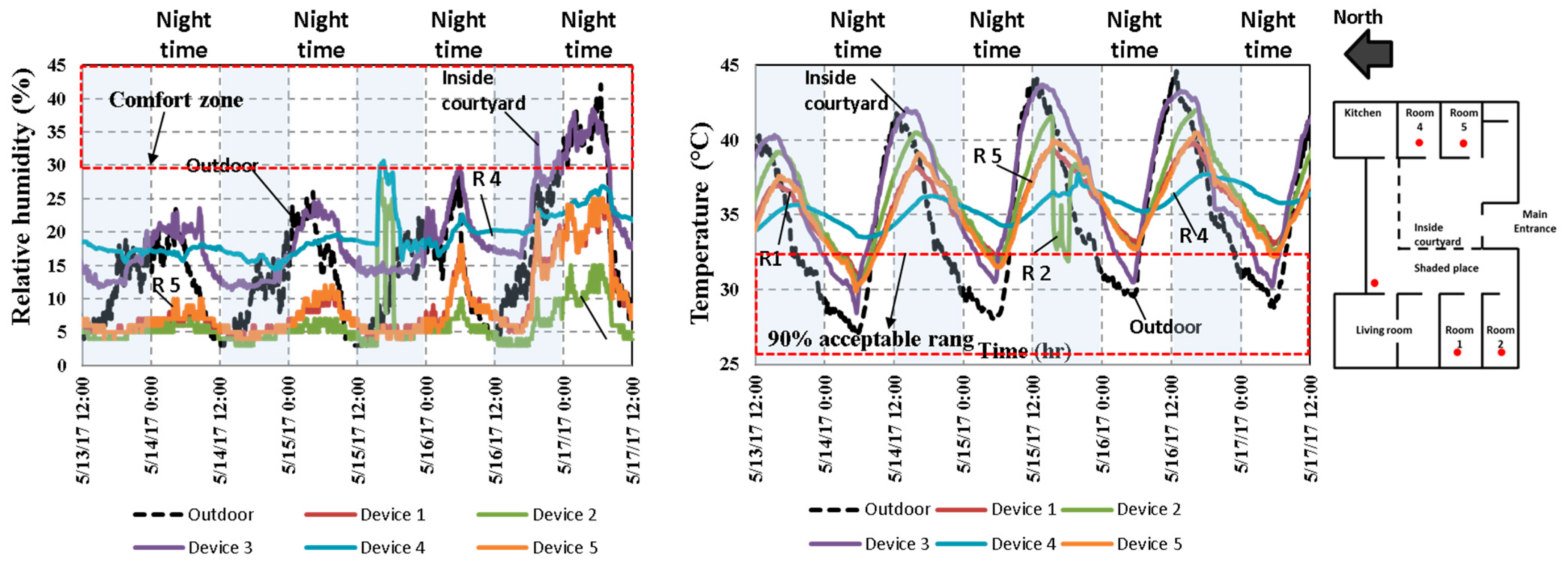
- The Main Entrance: Positioned in the center of the house’s main facade, leading directly to the courtyard or, in some cases, to a lobby before the courtyard.
- (b)
- The Main Courtyard: The central space where most family activities occur, connecting the various rooms of the house. Measuring 8 × 7 m, it is a large, open, unroofed area, with a portion covered by a semi-shaded structure made of palm leaves.
- (c)
- Bedrooms: Four rooms located on the east and west sides of the house. Their doors open to the courtyard, and small ventilation windows beneath the vaults draw air from the courtyard into the rooms [30].
- (d)
- The Kitchen: Comprising two rooms, their traditional design includes a dome covering and an open vent at the top for ventilation [6].
- (e)
- Toilets: Located inside the house without dedicated ventilation solutions.
3. Methodology
- (a)
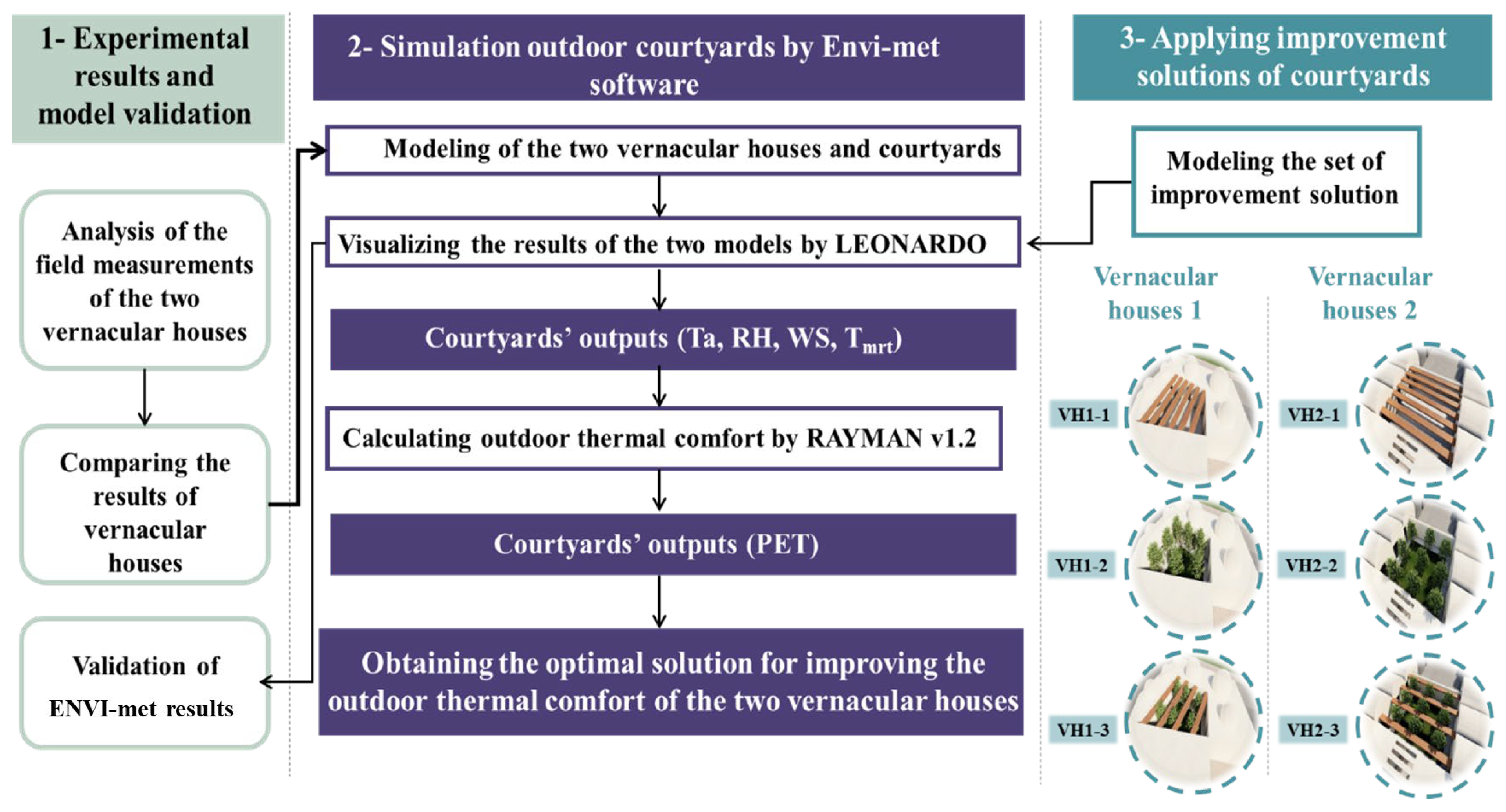
- The first stage is the experimental results of the field measurements inside the two vernacular houses, comparing the two houses’ measurements and validating the modeling results.
- (b)
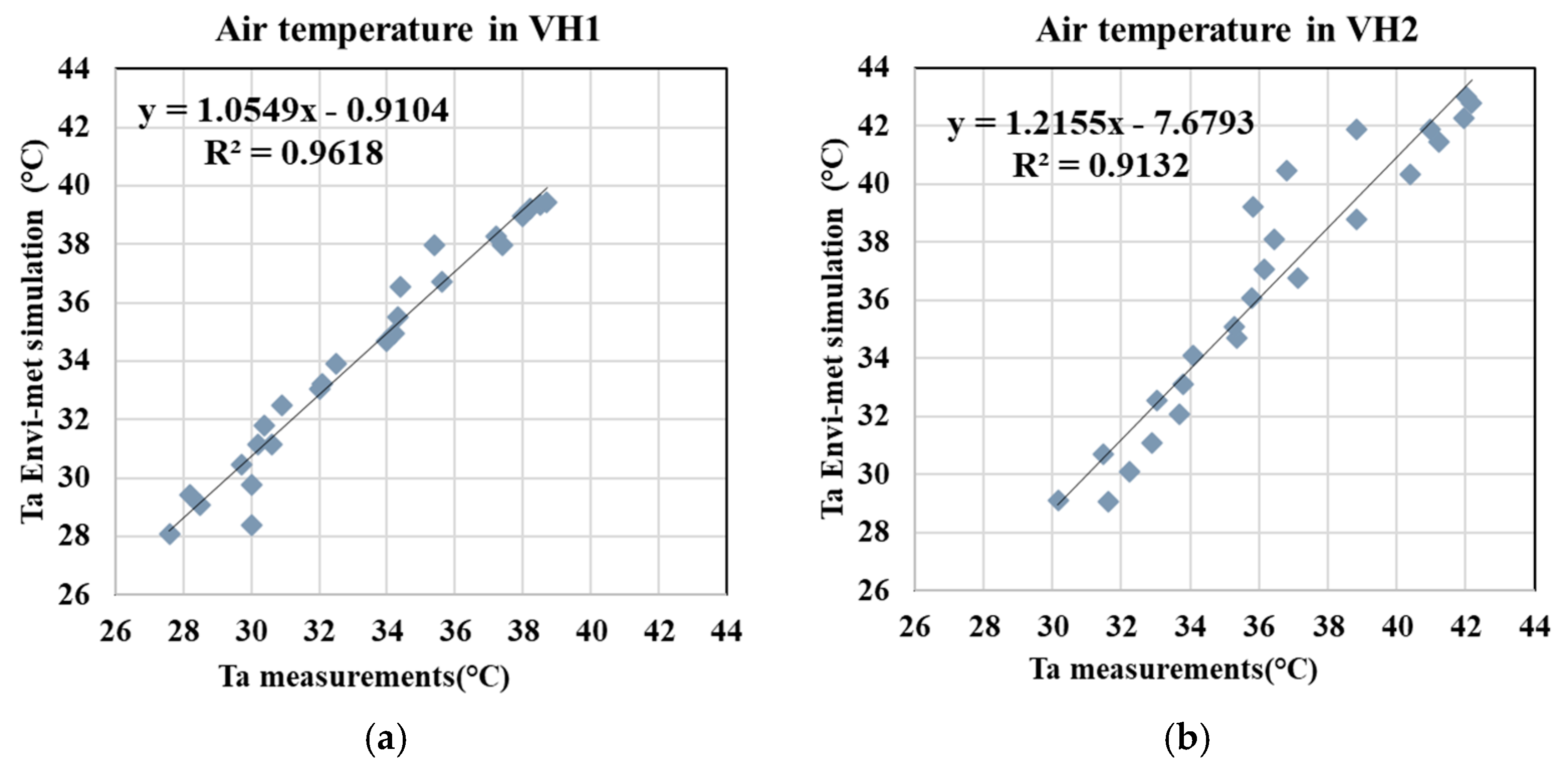
- The second stage is simulating the courtyards of the two vernacular houses using ENVI-met software to assess and visualize the air temperature, relative humidity (RH), wind speed (WS), and mean radiant temperature (Tmrt). Then, Rayman software v1.2 was used to calculate the Physiological Equivalent Temperature (PET) as the outdoor thermal comfort index.
- (c)
- The third stage is applying the three improvement solutions to improve the outdoor thermal comfort in the courtyards and determine the optimal solution for each vernacular house.
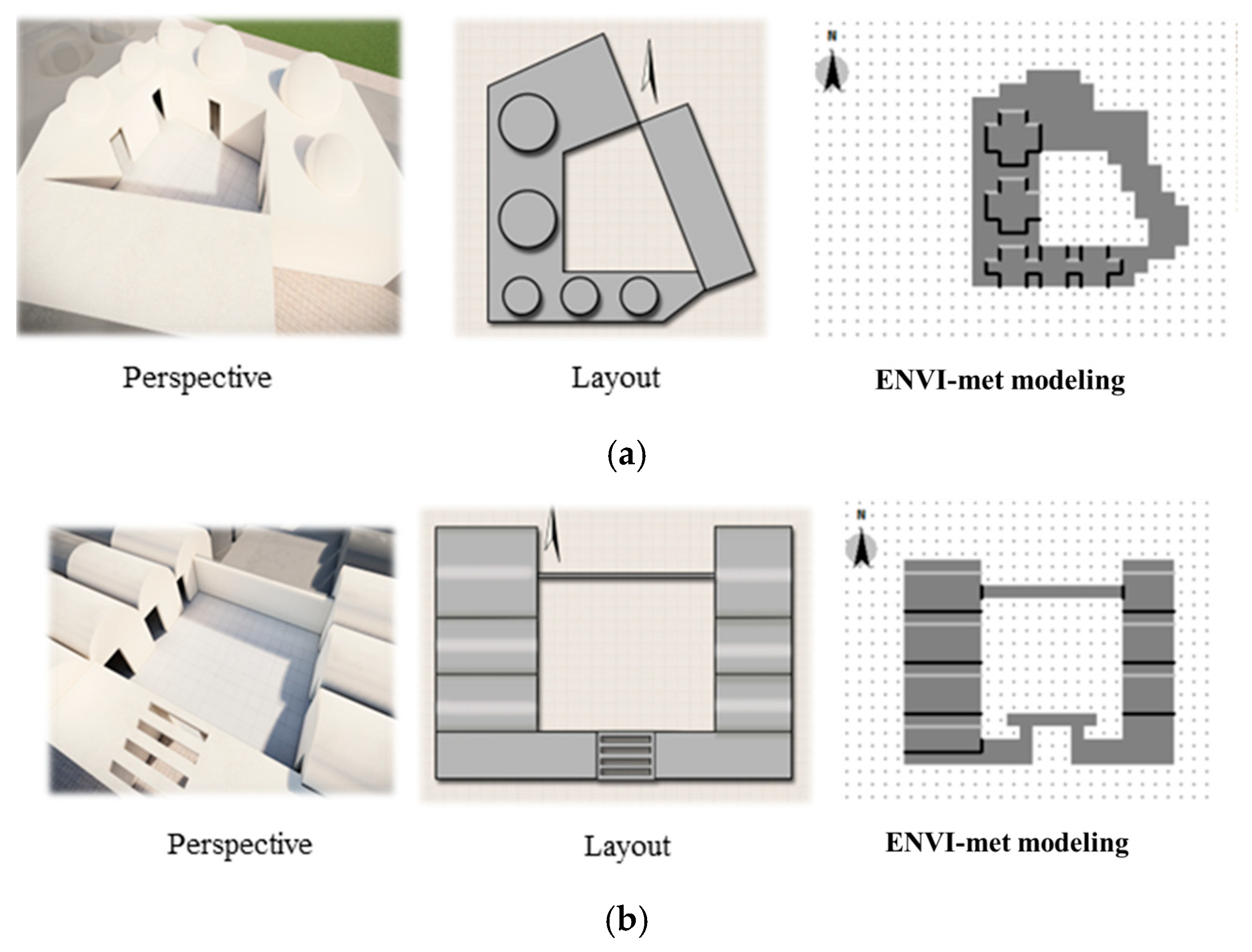
3.1. Modeling Vernacular Houses by ENVI-Met and Validation
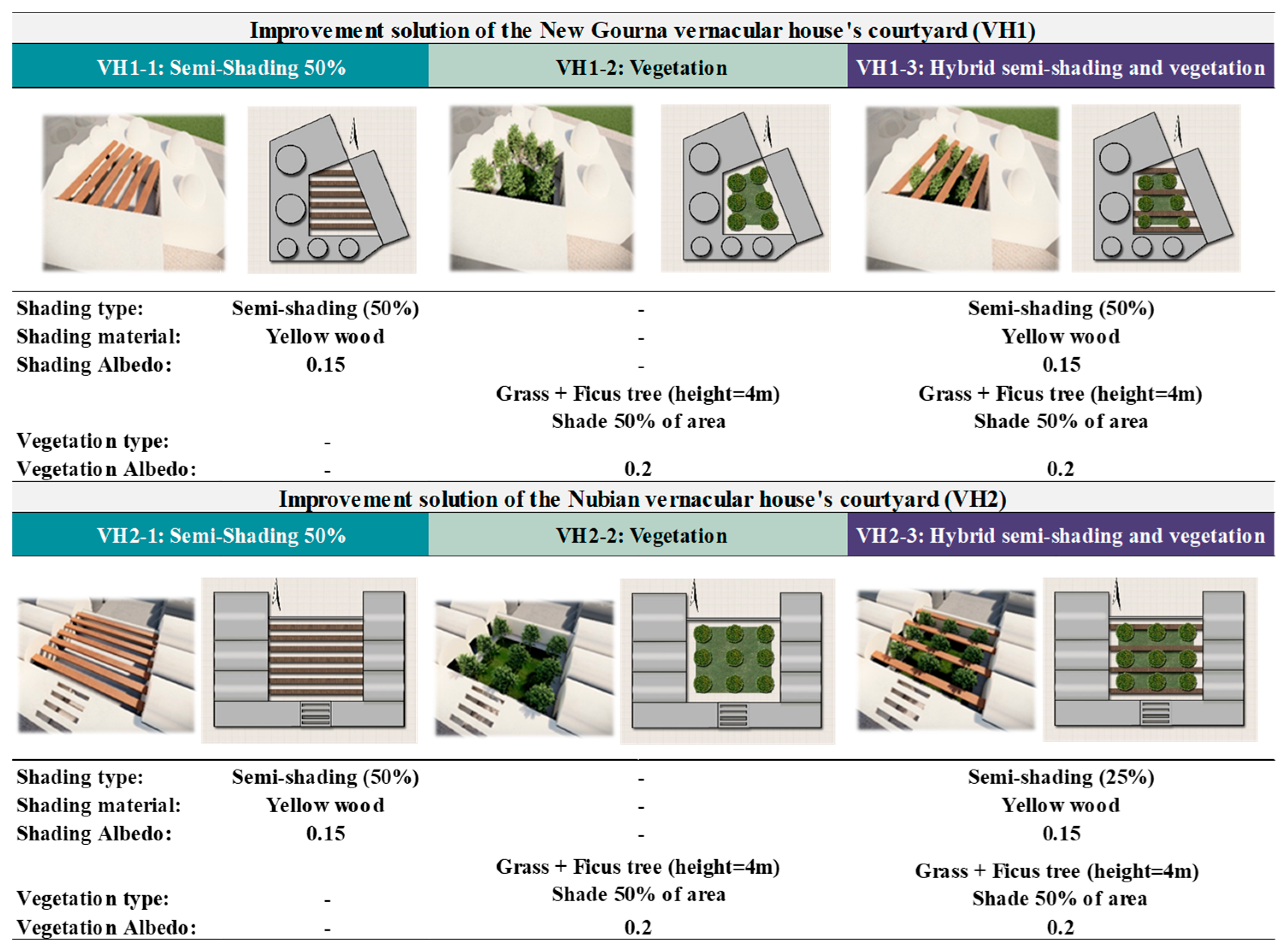
3.2. The Improvement Solutions of the Vernacular Houses’ Courtyards
- (a)
- Analyzing the indoor and outdoor thermal comfort of two different vernacular houses.
- (b)
- Proposing diverse improvement solutions to improve outdoor thermal comfort, such as vegetation, shading, and hybrid solutions.
- (c)
- The flexibility of applying the methodology to other vernacular houses, or any house with a courtyard in different desert cities in southern Egypt.
- (d)
- The application of the methodology in two different courtyards with different shapes and H/W ratios so it can be applied to other houses.
- (e)
- The ability to upgrade, to investigate the influence of the improvement solutions through the climate change issue.
- (a)
- The methodology ignored other improvement solutions such as albedo.
- (b)
- The study focused only on the semi-shading solution with a ratio of 50% and ignored other ratios, shapes, and materials of the shading system, as well as the effect of surface temperature of the courtyard.
- (c)
- The methodology focused on one-floor vernacular houses with courtyards and ignored other types of vernacular houses.
4. Results and Discussion
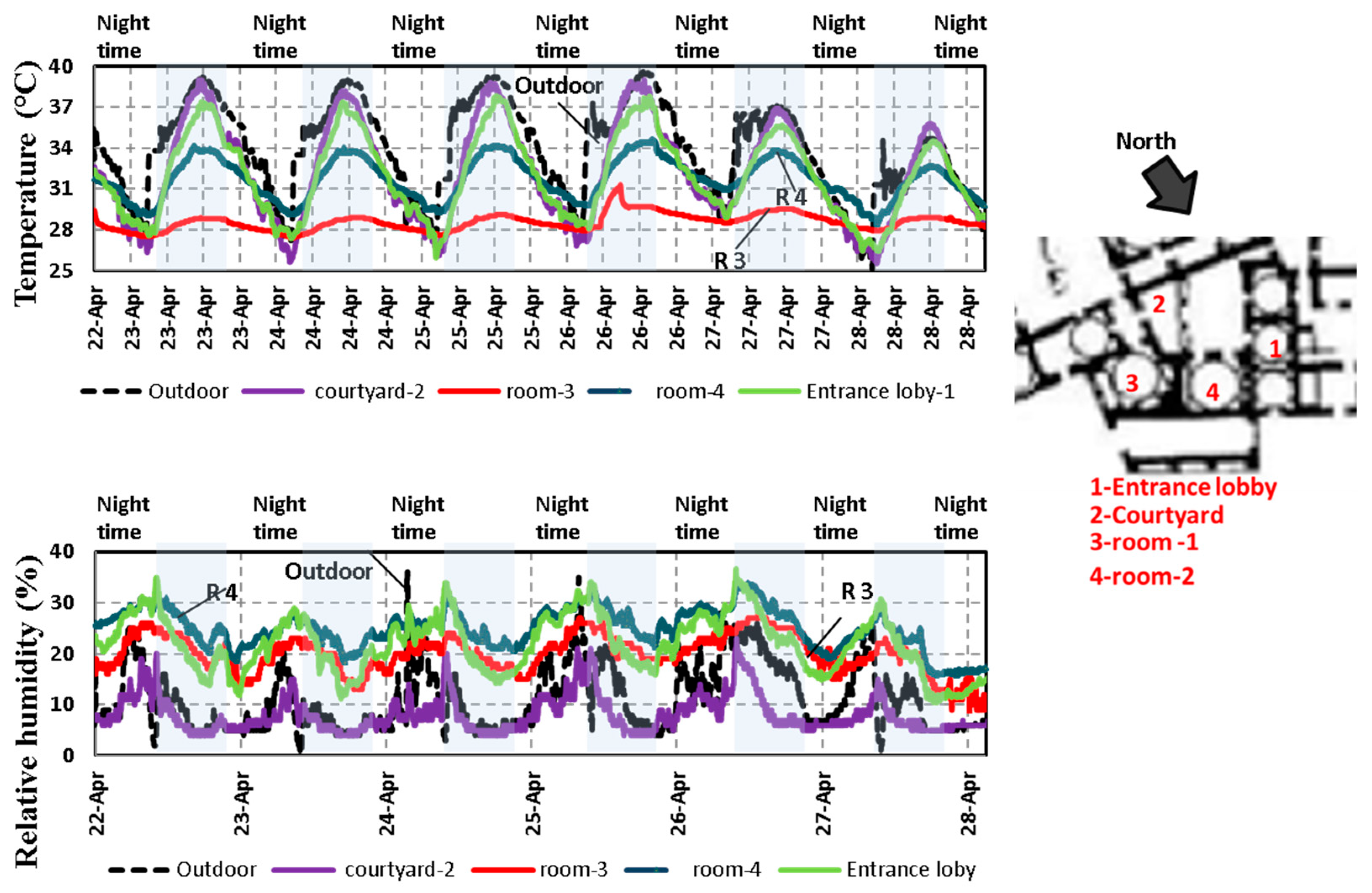
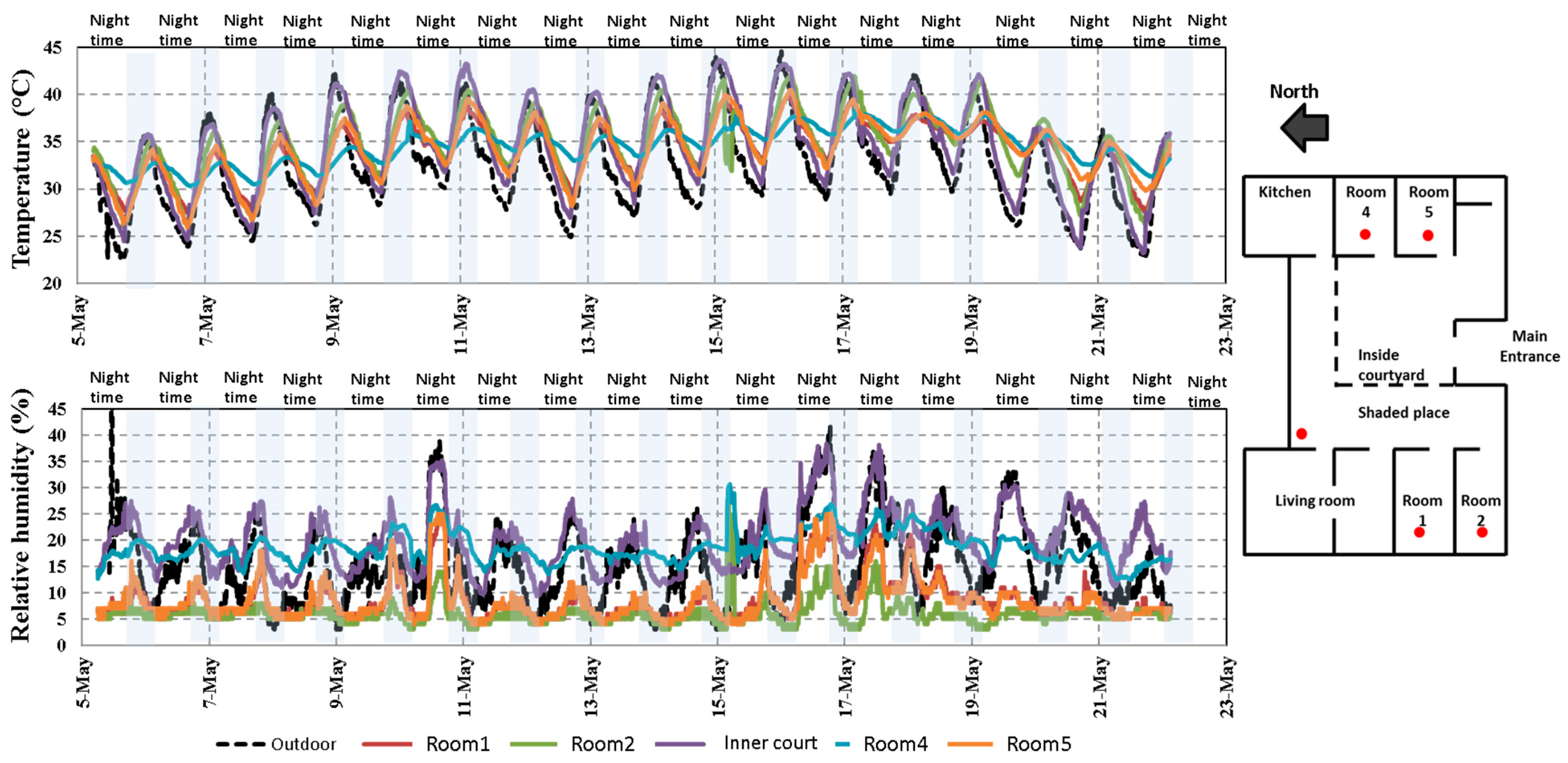
4.1. Indoor Thermal Environment Analysis
4.2. Thermal Comfort and Materials
- The use of mud bricks, a mixture of mud and gravel, which provides effective insulation.
- Wall thickness of 500 mm, which helps maintain cooler room temperatures in hot climates [6].
- Narrow, elevated openings that reduce heat exposure and sun glare while preserving privacy.
- Triangular slots in parapets and vaults that facilitate natural ventilation and reduce heat absorption [44].
- Timberless vaults made of earth bricks and mortar [6].
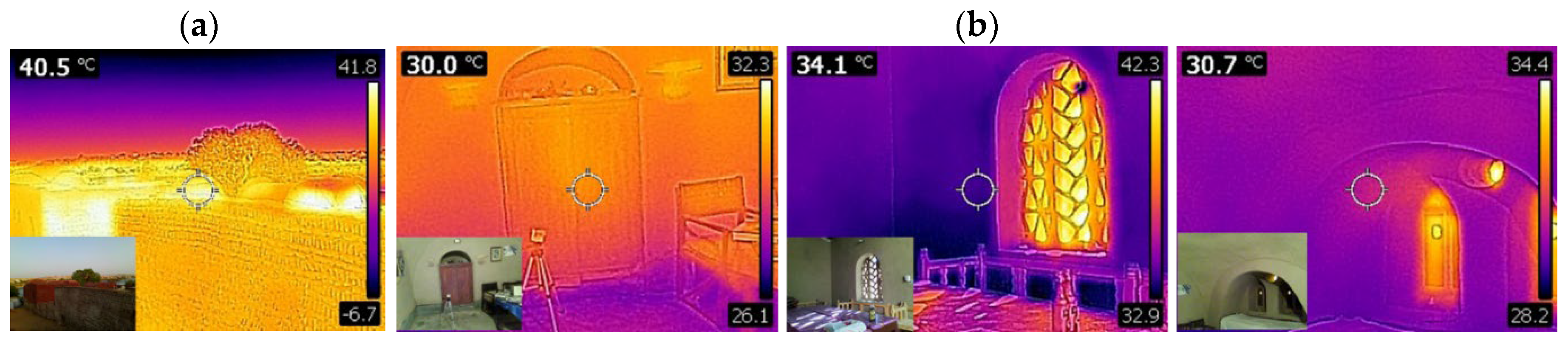
4.3. Evaluation of Indoor and Outdoor Thermography Environment and Temperature Distribution
4.4. ENVI-Met Simulation Results of the Courtyards Improvement Solutions
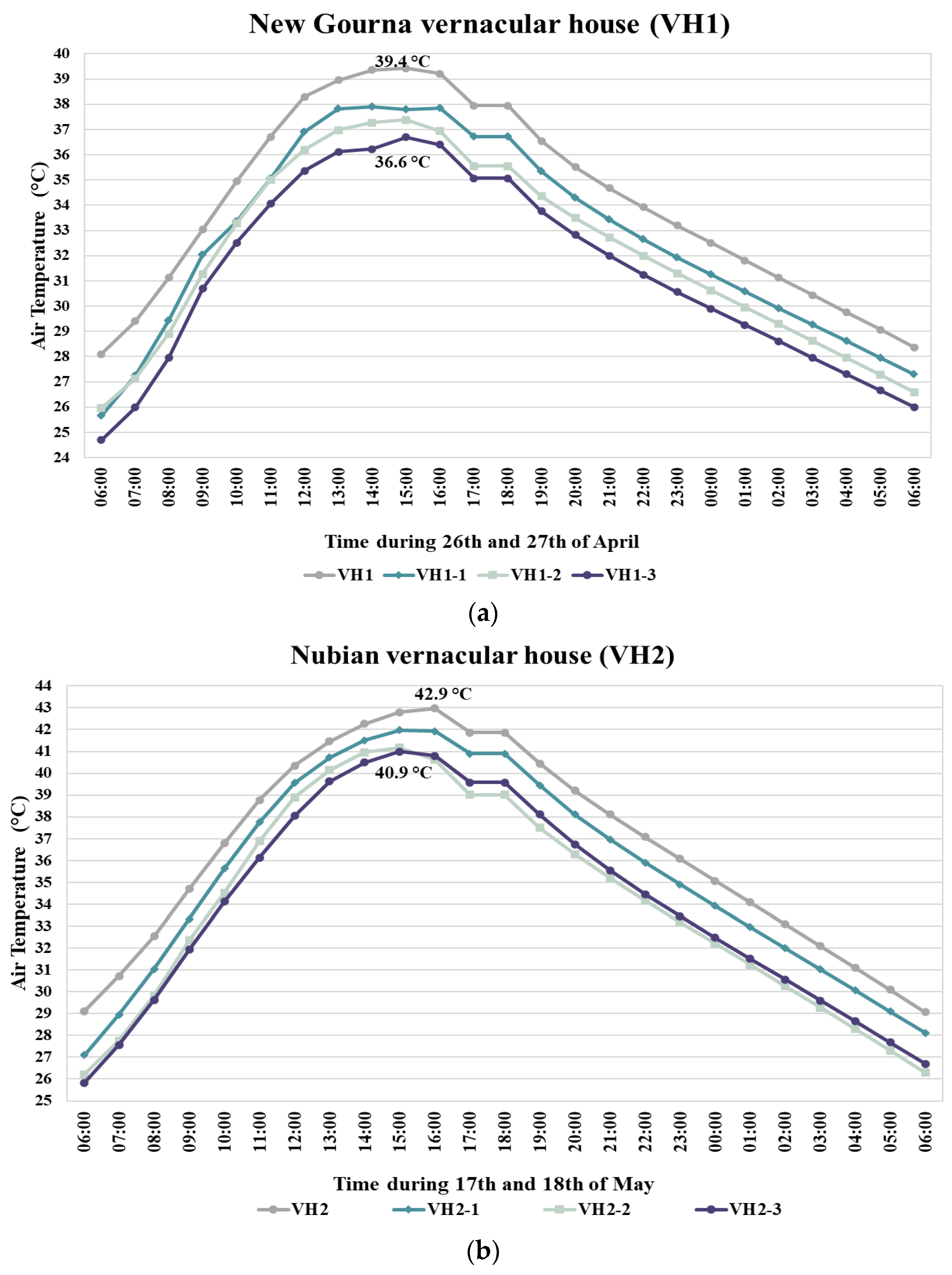
4.4.1. Evaluation of Air Temperature
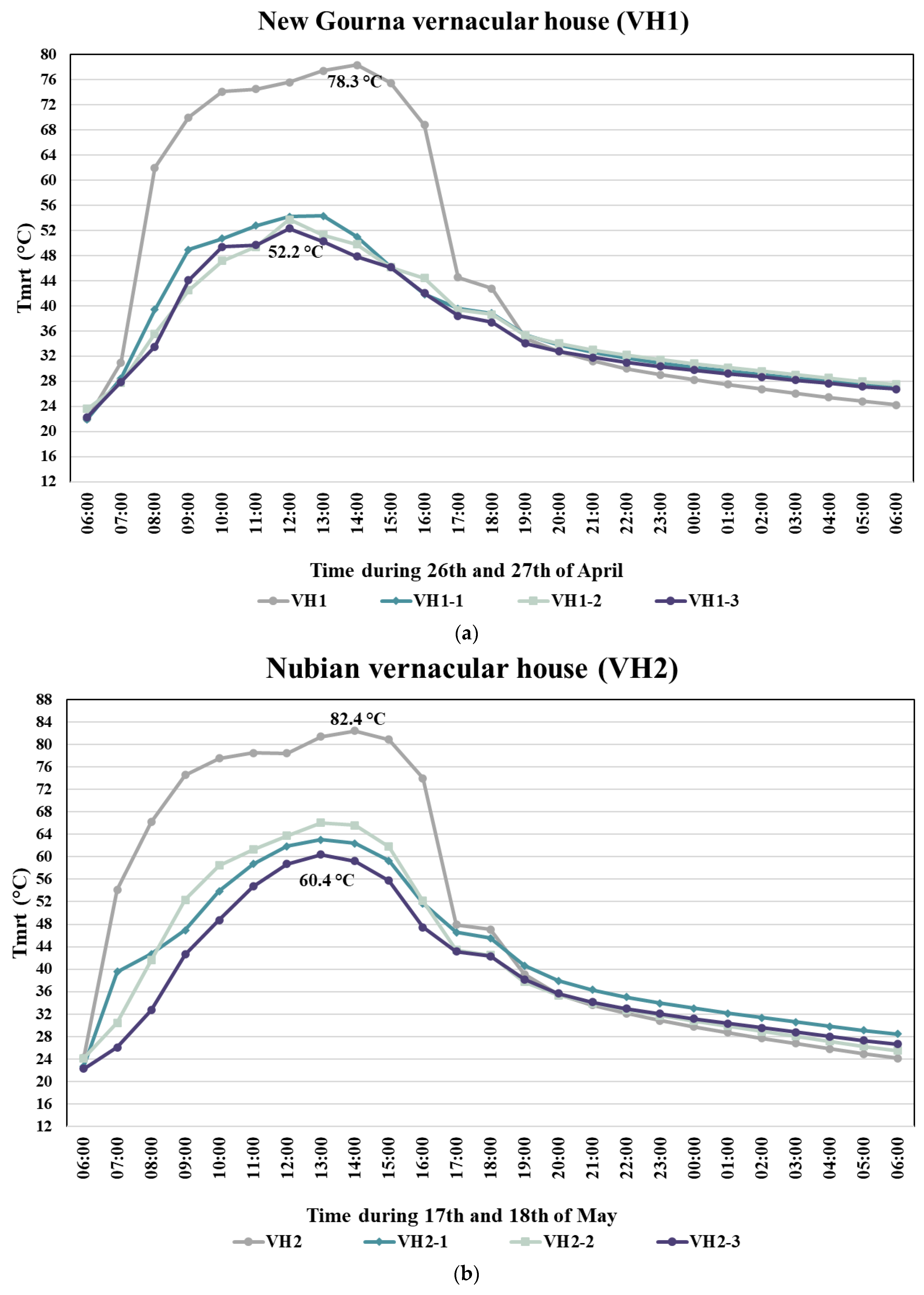
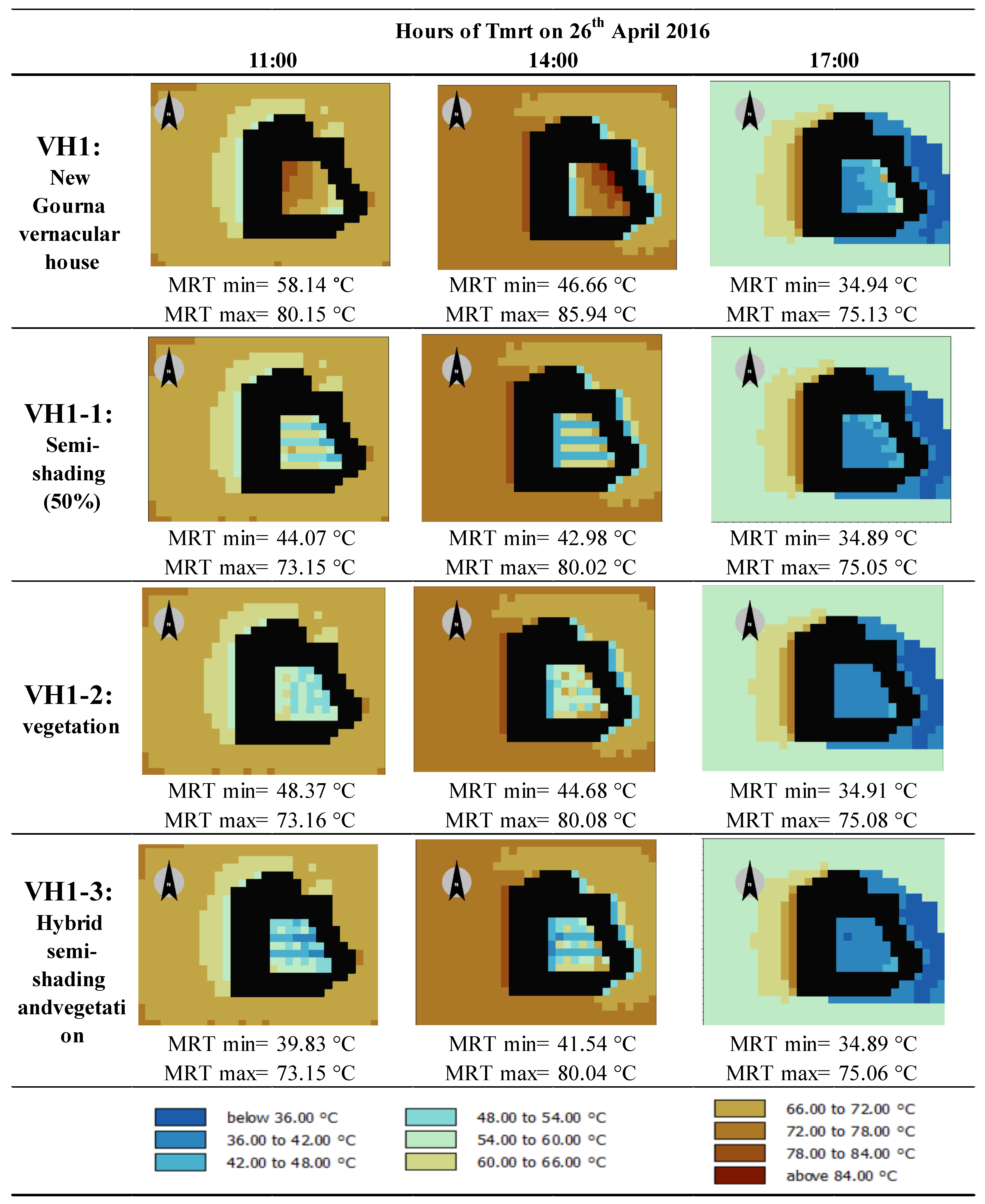
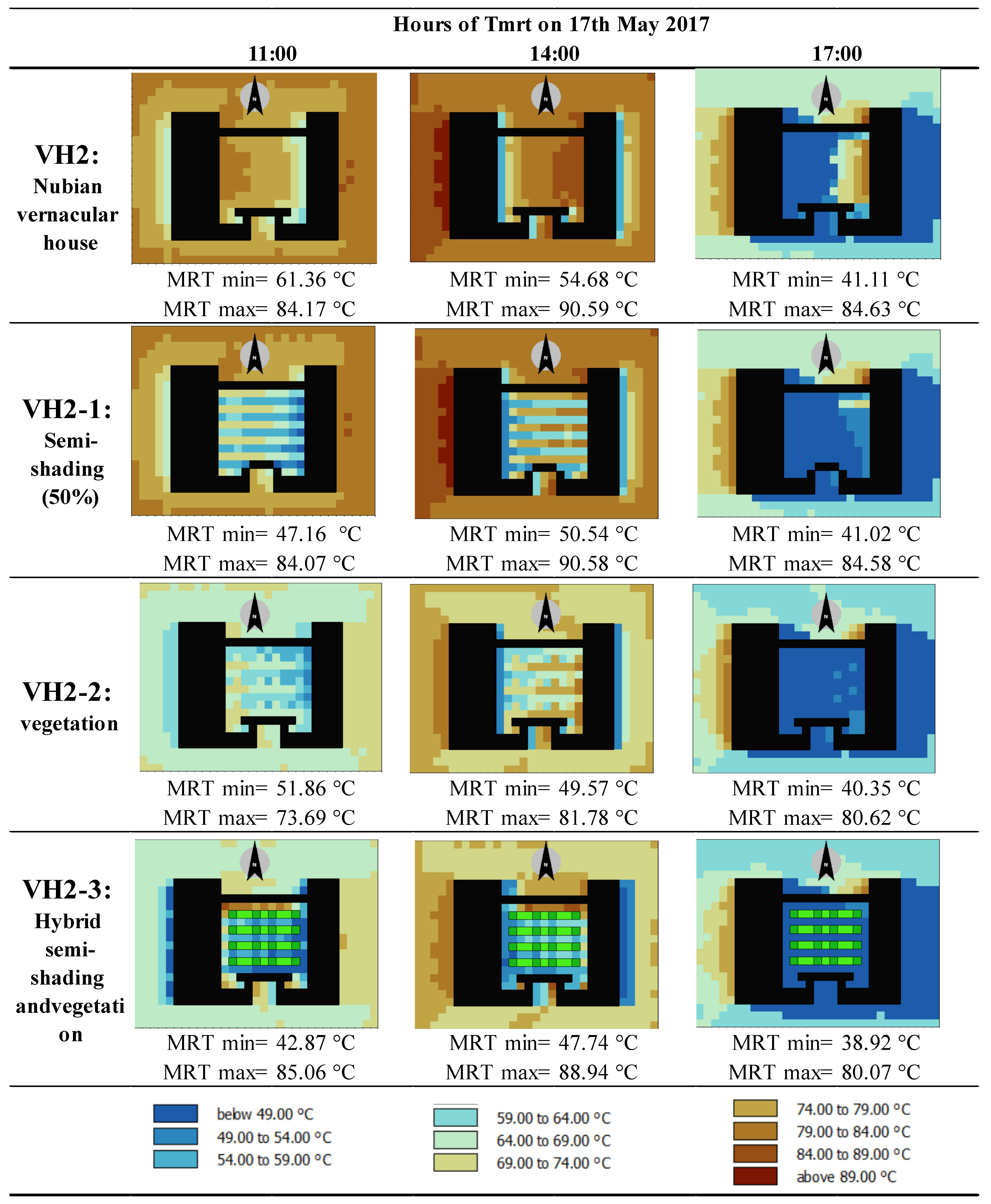
4.4.2. Evaluation of the Tmrt
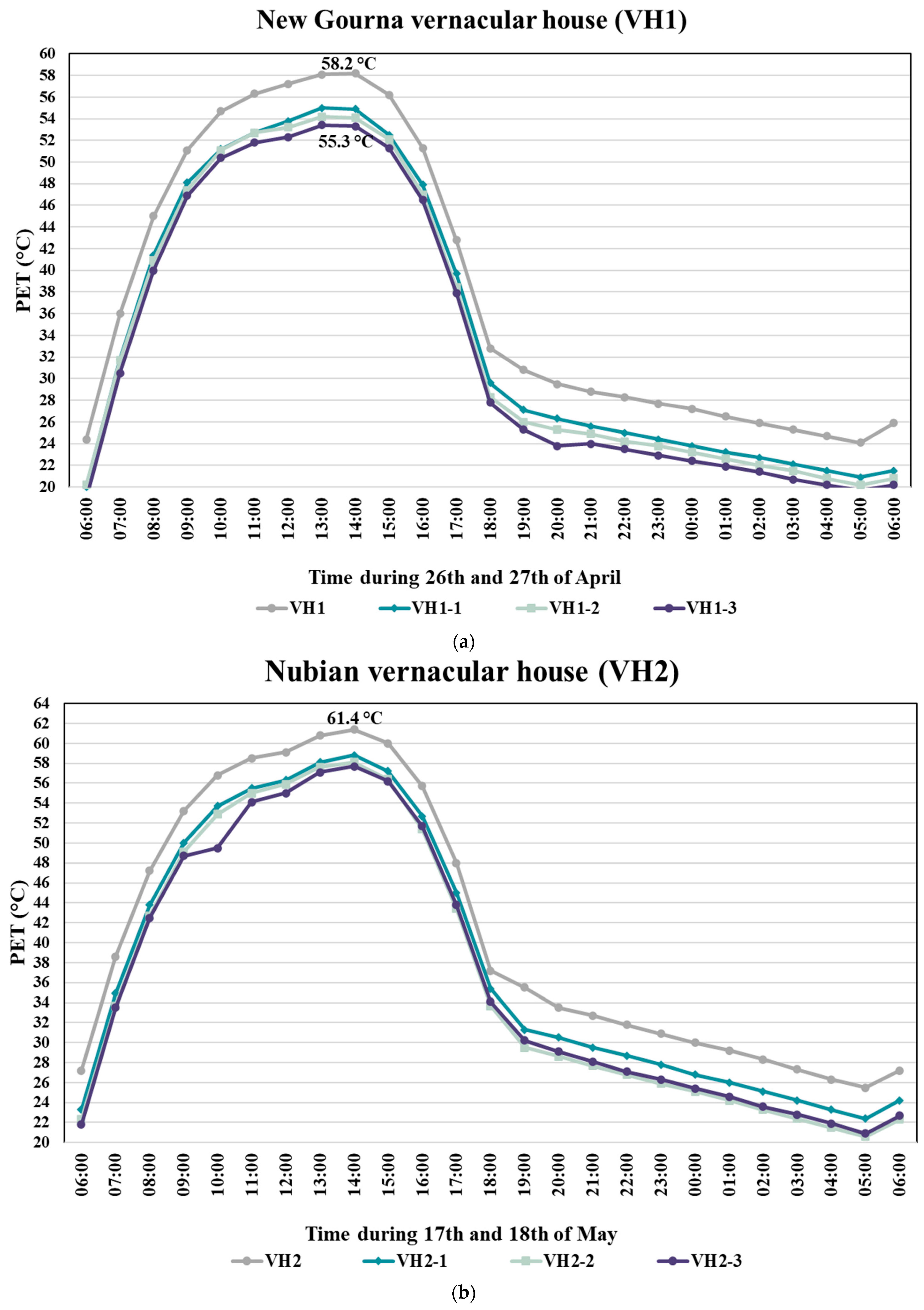
4.4.3. Evaluation of the PET
- (a)
- Improvement strategies were limited to specific shading and vegetation options, excluding other shading ratios, materials, or cooling methods.
- (b)
- The study focused only on one-floor vernacular houses and two case studies.
- (c)
- Field measurements covered short time periods and may not represent full seasonal conditions.
- (d)
- Courtyard surface temperature effects and a wider range of vegetation types were not examined.
- (e)
- MRT was not validated due to equipment limitations, and only air temperature was used for model validation.
- (f)
- The study did not evaluate other potentially influential solutions such as high-albedo surfaces, evaporative cooling elements, or courtyard surface material modifications.
- (g)
- Only one shading configuration was studied (50% semi-shading). Other shading ratios, materials, geometries, and dynamic shading systems were not investigated.
5. Conclusions
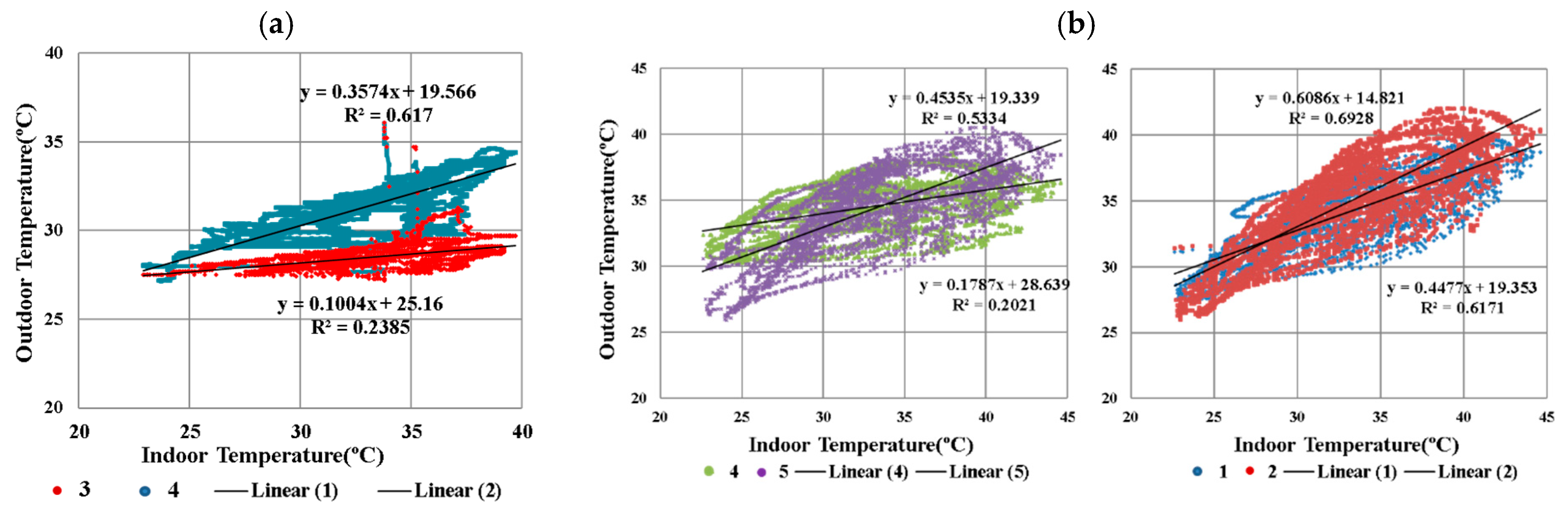
- Using adobe bricks as a material for traditional and vernacular buildings south of Egypt is considered as effective thermal insulation that moderates indoor environments in extreme climates, and lowers indoor temperature by 2.7 °C to 6.7 °C.
- Using inner courtyards without any passive solutions achieved high air temperature due to the significant influence of solar radiation on the courtyard; 0.3 K higher than the outdoor temperature.
- Significant reductions for Ta and PET values are achieved through providing hybrid shading in the courtyards of the vernacular buildings, ranging from 2.3 °C to 3.4 °C over the day, and 4.2 °C and 5.7 °C for air temperature and PET, respectively.
- Inner courtyards with shading and big dense trees achieve thermal comfort and allow family activities to be performed comfortably.
Author Contributions
Funding
Data Availability Statement
Conflicts of Interest
References
- Heidari, A.; Davtalab, J. Effect of Kharkhona on thermal comfort in the indoor space: A case study of Sistan region in Iran. Energy Build. 2024, 318, 114431. [Google Scholar] [CrossRef]
- Zou, Y.; Guo, J.; Xia, D.; Lou, S.; Huang, Y.; Yang, X.; Zhong, Z. Quantitative analysis and enhancement on passive survivability of vernacular houses in the hot and humid region of China. J. Build. Eng. 2023, 71, 106431. [Google Scholar] [CrossRef]
- Fernandes, J.; Silva, S.M.; Mateus, R.; Teixeira, E.R. Analysis of the Thermal Performance and Comfort Conditions of Vernacular Rammed Earth Architecture from Southern Portugal. Ref. Modul. Mater. Sci. Mater. Eng. 2020, 4, 1–10. [Google Scholar] [CrossRef]
- Chang, S.; He, W.; Yan, H.; Yang, L.; Song, C. Influences of vernacular building spaces on human thermal comfort in China’s arid climate areas. Energy Build. 2021, 244, 110978. [Google Scholar] [CrossRef]
- He, W.; Wu, Z.; Jin, R.; Liu, J. Organization and evolution of climate responsive strategies, used in Turpan vernacular buildings in arid region of China. Front. Archit. Res. 2023, 12, 556–574. [Google Scholar] [CrossRef]
- Bayoumi, O.A.M. Nubian Vernacular architecture & contemporary Aswan buildings’ enhancement. Alex. Eng. J. 2018, 57, 875–883. [Google Scholar] [CrossRef]
- Du, X.; Bokel, R.; Dobbelsteen, A.V.D. Building microclimate and summer thermal comfort in free-running buildings with diverse spaces: A Chinese vernacular house case. Build. Environ. 2014, 82, 215–227. [Google Scholar] [CrossRef]
- Diz-Mellado, E.; L’opez-Cabeza, V.P.; Roa-Fern’andez, J.; Rivera-G’omez, C.; Gal’an-Marín, C. Energy-saving and thermal comfort potential of vernacular urban block porosity shading. Sustain. Cities Soc. 2023, 89, 104325. [Google Scholar] [CrossRef]
- Davtalab, J.; Heidari, A. The Effect of Kharkhona on Outdoor Thermal Comfort in Hot and Dry Climate: A Case Study of Sistan Region in Iran. Sustain. Cities Soc. 2021, 65, 102607. [Google Scholar] [CrossRef]
- Xu, Y.; Yang, Z.; Zheng, X.; Ren, J.; Feng, C.; Tang, M. Thermal environments of vernacular dwellings and the adjacent alley in summer: An experimental study in Southwest China. Build. Environ. 2024, 261, 111634. [Google Scholar] [CrossRef]
- Reynolds, N.Y. Architecture design for procuring thermal comfort: Hassan Fathy, Nubia and desert building. Int. J. Islam. Archit. 2024, 13, 361–391. [Google Scholar]
- Haval, A.A. Thermal comfort through the microclimates. Acritical review of the middle-eastern courtyard house as a climatic response. Procedia Soc. Behav. Sci. 2016, 216, 662–674. [Google Scholar]
- Haseh, H.R.; Khakzand, M.; Ojaghlou, M. Optimal thermal characteristics of the courtyard in the hot and arid climate of Isfahan. Building 2018, 8, 166. [Google Scholar] [CrossRef]
- Shetty, S.; Patil, S. Vernacular architecture and indoor environmental satisfaction: Asystematic review of influencing factors. Architecture 2025, 5, 87. [Google Scholar] [CrossRef]
- Mangeli, M.; Aram, F.; Abouei, R. Energy consumption and thermal comfort of rock-cut and modern buildings. Heliyon 2024, 10, e34217. [Google Scholar] [CrossRef]
- Widera, B. Comparative analysis of user comfort and thermal performance of six types of vernacular dwellings as the first step towards climate resilient, sustainable and bioclimatic architecture in western sub-Saharan Africa. Renew. Sustain. Energy Rev. 2021, 140, 110736. [Google Scholar] [CrossRef]
- Chkeir, A.; Bouzidi, Y.; El Akili, Z.; Charafeddine, M.; Kashmar, Z. Assessment of thermal comfort in the traditional and contemporary houses in Byblos: A comparative study. Energy Built Environ. 2024, 5, 933–945. [Google Scholar] [CrossRef]
- Toe, D.H.C.; Kubota, T. Comparative assessment of vernacular passive cooling techniques for improving indoor thermal comfort of modern terraced houses in hot–humid climate of Malaysia. Sol. Energy 2015, 114, 229–258. [Google Scholar] [CrossRef]
- Chandel, S.S.; Sharma, V.; Marwah, B.M. Review of energy-efficient features in vernacular architecture for improving indoor thermal comfort conditions. Renew. Sustain. Energy Rev. 2016, 65, 459–477. [Google Scholar] [CrossRef]
- Salameh, M.; Mushtaha, E.; El Khazindar, A. Improvement of thermal performance and predicted mean vote in city districts: A case in the United Arab Emirates. Ain Shams Eng. J. 2023, 14, 101999. [Google Scholar] [CrossRef]
- Hassan, A.M.; Lee, H.; Ohb, S. Challenges of passive cooling techniques in buildings: A critical review for identifying the resilient technique. J. Teknol. 2016, 78, 149–162. [Google Scholar] [CrossRef]
- Zheng, W.; Wei, F.; Su, S.; Cai, J.; Wei, J.; Hua, R. Effect of the envelope structure on the indoor thermal environment of low-energy residential building in humid subtropical climate: In case of brick–timber vernacular dwelling in China. Environ. Technol. Innov. 2022, 28, 102884. [Google Scholar] [CrossRef]
- Abdel Kader, H.S.; Hassan, M.H. Improving the thermal performance of modern nubian house (wadi karkar as a case study). JES Assiut Univ. Fac. Eng. 2017, 45, 545–557. [Google Scholar] [CrossRef]
- Evola, G.; Marletta, L.; Natarajan, S.; Patane, E.M. Thermal inertia of heavyweight traditional buildings: Experimental measurements and simulated scenarios. Energy Procedia 2017, 133, 42–52. [Google Scholar] [CrossRef]
- Ferruses, I.J.; Dols, S.A.; Gago, C.C. Sustainable Approaches Employed in Settlements Designed by Hassan Fathy: Lessons from New Gourna and New Baris in Egypt. J. Int. Soc. Study Vernac. Settl. 2024, 11, 194–208. [Google Scholar] [CrossRef]
- Attia, S. The Earth Construction Fallacy: Hassan Fathy’s New Gourna Revisited. In Proceedings of the PLEA Conference (Re) Thinking Resilience, Wroclaw, Poland, 26 June 2024. [Google Scholar]
- Hamouchene, H. Dismantling Green Colonialism: Energy and Climate Justice in the Arab Regio; Pluto Press: London, UK, 2023. [Google Scholar]
- El-deen, H.M.A.N.; Hassan Rihan, D.A.A.F.; Hamed, R.E. An analytical study to evaluate thermal performance of Nubian dwellings Before and after Displacement. J. Surv. Fish Sci. 2023, 10, 3004–3016. [Google Scholar]
- Graves, C. Egyptian Imperialism in Nubia c. 2009–1191 BC. Master’s Thesis, University of Birmingham, Birmingham, UK, 2011. [Google Scholar]
- Omar, M.W.F. Nubian vernacular architecture technique to enhance Eco-Tourism in Egypt. J. Emerg. Trends Econ. Manag. Sci. 2015, 6, 169–176. [Google Scholar]
- Lin, P.; Gou, Z.; Lau, S.S.-Y.; Qin, H. The Impact of Urban Design Descriptors on Outdoor Thermal Environment: A Literature Review. Energies 2017, 10, 2151. [Google Scholar] [CrossRef]
- Chen, L.; Ng, E.; An, X.; Ren, C.; Lee, M.; Wang, U.; He, Z. Sky view factor analysis of street canyons and its implications for daytime intra-urban air temperature differentials in high-rise, high-density urban areas of Hong Kong: A GIS-based simulation approach. Int. J. Climatol. 2010, 30, 735–746. [Google Scholar] [CrossRef]
- Abdallah, A.S.H.; Mahmoud, R.M.A. Urban morphology as an adaptation strategy to improve outdoor thermal comfort in urban residential community of new assiut city, Egypt. Sustain. Cities Soc. 2022, 78, 103648. [Google Scholar] [CrossRef]
- Abdallah, A.S.H. Passive design strategies to improve student thermal comfort in Assiut University: A field study in the Faculty of Physical Education in hot season. Sustain. Cities Soc. 2022, 86, 104110. [Google Scholar] [CrossRef]
- Abdallah, A.S.H.; Mahmoud, R.M.A.; Ragab, A.; Gomaa, M.M. A Multi-Objective Optimization Method for Enhancing Outdoor Environmental Quality in University Courtyards in Hot Arid Climates. Buildings 2025, 15, 3140. [Google Scholar] [CrossRef]
- Abdallah, A.S.H.; Mahmoud, R.M.A. Sustainable Mitigation Strategies for Enhancing Student Thermal Comfort in the Educational Buildings of Sohag University. Buildings 2025, 15, 2048. [Google Scholar] [CrossRef]
- Abdallah, A.S.H.; Mahmoud, R.M.A.; Aloshan, M. Optimizing Urban Spaces: A Parametric Approach to Enhancing Outdoor Recreation Between Residential Areas in Riyadh, Saudi Arabia. Buildings 2025, 15, 1527. [Google Scholar] [CrossRef]
- Eid, M.A.; Mahmoud, R.M.A.; Abdallah, A.S.H. A New Planning Proposal for Achieving Residents’ Thermal Comfort in Hot Arid Climate Based on Simulation Model. Mansoura Eng. J. 2023, 48, 1. [Google Scholar] [CrossRef]
- Mahmoud, R.M.A.; Abdallah, A.S.H. Assessment of outdoor shading strategies to improve outdoor thermal comfort in school courtyards in hot and arid climates. Sustain. Cities Soc. 2022, 86, 104147. [Google Scholar] [CrossRef]
- ANSI/ASHRAE/IES Standard 90.2-2022; Energy-Efficient Design of Low-Rise Residential Buildings. American Society of Heating, Refrigerating and Air-Conditioning Engineers and Illuminating Engineering Society: Atlanta, GA, USA, 2022.
- Mousli, K.; Semprini, G. Thermal performances of traditional houses in dry hot arid climate and the effect of natural ventilation on thermal comfort: A case study in Damascus. Energy Procedia 2015, 78, 2893–2898. [Google Scholar] [CrossRef]
- ANSI/ASHRAE Standard 55-2023; Thermal Environmental Conditions for Human Occupancy. American Society of Heating, Refrigerating and Air-Conditioning Engineers: Atlanta, GA, USA, 2023.
- Shaeri, J.; Yaghoubi, M.; Aflaki, A.; Habibi, A. Evaluation of thermal comfort in traditional houses in a tropical climate. Buildings 2018, 8, 126. [Google Scholar] [CrossRef]
- Fernea, R.A. Contemporary Egyptian Nubia: A Symposium of the Social Research Center, American University in Cairo; Human Relations Area Files; Dar-El-Thakafa: Aswan, United Arab Emirates, 1996; Available online: https://books.google.com.eg/books/about/Contemporary_Egyptian_Nubia.html?id=z0cuAQAAIAAJ (accessed on 1 September 2025).
- Clark, B. Comment «devenir traditionnel» ? Premiers projets et espoirs de l’architecte Jean Hensens (1929–2006) au Maroc. CLARA 2023, 8, 170–203. [Google Scholar] [CrossRef]
- El Azhary, K.; Ouakarrouch, M.; Laaroussi, N.; Garoum, M. Energy efficiency of a vernacular building design and materials in hot arid climate: Experimental and numerical approach. Int. J. Renew. Energy Dev. 2021, 10, 481. [Google Scholar] [CrossRef]
- Xia, Y.; Xu, T.; Shi, C.; Tian, L.; Zhang, T.; Fukuda, H. Research on indoor thermal comfort of traditional dwellings in Northeast Sichuan based on the thermal comfort evaluation model and EnergyPlus. Energy Rep. 2024, 12, 5234–5248. [Google Scholar] [CrossRef]
- Ariffin, N.A.M.; Behaz, A.; Denan, Z. Thermal comfort studies on houses in hot arid climates. IOP Conf. Ser. Mater. Sci. Eng. 2018, 401, 12028. [Google Scholar] [CrossRef]
- Hailu, H.; Gelan, E.; Girma, Y. Indoor thermal comfort analysis: A case study of modern and traditional buildings in hot-arid climatic region of Ethiopia. Urban Sci. 2021, 5, 53. [Google Scholar] [CrossRef]



| The Characteristics | New Gourna Vernacular House (VH1) | Nubian Vernacular House (VH2) |
|---|---|---|
| Area of Study | 192 m2 | 270 m2 |
| Building dimensions | 12 × 16 m | 15 × 18 m |
| Building Height | 4 m | 4 m |
| Courtyard dimensions | 9 × 10 m | 7 × 8 m |
| Aspect ratio (H/W) | 0.4 | 0.5 |
| Building Material | Clay + Yellow painted | Clay + Yellow painted |
| Building Albedo | 0.3 | 0.3 |
| Courtyard ground material | loamy | loamy |
| Courtyard ground Albedo | 0.02 | 0.02 |
Disclaimer/Publisher’s Note: The statements, opinions and data contained in all publications are solely those of the individual author(s) and contributor(s) and not of MDPI and/or the editor(s). MDPI and/or the editor(s) disclaim responsibility for any injury to people or property resulting from any ideas, methods, instructions or products referred to in the content. |
© 2025 by the authors. Licensee MDPI, Basel, Switzerland. This article is an open access article distributed under the terms and conditions of the Creative Commons Attribution (CC BY) license (https://creativecommons.org/licenses/by/4.0/).
Share and Cite
Abdallah, A.S.H.; Alamri, U.A.; Mahmoud, R.M.A.; Abdelhafez, M.H.H. Improvement of Vernacular Building Spaces for Human Thermal Comfort in Hot Arid Climate of Egypt. Buildings 2025, 15, 4450. https://doi.org/10.3390/buildings15244450
Abdallah ASH, Alamri UA, Mahmoud RMA, Abdelhafez MHH. Improvement of Vernacular Building Spaces for Human Thermal Comfort in Hot Arid Climate of Egypt. Buildings. 2025; 15(24):4450. https://doi.org/10.3390/buildings15244450
Chicago/Turabian StyleAbdallah, Amr Sayed Hassan, Uthman Abdullah Alamri, Randa Mohamed Ahmed Mahmoud, and Mohamed Hssan Hassan Abdelhafez. 2025. "Improvement of Vernacular Building Spaces for Human Thermal Comfort in Hot Arid Climate of Egypt" Buildings 15, no. 24: 4450. https://doi.org/10.3390/buildings15244450
APA StyleAbdallah, A. S. H., Alamri, U. A., Mahmoud, R. M. A., & Abdelhafez, M. H. H. (2025). Improvement of Vernacular Building Spaces for Human Thermal Comfort in Hot Arid Climate of Egypt. Buildings, 15(24), 4450. https://doi.org/10.3390/buildings15244450