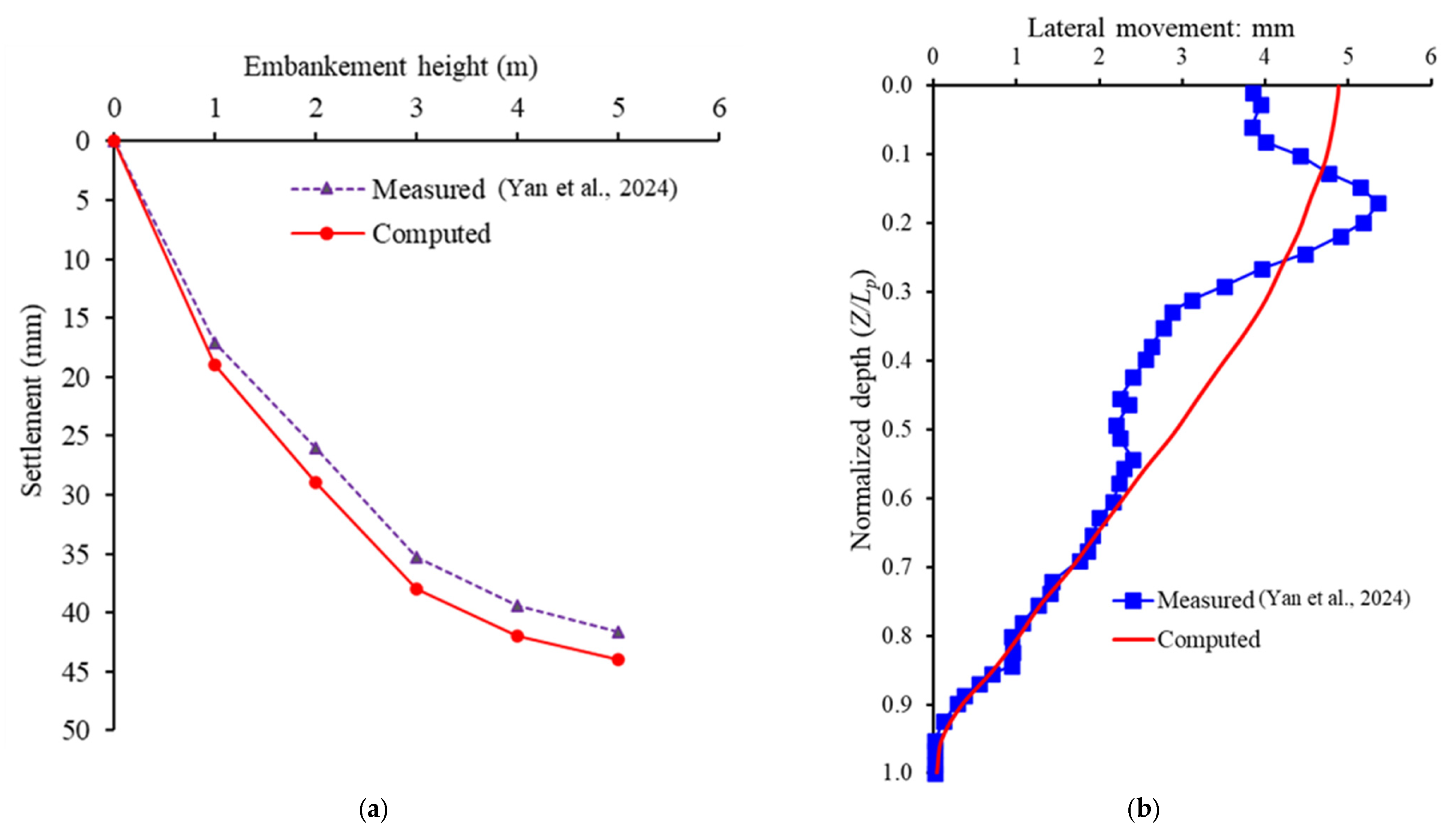
Numerical Insights into Tunnel Excavation Effects on Pile-Supported Embankment in Soft Clay: A Comparison Between Consolidated and Unconsolidated Conditions


Abstract
1. Introduction
2. Establishment of the Three-Dimensional Computational Framework
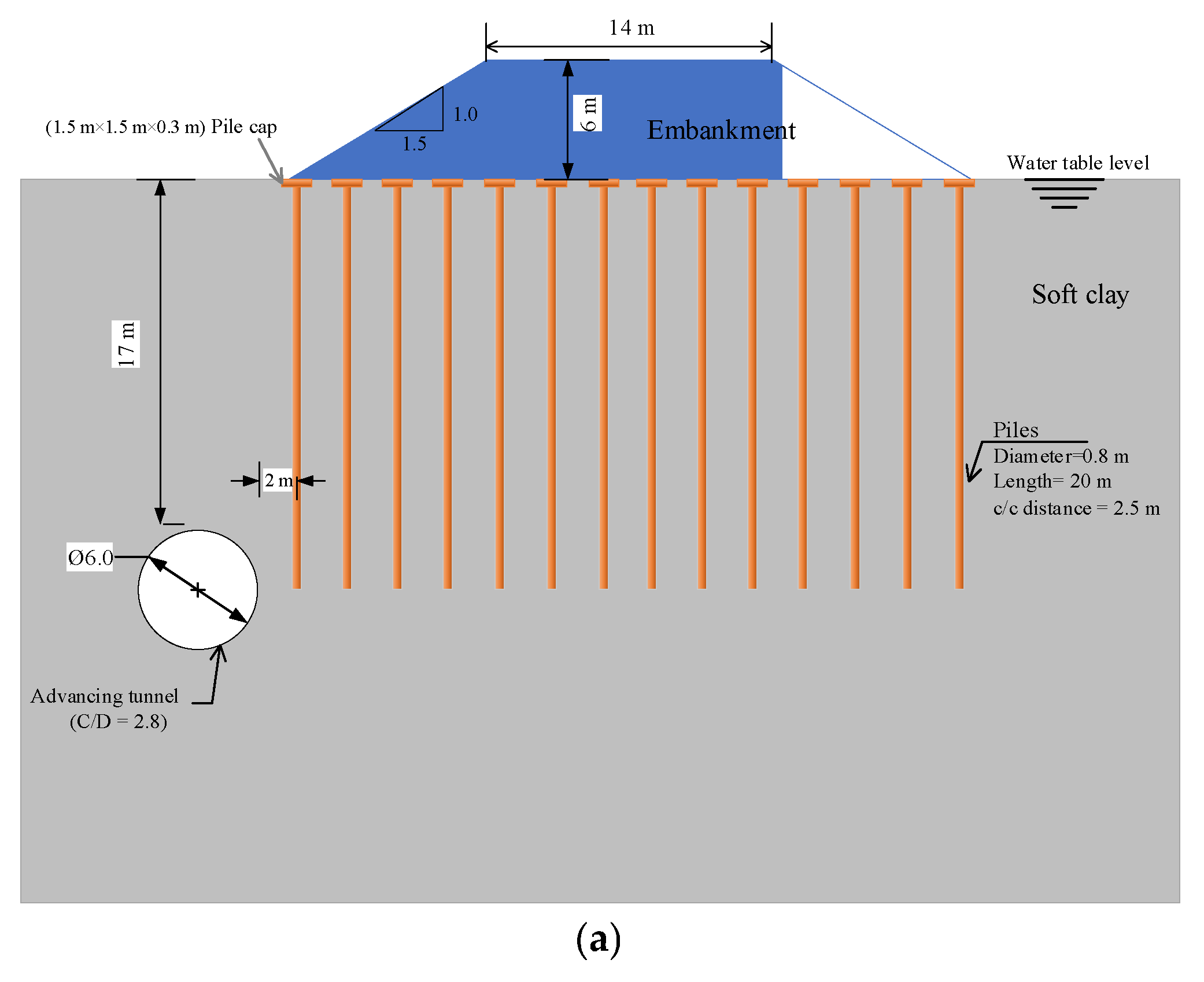
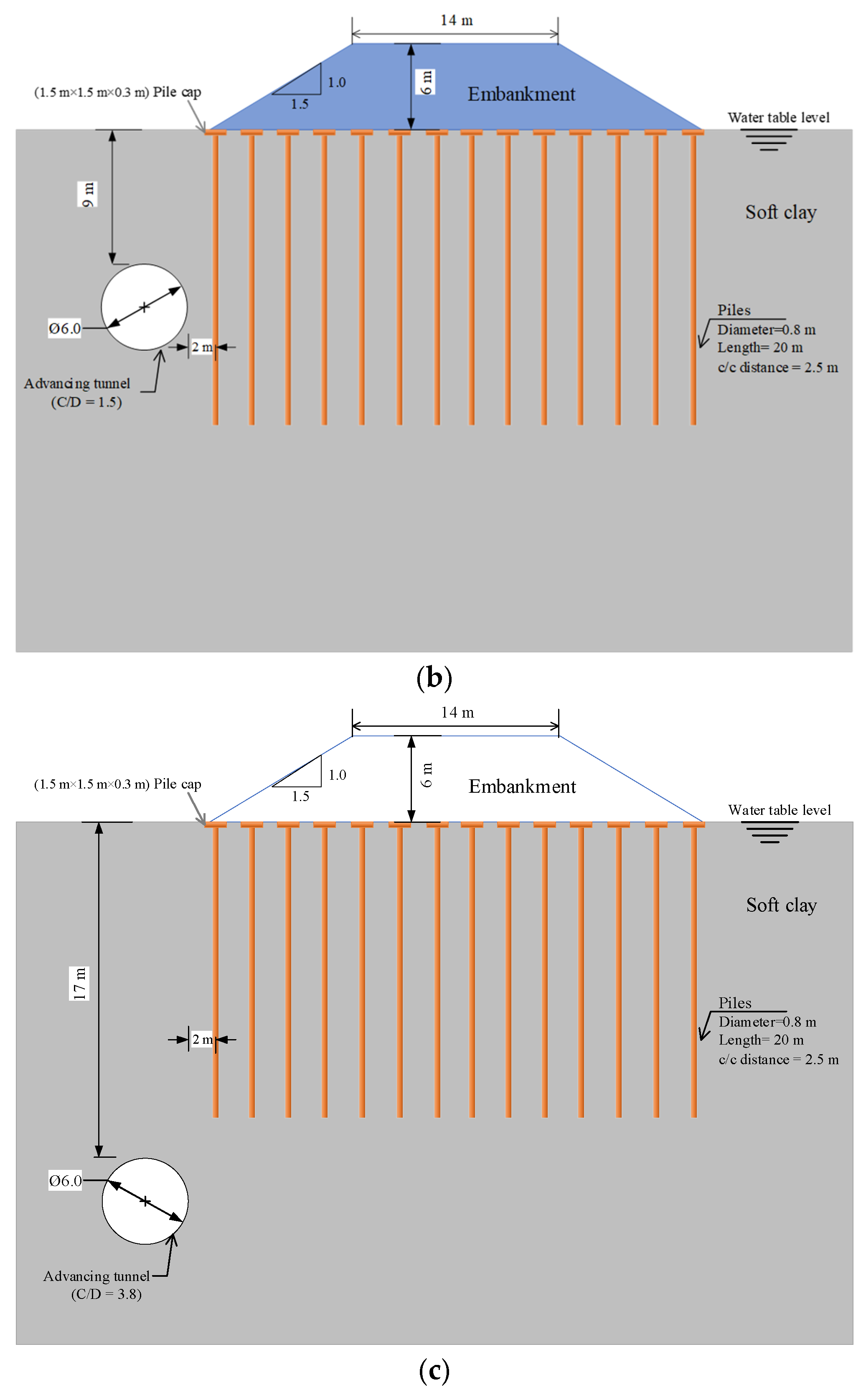
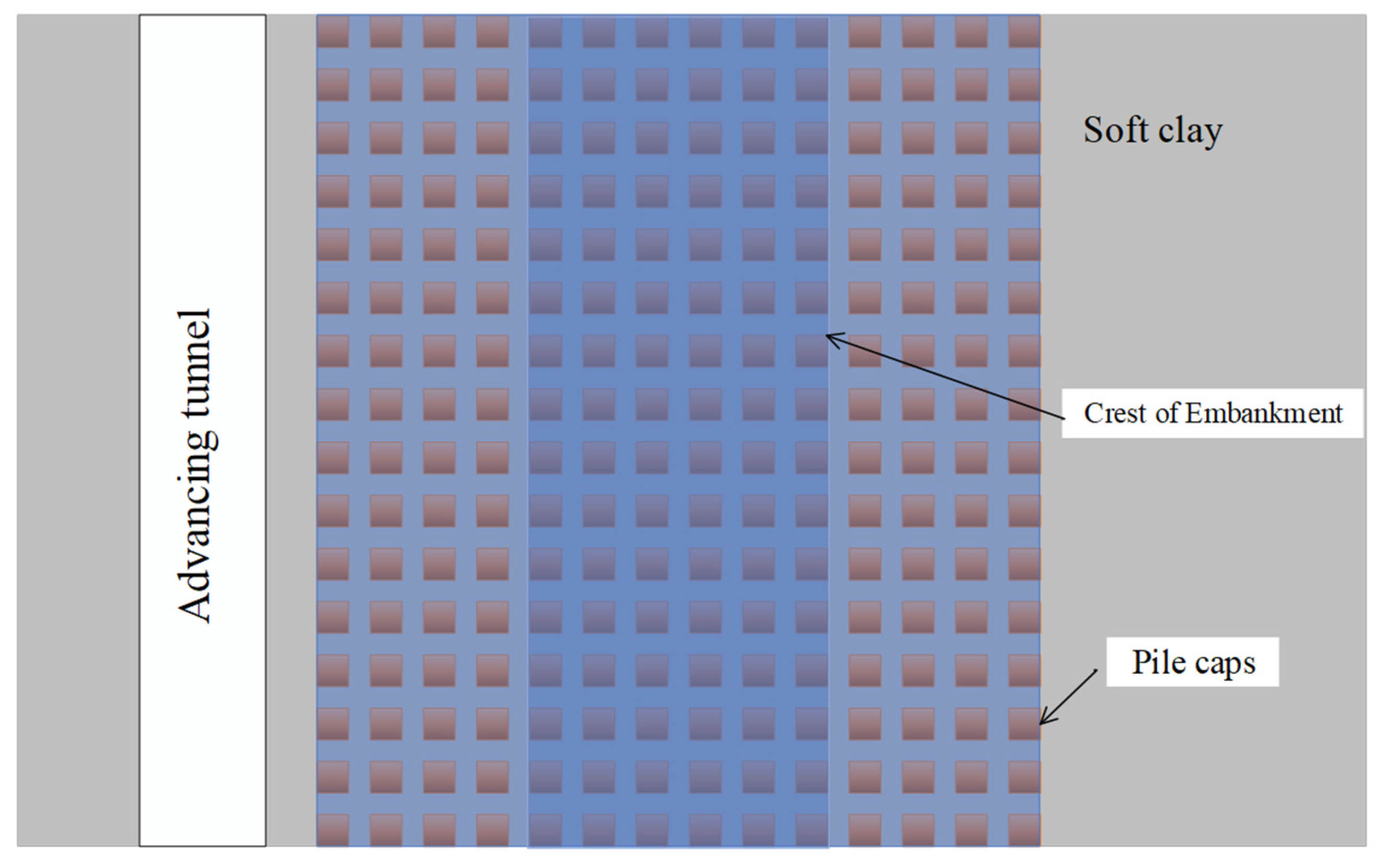
2.1. Representation of Geometrical Features Within the Numerical Analysis
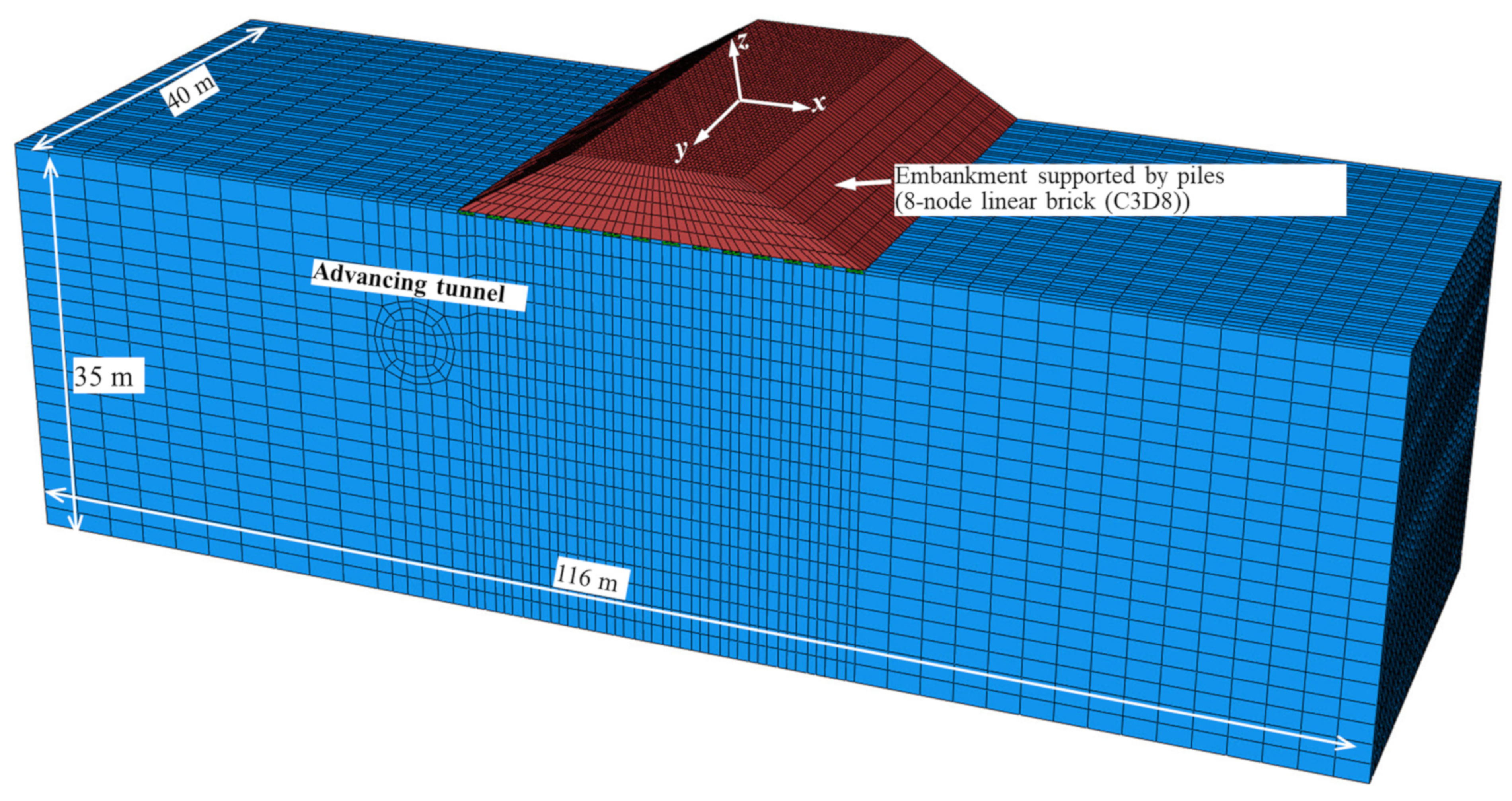
2.2. Finite Element Discretization, Initial Stress Generation, and Boundary Conditions
2.3. Constitutive Model and Material Parameters Adopted in the Numerical Simulations
2.4. Validation of Numerical Model Using Field Data
3. Results and Discussion of Computed Results
3.1. Settlement Mechanism in Pile-Supported Embankment During the Progression of Tunnelling
3.1.1. Induced Settlements at the Crest and Sloping Sides of the Embankment
3.1.2. Development Subgrade Surface Settlement
3.1.3. Induced Pile Settlement
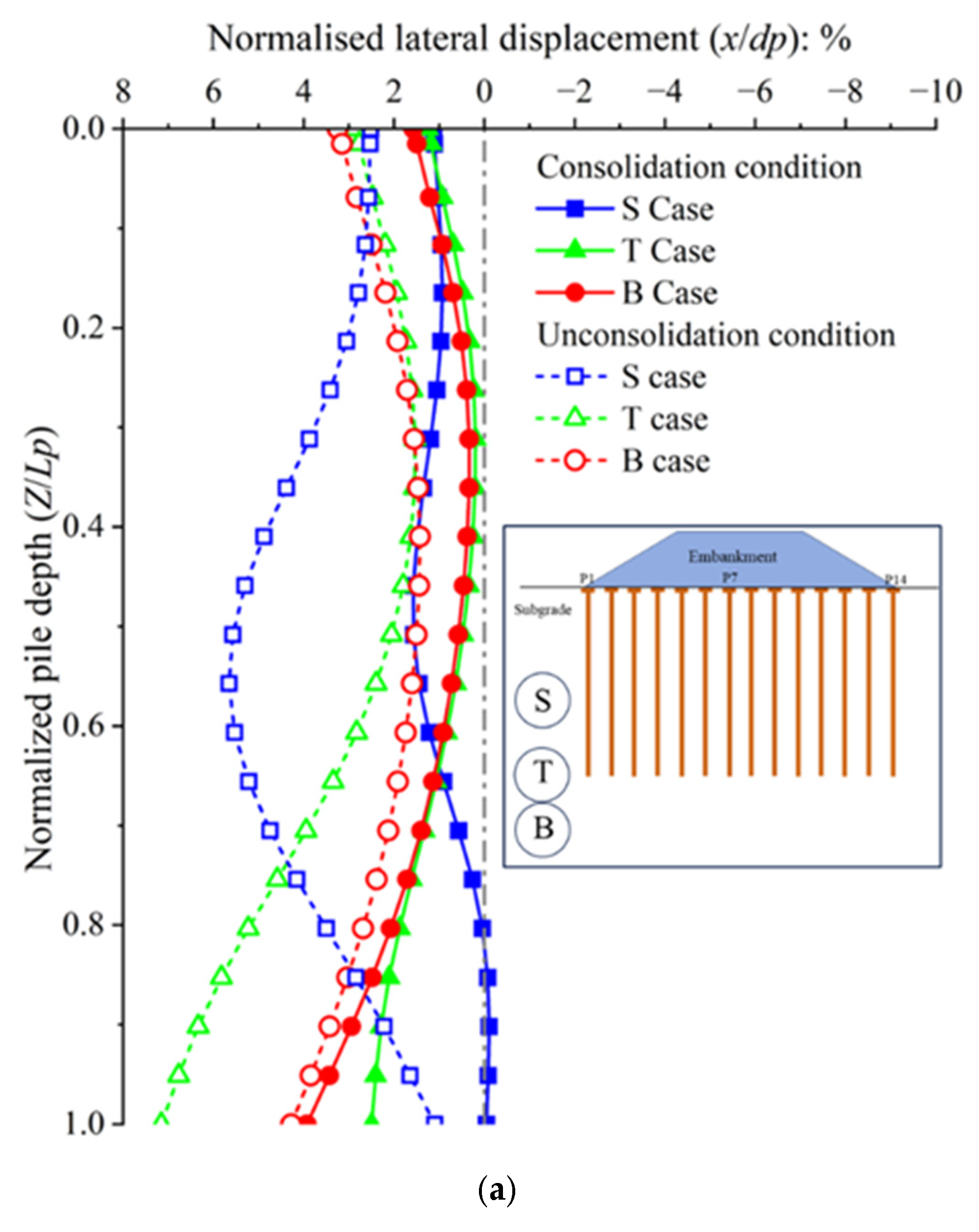
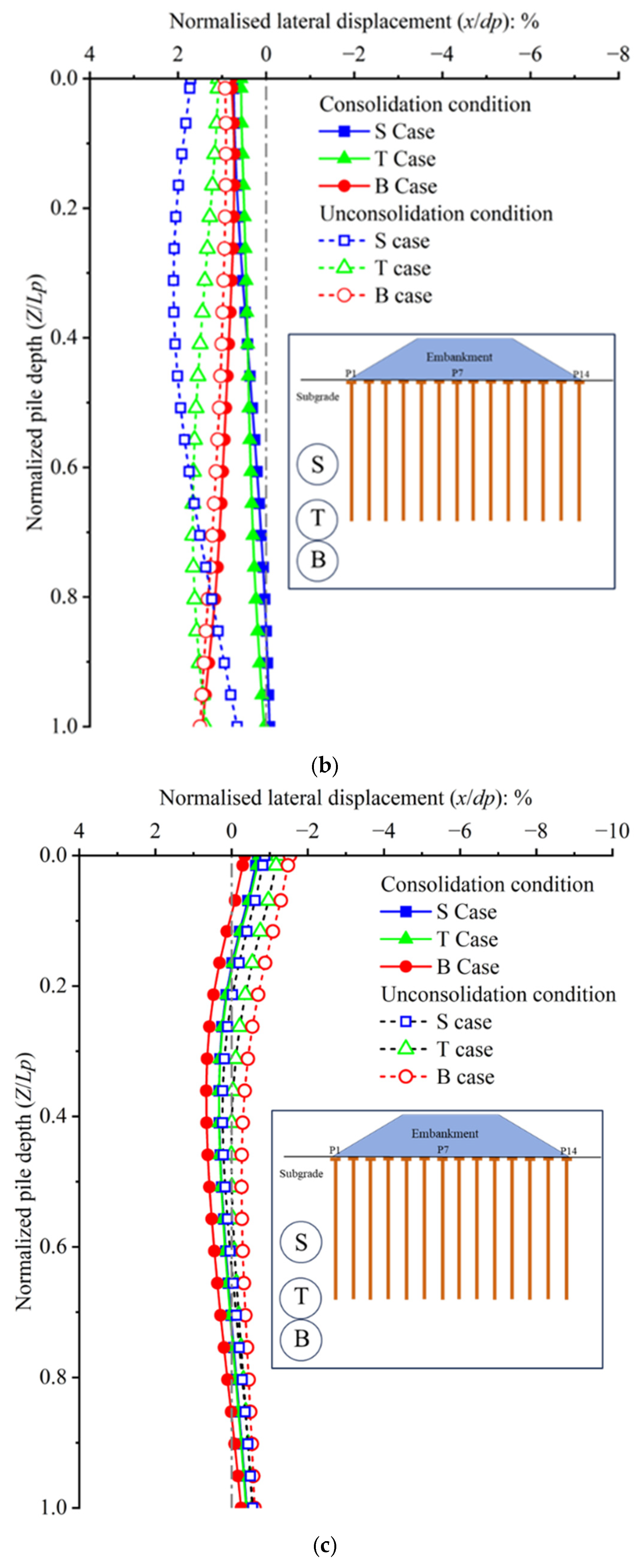
3.1.4. Induced Lateral Movement of Piles
3.2. Load Transfer Mechanism in Pile-Supported Embankment During the Progression of Tunnelling
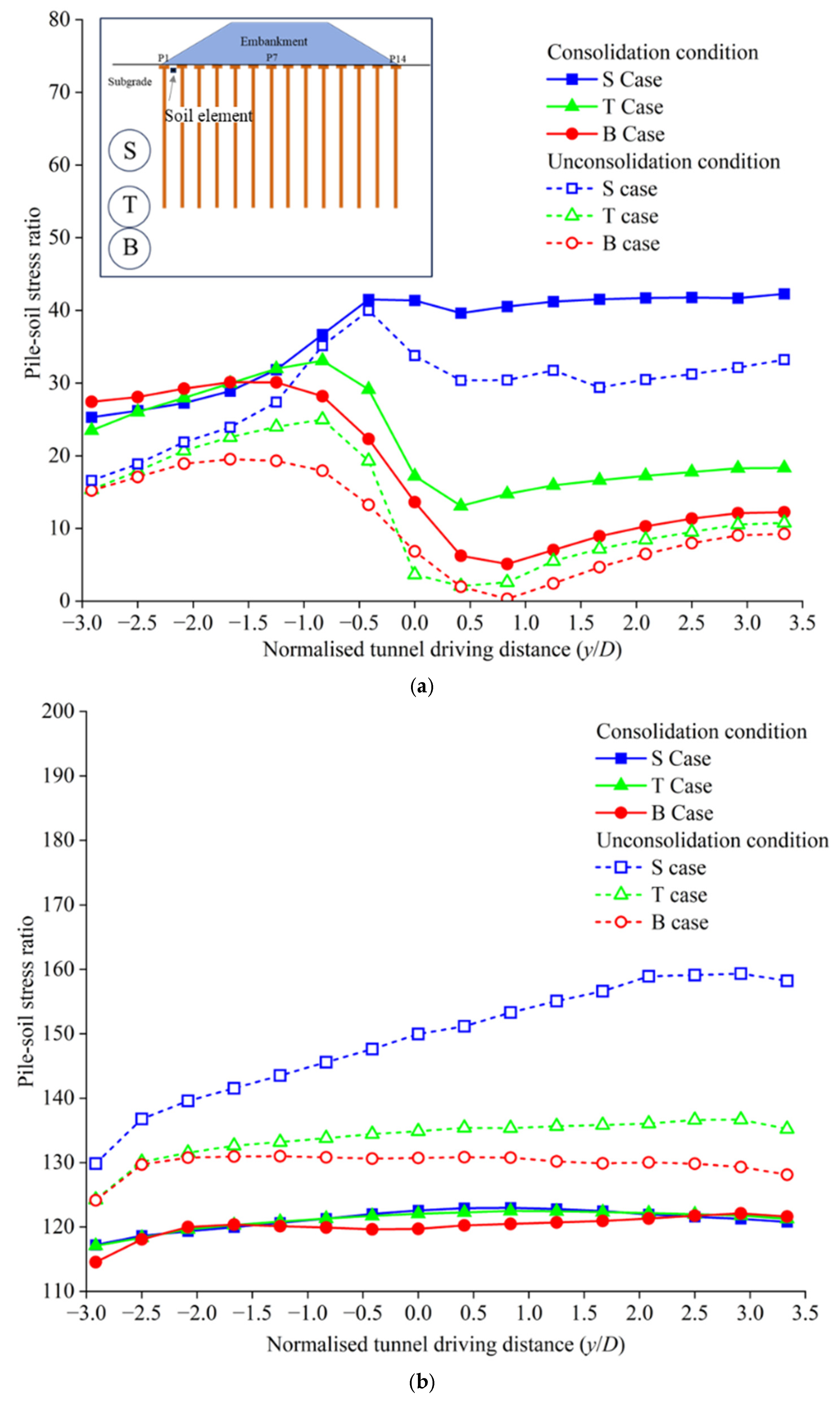
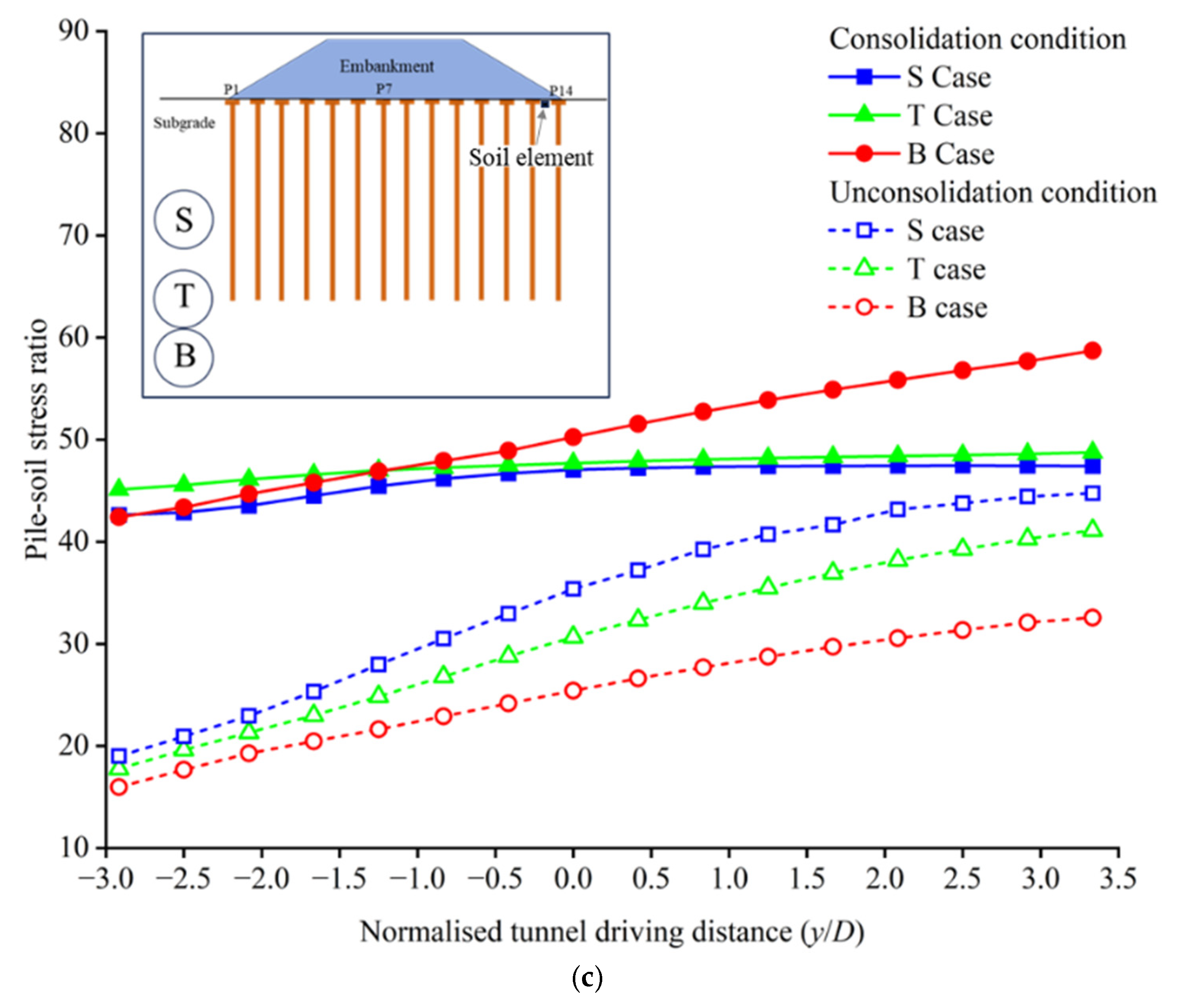
3.2.1. Variation in Pile–Soil Stress Ratio
3.2.2. Changes in Load Distribution in Axial Direction Along Piles
3.2.3. Bending Moment Along Pile Lengths
4. Limitation of the Study
5. Engineering-Oriented Implications for Real Project Applications
6. Conclusions
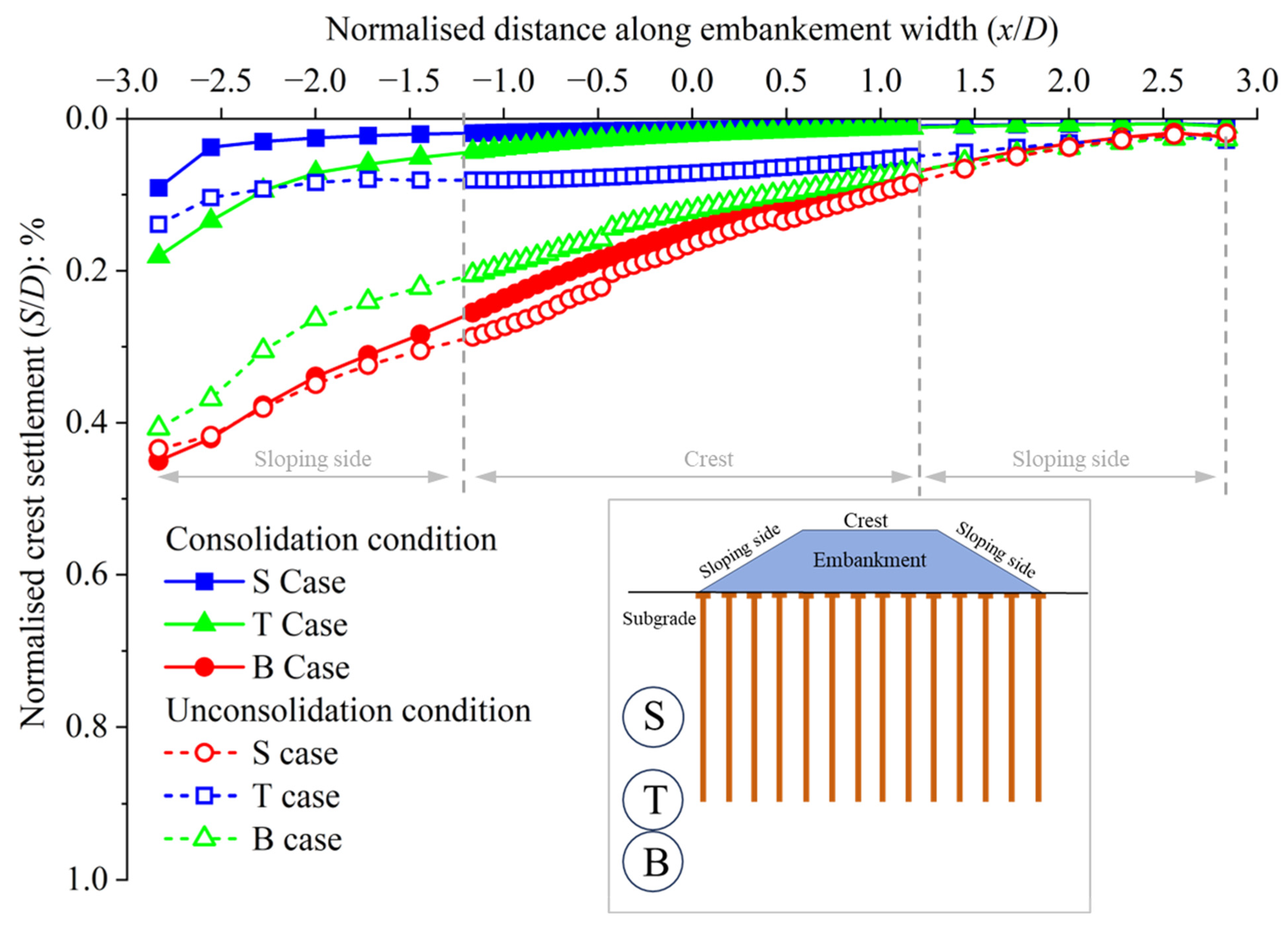
- Tunnel excavation induced notable differential settlements between the crest and slopes of the embankment, with maximum values of 0.49%, 0.20%, and 0.45% for the S, T, and B cases, respectively, under long-term consolidated conditions. The settlements were substantially higher under unconsolidated conditions due to lower subgrade stiffness.
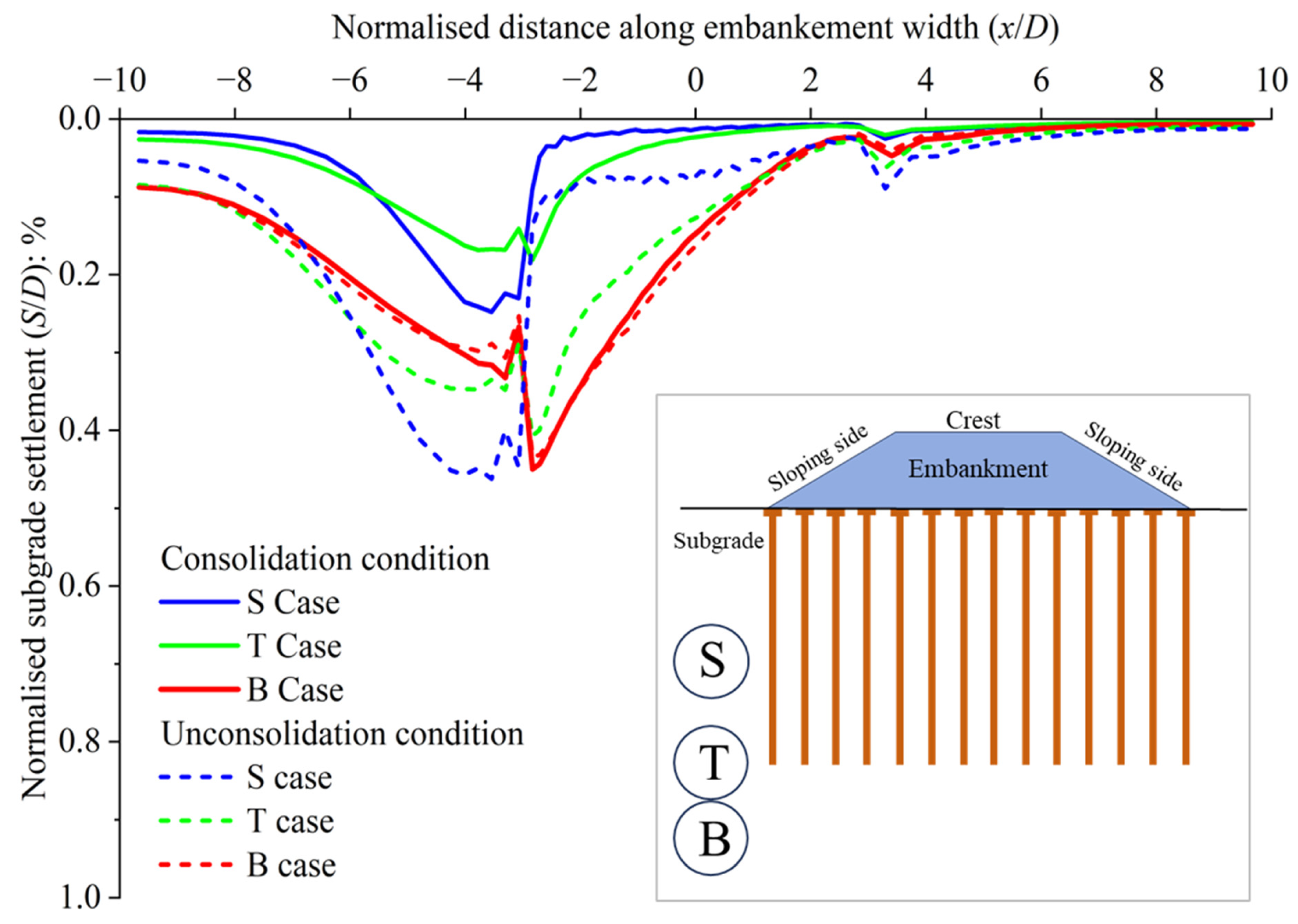
- The maximum subgrade settlement occurred above the tunnel axis, being largest in the S case (shallow tunnel) and smallest in the B case (deep tunnel). However, when considering the entire embankment, overall settlement was greatest in case B because of enhanced ground movement around the longer pile shafts.
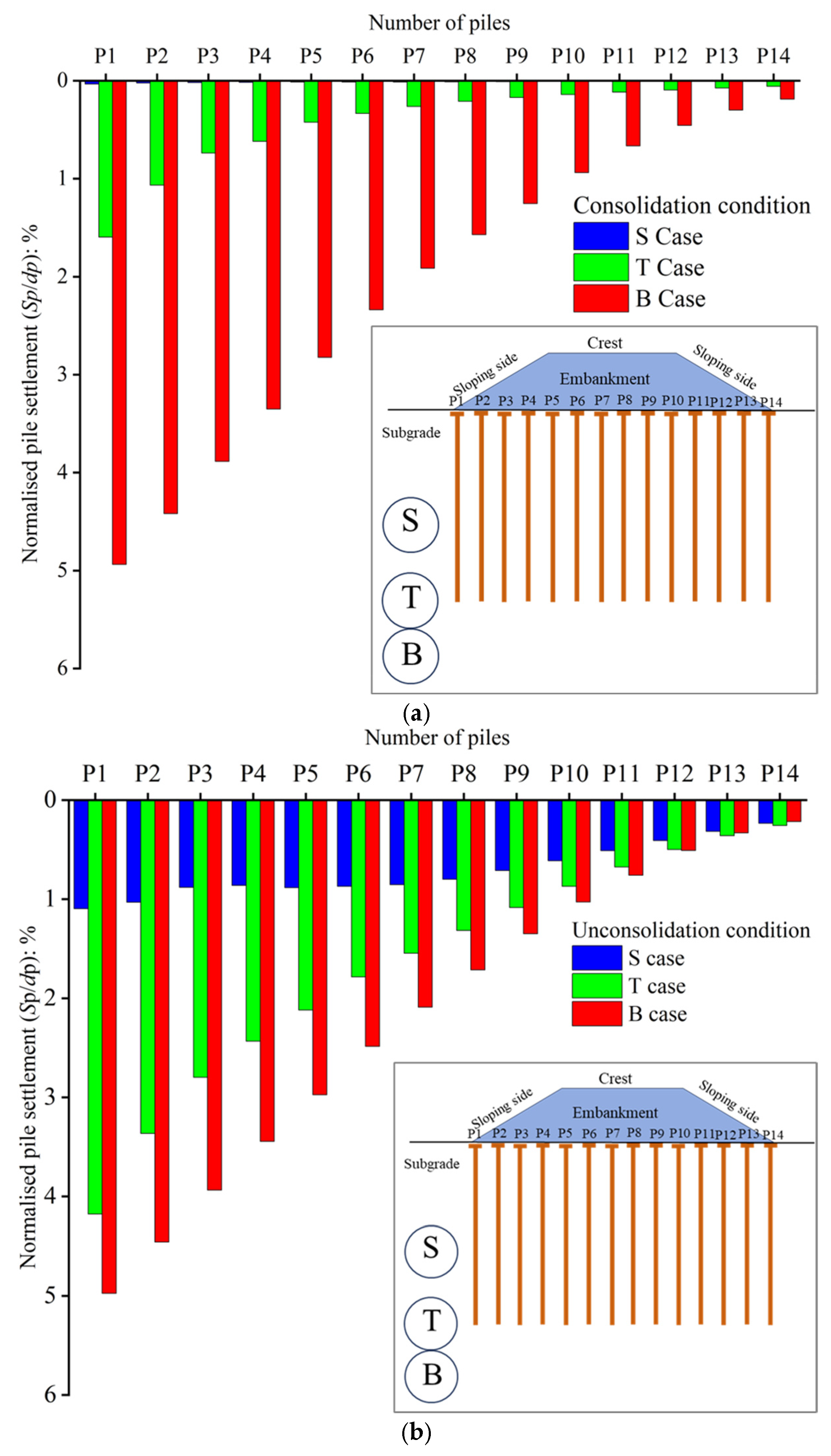
- Pile P1, located closest to the tunnel, experienced the largest settlement in all scenarios, with settlements increasing progressively from case S to case B. Long-term consolidation reduced pile settlement magnitudes by enhancing effective stress and subgrade stiffness, resulting in smaller differential movements.
- The pile–soil stress ratio of P1 increased in Case S as the tunnel approached but decreased sharply in Cases T and B due to loss of toe confinement. In contrast, piles farther from the tunnel (e.g., P7, P14) exhibited a stress ratio increase of up to 20–25% under consolidated conditions, indicating load redistribution away from the tunnel zone.
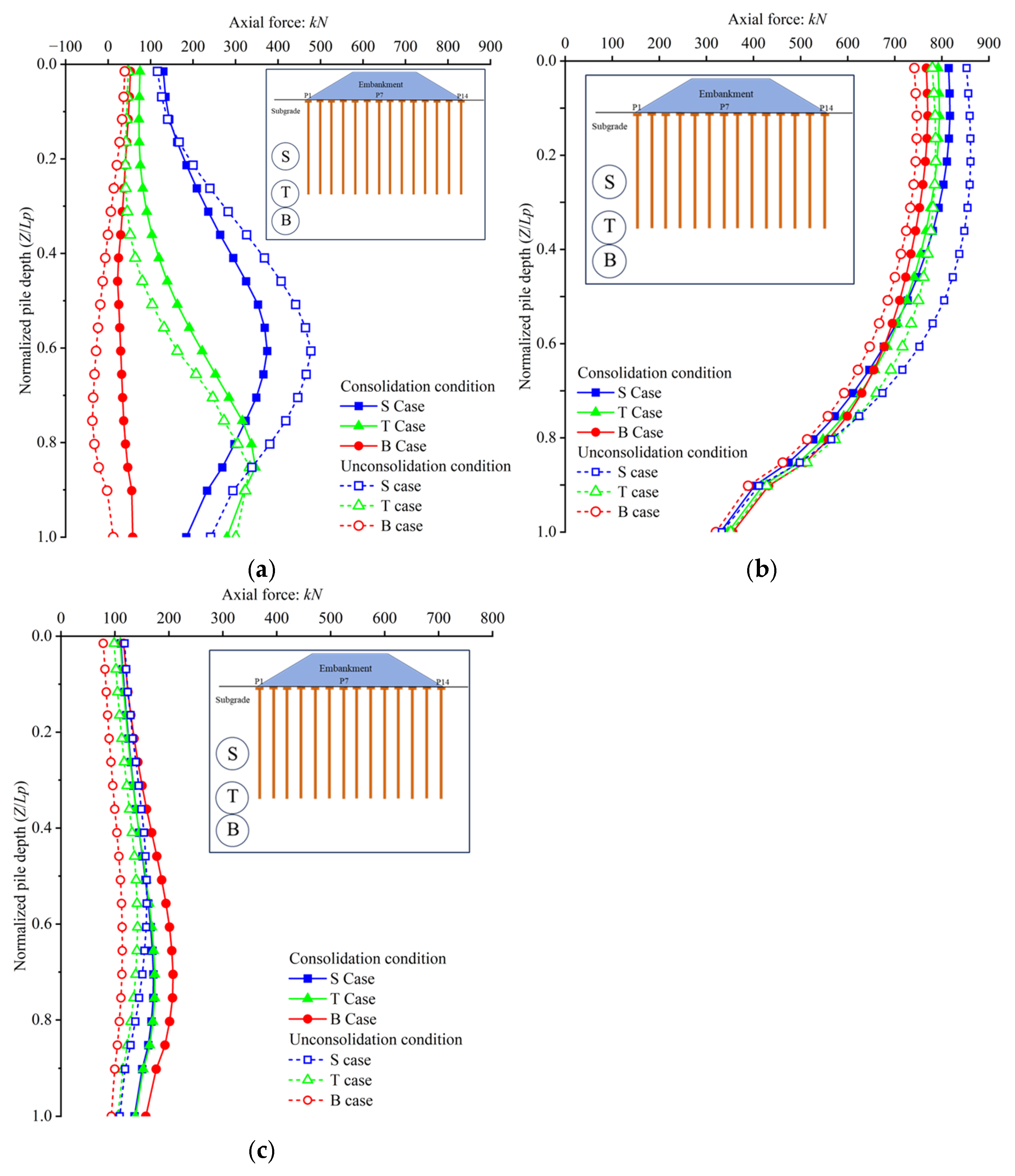
- Deeper tunnelling substantially altered the axial load distribution along the piles, particularly in Cases T and B, where the neutral plane shifted downward from Z/Lp = 0.6 to 0.8, indicating extended negative skin friction zones. The axial load along P1 increased by nearly 120% after tunnel completion due to enhanced drag load effects.
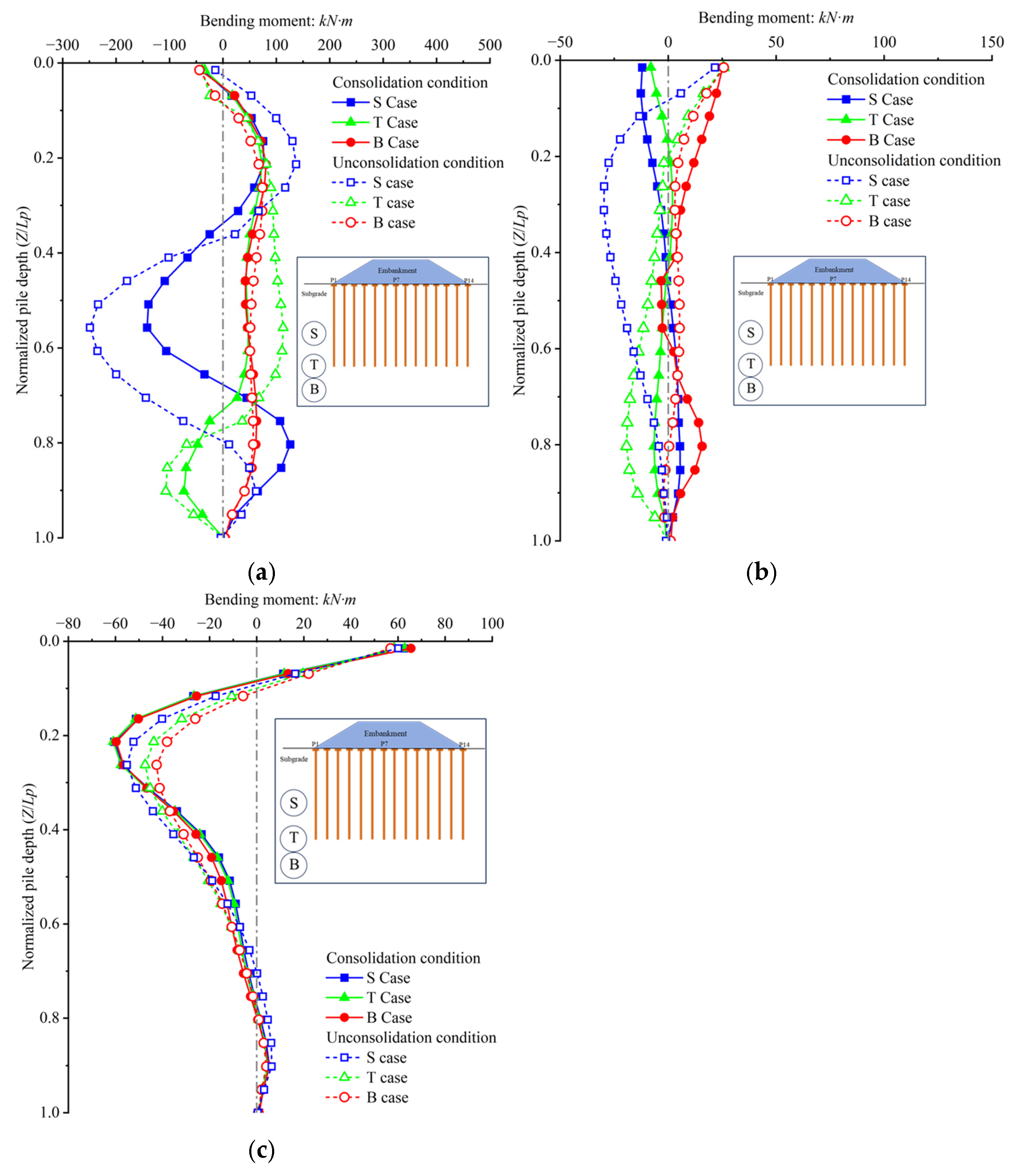
- The maximum bending moment in pile P1 reached approximately 142 kNm at Z/Lp = 0.56 in Case S under unconsolidated conditions, compared with 77 kNm before tunnelling. Consolidation reduced bending deformation but increased load transfer and drag, emphasizing the importance of considering tunnel depth and time-dependent soil stiffness in design.
- The influence of tunnelling reduced rapidly with increasing offset from the excavation zone; piles beyond approximately 2D from the tunnel axis experienced negligible settlement or bending change. These findings suggest that deeper tunnels (Case B) predominantly affect the lower pile portions, while shallow tunnels (Case S) control surface deformation and crest settlement behaviour.
Author Contributions
Funding
Data Availability Statement
Acknowledgments
Conflicts of Interest
References
- Jia, C.; Cheng, S.; Li, L.; Chen, Y. Seismic ahead-prospecting method based on delayed blasting excitation in the tunnel face: A case study. Tunn. Undergr. Space Technol. 2025, 161, 106577. [Google Scholar] [CrossRef]
- Hu, D.; Huang, J.; Xiang, X.; Ni, P.; Li, Y.; Liang, X.; Liu, J. Jacking Force Prediction for Box Jacking Tunnel Considering the Soil Arching Effect. Int. J. Numer. Anal. Methods Geomech. 2025, 49, 2161–2176. [Google Scholar] [CrossRef]
- Cui, X.; Liu, Y.; Du, X.; Xiao, H.; Xu, H.; Du, Y. Effect of fault dislocation on the deformation and damage behavior of ballastless track structures in tunnels. Transp. Geotech. 2025, 52, 101561. [Google Scholar] [CrossRef]
- Wu, B.; Lin, X.T.; Su, D.; Han, K.; Chen, X. Settlement transfer mechanism of CFG piles for strengthening high-speed railway subgrades induced by twin shield tunnelling undercrossing. Tunn. Undergr. Space Technol. 2024, 145, 105577. [Google Scholar] [CrossRef]
- Xu, J.; Gao, M.; Wang, Y.; Yu, Z.; Zhao, J.; DeJong, M.J. Numerical investigation of the effects of separated footings on tunnel-soil-structure interaction. J. Geotech. Geoenvironmental Eng. 2025, 151, 04025057. [Google Scholar] [CrossRef]
- Xu, J.; Zheng, L.; Song, G.; Zhang, D.; Sheil, B.; Marshall, A.M. Effects of embedded walls on tunnelling-induced sandy ground displacements: A numerical investigation. Géotechnique 2025, 75, 472–485. [Google Scholar] [CrossRef]
- Lin, C.; Huang, M.; Nadim, F.; Liu, Z. Embankment responses to shield tunnelling considering soil-structure interaction: Case studies in Hangzhou soft ground. Tunn. Undergr. Space Technol. 2020, 96, 103230. [Google Scholar] [CrossRef]
- Hu, D.; Liu, J.; Li, Y.; Tan, Z. Prediction method of ground settlement for rectangular tunnel construction. Tunn. Undergr. Space Technol. 2025, 164, 106814. [Google Scholar] [CrossRef]
- Quan, Y.; Tan, X.; Hu, Z.; Huang, M. Measurement and Analysis of Deformation of Underlying Tunnel Induced by Foundation Pit Excavation. Adv. Civ. Eng. 2023, 2023, 8897139. [Google Scholar] [CrossRef]
- Wang, K.; Qiu, Z.; Hu, H.; Sun, M.; Wang, J. Macro-meso mechanical behavior and degradation mechanisms of silty clay subgrade subjected to coupled traffic loading and dry-wet cycles. Transp. Geotech. 2025, 55, 101725. [Google Scholar] [CrossRef]
- TB 10314-2021; National Railway Administration of People’s Republic of China. Technical Specification for Safety Monitoring of Operating Railway Infrastructures with Adjacent Constructions. China Railway Publishing House: Beijing, China, 2021.
- Ouyang, Z.; Mayne, P.W. Effective stress friction angle of normally consolidated and overconsolidated intact clays from piezocone tests. Geotech. Eng. J. SEAGS AGSSEA 2020, 51, 111–116. [Google Scholar]
- Hu, D.; Xiang, X.; Huang, J.; Qi, K.; Li, Y.; Yang, X.; Liang, X. Calculation Methods for the Jacking Force of a Rectangular Pipe Jacking Tunnel: Overview and Prospects. J. Pipeline Syst. Eng. Pract. 2025, 16, 3125001. [Google Scholar] [CrossRef]
- Hong, Y.; Soomro, M.A.; Ng, C.W.W. Settlement and load transfer mechanism of pile group due to side-by-side twin tunnelling. Comput. Geotech. 2015, 64, 105–119. [Google Scholar] [CrossRef]
- Lu, H.; Shi, J.; Ng, C.W.; Lv, Y. Three-dimensional centrifuge modeling of the influence of side-by-side twin tunneling on a piled raft. Tunn. Undergr. Space Technol. 2020, 103, 103486. [Google Scholar]
- Pang, C.H.; Yong, K.Y.; Chow, Y.K. Three dimensional numerical simulation of tunnel advancement on adjacent pile foundation. In Underground Space Use: Analysis of the Past and Lessons for the Future; Erdem, Y., Solak, T., Eds.; Taylor and Francis: London, UK, 2005; pp. 1141–1147. [Google Scholar]
- Xu, J.; Wang, Y.; Gao, M.; Ni, J.; Cao, L. Effects of foundation pressure and building stiffness on tunnel-separated footing interaction. Can. Geotech. J. 2025, 62, 1–20. [Google Scholar] [CrossRef]
- Xu, J.; Yu, Z.; Li, Y.; Ni, J. Effects of foundation types on structural response to tunnelling in sand: A numerical investigation. Comput. Geotech. 2025, 190, 107723. [Google Scholar] [CrossRef]
- Soomro, M.A.; Mangi, N.; Cui, Z.D.; Liu, K.; Mangnejo, D.A. Evaluation of response mechanisms in an elevated pile group subjected to lateral loading caused by twin-tunnelling. Comput. Geotech. 2024, 171, 106334. [Google Scholar] [CrossRef]
- Soomro, M.A.; Liu, K.; Cui, Z.D.; Mangi, N.; Mangnejo, D.A. Insights from 3D numerical simulations on the impact of tunnelling on vertical and battered pile groups under lateral loading. Comput. Geotech. 2024, 169, 106195. [Google Scholar] [CrossRef]
- Soomro, M.A.; Dai, M.; Cui, Z.D.; Mangi, N.; Mangnejo, D.A.; Zhao, C. Impact of twin stacked tunnels on laterally loaded pile groups: An emphasis on settlement and load transfer mechanisms using centrifuge and numerical modelling. Structures 2024, 70, 107746. [Google Scholar] [CrossRef]
- Huang, S.; Wang, P.; Lai, Z.; Yin, Z.Y.; Huang, L.; Xu, C. Machine-learning-enabled discrete element method: The extension to three dimensions and computational issues. Comput. Methods Appl. Mech. Eng. 2024, 432, 117445. [Google Scholar]
- Soomro, M.A.; Dai, M.; Liu, K.; Darban, S.A.; Cui, Z.D.; Mangi, N. Predicting Responses of a Single Pile Considering Lateral Load to Tunnelling Induced Ground Movement: Analytical and Numerical Insights. Int. J. Numer. Anal. Methods Geomech. 2025, 49, 3753–3776. [Google Scholar] [CrossRef]
- Selemetas, D. The Response of Full-Scale Piles and Pile Structures to Tunneling. Ph.D. Thesis, Cambridge University, Cambridge, UK, 2005. [Google Scholar]
- Soomro, M.A.; Kumar, M.; Xiong, H.; Mangnejo, D.A.; Mangi, N. Investigation of effects of different construction sequences on settlement and load transfer mechanism of single pile due to twin stacked tunnelling. Tunn. Undergr. Space Technol. 2020, 96, 103171. [Google Scholar] [CrossRef]
- Lee, C.J. Numerical analysis of pile response to open face tunnelling in stiff clay. Comput. Geotech. 2013, 42, 116–127. [Google Scholar] [CrossRef]
- Li, H.; Liu, S.; Tong, L.; Zhang, D. Influence of the head fixity adjustment of existing piles on the lateral load response of new piles. Géotechnique 2023, 75, 56–67. [Google Scholar] [CrossRef]
- Gu, W.; Li, H.; Tong, L. Evaluation of tunneling-induced lateral pile response by an artificial intelligence optimization algorithm. Int. J. Geomech. 2023, 23, 04023178. [Google Scholar] [CrossRef]
- Li, H.; Tamura, S. An existing pile efficiency method for the design of lateral new pile behavior in sites with existing piles. Can. Geotech. J. 2023, 60, 1188–1201. [Google Scholar] [CrossRef]
- Wang, K.; Cao, J.; Ye, J.; Qiu, Z.; Wang, X. Discrete element analysis of geosynthetic-reinforced pile-supported embankment. Constr. Build. Mater. 2024, 449, 138448. [Google Scholar] [CrossRef]
- Soomro, M.A.; Xiong, S.; Cui, Z.D.; Zhao, C.; Mangi, N. Piled-supported embankment responses to tunnelling in soft ground: An investigation of settlement and load transfer mechanisms. Tunn. Undergr. Space Technol. 2025, 156, 106241. [Google Scholar] [CrossRef]
- Chang, C.-T.; Sun, C.-W.; Duann, S.W.; Hwang, R.N. Response of a Taipei Rapid Transit System (TRTS) tunnel to adjacent excavation. Tunn. Undergr. Space Technol. 2001, 16, 151–158. [Google Scholar] [CrossRef]
- Yang, Q.; Wang, B.; Guo, W. Effects of Large-Diameter Shield Tunneling on the Pile Foundations of High-Speed Railway Bridge and Soil Reinforcement Schemes. Symmetry 2022, 14, 1913. [Google Scholar] [CrossRef]
- Wang, K.; Ye, J.; Wang, X.; Qiu, Z. The soil-arching effect in pile-supported embankment: A review. Buildings 2024, 14, 126. [Google Scholar] [CrossRef]
- Wang, T.; Wang, P.; Yin, Z.Y.; Laouafa, F.; Hicher, P.Y. Hydro-mechanical analysis of particle migration in fractures with CFD-DEM. Eng. Geol. 2024, 335, 107557. [Google Scholar] [CrossRef]
- Wang, T.; Wang, P.; Yin, Z.Y.; Zhang, F.; Xu, C. DEM-DFM modeling suffusion of granular soils under triaxial compression. Int. J. Geomech. 2025, 25, 04024352. [Google Scholar] [CrossRef]
- Wang, P.; Yin, Z.Y.; Hicher, P.Y.; Cui, Y.J. Micro-mechanical analysis of one-dimensional compression of clay with DEM. Int. J. Numer. Anal. Methods Geomech. 2023, 47, 2706–2724. [Google Scholar] [CrossRef]
- Hong, Y.; Wang, L.Z.; Ng, C.W.W.; Yang, B. Effect of initial pore pressure on undrained shear behaviour of fine-grained gassy soil. Can. Geotech. J. 2017, 54, 1592–1600. [Google Scholar] [CrossRef]
- Mašín, D. A hypoplastic constitutive model for clays. Int. J. Numer. Analyt. Meth. Geomech. 2005, 29, 311–336. [Google Scholar] [CrossRef]
- Niemunis, A.; Herle, I. Hypoplastic model for cohesionless soils with elastic strain range. Mech. Cohesive-Frict. Mater. 1997, 2, 279–299. [Google Scholar] [CrossRef]
- Mašín, D.; Herle, I. State boundary surface of a hypoplastic model for clays. Comput. Geotech. 2005, 32, 400–410. [Google Scholar] [CrossRef]
- Al-Tabbaa, A. Permeability and Stress-Strain Response of Speswhite Kaolin. Ph.D. Thesis, University of Cambridge, Cambridge, UK, 1987. [Google Scholar]
- Benz, T. Small-Strain Stiffness and Its Numerical Consequences. Ph.D. Thesis, Universitat Stuttgart, Stuttgart, Germany, 2007. [Google Scholar]
- Wang, L.Z.; Lai, Y.Q.; Hong, Y.; Masin, D. A unified lateral soil reaction model for monopiles in soft clay considering various length-to-diameter (L/D) ratios. Ocean Eng. 2020, 212, 107492. [Google Scholar] [CrossRef]
- Zheng, Y.; Li, J.; Li, J. Determination of Initial Void Ratio of Remolded Clay Using Bayesian Data Fusion Approach. Geotech. Test. J. 2025, 48, 346–363. [Google Scholar] [CrossRef]
- Cai, D.G.; Ye, Y.S.; Zhang, Q.L.; Yan, H.Y.; He, H.W. Field test study on the mechanical behaviors of the geosynthetic-reinforced pile-supported embankment and the deformation of the reinforced bedding. China Railw. Sci. 2009, 30, 1–8. [Google Scholar]
- Yan, M.; Guo, S.; Zhang, H.; Song, X.; Xiao, H. Investigation on Load Transfer in Geosynthetic-Reinforced pile-supported embankment. Indian Geotech. J. 2024, 55, 161–175. [Google Scholar] [CrossRef]



| Description | Parameter |
|---|---|
| Effective angle of shearing resistance at critical state: ϕ’ | 22° |
| Parameter controlling the slope of the isotropic normal compression line in the ln(1 + e) versus lnp plane, λ* | 0.11 |
| Parameter controlling the slope of the isotropic normal compression line in the ln(1 + e) versus lnp plane, κ* | 0.026 |
| Parameter controlling the position of the isotropic normal compression line in the ln(1 + e)–ln p plane, N | 1.36 |
| Parameter controlling the shear stiffness at medium- to large- strain levels, r | 0.65 |
| Parameter controlling initial shear modulus upon 180° strain path reversal, mR | 14 |
| Parameter controlling initial shear modulus upon 90° strain path reversal, mT | 11 |
| Size of elastic range, R | 1 × 10⁻⁵ |
| Parameter controlling the rate of degradation of the stiffness with strain βr | 0.1 |
| Parameter controlling degradation rate of stiffness with strain χ | 0.7 |
| Initial void ratio, e | 1.0 |
| Dry density (kg/m3) | 1136 |
| Coefficient of permeability, k (m/s) | 1 × 10⁻⁹ |
Disclaimer/Publisher’s Note: The statements, opinions and data contained in all publications are solely those of the individual author(s) and contributor(s) and not of MDPI and/or the editor(s). MDPI and/or the editor(s) disclaim responsibility for any injury to people or property resulting from any ideas, methods, instructions or products referred to in the content. |
© 2025 by the authors. Licensee MDPI, Basel, Switzerland. This article is an open access article distributed under the terms and conditions of the Creative Commons Attribution (CC BY) license (https://creativecommons.org/licenses/by/4.0/).
Share and Cite
Soomro, M.A.; Xiong, S. Numerical Insights into Tunnel Excavation Effects on Pile-Supported Embankment in Soft Clay: A Comparison Between Consolidated and Unconsolidated Conditions. Buildings 2025, 15, 4448. https://doi.org/10.3390/buildings15244448
Soomro MA, Xiong S. Numerical Insights into Tunnel Excavation Effects on Pile-Supported Embankment in Soft Clay: A Comparison Between Consolidated and Unconsolidated Conditions. Buildings. 2025; 15(24):4448. https://doi.org/10.3390/buildings15244448
Chicago/Turabian StyleSoomro, Mukhtiar Ali, and Shaokai Xiong. 2025. "Numerical Insights into Tunnel Excavation Effects on Pile-Supported Embankment in Soft Clay: A Comparison Between Consolidated and Unconsolidated Conditions" Buildings 15, no. 24: 4448. https://doi.org/10.3390/buildings15244448
APA StyleSoomro, M. A., & Xiong, S. (2025). Numerical Insights into Tunnel Excavation Effects on Pile-Supported Embankment in Soft Clay: A Comparison Between Consolidated and Unconsolidated Conditions. Buildings, 15(24), 4448. https://doi.org/10.3390/buildings15244448