Review

An Analytical Review of Humidity-Regulating Materials: Performance Optimization and Applications in Hot and Humid Regions


1
School of Ocean Engineering, Guangzhou Maritime University, Guangzhou 510725, China
2
School of Environmental Science and Engineering, Suzhou University of Science and Technology, Suzhou 215009, China
3
School of Future Transportation, Guangzhou Maritime University, Guangzhou 510725, China
*
Authors to whom correspondence should be addressed.
Buildings 2025, 15(23), 4376; https://doi.org/10.3390/buildings15234376 (registering DOI)
Submission received: 2 November 2025 / Revised: 26 November 2025 / Accepted: 27 November 2025 / Published: 2 December 2025
(This article belongs to the Special Issue Enhancing Building Resilience Under Climate Change)

Abstract

Humidity-regulating materials (HRMs) represent a promising class of passive, energy-efficient materials capable of autonomously modulating indoor environmental conditions, particularly in hot and humid regions where conventional HVAC systems account for up to 50% of building energy consumption. While prior reviews have focused on material classification and performance metrics, a systematic synthesis of performance optimization strategies and quantitative application outcomes remains lacking. This review addresses this gap by consolidating advances in HRM enhancement through material compounding, physical modification, and chemical functionalization, resulting in performance improvements such as a 70% increase in moisture absorption with 3% fiber addition, a 1.2-fold enhancement in adsorption capacity via pore optimization, and up to 50% energy savings in building applications. Furthermore, the integration of HRMs into radiant cooling systems elevates the dew point temperature difference by 181%, effectively mitigating condensation risks. Simulation tools—ranging from 1D to 3D multiphysics models—have advanced predictive accuracy for coupled heat and moisture transfer, supporting optimized material design and system integration. By systematically summarizing performance metrics, enhancement mechanisms, and real-world applications, this work provides a quantitative and structured reference for the development and deployment of next-generation HRMs in sustainable building systems.

1. Introduction

Building operations constitute a significant portion of global energy demand and carbon dioxide emissions, with figures reaching as high as 39% of total energy consumption and 40% to 48% of energy-related emissions in developed economies such as the United States [1,2]. Heating, ventilation, and air conditioning (HVAC) systems are among the most energy-intensive components in buildings, responsible for up to 50% of their total energy use [3]. The general method for dehumidification in conventional air conditioning systems requires cooling the air to its dew point to remove latent heat, after which it must be reheated to the required supply temperature. This process of simultaneous cooling and reheating results in considerable energy inefficiency [4].
Humidity-regulating materials (HRMs) are an emerging class of smart materials that regulate ambient humidity autonomously and passively using their inherent physicochemical properties, requiring no external energy or mechanical systems [5]. This passive operation ensures zero energy consumption, making it consistent with green and sustainable development principles [6,7]. HRMs are mainly divided by composition and humidity regulation mechanism into inorganic mineral-based (e.g., silica gel, zeolite), inorganic salt-based (e.g., calcium chloride), organic polymer-based (e.g., cellulose), and composite types [8,9,10,11]. Inorganic mineral-based materials operate by physical adsorption, featuring fast moisture exchange but limited capacity. Inorganic salt-based materials achieve high capacity through chemical adsorption but often have poor desorption. Organic polymer-based materials provide high moisture storage but exhibit slow desorption. Composite humidity control materials combine the benefits of each, resulting in significantly enhanced performance [12].
Evaluation methods for the moisture absorption and release performance of HRMs are generally classified into three levels [13]: material, system, and room. At the material level, performance is evaluated based on fundamental hygrothermal properties, including the maximum equilibrium moisture content, water vapor diffusion coefficient, and sorption isotherms. At the system level, the dynamic moisture absorption and desorption capabilities of HRMs are investigated under typical boundary conditions involving variations in temperature and humidity. Among the metrics employed, the Moisture Buffering Value (MBV) is widely adopted as a key indicator. Literature reviews suggest that a higher MBV corresponds to improved humidity regulation performance and greater energy-saving potential. Although existing review studies [13,14,15] have systematically summarized the classification, mechanisms, and evaluation metrics of HRMs, they mainly focus on the fundamental properties of single-type materials and exhibit certain limitations. On the one hand, current reviews mainly address the performance of individual HRM categories, with insufficient exploration of optimization strategies, synergistic effects in composite materials, and the associated mechanisms and modeling approaches. On the other hand, there is a lack of systematic synthesis regarding the performance of optimized HRMs in practical applications. To address these research gaps, this paper systematically examines two key aspects: performance optimization methods for HRMs and the application performance of optimized HRMs across various fields.
The general purpose of this review is to systematically synthesize performance optimization strategies and application outcomes of humidity-regulating materials, bridging material science with building engineering practices. While comprehensive, this study has limitations: the rapidly evolving nature of advanced materials like MOFs may outpace this synthesis, and variations in testing conditions across cited studies limit direct performance comparisons.

2. Materials and Methods

This review employs a systematic and analytical approach to survey the scientific literature on humidity-regulating materials (HRMs). The primary literature search is conducted using major academic databases, including Web of Science, Scopus, and Google Scholar, with a focus on peer-reviewed journal articles, conference proceedings, and key books published predominantly between 2010 and 2025. Keywords such as “humidity-regulating materials”, “moisture buffering value”, “hygrothermal performance”, “phase change materials (PCM)”, and “building energy efficiency” are utilized to identify relevant publications.
The selection of literature for in-depth analysis is guided by the following criteria: (1) the study presented original research on the synthesis, modification, or performance characterization of HRMs; (2) the work provided quantitative data on key performance metrics, such as Moisture Buffering Value (MBV), equilibrium moisture content, or pore structure characteristics; or (3) the research demonstrated innovative applications of HRMs in building envelopes, HVAC systems, or related fields. The methodological framework of this review was structured around two core analytical themes: performance optimization strategies (categorized into material compounding, physical modification, and chemical enhancement) and application performance evaluation (encompassing building materials, radiant cooling terminals, and sensors), as illustrated in Figure 1. Furthermore, the principles of multiphysics modeling and simulation techniques for predicting coupled heat and moisture transfer were studied to establish a link between material properties and system-level performance.

3. Performance Optimization of Humidity Control Materials

3.1. Multi-Material Composites

To improve the moisture absorption and desorption properties of materials, two or more humidity-regulating materials are frequently combined. Through physical mixing or chemical integration, complementary advantages emerged, leading to enhanced moisture regulation efficiency and moisture storage capacity. Such composite strategies not only elevate the practical value of materials but also offer technical support for their sustainable development and multi-scenario applications.
(1)
Composite with Building Materials
The incorporation of humidity-regulating materials into conventional building envelope components represents a strategic approach to modifying the thermal and hygroscopic performance of existing structures. Furthermore, this composite strategy can enhance the mechanical strength of certain materials under thermal and moisture stresses.
Novais et al. [16] investigated the feasibility of utilizing cork as a lightweight aggregate in alkali-activated composites. Their findings indicated that a 75% cork content was critical for achieving peak performance in both moisture regulation and cost-effectiveness. Park et al. [17] found that incorporating biochar into mortar significantly improved the thermal and hygroscopic performance of porous materials. Their integrated experimental and simulation study established that a 4 wt% addition to mortar yielded the highest compressive strength while enhancing humidity regulation, regardless of the biochar type used. Meanwhile, Li et al. [18] investigated the water transport mechanism of lime-clay composites. They discovered that increasing lime content promoted a faster conversion of free water into bound and hydrated states, thereby improving moisture transfer.
However, since traditional building materials typically exhibit inherently limited humidity-regulating capacity, the resulting composites seldom exceed the maximum performance of any individual constituent. Consequently, this strategy predominantly serves to optimize existing structural systems, rather than substantially enhancing the intrinsic properties of the materials or significantly improving indoor thermal comfort.
(2)
Composite with Biofibers
Biofibers, including hemp, straw, bamboo, and wood fibers, are derived from abundant agricultural byproducts. Owing to their renewable nature, low cost, high hygroscopicity, and minimal environmental impact, these materials have garnered extensive attention and found broad applications across various fields [19,20,21,22].
Bouferra et al. [23] improved the hygroscopic performance of clay-kaolin composites through the incorporation of plant fibers. Their experimental data indicated a positive correlation between moisture absorption capacity and fiber content: under conditions of 30 °C and 90% relative humidity (RH), a 3% fiber addition increased absorption by 70%, accompanied by an S-shaped isothermal adsorption curve. Wang et al. [24] fabricated inorganic humidity-regulating bricks by integrating poplar wood fibers with calcium hydroxide. The resulting composite demonstrated excellent moisture buffering capacity, which was attributed to an enhancement in capillary action during moisture transport. Gosselin et al. [25] investigated barley straw fibers and reported that low-density short fibers achieved a higher moisture buffer value (MBV) of 2.95 g/(m2·Δ%RH) compared to high-density long fibers. In addition, the performance of bio-based insulation materials and clayey plasters with olive fibers were studied as shown in Table 1 [26,27]. Bahammou et al. [28] found that biofiber-reinforced clay composites exhibited increased capillary water absorption at higher RH levels but reduced absorption at elevated temperatures. Biofiber composites are simple to prepare, eco-friendly, and cost-effective due to the reuse of agricultural waste. However, their durability may be inferior to other composites.
(3)
Composite with phase change materials (PCM)

Phase change humidity control materials (PFCHRMs) represent a synergistic combination of humidity-regulating substances and phase change materials (PCMs), providing dual functionality in temperature and humidity regulation. Li et al. [29] developed a novel PFCHRM using a PCM for temperature control and hygroscopic MIL-100(Fe) for humidity regulation. This composite demonstrated exceptional reliability over repeated thermal-moisture cycles, highlighting its significant potential for applications in indoor environmental control and energy-efficient building systems.
A common challenge in PCM composites is leakage during phase transitions. And microencapsulation technology has been widely adopted to address this issue, thereby significantly enhancing the composite’s structural stability [30,31,32]. For instance, Chen et al. [33] synthesized PCM microcapsules through a sol–gel method with methyltriethoxysilane as the precursor. These microcapsules were then integrated with a matrix of sepiolite, palygorskite, and zeolite to fabricate a phase change humidity control material (PFCHRM) that demonstrated robust thermal performance and effective moisture buffering capacity. In a related study, Wang et al. [34] developed a PFCHRM by incorporating microencapsulated capric acid PCM into a sepiolite-zeolite hygroscopic matrix. The resulting composite was characterized by a phase transition temperature of 31–32 °C, a high heat enthalpy of 123.91 J/g, and optimal humidity regulation (6.28% moisture absorption) when the sepiolite-to-zeolite mass ratio was 9:1. Fraisse et al. [35] incorporated a phase change humidity control material (PFCHRM)—comprising microencapsulated PCMs and diatomite—into sintered hollow bricks and evaluated its performance against expanded polystyrene (EPS). Simulations showed PFCHRMs reduced internal temperature fluctuations, relative humidity, and total heat flux by 50%, highlighting their energy-saving potential. He et al. [36] formulated composite materials by incorporating PCM microcapsules into various matrices, including gypsum, zeolite, expanded vermiculite, and shell powder. Among these, the zeolite-based composite demonstrated a phase transition temperature range of 20–25 °C, which is ideal for room temperature and superior humidity control. By providing synergistic control over both temperature and humidity, PFCHRMs exhibit a distinct advantage over traditional single-function humidity-regulating materials, underscoring their significant potential for advanced applications in building indoor environment creation.
Table 1 summarizes the moisture-related parameters of optimized humidity-regulating materials. Among these parameters, Moisture Buffering Value (MBV) serves as a key performance indicator, where a higher value denotes a greater capacity for humidity regulation. The equilibrium moisture content reflects the moisture capacity of composite materials. Generally, the equilibrium moisture content of materials increases with the elevation of ambient relative humidity.
Table 1. Performance parameters of composite humidity-regulating materials.
MaterialReinforcement MaterialMBV (g/(m2·%RH))Equilibrium Moisture ContentRelative Humidity (RH)References
Alkali-activatedCork1.89//[16]
MortarBiochar0.740.29 kg/m380%[17,18]
MortarCorn Cob/
Wood Wool
1.116/
0.663
35%/15%90%[26]
ClayOlive Fiber1.73930 kg/m380%[27]
Inorganic humidity-regulating BrickPoplar Wood Fiber1.9175.5%80%[24]
PCMMIL-100(Fe)10.229.8%60%[29]
PCM MicrocapsulesVesuvianite/Sepiolite/
Zeolite
1.145/0.78/
0.514
//[34]
PCM MicrocapsulesSepiolite-Zeolite Powder/6.28%99%[34]
PCM MicrocapsulesGypsum/Zeolite/
Expanded Vermiculite/Shell Powder
0.495/4.36/
2.82/0.433
1%/10%/12%/1%80%[36]
Notes: MBV: Moisture Buffer Value (g/(m2·%RH)). Equilibrium Moisture Content: Expressed as mass percentage (%) or volumetric content (kg/m3). Relative Humidity: Test conditions for equilibrium moisture measurement. “/”: Data not provided or not applicable.

3.2. Physical Optimization

The pore structure of humidity-regulating materials is categorized into one-end open pores and two-end open pores. Since one-end open pores lack a hysteresis loop (due to overlapping adsorption and desorption curves), which deviates from the ideal isothermal adsorption characteristics of humidity-regulating materials, consequently, two-end open pore structures are generally preferred. In such materials, capillary condensation occurs at varying temperatures, with a specific correlation between pore radius and relative humidity (RH). Dr. Yang Qian and her team at Southwest University published a study in Nature [37], demonstrating that the Kelvin equation remains valid even in sub-nanometer channels. A systematic analysis of IUPAC-classified adsorption isotherms indicates that materials exhibiting Type IV or V behavior exhibit a pronounced affinity for humidity regulation. The study further quantified that, within the 40–70% RH range, the critical pore diameters for capillary condensation and desorption in two-end open pores fall within 1.16–2.96 nm and 2.32–5.92 nm, respectively. By accounting for the presence of pre-adsorbed water molecular layers during dynamic moisture exchange, the optimal pore size for effective humidity regulation can be inferred to lie between 3.0 and 7.4 nm.
(1)
Mesoporous Materials
Mesoporous materials, characterized by pore diameters of 2–50 nm, inherently fall within the optimal size range for humidity regulation, making them widely applicable in this field. The most well-established synthesis routes, such as sol–gel and hydrothermal methods, are frequently combined with microwave-assisted or sonochemical techniques to precisely control and enhance their structural and functional properties.
Zhang et al. [38] prepared mesoporous materials via a one-pot hydrothermal method for humidity sensing applications, systematically identifying the optimal precursor ratios to enhance sensing performance. In a separate study, Lu et al. [39] synthesized low-cost mesoporous silica nanoparticles (MSNs) from waste materials using hydrothermal methods, achieving an average pore size of 3.98 nm with uniform porosity.
Disordered mesoporous materials suffer from irregular pore structures and broad size distributions, leading to unstable adsorption performance. To address this, researchers have either optimized disordered mesopores or directly synthesized ordered mesoporous materials with highly aligned, monodisperse pores. For example, Gao et al. [40] developed crystalline mesoporous magnesium silicate via a sol–gel route, using carbon coating to prevent pore collapse during high-temperature crystallization.
(2)
Pore Size Regulation
To enhance performance, pore sizes of other humidity-regulating materials are often tailored to the optimal range. It is demonstrated that foaming treatment optimizes the pore structure of humidity-regulating materials, specifically by increasing porosity and improving pore size distribution. This process led to the formation of more micropores (2–4 nm in diameter) and a reduction in mesopores (≥15 nm in diameter). Such structural modifications significantly improved the material’s hydrothermal performance, increasing its maximum adsorption capacity by 1.2 times and water vapor permeability by 1.09 times. Meanwhile, Zhou et al. [41] developed a hierarchically porous composite aerogel via a freeze-drying method. Experimental results demonstrated that this material effectively maintained indoor humidity within an optimal range of 50–65%. Moreover, even after 30 cyclic humidity tests conducted between 20% and 90% relative humidity, its moisture regulation performance remained stable.
Metal–organic frameworks (MOFs) are an emerging porous materials distinguished by their exceptional pore size distribution and structural tunability. Qin et al. [42] developed a precision humidity control material (PHRM) based on an MOF structure. Characterization results indicated that the synthesized MOF material possesses an average pore size of approximately 2 nm, exhibiting an S-shaped isotherm, high porosity, and a remarkable water vapor uptake capacity of 1.62 g/g at 80% relative humidity. In a related study, Hou et al. [43] fabricated a localized humidity pump using MOFs, which demonstrated efficient moisture transfer from low-humidity to high-humidity spaces under environmental conditions of 22.8 °C and 60% RH. Ge et al. Meanwhile, Ge et al. [44] utilized the highly ordered mesoporous channels of MCM-41 to provide uniform nucleation sites for MOF growth, successfully synthesizing a nanocomposite with an ultrahigh specific surface area (3188.14 cm2/g) through hydrothermal methods.
Pore-size preparation methods for the aforementioned mesoporous humidity-regulating materials are summarized in Table 2. Primary techniques include hydrothermal synthesis, template methods, sol–gel processes, foaming, and freeze-drying. Notably, the most probable pore size (the pore diameter with the highest occurrence frequency in porous materials) is consistently less than 10 nm for all methods, which falls within the optimal pore size range for achieving superior humidity regulation performance as discussed above.

3.3. Chemical Enhancement

(1)
Inorganic Salts
Among various humidity-regulating materials, natural inorganic porous materials stand out for their cost-effectiveness and durability, making them suitable for large-scale building applications. However, these materials generally suffer from limited moisture capacity. To enhance their hygroscopic performance, the most common approach involves impregnation with highly hygroscopic inorganic salts.
Liu et al. [45] developed smart humidity-regulating wall tiles using sepiolite with CaCl2 as an additive. Experimental tests under real-world conditions demonstrated that these white wall tiles successfully reduced daily indoor humidity fluctuations by over 20% in complex outdoor environments. In a related study, Yang et al. [46] investigated the dehumidification performance of LiCl solutions and examined their effects on the basic properties (e.g., thermal conductivity), hygroscopicity (adsorption/desorption), and moisture buffering performance of gypsum-based materials. The results indicated that a small addition of LiCl (1–8%) significantly improved the fundamental and hygroscopic properties of gypsum boards while avoiding noticeable microstructural alterations.
(2)
Functional Groups
Grafting reaction refers to a type of copolymerization reaction that produces graft copolymers. Graft copolymers consist of two different polymer chains connected by chemical bonds. By introducing hydrophilic functional groups such as hydroxyl (-OH), carboxyl (-COOH), and amino (-NH2) onto mesoporous materials through grafting, their underlying support structures can be modified. This grafting approach enhances the material’s moisture—absorption capacity by forming hydrogen bonds between the functional groups and water molecules. Additionally, the introduction of appropriately sized organic functional groups enables the adjustment of pore sizes in mesoporous materials.
Ming-Jui Hung et al. [47] conducted amine functionalization using varying concentrations of (3-aminopropyl)triethoxysilane under a nitrogen atmosphere at 120 °C. The study found that Al—MCM—41 molecular sieves with 5.0% grafted amine groups exhibited excellent structural properties. These properties included a high specific surface area of 870.23 m2/g, a pore volume of 1.41 cm3/g, and an average pore size of 4.74 nm. Furthermore, these molecular sieves demonstrated superior pore uniformity and an outstanding equilibrium moisture content, reaching up to 39.4 kg/kg.
(3)
Organic Polymers
Polymers such as polyacrylic acid (PAA), polyacrylamide (PAM), and carboxymethyl cellulose (CMC) leverage hydrophilic groups and 3D networks to achieve excellent moisture regulation performance. These materials can be flexibly processed through various methods, including blending, copolymerization, and lamination. For instance, Xue et al. [48] modified vermiculite with acrylic acid/acrylamide via inverse suspension polymerization, creating a novel humidity-regulating composite. Yue et al. [49] synthesized lightweight, tough building materials using expanded perlite (EP) and CMC, where CMC’s crosslinking network and osmotic pressure boosted self-regulating performance. Synergistic effects from CaCl2 and CMC further enhanced moisture uptake.

4. Application Performance

4.1. Practical Applications

Since the 1990s, HRMs have been integrated into the interior surfaces of building envelopes. In conjunction with conventional enclosure assemblies, these moisture-responsive layers supplement active humidification systems, thereby improving indoor thermal comfort while simultaneously reducing the energy demand of HVAC equipment. Up to now, the applications of these materials have expanded to fields such as construction, air conditioning systems, sensing, and wastewater treatment.
(1)
Building Materials
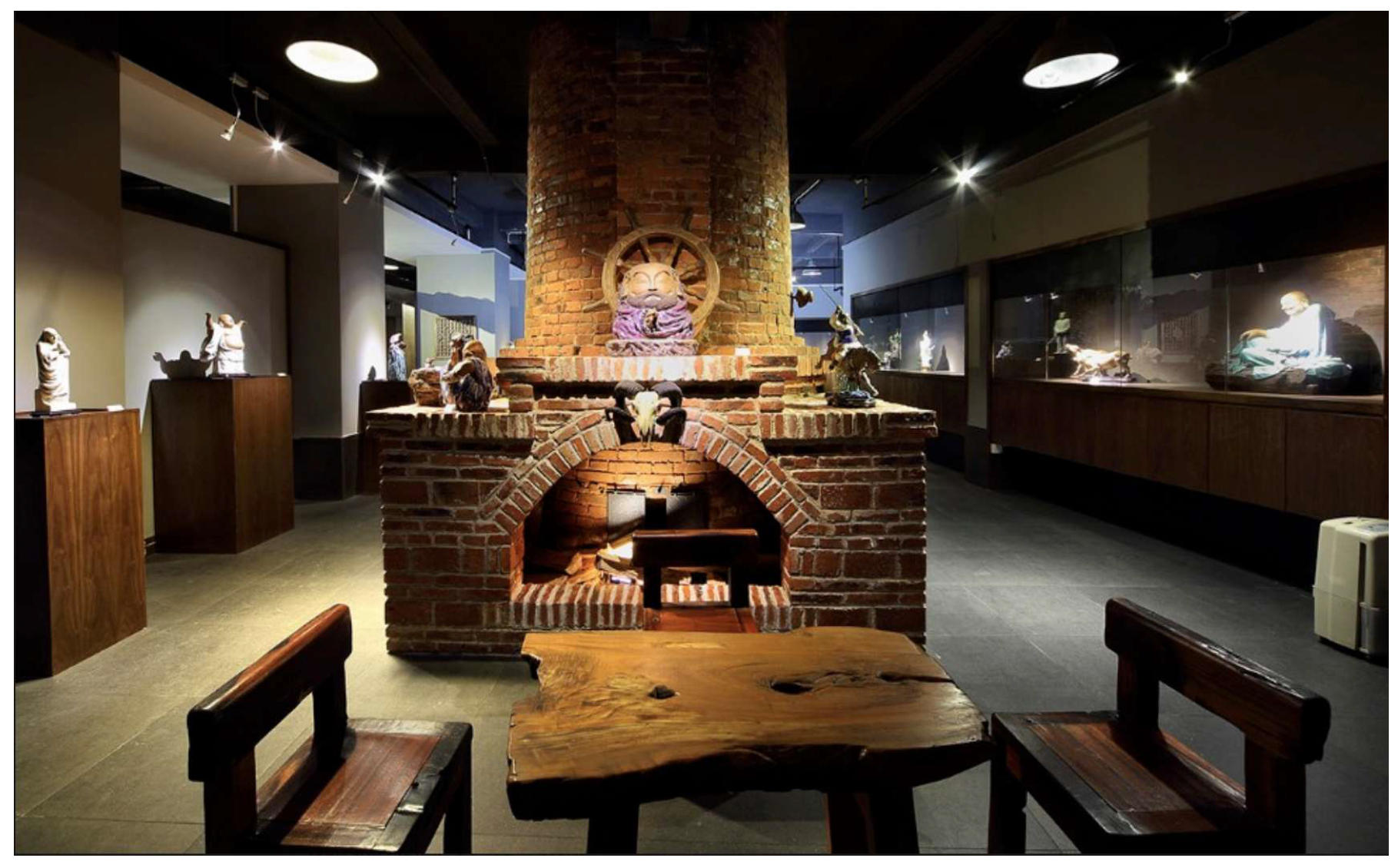
The integration of HRMs into building walls aims to effectively control indoor humidity, enhancing occupant comfort and extending the structural lifespan of buildings. By adding these materials to construction components, they can absorb and release moisture from the air, thereby stabilizing indoor humidity levels. As depicted in Figure 2, humidity-regulating wall has been applied in museums.
For example, Liu et al. [50] developed intelligent humidity-regulating wall tiles using sepiolite with CaCl2 as an additive. The low-temperature sintering process created a highly hygroscopic internal structure within the tiles. Tests conducted in a real-world model house demonstrated that these tiles could reduce daily indoor humidity fluctuations by over 20%. The team also modified the tiles with silane to create a superhydrophobic surface, enhancing their self-cleaning properties while effectively preventing leakage of the CaCl2 solution. Another researcher Fraine et al. [35] prepared a phase-change humidity control material by combining microencapsulated phase-change materials (MPCM) with diatomite, and then incorporated into sintered hollow bricks. This study indicated that compared to traditional expanded polystyrene, the MPCM/diatomite composite material exhibited energy-saving potential of up to 50%.
Additionally, Zhou et al. [51] employed a sol–gel method to composite zeolite with polymer materials, producing a hygroscopic and thermal insulation material with a porous surface and uniform, single-sized pore distribution. And when applied to prefabricated houses, the study found that during winter, this composite material effectively mitigated the impact of outdoor temperature and humidity fluctuations on indoor conditions, stabilizing air parameters such as temperature, relative humidity, and moisture content.
Furthermore, the long-term durability HRMs in building envelopes are critically dependent on their waterproofness and resistance to alternating moisture and drying cycles. Prolonged exposure to high-humidity environment and recurrent wetting-drying stresses can lead to material performance degradation. For instance, Sara C. [52] experimentally and numerically demonstrated that a compressed raw earth block wall effectively provides passive regulation of indoor temperature and humidity while also functioning as a moisture barrier. Hongqiang et al. [53] conducted an experimental investigation on the waterproof performance of building reed-based insulation materials prepared by carbonized reed, alkalic activator, and self-developed waterproof agent. In addition, the applications of Metal–Organic Frameworks have been extended to cultural heritage preservation, encompassing environmental control through humidity regulation, adsorption of harmful gases and particulate matter, as well as surface waterproofing and antibacterial protection [54].
(2)
Radiant Cooling Terminals
Radiant cooling systems have gained wide attention due to their energy efficiency and humane thermal comfort benefits. This kind of air conditioning system utilizes chilled water at moderate temperatures to generate uniform thermal distribution while minimizing air movement, reducing noise, and eliminating drafts. However, condensation will occur when indoor humidity fluctuates rapidly or surface temperatures drop too low, posing a major obstacle to the widespread application of radiant cooling systems.
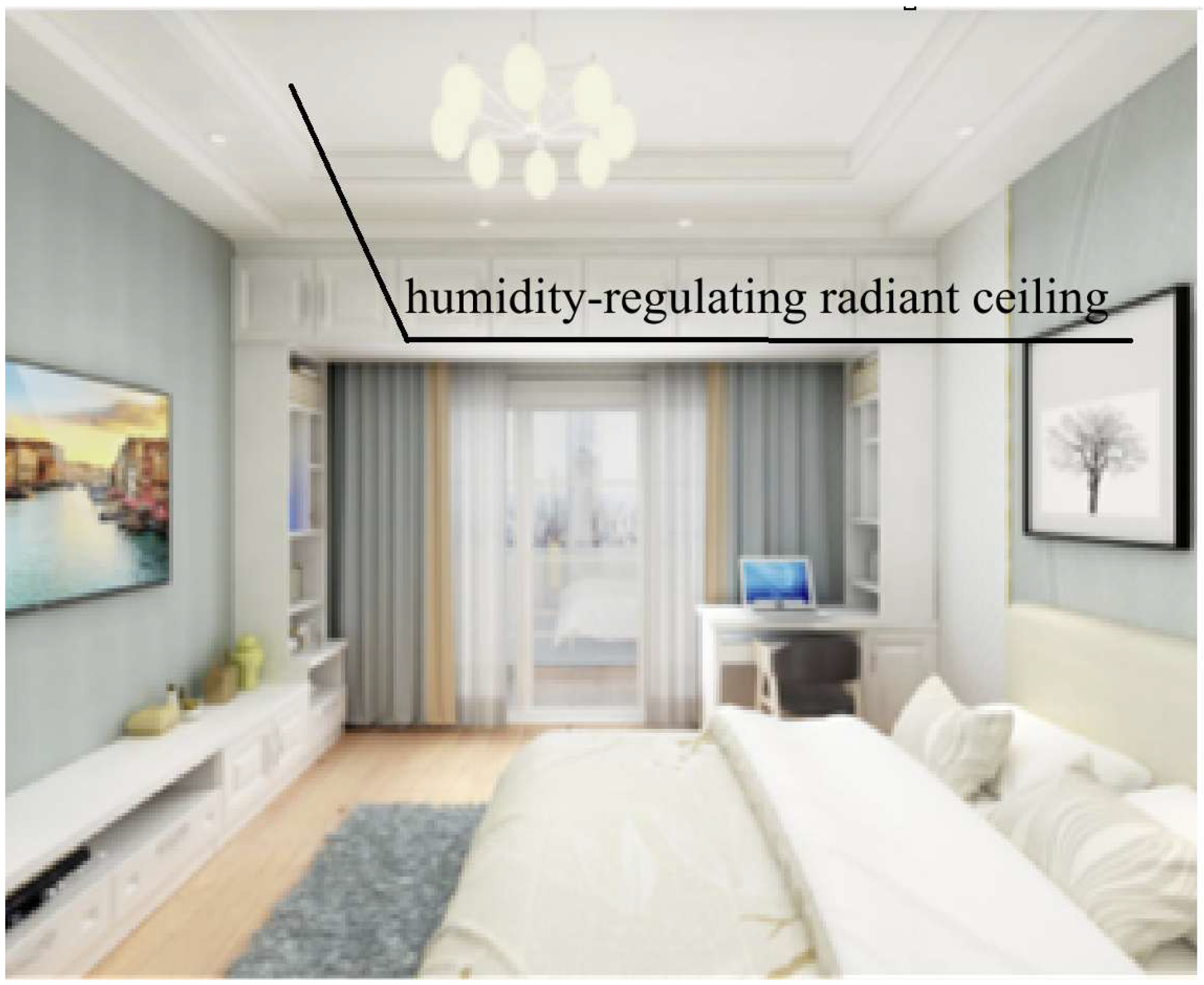
Such as, Chen et al. [55] addressed the inability of conventional radiant terminals to handle latent heat loads by integrating humidity-regulating materials into the system as shown in Figure 3, proposing a novel hygrothermal radiant terminal with moisture storage capacity to mitigate condensation risks. Zhang et al. [56] investigated the condensation-suppression performance of an MOF-based composite hygroscopic coating applied to surfaces in a typical radiant cooling room. It was found that compared to the uncoated ceiling, the coated material with a higher Moisture Buffering Value (MBV) could significantly increase the average difference between surface temperature and dew point temperature—by up to 181%. Additionally, compared to a structure without desiccants, the average temperature difference between the surface and dew point increased by 2.11 °C. In addition, sepiolite based humidity-control material and sepiolite based humidity-control coating have been prepared for radiant cooling panel to alleviate its condensation problem [55,57].
The humidity-regulating coating, composed of advanced moisture-adaptive materials, can significantly improve a building’s energy utilization efficiency. This innovation overcomes the condensation default of traditional radiant cooling systems and substantially reduces system energy consumption.
(3)
Humidity Sensors
The integration of HRMs has been successfully employed to enhance the accuracy and stability of humidity sensors. Humidity sensors—devices that monitor atmospheric moisture levels—typically rely on resistive or capacitive sensing mechanisms. The incorporation of HRMs effectively mitigates the sensor’s temperature sensitivity, leading to significant improvements in measurement precision and response speed.
Thus, Zhen et al. [58] synthesized a tin oxide/diatomite composite material via a hydrothermal method and investigated its humidity-sensing and control properties. It was found that the honeycomb structure of diatomite provided the composite with a large specific surface area for H2O molecule adsorption while enabling charge transfer between embedded tin oxide nanoparticles. This design significantly enhanced the sensor’s humidity sensitivity and response time. In addition, MOF-based humidity sensors have been studied and developed for humidity monitoring in indoor environments or industrial fields in recent years [59,60,61,62]. An enhanced-performance relative humidity sensor using MOF-801 photonic crystals was developed by Kuo Z. et al. [59]. Wu et al. [60] conducted an in-depth study on six MOF-based humidity sensors, identifying their shared characteristics, including strong hydrophilicity, high porosity, and exceptional stability. Three free-base Zr porphyrin metal–organic frameworks (MOF-525, MOF-545, and NU-902) were studied by Nicholaus for their efficacy in QCM-based relative humidity sensing [61]. Ke et al. [62] addressed the demand for highly sensitive low-humidity sensors by directionally constructing long-range ordered ionic liquid (IL) functionalized MOF-303, which enabled a sensor with exceptional performance, including a response of 3075, and its mechanism was elucidated through characterization and CIS analysis.
(4)
Other Fields
Most HRMs possess hierarchical porosity with high specific surface area, endowing them with exceptional adsorption capacity. When applied to wastewater treatment containing abundant organic compounds and microorganisms, these materials can effectively adsorb and decompose organic pollutants.
For instance, Alsuhaibani et al. [63] developed a composite sponge by encapsulating sulfadoxine in chitosan-modified MOF material. This sponge had a large surface area of 862.87 m2/g and showed effective performance as an adsorbent for removing contaminant ions in wastewater systems. Zhao et al. [64] synthesized a biochar-based composite material. Their research showed that under optimal conditions (impregnation ratio of 1:2, dosage of 50 mg, and initial solution pH of 4.0), this composite achieved a remarkable pollutant removal efficiency of 97.56%.
HRMs have been demonstrated to significantly enhance the performance of humidity sensors. However, the current literature on this subject remains limited, necessitating further in-depth research.

4.2. Simulation Applications

Practical performance of HRMs not only depends on their intrinsic properties but also crucially on their heat and moisture transfer behavior during application. Given the long testing cycles and high costs associated with experimental setups, numerical simulation has emerged as an effective alternative research approach.
By simulation applications, researchers can analyze extensive testing data from real-world material deployment scenarios to uncover the underlying physical and chemical mechanisms responsible for performance limitations. These mechanisms are then mathematically modeled, solved using appropriate algorithms, and iteratively refined to accurately predict material performance in practical applications. Consequently, in simulation studies of humidity-regulating materials, the validity of moisture transfer models directly determines the reliability of performance predictions.
(1)
Traditional Simulation Models
(1)
Moisture Transfer Models
Fick’s law states that the diffusion flux through a unit cross-sectional area perpendicular to the diffusion direction is proportional to the concentration gradient at that cross-section, with higher gradients yielding greater fluxes. Lewis [65] proposed that surface evaporation reduces internal moisture content and alters temperature, making diffusion coefficients variable. Stefan [66] extended Fick’s theory into Stefan’s law, assuming isotropic porous materials with constant physical properties and vapor diffusion driven by partial pressure, while neglecting liquid water transport. Liquid water in porous media primarily moves via surface diffusion and capillary forces, with Darcy’s law describing its transport. Buckingham [67] introduced the concept of unsaturated capillary flow driven by capillary potential, and Miller [68] linked capillary transport to surface tension and viscosity, both pressure-dependent functions. Most humidity-regulating materials are porous, with liquid water transport driven by capillary potential, diffusion, and hydrostatic pressure. Capillary models excel at describing moisture transfer under low humidity but become less accurate under high humidity, where diffusion and permeation dominate.
In common commercial simulation software (as listed in Table 3), EnergyPlus, MATCH, and hygIRC focus on one-dimensional heat and mass transfer. They are suitable for simplified models (e.g., gradient analysis along wall thickness) or specific scenarios (e.g., energy consumption simulation, hygroscopic material calculations). MATCH ignores thermal and moisture convection effects, which makes it ideal for foundational theoretical research. Meanwhile, hygIRC emphasizes thermal–air–moisture coupling and is suitable for assessing building durability.
WUFI-PLUS, COMSOL, TRNSYS, and DELPHIN support 1D to 3D transfer, making them applicable for complex structures (e.g., building envelopes, porous media) involving multiphysics coupling simulations. COMSOL is notable for its multiphysics coupling capabilities, allowing for the simultaneous analysis of heat conduction, convection, radiation, and moisture diffusion. DELPHIN, conversely, prioritizes the combined transfer of liquid water and water vapor and their impact on heat transfer.
  • (2)
    Coupled Heat-Moisture Models
Coupled heat-moisture transfer models account for interactions between humidity, temperature, and other factors, providing a holistic description of heat and moisture transport. In porous media, heat and moisture transfer are interdependent, necessitating coupled models for realistic simulations. Luikov’s theory [79] integrates total pressure gradients, temperature gradients, concentration gradients, molecular transport, and capillary effects into a coupled model. However, its idealized nature requires simplification for practical use. Philip and De Vries [76,80] established a mathematical model driven by temperature and moisture gradients. In this model, liquid water moves via capillary and adsorption forces, and vapor diffuses through pores. Liu and Chen [81] developed a model using relative humidity as the driving potential, treating liquid water flow as a capillary pressure-driven “stream” governed by Darcy’s law.
(2)
Simulation Model Optimization
The accuracy and reliability of moisture transfer models depend on their validity. Optimizing these models for specific materials enhances the precision of simulations by improving the fidelity of the mathematical and physical models.
  • (1)
    Mathematical Models
To enhance the accuracy of numerical simulations, researchers have innovatively developed new models and methods for studying moisture transfer and humidity control processes. Currently, the optimization of moisture transfer models in porous media primarily focuses on multiphysics coupling, heterogeneity considerations, and mechanistic modeling.
Traditional theories of heat and moisture transfer in porous media are based on continuum assumptions, employing volume averaging that neglects the heterogeneity of microscopic pore structures and matrices. To address this limitation, Yuan et al. [82] adopted a discrete pore network model to simulate soil temperature and moisture distribution. This approach demonstrated superior accuracy compared to continuum-scale methods and better agreement with experimental data.
Additionally, Bianchi Janetti et al. [83] compared pore network models with continuum approaches. They revealed the microscopic mechanisms by which contact angle variations influence spontaneous imbibition in porous materials, further validating the advantages of discrete methods for interface-dominated problems. While continuum methods fail to capture pore-scale effects, discrete approaches (e.g., pore network models) can better characterize microstructural influences.
Fang et al. [84] developed a transient model addressing coupled heat, air, and moisture transfer through multilayer porous media. This model resolves non-steady-state moisture transfer characteristics under transient humidity shocks, providing theoretical support for defining material performance boundaries in dynamic applications. Choi et al. [85] quantified the impact of different driving forces on hygrothermal predictions, comparing indoor humidity variations under seasonal environmental changes. Their study confirmed that coupled Heat-Air-Moisture (HAM) models using water potential as the driving force more accurately simulate the hygrothermal behavior of building envelopes. Son Thai Pham et al. [86] established a DEM-based triangulated pore-scale model for drying particle aggregates, uncovering the influence of particle size distribution on capillary force evolution. This model constructs a quantitative relationship chain linking “particle size distribution → pore structure → capillary forces → moisture transfer performance,” enabling precise material design based on microscopic mechanisms.
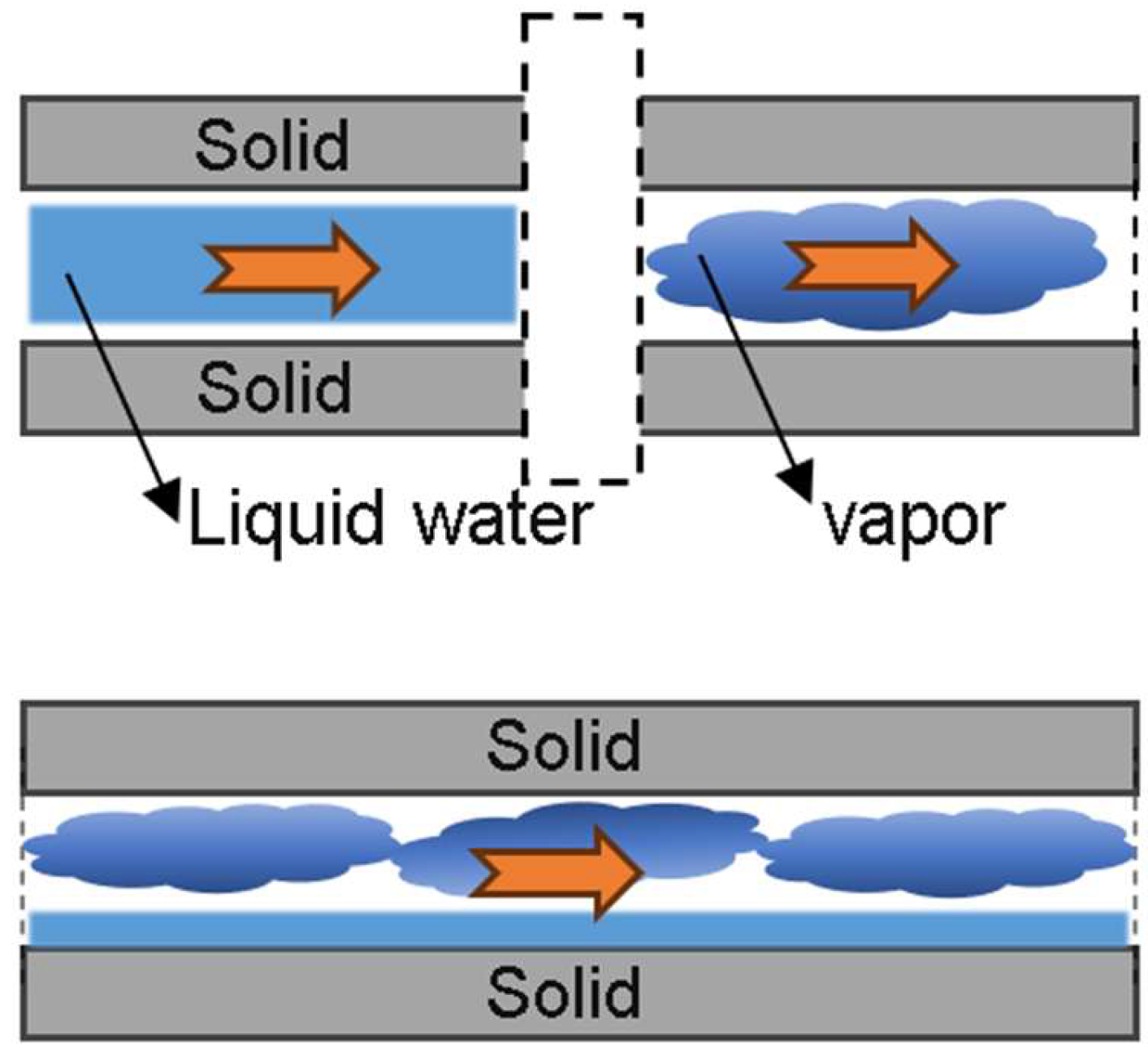
As depicted in Figure 4, in porous materials, moisture exists in both vapor and liquid phases at interfaces and within pores, with transfer typically occurring as a gas–liquid two-phase flow. Conventional models often treat these phases independently, despite their coupled behavior. Zhao et al. [87] proposed a mesoscale numerical method for coupled heat–moisture transfer in building envelopes, introducing a novel multiphase model that incorporates heat exchange, vapor migration, freezing, and evaporation/condensation effects. Sadeghi et al. [88] extended Lee’s multiphase model into 3D to simulate absorption/desorption in porous substrates, demonstrating that increased porosity enhances water penetration rates. Such multiphase models are critical for predicting internal heat-moisture transfer in hygroscopic walls and optimizing material performance.
The Kunzel model [89], which uses relative humidity as the driving potential, is a simplified approach widely cited for describing the behavior of hygroscopic materials, particularly under non-isothermal and non-isohumidity conditions in building materials [90,91,92].
Liu et al. [81] advanced this field with a coupled heat-moisture (CHM) model that employs vapor pressure and temperature as driving potentials. By avoiding approximations between air moisture content and relative humidity through total differential formulation and optimizing equation coefficients for solvability, this model effectively predicts the hygrothermal processes of walls. Some scholars refer to it as the “Liu model,” noting that it avoids potential discontinuities at the interfaces between dissimilar porous media.
Comparative studies by Dong et al. [93] validated the accuracy of both models within the hygroscopic range. The Liu model shows superior precision, while the Kunzel model exhibits limitations near over-hygroscopic regions. However, Janssen [94] later argued that the two models are fundamentally similar.
  • (2)
    Physical Models
While the aforementioned simulation optimizations primarily refine classical moisture transfer models, another group of researchers has adopted innovative approaches by constructing realistic geometric structure models to significantly enhance the accuracy of numerical simulations.
Bennai et al. [95] employed X-ray tomography to reconstruct 3D porous material structures, enabling mesoscale-coupled heat-moisture transfer simulations via COMSOL Multiphysics. Similarly, Dahanni et al. [96] incorporated authentic 3D wood microstructures to simulate internal hygrothermal transfer, utilizing X-ray microtomography for physical model reconstruction. Galy et al. [97] numerically generated 3D structures with dispersed particles featuring point/surface contacts using the diffusion-limited cluster-cluster aggregation (DLCCA) method. The synthesized mesoporous structures demonstrated high fidelity to experimental characterizations in specific surface area, mean pore size, and size distribution. Muhammad Nasir et al. [98] conducted 3D drying experiments on wet porous media using micro-CT technology, revealing wettability effects during pore-scale drying processes.
This paradigm shift from idealized to true-structure modeling marks a critical evolution in hygrothermal simulation, particularly for applications that demand high precision in humidity-regulating material design and performance prediction. With the application of emerging intelligent technology in buildings [99,100,101,102], this field now confronts the challenge of developing smart simplification protocols to strike a balance between physical accuracy and computational practicality.

5. Discussion

This review provides a systematic synthesis of advances in humidity-regulating materials (HRMs). While prior review papers have cataloged the classification, mechanisms, and basic evaluation metrics of various HRMs [13,14,15], they have predominantly remained within the domain of material-level analysis. The scientific novelty of this work lies in its structured, two-tiered analytical framework that systematically bridges the gap between material science and engineering application. First, it moves beyond mere classification to consolidate and categorize performance optimization strategies into three coherent pathways: multi-material compounding, physical pore-structure regulation, and chemical functionalization, offering a clear roadmap for material enhancement. Second, and more critically, it establishes a direct link between these optimized material properties and their tangible performance in real-world systems, such as building envelopes, radiant cooling terminals, and sensors.
This systematization of knowledge yields significant practical implications for the engineering construction industry. By quantitatively summarizing performance gains—such as the 50% reduction in internal heat flux with PFCHRM-filled bricks [35], the 181% increase in dew-point temperature difference with MOF-based coatings [56], or the 20% reduction in indoor humidity fluctuations achieved by sepiolite-CaCl2 tiles [50]—this review translates material science breakthroughs into measurable engineering outcomes. It compellingly argues for the role of HRMs not merely as passive components but as active contributors to energy conservation, operational stability, and durability of building systems. Furthermore, the critical analysis of multiphysics models and simulation tools provides engineers and architects with a practical guide for selecting appropriate predictive methods, thereby de-risking the integration of innovative HRMs into building designs. Ultimately, this work underscores a paradigm shift towards designing buildings as holistic, climate-responsive systems, where advanced materials are central to achieving sustainability and resilience goals, particularly in the challenging environments of hot and humid regions.

6. Conclusions

(1)
Humidity-regulating materials demonstrate exceptional moisture control capabilities and show significant potential in building envelope applications. Physical enhancement methods mainly involve optimizing pore sizes to the range of 3.0–7.4 nanometers to achieve optimal humidity regulation. Mesoporous materials, due to their suitable pore characteristics, have been widely used in the preparation of humidity-regulating materials. Chemical enhancement approaches include inorganic salt impregnation and functional group grafting techniques, which aim to improve moisture absorption properties. Moreover, when organic polymer materials such as polyacrylic acid and carboxymethyl cellulose are combined with porous materials through composite techniques like blending and copolymerization, the moisture absorption performance can be further enhanced.
(2)
Humidity-regulating materials play crucial roles in fields such as construction, radiative cooling systems, sensors, and water treatment. In building walls, they regulate indoor humidity to enhance comfort levels. In radiant cooling systems, they reduce the risk of condensation while improving energy efficiency. For humidity sensors, they enhance measurement accuracy and stability. In water treatment applications, they efficiently adsorb and decompose pollutants in wastewater, thus increasing treatment efficiency. With broad application prospects, future research may focus on the multifunctional integration of these materials to meet the high-efficiency demands across diverse fields.
(3)
Significant advancements have been made in modeling heat and moisture transfer in humidity-regulating materials. Simulation approaches have evolved from foundational laws (Fick’s, Darcy’s) to sophisticated models that account for multiple coupled factors. To improve predictive accuracy, researchers are integrating more environmental variables and material parameters, while refined geometric modeling enables precise simulation of moisture regulation. These developments provide a robust theoretical foundation for applying these materials in built environments.
(4)
Future HRM research will shift from passive materials to intelligent, multi-functional systems responsive to temperature, light, and pollutants. Key directions include integrating air purification and energy harvesting, advancing phase-change materials, employing AI and cross-scale modeling for inverse design, and prioritizing circular economy principles using industrial and agricultural waste. In construction applications, HRMs are expected to be incorporated as standardized components in prefabricated and 3D-printed building systems. Key goals include establishing HRMs in passive building standards, developing anti-condensation solutions for radiant cooling, validating performance through large-scale demonstrations, and creating practical design guidelines for applications in hot and humid regions.

Author Contributions

Supervision, B.Z.; methodology, D.Z., T.W. and J.Y.; formal analysis, D.Z. and T.W.; investigation, D.Z. and P.Z.; resources, P.Z.; writing—original draft preparation, D.Z. and P.Z.; writing—review and editing, B.Z.; project administration, B.Z. and J.Y.; funding acquisition, D.Z. and J.Y. All authors have read and agreed to the published version of the manuscript.

Funding

This research was financially supported by the University-Level Scientific Research Fund Project of Guangzhou Maritime University (Grant Nos. K42024047) and the National Natural Science Foundation of China (Grant Nos. 52506074).

Data Availability Statement

The data presented in this study are available on request from the corresponding author. The data are not publicly available due to the nature of a review article. All data analyzed in this study were derived from the published literature cited in the reference list.

Conflicts of Interest

The authors declare no conflict of interest.

Abbreviations

The following abbreviations are used in this manuscript:
HVACHeating, ventilation, and air conditioning
RHRelative humidity
HRMHumidity-regulating material
MBVMoisture buffering Value
PFCHRMPhase change humidity control material
PCMPhase change material
EPSExpanded polystyrene
MSNMesoporous silica nanoparticle
MOFMetal–organic frameworks
PAAPolyacrylic acid
PAMPolyacrylamide
CMCCarboxymethyl cellulose
EPExpanded perlite
CHMCoupled heat-moisture
DLCCADiffusion-limited cluster-cluster aggregation

References

  1. Mayernik, J.; Office of Energy Efficiency Renewable Energy. Buildings Energy Data Book; National Renewable Energy Laboratory, Ed.; National Renewable Energy Laboratory: Golden, CO, USA, 2015.
  2. Shaikh, P.H.; Nor, N.B.M.; Nallagownden, P.; Elamvazuthi, I.; Ibrahim, T. A review on optimized control systems for building energy and comfort management of smart sustainable buildings. Renew. Sustain. Energy Rev. 2014, 34, 409–429. [Google Scholar] [CrossRef]
  3. Chua, K.J.; Chou, S.K.; Yang, W.M.; Yan, J. Achieving better energy-efficient air conditioning—A review of technologies and strategies. Appl. Energy 2013, 104, 87–104. [Google Scholar] [CrossRef]
  4. Tomson, A.E.; Sokolova, T.V.; Sosnovskaya, N.E.; Pekhtereva, V.S.; Goncharova, I.A.; Arashkova, A.A.; Kozhich, D.T. Prospects for the use of modified peat for indoor humidity control. Solid Fuel Chem. 2017, 51, 321–325. [Google Scholar] [CrossRef]
  5. Pelliccia, G.; Baldinelli, G.; Bianconi, F.; Filippucci, M.; Fioravanti, M.; Goli, G.; Rotili, A.; Togni, M. Characterisation of wood hygromorphic panels for relative humidity passive control. J. Build. Eng. 2020, 32, 101829. [Google Scholar] [CrossRef]
  6. Sultan, M.; El-Sharkawy, I.I.; Miyazaki, T.; Saha, B.B.; Koyama, S. An overview of solid desiccant dehumidification and air conditioning systems. Renew. Sustain. Energy Rev. 2015, 46, 16–29. [Google Scholar] [CrossRef]
  7. Padfield, T. Humidity Buffering of the Indoor Climate by Absorbent Walls. In Proceedings of the 5th Symposium on Building Physics in the Nordic Countries, Gothenburg, Sweden, 24–26 August 1999. [Google Scholar]
  8. Saatchi, D.; Oh, S.; Oh, I.-K. Biomimetic and Biophilic Design of Multifunctional Symbiotic Lichen-Schwarz Metamaterial. Adv. Funct. Mater. 2023, 33, 2214580. [Google Scholar] [CrossRef]
  9. Vu, D.H.; Wang, K.-S.; Bac, B.H.; Nam, B.X. Humidity control materials prepared from diatomite and volcanic ash. Constr. Build. Mater. 2013, 38, 1066–1072. [Google Scholar] [CrossRef]
  10. Young, J.F. Humidity control in the laboratory using salt solutions—A review. J. Appl. Chem. 1967, 17, 241–245. [Google Scholar] [CrossRef]
  11. Wang, R.M.; Wang, J.F.; Wang, X.W.; He, Y.F.; Zhu, Y.F.; Jiang, M.L. Preparation of acrylate-based copolymer emulsion and its humidity controlling mechanism in interior wall coatings. Prog. Org. Coat. 2011, 71, 369–375. [Google Scholar] [CrossRef]
  12. Hu, Z.; Zheng, S.; Tan, Y.; Jia, M. Preparation and characterization of diatomite/silica composite humidity control material by partial alkali dissolution. Mater. Lett. 2017, 196, 234–237. [Google Scholar] [CrossRef]
  13. Cui, Y.; Zhang, Y. Review of evaluation methods for moisture absorption and desorption properties of humidity control materials. Mater. Rep. 2022, 36, 43–50. [Google Scholar] [CrossRef]
  14. Zheng, X.; Yuan, L. Research status and recent advances in composite humidity control materials. Chem. Ind. Eng. Prog. 2020, 39, 1378–1388. [Google Scholar] [CrossRef]
  15. Chen, Z.; Qin, M. Theory, preparation and performance of composite heat and humidity control materials. Archit. Pract. 2019, 2, 10–11. Available online: https://kns.cnki.net/kcms2/article/abstract?v=-PyPURV5YK0JbWU0uvE76XelugL6b80eER5iY682w132Bj_JNLU2-p_LlIbS5oC8GXGfXLNiEFmVyAeh3eg_fGXw6Ggh92oelBdyy6okMzP1ZNq1Ifc1LSl_vjO3CuqmOMbdTX83NrzDZYKarjmjag5ve-UVSWjbZ0sP6RPf9DrPa8rujN_JTQ==&uniplatform=NZKPT&language=CHS (accessed on 25 November 2025).
  16. Novais, R.M.; Carvalheiras, J.; Senff, L.; Lacasta, A.M.; Cantalapiedra, I.R.; Giro-Paloma, J.; Seabra, M.P.; Labrincha, J.A. Multifunctional cork–alkali-activated fly ash composites: A sustainable material to enhance buildings’ energy and acoustic performance. Energy Build. 2020, 210, 109739. [Google Scholar] [CrossRef]
  17. Park, J.H.; Kim, Y.U.; Jeon, J.; Yun, B.Y.; Kang, Y.; Kim, S. Analysis of biochar-mortar composite as a humidity control material to improve the building energy and hygrothermal performance. Sci. Total Environ. 2021, 775, 145784. [Google Scholar] [CrossRef]
  18. Li, B.; Min, F.; Zhang, N.; Ma, J.; Li, Z.; Yao, Z.; Zhang, L. Experimental study on water transfer mechanism of quicklime modified centrifugal dewatering clay. Constr. Build. Mater. 2023, 408, 133689. [Google Scholar] [CrossRef]
  19. Zhu, Z.; Xiao, P.; Kang, A.; Kou, C.; Chen, J. Preparation of biomass composites with high performance and carbon sequestration from waste wood fibers. Constr. Build. Mater. 2023, 404, 133295. [Google Scholar] [CrossRef]
  20. Lu, Z.; Zhao, Z.; Wang, M.; Jia, W. Effects of corn stalk fiber content on properties of biomass brick. Constr. Build. Mater. 2016, 127, 11–17. [Google Scholar] [CrossRef]
  21. Pedreño-Rojas, M.A.; Porras-Amores, C.; Villoria-Sáez, P.; Morales-Conde, M.J.; Flores-Colen, I. Characterization and performance of building composites made from gypsum and woody-biomass ash waste: A product development and application study. Constr. Build. Mater. 2024, 419, 135435. [Google Scholar] [CrossRef]
  22. Wang, S.; Li, H.; Zou, S.; Liu, L.; Bai, C.; Zhang, G.; Fang, L. Experimental study on durability and acoustic absorption performance of biomass geopolymer-based insulation materials. Constr. Build. Mater. 2022, 361, 129575. [Google Scholar] [CrossRef]
  23. Bouferra, R.; Bouchehma, A.; Bahammou, Y.; Essaleh, M.; Belhouideg, S.; Lamharrar, A.; Idlimam, A. Experimental study of relative humidity absorbed through capillarity of building material under isothermal conditions: Clay-Kaolin reinforced with Alfa fibers. Int. Commun. Heat Mass Transf. 2024, 154, 107416. [Google Scholar] [CrossRef]
  24. Wang, M.; Lu, Z. Thermal and moisture coupling performances of poplar fiber inorganic humidity control brick. Constr. Build. Mater. 2022, 348, 128656. [Google Scholar] [CrossRef]
  25. Castañeda Múnera, J.C.; Gosselin, L. Impact of Density, relative Humidity, and fiber size on hygrothermal properties of barley straw for building envelopes. Constr. Build. Mater. 2023, 409, 133954. [Google Scholar] [CrossRef]
  26. Palumbo, M.; Lacasta, A.M.; Giraldo, M.P.; Haurie, L.; Correal, E. Bio-based insulation materials and their hygrothermal performance in a building envelope system (ETICS). Energy Build. 2018, 174, 147–155. [Google Scholar] [CrossRef]
  27. Liuzzi, S.; Rubino, C.; Stefanizzi, P.; Petrella, A.; Boghetich, A.; Casavola, C.; Pappalettera, G. Hygrothermal properties of clayey plasters with olive fibers. Constr. Build. Mater. 2018, 158, 24–32. [Google Scholar] [CrossRef]
  28. Bahammou, Y.; Kouhila, M.; Tagnamas, Z.; Lamsyehe, H.; Lamharrar, A.; Idlimam, A. Hygroscopic behavior of water absorbed by capillarity and stabilization of a bio-composite building material: Clay reinforced with Chamarrops humilis fibers. Int. Commun. Heat Mass Transf. 2022, 135, 106077. [Google Scholar] [CrossRef]
  29. Li, M.; Luo, F.; Liang, X.; Wang, S.; Gao, X.; Zhang, Z.; Fang, Y. Myristic acid-tetradecanol-capric acid ternary eutectic/SiO2/MIL-100(Fe) as phase change humidity control material for indoor temperature and humidity control. J. Energy Storage 2023, 74, 109437. [Google Scholar] [CrossRef]
  30. Izadi, M.; Taghavi, S.F.; Neshat Safavi, S.H.; Afsharpanah, F.; Yaïci, W. Thermal management of shelter building walls by PCM macro-encapsulation in commercial hollow bricks. Case Stud. Therm. Eng. 2023, 47, 103081. [Google Scholar] [CrossRef]
  31. Al-Shannaq, R.; Farid, M.M.; Ikutegbe, C.A. Methods for the Synthesis of Phase Change Material Microcapsules with Enhanced Thermophysical Properties—A State-of-the-Art Review. Micro 2022, 2, 426–474. [Google Scholar] [CrossRef]
  32. Sun, Y.; He, F.; Wang, J.; Wang, L.; Fu, B.; Tang, W. Preparation and characterization of fatty acid ternary eutectic mixture/Nano-SiO2 composite phase change material for building applications. Appl. Energy 2024, 376, 124221. [Google Scholar] [CrossRef]
  33. Chen, Z.; Qin, M. Preparation and hygrothermal properties of composite phase change humidity control materials. Appl. Therm. Eng. 2016, 98, 1150–1157. [Google Scholar] [CrossRef]
  34. Wang, X.; Lei, Y.; Chen, Z.; Lei, W. Sepiolite-zeolite powder doped with capric acid phase change microcapsules for temperature-humidity control. J. Colloid Interface Sci. 2021, 595, 25–34. [Google Scholar] [CrossRef]
  35. Fraine, Y.; Seladji, C.; Aït-Mokhtar, A. Effect of microencapsulation phase change material and diatomite composite filling on hygrothermal performance of sintered hollow bricks. Build. Environ. 2019, 154, 145–154. [Google Scholar] [CrossRef]
  36. He, X.; Zhang, H.; Qiu, L.; Mao, Z.; Shi, C. Hygrothermal performance of temperature-humidity controlling materials with different compositions. Energy Build. 2021, 236, 110792. [Google Scholar] [CrossRef]
  37. Yang, Q.; Sun, P.Z.; Fumagalli, L.; Stebunov, Y.V.; Haigh, S.J.; Zhou, Z.W.; Grigorieva, I.V.; Wang, F.C.; Geim, A.K. Capillary condensation under atomic-scale confinement. Nature 2020, 588, 250–253. [Google Scholar] [CrossRef] [PubMed]
  38. Zhang, S.; Geng, W.; He, X.; Tu, J.; Ma, M.; Duan, L.; Zhang, Q. Humidity sensing performance of mesoporous CoO(OH) synthesized via one-pot hydrothermal method. Sens. Actuators B Chem. 2019, 280, 46–53. [Google Scholar] [CrossRef]
  39. Lu, H.C.; Kuok, C.H.; Liu, S.H. High-performance humidity control coatings prepared from inorganic wastes. Constr. Build. Mater. 2020, 263, 120169. [Google Scholar] [CrossRef]
  40. Gao, X.; Asgar, H.; Kuzmenko, I.; Gadikota, G. Architected mesoporous crystalline magnesium silicates with ordered pore structures. Microporous Mesoporous Mater. 2021, 327, 111381. [Google Scholar] [CrossRef]
  41. Zhou, X.; Jin, H.; Gu, A.; Li, X.; Sun, L.; Mao, P.; Yang, Y.; Ding, S.; Chen, J.; Yun, S. Eco-friendly hierarchical porous palygorskite/wood fiber aerogels with smart indoor humidity control. J. Clean. Prod. 2022, 335, 130367. [Google Scholar] [CrossRef]
  42. Qin, M.; Hou, P.; Wu, Z.; Wang, J. Precise humidity control materials for autonomous regulation of indoor moisture. Build. Environ. 2020, 169, 106581. [Google Scholar] [CrossRef]
  43. Hou, P.; Zu, K.; Qin, M.; Cui, S. A novel metal-organic frameworks based humidity pump for indoor moisture control. Build. Environ. 2021, 187, 107396. [Google Scholar] [CrossRef]
  44. Ge, L.; Feng, Y.; Xue, Y.; Dai, Y.; Wang, R.; Ge, T. Mesoporous Silica-Guided Synthesis of Metal-Organic Framework with Enhanced Water Adsorption Capacity for Smart Indoor Humidity Regulation. Small Struct. 2023, 4, 2300173. [Google Scholar] [CrossRef]
  45. Liu, X.; Chen, Z.; Yang, G.; Gao, Y. Bioinspired Ant-Nest-Like Hierarchical Porous Material Using CaCl2 as Additive for Smart Indoor Humidity Control. Ind. Eng. Chem. Res. 2019, 58, 2153–2162. [Google Scholar] [CrossRef]
  46. Yang, Z.; Zhang, W.; Lin, X.; Xiong, Q.; Jiang, Q. Optimization of minor-LiCl-modified gypsum as an effective indoor moisture buffering material for sensitive and long-term humidity control. Build. Environ. 2023, 229, 109962. [Google Scholar] [CrossRef]
  47. Hung, M.-J.; Lin, Y.-W.; Lin, W.-T.; Lee, W.-H.; Kuo, B.-Y.; Lin, K.-L. Functionalization of mesoporous Al-MCM-41 for indoor humidity control as building humidity conditioning material. J. Mol. Struct. 2024, 1299, 137024. [Google Scholar] [CrossRef]
  48. Xue, Z.; Wang, J.; Diao, Y.; Hu, W. Study on Preparation and humidity-regulating Capabilities of Vermiculite/Poly(sodium Acrylate-acrylamide) Humidity Controlling Composite. Materials 2024, 17, 1920. [Google Scholar] [CrossRef]
  49. Yue, L.; Qiu, P.; Zhang, Y.; Miao, J.; Jing, Z. Hydrothermal synthesis of an expanded perlite based lightweight composite for indoor humidity regulating. Constr. Build. Mater. 2022, 351, 128960. [Google Scholar] [CrossRef]
  50. Liu, X.; Chen, Z.; Yang, G.; Zhang, Z.; Gao, Y. Colorful Wall-Bricks with Superhydrophobic Surfaces for Enhanced Smart Indoor Humidity Control. ACS Omega 2019, 4, 13896–13901. [Google Scholar] [CrossRef]
  51. Bo, Z.; Meijia, R.; Wenjian, H.; Linying, S.; Erlin, M.; Jun, L. Study on temperature-humidity controlling performance of zeolite-based composite and its application for light quality energy-conserving building envelope. Alex. Eng. J. 2023, 69, 311–321. [Google Scholar] [CrossRef]
  52. Chehade, S.; Dujardin, N.; Giovannacci, D.; Boudenne, A. Experimental and numerical evaluation of heat and mass transfer of a compressed raw earth block wall. Case Stud. Constr. Mater. 2025, 22, e04793. [Google Scholar] [CrossRef]
  53. Li, H.; Liu, T.; Peng, Y.; Cai, C.; Liu, L.; Wang, S. Experimental study on enhancing the waterproof and moisture-proof performance of foam open-cell reed-based insulation material. J. Build. Eng. 2025, 103, 112069. [Google Scholar] [CrossRef]
  54. Zhou, K.; Shi, Z.; Yi, X.-H.; Wang, P.; Li, A.; Wang, C.-C. MOFs helping heritage against environmental threats. Chin. Chem. Lett. 2025, 36, 110226. [Google Scholar] [CrossRef]
  55. Chen, W.; Yin, Y.; Zhao, X.; Xu, G.; Cao, B.; Ji, Q. Experimental investigation on condensation characteristics of a novel radiant terminal based on sepiolite composite humidity-conditioning coating. Build. Environ. 2022, 223, 109488. [Google Scholar] [CrossRef]
  56. Zhang, H.; Fu, L.; Wang, X.; Chang, J. Condensation retardation performance of metal-organic framework-based composite humidity-regulating materials in a radiation cooling room. Build. Environ. 2023, 243, 110630. [Google Scholar] [CrossRef]
  57. Chen, W.; Yin, Y.; Zhao, X.; Fan, F.; Cao, B.; Ji, Q.; Xu, G. Sepiolite based humidity-control coating specially for alleviate the condensation problem of radiant cooling panel. Energy 2023, 272, 127129. [Google Scholar] [CrossRef]
  58. Zhen, Y.; Zhang, J.; Wang, W.; Li, Y.; Gao, X.; Xue, H.; Liu, X.; Jia, Z.; Xue, Q.; Zhang, J.; et al. Embedded SnO2/Diatomaceous earth composites for fast humidity sensing and controlling properties. Sens. Actuators B Chem. 2020, 303, 127137. [Google Scholar] [CrossRef]
  59. Zhan, K.; Zhu, Y.; Yan, J.; Chen, Y. Enhanced-performance relative humidity sensor based on MOF-801 photonic crystals. Phys. Lett. A 2020, 384, 126678. [Google Scholar] [CrossRef]
  60. Wu, K.; Guan, X.; Hou, Z.; Liu, L.; Zhao, H.; Liu, S.; Fei, T.; Zhang, T. Humidity sensors based on metal organic frameworks derived polyelectrolyte films. J. Colloid Interface Sci. 2021, 602, 646–653. [Google Scholar] [CrossRef]
  61. Prasetya, N.; Okur, S. Investigation of the free-base Zr-porphyrin MOFs as relative humidity sensors for an indoor setting. Sens. Actuators A Phys. 2024, 377, 115713. [Google Scholar] [CrossRef]
  62. Wu, K.; He, Q. Highly sensitive low humidity sensor by directional construction of ionic liquid functionalized MOF-303. Sens. Actuators B Chem. 2025, 425, 136992. [Google Scholar] [CrossRef]
  63. Alsuhaibani, A.M.; Alayyafi, A.A.; Albedair, L.A.; El-Desouky, M.G.; El-Bindary, A.A. Efficient fabrication of a composite sponge for Cr(VI) removal via citric acid cross-linking of metal-organic framework and chitosan: Adsorption isotherm, kinetic studies, and optimization using Box-Behnken design. Mater. Today Sustain. 2024, 26, 100732. [Google Scholar] [CrossRef]
  64. Zhao, S.; Ma, Y.; Zhou, J. Removal of cadmium ion from wastewater by manganese oxides-loaded sludge biochar. Desalination Water Treat. 2024, 319, 100563. [Google Scholar] [CrossRef]
  65. Lewis, W.K. The Rate of Drying of Solid Materials. J. Ind. Eng. Chem. 1921, 13, 427–432. [Google Scholar] [CrossRef]
  66. Stefan, J. Über das Gleichgewicht und Bewegung, insbesondere die Diffusion von Gemischen. Sitzber. Akad. Wiss. Wien Math.-Naturwiss. Kl. Abt. 2a 1871, 63, 63–124. [Google Scholar]
  67. Buckinghan, E.A. Studies on the Movement of Soil Moisture; Bulletin No.: 38; U.S. Department of Agriculture: Washington, DC, USA, 1907.
  68. Miller, E.E.; Miller, R.D. Theory of Capillary Flow: I. Practical Implications. Soil Sci. Soc. Am. J. 1955, 19, 267–271. [Google Scholar] [CrossRef]
  69. Cao, S.; Li, X.; Yang, B. Heat and moisture transfer of building envelopes under dynamic and steady-state operation mode of indoor air conditioning. J. Build. Eng. 2021, 44, 102683. [Google Scholar] [CrossRef]
  70. Dang, X.; Janssen, H.; Roels, S. Hygrothermal Modelling of one-dimensional Wall Assemblies: Inter-model Validation between WUFI and DELPHIN. J. Phys. Conf. Ser. 2023, 2654, 012040. [Google Scholar] [CrossRef]
  71. Zeng, L.; Chen, Y.; Cao, C.; Lv, L.; Gao, J.; Li, J.; Zhang, C. Influence of materials’ hygric properties on the hygrothermal performance of internal thermal insulation composite systems. Energy Built Environ. 2023, 4, 315–327. [Google Scholar] [CrossRef]
  72. Belarbi, Y.E.; Ferroukhi, M.Y.; Issaadi, N.; Poullain, P.; Bonnet, S. Assessment of hygrothermal performance of raw earth envelope at overall building scale. Energy Build. 2024, 310, 114119. [Google Scholar] [CrossRef]
  73. Ferroukhi, M.Y.; Belarbi, R.; Limam, K.; Bosschaerts, W. Experimental validation of a HAM-BES co-simulation approach. Energy Procedia 2017, 139, 517–523. [Google Scholar] [CrossRef]
  74. Yang, J.; Fu, H.; Qin, M. Evaluation of Different Thermal Models in EnergyPlus for Calculating Moisture Effects on Building Energy Consumption in Different Climate Conditions. Procedia Eng. 2015, 121, 1635–1641. [Google Scholar] [CrossRef]
  75. Al-Janabi, A.; Kavgic, M.; Mohammadzadeh, A.; Azzouz, A. Comparison of EnergyPlus and IES to model a complex university building using three scenarios: Free-floating, ideal air load system, and detailed. J. Build. Eng. 2019, 22, 262–280. [Google Scholar] [CrossRef]
  76. Busser, T.; Julien, B.; Amandine, P.; Mickael, P.; Woloszyn, M. Comparison of model numerical predictions of heat and moisture transfer in porous media with experimental observations at material and wall scales: An analysis of recent trends. Dry. Technol. 2019, 37, 1363–1395. [Google Scholar] [CrossRef]
  77. Defo, M.; Lacasse, M.A.; Laouadi, A. A comparison of hygrothermal simulation results derived from four simulation tools. J. Build. Phys. 2021, 45, 432–456. [Google Scholar] [CrossRef]
  78. Paepcke, A.; Nicolai, A. Performance analysis of coupled quasi-steady state air flow calculation and dynamic simulation of hygrothermal transport inside porous materials. Energy Procedia 2017, 132, 759–764. [Google Scholar] [CrossRef]
  79. Luikov, A.V. Heat and Mass Transfer in Capillary-Porous Bodies. In Advances in Heat Transfer, 1st ed.; Irvine, T.F., Hartnett, J.P., Eds.; Elsevier: Amsterdam, The Netherlands, 1964; Volume 1, pp. 123–184. [Google Scholar]
  80. De Vries, D.A. The theory of heat and moisture transfer in porous media revisited. Int. J. Heat Mass Transf. 1987, 30, 1343–1350. [Google Scholar] [CrossRef]
  81. Liu, X.; Chen, Y.; Ge, H.; Fazio, P.; Chen, G. Numerical investigation for thermal performance of exterior walls of residential buildings with moisture transfer in hot summer and cold winter zone of China. Energy Build. 2015, 93, 259–268. [Google Scholar] [CrossRef]
  82. Yuan, Y.; Tan, L.; Zhao, Z.; Xu, Y.; Bai, M.; Yuan, Y. Pore Network Simulation and Experimental Investigation on Water-Heat Transport Process of Soil Porous Media. J. Heat Transf. 2019, 141, 102401. [Google Scholar] [CrossRef]
  83. Bianchi Janetti, M.; Janssen, H. Effect of dynamic contact angle variation on spontaneous imbibition in porous materials. Transp. Porous Media 2022, 142, 493–508. [Google Scholar] [CrossRef]
  84. Fang, Y.; Chen, L.; Wu, L. Transient simulation of coupled heat and moisture transfer through multi-layer walls exposed to future climate in the hot and humid southern China area. Sustain. Cities Soc. 2020, 52, 101812. [Google Scholar] [CrossRef]
  85. Choi, Y.; Cho, W.; Ozaki, A.; Lee, H. Influence of the moisture driving force of moisture adsorption and desorption on indoor hygrothermal environment and building thermal load. Energy Build. 2021, 253, 111501. [Google Scholar] [CrossRef]
  86. Pham, S.T.; Chareyre, B.; Tsotsas, E.; Kharaghani, A. Pore network modeling of phase distribution and capillary force evolution during slow drying of particle aggregates. Powder Technol. 2022, 407, 117627. [Google Scholar] [CrossRef]
  87. Zhao, C.; Zhou, W.; Chen, X.; Wu, Q.; Ma, G.; Wang, Q. Mesoscopic analysis of heat and moisture coupled transfer in concrete considering phase change under frost action. J. Build. Eng. 2022, 57, 104888. [Google Scholar] [CrossRef]
  88. Sadeghi, R.; Shadloo, M.S.; Hopp-Hirschler, M.; Hadjadj, A.; Nieken, U. Three-dimensional lattice Boltzmann simulations of high density ratio two-phase flows in porous media. Comput. Math. Appl. 2018, 75, 2445–2465. [Google Scholar] [CrossRef]
  89. Kuenzel, H. Simultaneous Heat and Moisture Transport in Building Components. One- and Two-Dimensional Calculation Using Simple Parameters. In Research Reports; Fraunhofer IBP, Ed.; Fraunhofer IBP: Stuttgart, Germany, 1995. [Google Scholar]
  90. Kaoutari, T.; Louahlia, H. Experimental and numerical investigations on the thermal and moisture transfer in green dual layer wall for building. Case Stud. Therm. Eng. 2024, 53, 103946. [Google Scholar] [CrossRef]
  91. Alioua, T.; Agoudjil, B.; Boudenne, A.; Benzarti, K. Sensitivity analysis of transient heat and moisture transfer in a bio-based date palm concrete wall. Build. Environ. 2021, 202, 108019. [Google Scholar] [CrossRef]
  92. Bart, M.; Sophie, M.; Yacine, A.O.; Lanos, C. Transient hygrothermal modelling of coated hemp-concrete walls. Eur. J. Environ. Civ. Eng. 2014, 18, 927–944. [Google Scholar] [CrossRef]
  93. Dong, W.; Chen, Y.; Bao, Y.; Fang, A. A validation of dynamic hygrothermal model with coupled heat and moisture transfer in porous building materials and envelopes. J. Build. Eng. 2020, 32, 101484. [Google Scholar] [CrossRef]
  94. Janssen, H. A comment on “A validation of dynamic hygrothermal model with coupled heat and moisture transfer in porous building materials and envelopes”. J. Build. Eng. 2022, 47, 103835. [Google Scholar] [CrossRef]
  95. Bennai, F.; Abahri, K.; Belarbi, R. Contribution to the Modelling of Coupled Heat and Mass Transfers on 3D Real Structure of Heterogeneous Building Materials: Application to Hemp Concrete. Transp. Porous Media 2020, 133, 333–356. [Google Scholar] [CrossRef]
  96. Dahanni, H.; Rima, A.; Abahri, K.; Hachem, C.E.; Assoum, H. Impact of the 3D morphology on the hygro-thermal transfer of hygroscopic materials: Application to spruce wood. J. Phys. Conf. Ser. 2021, 2069, 012008. [Google Scholar] [CrossRef]
  97. Galy, T.; Mu, D.; Marszewski, M.; Pilon, L. Computer-generated mesoporous materials and associated structural characterization. Comput. Mater. Sci. 2019, 157, 156–167. [Google Scholar] [CrossRef]
  98. Nasir, M.; Li, Z.; Mahardika, M.A.; Wang, W.; She, Y.; Wang, K.; Patmonoaji, A.; Matsushita, S.; Suekane, T. Pore-scale investigation of wettability effects on drying process of three-dimensional porous medium. Int. Commun. Heat Mass Transf. 2023, 140, 106527. [Google Scholar] [CrossRef]
  99. Fan, C.; Liu, R.; Liao, Y. Archetype Identification and Energy Consumption Prediction for Old Residential Buildings Based on Multi-Source Datasets. Buildings 2025, 15, 2573. [Google Scholar] [CrossRef]
  100. Zhou, P.; Qi, Y.; Yang, Q.; Chang, Y. Neural topic modeling of machine learning applications in building: Key topics, algorithms, and evolution patterns. Autom. Constr. 2025, 170, 105890. [Google Scholar] [CrossRef]
  101. Li, B.; Yong, J.C.E.; Yu, L.J.; Olugu, E.U.; Yang, X.; Zhang, Z.; Muhieldeen, M.W. A review of research on intelligent technology in building air conditioning system optimisation. Int. J. Refrig. 2025, 176, 205–225. [Google Scholar] [CrossRef]
  102. Alexakis, K.; Benekis, V.; Kokkinakos, P.; Askounis, D. Genetic algorithm-based multi-objective optimisation for energy-efficient building retrofitting: A systematic review. Energy Build. 2025, 328, 115216. [Google Scholar] [CrossRef]
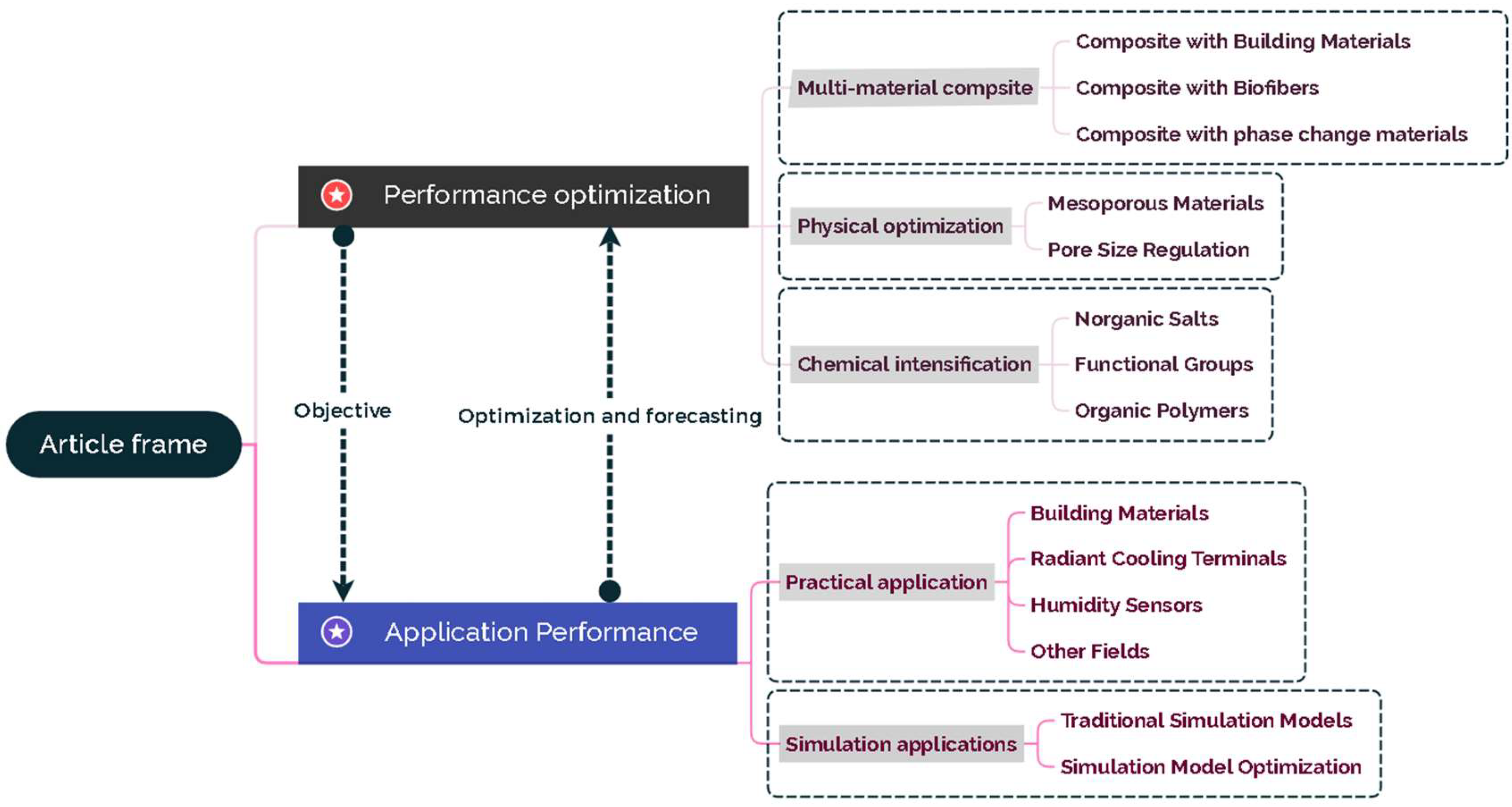
Figure 1. Article frame.
Buildings 15 04376 g001
Figure 2. Humidity-regulating wall in museum.
Buildings 15 04376 g002
Figure 3. Humidity-regulating radiant ceiling.
Buildings 15 04376 g003
Figure 4. Forms of wet migration in pores.
Buildings 15 04376 g004
Table 2. Pore size regulation methods for humidity-regulating materials.
MaterialMethodMost Probable Pore SizeReferences
Inorganic CompoundsTemplate Method3.93 nm[38]
SilicaHydrothermal Synthesis8.4 nm[39]
Magnesium SilicateSol–Gel Method2.58 nm[40]
Palygorskite/Wood Fiber CompositeFreeze-Drying10 nm[41]
Metal–Organic FrameworkHydrothermal Synthesis2 nm[43]
MIL-101/MCM-41 CompositeTemplate Method3.2 nm[45]
Notes: Most Probable Pore Size: Dominant pore size range for each material.
Table 3. Commercial Software for Heat and Moisture Transfer in Hygroscopic Materials.
Software NameTransfer DimensionsCore Features and AdvantagesReferences
WUFI1D/2D/3DEngineering-grade coupled heat-moisture model; mature for wall system analysis.[69,70,71]
COMSOL1D/2D/3DMulti-physics coupling (heat, moisture, radiation, convection); highly customizable.[72,73]
EnergyPlus1DWhole-building energy simulation; simplifies wall heat-moisture transfer to 1D.[74,75]
MATCH1DTransient hygrothermal calculations for hygroscopic materials; combines finite volume method with Fick’s law.[76]
TRNSYS1D/2DModular dynamic simulation; supports system integration and control strategy optimization.[73]
hygIRC1DFully coupled heat-air-moisture (HAM) model; emphasizes building durability.[77]
DELPHIN1D/2DFully coupled heat-air-moisture (HAM) model; emphasizes moisture impact on building durability.[69,70,78]
Notes: Transfer Dimensions: 1D (one-dimensional), 2D (two-dimensional), 3D (three-dimensional).
Disclaimer/Publisher’s Note: The statements, opinions and data contained in all publications are solely those of the individual author(s) and contributor(s) and not of MDPI and/or the editor(s). MDPI and/or the editor(s) disclaim responsibility for any injury to people or property resulting from any ideas, methods, instructions or products referred to in the content.