Article

Optimization of Multi-Parameter Collaborative Operation for Central Air-Conditioning Cold Source System in Super High-Rise Buildings
1
School of Future Transportation, Guangzhou Maritime University, Guangzhou 510725, China
2
Engineering Company Public Office, Nanjing Fiberglass Research & Design Institute Co., Ltd., Nanjing 210012, China
3
Guangzhou Shijie Energy-Saving Technology Co., Ltd., Guangzhou 510440, China
4
School of Ocean Equipment Engineering, Guangzhou Maritime University, Guangzhou 510725, China
*
Authors to whom correspondence should be addressed.
Buildings 2025, 15(23), 4363; https://doi.org/10.3390/buildings15234363 (registering DOI)
Submission received: 25 October 2025 / Revised: 22 November 2025 / Accepted: 24 November 2025 / Published: 2 December 2025
(This article belongs to the Special Issue Enhancing Building Resilience Under Climate Change)

Abstract

This paper proposes a hybrid integer optimization method based on the Whale Optimization Algorithm (WOA) for the asymmetric central air conditioning chiller system of a 530-m super high-rise building in Guangzhou. Firstly, a three-hidden-layer multilayer perceptron (MLP) chiller model based on 16,276 sets of measured data and a gradient boosting regression cooling tower model based on 21,369 sets of operating condition data were constructed, achieving high-precision modeling of the energy consumption of all equipment in the chiller system. Secondly, a hybrid encoding strategy of “threshold truncation + continuous relaxation” was proposed to integrate discrete on-off states and continuous operating parameters into WOA, and a three-layer constraint repair mechanism was designed to ensure the physical feasibility of the optimization process and the safe operation of equipment. Verification across three load scenarios—low, medium, and high—showed that the optimized system’s energy efficiency ratio (EER) increased by 15.01%, 12.61%, and 11.86%, respectively, with energy savings of 12.91%, 11.18%, and 10.58%. The annual rolling optimization results showed that the average EER increased from 5.07 to 5.88 (16.1%), with energy savings ranging from 8.59% to 18.92%. Sensitivity analysis indicated that pump quantity is the most influential parameter affecting system energy consumption, with an additional pump reducing it by 1.1%. The optimization method proposed in this paper meets the minute-level real-time scheduling requirements of building automation systems and provides an implementable solution for energy-saving optimization of central air conditioning chiller systems in super high-rise buildings.

1. Introduction

Central air-conditioning systems are the largest energy consumers in modern buildings, accounting for over 50% of a building’s total energy use [1,2]. The central air-conditioning cooling source system includes chillers, chilled-water pumps, cooling-water pumps, and cooling towers, among others. Its energy consumption accounts for more than half of the total energy consumption of the central air-conditioning system. Therefore, optimizing the operation of the central air-conditioning cooling source system is the key to energy conservation in buildings.
Scholars both at home and abroad have conducted extensive research on energy-saving and efficiency improvement of central air-conditioning cooling source systems. Genetic algorithm and particle swarm optimization are the two most widely used intelligent algorithms. Chan et al. [3] used artificial neural networks to predict outdoor temperature, load, and chiller energy consumption, and to optimize the operating parameters of refrigeration plant equipment based on the particle swarm optimization algorithm. After optimization, the system performance coefficient increased by about 8.6%, and the total energy consumption decreased by about 7.9%. Wang et al. [4] proposed a hybrid optimization method combining PSO with association rules to distribute chiller loads, achieving a 12.5% reduction in total chiller energy consumption during the test day. Parouha & Verma [5] provide a systematic overview of recent advances in differential evolution and PSO, demonstrating that hybrid variants achieve faster convergence and better global search when optimizing HVAC systems. Similarly, Tian et al. [6] applied an improved DQN to central air-conditioning systems and achieved stable energy-saving control under large action-space conditions. The improved sparrow search algorithm was applied to the optimal chiller loading problem, and its advantages, such as greater energy savings, faster convergence, shorter running time, and improved robustness, were verified through experimental simulations [7]. The improved flower pollination algorithm is recommended for optimal chiller loading in multi-chiller air conditioning systems, particularly when higher robustness is required, even with a slightly reduced convergence rate [8].
In summary, optimizing the operating parameters of the central air-conditioning cooling source system has profound significance for energy conservation in buildings. Among emerging swarm intelligence algorithms, the whale optimization algorithm [9] has a simple structure, easy implementation, fewer parameters, and strong search ability. It is a powerful tool for solving complex engineering optimization problems and has been widely applied in fields such as low-carbon economic operation optimization of integrated energy systems [10], microgrid optimization [11], and bi-level planning of distributed power sources [12]. Therefore, this paper takes the central air-conditioning cooling source system of a super high-rise building in Guangzhou with an asymmetric configuration (1 small + 4 large chillers) as the object, constructs a mixed-integer optimization model considering load-equipment capacity matching, proposes an improved WOA strategy with collaborative encoding of discrete and continuous variables, verifies the energy-saving effect through three load scenarios of low, medium, and high, and further conducts parameter sensitivity analysis, aiming to distill implementable operation optimization methods and guidelines.
The remainder of this paper is organized as follows: Section 2 presents the models and problem formulation; Section 3 details the WOA with hybrid encoding; Section 4 offers the load analysis and case studies; Section 5 provides the algorithm comparisons and sensitivity analysis; and Section 6 concludes the work.

2. System Modeling and Problem Formulation

2.1. Project Overview

The research object is a 530 m tall super high-rise building in Guangzhou, with a total floor area of approximately 350,000 m2. It functions as a large-scale international complex integrating high-end shopping malls, Grade A office spaces, serviced apartments, and luxury hotels.
As shown in Figure 1, this central air-conditioning cold-source system consists of 5 chillers, 5 chilled-water pumps, 5 cooling-water pumps, and 9 cooling towers. The main technical parameters for each piece of equipment (manufacturers: York for chillers, Wilo for pumps, EVAPCO for cooling towers) are summarized in Table 1.

2.2. Equipment Energy Consumption Models

2.2.1. Chiller Model

Empirical models for chiller efficiency include physics-based models such as the Gordon-NG model [13] and the Lee model [14], as well as statistically based models like the quadratic linear BQ model [15] and multivariate polynomial regression (MP) model [16]. To address the limited accuracy of traditional empirical models, this study constructs a multi-layer perceptron (MLP) regression model with three hidden layers, using over 20,000 sets of actual operating data provided by York Chiller Manufacturer. The data was collected from 1 May to 31 October 2024, with a sampling interval of 10 min per record, covering the chiller’s operating states across different seasons and time periods. For outlier filtering, a combined method of “physical threshold screening + Isolation Forest algorithm” was adopted, and 15,892 valid data sets were finally retained for model training.
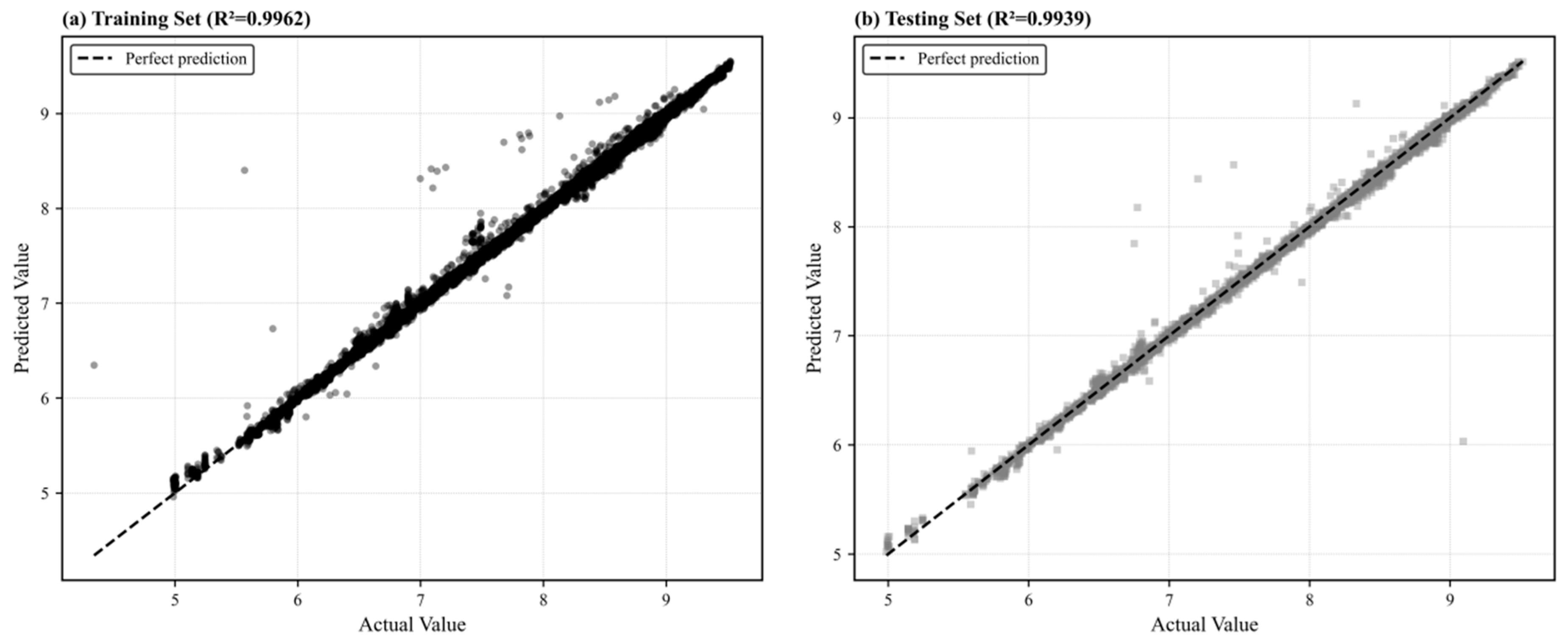
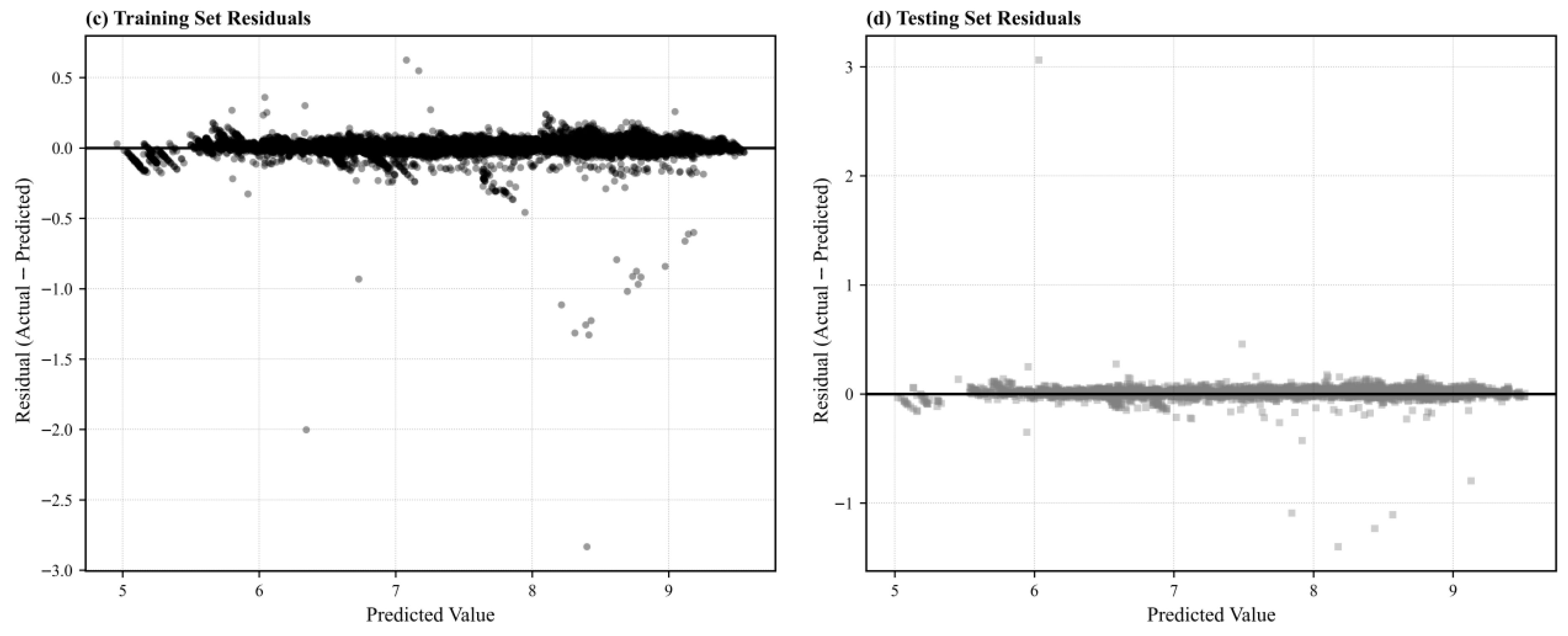
This MLP model adopts a hierarchically decreasing network structure of (64-32-16). The input layer includes five key operating parameters: chilled water flow rate, cooling water flow rate, chilled water supply temperature, load rate, and cooling water supply temperature. Each hidden layer uses the ReLU activation function, and the Adam optimization algorithm is employed for gradient descent training. The training results show that the neural network model achieves a coefficient of determination (R2) of 0.9939, a root mean square error (RMSE) of 0.0822, a mean absolute error (MAE) of 0.0326, and a mean absolute percentage error (MAPE) of only 0.43% on the test set—significantly outperforming the traditional multivariate polynomial regression (MP) model. Furthermore, the difference in R2 between the training and test sets is less than 0.003, indicating that the model has excellent generalization ability without overfitting, thus providing a high-fidelity energy consumption benchmark for subsequent optimization. The performance evaluation of the model can be referred to in Figure 2.

2.2.2. Pump Model

The quadratic pump-flow relationship is based on the experimental curve provided by Braun [17]. The flow-head characteristic curve of the pump is fitted using the least-squares method based on the manufacturer’s operating data. The energy consumption models of the chilled water pump and the cooling water pump are shown in Equation (1).
W p = b 0 + b 1 Q + b 2 Q 2
where Q is the pump flow rate; b0~b2 are regression coefficients, and their specific values corresponding to different pump types are listed in Table 2.

2.2.3. Cooling Tower Model

The energy consumption of cooling tower fans has traditionally relied on the Braun model [17], which is a semi-empirical model for cooling tower performance calculation. Although it can predict heat rejection and performance by combining thermodynamic equilibrium and empirical parameters, it fails to establish a coupling relationship between the cooling tower approach, chiller energy consumption, and overall system efficiency. Under the same cooling load, it is difficult to reflect the impact of approach differences on system optimization.
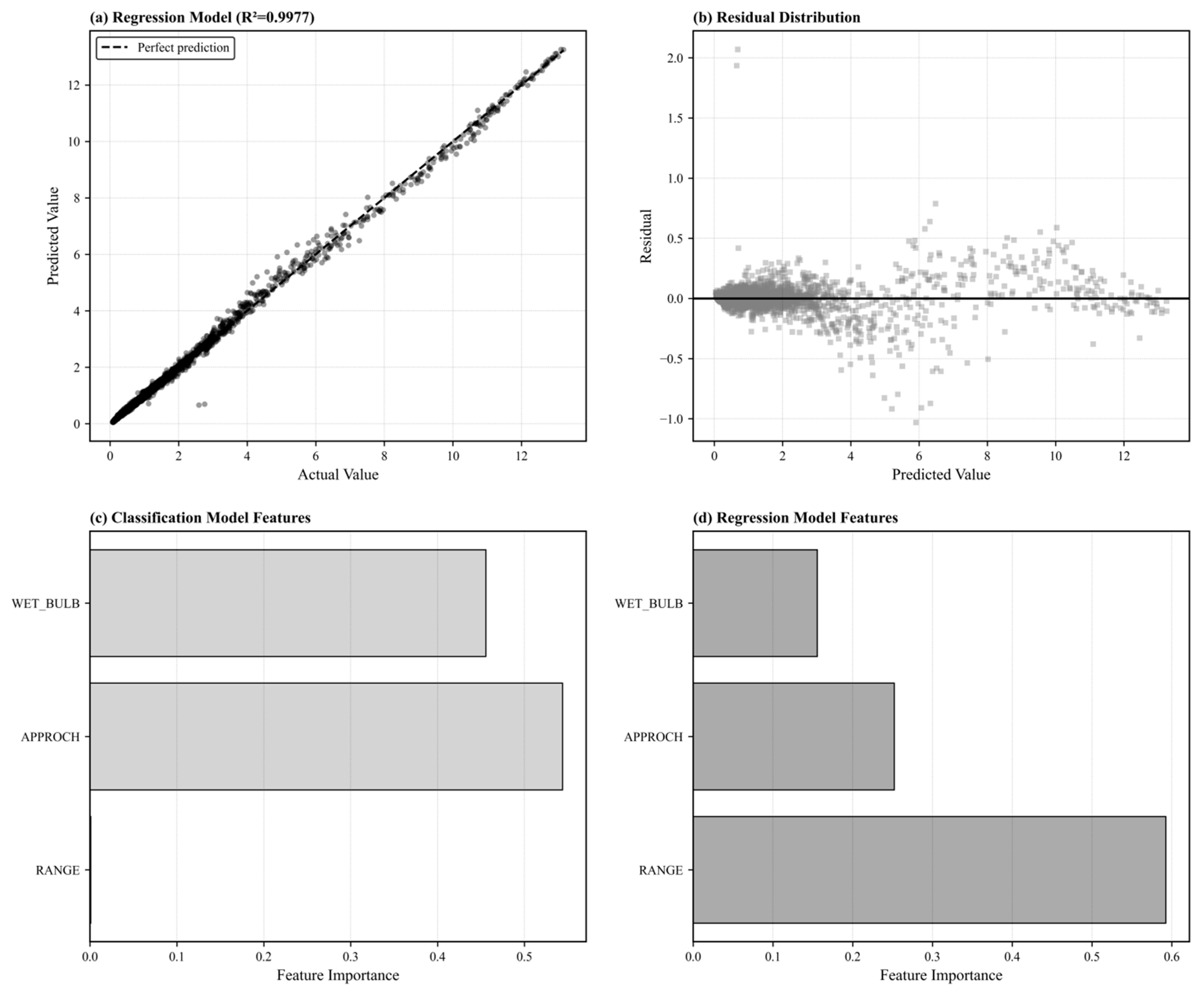
To address this, this paper uses the 21,369 sets of cooling tower flow conversion tables provided by the Cooling Technology Institute (CTI) for arbitrary and standard operating conditions, from which 20,695 valid data sets were selected to construct a Gradient Boosting Regressor model. The model is configured with 200 decision trees, a learning rate of 0.1, and a maximum depth of 4. The test results show that the coefficient of determination R2 reaches 0.9977, the RMSE is 0.1034, the MAE is 0.0485, and the MAPE is only 4.65% (Figure 3), indicating extremely high prediction accuracy. Feature importance analysis further indicates that the temperature difference (RANGE) has the highest impact on the model’s predicted values (59.25%), while the approach (APPROCH), as a key input parameter, can be precisely captured by the model for its coupling effect on system efficiency optimization, thus overcoming the limitations of the traditional Braun model.
The energy consumption calculation process for cooling towers is as follows:
First, a gradient boosting regression tree is used to establish the mapping relationship of the performance coefficient:
η   =   f ( x )   =   GBR ( Δ T r a n g e , T a p p r o a c h , T w b )
The input feature vector is defined as follows:
x   =   [ Δ T r a n g e , T a p p r o a c h , T w b ] T
where ( Δ T r a n g e is the temperature difference between the inlet and outlet of the cooling water, T a p p r o a c h is the cooling tower approach, and T w b is the ambient wet-bulb temperature. The actual energy consumption of the cooling tower can then be calculated based on the performance coefficient correction method:
E t o w e r = C P r a t e d η η 0 Q a c t u a l Q r a t e d
In the formula, η is the cooling tower performance coefficient under the current operating conditions, predicted by the gradient boosting regression model based on the cooling water temperature difference ( Δ T r a n g e ), approach temperature ( T a p p r o a c h ), and ambient wet-bulb temperature ( T w b ); η 0 is the performance coefficient under the baseline operating conditions, i.e., the performance coefficient when Δ T r a n g e , T a p p r o a c h , and T w b are all at the rated parameters of the equipment, calculated by the same model; the constant C = 0.871 is a unit conversion coefficient used to unify the dimensions of the performance coefficient and power parameters, and its value is derived from the unit conversion specifications under the CTI standard conditions. The physical meanings and calculation methods of the parameters in the equation are shown in Table 3:

2.3. Problem Model

2.3.1. Optimization Objective

For the central air-conditioning cold-source system, the optimization objective is to achieve the optimal energy efficiency of the cold-source system, i.e., to maximize the EER of the cold-source system. The EER is defined as the ratio of the total cooling capacity of the system to the total energy consumption of the system, as shown in Equation (5):
E E R = Q c , t o t a l W c h + W p + P f a n
where Qtotal is the total cooling capacity of the system; Wch, Wp, and Pfan are the power consumptions of the chillers, pumps, and cooling towers, respectively. Therefore, the optimization objective can be described as follows:
max   E E R = max   Q c , t o t a l W c h + W p + P f a n

2.3.2. Optimization Variables and Constraints

The optimization variables include the status and operating parameters of the following equipment, which are adjusted to enhance the overall system efficiency. The optimization process must adhere to multiple physical and operational constraints. The flow rates of the chillers, chilled water pumps, cooling water pumps, and cooling towers must operate within their minimum and maximum design flow ranges and cannot exceed their physical limitations. Additionally, the approach of the cooling tower, limited by its own heat dissipation capacity, must be maintained within a reasonable range. It cannot be too small, exceeding the cooling tower’s capability, nor too large, as this would reduce the overall cooling effect of the system. Moreover, the load on the chillers and pumps must not fall below their minimum load requirements to ensure they operate efficiently. Overall, the operating status of all equipment, flow distribution, and the approach of the cooling tower must comply with the system’s design capabilities and actual operational requirements. In summary, the constraints are specifically described as follows:
T a p p r o a c h , min < Δ T a p p r o a c h f c t , min < f c t < f c t , max f c h i l l e r , min < f c h i l l e r < f c h i l l e r , max f c h w _ p u m p , min < f c h w _ p u m p < f c h w _ p u m p , max f c w _ p u m p , min < f c w _ p u m p < f c w _ p u m p , max 0 N c t N c t , max ,   N c t Ζ 0 N c h i l l e r N c h i l l e r , max ,   N c h i l l e r Ζ 0 N c h w _ p u m p N c h w _ p u m p , max ,   N c h w _ p u m p Ζ 0 N c w _ p u m p N c w _ p u m p , max ,   N c w _ p u m p Ζ
where: Z is the set of integers.
The optimization variables and specific constraints are detailed in Table 4.

3. Algorithm Design

3.1. Application of the Whale Optimization Algorithm

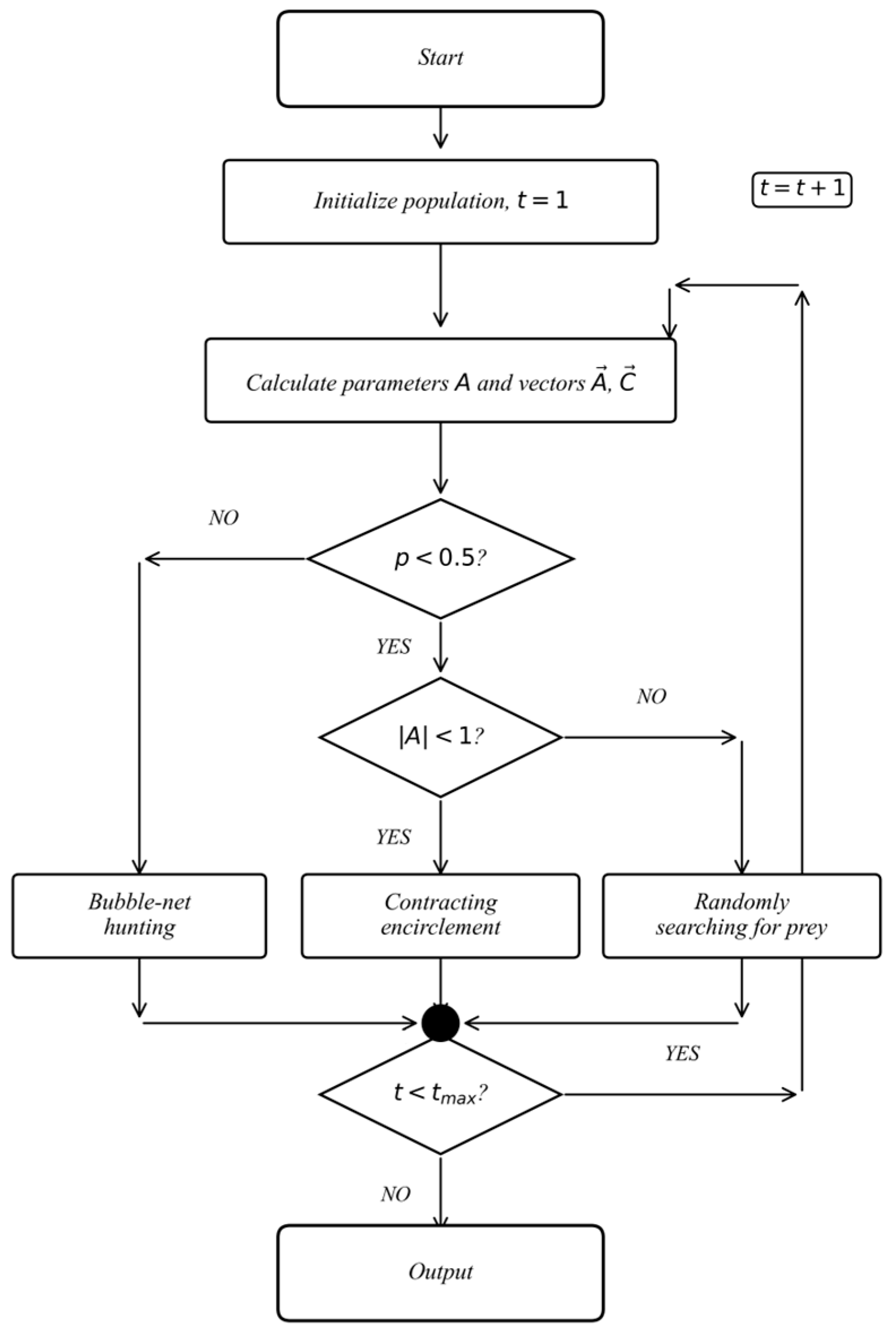
The Whale Optimization Algorithm (WOA) is a new swarm intelligence optimization algorithm that simulates the hunting behavior of humpback whales. In the WOA, each whale’s position represents a feasible solution. The hunting behavior of whales is divided into three stages: encircling prey, bubble-net attacking, and searching for prey. The optimization process is shown in Figure 4. In the optimization of central air-conditioning cooling source systems, the WOA can handle both continuous and discrete variables simultaneously. Continuous variables include chiller load, pump frequency, cooling tower flow, and approach temperature, while discrete variables include the equipment’s on/off states. Compared with GA and PSO algorithms, WOA does not require manual adjustment of inertia weights. It relies on the convergence factor A to adaptively balance global and local search, reducing the parameter-tuning burden [9]. Its “encircling prey” and “bubble-net attacking” mechanisms effectively suppress premature convergence. Moreover, WOA uses a “threshold truncation” approach for discrete variables, eliminating the need for binary encoding required by GA, making it more concise and efficient and improving computational efficiency by about 20%.

3.2. Initialization and Solution Update

The initialization process is to generate the initial population, which is carried out according to the following steps:
For the load distribution of chillers, random numbers are generated based on the minimum load limit and the maximum load for each chiller. If the total load during initialization is not zero (i.e., at least one chiller is allocated a load), the load is adjusted to the total cooling load through proportional scaling. For the cooling tower approach temperature, initial values are randomly generated within a reasonable range (between the minimum approach temperature and 8 °C).
In this optimization, the update of solutions follows the mechanism of WOA. For each whale, the update equation is as follows:
X ( t + 1 ) = X rand A × D
When p < 0.5 and |A| ≥ 1, the update equation is as follows:
X ( t + 1 ) =   X ( t ) A × D
When p ≥ 0.5, perform a search using the spiral search equation as follows:
X ( t + 1 ) =   D × e b l × cos ( 2 π l ) + X ( t )
where C, b, and l are random coefficients.

3.3. Constraint Control and Handling of Discrete Variables

During the optimization process, WOA needs to handle a variety of constraints to ensure the physical feasibility of the solution and the safe operation of the equipment. The constraint handling strategies adopted in this study are as follows:

3.3.1. Chiller Load Constraint Adjustment

A combination of boundary truncation and threshold strategies is used. For the i-th chiller, the feasible range of load Q i (subscript i denotes the i-th chiller) is [ Q i , m i n , Q i , m a x ]. Here Q i , m i n = α · Q i , r a t e d (where α is the minimum load rate of the chiller, set to 0.15 based on the manufacturer’s technical parameters), and Q i , m a x = α · Q i , r a t e d (rated cooling capacity of the i-th chiller). During the solution update process:
  • If Q i < Q i , m i n , set Q i = 0 (shut down the i-th chiller);
  • If Q i > Q i , m a x , (limit to the rated capacity of the i-th chiller).

3.3.2. Cooling Tower Approach Constraint Adjustment

The feasible range of the approach is determined by two conditions:
  • The physical lower bound Amin based on the cooling tower performance model (predicted by the gradient boosting regression model using the current wet-bulb temperature and flow ratio);
  • The safety constraint that the cooling water supply temperature must not be lower than 18 °C, i.e., T w b + A ≥ 18;
  • The upper limit constraint of the cooling water supply temperature of 32 °C, i.e., T w b + A ≤ 32 (an upper limit given from the perspective of system safe operation). Combining the above conditions, the approach boundary is ∈[max(Amin, 18 − T w b ), 32 − T w b ]. If the updated approach exceeds this range, it is truncated to the feasible domain through a calculation function.

3.3.3. Total Cooling Load Balance Constraint

A two-stage adjustment mechanism is used to ensure that the total load precisely matches the target value Q t a r g e t .
Stage 1: Scale the load of all operating chillers proportionally. The scaling factor is defined as follows:
λ = Q t a r g e t i = 1 n Q i
where Q t a r g e t is the total cooling load demand of the system; n is the number of operating chillers; and Q i is the initial load of the i-th operating chiller.
Stage 2: If the total load after scaling deviates from Q t a r g e t , eliminate the deviation by fine-tuning each operating chiller’s load one by one. Prioritize chillers with larger load margins (i.e., the difference between Q i , m a x and current Q i , or between current Q i and Q i , m i n ) to ensure the final total load satisfies:
Specific adjustment strategies:
If the total load exceeds the target, reduce the load of each unit one by one, with each unit being reduced to its minimum load Q i , min at most;
If the total load is below the target, increase the load of each unit one by one, with each unit being increased to its rated capacity Q i , max at most.

3.3.4. Discrete Variable (On/Off State) Processing

A “threshold truncation + continuous relaxation” strategy is adopted. During optimization, discrete variables are relaxed into continuous variables (load Q i ∈ [0, Q i , m a x ]), and the discrete characteristics are restored through threshold judgment:
When Q i > 0, the on/off state of the unit si = 1 (on);
When Q = 0, si = 0 (off).
This method avoids the combinatorial explosion problem of discrete optimization while ensuring the physical feasibility of the solution. In actual implementation, the chiller is automatically shut down when its load is below the minimum load threshold, reflecting the principle of economical operation.

3.3.5. Convergence Control

An early stopping mechanism is introduced to improve algorithm efficiency and avoid ineffective iterations. The patience parameter is set to patience = 10, and the tolerance threshold is tol = 10−6. If the best improvement in the objective function value (i.e., the difference between the current optimal value and the optimal value from 10 generations ago) is less than tol for 10 consecutive iterations, the search is deemed stagnant, and the algorithm is terminated early.
To ensure reproducibility and consistency, the population size used in this study was set to 50, and the maximum number of iterations was set to 100. These parameters were kept constant across all optimization runs to ensure the stability and robustness of the WOA algorithm.

4. Optimization Analysis

4.1. Building Cooling Load Characteristics

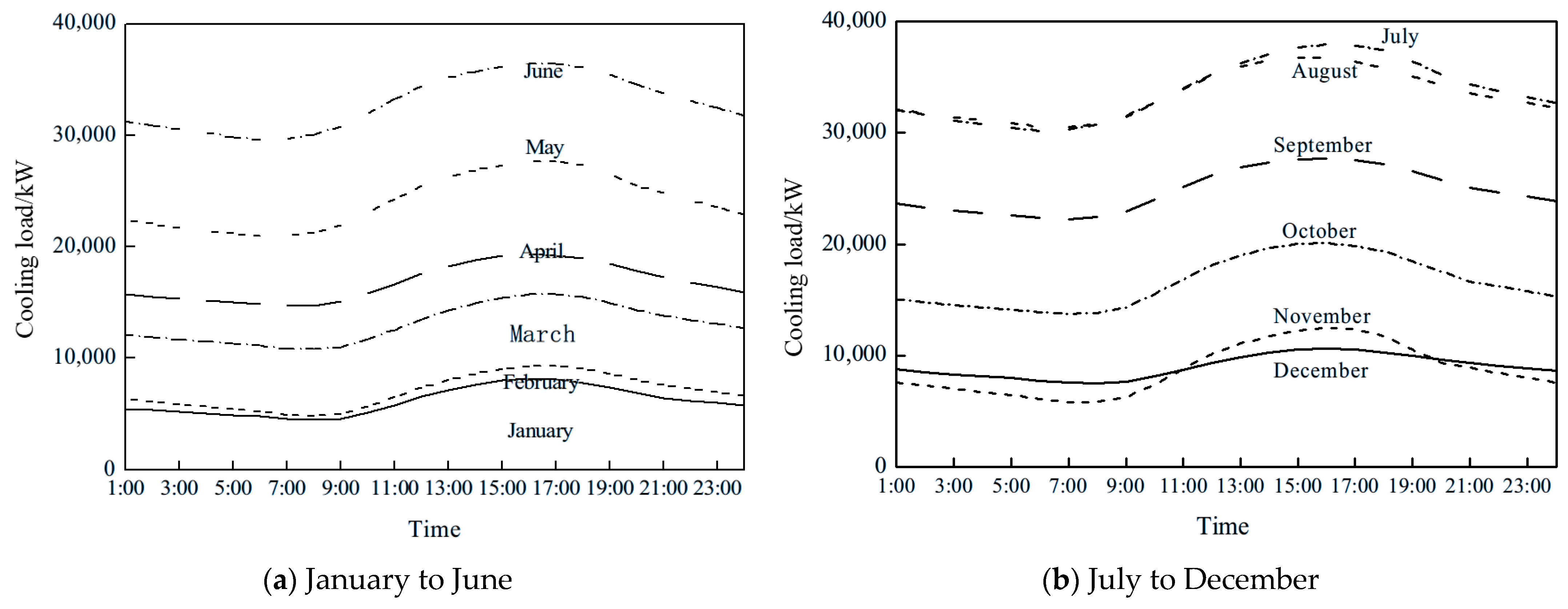
The cooling load characteristics of the office building on the user side are calculated using the DeST software. The simulation is conducted using DeST v3.0 (Designer Simulation Toolkit), developed by Tsinghua University, Beijing, China. The simulation followed the procedure described by Yan et al. [18]. The settings of parameters such as the thermophysical properties of the building envelope, indoor heat gain, and indoor air temperature and humidity comply with the provisions of Article 3.3.1 “Thermal Performance Limits of Building Envelopes in Hot-Summer and Warm-Winter Areas” and Chapter 4 “General Provisions for Heating, Ventilation, and Air Conditioning Design” in the Design Standard for Energy Efficiency of Public Buildings (GB 50189-2015) [19]. The indoor air temperature setpoint is 25 °C during operating hours, and the cooling load is weighted averaged for each day of every month to derive the monthly weighted average cooling load characteristic distribution of the building, as shown in Figure 5.
As depicted in Figure 5, the cooling load characteristic in June is similar to that of July and August; May and September are similar; April and October are similar; and there is little difference between November, December, and January.

4.2. Comparison Before and After Optimization

Based on the system model, problem formulation, and algorithm design, the optimization problem for the central air-conditioning cooling source system is implemented using Python programming. This optimization system is realized using Python 3.12, with major dependencies including NumPy 2.3.3, pandas 2.3.3, and SciPy 1.16.2. The source code and related data can be obtained from the corresponding author. Three representative operating conditions (as shown in Table 5) are selected for detailed analysis to evaluate the effectiveness of WOA in improving system efficiency.

4.2.1. Analysis of Operating Condition 1 (Low Load Scenario)

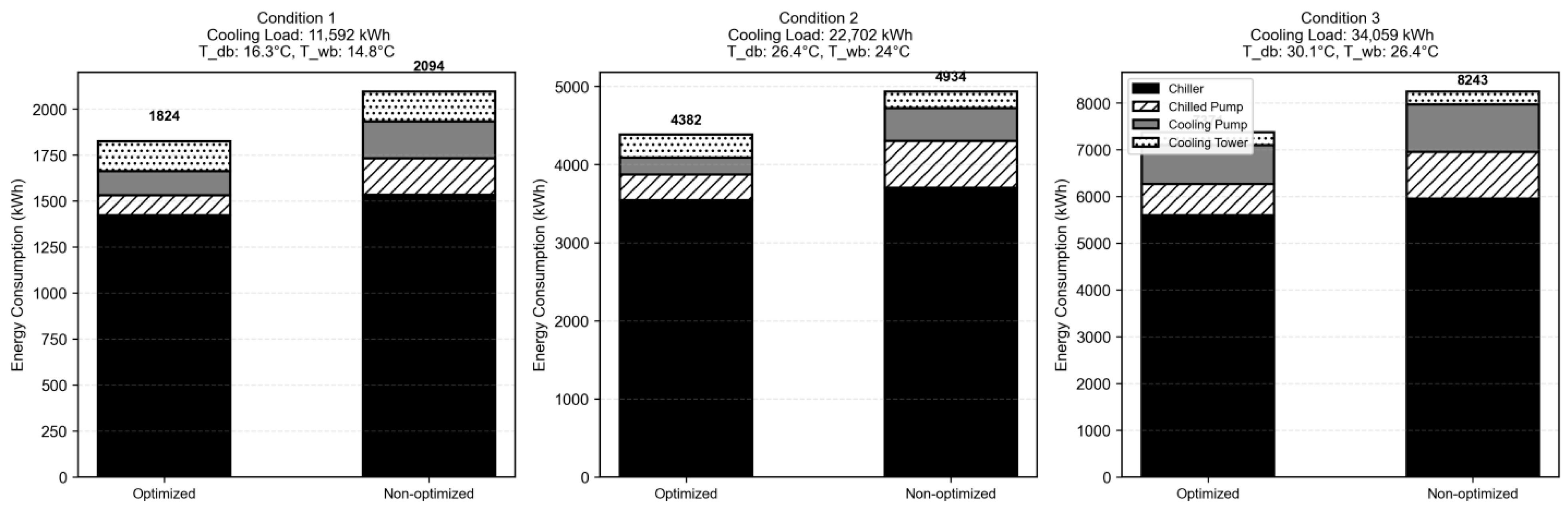
Under Operating Condition 1, the system consumed 12.91% less energy after optimization. It dropped from 2094.5 kWh to 1824.0 kWh. The Energy Efficiency Ratio (EER) increased from 5.53 to 6.36, a 15.01% improvement. The chiller used the most energy. The chilled water pump ranked second. The cooling water pump came next. The cooling tower had the smallest share. After optimization, the energy consumption of the chiller, chilled water pump, and cooling water pump was reduced by 7.23%, 45.23%, and 34.84%, respectively, while the cooling tower’s energy consumption increased by 0.19%. This shows there were trade-offs in the optimization. Under this low-load operating condition, the optimization algorithm effectively adjusted the operating parameters of the equipment, achieving significant energy savings while ensuring the required cooling capacity. The detailed energy-consumption breakdown is illustrated in Figure 6, and the corresponding operating parameters before and after optimization are listed in Table 6.

4.2.2. Analysis of Operating Condition 2 (Medium Load Scenario)

Under Operating Condition 2, the system also demonstrated strong optimization potential. The total energy consumption was reduced by 11.18%, from 4933.8 kWh to 4382.0 kWh. The EER increased from 4.60 to 5.18, a 12.61% improvement. In terms of individual equipment energy consumption, the chiller, chilled water pump, and cooling water pump achieved energy savings of 4.35%, 44.98%, and 47.87%, respectively. During the optimization of Operating Condition 2 under medium load, the cooling tower’s energy consumption increased significantly, mainly to balance the efficient operation of the chiller and pumps (such as matching equipment load distribution and ensuring heat dissipation requirements). By appropriately increasing the operating intensity of the cooling tower to support overall system efficiency improvement, this was a reasonable trade-off in the optimization process.

4.2.3. Analysis of Operating Condition 3 (High Load Scenario)

Under Operating Condition 3, which is a high-load scenario, the energy consumption was reduced by 10.58%, from 8242.7 kWh to 7371.0 kWh. The EER increased from 4.13 to 4.62, a 11.86% improvement. In terms of individual equipment, the chiller, chilled water pump, and cooling water pump achieved energy savings of 5.92%, 33.57%, and 18.07%, respectively. The cooling tower’s energy consumption remained essentially unchanged. Under high-load operating conditions, although the optimization space was relatively limited due to the need for most equipment to operate at higher capacities, the Whale Optimization Algorithm still achieved significant energy savings by finely adjusting operating parameters and load distribution among chillers.

4.3. Comparative Analysis of the Three Operating Conditions

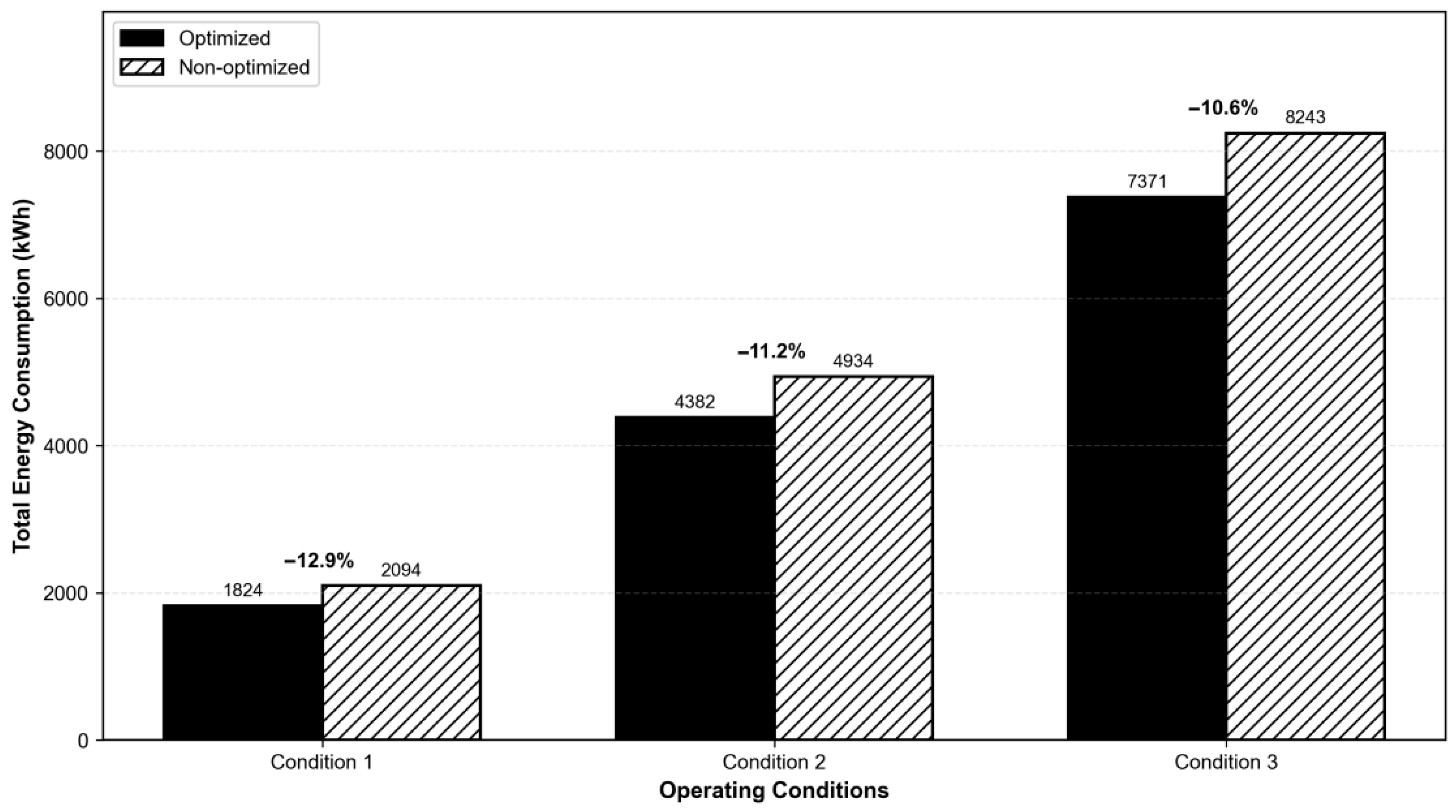
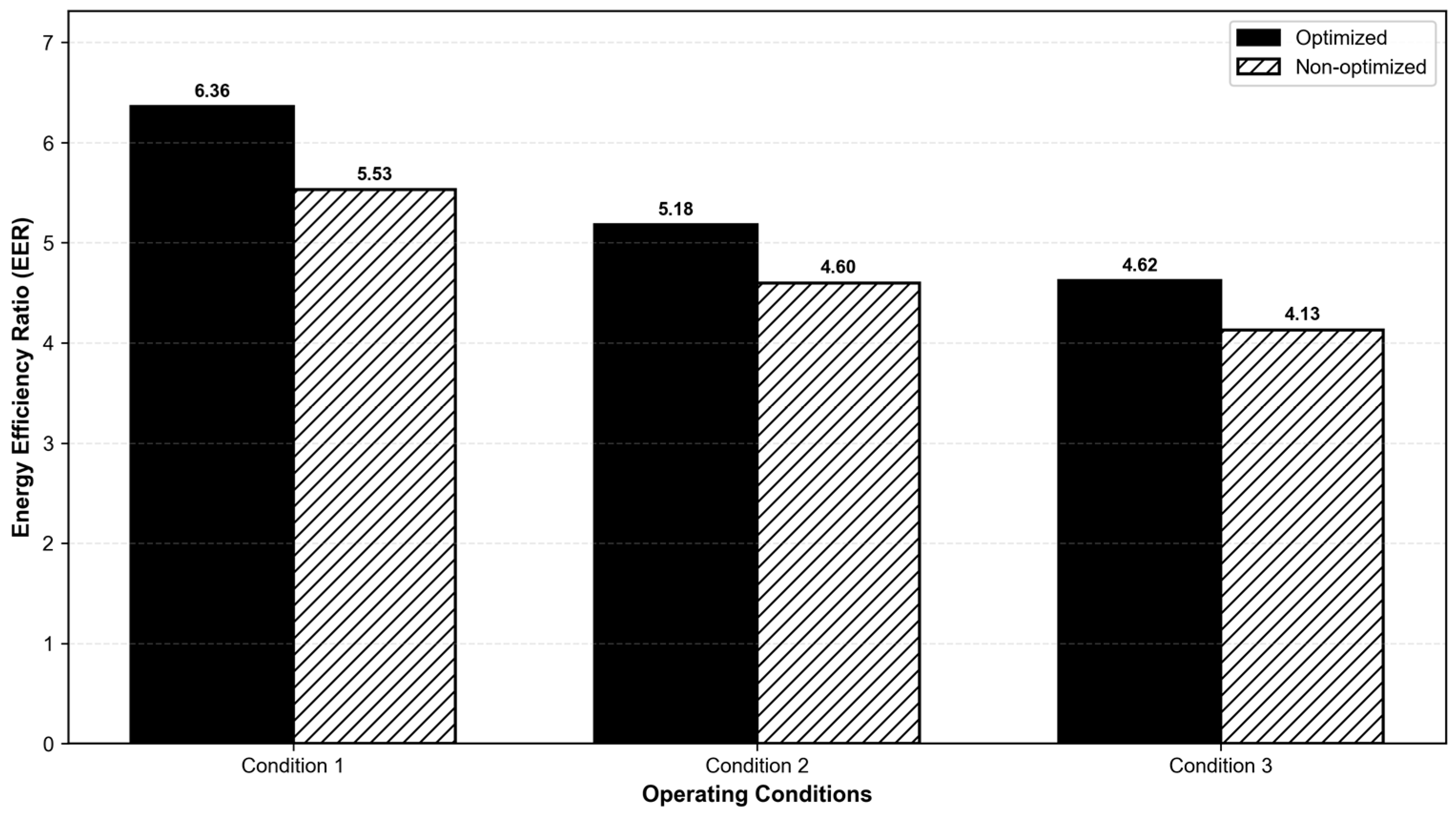
A comprehensive comparison of the three operating conditions reveals that the achieved energy savings rates are 12.91%, 11.18%, and 10.58%, respectively. This is illustrated in Figure 7 (energy consumption and saving rate) and Figure 8 (EER comparison). This indicates that the optimization algorithm is effective across different load levels, with the most significant energy-saving effects observed under low to medium load conditions.
The EER improvement percentages for the three operating conditions are 15.01%, 12.61%, and 11.86%, respectively. The EER decreases with higher outdoor temperatures, which aligns with thermodynamic principles. However, the relative improvement remains significant under all conditions.
The chilled water pumps and cooling water pumps demonstrate significant optimization potential, especially under medium and low load conditions, with energy savings reaching 44.98% and 47.87%, respectively. This highlights the importance of variable frequency drive control in achieving overall system optimization.
The research results indicate that under extremely low or high load conditions, the number of operating units before and after optimization tends to be the same, with the optimization space mainly limited to capacity adjustment. In contrast, under medium load conditions, there is optimization potential in both the number of units and their capacities, resulting in greater energy savings and EER improvements.

4.4. Annual Energy Consumption Comparison

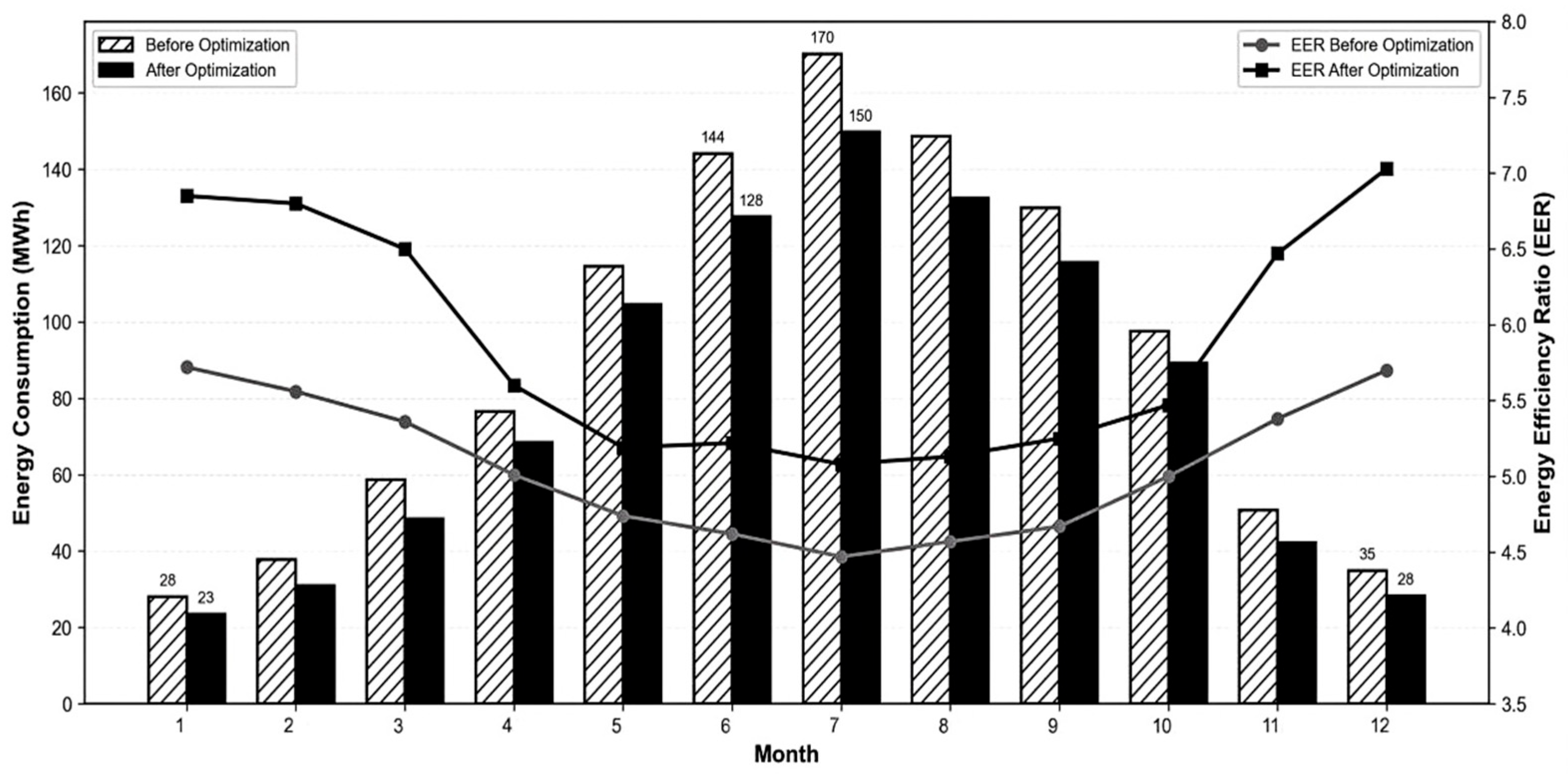
Based on the monthly optimization results, the WOA algorithm shows good adaptability under different seasonal and load conditions. The average annual energy savings rate is 13.42%, with the EER increasing from 5.07 to 5.88, a 16.10% improvement. Specifically, the optimization effect is most significant under low-load conditions in winter, with an energy savings rate of 18.92% and a 23.3% EER improvement in December. Although the energy savings rate is relatively lower under high-load conditions in summer (12.01% in July), the absolute amount of energy saved is still considerable due to the high base energy consumption. The energy savings rate for each month remains between 8.59% and 18.92%, indicating that the algorithm can adaptively adjust equipment configuration strategies according to different operating conditions, achieving stable and reliable energy savings across the entire operating range. This demonstrates its good engineering application value, as summarized in Figure 9.

5. Algorithm Comparison and Sensitivity Analysis

5.1. Optimization Algorithm Performance Comparison

To verify the effectiveness of WOA in the optimization of cooling source systems, WOA is compared with two classic algorithms, GA and PSO. All three algorithms use the same optimization objective (minimizing the total system energy consumption), constraints, and initial parameter settings to ensure a fair comparison.
The algorithm parameter settings are as follows: The population size is 50 for all algorithms, with a maximum of 100 iterations, convergence tolerance tol = 10−6, and patience parameter patience = 10. For GA, tournament selection, single-point crossover (crossover probability 0.8), and Gaussian mutation (mutation probability 0.2) are used. For PSO, the inertia weight linearly decreases from 0.9 to 0.4, with learning factors c1 = c2 = 2.0. For WOA, the parameter linearly decreases from 2 to 0. To ensure statistical significance of the results, each algorithm is run 10 times under three typical operating conditions (low load, medium load, and high load), with the average value taken as the final result.
Table 7 shows the optimization performance comparison of the three algorithms under the three typical operating conditions. In terms of optimization accuracy, all three algorithms converge to essentially the same optimal value under each condition, indicating that WOA has global search capabilities comparable to GA and PSO. From the perspective of computational efficiency, WOA achieves the shortest average computation time of 225.20 s, which is 50.6% faster than GA and 11.0% faster than PSO, demonstrating a higher convergence speed. In terms of system EER, the optimized system EER values for the three algorithms under different conditions are 6.355, 5.183, and 4.621, respectively, representing improvements of 8.2%, 12.5%, and 15.3% over the pre-optimization values, thus validating the effectiveness of intelligent optimization methods in enhancing system efficiency.
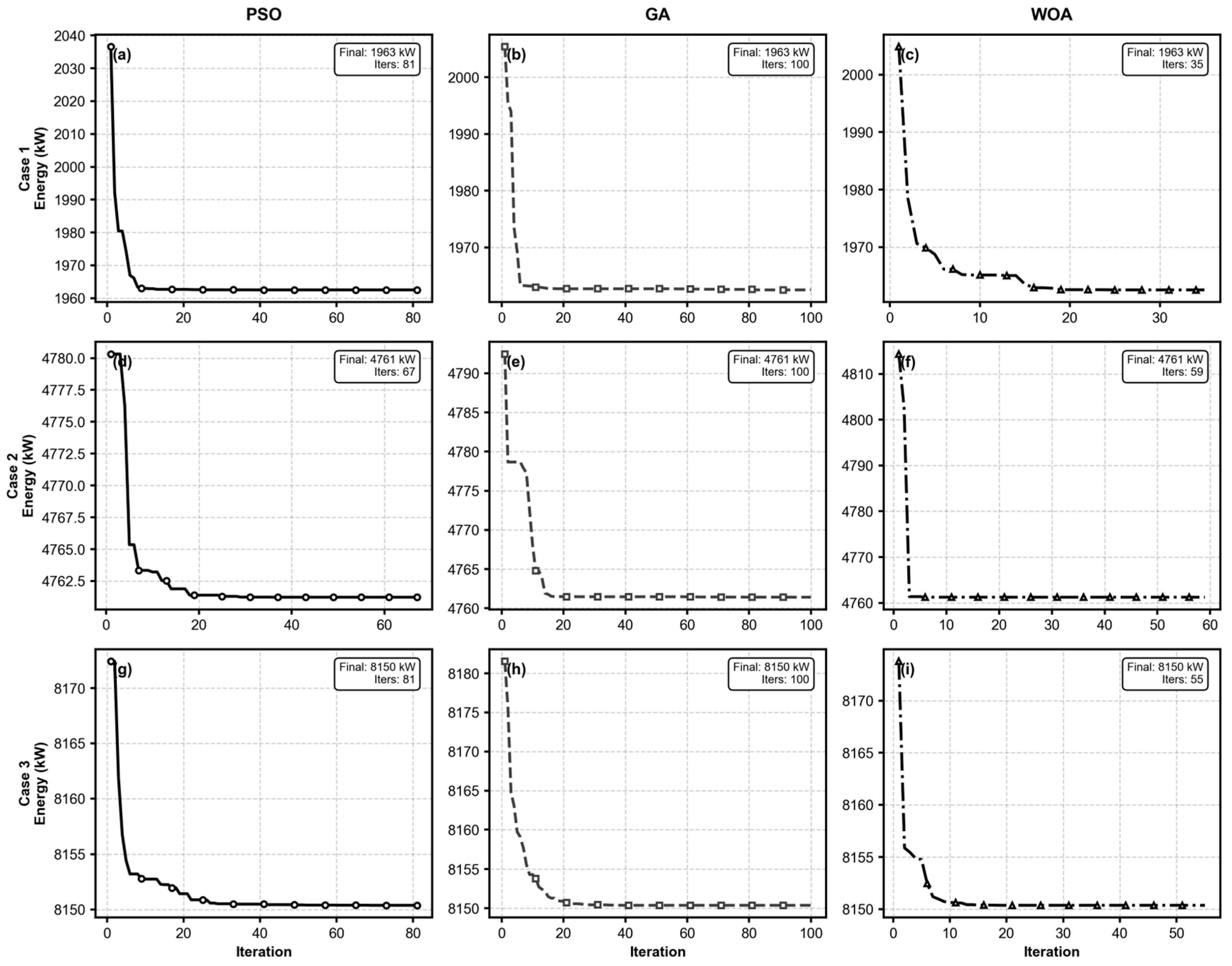
Figure 10 shows the convergence curve comparison of the three algorithms across the three operating conditions. As can be seen from the figure, although all algorithms can find the optimal solution, WOA performs best in terms of convergence speed, with an average of only 49.7 iterations required. This is 35% faster than PSO and 50% faster than GA. This makes WOA particularly suitable for real-time optimization applications in building energy management systems.

5.2. Stability Analysis of the Algorithms

Under operating condition 2, a stability assessment was conducted for WOA, GA, and PSO over 20 independent iterations. These 20 independent runs were initialized using different random seeds to ensure that each run started from a unique population. This approach allows for a comprehensive evaluation of the algorithms’ stability under varying initial conditions. The results show that all three algorithms achieved a 100% success rate, with extremely small stability differences in terms of energy consumption: the average energy consumption was approximately 4761–4763 kW, and the standard deviation and coefficient of variation (CV) were extremely low (e.g., WOA CV ≈ 0.046%, PSO ≈ 0.014%, GA ≈ 0.000%). These differences fall within the acceptable range of engineering measurement errors and normal operational fluctuations and have a limited impact on overall decision-making. In contrast, the time dimension is more decisive in engineering applications: WOA has the lowest average time (≈248.92 s) and the smallest time standard deviation (≈78.46 s), demonstrating higher execution predictability and scheduling reliability; PSO is in the middle; GA has a slightly lower time CV, but its average time is much longer, and it exhibits larger fluctuations. These factors reduce its timeliness and stability. In summary, given that differences in energy consumption stability are negligible in engineering terms, WOA has significant advantages in key time stability indicators (mean and standard deviation), making it more suitable for scenarios requiring real-time and high-frequency operation. The detailed statistics are listed in Table 8.

5.3. Sensitivity Analysis of Key Parameters

To evaluate the impact of system configuration and operating parameters on the optimization results, this study conducts a sensitivity analysis on five key parameters using the experimental scheme shown in Table 9: number of chillers, number of cooling towers, number of pumps, lower limit of pump frequency, and cooling tower approach temperature. All analyses are based on single-factor perturbation experiments under Operating Condition 2.
Table 10 shows the sensitivity coefficients for the five types of parameters. The results indicate that the number of pumps has the most significant impact on system energy consumption, with a sensitivity coefficient of 1.1125, indicating that pump configuration is the most critical factor affecting system efficiency. Increasing the number of pumps from 4 to 5 reduces total system energy consumption from 4876 kW to 4823 kW, a decrease of 1.1%. Adding more pumps lowers the load on each one. This allows them to run more efficiently. The efficiency gain offsets the extra energy used by the additional pump.
The sensitivity coefficient of the lower limit of pump frequency is 0.1957, ranking second. Raising the minimum frequency from 70% to 100% increases energy use. Consumption rises from 4823 kW to 5163 kW. That is a 7.0% increase. The EER also drops from 4.71 to 4.40. This verifies the importance of variable frequency control for energy savings: within the frequency range of 70–80%, system energy consumption remains relatively stable; however, when the frequency exceeds 85%, energy consumption rises rapidly because the pump power is proportional to the cube of the rotational speed, and high-frequency operation leads to a sharp increase in pump energy consumption.
The sensitivity coefficient of the cooling tower approach temperature is 0.0431. When the approach temperature increases from 2 °C to 6 °C, the total system energy consumption rises from 4747 kW to 4955 kW, an increase of 4.4%, and the EER decreases from 4.78 to 4.58. An increase in approach temperature results in a higher cooling-water supply temperature, which leads to a decrease in chiller COP. Unlike the passive influence of wet-bulb temperature, the approach temperature is an optimizable control variable, and the optimization algorithm tends to select a smaller approach temperature (within the equipment performance limits) to improve system efficiency.
The sensitivity coefficients for the number of chillers and the number of cooling towers are 0.0325 and 0.0023, respectively, indicating relatively minor impacts. This is because, within the load range of this study, the existing configuration already meets the operational requirements. Increasing the number of units further results in diminishing marginal benefits and may even lead to efficiency degradation due to low part-load ratios.

6. Conclusions

This study focuses on the “1 small + 4 large” asymmetric central air-conditioning cooling source system of a 530 m super high-rise building in Guangzhou, addressing the 30 min rolling scheduling demand of the BA system. It breaks through the optimization bottleneck of “mixed integers, asymmetry, and strong constraints,” forming a complete technical chain of “modeling–algorithm–patterns–verification.” The main conclusions and innovations are as follows:
For the first time, a three-hidden-layer MLP chiller model trained on 16,276 sets of actual measurements and a gradient-boosting integrated cooling tower model driven by 21,369 operating conditions are constructed, supplemented by a secondary polynomial model for variable frequency pumps based on fluid mechanics similarity laws. This achieves high-precision modeling of energy consumption across all equipment on the cooling-source side, providing a reliable benchmark for asymmetric configuration optimization.
A hybrid encoding of “threshold truncation + continuous relaxation” is proposed, embedding 29-dimensional discrete on/off and continuous parameters into WOA. A three-layer constraint repair mechanism of “boundary–load–approach temperature” is designed, with a single optimization round taking ≤225 s. Compared with GA and PSO, the speed is increased by 41.3% and 25.5%, respectively, and the energy consumption coefficient of variation is only 0.08%, meeting the minute-level real-time scheduling requirements of the BA system.
The optimal load-capacity matching pattern for asymmetric cooling-source clusters is revealed: under low-load conditions, the small unit is mainly operated. When the load rate is around 60%, the configuration is switched to “1 small + 2 large” units, and when the load rate reaches 90%, it is further expanded to “1 small + 4 large” for full-unit operation. In terms of sensitivity analysis, the number of chilled water pumps is the most sensitive parameter, with a 1.1% energy saving by adding one pump. The lower limit of pump frequency and the cooling tower approach temperature are the next most sensitive factors, while the impact of the number of chillers and cooling towers is <0.05. This provides a quantifiable decision-making sequence table for operation and maintenance.
After a full-year rolling optimization, the average EER of the system increases from 5.07 to 5.88 (+15.98%), with an annual energy savings rate of 8.59–18.92%. peak energy savings occur in winter under low-load conditions (18.92% in December), while the absolute value of energy savings is highest in summer under high-load conditions. The typical operating condition energy savings range from 10.58% to 12.91%.
In summary, the WOA optimization method proposed in this study addresses the real-time and explainability challenges of mixed-integer optimization for asymmetric cooling source systems in super high-rise buildings. It forms a complete set of energy-saving control technologies that are “minute-level, implementable, and scalable,” providing a direct engineering paradigm for central air-conditioning cooling source systems in similar super high-rise buildings.

Author Contributions

Conceptualization, J.Y.; methodology, J.Y.; software, J.Y. and A.X.; data curation, D.Z.; investigation, A.X. and D.Z.; resources, L.G.; writing—review and editing, J.Y. and D.Z.; validation, D.Z.; formal analysis, D.Z.; writing—original draft preparation, D.Z.; visualization, D.Z.; supervision, A.X.; project administration, J.Y.; funding acquisition, L.G. All authors have read and agreed to the published version of the manuscript.

Funding

This research was financially supported by the University-Level Scientific Research Fund Project of Guangzhou Maritime University (Grant Nos. K42022108, K42024047).

Data Availability Statement

The data presented in this study are available on request from the corresponding author.

Conflicts of Interest

Author Aiqin Xu is employed by Nanjing Fiberglass Research & Design Institute Co., Ltd. Author Lingjun Guan is employed by the Guangzhou Shijie Energy-Saving Technology Co., Ltd. The remaining authors declare that the research was conducted in the absence of any commercial or financial relationships that could be construed as a potential conflict of interest.

Abbreviations

The following abbreviations are used in this manuscript:
ANNArtificial Neural Network
BABuilding Automation
BQBivariate Quadratic Model
COPCoefficient of Performance
CTICooling Technology Institute
CSACuckoo Search Algorithm
DEDifferential Evolution
DeSTDesigner’s Simulation Toolkit
DQNDeep Q-Networks
EEREnergy Efficiency Ratio
GBRGradient Boosting Regressor
GAGenetic Algorithm
HVACHeating, Ventilation, and Air Conditioning
HVAC&RHeating, Ventilation, Air Conditioning, and Refrigeration
IPLVIntegrated Part-Load Value
MAEMean Absolute Error
MAPEMean Absolute Percentage Error
MLPMultilayer Perceptron
MPMultivariate Polynomial Regression
PLRPart-Load Ratio
PSOParticle Swarm Optimization
R2Coefficient of Determination
RMSERoot Mean Square Error
SSASalp Swarm Algorithm
WOAWhale Optimization Algorithm

References

  1. Berardi, U. A cross-country comparison of the building energy consumptions and their trends. Resour. Conserv. Recycl. 2017, 123, 230–241. [Google Scholar] [CrossRef]
  2. González-Torres, M.; Pérez-Lombard, L.; Coronel, J.F.; Maestre, I.R.; Yan, D. A review on buildings energy information: Trends, end-uses, fuels and drivers. Energy Rep. 2022, 8, 626–637. [Google Scholar] [CrossRef]
  3. Chan, K.C.; Wong, V.T.; Yow, A.K.; Yuen, P.L.; Chao, C.Y. Development and performance evaluation of a chiller plant predictive operational control strategy by artificial intelligence. Energy Build. 2022, 262, 112017. [Google Scholar] [CrossRef]
  4. Cha, J.H.; Park, J.; Yeon, S.H.; Yoon, Y.; Lee, K.H. Particle swarm optimization for multi-chiller system: Capacity configuration and load distribution. J. Build. Eng. 2024, 98, 110953. [Google Scholar] [CrossRef]
  5. Parouha, R.P.; Verma, P. A systematic overview of developments in differential evolution and particle swarm optimization with their advanced suggestions. Appl. Intell. 2022, 52, 10448–10492. [Google Scholar] [CrossRef]
  6. Tian, H.; Feng, M.; Fan, H.; Cao, R.; Gao, Q. Optimization control strategy for a central air conditioning system based on AFUCB-DQN. Processes 2023, 11, 2068. [Google Scholar] [CrossRef]
  7. Xue, Z.; Yu, J.; Zhao, A.; Zong, Y.; Yang, S.; Wang, M. Optimal chiller loading by improved sparrow search algorithm for saving energy consumption. J. Build. Eng. 2023, 67, 105980. [Google Scholar] [CrossRef]
  8. Hu, Y.; Qin, L.; Li, S.; Li, X.; Li, Y.; Sheng, W. Optimal chiller loading based on flower pollination algorithm for energy saving. J. Build. Eng. 2024, 93, 109884. [Google Scholar] [CrossRef]
  9. Mirjalili, S.; Lewis, A. The whale optimization algorithm. Adv. Eng. Softw. 2016, 95, 51–67. [Google Scholar] [CrossRef]
  10. Wang, L.; Li, J.; Yang, B. Low-carbon economic operation of integrated energy system considering carbon emissions of electric energy storage devices. Sci. Technol. Eng. 2021, 21, 2334–2342. [Google Scholar]
  11. Wang, J.; Yue, Y.; Li, B. Microgrid optimization based on Archimedean chaotic elite whale algorithm. Sci. Technol. Eng. 2023, 23, 12577–12584. [Google Scholar]
  12. Wang, J.; Xu, M. Bi-level planning of distributed power sources based on improved whale algorithm. Sci. Technol. Eng. 2024, 24, 11294–11302. [Google Scholar]
  13. Gordon, J.M.; Ng, K.C. A general thermodynamic model for absorption chillers: Theory and experiment. Heat Recovery Syst. CHP 1995, 15, 73–83. [Google Scholar] [CrossRef]
  14. Lee, T.S.; Lu, W.C. An evaluation of empirically-based models for predicting energy performance of vapor-compression water chillers. Appl. Energy 2010, 87, 3486–3493. [Google Scholar] [CrossRef]
  15. Yik, F.; Lam, V. Chiller models for plant design studies. Build. Serv. Eng. Res. Technol. 1998, 19, 233–241. [Google Scholar] [CrossRef]
  16. Reddy, T.A.; Andersen, K.K. An evaluation of classical steady-state offline linear parameter estimation methods applied to chiller performance data. HVACR Res. 2002, 8, 101–124. [Google Scholar] [CrossRef]
  17. Braun, J.E. Methodologies for the Design and Control of Central Cooling Plants. Ph.D. Thesis, University of Wisconsin-Madison, Madison, WI, USA, 1988. Available online: https://minds.wisconsin.edu/bitstream/handle/1793/46694/Braun1988.pdf (accessed on 1 January 2020).
  18. Yan, D.; Zhou, X.; An, J.; Kang, X.; Bu, F.; Chen, Y.; Pan, Y.; Gao, Y.; Zhang, Q.; Zhou, H.; et al. DeST 3.0: A new-generation building performance simulation platform. Build. Simul. 2022, 15, 1849–1868. [Google Scholar] [CrossRef]
  19. GB 50189-2015; Design Standard for Energy Efficiency of Public Buildings. China Architecture & Building Press: Beijing, China, 2015.
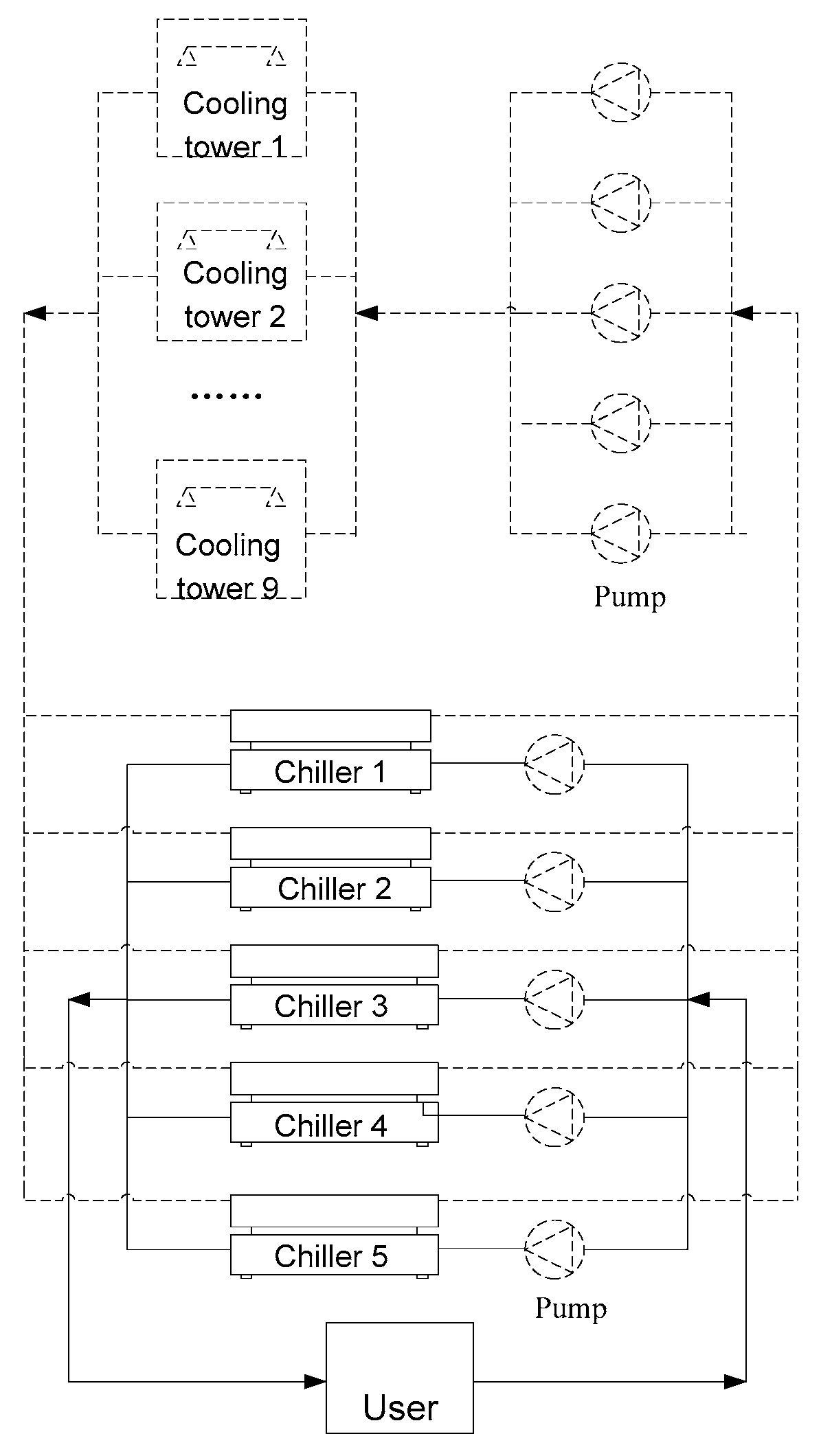
Figure 1. Schematic diagram of the central air-conditioning cold source system.
Buildings 15 04363 g001
Figure 2. Performance evaluation of the MLP regression model. (a) Training set predictions vs. actual values (R2 = 0.9962). (b) Testing set predictions vs. actual values (R2 = 0.9939). (c) Training set residual distribution. (d) Testing set residual distribution. The results demonstrate excellent prediction accuracy and generalization capability with no systematic bias.
Buildings 15 04363 g002aBuildings 15 04363 g002b
Figure 3. Evaluation of machine learning models for cooling tower performance prediction. (a) Regression model: predicted vs. actual values (R2 = 0.9977, RMSE = 0.1034). (b) Residual distribution of regression predictions. (c) Feature importance ranking for classification model (missing value detection). (d) Feature importance ranking for regression model (performance coefficient prediction).
Buildings 15 04363 g003
Figure 4. Flowchart of the whale optimization algorithm.
Buildings 15 04363 g004
Figure 5. Annual cooling load characteristics of the building.
Buildings 15 04363 g005
Figure 6. Energy consumption comparison before and after optimization.
Buildings 15 04363 g006
Figure 7. Total Energy consumption and saving rate.
Buildings 15 04363 g007
Figure 8. EER comparison before and after optimization.
Buildings 15 04363 g008
Figure 9. Comparison of monthly average weighted energy consumption and energy efficiency ratio before and after optimization.
Buildings 15 04363 g009
Figure 10. Convergence characteristics of PSO, GA, and WOA algorithms for three operating cases: (ac) Case 1 with 11,592 kW cooling load at 14.8 °C wet-bulb temperature; (df) Case 2 with 22,702 kW cooling load at 24.0 °C wet-bulb temperature; (gi) Case 3 with 34,059 kW cooling load at 26.4 °C wet-bulb temperature. WOA consistently demonstrated the fastest convergence speed across all operating conditions.
Buildings 15 04363 g010
Table 1. Main technical parameters of each equipment in the cold source system.
Equipment TypeKey Technical ParametersData Sources
Chiller 1Chilled water: 7 °C (inlet), 12 °C (outlet); Cooling water: 31 °C (inlet), 36 °C (outlet); Capacity: 4922 kW; Power: 859.4 kW; IPLV: 9.775; EER: 5.727; Chilled water flow: 844.9 m3/h; Cooling water flow: 988.9 m3/h; Chilled water pressure drop: 65.6 kPa; Cooling water pressure drop: 63.9 kPaYork Manufacturer’s Technical Manual for Chiller Model YKQ5Q1K25DBH
Chillers 2–5Chilled water: 7 °C (inlet), 12 °C (outlet); Cooling water: 31 °C (inlet), 36 °C (outlet); Capacity: 8439 kW; Power: 1377 kW; IPLV: 7.504; EER: 6.13; Chilled water flow: 1448.6 m3/h; Cooling water flow: 1688.4 m3/h; Chilled water pressure drop: 78.4 kPa; Cooling water pressure drop: 71.4 kPaYork Manufacturer’s Technical Manual for Chiller Model YKV8W6K45DJH
Chilled Water Pump 1Power: 110 kW; Head: 38 m; Flow rate: 847 m3/hWiLO Manufacturer’s Technical Manual for Pump Model SCH250/360-110/4
Chilled Water Pumps 2–5Power: 200 kW; Head: 38 m; Flow rate: 1452 m3/hWiLO Manufacturer’s Technical Manual for Pump Model SCH300/430-200/4
Cooling Water Pump 1Power: 110 kW; Head: 26 m; Flow rate: 1094 m3/hWiLO Manufacturer’s Technical Manual for Pump Model SCH250/380-110/4
Cooling Water Pumps 2–5Power: 200 kW; Head: 26 m; Flow rate: 1861.75 m3/hWiLO Manufacturer’s Technical Manual for Pump Model SCH300/430-200/4
Cooling Towers 1–9Power: 37 kW; Hot water temperature: 36 °C; Cold water temperature: 31 °C; Flow rate: 866 m3/h; Wet-bulb temperature: 28 °CEVAPCO Manufacturer’s Technical Manual for Cooling Tower Model LCCM-N-800
Table 2. Polynomial coefficient of pump performance curves.
Pump TypePump IDRated Power (kW)Rated Flow
(m3/h)
Rated Head (m)b0b1b2
Chilled Water PumpCHWP-11108473846.130.001580−0.00001537
Chilled Water PumpCHWP-220014523849.150.000220−0.00000545
Cooling Water PumpCWP-111010942636.000.002843−0.00001103
Cooling Water PumpCWP-220018622645.000.001200−0.00000600
Table 3. Energy consumption parameters of cooling towers.
ParameterMeaningCalculation/Value Method
P r a t e d Rated power of the cooling tower (kW)Equipment nameplate parameter
Q r a t e d Rated water flow of the cooling tower (m3/h)Equipment nameplate parameter
Q a c t u a l Actual water flow of the cooling tower (m3/h)Actual operating parameter
ηPerformance coefficient under current operating conditions η = f ( ( Δ T r a n g e , T a p p r o a c h , T w b )
η 0 Performance coefficient under base operating conditions η 0 = f ( ( Δ T r a n g e , 0 ,   T a p p r o a c h , 0 , T w b , 0 )
CUnit conversion coefficientC = 0.871
Table 4. Optimization variables and constraints.
Equipment CategoryVariable DescriptionVariable SymbolUnitConstraintRemarks
Cooling TowerCooling Tower Approach temperature T a p p r o a c h °C2.0~8.0Difference between the cooling water outlet temperature and the wet-bulb temperature
Number of Operating Cooling Towers N c t Units1~9Must match the number of chillers and cooling water pumps in operation
Flow Distribution of Cooling Towers f c t -0.3~1 (Proportion of single-unit flow to rated flow)Single-unit flow must not be lower than 30% of the rated flow (to avoid uneven heat dissipation due to low flow)
ChillerNumber of Operating Chillers N c h i l l e r Units1~5Must meet the total cooling load demand of the system
Load Distribution of Operating Chillers f c h i l l e r -0.15~1 (Proportion of single-unit load to rated load)Single-unit load must not be lower than 15% of the rated capacity (to prevent frequent start-stop of equipment)
Chilled Water PumpNumber of Operating Chilled Water Pumps N c h w _ p u m p Units1~5Must be adapted to the number of chillers in operation
Operating Frequency of Chilled Water Pumps f c h w _ p u m p Hz30.0~50.0Set according to the chilled water flow demand, the lower limit is the minimum safe operating frequency of the pump (to avoid cavitation), upper limit is the rated frequency
Cooling Water PumpNumber of Operating Cooling Water Pumps N c w _ p u m p Units1~5Must be adapted to the number of chillers in operation
Operating Frequency of Cooling Water Pumps f c w _ p u m p Hz30.0~50.0Set according to the cooling water flow demand, the lower limit is the minimum safe operating frequency of the pump (to avoid cavitation), upper limit is the rated frequency
Note: Among the 29 optimization variables, 9 are discrete on/off decisions and 20 are continuous operating parameters.
Table 5. Summary comparison of three operating conditions.
ItemOperating Condition 1Operating Condition 2Operating Condition 3
Load (kW)11,59222,70234,059
Load Percentage (%)30.960.690.9
Dry-Bulb Temperature (°C)16.326.430.1
Wet-Bulb Temperature (°C)14.824.026.4
Table 6. Operating parameters before and after optimization.
ConditionParameterBefore OptimizationAfter Optimization
Case 1Chiller Load Distribution (kW)[4270.0, 7321.0, 0.0, 0.0, 0.0][3172.2, 0.0, 0.0, 0.0, 8419.8]
Case 2Chiller Load Distribution (kW)[0.0, 7567.0, 7567.0, 7567.0, 0.0][2593.4, 0.0, 6798.2, 6757.3, 6553.1]
Case 3Chiller Load Distribution (kW)[4334.0, 7431.0, 7431.0, 7431.0, 7431.0][2971.3, 7775.1, 7771.3, 7776.5, 7764.7]
Case 1Chilled Water Pump Frequency (Hz)[48.2, 47.4, 0.0, 0.0, 0.0][30.4, 30.4, 0, 0, 0]
Case 2Chilled Water Pump Frequency (Hz)[0.0, 48.0, 48.0, 48.0, 0.0][0, 36.4, 36.4, 36.4, 0]
Case 3Chilled Water Pump Frequency (Hz)[50.0, 50.0, 50.0, 50.0, 50.0][42.9, 42.9, 42.9, 42.9, 42.0]
Case 1Cooling Water Pump Frequency (Hz)[40.0, 40.0, 0.0, 0.0, 0.0][35.3, 35.3, 0, 0, 0]
Case 2Cooling Water Pump Frequency (Hz)[0.0, 45.0, 45.0, 45.0, 0.0][41.1, 41.1, 41.1, 0, 0]
Case 3Cooling Water Pump Frequency (Hz)[50.0, 50.0, 50.0, 50.0, 50.0][0, 43.5, 43.5, 43.5, 43.5]
Case 1Cooling Tower Flow Distribution (m3/h)[452.0, 452.0, 452.0, 452.0, 452.0, 0.0, 0.0, 0.0, 0.0][453.0, 453.0, 453.0, 453.0, 453.0, 0, 0, 0, 0]
Case 2Cooling Tower Flow Distribution (m3/h)[495.0, 495.0, 495.0, 495.0, 495.0, 495.0, 495.0, 495.0, 495.0][494.0, 494.0, 494.0, 494.0, 494.0, 494.0, 494.0, 494.0, 494.0]
Case 3Cooling Tower Flow Distribution (m3/h)[742.0, 742.0, 742.0, 742.0, 742.0, 742.0, 742.0, 742.0, 742.0][742.0, 742.0, 742.0, 742.0, 742.0, 742.0, 742.0, 742.0, 742.0]
Case 1Approach Temperature (°C)43.5
Case 2Approach Temperature (°C)42.5
Case 3Approach Temperature (°C)43.54
Note: [x1, x2, x3, …, xi] respectively represent the capacity of equipment 1 to i, and 0 indicates “off”.
Table 7. Performance comparison of three optimization algorithms.
CaseAlgorithmLoad (kW)Wet-Bulb Temperature (°C)Total Energy Consumption (kW)EERComputation Time (s)
Case 1
(Low Load)
GA11,59214.818246.355396.52
PSO11,59214.818246.355170.61
WOA11,59214.818236.356120.41
Case 2 (Medium Load)GA22,70224.043805.183458.10
PSO22,70224.043845.178150.92
WOA22,70224.043805.183146.95
Case 3
(High Load)
GA34,05926.473714.621513.52
PSO34,05926.473714.621437.16
WOA34,05926.473714.621408.23
Table 8. Comparative analysis of algorithm stability.
AlgorithmSuccess Rate (%)Mean Energy (kW)Std Energy (kW)Min Energy (kW)Max Energy (kW)CV Energy (%)Mean Time (s)Std Time (s)CV Time (%)
WOA1004762.72.17476147700.046248.9278.4631.52
GA10047610476147610386.71112.3129.04
PSO1004761.150.65476147640.014262.6892.7635.31
Table 9. Experimental scheme for sensitivity analysis.
IndexParameter TypeBaseline ValueRange of ChangeStep SizeNumber of Experiment GroupsControl Variables
1Number of Chillers4 units4 to 5 units1 unit2Number of cooling towers, number of pumps, pump frequency, and approach temperature
2Number of Cooling Towers5 units5 to 9 units2 units3Number of chillers, number of pumps, pump frequency, approach temperature
3Number of Pumps4 units4 to 5 units1 unit2Number of chillers, number of cooling towers, pump frequency, and approach temperature
4Lower Limit of Pump Frequency70%70% to 100%5%7Number of chillers, number of cooling towers, number of pumps, approach temperature
5Cooling Tower Approach Temperature4 °C2 to 6 °C1 °C5Number of chillers, number of cooling towers, number of pumps, pump frequency
Table 10. Summary and ranking of sensitivity coefficients.
RankParameter TypeParameter RangeChange in Total Energy Consumption (kW)Change in EERSensitivity CoefficientImpact Level
1Number of Pumps4 → 5 units−53.0+0.041.1125High
2Lower Limit of Pump Frequency70% → 100%+340.0−0.310.1957Medium
3Cooling Tower Approach Temperature2 → 6 °C+208.5−0.200.0431Medium
4Number of Chillers4 → 5 units−35.0+0.040.0325Low
5Number of Cooling Towers5 → 9 units+6.20.000.0023Low
Disclaimer/Publisher’s Note: The statements, opinions and data contained in all publications are solely those of the individual author(s) and contributor(s) and not of MDPI and/or the editor(s). MDPI and/or the editor(s) disclaim responsibility for any injury to people or property resulting from any ideas, methods, instructions or products referred to in the content.