1. Introduction
Touch-off explosions, also called contact detonations, occur when an explosive comes in direct contact with a target. Such blasts are extremely dangerous because they cause maximum destruction at a standoff distance of zero. These situations include cases where suitcase bombs, car or truck bombs, improvised explosive devices fixed directly onto structural surfaces, or contact charges commonly used during military breaching operations are employed [
1,
2,
3,
4]. Since the explosion occurs upon contact, the usual reduction in blast intensity caused by distance does not apply, and a large portion of the blast energy is released into the structure or its materials. Explosives hidden in vehicles or compact boxes can cause heavy damage, especially when they detonate against thin slabs often seen in parking areas or temporary buildings [
4]. Slabs with low lateral stiffness (i.e., low in-plane restraint) are generally highly vulnerable to such blasts due to their thin sections [
1,
2,
3,
5,
6,
7]. Their limited rigidity prevents them from effectively absorbing or distributing the explosive energy, which often results in severe failures like punching shear or flexural collapse. In the past, during wartime, military structures were specifically designed to resist such blast effects [
4]. However, in recent years, the need to incorporate blast-resistant features in civil infrastructure has gained serious attention. Modern design practices are now moving towards ensuring structural safety in the face of increasing threats from targeted attacks, as noted in [
4].
Many recent investigations have concentrated on enhancing the resistance of structures against explosions, as reviewed in [
4,
8,
9,
10,
11,
12,
13,
14,
15,
16,
17,
18]. Yet, one important area remains less explored: the effect of the explosive’s position with respect to the free boundaries of structural elements. This missing aspect is crucial because the location of the blast plays a major role in how the structure responds and fails under such loading. A deeper understanding of these factors is essential to reveal how loads are distributed and transferred during an explosion.
Experimental research on blast resistance of building components faces many hurdles [
4,
8]. Access to suitable test sites is limited, and arranging the transportation of specimens is often very expensive. Setting up experiments requires heavy machinery, which further adds to the cost [
8]. Besides this, the process involves serious safety risks due to the nature of explosion testing. Another major challenge lies in the lengthy and complex approval procedures from government departments for conducting blast experiments. Coordination between universities and defense or research testing facilities is also often limited. There is a shortage of trained experts who can handle such specialized work, and strict environmental and safety norms make the process even more restrictive [
8]. In several regions, proper laboratories and funding support for large-scale blast testing are still lacking. The absence of advanced testing materials, difficulties in managing logistics at remote testing locations, and weak collaboration between academic institutions and industries add to the problem [
4,
8]. Because of these issues, only a few experiments can be carried out, and the range of factors that can be studied remains very limited. However, with progress in computer technology, numerical simulation methods have become a practical, cost-effective, and widely used alternative [
8]. Such techniques help researchers study a wide variety of design parameters in detail, without the high costs and risks involved in real explosion testing.
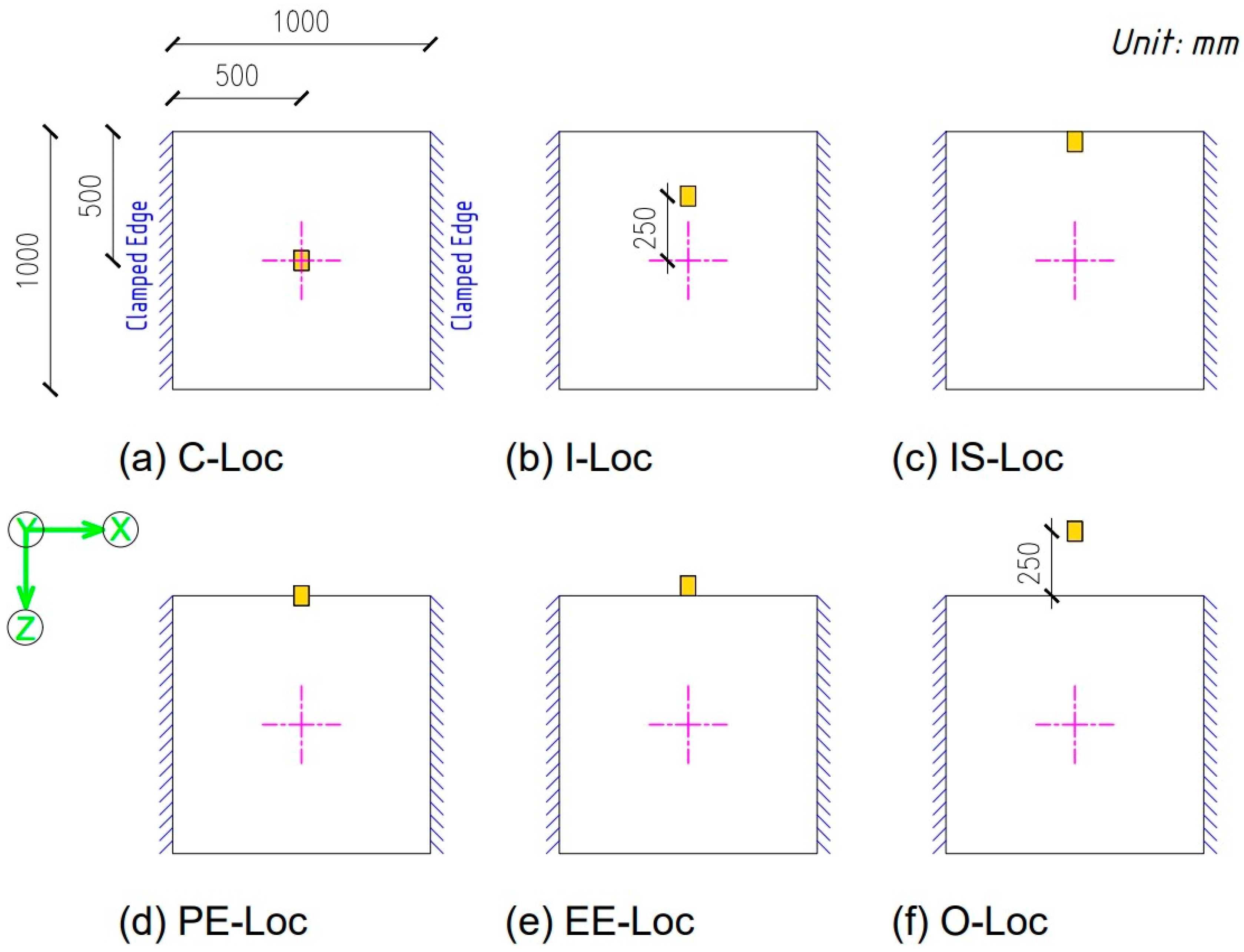
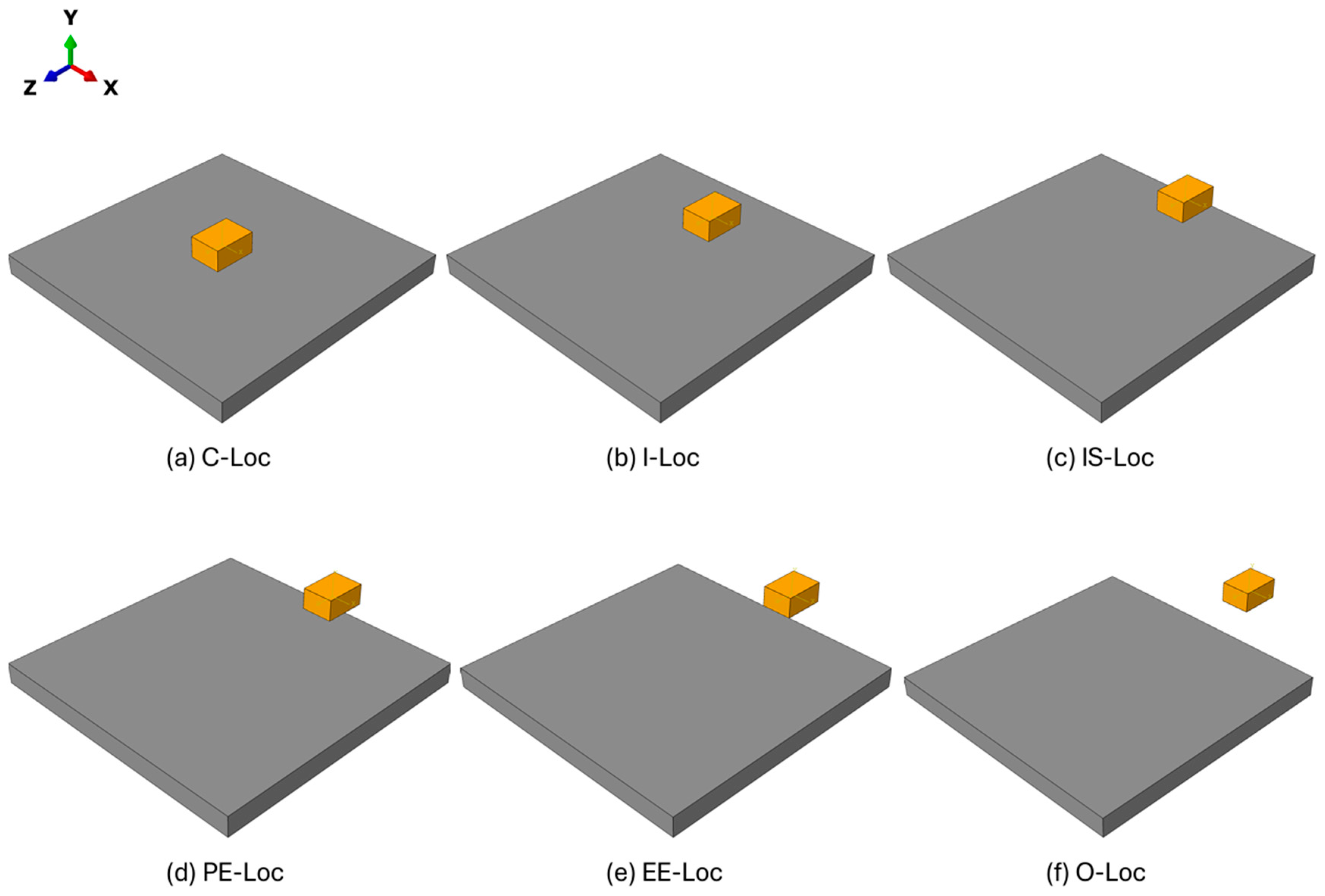
In this study, the authors numerically examine the response of a square slab supported on two opposite sides and reinforced with steel, providing a 0.88% reinforcement ratio. Six different TNT (trinitrotoluene) explosive positions were analyzed with reference to the free (unrestrained) edge using a central touch-off detonation model as a baseline proposed by Zhao et al. [
1]. The considered locations were as follows: (i)
central location, with the explosive at the slab’s center (used for validation); (ii)
intermediate location, with the explosive placed between the center and the free edge along the same axis; (iii)
in-slab (edge-embedded) location, with the explosive set at the free edge but partly embedded within the slab; (iv)
partial edge location, with the explosive at the free edge with half portion extending outside the slab; (v)
external edge location, with the explosive placed fully outside the slab along the free edge; (vi)
offset location, with the explosive positioned 250 mm away from the free edge along the central axis. In each setup, a brick-shaped explosive is placed with its longitudinal axis parallel to the clamped edge to study how different positions affect the structure. These six cases were chosen by gradually moving the blast point from the center of the slab toward and beyond the free edge under a touch-off explosion scenario. The idea was to observe how structural behavior changes in a central (nearly symmetric) internal loading versus a more concentrated edge and external blast. This curiosity came from the need to understand how damage develops near the edges and which zones become most vulnerable under real blast conditions.
It is noted that, for the present study, the modeling and analysis of slabs under a touch-off explosion scenario were carried out using the advanced numerical simulation program Abaqus (version 2020) [
19], which is widely used for nonlinear dynamic and blast response analyses [
4,
18].
2. Overview of Past Relevant Studies
In a touch-off explosion, where an explosive comes in direct contact with a target, such as a slab in this study case, the detonation creates an intense shock wave that transmits energy into the structure [
4]. The explosion releases high-pressure gases and generates a strong compressive shock wave, which travels as an incident shock wave into the slab. This wave produces very high compressive stresses at the contact point. As it moves further and meets the slab boundaries or free surfaces, reflected tensile waves are generated [
4]. These tensile waves can lead to spalling and even cause fragmentation on the opposite surface of the slab.
The motivation for this study lies in the complex nature of how structures respond under explosive loads. The interaction between the position of the explosive and the free boundary conditions of the building elements is still not well understood. Although previous research has focused on improving material strength to enhance blast resistance, the influence of the explosive’s exact position with respect to structural supports is often overlooked [
1,
2,
3,
5,
6,
7,
8,
9,
10,
11,
12,
13,
14,
15,
16,
17,
18,
19,
20]. This aspect is crucial because boundary conditions, whether free or restrained, directly affect how the load is transferred, how the structure deforms, and the way it eventually fails. By studying different explosive positions in a systematic manner, this research seeks to provide a clearer technical understanding of these effects. The findings can offer useful guidance for designing more effective blast-resistant structures, especially in cases where parts of the structure are unrestrained and dynamic loading effects are more severe.
Studies over the past few decades have explored in detail how RC targets behave under explosive loads [
1,
2,
3,
5,
6,
7,
8,
9,
10,
11,
12,
13,
14,
15,
16,
17,
18,
19,
20]. The main factors influencing their response are the strength of the concrete, the type of explosive used, and the distance from the blast. However, several other factors also play a significant role. The research presented in [
9] reported that under far-field blast loading, both steel fibers and reinforcement bars act in a similar way by offering additional resistance to RC panels. Another research paper [
10] examined the use of carbon fibers to enhance the blast resistance of concrete panels and noted a visible reduction in surface cracking. Pantelides et al. [
11] tested small-scale concrete panels reinforced with polypropylene fibers, but the fibers showed weak performance and were unable to withstand blast impacts. In contrast, Foglar and Kovac [
12] observed a positive impact of polypropylene fibers, as their specimens showed better blast performance. Further research by Wang et al. [
13] highlighted that the inclusion of admixtures such as fly ash, fibers, magnesium oxide, and shrinkage-reducing agents can improve the overall mechanical properties and strength of concrete slabs. However, this approach is suitable only for newly constructed structures. For existing structures, several external reinforcement techniques have been suggested to improve blast resistance. One effective method involves using aluminum foam layers that act as external or sacrificial barriers. Studies by [
14,
15] revealed that aluminum foam alters the behavior of concrete slabs and helps in reducing the impact of blast loads. The research article presented in [
16] also confirmed that aluminum foam is beneficial as it improves protection while not necessarily increasing stress transfer to the main structural components.
Zhao [
21] and his team carried out a numerical study to understand how novel RC and ordinary RC slabs behave under blast loading. The slabs used in the study measured 1200 mm × 1200 mm × 40 mm. Findings showed that the novel slab with a 60° reinforcement layout had lower deflection and better blast resistance compared to the ordinary slab. In another study, Ref. [
22] examined three RC slabs of size 1000 mm × 1000 mm × 40 mm with a concrete compressive strength of 39.50 MPa. The slabs were reinforced using 6 mm diameter bars placed at 75 mm c/c spacing with a yield strength of 600 MPa. Their observations indicated that the numerical model accurately predicted the damaged behavior of RC slabs under blast impact. Further, research article [
23] focused on RC beams that had pre-existing cracks and studied their response under air blast loading. The results showed that these beams experienced higher mid-span deflection when subjected to blasts. Similarly, another work [
24] analyzed the blast resistance of RC slabs under close-in explosions and identified two main levels of structural damage. Research discussed in [
25] noted that a decrease in scaled distance increased the spalling area in RC beams. In another article, the researchers [
3] combined numerical and experimental work on RC slabs measuring 850 mm × 750 mm × 30 mm with varying reinforcement ratios. From their results, they proposed an empirical formula relating to slab deflection and thickness. Researchers [
26] used a fluid–solid coupling algorithm to study the mechanism of damage in RC containment structures subjected to internal explosions. Research article [
2] introduced a mesoscale concrete model that could closely replicate the damage, fragmentation, and separation of slabs under direct contact explosions. Their earlier work [
27] compared high-strength steel fiber RC (SFRC) slabs and ordinary RC slabs under close-in blast loading. The SFRC slabs, sized 1300 mm × 1000 mm × 100 mm, performed significantly better, showing improved resistance to damage and spalling. Li and Hao [
7] performed numerical simulations on RC columns exposed to blast effects, studying how column dimensions and reinforcement ratios influence spall damage. Castedo et al. [
28] tested a one-way slab of 4400 mm × 1460 mm × 150 mm, reinforced with 12 mm bars at 150 mm c/c spacing. They validated the accuracy of their finite element (FE) models by comparing them with full-scale blast tests. Research article [
29] studied how the charge weight and standoff distance influence the damage level in RC slabs. In another published study, the researchers [
30] explored how fiber sheet reinforcement could improve the blast resistance of concrete plates. Wu et al. [
31] investigated spallation and fragment formation in RC slabs under air-blast loads. A series of studies presented in [
24,
25,
32] analyzed the damage modes of one-way RC slabs and beams under varying explosive weights, and they proposed a simplified single-degree-of-freedom (SDOF) model to assess damage levels. Several other works discussed in [
22,
33] have developed advanced numerical techniques and material models to simulate dynamic responses and spallation in RC structures under blast loads. These studies highlighted that well-designed simulations can reliably represent the actual damage and behavior of RC members under explosion effects.
Several very recent studies have concentrated on enhancing the ability of concrete slabs to resist blast effects using advanced materials and composite strengthening methods. The article presented in [
34] examined slabs coated with polyurea under thermobaric explosive loading and showed that the coating greatly improved energy absorption while reducing permanent deformation during long-duration blasts. Researchers in [
35] highlighted that using T63 rebar along with UHPC led to a major improvement in blast resistance compared to normal slabs. The study in [
36] observed that aramid fiber-RC showed better structural integrity and lesser damage under localized explosions, especially when the layer thickness ratio was optimized. The article in [
37] introduced an analytical model for RC slabs protected with multi-layer aluminum foam, which showed effective energy absorption against blast loads. The study in [
38] used numerical methods and found that CFRP retrofitting helped reduce mid-span deflection and surface cracking in RC slabs. Other investigations, such as those in [
39,
40,
41], also emphasized the role of confined blast conditions, perforated steel plate reinforcement, and precast concrete systems in improving the overall blast resilience of RC slabs.
From the available literature, many studies have examined the overall blast behavior of slabs with different reinforcement layouts, concrete grades, and scaled distances [
18]. However, no study has yet looked in detail at how the location of touch-off detonation with respect to the free edge of the slab affects the shift from internal to edge or external loading conditions.
This work brings in a new perspective by numerically studying a square slab supported on two opposite sides, with the blast applied at six different positions, starting from the center and moving beyond the free edge. The main objective is to understand how the position of the explosive with respect to the free edge of the slab influences the structural response, pattern of damage, and mode of failure. Addressing this unexplored gap, the study aims to answer three key questions that remain open in the current literature: (i) How does varying the position of the explosive near or beyond the free edge change the slab’s response and damage pattern under blast loading?; (ii) what effect does partial confinement or external placement of the explosive have on the slab’s deformation and failure mechanism?; and (iii) how does the change in explosive location affect load transfer and overall integrity in slabs with free edges, and what design insights can be drawn to improve blast resistance in such conditions?
4. Model Setup and Validation
The experimental study conducted by Zhao et al. [
1] was taken as a reference in this research work for modeling the slab and for validating the obtained results.
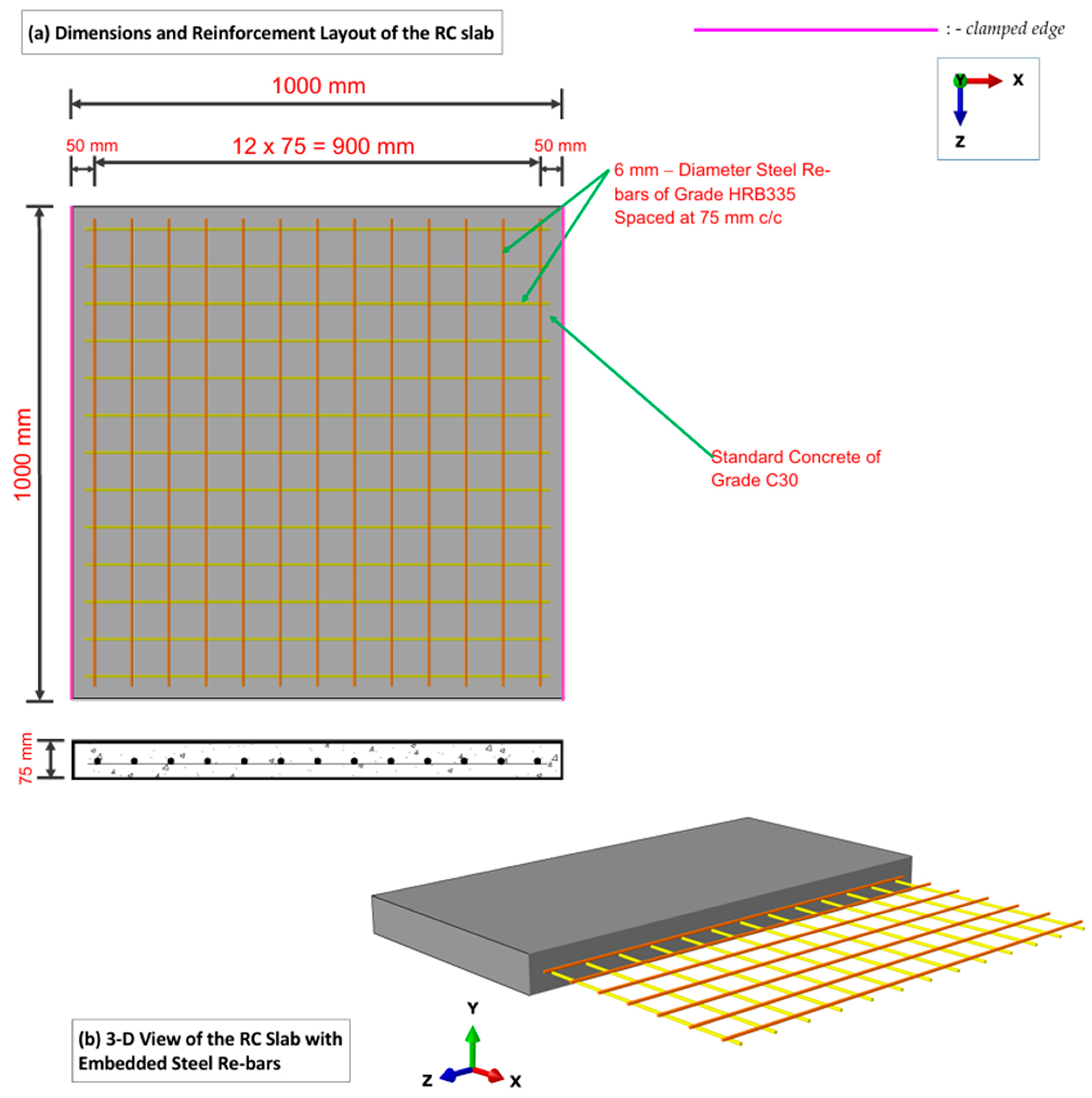
The slab presented in
Figure 3 measures 1000 mm × 1000 mm × 75 mm. It was reinforced using 6 mm diameter HRB335 steel bars placed in both directions at 75 mm center-to-center spacing, with a 30 mm cover provided from the tension face at the bottom [
1]. The concrete used was of Grade C30, having a density of about 2400 kg/m
3 and a compressive strength close to 31.2 MPa [
1]. The steel reinforcement possessed a yield strength of around 341 MPa and an ultimate strength of about 472 MPa. During testing by Zhao et al. [
1], the slab was restrained along two opposite edges using clamps; the same idealized support conditions were considered in this study. A 0.40 kg rock emulsion explosion used by Zhao et al. [
1], with an approximate TNT-equivalent mass of 0.28 kg (i.e., TNT equivalence ≈ 0.7), was placed at the center on the top surface.
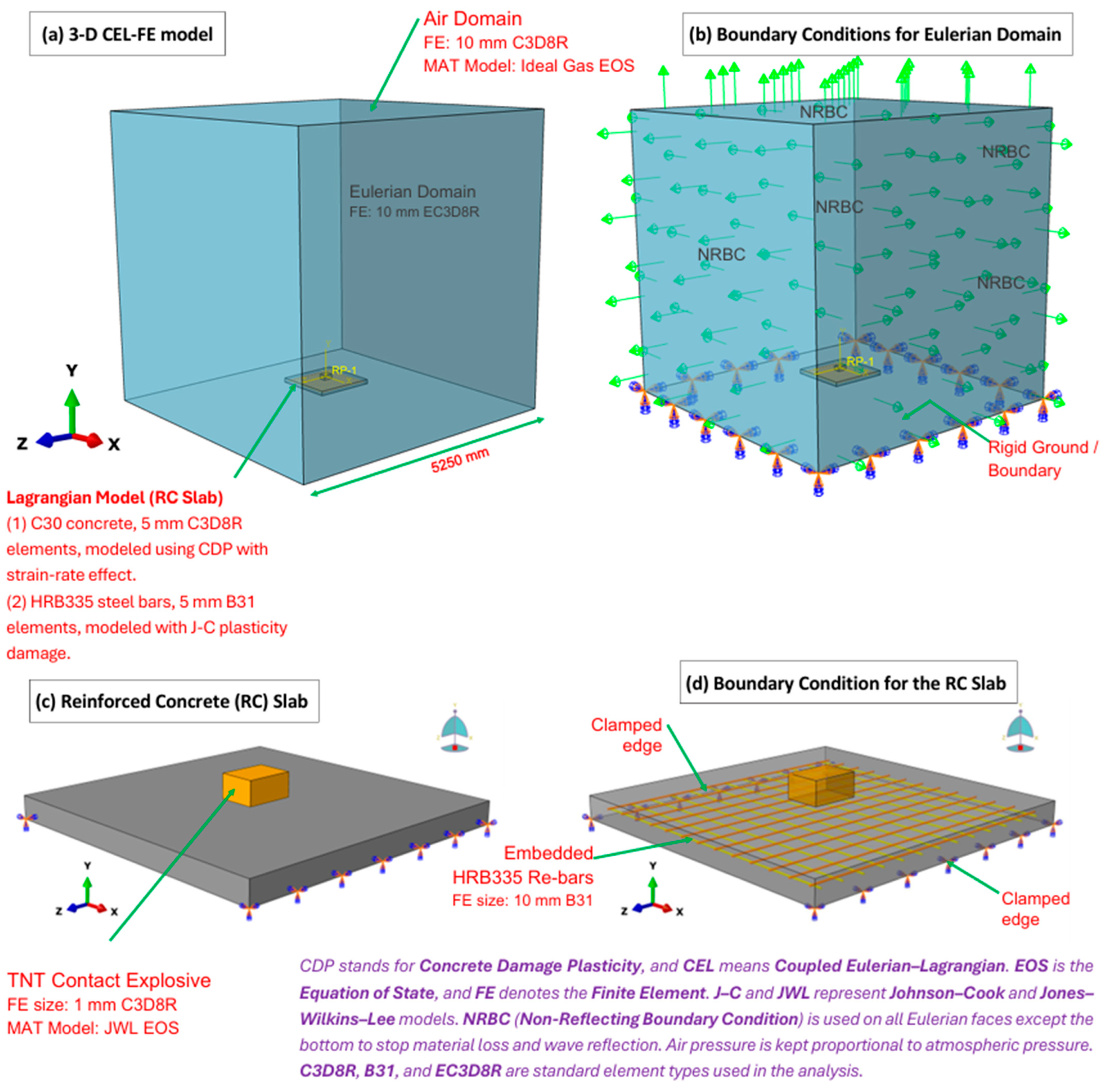
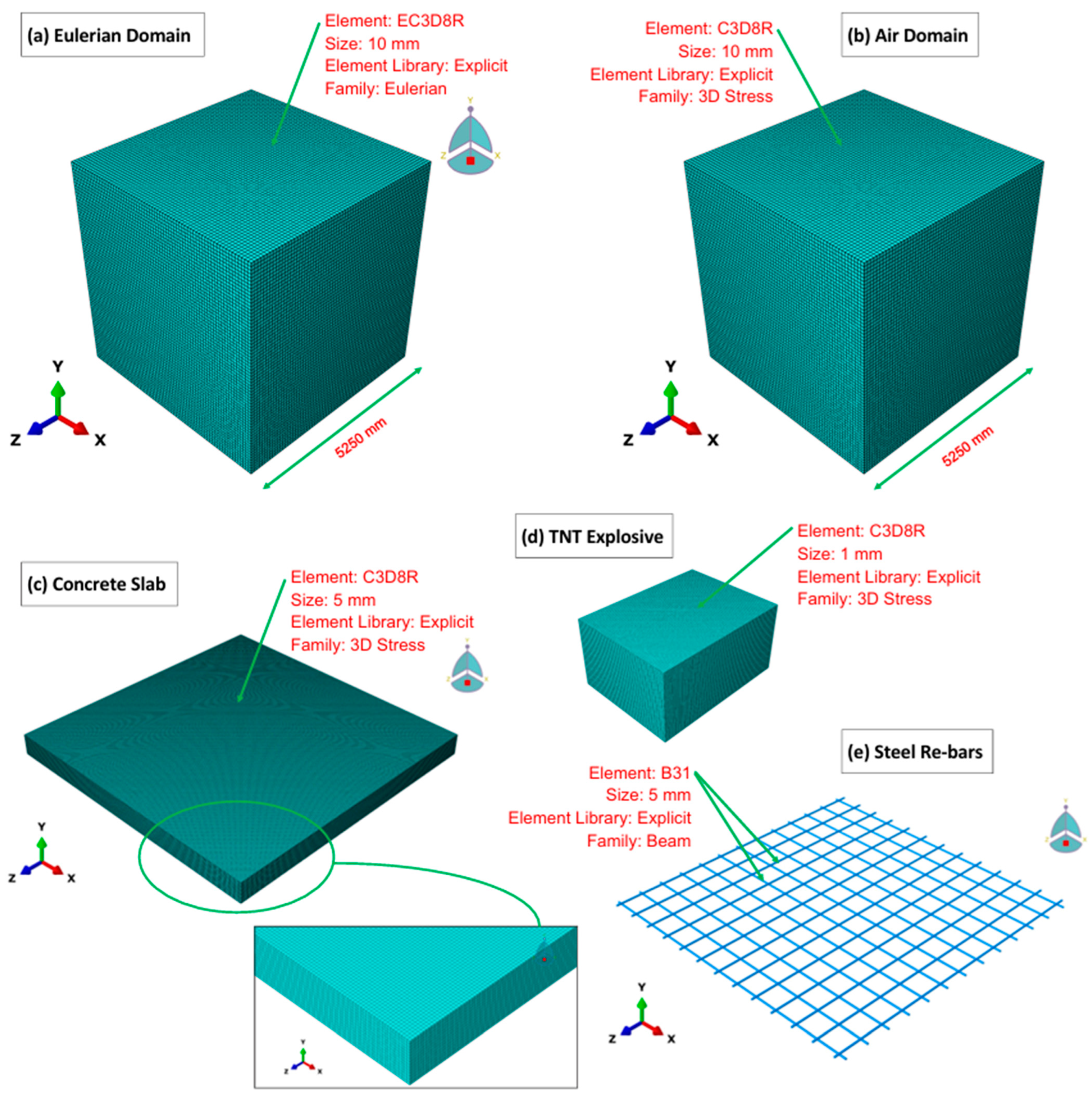
Figure 4 illustrates the FE-based 3D Eulerian–Lagrangian coupled model constructed to investigate the blast behavior of the RC slab. As shown in
Figure 4a, the setup includes two domains: a Lagrangian domain for the RC slab and a Eulerian domain for the surrounding air to capture blast wave propagation [
1,
19]. The air domain, 5250 mm on each side, was meshed using 10 mm EC3D8R elements and modeled with the Ideal Gas Equation of State (IG-EOS) [
19]. The concrete slab was divided into 5 mm C3D8R elements [
19], while the steel rebars were modeled as 5 mm B31 beam elements [
19].
Figure 4b shows the boundary conditions applied to the air domain, including non-reflecting boundaries to prevent wave reflection and a rigid base representing the ground [
1,
19]. The CEL approach couples the air and slab domains effectively to ensure realistic pressure transfer and slab deformation [
19].
Figure 4c highlights the explosive charge modeled as a brick-shaped TNT-equivalent placed at the slab center. The explosive follows the Jones–Wilkins–Lee Equation of State (JWL-EOS) [
19], while concrete and steel behaviors are represented through the Concrete Damage Plasticity (CDP) and Johnson–Cook (JC) models, respectively [
19].
Figure 4d displays the clamped boundaries along two edges of the slab, replicating the same conditions used in the experimental setup by the researchers [
1].
Figure 5 represents final meshing views of the different parts of the numerical model.
In all the explosion cases studied herein, the explosive charge was placed directly on the slab surface. The Eulerian TNT domain was aligned so that its material occupied cells right next to the Lagrangian concrete boundary. This setup ensured immediate and complete pressure transfer as soon as the explosion occurred. No air gap, void element, or initial separation were included in any scenario. Although the blast position was changed from the slab’s geometric center to its free edges, the contact condition stayed the same throughout. Therefore, variations seen in pressure, damage patterns, and stress distribution arose purely from differences in local confinement, boundary reflections, and uneven venting at the edges, not only from any change in how the explosive interacted with the slab surface.
The clamped boundary condition was defined by fully restraining all translational and rotational degrees of freedom (Ux = Uy = Uz = URx = URy = URz = 0) along the two opposite supported edges of the slab. This idealized representation reproduces the full details provided in the experimental setup [
1] and ensures no relative slip or rotation at the boundaries.
In the Abaqus [
19] explicit module, a time step of the order of 2 × 10
−3 s (≈2 ms) was used, similar to the approach followed by Zhao et al. [
1]. This module was used in this work for the touch-off explosion case on the slab, as blast loading involves highly nonlinear and short-duration effects. The implicit method often faced convergence problems and unstable time increments under such conditions. In contrast, the explicit method could effectively manage large deformations and sudden energy release. This approach has also been commonly adopted by several earlier studies [
1,
4,
6,
7,
18] dealing with similar blast simulations.
The interaction between concrete and steel, along with the method used to model their bond, has a major influence on crack formation and load transfer after failure. Generally, two approaches are used in past studies [
4,
8,
18,
42,
43]; one involves sharing nodes between the two materials to create a fully bonded interface, while the other uses separate meshes with an embedded region constraint (as in Abaqus v2020 [
19]). The second method is often preferred for complex mesh arrangements due to its simplicity and efficiency.
In the program Abaqus [
19], steel bars are generally represented as discrete beam elements placed within the concrete body using the EMBEDDED_REGION constraint [
19]. This method ensures that the movement of the rebar nodes follows the deformation of the surrounding concrete elements to allow a smooth transfer of both axial and shear forces between steel and concrete [
8,
19]. When this setup is used along with the CDP model [
44] and strain-rate effects, the concrete gradually loses its tensile strength and form cracks, while the embedded bars continue to take and distribute the tensile loads [
19]. This approach captures tension-stiffening and bond behavior without the need for any separate interface elements.
The peak strain rates observed in concrete (around 10
2–10
3 s
−1) and steel (around 10
3 s
−1) fall within the typical range reported for touch-off and near-field explosions [
1,
4,
8,
18]. Rather than directly applying empirical DIF equations to the constitutive models, constant calibrated DIFs (approximately 2.5 for concrete compression and 1.25 for steel) were employed to match the experimental observations while ensuring stable convergence. This method is widely used in nonlinear dynamic simulations where strain-rate fluctuations occur over just a few microseconds, and the overall average response controls the global deformation, rather than instantaneous rate effects [
4,
8,
45,
46]. Though simplified, the selected constants successfully capture the key rate-dependent strengthening without causing numerical instability or increasing computational effort. This provides a physically meaningful and computationally reliable representation of dynamic behavior under touch-off detonation.
To keep the modeling approach uniform for all loading conditions, the same reinforcement–concrete bonding assumption was applied in every case. The reinforcement was embedded in the concrete with a perfect-bond condition, so the steel behaved exactly like the surrounding concrete as it deformed. No slip behavior, bond-stress models, or debonding laws were included. This approach matches the reference experimental setup [
1,
18] and is commonly followed in blast-related studies where rebar pull-out is not considered a governing failure mode.
In the numerical simulation, concrete behavior was modeled using the CDP approach [
19,
47,
48]. This model considers failure in concrete because of both tensile cracking and compressive crushing. The total strain was divided into elastic and plastic components (
) [
19], where
was the total strain tensor,
was the elastic strain tensor (recoverable), and
was the plastic strain tensor (permanent). Material stress was reduced through damage parameters,
dt for tension and
dc for compression [
19]. These parameters ranged between 0 and 1, where 0 meant the material was undamaged and 1 indicated complete stiffness loss [
19]. The stress was given by the relation
[
19], in which
denoted the undamaged stress tensor, calculated from the elastic or plastic constitutive law before applying the damage effect. The subscript (
i =
c,
t) identified whether the damage corresponded to compression (
c) or tension (
t), based on the stress condition [
19]. As cracking or crushing progresses, material stiffness gradually decreased, which was governed by plastic damage energy in relation to the total absorbed energy [
19]. Based on these inputs, the CDP model automatically calculated the plastic strains and updated the internal damage state (
εcpl and
εtpl, i.e., compressive plastic strain and tensile plastic strain, respectively, which were derived from inelastic strains and the evolving damage) [
19]. Material properties and standard CDP parameters were selected from experimental studies [
1,
44] and verified using Abaqus documentation [
19].
The concrete in the CDP model was defined with a dilation angle of 36°, flow eccentricity of 0.10,
fb0/fc0 (notation defined in [
19]) ratio of 1.16,
Kc (notation defined in [
19]) = 0.667, and a viscosity value of 0.0005. These settings follow common practice in blast-related numerical studies [
18,
19,
45]. Fracture energies were also included to handle strain-softening. The tensile fracture energy was taken as 0.11 N/mm, while the compressive value was 13.0 N/mm, based on the reference experimental data available in the literature [
18]. The reinforcement-concrete behavior was represented through the Embedded Region option in Abaqus, where the rebars remain fully bonded with the surrounding concrete without any slip.
The strain-rate sensitivity was incorporated through dynamic increase factors (DIF); reported DIF values depend strongly on test type and strain-rate regime; compression DIF is commonly reported to be up to about 2–4 in many blast/impact studies while tensile DIFs can be significantly higher and are strongly test-dependent [
4,
8,
18]. In this analysis, DIF was applied as a calibrated constant factor to match the experimental responses [
1,
45,
46].
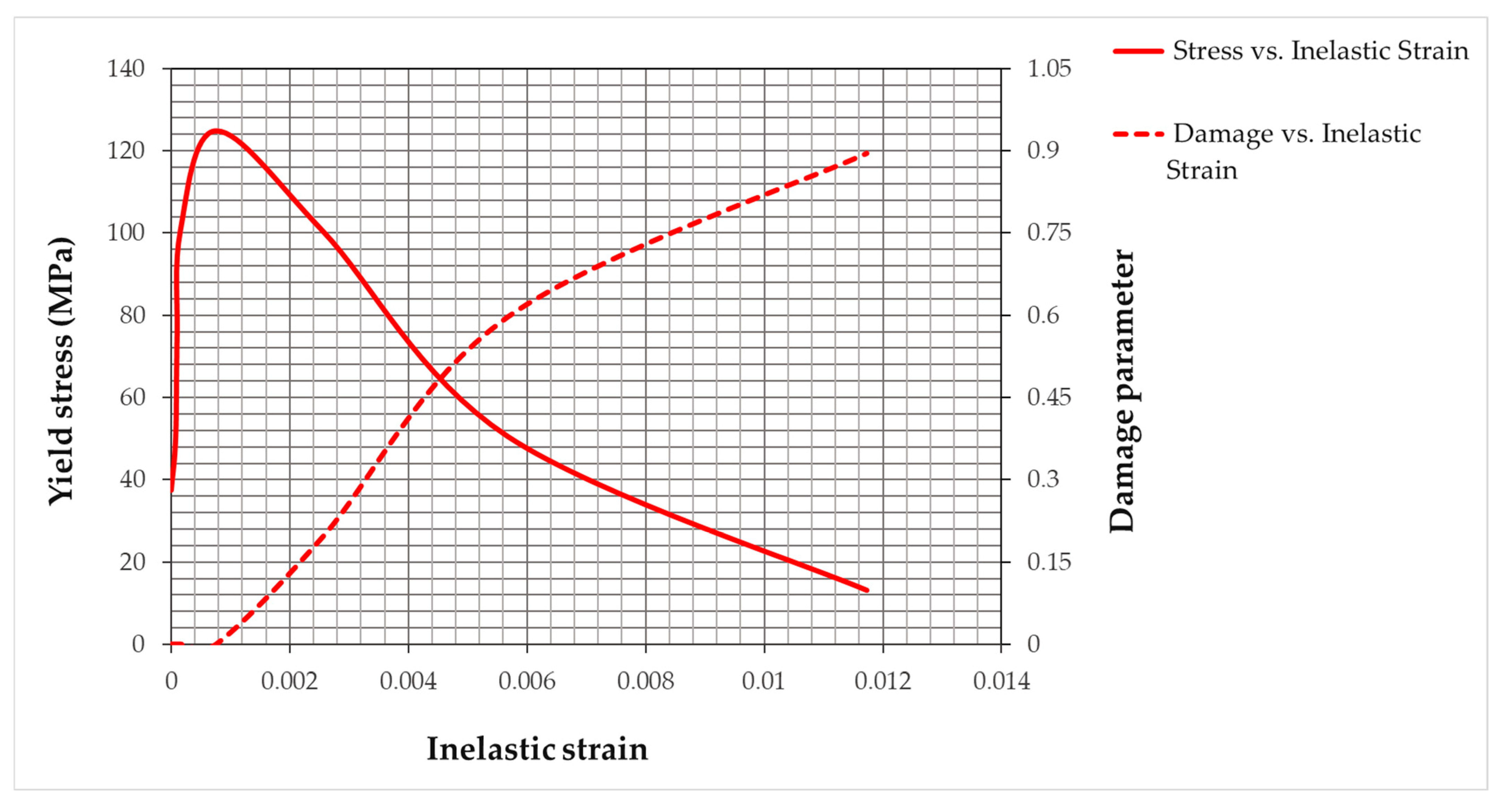
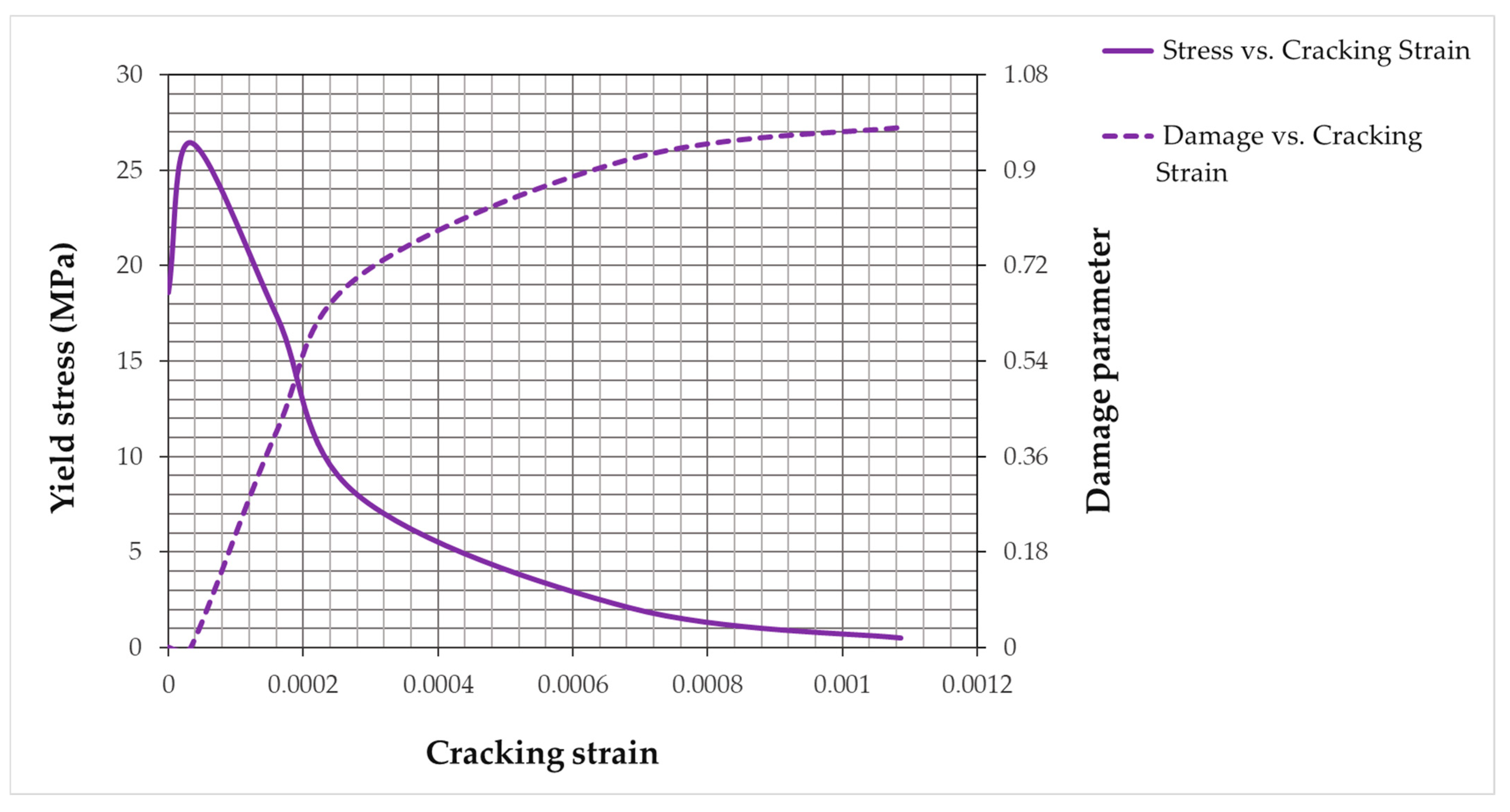
Figure 6 and
Figure 7 present the final calibrated CDP behavior of concrete under compression and tension. The curves show a strain-softening trend, where the stress rises with inelastic or cracking strain, reaches a peak, and then drops as damage develops. Under compression (
Figure 6), the curve showed a higher peak stress followed by a gradual decline because of material crushing [
19]. In contrast, under tension (
Figure 7), the peak stress was lower, and the post-peak region softened sharply due to crack-induced damage progression [
19]. Though this direct calibration of stress–strain and damage-strain curves is not a standard procedure, it has been commonly followed in the past, as seen in the work of [
45,
46]. This approach allows for flexible adjustment of CDP model parameters to accurately capture the experimentally observed nonlinear behavior of concrete under different loading conditions.
The steel bars were represented using the JC constitutive and damage model [
49]. This model is based on the von Mises plasticity theory and accounts for the combined influence of plastic strain, strain rate, and temperature on material behavior. The commonly used JC flow stress form is written as
[
19], while the strain-rate effect is introduced through the term
[
19]. Here,
A,
B,
n,
C, and
m are material constants;
denotes equivalent plastic strain;
is the plastic strain rate;
is the homologous (normalized) temperature, and
represents the reference strain rate [
19]. The damage initiation follows an empirical JC relation for equivalent plastic strain at failure, given by
[
19], where
is the equivalent plastic strain at damage initiation; d
1-d
5 are material-specific constants, and
η = −
p/
q defines the stress triaxiality; where
p being hydrostatic pressure or mean stress and
q the von Mises equivalent stress, also known as deviatoric equivalent stress [
19]. For the steel bars, the material properties considered were yield strength of about 341 MPa, ultimate tensile strength around 472 MPa, modulus of elasticity of approximately 200 GPa, density near 7800 kg/m
3, and Poisson’s ratio of 0.30 [
1]. The JC parameters were adopted from relevant experimental studies [
1,
49]. As per blast design recommendations, a DIF of 1.25 was applied to account for the improved bending strength of reinforcement under high strain-rate loading [
50].
For the fluid and explosive media, air is modeled using IG-EOS, (
), or equivalently for internal energy (
), (
) [
19], where
represents the air pressure and
indicates the atmospheric or reference pressure correction. The term
refers to the fluid density, and
stands for the specific gas constant for air which is approximately 287 J·kg
−1·K
−1. The symbol
denotes the temperature and
indicates a reference or shift temperature [
19]. The ratio of specific heats is shown by
, which is nearly 1.40 for air. Standard air constants from Abaqus were used [
19].
The explosive is simulated with a programmed-burn and the JWL-EOS to generate the detonation pressure pulse. A common JWL form is written as
, where (
A,
B,
R1,
R2, and
) are user constants,
is the current density of the explosive,
is the initial explosive density, and
E is the detonation energy [
18,
19]. Parameters
A and
B represent the exponential effects linked to repulsion and attraction, respectively. The factors
R1 and
R2 determine how quickly these effects reduce with distance, while
adjusts the portion of pressure that arises from internal energy [
19]. TNT JWL constants, density, and detonation energy were set to the referenced values so that the computed blast pressures and arrival times match observed data used for calibration.
The constants used for JWL-EOS were
A = 3.712 × 10
5 MPa,
B = 3.231 × 10
3 MPa,
R1 = 4.15,
R2 = 0.95,
ω = 0.30, initial density
ρ0 = 1630 kg/m
3, and detonation energy of 4.3 × 10
6 kJ/m
3 [
19]. Following sources [
1,
18,
19], the programmed-burn model in Abaqus was applied with a detonation velocity of 6930 m/s.
Key material inputs including elastic moduli, static strengths, JC coefficients, and EOS constants were taken from the cited experiments [
1,
49] and the Abaqus material library [
19]. These values were then tuned during calibration so that numerical deformations and failure patterns agree with the tests.
Mesh refinement analysis plays an important role in checking the accuracy and dependability of numerical simulations when compared with experimental results [
4,
8]. In this work, the experimental study carried out by Zhao et al. [
1] on slab deformation and damage for blast configuration “C-Loc” was taken as a reference to validating the simulation results.
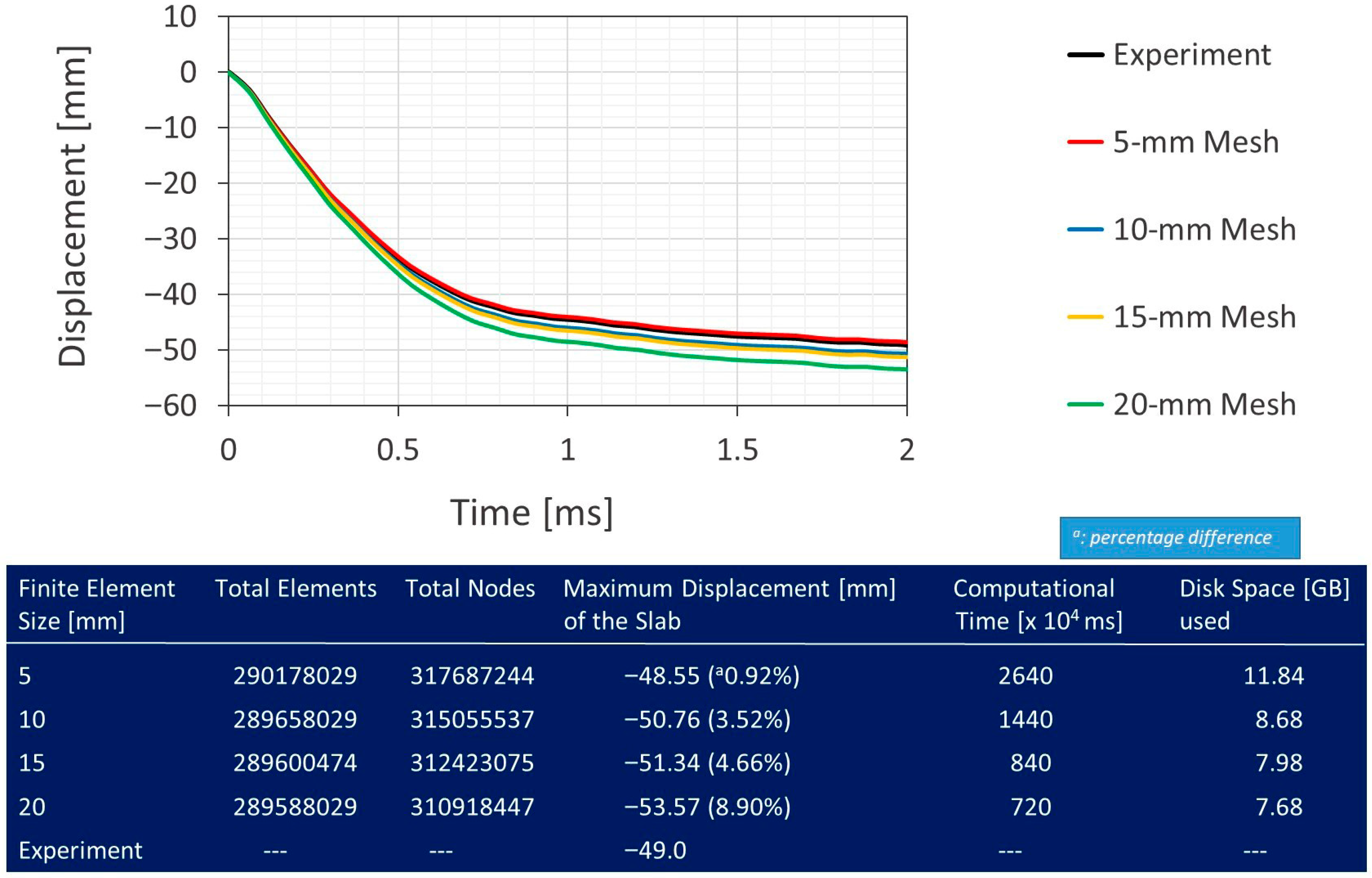
The slab was analyzed using mesh sizes of 5 mm, 10 mm, 15 mm, and 20 mm to understand the effect of refinement on deformation and damage accuracy. As seen in
Figure 8, the displacement curve became smoother and moved closer to the experimental trend of Zhao et al. [
1] with finer meshing. The 5 mm mesh produced results closest to the experiment. The maximum downward deflection was −48.55 mm. This is just 0.45 mm less than the experimental value of −49.0 mm reported by Zhao et al. [
1]. The corresponding percentage error was very small, only 0.92%. In comparison, the 10 mm, 15 mm, and 20 mm meshes gave slightly higher values of −50.76 mm (percentage difference = 3.52%), −51.34 mm (4.66%), and −53.57 mm (8.90%), respectively. The negative sign indicates downward movement at the center of the slab. With larger element sizes, the model tends to overestimate the response since coarse meshes cannot capture the steep stress and strain variations developed under blast loading, resulting in a softer global stiffness. While finer meshes improve accuracy, they require much more computation time and memory.
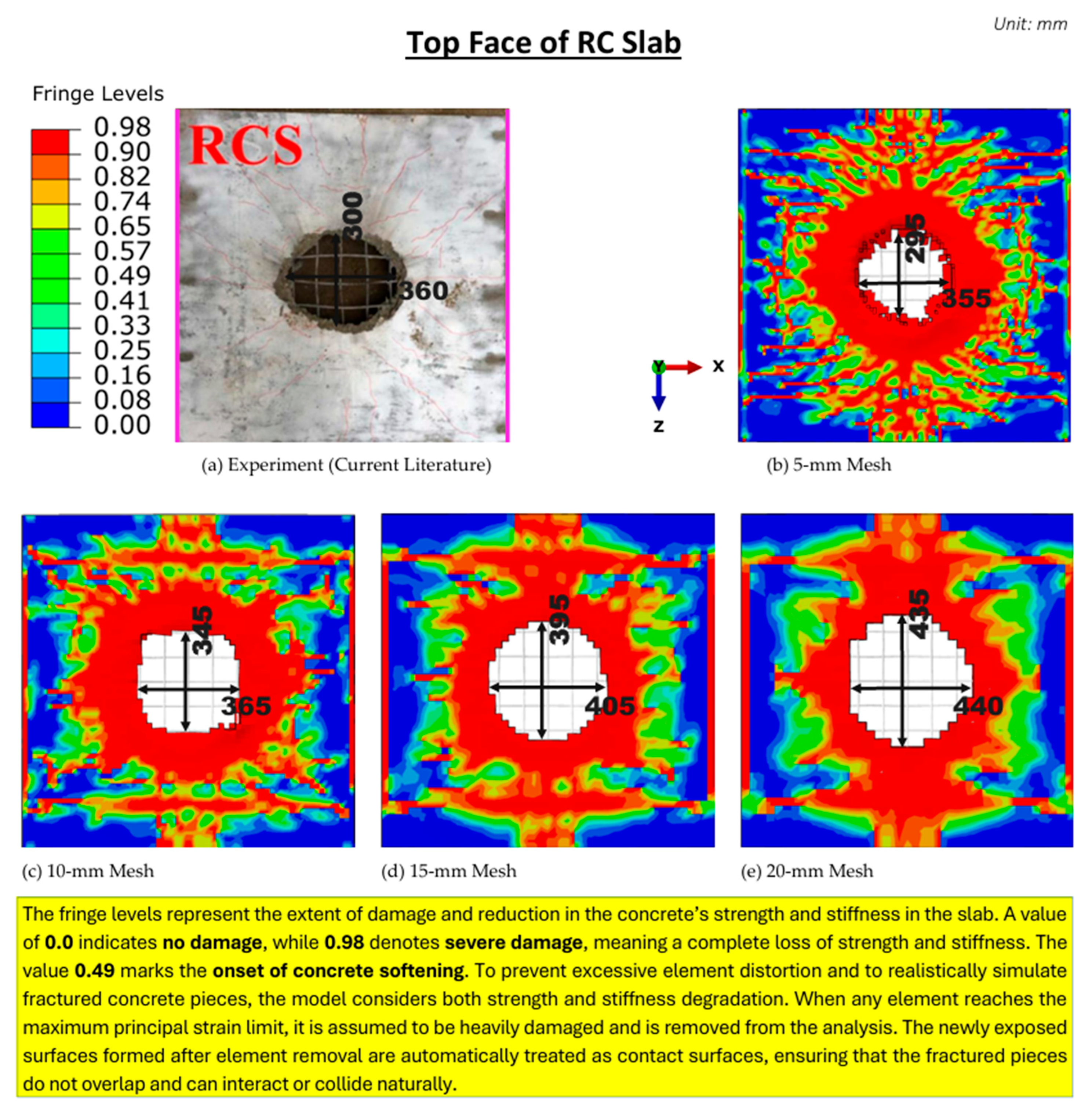
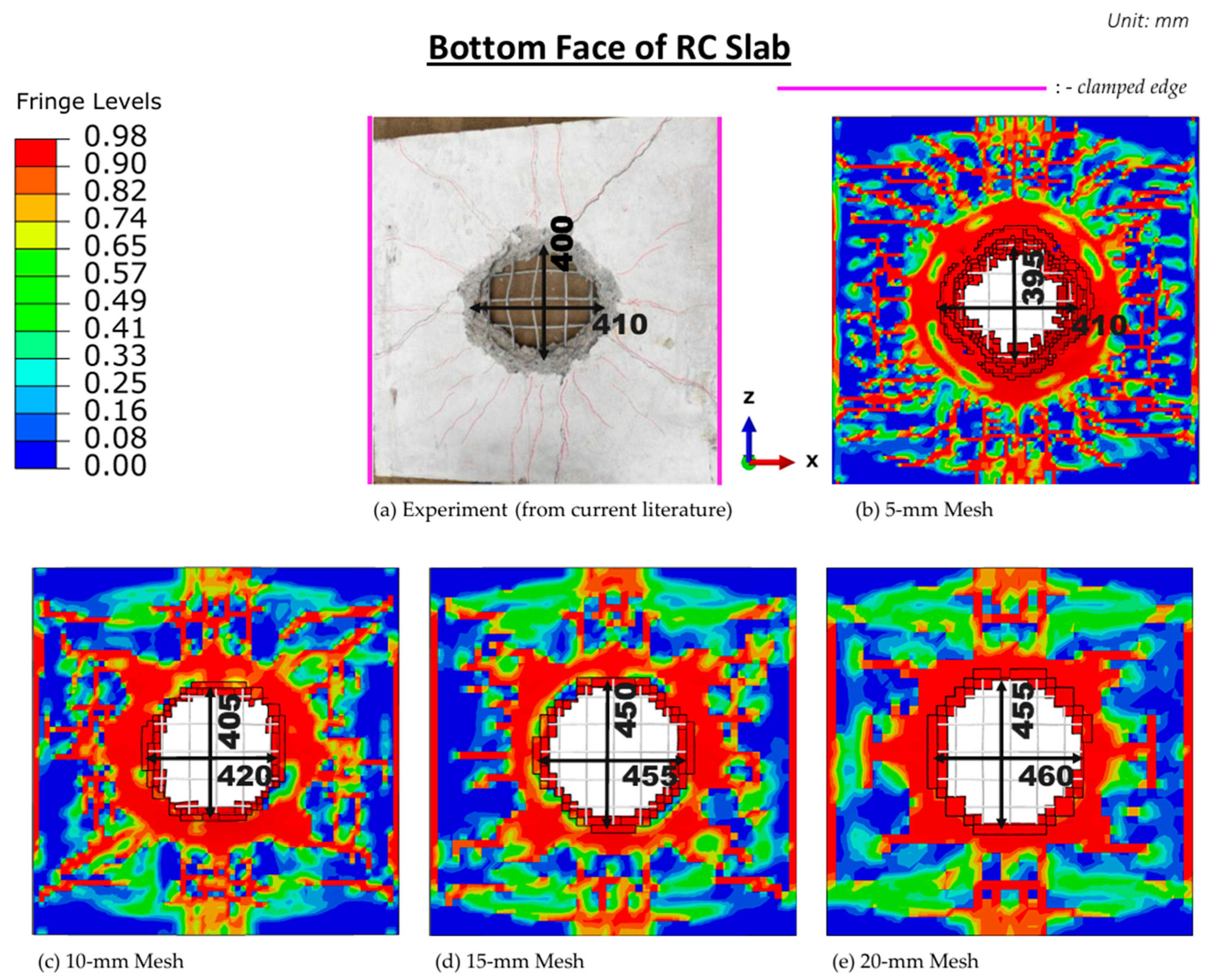
The dimensions of the top and bottom perforations, as seen in
Figure 9 and
Figure 10, were found to be very close to the values reported in the literature [
1]. Deviations were only a few millimeters, showing that the chosen mesh, material parameters, and CEL formulation accurately captured the structural response. This validated model for the central blast then served as the reference for studying other blast-position scenarios.
The 5 mm mesh model successfully captured the experimental damage pattern (Zhao et al. [
1]), including the full perforation at the slab’s center (see
Figure 9 and
Figure 10). The top surface showed a spalled crater caused by direct blast pressure and high compressive stress, whereas the bottom surface displayed a wider scabbing and perforated zone due to the reflected tensile waves and momentum transfer through the slab thickness. This confirms that the blast energy exceeded the slab’s tensile and shear strength, leading to material ejection and through-thickness failure. The close similarity between the experimental (Zhao et al. [
1]) and numerical results (present study) shows that the 5 mm mesh was capable of accurately simulating stress wave interaction, crack growth, and localized damage under intense blast impact.
Although the quantitative check was performed only for maximum deflection convergence (see
Figure 8), further verification was performed by comparing the observed damage patterns and perforation sizes (see
Figure 9 and
Figure 10), as these details were directly available from the reference experimental study [
1]. These measures were chosen because they provide a clear basis for comparing experimental and numerical results, unlike parameters such as pressure, impulse, or energy balance, which were not reported in the reference test conducted by Zhao et al. [
1]. Hence, agreement in deformation and failure patterns was considered adequate to establish the reliability of the numerical model for this validation.
It is important to mention here that a few modeling simplifications were adopted in this study to match the reference experimental setup [
1]. For example, reinforcement chairs were not included in the slab model, as these were also not part of the original experiment [
1]. The position of the reinforcement mesh was maintained exactly as reported in [
1]. Moreover, simplified boundary conditions were applied because the reference study [
1] did not provide complete details about the material properties or the geometry of the supporting system.
In this study, the blast loading represents a touch-off explosion where the explosive is placed directly on the structural surface. In such cases, standard empirical tools like the Kingery–Bulmash curves or the design guidelines in UFC 3-340-02 [
50] cannot be applied directly [
4]. These methods are meant for non-contact or standoff blasts, where the shock wave travels through air before hitting the structure, and pressures can be estimated using scaled-distance parameters. On the other hand, contact blasts produce strong interaction between the structure and explosive, ejecting material, and cause localized high-strain-rate failures phenomena that lie beyond the scope of these empirical approaches.
5. Results and Discussion
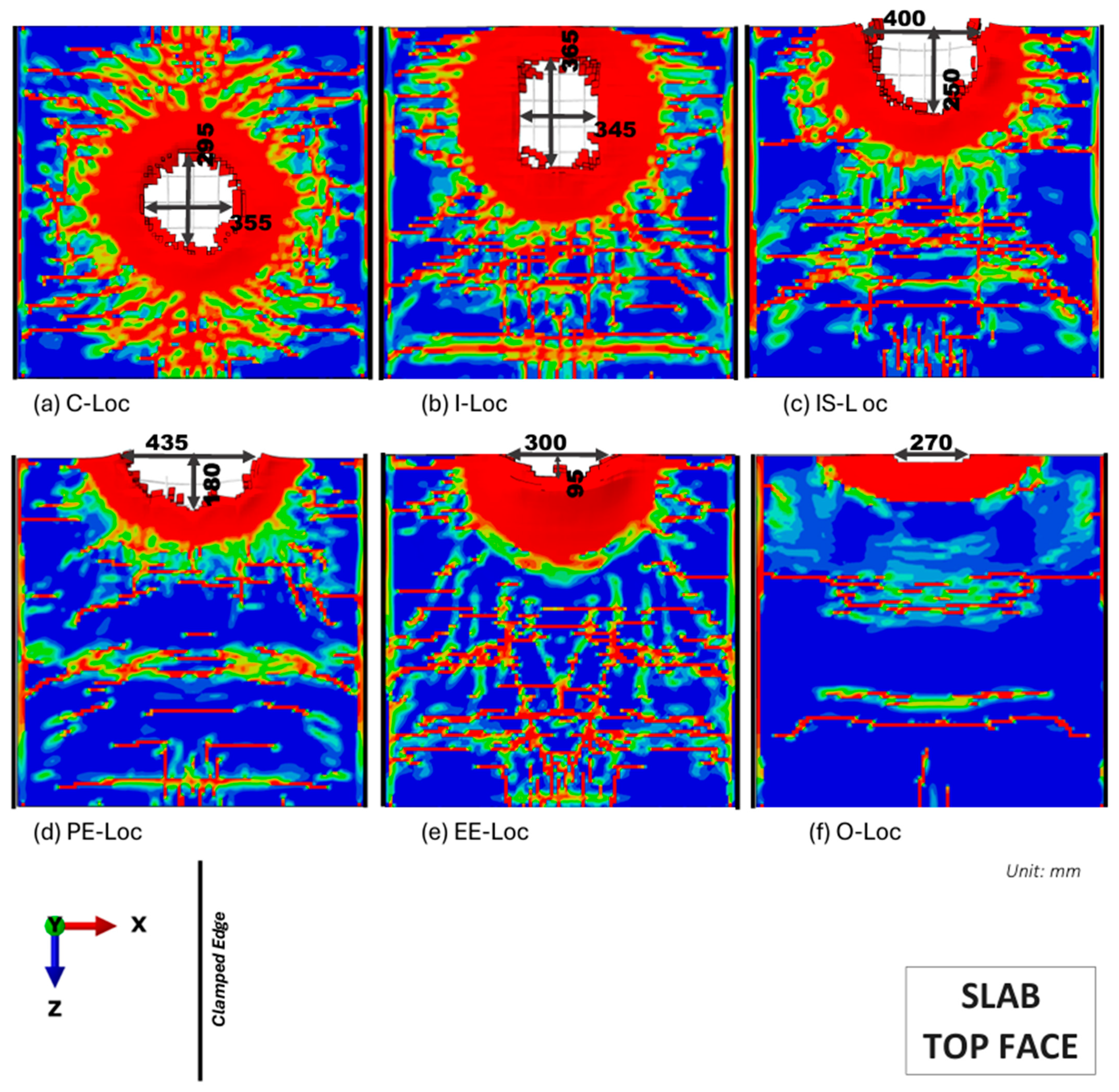
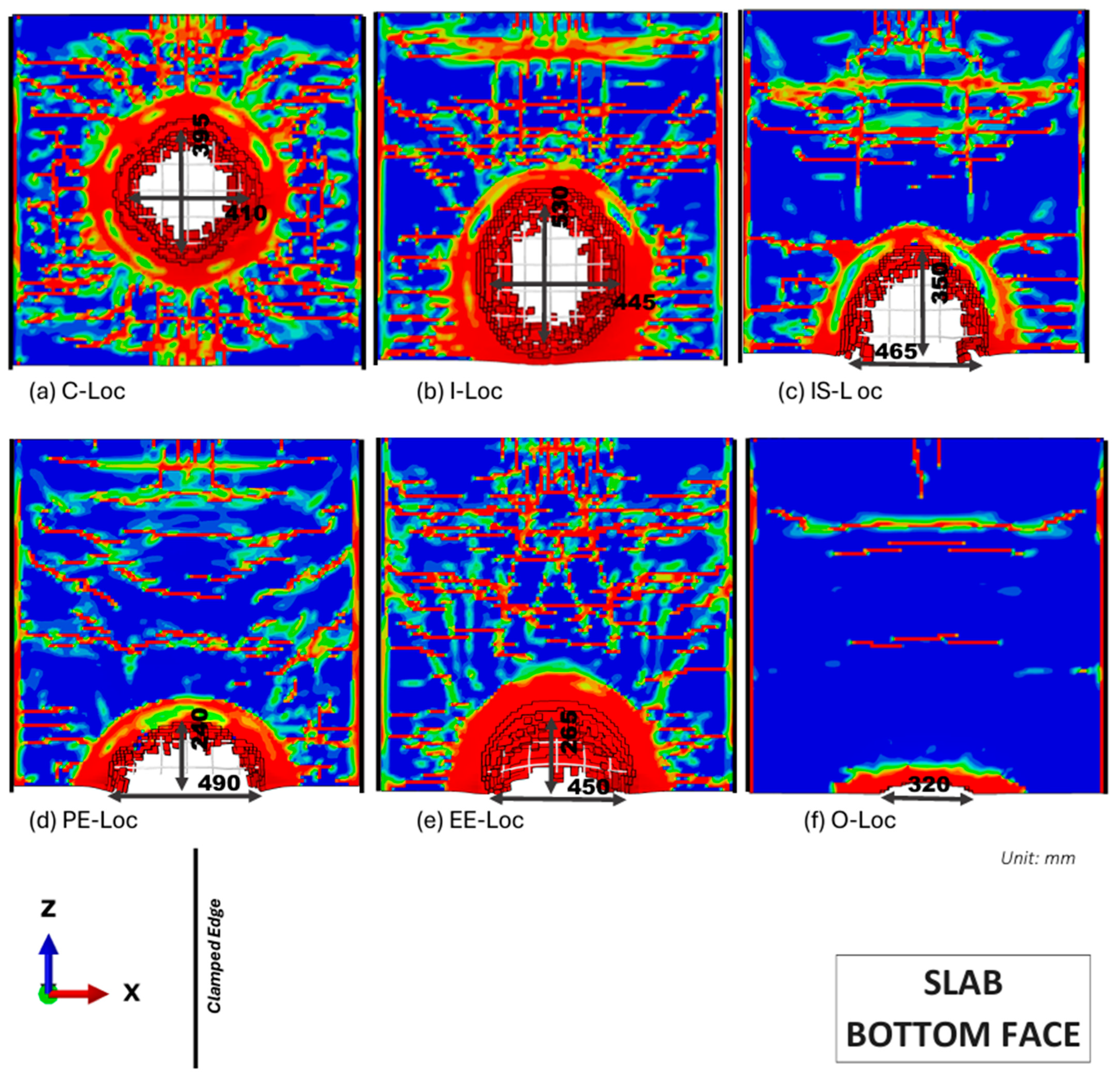
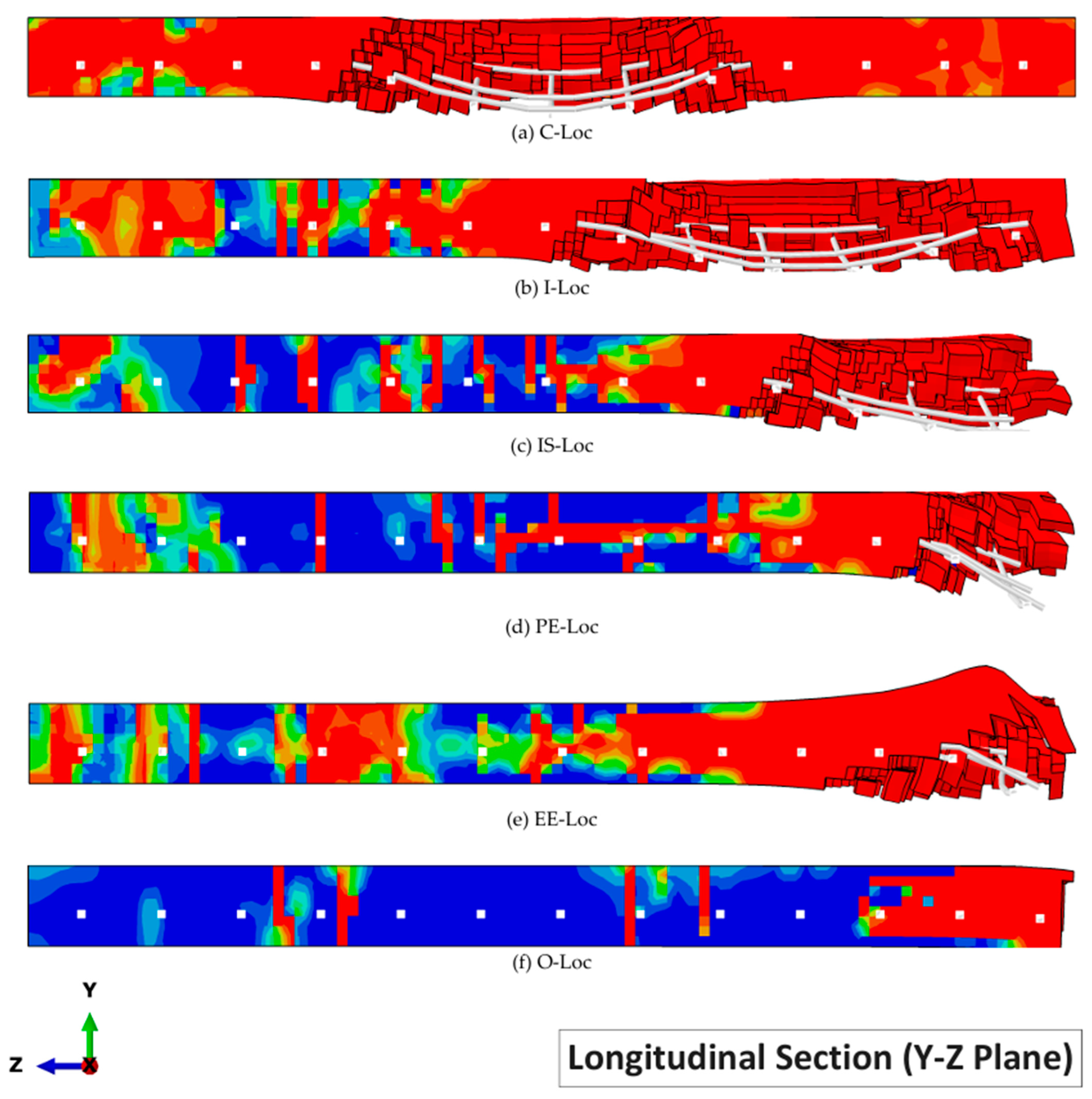
The pattern of damage presented in
Figure 11,
Figure 12 and
Figure 13 clearly reflected the known behavior of concrete under sudden dynamic loading caused by touch-off explosions. The intense and short-duration contact pressure from the explosion generated a strong compressive stress wave that traveled into the slab. This wave became concentrated just below the explosive point, creating extremely high compressive and shear stresses. These stresses went beyond the dynamic strength of concrete, leading to local crushing-, punching-, and perforation-type failures. As the wave moved through the thickness, it interacted with the slab’s restraints and created a coupling between bending and shear. This resulted in high transverse shear near the impact zone and sharp bending over short spans, which together formed combined punching, shear, and flexural cracks. When the compressive wave reached a free or less restrained edge, it reflected as a tensile wave of high magnitude. This caused the lower face of the slab to gain tension while the upper face stayed in compression. Hence, cracks appeared on both faces, with more and wider cracks on the tense side due to the lower tensile strength and fracture energy of concrete.
The reinforcement below the impact area experienced high local bending and rapid strain rates. When these strains exceeded the yield point, the bars deformed plastically or even ruptured, reducing confinement and causing spalling and perforation of concrete. The position of the blast relative to the slab’s free edges also played a big role. Blasts near free edges of the slab led to uneven pressure release and larger local lever arms, producing eccentric shear and asymmetric crack patterns, while blasts near the center created more uniform damage.
The observed damage patterns showed a clear link with charge coupling, edge restraint, and uneven shock transmission (
Figure 11,
Figure 12 and
Figure 13). On the top surface, the perforations were measured as (C-Loc) 355 × 295 mm, (I-Loc) 345 × 365 mm, (IS-Loc) 250 × 400 mm, (PE-Loc) 180 × 435 mm, (EE-Loc) 300 × 95 mm, and (O-Loc) 270 mm, with the free-edge dimension mentioned first in each case. On the bottom surface, the perforations were measured as (C-Loc) 410 × 395 mm, (I-Loc) 445 × 530 mm, (IS-Loc) 465 × 350 mm, (PE-Loc) 490 × 240 mm, (EE-Loc) 450 × 265 mm, and (O-Loc) 320 mm. In all cases, failure modes such as punching, perforation, local crushing near the hole, crack formation, spalling, and scabbing were commonly observed. These values indicate two opposing effects as the explosive charge shifts from the center of the slab toward the free edge and beyond. (i) The effect of coupling and confinement: When the charge was placed at the center, the shock impact spread symmetrically. Both the top and bottom faced experience heavy, nearly circular perforations (top: 355 × 295 mm, bottom: 410 × 395 mm). As the charge moved closer to the free edge, more explosive energy escaped outward due to reduced confinement. This outward venting reduced damage to the top face near the edge; for instance, the top’s free-edge damage was reduced to 250 mm in the IS-Loc and 180 mm in the PE-Loc conditions. (ii) The effects of asymmetric bending, reflected shock focusing, and tensile breakup on the underside: When the explosion occurred away from the center or partly outside the slab, the bending and membrane response turned uneven. This generated higher tensile stresses at the bottom face and near the free edge, leading to larger underside perforations and scabbing. Examples include the PE-Loc (bottom 490 × 240 mm) and EE-Loc (bottom 450 × 265 mm), which show some severe damage near the edge. In cases where the slab’s movement was restricted by clamped supports, stresses shifted toward the restrained edge, increasing damage in that direction, as seen in the case of the I-Loc, where the bottom’s clamped-edge damage reached 530 mm. The bottom perforations were larger than the top ones. This happened because the transmitted shock waves reflected back as tensile stresses at the free surface, causing spalling and plug ejection on the underside. The top surface, being in direct contact with the charge, underwent crushing and local material loss but less tensile cracking.
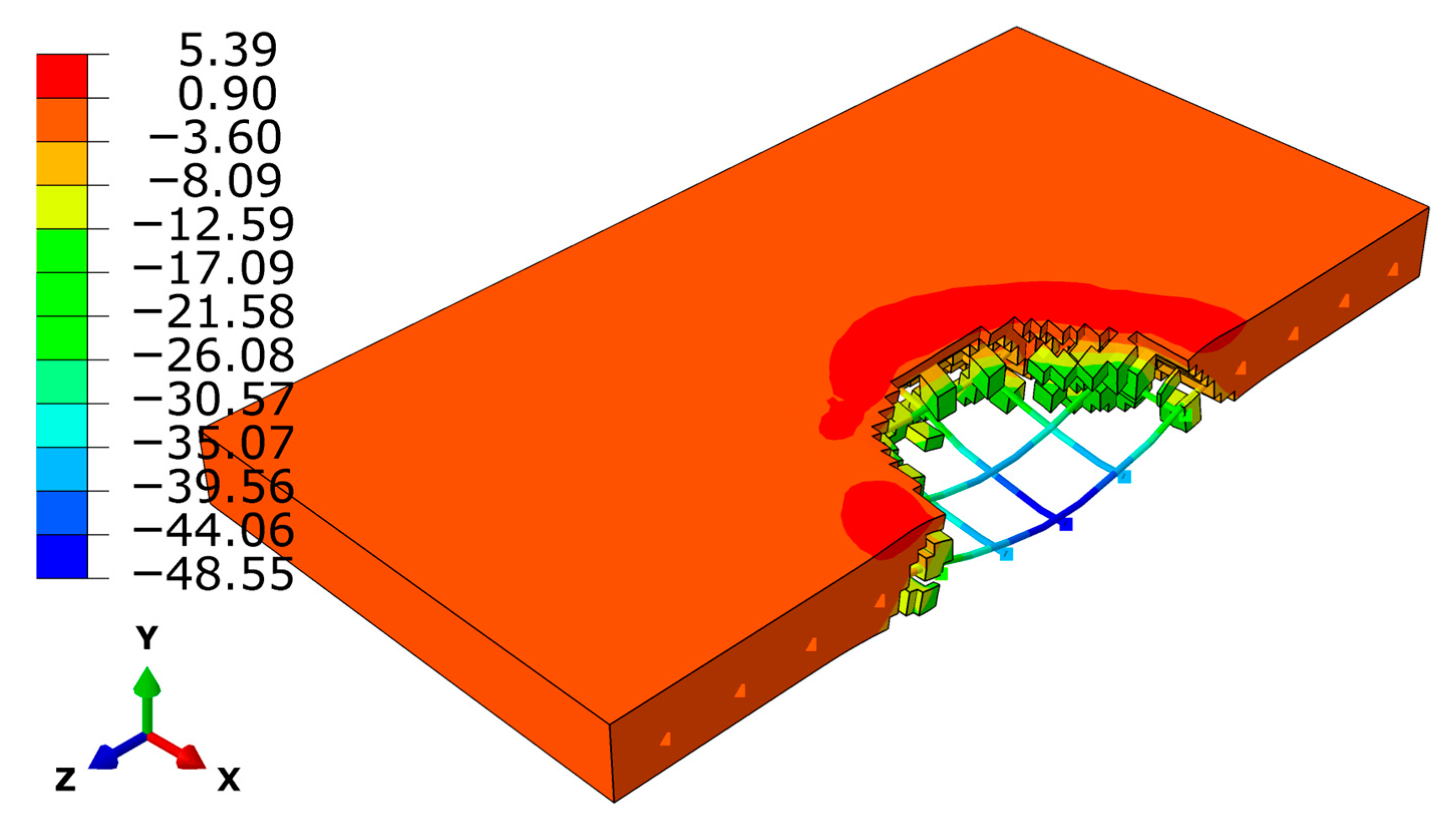
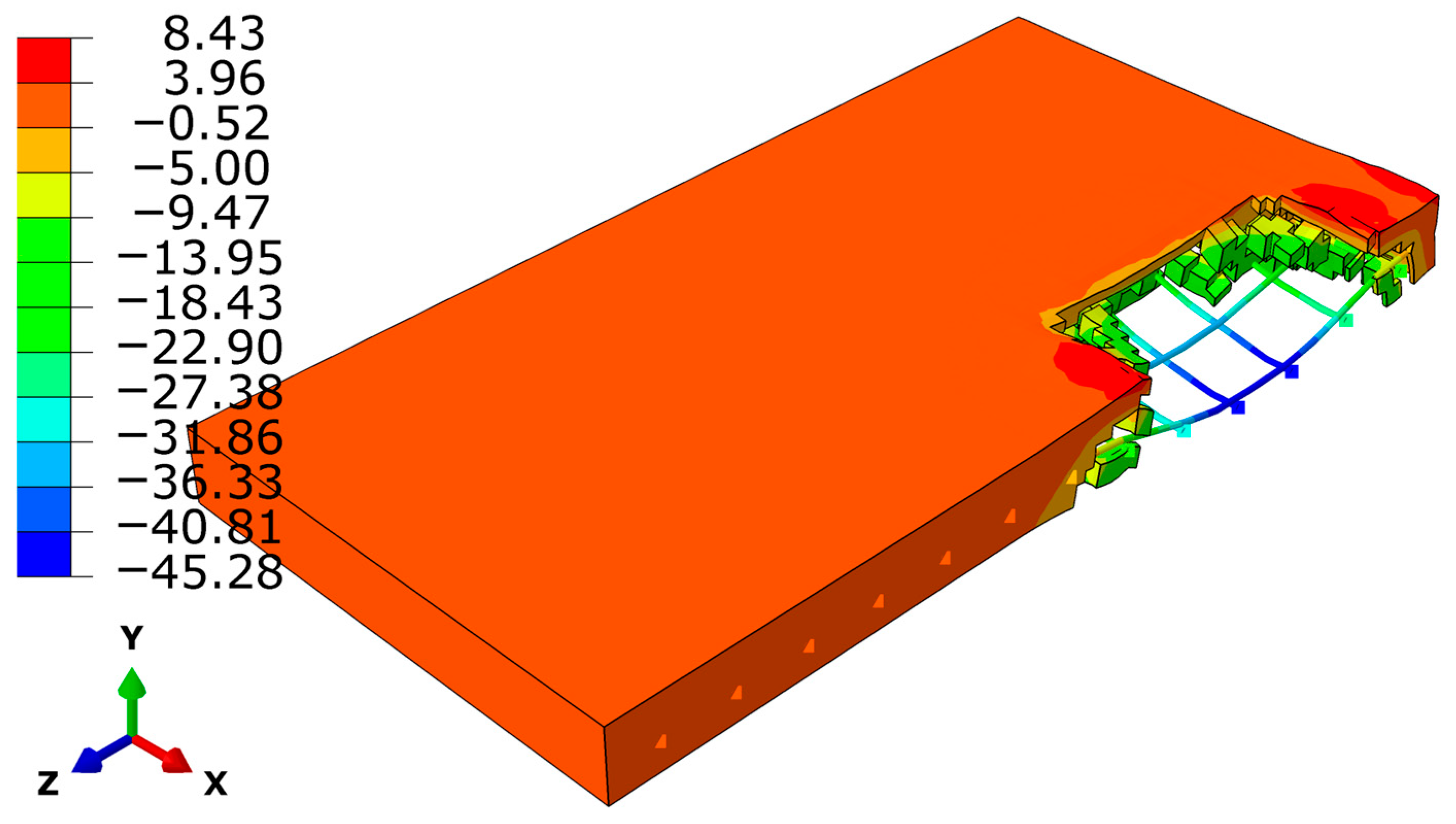
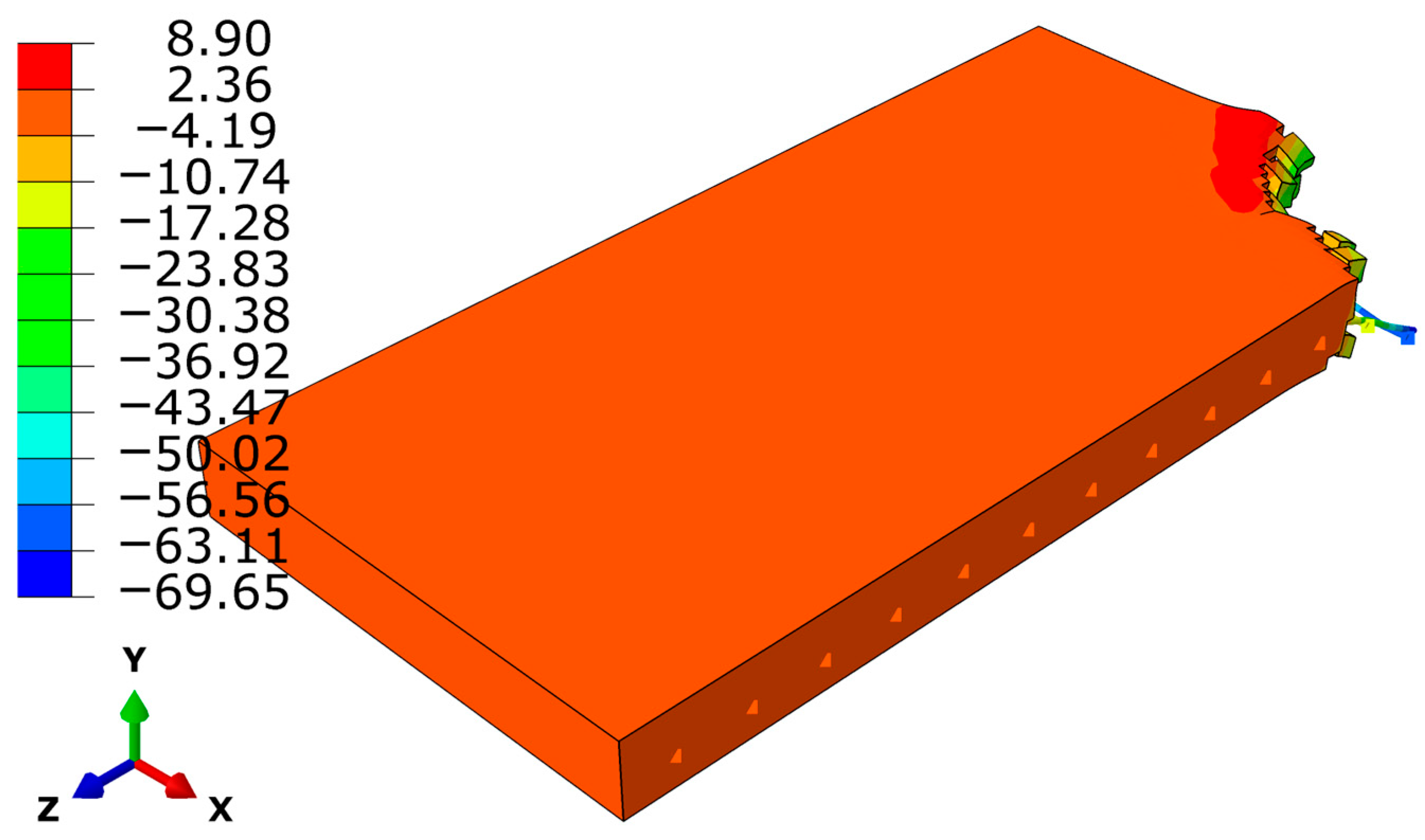
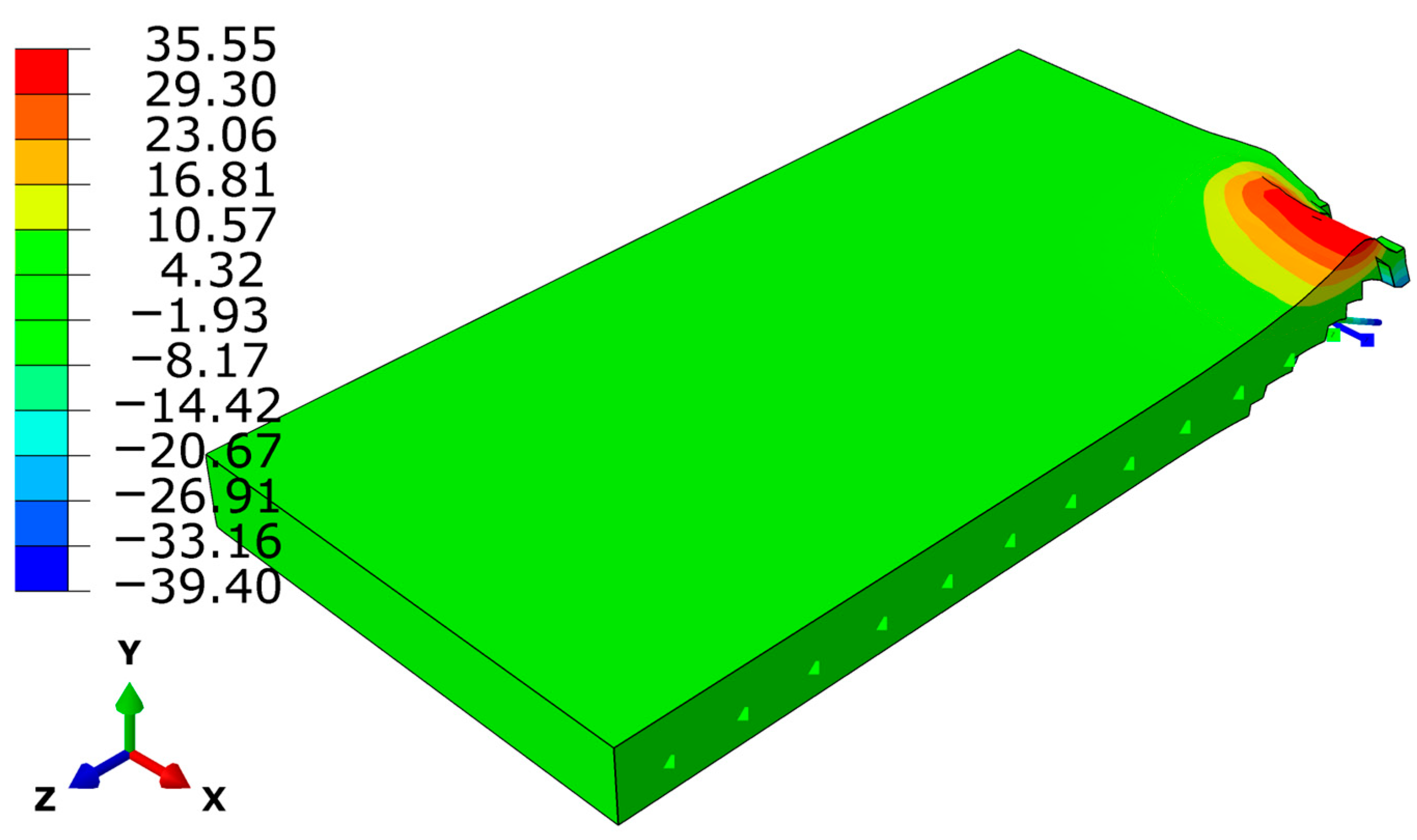
The downward deflection pattern changed as the explosive charge shifted closer to the free edge. At central and inner locations (C-Loc: 48.55 mm, I-Loc: 45.28 mm), the slab showed a moderate and uniform sag because the blast energy remained mostly confined and spread symmetrically (
Figure 14 and
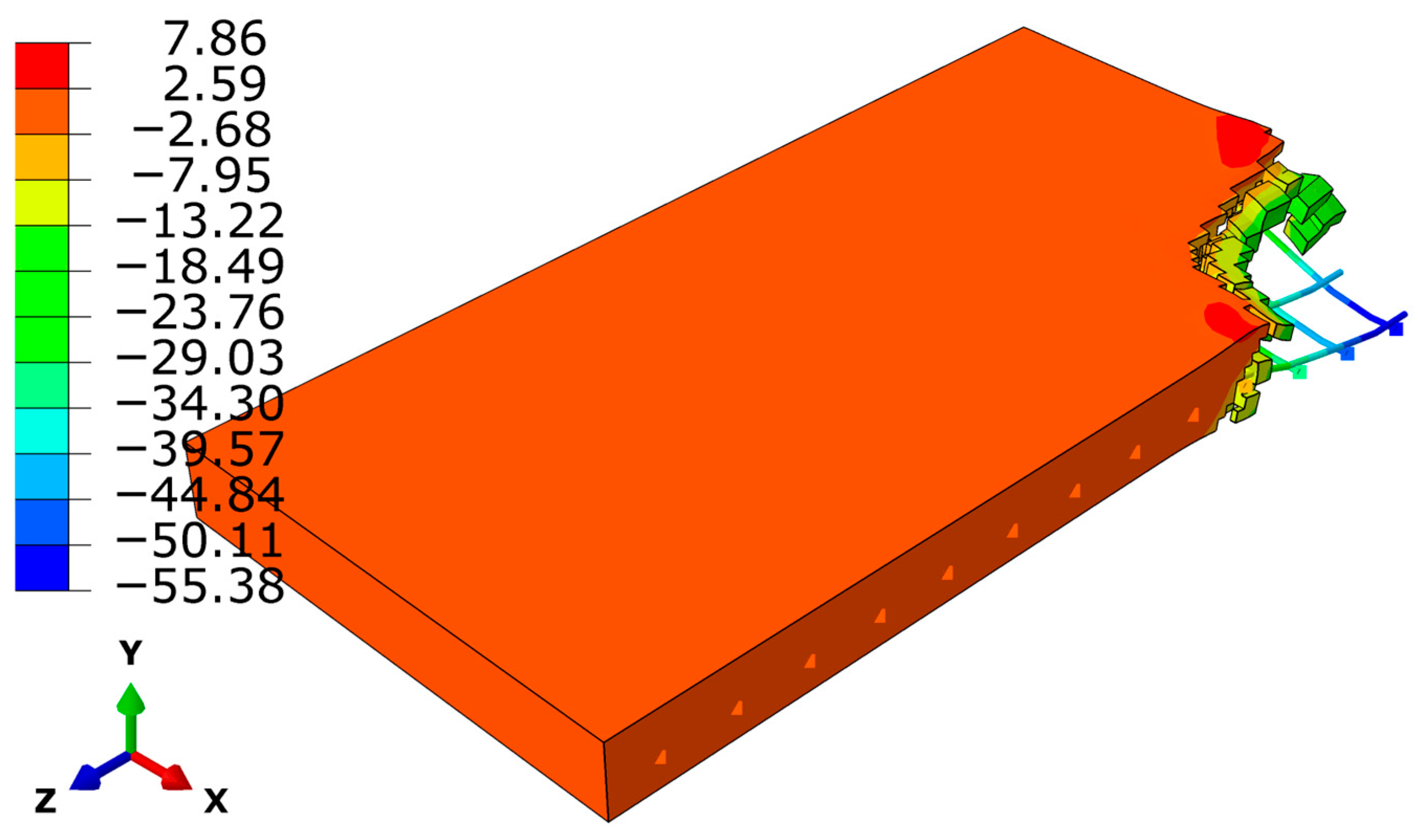
Figure 15). When the charge moved toward the inner side and near the slab free edge (IS-Loc: 55.38 mm and PE-Loc: 69.65 mm), the deflection increased noticeably (
Figure 16 and
Figure 17). This happened due to reduced confinement, higher venting, and a longer lever arm that caused uneven bending and greater overall rotation of the slab. At the extreme free edge (EE-Loc), the downward movement dropped to 39.40 mm as the external explosion transferred less direct force to the slab’s inner region, though the local underside still faced severe damage (
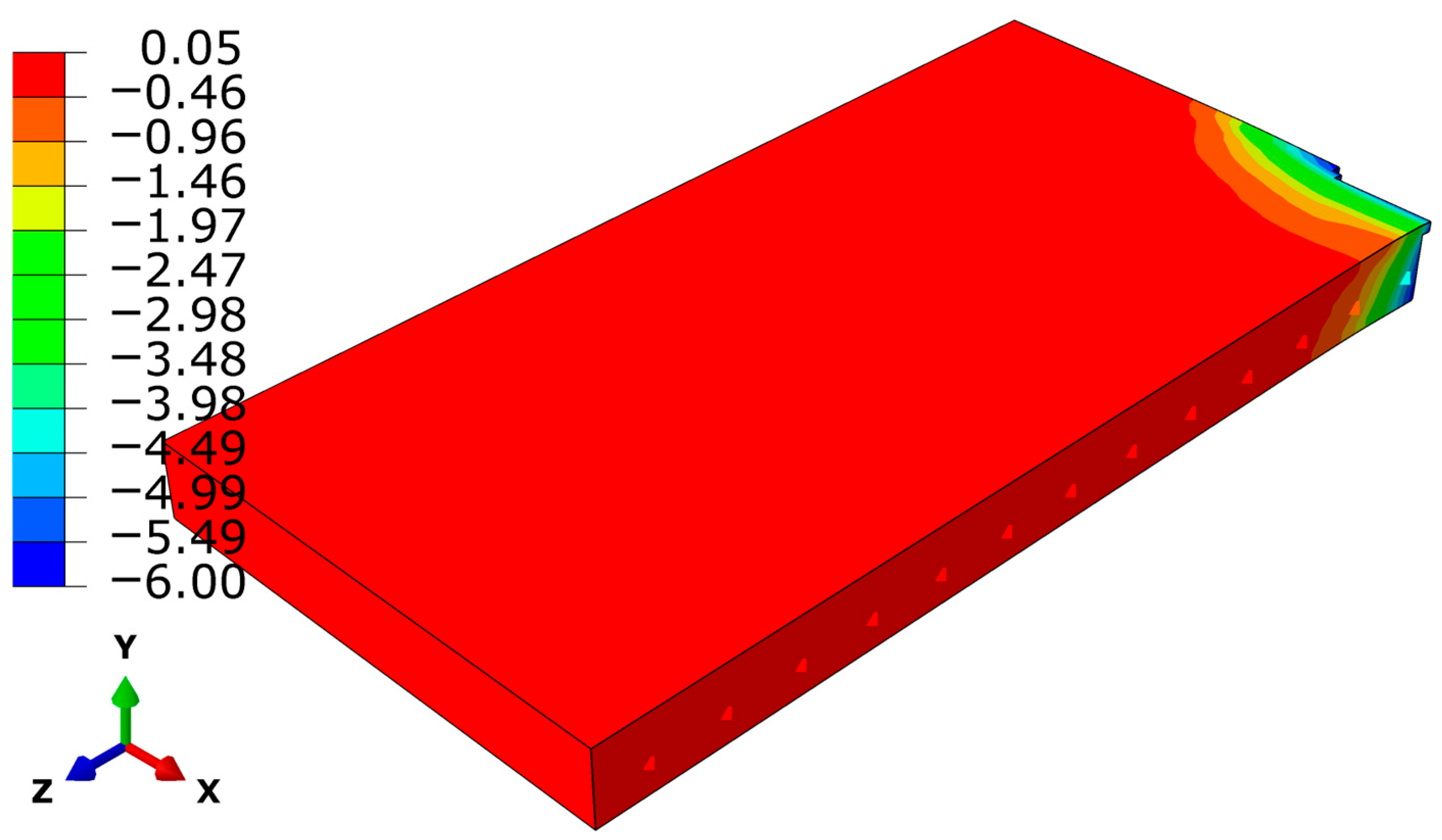
Figure 18). In the offset position (O-Loc), deflection remained minimal, about 6.0 mm downward with a slight 0.05 mm upward rebound (
Figure 19). This happened because the blast was placed 250 mm away from the free edge, resulting in very weak coupling between the charge and the slab, leading only to minor surface disturbance and slight rebound instead of a major downward deflection.
Table 2 shows the maximum downward deflection and top and bottom perforation sizes for all considered blast locations.
In
Table 1 and
Table 2, only the damage modes, damage area, and deflection were compared quantitatively. Other parameters like residual stiffness and energy absorption were not assessed. This choice was intentional because the experimental study [
1] used for validation did not provide these values, making it difficult to calibrate or verify them reliably. Additionally, touch-off explosions are highly localized and transient, often causing material separation and spalling. This makes it physically inconsistent to evaluate post-damage stiffness, as the load-carrying continuity is lost. Hence, damage area and deflection were chosen as the most meaningful indicators for comparing different blast positions, and these were further correlated with maximum principal stresses and reflected pressure, as discussed below.
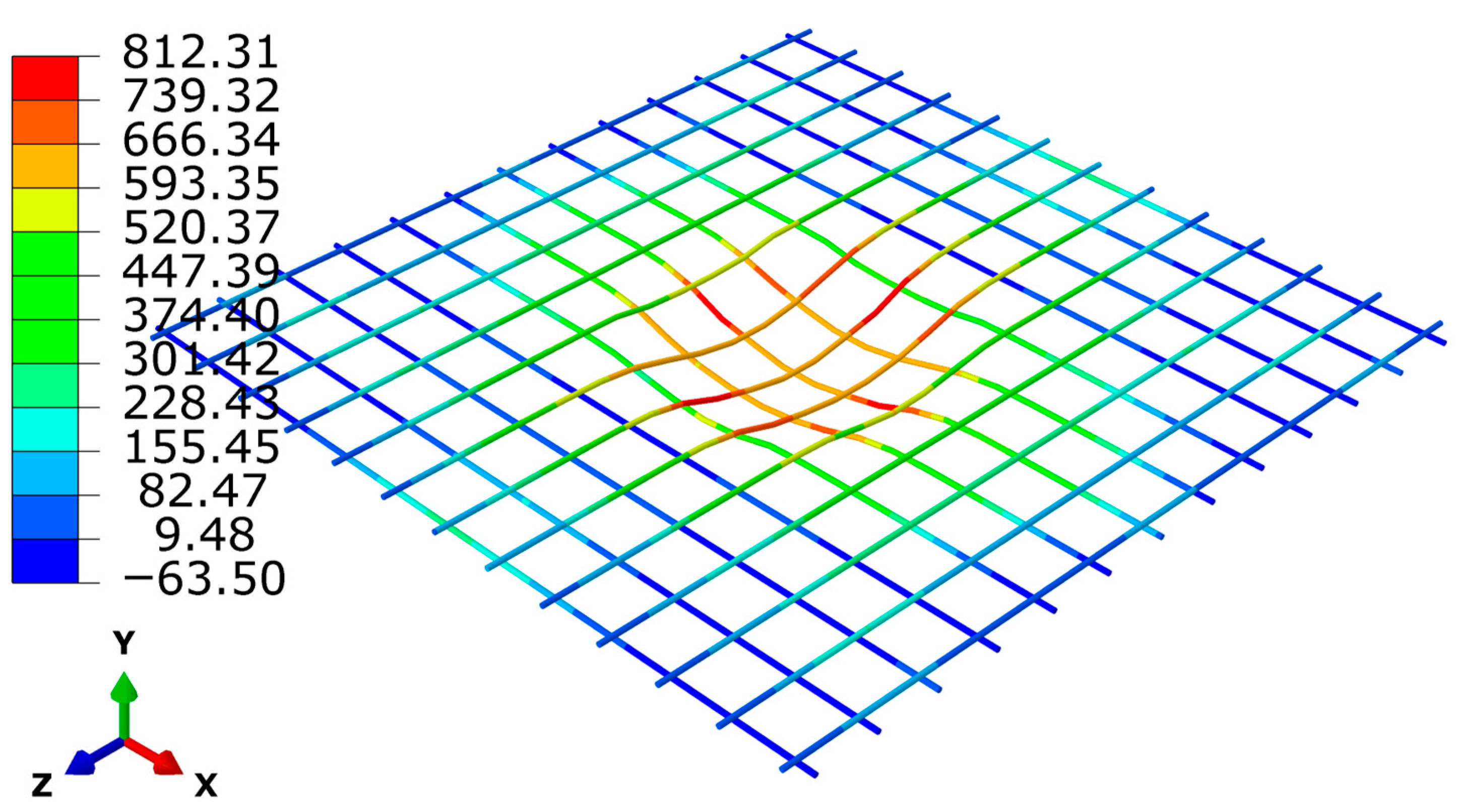
The pattern of maximum tensile and compressive stresses in the reinforcement closely matched the slab’s deformation and damage behavior. These responses were mainly influenced by the coupling between the explosive charge and the structure, along with the distance from the slab free edge. In the central explosion (C-Loc), the stresses reached a high tensile value of about +812 MPa (
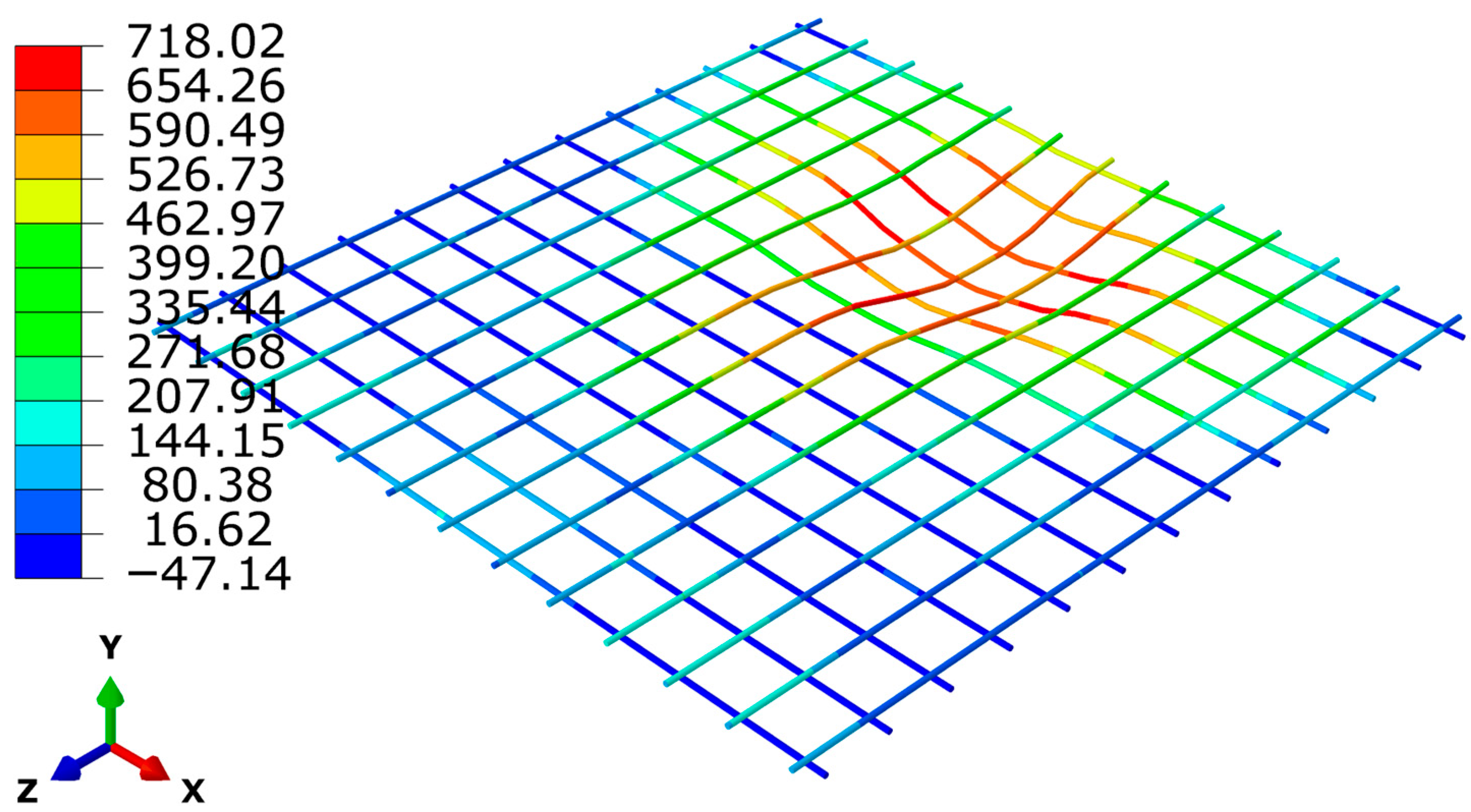
Figure 20). This happened due to strong confinement and uniform coupling, which caused large amounts of membrane stretching around the middle region. When the blast moved slightly away from the center (I-Loc), the tensile stress reduced to +718.02 MPa with compressive stress of +47.14 MPa (
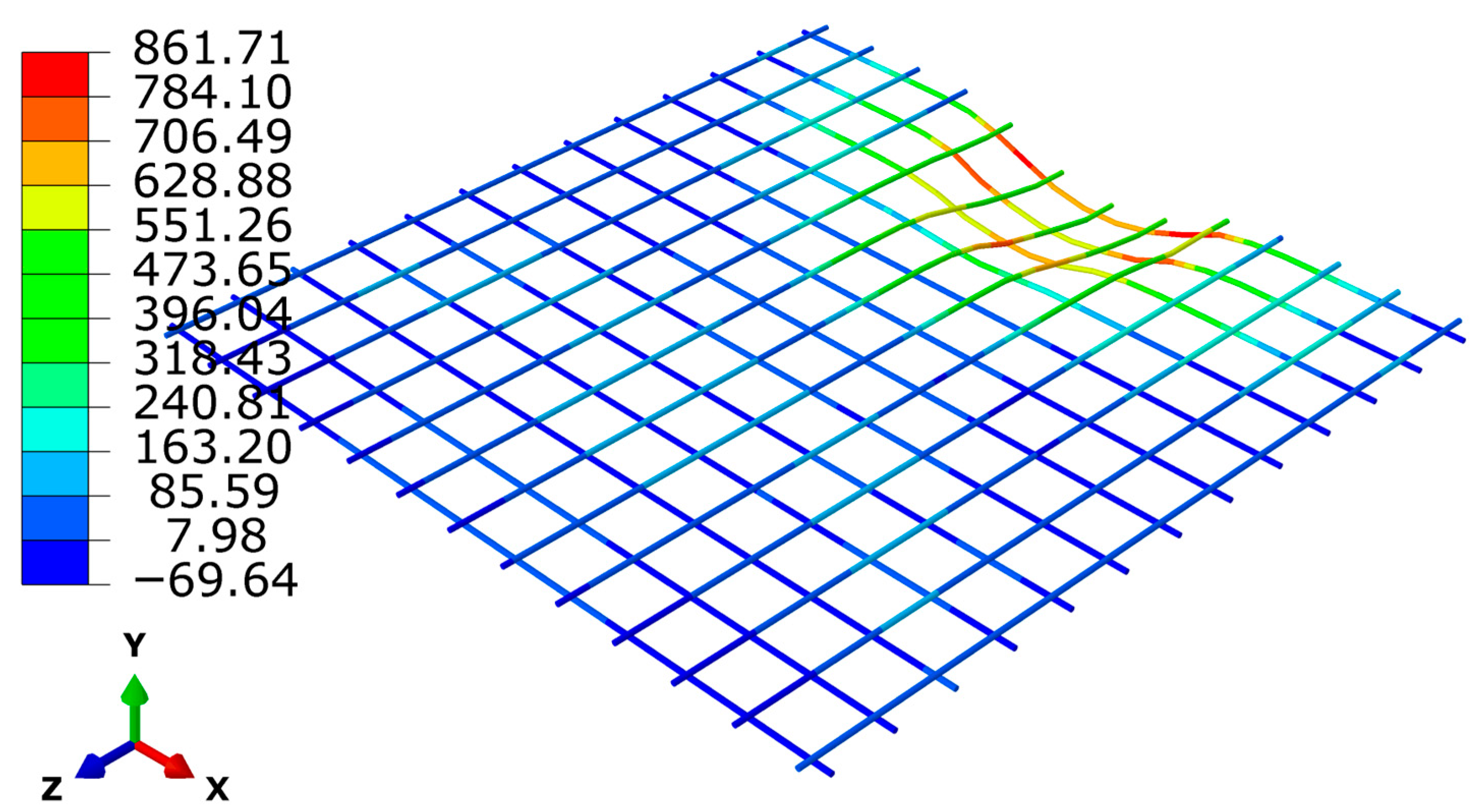
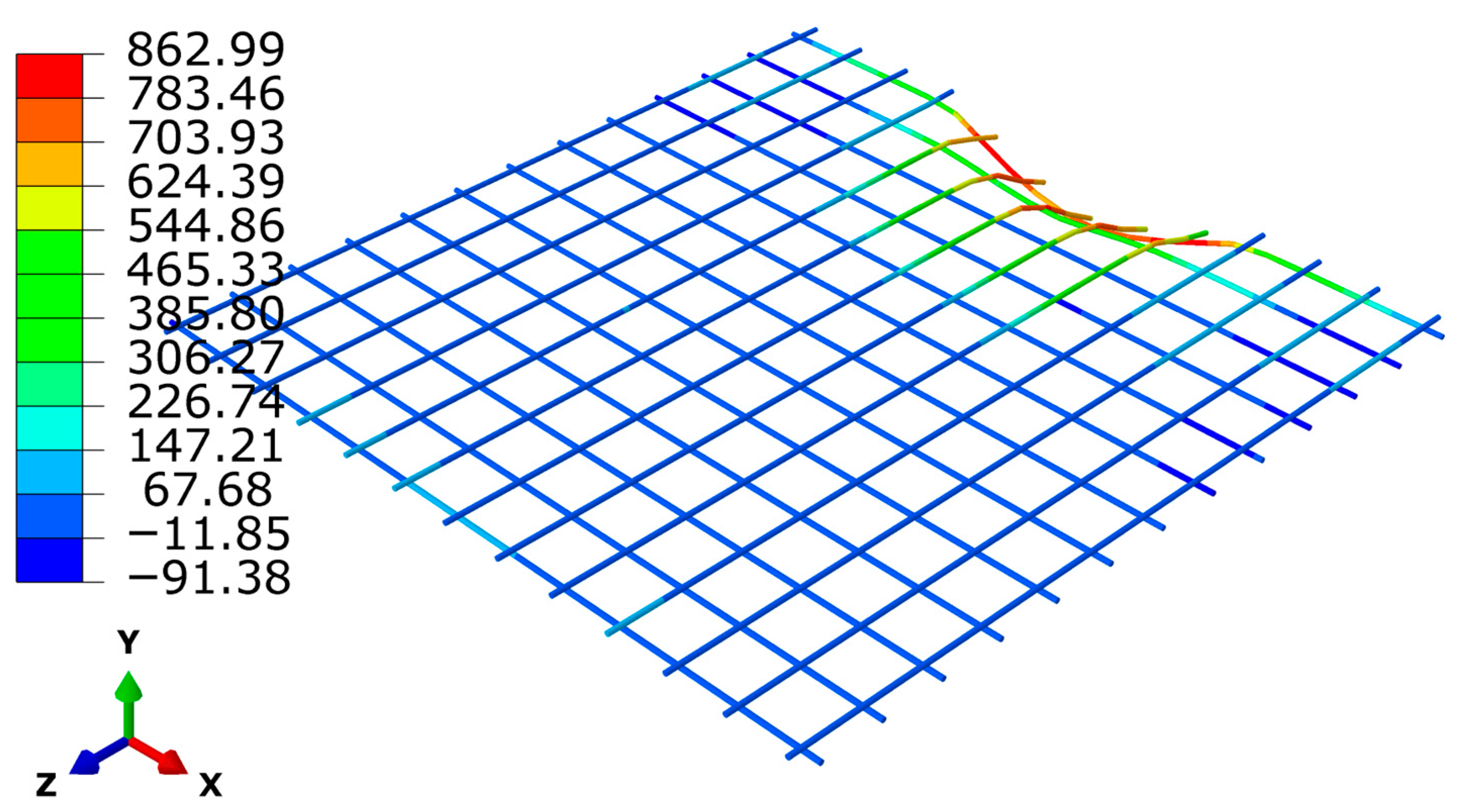
Figure 21). This value, although lower than the central and some edge-near cases, still indicates strong coupling and significant tensile demand due to the combined effect of restraint and directional focusing on the clamped edge. For IS-Loc and PE-Loc, the tensile stresses again became very high, around +861 to +863 MPa (
Figure 22 and
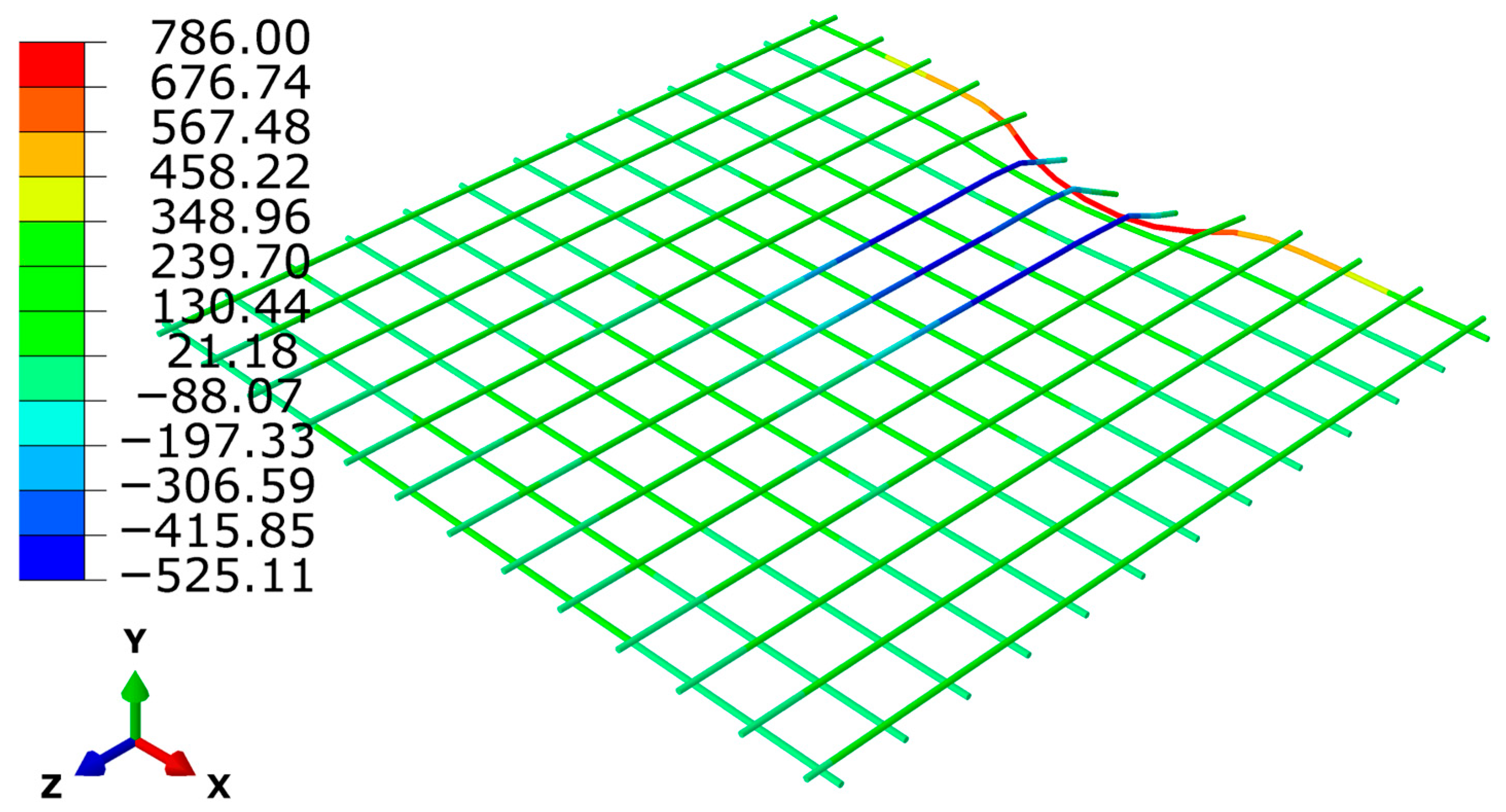
Figure 23). These values show that explosions near the free edge produce intense local bending and uneven reflection of the shock waves, increasing the tensile demand on the reinforcement at the tension side. In the EE-Loc case, even though the explosive was placed completely outside the slab, the reflected waves from the edge still created considerable tensile stress of +786 MPa and the highest compressive stress of −525 MPa (
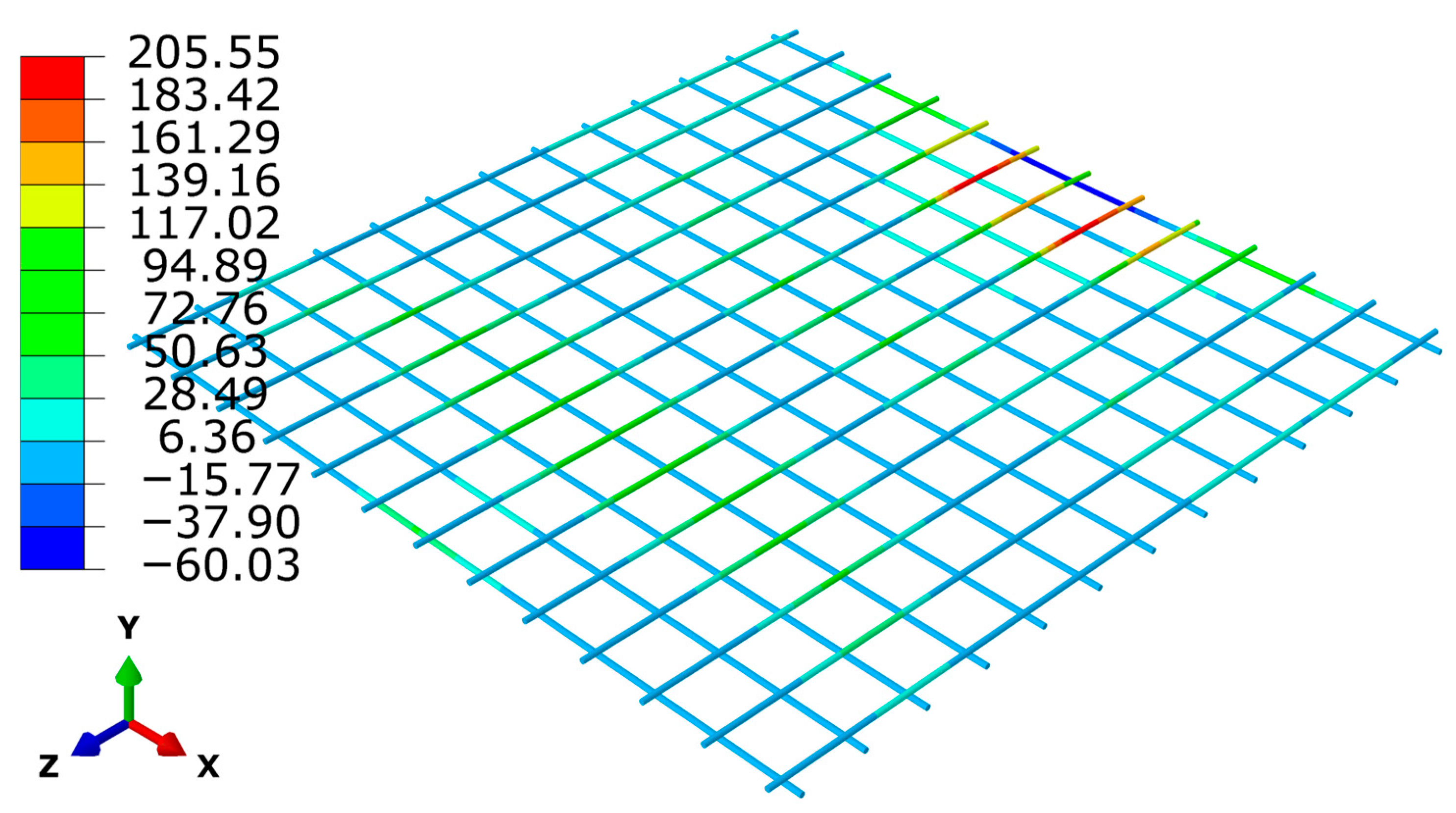
Figure 24). This combination points to strong bending reversal and local stress concentration near the supported edge. In the outermost position (O-Loc), the tensile and compressive stresses were much lower, about +205 MPa and −60 MPa, showing minimal structural interaction due to the distant location of the charge (
Figure 25).
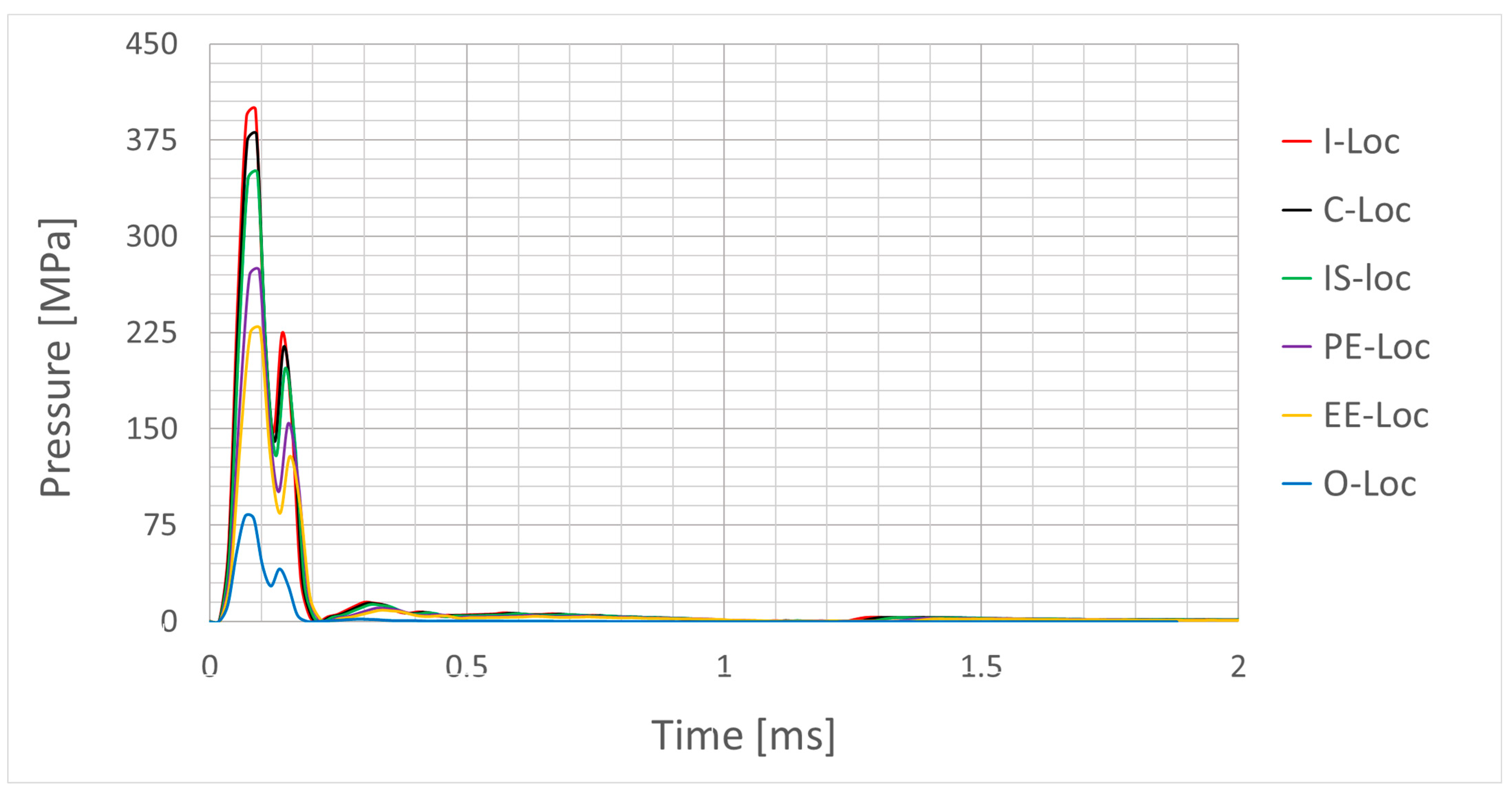
The variation in reflected pressure (I-Loc 398.6 > C-Loc 379.6 > IS-Loc 349.3 > PE-Loc 270.0 > EE-Loc 227.8 > O-Loc 81.8 MPa) follows the way explosive interaction, free-edge distance, and wave interference influence the local blast response (
Figure 26). The slightly higher reflected pressure observed at I-Loc compared to the central blast (C-Loc) results from localized constructive interference between the incident and reflected shock fronts along the clamped boundary. At this intermediate position, the blast wave partially reflects off both the slab surface and the nearby support, forming a confined pressure pocket that momentarily amplifies the local reflection. The brick-shaped charge, oriented parallel to the clamped edge, further directs energy toward this zone, producing higher local coupling than at the fully central case. The charge at the center still experiences high pressure because of strong confinement from all sides and direct coupling with the slab surface. As the charge shifts towards the free-edge region (IS → PE → EE), the reflected pressure gradually reduces, mainly due to venting of explosive energy and reduced confinement, which weakens the incident pressure wave striking the slab. In the final case (O-Loc), where the explosive is placed farther away (250 mm beyond the free edge along the central axis), the peak pressure becomes the lowest since the blast wave loses intensity with distance and spreads out more in the air domain, resulting in only a mild reflected pulse.




 ,
,