Investigation on Electricity Flexibility and Demand-Response Strategies for Grid-Interactive Buildings



Abstract
1. Introduction
1.1. Summary
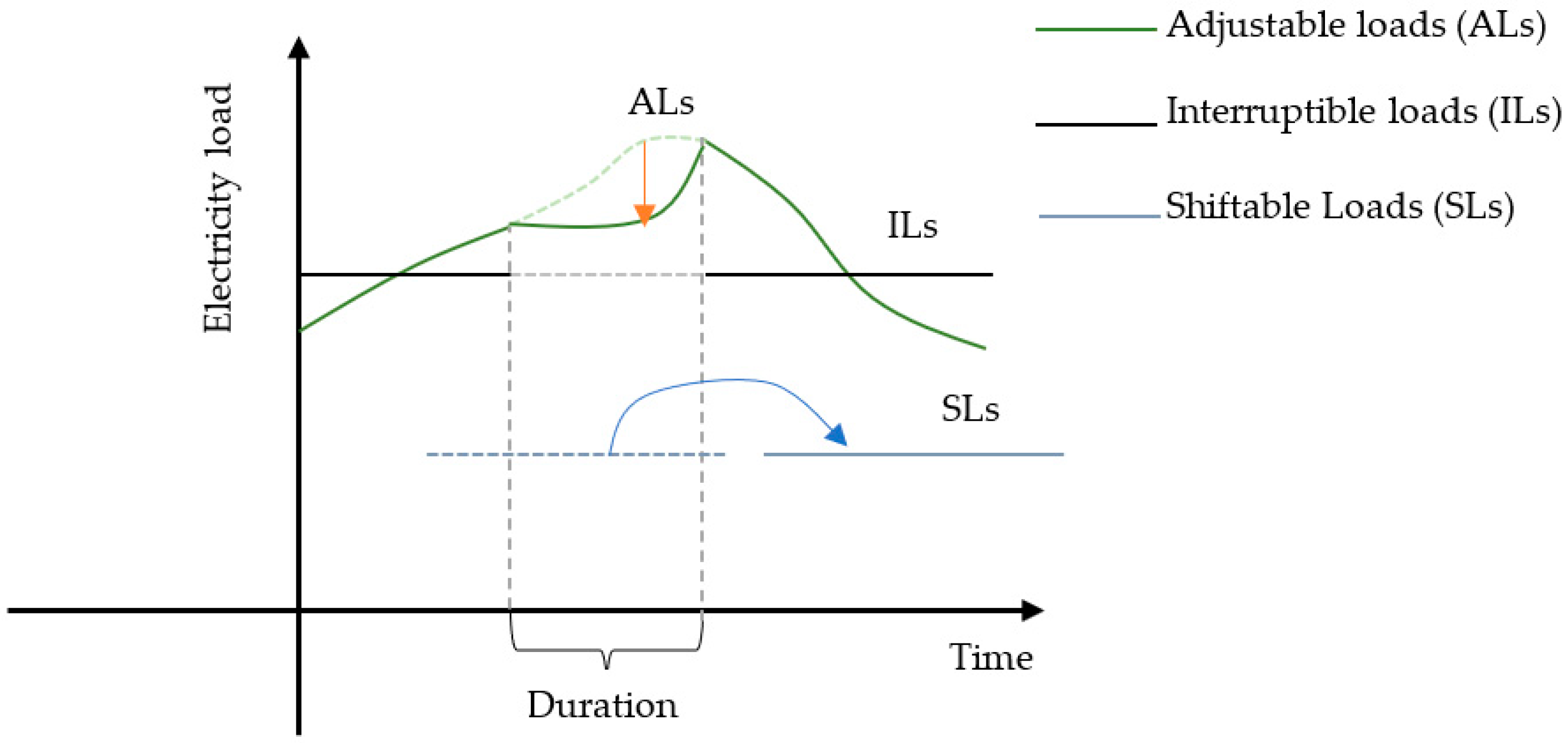
1.2. Load Flexibility Classification
1.2.1. Interruptible Loads (ILs)
1.2.2. Shiftable Loads (SLs)
1.2.3. Adjustable Loads (ALs)
2. Methodology
2.1. DR Control Strategies
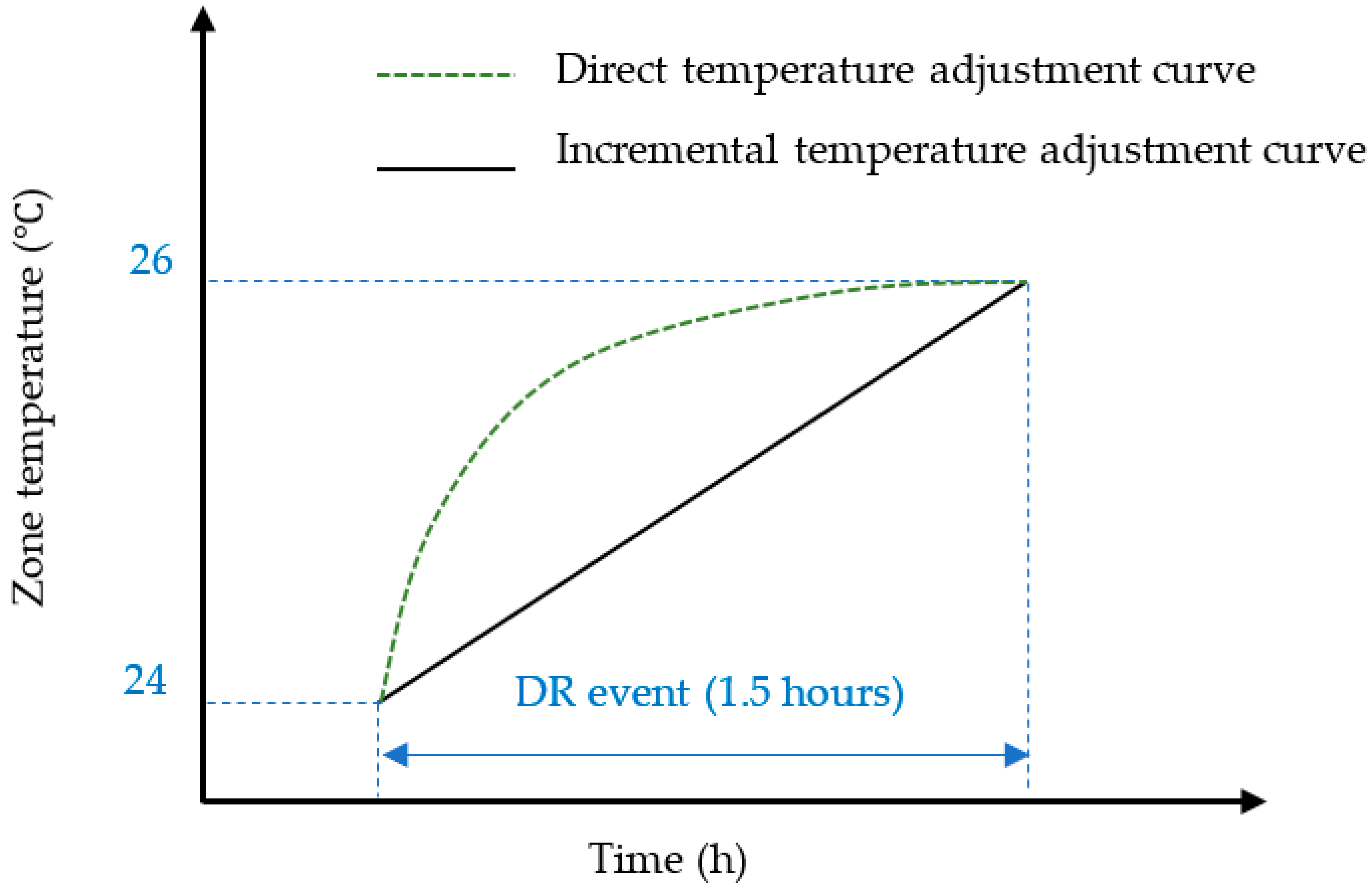
2.1.1. Global Zone Temperature Resetting
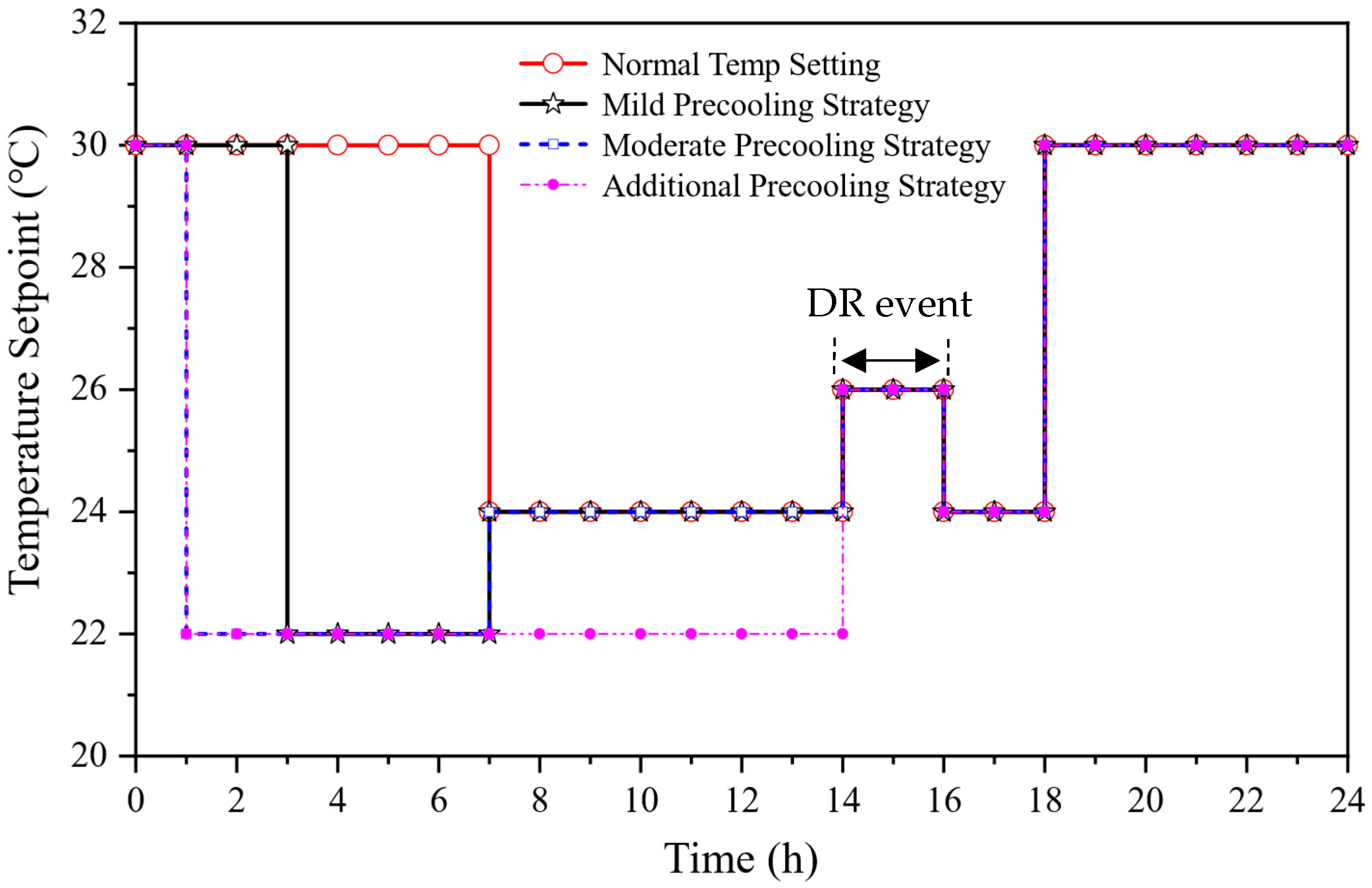
2.1.2. Pre-Cooling
2.1.3. Smooth System Recovery Strategy
2.1.4. Other Strategies
2.2. Electricity Flexibility Quantification
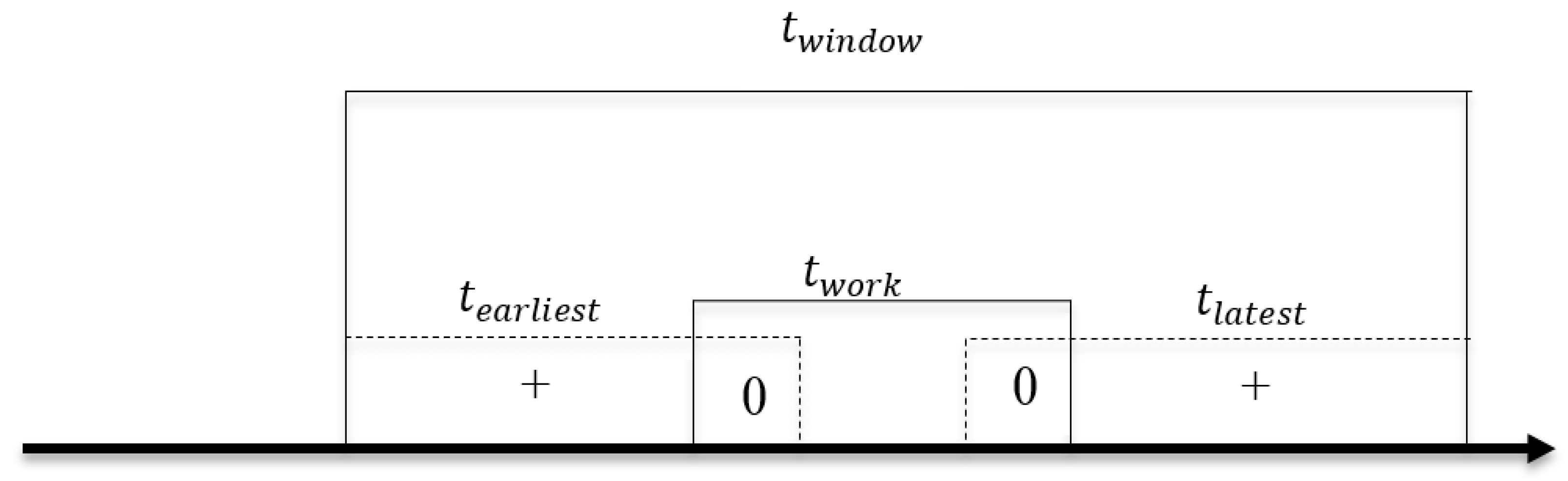
2.2.1. SLs Flexibility
2.2.2. ALs Flexibility
2.3. DR Optimization Objectives
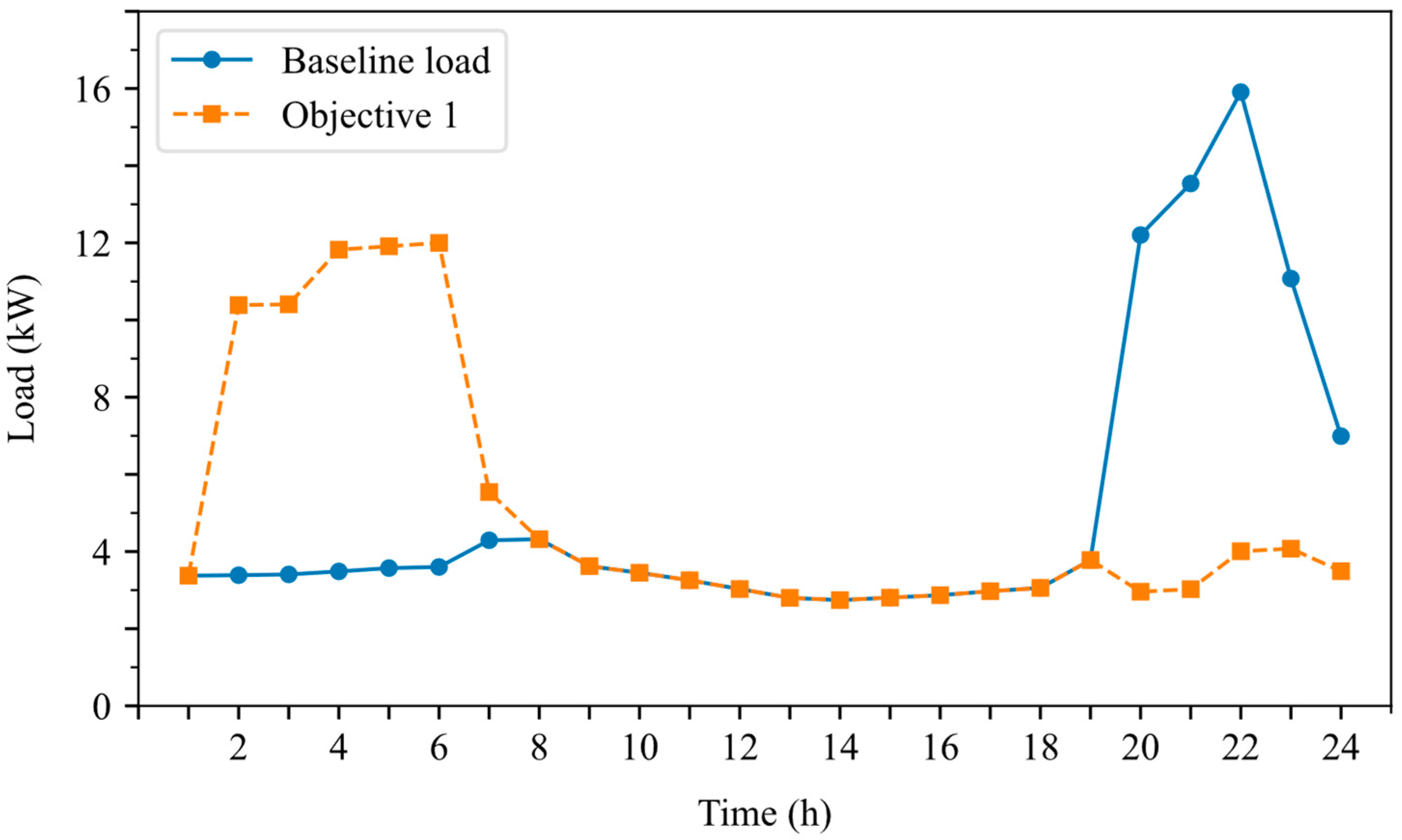
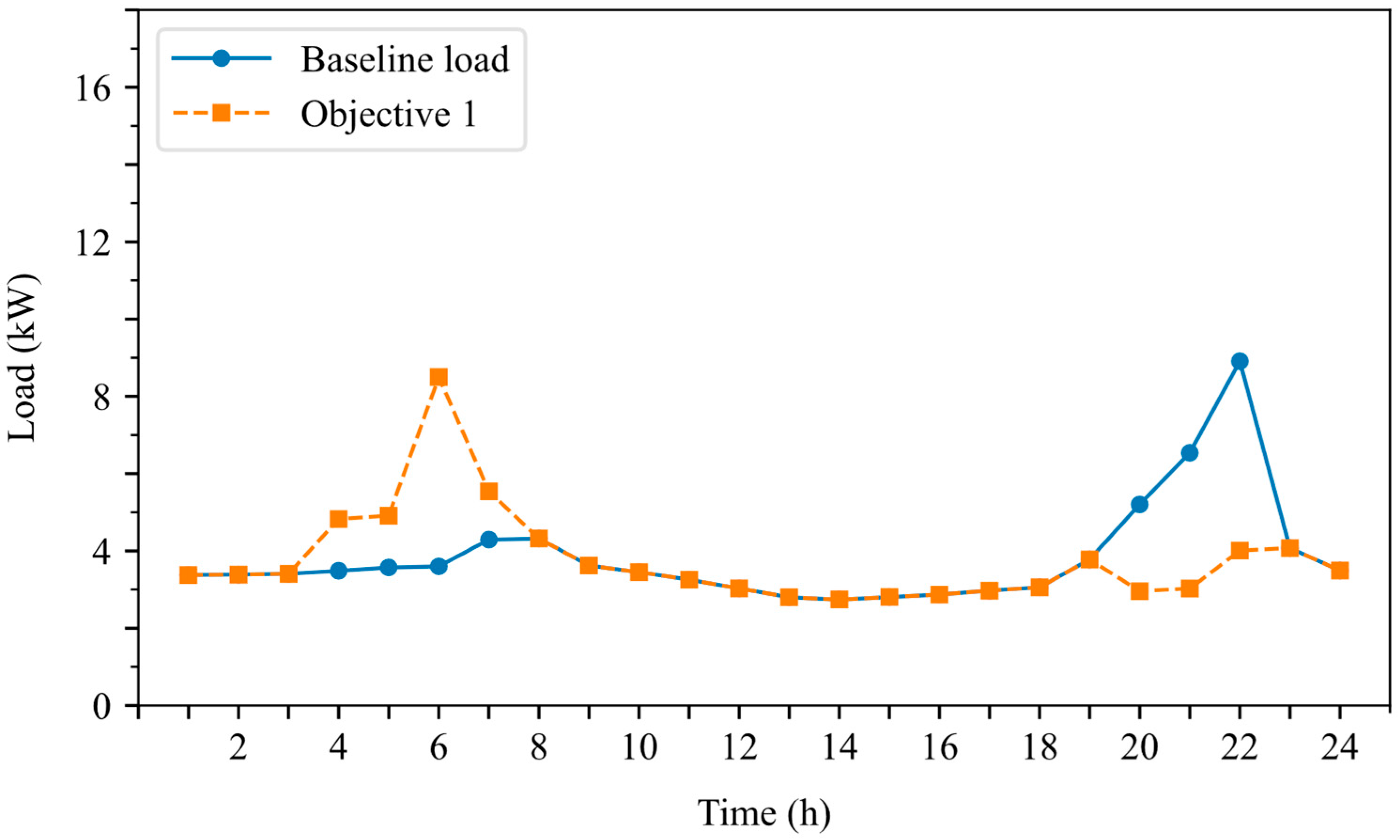
2.3.1. Objective 1: Maximizing Load Reduction
2.3.2. Objective 2: Maximizing Economic Benefits
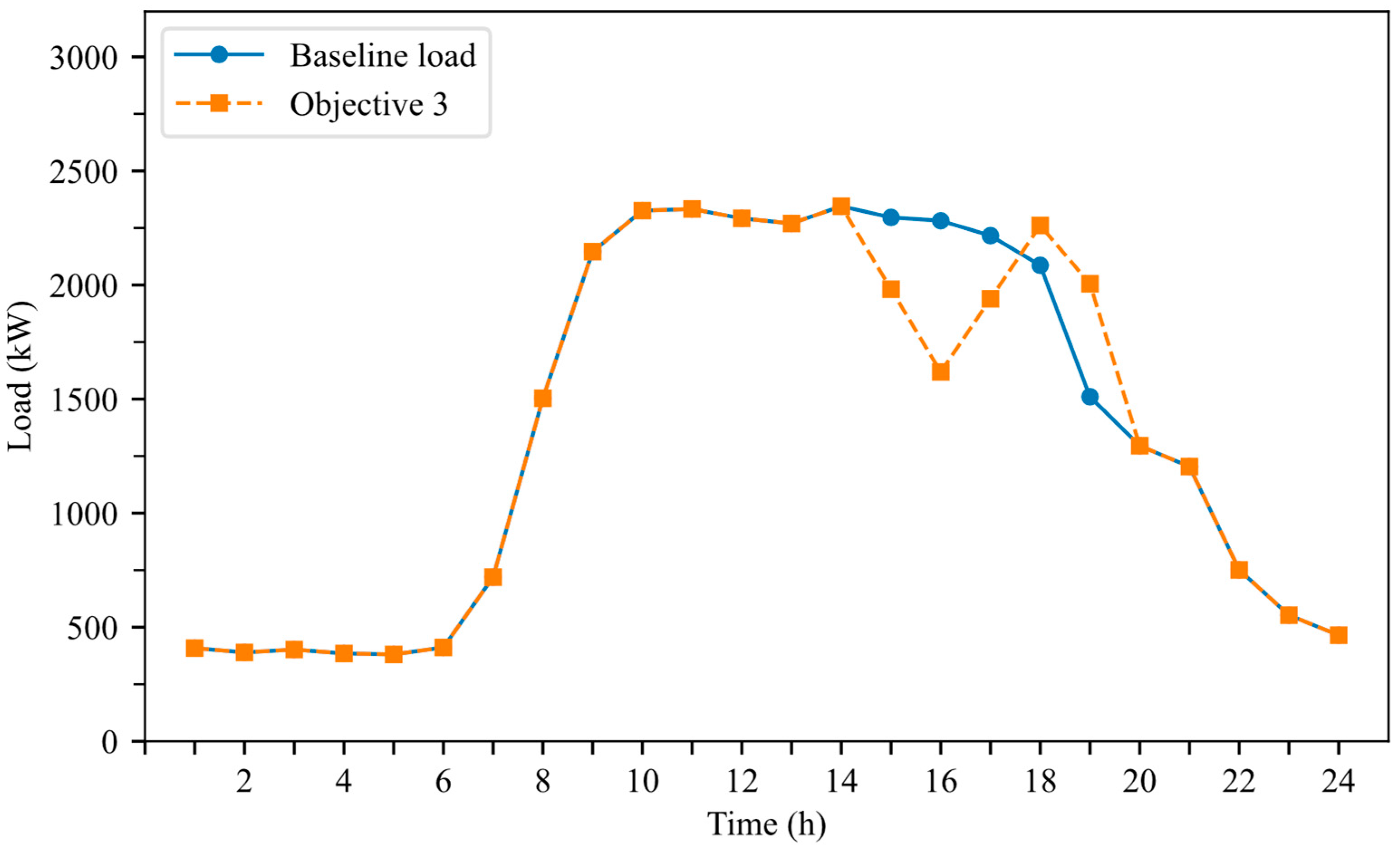
2.3.3. Objective 3: Smooth Load Reduction and Recovery
3. Results and Discussion
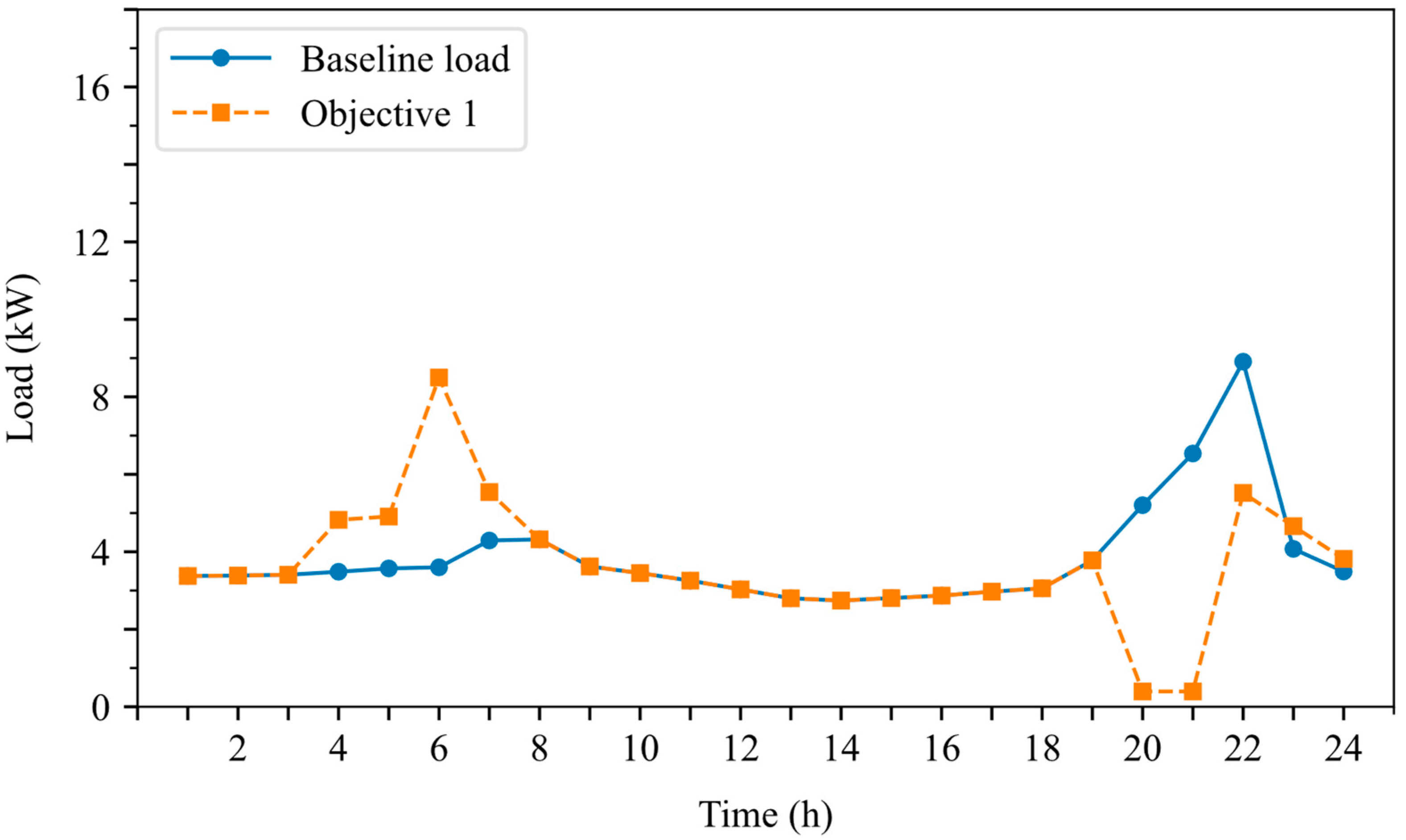
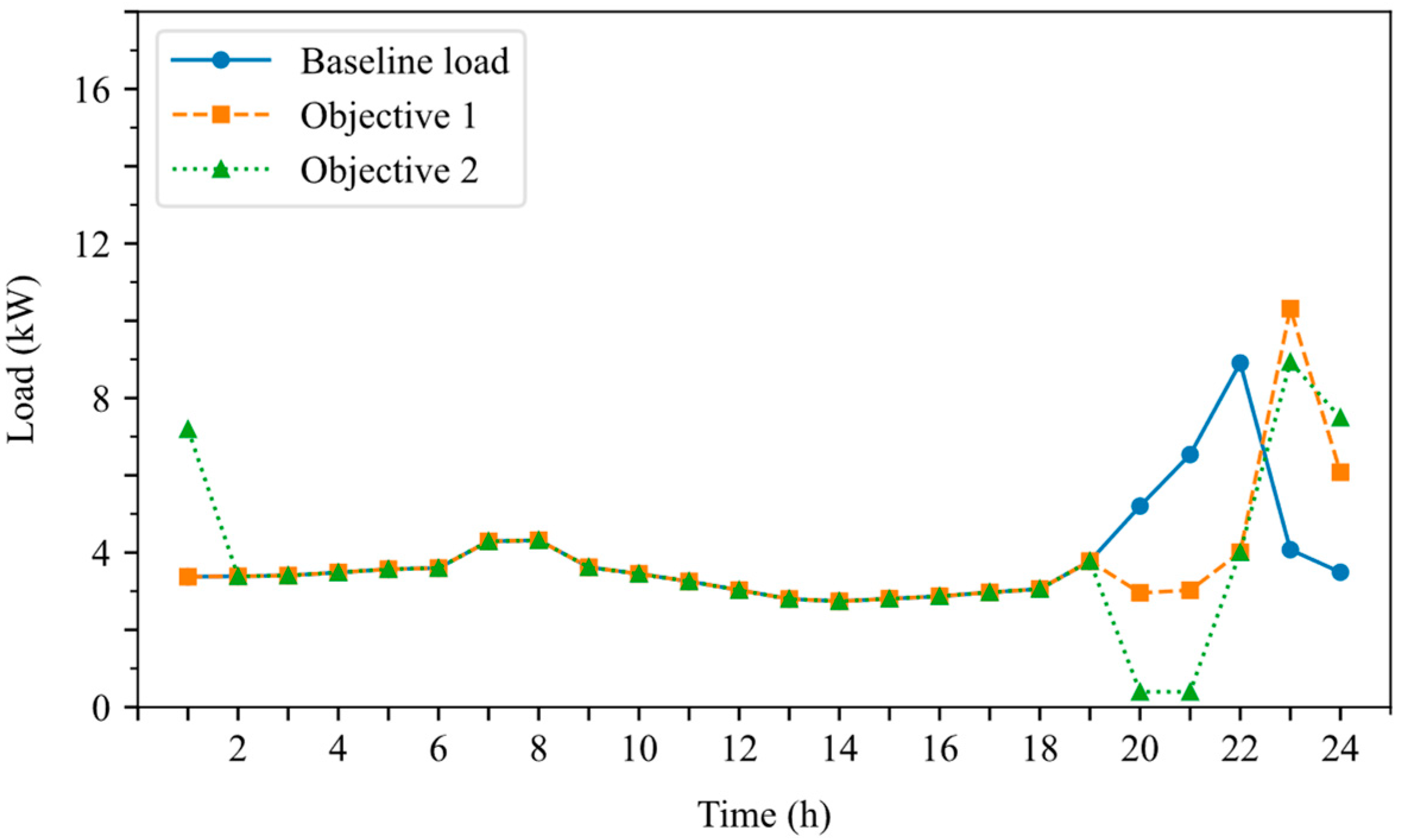
3.1. Residential Building Case Study
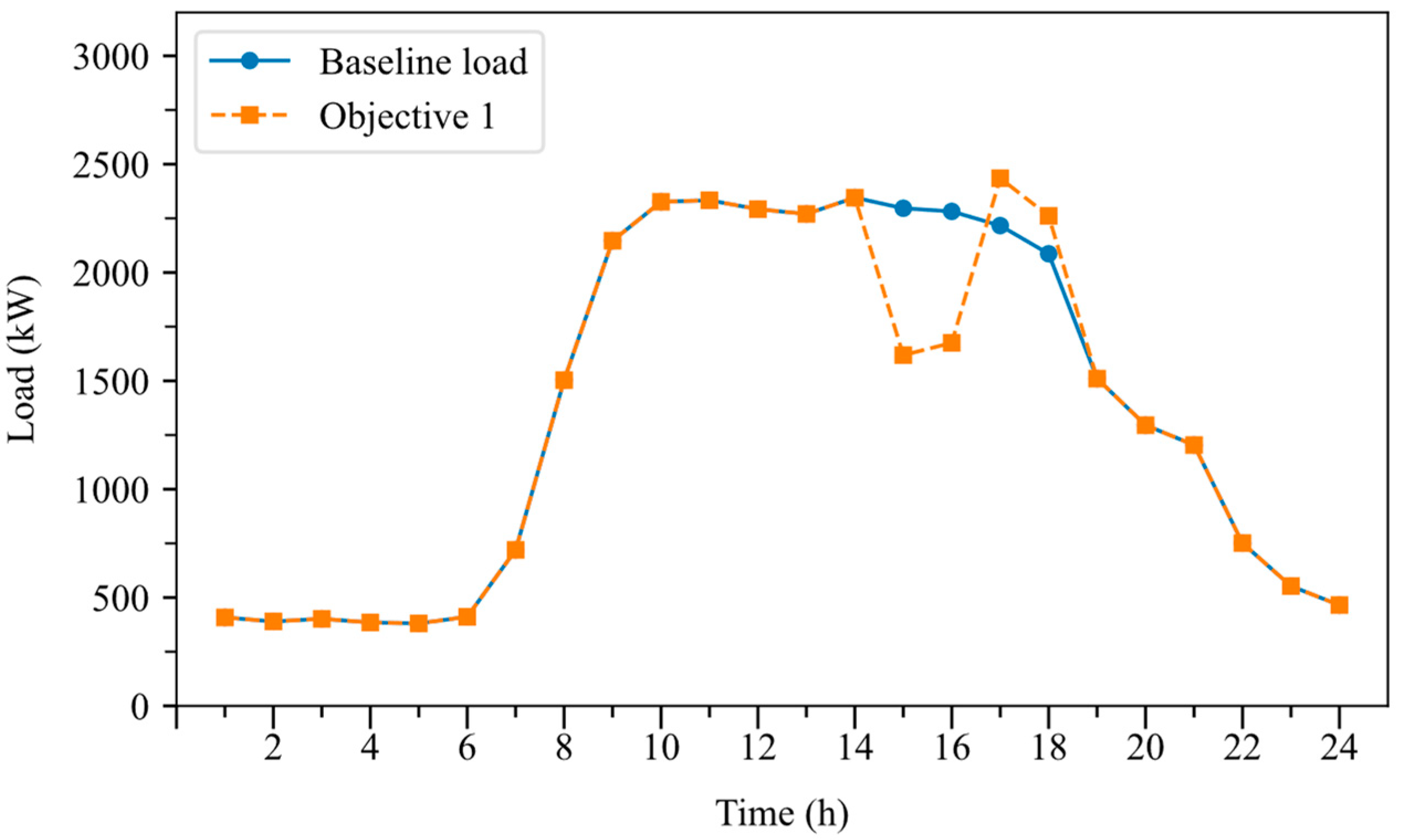
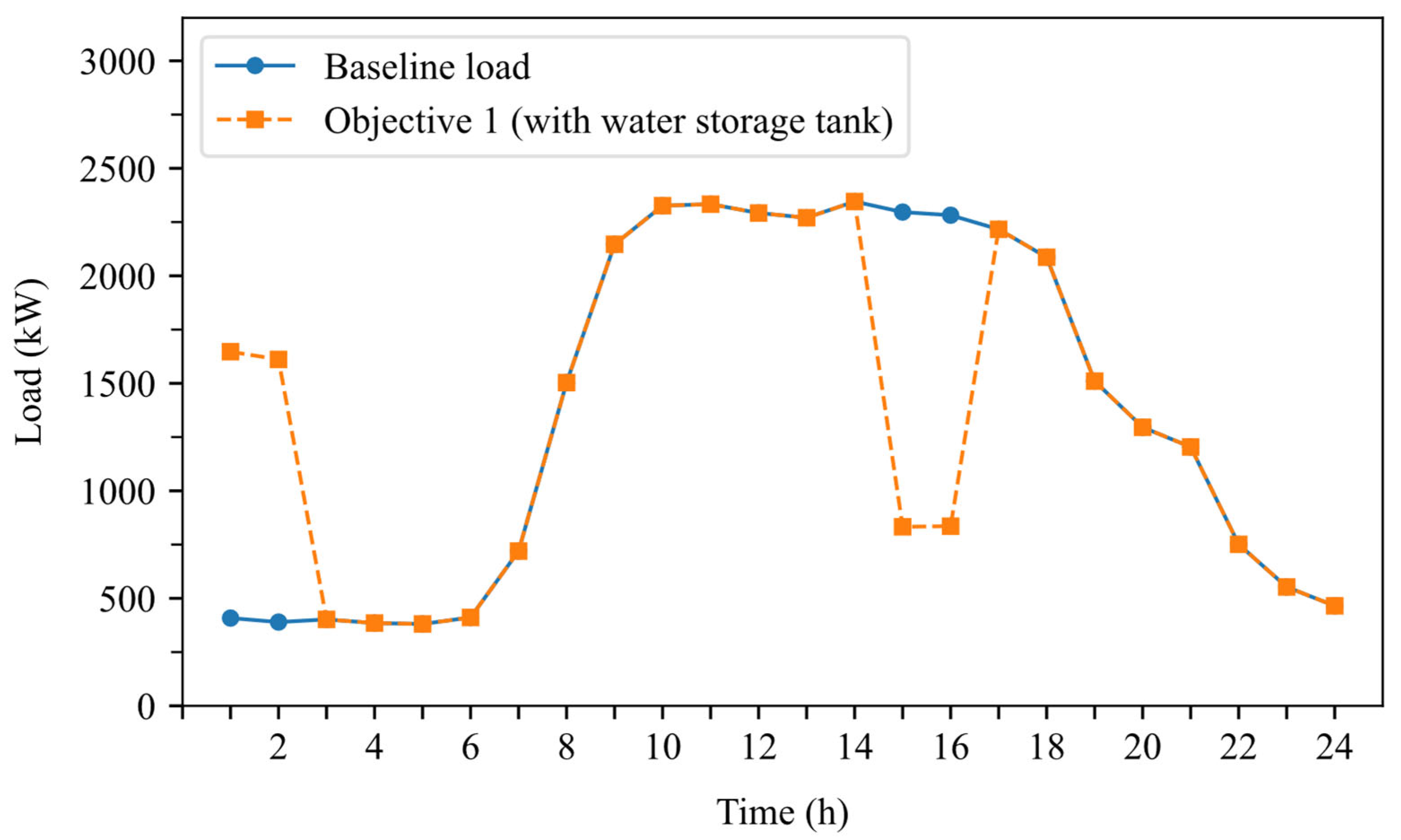
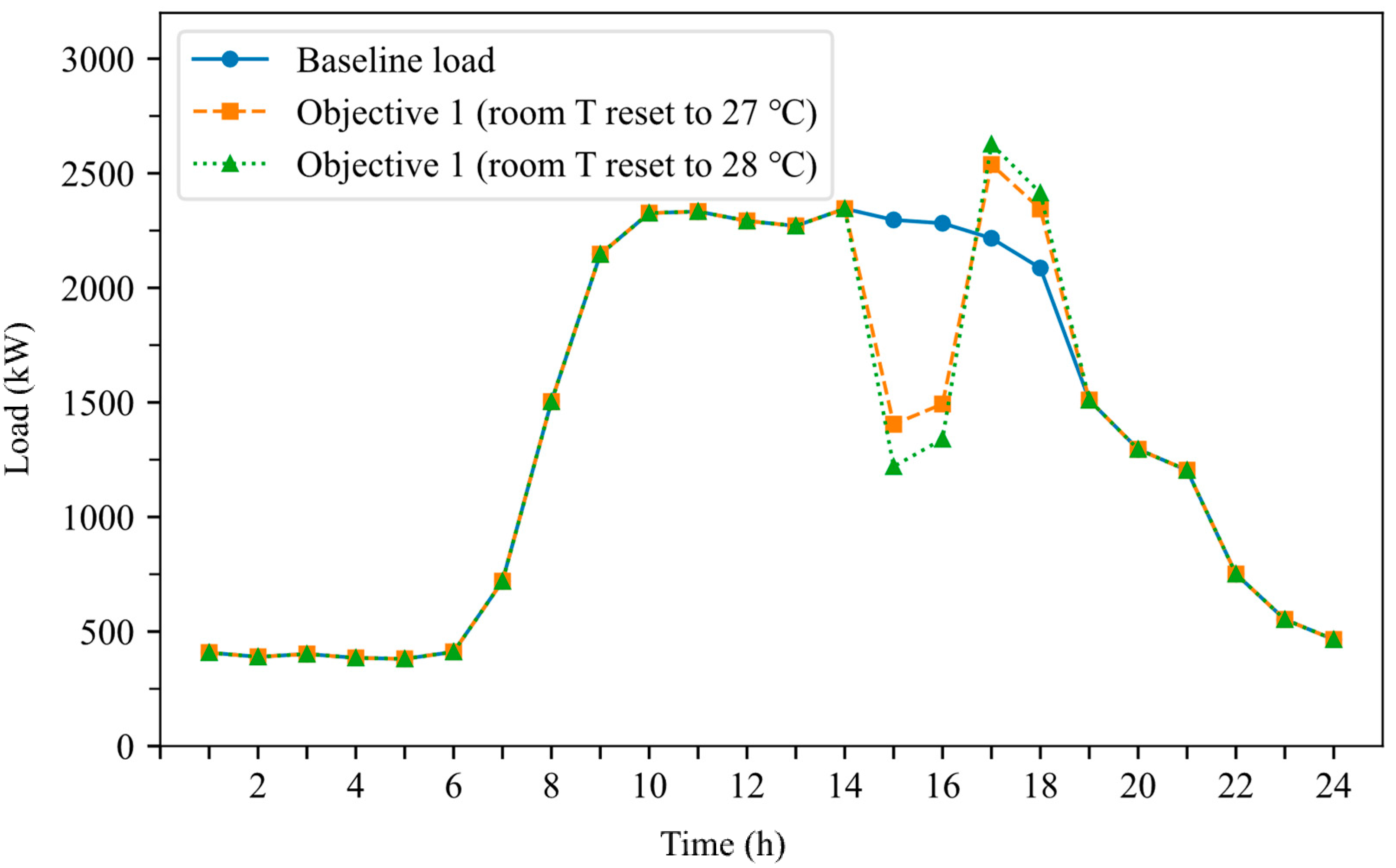
3.2. Office Building Case Study
3.3. DR Control Recommendation
4. Conclusions
Author Contributions
Funding
Data Availability Statement
Conflicts of Interest
References
- OECD. IEA Roadmap for Energy-Efficient Buildings and Construction in ASEAN: Timelines and Actions Towards Net Zero-Carbon Buildings and Construction; OECD: Paris, France, 2022; ISBN 978-92-64-44421-8. [Google Scholar]
- Ahmed, B.; Ahmed, A.; Zhang, H.-N.; Li, X.-B.; Qu, K.-Y.; Li, F.-C. Characterization, Quantification and Application of Energy Flexibility in Office Building: A Comprehensive Review. Energy Build. 2025, 347, 116306. [Google Scholar] [CrossRef] [Scilit]
- Chen, Y.; Chen, Z.; Xu, P.; Li, W.; Sha, H.; Yang, Z.; Li, G.; Hu, C. Quantification of Electricity Flexibility in Demand Response: Office Building Case Study. Energy 2019, 188, 116054. [Google Scholar] [CrossRef] [Scilit]
- Han, B.; Li, H.; Wang, S. A Probabilistic Model for Real-Time Quantification of Building Energy Flexibility. Adv. Appl. Energy 2024, 15, 100186. [Google Scholar] [CrossRef] [Scilit]
- Wang, H.; Wang, S.; Tang, R. Development of Grid-Responsive Buildings: Opportunities, Challenges, Capabilities and Applications of HVAC Systems in Non-Residential Buildings in Providing Ancillary Services by Fast Demand Responses to Smart Grids. Appl. Energy 2019, 250, 697–712. [Google Scholar] [CrossRef] [Scilit]
- Chen, Z.; Xiao, F.; Chen, Y. Multi-Objective Online Optimization of Building Energy Systems for Improved Control Smoothness and Efficiency. Autom. Constr. 2026, 181, 106604. [Google Scholar] [CrossRef] [Scilit]
- OpenADR: Connecting Smart Energy to the Grid. Available online: https://www.openadr.org/ (accessed on 8 November 2025).
- Newsom, G. 2025 Nonresidential Compliance Manual; California Energy Commission: Sacramento, CA, USA, 2025.
- Zhou, B.; Li, W.; Chan, K.W.; Cao, Y.; Kuang, Y.; Liu, X.; Wang, X. Smart Home Energy Management Systems: Concept, Configurations, and Scheduling Strategies. Renew. Sustain. Energy Rev. 2016, 61, 30–40. [Google Scholar] [CrossRef] [Scilit]
- Han, Y.; Gao, W.; Wang, Z.; Zhao, Q. Optimizing Grid-Interactive Buildings Demand Response: Sequence-Based Decision-Making Multi-Agent Policy Decomposition Deep Reinforcement Learning. Energy Build. 2025, 347, 116198. [Google Scholar] [CrossRef] [Scilit]
- Aduda, K.O.; Labeodan, T.; Zeiler, W.; Boxem, G.; Zhao, Y. Demand Side Flexibility: Potentials and Building Performance Implications. Sustain. Cities Soc. 2016, 22, 146–163. [Google Scholar] [CrossRef] [Scilit]
- Chen, Z.; Zhang, J.; Xiao, F.; Xu, K.; Chen, Y. Development of a Probabilistic Cooling Load Prediction-Based Robust Chiller Sequencing Strategy and Its Real-World Implementation. Appl. Energy 2025, 382, 125213. [Google Scholar] [CrossRef] [Scilit]
- Wang, T.; He, J.; Li, Y. Cooling Demand Response-Based Collaborative Optimization on the Supply and Demand Side of District Cooling System under Extreme Heat. Sustain. Cities Soc. 2025, 130, 106550. [Google Scholar] [CrossRef] [Scilit]
- Chen, Z.; Xiao, F.; Xiao, Z.; Chen, Y. Bridging the Gap between Data-Driven Baselines and Energy Saving Uncertainty for Building Retrofit. Energy 2025, 340, 139292. [Google Scholar] [CrossRef] [Scilit]
- Wu, H.; Qiu, D.; Zhang, L.; Sun, M. Adaptive Multi-Agent Reinforcement Learning for Flexible Resource Management in a Virtual Power Plant with Dynamic Participating Multi-Energy Buildings. Appl. Energy 2024, 374, 123998. [Google Scholar] [CrossRef] [Scilit]
- Cao, L.; Hu, P.; Li, X.; Sun, H.; Zhang, J.; Zhang, C. Digital Technologies for Net-Zero Energy Transition: A Preliminary Study. Carbon Neutrality 2023, 2, 7. [Google Scholar] [CrossRef] [Scilit]
- Xu, K.; Chen, Z.; Xiao, F.; Zhang, J.; Zhang, H.; Ma, T. Semantic Model-Based Large-Scale Deployment of AI-Driven Building Management Applications. Autom. Constr. 2024, 165, 105579. [Google Scholar] [CrossRef] [Scilit]
- Lee, J.; Li, J.; Yoon, S. From Design to Operation: Multi-Agent AI for Virtual in-Situ Modeling of Digital Twins in BIM. Autom. Constr. 2025, 179, 106477. [Google Scholar] [CrossRef] [Scilit]
- Chen, Y.; Zhang, L.; Xu, P.; Di Gangi, A. Electricity Demand Response Schemes in China: Pilot Study and Future Outlook. Energy 2021, 224, 120042. [Google Scholar] [CrossRef] [Scilit]
- Wang, J.; Bloyd, C.N.; Hu, Z.; Tan, Z. Demand Response in China. Energy 2010, 35, 1592–1597. [Google Scholar] [CrossRef] [Scilit]
- Yongbao, C. Study on Electricity Flexibility and Flexibility Evaluation of Demand Response Buildings; Tongji University: Shanghai, China, 2020. [Google Scholar]
- Berg, B.; Kunwar, N.; Guillante, P.; Vanage, S.; Mahmud, R.; Cetin, K.; Jahanbani Ardakani, A.; McCalley, J.; Wang, Y. Occupant-Driven End Use Load Models for Demand Response and Flexibility Service Participation of Residential Grid-Interactive Buildings. J. Build. Eng. 2024, 96, 110406. [Google Scholar] [CrossRef] [Scilit]
- Sehar, F.; Pipattanasomporn, M.; Rahman, S. An Energy Management Model to Study Energy and Peak Power Savings from PV and Storage in Demand Responsive Buildings. Appl. Energy 2016, 173, 406–417. [Google Scholar] [CrossRef] [Scilit]
- Turner, W.J.N.; Walker, I.S.; Roux, J. Peak Load Reductions: Electric Load Shifting with Mechanical Pre-Cooling of Residential Buildings with Low Thermal Mass. Energy 2015, 82, 1057–1067. [Google Scholar] [CrossRef] [Scilit]
- U.S. Department of Energy. Benefits of Demand Response in Electricity Markets and Recommendations for Achieving Them; U.S. Department of Energy: Washington, DC, USA, 2006.
- Nan, S.; Zhou, M.; Li, G. Optimal Residential Community Demand Response Scheduling in Smart Grid. Appl. Energy 2018, 210, 1280–1289. [Google Scholar] [CrossRef] [Scilit]





| DR Control Strategy | Specific Implementation Methods |
|---|---|
| Reduce lighting intensity (lighting dimming) |
|
| Utilize energy storage |
|
| Extend time window |
|
| Variable Name | Description | Value Bounds |
|---|---|---|
| Zone temperature setting | The comfortable and acceptable temperature setting in the zone | Cooling case: 22–26 °C Heating case:18–23 °C |
| The change in temperature settings | 0–2 °C | |
| Time window twindow | The time range when the appliances can be working | Based on appliance types and users’ preference |
| Working window twork | The total working hours of the appliances | Based on appliance types and users’ preference |
| The ratio of total power that can be reduced | 0.2–0.6 |
| Equipment Type | Equipment Name | Rated Power (kw) | Daily Working Window (h) | Time Window (h) (End Time) |
|---|---|---|---|---|
| Shiftable flexible loads (SLs) | Washing machine | 1.34 | 2.0 (19:00–21:00) | 7.5 (4:00 am) |
| Dishwasher | 1.25 | 2.0 (20:00–22:00) | 8.5 (6:00 am) | |
| Dryer | 3.65 | 1.0 (21:00–22:00) | 8.0 (5:00 am) | |
| Electric vehicle (nissan leaf 30 kwh, 7 kw charging power) | 7.00 | 4.5 (19:00–23:30) | 8.5 (5:00 am) | |
| Adjustable flexible loads (ALs) | Equipment name | Rated power (kw) | Load reduction ratio | Adjustable duration |
| Lighting | 0.66 | 0.4 (6:00–8:00, 18:00–23:00) | Throughout DR event | |
| HVAC systems (heat pump& storage tank) | 4.50 | 0.2 (all day, reduce heating load when unoccupied) | Throughout DR event |
| Equipment Name | Rated Power (kW) | Load Reduction Ratio | Adjustable Duration | |
|---|---|---|---|---|
| Adjustable flexible loads (ALs) | Lighting | 562 | 0.4 (8:00–20:00) | Throughout DR event |
| Chiller | 561 × 2 | Based on flexibility capabilities (8:00–20:00) | Throughout DR event | |
| Other HVAC System | 493.5 | Based on cooling and fresh air demand (8:00–20:00) | Throughout DR event |
| Demand-Response Control Scenario | Optimized Electricity Cost (CNY) | Electricity Cost Savings (CNY) | Electricity Cost Savings Ratio |
|---|---|---|---|
| Scenario 1: room temperature resetting from 24 °C to 26 °C | 30,222 | 2410 | 7.39% |
| Scenario 2: room temperature resetting from 24 °C to 28 °C | 28,103 | 4529 | 13.88% |
| Scenario 3: lighting intensity reduced by 40% and room temperature resetting from 24 °C to 26 °C | 28,758 | 3874 | 11.87% |
| Scenario 4: lighting intensity reduced by 40% and room temperature resetting from 24 °C to 28 °C | 26,640 | 5993 | 18.36% |
| Scenario 5: lighting intensity reduced by 40% and chilled water storage cooling | 23,890 | 8742 | 26.79% |
| DR Optimization Objectives | Recommended DR Control Strategies by Priority |
|---|---|
| Objective 1: maximize load reduction |
|
| Objective 2: maximize economic benefits |
|
| Objective 3: smooth load reduction and recovery |
|
Disclaimer/Publisher’s Note: The statements, opinions and data contained in all publications are solely those of the individual author(s) and contributor(s) and not of MDPI and/or the editor(s). MDPI and/or the editor(s) disclaim responsibility for any injury to people or property resulting from any ideas, methods, instructions or products referred to in the content. |
© 2025 by the authors. Licensee MDPI, Basel, Switzerland. This article is an open access article distributed under the terms and conditions of the Creative Commons Attribution (CC BY) license (https://creativecommons.org/licenses/by/4.0/).
Share and Cite
Yuan, H.; Chen, Y.; Chen, Z. Investigation on Electricity Flexibility and Demand-Response Strategies for Grid-Interactive Buildings. Buildings 2025, 15, 4368. https://doi.org/10.3390/buildings15234368
Yuan H, Chen Y, Chen Z. Investigation on Electricity Flexibility and Demand-Response Strategies for Grid-Interactive Buildings. Buildings. 2025; 15(23):4368. https://doi.org/10.3390/buildings15234368
Chicago/Turabian StyleYuan, Haiyang, Yongbao Chen, and Zhe Chen. 2025. "Investigation on Electricity Flexibility and Demand-Response Strategies for Grid-Interactive Buildings" Buildings 15, no. 23: 4368. https://doi.org/10.3390/buildings15234368
APA StyleYuan, H., Chen, Y., & Chen, Z. (2025). Investigation on Electricity Flexibility and Demand-Response Strategies for Grid-Interactive Buildings. Buildings, 15(23), 4368. https://doi.org/10.3390/buildings15234368