Research on Temperature Dependence and Temperature Self-Adaptability of Laminated Rubber Isolation Bearings
Abstract
1. Introduction
2. Temperature Dependence of the Mechanical Properties of Rubber Bearings
3. Temperature Dependence of the Seismic Reduction Effect of Rubber Bearings
3.1. Analytical Solution for Displacement Response of Isolated Structures
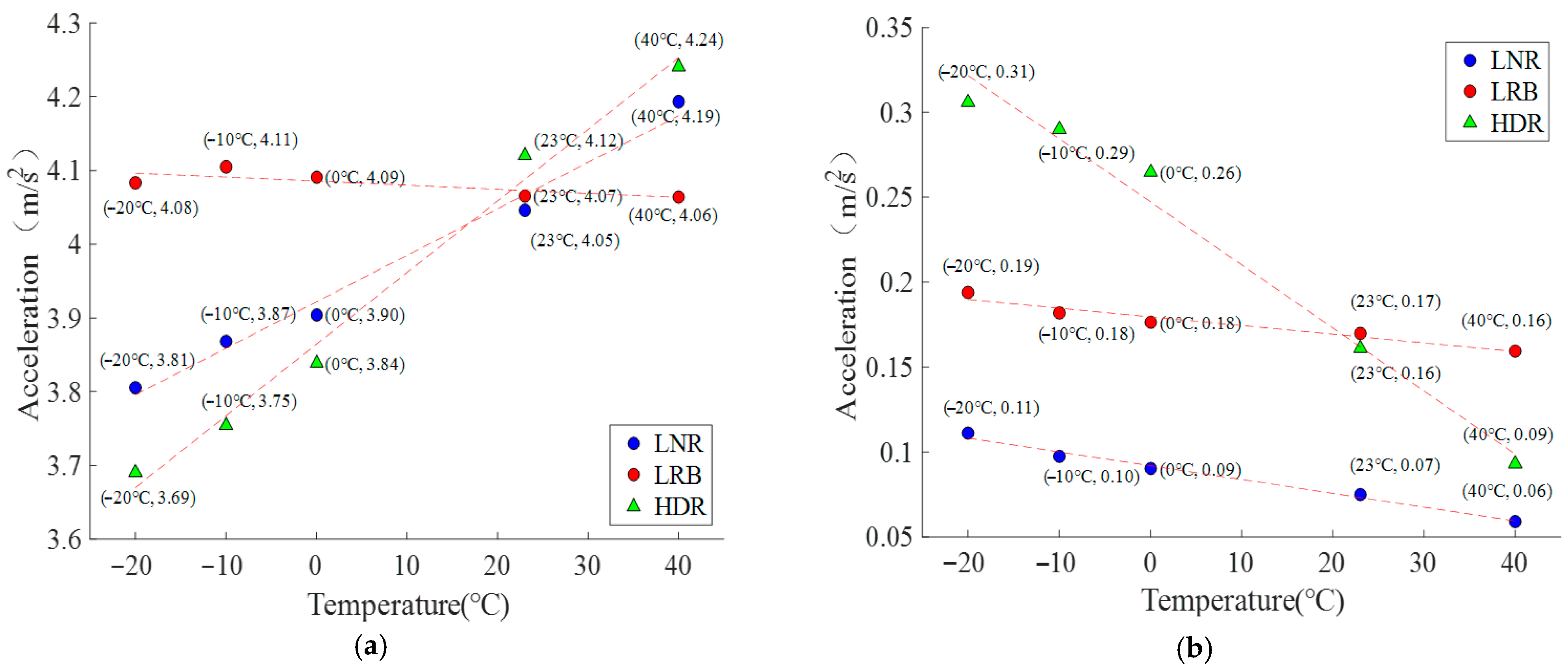
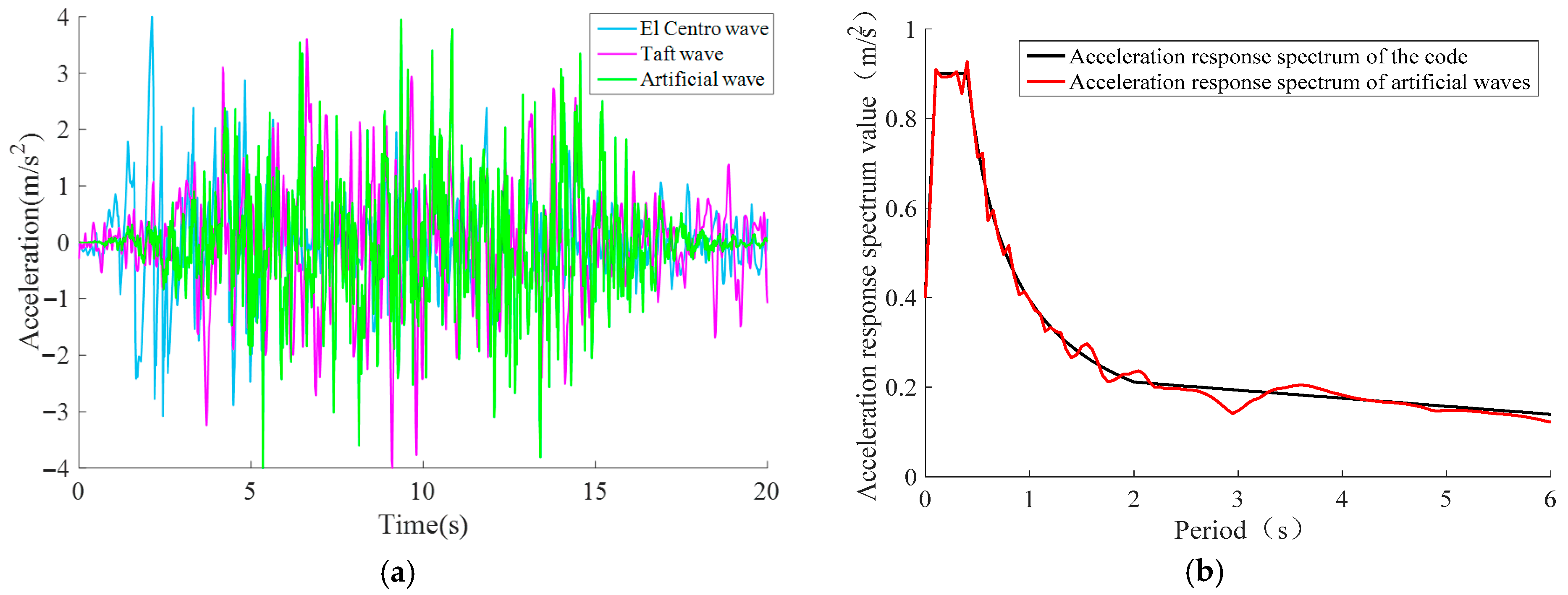
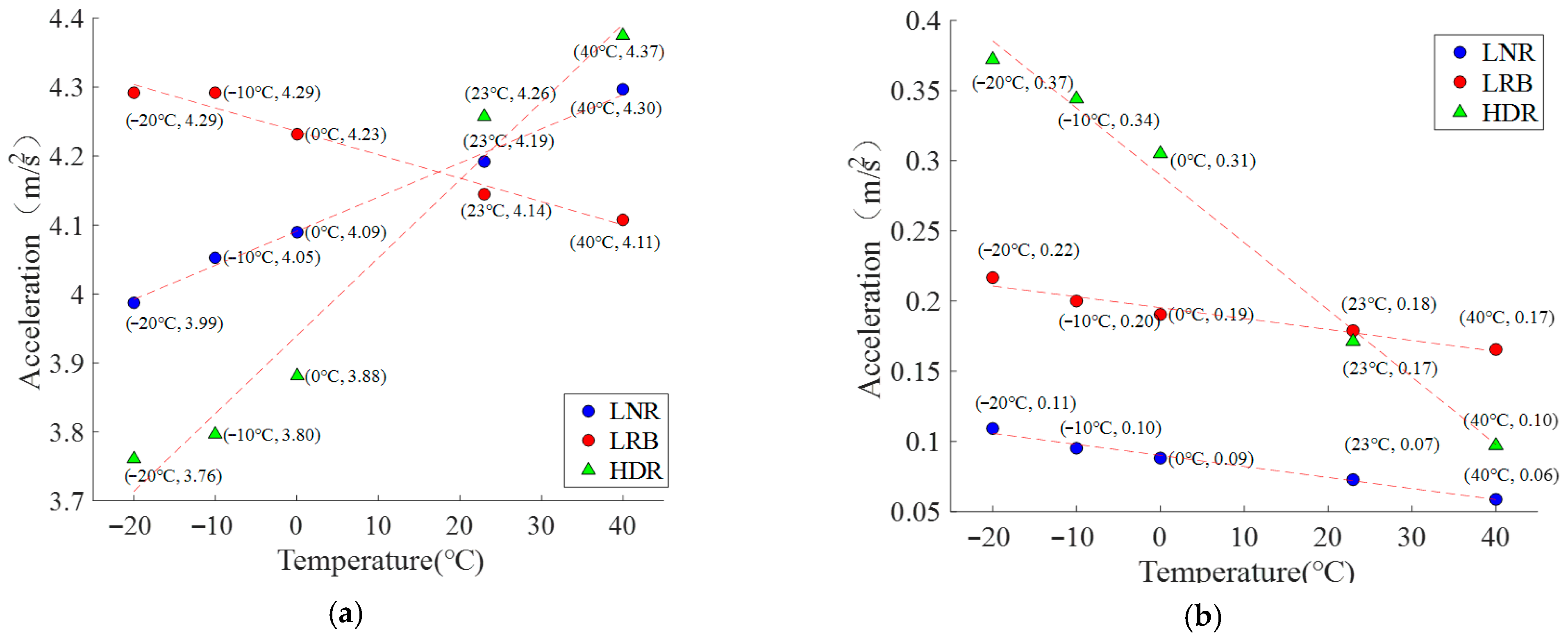
3.2. Example of Temperature Dependence of Bearing Vibration Reduction Effect
4. Seismic Isolation Bearing Schemes to Overcome Temperature Effects
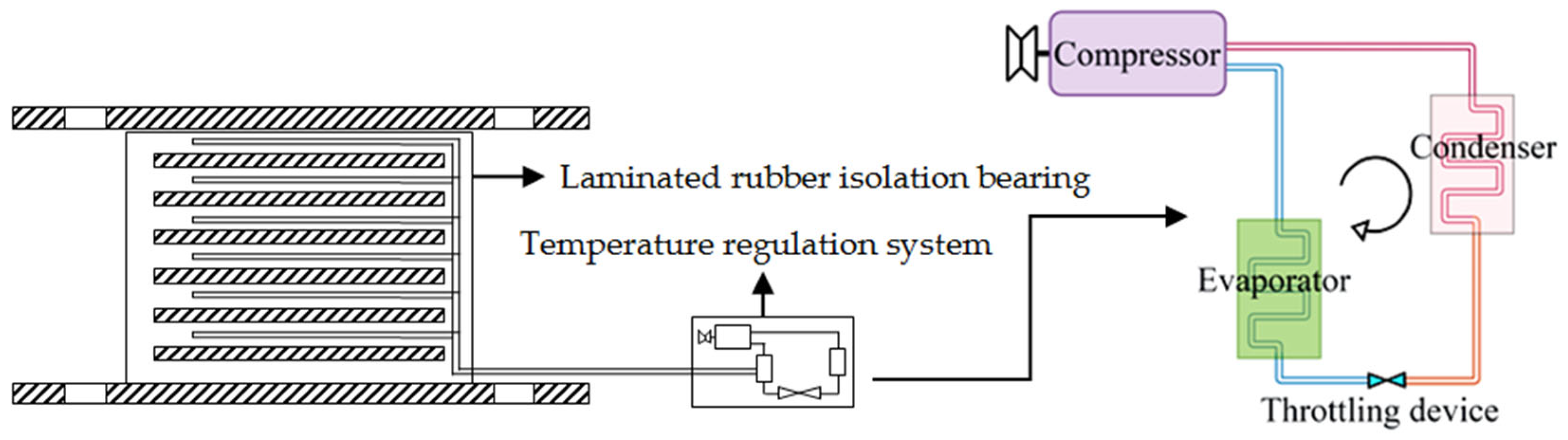
4.1. Proposal of Temperature-Controlled Rubber Isolation Bearings
4.2. Temperature Regulation Mechanism
4.3. Key Implementation Points for Temperature-Controlled Rubber Isolation Bearings
- (1)
- The connection method between the rubber bearing and the temperature control device should be reasonably determined to avoid affecting the integrity of the rubber isolation bearing while ensuring efficient heat transfer, enabling the cold and heat medium coils arranged inside the bearing to deform synergistically with the bearing.
- (2)
- Based on analyzing the influence of temperature on the mechanical properties and seismic isolation effect of rubber bearings, the ideal operating temperature value of rubber isolation bearings should be determined, and the temperature control system should be used to stabilize the operating temperature of the bearings within the ideal range. A reasonable temperature dead zone should be set to avoid frequent start-up and shutdown of the compressor in the temperature control system. Moreover, when the power supply to the temperature regulation system is cut off, the temperature-controlled rubber isolation bearing is converted into an ordinary rubber isolation bearing, which still maintains the seismic isolation effect.
- (3)
- Refrigerants with high thermal conductivity, large refrigerating capacity per unit volume, low viscosity, and low density should be selected to improve the cooling and heating coefficients of the temperature regulation system. In combination with the bearing size, operating environment, and reasonable settings of the rubber bearing’s operating temperature and condensation mode, low power consumption of the temperature regulation system can be achieved.
- (4)
- When multiple bearings share a single temperature control system, it is necessary to address the issues of dynamic balanced distribution and collaborative intelligent control in multi-branch thermal systems. By implementing collaborative and precise regulation of temperature variations across different branches, the thermal reliability of all bearings can be ensured while reducing energy consumption. During non-seismically active periods and when temperatures are moderate, the temperature control system is automatically switched to a low-power dormant or intermittent operation mode, thereby achieving energy conservation to the greatest extent possible.
5. Conclusions
- (1)
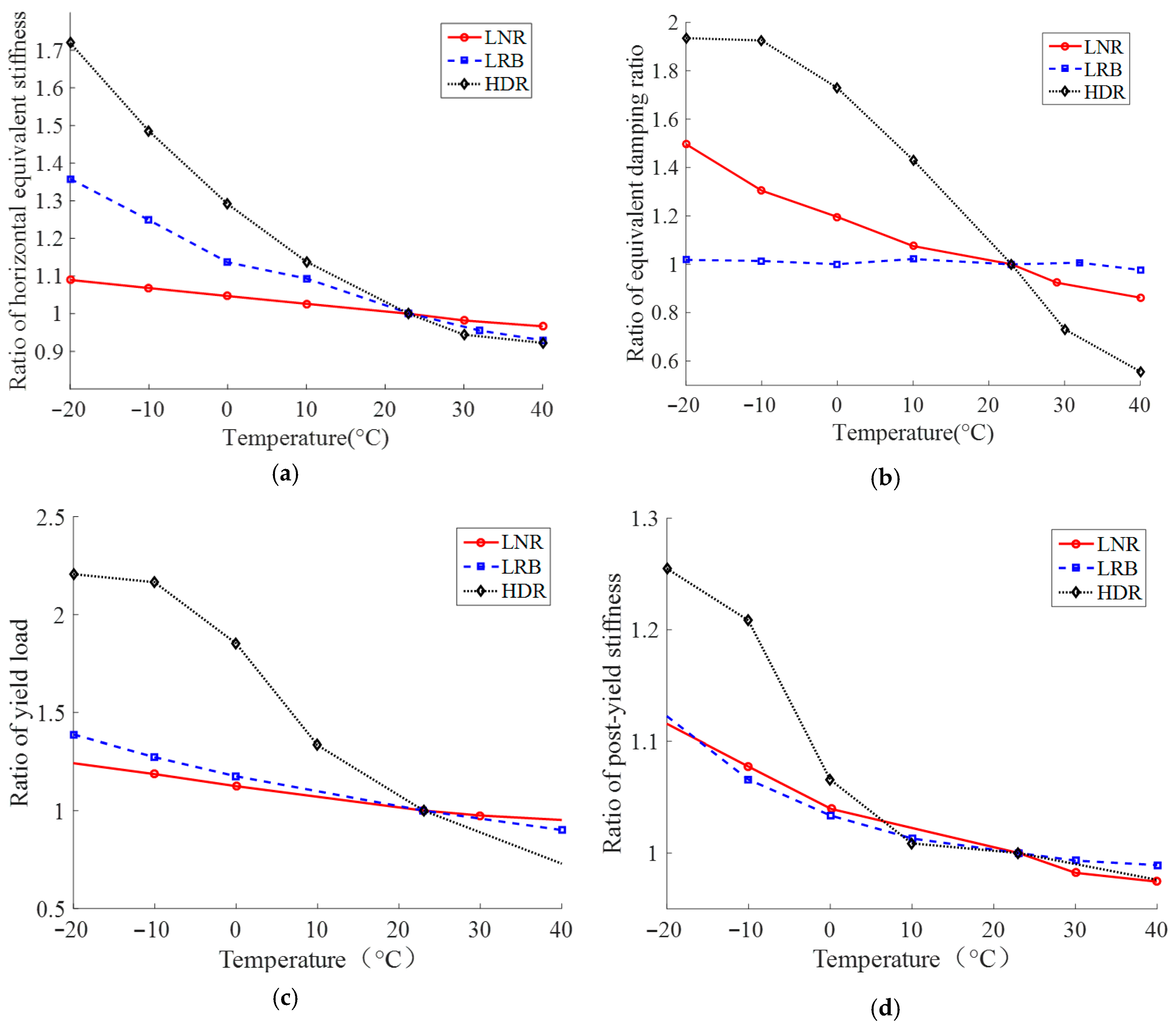
- Temperature exerts the most significant influence on the mechanical properties of HDR bearings. The horizontal equivalent stiffness, yield load, and post-yield stiffness of LNR, LRB, and HDR bearings all decrease with increasing temperature. The impact of temperature on the equivalent damping ratio of LRB bearings is negligible.
- (2)
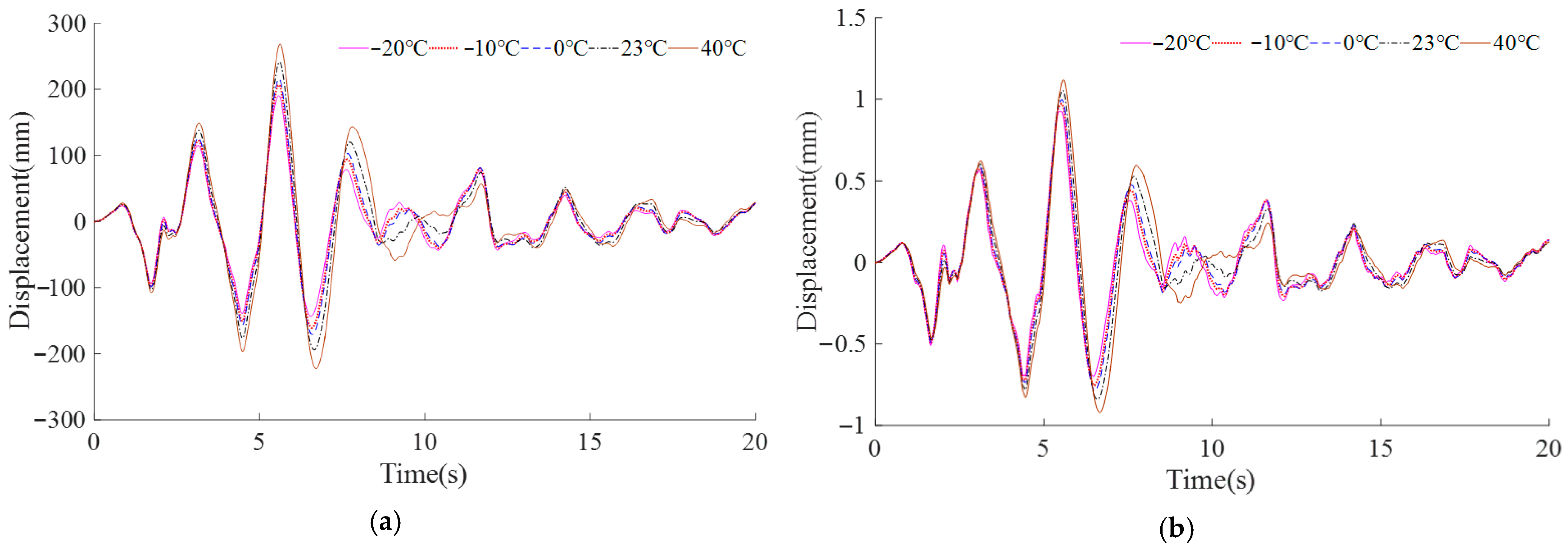
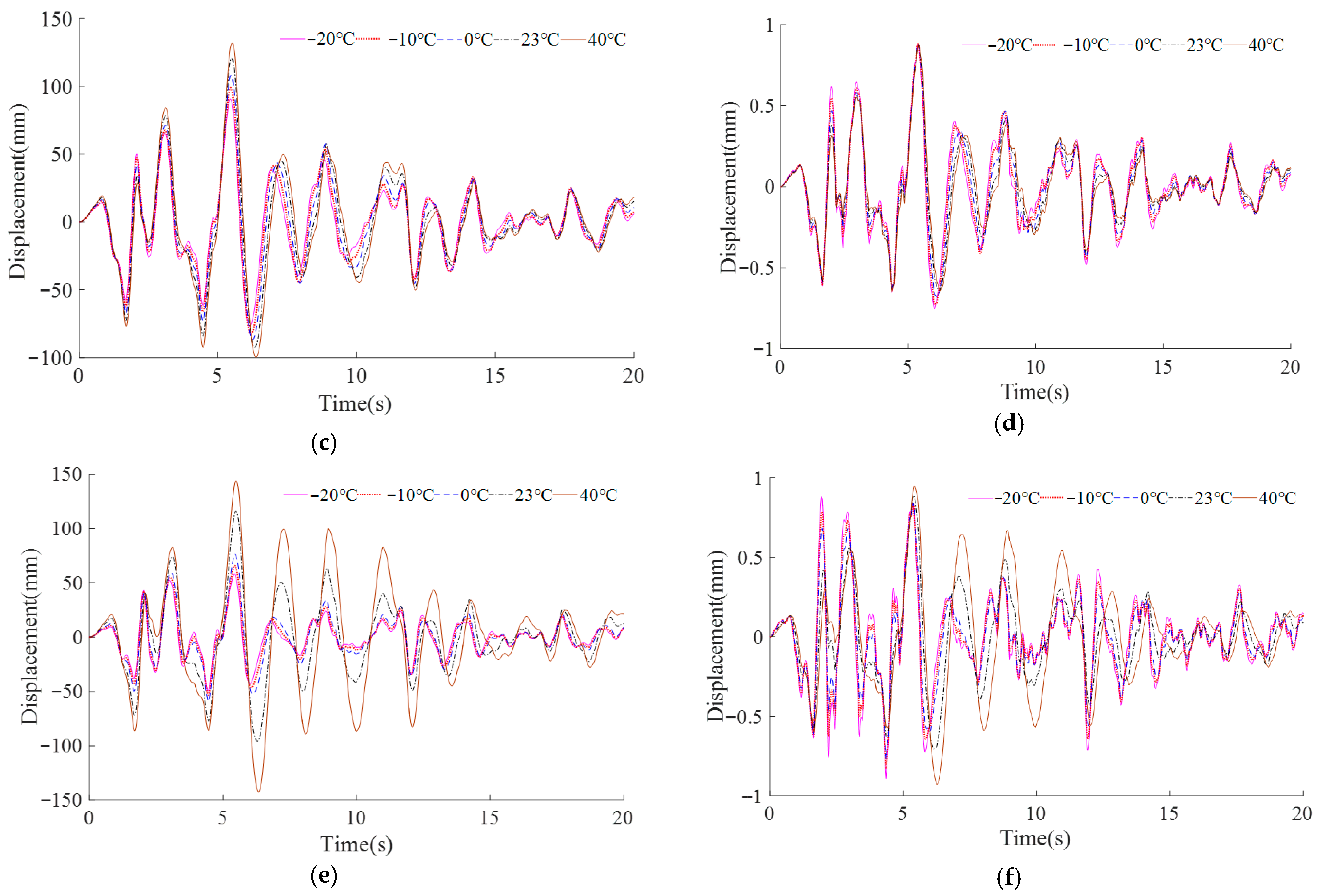
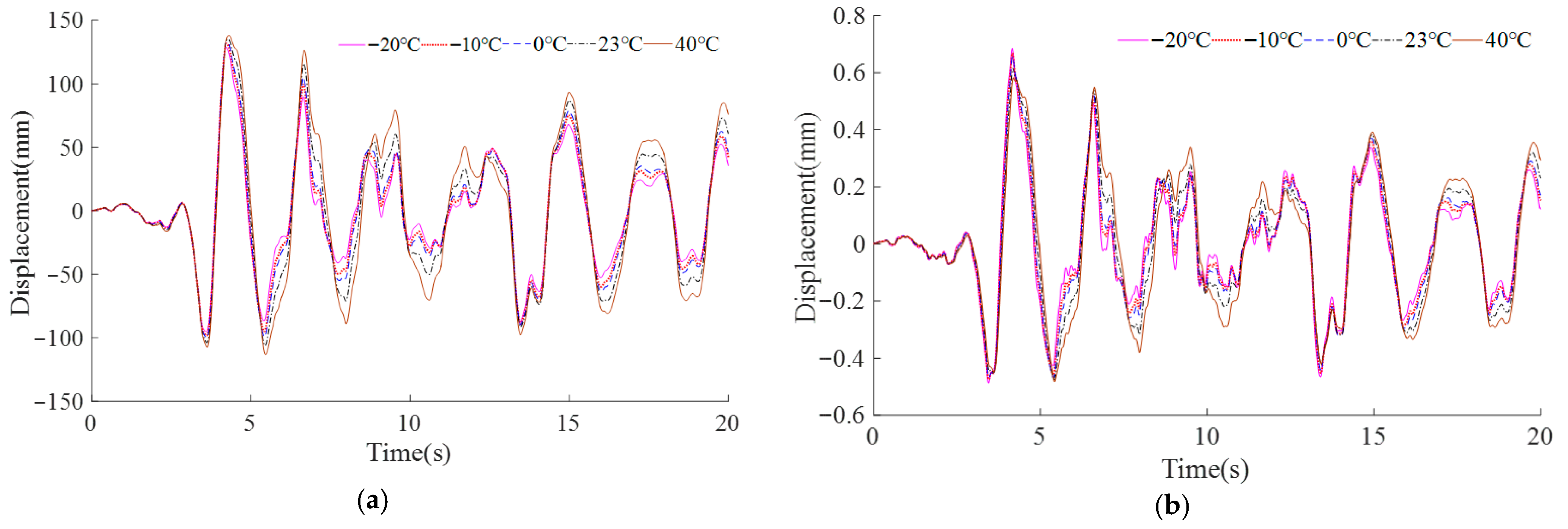
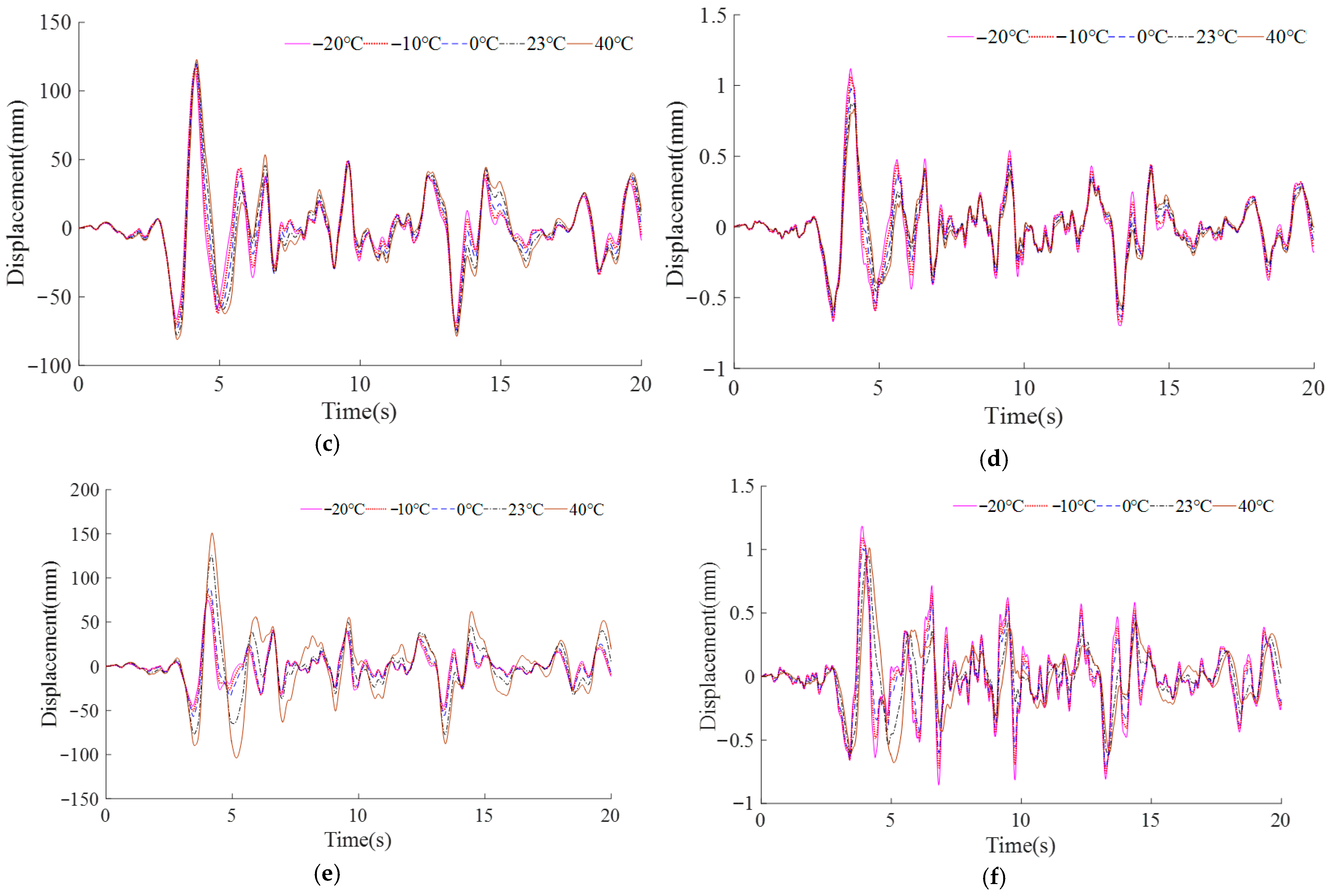
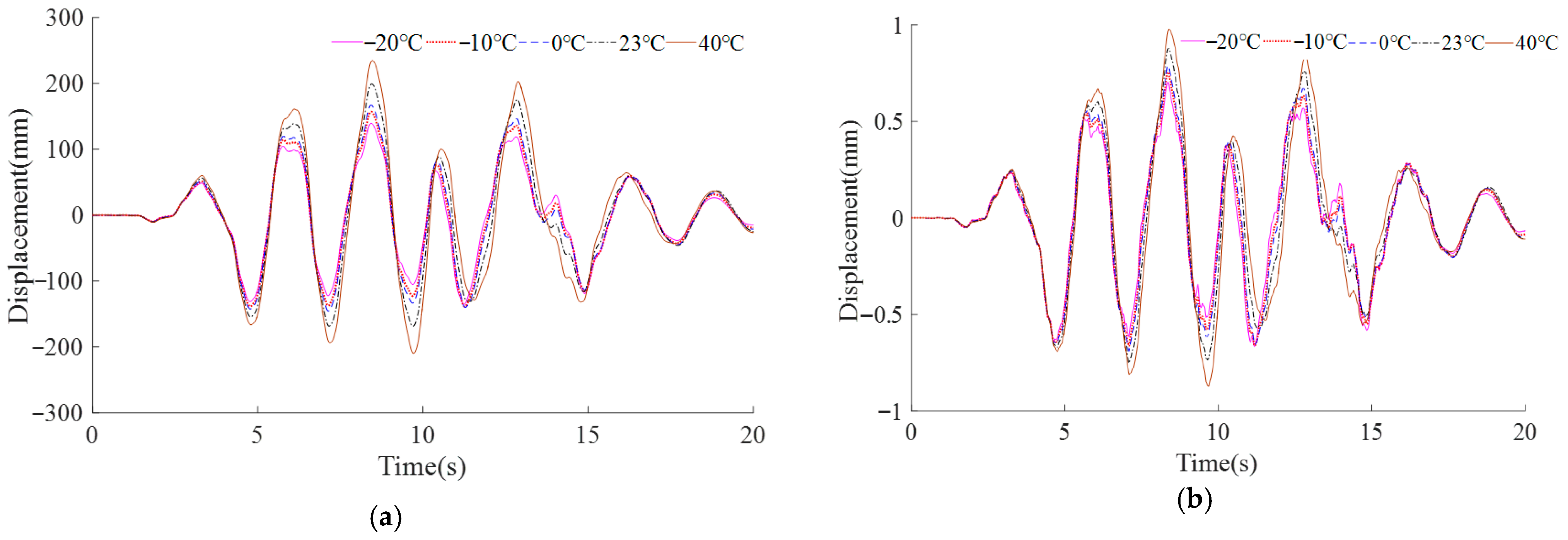
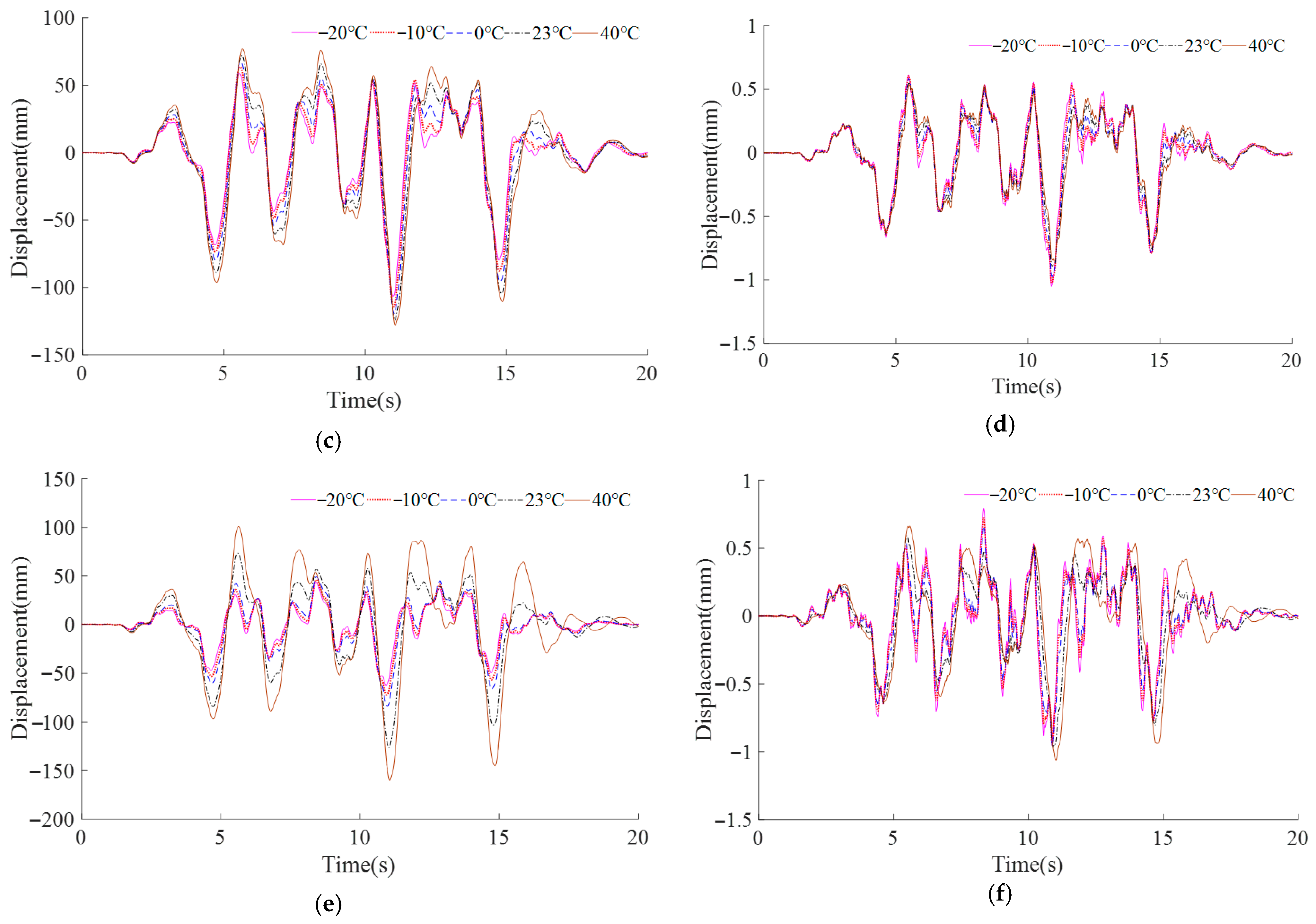
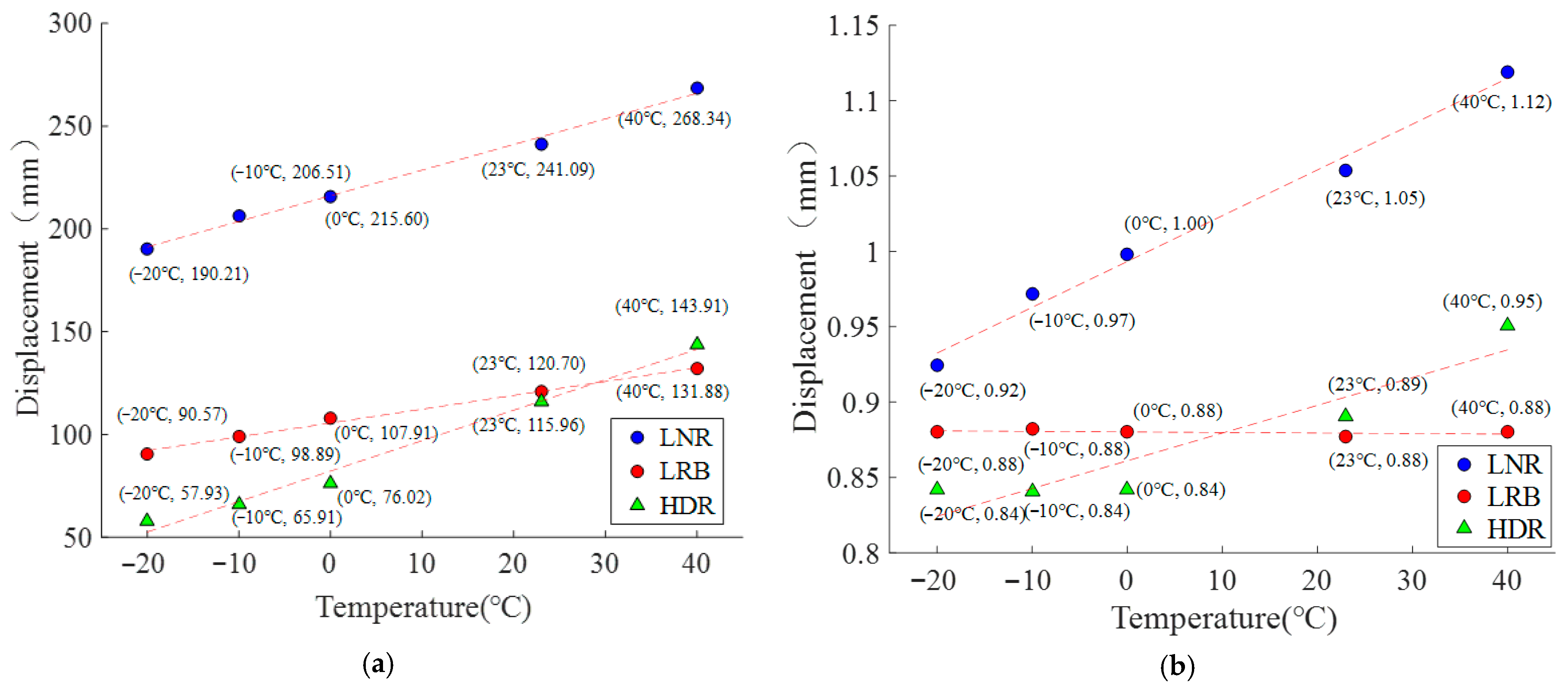
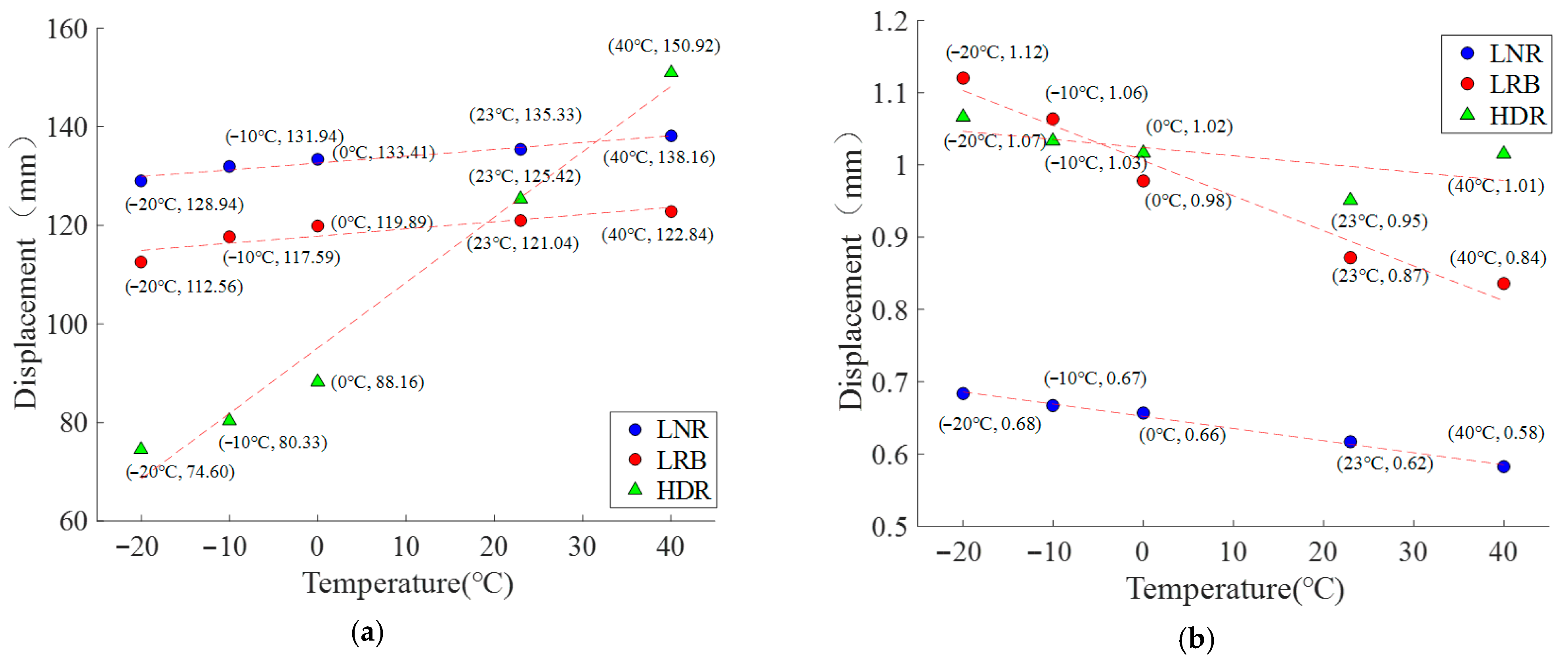
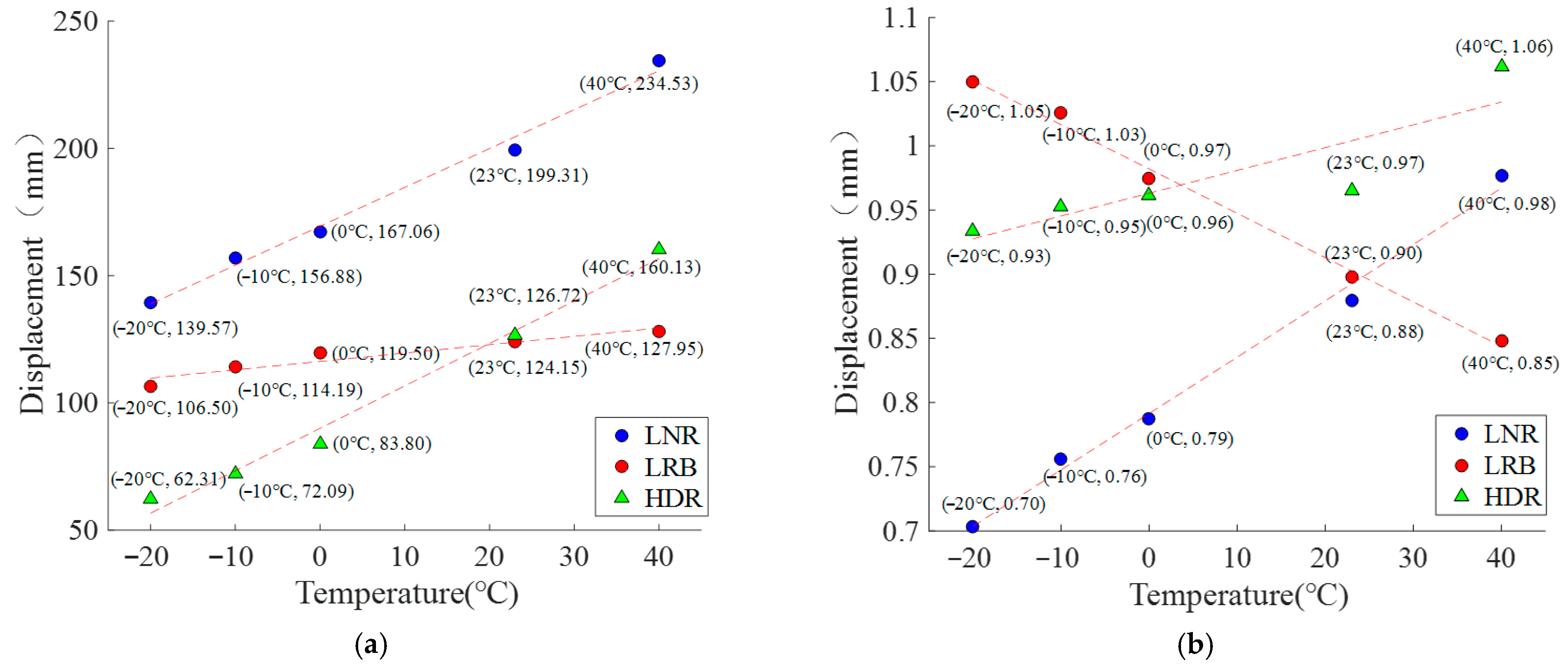
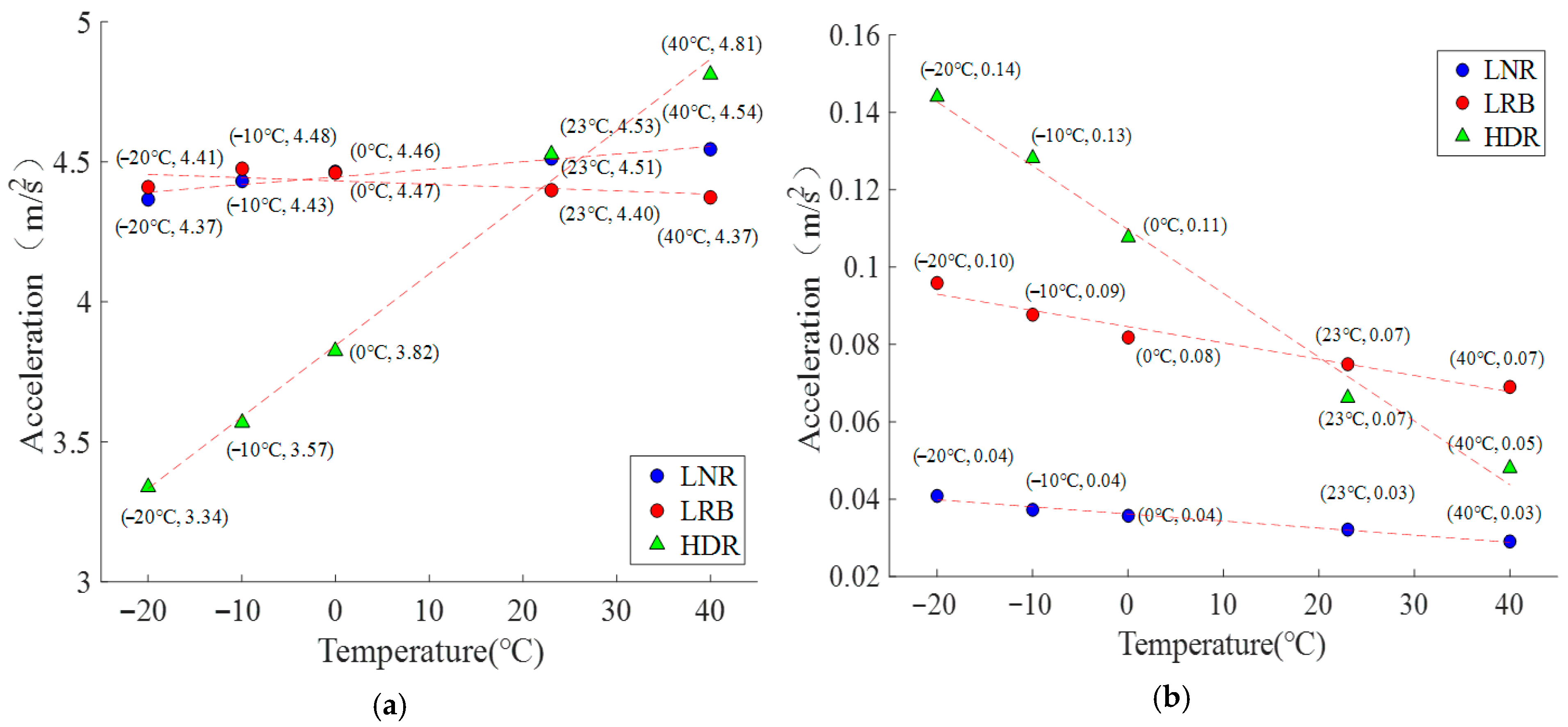
- For seismic isolation structures employing LNR and HDR bearings, the displacement response of the isolation system increases with rising temperature. The displacement response of the isolation layer with LRB bearings is least affected by temperature, while the displacement response of the seismic isolation system with HDR bearings is most significantly influenced by temperature.
- (3)
- In view of the fact that both the mechanical properties and seismic isolation effect of laminated rubber isolation bearings are related to their operating temperature, a temperature-controlled rubber isolation bearing is innovatively proposed, which enables the rubber bearing to maintain excellent mechanical properties and seismic isolation effect in a relatively wide temperature range.
Author Contributions
Funding
Data Availability Statement
Conflicts of Interest
References
- Wang, S.; Tan, P.; Yuan, Y.; Zheng, W.; Jin, S.; Xu, X. Efficacy of 3M-PTGL on low-temperature seismic performance of polyurethane elastomeric bearings for bridges. Eng. Struct. 2023, 294, 116703. [Google Scholar] [CrossRef] [Scilit]
- Losanno, D.; De Domenico, D.; Madera-Sierra, I.E. Experimental testing of full-scale fiber reinforced elastomeric isolators (FREIs) in unbounded configuration. Eng. Struct. 2022, 260, 114234. [Google Scholar] [CrossRef] [Scilit]
- Furukawa, T.; Ito, M.; Izawa, K.; Noori, M.N. System identification of base-isolated building using seismic response data. J. Eng. Mech. 2005, 131, 268–275. [Google Scholar] [CrossRef] [Scilit]
- Li, K.; Shi, W.; Ding, H.; Chen, Z. Research of thermal oxygen ageing on tensile properties of rubber based on Peck-Yeoh model. Mater. Res. Express 2021, 8, 065303. [Google Scholar] [CrossRef] [Scilit]
- Gjorgjiev, I.; Garevski, M. A polynomial analytical model of rubber bearings based on series of tests. Eng. Struct. 2013, 56, 600–609. [Google Scholar] [CrossRef] [Scilit]
- Gallardo, J.A.; de la Llera, J.C.; Restrepo, J.I.; Chen, M. A numerical model for non-linear shear behavior of high damping rubber bearings. Eng. Struct. 2023, 289, 116234. [Google Scholar] [CrossRef] [Scilit]
- Pang, H.; Jiang, T.; Dai, J.; Yang, Y. Study the effects of ambient temperature on full-scale rubber bearings. Structures 2025, 74, 108535. [Google Scholar] [CrossRef] [Scilit]
- Mazza, F. Effects of the long-term behaviour of isolation devices on the seismic response of base-isolated buildings. Struct. Control. Health Monit. 2019, 26, e2331. [Google Scholar] [CrossRef] [Scilit]
- Shen, J.; Akira, I.; Dang, J.; Hamada, Y.; Himeno, T. A multi-layer thermo-mechanical coupling hysteretic model for high damping rubber bearings at low temperature. Earthq. Eng. Struct. Dyn. 2024, 53, 1028–1047. [Google Scholar] [CrossRef] [Scilit]
- Zhang, R.J.; Li, A.Q. Experimental study on temperature dependence of mechanical properties of scaled high-performance rubber bearings. Compos. Part B 2020, 190, 107932. [Google Scholar] [CrossRef] [Scilit]
- Aditya, M.S.; Verma, M.; Priya, C.B.; Yadukrishnan, A.S. Thermo-mechanical response of an elastomeric isolation system using real-time hybrid simulation. Mech. Time-Depend. Mater. 2025, 29, 24. [Google Scholar] [CrossRef] [Scilit]
- Billah, A.M.; Todorov, B. Effects of subfreezing temperature on the seismic response of lead rubber bearing isolated bridge. Soil Dyn. Earthq. Eng. 2019, 126, 105814. [Google Scholar] [CrossRef] [Scilit]
- Xu, X.; Yuan, Y.; Jin, S.; Han, Z.; Liang, C.; Zhu, H. Study on polyurethane elastomer modification for improving low-temperature resistance of high-capacity polyurethane elastomeric bearing for bridges. Constr. Build. Mater. 2022, 347, 128625. [Google Scholar] [CrossRef] [Scilit]
- Xu, G.; Guo, T.; Li, A.; Zhang, R.; Zhu, R.; Liu, F. Influence of ambient temperature on seismic performance of elastomeric isolation structural system. Structures 2023, 55, 1763–1773. [Google Scholar] [CrossRef] [Scilit]
- Cardone, D.; Gesualdi, G. Experimental evaluation of the mechanical behavior of elastomeric materials for seismic applications at different air temperatures. Int. J. Mech. Sci. 2012, 64, 127–143. [Google Scholar] [CrossRef] [Scilit]
- Wang, G.; Du, Y.; Zhang, C.; Li, Y. Mechanism of mechanical properties degradation of rubber isolation bearings at low temperatures. Structures 2025, 71, 108116. [Google Scholar] [CrossRef] [Scilit]
- Candau, N.; Laghmach, R.; Chazeau, L.; Chenal, J.M.; Gauthier, C.; Biben, T.; Munch, E. Influence of strain rate and temperature on the onset of strain induced crystallization in natural rubber. Eur. Polym. J. 2015, 64, 244–252. [Google Scholar] [CrossRef] [Scilit]
- Xue, B.; Lu, W.; Ren, X.; Wen, W. A hysteretic model of lead-rubber bearings considering coupled thermal and mechanical behavior. J. Build. Eng. 2025, 103, 112118. [Google Scholar] [CrossRef] [Scilit]
- Kalpakidis, I.V.; Constantinou, M.C.; Whittaker, A.S. Effects of large cumulative travel on the behavior of lead-rubber seismic isolation bearings. J. Struct. Eng. 2010, 136, 491–501. [Google Scholar] [CrossRef] [Scilit]
- Fu, J.Y.; Cheng, H.; Wang, D.S.; Zhang, R.; Xu, T.T. Temperature-dependent performance of LRBs and its effect on seismic responses of isolated bridges under near-fault earthquake excitations. Structures 2022, 41, 619–628. [Google Scholar] [CrossRef] [Scilit]
- Yasar, C.; Karuk, V.; Kaplan, O.; Cavdar, E.; Ozdemir, G. Amplification in mechanical properties of a lead rubber bearing for various exposure times to low temperature. Buildings 2023, 13, 478. [Google Scholar] [CrossRef] [Scilit]
- Tan, Y.; Dang, J.; Igarashi, A.; Himeno, T.; Hamada, Y. Hysteretic restoring force model of high damping rubber bearings including thermo-mechanical coupled effect. Eng. Struct. 2023, 277, 115449. [Google Scholar] [CrossRef] [Scilit]
- Cardone, D.; Gesualdi, G.; Nigro, D. Effects of air temperature on the cyclic behavior of elastomeric seismic isolators. Bull. Earthq. Eng. 2011, 9, 1227–1255. [Google Scholar] [CrossRef] [Scilit]
- Wang, L.; Yu, L.; Du, X.; Zhang, X.; Li, Z. Seismic response of a pc continuous box girder bridge under extreme ambient temperature. Sustainability 2023, 15, 14763. [Google Scholar] [CrossRef] [Scilit]
- Zheng, W.; Wang, H.; Hao, H.; Bi, K. Superelastic CuAlBe wire-based sliding lead rubber bearings for seismic isolation of bridges in cold regions. Eng. Struct. 2021, 247, 113102. [Google Scholar] [CrossRef] [Scilit]
- Peng, T.; Li, F.; Ma, C. Study on coupling correlation of factors affecting mechanical properties of high-damping rubber plate. Polymers 2025, 17, 593. [Google Scholar] [CrossRef] [Scilit] [PubMed]
- Liu, W.G.; Yang, Q.R.; Zhou, F.L. Temperature properties of natural rubber bearings. J. Guangzhou Univ. (Nat. Sci. Ed.) 2002, 1, 51–56. (In Chinese) [Google Scholar]
- Pang, H.; Jiang, T.; Dai, J.; Yang, Y.; Bai, W. Experimental study of the mechanical properties of full-scale rubber bearings at 23 °C, 0 °C, and −20 °C. Polymers 2024, 16, 903. [Google Scholar] [CrossRef] [Scilit]
- Miyamura, T.; Ohsaki, M.; Fujiwara, J.; Yamamoto, M. Coupled structural and heat conduction FE analysis of laminated high damping rubber bearing. Earthq. Eng. Struct. Dyn. 2021, 50, 2462–2487. [Google Scholar] [CrossRef] [Scilit]
- Shen, C.; Zhou, F.; Cui, J.; Huang, X.; Zhuang, X.; Ma, Y. Dependency test research of mechanical performance of HDR and its parametric value analysis. Earthq. Eng. Eng. Vib. 2012, 32, 95–103. (In Chinese) [Google Scholar]
- Jin, J.M.; Tan, P.; Zhou, F.L. Test study on the equivalent damping ratio of linear natural rubber bearings. Xi’an Univ. Archit. Technol. 2009, 41, 663–667. (In Chinese) [Google Scholar]
- Bandini, P.A.C.; Siqueira, G.H.; Padgett, J.E.; Paultre, P. Seismic performance assessment of a retrofitted bridge with natural rubber isolators in cold weather environments using fragility surfaces. J. Bridge Eng. 2022, 27, 04022040. [Google Scholar] [CrossRef] [Scilit]







| Mechanical Properties | Bearing Type | −20 °C | −10 °C | 0 °C | 23 °C | 40 °C |
|---|---|---|---|---|---|---|
| Horizontal stiffness (×107 N/m) | LNR | 0.87 | 0.85 | 0.84 | 0.80 | 0.77 |
| LRB | 1.63 | 1.50 | 1.36 | 1.20 | 1.11 | |
| HDR | 2.24 | 1.93 | 1.68 | 1.30 | 1.20 | |
| Damping ratio | LNR | 0.15 | 0.13 | 0.12 | 0.10 | 0.08 |
| LRB | 0.23 | 0.22 | 0.22 | 0.22 | 0.21 | |
| HDR | 0.39 | 0.38 | 0.35 | 0.20 | 0.11 |
| Location | Bearing Type | −20 °C | −10 °C | 0 °C | 40 °C |
|---|---|---|---|---|---|
| Isolation layer | LNR | 23.82 | 17.45 | 13.72 | 15.82 |
| LRB | 16.50 | 12.90 | 7.67 | 5.72 | |
| HDR | 23.78 | 20.80 | 17.10 | 21.56 | |
| Superstructure | LNR | 0.11 | 0.08 | 0.06 | 0.07 |
| LRB | 0.12 | 0.09 | 0.05 | 0.03 | |
| HDR | 0.22 | 0.19 | 0.15 | 0.15 |
| Location | Bearing Type | −20 °C | −10 °C | 0 °C | 40 °C |
|---|---|---|---|---|---|
| Isolation layer | LNR | 16.22 | 11.71 | 9.12 | 10.04 |
| LRB | 12.73 | 9.72 | 5.64 | 4.11 | |
| HDR | 19.75 | 17.06 | 13.82 | 14.98 | |
| Superstructure | LNR | 0.07 | 0.05 | 0.04 | 0.04 |
| LRB | 0.10 | 0.07 | 0.04 | 0.02 | |
| HDR | 0.22 | 0.18 | 0.14 | 0.11 |
| Location | Bearing Type | −20 °C | −10 °C | 0 °C | 40 °C |
|---|---|---|---|---|---|
| Isolation layer | LNR | 26.97 | 19.87 | 15.70 | 18.80 |
| LRB | 16.53 | 12.88 | 7.72 | 5.92 | |
| HDR | 23.88 | 20.60 | 16.63 | 18.82 | |
| Superstructure | LNR | 0.12 | 0.08 | 0.07 | 0.07 |
| LRB | 0.10 | 0.07 | 0.04 | 0.03 | |
| HDR | 0.20 | 0.17 | 0.13 | 0.12 |
Disclaimer/Publisher’s Note: The statements, opinions and data contained in all publications are solely those of the individual author(s) and contributor(s) and not of MDPI and/or the editor(s). MDPI and/or the editor(s) disclaim responsibility for any injury to people or property resulting from any ideas, methods, instructions or products referred to in the content. |
© 2025 by the authors. Licensee MDPI, Basel, Switzerland. This article is an open access article distributed under the terms and conditions of the Creative Commons Attribution (CC BY) license (https://creativecommons.org/licenses/by/4.0/).
Share and Cite
Wang, C.; Li, T.; Xu, R. Research on Temperature Dependence and Temperature Self-Adaptability of Laminated Rubber Isolation Bearings. Buildings 2025, 15, 4333. https://doi.org/10.3390/buildings15234333
Wang C, Li T, Xu R. Research on Temperature Dependence and Temperature Self-Adaptability of Laminated Rubber Isolation Bearings. Buildings. 2025; 15(23):4333. https://doi.org/10.3390/buildings15234333
Chicago/Turabian StyleWang, Changsheng, Tao Li, and Rongzheng Xu. 2025. "Research on Temperature Dependence and Temperature Self-Adaptability of Laminated Rubber Isolation Bearings" Buildings 15, no. 23: 4333. https://doi.org/10.3390/buildings15234333
APA StyleWang, C., Li, T., & Xu, R. (2025). Research on Temperature Dependence and Temperature Self-Adaptability of Laminated Rubber Isolation Bearings. Buildings, 15(23), 4333. https://doi.org/10.3390/buildings15234333