Three-Dimensional Simulation on the Influence of Coated Rubber Chips on Concrete Properties
 ,
,  , and
, and
Abstract
1. Introduction
2. Numerical Modeling Using ABAQUS
2.1. Model Geometry and Aggregate Representation
2.2. Generate Spherical Rubber Aggregates
2.2.1. Aggregate Size Distribution
2.2.2. Steps to Generate Random Spherical Aggregates
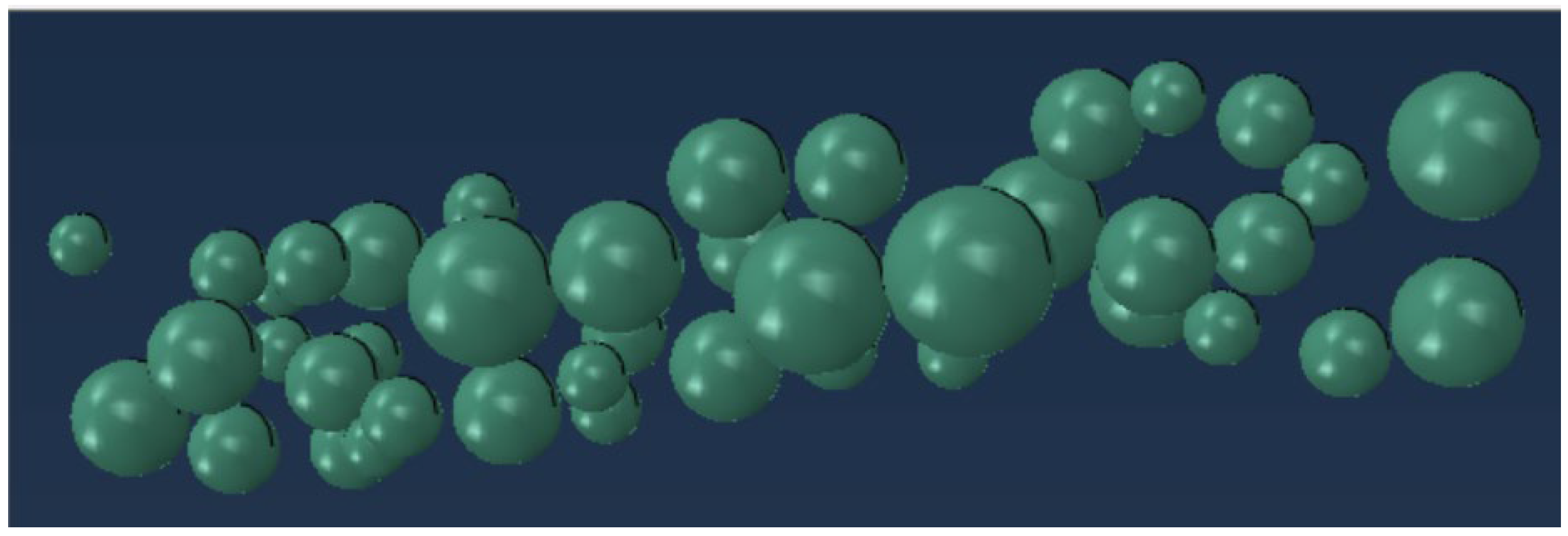
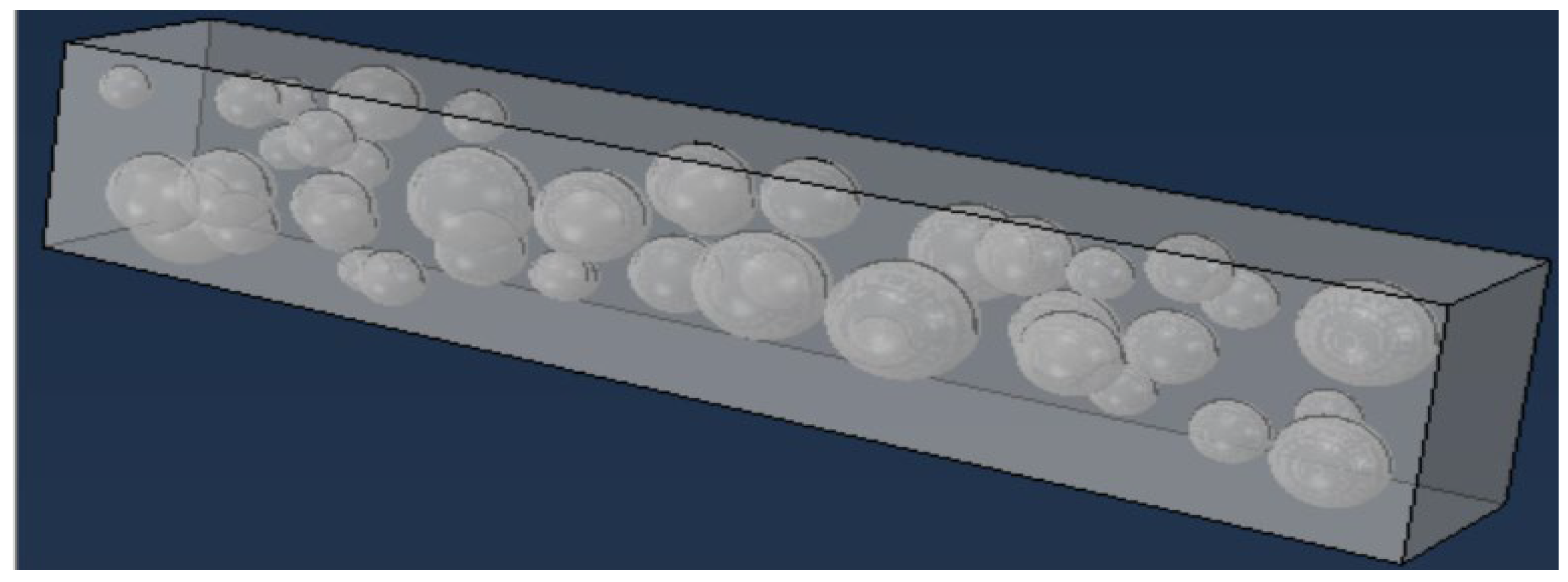
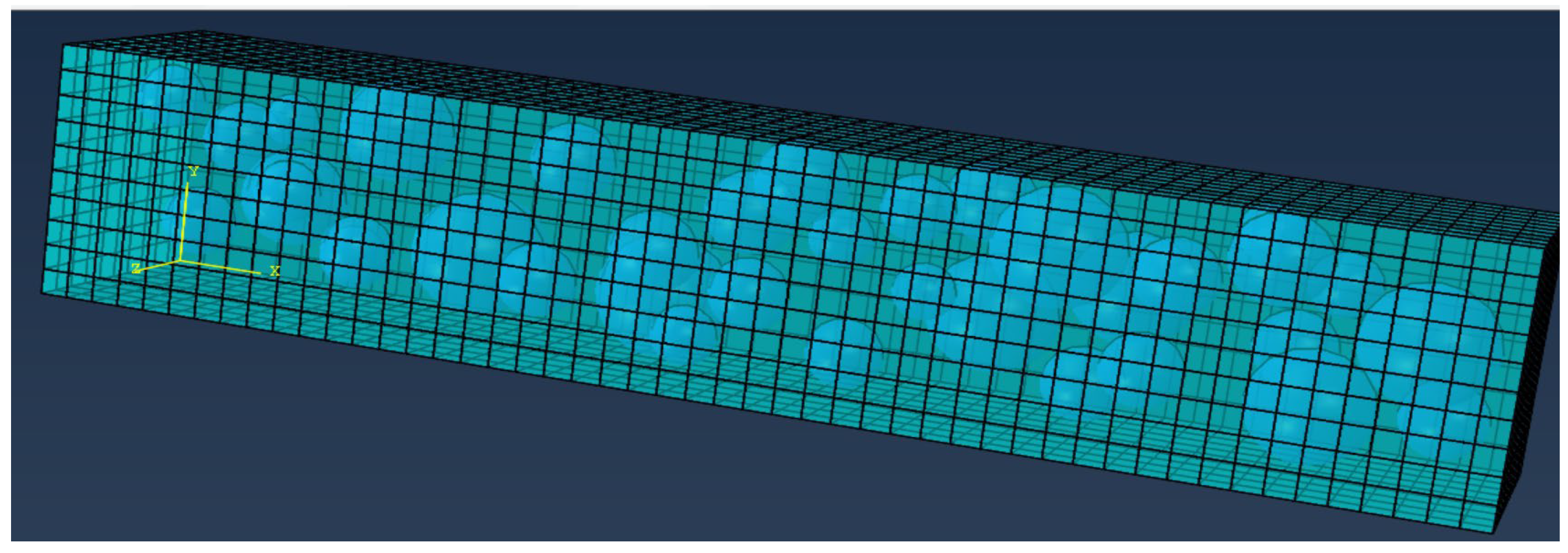
- A prismatic beam with specified dimensions was created to serve as the domain into which spherical aggregates and concentric spherical shells were generated.
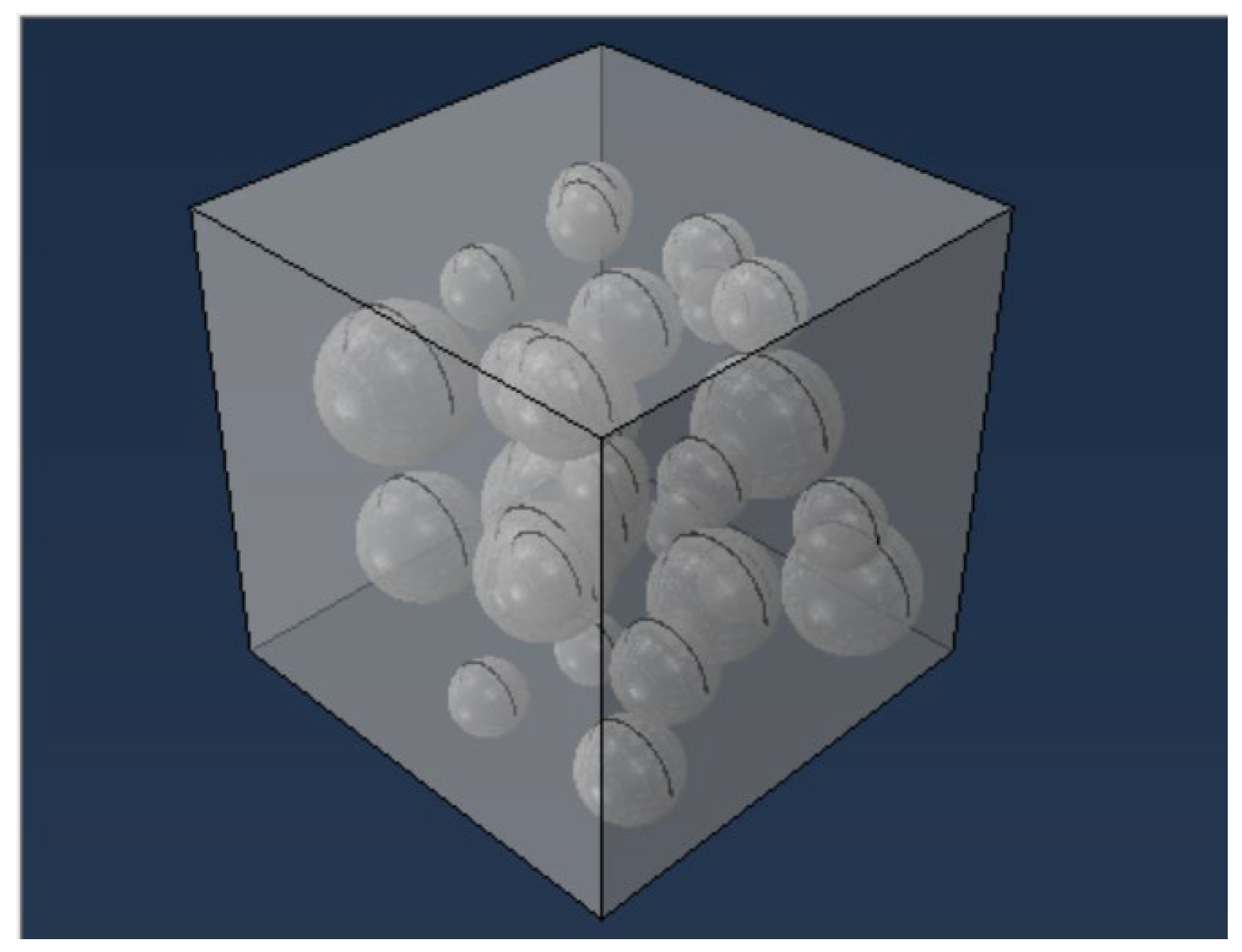
- A solid sphere is generated by selecting a random radius and a random center position (xi, yi, zi) within the defined boundaries (rectangular prism).
- A new sphere is generated with its center at (xi+1, yi+1, zi+1)
- To ensure that the newly generated spheres did not overlap, the distance between the centers of any two spheres was set to be greater than the sum of their radii.
- Continue generating solid spheres until the specified volume of spheres is reached.
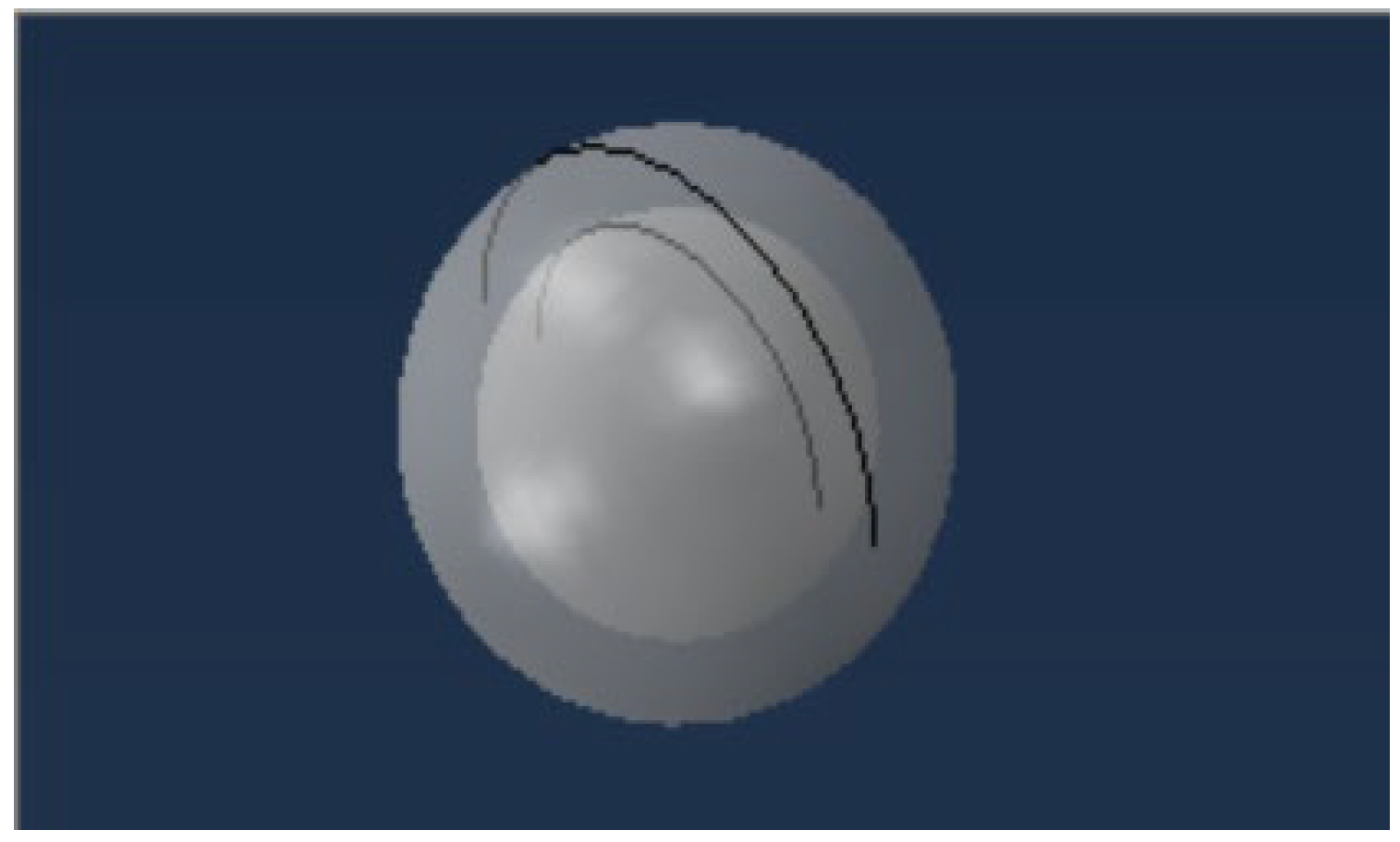
- Each solid sphere was encapsulated in a hollow spherical shell of uniform thickness (thickness of coating materials), simulating a coated particle.
- At each iteration, verify that all specified conditions are satisfied, including the total volume of aggregate, the minimum spacing between adjacent spheres, and the non-overlapping requirement.
- Repeat the process until all spherical aggregates and their corresponding concentric spherical shells are generated and accurately positioned within the defined boundaries of the block.
2.3. Rubber Chip Size and Coating Thickness
2.4. Notation
2.5. Numerical Simulations
3. Determination of Compressive Strength and Damping Ratio
3.1. Determination of Compressive Strength
3.1.1. Assembly
3.1.2. Meshing
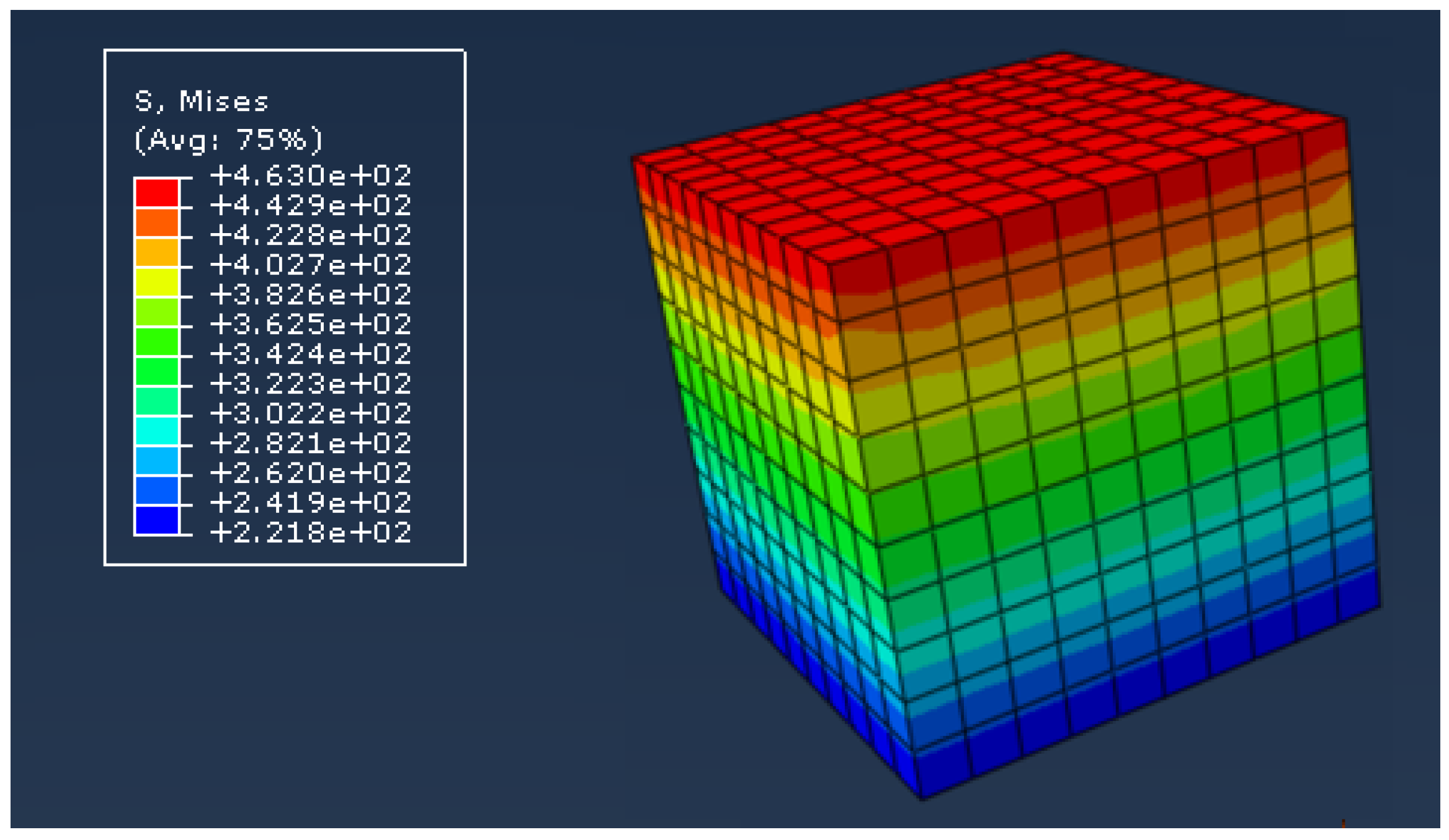
3.1.3. Boundary Conditions
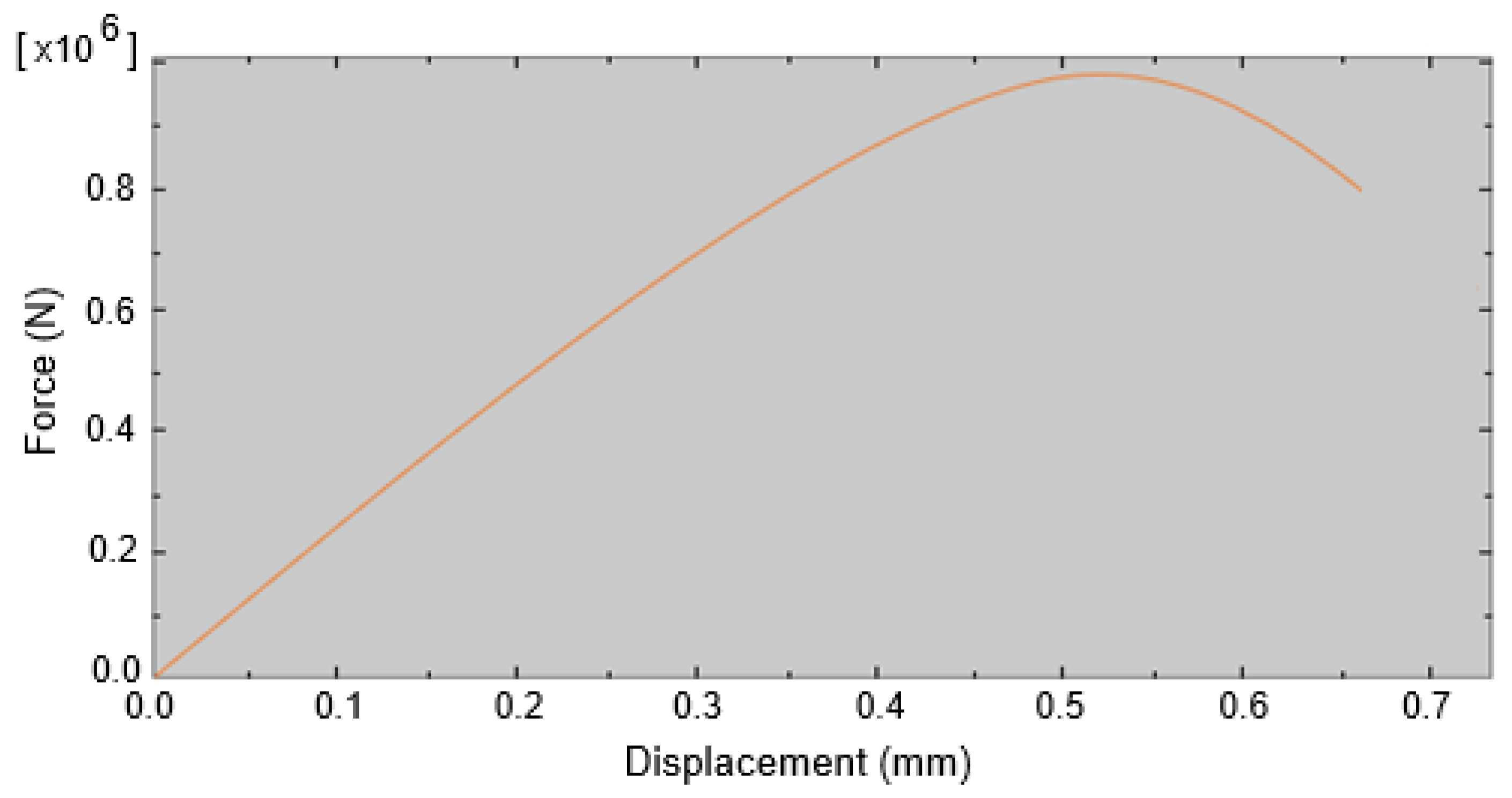
3.1.4. Loading Conditions
3.2. Determination of Damping Ratio
3.2.1. Assembly
3.2.2. Meshing
3.2.3. Boundary Conditions
3.2.4. Frequency Response Function (FRF) Analysis
3.3. Validation of Numerical Simulation
3.4. Results and Discussion
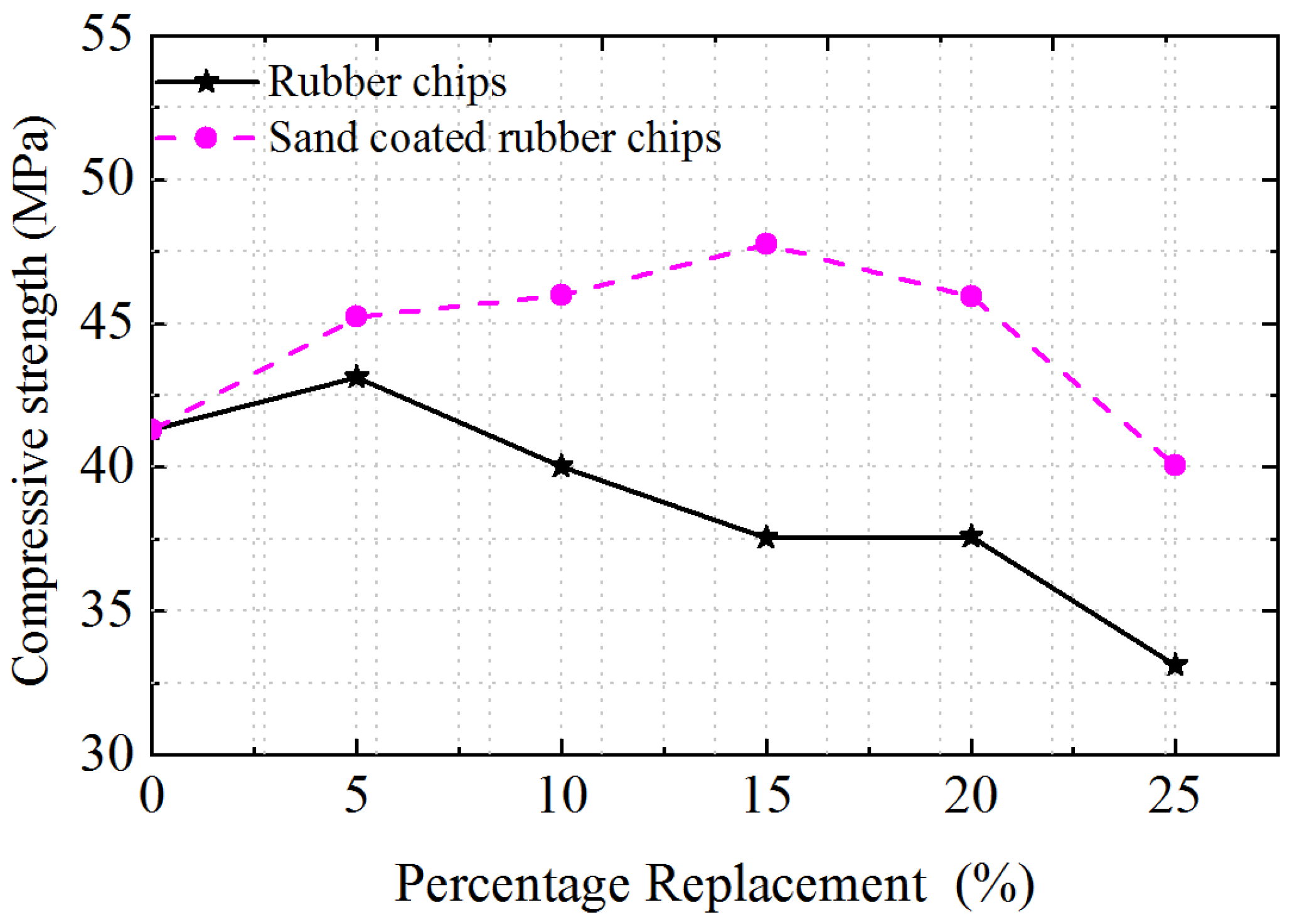
3.4.1. Compressive Strength
3.4.2. Damping Ratio
4. Conclusions
- An increase in compressive strength of concrete is obtained with an optimal replacement level of 5% of rubber chips. Beyond this optimal level, a reduction in compressive strength was noticed, when compared to the conventional concrete model. This is mainly due to a large difference in elastic modulus between the rubber particles and other concrete ingredients. Thus, cracks appear along the contact zone of rubber and concrete matrix.
- Up to 20% replacement of coarse aggregates with sand-coated rubber chips, results in improvement in compressive strength. This shows coating the surface of rubber particles with sand results in a rough texture, which enhances the bond at the interface between the rubber and the concrete matrix. This improved interfacial bonding contributes to an increase in the compressive strength of concrete.
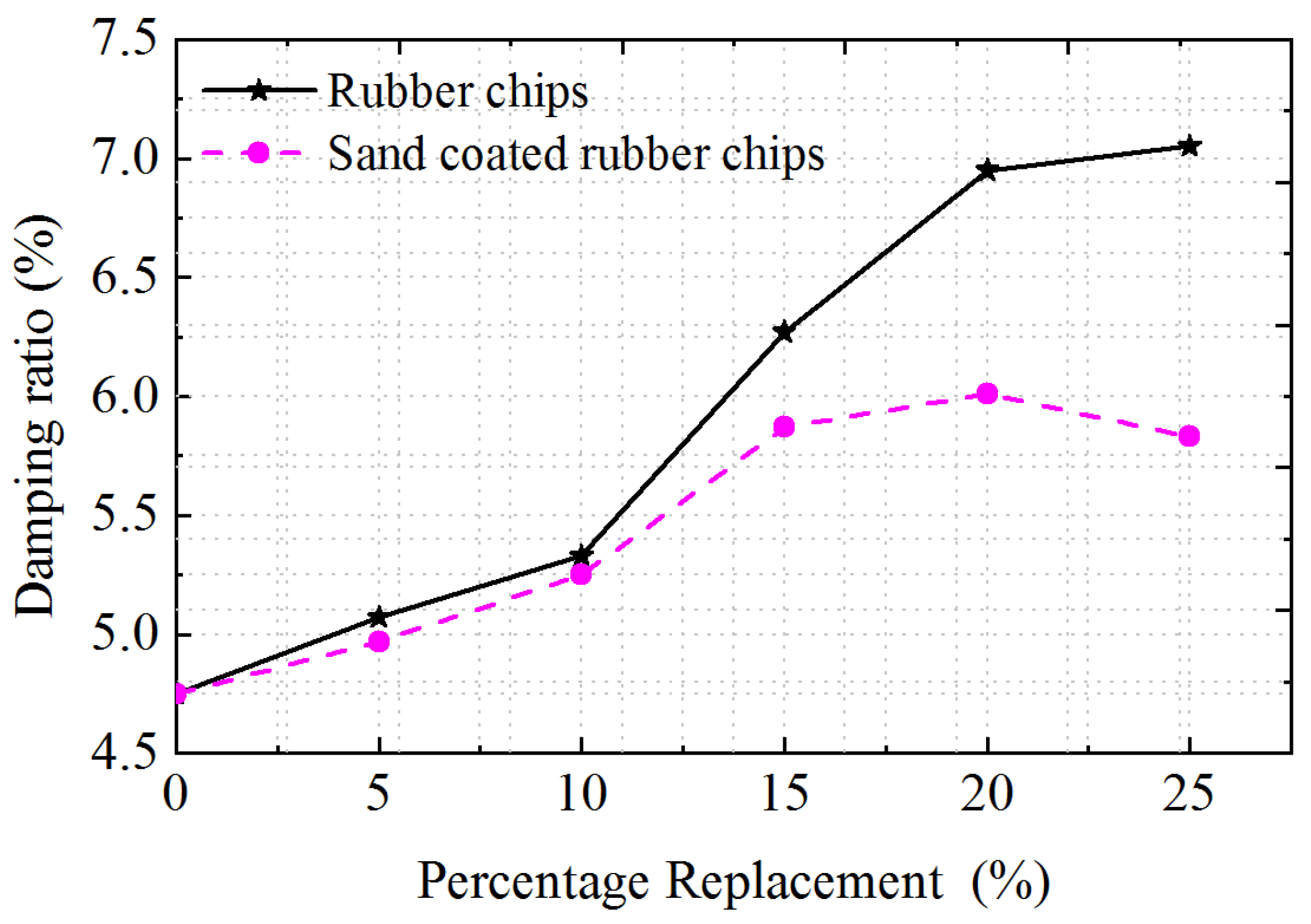
- Concrete with rubber chips, as well as concrete with sand-coated rubber chips up to 20% demonstrate enhanced damping capacity. This enhancement is attributed to rubber’s high deformability under large loading, which helps in vibration reduction and impact resistance. This indicates its promising potential for use in structures, such as bridges and buildings, to minimize the risk of structural damage from dynamic and impact loads.
- To improve the damping properties of conventional concrete, partial replacement of natural coarse aggregates by chipped rubber and sand-coated rubber chips is suggested.
- Rubberized concrete demonstrates promising potential for various nonstructural applications, including acoustic insulation barriers, interior partitions, vibration–isolation pads, and lightweight wall construction. In practical applications, it has been successfully implemented in highway noise barrier panels to mitigate traffic-induced sound transmission, in interior partitions of office and industrial buildings, and in vibration-isolating floor systems or machinery foundations to reduce mechanical vibrations.
- Utilizing waste tire rubber chips as a partial replacement for coarse aggregates in concrete production offers a sustainable construction solution and contributes to environmental conservation by reducing the ever-growing demand for naturally sourced coarse aggregates.
- Unlike previous 2D or VCCTL-based studies, the 3D model captures the full three-dimensional distribution of spherical uncoated and coated rubber aggregates, including interactions between neighboring inclusions. This allows more realistic prediction of stress distribution, damping behavior, and the effect of coating layers.
- Numerical computational tools enable detailed analysis of concrete performance under various conditions, offering a cost-effective and efficient alternative to traditional laboratory testing.
5. Future Works
Author Contributions
Funding
Data Availability Statement
Acknowledgments
Conflicts of Interest
Abbreviations
| 2D | Two-Dimensional |
| 3D | Three-Dimensional |
| AAiT | Addis Ababa Institute of Technology |
| AAU | Addis Ababa University |
| ANSYS | Analysis System |
| APDL | ANSYS Parametric Design Language |
| ASTM | American Society for Testing and Materials |
| CAE | Complete ABAQUS Environment |
| CCM | Conventional Concrete Model |
| CDP | Concrete Damaged Plasticity |
| CTBE | College of Technology and Built Environment |
| DAAD | Deutscher Akademischer Austauschdiens |
| DFG | Deutsche Forschungsgemeinschaft |
| FEA | Finite Element Analysis |
| FEM | Finite Element Method |
| FRF | Frequency Response Function |
| RM | Rubber Chips Model |
| SCEE | School of Civil and Environmental Engineering |
| SCRM | Sand-Coated Rubber Chips Model |
| SPH | Smoothed Particle Hydrodynamics |
| VCCTL | Virtual Cement and Concrete Testing Laboratory |
References
- Thomas, B.S.; Gupta, R.C.; Panicker, V.J. Experimental and Modeling studies on high strength concrete containing waste tire rubber. Sustain. Cities Soc. 2015, 19, 68–73. [Google Scholar] [CrossRef]
- Ishwariya, T. An experimental study on partial replacement of coarse aggregate by crumb rubber. Int. Res. J. Eng. Technol Technol. 2016, 3, 1047–1050. [Google Scholar]
- Lakkad, J.B.; Dave, K. Experimental Study on Concrete Utilizing Waste Tyre Rubber as an Aggregate. Int. Res. J. Eng. Technol. (IRJET) 2022, 9, 3240–3243. [Google Scholar]
- Tarekegn, Y.G. Experimental and Numerical Analysis of the Effects of Aggregate Coatings on Concrete Properties. Ph.D. Thesis, Bauhaus-Universität Weimar, Weimar, Germany, May 2025. [Google Scholar]
- Ganjian, E.; Khorami, M.; Maghsoudi, A.A. Scrap-tyre-rubber replacement for aggregate and filler in concrete. Constr. Build. Mater. 2009, 23, 1828–1836. [Google Scholar] [CrossRef]
- Gerges, N.N.; Issa, C.A.; Fawaz, S.A. Rubber concrete: Mechanical and dynamical properties. Case Stud. Constr. Mater. 2018, 9, e00184. [Google Scholar] [CrossRef]
- Sete, M. Mechanical and Dynamic Properties of Rubberized Concrete. Master’s Thesis, Addis Ababa Institute of Technology, AAiT, Addis Ababa, Ethiopia, 2021. [Google Scholar]
- Henry, M.; Yamashita, H.; Nishimura, T.; Kato, Y. Properties and mechanical–environmental efficiency of concrete combining recycled rubber with waste materials. Int. J. Sustain. Eng. 2012, 5, 66–75. [Google Scholar] [CrossRef]
- Gebre, Y.; Lahmer, T.; Müller, M.; Tarekegn, A.G.; Gebreyouhannes, E. Damping properties of concrete with sand coated rubber aggregates. Zede J. 2023, 41, 83–96. [Google Scholar]
- Mushunje, K.; Otieno, M.; Ballim, Y. Partial replacement of conventional fine aggregate with crumb tyre rubber in structural concrete–effect of particle size on compressive strength and time dependent deformations. In MATEC Web of Conferences; EDP Sciences: Les Ulis, France, 2018; Volume 199, p. 11002. [Google Scholar]
- Mitoulis, S.; Bennett, A.R. Effect of waste tyre rubber additive on concrete mixture strength. Br. J. Environ. Sci. 2016, 4, 11–18. [Google Scholar]
- Sofi, A. Effect of waste tyre rubber on mechanical and durability properties of concrete. Ain Shams Eng. J. 2018, 9, 2691–2700. [Google Scholar] [CrossRef]
- Almaleeh, A.M.; Shitote, S.M.; Nyomboi, T. Use of waste rubber tyres as aggregate in concrete. J. Civ. Eng. Constr. Technol. 2017, 8, 11–19. [Google Scholar]
- Lin, C.Y.; Yao, G.C.; Lin, C.-H. A study on the damping ratio of rubber concrete. J. Asian Archit. Build. Eng. 2010, 9, 423–429. [Google Scholar] [CrossRef]
- Parmar, A.; Joshi, C.; Parmar, A.; Patel, U.; Vaghasiya, A. Use of crumb rubber as a partial replacement of coarse aggregate in conventional concrete. In Proceedings of the 3rd Afro–Asian International Conference on Science, Engineering and Technology AAICSET, Bharuch, India, 27–28 March 2015; pp. 782–784. [Google Scholar]
- Vijayan, D.S.; Dinesh Kumar, P.; Leema Rose, A.; Aamir, K.N.M.; Shahim, P.A.M.; Balagopal, G. Experimental investigation on partial replacement of coarse aggregate with shredded rubber in concrete. Solid State Technol. 2020, 63, 1126–1139. [Google Scholar]
- Siddiqui, M.M.A. Study of Rubber Aggregates in Concrete an Experimental Investigation. Int. J. Latest Res. Eng. Technol. 2016, 2, 36–57. [Google Scholar]
- Banerjee, S.; Rooby, J. Strength properties of tyre rubber concrete. Int. J. Recent Technol. Eng. 2019, 8, 8217–8222. [Google Scholar] [CrossRef]
- Garrick, G.M. Analysis and testing of waste tire modified concrete. Master’s Thesis, Louisiana State University, Baton Rouge, LA, USA, 2005. [Google Scholar]
- Zheng, L.; Huo, X.S.; Yuan, Y. Experimental investigation on dynamic properties of rubberized concrete. Constr. Build. Mater. 2008, 22, 939–947. [Google Scholar] [CrossRef]
- Liu, F.; Zheng, W.; Li, L.; Feng, W.; Ning, G. Mechanical and fatigue performance of rubber concrete. Constr. Build. Mater. 2013, 47, 711–719. [Google Scholar] [CrossRef]
- Thiruppathi, R. Discarded tyre rubber as concrete aggregate: A possible outlet for used tyres. In Proceedings of the Internationsal Conference on Current Trends in Engineering and Technology (ICCTET), Coimbatore, India, 3 July 2013; IEEE: Piscataway, NJ, USA, 2013; pp. 202–207. [Google Scholar]
- Khern, Y.C.; Paul, S.C.; Kong, S.Y.; Babafemi, A.J.; Anggraini, V.; Miah, M.J.; Savija, B. Impact of chemically treated waste rubber tire aggregates on mechanical, durability and thermal properties of concrete. Front. Mater. 2020, 7, 1–11. [Google Scholar] [CrossRef]
- Jamnongwong, M.; Sukontasukkul, P. Use of surfactant to improve properties of crumb rubbers in concrete products. In Rheology and Processing of Construction Materials: RheoCon2 and SCC9 2; Springer: Cham, Switzerland, 2020; pp. 27–35. [Google Scholar]
- Jin, H.; Wang, Z.; Zhao, C.; Xiao, J. Effect of rubber surface treatment on damping performance of rubber-mortar ITZ in rubberized concrete. J. Build. Eng. 2024, 83, 108441. [Google Scholar] [CrossRef]
- Rivas-Vázquez, L.P.; Suárez-Orduña, R.; Hernández-Torres, J.; Aquino-Bolaños, E. Effect of the surface treatment of recycled rubber on the mechanical strength of composite concrete/rubber. Mater. Struct. 2015, 48, 2809–2814. [Google Scholar] [CrossRef]
- Mohammadi, I.; Khabbaz, H.; Vessalas, K. In-depth assessment of Crumb Rubber Concrete (CRC) prepared by water-soaking treatment method for rigid pavements. Constr. Build. Mater. 2014, 71, 456–471. [Google Scholar] [CrossRef]
- Onuaguluchi, O. Effects of surface pre-coating and silica fume on crumb rubber cement matrix interface and cement mortar properties. J. Clean. Prod. 2015, 104, 339–345. [Google Scholar] [CrossRef]
- Tarekegn, Y.G.; Lahmer, T.; Tarekegn, A.G.; Ftwi, E.G. Effects of Coating Thickness and Aggregate Size on the Damping Properties of Concrete: A Numerical Simulation Approach. Coatings 2025, 15, 610. [Google Scholar] [CrossRef]
- Ferraro, C.C.; Watts, B.E. Development of Design Parameters for Virtual Cement and Concrete Testing; Tech. Report; Department of Transportation, University of Florida: Gainesville, FL, USA, 2013. [Google Scholar]
- Tesfaye, T. Numerical Investigation for Improvement of a Vibrational Damping Behavior of Concrete. Master’s Thesis, Bauhaus-Universität Weimar, Weimar, Germany, 2019. [Google Scholar]
- Mengxi, Z.; Min, Q.; Zhao, Q.; Li, M.; Zhang, J. Effect of aggregate sphericity on the mechanical properties of ERCC based on highly detailed simulation. J. Mater. Res. Technol. 2023, 25, 1406–1420. [Google Scholar] [CrossRef]
- Wriggers, P.; Moftah, S. Mesoscale models for concrete: Homogenisation and damage behavior. Finite Elem. Anal. Des. 2006, 42, 623–636. [Google Scholar] [CrossRef]
- Fernández-Muñiz, Z.; Montero-Chacón, F.; Lopez-Colina, C.; Alonso-Martinez, M.; del Coz-Diaz, J.J.; López-Gayarre, F. Numerical Study of Concrete: A Mesoscopic Scale Simulation Methodology. Appl. Sci. 2024, 14, 5495. [Google Scholar] [CrossRef]
- Chen, P.; Li, Y.; Tang, X.; Liu, N. 3D Mesoscopic Numerical investigation on the uniaxial compressive behavior of rock-filled concrete with different ITZ and aggregate properties. Sci. Rep. 2025, 15, 28588. [Google Scholar] [CrossRef] [PubMed]
- Li, L.; Li, L.; Ma, W.; Guan, J.; Zhang, L.; Xie, C. A random 2D meso-model on characterizing the compression response of concrete. Constr. Build. Mater. 2025, 467, 140330. [Google Scholar] [CrossRef]
- Yu, S.; Li, Y.; Liu, C.; Liang, Z. A meshless SPH method for simulating hydraulic fracturing processes in meso-structured concrete. J. Build. Eng. 2025, 111, 113407. [Google Scholar] [CrossRef]
- Yu, S.; Huang, S.; Li, Y.; Liang, Z. Insights into the frost cracking mechanisms of concrete by using the coupled thermo-hydro-mechanical-damage meshless method. Theor. Appl. Fract. Mech. 2025, 136, 104814. [Google Scholar] [CrossRef]
- Koopas, R.N.; Rauter, N. Two-dimensional mesoscale finite element modeling of concrete damage and failure. Appl. Sci. 2023, 13, 8971. [Google Scholar] [CrossRef]
- Chaudhari, S.V.; Chakrabarti, M.A. Modeling of concrete for nonlinear analysis using finite element code ABAQUS. Int. J. Comput. Appl. 2012, 44, 14–18. [Google Scholar] [CrossRef]
- Concrete Damage Plasticity (CDP) in ABAQUS. Available online: https://caeassistant.com/blog/concrete-damage-plasticity-cdp-abaqus-video/ (accessed on 19 October 2025).
- Malm, R. Shear Cracks in Concrete Structures Subjected to in-Plane Stresses. Ph.D. Thesis, Royal Institute of Technology (KTH), Stockholm, Sweden, 2006. [Google Scholar]
- Dassault Systèmes. ABAQUS 6.11, Abaqus/CAE User’s Manual, Dassault Systèmes, V’elizy-Villacoublay, Fr 2011. Available online: http://abaqusdocs.eait.uq.edu.au/v6.11/books/usi/default.htm?startat=pt01.html (accessed on 15 June 2025).
- Faizah, R.; Aminullah, A. Simple laboratory test to measure damping properties of hardened mortar or concrete elements. Int. J. Sustain. Constr. Eng. Technol. 2020, 11, 76–86. [Google Scholar]
- Yan, L.; Jenkins, C.; Pendleton, R. Polyolefn fber-reinforced concrete composites: Part I. damping and frequency characteristics. Cem. Concr. Res. 2000, 30, 391–401. [Google Scholar] [CrossRef]
- Papagiannopoulos, G.A.; Hatzigeorgiou, G.D. On the use of the half-power bandwidth method to estimate damping in building structures. Soil Dyn. Earthq. Eng. 2011, 31, 1075–1079. [Google Scholar] [CrossRef]
- ASTM E756-05; Standard Test Method for Measuring Vibration-Damping Properties of Materials. ASTM International: West Conshohocken, PA, USA, 2017.



| Material | Density (kg/m3) | Young’s Modulus (GPa) | Poisson’s Ratio υ |
|---|---|---|---|
| Concrete | 2400 | 30 | 0.20 |
| Standard sand | 1130 | 1.0 | 0.35 |
| Rubber | 725 | 10 | 0.45 |
| Notation | Compressive Strength (MPa) | Damping Ratio % | Ratio (Compressive Strength: Simulation/Expt.) | Ratio (Damping Ratio: Simulation/Expt.) | ||
|---|---|---|---|---|---|---|
| Expt. (1) | ABAQUS (2) | Expt. (3) | ABAQUS (4) | |||
| CCM-0 | 45.12 | 41.88 | 4.95 | 4.75 | 0.93 | 0.96 |
| RM-5 | 46.95 | 43.56 | 5.54 | 5.07 | 0.93 | 0.92 |
| RM-10 | 44.15 | 40.03 | 5.86 | 5.43 | 0.91 | 0.93 |
| SCRM-10 | 49.09 | 45.64 | 5.47 | 5.25 | 0.93 | 0.96 |
| SCRM-25 | 38.49 | 40.05 | 6.09 | 5.88 | 1.04 | 0.97 |
| Notation | Compressive Strength (MPa) | Standard Deviation | Damping Ratio (%) | Standard Deviation |
|---|---|---|---|---|
| CCM-0 | 41.88 | 0.112 | 4.75 | 0.123 |
| RM-5 | 43.56 | 0.092 | 5.07 | 0.132 |
| RM-10 | 40.03 | 0.106 | 5.43 | 0.098 |
| RM-15 | 37.54 | 0.095 | 6.27 | 0.130 |
| RM-20 | 37.59 | 0.101 | 6.92 | 0.107 |
| RM-25 | 33.13 | 0.113 | 7.05 | 0.125 |
| SCRM-5 | 45.97 | 0.123 | 4.97 | 0.106 |
| SCRM-10 | 45.64 | 0.144 | 5.25 | 0.114 |
| SCRM-15 | 47.75 | 0.142 | 5.87 | 0.125 |
| SCRM-20 | 45.93 | 0.114 | 6.01 | 0.137 |
| SCRM-25 | 40.05 | 0.131 | 5.88 | 0.129 |
Disclaimer/Publisher’s Note: The statements, opinions and data contained in all publications are solely those of the individual author(s) and contributor(s) and not of MDPI and/or the editor(s). MDPI and/or the editor(s) disclaim responsibility for any injury to people or property resulting from any ideas, methods, instructions or products referred to in the content. |
© 2025 by the authors. Licensee MDPI, Basel, Switzerland. This article is an open access article distributed under the terms and conditions of the Creative Commons Attribution (CC BY) license (https://creativecommons.org/licenses/by/4.0/).
Share and Cite
Tarekegn, Y.G.; Lahmer, T.; Tarekegn, A.G.; Ftwi, E.G. Three-Dimensional Simulation on the Influence of Coated Rubber Chips on Concrete Properties. Buildings 2025, 15, 4186. https://doi.org/10.3390/buildings15224186
Tarekegn YG, Lahmer T, Tarekegn AG, Ftwi EG. Three-Dimensional Simulation on the Influence of Coated Rubber Chips on Concrete Properties. Buildings. 2025; 15(22):4186. https://doi.org/10.3390/buildings15224186
Chicago/Turabian StyleTarekegn, Yisihak Gebre, Tom Lahmer, Abrham Gebre Tarekegn, and Esayas Gebreyouhannes Ftwi. 2025. "Three-Dimensional Simulation on the Influence of Coated Rubber Chips on Concrete Properties" Buildings 15, no. 22: 4186. https://doi.org/10.3390/buildings15224186
APA StyleTarekegn, Y. G., Lahmer, T., Tarekegn, A. G., & Ftwi, E. G. (2025). Three-Dimensional Simulation on the Influence of Coated Rubber Chips on Concrete Properties. Buildings, 15(22), 4186. https://doi.org/10.3390/buildings15224186