Article

Outdoor Environment Design Optimization of an Office Building Based on Indoor Thermal Conditions and Building Energy Performance


by
Yaolin Lin
1,*,
Tao Huang
1,
Wei Yang
2,3,*,
Melissa Chan
4,
Chun-Qing Li
5,
Mingqi Dai
1 and
Pengju Chen
1
1
School of Environment and Architecture, University of Shanghai for Science and Technology, Shanghai 200093, China
2
College of Architecture and Civil Engineering, Beijing University of Technology, Beijing 100124, China
3
Faculty of Architecture, Building and Planning, The University of Melbourne, Melbourne 3010, Australia
4
College of Sport, Health and Engineering, Victoria University, Melbourne 3011, Australia
5
School of Engineering, RMIT University, Melbourne 3000, Australia
*
Authors to whom correspondence should be addressed.
Buildings 2025, 15(13), 2190; https://doi.org/10.3390/buildings15132190

Submission received: 17 April 2025 / Revised: 19 June 2025 / Accepted: 20 June 2025 / Published: 23 June 2025
(This article belongs to the Special Issue Healthy, Low-Carbon and Resilient Built Environments)

Abstract

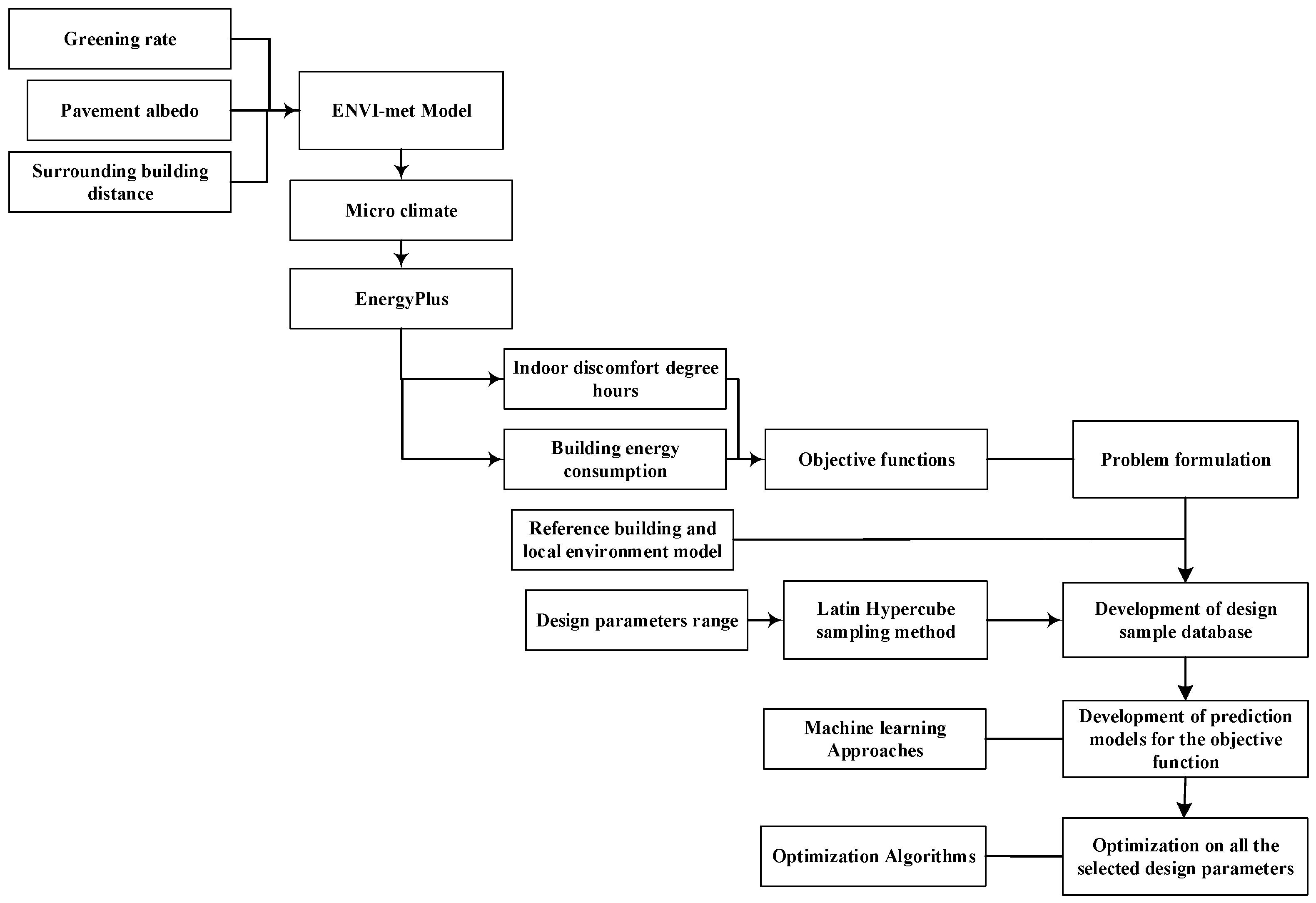
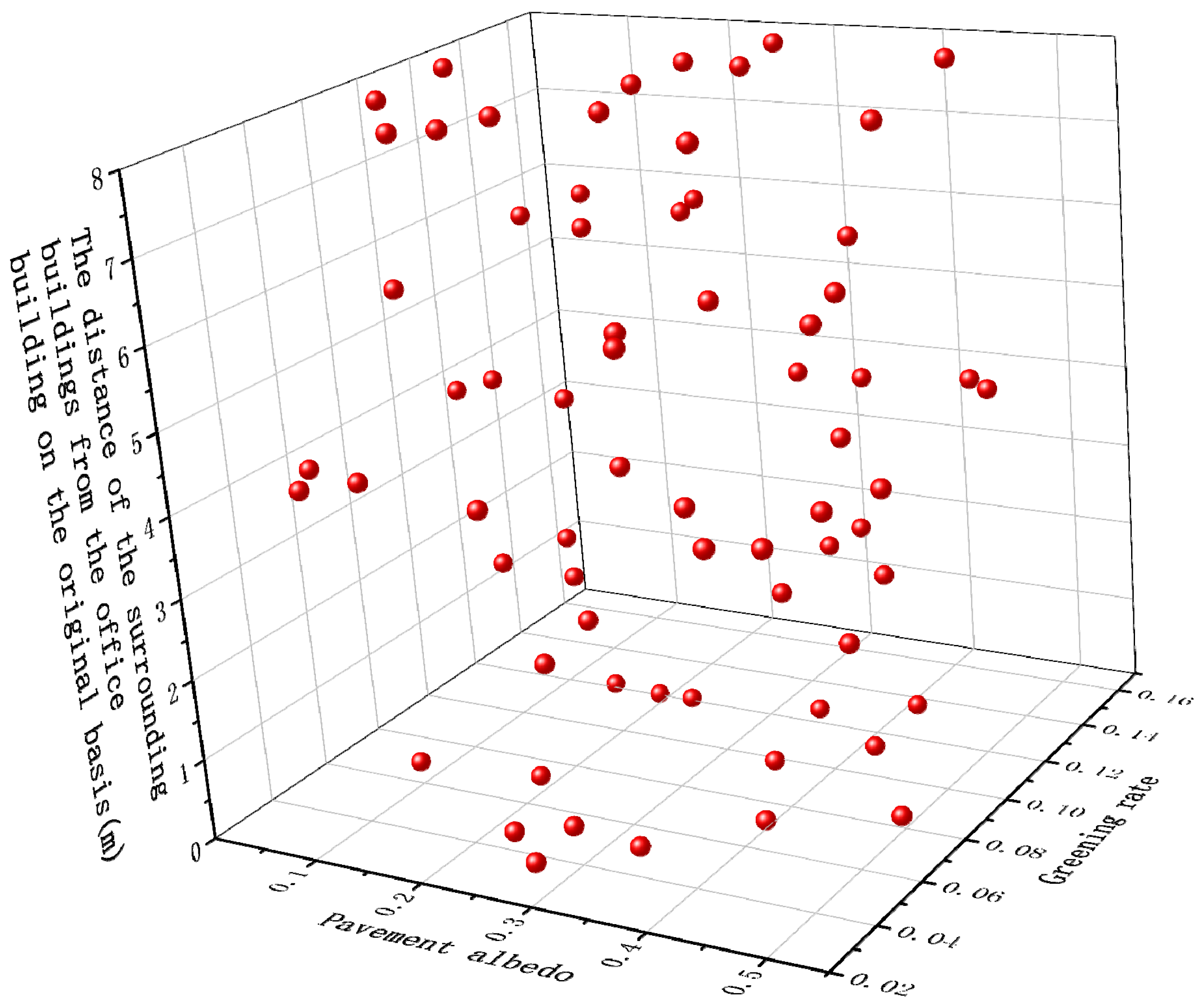
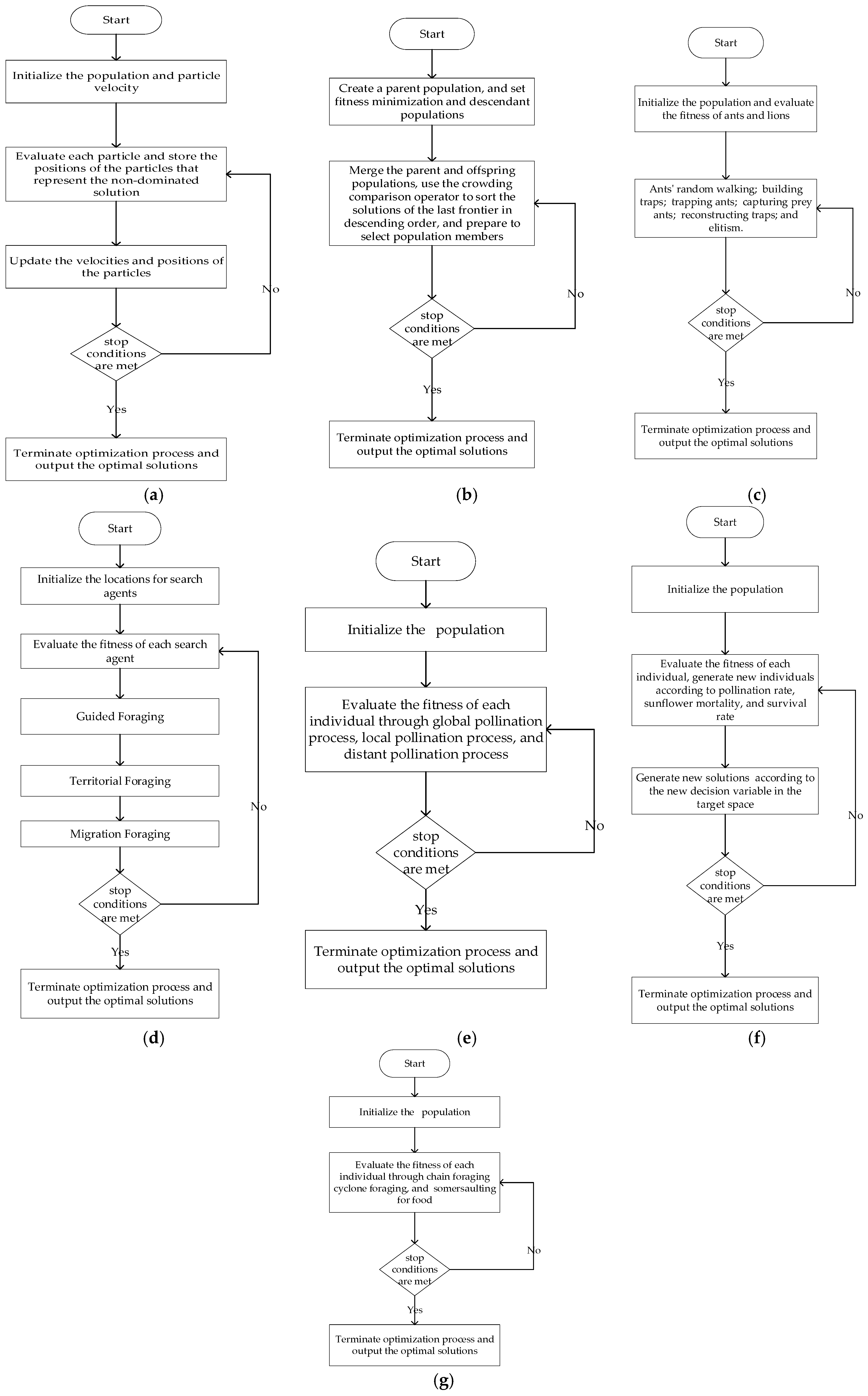
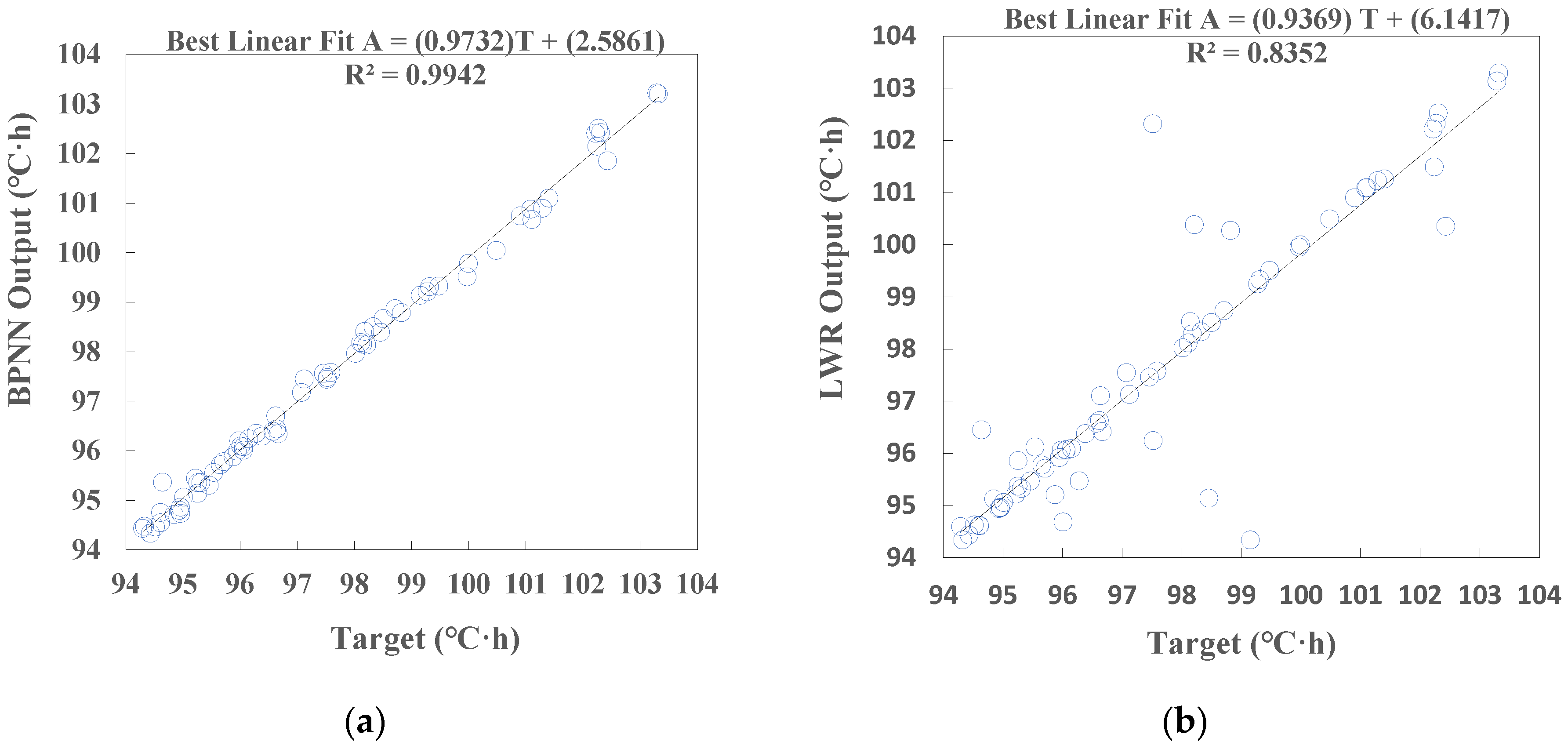
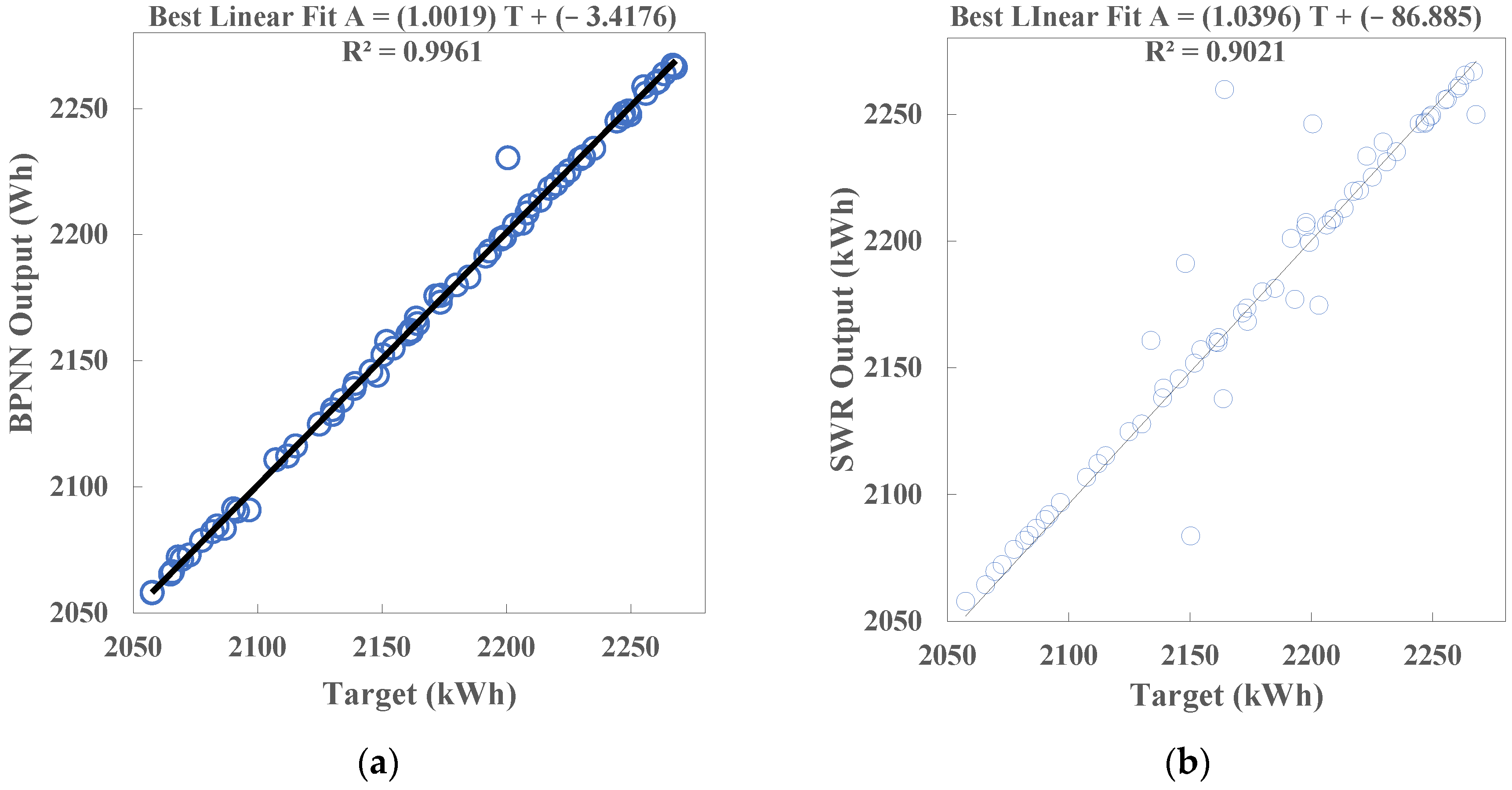
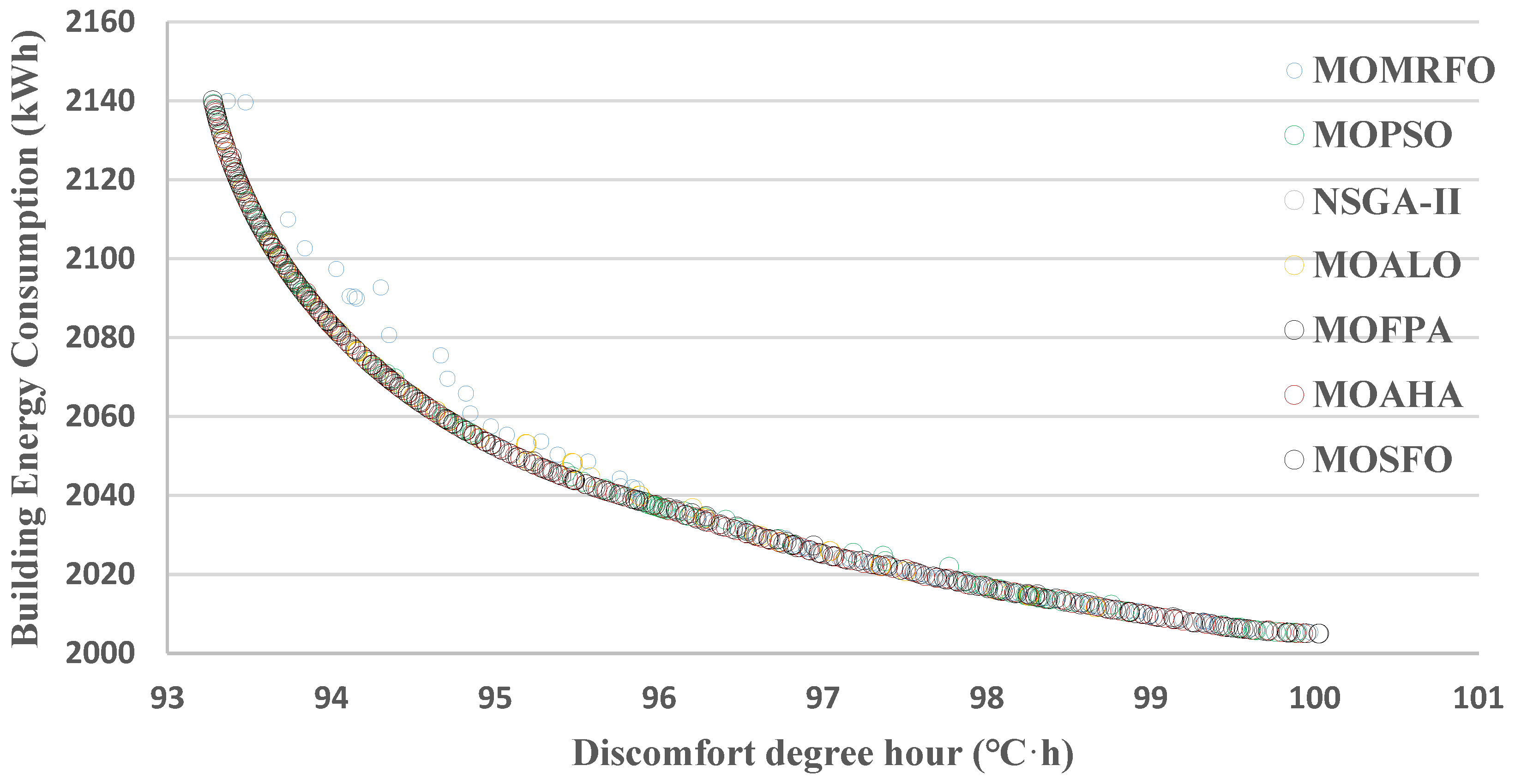
The outdoor environment greatly affects indoor thermal conditions, yet few investigations have been carried out to optimize the outdoor environment physical parameters that lead to improvements in the indoor thermal environment. This paper proposes a method to optimize the pavement albedo, greening rate, and the neighboring building distance for an office building in Shanghai, to improve its indoor thermal conditions and energy performance. Firstly, the Latin hypercube sampling approach was applied to obtain 68 sets of design samples. Secondly, ENVI-met 5.1 coupled with EnergyPlus 23.1.0 was adopted to perform simulations and obtain the discomfort degree hours and building energy consumption. Thirdly, two machine learning prediction algorithms were used to develop discomfort degree hours and energy consumption models, and the artificial neural network models were found to have better prediction performance with R-squares greater than 0.99. Fourthly, the artificial neural network models were used as fitness functions for seven optimization algorithms and Pareto front solutions were obtained during the optimization process. The optimal solutions help to reduce building energy consumption by up to 4.12% and indoor discomfort degree hours by up to 7.45%, as against the reference building. This study contributes to multi-objective outdoor physical design optimization for the indoor thermal environment, comparative analysis of prediction models, and optimization approaches.
Keywords: outdoor environment; optimization; building energy consumption; indoor thermal comfort outdoor environment; optimization; building energy consumption; indoor thermal comfort