Article

The Impact of Cool and Warm Color Tones in Classrooms on the Perceived Emotions of Elementary School Students in Northwest China

1
School of Design, Hanyang University, Seoul 04763, Republic of Korea
2
School of Art and Design, Ningxia Polytechnic, Yinchuan 750021, China
3
School of Design, Sungkyunkwan University, Seoul 03063, Republic of Korea
4
College of Architecture, Xi’an University of Architecture and Technology, Xi’an 710055, China
5
College of Architecture and Urban Planning, Tongji University, Shanghai 200092, China
*
Author to whom correspondence should be addressed.
Buildings 2024, 14(10), 3309; https://doi.org/10.3390/buildings14103309

Submission received: 22 August 2024 / Revised: 12 October 2024 / Accepted: 18 October 2024 / Published: 20 October 2024

Abstract

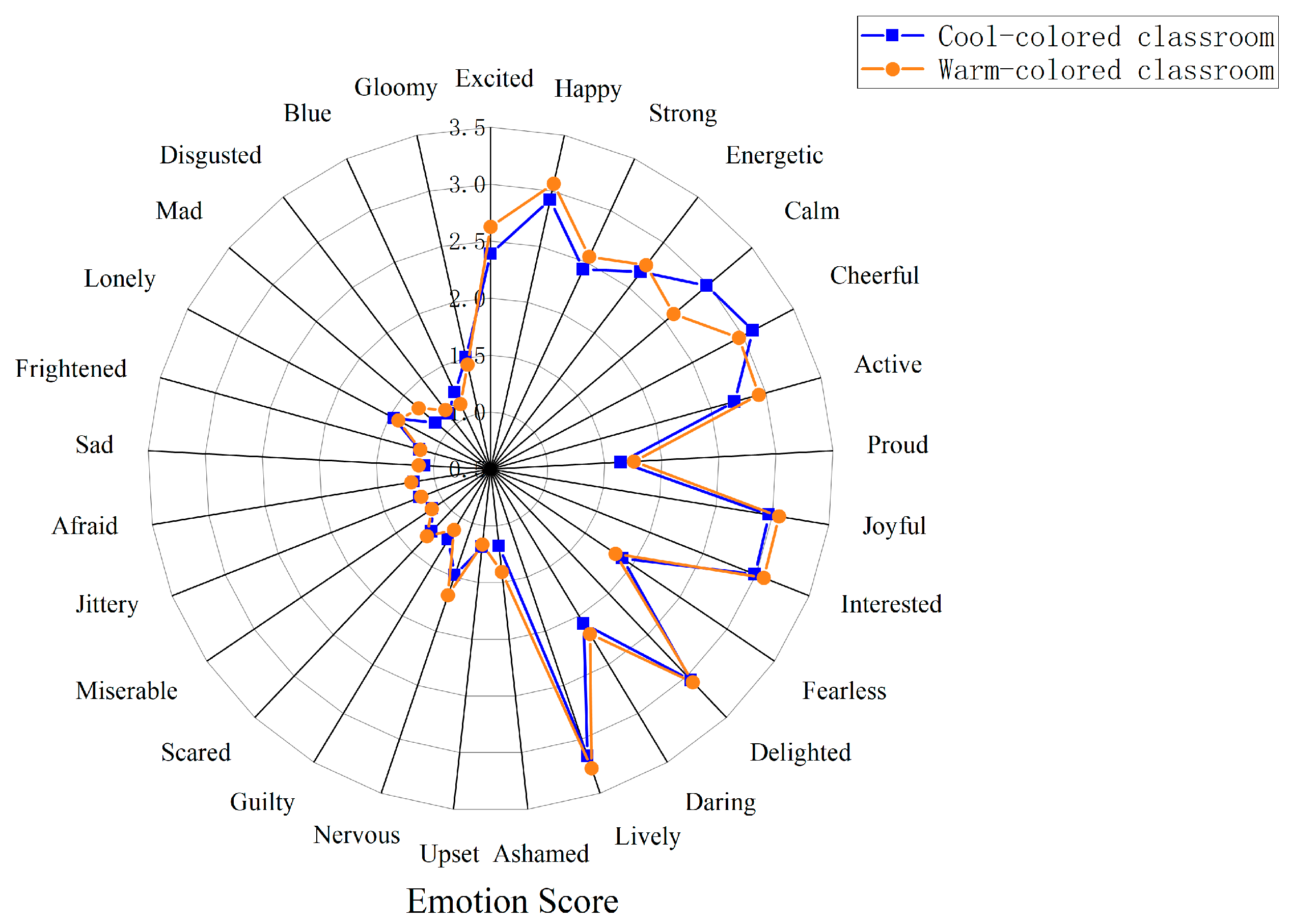
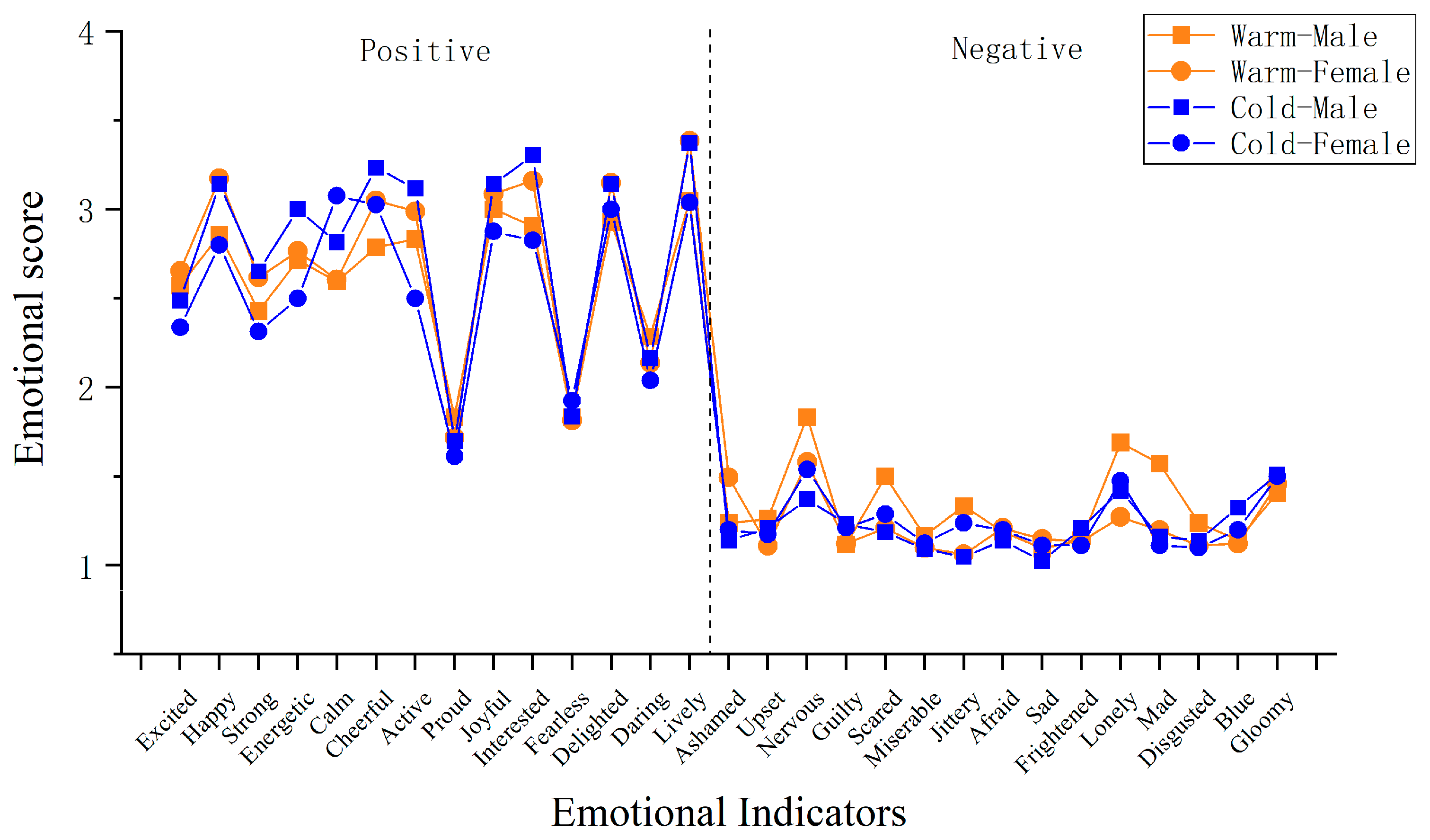
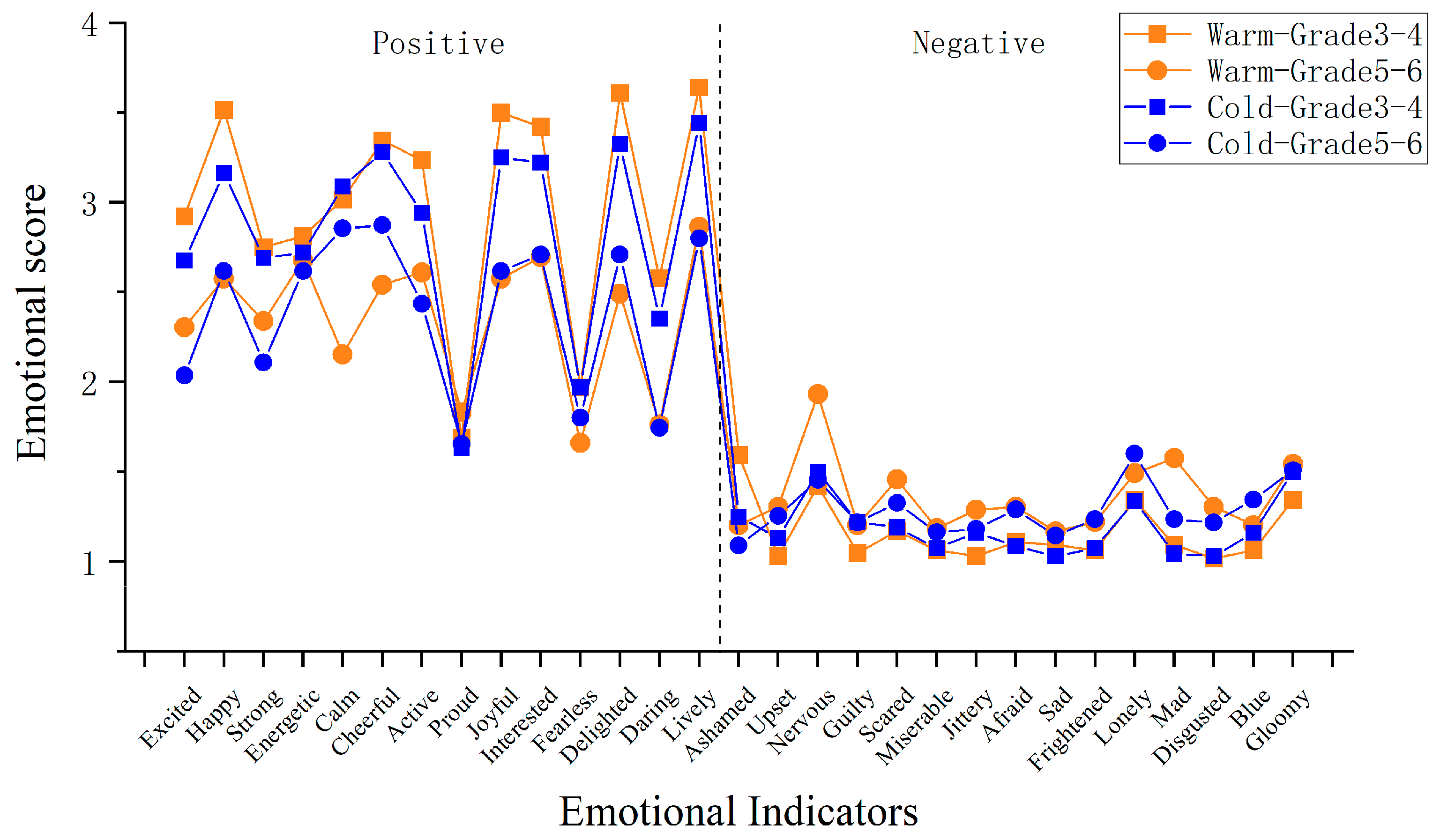
Although it has been shown that color can influence mental health and behavior, few studies have discussed the effects of cool and warm colors in classrooms on the perceived emotions of elementary school students. In this study, we investigated the emotional changes of elementary school students in Yinchuan City, Northwest China in classrooms with cool and warm color tones. By using the Positive and Negative Affect Scale for Children (PANAS-C), the emotions of 123 third- to sixth-grade students in classrooms with cool and warm color tones were measured. We found the following conclusions: (1) Overall, the emotional responses of the subjects in both the cool- and warm-colored classrooms showed a tendency for positive emotions to be higher than negative emotions. (2) There was no significant difference between the effects of cool and warm colors on the overall emotion of elementary school students, but there were significant differences in specific emotions; Compared to warm colors, cool colors had a more significant effect on increasing feelings of calm (β = −0.365, p = 0.041). Compared to cool colors, warm colors were more likely to cause participants to feel mad (β = 0.186, p = 0.099). (3) The effects of cool and warm colors on students’ emotions differed significantly by gender and grade level. Cool and warm color tones had a significantly greater positive impact on females. In contrast, cool and warm colors had a more pronounced effect on males’ negative emotions. In addition, we found that grade level was significantly negatively correlated with overall emotion (β = −0.696, p < 0.001), with lower grades perceiving emotion more positively than higher grades. These findings provide important insights into the spatial design of elementary school classrooms and provide valuable comparative data for studies in different regional and cultural contexts, further enriching the empirical support of color psychology theory.
Keywords: classroom environment; color tone; color psychology; emotional perception; elementary students classroom environment; color tone; color psychology; emotional perception; elementary students