Article

Automatic Column Grouping of 3D Steel Frames via Multi-Objective Structural Optimization

1
Postgraduate Program of Civil and Environmental Engineering, Pontifical Catholic University of Rio de Janeiro, Rio de Janeiro 22451-900, Brazil
2
Department of Civil and Environmental Engineering, Pontifical Catholic University of Rio de Janeiro, Rio de Janeiro 22451-900, Brazil
3
Department of Applied and Computational Mechanics, School of Engineering, Federal University of Juiz de Fora, Juiz de Fora 36036-900, Brazil
4
Civil Engineering Program, Coordination of Postgraduate Programs in Engineering (COPPE), Federal University of Rio de Janeiro, Rio de Janeiro 21941-909, Brazil
5
Civil Engineering Program, Federal University of Juiz de Fora, Juiz de Fora 36036-900, Brazil
*
Author to whom correspondence should be addressed.
Buildings 2024, 14(1), 191; https://doi.org/10.3390/buildings14010191

Submission received: 30 November 2023 / Revised: 5 January 2024 / Accepted: 9 January 2024 / Published: 11 January 2024
(This article belongs to the Section Building Structures)

Abstract

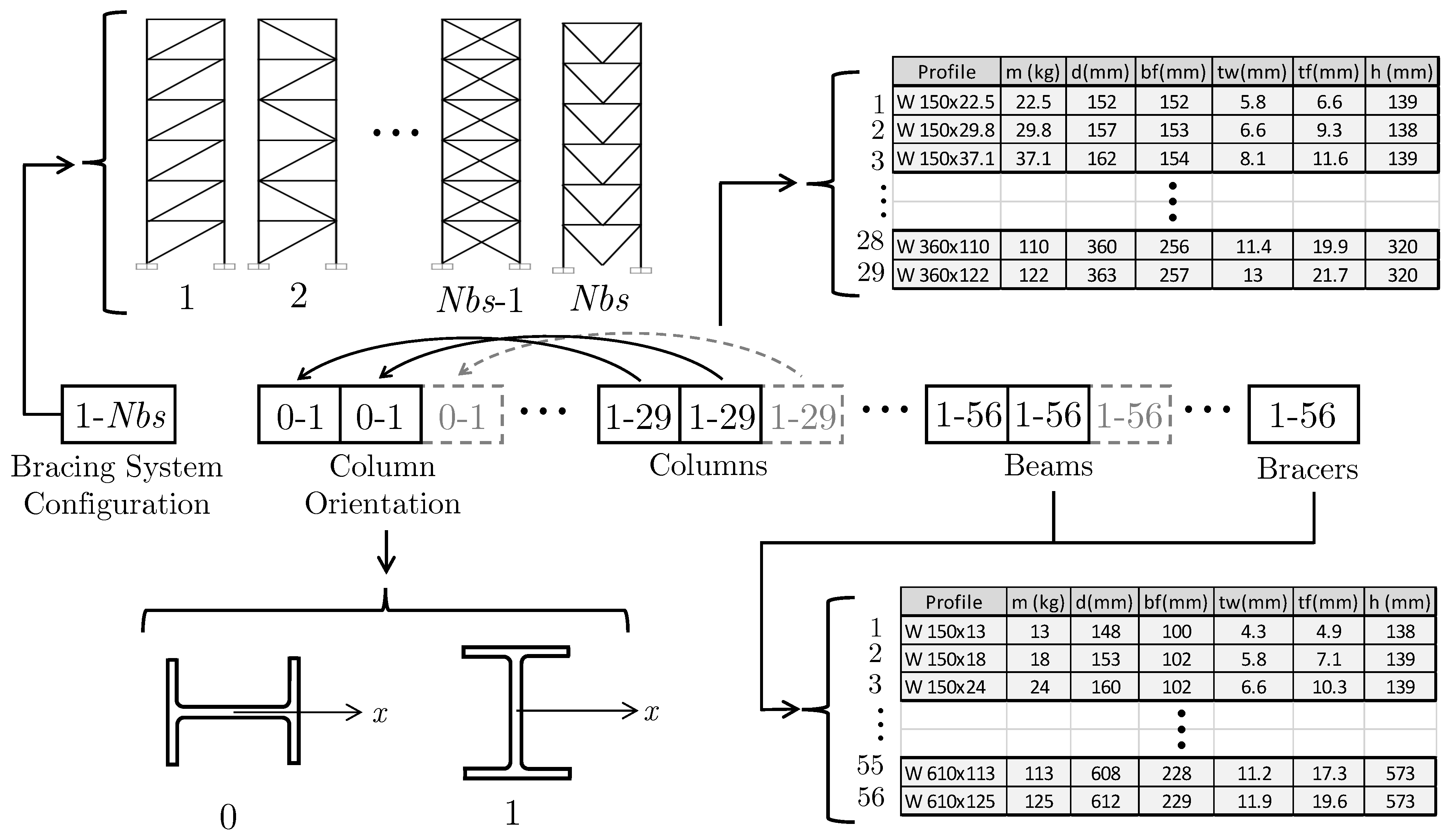
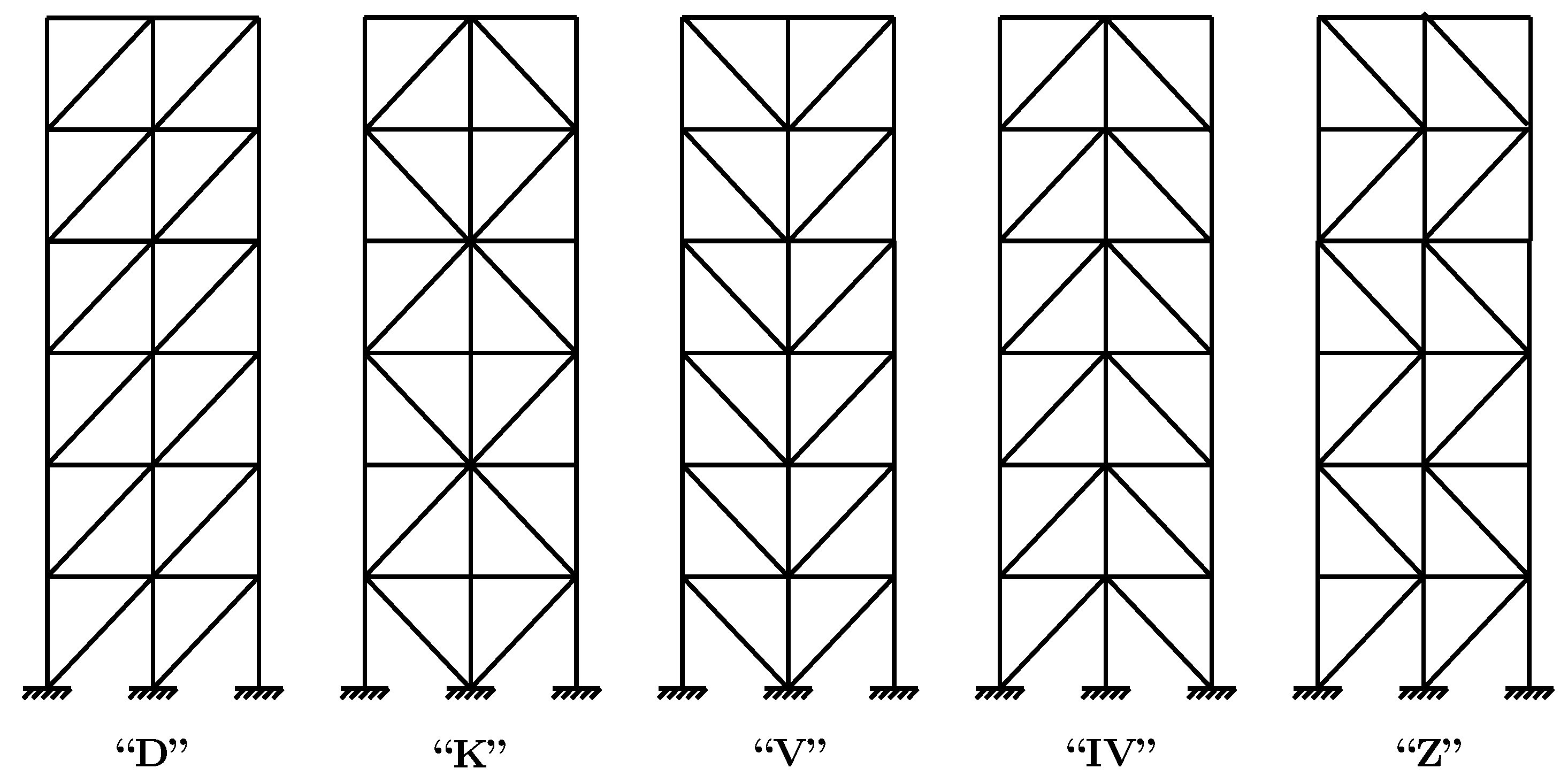
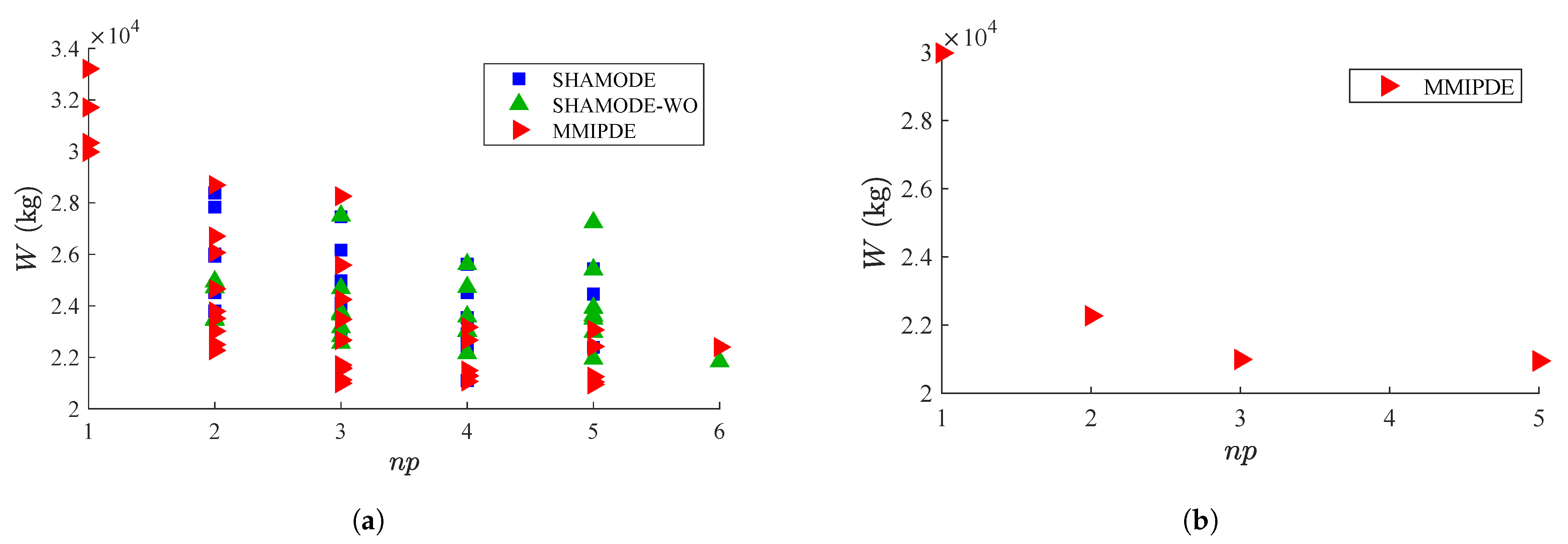
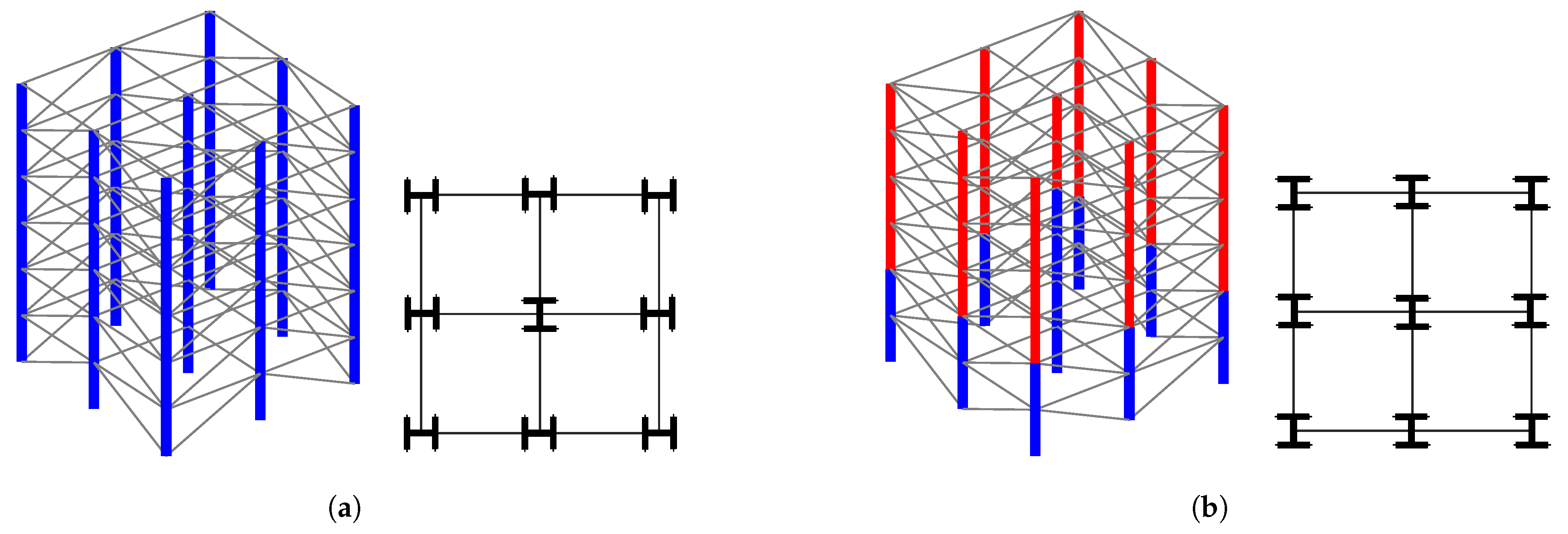
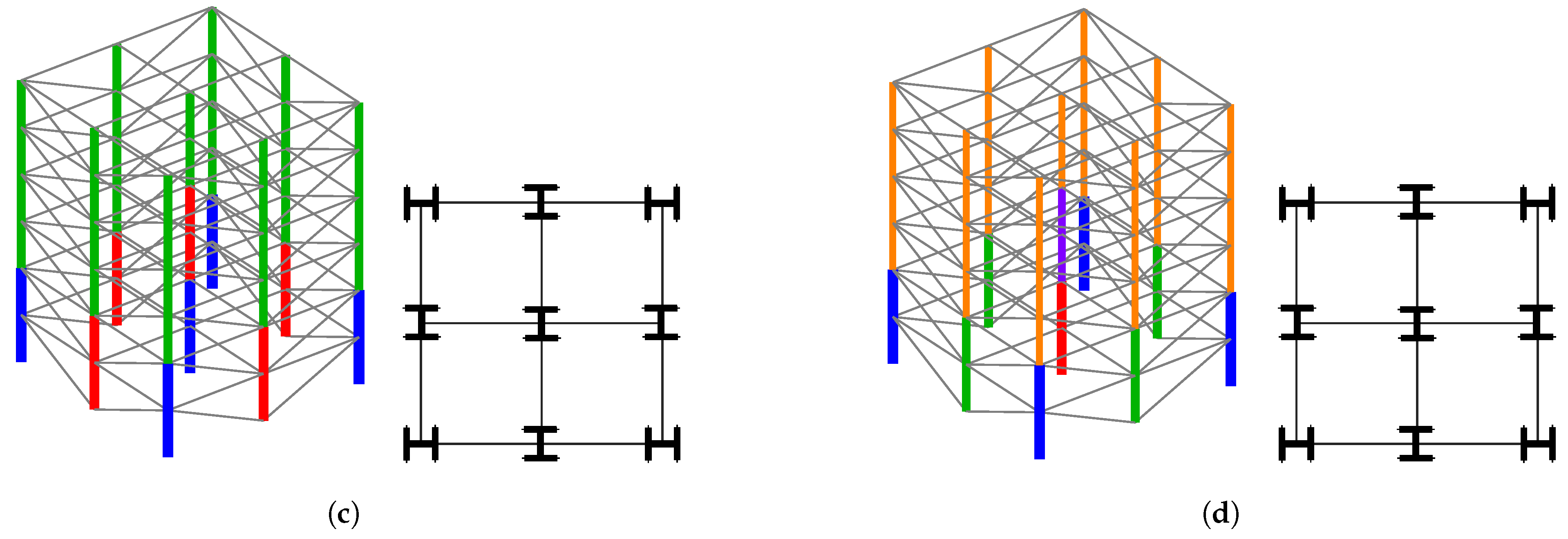
Formulations of structural optimization problems are proposed in this paper to automatically find the best grouping of columns in 3D steel buildings. In these formulations, the conflicting objective functions, minimized simultaneously, are the weight of the structure and the number of different groups of columns. In other words, the smaller the number of different groups of columns, the greater the weight of the structure, and the greater the number of groups, the smaller the structure’s weight. The design variables are the bracing system configuration, column cross-section orientation, and assigned W-shaped profile indices for columns, beams, and braces. The design constraints are the allowable displacements, strength, and geometric considerations. After solving the multi-objective optimization problem, the result is a Pareto front, presenting non-dominated solutions. Three evolutionary algorithms based on differential evolution are adopted in this paper to solve three computational experiments. Even if preliminary groupings of columns are adopted, considering architectural aspects such as the symmetry of the structure, it is possible to discover other interesting structural configurations that will be available to the decision maker, who will be able to make their choices based on the impacts on manufacturing, cutting, transporting, checking and welding.
Keywords: automatic member grouping; multi-objective optimization; steel frames; differential evolution algorithms automatic member grouping; multi-objective optimization; steel frames; differential evolution algorithms