Probabilistic Life Prediction of Tunnel Boring Machine under Wearing Conditions with Incomplete Information



Abstract
1. Introduction
2. Related Studies
- (1)
- Empirical methods: Empirical methods aim to predict the service life based on empirical formulas. Numerous attempts have been developed over the past decades. In the early years, the Colorado School of Mines (CSM) model, the Norwegian Institute of Technology (NTNU) model, and the Gehring model [27,28,29] were proposed as common models used for cutter tool wear prediction. Apart from that, Nelson et al. [30] developed an empirical formula based on TBM field performance data from various geological conditions and TBM parameters. Bieniawski et al. [31] established the relation between rock mass excavatability and the Cerchar abrasivity index based on cutter consumption. Recent research on empirical methods has been more diversified into different types of geological conditions and cutter tools. For example, Liu et al. [32] proposed a new empirical model that focused on predicting the wearing of cutter discs of large size. Hassanpour et al. [33] introduced a new empirical model to predict the cutter wear specifically for strong pyroclastic and mafic igneous rock.
- (2)
- Experimental methods: Experimental methods predict the service life based on laboratory soil abrasivity tests [11,34]. A large number of lab tests were developed in the early studies, including the Cerchar abrasivity test [35], the Laboratoire Central des Ponts et Chausées (LCPC) abrasimeter test [36], and the NTNU soil abrasion test [37]. In recent years, Salazar et al. [34] proposed a new test device that could produce a reliable result in a short period of time. Cardu et al. [38] developed an intermediate linear cutting machine to study the TBM behavior with a reduced scale of detail. Jakobsen et al. [39] explored the influence of numerous parameters that could affect soil abrasivity based on the developed soft ground abrasion tester (SGAT) device. Major conventional abrasivity tests are summarized in Table 1.
- (3)
- Numerical methods: Numerical methods simulate site conditions based on the computer model. Common numerical methods include the finite element method and the discrete element method. For instance, Ren et al. [40] analyzed the disc cutting failure based on a 3D circular cutting analysis and numerical simulations. Li et al. [41] established a finite element model to study the characteristics of the interaction between TBM cutting tools and rock and soil during excavation. Owen and Cleary [42] used the discrete element method to predict the performance of the screw conveyor. However, numerical methods usually require a long period to establish the model and obtain results. Moreover, Geng et al. [43] criticized the numerical method on its accuracy due to various assumptions. A better approach should be proposed to predict the service life with high accuracy and the ease of model construction.
- (4)
- Intelligent methods: Intelligent methods utilize various mathematical and data processing methods to analyze the data collected from the site [44]. These methods have been largely applied in reliability studies due to their capabilities and high adaptability to resolve complex problems [45]. Crk et al. [46] conducted a degradation analysis to predict the reliable service time for highly reliable components. For TBMs, Zhao et al. [47] predicted the wearing condition of the cutting tools by developing a prediction model with a support vector machine incorporated. Zhang et al. [48] proposed a hybrid simulation approach to analyze the TBM performance and reliability by integrating dynamic fault trees and Bayesian networks. Gouarir et al. [49] presented a tool wear prediction system that used convolutional neural networks and force analysis. Indeed, there are insufficient studies on TBM service time predictions that are based on their reliability and the degradation of the wearing components.
3. Methodology
3.1. Data Fitting for Marginal Distributions under Incomplete Information
3.2. Structural Learning for System Failure Models
3.3. Copula Enabled Data-Driven Prediction
4. Case Study
4.1. Case Background
4.2. Model Development
4.3. Analysis of the Results
- (1)
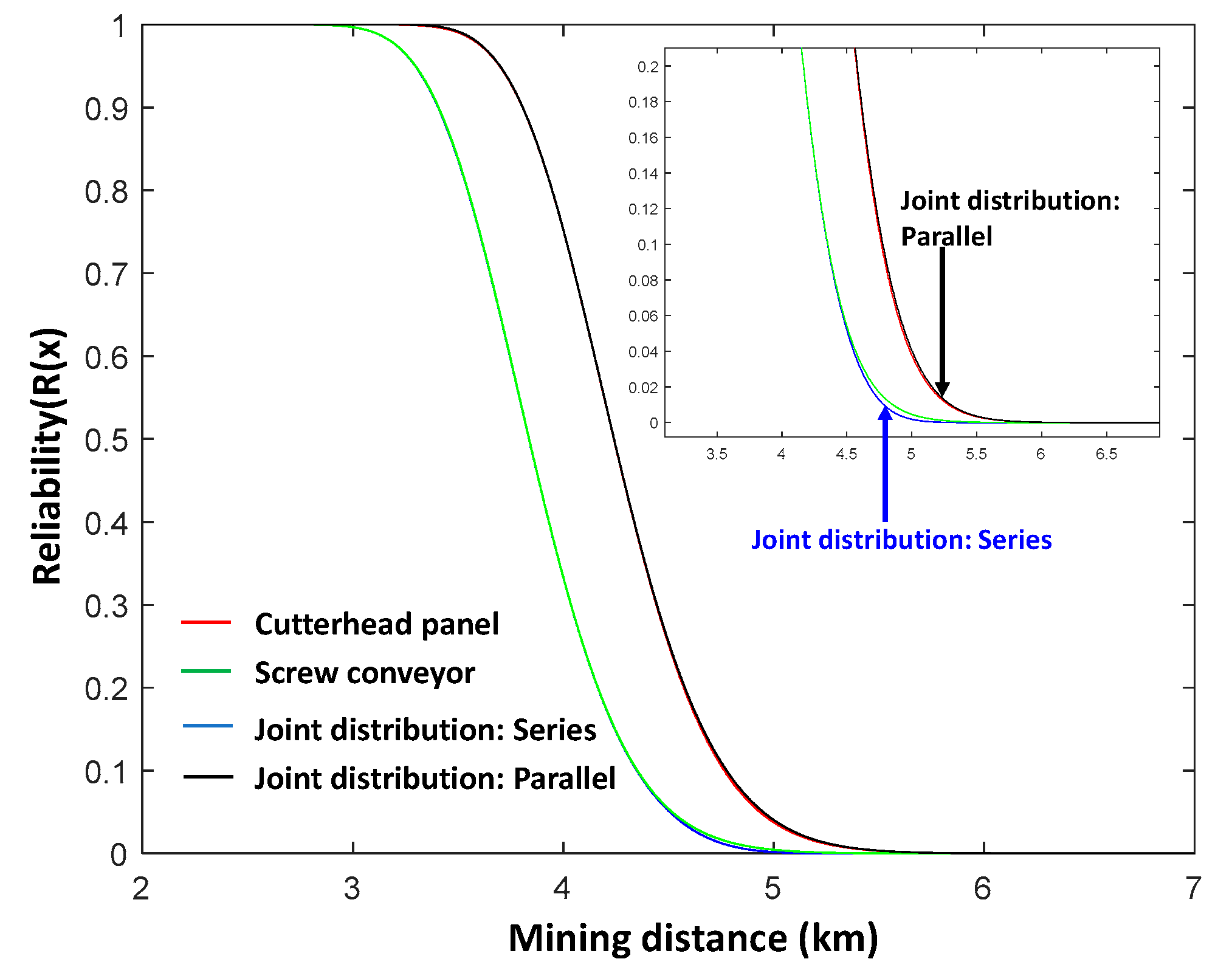
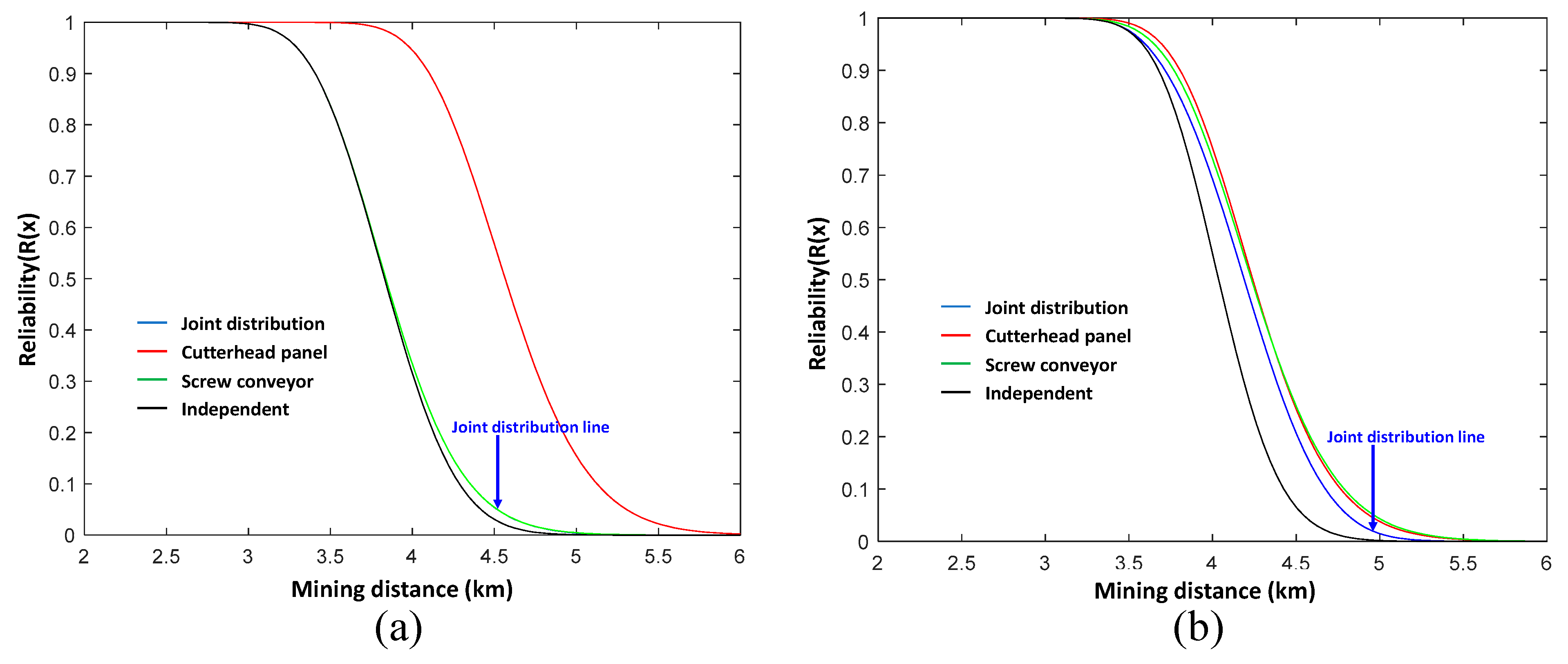
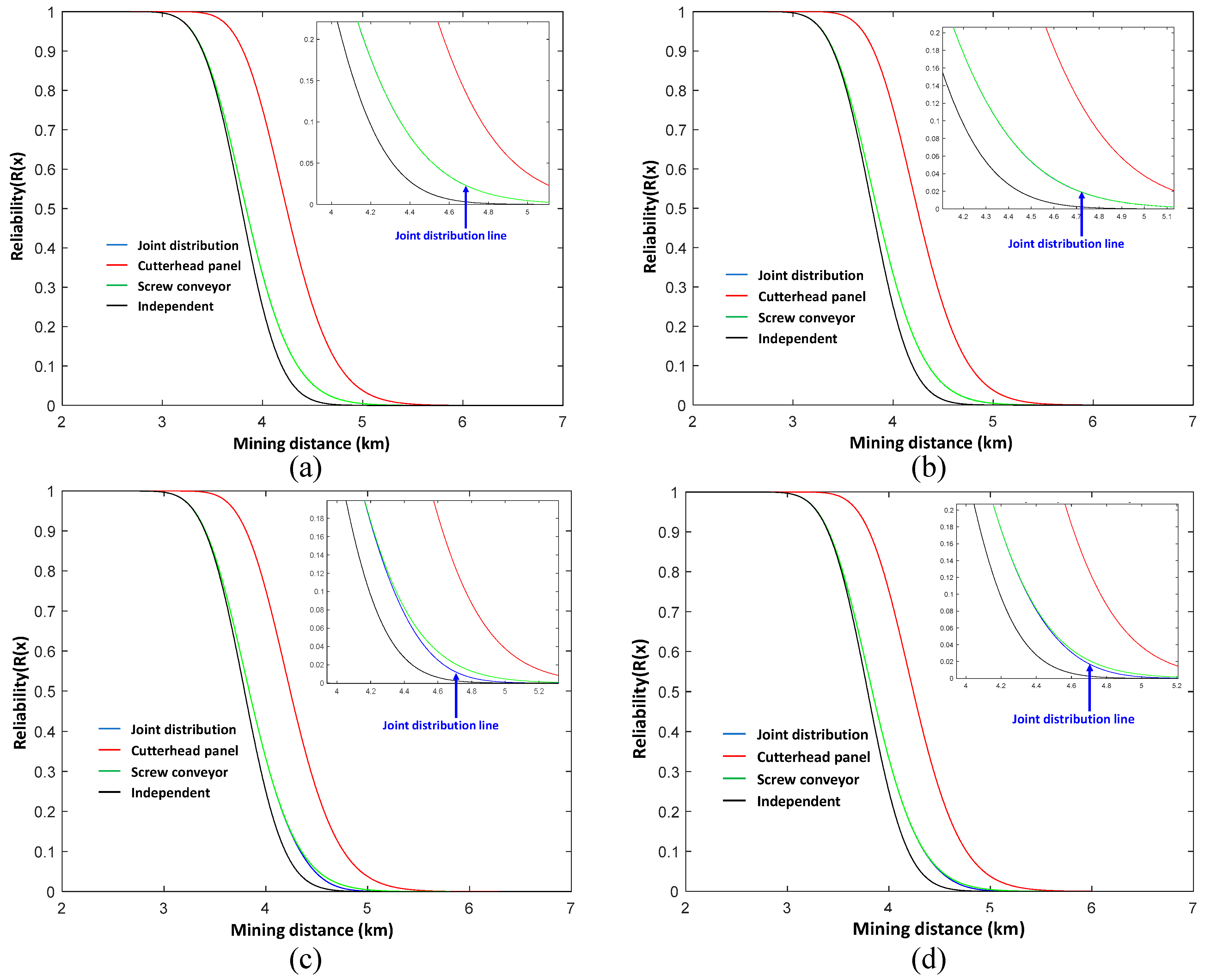
- The results indicate that it is essential to consider the dependency between the wearing of the cutter head panel and the screw conveyor. It was shown that there is a strong positive correlation between the measured data of the two components. The predicted mining distance will not be accurate if the failure probability between the two components is assumed to be independent. From the results shown in this case study, the predicted mining distance would only be 3.9970 km if assuming independent. Compared with the result that incorporated the Gumbel copula function, the prediction is overly conservative and creates additional unnecessary costs due to CHI and cutting tool replacement. Therefore, the dependency between components was considered, and copula functions are the strong tool that could characterize the dependent structure. As shown in the case study, the predicted mining distance calculated based on candidate copula models vary from 4.0803 km to 4.0834 km, which is 2.08% and 2.16% higher than the independent assumption.
- (2)
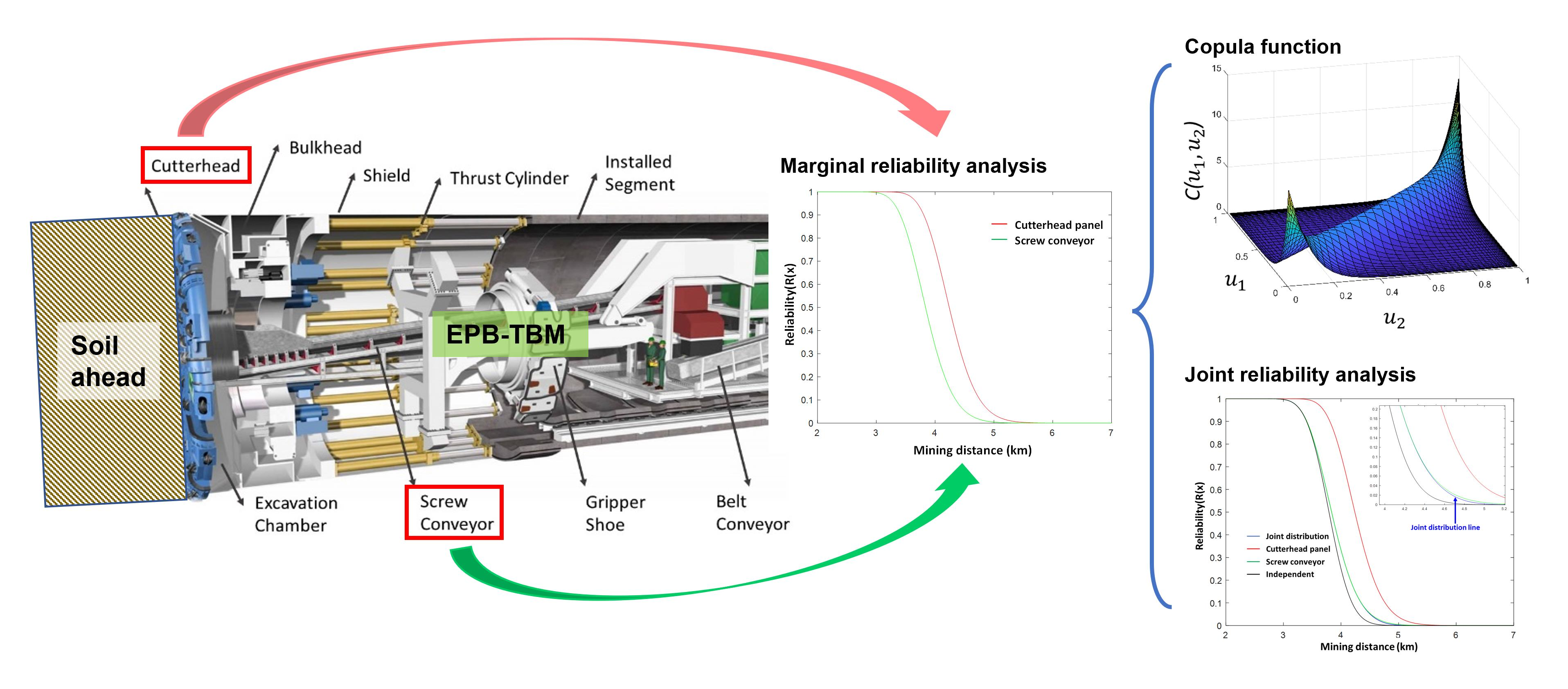
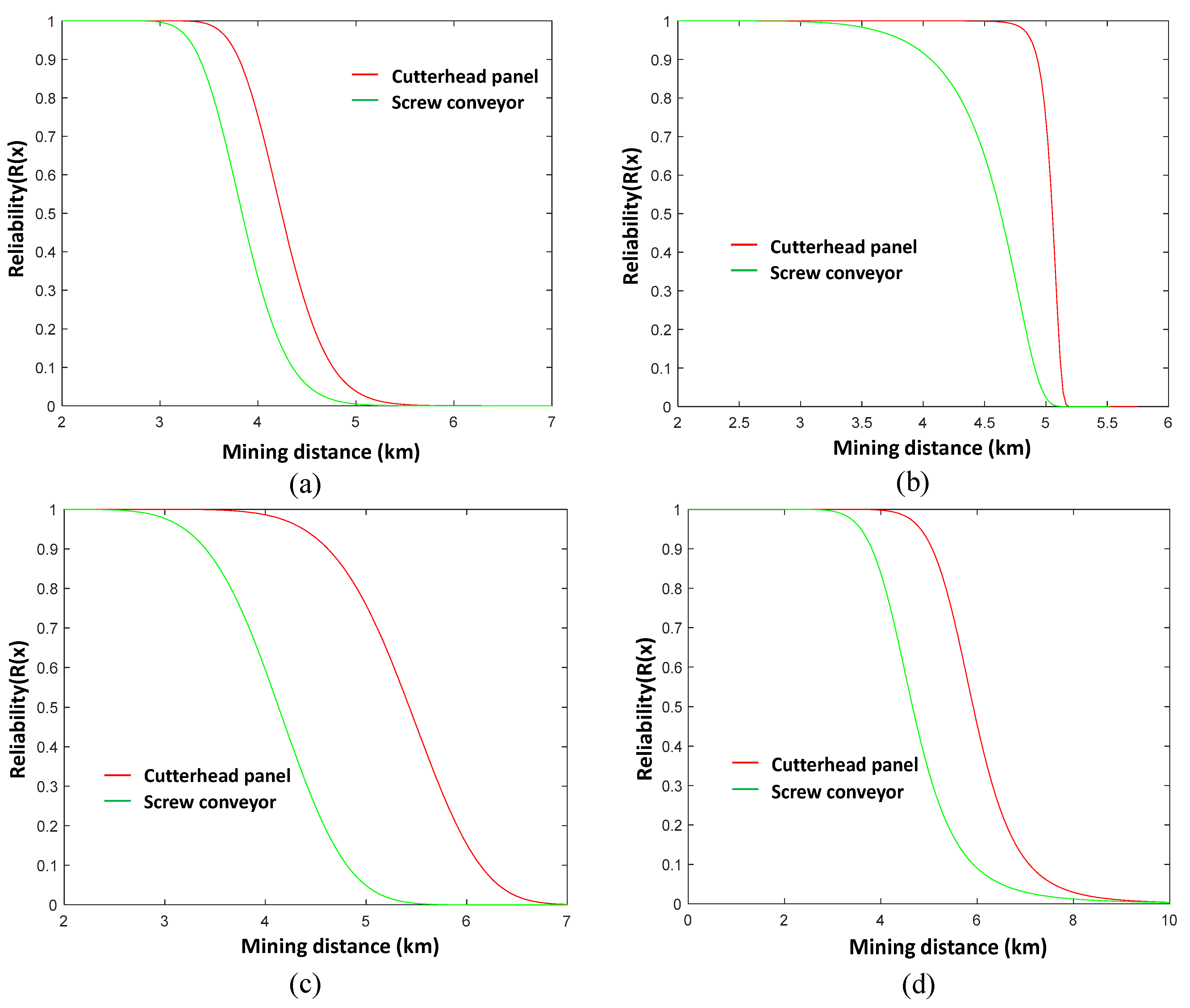
- The developed reliability function curve is consistent with the data obtained from the site. From the data collected at a mining distance of 2.762 km, the remaining thickness of the wear resistance structure for both the cutter head panel and the screw conveyor were at an average of 3.15 mm and 2.36 mm, respectively. As all data collected at 2.762 km were much greater than 1 mm (mal-function value), these components were in good condition with 100% confidence. When reflecting on the reliability function curve, the reliability for both marginal distributions and joint distribution was 1. The remaining thickness kept dropping when the mining process persisted, the reliability curve started drop at 2.75 km and 3.25 km for screw conveyors and cutter head panels, and it reached 0 at a mining distance of 5 km and 5.5 km, respectively. This indicates that some wearing tools could have dropped to below 1 km between these mining distances and all would be below 1 mm at a distance of 5 km and 5.5 km. To keep a sufficient safety buffer, as well as to prevent being over-conservative, the reliability of 0.2 was selected for the mining distance prediction.
- (3)
- The screw conveyor is the key component that imposes a major contribution to the service life of TBM. This finding is based on the comparison between the two marginal distributions and the comparison with the joint distribution. Considering the two marginal distribution curves, it was shown that the cutter head panel was more reliable than the screw conveyor at the same mining distance. By comparing the marginal distribution curve and joint distribution curve, the joint distribution function line was the same as the reliability function of the screw conveyor when reliability was higher than 0.05. This shows that the screw conveyor could be the key component affecting the reliability of the whole TBM. However, when the mining distance was more than 4.5 km, the joint distribution curve moved away from the marginal distribution curve of the screw conveyor. This could be due to the dependency between the cutter head panel and the screw conveyor. In addition, although the joint reliability function was governed by the marginal reliability function of the screw conveyor, this does not mean that the screw conveyor is more important than the cutter head in terms of the tunnel excavation. Instead, the result generally indicates that the screw conveyor could be the bottleneck component in the system, and the overall performance of the TBM could be largely improved if a stronger screw conveyor is provided. A more detailed discussion on bottleneck detection is presented in Section 5.2.
- (4)
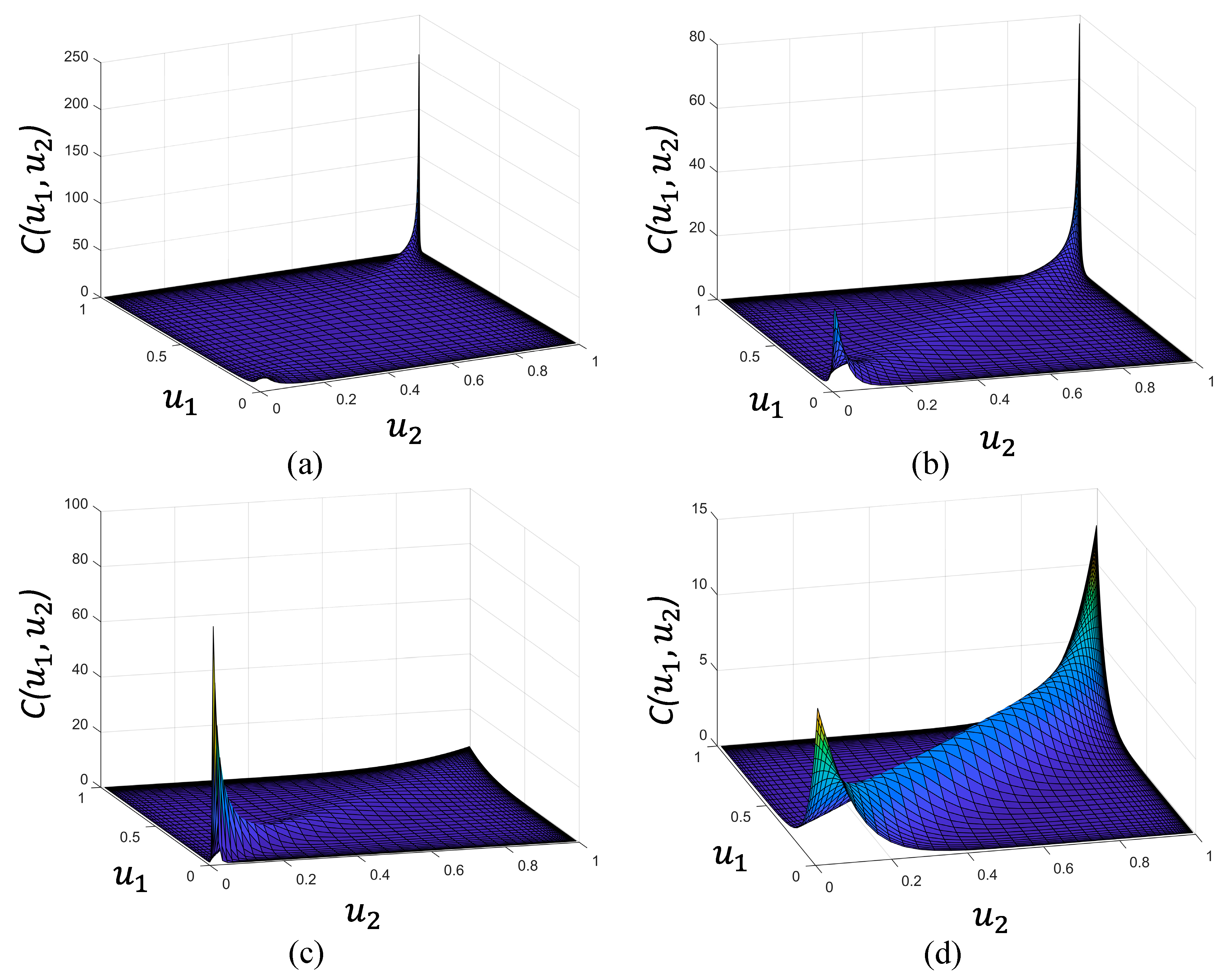
- Prediction results varied with different copulas selected. As shown in Figure 5, the types of copula functions affected the distribution of the joint PDF curve, which then resulted in different values at the same reliability. As reflected in Table 11, the values of the predicted mining distance varied from a minimum of 4.0803 km (Clayton copula) to a maximum value of 4.0834 km (Gumbel copula). As there is only a 0.76% difference between the maximum value to the minimum value, the selection of the copula function did affect the result significantly for this case study. The result could be because the joint reliability function of TBM is highly governed by the performance of the screw conveyor. Therefore, the observation from this case study may not be applicable to other cases. Hence, it is still recommended to select the most suitable copula function based on the AIC and BIC values calculated.
5. Discussions
5.1. Influence of the System Structure
5.2. Influence of the Marginal Distribution
6. Conclusions and Future Works
Author Contributions
Funding
Data Availability Statement
Conflicts of Interest
References
- Zhang, L.; Zhang, Y.; Li, H.X.; Lei, Z. Estimating long-term impacts of tunnel infrastructure development on urban sustainability using granular computing. Appl. Soft Comput. 2021, 113, 107932. [Google Scholar] [CrossRef] [Scilit]
- Deng, M. Challenges and Thoughts on Risk Management and Control for the Group Construction of a Super-Long Tunnel by TBM. Engineering 2018, 4, 112–122. [Google Scholar] [CrossRef] [Scilit]
- Li, J.; Zhang, Z.; Meng, Z.; Huo, J.; Xu, Z.; Chen, J. Tunnel boring machine cutterhead crack propagation life prediction with time integration method. Adv. Mech. Eng. 2019, 11. [Google Scholar] [CrossRef] [Scilit]
- Wang, J.; Mohammed, A.S.; Macioszek, E.; Ali, M.; Ulrikh, D.V.; Fang, Q. A Novel Combination of PCA and Machine Learning Techniques to Select the Most Important Factors for Predicting Tunnel Construction Performance. Buildings 2022, 12, 919. [Google Scholar] [CrossRef] [Scilit]
- Elbaz, K.; Shen, S.-L.; Zhou, A.; Yin, Z.-Y.; Lyu, H.-M. Prediction of Disc Cutter Life During Shield Tunneling with AI via the Incorporation of a Genetic Algorithm into a GMDH-Type Neural Network. Engineering 2021, 7, 238–251. [Google Scholar] [CrossRef] [Scilit]
- Zhang, L.; Chettupuzha, A.A.; Chen, H.; Wu, X.; AbouRizk, S.M. Fuzzy cognitive maps enabled root cause analysis in complex projects. Appl. Soft Comput. 2017, 57, 235–249. [Google Scholar] [CrossRef] [Scilit]
- Li, X.; Yuan, D. Creating a working space for modifying and maintaining the cutterhead of a large-diameter slurry shield: A case study of Beijing railway tunnel construction. Tunn. Undergr. Space Technol. 2018, 72, 73–83. [Google Scholar] [CrossRef] [Scilit]
- Alavi Gharahbagh, E.; Mooney, M.A.; Frank, G.; Walter, B.; DiPonio, M.A. Periodic inspection of gauge cutter wear on EPB TBMs using cone penetration testing. Tunn. Undergr. Space Technol. 2013, 38, 279–286. [Google Scholar] [CrossRef] [Scilit]
- Amoun, S.; Sharifzadeh, M.; Shahriar, K.; Rostami, J.; Tarigh Azali, S. Evaluation of tool wear in EPB tunneling of Tehran Metro, Line 7 Expansion. Tunn. Undergr. Space Technol. 2017, 61, 233–246. [Google Scholar] [CrossRef] [Scilit]
- Huo, J.; Zhu, D.; Hou, N.; Sun, W.; Dong, J. Application of a small-timescale fatigue, crack-growth model to the plane stress/strain transition in predicting the lifetime of a tunnel-boring-machine cutter head. Eng. Fail. Anal. 2017, 71, 11–30. [Google Scholar] [CrossRef] [Scilit]
- Barzegari, G.; Uromeihy, A.; Zhao, J. Parametric study of soil abrasivity for predicting wear issue in TBM tunneling projects. Tunn. Undergr. Space Technol. 2015, 48, 43–57. [Google Scholar] [CrossRef] [Scilit]
- Ling, J.; Sun, W.; Huo, J.; Guo, L. Study of TBM cutterhead fatigue crack propagation life based on multi-degree of freedom coupling system dynamics. Comput. Ind. Eng. 2015, 83, 1–14. [Google Scholar] [CrossRef] [Scilit]
- Talebi, K.; Memarian, H.; Rostami, J.; Alavi Gharahbagh, E. Modeling of soil movement in the screw conveyor of the earth pressure balance machines (EPBM) using computational fluid dynamics. Tunn. Undergr. Space Technol. 2015, 47, 136–142. [Google Scholar] [CrossRef] [Scilit]
- Wang, S.; Li, H.; Tian, R.; Wang, R.; Wang, X.; Sun, Q.; Fan, J. Numerical simulation of particle flow behavior in a screw conveyor using the discrete element method. Particuology 2019, 43, 137–148. [Google Scholar] [CrossRef] [Scilit]
- Nelsen, R.B. An Introduction to Copulas, 2nd ed.; Springer Science+Business Media, Inc.: New York, NY, USA, 2006. [Google Scholar]
- Liu, X.-d.; Pan, F.; Cai, W.-l.; Peng, R. Correlation and risk measurement modeling: A Markov-switching mixed Clayton copula approach. Reliab. Eng. Syst. Saf. 2020, 197, 106808. [Google Scholar] [CrossRef] [Scilit]
- Favre, A.C.; El Adlouni, S.; Perreault, L.; Thiémonge, N.; Bobée, B. Multivariate hydrological frequency analysis using copulas. Water Resour. Res. 2004, 40, W01101. [Google Scholar] [CrossRef] [Scilit]
- Kole, E.; Koedijk, K.; Verbeek, M. Selecting copulas for risk management. J. Bank. Financ. 2007, 31, 2405–2423. [Google Scholar] [CrossRef] [Scilit]
- Fang, G.; Pan, R.; Hong, Y. Copula-based reliability analysis of degrading systems with dependent failures. Reliab. Eng. Syst. Saf. 2020, 193, 106618. [Google Scholar] [CrossRef] [Scilit]
- Qian, B.; Li, Z.-c.; Hu, R. A copula-based hybrid estimation of distribution algorithm for m-machine reentrant permutation flow-shop scheduling problem. Appl. Soft Comput. 2017, 61, 921–934. [Google Scholar] [CrossRef] [Scilit]
- Jin, R.; Wang, F.; Liu, D. Dynamic probabilistic analysis of accidents in construction projects by combining precursor data and expert judgments. Adv. Eng. Inform. 2020, 44, 101062. [Google Scholar] [CrossRef] [Scilit]
- Pan, Y.; Zhang, L.; Wu, X.; Qin, W.; Skibniewski, M.J. Modeling face reliability in tunneling: A copula approach. Comput. Geotech. 2019, 109, 272–286. [Google Scholar] [CrossRef] [Scilit]
- Tang, X.-S.; Li, D.-Q.; Zhou, C.-B.; Phoon, K.-K. Copula-based approaches for evaluating slope reliability under incomplete probability information. Struct. Saf. 2015, 52, 90–99. [Google Scholar] [CrossRef] [Scilit]
- Pan, Y.; Ou, S.; Zhang, L.; Zhang, W.; Wu, X.; Li, H. Modeling risks in dependent systems: A Copula-Bayesian approach. Reliab. Eng. Syst. Saf. 2019, 188, 416–431. [Google Scholar] [CrossRef] [Scilit]
- Lv, J.; Lin, D.; Wu, W.; Huang, J.; Li, Z.; Fu, H.; Li, H. Mechanical Responses of Slurry Shield Underpassing Existing Bridge Piles in Upper-Soft and Lower-Hard Composite Strata. Buildings 2022, 12, 1000. [Google Scholar] [CrossRef] [Scilit]
- Wang, L.; Kang, Y.; Zhao, X.; Zhang, Q. Disc cutter wear prediction for a hard rock TBM cutterhead based on energy analysis. Tunn. Undergr. Space Technol. 2015, 50, 324–333. [Google Scholar] [CrossRef] [Scilit]
- Bruland, A. Hard Rock Tunnel Boring Advance Rate and Cutter Wear; Norwegian Institute of Technology (NTNU): Trondheim, Norway, 1999. [Google Scholar]
- Rostami, J. Development of a Force Estimation Model for Rock Fragmentation with Disc Cutters through Theoretical Modeling and Physical Measurement of Crushed Zone Pressure; Colorado School of Mines Golden: Golden, CO, USA, 1997. [Google Scholar]
- Gehring, K. Prognosis of advance rates and wear for underground mechanized excavations. Felsbau 1995, 13, 439–448. [Google Scholar]
- Nelson, P.; Al-Jalil, Y.A.; Laughton, C. Tunnel Boring Machine Project Data Bases and Construction Simulation; Geotechnical Engineering Report GR94-4; The University of Texas at Austin: Austin, TX, USA, 1994; Volume 78712. [Google Scholar]
- Bieniawski, Z.; Celada, B.; Galera, J.; Tardáguila, I. Prediction of cutter wear using RME. In Proceedings of the ITA-AITES World Tunnel Congress, Budapest, Hungary, 25–27 May 2009. [Google Scholar]
- Liu, Q.; Liu, J.; Pan, Y.; Zhang, X.; Peng, X.; Gong, Q.; Du, L. A Wear Rule and Cutter Life Prediction Model of a 20-in. TBM Cutter for Granite: A Case Study of a Water Conveyance Tunnel in China. Rock Mech. Rock Eng. 2017, 50, 1303–1320. [Google Scholar] [CrossRef] [Scilit]
- Hassanpour, J.; Rostami, J.; Tarigh Azali, S.; Zhao, J. Introduction of an empirical TBM cutter wear prediction model for pyroclastic and mafic igneous rocks; a case history of Karaj water conveyance tunnel, Iran. Tunn. Undergr. Space Technol. 2014, 43, 222–231. [Google Scholar] [CrossRef] [Scilit]
- Oñate Salazar, C.G.; Todaro, C.; Bosio, F.; Bassini, E.; Ugues, D.; Peila, D. A new test device for the study of metal wear in conditioned granular soil used in EPB shield tunneling. Tunn. Undergr. Space Technol. 2018, 73, 212–221. [Google Scholar] [CrossRef] [Scilit]
- Alber, M.; Yaralı, O.; Dahl, F.; Bruland, A.; Käsling, H.; Michalakopoulos, T.N.; Cardu, M.; Hagan, P.; Aydın, H.; Özarslan, A. ISRM Suggested Method for Determining the Abrasivity of Rock by the CERCHAR Abrasivity Test. Rock Mech. Rock Eng. 2014, 47, 261–266. [Google Scholar] [CrossRef] [Scilit]
- Thuro, K.; Singer, J.; Käsling, H.; Bauer, M. Soil abrasivity assessment using the LCPC testing device. Felsbau 2006, 24, 37–45. [Google Scholar]
- Blindheim, O.; Bruland, A. Boreability testing. Nor. TBM Tunn. 1998, 30, 29–34. [Google Scholar]
- Cardu, M.; Iabichino, G.; Oreste, P.; Rispoli, A. Experimental and analytical studies of the parameters influencing the action of TBM disc tools in tunnelling. Acta Geotech. 2016, 12, 293–304. [Google Scholar] [CrossRef] [Scilit]
- Jakobsen, P.D.; Langmaack, L.; Dahl, F.; Breivik, T. Development of the Soft Ground Abrasion Tester (SGAT) to predict TBM tool wear, torque and thrust. Tunn. Undergr. Space Technol. 2013, 38, 398–408. [Google Scholar] [CrossRef] [Scilit]
- Ren, D.-J.; Shen, J.S.; Chai, J.-C.; Zhou, A. Analysis of disc cutter failure in shield tunnelling using 3D circular cutting theory. Eng. Fail. Anal. 2018, 90, 23–35. [Google Scholar] [CrossRef] [Scilit]
- Li, G.; Wang, W.; Jing, Z.; Zuo, L.; Wang, F.; Wei, Z. Mechanism and numerical analysis of cutting rock and soil by TBM cutting tools. Tunn. Undergr. Space Technol. 2018, 81, 428–437. [Google Scholar] [CrossRef] [Scilit]
- Owen, P.J.; Cleary, P.W. Prediction of screw conveyor performance using the Discrete Element Method (DEM). Powder Technol. 2009, 193, 274–288. [Google Scholar] [CrossRef] [Scilit]
- Geng, Q.; Wei, Z.; Ren, J. New rock material definition strategy for FEM simulation of the rock cutting process by TBM disc cutters. Tunn. Undergr. Space Technol. 2017, 65, 179–186. [Google Scholar] [CrossRef] [Scilit]
- Pan, Y.; Zhang, L. Roles of artificial intelligence in construction engineering and management: A critical review and future trends. Autom. Constr. 2021, 122, 103517. [Google Scholar] [CrossRef] [Scilit]
- Zhang, L.; Wu, X.; Ji, W.; AbouRizk, S.M. Intelligent Approach to Estimation of Tunnel-Induced Ground Settlement Using Wavelet Packet and Support Vector Machines. J. Comput. Civ. Eng. 2017, 31, 04016053. [Google Scholar] [CrossRef] [Scilit]
- Crk, V. Reliability assessment from degradation data. In Proceedings of the Annual Reliability and Maintainability Symposium. 2000 Proceedings. International Symposium on Product Quality and Integrity, Los Angeles, CA, USA, 24–27 January 2000; pp. 155–161. [Google Scholar]
- Zhao, C.; Zhuang, G.; Du, Z.; Sui, S. The data mining method based on support vector machine applied to predict tool life of TBM. In Proceedings of the 2017 29th Chinese Control and Decision Conference (CCDC), Chongqing, China, 28–30 May 2017; pp. 3439–3444. [Google Scholar] [CrossRef] [Scilit]
- Zhang, L.; Wu, X.; Skibniewski, M.J. Simulation-Based Analysis of Tunnel Boring Machine Performance in Tunneling Excavation. J. Comput. Civ. Eng. 2016, 30, 04015073. [Google Scholar] [CrossRef] [Scilit]
- Gouarir, A.; Martínez-Arellano, G.; Terrazas, G.; Benardos, P.; Ratchev, S. In-process Tool Wear Prediction System Based on Machine Learning Techniques and Force Analysis. Procedia CIRP 2018, 77, 501–504. [Google Scholar] [CrossRef] [Scilit]
- Zhang, X.; Lin, L.; Xia, Y.; Tan, Q.; Zhu, Z.; Mao, Q.; Zhou, M. Experimental study on wear of TBM disc cutter rings with different kinds of hardness. Tunn. Undergr. Space Technol. 2018, 82, 346–357. [Google Scholar] [CrossRef] [Scilit]
- Shinozuka, M.; Feng, M.Q.; Lee, J.; Naganuma, T. Statistical Analysis of Fragility Curves. J. Eng. Mech. 2000, 126, 1224–1231. [Google Scholar] [CrossRef] [Scilit]
- Akaike, H. A new look at the statistical model identification. IEEE Trans. Autom. Control 1974, 19, 716–723. [Google Scholar] [CrossRef] [Scilit]
- Schwarz, G. Estimating the Dimension of a Model. Ann. Stat. 1978, 6, 461–464. [Google Scholar] [CrossRef] [Scilit]
- Bourouni, K. Availability assessment of a reverse osmosis plant: Comparison between Reliability Block Diagram and Fault Tree Analysis Methods. Desalination 2013, 313, 66–76. [Google Scholar] [CrossRef] [Scilit]
- Hu, C.; Wang, P.; Youn, B.D. Advances in System Reliability Analysis Under Uncertainty. In Numerical Methods for Reliability and Safety Assessment: Multiscale and Multiphysics Systems; Kadry, S., El Hami, A., Eds.; Springer International Publishing: Cham, Switzerland, 2015; pp. 271–303. [Google Scholar] [CrossRef] [Scilit]
- Trivedi, P.K. Copula Modeling: An Introduction for Practitioners; Now: Boston, MA, USA, 2007. [Google Scholar]
- Sklar, A. Random variables, joint distribution functions, and copulas. Kybernetika 1973, 9, 449–460. [Google Scholar]
- Savu, C.; Trede, M. Goodness-of-fit tests for parametric families of Archimedean copulas. Quant. Financ. 2008, 8, 109–116. [Google Scholar] [CrossRef] [Scilit]
- Durrleman, V.; Nikeghbali, A.; Roncalli, T. Which copula is the right one? SSRN 2000, 17, 1032545. [Google Scholar] [CrossRef] [Scilit]
- Gülöksüz, Ç.T. Comparison of some selection criteria for selecting bivariate archimedean copulas. Afyon Kocatepe Üniversitesi Fen Ve Mühendislik Bilim. Derg. 2016, 16, 250–255. [Google Scholar] [CrossRef] [Scilit]
- Wang, L.; Sun, W.; Long, Y.; Yang, X. Reliability-Based Performance Optimization of Tunnel Boring Machine Considering Geological Uncertainties. IEEE Access 2018, 6, 19086–19098. [Google Scholar] [CrossRef] [Scilit]
- Ergun, O.A.; Erdoğan, C.; Ekinci, E. Analysis of the EPB-TBM Excavation Parameters Used in a Tunnel Construction in Istanbul. In Proceedings of the 2nd World Congress on Mechanical, Chemical, and Material Engineering, Budapest, Hungary, 22–23 August 2016. [Google Scholar]
- Tatiya, R. Surface and Underground Excavations Methods, Techniques and Equipment, 2nd ed.; CRC Press/Balkema: Boca Raton, FL, USA, 2013. [Google Scholar]
- Hemphill, G.B. Tunnel-Boring Machines. In Practical Tunnel Construction; John Wiley & Sons: Hoboken, NJ, USA, 2012; pp. 171–185. [Google Scholar] [CrossRef] [Scilit]
- Dai, W. Research on Reliability Accessment and Residual Service Life Prediction of Key Components of Shield Machine Applied in Sandy Cobble Stratum. Master’s Thesis, Southwest Jiaotong University, Chengdu, China, 2014. [Google Scholar]
- Guo, K.; Zhang, L. Multi-objective optimization for improved project management: Current status and future directions. Autom. Constr. 2022, 139, 104256. [Google Scholar] [CrossRef] [Scilit]
- Zhang, L.; Lin, P. Multi-objective optimization for limiting tunnel-induced damages considering uncertainties. Reliab. Eng. Syst. Saf. 2021, 216, 107945. [Google Scholar] [CrossRef] [Scilit]






| Test | Description | Reference |
|---|---|---|
| NTNU soil abrasion test | Soil abrasivity is estimated based on the loss of steel pieces in the test device after a designed amount of oven-dried soil power sample flows through this test device. | [37] |
| LPCP abrasimeter test | The test uses a metal impeller to crush the soil sample and sample abrasivity is measured based on the wearing of the metal impeller. | [36] |
| Cerchar test | The test can obtain the Cerchar abrasivity index (CAI) by measuring the wearing of a steel stylus that moves into the rock sample at a certain force. | [35] |
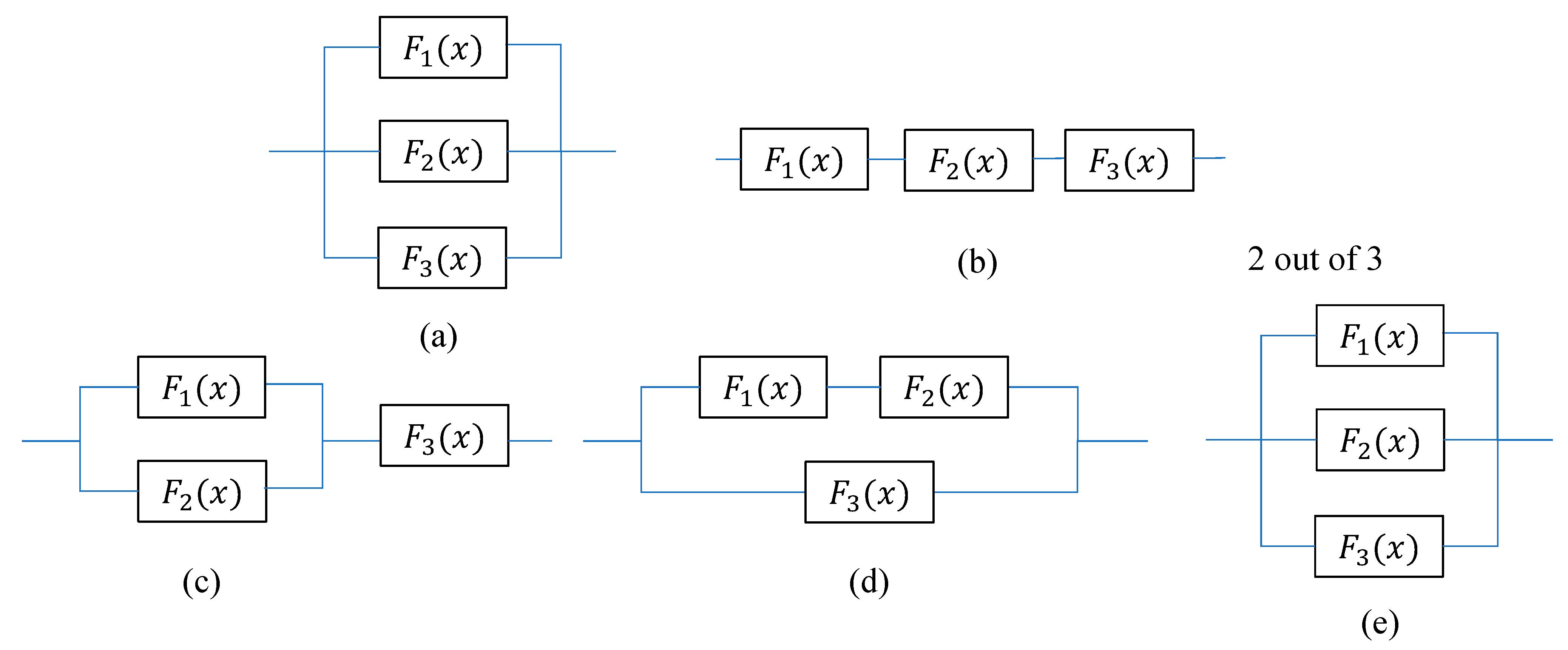
| No of Components | Mode | ||
|---|---|---|---|
| Two | (a) | ||
| (b) | |||
| Three | (a) | ||
| (b) | |||
| (c) | |||
| (d) | |||
| (e) |
| Copula Type | θ | ||
|---|---|---|---|
| Gaussian | — | ||
| Clayton | |||
| Frank | |||
| Gumbel |
| Zone | Remaining Thickness (mm) at Different Mining Distances | |||
|---|---|---|---|---|
| 0 km | 0.614 km | 1.546 km | 2.762 km | |
| 1 | 7.62 | 6.24 | 5.12 | 2.72 |
| 2 | 7.52 | 6.56 | 5.36 | 3.08 |
| 3 | 7.68 | 6.08 | 5.38 | 3.08 |
| 4 | 7.56 | 6.44 | 5.78 | 3.24 |
| 5 | 7.48 | 6.32 | 5.74 | 2.7 |
| 6 | 7.6 | 6.56 | 5.68 | 3.2 |
| 7 | 7.76 | 6.06 | 5.16 | 3.7 |
| 8 | 7.68 | 6.26 | 5.5 | 3.4 |
| 9 | 7.54 | 6.06 | 5.32 | 2.5 |
| 10 | 7.56 | 6.42 | 5.48 | 3.92 |
| 11 | 7.54 | 6.34 | 5.28 | 2.98 |
| 12 | 7.64 | 6.24 | 5.78 | 3.36 |
| Zone | Remaining Thickness (mm) at Different Mining Distances | |||
|---|---|---|---|---|
| 0 km | 0.614 km | 1.546 km | 2.762 km | |
| 1 | 5.92 | 5.3 | 3.82 | 2.24 |
| 2 | 6.00 | 4.74 | 3.62 | 2.76 |
| 3 | 5.84 | 5.26 | 3.56 | 1.94 |
| 4 | 5.74 | 5.04 | 3.36 | 2.9 |
| 5 | 5.58 | 5 | 3.3 | 2.14 |
| 6 | 5.80 | 5.22 | 3.44 | 2.28 |
| 7 | 5.66 | 4.86 | 3.42 | 2.48 |
| 8 | 5.88 | 4.8 | 3.28 | 2.56 |
| 9 | 5.94 | 4.94 | 4.03 | 2.06 |
| 10 | 5.86 | 5.20 | 3.70 | 2.6 |
| 11 | 5.72 | 4.7 | 3.46 | 2.86 |
| 12 | 5.76 | 5.06 | 3.3 | 1.8 |
| 13 | 5.82 | 4.72 | 3.36 | 2.33 |
| 14 | 5.94 | 5.07 | 3.56 | 2.56 |
| 15 | 6.00 | 5.03 | 3.8 | 2.82 |
| 16 | 5.84 | 5.14 | 3.4 | 2.62 |
| 17 | 5.66 | 5.24 | 4.07 | 1.60 |
| 18 | 5.84 | 5.08 | 3.36 | 2.44 |
| Component | Parameters | Mining Distances | |||
|---|---|---|---|---|---|
| 0 km | 0.614 km | 1.546 km | 2.762 km | ||
| Cutter head panel | Mean | 7.5983 | 6.2983 | 5.4650 | 3.1567 |
| Variance | 0.0807 | 0.1767 | 0.2350 | 0.4113 | |
| Screw conveyor | Mean | 5.8383 | 5.0500 | 3.5258 | 2.3600 |
| Variance | 0.1142 | 0.1771 | 0.2404 | 0.3391 | |
| Parameter Component | μai | σai | μβi | σβi |
|---|---|---|---|---|
| Cutter head panel | 7.542 | 0.1143 | 1.5380 | 0.0853 |
| Screw conveyor | 5.7499 | 0.1197 | 1.2638 | 0.0796 |
| Parameter Component | kai | kβi | λai | λβi | λγi |
|---|---|---|---|---|---|
| Cutter head panel | 7.5661 | 1.4909 | 82.54 | 1.502 | 11.6 |
| Screw conveyor | 5.811 | 1.2298 | 55.47 | 1.009 | 2.852 |
| Parameter Component | μai | bai | μβi | bβi |
|---|---|---|---|---|
| Cutter head panel | 7.6386 | 0.0805 | 1.5354 | 0.1660 |
| Screw conveyor | 5.8887 | 0.0872 | 1.5967 | 0.2153 |
| Parameter Component | μai | sai | μβi | sβi |
|---|---|---|---|---|
| Cutter head panel | 7.5932 | 0.0452 | 1.5419 | 0.1023 |
| Screw conveyor | 5.8474 | 0.0607 | 1.4698 | 0.1324 |
| Distribution | Measures | Cutter Head Panel | Screw Conveyor |
|---|---|---|---|
| Normal | AIC | ||
| BIC | |||
| Weibull | AIC | ||
| BIC | |||
| Gumbel | AIC | ||
| BIC | |||
| Logistics | AIC | ||
| BIC |
| Item | Gaussian | Frank | Clayton | Gumbel |
|---|---|---|---|---|
| AIC Value | ||||
| BIC Value |
| Dependency Structure | Predicted Mining Distance at Different Reliability Levels (km) | |||
|---|---|---|---|---|
| Reliability = 0.1 | Reliability = 0.2 | Reliability = 0.3 | ||
| Dependent | Gumbel copula | 4.2653 | 4.0834 | 3.9543 |
| Gaussian copula | 4.2653 | 4.0807 | 3.9543 | |
| Clayton copula | 4.2614 | 4.0803 | 3.9545 | |
| Frank copula | 4.2649 | 4.0804 | 3.9546 | |
| Independent | Joint | 4.1371 | 3.9970 | 3.8919 |
| Screw conveyor | 4.2655 | 4.0836 | 3.9546 | |
| Cutter head panel | 4.7628 | 4.5676 | 4.4424 | |
Publisher’s Note: MDPI stays neutral with regard to jurisdictional claims in published maps and institutional affiliations. |
© 2022 by the authors. Licensee MDPI, Basel, Switzerland. This article is an open access article distributed under the terms and conditions of the Creative Commons Attribution (CC BY) license (https://creativecommons.org/licenses/by/4.0/).
Share and Cite
Fu, X.; Wu, M.; Zhang, L. Probabilistic Life Prediction of Tunnel Boring Machine under Wearing Conditions with Incomplete Information. Buildings 2022, 12, 1959. https://doi.org/10.3390/buildings12111959
Fu X, Wu M, Zhang L. Probabilistic Life Prediction of Tunnel Boring Machine under Wearing Conditions with Incomplete Information. Buildings. 2022; 12(11):1959. https://doi.org/10.3390/buildings12111959
Chicago/Turabian StyleFu, Xianlei, Maozhi Wu, and Limao Zhang. 2022. "Probabilistic Life Prediction of Tunnel Boring Machine under Wearing Conditions with Incomplete Information" Buildings 12, no. 11: 1959. https://doi.org/10.3390/buildings12111959
APA StyleFu, X., Wu, M., & Zhang, L. (2022). Probabilistic Life Prediction of Tunnel Boring Machine under Wearing Conditions with Incomplete Information. Buildings, 12(11), 1959. https://doi.org/10.3390/buildings12111959