Review

Knowledge Map of Urban Morphology and Thermal Comfort: A Bibliometric Analysis Based on CiteSpace


School of Human Settlements and Civil Engineering, Xi’an Jiaotong University, Xi’an 710049, China
*
Author to whom correspondence should be addressed.
Buildings 2021, 11(10), 427; https://doi.org/10.3390/buildings11100427

Submission received: 28 August 2021 / Revised: 18 September 2021 / Accepted: 18 September 2021 / Published: 23 September 2021
(This article belongs to the Special Issue Research on Urban Heat Island and Heavily Polluted Cities)

Abstract

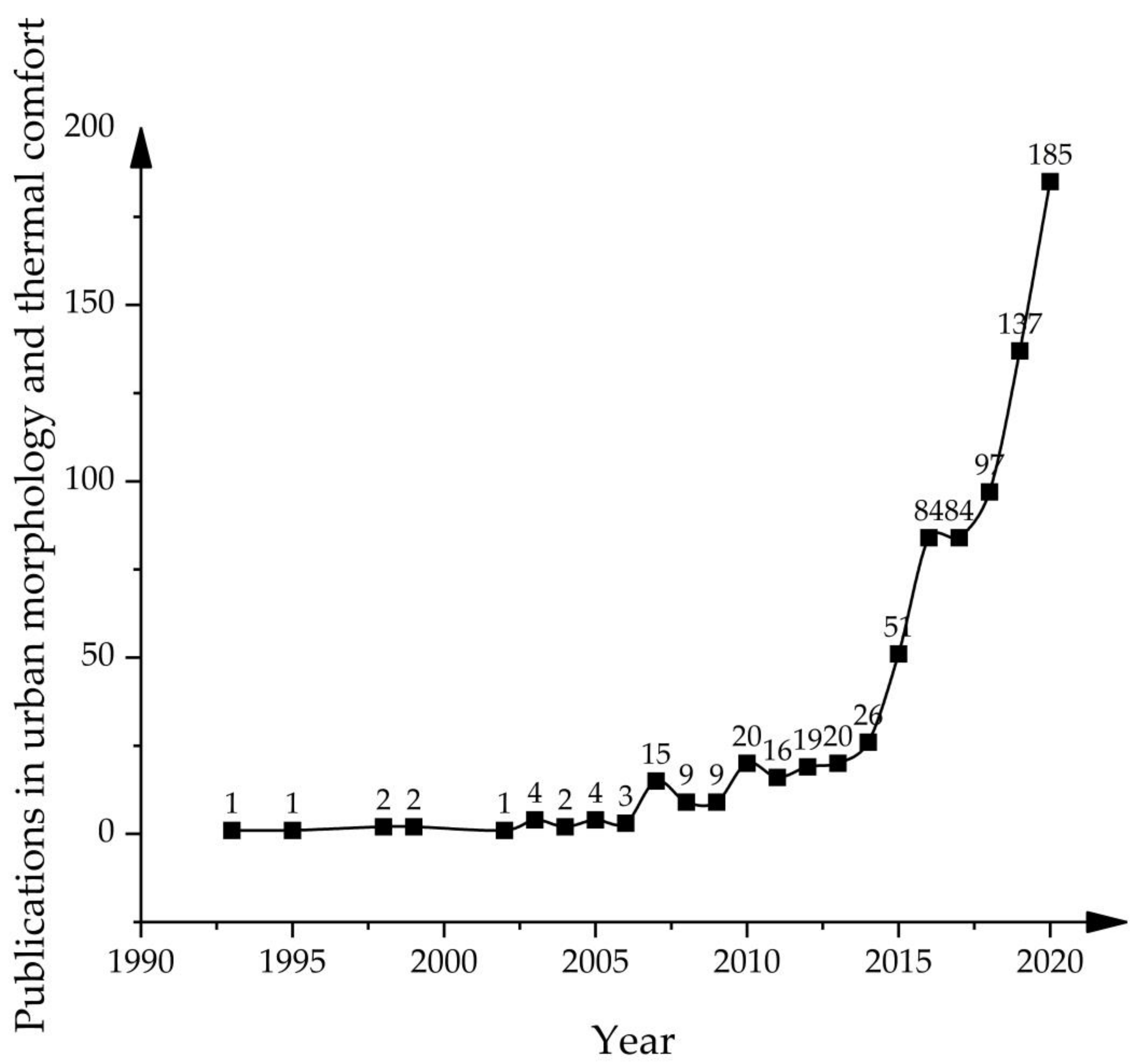
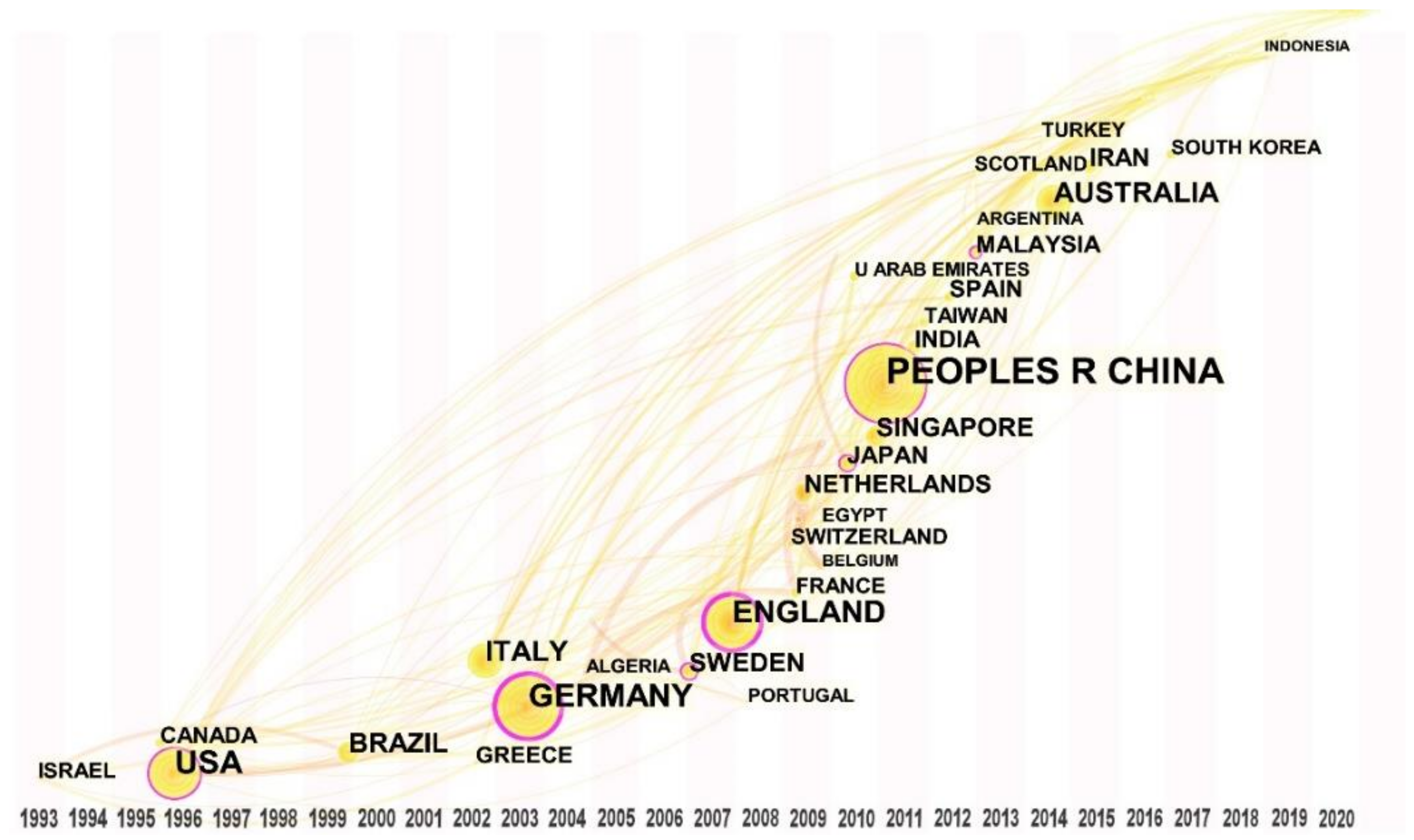
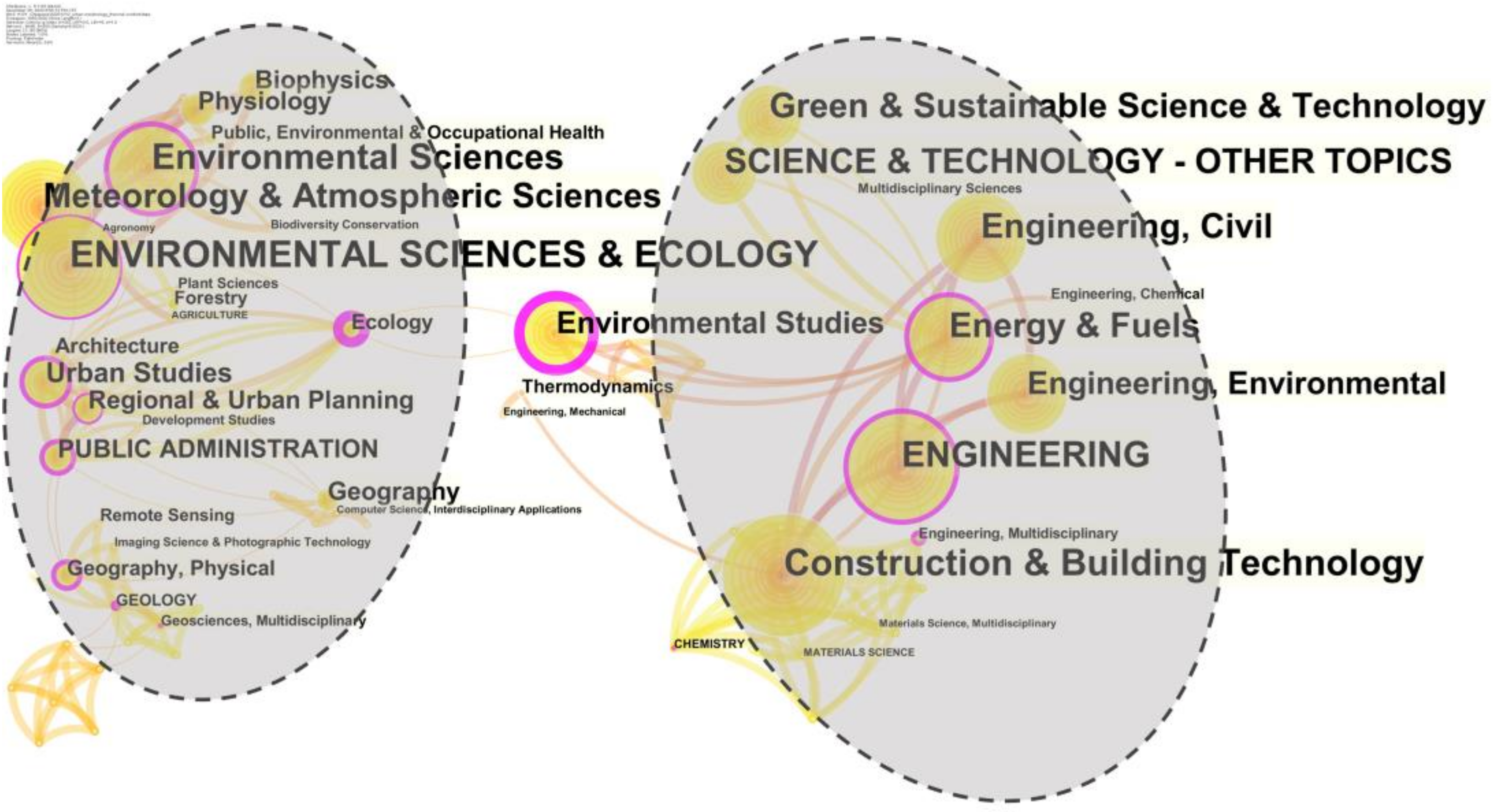
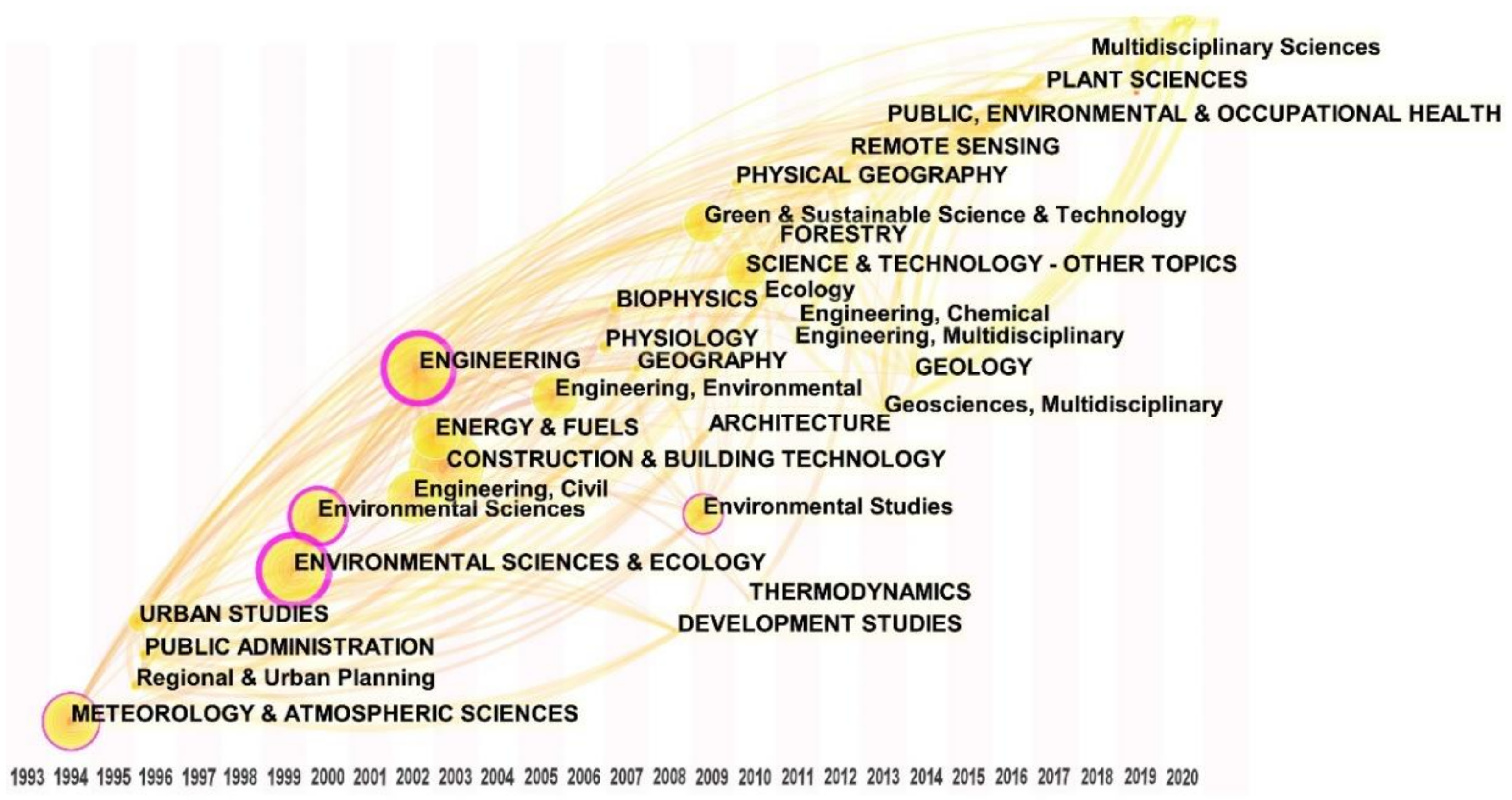
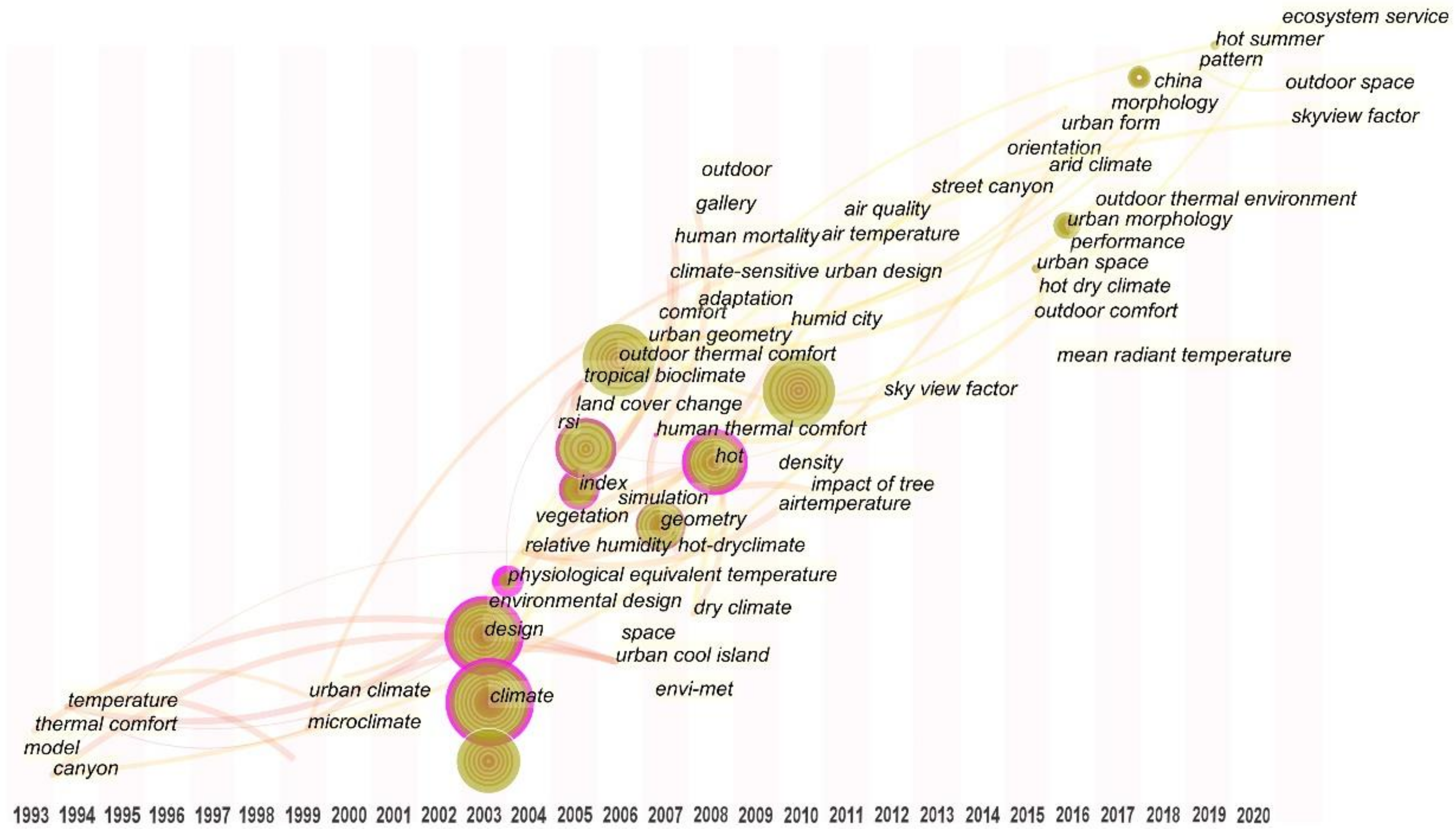
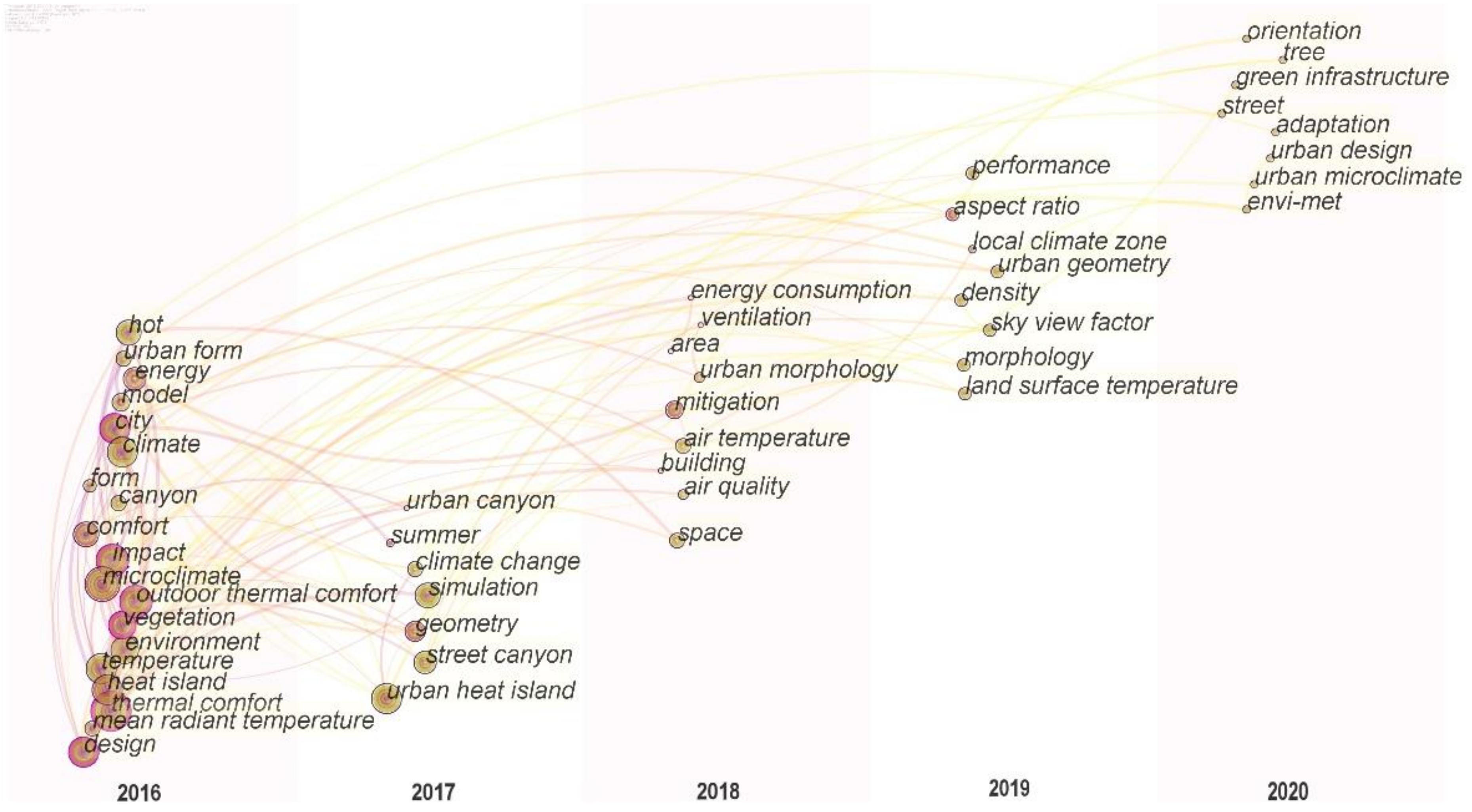
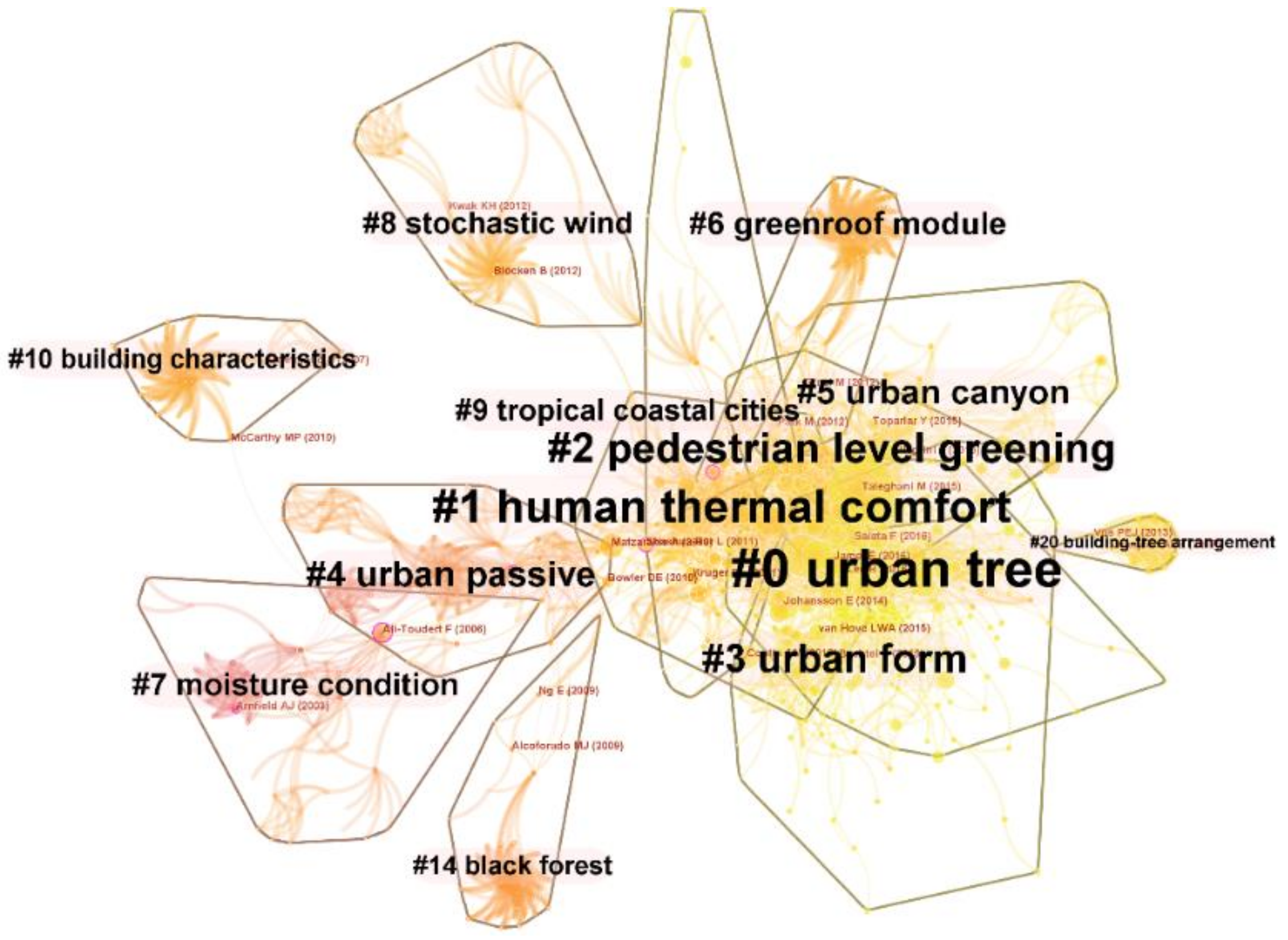
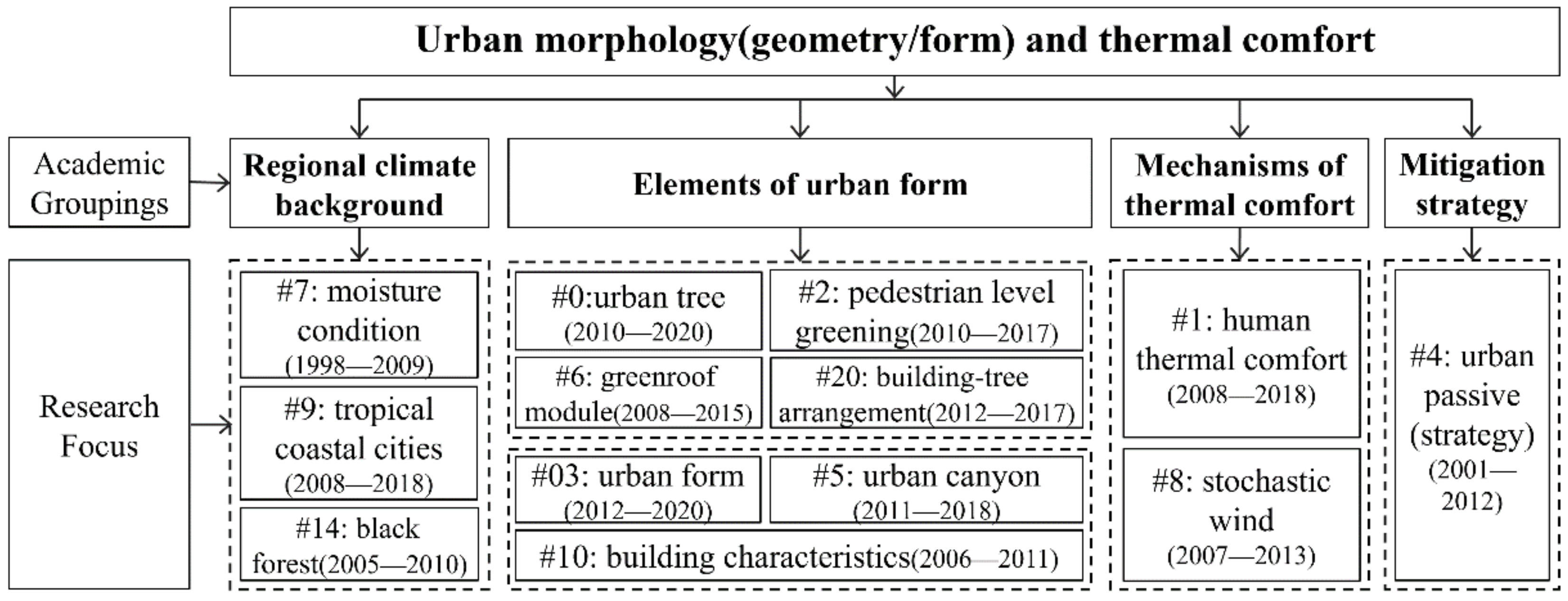
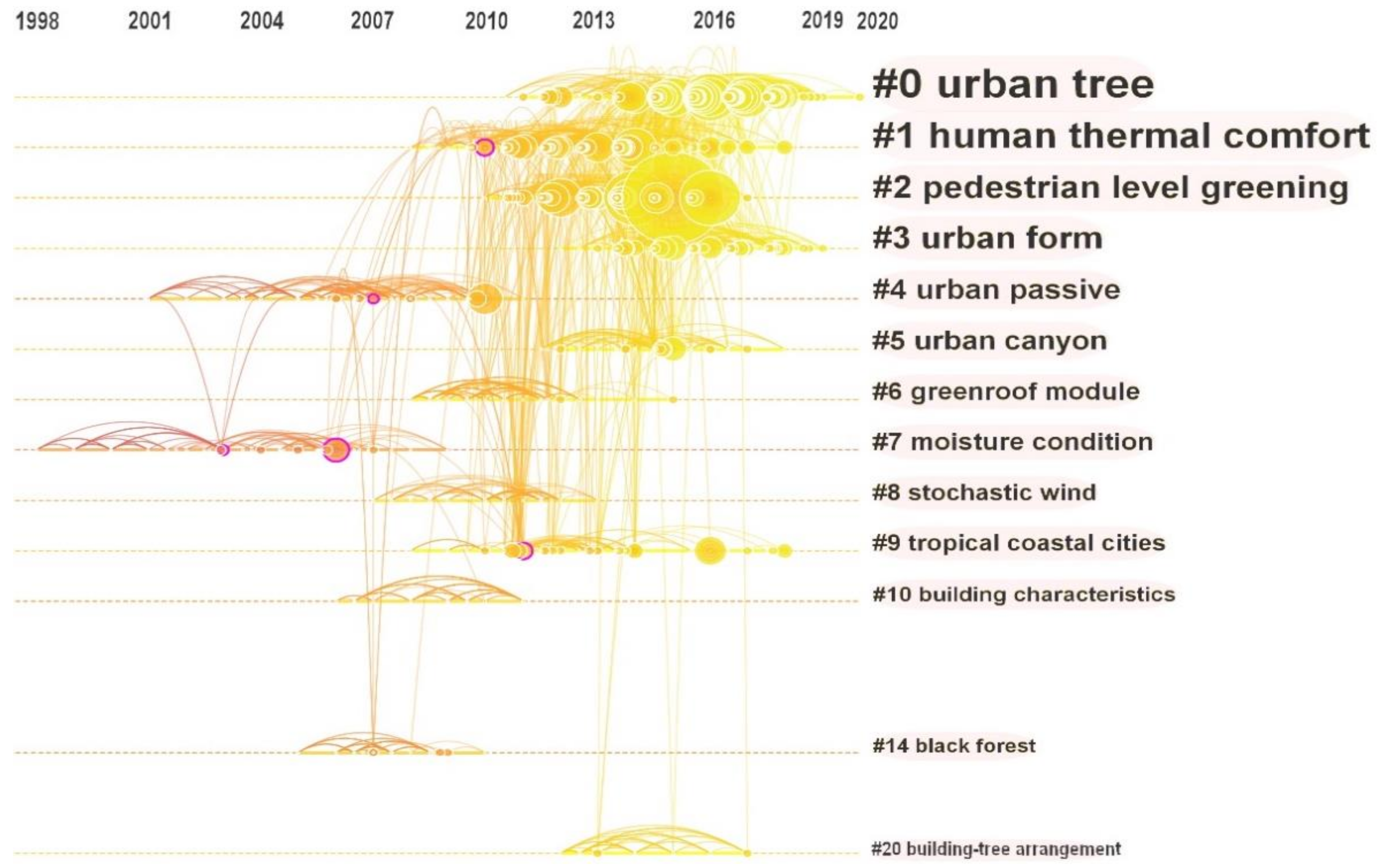
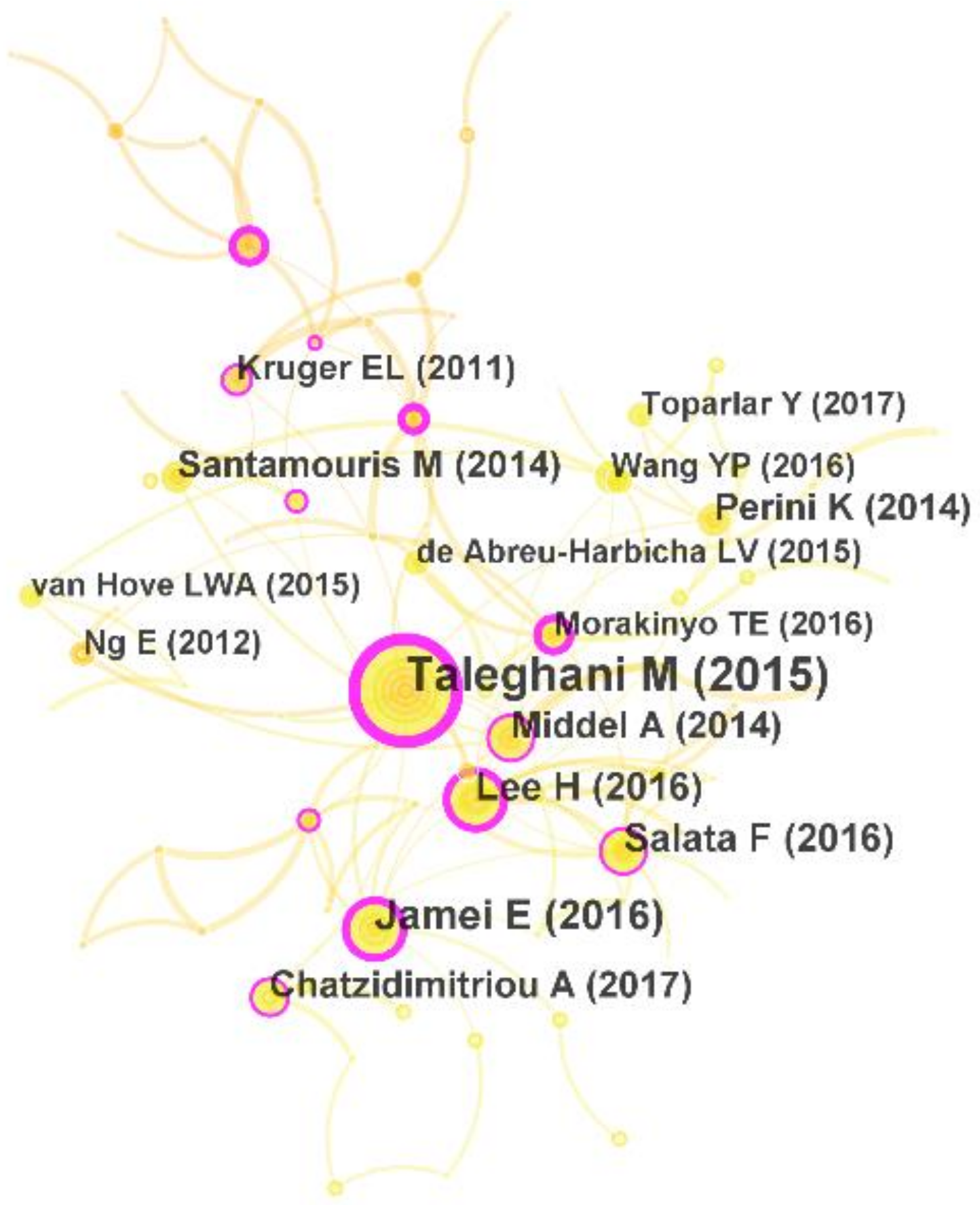
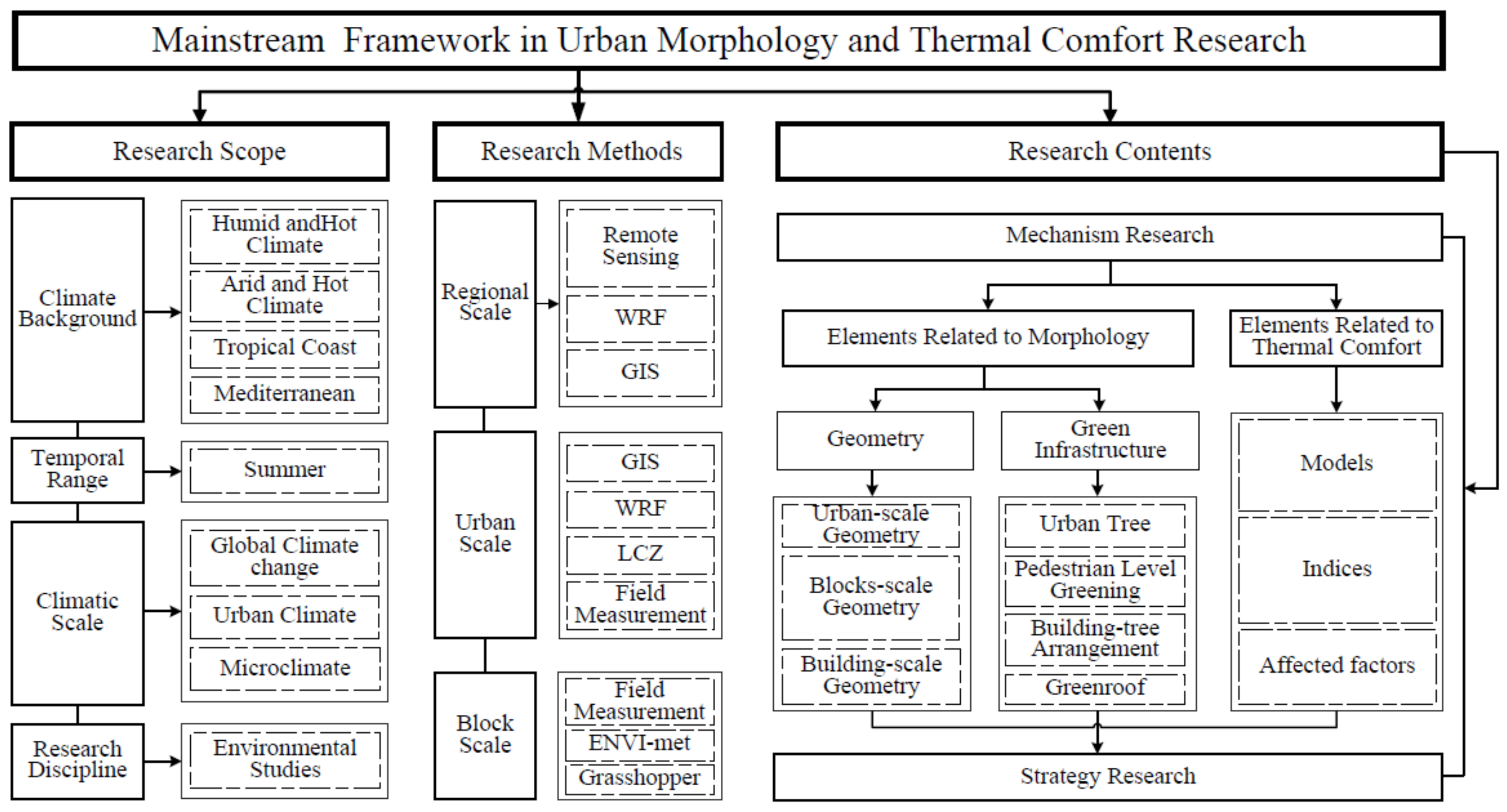
In the context of global climate change, urban morphology is closely related to thermal comfort and contributes to sustainable urban development. Academics started to pay attention to related topics and carried out many studies during the last decades. This paper aims to summarize the research achievements and the development track for future studies. The Web of Science database and CiteSpace were used in this paper to conduct a bibliometric analysis of 556 studies in related fields from 1993 to 2020. Using a three-level co-occurrence analysis of 446 keywords, 1187 cocited literature clusters, and 15 landmark studies, the research topics and mainstream research frameworks were identified. The results show that with the increasing participation of disciplines such as computer science, ecology, and chemistry, the purpose of future research will shift to a focus on anthropogenic heat emissions, energy consumption, air pollution, and other aspects, and new research tools will be needed. In addition to building-scale and block-scale morphology, urban-scale morphology and green infrastructure will become the focus in the future. This study provides a systematic review of research about urban morphology and thermal comfort, which can inspire other researchers and policy makers.
Keywords: urban morphology; thermal comfort; CiteSpace; bibliometric analysis urban morphology; thermal comfort; CiteSpace; bibliometric analysis