Article

Effect of Cryogenic Treatment on the Mechanical Anisotropy and Microstructure of 2024 Aluminum Alloy


1
School of Intelligent Manufacturing and Mechanical Engineering, Hunan Institute of Technology, Hengyang 421002, China
2
School of Nuclear Science and Technology, University of South China, Hengyang 421001, China
3
School of Mechanical Engineering, University of South China, Hengyang 421001, China
*
Authors to whom correspondence should be addressed.
Metals 2026, 16(9), 1034; https://doi.org/10.3390/met16091034
Submission received: 17 August 2026 / Revised: 7 September 2026 / Accepted: 14 September 2026 / Published: 17 September 2026
(This article belongs to the Special Issue Light Alloy and Its Application (3rd Edition))

Abstract

Uniaxial tensile tests were conducted to investigate the mechanical anisotropy of rolled 2024 aluminum alloy sheets subjected to different cryogenic treatment durations along the rolling direction (0°), diagonal direction (45°), and transverse direction (90°). The experimental results indicate that the mechanical properties of the rolled 2024 aluminum alloy are strongly dependent on the treatment process and exhibit pronounced anisotropy. With increasing cryogenic treatment time, the yield strength first increases and then tends to stabilize. The optimal combination of mechanical properties is achieved after cryogenic treatment for 16 h, with the yield strength increasing to 385–390 MPa. Cryogenic treatment has no significant effect on the grain morphology of the matrix, but promotes dislocation multiplication and a more uniform distribution of precipitation features. The anisotropy analysis shows that the yield strength in the 45° direction is consistently lower than that in the 0° and 90° directions. The in-plane anisotropy parameter (IPA) decreased from 4.8% in the condition without deep cryogenic treatment to 3.0% after 4 h of cryogenic treatment, followed by an increase to 6.7% after 24 h. This result indicates that short-term cryogenic treatment can effectively reduce the in-plane anisotropy of the 2024 aluminum alloy.

1. Introduction

2024 aluminum alloy possesses several advantages, including low density, high strength, and excellent formability [1,2] and has therefore been widely used in high-performance applications, particularly in the aerospace and automotive industries [3,4]. During the forming of aluminum alloy structural components, such as fuselage structures, wings, and empennages, plastic deformation plays an important role in determining the final properties of the products [5,6,7,8,9]. Meanwhile, rolled aluminum alloy sheets commonly exhibit orientation-dependent mechanical responses during plastic deformation, which may affect their forming behavior and service performance [10,11,12]. Takahashi et al. [13] investigated the evolution of plastic anisotropy in aluminum alloy sheets by analyzing the flow stresses along different loading directions and demonstrated that instability associated with lattice rotation can intensify anisotropic behavior. Fourmeau et al. [14] systematically investigated the direction-dependent deformation characteristics of AA7075-T651 aluminum alloy, while El Aty et al. [15] elucidated the anisotropic characteristics of Al–Li alloys from the perspectives of deformation behavior and strengthening mechanisms. These studies demonstrate that the mechanical response of rolled aluminum alloy sheets is closely related to the loading orientation and underlying microstructural characteristics. Therefore, the directional mechanical response should be considered when evaluating the mechanical performance of rolled aluminum alloy sheets.
On the basis of solution treatment and aging, the introduction of deep cryogenic treatment can further regulate the microstructure and mechanical properties of 2024 aluminum alloy. Deep cryogenic treatment generally involves exposing the material to cryogenic temperatures, typically near the temperature of liquid nitrogen (approximately −196 °C), for a specified period, thereby altering the defect structures and solute-atom distribution within the material. Previous studies have applied different cryogenic treatment routes and holding times to AA2024. Zhou et al. [16] subjected 2024-T351 aluminum alloy to cryogenic treatment at 77 K for holding times of 2–12 h and also investigated prolonged treatment up to 24 h, demonstrating that the tensile response and microstructural evolution were dependent on the cryogenic treatment duration. Araghchi et al. [17] immersed water-quenched 2024 aluminum alloy in liquid nitrogen at −196 °C, followed by rapid reheating and artificial aging, and reported changes in the residual stress, microstructure, and mechanical properties. Jia et al. [18] incorporated deep cryogenic treatment into a T6I4 treatment route for AA2024 and showed that a short cryogenic treatment step could influence tensile properties and precipitate characteristics. In addition, a recent review by Yao et al. [19] summarized that the effects of deep cryogenic treatment on aluminum alloys are closely related to treatment temperature, holding time, and the subsequent heat-treatment route. These previous studies suggest that cryogenic treatment can modify the defect structure and precipitation behavior of aluminum alloys; however, the resulting mechanical response depends strongly on the specific treatment parameters and initial material condition.
It should be noted that the effects of deep cryogenic treatment are strongly dependent on the treatment duration. Although previous studies have demonstrated the feasibility of cryogenic treatment for AA2024, most investigations have focused on overall mechanical properties, residual-stress evolution, precipitation behavior, or specific combinations of cryogenic treatment and aging. Comparatively less attention has been paid to how the directional mechanical response of a rolled AA2024 sheet evolves with cryogenic holding time. In particular, the relationship among cryogenic treatment duration, tensile responses along different in-plane orientations, fracture behavior, and microstructural evolution remains insufficiently clarified. In the present study, −196 °C was selected as the cryogenic treatment temperature because immersion in liquid nitrogen provides a stable deep cryogenic environment and is consistent with cryogenic treatment conditions previously employed for AA2024 [20,21]. A holding-time range of 0–24 h was employed to systematically investigate the evolution of the mechanical response and microstructure over different cryogenic treatment durations. The novelty of the present study therefore does not lie simply in the use of a liquid-nitrogen temperature, but in systematically evaluating the effect of cryogenic treatment duration on the directional mechanical response of the rolled 2024-T3 aluminum alloy along the 0°, 45°, and 90° orientations and correlating these responses with fracture characteristics and microstructural evolution.
Accordingly, the main objective of this study is to clarify the influence of deep cryogenic treatment duration on the mechanical response and microstructural evolution of the rolled 2024-T3 aluminum alloy under a fixed solution treatment and artificial-aging route.

2. Materials and Methods

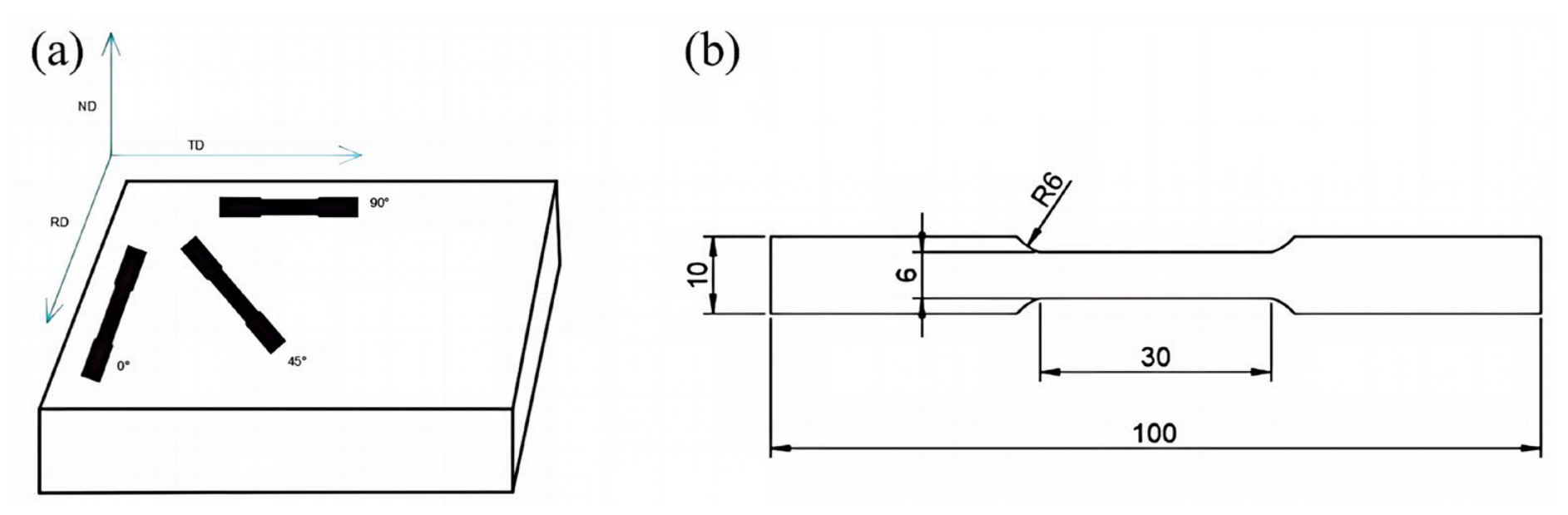
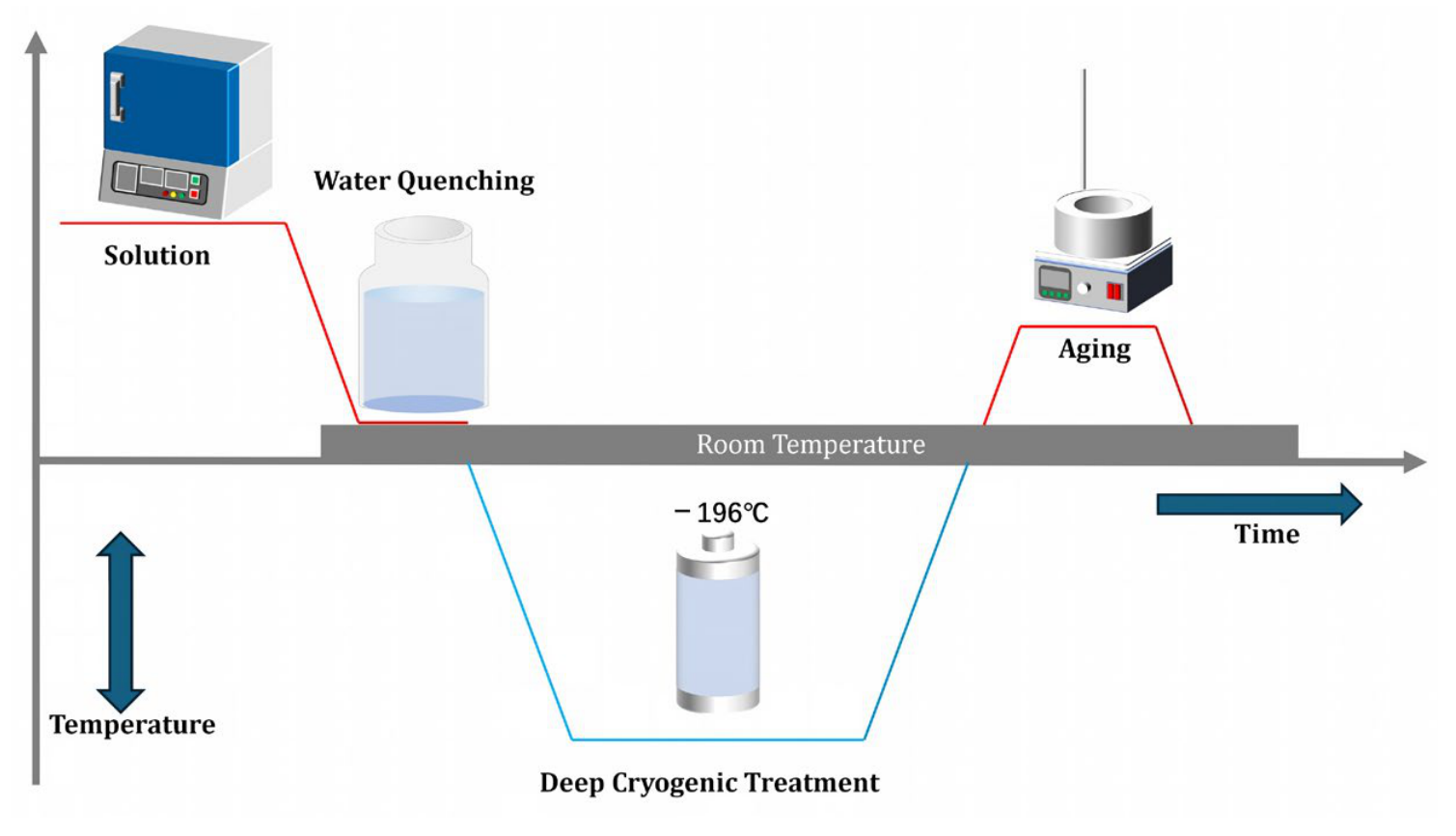
The experimental material was a commercially available 2 mm thick rolled 2024-T3 aluminum alloy sheet with overall dimensions of 2000 mm × 1000 mm × 2 mm. The chemical composition was determined using an Agilent 5110 inductively coupled plasma atomic-emission spectrometer (Agilent Technologies, Santa Clara, CA, USA), and the measured composition is listed in Table 1. The specimens used in this study were taken from the central region of the original sheet. The central region of the original sheet was first uniformly sectioned into smaller plates by wire electrical discharge machining while retaining the rolling-direction reference. Tensile specimens were subsequently machined from these plates by wire electrical discharge machining along three orientations at angles of 0°, 45°, and 90° with respect to the rolling direction, which were designated as the 0° (rolling direction, RD), 45° (diagonal direction), and 90° (transverse direction, TD) directions, respectively. The tensile specimens had an overall length of 100 mm, a parallel-section length of 30 mm, a parallel-section width of 6 mm, a grip-section width of 10 mm, a transition radius of 6 mm, and a thickness of 2 mm. The sampling location, sampling orientations, and detailed specimen geometry are illustrated in Figure 1. The specimens were solution-treated at 500 °C for 1 h, followed by water quenching. After returning to room temperature, the specimens assigned to the cryogenic treatment groups were subsequently immersed in liquid nitrogen at −196 °C for 4, 8, 12, 16, 20, or 24 h, while the 0 h condition was used as the reference condition without deep cryogenic treatment. After cryogenic treatment, the specimens were removed from the liquid nitrogen and allowed to naturally warm to room temperature. Subsequently, artificial aging was performed at 180 °C for 6 h. The overall heat-treatment procedure is illustrated in Figure 2. The complete experimental variants and corresponding heat-treatment parameters are summarized in Table 2. Prior to tensile testing, the specimens were ultrasonically cleaned in 95% ethanol to remove surface contaminants. Room-temperature tensile tests were conducted using an Instron 3369 universal testing machine (Instron Corporation, Norwood, MA, USA) at a crosshead speed of 1.8 mm/min.
The microstructures of the specimens were examined using a ZEISS Axio Vert.A1 optical microscope (Carl Zeiss AG, Oberkochen, Germany). Specimens under different treatment conditions were prepared according to standard metallographic procedures. Samples with dimensions of 10 × 10 × 2 mm3 were sectioned. After the corresponding heat treatments, the specimens were sequentially ground with silicon carbide papers from 180 to 2000 grit to ensure consistent scratch orientation and a flat surface without distortion, followed by mechanical polishing until a smooth and scratch-free finish was obtained. The polished specimens were anodized in a 5% HBF solution at 20 V. Systematic trials with varying anodizing times indicated that 50–60 s yielded the most distinct microstructural features, and this duration was therefore adopted.
After room-temperature tensile testing, samples were sectioned from the fractured specimens. The sectioned samples were sequentially ground using silicon carbide abrasive papers with grit sizes of 400, 800, 1200, and 2000, followed by mechanical polishing using 1 μm diamond polishing paste on a metallographic polishing machine until a smooth and scratch-free surface was obtained. The polished samples were then ultrasonically cleaned in 95% ethanol. Microstructural and fracture-surface characterization was performed using a TESCAN MIRA3 scanning electron microscope (TESCAN ORSAY HOLDING, Brno, Czech Republic) equipped with a secondary electron (SE) detector for fracture-surface imaging. The microscope was operated within an accelerating-voltage range of 0.5–30 kV, with a maximum resolution of 0.6 nm and a maximum magnification of approximately 1,000,000×.
For transmission electron microscopy (TEM) characterization, 3 mm diameter disks were punched from regions near the fracture surface and from the undeformed regions of the tensile specimens. The disks were mechanically polished to a thickness of approximately 0.08 mm and subsequently twin-jet electropolished using a methanol–nitric acid solution with a volume ratio of 7:3, prepared from 95% methanol and 65 wt% nitric acid. Electropolishing was conducted at −30 to −20 °C under an applied voltage of 20 V. TEM observations were finally performed using a Tecnai G2 F20 transmission electron microscope (FEI Company, Hillsboro, OR, USA) operated at an accelerating voltage of 200 kV.

3. Experimental Results and Discussion

3.1. Stress–Strain Behavior

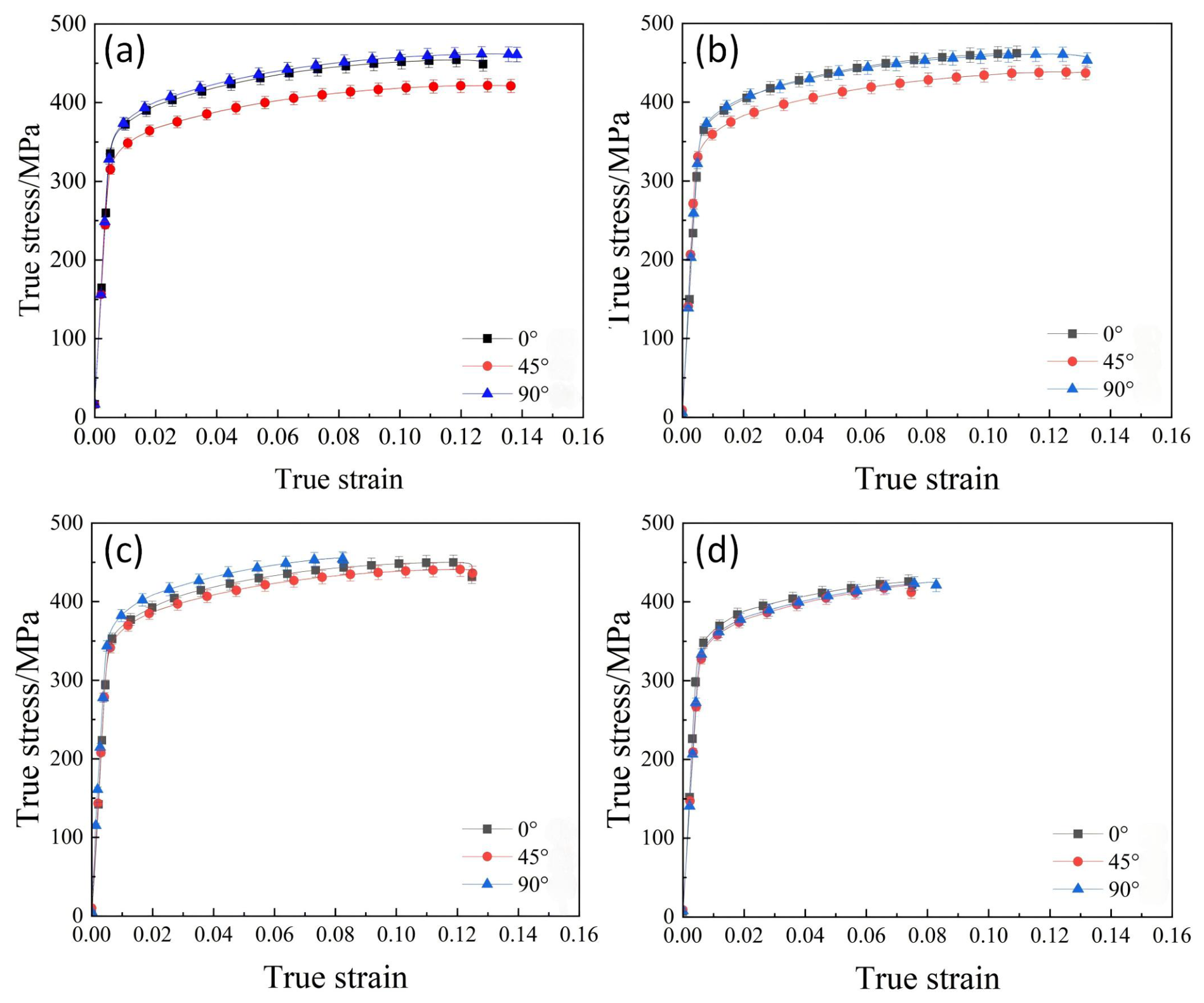
Figure 3 presents the true stress–true strain curves of the 2024 aluminum alloy after solution treatment at 500 °C for 1 h, deep cryogenic treatment for different durations, and subsequent aging at 180 °C for 6 h. As shown in Figure 3a–d, all specimens exhibit pronounced work-hardening behavior during tensile deformation. The true stress increases rapidly at the initial stage of plastic deformation, followed by a gradually reduced rate of increase with increasing strain. For the specimen without deep cryogenic treatment, as shown in Figure 3a, the true stress is relatively higher in the 90° direction and lower in the 45° direction. As shown in Figure 3b, after 8 h of deep cryogenic treatment, the true stress increases overall in all three directions, indicating an enhanced resistance to deformation. As shown in Figure 3c, when the cryogenic treatment duration is extended to 16 h, the true stress further increases and remains at a relatively high level over a wider strain range, suggesting a more pronounced strengthening effect. As shown in Figure 3d, with a further increase in the cryogenic treatment duration to 24 h, no significant additional increase in true stress is observed compared with the 16 h condition, and some curves show a slight decrease, indicating that the strengthening effect tends to stabilize. Overall, an appropriate extension of the deep cryogenic treatment duration is beneficial for increasing the true stress level of the 2024 aluminum alloy, with the 16 h treatment exhibiting relatively high resistance to deformation.

3.2. Strength and Elongation

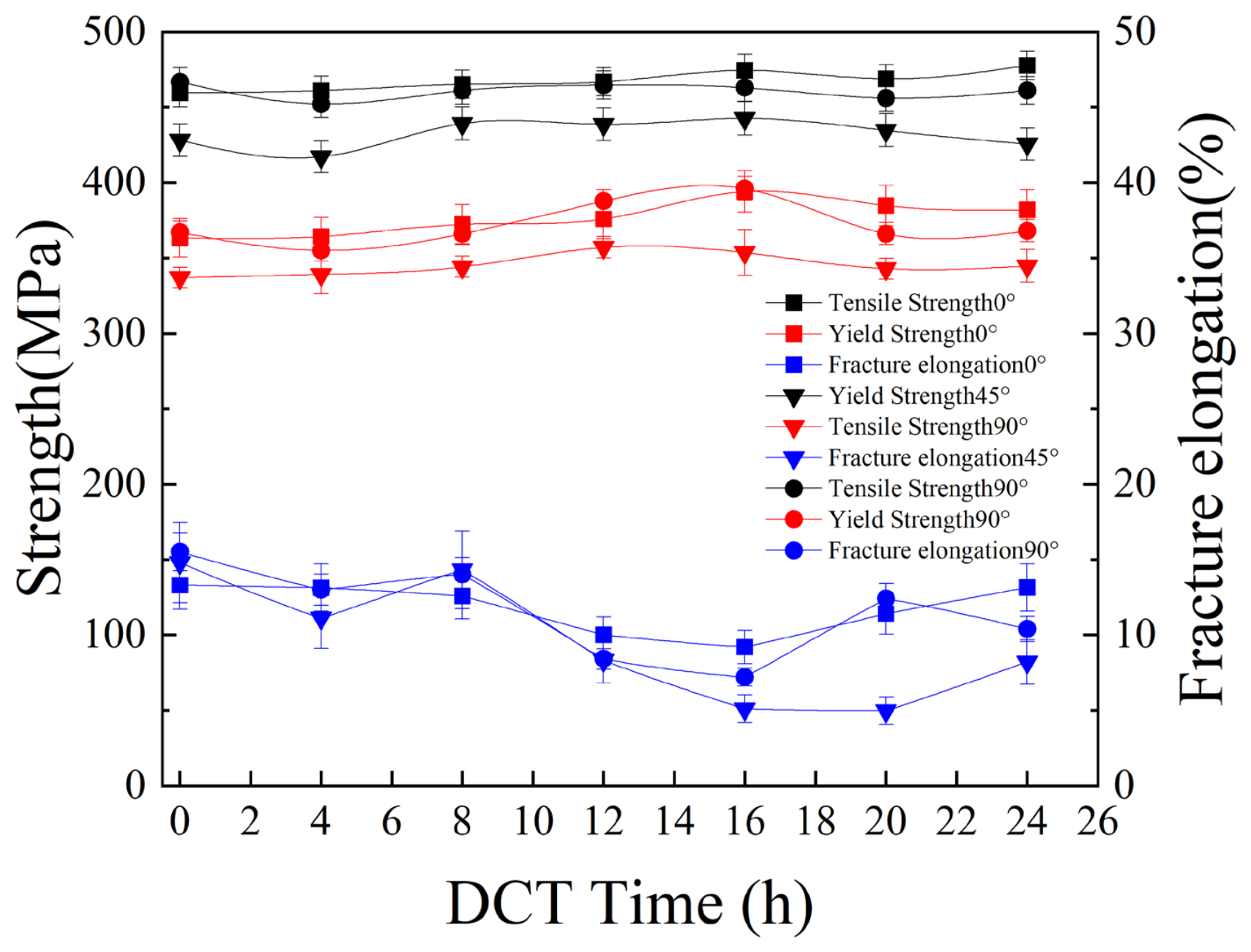
Figure 4 shows that the mechanical properties of specimens in different orientations exhibit similar responses to the duration of deep cryogenic treatment. With increasing cryogenic treatment duration, both the ultimate tensile strength and yield strength generally increase initially and then tend to stabilize, reaching relatively high levels at approximately 16 h. Further extension of the cryogenic treatment duration results in only limited additional improvement in strength, indicating that the strengthening effect gradually approaches saturation. Meanwhile, the elongation after fracture first decreases and then increases, reaching a minimum at approximately 16 h, with the most pronounced decrease observed in the 45° direction. Overall, an appropriate duration of deep cryogenic treatment is beneficial for improving the strength of the alloy, although this enhancement is accompanied by a certain loss of ductility. When the cryogenic treatment duration exceeds 16 h, the strength–ductility response of the material tends to stabilize.

3.3. In-Plane Anisotropy Parameter (IPA)

As shown in Figure 4, the yield strength of the specimens subjected to different heat-treatment conditions exhibits pronounced differences among the in-plane orientations. In general, the specimens oriented at 45° show the lowest yield strength, whereas those oriented at 0° and 90° exhibit relatively higher values. In addition, the magnitude of the yield-strength differences among the three orientations varies with the heat-treatment condition, indicating that the heat-treatment process has a significant influence on the in-plane yielding behavior of the material. To quantitatively characterize these orientation-dependent differences in yield strength, the in-plane anisotropy parameter (IPA), which has been used in previous studies to evaluate the mechanical anisotropy of aluminum alloy sheets [22,23,24,25], is employed in this study, and its calculation is expressed as follows:
I P A = 2 Y S ( max ) Y S ( min ) Y S ( mid ) 2 Y S ( max ) × 100 %
where YS(max), YS(mid), and YS(min) represent the maximum, intermediate, and minimum yield strengths, respectively, obtained along the different orientations. The IPA values of the 2024 aluminum alloy subjected to different deep cryogenic treatment durations are listed in Table 3.
As shown in Table 3, the IPA does not vary monotonically with increasing cryogenic treatment duration. The IPA decreases from 4.8% in the condition without cryogenic treatment to 3.0% after 4 h, indicating a reduced difference in yield strength among the three investigated orientations. With further increases in cryogenic treatment duration, the IPA gradually increases, reaching 6.7% after 24 h. This result indicates that short-duration cryogenic treatment is associated with a more uniform directional yield response, whereas prolonged cryogenic treatment leads to an increased difference in yield strength among the investigated orientations.

3.4. Fracture Behavior Analysis

3.4.1. Metallographic Analysis of the Fracture Region

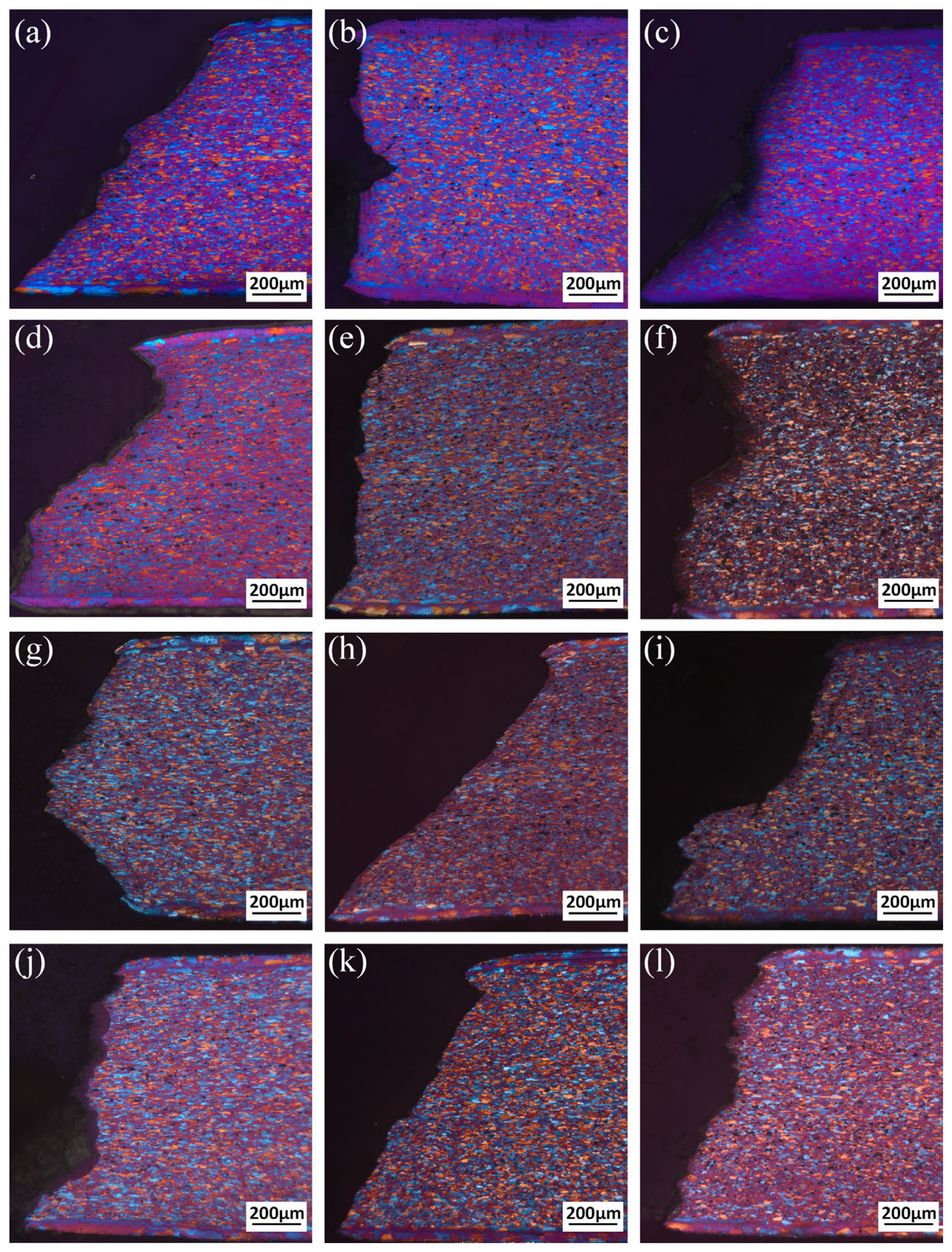
To evaluate the deformation and fracture characteristics of the specimens after tensile testing, metallographic observations were performed on the regions near the fracture surfaces. The specimens subjected to different cryogenic treatment durations and tested along the 0°, 45°, and 90° orientations were comparatively examined to identify possible differences in local deformation morphology and fracture-related microstructural features. The corresponding metallographic images are presented in Figure 5.
As shown in Figure 5a–l, the metallographic observations reveal that the fracture profiles of all specimens exhibit pronounced irregular features accompanied by plastic deformation zones to varying degrees, indicating that the fracture process is predominantly ductile. As shown in Figure 5a–c, without deep cryogenic treatment, the microstructure near the fracture region shows a certain degree of non-uniformity, with evident localized deformation concentration observed in some areas. As shown in Figure 5d–f, after 8 h of deep cryogenic treatment, the microstructure around the fracture region becomes more uniform, and the plastic deformation zone exhibits a more continuous distribution. As shown in Figure 5g–i for 16 h and Figure 5j–l for 24 h, no substantial changes are observed in the overall microstructural morphology near the fracture region, while the deformation zones remain relatively continuous. No obvious crack-propagation paths or brittle-fracture characteristics are detected. Combined with the mechanical property results, these observations indicate that deep cryogenic treatment does not alter the dominant fracture mode of the material, but exerts a certain influence on the microstructural uniformity and deformation compatibility near the fracture region.

3.4.2. SEM

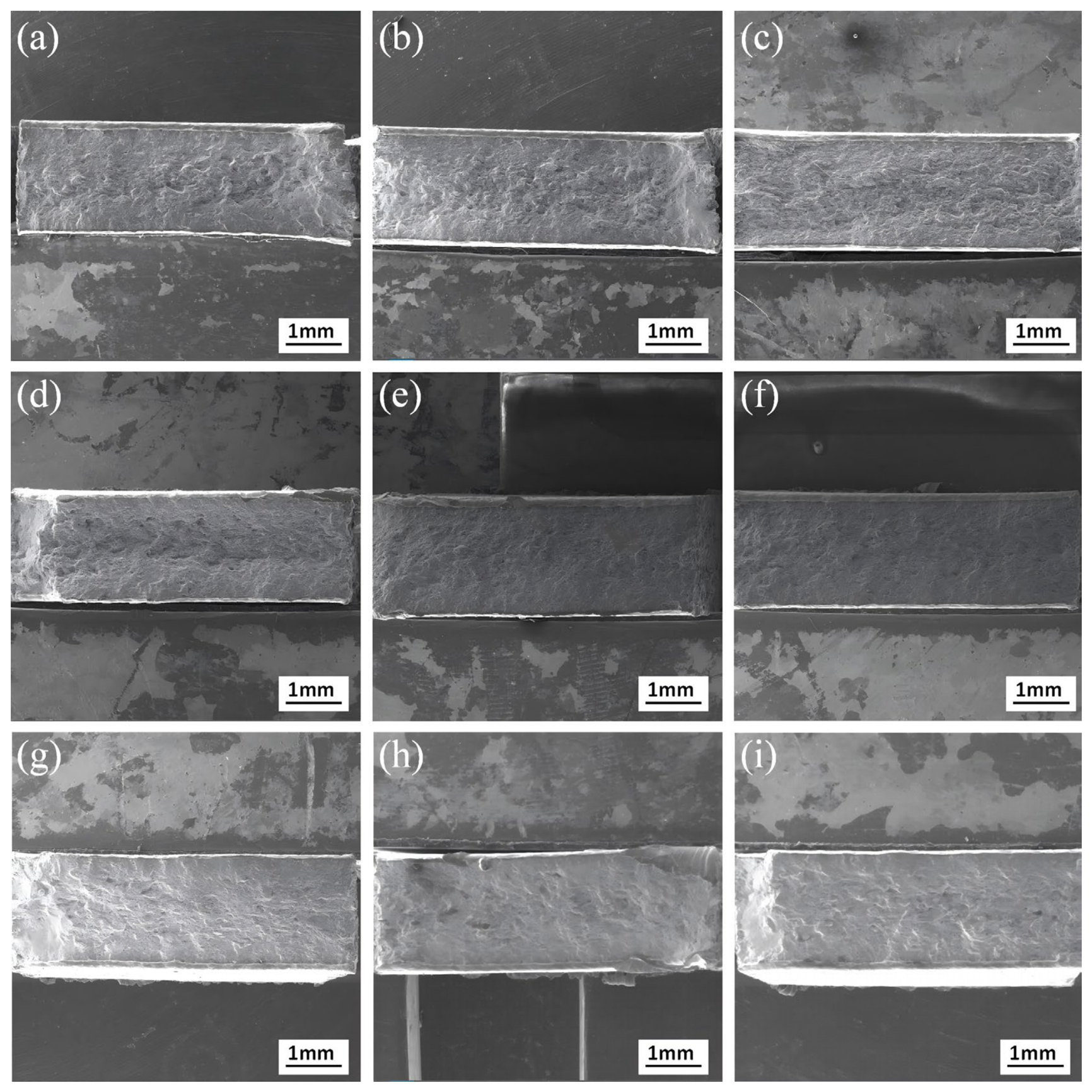
To further evaluate the fracture behavior of the 2024 aluminum alloy, macroscopic SEM observations were performed on the fracture surfaces of specimens tested along the 0°, 45°, and 90° orientations after different cryogenic treatment durations. The corresponding macroscopic fracture morphologies are presented in Figure 6.
The macroscopic SEM observations reveal that the fracture surfaces of all specimens exhibit typical ductile fracture characteristics, with relatively rough fracture regions accompanied by a certain degree of necking, indicating that the material underwent substantial plastic deformation during tensile testing.
As shown in Figure 6a–i, as the deep cryogenic treatment duration increases from 8 h to 24 h, no significant changes are observed in the overall macroscopic fracture morphology. Typical brittle-fracture features, such as cleavage steps and river patterns, are not observed, indicating that deep cryogenic treatment does not alter the fracture mechanism of the material. As shown in Figure 6d–f, the specimens treated for 16 h exhibit slightly reduced necking, which is consistent with the decrease in elongation after fracture shown in Figure 4, indicating a reduction in ductility under this condition. As shown in Figure 6a–i, the differences in fracture morphology among specimens with different orientations are relatively small, with only slight variations in the surface undulation of local fracture regions, suggesting that the directional dependence of fracture behavior is relatively limited under deep cryogenic treatment conditions.
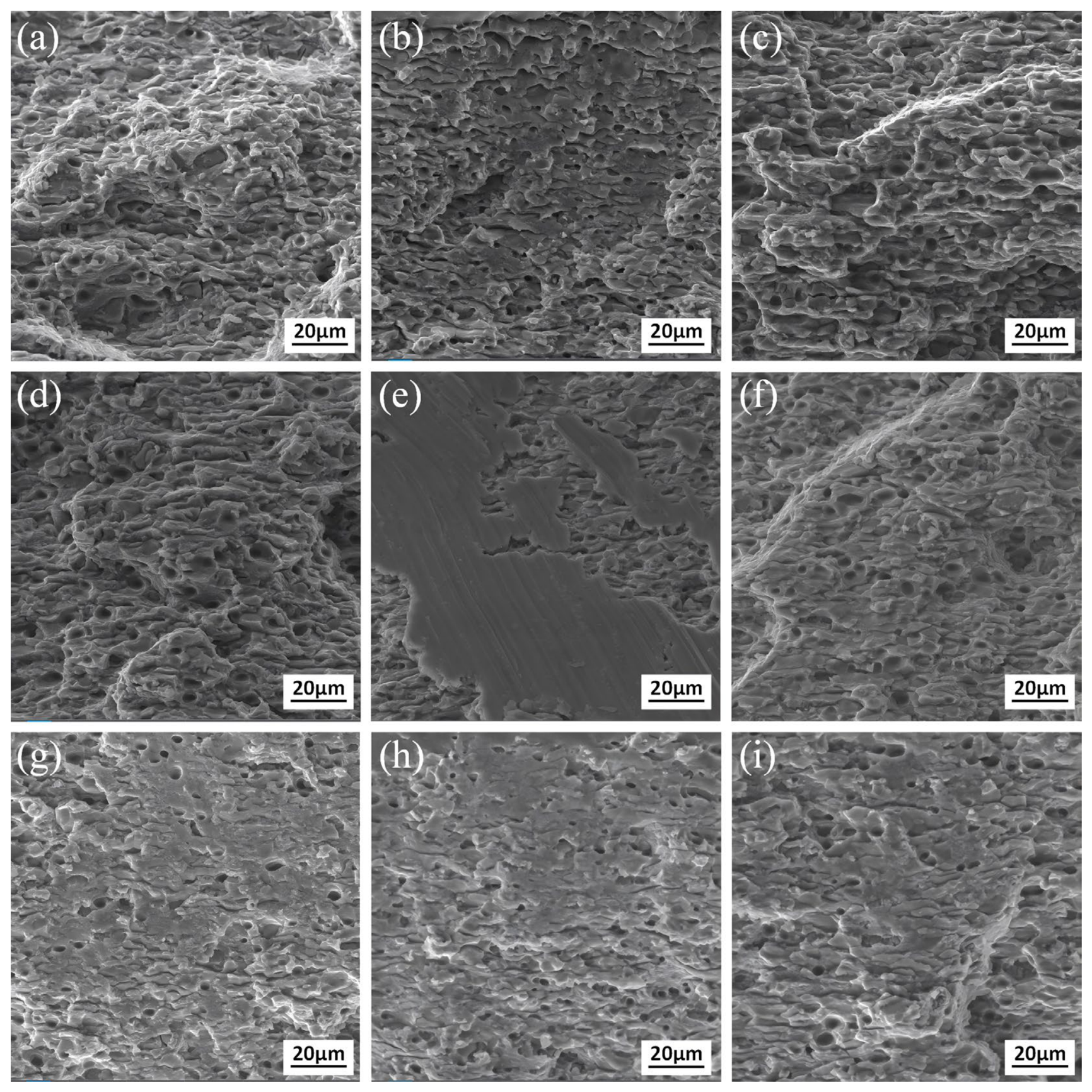
As shown in Figure 7a–i, the fracture surfaces of the specimens subjected to different deep cryogenic treatment durations are characterized by numerous dimples and a small number of tearing ridges, indicating that the material predominantly undergoes ductile fracture through a microvoid coalescence mechanism. As shown in Figure 7a–c, after 8 h of deep cryogenic treatment, the dimples exhibit a relatively non-uniform size distribution. As shown in Figure 7d–f, when the treatment duration is increased to 16 h, the dimples become noticeably finer and more uniformly distributed, accompanied by an increase in the number of tearing ridges. As shown in Figure 7g–i, with a further increase in the treatment duration to 24 h, no significant change in dimple morphology is observed, although the dimples in some regions become shallower, suggesting that the strengthening effect of deep cryogenic treatment gradually tends to stabilize. These observations are consistent with the variation in mechanical properties.

3.5. Microstructure

3.5.1. Metallographic Microstructure Away from the Fracture Region

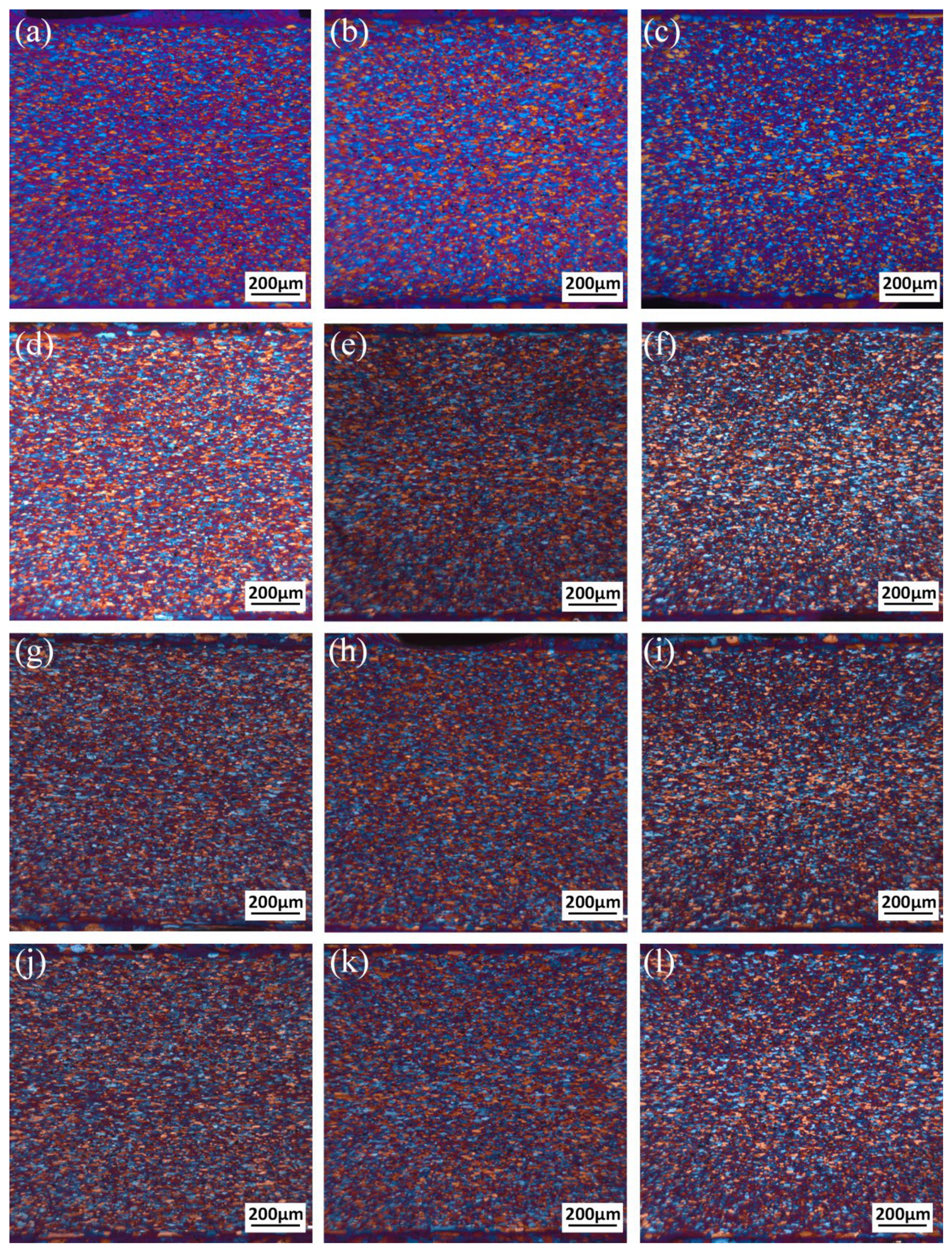
To evaluate the effect of deep cryogenic treatment on the matrix microstructure away from the fracture region, metallographic observations were performed on the undeformed regions of specimens subjected to different cryogenic treatment durations and tested along different orientations. The corresponding metallographic microstructures are presented in Figure 8.
The metallographic observations reveal that all specimens retain a fine and relatively uniform microstructure, with no obvious grain coarsening, abnormal grain growth, or other significant microstructural changes. As the deep cryogenic treatment duration increases from 0 h to 24 h, the overall microstructural morphology changes only slightly, and no pronounced differences are observed among the different orientations. This indicates that, under the conditions of solution treatment at 500 °C for 1 h and aging at 180 °C for 6 h, deep cryogenic treatment has a limited effect on the grain morphology of the matrix. Combined with the aforementioned mechanical property results and TEM observations, the improvement in material properties induced by deep cryogenic treatment is mainly attributed to the evolution of the dislocation structure and precipitation behavior, rather than to significant changes in grain morphology.

3.5.2. TEM Characterization of Dislocation Structures and Precipitate Features

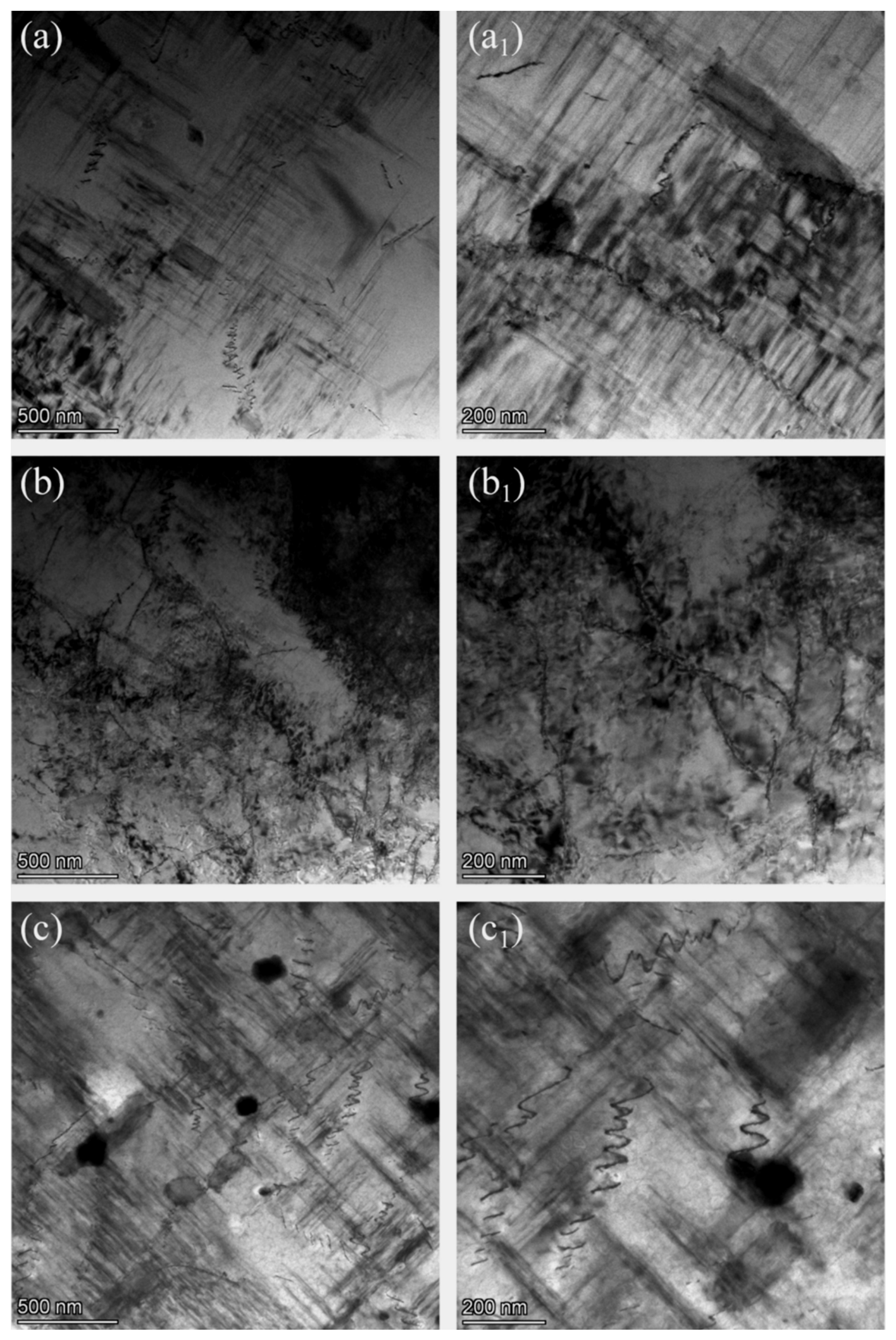
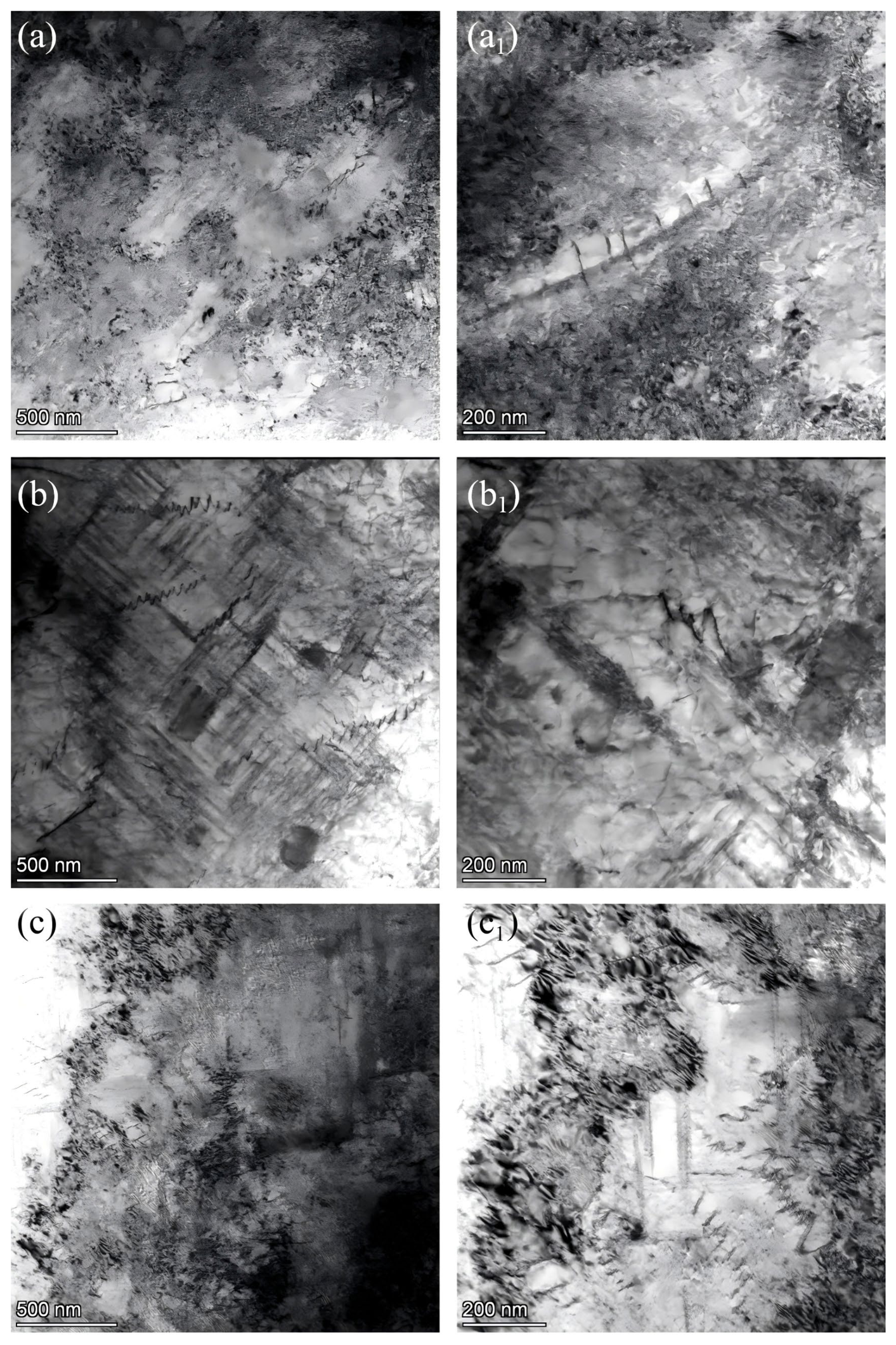
To further characterize the microstructural features under different deep cryogenic treatment durations, TEM observations were conducted on both the regions near the fracture and the undeformed regions of the specimens, with particular attention to the dislocation structures and precipitate features. The corresponding TEM micrographs are presented in Figure 9 and Figure 10.
The TEM observations near the fracture regions reveal that a high density of dislocations and extensive dislocation entanglements are present near the fracture regions of the specimens subjected to different deep cryogenic treatment durations. Compared with the 8 h condition, the specimen treated for 16 h exhibits a markedly higher dislocation density and a more developed dislocation network, indicating enhanced resistance to dislocation motion, which is consistent with the increase in material strength. When the deep cryogenic treatment duration is further extended to 24 h, the dislocation density remains at a relatively high level, while the extent of further evolution becomes less pronounced, suggesting that the defect structures induced by deep cryogenic treatment gradually approach a stable state. Overall, deep cryogenic treatment increases the dislocation density and promotes the development of more complex dislocation structures, thereby affecting the deformation compatibility and resistance to deformation near the fracture region and playing an important role in enhancing the strength of the material [26].
The TEM observations of the unfractured regions reveal the presence of dislocations and fine precipitate features in the matrix after deep cryogenic treatment. After 8 h of deep cryogenic treatment, a relatively high density of dislocations is present in the matrix, together with a small number of dispersed precipitate features exhibiting a relatively non-uniform distribution. As the treatment duration is extended to 16 h, the dislocation density further increases and dislocation entanglement becomes more pronounced, while the precipitate features become more uniformly distributed. When the treatment duration is further extended to 24 h, no significant changes in the dislocation structure or precipitate features are observed compared with those in the 16 h condition, indicating that the microstructural evolution within the material gradually approaches a stable state.
Under the extremely low-temperature environment, additional strain energy is generated within the material owing to thermal stresses and differential lattice contraction, thereby promoting further dislocation multiplication and rearrangement. Consequently, the dislocation density increases markedly and pronounced dislocation entanglements are formed [27]. These results indicate that deep cryogenic treatment can improve the mechanical properties of the material by increasing the dislocation density and enhancing dislocation strengthening. However, the strengthening effect tends to saturate at longer treatment durations, with only limited additional changes in the mechanical properties and microstructural features being observed when the cryogenic treatment duration is further extended. A similar duration-dependent tendency has also been reported for cryogenically treated 2024-T351 aluminum alloy [16].
From an industrial perspective, the present results provide a basis for selecting the cryogenic treatment duration according to specific performance requirements. Avoiding excessively prolonged treatment can reduce unnecessary processing time while maintaining the desired mechanical response. These findings may therefore provide useful guidance for process optimization of 2024 aluminum alloy sheet components in aerospace and automotive applications.

4. Conclusions

Based on the experimental results, the following conclusions can be drawn:
(1) Deep cryogenic treatment improves the strength of 2024 aluminum alloy. The yield strength increases with treatment duration and reaches approximately 385–390 MPa after 16 h, after which the strengthening effect tends to stabilize.
(2) Deep cryogenic treatment has little influence on the matrix grain morphology, but promotes dislocation multiplication and entanglement and improves the uniformity of precipitate distribution. The microstructural evolution becomes less pronounced after approximately 16 h.
(3) The in-plane anisotropy shows a different evolution from the strength. The IPA value decreases from 4.8% without cryogenic treatment to 3.0% after 4 h and then increases to 6.7% after 24 h, indicating that short-duration treatment is more favorable for reducing anisotropy.
(4) Therefore, the cryogenic treatment duration should be selected according to the target performance. A treatment duration of about 4 h is preferable when improved directional uniformity is required, whereas about 16 h is more suitable when higher strength is the primary objective, with the associated reduction in ductility also being considered.
(5) Further work should focus on quantitatively correlating texture, dislocation density, and precipitate characteristics with the directional mechanical response, together with additional studies on forming and fatigue behavior.

Author Contributions

Conceptualization, W.L. and L.Z.; methodology, W.L., L.Z., E.X. and T.S.; validation, E.X., J.Y. and X.H.; formal analysis, L.Z., W.L., E.X. and J.Y.; investigation, L.Z., X.H., T.S., J.Y. and P.Z.; resources, W.L. and D.T.; data curation, L.Z., X.H., J.Y., T.S. and P.Z.; writing—original draft preparation, L.Z.; writing—review and editing, W.L., E.X., J.Y., T.S. and D.T.; visualization, L.Z., X.H., T.S. and P.Z.; supervision, W.L. and D.T.; project administration, W.L. and D.T.; funding acquisition, W.L. and D.T. All authors have read and agreed to the published version of the manuscript.

Funding

The authors gratefully acknowledge financial support from the Natural Science Foundation of Hunan Province (2022JJ50146, 2025JJ70179), the Scientific Research Project of the Hunan Provincial Department of Education (23A0633, 24B0839), the National College Students’ Innovation and Entrepreneurship Training Program (S202611528292, S202611528250), the Open Project of Provincial Application Characteristic Disciplines of Hunan Institute of Technology (KF24012, XK20260705), and the College Students’ Innovation and Entrepreneurship Training Program of Hunan Institute of Technology (CY2026513).

Data Availability Statement

The original contributions presented in this study are included in the article. Further inquiries can be directed to the corresponding authors.

Conflicts of Interest

The authors declare no conflicts of interest.

References

  1. Zhang, L.J. Research on application and development trend of aerospace high-strength aluminum alloy materials. New Mater. Ind. 2021, 3, 7–11. (In Chinese) [Google Scholar]
  2. Zhang, G.Q.; Teng, C.Y. Current status and development trend of advanced structural materials technology in aerospace field. J. Aeronaut. Mater. 2024, 44, 1–12. (In Chinese) [Google Scholar]
  3. Cabibbo, M.; Santecchia, E.; Mengucci, P.; Bellezze, T.; Viceré, A. The role of cryogenic dipping prior to ECAP in the microstructure, secondary-phase precipitation, mechanical properties and corrosion resistance of AA6012 (Al-Mg-Si-Pb). Mater. Sci. Eng. A 2018, 716, 107–119. [Google Scholar] [CrossRef] [Scilit]
  4. Liu, H.H.; Xia, X. Research progress on deep cryogenic treatment of metallic materials. Hot Work. Technol. 2024, 53, 10–13. (In Chinese) [Google Scholar]
  5. Wang, L.; Strangwood, M.; Balint, D.; Lin, J.; Dean, T.A. Formability and failure mechanisms of AA2024 under hot forming conditions. Mater. Sci. Eng. A 2011, 528, 2648–2656. [Google Scholar] [CrossRef] [Scilit]
  6. Li, S.S.; Yue, X.; Li, Q.Y.; Peng, H.; Dong, B.; Liu, T.; Yang, H.; Fan, J.; Shu, S.; Qiu, F.; et al. Development and applications of aluminum alloys for aerospace industry. J. Mater. Res. Technol. 2023, 27, 944–983. [Google Scholar] [CrossRef] [Scilit]
  7. Wang, X.F.; Guo, M.X.; Chapuis, A.; Luo, J.; Zhang, J.; Zhuang, L. Effect of solution time on microstructure, texture and mechanical properties of Al-Mg-Si-Cu alloys. Mater. Sci. Eng. A 2015, 644, 137–151. [Google Scholar] [CrossRef] [Scilit]
  8. Zhou, T.G.; Chen, T.T.; Su, X.; Xu, R.; Wu, X.Y.; Hu, J. Microstructure and properties of Al-Mg-Si alloy conductor prepared by multi-pass ECAE dynamic forming. Mater. Rep. 2017, 31, 17–20. (In Chinese) [Google Scholar]
  9. Scharifi, E.; Yardley, V.A.; Weidig, U.; Szegda, D.; Lin, J.; Steinhoff, K. Hot sheet metal forming strategies for high-strength aluminum alloys: A review—Fundamentals and applications. Adv. Eng. Mater. 2023, 25, 2300141. [Google Scholar] [CrossRef] [Scilit]
  10. Vilamosa, V.; Clausen, A.H.; Børvik, T.; Skjervold, S.R.; Hopperstad, O.S. Behaviour of Al-Mg-Si aluminium alloys under a wide range of temperatures and strain rates. Int. J. Impact Eng. 2015, 86, 223–239. [Google Scholar] [CrossRef] [Scilit]
  11. Ren, Z.W.; Luo, B.H.; Zheng, Y.Y.; Gao, Y.; He, C. Effect of Mg and Si content on microstructure and property of Al-Mg-Si alloy. Mater. Rep. 2019, 33, 3072–3076. (In Chinese) [Google Scholar]
  12. Moy, C.K.S.; Weiss, M.; Xia, J.; Sha, G.; Ringer, S.P.; Ranzi, G. Influence of heat treatment on the microstructure, texture and formability of 2024 aluminium alloy. Mater. Sci. Eng. A 2012, 552, 48–60. [Google Scholar] [CrossRef] [Scilit]
  13. Takahashi, H.; Inoue, T. Evolution of plastic anisotropy in aluminum sheets. Mater. Sci. Eng. A 2008, 485–486, 55–60. [Google Scholar]
  14. Fourmeau, M.; Barlat, F.; Lian, J. Plastic anisotropy in AA7075-T651. Int. J. Plast. 2015, 72, 1–15. [Google Scholar]
  15. El-Aty, A.A.; Xu, S.; Guo, X. Anisotropy of Al-Li alloys. J. Alloys Compd. 2018, 734, 179–196. [Google Scholar]
  16. Zhou, J.; Xu, S.; Huang, S.; Meng, X.; Sheng, J.; Zhang, H.; Li, J.; Sun, Y.; Boateng, E.A. Tensile properties and microstructures of a 2024-T351 aluminum alloy subjected to cryogenic treatment. Metals 2016, 6, 279. [Google Scholar] [CrossRef] [Scilit]
  17. Araghchi, M.; Mansouri, H.; Vafaei, R.; Guo, Y. A novel cryogenic treatment for reduction of residual stresses in 2024 aluminum alloy. Mater. Sci. Eng. A 2017, 689, 48–52. [Google Scholar] [CrossRef] [Scilit]
  18. Jia, Y.; Su, R.; Wang, L.; Li, G.; Qu, Y.; Li, R. Study on microstructure and properties of AA2024-T6I4 with deep cryogenic treatment. Trans. Indian Inst. Met. 2023, 76, 741–748. [Google Scholar] [CrossRef] [Scilit]
  19. Yao, E.; Zhang, H.; Ma, K.; Ai, C.; Gao, Q.; Lin, X. Effect of deep cryogenic treatment on microstructures and performances of aluminum alloys: A review. J. Mater. Res. Technol. 2023, 26, 3661–3675. [Google Scholar] [CrossRef] [Scilit]
  20. Irmer, D.; Yildirim, C.; Sennour, M.; Esin, V.A.; Moussa, C. Effect of second-phase precipitates on deformation microstructure in AA2024 (Al-Cu-Mg): Dislocation substructures and stored energy. J. Mater. Sci. 2024, 59, 18978–19002. [Google Scholar] [CrossRef] [Scilit]
  21. Ma, S.Y. Effect of Cryogenic Treatment on the Microstructure and Corrosion Resistance of Al-Zn-Mg-Cu Alloy. Master’s Thesis, Shenyang University of Technology, Shenyang, China, 2022. [Google Scholar]
  22. Shen, F.; Yi, D.; Wang, B.; Liu, H. Semi-quantitative evaluation of texture components and anisotropy of the yield strength in 2524 T3 alloy sheets. Mater. Sci. Eng. A 2016, 675, 386–395. [Google Scholar] [CrossRef] [Scilit]
  23. Xu, Y.; Zhan, L.; Huang, M.; Liu, C.; Wang, X. Anisotropy in creep-ageing behavior of textured Al-Cu-Mg alloy. Int. J. Lightweight Mater. Manuf. 2018, 1, 40–46. [Google Scholar] [CrossRef] [Scilit]
  24. Hu, H.; Wang, X. Effect of heat treatment on the in-plane anisotropy of as-rolled 7050 aluminum alloy. Metals 2016, 6, 79. [Google Scholar] [CrossRef] [Scilit]
  25. Haghdadi, F.; Jamaati, R.; Hosseinipour, S.J. Evading the strength-ductility trade-off dilemma in AA2024 alloy by short-term natural re-aging after T351 temper. Heliyon 2024, 10, e27257. [Google Scholar] [CrossRef] [Scilit] [PubMed]
  26. Huang, J.W.; Yi, Y.P.; Huang, S.Q.; Guo, W.F. Effects of cryogenic deformation on grain structure and properties of 2219 aluminum alloy rings. Mater. Rep. 2020, 34, 14129–14133. (In Chinese) [Google Scholar]
  27. Wang, J.; Xie, J.; Ma, D.; Mao, Z.; Liang, T.; Ying, P.; Wang, A.; Wang, W. Effect of deep cryogenic treatment on the microstructure and mechanical properties of Al–Cu–Mg–Ag alloy. J. Mater. Res. Technol. 2023, 25, 6880–6885. [Google Scholar] [CrossRef] [Scilit]
Figure 1. Sampling orientations and geometry of the tensile specimens: (a) specimen orientations with respect to the rolling direction; (b) dimensions of the tensile specimen (unit: mm).
Metals 16 01034 g001
Figure 2. Heat-treatment flow chart.
Metals 16 01034 g002
Figure 3. True stress–true strain curves of 2024 aluminum alloy under different cryogenic treatment durations: (a) solution treatment at 500 °C for 1 h followed by aging at 180 °C for 6 h; (b) cryogenic treatment for 8 h; (c) cryogenic treatment for 16 h; (d) cryogenic treatment for 24 h.
Metals 16 01034 g003
Figure 4. Strength and elongation curves of 2024 aluminum alloy under different cryogenic treatment durations.
Metals 16 01034 g004
Figure 5. Metallographic images of the fracture regions of 2024 aluminum alloy subjected to different cryogenic treatment durations: (ac) solution treatment at 500 °C for 1 h followed by aging at 180 °C for 6 h in the RD, 45° to the RD, and TD, respectively; (df) cryogenic treatment for 8 h in the RD, 45° to the RD, and TD, respectively; (gi) cryogenic treatment for 16 h in the RD, 45° to the RD, and TD, respectively; (jl) cryogenic treatment for 24 h in the RD, 45° to the RD, and TD, respectively.
Metals 16 01034 g005
Figure 6. Macroscopic SEM images of 2024 aluminum alloy: (ac) cryogenic treatment for 8 h in the 0°, 45°, and 90° directions, respectively; (df) cryogenic treatment for 16 h in the 0°, 45°, and 90° directions, respectively; (gi) cryogenic treatment for 24 h in the 0°, 45°, and 90° directions, respectively.
Metals 16 01034 g006
Figure 7. Microscopic SEM images of 2024 aluminum alloy: (ac) cryogenic treatment for 8 h in the 0°, 45°, and 90° directions, respectively; (df) cryogenic treatment for 16 h in the 0°, 45°, and 90° directions, respectively; (gi) cryogenic treatment for 24 h in the 0°, 45°, and 90° directions, respectively.
Metals 16 01034 g007
Figure 8. Metallographic images of undeformed 2024 aluminum alloy under different cryogenic treatment durations: (ac) solution treatment at 500 °C for 1 h followed by aging at 180 °C for 6 h in the 0°, 45°, and 90° directions, respectively; (df) cryogenic treatment for 8 h in the 0°, 45°, and 90° directions, respectively; (gi) cryogenic treatment for 16 h in the 0°, 45°, and 90° directions, respectively; (jl) cryogenic treatment for 24 h in the 0°, 45°, and 90° directions, respectively.
Metals 16 01034 g008
Figure 9. TEM morphologies of the fracture regions of cryogenically treated 2024 aluminum alloy specimens: (a,a1) cryogenic treatment for 8 h; (b,b1) cryogenic treatment for 16 h; (c,c1) cryogenic treatment for 24 h.
Metals 16 01034 g009
Figure 10. TEM micrographs of the unfractured regions of 2024 aluminum alloy specimens after cryogenic treatment: (a,a1) cryogenic treatment for 8 h; (b,b1) cryogenic treatment for 16 h; (c,c1) cryogenic treatment for 24 h.
Metals 16 01034 g010
Table 1. Chemical composition (wt%) of the 2024 aluminum alloy.
ElementCuMgMnFeSiZnTiAl
wt%3.951.330.610.190.0910.0320.035Bal.
Table 2. Experimental variants and heat-treatment parameters of the 2024-T3 aluminum alloy specimens.
GroupSolution TreatmentDCT TemperatureDCT TimeArtificial Aging
DCT-0500 °C, 1 h0 h180 °C, 6 h
DCT-4500 °C, 1 h−196 °C4 h180 °C, 6 h
DCT-8500 °C, 1 h−196 °C8 h180 °C, 6 h
DCT-12500 °C, 1 h−196 °C12 h180 °C, 6 h
DCT-16500 °C, 1 h−196 °C16 h180 °C, 6 h
DCT-20500 °C, 1 h−196 °C20 h180 °C, 6 h
DCT-24500 °C, 1 h−196 °C24 h180 °C, 6 h
Table 3. The IPA values of the 2024 aluminum alloy under different heat treatments (%).
Cryogenic Treatment Duration (h)04812162024
IPA4.83.04.65.45.66.46.7
Disclaimer/Publisher’s Note: The statements, opinions and data contained in all publications are solely those of the individual author(s) and contributor(s) and not of MDPI and/or the editor(s). MDPI and/or the editor(s) disclaim responsibility for any injury to people or property resulting from any ideas, methods, instructions or products referred to in the content.