1. Introduction
Aluminum is one of the most widely recycled materials globally, primarily through casting processes that produce low-cost components or by being extruded or rolled into new aluminum cans. The recycling of aluminum not only conserves energy and resources, but also allows for the development of high-strength alloys. These alloys can serve as matrices for the production of structural components used in critical applications, such as applications in the aerospace and automotive industries. Despite its popularity, aluminum has inherent limitations in its mechanical strength and hardness. However, these properties can be significantly enhanced through the addition of alloying elements. For instance, silicon (Si) is commonly added to improve fluidity during casting, increase the corrosion resistance, and decrease the overall weight of the material. Quasicrystals (QCs) represent a novel class of metallic materials.
Shechtman et al. first discovered QCs in 1984 [
1]. These materials stand apart from conventional solids—whether amorphous or crystalline—due to their unique structural characteristics, which give rise to exceptional properties [
1]. While they are well ordered, QCs do not repeat at regular intervals. In other words, they lack long-range periodicity, which is why they are classified as quasiperiodic structures. QCs are composed of structural units with unusual symmetries, such as icosahedra, octagons, decagons, or dodecagons, rather than the typical unit cells found in conventional crystals [
2,
3]. Their key characteristics include a low friction coefficient about one-third that of carbon steel and a surface energy only 25 to 30% higher than that of Teflon, along with being hard, brittle, and highly resistant to corrosion [
4]. Due to these remarkable properties, QCs are primarily utilized as coatings or as reinforcement in composite materials. The brittleness of QCs at room temperature is mitigated by their matrix or the substrate material in which they are embedded.
In recent years, quasicrystals have emerged as a promising area in materials science. These unique structures exhibit a range of desirable properties, including a high hardness, a low electrical and thermal conductivity, a low friction coefficient, a low surface energy, and an exceptional corrosion resistance. They also possess unique optical characteristics not found in conventional crystalline alloys [
5,
6,
7]. Due to these properties, QC (quasicrystalline) alloys are gaining interest for a variety of applications, such as structural materials, thermal and electrical systems, coatings, and anti-corrosion solutions.
The automotive and aerospace industries demand structural materials that offer a combination of a high-temperature strength, a low density, and excellent corrosion resistance. These stringent requirements along with cost considerations have driven the development and adoption of advanced technologies for producing multicomponent aluminum alloys [
5,
6,
7,
8]. Among the lightweight materials, Al–Mg–Si alloys are particularly promising due to their favorable chemical and mechanical properties [
8,
9,
10,
11]. In these alloys, the formation of Mg
2Si particles plays an important role, and the common presence of iron impurities leads to additional particle precipitation during solidification [
12]. The microstructure of the Al–Mg–Si alloys, specifically the morphology of the Al-rich matrix and the distribution of secondary phases, is highly dependent on the cooling rate during solidification [
13,
14]. Theoretical and experimental studies on directional solidification have shown that, under near-equilibrium conditions, the solid/liquid interface transitions from planar to cellular, and then to dendritic, as the growth rate (V
L) increases. This clearly reveals the direct influence of the solidification parameters on the morphology of the solidification front.
Squeeze casting is a modern manufacturing process that has demonstrated improvements across various performance parameters when conscientiously applied. This technique is viewed as a hybrid of casting and forging [
15]. It involves applying pressure to the molten metal throughout the solidification stage [
16]. Over the past four decades, the effects of the pressure-assisted solidification on the casting properties have been extensively studied [
17]. Vijian and Arunachalam [
18,
19] and Yu et al. [
20] revealed that, by pressurizing the molten component in the solidification, the melting point of the alloy is modified. This accelerates solidification and refines both the microstructure and macrostructure; consequently, a significant decrease in the shrinkage porosity is attained.
In the present study, a multicomponent alloy based on recycled aluminum (Al-Mg-Si) was investigated, with additions of silicon (Si) and QC materials (with a close composition at Al−25.5 Cu−12 Fe). The alloy was solidified under pressure using squeeze casting, under unsteady-state solidification conditions. The novelty of this present investigation concerns the effects of adding 5 wt.% Si and 5 wt.% quasicrystals (QCs) on the solidification microstructure of the recycled aluminum. These additions affected the formation of intermetallics and secondary phases, and consequently substantially modified the resulting microhardness.
3. Results and Discussion
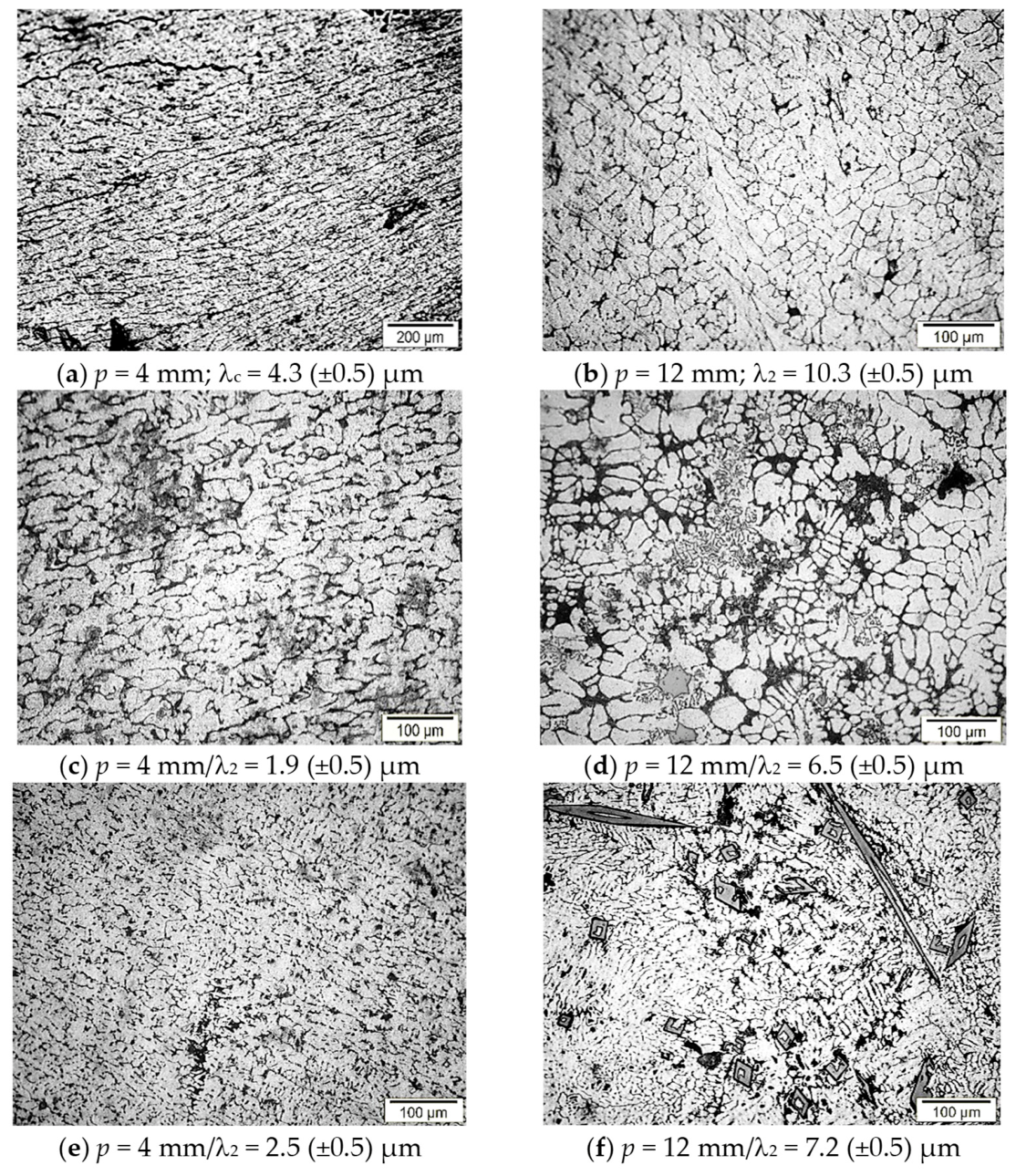
The resulting typical microstructural morphologies of the Al
Rec, Al
Rec–5%Si, and Al
Rec–5%QC alloys are shown in
Figure 3a–f. These correspond with two distinct positions: the first was located 4 mm from the metal/mold interface and the other was 12 mm from the center of the ingot. In the case of the Al
Rec alloy sample, a cellular microstructural array was clearly characterized. This was located at the 4 mm position, and the observed cells exhibited an elongated shape. Closer to the center, at the 12 mm position, the microstructural transitions to a dendritic morphology were revealed.
The AlRec–5%Si alloy sample showed a predominantly dendritic microstructure formation. This occurred from the outer region to the center of the ingot. A similar dendritic arm spacing formation was also characterized for the AlRec–5%QC alloy sample. Additionally, for the AlRec–5%QC alloy, plate-like AlFeMn phases with a diamond-shaped morphology were observed. This occurred predominantly and substantially close to the central region of the ingot.
According to Mondolfo [
24], when the magnesium content in an Al-Mg alloy is lower than 17.4% at 723 K (~450 °C), there exists the possibility of a single-phase α-Al to be formed, especially considering equilibrium or close-to-equilibrium cooling conditions. Both the cooling rate and the nominal composition affect the segregation and the tendency to form the second phases. In this study, the Al
Rec alloy sample solidified under pressure, and the optical images (shown in
Figure 3) suggest that the secondary phases were discretely constituted and located at α-Al dendrite boundaries.
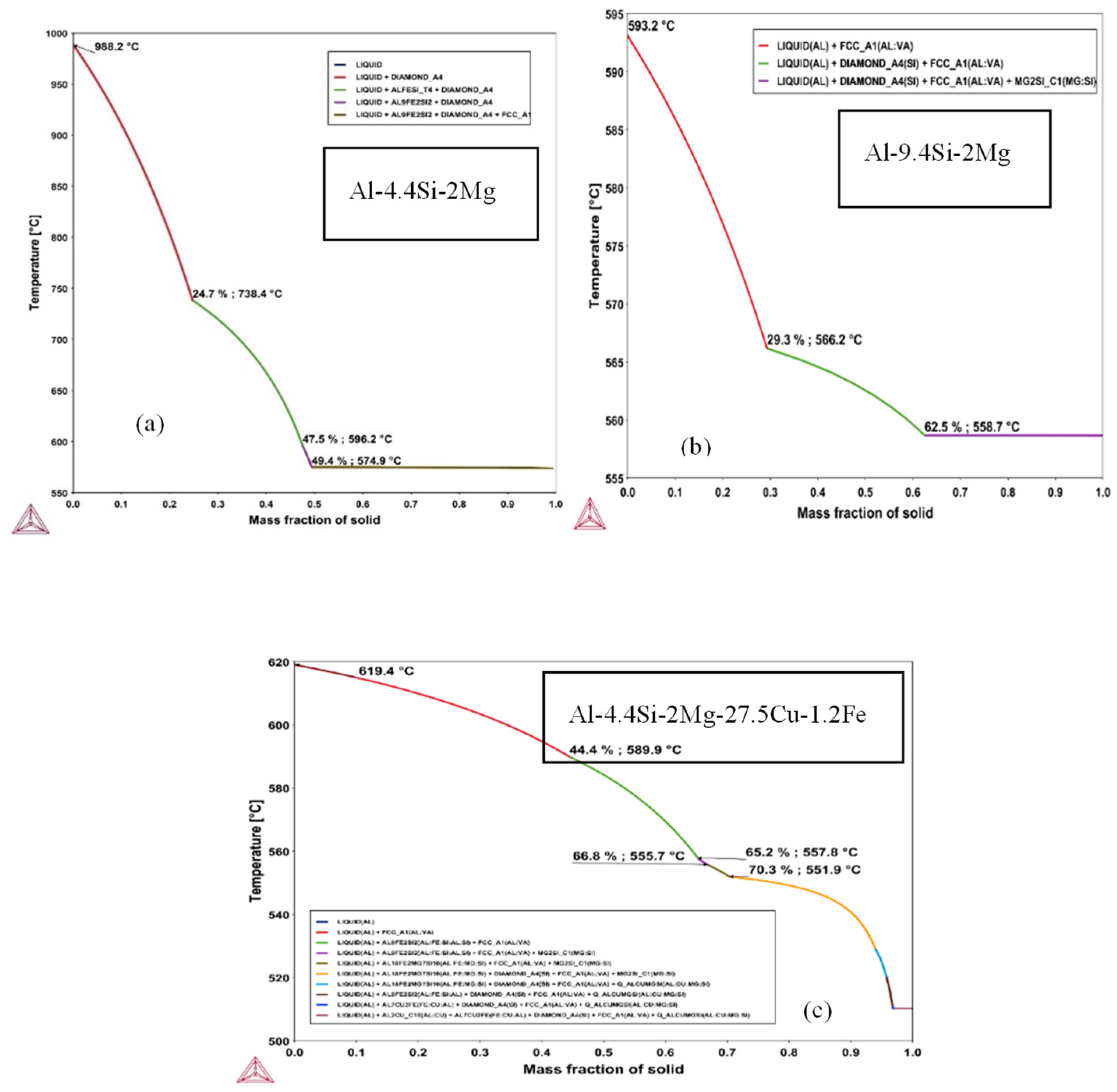
ThermoCalc
® computations of the solidification path of three distinct ternary Al-Si-Mg alloys are shown in
Figure 4a–c. The presence of impurities such as iron and silicon was identified, i.e., 0.15 wt.% Fe and 0.15 wt.% Si. Kumar et al. [
13] identified this in an as-cast Al-Mg alloy (strip), with their findings in agreement with the observations of the present study. The growth of α-Al, the Mg-Si-rich phase, and Fe-bearing intermetallics were also characterized.
The solidification path under equilibrium conditions for the Al-Mg alloys was relatively simple, and the final solidification microstructure consisted basically of the α-Al phase. On the other hand, in the Al-Mg-Si alloys, the magnesium and silicon contents were lower than 2% and 1%, respectively. This promoted a resulting microstructural array that was somewhat more complex, as reported by Kaygisiz and Marasli [
9]. The solidification of these alloys under transient heat extraction conditions induced the formation of unpredicted phases. These corresponded with phase diagrams, especially when a minor content of Fe was present. In the case of the Al
Rec alloy sample, α-Al, primary silicon with a diamond_A4 crystal structure and iron-rich intermetallic phases (Al
9Fe
2Si
2) were characterized. These were homogeneously dispersed and embedded into the Al-rich matrix. When the Al
Rec –5%Si alloy sample was analyzed, a microstructural formation indicated that, under non-equilibrium solidification conditions, the expected phases were α-Al, Al-Mg-β (Al
3Mg
2), and Mg
2Si. Nevertheless, the increased silicon content promoted the formation of a distinct crystalline silicon phase with a diamond-type structure, as shown in
Figure 4b.
Figure 4c depicts the solidification path of the Al
Rec–5%QC alloy sample and a residual of 0.60 wt.% Fe content. Under non-equilibrium conditions, the observed phases included Al-α, Al
9Fe
2Si
2, Al
18Fe
2Mg
7Si
10, Al
7Cu
2Fe, Mg
2Si, and a complex intermetallic phase, probably with an AlMgCuSi composition. The typical experimental SEM mapping results of the multicomponent Al
Rec alloy, Al
Rec–5%Si alloy and Al
Rec–5% QC alloy are shown in
Figure 5a,
Figure 5b and
Figure 5c, respectively. All of the observed micrographs evidence the eutectic formation, i.e., the α-(Al) + Si + π-AlMgFeSi + θ-Mg
2Si mixture into the interdendritic region. Basically, a gray background α-Al matrix is characterized by darker spots where the Mg
2Si intermetallic prevails and lighter phases are identified as the AlFe(Si) type.
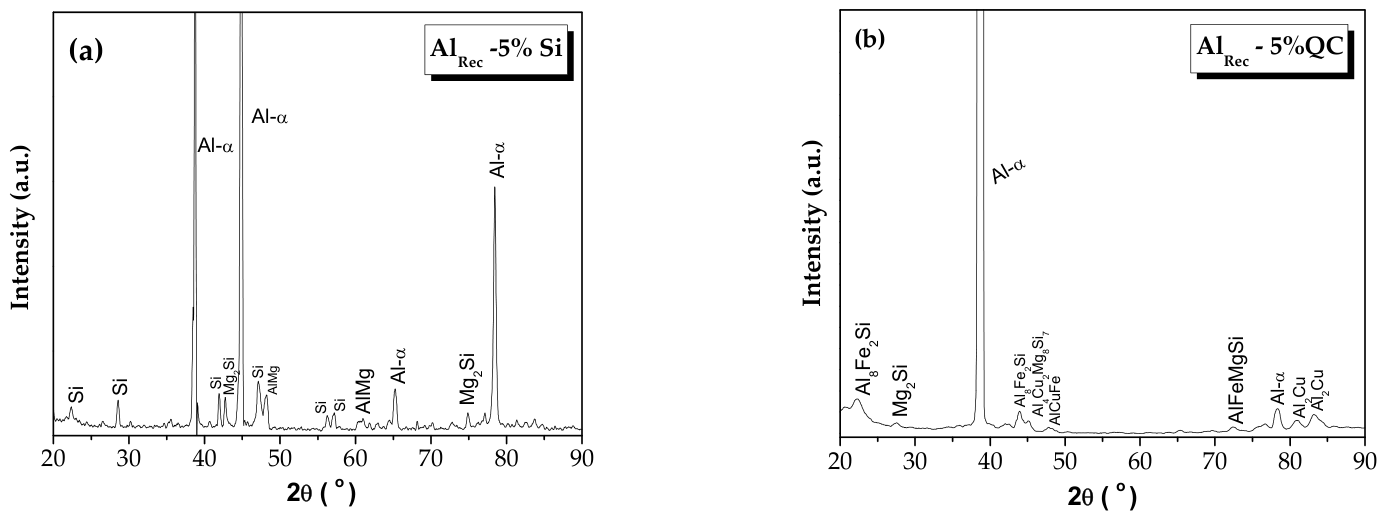
Figure 6a and
Figure 6b show the resulting XRD analysis of the Al
Rec–5%Si and Al
Rec–5% QC alloys samples, respectively.
Figure 6a shows the peak intensity corresponding to Al at 2θ ~44.7°, which is substantially occluded. It is worth noting that 38.5° corresponds to the highest-intensity peak related to Al. This seems to be associated with a preferential orientation (crystallography texture). It was determined that, due to the squeeze casting applied, the Al-matrix dendrites were refined, as is demonstrated below. Also, due to Fe dissolution at 900 °C, after solidification, it precipitated as complex intermetallics. Additionally, minor Cu and Mg contents tended to react with Si during the squeezing casting. Consequently, fine Al
2Cu was formed, and possibly complex Al
4Cu
2Mg
8Si
7 (lath-like), AlFeSi, AlFeMgSi and Mg
2Si at interdendritic regions were precipitated, as identified from the XRD pattern results shown in
Figure 6.
It is important to remark that the Si peaks of the AlRec–5% QC alloy sample were completely occluded from the AlFeSi intermetallic formations. For instance, close to ~22° and ~42°, the Si peaks were not characterized due to the Al8Fe2Si being formed. A higher intensity with a large base was verified, which possibly incorporated Si to constitute this specific intermetallic formation. A similar situation occurred at 28°, due to the Mg2Si formation, and close to 48° due to the formation of Al4CuMg8Si7. This stoichiometry showed a high Si content in its composition.
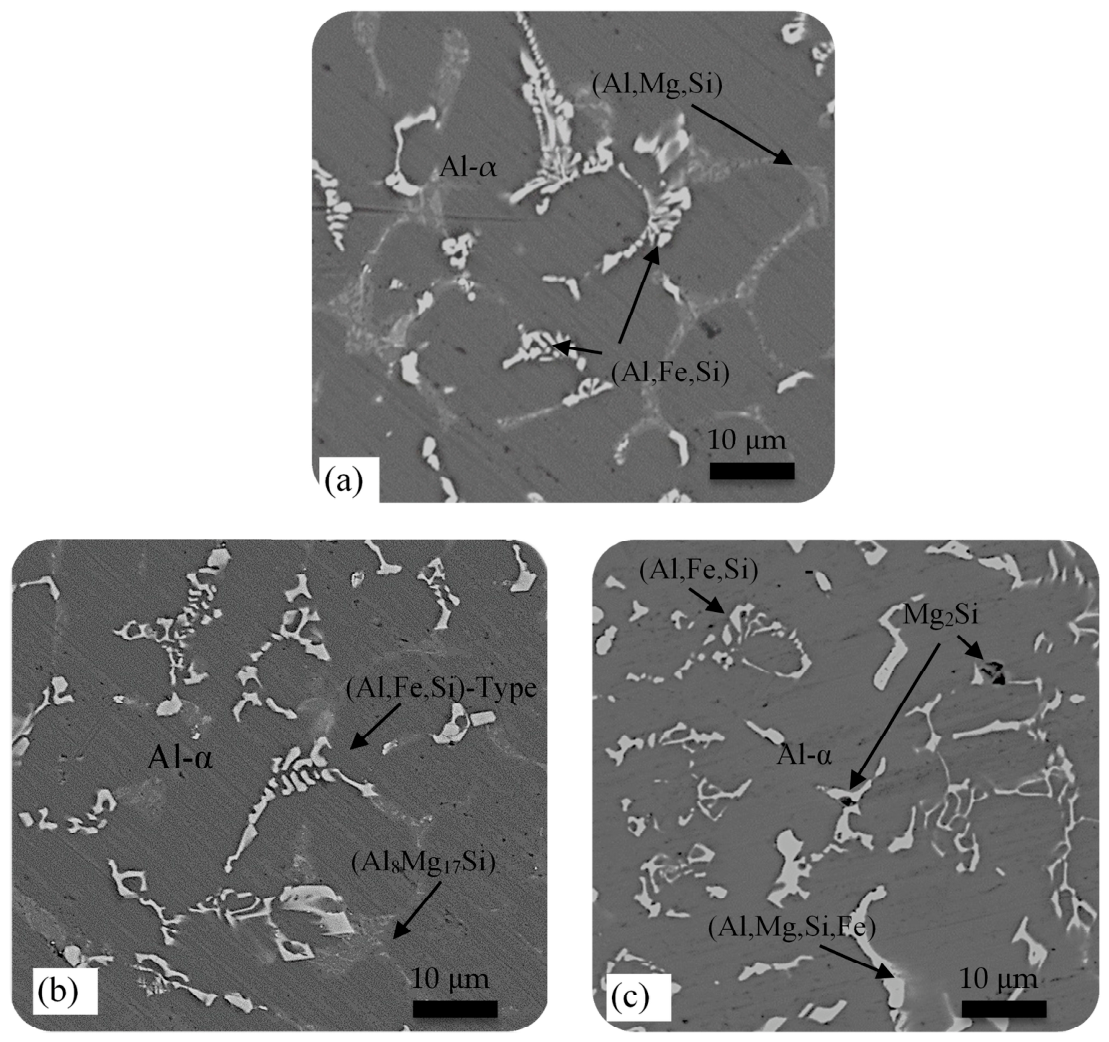
The typical SEM microstructural arrays of the examined alloys are shown in
Figure 7,
Figure 8 and
Figure 9. The micrographs of the recycled aluminum (Al
Rec), recycled aluminum with the 5% silicon addition (Al
Rec−5%Si), and recycled aluminum with the 5 wt.% QC addition (Al
Rec−5%QC) are depicted in
Figure 7,
Figure 8 and
Figure 9, respectively. The resulting α-Al matrix, the primary Al
2Cu phases, and the intermetallic compounds containing Fe and Mn, predominantly located at the dendritic boundaries, are predominantly characterized, as also previously reported [
18,
19,
24,
28,
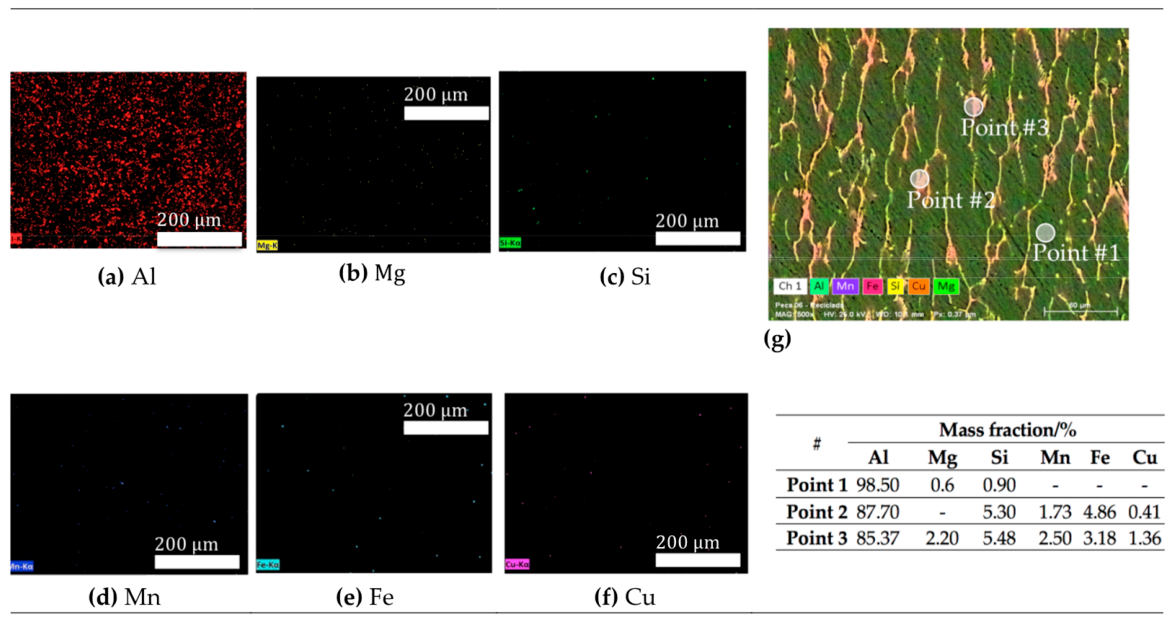
29]. In
Figure 7, the Al
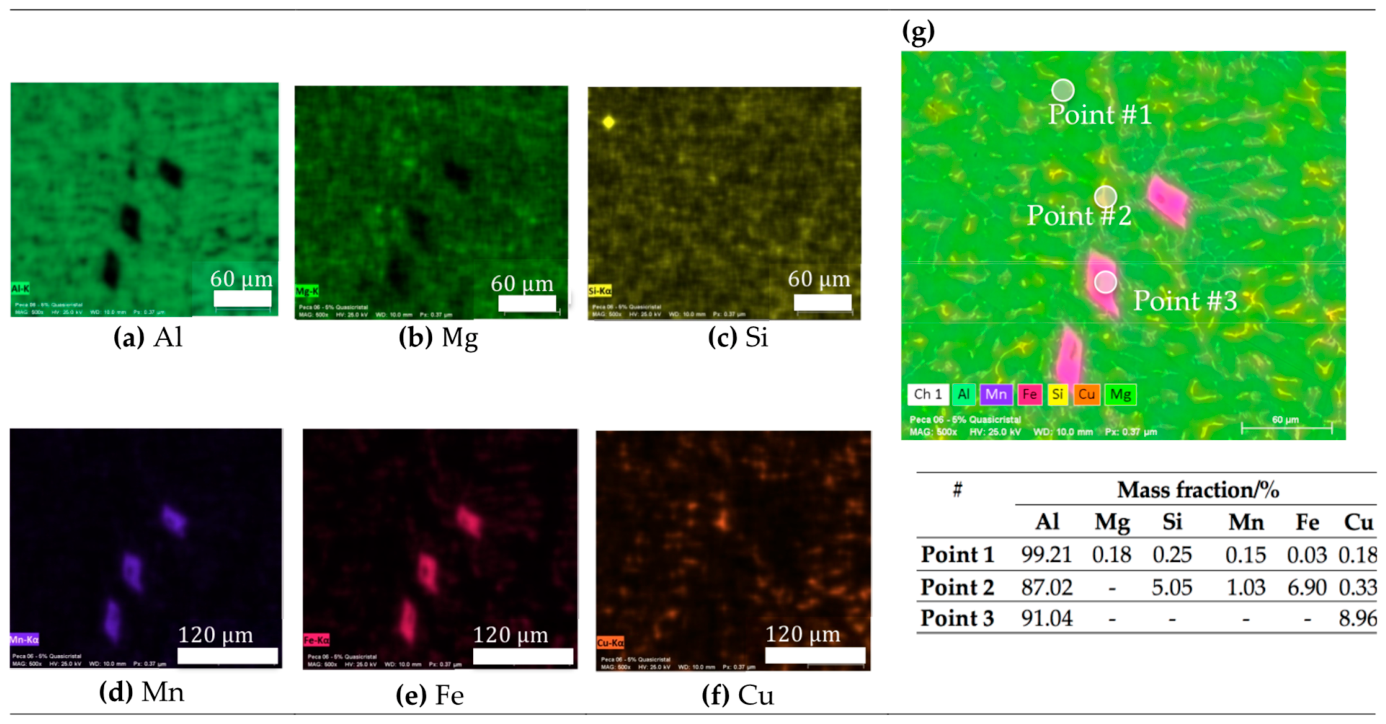
Rec alloy displays an aluminum-rich matrix with a chemical composition of 98.5% aluminum with minor Mn and Si contents in the Al-rich matrix. While aluminum clearly constitutes the primary matrix, the elements Mg and Si are primarily concentrated along the grain boundaries, which suggests segregation during solidification.
Figure 7a,b,c show elemental maps corresponding with individual elements, i.e., Al, Mg, and Si, while
Figure 7d,e and f show the maps for Mn, Fe and Cu, respectively.
Figure 7g shows the elemental map with the cellular microstructural array followed by its chemical compositions at three different points: #1, #2 and #3. Additionally, it can be observed that points 2 and 3 are located at the grain boundaries, and these have a high aluminum content (85.37 wt.%). These also indicate the significant segregation of other elements, as depicted. This supports the previously mentioned indication of elemental segregation occurring during the solidification process.
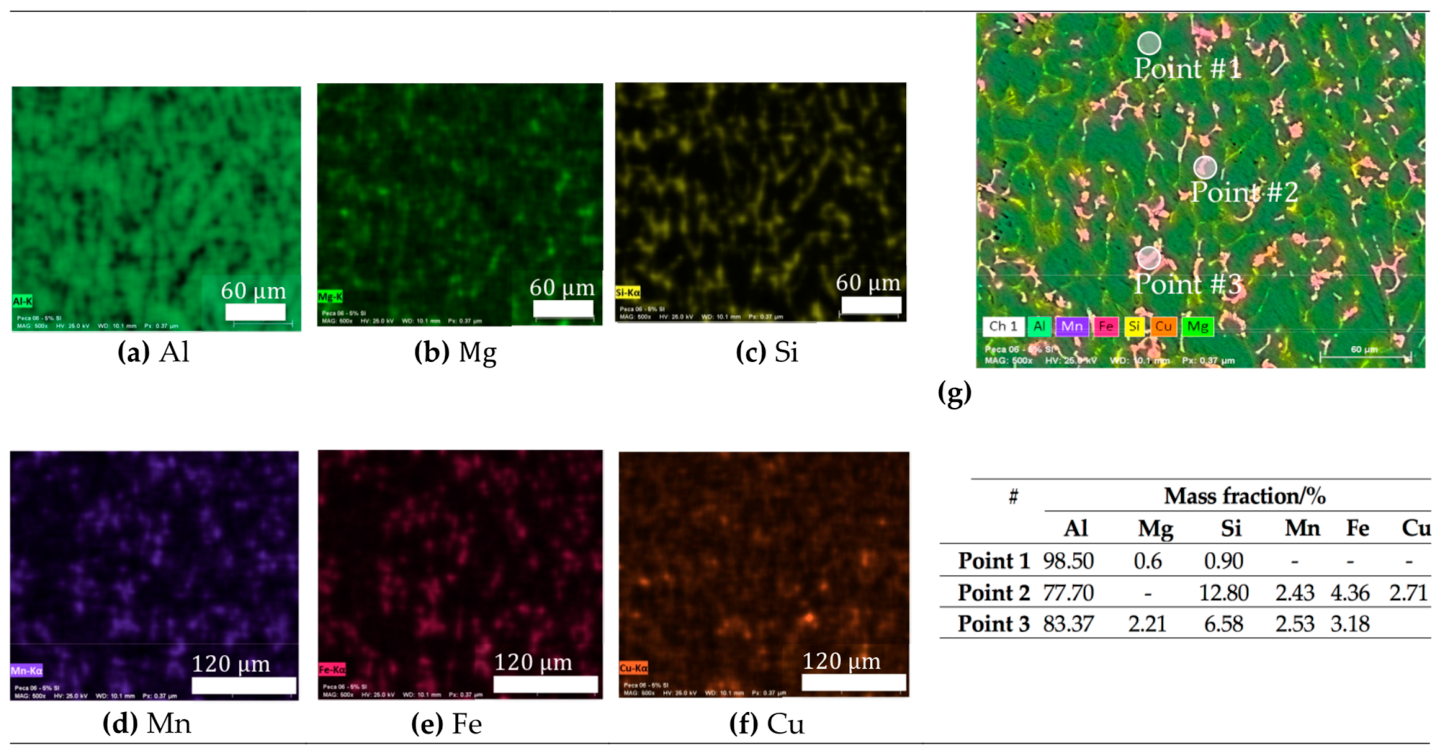
Figure 8 depicts the Al
Rec−5%Si alloy exhibiting a microstructure characterized by an aluminum matrix containing the α-Al phase.
Figure 8a–f depict the resulting individual elemental maps corresponding with Al, Mg, Si, Mn, Fe and Cu, while the dendritic microstructure formation with three distinctive analysis points is depicted in
Figure 8g with its chemical compositions below. Variation in the elements within the microstructure was observed. Due to the tendency of silicon atoms to segregate and form clusters, when the concentration of Si was rejected from the Al matrix, it surpassed the eutectic composition, and the primary Si phase precipitated alongside the α-Al phase, as previously reported [
30]. Using energy-dispersive X-ray spectroscopy (EDS), two distinct points were analyzed. At point 1, located within the matrix, an Al-rich region was revealed. This indicated the presence of the primary α-Al phase. Points 2 and 3, located at the grain boundaries, indicated a complex structure containing Al, Mg, Mn, Si, Cu, and Fe. This suggested the formation of the intermetallic compounds.
Figure 9 shows a typical Al
Rec−5%QC alloy, which also constituted a dendritic microstructure formation.
Figure 9a–f show elemental maps of Al, Mg, Si, Mn, Fe and Cu, respectively. A dendritic microstructural array is also characterized. Three distinctive analysis points are shown in
Figure 9g and its corresponding chemical compositions are demonstrated below. A diamond-shaped morphology is clearly characterized. In multicomponent alloys such as this one, the solidification involves complex thermodynamic interactions and solute interdiffusion. These conditions often lead to the formation of secondary phases and intermetallic compounds during the early solidification stages.
At distinctive points in the microstructure array, the chemical composition of the phases was examined. At point 1, the α-Al–rich phase (matrix) was characterized. At point 2, an intermetallic phase was observed, with a high concentration of iron (8.38 wt.%) and manganese (4.82 wt.%). These elements probably originated from the recycled aluminum alloy. However, the iron content increased due to the addition of the portion (5 wt.%) of the quasicrystalline alloy (Al−25.5 Cu−12 Fe). This characterizes the interdendritic regions, which are neighboring grains constituted by a Si-eutectic formation. When an Al-Si-based alloy is solidified using squeeze casting, similar microstructure characterization is reported [
31]. Thus, the resulting microstructure is finer Si particles neighbored by Al-matrix dendrite, as also reported [
31]. Combined with the radial solidification process, this promotes the segregation of these elements with aluminum, leading to the formation of the intermetallic Al
2Fe
3Mn. At point 3, Al
2Cu intermetallic formations were characterized as lamellae along the grain boundaries. This shows that the Cu content from the QC alloy was adsorbed after solidification. This promoted its precipitation as intermetallic to “anchorage” for the Al matrix, and consequently, the mechanical behavior increased. It is also remarked that, at point 3, the composition corresponded perfectly with the obtained XRD analysis. Thus, the Al
2Cu and Q phases were constituted.
Table 2 demonstrates the results of the EDS and the possible phases identified and compared with the XRD pattern results of the examined Al
Rec–5%Si and Al
Rec–5%QC alloy samples at three different points, as shown in
Figure 7 (SEM) and
Figure 6 (XRD).
Considering
Table 2, it was confirmed that the XRD and EDS results were consistent for both the Al
Rec–5%Si and Al
Rec–5%QC alloy samples. When the Al
Rec–5%QC alloy was analyzed, distinctive AlFeSi, AlCuFe and AlFeMgSi were possibly identified. Their corresponding chemical composition, containing Al (balance) and Cu, Mg, Si, and Fe contents, was verified. It is worth noting that Mn was identified in the EDS results. Commonly, this element is associated with AlFeSi intermetallics and is not detected in XRD analyses. This is associated with common (or typical) limiting detection of the utilized equipment. These verified crystallographic phases are useful for understanding the results of the hardness attained. Also, these are associated with the microstructural formation, as is discussed below.
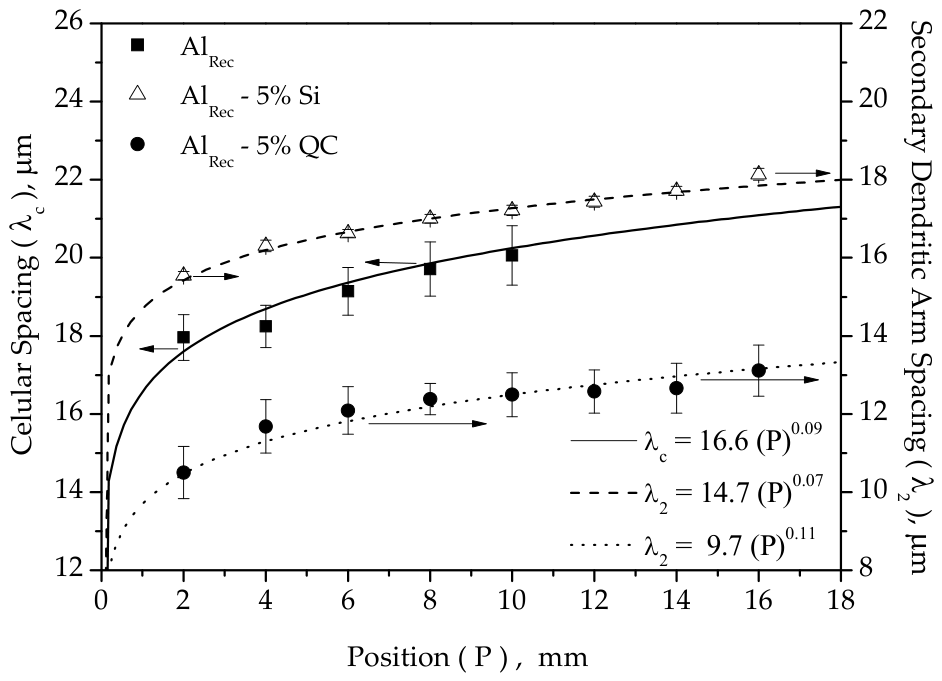
Figure 10 shows the variation in the cellular and dendritic spacings as a function of the distance (
p) from the metal/mold interface for the three examined alloy samples. For all of the alloys studied, the microstructural spacing increased with an increase in the distance from the interface. In particular, the Al
Rec alloy exhibited an increase in the cellular spacing, while both the Al
Rec–5%Si and Al
Rec–5%QC alloy samples had their secondary dendritic arm spacings (SDASs) increased.
Among the modified alloys, the AlRec–5%QC alloy had a considerably lower SDAS than the AlRec–5%Si alloy. This promoted a finer dendritic structure. The unmodified recycled aluminum alloy (AlRec) showed a cellular-to-dendritic transition close to the metal/mold interface, as previously demonstrated.
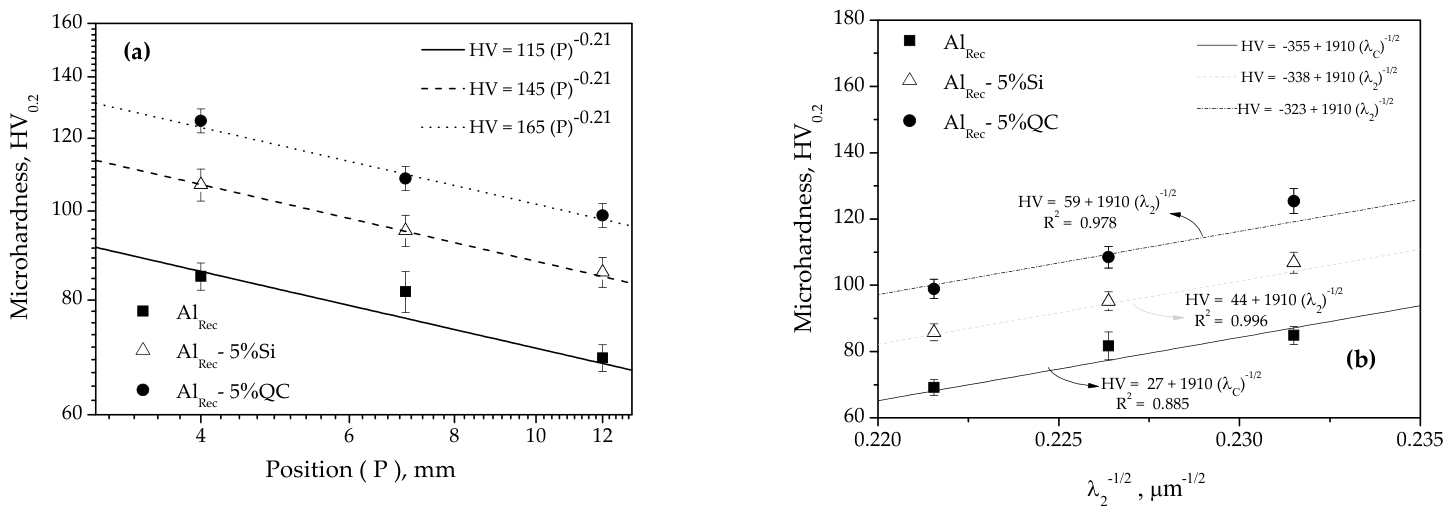
The microhardness (HV
0.2) variations with the distance (
p or Position) from the metal/mold interface (
p), the dendritic arm spacing, and the cooling rate are depicted in
Figure 11a. A Hall–Petch-type correlation was proposed, which associates the HV with microstructural spacings. An inverse square root dependence was prescribed, as depicted in
Figure 11b. Originally, the Hall–Petch law described the relationship between the yield strength of polycrystalline materials and their grain size. The increase in the strength was attributed to the obstruction of dislocation motion by grain boundaries. However, grains are frequently heterogeneous, often containing different phases and intermetallic compounds that obstruct dislocation motion. As a result, modified Hall–Petch-type relationships have been reported [
31,
32,
33] in order to correlate the tensile properties with other microstructural length scales, such as the interphase boundaries and the dendritic arm spacings. Since hardness involves plastic deformation, and thus, dislocation activity, the hardness of metallic alloys has likewise been found to correlate with microstructural spacings through similar Hall–Petch-type correlations [
33,
34].
Figure 11a demonstrates that the microhardness values of the Al
Rec–5%QC alloy were significantly higher than those of both the Al
Rec–5%Si and the Al
Rec alloy samples. This enhancement seems to be associated with a more complex phase structure developed in the multicomponent alloy. This includes the formation of binary eutectic (α-Al + Al
2Cu
3) and refined ternary (α-Al + Mg
2Si + AlFe(Si)) mixtures.
Although slight variation in λ
2, considering distinctive cooling rates, was observed, there are other metallurgical factors that can affect the resulting hardness. Notably, Mg
2Si intermetallics that reach a hardness between 600 and 700 HV [
32,
33] have an important and critical role in the final mechanical behavior. In the Al
Rec–5%QC alloy sample, the microhardness increased from 99 HV to 125 HV when the cooling rate was decreased. This seems to be intimately associated with the increase in the fraction of AlFe-based intermetallics. Additionally, the solid solution with Mg contributed to a strengthening and hardness enhancement. The distribution of Mg within the primary α-Al phase depends on the cooling rate. Since the cooling rate changes, the Mg solubility tends to decrease. Consequently, both the solid solution strengthening and the hardness decreased.
It is also remarked that the increased hardness was not only associated with thermal parameters, but also chemical and identified phases and intermetallics. This was due to the fact that squeeze casting was used. Consequently, the porosity was substantially reduced in association with the microstructure refinement. In addition, the Cu and Mg contents were associated with the “powerful” phases (e.g., Al2Cu and AlCuMgSi). These parameters are responsible for increasing the hardness when compared with the “original” Al-recycled alloy without Cu content.
Figure 11b shows the proposed general expressions, which permit the correlations between the microhardness (HV) as a function of both λ
C and λ
2. These are described in a Hall–Petch-type relationship. It was recognized that the “original” Hall–Petch equation describes a mechanical property (e.g., yield strength) proportionally to the reciprocal of the square root of the grain diameter [
35]. When as-cast samples are investigated, dendrite fineness becomes a more important parameter affecting the prediction of the mechanical strength than the grain size [
35]. This is justified based on the microsegregation and secondary phases and intermetallic formation. Also, it is recognized that those equations depicted in the caption are HV = A + B. X, where X = λ
−1/2 represents the structural refinement parameter and B means the experimental strengthening coefficient (or slope of the linear regression). A is the intercept at the ordinate axis; it should represent the microstructure spacing theoretically tending to infinity (X → 0). However, its domain is far from the origin, and mathematical extrapolation shows that the intercept achieved negative values. This constitutes a physical inconsistency regarding a material’s hardness. Thus, linear axis translation was implemented. A minimal X value was defined as 0.20, where the microstructural spacing is between 10 and 15 μm, i.e., X’ = X–0.20. Consequently, this circumvents the problem of negative hardness to prevent misleading global extrapolations. Additionally, the slopes represented by values of 1910 were maintained; new equations were proposed (e.g., HV = 44 + 1910 λ
2−0.5); and fitting (R
2) values were also preserved.
By comparing these corrected equations with a previously reported study [
36] utilizing an Al-Si-based alloy produced under conventional as-casting (water-cooled and promoting a unidirectional solidification), the equation is HV = 41 + 67 λ
2−0.5. The parameter A is similar, since an Al-based alloy was also used. However, the parameter B (slope coefficient) is considerably distinctive. Since it means the locking parameter or refinement sensitivity, it indicates how efficient the microstructural barrier is at impeding dislocation movement. The difference between 1910 and 67 reflects the effect of squeeze casting in the resulting porosity decrease, solid solute saturation and morphological modification with the refinement of the intermetallic and secondary phases.





 ,
,