Experimental Investigation of Material Characteristics That Can Affect Fatigue Behavior of Ti6Al4V Alloys Produced by Additive Manufacturing SLM and EBM Processes

 ,
,  , , , , ,
  , ,
, ,  ,
, 
Abstract
1. Introduction
2. Materials and Methods
2.1. Sample Design and Preparation
2.2. Microstructural Characterization
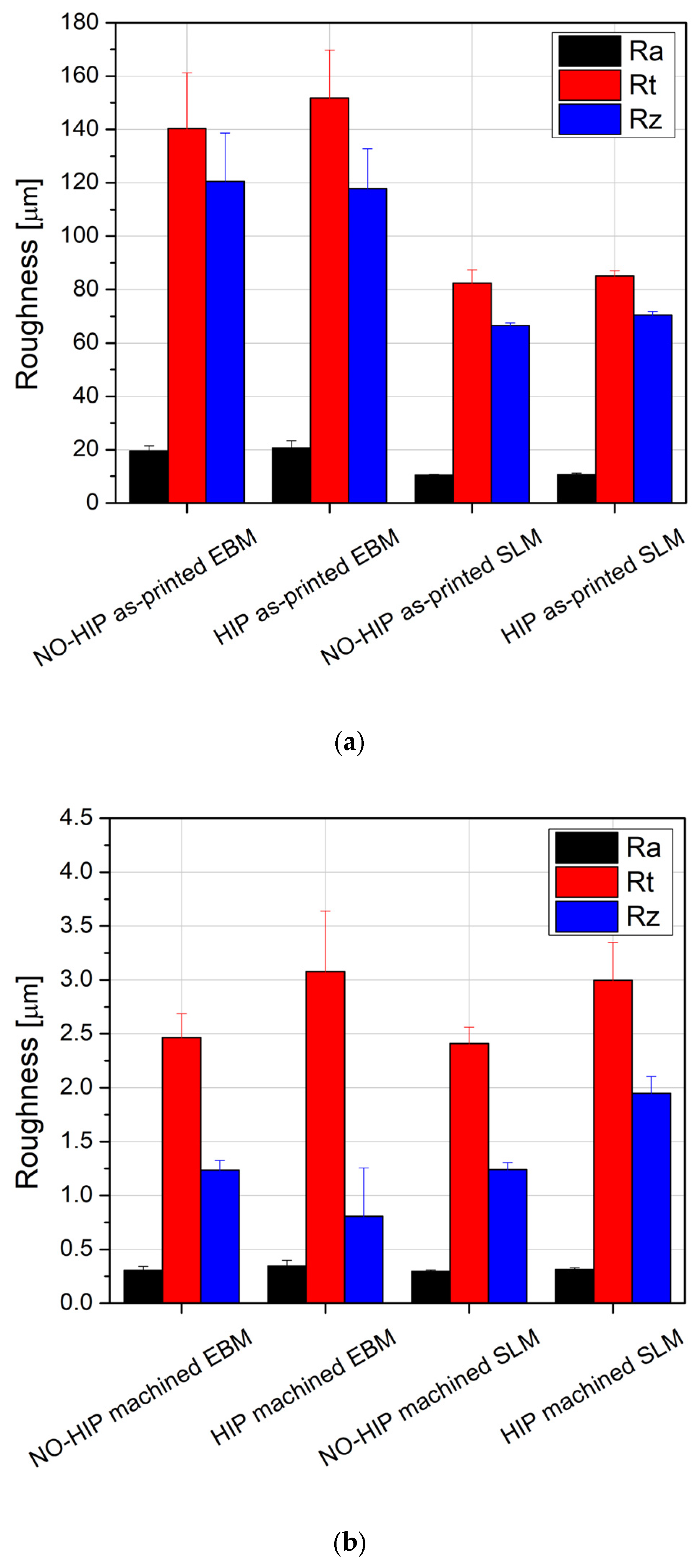
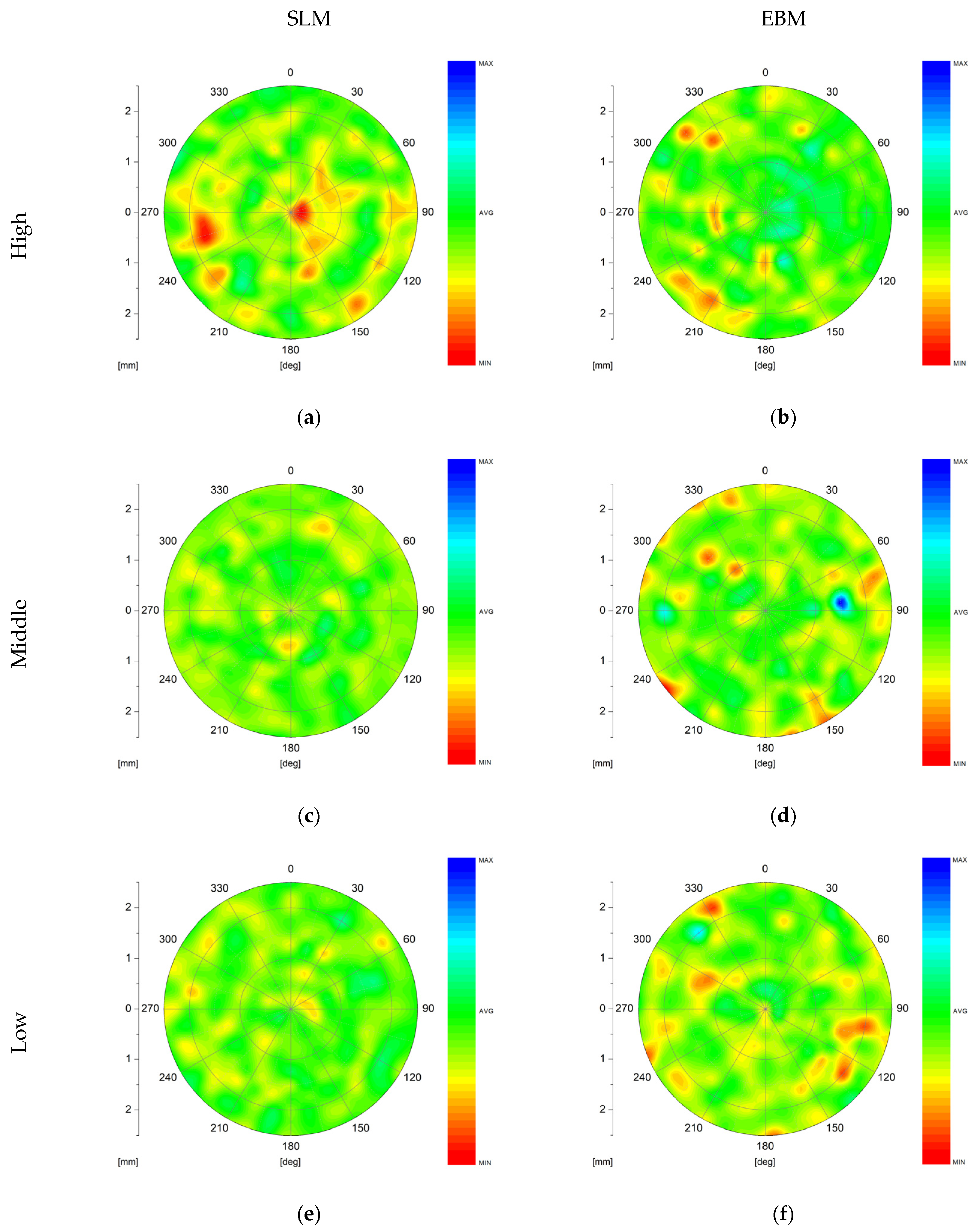
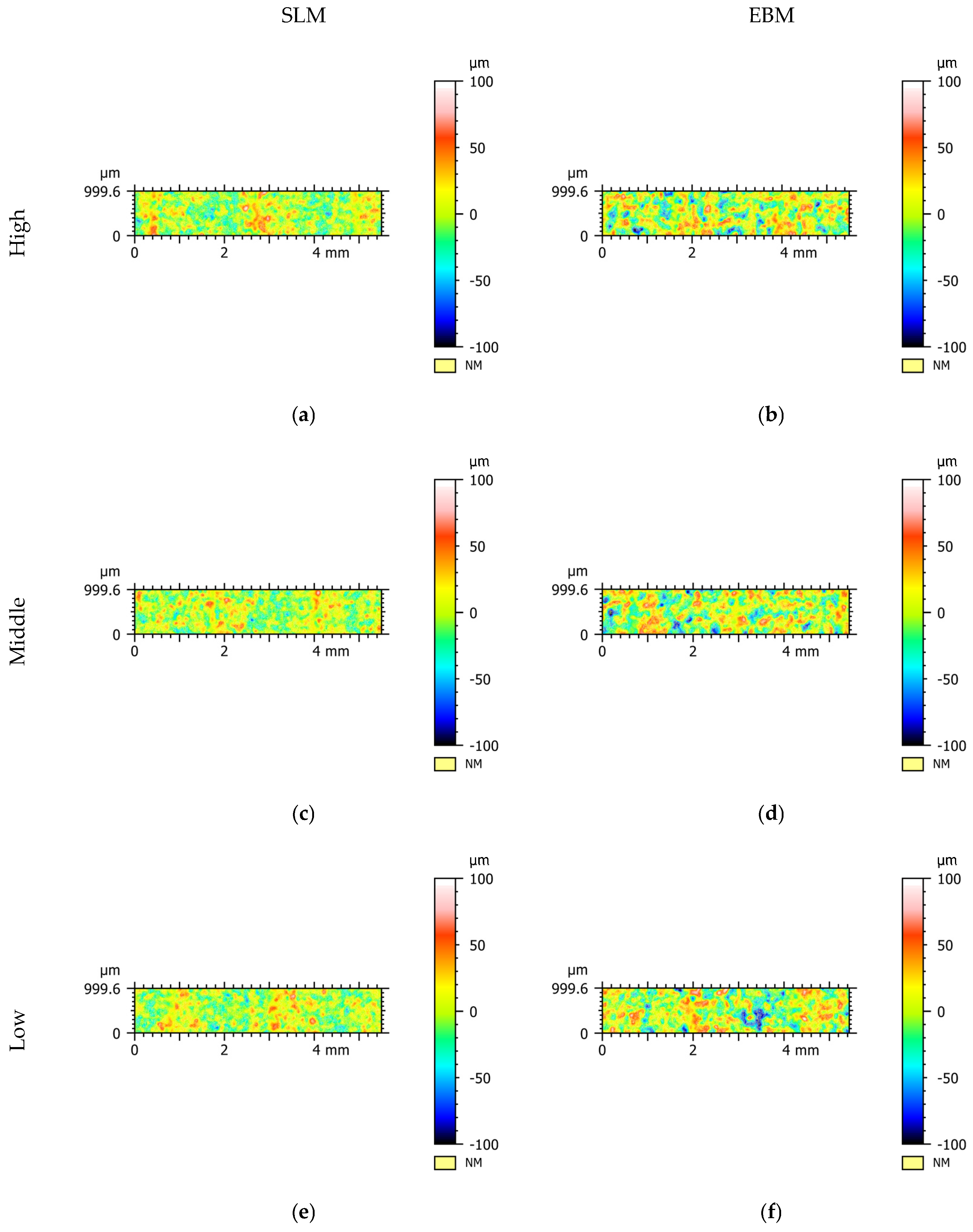
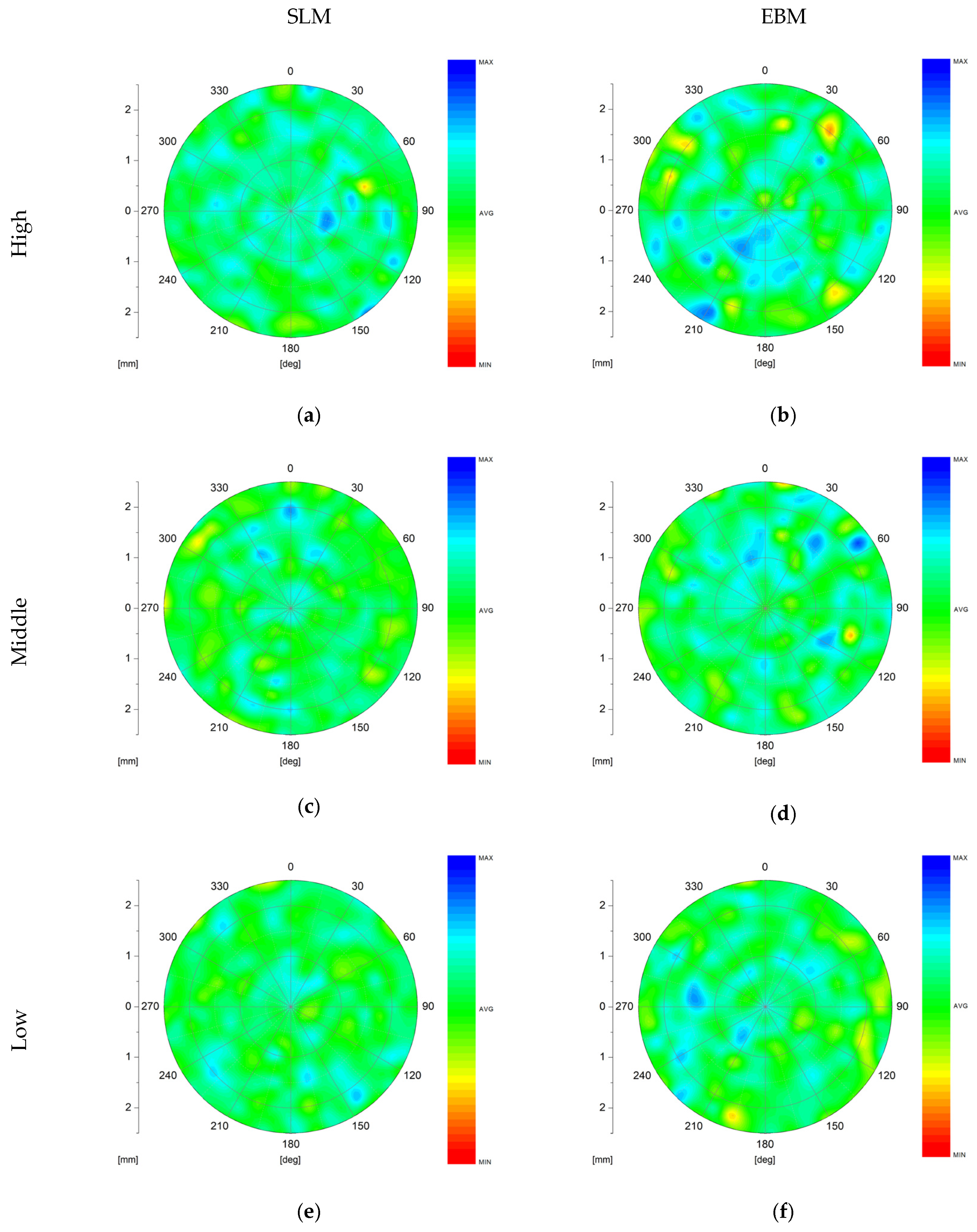
- acquisition of an EDF (motorized focus) image via a Zeiss Axio Zoom V16 optical stereoscope (Carl Zeiss Microscopy GmbH, Göttingen, Germany) at a 50× magnification, with a PlanNeoFluar Z 1x/0.25 FWD 56 mm lens and slice thickness equal to 1 µm;
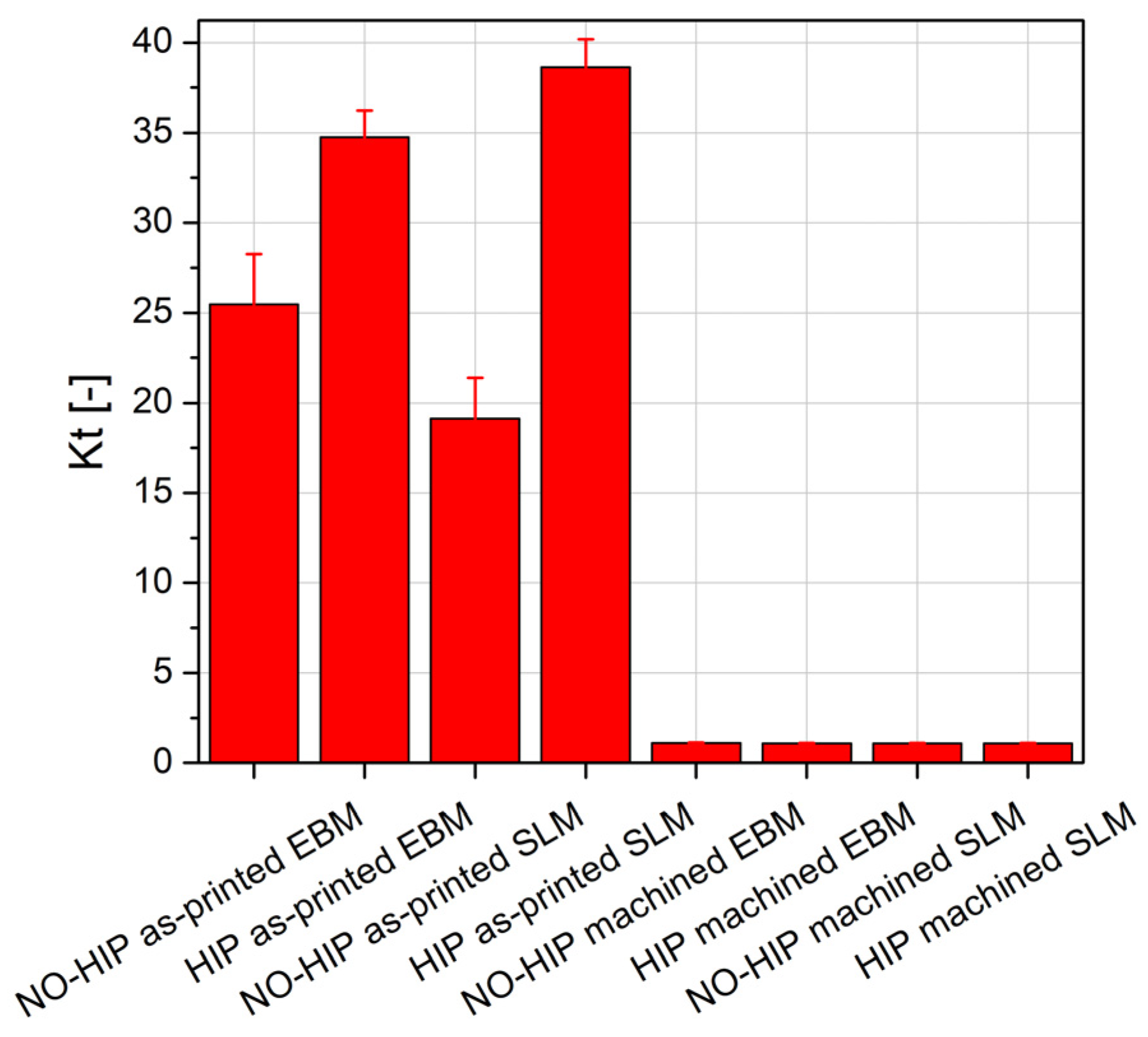
- post-processing of the raw image with the surface analysis workbench of the software ConfoMap 8.0, using the Minidoc for the profile extraction and selecting the right λs (25 um) and λc (8 mm) filters as per ISO 21920-3 2021 [44];
- extrapolation of the surface characteristics via color maps and quantitative data combined with a table where are listed all the surface and linear metrics (Ra, Rt, Rz).
2.3. Tensile Tests
2.4. Fatigue Tests
3. Results and Discussion
3.1. Microstructural Characterization
3.2. Roughness Characterization
3.3. Microhardness Characterization
3.4. Tensile Tests
3.5. Fatigue Tests
4. Conclusions
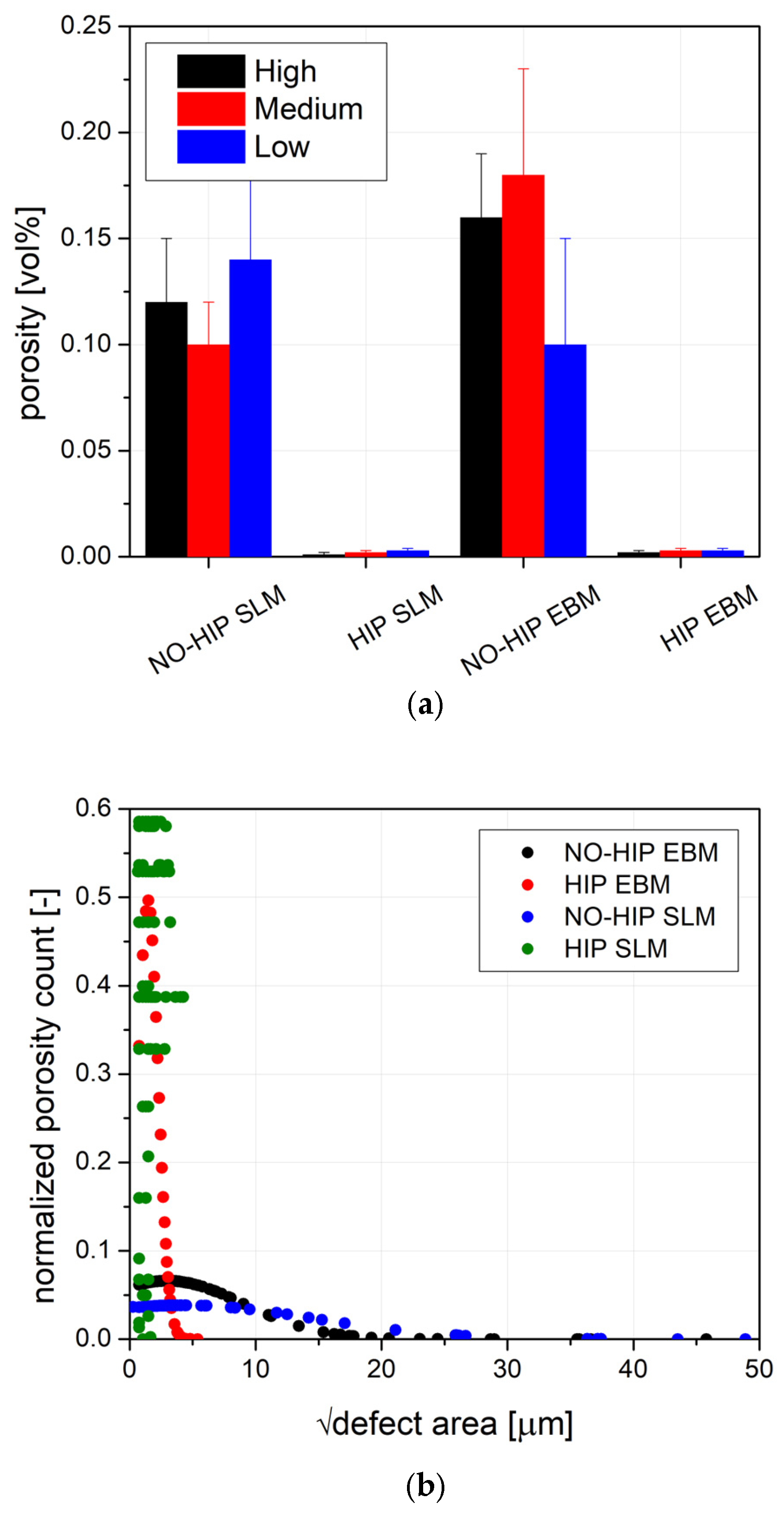
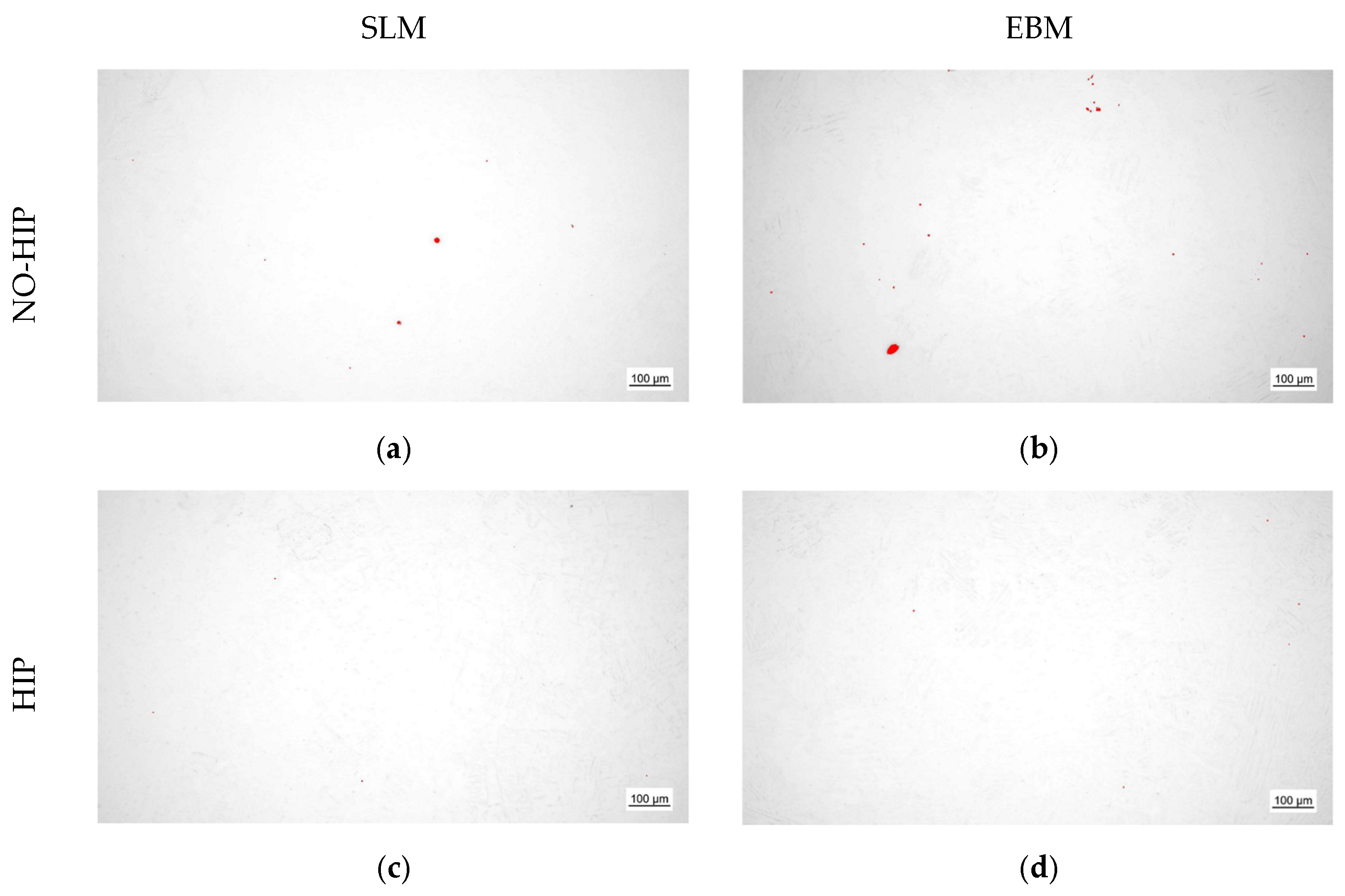
- the internal defects, limited by a correct choice of printing parameters, are usually coarser for the EBM samples with respect to the SLM ones. HIP greatly reduced the content and dimension of these defects;
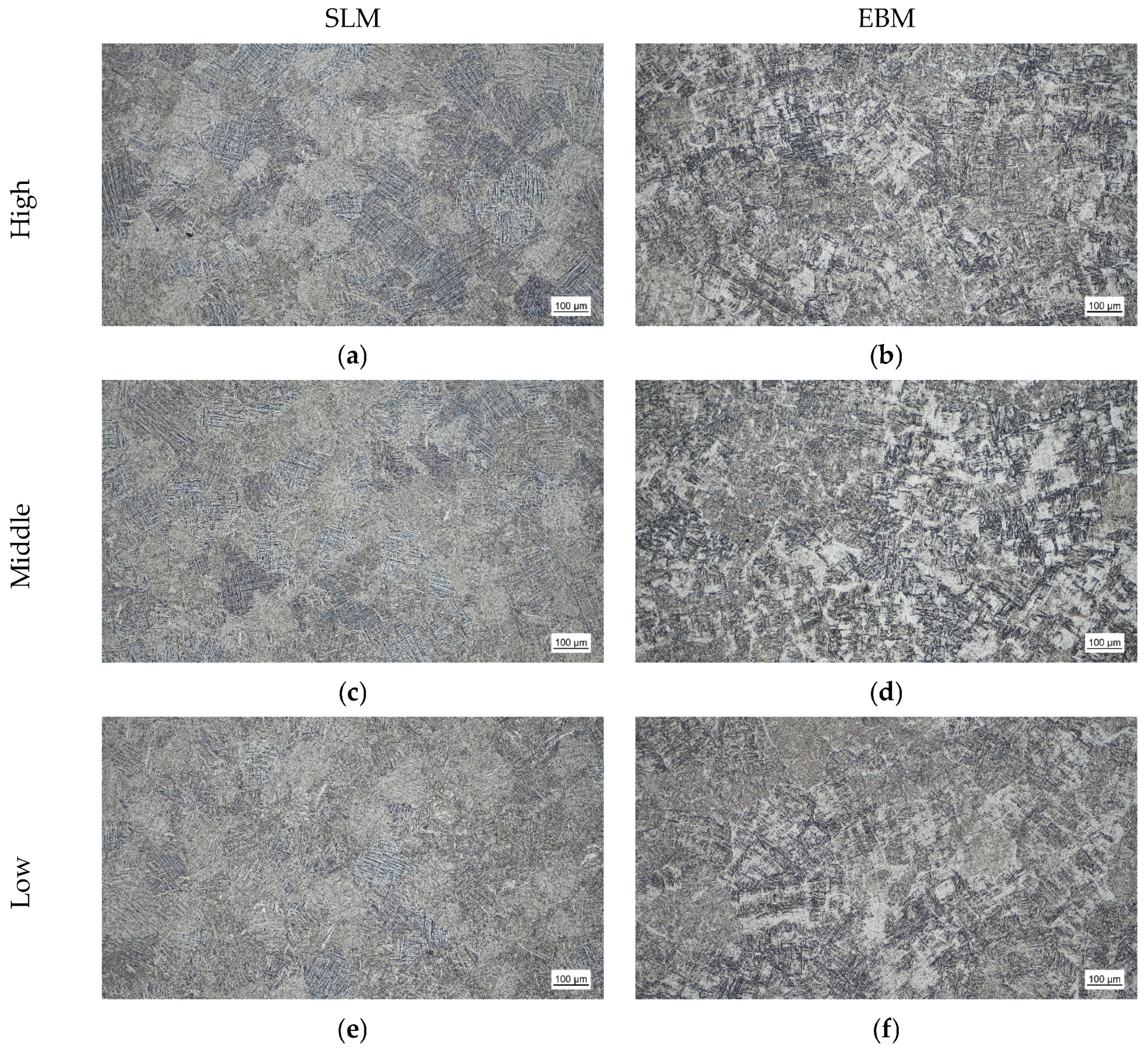
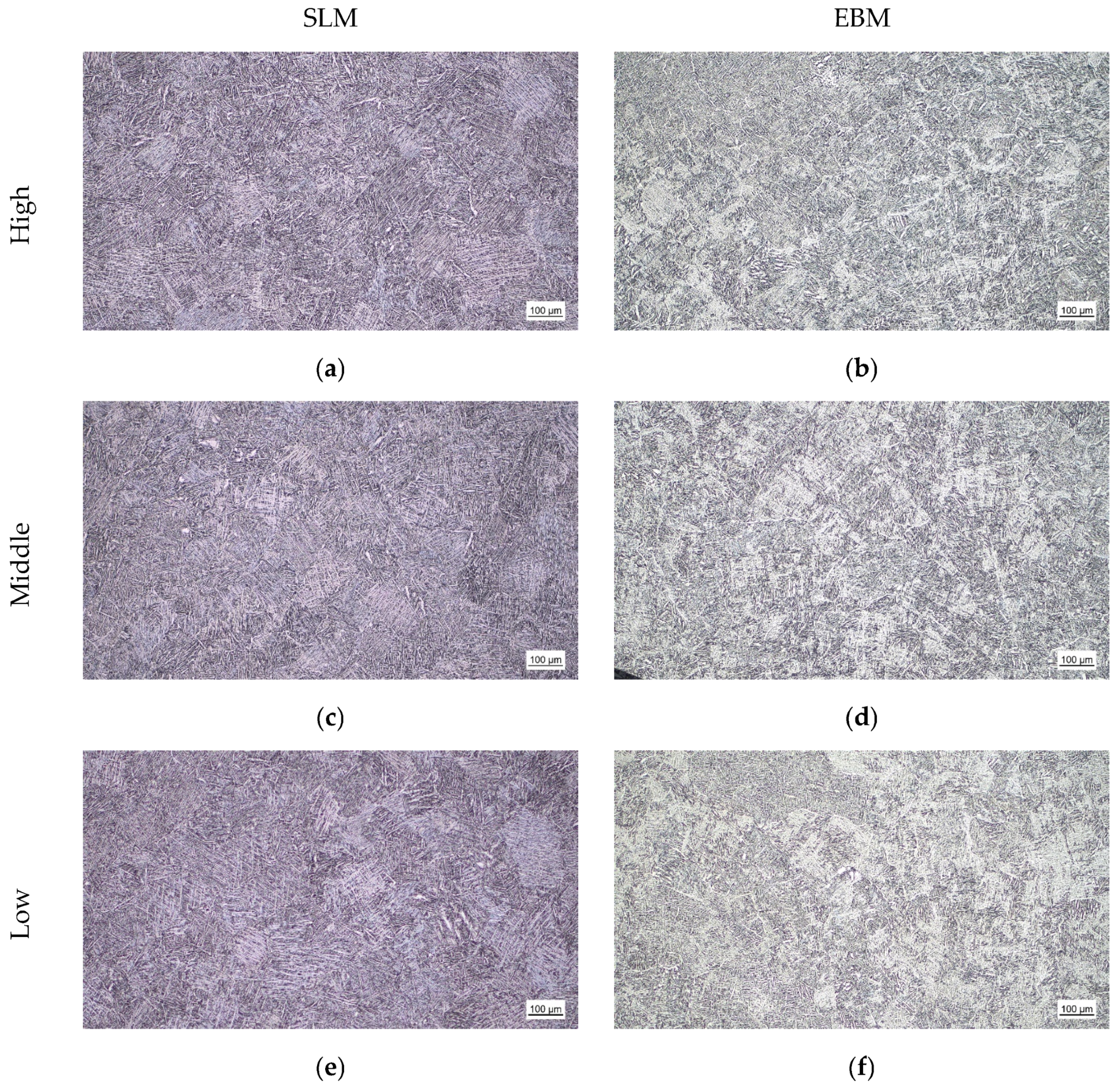
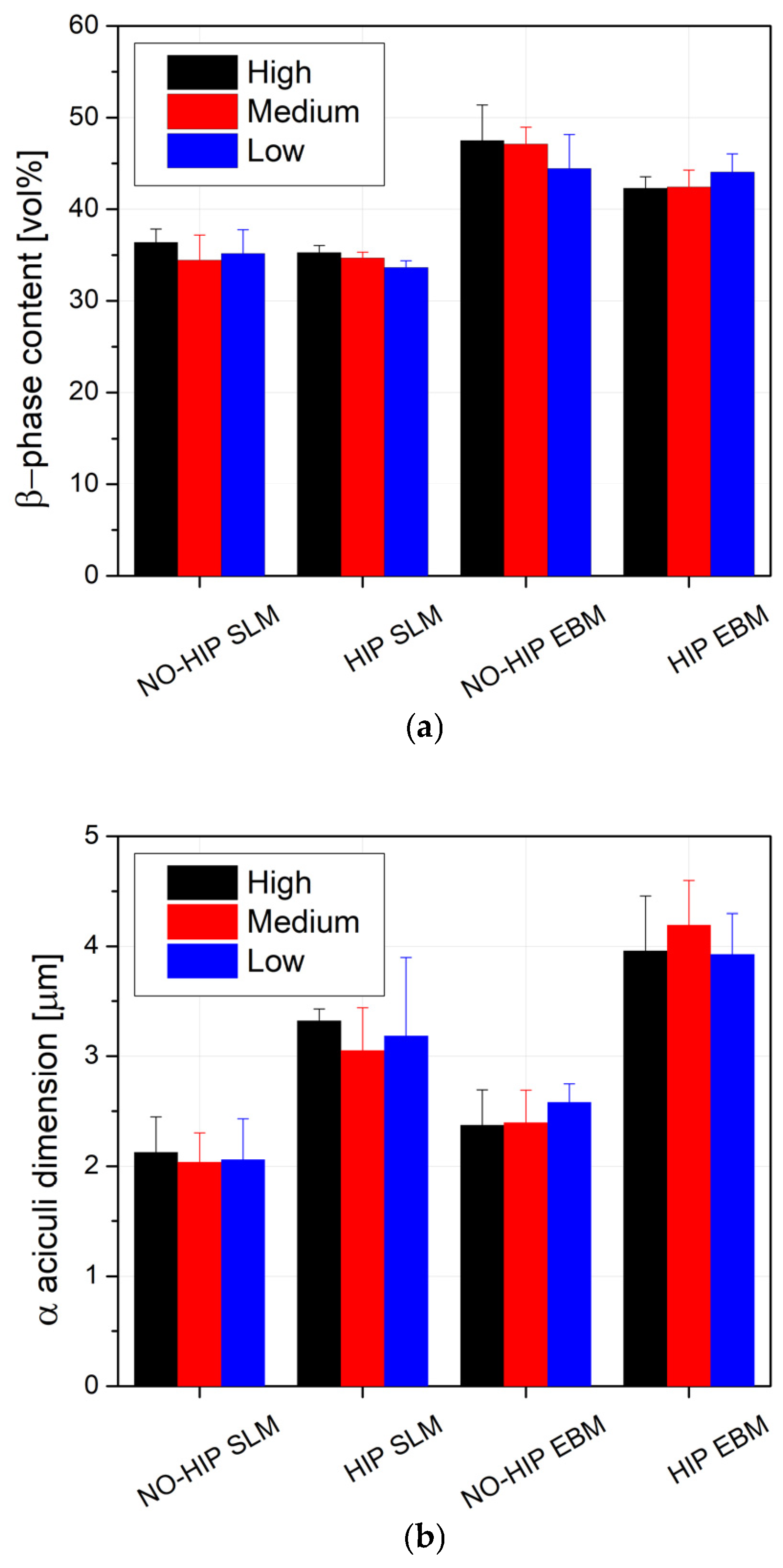
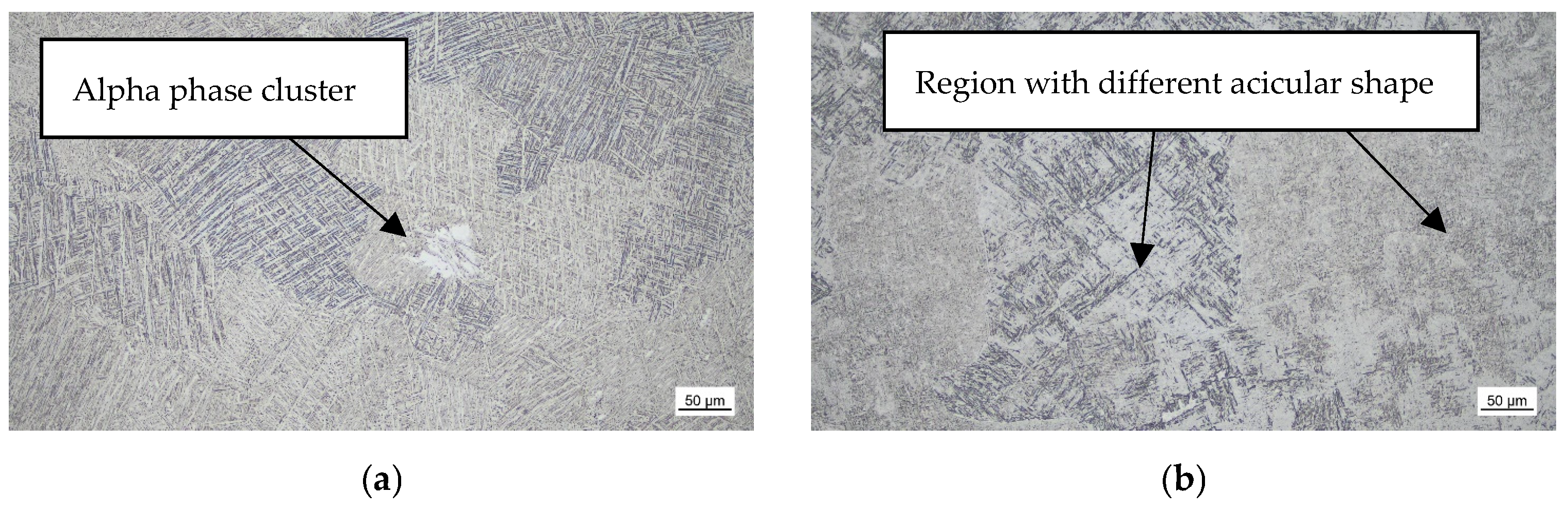
- the microstructure of the samples is similar, while the fraction of beta phase differs quantitatively, with EBM samples generally exhibiting a slightly higher beta phase content and coarser metallurgical features. This is also observed in the HIP samples. The causes are related to the initial microstructure prior to heat treatment (no heat treatment for EBM samples) or the HIP process. This is also reflected in the microhardness distribution, although the HIP process made the microstructure more homogeneous;
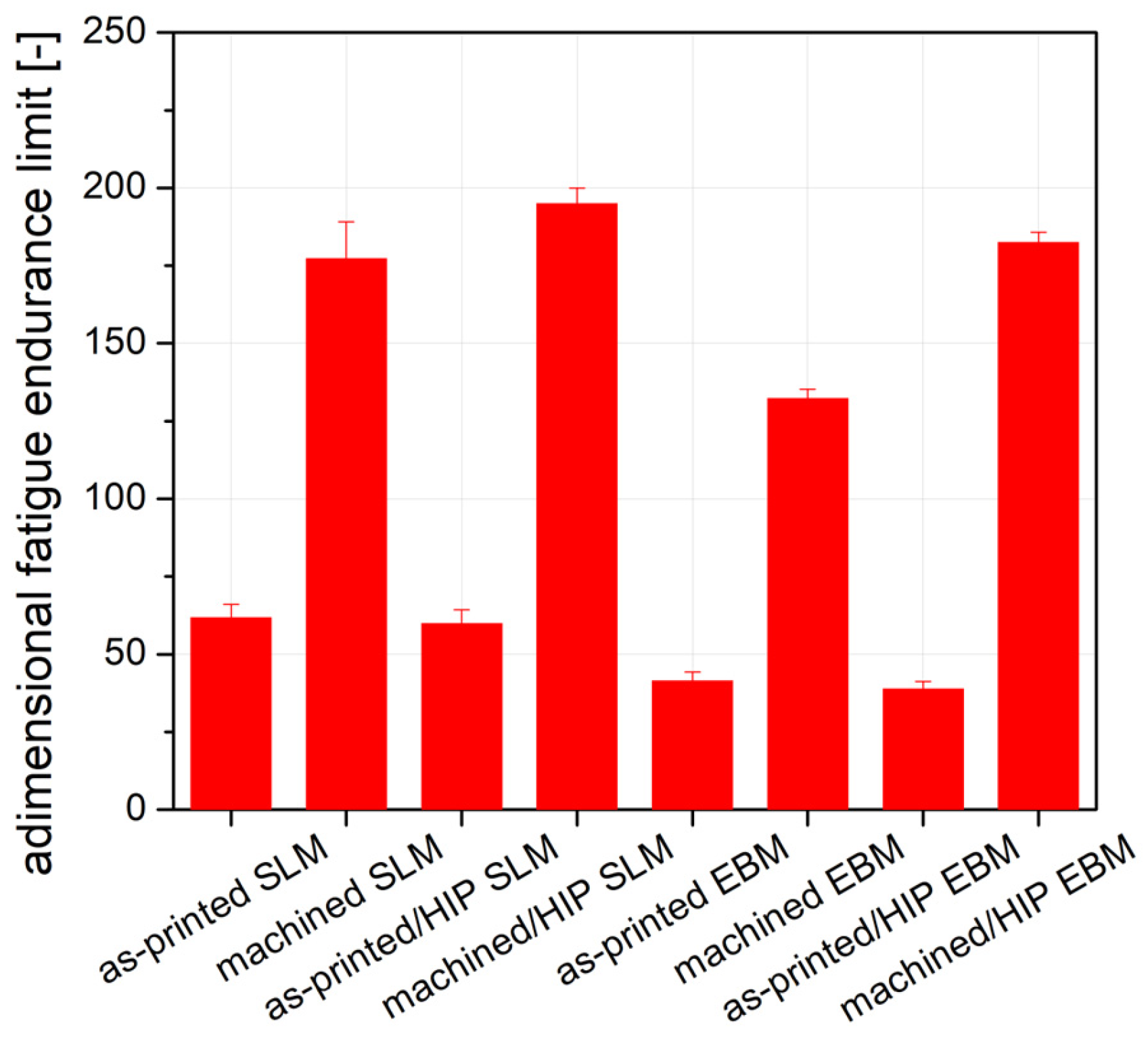
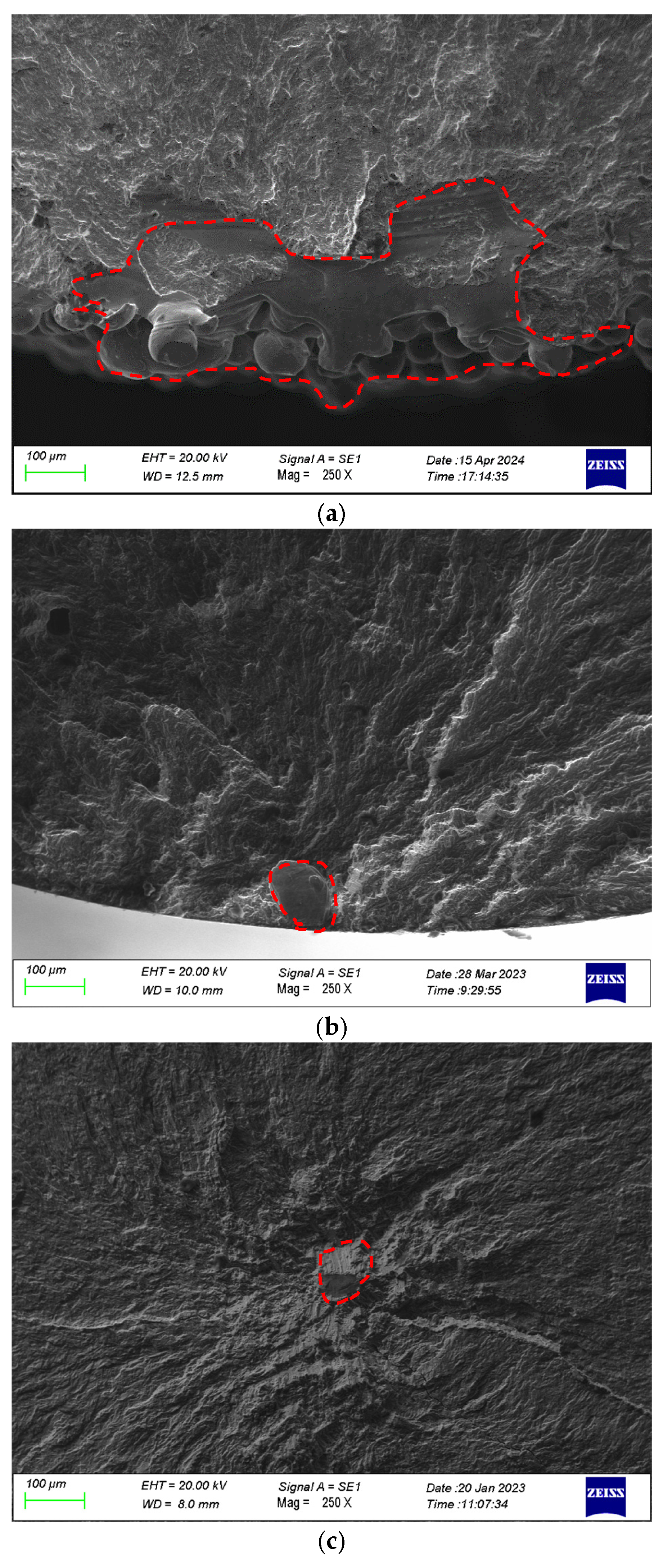
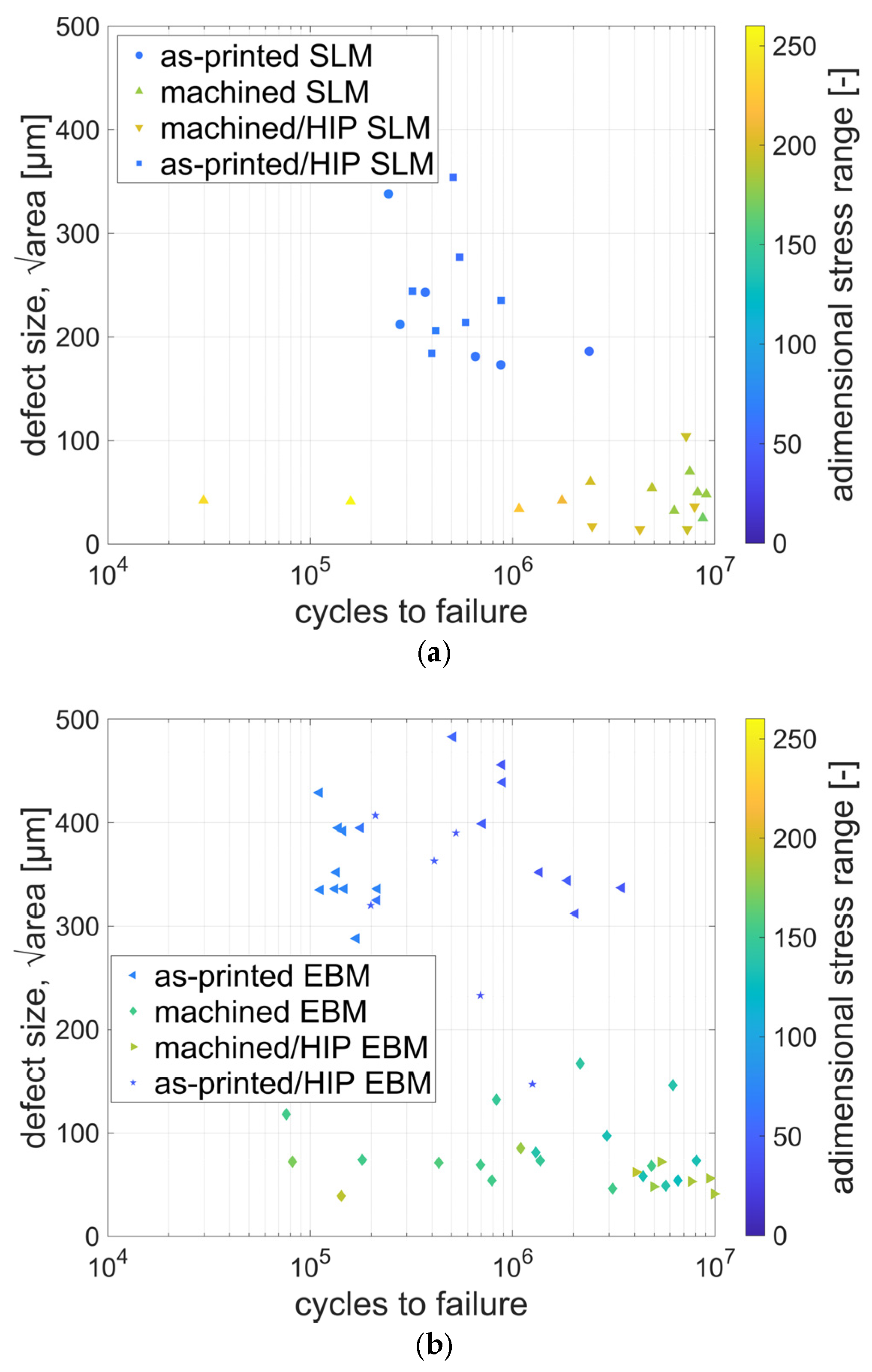
- the surface texture in the as-printed condition is strongly influenced by the printing technique and also by the process parameters. The fatigue resistance of the samples is strongly influenced by the surface condition and texture, which is also the origin of the fatigue failures. In this case, the EBM samples exhibited the worst fatigue behavior in the as-printed condition. When the as-printed texture is removed, the fatigue life is strongly influenced by internal defects. The HIP treatment of rough surfaces, such as the as-printed ones, is not effective in increasing the fatigue life of material. The difference in fatigue resistance between EBM and SLM is strongly reduced for machined and HIP samples;
- the applied load plays a role in fatigue crack nucleation. In particular, for the same defect size, the defect induces an anticipated failure at higher applied loads.
Author Contributions
Funding
Data Availability Statement
Acknowledgments
Conflicts of Interest
Abbreviations
| HIP | Hot Isostatic Pressing |
| VHT | Vacuum Heat Treatment |
| SLM | Selective Laser Melting |
| EBM | Electron Beam Melting |
References
- Pasang, T.; Budiman, A.S.; Wang, J.; Jiang, C.; Boyer, R.; Williams, J.; Misiolek, W.Z. Additive manufacturing of titanium alloys—Enabling re-manufacturing of aerospace and biomedical components. Microelectron. Eng. 2023, 270, 111935. [Google Scholar] [CrossRef] [Scilit]
- Blakey-Milner, B.; Gradl, P.; Snedden, G.; Brooks, M.; Pitot, J.; Lopez, E.; Leary, M.; Berto, F.; du Plessis, A. Metal additive manufacturing in aerospace: A review. Mater. Des. 2021, 209, 110008. [Google Scholar] [CrossRef] [Scilit]
- Madhavadas, V.; Srivastava, D.; Chadha, U.; Aravind Raj, S.; Sultan, M.T.H.; Shahar, F.S.; Shah, A.U.M. A review on metal additive manufacturing for intricately shaped aerospace components. CIRP J. Manuf. Sci. Technol. 2022, 39, 18–36. [Google Scholar] [CrossRef] [Scilit]
- Marin, E.; Lanzutti, A. Biomedical Applications of Titanium Alloys: A Comprehensive Review. Materials 2024, 17, 114. [Google Scholar] [CrossRef] [Scilit] [PubMed]
- Marin, E.; Lanzutti, A. History of Metallic Orthopedic Materials. Metals 2025, 15, 378. [Google Scholar] [CrossRef] [Scilit]
- Zhang, L.-C.; Chen, L.-Y. A Review on Biomedical Titanium Alloys: Recent Progress and Prospect. Adv. Eng. Mater. 2019, 21, 1801215. [Google Scholar] [CrossRef] [Scilit]
- Campanelli, L.C. A review on the recent advances concerning the fatigue performance of titanium alloys for orthopedic applications. J. Mater. Res. 2021, 36, 151–165. [Google Scholar] [CrossRef]
- Molaei, R.; Fatemi, A.; Sanaei, N.; Pegues, J.; Shamsaei, N.; Shao, S.; Li, P.; Warner, D.; Phan, N. Fatigue of additive manufactured Ti-6Al-4V, Part II: The relationship between microstructure, material cyclic properties, and component performance. Int. J. Fatigue 2020, 132, 105363. [Google Scholar] [CrossRef] [Scilit]
- Denti, L.; Bassoli, E.; Gatto, A.; Santecchia, E.; Mengucci, P. Fatigue life and microstructure of additive manufactured Ti6Al4V after different finishing processes. Mater. Sci. Eng. A 2019, 755, 1–9. [Google Scholar] [CrossRef] [Scilit]
- Wu, G.; Shi, C.; Sha, W.; Sha, A.; Jiang, H. Effect of microstructure on the fatigue properties of Ti-6Al-4V titanium alloys. Mater. Des. 2013, 46, 668–674. [Google Scholar] [CrossRef] [Scilit]
- Nguyen, H.D.; Pramanik, A.; Basak, A.K.; Dong, Y.; Prakash, C.; Debnath, S.; Shankar, S.; Jawahir, I.; Dixit, S.; Buddhi, D. A critical review on additive manufacturing of Ti-6Al-4V alloy: Microstructure and mechanical properties. J. Mater. Res. Technol. 2022, 18, 4641–4661. [Google Scholar] [CrossRef] [Scilit]
- Masuo, H.; Tanaka, Y.; Morokoshi, S.; Yagura, H.; Uchida, T.; Yamamoto, Y.; Murakami, Y. Influence of defects, surface roughness and HIP on the fatigue strength of Ti-6Al-4V manufactured by additive manufacturing. Int. J. Fatigue 2018, 117, 163–179. [Google Scholar] [CrossRef] [Scilit]
- Jiao, Z.; Wu, X.; Yu, H.; Xu, R.; Wu, L. High cycle fatigue behavior of a selective laser melted Ti6Al4V alloy: Anisotropy, defects effect and life prediction. Int. J. Fatigue 2023, 167, 107252. [Google Scholar] [CrossRef] [Scilit]
- Naab, B.; Ramachandran, S.; Mirihanage, W.; Celikin, M. Fatigue prediction through quantification of critical defects and crack growth behaviour in additively manufactured Ti-6Al-4V alloy. Mater. Sci. Eng. A 2024, 903, 146658. [Google Scholar] [CrossRef] [Scilit]
- Hrabe, N.; Gnäupel-Herold, T.; Quinn, T. Fatigue properties of a titanium alloy (Ti–6Al–4V) fabricated via electron beam melting (EBM): Effects of internal defects and residual stress. Int. J. Fatigue 2017, 94, 202–210. [Google Scholar] [CrossRef] [Scilit]
- Nicoletto, G. Anisotropic high cycle fatigue behavior of Ti–6Al–4V obtained by powder bed laser fusion. Int. J. Fatigue 2017, 94, 255–262. [Google Scholar] [CrossRef] [Scilit]
- Chern, A.H.; Nandwana, P.; Yuan, T.; Kirka, M.M.; Dehoff, R.R.; Liaw, P.K.; Duty, C.E. A review on the fatigue behavior of Ti-6Al-4V fabricated by electron beam melting additive manufacturing. Int. J. Fatigue 2019, 119, 173–184. [Google Scholar] [CrossRef] [Scilit]
- Hrabe, N.W.; Heinl, P.; Flinn, B.; Körner, C.; Bordia, R.K. Compression-compression fatigue of selective electron beam melted cellular titanium (Ti-6Al-4V). J. Biomed. Mater. Res. B Appl. Biomater. 2011, 99B, 313–320. [Google Scholar] [CrossRef] [Scilit]
- Tusher, M.M.H.; Ince, A. Effect of stress-relieved heat treatment on very high cycle fatigue performance of additive manufactured Ti-6Al-4V alloy. Fatigue Fract. Eng. Mater. Struct. 2023, 46, 3982–4000. [Google Scholar] [CrossRef] [Scilit]
- Pessard, E.; Lavialle, M.; Laheurte, P.; Didier, P.; Brochu, M. High-cycle fatigue behavior of a laser powder bed fusion additive manufactured Ti-6Al-4V titanium: Effect of pores and tested volume size. Int. J. Fatigue 2021, 149, 106206. [Google Scholar] [CrossRef] [Scilit]
- Fatemi, A.; Molaei, R.; Simsiriwong, J.; Sanaei, N.; Pegues, J.; Torries, B.; Phan, N.; Shamsaei, N. Fatigue behaviour of additive manufactured materials: An overview of some recent experimental studies on Ti-6Al-4V considering various processing and loading direction effects. Fatigue Fract. Eng. Mater. Struct. 2019, 42, 991–1009. [Google Scholar] [CrossRef] [Scilit]
- Pegues, J.W.; Shao, S.; Shamsaei, N.; Sanaei, N.; Fatemi, A.; Warner, D.H.; Li, P.; Phan, N. Fatigue of additive manufactured Ti-6Al-4V, Part I: The effects of powder feedstock, manufacturing, and post-process conditions on the resulting microstructure and defects. Int. J. Fatigue 2020, 132, 105358. [Google Scholar] [CrossRef] [Scilit]
- Cutolo, A.; Elangeswaran, C.; Muralidharan, G.K.; Van Hooreweder, B. On the role of building orientation and surface post-processes on the fatigue life of Ti-6Al-4V coupons manufactured by laser powder bed fusion. Mater. Sci. Eng. A 2022, 840, 142747. [Google Scholar] [CrossRef] [Scilit]
- Fu, R.; Zheng, L.; Zhong, Z.; Hong, Y. High-cycle and very-high-cycle fatigue behavior at two stress ratios of Ti-6Al-4V manufactured via laser powder bed fusion with different surface states. Fatigue Fract. Eng. Mater. Struct. 2023, 46, 2348–2363. [Google Scholar] [CrossRef] [Scilit]
- Shamir, M.; Syed, A.K.; Janik, V.; Biswal, R.; Zhang, X. The role of microstructure and local crystallographic orientation near porosity defects on the high cycle fatigue life of an additive manufactured Ti-6Al-4V. Mater. Charact. 2020, 169, 110576. [Google Scholar] [CrossRef] [Scilit]
- Batalha, G.F.; Silva, L.C.; Coelho, R.S.; Teixeira, M.C.C.; Castro, T.L.; Pereira, M.V.S.; Adamiak, M.; Pawlyta, M.; Krzeminski, L.; Bialas, O.; et al. Mechanical properties characterization of Ti-6Al-4 V grade 5 (recycled) additively manufactured by selective electron beam melting (EB-PBF). Eng. Fail. Anal. 2024, 157, 107892. [Google Scholar] [CrossRef] [Scilit]
- Takase, A.; Ishimoto, T.; Morita, N.; Ikeo, N.; Nakano, T. Comparison of phase characteristics and residual stresses in ti-6al-4v alloy manufactured by laser powder bed fusion (L-pbf) and electron beam powder bed fusion (eb-pbf) techniques. Crystals 2021, 11, 796. [Google Scholar] [CrossRef] [Scilit]
- Chastand, V.; Quaegebeur, P.; Maia, W.; Charkaluk, E. Comparative study of fatigue properties of Ti-6Al-4V specimens built by electron beam melting (EBM) and selective laser melting (SLM). Mater. Charact. 2018, 143, 76–81. [Google Scholar] [CrossRef] [Scilit]
- Afroz, L.; Das, R.; Qian, M.; Easton, M.; Brandt, M. Fatigue behaviour of laser powder bed fusion (L-PBF) Ti–6Al–4V, Al–Si–Mg and stainless steels: A brief overview. Int. J. Fract. 2022, 235, 3–46. [Google Scholar] [CrossRef] [Scilit]
- Gao, X.; Tao, C.; Wu, S. Anisotropic high cycle fatigue property estimation for laser additive manufactured Ti6Al4V alloy dependence on tomographic imaging of defect population. J. Mater. Res. Technol. 2023, 22, 1971–1982. [Google Scholar] [CrossRef] [Scilit]
- Lanzutti, A.; Magnan, M.; Vaglio, E.; Totis, G.; Sortino, M.; Fedrizzi, L. Study of the Effect of L-PBF Technique Temporal Evolution on Microstructure, Surface Texture, and Fatigue Performance of Ti gr. 23 Alloy. Metals 2023, 13, 1247. [Google Scholar] [CrossRef] [Scilit]
- Salvati, E.; Tognan, A.; Laurenti, L.; Pelegatti, M.; De Bona, F. A defect-based physics-informed machine learning framework for fatigue finite life prediction in additive manufacturing. Mater. Des. 2022, 222, 111089. [Google Scholar] [CrossRef] [Scilit]
- Avoledo, E.; Petruzzi, M.; Pelegatti, M.; Tognan, A.; De Bona, F.; Pressacco, M.; Toninato, R.; Salvati, E. Defect Analysis by Computed Tomography in Metallic Materials: Optimisation, Uncertainty Quantification and Classification. Precis. Eng. 2026, 97, 235–248. [Google Scholar] [CrossRef] [Scilit]
- Naab, B.; Celikin, M. The role of microstructural evolution on the fatigue behavior of additively manufactured Ti–6Al–4V alloy. Mater. Sci. Eng. A 2022, 859, 144232. [Google Scholar] [CrossRef] [Scilit]
- Ariza, D.A.; Arrieta, E.; Banuelos, C.; Colón, B.J.; Murr, L.E.; Wicker, R.B.; Beamer, C.; Medina, F. Comparison of fatigue life behavior between 4-point and uniaxial loading for L-PBF Ti–6Al–4V after HIP treatments. Results Mater. 2024, 22, 100579. [Google Scholar] [CrossRef] [Scilit]
- Jimenez, E.H.; Kreitcberg, A.; Moquin, E.; Brailovski, V. Influence of Post-Processing Conditions on the Microstructure, Static, and Fatigue Resistance of Laser Powder Bed Fused Ti-6Al-4V Components. J. Manuf. Mater. Process. 2022, 6, 85. [Google Scholar] [CrossRef] [Scilit]
- Saville, A.I.; Benzing, J.T.; Semiatin, S.L.; Derimow, N.; Hrabe, N.W. Defect recrystallization in subtransus hot isostatic pressing of electron beam powder bed fusion Ti-6Al-4V. Addit. Manuf. 2024, 91, 104349. [Google Scholar] [CrossRef] [Scilit]
- Jin, B.; Wang, Q.; Zhao, L.; Pan, A.; Ding, X.; Gao, W.; Song, Y.; Zhang, X. A Review of Additive Manufacturing Techniques and Post-Processing for High-Temperature Titanium Alloys. Metals 2023, 13, 1327. [Google Scholar] [CrossRef] [Scilit]
- Shiyas, K.A.; Ramanujam, R. A review on post processing techniques of additively manufactured metal parts for improving the material properties. Mater. Today Proc. 2021, 46, 1429–1436. [Google Scholar] [CrossRef] [Scilit]
- Ali, M.; Almotari, A.; Algamal, A.; Qattawi, A. Recent Advancements in Post Processing of Additively Manufactured Metals Using Laser Polishing. J. Manuf. Mater. Process. 2023, 7, 115. [Google Scholar] [CrossRef] [Scilit]
- ASTM E466-15; Standard Practice for Conducting Force Controlled Constant Amplitude Axial Fatigue Tests of Metallic Materials. ASTM International: West Conshohocken, PA, USA, 2015.
- ISO 5832-3:2021; Surgical Implants—Metallic Materials—Part 3: Titanium 6-Aluminium 4-Vanadium Alloy. ISO: Geneva, Switzerland, 2021.
- ASTM F3001-14(2021); Standard Specification for Additive Manufacturing Titanium-6 Aluminum-4 Vanadium ELI (Extra Low Interstitial) with Powder Bed Fusion. ASTM International: West Conshohocken, PA, USA, 2021.
- ISO 21920-3:2021; Geometrical Product Specifications (GPS)—Surface Texture: Profile—Part 3: Specification Operators. ISO: Geneva, Switzerland, 2021.
- Arola, D.; Williams, C.L. Estimating the fatigue stress concentration factor of machined surfaces. Int. J. Fatigue 2002, 24, 923–930. [Google Scholar] [CrossRef] [Scilit]
- Lanzutti, A.; Pujatti, M.; Magnan, M.; Andreatta, F.; Nurmi, H.; Silvonen, A.; Hlede, E.; Fedrizzi, L. Uniaxial fatigue properties of closed die hot forged 42CrMo4 steel: Effect of flash and mechanical surface treatments. Mater. Des. 2017, 132, 324–336. [Google Scholar] [CrossRef] [Scilit]
- Qian, G.; Li, Y.; Paolino, D.; Tridello, A.; Berto, F.; Hong, Y. Very-high-cycle fatigue behavior of Ti-6Al-4V manufactured by selective laser melting: Effect of build orientation. Int. J. Fatigue 2020, 136, 105628. [Google Scholar] [CrossRef] [Scilit]
- Dixon, W.J.; Mood, A.M. A Method for Obtaining and Analyzing Sensitivity Data. J. Am. Stat. Assoc. 1948, 43, 109–126. [Google Scholar] [CrossRef]
- Chan, K.S.; Koike, M.; Mason, R.L.; Okabe, T. Fatigue life of titanium alloys fabricated by additive layer manufacturing techniques for dental implants. Metall. Mater. Trans. A Phys. Metall. Mater. Sci. 2013, 44, 1010–1022. [Google Scholar] [CrossRef] [Scilit]
- Tammas-Williams, S.; Withers, P.J.; Todd, I.; Prangnell, P.B. The Effectiveness of Hot Isostatic Pressing for Closing Porosity in Titanium Parts Manufactured by Selective Electron Beam Melting. Metall. Mater. Trans. A Phys. Metall. Mater. Sci. 2016, 47, 1939–1946. [Google Scholar] [CrossRef] [Scilit]
- Pasang, T.; Tavlovich, B.; Yannay, O.; Jackson, B.; Fry, M.; Tao, Y.; Turangi, C.; Wang, J.-C.; Jiang, C.-P.; Sato, Y.; et al. Directionally-Dependent Mechanical Properties of Ti6Al4V Manufactured by Electron Beam Melting (EBM) and Selective Laser Melting (SLM). Materials 2021, 14, 3603. [Google Scholar] [CrossRef] [Scilit]
- Le, A.T.; Dau, V.H.; Hoang, T.D.; Nguyen-Xuan, H. Heat treatment of Ti6Al4V alloy fabricated by selective laser melting (SLM) for medical implant: A comprehensive review. J. Mater. Res. Technol. 2025, 36, 7643–7665. [Google Scholar] [CrossRef] [Scilit]
- Odehnal, L.; Ranuša, M.; Čípek, P.; Malý, M.; Mazánová, V.; Dlouhý, A.; Koutný, D.; Hartl, M.; Vrbka, M. Additively manufactured Ti6Al4V with controlled surface structure as a potential material for joint implants: Long-term wear performance and durability. Tribol. Int. 2026, 216, 111599. [Google Scholar] [CrossRef] [Scilit]
- Milton, S.; Rigo, O.; LeCorre, S.; Morandeau, A.; Siriki, R.; Bocher, P.; Leroy, R. Microstructure effects on the machinability behaviour of Ti6Al4V produced by Selective Laser Melting and Electron Beam Melting process. Mater. Sci. Eng. A 2021, 823, 141773. [Google Scholar] [CrossRef] [Scilit]









| Thermal Condition | Surface Finishing | Printing Technique |
|---|---|---|
| NO-HIP | as-printed | EBM |
| HIP | as-printed | EBM |
| NO-HIP | machined | EBM |
| HIP | machined | EBM |
| NO-HIP (stress relieved, VHT) | as-printed | SLM |
| HIP | as-printed | SLM |
| NO-HIP (stress relieved, VHT) | machined | SLM |
| HIP | machined | SLM |
| Instrument | Q10plus Version 2.1 with EBM Control 6.1 GE Additive (Arcam) (LaB6 crystal) |
| Powders size | 45–105 µm |
| Atmosphere | Vacuum 4.0 × 10⁻⁴ mbar |
| Scan strategy | Snake with optimized layer orientation |
| Layer thickness | 50 µm |
| Instrument | M 290-EOS with EOSystem (HCS) 2.11.552.0 control (Yb fibre laser with a wavelength of 1060–1100 nm) |
| Powders size | 15–45 µm |
| Atmosphere | inert argon atmosphere with 0.15% of max residual oxygen |
| Scan strategy | Stripes with 5 mm of width adjacent one to each other without overlap and optimized layer rotation. |
| Layer thickness | 60 µm |
| Material Condition | YS (Rp0.2) [MPa] | UTS (Rm) [MPa] | Elongation [%] |
|---|---|---|---|
| NO-HIP EBM | 961 (12) | 1051 (13) | 18 (1) |
| HIP EBM | 877 (19) | 1002 (6) | 20 (1) |
| NO-HIP SLM | 959 (6) | 1039 (6) | 17 (0.3) |
| HIP SLM | 839 (3) | 938 (3) | 19 (0.1) |
| Material Condition | Number of Samples (Fail/Runout Ratio) | Non-Dimensional Endurance Fatigue Limit [-] | Standard Deviation of Non-Dimensional Endurance Fatigue Limit [-] |
|---|---|---|---|
| As-printed SLM | 14 (6/8) | 61.8 | 4.3 |
| Machined SLM | 21 (6/15) | 177.4 | 11.7 |
| As-printed/HIP SLM | 13 (7/6) | 60.0 | 4.3 |
| Machined/HIP SLM | 13 (6/7) | 195.0 | 5.0 |
| As-printed EBM | 14 (8/6) | 41.5 | 2.8 |
| Machined EBM | 13 (5/7) | 132.4 | 2.8 |
| As-printed/HIP EBM | 12 (6/6) | 38.9 | 2.4 |
| Machined/HIP EBM | 12 (6/6) | 182.6 | 3.1 |
Disclaimer/Publisher’s Note: The statements, opinions and data contained in all publications are solely those of the individual author(s) and contributor(s) and not of MDPI and/or the editor(s). MDPI and/or the editor(s) disclaim responsibility for any injury to people or property resulting from any ideas, methods, instructions or products referred to in the content. |
© 2026 by the authors. Licensee MDPI, Basel, Switzerland. This article is an open access article distributed under the terms and conditions of the Creative Commons Attribution (CC BY) license.
Share and Cite
Sordetti, F.; Picco, N.; Pelegatti, M.; Toninato, R.; Petruzzi, M.; Milan, F.; Avoledo, E.; Tognan, A.; Marin, E.; Fedrizzi, L.; et al. Experimental Investigation of Material Characteristics That Can Affect Fatigue Behavior of Ti6Al4V Alloys Produced by Additive Manufacturing SLM and EBM Processes. Metals 2026, 16, 459. https://doi.org/10.3390/met16050459
Sordetti F, Picco N, Pelegatti M, Toninato R, Petruzzi M, Milan F, Avoledo E, Tognan A, Marin E, Fedrizzi L, et al. Experimental Investigation of Material Characteristics That Can Affect Fatigue Behavior of Ti6Al4V Alloys Produced by Additive Manufacturing SLM and EBM Processes. Metals. 2026; 16(5):459. https://doi.org/10.3390/met16050459
Chicago/Turabian StyleSordetti, Francesco, Niki Picco, Marco Pelegatti, Riccardo Toninato, Marco Petruzzi, Federico Milan, Emanuele Avoledo, Alessandro Tognan, Elia Marin, Lorenzo Fedrizzi, and et al. 2026. "Experimental Investigation of Material Characteristics That Can Affect Fatigue Behavior of Ti6Al4V Alloys Produced by Additive Manufacturing SLM and EBM Processes" Metals 16, no. 5: 459. https://doi.org/10.3390/met16050459
APA StyleSordetti, F., Picco, N., Pelegatti, M., Toninato, R., Petruzzi, M., Milan, F., Avoledo, E., Tognan, A., Marin, E., Fedrizzi, L., Magnan, M., Salvati, E., Pressacco, M., & Lanzutti, A. (2026). Experimental Investigation of Material Characteristics That Can Affect Fatigue Behavior of Ti6Al4V Alloys Produced by Additive Manufacturing SLM and EBM Processes. Metals, 16(5), 459. https://doi.org/10.3390/met16050459