Article

Validation of a Surface Chemical Attack Process on Precision Metal Spheres for Use in Non-Contact Metrology


1
Department of Construction and Manufacturing Engineering, University of Oviedo, Campus de Gijón, 33203 Gijón, Spain
2
Area of Manufacturing Engineering, University of León, Campus de Vegazana, 24071 León, Spain
*
Author to whom correspondence should be addressed.
Metals 2026, 16(4), 381; https://doi.org/10.3390/met16040381
Submission received: 6 March 2026 / Revised: 27 March 2026 / Accepted: 27 March 2026 / Published: 30 March 2026
(This article belongs to the Special Issue Surface Treatments and Coating of Metallic Materials (2nd Edition))

Abstract

This work aims to find a chemical process that modifies the surface finish of precision metal spheres to enable their use as reference elements in optical metrology. The chemical process should not substantially alter the original quality or dimensional accuracy, but it should give the spheres a matte finish, eliminating reflections. The spheres used are AISI 316L stainless steel bearing spheres, which are of low cost, high availability and great dimensional accuracy, making them suitable as reference elements if their high gloss is removed. Two procedures are tested in the research. On the one hand, different passivation acids are tested, and on the other, a chemical attack with a much more aggressive acid, aqua regia (hydrochloric acid, HCl, and nitric acid, HNO3, in a 1:3 ratio). Tests showed that none of the passivation methods sufficiently eliminated glare and reflections. However, chemical etching by immersion in aqua regia did produce a matte and homogeneous surface finish, reducing reflectivity and promoting the diffusion of incident light without loss of precision. The paper presents the tests to find the optimal exposure time to aqua regia as well as the influence of chemical etching from a dimensional and geometrical point of view, both in contact and laser sensor optical measurement. The research has considered a representative series of the chemical attack procedure to validate the repeatability of the method. Finally, it has been verified that the method is repeatable and that improvements (close to 45%) in the metrological accuracy of the laser sensor measurements are achieved when using spheres treated with aqua regia compared to original spheres. In conclusion, it has been demonstrated that the chemical attack with aqua regia is not only a valid method for generating matte surfaces suitable for optical metrology, but a process that can also be implemented at low cost and with high reproducibility.

1. Introduction

In the field of non-contact metrology, particularly in the case of 3D laser triangulation systems, the use of white, matte reference spheres—typically painted and polished—is common practice [1,2,3]. These spheres are widely employed as dimensional artefacts to ensure metrological traceability in advanced manufacturing [4]. Reference spheres are not only used for calibration procedures but also for alignment operations, measurement range extension procedures, and hybrid metrology applications, where point clouds with different densities obtained from different equipment and/or technologies are combined.
The use of non-specular (non-reflective) surfaces is essential because surface reflectance significantly influences the achievable measurement accuracy of optical systems, such as 3D laser sensors mounted on coordinate measuring machines (CMMs) [5], photogrammetry systems, and structured white-light scanners [6]. Highly reflective surfaces generate specular reflections, signal saturation, and the appearance of spurious points in the acquired point cloud, thereby reducing measurement reliability. Reference spheres designed for optical metrology typically present a matte finish without mirror-like behaviour. They are often manufactured from coated metals (e.g., steel or aluminium spheres coated with titanium oxide) or from a mixture of ceramic materials, such as alumina-based spheres doped with oxides that provide the matte finish. These spheres perform efficiently due to their high dimensional precision (form errors < 0.005 mm) and favourable optical response [1]. However, their fragility, cleaning difficulty (due to coating damage risk), and high manufacturing cost make them inaccessible for certain users. In this context, the possibility of manufacturing stainless steel spheres, mechanically robust and corrosion-resistant, with high geometric quality (form errors < 0.005 mm) at significantly lower cost becomes highly attractive. The present work explores this possibility through a controlled chemical surface attack process that be relatively simple.
The implementation of a chemical surface modification strategy builds upon previous research carried out by the authors [7,8], in which both mechanical (sandblasting) and chemical treatments were evaluated on low-cost stainless steel bearing spheres. Mechanical treatments yielded relatively satisfactory results, reducing gloss without excessive dimensional degradation [7]. However, chemical dissolution using aqua regia produced inconsistent results due to insufficient control of exposure time [8]. These findings suggested a direct relationship between immersion time and surface modification, indicating the possibility of achieving optimal optical conditions through strict time control. Based on this hypothesis, this work describes new research conducted on commercial spheres of grade G100 according to ISO 3290-1 (equivalent to DIN 5401) [9,10]. Specifically, commercial AISI 316L (X2CrNiMo17-12-2/1.4404) austenitic stainless steel spheres were selected as they are widely available, present good geometric quality and corrosion resistance, but exhibit highly polished surfaces (Ra < 0.1 μm) and metallic grey coloration that generate optical challenges for 3D laser scanners, often producing spurious points and measurement distortions. Two chemical approaches were tested: (i) passivation treatments using different acids and (ii) controlled chemical dissolution using aqua regia, focusing on identifying an optimal exposure time that balances optical improvement and dimensional preservation.
The ultimate objective is to establish a reproducible protocol capable of preserving geometric integrity (form errors below ±0.0025 mm) while producing homogeneous matte surfaces suitable for laser triangulation, structured light, photogrammetry, and hybrid metrology workflows. The experimental work carried out in this study covers the entire process, from the definition of the experiments to the execution of controlled chemical treatment trials and final process validation tests. The investigation characterizes and quantifies the effects of different chemical surface attacks, including both passivation treatments and controlled dissolution processes, analysing the influence of chemical attack not only on surface finish and quality, but also from a gravimetric standpoint, through the evaluation of material loss. The combined analysis of mass loss, surface finish, and dimensional measurements performed by contact probing using a Coordinate Measuring Machine (CMM) enables the determination of an optimal exposure time interval. Within this optimal exposure range, the repeatability of the method is also assessed using a representative set of spheres. For this purpose, 25 mm AISI 316L spheres prepared for practical mounting and use—previously drilled and tapped to M8 thread—were employed. Using this representative batch, the effects of chemical attack were validated at the optical level (surface appearance and roughness), gravimetric level (mass loss), and dimensional level, while also confirming process repeatability. Finally, by analysing the measurements carried out with a laser triangulation sensor before and after chemical treatment (at the optimal exposure time), a considerable improvement in measurement accuracy—particularly in diameter and form error—was observed when using treated spheres compared to untreated ones.
As a result of the methodology and experimental work described, the initial objective was successfully achieved. Stainless steel spheres with suitable dimensional and optical properties were obtained, significantly minimizing measurement errors associated with specular reflections. The treatment produced a homogeneous matte surface finish, enabling reliable calibration of laser triangulation sensors, alignment procedures, point-cloud registering and fusion, and repositioning operations. These results demonstrate that the use of aqua regia constitutes a valid, efficient, and versatile alternative for the surface preparation of precision metallic spheres intended for optical metrology applications.

2. Materials and Methods

The methodology developed in this study aims to verify whether the proposed surface treatment enables the production of spheres with improved metrological characteristics, ensuring their validity as reference artifacts for the calibration and validation of laser-based measurement systems in optical metrology applications.
Commercial precision spheres were used, specifically 25 mm diameter AISI 316L stainless steel balls. This material was selected due to its low cost, high availability, excellent corrosion resistance, and good dimensional accuracy. The spheres correspond to grade G100 according to ISO 3290-1:2014 (equivalent to DIN 5401) [9,10], with sphericity errors ≤ 2.5 μm, maximum surface roughness Ra ≤ 0.1 μm, and nominal diameter tolerance ±0.012 mm. These spheres are manufactured using well-established abrasive machining and polishing processes, such as grinding between grooved plates and grinding stones, making them economically accessible and widely available for medium diameters below 50 mm. Despite their high dimensional precision, these spheres exhibit mirror-like surfaces consistent with very low roughness values (Ra < 0.1 μm), which results in measurement accuracy degradation when digitized using optical sensors due to excessive reflectivity [8].
To reduce this surface gloss, two types of chemical treatments were evaluated. The first involved conventional passivation processes, whilst the second requires a more aggressive chemical dissolution process using aqua regia (HCl:HNO3 in a 3:1 ratio), a reagent capable of dissolving not only noble metals such as gold and silver but also stainless steels. To compare both approaches, several analyses were performed to assess the effects of the different acids on the spheres, which included visual inspection (surface appearance and gloss), dimensional measurement, surface roughness measurement, and gravimetric evaluation. The gravimetric analysis, based on mass loss measurements, enabled quantification of material removal over time and simplified the determination of the optimal immersion duration.
All dimensional measurements were performed in a temperature-controlled metrology laboratory (20 ± 1 °C). A coordinate measuring machine (CMM), specifically the model DEA Global Image 9158 (Hexagon Metrology, Stockholm, Sweden), equipped with a Renishaw SP25 scanning probe (Renishaw, Gloucester, UK) with a Ø1.5 mm ruby stylus and controlled by PC-DMIS 2019 R2 software, was used for contact measurements. The CMM, in this contact probing modality, provides high dimensional accuracy (MPEE [μm] = 2.2 + 0.003·L [mm]) and was used to measure the diameter and form error of the spheres, both before and after chemical treatment. The same CMM can also be equipped with a 3D laser triangulation sensor (HP-L-10.6®, Hexagon Metrology, Stockholm, Sweden). This sensor, characterized by a 60 mm wide laser stripe and a probing form error MPE of 22 μm, enabled evaluation of improvements in point cloud capture resulting from the different surface treatments. Additional parameters were also analysed, like the number of captured points and the standard deviation of the point cloud relative to the Gaussian best-fit sphere, in addition to diameter and form error. Surface roughness was measured using a Rugosurf 10® TESA contact profilometer (TESA Technology, Renens, Switzerland). Gravimetric measurements were performed using a high-precision analytical lab balance (Sartorius Quintix 412-1S®, resolution E = 0.005 mg, Sartorius AG, Göttingen, Germany). Sphere surface images were acquired at 9× magnification using an AMSCOPE MU1803 microscope (United Scope LLC, Irvine, CA, USA).
The methodology consisted of two different experimental approaches. First, passivation treatments were evaluated as a means of modifying the surface state of AISI 316L spheres to determine whether sufficient matte finishing could be achieved. Second, a chemical dissolution treatment using aqua regia was performed. Although this dissolution method had been previously tested as a surface modifier [8], its effectiveness was found to depend strongly on exposure time. Therefore, the present study first determined the optimal immersion time and subsequently performed repeatability tests at that optimal exposure duration.
Validation of the optimal exposure time was conducted through four complementary analyses: (i) evaluation of optical surface modification to confirm the generation of a matte, non-reflective finish; (ii) assessment of repeatability through mass loss analysis; (iii) verification of dimensional acceptability by measuring sphere diameter and form error; and (iv) evaluation of metrological improvement in non-contact measurements using the laser triangulation sensor. This last assessment determines whether the treated spheres can function as reliable reference artifacts for reverse engineering and non-contact inspection systems.
For the aqua regia dissolution treatment, the validation study included visual and optical inspection of surface appearance, surface roughness measurement to quantify micro-texture variation, gravimetric analysis to determine material removal rate, dimensional and geometric evaluation using CMM measurements, and metrological evaluation using the laser sensor by comparing untreated and treated spheres.
The following sections describe the experimental methodology in detail. Section 3.1 focuses on passivation treatments evaluated as a first approach to reduce surface reflectivity and generate matte finishes. Section 3.2 presents a second approach based on aqua regia etching, aimed at determining the optimal chemical attack time by analysing the evolution of parameters such as dimensions, surface finish, or weight as a function of exposure time.
These experiments were initially conducted on solid spheres. However, since practical applications require mounting the reference spheres on fixtures (e.g., magnetic bases or baseplates with multiple holes), Section 3.3 addresses experiments on pre-drilled and tapped spheres (e.g., standard M8 holes). The previously determined optimal time was used as a starting point to refine the process and assess its repeatability in terms of weight loss, dimensional stability, and form error.
Finally, Section 4 evaluates and quantifies the improvement achieved by the optimized treatment employing aqua regia when applied to pre-drilled spheres in laser-based measurement applications.

3. Conducted Experimentation and Results

3.1. First Approach: Chemical Passivation Treatment

Chemical passivation, particularly for stainless steels, is a widely used process when enhanced corrosion protection is required for metallic components [11,12]. It is typically performed using chemical immersion methods or alternative techniques depending on the selected reagent [13,14,15]. In the present study, immersion passivation treatments were applied using acids commonly recommended in technical standards and industrial practice [16], including procedures referenced in ASTM A967-99 [17], ASTM A380 [18], AMS 2700C [19], AMS QQ-P-35 [20] and UNE EN 2516 [21].
Phosphoric acid (H3PO4), citric acid (C6H8O7), and nitric acid (HNO3) were selected as candidate passivation agents due to their availability, handling feasibility, and established industrial use. These acids were tested at different concentrations and exposure times.
AISI 316L stainless steel exhibits excellent inherent corrosion resistance due to the presence of alloying elements such as chromium, nickel, and molybdenum, which promote the formation of a stable passive film that prevents iron oxidation. The passivation process enhances this natural protective behaviour by generating a more resistant oxide layer—typically chromium oxide (Cr2O3)—on the surface. This layer improves resistance not only to oxidation but also to chemical attack, often resulting in a slight darkening of the surface.
In addition, stainless steel corrosion resistance depends strongly on surface cleanliness. Ferritic contamination (Fe2O3) is one of the most common sources of degradation, as deposited metallic particles may oxidize and compromise the protective behaviour of the alloy [13,22].
Given that passivation treatments generate protective oxide layers [23] and may potentially modify optical reflectance, this first experimental approach aimed to determine whether passivation could produce a fully matte and homogeneous surface capable of diffusing incident laser light.
However, passivation effectiveness, apart from the steel type, depends on multiple process variables, including acid concentration, temperature, immersion time, alloy–acid interaction mechanisms, and reaction initiation conditions. Therefore, different acids, concentrations, exposure times, and temperatures were evaluated.
Three sequential experimental phases were defined as:
  • Phase 1: Short exposure times (minutes).
  • Phase 2: Medium exposure times (24 h).
  • Phase 3: Long exposure times (up to 20 days).
The full set of experiments is summarized in Table 1. During phase 1, all experiments were carried out at two temperatures: at room temperature (20 °C) and at 40 °C, whilst the experiments of phases 2 and 3 were conducted only at 20 °C for safety reasons and time-process simplification.
Despite the wide range of tested conditions, the results were negative from the point of view of optical metrology application. Although some treatments produced slight colour changes (from light metallic gray to darker tones), no significant reduction in specular reflectivity was achieved. None of the passivation treatments generated a sufficiently diffuse surface finish suitable for laser-based metrology.
This outcome can be attributed to the intrinsic corrosion resistance of AISI 316L stainless steel, which limits surface dissolution and prevents the formation of a micro-texture capable of effectively diffusing incident light.
Since none of the passivation treatments produced a visible improvement in surface finish or sufficient reduction in specular reflections, this approach was discarded. Consequently, the research efforts were redirected toward a more aggressive chemical treatment based on the controlled dissolution of stainless steel using aqua regia.

3.2. Second Approach: Chemical Dissolution Treatment (Aqua Regia)

3.2.1. Determination of the Optimal Chemical Attack Time Interval (Solid, Non-Drilled Spheres)

After confirming that none of the passivation treatments sufficiently reduced surface reflectivity, a second set of tests was conducted based on chemical dissolution through immersion in aqua regia.
Aqua regia (HNO3 + 3HCl) was selected as the etching medium due to its highly corrosive nature and well-known capability to dissolve even noble metals. The mixture consists of hydrochloric acid and nitric acid in a 3:1 volumetric ratio. Additionally, a small amount of ferric chloride (FeCl3), 3 g per 60 mL of aqua regia (5% V/V), was added to initiate and enhance the etching reaction.
The mechanism of action is based on the oxidizing role of nitric acid, which dissolves the passive oxide layer on the stainless-steel surface and generates metal ions. Hydrochloric acid supplies chloride ions that promote continuous dissolution of these ions. The combination produces reactive nitrosyl chloride species responsible for chemically attacking the outer metallic layer. This mixture is known for its ability to dissolve noble metals such as gold and silver. It also strongly attacks stainless steels through controlled dissolution of the surface layer.
As previously reported by the authors [8], the effectiveness of this treatment is highly dependent on immersion time. In prior experiments, exposure times of up to 8 min resulted in excessive surface damage, including meridian-like grooves of unacceptable dimensional magnitude. Therefore, in the present study, shorter exposure times were investigated, ranging from 1 min to 6.5 min, in 30 s increments.
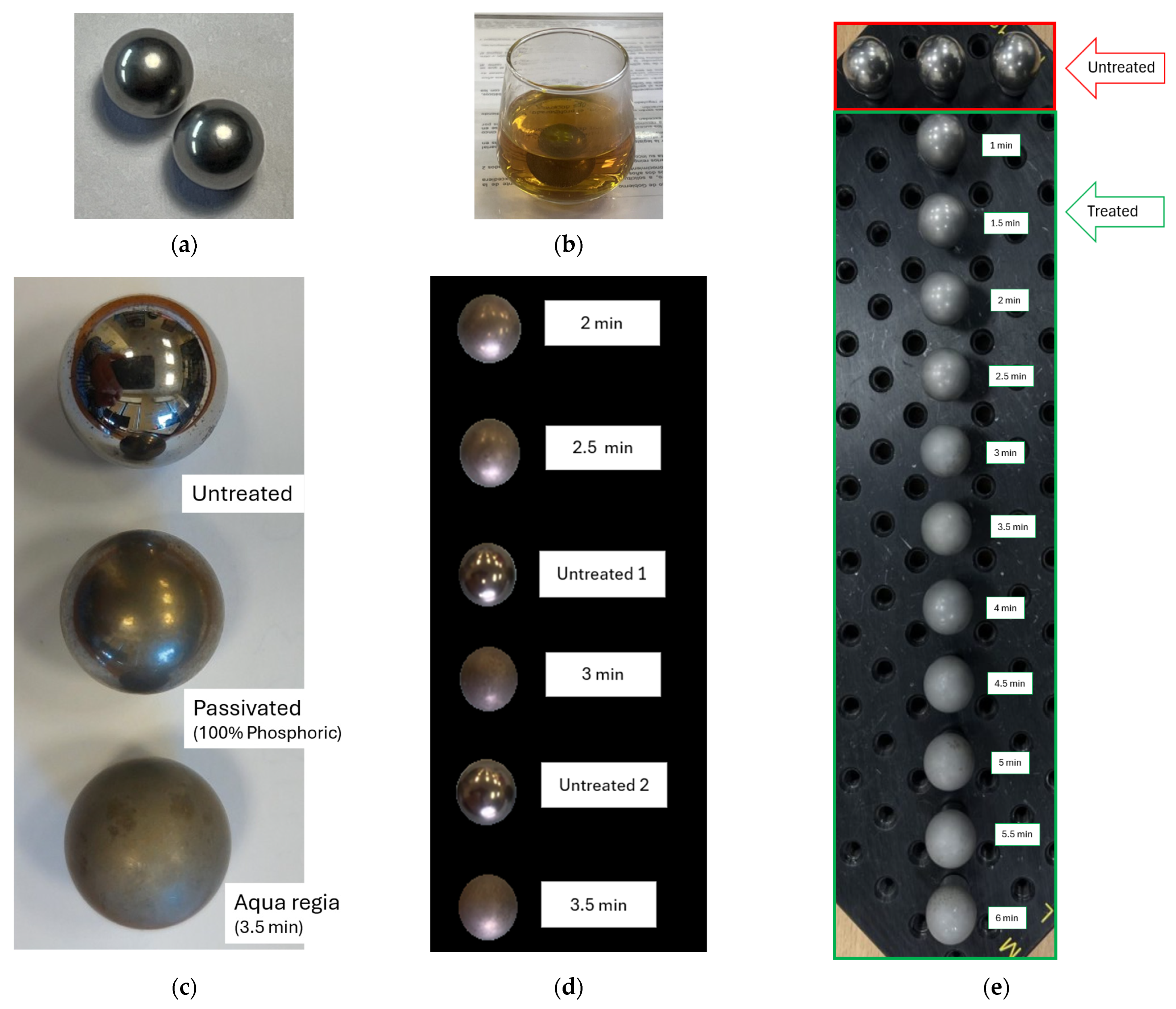
Several solid 25 mm diameter AISI 316L spheres, denoted as original or untreated spheres (Figure 1a), were immersed in aqua regia (Figure 1b) under gentle agitation to ensure uniform attack across the surface. The acid mixture consisted of 45 mL HCl and 15 mL HNO3, with the addition of 3 g FeCl3 to accelerate reaction initiation.
Starting the experiment with aqua regia at the laboratory’s ambient temperature (20 °C), the dissolution reaction was observed to be exothermic. Temperature increase and bubble formation intensified non-linearly with immersion time, indicating progressive reaction acceleration.
The qualitative evolution of the surface finish is shown in Figure 1c–e. Figure 1c shows that even with the mattest finish produced by passivation acids (achieved using 100% pure phosphoric acid), the surface still exhibited a certain degree of reflectivity. This ruled out passivation as a method for producing sufficiently matte surfaces. Figure 1d shows the difference in lustre resulting from exposing the spheres to aqua regia for between 2 and 3.5 min. Two untreated, original spheres (denoted as “Untreated 1” and “Untreated 2”) have been placed amongst the spheres treated for 2.5, 3 and 3.5 min so that this effect can be observed.
A visually interesting time interval was identified between 3 and 3.5 min, where a clearly matte, non-reflective finish was obtained.
A comprehensive analysis—visual, gravimetric, and dimensional—was performed across the entire time series to quantitatively and qualitatively evaluate the dissolution process and determine the optimal exposure time.

3.2.2. Visual Analysis

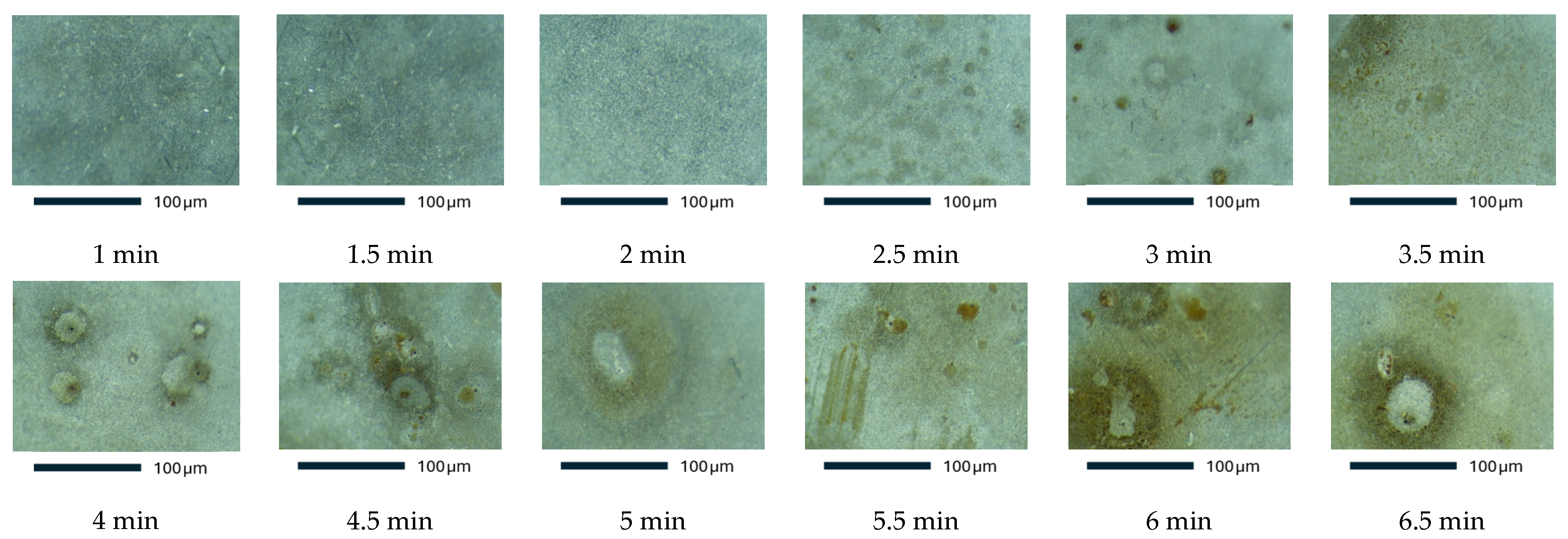
Visual inspection was considered a necessary (though not sufficient) condition to confirm the generation of a non-specular, light-diffusing surface. Optical analysis was performed using 9× magnification with an AmScope MU1803 digital microscope (United Scope LLC, CA, USA) (Figure 2).
For exposure times of 1–2 min, minimal changes were observed; the surface remained largely reflective and exhibited fine, poorly defined granulation. Between 2 and 3.5 min, a homogeneous and isotropic matte texture developed, with limited localized defects. This region corresponded to the desired optical condition.
At 3.5–4 min, surface heterogeneities began to appear, including light and dark halos, brownish traces compatible with localized corrosion, and micro-craters in highly eroded areas. For exposure times above 4.5 min, elongated brown stains, ring-shaped features, and clearly defined craters were observed. Patch-like regions with residual brightness indicated over-etching and loss of uniformity.
From a purely visual standpoint, the conforming interval was determined to be between 2.5 and 3.5 min (Figure 1e), with an optimal range around 3–3.5 min. Exposure times below 2.5 min were insufficient to produce matte finishing, while times above 4 min resulted in irreversible and visible surface deterioration (Figure 2).

3.2.3. Gravimetric Analysis

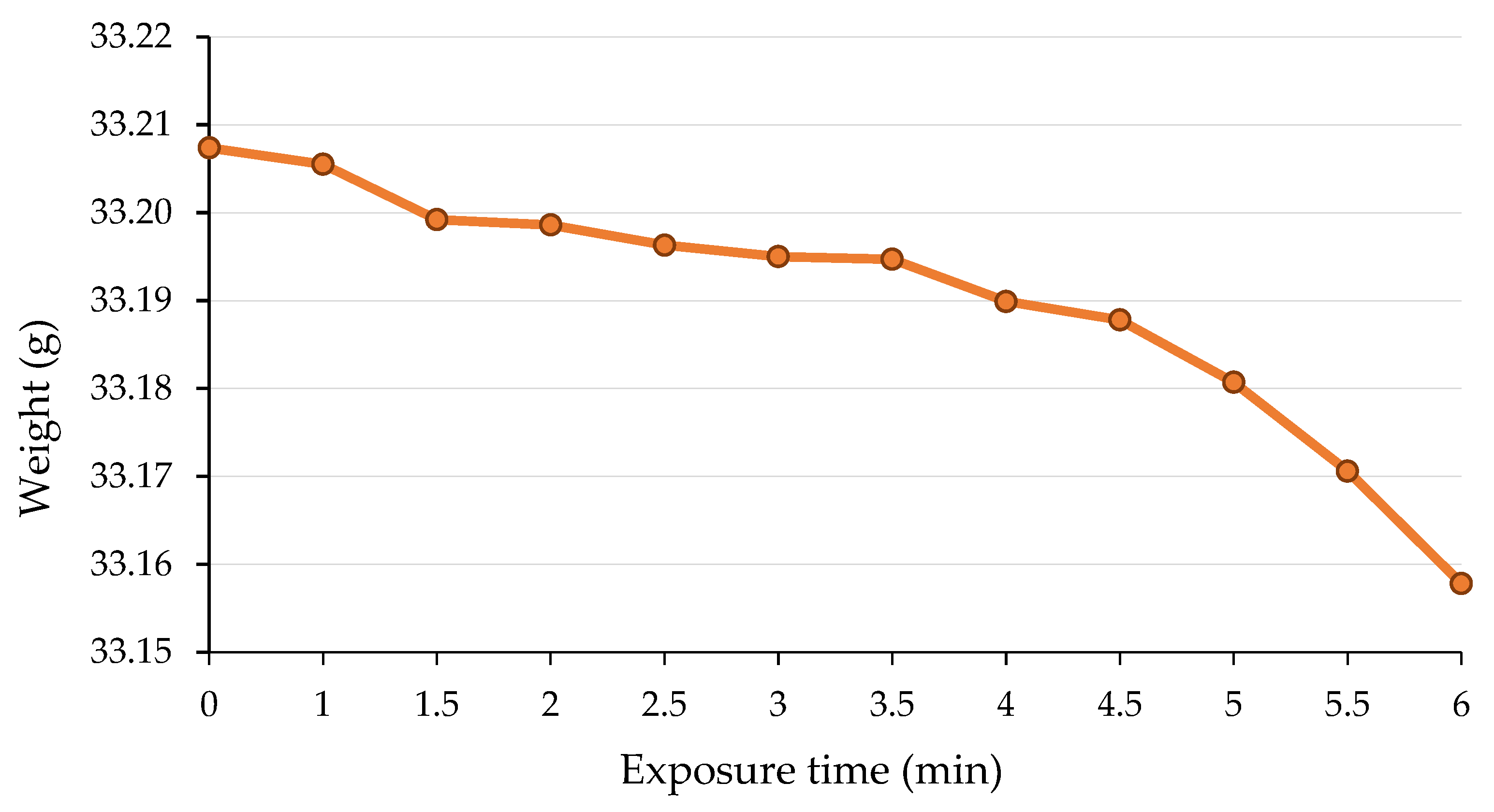
A high-precision analytical lab balance was used to measure mass loss for exposure times between 1 and 6 min (Figure 3). This analysis enabled quantification of material removal over time.
Mass loss showed an approximately linear decrease up to 3–4 min. Beyond 4.5 min, the curve became convex, indicating accelerated dissolution. The percentage volume reduction increased from 0.037% at 3 min to 0.058% at 4 min, 0.081% at 5 min, and 0.149% at 6 min.
Optically, the interval between 2 and 4 min produced a uniform matte surface (see Figure 1e). Below 2 min, reflectivity remained high; above 4 min, deterioration became evident.
Based on the gravimetric curve and considering that at 3 min the passive layer had been removed and an isotropic matte micro-texture generated—without entering the accelerated attack regime starting at approximately 4 min—the interval between 3 and 4 min was defined as the optimal working range.
At 3 min, mass loss remained minimal (0.037%), suggesting negligible diameter reduction and preservation of sphericity.

3.2.4. Dimensional Analysis (CMM)

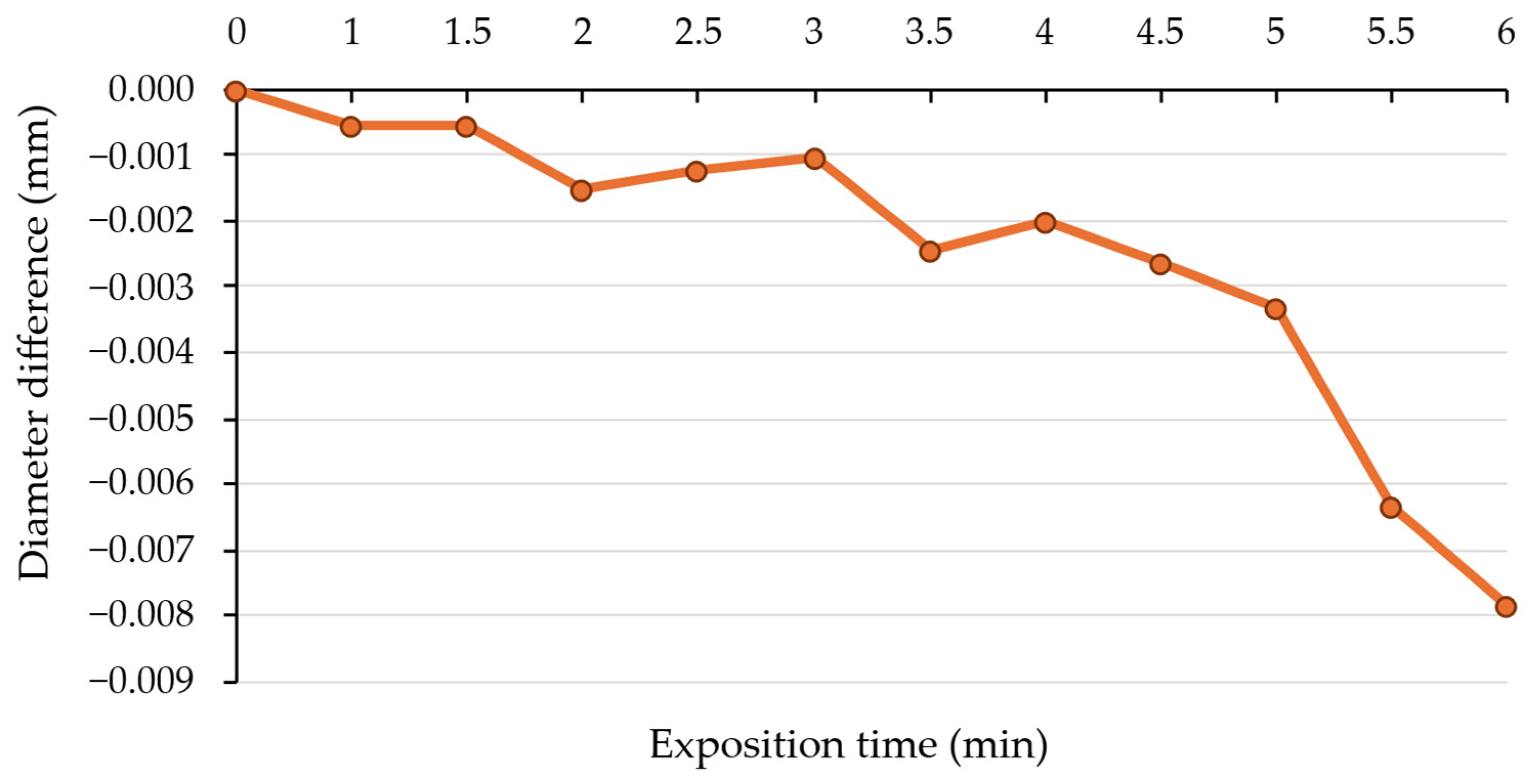
Dimensional measurements were performed using CMM contact probing using 100 points over each hemisphere arranged quasi-uniformly with a denser sampling close to the equator. The same strategy was followed for both the original (untreated) spheres and treated ones. Figure 4 shows the evolution of the diameter difference (ΔD) between untreated and treated spheres according to the exposition time. At 6 min exposure, diameter reduction reached approximately 0.0082 mm (8.2 μm), indicating relatively stable dimensional behaviour during treatment.
Although the diameter reduction did not follow a strictly linear trend, a decreasing tendency was observed with increasing exposure time, particularly beyond 3.5–4 min, consistent with progressive material dissolution. The small fluctuations observed (local peaks and valleys between 2 and 4.5 min) can be attributed to variations in the homogeneity of the chemical attack, as well as to bubbling effects and slight differences in agitation during the chemical process. This behavior is considered normal given that the treatment involves acid etching on a curved surface and is carried out under a manual procedure.
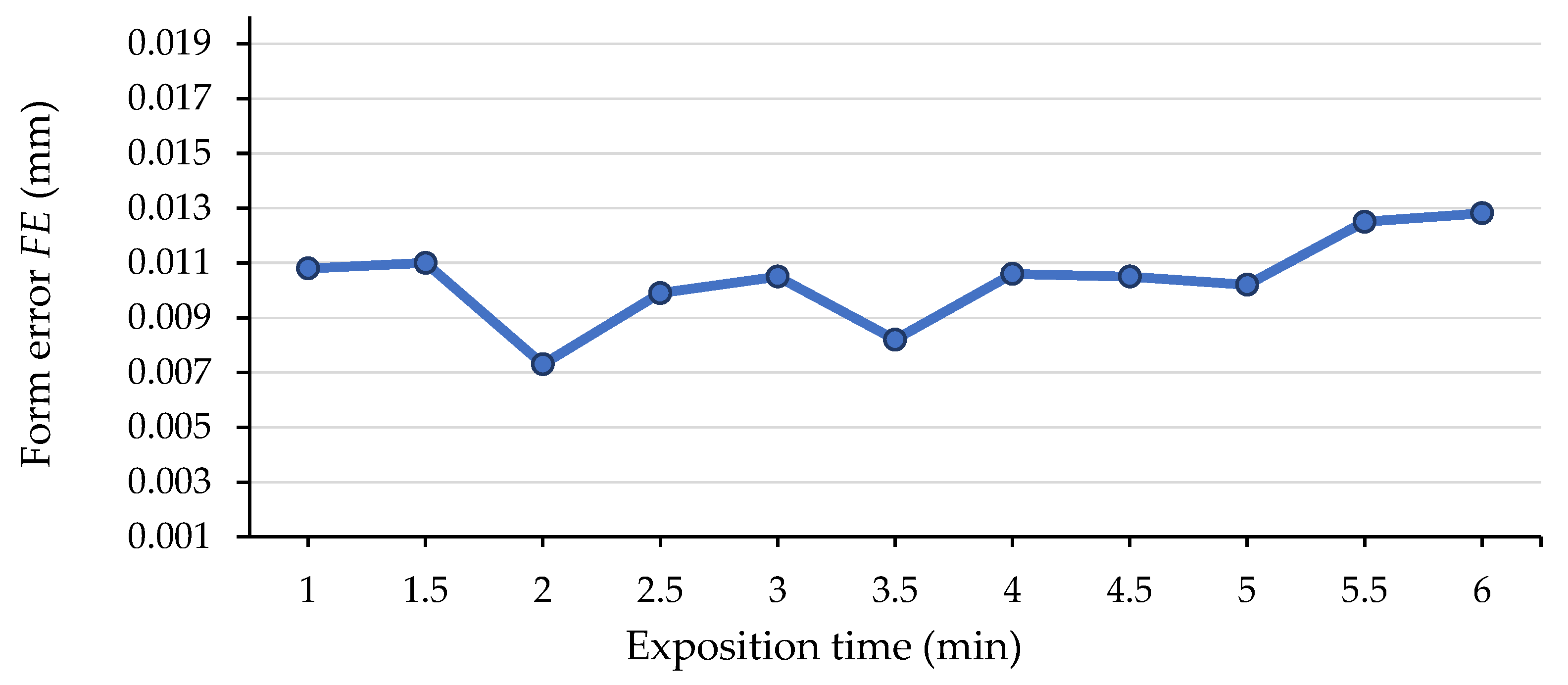
Figure 5 shows the evolution of form error (FE) of treated spheres with regard to the exposition time. Original untreated spheres (G100 grade) exhibited FE < 0.005 mm. After chemical treatment, FE values ranged between 0.0073 mm and 0.0110 mm. The process maintained acceptable geometric stability within moderate exposure times, provided that controlled agitation and rapid neutralization (water and boric acid) were applied to stop the reaction. For exposure times exceeding 4.5 min, a more aggressive attack regime was observed, characterized by accelerated diameter reduction and greater form error variation, increasing the risk of over-etching.
The dimensional behaviour correlated closely with gravimetric results. The average attack rate (approximately −0.00071 mm/min) confirmed controlled dissolution up to 4 min, followed by accelerated degradation. By integrating the evolution of diameter, form error, and attack rate, an optimal equilibrium region is identified at approximately 3.5 min (around 3 min 30 s). At this point, the diameter remains within minimal tolerance variation, the form error is low and stable, and the surface exhibits a homogeneous matte texture without signs of over-etching or localized irregularities. Therefore, it can be concluded that the ideal treatment time for solid (non-drilled) spheres in aqua regia is approximately 3.5 min. Within this interval, a uniform matte surface is achieved with measurable geometric improvement and moderate dimensional loss, thereby ensuring both metrological functionality and the desired optical performance. Longer exposure times intensify the attack and may compromise sphericity (FE) and dimensional stability, whereas shorter exposure times fail to produce sufficient matte finishing to effectively reduce reflectivity.

3.3. Second Approach: Repeatability Tests (Confirmation of Optimal Chemical Attack Time Using Pre-Drilled Spheres)

Once the optimal immersion interval in aqua regia had been identified, it was necessary to verify the repeatability of the process and confirm that the resulting surface finish could be consistently reproduced. This validation stage was also leveraged to test pre-drilled spheres instead of solid ones since practical metrological applications require threaded spheres for mounting purposes.
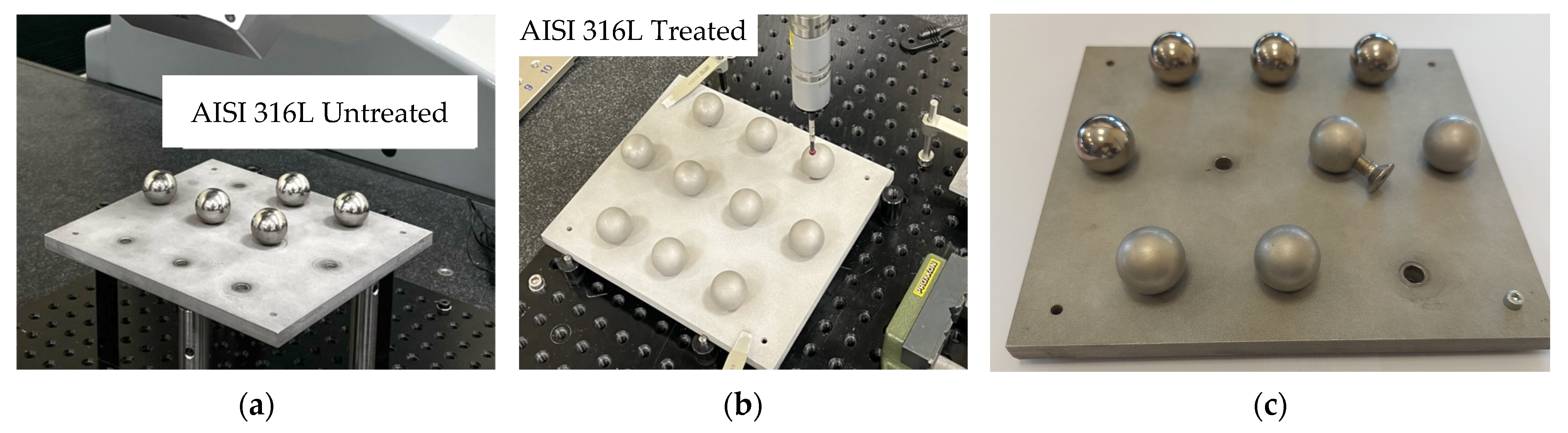
For calibration, verification, and alignment tasks in non-contact measurement systems, spheres must include a blind centered threaded hole (M8, ISO coarse pitch) to allow secure attachment to fixtures and supports. The presence of this threaded hole enables practical mounting on plates for both contact and laser measurements (Figure 6a–c).
Starting from the optimal interval determined for solid spheres (3–4 min), a new series of tests was conducted using 29 AISI 316L spheres of 25 mm diameter, pre-drilled and tapped to M8 thread. Of these, five spheres were kept untreated as control specimens to establish reference values for weight, diameter, and form error. The remaining spheres were subjected to chemical treatment to evaluate repeatability and reproducibility.
A preliminary adjustment was performed on three spheres with immersion times of 3 min, 3 min 30 s, and 3 min 45 s. It should be noted that pre-drilled-and-tapped spheres introduce additional variability in both weight and exposed surface area due to manufacturing tolerances associated with drilling and tapping.
Following this preliminary assessment, the optimal exposure time was fixed at 3 min 45 s, slightly longer than the optimal time for solid spheres (3 min 30 s). This 15 s increment compensates for the larger effective surface area of the drilled-and-tapped spheres, ensuring a comparable matte finish. The aqua regia treatment applied to pre-drilled spheres was validated gravimetrically, dimensionally, and in terms of surface roughness using 22 treated spheres.

3.3.1. Gravimetric Repeatability Analysis

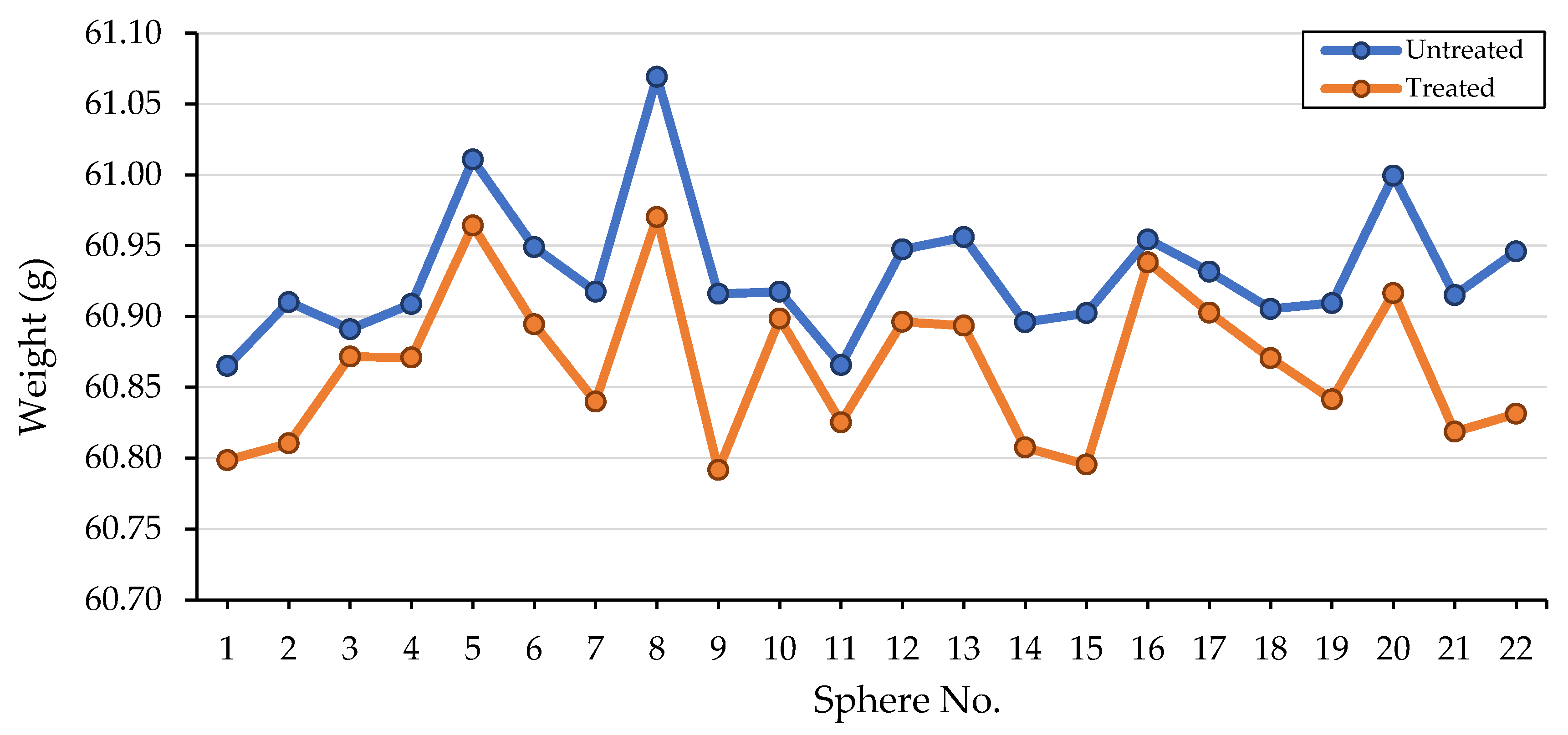
From a gravimetric standpoint, spheres were weighed before and after treatment (Figure 7). The results confirm high repeatability, despite inherent weight variability among drilled spheres. The percentage mass loss between untreated and treated states was approximately 0.11%, with moderate dispersion (standard deviation ≈ 0.05%). The graph shows a clear and consistent separation between untreated and treated spheres.
Although isolated variations ranged from approximately 0.03% to 0.16–0.20%, these are attributable to local surface conditions, bubble adhesion effects, and slight differences in manual agitation during immersion. Overall, the behaviour confirms a stable and reproducible process at the selected exposure time.

3.3.2. Surface Roughness Analysis

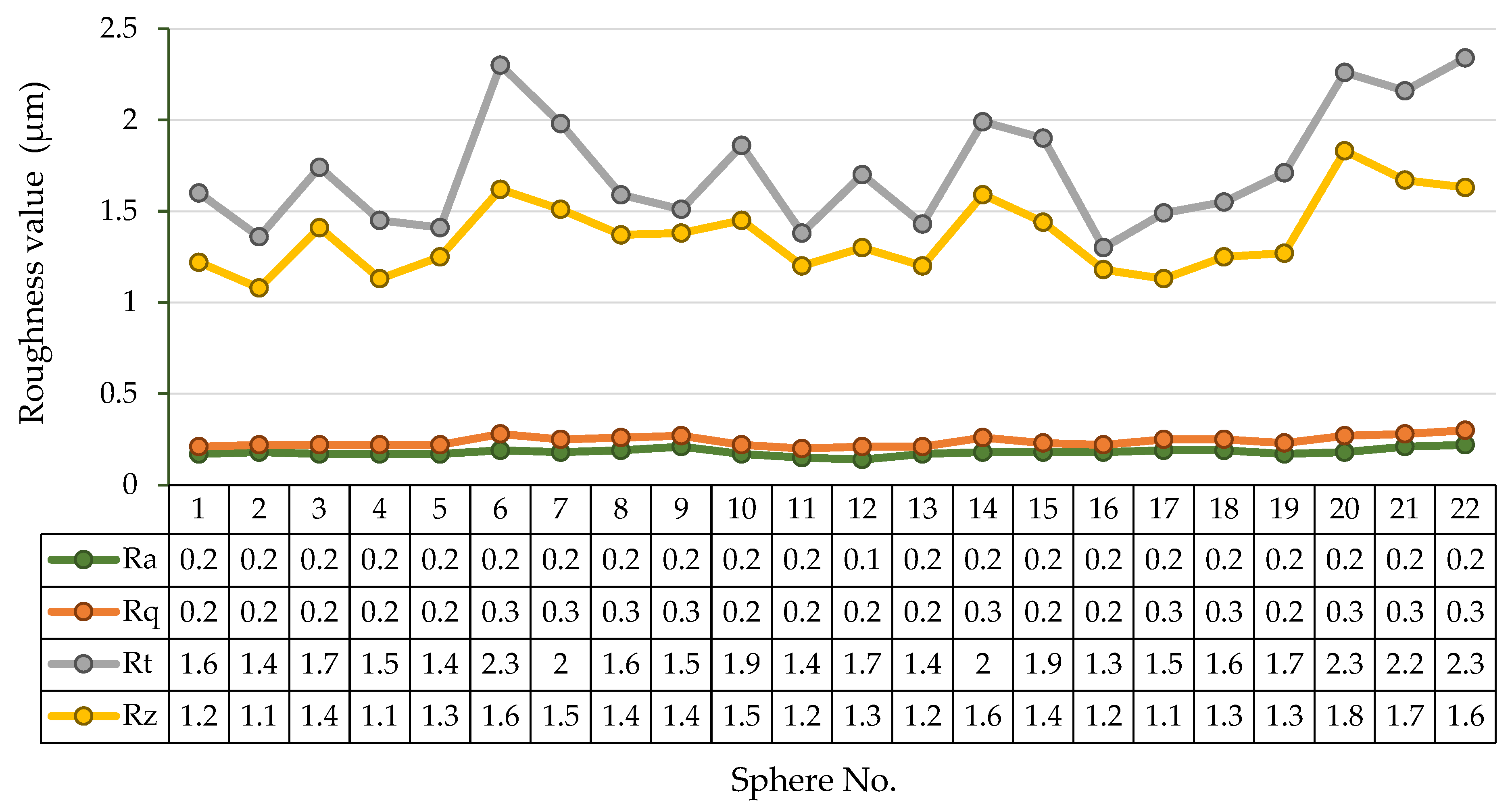
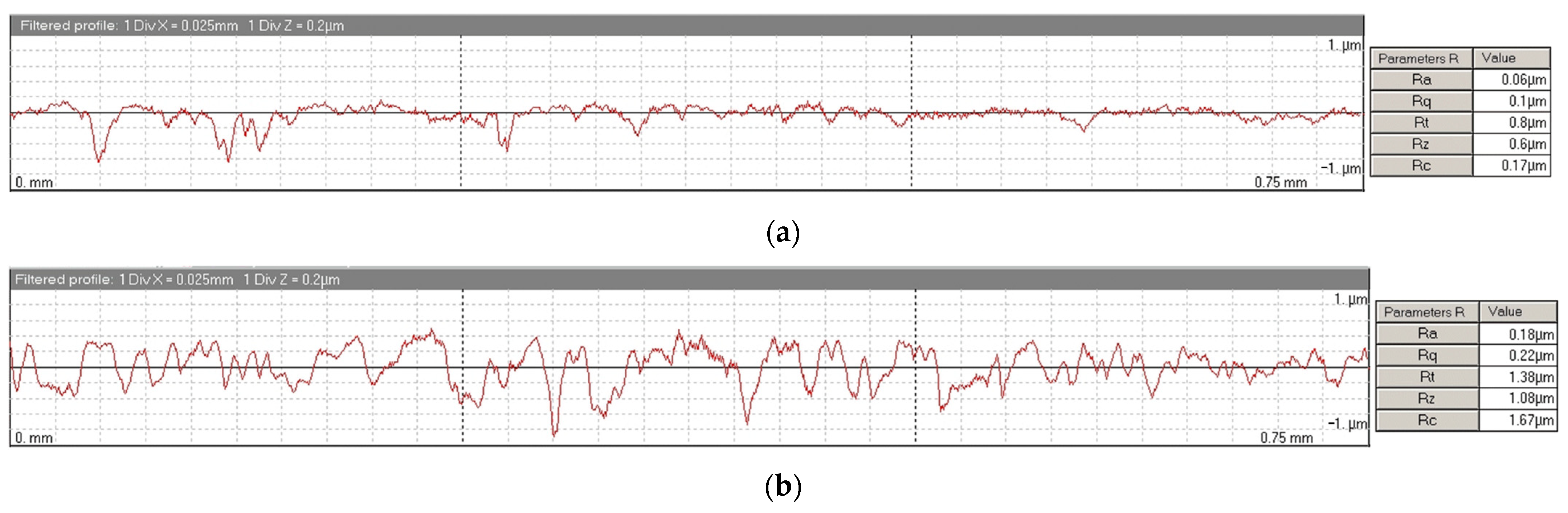
Surface roughness parameters were measured before and after treatment (Figure 8). The roughness measurement uses the profile method (ISO 4287 [24]), displacing the stylus following a linear trace over the surface. Specifically, linear profiles 1.25 mm long were probed around the sphere pole, due to the curvature of the surface in Ø25 mm spheres. Removing the starting and final sections of the profile, to eliminate the influence of acceleration and deceleration, the evaluation length was reduced to 0.75 mm (as can be seen in the horizontal axis of graphs in Figure 9). The evaluation length is divided in three equal sampling length sections (cut-offs), which is a sufficient number of cut-offs for such small evaluation length.
Untreated spheres exhibited Arithmetic mean deviation parameter Ra values below 0.1 µm (between 0.06 and 0.08 µm), consistent with their roughness profile (Figure 9a).
After treatment, Ra values averaged approximately 0.18 µm and Root mean square deviation Rq approximately 0.24 µm. Dispersion was low, with standard deviations of approximately 0.018 µm for Ra and 0.028 µm for Rq, indicating consistent micro-texture generation across spheres.
Parameters describing extreme profile features showed mean values of Maximum height of roughness profile Rz ≈ 1.37 µm and Total height of roughness profile Rt ≈ 1.75 µm. Some spheres reached Rt values between 2.3 and 2.6 µm, suggesting localized micro-etching possibly caused by bubble adhesion during immersion. Nevertheless, no pronounced peaks or craters were observed that would generate localized reflections or non-uniform laser scattering.
The results confirm that the selected immersion time produces a homogeneous matte surface with controlled diffuse behaviour suitable for optical metrology applications.
The treated spheres exhibit a homogeneous matte finish ideally suited for optical systems, with no visible localized attack or oxidation areas on their surfaces. The measured mass loss is approximately 0.1% (Figure 7), which is sufficient to reduce reflectivity without compromising sphericity. The surface roughness parameters (low dispersion in Ra and Rq, with Rz and Rt values lying within acceptable limits) confirm the absence of pronounced peaks or craters that could generate localized glare or non-uniform laser beam scattering. The repeatability among specimens and the metrological stability—verified through untreated control samples and double weighing procedures—further validate the robustness of the process. Moreover, immediate neutralization effectively halts the chemical reaction, preventing any post-treatment damage. Overall, the selected immersion time of 3 min 45 s for AISI 316L produces surfaces with low reflectivity, controlled diffusive texture, and limited variability, thereby meeting the requirements for use as reference artifacts in laser-based metrology.

3.3.3. Dimensional Analysis

Finally, with regard to the pre-drilled spheres, a dimensional analysis was also carried out in order to evaluate, on the one hand, the influence of the chemical attack from a dimensional and geometric standpoint, and on the other, to verify the repeatability of the process. This was particularly relevant given that the treatment procedure is manual, involving immersion with manual agitation, time control using a stopwatch, and immediate neutralization with a boric acid solution to stop the reaction.
After performing contact measurements using the same Coordinate Measuring Machine (CMM), it was observed that the pre-drilled-and-tapped spheres, all treated for the same immersion time (3 min 45 s), exhibit highly stable and consistent dimensional behavior (Table 2). Starting from an average diameter of 25.0035 mm for the original untreated spheres and an average form error of 0.0021 mm, the measured diameters of the treated spheres (Table 2) are centered around a mean value of 24.9982 mm, with a total range of 10.9 µm and a standard deviation of 3.2 µm. These results indicate low dispersion and high repeatability of the chemical treatment process. The slight variations observed between individual spheres are primarily attributed to local surface condition differences or to minor variations in acid flow dynamics during immersion, rather than to systematic errors in the method or measuring equipment.
Regarding form error (FE), the results are equally consistent. The average FE is 3.9 µm, with a range of 4.9 µm and a standard deviation of 1.4 µm, demonstrating good geometric homogeneity. Approximately 90% of the spheres exhibit FE values below 6 µm, indicating that although the treatment generates microscopic surface peaks, these do not result in significant geometric deformation. This behaviour suggests that chemical etching at 3 min 45 s effectively removes microscopic irregularities in a controlled manner, promoting a regular and stable geometric form.
The combined analysis of diameter and FE data (Table 2) confirms that the process preserves the sphericity and dimensional precision required for a metrological reference sphere, while simultaneously producing a homogeneous matte finish suitable for optical and metrological applications. The low dispersion pattern and absence of outliers further confirm that the treatment operates within a stable dissolution regime, without evidence of over-etching or excessive material removal. These findings lead to the final stage of the experimental work, which is aimed at validating whether the treated spheres are suitable for measurement and alignment tasks when using non-contact systems, such as laser triangulation sensors.

4. Analysis of the Effect of Aqua Regia Treatment on Laser Measurement

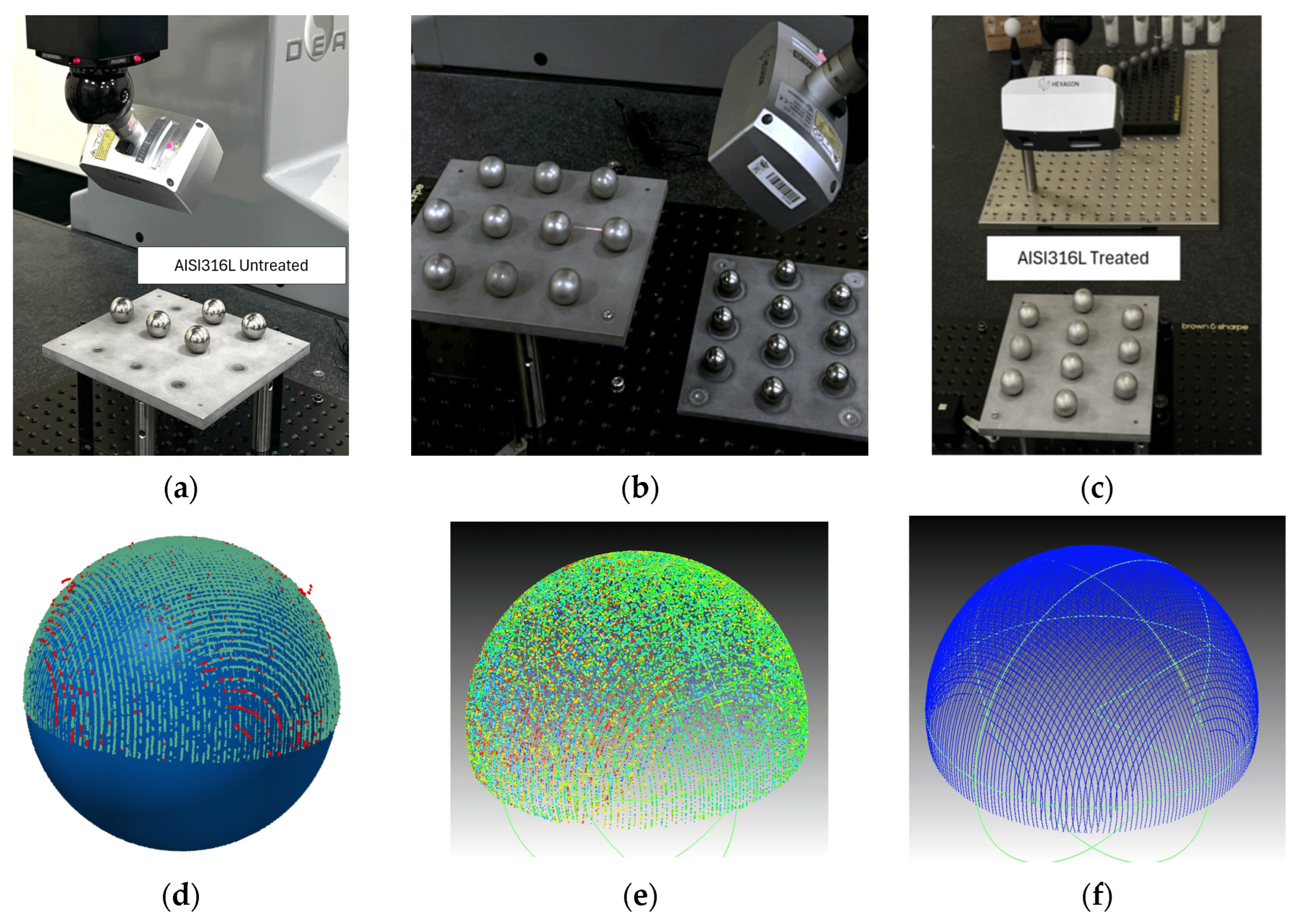
To evaluate the potential improvement obtained when using chemically treated spheres compared to untreated ones in laser-based measurements, the spheres were divided into two distinct groups. The first group consisted of 22 spheres treated under identical conditions (aqua regia immersion for 3 min 45 s), all exhibiting the same matte surface finish. The second group consisted of five untreated (original) spheres (Figure 10a), which served as comparative references.
The number of specimens in each group was considered sufficiently representative, taking into account the variability associated with both manufacturing processes: chemical etching for the treated spheres and precision polishing to mirror finish for the untreated ones. This experimental design enables quantitative determination of the influence of the chemical treatment on measurement quality and on the resulting geometric reconstruction.
Laser-based dimensional analysis was performed (in 3D Reshaper© software, version 9.0) by applying different levels of statistical filtering to the acquired point clouds. The objective was to progressively eliminate spurious reflections and optical dispersion effects associated with specular surfaces by removing points with the greatest deviation from the best-fit sphere model. Given the significant influence of filtering strategies in optical metrology [25,26,27], five filtering levels were considered, from “softer” filtering that keeps practically 100% of points (removing points further away from 6σ), to those keeping 99.7% of points (3σ) and to those keeping only 66% of the points (1σ), with all of them taking the best fit sphere radius as reference. Figure 10d shows the point cloud cropped to the hemisphere obtained after laser measurement on an original sphere, without applying any filter. The furthest points (in red) can be distinguished, which are always generated in certain laser orientations. Figure 10e,f show, respectively, a color mapping analysis of the furthest points while applying a 2σ filter and the final point cloud for a treated sphere.
The results obtained from laser sensor measurements before and after chemical treatment (Figure 11 and Figure 12) include the number of points acquired, the mean sphere diameter (Figure 11), the form error (Figure 12a), and the standard deviation of the point cloud relative to the best-fit sphere (Figure 12b). These parameters are essential for evaluating measurement precision and stability.

4.1. Diameter Evaluation

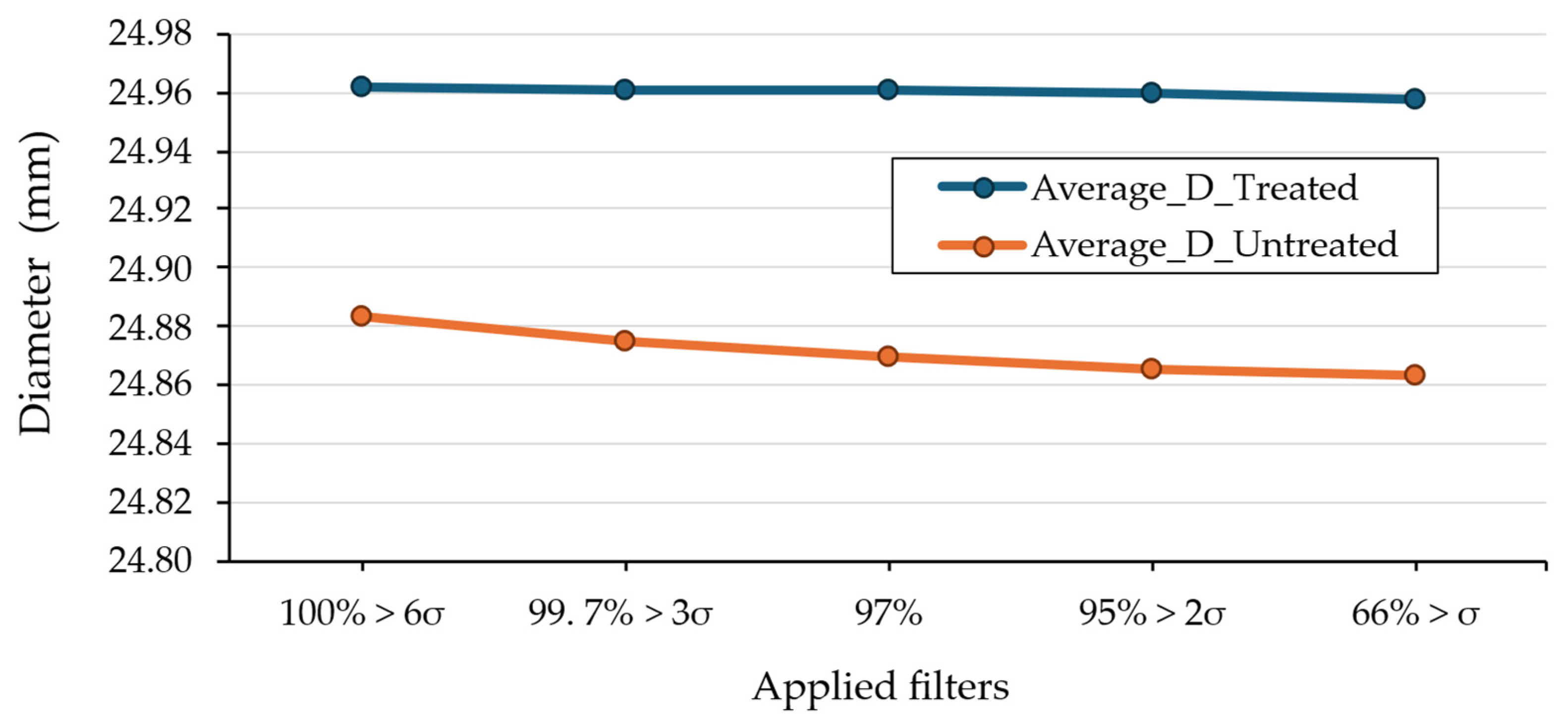
In Figure 11, the mean diameter measured on chemically treated spheres remains practically constant across all filtering levels, stabilizing around 24.960 mm. This value is slightly lower than the “true” diameter measured by contact probing in the CMM (24.998 mm) yet remains stable regardless of filtering intensity. This confirms that the surface treatment does not introduce significant geometric distortion and preserves the nominal dimensional characteristics of the spheres.
In contrast, untreated spheres show slightly smaller mean diameters and a downward trend as filtering becomes more restrictive, with values around 24.86–24.88 mm. This discrepancy is attributed to the highly specular surface of untreated spheres, where strong reflectance causes signal loss (horizon effect) and reduced edge detection accuracy during laser reconstruction, leading to diameter underestimation.
The stability and coherence of diameter measurements in treated spheres clearly demonstrate improved laser measurement capability following chemical treatment, enabling more faithful geometric reconstruction without compromising dimensional integrity.

4.2. Form Error and Standard Deviation

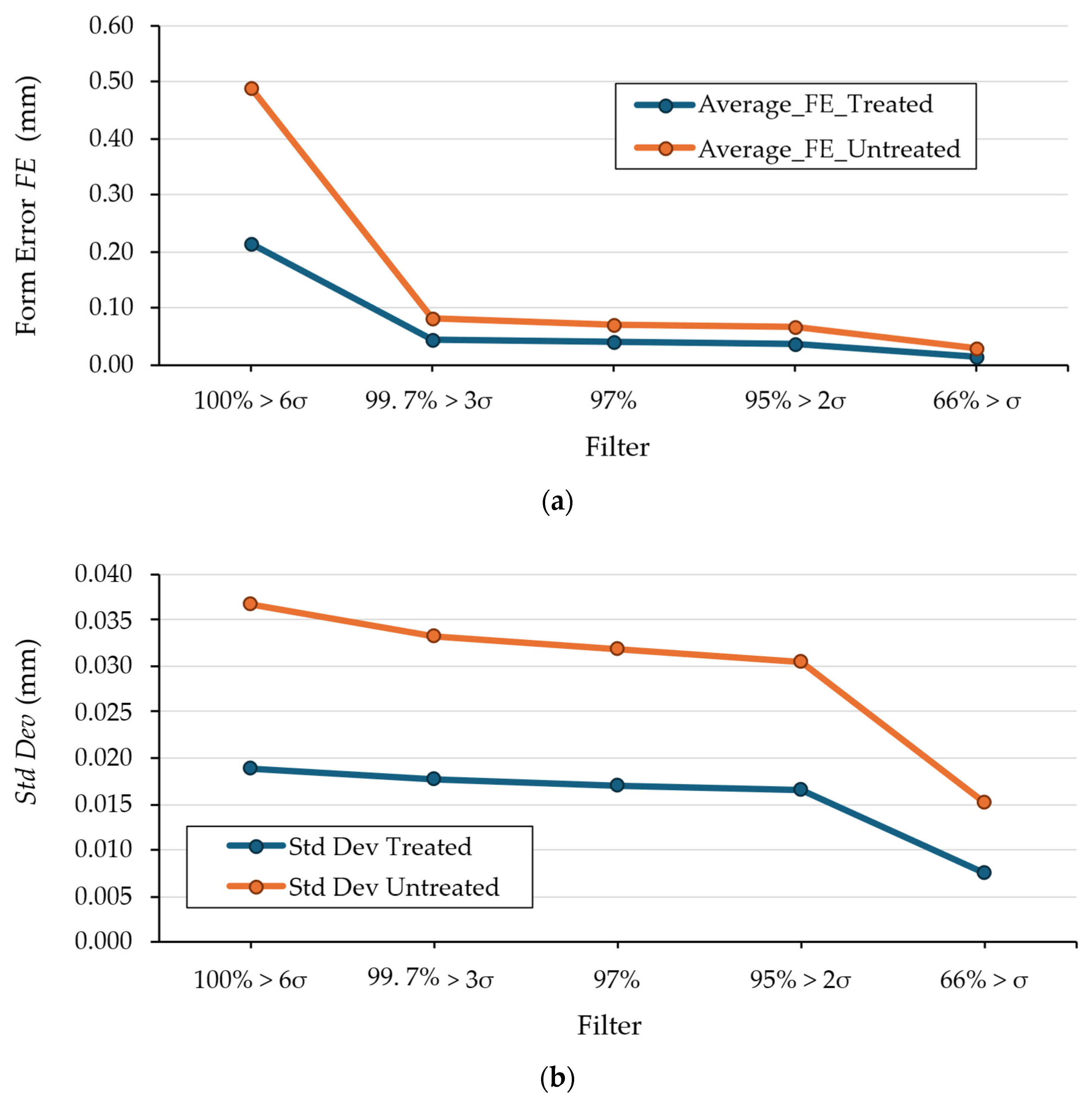
Figure 12 shows the evolution of form error (FE) and standard deviation (Std. Dev.) of the point cloud relative to the gaussian best-fit sphere.
When considering nearly 100% of measured points (6σ filter), untreated spheres exhibit significantly higher values, with form error reaching approximately 0.49 mm (Figure 12a). This is a direct consequence of numerous specular reflections generated by the mirror-like surface, introducing noise into the geometric reconstruction. As filtering becomes more restrictive, errors decrease progressively. However, even in the intermediate filtering region (2σ and 3σ filters, which are common filters used in reverse engineering software), treated spheres consistently exhibit lower form error and reduced variability compared to untreated ones. On the contrary, untreated spheres continue to present higher errors even under aggressive filtering (1σ), reflecting the inherent limitations of highly reflective surfaces. By contrast, treated spheres maintain considerably lower FE values across all filtering levels; approximately FE = 0.21 mm and Std. Dev. = 0.018 mm with the most conservative filter (6σ), and FE = 0.014 mm and Std. Dev. = 0.007 mm with the most restrictive filter (1σ), where roughly 33% of the most deviated points are removed. In summary, treated spheres consistently demonstrate superior metrological performance, with lower and more stable form error and standard deviation values, closely aligned with CMM reference measurements.
This behavior confirms that the applied surface treatment promotes more uniform laser light acquisition and reduces unwanted reflections, resulting in significantly more accurate form measurement, with lower dispersion and closer agreement with ideal sphericity. Taken together, both graphs demonstrate that the improvement achieved through chemical treatment is not merely a localized effect associated with data filtering, but rather a genuine enhancement in the metrological quality of the spherical reference artifact. The reduction in form error is critical for establishing a reliable dimensional reference artifact, since the accuracy of diameter and sphere center determination directly depends on this parameter.
The improvement in form error ranges approximately between 44% and 56%, depending on the filtering level. Interestingly, the maximum improvement (56.2%) occurs when nearly 100% of the measured points are considered, as this scenario highlights the strong influence of specular reflections on untreated spheres. Although the percentage improvement decreases slightly with stronger filtering—because noise-affected points are progressively removed—the improvement remains significant across all filtering levels. This confirms that the chemical treatment provides a genuine and persistent metrological benefit, independent of statistical post-processing of the point cloud.

5. Conclusions

This study demonstrates that AISI 316L precision spheres can be successfully adapted for non-contact metrology through a controlled chemical surface treatment that generates a homogeneous matte finish without compromising their practical dimensional integrity. The results support their use as a robust and economical alternative to conventional ceramic reference artifacts in laser-based measurement tasks.
The experimental analysis also established a clear distinction between the two chemical approaches considered. Under the tested conditions, conventional passivation treatments did not produce sufficient optical modification for metrological use, despite their known protective effect on stainless steel. In contrast, the aqua regia-based process produced the required surface transformation in a consistent and controllable manner.
Process optimization showed that effective matte finishing can be achieved within a narrow exposure window while avoiding surface degradation. The optimal condition for ∅25 mm spheres, pre-drilled and threaded, was 3 min 45 s, slightly higher than that required for solid spheres because of the increased exposed area. Within this range, the treatment produced a uniform surface state without the over-etching defects observed at longer immersion times.
The dimensional assessment confirmed that the treatment acts primarily at the microgeometric level. Material removal was small and compatible with the intended use of the spheres as reference elements, while the measured diameter and form error values remained within a stable and repeatable range. This behaviour was maintained even for spheres incorporating threaded mounting features, which is particularly relevant for practical implementation.
The most significant outcome was observed in the optical validation stage. Treated spheres consistently improved the quality of laser-based measurements, yielding lower form error and reduced dispersion in the reconstructed geometry. The observed reduction in form error, reaching approximately 45–55%, confirms that the surface treatment effectively improves laser–surface interaction and enhances the reliability of the acquired point clouds.
In summary, the proposed protocol provides a simple, reproducible, and low-cost route for preparing metallic reference spheres for optical metrology. Its combination of accessibility, mechanical robustness, and improved measurement performance makes it an attractive solution for calibration and verification procedures in both research and industrial environments.

Author Contributions

Conceptualization, E.C. and V.M.M.; methodology, E.C. and J.A.; validation, V.M.M. and B.J.Á.; formal analysis, E.C. and S.G.; investigation, J.A. and B.J.Á.; resources, V.M.M. and S.G.; writing—original draft preparation, E.C.; writing—review and editing, E.C. and B.J.Á.; supervision, S.G.; project administration, V.M.M.; funding acquisition, E.C. and V.M.M. All authors have read and agreed to the published version of the manuscript.

Funding

This research was part of projects funded by University Institute of Industrial Technology of Asturias (IUTA), grant numbers SV-21-GIJON-1-06 and SV-22-GIJON-1-03.

Institutional Review Board Statement

Not applicable.

Informed Consent Statement

Not applicable.

Data Availability Statement

The original contributions presented in this study are included in the article. Further inquiries can be directed to the corresponding author.

Conflicts of Interest

The authors declare no conflicts of interest.

References

  1. Satyanarayana, A.; Krishna, M.; Chandrakanth, A.; Pradyumna, R. Influence of LASER CMM Process Parameters on Dimensional Inspection of Standard Spheres. Mater. Today Proc. 2018, 5, 3965–3970. [Google Scholar] [CrossRef]
  2. Zapico, P.; Meana, V.; Cuesta, E.; Mateos, S. Optical Characterization of Materials for Precision Reference Spheres for Use with Structured Light Sensors. Materials 2023, 16, 5443. [Google Scholar] [CrossRef] [PubMed]
  3. Owczarek, D.; Ostrowska, K.; Sładek, J.; Gąska, A.; Harmatys, W.; Tomczyk, K.; Ignjatović, D.; Sieja, M. The Impact of an Object’s Surface Material and Preparatory Actions on the Accuracy of Optical Coordinate Measurement. Materials 2025, 18, 3693. [Google Scholar] [CrossRef] [PubMed]
  4. Carmignato, S.; De Chiffre, L.; Bosse, H.; Leach, R.K.; Balsamo, A.; Estler, W.T. Dimensional Artefacts to Achieve Metrological Traceability in Advanced Manufacturing. CIRP Ann. 2020, 69, 693–716. [Google Scholar] [CrossRef]
  5. Gonzalez-Jorge, H.; Riveiro, B.; Armesto, J.; Arias, P. Standard artifact for the geometric verification of terrestrial laser scanning systems. Opt. Laser Technol. 2011, 43, 1249–1256. [Google Scholar] [CrossRef]
  6. Martínez-Pellitero, S.; Cuesta, E.; Giganto, S.; Barreiro, J. New procedure for qualification of structured light 3D scanners using an optical feature-based gauge. Opt. Laser Eng. 2018, 110, 193–206. [Google Scholar] [CrossRef]
  7. Meana, V.; Cuesta, E.; Álvarez, B.J. Testing the Sandblasting Process in the Manufacturing of Reference Spheres for Non-Contact Metrology Applications. Materials 2021, 14, 5187. [Google Scholar] [CrossRef] [PubMed]
  8. Meana, V.; Cuesta, E.; Álvarez, B.J.; Giganto, S.; Martínez-Pellitero, S. Comparison of Chemical and Mechanical Surface Treatments on Metallic Precision Spheres for Use as Optical Reference Artifacts. Materials 2022, 15, 3741. [Google Scholar] [CrossRef] [PubMed]
  9. ISO 3290-1:2014; Rolling Bearings—Balls—Part 1: Steel Balls. International Organization for Standardization: Geneva, Switzerland, 2014.
  10. DIN 5401:2002-08; Rolling Bearings—Balls for Rolling Bearings and General Industrial Use. DIN: Berlin, Germany, 2002.
  11. ISO 16048:2003; Passivation of Corrosion-Resistant Stainless-Steel Fasteners. International Organization for Standardization: Geneva, Switzerland, 2003.
  12. Yu, P.; Chen, X.; Zhao, T.; Yan, Y.; Li, C.; Mei, J.; Cai, Z. Effect of the Passivation Oxide Layer on the Tribological Properties of 316 Austenitic Stainless Steel in B-Li Solution. Tribol. Int. 2026, 218, 111748. [Google Scholar] [CrossRef]
  13. Herrera, J.M.R. Estudio de Pasivación Química y Electroquímica en Acero Inoxidable 304. Ph.D. Thesis, Universidad Nacional Autónoma de México, Mexico City, Mexico, 2009. [Google Scholar]
  14. Lewis, P.L.; Kolody, M.; Curran, J. Alternative to Nitric Acid for Passivation of Stainless Steel Alloys; KSC-2013-281; NTRS—NASA Technical Reports Server: Washington, DC, USA, 2013.
  15. Maller, R.R. Passivation of Stainless Steel. Trends Food Sci. Technol. 1998, 9, 28–32. [Google Scholar] [CrossRef]
  16. Gaydos, S.P. Passivation of Aerospace Stainless Steel Parts with Citric Acid Solutions. Plat. Surf. Finish. 2003, 90, 20–25. [Google Scholar]
  17. ASTM A967-99e1; Specification for Chemical Passivation Treatments for Stainless Steel Parts. ASTM: West Conshohocken, PA, USA, 2017. [CrossRef]
  18. ASTM A380/A380M-17; Practice for Cleaning, Descaling, and Passivation of Stainless Steel Parts, Equipment, and Systems. ASTM: West Conshohocken, PA, USA, 2025. [CrossRef]
  19. AMS2700C; Passivation of Corrosion Resistant Steels. SAE: Warrendale, PA, USA, 2008. [CrossRef]
  20. AMSQQP35A; Passivation Treatments for Corrosion-Resistant Steel. SAE: Warrendale, PA, USA, 2005. [CrossRef]
  21. UNE-EN 2516:2023; Aerospace Series—Passivation of Corrosion Resisting Steels and Decontamination of Nickel or Cobalt Base Alloys. Asociación Española de Normalización: Madrid, Spain, 2024.
  22. Quiroga Medina, J.D.; Marín Agudelo, M. Evaluación de la Resistencia a la Corrosión de los Aceros Inoxidables del Tipo 304 y 316L Mediante Técnicas Electroquímicas de Corriente Directa; Universidad Tecnológica de Pereira: Pereira, Colombia, 2023. [Google Scholar]
  23. Wei, J.; Fu, Q.; Chen, D.; Wang, X.; Cao, W.; Xu, D.; Zheng, H. Multi-Scale Investigation of Stainless-Steel Passivation in Seawater Concrete Pore Solution. Case Stud. Constr. Mater. 2024, 21, e04078. [Google Scholar] [CrossRef]
  24. ISO 4287:1997; Geometrical Product Specifications (GPS) — Surface texture: Profile method — Terms, definitions and surface texture parameters. International Organization for Standardization: Geneva, Switzerland, 1997.
  25. Besic, I.; Van Gestel, N.; Kruth, J.-P.; Bleys, P.; Hodolic, J. Accuracy improvement of laser line Scanning for feature measurements on CMM. Opt. Laser Eng. 2011, 49, 1274–1280. [Google Scholar] [CrossRef]
  26. Giganto, S.; Martínez-Pellitero, S.; Meana, V.; Cuesta, E.; Barreiro, J. Influence of point cloud filtering on optical inspection of additive manufactured metal parts. Precis. Eng. 2024, 90, 12–20. [Google Scholar] [CrossRef]
  27. Zaborowski, W.; Gaska, A.; Harmatys, W.; Sładek, J.A. The Influence of Filtration on the Results of Measurements Made with Optical Coordinate Systems. Appl. Sci. 2025, 15, 7475. [Google Scholar] [CrossRef]
Figure 1. (a) Untreated AISI 316L spheres. (b) Detail of immersion test in aqua regia. (c) Detail of treated spheres compared to an untreated sphere. (d) Surface appearance evolution with increasing immersion time (untreated vs. treated). (e) Progressive attack conditions for different exposure times.
Metals 16 00381 g001
Figure 2. Microscope images (9×) showing surface evolution with increasing immersion time in aqua regia.
Metals 16 00381 g002
Figure 3. Evolution of sphere weight as a function of immersion time in aqua regia.
Metals 16 00381 g003
Figure 4. Evolution of sphere diameter difference as a function of immersion time in aqua regia.
Metals 16 00381 g004
Figure 5. Evolution of sphere form error as a function of immersion time in aqua regia.
Metals 16 00381 g005
Figure 6. Plates with spheres prepared for contact and laser measurements: (a) original pre-drilled spheres (untreated); (b) spheres treated in aqua regia for 3 min 45 s; (c) comparison between untreated (specular) and treated (matte) spheres. Note the detail of the threaded assembly in the centre of the plate.
Metals 16 00381 g006
Figure 7. Mass differences in pre-drilled-and-tapped (M8) spheres before and after treatment at the same exposure time.
Metals 16 00381 g007
Figure 8. Surface roughness parameters for spheres treated in aqua regia.
Metals 16 00381 g008
Figure 9. Roughness profile example (cut-off length = 0.25 mmm, Number of cut-offs = 3) for a 25 mm sphere: (a) original, untreated; (b) treated, post-acid treatment.
Metals 16 00381 g009
Figure 10. Dimensional analysis using a laser triangulation sensor: (a) measurement of untreated drilled spheres; (b,c) measurement of the same spheres after aqua regia treatment (3 min 45 s); (d) point cloud and best fit sphere captured by laser on an untreated sphere; (e) color deviation map on a treated sphere while applying 2σ filter; (f) point cloud on a treated sphere after applied 2σ filter.
Metals 16 00381 g010
Figure 11. Diameter measurement results using the laser triangulation sensor (mounted on the CMM) according to the applied filtering level.
Metals 16 00381 g011
Figure 12. Laser measurement results according to the applied filter. (a) Form error. (b) Standard deviation related to the best fit sphere.
Metals 16 00381 g012
Table 1. Passivation tests performed on AISI 316L stainless steel spheres.
PhasesSphere Id.Acid CompositionExposition Time
Phase 1125% Nitric acid (diluted in water)15 min
225% Nitric acid (diluted in water)30 min
330% Phosphoric acid (diluted in water)15 min
430% Phosphoric acid (diluted in water)30 min
525% Citric acid (diluted in water)30 min
615% Nitric acid (diluted in water)60 min
715% Nitric acid (diluted in water)180 min
Phase 2810% Phosphoric + 25% Nitric + 65% Distilled Water24 h
920% Citric + 80% Distilled Water24 h
10100% Phosphoric acid24 h
1160% Nitric + 40% Distilled Water + 3 g Potassium dichromate24 h
1260% Phosphoric + 40% Distilled Water24 h
13100% Nitric acid24 h
Phase 31430% Citric + 70% Distilled Water20 days
1540% Citric + 60% Distilled Water20 days
1615% Phosphoric + 37.2% Nitric + 47.8% Distilled Water20 days
1770% Phosphoric + 30% Nitric20 days
1820% Phosphoric + 32% Nitric + 48% Distilled Water20 days
1955% Nitric + 25% Phosphoric + 20% Distilled Water20 days
20100% Phosphoric acid19 days
2160% Phosphoric + 40% Distilled Water19 days
2280% Phosphoric + 20% Distilled Water19 days
Table 2. Analysis of the repeatability of the acid treatment for the 22 spheres.
Sphere id.Diameter D (mm)Form Error FE (mm)
124.99850.0033
224.99340.0024
324.99990.0030
425.00140.0042
525.00010.0021
624.99930.0025
724.99640.0034
824.99480.0029
924.99340.0069
1025.00160.0059
1125.00120.0054
1224.99980.0043
1324.99930.0038
1424.99610.0028
1524.99290.0032
1625.00380.0053
1725.00100.0045
1825.00250.0066
1924.99770.0039
2024.99620.0023
2124.99660.0042
2224.99410.0028
Average24.99820.0039
Range0.01090.0049
Std Dev0.00320.0014
Disclaimer/Publisher’s Note: The statements, opinions and data contained in all publications are solely those of the individual author(s) and contributor(s) and not of MDPI and/or the editor(s). MDPI and/or the editor(s) disclaim responsibility for any injury to people or property resulting from any ideas, methods, instructions or products referred to in the content.