


Abstract
This study aims to reveal the mechanism of a novel method for fabricating hierarchical microstructured hydrophobic surfaces. Specifically, plasma shock waves induced by laser ablation are applied to the workpiece to replicate the microstructures on the mold surface, thus obtaining primary microstructures. Meanwhile, the material splashing effect induced by laser ablation is utilized to form secondary microstructures on the basis of the primary microstructures. Subsequently, fluorination treatment and aging treatment are adopted to alter the chemical composition of the hierarchical microstructures on the workpiece surface, thereby reducing the surface energy and enhancing hydrophobicity. In addition, this study investigates the effects of a different number of laser shocks, laser fluence and mold periods on the forming results. Under a laser fluence of 28.97 J/cm2, within the range of one to five laser shocks, the forming effect of the aluminum foil workpiece improves with the increase in the number of laser shocks. When the number of laser shocks is set to 3, within the laser fluence range of 19.1–76.39 J/cm2, the forming result of the aluminum foil workpiece is enhanced as the laser fluence increases. The larger the mold period, the better the forming effect of the workpiece. An analysis of aging treatment and fluorination treatment reveals their impacts on the workpiece through assessments of wettability, surface chemical composition, and surface morphology. The findings reveal that both aging and fluorination treatments significantly enhance the contact angle of the aluminum foil workpiece, all while preserving its original surface structure. The main changes occur in terms of element content and chemical composition, and a large number of non-polar groups are generated on the workpiece surface after the modification treatments.
1. Introduction
In recent years, superhydrophobic surfaces have been widely applied in fields such as corrosion resistance [1,2,3,4], oil–water separation [5,6,7], friction reduction [8,9], antibacterial activity [10], and anti-icing [11,12], rendering the research and development of preparation technologies for superhydrophobic surfaces a research hotspot. The superhydrophobic properties of solid surfaces are determined by surface microtopography and low surface energy substances [13]. To date, the methods for fabricating hydrophobic surfaces are mainly classified into three categories: (1) assembling the low surface energy materials into complex surfaces [14]; (2) fabricating complex microstructures on solid surfaces initially, and then reducing the surface energy via chemical methods [15,16,17]; (3) fabricating complex microstructures on solid surfaces directly to enhance hydrophobicity [18,19].
Solid surfaces can be engineered with microscale features through a range of fabrication techniques. Among them, laser-based machining methods such as laser ablation technology and laser shock imprinting technology have been widely applied due to their controllable forming result and low cost. Modifying wettability through chemical treatment is easy to implement and has a significant effect on improving wettability, making it a common method for preparing superhydrophobic surfaces. Guo Meiling et al. [20] proposed the construction of micro–nano hierarchical surfaces by combining photolithography and molding. The morphology and structural size of microstructures were precisely regulated by changing the template size. By comparing the contact angles between hierarchical microstructured surfaces and single-level structured surfaces, it was found that the hydrophobicity of hierarchical microstructured surfaces was significantly improved. Yang et al. [21] fabricated microstructures with different geometric shapes on 7075 aluminum alloy substrates using picosecond laser ablation. Following stearic acid treatment, the workpieces demonstrated superhydrophobicity, with the contact angle reaching up to 156° under optimized conditions. Samanta et al. [22] prepared microscale groove structures on 6061 aluminum alloy substrates via nanosecond laser ablation. The surfaces were treated with various non-polar solutions to achieve excellent superhydrophobic properties. They investigated the chemical reactions involved in the modification and conducted comprehensive and detailed studies on the hydrophobicity and oleophobicity of the workpieces. Chen et al. [23] used groove-shaped microstructures fabricated by laser ablation as imprint molds to prepare groove-shaped morphologies on copper foil surfaces. The relationship between surface morphology and wettability was analyzed, and the results showed that the hydrophobicity of the workpiece surface first increased and then decreased with the increase in groove spacing. Shen et al. [24] proposed a method to modify the wettability of copper foil by overlapping laser shock imprinting. The results indicated that laser shock imprinting technology could improve the hydrophobicity of the workpieces, and the mechanical properties of the materials were also enhanced. Laser shock imprinting can replicate microstructures on micro-molds under the action of single or multiple pulses, featuring high fabrication efficiency. Meanwhile, since the microstructures are formed by plastic deformation of the workpiece, the mechanical properties of the microstructures are also improved. However, the geometric dimensions of the microstructures are limited by the feature size of the micro-molds, and reducing the feature size of the micro-molds increases the processing cost. The use of laser ablation effect can form microstructures with smaller sizes on the target surface.
In the ongoing pursuit of advanced techniques for fabricating hierarchical microstructures, individual papillary microstructures on aluminum surfaces were first obtained by our research group through the utilization of laser shock imprinting technology [25]. Subsequently, secondary microstructures were achieved by employing laser ablation technology on the existing papillary microstructures [26], resulting in the formation of hierarchical microstructures on the workpiece surface. To enhance the processing efficiency, an innovative approach termed laser ablation imprinting was successfully introduced by our research group. This novel method ingeniously integrates the distinct effects of laser ablation and laser shock, thereby creating a simple process for microstructure formation. Through a series of experiments, we comprehensively verified the feasibility of this proposed laser ablation imprinting method, opening up new avenues for the fabrication of hierarchical microstructures [27,28]. This technology utilizes a laser to directly irradiate the workpiece surface: laser-induced shock waves are used to load the aluminum foil to obtain the primary microstructures from the micro-mold, and at the same time, the material splashing effect induced by laser ablation is used to form secondary microstructures on the basis of the primary microstructures. One of the most prominent benefits of laser ablation imprinting is its cost-effectiveness and high efficiency. Compared to the individual application of laser ablation technology and laser shock imprinting technology, it streamlines the manufacturing process, reducing both time and resource consumption. The primary microstructures, formed through mold-constrained material flow, exhibit high precision, which is crucial for applications where strict dimensional tolerances are required. Although the secondary microstructures, formed by the solidification of splashed and collided molten materials, may have relatively lower precision, they contribute to the overall hierarchical structure, which often offers unique functional properties. After the formation of hierarchical microstructures, the workpiece surface energy can be further minimized through sequential aging and fluorination processes, ultimately leading to the creation of a hydrophobic coating. This hydrophobic property is highly desirable in many practical applications, such as anti-fouling and water-repellent surfaces. In this paper, we delve into a comprehensive study of the differences in hierarchical microstructures on the surface of aluminum foil workpieces under various variables. Through this investigation, we aim to uncover the underlying mechanism of forming hierarchical microstructures using laser ablation imprinting. Additionally, we conduct a comparative analysis of the change mechanisms and outcomes of the wettability of aluminum foil workpieces after aging treatment and fluorination treatment. This research not only advances our understanding of laser ablation imprinting technology but also provides valuable insights for the design and optimization of functional surfaces with hierarchical microstructures.
2. Experimental Conditions and Methods
2.1. Experimental Materials and Devices
In this study, A5052 aluminum alloy was selected as the mold material, and groove microstructures were fabricated on the A5052 aluminum alloy surface by laser marking. A K20-CS fiber laser system manufactured by Shenzhen Han’s Laser (Shenzhen, China) was used to prepare molds with four different periods: 80 μm, 120 μm, 160 μm, and 200 μm. 1060 aluminum foil with nominal thickness of 30 μm was adopted as the processing material. After experiments, the samples were comprehensively characterized through microstructural observation, chemical composition analysis, and surface property evaluation. Surface microstructure induced by laser ablation was examined using a Hitachi S-3400N scanning electron microscope (Tokyo, Japan) operated in high-vacuum mode. A KEYENCE VHX-1000C (Osaka, Japan) ultra-depth microscope was subsequently employed to measure 3D surface and 2D cross-section topographies.
Observing the cross-section topographies of the sample required the following steps:
(1). Preparation of Samples
The sample was fixed in place with the aid of a sample holder. The cross–sectional region intended for observation was marked in advance to simplify the subsequent analysis during post–processing operations.
(2). Preparation of Resin Blend
The epoxy resin and the curing agent were combined in a volume ratio of 10:2.5. A stirring spatula was used to gently stir the mixture in a clockwise direction for 5–10 min until a transparent and uniform solution was formed.
(3). Assembly of the Mold and Injection of Resin
The sample, which was mounted on the sample holder, was vertically inserted into the cold-embedding mold. Using a drainage spatula, the prepared resin blend was carefully poured into the mold. This pouring process was carried out slowly to reduce the formation of air bubbles and to avoid any deformation of the sample holder.
(4). Solidification and Sample Preparation
The assembled mold was positioned in a well-ventilated space to allow the resin to fully solidify. After solidification, the sample was ground to ensure that the internal cross section was at a right angle to the grinding surface. The grinding process was carried out step by step using silicon carbide abrasive papers with grit sizes from 80# to 2500#.
(5). Polishing Process
After grinding, the sample was polished using a 1.0 μm diamond suspension and a gold-silk velvet polishing cloth until a mirror–like surface was achieved.
(6). Final Cleaning and Preservation
The polished sample was cleaned in an ultrasonic cleaner for 10 min, air-dried, and then wrapped in plastic film to prevent oxidation. The sample was now prepared for subsequent microscopic examination.
Elemental composition was analyzed by energy-dispersive X-ray spectroscopy (EDS) using the same S-3400N scanning electron microscope (SEM) under variable pressure conditions. Furthermore, chemical state analysis was performed via X-ray photoelectron spectroscopy (XPS) on an ESCALAB QXi spectrometer manufactured by Thermo Fisher Scientific (Waltham, MA, USA). Finally, surface wettability was assessed using an OCAH 200 optical contact angle goniometer manufactured by Dataphysics (Filderstadt, Germany). The contact angle measurement procedure was as follows: First, we placed the workpiece on a horizontal platform. Then, a droplet with a volume of 3 µL was allowed to fall onto the surface of the workpiece. After the droplet reached a stable state, we took a photograph of it. For each workpiece, the contact angle measurement was repeated five times, and the average result and standard error were obtained for plotting.
2.2. Laser Ablation Imprinting Experiment
The SpitLight 2000 Nd:YAG laser (Munich, Germany), produced by Innolas, was employed for laser ablation imprinting processing. The laser featured a pulse width of 8 ns and an output wavelength of 1064 nm, with the laser beam spot diameter adjusted to 2 mm during processing. Table 1 shows the main technical parameters of the laser. All experiments were conducted in ambient air.
Table 1.
Main technical parameters of the SpitLight 2000 Nd: YAG laser.
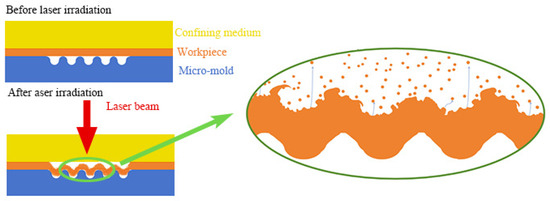
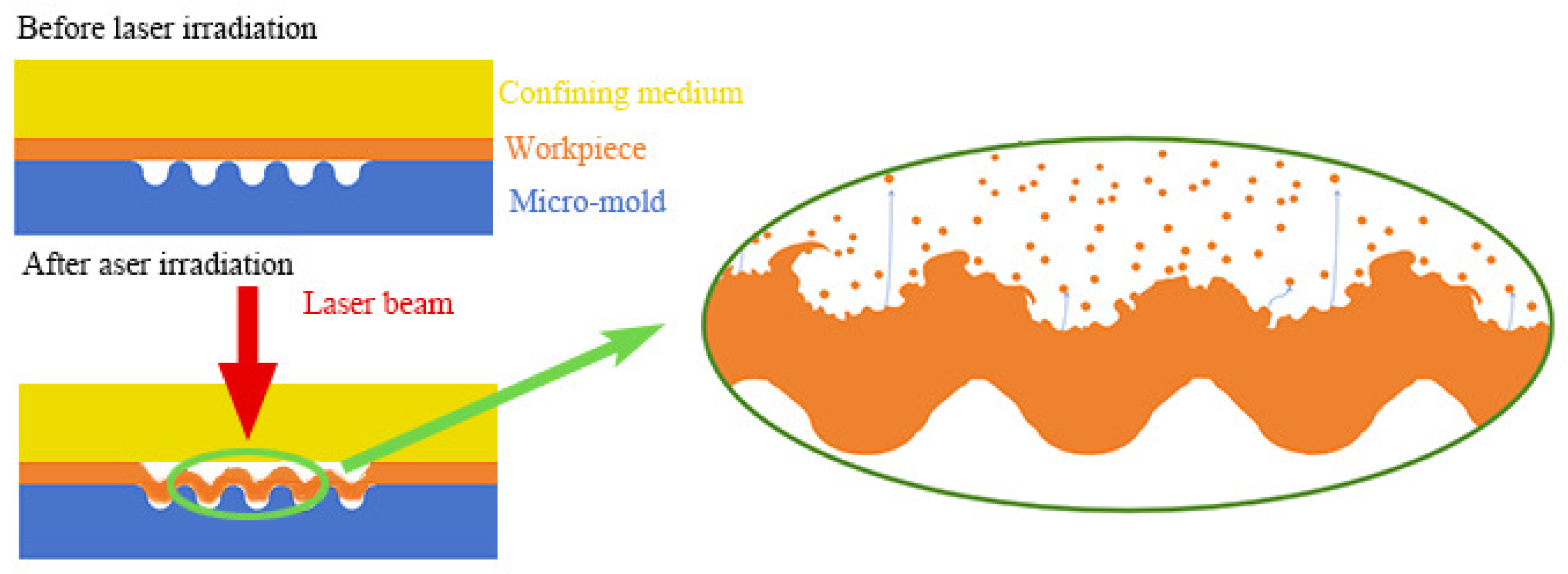
The mechanism of laser ablation imprinting processing is illustrated in Figure 1. In the present research, a Gaussian beam was employed. The laser fluence () is correlated with the pulse energy and beam waist by the following expression [29,30]:
Figure 1.
Schematic diagram of laser ablation imprinting.
Here, (laser pulse energy) was quantified using a Gentec-EO QE25LP-H-MB (Quebec City, QC, Canada) laser energy meter. The parameter denotes the beam waist, i.e., the radius of the laser beam at the focal plane, which was determined via the spot ablation method. is the constant. When the focused high-energy and high-density pulsed laser irradiates the upper surface of the workpiece through the transparent confinement layer, the upper surface of the workpiece (serving as the ablation layer) instantly absorbs a large amount of laser fluence, leading to vaporization and the generation of abundant plasma. The plasma then undergoes explosive expansion with a rapid increase in volume. Restricted by the preload force provided by the confinement layer and the blank holder above, the plasma exerts intense shock-wave pressure downward on the workpiece. Driven by such shock-wave pressure, the workpiece material flows into the mold cavity, thereby forming the primary microstructures.
During this process, the upper surface of the workpiece loses a portion of its material via vaporization and ionization, forming the substrate with ablation marks. Subsequently, the vaporized material condenses: in the central region with high laser fluence, the condensed material deposits to form remelted layers with both cavity and solid structures. In the edge regions with relatively low laser fluence, the plasma expands outward, condenses upon cooling, and adheres to the workpiece surface to form stacked splash-like traces, which serve as the secondary microstructures.
During laser ablation imprinting processing, the micro-mold, workpiece, transparent confinement layer, and blank holder were placed on the workbench. A polymethyl methacrylate (PMMA) film with a thickness of 2.7 mm served as the confinement layer, chosen for its optical transparency (92% transmittance). Studies by Fabbro et al. have shown that under the condition of using a confinement layer, the action time of the laser shock-wave pressure is approximately three times the laser pulse width. Under identical laser power density conditions, the maximum pressure amplitude induced by the laser shock system utilizing a confinement layer exceeds that of the configuration without such a layer [31]. Therefore, with the assistance of the confinement layer, the forming effect of the workpiece was better. In addition, the confinement layer also played a role in fixing the workpiece. The blank holder adopted an annular weight with an acting force of 30 N, which played a fixing role to prevent displacement of various parts during the experiment. The blank holder can effectively reduce the dissipation of plasma during processing, constrain the laser shock-wave pressure downward, and improve the efficiency of processing and forming. Currently, laser ablation imprinting is in its early stages of research. Therefore, only a stationary laser beam with a diameter of 2 mm was employed, and no relevant scanning strategy was adopted. Once the mechanism of the laser ablation imprinting process is clearly understood, scanning methods or multiparallel processing approaches [32] can be adopted to enhance processing efficiency and achieve large-area microstructure fabrication.
2.3. Aging Treatment and Fluorination Treatment
For the aging treatment, the samples were placed in a well-ventilated area, with the ambient temperature maintained within the range of 18–28 °C. Characterizations were conducted within 24 h after processing, as well as on the 5th, 10th, 14th, 18th, 24th and 28th days post-processing, respectively.
For the fluorination treatment, anhydrous ethanol (product No.1009218) supplied by Sinopharm Chemical Reagent Co., Ltd. (Shanghai, China) was used as the solvent, while a 1H, 1H, 2H, 2H-perfluorodecyltriethoxysilane solution (purity: 96%, catalog No. M00609-25G) produced by Shanghai MedChemExpress Co., Ltd. (Shanghai, China), was adopted as the solute. The fluorination solution was prepared at a solute-to-solvent mass ratio of 1:100, with a sufficient volume to completely submerge the workpieces. The reaction was carried out in a high-temperature stable environment: the samples were placed in a constant-temperature oven set at 60 °C. After 8 h of reaction, the workpieces were taken out, dried, and then subjected to subsequent characterization.
3. Results and Discussion
3.1. Surface Morphology
3.1.1. Effect of the Number of Laser Shocks on Formability
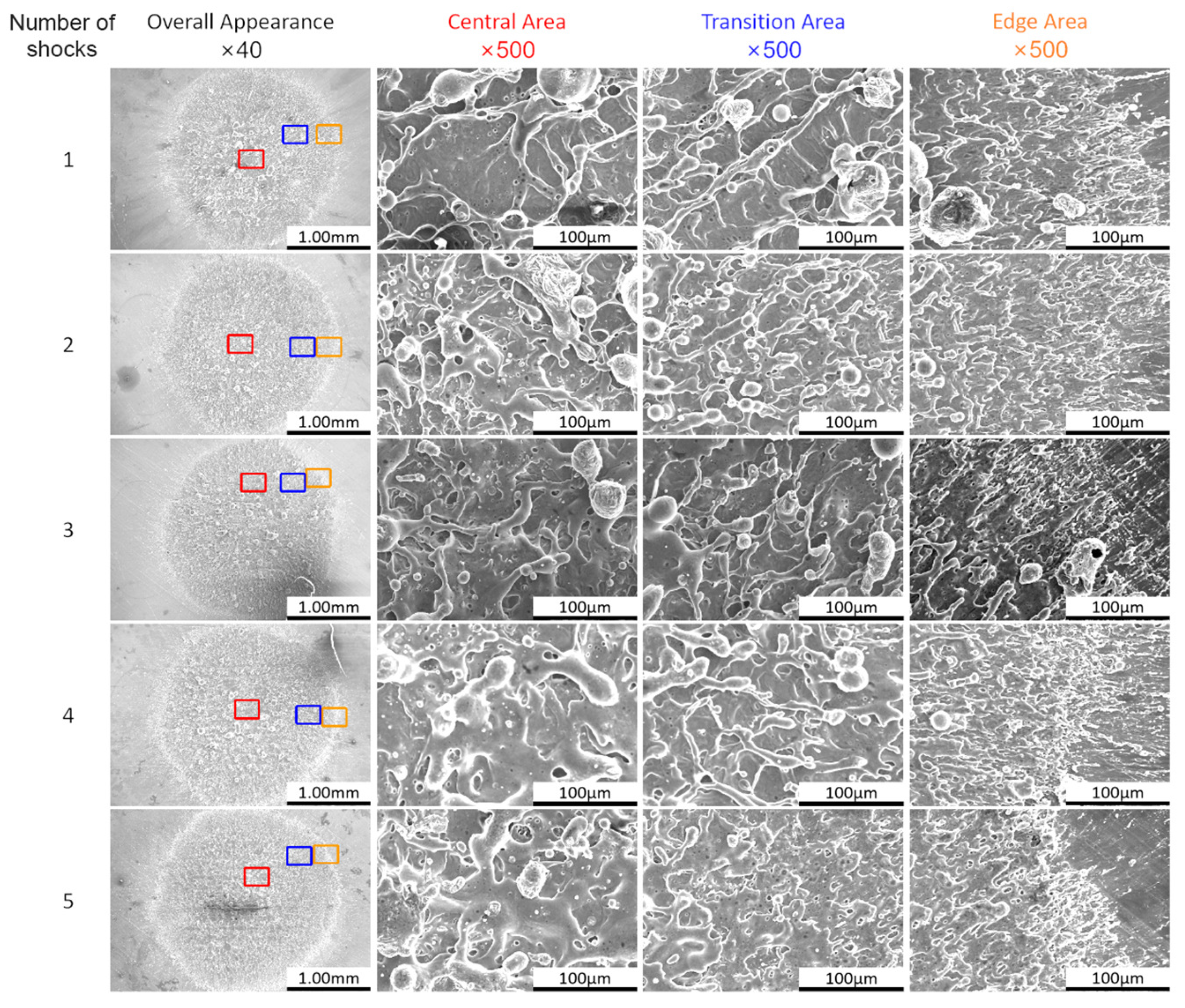
In the experiment investigating the effect of number of laser shocks on the forming effect and contact angle, the mold period was set to 120 μm. A 30 μm thick aluminum foil was shocked one, two, three, four, and five times respectively with a laser fluence of 28.97 J/cm2. Figure 2 shows the SEM images of the upper surface of the aluminum sample. Due to the Gaussian distribution of the laser fluence, the surface characteristics of the workpiece formed by laser ablation imprinting are uneven. The formed part was divided into regions: the central region (with a diameter of approximately 1.5 mm) was impacted by sufficiently concentrated laser fluence, enabling the formation of well-defined primary microstructures and complex overlapping secondary microstructures. In the transition region, located at the edge of the central region, the laser fluence weakened to extinction, which was insufficient to complete the laser imprinting process of the workpiece. Thus, the primary microstructures diminished until disappearing there, while the secondary microstructures exhibited an outwardly diffusing flow direction, overall showing a “V”-shaped overlapping feature. This is because the workpiece material absorbs laser energy and partially vaporizes and ionizes; most of the generated gas erupts around, squeezing and pushing the molten material of the underlying workpiece to form a distinct radial flow. The edge region is actually beyond the laser focusing range, where only sputtered secondary microstructures exist. These microstructures are formed by the outward diffusion of ablated and erupted materials, showing a clear flow direction. Figure 2 includes an overall image of the shocked area (×35) and magnified images of the central region, transition region, and edge region (×500). With the increase in the number of shocks, the formed area on the workpiece surface gradually expanded, and the characteristics of the primary microstructures became increasingly distinct. The ablation marks in the central region contained obvious large-volume remelted materials and small-sized microstructures. The upper surface of the workpiece directly irradiated by the laser had obvious ablation marks, which obscured part of the primary microstructures of the workpiece. Groove-like features were barely visible on workpieces with fewer shocks but could be observed on the overall images of workpieces shocked four and five times. In addition, with the increase in the number of shocks, the remelted materials on the upper surface of the workpiece changed, becoming smaller in volume and more uniform. For example, the size of the remelted materials on the upper surface of the workpiece shocked five times was much smaller than that of the previous ones. Considering that the edge region had a single structure and the transition region was annular with a small area, making contact angle measurement difficult, the contact angle was measured in the central region where both primary and secondary microstructures coexisted.
Figure 2.
The upper-surface morphology of aluminum samples fabricated using different numbers of shocks.
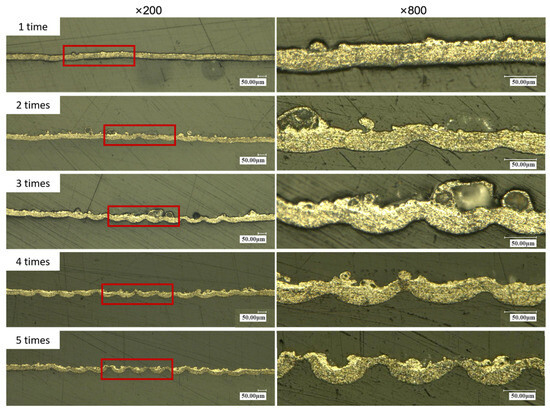
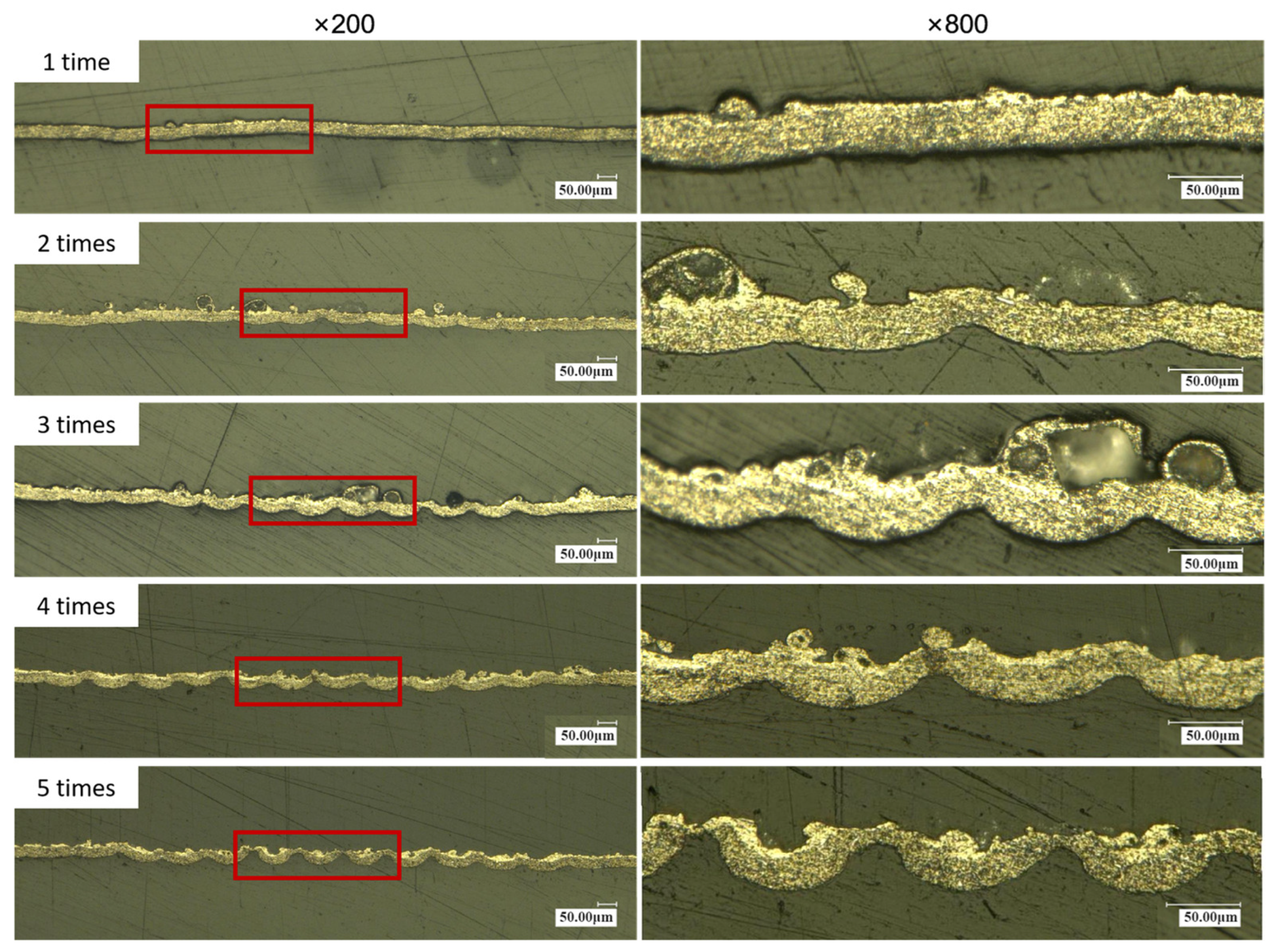
The corresponding cross-sectional morphology diagrams of aluminum foil workpieces under different numbers of laser shocks are shown in Figure 3. The figure includes the overall morphology at 200× magnification and local details at 800× magnification (the figures on the right are magnified views of the red-boxed regions in the corresponding figures on the left). It can be observed that numerous prominent large-scale remelted materials on the aluminum foil workpiece often exist in the form of cavities, which are much more obvious than ordinary ablation marks. From the side view, the different changes in the formed primary microstructures of the workpiece under different numbers of laser shocks can be seen more clearly. With the increase in the number of laser shocks, the primary microstructures of the workpiece become more distinct, especially on the lower surface. On the upper surface of the workpiece, however, the workpiece material flows under heat and extrusion, accumulating in the grooves, resulting in relatively less material at the protrusions. This characteristic becomes more obvious as the number of laser shocks increases: the secondary microstructures formed by ablation become more complex and diverse. In contrast, under a single laser shock, only a small number of solid tiny protrusions are formed as the secondary microstructures on the upper surface of the workpiece, and the primary microstructures are nearly absent. In addition, it is found that the more laser shocks, the thinner the relative thickness of the formed workpiece. This is attributed to the following two reasons: (1) laser ablation causes the loss of material on the workpiece surface; the more shocks, the thinner the material becomes; (2) laser shock pressure drives the workpiece material to flow into the mold cavity; the more shocks, the more material flows into the cavity, leading to the thinning of the material at the mold inlet.
Figure 3.
Cross-section topography of aluminum foil workpiece under different numbers of shocks.
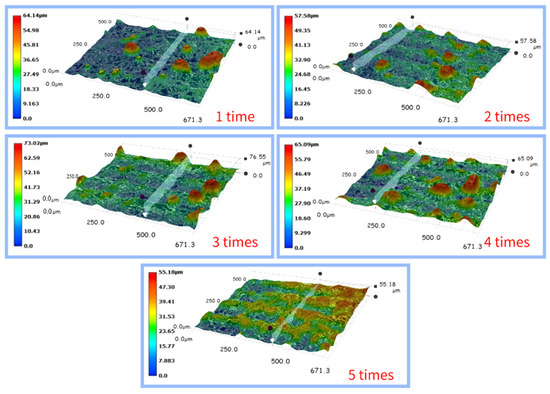
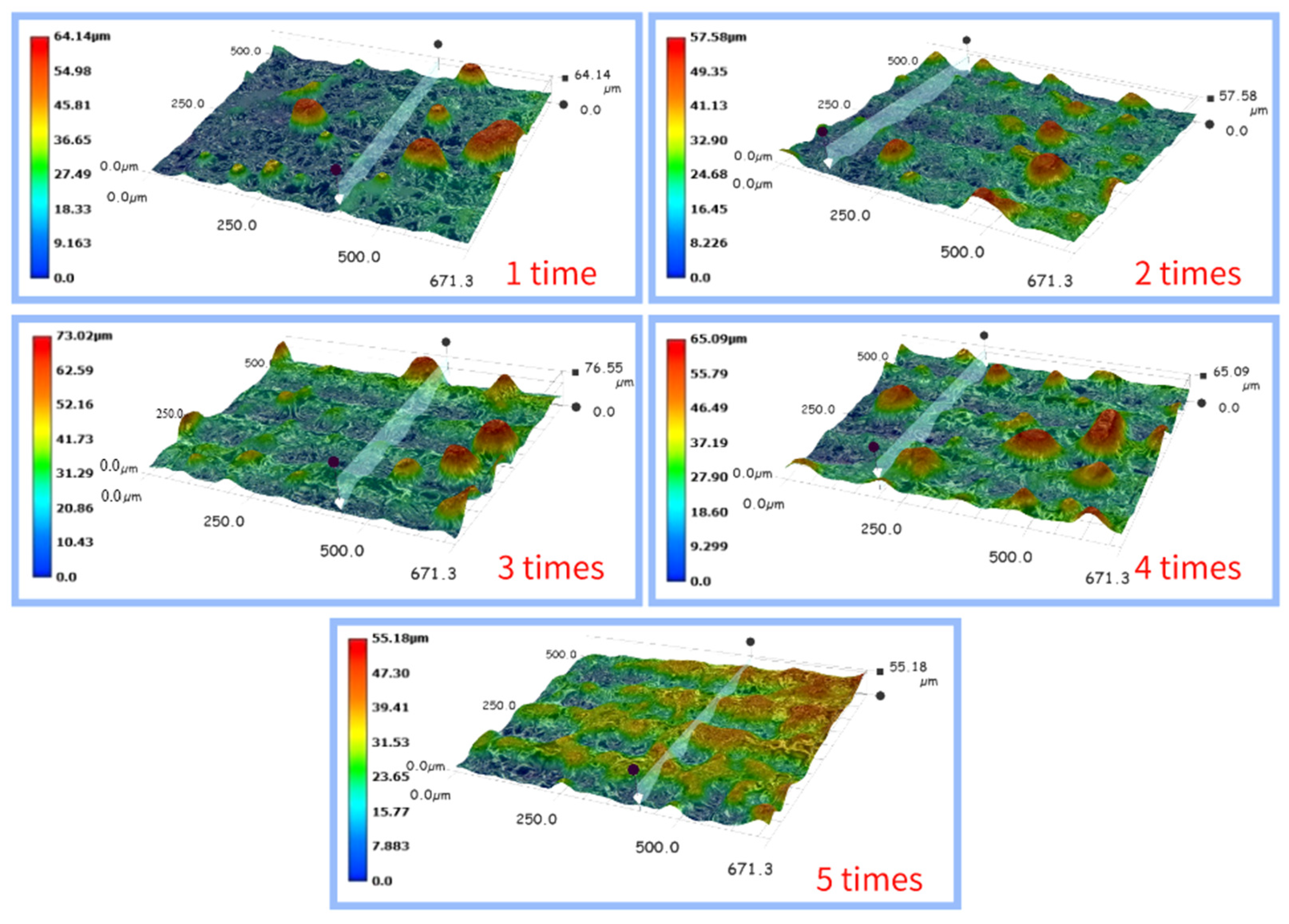
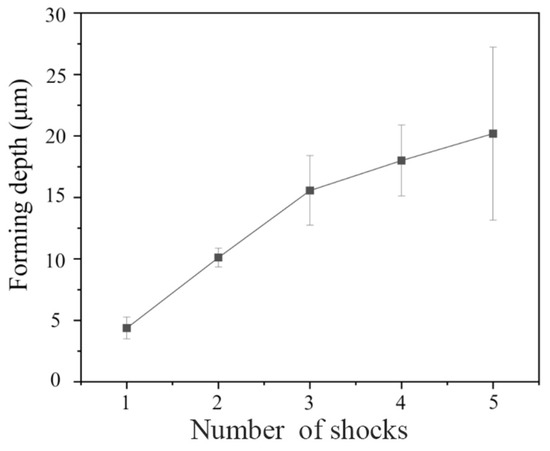
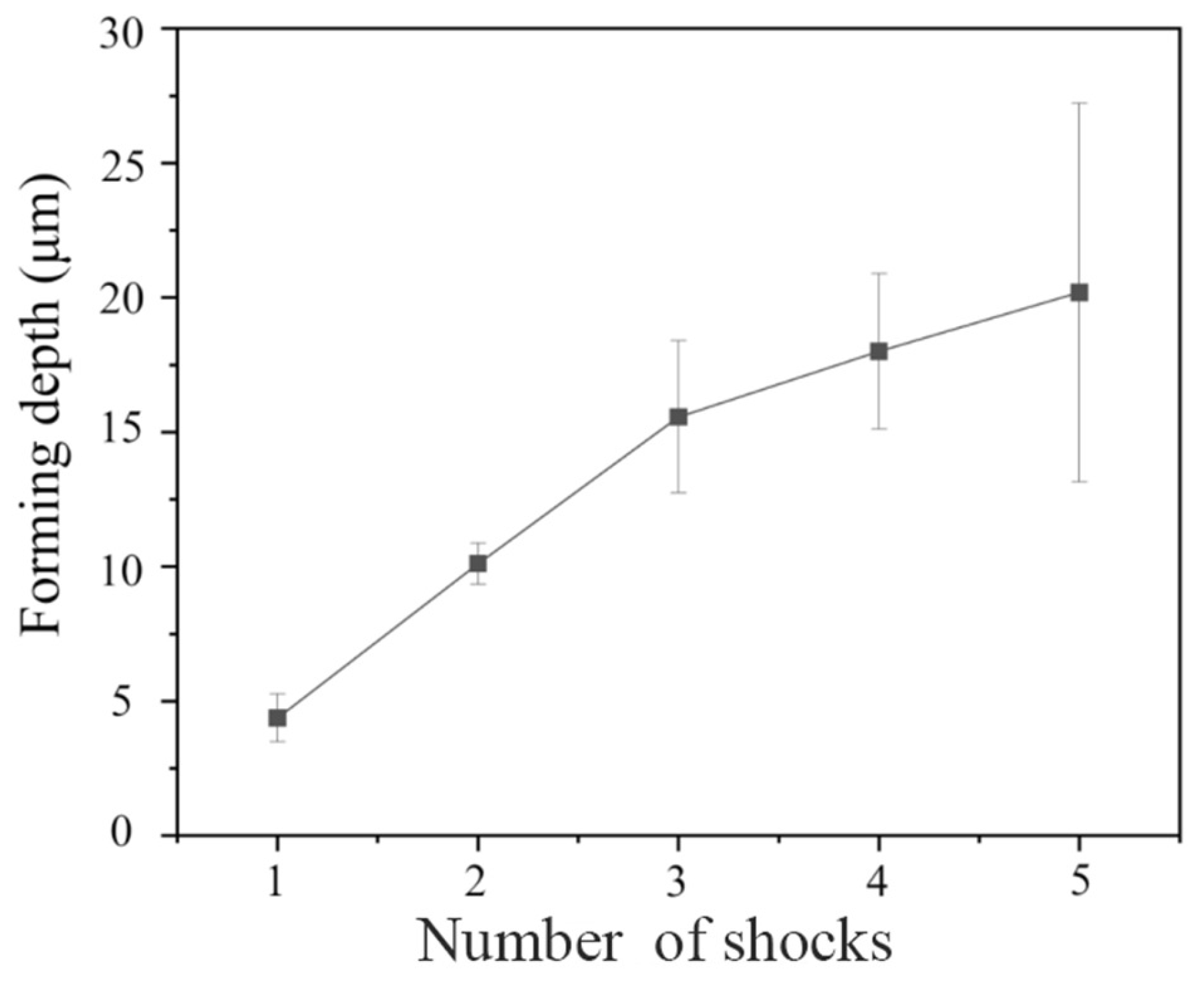
Figure 4 shows the 3D morphology of the workpiece’s upper surface, and Figure 5 presents the curve of forming depth varying with number of laser shocks. During the laser ablation imprinting process of aluminum foil workpieces, the primary microstructures become increasingly distinct as the number of laser shocks increase. The change rate of the forming depth slows down with the increase in the number of laser shocks. This is because as the number of laser shocks increases, the gap between the workpiece and the confinement layer expands, leading to a decrease in laser shock-wave pressure, and thus the deformation of the workpiece caused thereby also decreases.
Figure 4.
The 3D upper-surface topography of the aluminum foil workpiece under different numbers of shocks.
Figure 5.
Curve of forming depth of primary structure on upper surface of aluminum foil workpiece with different number of shocks.
3.1.2. Effect of Laser Fluence on Workpiece Formability
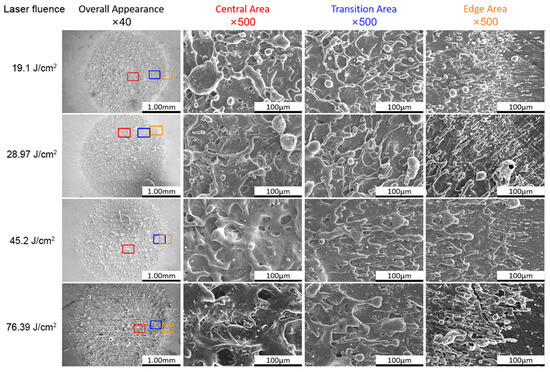
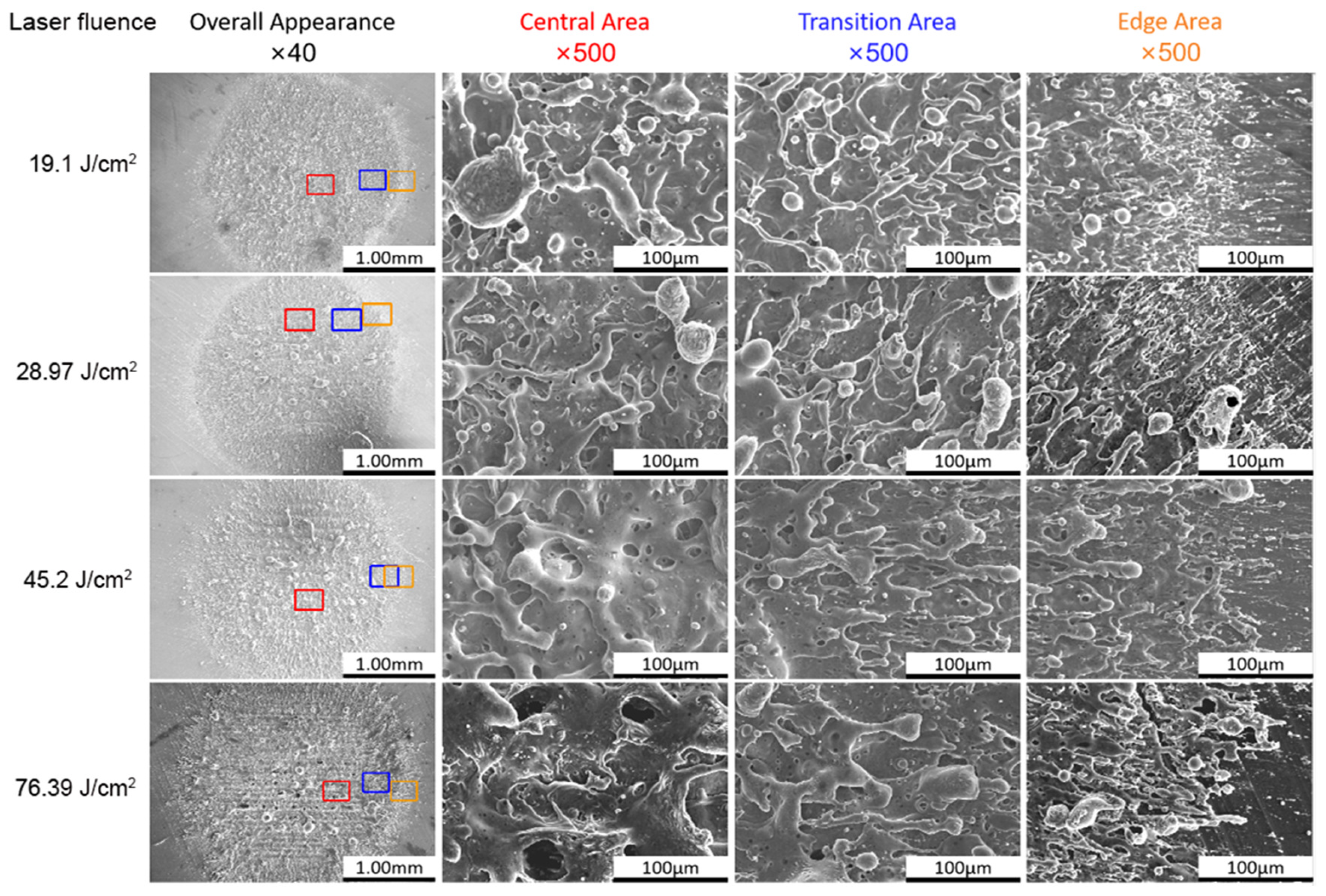
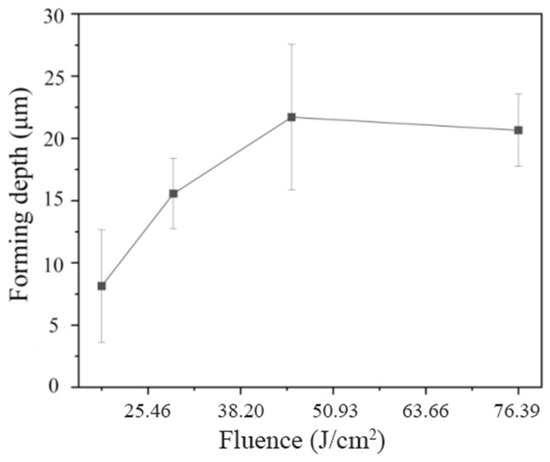
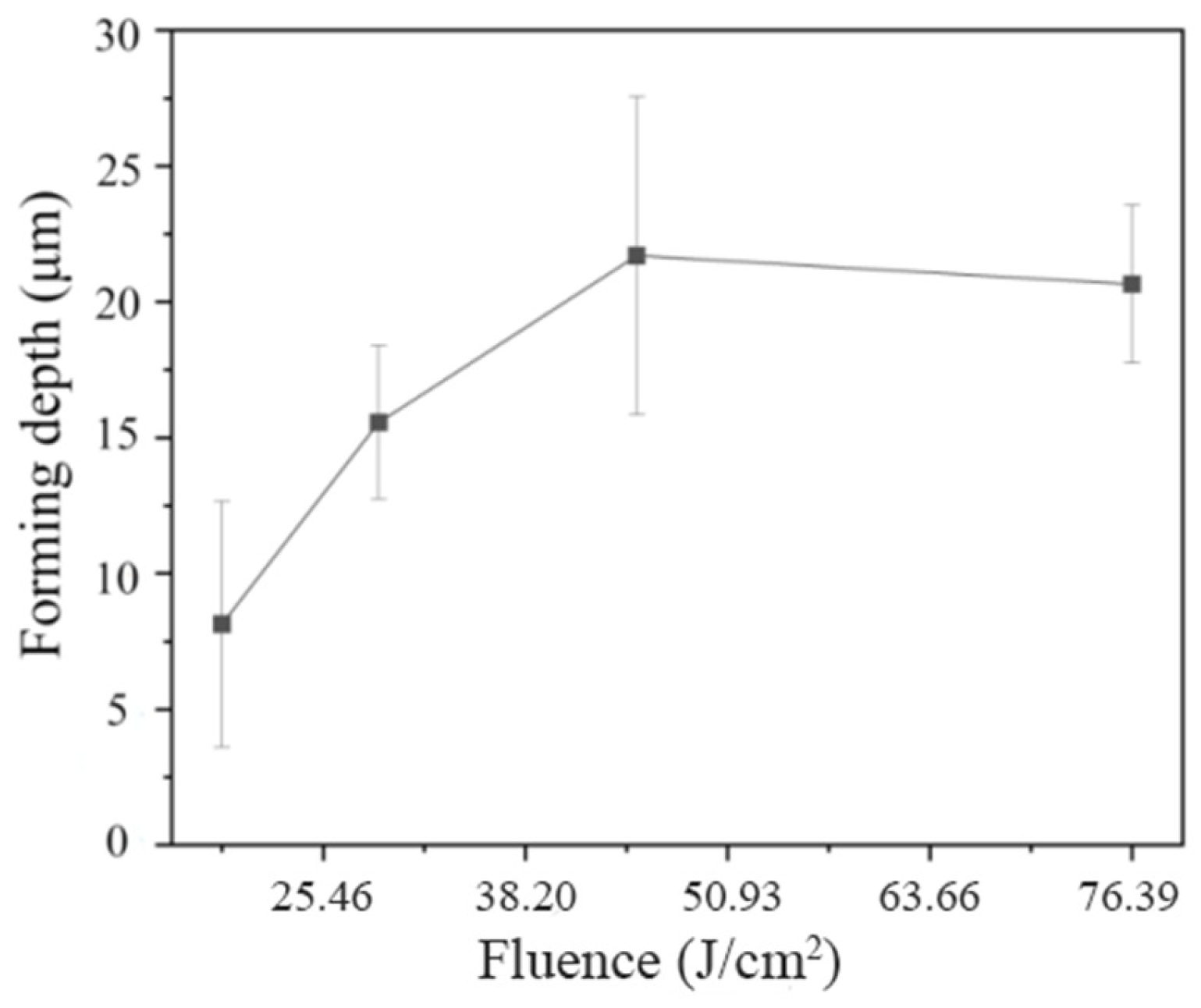
To investigate the effect of laser energy on formability and contact angle, the mold period was set to 120 μm. A 30 μm thick aluminum foil was shocked three times with a laser fluence of 19.1 J/cm2, 28.97 J/cm2, 45.2 J/cm2, and 76.39 J/cm2, respectively. Figure 6 shows the formability of aluminum foil workpieces under different laser energies. When the laser fluence is low, the remelted materials tend to form dense and small papillary remelted protrusions; when the laser fluence is high, the volume of individual remelted materials becomes larger but the quantity decreases, and the sputtering traces in the edge region increase. With the increase in laser fluence, the forming depth of the primary microstructures on the workpiece surface gradually increases, and damage occurs more frequently. The damaged structure can be observed in the overall image of the aluminum foil workpiece under 76.39 J/cm2 of laser fluence, which is more clearly displayed in the image of the central region. The damage appears at the protrusions, and the workpiece surface around the damage exhibits more wrinkles and a more complex morphology. As the laser fluence increases, the area of the secondary microstructures on the workpiece surface increases, while the relative increase in the area of the composite hierarchical microstructures is relatively small, but the increase in forming depth is significant. The formability of the hierarchical microstructures improves with the increase in laser fluence.
Figure 6.
The upper-surface morphology of aluminum samples fabricated using different laser fluences.
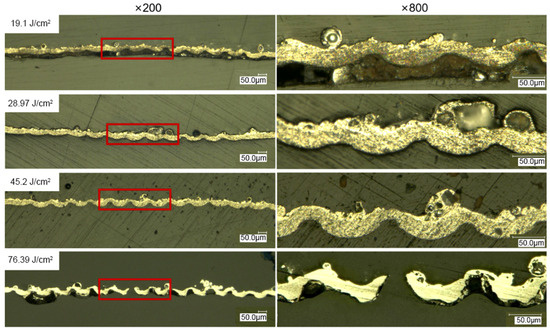
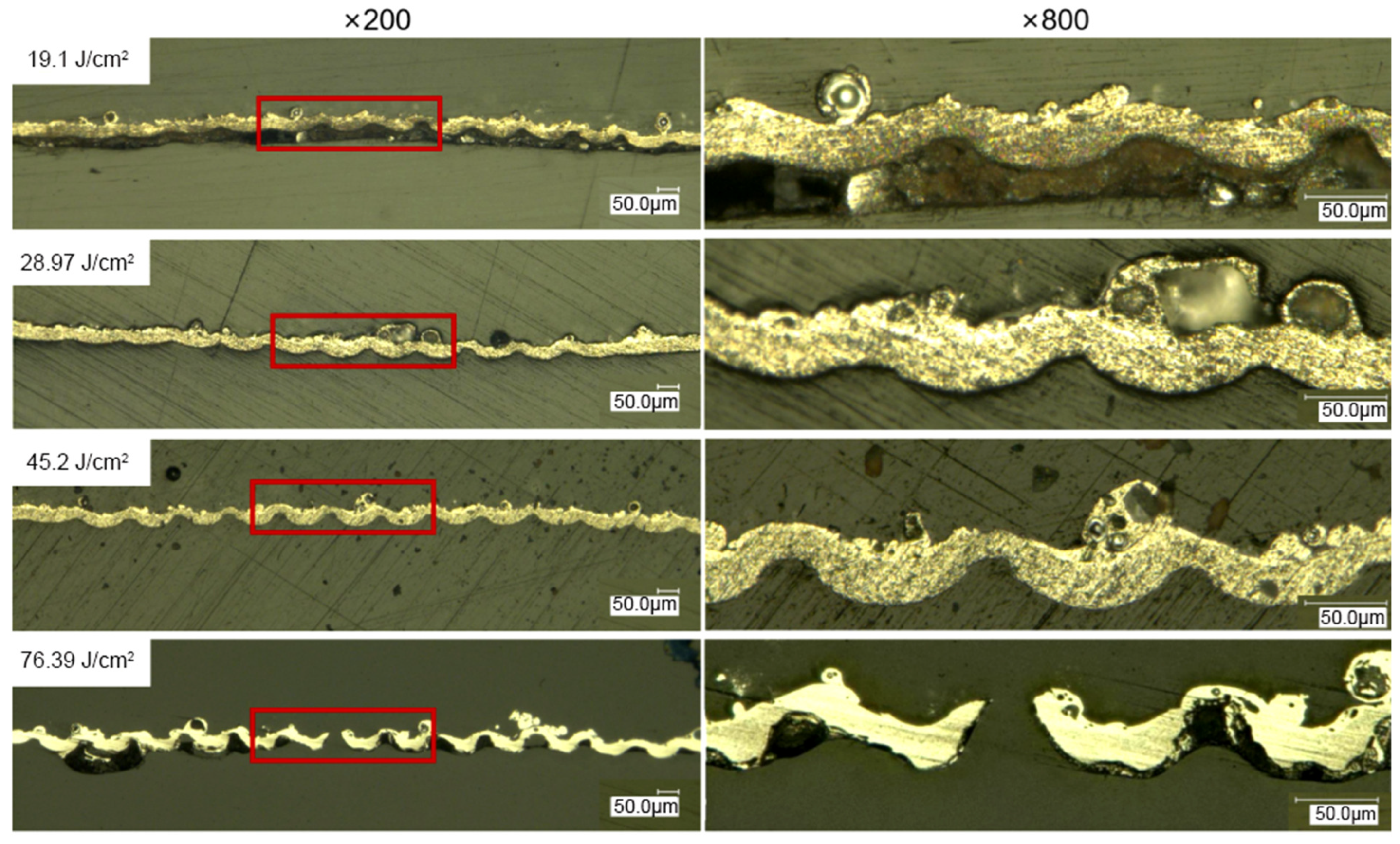
Figure 7 shows the cross-sectional morphology diagrams of aluminum foil workpieces and the left figures show the overall morphology at 200× magnification, and the right figures display the local details at 800× magnification of the red-boxed regions in the corresponding left figures. Overall, as the laser fluence increases, the deformation of the aluminum foil workpieces also increases accordingly. The thickness of the workpiece at the grooves is generally thicker than that at the ridges, and the forming depth of the upper surface of the primary microstructures is less than that of the lower surface. The ridges are subjected to severe extrusion. After absorbing laser energy, the material melts and flows to lower areas, eventually accumulating at the grooves, resulting in thinner workpiece thickness at the ridges. As shown in Figure 3 and Figure 6, the workpiece under 76.39 J/cm2 fractures at the protrusions, which is related to the thickness distribution of the workpiece.
Figure 7.
Cross-section topography of aluminum sample under different laser fluences.
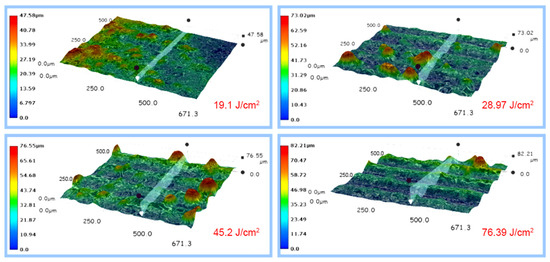
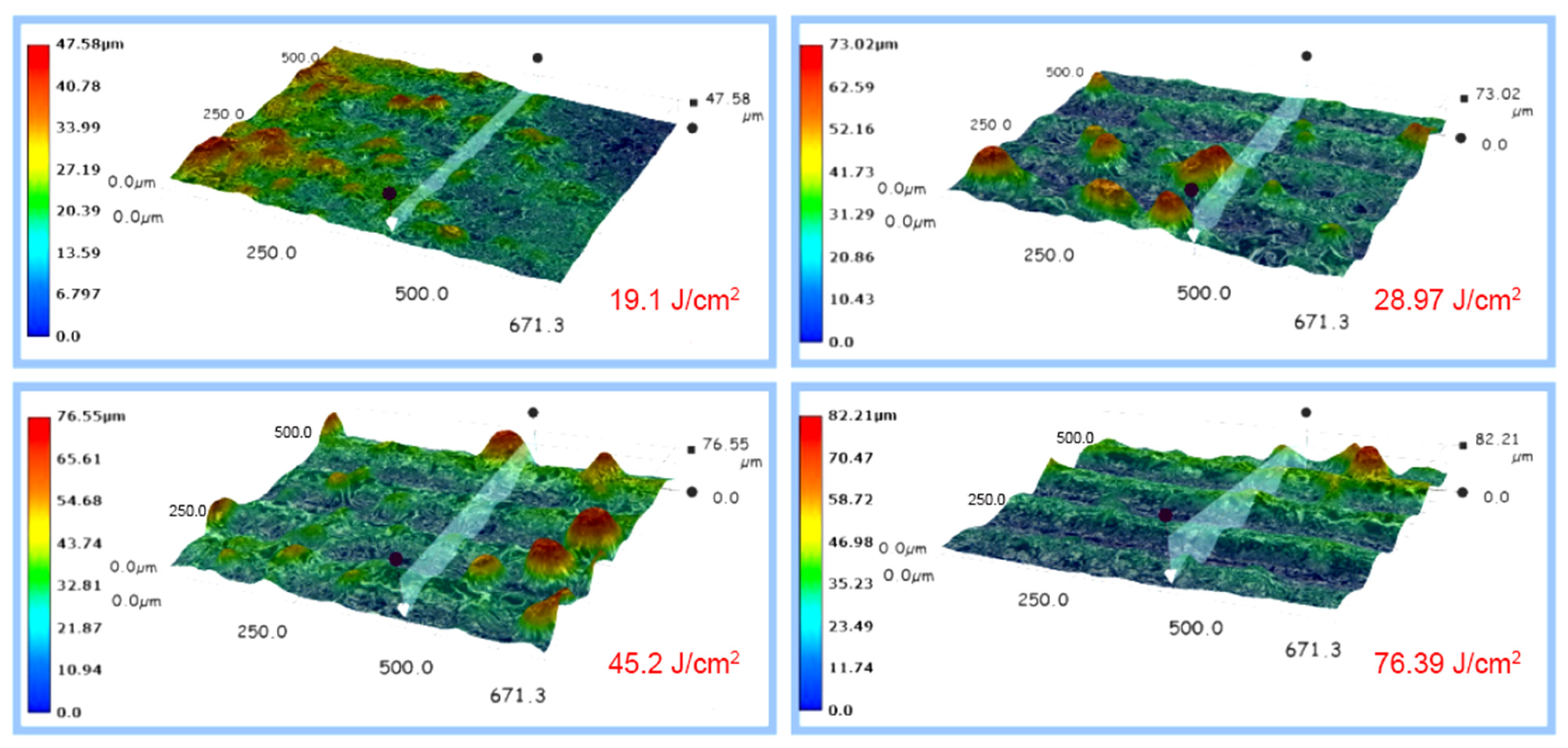
Figure 8 shows the 3D structures of the upper surfaces of aluminum foil workpieces under different laser energies. As the laser fluence increases, the primary microstructures of the aluminum foil workpieces become increasingly distinct, which confirms the conclusion that the workpiece formability improves with increasing laser fluence. At low laser fluence, since no primary microstructures are formed, the forming result of the hierarchical microstructures on the workpiece surface is not ideal; under 19.1 J/cm2 of laser fluence, the primary microstructures on the upper surface are almost absent. As the laser fluence increases, the primary microstructures become clearer. Figure 9 shows the forming depth of the primary microstructures of aluminum foil workpieces. When the laser fluence is 76.39 J/cm2, the aluminum foil workpiece exhibits numerous damages, which mainly occur at the protrusions in the central region. Therefore, the forming depth is mostly measured at the periphery of the central region and the transition region, and the measured data are slightly lower than those of the workpiece under 45.2 J/cm2 laser fluence. As the laser fluence increases, the formability of the aluminum foil workpiece gradually improves; when the laser fluence reaches 76.39 J/cm2, the aluminum foil workpiece reaches its limit and undergoes damage.
Figure 8.
The 3D upper-surface topography of the aluminum sample with different laser fluences.
Figure 9.
Curve of forming depth of primary structure on upper and lower surface of aluminum foil workpiece with different laser fluences.
3.1.3. Effect of Mold Period on Workpiece Formability
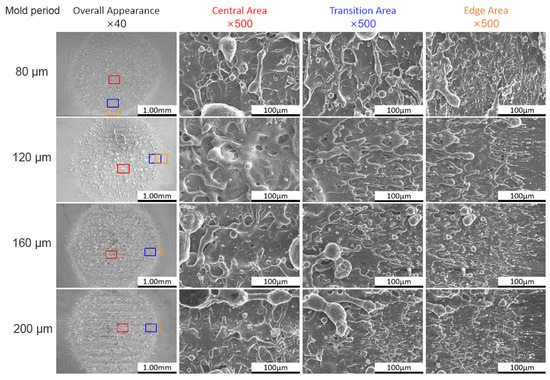
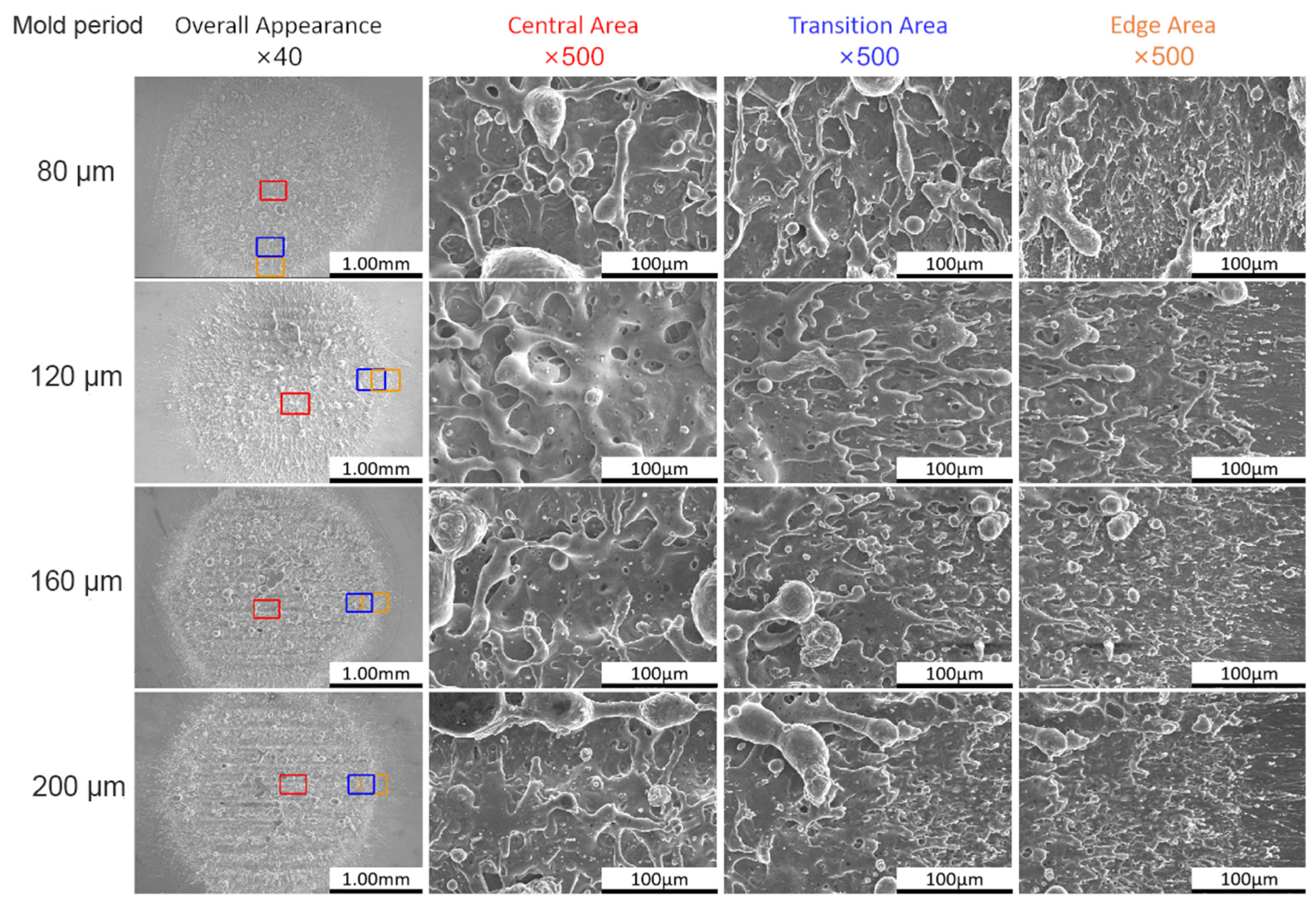
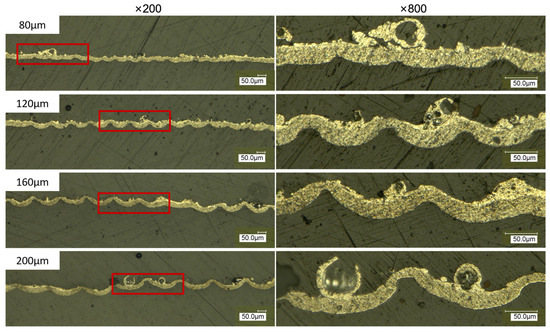
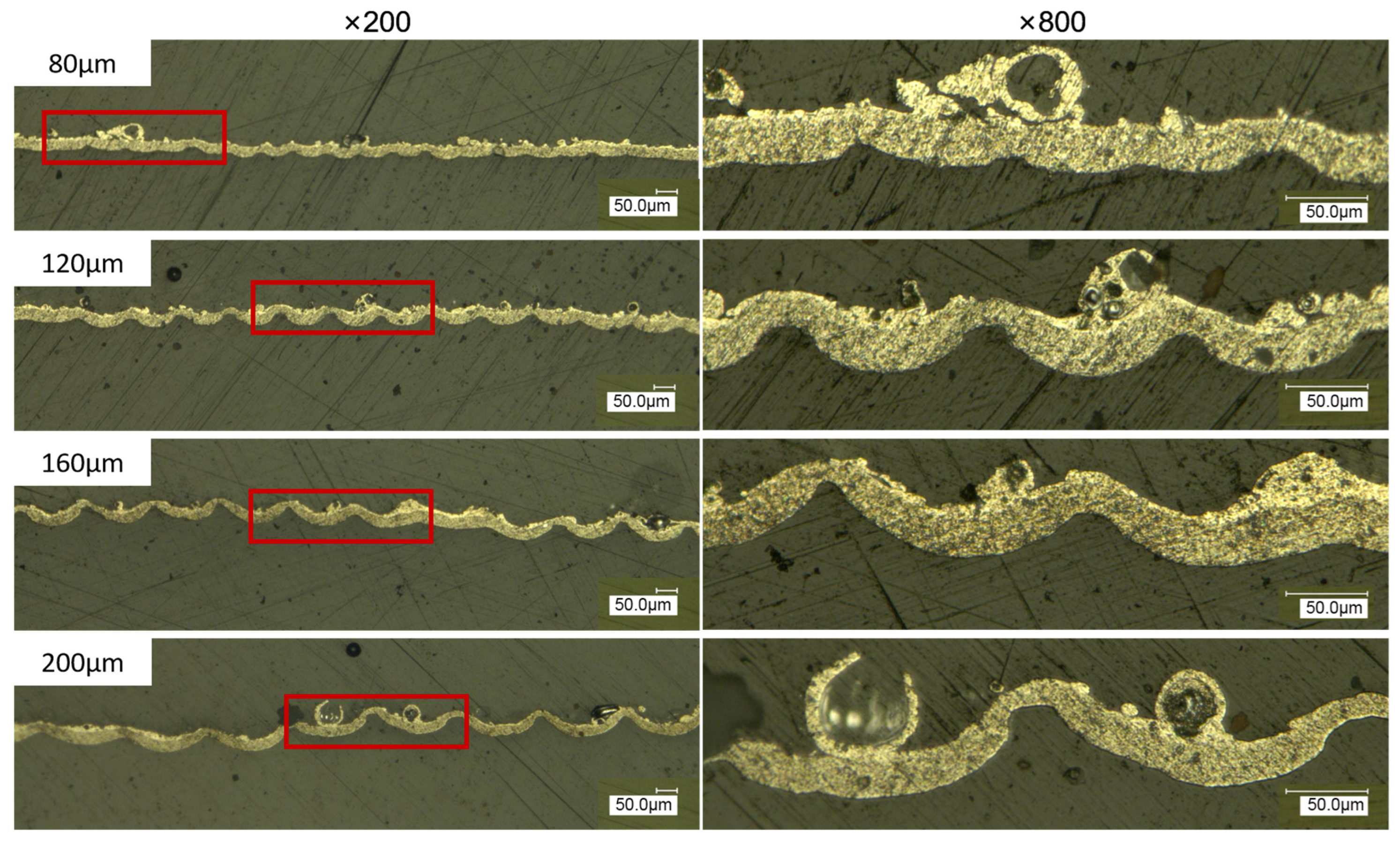
In the experiment investigating the effect of mold period on workpiece formability, a 30 μm thick aluminum foil was shocked three times with a laser fluence of 45.2 J/cm2, and the mold periods were 80 μm, 120 μm, 160 μm, and 200 μm, respectively. Figure 10 shows the full-surface images of workpieces fabricated by molds with different periods, as well as the magnified images of the central region, transition region, and edge region, which mainly characterize the morphology of the secondary microstructures. It can be seen from the full-surface images that the primary microstructures are covered with numerous remelted materials. The large-area structures formed by the aggregation of remelted materials obscure the formability of the primary microstructures, and there is no doubt that such structures have an adverse effect on hydrophobicity. As observed from the images, when the mold period is 80 μm, the presence of primary microstructures is not easily distinguishable in the SEM images; as the period increases, the primary microstructures become increasingly distinct. Large-scale remelted materials tend to exist in the central region, while the number of remelted materials in the transition region and edge region is smaller, and their volume is also smaller. In addition, the distribution of secondary microstructures is consistent: in the transition region, the traces directly formed by ablation weaken, and more obvious signs of outward diffusion appear; in the edge region, it is covered with fine sputtered traces. The edge region is not directly irradiated by the laser; these traces originate from two sources: part of the vaporized and ionized materials from the central region sputter here and then cool and solidify, and part of the materials on the upper surface that melt due to heat and flow to the edge driven by the erupted volume are pushed here and cool and solidify to form such traces.
Figure 10.
The upper-surface morphology of aluminum foil workpieces prepared with different mold periods.
Figure 11 shows the cross-sectional schematics of aluminum samples under different mold periods. Left figures show the overall morphology at 200× magnification, while right figures present the local details at 800× magnification from the red-boxed regions in the corresponding left figures. As the period increases, the formability of the primary microstructures of the workpieces also improves. The large-scale remelted materials on the upper surface of the aluminum foil workpieces are mainly cavities. The workpiece material corresponding to the ridge position of the mold is thinner, which is particularly obvious in the image of the workpiece with a mold period of 200 μm. Comparing the magnified images at 800×, it is found that the thickness of the formed workpiece decreases as the period increases. This is mainly because with the increase in the period, the workpiece is more likely to flow into the mold cavity after being shocked; under the premise of a constant volume, the stretching in the length direction means that the thickness will decrease. A careful comparison of the cross-sectional images of aluminum foil workpieces at low magnification reveals that molds with different periods have little effect on the secondary microstructures on the workpiece surface during forming, and the main difference still lies in the primary microstructures.
Figure 11.
Cross-section topography of aluminum foil workpieces under different mold periods.
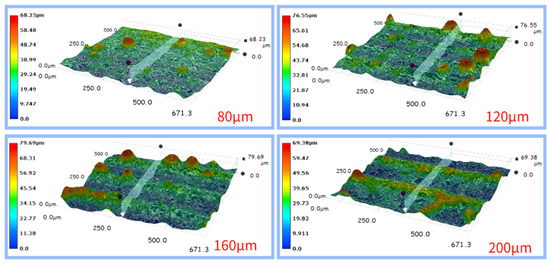
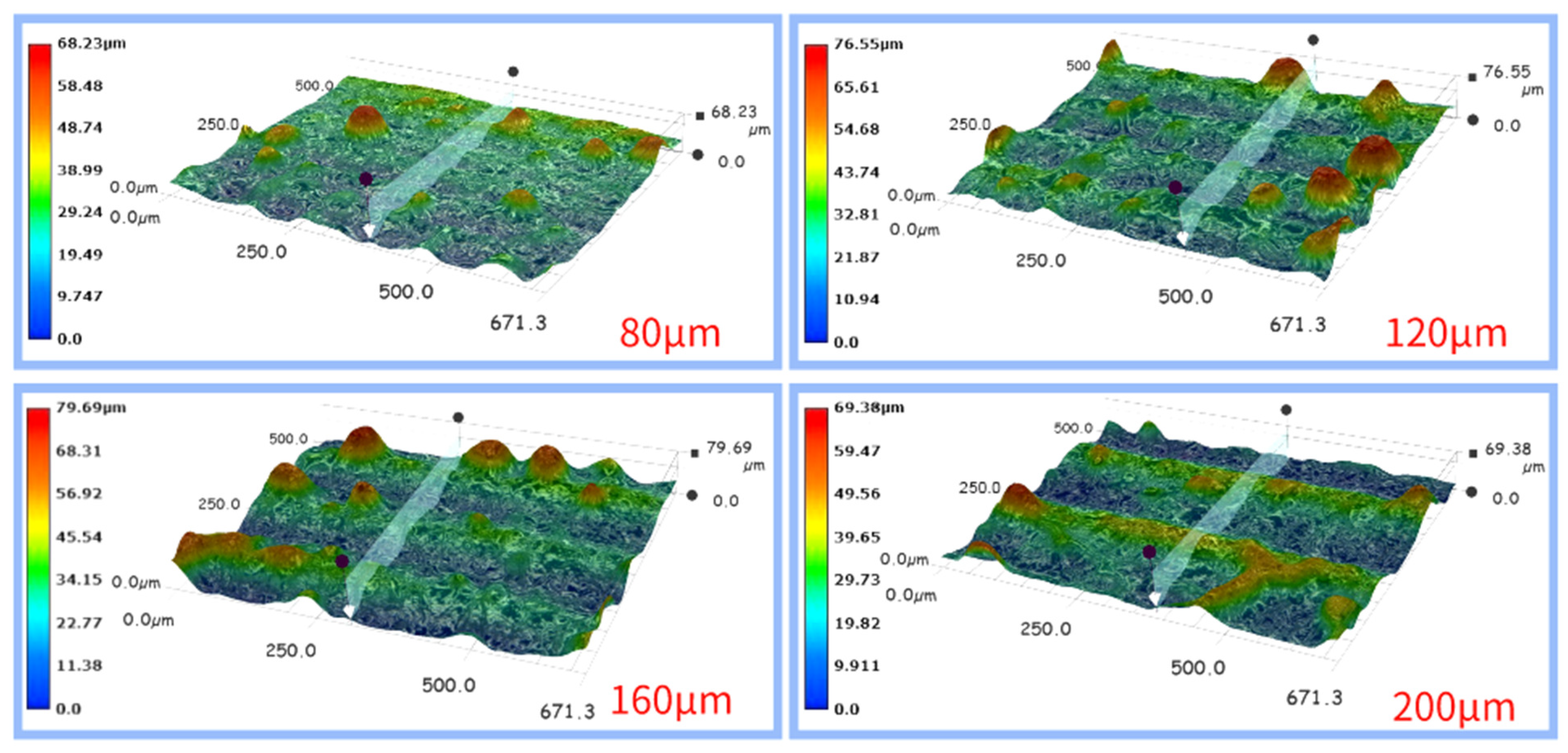
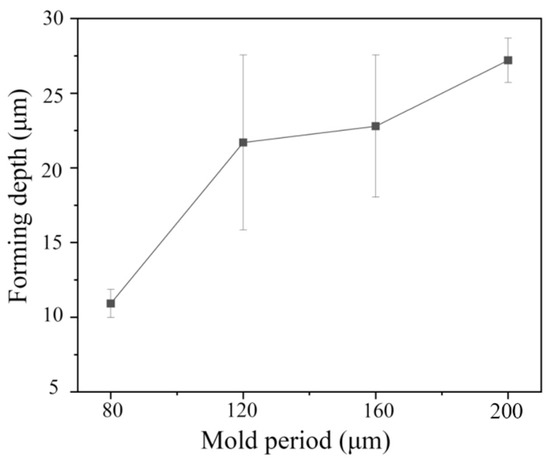
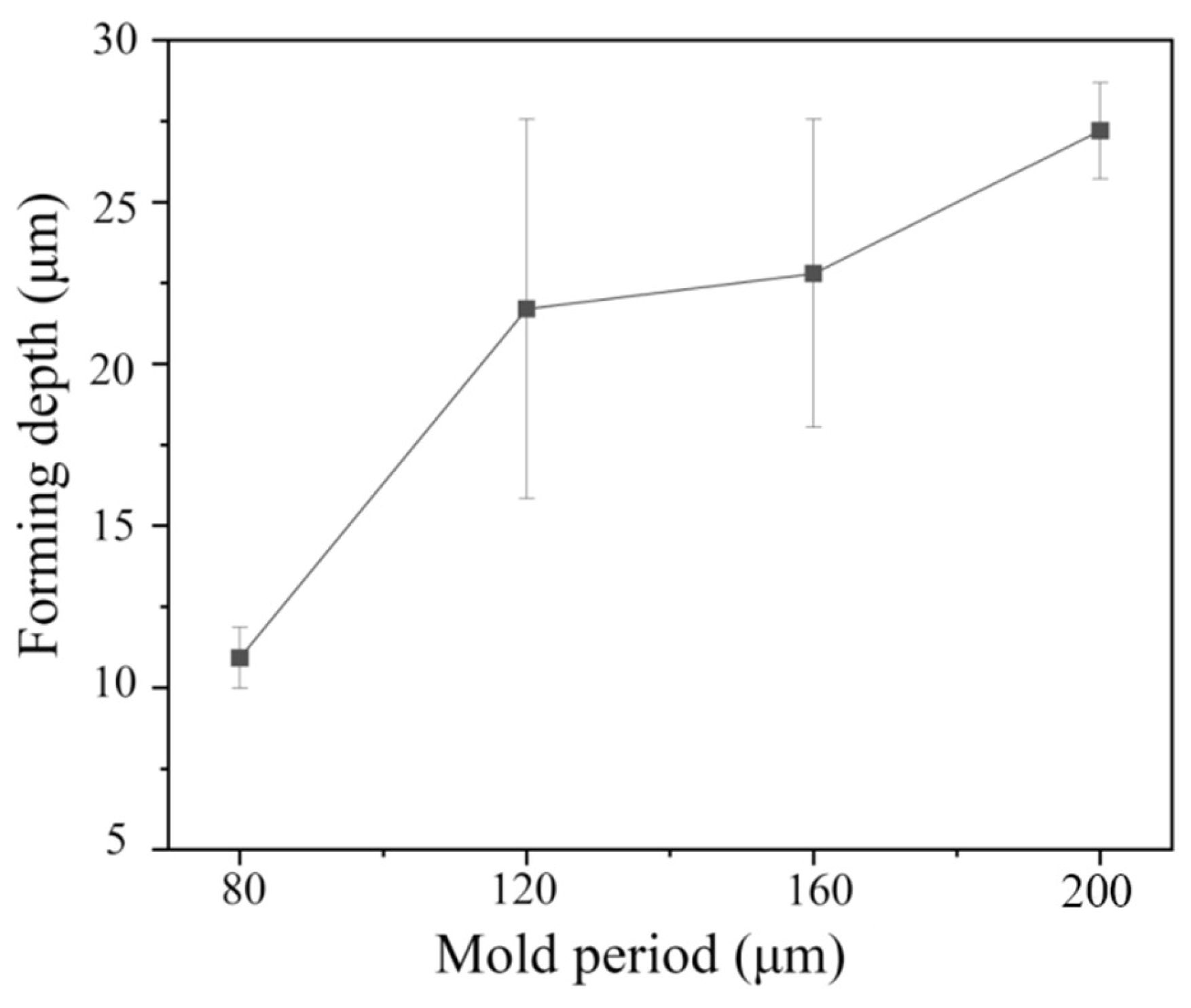
Figure 12 shows the 3D morphologies of the upper surfaces of aluminum foil workpieces fabricated by molds with different periods, and Figure 13 presents the corresponding forming depths. As the period increases, the forming depth of the primary microstructures also increases, making them increasingly clear and distinct. The randomly distributed characteristics of the secondary microstructures have an adverse effect on the measurement of the forming depth of the primary microstructures. The larger the period, the better the effect of the workpiece replicating the mold features, and the better the characteristics of the formed hierarchical microstructures.
Figure 12.
The 3D upper surface of aluminum samples under different mold periods.
Figure 13.
Forming depth curve of primary structure on upper surface of aluminum samples under different mold periods.
3.1.4. Formation Mechanism of Hierarchical Microstructures
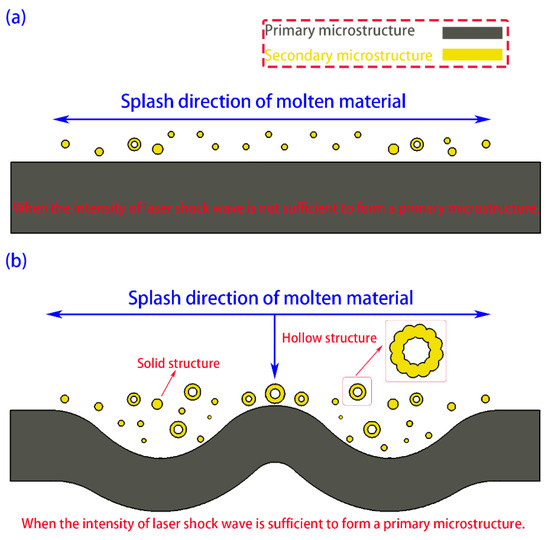
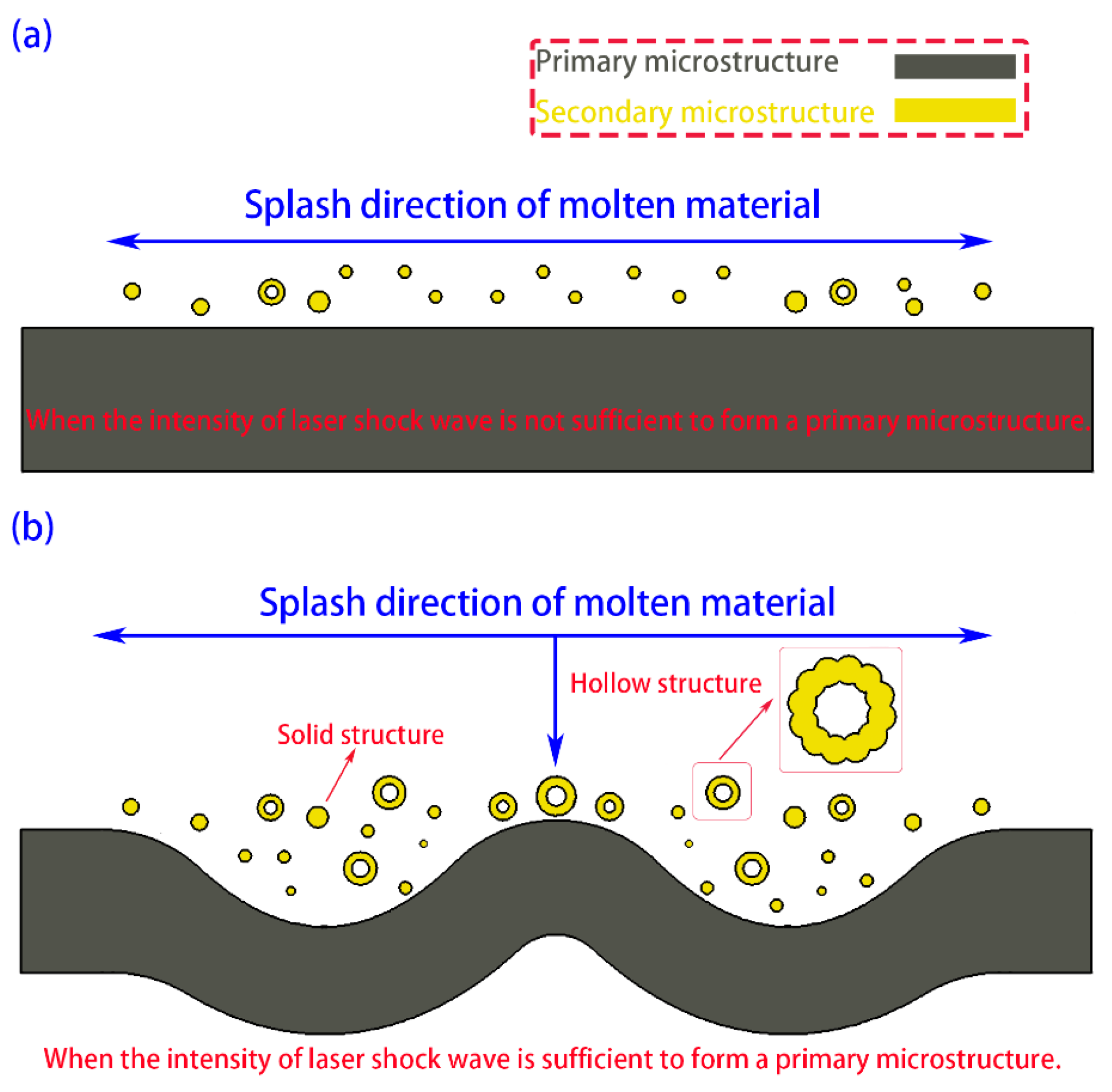
Figure 14 shows the formation schematic of hierarchical microstructures. When the laser fluence is low or the number of laser shocks is small, the intensity of the laser shock wave is insufficient to form primary microstructures, as shown in Figure 14a. The molten material splashes in the radial direction in the form of microspheres and then adheres to the surface of the solid workpiece to form layered sputtered remelting traces.
Figure 14.
Schematic diagram of the formation of hierarchical microstructures: (a) when the intensity of the laser shock wave is not sufficient to form a primary microstructure; (b) when the intensity of the laser shock wave is sufficient to form a primary microstructure.
When the laser fluence is high or the number of laser shocks is large, the intensity of the laser shock wave is sufficient to form primary microstructures, as shown in Figure 14b. The molten material splashes in the form of microspheres along the radial and depth directions. Due to the existence of the primary microstructure space, the splashed droplets collide in the space and then agglomerate to form solid or hollow large droplets. Subsequently, droplets of various morphologies adhere to the surface of the solid workpiece to form secondary microstructures. Figure 14b shows the initial shape of the formed hollow large droplets. Under the action of surface tension, the inner and outer surfaces of the hollow large droplets become smooth, and their final shapes are shown in Figure 3, Figure 7 and Figure 11. During the multi-pulse laser shock process, the morphology of the secondary microstructures changes accordingly. As shown in Figure 2 and Figure 3, with the increase in the number of laser shocks, the volume of the remelted materials becomes smaller and more uniform. This is because the subsequent laser ablation melts the surface of the large-particle remelted materials formed earlier, leading to the redistribution of the secondary microstructures.
3.2. Surface Chemistry
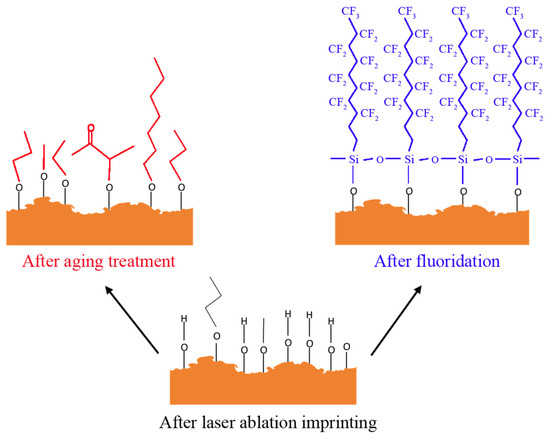
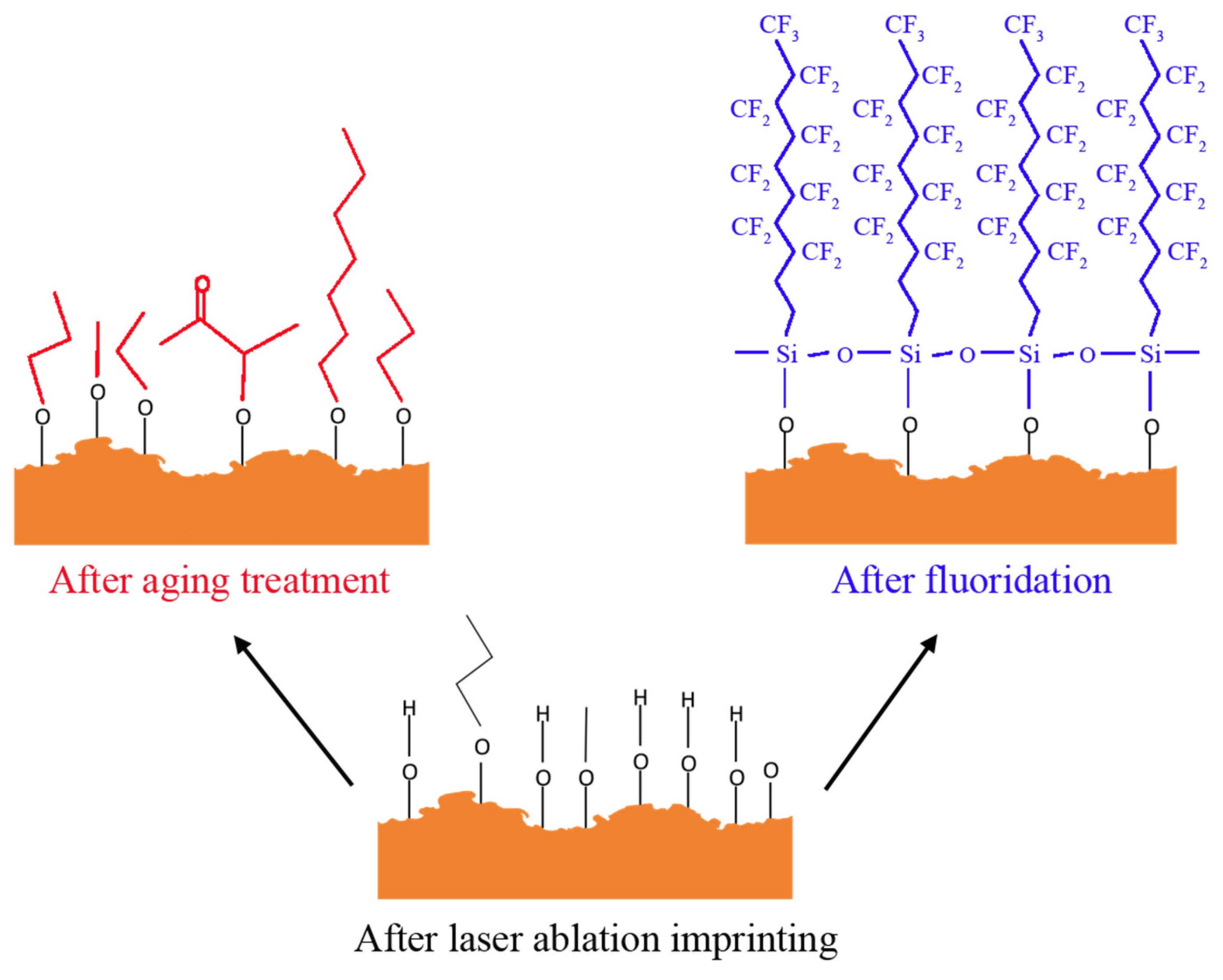
The wettability of the surface of solid materials mainly depends on surface microstructure and surface polarity. According to the Cassie model, complex microstructures exert an amplifying effect on the wettability of solid surfaces, while wettability itself is regulated by surface polarity. The pronounced surface polarity of the solid substrate induces strong dipole–dipole interactions with water molecules, resulting in strong hydrophilicity, whereas weak surface polarity endows the surface with excellent hydrophobicity [33]. The basic mechanisms of aging treatment and fluorination treatment are similar. As illustrated in Figure 15, the fabrication of aluminum foil workpieces via laser ablation imprinting leads to the formation of unsaturated aluminum and oxygen atoms, which provide a large number of polar sites, thus resulting in relatively weak hydrophobicity [34,35,36] of the as-fabricated aluminum foil surfaces. The laser energy absorbed during processing promotes the formation of an oxide layer on the impacted surface. When the workpiece is exposed to air, the oxide layer combines with water molecules in the air to form hydroxyl groups, so the workpiece surface is in a high-energy state. At that stage, the machined surface exhibits a high density of polar functional moieties, including hydroxyl (-OH) and carboxyl (-COOH) groups, which inherently confer limited water-repellent characteristics. Throughout the aging process, the surface undergoes spontaneous physisorption of low-molecular-weight organic contaminants from ambient air, leading to a progressive decline in interfacial free energy and a concomitant increase in hydrophobic response. Temporal evolution studies reveal that the accumulated organic layer thickness follows a pseudo-first-order kinetic model, with surface hydrophobicity (as quantified by water contact angle) demonstrating a logarithmic correlation with exposure duration. This self-limiting phenomenon terminates when the monolayer coverage reaches saturation at the oxide–air interface, beyond which the surface wettability attains a steady-state equilibrium determined by the thermodynamic stability of the adsorbed organic phase.
Figure 15.
Schematic diagram of wettability transformation mechanism.
Fluorination treatment is a common method to reduce the surface energy of solids and improve hydrophobicity. After the completion of laser ablation imprinting, the workpiece was immersed in the prepared solution. The hydroxyl groups on the workpiece surface reacted with 1H, 1H, 2H, 2H-perfluorodecyltriethoxysilane, and fluorine-containing long chains formed siloxane bonds (-Si-O-X-) on the sample surface. A condensation reaction occurred between 1H, 1H, 2H, 2H-perfluorodecyltriethoxysilane and the workpiece, leading to the interconnection of molecules and the formation of a stable self-assembled superhydrophobic molecular layer [21,36]. The self-assembled long-chain structures formed on the workpiece surface were rich in non-polar fluorinated moieties, which conferred exceptional hydrophobicity to the workpiece by reducing its surface polar component. This targeted modification method is more efficient and stable. After modification, the wetting state of the workpiece surface conformed to the Cassie model: the reduced surface polarity of the workpiece resulted in significant hydrophobicity, which was further amplified by the hierarchical microstructures [37].
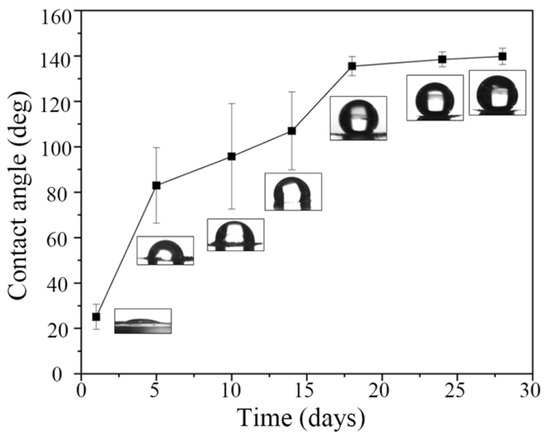
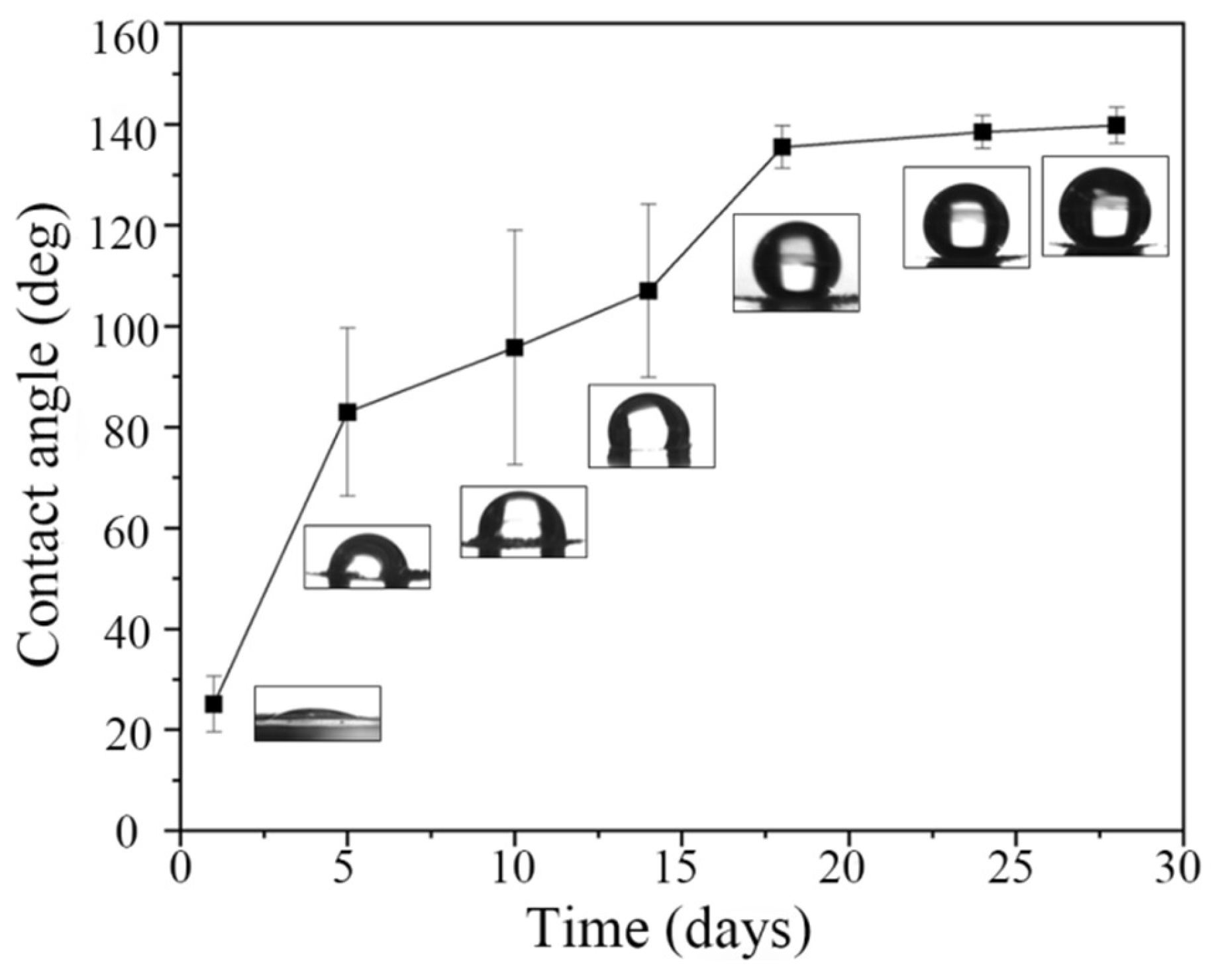
In the aging treatment experiment, all workpieces were made of 30 μm aluminum foil with a mold period of 120 μm, a laser fluence of 45.2 J/cm2, and a pulse number of 3. Figure 16 shows the contact angle variation curve of aluminum samples under different aging treatment durations. The contact angle of the original aluminum foil material is approximately 92°. The aluminum foil workpieces exhibit superhydrophilicity immediately after laser ablation imprinting. As the treatment duration increases, the contact angle gradually increases. The contact angle increases most significantly in the first five days, after which the rate slows down slightly. The hydrophobic state is achieved on the 10th day, the increase in contact angle slows down after 18 days, and the contact angle basically stabilizes after 24 days. Finally, the surface contact angle of the aluminum foil workpieces after aging treatment reaches 139°. The contact angle of the aluminum foil workpieces after fluorination treatment is 137.9°, showing excellent hydrophobic performance. The contact angle of the smooth aluminum foil is 107.83° after fluorination, which is slightly higher than that before fluorination. Fluorination treatment reduces the surface energy of the smooth aluminum foil surface, making it exhibit obvious hydrophobicity. However, the smooth surface has difficulty achieving better hydrophobic effects. As described by the Cassie model, hierarchical microstructures can amplify the wettability [38].
Figure 16.
Curve of contact angle of aluminum foil workpiece with time.
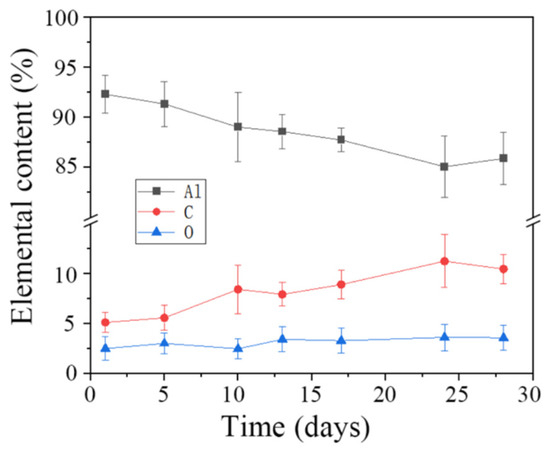
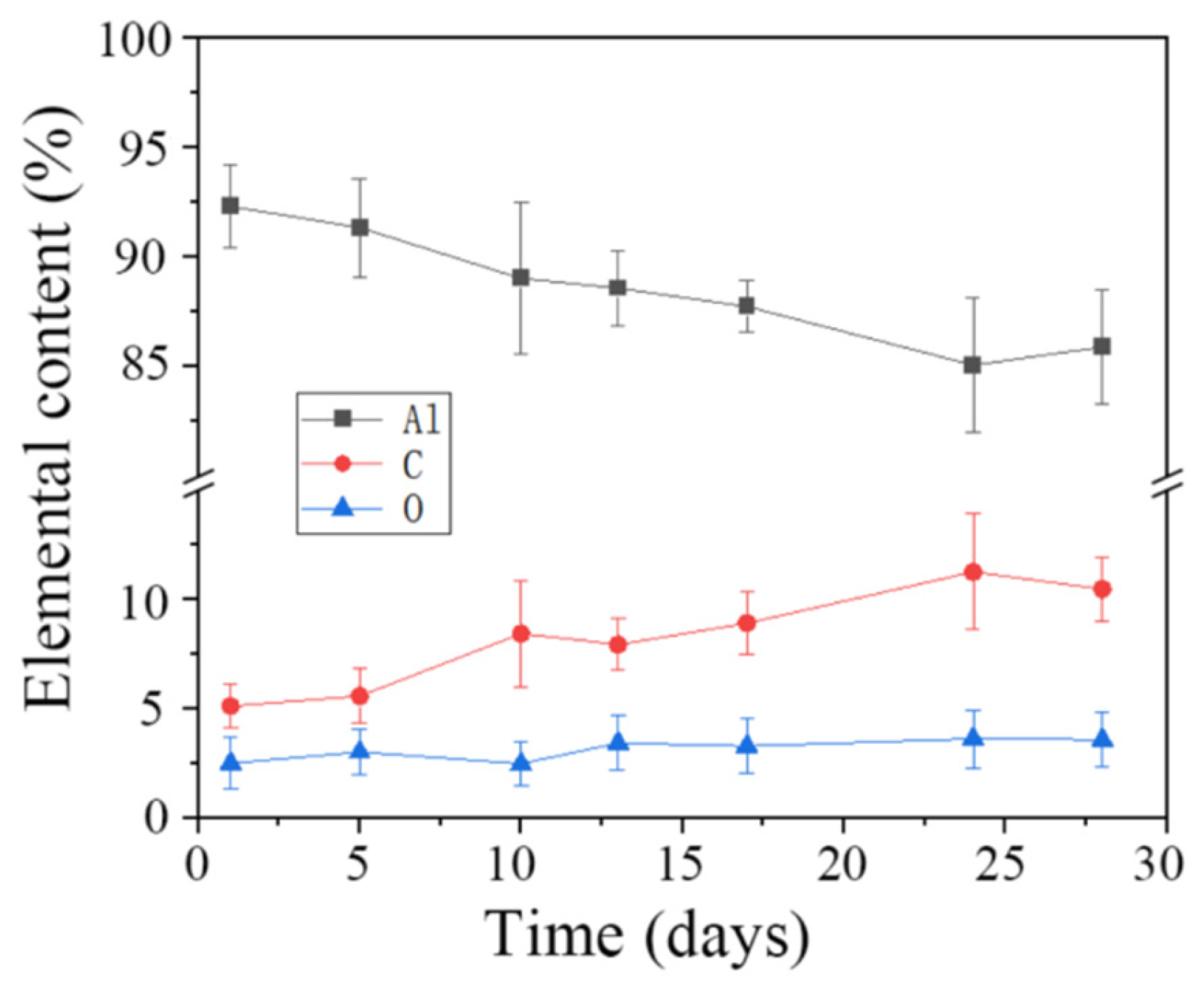
X-ray energy dispersive spectroscopy (EDS) was used to analyze the changes in elements on the workpiece surface. Figure 17 shows the curves of EDS content of major elements in aluminum foil workpieces varying with time. For the unprocessed aluminum foil, the oxygen content on the surface is only 0.58%, the aluminum content is 95.16%, and there are certain organic substances on the aluminum foil surface with a carbon content of 4.26%. After laser ablation imprinting, the elemental content on the characteristic surface of the aluminum foil workpiece changes, mainly dominated by oxygen and aluminum. The oxygen content surges to 3.81%, the aluminum content decreases to 92.03%, and the carbon content is 4.81%. The significant increase in oxygen content is attributed to the complex hierarchical microstructures formed on the surface after laser ablation imprinting; an oxide layer also forms on the surface of these complex microstructures, and the proportion of the oxide layer increases in the vertical direction, thus leading to a substantial increase in the measured oxygen content. The carbon content shows little change compared with that before laser ablation imprinting. The content of organic substances adsorbed on the workpiece surface increases over time. Among them, the change trend of carbon content corresponds to that of the contact angle shown in Figure 16, increasing with time. After 28 days, the carbon content increases to 11.84%, doubling compared with the data before aging treatment. Overall, the oxygen content slightly increases with little variation. The aluminum content decreases over time, eventually dropping to 84.77%. When the aging treatment lasts for 24 days, the organic substances adsorbed on the workpiece surface reach a limit, and the carbon content changes slightly with a slight decrease.
Figure 17.
Curves of EDS content of aluminum foil workpiece with time.
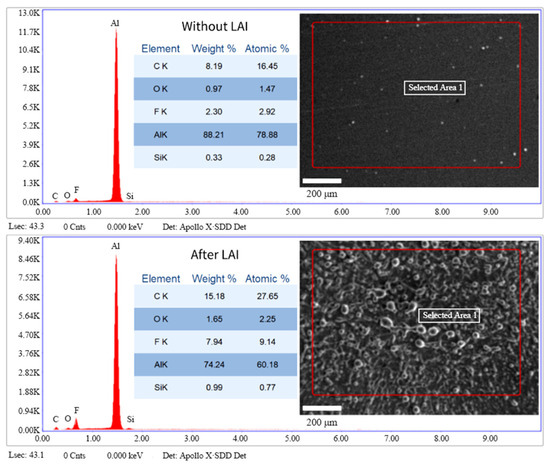
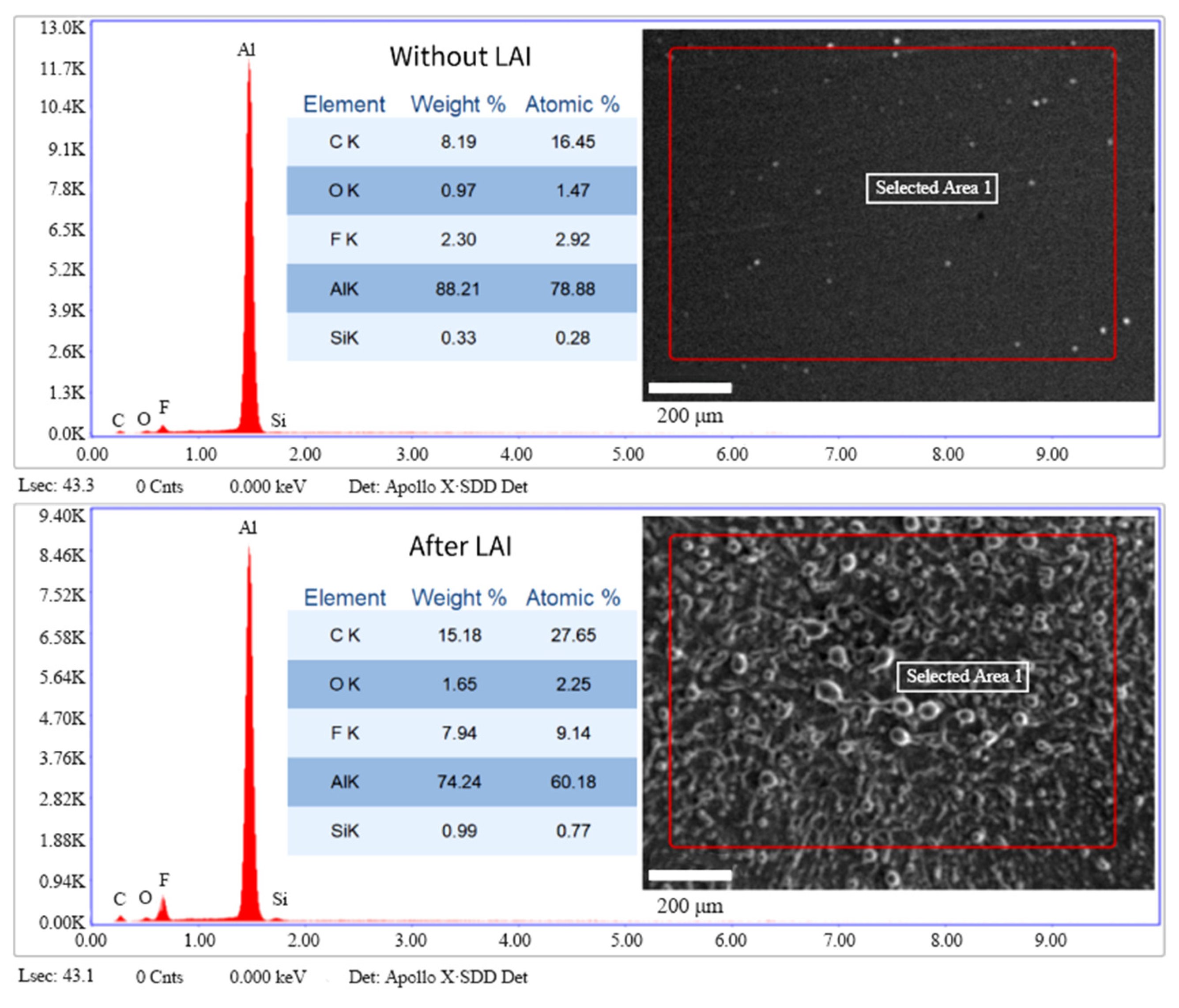
Figure 18 shows the EDS measurement results of the surface elemental content of aluminum foil workpieces with and without hierarchical microstructures after fluorination treatment. The aluminum foil workpieces with hierarchical microstructures have better absorption capacity for perfluorodecyltriethoxysilane than the smooth aluminum foil surface, among which F element and Si element are the main target analytes. The content of perfluorodecyltriethoxysilane adsorbed by the hierarchical microstructures is nearly three times that of the smooth surface. This is because the hierarchical microstructures prepared by laser ablation imprinting are under high-energy conditions, making them more prone to chemical reactions than the unprocessed aluminum foil surface, and more self-assembled and bonded long chains of perfluorodecyltriethoxysilane are formed. Compared with the final results of the aging treatment, the perfluorodecyltriethoxysilane used in the fluorination treatment has longer chains and higher carbon content, so the carbon content of the fluorination treatment is higher than that of the aging treatment. In contrast, the oxygen content in perfluorodecyltriethoxysilane is low, so the final surface oxygen content is relatively low, with an average value of 2.49%, which is lower than the aging treatment result of 3.62%. Finally, the surface aluminum content after fluorination treatment is lower than the final result of the aging treatment.
Figure 18.
EDS results of aluminum samples with or without hierarchical microstructure after fluorination.
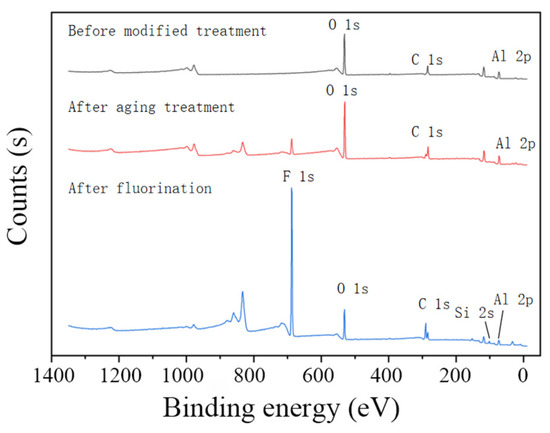
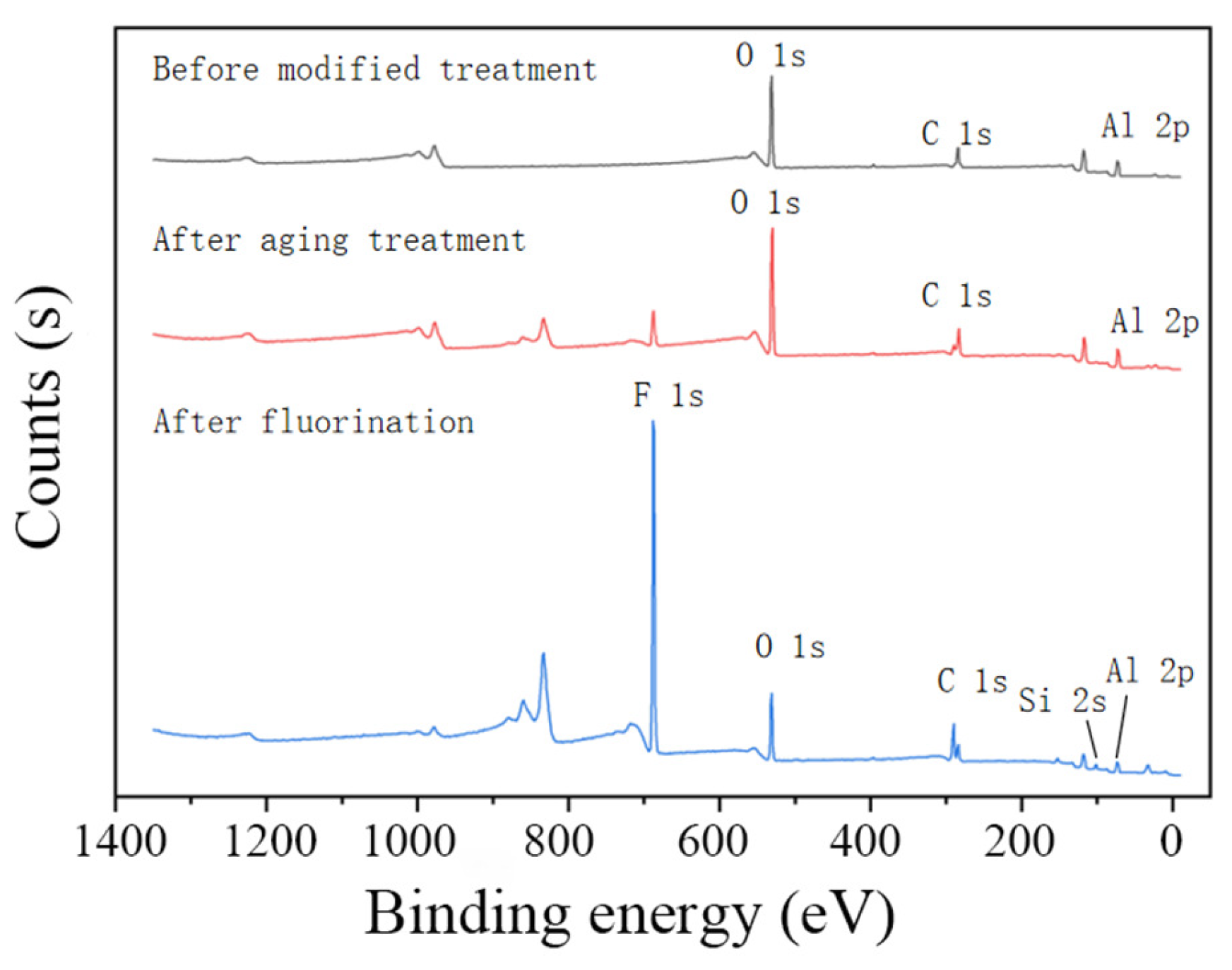
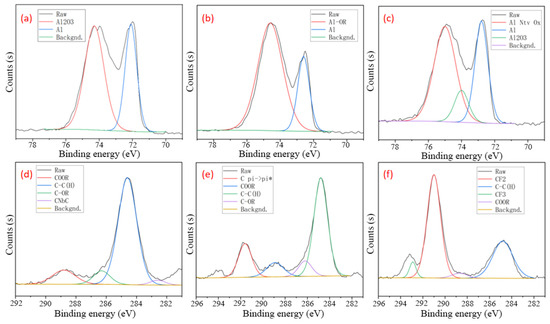
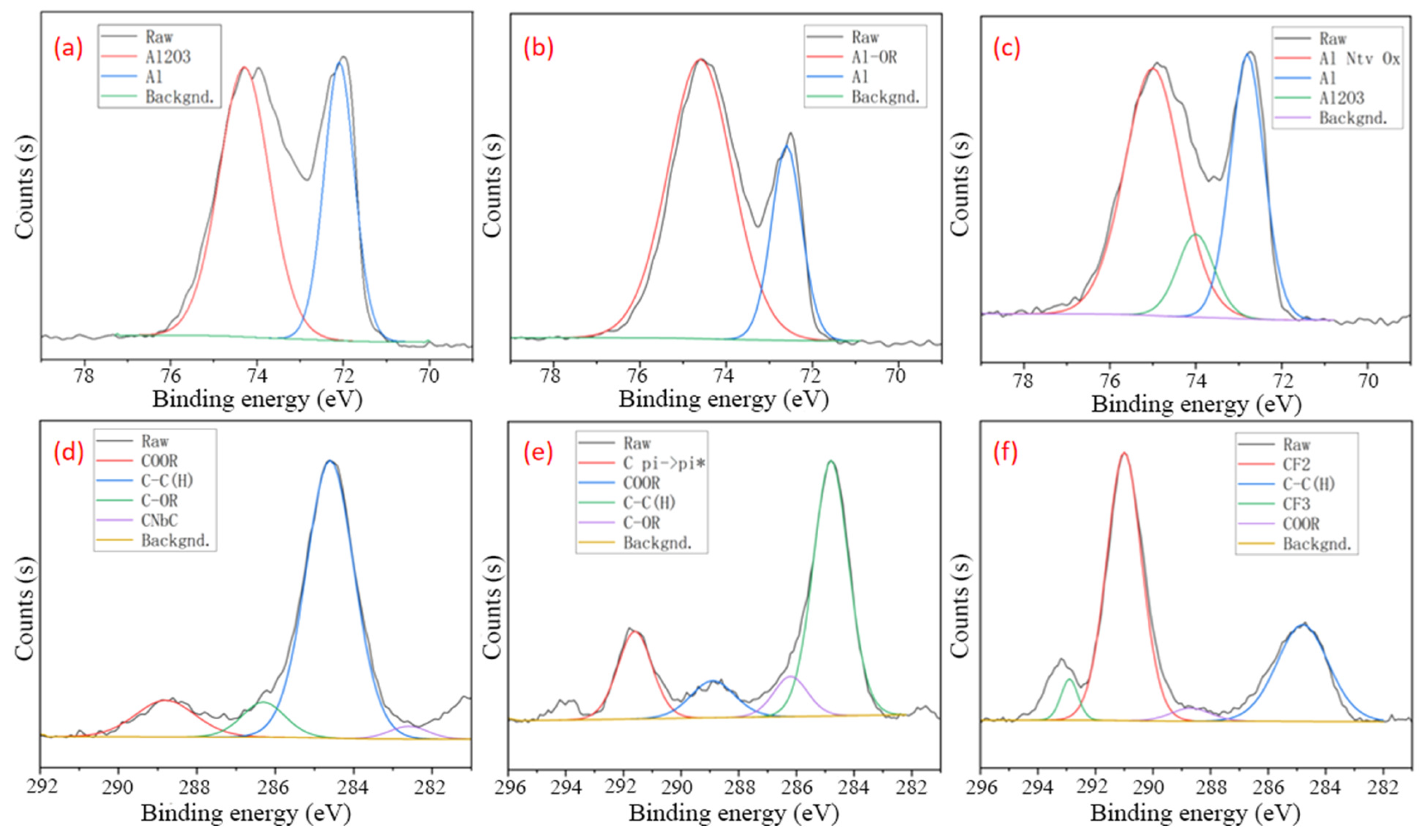
To further investigate the changes occurring during the aging treatment, X-ray photoelectron spectroscopy (XPS) tests were performed on aluminum foil workpieces without modification treatment, workpieces with aging treatment, and workpieces with fluorination treatment. Figure 19 shows the comparison diagram of the full spectra, and Figure 20 presents the comparison diagrams of the high-resolution spectra of aluminum and carbon elements at the center of the laser beam. As shown in Figure 19, the peak heights of C 1s and O 1s increase significantly after aging treatment, and the areas of the characteristic peaks also increase, indicating an increase in their contents. Comparing the Al 2p high-resolution spectra shown in Figure 20a,b, the content of pure aluminum decreases. After aging treatment, the content of aluminum ions increases, and the bonding between aluminum ions and anions differs before and after aging treatment. Before aging treatment, the outermost surface structure is dominated by aluminum oxide; this oxide layer generated under the influence of the instantaneous high heat of the laser is unstable, and oxygen vacancies are easily replaced by water molecules in the air, forming hydroxyl groups (-OH) bonded to aluminum [39]. As polar groups, a high content of hydroxyl groups undoubtedly makes the workpiece hydrophilic. After aging treatment, the content of hydroxyl groups decreases, and aluminum elements are bonded to non-polar groups with oxygen atoms as intermediaries. Comparing the C 1s high-resolution spectra before and after aging treatment shown in Figure 20d,e (in Figure 20e, “C pi→pi*” indicates the π→π* transition, with “*” signifying the antibonding π orbital of aromatic/conjugated carbon species), multiple characteristic peaks are observed after peak splitting, among which the content of C-C(H) bonds is the highest. Before aging treatment, the area of this characteristic peak is 23,831.12 CPS·eV, accounting for 67.25%; after aging treatment, the peak area increases to 28,128.56 CPS·eV, while the proportion decreases to 60.16%. This proves that the workpiece surface absorbs organic substances during the aging process, and the total content of organic substances continues to increase. Other types of chemical bonds of organic substances also appear in the test results. Combined with the Al 2p test results, these organic substances are chemically adsorbed on the workpiece surface, resulting in a more stable bonding. After fluorination treatment, obvious characteristic peaks of F elements appear on the workpiece surface, and the characteristic peak of Si is also identified, indicating that perfluorodecyltriethoxysilane is assembled on the workpiece surface. Comparing the Al 2p high-resolution spectra shown in Figure 20a,c, the aluminum element on the surface of the aluminum foil workpiece before treatment mainly exists in the form of aluminum oxide, and the rest is pure aluminum under the oxide layer. After fluorination treatment, the binding energy of a large amount of aluminum matches the peak position of intrinsic oxides; aluminum is bonded to perfluorodecyltriethoxysilane through oxygen, which is the origin of this part of the aluminum–oxygen bonds. Figure 20f shows the C 1s high-resolution spectrum after fluorination treatment. After fluorination treatment, the characteristic peak of CF2 is much higher than that of CF3, which is consistent with the molecular formula of perfluorodecyltriethoxysilane. The characteristic peak of the fluorine-containing peak is higher than the standard peak of C-C(H), and the area of the fluorine-containing peak is larger than that of the C-C(H) characteristic peak. Hydrophobic fluorine-containing groups dominate the compounds on the workpiece surface, and a stable, hydrophobic self-assembled monolayer is formed on the surface of the aluminum foil workpiece, endowing the workpiece with excellent superhydrophobicity.
Figure 19.
Full XPS spectrum of aluminum sample.
Figure 20.
Fine spectra of Al 2p and C1s XPS before modification ((a) Al 2p, (d) C1s XPS), after aging treatment ((b) Al 2p, (e) C1s XPS) and after fluorination ((c) Al 2p, (f) C1s XPS).
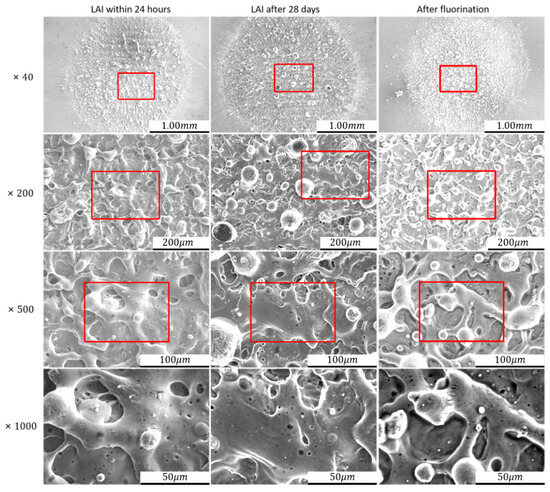
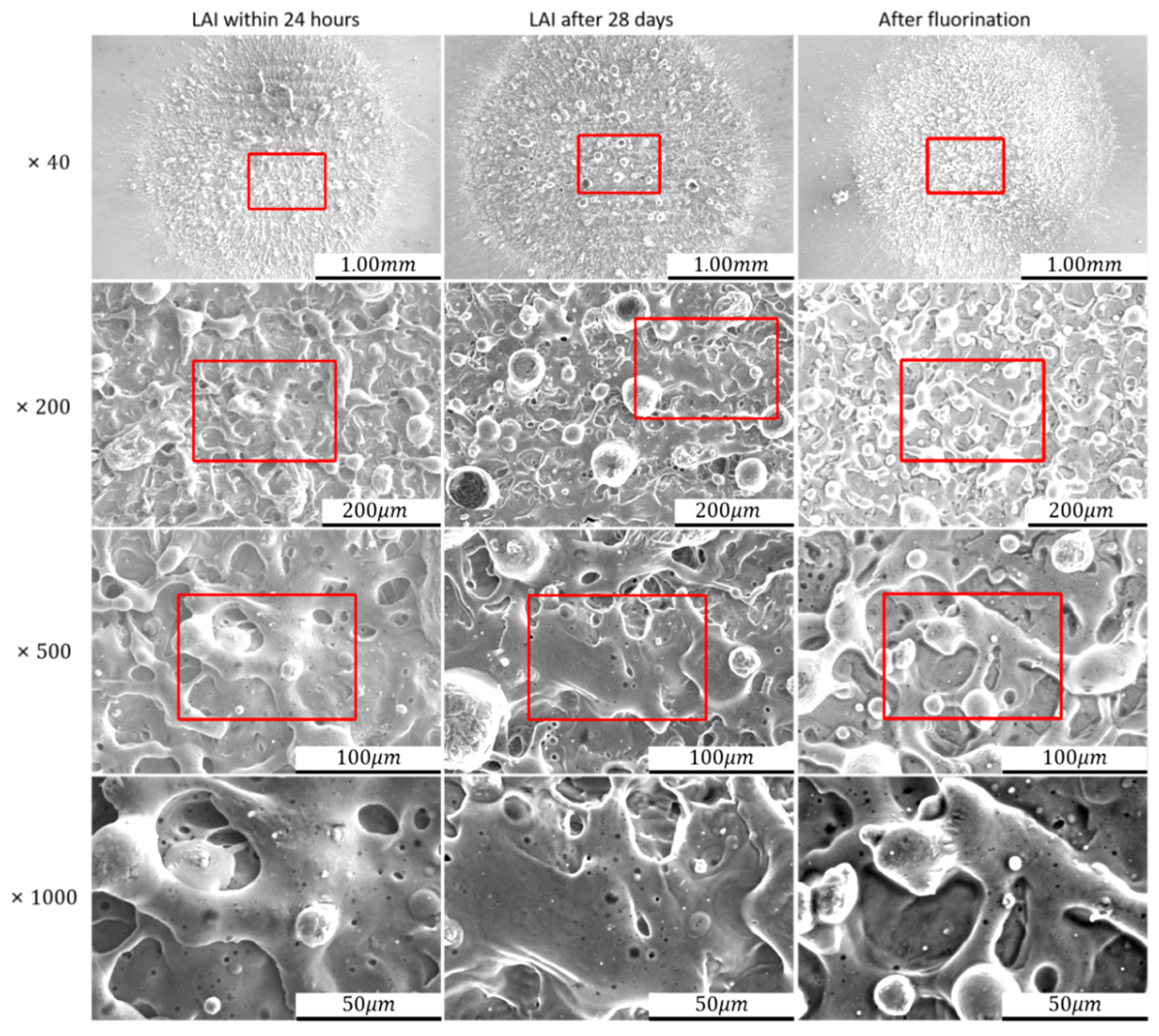
Figure 21 shows the SEM images of aluminum foil workpieces before modification treatment, after aging treatment, and after fluorination treatment. Left figures show the overall morphology at 200× magnification, while the right ones show the local details at 800× magnification of the red-boxed regions in the corresponding left figures. The pictures mainly focus on the central region of the aluminum foil workpieces, with magnifications of 40×, 200×, 500×, and 1000× respectively. The central region exhibits the most representative forming outcome and serves as the primary measurement locus for contact angle analysis. Consequently, monitoring morphological changes in this area suffices for experimental validation. The modification methods adopted in this paper do not involve changes to the surface morphology of the workpiece. Comparing the workpiece morphologies, the surface structure of the workpiece does not undergo obvious changes, and the characteristic structures are consistent. The contact angle variation originates at the molecular scale, while the hierarchical microstructures on the workpiece surface maintain morphological stability under aging treatment at the microscale. Although the specimens utilized in the three experimental trials are non-identical, their modified surfaces exhibit no statistically significant differences in microstructural characteristics. All specimens display relatively large, smooth, intertwined ablation tracks with sporadically distributed spot-like features. The overall characteristics are similar. Thus, the modification treatment has no effect on the morphology of the hierarchical microstructures on the workpiece surface.
Figure 21.
Comparison of surface morphology of aluminum foil workpiece before modification treatment, after aging treatment and after fluorination treatment.
3.3. Effect of Surface Morphology on Wettability
To investigate the influence of workpiece surface morphology on the final wettability, this study regulated the surface morphology of workpieces by adjusting three process parameters (i.e., number of laser shocks, laser fluence, and mold period) and then conducted modification treatments on the workpieces to obtain the variation law of contact angles.
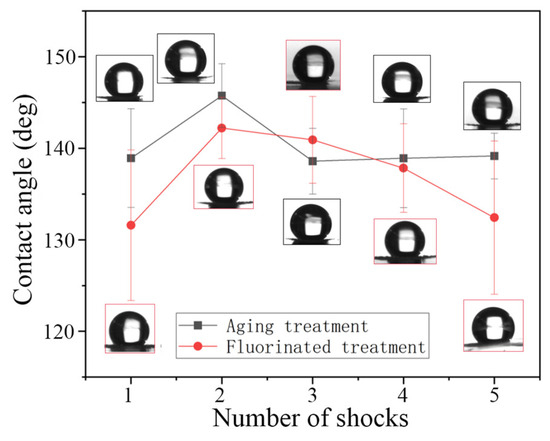
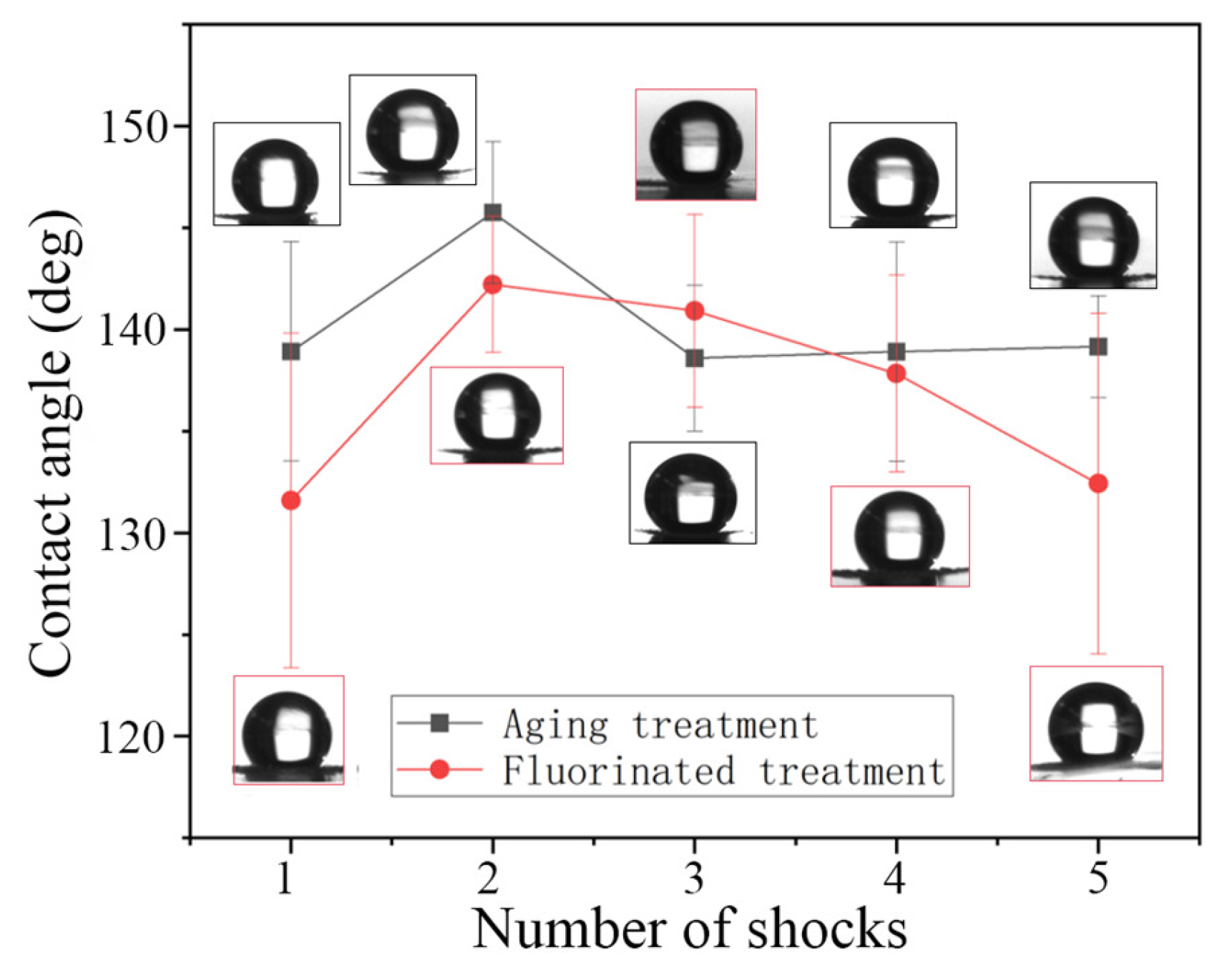
Figure 22 presents the variation curves of contact angles on the upper surface of aluminum foil workpieces fabricated with different numbers of laser shocks after aging treatment and fluorination treatment, respectively. The workpieces subjected to both fluorination treatment and aging treatment exhibited excellent hydrophobicity; however, the influence of the number of laser shocks on hydrophobicity was not obvious. On the whole, the aging treatment showed a slightly better optimization effect on the wettability of aluminum foil workpieces than the fluorination treatment. Considering the forming effect of aluminum foil workpieces under different numbers of laser shocks, it can be concluded that the differences in the hierarchical microstructures were relatively small when the hierarchical microstructures were formed, leading to the resulting contact angles being relatively close.
Figure 22.
Contact angle variation curves of aluminum samples under different numbers of laser shocks.
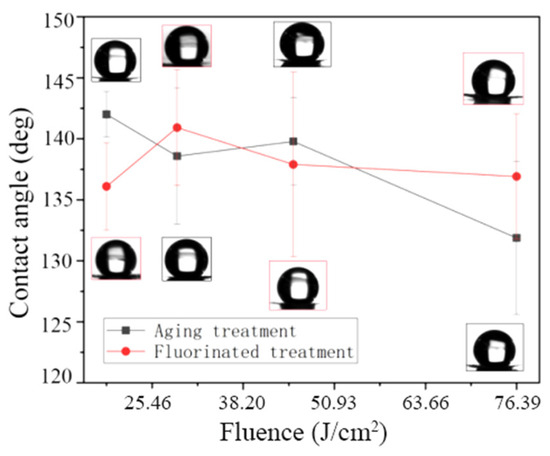
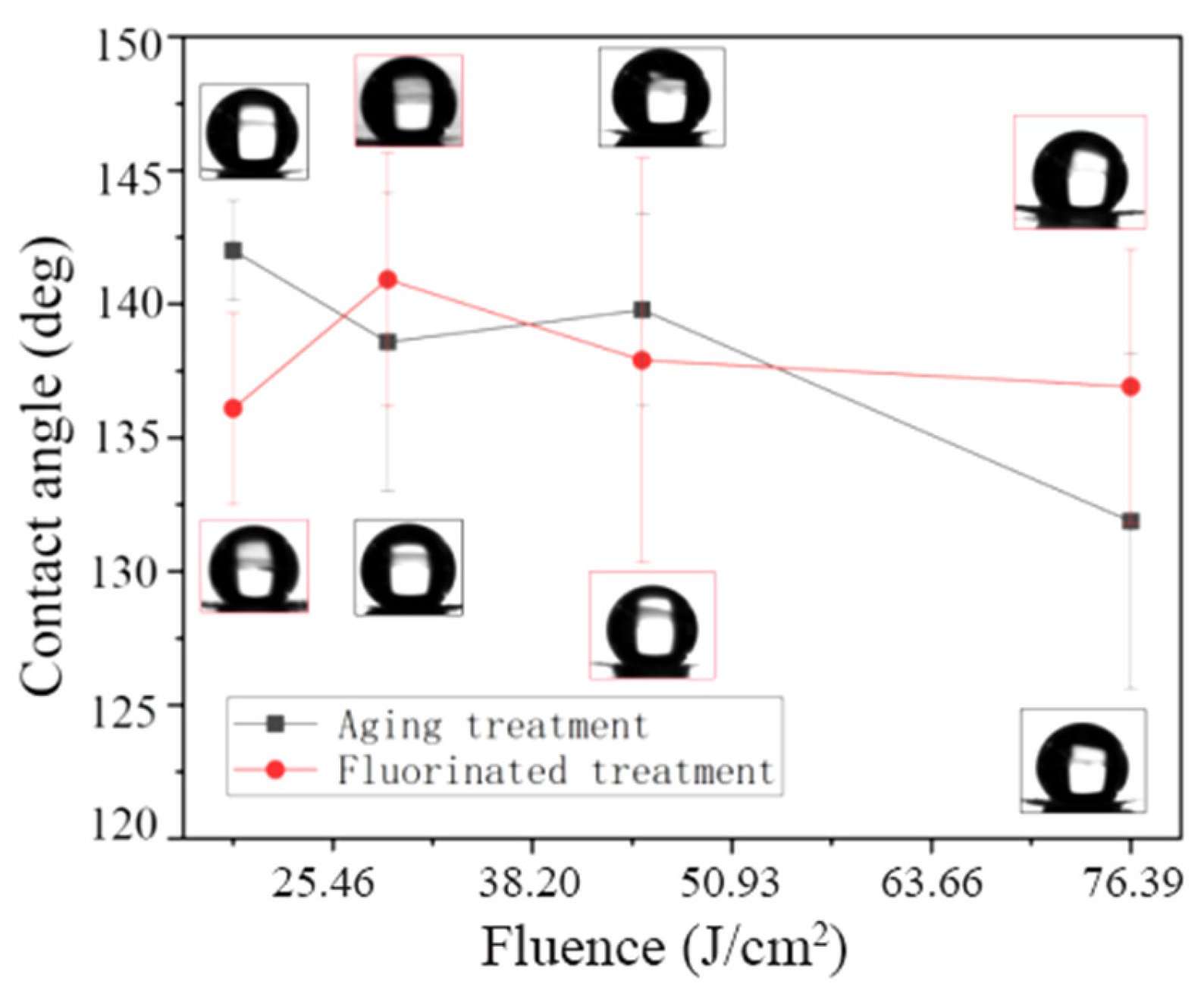
Figure 23 shows the variation curves of the surface contact angle of aluminum foil workpieces with laser fluence after undergoing aging treatment and fluorination treatment respectively. The influence law of laser fluence on hydrophobic performance is not very obvious, and all parameters fall within a similar range.
Figure 23.
Contact angle variation curves of aluminum samples under different laser fluences.
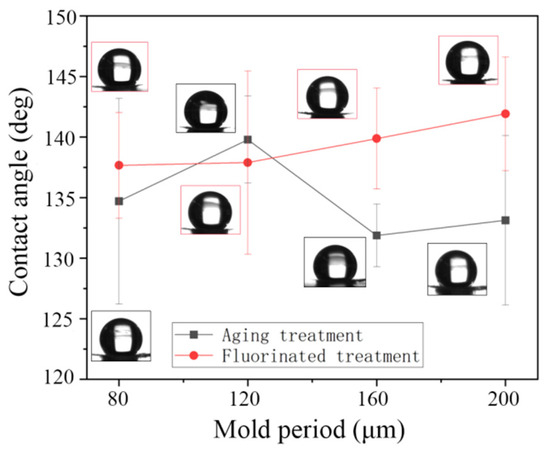
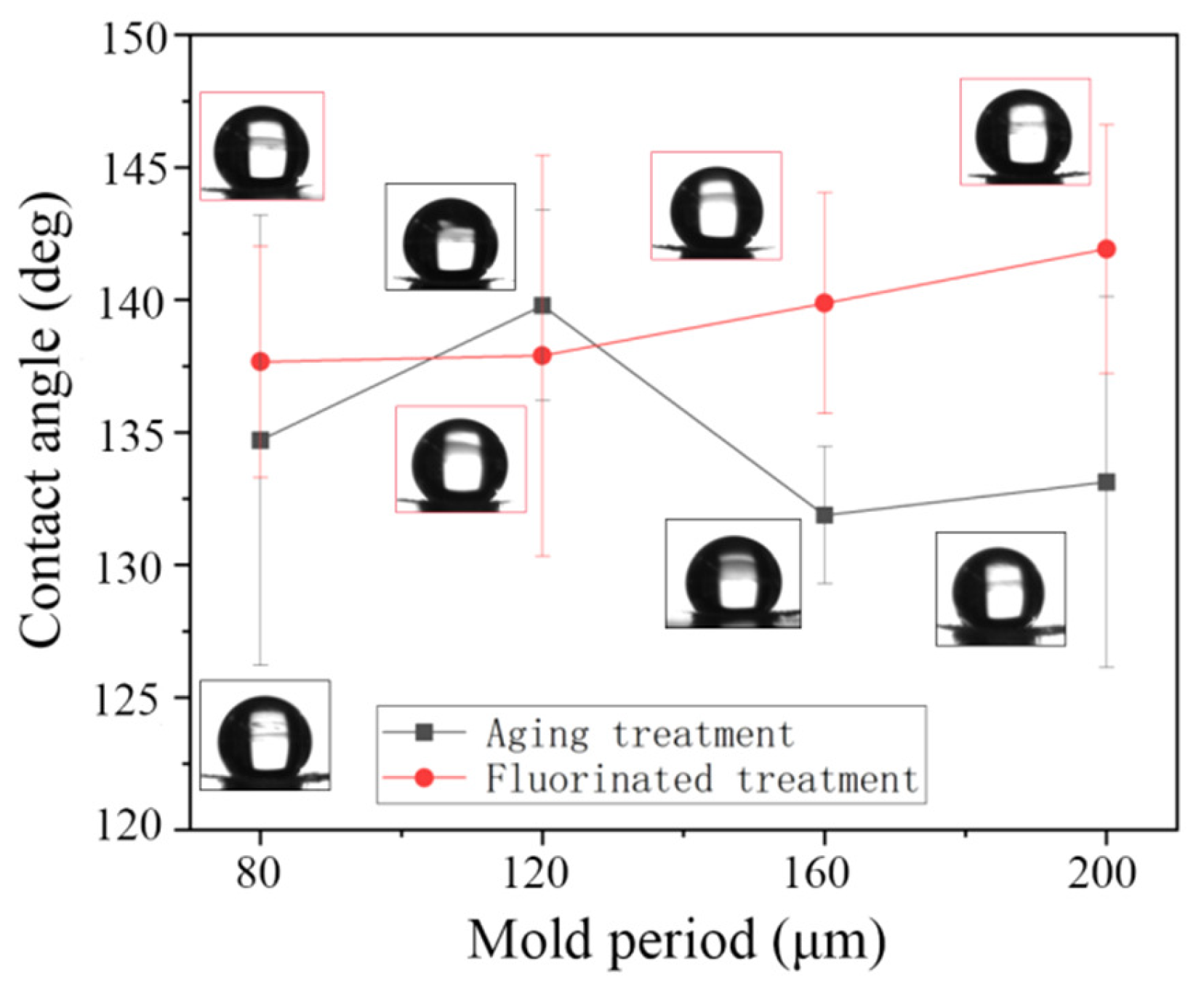
Figure 24 shows the variation curves of the contact angle of aluminum foil workpieces with the mold period length, as well as the contact angle diagrams, after the workpieces have undergone aging treatment and fluorination treatment respectively. The improvement effect of the fluorination treatment on wettability is slightly better than that of the aging treatment. The wettability of the workpieces after fluorination treatment exhibits a weak positive variation trend and extremely high stability; under the fluorination treatment, the influence of the mold period length on the wettability of the workpieces is not obvious, and no significant variation trend is shown. The difference between the highest and lowest contact angles is nearly 8°, among which the aluminum foil workpiece with a mold period of 120 μm performs the best. The changes in contact angle shown in Figure 22, Figure 23 and Figure 24 are not very pronounced. This is because the secondary microstructures of the workpiece in this study are formed due to the material splashing effect, resulting in their randomness. Since the random secondary microstructures have a significant impact on surface wettability, the measured values of the contact angle in Figure 22, Figure 23 and Figure 24 exhibit relatively large fluctuations. This is determined by the inherent characteristics of the laser ablation imprinting process. Although laser ablation imprinting offers the advantages of cost–effectiveness and high efficiency, its precision controllability is relatively low.
Figure 24.
Contact angle variation curves of aluminum samples under different mold periods.
4. Conclusions
In this work, micro–nano hierarchical microstructures were fabricated on the aluminum foil surface via laser ablation imprinting technology. Aging treatment and fluorination treatment were applied to modify the aluminum foil workpieces to achieve a hydrophobic state. The effects of the number of laser shocks, laser fluence, and mold period on the formability of aluminum foil workpieces were investigated: at a laser fluence of 28.97 J/cm2, within the range of one to five laser shocks, the formability of aluminum foil workpieces improved with an increasing number of laser shocks. When the laser fluence was in the range of 19.1–45.2 J/cm2, the formability of aluminum foil workpieces enhanced as the laser fluence increased; a laser fluence of 76.39 J/cm2, which exceeds that range, caused slight damage to the aluminum foil workpieces. The larger the mold period, the better the formability of the workpieces. On this basis, the mechanism of hierarchical microstructure formation via laser ablation imprinting was summarized.
This study systematically investigated the differential impacts of aging and fluorination modification on the surface properties of laser ablation imprinting samples, and the mechanism of the modification treatments was investigated from three aspects: chemical composition, wettability changes, and surface morphology changes. Non-polar groups were chemically adsorbed on the workpiece surface, reducing the surface energy of the workpiece and increasing the contact angle; this process did not affect the surface morphology of the workpiece. Finally, by comparing the wettability performance of aluminum foil workpieces after modification treatment under different variables, the mechanism of the influence of surface morphology on the final contact angle was studied: when hierarchical microstructures were formed on the workpiece surface, the influence of different variables on the final contact angle was not obvious. As long as hierarchical microstructures existed, the treated workpieces could achieve excellent hydrophobic effects (approximately 140°).
Author Contributions
Conceptualization, G.L., P.L. and Z.S. (Zongbao Shen); methodology, G.L., P.L. and Z.S. (Zongbao Shen); software, G.L., P.L. and H.S.; validation, P.L., R.Z., H.S. and Z.S. (Zheng Shi); formal analysis, G.L., P.L., R.Z. and H.S.; investigation, G.L. and Z.S. (Zheng Shi); resources, G.L. and Z.S. (Zheng Shi); data curation, R.Z. and H.S.; visualization, R.Z. and H.S.; writing—original draft preparation, R.Z., H.S. and Z.S. (Zheng Shi); writing—review and editing, G.L. and Z.S. (Zongbao Shen); supervision, Z.S. (Zongbao Shen); project administration, G.L. and P.L. All authors have read and agreed to the published version of the manuscript.
Funding
This research received no external funding.
Institutional Review Board Statement
This declaration is not applicable.
Data Availability Statement
The original contributions presented in the study are included in the article material, further inquiries can be directed to the corresponding author.
Conflicts of Interest
The authors declare no competing interests.
References
- Zhang, T.; Lyu, X.; Yu, Y. Prediction and analysis of the residual capacity of concrete-filled steel tube stub columns under axial compression subjected to combined freeze–thaw cycles and acid rain corrosion. Materials 2019, 12, 3070. [Google Scholar] [CrossRef] [Scilit] [PubMed]
- Rahul, N.; Sung, H.E.; Lee, S.W.; Oh, M.S. Scalable Advanced Dual-Engineered Superhydrophobic Aluminum Surfaces for Industrial-Grade Corrosion Protection. Metals 2025, 15, 1248. [Google Scholar] [CrossRef] [Scilit]
- Li, C.; Ma, R.; Du, A.; Fan, Y.; Zhao, X.; Cao, X. Superhydrophobic film on hot-dip galvanized steel with corrosion resistance and self-cleaning properties. Metals 2018, 8, 687. [Google Scholar] [CrossRef] [Scilit]
- Chen, W.; Shi, H.; Liu, W.; Zhao, A.; Pan, G.; Huang, A.; Yu, Y.; Ma, L. Study on the preparation and corrosion resistance properties of superhydrophobic coatings on galvanized steel. Metals 2023, 13, 260. [Google Scholar] [CrossRef] [Scilit]
- Ahuja, D.; Dhiman, S.; Rattan, G.; Monga, S.; Singhal, S.; Kaushik, A. Superhydrophobic modification of cellulose sponge fabricated from discarded jute bags for oil water separation. J. Environ. Chem. Eng. 2021, 9, 105063. [Google Scholar] [CrossRef] [Scilit]
- Wang, C.; Shao, Y.; Zhang, K.F.; Wu, B.; Du, X.; Li, X.; Zhang, X.; Liang, F.; Yang, Z. Facile Approach to Fabricate a High-Performance Superhydrophobic Mesh. ACS Appl. Mater. Interfaces 2021, 13, 15720–15726. [Google Scholar] [CrossRef] [Scilit]
- Wang, Y.S.; Zou, B.; Wang, J.C.; Wu, Y.; Huang, C. Effect of the progressive tool wear on surface topography and chip formation in micro-milling of Ti-6Al-4V using Ti(C7N3)-based cermet micro-mill. Tribol. Int. 2020, 141, 105900. [Google Scholar] [CrossRef] [Scilit]
- Sun, R.Y.; Zhao, J.; Mo, J.L.; Yu, N.; Zhou, Z. Study of the drag reduction performance on steel spheres with superhydrophobic ER/ZnO coating. Mater. Sci. Eng. B 2023, 288, 116144. [Google Scholar] [CrossRef] [Scilit]
- Guo, Y.; Lv, Z.; Zhu, Y. Wettability and anisotropy of laser patterned aluminum alloy surfaces. Surf. Technol. 2023, 52, 352–359. (In Chinese) [Google Scholar]
- Ren, N.; Song, J.; Li, B.; Huang, L.; Li, Z.; Xin, Z. Microstructure and wetting and antibacterial properties of zirconia surface by femtosecond laser etching. Surf. Technol. 2022, 51, 359–370. (In Chinese) [Google Scholar]
- Guo, C.F.; Liu, L.; Liu, S. Research progress on anti-icing performance of laser processed superhydrophobic surfaces. Surf. Technol. 2023, 52, 112–134. (In Chinese) [Google Scholar]
- Pan, R.; Zhang, H.; Zhong, M. Preparation and anti-deicing performance of tertiary micro- nano superhydrophobic surface by ultrafast laser composite. Chin. J. Lasers 2021, 48, 0202009. [Google Scholar]
- Li, X.R.; Zhao, Z.C.; Xue, Y.; Wu, H.R.; Liu, Y.; Wang, C.L.; Wei, N. Design and Mechanism Study of Biomimetic Superhydrophobic Hierarchical Structure Surface. Surf. Technol. 2024, 53, 171–179. (In Chinese) [Google Scholar]
- Shen, P.; Uesawa, N.; Inasawa, S.; Yamaguchi, Y. Characterization of Flowerlike Silicon Particles Obtained from Chemical Etching: Visible Fluorescence and Superhydrophobicity. Langmuir 2010, 26, 13522–13527. [Google Scholar] [CrossRef] [Scilit] [PubMed]
- Emelyanenko, K.A.; Domantovsky, A.G.; Chulkova, E.V.; Emelyanenko, A.M.; Boinovich, L.B. Thermally induced gradient of properties on a superhydrophobic magnesium alloy surface. Metals 2020, 11, 41. [Google Scholar] [CrossRef] [Scilit]
- Bai, X.; Yang, Q.; Fang, Y.; Zhang, J.; Yong, J.; Hou, X.; Chen, F. Superhydrophobicity-memory surfaces prepared by a femtosecond laser. Chem. Eng. J. 2020, 383, 123143. [Google Scholar] [CrossRef] [Scilit]
- Rajab, F.H.; Liu, Z.; Li, L. Long term superhydrophobic and hybrid superhydrophobic/superhydrophilic surfaces produced by laser surface micro/nano surface structuring. Appl. Surf. Sci. 2019, 466, 808–821. [Google Scholar] [CrossRef] [Scilit]
- Lin, H.K.; Cheng, Y.H.; Li, G.Y.; Chen, Y.-C.; Bazarnik, P.; Muzy, J.; Huang, Y.; Langdon, T.G. Study on the surface modification of nanostructured Ti alloys and coarse-grained Ti alloys. Metals 2022, 12, 948. [Google Scholar] [CrossRef] [Scilit]
- Xiao, P.; Chen, G.; Chen, Y.; Zhang, X.; Yuan, X. Study on surface morphology and wettability of femtosecond laser textured titanium alloy. Chin. J. Lasers 2023, 50, 1602208. (In Chinese) [Google Scholar]
- Guo, M.; Xu, Z.; Wang, C.; Yang, Z.; Yang, M.; Li, Y. Controllable fabrication of superhydrophobic micro/nano hierarchical surface and its application for energy harvesting. China Surf. Eng. 2023, 36, 140–149. [Google Scholar]
- Yang, H.; Sun, K.; Xue, Y.; Xu, C.; Fan, D.; Cao, Y.; Xue, W. Controllable drop splashing on picosecond laser patterned hybrid superhydrophobic-philic surfaces. Appl. Surf. Sci. 2019, 481, 184–191. [Google Scholar] [CrossRef] [Scilit]
- Samanta, A.; Huang, W.; Chaudhry, H.; Wang, Q.; Shaw, S.K.; Ding, H. Design of chemical surface treatment for laser-textured metal alloys to achieve extreme wetting behavior. ACS Appl. Mater. Interfaces 2020, 12, 18032–18045. [Google Scholar] [CrossRef] [Scilit] [PubMed]
- Liu, K.; Yang, H.F.; Xiong, F.; Man, J.; Chen, H. Research on the dynamic yield strength and forming depth of microscale laser shock imprinting. Opt. Laser Technol. 2019, 116, 189–195. [Google Scholar] [CrossRef] [Scilit]
- Shen, Z.B.; Zhang, L.; Li, P.; Liu, H.; Liu, K.; Lin, Y.; Zhou, G.; Wang, Y.; Zhang, J.; Wang, X. Altering the surface wettability of copper sheet using overlapping laser shock imprinting. Appl. Surf. Sci. 2021, 543, 148736. [Google Scholar] [CrossRef] [Scilit]
- Shen, Z.; Liu, D.; Yu, Y.; Ji, J. Fabrication of Papillary Microstructure Surfaces Using Laser Shock Imprinting. Lasers Manuf. Mater. Process. 2025, 12, 599–624. [Google Scholar] [CrossRef] [Scilit]
- Shen, Z.; Xu, Q.; Yu, Y.; Liu, D.; Ji, J. Fabrication of Papillary Composite Microstructured Aluminum Surfaces by Laser Shock Imprinting and Ablation. Metals 2024, 14, 1346. [Google Scholar] [CrossRef] [Scilit]
- Shen, Z.B.; Meng, K.N.; Shi, Z.; Fu, J.; Li, P. Durability of hydrophobic aluminum foil surfaces fabricated via laser ablation imprinting. Opt. Precis. Eng. 2024, 32, 1481–1495. (In Chinese) [Google Scholar] [CrossRef] [Scilit]
- Li, P.; Wang, H.; Li, T.; Shi, Z.; Shen, Z. Research on Hydrophobic Copper Foil Surfaces Prepared by Laser Ablation Imprinting. Lasers Manuf. Mater. Process. 2025, 12, 44–67. [Google Scholar] [CrossRef] [Scilit]
- Liu, J.M. Simple technique for measurements of pulsed Gaussian-beam spot sizes. Opt. Lett. 1982, 7, 196–198. [Google Scholar] [CrossRef] [Scilit]
- Žemaitis, A.; Gaidys, M.; Brikas, M.; Gečys, P.; Račiukaitis, G.; Gedvilas, M. Advanced laser scanning for highly-efficient ablation and ultrafast surface structuring: Experiment and model. Sci. Rep. 2018, 8, 17376. [Google Scholar] [CrossRef] [Scilit]
- Wang, S.; Fan, Y.; Wu, H.; Guo, D.; Dai, Y.; Xia, X. Experimental study of laser shock wave characteristics under constrained structures. Intense Laser Part. Beams 2004, 16, 981–984. (In Chinese) [Google Scholar]
- Indrisiunas, S.; Gedvilas, M. Control of the wetting properties of stainless steel by ultrashort laser texturing using multi-parallel beam processing. Opt. Laser Technol. 2022, 153, 108187. [Google Scholar] [CrossRef] [Scilit]
- Liu, C.; Zheng, J.J.; Liu, X.F.; Yin, K.; Wang, H.; Wang, Q. Facile laser-based process of superwetting zirconia ceramic with adjustable adhesion for self-cleaning and lossless droplet transfer. Appl. Surf. Sci. 2023, 638, 158069. [Google Scholar] [CrossRef] [Scilit]
- Long, J.Y.; Zhong, M.; Fan, P.; Gong, D.; Zhang, H. Wettability conversion of ultrafast laser structured copper surface. J. Laser Appl. 2015, 27, S29107. [Google Scholar] [CrossRef] [Scilit]
- Long, J.Y.; Zhong, M.; Zhang, H.; Fan, P. Superhydrophilicity to superhydrophobicity transition of picosecond laser microstructured aluminum in ambient air. J. Colloid Interface Sci. 2015, 441, 1–9. [Google Scholar] [CrossRef] [Scilit] [PubMed]
- Cao, Z.; Ouyang, Z.Q.; Liu, Z.Y.; Li, Y.; Ouyang, Y.; Lin, J.; Xie, X.; Long, J. Effects of surface oxides and nanostructures on the spontaneous wettability transition of laser-textured copper surfaces. Appl. Surf. Sci. 2021, 560, 150021. [Google Scholar] [CrossRef] [Scilit]
- Chu, S. Research on Directional Transport of Droplets on Micro-Structure Surface. Master’s Thesis, Changchun University of Science and Technology, Changchun, China, 2021. (In Chinese) [Google Scholar]
- Yan, D.; Liu, Z.; Pan, W.; Zhao, D.; Song, J. Research status on the fabrication and application of multi- functional superhydrophobic surfaces. Surf. Technol. 2021, 50, 1–19. (In Chinese) [Google Scholar]
- Long, J.; Li, Y.; Ouyang, Z.; Xi, M.; Wu, J.; Lin, J.; Xie, X. A universal approach to recover the original superhydrophilicity of micro/nano- textured metal or metal oxide surfaces. J. Colloid Interface Sci. 2022, 628, 534–554. [Google Scholar] [CrossRef] [Scilit]

Disclaimer/Publisher’s Note: The statements, opinions and data contained in all publications are solely those of the individual author(s) and contributor(s) and not of MDPI and/or the editor(s). MDPI and/or the editor(s) disclaim responsibility for any injury to people or property resulting from any ideas, methods, instructions or products referred to in the content. |
© 2026 by the authors. Licensee MDPI, Basel, Switzerland. This article is an open access article distributed under the terms and conditions of the Creative Commons Attribution (CC BY) license.