Article

Uncertainty Analysis of Plane Strain Fracture Toughness (KIC) Measurements of R350HT Rail Steels According to ASTM E399


TOBB Technical Sciences Vocational School, Karabuk University, Karabuk 78050, Turkey
Metals 2026, 16(4), 371; https://doi.org/10.3390/met16040371
Submission received: 25 February 2026 / Revised: 25 March 2026 / Accepted: 25 March 2026 / Published: 27 March 2026
(This article belongs to the Special Issue Fracture Mechanics and Failure Analysis of Metallic Materials)

Abstract

Fracture toughness is a very important mechanical attribute that affects the strength of rail steel used in high-speed rail systems. This study tests the measurement uncertainty that comes with measuring the plane strain fracture toughness (KIC) of R350HT rail steel. We used the Single-Edge Bend (SEB) specimen to do fracture toughness testing. We used the Guide to Expressing Measurement Uncertainty (GUM)-based method to figure out how much uncertainty came from measuring the load, the crack opening displacement (COD), and the specimen’s shape and figuring out the crack length. At a 95% confidence level (k = 2), the combined standard uncertainty was found to be 0.881 MPa·m1/2, which is the same as an expanded uncertainty of 1.761 MPa·m1/2. The measured fracture toughness value of 40.59 ± 1.76 MPa·m1/2 meets the standards for rail steels. The results show how important it is to include measurement uncertainty in conformity assessment methods for safety-critical railway components. They also provide an experimentally proven framework for accurate mechanical property evaluation.

1. Introduction

The mechanical performance of steels used in rail systems is critical for structural integrity and operational safety, especially in high-speed rail lines. Increased axle loads, high speeds, and environmental factors pose significant risks for the initiation and propagation of cracks in rail materials. Therefore, not only the static strength properties of rail steels, but also damage tolerance parameters such as fracture toughness, which defines their resistance to crack propagation, must be carefully evaluated [1,2].
The DIN EN 13674-1 standard describes the chemical composition, mechanical properties, heat treatment conditions, and quality requirements of all different grades of rail steels. This standard ensures not only product-based quality processes, but also the optimization of production conditions and the implementation of all requirements to produce a product of the desired quality. In light of all this, parameters such as fracture toughness, fatigue strength, fatigue crack propagation rate, and residual stress are understood to be critical properties in terms of safety [3].
Fracture toughness is a fundamental mechanical property that defines the resistance of a material to fracture in the presence of an existing crack. Fracture toughness, defined under plane strain conditions, is directly related to the microstructural properties of the material, and is widely used in the evaluation of damage mechanisms associated with crack propagation. In high-strength materials with different wall thicknesses, such as rail steels, determining stress conditions and reliably measuring the KIC value is extremely important [4,5,6,7,8].
The EN 13674-1 standard defines minimum acceptance limits for fracture toughness values for rail steels, both for individual measurements and average values. However, considering only the measured nominal values is insufficient for conformity assessment. Uncertainties inherent in the measurement results directly affect decision rules and declarations of conformity. Measurement uncertainty is a fundamental element determining the reliability, repeatability, and traceability of experimental results [9,10].
The fracture toughness test depends on numerous parameters such as specimen geometry, loading conditions, crack length measurement, load cell calibration, and COD measurement. Each of these parameters constitutes uncertainty components that contribute to the final KIC value at different rates. Although numerous experimental studies exist in the literature regarding fracture toughness measurements, there are only a limited number of systematic studies on the uncertainty analysis of KIC measurements performed according to the ASTM E399 standard [4], specifically for rail steels. Although fracture toughness tests were performed in accordance with the ASTM E399 standard, references to the ASTM E1820 standard only illustrate the calculation principles and assessments related to measurement uncertainty calculation [6,7,11].
The goal of this study is to use the Measurement Uncertainty Expression Guide (GUM) method to find out how much uncertainty there is in the measurements taken during plane strain fracture toughness testing on R350HT grade rail steel according to the ASTM E399 standard. In this context, the main sources of uncertainty, such as the load cell, COD measurement system, specimen geometry, and crack length determination, were analyzed separately, and their contributions to the final KIC value were determined. The results obtained highlight the importance of integrating measurement uncertainty into decision-making processes in conformity assessment for rail steels [7,8,9,10].
Fracture toughness testing using Single-Edge Bend (SEB) specimen is generally performed by crack opening under Mode I loading conditions. In Mode I loading, tensile stresses act perpendicular to the crack plane, creating stress concentration at the pre-crack tip and causing crack opening. The SEB specimens used in this study were subjected to Mode I loading using a three-point bending apparatus, resulting in crack opening in accordance with ASTM E399 [4,5].

2. Fracture Toughness Standard Testing

The stress intensity factor (K) was calculated using standard LEFM relations, where the geometric correction factor (Y) depends on specimen geometry and crack configuration and was determined in accordance with ASTM E399 [4,12,13]:
K = Y × σ √π × a
In the SEB configuration, the applied load generates tensile stresses at the crack tip, resulting in Mode I (opening mode) fracture conditions, and the load–COD curve reflects this crack opening behavior [4,14].
Fracture toughness tests were performed using SEB specimens with straight-through wide-notch geometry in accordance with EN 13674-1 [3]. To ensure valid plane strain conditions, specimen dimensions were selected to satisfy the following requirement:
a ,   B   2.5   K I C σ a 2
Crack length and specimen dimensions were defined in accordance with ASTM E399 requirements [11,15]:
K = P B W 1 2 f a W
a w = 2 + a W 0.886 + 4.64 a W 13.32 a W 2 + 14.72 a W 3 5.6 a W 4 1 a W 3 2  
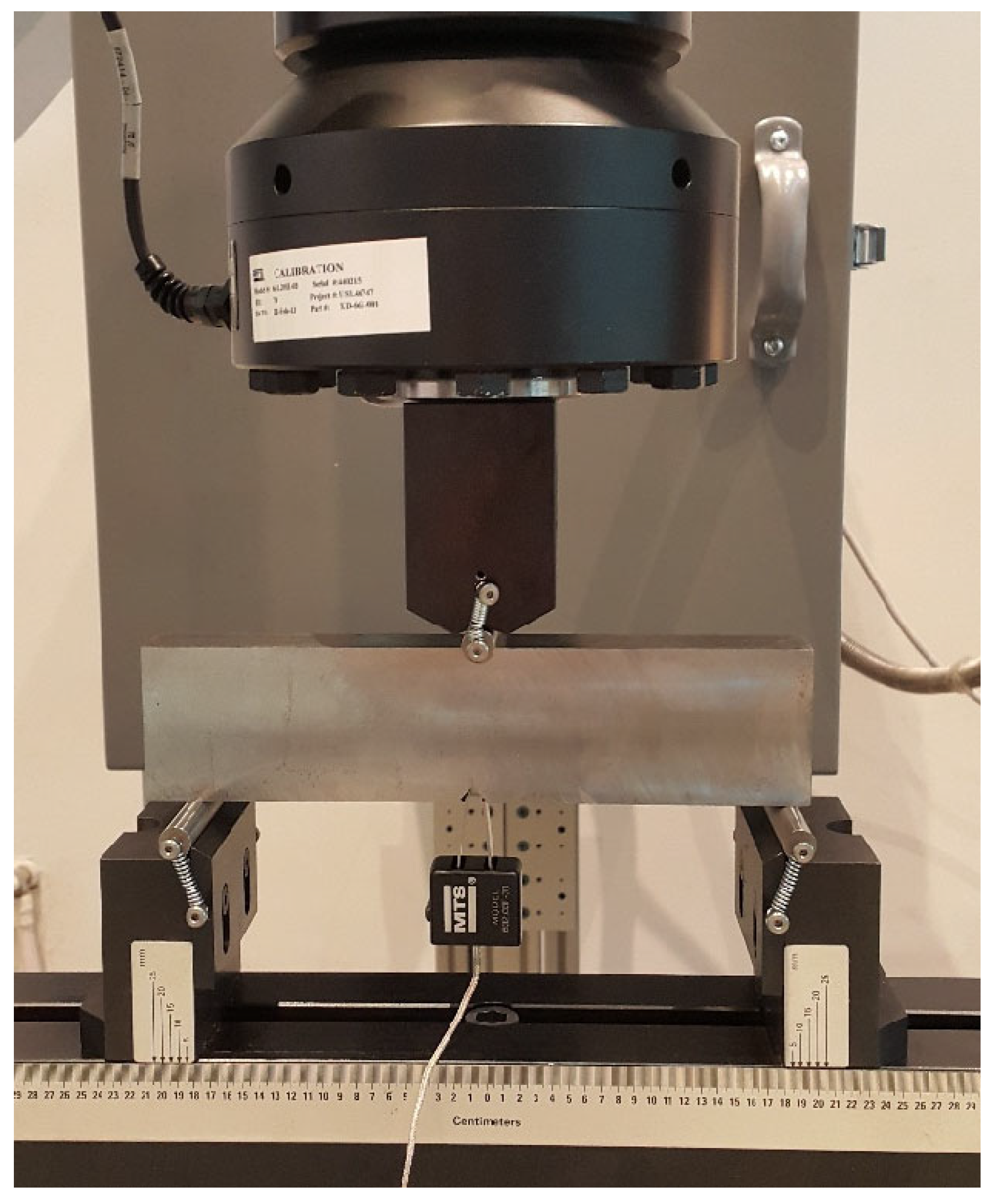
Static tensile or bending load is applied to the pre-cracked specimen. During the test, the applied load and the corresponding crack opening distance are measured and recorded. A clip-on gage is attached to the specimen to measure the crack opening distance. Figure 1 shows an image of the specimen with our specimen and COD attached. In tests conducted to assess measurement uncertainty, an MTS 100 kN servo-hydraulic testing machine and MTS 632.03F-23 COD and MTS FWA105A 3-point bending apparatus were used. After the test, fracture toughness measurements were calculated using the MTS Test Suite software, which is prepared according to the relevant standard.

3. Results and Discussion

The measurement values were again based on the DIN EN 13674-1 standard. In determining the measurement uncertainty, the load cell of the testing machine, the axial movement of the machine, and the COD values and their calibration contributions were taken into account. A straight-through wide notch was made on the specimen before the fracture test. During the pre-crack making process, the maximum stress intensity factor applied was limited to values below 80% of the expected KIC value, and this value was reduced to below 60% in the final part of the crack length in accordance with the ASTM E399 requirements:
0.55   2.75   M P a m s
corresponding to approximately
0.34 1.7   k N s
for standard specimens with B = 0.5   W .
The maximum K value applied during pre-cracking should not exceed 0.8 KIC. In the terminal pre-cracking region, this ratio should be kept below 0.6 KIC. These conditions aim to limit plastic deformation at the crack tip and preserve a natural crack geometry [1,2,3,4,5,6,7,8,9,10,11].
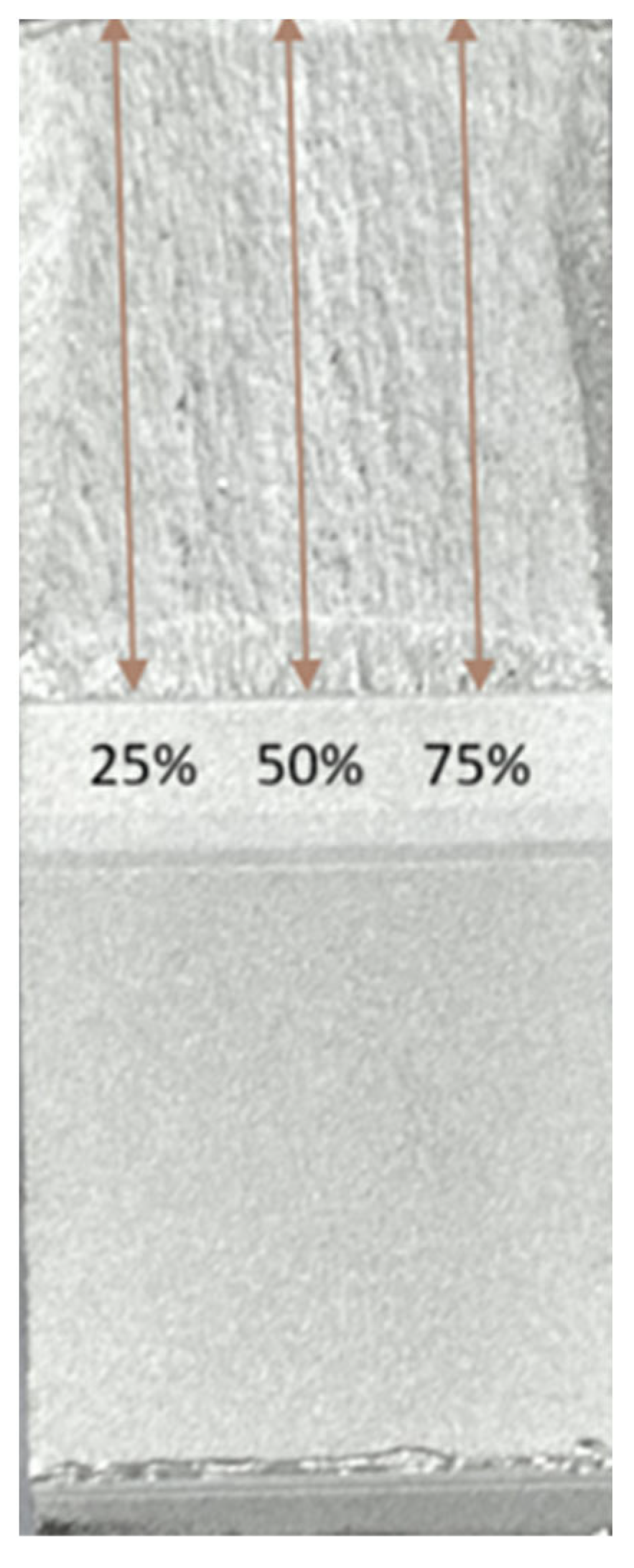
The crack length is measured after fracture at the 25%B, 50%B, and 75%B positions of the fracture surfaces with an accuracy of 0.5% W, and the average of these three values is taken as the crack length (a). Figure 2 shows the crack length measurement.
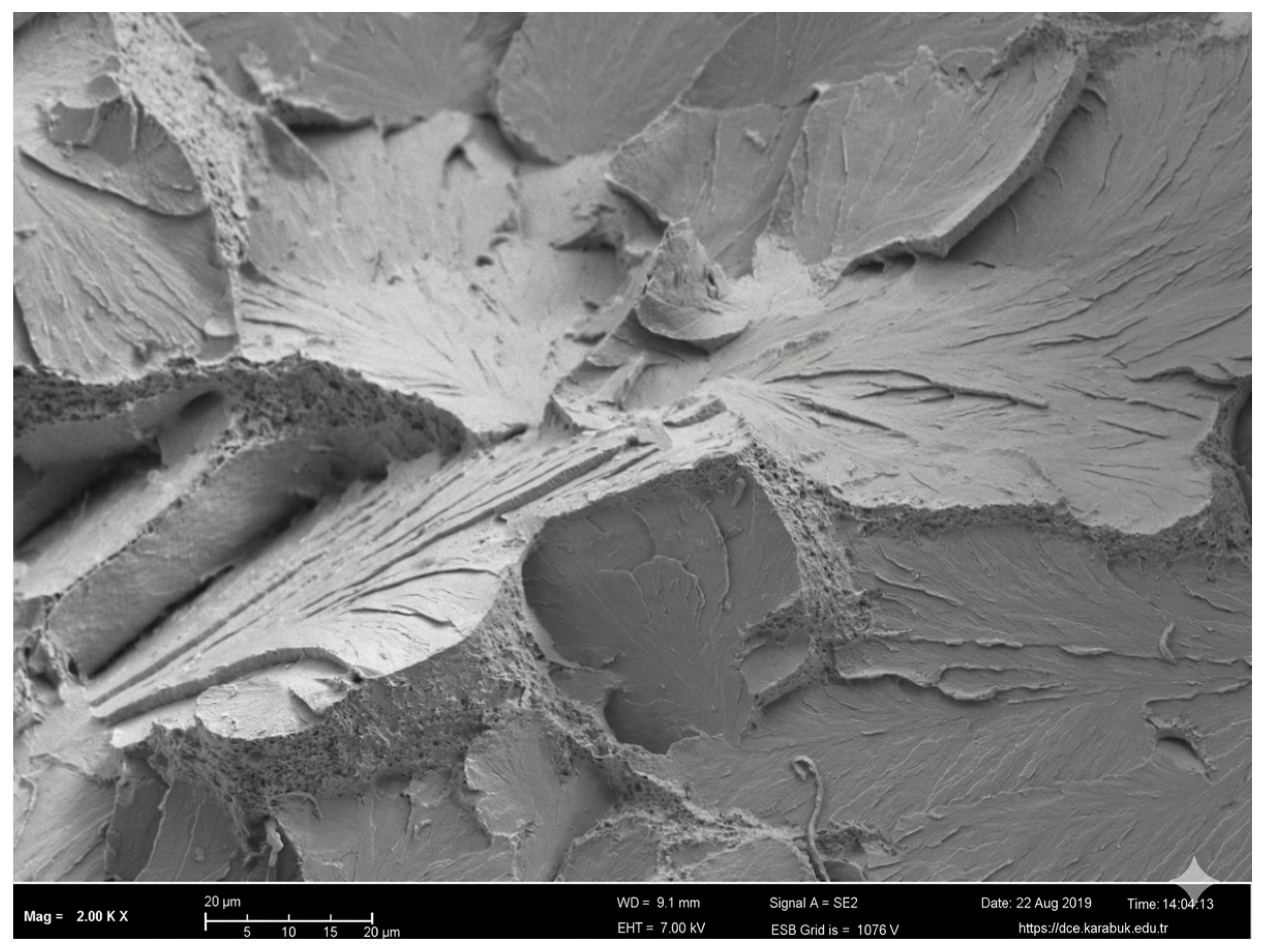
The fracture surface of the tested specimen (Figure 3) exhibited trans granular cleavage characteristics, confirming brittle fracture behavior and crack propagation under the applied loading conditions.
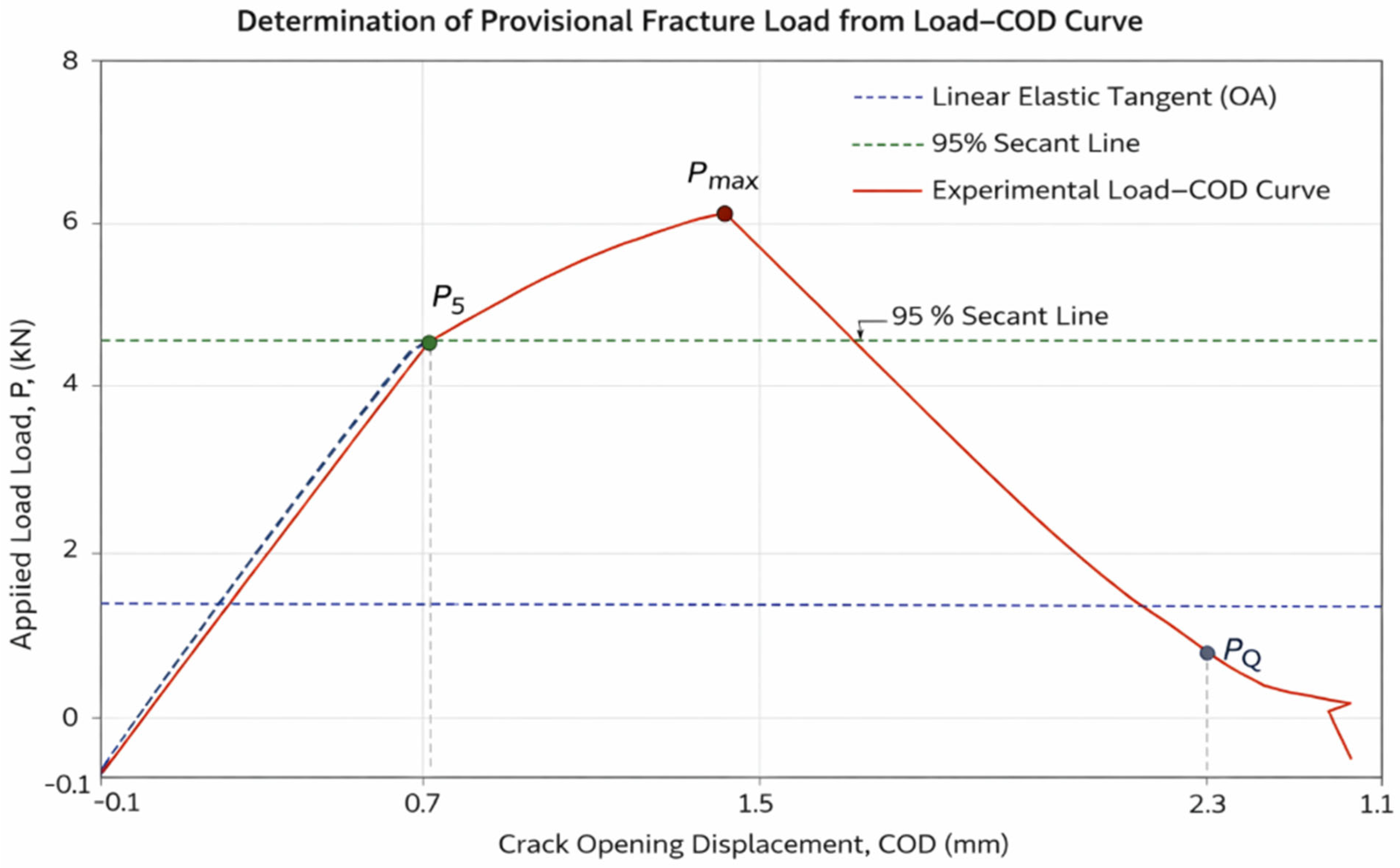
The load–crack opening displacement (COD) curve obtained for the tested specimen is presented in Figure 4. The curve exhibits a stable linear-elastic response up to the maximum load, followed by a sudden drop, indicating brittle fracture behavior consistent with valid KIC testing conditions [2].
The provisional fracture load (P5) was determined from the load–COD curve using the 95% secant method based on the initial linear elastic region. It should be noted that slight negative COD values at the initial stage may occur due to system compliance, seating effects, and zero-offset calibration of the COD gauge. These do not affect the determination of the linear elastic region or the calculation of P5, which is based on slope and intersection criteria defined in ASTM E399.
P m a k s . P Q
The rate is calculated.
P m a k s . P Q 1.10
Then, the Provisional Fracture Toughness (KQ) value is calculated using PQ. If
P m a k s . P Q 1.10
Otherwise, the experiment is invalid. This value can only be used in calculating the specimen strength ratio (RSC).
R S C = 2 P m a k s . 2 W + a B W a 2 σ a
This ratio is used only when the specimen size is insufficient for performing a fracture test; it is used to compare the toughness of specimens of similar shape and size.
If the condition is met, KQ:
K Q =   P Q B W 1 2 f a W
f a W = 2 + a W 0.0886 + 4.64 a W 13.32 a W 2 + 14.72 a W 3 5.6 a W 4 1 q W 3 2  
It can be calculated using the equations. At this stage, another check is performed to determine whether the test is valid. In this check,
a , B 2.5 K Q σ a 2
All tests were conducted on SEB specimen for train rails, as specified in ASTM E399 according to DIN EN 13674-1. Since we performed the test with applied bending load, only the calibration value along this axis was included in the measurement uncertainty calculations. However, when testing a compact CT specimen used for train wheels, a tensile force will be applied, requiring calibration accordingly, and these aspects must be considered in the measurement uncertainty calculations. Similarly, since the test will continue with a certain load after the formation of a pre-crack, the traverse movement of the device must also be included in the calibration [3].
The sensitivity analysis reveals that the dynamic loading precision, governed by PID control parameters, directly correlates with the pre-crack tip sharpness, which is a primary input in the uncertainty budget. The long duration of KIC testing necessitates sustained metrological stability to ensure the technical validity of the final data [11].
The sensitivity analysis indicates that dynamic loading precision, governed by PID control parameters, directly affects pre-crack tip sharpness, which is a key contributor to the uncertainty budget. The long duration of KIC testing requires sustained system stability to ensure data validity [9,10].
In this study, repeatability-related uncertainties were treated as Type A, while instrument calibration, resolution, and manufacturer specifications were considered as Type B contributions.
COD Measurement Accuracy Uncertainty, L0
Rectangular distribution:
Uver-L0 = 1 mm
u v e r - L 0 = U v e r - L 0 3
The standard uncertainty associated with verification was calculated as u v e r - L 0 = 0.577   m m, assuming a rectangular probability distribution of 0.577 mm.
Uncertainty Arising from COD Gauge Resolution, L0
Rectangular distribution:
d L 0 = 0.0001   m m
u r e s - L 0 = d L 0 2 3   mm
The standard uncertainty due to measurement resolution was determined as u r e s - L 0 assuming a rectangular distribution.
Uncertainty Arising from COD Gauge Calibration, L0
Normal distribution:
U c a l - L 0 = 0.17   m m
u c a l - L 0 = U c a l - L 0 2  
The standard uncertainty associated with calibration was determined as u c a l - L 0 = 0.085 mm based on the calibration certificate.
Total uncertainty for COD gauge:
u L 0 = u 2 v e r - L 0 + u 2 r e s - L 0 + u 2 c a l - L 0
The combined standard uncertainty associated with L 0 was calculated as u L 0 = 0.692   m m.
Loadcell measurement accuracy uncertainty
Rectangular distribution:
U v e r - L u = 0.50   N
u v e r - L u = U v e r - L u 3
The standard uncertainty associated with verification of the load measurement was calculated as u v e r - L u = 0.289 N assuming a rectangular probability distribution.
Uncertainty arising from load cell resolution, Lu
Rectangular distribution:
d L u = 0.001   N
u r e s - L u = d L u 2 3
The standard uncertainty associated with the resolution of the load measurement was calculated as u r e s - L u = 0.0003 N assuming a rectangular probability distribution.
Loadcell calibration uncertainty
Normal distribution:
U c a l - L u = 0.2180   N
u c a l - L u = U c a l - L u 2  
The standard uncertainty associated with calibration of the load measurement was calculated as u c a l - L u = 0.10900 N based on the calibration certificate.
Total uncertainty for load cell
u L u = u 2 v e r - L u + u 2 r e s - L u + u 2 c a l - L u  
The combined standard uncertainty associated with the load measurement was calculated as u L u = 0.3086   N by combining the verification, resolution, and calibration uncertainty components using the root-sum-square method.
Validation (reproducibility uncertainty)
Normal distribution:
δ N = 1.97   M p a m
n = 5
u N = δ N n  
The repeatability-related standard uncertainty was obtained as u N = 0.881011 MPa·m1/2, and the average fracture toughness value was calculated as 40.59 MPa·m1/2.
Profile Projector Measurement Uncertainty
Profile Projector Measurement Accuracy Uncertainty
Rectangular distribution:
U v e r - P = 0.002   m m
u v e r - P = U v e r - F 3  
The verification-related standard uncertainty of the displacement measurement was determined as u v e r - F = 0.0012 mm.
Uncertainty Arising from the Resolution of the Profile Projector Device
Rectangular distribution:
dP = 0.0001 mm
u r e s - P = d F 2 3
The standard uncertainty associated with the resolution of the displacement measurement was calculated as u r e s - P = 0.00002 mm, assuming a rectangular probability distribution.
Profile Projector Measurement Uncertainty
Normal distribution:
U c a l - P = 0.36   m m
u c a l - P = U c a l - P 2
The calibration-related standard uncertainty of the displacement measurement was determined as u c a l - P = 0.18 mm.
Total Uncertainty from the Device
u P = u 2 v e r - P + u 2 r e s - P + u 2 c a l - P  
The combined standard uncertainty of the displacement measurement was determined as u P = 0.18 mm.
Measurement Uncertainty from the Testing Device
Measurement Accuracy Uncertainty from the Device, t
Rectangular distribution:
U v e r - t   =   0.2   m m
u v e r - t = U v e r - t 3
The verification-related standard uncertainty of the thickness measurement was determined as u v e r - t = 0.115 mm.
Uncertainty Arising from the Device’s Resolution, t.
Rectangular distribution:
d t = 0.001   m m
u r e s - t = d t 2 3
The resolution-related standard uncertainty of the thickness measurement was determined as u r e s - t = 0.00029 mm.
Uncertainty Arising from Device Calibration
Normal distribution:
U c a l - t = 0.17   m m
u c a l - t = U c a l - t 2
The calibration-related standard uncertainty of the thickness measurement was determined as u c a l - t = 0.085   m m.
Total Uncertainty from the Device
u t = u 2 v e r - t + u 2 r e s - t + u 2 c a l - t  
Using the GUM method, the combined standard measurement uncertainty was calculated by considering load cell, COD, specimen geometry measurements, and crack length determination, as well as uncertainties arising from traverse movements of the testing apparatus. The calculated combined standard uncertainty was 0.881 MPa·m1/2, resulting in an expanded uncertainty of 1.761 MPa·m1/2 at a 95% confidence level (k = 2) [15,16,17,18,19].
The obtained plane strain fracture toughness mean value of 40.59 MPa·m1/2 is within the range reported in the literature for pearlitic rail steels [20,21]. Previous studies have reported fracture toughness values typically ranging between 35 and 50 MPa·m1/2 depending on microstructure and testing conditions. In the tests performed on five SEB specimens, the individual fracture toughness results were K I C = 38.72, 39.91, 40.35, 41.10, and 42.87 MPa·m1/2 (mean = 40.59 MPa·m1/2; SD = 1.97 MPa·m1/2), confirming compliance with the DIN EN 13674-1 acceptance limits for R350HT rail steel. These values are consistent with literature reports, which indicate that fracture toughness typically ranges between 35 and 50 MPa·m1/2 depending on microstructure and loading conditions [6,7,20,21]. The agreement between the present results and literature confirms the reliability of the experimental procedure and specimen preparation applied in this study [6,7,22].
Measurement uncertainty evaluation in fracture toughness testing has received increasing attention in recent years, particularly for safety-critical applications [9,22]. Similar studies have shown that load measurement and crack length determination constitute dominant uncertainty sources in fracture mechanics testing [20]. The uncertainty distribution obtained in this work follows the same trend, indicating consistency with previously published uncertainty analyses [21].
The individual uncertainty components calculated above are summarized in the uncertainty budget presented in Table 1 in accordance with the GUM methodology.
The uncertainty budget shows that the dominant contribution arises from repeatability and load-related measurements, while resolution effects remain negligible. The combined standard uncertainty obtained from all contributions leads to an expanded uncertainty of 1.761 MPa·m1/2 at a 95% confidence level (k = 2).
The reproducibility (validation) uncertainty was evaluated based on repeated fracture toughness measurements conducted on n = 5 specimens prepared and tested under the same conditions. The standard deviation of the obtained K values was calculated as δ N = 1.97 MPa·m1/2. Following the GUM approach, the Type A standard uncertainty associated with repeatability was then obtained as u N = δ N / n = 0.881 MPa·m1/2. This term represents the combined effect of specimen-to-specimen variability and test repeatability and was included in the uncertainty budget as the validation contribution [16,17,18,19].
The results indicate that incorporating measurement uncertainty enhances the reliability of fracture toughness evaluation by providing a quantitative basis for result interpretation and decision-making.

4. Conclusions

In this study, the measurement uncertainty of plane strain fracture toughness (KIC) for R350HT rail steel was systematically evaluated in accordance with ASTM E399 using the GUM framework. The contributions of critical parameters, including load cell calibration, COD measurement system, crack length determination, fracture surface evaluation, specimen geometry, and experimental repeatability, were individually quantified and combined into a comprehensive uncertainty budget.
The average fracture toughness value was determined as 40.59 MPa·m1/2, with an expanded uncertainty of ±1.761 MPa·m1/2 (k = 2, 95% confidence level). The sensitivity analysis indicates that the dominant uncertainty components arise from crack length measurement and COD system calibration. Sensitivity analysis revealed that the dominant uncertainty contributions originate from crack length measurement and COD system calibration, demonstrating the strong influence of measurement accuracy and calibration on KIC evaluation. These findings underscore the necessity of maintaining rigorous metrological traceability across the entire measurement chain.
Furthermore, this study demonstrates that incorporating an uncertainty budget provides a robust basis for decision rules in conformity assessment. Especially for safety-critical components like R350HT rail steels, quantifying the expanded uncertainty is essential to minimize the risk of false acceptance (consumer’s risk) during material qualification. In conclusion, the proposed framework offers a validated approach for improving the reliability and international comparability of fracture mechanics data in accredited testing environments.

Funding

This work was supported by the Scientific Research Projects Coordination Unit of Karabuk University (Project No: FOA-2020-2342). The authors gratefully acknowledge the financial support provided through this project.

Data Availability Statement

The original contributions presented in this study are included in the article. Further inquiries can be directed to the corresponding author.

Conflicts of Interest

The author declares no conflict of interest.

References

  1. Ekberg, A.; Kabo, E. Fatigue of Railway Wheels and Rails Under Rolling Contact And Thermal Loading—An overview. Wear 2005, 258, 1288–1300. [Google Scholar] [CrossRef]
  2. Zerbst, U. Fracture Mechanics in Railway Applications. Eng. Fract. Mech. 2009, 76, 256–270. [Google Scholar]
  3. DIN EN 13674-1; Railway Applications—Track—Rail—Part 1: Vignole Railway Rails 46 kg/m and Above. European Committee for Standardization: Brussels, Belgium, 2011.
  4. ASTM E399-22; Standard Test Method for Linear-Elastic Plane-Strain Fracture Toughness of Metallic Materials. ASTM International: West Conshohocken, PA, USA, 2022.
  5. Shah, S.P.; Carpinteri, A. Fracture Mechanics Test Methods for Concrete; Chapman and Hall: London, UK, 1991. [Google Scholar]
  6. Ghadiani, H.; Farhat, Z.; Alam, T.; Islam, M.A. Fracture Toughness Assessment of Pipeline Steels Under Hydrogen Exposure for Blended Gas Applications. Metals 2025, 15, 29. [Google Scholar] [CrossRef]
  7. Park, J.; An, G.; Park, J.; Seong, D.; Jo, W. The Effect of Hydrogen Embrittlement on Fracture Toughness of Cryogenic Steels. Metals 2025, 15, 1139. [Google Scholar] [CrossRef]
  8. Fan, Z.; Zhang, J.; Wang, Z.; Shan, C.; Huang, C.; Wang, F. A State-Of-The-Art Review of Fracture Toughness of Silicon Carbide. Processes 2024, 12, 2696. [Google Scholar] [CrossRef]
  9. Kirkup, L.; Frenkel, R.B. An Introduction to Uncertainty in Measurement; Cambridge University Press: Cambridge, UK, 2006. [Google Scholar]
  10. Bich, W.; Cox, M.; Harris, P. Evolution of the Guide to the Expression of Uncertainty in Measurement (GUM). Metrologia 2006, 43, S161–S166. [Google Scholar] [CrossRef]
  11. Fischer, J. Uncertainty Evaluation in Mechanical Testing. Measurement 2012, 45, 123–129. [Google Scholar]
  12. Yuan, W.J.; Xie, Y.J. Geometrical Effect of A Notch Tip on Fracture Toughness Test. Theor. Appl. Fract. Mech. 2022, 118, 103232. [Google Scholar] [CrossRef]
  13. Liu, H.; Yan, J.; Li, A.; He, Z.; Xie, Y.; Yan, H.; Huang, D. Relationship Between Fracture Toughness Kc and Energy Release Rate Gc. Crystals 2024, 14, 740. [Google Scholar] [CrossRef]
  14. Fett, T.; Munz, D.; Geraghty, R.D.; White, K.W. Influence of Specimen Geometry on the R-Curve. Eng. Fract. Mech. 2000, 66, 375–386. [Google Scholar] [CrossRef]
  15. ASTM E1820-25a; Standard Test Method for Measurement of Fracture Toughness. ASTM International: West Conshohocken, PA, USA, 2025.
  16. ISO/TS 21749; Guidance for the Estimation of Measurement Uncertainty. The International Organization for Standardization: Geneva, Switzerland, 2005.
  17. EUROLAB. Guide to the Evaluation of Measurement Uncertainty; EUROLAB: Paris, France, 2006. [Google Scholar]
  18. EA-4/18:2021; Calibration Uncertainty in Testing. European cooperation for Accreditation: Paris, France, 2021.
  19. TÜRKAK. P704 Measurement Uncertainty Procedure; Turkish Accreditation Agency: Ankara, Turkey, 2023. [Google Scholar]
  20. Krauss, G. Steels: Processing, Structure, and Performance; ASM: Almere, The Netherlands, 2015. [Google Scholar]
  21. Bhadeshia, H.K.D.H. Steels for rails. Prog. Mater. Sci. 2024, 146, 101313. [Google Scholar]
  22. Pała, T.; Wciślik, W. Fracture toughness of welded ferritic steels. Materials 2024, 17, 3956. [Google Scholar] [CrossRef] [PubMed]
Figure 1. COD-implanted sample image.
Metals 16 00371 g001
Figure 2. Determination of crack length using multiple measurement positions (25%, 50%, and 75%) on fractured SEB specimen.
Metals 16 00371 g002
Figure 3. Fracture surface SEM image 2.00 kx.
Metals 16 00371 g003
Figure 4. COD curve obtained during fracture toughness testing of the SEB specimen. The linear elastic tangent (OA), the 95% secant line drawn from the origin with 95% of the initial slope, and the experimental load response are illustrated. The provisional load P5 is defined as the intersection of the 95% secant line with the experimental curve. In the present schematic case, PQ = P5 according to ASTM E399.
Metals 16 00371 g004
Table 1. Uncertainty budget for plane strain fracture toughness ( K I C ) measurement of R350HT rail steel.
Uncertainty ComponentSymbolConstant/
Varying
Input ValueDistributionDivisorStandard
Uncertainty
UnitType (A/B)
COD verification u v e r - L 0 ConstantUver-L0 = 1Rectangular 3 0.577mmB
COD resolution u r e s - L 0 ConstantdL0 = 0.0001Rectangular 2 3 0.00003mmB
COD calibration u c a l - L 0 ConstantUcal-L0 = 0.17Normal20.085mmB
Combined COD uncertainty u L 0 ----0.692mm-
Loadcell verification u v e r - L u ConstantUver-Lu = 0.50Rectangular 3 0.289NB
Loadcell resolution u r e s - L u ConstantdLu = 0.0001Rectangular 2 3 0.0003NB
Loadcell calibration u c a l - L u ConstantUcal-Lu = 0.2180Normal20.1090NB
Combined Loadcell uncertainty u L u ----0.3086N-
Profile Projector verification u v e r - P ConstantUver-P = 0.002Rectangular 3 0.0012mmB
Profile Projector resolution u r e s - P ConstantdP = 0.0001Rectangular 2 3 0.00002mmB
Profile Projector calibration u c a l - P ConstantUcal-P = 0.36Normal20.18mmB
Combined Profile Projector uncertainty u P ----0.18mm-
Testing Device verification u v e r - t ConstantUver-t = 0.2Rectangular 3 0.115mmB
Testing Device resolution u r e s - t Constantdt = 0.001Rectangular 2 3 0.00029mmB
Testing Device calibration u c a l - t ConstantUcal-t = 0.17Normal20.085mmB
Combined Testing Device uncertainty u t ----0.143mm-
Validation (reproducibility) u N VaryingδN = 1.97, n = 5Normal n 0.881011MPa·m1/2A
Combined Standard uncertainty u c ----0.88MPa·m1/2 
Expanded uncertainty (95%, k = 2)U----1.761MPa·m1/2 
Disclaimer/Publisher’s Note: The statements, opinions and data contained in all publications are solely those of the individual author(s) and contributor(s) and not of MDPI and/or the editor(s). MDPI and/or the editor(s) disclaim responsibility for any injury to people or property resulting from any ideas, methods, instructions or products referred to in the content.