


Abstract
Titanium matrix composites reinforced with carbon nanotubes (CNTs) have attracted significant attention due to their potential to overcome the inherent limitations of titanium alloys in hardness, wear resistance, and strength–toughness balance. With the rapid development of additive manufacturing (AM) technologies, the integration of CNT reinforcements into titanium matrices provides new opportunities for fabricating high-performance lightweight components. This review systematically summarizes recent progress in the preparation and application of CNT-reinforced titanium matrix composites for AM. Key powder preparation strategies, including mechanical mixing, chemical coating, and in situ growth methods, are critically compared in terms of CNT dispersion uniformity, structural integrity preservation, powder flowability, and process compatibility. The influence of CNT incorporation on AM behavior and final material performance is discussed, with particular emphasis on multiscale strengthening mechanisms such as enhanced laser absorption, load transfer effects, grain refinement, and dispersion strengthening induced by TiC formation. Current challenges mainly involve achieving homogeneous CNT distribution, controlling interfacial reactions, and balancing dispersion efficiency with structural damage. Future research directions are proposed, focusing on advanced powder engineering techniques, interface regulation strategies, and deeper understanding of the relationships between processing parameters, microstructure evolution, and mechanical properties. This work provides a comprehensive reference for the design and fabrication of next-generation CNT-reinforced titanium-based materials.
1. Introduction
As an important structural material, titanium alloys exhibit excellent properties, including corrosion resistance [1], low density [2], high fatigue resistance [3], and a favorable strength level, and are therefore widely used in the medical [4], aerospace [5], automotive [6], and defense [7] fields. However, their relatively low hardness, as well as insufficient wear resistance, heat resistance, and strength–toughness balance, limit their application in certain demanding environments [8]. To meet the stringent performance requirements imposed by service conditions, titanium matrix composites (TMCs) have become an important research focus [9]. By introducing high-performance second-phase reinforcements, such as particles, whiskers, or fibers, into titanium and its alloy matrices, TMCs combine the advantages of both the matrix and the reinforcement phases [10,11], providing an effective approach for enhancing the overall performance of titanium alloys.
At present, a variety of fabrication techniques have been developed for TMCs [12,13]. However, conventional methods such as powder metallurgy and in situ casting suffer from challenges including high interfacial reactivity and poor wettability of the matrix [14]. Excessive interfacial reactions can lead to the formation of cracks or pores, which may result in premature failure of the composites under tensile loading. Current strategies to mitigate these issues mainly involve the adoption of AM technologies [15,16]. Components produced by AM generally exhibit significantly superior properties compared with those of conventional castings, while enabling personalized design and minimizing material waste. As a result, AM provides an effective approach to overcoming the limitations of traditional fabrication methods in the production of TMCs [17].
Carbon-based nanomaterials, such as carbon nanotubes (CNTs) and graphene (Gr), have been extensively investigated as potential reinforcements in polymer- and metal-matrix composite systems owing to their outstanding properties [18,19]. Among them, CNTs have been successfully employed to reinforce metal matrices [20,21,22], leading to significant improvements in the overall performance of the resulting composites. Using this approach, reinforcement in CNT-reinforced metal matrices can be achieved through the in situ formation of TiC as well as the retention of the intrinsic CNT structure. Experimental results indicate that both the tensile strength and yield strength of the composites are enhanced [23,24], and CNT-reinforced TMCs are therefore suitable for a wide range of applications in the automotive, aerospace, and industrial sectors. Despite the many advantages of CNTs as reinforcements in TMCs [25], several persistent challenges remain that must be addressed to fully optimize their performance. One of the primary challenges is the non-uniform distribution of CNTs and their strong tendency to agglomerate. This dispersion issue is mainly attributed to the large differences in surface tension and mass density between the metal matrix and CNTs, making it particularly difficult to achieve a homogeneous dispersion of CNTs within the titanium matrix [26].
For additively manufactured TMCs, the spherical morphology and flowability of powders play a critical role in determining the quality of the fabricated components [27]. To avoid the separation of reinforcements from the matrix, powder mixing is commonly employed to prepare composite powders. Conventional blending and ball milling are the most widely used approaches [28]. However, for carbon nanotubes, which exhibit strong van der Waals interactions [29], agglomeration remains difficult to eliminate. Moreover, harsh ball-milling conditions can damage powder sphericity and introduce structural defects into CNTs [30], resulting in the loss of their unique properties and thereby severely degrading composite performance. Therefore, achieving a uniform dispersion of CNTs within titanium matrix powders while preserving their structural integrity, and simultaneously producing composite powders that meet the stringent requirements of AM processes, remains a central research focus in the field of TMCs.
Although a number of reviews have summarized the processing routes, microstructural characteristics, and mechanical properties of CNT-reinforced metal matrix composites, most of them primarily focus on conventional fabrication methods such as powder metallurgy and casting. In contrast, the unique characteristics of additively manufactured TMCs, particularly those related to powder engineering, laser–material interaction, and rapid solidification behavior, have received comparatively limited attention. In AM processes, the dispersion state of CNTs within spherical powders, their influence on laser energy absorption and coupling, and the interfacial reactions occurring under rapid thermal cycles play critical roles in determining the microstructure and properties of the resulting composites. Therefore, this review provides a comprehensive overview of CNT-reinforced TMCs from the perspective of AM, with particular emphasis on powder preparation strategies, CNT dispersion mechanisms, processing behavior, and the resulting microstructural evolution and mechanical performance. The aim is to provide a systematic framework for understanding and optimizing CNT-reinforced titanium composites for AM applications.
2. Carbon Nanotube
2.1. Introduction of Carbon Nanotubes
When carbon atoms are bonded to three neighboring carbon atoms via C–C bonds in an sp2 hybridization configuration [31], one of the most stable chemical bonding forms in nature is formed, resulting in a planar honeycomb network known as single-layer graphene. Structurally, carbon nanotubes (CNTs) can be regarded as one-dimensional nanomaterials formed by rolling a graphene sheet into a closed tubular structure along a specific chiral vector direction [32,33]. According to the number of concentric graphene walls, CNTs are classified into single-walled carbon nanotubes (SWCNTs), double-walled carbon nanotubes (DWCNTs) and multi-walled carbon nanotubes (MWCNTs) [34,35], as illustrated in Figure 1c.
Figure 1.
(a) Chirality of Carbon Nanotubes. (b) Three Types of Carbon Nanotubes (c) Types of Carbon Nanotubes (Adapted from Ref. [36]).
In addition, the atomic structure of CNTs can be described by their chirality, which is defined by the chiral vector and the chiral angle [37], as shown in Figure 1a. Conceptually, a CNT can be formed by cutting a graphene sheet along the dashed line and rolling it such that the tip of the chiral vector coincides with its tail. The chiral vector, also referred to as the roll-up vector, can be expressed by the following equation [38]:
Here, and are the unit vectors of the graphene lattice, while (n) and (m) are the chiral indices, which denote the number of translational steps along the zigzag carbon–carbon bonds of the hexagonal lattice. The values of (n) and (m) describe how a graphene sheet is rolled along a specific direction to form a carbon nanotube. Different combinations of the chiral indices give rise to three main types of carbon nanotubes, as shown in Figure 1b. The chirality of CNTs has a pronounced influence on their electronic, optical, and mechanical properties [39]. CNTs with small diameters and armchair configurations exhibit the highest tensile strength [40]. By controlling CNT chirality, materials with tailored properties can therefore be engineered. Carbon nanotubes are highly defect-sensitive materials [41], and any type of defects or impurities can adversely affect their mechanical behavior, leading to reduced stiffness and structural stability [42]. Consequently, preserving structural integrity and minimizing defects are essential for maintaining the superior properties of CNTs. Raman spectroscopy is one of the primary techniques for characterizing graphitic carbon materials [43,44]. Owing to its high sensitivity to carbon defects, it has been widely employed to assess the structural integrity of CNTs in composite materials.
Owing to their unique atomic structure and nanoscale morphology, CNTs exhibit exceptional physical and mechanical properties. They possess an extremely high tensile strength of up to ~100 GPa and an elastic modulus of approximately 1 TPa, while their density (1.7–2.1 g cm−3) is only about one-sixth that of steel, making CNTs widely recognized as materials with the highest specific strength and specific stiffness to date. In addition, CNTs display outstanding physical properties, including excellent thermal and electrical conductivities. Their thermal conductivity at room temperature can reach as high as 3000 W m−1 K−1 [45], and their electrical conductivity is comparable to that of diamond and sapphire [46]. Under certain conditions, CNTs also exhibit photoluminescence behavior [47] and favorable electromagnetic wave absorption capability [48], enabling potential applications in field emission materials, military stealth technologies, energy storage, and electromagnetic wave absorption [49]. Consequently, CNTs are regarded as ideal reinforcements for composite materials, and in recent years, the incorporation of CNTs into polymer-, ceramic-, and metal-matrix composites has become a major research focus.
2.2. Limitations of CNTs in Additively Manufactured TMCs
Owing to their unique atomic Despite their outstanding intrinsic strength, stiffness, and multifunctional properties, CNTs remain highly promising reinforcements for additively manufactured TMCs. However, their effective utilization in AM depends strongly on how they are introduced into titanium alloy powders and how well their dispersion state and structural integrity can be preserved throughout processing. Zhou et al. [50] investigated CNT-decorated Ti6Al4V powders fabricated by electrostatic self-assembly and showed that CNT addition not only modified powder characteristics and 3D printability, but also influenced the subsequent microstructure evolution during laser powder bed fusion. This finding indicates that CNT incorporation directly affects both process stability and the final material response. A key challenge arises from the strong tendency of CNTs to agglomerate because of their high aspect ratio, large specific surface area, and pronounced van der Waals attraction. In AM systems, such agglomeration can lead to local carbon enrichment, non-uniform powder spreading, and heterogeneous laser energy absorption, thereby increasing the likelihood of porosity and lack-of-fusion defects. This interpretation is consistent with the broader analysis of Fang et al. [16], who emphasized that defects such as balling, porosity, and cracking in selective laser melting of TMCs are closely related to the combined effects of reinforcement characteristics and processing parameters. The introduction of CNTs may also alter local absorptivity, wettability, and melt-pool flow behavior, making the continuity of the molten track more sensitive to process conditions. As a result, melt-track instability and surface discontinuity become more likely when powder characteristics and laser parameters are not properly matched. Fang et al. [16] further noted that balling and porosity in SLM-fabricated TMCs should not be regarded as defects caused solely by inappropriate parameters, but rather as manifestations of the coupled interaction between reinforcement-induced material heterogeneity and melt-pool dynamics. This further highlight that CNT addition cannot be treated as a simple compositional modification, but must be accompanied by suitable powder design and process optimization.
Another important concern is residual-stress accumulation. Xiao et al. [51] showed, through finite-element analysis of selective laser melted Ti6Al4V, that residual stress is highly sensitive to process parameters because of the steep thermal gradients and repeated thermal cycling inherent to the process. In CNT-reinforced systems, this issue may become even more complex, since the thermal expansion mismatch among CNTs, TiC reaction products, and the titanium matrix can further intensify local stress concentration, particularly in regions with microstructural heterogeneity. Related studies on Ti6Al4V produced by selective laser melting have also demonstrated a clear correlation between processing conditions and porosity, indicating that thermal history, stress evolution, and defect formation are closely coupled during AM.
The structural retention of CNTs under laser irradiation must likewise be considered carefully. Aboulkhair et al. [52] demonstrated that CNTs in laser-processed metal matrix composites can undergo significant structural and metallurgical evolution under laser exposure, including reaction-induced transformation and changes in their retained morphology. Although that study was conducted in an Al-based system, it clearly illustrates that CNTs should not be assumed to remain structurally unchanged under high-energy laser irradiation. For CNT-reinforced titanium systems, this suggests that excessive laser input may not only reduce the retained reinforcing contribution of CNTs, but may also accelerate interfacial reaction and carbide formation.
Overall, these AM-specific challenges do not diminish the potential of CNTs as reinforcements, but they clearly show that their actual strengthening effect is highly dependent on the incorporation route and subsequent process control. Therefore, the key issue is not simply whether CNTs are added, but how they are introduced, distributed, and retained in titanium alloy powders prior to AM. From this perspective, the development and comparison of different powder preparation and coating strategies become essential for realizing the full reinforcing potential of CNTs in TMCs.
3. Preparation Methods of TMCs Powders
3.1. Mechanical Mixing Method
Ball milling is a processing technique in which materials are subjected to impact, friction, and shear forces generated by grinding media inside a rotating chamber, thereby achieving particle refinement or homogeneous mixing. Its fundamental principle lies in converting mechanical energy into particle fracture energy to accomplish comminution, mixing, or mechanical activation, and it has also been widely employed for mixing carbon nanotubes with metal matrices [26]. Ball milling methods for preparing CTMs include low-energy ball milling, high-energy ball milling, wet ball milling, and plasma ball milling [53]. Zhuang et al. [54] investigated the effect of milling time on the dispersion behavior of CNTs in Ti6Al4V matrix powders using planetary ball milling. When the milling time ranged from 0 to 2 h, CNTs remained in an agglomerated, clustered state. This behavior is attributed to the extremely high aspect ratio and large specific surface area of CNTs, which allow extensive close contact between adjacent nanotubes through numerous carbon atoms, resulting in strong van der Waals interactions and poor dispersibility [55]. When the milling time was increased to over 4 h, the dispersion of CNTs was improved. However, prolonged milling led to deformation and exfoliation of some Ti6Al4V powders. Experimental results indicate that extending the milling time can enhance CNT dispersion, but the accompanying increase in impact energy induces powder deformation and peeling [56,57]. Composite powders with poor sphericity and a broad particle size distribution exhibit reduced laser absorptivity, which in turn adversely affects the final AM quality.
Studies have shown that high-energy ball milling, which provides greater energy input, is an effective method for dispersing carbon nanomaterials within metal matrices [58,59,60]. As shown in Figure 2, Yan et al. [61] employed three ball-milling methods with different energy levels to disperse graphene into aluminum powder and Ti6Al4V composite powders, achieving satisfactory results. Accordingly, Munir et al. [62] employed high-energy ball milling (Retsch PM 400, Retsch, Haan, Germany) to process mixed powders of MWCNTs and Ti, with the impact power quantified as 20.38 W. However, the dispersion of MWCNTs was only moderate, and severe structural damage to the nanotubes was observed. To identify a ball-milling strategy with more suitable impact energy, Okoro et al. [63] investigated the use of low-energy ball milling (Retsch PM 100, Retsch, Haan, Germany). Their results demonstrated that low-energy ball milling is a feasible method for dispersing MWCNTs in Ti6Al4V matrix [64], enabling relatively uniform distribution of MWCNTs while inducing minimal structural damage. Subsequently, Okoro et al. [65,66] explored a variable-speed ball-milling technique by combining low-speed and high-speed milling to fabricate MWCNT-reinforced Ti6Al4V composite powders. The first batch was processed by low-energy ball milling for 6 h followed by high-energy ball milling for 1 h, while the second batch underwent low-energy ball milling for 8 h followed by high-energy ball milling for 1 h. During low-energy ball milling, insufficient impact energy applied to the powders led to agglomeration between MWCNTs and the matrix powders. In contrast, the subsequent 1 h of high-energy ball milling provided higher impact energy, resulting in good interfacial bonding between MWCNTs and Ti6Al4V powders. Transmission electron microscopy (TEM) and Raman spectroscopy results further confirmed that this processing route did not introduce crystalline defects into the MWCNTs, and the nanotubes retained a well-preserved morphology.
Figure 2.
Schematic diagram of the fabrication of composite powders: (a) starting materials; (b) rocking milling; (c) planetary BM; (d) 3D BM (Adapted from Ref. [61]).
Wet mixing has also been demonstrated to be an effective approach for dispersing CNTs in non-ferrous metal matrices [67,68,69,70]. Chen et al. [71] first ultrasonically dispersed CNTs in an ethanol solution to obtain a homogeneous CNT suspension, after which Ti powders were added and further ultrasonically dispersed. The resulting mixture was then dried and ground to produce uniform Ti–0.2 wt.% CNT composite powders. Xie et al. [72] found through comparative experiments that ultrasonic homogenization in an aqueous medium can achieve better dispersion of CNTs, as illustrated in Figure 3a–c. Similarly, An et al. [73] did not observe significant CNT agglomeration in their experiments, and the dispersion morphology shown in Figure 3d,e indicates that ultrasonic stirring can enable relatively uniform distribution of CNTs. Li et al. [74] compared different dispersion methods and investigated their effects on the machinability of TMCs fabricated by spark plasma sintering. Solution ball milling was found to yield TMCs with the lowest surface roughness and fewer pores and scratches. In addition, several novel mixing strategies based on new principles have been explored for the dispersion of graphene in metal powders. Chen et al. [75] successfully fabricated graphene-uniformly dispersed K418 nickel-based superalloy composite powders using a plasma-assisted ball-milling technique. Although part of the K418 powder was damaged during processing, graphene was uniformly distributed on the surface of the metal powders. Subsequent experiments confirmed that the resulting composite powders were suitable for AM and exhibited superior properties compared with the as-received metal powders. Furthermore, Dong et al. [76,77] employed plasma ball milling to prepare graphene-reinforced copper matrix composites, achieving more than a twofold reduction in processing time, a 50% decrease in graphene damage, and a 30% increase in reinforcement efficiency. These results demonstrate that plasma-assisted ball-milling technology holds substantial potential for the fabrication of CNT-reinforced TMCs powders.
Figure 3.
(a) Principle of the direct ultrasonic homogenization (b) Principle of the water-mediated ultrasonic homogenization (c) Principle of vacuum high-speed rotation homogenization (Adapted with permission from Ref. [72]. Copyright 2025, Elsevier). (d,e) SEM images with different magnification of Ti alloy-CNT powder with 3 vol.% CNTs (Adapted from Ref. [73]).
In summary, the mechanical mixing method is fundamentally constrained by a core trade-off between dispersion and damage. Insufficient energy input leads to incomplete dispersion, whereas prolonged processing time or increased milling energy can effectively break CNT agglomerates but inevitably causes structural damage to both metal powders and CNTs. Variable-speed ball milling, which provides adequate impact energy while avoiding long-term cumulative damage, represents an important strategy for current process optimization. In contrast, emerging mixing techniques such as solution-assisted or plasma-assisted ball milling methods serve as valuable supplements or alternatives to conventional mechanical mixing. These approaches enable efficient dispersion of nanocarbon materials under reduced mechanical impact. However, studies focusing on CNT dispersion strategies specifically tailored for TMCs remain limited, indicating a promising direction for future research.
3.2. Chemical Coating Method
When the effectiveness of purely mechanical mixing is limited, chemical pretreatment of materials represents a promising alternative. To address the challenges associated with CNT structural preservation and homogeneous dispersion, and to produce composite powders with good printability, coating CNTs onto the surface of metal powders has emerged as an effective strategy. Kondoh et al. [78,79] employed a zwitterionic surfactant solution containing CNTs to coat Ti powders, forming a thin film on the powder surfaces. The zwitterionic species were subsequently removed through high temperature treatment, leaving CNTs uniformly coated on the Ti powder surfaces. Similarly, Wang et al. [80] used a zwitterionic surfactant to disperse MWCNTs in an isopropanol solution and then mixed the suspension with Ti powders, enabling MWCNTs to adhere to the surfaces of the Ti particles.
In addition, a more widely adopted approach involves modifying CNTs to improve their interfacial bonding with metal matrices. One common strategy is the oxidation treatment of CNTs to introduce hydroxyl and carboxyl functional groups on their surfaces [81]. Zhou et al. [50] employed an electrostatic self-assembly method, in which CNTs were chemically modified using an HNO3-based mixture to render them hydrophilic. The modified CNTs were then added to an ethanol suspension of Ti6Al4V powders, followed by mixing and drying to obtain CNTs/Ti6Al4V composite powders. The strong acid treatment imparted hydrophilicity, mutual electrostatic repulsion, and a negative surface charge to the CNTs in the ethanol solution. In contrast, Ti6Al4V powders produced by gas atomization possess a positively charged surface due to the presence of an oxide layer with a thickness of approximately 2–5 nm [82]. As a result, CNTs were able to tightly adhere to the surfaces of the Ti6Al4V powders. Phuong et al. [83] conducted a similar experiment, and the specific procedure is illustrated in Figure 4a. However, owing to the limited surface area of the powders, micron-scale CNT agglomerates were still observed, leading to some degradation in powder flowability.
Figure 4.
(a) Preparation process of CNT/Ti6Al4V composite by capsule HIP (Adapted with permission from Ref. [83]. Copyright 2025, Elsevier). (b) Schematic diagram of synthesizing Ni-P@GNFs/TC4 composite; (c) SEM image and the corresponding EDS mapping results of Ni-P@GNFs; (d) SEM image of Ni-P@GNFs/TC4 powders after short-time ball milling (Adapted with permission from Ref. [84]. Copyright 2021, Elsevier).
Another approach is to modify carbon nanomaterials with nanoparticles, as shown in Figure 4b–d. Guo et al. [84] deposited a Ni–P coating onto graphene by electroplating, which effectively mitigated the agglomeration of graphene in Ti6Al4V composite powders. Liu et al. [20] introduced TiC nanoparticles onto the surfaces of CNTs, to tailor the interfacial structure and enhance interfacial bonding. Meanwhile, the redistribution effect of TiC significantly improved the uniformity of CNT dispersion, and Raman spectroscopy confirmed the structural integrity of CNTs within the composite powders. Zhou et al. [85] modified CNTs with Al2O3 nanoparticles to design high-performance CNT-reinforced aluminum matrix composites. Their results demonstrated that surface modification not only alleviated CNT agglomeration but also generated an anchoring effect during load transfer, thereby synergistically enhancing the mechanical properties of additively manufactured aluminum matrix composites. In other studies, CNT surfaces have also been decorated with nanoparticles such as nickel [86,87] and copper [53,88] to improve interfacial bonding.
It can be observed that chemical treatment methods largely preserve the spherical morphology of metal powders and significantly reduce mechanical damage to CNTs. However, owing to the limited specific surface area of the powders, local CNT enrichment or the formation of micro-scale agglomerates may still occur at higher CNT contents, thereby adversely affecting powder flowability. In addition, the involvement of chemical reagents, multi-step processing, and potential residual by-products increases the risk of impurity introduction. Future efforts may therefore focus on the development of water-based, residue-free surface modification and dispersion media to simplify post-processing procedures.
3.3. In Situ Growth Method
To address the challenges associated with externally added CNTs, the exploration of novel, controllable loading technologies that enable the in situ growth of CNTs offers a more convenient and uniform route for preparing CNT-reinforced composite powders. To improve CNT dispersion and preserve structural integrity, fluidized-bed chemical vapor deposition (FBCVD) has been innovatively applied to achieve the in situ deposition and growth of CNTs on metal powder surfaces. For example, Zheng et al. [89] successfully synthesized CNTs in situ on the surface of Cu powders. Similarly, Duan et al. [90] prepared CNTs on Cu powder surfaces by in situ chemical vapor deposition, as shown in Figure 5a–f. The CNTs exhibited a high aspect ratio and were uniformly distributed on the metal powder surfaces. However, studies have also shown that the catalysts used during the reaction and other processing conditions can significantly influence the structure and quality of the resulting CNTs [91].
Figure 5.
(a–c) SEM images of the CNTs/Cu composite powders; (d) Raman spectra of as-received CNTs; (e,f) SEM images of the CNTs/Cu composite powders prepared using Cu-0.1 wt%Al alloy powders (Adapted from Ref. [90]). (g) Schematic representation of the preparation processes of the CNTs@Ti particles and reinforced AM Cs (Adapted with permission from Ref. [22]. Copyright 2023, Elsevier).
Li et al. [92] employed Ni as a catalyst to successfully grow CNTs with high aspect ratios and low defect densities on the surfaces of Ti powder particles. In this approach, Ni was introduced via electroless plating, enabling a uniform catalyst distribution. It was found that catalysts with small particle size and large specific surface area exhibit high catalytic activity, which is beneficial for synthesizing CNTs with high aspect ratios and good structural integrity. Moreover, the quality of CNTs could be effectively controlled by optimizing the FBCVD conditions. Therefore, Yang et al. [22] successfully synthesized CNTs on the surface of Ti powders using Co as a catalyst, and the detailed procedure is illustrated in Figure 5g. Liu et al. [93] further used FBCVD with Fe as a catalyst to grow CNTs in situ on spherical Ti6Al4V powder surfaces. Raman spectroscopy confirmed that the CNTs possessed good crystallinity, with an (ID/IG) ratio of 0.824. The resulting composite powders combined high sphericity with good flowability, making them suitable for selective laser melting processing. Lin et al. [94] proposed a two-step in situ Fe nanoparticle addition strategy, as illustrated in Figure 5e. In this method, a small amount of Fe was first used to catalyze CNT growth, followed by the introduction of 0.4 wt.% Fe as a sintering aid. Furthermore, Li et al. [95] innovatively combined surface etching with FBCVD to simultaneously introduce CNTs and a highly active amorphous carbon (a-C) with a core–shell structure into Ti powders, thereby synthesizing Ti6Al4V composite powders uniformly coated with CNTs/a-C.
Although significant progress has been achieved in the preparation of CNT-reinforced TMCs powders using the FBCVD method, several limitations still remain. Future research may focus on the development of more efficient and stable catalysts to minimize impurity introduction, as well as on exploring lower-temperature CNT growth techniques, such as plasma-enhanced chemical vapor deposition [96,97,98]. These approaches could reduce thermal damage to the powder matrix while improving the purity of the synthesized CNTs.
Beyond the individual merits of these methods, a more critical comparison is required from the perspective of microstructure–property relationships. Although mechanical mixing, chemical coating, and in situ growth are all feasible routes for incorporating CNTs into titanium alloy powders, their relative merits should be evaluated not only by the apparent dispersion state of CNTs, but also by their effects on powder morphology, flowability, CNT structural preservation, and the subsequent microstructure–property evolution during AM. Mechanical mixing, particularly ball-milling-based routes, is simple and effective for disrupting CNT agglomerates, and therefore remains one of the most widely used methods. However, it is inherently constrained by the trade-off between improved dispersion and cumulative damage to both CNTs and powder morphology. In contrast, chemical coating methods are generally more favorable for preserving powder sphericity and CNT integrity while improving surface-level CNT attachment and coating uniformity, which makes them more compatible with the requirements of powder-bed AM. Nevertheless, coating stability, local CNT enrichment at higher loading levels, and residual chemical species remain important concerns. In situ growth methods offer stronger CNT anchoring and potentially more uniform reinforcement distribution directly on powder surfaces, and thus show particular promise for powder design. However, their effectiveness depends strongly on catalyst control, CNT growth quality, and overall process compatibility. Therefore, these preparation routes should be compared as distinct powder-design strategies, whose influence extends from CNT dispersion and powder characteristics to interfacial reaction behavior, and ultimately to the microstructural evolution and mechanical performance of additively manufactured CNT-reinforced TMCs.
4. Reinforcement Mechanism
When CNTs are used as a reinforcement phase in TMCs, the resulting property enhancement is generally governed by the combined contribution of multiple strengthening mechanisms rather than by a single isolated effect, as summarized in Table 1. Owing to their high aspect ratio, excellent intrinsic mechanical properties, and strong interfacial interaction with the titanium matrix, CNTs can simultaneously affect laser absorption, load transfer, interfacial reaction, and microstructural evolution. Accordingly, the main reinforcement mechanisms reported for additively manufactured CNT-reinforced TMCs include increased laser absorption (ILA), load transfer effect (LTE), solid solution strengthening and dispersion strengthening (SSS&DS), and grain refinement (GR).
Table 1.
Summary of the Mechanical Properties of Carbon Nanomaterial Reinforced TMCs.
As further shown in Table 1, the incorporation of carbon nanomaterials generally leads to significant improvements in yield strength, ultimate tensile strength, and hardness, although these gains are often accompanied by reduced elongation, reflecting the typical strength–ductility trade-off in titanium-based composites. More importantly, the mechanism comparison indicates that the observed property improvements usually arise from the coexistence of several strengthening mechanisms rather than from any single mechanism alone. Among them, SSS&DS is the most frequently reported contribution, highlighting the critical role of carbon dissolution and in situ TiC formation in enhancing strength and hardness. LTE and GR are also commonly involved, particularly when CNTs are well dispersed and partially retained during processing. By contrast, ILA is mainly reported in additively manufactured systems, where CNT addition improves laser–powder interaction, melt-pool stability, and densification, thereby indirectly promoting microstructural refinement and mechanical-property enhancement. This comparison further suggests that the relative contribution of each mechanism depends strongly on the processing route, CNT incorporation method, and resulting interfacial microstructure. Systems with better CNT dispersion and controlled interfacial reaction tend to exhibit the combined action of LTE, SSS&DS, and GR, which is generally associated with more pronounced strengthening. In addition, well-dispersed CNTs and homogeneously distributed TiC can also improve hardness and tribological performance, including reduced friction and enhanced wear resistance. By contrast, excessive interfacial reaction or severe CNT agglomeration may reduce strengthening efficiency despite the presence of nominal reinforcement. Therefore, the reinforcing effect of CNTs should be evaluated not only in terms of absolute property improvement, but also from the perspective of mechanism synergy, controlling variables, and associated trade-offs.
4.1. Increase in Laser Absorption
In AM, laser absorption rate is a key parameter that determines the powder melting efficiency and the final material properties [110]. Titanium and its alloys have a low laser absorption rate (for example, Ti6Al4V absorbs approximately 70–75% at a wavelength of 1070 nm) [111,112], which results in low energy utilization and unstable melt pools [113]. CNTs, composed of sp2 carbon atoms, have a narrow band gap and high photothermal conversion efficiency. The laser absorption rate (A) is often approximated using a modified form of the Beer-Lambert law [114,115]:
where (R) is the reflectance, (T) is the transmittance, is the absorption coefficient, and (h) is the material thickness. For CNTs, is higher than that of the titanium matrix. The Beer–Lambert Law provides only a simplified description of laser attenuation because it assumes a homogeneous medium and single-pass absorption. In practice, the optical behavior of metallic powder beds during Laser Powder Bed Fusion (L-PBF) is considerably more complex. The discrete particle structure, high porosity, and irregular morphology promote multiple scattering, reflection, and reabsorption of incident radiation, effectively increasing the optical path length and enhancing the apparent absorptivity relative to bulk materials [116]. Surface roughness of both powder particles and the powder bed further induces light-trapping effects that suppress specular reflection and promote repeated internal reflections. For CNT-reinforced powders, optical absorption may be additionally enhanced by the formation of conductive CNT networks near the percolation threshold, which improve electromagnetic absorption and laser energy coupling [117]. Consequently, laser absorptivity results from the combined effects of powder-bed scattering, surface roughness–induced light trapping, and CNT network formation.
Graphene and CNT have been shown in many studies to increase the laser absorption rate of metal powders, as given in Figure 6. Dong [118] modified Ti6Al4V powder with graphene on the surface. The laser absorption rate of the composite powder at a wavelength of 1070 nm was improved from 70.6% to 79.5%. Experimental results demonstrated that this led to a reduction in un-melted defects, refinement of the microstructure, and enhanced mechanical properties. Similarly, Sharma [119] and others used ball milling to promote the nanoscale mixing of graphene with copper powder, where graphene was deposited on the copper powder surface. After comparing the original copper powder with the graphene-modified composite powder, it was found that the laser absorption rate of the mixture increased with the addition of graphene. In the same way, CNTs also possess extremely high laser absorption rates (>99%) [52], and their incorporation can significantly increase the overall absorption rate of the composite powder [120]. This improves thermal input, promotes uniform melting, and densification. Pettinacci et al. [121] introduced a small amount of CNTs (0.1 wt%) into Cu powders, as shown in Figure 6. This strategy effectively reduced the near-infrared reflectivity of the powders, thereby enhancing laser energy absorption and improving powder bed fusion behavior. Additionally, the addition of CNTs increases the surface roughness of the powder, further enhancing the laser absorption rate [122]. As shown in study [50], different contents of CNTs result in varying degrees of improvement in the laser absorption rate of the composite powders. At a wavelength of 1070 nm, the laser absorption rates of composite powders with 1, 2, and 3 wt% CNTs increased by 2.1%, 5.3%, and 7.6%, respectively, compared to the original Ti6Al4V powder. The laser absorption rate determines the actual amount of laser energy density received during AM process, where the width and depth of the melt pool increase. Therefore, the incorporation of CNTs can enhance the laser absorption rate of the composite powder, thereby improving the quality of TMCs.
Figure 6.
(a) Mechanism diagram. (b) Cohesive index for pure copper and Dragon Copper powders as a function of drum rotation speed. (c) NIR reflectance spectra of pure copper (red), Dragon Copper (black) and reference values for 316 L stainless steel and Inconel 718 at the laser wavelength of 1064 nm used in the PBF-LB process (dashed line) (Adapted with permission from Ref. [121]. Copyright 2025, Elsevier).
Therefore, the addition of CNTs can increase the laser absorption rate of composite powders. Furthermore, the uniformity of CNTs dispersion in titanium-based powders is critical. If the dispersion is uneven, it can lead to areas within the composite powder where the CNTs concentration is either too high or too low, resulting in inconsistent laser absorption distribution across the powder bed. This uneven absorption can directly cause fluctuations in energy input to the melt pool, potentially leading to defects such as local overheating, un-melted regions, or porosity, thereby diminishing the beneficial effects of CNTs and affecting the uniformity and reliability of the material properties.
4.2. Load Transfer Effect
The load transfer theory was initially proposed by Kelly and Tyson, who suggested that the applied stress is transmitted to the reinforcement phase through the interface shear stress generated by the matrix, thereby enabling load transfer within the material. When the structure of CNTs is relatively intact and well-dispersed in the titanium alloy powder matrix and can be preserved during the AM process, CNTs, as one-dimensional nanoreinforcements, are able to effectively transfer the load from the titanium matrix due to their high elastic modulus and strength. When the composite material is loaded, the stress is transferred from the matrix to the CNTs through interface shear, thereby bearing the load and improving the overall strength. The load transfer effect can be quantitatively described by the Shear-Lag Model. When the composite material is subjected to tensile loading, the shear stress (τ) between the matrix and CNTs is transmitted through the interface, causing the CNTs to bear the main load. The stress distribution along the length of the CNTs varies, with the maximum stress occurring at the center. The critical length (Lc) is defined as the minimum length required to achieve maximum tensile strength:
where is the tensile strength of CNTs, (d) is the diameter, and τ is the interface shear strength. If the actual length of CNTs (L) is greater than the critical length (Lc), the load transfer efficiency is high; otherwise, it weakens the reinforcement effect. For CNTs that are either grown in situ or added with an average aspect ratio greater than 200, calculations show that L Lc, which results in significantly enhanced load transfer efficiency. Moreover, the bent morphology of CNTs forms mechanical anchoring with the matrix, enhancing pull-out resistance and creating a mechanical interlocking effect. This effect is particularly pronounced for in situ grown CNTs, which have a strong bonding with the matrix and good van der Waals forces and wettability. As shown in Figure 7a–c [98], the presence of CNTs in SLM-fabricated TMCs was confirmed. The CNTs retained a well-defined crystalline structure, indicating good chemical stability and demonstrating that a portion of the CNTs was successfully embedded in the TC4 matrix. During tensile loading, CNTs acted as bridging reinforcements that impeded crack propagation. At the fracture surface after tensile failure, CNT pull-out and fracture were also observed. Under these conditions, CNTs were able to carry part of the load and exploit their high strength and elastic modulus, leading to a significant increase in tensile strength. In Ref. [93], the tensile strength of the metal matrix increased from 1078 MPa to 1255 MPa.
Figure 7.
Tensile curves and fracture morphology of TC4 alloy and CNTs/TC4 composites: (a) tensile engineering stress-strain curves; (b) typical fracture morphology of CNTs/TC4 composites; (c) high-magnification image of (b) (Adapted with permission from Ref. [98]. Copyright 2023, Elsevier).
In additively manufactured composites, however, the effectiveness of load transfer is further influenced by the evolution of interfacial bonding during complex thermal cycles. In TMCs, effective load transfer depends critically on the interfacial bonding strength between CNTs and the matrix. For additively manufactured composites, however, this interfacial bonding should not be regarded as static, because it evolves continuously under the complex thermal cycles associated with rapid heating, melting, solidification, and cyclic reheating during layer-by-layer deposition. Moderate interfacial reactions, particularly the formation of a thin TiC interfacial layer, can improve metallurgical bonding and thereby promote stress transfer from the titanium matrix to CNTs [123]. In contrast, excessive thermal exposure may lead to partial CNT degradation, overgrowth of brittle interfacial products, which may deteriorate interfacial stability [124]. Therefore, the load-transfer efficiency in additively manufactured CNT-reinforced titanium composites is governed by the dynamic evolution of interfacial bonding strength during AM thermal cycles. An optimized interface should be sufficiently strong to ensure effective stress transfer, while avoiding excessive reaction-induced embrittlement.
In conclusion, to ensure that CNTs fully exert their load transfer enhancement effect, it is crucial to maintain their structural integrity. The intact structure of CNTs is the foundation for bearing high loads and achieving efficient stress transfer. If structural damage such as fracture occurs during preparation or processing, their high strength and high modulus advantages will be severely weakened, directly affecting load transfer efficiency and the final performance of the composite material. Therefore, throughout the entire process, from composite powder preparation to AM shaping, it is essential to focus on mild and controllable process parameters to maximize the protection of the CNTs’ morphology and structure. This ensures that their reinforcement mechanisms are fully realized, ultimately resulting in composite materials with excellent performance.
4.3. Solid Solution Strengthening and Dispersion Strengthening
Solid solution strengthening and dispersion strengthening are among the core reinforcement mechanisms of CNTs-enhanced TMCs. First, consider the solid solution strengthening effect, particularly the influence of impurity interstitial elements such as C, O, and N on the strength of TMCs. This is mainly due to the partial decomposition of CNTs at high temperatures, where carbon atoms enter the titanium matrix, forming an interstitial solid solution [125]. Titanium (Ti) has a hexagonal close-packed (HCP) structure, and carbon atoms occupy the interstitial positions, leading to lattice parameter changes and reinforcing effects. The rapid cooling rate in AM helps retain the supersaturated solid solution, enhancing the strengthening effect. In previous studies, the solubility of carbon atoms in α-Ti was found to be 0.05 wt% [101], and beyond this concentration, the solid solution strengthening effect of carbon is significant [126]. Research has shown that for every 0.01 wt% of interstitial carbon, the strength is enhanced by 7 MPa [127,128].
Additionally, in terms of dispersion strengthening, when CNTs exceed the limit of solid solution concentration, they chemically react with the titanium matrix at high temperatures to form TiC nanoparticles. The Gibbs free energy (ΔG) of the reaction is negative, indicating that the reaction occurs spontaneously at high temperatures. The calculation formula is as follows:
where and represent the enthalpy change and entropy change in the reaction, and (T) is the temperature. For example, at 1073 K, [129], which indicates a spontaneous reaction at this temperature. The higher the temperature, the greater the driving force for the formation of TiC, and the more intense the reaction between the CNTs and the Ti interface. As the temperature increases, the reaction between the CNTs and titanium becomes more vigorous, leading to more significant formation of TiC nanoparticles. These nanoparticles play a crucial role in strengthening the material through dispersion strengthening mechanisms.
When CNTs are evenly dispersed and the temperature is high, as revealed by finite element model analysis [130], the maximum temperature in the metal matrix composite melt pool can reach 3273 K under the same L-PBF conditions. CNTs directly react with the molten titanium matrix at the interface, forming equiaxed nanoparticles. From the perspective of the Ti-C binary phase diagram, TiC is the thermodynamically stable carbide phase in Ti-C systems, indicating a strong tendency for Ti-C reaction under laser processing conditions. In AM, the fast-moving laser beam causes a large temperature gradient and chemical concentration difference at the solid-liquid interface, generating Marangoni flow [131], which promotes the homogenization of TiC particle distribution [132,133]. In addition to direct interface reaction, a dissolution-precipitation mechanism has also been proposed [133]. In this process, CNTs may first dissolve partially into the titanium matrix, and during cooling, TiC precipitates in the form of nanosheets or nanorods. Moreover, laser power has a pronounced influence on the growth behavior and interfacial characteristics of the TiC reinforcing phase, as illustrated in Figure 8 [64]. Under appropriate energy input, the combined effects of recoil pressure and melt-pool surface tension may suppress excessive thickening of TiC and favor the formation of refined reaction products. However, with further increase in energy density, continued deposition of carbon and titanium atoms on pre-existing TiC nuclei may promote the morphological transition of TiC from lamellar structures to whisker-like morphologies [134]. It should be emphasized that such interfacial reaction is not invariably beneficial. Although a limited amount of fine and well-dispersed TiC can enhance dispersion strengthening, excessive reaction may lead to substantial CNT consumption, TiC coarsening, and the accumulation of whisker-like or clustered carbide phases. These microstructural changes may reduce the retained reinforcing contribution of CNTs, impair microstructural uniformity, and increase the likelihood of local stress concentration and embrittlement. Therefore, the strengthening effect associated with TiC formation should be understood as reaction-dependent: controlled interfacial reaction is beneficial, whereas over-reaction may become detrimental to the overall strength–ductility balance of the composite.
Figure 8.
Growth Mechanisms and Resultant Interfacial Microstructures of In Situ TiC Reinforcing Phase in SLM-Processed Ti-Based Nanocomposites Using Different Laser Powers: (A,D) TEM images showing the formation of dendritic TiC at laser power of 150 W (A) and lamellar TiCat laser power of 350 W (D). The arrows in (A,D) indicate the positions for the analysis of reinforcement/matrix interfaces. (B,C) HR TEM images revealing a limited interfacial continuity (B) and atomic coherence between dendritic TiC and Ti matrix (C) at a laser power of 150 W. (E,F) HR-TEM images showing coherent interface (E) and atomic structure between lamellar TiC and Ti matrix (F) at a laser power of 350 W (Adapted with permission from Ref. [64]. Copyright 2020, Elsevier).
The size of TiC nanoparticles is specifically dependent on the preparation process, the initial dispersion state of the CNTs, and the local thermal history during addictive manufacturing. In general, relatively low CNT contents favor a more homogeneous carbon distribution and promote the formation of fine TiC particles, whereas excessive CNT addition tends to aggravate agglomeration, local carbon enrichment, and non-uniform TiC precipitation. In the study by Li et al. [135], it was found that, when ball milling was used for CNT addition, the composite containing 1.0% CNTs exhibited higher hardness than that containing 1.5% CNTs, indicating that plastic deformation became more difficult in the composite material. In the work of Kondoh [79], by contrast, a CNT content of 0.35% was considered appropriate when a wet coating process was employed. These results suggest that the optimum threshold content of CNTs is not fixed, but rather depends on the incorporation process used. TiC is uniformly dispersed within the matrix and impedes dislocation motion through the dispersion strengthening mechanism, thereby enhancing the material’s strength and hardness [136]. The formation of well-dispersed TiC nanoparticles and CNT networks not only contributes to dispersion strengthening but also improves wear behavior by enhancing load-bearing capacity and increasing microstructural resistance to material removal. For instance, the addition of CNTs to titanium alloys has been reported to reduce the coefficient of friction and wear loss by 21.8% and 17.6%, respectively [137]. Similarly, in the study by Xi et al. [134], the incorporation of 1% CNTs markedly improved the wear resistance of SLM-fabricated TMCs, with both the depth and width of wear tracks being smaller than those observed in the original Ti6Al4V alloy. This dislocation strengthening mechanism is mainly achieved through Orowan Looping and thermal mismatch. Orowan Looping [138,139] refers to the process where, when a dislocation encounters an immobile nanoparticle (TiC particle), it cannot directly cut through it and must bypass the particle, forming a dislocation behind it. This mechanism obstructs dislocation motion. The smaller the nanoparticle size, the more significant the strengthening effect.
The thermal mismatch strengthening mechanism arises from the difference in the coefficient of thermal expansion between CNTs, TiC, and the matrix, which induces dislocation entanglement during the cooling process, further hindering crystal slip. The thermal expansion behavior of CNTs is highly anisotropic, meaning it behaves differently along the axial and radial directions [140]. When CNTs are used as a reinforcement phase and dispersed in the matrix, their thermal expansion behavior becomes complex. Typically, we focus on the axial behavior, which exhibits a negative thermal expansion coefficient at low temperatures, ranging from −1.0 × 10⁻⁶/K to −1.5 × 10⁻⁶/K. As the temperature increases, it becomes more positive, which is a unique characteristic of negative thermal expansion [141,142,143]. The CTE of titanium and its alloys at room temperature is approximately 8 × 10⁻⁶/K to 10.5 × 10⁻⁶/K. Due to the large difference in the CTE between CNTs (axial direction) and titanium alloys, internal stresses develop during the cooling process from high-temperature processing to room temperature when preparing CNTs/TMCs. This results in the generation of high-density dislocations [144], which increases the yield strength of the composite material. In CNT-reinforced TMCs fabricated by AM, the high-density dislocations are located near the TiC/Ti interface [145], indicating the presence of internal stresses between the reinforcement and the matrix. TiC effectively pins the dislocations, and the grain boundaries enhance the mechanical properties of the composite.
In summary, the strengthening effect of CNTs in TMCs results from the combined contributions of interstitial solid-solution strengthening and TiC-mediated dispersion strengthening. Under AM conditions, this effect is governed by thermodynamic–kinetic coupling rather than by equilibrium thermodynamics alone. Although the Ti–C binary phase diagram provides the thermodynamic basis for TiC formation, the actual extent, morphology, and distribution of TiC are controlled by the CNT dispersion state, local carbon availability, and rapid solidification behavior. Accordingly, the reinforcing role of CNTs is both process- and reaction-dependent: controlled interfacial reaction is beneficial, whereas over-reaction may lead to carbide coarsening, CNT depletion, and local embrittlement. These considerations underscore the importance of optimizing CNT content, powder-scale dispersion, and interfacial reactivity to maximize the strengthening efficiency of additively manufactured CNT-reinforced TMCs.
4.4. Grain Refinement
When carbon nanotube -reinforced TMCs are prepared using AM techniques, CNTs not only act as the reinforcement phase directly bearing the load but also suppress grain growth through a pinning effect, leading to grain refinement and significantly enhancing the mechanical properties of the composite material. Grain refinement is a classic mechanism for strengthening metallic materials, as it increases the number of grain boundaries, thereby improving the mechanical performance of the composite. Grain refinement strengthening is often described by the Hall-Petch relationship, which indicates that the yield strength is inversely proportional to the grain size:
where is the yield strength, is the intragranular resistance, (k) is the strengthening coefficient, and (d) is the average grain size. In CNT-reinforced TMCs, by reducing (d), the yield strength increases. The high specific surface area and one-dimensional structure of CNTs allow them to effectively pin grain boundaries when they are uniformly dispersed in the titanium matrix, thereby suppressing grain growth during high-temperature processing. Additionally, the TiC nanoparticles mentioned earlier can also refine the grains and enhance the strengthening effect through bridging action [146]. Figure 9 [72] compares the grain boundary maps of SLM-fabricated TA15 and TMCs. A quantitative analysis of grain size shows that the average grain size of the TMCs containing TiC is significantly refined from 1.726 μm to 1.117 μm, indicating that the introduction of TiC particles can effectively strengthen grain boundaries [108,147].
Figure 9.
(a) IPF diagram and grain size distribution diagram of TA15. (b) IPF diagram and grain size distribution diagram of TMCs. (c) Grain morphology of primary β of TA15. (d) Grain morphology of primary β of TMCs (Adapted with permission from Ref. [72]. Copyright 2025, Elsevier).
The grain refinement induced by CNTs is one of the key mechanisms for strengthening TMCs. From the perspective of grain refinement, the critical step in composite powder preparation is to transform CNTs into effective pinning points that can efficiently suppress grain boundary migration and promote nucleation in the subsequent melt pool. This requires that CNTs be uniformly dispersed in the titanium-based powder while controlling their interface state to guide the formation of TiC particles, thereby maximizing the pinning effect and achieving grain refinement. This process works synergistically with load transfer, dispersion strengthening, and other mechanisms to enhance the overall performance. These findings provide a theoretical basis for designing high-performance AM TMCs.
5. Conclusions
This review systematically summarizes recent research progress in the AM of CNTs-reinforced TMCs, with particular emphasis on powder preparation strategies, reinforcement mechanisms, and performance enhancement. Three major approaches for composite powder preparation have been identified and critically compared: mechanical mixing, chemical coating, and in situ growth. Mechanical mixing methods, such as ball milling, offer simplicity and scalability but suffer from the inherent trade-off between dispersion efficiency and structural damage to CNTs. Chemical coating techniques improve CNT dispersion and interfacial bonding while preserving powder morphology and CNT integrity, although challenges remain regarding impurity introduction and powder flowability. In contrast, in situ growth methods, especially fluidized-bed chemical vapor deposition, demonstrate significant advantages by enabling uniform CNT distribution, strong interfacial bonding, and high powder sphericity, making them a promising direction for future development.
The performance enhancement of CNT-reinforced TMCs arises from multiscale synergistic reinforcement mechanisms. The high laser absorption capability of CNTs improves energy utilization during AM, promoting melt pool stability and densification while reducing defects. Structurally intact CNTs contribute to efficient load transfer, whereas interfacial reactions between CNTs and titanium can generate TiC nanoparticles, resulting in dispersion strengthening and grain refinement. Additionally, dissolved carbon atoms may provide solid-solution strengthening effects. The effectiveness of these mechanisms strongly depends on achieving homogeneous CNT dispersion, maintaining nanostructural integrity, and constructing robust interfacial bonding within the titanium matrix.
Despite substantial progress, several challenges remain unresolved, including scalable preparation of high-quality composite powders, precise control of CNT distribution and interface evolution, and insufficient understanding of CNT behavior under the rapid thermal cycles characteristic of AM processes. Future research should focus more specifically on the optimization and integration of powder coating strategies for additively manufactured CNT-reinforced TMCs. Based on the coating approaches discussed in Section 3, future work may proceed along several practical directions. For mechanical mixing, greater attention should be given to the design of energy-controlled and multi-step milling routes that can improve CNT dispersion while minimizing structural damage to both CNTs and metal powders. For chemical coating methods, future studies should focus on developing cleaner and more controllable surface-functionalization routes, especially coating processes that enable stronger CNT anchoring, higher coating uniformity, and better preservation of powder sphericity and flowability. For in situ growth strategies, further efforts should be directed toward catalyst optimization, lower-temperature growth routes, and more precise control of CNT morphology, coverage, and structural quality on powder surfaces. More importantly, these coating technologies should be systematically linked to downstream additive-manufacturing responses, including laser absorption, melt-pool behavior, interfacial reaction, TiC evolution, and final mechanical performance. From this perspective, future progress in CNT-reinforced TMCs will depend not only on the selection of a feasible coating route, but also on establishing clear links between coating quality, processing behavior, microstructure, and final performance, thereby guiding application-oriented powder design. Overall, the development of CNT-reinforced TMCs for AM is advancing toward refined powder engineering, intelligent interface regulation, and multifunctional performance optimization. With continued advances in fundamental understanding and key technological breakthroughs, these composites are expected to play an increasingly important role in aerospace, biomedical, and other high-end engineering applications.
Author Contributions
Conceptualization, X.C. and Z.L.; methodology, Z.Z. and Z.L.; formal analysis, S.L.; investigation, Z.Z. and Z.L.; resources, Z.Z. and Z.L.; data curation, S.L. and Z.L.; writing—original draft preparation, X.C.; writing—review and editing, Z.Z. and Z.L.; supervision, Z.L.; project administration, Z.L.; funding acquisition, Z.L. All authors have read and agreed to the published version of the manuscript.
Funding
This work was supported by the Guangdong Provincial Natural Science Foundation (No. 2024A1515012843) and the Fundamental Research Funds for the Central Universities (No. 2025ZYGXZR001).
Data Availability Statement
The original contributions presented in the study are included in the article, further inquiries can be directed to the corresponding authors.
Conflicts of Interest
The authors declare no conflicts of interest.
References
- Seo, D.I.; Lee, J.B. Localized corrosion and repassivation behaviors of additively manufactured titanium alloys in simulated biomedical solutions. npj Mater. Degrad. 2023, 7, 44. [Google Scholar] [CrossRef] [Scilit]
- Sun, Y.; Luo, G.; Zhang, J.; Wu, C.; Li, J.; Shen, Q.; Zhang, L. Phase transition, microstructure and mechanical properties of TC4 titanium alloy prepared by plasma activated sintering. J. Alloys Compd. 2018, 741, 918–926. [Google Scholar] [CrossRef] [Scilit]
- Liu, Y.J.; Ren, D.C.; Li, S.J.; Wang, H.; Zhang, L.C.; Sercombe, T.B. Enhanced fatigue characteristics of a topology-optimized porous titanium structure produced by selective laser melting. Addit. Manuf. 2020, 32, 101060. [Google Scholar] [CrossRef] [Scilit]
- Campanelli, L.C. A review on the recent advances concerning the fatigue performance of titanium alloys for orthopedic applications. J. Mater. Res. 2021, 36, 151–165. [Google Scholar] [CrossRef]
- Srivastava, M.; Jayakumar, V.; Udayan, Y.; M, S.; S M, M.; Gautam, P.; Nag, A. Additive manufacturing of titanium alloy for aerospace applications: Insights into the process, microstructure, and mechanical properties. Appl. Mater. Today 2024, 41, 102481. [Google Scholar] [CrossRef] [Scilit]
- Tshephe, T.S.; Akinwamide, S.O.; Olevsky, E.; Olubambi, P.A. Additive manufacturing of titanium-based alloys—A review of methods, properties, challenges, and prospects. Heliyon 2022, 8, e09041. [Google Scholar] [PubMed]
- John, S.; Natarajan, S.; Pathanjali, G.A. Exploring Titanium Material for Developing High Energy/High Power Battery for Strategic Defense Applications. Adv. Sci. Eng. Med. 2020, 12, 181–189. [Google Scholar] [CrossRef] [Scilit]
- Xia, C.; Ma, X.; Zhang, X.; Li, K.; Tan, J.; Qiao, Y.; Liu, X. Enhanced physicochemical and biological properties of C/Cu dual ions implanted medical titanium. Bioact. Mater. 2020, 5, 377–386. [Google Scholar] [CrossRef] [Scilit]
- Hayat, M.D.; Singh, H.; He, Z.; Cao, P. Titanium metal matrix composites: An overview. Compos. Part A Appl. Sci. Manuf. 2019, 121, 418–438. [Google Scholar] [CrossRef] [Scilit]
- Chen, T.; Zhao, B.; Lin, C.; Ding, W.; Guo, G. Machining of titanium metal matrix composites: A short review. Int. J. Adv. Manuf. Technol. 2024, 130, 1003–1016. [Google Scholar] [CrossRef] [Scilit]
- Zang, C.; Yin, J.; Hong, S.; Zeng, M.; Lu, Z. Fabrication of TiN-doped Ti nanocomposites with high strength and ductility by plasma-assisted ball milling and laser powder bed fusion. Discov. Mater. 2024, 4, 60. [Google Scholar] [CrossRef] [Scilit]
- Laad, M.; Ghule, B. Synthesis and characterisation of natural ceramic reinforced Titanium Metal Matrix composite. Can. Metall. Q. 2021, 60, 196–202. [Google Scholar] [CrossRef] [Scilit]
- Jeje, S.O.; Shongwe, M.B.; Rominiyi, A.L.; Olubambi, P.A. Spark plasma sintering of titanium matrix composite—A review. Int. J. Adv. Manuf. Technol. 2021, 117, 2529–2544. [Google Scholar] [CrossRef] [Scilit]
- Qiao, G.; Zhang, B.; Bai, Q.; Gao, Y.; Du, W.; Zhang, Y. Machinability of TiC-reinforced titanium matrix composites fabricated by additive manufacturing. J. Manuf. Process. 2022, 76, 412–418. [Google Scholar] [CrossRef] [Scilit]
- Shi, Y.; Gong, S.; Xu, H.; Wang, Z.; Yang, G.; Qi, B. Alloying strategies for additive manufacturing of Ti6Al4V based alloys, composites and functionally graded materials: Microstructure and phase evolution of intra and inter-layer. J. Mater. Res. Technol. 2023, 27, 6225–6263. [Google Scholar] [CrossRef] [Scilit]
- Fang, J.; Tan, Y.C.; Tai, V.C.; Janasekaran, S.; Kee, C.C.; Wang, D.; Yang, Y. Selective laser melting of titanium matrix composites: An in-depth analysis of materials, microstructures, defects, and mechanical properties. Heliyon 2024, 10, e40200. [Google Scholar] [CrossRef] [Scilit]
- Razavykia, A.; Brusa, E.; Delprete, C.; Yavari, R. An Overview of Additive Manufacturing Technologies—A Review to Technical Synthesis in Numerical Study of Selective Laser Melting. Materials 2020, 13, 3895. [Google Scholar] [CrossRef] [Scilit]
- Liu, J.; Ding, R.; Cao, J.; Zhan, K.; Li, S.; Zhao, B.; Ji, V. Recent progress in architecture design of nanocarbon-reinforced metal matrix composites and their properties: A review. Carbon 2024, 228, 119382. [Google Scholar] [CrossRef] [Scilit]
- Soni, S.K.; Thomas, B.; Swain, A.; Roy, T. Functionally graded carbon nanotubes reinforced composite structures: An extensive review. Compos. Struct. 2022, 299, 116075. [Google Scholar] [CrossRef] [Scilit]
- Liu, Y.; Tao, J.; Liu, Y.; Hu, Y.; Bao, R.; Li, F.; Fang, D.; Li, C.; Yi, J. Regulating the mechanical properties and electrical conductivity of CNTs/Cu composites by tailoring nano-sized TiC on the surface of intact CNTs. Carbon 2021, 185, 428–441. [Google Scholar] [CrossRef] [Scilit]
- Saba, F.; Haddad-Sabzevar, M.; Sajjadi, S.A.; Zhang, F. The effect of TiC:CNT mixing ratio and CNT content on the mechanical and tribological behaviors of TiC modified CNT-reinforced Al-matrix nanocomposites. Powder Technol. 2018, 331, 107–120. [Google Scholar] [CrossRef] [Scilit]
- Yang, C.M.Y.; Li, X.; Li, C.J.; Peng, Y.Z.; Xing, Y.; Feng, Z.X.; Tan, J.; Tao, J.M.; Li, Z.L.; Wang, Y.R.; et al. Interface and strengthening mechanisms of Al matrix composites reinforced with in-situ CNTs grown on Ti particles. Mater. Des. 2023, 229, 111923. [Google Scholar] [CrossRef] [Scilit]
- Munir, K.S.; Zheng, Y.; Zhang, D.; Lin, J.; Li, Y.; Wen, C. Improving the strengthening efficiency of carbon nanotubes in titanium metal matrix composites. Mater. Sci. Eng. A 2017, 696, 10–25. [Google Scholar] [CrossRef] [Scilit]
- Liu, K.Y.; Li, J.S.; Wan, J.; Yan, Q.; Kondoh, K.; Shen, J.; Li, S.; Chen, B. Sintering-free fabrication of high-strength titanium matrix composites reinforced with carbon nanotubes. Carbon 2022, 197, 412–424. [Google Scholar] [CrossRef] [Scilit]
- Munir, K.S.; Kingshott, P.; Wen, C. Carbon nanotube reinforced titanium metal matrix composites prepared by powder metallurgy—A review. Crit. Rev. Solid State Mater. Sci. 2015, 40, 38–55. [Google Scholar] [CrossRef] [Scilit]
- Chang, K.; Gu, D. Direct metal laser sintering synthesis of carbon nanotube reinforced Ti matrix composites: Densification, distribution characteristics and properties. J. Mater. Res. 2016, 31, 281–291. [Google Scholar] [CrossRef] [Scilit]
- Le, T.P.; Wang, X.; Davidson, K.P.; Fronda, J.E.; Seita, M. Experimental analysis of powder layer quality as a function of feedstock and recoating strategies. Addit. Manuf. 2021, 39, 101890. [Google Scholar] [CrossRef] [Scilit]
- Abbasi, M.; Vanani, B.B.; Abdollahzadeh, A.; Bajestani, M.S.; Mohammadkhah, M.; Klinge, S. CNT-induced microstructural evolution in Al matrix composite made by additive manufacturing and studying the effect of CNT presence on mechanical and tribological properties. Results Eng. 2025, 27, 106782. [Google Scholar] [CrossRef] [Scilit]
- Koti, V.; Mahesh Murthy, K.V.S.; Koppad, P.G.; Sethuram, D. Hardness and electrical conductivity of uncoated and silver coated carbon nanotubes reinforced copper nanocomposites. Sādhanā 2022, 47, 179. [Google Scholar] [CrossRef] [Scilit]
- Azarniya, A.; Safavi, M.; Sovizi, S.; Azarniya, A.; Chen, B.; Madaah Hosseini, H.; Ramakrishna, S. Metallurgical Challenges in Carbon Nanotube-Reinforced Metal Matrix Nanocomposites. Metals 2017, 7, 384. [Google Scholar] [CrossRef] [Scilit]
- Ren, X.; Hussain, M.I.; Chang, Y.; Ge, C. State-of-the-art review on amorphous carbon nanotubes: Synthesis, structure, and application. Int. J. Mol. Sci. 2023, 24, 17239. [Google Scholar] [CrossRef] [Scilit]
- Heo, S.J.; Kim, J.; Choi, G.M.; Lee, D.; Im, B.W.; Kim, S.-S.; Ku, B.-C.; Lee, H.S.; Kim, S.G. Microstructural evolution effects on the density of carbon nanotube fibers. Carbon 2024, 226, 119180. [Google Scholar] [CrossRef] [Scilit]
- Lee, C.; Wei, X.; Kysar, J.W.; Hone, J. Measurement of the elastic properties and intrinsic strength of monolayer graphene. Science 2008, 321, 385–388. [Google Scholar] [CrossRef] [Scilit] [PubMed]
- Ahmad, J.; Zhou, Z. Properties of concrete with addition carbon nanotubes: A review. Constr. Build. Mater. 2023, 393, 132066. [Google Scholar] [CrossRef] [Scilit]
- Ali, A.; Rahimian Koloor, S.S.; Alshehri, A.H.; Arockiarajan, A. Carbon nanotube characteristics and enhancement effects on the mechanical features of polymer-based materials and structures—A review. J. Mater. Res. Technol. 2023, 24, 6495–6521. [Google Scholar] [CrossRef] [Scilit]
- Xiang, Y.; Zhang, L.; Liu, C. Electrical properties of carbon nanotubes: From individual to assemblies. Nanomaterials 2025, 15, 1165. [Google Scholar] [CrossRef] [Scilit]
- Thostenson, E.T.; Ren, Z.; Chou, T.W. Advances in the science and technology of carbon nanotubes and their composites: A review. Compos. Sci. Technol. 2001, 61, 1899–1912. [Google Scholar] [CrossRef] [Scilit]
- Saito, R.; Fujita, M.; Dresselhaus, G.; Dresselhaus, M.S. Electronic structure of chiral graphene tubules. Appl. Phys. Lett. 1992, 60, 2204–2206. [Google Scholar] [CrossRef] [Scilit]
- Georgantzinos, S.K.; Giannopoulos, G.I. Thermomechanical buckling of single walled carbon nanotubes by a structural mechanics method. Diam. Relat. Mater. 2017, 80, 27–37. [Google Scholar] [CrossRef] [Scilit]
- Takakura, A.; Beppu, K.; Nishihara, T.; Fukui, A.; Kozeki, T.; Namazu, T.; Miyauchi, Y.; Itami, K. Strength of carbon nanotubes depends on their chemical structures. Nat. Commun. 2019, 10, 3040. [Google Scholar] [CrossRef] [Scilit]
- Liu, M.; Li, R.; Wang, J.; Ye, X.; Wang, H.; Zhang, Y.; Zhang, R.; Li, X. Strength and fracture behaviors of ultralong carbon nanotubes with defects. Carbon 2022, 199, 300–317. [Google Scholar] [CrossRef] [Scilit]
- Imani Yengejeh, S.; Kazemi, S.A.; Öchsner, A. Advances in mechanical analysis of structurally and atomically modified carbon nanotubes and degenerated nanostructures: A review. Compos. Part B Eng. 2016, 86, 95–107. [Google Scholar] [CrossRef] [Scilit]
- Zhang, R.; Zhang, Y.; Wei, F. Controlled synthesis of ultralong carbon nanotubes with perfect structures and extraordinary properties. Acc. Chem. Res. 2017, 50, 179–189. [Google Scholar] [CrossRef] [Scilit] [PubMed]
- Bengalli, R.D.; Zerbi, G.; Lucotti, A.; Catelani, T.; Mantecca, P. Carbon nanotubes: Structural defects as stressors inducing lung cell toxicity. Chem. -Biol. Interact. 2023, 382, 110613. [Google Scholar] [CrossRef] [Scilit] [PubMed]
- Kim, P. Thermal transport measurements of individual multiwalled nanotubes. Phys. Rev. Lett. 2001, 87, 215502. [Google Scholar] [CrossRef] [Scilit]
- Ghosh, A.; Sahoo, N.; Das, B.; Patel, P.; Patil, G.M.; Sachan, V.; Basak, S. Macrostructures of carbon nanotubes for advanced battery application: A comprehensive review. Synth. Met. 2025, 314, 117944. [Google Scholar] [CrossRef] [Scilit]
- Ramasamy, V.; Murahari, P.; Banapurmath, N.R.; Ayachit, N.H.; Ramesh, K.; Nivedhitha, K.S.; Shetty, H.D.; Vadlamudi, C.; Krishnappa, S. Structural, morphological, and photoluminescence properties of nitrogen-doped CNTs and graphitic carbon nanostructures. J. Mater. Sci. 2024, 59, 13532–13540. [Google Scholar] [CrossRef] [Scilit]
- Chen, X.; Liu, H.; Hu, D.; Liu, H.; Ma, W. Recent advances in carbon nanotubes-based microwave absorbing composites. Ceram. Int. 2021, 47, 23749–23761. [Google Scholar] [CrossRef] [Scilit]
- Sun, Z.; Shi, H.; Hu, X.; Yan, M.; Wang, X. Synergistic strengthening of mechanical properties and electromagnetic interference shielding performance of carbon nanotubes (CNTs) reinforced magnesium matrix composites by CNTs induced laminated structure. Materials 2021, 15, 300. [Google Scholar] [CrossRef] [Scilit]
- Zhou, W.; Kamata, K.; Dong, M.; Nomura, N. Laser powder bed fusion additive manufacturing, microstructure evolution, and mechanical performance of carbon nanotube-decorated titanium alloy powders. Powder Technol. 2021, 382, 274–283. [Google Scholar] [CrossRef] [Scilit]
- Xiao, Z.; Chen, C.; Zhu, H.; Hu, Z.; Nagarajan, B.; Guo, L.; Zeng, X. Study of residual stress in selective laser melting of Ti6Al4V. Mater. Des. 2020, 193, 108846. [Google Scholar] [CrossRef] [Scilit]
- Aboulkhair, N.T.; Simonelli, M.; Salama, E.; Rance, G.A.; Neate, N.C.; Tuck, C.J.; Esawi, A.M.K.; Hague, R.J.M. Evolution of carbon nanotubes and their metallurgical reactions in Al-based composites in response to laser irradiation during selective laser melting. Mater. Sci. Eng. A 2019, 765, 138307. [Google Scholar] [CrossRef] [Scilit]
- Wei, Z.; Han, Y.; Li, S.; Zong, N.; Le, J.; Zhang, S.; Chen, J.; Zhong, S.; Huang, G.; Lu, W. Interfacial modification strategy to break through the strength and ductility trade-off in multi-walled carbon nanotubes reinforced titanium matrix composites. Mater. Sci. Eng. A 2023, 880, 145284. [Google Scholar] [CrossRef] [Scilit]
- Zhuang, J.; Gu, D.; Xi, L.; Lin, K.; Fang, Y.; Wang, R. Preparation method and underlying mechanism of MWCNTs/Ti6Al4V nanocomposite powder for selective laser melting additive manufacturing. Powder Technol. 2020, 368, 59–69. [Google Scholar] [CrossRef] [Scilit]
- Gangele, A.; Garala, S.K.; Pandey, A.K. Influence of van der waals forces on elastic and buckling characteristics of vertically aligned carbon nanotubes. Int. J. Mech. Sci. 2018, 146–147, 191–199. [Google Scholar] [CrossRef] [Scilit]
- Zhu, X.; Zhao, Y.; Wu, M.; Wang, H.; Jiang, Q. Effect of initial aluminum alloy particle size on the damage of carbon nanotubes during ball milling. Materials 2016, 9, 173. [Google Scholar] [CrossRef] [Scilit]
- Ding, Y.; Wang, H.; Gong, X.; Le, Q.; Chen, Z. Strong interfacial bonding and high mechanical properties of copper-decorated carbon nanotubes reinforced AZ91 magnesium matrix composite. J. Compos. Mater. 2025, 60, 399–412. [Google Scholar] [CrossRef] [Scilit]
- Munir, K.S.; Li, Y.; Liang, D.; Qian, M.; Xu, W.; Wen, C. Effect of dispersion method on the deterioration, interfacial interactions and re-agglomeration of carbon nanotubes in titanium metal matrix composites. Mater. Des. 2015, 88, 138–148. [Google Scholar] [CrossRef] [Scilit]
- Adegbenjo, A.O.; Olubambi, P.A.; Potgieter, J.H.; Nsiah-Baafi, E.; Shongwe, M.B. Interfacial Reaction During High Energy Ball Milling Dispersion of Carbon Nanotubes into Ti6Al4V. J. Mater. Eng. Perform. 2017, 26, 6047–6056. [Google Scholar] [CrossRef] [Scilit]
- Ya, B.; Zhou, B.; Yang, H.; Huang, B.; Jia, F.; Zhang, X. Microstructure and mechanical properties of in situ casting TiC/Ti6Al4V composites through adding multi-walled carbon nanotubes. J. Alloys Compd. 2015, 637, 456–460. [Google Scholar] [CrossRef] [Scilit]
- Yan, Q.; Chen, B.; Zhou, X.; Kondoh, K.; Li, J. Effect of metal powder characteristics on structural defects of graphene nanosheets in metal composite powders dispersed by ball milling. Crystals 2021, 11, 260. [Google Scholar] [CrossRef] [Scilit]
- Munir, K.S.; Li, Y.; Qian, M.; Wen, C. Identifying and understanding the effect of milling energy on the synthesis of carbon nanotubes reinforced titanium metal matrix composites. Carbon 2016, 99, 384–397. [Google Scholar] [CrossRef] [Scilit]
- Okoro, A.M.; Machaka, R.; Lephuthing, S.S.; Awotunde, M.; Olubambi, P.A. Structural integrity and dispersion characteristics of carbon nanotubes in titanium-based alloy. IOP Conf. Ser. Mater. Sci. Eng. 2018, 430, 12004. [Google Scholar] [CrossRef] [Scilit]
- Gu, D.; Chen, H.; Dai, D.; Ma, C.; Zhang, H.; Lin, K.; Xi, L.; Zhao, T.; Hong, C.; Gasser, A.; et al. Carbon nanotubes enabled laser 3D printing of high-performance titanium with highly concentrated reinforcement. iScience 2020, 23, 101498. [Google Scholar] [CrossRef] [Scilit]
- Okoro, A.M.; Machaka, R.; Lephuthing, S.S.; Awotunde, M.A.; Olubambi, P.A. Microstructural evolution and mechanical properties of multiwall carbon nanotubes reinforced titanium-based nanocomposites developed by spark plasma sintering. Met. Mater. Int. 2021, 27, 4869–4885. [Google Scholar] [CrossRef] [Scilit]
- Okoro, A.M.; Machaka, R.; Lephuthing, S.S.; Awotunde, M.A.; Oke, S.R.; Falodun, O.E.; Olubambi, P.A. Dispersion characteristics, interfacial bonding and nanostructural evolution of MWCNT in Ti6Al4V powders prepared by shift speed ball milling technique. J. Alloys Compd. 2019, 785, 356–366. [Google Scholar] [CrossRef] [Scilit]
- Kumar, N.; Soren, S.; Nirala, A.; Almakayeel, N.; Yunus Khan, T.M.; Khan, M.A. Distribution of carbon nanotubes in an aluminum matrix by a solution-mixing process. ACS Omega 2023, 8, 33845–33856. [Google Scholar] [CrossRef] [Scilit]
- Zhao, Q.; Tan, S.; Xie, M.; Liu, Y.; Yi, J. A study on the CNTs-Ag composites prepared based on spark plasma sintering and improved electroless plating assisted by ultrasonic spray atomization. J. Alloys Compd. 2018, 737, 31–38. [Google Scholar] [CrossRef] [Scilit]
- Chen, B.; Li, S.; Imai, H.; Jia, L.; Umeda, J.; Takahashi, M.; Kondoh, K. An approach for homogeneous carbon nanotube dispersion in Al matrix composites. Mater. Des. 2015, 72, 1–8. [Google Scholar] [CrossRef] [Scilit]
- Patil, A.; Nartu, M.S.K.K.Y.; Ozdemir, F.; Banerjee, R.; Gupta, R.K.; Borkar, T. Strengthening effects of multi-walled carbon nanotubes reinforced nickel matrix nanocomposites. J. Alloys Compd. 2021, 876, 159981. [Google Scholar] [CrossRef] [Scilit]
- Chen, M.; Liu, X.; Wang, C.; Cheng, R.; Deng, M. High temperature oxidation behavior of titanium matrix composites reinforced by carbon nanotubes: Phase transformation and kinetics mechanism. Mater. Today Commun. 2022, 31, 103671. [Google Scholar] [CrossRef] [Scilit]
- Xie, Q.; Zhang, Y.; Yang, M.; Zhang, L.; Zhen, C.; Bingheng, L. Synergistically strengthened TA15 titanium alloy by laser powder bed fusion: Microstructure and mechanical properties. J. Mater. Res. Technol. 2025, 35, 5537–5551. [Google Scholar] [CrossRef] [Scilit]
- An, N.B.; Hau, T.V.; Trung, T.B.; Trinh, P.V.; Phuong, D.D. Comparison study on the microstructure, hardness and wear properties of Ti alloy composites reinforced by carbon nanomaterials. Inorganics 2025, 13, 405. [Google Scholar] [CrossRef] [Scilit]
- Li, G.; Munir, K.; Wen, C.; Li, Y.; Ding, S. Machinablility of titanium matrix composites (TMC) reinforced with multi-walled carbon nanotubes. J. Manuf. Process. 2020, 56, 131–146. [Google Scholar] [CrossRef] [Scilit]
- Chen, Z.; Wei, P.; Zhang, S.; Lu, B.; Zhang, L.; Yang, X.; Huang, K.; Huang, Y.; Li, X.; Zhao, Q. Graphene reinforced nickel-based superalloy composites fabricated by additive manufacturing. Mater. Sci. Eng. A 2020, 769, 138484. [Google Scholar] [CrossRef] [Scilit]
- Dong, Z.; Peng, Y.; Zhang, X.; Xiong, D.-B. Plasma assisted milling treatment for improving mechanical and electrical properties of in-situ grown graphene/copper composites. Compos. Commun. 2021, 24, 100619. [Google Scholar] [CrossRef] [Scilit]
- Geng, Y.; Zhang, X.; Zheng, Y.; Zhao, L.; Li, Z.; Li, X.; Qi, R.; Wang, Z.; Sha, G.; Zhang, D.; et al. High strength and plasticity in disordered multilayer graphene reinforced copper composites. Nat. Commun. 2025, 16, 6804. [Google Scholar] [CrossRef] [Scilit]
- Kondoh, K.; Threrujirapapong, T.; Umeda, J.; Fugetsu, B. High-temperature properties of extruded titanium composites fabricated from carbon nanotubes coated titanium powder by spark plasma sintering and hot extrusion. Compos. Sci. Technol. 2012, 72, 1291–1297. [Google Scholar] [CrossRef] [Scilit]
- Kondoh, K.; Threrujirapapong, T.; Imai, H.; Umeda, J.; Fugetsu, B. Characteristics of powder metallurgy pure titanium matrix composite reinforced with multi-wall carbon nanotubes. Compos. Sci. Technol. 2009, 69, 1077–1081. [Google Scholar] [CrossRef] [Scilit]
- Wang, F.C.; Zhang, Z.H.; Sun, Y.J.; Liu, Y.; Hu, Z.Y.; Wang, H.; Korznikov, A.V.; Korznikova, E.; Liu, Z.F.; Osamu, S. Rapid and low temperature spark plasma sintering synthesis of novel carbon nanotube reinforced titanium matrix composites. Carbon 2015, 95, 396–407. [Google Scholar] [CrossRef] [Scilit]
- Piasecki, A.; Sobkowiak, J.; Boroński, D.; Siwińska-Ciesielczyk, K.; Paczos, P. The influence of the modification of carbon nanotubes on the properties of copper matrix sintered materials. Materials 2024, 17, 1427. [Google Scholar] [CrossRef] [Scilit]
- Ding, W.; Chen, G.; Qin, M.; He, Y.; Qu, X. Low-cost Ti powders for additive manufacturing treated by fluidized bed. Powder Technol. 2019, 350, 117–122. [Google Scholar] [CrossRef] [Scilit]
- Phuong, D.D.; Duong, L.V.; Trung, T.B.; Trinh, P.V. Microstructure, mechanical and tribological properties carbon nanotube reinforced Ti alloy composite prepared by capsule hot isostatic pressing technique. Results Phys. 2025, 79, 108509. [Google Scholar] [CrossRef] [Scilit]
- Guo, Y.; Yu, K.; Niu, J.; Sun, M.; Dai, G.; Sun, Z.; Chang, H. Effect of reinforcement content on microstructures and mechanical properties of graphene nanoflakes-reinforced titanium alloy matrix composites. J. Mater. Res. Technol. 2021, 15, 6871–6882. [Google Scholar] [CrossRef] [Scilit]
- Zhou, W.; Yang, P.; Fan, Y.; Nomura, N.; Kawasaki, A. Simultaneous enhancement of dispersion and interfacial adhesion in Al matrix composites reinforced with nanoceramic-decorated carbon nanotubes. Mater. Sci. Eng. A 2021, 804, 140784. [Google Scholar] [CrossRef] [Scilit]
- Wang, D.; Yan, A.; Liu, Y.; Wu, Z.; Gan, X.; Li, F.; Tao, J.; Li, C.; Yi, J. Interfacial bonding improvement through nickel decoration on carbon nanotubes in carbon nanotubes/Cu composite foams reinforced copper matrix composites. Nanomaterials 2022, 12, 2548. [Google Scholar] [CrossRef] [Scilit] [PubMed]
- Dong, L.L.; Zhang, W.; Fu, Y.Q.; Lu, J.W.; Liu, Y.; Zhang, Y.S. Synergetic enhancement of strength and ductility for titanium-based composites reinforced with nickel metallized multi-walled carbon nanotubes. Carbon 2021, 184, 583–595. [Google Scholar] [CrossRef] [Scilit]
- Luo, S.; Chen, B.; Song, M.; Zhang, Z.; Yi, J.; Zhou, S.; Guo, B.; Yu, Z.; Li, W. Improving the strength-ductility synergy of carbon nanotubes reinforced Cu matrix composites through interfacial regulation. Compos. Part A Appl. Sci. Manuf. 2023, 175, 107787. [Google Scholar] [CrossRef] [Scilit]
- Zheng, R.; Li, S.; Zhang, L.; Yang, Y. In-situ synthesis of high-quality carbon nanotubes on Cu powder by constructing an Al2O3 barrier layer. Mater. Lett. 2023, 350, 134930. [Google Scholar] [CrossRef] [Scilit]
- Duan, P.; Xu, K.; Chen, X.; Liu, P.; Zhou, H.; Fu, S.; Bi, L.; Guo, X. Simple and efficient preparation of uniformly dispersed carbon nanotubes reinforced copper matrix composite powders by in situ chemical vapor deposition without additional catalyst. Mater. Res. Express 2021, 8, 016513. [Google Scholar] [CrossRef] [Scilit]
- Kuznetsov, V.L.; Moseenkov, S.I.; Zavorin, A.V.; Golubtsov, G.V.; Goidin, V.V.; Rabinovich, O.S.; Malinouski, A.I.; Liakh, M.Y. Influence of catalyst characteristics on the formation of MWCNT agglomerates during the synthesis in a fluidized bed reactor. Chem. Eng. J. 2022, 447, 137391. [Google Scholar] [CrossRef] [Scilit]
- Li, S.F.; Cui, J.Y.; Yang, L.F.; Yang, Y.F.; Misra, R.D.K.; Zheng, R.; Zuo, T.T.; Gao, Z.S.; Huang, Z.T. In situ growth of carbon nanotubes on Ti powder for strengthening of Ti matrix composite via nanotube–particle dual morphology. Metall. Mater. Trans. A 2020, 51, 5932–5944. [Google Scholar] [CrossRef] [Scilit]
- Liu, Y. Planting carbon nanotubes within Ti-6Al-4V to make high-quality composite powders for 3D printing high-performance Ti-6Al-4V matrix composites. Scr. Mater. 2020, 183, 6–11. [Google Scholar] [CrossRef] [Scilit]
- Lin, B.; Chen, H.; Xiao, H.; Chen, J.; Cui, X.; Chi, H.; Zou, L. Breaking the strength-ductility trade-off in CNTs reinforced titanium matrix composites through dual-step in-situ addition of Fe nanoparticles. Mater. Sci. Eng. A 2025, 945, 149002. [Google Scholar] [CrossRef] [Scilit]
- Li, S.; Yang, Y.; Misra, R.D.K.; Liu, Y.; Ye, D.; Hu, C.; Xiang, M. Interfacial/intragranular reinforcement of titanium-matrix composites produced by a novel process involving core-shell structured powder. Carbon 2020, 164, 378–390. [Google Scholar] [CrossRef] [Scilit]
- Xiao, Y.; Ahmed, Z.; Ma, Z.; Zhou, C.; Zhang, L.; Chan, M. Low temperature synthesis of high-density carbon nanotubes on insulating substrate. Nanomaterials 2019, 9, 473. [Google Scholar] [CrossRef] [Scilit]
- Zou, M.; Peng, Z.; Li, Y.; Li, P.; Cui, M.; Liu, Z.; Qian, L.; Zhang, J. Electric-field-assisted PECVD for growth of high-purity horizontally aligned semiconducting carbon nanotube arrays. Adv. Funct. Mater. 2025, 35, 2504150. [Google Scholar] [CrossRef] [Scilit]
- Lin, B.; Chen, X.; Chen, J.; Chen, S.; Lu, R.; Liang, S.; Cui, X.; Chi, H.; Zou, L. Facile synthesis of homogeneously dispersed carbon nanotubes on TC4 alloy powder by in-situ CVD and its growth behavior. J. Mater. Res. Technol. 2023, 24, 9928–9938. [Google Scholar] [CrossRef] [Scilit]
- Li, S.; Sun, B.; Imai, H.; Mimoto, T.; Kondoh, K. Powder metallurgy titanium metal matrix composites reinforced with carbon nanotubes and graphite. Compos. Part A Appl. Sci. Manuf. 2013, 48, 57–66. [Google Scholar] [CrossRef] [Scilit]
- Ma, L.; Wang, C.S.; Ma, Y.; Kim, J.H.; Li, C.L.; Hong, J.K. Achieving high strength and ductility in laser powder bed fusion-manufactured pure titanium through the addition of carbon nanotubes. Rare Met. 2025, 44, 4149–4161. [Google Scholar] [CrossRef] [Scilit]
- Li, S.; Sun, B.; Imai, H.; Kondoh, K. Powder metallurgy Ti–TiC metal matrix composites prepared by in situ reactive processing of Ti-VGCFs system. Carbon 2013, 61, 216–228. [Google Scholar] [CrossRef] [Scilit]
- Cao, H.C.; Liang, Y.L. The microstructures and mechanical properties of graphene-reinforced titanium matrix composites. J. Alloys Compd. 2020, 812, 152057. [Google Scholar] [CrossRef] [Scilit]
- Zhang, W.; Zhou, S.; Ren, W.; Yang, Y.; Shi, L.; Zhou, Q.; Liu, M. Uniformly dispersing GNPs for fabricating graphene-reinforced pure Ti matrix composites with enhanced strength and ductility. J. Alloys Compd. 2021, 888, 161527. [Google Scholar] [CrossRef] [Scilit]
- Mu, X.N.; Zhang, H.M.; Cai, H.N.; Fan, Q.B.; Zhang, Z.H.; Wu, Y.; Fu, Z.J.; Yu, D.H. Microstructure evolution and superior tensile properties of low content graphene nanoplatelets reinforced pure Ti matrix composites. Mater. Sci. Eng. A 2017, 687, 164–174. [Google Scholar] [CrossRef] [Scilit]
- Cao, Z.; Wang, X.; Li, J.; Wu, Y.; Zhang, H.; Guo, J.; Wang, S. Reinforcement with graphene nanoflakes in titanium matrix composites. J. Alloys Compd. 2017, 696, 498–502. [Google Scholar] [CrossRef] [Scilit]
- Lin, K.; Fang, Y.; Gu, D.; Ge, Q.; Zhuang, J.; Xi, L. Selective laser melting of graphene reinforced titanium matrix composites: Powder preparation and its formability. Adv. Powder Technol. 2021, 32, 1426–1437. [Google Scholar] [CrossRef] [Scilit]
- Zhou, Q.; Liu, M.; Zhang, W.; Zhang, Z.; Sun, Y.; Ren, W.; Wei, J.; Wu, P.; Ma, S. The distribution of reinforcements in titanium matrix composites enhanced with graphene: From dispersed to networked. Carbon 2024, 226, 119204. [Google Scholar] [CrossRef] [Scilit]
- Yan, Q.; Chen, B.; Cao, L.; Liu, K.Y.; Li, S.; Jia, L.; Kondoh, K.; Li, J.S. Improved mechanical properties in titanium matrix composites reinforced with quasi-continuously networked graphene nanosheets and in-situ formed carbides. J. Mater. Sci. Technol. 2022, 96, 85–93. [Google Scholar] [CrossRef] [Scilit]
- Zheng, Z.; Zhang, Z.; Dong, L.; Sun, G.; Xu, J.; Li, M.; Li, L.; Zhang, Y. Effects of carbon nanomaterials on interfacial structure and mechanical properties of high temperature Ti matrix composites. J. Alloys Compd. 2023, 969, 172360. [Google Scholar] [CrossRef] [Scilit]
- Zhou, W.; Sun, X.; Kikuchi, K.; Nomura, N.; Yoshimi, K.; Kawasaki, A. Carbon nanotubes as a unique agent to fabricate nanoceramic/metal composite powders for additive manufacturing. Mater. Des. 2018, 137, 276–285. [Google Scholar] [CrossRef] [Scilit]
- Dong, M.; Zhou, W.; Guo, S.; Nomura, N. Ultrafine-bubble-water-promoted nanoceramic decoration of metal powders for additive manufacturing. NPG Asia Mater. 2023, 15, 47. [Google Scholar] [CrossRef] [Scilit]
- Ye, J.; Khairallah, S.A.; Rubenchik, A.M.; Crumb, M.F.; Guss, G.; Belak, J.; Matthews, M.J. Energy coupling mechanisms and scaling behavior associated with laser powder bed fusion additive manufacturing. Adv. Eng. Mater. 2019, 21, 1900185. [Google Scholar] [CrossRef] [Scilit]
- Ciliveri, S.; Bandyopadhyay, A. Understanding the influence of alloying elements on the print quality of powder bed fusion-based metal additive manufacturing: Ta and Cu addition to Ti alloy. Virtual Phys. Prototyp. 2023, 18, e2248464. [Google Scholar] [CrossRef] [Scilit] [PubMed]
- Wang, L.; Wang, S.; Zhang, Y.; Yan, W. Multi-phase flow simulation of powder streaming in laser-based directed energy deposition. Int. J. Heat Mass Transf. 2023, 212, 124240. [Google Scholar] [CrossRef] [Scilit]
- Yamauchi, Y.; Kigure, T.; Isoda, K.; Niino, T. Powder bed penetration depth control in laser sintering and effect on depth of fusion. Addit. Manuf. 2021, 46, 102219. [Google Scholar] [CrossRef] [Scilit]
- Brandau, B.; Da Silva, A.; Wilsnack, C.; Brueckner, F.; Kaplan, A.F.H. Absorbance study of powder conditions for laser additive manufacturing. Mater. Des. 2022, 216, 110591. [Google Scholar] [CrossRef] [Scilit]
- Xu, S.; Wang, X.; Li, Q. Research on the electromagnetic wave absorbing properties of carbon nanotube-fiber reinforced cementitious composite. Compos. Struct. 2021, 274, 114377. [Google Scholar] [CrossRef] [Scilit]
- Dong, M.; Zhou, W.; Zhou, Z.; Nomura, N. Simultaneous enhancement of powder properties, additive manufacturability, and mechanical performance of Ti–6Al–4V alloy by 2D-nanocarbon decoration. Mater. Sci. Eng. A 2022, 859, 144215. [Google Scholar] [CrossRef] [Scilit]
- Sharma, S.; Thanumoorthy, R.S.; Bontha, S.; Balan, A.S.S. Copper-graphene nanocomposite fabrication through LP-DED process: Powder preparation, characterization and printability studies. J. Manuf. Process. 2024, 131, 707–723. [Google Scholar] [CrossRef] [Scilit]
- Wang, L.; Chen, T.; Wang, S. Microstructural characteristics and mechanical properties of carbon nanotube reinforced AlSi10Mg composites fabricated by selective laser melting. Optik 2017, 143, 173–179. [Google Scholar]
- Pettinacci, V.; Filoscia, F.; Yadav, R.P.; Cortis, D.; Cavoto, G.; Pandolfi, F.; Orlandi, D.; Frisenda, R.; Bracciale, M.P.; Paglia, L.; et al. Enhancing copper processability via carbon nanotubes reinforcement in powder bed fusion—Laser based: Dragon copper. Mater. Today Commun. 2026, 50, 114572. [Google Scholar] [CrossRef] [Scilit]
- Geng, K.; Li, S.; Yang, Y.F.; Misra, R.D.K. 3D printing of Al matrix composites through in situ impregnation of carbon nanotubes on Al powder. Carbon 2020, 162, 465–474. [Google Scholar] [CrossRef] [Scilit]
- Dong, L.L.; Lu, J.W.; Fu, Y.Q.; Huo, W.T.; Liu, Y.; Li, D.D.; Zhang, Y.S. Carbonaceous nanomaterial reinforced Ti-6Al-4V matrix composites: Properties, interfacial structures and strengthening mechanisms. Carbon 2020, 164, 272–286. [Google Scholar] [CrossRef] [Scilit]
- Dmuchowski, C.M.; Yi, C.; Gou, F.; Sharma, A.; Park, C.; Ke, C. Oxidation weakens interfaces in carbon nanotube reinforced titanium nanocomposites: An in situ electron microscopy nanomechanical study. Extrem. Mech. Lett. 2020, 41, 101045. [Google Scholar] [CrossRef] [Scilit]
- Wang, Y.; Rong, G.; Ma, T.; Chen, Z.; Zhang, X.; Zhu, D.; Fang, H.; Chen, R. In-situ synthesized a dual-scale Ti2AlC reinforced TiAl composites with superior mechanical properties. J. Mater. Res. Technol. 2024, 28, 1667–1678. [Google Scholar] [CrossRef] [Scilit]
- Yan, Q.; Chen, B.; Li, J.S. Super-high-strength graphene/titanium composites fabricated by selective laser melting. Carbon 2021, 174, 451–462. [Google Scholar] [CrossRef] [Scilit]
- Mu, X.N.; Zhang, H.M.; Chen, P.W.; Cheng, X.W.; Yang, L.; Chang, S.; Duan, H.Q.; Liu, L. Achieving well-balanced strength and ductility in GNFs/Ti composite via laminated architecture design. Carbon 2022, 189, 173–185. [Google Scholar] [CrossRef] [Scilit]
- Lu, X.; Pan, Y.; Li, W.; Hayat, M.D.; Yang, F.; Singh, H.; Song, W.; Qu, X.; Xu, Y.; Cao, P. High-performance Ti composites reinforced with in-situ TiC derived from pyrolysis of polycarbosilane. Mater. Sci. Eng. A 2020, 795, 139924. [Google Scholar] [CrossRef] [Scilit]
- Liang, Y.H.; Wang, H.Y.; Yang, Y.F.; Wang, Y.Y.; Jiang, Q.C. Evolution process of the synthesis of TiC in the Cu–Ti–C system. J. Alloys Compd. 2008, 452, 298–303. [Google Scholar] [CrossRef] [Scilit]
- Zhou, W.; Kikuchi, K.; Nomura, N.; Yoshimi, K.; Kawasaki, A. In-situ formation of ceramic layer on Mo-based composites via laser powder bed fusion. Materialia 2020, 10, 100655. [Google Scholar] [CrossRef] [Scilit]
- Kruth, J.P.; Levy, G.; Klocke, F.; Childs, T.H.C. Consolidation phenomena in laser and powder-bed based layered manufacturing. CIRP Ann. 2007, 56, 730–759. [Google Scholar] [CrossRef] [Scilit]
- AlMangour, B.; Grzesiak, D.; Yang, J.M. In-situ formation of novel TiC-particle-reinforced 316L stainless steel bulk-form composites by selective laser melting. J. Alloys Compd. 2017, 706, 409–418. [Google Scholar] [CrossRef] [Scilit]
- Gu, D.; Hagedorn, Y.C.; Meiners, W.; Wissenbach, K.; Poprawe, R. Nanocrystalline TiC reinforced Ti matrix bulk-form nanocomposites by Selective Laser Melting (SLM): Densification, growth mechanism and wear behavior. Compos. Sci. Technol. 2011, 71, 1612–1620. [Google Scholar] [CrossRef] [Scilit]
- Xi, L.; Lu, Q.; Wang, R.; Feng, L. Effect of carbon nanotubes on the microstructure and tribological properties of in situ synthesized MWCNTs/Ti6Al4V composites fabricated by Selective laser melting. Opt. Laser Technol. 2022, 153, 108176. [Google Scholar] [CrossRef] [Scilit]
- Li, J.; Peng, R.; Zhou, K.; Huang, J.; Ru, J.; Zhou, Y.; Xu, X. Effects of heat treatment and carbon nanotubes content on microstructure and mechanical properties of CNTs/Ti–Mo–Nb–Al–Si composites. Appl. Phys. A 2021, 127, 556–564. [Google Scholar] [CrossRef] [Scilit]
- Tang, M.; Zhang, L.; Zhang, N. Microstructural evolution, mechanical and tribological properties of TiC/Ti6Al4V composites with unique microstructure prepared by SLM. Mater. Sci. Eng. A 2021, 814, 141187. [Google Scholar] [CrossRef] [Scilit]
- Yu, J. The tribological behavior of different carbon nanomaterials-reinforced the titanium (TC21) matrix composite. J. Mater. Res. Technol. 2021, 15, 3683–3693. [Google Scholar] [CrossRef] [Scilit]
- Tan, C.; Zhou, K.; Ma, W.; Zhang, P.; Liu, M.; Kuang, T. Microstructural evolution, nanoprecipitation behavior and mechanical properties of selective laser melted high-performance grade 300 maraging steel. Mater. Des. 2017, 134, 23–34. [Google Scholar] [CrossRef] [Scilit]
- Liu, S.; Shin, Y.C. The influences of melting degree of TiC reinforcements on microstructure and mechanical properties of laser direct deposited Ti6Al4V-TiC composites. Mater. Des. 2017, 136, 185–195. [Google Scholar] [CrossRef] [Scilit]
- Shirasu, K.; Nakamura, A.; Yamamoto, G.; Ogasawara, T.; Shimamura, Y.; Inoue, Y.; Hashida, T. Potential use of CNTs for production of zero thermal expansion coefficient composite materials: An experimental evaluation of axial thermal expansion coefficient of CNTs using a combination of thermal expansion and uniaxial tensile tests. Compos. Part A Appl. Sci. Manuf. 2017, 95, 152–160. [Google Scholar] [CrossRef] [Scilit]
- Li, C.; Chou, T.W. Axial and radial thermal expansions of single-walled carbon nanotubes. Phys. Rev. B 2005, 71, 235414. [Google Scholar] [CrossRef] [Scilit]
- Shirasu, K.; Yamamoto, G.; Tamaki, I.; Ogasawara, T.; Shimamura, Y.; Inoue, Y.; Hashida, T. Negative axial thermal expansion coefficient of carbon nanotubes: Experimental determination based on measurements of coefficient of thermal expansion for aligned carbon nanotube reinforced epoxy composites. Carbon 2015, 95, 904–909. [Google Scholar] [CrossRef] [Scilit]
- Alamusi Hu, N.; Jia, B.; Arai, M.; Yan, C.; Li, J.; Liu, Y.; Atobe, S.; Fukunaga, H. Prediction of thermal expansion properties of carbon nanotubes using molecular dynamics simulations. Comput. Mater. Sci. 2012, 54, 249–254. [Google Scholar] [CrossRef] [Scilit]
- Li, X.; Yan, S.; Chen, X.; Hong, Q.; Wang, N. Microstructure and mechanical properties of graphene-reinforced copper matrix composites prepared by in-situ CVD, ball-milling, and spark plasma sintering. J. Alloys Compd. 2020, 834, 155182. [Google Scholar] [CrossRef] [Scilit]
- Zhao, Z.; Wang, S.; Du, W.; Bai, P.; Zhang, Z.; Wang, L.; Wang, J.; Tie, D. Interfacial structures and strengthening mechanisms of in situ synthesized TiC reinforced Ti6Al4V composites by selective laser melting. Ceram. Int. 2021, 47, 34127–34136. [Google Scholar] [CrossRef] [Scilit]
- Wei, W.; Zhang, Q.; Wu, W.; Cao, H.; Shen, J.; Fan, S.; Duan, X. Agglomeration-free nanoscale TiC reinforced titanium matrix composites achieved by in-situ laser additive manufacturing. Scr. Mater. 2020, 187, 310–316. [Google Scholar] [CrossRef] [Scilit]
- Zhang, L.; Zhao, Z.; Bai, P.; Du, W. EBSD investigation on microstructure evolution of in-situ synthesized TiC/Ti6Al4V composite coating. Mater. Lett. 2021, 290, 129449. [Google Scholar] [CrossRef] [Scilit]
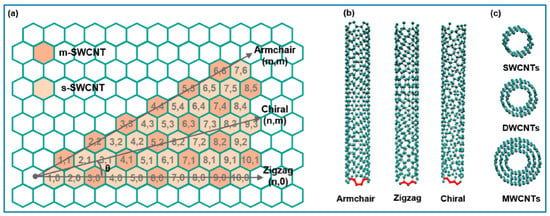
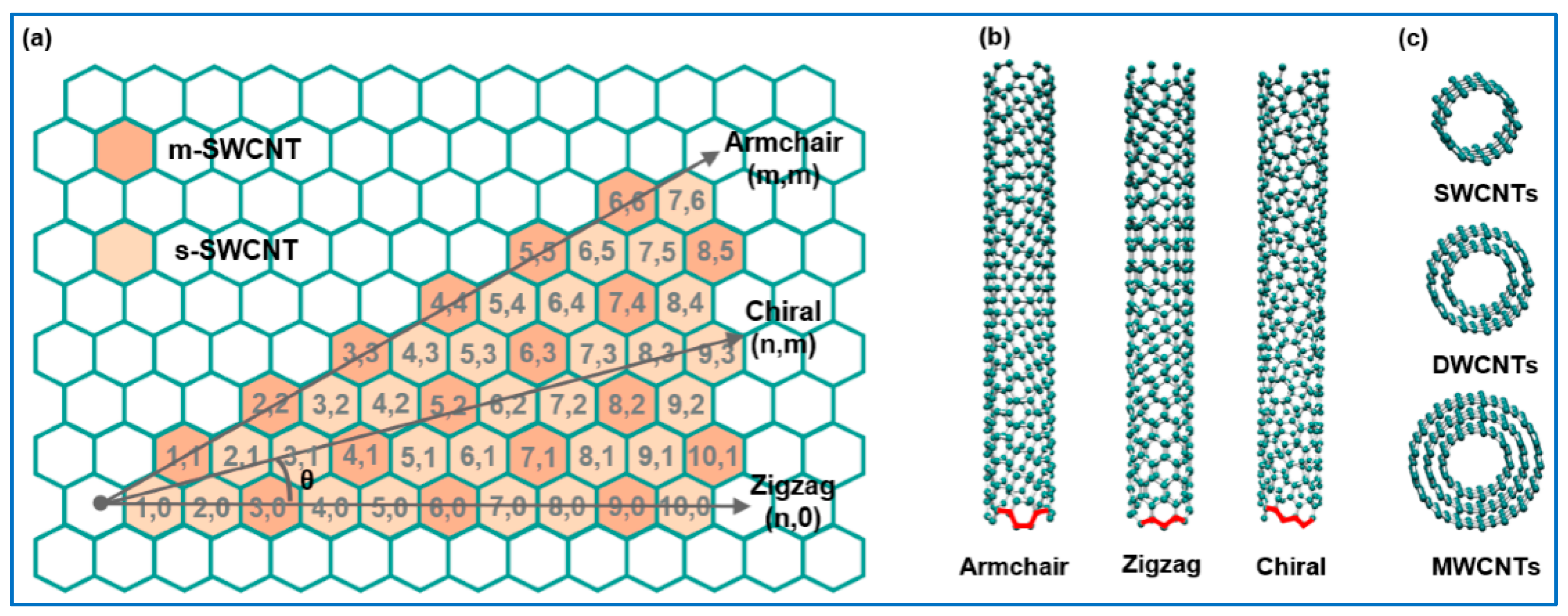
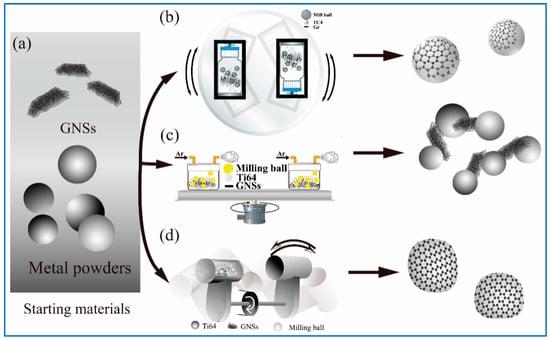
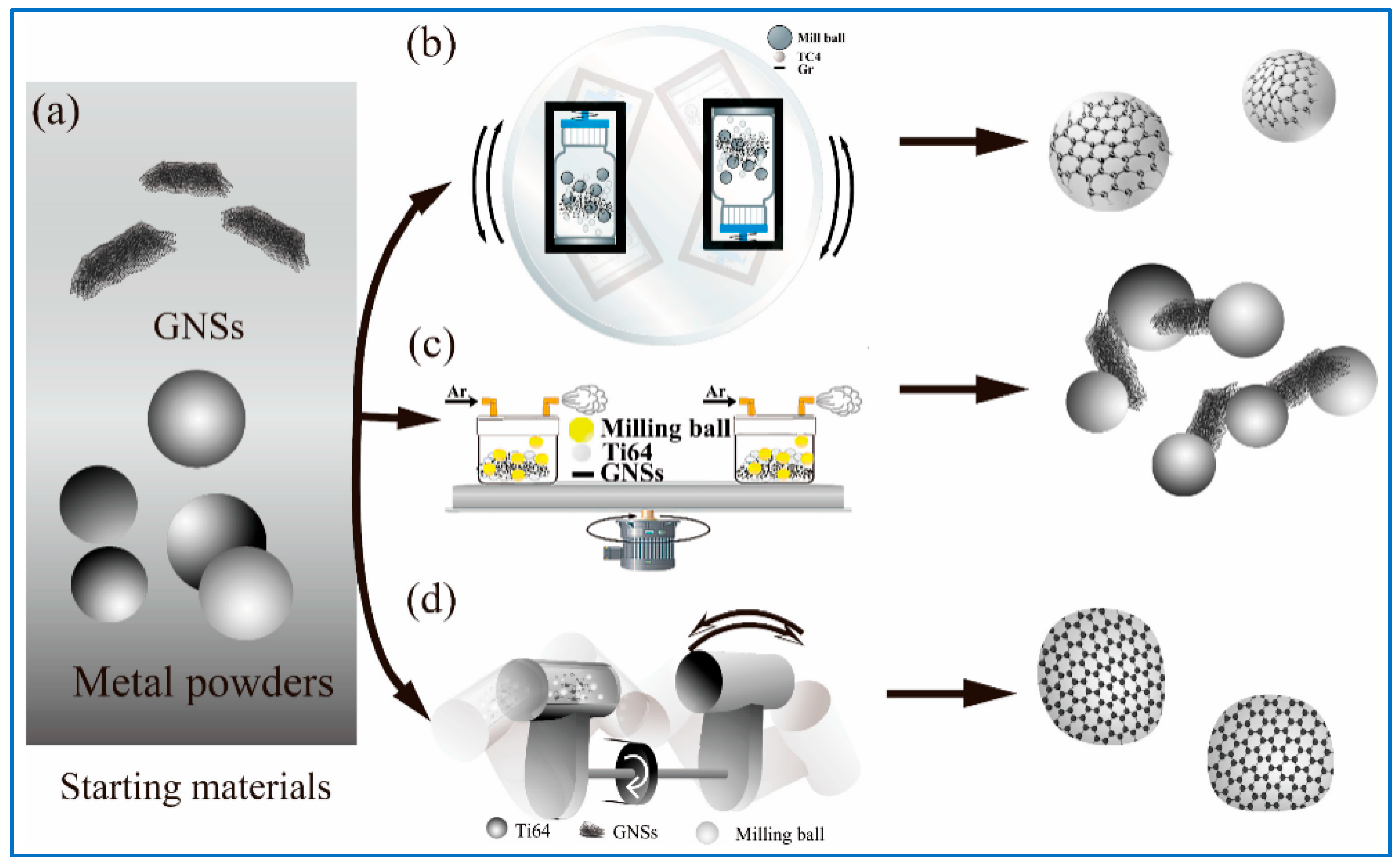
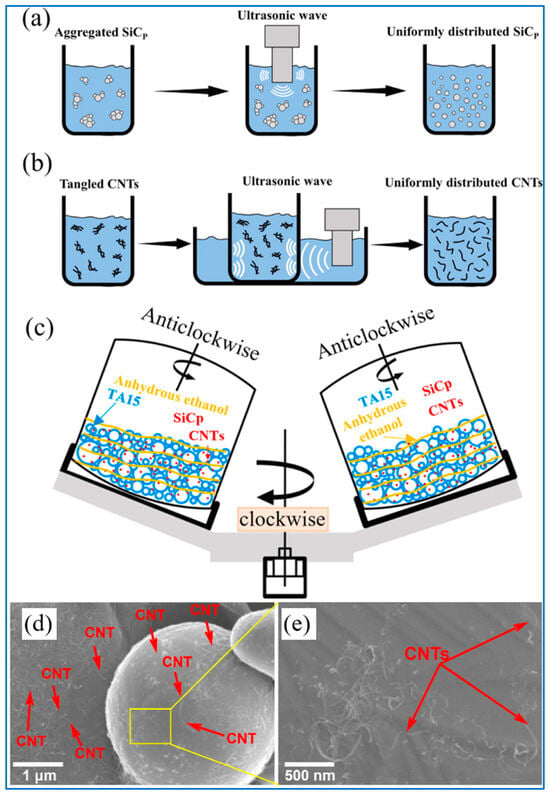
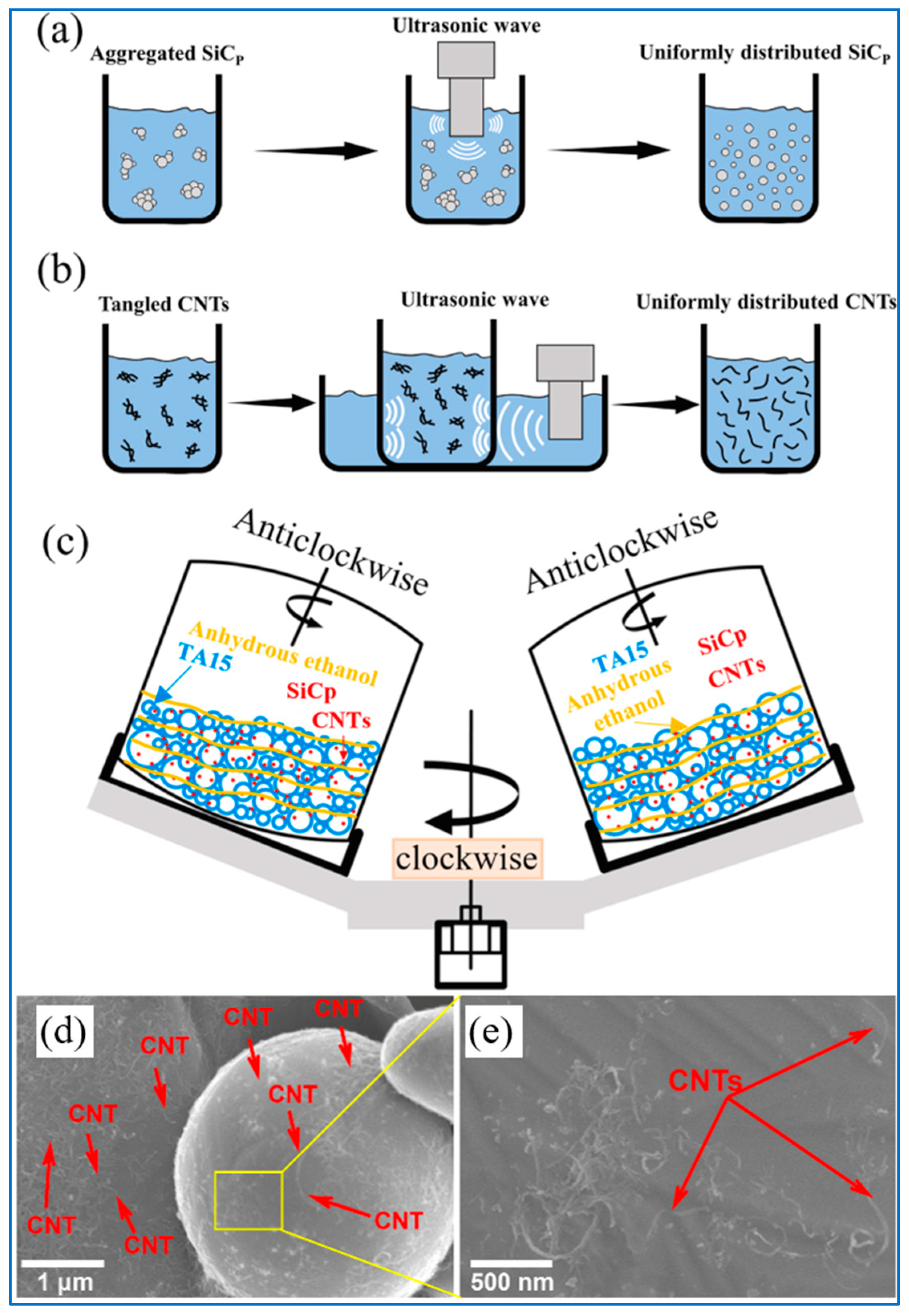
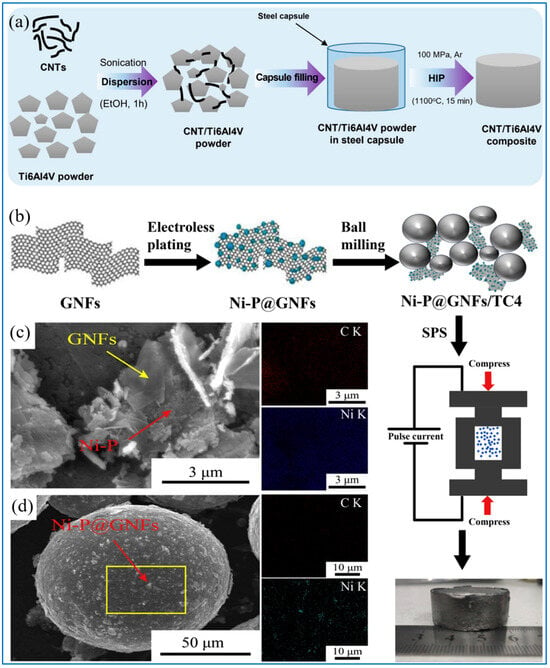
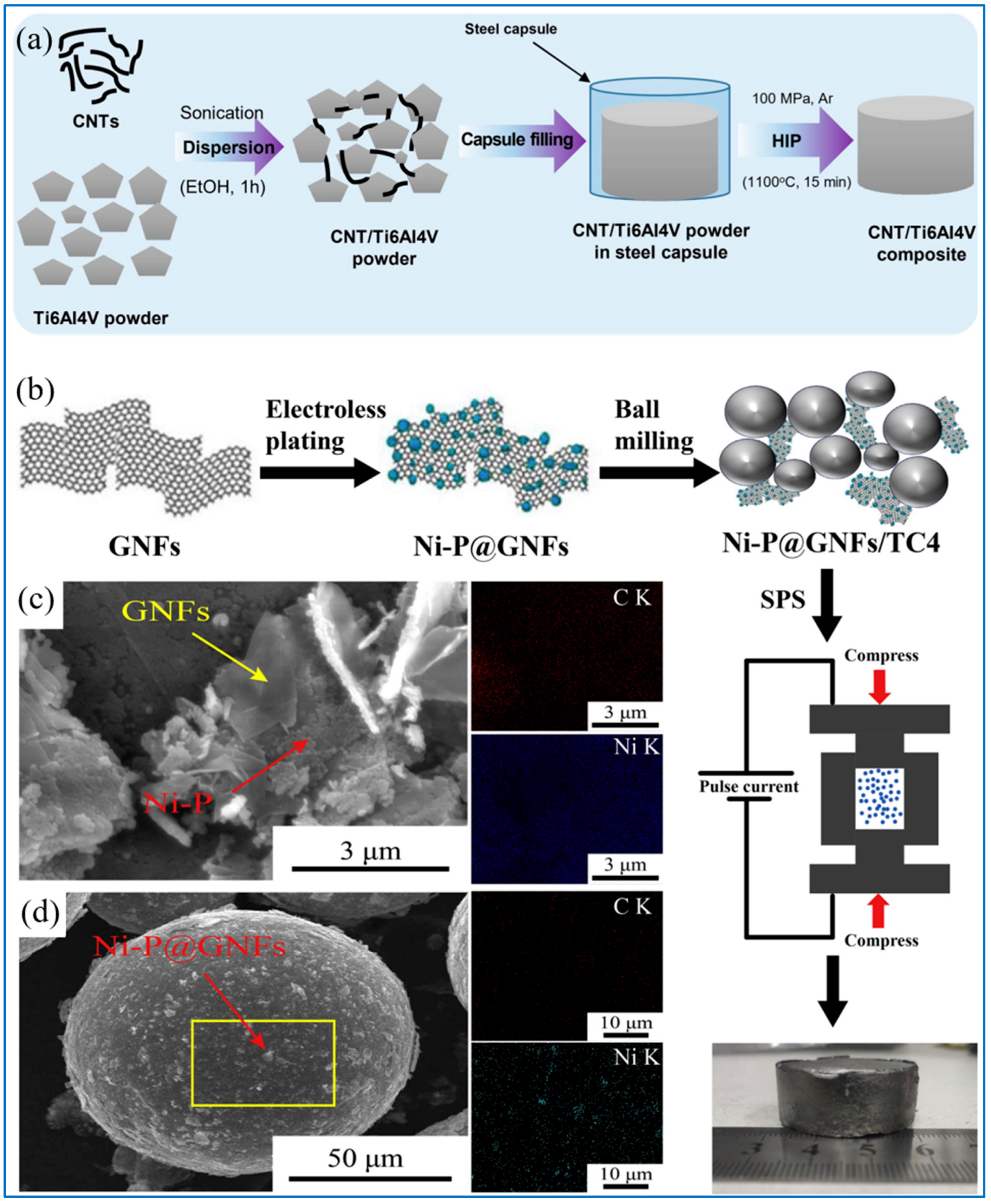
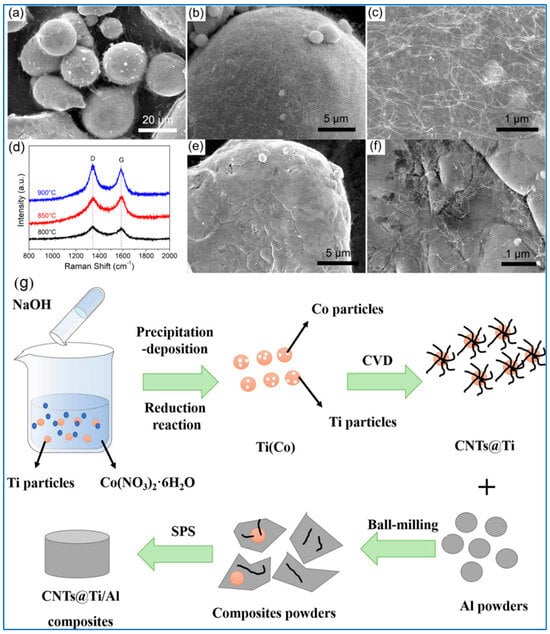
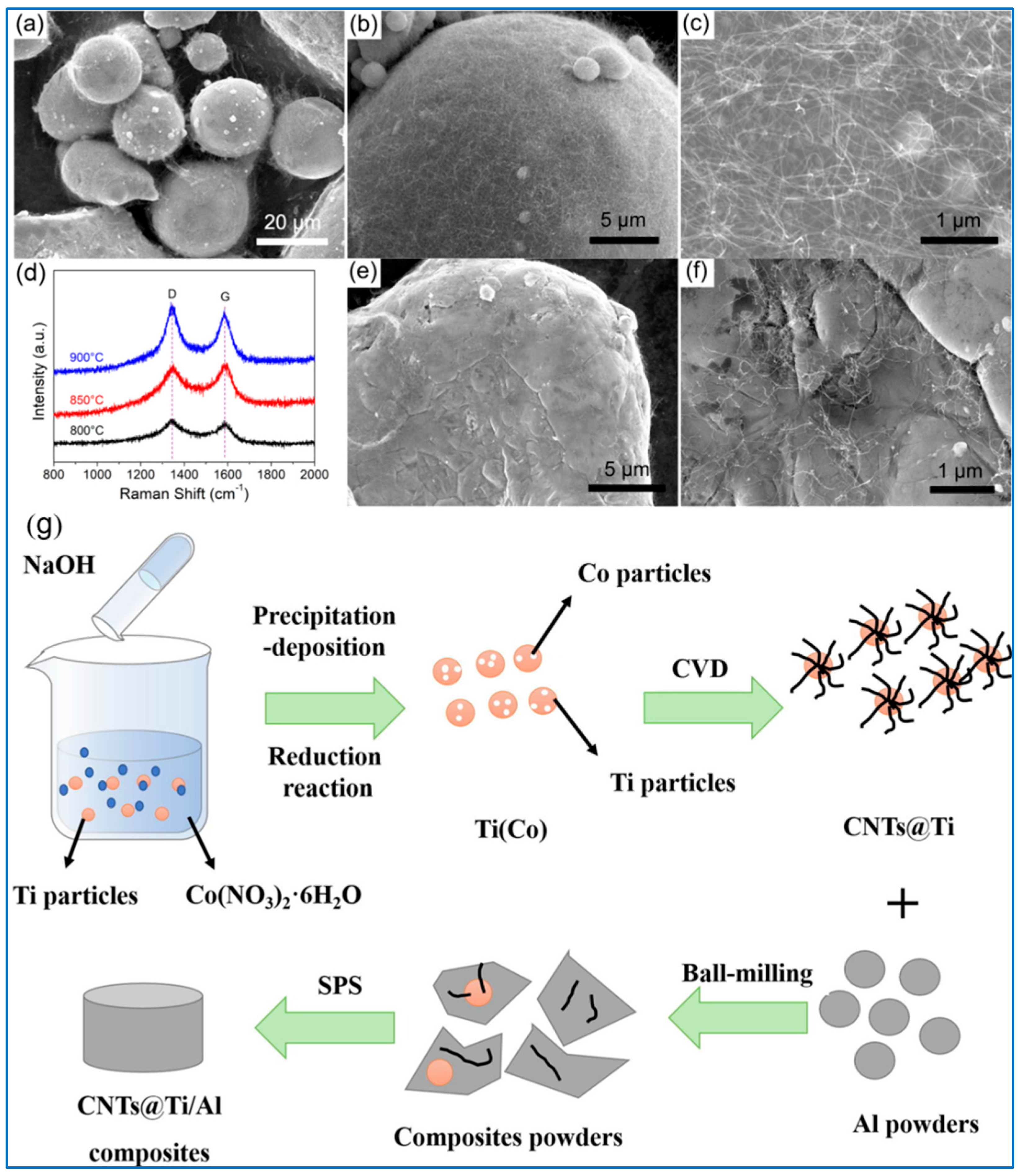
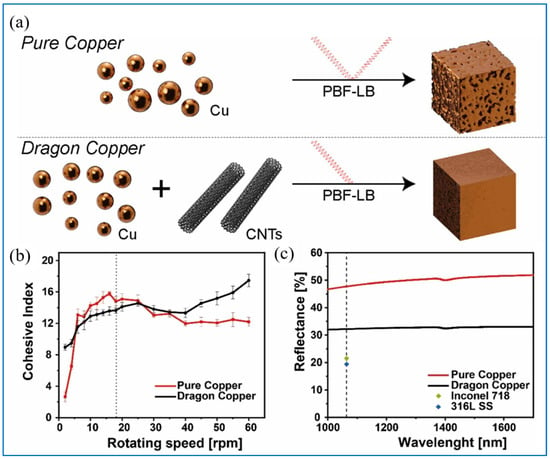
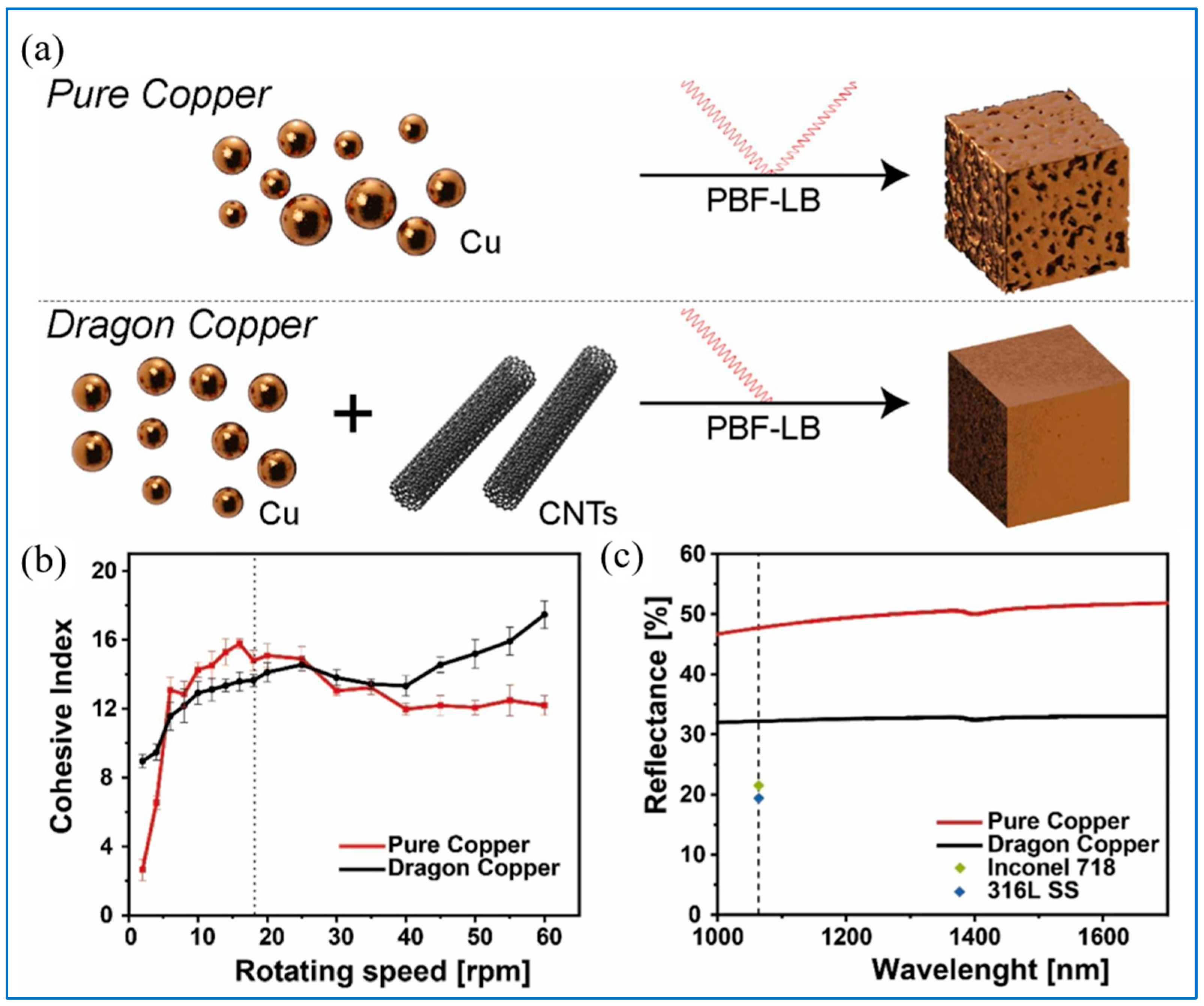
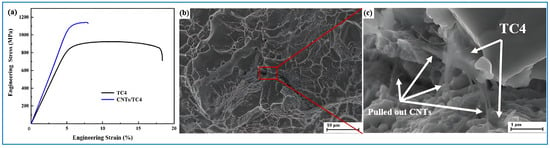
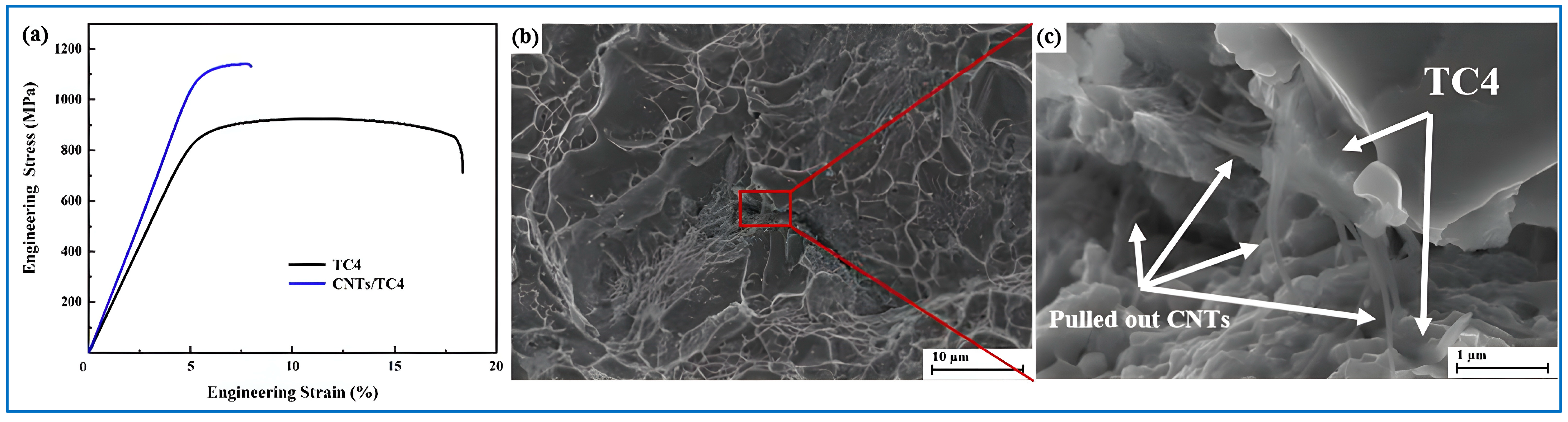
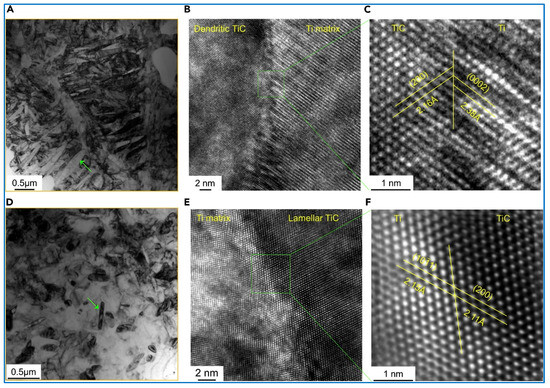
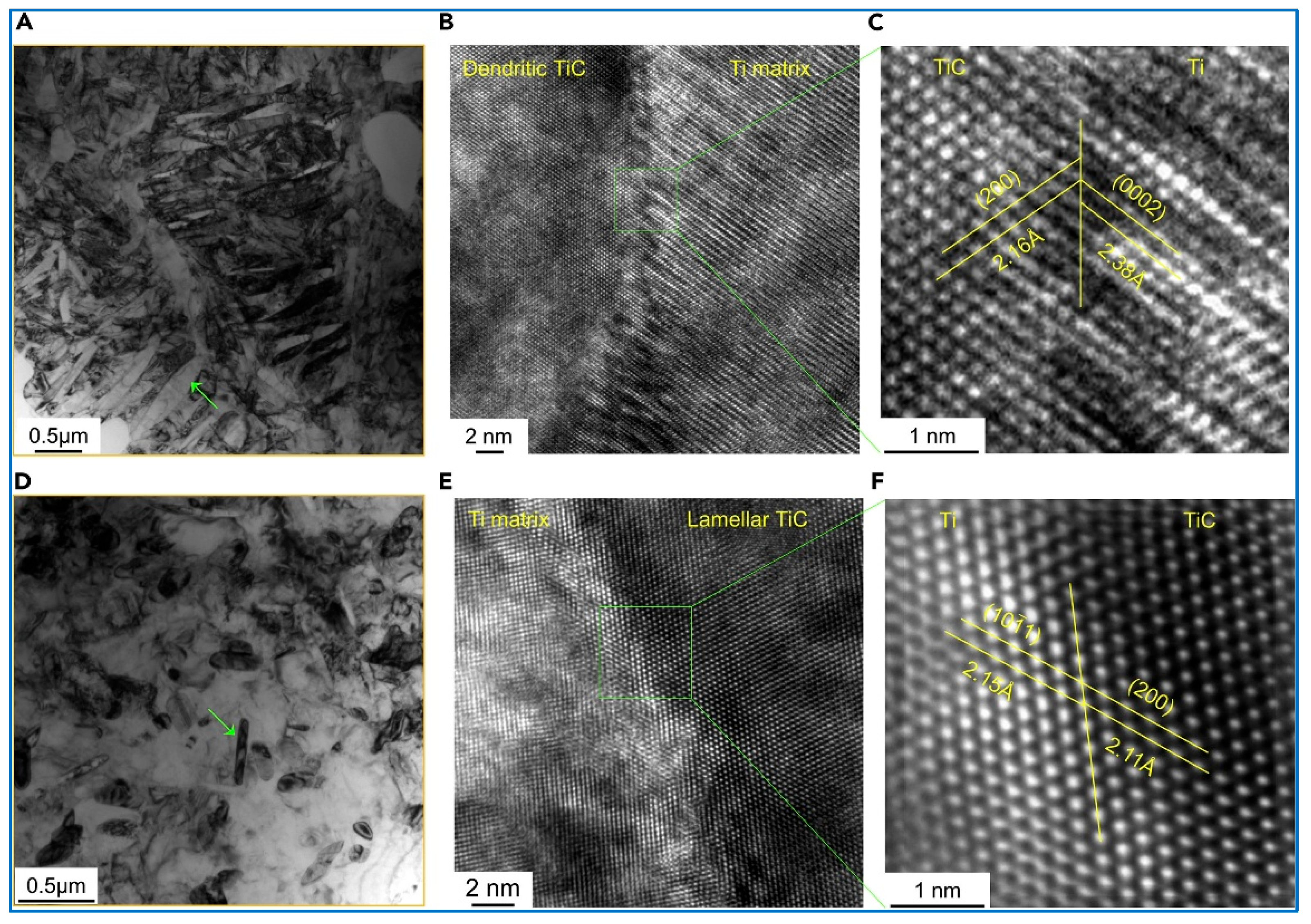
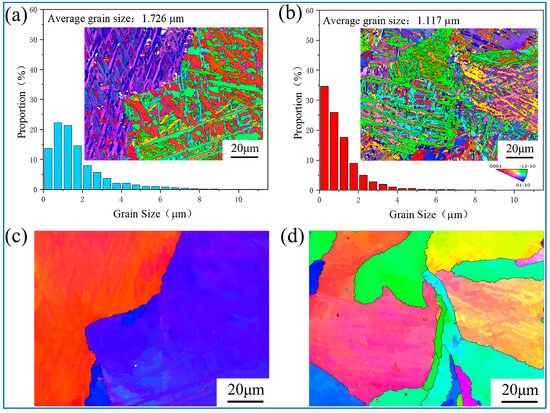
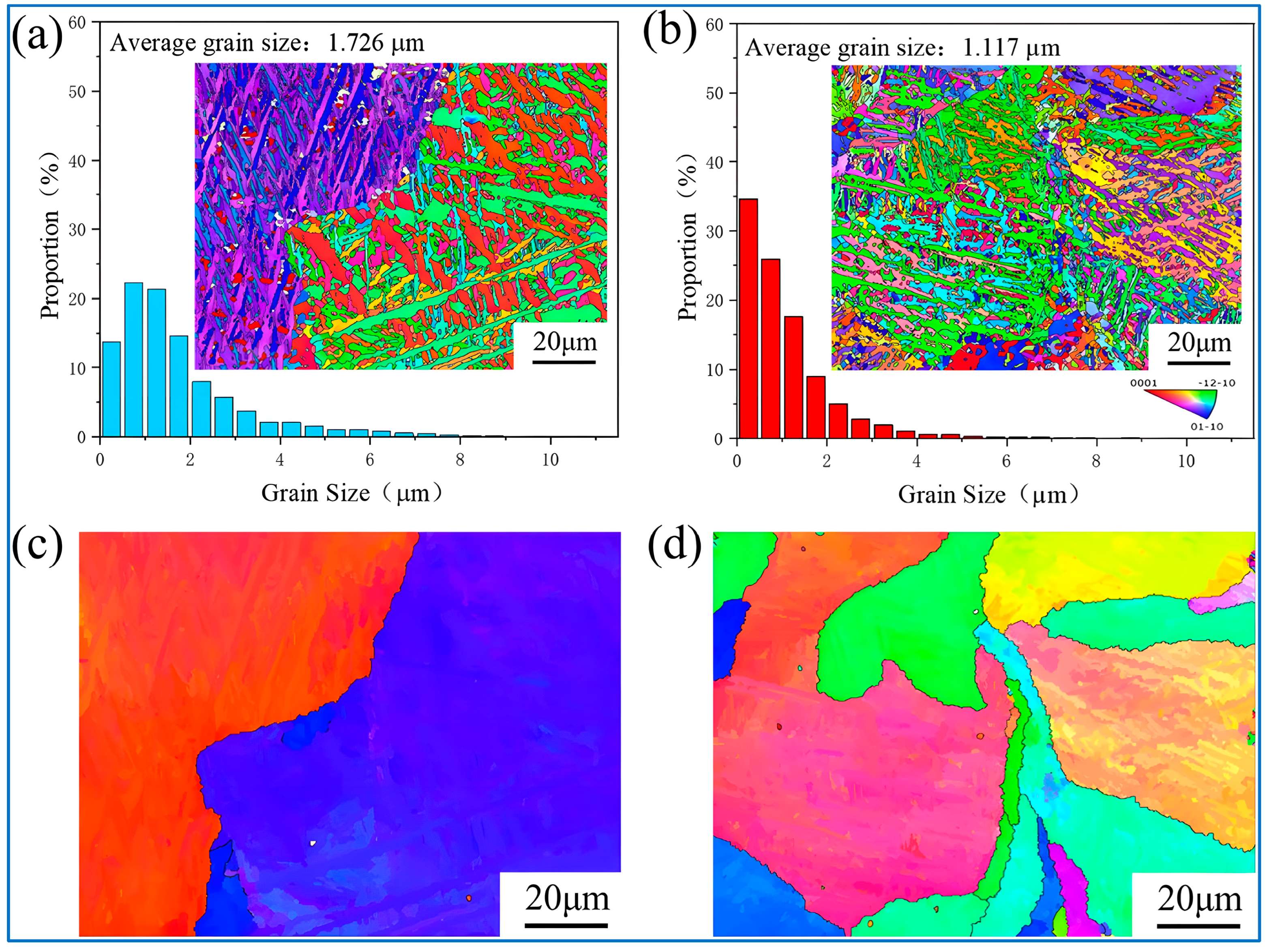

Disclaimer/Publisher’s Note: The statements, opinions and data contained in all publications are solely those of the individual author(s) and contributor(s) and not of MDPI and/or the editor(s). MDPI and/or the editor(s) disclaim responsibility for any injury to people or property resulting from any ideas, methods, instructions or products referred to in the content. |
© 2026 by the authors. Licensee MDPI, Basel, Switzerland. This article is an open access article distributed under the terms and conditions of the Creative Commons Attribution (CC BY) license.