Next Article in Journal
Development of Machine Learning Model for Analysis of Total Manufacturing Cost in Medium Turning of C45E Steel
Previous Article in Journal
Uncertainty Analysis of Plane Strain Fracture Toughness (KIC) Measurements of R350HT Rail Steels According to ASTM E399
Previous Article in Special Issue
Selective Laser Melting of Multi-Material Ti15Ta/Ti6Al4V Structures for Biomedical Applications: From Process Parameters to Mechanical Properties and Biological Response
 
 
Due to scheduled maintenance work on our servers, there may be short service disruptions on this website between 11:00 and 12:00 CEST on March 28th.
Communication

Preliminary Investigations into Internally Coated Fittings Made from ZnAl15Cu1Mg (ZEP1510)
1
Labor für Massivumformung, South Westphalia University of Applied Sciences, 58644 Iserlohn, Germany
2
Kunststoff-Institut für die Mittelständische Wirtschaft NRW GmbH (K.I.M.W.), 58507 Lüdenscheid, Germany
3
Labor für Kunststoffverarbeitung, South Westphalia University of Applied Sciences, 58644 Iserlohn, Germany
*
Author to whom correspondence should be addressed.
Metals 2026, 16(4), 372; https://doi.org/10.3390/met16040372
Submission received: 23 February 2026 / Revised: 23 March 2026 / Accepted: 23 March 2026 / Published: 27 March 2026
(This article belongs to the Special Issue Manufacturing Processes of Metallic Materials (2nd Edition))

Abstract

Stricter drinking water regulations intensify the need to replace leaded brasses in fittings. This work reports preliminary results on internally coated fittings using the wrought zinc alloy ZnAl15Cu1Mg (ZEP1510). A straight-tube Model Geometry 1 was lined internally with HDPE by gas-assisted injection molding, achieving a continuous barrier of 1.55–1.70 mm without altering the external envelope. A press-type T-fitting (32–32–32) was defined as Model Geometry 2 to benchmark forgeability; process layout (FEM) and warm-forging trials are summarized. Recycling relevance was addressed via a partial-melt (drip-off) route, which removed a substantial polymer fraction but left measurable residues. A production-cycle PCF from material production to finished tee indicates 3.156 kg CO2e for ZEP1510 vs. 5.385 kg CO2e (CuZn40Pb2) and 6.301 kg CO2e (CuZn21Si3), i.e., 41.85% and 50.06% savings. These findings establish manufacturability, indicate recycling feasibility, and quantify a CO2 advantage, outlining the next steps toward lining complex geometries and drinking water compliance.

1. Introduction

A recent tightening of drinking water regulations has further reduced the permissible lead content in metallic materials [1]. This shift intensifies the need for alternatives to leaded brasses in fluid handling components and fittings. ZnAl15Cu1Mg (ZEP1510) is a wrought zinc alloy developed as a substitute for leaded brass, capable of delivering the required mechanical and physical performance [2]. Zinc–aluminum alloys of this class are known for their favorable combination of strength, ductility, and corrosion resistance [3]. In addition, ZEP shows a product carbon footprint reduction of about 40 percent and cost savings of around 30 percent compared to brass [2]. Production-scale trials demonstrate that ZEP1510 is suitable for both cold forming (multi-stage impact extrusion) and warm forging on standard equipment; demonstration parts were manufactured and directly benchmarked against brass (CuZn39Pb3). Corrosion investigations under neutral salt spray (DIN EN ISO 9227) [4] and a condensation climate (DIN EN ISO 6270-2) [5] show that ZEP1510 achieves corrosion resistance comparable to brass and significantly better performance than galvanized steel in neutral and humid atmospheres; complementary electrochemical tests in chloride and sulfate electrolytes corroborate stable passivation behavior and confirm its suitability as a lead-free alternative [6] and can be seen as part of a broader R-strategy to enhance resource efficiency [7]. Beyond uniform and localized corrosion, Montesano [8] assessed the cavitation erosion behavior of ZnAl15Cu1Mg using the ASTM G32 ultrasonic vibratory method and compared it with the zinc die-casting grades ZA27 and Alzen305. Despite its lower bulk hardness, ZnAl15Cu1Mg displayed the smallest mass-loss rate, pointing to superior resistance to cavitation-induced damage. This performance was attributed to a refined microstructure with finely and homogeneously distributed eutectic phases, which enhances damage tolerance under hydrodynamic loading and supports the alloy’s suitability for fluid-power hardware and other wear-critical components. Beyond corrosion, a recent study systematically mapped the effect of heat treatment on ZEP1510: annealing near the ~275 °C transformation range followed by air cooling refined the microstructure and increased both hardness and toughness, whereas water quenching produced a metastable state with high toughness but low hardness; subsequent natural or artificial aging caused pronounced precipitation hardening [9]. In line with this, Rollez et al. [10] showed for related ZnAl15Cu1 alloys that prolonged exposure at 80 °C and 220 °C can reduce hardness by about 30%, which they linked to recrystallization of the η-phase. These observations emphasize that the long-term thermal stability of Zn–Al–Cu alloys must be considered explicitly when defining service temperatures and heat treatment regimes. On the subtractive side, a study mapped the machinability window for wrought zinc alloys, recommending avoidance of dry cutting due to adhesion, the use of oil-based flood or high-pressure coolant, sharp tools with positive rake, and tuned feed/speed settings—together enabling reliable surface quality and tool life in turning, grooving, and drilling [11]. However, ZEP1510 is not listed on the current 4MSI/UBA Positive List of metallic compositions accepted for direct contact with drinking water, and aluminum itself is a regulated drinking water parameter (200 µg/L) under Directive (EU) 2020/2184; consequently, a direct material approval for potable-water applications is presently not feasible [1]. This regulatory limitation is addressed by applying an internal HDPE lining, which acts as a complete barrier between the metallic substrate and the drinking water, thereby eliminating direct metal–water contact. The approval pathway thus shifts from the base metal to the lining material, for which HDPE is well-established in drinking water applications [12]. Beyond base metal choices, ceramic interior linings—especially vitreous/porcelain enamel—are also being investigated for potable-water components; recent work on enameled steel storage surfaces quantified element release by ICP under accelerated conditions and found all measured concentrations remained within EU thresholds, while linking durability to enamel microstructure and water chemistry [13]. In parallel, polymer-based piping and fittings (PE, PEX, PVC) are widely deployed in potable-water systems and are covered by mature standards; they eliminate corrosion scale and markedly reduce heavy-metal release compared with metallic pipes. At the same time, reviews note possible trace-organic leaching (especially early in service) and a higher propensity for initial biofilm formation, effects that tend to decline over time as the system stabilizes [12].
Against this background, the present study investigates the manufacturability of internally polymer-lined fittings made from ZEP1510 as a resource-efficient and lead-free substitute for brass. Since ZEP1510 is not approved for direct drinking water contact, an internal HDPE barrier is proposed as the regulatory pathway toward potable-water compliance. The study covers two representative model geometries, a recycling assessment, and an indicative CO2 comparison against established brass alloys. Details of the project scope are provided in Section 2.

2. Project

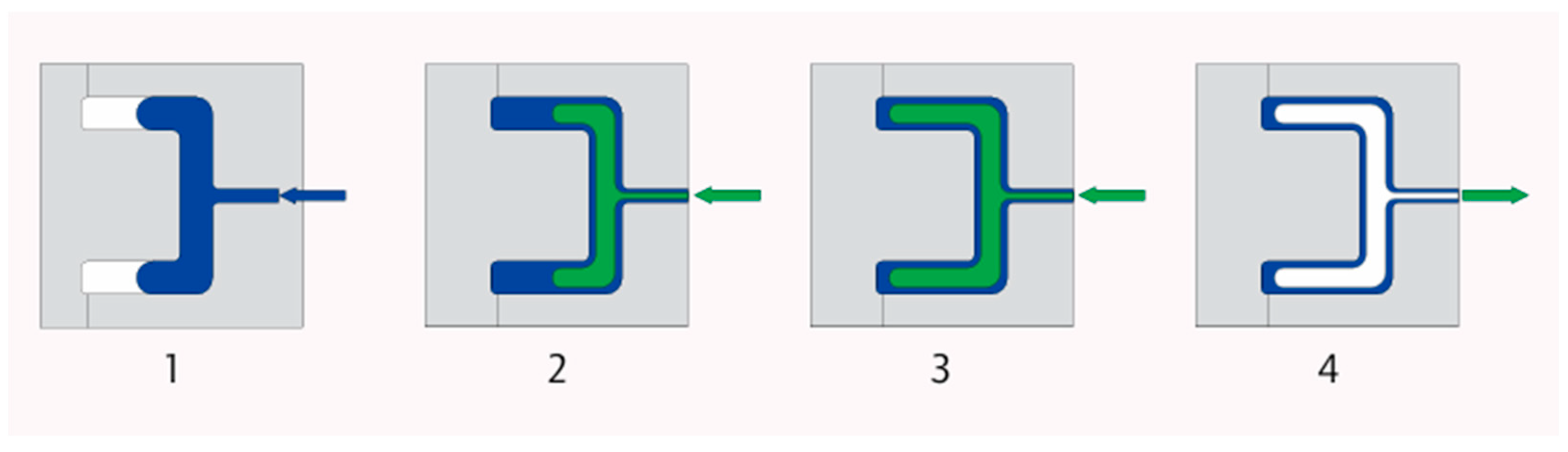
The aim of the project is to develop internally coated fittings made from wrought zinc alloys (ZEP) as a resource efficient substitute for brass. Representative model geometries are planned with process steps realistic for industry, from hot forging and machining to a polymer-based internal lining, accompanied by the corresponding investigations. The internal lining is produced by gas-assisted injection molding (GIT, partial-fill), using HDPE (see Figure 1). This process enables the formation of a continuous hollow polymer layer within complex fitting geometries; the influence of the bending angle on wall thickness uniformity in GIT/GAIM processes has been investigated by Huang et al. [14]. This paper reports results on the project’s model selection, the recycling trials with associated micrographs, the forgeability of Model Geometry 2, FEM simulation with one key result figure, forging experiments, an indicative CO2 comparison against brass, and the concluding Conclusions and Outlook.

3. Model Geometry 1

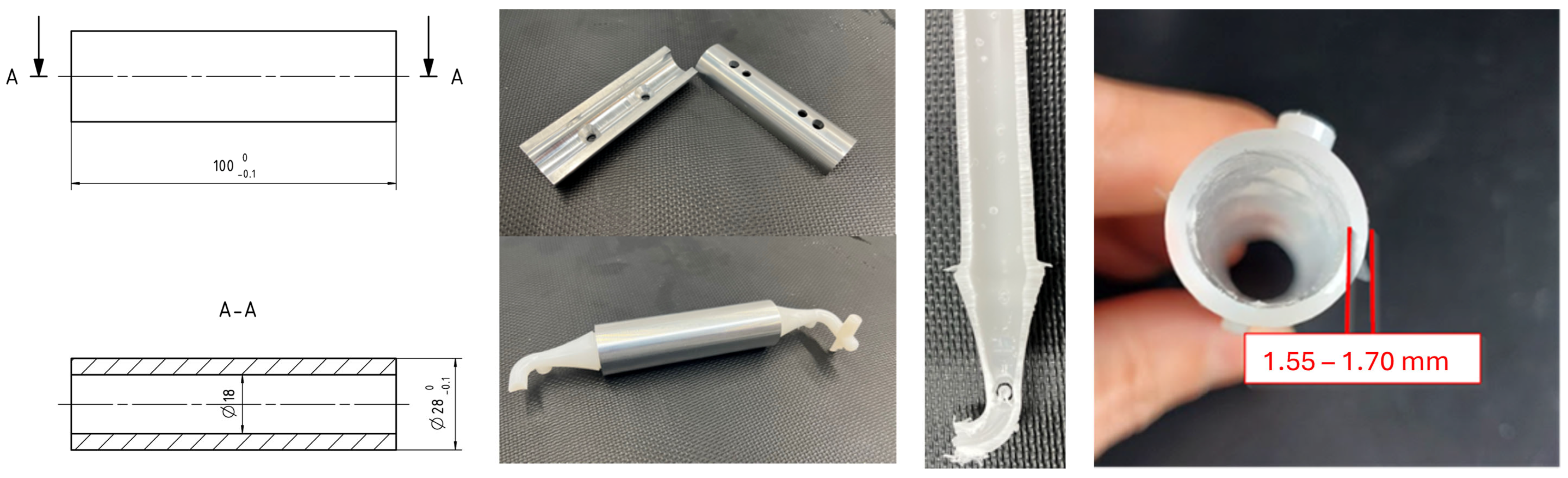
Model Geometry 1 is a straight cylindrical tube sized to match conventional building fittings so that hydraulic behavior, installation space, and interfaces are representative. All water-wetted internal surfaces are provided with a continuous high-density polyethylene (HDPE) lining applied from the inside, so the external envelope of the metallic insert remains unchanged (see Figure 2). The lining was introduced by gas-assisted injection molding (GIT), in which an injected polymer shot is displaced by inert gas to form a seamless inner barrier along the entire flow path. Quality verification included visual inspection, metallographic cross sections, and dimensional checks of the free bore. Across the flow path, an internal lining thickness of 1.55–1.70 mm was achieved after removal of the polymer liner from the metal substrate (see Figure 2, rightmost image). Visual and metallographic inspections confirmed full coverage and a continuous interface between the polymer and the metallic substrate, meeting the targeted hydraulic constraints. By referencing standard fitting sizes, Model Geometry 1 serves as a size-representative baseline for transferring the internal polymer barrier to more complex fitting geometries.

Recycling Trial

Recycling is a key objective because the assembly combines a zinc substrate with an internal HDPE lining that should be recovered into clean material streams. Two thermal separation routes were investigated:
  • Partial Melting/Drip-Off: Heating the coated component so that the polymer flows out of the tube and can be removed;
  • Complete Co-Melting: Melting the entire component with the polymer to assess separation and cleanliness under melt processing.
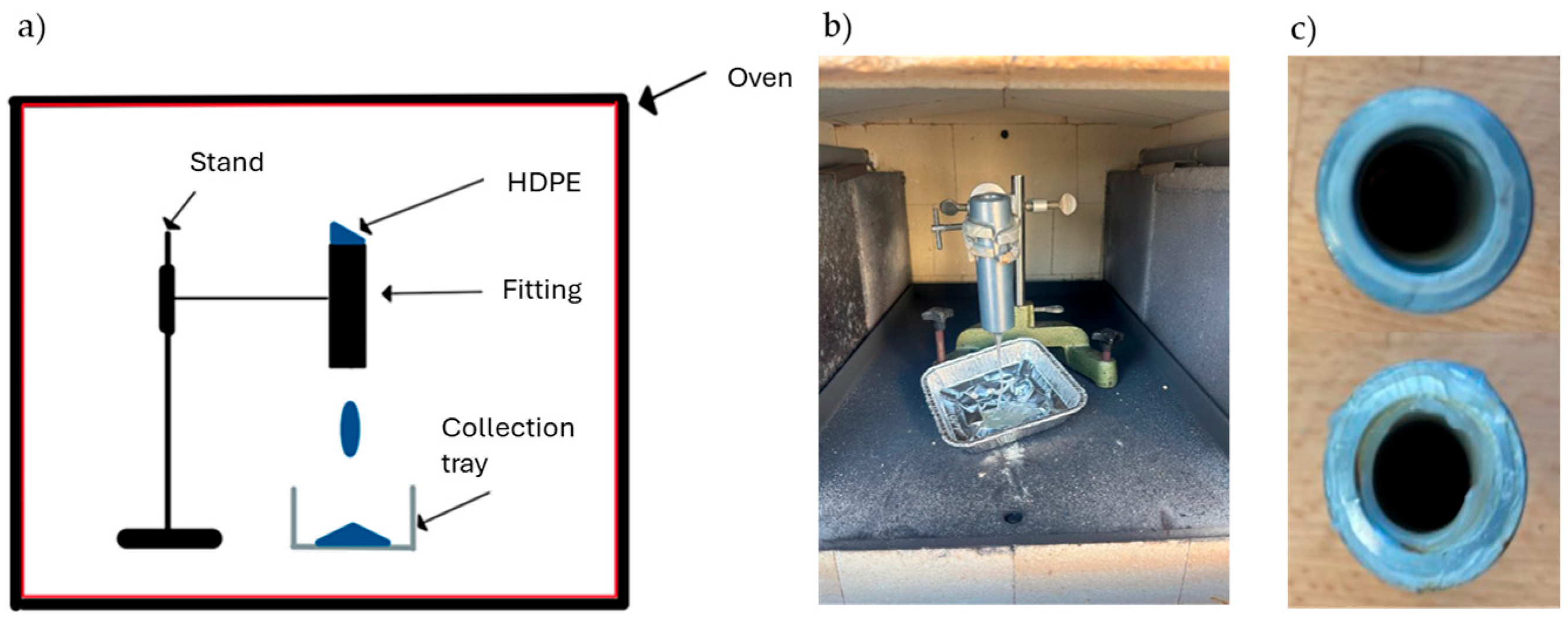
We heated HDPE-lined specimens so that the lining could flow out under gravity and be collected. At 210 °C for 60 min, only a small fraction of polymer detached (12.67 g recovered), and the fitting still showed substantial HDPE residues. Raising the parameters to 230 °C for 120 min increased recovery to roughly 70% of the HDPE mass, but residual deposits remained on the metal; the residue thickness increased toward the lower section of the part (see Figure 3), confirming that temperature and hold time dominated separation quality and that complete, clean detachment was not yet achieved.
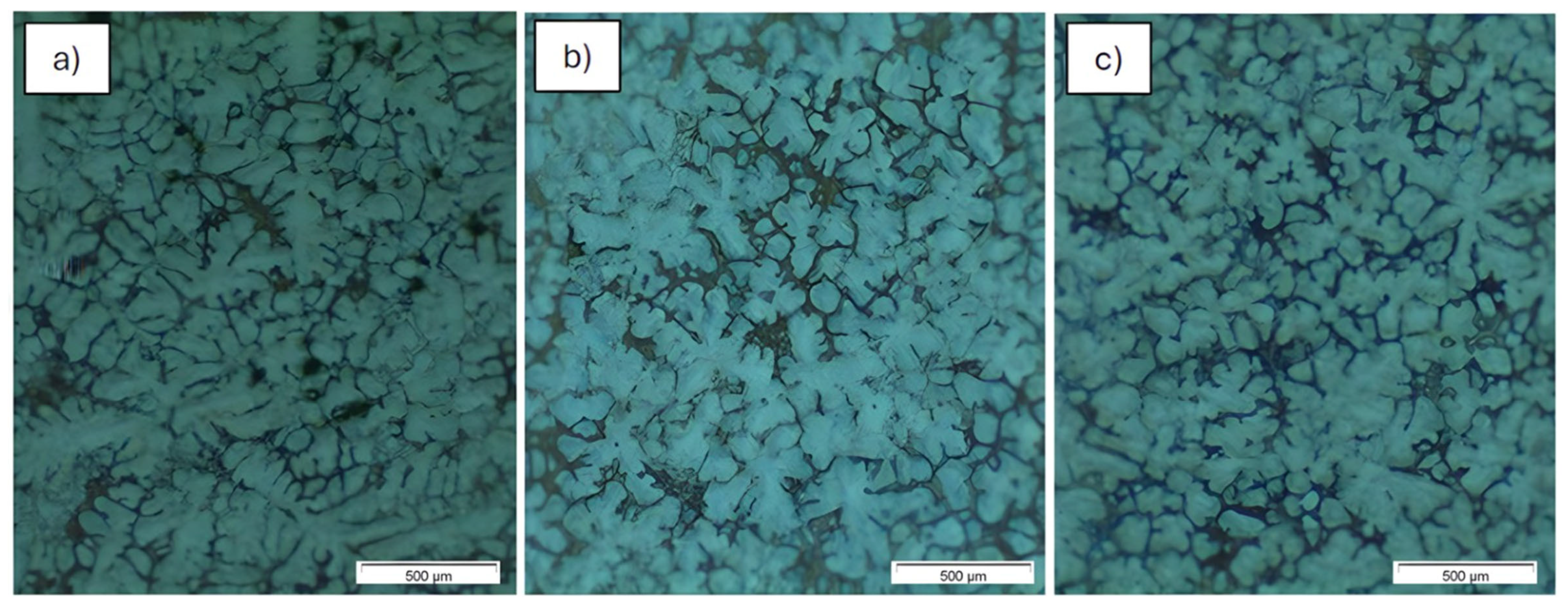
To evaluate melt-recovery, samples in three conditions were heated to 500 °C and allowed to re-solidify in place at room temperature: (a) ZEP only, (b) ZEP + 2.5 g HDPE, (c) ZEP + 5 g HDPE. Metallographic cross-sections (grinding/polishing; 3% HNO3 etch) show a homogeneous microstructure with comparable grain size across all variants and no polymer-related residues or foreign phases (see Figure 4). Occasional pores/inclusions are consistent with the melt/re-solidification step and not with the presence of polymer. Under the tested parameters, the polymer does not measurably affect the re-solidified ZEP, supporting co-melting as a viable route for metal recovery from internally lined fittings.

4. Model Geometry 2

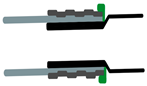
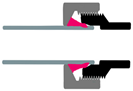
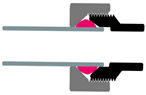
In the market, multiple connection types for building-services fittings are established. Table 1 provides an overview of common fitting interfaces and their working principles. For the implementation of an internal polymer lining, press connections are particularly suitable because they offer clear functional interfaces and assembly routes.
Model Geometry 2 is a T-shaped press fitting designed for 32 mm tubing on all three ends, selected as a production-relevant benchmark geometry. The model preserves standard press-end interfaces and a compact service hex for handling, and it concentrates typical design features of tees—branch junction filets, press grooves, and flash-critical outer radii—that are sensitive to warm-forging flow and dimensional fidelity. Nominal overall span and junction radii were chosen to match common installation envelopes while keeping the wall thickness profile representative for subsequent lining concepts. The process layout (FEM) and forging trials based on this model are presented in the following chapters.

4.1. FEM Simulation and Forging Experiments

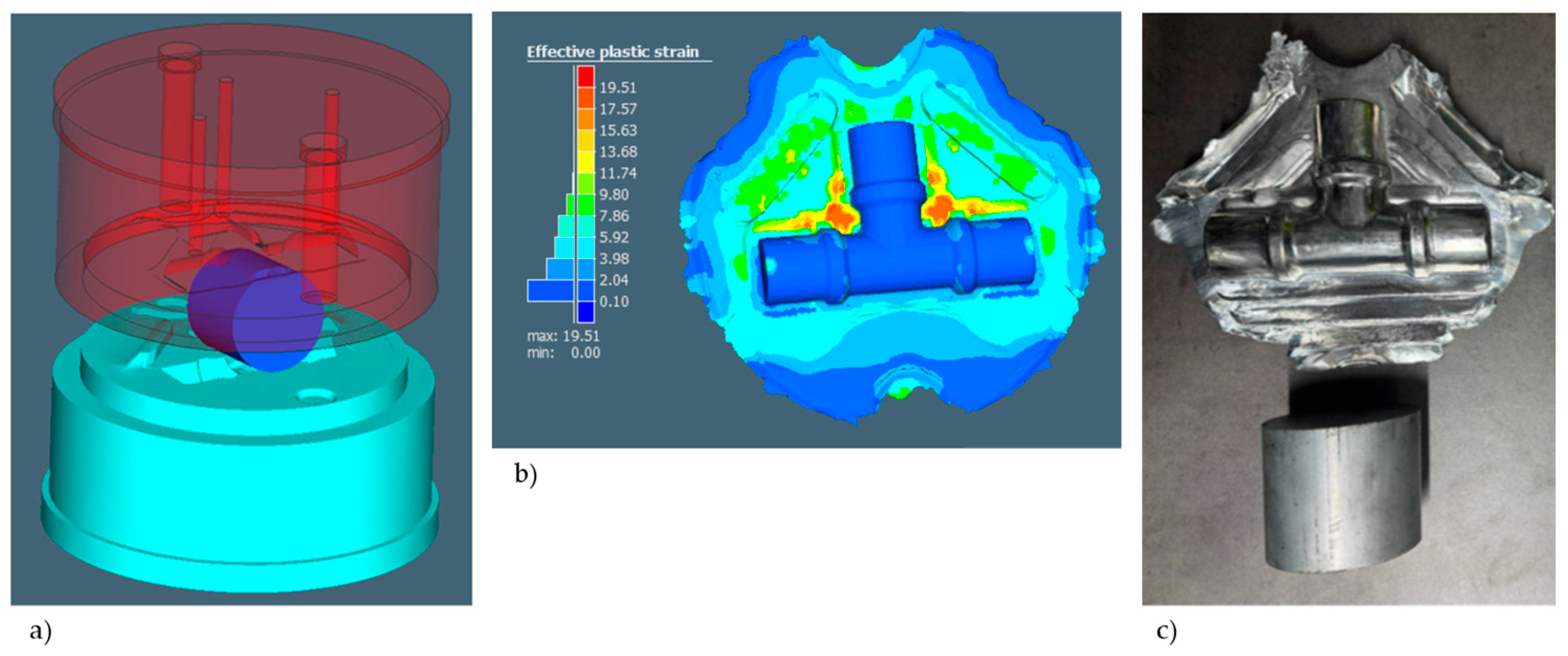
The primary purpose of the FEM simulation was to approximate the required billet dimensions for complete die filling and to identify potential material flow issues prior to the experimental forging trials. To design the closed-die forging process for a T-shaped fitting made of a zinc wrought alloy, a three-dimensional FEM model was developed (see Figure 5a). The model included the upper and lower die, as well as the cylindrical billet with a diameter of 58 mm and an initial length of 48 mm. The dies were defined as rigid bodies, while the billet was modeled using a temperature- and strain-dependent elastoplastic material model. The flow curves used in the material definition (ZEP1510) were experimentally determined in a preceding research project [2]. The thermal boundary conditions in the simulation matched those later used in the experiments: the billet was heated to approximately 280 °C and the dies to around 200 °C.
The contact between billet and dies was described using a combined friction model consisting of a Coulomb friction coefficient of μ = 0.25 and a shear friction factor of m = 0.4, representing realistic friction behavior for warm forging of zinc alloys. These boundary conditions (convective heat transfer coefficient: 50 W/m2K; Coulomb friction coefficient μ = 0.25; shear friction factor m = 0.4) were adopted as standard values commonly used for warm-forging simulations of this type.
The simulation results showed largely uniform deformation but indicated slight underfilling in the outer regions of the T-geometry (see Figure 5b). To compensate for this, the billet volume for the experimental trials was increased slightly. The billet length was therefore adjusted from 48 mm to 49 mm, while the diameter remained unchanged.
The numerical investigations were performed using Simufact Forming 2023.2 with a 3D finite volume (FV) solver suitable for large-deformation forging processes. The process definition was configured as a warm-forging operation, and the simulation domain included all three major components: the billet and two heat-conducting die halves (CADfix-W1 and CADfix-W1-2). The billet was discretized using a surface-based meshing algorithm with 5438 triangular elements and an adaptive remeshing strategy triggered by element edge-length changes. The active remeshing reduced distortions during large deformation and ensured numerical stability throughout the forming stroke. Boundary conditions included a controlled downward movement of the upper die, following the kinematics of a 400-ton crank press (model: DB.CP, 400 t, 200 mm, 1250 mm, 55 rpm), operating at 55 rpm, with a crank radius of 200 mm and a connecting rod length of 1250 mm. The press characteristics influenced the deformation rate and temperature evolution during forging, both of which were captured by the FV solver. Thermal interactions were included in the analysis: the dies featured heat conduction, and the heat transfer between billet and environment was defined by a convective coefficient of 50 W/(m2·K). Radiative heat exchange followed a temperature-dependent table automatically selected by the software (minimum emissivity 0.4, maximum 0.75). This setup allowed the simulation to capture realistic cooling behavior during the forging stroke. As the focus was on approximating the material flow and identifying the minimum billet volume rather than on a detailed thermo-mechanical analysis, a mesh convergence study, friction calibration, and sensitivity analyses were considered beyond the scope of this preliminary work. The overall calculation required 8651 increments and included 48 remeshing steps.
The closed-die forging experiments were conducted at Metallpresswerk Hohenlimburg GmbH in Hagen, Germany, and confirmed the FEM findings in all essential aspects. As illustrated in Figure 5c, the increased billet length resulted in complete die filling across all regions of the cavity. The material flow behavior and the formation of flash corresponded closely to the predictions derived from the simulation, reflecting the typical characteristics of warm forging of zinc alloys at elevated temperatures. The figure also shows the actual 49 mm billet used during the trials, which provided the necessary additional material for full cavity filling.
The simulation was validated qualitatively: the predicted underfilling with a 48 mm billet was confirmed experimentally, and the adjusted 49 mm billet achieved the complete die filling anticipated from the corrected dimensions. Overall, this indicates that the FEM model captures the essential material flow behavior relevant to the process layout of closed-die forging of zinc wrought alloys.

4.2. CO2-Saving Potential

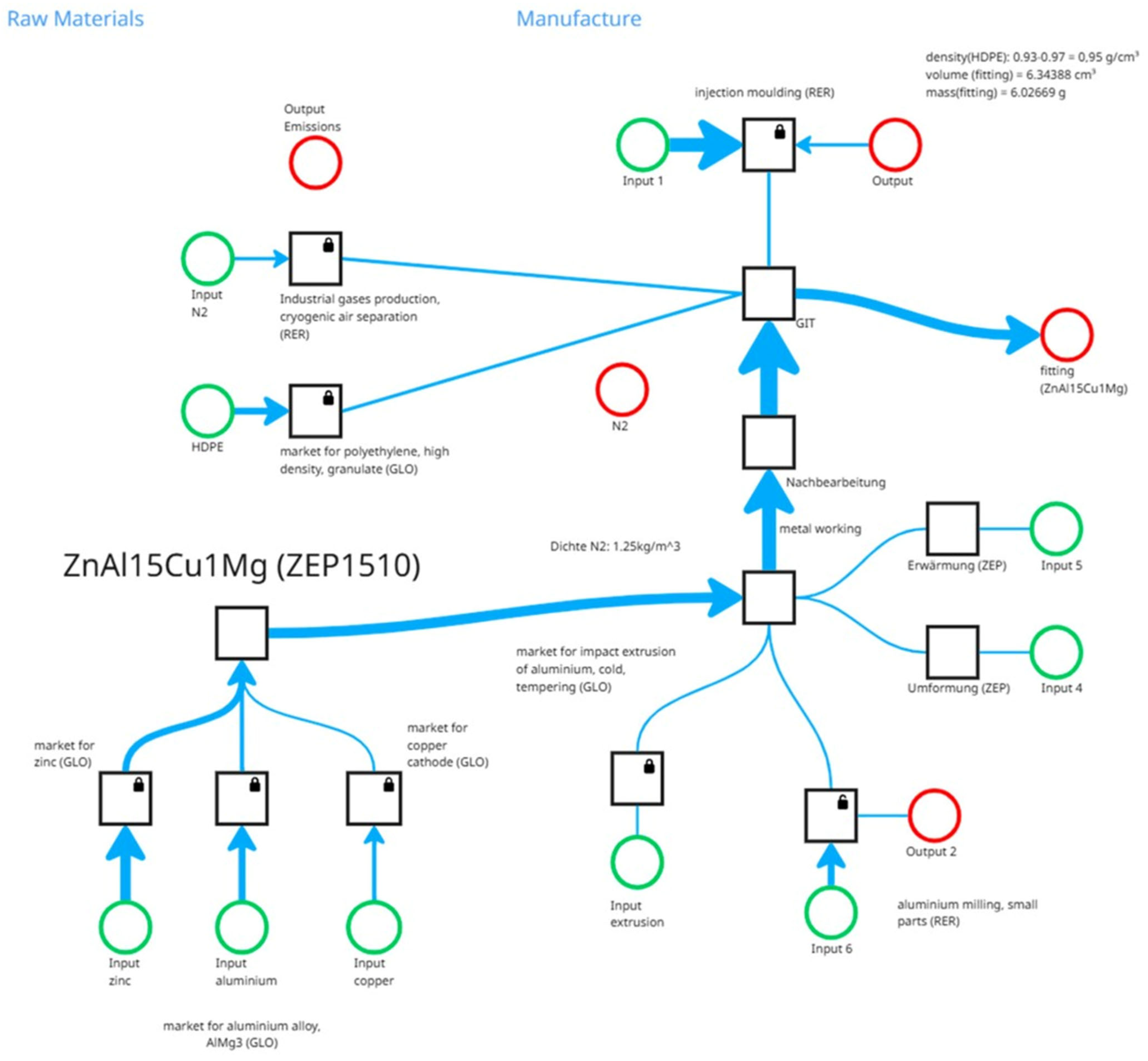
The production-cycle assessment was modeled in line with ISO 14040 [16]/ISO 14044 [17] and quantified as a product carbon footprint (PCF) from material production up to the finished T-fitting (cradle-to-gate). For the reference brasses and the zinc wrought alloy, the totals per part are as follows: CuZn21Si3: 6.301 kg CO2e, CuZn40Pb2: 5.412 kg CO2e, ZnAl15Cu1Mg (ZEP1510): 3.147 kg CO2e. This corresponds to a 41.85% reduction versus CuZn40Pb2 and 50.06% versus CuZn21Si3; dominant drivers are ZEP’s lower density and lower processing temperatures, which reduce material and energy burdens along the forming chain. Figure 6 presents a Sankey diagram of the ZEP1510 production chain from material production to the finished tee, visualizing the contribution shares across the cradle-to-gate boundary. The diagram is structured into two main stages: raw materials and manufacture. On the raw materials side, ZnAl15Cu1Mg (ZEP1510) is composed of three primary inputs: zinc, aluminum, and copper. Additionally, HDPE granulate and nitrogen gas (N2) are included as inputs for the internal lining process. On the manufacturing side, the production chain comprises the following steps: impact extrusion, heating of the ZEP billet, warm forging, deburring, machining, and finally gas-assisted injection molding (GIT) for the internal HDPE coating. The dominant contributors to the overall PCF are raw material production and the forming steps, while the GIT process contributes a comparatively minor share.

5. Conclusions and Outlook

This work provides a first manufacturability baseline for zinc-based fittings with an internal barrier and for the warm forging of a press-type tee. Model Geometry 1—a straight tube sized to conventional fitting dimensions—was successfully lined from the inside with HDPE by gas-assisted injection molding, yielding a continuous barrier with 1.55–1.70 mm wall thickness while preserving the external envelope. Model Geometry 2 was defined as a production-relevant benchmark for forging; coating of this geometry is outside the scope of the present paper. The evaluation of common fitting interfaces in Section 4 identified press and male threaded connections as the most promising candidates for the internal polymer lining. This was confirmed by the successful warm forging of Model Geometry 2, a press-type tee, which demonstrated that the necessary geometric features—such as press grooves and branch filets—can be reliably manufactured using ZnAl15Cu1Mg. Recycling was addressed by thermal routes: a partial-melt (drip-off) attempt removed a significant share of polymer but left residual deposits, as confirmed by micrographs. While the separation is feasible, the impact of polymer residues on the secondary melt quality remains to be quantified in future studies. A production-cycle PCF from material production to the finished tee indicates 3.156 kg CO2e for ZEP1510 versus 5.385 kg CO2e (CuZn40Pb2) and 6.301 kg CO2e (CuZn21Si3), corresponding to 41.85% and 50.06% reductions, respectively, and thus exceeding the project target (38%). It should be noted that the present study is limited to preliminary investigations. No drinking water compliance testing has been performed, and the T-fitting has not yet been lined or tested. The results therefore represent a first step toward a potential pathway to future drinking water compliance rather than a confirmation of suitability for potable-water applications. Next steps will focus on (i) sampling the Model Geometriy 2 with the defined forging route, (ii) cost verification against brass references based on these samples, (iii) transfer of the internal lining from the straight tube to the forged tee (with attention to end-face coverage), (iv) completion of the recycling study including co-melting micrographs and separation quality, and (v) preparation of the drinking water compliance strategy for the lining material. In parallel, alternative barrier concepts (e.g., ceramic/other polymer linings) may be screened as options for future work.

Author Contributions

Conceptualization, A.K., S.I., M.R. and M.Z.; methodology, A.K., S.I. and S.S.; validation, A.K., S.I., S.S., M.R. and M.Z.; investigation, A.K., S.I., M.Z., M.R. and S.S.; writing—original draft preparation, A.K. and S.I.; writing—review and editing, M.M. and A.U.; visualization, M.R.; supervision, M.M. and A.U.; project administration, A.K. and S.S.; funding acquisition, M.M. and A.U. All authors have read and agreed to the published version of the manuscript.

Funding

This research was funded by Deutsche Bundesstiftung Umwelt (DBU), grant number 37912/01. This article is funded by the Open Access Publication Fund of South Westphalia University of Applied Sciences.

Data Availability Statement

The original contributions presented in this study are included in the article. Further inquiries can be directed to the corresponding author.

Conflicts of Interest

Author Stefan Schmidt was employed by Kunststoff-Institut für die Mittelständische Wirtschaft NRW GmbH (K.I.M.W.). The remaining authors declare that the research was conducted in the absence of any commercial or financial relationships that could be construed as a potential conflict of interest.

Abbreviations

The following abbreviations are used in this manuscript:
4MSIFour Member States Initiative (drinking water materials approval)
ASTMAmerican Society for Testing and Materials
CADComputer-Aided Design
DBUDeutsche Bundesstiftung Umwelt (German Federal Environmental Foundation)
DINDeutsches Institut für Normung (German Institute for Standardization)
ENEuropean Norm
EUEuropean Union
FEMFinite Element Method
FVFinite Volume
GITGas-assisted Injection molding Technology
HDPEHigh-Density Polyethylene
ICPInductively Coupled Plasma
ISOInternational Organization for Standardization
PCFProduct Carbon Footprint
PEPolyethylene
PEXCross-linked Polyethylene
PVCPolyvinyl Chloride
UBAUmweltbundesamt (German Environment Agency)
ZEPZinc wrought alloy (ZnAl15Cu1Mg designation: ZEP1510)

References

  1. European Union. Directive (EU) 2020/2184 of the European Parliament and of the Council of 16 December 2020 on the Quality of Water Intended for Human Consumption (Recast). Off. J. Eur. Union 2020, L 435, 1–62. Available online: https://eur-lex.europa.eu/eli/dir/2020/2184/oj (accessed on 9 February 2026).
  2. Karaman, A.; Marré, M. Forging of Zinc Alloys—A Feasibility Study. Eng. Proc. 2022, 26, 2. [Google Scholar] [CrossRef]
  3. Pola, A.; Tocci, M.; Goodwin, F.E. Review of Microstructures and Properties of Zinc Alloys. Metals 2020, 10, 253. [Google Scholar] [CrossRef]
  4. DIN EN ISO 9227:2012; Corrosion Tests in Artificial Atmospheres—Salt Spray Tests. German Version EN ISO 9227:2012; Beuth Verlag: Berlin, Germany, 2012.
  5. DIN EN ISO 6270-2:2017; Paints and Varnishes—Determination of Resistance to Humidity—Part 2: Condensation (In-Cabinet Exposure with Heated Water Reservoir). German Version EN ISO 6270-2:2018; Beuth Verlag: Berlin, Germany, 2018.
  6. Karaman, A.; Kremer, A.; Marré, M. Corrosion Behavior of Zinc Wrought Alloy ZnAl15Cu1Mg (ZEP1510) as a Potential Substitute for Brass and Galvanized Steel. Alloys 2025, 4, 9. [Google Scholar] [CrossRef]
  7. Lier, S.; Schwung, A.; Hermes, M.; Marré, M.; Schweizer, S.; Weiß-Borkowski, N. R-Strategies and Artificial Intelligence for the Circularity of Tools in Forming Technologies. Int. J. Latest Eng. Res. Appl. 2025, 10, 18–21. [Google Scholar] [CrossRef]
  8. Montesano, L.; Pola, A.; La Vecchia, G.M. Cavitation-Erosion Resistance of Three Zinc-Aluminum Alloy for Bearing Application. Metall. Ital. 2016, 108, 25–30. [Google Scholar]
  9. Zöller, M.; Karaman, A.; Frieling, M.; Marré, M. Preliminary Study on the Heat Treatment Optimization of ZnAl15Cu1Mg (ZEP1510) for Enhanced Mechanical Performance. Processes 2025, 13, 3138. [Google Scholar] [CrossRef]
  10. Rollez, D.; Pola, A.; Montesano, L.; Brisotto, M.; De Felicis, D.; Gelfi, M. Effect of aging on microstructure and mechanical properties of ZnAl15Cu1 alloy for wrought applications. Int. J. Mater. Res. 2017, 108, 447–454. [Google Scholar] [CrossRef]
  11. Bergs, T.; Klocke, F.; Baier, S. Analyse der Zerspanbarkeit von Stranggepressten Zinkknetlegierungen und Entwicklung Angepasster Werkzeuge und Bearbeitungsstrategien für das Drehen und Bohren; IGF-Schlussbericht 18190 N; WZL der RWTH Aachen: Aachen, Germany, 2019. [Google Scholar]
  12. Stefan, D.S.; Bosomoiu, M.; Teodorescu, G. The Behavior of Polymeric Pipes in Drinking Water Distribution System—Comparison with Other Pipe Materials. Polymers 2023, 15, 3872. [Google Scholar] [CrossRef] [PubMed]
  13. Mattei, N.; Benedetti, L.; Rossi, S. Corrosion Behavior of Porcelain Enamels in Water Tank Storage. Coatings 2025, 15, 934. [Google Scholar] [CrossRef]
  14. Huang, S.; Wang, W.; Lv, C.; Qi, F.; Lin, J.; Zhao, Z. Experimental Analysis of Fluid-Assisted Injection Molding of Pipe Fittings with Different Angles by Short-Shot Method. Eng. Rep. 2023, 5, e12571. [Google Scholar] [CrossRef]
  15. WITTMANN Group. Airmould®—Gas-Assisted Injection Molding. Brochure; WITTMANN Group: Vienna, Austria, 2022; Available online: https://www.wittmann-group.com/sites/default/files/2022-09/airmould_en_2022_08_web.pdf (accessed on 29 January 2026).
  16. DIN EN ISO 14040:2021-02; Environmental Management—Life Cycle Assessment—Principles and Framework. DIN Media: Berlin, Germany, 2021.
  17. DIN EN ISO 14044:2021-02; Environmental Management—Life Cycle Assessment—Requirements and Guidelines. DIN Media: Berlin, Germany, 2021.
Figure 1. Gas-assisted injection molding (partial filling): 1 short-shot melt injection; 2 gas injection creates a core bubble and displaces the melt; 3 gas pressure held as packing; 4 gas removal and mold opening (Reprinted with permission from Ref. [15]. 2022 WITTMANN Technology GmbH).
Metals 16 00372 g001
Figure 2. Model Geometry 1: straight tube with HDPE internal lining (GIT).
Metals 16 00372 g002
Figure 3. Partial-melt “drip-off” setup and result: (a) schematic; (b) oven setup after a run; (c) top end of the tube (upper image) and bottom end (lower image) after hanging during the melt trial. The tube outer diameter is 28 mm.
Metals 16 00372 g003
Figure 4. Microstructure after co-melting at 500 °C: (a) ZEP, (b) ZEP + 2.5 g HDPE, (c) ZEP + 5 g HDPE. All images at 50× magnification.
Metals 16 00372 g004
Figure 5. (a) FEM model setup showing the closed-die toolset and initial billet positioning (Simufact Forming 2023.2); (b) effective plastic strain distribution at the end of the forming stroke; (c) forged preform of Model Geometry 2.
Metals 16 00372 g005
Figure 6. Sankey diagram of the ZEP1510 T-fitting production chain (cradle-to-gate): raw material inputs, manufacturing stages, and contribution shares.
Metals 16 00372 g006
Table 1. Overview of common connection types for fittings.
FittingsGraphicDescription
Clamp connectionsMetals 16 00372 i001Connects the fitting and the pipe using a hose clamp (for example), which clamps the pipe onto the fitting.
Press connectionsMetals 16 00372 i002Connects the fitting and the pipe using a press sleeve, which is pressed onto the pipe and thereby secures it onto the fitting.
Male threaded fittingMetals 16 00372 i003Connects the fitting and the pipe by means of a threaded connection.
Female threaded fittingMetals 16 00372 i004Connects the fitting and the pipe by means of a threaded connection.
Cutting ring fittingMetals 16 00372 i005Connects the pipe and the fitting by means of a nut that compresses a cutting ring into the pipe. This causes a small amount of pipe material to be displaced, allowing the pipe to be clamped securely.
Compression fittingMetals 16 00372 i006Connects the pipe and the fitting by means of a nut that compresses a compression ring onto the pipe, thereby securing it onto the fitting.
Push fit fittingMetals 16 00372 i007Connects the fitting and the pipe by means of a spring located inside the fitting, which presses against the pipe and secures it in place.
Flanged connectionMetals 16 00372 i008Connects the fitting and the pipe using a shoulder that is pressed together by a threaded connection and additionally sealed with an O-ring.
Weld/solder fittingMetals 16 00372 i009Connects the fitting and the pipe by fusing them together or by using a filler metal.
Solvent-weld fittingMetals 16 00372 i010Connects the fitting and the pipe through an adhesive layer applied to the outer surface.
Hose barb fittingMetals 16 00372 i011Connects the fitting and the pipe or hose by being press-fitted into the pipe.
Disclaimer/Publisher’s Note: The statements, opinions and data contained in all publications are solely those of the individual author(s) and contributor(s) and not of MDPI and/or the editor(s). MDPI and/or the editor(s) disclaim responsibility for any injury to people or property resulting from any ideas, methods, instructions or products referred to in the content.