Article

Nitrogen Content Effects on Microstructural Evolution and Low-Temperature Impact Toughness in the Coarse-Grained Heat-Affected Zone of Welded X70 Pipeline Steel


1
State Key Laboratory of Metastable Materials Science and Technology, Yanshan University, Qinhuangdao 066004, China
2
Technical Center, Tianjin Pipe (Group) Corporation Limited, Tianjin 300301, China
3
School of Materials Science and Engineering, Henan Polytechnic University, Jiaozuo 454000, China
*
Author to whom correspondence should be addressed.
Metals 2026, 16(3), 331; https://doi.org/10.3390/met16030331
Submission received: 10 February 2026 / Revised: 12 March 2026 / Accepted: 13 March 2026 / Published: 16 March 2026
(This article belongs to the Special Issue Advances in High-Strength Low-Alloy Steels (2nd Edition))

Abstract

The low-temperature toughness of a coarse-grained heat-affected zone (CGHAZ) is a critical factor governing the service safety of welded joints in X70 pipeline steel. This study systematically investigated the influence of nitrogen content (ranging from 0.0018 to 0.0120 wt%) on the microstructure and low-temperature impact toughness of the CGHAZ in X70 pipeline steel using welding thermal simulation tests with a heat input of 12.5 kJ/cm. The results indicate that the CGHAZ microstructure predominantly comprises lath bainite (LB) and minor martensite–austenite (M/A) constituents. With increasing nitrogen content, the austenite-to-ferrite transformation start temperature (Ar3) increased while the transformation finish temperature (Ar1) decreased, resulting in coarsening of the lath bainite packet structure. The M/A volume fraction rose from 2.11% to 5.23%, the average particle size grew from 0.17 to 0.71 μm, and the high-angle grain boundary (HAGB > 15°) fraction declined from 67.5% to 52.2%. These microstructural alterations collectively caused the Charpy impact energy of the CGHAZ to decrease from 269 J to 48 J. The deterioration in toughness is primarily attributed to blocky M-A constituents lowering the resistance to crack nucleation and the reduced HAGB fraction diminishing the resistance to crack propagation. This work provides a theoretical foundation for optimizing the performance of X70 pipeline steel welded joints, and it is recommended that the nitrogen content in the base metal be strictly maintained below 0.005 wt% to ensure superior CGHAZ toughness.

1. Introduction

X70 pipeline steel serves as a critical structural material for oil and gas transmission pipelines, wherein the mechanical properties of welded joints directly govern the operational safety and service longevity of pipeline systems. With the transported media becoming increasingly corrosive and service environments growing more severe—such as lower temperatures, higher pressures, and complex geological conditions—the performance demands placed on welded joints of pipeline steels continue to intensify [1,2,3]. Under the influence of welding thermal cycles, microstructural evolution within the heat-affected zone (HAZ) exerts a decisive impact on joint integrity. Among HAZ subregions, the coarse-grained heat-affected zone (CGHAZ), defined as the area subjected to peak temperatures exceeding the Ac3 transformation point, represents a critical vulnerability due to pronounced coarsening of prior austenite grains (PAGs) and significant evolution of precipitates. The significant reduction in the ductility of CGHAZ is usually due to the formation of brittle microstructures during the welding cooling process (such as prior austenite grains, granular bainite (GB), and thick side plate ferrite (SPF)) [4,5,6]. Consequently, the low-temperature impact toughness of the CGHAZ has emerged as a pivotal evaluation metric guiding welding procedure optimization, material composition design, and quality control protocols for X70 pipeline steel in demanding energy transportation applications.
Extensive research has confirmed that the embrittlement behavior of the weld heat-affected zone (HAZ) is intimately correlated with the chemical composition of the base metal, wherein nitrogen content exerts a profound and multifaceted influence on the microstructural characteristics and impact toughness of the coarse-grained heat-affected zone (CGHAZ) in welded joints [7,8]. Nitrogen (N) demonstrates a dual regulatory role in governing microstructural evolution and low-temperature impact performance. In carbon steels lacking carbide/nitride-forming elements, elevated nitrogen content increases solute nitrogen concentration without fine precipitates to effectively pin prior austenite grain boundaries (PAGBs), and significant coarsening of prior austenite grains (PAGs) occurs within the CGHAZ, consequently leading to severe deterioration of impact toughness [9]. In contrast, for microalloyed steels containing elements such as niobium (Nb), titanium (Ti), and vanadium (V), nitrogen critically modulates the type, quantity, size distribution, and precipitation–dissolution kinetics of nitride/carbonitride precipitates during thermal cycling. This regulation directly influences PAG size, phase transformation pathways, and final microstructural morphology, thereby tailoring mechanical properties. Nitrogen combines with microalloying elements (e.g., Ti, V) to form finely dispersed precipitates that effectively pin PAGBs [10]. This precipitation-mediated grain refinement mechanism is widely recognized as a cornerstone strategy for improving HAZ toughness. Shi et al. [11] demonstrated in V-Ti microalloyed steel that increasing nitrogen content markedly refined CGHAZ prior austenite grains, accelerated vanadium-rich precipitate formation, facilitated ferrite nucleation, and ultimately improved impact toughness. Similarly, Fan et al. [12] investigated Mo-V-Ti-B steel and reported that raising nitrogen content from 0.0085 wt% to 0.0144 wt% under a high heat input of 75 kJ/cm significantly increased the volume fraction of intragranular nucleated ferrite within the CGHAZ, yielding a pronounced enhancement in impact energy at −20 °C. These research results indicate that in non-microalloyed systems, nitrogen acts as a harmful solute, while in the optimized microalloyed composition, nitrogen plays an important role in regulating the microstructure.
However, the influence of nitrogen content on CGHAZ properties exhibits a distinctly non-monotonic dependency, revealing complex composition- and process-sensitive behavior. Chai et al. [13] observed in V-N-Ti microalloyed C-Mn steel that as the nitrogen content increased from 0.0031 wt.% to 0.021 wt.%, the impact toughness of the coarse-grained heat-affected zone (CGHAZ) exhibited an initial increase followed by a decrease: the initial improvement was attributed to an increased proportion of intragranular ferrite, while the subsequent decline was closely associated with an increase in coarse-grain boundary ferrite. Further elucidating this complexity, Mohseni et al. [14] emphasized that surplus nitrogen elevates austenite stability during cooling, thereby promoting the retention and proliferation of brittle martensite/austenite (M/A) constituents, which critically compromise fracture resistance. Consistently, Zajac et al. [15] experimentally validated under high heat input conditions (80 kJ/cm) that elevating nitrogen content from 0.003 wt% to 0.013 wt% accelerates the coarsening of grain boundary ferrite and amplifies M/A constituent formation, culminating in a pronounced decline in impact energy at sub-zero temperatures. It is noteworthy that, beyond the coarse-grained heat-affected zone (CGHAZ), the intercritically reheated coarse-grained heat-affected zone (ICHAZ) also plays a pivotal role in welded joints of high-strength pipeline steels [16]. An optimal nitrogen level can suppress grain coarsening by stabilizing undissolved carbonitrides, whereas excessive nitrogen may promote brittle phase formation, thereby degrading low-temperature toughness.
In summary, although the roles and effects of nitrogen in both the base metal and weld metal have been extensively examined in the existing literature [17,18,19], the synergistic mechanism between its influence on the phase transformation, microstructure evolution, and low-temperature impact toughness within the coarse-grained heat-affected zone (CGHAZ) of X70 pipeline steel still lacks a systematic explanation. This knowledge gap hinders the development of precise metallurgical guidelines for nitrogen content optimization in high-performance pipeline welding applications. In this study, the influence mechanism of nitrogen content (0.0018–0.0120 wt%) on the microstructural evolution and low-temperature impact toughness of the simulated coarse-grained heat-affected zone (CGHAZ) in X70 pipeline steel (under a heat input of 12.5 kJ/cm) was systematically investigated.

2. Materials and Methods

2.1. Test Materials

In this study, four experimental steels with varying nitrogen contents were produced by Tianjin Pipe Corporation (Tianjin, China) through vacuum induction melting (ZG-0.05 vacuum induction furnace), with each resulting ingot weighing 100 kg. The samples were subsequently extracted from the ingots, and the major chemical compositions of each steel were determined by chemical analysis (Table 1). Based on their nitrogen content levels, the steels were designated as 20N, 50N, 85N, and 120N. The ingots were then subjected to eight-pass hot rolling (SMS Group, Tianjin, China), air-cooled to room temperature, and finally processed into standard test steel plates with a thickness of 18 mm.

2.2. Welding Thermal Simulation Test

The dimensions of the test specimens employed in the physical simulation experiments were determined in accordance with the recommendations specified in the Gleeble manual. For the four experimental steels with different compositions, the samples were cut along the transverse direction (TD) and machined into rectangular prisms (dimensions: 11 mm × 11 mm × 80 mm) and cylinders (diameter ⌀6 mm × length 80 mm). The welding thermal simulation experiments were conducted using the HAZ module of the Gleeble-3800 equipment (DSI, Albany, NY, USA) and the Rykalin-2D model. Based on preheating to 100 °C, the samples were heated to 1350 °C at a heat input of 12.5 kJ/cm and held for 1 s before cooling down to 200 °C. The cooling parameter t8/5 (time for cooling from 800 °C to 500 °C) was precisely controlled at 5 s. To determine the Ac1 and Ac3 phase transformation temperatures, dilatometric measurements were conducted on the samples with varying nitrogen contents using a GLEEBLE thermal simulation system, and the transformation temperatures were identified via the tangent method applied to the dilatation curves. The thermal cycle comprised heating from 100 °C to 1350 °C at a rate of 100 °C/s, holding at the peak temperature for 1 s, and subsequently cooling to 200 °C. After the thermal cycle, the rectangular prism samples were further processed into standard impact specimens (10 mm × 10 mm × 55 mm), with a V-notch machined at the center where the thermocouple was placed during welding. The notch had a depth of 2 mm, an angle of 45°, and a bottom curvature radius of 0.25 mm. The specimens were subjected to low-temperature impact testing at −30 °C using a JB-300B semi-automatic impact testing machine (NCS Testing Technology Co., Ltd., Beijing, China).

2.3. Microstructural Characterization and Impact Testing

Following the thermal simulation, specimens of the experimental steels with varying nitrogen contents were sequentially ground, mechanically polished, and etched with a 4 vol.% nital solution (4% nitric acid in ethanol) to reveal microstructural features. Microstructural examinations were conducted using an Axio Vert.A1 optical microscope (OM; Axiover-200MA T, ZEISS, Jena, Germany), a FEI Talos F200X transmission electron microscope (Talos-F200X, FEI, Hillsboro, OR, USA), and an S-3400N scanning electron microscope (SEM; Hitachi, Tokyo, Japan). Prior austenite grain boundaries (PAGBs) were selectively delineated through immersion etching in saturated picric acid solution containing a trace amount of detergent to enhance boundary contrast. Using Image Pro Plus image analysis software (version 6.0, Media Cybernetics, Silver Spring, MD, USA) and adhering to the linear intercept method, the prior austenite grain (PAG) size was statistically evaluated based on measurements from no fewer than 500 grains to ensure statistical robustness and reliability.
The martensite/austenite (M/A) constituent characteristics were evaluated across ten randomly selected, non-overlapping SEM fields of view per sample; the volume fraction was calculated as the total M-A area normalized to the observed field area, while the average size was derived from the arithmetic mean of individual constituent area, maximum length (Lmax), and minimum width (Lmin). For precipitate characterization, carbon extraction replicas and ion-thinned TEM foils were prepared. Precipitate morphology, size distribution, and chemical composition were analyzed using TEM coupled with energy-dispersive X-ray spectroscopy (EDS, with energy-dispersive spectroscopy (EDS, Oxford, UK)) at an accelerating voltage of 200 kV. Charpy V-notch impact tests were conducted at −30 °C on a JB-300B semi-automatic impact testing machine in strict accordance with ISO 148-1 standards [20].
An electron backscatter diffraction (EBSD) analysis was performed on the S-3400N SEM equipped with an a TSL electron backscatter diffraction (EDAX, Draper, UT, USA) to characterize grain boundary misorientation distributions. The EBSD specimens were prepared by electropolishing in a solution of 10 vol% perchloric acid (HClO4) in methanol (CH3OH) at −30 °C to eliminate mechanical deformation artifacts. High-resolution orientation mapping was acquired with a step size of 0.1 μm over areas of 100 × 100 μm2.

3. Results

3.1. Impact Properties

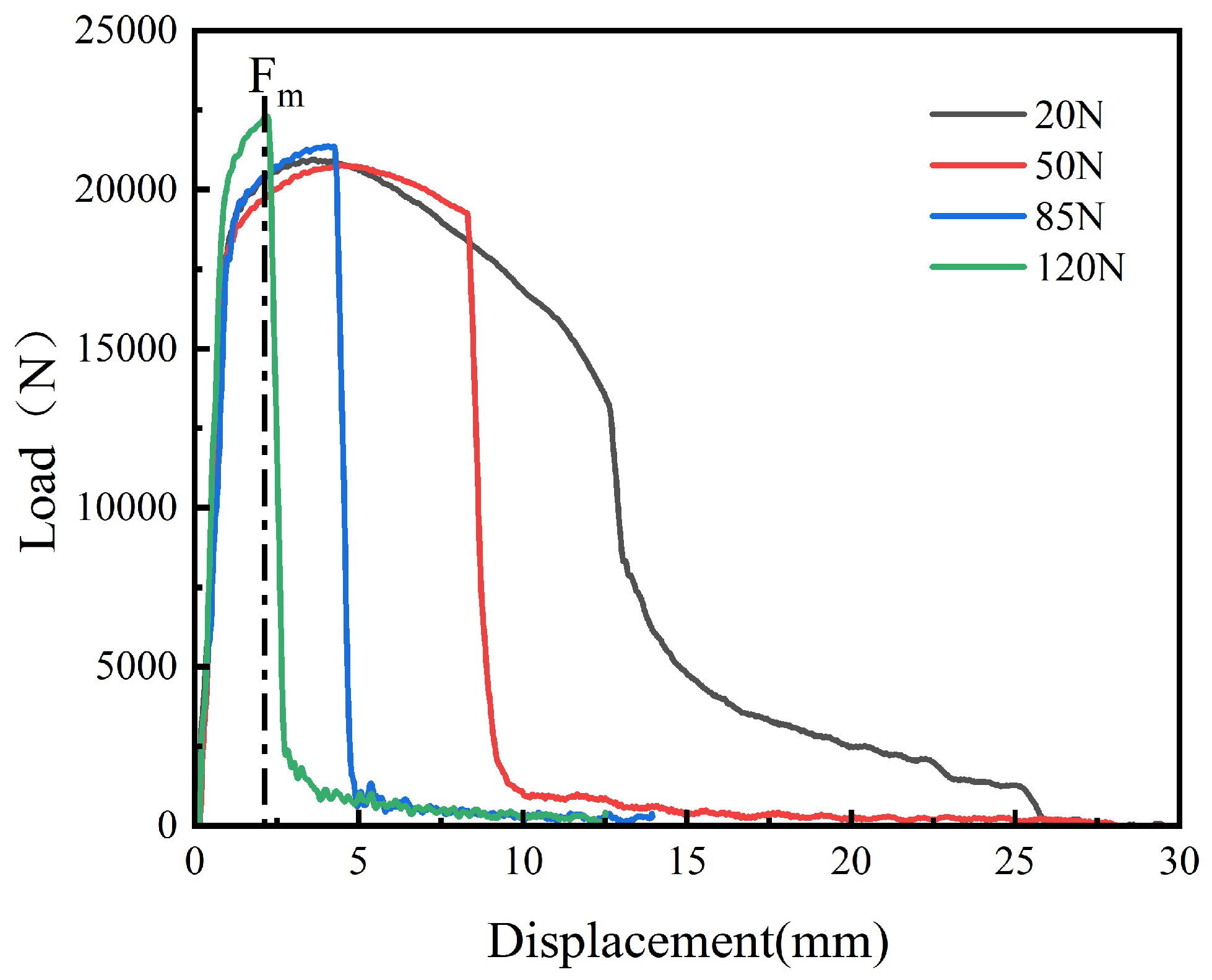
Figure 1 presents the load–displacement curves obtained from the instrumented Charpy impact tests conducted at −30 °C on the experimental steels with systematically varied nitrogen contents. The area enclosed between the curve and the vertical line descending from the maximum load point (Fm) toward the origin represents the crack initiation energy, whereas the area extending to the right of this vertical line corresponds to the crack propagation energy.
The quantitative impact parameters are summarized in Table 2. With increasing nitrogen content from 0.0018 wt% (20N) to 0.0120 wt% (120N), the crack initiation energy decreased from 62.4 J to 36.0 J, while the crack propagation energy exhibited a dramatic reduction from 207.3 J to 12.7 J. Consequently, the total absorbed impact energy declined from 269.7 J to 48.7 J. Notably, for the 120N steel, the proportion of crack propagation energy to total impact energy was markedly diminished (approximately 26.1%), indicating severely restricted energy dissipation during post-initiation crack advancement temperature toughness.
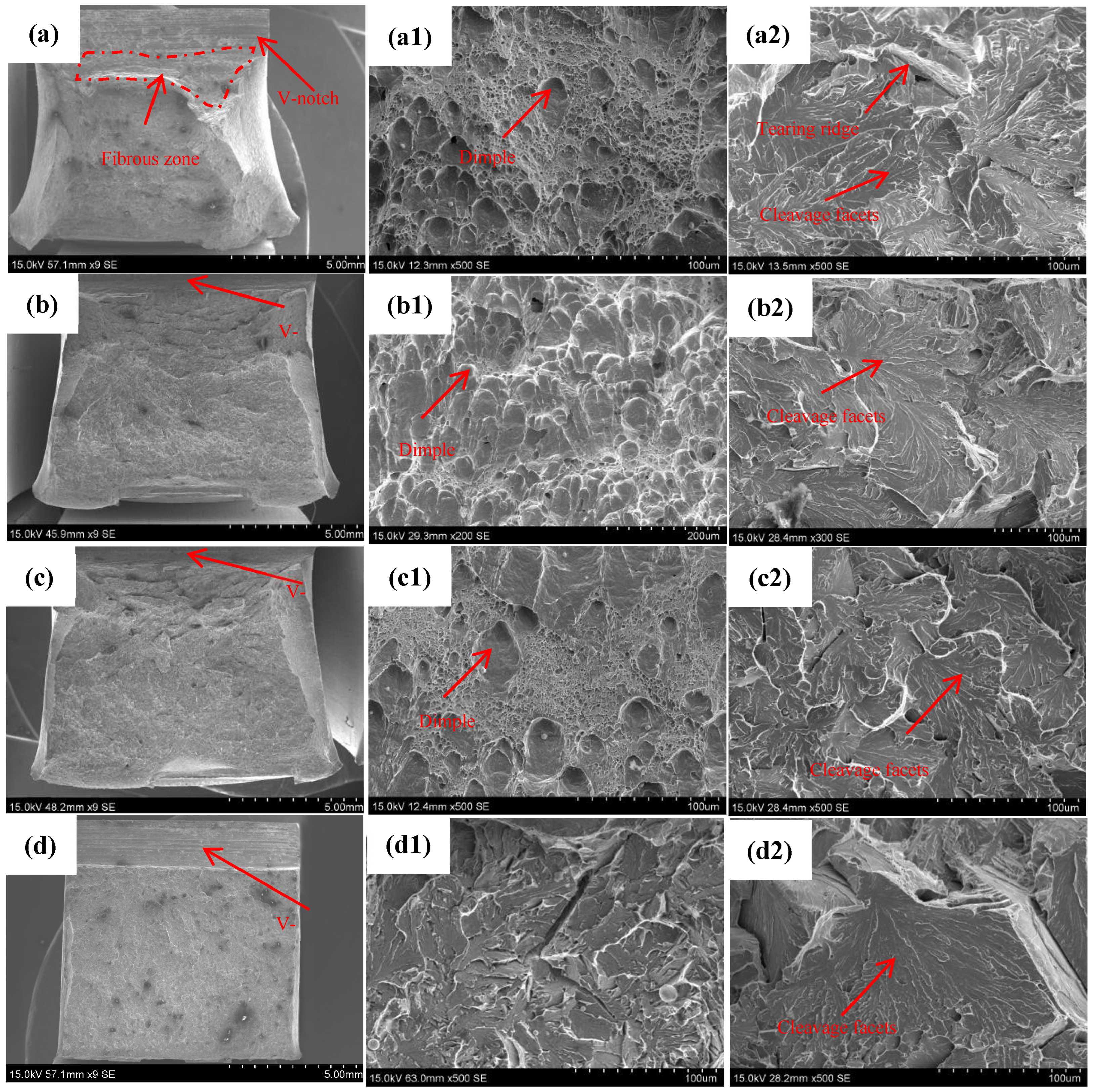
Figure 2 illustrates the macroscopic and high-magnification microscopic fracture surface morphologies of the impacted specimens examined via scanning electron microscopy (SEM). For the 20N steel (0.0018 wt% N), the fibrous zone exhibits fine, deep dimples, and the radial zone features relatively small cleavage facets (28.89 μm). Figure 2(a2) reveals abundant tear ridges within cleavage facets, with prominent ridges at facet boundaries effectively impeding crack propagation. At 0.0048 wt% N (50N), dimples in the fibrous zone become shallower, and cleavage facet size increases moderately (31.52 μm). In contrast, the 120N steel (0.0120 wt% N) displays markedly degraded fracture characteristics: dimples in the fibrous zone are shallow and flattened, tear ridges at fracture edges are nearly absent, and the fracture surface is overwhelmingly dominated by the radial zone, characterized by extensive river patterns and distinct radially propagating secondary cracks (Figure 2(d2)). Cleavage facet dimensions reach a maximum of 44.62 μm. These progressive microstructural transitions demonstrate a fracture mechanism evolving from ductile-dominated failure toward predominantly brittle cleavage fracture with elevated nitrogen content.

3.2. Microstructure Characterization

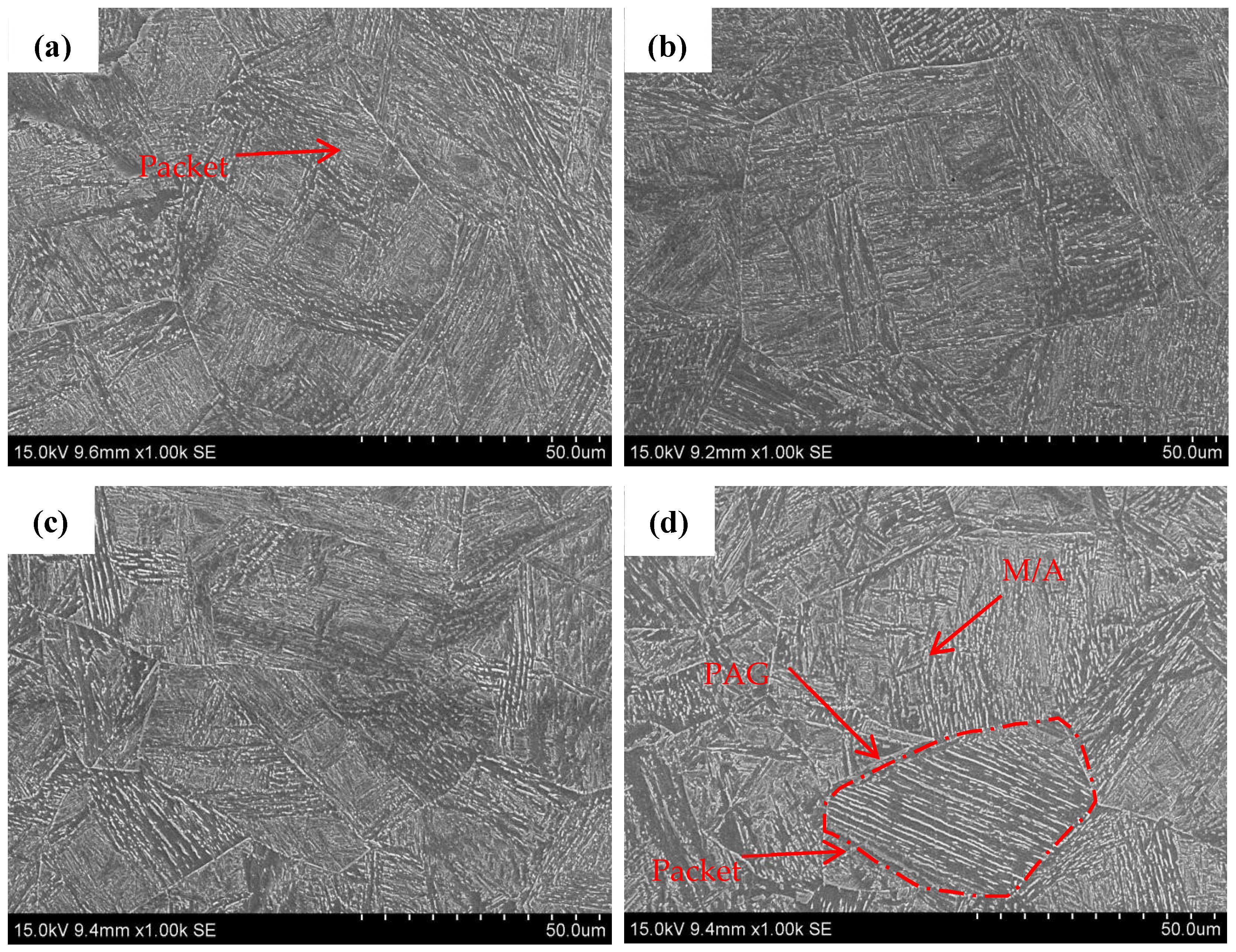
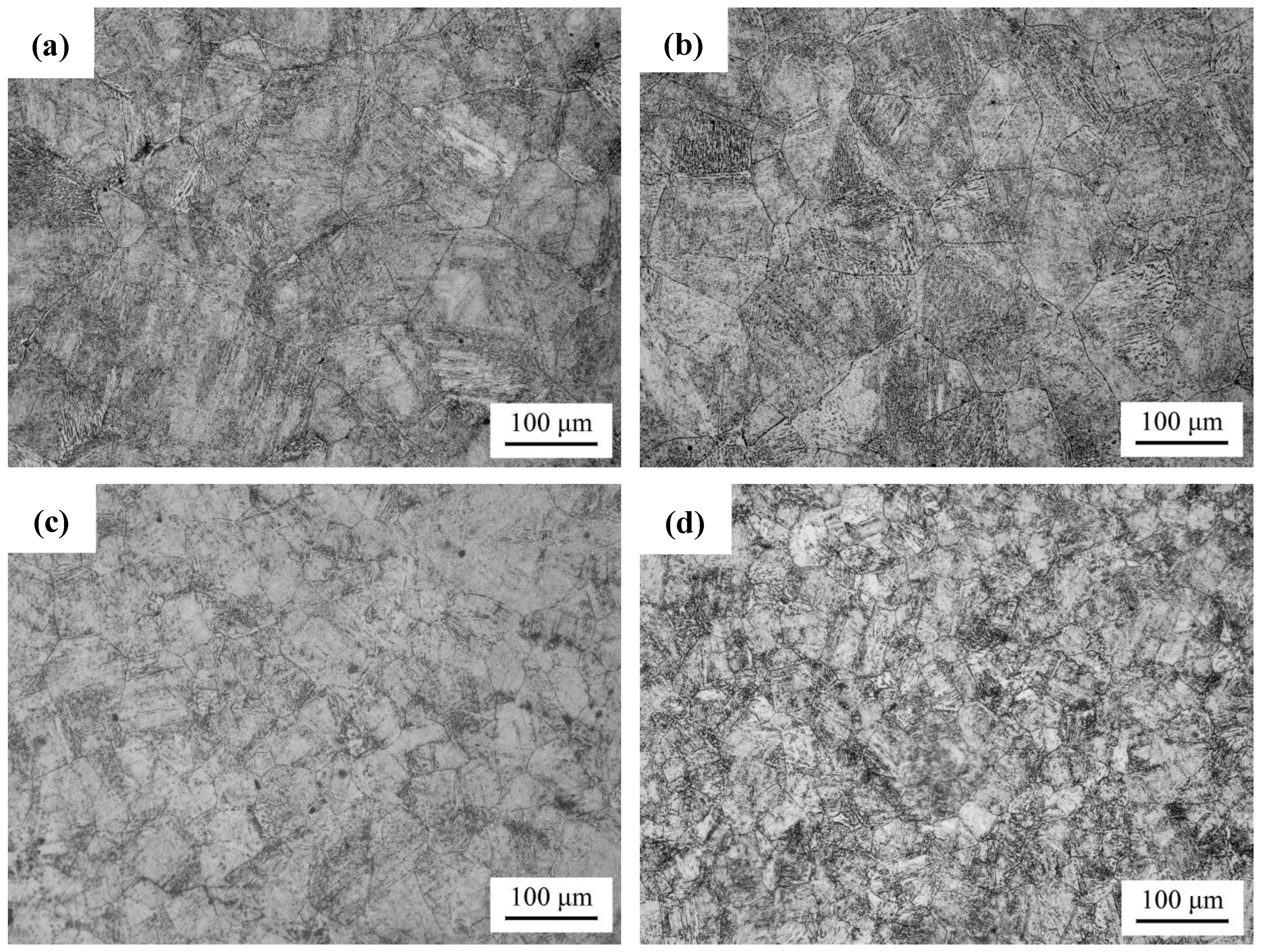
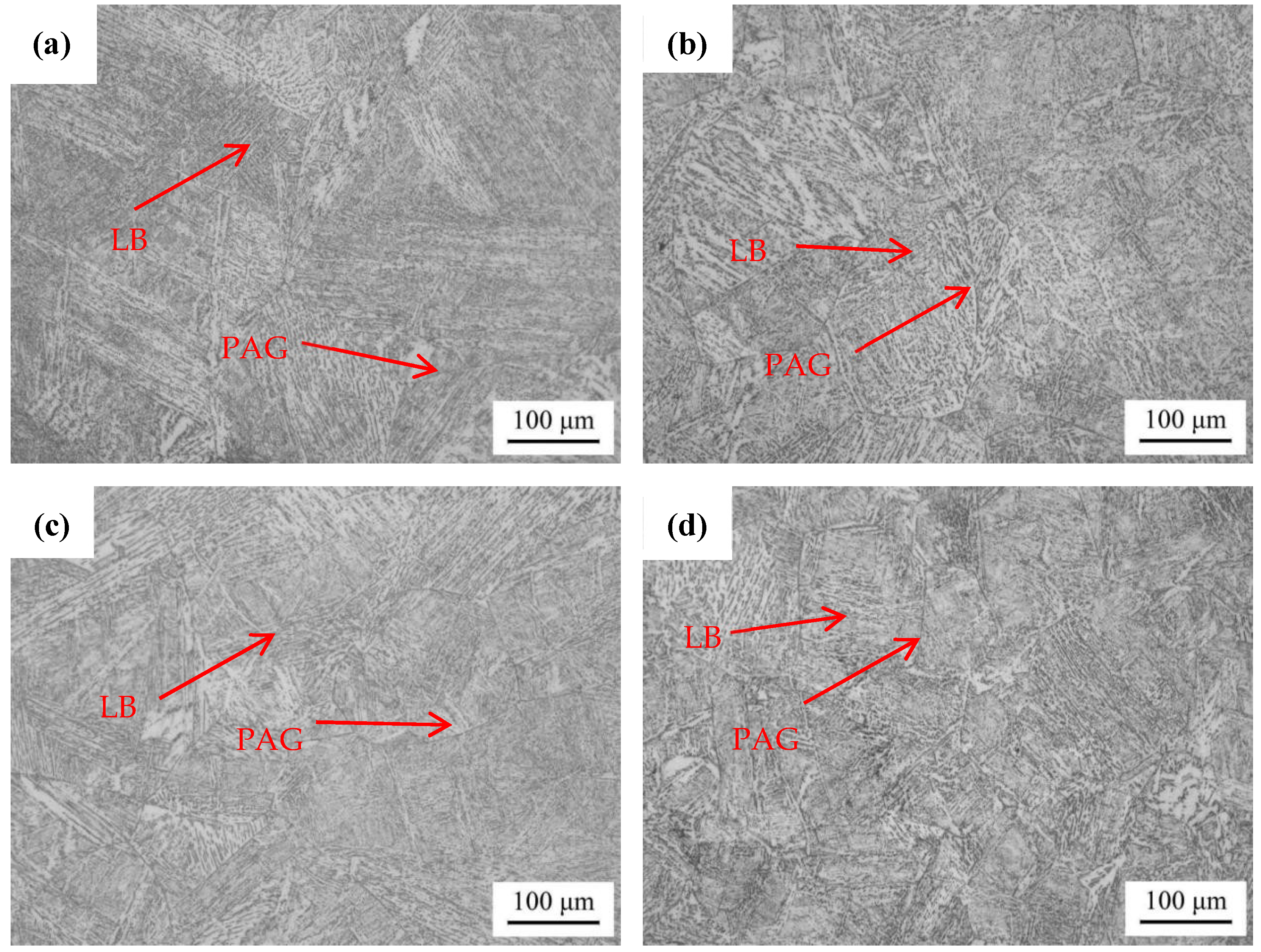
Optical micrographs (OMs) of the coarse-grained heat-affected zone (CGHAZ) in the experimental steels with varying nitrogen contents are presented in Figure 3a–d. The microstructures are predominantly composed of lath bainite (LB), with prior austenite grain boundaries (PAGBs) clearly resolved. SEM maps (Figure 4a–d) reveal that prior austenite grains consist of packet structures formed by parallel bundles of bainitic laths. The coarsening of packet dimensions is observed with increasing nitrogen content. The area fraction (fM/A) and average size (dM/A) were quantified via SEM, with the statistical results summarized in Table 3. As the nitrogen content rises from 20N to 120N, fM/A increases from 2.11% to 5.23%, while dM/A correspondingly increases from 0.17 μm to 0.71 μm.
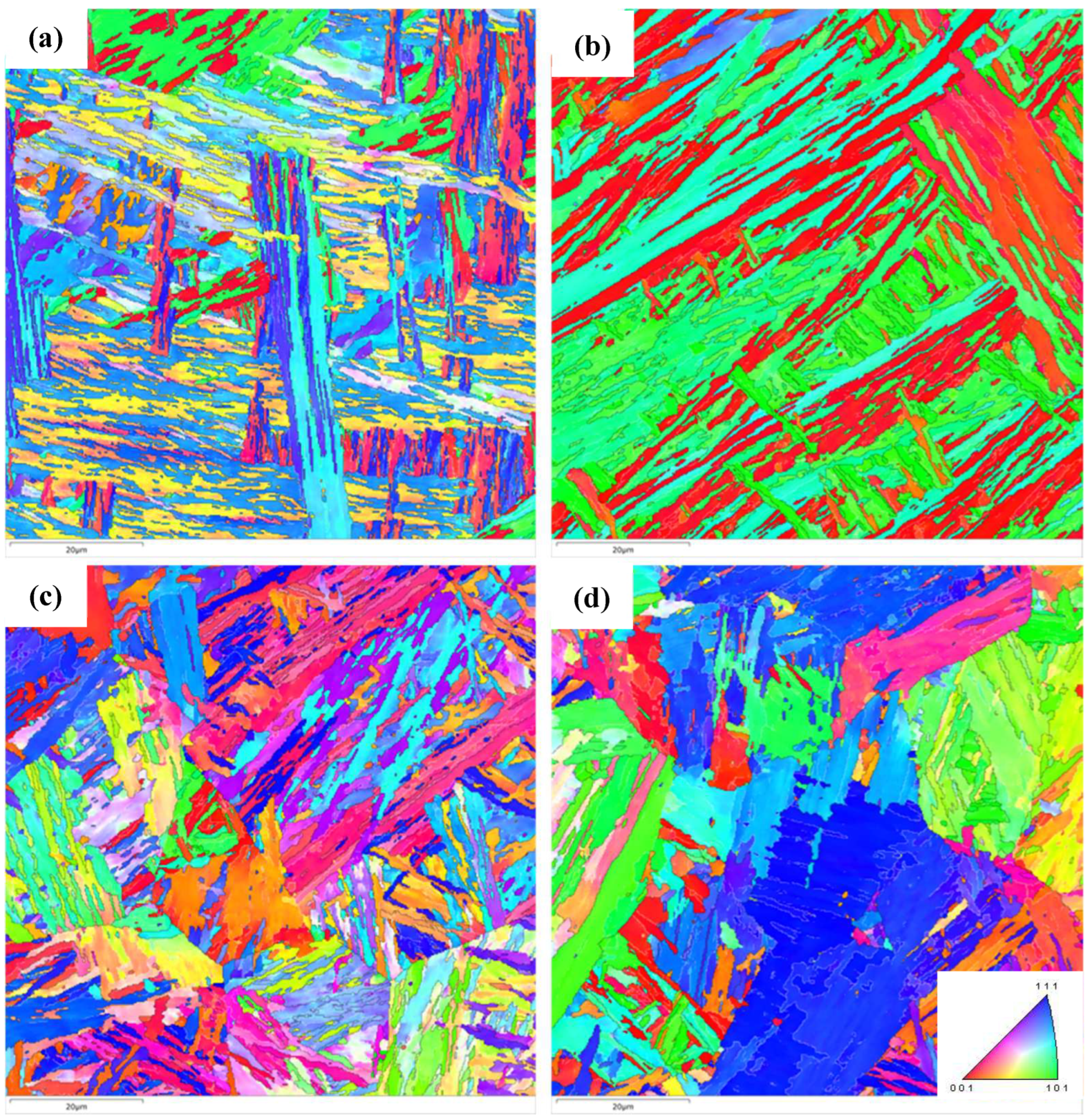
The backscattered electron diffraction EBSD analysis was conducted to further characterize the CGHAZ microstructures. Inverse pole figure (IPF) maps (Figure 5a–d) distinguish high-angle grain boundaries (HAGBs, misorientation angle > 15°) and low-angle grain boundaries (LAGBs, 2° ≤ θ ≤ 15°) using black and white lines, respectively.
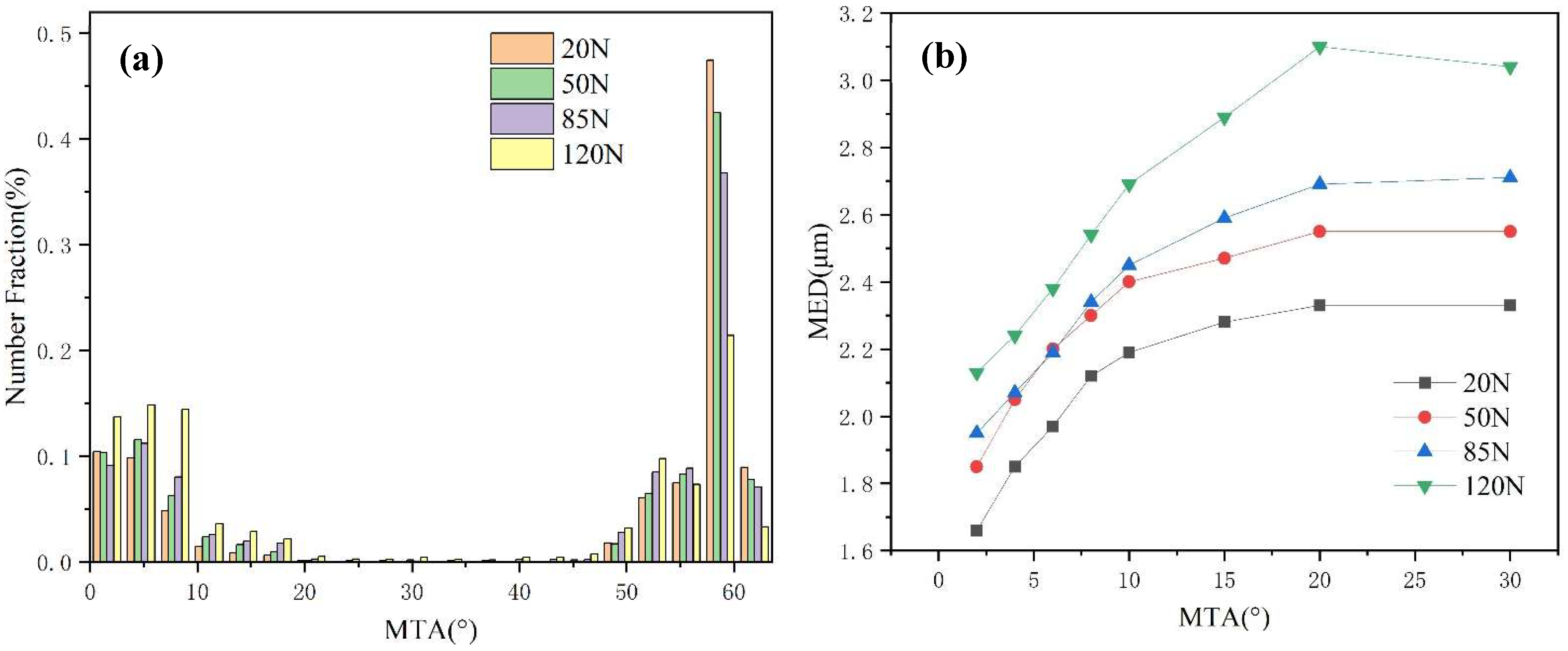
The quantitative results are provided in Figure 6 and Table 3. Pronounced orientation contrasts are evident between the PAGBs/packet boundaries (predominantly HAGBs) and intra-packet regions (densely populated by LAGBs within lath bundles). The HAGB fraction decreases monotonically with the nitrogen content, declining from 67.5% (20N) to 52.2% (120N). The literature reports characteristic average misorientation angles of ~58° (PAGBs), ~52° (packet boundaries), and ~16° (block boundaries) [21]. The misorientation angle (θ) distribution (Figure 6a) shows bimodal peaks at 0–20° and 50–60°. Correlation with IPF maps confirms that the 2–20° peak originates primarily from block structures (LAGB-dominated), whereas the 50–60° peak corresponds to PAGBs and packet boundaries (HAGB-dominated), consistent with Liu et al. [22]. The reduction in packet density due to lath bainite coarsening at elevated nitrogen levels directly contributes to the diminished fraction of boundaries within the 50–60° range [14].
To establish the relationship between misorientation tolerance angles (MTAs) and effective grain refinement, the mean equivalent diameter (MED) was evaluated at discrete misorientation tolerance angles (2°, 4°, 6°, 8°, 10°, 15°, 30°), as shown in Figure 6b. For 2° ≤ θ < 15°, MED increases sharply with rising θ; for 15° ≤ θ ≤ 30°, the curve plateaus. Critically, at identical θ thresholds, the MED values consistently increase with the nitrogen content: MED2° ≤ θ < 15° rises from 2.01 μm (20N) to 2.21 μm (50N), 2.27 μm (85N), and 2.48 μm (120N); MEDθ ≥ 15° increases from 2.33 μm to 2.55 μm, 2.70 μm, and 3.07 μm, respectively. This trend quantitatively reflects the coarsening of microstructural units with nitrogen enrichment.
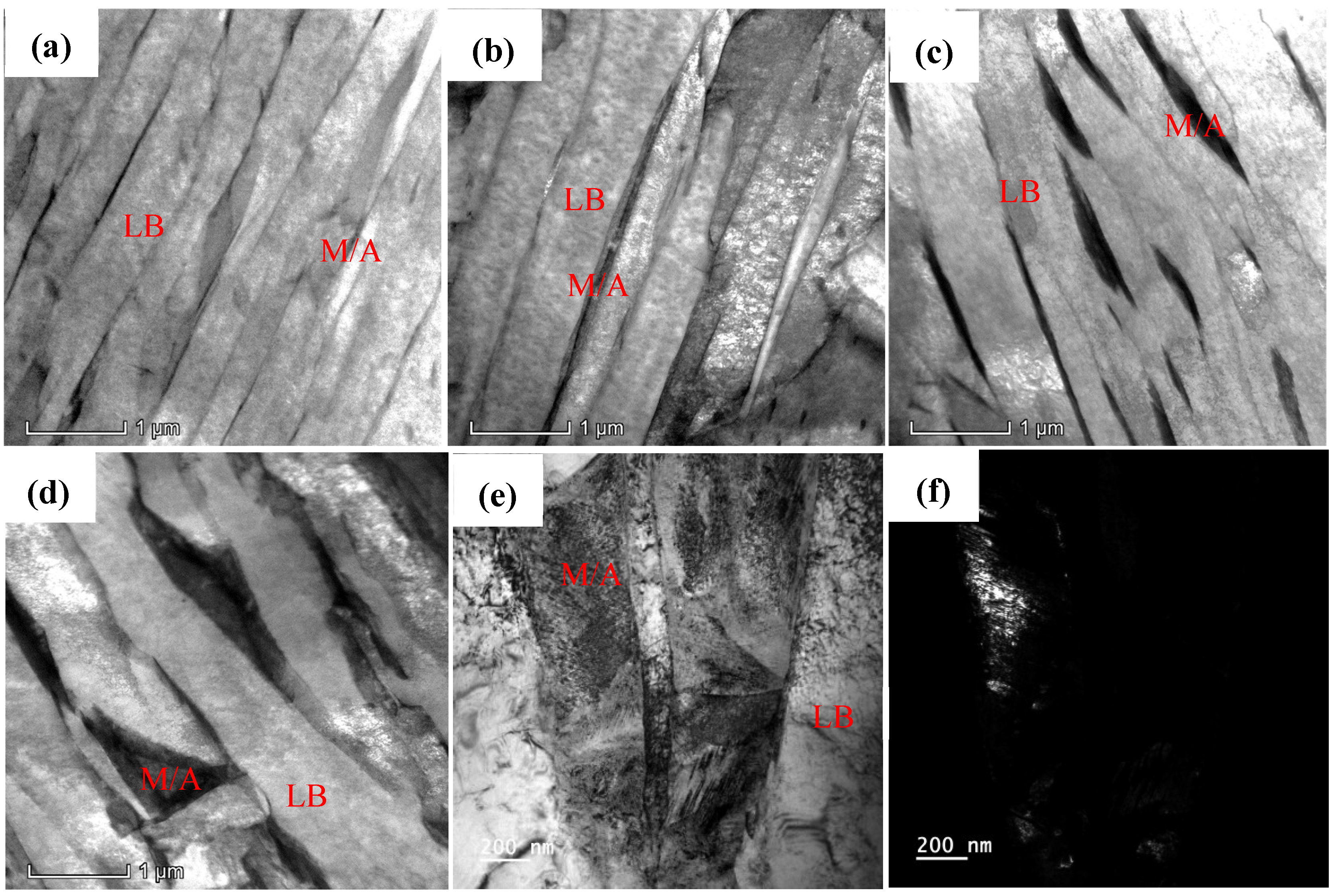
The TEM bright-field images (Figure 7a–e) confirm the presence of lath bainite ferrite and M/A constituents dispersed within the matrix. Elevated nitrogen content promotes higher fM/A, a morphological shift from elongated to blocky M/A particles, and increased bainitic lath width, corroborating SEM observations. The regions adjacent to M/A constituents exhibit significantly elevated dislocation densities (Figure 7e,f), suggesting localized strain concentration.
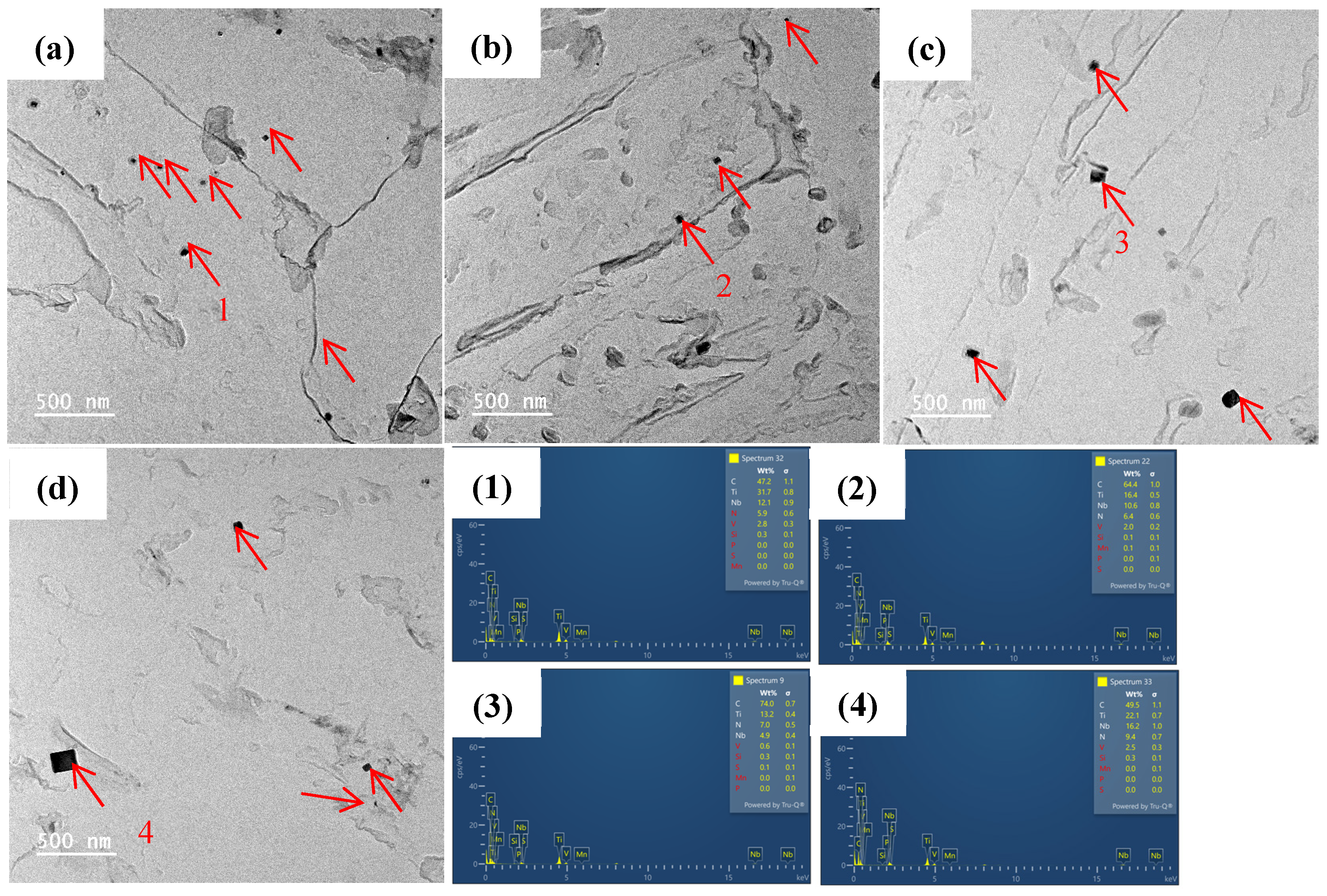
Precipitate distribution in the CGHAZ samples was analyzed via carbon extraction replicas coupled with EDS (Figure 8a–d). Abundant near-square second-phase particles precipitate preferentially along PAGBs. EDS spectra (Figure 8, insets 1–4) identify these as Ti-rich (Ti,Nb)(C,N) carbonitrides. Both the number density and average particle size of these precipitates increase progressively with nitrogen content, indicating enhanced nitride-forming driving force and potential pinning effects on grain boundary migration during thermal cycling.

4. Discussion

4.1. Effect of Nitrogen Content on Microstructural Evolution in the Coarse-Grained Heat-Affected Zone (CGHAZ)

The CGHAZ microstructure is intrinsically linked to prior austenite grain (PAG) size. To preserve the high-temperature microstructure prior to phase transformation during cooling, the specimens were quenched at 900 °C within the CGHAZ thermal cycle. The metallographic characterization of PAGs (Figure 9) and quantitative statistics (Table 3) reveal that the average PAG size (dPAG) decreases progressively with increasing nitrogen content from 77.24 μm (20N) to 70.34 μm (50N), 47.04 μm (85N), and 35.33 μm (120N). This refinement is attributed to enhanced precipitation of fine particles (<50 nm), which exerts a potent Zener pinning effect on austenite grain boundaries, effectively suppressing grain coarsening during thermal cycling [23,24].
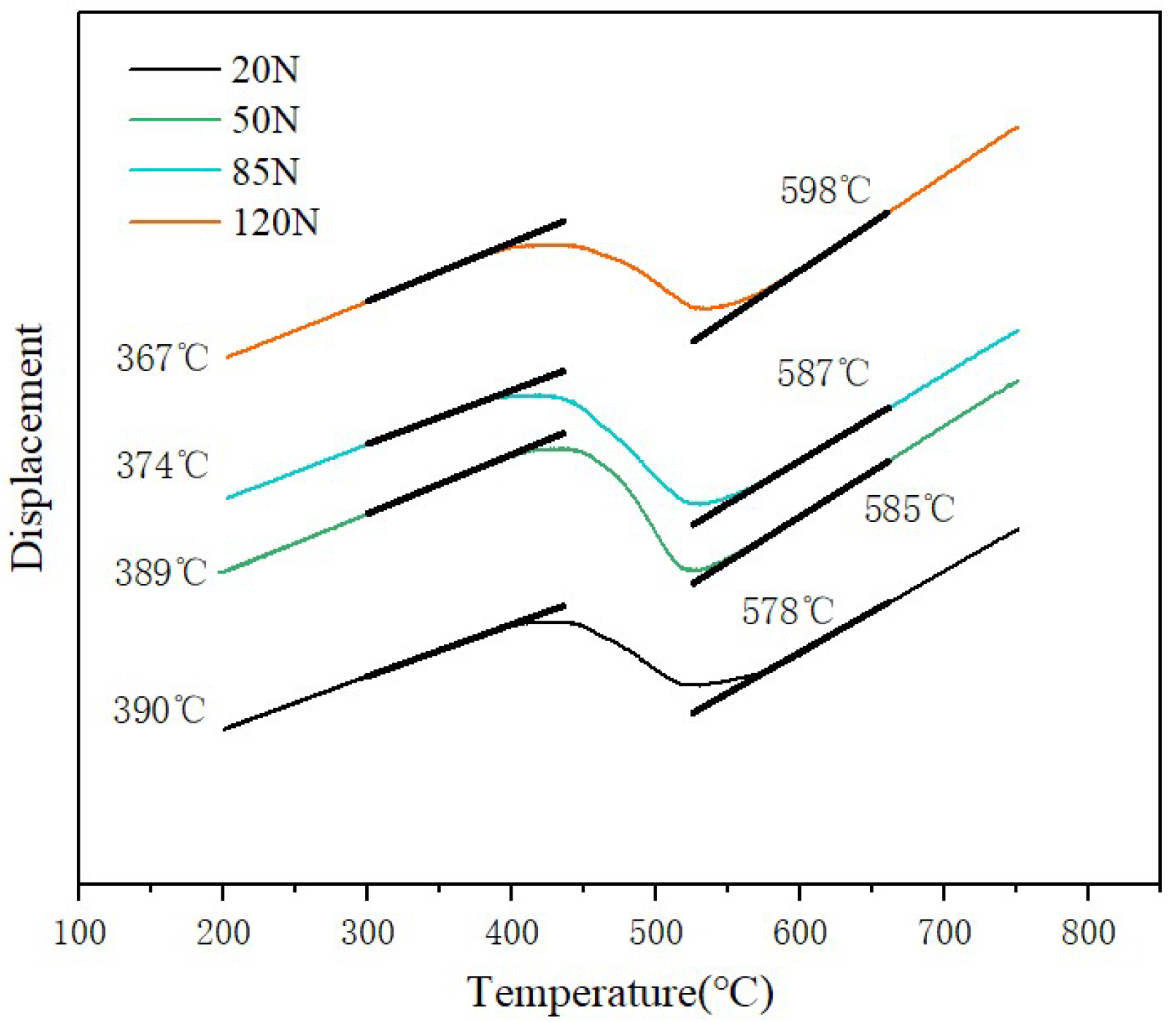
As shown in Figure 3 and Figure 4, all the CGHAZ microstructures consist of lath bainite (LB) and martensite–austenite (M/A) constituents. With rising nitrogen content, the LB packet structures coarsen markedly, while both the volume fraction (fM/A) and average size (dM/A) of the M/A constituents increase concurrently. To elucidate the underlying mechanisms, phase transformation temperatures during the CGHAZ thermal cycle were analyzed (Figure 10). Increasing nitrogen elevates the bainite start temperature (Ar3) from 578 °C to 598 °C but depresses the finish temperature (Ar1) from 390 °C to 367 °C, thereby widening the bainitic transformation window (ΔT = Ar3 − Ar1) from 188 °C to 231 °C. According to the established principles [25,26], elevated Ar3 promotes bainite nucleation at higher temperatures where the driving force for austenite/ferrite interface migration diminishes, and nucleation density decreases, resulting in coarsened packet structures consistent with the experimental observations (Figure 3a,b).
Concurrently, the reduced Ar1 suppresses high-temperature diffusional transformations, extending the temperature range for metastable austenite (γ′) retention and providing favorable thermodynamic conditions for its enrichment [27]. The continuous cooling transformation (γ → αbainite + γ′) is governed by carbon diffusion kinetics and austenite stability. In the present study, the elevated nitrogen content promotes a marked increase in the volume fraction of the martensite–austenite (M-A) constituents through two synergistically acting mechanisms. Firstly, the depression of the austenite-to-ferrite transformation finish temperature (Ar1) significantly widens the thermal interval over which metastable retained austenite (γ′) can persist during continuous cooling, thereby extending the window for γ′ accumulation. Secondly, nitrogen functions as a potent austenite-stabilizing alloying element, substantially enhancing the thermodynamic and chemical stability of γ′ against carbon diffusion-mediated decomposition [28]. Upon further cooling, this enriched γ′ fraction partially transforms into martensite while retaining residual austenite, ultimately forming M/A constituents with elevated volume fraction and coarser morphology.
Furthermore, the increase in N content led to the reduction in the original austenite grain size (PAG) from 70 μm to 36 μm (Figure 9a–d), which was attributed to the pinning effect of the undissolved precipitated phases at the peak temperature of the thermal cycle [23]. However, the refinement of PAG does not improve toughness. Instead, the proportion of high-angle grain boundaries (HAGBs) decreased from 68% to 49% (Figure 6a). This is attributed to the predominance of low-angle grain boundaries within the coarsened bainitic packets [14], coupled with the reduced high-angle grain boundary (HAGB) density resulting from increased packet size, as shown in Figure 6a and Figure 7e.

4.2. Effect of Nitrogen Content on Impact Properties of Experimental Steels

Studies indicate that in low-carbon microalloyed steels, the martensite–austenite (M/A) constituent [29,30] and microstructural composition [31,32] significantly influence low-temperature toughness. In particular, the hard-phase M/A constituent markedly affects impact toughness through its size, volume fraction, and morphology [33]. The M/A constituent is formed via retained austenite (γ′) during cooling. The M/A constituent forms via the martensitic transformation of retained austenite (γ′) during cooling. This transformation induces volumetric expansion, subjecting the adjacent ferrite matrix to compressive stresses and promoting dense dislocation tangles, as shown in Figure 7e. During impact loading, dislocation slip is impeded and accumulates at these tangles, generating localized microstrain concentration that initiates microvoids or microcracks [34,35,36].
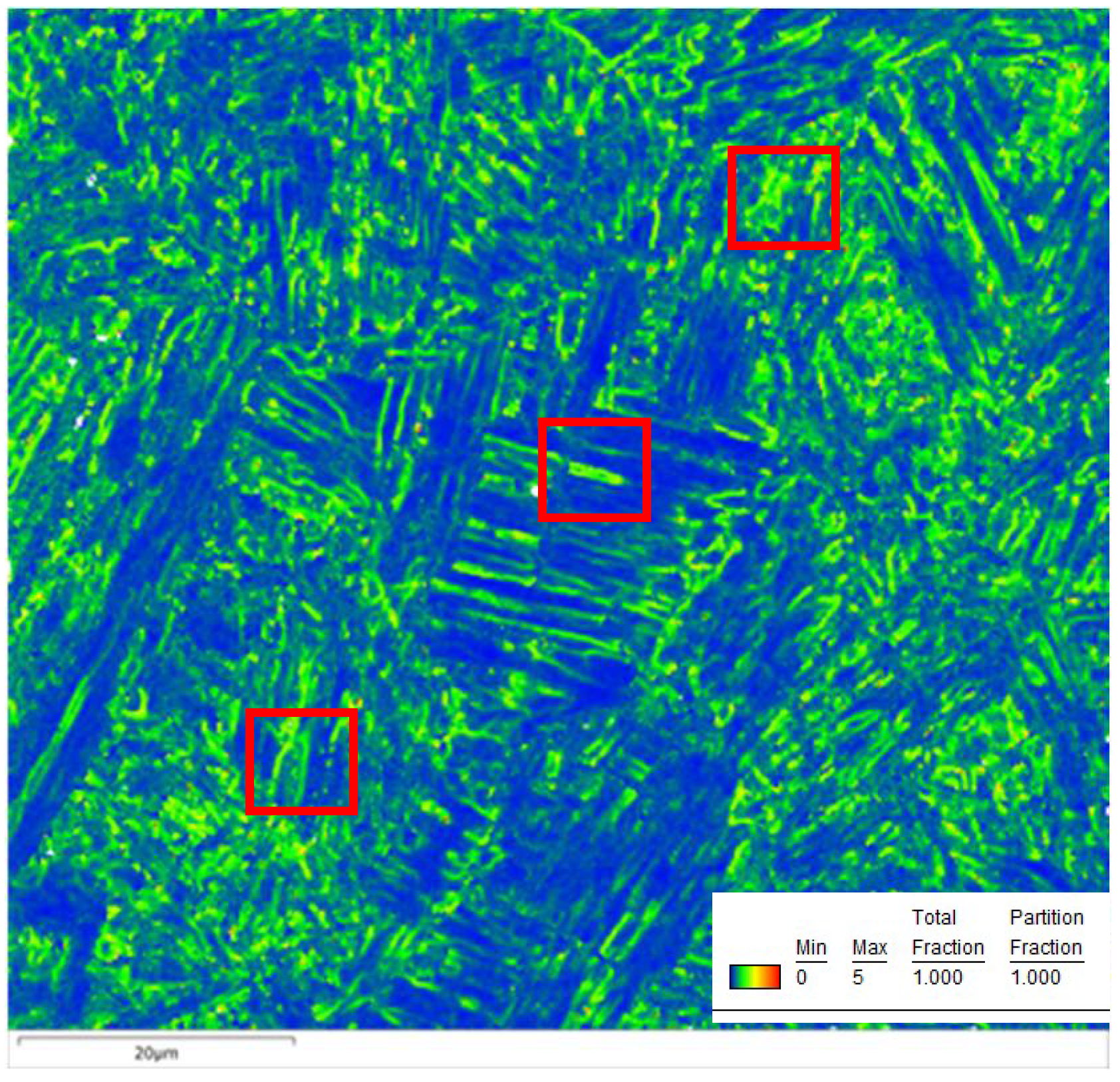
Additionally, mismatches in hardness and elastic modulus between the M/A constituent and ferrite matrix cause deformation incompatibility under impact loading, leading to interfacial debonding and further microvoid/microcrack formation [31]. With increasing nitrogen content, the size, volume fraction, and morphology of the M/A constituent undergo pronounced changes. Higher nitrogen levels increase the M/A volume fraction, promoting the formation of elongated and blocky morphologies detrimental to toughness. Kernel average misorientation (KAM) analysis (Figure 11) reveals elevated KAM (3.63° ± 0.31) values at M/A locations, confirming intensified microstrain concentration.
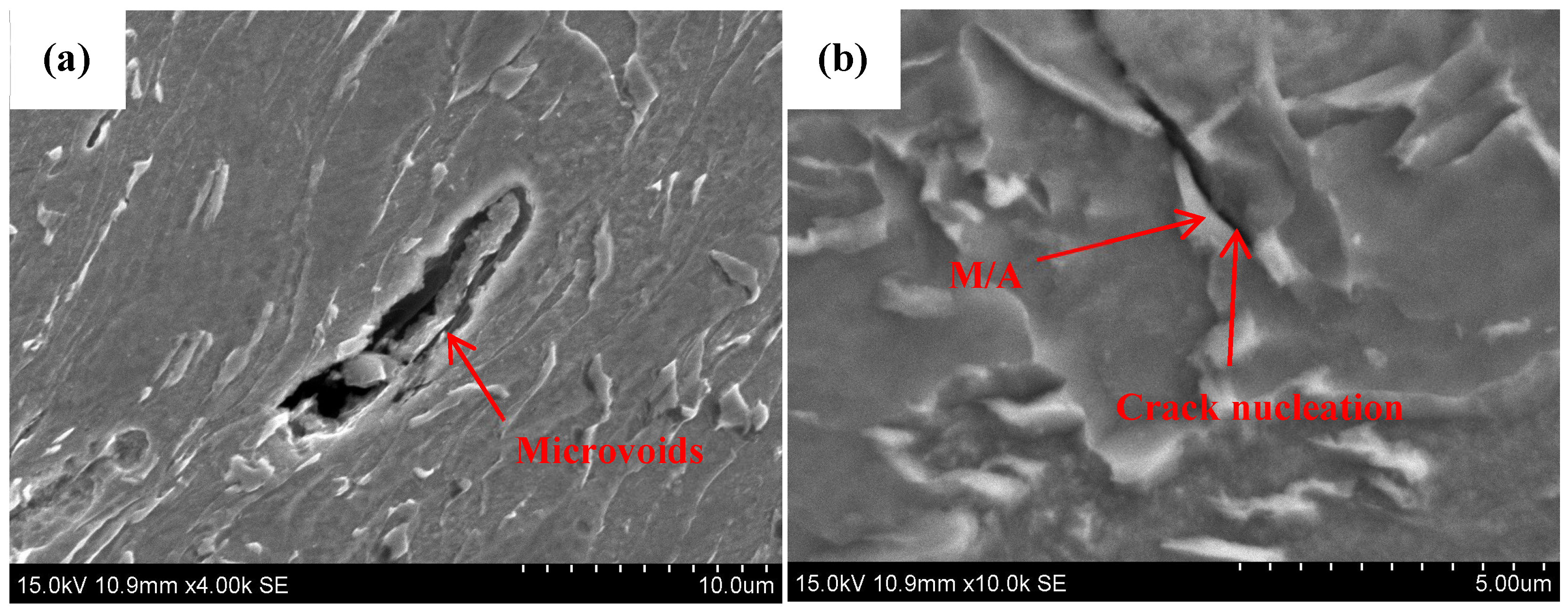
Crack initiation and propagation behavior across the specimens with varying nitrogen contents are illustrated in Figure 12. In the 20N sample, microvoids nucleated at martensite–austenite (M/A) constituents and propagated via coalescence and coarsening, exhibiting an average size of 2.87 ± 0.42 μm. During the formation of these microvoids, significant plastic deformation occurs in the surrounding bainite ferrite matrix, which helps to relieve the stress between the M/A constituent and the adjacent matrix, thereby reducing the tendency for localized microstrain concentration (Figure 12a). This results in a higher crack initiation energy (Figure 2, Figure 3 and Figure 4 and Table 2 and Table 3), with the fracture mode being predominantly ductile.
Conversely, when the nitrogen content increases to 0.0120%, multiple microcracks initiate and propagate from the elongated M/A constituents, indicating a greater propensity for microcrack initiation. Consequently, the sample exhibits lower crack initiation energy and a fracture mode that is primarily brittle (Figure 12b). These observations highlight the adverse effect of increased nitrogen content on the toughness of the steel, particularly through its influence on the characteristics and distribution of M/A constituents, which are critical to the material’s resistance to impact loading.
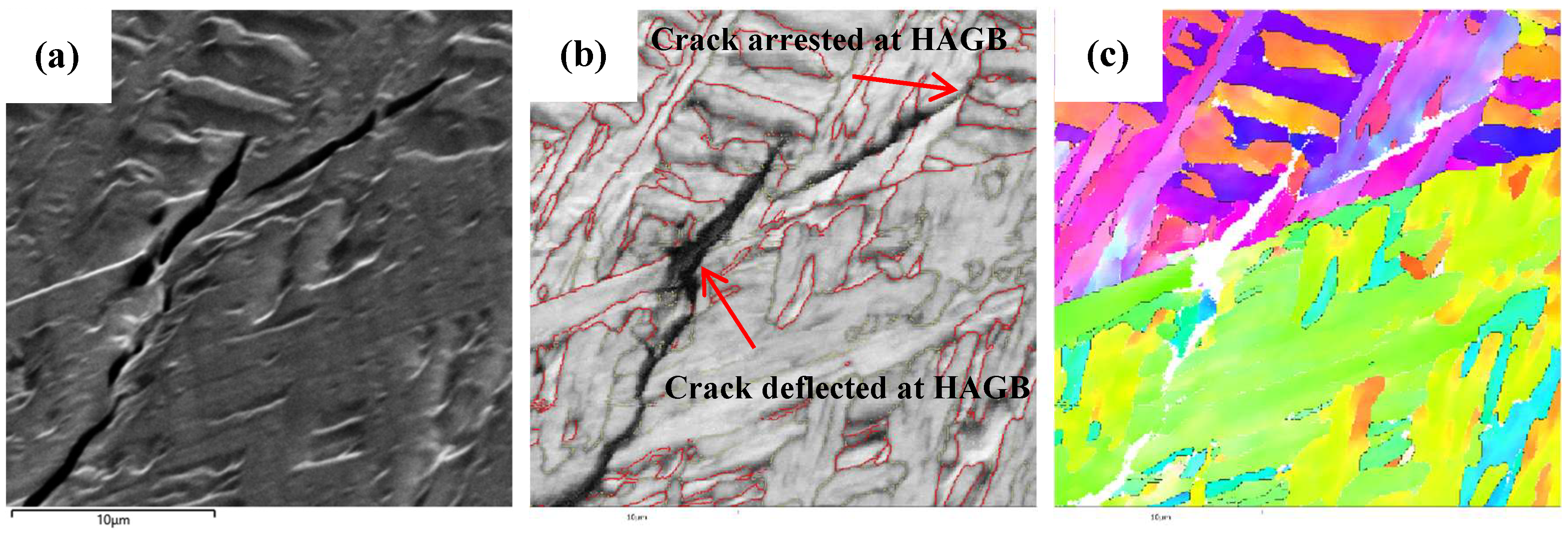
Prior research demonstrates that high-angle grain boundaries (HAGBs) impede microcrack propagation during impact fracture, increasing crack propagation energy and enhancing toughness [29]. In this study, although nitrogen refines prior austenite grains (PAGs) via precipitate pinning, the elevated bainitic transformation temperature coarsens lath bainite packets and reduces HAGB fraction at packet boundaries (Table 2). Consequently, the diminished HAGB density weakens resistance to crack propagation. EBSD analysis of secondary crack paths on impact fracture surfaces (Figure 13) shows that in the 120 ppm N specimen, microcracks propagate unimpeded through low-angle grain boundaries (LAGBs) and only deflect or arrest upon encountering sparse HAGBs. The reduced HAGB fraction lowers energy dissipation during propagation, yielding decreased impact energy. This constitutes an additional mechanism contributing to the decline in impact energy with increasing nitrogen content.

5. Conclusions

This study systematically investigated the influence mechanism of nitrogen content (0.0018–0.0120 wt%) on the microstructure evolution and low-temperature toughness of the coarse-grained heat-affected zone (CGHAZ) of X70 pipeline steel. The main research conclusions are as follows:
(1) The increase in nitrogen content expands the temperature window for bainite transformation, leading to the coarsening of the lamellar bainite packet structure and promoting an increase in the content of M/A components, a transition from dispersed and small to continuous blocky/elongated morphology. The pinning effect of the precipitated phases causes the original austenite grains (PAGs) to be refined.
(2) The increase in nitrogen content leads to a decrease in the proportion of high-angle grain boundaries (HAGBs), weakening the ability of grain boundaries to hinder crack propagation; at the same time, the coarse and continuously distributed M/A components induce local micro-strain concentration, becoming the preferred initiation position for micro-cracks, reducing the crack initiation energy and propagation energy.
(3) The refinement of PAG does not improve toughness. As the nitrogen content increases to 0.0120 wt%, the impact energy at −30 °C of the CGHAZ decreases from 269.7 J to 48.7 J, and the fracture mode shifts from being dominated by toughness to being dominated by brittleness. To ensure the low-temperature service safety of X70 pipeline steel weld joints, it is recommended to strictly control the nitrogen content of the base metal below 0.005 wt%. These quantitative relationships provide actionable guidance for the industrial practice of X70 pipeline steel.

Author Contributions

Conceptualization, J.L. and K.G.; methodology, H.M. and C.Z.; software, H.M. and J.W.; validation, K.G., J.H. and Q.W.; formal analysis, J.H., C.Z. and T.W.; investigation, J.L.; resources, T.W. and Q.W.; data curation, J.W.; writing—original draft preparation, J.L.; writing—review and editing, K.G.; visualization, H.M. and J.H.; supervision, T.W. and Q.W.; project administration, K.G.; funding acquisition, K.G. All authors have read and agreed to the published version of the manuscript.

Funding

This work was supported by the Education Department Science Research project of Henan under Grant No. 222300420169.

Data Availability Statement

The original contributions presented in this study are included in the article. Further inquiries can be directed to the corresponding author.

Conflicts of Interest

Author Jiangcheng and Chuanyou Zhang were employed by the company Technical Center, Tianjin Pipe (Group) Corporation Limited. The remaining authors declare that the research was conducted in the absence of any commercial or financial relationships that could be construed as a potential conflict of interest.

References

  1. Cao, Y.X.; Wan, X.L.; Hou, Y.H.; Liu, Y.; Song, M.M.; Li, G.Q. Comparative study on the effect of Y content on grain refinement in the simulated coarse-grained heat affected zone of X70 pipeline steels. Micron 2019, 127, 102758. [Google Scholar] [CrossRef]
  2. Nie, Q.D.; Wang, X.; Li, J.X.; Wang, P.J.; Li, X.L. Effect of Ni interlayer on the microstructure, mechanical and corrosion properties of the dissimilar 1MnCrMoNi/X70 steels friction welding joint. Sci. Technol. Weld. Join. 2022, 27, 61–67. [Google Scholar] [CrossRef]
  3. Liu, L.G.; Xiao, H.; Li, Q.; Liu, Y.; Li, P.S.; Yang, Z.Q.; Yu, H. Evaluation of the fracture toughness of X70 pipeline steel with ferrite-bainite microstructure. Mater. Sci. Eng. A 2017, 688, 388–395. [Google Scholar] [CrossRef]
  4. Wan, X.L.; Wang, H.H.; Cheng, L.; Wu, K.M. The formation mechanisms of interlocked microstructures in low-carbon high-strength steel weld metals. Mater. Charact. 2012, 67, 41–51. [Google Scholar] [CrossRef]
  5. Xiong, Z.H.; Liu, S.L.; Wang, X.M.; Shang, C.J.; Li, X.C.; Misra, R.D.K. The contribution of intragranular acicular ferrite microstructural constituent on impact toughness and impeding crack initiation and propagation in the heat-affected zone (HAZ) of low-carbon steels. Mater. Sci. Eng. A 2015, 636, 117–123. [Google Scholar] [CrossRef]
  6. Luo, X.; Xu, G.; Chen, X.; Sun, J.; Zhang, C. Effect of undercooled austenite ausforming on the role of the M–A constituents in the CGHAZ toughness of the HSLA steels with bainite structure. Mater. Sci. Eng. A 2022, 833, 142571. [Google Scholar] [CrossRef]
  7. Liu, J.; Wang, J.; Hu, F.; Fu, K.; Zhang, Z.; Wu, Y. Effects of Ti/N Ratio on Coarse-Grain Heat-Affected Zone Microstructure Evolution and Low-Temperature Impact Toughness of High Heat Input Welding Steel. Coatings 2023, 13, 1347. [Google Scholar] [CrossRef]
  8. Hu, J.; Du, L.X.; Wang, J.J. Effect of welding heat input on microstructures and toughness in simulated CGHAZ of V-N high strength steel. Mater. Sci. Eng. A 2013, 577, 161–168. [Google Scholar] [CrossRef]
  9. Xu, X.D.; Zhu, Z.Y.; Wang, W.J.; Hao, N.; Lv, Y.C. Content control of carbon, phosphor, sulfur and nitrogen in pipeline steel X70. Iron Steel 2010, 45, 20–23. [Google Scholar] [CrossRef]
  10. Hu, B.; Zhang, Y.; Wang, Q. Mechanism of CGHAZ refinement and strength-toughness improvement by trace boron in weathering steel under high-heat-input welding. Mater. Sci. Eng. A 2026, 949, 149438. [Google Scholar] [CrossRef]
  11. Shi, Z.; Yang, C.; Wang, R.; Li, Z. Effect of nitrogen on the microstructures and mechanical properties in simulated CGHAZ of vanadium microalloyed steel varied with different heat inputs. Mater. Sci. Eng. A 2016, 649, 270–281. [Google Scholar] [CrossRef]
  12. Fan, H.B.; Shi, G.H.; Peng, T.; Wang, Q.M.; Wang, L.P.; Wang, Q.F.; Zhang, F.C. N-induced microstructure refinement and toughness improvement in the coarse grain heat affected zone of a low carbon Mo–V–Ti–B steel subjected to a high heat input welding thermal cycle. Mater. Sci. Eng. A 2021, 824, 141799. [Google Scholar] [CrossRef]
  13. Chai, F.; Shi, Z.; Yang, C.; Zhang, S.; Wang, Q. Effect of nitrogen on microstructure and mechanical properties for simulated CGHAZ of normalized vanadium micro-alloyed steel. Chin. J. Mater. Res. 2019, 33, 848–856. [Google Scholar] [CrossRef]
  14. Mohseni, P.; Solberg, J.K.; Karlsen, M.; Akselsen, O.M. Cleavage fracture initiation at M/A constituents in intercritically coarse-grained heat-affected zone of a HSLA Steel. Metall. Mater. Trans. A 2014, 45, 384–394. [Google Scholar] [CrossRef]
  15. Zajac, S.; Siwecki, T.; Svensson, L.E. Influence of plate production processing route, heat input and nitrogen on the HAZ toughness in Ti-V microalloyed steel. In Proceedings of the International Conference on Processing, Microstructure and Properties of Microalloyed and Other Modern High Strength Low Alloy Steels; Iron and Steel Society: Pittsburgh, PA, USA, 1992; pp. 296–302. [Google Scholar]
  16. Kovács, J.; Gáspár, M.; Lukács, J.; Tervo, H.; Kaijalainen, A. Comparative study about the results of HAZ physical simulations on different high-strength steel grades. Weld. World 2024, 68, 1965–1980. [Google Scholar] [CrossRef]
  17. Hu, B.; Wang, Q.; Li, F.; Zhang, Y.B.; Wu, J.W. Refinement mechanism of large heat-input welding CGHAZ microstructure by N addition and its effect on toughness of a V-Ti-N microalloying weathering steel. Mater. Sci. Eng. A 2024, 892, 145923. [Google Scholar] [CrossRef]
  18. Hu, B.; Zhang, Y.B.; Wu, J.W.; Wang, Q.F. Mechanisms underlying the marked enhancement of toughness in the CGHAZ of N-Ti weathering steel subjected to large heat input through the trace addition of vanadium. Mater. Sci. Eng. A 2024, 925, 147910. [Google Scholar] [CrossRef]
  19. Zhang, S.; Liu, K.; Chen, H.; Xiao, X.; Wang, Q.F.; Zhang, F.C. Effect of increased N content on microstructure and tensile properties of low-C V-microalloyed steels. Mater. Sci. Eng. A 2016, 651, 951–960. [Google Scholar] [CrossRef]
  20. ISO 148-2:2016; Metallic Materials—Charpy Pendulum Impact Test—Part2: Verification of Testing Machines. ISO: Geneva, Switzerland, 2016.
  21. Wang, H.B.; Wang, F.L.; Shi, G.H.; Sun, Y.; Liu, J.C.; Wang, Q.F.; Zhang, F.C. Effect of welding heat input on microstructure and impact toughness in CGHAZ of X100Q steel. J. Iron Steel Res. Int. 2020, 27, 1455–1466. [Google Scholar] [CrossRef]
  22. Liu, Q.S.; Zhao, X.; Zhang, X.; Wang, H.B. Effect of cooling temperature field on formation of shelf-like bainite in high carbon silicon steel. Mater. Sci. Eng. A 2019, 758, 216–224. [Google Scholar] [CrossRef]
  23. Adrian, H.; Pickering, F.B. Effect of titanium additions on austenite grain growth kinetics of medium carbon V–Nb steels containing 0.008–0.018% N. Mater. Sci. Technol. 1991, 7, 176–182. [Google Scholar] [CrossRef]
  24. Hansen, S.S.; Sande, J.B.V.; Cohen, M. Niobium carbonitride precipitation and austenite recrystallization in hot-rolled microalloyed steels. Metall. Trans. A 1980, 11, 387–402. [Google Scholar] [CrossRef]
  25. Yu, J.; Yu, X.; Zhao, E.; Wang, H.; Liu, C. Effect of N content on microstructure and properties of bainite steel for V microalloyed springs. J. Mater. Res. Technol. 2024, 35, 5933–5944. [Google Scholar] [CrossRef]
  26. Shi, G.H.; Zhao, H.L.; Zhang, S.M.; Wang, Q.F.; Zhang, F.C. Microstructural characteristics and impact fracture behaviors of low-carbon vanadium-microalloyed steel with different nitrogen contents. Mater. Sci. Eng. A 2020, 769, 138501. [Google Scholar] [CrossRef]
  27. Shi, G.H.; Luo, B.J.; Zhang, S.M.; Wang, Q.F.; Zhao, H.L. Microstructural evolution and mechanical properties of a low-carbon V–N–Ti steel processed with varied isothermal temperatures. Mater. Sci. Eng. A 2021, 801, 140396. [Google Scholar] [CrossRef]
  28. Chen, H.; Zhang, S.M.; Shi, G.H.; Wang, X.L.; Yang, W.J. Mechanism of increased N content in controlling the M/A constituent of low-carbon Mo-V-N steel. Mater. Lett. 2017, 189, 136–139. [Google Scholar] [CrossRef]
  29. Zhang, Y.; Shi, G.; Sun, R.; Wang, Q.; Zhao, L. Effect of Si content on the microstructures and the impact properties in the coarse-grained heat-affected zone (CGHAZ) of typical weathering steel. Mater. Sci. Eng. A 2019, 762, 138082. [Google Scholar] [CrossRef]
  30. Zhao, L.; Wang, Q.; Shi, G.; Wang, X.; Zhang, S. The impacts of M/A constituents decomposition and complex precipitation on mechanical properties of high-strength weathering steel subjected to tempering treatment. J. Mater. Res. Technol. 2023, 23, 2504–2526. [Google Scholar] [CrossRef]
  31. Dong, L.; Yang, L.; Dai, J.; Wang, X.; Wang, G. Effect of Mn, Ni, Mo contents on microstructure transition and low temperature toughness of weld metal for K65 hot bending pipe. Acta Metall. Sin. 2017, 53, 657–668. [Google Scholar] [CrossRef]
  32. Hu, H.; Xu, G.; Zhou, M.; Cao, Z.; Han, L. Effect of Mo content on microstructure and property of low-carbon bainitic steels. Metals 2016, 6, 173. [Google Scholar] [CrossRef]
  33. Kim, Y.M.; Shin, S.Y.; Lee, H.; Park, K.S. Effects of molybdenum and vanadium addition on tensile and Charpy impact properties of API X70 linepipe steels. Metall. Mater. Trans. A 2007, 38, 1731–1742. [Google Scholar] [CrossRef]
  34. Huda, N.; Wang, Y.; Li, L.; Yang, C. Effect of martensite-austenite (MA) distribution on mechanical properties of inter-critical reheated coarse grain heat affected zone in X80 linepipe steel. Mater. Sci. Eng. A 2019, 765, 138301. [Google Scholar] [CrossRef]
  35. Fan, L.; Zhou, D.; Wang, T.; Yang, W.; Wang, J. Tensile properties of an acicular ferrite and martensite/austenite constituent steel with varying cooling rates. Mater. Sci. Eng. A 2014, 590, 224–231. [Google Scholar] [CrossRef]
  36. Taboada, M.C.; Iza-Mendia, A.; Gutiérrez, I. Substructure development and damage initiation in a carbide-free bainitic steel upon tensile test. Metals 2019, 9, 1261. [Google Scholar] [CrossRef]
Figure 1. Load–displacement curves of experimental steels with varying nitrogen contents during instrumented Charpy impact testing at −30 °C.
Metals 16 00331 g001
Figure 2. Fracture morphologies of the coarse-grained heat-affected zone (CGHAZ) following Charpy impact testing at −30 °C for experimental steels with nitrogen contents of 20N (a,a1,a2), 50N (b,b1,b2), 85N (c,c1,c2), and 120N (d,d1,d2).
Metals 16 00331 g002
Figure 3. Optical micrographs of the CGHAZ in experimental steels with varying nitrogen contents: (a) 20N, (b) 50N, (c) 85N, and (d) 120N.
Metals 16 00331 g003
Figure 4. Scanning electron microscopy (SEM) micrographs of CGHAZ in experimental steels with varying nitrogen contents: (a) 20N, (b) 50N, (c) 85N, and (d) 120N.
Metals 16 00331 g004
Figure 5. Inverse pole figure (IPF) maps of the coarse-grained heat-affected zone (CGHAZ) in thermally simulated specimens with varying nitrogen contents: (a) 20N, (b) 50N, (c) 85N, and (d) 120N.
Metals 16 00331 g005
Figure 6. (a) Distribution of grain boundary misorientation angles in the simulated CGHAZ microstructures of experimental steels with systematically varied nitrogen contents; (b) correlation between misorientation tolerance angles (MTAs) and the mean equivalent diameter (MED).
Metals 16 00331 g006
Figure 7. Representative transmission electron microscopy (TEM) micrographs of CGHAZ microstructures and martensite–austenite (M/A) constituents: (a) 20N, (b) 50N, (c) 85N, and (d) 120N. High-magnification characterization of a typical M/A constituent: (e) bright-field (BF) image and (f) dark-field (DF) image. LB: lath bainite; M/A: martensite–austenite constituent.
Metals 16 00331 g007
Figure 8. Distribution of microalloying precipitates and corresponding energy dispersive X-ray spectroscopy (EDS) analysis in the CGHAZ of experimental steels with varying nitrogen contents: (a,1) 20N, (b,2) 50N, (c,3) 85N, and (d,4) 120N.
Metals 16 00331 g008
Figure 9. Prior austenite grain (PAG) morphology in the coarse-grained heat-affected zone (CGHAZ): (a) 20N, (b) 50N, (c) 85N, and (d) 120N.
Metals 16 00331 g009
Figure 10. Dilatometric curves for the coarse-grained heat-affected zone (CGHAZ) of experimental steels with varying nitrogen contents during cooling.
Metals 16 00331 g010
Figure 11. Kernel average misorientation distribution map of the microstructure in the coarse-grained heat-affected zone (CGHAZ) of the 120N experimental steel.
Metals 16 00331 g011
Figure 12. Microvoids and microcracks observed on the fracture cross-section of the coarse-grained heat-affected zone (CGHAZ) in experimental steels (a) 20N, (b) 120N.
Metals 16 00331 g012
Figure 13. The images illustrating the cleavage crack propagation path in the coarse-grained heat-affected zone of the 120N specimen are (a) secondary electron image, (b) backscattered electron image, and (c) inverse pole figure (IPF) map.
Metals 16 00331 g013
Table 1. Chemical compositions of steels with different N contents (wt.%).
SteelCMnSiSPMoCrVTiNbNiBN
20N0.091.190.230.0020.0020.140.130.0430.0120.0270.150.00040.0018
50N0.081.220.270.0030.0110.160.140.0500.0120.0320.130.00030.0048
85N0.101.240.260.0020.0020.150.160.0480.0100.0310.150.00040.0085
120N0.101.240.260.0020.0020.150.160.0480.0100.0310.150.00030.0120
Table 2. Quantitative results of instrumented Charpy impact tests for experimental steels with systematically varied nitrogen contents at −30 °C.
SteelCrack Initiation Energy/JCrack Propagation Energy/JTotal Impact Energy/JAverage Energy Absorbed at −30 °C AkV/J
20N62.4207.3269.7271.3 ± 8
50N77.593.6171.1169.5 ± 6
85N69.614.584.183.1 ± 3
120N36.012.748.749.2 ± 6
Table 3. Quantitative microstructural parameters of CGHAZ specimens with varying nitrogen contents.
SteelfM/A
(%)
DM/A
(μm)
fMTA>15°
(%)
MEDMTA2°≤θ≤15°
(μm)
MEDMTA>15°
(μm)
DPAGB
(μm)
20N2.110.1767.52.012.3377.24
50N2.800.2568.72.212.5570.34
85N4.160.5161.62.272.7047.04
120N5.230.7152.22.483.0735.33
fM/A—area fraction of M/A; DM/A—mean size of M/A constituent; MTA—misorientation tolerance angle; MEDMTA2°≤θ≤15°—mean equivalent diameter of bainite structures with boundaries at misorientation tolerance angle anging from 2° to 15°; MEDMTA>15°—mean equivalent diameter of bainite structures with boundaries at misorientation tolerance angle being higher than 15°; DPAGB—mean equivalent diameter of prior austenite grain structure.
Disclaimer/Publisher’s Note: The statements, opinions and data contained in all publications are solely those of the individual author(s) and contributor(s) and not of MDPI and/or the editor(s). MDPI and/or the editor(s) disclaim responsibility for any injury to people or property resulting from any ideas, methods, instructions or products referred to in the content.