1. Introduction
Over the past few decades, Sn-Pb solder has been the dominant interconnect material in electronic packaging, owing to its suitable solidification range, low melting point, and low cost [
1,
2]. However, growing awareness of lead toxicity and strict environmental legislation have driven a global transition toward lead-free solder systems [
3]. This shift has motivated extensive research into environmentally friendly alternatives, establishing the development of high-performance lead-free solders as a major direction in advanced materials engineering.
Despite extensive investigations into various lead-free solder compositions, no fully universal replacement for conventional Sn-Pb solders has been established. The most promising candidates are Sn-based alloys, including Sn-Ag, Sn-Zn, and Sn-Cu systems, which satisfy general packaging requirements but often struggle in high-temperature operating conditions. With the rapid development of high-power and optoelectronic devices, the demand for reliable high-temperature lead-free solders has increased significantly. In this scenario, Au-Sn-based alloys have attracted considerable attention as promising high-temperature lead-free solders [
4].
Au-Sn solders possess numerous attractive properties, such as high mechanical strength, excellent oxidation and thermal fatigue resistance, suitable melting characteristics, and good wettability, making them well-suited for high-temperature packaging applications [
5,
6]. Nevertheless, their practical application is restricted by inherent brittleness, challenges in processing and solder preform fabrication, and high material cost. Alloying with additional elements such as Ag, Cu, Zn, and In has become a common strategy to improve manufacturability, mechanical performance, and economic efficiency.
Thermodynamic properties, especially component activities, play a critical role in the rational design and optimization of lead-free solders. Current experimental databases for Au-Sn-based multicomponent systems remain limited, which hinders efficient alloy development. Therefore, the use of theoretical models to predict thermodynamic behavior from restricted experimental data has become both necessary and effective.
In recent years, the CALPHAD (Computer Coupling of Phase Diagrams and Thermochemistry) method has become the standard framework for modeling phase equilibria and thermodynamic properties of multicomponent alloys [
7], supported by increasingly mature thermodynamic databases for solder systems. Contemporary liquid-phase descriptions include substitutional solution models, Redlich–Kister formalisms, and physically motivated models that account for atomic size difference and short-range ordering. Meanwhile, semi-empirical models such as the Wilson equation, NRTL, and the Molecular Interaction Volume Model (MIVM) have also been widely adopted for predicting thermodynamic properties [
8]. However, conventional models often show limited accuracy for highly asymmetric liquid alloys like Au-Sn and its derivatives. To address this limitation, the Modified Molecular Interaction Volume Model (M-MIVM) was proposed, offering improved performance for strongly asymmetric systems [
9].
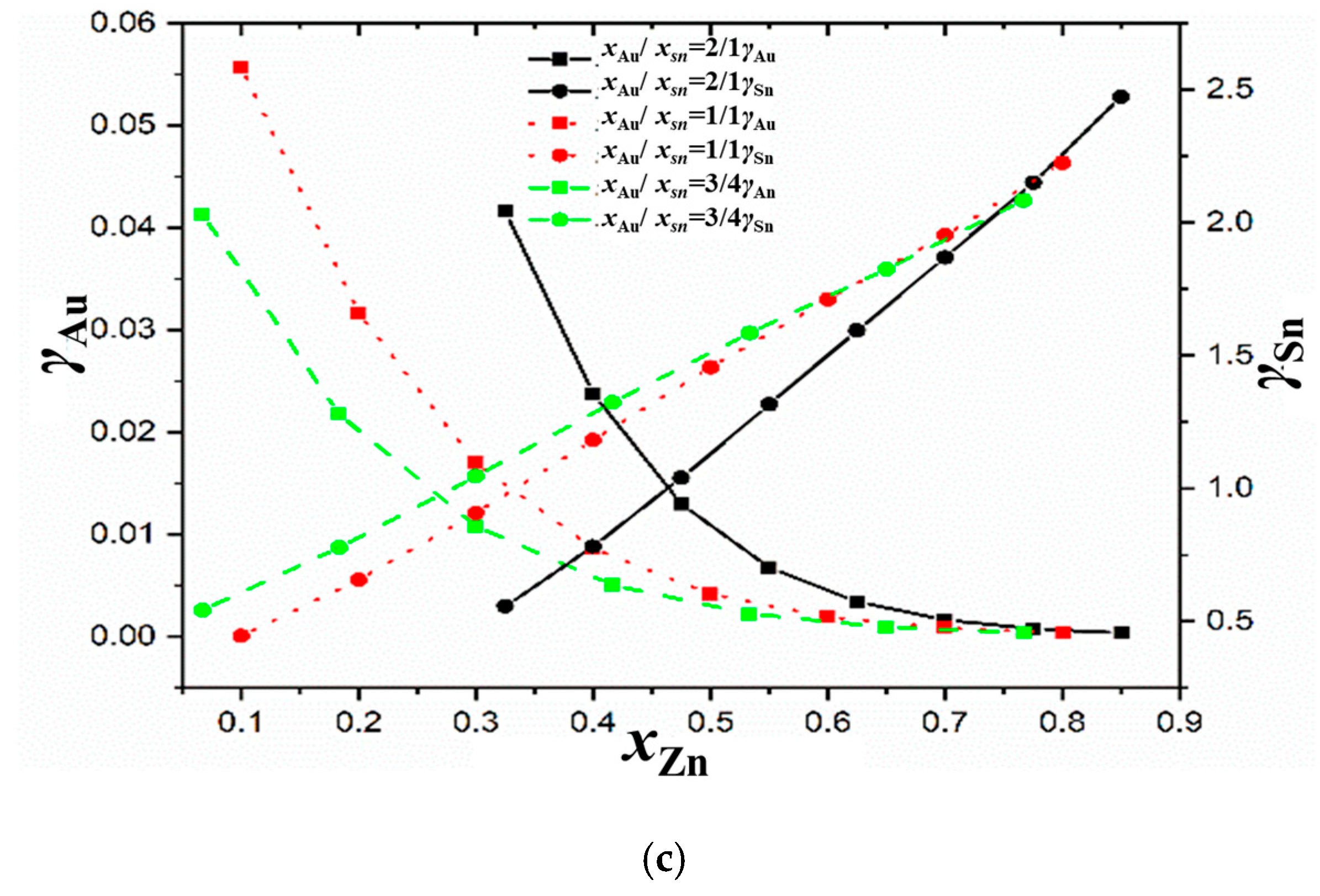
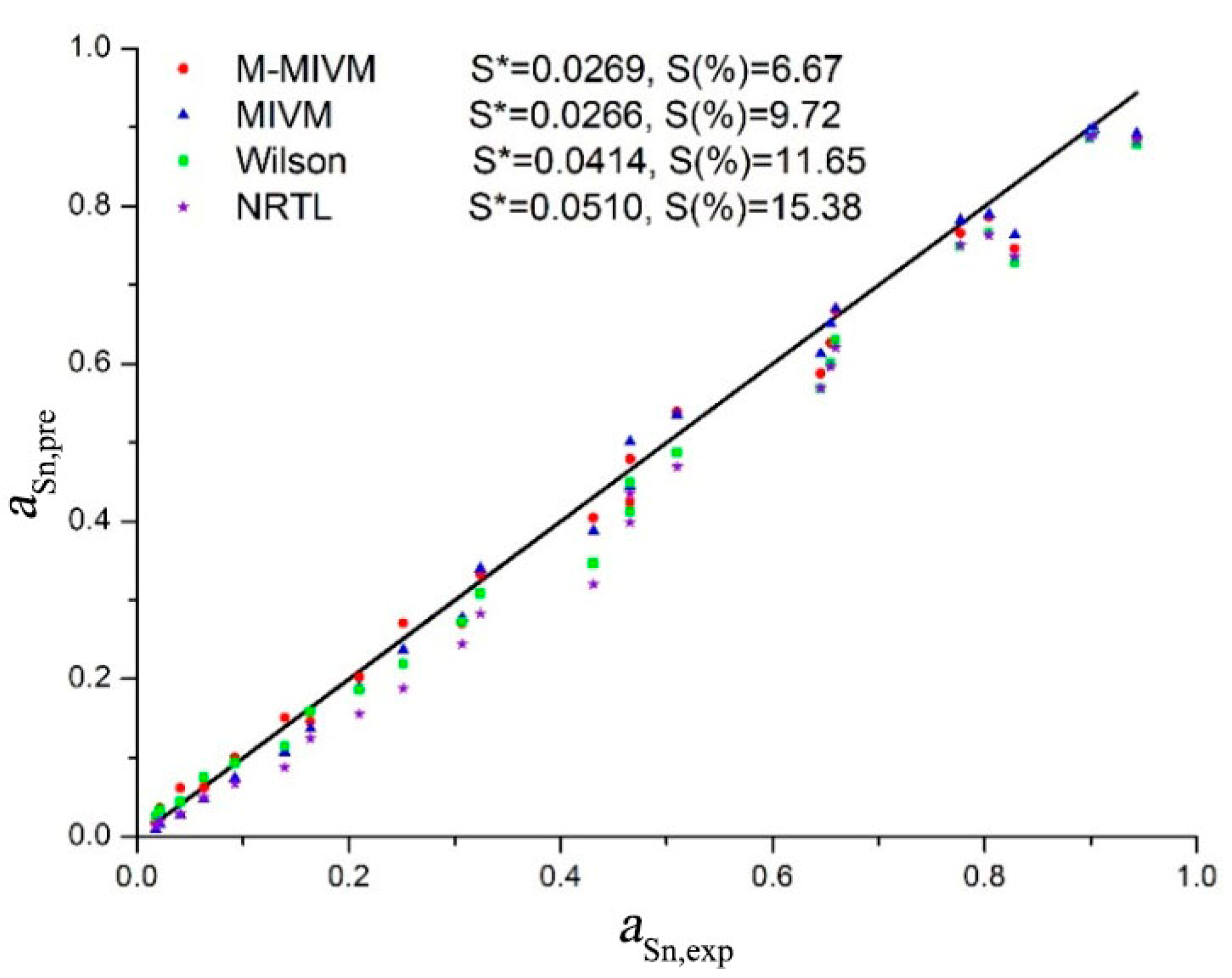
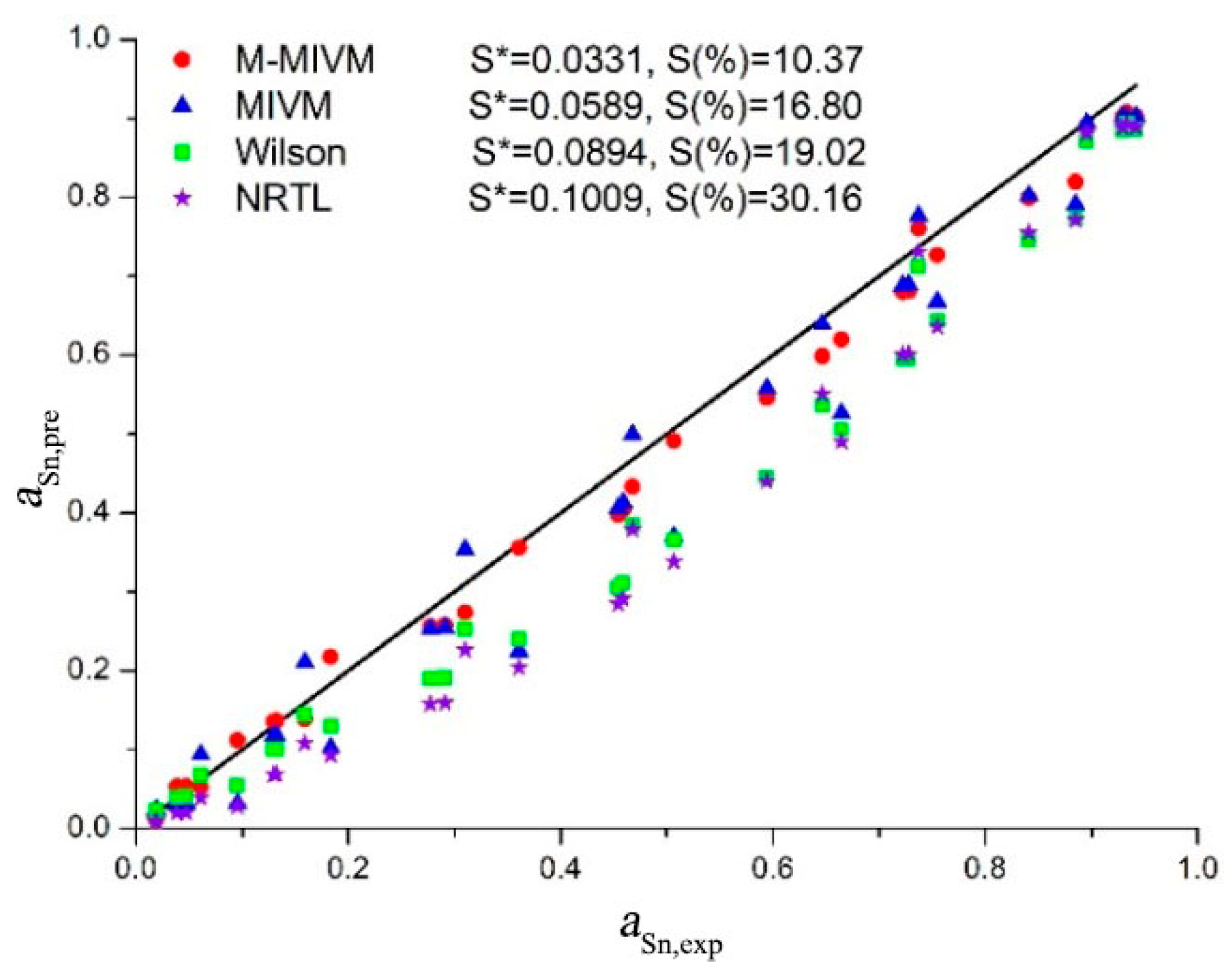
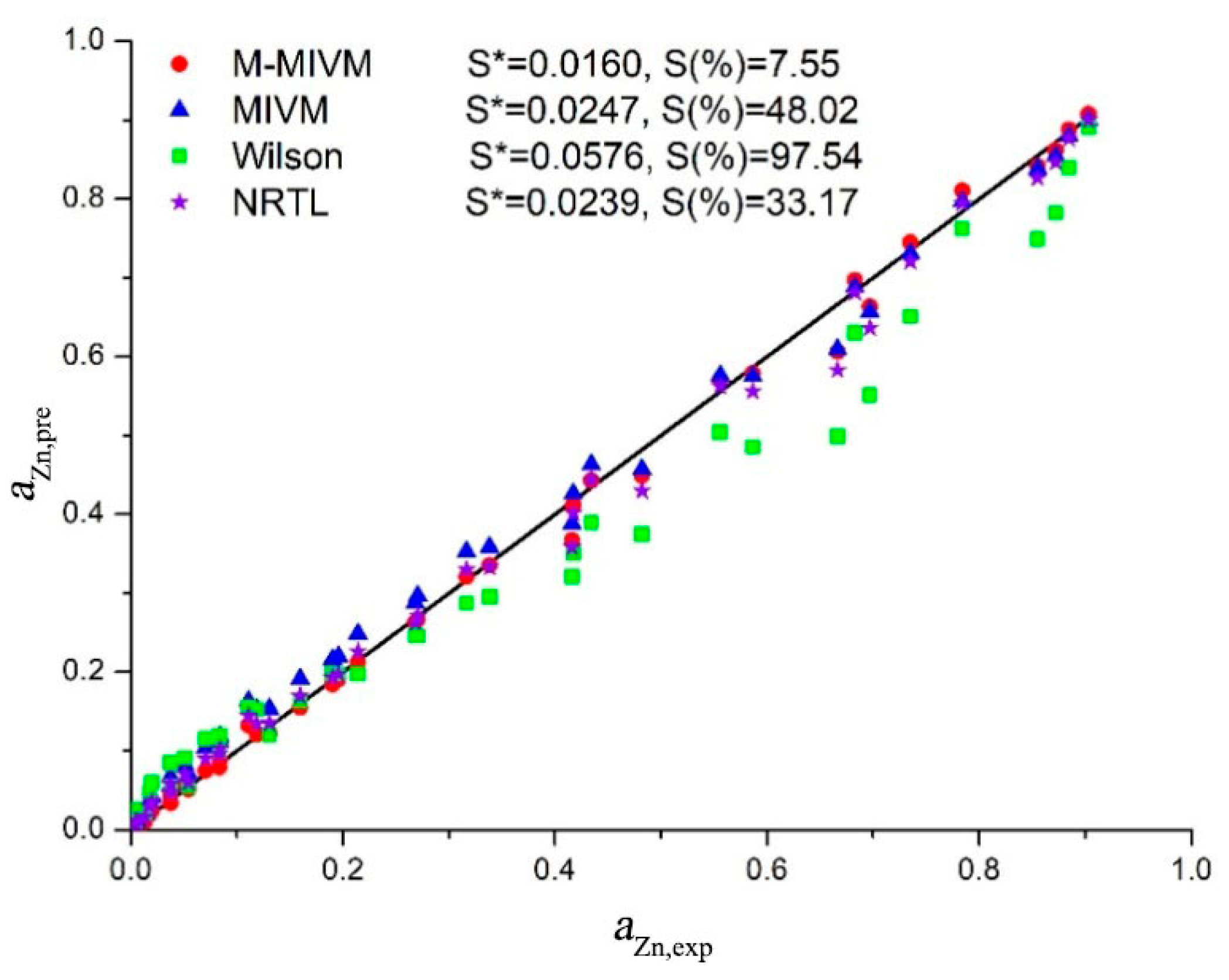
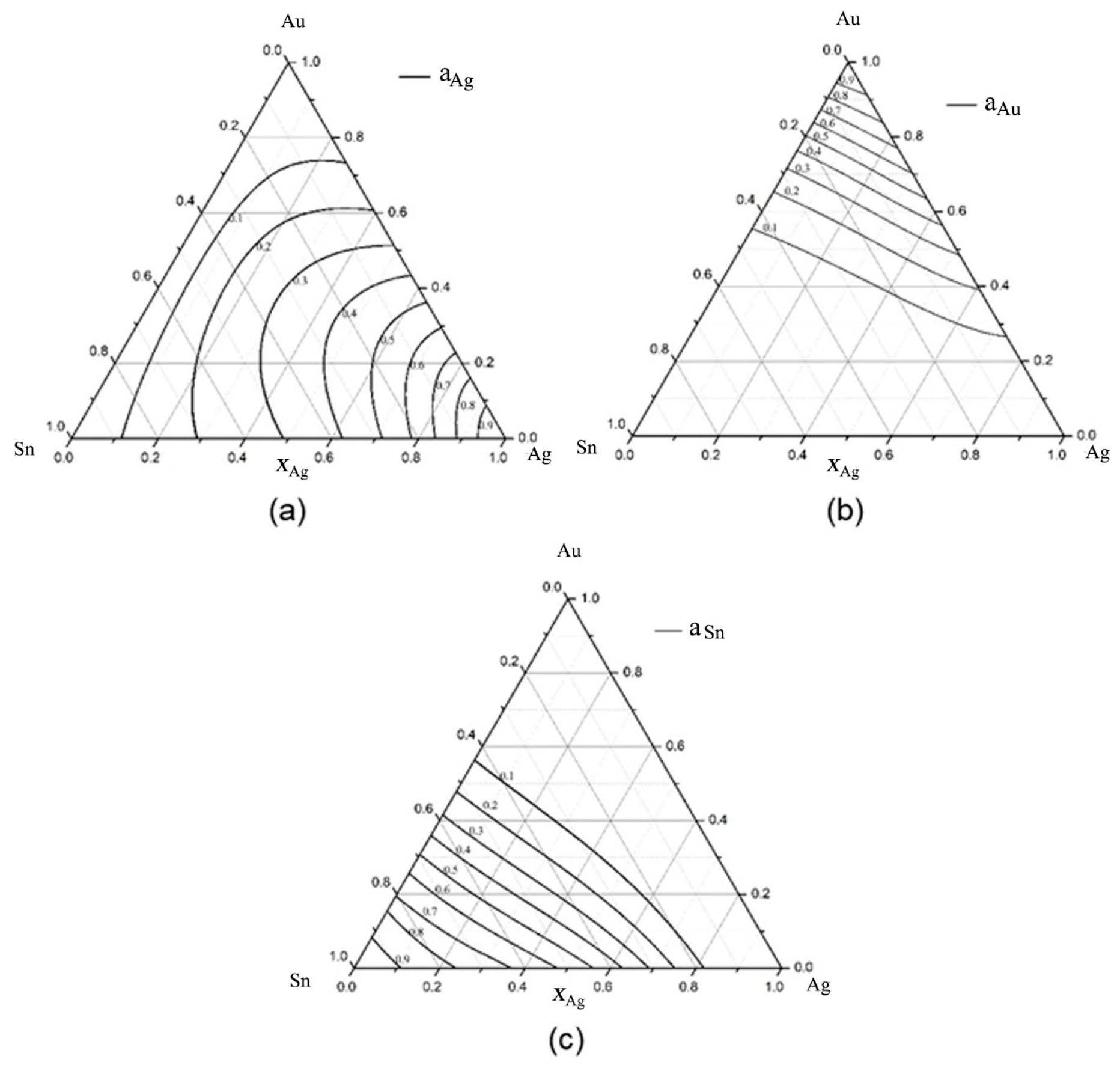
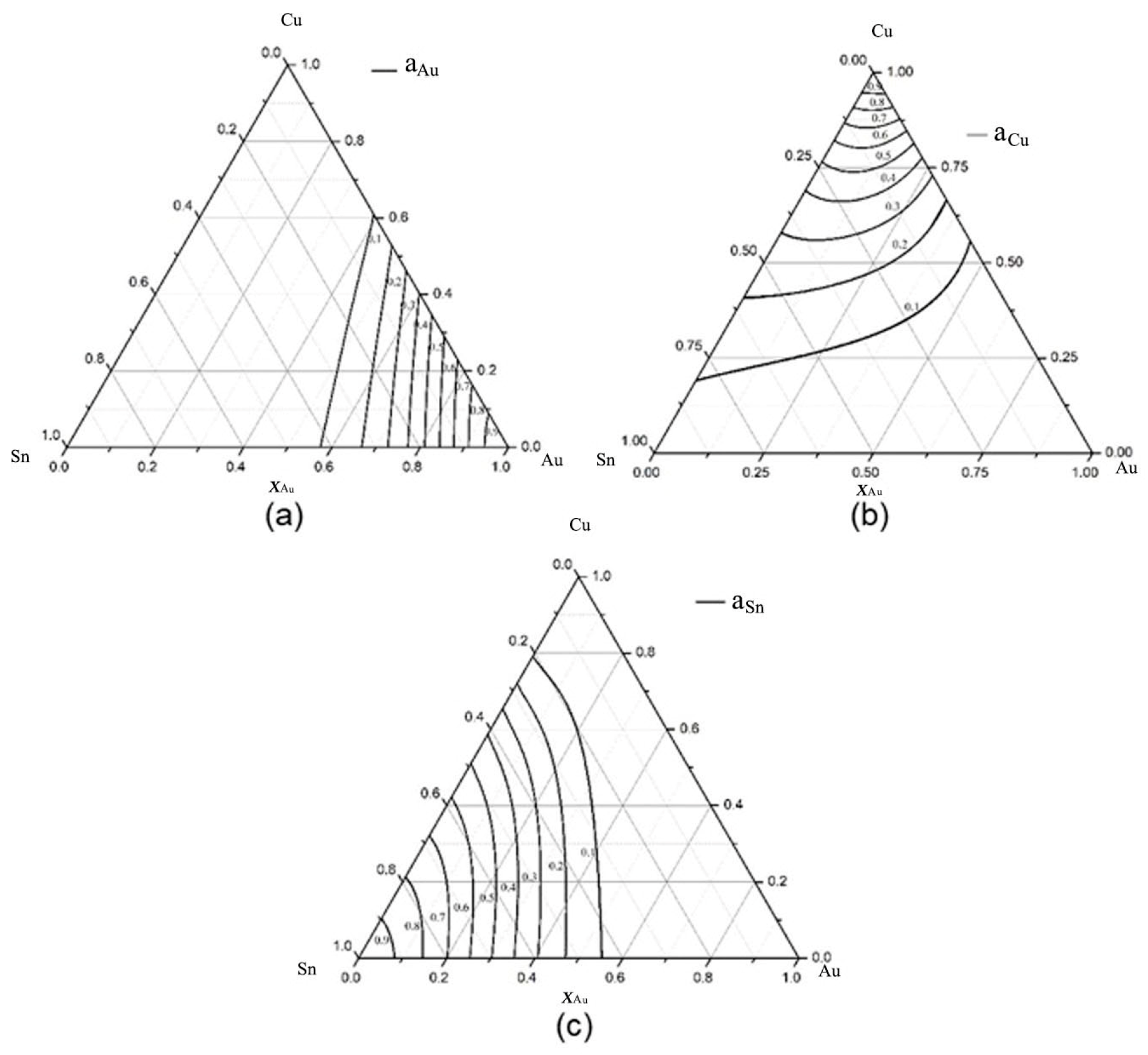
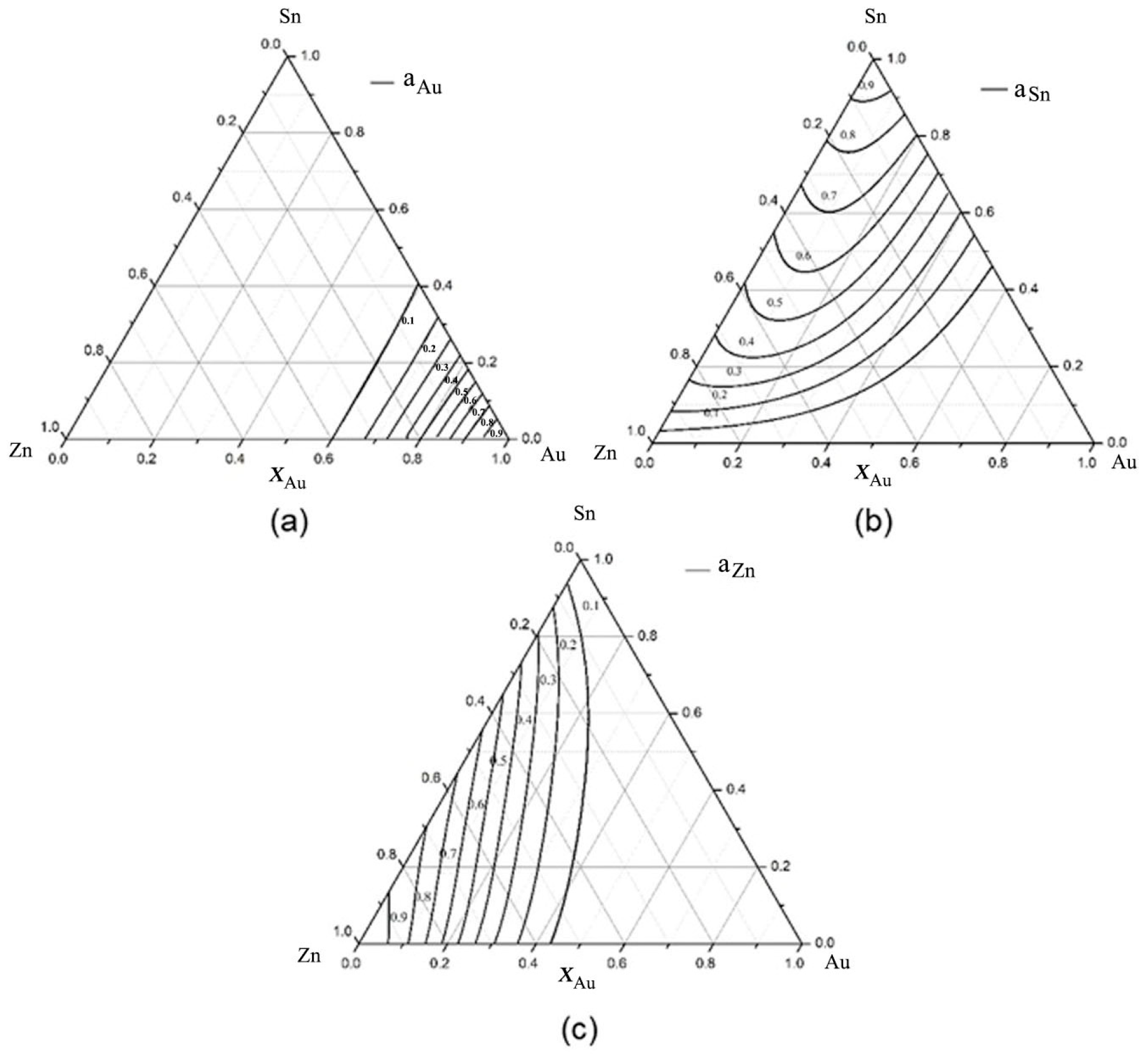
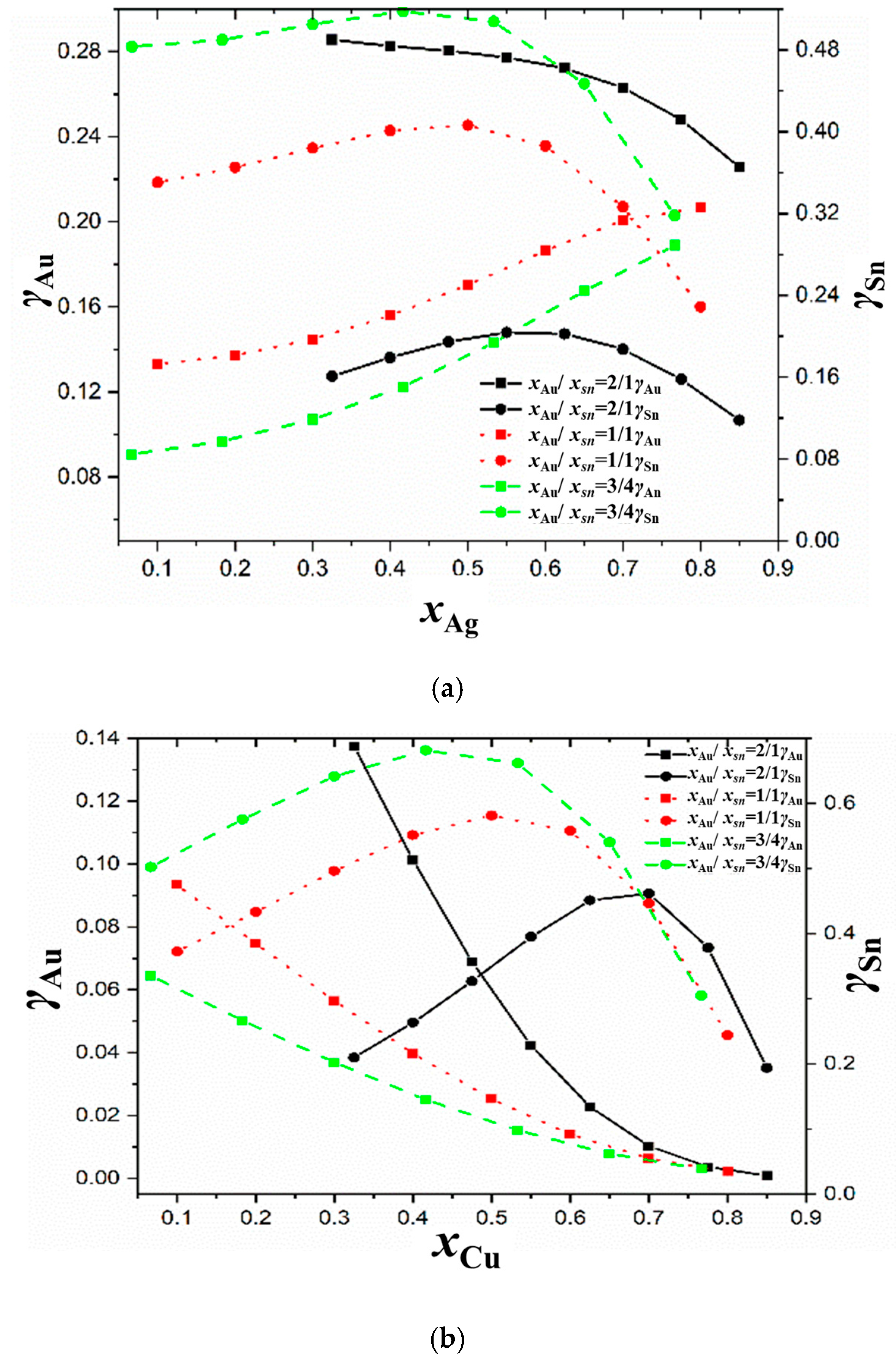
In this study, the M-MIVM is employed to predict the activities of components in Au-Sn-based lead-free solder systems. First, the binary interaction parameters of the M-MIVM are determined by fitting experimental activity data from asymmetric binary systems such as Au-Zn and Ag-Sn. These parameters are then used to predict the component activities in the ternary Au-Sn-Ag, Au-Sn-Cu, and Au-Sn-Zn solder alloys. The predictions are compared with available experimental data, and the associated errors are analyzed. Iso-activity contours for all components in the ternary systems are presented graphically. Furthermore, the activities of all components in the quaternary Au-Cu-In-Sn system are predicted. The influence of indium addition is illustrated by comparing the activities in Au-Sn-Cu-In alloys at fixed indium mole fractions of xIn = 0.1 (800 K and 1000 K) and xIn = 0.2 (800 K). This work aims to provide a simple and reliable thermodynamic model to support the development of new high-temperature lead-free solders and the performance optimization of existing tin-based alloys.
2. Calculation Method
As the Wilson equation, NRTL and MIVM are widely used, there have been a large number of studies describing them in detail, so we will not describe them here [
10].
The M-MIVM adopted in this work differs from these methods. The M-MIVM is rigorously derived based on the physical principles of random mixing and strict conservation of pairwise molecular interactions. Unlike the traditional local composition models, it does not introduce empirical local composition assumptions that break the interaction balance. Instead, it employs physically meaningful coordination numbers and interaction parameters that inherently satisfy the conservation law of intermolecular interactions throughout the entire derivation. Therefore, the M-MIVM maintains strict thermodynamic consistency and physical validity without violating the conservation balance of intermolecular interactions.
M-MIVM continues to follow the configuration partition function of MIVM liquid mixture and achieves parameter separation by introducing Scatchard–Hildebrand theory assumption.
The general formula of the molar excess Gibbs energy (
) of liquid mixture of the M-MIVM can be expressed as [
11,
12,
13]:
where
Vmt (
t =
i,
j and
l) represents the molar volume of component
t,
xt (
t =
i,
j and
l) is the mole fraction of component
t,
Aij and
Aji are energy parameters, and
Bij and
Bji are volume parameters of molecular pair
i-
j and
j-
i, respectively.
Aij is mainly related to the atomic interaction energy between component
i and
j, characterizing the strength of interatomic attraction or repulsion.
Bij is associated with the coordination number and atomic size difference, reflecting the geometric matching and short-range order in the liquid structure.
Here, we define
Pji as the probability that the molecule
j appears in the first coordination layer of the central molecule
i.
In addition, we assume that the volume parameter is temperature dependent, and its relationship to temperature is shown as follows:
and
are the parameters of
B at temperature
T1 and
T2 respectively [
14].
Aij and
Aji is temperature independent in the systems with weak intermolecular interaction, but they will be temperature dependent in strong negative deviation system because of the strong intermolecular interaction in this system. Heterogeneous molecules have strong attraction, which limits the degree of freedom of molecules and requires conversion of parameters at different temperatures.
Aij and
are the parameters of at temperature
T1 and
T2 respectively [
15].
In a strongly negative deviation system, we generally consider Aij < −1 and Aji < −1.
The natural logarithm value of the activity coefficient of any component
i in the multicomponent system can be expressed as:
In the expression here, Dji = BjiVmj/Vmi.
The parameter acquisition in this paper relies on the least square method through MATLAB 2014 programming to solve the optimal parameters. The selected expression is as follows:
where
ai exp and
ai pre are the respective experimental and predicted activity values of component
i. The accuracy of the predictions is assessed using the mean relative error and standard deviation of the experimental and predicted values.
where
ai exp and
ai pre are the respective experimental and predicted activity values of component
i, while
n is the number of compared values [
16].
The pure metal parameters required for M-MIVM are listed in
Table 1.
Author Contributions
Conceptualization, H.W. and L.C.; Methodology, L.C.; formal analysis, B.Y.; Data curation, H.W.; Writing—original draft, H.W. and L.C.; Writing—review & editing, L.K., G.L. and Y.D.; Visualization, L.Z. and Y.D.; Supervision, L.Z., L.K., G.L. and Y.D.; Funding acquisition, L.K. and B.Y. All authors have read and agreed to the published version of the manuscript.
Funding
This work was financially supported by the National Natural Science Foundation of China, China (Grant No. 52422409), the Excellent Youth Fund of Yunnan Province, China (Grant No. 202301AW070020).
Data Availability Statement
The original contributions presented in this study are included in the article. Further inquiries can be directed to the corresponding authors.
Conflicts of Interest
The authors declare no conflict of interest.
References
- Zhang, Q. Handbook of Brazing and Soldering, 3rd ed.; China Machine Press: Beijing, China, 2017. [Google Scholar]
- ASM handbook Committee. Welding, Brazing, and Soldering; American Society for Metals: Novelty, OH, USA, 1983. [Google Scholar]
- Fang, J.L.; Wang, N.G.; Wei , Z.X.; Liu, J.X. Research progress of high-temperature lead-free brazing materials for electronic assembly. Electron. Compon. Mater. 2009, 28, 4. [Google Scholar]
- Ganesan, S. Lead-Free Electronics; Wiley-IEEE Press: Hoboken, NJ, USA, 2006. [Google Scholar]
- Bath, M.J. Lead-Free Soldering Process Development and Reliability; Wiley: Hoboken, NJ, USA, 2020. [Google Scholar]
- Bath, J.S. Lead-Free Soldering; Springer: New York, NY, USA, 2007. [Google Scholar]
- Wierzbicka-Miernik, A.; Garzel, G.; Zabdyr, L.A. Emf Measurements in the Liquid Au-Cu-Sn Lead-free Solder Alloys. J. Phase Equilibria Diffus. 2010, 31, 34–36. [Google Scholar] [CrossRef][Green Version]
- Prausnitz, J.M.; Lichtenthaler, R.N.; Azevedo, E.G.D. Molecular Thermodynamics of Fluid-Phase Equilibria, Adobe Reader, 3rd ed.; Prentice-Hall: Upper Saddle River, NJ, USA, 1999. [Google Scholar]
- Dai, H.; Tao, D.P. A statistical thermodynamic model with strong adaptability for liquid mixtures. Fluid Phase Equilibria 2018, 473, 154–165. [Google Scholar] [CrossRef]
- Tao, D.P. A new model of thermodynamics of liquid mixtures and its application to liquid alloys. Thermochim. Acta 2000, 363, 105–113. [Google Scholar] [CrossRef]
- Wilson, G.M. Vapor-liquid equilibrium. XI. A new expression for the excess free energy of mixing. J. Am. Chem. Soc. 1964, 86, 127–130. [Google Scholar] [CrossRef]
- Renon, H.; Prausnitz, J.M. Local compositions in thermodynamic excess functions for liquid mixtures. Aiche J. 1968, 14, 135–144. [Google Scholar] [CrossRef]
- TIida, R.I.L. Guthrie: The Physical Properties of Liquid Metals; Clarendon Press: Oxford, UK, 1988. [Google Scholar]
- Hu, Y. Molecular Thermodynamics of Fluids; Higher Education Press: Beijing, China, 1983. [Google Scholar]
- Hultgren, R.; Desai, P.D.; Hawkins, D.T.; Gleiser, M.; Kelley, K. Selected Values of the Thermodynamic Properties of Binary Alloys; American Society for Metals: Novelty, OH, USA, 1973; pp. 1–1435. [Google Scholar]
- Karlhuber, S.; Peng, M.; Mikula, A. Thermodynamic properties of ternary liquid zinc-alloys. J. Non-Cryst. Solids 1996, 205–207, 421–424. [Google Scholar] [CrossRef]
- Lai, Y.T.; Liu, C.Y. Study of wetting reaction between eutectic AuSn and Au foil. J. Electron. Mater. 2006, 35, 353–359. [Google Scholar] [CrossRef]
- Tao, D.P. Prediction of the coordination numbers of liquid metals. Metall. Mater. Trans. A 2005, 36, 3495–3497. [Google Scholar] [CrossRef]
- SGTE: Phase Equilibria, Crystallographic and Thermodynamic Data of Binary Alloys, New Series IV/19B, Landolt-Bornstein-Group IV Physical Chemistry; Spring: New York, NY, USA, 1994.
- Hindler, M.; Knott, S.; Mikula, A. Thermodynamic Properties of Liquid Ag-Au-Sn Alloys. J. Electron. Mater. 2010, 39, 2310–2315. [Google Scholar] [CrossRef][Green Version]
- Guo, Z.; Hindler, M.; Yuan, W.; Mikula, A. Thermodynamic properties of liquid Au-Cu-Sn alloys determined from electromotive force measurements. Thermochim. Acta 2011, 525, 183–189. [Google Scholar] [CrossRef] [PubMed]
- Awe, O.; Oshakuade, O. Theoretical prediction of thermodynamic activities of liquid Au-Sn-X (X=Bi, Sb, Zn) solder systems. Phys. B Phys. Condens. Matter 2017, 507, 84–94. [Google Scholar] [CrossRef]
| Disclaimer/Publisher’s Note: The statements, opinions and data contained in all publications are solely those of the individual author(s) and contributor(s) and not of MDPI and/or the editor(s). MDPI and/or the editor(s) disclaim responsibility for any injury to people or property resulting from any ideas, methods, instructions or products referred to in the content. |