


Abstract
The study systematically investigates the effect of molybdenum (Mo) content (0.70–1.57 wt.%) on the microstructure and mechanical properties of quenched and tempered martensitic steel for ultra-high-strength and -toughness oil well pipes. The results demonstrate that increasing the Mo content substantially enhances the strength of the steel. The yield strength (YS) increases from 1135 MPa to 1233 MPa, the ultimate tensile strength (UTS) rises from 1176 MPa to 1285 MPa, and the elongation after fracture is marginally improved to 19%. However, the low-temperature impact energy (AKV2) of the steel at −20 °C exhibits a pronounced decrease, from 117 J to 36 J. Mo refines the multi-scale martensitic microstructure, increases the fraction of high-angle grain boundaries (HAGBs) and dislocation density, and promotes the precipitation of three types of carbides. Quantitative analysis indicates that grain refinement strengthening is the predominant factor contributing to the enhancement of steel strength. The decline in the steel’s resistance to low temperatures is attributed to the separation of coarse, blocky M3C-type carbides at the grain boundaries. This results in the accumulation of stress at these boundaries, leading to a transformation in the steel’s fracture mode from ductile to brittle.
1. Introduction
In light of the persistent surge in global energy consumption, oil and gas exploration and development initiatives have undergone a progressive transition to deep and ultra-deep formations. In recent years, there has been a continuous growth in global attention to the exploration and development of oil and gas resources in deep and ultra-deep formations, as well as in cold regions. The severe conditions of these environments result in increasingly stringent performance requirements for drill pipes, which are the core components of drilling and production equipment [1,2]. In the domain of drilling engineering, particularly for deep and ultra-deep drilling applications, ultra-high-strength and -toughness drill pipe materials have garnered significant attention from researchers. The strength–toughness balance of these pipes directly influences their service life and operational efficiency under harsh working conditions, making them a crucial component of petroleum drilling and production equipment [3].
The synergistic enhancement of strength and toughness in drill pipe materials has historically posed a significant technical challenge for both academic and engineering communities. In general, the strength and toughness of materials frequently exhibit an inverse trade-off relationship, meaning that as the strength of a material increases, its toughness indicators typically decrease accordingly [4]. This contradiction is particularly evident in high-strength steels: when the yield strength of 165 ksi grade drill pipes exceeds 1140 MPa, ensuring their impact toughness in a low-temperature environment of −20 °C becomes exceedingly challenging [5,6].
A series of significant advances has been achieved by scholars at home and abroad in the field of strengthening and toughening high-strength steel materials. These advances have been achieved through composition adjustment and process innovation. In a significant development, Y.K. Wang et al. [7] have successfully engineered a high-strength steel possessing a yield strength of 1170 MPa, an ultimate tensile strength of 1233 MPa, and an impact energy of 65 J at 0 °C. This achievement was attained through the strategic incorporation of vanadium (V) and niobium (Nb) microalloying elements during the manufacturing process. In the study by Z.Q. Liang et al. [8], a yield strength of 1010 MPa, an ultimate tensile strength of 1360 MPa, and an impact energy of 60 J at −40 °C in high-strength steels were achieved by investigating a series of tempering times. In their seminal study, H.Y. Li et al. [9] unveiled the laws governing the variation in strength and the transformation of microstructure under varying vanadium contents and tempering temperatures. Through meticulous analysis of vanadium elements and a comprehensive array of tempering processes, they elucidated the quantitative contribution of strengthening mechanisms across diverse stages. The findings of this research have provided a range of technical pathways for the development of ultra-high-strength and -toughness drill pipe materials of the 165 ksi grade.
Molybdenum (Mo) has been identified as a critical alloying element in the production of high-strength steels, with studies demonstrating its substantial capacity to enhance the mechanical properties of these materials. The addition of Mo has been demonstrated to enhance the strength and toughness of steel through multiple mechanisms, including solid solution strengthening, grain refinement, and the promotion of martensite formation [10,11]. Among these, grain refinement is identified as a primary pathway for achieving a synergistic enhancement of strength and toughness in high-strength steels. Furthermore, it is recognized as a pivotal factor in resolving the inverse trade-off between strength and toughness [12,13]. Subsequent to the refinement of grains, an augmentation in the density of HAGBs has been observed, which has been demonstrated to impede crack propagation and enhance the impact toughness of the material [14,15,16,17].
The present study aims to elucidate the influence mechanism of Mo content on the tensile strength and −20 °C Charpy V-notch impact toughness of 165 ksi grade drill pipe materials through mechanical property testing and microstructure characterization analyses. The study thereby provides theoretical guidance for the composition design of high-strength and high-toughness drill pipes.
2. Materials and Methods
2.1. Materials and Thermomechanical Control Processes
Four experimental steels with varying Mo contents were prepared via smelting in a 120 kg vacuum furnace (BR-VM-200, Bona, Shanghai, China). The direct reading spectrometer measurements yielded the following actual Mo contents: 0.70%, 0.98%, 1.30% and 1.57%, respectively. These steels were designated as Mo07 steel, Mo10 steel, Mo13 steel and Mo16 steel. Their actual chemical compositions are presented in Table 1.
Table 1.
Chemical composition of the experimental steels (wt.%).
The square ingots resulting from the smelting process were subjected to a heating rate of 10 °C/s, reaching temperatures of up to 1220 °C. The ingots were then subjected to a holding period of 2.5 h, with the objective of achieving complete austenitization of the microstructure and thorough dissolution of the alloying elements. Subsequently, the plates were subjected to a series of rolling operations at temperatures ranging from 1150 °C to 1180 °C, culminating in a final rolling temperature of approximately 1000 °C. The process was subsequently accompanied by a water quenching procedure, which resulted in the fabrication of steel plates with a thickness of 18 mm.
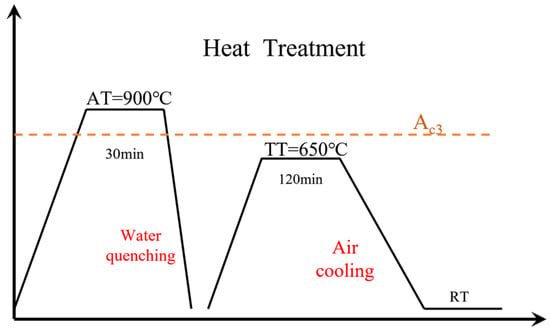
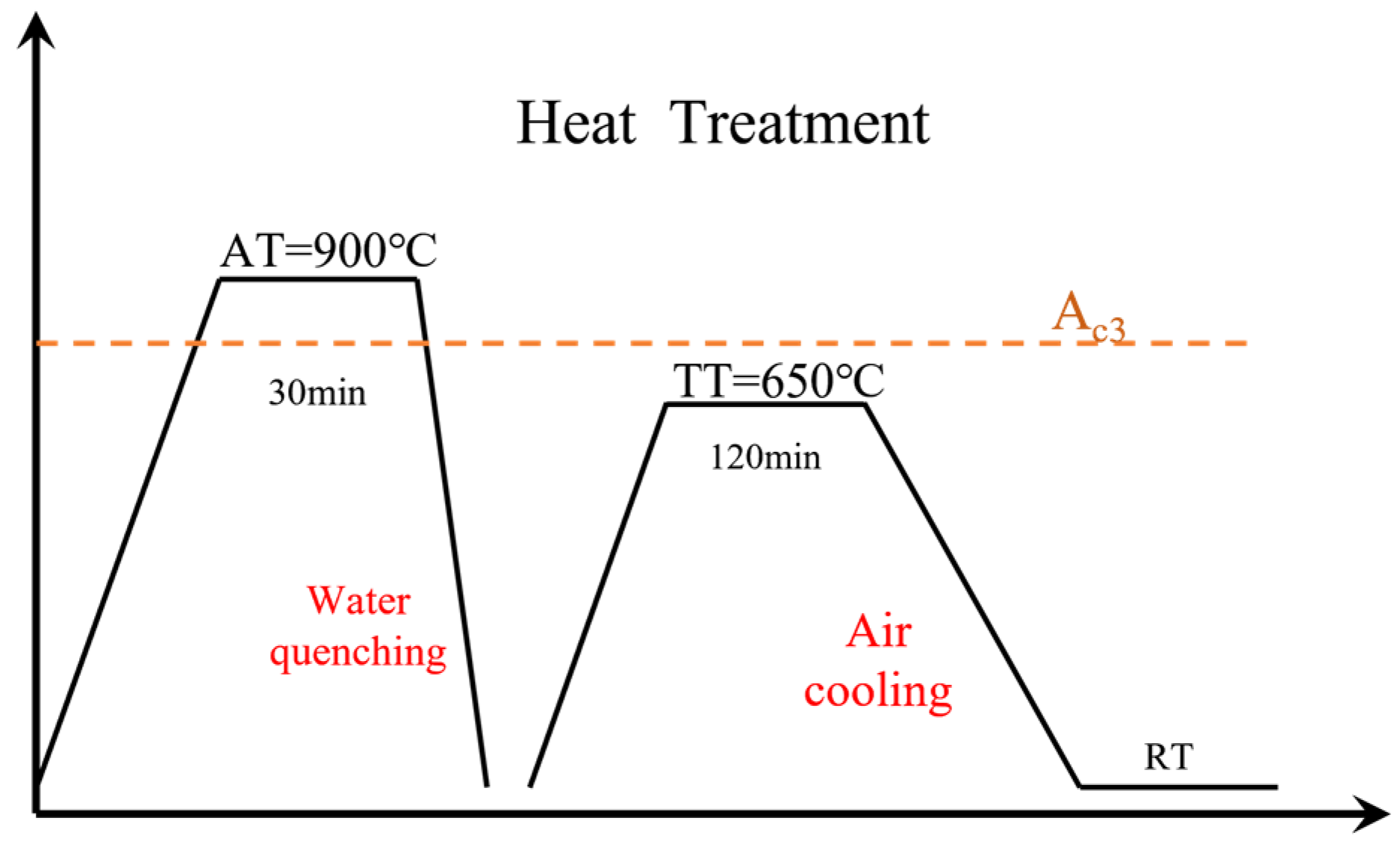
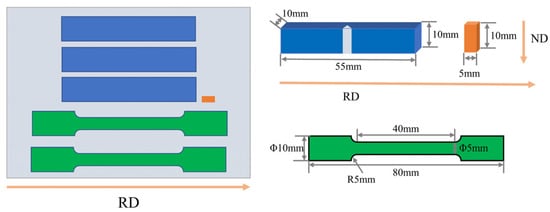
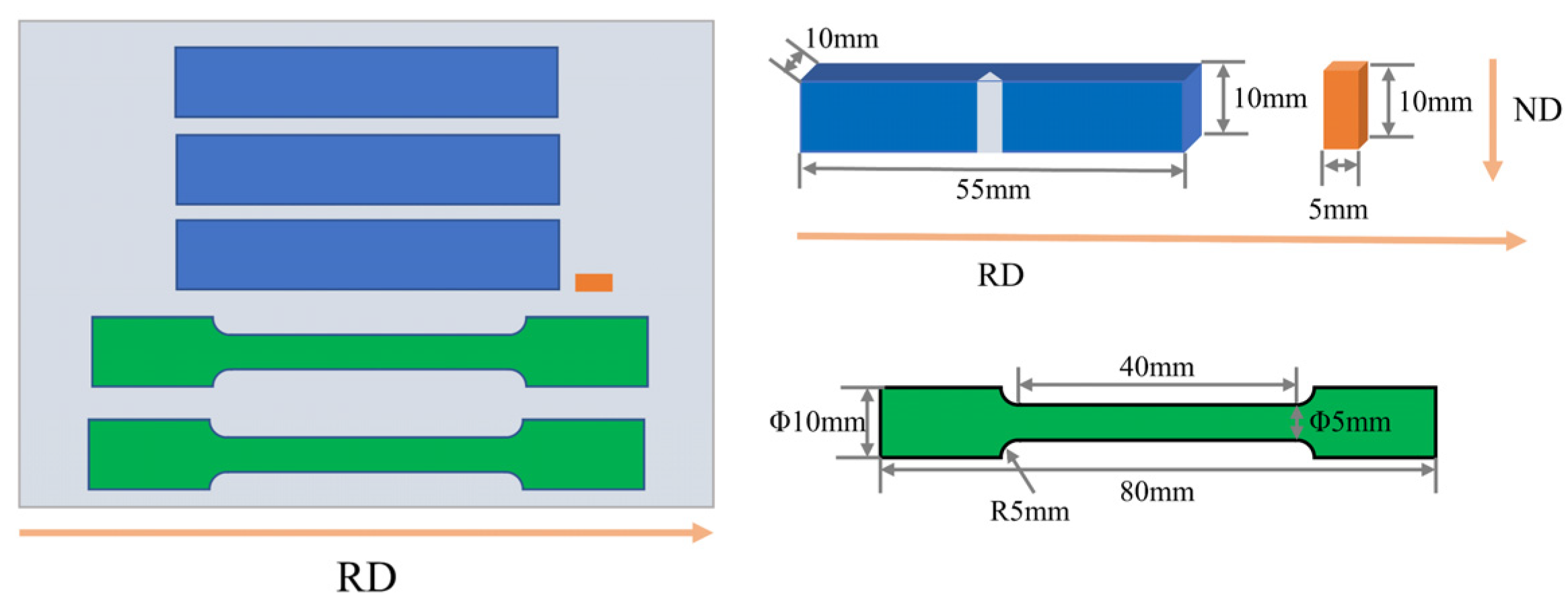
The experimental procedure adopted an off-line quenching and tempering process, as illustrated in Figure 1. Four test steels with differing Mo contents were machined into specimens with dimensions of 18 × 70 × 90 mm3. The specimens were subjected to a heating cycle in a muffle furnace, reaching a temperature of 900 °C, where they were maintained for a duration of 30 min. Subsequently, a water quenching process was initiated. Subsequently, the specimens underwent a high-temperature tempering procedure at a temperature of 650 °C for a duration of 120 min. From the quenched and tempered steel plates, three impact test specimens (10 × 10 × 55 mm3) and two tensile test specimens were machined, as illustrated in Figure 2. To ensure the reliability of test data, three additional tensile tests were conducted for each type of test steel. In order to ensure the reliability of the data, an additional specimen of dimensions 18 × 70 × 90 mm3 was incorporated for each test steel grade under the aforementioned heat treatment process. From this additional specimen, three tensile test specimens were machined. Consequently, each composition test steel is required to undergo three impact tests and five tensile tests (Figure 2).
Figure 1.
The heat treatment process of investigated steels.
Figure 2.
Schematic of Specimen Sampling for Mechanical Property Testing.
2.2. Test Methods
In accordance with the standard GB/T 19748-2019 [18] “Metallic materials—Charpy V-notch pendulum impact test—Instrumented test method”, the V-notch impact tests of specimens were conducted at −20 °C using the instrumented impact testing machine (DF450J, SINOTEST, Changchun, China), and the load–displacement curves were recorded concurrently. The impact performance indicators are expressed as the average value of test results from three parallel specimens.
In accordance with the standard GB/T 228.1-2021 [19], entitled “Metallic materials—Tensile testing—Part 1: Methods of test at ambient temperature”, tensile tests were conducted at room temperature using the tensile testing machine (DF13.305D, SINOTEST, Changchun, China) with a tensile rate of 3 mm/min. The yield strength and tensile strength of the specimens were determined, and the tensile performance indicators were taken as the average of the test results from two tensile specimens.
2.3. Microstructural Characterization of Materials
In order to facilitate the observation of the original grain size of the materials at high temperatures, specimens with different Mo contents were quenched at 900 °C without tempering. Subsequently, the specimens were machined into square samples with dimensions of 5 × 10 × 2 mm3. The specimens were successively ground with grade 150#, 400#, 800#, 1000#, 1500# and 2000# sandpapers. This was followed by mechanical polishing for a period of five minutes, until mirror-like finishes were obtained on the surfaces. Following the etching process in a saturated picric acid solution at 65 °C, the prior austenite grain boundaries were observed under an optical microscope (OM, Axiover-200 MAT, ZEISS, Baden-Württemberg, Germany).
Samples were obtained from the impact fracture surfaces of Mo-containing specimens following quenching and tempering treatment and machined into square specimens measuring 5 × 10 × 2 mm3 (Figure 2). The specimens were ground using the same method as previously described until mirror finishes were achieved and then etched with a 4% nitric acid alcohol solution to prepare metallographic specimens for observation. The metallographic microstructures were observed using a scanning electron microscope (SEM, SU5000, Hitachi, Tokyo, Japan). Subsequently, the metallographic specimens were subjected to re-mechanical polishing, and their surfaces presented a frosted glass morphology after ion bombardment (IM4000, Hitachi, Tokyo, Japan). The presence of martensite microstructures was observed, and the misorientation angles between varying grain boundaries were analyzed via electron backscatter diffraction (EBSD, Oxford EBSD, Oxford Instruments, Oxford, UK) using SEM.
Following the testing of the impact properties, a 10 × 10 × 0.3 mm thin specimen should be cut from the undeformed zone of the post-fracture impact sample. The material should be ground sequentially with 150-grit, 400-grit, 800-grit, and 1000-grit sandpaper until it reaches a thickness of 50–70 μm. Transmission electron microscope (TEM) samples were prepared by electrolytic double-jet polishing (TenuPol-5, Struers, Ballerup, Denmark) in a solution of 10% HClO4 + 90% C2H5OH, with a polishing voltage of 25 V and a flow rate of 15 L/h. The lath morphologies subsequent to tempering and dislocations, as well as the morphologies and distributions of precipitated phases, were observed in detail using an JEM-F200 TEM (JEM-F200, JEOL, Tokyo, Japan). In order to facilitate a comprehensive analysis of the structures of precipitated phases, the extraction replica method was adopted in order to separate the precipitated phases from the matrix. Subsequent electron diffraction analysis was then performed on the precipitated phases using the same TEM in order to determine their crystal structures.
The present study employed a Rigaku D-max 2500 X-ray diffractometer (XRD, Rigaku, Tokyo, Japan) to measure the dislocation densities and phase compositions of specimens with varying Mo contents. The experimental procedure involved the execution of tests employing a Cu target in continuous scanning mode, at a scanning rate of 2°/min and over a test angle range of 40–120°. Dislocation density has been demonstrated to exert an effect on the strain degree of specimens. Furthermore, the inhomogeneous strain has been shown to alter the full width at half maximum (FWHM) of diffraction peaks. The differences in the FWHM of diffraction peaks among the varying specimens were utilized to process the test data, with Jade 6.0 software (Materials Data, Livermore, CA, USA) being employed for this purpose. This enabled the calculation of dislocation densities [20,21,22].
3. Results
3.1. Mechanical Properties
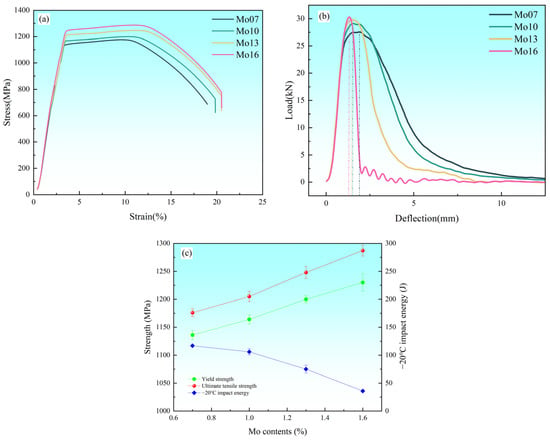
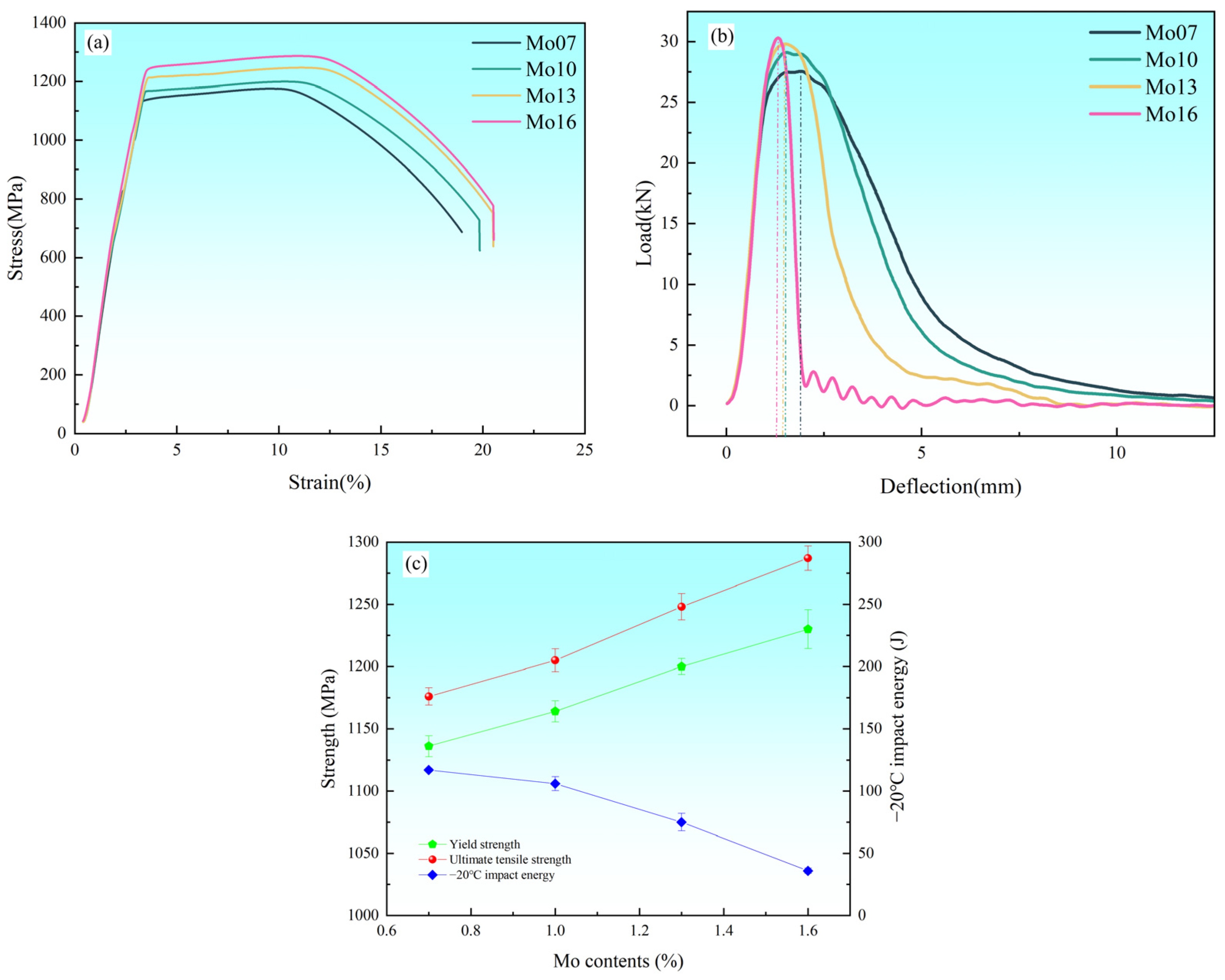
In Table 2 and Figure 3a, the yield strength, ultimate tensile strength and elongation after fracture of the test steels with varying Mo contents are presented under the same quenching and tempering process. The experimental findings suggest that with an increase in Mo content from 0.70 wt.% to 1.57 wt.%, the yield strength of the material experiences an enhancement from 1135 MPa to 1233 MPa, and its ultimate tensile strength demonstrates a corresponding increase from 1176 MPa to 1285 MPa, while the elongation after fracture shows an increase from 17% to 19%. The present findings demonstrate that Mo functions as an effective strengthening element for the material under consideration.
Table 2.
Tensile Properties of Test Steels with Varying Mo Contents.
Figure 3.
Variation in Mechanical Properties of Test Steels with Varying Mo Contents: (a) Engineering Stress–Strain Curves; (b) Instrumented Charpy Impact Curves at −20 °C; (c) Strength and Toughness Variation of Test Steels with Varying Mo Contents.
In Table 3 and Figure 3b, the results of instrumented Charpy impact tests at −20 °C for test steels with varying Mo contents under identical quenching and tempering processes are presented. The experimental findings suggest that an augmentation in Mo content from 0.70 wt.% to 1.57 wt.% results in a decline in the impact energy of the material at −20 °C, from 117 J to 36 J. This observation corroborates the prevailing theory that an enhancement in strength is commonly accompanied by a diminution in toughness (Figure 3c).
Table 3.
Instrumented Charpy impact properties of test steels with varying Mo contents.
An analysis of the load–deflection curves from the instrumented impact tests (Figure 3b) demonstrates that as the Mo content rises from 0.70 wt.% to 1.57 wt.%, there is an increase in the maximum force (Fₘ) from 27.4 ± 0.2 kN to 30.3 ± 0.4 kN, a decrease in the crack initiation energy (Eᵢ) from 35 ± 2 J to 19 ± 2 J, and a reduction in the crack propagation energy (Ep) from 82 ± 7 J to 17 ± 8 J. The ratio of crack initiation energy to total absorbed energy (Eᵢ/Eₜ) increases from 29.9% to 52.8%.
3.2. Microstructure
In accordance with the principles of the classical martensitic transformation theory, the martensitic microstructure manifests a distinct hierarchical structure that can be categorized into four levels according to characteristic length scales. These levels are defined as prior austenite grain, packet, block and lath [23,24]. In this study, a quantitative analysis method was adopted in order to conduct a precise statistical characterization of the geometric parameters corresponding to the microstructural features at each scale. It is on this basis that the regulatory mechanism of Mo alloying element content variation on the martensitic hierarchical structure and its quantitative influence laws were systematically elucidated [25].
3.2.1. PAG Observations
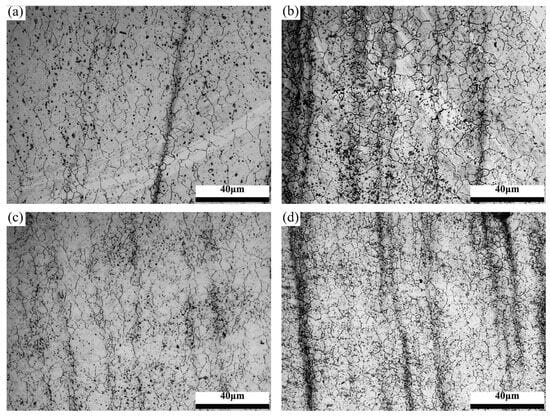
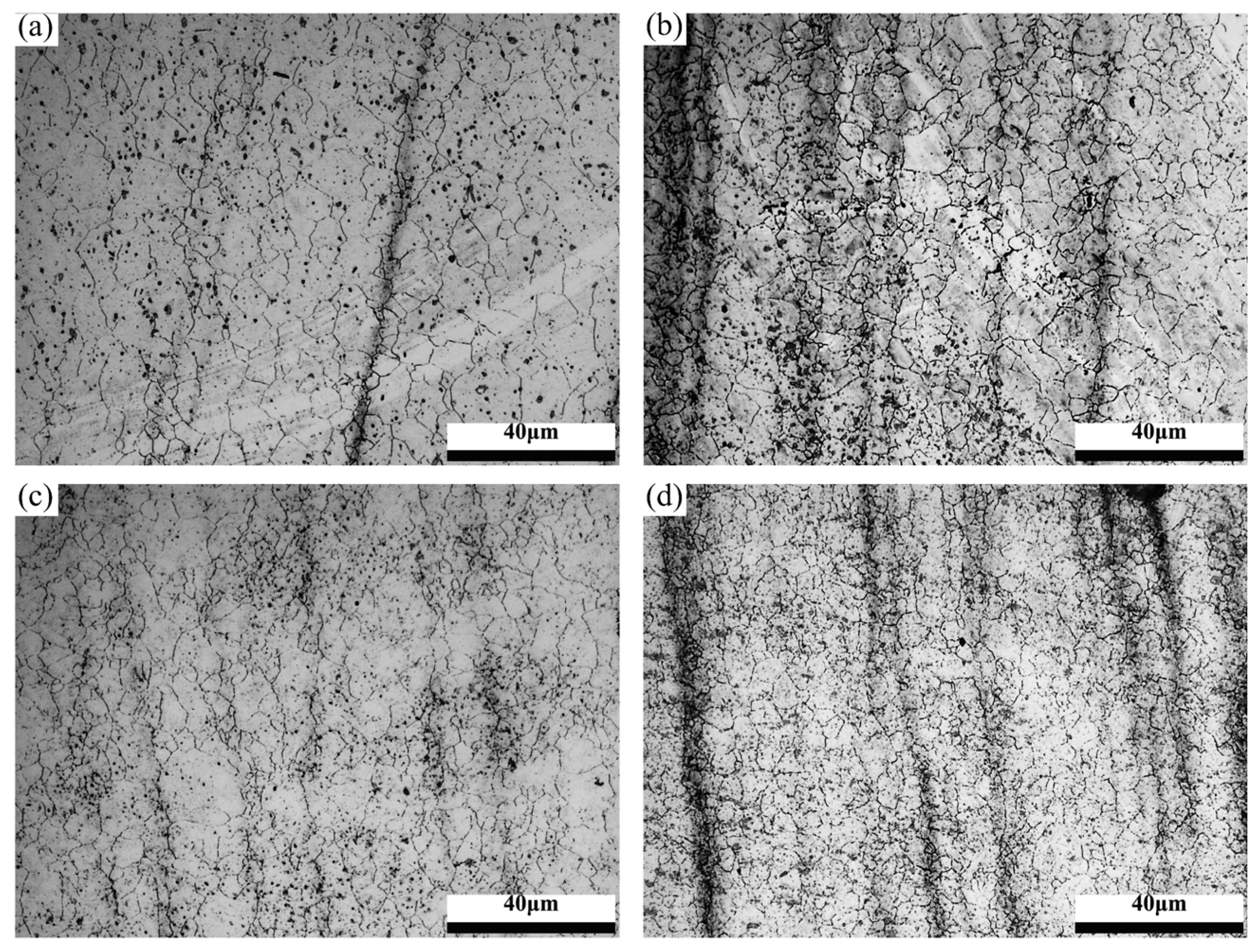
Test steels with varying Mo contents were heated in a muffle furnace at 900 °C for 30 min, followed by water quenching without subsequent tempering. Samples of a smaller size, measuring 18 × 10 × 10 mm3, were obtained for the purpose of characterizing the prior austenite grains. The morphological characteristics of prior austenite grains (PAGs) in the directly quenched (untempered) specimens were characterized by subjecting the specimens to etching in a saturated picric acid aqueous solution at 65 °C, as illustrated in Figure 4a–d. For the purpose of quantitative statistical analysis of PAG sizes in the four test steels with varying Mo contents, a minimum of 100 grains were selected at random from the relevant metallographic micrographs. The results of this analysis are summarized in Table 4. The findings suggest that an augmentation in Mo content from 0.70 wt.% to 1.57 wt.% results in a substantial decline in the average equivalent diameter (Dc) of PAGs, from 7.86 ± 2.47 μm to 3.67 ± 1.28 μm. The findings of this study demonstrate that the solute drag effect of Mo has a significant inhibitory effect on the migration of austenite grain boundaries [26].
Figure 4.
Prior austenite grains of quenched steels with varying Mo contents: (a) Mo07; (b) Mo10; (c) Mo13; (d) Mo16.
Table 4.
The quantitative microstructural parameters used for strength modeling.
3.2.2. Packet and Block Observations
Martensitic laths with the same habit plane self-assemble to form blocks through specific orientation relationships, and blocks with the same crystallographic orientation further aggregate into packets [27,28].
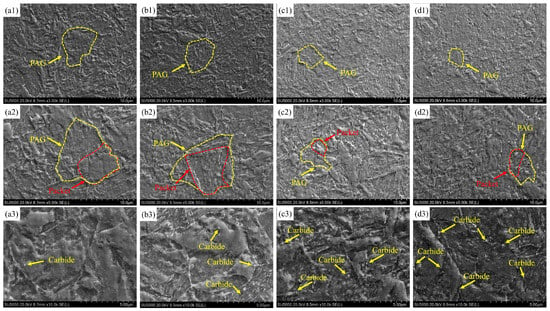
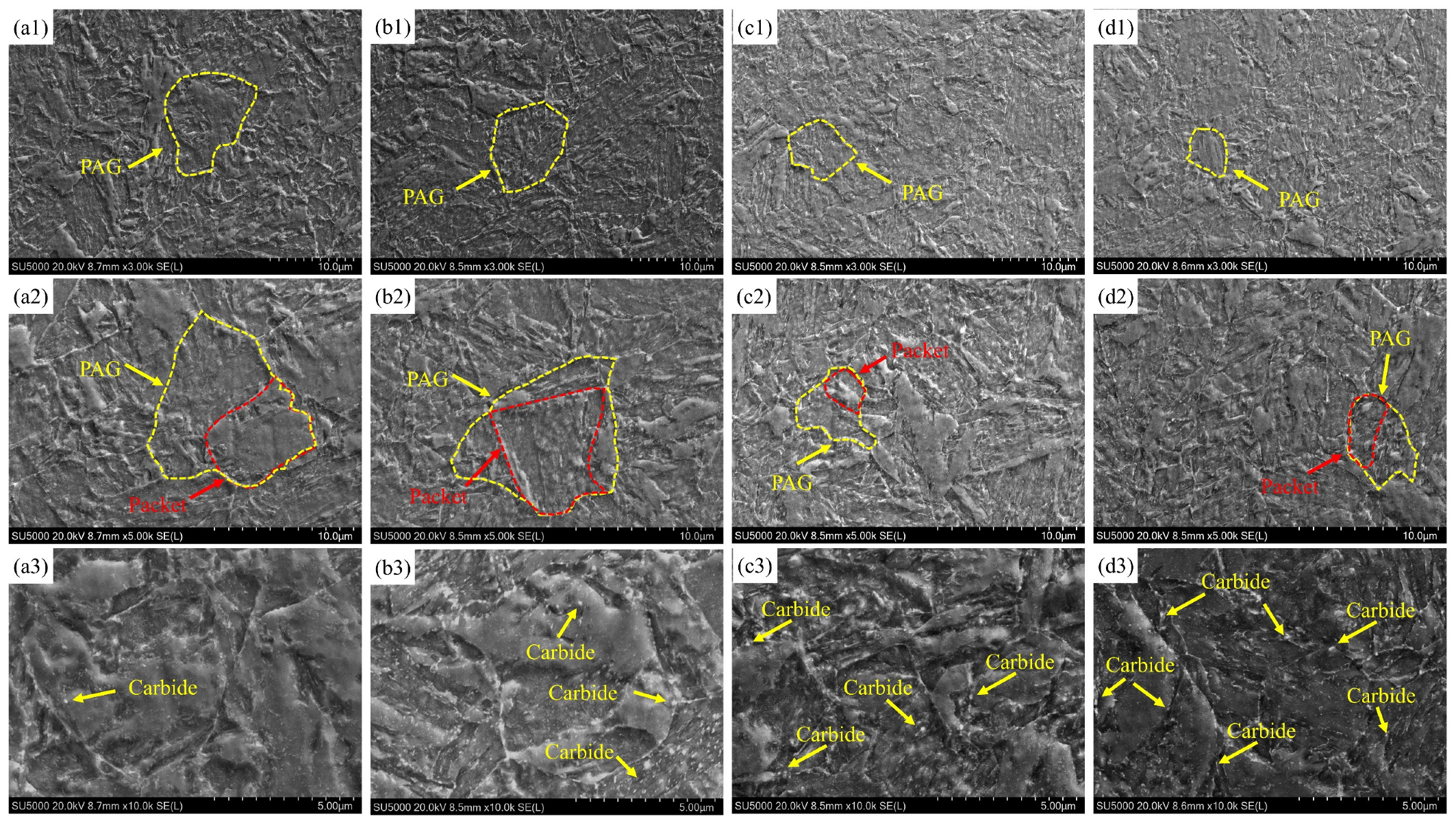
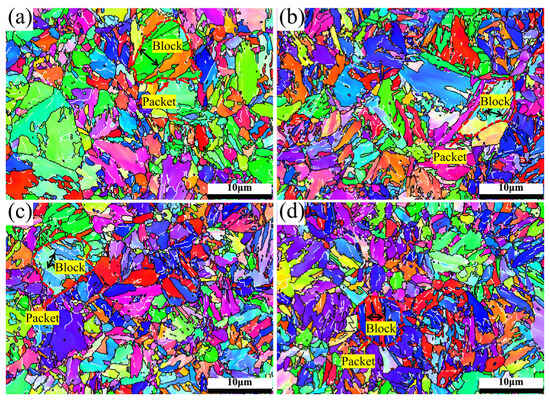
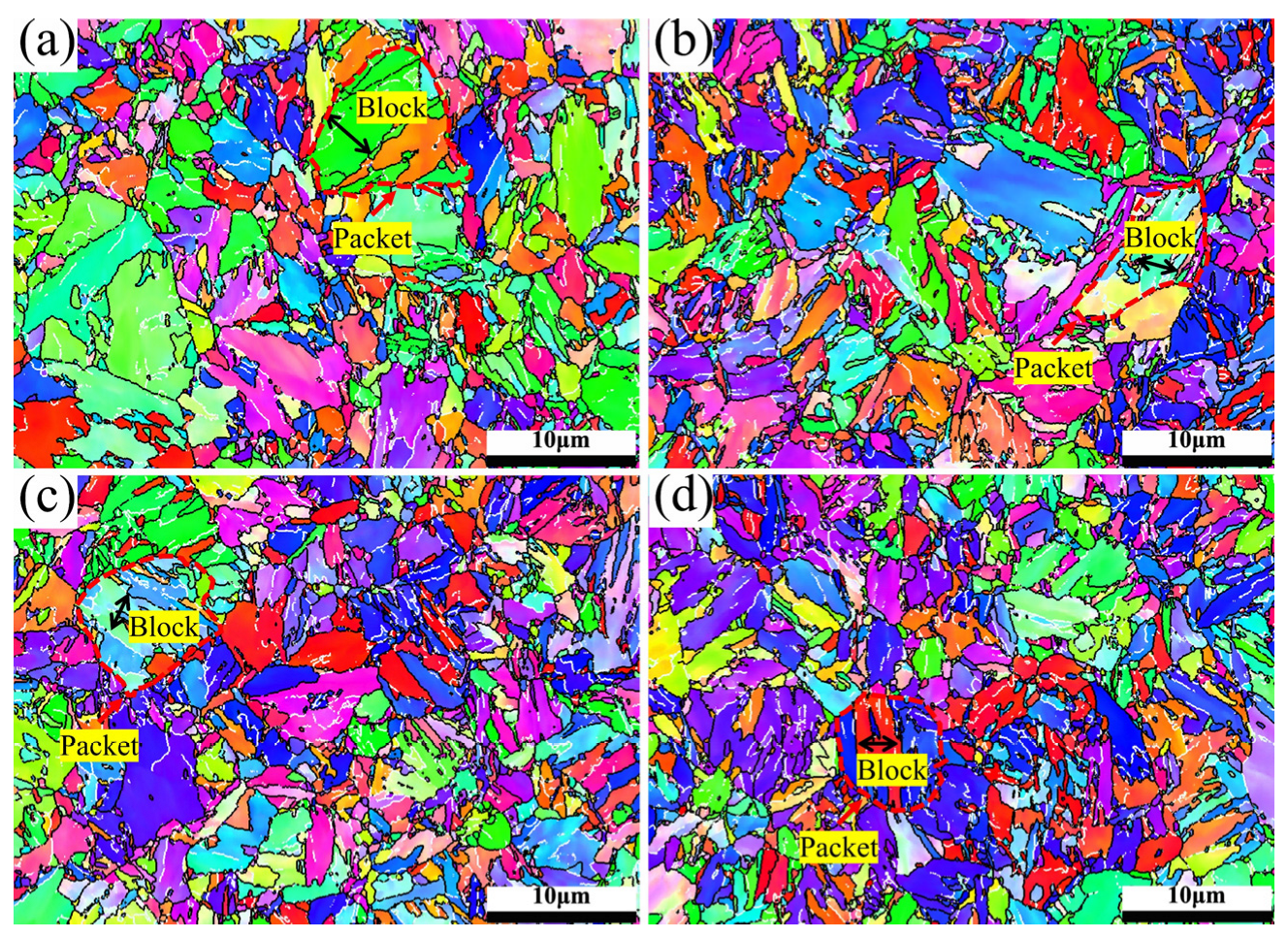
In order to elucidate the regulatory mechanism of Mo alloying on the hierarchical martensitic structure, scanning electron microscopy (SEM) combined with electron backscatter diffraction (EBSD) technology was employed to characterize the morphological features and orientation distributions of packets and blocks in tempered specimens (Figure 5 and Figure 6) [25,27]. Quantitative statistics pertaining to the packet size () and block size () were conducted using Image-Pro Plus 6.0 analysis software. The results demonstrate that as the Mo content rises from 0.70 wt.% to 1.57 wt.%, there is a concomitant decrease in packet size () from 4.11 ± 1.33 µm to 3.07 ± 1.37 µm and in block size () from 2.21 ± 1.07 µm to 1.35 ± 0.94 µm. The variation trends of and with Mo content exhibit a significant positive correlation with the prior austenite grain size (). As demonstrated in Figure 5(a3–d3), SEM images indicate that the precipitates within this series of Mo-containing test steels are distributed along the grain boundaries and within the grains [9,29,30].
Figure 5.
SEM micrographs of steels with varying Mo contents: (a1–a3) Mo07; (b1–b3) Mo10; (c1–c3) Mo13; (d1–d3) Mo16.
Figure 6.
IPF Maps from EBSD for steels with varying Mo contents: (a) Mo07; (b) Mo10; (c) Mo13; (d) Mo16.
3.2.3. Lath and Precipitate Observations
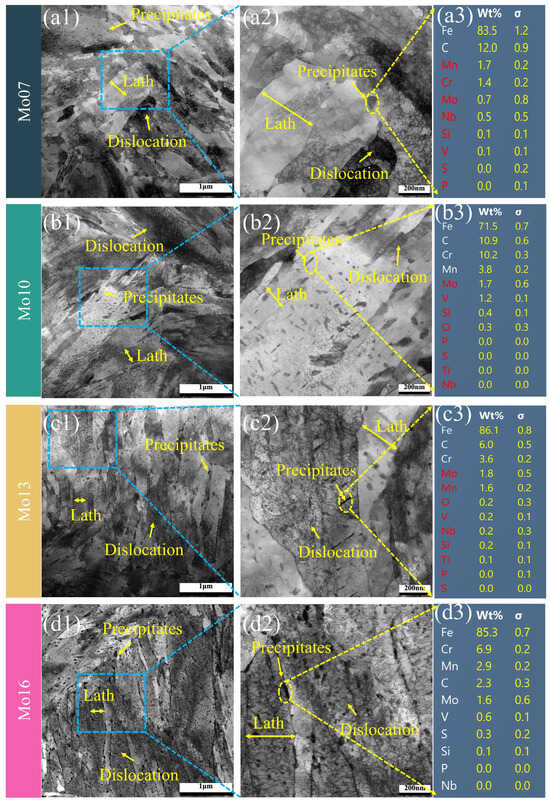
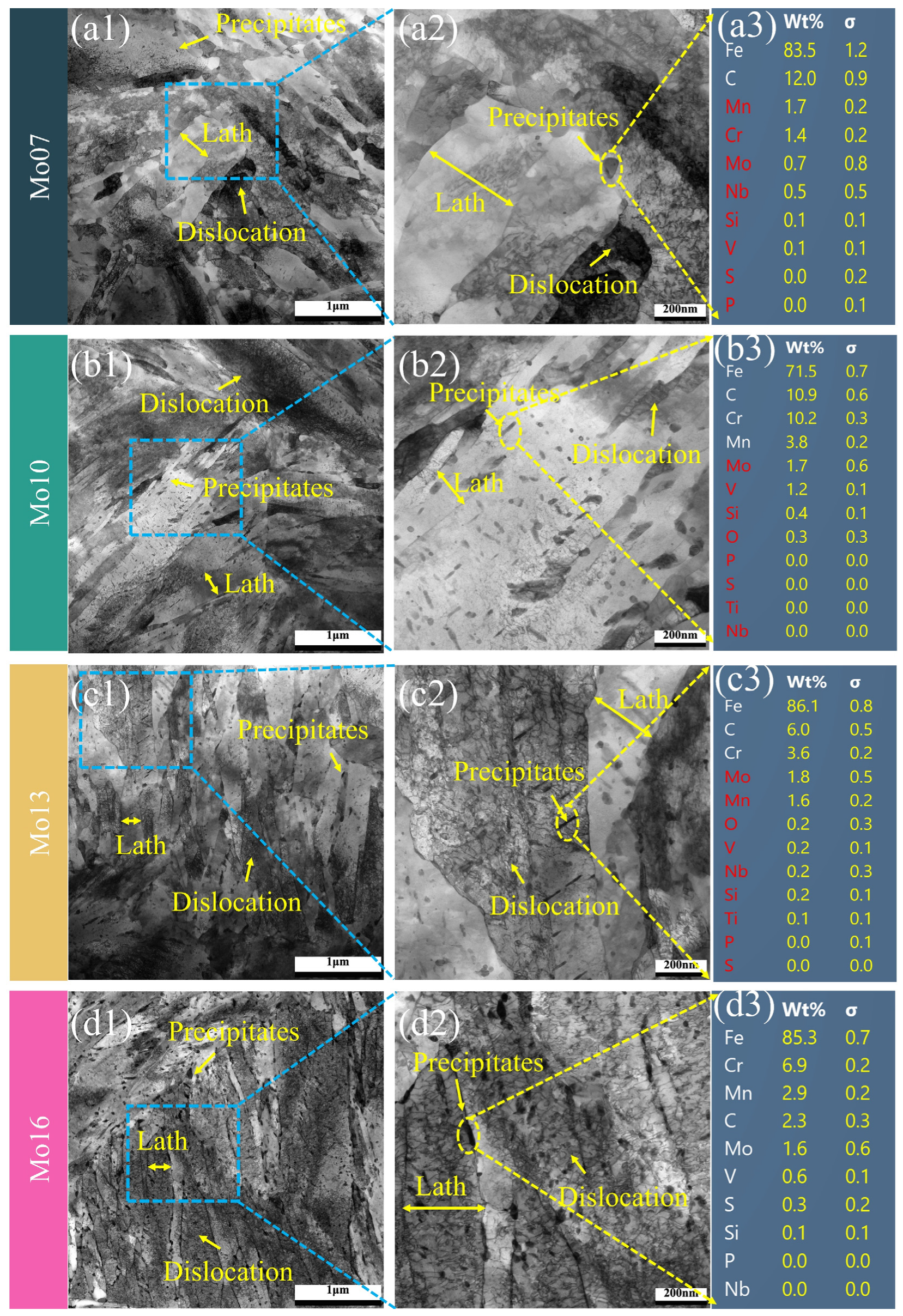
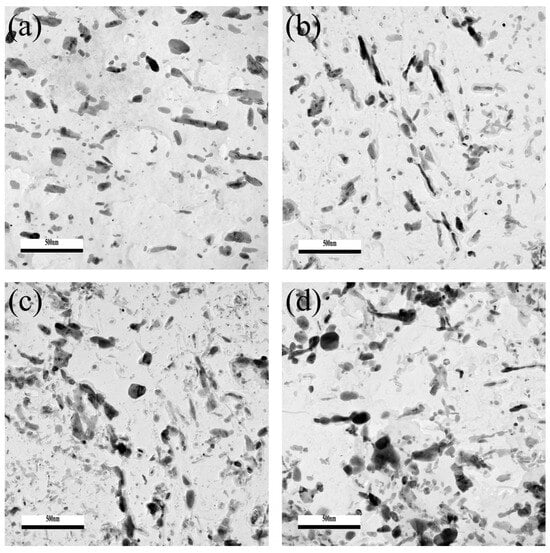
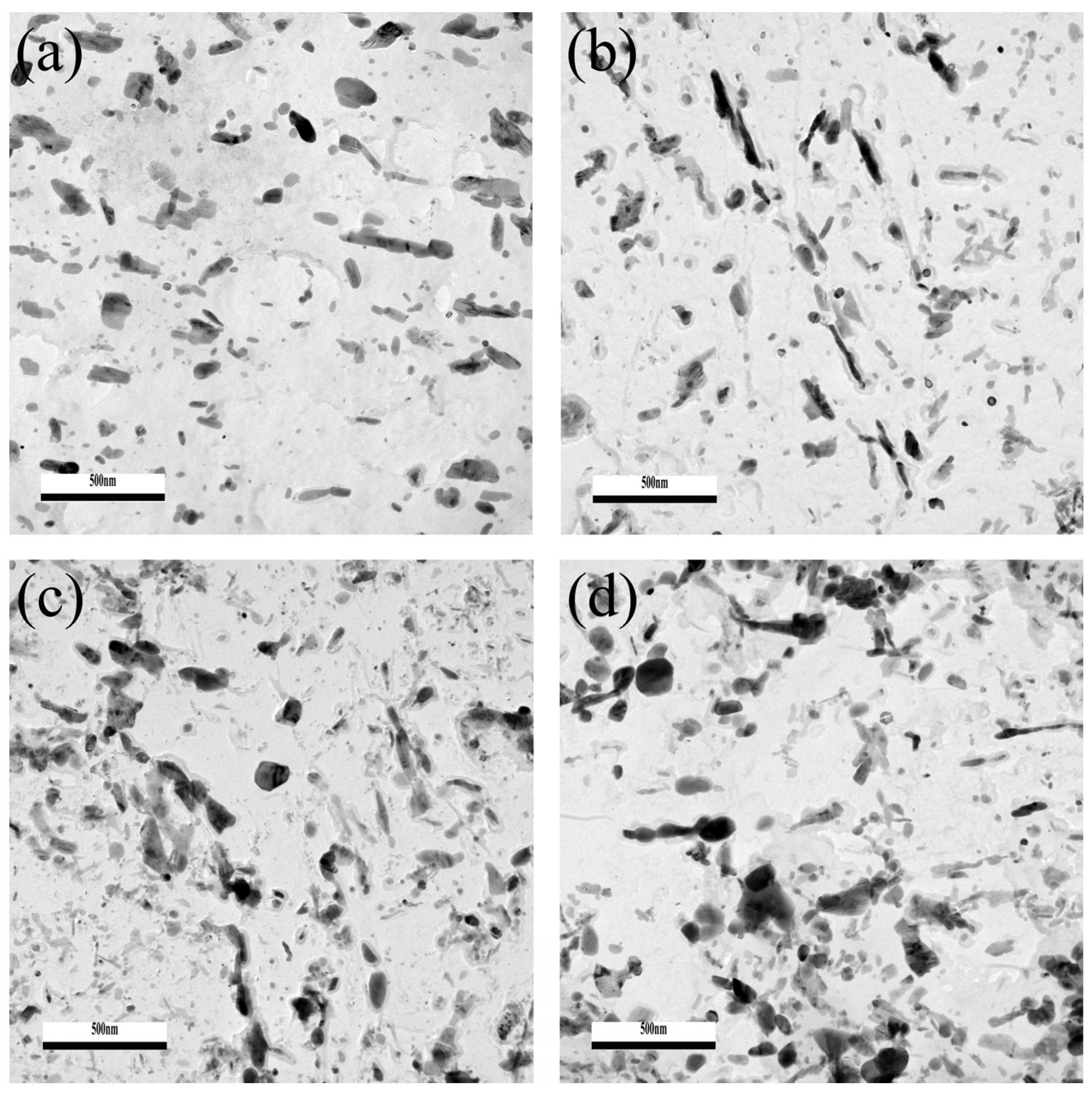
TEM was utilized to characterize the laths and precipitates of test steels with varying Mo contents. Statistical analysis was conducted on the lath size, precipitate size [31,32] and volume fraction using double-jet thin-film specimens (Figure 7) and extraction replica specimens (Figure 8).
Figure 7.
TEM morphologies and EDS of precipitates in thin-film specimens of steels with varying Mo contents: TEM morphologies, (a1,a2) Mo07; (b1,b2) Mo10; (c1–c3) Mo13; (d1–d3) Mo16; EDS of precipitates, (a3) Mo07; (b3) Mo10; (c3) Mo13; (d3) Mo16.
Figure 8.
TEM Morphologies of Precipitate Replica Specimens of Steels with Varying Mo Contents: (a) Mo07; (b) Mo10; (c) Mo13; (d) Mo16.
For each specimen, measurements were conducted at a minimum of five different locations. In order to ascertain the mean equivalent size and volume fraction of precipitates exhibiting diverse morphologies, it was necessary to treat all precipitates as spherical particles. The equivalent diameter (d) was determined as the mean particle size. Subsequently, the volume fraction f of the particles was calculated according to the following equation:
where N denotes the value of the particle area, S0 represents the estimated specific surface area, and d denotes the equivalent circular diameter of precipitated particles.
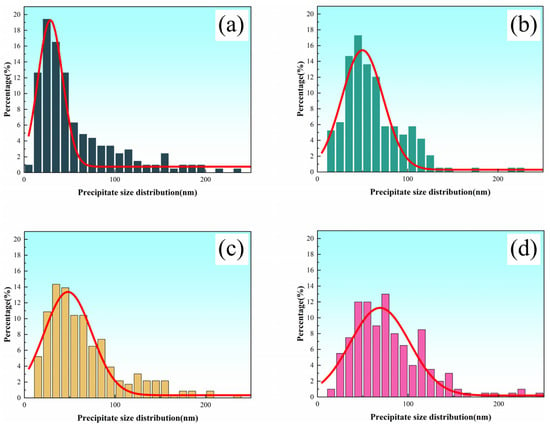
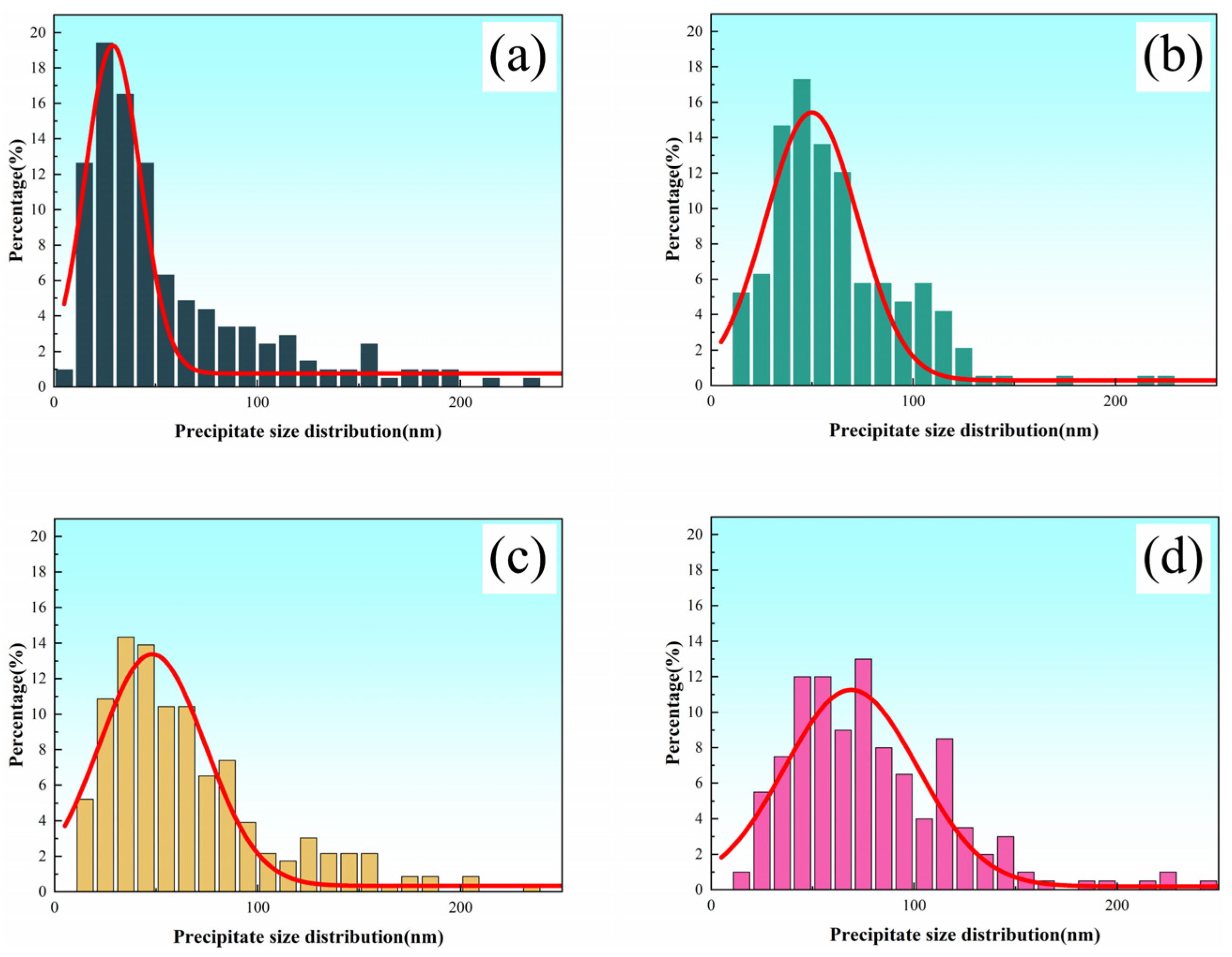
Quantitative statistical analysis of the TEM images was performed using Image-Pro Plus 6.0 image analysis software. The results show that with an increase in the Mo content from 0.70 wt.% to 1.57 wt.%, the lath size (DL) decreased from 244.2 ± 114.0 nm to 142.7 ± 75.3 nm, the average size of precipitated phases increased from 56.8 nm to 78.9 nm, and the volume fraction of precipitated phases rose from 2.04% to 3.80%. All the aforementioned quantitative data are summarized in Table 4. Figure 9 presents the histograms of precipitated phase size distribution and their corresponding Gaussian fitting curves for the test steels with varying Mo contents. It can be seen that with the increase in Mo content, the dominant range of precipitated phase size distribution shifts significantly from 10~50 nm to 50~100 nm.
Figure 9.
Histogram of Precipitated Phase Distribution in Steels with Varying Mo Contents: (a) Mo07; (b) Mo10; (c) Mo13; (d) Mo16. This red line represents the Gaussian fit curve.
3.2.4. Dislocation Observations
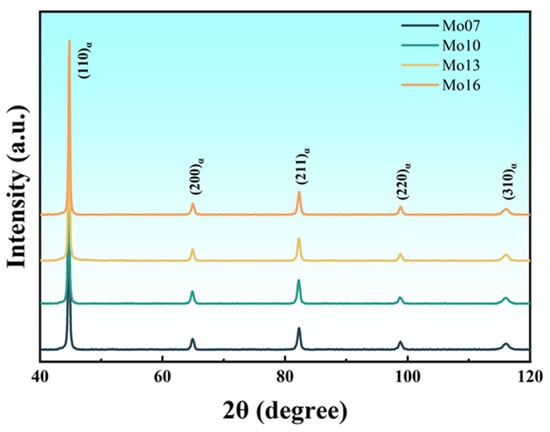
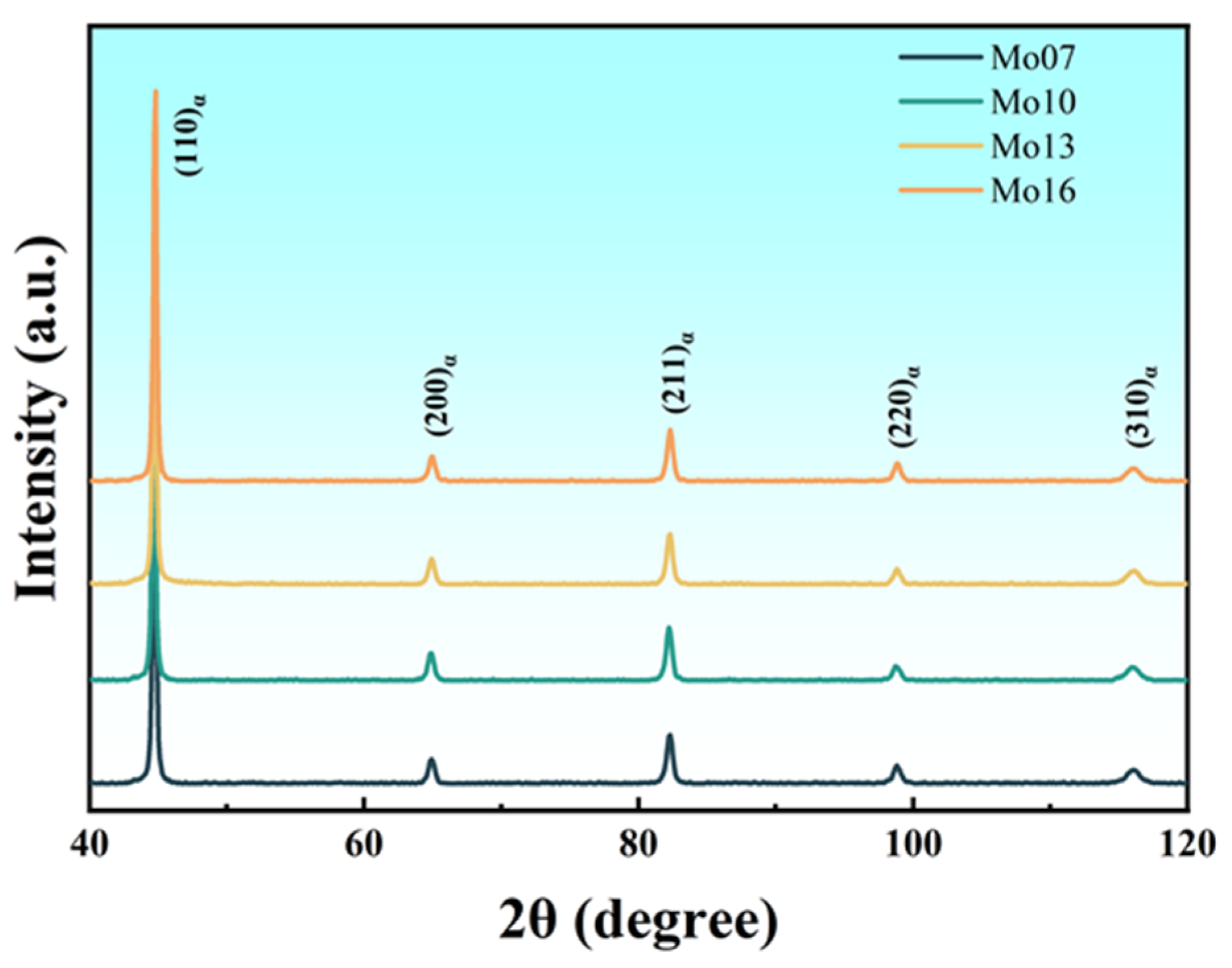
It can be observed from Figure 7 that dislocation structures are present in all four test steels with varying Mo contents; moreover, the number of dislocation structures in the test steels exhibits a gradual increasing trend as the Mo content increases from 0.70 wt.% to 1.57 wt.%. To quantitatively characterize the variation in dislocation content, the XRD technique was employed to perform quantitative determination of the dislocation density in the test steels with varying Mo contents.
The dislocation density was calculated using the convolutional multiple whole pattern (CMWP) fitting program developed by Ribarik et al. [33], which assumes that the peak profile function is a convolution of grain size, strain and instrumental broadening. Based on the XRD results (Figure 10), the dislocation density increases from 1.35 × 10¹⁵ m−2 to 1.68 × 10¹⁵ m−2 as the Mo content rises from 0.70 wt.% to 1.57 wt.% (Table 4).
Figure 10.
XRD patterns of test steels with varying Mo contents.
4. Discussion
4.1. Effect of Grain Size and Boundary Angle
Grain boundaries, as fundamental microstructural elements that regulate material strength, have the capacity to enhance the deformation resistance of materials by impeding dislocation slip [34,35,36]. Research has demonstrated [37,38,39,40] that HAGBs demonstrate significant misorientation, accompanied by an absence of order in the atomic arrangement at the boundary interface. Consequently, dislocations are unable to traverse these boundaries via the dislocation climb mechanism. Conversely, low-angle grain boundaries (LAGBs) exhibit a minimal misorientation, essentially comprising dislocation walls composed of a succession of dislocations. These dislocations can traverse the boundaries through climb or slip, thereby exerting a negligible hindering effect on dislocation movement. It can thus be concluded that the strengthening effect of HAGBs (θ > 15°) is significantly superior to that of LAGBs (2° < θ < 15°), where θ represents the grain boundary misorientation angle [36,37,41].
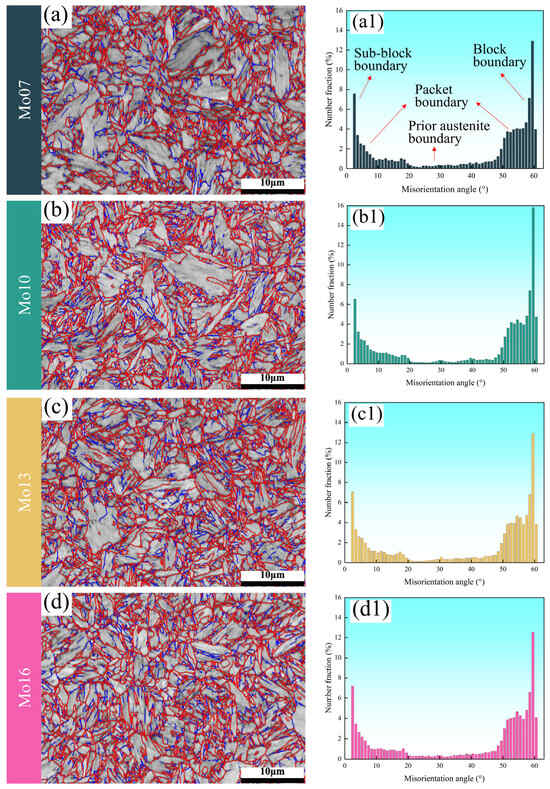
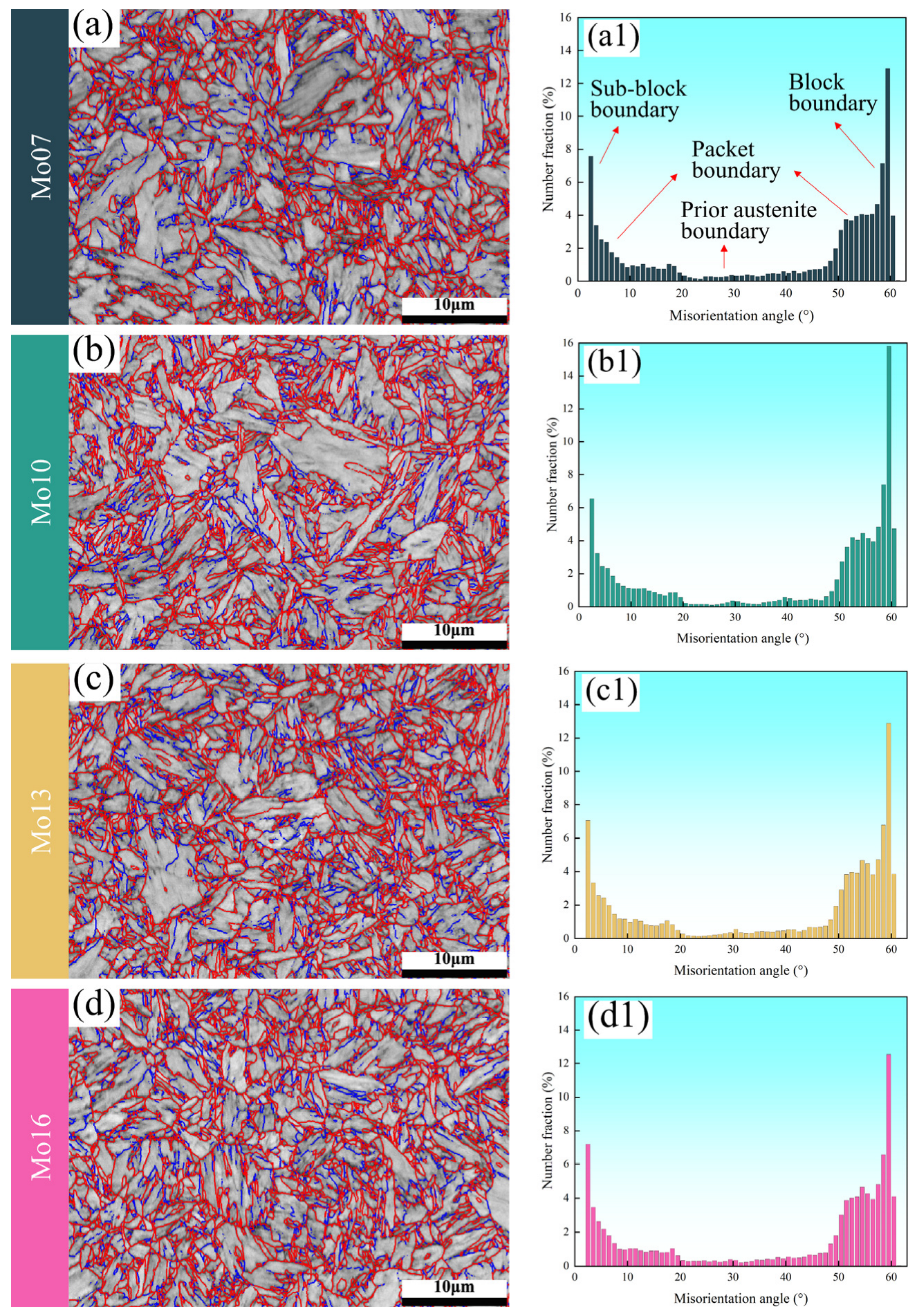
Figure 11 shows the grain boundary distribution maps and misorientation angle statistics plots of the tempered test steels with varying Mo contents. To clearly characterize the grain boundary distribution characteristics in the maps, low-angle grain boundaries (LAGBs, 2° < θ < 15°) and high-angle grain boundaries (HAGBs, θ > 15°) are marked with blue and red lines, respectively, where θ represents the grain boundary misorientation angle. The grain boundary misorientation angles of the test steels with varying compositions are mainly concentrated in two ranges of 2~20° and 45~60° [7], indicating a regular rather than random distribution of their grain boundaries. Moreover, as the molybdenum (Mo) content increased from 0.70 wt.% to 1.57 wt.%, the proportion of LAGBs decreased marginally from 25.3% to 24.8%, while the proportion of HAGBs increased slightly from 74.7% to 75.2%. The statistical outcomes indicate that the proportion alterations for both categories of grain boundaries are exceedingly minimal, with values demonstrating negligible statistical significance. This minor fluctuation alone cannot account for the increasing trend in the proportion of high-angle grain boundaries.
Figure 11.
EBSD grain boundary distribution maps and fraction statistics plots of grain boundaries with various misorientation angle for test steel: (a,a1) Mo07; (b,b1) Mo10; (c,c1) Mo13; (d,d1) Mo16. The blue lines represent LAGBs and the red lines indicate HAGBs.
Subsequent quantitative analysis employing AZtecCrystal 2.1 software on the lengths of high-angle grain boundaries marked in red in Figure 11a–d revealed an approximate 22% increase in the total length of high-angle grain boundaries, from 2109 μm to 2551 μm. Given the observation that the EBSD characterization areas for the four test steels remained constant, the aforementioned data unequivocally substantiates the hypothesis that the density of high-angle grain boundaries per unit area exhibits a substantial increasing trend with rising Mo content.
With the increase in Mo content from 0.70 wt.% to 1.57 wt.%, the grains of the test steels are refined (Table 4), accompanied by an increase in the fraction of HAGBs. This causes dislocation motion to be significantly hindered and piled up at HAGBs, thus leading to an increase in the yield strength and tensile strength of the materials with rising Mo content. Meanwhile, the increase in the number of HAGBs also exerts an influence on the maximum force Fm during the impact process, increasing it from 27.4 ± 0.2 kN to 30.3 ± 0.4 kN. Nevertheless, the total impact energy of the test steels exhibits a decreasing trend as the Mo content increases from 0.70 wt.% to 1.57 wt.%: the displacement at the maximum force in the crack initiation energy (Ei) decreases from 1.9 mm to 1.33 mm, and the crack propagation energy (Ep) drops sharply. This indicates that although HAGBs can act to hinder crack propagation [37,42,43], the increase in the HAGB fraction is slight when the Mo content is elevated from 0.70 wt.% to 1.57 wt.% in this experimental material system. Such a slight increase exerts a certain effect on the material strength and the maximum impact force Fm but fails to directly determine the overall low-temperature impact toughness of the materials. Instead, the impact fracture behavior of the materials is still dominated by other factors.
4.2. The Particle Size Distribution of the Second-Phase Particles
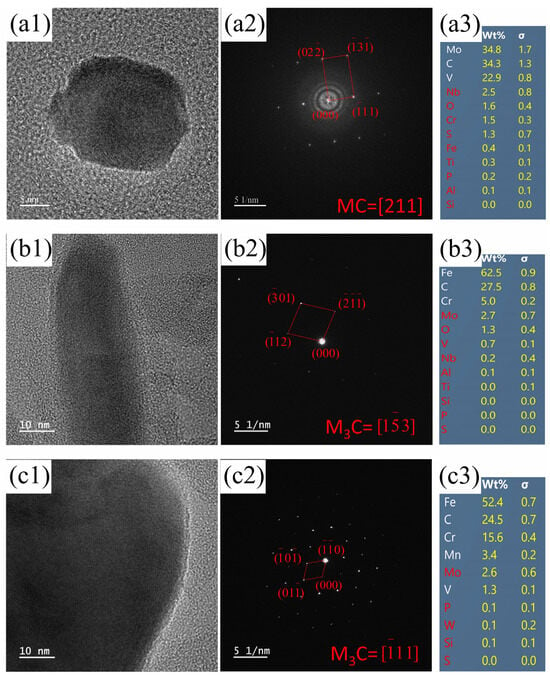
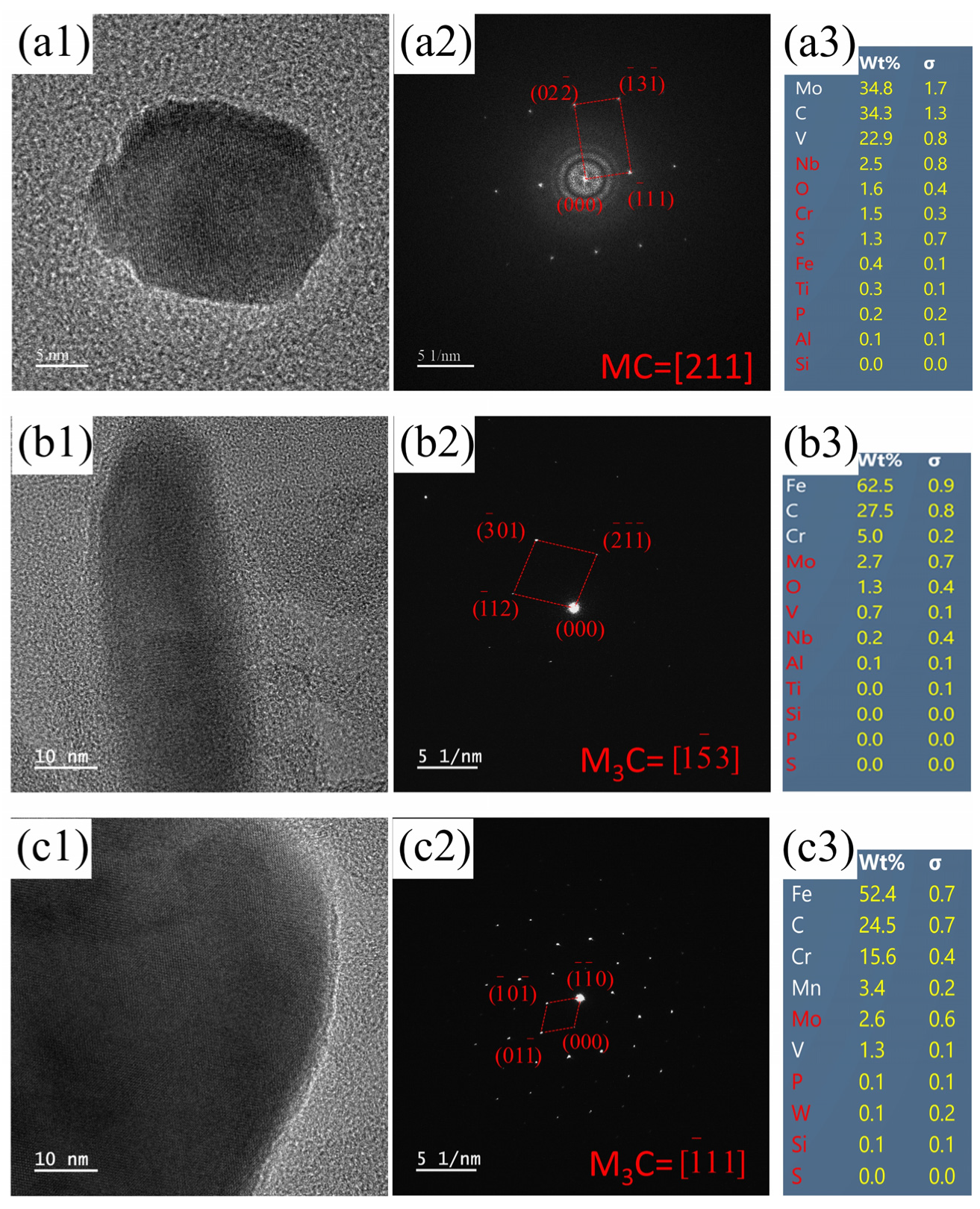
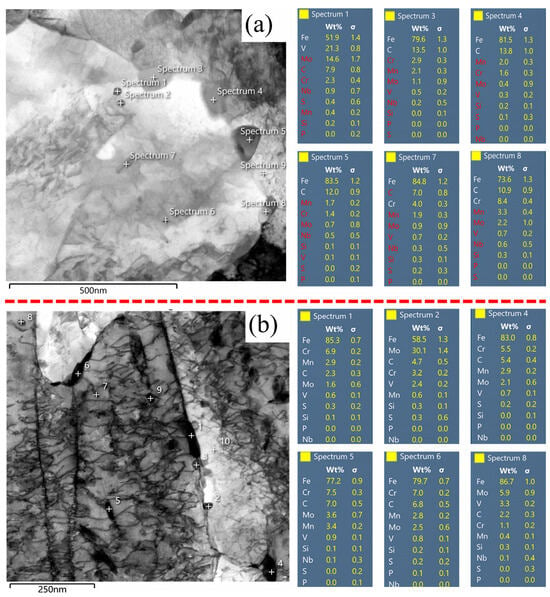
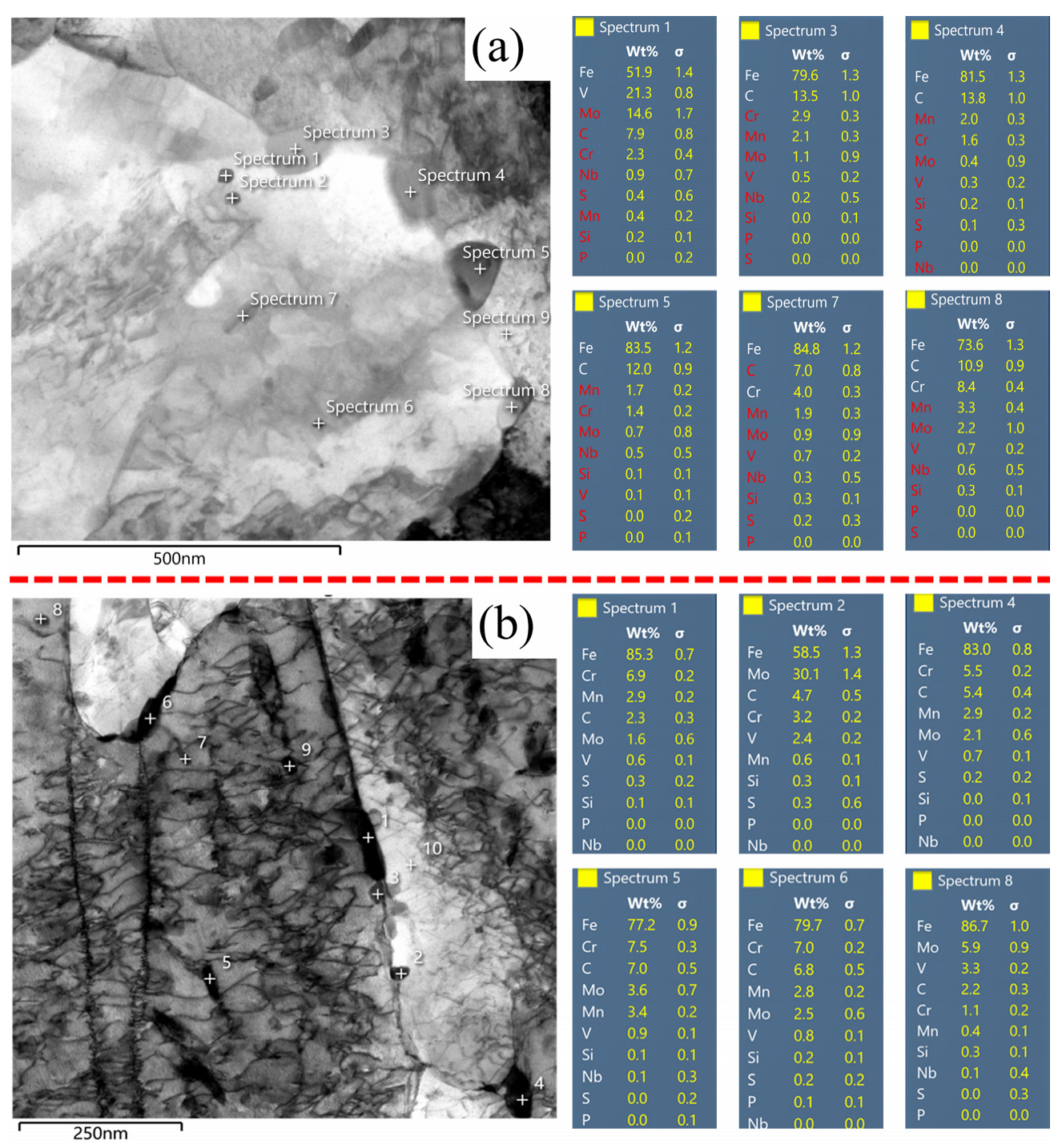
As illustrated in Figure 7 and Figure 8, the precipitated phases in the test steels can be broadly categorized into three distinct groups. The classification system employed categorizes precipitates into three distinct classes, namely, Type A, which comprises fine spherical precipitates; Type B, which comprises slender rod-like precipitates; and Type C, which comprises coarse blocky precipitates [44].
High-resolution transmission electron microscopy (HRTEM) and energy-dispersive X-ray spectroscopy (EDS) techniques were employed to analyze the microstructure and chemical composition of these three categories of precipitated phases (Figure 12).
Figure 12.
Morphologies, microstructures and chemical compositions of the three categories of precipitated phases: (a1–a3) Type A; (b1–b3) Type B; (c1–c3) Type C.
Studies have shown that Type A precipitates are MC-type carbides with a size range of 10~20 nm, which are Mo-V composite precipitates and characteristically distributed within grains. Type B precipitates are M3C-type carbides with a size range of 30~100 nm, belonging to Fe-Cr-Mo carbides, and the majority of which are also distributed intragranularly. Type C precipitates are also M3C-type carbides with sizes all exceeding 50 nm; these are Fe-Cr-Mn-Mo carbides, and an overwhelming majority of them segregate at grain boundary regions (Figure 12 and Figure 13).
Figure 13.
Precipitated phase distribution maps of test steels with varying Mo contents: (a) Mo07 A; (b) Mo16.
With the increase in Mo content from 0.70 wt.% to 1.57 wt.%, the number of all three types of precipitates increases, and the fraction of large-sized precipitates exhibits an upward trend (Figure 7, Figure 8 and Figure 9). Among them, the two types of intragranular precipitates (fine spherical Type A precipitates and slender rod-like Type B precipitates) can effectively impede dislocation motion, thereby exerting a precipitation strengthening effect. In contrast, the coarse blocky Type C precipitates, as grain boundary precipitates, are featured by large particle sizes and predominant distribution at the multi-scale martensitic grain boundaries. A distinct hardness mismatch exists between these precipitates and the matrix, which readily triggers severe stress concentration at grain boundaries and thereby impairs the grain boundary’s capability to inhibit crack propagation. This phenomenon is presumably responsible for the sharp decline in crack propagation energy of the experimental steels with high Mo content, and further analysis and discussion will be carried out based on the fracture morphologies of the specimens.
4.3. Contributions of Varying Strengthening Mechanisms
To elucidate the strengthening mechanism of the test steel subjected to off-line quenching and tempering treatment, quantitative calculation and analysis were carried out on its various strengthening mechanisms. For the alloy steel system, the improvement in yield strength is mainly derived from four core mechanisms: grain refinement strengthening, solid solution strengthening, dislocation strengthening and precipitation strengthening.
The yield strength σYS of the material and the contribution of each strengthening mechanism satisfy the following relationship:
where Δσ0 denotes lattice strengthening, Δσs represents solid solution strengthening, Δσg stands for grain refinement strengthening, Δσdis corresponds to dislocation strengthening, and Δσph refers to precipitation strengthening.
To investigate the effect of microstructure on yield strength, varying microstructural factors affecting yield strength were simulated. The lattice strengthening σ0 was set at 50 MPa [45].
4.3.1. Solid Solution Strengthening
Solid solution strengthening (Δσs) describes the strengthening mechanism whereby solute atoms dissolve into the lattice of the solvent metal matrix, giving rise to lattice distortion. Such lattice distortion increases the resistance against dislocation glide and impedes dislocation movement, thus elevating the strength of the material. It comprises two categories: interstitial solid solution strengthening and substitutional solid solution strengthening. Accordingly, assuming all elements are homogeneously distributed within the matrix and under thermodynamic equilibrium, the contribution of solid solution strengthening to the flow strength can be calculated using the equation below [9,46,47]:
where [X] denotes the mass percentage of the corresponding elements dissolved in BCC martensite, which was obtained by thermodynamic simulations using Thermo-Calc 2024b (Thermo-Calc Software, Stockholm, Sweden), as shown in Table 5.
Table 5.
The mass fraction of solute elements in the BCC phase at 650 °C.
4.3.2. Grain Refinement Strengthening
Grain refinement strengthening Δσg depends on the estimated grain size in the steel and can be calculated using the following Hall–Petch equation [48]:
where KHP Db−1/2 corresponds to the strength increment Δσg contributed by grain refinement strengthening, Db denotes the martensitic block size, and σe represents the strength increment contributed by other strengthening mechanisms.
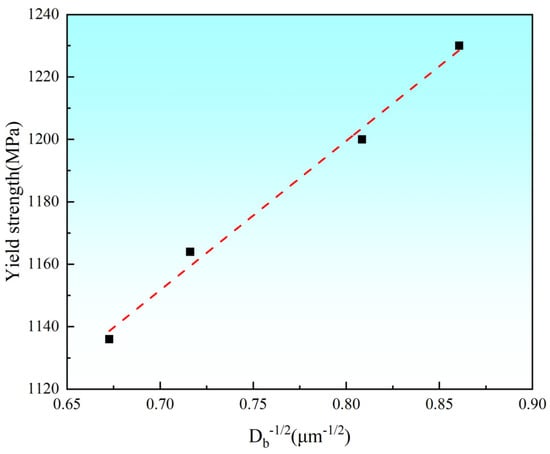
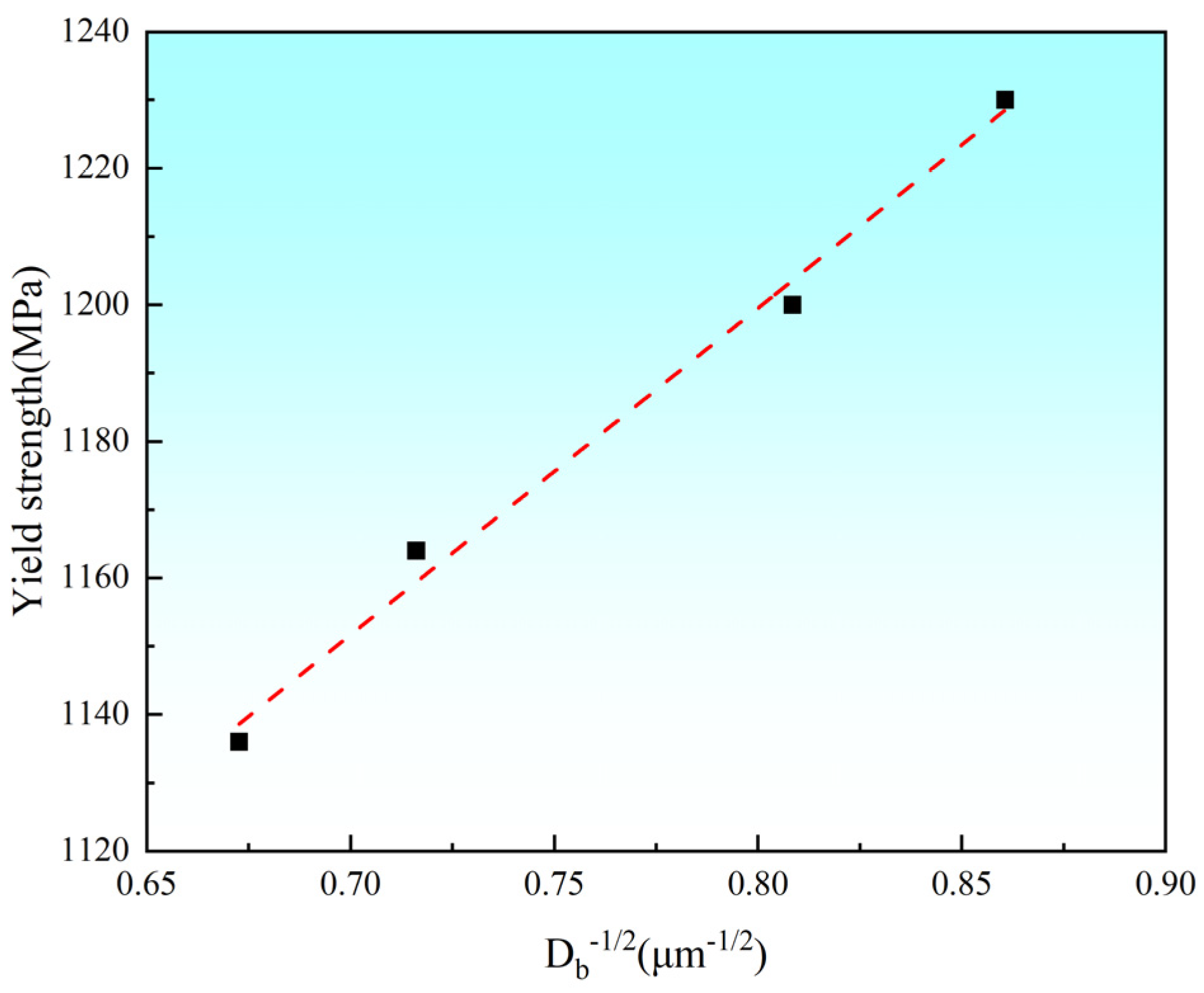
As the strength-determining unit, the martensitic block size was characterized by the electron backscatter diffraction (EBSD) technique. The detailed results are presented in Table 4. Based on the Hall–Petch equation, a mathematical fitting of the relationship between the material’s yield strength and the reciprocal of the square root of the block grain size was performed. As shown in Figure 14, the Hall–Petch slope KHP was determined to be 478 MPa·μm1/2, with the intercept σe of 816 MPa. The block sizes of the test steels with varying Mo contents were substituted into the equation to calculate the grain refinement strengthening contribution Δσg, and the detailed results are presented in Table 6.
Figure 14.
Fitting plot of yield strength vs. reciprocal of square root of block size.
Table 6.
Contribution values of each strengthening mechanism.
4.3.3. Dislocation Strengthening
Dislocation strengthening Δσdis makes a primary contribution to the high strength of the steel, and can be calculated using the following Bailey–Hirsch relationship [7,18,48,49]:
where α is a constant with a value of 0.15, and M, b, G, and ρ denote the average Taylor factor (2.73 for ferritic steel), the magnitude of the Burgers vector (0.248 nm for iron), and the shear modulus (81.6 GPa for iron) [50]. The values of ρ were experimentally determined from the X-ray diffraction patterns of each steel grade, as shown in Figure 10 and Table 4.
4.3.4. Precipitation Strengthening
When precipitate particles are present in the steel, the strengthening mechanisms of the precipitates are mainly the Orowan mechanism and the shearing mechanism. Generally speaking, the precipitation strengthening based on the Orowan mechanism can be expressed by the following formula [7,8,44,50]:
where G is the shear modulus (81.6 GPa), b is the Burgers vector (0.248 nm) [50], dpre is the average size of the precipitates, and fpre is the volume fraction of the precipitates.
4.3.5. Contribution Values of Individual Strengthening Mechanisms
Using the aforementioned calculation Formulas (1)–(5), the experimental test parameters required for the calculations are summarized in Table 4, and the contribution results of each strengthening mechanism are compiled in Table 6.
Therefore, it can be seen from Table 6 that the contribution degrees of the four strengthening mechanisms are ranked as follows: grain refinement strengthening > dislocation strengthening > solid solution strengthening > precipitation strengthening.
4.4. Effect of Microstructure on the Fracture Behavior
4.4.1. Macrofracture Morphology and Characteristics
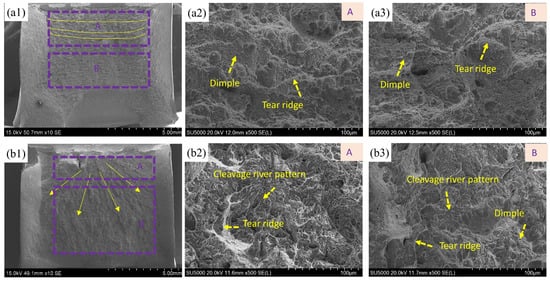
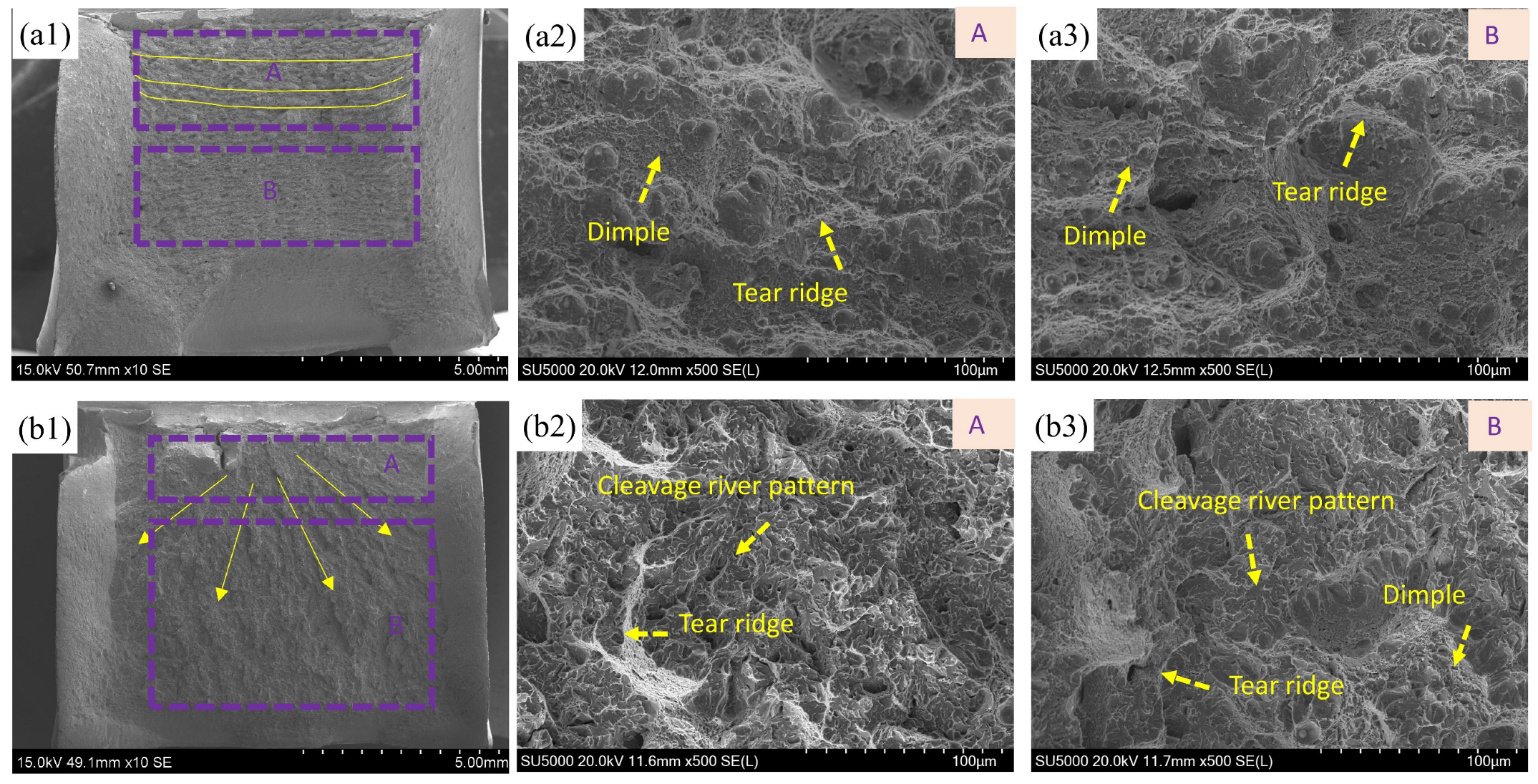
Figure 15 shows the scanning electron microscopy (SEM) morphologies of the low-temperature impact fracture surfaces of the test steels with varying Mo contents at −20 °C, including the macrofracture morphologies and microfracture characteristics. Among them, a1~b1 represent the macrofracture morphologies; with the Mo content increasing from 0.70 wt.% to 1.57 wt.%, the proportion of the fibrous zone on the fracture surface decreases gradually, while that of the radial zone increases correspondingly. a2~b2 denote the micro-morphologies of the fibrous zone, A; as the Mo content rises from 0.70 wt.% to 1.57 wt.%, the micro-morphology of the fibrous zone evolves from fine and deep dimples to coarse and shallow dimples step by step and finally exhibits cleavage characteristics with river patterns. a3~b3 are the micro-morphologies of the radial zone, B; with the Mo content increasing from 0.70 wt.% to 1.57 wt.%, the morphology of the radial zone gradually transforms from typical dimple characteristics to cleavage morphologies with radial river patterns, and the size of cleavage facets increases continuously with the increase in Mo content. The above-mentioned fracture morphology characteristics are in good agreement with the variation law that the impact energy (AKV2) of the standard specimens at −20 °C decreases with the increase in Mo content.
Figure 15.
Impact Fracture Morphology: (a1–a3) Mo07; (b1–b3) Mo16.
At the Mo content of 0.70 wt.%, the fibrous region (A) and radial region (B) of the fracture surface are dominated by fine, uniformly distributed dimples. The presence of dimples, a common feature in the morphology of the steel, serves to substantiate its noteworthy low-temperature toughness, as evidenced in Figure 15(a1–a3).
It is evident that with the Mo content elevated to 1.57 wt.%, the steel displays a predominant brittle fracture behavior. Specifically, the fibrous region (A) is observed to be almost non-existent, while the radial region (B) is characterized by distinct river-like cleavage patterns, which are considered to be the primary morphological feature, despite the presence of a few residual dimples. This particular morphological transition unequivocally corroborates the brittle fracture characteristic of the steel at low temperatures, as demonstrated in Figure 15(b1–b3).
4.4.2. Effect of Microstructure on Fracture
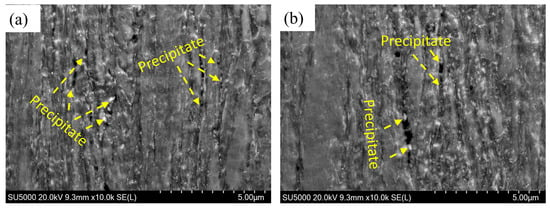
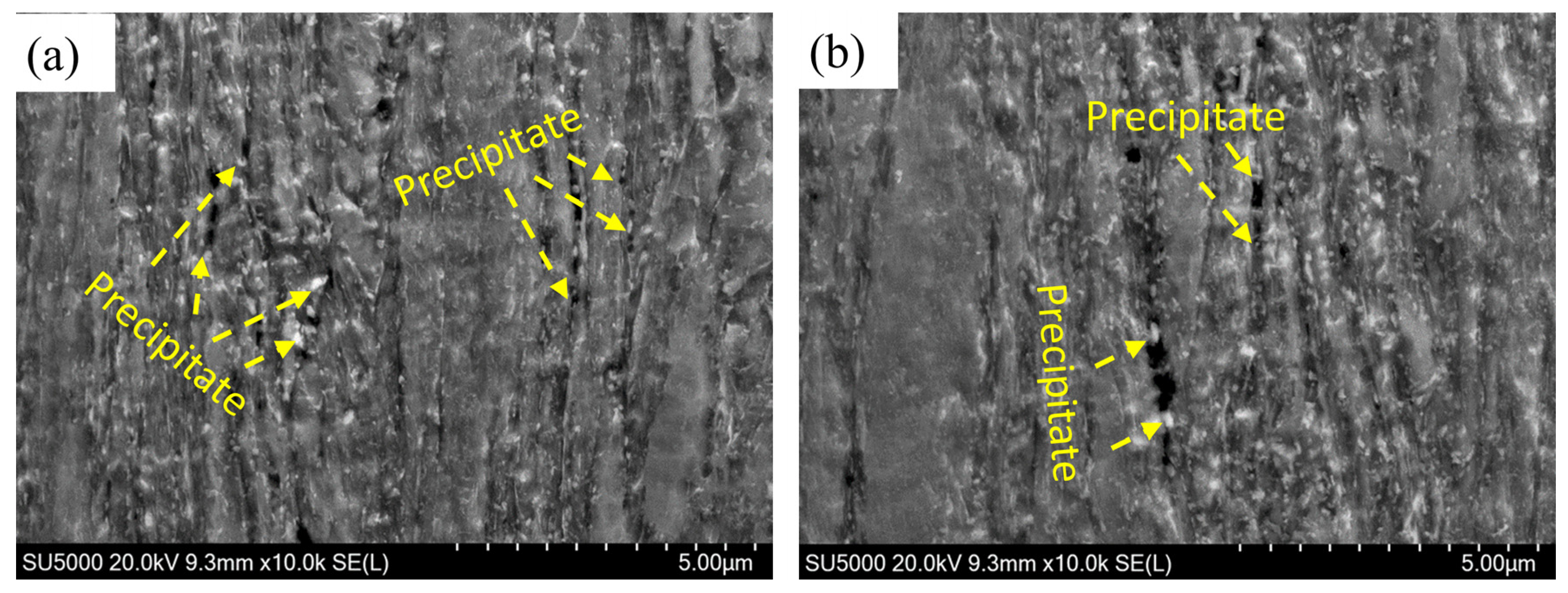
Figure 16 shows the microstructural morphology at the tensile fracture of the Mo16 steel. It can be seen from the figure that all micropores at the fracture nucleate at the interfacial regions between the grain boundary precipitates and the matrix, which indicates that due to the significant hardness difference between the precipitates and the matrix, a high dislocation density tends to accumulate at the interfaces of hard precipitates and the soft matrix during severe tensile deformation, thereby inducing the nucleation and initiation of microcracks [37].
Figure 16.
Microstructure and micropores of Mo16 tensile fracture. (a) The first tensile specimen (b) The second tensile specimen.
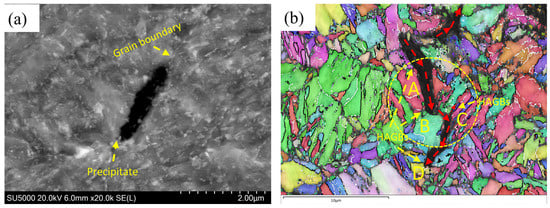
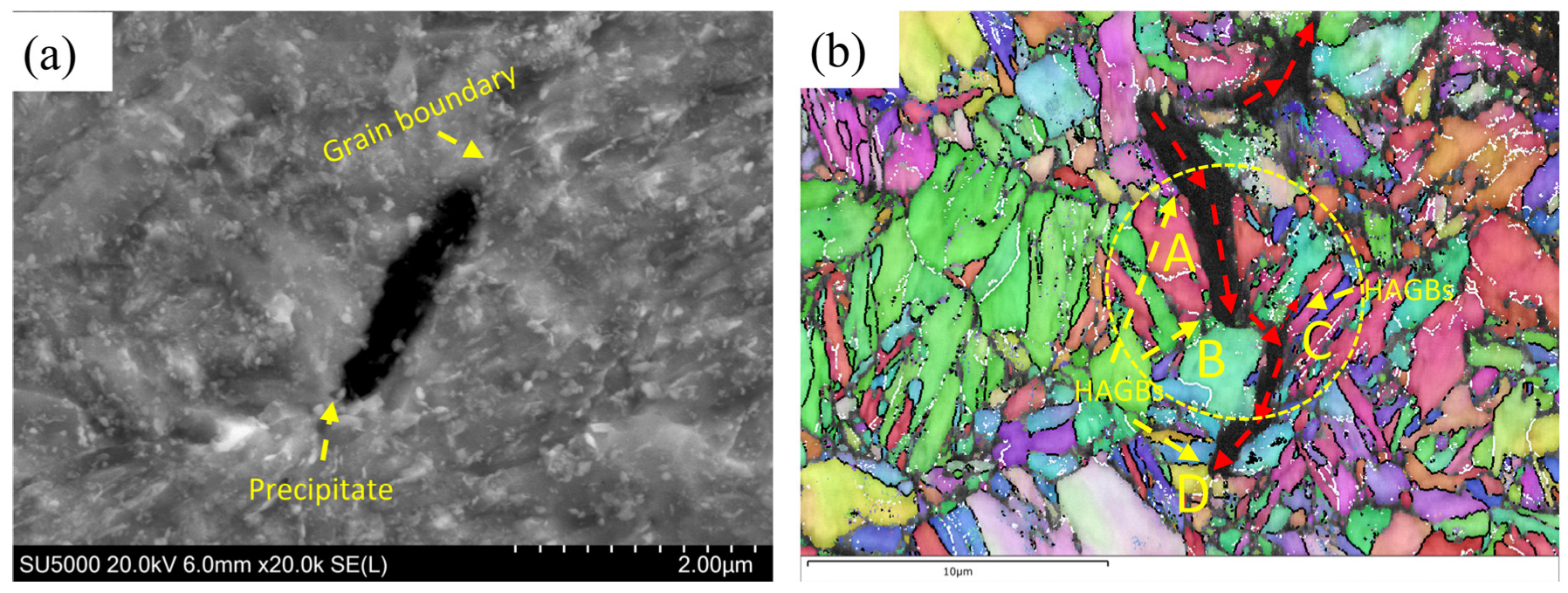
Figure 17 shows the microstructural morphology and secondary crack characteristics of the impact fracture of the Mo16 test steel. It can be seen from the SEM image (Figure 17a) that secondary cracks also initiate at the interfaces between grain boundaries and precipitates, which is consistent with the nucleation sites of micropores on the tensile fracture. This phenomenon indicates that the coarse blocky precipitates significantly degrade the grain boundary strength, making them the preferential nucleation sites for microcracks. Therefore, the Mo16 test steel exhibits the minimum low-temperature impact energy of only 36 J due to the presence of a large number of coarse blocky Type C precipitates (Figure 7, Figure 8, Figure 9 and Figure 12).
Figure 17.
SEM and EBSD-IPF images of secondary cracks on the impact fracture of Mo16: (a) SEM; (b) EBSD-IPF.
The correlation between secondary cracks and grain boundaries can be clearly observed via the EBSD-IPF orientation map (Figure 17b), where low-angle grain boundaries (LAGB, 2° < θ < 15°) and high-angle grain boundaries (HAGB, θ > 15°) are marked with white and black lines, respectively, with θ representing the grain boundary misorientation angle. From grain region A, it can be seen that HAGBs can cause crack deflection, thereby consuming the energy for crack propagation [42]. In grain region B, it is inferred that the presence of large-sized precipitates at grain boundaries leads to intergranular crack propagation. Grain region C exhibits typical lath microstructure characteristics, and its internal HAGBs are block boundaries. As shown in Figure 11(d,d1), large-sized precipitates are also distributed at the block boundaries of the Mo16 test steel, making it difficult for HAGBs to effectively impede crack propagation. The crack then propagates to grain region D, where the fine polygonal tempered sorbite microstructure exerts a significant crack-arresting effect on the crack.
5. Conclusions
The study systematically investigated the effects of Mo content (0.70–1.57 wt.%) on the multi-scale martensitic microstructure, mechanical properties, strengthening mechanisms and fracture behavior of quenched and tempered ultra-high-strength and -toughness oil well pipe steel. The main conclusions are summarized below:
- (1)
- As the Mo content increased from 0.70 wt.% to 1.57 wt.%, the yield strength (YS) of the steel rose by 8.2% (from 1135 MPa to 1233 MPa), while the ultimate tensile strength (UTS) increased by 9.4% (from 1176 MPa to 1285 MPa). Conversely, elongation after fracture increased slightly from 17% to 19%, while low-temperature impact toughness (AKV2 (−20 °C)) decreased significantly by 69.2% (from 117 J to 36 J).
- (2)
- Significant refinement of the multi-scale martensitic microstructure was achieved when the Mo content increased from 0.70 wt.% to 1.57 wt.%. The average equivalent diameter of the prior austenite grains decreased from 7.86 ± 2.47 μm to 3.67 ± 1.28 μm. Meanwhile, the average sizes of the martensitic packets, blocks, and laths decreased from 4.11 μm, 2.21 μm, and 244.2 nm to 3.07 μm, 1.35 μm, and 142.7 nm, respectively. Additionally, adding Mo increased the fraction of HAGBs from 74.7% to 75.2% and raised the dislocation density from 1.35 × 10¹⁵ m−2 to 1.68 × 10¹⁵ m−2.
- (3)
- Three types of carbide precipitates were identified in the quenched and tempered experimental steels: fine, spherical, MC-type precipitates (Mo-V system, 10–20 nm) within grains; elongated, rod-like, M3C-type precipitates (Fe-Cr-Mo system, 30–100 nm) within grains; and coarse, block-like, M3C-type precipitates (Fe-Cr-Mn-Mo system, >50 nm) at grain boundaries. As Mo content increased, the volume fraction of precipitates rose from 2.04% to 3.80% and the dominant size range shifted from 10–50 nm to 50–100 nm.
- (4)
- The enhancement in the yield strength of the experimental steels is dominated by four strengthening mechanisms. A quantitative analysis reveals the ranking of each mechanism’s contribution as follows: grain refinement strengthening > dislocation strengthening > solid solution strengthening > precipitation strengthening.
- (5)
- The fracture mode of the experimental steels gradually transitions from ductile dimple fracture in the low-Mo sample (Mo07, 0.70 wt.%) to brittle cleavage fracture in the high-Mo sample (Mo16, 1.57 wt.%). At low Mo content, the fracture surface is characterized by fine, deep dimples with tear ridges and excellent ductility. As the Mo content increases, the fibrous region of the fracture surface shrinks continuously, and cleavage facets with river patterns become dominant. This phenomenon is attributed to the segregation of coarse, block-like M3C-type precipitates at grain boundaries. These precipitates act as preferential sites for microcrack nucleation and propagation. The negative effects of this nucleation and propagation offset the crack-blocking capability of HAGBs.
Author Contributions
Conceptualization, Q.W.; Methodology, B.S. and Q.W.; Formal analysis, B.S.; Investigation, C.Z.; Resources, B.S. and Q.W.; Data curation, B.S. and S.W.; Writing—original draft, B.S., S.W. and Q.W.; Writing—review & editing, C.Z. and Q.W. All authors have read and agreed to the published version of the manuscript.
Funding
The authors acknowledge financial support from the National Key R&D Program of China (2023YFB3711700).
Data Availability Statement
The original contributions presented in this study are included in the article. Further inquiries can be directed to the corresponding author.
Conflicts of Interest
Author Bin Shi was employed by the company Tianjin Pipe Corporation Ltd. The remaining authors declare that the research was conducted in the absence of any commercial or financial relationships that could be construed as a potential conflict of interest.
Abbreviations
The following abbreviations are used in this manuscript:
| YS | Yield strength |
| UTS | Ultimate tensile strength |
| LAGBs | Low-angle grain boundaries |
| HAGBs | High-angle grain boundaries |
| PAGs | Prior austenite grains |
| OM | Optical microscope |
| SEM | Scanning electron microscope |
| EBSD | Electron backscatter diffraction |
| TEM | Transmission electron microscope |
| EDS | Energy-dispersive X-ray spectroscopy |
| SAED | Selected area electron diffraction |
| IPFs | Inverse pole figures |
| XRD | X-ray diffractometer |
| FWHM | Full width at half maximum |
| HRTEM | High-resolution transmission electron microscopy |
References
- Sun, J.; Yang, J.; Lv, K.; Bai, Y.; Liu, J.; Huang, X. Research Status and Prospect of Deep and Ultra-deep Drilling Technology. Xinjiang Oil Gas 2024, 21, 1–14. [Google Scholar] [CrossRef]
- Ke, K.; Hu, Z.; Wang, L.; Yang, J.; Xu, L.; Deng, S.; Li, Z. Research progress on key technologies and equipment for Arctic oil and gas drilling. Nat. Gas Ind. 2025, 45, 115–128. [Google Scholar] [CrossRef]
- Wang, H.; Huang, H.; Bi, W.; Ji, G.; Zhou, B.; Zhuo, L. Deep and ultra-deep oil and gas well drilling technologies: Progress and prospect. Nat. Gas Ind. B 2022, 9, 141–157. [Google Scholar] [CrossRef] [Scilit]
- Li, J.; Zhan, D.; Jiang, Z.; Zhang, H.; Yang, Y.; Zhang, Y. Progress on improving strength-toughness of ultra-high strength martensitic steels for aerospace applications: A review. J. Mater. Res. Technol. 2023, 23, 172–190. [Google Scholar] [CrossRef] [Scilit]
- Li, B.; Zhou, X.; Jia, S.; Chen, X.; Fu, S.; Zhao, D.; Zhang, H.; Guo, J. Study on Fracture Behavior and Toughening Mechanisms of Ultra-High-Strength Pipeline Steel. Metals 2024, 14, 666. [Google Scholar] [CrossRef] [Scilit]
- Wang, Y.; Feng, H.; Li, H.; Zhang, Y.; Jiang, Z.; Wang, X. Study on the mechanism of excellent strength and toughness combination of a high nitrogen martensitic stainless steel treated by Q-C-P-T process. J. Mater. Res. Technol. 2023, 27, 804–812. [Google Scholar] [CrossRef] [Scilit]
- Wang, Y.; Kang, J.; Liu, D.; Li, Y.; Wang, C.; Wu, Z.; Niu, N.; Yuan, G. Effect of V and Nb on the microstructure and properties of high strength and toughness steel for petroleum casing. J. Mater. Res. Technol. 2024, 29, 1403–1413. [Google Scholar] [CrossRef] [Scilit]
- Liang, Z.; Wang, J.; Li, H.; Zhang, X.; Liu, C.; Sun, D.; Yang, Z.; Zhang, F. Microstructure evolution of V-containing low carbon ultra-fine bainitic steel during medium-temperature tempering and strengthening-toughening mechanism. Mater. Sci. Eng. A 2024, 901, 146566. [Google Scholar] [CrossRef] [Scilit]
- Li, H.; Wen, G.; Cai, Z.; Feng, Y.; Ma, L.; Han, A.; Zhang, K. The effect of vanadium content on hierarchical martensite structure and yield strength of petroleum casing steels. J. Mater. Res. Technol. 2022, 18, 4522–4532. [Google Scholar] [CrossRef] [Scilit]
- Zhang, Z.; Sun, X.; Yong, Q.; Li, Z.; Wang, Z.; Wang, G. Precipitation Behavior of Nanometer-Sized Carbides in Nb-Mo Microalloyed High Strengh Steel and Its Strengthening Mechanism. Acta Metall. Sin. 2016, 52, 410–418. [Google Scholar]
- Zhan, Z.; Wang, Z.; Shi, Z.; Yang, Y.; Lu, W.; Wang, H.; Wang, Z.; Chai, F.; Luo, X. Effect of chromium and molybdenum addition on the matching mechanism of strength-ductility-toughness of low carbonmedium manganese steel. J. Mater. Res. Technol. 2024, 31, 2103–2115. [Google Scholar] [CrossRef] [Scilit]
- Li, Y.; Chen, W.; Chen, Y.; Cui, Z.; Sun, F.; Zhu, L.; Zhang, Q. Investigation of Mo microalloying-induced intragranular ferrite and grain refinement. Ironmak. Steelmak. 2024. [Google Scholar] [CrossRef] [Scilit]
- Song, G.; Wang, W.; Liang, C.; Zhao, Y.; Zeng, J. Abnormal Evolution of Austenite Grains in Elements Segregation Region of Cr-Mo-V Alloyed Steel Round Bloom via Holding Temperatures of 1150 °C to 1350 °C. Metall. Mater. Trans. B 2025, 56, 4355–4362. [Google Scholar] [CrossRef] [Scilit]
- He, J.; Wang, Q.; Zhao, L.; Hu, B.; Wang, Q. Competitive growth of martensite/austenite constituent and degenerated pearlite and the impact toughness in the coarse-grained heat-affected zone of a low carbon microalloying steel. J. Mater. Res. Technol. 2025, 36, 789–805. [Google Scholar] [CrossRef] [Scilit]
- Hong, J.; Yang, Y.; Wang, Q. Effect of Mo on Microstructure and Mechanical Properties of Corrosion-Resistant Tank Steel. Metals 2025, 15, 926. [Google Scholar] [CrossRef] [Scilit]
- Jiang, J.; Zhang, Z.; Zhao, L.; Guan, Y.; Yuan, L.; Wang, Q. Insight into the Role of Mo Content on the Microstructure and Impact Toughness of X80 Thick-Walled Low-Temperature Pipeline Steel. Metals 2023, 13, 1530. [Google Scholar] [CrossRef] [Scilit]
- Wu, J.; Bai, G.; Zhao, L.; Zhang, Z.; Peng, Y.; Chu, J.; Wang, Q. Effects of Finish Rolling Temperature on the Critical Crack Tip Opening Displacement (CTOD) of Typical 500 MPa Grade Weathering Steel. Metals 2023, 13, 1791. [Google Scholar] [CrossRef] [Scilit]
- GB/T 19748-2019; Metallic Materials—Charpy V-Notch Pendulum Impact Test—Instrumented Test Method. State Administration for Market Regulation, China National Standardization Administration: Beijing, Chna, 2019.
- GB/T 228.1-2021; Metallic Materials—Tensile Testing—Part 1: Methods of Test at Ambient Temperature. State Administration for Market Regulation, China National Standardization Administration: Beijing, China, 2021.
- Kennett, S.; Krauss, G.; Findley, K. Prior austenite grain size and tempering effects on the dislocation density of low-C Nb-Ti microalloyed lath martensite. Scr. Mater. 2015, 107, 123–126. [Google Scholar] [CrossRef] [Scilit]
- Vives, S.; Gaffet, E.; Meunier, C. X-ray diffraction line profile analysis of iron ball milled powders. Mater. Sci. Eng. A 2004, 366, 229–238. [Google Scholar] [CrossRef] [Scilit]
- Ito, A.; Fuse, T.; Torizuka, S. Effect of Dislocation Behavior on High Strength and High Ductility of Low Carbon-2%Si-5%Mn Fresh Martensitic Steel. Tetsu Hagane-J. Iron Steel Inst. Jpn. 2022, 108, 877–890. [Google Scholar] [CrossRef] [Scilit]
- Kitahara, H.; Ueji, R.; Tsuji, N.; Minamino, Y. Crystallographic features of lath martensite in low-carbon steel. Acta Mater. 2006, 54, 1279–1288. [Google Scholar] [CrossRef] [Scilit]
- Zhao, Z.; Yu, M.; Han, C.; Yang, Z.; Teng, P.; Zhong, J.; Li, S.; Liu, J. Effect of HAGBs for ultra-high strength stainless steel on pitting/microcrack initiation with synergy between strain and corrosion environment. J. Mater. Sci. Technol. 2025, 232, 74–88. [Google Scholar] [CrossRef] [Scilit]
- Yang, M.; Long, S.; Liang, Y.; IOP. Study on the key role of hierarchical microstructure for strength and plasticity in a lath martensitic steel. In Proceedings of the 5th International Conference on Mechanical Engineering, Materials Science and Civil Engineering (ICMEMSCE), Kuala Lumpur, Malaysia, 15–16 December 2017; IOP Publishing Ltd.: Bristol, UK, 2018. [Google Scholar] [CrossRef] [Scilit]
- Miyamoto, G.; Yokoyama, K.; Furuhara, T. Quantitative analysis of Mo solute drag effect on ferrite and bainite transformations in Fe-0.4C-0.5Mo alloy. Acta Mater. 2019, 177, 187–197. [Google Scholar] [CrossRef] [Scilit]
- Furuhara, T.; Morito, S.; Maki, T. Morphology, substructure and crystallography of lath martensite in Fe-C alloys. J. Phys. IV 2003, 112, 255–258. [Google Scholar] [CrossRef] [Scilit]
- Morito, S.; Iwami, Y.; Koyano, T.; Ohba, T. Effect of Solution Carbon and Nitrogen on the Microstructural Size and Crystallography of Lath Martensite in Fe-N and Fe-C Alloys. Mater. Trans. 2016, 57, 227–232. [Google Scholar] [CrossRef] [Scilit]
- Morito, S.; Igarashi, R.; Kamiya, K.; Ohba, T.; Maki, T. Effect of Cooling Rate on Morphology and Crystallography of Lath Martensite in Fe-Ni Alloys. In Proceedings of the 6th International Conference on Processing and Manufacturing of Advanced Materials (THERMEC)/2nd Symposium Session on Multiscale Mechanical Modelling of Complex Materials and Engineering Applications, Berlin, Germany, 25–29 August 2010; pp. 1459–1463. [Google Scholar] [CrossRef] [Scilit]
- Cayron, C.; Baur, A.; Logé, R. Intricate morphologies of laths and blocks in low-carbon martensitic steels. Mater. Des. 2018, 154, 81–95. [Google Scholar] [CrossRef] [Scilit]
- Zhang, C.; Wang, Q.; Ren, J.; Li, R.; Wang, M.; Zhang, F.; Yan, Z. Effect of microstructure on the strength of 25CrMo48V martensitic steel tempered at different temperature and time. Mater. Des. 2012, 36, 220–226. [Google Scholar] [CrossRef] [Scilit]
- Zhang, C.; Wang, Q.; Kong, J.; Xie, G.; Wang, M.; Zhang, F. Effect of Martensite Morphology on Impact Toughness of Ultra-High Strength 25CrMo48V Steel Seamless Tube Quenched at Different Temperatures. J. Iron Steel Res. Int. 2013, 20, 62–67. [Google Scholar] [CrossRef] [Scilit]
- Ribárik, G.; Gubicza, J.; Ungár, T. Correlation between strength and microstructure of ball-milled Al-Mg alloys determined by X-ray diffraction. Mater. Sci. Eng. A 2004, 387, 343–347. [Google Scholar] [CrossRef] [Scilit]
- Fu, Y.; Zhao, Z.; Li, W.; Zuo, Y.; Peng, H.; Wen, Y. Simultaneously enhancing strength and uniform elongation in titanium through grain boundary engineering to promote deformation twinning. Mater. Sci. Eng. A 2025, 938, 148459. [Google Scholar] [CrossRef] [Scilit]
- Xu, Y.; Zhang, W.; Xu, L.; Dan, W. Simulation of Deformation Coordination and Hardening Behavior in Ferrite-Ferrite Grain Boundary. Acta Metall. Sin. 2023, 59, 1042–1050. [Google Scholar] [CrossRef]
- Wang, Z.; Yu, Y.; Su, S.; Ye, Q.; Li, X.; Misra, R.; Shang, C. Variant-pairing-enhanced dislocation plasticity—A key mechanism governing impact toughness in low-alloy steels. Mater. Sci. Eng. A 2026, 950, 149494. [Google Scholar] [CrossRef] [Scilit]
- Zhao, L.; Wang, Q.; Shi, G.; Hu, B.; Wang, S.; Qiao, M.; Wang, Q.; Liu, R. The impacts of M/A constituents decomposition and complex precipitation on mechanical properties of high-strength weathering steel subjected to tempering treatment. J. Mater. Res. Technol. 2023, 23, 2504–2526. [Google Scholar] [CrossRef] [Scilit]
- Toda-Caraballo, I.; Bristowe, P.; Capdevila, C. A molecular dynamics study of grain boundary free energies, migration mechanisms and mobilities in a bcc Fe-20Cr alloy. Acta Mater. 2012, 60, 1116–1128. [Google Scholar] [CrossRef] [Scilit]
- Li, L.; Zhang, Z.; Zhang, P.; Yang, J.; Zhang, Z. Distinct fatigue cracking modes of grain boundaries with coplanar slip systems. Acta Mater. 2016, 120, 120–129. [Google Scholar] [CrossRef] [Scilit]
- Chen, M.; Xie, D.; Fensin, S.; Hunter, A.; Li, N.; Zikry, M. Intergranular fracture, grain-boundary structure, and dislocation-density interactions in FCC bicrystals. Sci. Rep. 2024, 14, 20911. [Google Scholar] [CrossRef] [Scilit]
- Yang, C.; Ji, Y.; Xu, T.; Hu, C.; Dong, H. Effect of cyclic quenching on martensitic variant selection, mechanical behavior and toughening mechanisms in medium carbon Cr-Ni-Mo-V steel. Mater. Sci. Eng. A 2025, 942, 148709. [Google Scholar] [CrossRef] [Scilit]
- Hu, B.; Zhang, Y.; Wang, Q. Mechanism of CGHAZ refinement and strength-toughness improvement by trace boron in weathering steel under high-heat-input welding. Mater. Sci. Eng. A 2026, 949, 149438. [Google Scholar] [CrossRef] [Scilit]
- Wang, Q.; He, J.; Wang, Q.; Liu, R. The Role of La-Ti-Al-O Complex Inclusions in Microstructure Refinement and Toughness Enhancement of the Coarse-Grained Heat-Affected Zone in High-Heat-Input Welding. Metals 2025, 15, 1105. [Google Scholar] [CrossRef] [Scilit]
- Wen, H.; Wang, Q.; Dou, Y.; Wang, Q.; Xu, X.; Wang, Q. Comparison of Strengthening Mechanism of the Nb, V, and Nb-V Micro-Alloyed High-Strength Bolt Steels Investigated by Microstructural Evolution and Strength Modeling. Metals 2024, 14, 1309. [Google Scholar] [CrossRef] [Scilit]
- Zhou, T.; Faleskog, J.; Babu, R.; Odqvist, J.; Yu, H.; Hedström, P. Exploring the relationship between the microstructure and strength of fresh and tempered martensite in a maraging stainless steel Fe-15Cr-5Ni. Mater. Sci. Eng. A 2019, 745, 420–428. [Google Scholar] [CrossRef] [Scilit]
- Winchell, P.G.; Cohen, M. The strength of martensite. Trans. Am. Soc. Met. 1962, 55, 347–362. Available online: https://scispace.com/pdf/the-strength-of-martensite-3je72j76y2.pdf (accessed on 18 March 2026).
- Li, H.; Lu, X.; Li, W.; Jin, X. Microstructure and Mechanical Properties of an Ultrahigh-Strength 40SiMnNiCr Steel during the One-Step Quenching and Partitioning Process. Metall. Mater. Trans. A 2010, 41A, 1284–1300. [Google Scholar] [CrossRef] [Scilit]
- Sun, J.; Wei, S.; Lu, S. Influence of vanadium content on the precipitation evolution and mechanical properties of high-strength Fe-Cr-Ni-Mo weld metal. Mater. Sci. Eng. A 2020, 772, 138739. [Google Scholar] [CrossRef] [Scilit]
- Liu, H.; Fu, P.; Liu, H.; Sun, C.; Du, N.; Li, D. Effect of vanadium micro-alloying on the microstructure evolution and mechanical properties of 718H pre-hardened mold steel. J. Mater. Sci. Technol. 2019, 35, 2526–2536. [Google Scholar] [CrossRef] [Scilit]
- Pan, H.; Ding, H.; Cai, M. Microstructural evolution and precipitation behavior of the warm-rolled medium Mn steels containing Nb or Nb-Mo during intercritical annealing. Mater. Sci. Eng. A 2018, 736, 375–382. [Google Scholar] [CrossRef] [Scilit]

Disclaimer/Publisher’s Note: The statements, opinions and data contained in all publications are solely those of the individual author(s) and contributor(s) and not of MDPI and/or the editor(s). MDPI and/or the editor(s) disclaim responsibility for any injury to people or property resulting from any ideas, methods, instructions or products referred to in the content. |
© 2026 by the authors. Licensee MDPI, Basel, Switzerland. This article is an open access article distributed under the terms and conditions of the Creative Commons Attribution (CC BY) license.