Corrosion, Microstructural Evolution and Non-Destructive Monitoring of High-Strength Low-Alloy Steels Under Multiparametric Marine Exposure
 ,
,  ,
,  and
and
Abstract
1. Introduction
2. Materials and Methods
2.1. Material Characterization and Specimen Preparation
2.2. Microorganisms and Culture Media
2.3. Multiparametric Marine Exposure Setup
2.3.1. Mechanical Stress Application
2.3.2. Immersion Conditions
2.3.3. Duration
2.4. Electrochemical Measurements
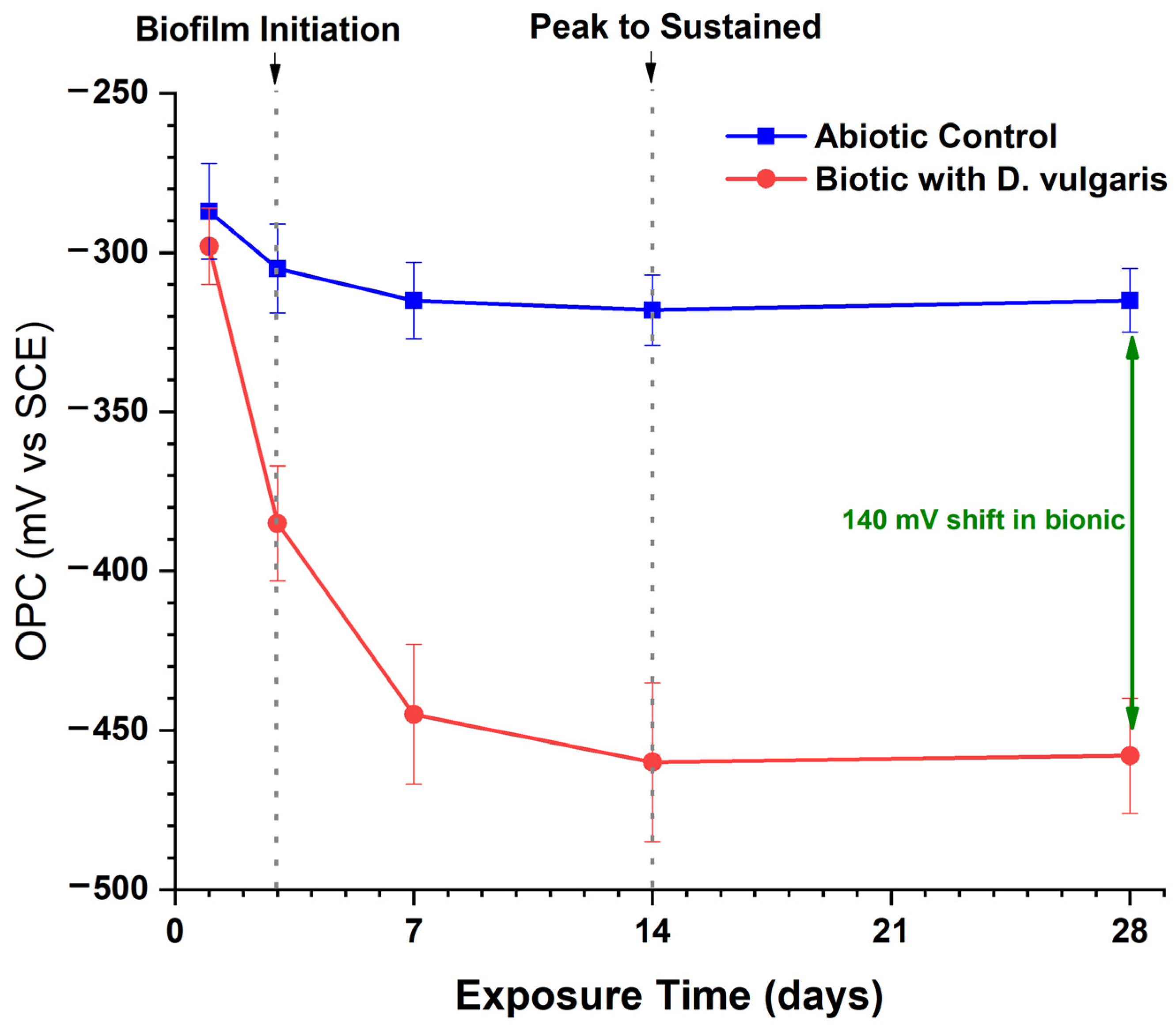
- Open Circuit Potential (OCP): Monitored continuously for the first 24 h and daily thereafter to assess thermodynamic stability (Table S4).
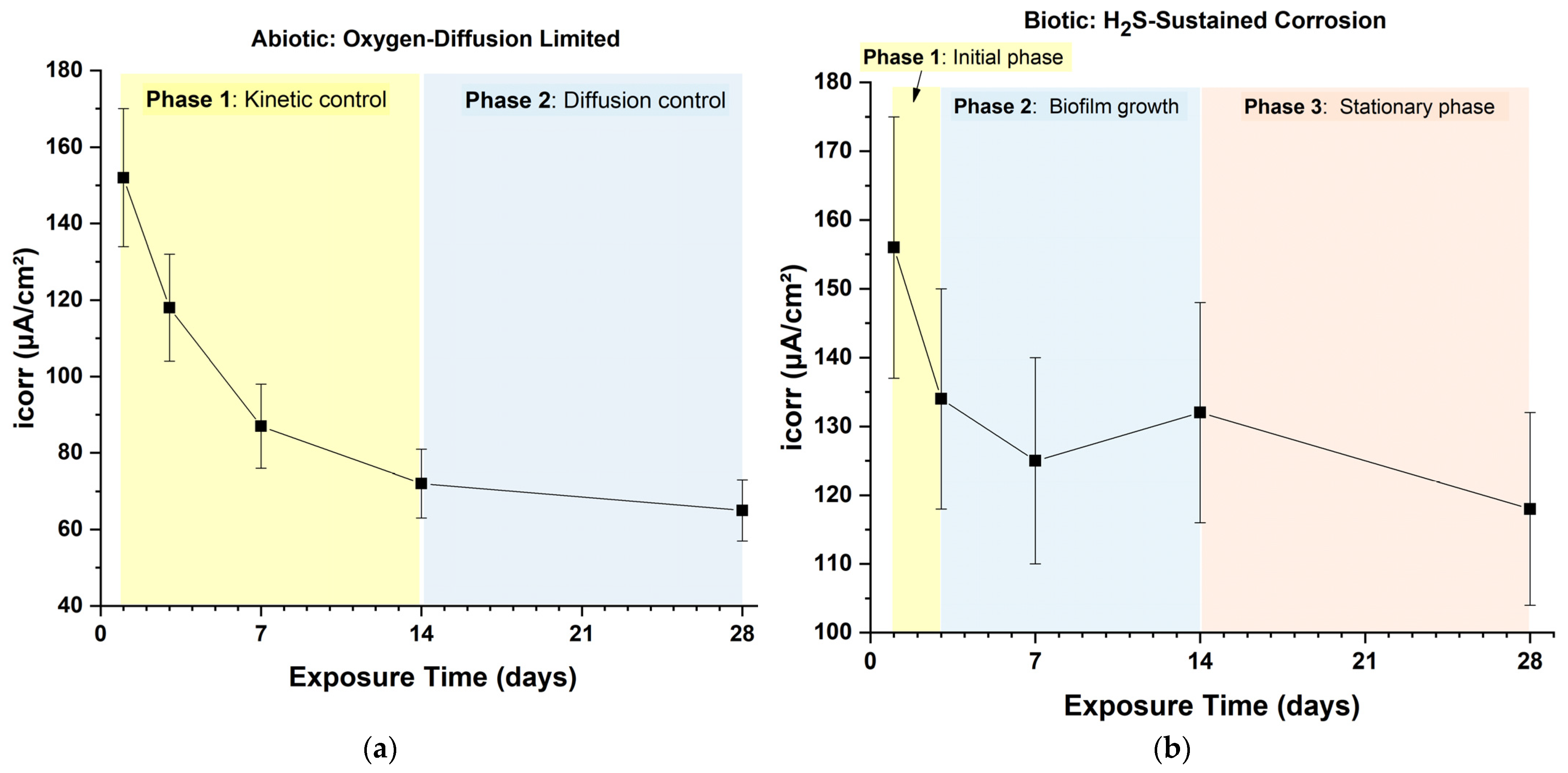
- Linear Polarization Resistance (LPR): Conducted on days 1, 3, 7, 14, and 28 (Table S5).
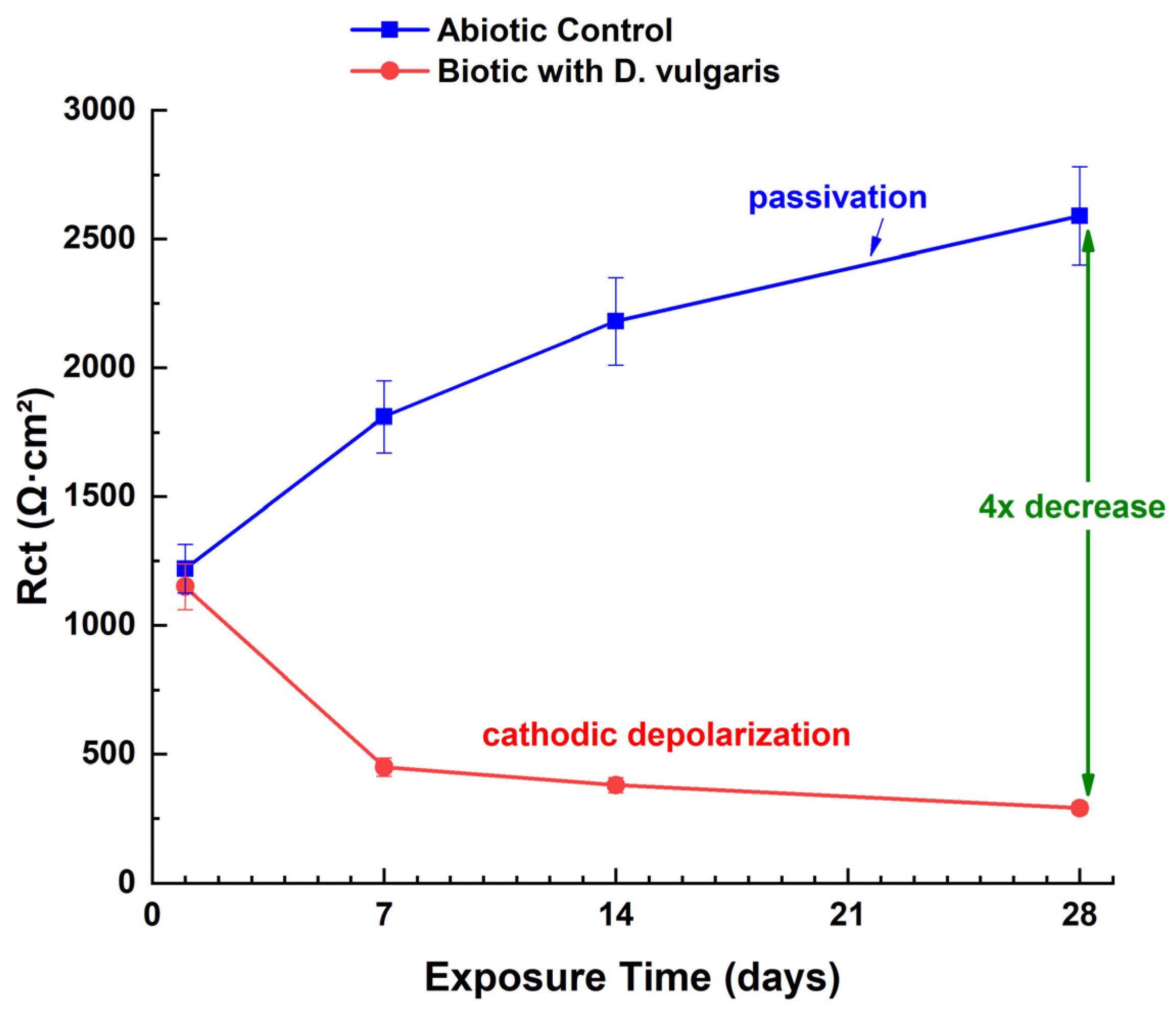
- Electrochemical Impedance Spectroscopy (EIS): Performed at OCP with 10 mV RMS perturbation over 10 mHz–100 kHz (10 points/decade). Data analyzed using ZView software (version 4.0, Scribner Associates, Inc., Southern Pines, NC, USA) to fit equivalent electrical circuits (EECs) described in Section 3.4 (Table S6).
2.5. Magnetic Barkhausen Noise (MBN) Measurements
- Excitation: A sinusoidal magnetic field was applied at a magnetizing frequency of 125 Hz and a magnetizing voltage of 5 Vpp.
- Data Acquisition: The MBN signal was filtered in the frequency band of 70–200 kHz using an analog bandpass filter to isolate Barkhausen emissions from background electromagnetic noise.
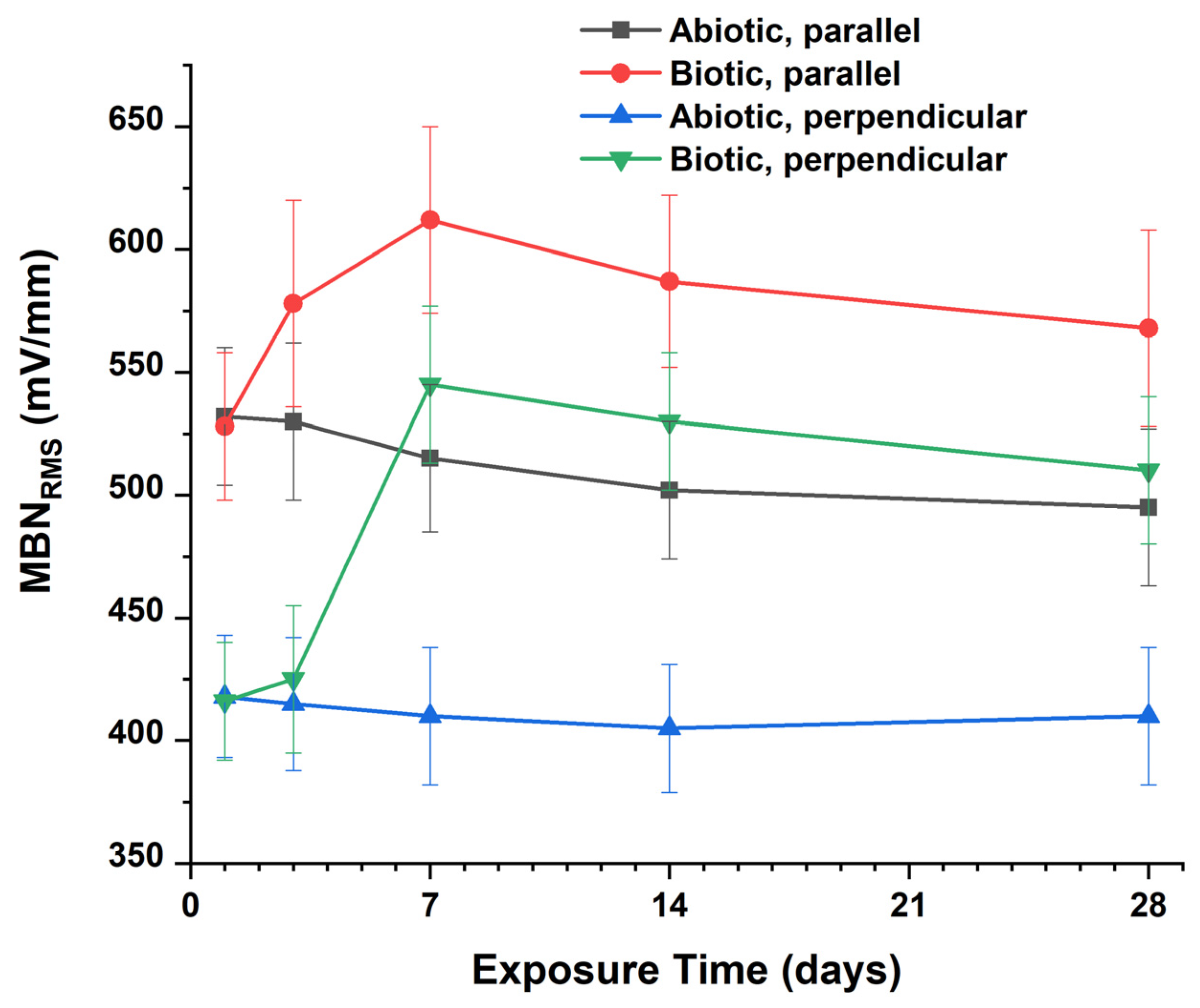
- Parameters: The Root Mean Square (RMS) value of the MBN signal (MBNRMS) was extracted as the primary feature, expressed in mV/mm (normalized by sensor coil length). Measurements were taken at three distinct locations on the tensile surface of the stressed specimens, with the magnetic field applied both parallel (0°) and perpendicular (90°) to the rolling direction to evaluate magnetic anisotropy and stress-induced texture changes [21,34,35].
2.6. Surface and Microstructural Characterization
2.6.1. Sample Preparation
2.6.2. Field Emission Scanning Electron Microscopy (FE-SEM)
2.6.3. Energy Dispersive X-Ray Spectroscopy (EDS)
2.6.4. X-Ray Diffraction (XRD) Analysis
2.7. Experimental Design Summary
3. Results
3.1. Experimental Conditions & Medium Characterization
3.2. Open Circuit Potential (OCP) and Electrochemical Stability
3.2.1. Temporal Evolution of OCP
3.2.2. Kinetic Phases & Noise Analysis
3.3. Linear Polarization Resistance (LPR) and Corrosion Rates
3.3.1. Instantaneous Corrosion Rates from LPR
3.3.2. Acceleration Factor
3.4. Electrochemical Impedance Spectroscopy (EIS)
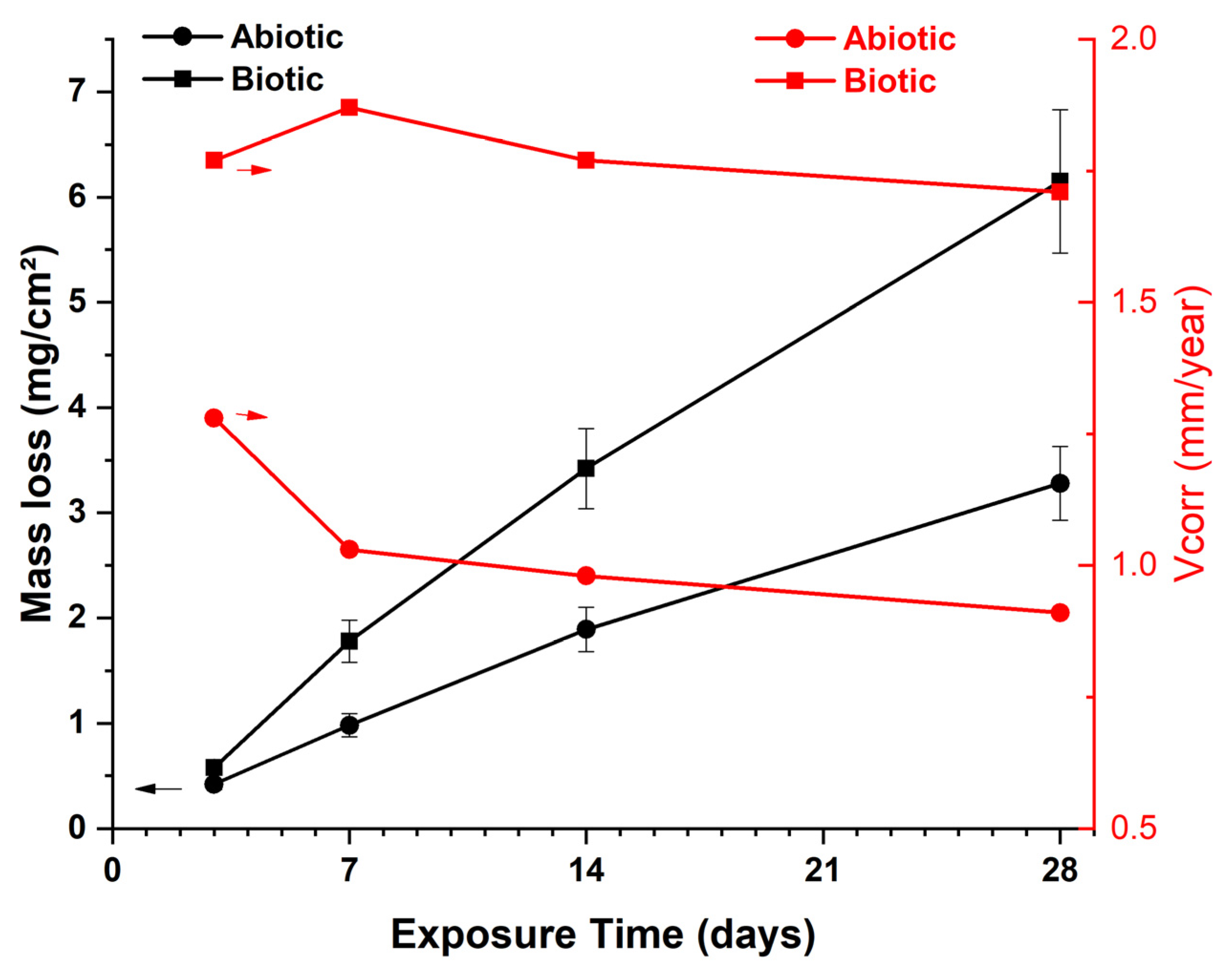
3.5. Corrosion Rate & Mass Loss
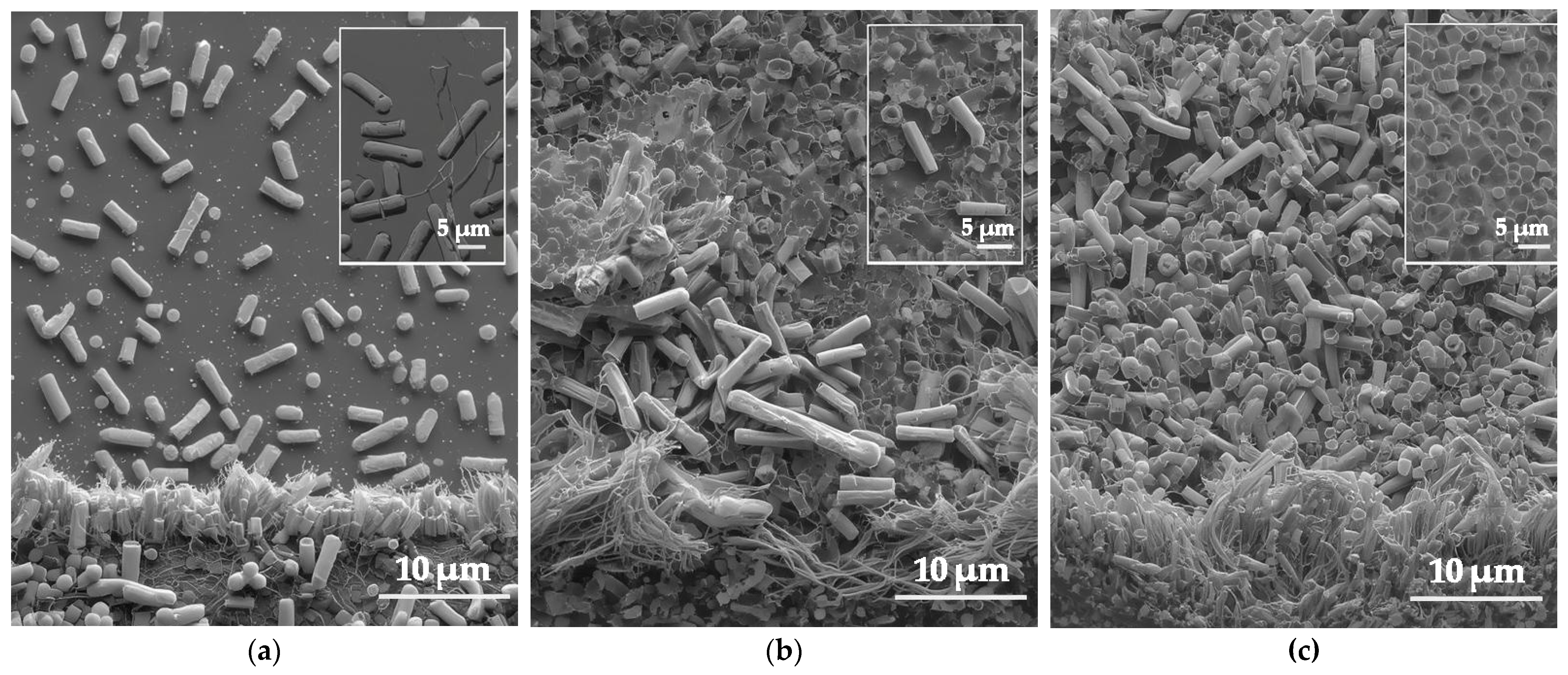
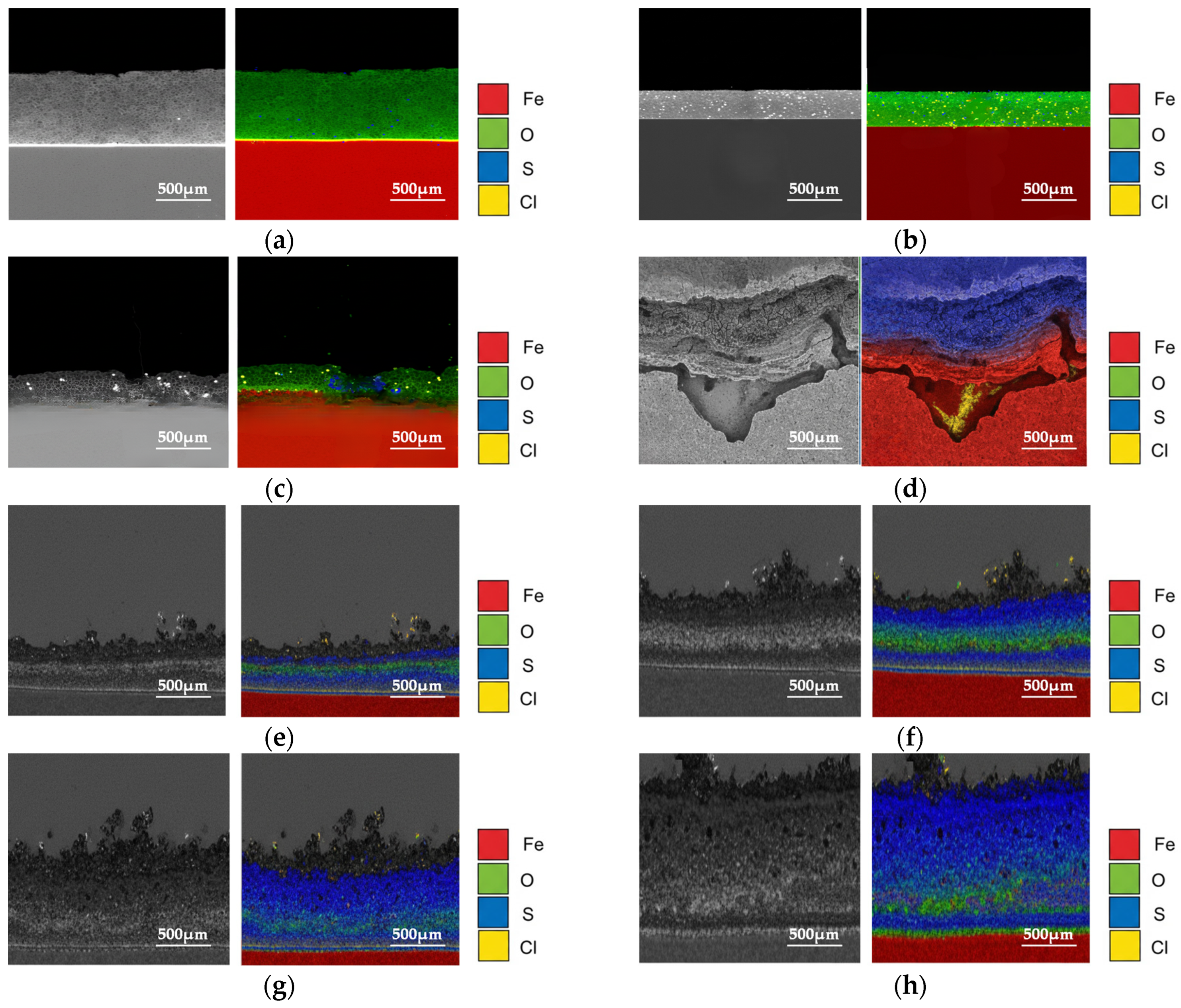
3.6. Surface Morphology, Pitting and Corrosion Product Characterization
Scanning Electron Microscopy (SEM) and Surface Topography
3.7. Magnetic Barkhausen Noise Response
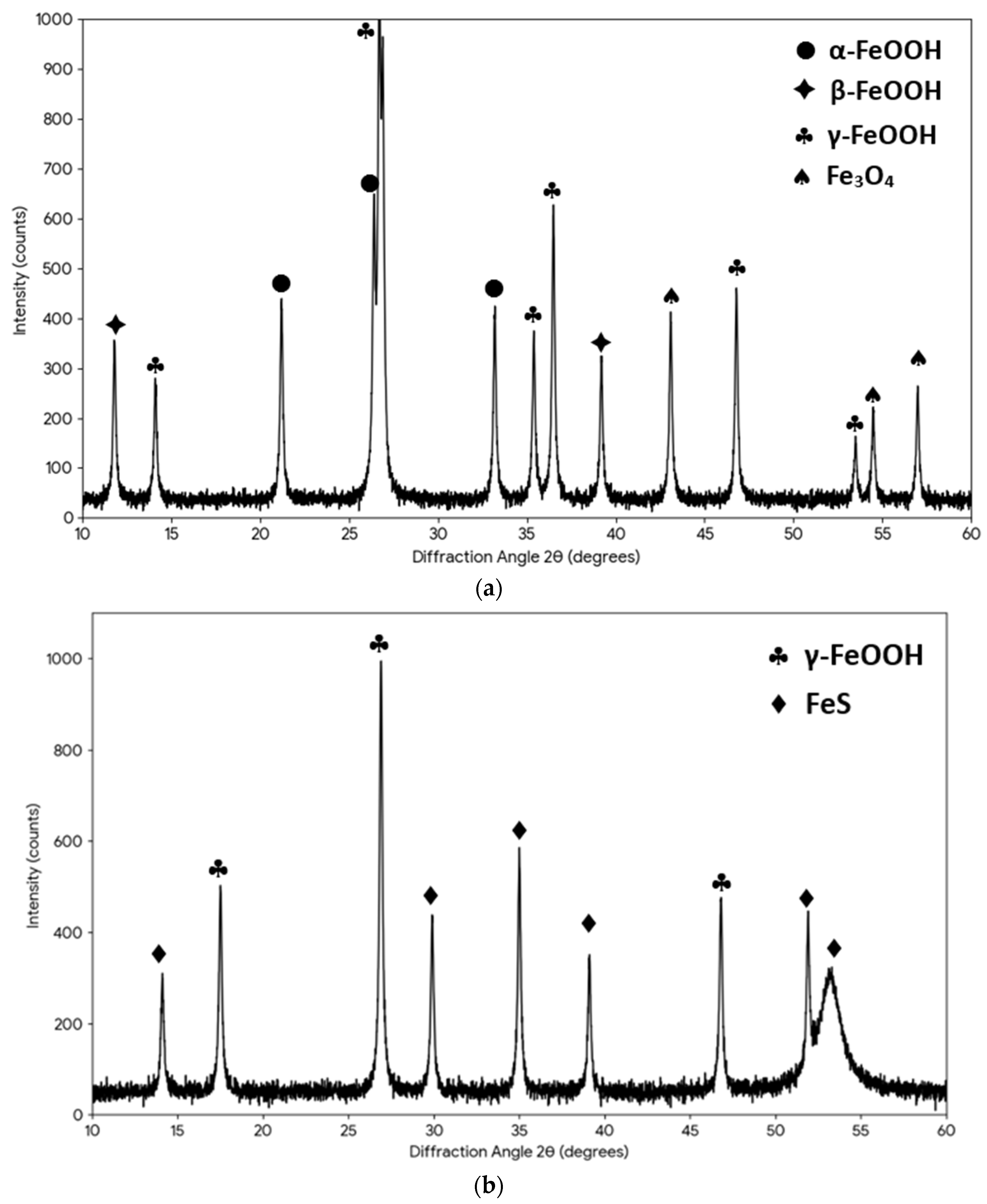
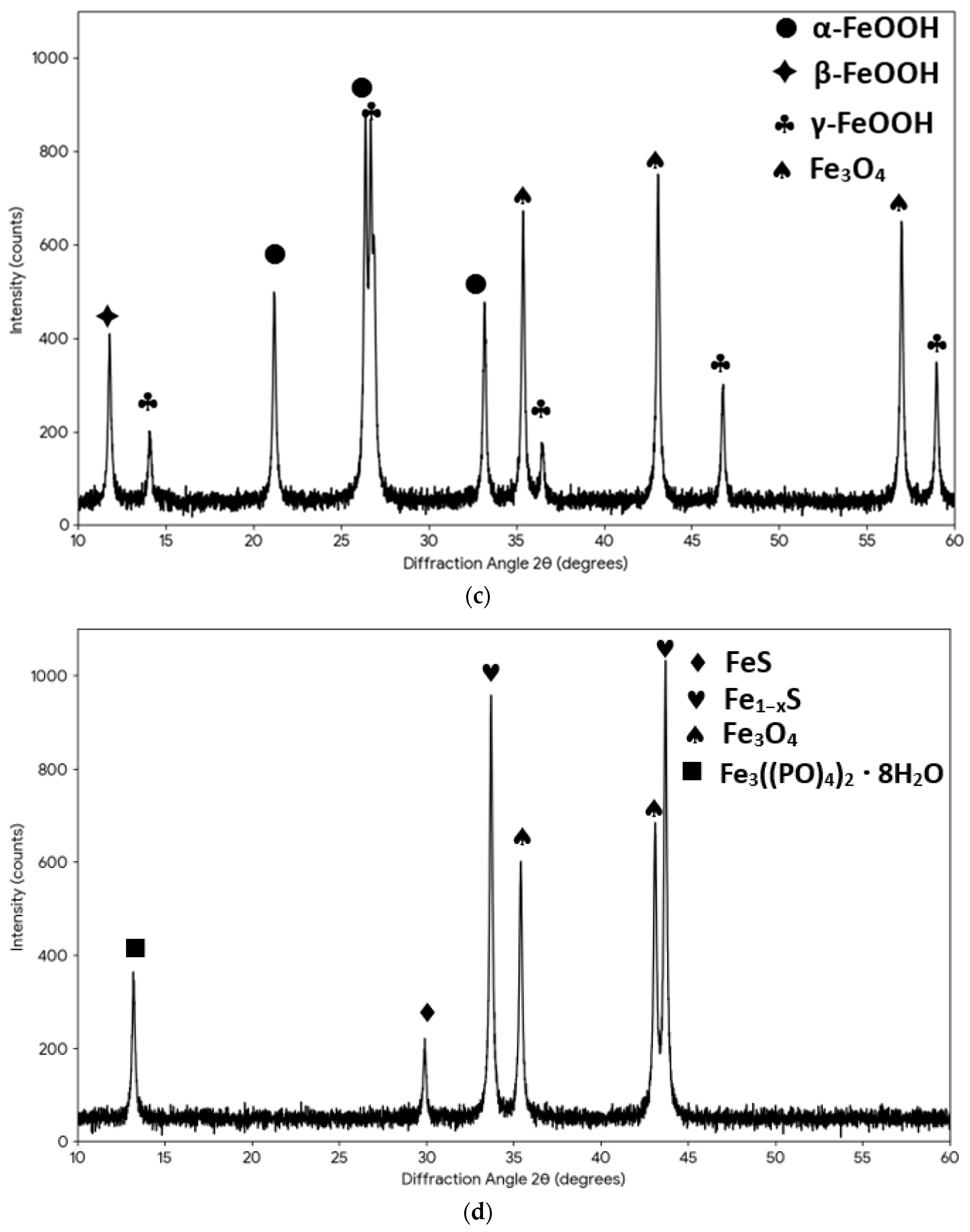
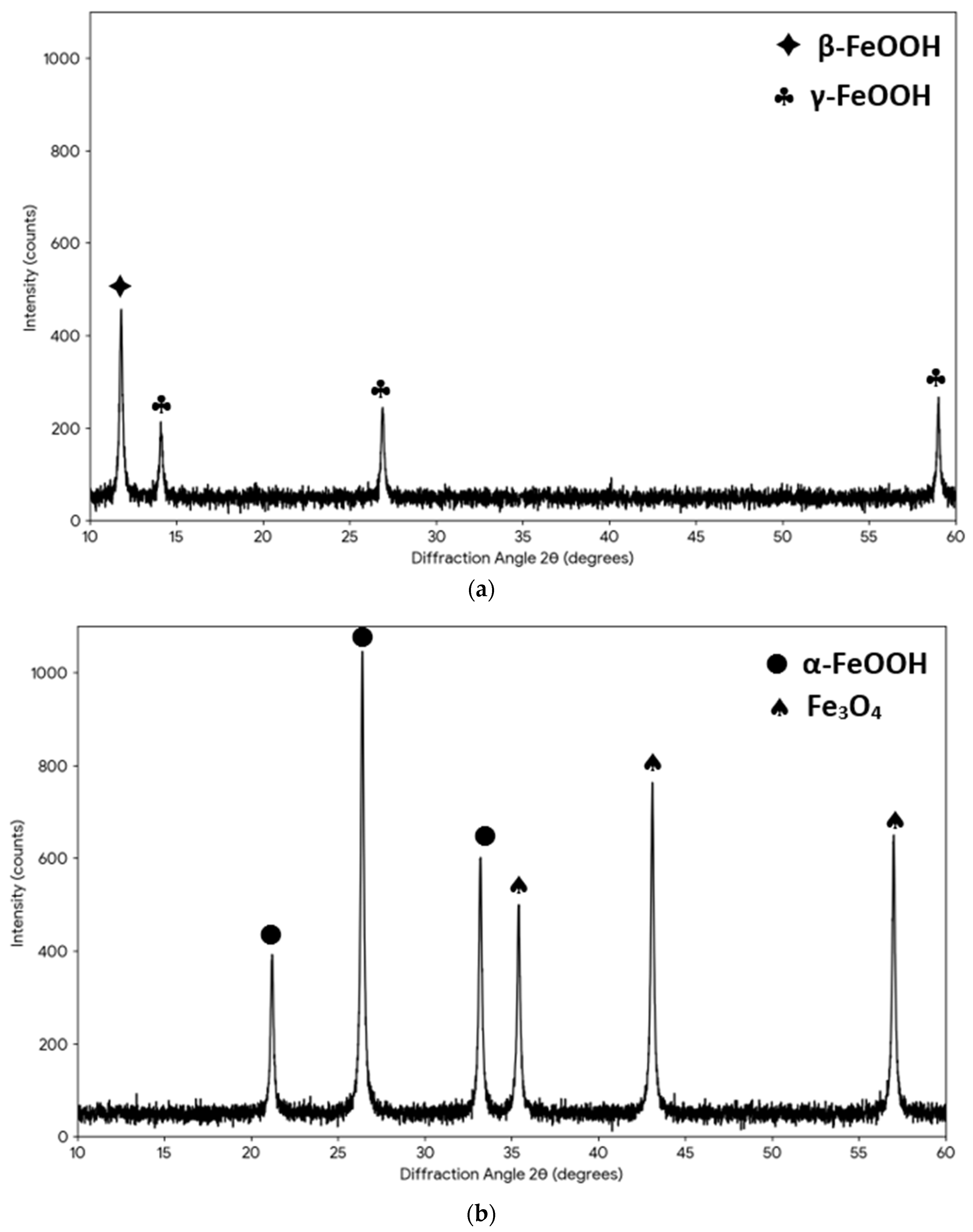
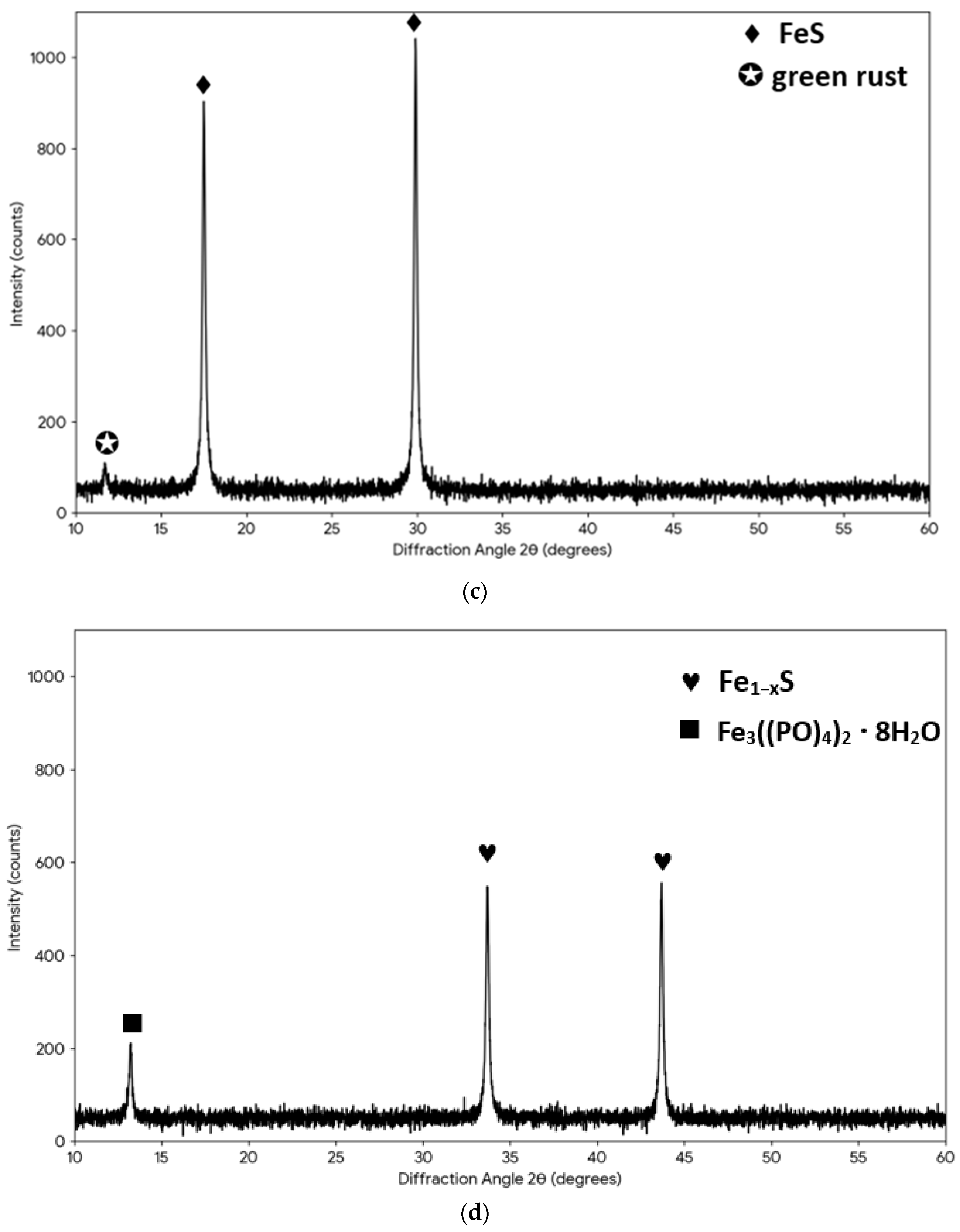
3.8. Corrosion Product Phase Composition and MIC Mechanisms
4. Discussion
5. Conclusions
Supplementary Materials
Author Contributions
Funding
Institutional Review Board Statement
Data Availability Statement
Acknowledgments
Conflicts of Interest
Abbreviations
| CPE | Constant Phase Element |
| DO | Dissolved Oxygen |
| EDS | Energy Dispersive X-ray Spectroscopy |
| EEC | Equivalent Electrical Circuit |
| EIS | Electrochemical Impedance Spectroscopy |
| EPS | Extracellular Polymeric Substance |
| FE-SEM | Field Emission Scanning Electron Microscopy |
| HSLA | High-Strength Low-Alloy |
| icorr | Corrosion Current Density |
| LPR | Linear Polarization Resistance |
| MBN | Magnetic Barkhausen Noise |
| MBNRMS | Magnetic Barkhausen Noise Root Mean Square Amplitude |
| MIC | Microbiologically Influenced Corrosion |
| OCP | Open Circuit Potential |
| Rbf | Biofilm Surface-Layer Resistance |
| Rct | Charge-Transfer Resistance |
| Rf | Surface Roughness Factor |
| Rp | Polarization Resistance |
| Rs | Solution Resistance |
| SCC | Stress Corrosion Cracking |
| SCE | Saturated Calomel Electrode |
| SRB | Sulfate-Reducing Bacteria |
| TEM | Transmission Electron Microscopy |
| vcorr | Corrosion Rate (Linear) |
| vavg | Average Corrosion Rate |
References
- Wojtacha, A.; Kciuk, M.; Opiela, M. Effect of Heat Treatment Conditions on Corrosion Resistance of 0.28C–1.4Mn–0.3Si–0.26Cr Steel with Nb, Ti, and V Microadditions. Materials 2021, 14, 3254. [Google Scholar] [CrossRef] [PubMed]
- Mazilu, A.; Benea, L.; Axente, E.R. Monitoring and Evaluation of the Corrosion Behavior in Seawater of the Low-Alloy Steels BVDH36 and LRAH36. Int. J. Mol. Sci. 2024, 25, 6405. [Google Scholar] [CrossRef]
- Mohtadi-Bonab, M.A. Effects of Different Parameters on Initiation and Propagation of Stress Corrosion Cracks in Pipeline Steels: A Review. Metals 2019, 9, 590. [Google Scholar] [CrossRef]
- Falara, P.P.; Papadopoulos, N.D.; Vourna, P. Microstructure and Performance of Antibiofouling Coatings on High-Strength Steel Substrates Immersed in the Marine Environment. Micro 2022, 2, 277–294. [Google Scholar] [CrossRef]
- Vourna, P.; Falara, P.P.; Hristoforou, E.V.; Papadopoulos, N.D. Corrosion and Antifouling Behavior of a New Biocide-Free Antifouling Paint for Ship Hulls Under Both Artificially Simulated and Natural Marine Environment. Materials 2025, 18, 3095. [Google Scholar] [CrossRef]
- Vourna, P.; Falara, P.P.; Papadopoulos, N.D. In Situ and Laboratory Investigation of the Anti-Corrosion and Anti-Fouling Efficacy of an Innovative Biocide-Free Coating for Naval Steels. Metals 2025, 15, 1000. [Google Scholar] [CrossRef]
- Liu, X.; Sui, Y.; Zhang, H.; Tong, H.; Song, H. Corrosion Behavior of the High-Strength Low Alloy Steel Welded Joint in Natural Seawater. Mater. Corros. 2023, 74, 535–543. [Google Scholar] [CrossRef]
- Javed, M.A.; Ivanovich, N.; Messinese, E.; Liu, R.; Astorga, S.E.; Yeo, Y.P.; Idapalapati, S.; Lauro, F.M.; Wade, S.A. The Role of Metallurgical Features in the Microbially Influenced Corrosion of Carbon Steel: A Critical Review. Microorganisms 2024, 12, 892. [Google Scholar] [CrossRef]
- Liu, N.; Qiu, L.; Qiu, L. Carbon Steel Corrosion Induced by Sulfate-Reducing Bacteria: A Review of Electrochemical Mechanisms and Pathways in Biofilms. Coatings 2024, 14, 1105. [Google Scholar] [CrossRef]
- Fan, K.; Guan, F.; Zhai, X.; Jiao, G.; Sang, Y.; Jing, M.; Duan, J. Distinguishing the Contribution of Extracellular Electron Transfer in the Desulfovibrio Caledoniensis-Induced Total Corrosion of Q235 Carbon Steel. Materials 2025, 18, 1613. [Google Scholar] [CrossRef]
- Li, Z.; Chen, Y.; Guo, Q.; Zhang, X.; Li, X.; Li, Y.; Cai, J.; Fan, Y.; Yang, J. A Comparative Evaluation of Microbiologically Induced Corrosion Behaviors of 316L Austenitic and 2205 Duplex Stainless Steels Inoculated in Desulfovibrio Vulgaris. Metals 2025, 15, 1040. [Google Scholar] [CrossRef]
- Ortega-Nieto, C.; Salta, M.; Noël-Hermes, N.; Palomo, J.M. Metal Bionanohybrids against Microbiologically Influenced Corrosion (MIC) Consortia. Nanomaterials 2024, 14, 1376. [Google Scholar] [CrossRef]
- Tkachuk, N.; Zelena, L.; Novikov, Y. Indicators of the Microbial Corrosion of Steel Induced by Sulfate-Reducing Bacteria Under the Influence of Certain Drugs. Microbiol. Res. 2025, 16, 21. [Google Scholar] [CrossRef]
- Cai, D.; Wu, J.; Chai, K. Microbiologically Influenced Corrosion Behavior of Carbon Steel in the Presence of Marine Bacteria Pseudomonas Sp. and Vibrio Sp. ACS Omega 2021, 6, 3780–3790. [Google Scholar] [CrossRef] [PubMed]
- Zhang, Y.; Zhou, E.; Wang, C.; Xu, D.; Xu, W.; Wang, F.; Gu, T. Microbiologically Influenced Corrosion of Ferrium M54 Maraging Steel with Different Grain Sizes Induced by Desulfovibrio Vulgaris. Corros. Sci. 2024, 237, 112302. [Google Scholar] [CrossRef]
- Wang, Q.; Zhou, X.; Su, H.; Zhang, M.; Li, Z.; Wu, T. Accelerated Sulfate Reducing Bacteria Corrosion of X80 Pipeline Steel Welded Joints under Organic Carbon Source Starvation. npj Mater. Degrad. 2022, 6, 82. [Google Scholar] [CrossRef]
- Hesketh, J.; Dickinson, E.J.F.; Martin, M.L.; Hinds, G.; Turnbull, A. Influence of H2S on the Pitting Corrosion of 316L Stainless Steel in Oilfield Brine. Corros. Sci. 2021, 182, 109265. [Google Scholar] [CrossRef]
- Shi, X.; Zhang, Y.; Zhang, R.; Li, C.; Wang, C.; Wang, X.; Sand, W.; Duan, J. Sublethal THPS Accelerates Pseudomonas-Associated Steel Corrosion by Stimulating Biofilm Development and Microbial Electron Uptake. npj Mater. Degrad. 2025, 9, 75. [Google Scholar] [CrossRef]
- Vourna, P.; Papadopoulos, N.D.; Falara, P.P.; Hristoforou, E. Barkhausen Noise Emission of Naval Steel: The Impact of Seawater Corrosion Coverage and Depth. NDT & E Int. 2025, 151, 103319. [Google Scholar] [CrossRef]
- Vourna, P.; Ktena, A.; Hristoforou, E.V.; Papadopoulos, N.D. Assessment of Corrosion in Naval Steels Submerged in Artificial Seawater Utilizing a Magnetic Non-Destructive Sensor. Sensors 2025, 25, 5015. [Google Scholar] [CrossRef]
- Hristoforou, E.V. Permeability Sensors for Magnetic Steel Structural Health Monitoring. Sensors 2025, 25, 606. [Google Scholar] [CrossRef]
- Zhang, Z.; Shi, P.; Gou, X. Analytical Model of Magnetic Barkhausen Noise Testing on Surface-Modified Ferromagnetic Plates with Stress Distributions. J. Magn. Magn. Mater. 2024, 604, 172292. [Google Scholar] [CrossRef]
- Vourna, P.; Falara, P.P.; Ktena, A.; Hristoforou, E.V.; Papadopoulos, N.D. Magnetic Barkhausen Noise Sensor: A Comprehensive Review of Recent Advances in Non-Destructive Testing and Material Characterization. Sensors 2025, 26, 258. [Google Scholar] [CrossRef]
- Enning, D.; Garrelfs, J. Corrosion of Iron by Sulfate-Reducing Bacteria: New Views of an Old Problem. Appl. Environ. Microbiol. 2014, 80, 1226–1236. [Google Scholar] [CrossRef]
- Campari, A.; Ustolin, F.; Alvaro, A.; Paltrinieri, N. A Review on Hydrogen Embrittlement and Risk-Based Inspection of Hydrogen Technologies. Int. J. Hydrogen Energy 2023, 48, 35316–35346. [Google Scholar] [CrossRef]
- Vourna, P.; Falara, P.P.; Papadopoulos, N.D. The Investigation of a Biocide-Free Antifouling Coating on Naval Steels Under Both Simulated and Actual Seawater Conditions. Processes 2025, 13, 2448. [Google Scholar] [CrossRef]
- Vourna, P.; Falara, P.P.; Papadopoulos, N.D. Investigation of Corrosion and Fouling in a Novel Biocide-Free Antifouling Coating on Steel. Micro 2025, 5, 34. [Google Scholar] [CrossRef]
- Committee D-19. D 1141—52 Standard Specifications for Substitute Ocean Water. In Manual on Industrial Water and Industrial Waste Water; ASTM International: West Conshohocken, PA, USA, 1960; pp. 398–399. ISBN 978-0-8031-6884-8. [Google Scholar]
- Tran, T.T.T.; Kannoorpatti, K.; Padovan, A.; Thennadil, S.; Nguyen, K. Microbial Corrosion of DSS 2205 in an Acidic Chloride Environment under Continuous Flow. PLoS ONE 2021, 16, e0251524. [Google Scholar] [CrossRef] [PubMed]
- Chen, Y.; Tang, Q.; Senko, J.M.; Cheng, G.; Zhang Newby, B.; Castaneda, H.; Ju, L.-K. Long-Term Survival of Desulfovibrio Vulgaris on Carbon Steel and Associated Pitting Corrosion. Corros. Sci. 2015, 90, 89–100. [Google Scholar] [CrossRef]
- Moradi, M.; Ghiara, G.; Spotorno, R.; Xu, D.; Cristiani, P. Understanding Biofilm Impact on Electrochemical Impedance Spectroscopy Analyses in Microbial Corrosion and Microbial Corrosion Inhibition Phenomena. Electrochim. Acta 2022, 426, 140803. [Google Scholar] [CrossRef]
- Jones, D.A. Principles and Prevention of Corrosion, 2nd ed.; Prentice Hall: Upper Saddle River, NJ, USA, 1996. [Google Scholar]
- Kaappa, S.; Santa-aho, S.; Honkanen, M.; Vippola, M.; Laurson, L. Magnetic Domain Walls Interacting with Dislocations in Micromagnetic Simulations. Commun. Mater. 2024, 5, 256. [Google Scholar] [CrossRef]
- Aghadavoudi Jolfaei, M.; Liu, J.; Zhou, L.F.; Van Den Berg, F.; Davis, C. Non-Destructive Evaluation of Magnetic Anisotropy Associated with Crystallographic Texture of Interstitial Free Steels. J. Magn. Magn. Mater. 2023, 568, 170374. [Google Scholar] [CrossRef]
- Liu, H.-L.; He, W.; Du, H.-F.; Wu, Q.; Fang, Y.-P.; Zhu, Y.; Cai, J.-W.; Cheng, Z.-H. Direct Observation of Dendritic Domain Growth in Perpendicular Magnetic Anisotropy CoFe/Pt Multilayers. J. Magn. Magn. Mater. 2011, 323, 2238–2242. [Google Scholar] [CrossRef]
- NIST SRM 660b; Line Position and Line Shape Standard for Powder Diffraction. National Institute of Standards and Technology: Gaithersburg, MD, USA, 2010.
- Lahme, S.; Enning, D.; Callbeck, C.M.; Menendez Vega, D.; Curtis, T.P.; Head, I.M.; Hubert, C.R.J. Metabolites of an Oil Field Sulfide-Oxidizing, Nitrate-Reducing Sulfurimonas Sp. Cause Severe Corrosion. Appl. Environ. Microbiol. 2019, 85, e01891-18. [Google Scholar] [CrossRef] [PubMed]
- Blaow, M.; Evans, J.T.; Shaw, B.A. Magnetic Barkhausen Noise: The Influence of Microstructure and Deformation in Bending. Acta Mater. 2005, 53, 279–287. [Google Scholar] [CrossRef]
- Lasaosa, A.; Gurruchaga, K.; Arizti, F.; Martínez-de-Guerenu, A. Quantitative Estimation of Nonmonotonic Residual Stress Depth-Profiles Using an Extended Kypris-Jiles Model of the Magnetic Barkhausen Noise Spectrum. J. Appl. Phys. 2018, 123, 033904. [Google Scholar] [CrossRef]
- Li, Y.; Xu, D.; Chen, C.; Li, X.; Jia, R.; Zhang, D.; Sand, W.; Wang, F.; Gu, T. Anaerobic Microbiologically Influenced Corrosion Mechanisms Interpreted Using Bioenergetics and Bioelectrochemistry: A Review. J. Mater. Sci. Technol. 2018, 34, 1713–1718. [Google Scholar] [CrossRef]
- Sun, K.; Zhong, W.; Huang, S.; He, X.; Cai, W.; Ma, R.; Jiang, T.; You, S.; Wang, L.; Li, W. Research Progress on the Corrosion Mechanism and Protection Monitoring of Metal in Power Equipment. Coatings 2025, 15, 119. [Google Scholar] [CrossRef]
- Welikala, S.; Al-Saadi, S.; Gates, W.P.; Panter, C.; Singh Raman, R.K. Sulphate Reducing Bacteria (SRB) Biofilm Development and Its Role in Microbial Corrosion of Carbon Steel. Front. Mater. 2024, 11, 1360869. [Google Scholar] [CrossRef]
- Zhang, L.; Yu, X.; Sun, H.; Ge, Y.; Wang, C.; Li, L.; Kang, J.; Qian, H.; Gao, Q. Corrosion Behavior on 20# Pipeline Steel by Sulfate-Reducing Bacteria in Simulated NaCl Alkali/Surfactant/Polymer Produced Solution. ACS Omega 2023, 8, 13955–13966. [Google Scholar] [CrossRef]
- Knisz, J.; Eckert, R.; Gieg, L.M.; Koerdt, A.; Lee, J.S.; Silva, E.R.; Skovhus, T.L.; An Stepec, B.A.; Wade, S.A. Microbiologically Influenced Corrosion—More than Just Microorganisms. FEMS Microbiol. Rev. 2023, 47, fuad041. [Google Scholar] [CrossRef] [PubMed]
- An, B.A.; Kleinbub, S.; Ozcan, O.; Koerdt, A. Iron to Gas: Versatile Multiport Flow-Column Revealed Extremely High Corrosion Potential by Methanogen-Induced Microbiologically Influenced Corrosion (Mi-MIC). Front. Microbiol. 2020, 11, 527. [Google Scholar] [CrossRef]
- Sun, M.; Wang, X.; Cui, W. Corrosion of Sulfate-Reducing Bacteria on L245 Steel under Different Carbon Source Conditions. Microorganisms 2024, 12, 1826. [Google Scholar] [CrossRef]
- Ma, H.; Sun, L.; Luo, H.; Li, X. Hydrogen Embrittlement of High-Strength Marine Steel as a Weld Joint in Artificial Seawater under Cathodic Polarization. Eng. Fail. Anal. 2022, 134, 106044. [Google Scholar] [CrossRef]
- Xu, L.; Guan, F.; Ma, Y.; Zhang, R.; Zhang, Y.; Zhai, X.; Dong, X.; Wang, Y.; Duan, J.; Hou, B. Inadequate Dosing of THPS Treatment Increases Microbially Influenced Corrosion of Pipeline Steel by Inducing Biofilm Growth of Desulfovibrio Hontreensis SY-21. Bioelectrochemistry 2022, 145, 108048. [Google Scholar] [CrossRef]
- Toribio, J.; Lorenzo, M.; Vergara, D. Hydrogen Embrittlement Susceptibility of Prestressing Steel Wires: The Role of the Cold-Drawing Conditions. Procedia Struct. Integr. 2016, 2, 626–631. [Google Scholar] [CrossRef]
- Lou, Y.; Chang, W.; Cui, T.; Wang, J.; Qian, H.; Ma, L.; Hao, X.; Zhang, D. Microbiologically Influenced Corrosion Inhibition Mechanisms in Corrosion Protection: A Review. Bioelectrochemistry 2021, 141, 107883. [Google Scholar] [CrossRef] [PubMed]
- Pastorcic, D.; Vukelic, G.; Ivosevic, S. Welded Steel in Marine Environment—Experimental and Numerical Study of Mechanical Properties Degradation. Mater. Today Commun. 2023, 34, 105280. [Google Scholar] [CrossRef]
- Liu, P.; Zhang, H.; Fan, Y.; Xu, D. Microbially Influenced Corrosion of Steel in Marine Environments: A Review from Mechanisms to Prevention. Microorganisms 2023, 11, 2299. [Google Scholar] [CrossRef]
- Hristoforou, E. Advanced Non-Destructive Testing in Steels. Metals 2018, 8, 492. [Google Scholar] [CrossRef]
- Jančula, M.; Neslušan, M.; Pastorek, F.; Pitoňák, M.; Pata, V.; Minárik, P.; Gocál, J. Monitoring of Corrosion Extent in Steel S460MC by the Use of Magnetic Barkhausen Noise Emission. J. Nondestruct. Eval. 2021, 40, 69. [Google Scholar] [CrossRef]
- Guo, H.; Zhong, R.; Liu, B.; Yang, J.; Liu, Z.; Du, C.; Li, X. Characteristic and Mechanistic Investigation of Stress-Assisted Microbiologically Influenced Corrosion of X80 Steel in Near-Neutral Solutions. Materials 2023, 16, 390. [Google Scholar] [CrossRef] [PubMed]
- Wang, Y.; Wen, S.; Zhang, S.; Tang, Y.; Yuan, X.; Guan, F.; Duan, J. Unraveling the Source of Corrosive Microorganisms from Fracturing Water to Flowback Water in Shale Gas Field: Evidence from Gene Sequencing and Corrosion Tests. Front. Microbiol. 2025, 16, 1552006. [Google Scholar] [CrossRef] [PubMed]





| Element | C | Mn | Si | P | S | Cr | Ni | Mo | Cu | Fe |
|---|---|---|---|---|---|---|---|---|---|---|
| wt.% | 0.16 | 1.40 | 0.35 | 0.015 | 0.005 | 0.05 | 0.03 | 0.01 | 0.04 | Bal. |
| Parameter | Condition | Technique | Measurement Frequency |
|---|---|---|---|
| Environment | Abiotic/Biotic | — | — |
| Temperature | 25 ± 2 °C | Thermocouple | Continuous |
| Applied Stress | 284 MPa (80% σy) | Strain gauge | Initial verification |
| Exposure Duration | 3, 7, 14, 28 days | — | Discrete time points |
| OCP | Both conditions | Potentiostat | Continuous (day 1), daily |
| LPR | Both conditions | Potentiostat | Days 1, 3, 7, 14, 28 |
| EIS | Both conditions | Potentiostat | Days 1, 7, 14, 28 |
| MBN | Both conditions | Rollscan 350 | Days 1, 3, 7, 14, 28 |
| Morphology | Both conditions | FE-SEM, EDS | Days 3, 7, 14, 28 |
Disclaimer/Publisher’s Note: The statements, opinions and data contained in all publications are solely those of the individual author(s) and contributor(s) and not of MDPI and/or the editor(s). MDPI and/or the editor(s) disclaim responsibility for any injury to people or property resulting from any ideas, methods, instructions or products referred to in the content. |
© 2026 by the authors. Licensee MDPI, Basel, Switzerland. This article is an open access article distributed under the terms and conditions of the Creative Commons Attribution (CC BY) license.
Share and Cite
Vourna, P.; Falara, P.P.; Ktena, A.; Hristoforou, E.V.; Papadopoulos, N.D. Corrosion, Microstructural Evolution and Non-Destructive Monitoring of High-Strength Low-Alloy Steels Under Multiparametric Marine Exposure. Metals 2026, 16, 270. https://doi.org/10.3390/met16030270
Vourna P, Falara PP, Ktena A, Hristoforou EV, Papadopoulos ND. Corrosion, Microstructural Evolution and Non-Destructive Monitoring of High-Strength Low-Alloy Steels Under Multiparametric Marine Exposure. Metals. 2026; 16(3):270. https://doi.org/10.3390/met16030270
Chicago/Turabian StyleVourna, Polyxeni, Pinelopi P. Falara, Aphrodite Ktena, Evangelos V. Hristoforou, and Nikolaos D. Papadopoulos. 2026. "Corrosion, Microstructural Evolution and Non-Destructive Monitoring of High-Strength Low-Alloy Steels Under Multiparametric Marine Exposure" Metals 16, no. 3: 270. https://doi.org/10.3390/met16030270
APA StyleVourna, P., Falara, P. P., Ktena, A., Hristoforou, E. V., & Papadopoulos, N. D. (2026). Corrosion, Microstructural Evolution and Non-Destructive Monitoring of High-Strength Low-Alloy Steels Under Multiparametric Marine Exposure. Metals, 16(3), 270. https://doi.org/10.3390/met16030270