Article

Effect of Process Parameters on the Forming Limit Angle of AA2024 Aluminum Alloy in Belt-Heated Incremental Sheet Forming

1
School of Mechanotronics and Vehicle Engineering, Chongqing Jiaotong University, Chongqing 400074, China
2
School of Mechanical and Electrical Engineering, Kunming University, Kunming 650214, China
3
China Academy of Aerospace System and Innovation, Beijing 100083, China
4
China Academy of Space Technology, Beijing 100094, China
5
Guizhou Aerospace Fenghua Precision Equipment Co., Ltd., Guiyang 550000, China
6
Guizhou Space Appliance Co., Ltd., Guiyang 550009, China
*
Authors to whom correspondence should be addressed.
Metals 2026, 16(2), 229; https://doi.org/10.3390/met16020229
Submission received: 13 January 2026 / Revised: 10 February 2026 / Accepted: 10 February 2026 / Published: 16 February 2026
(This article belongs to the Special Issue Advanced Metallic Materials and Forming Technologies)

Abstract

In the belt-heated incremental sheet forming process, the influence of process parameters on the forming limit angle significantly affects the forming accuracy and quality of components. Through macro and micro experiments, this study comprehensively analyzed the effect of key process parameters on the forming limit angle and identified forming temperature, tool head diameter, and step down as the primary factors that enhance the forming limit angle. Building on this, the dislocation density and grain size of the material under various forming temperatures, tool head diameters, and step-down values were investigated, clarifying the influence of these parameters on dislocation density and grain size in belt-heated incremental sheet forming. Furthermore, the dislocation density and grain size in the cross-section of the deformed region were calculated through micro-tests, revealing the variation patterns of dislocation density and grain size under different process conditions. These findings verified the macro–micro mechanism of the effect of process parameters on the forming limit angle and led to the establishment of a control method for the forming limit angle in belt-heated incremental sheet forming.

1. Introduction

Incremental sheet forming is one of the advanced sheet metal forming technologies. This technique employs the concept of layered manufacturing to discretize the geometric contour of a component into spatial points, which are then converted into numerical control codes. These codes drive the forming tool to incrementally extrude the sheet metal point by point, enabling the material to accumulate and form layer by layer, ultimately achieving the designed contour of the component [1]. However, the point-by-point extrusion method inherent to incremental sheet forming often leads to material springback, which reduces the forming accuracy of components and consequently limits the broader application of this technology. To address these drawbacks, researchers have conducted numerous studies, such as structural design improvements [2,3], process parameter optimization [4,5,6], and forming scheme optimization [7,8], all aimed at enhancing the forming accuracy of components. For example, Hoang et al. [9] formed square pyramid components with varying forming angles until the angle at which material fracture occurred was reached, determining the incremental forming limit angle of AA1050 aluminum alloy to be 67.5° (The incremental forming limit angle is defined as the maximum forming angle at which a sheet metal can be formed via incremental forming without defects such as cracking and excessive thinning; exceeding this angle tends to induce fracture or severe deformation failure, and it is one of the core indicators for evaluating the formability of sheet metal materials.). Subsequently, Micari et al. [10] investigated the incremental forming limit angle of AA6114-T4 aluminum alloy and found a corresponding angle of 60°. Building on this work, Chang et al. [11] studied the incremental forming performance of Al3003-O, Al5754-O, Al5182-O, and AA6111-T4P aluminum alloys, calculating the respective forming limit angles using the fracture thickness of the material: 78.1°, 62°, 63°, and 53°. Among various improvement strategies, process parameter optimization is the most commonly used method to increase the forming limit angle. Once the forming conditions are established, optimizing process parameters becomes the primary approach to further enhance the forming limit angle.
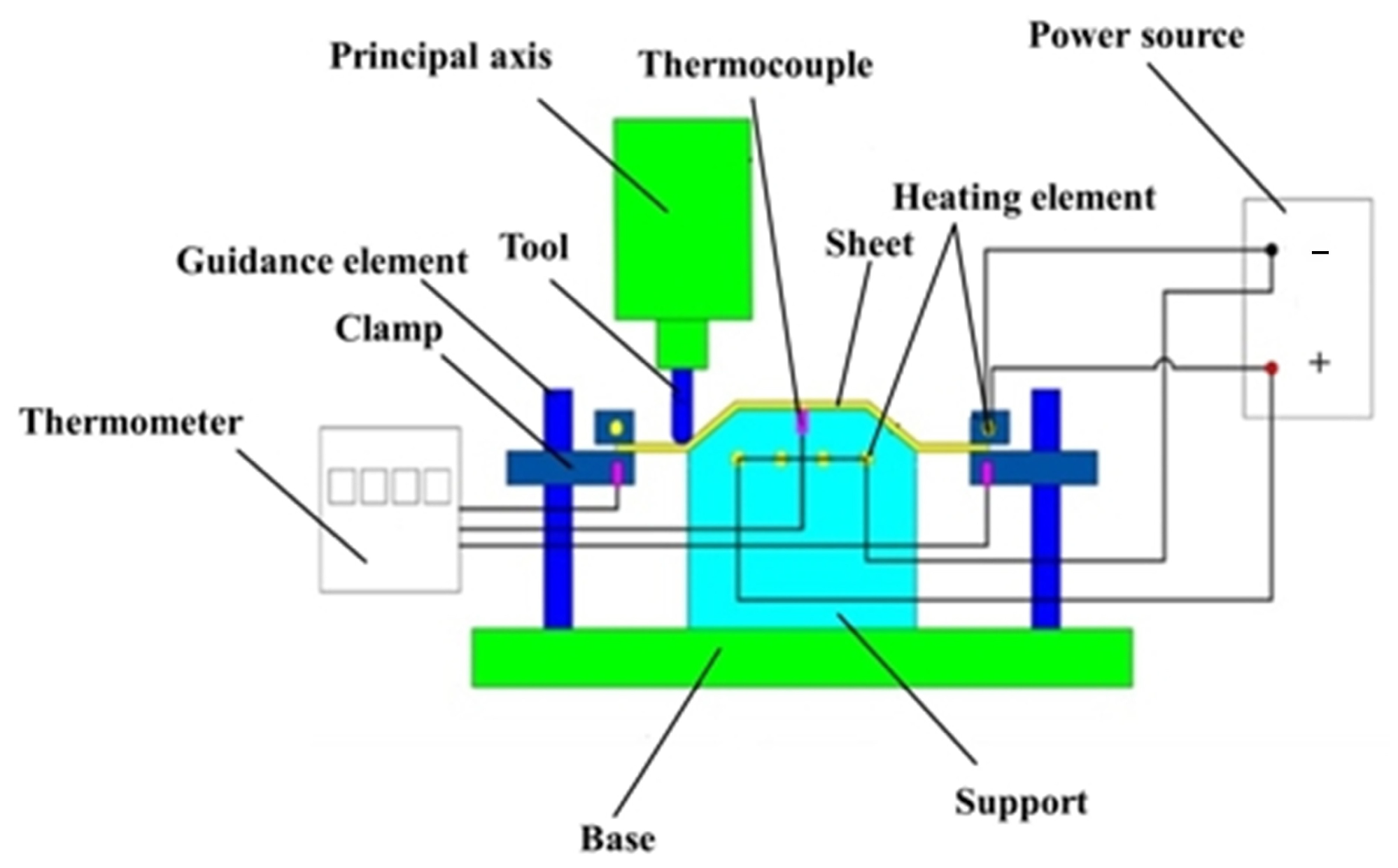
In the hot incremental forming of aluminum alloys, the integration of heating modules necessitates careful consideration of both heating efficiency and the simplicity of the forming apparatus to achieve high-precision and high-efficiency material shaping. To meet these objectives, researchers worldwide have explored various convenient heating methods, such as laser-assisted incremental sheet forming [12], electromagnetic induction heating incremental forming [13], and electric hot incremental sheet forming (EHIF) [14]. Meier et al. [15] and Möllensiep et al. [16] advanced the field by introducing direct current (DC) into the forming tool, which enabled rapid heating of the contact area between the tool and sheet metal to temperatures as high as 600 °C. This significant temperature increase effectively reduces the forming force required for material deformation. Duflou et al. [17] proposed synchronizing the movement of a laser with the forming tool, using the laser to heat the rear side of the deformation zone. Their approach enabled the successful forming of thin-walled AA5182 aluminum alloy components with a thickness of 1.25 mm. Similarly, Al-Obaidi et al. [13] employed an electromagnetic thermoforming system to precisely control the forming temperature of a 1.6 mm thick sheet metal, achieving a temperature control error within 5%. Further findings indicated that a 5 kW power supply could elevate the deformation zone’s temperature to 750 °C, reduce the forming force to 66.7% of its original value, and achieve a forming limit angle of up to 70° [18]. Based on these advancements, electric heating methods offer several advantages, including rapid heating rates, simple device structures, low cost, and convenient setup, making them widely adopted for the hot incremental forming of high-performance aluminum alloys [19]. In EHIF, both self-resistance electric heating and indirect heat conduction are typically utilized to form high-performance, thin-walled aluminum alloy structures. However, the self-resistance heating method is susceptible to the drawback of arc burning [20]. To address this issue, the research team implemented an indirect electric heating technique, achieving rapid and uniform heating of lightweight alloys via belt-type heat conduction, and developed a corresponding forming device, as illustrated in Figure 1. This process not only suppresses the arc burning defects on component surfaces but also enables rapid heating of the material deformation zone [21]. For EHIF of light alloys, key indicators for evaluating forming quality include surface roughness and forming limit angle. Currently, optimizing process parameters remains a prevalent strategy for enhancing the forming accuracy of components produced through hot incremental sheet forming [22].
In recent years, researchers have proposed methods such as process parameter optimization and forming process optimization to improve the forming accuracy of lightweight alloys during hot incremental forming, yet the interaction mechanism between process parameters and microstructural characteristics during the forming process has often been overlooked [23]. Under the specific process of belt heating, the dynamic recrystallization behavior of AA2024 aluminum alloy differs significantly from that in conventional hot forming. The improvement of its forming limit angle depends not only on the regulation of macroscopic process parameters but also on the evolution of microstructures [24]. In view of this, this study conducts macro–micro analysis on the belt-heated incremental forming process of AA2024 aluminum alloy, proposes a synergistic control method integrating process parameters and microstructural characteristics, and establishes a correlation model among forming limit angle, process parameters, and microstructural characteristics, thereby achieving more effective control of forming accuracy. This study clarifies the intrinsic mechanism by which key process parameters such as forming temperature, tool head diameter, and machining step size affect the forming limit angle of AA2024 aluminum alloy by regulating dislocation density and grain size under belt-heated conditions, and optimizes the combination of process parameters based on this mechanism, which provides theoretical support and technical reference for improving the forming accuracy and quality of components.
Figure 1. The beltheated incremental sheet forming process. Reprinted from Ref [24].
Metals 16 00229 g001

2. Materials and Methods

2.1. Experimental Materials

AA2024-T4 alloy sheet was supplied by Henan Mingtai Aluminum Industry Co., Ltd. (Zhengzhou, China), measuring 200 mm × 200 mm and 1.0 mm thick, was used to fabricate the part. The chemical composition of AA2024-T4 alloy is shown in Table 1. A high-temperature chain oil at 600 °C was used to ensure the surface quality of materials in this work.

2.2. Experimental Equipment

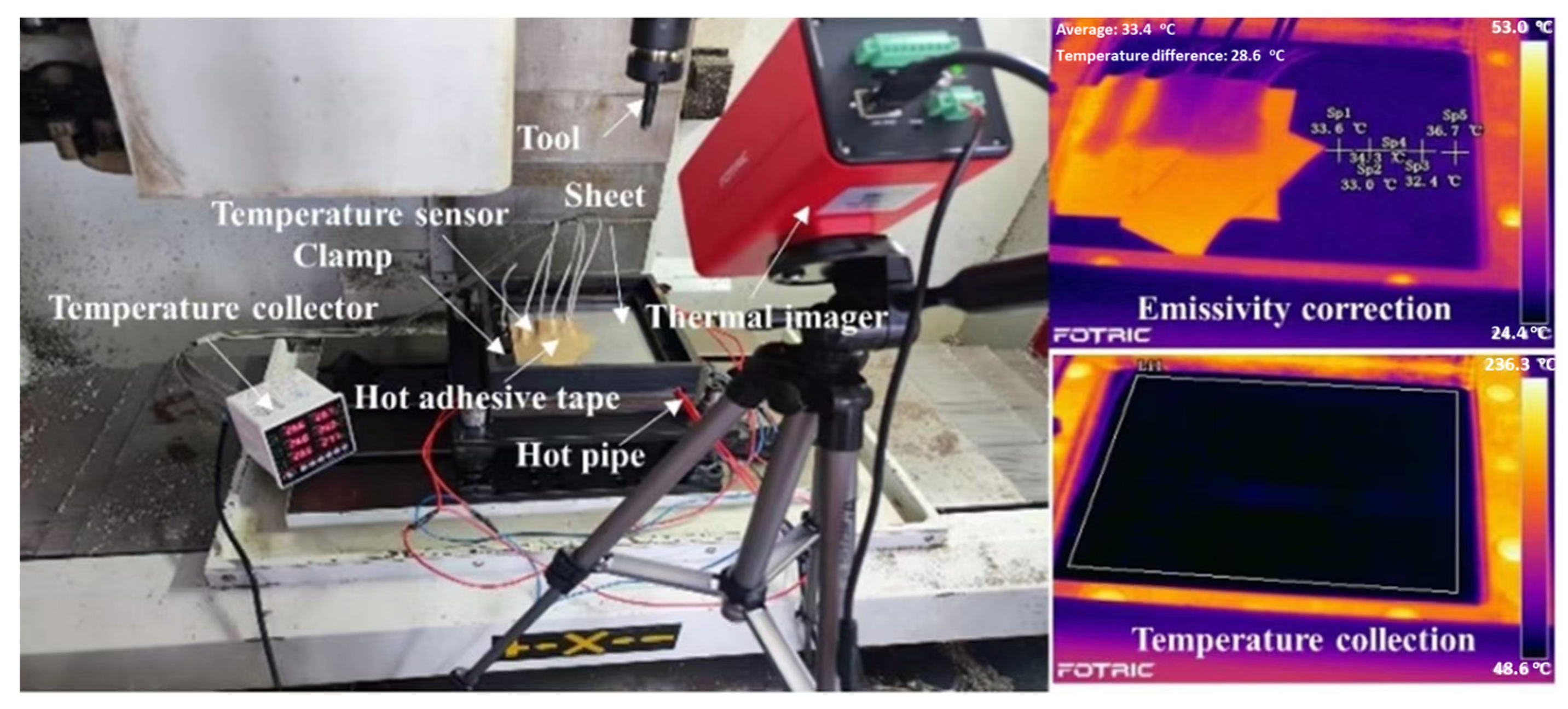
Recently, Li [21] proposed a belt-heated method to fabricate the aluminum alloy sheet, and the temperature model of the heating method was established. Therefore, the above heating method has been adopted in this work since it provides the features of fast heating and a simple structure. As shown in Figure 2, the hot-working die steel of H13, which has good strength at high temperatures, is used to fabricate the clamp and support plates. The mica is used to fabricate insulating plates. Meanwhile, the use of insulating plates can limit the heat loss at the edge. In addition to this, a thermal imager (Range: −20 °C to 1300 °C; Error: ±1 °C) is adopted to collect temperature for the forming region.

2.3. Design and Parameter Selection of Experimental Components

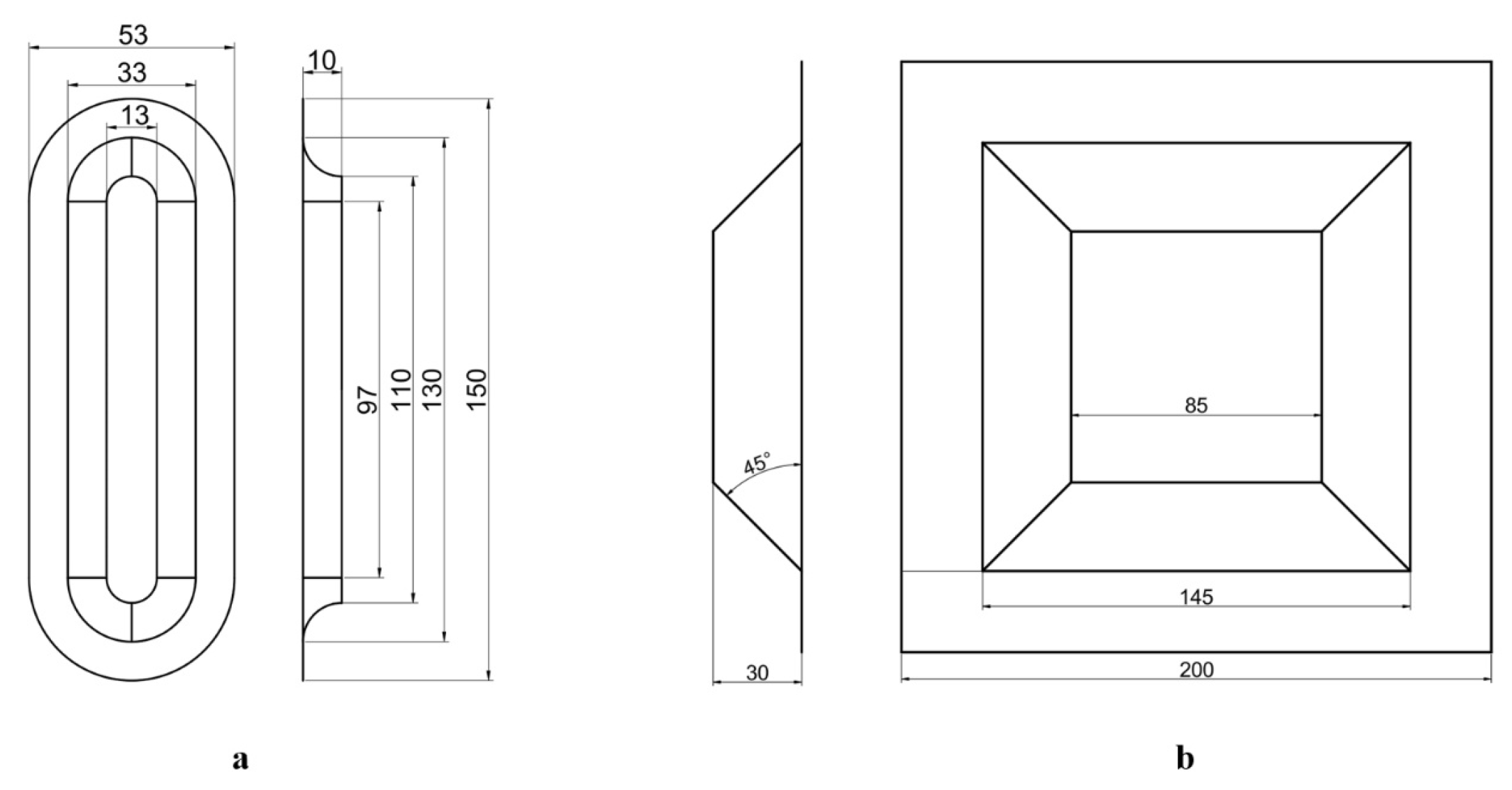
To investigate the effect of anisotropy in macroscale experiments, a channel component with an opening length of 130 mm, a height of 10 mm, and a bottom length of 110 mm was adopted (as shown in Figure 3a). For microstructural analysis, since the curved geometry of the channel component is unfavorable for subsequent microsampling and testing, a square pyramidal component with an opening length of 145 mm, a height of 30 mm, and a bottom length of 85 mm was selected instead (as shown in Figure 3b). The curved structure of the channel component can effectively reflect the influence of anisotropy on formability, and its dimensional design takes into account both the clamping range of the experimental setup and the stability of the forming process. The square pyramidal component is designed with a constant forming angle, which facilitates the accurate measurement of the forming limit angle, and its planar structure also allows for convenient subsequent microsectioning and characterization.

2.4. Experimental Plan and Test Methods

This experiment systematically investigates the effects of process parameters, including tool diameter, forming temperature, feed rate, feeding speed, and anisotropy, on the forming limit angle. The specific experimental plan is presented in Table 2. The repeated parameter combinations in the table (e.g., Runs 2, 5, 8, 11, 13) are duplicate experimental groups, with each group repeated three times to statistically analyze the discreteness of experimental data. (The “anisotropy” parameter refers to the angle between the component forming direction and the rolling direction of the sheet, which is used to investigate the effect of sheet anisotropy on the forming limit angle.)
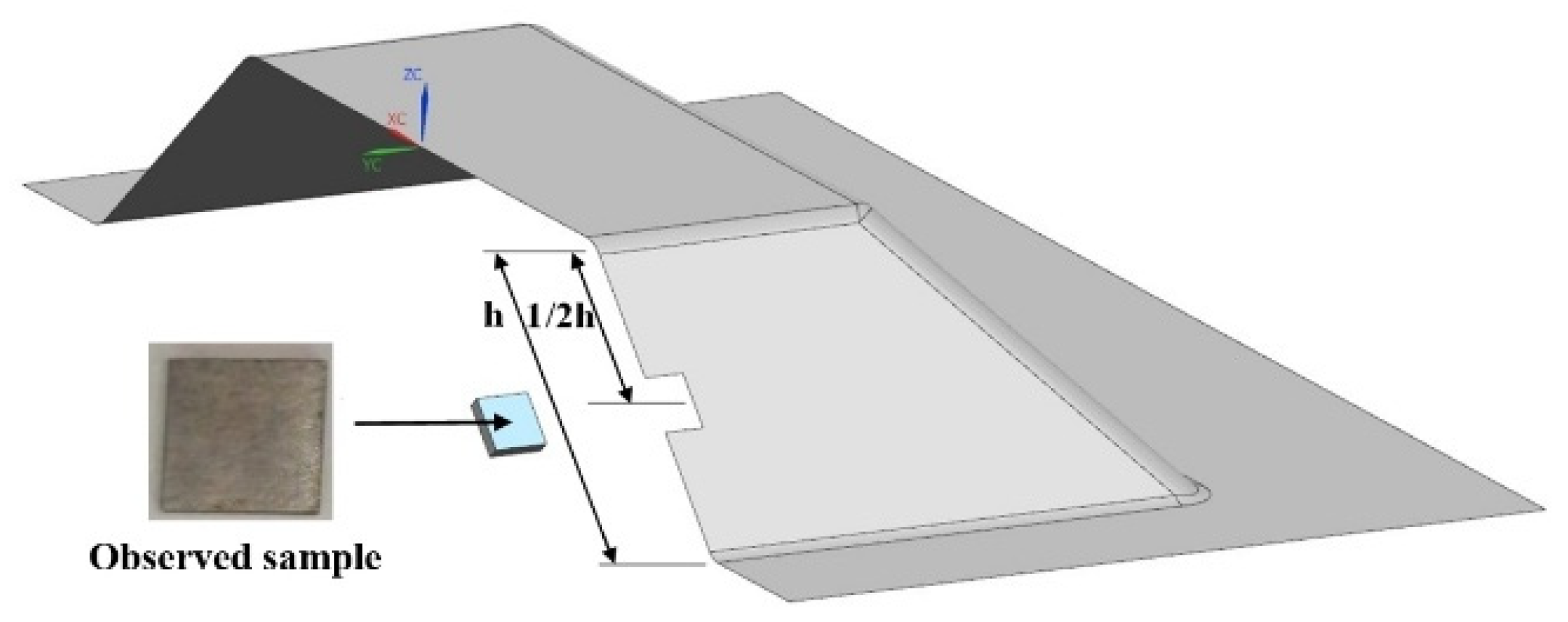
A Rigaku Ultima IV X-ray diffractometer was used to analyze the dislocation density of the deformed cross-section of AA2024 aluminum alloy in single-point hot incremental forming. The test area is shown in Figure 4, using a copper target with a scanning range of 5~90° and a scanning speed of 2°/min. The Williamson–Hall method was adopted for the calculation of dislocation density, and the specific formula is as follows [25]:
β h k l cos θ = K λ D
δ = 1 D 2
Among them, β h k l is the full width at half maximum (FWHM) of the diffraction peak (in rad), θ is the diffraction angle, K is the shape factor (value = 0.89), λ is the X-ray wavelength (Cu Kα, λ = 0.71), D is the grain size (in nm), and δ is the dislocation density (in nm−2). In the experiment, three diffraction peaks (111), (200), and (220) were subjected to fitting analysis. The Lorentz function was used for peak shape fitting, and the instrumental broadening (calibrated by standard Si powder) was subtracted to obtain the real diffraction peak broadening.
An EDAX Hikari Plus electron backscatter diffraction (EBSD) instrument was used to determine the grain size. The EBSD data acquisition parameters were set as follows: step size of 0.07 μm, 2 × 2 pixel binning mode, acceleration voltage of 30 kV, and electron beam current of 5 nA.
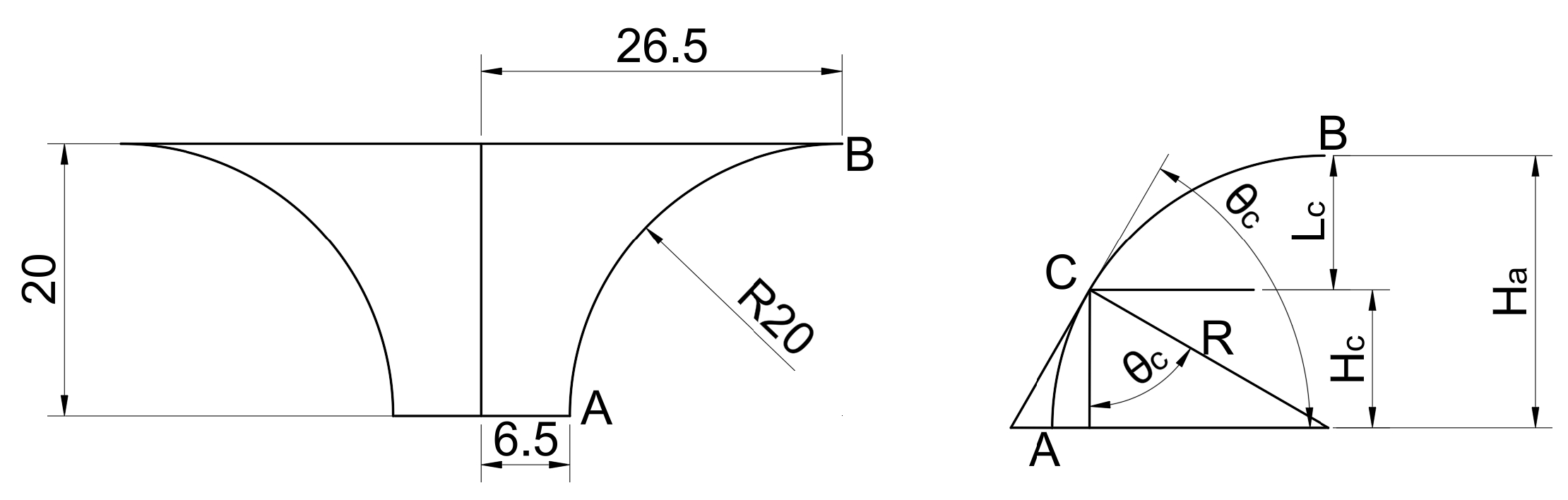
The measurement method for the forming limit angle is as follows (as shown in Figure 5): The failure criterion adopts the “first occurrence of through-thickness cracks” as the judgment standard for forming limit; the measurement positions are set at the middle region of the side wall of the square frustum component, with 4 measurement points evenly selected along the circumferential direction; an optical microscope (resolution: 0.01°) is used as the measuring instrument, and each measurement point is measured three times in repetition, with the average value taken as the forming limit angle of the component; and the definition of the forming limit angle for the channel component is consistent with that for the square frustum component, both of which are based on the angle at which through-thickness cracks occur, to ensure the comparability of the measurement results.
θ c = cos 1 H c R = cos 1 ( H a L c ) R
AB, a gradient-slope curve serving as the forming generatrix, has a radius of 26.5 mm, and Point C denotes the fracture position of the sheet metal. The forming height Lc at the fracture point C is measured with a height gauge, and the forming angle θc at Point C, namely the forming limit angle, is calculated from the geometric relationship via Equation (3).

3. Results and Discussion

3.1. Influence of Forming Parameters on Forming Limit Angle

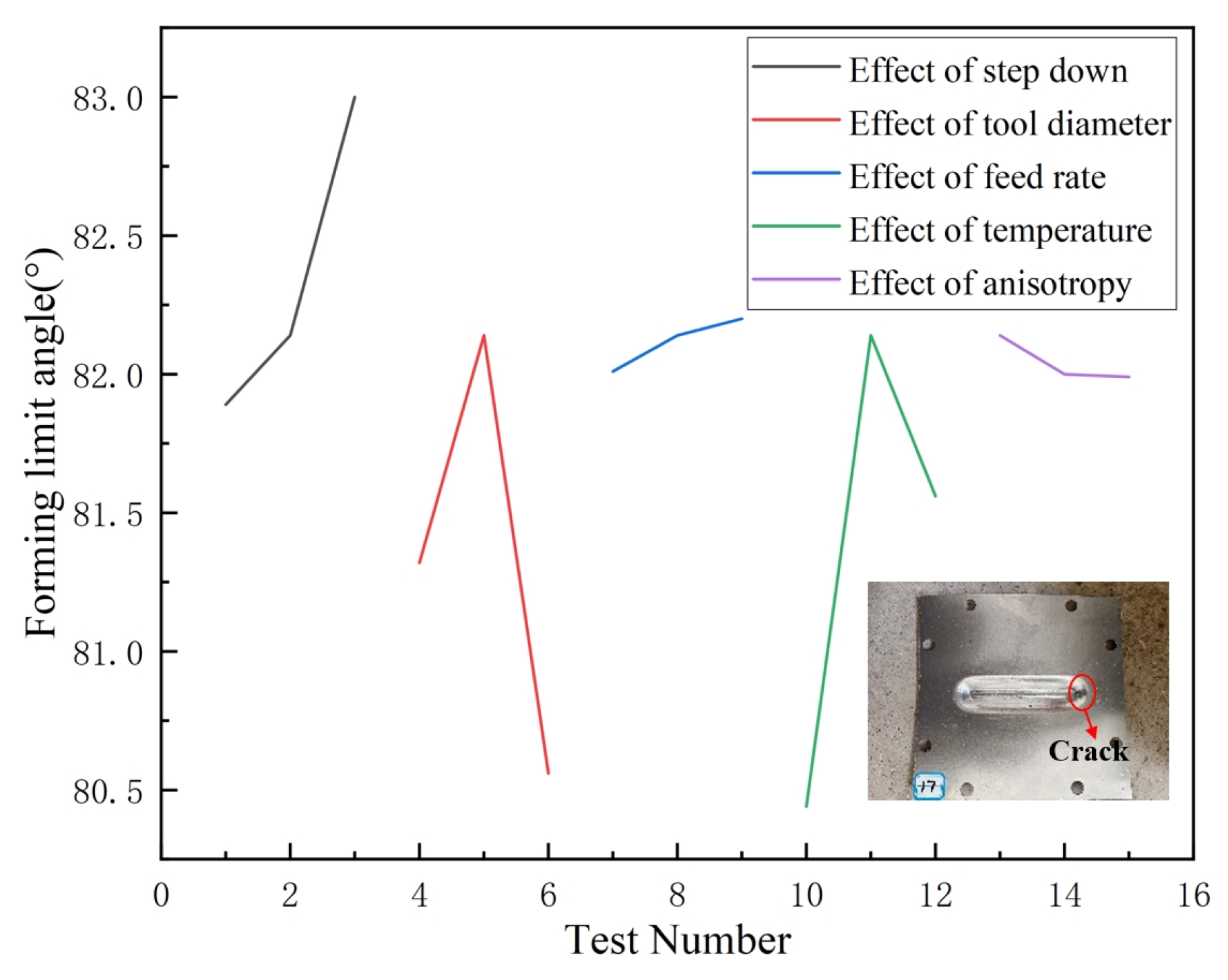
The forming limit angle serves as a key indicator for evaluating the plastic deformation capability of materials. Based on the experimental scheme outlined in Table 2, the forming limit angles for each group of components were measured. A detailed analysis was conducted to assess the influence of various forming process parameters on the forming limit angle. The corresponding results are presented in Figure 6.
As shown in Figure 6, the forming limit angle exhibited slight fluctuations with variations in each process parameter. Specifically, at different machining step sizes, the average forming limit angle was 82.34% with a maximum fluctuation amplitude of 1.34%; for different tool head diameters, the average value stood at 81.34% with a maximum fluctuation amplitude of 2.04%. The effects of feeding speed and anisotropy were extremely negligible, with their maximum fluctuation amplitudes being only 0.23% and 0.18%, respectively; under high-temperature conditions, the average value was 81.38% with a maximum fluctuation amplitude of 2.12%. The above results indicate that forming temperature, tool head diameter, and machining step size exert a significant influence on the forming limit angle, and are the primary factors for improving the plastic deformation capacity of AA2024 aluminum alloy during hot single-point incremental forming. Forming temperature modulates dislocation motion and dynamic recrystallization by regulating the stacking fault energy of the material; tool head diameter determines the stress distribution in the contact zone; and machining step size affects the deformation amount and cumulative effect of the material in each layer. These three factors jointly act on the plastic deformation behavior of the material, thereby significantly altering the forming limit angle [26]. In contrast, feeding speed and anisotropy angle have a negligible effect on the forming limit angle. The reasons are that within the feeding speed range selected in this experiment (1000–2000 mm/min), the difference in material deformation time is insufficient to induce significant microstructural changes; additionally, AA2024-T4 aluminum alloy exhibits weak anisotropic characteristics after solution and aging treatment, so the variation of anisotropy angle does not exert an obvious effect on the forming limit angle.

3.2. Analysis of Dislocation Density

The preceding analysis demonstrates that forming temperature, tool head diameter, and step down are critical factors for enhancing the plastic deformation capability of materials, with 160 °C identified as the optimal temperature for hot single-point incremental forming of AA2024 aluminum alloy. Building on these findings, the dislocation density of each crystal plane under various forming parameters was investigated. The specific experimental scheme for this analysis is detailed in Table 3.
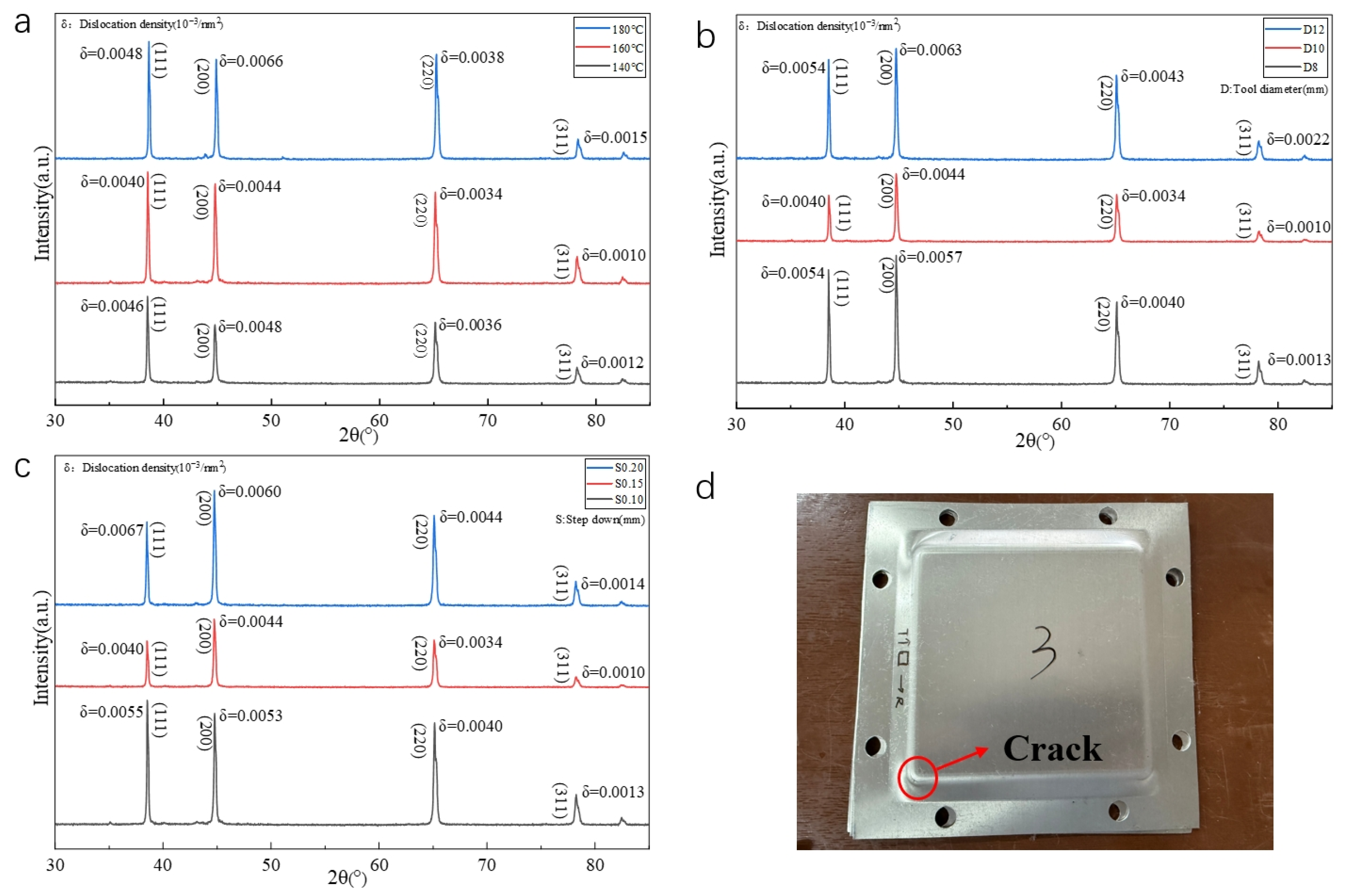
Figure 7a illustrates the effect of forming temperature on dislocation density. The results show that the dislocation density decreased significantly at 160 °C, which is attributed to the elevated stacking fault energy of the material at this temperature during the single-point incremental forming (SPIF) of AA2024 aluminum alloy, which facilitates intergranular slip and reduces dislocation pile-up. However, as the temperature increased from 160 °C to 180 °C, the dislocation density of the (111) and (200) crystal planes increased slightly due to grain growth inhibiting dislocation motion. This resulted in a slightly lower plastic deformation capacity at 180 °C than at 160 °C, further verifying that 160 °C is the optimal temperature for the hot incremental forming of AA2024 aluminum alloy. At 160 °C, the dislocation density of the (111) and (200) crystal planes increased with the increasing tool diameter (Figure 7b). In particular, when the tool diameter was 12 mm, the increased dislocation density raised the deformation resistance, which was detrimental to plastic deformation. The effect of machining step size on dislocation density followed a similar trend (Figure 7c). Notably, when the tool diameter was 12 mm, the dislocation density of all crystal planes increased gently, which restricted material flow and increased the risk of component fracture (Figure 7d). Therefore, the optimal combination of forming process parameters was determined as a tool diameter of 8 mm~10 mm and a machining step size of 0.15 mm~0.2 mm. This parameter range can facilitate material flow and reduce the probability of fracture.
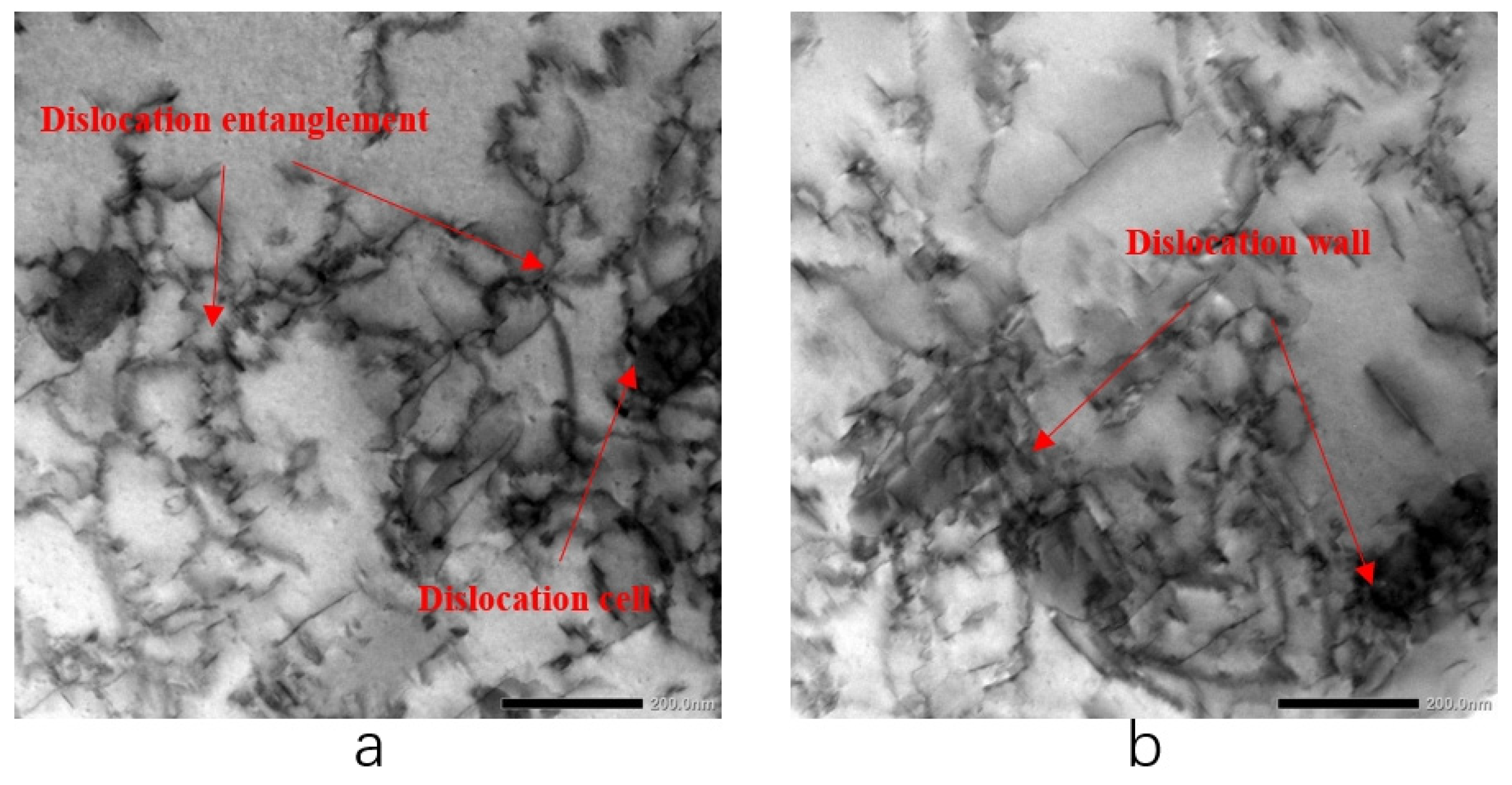
Figure 8 presents transmission electron microscope (TEM) images of AA2024 aluminum alloy following deformation under optimal process conditions: a forming temperature of 160 °C, a tool head diameter of 10 mm, and a step down of 0.15 mm. These images reveal the dislocation microstructure features across different cross-sections. Figure 8a displays dislocation tangles and dislocation cells generated during plastic deformation, reflecting the material’s good plasticity and high forming accuracy under these conditions. Figure 8b further examines the microstructural evolution, showing that the cross-section is dominated by dislocation walls. This structure indicates a high degree of deformation, ample dislocation motion, intensified internal material flow, and sufficient plastic deformation, all of which contribute to effective forming performance.

3.3. Analysis of Grain Size

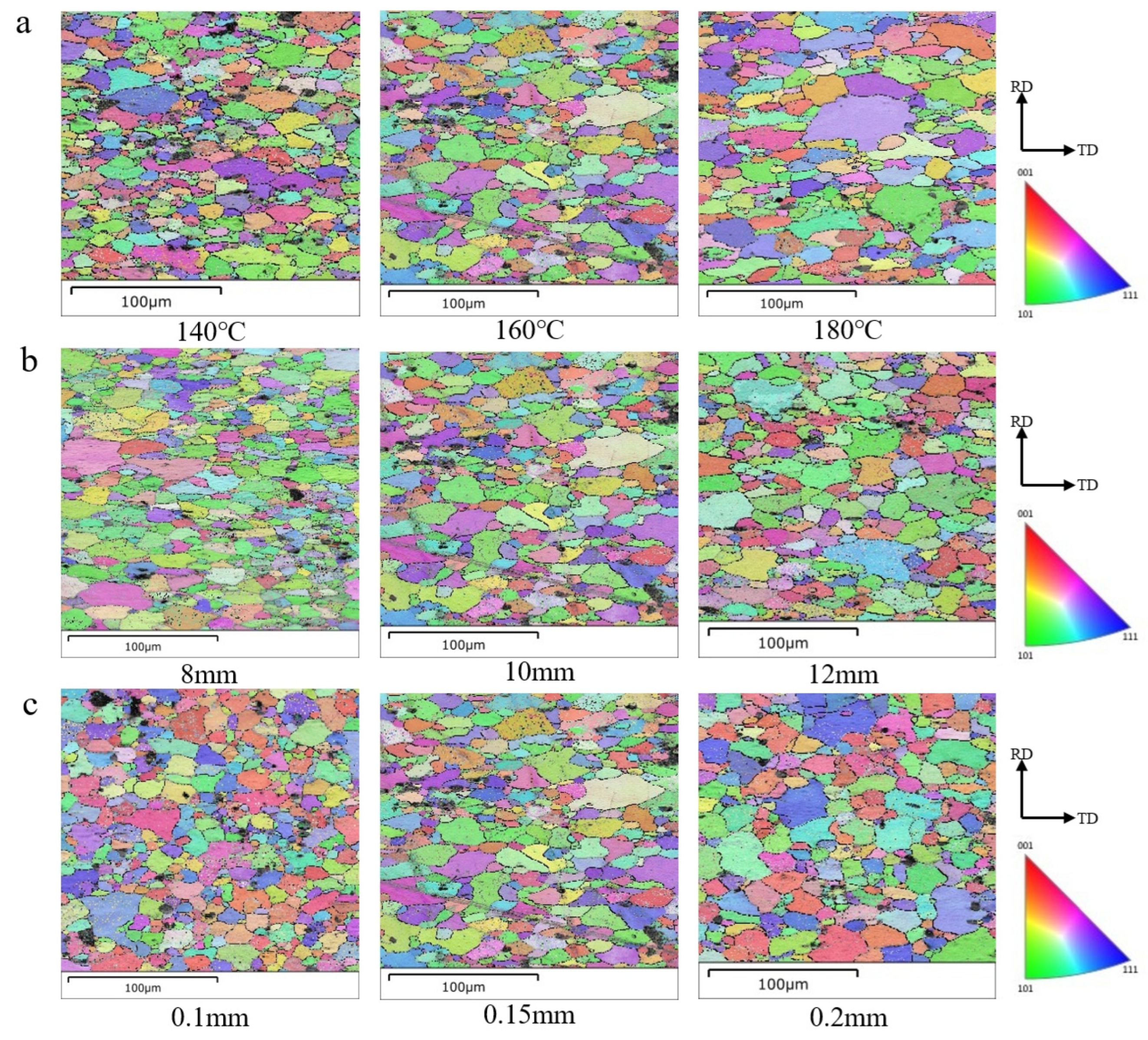
Grain size represents a fundamental aspect of material microstructure and significantly influences forming performance, plasticity, and forming accuracy. To elucidate the plasticization mechanism of AA2024 aluminum alloy, inverse pole figure (IPF) analysis was conducted to examine grain size variations under different process parameters. Figure 9 presents the IPF diagrams illustrating these grain size changes across varying forming conditions.
Figure 9a shows that the grain size fluctuated with the change in forming temperature. The average grain size was approximately 6.89 μm at 160 °C, 7.12 μm at 140 °C, and 7.79 μm at 180 °C, corresponding to a grain refinement rate of about 11.6% for 160 °C compared with 180 °C. With the increase in forming temperature, dynamic recovery and recrystallization became increasingly pronounced. A high degree of dynamic recrystallization was achieved at 160 °C (the recrystallization fraction analyzed by EBSD was approximately 65%, with low-angle grain boundaries accounting for about 30%). However, when the temperature exceeded 160 °C, obvious grain growth occurred, which hindered plastic deformation and reduced forming accuracy. Thus, 160 °C was confirmed as the optimal temperature for the hot single-point incremental forming (HSPIF) of AA2024 aluminum alloy. Figure 9b investigates the effect of tool head diameter on grain size. The grain size increased gradually as the tool diameter rose from 8 mm to 12 mm, which impeded slip motion and weakened the plasticization advantage brought by dynamic recovery. Therefore, a tool head diameter of 12 mm is not suitable for the belt-heated sheet incremental forming of AA2024 aluminum alloy. Figure 9c analyzes the influence of feed rate on grain size. No obvious grain coarsening was observed as the feed rate increased from 0.1 mm to 0.2 mm, though a slight increase in local grain size was detected. Notably, the grain size at a feed rate of 0.1 mm was significantly finer than that at 0.2 mm. This is because a lower feed rate corresponds to a lower material deformation rate, which facilitates a more sufficient dynamic recrystallization process and a more remarkable grain refinement effect. In contrast, a higher feed rate leads to an increased deformation rate and enhanced thermal accumulation inside the material, resulting in grain growth in local regions. Considering both forming accuracy and efficiency comprehensively, a feed rate ranging from 0.15 mm to 0.2 mm is deemed the most appropriate.

4. Conclusions

Based on the macro and micro experimental investigations on the belt-heated sheet incremental forming of AA2024 aluminum alloy, the main conclusions are drawn as follows:
  • Forming temperature, tool head diameter, and feed rate are the key factors affecting the forming limit angle of AA2024 aluminum alloy during hot single-point incremental forming, while the effects of feeding speed and anisotropy are insignificant. Among these factors, forming temperature regulates the plastic flowability by influencing the recovery and grain growth processes of the material, and tool head diameter as well as feed rate affect the forming limit angle by altering the stress distribution and dislocation motion state in the deformation zone.
  • Dislocation density analysis indicates that the optimal range of tool head diameter is 8 mm to 10 mm and that of feed rate is 0.15 mm to 0.2 mm. Within this parameter range, the material exhibits a moderate dislocation density and sufficient dislocation motion, which can reduce the risks of stress concentration and crack initiation.
  • Grain size analysis reveals that the material achieves a high degree of dynamic recrystallization (with a recrystallization fraction of approximately 65%) and a minimum average grain size (6.89 μm) at 160 °C, leading to the optimal plastic deformation capacity. Therefore, 160 °C is determined as the optimal temperature for the belt-heated incremental forming of AA2024 aluminum alloy.
  • Considering both forming accuracy and processing efficiency comprehensively, the optimal process parameters for the belt-heated incremental forming of AA2024 aluminum alloy are identified as follows: a tool head diameter of 10 mm, a forming temperature of 160 °C, and a feed rate of 0.2 mm. With this parameter combination, the material possesses a low dislocation density and a remarkable grain refinement effect; the forming limit angle can reach 82.3%, and the formed components exhibit excellent surface quality.
  • This study establishes a correlation mechanism among process parameters, microstructures, and forming limit angle, and the proposed synergistic control method can provide a theoretical basis and technical reference for the process optimization of hot incremental forming for similar aluminum alloy components.
This study only investigated the formability of AA2024 aluminum alloy within a specific temperature range (140~180 °C) and under selected combinations of process parameters. In future research, the temperature range can be extended to the hot working interval (200~400 °C) to further explore the complete evolution law of dynamic recrystallization. Meanwhile, numerical simulation methods can be integrated to establish a more accurate prediction model for the forming process, thus realizing the intelligent optimization of process parameters. In addition, the influence mechanism of lubrication conditions on the forming limit angle remains unclear, and relevant experimental studies will be carried out in subsequent work to improve and perfect the forming process system.

Author Contributions

Z.G.: investigation, writing—review and editing. Z.L. (Zhibing Li): conceptualization, validation, writing—review and editing. Z.A.: investigation, funding, writing—review and editing. Z.L. (Zhengfang Li): conceptualization, investigation, formal analysis, writing—original draft, funding acquisition. P.S.: investigation, writing—review and editing. Z.R.: supervision, validation, writing—review and editing. J.L.: investigation, formal analysis. Y.Z.: investigation, formal analysis. H.L.: project administration, validation, writing—review and editing. Z.Q.: methodology, validation, writing—review and editing. All authors have read and agreed to the published version of the manuscript.

Funding

This work was supported by the National Natural Science Foundation of China (Grant No. 22272013 and Grant No. 52205374), the Special Basic Cooperative Research Programs of Yunnan Provincial Undergraduate Universities’ Association (Grant No. 202101BA070001-260), the Yunnan Xingdian Talent Support Program Youth Talent Special Project (Grant No. XDYC-QNRC-2023-0156), the Scientific and Technological Research Program of Chongqing Science and Technology Bureau (Grant No. cstc2021jcyj-msxmX1047), the Talent Introduction Project of Kunming University (Grant No. XJ20210033), and the Scientific Research Fund Project of Yunnan Provincial Department of Education (Grant No. 2022J0636).

Data Availability Statement

The original contributions presented in this study are included in the article. Further inquiries can be directed to the corresponding author(s).

Conflicts of Interest

Author Han Lin was employed by the Guizhou Aerospace Fenghua Precision Equipment Co., Ltd. Author Zhengyang Qiao was employed by the Guizhou Space Appliance Co., Ltd. The remaining authors declare that the research was conducted in the absence of any commercial or financial relationships that could be construed as a potential conflict of interest.

References

  1. Liu, J.; Mo, J.H.; Huang, S.H. Sheet metal die-less forming and its tool path generation based on STL files. Int. J. Adv. Manuf. Technol. 2004, 23, 696–699. [Google Scholar]
  2. Allwood, J.M.; King, G.P.F.; Duflou, J. A structured search for applications of the incremental sheet-forming process by product segmentation. Proc. Inst. Mech. Eng. Part B J. Eng. Manuf. 2005, 219, 239–244. [Google Scholar] [CrossRef]
  3. Echrif, S.B.M.; Hrairi, M. Research and progress in incremental sheet forming processes. Mater. Manuf. Process. 2011, 26, 1404–1414. [Google Scholar] [CrossRef]
  4. Lu, H.; Kearney, M.; Li, Y.; Meehan, P. Model predictive control of incremental sheet forming for geometric accuracy improvement. Int. J. Adv. Manuf. Tech. 2016, 82, 1781–1794. [Google Scholar] [CrossRef]
  5. Lu, H.; Kearney, M.; Liu, S.; Daniel William, J.T.; Meehan Paul, A. Two directional toolpath correction in single-point incremental sheet forming using model predictive control. Int. J. Adv. Manuf. Tech. 2016, 91, 91–106. [Google Scholar] [CrossRef]
  6. Ambrogio, G.; Gagliardi, F.; Filice, L. Robust design of incremental sheet forming by Taguchi’s method. Procedia CIRP 2013, 12, 270–275. [Google Scholar] [CrossRef]
  7. Wang, H.; Duncan, S. Optimization of tool trajectory for incremental sheet forming using closed loop control. In Proceedings of the IEEE International Conference on Automation Science and Engineering, Trieste, Italy, 24–27 August 2011; pp. 779–784. [Google Scholar]
  8. Zhu, H.; Han, F.; Liu, Y. The effect of the extrusion direction on the incremental sheet forming quality considering tool deformation. Int. J. Adv. Manuf. Tech. 2018, 97, 1835–1846. [Google Scholar] [CrossRef]
  9. Hoang, T.K.; Mac, T.B.; Luyen, T.T.; Pham, Q.T.; Nguyen, D.T. Integrated Experimental Study on Thickness Uniformity, Thinning Limit, and Forming Force in Heat-Assisted Single-Point Incremental Forming of AA1050 Aluminum Alloy. J. Mater. Eng. Perform. 2025. [Google Scholar] [CrossRef]
  10. Micari, F. Single Point Incremental Forming: Recent results. In Seminar on Incremental Forming; Cambridge University: Cambridge, UK, 2004. [Google Scholar]
  11. Chang, Z.; Chen, J. Analytical Model and Experimental Validation of Surface Roughness for Incremental Sheet Metal Forming Parts. Int. J. Mach. Tools Manuf. 2019, 146, 103453. [Google Scholar] [CrossRef]
  12. Mohammadi, A.; Vanhove, H.; Van Bael, A.; Seefeldt, M.; Duflou, J.R. Effect of laser transformation hardening on the accuracy of SPIF formed parts. J. Manuf. Sci. Eng. 2016, 139, 011007. [Google Scholar] [CrossRef]
  13. Al-Obaidi, A.; Kräusel, V.; Landgrebe, D. Hot single-point incremental forming assisted by induction heating. Int. J. Adv. Manuf. Technol. 2016, 82, 1163–1171. [Google Scholar] [CrossRef]
  14. Fan, G.; Gao, L.; Hussain, G.; Wu, Z. Electric hot incremental sheet forming: A novel technique. Int. J. Mach. Tools Manuf. 2008, 48, 1688–1692. [Google Scholar] [CrossRef]
  15. Meier, H.; Magnus, C. Incremental Sheet Metal Forming with Direct Resistance Heating Using Two Moving Tools. Key Eng. Mater. 2013, 554, 1362–1367. [Google Scholar] [CrossRef]
  16. Möllensiep, D.; Kulessa, P.; Thyssen, L.; Kuhlenkötter, B. Regression-Based Compensation of Part Inaccuracies in Incremental Sheet Forming at Elevated Temperatures. Int. J. Adv. Manuf. Technol. 2020, 109, 1917–1928. [Google Scholar] [CrossRef]
  17. Duflou, J.R.; Callebaut, B.; Verbert, J.; De Baerdemaeker, H. Laser-assisted incremental forming: Formability and accuracy improvement. CIRP Ann. 2007, 56, 273–276. [Google Scholar] [CrossRef]
  18. Al-Obaidi, A.; Kräusel, V.; Landgrebe, D. Induction heating validation of dieless single-point incremental forming of AHSS. J. Manuf. Mater. Process. 2017, 1, 5. [Google Scholar] [CrossRef]
  19. Ao, D.; Gao, J.; Chu, X.; Lin, S.; Lin, J. Formability and deformation mechanism of Ti-6Al-4V sheet under electropulsing-assisted incremental forming. Int. J. Solids Struct. 2020, 202, 357–367. [Google Scholar] [CrossRef]
  20. Ambrogio, G.; Gagliardi, F.; Chamanfar, A.; Misiolek, W.Z.; Filice, L. Induction heating and cryogenic cooling in single point incremental forming of Ti-6Al-4V: Process setup and evolution of microstructure and mechanical properties. Int. J. Adv. Manuf. Technol. 2017, 91, 803–812. [Google Scholar] [CrossRef]
  21. Li, Z.; Gao, Z.; An, Z.; Sun, Y.; Wu, B.; Zhai, Y. A novel temperature model of regions formed during the preheating stage of belt heating in incremental sheet forming. Trans. FAMENA 2023, 47, 1–12. [Google Scholar] [CrossRef]
  22. Low, D.W.W.; Chaudhari, A.; Kumar, D.; Kumar, A.S. Convolutional neural networks for the prediction of geometrical errors in incremental sheet metal forming. J. Intell. Manuf. 2022, 34, 2373–2386. [Google Scholar] [CrossRef]
  23. Zhan, X.; Liu, X.; Yang, M.; Others, D. Dynamic recrystallization and solute precipitation during friction stir assisted incremental forming of AA2024 sheet. Materials Characterization 2021, 177, 111046. [Google Scholar] [CrossRef]
  24. Li, Z.; Gao, Z.; An, Z.; Lin, H.; Sun, P.; Ren, Z.; Qiao, Z.; Zhang, Y.; Jia, Y. Effect Analysis of Process Parameters on Geometric Dimensions during Belt-Heated Incremental Sheet Forming of AA2024 Aluminum Alloy. Coatings 2024, 14, 889. [Google Scholar] [CrossRef]
  25. Williamson, G.K.; Hall, W.H. X-ray line broadening from field aluminium and wolfram. Acta Metall. 1953, 1, 22–31. [Google Scholar] [CrossRef]
  26. Zhang, Y.; Zhang, Z.; Li, Y. Investigation of pre-aged hardening single-point incremental forming process and mechanical properties of AA6061 aluminum alloy. Materials 2023, 16, 4154. [Google Scholar] [CrossRef] [PubMed]
Figure 2. Overview of the forming system and the temperature test system. Reprinted from Ref [21].
Metals 16 00229 g002
Figure 3. Dimensions of formed components. (a) Dimensions of groove component. (b) Dimensions of square pyramid component (unit: mm). The 45° angle of the square pyramidal component refers to the designed forming angle, while the actual forming limit angle is defined as the maximum forming angle before the component fractures. These two angles are not the same concept, and further elaboration will be provided in subsequent sections.
Metals 16 00229 g003
Figure 4. Overview of the test region.
Metals 16 00229 g004
Figure 5. Schematic diagram of the forming angle (unit: mm).
Metals 16 00229 g005
Figure 6. Influence of forming process parameters on forming limit angle.
Metals 16 00229 g006
Figure 7. Dislocation density analysis under different parameters. (a) Influence of forming temperature. (b) Influence of tool diameter. (c) Influence of step down. (d) Forming result with tool diameter of 12 mm.
Metals 16 00229 g007
Figure 8. Dislocation microstructures. (a) Transverse section. (b) Cross-section.
Metals 16 00229 g008
Figure 9. Grain size analysis under different parameters. (a) Results at different forming temperatures. (b) Results with different tool diameters. (c) Results with different step downs.
Metals 16 00229 g009
Table 1. Chemical composition of AA2024-T4.
AlSiFeCuMnMgCrZnTi
Balanced0.50.53.80.31.20.10.250.15
Table 2. Experimental scheme.
NumberTool Diameter
(mm)
Step Down
(mm)
Feed Rate
(mm/min)
Forming
Temperature (°C)
Anisotropy
(°)
1100.1015001600
2100.1515001600
3100.215001600
480.1515001600
5100.1515001600
6120.1515001600
7100.1510001600
8100.1515001600
9100.1520001600
10100.1515001400
11100.1515001600
12100.1515001800
13100.1515001600
14100.15150016045
15100.15150016090
Table 3. The experimental scheme of the dislocation density.
NumberForming Temperature (°C)Tool Diameter
(mm)
Step Down
(mm)
116080.15
2160100.15
3160120.15
4160100.1
5160100.2
6140100.15
7180100.15
Disclaimer/Publisher’s Note: The statements, opinions and data contained in all publications are solely those of the individual author(s) and contributor(s) and not of MDPI and/or the editor(s). MDPI and/or the editor(s) disclaim responsibility for any injury to people or property resulting from any ideas, methods, instructions or products referred to in the content.