Article

Optimization and Stress Analysis of Welded Joints in Deep-Sea Titanium Alloy Spherical-Cylindrical Pressure Hull

1
China Ship Scientific Research Center, Wuxi 214082, China
2
Taihu Laboratory of Deepsea Technological Science, Wuxi 214152, China
*
Author to whom correspondence should be addressed.
Metals 2026, 16(2), 215; https://doi.org/10.3390/met16020215
Submission received: 15 January 2026 / Revised: 11 February 2026 / Accepted: 11 February 2026 / Published: 13 February 2026
(This article belongs to the Section Structural Integrity of Metals)

Abstract

A spherical-cylindrical pressure hull is a new form of pressure-resistant structure that is distinguished from traditional large deep-sea equipment. The residual stresses and deformations introduced by out-of-tolerance welded joints pose a great threat to structural safety under deep-sea service conditions. In this paper, the angular joint of the spherical-cylindrical structure is optimized as a skirted butt joint, and the simulation method is employed to focus on the changes in stress and deformation in the two structural models before and after applying 20 MPa external pressure. The results identify that under hydrostatic pressure, the stress level in the skirt model decreases significantly compared to the residual stress of welding, while the stress in the fillet model increases slightly at the local location. After unloading, the structural stress and deformation return to the post-weld state. The effect of heat treatment on stress relief is very significant and can improve the bearing capacity of the structure.

1. Introduction

In recent years, titanium and titanium alloy have been widely used in marine engineering, aerospace and other fields because of their excellent properties such as high specific strength, corrosion resistance and non-magnetic properties [1,2]. Hydrostatic pressure is the most important service condition for deep-sea equipment to overcome [3]. In order to ensure the safety of the structure, the pressure hull of large-scale deep-sea equipment mainly adopts two structural forms of an annular ribbed cylindrical hull or a spherical hull [4,5], such as on submarines and submersibles. As the depth of ocean exploration increases and the residence time lengthens, a large-sized spherical-cylindrical structure is gradually being adopted [6], which has the advantages of both good pressure resistance and large space. Traditionally, the spherical-cylindrical structure is mostly designed and processed with a relatively simple fillet weld. However, the specificity of the joint location leads to many difficulties in nondestructive testing, performance evaluation, and residual control. Most importantly, the joint position coincides with the position of structural stress concentration and has a high safety risk if there are out-of-tolerance welding defects. To better solve the shortcomings of the fillet weld, the researchers of this paper creatively optimized the design of the fillet weld into a butt weld by adding a skirt to the cylindrical hull. Although skirts realized by machining, additive manufacturing or irregular ring rolling processes can add time and economic costs, researchers generally agree that the greatest advantage of this structure is that it can reduce the risk of stress concentration and prevent material failure due to overloading from superimposed weld stresses and structural stresses, thereby improving the safety of the structure.
Increasingly mature finite element analysis software, supported by workstations with powerful computing power, has been fully developed in the simulation of the thermal processing of large and complex structures with its great advantages of high efficiency and low cost. Limited by demand and cost, there are few research results on the mechanics of deep-sea large-scale structural welding process [7], and most of the research objects are test plates. Liu Chuan, Xie Pu et al. [8,9] used a finite method to study the distribution of residual stresses in electron beam welding of thick plate titanium alloys. Cerik et al. [10] numerically studied the effect of residual stresses introduced by cold bending and welding on the ultimate strength of a stiffened cylindrical hull. Li Liangbi et al. [11] investigated the influence of residual stress of equatorial welds on the ultimate strength of a Ti80 titanium alloy shell and concluded that the influence could be ignored. In this paper, a spherical-cylindrical structure with an angular joint and optimized butt joint is taken as the research object. With the help of test and simulation results, the response laws of stress and deformation considering welding, heat treatment and hydrostatic pressure are deeply analyzed, which provides data support and guidance for the design and process optimization of deep-sea titanium alloy pressure-resistant structures. In addition to traditional arc welding, advanced techniques such as laser cladding and underwater welding have also been explored for marine applications, offering potential benefits in precision and environmental adaptability [12,13].

2. Experimental Approach

2.1. Welding

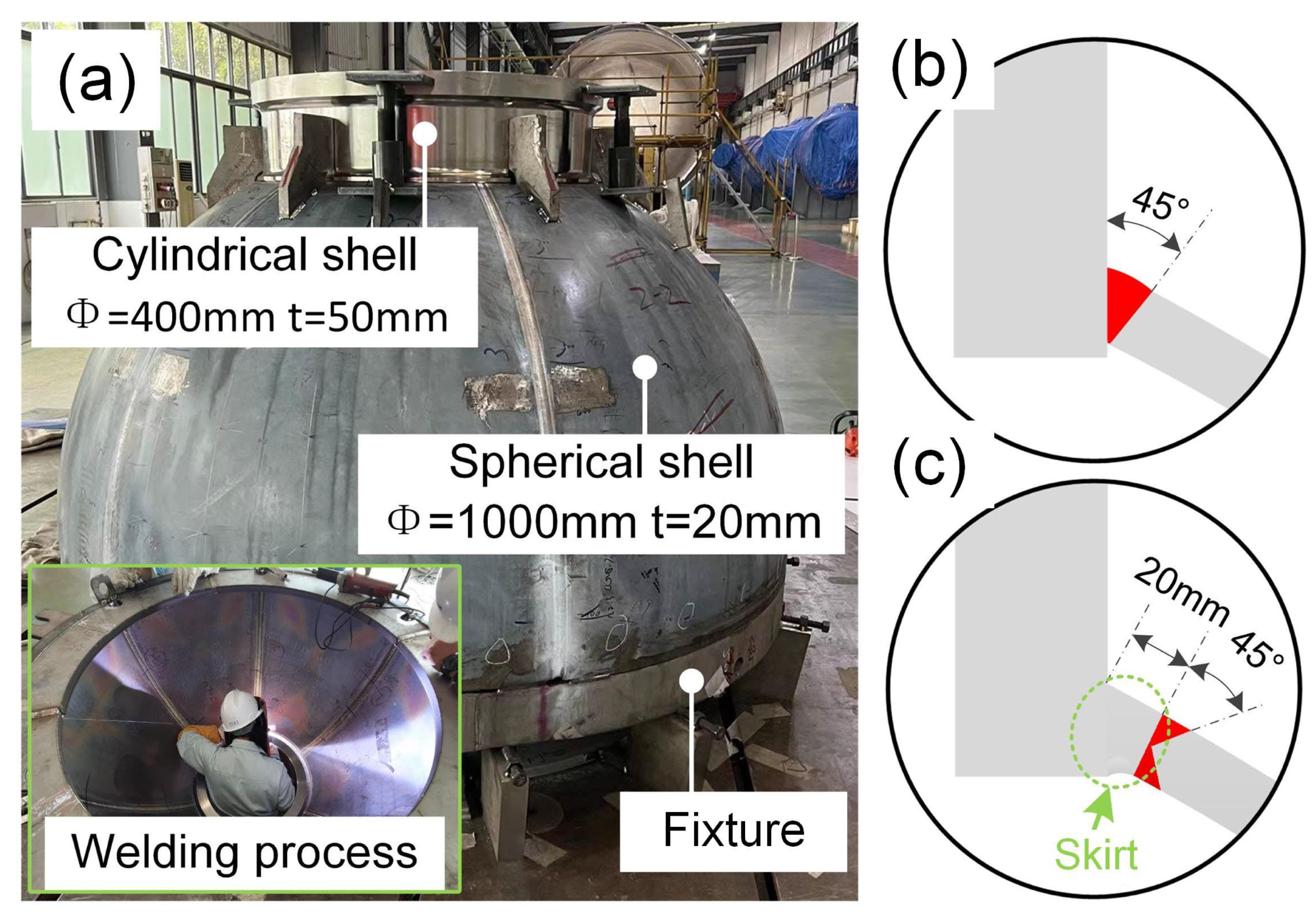
The physical model and main dimensions of the spherical-cylindrical structure are shown in Figure 1a. The material is TA31(Baoji, China), an 800 MPa grade titanium alloy developed by China, which has the advantages of high strength, high toughness, weldability, corrosion resistance, etc. The chemical composition and the optimized parameters of the TIG welding are shown in Table 1 and Table 2. The surface of the joint is cleaned of oxide film, rust, grease and other contaminants before welding. The full penetration fillet and skirted butt joint structures are shown in Figure 1b,c. Restricted by the accessibility of the torch, a 45° single V-groove and 45° K-groove are used respectively. The skirt length is 20 mm.

2.2. Heat Treatment

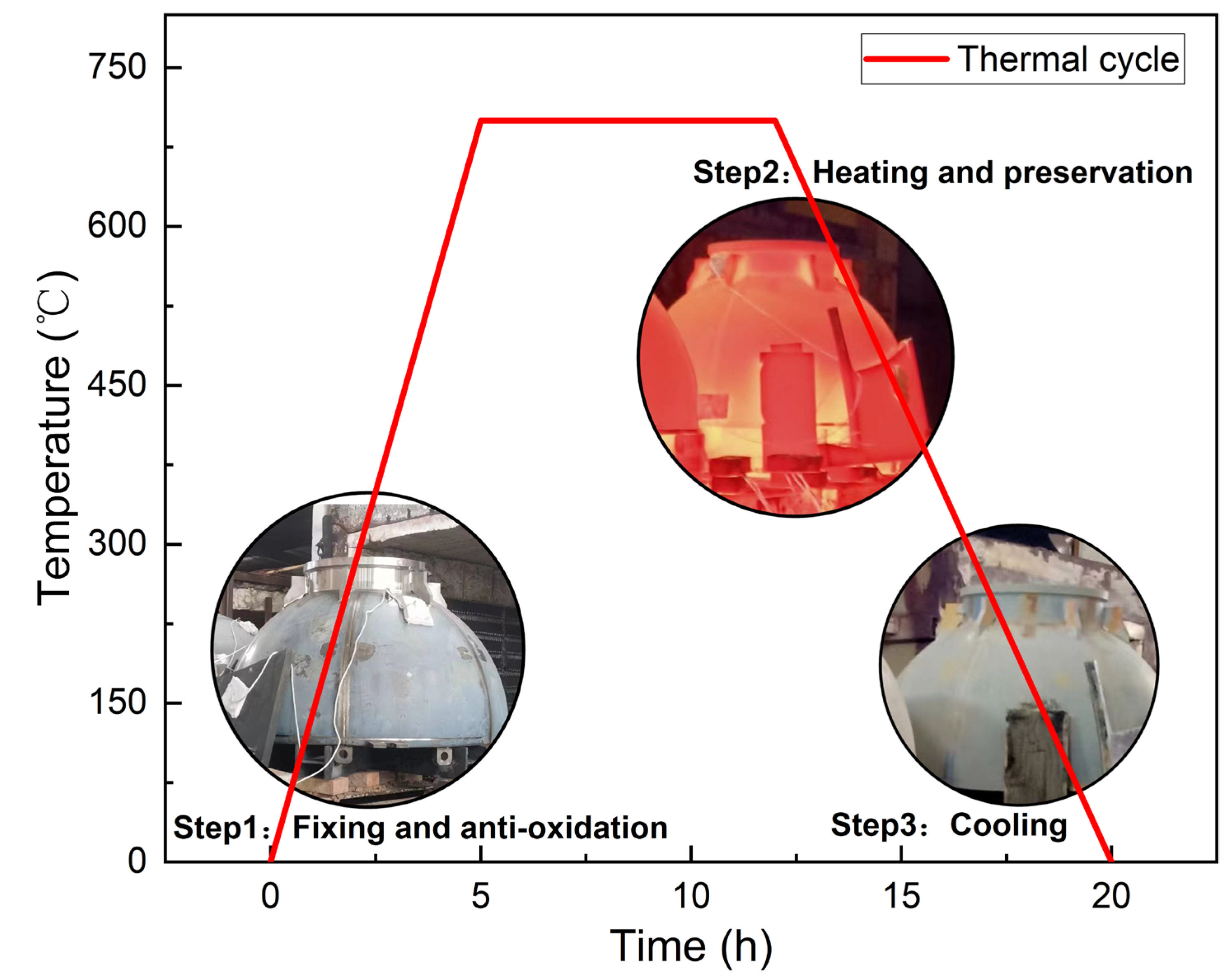
Using the characteristics of material strength, which decreases with the increase in temperature, heat treatment can reduce the residual stress by more than 60%, which is currently recognized as the most effective stress relief method [14]. According to the material type, thickness and size, the test team conducted a series of heat treatment experiments on plates and typical structural parts, taking into account the effects of temperature, time and cooling rate on the material‘s own properties. The finalized heat treatment process curve is shown in Figure 2. In the first step, the model is fixed with tooling to prevent thermal deformation, and the surface is sprayed with an antioxidant coating to slow down the high-temperature oxidation of the titanium alloy. The second step is to raise the furnace temperature to a predetermined temperature at a certain rate and then hold it for a period of time. The final step is to open the furnace and air-cool the model to room temperature. In the simulation, heat treatment is modelled using a simplified numerical annealing approach. The material yield strength is reduced at the holding temperature (650 °C) to simulate stress relaxation, followed by elastic recovery during cooling to room temperature. This method has been validated against experimental stress relief data for similar titanium alloy welds.

3. Simulation Verification

A full three-dimensional (3D) finite element model established by ANSYS 15.0 was adopted to accurately capture the asymmetric geometry of the skirted joint and the triaxial stress state near the weld, which cannot be adequately represented by simplified 2D or axisymmetric models. The reliability and accuracy of the finite element method are verified by comparing the finite element simulation with the measured residual stresses. Considering that the residual stresses in the spherical-cylindrical joint are not currently available due to the equipment capacity and space constraints, the equatorial seam stresses in the spherical hull are characterized as the basis for verifying the reasonableness of the finite element. It should be noted that the experimental measurements are solely used for model validation, and the subsequent stress and deformation analyses under hydrostatic pressure are based entirely on the verified numerical model.
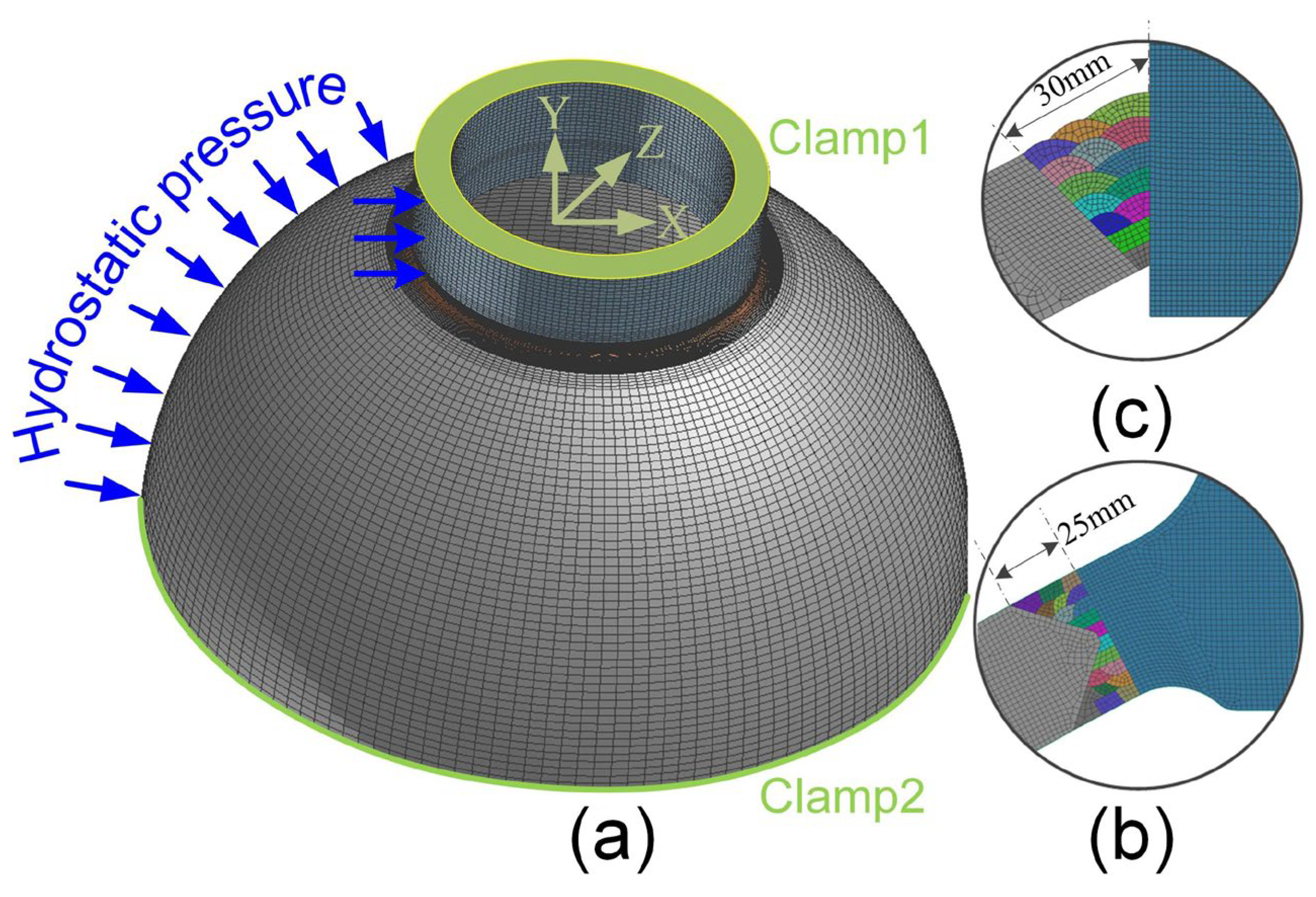
Firstly, the 3D mesh model is established according to the structural characteristics, as shown in Figure 3a. The mesh division principle is to refine the mesh in the near-weld area to ensure calculation accuracy and coarsen the mesh in the far-weld area to shorten the calculation time. The mesh details of the fillet weld and butt joint are shown by enlargement in Figure 3b,c. The top and bottom port positions of the model are defined as fixed constraints to simulate their connection to rigid bulkheads in a typical deep-sea pressure hull assembly. This simplification is justified as the comparative analysis focuses on the relative performance between the two joint configurations under identical boundary conditions. The inner and outer surfaces are defined as heat transfer boundary conditions, and the ambient temperature is set at 20 °C. The hydrostatic external pressure load is uniformly distributed on the outer surface of the model.
The finite element analysis was performed using ANSYS.15.0 The finite element model employs eight-node linear coupled temperature–displacement elements (C3D8T). The mesh is refined to 2 mm in the weld and heat-affected zone (HAZ), with three elements found at this thickness, while the base metal region uses a coarser mesh of 5 mm. A mesh convergence study was conducted by comparing the maximum residual stress in the weld for three mesh densities (coarse: 4 mm, medium: 2 mm, and fine: 1 mm). The difference between medium and fine meshes was less than 3%, confirming that the medium mesh provides sufficient accuracy. The comparison of maximum residual stresses in the weld zone for the three mesh densities is shown in Table 3. Thermo-physical and mechanical properties are based on experimental data and are temperature-dependent.
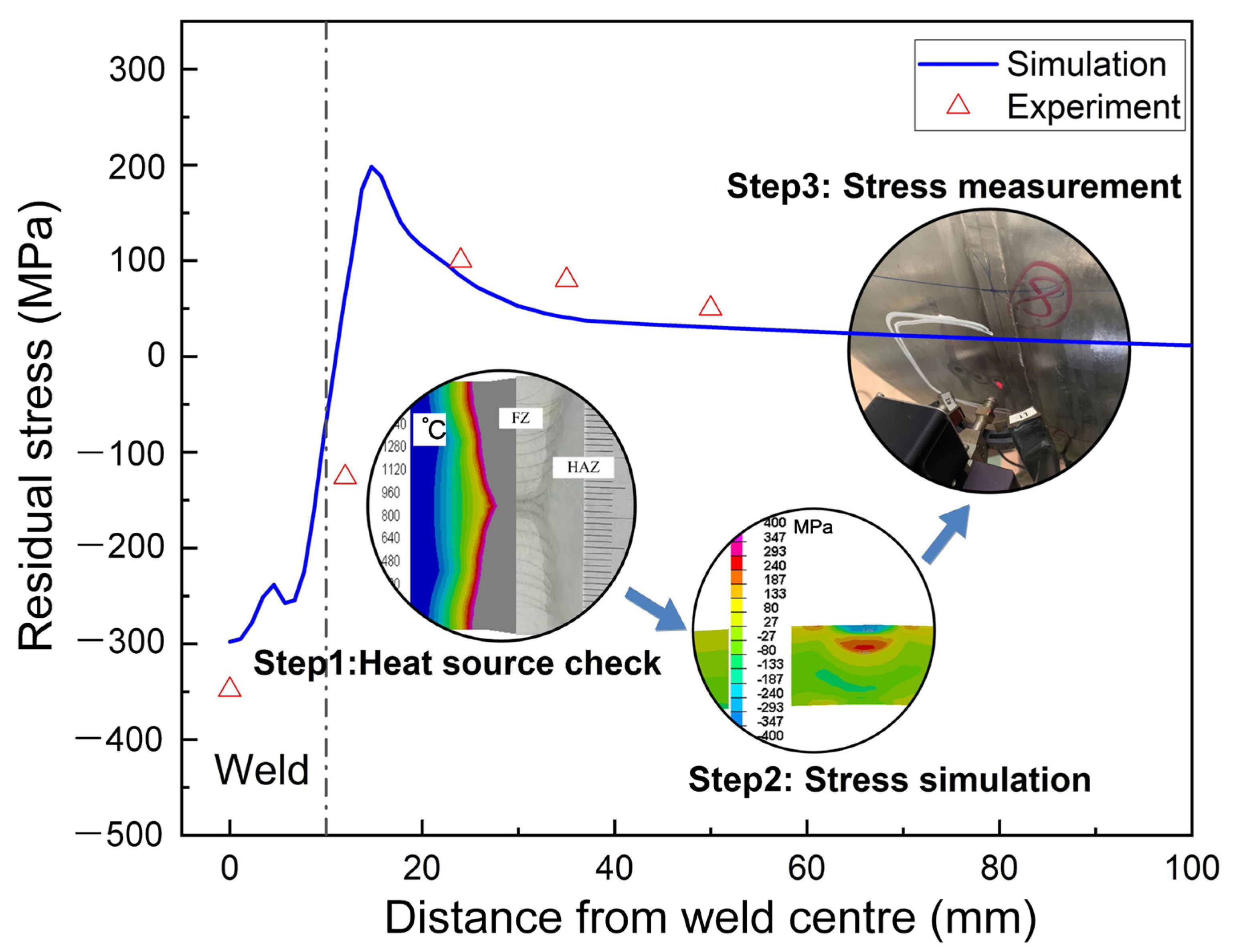
Secondly, the stress field simulation was performed. The heat source model needs to be primarily calibrated for the temperature field. This is done according to the measured thermo-physical properties of the material to establish a materials database and combined with the actual welding process parameters, using a double ellipsoidal heat source model [15] for transient temperature field calculations to ensure that the calculated weld size and metallographic profile are basically the same, as shown in Step1 in Figure 4. Then the boundary conditions, temperature and pressure are set correctly to simulate the stress and deformation. The transverse stress results obtained by post-processing are shown in Step2 in Figure 4.
At the same time, the X-stress 3000 G3 portable stress analyzer (Stresstech Oy, Jyväskylä, Finland) was used for residual stress measurements. First, a stress-free block calibration was required to reduce measurement errors and electrochemical corrosion of the measurement area to eliminate residual compressive stresses introduced by surface machining. The measurement procedure is shown in Figure 4, Step3. The five measurement points are located 0 mm, 12 mm, 24 mm, 35 mm and 50 mm from the centre of the weld.
Lastly, a comparative analysis of the calculated and measured values of residual stress in welding is shown in Figure 5. It can be seen that the residual compressive stress is mainly in the weld, and the maximum value of about 300 MPa is located in the weld centre. Then the stress decreases rapidly and becomes tensile stress in the heat-affected zone (HAZ) and gradually disappears. The maximum tensile stress value is about 200 MPa. The value and variation trend of the measured stresses are in good agreement with the simulation results. Based on the above results, it is concluded that the finite element model can be used to simulate the stress and deformation of the spherical-cylindrical hull.
Lastly, a comparative analysis of the calculated and measured values of residual stress in welding is shown in Figure 4. The value and variation trend of the measured stresses are in good agreement with the simulation results. This agreement validates the accuracy of the established finite element model in predicting welding-induced residual stresses. Therefore, this verified modelling approach is employed in the following sections to investigate the more complex stress states in the spherical-cylindrical joints, where direct experimental measurement is currently constrained.

4. Results and Discussion

4.1. Effects of the Hydrostatic Pressure

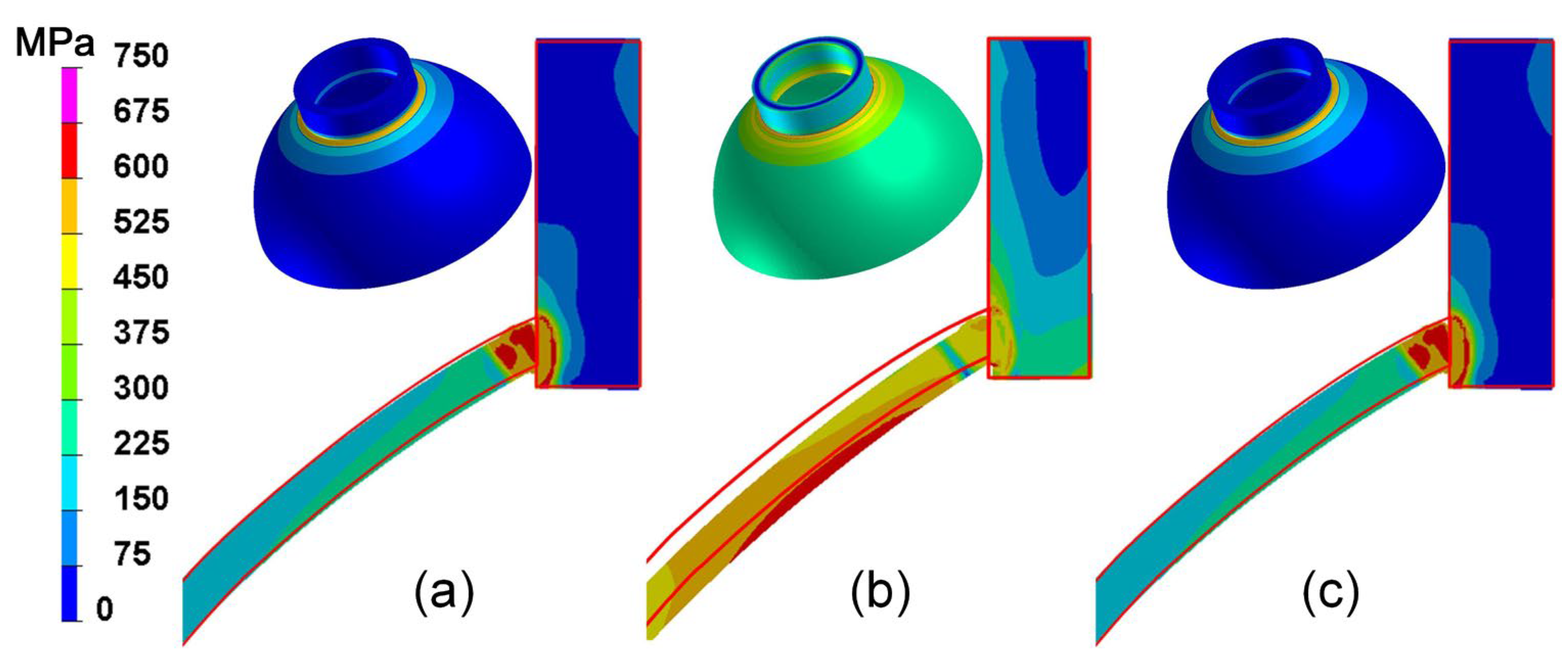
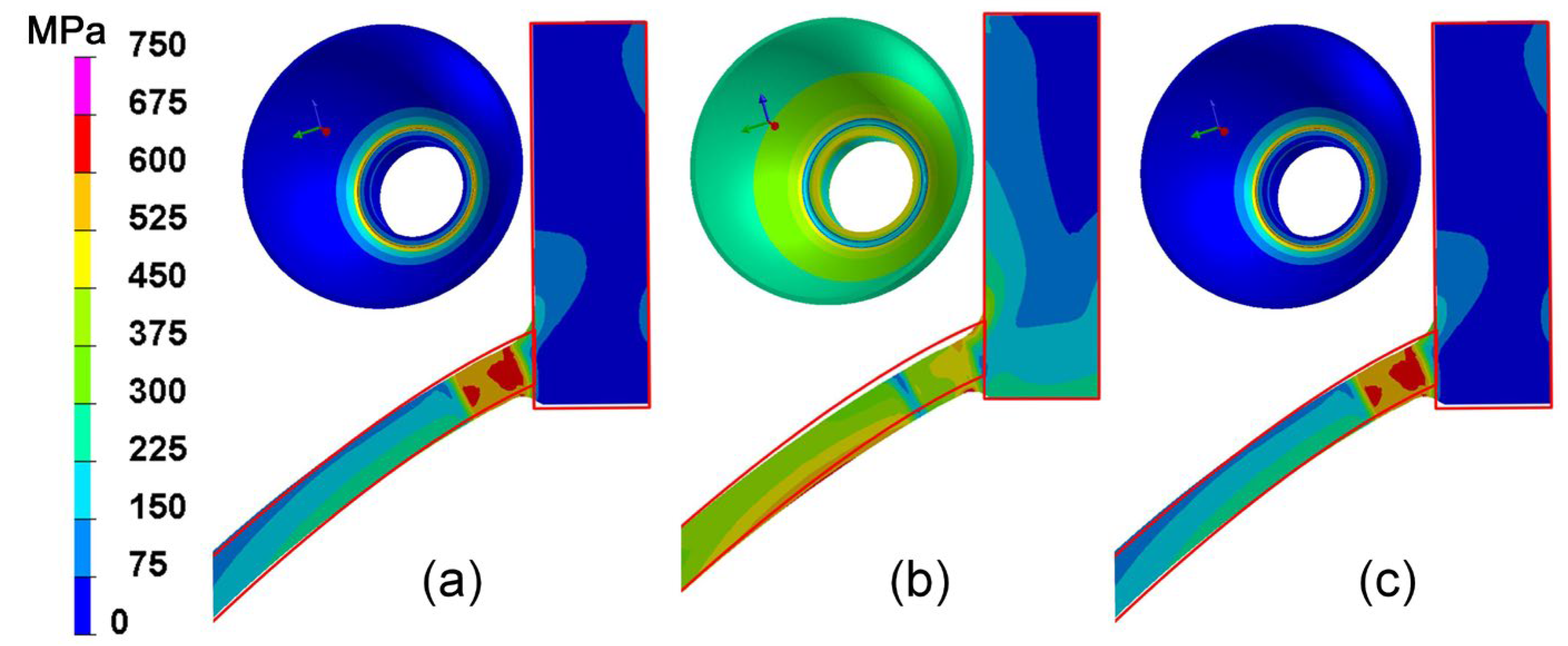
Using the finite element model verified in Section 3, the equivalent stresses of the corner joint and optimized butt joint models before and after applying 20 MPa external pressure are shown in Figure 5 and Figure 6. The red line in the Figure 5 and Figure 6 indicates the original position of the model.
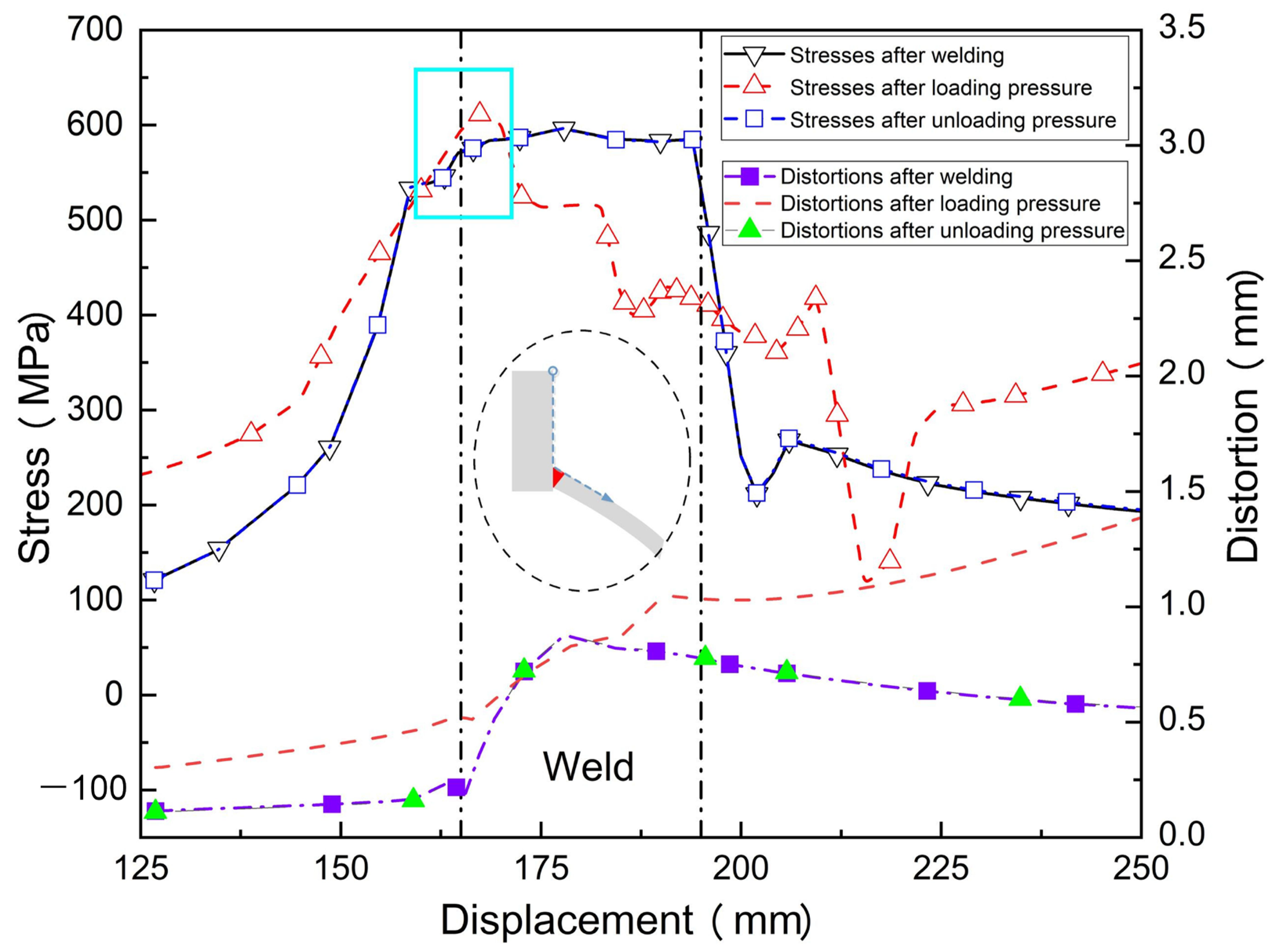
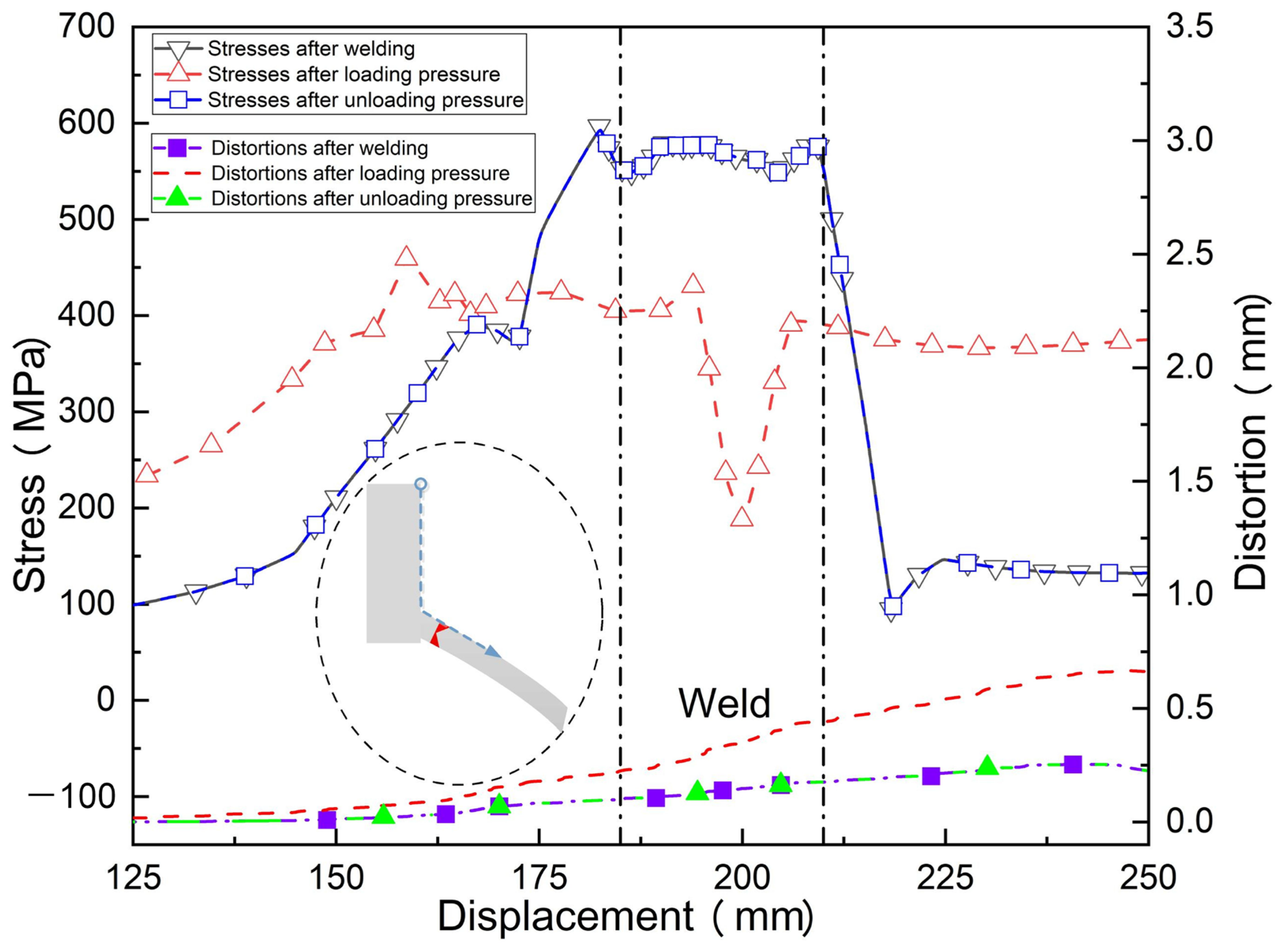
First of all, Figure 5a and Figure 6a show that the welding residual stress is mainly concentrated inside the joint, and the stress amplitude is about 650 MPa. Because the skirted joint is far away from the hull, the high-stress zone is all distributed in the spherical hull without affecting the column hull. Figure 7 and Figure 8 show that the welding stress rises rapidly to about 580 MPa, which is 75% of the yield stress, and remains stable in the weld and drops sharply to less than 200 MPa after leaving the weld. In addition, the welding distortion of the skirt model is smaller than that of the fillet model due to the lower heat input.
Secondly, the stress under external pressure is demonstrated in Figure 5b and Figure 6b. It is obvious that stress redistribution occurs, and the high-stress area is basically transferred from the welded joint to the inner wall of the hull. Figure 7 shows that the stress fluctuations in the fillet model under external pressure are large, with the weld stress predominantly falling and the base metal stress predominantly rising. The weld stress is slightly elevated at some locations as a result of the stress concentration. Figure 8 reveals that the stress in the skirt model degrades from 580 MPa to around 400 MPa under external pressure, a decrease of more than 30%, while the stress in the base metal increases to around 400 MPa, well below the yield strength of the material. Additionally, it can be seen that the compressive deformation of the corner model is significantly greater than that of the skirt model.
Finally, a comparison of Figure 5a,b and Figure 6a,b discloses that the stress clouds before and after external pressure application are highly similar. Referring to the mutually overlapping stress and deformation curves in Figure 7 and Figure 8, it can be deduced that both stress and deformation return to the post-weld state after the pressure is unloaded. Therefore, it can be assumed that the stress introduced by external pressure does not cause plastic deformation of the structure after superimposed action with the residual stress of the weld.
It should be noted that the current study only considers a single pressure level (20 MPa). Future work should include parametric analyses across a range of pressures, including up to the elastic limit or buckling pressure, to provide a more comprehensive assessment of deep-sea structural performance.

4.2. Effects of the Heat Treatment

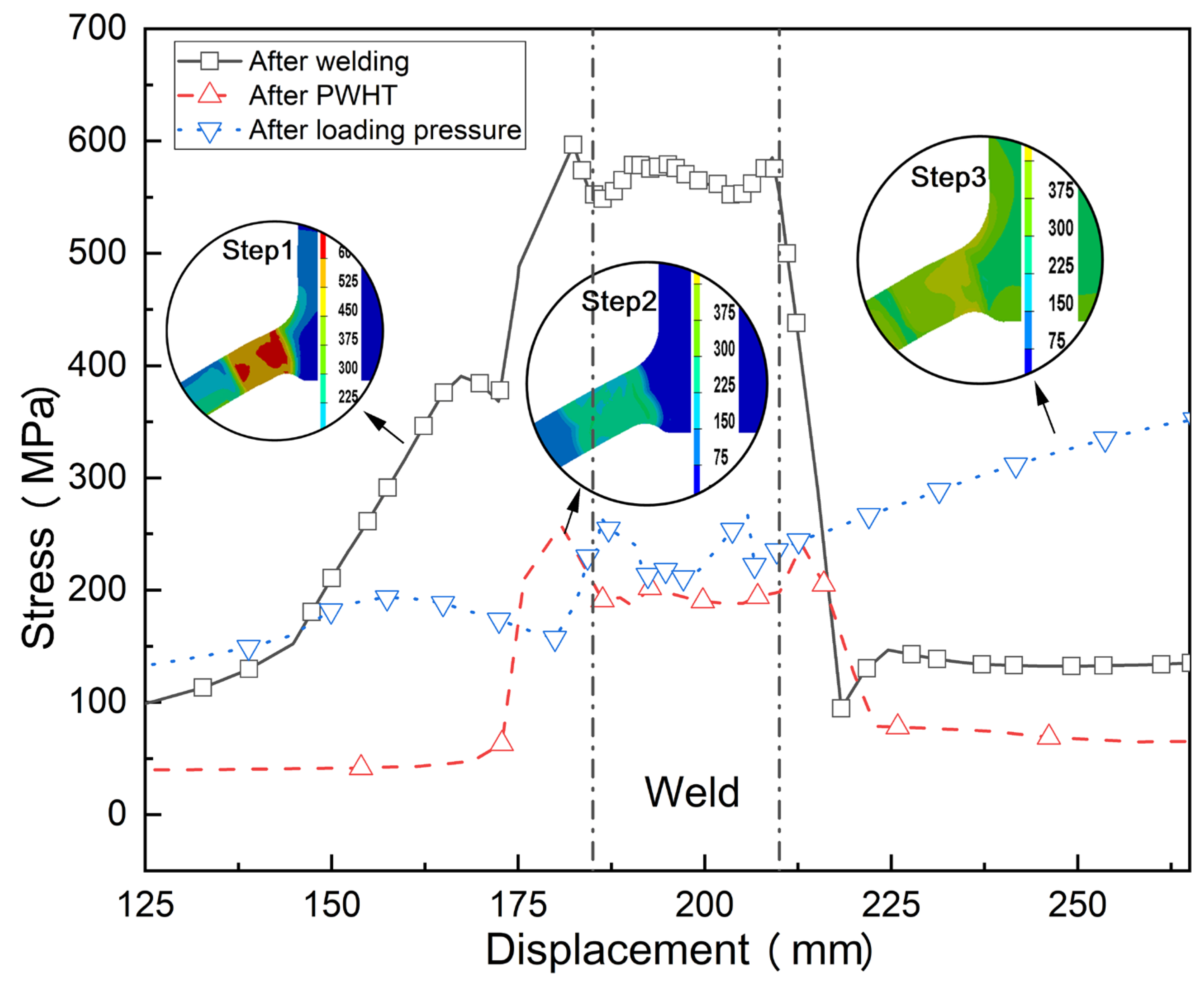
Figure 9 depicts the trend of the stresses on the outer surface of the skirt model along the direction perpendicular to the weld when the model is sequentially welded, heat treated and externally pressurized. It can be seen that the effect of the heat treatment on the residual stressed is very distinct, with the weld descending from 600 MPa to 200 MPa, a reduction of 66%. The base material also basically reaches a stress-free state.
Figure 9 also manifests that the stress in the joint under welding + heat + pressure is approximately 250 MPa, which is comparable to the stress level after heat treatment but only about 60% of the stress in the structure under welding + pressure. Therefore, it can be considered that the model with post-weld heat treatment has a higher stress reserve.

5. Conclusions

In this paper, the corner joint of the spherical-cylindrical hull is optimized into butt joint, and the stresses and deformations of the two models before and after deep-sea service pressure are compared and analyzed in depth, confirming the superiority of the skirt model in terms of the process and structural safety. The relevant conclusions reached are summarized as follows:
(1)
The weld residual stresses in the skirt model are comparable to those in the fillet model but with smaller distortion.
(2)
Under hydrostatic pressure, the model is in an elastic deformation state, and the stress level of the skirt model is lower.
(3)
Affected by the stress concentration, the stresses in the weld zone of the fillet model are elevated under external pressure.
(4)
Heat treatment is recommended to eliminate residual stress and further enhance the bearing capacity of the structure.

6. Limitations and Future Work

This study compares the fundamental performance of fillet welds and skirted joints under the assumption of ideal, defect-free welds. Future research efforts could focus on the following directions:
(1)
Incorporating practical welding imperfections such as lack of fusion to systematically evaluate the robustness and industrial applicability of the skirted joint design;
(2)
Conducting experimental validation under cyclic pressure loading and pursuing lightweight optimization of the skirt geometry;
(3)
Exploring the application of additive manufacturing technology for the integral fabrication of skirted structures;
(4)
Measuring at multiple sections (start, middle, and end of the weld) to fully validate the 3D stress field.

Author Contributions

Conceptualization, K.G., Q.X. and A.Z.; methodology, K.G. and Q.X.; software, K.G. and Q.X.; validation, B.Z.; formal analysis, K.G.; investigation, B.Z.; resources, K.G.; data curation, K.G.; writing—original draft preparation, K.G.; writing—review and editing, K.G.; visualization, K.G. and Q.X.; supervision, A.Z.; project administration, A.Z. All authors have read and agreed to the published version of the manuscript.

Funding

This research and APC were funded by Pressure Vessel Structure and Hydrostatic Testing of Subsea Laboratory Subsystem, grant number OITC-G250600113.

Data Availability Statement

The original contributions presented in this study are included in the article material. Further inquiries can be directed to the corresponding author.

Acknowledgments

The authors would like to thank the reviewers for their helpful comments which have improved the quality of the paper.

Conflicts of Interest

The authors declare no conflicts of interest. The funders had no role in the design of the study; in the collection, analyses, or interpretation of data; in the writing of the manuscript; or in the decision to publish the results.

Abbreviations

The following abbreviations are used in this manuscript:
HAZheat-affected zone

References

  1. Boyer, R.R. Attributes, Characteristics, and Applications of Titanium and Its Alloys. JOM 2010, 62, 21–24. [Google Scholar] [CrossRef]
  2. Oryshchenko, A.S.; Gorynin, I.V.; Leonov, V.P.; Kudryavtsev, A.S.; Mikhail, V.I.; Chudakov, E.V. Marine Titanium Alloys: Present and Future. Inorg. Mater. Appl. Res. 2015, 6, 571–579. [Google Scholar] [CrossRef]
  3. Cui, W.C. Development of the Jiaolong Deep Manned Submersible. Mar. Technol. Soc. J. 2013, 47, 3. [Google Scholar] [CrossRef]
  4. Chandrasekaran, S. Advanced Marine Structures; CRC Press: Boca Raton, FL, USA, 2015. [Google Scholar]
  5. Pan, B.B.; Cui, W.C. An Overview of Buckling and Ultimate Strength of Spherical Pressure Hull Under External Pressure. Mar. Struct. 2010, 23, 227–240. [Google Scholar] [CrossRef]
  6. Liu, J.P.; Yu, B.; Zhou, Y.; Zhang, Y. The Buckling of Spherical-Cylindrical Composite Shells by External Pressure. Compos. Struct. 2021, 265, 113773. [Google Scholar] [CrossRef]
  7. Chen, Z.; Chen, Z.C.; Shenoi, A.R. Influence of Welding Sequence on Welding Deformation and Residual Stress of a Stiffened Plate Structure. Ocean Eng. 2015, 106, 271–280. [Google Scholar] [CrossRef]
  8. Liu, C.; Wu, B.; Zhang, J.X. Numerical Investigation of Residual Stress in Thick Titanium Alloy Plate Joined with Electron Beam Welding. Metall. Mater. Trans. B 2010, 41, 1129–1138. [Google Scholar] [CrossRef]
  9. Xie, P.; Zhao, H.Y.; Wu, B.; Gong, S.L. Using Finite Element and Contour Method to Evaluate Residual Stress in Thick Ti-6Al-4V Alloy Welded by Electron Beam Welding. Acta Metall. Sin. 2015, 28, 922–930. [Google Scholar] [CrossRef]
  10. Cerik, B.C.; Cho, S.R. Numerical Investigation on the Ultimate Strength of Stiffened Cylindrical Shells Considering Residual Stresses and Shakedown. J. Mar. Sci. Technol. 2013, 18, 524–534. [Google Scholar] [CrossRef]
  11. Li, L.B.; Sun, K.X.; Luo, G.E. Influence of Residual Stress Due to the Equatorial Weld on the Ultimate Strength Pressure Shell. Int. J. Adv. Manuf. Technol. 2021, 116, 1831–1841. [Google Scholar] [CrossRef]
  12. Ali, S.R.A.S.; Hussein, A.H.A.; Nofal, A.; Elnably, S.H.; Elgazzar, H. A contribution to laser cladding of Ti-6Al-4V titanium alloy. Metall. Res. Technol. 2019, 116, 634. [Google Scholar]
  13. Vijay, A.; Radhika, N. A comprehensive review on underwater welding: Methods, property evaluations and challenges. Adv. Mater. Process. Technol. 2024, 10, 923–959. [Google Scholar] [CrossRef]
  14. Rajan, T.V.; Sharma, C.P.; Sharma, A.K. Heat Treatment: Principles and Techniques; PHI Learning Pvt. Ltd.: New Delhi, India, 2011. [Google Scholar]
  15. Goldak, J.; Chakravarti, A.; Bibby, M. A New Finite Element Model for Welding Heat Sources. Metall. Trans. B 1984, 15, 299–305. [Google Scholar] [CrossRef]
Figure 1. The spherical-cylindrical structure as well as the model and welding. (a) The physical model and main dimensions. (b) Fillet joint. (c) Skirted joint.
Metals 16 00215 g001
Figure 2. Heat treatment procedures.
Metals 16 00215 g002
Figure 3. Finite element mode. (a) Mesh and boundary conditions. (b) Fillet joint. (c) Butt joint.
Metals 16 00215 g003
Figure 4. Transverse residual stress distribution after butt welding of spherical hull.
Metals 16 00215 g004
Figure 5. The stress distribution of the fillet model (a) after welding, (b) after loading pressure, and (c) after unloading pressure.
Metals 16 00215 g005
Figure 6. The stress distribution of the skirt model (a) after welding, (b) after loading pressure, and (c) after unloading pressure.
Metals 16 00215 g006
Figure 7. The stress and deformation curves of the fillet model.
Metals 16 00215 g007
Figure 8. The stress and deformation curves of the skirt model.
Metals 16 00215 g008
Figure 9. Stress distribution curves before and after heat treatment.
Metals 16 00215 g009
Table 1. Chemical composition of test sample TA31 (wt.%).
ElementTiAlNbZrMoSiFeCNHO
Contentbalanced5.5~6.52.5~3.51.5~2.50.6~1.5≤0.15≤0.25≤0.1≤0.05≤0.015≤0.15
Table 2. Optimized welding parameters.
ParameterCurrent
(A)
Voltage
(V)
Welding Speed
(mm/s)
Welding EfficiencyShielding Gas
Value range140~18012~151.4~1.80.7599.99%Ar
Table 3. The comparison of maximum residual stresses in the weld zone for three mesh densities.
Mesh Density Element Size in Weld ZoneMax Residual Stress (MPa)Error vs. Fine Mesh
Coarse4 mm5299.5%
Medium2 mm5682.9%
Fine1 mm585Baseline
Disclaimer/Publisher’s Note: The statements, opinions and data contained in all publications are solely those of the individual author(s) and contributor(s) and not of MDPI and/or the editor(s). MDPI and/or the editor(s) disclaim responsibility for any injury to people or property resulting from any ideas, methods, instructions or products referred to in the content.