


Abstract
Waste printed circuit boards (WPCBs) are a highly concentrated secondary source of copper. However, their complex and heterogeneous composition significantly complicates the selective extraction of metals. This study examined the feasibility of direct electrochemical leaching of copper from used PCB fragments in a sulfate–glycine alkaline electrolyte. The PCB fragments were used directly as a composite working electrode, without prior separation of the components or special surface preparation. It has been demonstrated that the electrochemical response of the composite PCB anode is similar to that of a pure copper electrode, which indicates the predominant role of the anodic dissolution of copper. A distinct potential window of 0.30 to 0.40 V relative to the Ag/AgCl electrode has been established, within which copper dissolves efficiently, while the dissolution of the associated metals (Sn, Pb, Ni, Fe) remains strongly inhibited. The maximum selectivity is reached at a potential of approximately 0.35 V. This is due to the formation of soluble and stable copper–glycine complexes, while the other metals remain in an alkaline medium in the form of poorly soluble phases. At more positive potentials (≥0.40–0.50 V), the co-dissolution of the associated metals begins, resulting in a sharp decrease in the selectivity of the process. Real-time potentiostatic experiments have shown that the selective leaching mode at 0.35 V is stable over long periods of operation and is characterized by continuous dissolution of copper with minimal release of other metals in solution.
1. Introduction
The continually increasing generation of electronic waste is a significant challenge to resource management and sustainable material recovery. Among the different electronic waste streams, waste printed circuit boards (WPCBs) are a particularly attractive secondary resource due to their high Cu content, which commonly ranges from 15 to 30 wt.% and significantly exceeds the grade of many primary Cu sources [1,2,3]. In addition to Cu, PCBs contain other metals, including Sn, Pb, Ni, Fe, and precious metals, part of a complex matrix of polymers, glass fibers, and ceramic fillers. This makes PCBs a valuable resource and a technically challenging raw material for the recovery of target metals.
Currently, industrial processing of PCBs is carried out mainly by pyrometallurgical or combined pyrohydrometallurgical technological schemes. Although pyrometallurgical treatment provides high productivity and allows efficient extraction of Cu, it is associated with significant energy consumption and the formation of secondary waste, including slags and exhaust gases containing potentially hazardous components [4,5,6,7]. Hydrometallurgical methods, on the contrary, require lower energy consumption and greater process flexibility, but are usually based on the use of aggressive leaching agents such as concentrated sulfuric, nitric or hydrochloric acids, often in combination with oxidizing agents [8,9,10,11]. In such systems, as a rule, several metals are dissolved simultaneously, which leads to the formation of complex solutions for leaching, requiring lengthy subsequent stages of separation and purification. In addition, the use of chlorine-containing electrolytes leads to corrosion problems and complicates waste disposal [12,13]. In this context, more and more attention has recently been paid to alternative leaching strategies based on the use of mild and environmentally friendly reagents.
Alkaline leaching systems used in combination with complexing agents have become a promising option for selective Cu extraction [14,15,16]. Among the various ligands, glycine is of particular interest due to its low toxicity, biodegradability, buffering capacity, and strong complexation with Cu ions in an alkaline environment [17,18,19,20]. The formation of stable copper–glycine complexes makes it possible to dissolve Cu at relatively low anode potentials while maintaining favorable operating conditions.
Electrochemically stimulated leaching represents a further improvement of this approach. Unlike purely chemical leaching, electrochemical methods allow direct control of the driving force of metal dissolution by means of an applied potential [21,22,23]. This makes it possible to selectively activate anodic dissolution reactions and suppress the dissolution of less noble or passivated metals.
A number of studies have shown that Cu can be selectively dissolved from metal substrates in alkaline sulfate–glycine electrolytes under anodic polarization. Aksu et al. developed an electrochemical description of the Cu behavior in alkaline, glycine-containing electrolytes [24]. The work shows that anodic polarization leads to efficient Cu dissolution through the formation of stable Cu–glycinate complexes, while surface passivation due to Cu2O/CuO formation only occurs at more positive potentials. O’Connor et al. further investigated the anodic behavior of Cu in alkaline glycine systems and confirmed that the Cu dissolution predominantly proceeds via Cu (I)/Cu (II) glycinate species [25]. Skrypnikova et al. investigated the anodic oxidation of Cu in alkaline electrolytes with amino acids and showed that glycine significantly enhances the anodic dissolution of Cu by destabilizing passive oxide layers [26]. The role of sulfate as a conducting electrolyte in glycine-based systems was described specifically by Mikulskis et al., who compared sulfate- and perchlorate-containing alkaline Cu–glycine electrolytes [27]. Recently, Survila et al. analyzed equilibrium processes at the Cu/solution interface in alkaline Cu–glycine systems and showed that anodic Cu dissolution over a wide potential range is determined by the formation of soluble Cu (I)–glycinate complexes [28]. However, most of these studies were conducted using pure Cu electrodes or simplified model materials with a well-defined surface area and uniform composition.
The direct application of electrochemical leaching to real PCBs brings additional complexity. Fragmented WPCBs consist of metallic phases, some of which are embedded in non-conductive polymer and ceramic matrices. This leads to irregular geometry, heterogeneous electrical conductivity and a poorly defined electrochemically active surface of the WPCBs. The mentioned factors complicate the interpretation of electrochemical measurements and raise questions regarding the feasibility of a controlled anodic Cu dissolution under practical conditions. In particular, it is unclear whether this dissolution can be achieved directly from fragmented WPCBs without prior mechanical separation or surface preparation and whether this selectivity is maintained over longer leaching times.
Another crucial aspect concerns the selectivity of the dissolution of Cu with respect to the other metals frequently present in printed circuits. Metals such as Sn [29], Pb [30], Ni [31] and Fe [32] exhibit different electrochemical and chemical behaviors in an alkaline medium and can form passive oxide or hydroxide layers which hinder their dissolution. The interaction between anodic polarization, ligand complexation and metal passivation should therefore play a decisive role in defining the potential window within which Cu can be selectively leached. A systematic experimental identification and a mechanistic interpretation of this window are essential to evaluate the practical relevance of electrochemical leaching for the recycling of WPCBs.
The aim of this paper is to study the electrochemical behavior and selectivity of the dissolution of copper from WPCBs under potentiostatically controlled conditions in alkaline sulfate–glycine electrolytes. The study aims to identify a potential window for selective Cu activation, while suppressing the dissolution of the accompanying metals. The novelty of this work lies in the combined application of glycine complexation and controlled electrochemical polarization for the selective dissolution of Cu from heterogeneous WPCBs without prior sorting or complex processing. Special attention was paid to electrochemical selectivity as a function of the applied potential, which was confirmed by extraction data based on mass balance. To achieve this goal, fragments of WPCBs are used directly as a composite working electrode to study the anodic dissolution behavior of Cu in a sulfate–glycine electrolyte at alkaline pH. Linear scanning voltammetry is used to characterize the anodic response of the heterogeneous electrode of printed circuits and to identify the potential range associated with the dissolution of Cu. Potentiostatic leaching experiments are then carried out to quantify the dissolution of the metal and evaluate the selectivity of the Cu as a function of the applied potential. The chemical composition of the leachates is analyzed in order to determine the contribution of the associated metals and to define a selectivity coefficient for Cu.
2. Materials and Methods
2.1. Materials
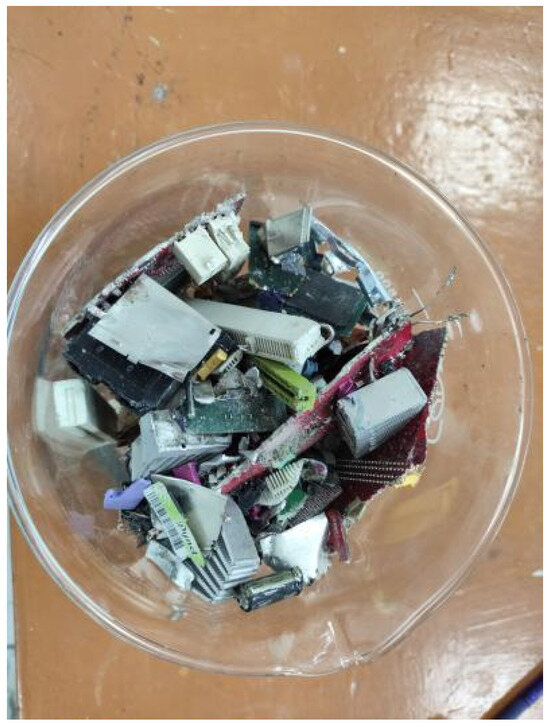
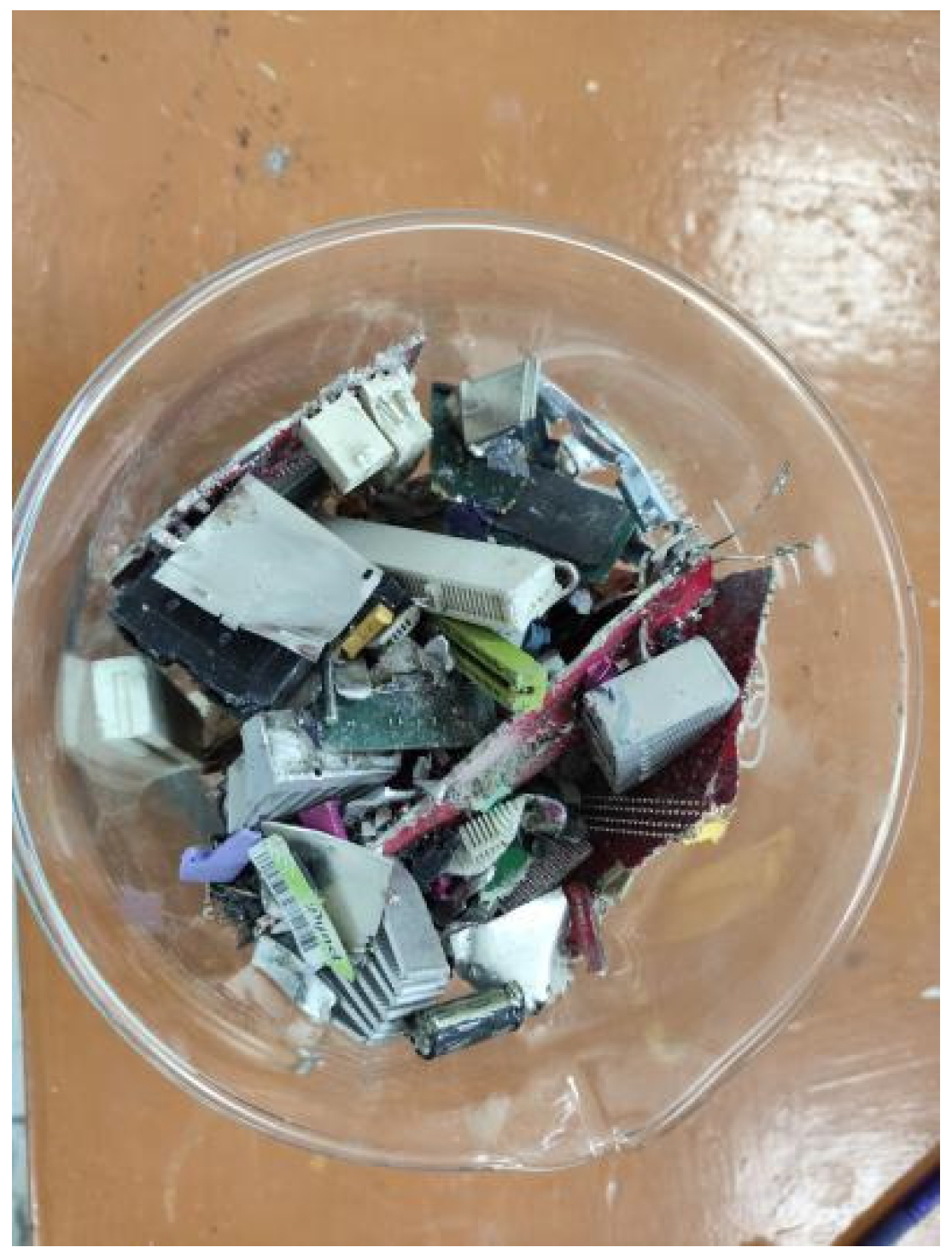
Waste printed circuit boards (WPCBs, Figure 1) were mechanically fragmented to obtain irregular pieces. The material was used as a composite working electrode material without further separation or surface treatment.
Figure 1.
Photograph of the fragmented PCB material used as the working electrode.
The electrolyte consisted of 0.5 M Na2SO4 with 0.10 or 0.2 M glycine, and the pH was adjusted to 9.2 using a borate buffer. All solutions were prepared using distilled water.
2.2. Electrochemical Setup
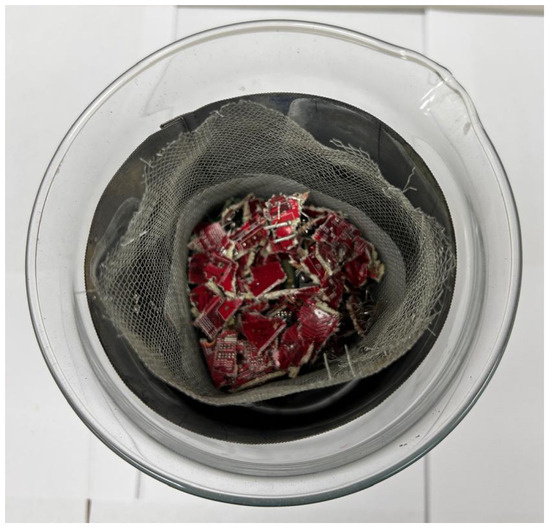
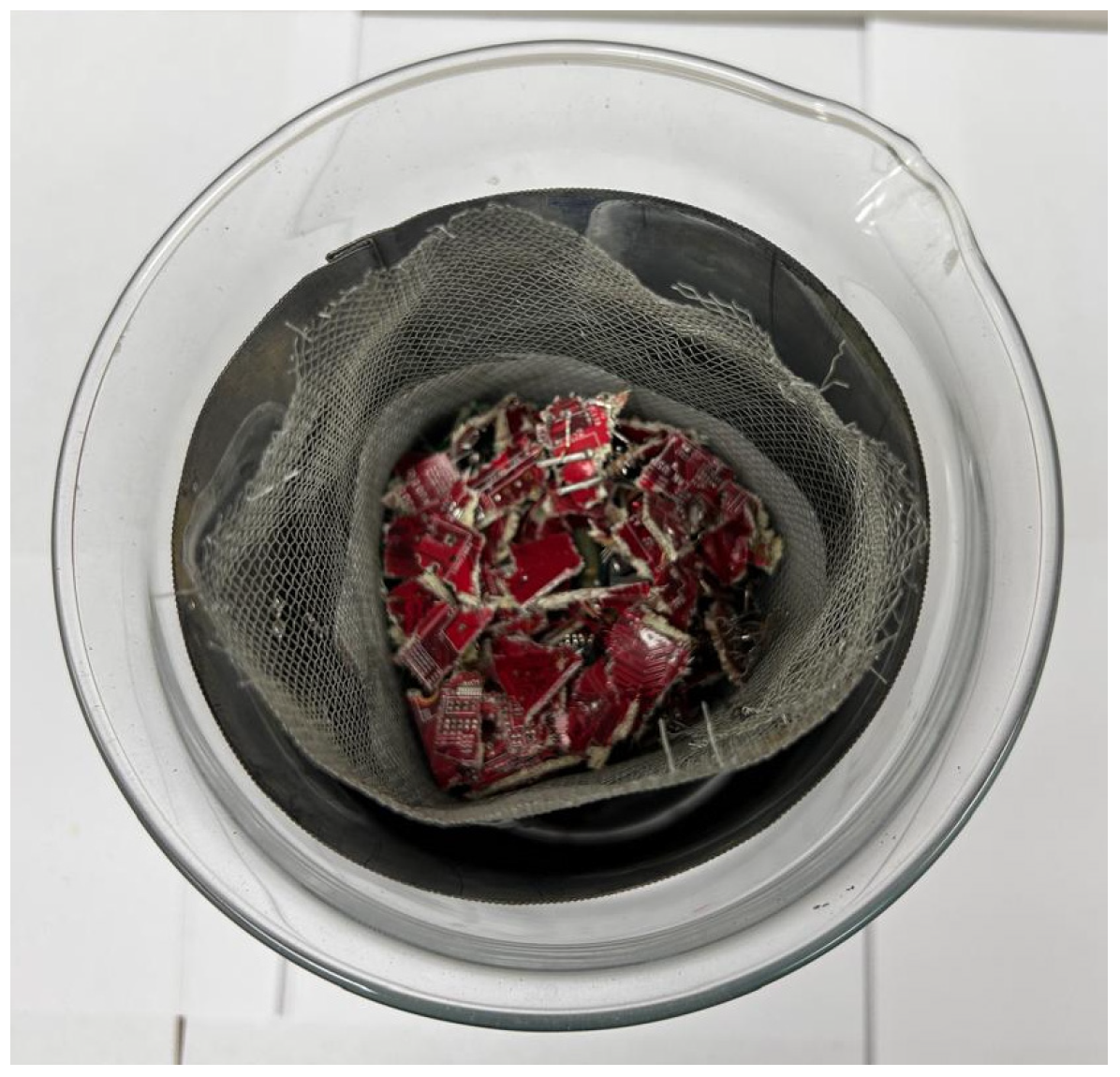
The electrochemical leaching was carried out in a laboratory glass cell with a concentric electrode arrangement. Ten grams of fragments of irregularly shaped PCBs with a size of 5 to 20 mm were placed in a cylindrical stainless steel basket, which served both as a mechanical holder and as a current collector. The PCB fragments electrically connected by the grid formed the composite anode. The cathode consisted of a stainless steel cylinder arranged concentrically around the anode chamber. The anode and cathode spaces were separated by an anion exchange membrane, which was intended to prevent the transfer of Cu ions into the cathode space and cathodic Cu deposition. A photograph illustrating the anodic compartment configuration is shown in Figure 2.
Figure 2.
Photograph illustrating the configuration of the anodic basket and membrane used in the electrochemical leaching experiments.
The electrolyte volume in the anode compartment was 800 mL. The composition and pH of the electrolyte corresponded to the conditions described above. The experiments were carried out at room temperature. Liquid samples for chemical analysis were taken from the anode compartment.
A pure Cu electrode was used for comparative electrochemical measurements. The electrode was prepared from high-purity copper (≥99.9%), mechanically polished, and rinsed with distilled water.
Stainless steel was selected as the counter electrode due to its mechanical stability, high conductivity, and negligible dissolution under the applied experimental condition. An Ag/AgCl electrode was used as the reference electrode. All potentials reported in this work are given with respect to the Ag/AgCl reference electrode.
2.3. Electrochemical Measurements
Linear sweep voltammetry was performed at scan rates of 2, 5 and 10 mV s−1. Potentiostatic leaching experiments were conducted at selected potentials for 30 min to evaluate metal dissolution and selectivity.
2.4. Chemical Analysis
After potentiostatic leaching, electrolyte samples were collected and analyzed for Cu, Sn, Pb, Ni, and Fe concentrations using ICP-OES (PerkinElmer Optima 8000, PerkinElmer, Waltham, MA, USA).
2.5. Calculation of the Degree of Metal Extraction
The initial elemental composition of the printed circuit boards was not directly determined, as WPCB waste mixed with a heterogeneous composition was used. The metal content in the feedstock was estimated by calculation based on the material balance for each experiment; the values obtained are presented and discussed in the Section 3.
The recovery of Cu and associated metals was calculated using a mass balance for each potentiostatic experiment. After electrochemical leaching, the solution was separated from the solid residue. The solid residue was washed with distilled water, dried to constant weight, and subjected to complete acid digestion. The metal content in the solution and solid residue was determined using ICP-OES. The initial amount of metal i in the sample (m(i,0)) was calculated as the sum of the mass of metal released into solution (m(i,solution)) and the mass of metal remaining in the solid residue (m(i,residue)), according to Equation (1):
m(i,0) = m(i,solution) + m(i,residue)
The degree of extraction (E(i)) of metal i was calculated using Equation (2):
E(i), % = m(i,solution)/(m(i,solution) + m(i,residue)) × 100
The mass of the PCB feed used in each potentiostatic experiment was recorded. The metal content in the feed for each individual experiment was calculated by normalizing the initial amount of each metal, determined by mass balance, to the corresponding feed mass. The average metal content of the mixed PCB feed was calculated over all experiments.
2.6. Calculation of Copper Selectivity
Copper selectivity (SCu) was evaluated based on metal concentrations in the leachate. The selectivity coefficient was calculated as the ratio of the Cu concentration to the total concentration of accompanying metals in solution (Equation (3)):
where CCu, CSn, CPb, CNi, and CFe are the concentrations of corresponding metals in the leachate.
SCu = CCu/(CSn + CPb + CNi + CFe)
3. Results and Discussion
3.1. Electrochemical Behavior and Selective Dissolution of Copper
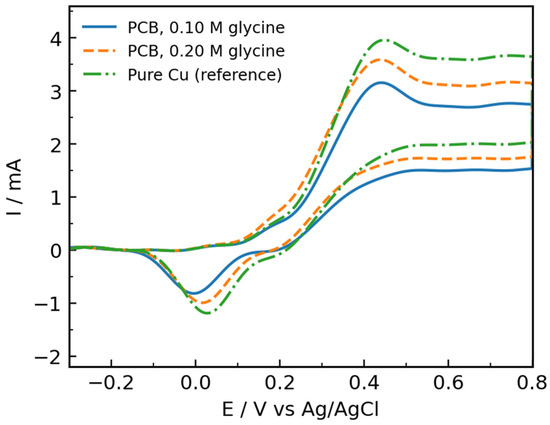
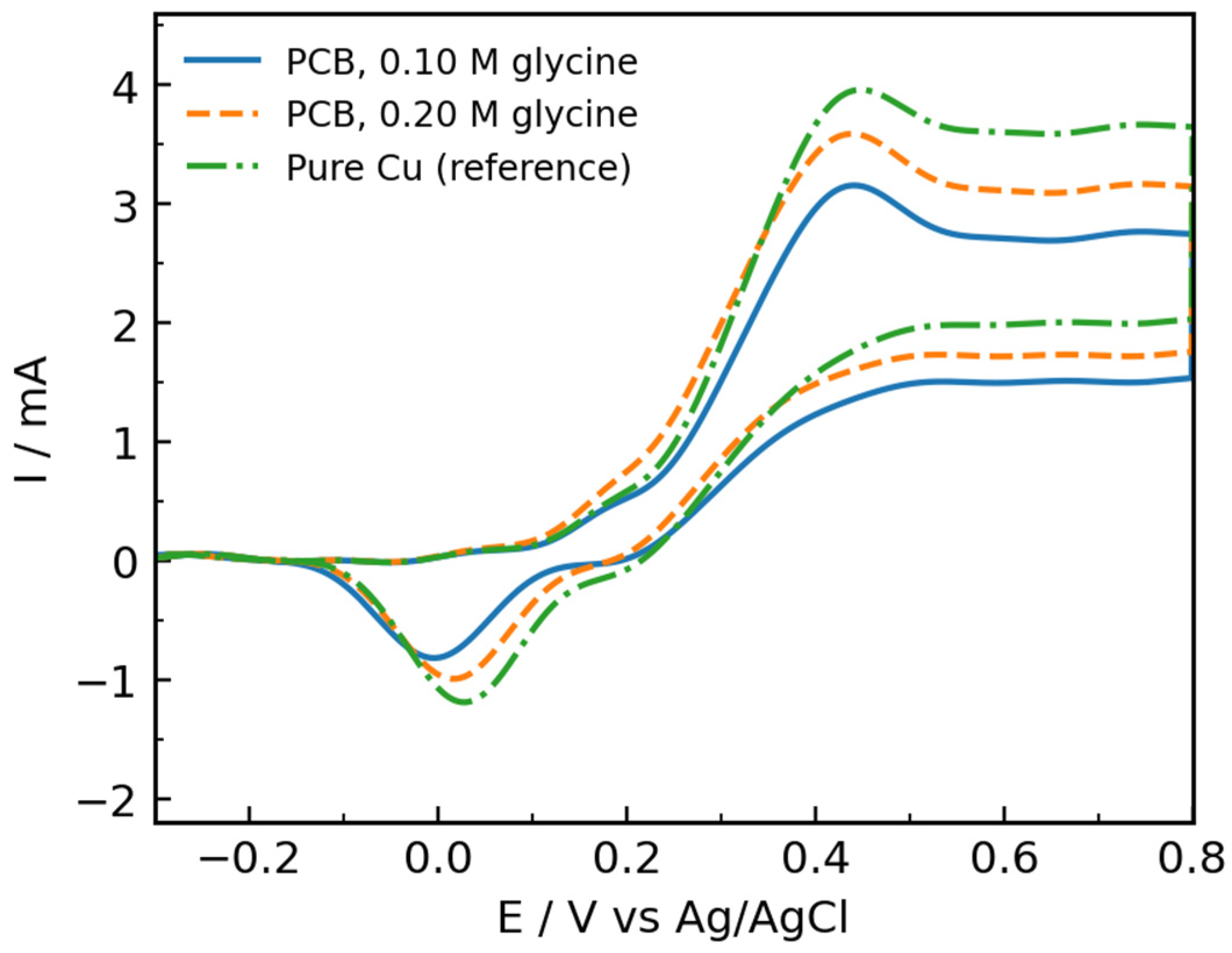
Figure 3 shows the voltammetric response of a composite PCB anode in a sulfate–glycine electrolyte (0.5 M Na2SO4, pH 9.2, scan rate 5 mV s−1) compared with a pure Cu electrode.
Figure 3.
Voltammetric response of the composite PCB anode in sulfate–glycine electrolyte (0.5 M Na2SO4, pH 9.2, scan rate 5 mV s−1).
At potentials below about 0.10 V vs. Ag/AgCl, the current remains low and is dominated by capacitive and surface processes. A weak anodic pre-wave is observed between 0.10 and 0.20 V, its intensity increasing with the glycine concentration, which indicates an facilitated surface activation and initial copper–ligand interactions.
An increase in the anode current occurs above about 0.25–0.30 V, forming the main anode wave between 0.30 and 0.45 V. The shape and position of this wave for the PCB anode are very similar to those observed for pure Cu, which indicates that the anodic response of the composite electrode is governed by the same electrochemical process [24]. The lower amplitude of the current of the PCB anode reflects its heterogeneity and its partial isolation, rather than a change in the reaction mechanism.
No other anodic waves or distinct characteristics are detected in the studied potential range that could be associated with the independent dissolution of other metallic constituents (Sn, Pb, Fe). This suggests that their contribution to the measured anode current is negligible electrochemically under the conditions applied. The increase in the glycine concentration from 0.10 to 0.20 M induces a higher anode current without a significant shift in the potential of the main anode wave, which indicates an acceleration of the kinetics of dissolution of Cu by the ligand, while preserving the same anode mechanism [25].
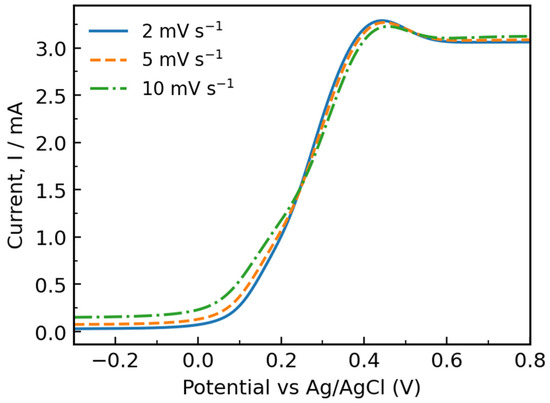
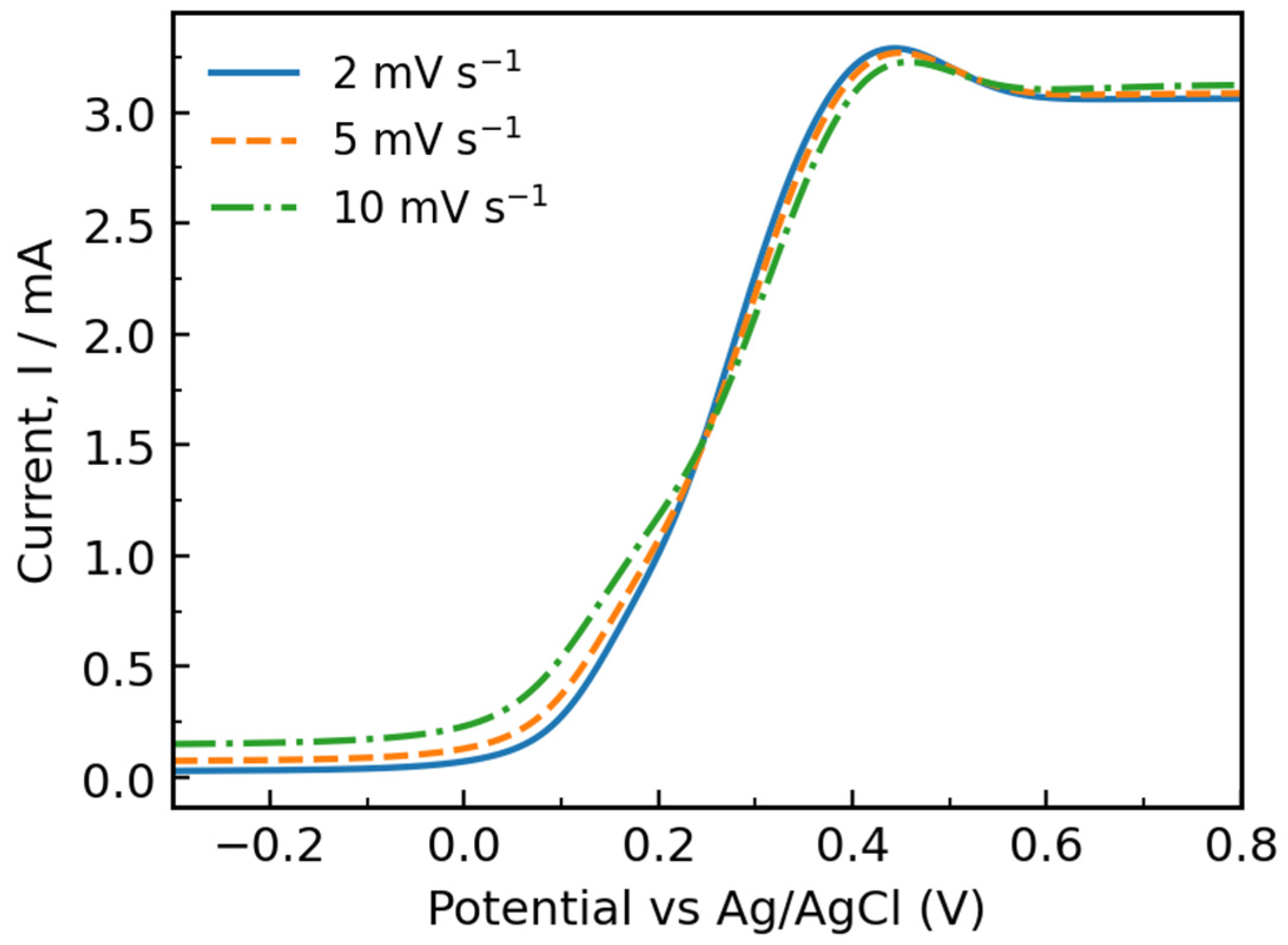
Figure 4 shows the linear scanning voltammograms of the PCB anode recorded at scanning speeds of 2, 5 and 10 mV s−1 in a solution of 0.5 M Na2SO4 + 0.10 M glycine (pH 9.2).
Figure 4.
Effect of scan rate on the linear sweep voltammetric response of the PCB anode (0.5 M Na2SO4 + 0.10 M glycine, pH 9.2).
It can be seen that as the potential sweep rate increases, the current also increases, and the anodic wave broadens. This is apparently due to an increase in the capacitive current, as the system does not have time to fully relax. At the same time, the wave position remains within the same range, between 0.30 and 0.45 V. It should be noted that the anodic wave position does not change with the anode type (PCBs and pure Cu), indicating that the same electrochemical process—the anodic dissolution of Cu—is occurring.
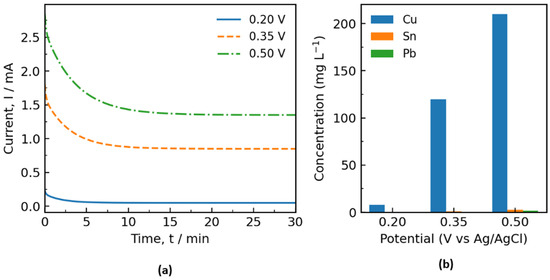
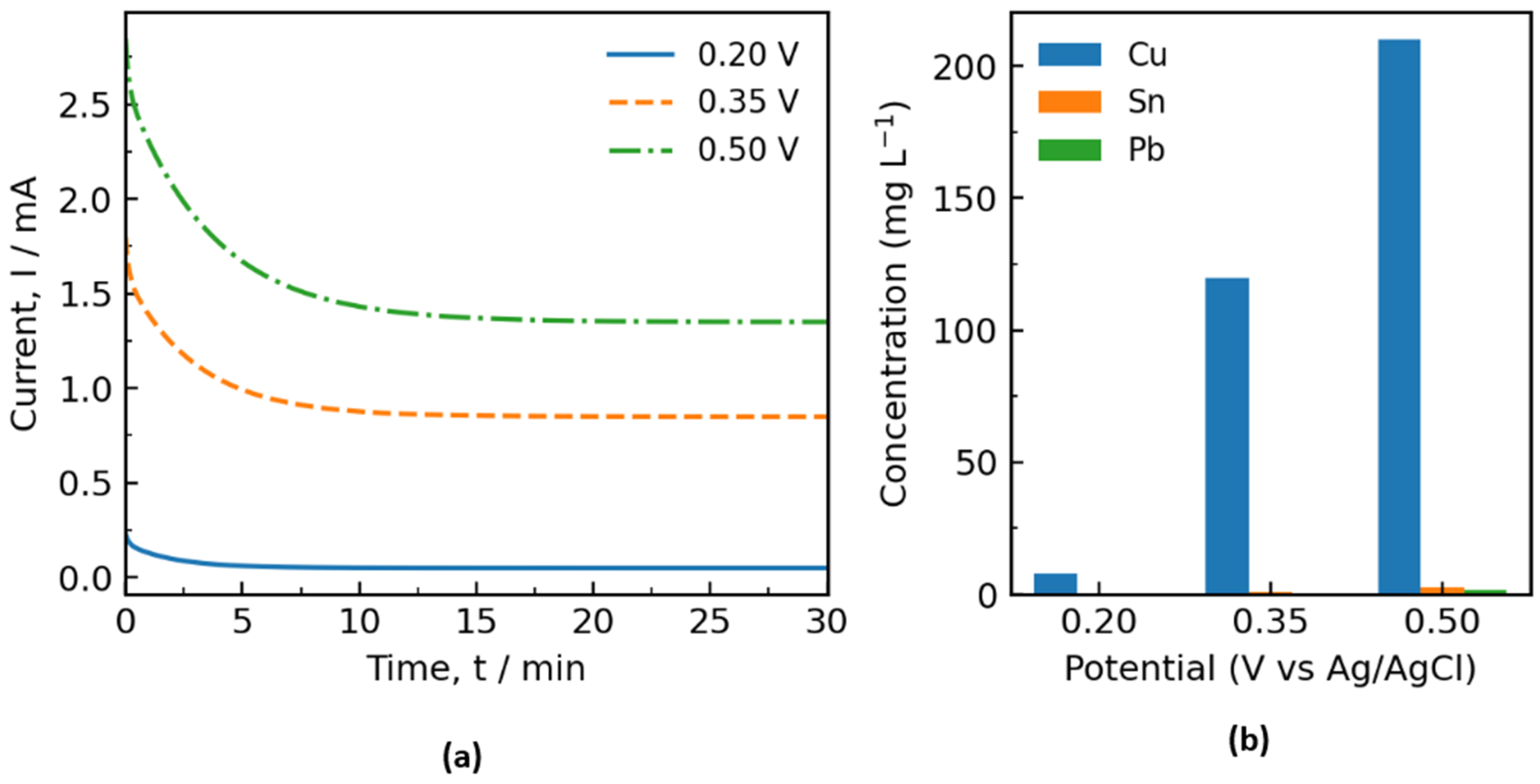
Figure 5a presents chronoamperometric responses of the PCB anode recorded at fixed potentials of 0.20, 0.35, and 0.50 V in 0.5 M Na2SO4 + 0.10 M glycine.
Figure 5.
Potentiostatic current response (a) and metal dissolution (b) at selected potentials.
At a potential of 0.2 V, the current remains at a very low steady-state level. At 0.35 V, after a short transient period with a current drop (approximately 5 min), a stable anodic current is established, which is maintained throughout the entire electrode polarization. The potential of 0.35 V coincides with the region of the main anodic wave on the current-voltage curves (Figure 3 and Figure 4). Increasing the polarization potential to 0.5 V does not change the shape of the potentiostatic curve; however, the initial and steady-state current values are significantly higher than at 0.35 V.
Analysis of the solution composition (Figure 5b) shows that anodic dissolution of Cu occurs at all three established anode potentials. The Cu content in the solution is proportional to the observed steady-state current. At 0.2 V, only Cu ions are detected in the solution; At 0.35 V, traces of Sn were detected, and increasing the anode potential to 0.5 V resulted in the appearance of 1–2 mg L−1 Pb and Sn.
These combined results confirm that the anodic process dominating the PCBs electrode response in the sulfate–glycine system is Cu dissolution and define a practical potential window in which Cu can be selectively leached while minimizing the dissolution of other metallic constituents.
3.2. Potential Window and Selectivity of Copper Leaching
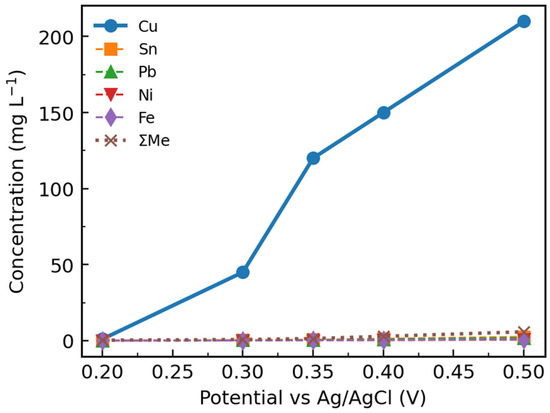
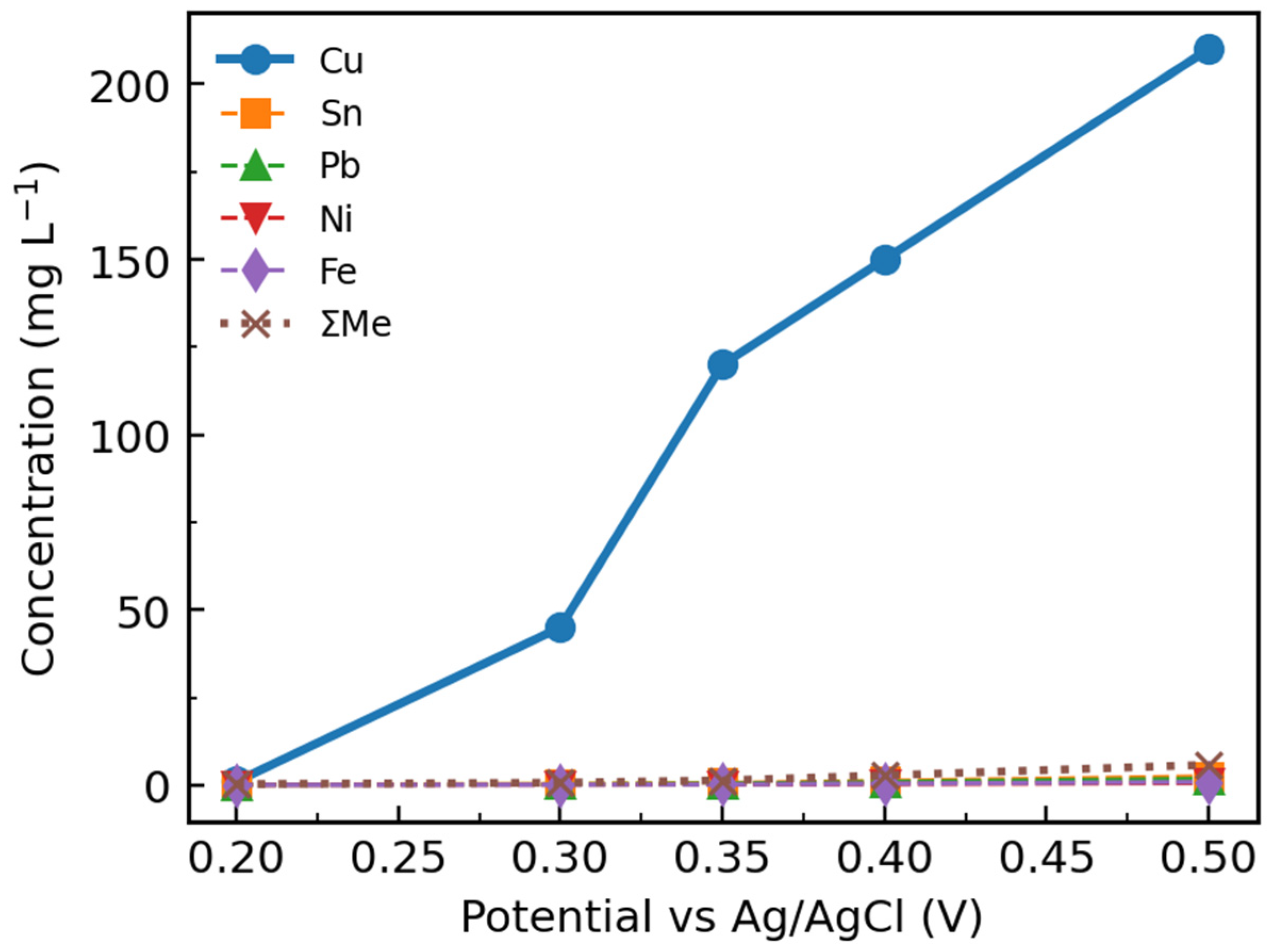
Figure 6 shows the concentrations of metals in the solution after 30 min of potentiostatic leaching as a function of the applied potential in 0.5 M Na2SO4 + 0.10 M glycine.
Figure 6.
Potential-dependent concentrations of Cu and accompanying metals after potentiostatic leaching.
Figure 5 shows the dependence of the metal concentrations in solution on the applied potential after 30 min of potentiostatic leaching.
The sharp increase in Cu concentration when reaching the range of 0.30–0.35 V marks the lower limit of the effective Cu resolution. In the next range (about 0.35–0.40 V), the Cu concentration continues to increase, while the total concentration of the associated metals (ΣMe) remains almost unchanged. This indicates a selectivity plateau in which increased anodic polarization leads to an increase in the Cu dissolution rate without the significant involvement of Sn, Pb, Ni and Fe.
At more positive potentials (≥0.40–0.50 V), a significant increase in ΣMe begins, which defines the upper limit of the selective range. A further increase in the potential no longer improves the Cu selectivity; instead, there is a simultaneous dissolution of other metals and a loss of selectivity. Figure 6 thus defines the working potential window for the selective electrochemical leaching of Cu in a sulfate–glycine electrolyte. It is limited, on the one hand, by the activation of Cu dissolution, and on the other, by the onset of simultaneous dissolution of associated metals.
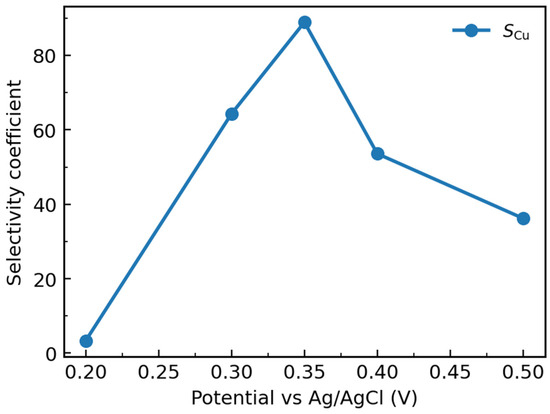
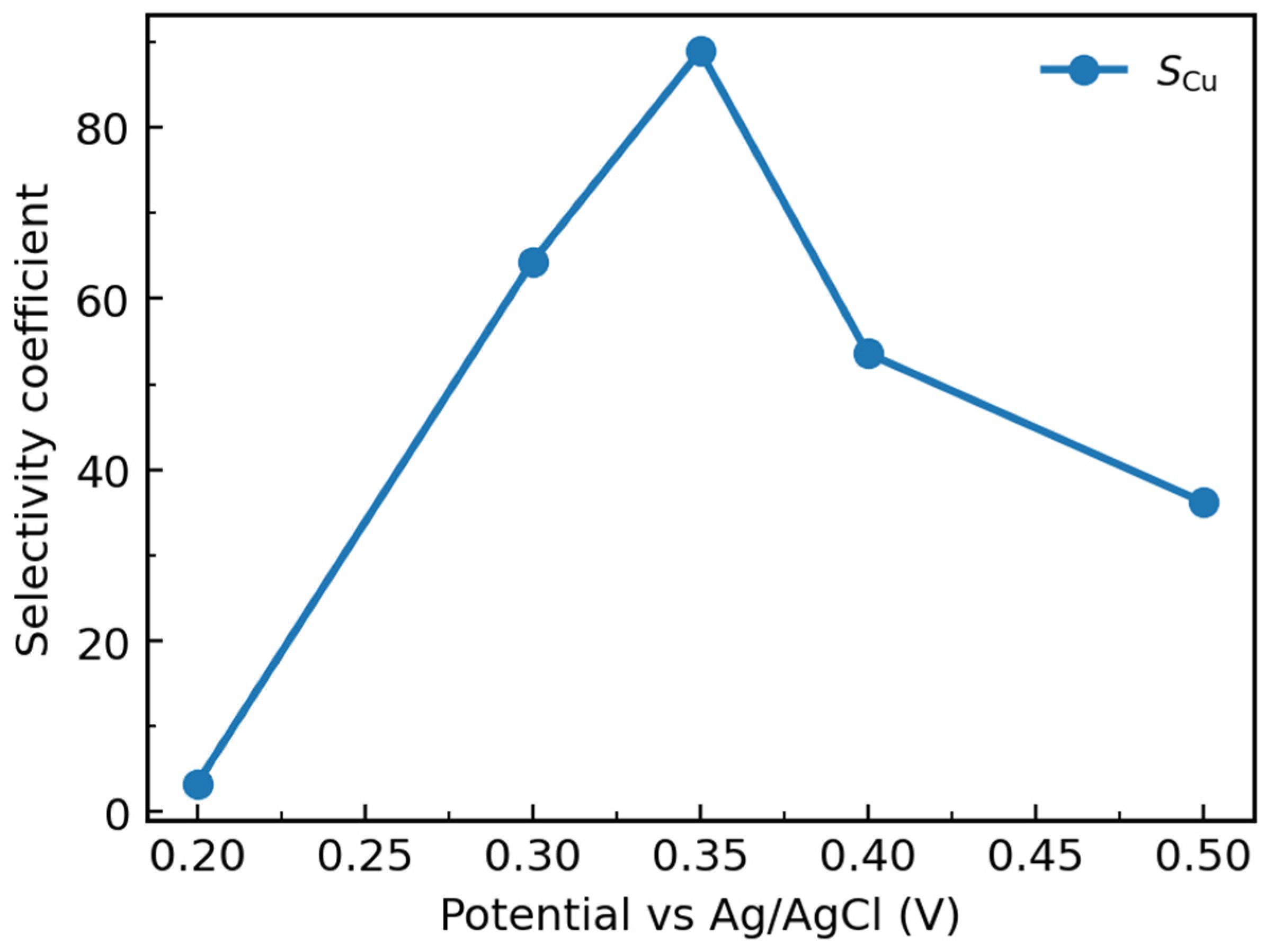
Figure 7 demonstrates the dependence of the Cu selectivity coefficient on the applied potential, calculated as the ratio of Cu concentration to the total concentration of accompanying metals.
Figure 7.
Dependence of the Cu selectivity coefficient on the applied potential.
At low anodic potentials (≤0.30 V), the Cu selectivity coefficient (SCu) remains low, since Cu is practically insoluble. In other words, the process has not yet been activated, and only a negligible amount of Cu enters solution.
With an increasing potential in the range of 0.30–0.35 V, a sharp increase in the SCu is observed, which reaches a maximum at about 0.35 V. This corresponds to the beginning of the effective anodic Cu dissolution, in which accompanying metals (Sn, Pb, Ni, Fe, etc.) are still present in the solid phase or dissolve only in negligible amounts. Therefore, the highest process selectivity is achieved at about 0.35 V. This potential can be considered as the center of the operating window for selective Cu leaching.
With a further increase in the potential (≥0.40–0.50 V), the selectivity coefficient decreases, although the Cu concentration in the solution continues to increase. The reason for this is that the associated metals are increasingly entering the solution. Co-dissolution processes occur, which lead to a deterioration in selectivity and effectively establish the upper limit of the permissible potential for the selective mode.
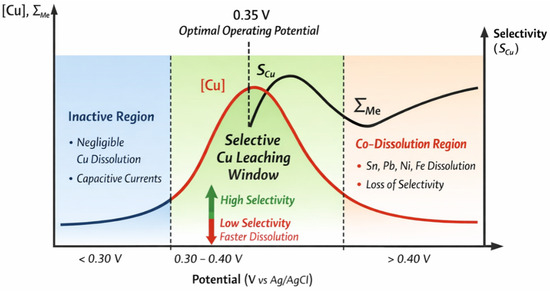
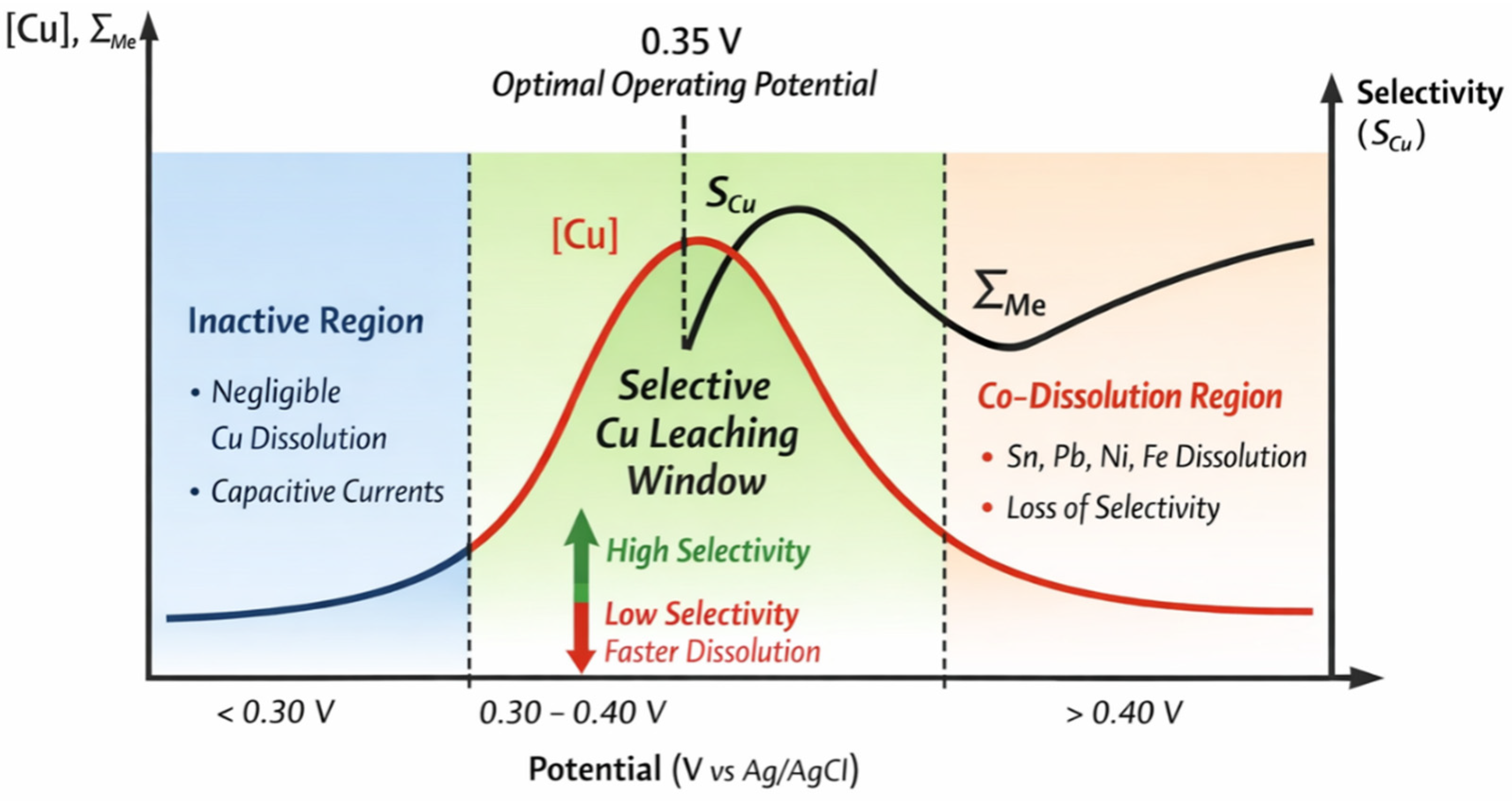
In general, a concept diagram of the potential-dependent leaching modes was created based on the electrochemical and analytical data obtained in Section 3.1, Section 3.2 and Section 3.3 (Figure 8). It shows the transition from an inactive state to selective Cu dissolution, and then to a range of non-selective metal co-dissolution.
Figure 8.
Conceptual diagram illustrating the potential window for selective Cu leaching from PCBs material in sulfate–glycine electrolyte.
At potentials below 0.30 V relative to the Ag/AgCl reference electrode, practically no anodic dissolution takes place. The electrochemical reaction in this area is based primarily on capacitive processes in connection with the charge of the electric double layer, and not on redox reactions.
In the medium potential range of 0.30–0.40 V, the Cu dissolution is kinetically favored, while the dissolution of the accompanying metals remains strongly inhibited. This leads to the formation of a pronounced maximum of Cu selectivity. The experimentally determined optimum operating potential of 0.35 V is in the middle of this selective leaching window.
With more positive potentials, the joint dissolution of Sn, Pb, Ni and Fe begins. As a result, Cu selectivity gradually decreases, although Cu itself continues to actively dissolve.
The selectivity of Cu dissolution observed in Figure 7 is determined by the combined effect of the anodic oxidation of metallic Cu and its stabilization in solution by complexation with glycine, while associated metals remain thermodynamically passivated at alkaline pH (≈9.2).
The anodic oxidation of metallic Cu proceeds according to the following reaction (Equation (4)) [33,34]:
Cu0 → Cu+ + e−
The Cu ions are subsequently stabilized in solution by the formation of complexes with glycine (Equations (5) and (6)) [35,36]:
Cu+ + Gly− = Cu(Gly)
Cu2+ + 2 Gly− = Cu(Gly)2
The formation of soluble Cu–glycinate complexes shifts the equilibrium towards Cu dissolution and effectively reduces the potential required to maintain anodic oxidation. As a result, the range of 0.30–0.40 V favors Cu dissolution both thermodynamically and kinetically.
In an alkaline medium, associated metals such as tin (Sn), lead (Pb), iron (Fe) and nickel (Ni) have a thermodynamic tendency to form hardly soluble hydroxide or oxide phases. This leads to their passivation and limits the transition of these metals into solution. The corresponding reactions can be represented as follows (Equations (7)–(10)):
Sn2+ + 2 OH− → Sn(OH)2 ↓
Pb2+ + 2 OH− → Pb(OH)2 ↓
Fe3+ + 3 OH− → Fe(OH)3 ↓
Ni2+ + 2 OH− → Ni(OH)2 ↓
Glycine does not form sufficiently stable, soluble complexes with these metals under the studied conditions. Therefore, their anodic dissolution requires more positive potentials than that of Cu. Within the experimentally determined selective potential window, these metals remain passivated, and their contribution to the total content of dissolved metals is minimal. With a further increase in potential (≥0.40–0.50 V vs. Ag/AgCl), the stability of the passive hydroxide or oxide layers gradually deteriorates. This leads to the joint dissolution of the associated metals, an increase in their total concentration in the solution and, consequently, a decrease in the Cu selectivity coefficient.
The selective dissolution of Cu under potentiostatic control cannot be interpreted solely on the basis of the thermodynamic nobility of the metals involved. In the applied potential range, Cu dissolution is kinetically favored due to its electrochemical activation and stabilization in solution by glycine complexation, while Sn, Ni, and Fe remain in a passive or kinetically inhibited state. Although copper is present in the form of alloys or composite phases, selective anodic dissolution can occur by preferential dissolution of copper-rich surface domains without simultaneous dissolution of the alloying elements. In addition, Cu cementation on more reactive metals is suppressed under conditions of anodic polarization and stabilization of copper in a complex form in alkaline electrolytes.
Table 1 shows the concentrations of metals, Cu selectivity, and metal recovery in the solution after 30 min of potentiostatic leaching at different potentials in a sulfate–glycine electrolyte.
Table 1.
Concentrations of metals, Cu selectivity, and metal recovery at different potentials (potentiostatic leaching, 30 min).
At a low potential of 0.20 V, the concentrations of all metals in the solution remain low, which indicates the almost complete absence of anodic dissolution. With an increase in potential to 0.30–0.35 V, a sharp increase in Cu concentration is observed, while the concentrations of Sn, Pb, Ni and Fe remain in the trace range. This indicates a selective activation of Cu dissolution, while the associated metals remain passive. In this potential range, the total concentration of the associated metals is minimal, which leads to a pronounced maximum of the Cu selectivity coefficient SCu. The maximum SCu value is reached at a potential of 0.35 V. With a further increase in potential (≥0.40 V), the total concentration of the associated metals increases sharply due to the onset of their common dissolution. Consequently, the selectivity coefficient SCu gradually decreases, despite the continuous increase in Cu concentration.
While Cu selectivity was defined in this study on the basis of the metal concentrations in solution in order to reflect the electrochemical activation under potentiostatic control, the metal extraction values calculated by means of mass balance were additionally analyzed in order to evaluate the influence of the composition of the starting material. In the selective potential range of 0.30–0.35 V, Cu extraction reaches several percent, while the extraction of Sn, Pb, Ni and Fe remains below 0.2%. The same trend is manifested in the concentration data, which confirms that the selective dissolution of copper is not an artifact of the initial composition of the feedstock.
The calculated elemental composition of the WPCB feed for each applied potential, as well as the average feed composition, is summarized in Table 2.
Table 2.
Composition of WPCBs calculated for each potentiostatic experiment based on mass balance.
Despite the heterogeneity of the PCB waste material, the calculated compositions of the starting solutions have only slight deviations between the individual potentiostatic experiments. This internal consistency suggests that the mass balance-based approach provides a stable estimate of the effective composition of the initial solution for each experiment. The validity of this approach is also supported by the consistent correlation between the calculated composition of the starting solution (Table 2), the concentration profiles in solution and the corresponding metal recovery values (Table 1). The observed selectivity trends remain unchanged, regardless of whether the evaluation is based on concentration-based key figures or recovery values.
3.3. Time-Dependent Cu Leaching Under Potentiostatic Conditions
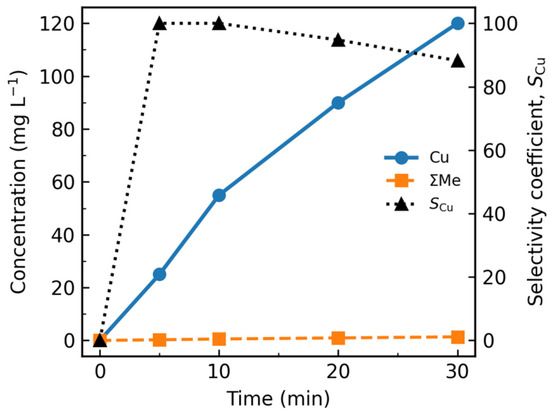
To assess the temporal stability of the selective leaching mode, potentiostatic experiments were performed at a fixed potential of 0.35 V. This potential corresponds to the maximum Cu selectivity determined in Section 3.2.
Figure 9 shows the time dependence of the Cu concentration, the total concentration of the associated metals (ΣMe), and the associated selectivity coefficient SCu. The Cu concentration increases monotonically with time, which indicates a stable and continuous anodic Cu dissolution under potentiostatically controlled conditions.
Figure 9.
Time dependence of Cu concentration, ΣMe, and selectivity at 0.35 V vs. Ag/AgCl.
At the same time, the total concentration of the associated metals remains low throughout the experiment and increases only slightly even with longer leaching times. This shows that the selectivity of the process is preserved over time and is not limited to the initial phase of polarization.
The Cu selectivity coefficient remains high over the entire period studied. This confirms that the selective Cu resolution is not limited to the initial phase of anodic polarization, but is also preserved in long-term operation. The absence of a sharp increase in the total concentration of the associated metals indicates that the simultaneous dissolution of Sn, Pb, Ni and Fe is effectively suppressed at the selected potential.
The results show that a potential of 0.35 V is not only optimal in terms of instantaneous selectivity (as shown in Section 3.2), but also represents a stable operating point for long-term selective Cu leaching. This is of fundamental importance for the practical application of the proposed electrochemical method.
4. Conclusions
The study showed that fragmented WPCBs can be used directly as an anode in an electrochemical cell and prior separation of the components or special surface preparation is not required. Despite the complex and heterogeneous composition of PCBs, their electrochemical behavior during anodic polarization in the sulfate–glycine solution is primarily determined by Cu. This is confirmed by the fact that the voltammetric and potentiostatic properties of the WPCBs are almost identical to those of a pure Cu electrode.
Experiments revealed a narrow potential range (about 0.30–0.40 V vs. Ag/AgCl), in which Cu actively dissolves, while other metals present in the WPCBs (Sn, Pb, Fe, Ni) remain almost unchanged. Within this range, a potential of about 0.35 V proved to be optimal, since the best balance between the speed of Cu dissolution and the suppression of the dissolution of the accompanying elements is achieved here.
The reason for this selectivity lies in the fact that during anodic polarization, Cu is stabilized by the formation of complexes with glycine in solution, and as a result it becomes easily soluble. Other metals form dense, sparingly soluble hydroxide or oxide layers in an alkaline medium, which impede their dissolution. With further increasing potential, these protective layers disintegrate, and the bound metals also dissolve, as a result of which the selectivity of the process decreases.
Further time-lapse tests showed that this range remains stable at a potential of 0.35 V. Cu continues to dissolve uniformly, and the amount of other metals in the solution remains negligibly low even in long-term operation. This means that the selected potential is suitable not only for short-term tests, but also for practical, long-term selective Cu extraction.
The results of this investigation show that potentiostatically controlled electrochemical dissolution in sulfate–glycine media can be applied to selectively recover Cu from heterogeneous WPCBs. In this context, further development of the proposed approach may involve assessment of current efficiency and energy consumption under optimized operating conditions, as well as evaluation of process stability at increased solid loadings.
Author Contributions
Conceptualization, R.N.; methodology, A.B., O.T. and L.M.; validation, A.B., O.T. and K.K.; formal analysis, L.M. and K.K.; investigation, O.T., L.M. and A.B.; resources, R.N.; data curation, K.K. and L.M.; writing—original draft preparation, O.T. and K.K.; writing—review and editing, R.N.; visualization, A.B. and L.M.; supervision, R.N.; project administration, R.N.; funding acquisition, R.N. All authors have read and agreed to the published version of the manuscript.
Funding
This research was funded by the Science Committee of the Ministry of Science and Higher Education of the Republic of Kazakhstan (Grant no. BR28713557).
Data Availability Statement
The original contributions presented in this study are included in the article. Further inquiries can be directed to the corresponding author.
Conflicts of Interest
The authors declare no conflicts of interest.
References
- Zhao, W.; Xu, J.; Fei, W.; Liu, Z.; He, W.; Li, G. The reuse of electronic components from waste printed circuit boards: A critical review. Environ. Sci. Adv. 2023, 2, 196–214. [Google Scholar] [CrossRef] [Scilit]
- Daware, S.; Chandel, S.; Rai, B. A machine learning framework for urban mining: A case study on recovery of copper from printed circuit boards. Miner. Eng. 2022, 180, 107479. [Google Scholar] [CrossRef] [Scilit]
- Cozza, G.; D’Adamo, I.; Rosa, P. Circular manufacturing ecosystems: Automotive printed circuit boards recycling as an enabler of the economic development. Prod. Manuf. Res. 2023, 11, 2182837. [Google Scholar] [CrossRef] [Scilit]
- Schwartz, E.; He, H.; Frost, K.; Nguyen, B.H.; Ogunseitan, O.A.; Schoenung, J.M. Comparative life cycle assessment of copper and gold recovery from waste printed circuit boards: Pyrometallurgy, chemical leaching and bioleaching. J. Hazard. Mater. 2024, 473, 134545. [Google Scholar] [CrossRef] [Scilit] [PubMed]
- Faraji, F.; Golmohammadzadeh, R.; Pickles, C.A. Potential and current practices of recycling waste printed circuit boards: A review of the recent progress in pyrometallurgy. J. Environ. Manag. 2022, 316, 115242. [Google Scholar] [CrossRef] [Scilit] [PubMed]
- Wang, X.; Huang, W.; Yan, B.; Zhou, S.; Zhu, X.; Wang, Z.; Cheng, Z.; Chen, G. E-waste recycling: Integrated life cycle assessment and techno-economic analysis unravels pyrometallurgy’s edge and delivers an optimization framework for recovering waste printed circuit boards. Waste Manag. 2025, 207, 115135. [Google Scholar] [CrossRef] [Scilit]
- Heo, J.; Park, J.; Park, J.H. Effect of pyro-processing conditions on impurity removal and precious metal enrichment in waste printed circuit board (WPCB) recycling process. Resour. Conserv. Recycl. 2022, 179, 106068. [Google Scholar] [CrossRef] [Scilit]
- Nan, T.; Yang, J.; Aromaa-Stubb, R.; Zhu, Q.; Lundström, M. Process simulation and life cycle assessment of hydrometallurgical recycling routes of waste printed circuit boards. J. Clean. Prod. 2024, 435, 140458. [Google Scholar] [CrossRef] [Scilit]
- Gómez, M.; Grimes, S.; Fowler, G. Novel hydrometallurgical process for the recovery of copper from end-of-life mobile phone printed circuit boards using ionic liquids. J. Clean. Prod. 2023, 420, 138379. [Google Scholar] [CrossRef] [Scilit]
- Ippolito, N.M.; Passadoro, M.; Ferella, F.; Pellei, G.; Vegliò, F. Recovery of metals from printed circuit boards by gold-REC 1 hydrometallurgical process. Sustainability 2023, 15, 7348. [Google Scholar] [CrossRef] [Scilit]
- Saffaj, S.; Mantovani, D.; Kolliopoulos, G. Sustainable Leaching of Cu, Ni, and Au from Waste Printed Circuit Boards Using Choline Chloride-Based Deep Eutectic Solvents. Metals 2025, 15, 82. [Google Scholar] [CrossRef] [Scilit]
- Nadirov, R.; Karamyrzayev, G. Enhancing Synthetic Zinc Ferrite Hydrochloric Acid Leaching by Using Isopropanol as a Solvent. Min. Metall. Explor. 2022, 39, 1743–1751. [Google Scholar] [CrossRef] [Scilit]
- Serga, V.; Zarkov, A.; Blumbergs, E.; Shishkin, A.; Baronins, J.; Elsts, E.; Pankratov, V. Leaching of gold and copper from printed circuit boards under the alternating current action in hydrochloric acid electrolytes. Metals 2022, 12, 1953. [Google Scholar] [CrossRef] [Scilit]
- Liu, H.; Zhang, Y.; Chen, C.; Huang, Y.; Chen, Z. Research on leaching kinetics and reactivity evaluation of copper tailings as precursor for alkali-activated materials. Case Stud. Constr. Mater. 2024, 21, e03663. [Google Scholar] [CrossRef] [Scilit]
- Perea, C.G.; Baena, O.R.; Ihle, C.F.; Estay, H. Copper leaching from wastes electrical and electronic equipment (WEEE) using alkaline monosodium glutamate: Thermodynamics and dissolution tests. Clean. Eng. Technol. 2021, 5, 100312. [Google Scholar] [CrossRef] [Scilit]
- Jadhao, P.R.; Pandey, A.; Pant, K.K.; Nigam, K.D.P. Efficient recovery of Cu and Ni from WPCB via alkali leaching approach. J. Environ. Manag. 2021, 296, 113154. [Google Scholar] [CrossRef] [Scilit] [PubMed]
- Li, H.; Oraby, E.; Eksteen, J. Extraction of copper and the co-leaching behaviour of other metals from waste printed circuit boards using alkaline glycine solutions. Resour. Conserv. Recycl. 2020, 154, 104624. [Google Scholar] [CrossRef] [Scilit]
- Martínez, J.I.; Teja, A.M.; Reyes, M.; Toro, N.; Cisneros, G.; Flores, U.M.; Labra, M.P.; Urbano, G.; Juarez, J.C. Optimization of Sustainable Copper Leaching Using Glycine and Oxidizing Agents in an Alkaline Medium. Metals 2025, 15, 617. [Google Scholar] [CrossRef] [Scilit]
- Barragán-Mantilla, S.P.; Gascó, G.; Almendros, P.; Méndez, A. Insights into the use of green leaching systems based on glycine for the selective recovery of copper. Miner. Eng. 2024, 206, 108534. [Google Scholar] [CrossRef] [Scilit]
- Oraby, E.A.; Li, H.; Eksteen, J.J. An alkaline glycine-based leach process of base and precious metals from powdered waste printed circuit boards. Waste Biomass Valoriz. 2020, 11, 3897–3909. [Google Scholar] [CrossRef] [Scilit]
- Rai, V.; Liu, D.; Xia, D.; Jayaraman, Y.; Gabriel, J.C.P. Electrochemical approaches for the recovery of metals from electronic waste: A critical review. Recycling 2021, 6, 53. [Google Scholar] [CrossRef] [Scilit]
- Xue, Y.; Wang, Y. Green electrochemical redox mediation for valuable metal extraction and recycling from industrial waste. Green Chem. 2020, 22, 6288–6309. [Google Scholar] [CrossRef] [Scilit]
- Mecucci, A.; Scott, K. Leaching and electrochemical recovery of copper, lead and tin from scrap printed circuit boards. J. Chem. Technol. Biotechnol. Int. Res. Process Environ. Clean Technol. 2002, 77, 449–457. [Google Scholar] [CrossRef]
- Aksu, S.; Doyle, F.M. Electrochemistry of copper in aqueous glycine solutions. J. Electrochem. Soc. 2001, 148, B51. [Google Scholar] [CrossRef] [Scilit]
- O’Connor, G.M.; Lepkova, K.; Eksteen, J.J.; Oraby, E.A. Electrochemical behaviour of copper in alkaline glycine solutions. Hydrometallurgy 2018, 181, 221–229. [Google Scholar] [CrossRef] [Scilit]
- Skrypnikova, E.A.; Kaluzhina, S.A.; Orlova, E.V. Anode oxidation of copper in alkali media in the presence of glycine, α-alanine, and asparagine acid. Russ. J. Electrochem. 2011, 47, 1231–1235. [Google Scholar] [CrossRef] [Scilit]
- Mikulskis, K.; Kanapeckaitė, S.; Survila, A. Comparative study of equilibrium characteristics of Cu|Cu (II), Cu (I), glycine system containing sulfate or perchlorate as a supporting electrolyte. Chemija 2019, 30, 212–218. [Google Scholar] [CrossRef] [Scilit]
- Survila, A.; Kanapeckaitė, S.; Staišiūnas, L.; Gudavičiūtė, L.; Girčienė, O. Equilibration processes in alkaline Cu| Cu (II), glycine system. Chemija 2022, 33, 12–16. [Google Scholar] [CrossRef] [Scilit]
- Palacios-Padrós, A.; Caballero-Briones, F.; Díez-Pérez, I.; Sanz, F. Tin passivation in alkaline media: Formation of SnO microcrystals as hydroxyl etching product. Electrochim. Acta 2013, 111, 837–845. [Google Scholar] [CrossRef] [Scilit]
- Abd El Rehim, S.S.; Mohamed, N.F. Passivity breakdown of lead anode in alkaline nitrate solutions. Corros. Sci. 1998, 40, 1883–1896. [Google Scholar] [CrossRef] [Scilit]
- Seghiouer, A.; Chevalet, J.; Barhoun, A.; Lantelme, F. Electrochemical oxidation of nickel in alkaline solutions: A voltammetric study and modelling. J. Electroanal. Chem. 1998, 442, 113–123. [Google Scholar] [CrossRef] [Scilit]
- Lešić, N.; Kovač, J.; Milošev, I. Electrochemical Behaviour of Nd–Fe–B and Sm–Fe–N Polymer-Bonded Magnets and Their Metal Components in Various Electrolytes. Corros. Mater. Degrad. 2025, 6, 42. [Google Scholar] [CrossRef] [Scilit]
- Camuti, L.; Heck, F.; Sprenger, V.; Weiß, N.; Schneider, C.; Duppel, V.; Kremer, R.K.; Bette, S.; Lotsch, B.V. Cu–Al Layered Double Hydroxides as Precursors to Operando-Formed Dendritic Cu for Electrochemical CO2 Reduction. Chem. Mater. 2026, 38, 672–682. [Google Scholar] [CrossRef] [Scilit]
- Blaseio, S.K.; Dosche, C.; Rahaman, M.; Kiran, K.; Dworzak, A.; Mahrt, B.; Broekmann, P.; Dutta, A.; Oezaslan, M. Impact of Cu+ and Cu2+ species on the oxide-metal transition processes of CuxO foams during the CO2RR probed by operando Quick-XAS. J. Mater. Chem. A 2024, 12, 28177–28192. [Google Scholar] [CrossRef] [Scilit]
- Fan, J. Determination of stability constants of copper (II) complex of glycine in water+ alcohol mixed solvents with ion selective electrode technique. Talanta 1995, 42, 317–321. [Google Scholar] [CrossRef] [Scilit]
- Pasternack, R.F.; Sigel, H. Kinetics of formation of mixed ligand complexes. I. Copper (II)-2, 2′-bipyridyl-glycine system in aqueous solution. J. Am. Chem. Soc. 1970, 92, 6146–6151. [Google Scholar] [CrossRef] [Scilit]

Disclaimer/Publisher’s Note: The statements, opinions and data contained in all publications are solely those of the individual author(s) and contributor(s) and not of MDPI and/or the editor(s). MDPI and/or the editor(s) disclaim responsibility for any injury to people or property resulting from any ideas, methods, instructions or products referred to in the content. |
© 2026 by the authors. Licensee MDPI, Basel, Switzerland. This article is an open access article distributed under the terms and conditions of the Creative Commons Attribution (CC BY) license.