Effect of Weld Surface Quality on the Fatigue Performance of Q420 Steel Used in Offshore Wind Tower Tube


Abstract
1. Introduction
2. Materials and Methods
2.1. Materials
2.2. Methods
3. Test Results and Analysis
3.1. Q420 Welded Plate Microstructure Characterization
3.1.1. Base Material Microstructure
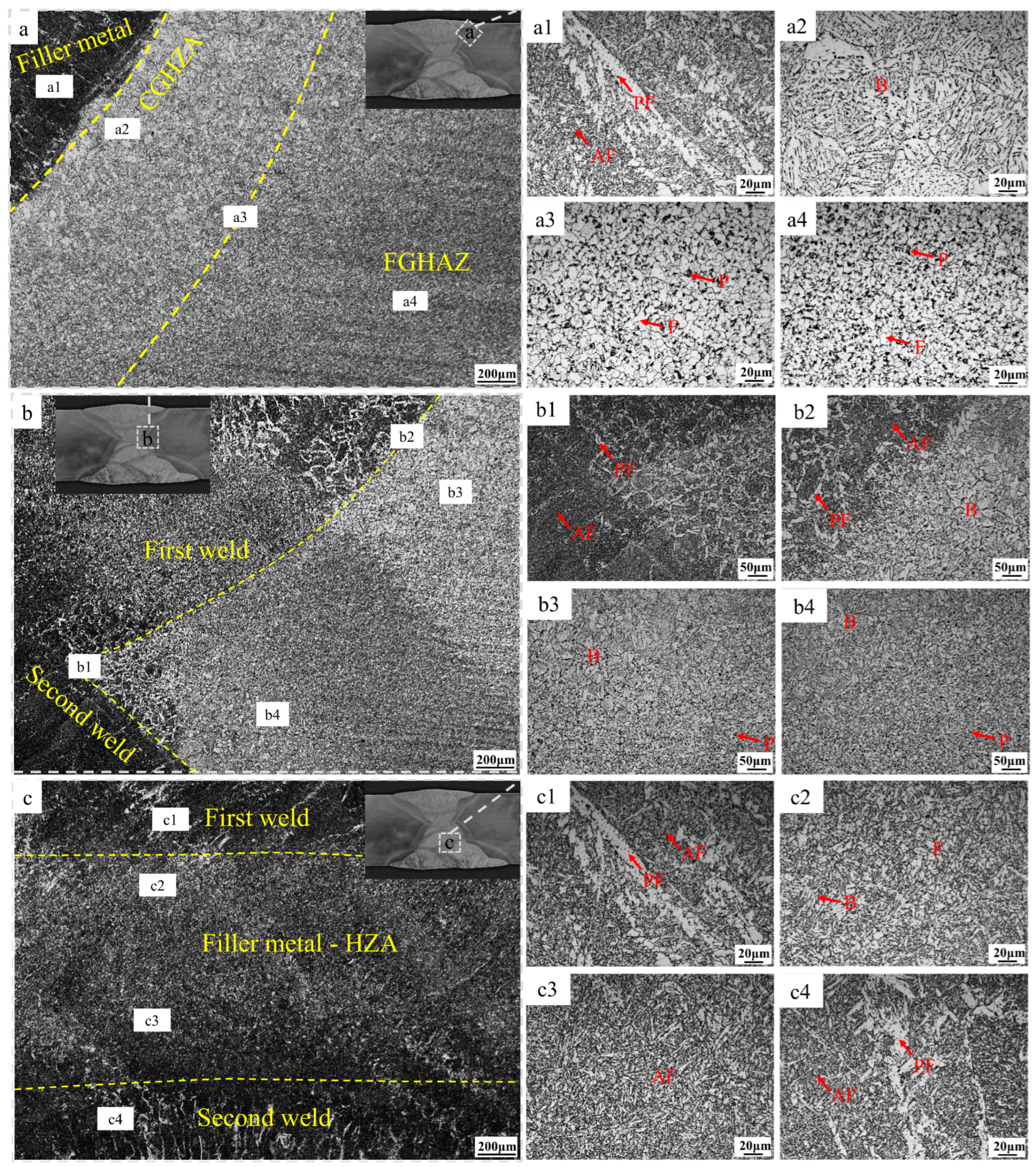
3.1.2. Weld Microstructure
3.2. Fatigue Test Result
3.3. Weld Hardness
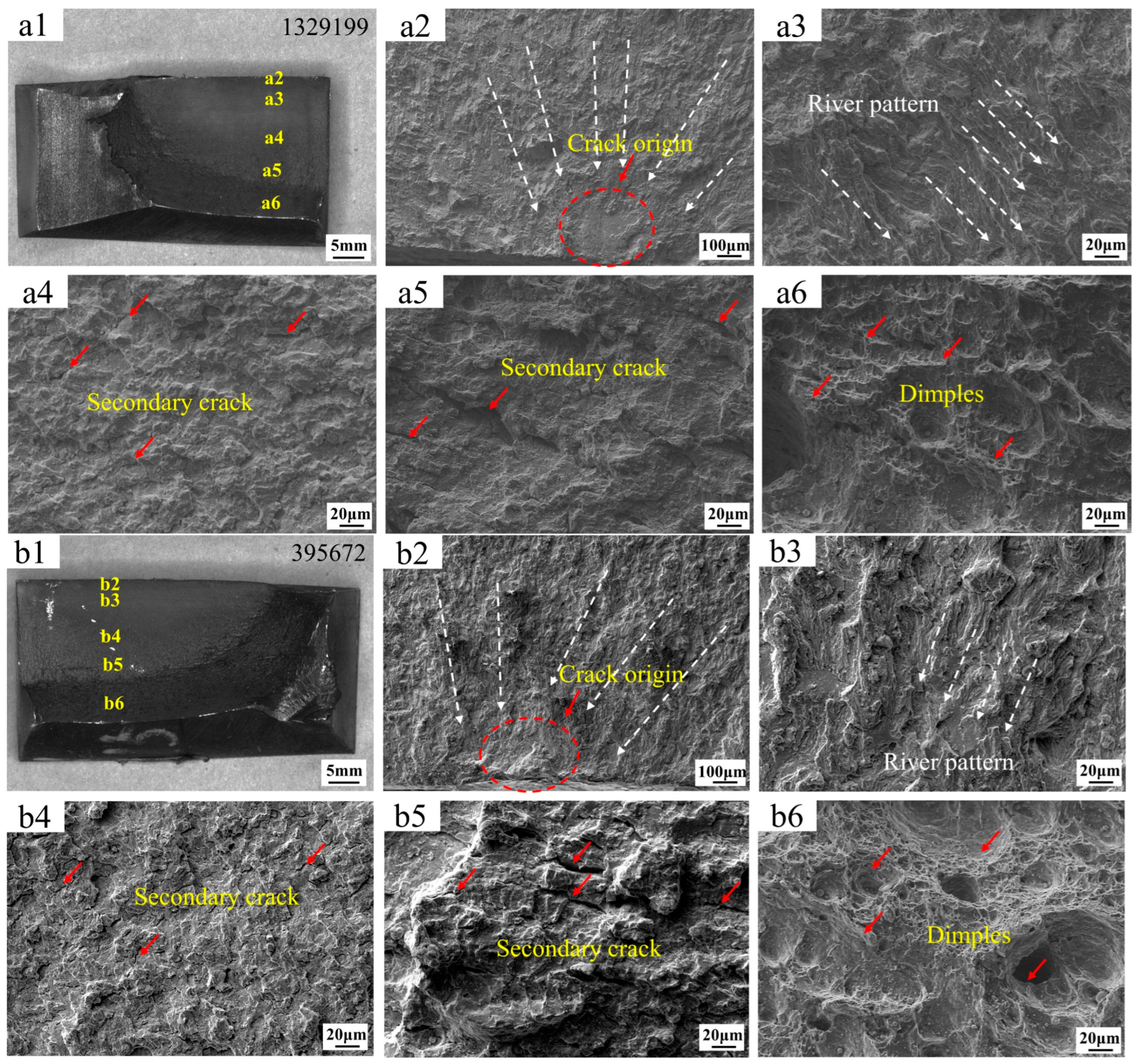
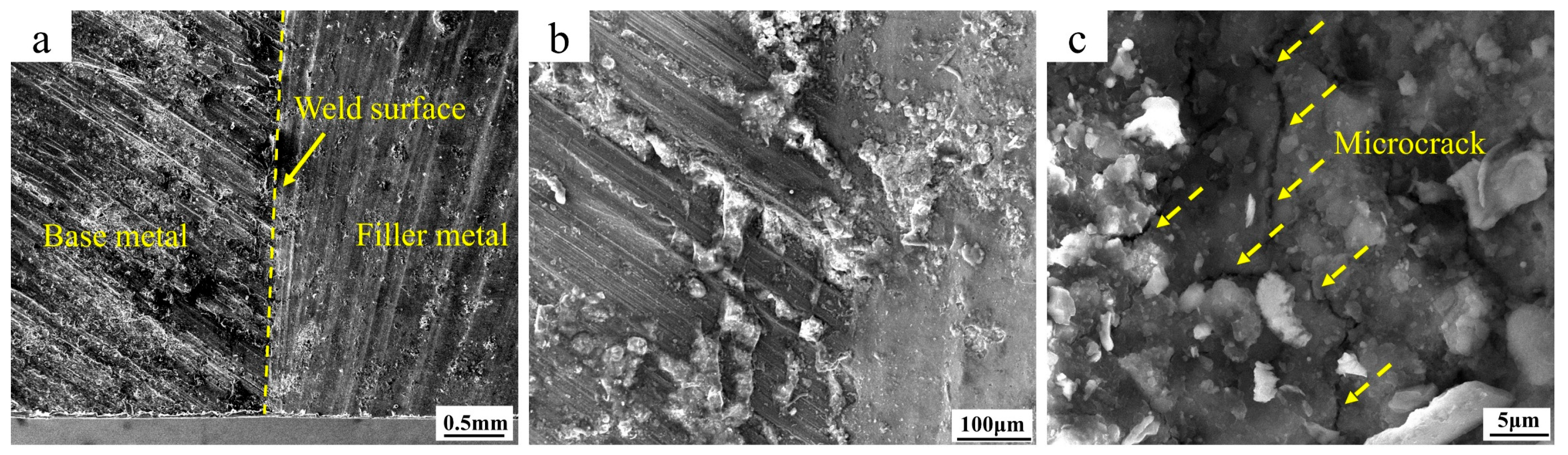
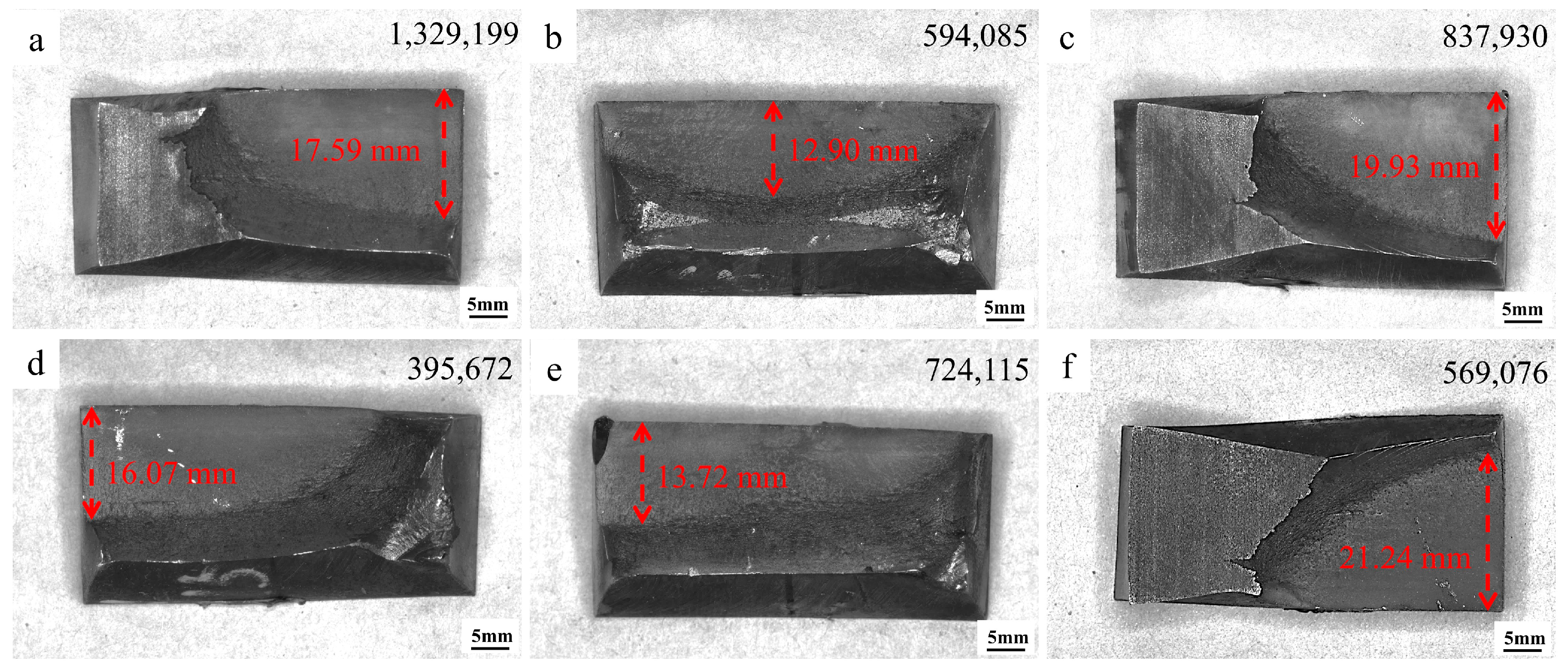
3.4. Fatigue Fracture Morphology
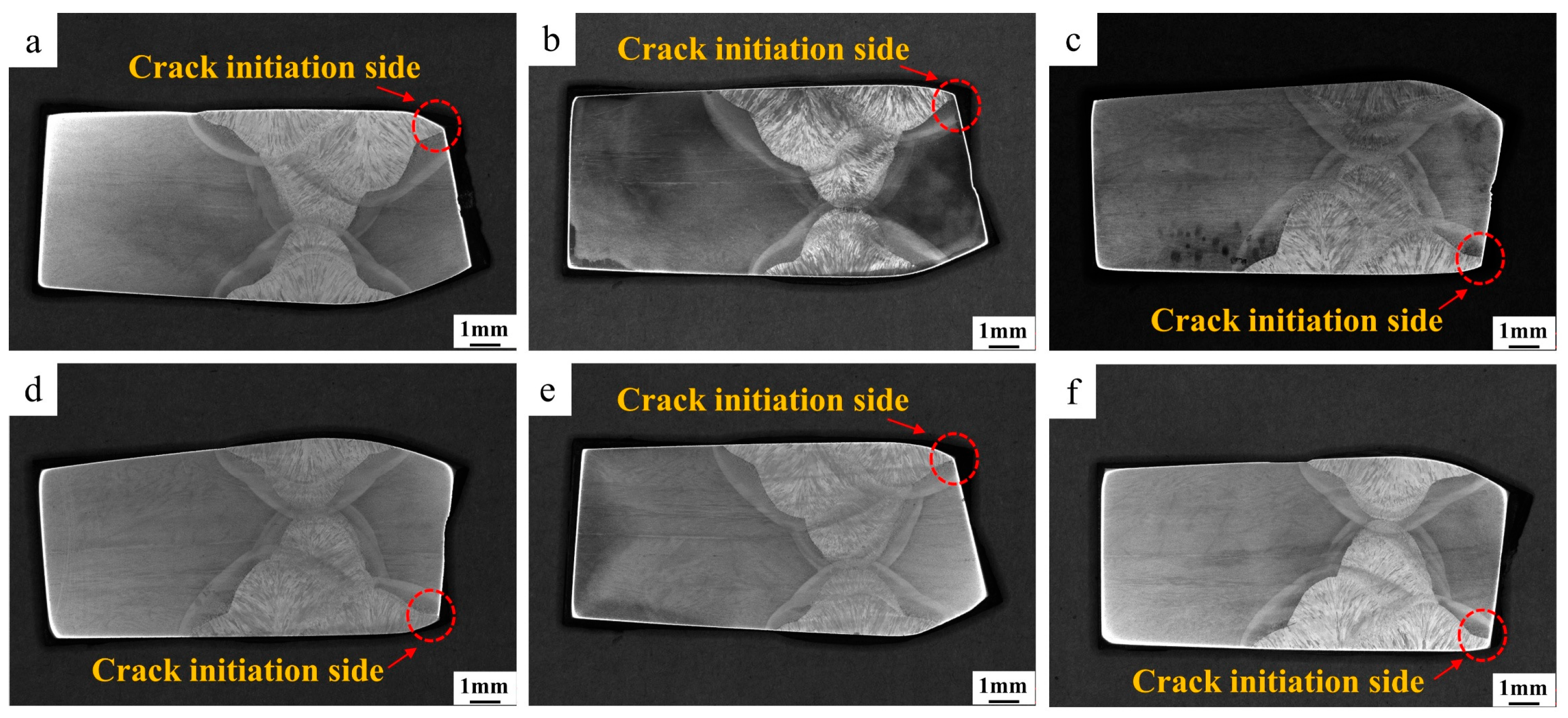
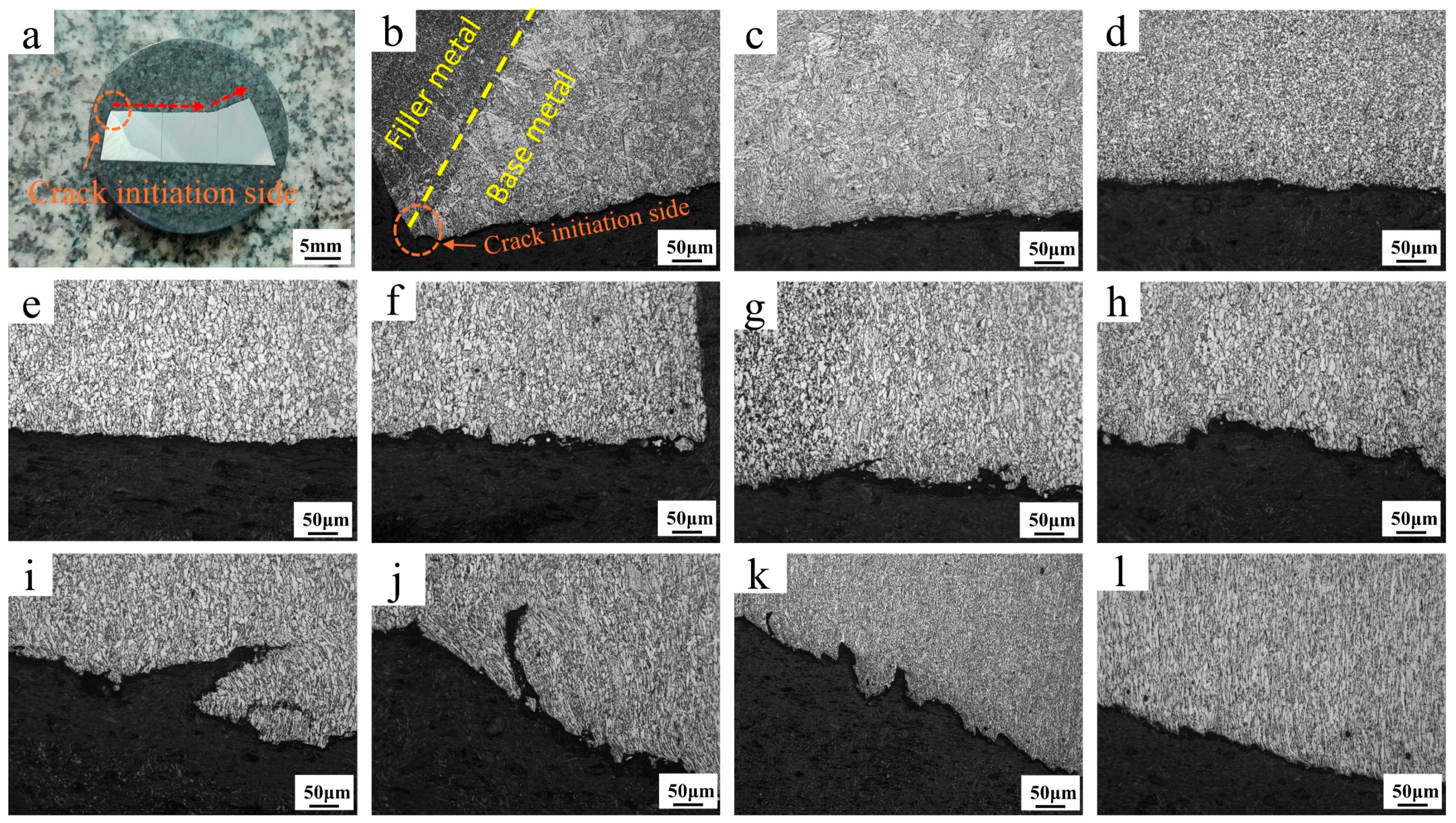
3.5. Analysis of Fatigue Crack Propagation Direction
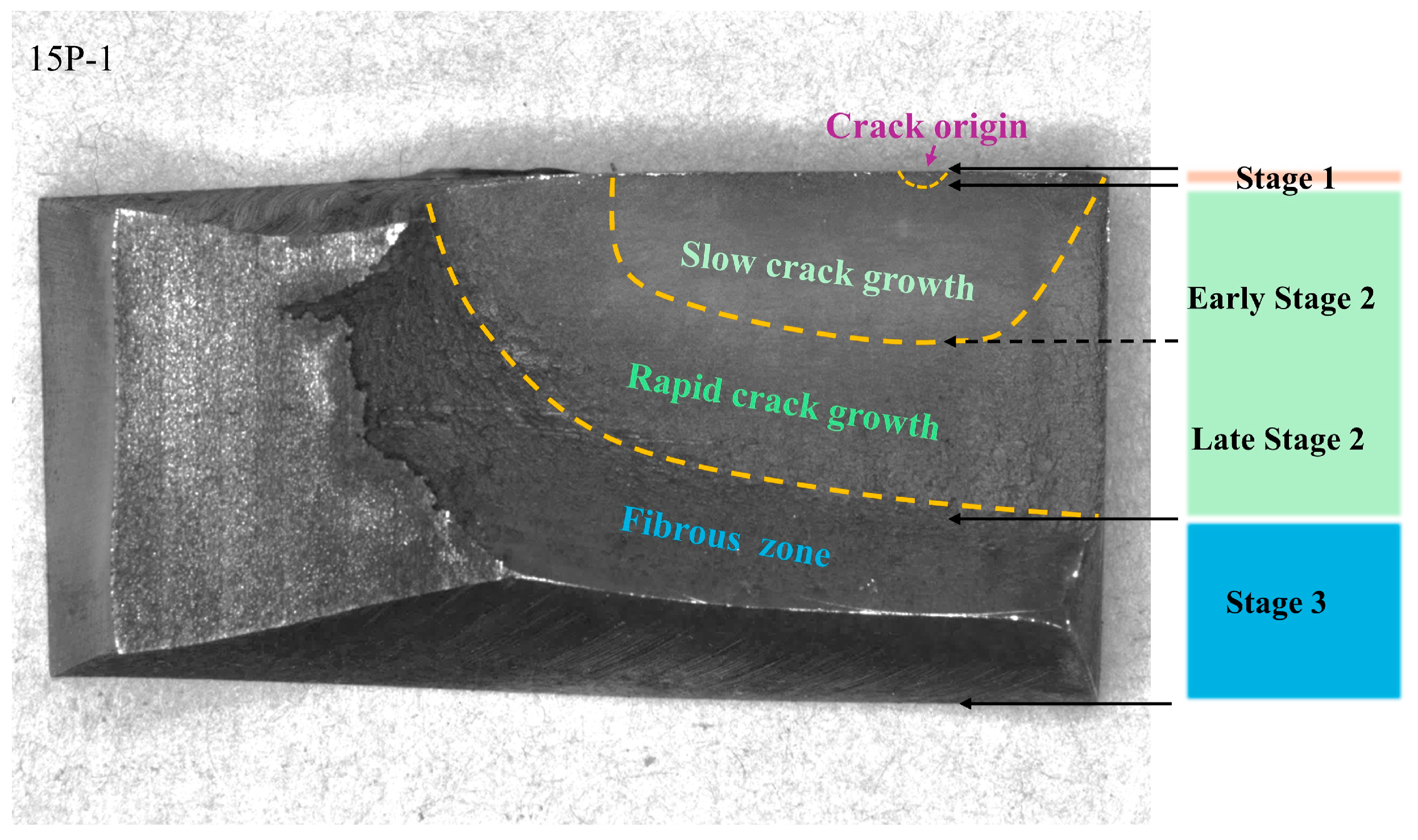
3.6. Fatigue Life Analysis
3.7. The Effect of Weld Surface Defects on Fatigue Performance
4. Conclusions
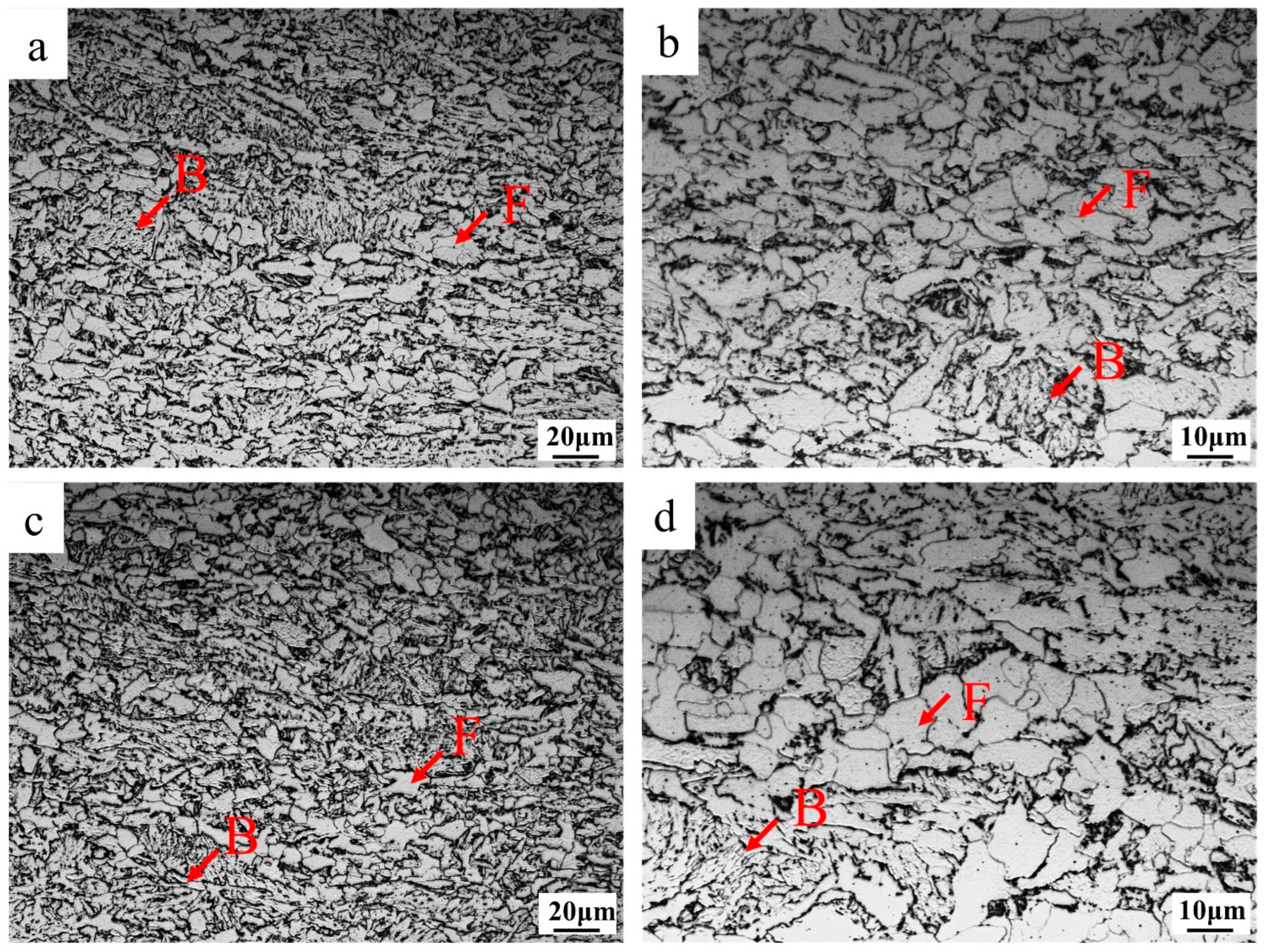
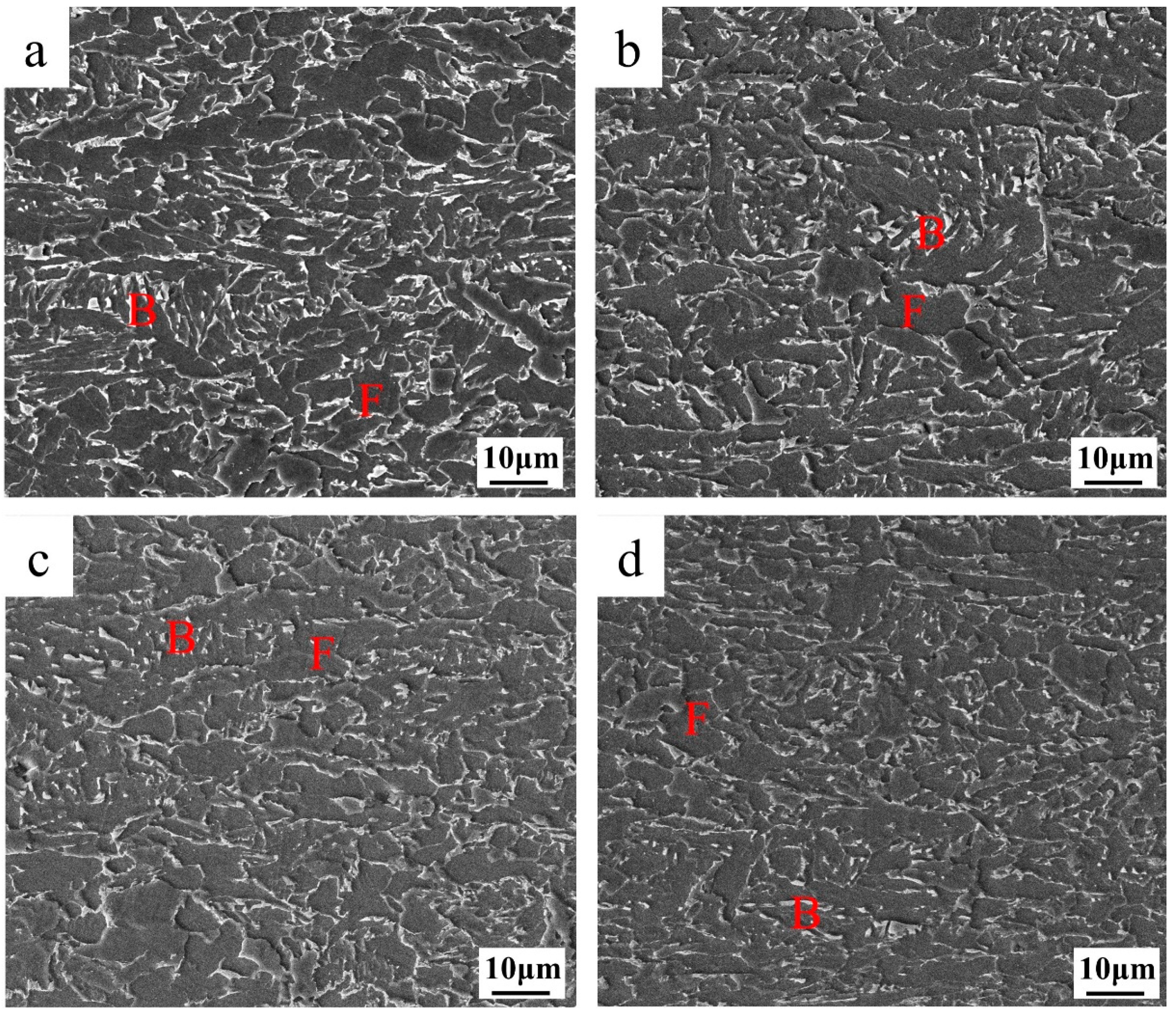
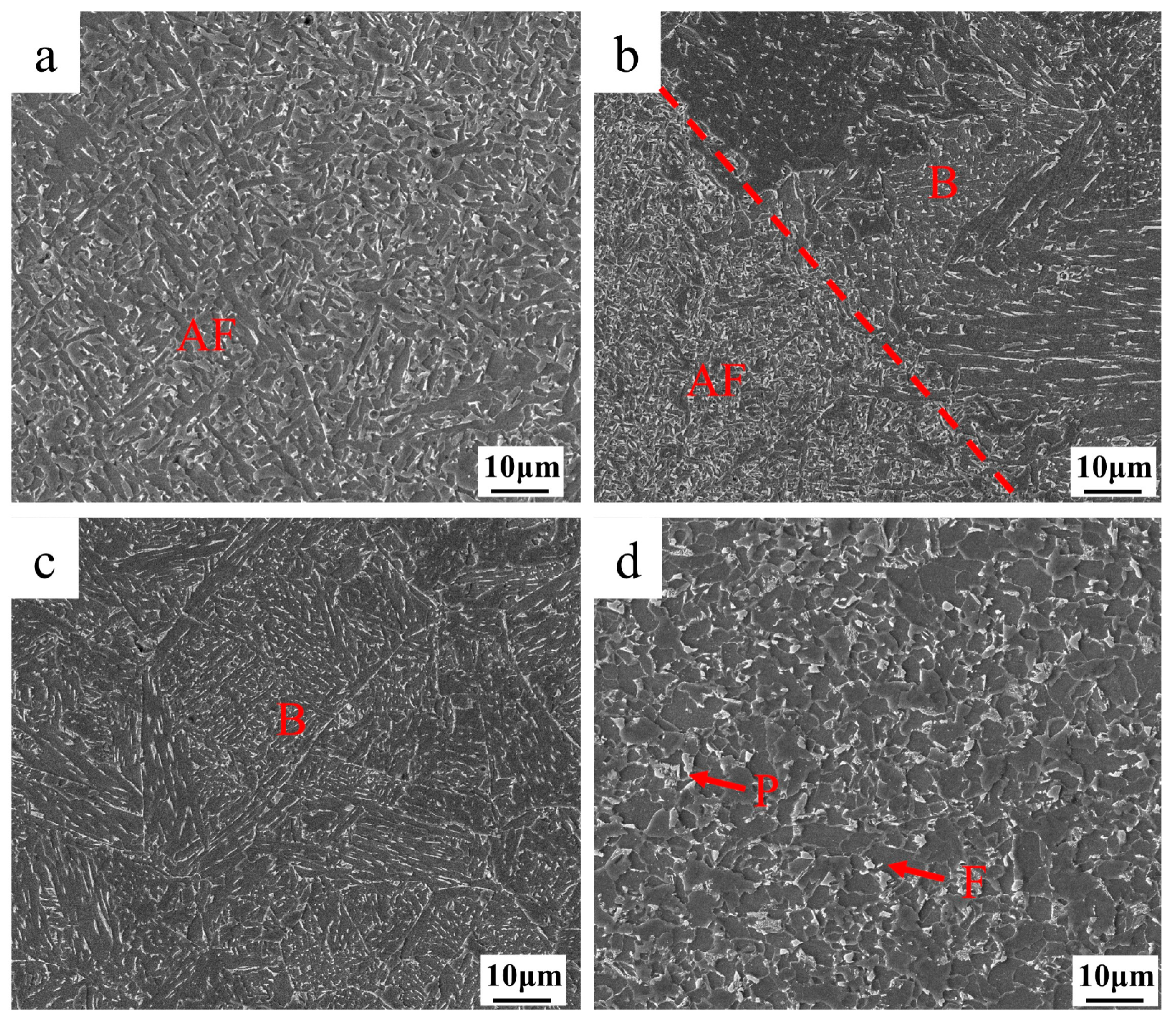
- The base metal microstructure of Q420 steel consists of bainite and ferrite, the filler metal microstructure is composed of acicular ferrite, and the coarse-grained zone in the heat-affected zone of the weld consists of bainite, while the fine-grained zone consists of pearlite and ferrite.
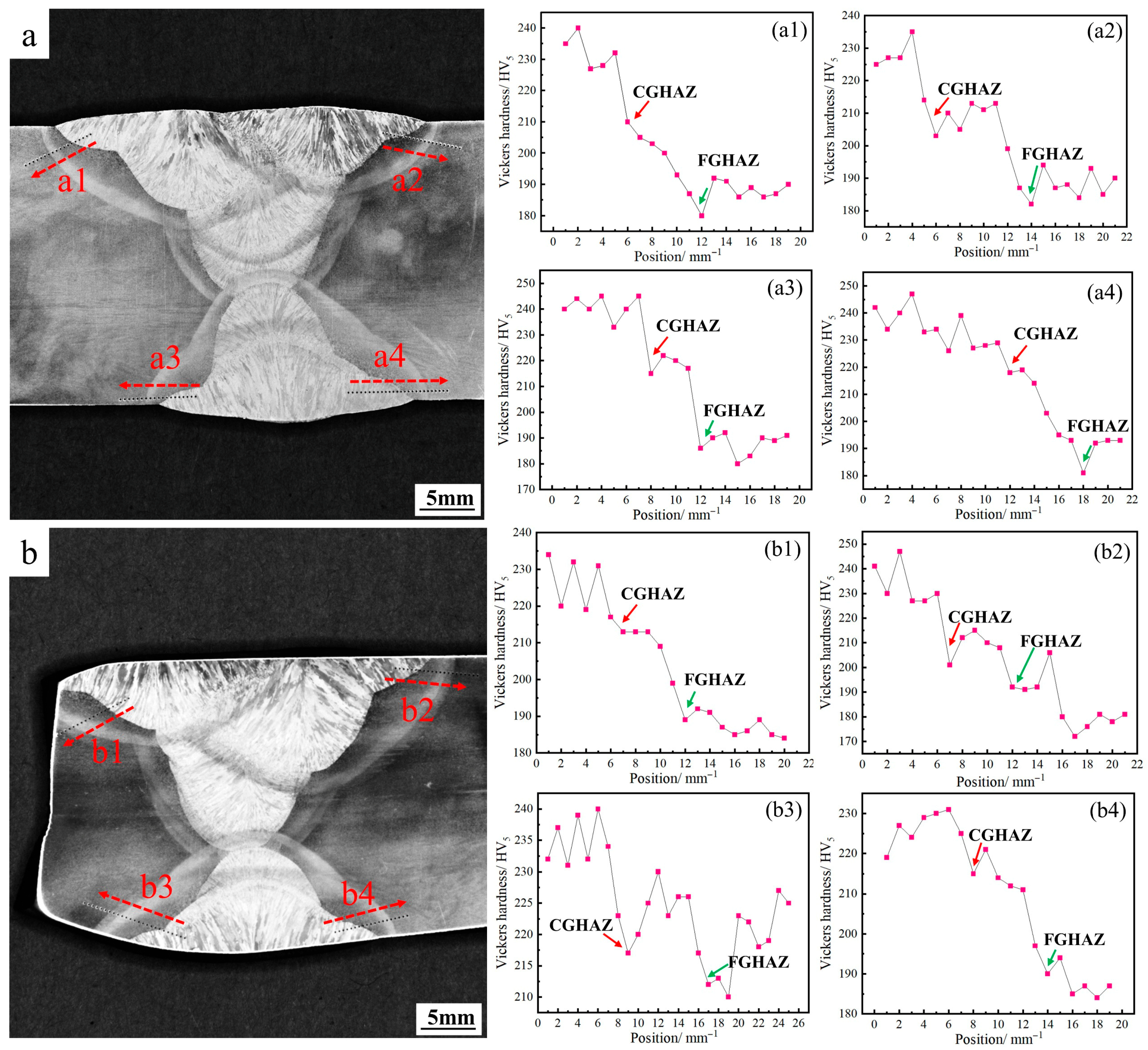
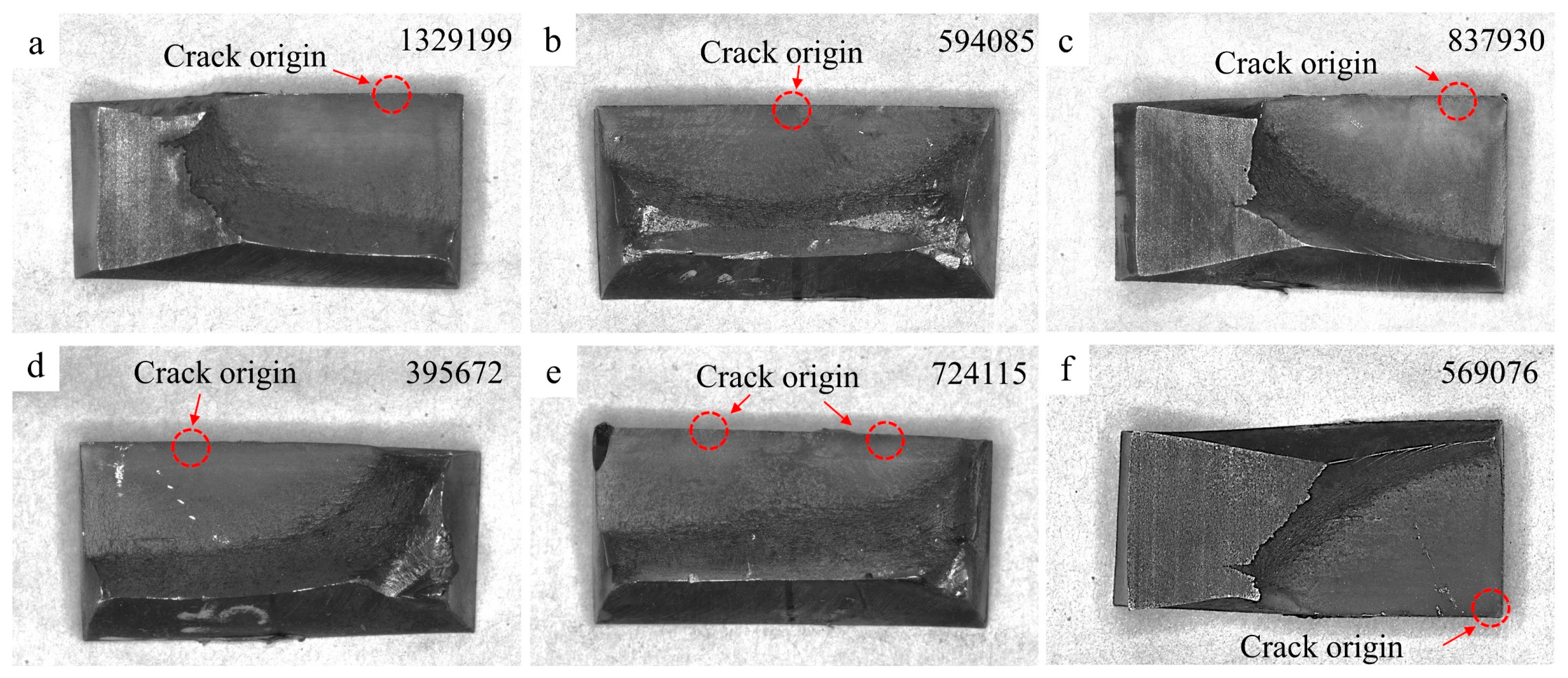
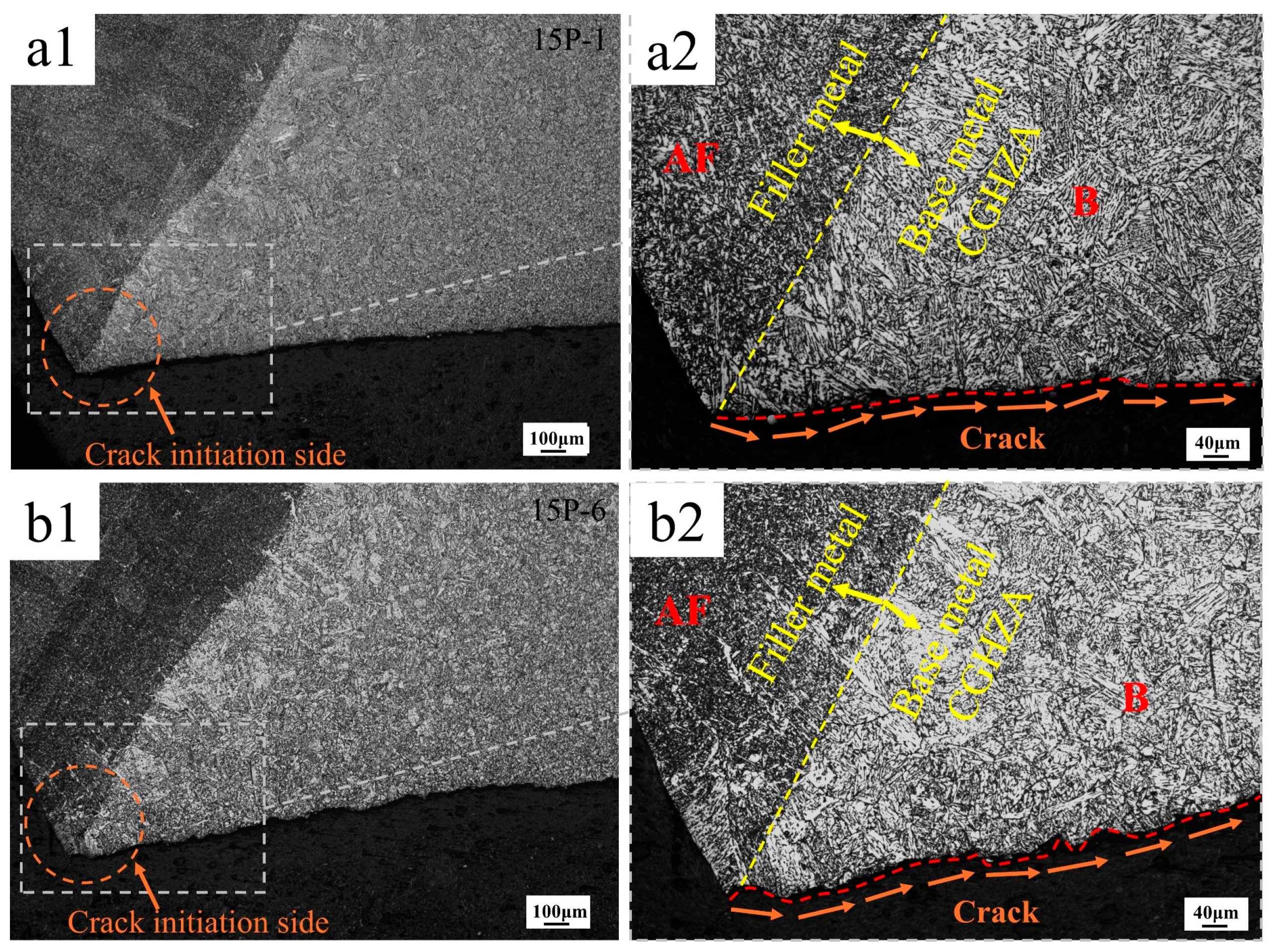
- Fatigue cracks initiate consistently at the weld toes on the side of multi-pass welds. The sudden change in the stress section near the weld toe residual height leads to stress concentration, which is likely the primary cause of fatigue crack initiation. The higher heat input on the multi-pass weld side increases the range of the coarse-grained zone prone to cracking, thereby increasing the probability of fatigue cracks initiating in the coarse-grained area.
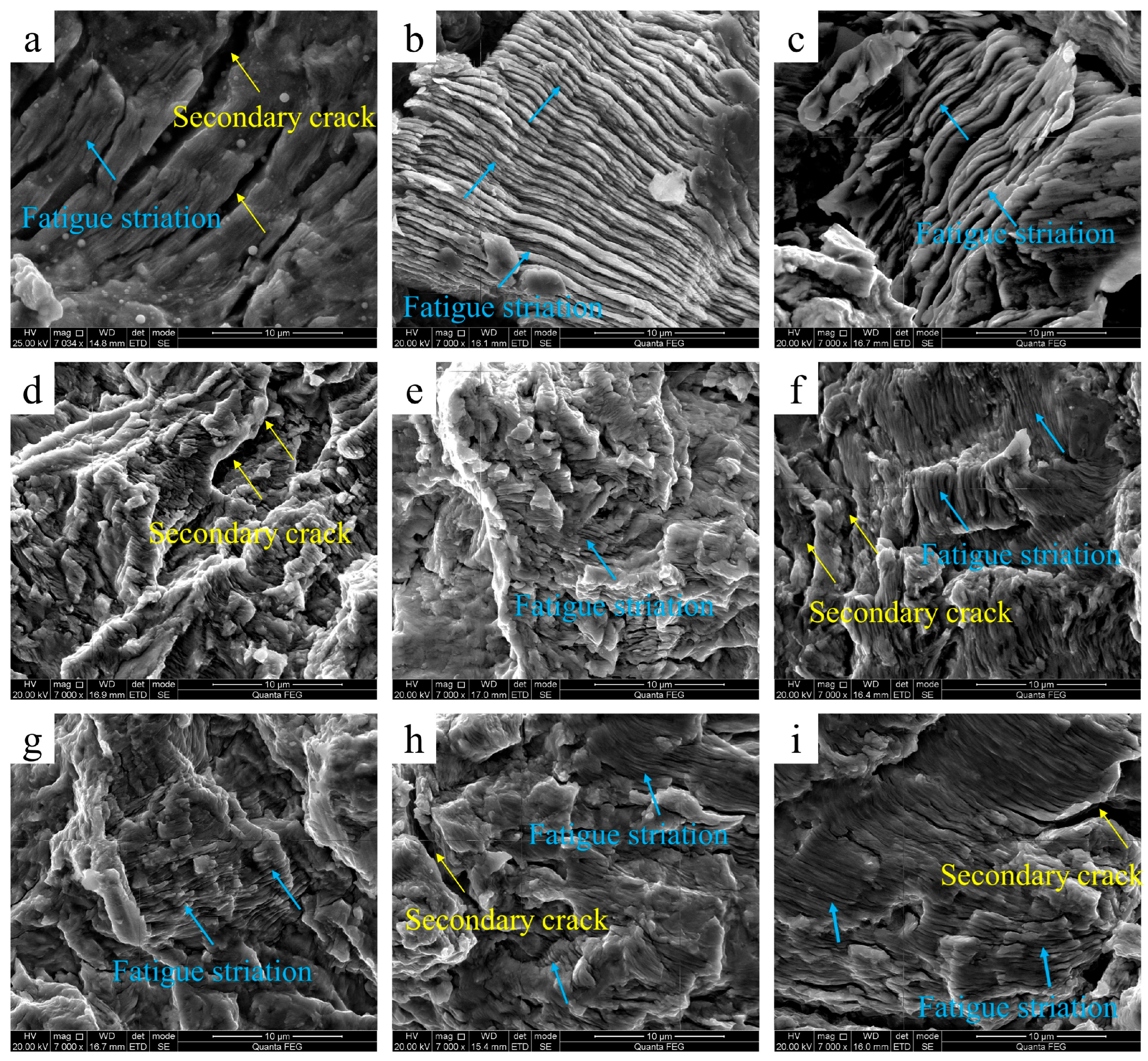
- The calculations show that the number of cycles for crack propagation accounts for less than 11% of the total fatigue cycles, suggesting that the crack initiation phase dominates the overall fatigue life of Q420 weld plates.
- Grinding down the weld toe residual height and removing surface cold cracks and excess height can significantly enhance the material’s resistance to crack initiation and fatigue performance. Changing the specimen’s stress section to a circular shape to eliminate size effect-induced stress concentrations can further improve the material’s resistance to crack initiation and fatigue performance. The fatigue performance of Q420 weld plate specimens is ranked as follows: cylindrical rod 1 (diameter 22 mm) > smooth weld plate (23 × 46 mm) > as-welded plate (25 × 52 mm).
Author Contributions
Funding
Institutional Review Board Statement
Informed Consent Statement
Data Availability Statement
Conflicts of Interest
References
- Lin, B.; Li, Z. Towards world’s low carbon development: The role of clean energy. Appl. Energy 2022, 307, 118160. [Google Scholar] [CrossRef]
- Belaïd, F.; Al-Sarihi, A.; Al-Mestneer, R. Balancing climate mitigation and energy security goals amid converging global energy crises: The role of green investments. Renew. Energy 2023, 205, 534–542. [Google Scholar] [CrossRef]
- Qureshi, M.I.; Rasli, A.M.; Zaman, K. Energy crisis, greenhouse gas emissions and sectoral growth reforms: Repairing the fabricated mosaic. J. Clean. Prod. 2016, 112, 3657–3666. [Google Scholar] [CrossRef]
- Chung, C.; Lee, J.; Yang, J.-S. National offshore wind strategy for late-mover countries. Renew. Energy 2022, 192, 472–484. [Google Scholar] [CrossRef]
- Afridi, S.K.; Koondhar, M.A.; Jamali, M.I.; Alaas, Z.M.; Alsharif, M.H.; Kim, M.-K.; Mahariq, I.; Touti, E.; Aoudia, M.; Ahmed, M. Winds of progress: An in-depth exploration of offshore, floating, and onshore wind turbines as cornerstones for sustainable energy generation and environmental stewardship. IEEE Access 2024, 12, 66147–66166. [Google Scholar] [CrossRef]
- Markard, J.; Petersen, R. The offshore trend: Structural changes in the wind power sector. Energy Policy 2009, 37, 3545–3556. [Google Scholar] [CrossRef]
- Igwemezie, V.; Mehmanparast, A.; Kolios, A. Current trend in offshore wind energy sector and material requirements for fatigue resistance improvement in large wind turbine support structures—A review. Renew. Sustain. Energy Rev. 2019, 101, 181–196. [Google Scholar] [CrossRef]
- McKenna, R.; vd Leye, P.O.; Fichtner, W. Key challenges and prospects for large wind turbines. Renew. Sustain. Energy Rev. 2016, 53, 1212–1221. [Google Scholar] [CrossRef]
- Islam, M.R.; Guo, Y.; Zhu, J. A review of offshore wind turbine nacelle: Technical challenges, and research and developmental trends. Renew. Sustain. Energy Rev. 2014, 33, 161–176. [Google Scholar] [CrossRef]
- Wang, D.; Yao, D.; Gao, Z.; Wang, Q.; Zhang, Z.; Li, X. Fatigue mechanism of medium-carbon steel welded joint: Competitive impacts of various defects. Int. J. Fatigue 2021, 151, 106363. [Google Scholar] [CrossRef]
- Barsoum, Z.; Jonsson, B. Influence of weld quality on the fatigue strength in seam welds. Eng. Fail. Anal. 2011, 18, 971–979. [Google Scholar] [CrossRef]
- Radaj, D.; Sonsino, C.; Fricke, W. Recent developments in local concepts of fatigue assessment of welded joints. Int. J. Fatigue 2009, 31, 2–11. [Google Scholar] [CrossRef]
- Wang, F.; Yue, J.-W.; Wang, W.-D. Assessment methods for fatigue crack initiation life and total fatigue life of Q550D-16 mm butt-welded steel notched plates. J. Constr. Steel Res. 2025, 230, 109561. [Google Scholar] [CrossRef]
- Pijpers, R.J.M. Fatigue strength of welded connections made of very high strength cast and rolled steels. Eng. Struct. 2011, 161, 28–40. [Google Scholar]
- Peng, Y.; Zhu, X. Fatigue strength estimation of butt-welded joints between cast-steel and hot-rolled-steel plates. J. Constr. Steel Res. 2024, 214, 108493. [Google Scholar] [CrossRef]
- Liu, Y.; Gong, B.; Liu, S.; Deng, C.; Zhao, Y.; Liu, Y.; Hu, W. Low-cycle fatigue properties and fracture location transition mechanism of dissimilar steel welded joints in towers of wind turbines. Int. J. Fatigue 2025, 190, 108672. [Google Scholar] [CrossRef]
- Li, Z.; Zhang, D.; Wu, H.; Huang, F.; Hong, W.; Zang, X. Fatigue properties of welded Q420 high strength steel at room and low temperatures. Constr. Build. Mater. 2018, 189, 955–966. [Google Scholar] [CrossRef]
- Bartsch, H.; Feldmann, M. An experimental investigation into the influence of incorrect root gaps in welded-in transverse stiffeners on fatigue performance. Int. J. Fatigue 2023, 175, 107773. [Google Scholar] [CrossRef]
- Corigliano, P.; Crupi, V. Review of fatigue assessment approaches for welded marine joints and structures. Metals 2022, 12, 1010. [Google Scholar] [CrossRef]
- Ahola, A.; Lipiäinen, K.; Lindroos, J.; Koskimäki, M.; Laukia, K.; Björk, T. On the fatigue strength of welded high-strength steel joints in the as-welded, post-weld-treated and repaired conditions in a typical ship structural detail. J. Mar. Sci. Eng. 2023, 11, 644. [Google Scholar] [CrossRef]
- Tang, K.; Cui, C.; Li, Y.; Yuan, X.; Zhang, Q.; Yang, Y. Investigation of fatigue damage evolution mechanism in Q500qENH weathering steel welded joints with corroded surface morphology. Int. J. Fatigue 2025, 200, 109116. [Google Scholar] [CrossRef]
- Arola, D.; Williams, C. Estimating the fatigue stress concentration factor of machined surfaces. Int. J. Fatigue 2002, 24, 923–930. [Google Scholar] [CrossRef]
- Bellett, D.; Taylor, D.; Marco, S.; Mazzeo, E.; Guillois, J.; Pircher, T. The fatigue behaviour of three-dimensional stress concentrations. Int. J. Fatigue 2005, 27, 207–221. [Google Scholar] [CrossRef]
- Zhang, Y.-H.; Maddox, S.J. Fatigue life prediction for toe ground welded joints. Int. J. Fatigue 2009, 31, 1124–1136. [Google Scholar] [CrossRef]
- Perez, N. Fatigue crack growth. In Fracture Mechanics; Springer: New York, NY, USA, 2016; pp. 327–372. [Google Scholar]
- Kedir, Y.A.; Lemu, H.G. Prediction of fatigue crack initiation under variable amplitude loading: Literature review. Metals 2023, 13, 487. [Google Scholar] [CrossRef]
- Liu, S.; Yang, Y.; Lei, L.; Liu, Z.; Wu, W. Effect of indentation defects on fatigue crack propagation behavior of weld and base material: An in-situ fatigue study. Theor. Appl. Fract. Mech. 2025, 138, 104982. [Google Scholar] [CrossRef]
- Gao, Y.; Yang, W.; Huang, Z.; Lu, Z. Effects of residual stress and surface roughness on the fatigue life of nickel aluminium bronze alloy under laser shock peening. Eng. Fract. Mech. 2021, 244, 107524. [Google Scholar] [CrossRef]
- Sun, G.; Zheng, J.; Zhao, Z. Gas pore-based fatigue strength and fatigue life prediction models of laser additive manufactured Ti-6Al-4V alloy in very high cycle fatigue regime. Mater. Sci. Eng. A 2025, 922, 147640. [Google Scholar] [CrossRef]
- Zhu, Z.; Feng, Q.; Wang, B.; Zheng, W.; Yu, Y. High-cycle fatigue performance of the heat-affected zone of Q370qENH weathering bridge steel. J. Mater. Civ. Eng. 2024, 36, 04024018. [Google Scholar] [CrossRef]
- Bai, Y.; Guo, X.; Sun, X.; Liu, G.; Xie, Z.; Wang, X.; Shang, C. Effect of heat input on microstructural characteristics and fatigue property of heat-affected zone in a FH690 heavy-gauge marine steel. Int. J. Fatigue 2025, 196, 108898. [Google Scholar] [CrossRef]
- Braun, M.; Wang, X. A review of fatigue test data on weld toe grinding and weld profiling. Int. J. Fatigue 2021, 145, 106073. [Google Scholar] [CrossRef]
- Braun, M.; Baumgartner, J.; Hofmann, G.; Drebenstedt, K.; Bauer, N.M.; Bakhschi, H.; Kuhlmann, U. A statistical assessment of the fatigue strength improvement of butt-welded joints by flush grinding. Weld. World 2023, 67, 2345–2359. [Google Scholar] [CrossRef]
- GB/T5293-2018; Solid Wire Electrodes, Tubular Cored Electrodes and Electrode/Flux Combinations for Submerged Arc Welding of Non Alloy and Fine Grain Steels. General Administration of Quality Supervision, Inspection and Quarantine of the People’s Republic of China Standardization Administration of China: Beijing, China, 2017.
- ISO 9001:2015; International Standard for Quality Management Systems. British Lloyd’s Quality Assurance Company: Birmingham, UK, 2015.
- GB/T 3075-2021; Metallic Materials—Fatigue Testing—Axial Force-Controlled Method. Iron and Steel Research Institute: Beijing, China, 2021.
- ISO 1099:2017; Metallic Materials. Fatigue Testing. Axial Force-Controlled Method. International Organization for Standardization: London, UK, 2017.
- GB/T 6394-2017; Determination of Estimating the Average Grain Size of Metal. China Iron and Steel Association: Beijing, China, 2017.
- Kumar, S.; Kasyap, P.; Pandey, C.; Basu, B.; Nath, S. Role of heat inputs on microstructure and mechanical properties in coarse-grained heat-affected zone of bainitic steel. CIRP J. Manuf. Sci. Technol. 2021, 35, 724–734. [Google Scholar] [CrossRef]
- Lan, L.; Qiu, C.; Zhao, D.; Gao, X.; Du, L. Microstructural characteristics and toughness of the simulated coarse grained heat affected zone of high strength low carbon bainitic steel. Mater. Sci. Eng. A 2011, 529, 192–200. [Google Scholar] [CrossRef]
- Zhang, J.; Xin, W.; Ge, Z.; Luo, G.; Peng, J. Effect of high heat input welding on the microstructures, precipitates and mechanical properties in the simulated coarse grained heat affected zone of a low carbon Nb-V-Ti-N microalloyed steel. Mater. Charact. 2023, 199, 112849. [Google Scholar] [CrossRef]
- Ito, R.; Shiga, C.; Kawaguchi, Y.; Nakamura, T.; Hiraoka, K.; Hayashi, T.; Torizuka, S. Controlling of the softened region in weld heat affected zone of ultra fine grained steels. ISIJ Int. 2000, 40, S29–S33. [Google Scholar] [CrossRef]
- Zhang, X.; Hansen, N.; Godfrey, A.; Huang, X. Dislocation-based plasticity and strengthening mechanisms in sub-20 nm lamellar structures in pearlitic steel wire. Acta Mater. 2016, 114, 176–183. [Google Scholar] [CrossRef]
- He, B.; Hu, B.; Yen, H.; Cheng, G.; Wang, Z.; Luo, H.; Huang, M. High dislocation density–induced large ductility in deformed and partitioned steels. Science 2017, 357, 1029–1032. [Google Scholar] [CrossRef]
- Chen, Y.; Pan, S.; Zhou, M.; Yi, D.; Xu, D.; Xu, Y. Effects of inclusions, grain boundaries and grain orientations on the fatigue crack initiation and propagation behavior of 2524-T3 Al alloy. Mater. Sci. Eng. A 2013, 580, 150–158. [Google Scholar] [CrossRef]
- Zerbst, U.; Madia, M.; Klinger, C.; Bettge, D.; Murakami, Y. Defects as a root cause of fatigue failure of metallic components. II: Non-metallic inclusions. Eng. Fail. Anal. 2019, 98, 228–239. [Google Scholar] [CrossRef]
- Mikulski, Z.; Lassen, T. Fatigue crack initiation and subsequent crack growth in fillet welded steel joints. Int. J. Fatigue 2019, 120, 303–318. [Google Scholar] [CrossRef]
- Zhao, Z.; Zhang, F.; Dong, C.; Yang, X.; Chen, B. Initiation and early-stage growth of internal fatigue cracking under very-high-cycle fatigue regime at high temperature. Metall. Mater. Trans. A 2020, 51, 1575–1592. [Google Scholar] [CrossRef]
- Pan, H.; He, Y.; Zhang, X. Interactions between dislocations and boundaries during deformation. Materials 2021, 14, 1012. [Google Scholar] [CrossRef] [PubMed]
- Bao, S.; Feng, H.; Song, Z.; He, J.; Wu, X.; Gu, Y. Deformation Behavior of S32750 Duplex Stainless Steel Based on In Situ EBSD Technology. Materials 2025, 18, 2030. [Google Scholar] [CrossRef]
- Liu, H.; Li, M.; Wen, Z.; Gong, X.; Yue, Z.; Sun, W.; Tu, S. The role of initial cracks on creep crack growth and fracture mode of thick-walled pressurized pipe weldments. Eng. Fract. Mech. 2024, 307, 110296. [Google Scholar] [CrossRef]
- Hu, J.; Zhang, Q.; Yang, Q.; Xu, X.; Xu, C.; Lv, J.; Hu, Y. Cause analysis of surface cracks in flash butt welding joint of high manganese steel frog. Eng. Fail. Anal. 2023, 154, 107683. [Google Scholar] [CrossRef]
- McMeeking, R.M. Finite deformation analysis of crack-tip opening in elastic-plastic materials and implications for fracture. J. Mech. Phys. Solids 1977, 25, 357–381. [Google Scholar] [CrossRef]
- Neto, D.; Sérgio, E.; Borges, M.; Borrego, L.; Antunes, F. Effect of load blocks on fatigue crack growth. Int. J. Fatigue 2022, 162, 107001. [Google Scholar] [CrossRef]
- Zhang, Q.; Zhang, C.; Lin, J.; Zhao, G.; Chen, L.; Zhang, H. Microstructure analysis and low-cycle fatigue behavior of spray-formed Al–Li alloy 2195 extruded plate. Mater. Sci. Eng. A 2019, 742, 773–787. [Google Scholar] [CrossRef]
- Chen, P.; Lee, C.; Wang, S.-Y.; Seifi, M.; Lewandowski, J.J.; Dahmen, K.A.; Jia, H.; Xie, X.; Chen, B.; Yeh, J.-W. Fatigue behavior of high-entropy alloys: A review. Sci. China Technol. Sci. 2018, 61, 168–178. [Google Scholar] [CrossRef]
- Liu, H.; Yu, H.; Guo, C.; Chen, X.; Zhong, S.; Zhou, L.; Osman, A.; Lu, J. Review on fatigue of additive manufactured metallic alloys: Microstructure, performance, enhancement, and assessment methods. Adv. Mater. 2024, 36, 2306570. [Google Scholar] [CrossRef]







| Steel | C | Si | Mn | Cr | Al | Ti | Nb | V | P | S |
|---|---|---|---|---|---|---|---|---|---|---|
| Base metal | 0.066 | 0.28 | 1.43 | 0.26 | 0.028 | 0.015 | 0.028 | 0.024 | 0.013 | 0.0008 |
| Steel | C | Si | Mn | Cr | Ni | Ti | Mo | Cu | P | S |
|---|---|---|---|---|---|---|---|---|---|---|
| Filler metal | 0.062 | 0.19 | 1.46 | 0.036 | 0.046 | 0.10 | 0.32 | 0.12 | 0.0092 | 0.0032 |
| Run | Welding Process | Size of Filler Metal (mm) | Current (A) | Voltage (V) | Type of Current | Travel Speed (mm/min) | Heat Input (KJ/cm) |
|---|---|---|---|---|---|---|---|
| First | GMAW | 1.2 | 200~270 | 24~30 | DCEP | 250~350 | ≤15 |
| Others | SAW | 4.0 | 450~600 | 25~32 | DCEP | 320~450 | ≤35 |
| Last | SAW | 4.0 | 400~550 | 25~32 | DCEP | 350~480 | ≤25 |
| Tensile Specimen | Rel/MPa | Rm/MPa | A% | Failure Location |
|---|---|---|---|---|
| Q420 base metal | 520 | 627 | 30 | Base metal |
| Q420 welds | 495 | 586 | 29 | Base metal |
| Fatigue Specimen | Width/mm | Thickness/mm | Diameter/mm | R | Stress/MPa | Frequency/Hz |
|---|---|---|---|---|---|---|
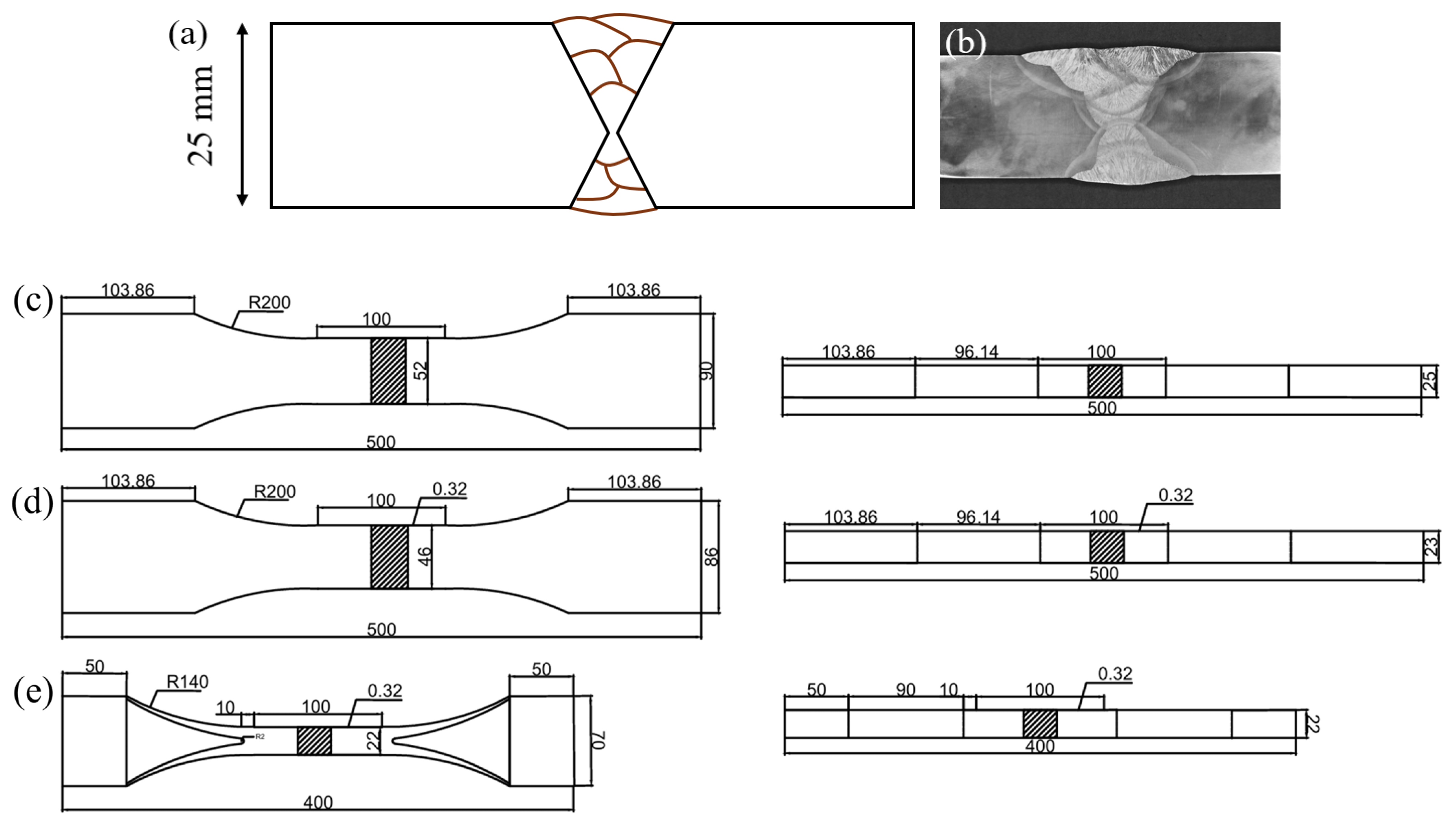
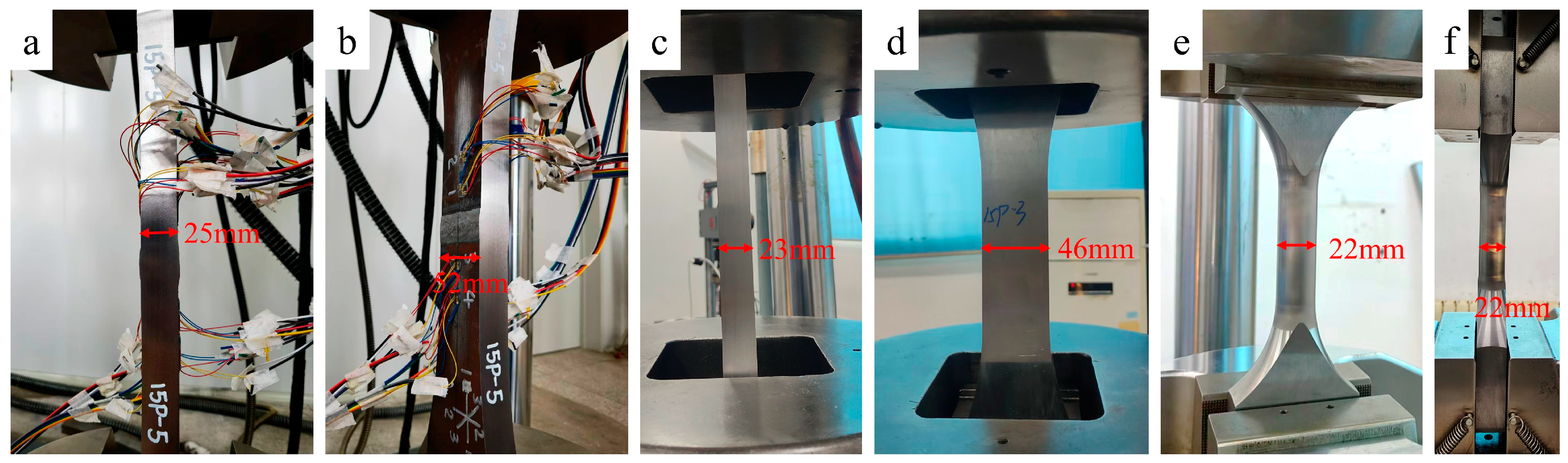
| Original welded plate | 52.0 | 25.0 | - | 0.5 | 420 | 7 |
| Smooth welded Plate | 46.0 | 23.0 | - | 0.5 | 420~540 | 7 |
| Cylindrical rod | - | - | 22.0 | 0.5 | 420~540 | 7 |
| Specimen | R | Stress/MPa | Cycles |
|---|---|---|---|
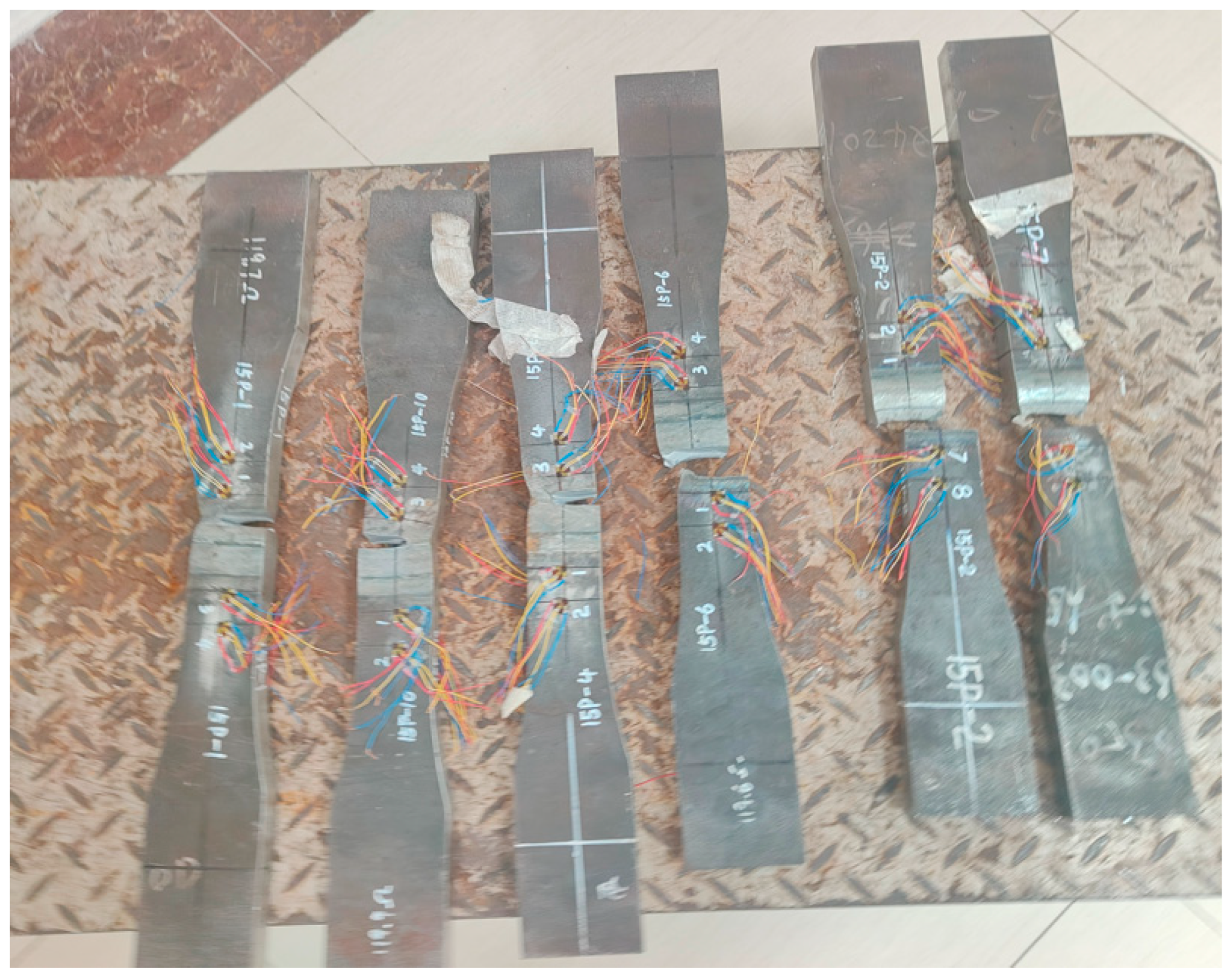
| 15P-1 | 0.5 | 420 | 1,329,199 |
| 15P-2 | 594,085 | ||
| 15P-4 | 837,930 | ||
| 15P-6 | 395,672 | ||
| 15P-7 | 724,115 | ||
| 15P-10 | 569,076 |
| Specimen | Number of Cycles | Crack Initiation Site | Crack Propagation Area Length/mm | Average Radiance Spacing/ μm | Number of Crack Propagation | Crack Extension Proportion/% |
|---|---|---|---|---|---|---|
| 15P-1 | 1,329,199 | Weld toe | 17.59 | 0.1954 | 90,020 | 6.77 |
| 15P-2 | 594,085 | Weld toe | 12.90 | 0.2186 | 59,012 | 9.93 |
| 15P-4 | 837,930 | Weld toe | 19.93 | 0.4021 | 49,565 | 5.92 |
| 15P-6 | 395,672 | Weld toe | 16.07 | 0.3875 | 41,471 | 10.48 |
| 15P-7 | 724,115 | Weld toe | 13.72 | 0.2425 | 56,577 | 7.81 |
| 15P-10 | 569,076 | Weld toe | 21.24 | 0.5124 | 41,452 | 7.28 |
| Specimen | R | Stress/MPa | Frequency/Hz | Cycles | Crack Initiation Site |
|---|---|---|---|---|---|
| Smooth welded plate 1 | 0.5 | 420 | 7 | 2,000,000 | Unstretched |
| Smooth welded plate 2 | 460 | 1,785,489 | Weld toe | ||
| Smooth welded plate 3 | 500 | 1,356,362 | Weld toe | ||
| Smooth welded plate 4 | 540 | 924,671 | Base metal | ||
| Cylindrical rod 1 | 0.5 | 420 | 7 | 4,476,915 | Unstretched |
| Cylindrical rod 2 | 460 | 2,000,000 | Unstretched | ||
| Cylindrical rod 3 | 500 | 2,000,000 | Unstretched | ||
| Cylindrical rod 4 | 540 | 2,000,000 | Unstretched |
Disclaimer/Publisher’s Note: The statements, opinions and data contained in all publications are solely those of the individual author(s) and contributor(s) and not of MDPI and/or the editor(s). MDPI and/or the editor(s) disclaim responsibility for any injury to people or property resulting from any ideas, methods, instructions or products referred to in the content. |
© 2026 by the authors. Licensee MDPI, Basel, Switzerland. This article is an open access article distributed under the terms and conditions of the Creative Commons Attribution (CC BY) license.
Share and Cite
Cao, J.; Ren, W.; Zhang, G.; Yin, S.; Liu, Z.; Sun, X. Effect of Weld Surface Quality on the Fatigue Performance of Q420 Steel Used in Offshore Wind Tower Tube. Metals 2026, 16, 148. https://doi.org/10.3390/met16020148
Cao J, Ren W, Zhang G, Yin S, Liu Z, Sun X. Effect of Weld Surface Quality on the Fatigue Performance of Q420 Steel Used in Offshore Wind Tower Tube. Metals. 2026; 16(2):148. https://doi.org/10.3390/met16020148
Chicago/Turabian StyleCao, Jun, Wubin Ren, Guodong Zhang, Shubiao Yin, Zhongzhu Liu, and Xinjun Sun. 2026. "Effect of Weld Surface Quality on the Fatigue Performance of Q420 Steel Used in Offshore Wind Tower Tube" Metals 16, no. 2: 148. https://doi.org/10.3390/met16020148
APA StyleCao, J., Ren, W., Zhang, G., Yin, S., Liu, Z., & Sun, X. (2026). Effect of Weld Surface Quality on the Fatigue Performance of Q420 Steel Used in Offshore Wind Tower Tube. Metals, 16(2), 148. https://doi.org/10.3390/met16020148