3.2. Electrochemical Tests
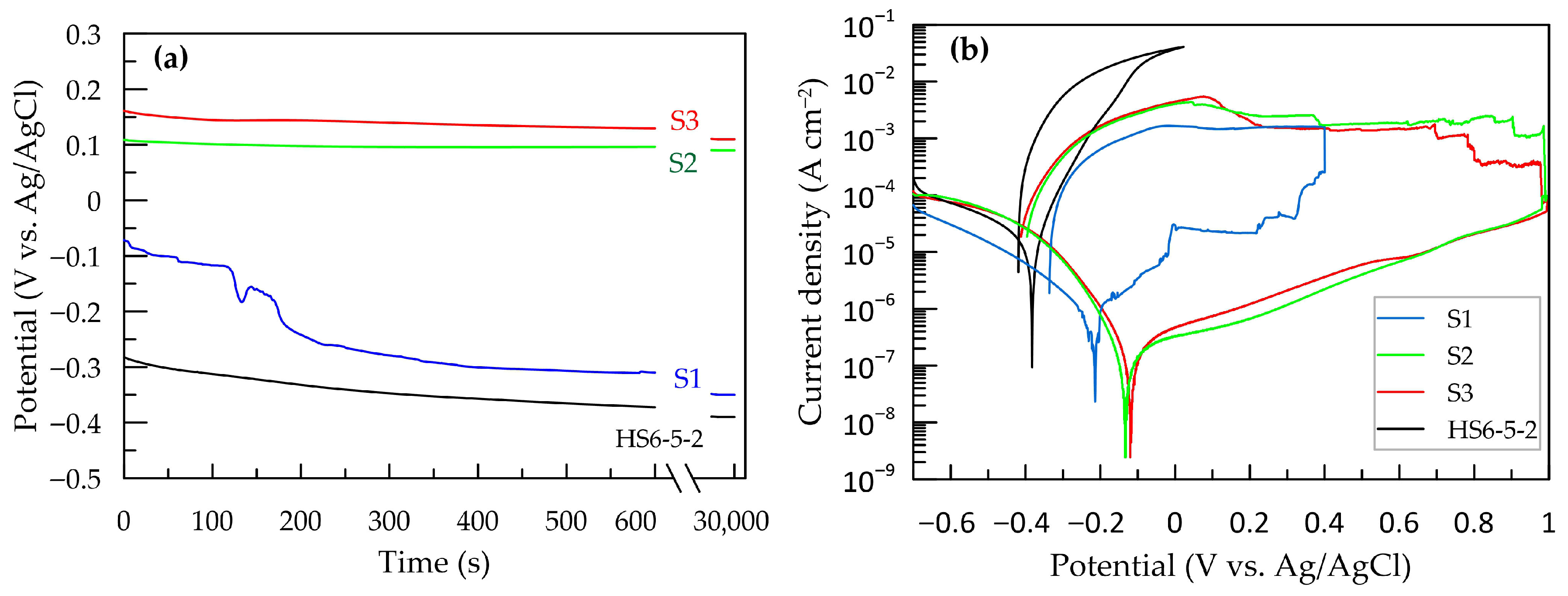
Figure 4a presents selected OCP–time dependences. The attained steady-state values of the OCP, as well as the direction of its deviation, are qualitative indicators of electrochemical interactions between metal surfaces and the corrosive environment. The values of OCP exposure in 3.5 wt.% NaCl are shown in
Table 5 and
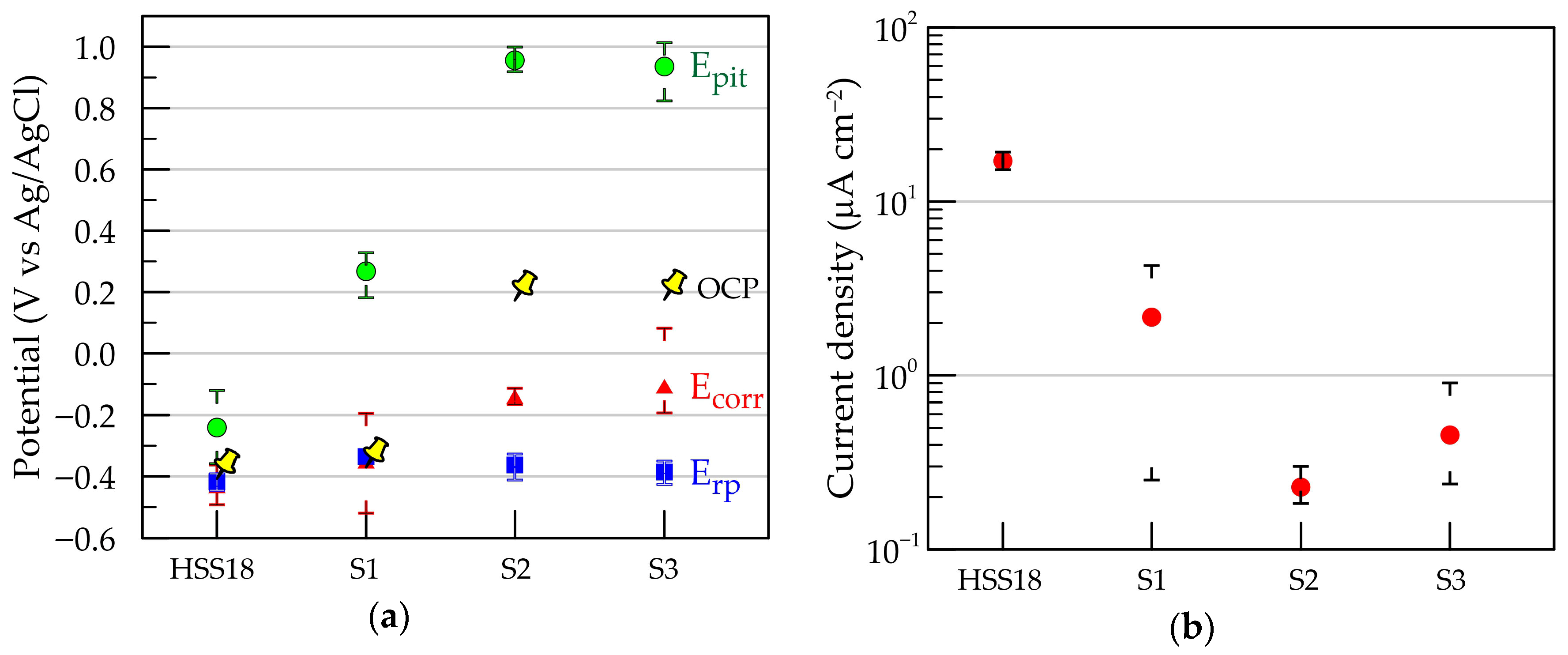
Figure 5a. For series S2 and S3, their open-circuit potentials remain nearly unchanged and stable, exhibiting similar OCP values within the range of 0.10 to 0.25 V. These values are approximately 400 mV more positive than those corresponding to the coatings from series S1.
The more negative values and the unstable evolution of the OCP for S1 can be regarded as an indication of inferior corrosion protection. Nevertheless, all three series exhibit more positive OCP values compared to the HS6-5-2 substrate, which classifies them as cathodic coatings.
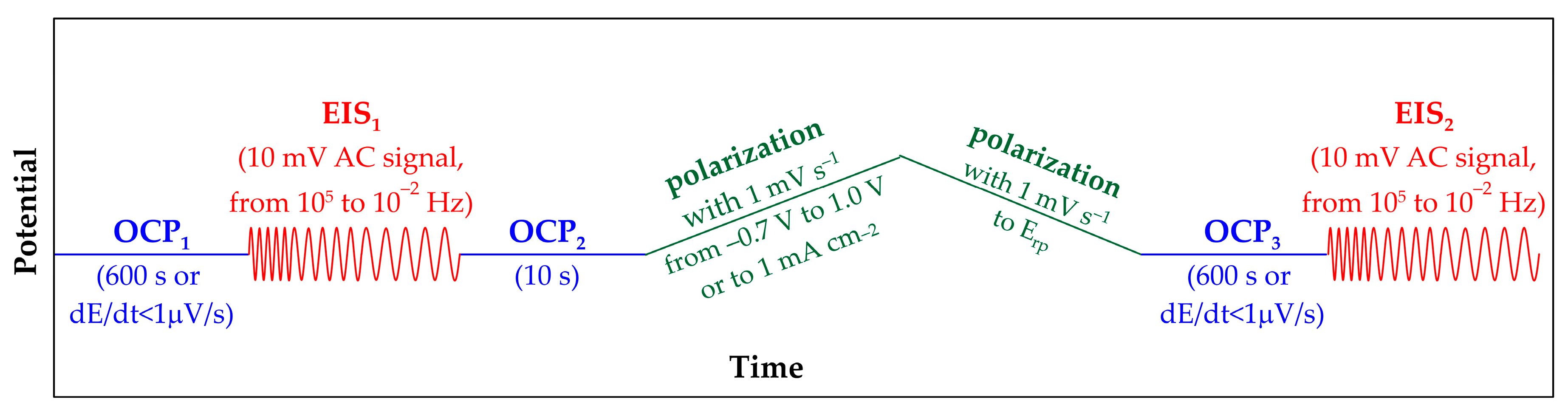
Selected polarization curves shown in
Figure 4b were used to derive the main corrosion–electrochemical parameters such as corrosion potential (
Ecorr), corrosion current density (
Jcorr), pitting potential (
Epit), and repassivation potential (
Erp). The electrochemical data obtained with the standard error is summarized in
Table 5.
The average, maximum, and minimum values of these parameters for each series of the (Cr/a-C)ml coatings, as well as for the HS6-5-2 substrate, are presented in
Figure 5.
The corrosion potential of series S1 shows values of approximately −0.348 V, which are intermediate between those of the HS6-5-2 substrate (−0.430 V) and the Ecorr values for series S2 and S3 (−0.138 V and −0.105 V, respectively). The corrosion potentials of series S2 and S3 are approximately 300 mV more negative than the corresponding OCP values. These values are more likely related to minor modifications of the passive films from cathodic polarization than to prolonged exposure to the corrosive environment. This hypothesis was confirmed by additional OCP measurements, which showed no significant changes in potential values over period of 8 h compared to those recorded during the first 10 min.
The corrosion rate, expressed as corrosion current density, showed the highest average value for series S1, although in some measurements, values comparable to those of the other two series were also recorded. This behavior is characteristic of coatings with an inhomogeneous composition and/or structure and a strong dependence of the corrosion process on the type of surface defect present. In this respect, the most stable performance was observed for series S2, for which the corrosion current density remained below 0.3 μA·cm−2.
The S2 and S3 polarization curves exhibit a profile typical of passive metallic systems, starting with a cathodic branch characterized by diffusion limitations of the oxygen reduction half-reaction, followed by an abrupt reversal of the working electrode polarity and a transition to a low-slope anodic branch. The relatively slow and linear increase in current during anodic polarization from −0.12 V up to nearly 1 V is an indication of the presence of a stable passive layer limiting the diffusion-controlled reaction of anodic metal dissolution.
In contrast, the S1 coatings exhibit unstable behavior, with potential fluctuations recorded at about 200 mV of anodic polarization (vs.
Ecorr) and at the anodic branch of the curve with a stepwise current increase. The pitting potential, a characteristic of resistance to pitting corrosion, for the S1 samples is reached at approximately 0.27 V. For series S2 and S3, the passive state is only disrupted upon reaching relatively high positive polarization values close to 1 V (
Figure 4b). These high
Epit values confirm the good protective properties of the multilayer structure of the (Cr/a-C)ml coatings in series S2 and S3.
At such anodic polarization levels, chloride ions still manage to accumulate locally and hinder the maintenance of the passive state; in isolated defective regions, they penetrate beneath the multilayer structure and initiate substrate corrosion, which is detected as an increase in current.
Upon decreasing anodic polarization (the reverse scan of the CV curves), the current density remains high, at approximately 1 mA·cm
−2. This observation is an indication of (Cr/a-C)ml-layer disruption and the existence of a localized corrosion process into the HS6-5-2 substrate. Such assertion is further supported by the
Erp values, which, for all three series of (Cr/a-C)ml coatings, are very close to the
Ecorr of HS6-5-2 and fall within the range of −0.407 V to −0.345 V (
Figure 4b and
Figure 5a).
Electrochemical impedance spectroscopy (EIS) was employed to investigate the protective properties of the (Cr/a-C)ml layers and the evolution of the corrosion process after anodic polarization.
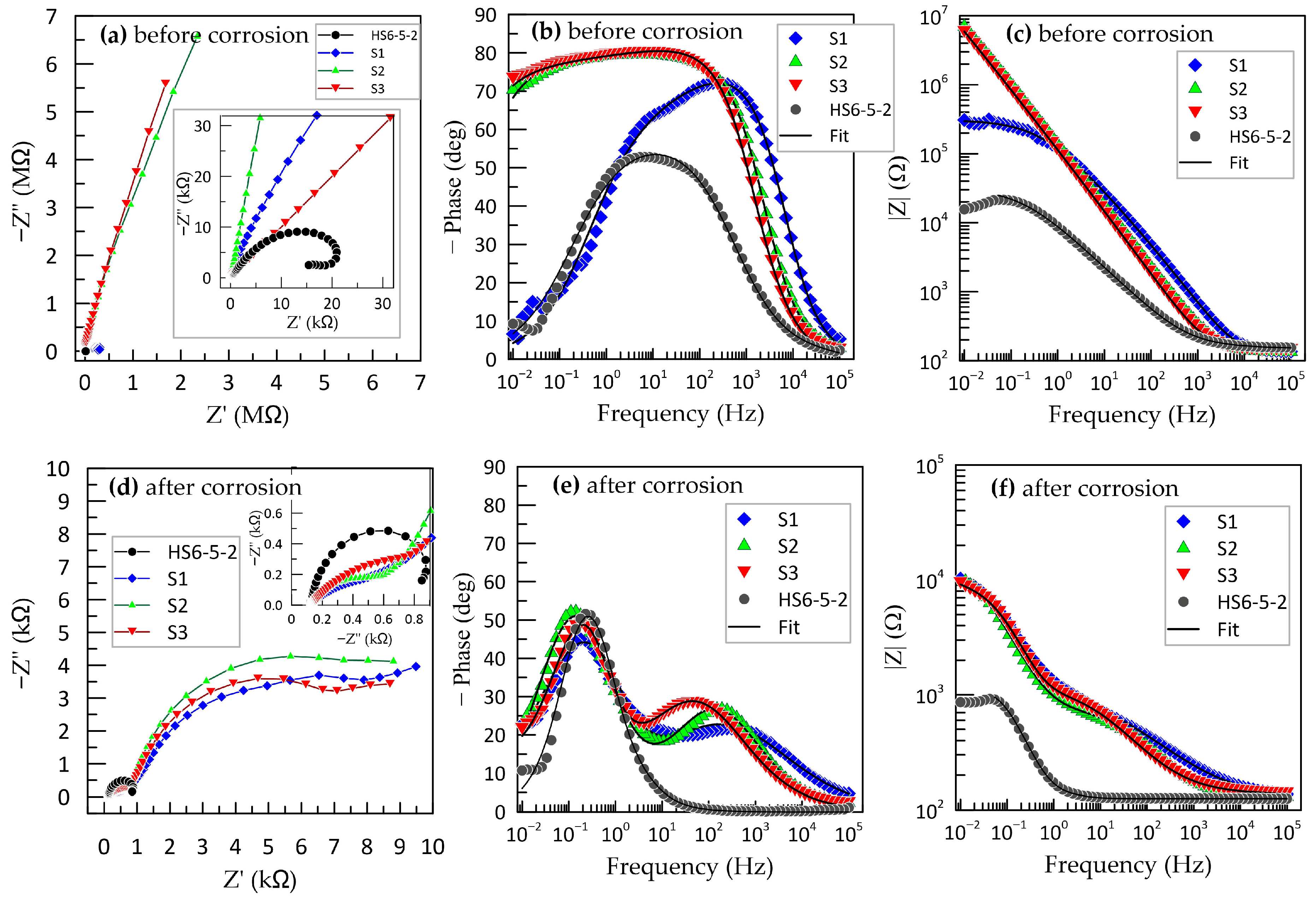
Figure 6a–c present Nyquist and Bode plots of representative spectra for each of the investigated series, as well as for the HS6-5-2 substrate before CV tests. The coatings of series S1 exhibit the lowest impedance (
Figure 6c), with predominantly resistive behavior manifested as an incomplete semicircle (
Figure 6a) and a shift in the phase angle to below 70° in the frequency range of 10
3–10
2 Hz (
Figure 6b). Moreover, in the low-frequency range, the interface shows ohmic behavior, and the phase shift for S1 tends to 0°. Such behavior is typical of metallic passive electrodes [
33]. A decrease in impedance indicates that the solution has penetrated the coating. The Nyquist plots of the S2 and S3 (Cr/a-C)ml coatings show a steep linear section at low frequencies (
Figure 6a). This type of impedance spectrum is characteristic of a blocking electrode with a small deviation from the ideal capacitive behavior [
33]. Bode plots demonstrate that the impedance of S2 and S3 is dominated by capacitance even in the low-frequency range, as the phase deviation is still above 70° (
Figure 6b).
Corrosion testing under applied anodic polarization significantly impacted the shape of the Nyquist plots and led to similar behavior of all three (Cr/a-C)ml coating series (
Figure 6d). Two distinct semicircles are clearly observed: the high-frequency semicircle has a small diameter and corresponds to the response of the protective layers, whereas the low-frequency semicircle characterizes the corrosion process of the substrate. At the lowest frequencies, i.e., at the end of the large semicircle, a tail appears, which can be associated with diffusion limitations during corrosion in less accessible regions such as deep pits or crevices beneath the protective layers [
34]. After anodic polarization during the CV tests, the behavior of the metal systems is entirely resistive, with the phase shift not reaching 55° (
Figure 6e). This is an indication that the dominant processes at the metal–electrolyte interface are those limited by charge transfer processes and are not limited by diffusion in the barrier layers. However, although the corrosion resistance of all three series is significantly deteriorated, their impedance remains about one order of magnitude higher than that of the HS6-5-2 substrate (
Figure 6f).
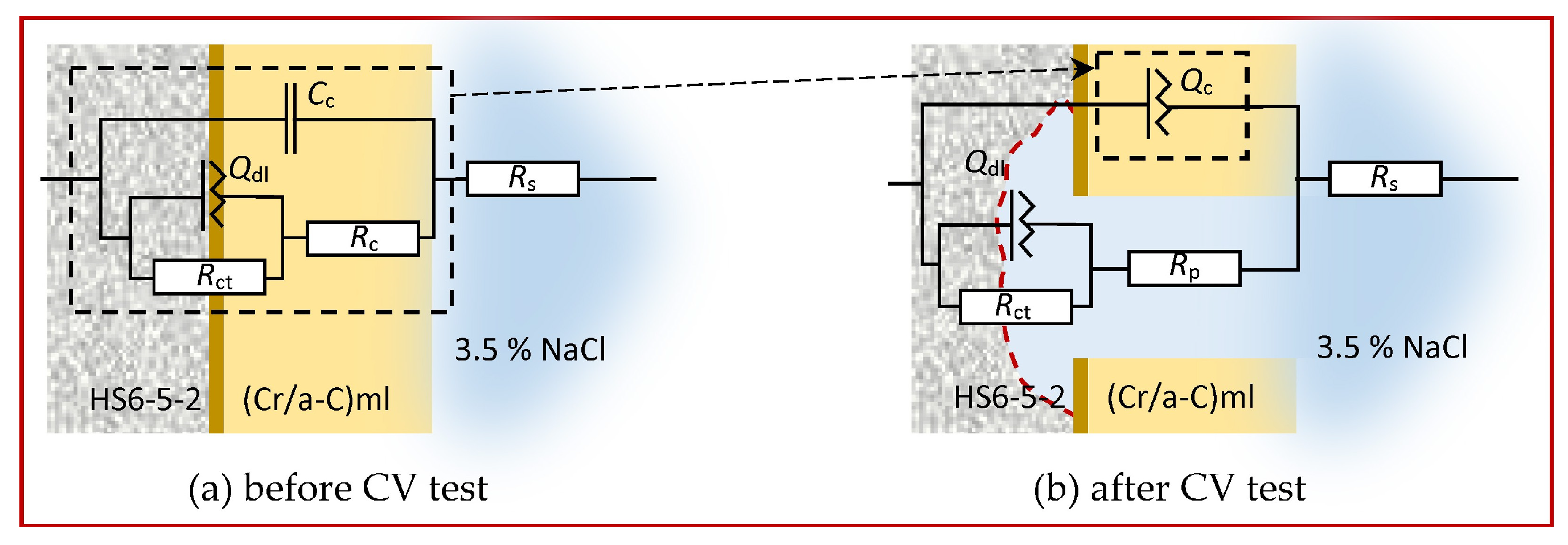
The equivalent circuit used to simulate the reaction at the metal–electrolyte interface before the corrosion tests is R
s(C
c[R
c(R
ctQ
dl)]) and is presented in
Figure 7a. In this circuit,
Rs is the solution resistance,
Cc is the capacitance of the insulating defect-free coating, and
Rc is the transfer of ionic species through the defects in the coating. Interaction at the interface HS6-5-2/(Cr/a-C)ml coating is described with the parallelly connected constant phase element of the electric double layer
Qdl and the charge transfer resistance
Rct.
The behavior of the interface after corrosion destruction of the coating is described by R
s(Q
c[R
p(R
ctQ
dl)]) and is presented in
Figure 7b. In it, for simplicity, the entire circuit of
Figure 7a is represented as a constant phase element of the coating (
Qc). Parallel to it, resistance (
Rp) inside the pits in the multilayer is added, which is the result of difficulties with the transport processes through the electrolyte and loose corrosion products in the pits. In this case, the elements
Qdl and
Rct represent the charge of the electric double layer and the charge transfer resistance, respectively, at the metal–electrolyte interface at the pit’s bottom.
The data calculated by the first equivalent circuits are listed in
Table 6. The (Cr/a-C)ml coatings have a one-order-of-magnitude lower capacitance than HS6-5-2, which is consistent with the insulating nature of the surface. The lower
Rc of the bare substrate can be identified within the natural passive layer on HS6-5-2.
The EIS results for the chemical resistance of the coatings expressed as Rct confirm those obtained from the OCP and CV tests. Before the polarization tests, the Rct values for series S2 and S3 are close (36.15 MΩ and 40.64 MΩ, respectively), while the corresponding values for series S1 and the substrate are 0.31 MΩ and 0.032 MΩ. Once the multilayer is broken, the Rct values for all three series converge and are in the range of 6.57 kΩ to 15.3 kΩ, while the capacitance of the double layer increases significantly.
3.4. EDX Analysis
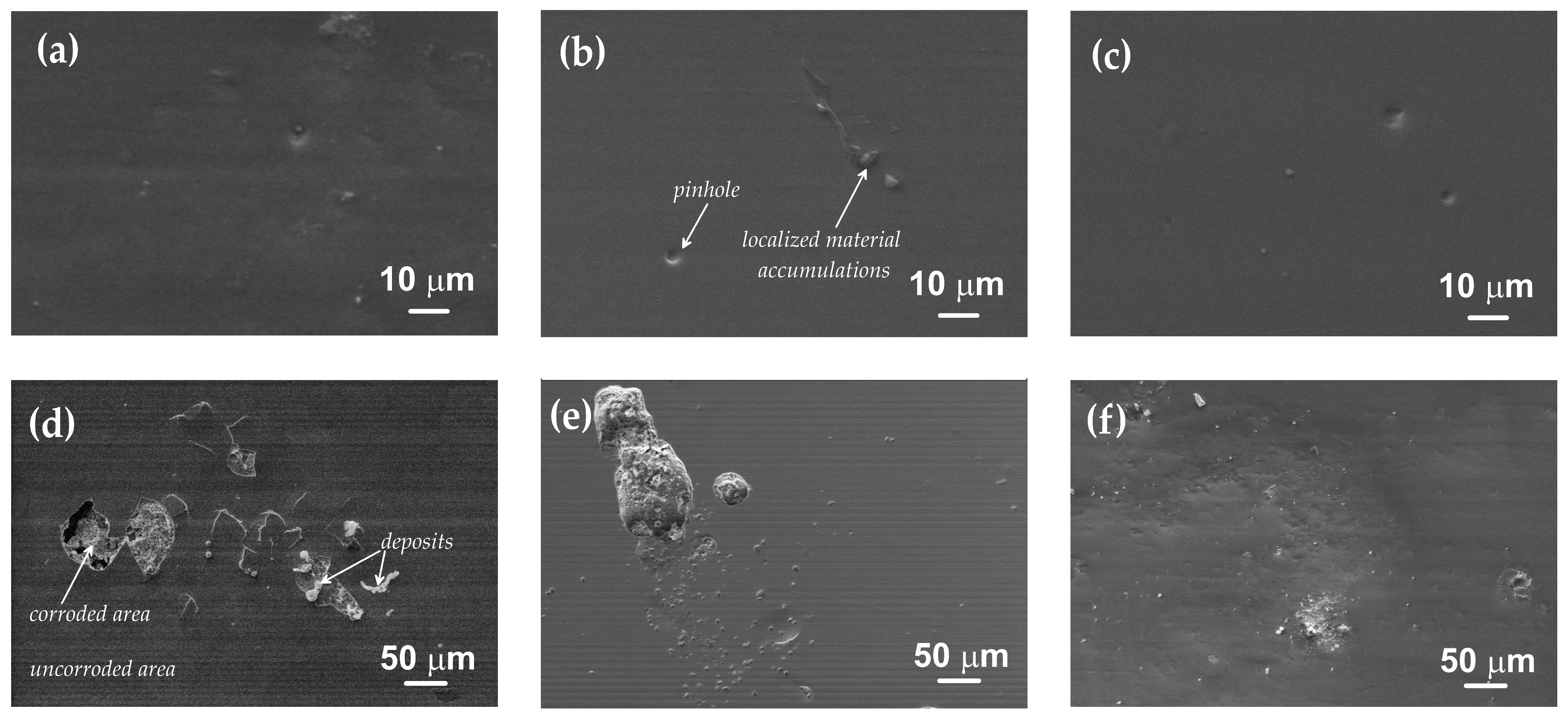
Table 7 presents the weight percentages of the main elements measured on the (Cr/a-C)ml coatings on HS6-5-2 before and after corrosion tests in 3.5% NaCl. Due to the localized nature of the corrosion damage, analyses were performed in three specific zones: an uncorroded surface (1), areas with deposited corrosion products (2), and exposed surfaces of shallow pits (3).
Analysis of the coatings prior to corrosion testing shows an increase in Fe content in the order from S1 to S3, which most likely correlates to decreasing coating thickness. The decrease in Cr content and the corresponding increase in C content along the same series are associated with the deposition conditions. This also explains the significant differences in the Cr:C ratio, which ranged from 9.7 for S1, to 2.9 for S2, and to 2.1 for S3. For comparison, the Cr:C ratio in the substrate is 1.2.
EDX analyses confirmed that coating compositions in non-corroded areas remained the same as compositions of untreated surfaces. The Cr:C ratio for series S1 and S2 decreased slightly, with average values of 9.2 and 2.7, respectively, while for series S3, it remained unchanged at 2.1.
The contents of V, W, and Mo increased significantly in the areas with deposits, (by 3.25–5 times) compared to the HS6-5-2 substrate. The most pronounced increase was observed in series S1 (4–5.25 times), while the Cr content remained close to that of the substrate.
Significant enrichment of the main alloying elements (V, Cr, W, and Mo) and high oxygen content were confirmed in the most severely attacked zones where the (Cr/a-C)ml coating is completely destroyed. Consequently, Fe was preferentially dissolved, leading to the formation of an oxide layer composed of elements more resistant to anodic polarization. In some deeper regions, elevated sulfur content was detected in combination with Mo (series S1). It could be assumed that the presence of non-metallic MoS inclusions in the substrate compromises the adhesion of the (Cr/a-C)ml layer. These sites most likely act as local concentrators of the dissolution corrosion process rather than as accumulations formed during corrosion. Sulfur traces are relatively rare and do not play a dominant role in the progression of corrosion processes on the (Cr/a-C)ml coating of HS6-5-2.
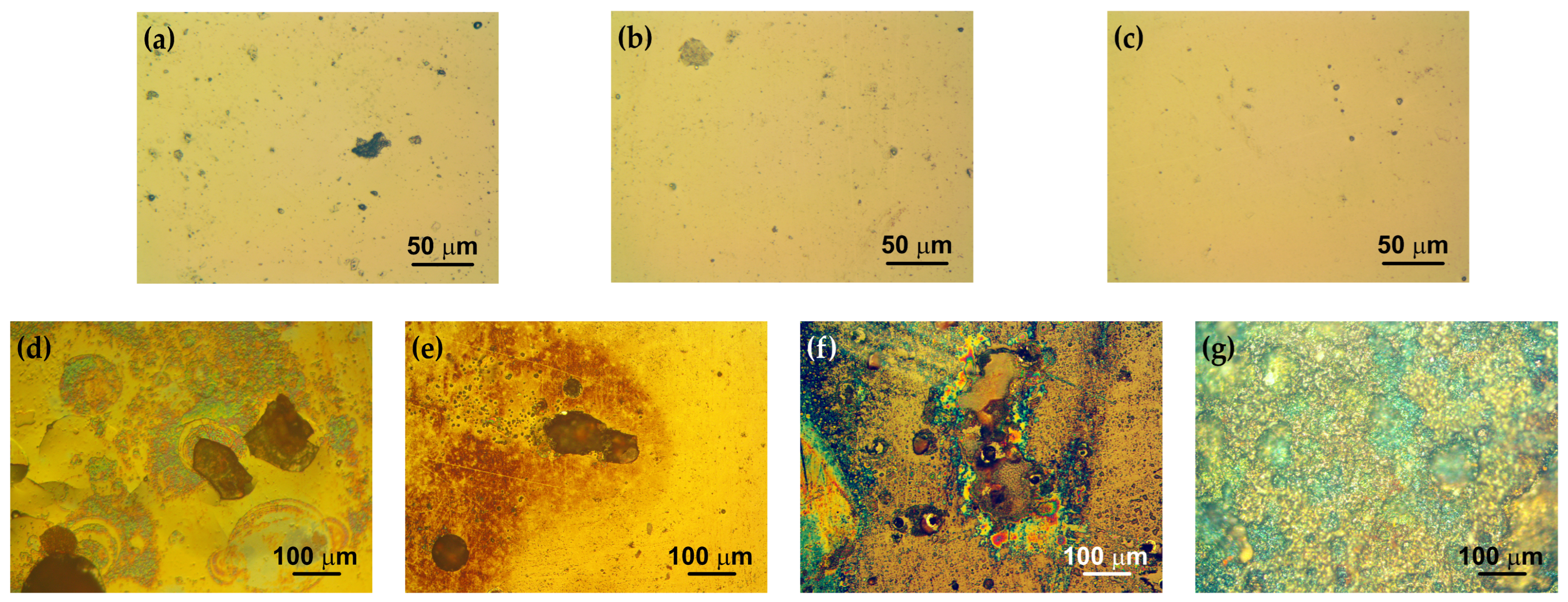
Based on the results of the three corrosion tests, microscopic observations, and EDX analysis, it is evident that all three coatings exhibit better corrosion resistance compared to the uncoated HS6-5-2 substrate. The S1 series samples, which had the highest rate of deposition, show inferior corrosion resistance compared to the S2 and S3 samples. Among the three series, this multilayer coating exhibits the most negative values for characteristic potentials (OCP, Ecorr, and Epit), the highest corrosion current density, and the lowest impedance.
This result may seem somewhat surprising, considering that the S1 coatings have the highest chromium content and the greatest thickness. However, based on the microscopic observations and, above all, the observed undermining of the coating and peeling of the flakes from the steel surface, it can be concluded that the higher-chromium structure is more stressed. The redistribution of internal stresses to the coating/substrate interface and to surface imperfections most likely initiates pits.




 ,
,