Article

Effect of Weld Surface Quality on the Fatigue Performance of Q420 Steel Used in Offshore Wind Tower Tube


1
Faculty of Metallurgy and Energy Engineering, Kunming University of Science and Technology, Kunming 650093, China
2
Central Iron & Steel Research Institute, Beijing 100081, China
3
Collaborative Innovation Center of Steel Technology, University of Science and Technology Beijing, Beijing 100083, China
4
CITIC Metal Co., Ltd., Beijing 100004, China
*
Authors to whom correspondence should be addressed.
Metals 2026, 16(2), 148; https://doi.org/10.3390/met16020148
Submission received: 9 January 2026 / Revised: 19 January 2026 / Accepted: 20 January 2026 / Published: 25 January 2026
(This article belongs to the Special Issue Feature Papers in Metal Failure Analysis)

Abstract

The size of offshore wind turbine towers is increasing, and they are subjected to larger and more complex loads, which imposes more stringent requirements on the fatigue performance of welded plates in new offshore wind turbine towers. This study investigated the axial fatigue performance of 25 mm thick welded plates made of the new Q420 steel grade. Fractures in the Q420 welded plates occurred at the junction of the coarse-grained zone of the filler metal and the heat-affected zone. By analyzing the fatigue striation spacing across multiple regions, it was found that the proportion of cycles in the crack propagation stage within the total fatigue life did not exceed 11%, indicating that the crack initiation stage is the decisive factor in the fatigue life of the specimens. Removing surface quality defects at the weld toe significantly increased both the fatigue life and the fatigue strength limit of the Q420 welded plates.

1. Introduction

The development of clean energy is of significant importance in alleviating the energy crisis and reducing carbon emissions [1,2,3]. With the rapid development of wind power technology, the newly installed wind power capacity in 2024 is expected to reach a record 117 GW, and the global cumulative installed wind power capacity will reach 1052 GW, with the proportion of offshore wind turbines increasing year by year. Offshore wind power possesses a series of significant and irreplaceable strategic advantages: superior offshore wind resources, an allowance for the use of larger-capacity turbines, substantial single-turbine power generation and scale efficiency, no consumption of valuable land resources, and installation without spatial constraints [4,5,6]. The main materials of wind power equipment are components such as the tower and nacelle base of wind turbines, with medium-thick steel plates being the primary steel type, accounting for approximately 69% of the total steel consumption.
In recent years, the continuous trend of increasing the single-unit capacity of offshore wind turbines has led to the continuous heightening of wind turbine towers, with offshore wind turbines developing towards larger sizes and higher efficiency [7,8]. The 26 MW offshore wind turbine, developed by Dongfang Electric with fully independent intellectual property rights and currently the largest in the world, was launched on 12 October 2024. With a hub center height of 185 m, equivalent to a 63-story residential building, a single turbine can generate 100 million kilowatt-hours of clean electricity annually under an average wind speed of 10 m/s, meeting the annual electricity needs of 55,000 ordinary households. The clean electricity produced each year can save more than 30,000 tons of standard coal and reduce carbon dioxide emissions by over 80,000 tons. The increasing size of offshore wind turbines signifies a larger self-weight, greater wind load, significant amplification effects, and reduced natural frequencies, making them prone to resonance and sharply increasing the risk of fatigue damage [8,9]. Currently, Q355 series steel for wind turbine towers can no longer meet industry development requirements. Using high-strength Q420 steel for towers can enhance the load-bearing capacity while controlling overall tower weight by reducing the wall thickness. The fatigue performance of welded joints in the new Q420 tower steel warrants in-depth research to ensure that the service requirements of offshore wind turbine towers are met. Offshore wind turbine towers have relatively long circumferential welds, typically exceeding 10 m in length, making them susceptible to factors such as welding quality, internal defects, weld grade, and stress concentration, with fatigue failure being one of the primary modes of failure [10,11].
The fatigue performance of welds in steel towers for offshore structures is an important performance indicator. In recent years, numerous scholars have conducted research on the fatigue performance of welded plates. Wang investigated the welded joints of medium-carbon steel and found that fatigue cracks primarily occurred at welding defects, such as porosity, slag inclusions, and heterogeneous microstructures with poor mechanical properties [10]. Radaj studied metal components and observed that fatigue cracks often initiate at locations with a high stress concentration, variations in the geometric shape of the weld surface cause significant stress concentration, and fatigue cracks typically start at the weld toe of metallic components [12]. Wang fully considered the different crack propagation rates between the initiation and propagation stages of fatigue cracks, finding that, compared with base metal specimens, the fatigue crack initiation life of welded specimens was significantly higher [13]. Pijpers and colleagues studied the fatigue behavior of austenitic stainless steel load-bearing fillet weld cruciform joints with root cracks [14]. Peng investigated the fatigue strength of ring welds composed of rolled and cast steel plates of different thicknesses, noting that the quality of the weld toe is crucial to the fatigue strength of ring welds [15]. Liu studied how, with increasing strain, the crack initiation site shifts from the weld toe to the base metal [16]. Li found that the fatigue life of Q420B welded steel gradually increases as the temperature decreases, indicating that low temperatures can improve the fatigue performance of welded Q420B steel, while the dispersion of fatigue life increases as the stress amplitude decreases [17]. The fatigue performance of welded joints in medium-thick steel plates is a scientifically significant issue; during the welding process, the fatigue strength of critical components is often reduced by 40–60%, and the fatigue performance may fluctuate considerably, resulting in a relatively poor reliability in use [10].
The surface quality of the weld seam is one of the decisive factors affecting the fatigue performance of the welded structure, especially the welded plate that is subjected to cyclic loads [18,19]. Fatigue failure is the most common form of failure for welded structures, and fatigue cracks mostly originate from defects on the surface or near the surface of the weld [20,21]. The essence of fatigue failure is the germination and propagation of microscopic cracks under the action of cyclic stress. Any discontinuity, defect, or geometric mutation on the weld surface will cause stress concentration and reduce fatigue strength [22,23]. The smoother the transition between the filler metal and the base metal at the weld toe, the smaller the stress concentration, and the sharp weld toe is a natural fatigue weak area and becomes the priority point of fatigue cracks [11,12,24]. Most of the fatigue life (up to 70~90%) is consumed in the crack initiation stage, and poor surface quality directly shortens the crack initiation period [25,26]. The ideal toe weld state is to create a smooth transition.
The impact of the weld surface quality on fatigue performance is not isolated, and it is often coupled with other factors, further exacerbating the fatigue performance degradation. There is usually a high tensile residual stress in the weld toe area, which is superimposed with the working stress, making fatigue cracks more prone to initiation and propagation, and the poor surface quality will “make matter” in this high-stress area [27,28]. Although internal pores and non-fusion are not directly exposed to the surface, they may extend to the surface under cyclic loading, or communicate with surface defects, accelerating failure [29]. Microstructural changes in the heat-affected zone reduce the material’s resistance to crack initiation and propagation [30,31]. Measures to improve the surface quality of the weld to improve fatigue performance are to use disks or grinding wheels to polish the sharp weld toes into smooth transitions and eliminate cold cracks on the surface [32,33]. This is one of the most commonly used and effective methods for actual steel mill enterprises.
By studying the causes of axial tensile fatigue fluctuation and fatigue failure fractures of 25 mm thick Q420 tower steel welds, the effects of the surface quality of three different fatigue samples on the fatigue properties of welded joints were compared and analyzed. The key factor that clearly governs the total fatigue life of the welded plate is the time of crack initiation. Smoothing the remaining height of the weld toe can inhibit the occurrence of fatigue cracks. In the same batch of Q420 welded plate fatigue specimens, a good weld surface quality can not only greatly increase the number of fatigue cycles, but also improve the fatigue strength limit of the material. Improving the surface quality of the welded plate is an affordable and effective way to improve fatigue performance, which can provide engineering guidance for the development of new Q420 offshore wind steel with stable fatigue properties.

2. Materials and Methods

2.1. Materials

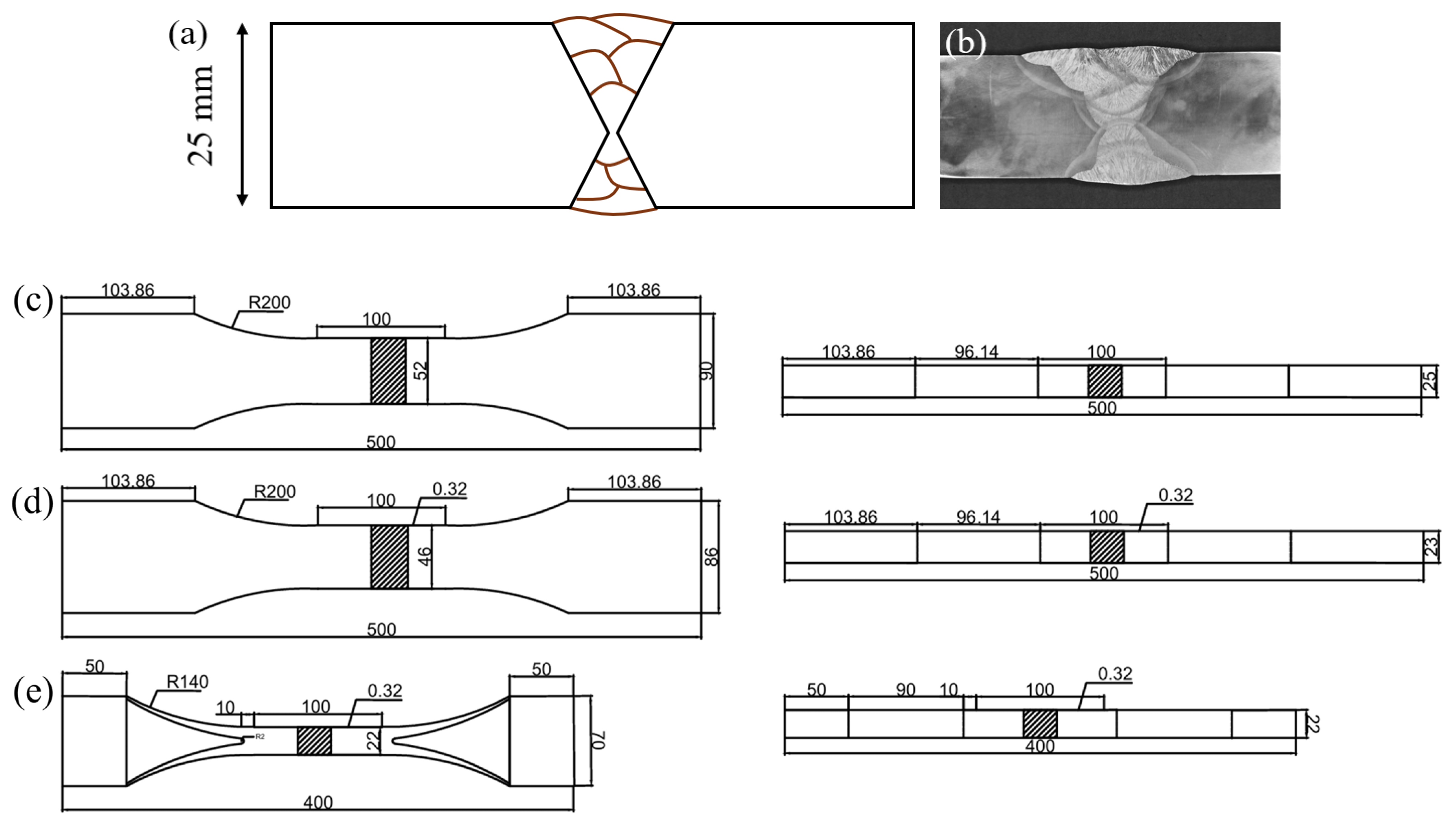
The study focuses on a novel Q420 offshore wind turbine tower steel plate with a thickness of 25 mm. The steel plate undergoes TMCP heat treatment, and the weld seam is a double-V groove weld, requiring multiple-pass welding to fill the joint, in accordance with the GB/T5293-2018 [34] standard, certified by the British Lloyd’s Quality Assurance Company with ISO 9001 [35] certification. The weld excess height on both sides is controlled within 1.0 mm, as shown in Figure 1. Table 1 and Table 2 list the chemical compositions of the base metal and filler metal, and Table 3 presents the welding process. Table 4 shows the mechanical properties of the Q420 steel plate base metal and welds.
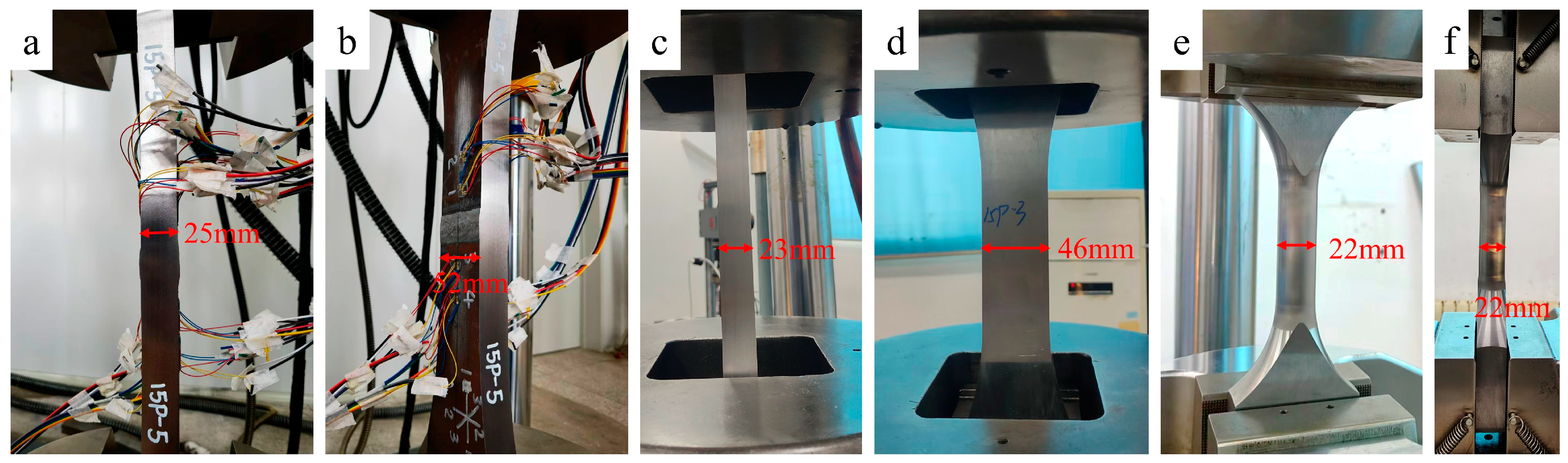
This experiment conducted fatigue tests on Q420 steel plate welds, setting up specimens with three different weld surface conditions. The fatigue test specimens are shown in Figure 2. The welded plates retained the weld reinforcement in their original state, with a stressed cross-sectional size of 25 × 52 mm; with the weld reinforcement removed, the stressed cross-sectional size is 23 × 46 mm; the cylindrical rod fatigue specimen has a diameter of 22 mm, with weld surface defects ground smooth. The axial fatigue test loads are shown in Table 5; the fatigue testing standard is based on the National Standard of the People’s Republic of China GB/T 3075-2021 [36]. Setting the R-value to 0.5 introduces a higher mean tensile stress, allowing for a more stringent evaluation of the material’s fatigue performance under “mean tensile stress” conditions, which more closely reflect the actual operating conditions under continuous offshore wind loads, and the loading frequency is 7 Hz, which is closer to the load frequencies of actual engineering structures (such as wind or vehicle loads), making it suitable for simulating real working conditions or studying crack propagation mechanisms. The low frequency allows for more precise data acquisition. A frequency of 7 Hz helps reduce temperature rise, which aligns with the principle of “avoiding overheating effects” stated in the standards. The international standard ISO 1099 [37] also permits the test frequency to fluctuate within a certain range.

2.2. Methods

The metallographic specimen was ground, ensuring that the grinding direction at each stage was perpendicular (90°) to the previous stage, until the scratches from the previous stage were completely removed, proceeding up to 1500-grit sandpaper. An appropriate amount of polishing paste was applied to the rotating polishing wheel, and the specimen was kept moist. A suitable pressure was applied and moved slowly along the radial direction until the specimen surface achieved a mirror finish. The specimen was etched with 4% nitric acid alcohol for 5 s, then immediately rinsed thoroughly with flowing water to completely remove the etchant. Subsequently, it was washed with anhydrous ethanol for dehydration and immediately dried with cold air from a blower. The microstructures of the Q420 welded plate base material matrix and weld zones were analyzed using an optical microscope (Olympus Microscope, GX51, Beijing, China) and a scanning electron microscope (Kechida Co., Ltd., Quanta 650, Shenzhen, China). The scanning electron microscope (Quanta 650) was specifically employed to examine microcracks on the weld surface of the Q420 welded plate. Hardness testing of the welds was conducted using a Vickers hardness tester (Beijing Era United Technology Co., Ltd, HV-1000, Beijing, China) with a load of 5000 g and a dwell time of 15 s. After fatigue testing, the fracture surfaces of the fatigue specimens were cleaned ultrasonically and examined using a scanning electron microscope (Quanta 650). Following the imaging of the fracture morphology, the fracture specimens were sectioned along the middle. The surfaces of the fracture cross-section specimens were ground and polished, etched with a 4% volume fraction nitric acid alcohol solution, and then the deformed microstructure and crack propagation were observed using an optical microscope (GX51) and a scanning electron microscope (Quanta 650). Subsequently, the fracture cross-section specimens were vibratory polished, and electron backscatter diffraction (JEOL Ltd., JSM-IT800SHL, Tokyo, Japan) was employed to analyze the crack propagation in the fracture.

3. Test Results and Analysis

3.1. Q420 Welded Plate Microstructure Characterization

The microstructure is the physical basis of the macroscopic properties of materials. Firstly, the microstructure of the Q420 steel plate base material and welded joints is characterized. The ultimate goal of fatigue testing is not merely to obtain a fatigue limit or life data, but, more importantly, to understand why the material exhibits such fatigue performance.

3.1.1. Base Material Microstructure

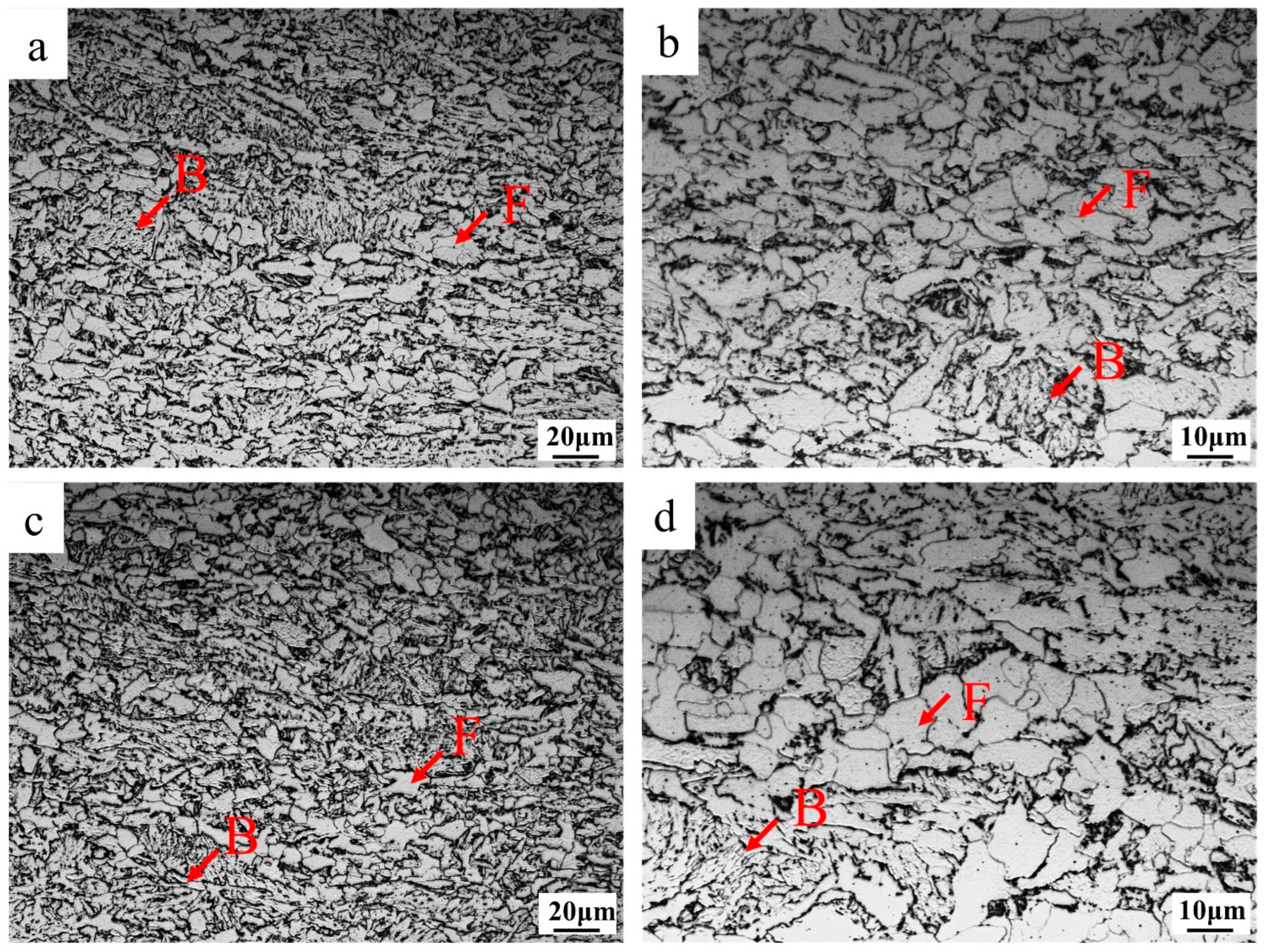
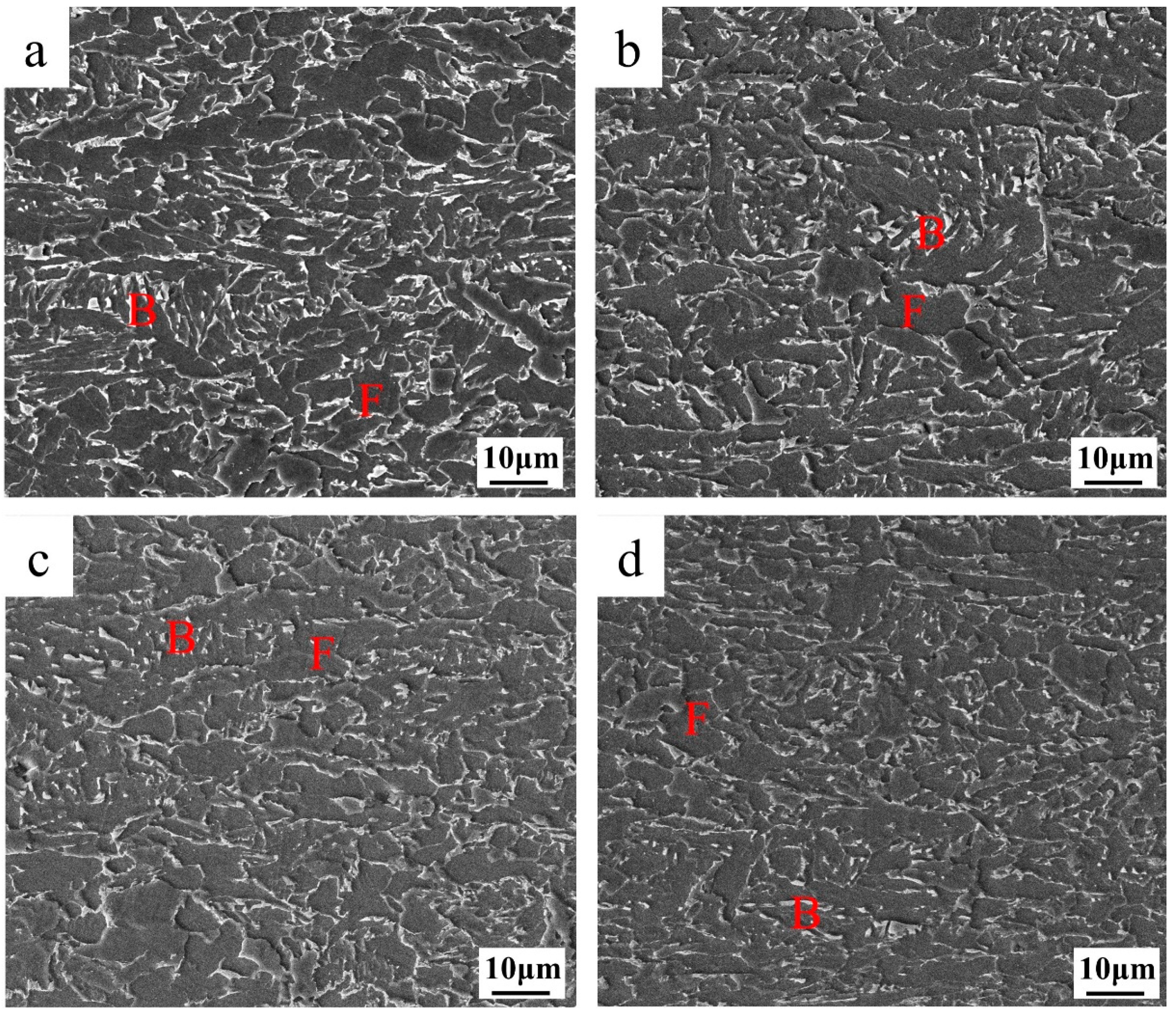
The base material microstructure of the Q420 steel plate consists of a mixture of bainite (B) and ferrite (F), as can be observed from the metallographic (OM) and scanning electron microscope (SEM) images shown in Figure 3. The scanning electron microscope images in Figure 4 indicate differences in the morphology of bainitic precipitates along different thickness directions of the steel plate; MA islands at the edge are on a micrometer scale, whereas MA islands at the core are on a submicrometer scale. The grain size of the base material at the edge of the welded plate is approximately 9.56 μm, while that at the core is approximately 11.48 μm. The statistical analysis of grain size is in accordance with the GB/T 6394-2017 standard [38].

3.1.2. Weld Microstructure

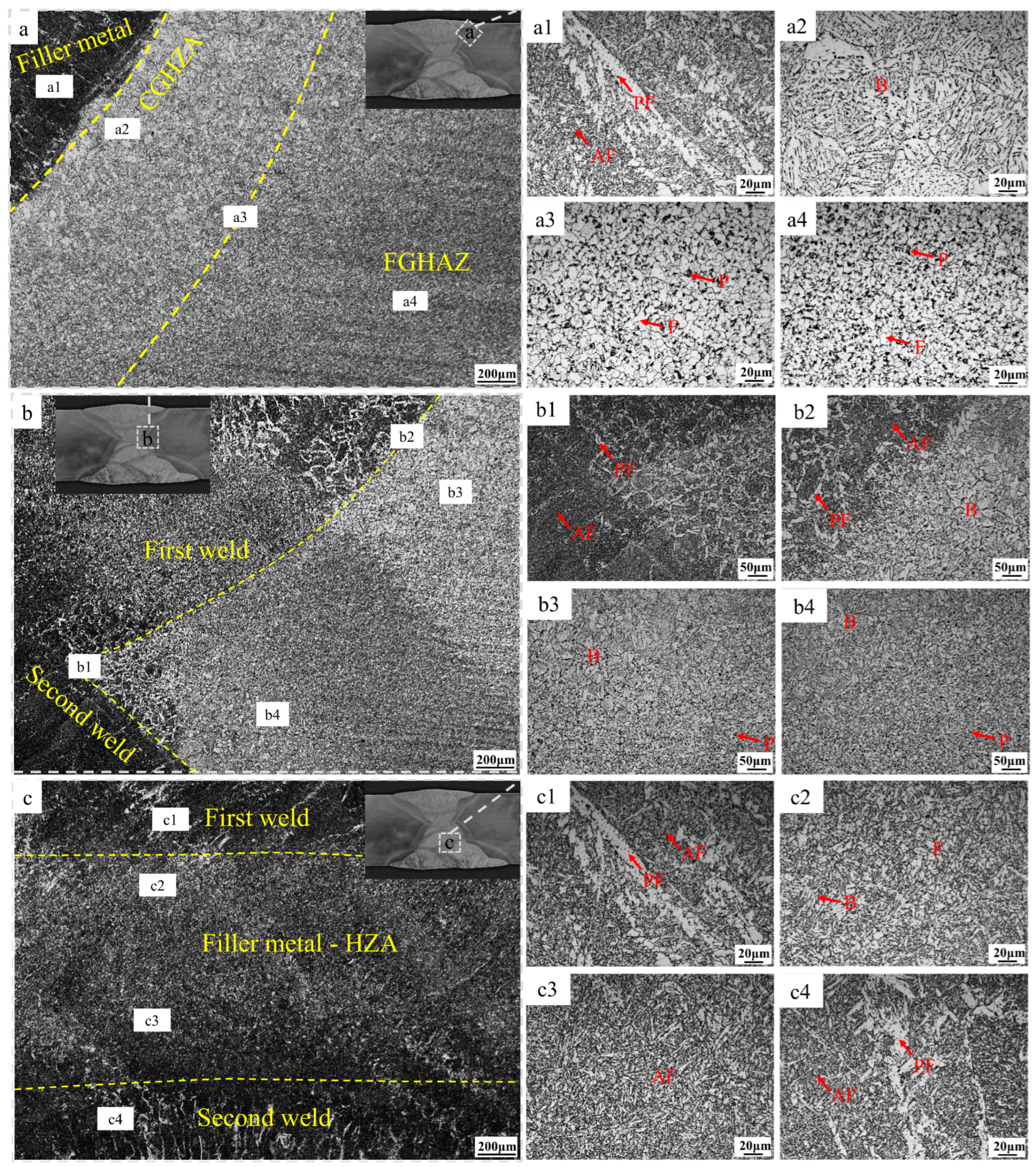
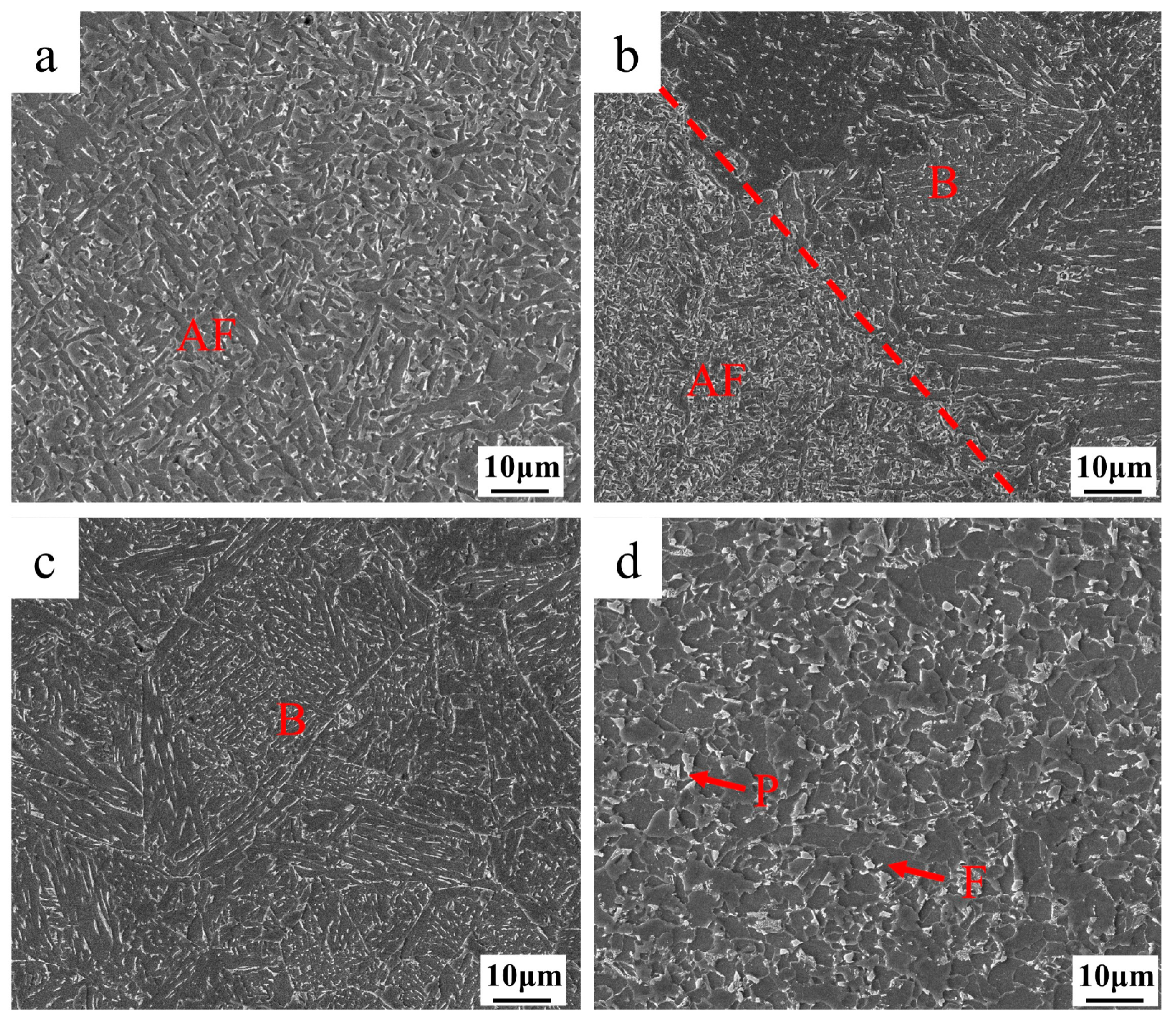
The base metal in the weld zone exhibits a diverse range of microstructures, as shown in Figure 5a. The filler metal consists of acicular ferrite (AF) and proeutectoid ferrite (PF). The coarse-grained zone, adjacent to the filler metal, is subjected to very high temperatures (typically exceeding 1100 °C), causing the original fine grains to grow rapidly and form coarse austenite grains, which transform into coarse bainitic structures upon cooling; the bainite grain size in the coarse-grained zone exceeds 40 μm [39,40]. The fine-grained zone, located outside the coarse-grained zone, is heated to temperatures above Ac3 but without significant grain growth. Austenite in this region undergoes recrystallization during cooling, resulting in fine and uniform ferrite (F) and pearlite (P) microstructures, with grain sizes finer than the base metal [41,42]. Figure 5b depicts multi-pass welding; each new weld affects the thermal-affected zone produced by the previous weld in the base metal. Each new weld forms a completely new heat-affected zone, overlapping the original one. In the region where filler metals overlap, proeutectoid ferrite is more prominent, and coarse-grained bainitic, ferritic, and pearlitic fine-grained zones are also observed. Figure 5c illustrates the effect of a new weld on the filler metal heat-affected zone of the previous weld. The heat-affected zone of the filler metal contains no proeutectoid ferrite; the regions close to the weld show acicular ferrite, while the distant regions display bainite and ferrite. Figure 6 shows scanning electron microscopy images of the weld zone microstructure. The grain boundaries of acicular ferrite are not obvious, but overall the grains are relatively small. In summary, each welding pass generates a new, independent heat-affected zone.

3.2. Fatigue Test Result

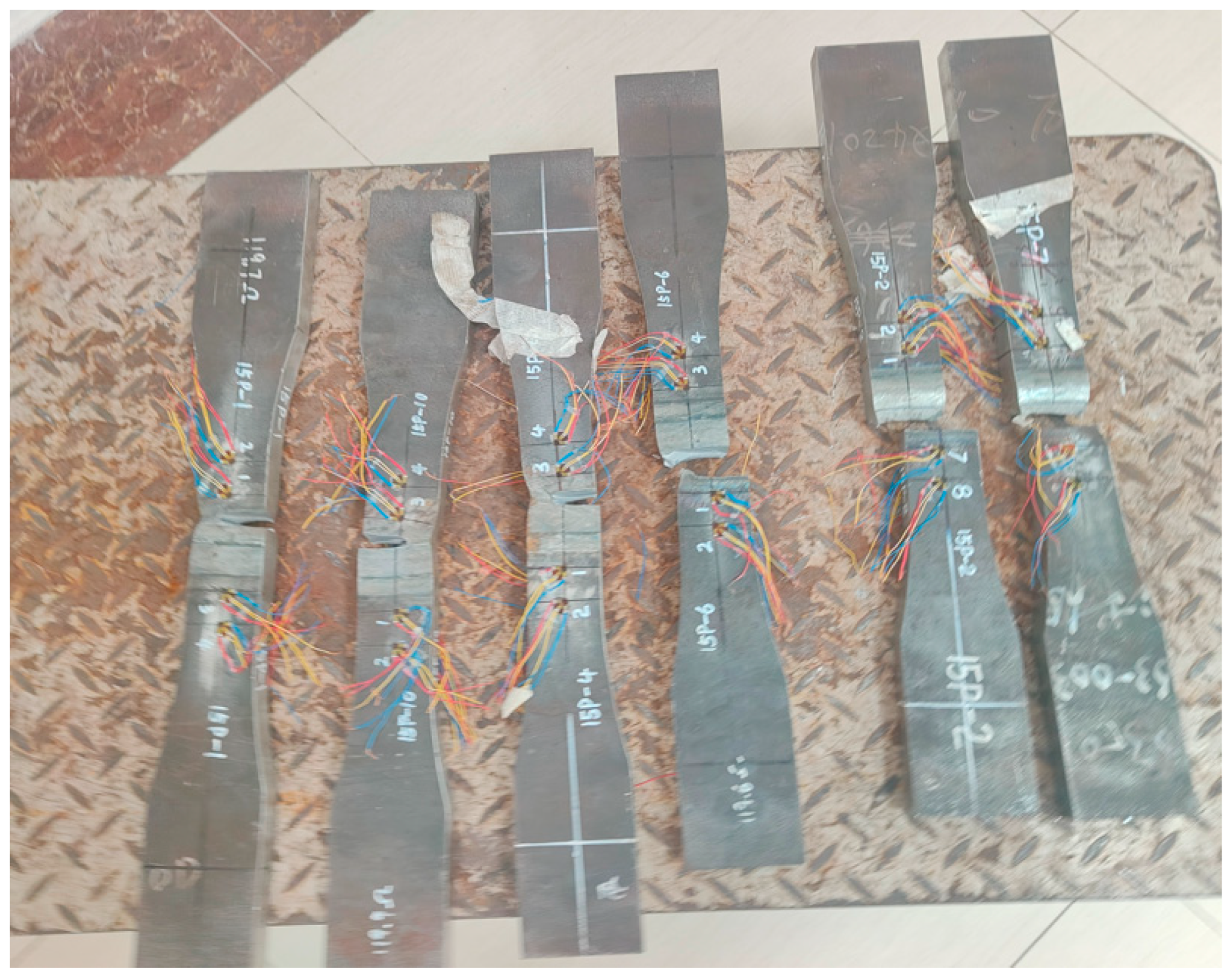
Axial fatigue tests were conducted on six parallel specimens of 25 mm thick Q420 welded plates under consistent stress loading conditions. The test results are presented in Table 6. The total number of fatigue cycles showed a significant variation, with the maximum reaching 1.32 million cycles and the minimum only 400,000 cycles; the average number of fractures was 740,000, with a 95% confidence interval of (401,264, 1,082,094). The standard deviation is 324,360. According to the Weibull distribution analysis, after approximately 842,000 fatigue cycles, about 63.2% of the specimens are expected to fail. The test results indicate that the fatigue performance of the Q420 welded plates in their original state exhibits considerable variability. Fractures consistently initiated at the weld toes on the side of multi-pass welds, as illustrated in Figure 7. The cracks propagated sequentially through the coarse-grained zone and fine-grained zone, and then into the base metal of the steel plate.

3.3. Weld Hardness

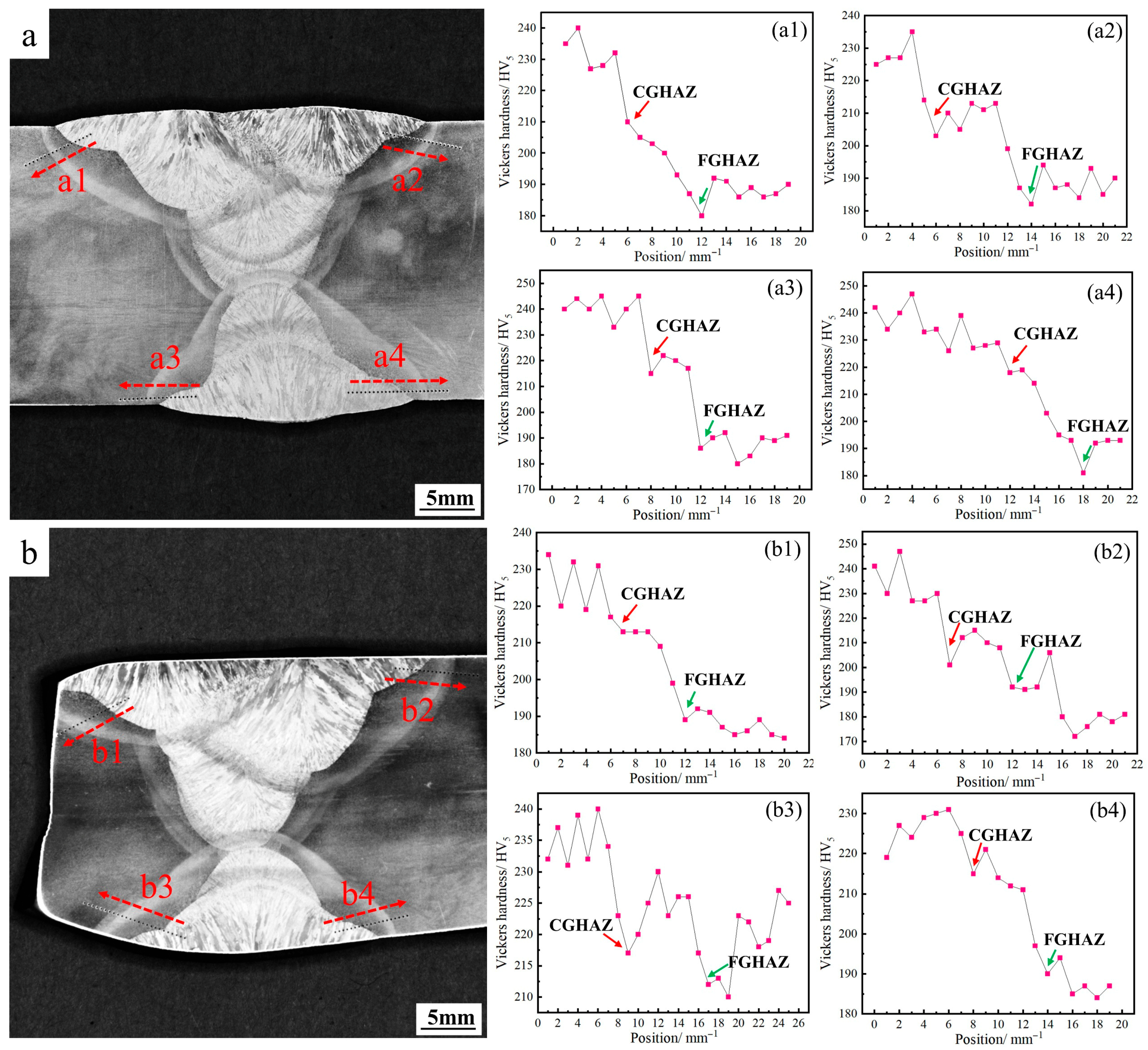
The width of the heat-affected zone in the Q420 welded plate shows variations, with significant fluctuations in microhardness across different regions, as shown in Figure 8a. The hardness values, ranked from highest to lowest, are as follows: filler metal, coarse-grained zone, base metal, and fine-grained zone. The filler metal exhibits the highest hardness, with an average value of 230 HV5, while the coarse-grained zone has an average hardness of 210 HV5. The fine-grained zone in the weld’s heat-affected region acts as a softened area, with an average hardness of only 182 HV5. After axial fatigue testing of the Q420 welded plate, the hardness of the base material increases slightly, which can be attributed to dislocation strengthening induced by plastic deformation within the material [43,44]. Following fatigue testing, the average hardness values of the filler metal, coarse-grained zone, and fine-grained zone are 235 HV5, 214 HV5, and 190 HV5, respectively. As shown by the test line in Figure 8, the weld microstructure underwent severe plastic deformation, and the hardness of the microstructure increased slightly.

3.4. Fatigue Fracture Morphology

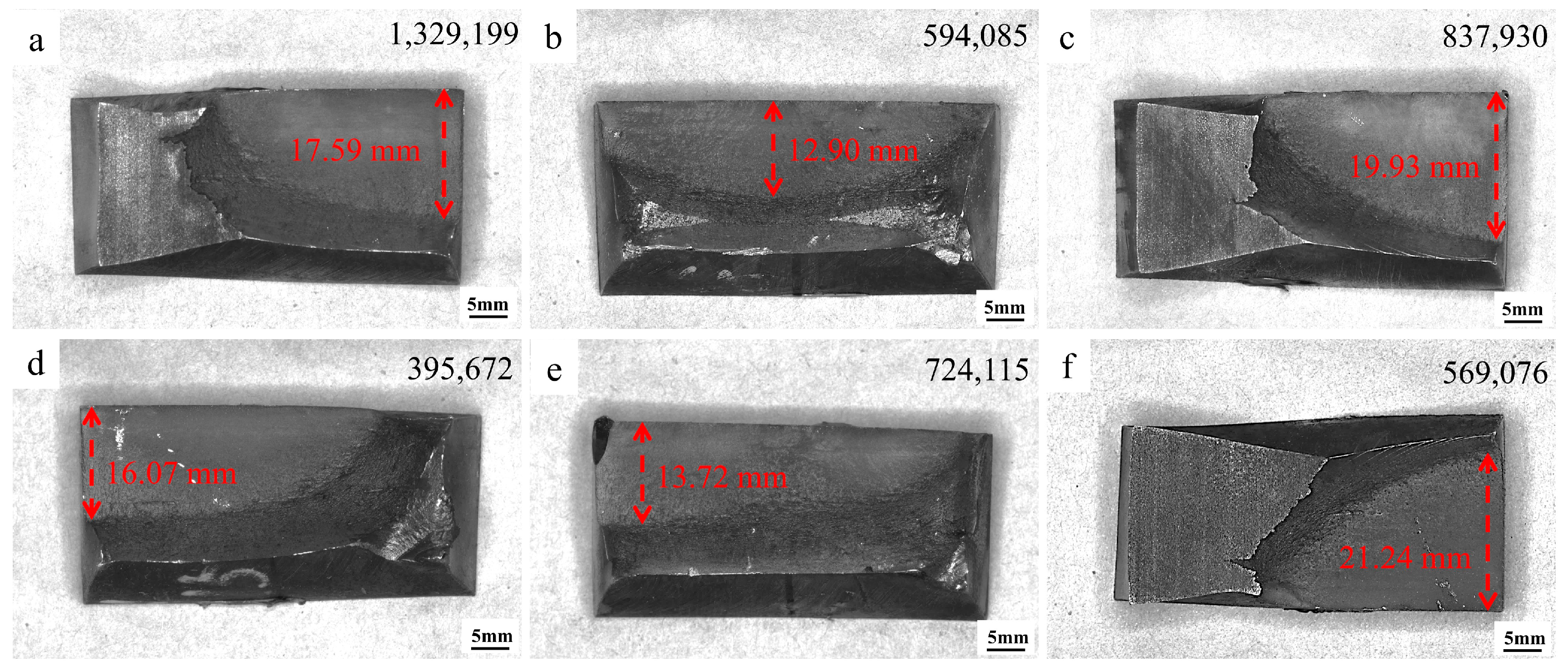
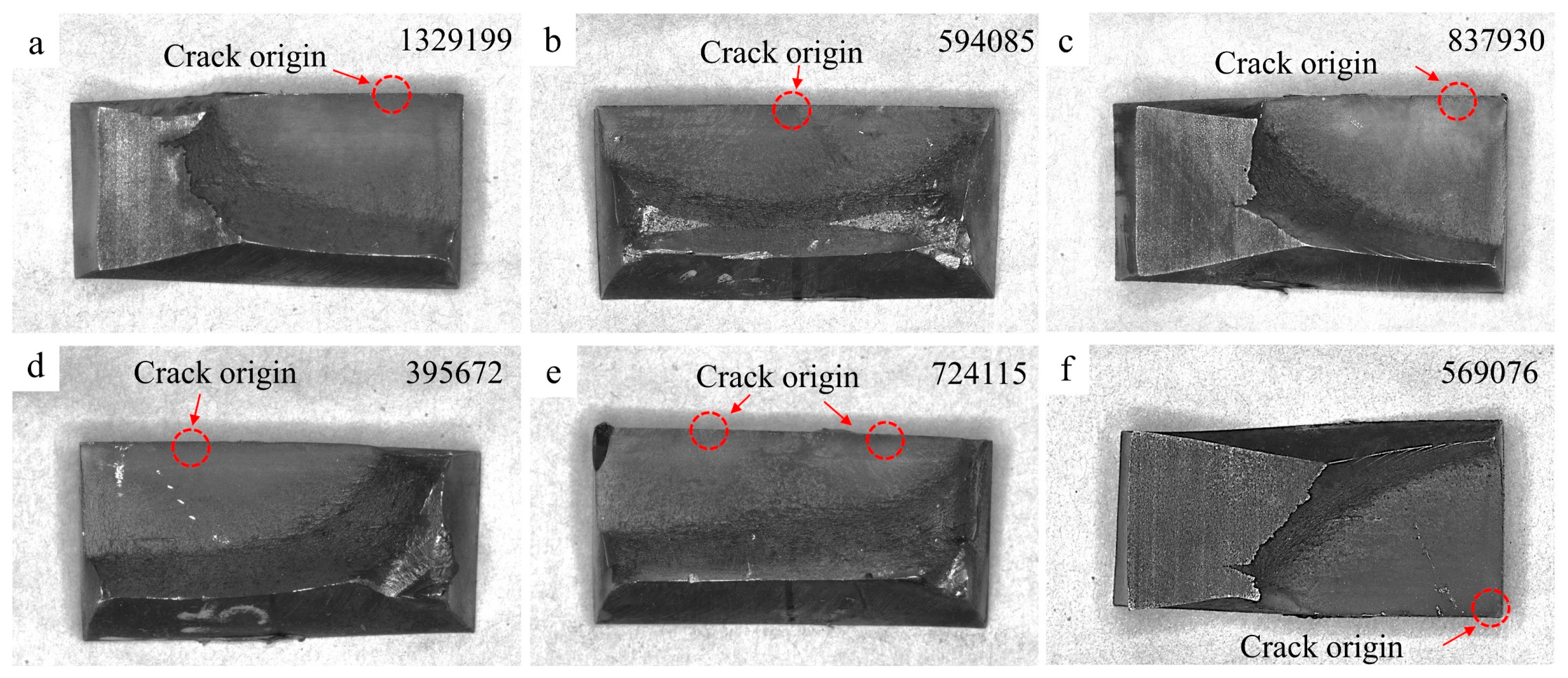
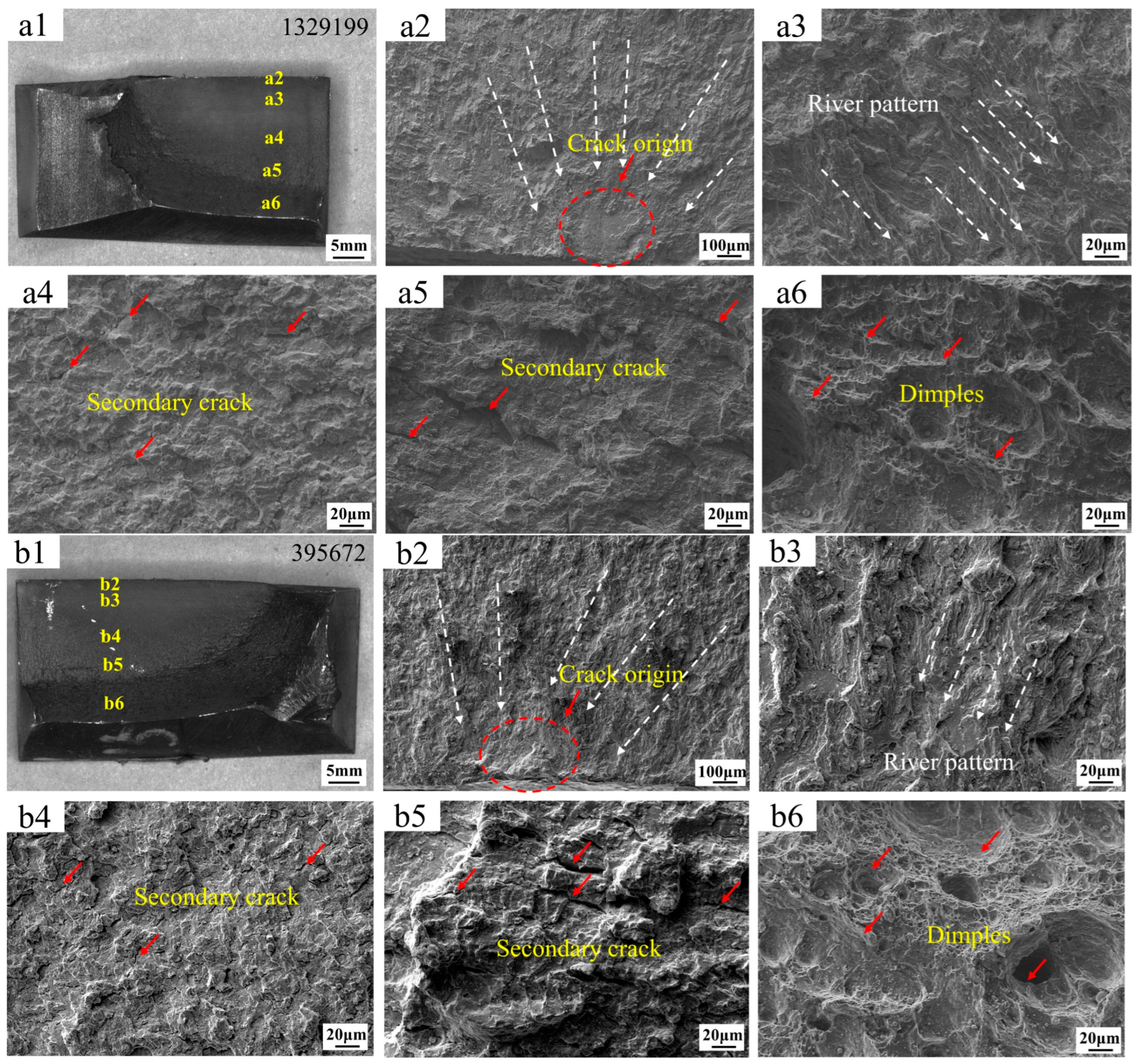
The macroscopic morphology of the fatigue fracture of the Q420 welded plate is shown in Figure 9. Most specimens have only one fatigue origin, with the exception of 15P-2, which exhibits two fatigue origins. Inclusions, grain boundaries, and areas of stress concentration are regions with high stress levels and are prone to the formation of fatigue origins [45,46]. According to the SEM images of the fracture surface in Figure 10, the morphology varies at different stages of crack propagation. Observations of the fatigue origins in the specimens reveal that the fatigue origins in specimens 15P-1 and 15P-6 are particularly representative. The fatigue origin in 15P-1 is a small plateau near the specimen surface, approximately 170 μm in size, while the fatigue origin in 15P-6 is a small mound near the surface, about 115 μm in size. In addition to the fatigue origins, the river patterns on the fracture surface are also an important feature, representing separations along specific atomic planes, indicative of typical quasi-brittle fracture. The flow direction of the rivers corresponds to the local propagation direction of the crack. Therefore, when analyzing the fracture surface, the direction of the rivers can be traced inversely: one end points to the origin of the crack, and the other end indicates the direction of the main crack propagation, which is crucial for identifying the fatigue origin. The fracture surface near the fatigue origin is relatively smooth, with shallow secondary cracks distributed in the matrix. In contrast, the fracture morphology near the instant fracture region is uneven, with deep secondary cracks penetrating the matrix.

3.5. Analysis of Fatigue Crack Propagation Direction

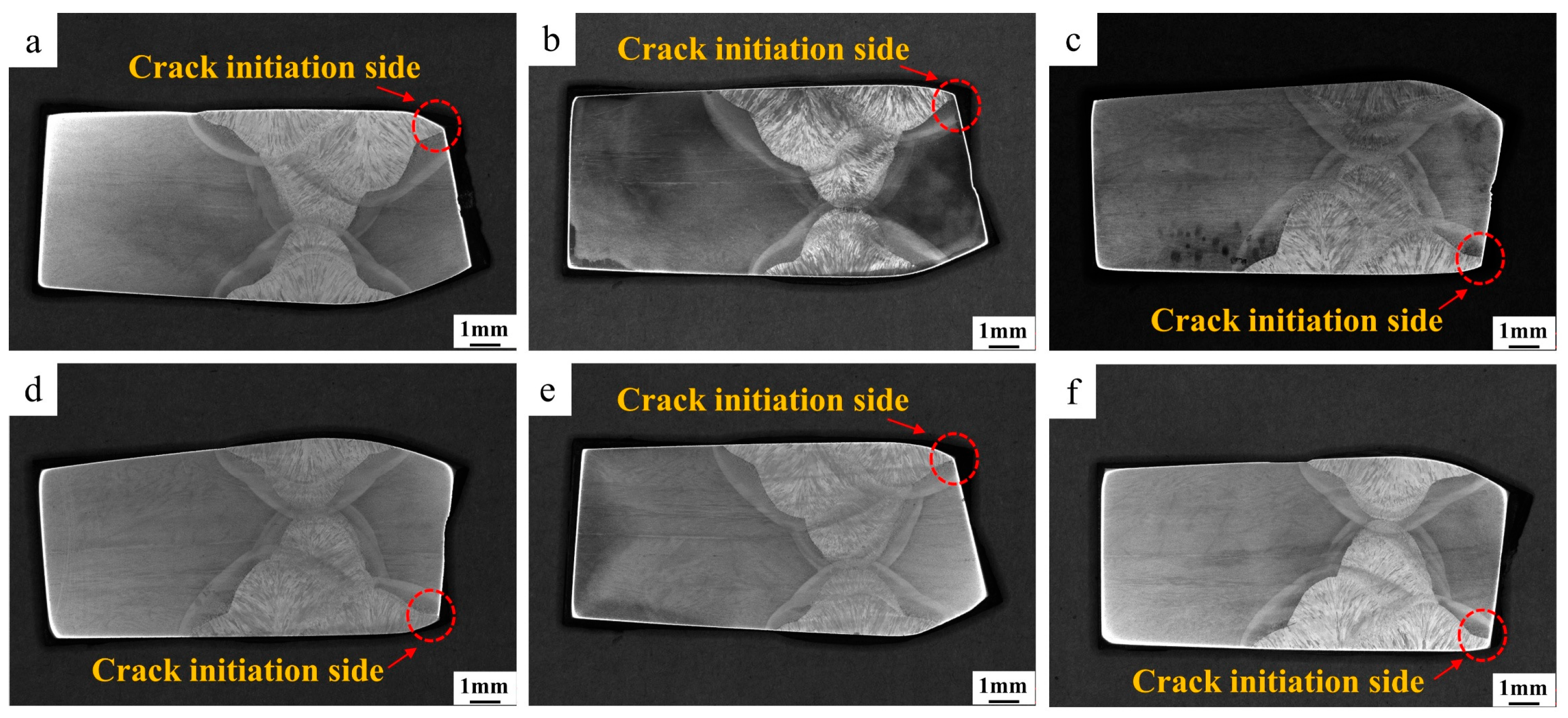
The upper and lower weld toes of the Q420 welded plate joints are asymmetrically structured. Fatigue cracks typically initiate at the weld toes on the side of the multiple weld passes and then propagate into the base material of the welded plate, as shown in Figure 11. The probability of crack initiation at the weld toe is greater at the last weld pass, except that in Figure 11a the crack originates from the penultimate weld toe, while, in the remaining analyzed specimens, crack initiation occurs as shown in Figure 11b–f.
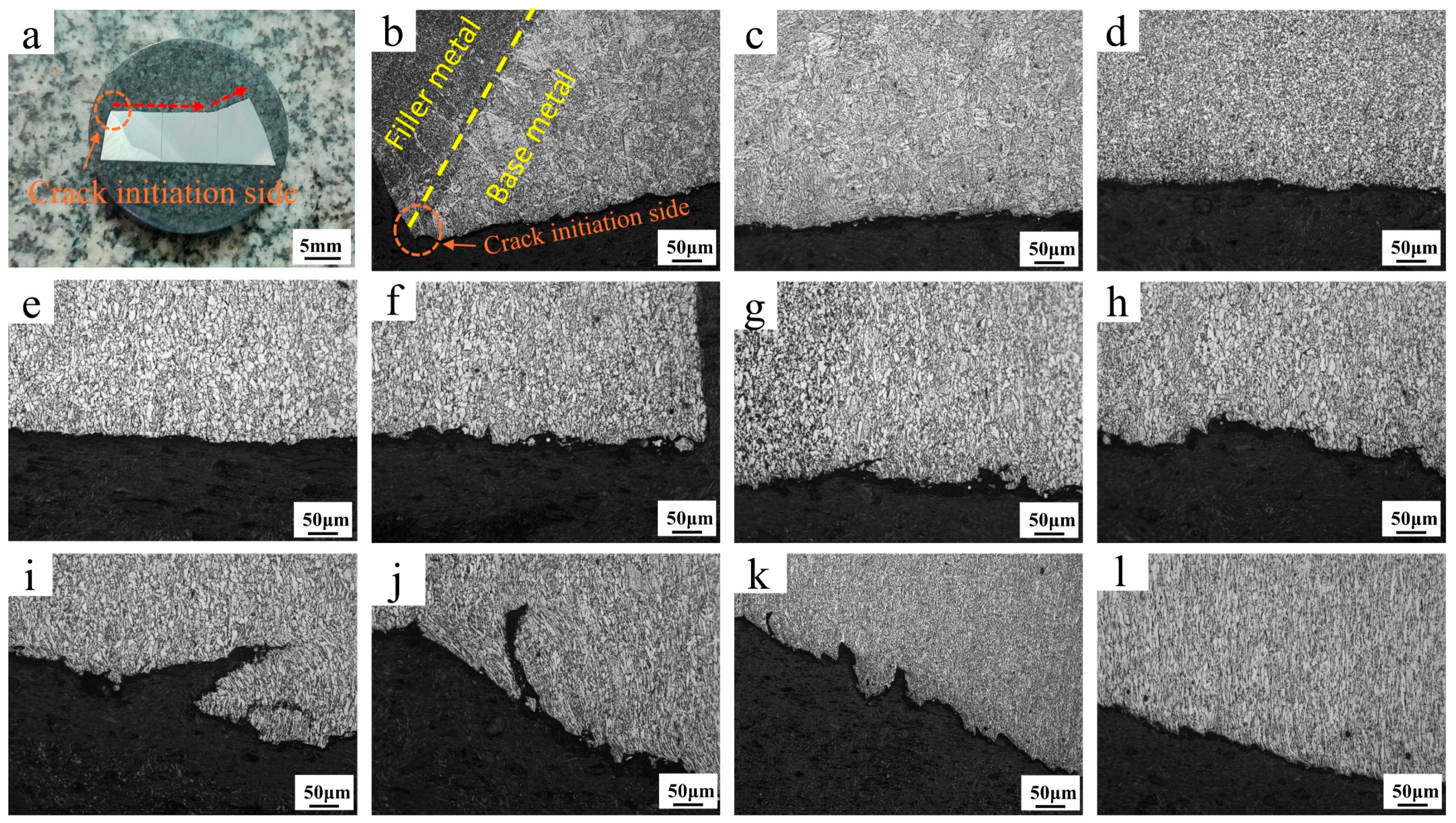
The smoothness of a failed fracture surface can reflect the stress state of the material and the crack propagation rate. The fatigue fracture cross-sectional morphologies in Figure 12 further highlight the differences in fracture surface smoothness at various stages of failure. In Figure 12b, during the crack initiation stage, the fracture surface is smooth. In Figure 12e, entering the slow crack propagation region, the crack path exhibits slight undulations. In Figure 12g, during the rapid crack propagation stage, the amplitude of the crack path undulations increases. Finally, in Figure 12i, the crack changes direction and subsequently enters the instantaneous fracture region.
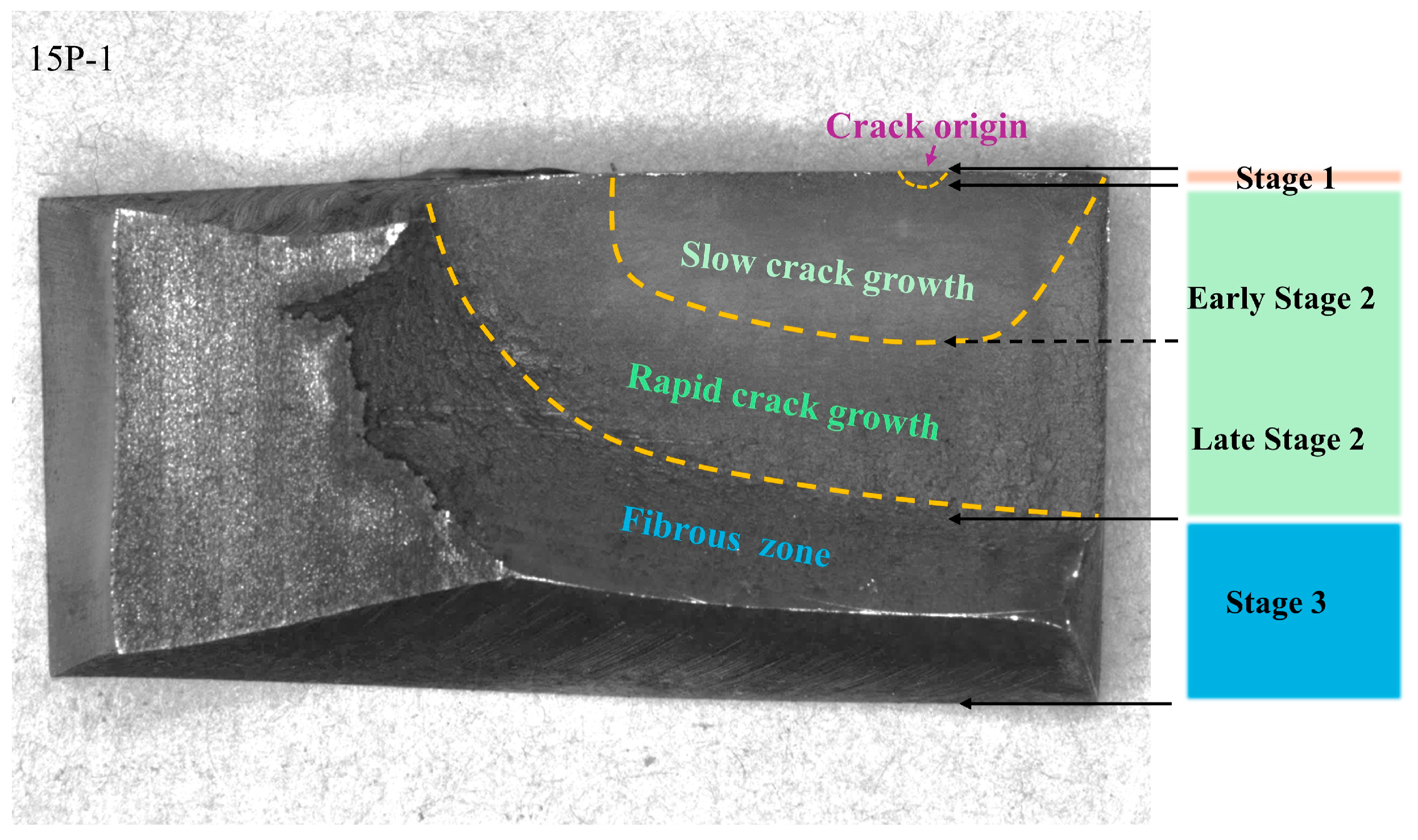
In the past, scholars typically divided the fracture morphology into three stages: the crack initiation stage, the crack propagation stage, and the instantaneous fracture zone [25,47,48]. In this paper, the crack initiation stage is defined as Stage 1. The crack propagation stage is further subdivided into the slow crack growth stage (Early Stage 2) and the rapid crack growth stage (Late Stage 2). The instantaneous fracture zone is defined as Stage 3. The specific division is illustrated in Figure 13. This classification method evaluates the crack propagation rate based on the flatness of the fracture surface, which facilitates a more detailed assessment of fatigue crack growth, especially for materials whose fatigue life is predominantly governed by the crack propagation stage. In this batch of fatigue specimens, fatigue striations could only be observed during Late Stage 2—rapid crack growth, possibly because the fatigue striations from the slow crack growth stage were worn away due to repeated friction with the matrix.
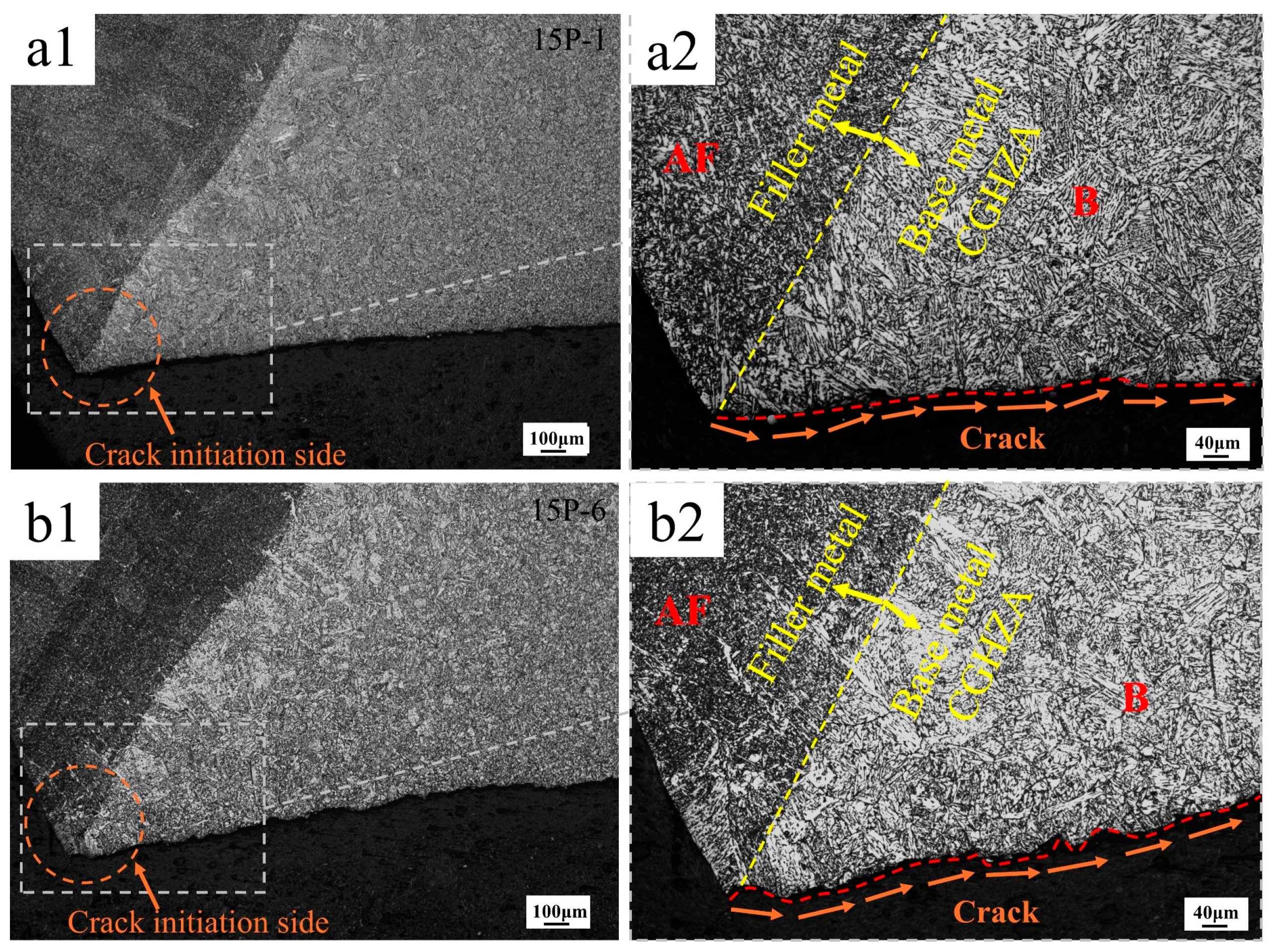
A more detailed observation was conducted on the crack initiation side, as shown in Figure 14. The fatigue crack originated at the 45° angle between the fill metal and the coarse-grained zone and subsequently propagated along the coarse-grained zone. There are slight differences in the crack paths through the coarse-grained zones of specimens 15P-1 and 15P-6.
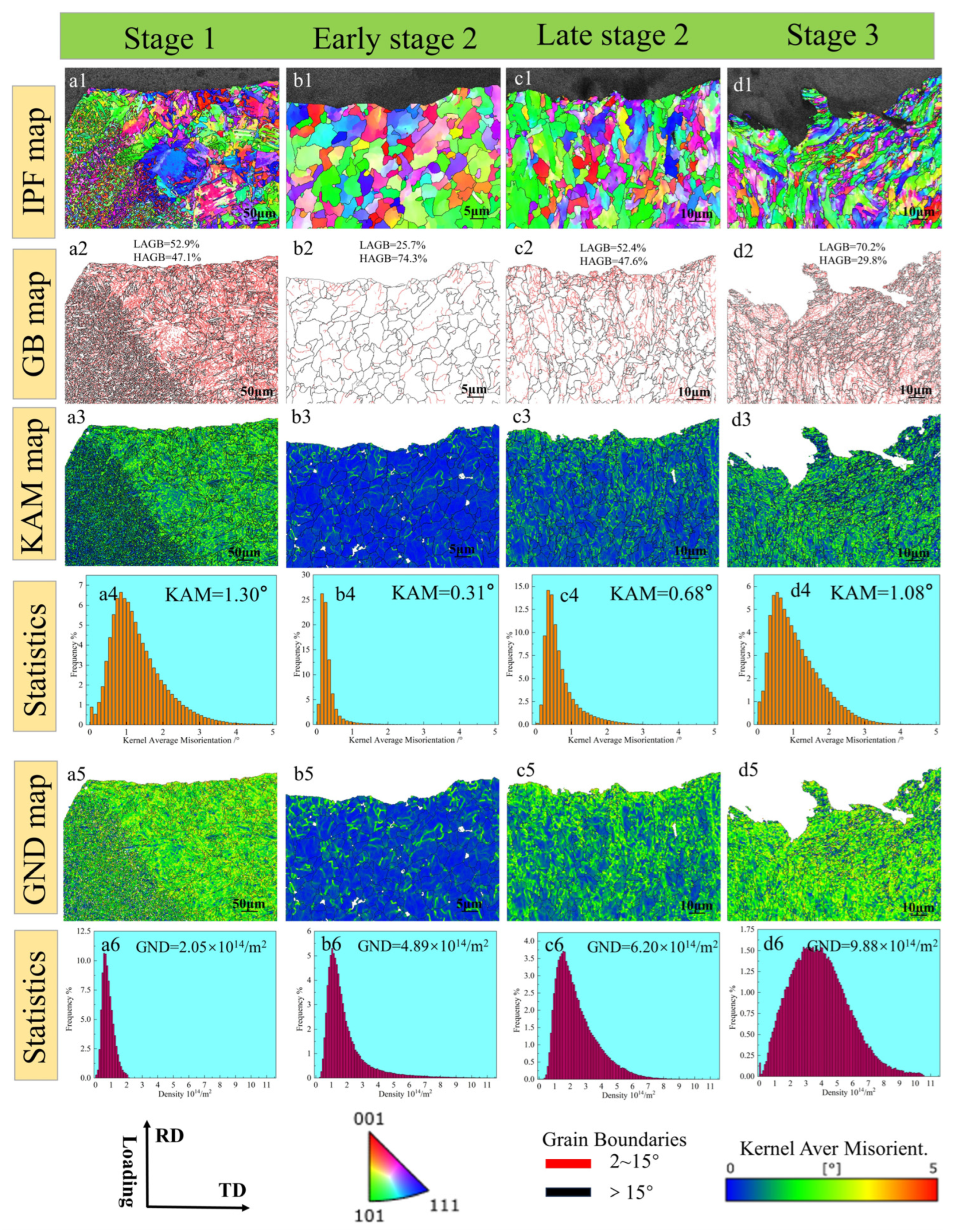
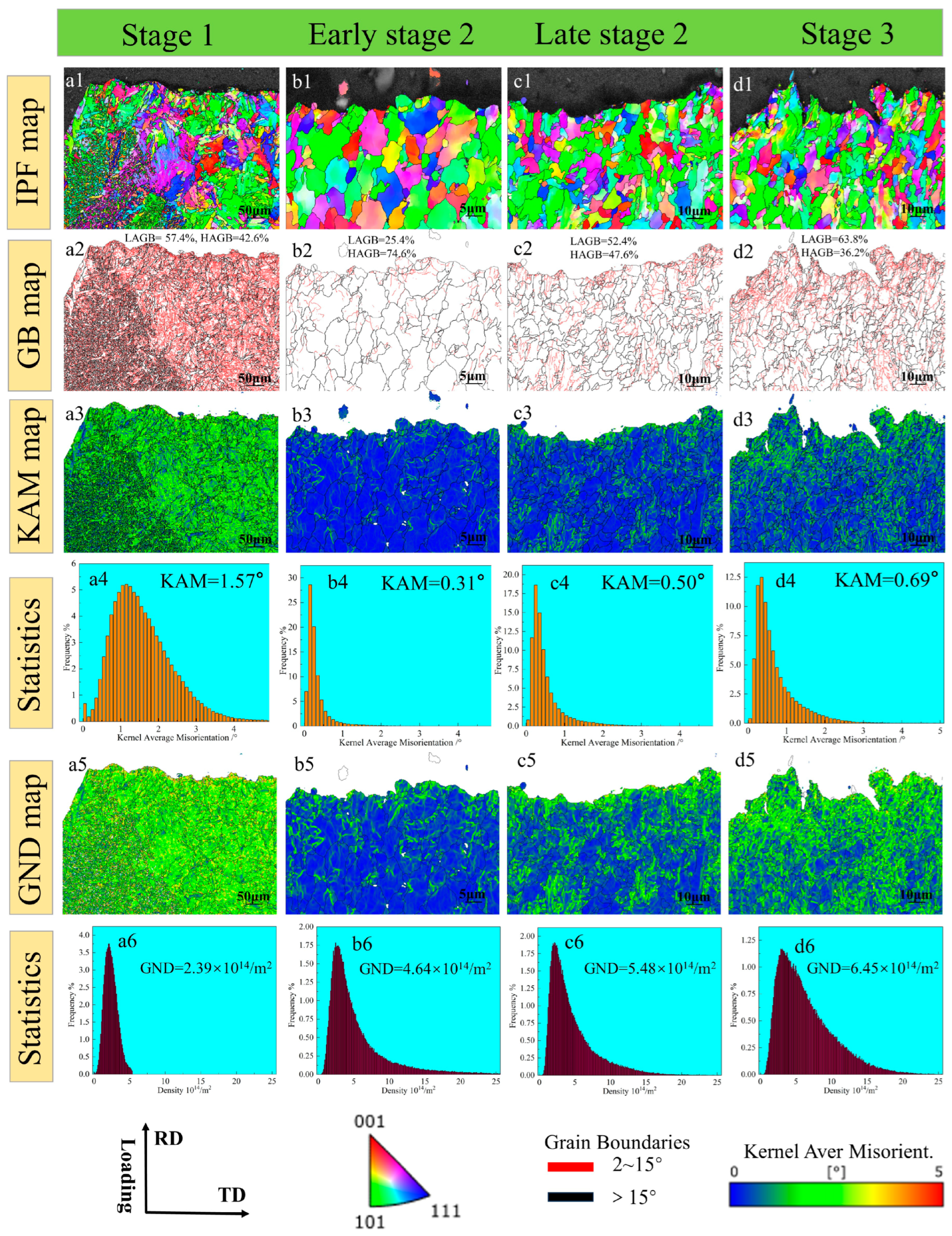
Electron backscatter diffraction (EBSD) technology was used to analyze the crack propagation paths of fatigue fractures in samples 15P-1 and 15P-6. As shown in Figure 15, Stage 1 corresponds to the area near the fatigue source of the 15P-1 specimen’s fatigue fracture, which is a small plateau. In Figure 16, Stage 1 corresponds to the area near the fatigue source of the 15P-6 specimen’s fatigue fracture, which is a small hill. Fatigue cracks occur at the junction between the filler metal and the coarse-grained zone, that is, at the weld toe. The Late Stage 2 and Stage 3 observation areas are in the base material of the Q420 steel plate, representing the rapid crack propagation stage. In this region, the microstructure shows significant plastic deformation, the crack path is tortuous, and secondary cracks appear in the matrix. A comparative analysis of the crack initiation regions of the two samples was conducted. Grain boundaries (GBs) were categorized as small-angle (2–15°) and large-angle (>15°). The proportion of small-angle grain boundaries in 15P-1 is 52.9% and in 15P-6 is 57.4%. In the undeformed matrix, the proportion of small-angle grain boundaries is low. With the increasing plastic deformation of the matrix, the proportion of small-angle grain boundaries increases significantly, from 25.7% in Early Stage 2 to 52.4% in Late Stage 2, and to 70.2% in Stage 3. Plastic deformation is primarily accommodated through the generation and movement of dislocations, and these proliferated dislocations will rearrange and entangle during deformation, ultimately forming small-angle grain boundaries [49,50]. The Kernel average misorientation (KAM) index for 15P-6, which underwent fewer cycles, is 1.57°, higher than 1.30° for 15P-1. The high internal stress in the weld is one of the reasons why the 15P-6 sample initiated cracking earlier [51,52]. Geometrically necessary dislocation (GND) map analysis shows that the higher the GND density, the greater the stored deformation energy in that region. For the 15P-1 sample, the GND density is 2.05 × 10¹⁴/m2 at Stage 1, 4.89 × 10¹⁴/m2 at Early Stage 2, 6.20 × 10¹⁴/m2 at Late Stage 2, and 9.88 × 10¹⁴/m2 at Stage 3. For the 15P-6 sample, the GND density is 2.39 × 10¹⁴/m2 at Stage 1, 4.64 × 10¹⁴/m2 at Early Stage 2, 5.48 × 10¹⁴/m2 at Late Stage 2, and 6.45 × 10¹⁴/m2 at Stage 3. As the crack propagation progresses to later stages, the GND density increases, and both samples exhibit a similar trend.
In summary, during the early stages of fatigue cracking, the degree of plastic deformation at the crack site is lower, and the crack path tends to be flatter, which may be related to changes in the stress distribution across the material’s cross-section and the corresponding stress conditions [53,54].

3.6. Fatigue Life Analysis

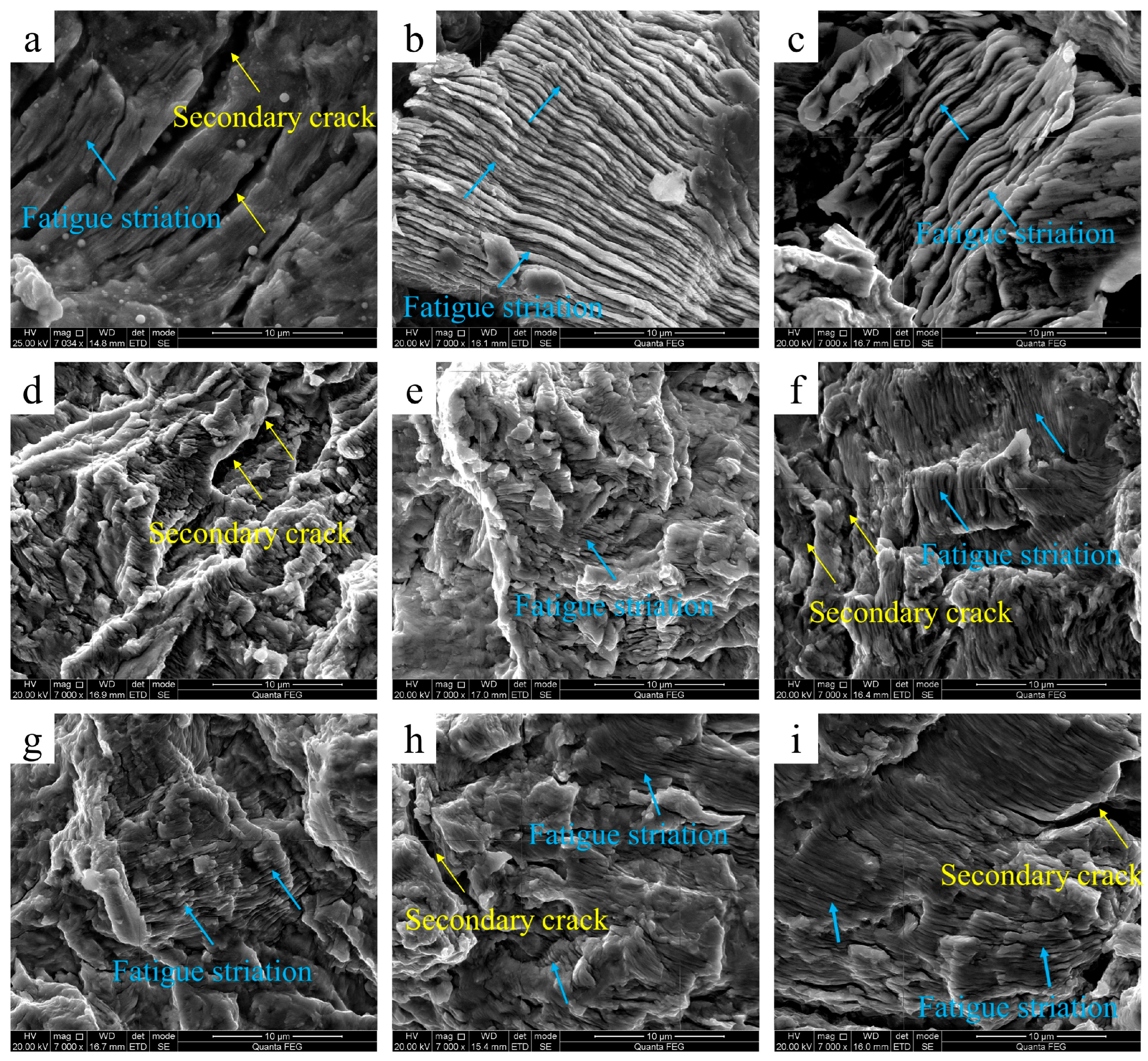
Fatigue striations play a crucial role in fatigue life analysis, with each striation typically corresponding to a single stress cycle. By analyzing and comparing the spacing of fatigue striations, we can interpret the fatigue fracture history of a component, much like reading the growth rings of a tree. Striations radiate outward in an arc or radial pattern from the crack origin, and tracing these arcs back to their center allows for the identification of the crack initiation point [55]. In practice, since it is impossible to count all striations along the entire fracture surface, the striation spacing is measured locally at different positions, and a mathematical model is then used to estimate the fraction of total cycles represented by crack propagation. However, not all materials exhibit clearly visible fatigue striations. In particular, in body-centered cubic metals (such as low-carbon steel), fatigue striations are often less distinct than in face-centered cubic metals like aluminum and titanium alloys [56,57]. Sometimes, under repeated cyclic loading, the morphology of fatigue striations may be worn away or corroded, obscuring striation features and preventing observation and analysis. Figure 17 below shows the total length of the crack propagation area. Figure 18 below shows a typical fatigue striation.
Statistics were conducted on the proportion of fatigue life occupied by crack growth, specifically focusing on the fatigue striations throughout the entire crack propagation stage. The maximum extension length of the entire fracture surface is regarded as the total length L of the crack propagation region, and the fatigue striations in multiple regions of the fatigue fracture are observed, analyzed, and statistically studied. The ratio of the total length of the crack propagation region to the spacing of individual fatigue striations represents the number of cycles for crack propagation. The fatigue crack propagation life calculated in this study accounts for less than 11% of the total fatigue life. The statistical results are summarized in Table 7.

3.7. The Effect of Weld Surface Defects on Fatigue Performance

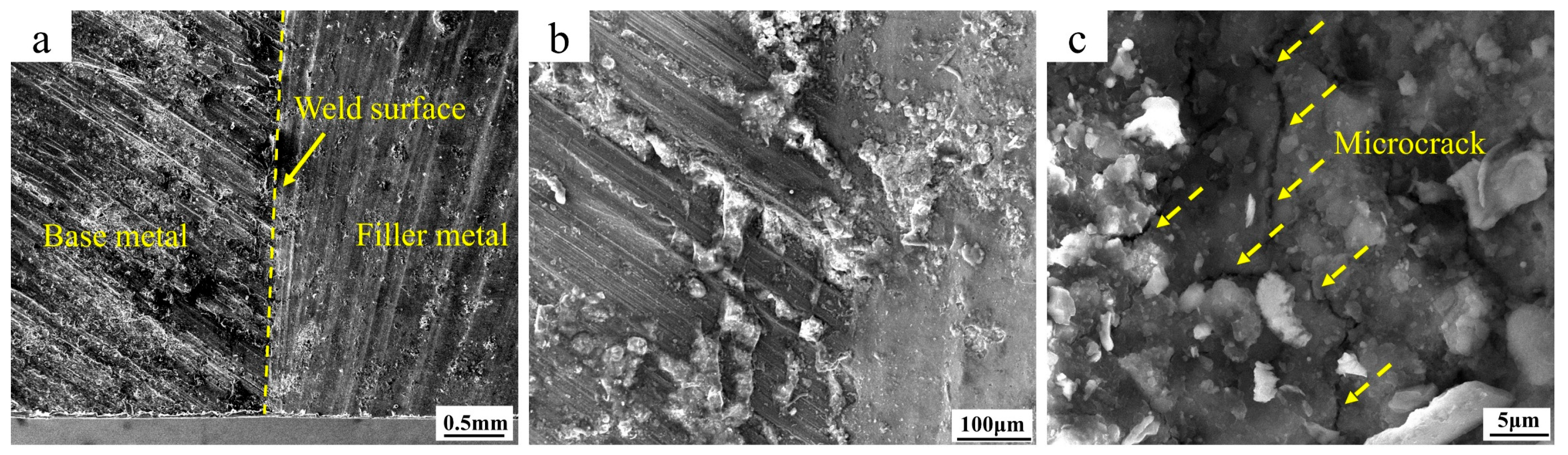
In the above experiment, the fatigue performance of the Q420 welded plates in their original condition was tested under a load of 420 MPa with R = 0.5. The maximum number of cycles reached 1.3 million, while the minimum was only 400,000, with an average number of cycles around 740,000. By analyzing the spacing of the fatigue striations, it was found that the proportions of cycles in the crack propagation stage relative to the total fatigue cycles were all below 11%, indicating that the crack initiation stage dominates the total fatigue life. Some microcracks were observed on the weld toe surface of the Q420 welded plates in their original condition, as shown in Figure 19. This may be the reason for the significant fluctuation in the total fatigue life of fatigue specimens from the same batch.
Using the control variable method, the surface quality defect factors of the fatigue specimen were eliminated; the fatigue specimen was processed into smooth plate and diameter 22 mm cylindrical rod fatigue specimens with a surface roughness of 0.32, and the axial fatigue performance was tested with different stress amplitudes. The stress amplitude of the smooth plate sample was 420 MPa; the number of cycles exceeded 2 million times without fracture, and no cracks were found on the surface of the specimen. After increasing the stress to 500 MPa and cycling 1.35 million times, the sample cracked from the weld toe. However, the stress was increased to 540 MPa, and the sample cracked from the base metal after 920,000 cycles. The reason is that the stress of 540 MPa far exceeded the yield strength of the base metal of 520 MPa, and the test section of the base metal has serious shaping deformation and obvious necking. The stress amplitude of the fatigue specimen of the cylindrical rod was 420 MPa; the number of cycles exceeded 4.47 million times without fracture, and no cracks were found on the surface of the specimen. After 2 million cycles of increasing the stress to 460, 500, and 540 MPa, the shaping and deformation of the test section increases with the increase in stress, but there are no fatigue cracks.
The axial fatigue test of different sample states of Q420 welded plates was studied. It was found that, by eliminating cold cracks on the surface of the weld, the fatigue performance of the welded plate will be improved. When the test stress is 420 MPa, the average fatigue life of the welded plate is only 740,000 times. The smooth welded plate and cylindrical rod specimens have a lifespan of more than 2 million times without breaking. Excluding the stress concentration effect caused by the stress section shape of the specimen, the fatigue life of the cylindrical rod specimen is further improved, and the smooth plate fails at 460 MPa when fatigue failure occurs, but the cylindrical rod specimen still does not fail at 540 MPa. The test results are shown in Table 8.

4. Conclusions

This study investigates the axial fatigue performance of welds in a Q420 steel used for offshore wind turbine towers and finds that the fatigue life of the weld plates fluctuates significantly. Additionally, the crack initiation sites of the fatigue test specimens are highly consistent, indicating that certain areas of the weld plate are weak points prone to fatigue crack initiation. By examining the axial fatigue tests of Q420 weld plates in different specimen conditions, it was determined that the crack initiation stage governs the total fatigue life. Eliminating surface microcracks at the weld toe or stress concentrations caused by size effects can significantly improve the material’s fatigue life and ultimate fatigue strength, providing guidance for enhancing the on-site fatigue performance of high-strength Q420 wind turbine towers.
  • The base metal microstructure of Q420 steel consists of bainite and ferrite, the filler metal microstructure is composed of acicular ferrite, and the coarse-grained zone in the heat-affected zone of the weld consists of bainite, while the fine-grained zone consists of pearlite and ferrite.
  • Fatigue cracks initiate consistently at the weld toes on the side of multi-pass welds. The sudden change in the stress section near the weld toe residual height leads to stress concentration, which is likely the primary cause of fatigue crack initiation. The higher heat input on the multi-pass weld side increases the range of the coarse-grained zone prone to cracking, thereby increasing the probability of fatigue cracks initiating in the coarse-grained area.
  • The calculations show that the number of cycles for crack propagation accounts for less than 11% of the total fatigue cycles, suggesting that the crack initiation phase dominates the overall fatigue life of Q420 weld plates.
  • Grinding down the weld toe residual height and removing surface cold cracks and excess height can significantly enhance the material’s resistance to crack initiation and fatigue performance. Changing the specimen’s stress section to a circular shape to eliminate size effect-induced stress concentrations can further improve the material’s resistance to crack initiation and fatigue performance. The fatigue performance of Q420 weld plate specimens is ranked as follows: cylindrical rod 1 (diameter 22 mm) > smooth weld plate (23 × 46 mm) > as-welded plate (25 × 52 mm).

Author Contributions

Conceptualization, J.C., W.R., S.Y., Z.L. and X.S.; Methodology, J.C., W.R. and S.Y.; Software, J.C. and W.R.; Validation, G.Z.; Investigation, G.Z.; Resources, G.Z. and Z.L.; Writing—original draft, J.C.; Writing—review & editing, J.C.; Supervision, G.Z., S.Y. and X.S.; Project administration, G.Z., Z.L. and X.S.; Funding acquisition, X.S. All authors have read and agreed to the published version of the manuscript.

Funding

This work was supported by the Major Scientific and Technological Innovation Project of CITIC Group (Grant Number 2022ZXKYA06100).

Institutional Review Board Statement

Not applicable.

Informed Consent Statement

Not applicable.

Data Availability Statement

The original contributions presented in this study are included in the article. Further inquiries can be directed to the corresponding authors.

Conflicts of Interest

Authors Guodong Zhang and Zhongzhu Liu were employed by CITIC Metal Co., Ltd. The remaining authors declare that the research was conducted in the absence of any commercial or financial relationships that could be construed as a potential conflict of interest.

References

  1. Lin, B.; Li, Z. Towards world’s low carbon development: The role of clean energy. Appl. Energy 2022, 307, 118160. [Google Scholar] [CrossRef]
  2. Belaïd, F.; Al-Sarihi, A.; Al-Mestneer, R. Balancing climate mitigation and energy security goals amid converging global energy crises: The role of green investments. Renew. Energy 2023, 205, 534–542. [Google Scholar] [CrossRef]
  3. Qureshi, M.I.; Rasli, A.M.; Zaman, K. Energy crisis, greenhouse gas emissions and sectoral growth reforms: Repairing the fabricated mosaic. J. Clean. Prod. 2016, 112, 3657–3666. [Google Scholar] [CrossRef]
  4. Chung, C.; Lee, J.; Yang, J.-S. National offshore wind strategy for late-mover countries. Renew. Energy 2022, 192, 472–484. [Google Scholar] [CrossRef]
  5. Afridi, S.K.; Koondhar, M.A.; Jamali, M.I.; Alaas, Z.M.; Alsharif, M.H.; Kim, M.-K.; Mahariq, I.; Touti, E.; Aoudia, M.; Ahmed, M. Winds of progress: An in-depth exploration of offshore, floating, and onshore wind turbines as cornerstones for sustainable energy generation and environmental stewardship. IEEE Access 2024, 12, 66147–66166. [Google Scholar] [CrossRef]
  6. Markard, J.; Petersen, R. The offshore trend: Structural changes in the wind power sector. Energy Policy 2009, 37, 3545–3556. [Google Scholar] [CrossRef]
  7. Igwemezie, V.; Mehmanparast, A.; Kolios, A. Current trend in offshore wind energy sector and material requirements for fatigue resistance improvement in large wind turbine support structures—A review. Renew. Sustain. Energy Rev. 2019, 101, 181–196. [Google Scholar] [CrossRef]
  8. McKenna, R.; vd Leye, P.O.; Fichtner, W. Key challenges and prospects for large wind turbines. Renew. Sustain. Energy Rev. 2016, 53, 1212–1221. [Google Scholar] [CrossRef]
  9. Islam, M.R.; Guo, Y.; Zhu, J. A review of offshore wind turbine nacelle: Technical challenges, and research and developmental trends. Renew. Sustain. Energy Rev. 2014, 33, 161–176. [Google Scholar] [CrossRef]
  10. Wang, D.; Yao, D.; Gao, Z.; Wang, Q.; Zhang, Z.; Li, X. Fatigue mechanism of medium-carbon steel welded joint: Competitive impacts of various defects. Int. J. Fatigue 2021, 151, 106363. [Google Scholar] [CrossRef]
  11. Barsoum, Z.; Jonsson, B. Influence of weld quality on the fatigue strength in seam welds. Eng. Fail. Anal. 2011, 18, 971–979. [Google Scholar] [CrossRef]
  12. Radaj, D.; Sonsino, C.; Fricke, W. Recent developments in local concepts of fatigue assessment of welded joints. Int. J. Fatigue 2009, 31, 2–11. [Google Scholar] [CrossRef]
  13. Wang, F.; Yue, J.-W.; Wang, W.-D. Assessment methods for fatigue crack initiation life and total fatigue life of Q550D-16 mm butt-welded steel notched plates. J. Constr. Steel Res. 2025, 230, 109561. [Google Scholar] [CrossRef]
  14. Pijpers, R.J.M. Fatigue strength of welded connections made of very high strength cast and rolled steels. Eng. Struct. 2011, 161, 28–40. [Google Scholar]
  15. Peng, Y.; Zhu, X. Fatigue strength estimation of butt-welded joints between cast-steel and hot-rolled-steel plates. J. Constr. Steel Res. 2024, 214, 108493. [Google Scholar] [CrossRef]
  16. Liu, Y.; Gong, B.; Liu, S.; Deng, C.; Zhao, Y.; Liu, Y.; Hu, W. Low-cycle fatigue properties and fracture location transition mechanism of dissimilar steel welded joints in towers of wind turbines. Int. J. Fatigue 2025, 190, 108672. [Google Scholar] [CrossRef]
  17. Li, Z.; Zhang, D.; Wu, H.; Huang, F.; Hong, W.; Zang, X. Fatigue properties of welded Q420 high strength steel at room and low temperatures. Constr. Build. Mater. 2018, 189, 955–966. [Google Scholar] [CrossRef]
  18. Bartsch, H.; Feldmann, M. An experimental investigation into the influence of incorrect root gaps in welded-in transverse stiffeners on fatigue performance. Int. J. Fatigue 2023, 175, 107773. [Google Scholar] [CrossRef]
  19. Corigliano, P.; Crupi, V. Review of fatigue assessment approaches for welded marine joints and structures. Metals 2022, 12, 1010. [Google Scholar] [CrossRef]
  20. Ahola, A.; Lipiäinen, K.; Lindroos, J.; Koskimäki, M.; Laukia, K.; Björk, T. On the fatigue strength of welded high-strength steel joints in the as-welded, post-weld-treated and repaired conditions in a typical ship structural detail. J. Mar. Sci. Eng. 2023, 11, 644. [Google Scholar] [CrossRef]
  21. Tang, K.; Cui, C.; Li, Y.; Yuan, X.; Zhang, Q.; Yang, Y. Investigation of fatigue damage evolution mechanism in Q500qENH weathering steel welded joints with corroded surface morphology. Int. J. Fatigue 2025, 200, 109116. [Google Scholar] [CrossRef]
  22. Arola, D.; Williams, C. Estimating the fatigue stress concentration factor of machined surfaces. Int. J. Fatigue 2002, 24, 923–930. [Google Scholar] [CrossRef]
  23. Bellett, D.; Taylor, D.; Marco, S.; Mazzeo, E.; Guillois, J.; Pircher, T. The fatigue behaviour of three-dimensional stress concentrations. Int. J. Fatigue 2005, 27, 207–221. [Google Scholar] [CrossRef]
  24. Zhang, Y.-H.; Maddox, S.J. Fatigue life prediction for toe ground welded joints. Int. J. Fatigue 2009, 31, 1124–1136. [Google Scholar] [CrossRef]
  25. Perez, N. Fatigue crack growth. In Fracture Mechanics; Springer: New York, NY, USA, 2016; pp. 327–372. [Google Scholar]
  26. Kedir, Y.A.; Lemu, H.G. Prediction of fatigue crack initiation under variable amplitude loading: Literature review. Metals 2023, 13, 487. [Google Scholar] [CrossRef]
  27. Liu, S.; Yang, Y.; Lei, L.; Liu, Z.; Wu, W. Effect of indentation defects on fatigue crack propagation behavior of weld and base material: An in-situ fatigue study. Theor. Appl. Fract. Mech. 2025, 138, 104982. [Google Scholar] [CrossRef]
  28. Gao, Y.; Yang, W.; Huang, Z.; Lu, Z. Effects of residual stress and surface roughness on the fatigue life of nickel aluminium bronze alloy under laser shock peening. Eng. Fract. Mech. 2021, 244, 107524. [Google Scholar] [CrossRef]
  29. Sun, G.; Zheng, J.; Zhao, Z. Gas pore-based fatigue strength and fatigue life prediction models of laser additive manufactured Ti-6Al-4V alloy in very high cycle fatigue regime. Mater. Sci. Eng. A 2025, 922, 147640. [Google Scholar] [CrossRef]
  30. Zhu, Z.; Feng, Q.; Wang, B.; Zheng, W.; Yu, Y. High-cycle fatigue performance of the heat-affected zone of Q370qENH weathering bridge steel. J. Mater. Civ. Eng. 2024, 36, 04024018. [Google Scholar] [CrossRef]
  31. Bai, Y.; Guo, X.; Sun, X.; Liu, G.; Xie, Z.; Wang, X.; Shang, C. Effect of heat input on microstructural characteristics and fatigue property of heat-affected zone in a FH690 heavy-gauge marine steel. Int. J. Fatigue 2025, 196, 108898. [Google Scholar] [CrossRef]
  32. Braun, M.; Wang, X. A review of fatigue test data on weld toe grinding and weld profiling. Int. J. Fatigue 2021, 145, 106073. [Google Scholar] [CrossRef]
  33. Braun, M.; Baumgartner, J.; Hofmann, G.; Drebenstedt, K.; Bauer, N.M.; Bakhschi, H.; Kuhlmann, U. A statistical assessment of the fatigue strength improvement of butt-welded joints by flush grinding. Weld. World 2023, 67, 2345–2359. [Google Scholar] [CrossRef]
  34. GB/T5293-2018; Solid Wire Electrodes, Tubular Cored Electrodes and Electrode/Flux Combinations for Submerged Arc Welding of Non Alloy and Fine Grain Steels. General Administration of Quality Supervision, Inspection and Quarantine of the People’s Republic of China Standardization Administration of China: Beijing, China, 2017.
  35. ISO 9001:2015; International Standard for Quality Management Systems. British Lloyd’s Quality Assurance Company: Birmingham, UK, 2015.
  36. GB/T 3075-2021; Metallic Materials—Fatigue Testing—Axial Force-Controlled Method. Iron and Steel Research Institute: Beijing, China, 2021.
  37. ISO 1099:2017; Metallic Materials. Fatigue Testing. Axial Force-Controlled Method. International Organization for Standardization: London, UK, 2017.
  38. GB/T 6394-2017; Determination of Estimating the Average Grain Size of Metal. China Iron and Steel Association: Beijing, China, 2017.
  39. Kumar, S.; Kasyap, P.; Pandey, C.; Basu, B.; Nath, S. Role of heat inputs on microstructure and mechanical properties in coarse-grained heat-affected zone of bainitic steel. CIRP J. Manuf. Sci. Technol. 2021, 35, 724–734. [Google Scholar] [CrossRef]
  40. Lan, L.; Qiu, C.; Zhao, D.; Gao, X.; Du, L. Microstructural characteristics and toughness of the simulated coarse grained heat affected zone of high strength low carbon bainitic steel. Mater. Sci. Eng. A 2011, 529, 192–200. [Google Scholar] [CrossRef]
  41. Zhang, J.; Xin, W.; Ge, Z.; Luo, G.; Peng, J. Effect of high heat input welding on the microstructures, precipitates and mechanical properties in the simulated coarse grained heat affected zone of a low carbon Nb-V-Ti-N microalloyed steel. Mater. Charact. 2023, 199, 112849. [Google Scholar] [CrossRef]
  42. Ito, R.; Shiga, C.; Kawaguchi, Y.; Nakamura, T.; Hiraoka, K.; Hayashi, T.; Torizuka, S. Controlling of the softened region in weld heat affected zone of ultra fine grained steels. ISIJ Int. 2000, 40, S29–S33. [Google Scholar] [CrossRef]
  43. Zhang, X.; Hansen, N.; Godfrey, A.; Huang, X. Dislocation-based plasticity and strengthening mechanisms in sub-20 nm lamellar structures in pearlitic steel wire. Acta Mater. 2016, 114, 176–183. [Google Scholar] [CrossRef]
  44. He, B.; Hu, B.; Yen, H.; Cheng, G.; Wang, Z.; Luo, H.; Huang, M. High dislocation density–induced large ductility in deformed and partitioned steels. Science 2017, 357, 1029–1032. [Google Scholar] [CrossRef]
  45. Chen, Y.; Pan, S.; Zhou, M.; Yi, D.; Xu, D.; Xu, Y. Effects of inclusions, grain boundaries and grain orientations on the fatigue crack initiation and propagation behavior of 2524-T3 Al alloy. Mater. Sci. Eng. A 2013, 580, 150–158. [Google Scholar] [CrossRef]
  46. Zerbst, U.; Madia, M.; Klinger, C.; Bettge, D.; Murakami, Y. Defects as a root cause of fatigue failure of metallic components. II: Non-metallic inclusions. Eng. Fail. Anal. 2019, 98, 228–239. [Google Scholar] [CrossRef]
  47. Mikulski, Z.; Lassen, T. Fatigue crack initiation and subsequent crack growth in fillet welded steel joints. Int. J. Fatigue 2019, 120, 303–318. [Google Scholar] [CrossRef]
  48. Zhao, Z.; Zhang, F.; Dong, C.; Yang, X.; Chen, B. Initiation and early-stage growth of internal fatigue cracking under very-high-cycle fatigue regime at high temperature. Metall. Mater. Trans. A 2020, 51, 1575–1592. [Google Scholar] [CrossRef]
  49. Pan, H.; He, Y.; Zhang, X. Interactions between dislocations and boundaries during deformation. Materials 2021, 14, 1012. [Google Scholar] [CrossRef] [PubMed]
  50. Bao, S.; Feng, H.; Song, Z.; He, J.; Wu, X.; Gu, Y. Deformation Behavior of S32750 Duplex Stainless Steel Based on In Situ EBSD Technology. Materials 2025, 18, 2030. [Google Scholar] [CrossRef]
  51. Liu, H.; Li, M.; Wen, Z.; Gong, X.; Yue, Z.; Sun, W.; Tu, S. The role of initial cracks on creep crack growth and fracture mode of thick-walled pressurized pipe weldments. Eng. Fract. Mech. 2024, 307, 110296. [Google Scholar] [CrossRef]
  52. Hu, J.; Zhang, Q.; Yang, Q.; Xu, X.; Xu, C.; Lv, J.; Hu, Y. Cause analysis of surface cracks in flash butt welding joint of high manganese steel frog. Eng. Fail. Anal. 2023, 154, 107683. [Google Scholar] [CrossRef]
  53. McMeeking, R.M. Finite deformation analysis of crack-tip opening in elastic-plastic materials and implications for fracture. J. Mech. Phys. Solids 1977, 25, 357–381. [Google Scholar] [CrossRef]
  54. Neto, D.; Sérgio, E.; Borges, M.; Borrego, L.; Antunes, F. Effect of load blocks on fatigue crack growth. Int. J. Fatigue 2022, 162, 107001. [Google Scholar] [CrossRef]
  55. Zhang, Q.; Zhang, C.; Lin, J.; Zhao, G.; Chen, L.; Zhang, H. Microstructure analysis and low-cycle fatigue behavior of spray-formed Al–Li alloy 2195 extruded plate. Mater. Sci. Eng. A 2019, 742, 773–787. [Google Scholar] [CrossRef]
  56. Chen, P.; Lee, C.; Wang, S.-Y.; Seifi, M.; Lewandowski, J.J.; Dahmen, K.A.; Jia, H.; Xie, X.; Chen, B.; Yeh, J.-W. Fatigue behavior of high-entropy alloys: A review. Sci. China Technol. Sci. 2018, 61, 168–178. [Google Scholar] [CrossRef]
  57. Liu, H.; Yu, H.; Guo, C.; Chen, X.; Zhong, S.; Zhou, L.; Osman, A.; Lu, J. Review on fatigue of additive manufactured metallic alloys: Microstructure, performance, enhancement, and assessment methods. Adv. Mater. 2024, 36, 2306570. [Google Scholar] [CrossRef]
Figure 1. (a) Schematic diagram of multi-pass asymmetric weld interface; (b) macrostructure of Q420 welded plate joint; sample dimension drawing; (c) original welded plate (25 × 52 mm); (d) smooth welded plate (23 × 46 mm); (e) cylindrical rod (diameter 22 mm); the dashed shaded areas indicate the locations of the welds.
Metals 16 00148 g001
Figure 2. Specimen images; (a,b) original welded plate specimen (25 × 52 mm); (c,d) smooth welded plate specimen (23 × 46 mm); (e,f) cylindrical rod fatigue specimen (diameter 22mm).
Metals 16 00148 g002
Figure 3. Microstructure of Q420 steel plate base material (OM). Border: (a) 500×; (b) 1000×. Core: (c) 500×; (d) 1000×.
Metals 16 00148 g003
Figure 4. Microstructure of Q420 steel plate base material (SEM). (a) Surface of the steel plate; (b) quarter-thickness; (c) half-thickness; (d) core.
Metals 16 00148 g004
Figure 5. Microstructure of the weld zone (OM), (a) Single-pass welding, (a1a4) Microstructure magnification of the single-pass welding; (b) Multi-pass welding, (b1b4) Microstructure magnification of the multi-pass welding; (c) Double-pass filler metal, (c1c4) Microstructure magnification of the double-pass filler metal.
Metals 16 00148 g005
Figure 6. Microstructure of the weld zone (SEM). (a) Filler metal; (b) weld fusion line; (c) coarse-grained zone; (d) fine-grained zone.
Metals 16 00148 g006
Figure 7. The condition of the Q420 welded plate after the fatigue test, with a test section size of 52 × 25 mm.
Metals 16 00148 g007
Figure 8. Vickers hardness of Q420 welded plate. (a) As-welded condition; (a1a4) distribution of Vickers hardness test points; (b) after testing deformation; (b1b4) distribution of Vickers hardness test points.
Metals 16 00148 g008
Figure 9. Macroscopic appearance of fatigue failure fracture of Q420 welded plates. (a) 15P-1; (b) 15P-2; (c) 15P-4; (d) 15P-6; (e) 15P-7; (f) 15P-10.
Metals 16 00148 g009
Figure 10. Micro-morphology of Q420 welded plates’ fatigue failure fracture. Specimen 15P-1: (a1) Observation points of fatigue specimen 15P-1; (a2) crack origin; (a3) river pattern; (a4) slow crack propagation zone; (a5) rapid crack propagation zone; (a6) fibrous zone. Specimen 15P-6: (b1) Observation points of fatigue specimen 15P-6; (b2) crack origin; (b3) river pattern; (b4) slow crack growth region; (b5) rapid crack propagation zone; (b6) fibrous zone.
Metals 16 00148 g010
Figure 11. Macro morphology of the fracture surface of the Q420 welded plate weld after fatigue failure. (a) 15P-1; (b) 15P-2; (c) 15P-4; (d) 15P-6; (e) 15P-7; (f) 15P-10.
Metals 16 00148 g011
Figure 12. Fatigue fracture cross-section morphology. (a) Fatigue fracture cross-section of the original Q420 specimen (Specimen 15P-1); (b) crack initiation point; (c) coarse-grained zone; (d) fine-grained zone; (e,f) slow crack growth; (g,h) rapid crack propagation; (il) fibrous zone.
Metals 16 00148 g012
Figure 13. Partitioning of fatigue failure stages.
Metals 16 00148 g013
Figure 14. Metallographic section near the original crack initiation side of Q420 welded plate. Specimen 15P-1: (a1) 100×; (a2) 250×; Specimen 15P-6: (b1) 100×; (b2) 250×.
Metals 16 00148 g014
Figure 15. Analysis of the crack orientation in fatigue fracture (Specimen 15P-1): (a1a6) Stage 1; (b1b6) Early Stage 2; (c1c6) Late Stage 2; (d1d6) Stage 3.
Metals 16 00148 g015
Figure 16. Analysis of the crack orientation in fatigue fracture (Specimen 15P-6): (a1a6) Stage 1; (b1b6) Early Stage 2; (c1c6) Late Stage 2; (d1d6) Stage 3.
Metals 16 00148 g016
Figure 17. Total length of the crack propagation area. (a) 15P-1; (b) 15P-2; (c) 15P-4; (d) 15P-6; (e) 15P-7; (f) 15P-10.
Metals 16 00148 g017
Figure 18. Multi-region statistics of fatigue striations. (ac) 15P-1; (df) 15P-4; (gi) 15P-10.
Metals 16 00148 g018
Figure 19. Microcracks on the weld toe surface of the Q420 welded plate in original condition: (a) 50×; (b) 300×; (c) 5000×.
Metals 16 00148 g019
Table 1. Chemical composition of base metal (wt.%).
SteelCSiMnCrAlTiNbVPS
Base metal0.0660.281.430.260.0280.0150.0280.0240.0130.0008
Table 2. Chemical composition of filler metal (wt.%).
SteelCSiMnCrNiTiMoCuPS
Filler metal0.0620.191.460.0360.0460.100.320.120.00920.0032
Table 3. Q420 25 mm thick steel plate welding parameters.
RunWelding ProcessSize of Filler Metal (mm)Current (A)Voltage (V)Type of CurrentTravel Speed
(mm/min)
Heat Input (KJ/cm)
FirstGMAW1.2200~27024~30DCEP250~350≤15
OthersSAW4.0450~60025~32DCEP320~450≤35
LastSAW4.0400~55025~32DCEP350~480≤25
Table 4. Mechanical properties of Q420 base metal and welds.
Tensile SpecimenRel/MPaRm/MPaA%Failure Location
Q420 base metal52062730Base metal
Q420 welds49558629Base metal
Table 5. Fatigue test loading conditions.
Fatigue SpecimenWidth/mmThickness/mmDiameter/mmRStress/MPaFrequency/Hz
Original welded plate52.025.0-0.54207
Smooth welded Plate46.023.0-0.5420~5407
Cylindrical rod--22.00.5420~5407
Table 6. Fatigue test results of Q420 original welded plate specimens.
SpecimenRStress/MPaCycles
15P-10.54201,329,199
15P-2594,085
15P-4837,930
15P-6395,672
15P-7724,115
15P-10569,076
Table 7. Fatigue test results of original Q420 steel welded plates for wind power.
SpecimenNumber of CyclesCrack Initiation SiteCrack Propagation
Area Length/mm
Average Radiance Spacing/
μm
Number of Crack PropagationCrack Extension
Proportion/%
15P-11,329,199Weld toe17.590.195490,0206.77
15P-2594,085Weld toe12.900.218659,0129.93
15P-4837,930Weld toe19.930.402149,5655.92
15P-6395,672Weld toe16.070.387541,47110.48
15P-7724,115Weld toe13.720.242556,5777.81
15P-10569,076Weld toe21.240.512441,4527.28
Table 8. Fatigue test results of smooth welded plate and cylindrical rod.
SpecimenRStress/MPaFrequency/HzCyclesCrack Initiation Site
Smooth welded plate 10.542072,000,000Unstretched
Smooth welded plate 24601,785,489Weld toe
Smooth welded plate 35001,356,362Weld toe
Smooth welded plate 4540924,671Base metal
Cylindrical rod 10.542074,476,915Unstretched
Cylindrical rod 24602,000,000Unstretched
Cylindrical rod 35002,000,000Unstretched
Cylindrical rod 45402,000,000Unstretched
Disclaimer/Publisher’s Note: The statements, opinions and data contained in all publications are solely those of the individual author(s) and contributor(s) and not of MDPI and/or the editor(s). MDPI and/or the editor(s) disclaim responsibility for any injury to people or property resulting from any ideas, methods, instructions or products referred to in the content.