Article

Effect of Cr on Strength and Conductivity Properties of Cu-0.1Zr Alloys After Aging

Inner Mongolia Key Laboratory of New Materials and Surface Engineering, Inner Mongolia University of Technology, Hohhot 010051, China
*
Author to whom correspondence should be addressed.
Metals 2026, 16(1), 93; https://doi.org/10.3390/met16010093
Submission received: 17 December 2025 / Revised: 5 January 2026 / Accepted: 12 January 2026 / Published: 14 January 2026

Abstract

The Cu-Cr-Zr alloy is regarded as an optimal material for high-end electronic information industries owing to its high electrical strength, high conductivity, and outstanding softening resistance. Nevertheless, the impacts of Cr content and microstructure evolution on performance enhancement during the processing stage remain unclear. In this research, Cu-xCr-0.1Zr alloys with varying Cr contents were fabricated via the thermo-mechanical approach. The microstructure evolution, as well as the mechanical and electrical properties before and after aging were investigated. It was discovered that Cr can mitigate the grain deformation degree of the copper alloy during cold rolling, notably augment the proportion of large-angle grain boundaries, and diminish the dislocation density induced by plastic deformation. As the Cr content increases, the conductivity of the sample declines from 86% IACS (0Cr) to 34.1% IACS (1.8Cr), and the tensile strength rises from 435 MPa (0Cr) to 542 MPa (1.8Cr) after cold rolling; the conductivity decreases from 89.4% IACS (0Cr) to 77.3% IACS (1.8Cr), and the tensile strength increases from 278 MPa to 607 MPa (1.0Cr). Based on the comprehensive outcomes, the aged 1.0Cr sample, with a tensile strength of 607 MPa and a conductivity of 80.9% IACS, satisfies the performance requirements of high-strength and high-conductivity copper alloys.

1. Introduction

Cu-Cr-Zr alloys are widely used in integrated circuit lead frames, high-voltage power transmission lines, high-speed train contact wires, and aerospace engines due to their combined advantages of high strength, high conductivity, and excellent softening resistance [1,2,3,4,5]. As typical precipitation-strengthened copper alloys, their strength and conductivity are mainly regulated by the solid solution–deformation–aging process. This process optimizes the contribution ratios of dislocations, grain boundaries, precipitates, and twin boundaries to achieve the best balance between strength and conductivity [6,7,8,9]. Therefore, current research on Cu-Cr-Zr alloys focuses on alloying mechanisms, optimization of thermomechanical processing, phase transformation control, and structure-property relationships [10,11]. This multi-mechanism synergistic strengthening strategy is the core route for developing next-generation high-strength and high-conductivity copper alloys [7,12,13].
Chromium (Cr) is a common alloying element in high-strength and high-conductivity copper alloys. It significantly improves mechanical properties, heat resistance, and wear resistance while having minimal adverse effects on electrical conductivity. The typical addition level of Cr in Cu-Cr-Zr alloys ranges from 0.1% to 1.0%. [14]. However, the effect of Cr content on the conductivity and mechanical properties of copper alloys is complex. Shen Zhe et al. [15] conducted aging treatment at 450 °C on cold-rolled Cu-1Cr-0.1Zr alloy samples. They found that the hardness of the samples reached 164.2 HV after cold rolling, which was more than twice as high as that in the as-cast state. After aging for 3 h, the hardness of the cold-rolled samples was further increased to 195.7 HV. The authors suggested that the hardness improvement was attributed to grain refinement strengthening and dislocation strengthening induced by cold rolling, as well as precipitation strengthening generated after aging treatment. Ma Guangyi et al. [16] fabricated Cu-0.95Cr-0.08Zr alloys by laser-arc hybrid additive manufacturing (LAHAM) technology. The ultimate tensile strength and elongation of the prepared alloys reached 258.7 MPa and 41.8%, respectively, which were 11.6% and 13.1% higher than those of the samples fabricated by wire arc additive manufacturing (WAAM). The Cr precipitates, which follow the orientation relationship of (111)fcc.Cu//(110)bcc.Cr, [011]fcc.Cu//[001]bcc. Cr with the copper matrix, are conducive to improving the tensile properties of the copper alloy. Precipitation strengthening contributes to approximately 75% of the total strength increment, and it is the dominant strengthening mechanism in the LAHAM-fabricated copper alloy. Liu Haibin et al. [17] found that the Cu-1.0Cr-0.1Zr alloy with a cold rolling reduction of 60% exhibited a tensile strength of 320 MPa, a hardness of 120 HV and an electrical conductivity of 65% IACS after aging at 450 °C for 1 h. After aging at 450 °C for 1 h, the alloy with a cold rolling reduction of 90% achieved a tensile strength of 411.7 MPa, a hardness of 127.6 HV and an electrical conductivity of 63.7% IACS. They suggested that the main reasons for the strength improvement of the alloy were the deformation strengthening caused by cold plastic deformation during rolling, as well as the dislocation strengthening induced by the generation and multiplication of a large number of dislocations inside the crystals. Meanwhile, the presence of defects such as dislocations and vacancies led to lattice distortion, which enhanced the electron scattering effect and thus reduced the electrical conductivity of the alloy. Liao Xuefeng et al. [18] conducted hot deformation treatment on Cu-0.5Cr-0.1Zr and Cu-0.7Cr-0.1Zr alloys at temperatures ranging from 350 °C to 500 °C. They found that at a deformation temperature of 350 °C, the peak stress of the Cu-0.7Cr-0.1Zr alloy reached 293.29 MPa, which was an increase of 107.40% compared with that of the Cu-0.5Cr-0.1Zr alloy. The authors suggested that the increase in Cr content would lead to an increase in lattice distortion and promote the aging precipitation effect, resulting in a significant increase in the number of second-phase particles in the matrix and a more uniform distribution of these particles, thus improving the flow stress of the material. Zhou Jiqiang [19] fabricated Cu-0.83Cr-0.06Zr alloys by laser powder bed fusion. It was found that after aging at 475 °C for 2 h, the tensile strength of the alloys increased from 264.6 ± 1.5 MPa to 519.3 ± 3.5 MPa. After aging at 600 °C for 2 h, the electrical conductivity of the alloys increased from 28.4% IACS to 88.2% IACS. It was confirmed that the Cr-rich phase precipitates were the main reason for the improvement in mechanical strength and electrical conductivity. It can be concluded from the above that researchers generally agree that grain refinement, dispersed precipitation of second-phase particles, dislocation multiplication and work hardening all contribute to the strengthening of copper alloys. However, the dominant strengthening factor remains unclear, and the effects of Cr content and microstructure at each processing stage on performance strengthening have not been explicitly clarified.
In this paper, Cu-xCr-0.1Zr alloys were taken as the research objects. By adding different contents of Cr, the action mechanism of Cr element on the microstructure, electrical conductivity and mechanical properties of Cu-0.1Zr alloys was investigated, which provides experimental support and theoretical guidance for the production of high-strength and high-conductivity Cu-Cr-Zr alloys.

2. Materials and Methods

2.1. Experimental Materials

The raw materials for melting Cu-xCr-0.1Zr alloys were high-purity copper (99.7%), Cu-10wt.%Cr master alloy, and Cu-50wt.%Zr master alloy, which were purchased from Qinghe Huiji Metal Materials Co., Ltd. (Xingtai, China).

2.2. Experimental Procedures

The preparation procedure of Cu-xCr-0.1Zr alloys is as follows: material proportioning → melting → homogenization → hot rolling → solution treatment → cold rolling → aging. Melting was carried out in a high-throughput vacuum induction melting furnace. Pure copper, Cu-10wt.%Cr, and Cu-50wt.%Zr master alloys were proportioned to attain Cr contents of 0.2 wt.%, 1.0 wt.%, and 1.8 wt.% (with a fixed Zr content of 0.1 wt.%), yielding Cu-xCr-0.1Zr alloy ingots weighing approximately 500 g. The actual contents of Cr and Zr in the ingots were analyzed via inductively coupled plasma atomic emission spectroscopy (ICP), as presented in Table 1. Homogenization annealing was implemented in a high-temperature tube furnace at 900 °C for 6 h. Hot rolling was commenced at 900 °C, with an initial thickness ranging from 13.7 to 17.5 mm. After 1–2 hot rolling passes, the samples underwent intermediate annealing at 900 °C for 0.5 h, and were subsequently further rolled to a final thickness of approximately 2.4 mm (hot rolling reduction ratio: 82–86%). Solution treatment was executed at 960 °C for 2 h, followed by water quenching. Cold rolling was performed to a final thickness ranging from 0.31 to 0.36 mm (average reduction ratio: 86%). Aging treatment was conducted at 450 °C for 30 min.

2.3. Microstructural and Property Characterization

The grain size, dimensions of the second phase, morphology, and distribution of the Cu-xCr-0.1Zr alloys were investigated using a Zeiss Axiolab 5 optical microscope (Zeiss, Oberkochen, Germany) and a QUANTA FEG 650 field-emission environmental scanning electron microscope (FE-SEM) (FEI, Hillsboro, OR, USA). The recovery and recrystallization behaviors, as well as the dislocation density, of the alloy samples at different processing stages were analyzed by means of electron backscatter diffraction (EBSD) installed on the QUANTA FEG 650 SEM. The observed surface of the sample was perpendicular to the rolling direction (RD). The EBSD measurements were carried out at an accelerating voltage of 20 kV with a step size of 1.2 μm.
The specimens intended for Electron Backscatter Diffraction (EBSD) analysis were prepared through a two-step process involving mechanical polishing followed by electropolishing. Initially, a planar surface was acquired via mechanical polishing. Subsequently, electropolishing was conducted with a copper plate serving as the cathode and the sample functioning as the anode in an electrolyte composed of 10 vol.% phosphoric acid and 90 vol.% ethanol. This electropolishing process was executed at a voltage of 28 V and a current of 0.9 A for approximately 30 s. Upon completion of the polishing, the samples were promptly cleaned using ultrasonic methods to eliminate residual electrolyte, dried using nitrogen gas, and ultimately vacuum-sealed for storage.
The electrical conductivity of Cu-xCr-Zr alloys was measured using an FD-102 eddy current conductivity tester (Xiamen Unistrong Electronic Co., Ltd., Xiamen, China). The samples with a diameter of 25 mm were polished and cleaned before testing. To guarantee the reliability and repeatability of the test results, each sample was measured in triplicate, and the final data were reported as the arithmetic mean. The electrical conductivity was expressed in terms of the International Annealed Copper Standard (% IACS). The mechanical properties of Cu-xCr-Zr alloys were evaluated using an INSTRON/5982 universal testing machine (Instron, Norwood, MA, USA). Tensile specimens were fabricated in accordance with the non-proportional P4 type specified in the national standard GB/T 34505-2017 [20], and the specific dimensions illustrated in Figure 1.

3. Results

3.1. Microstructure

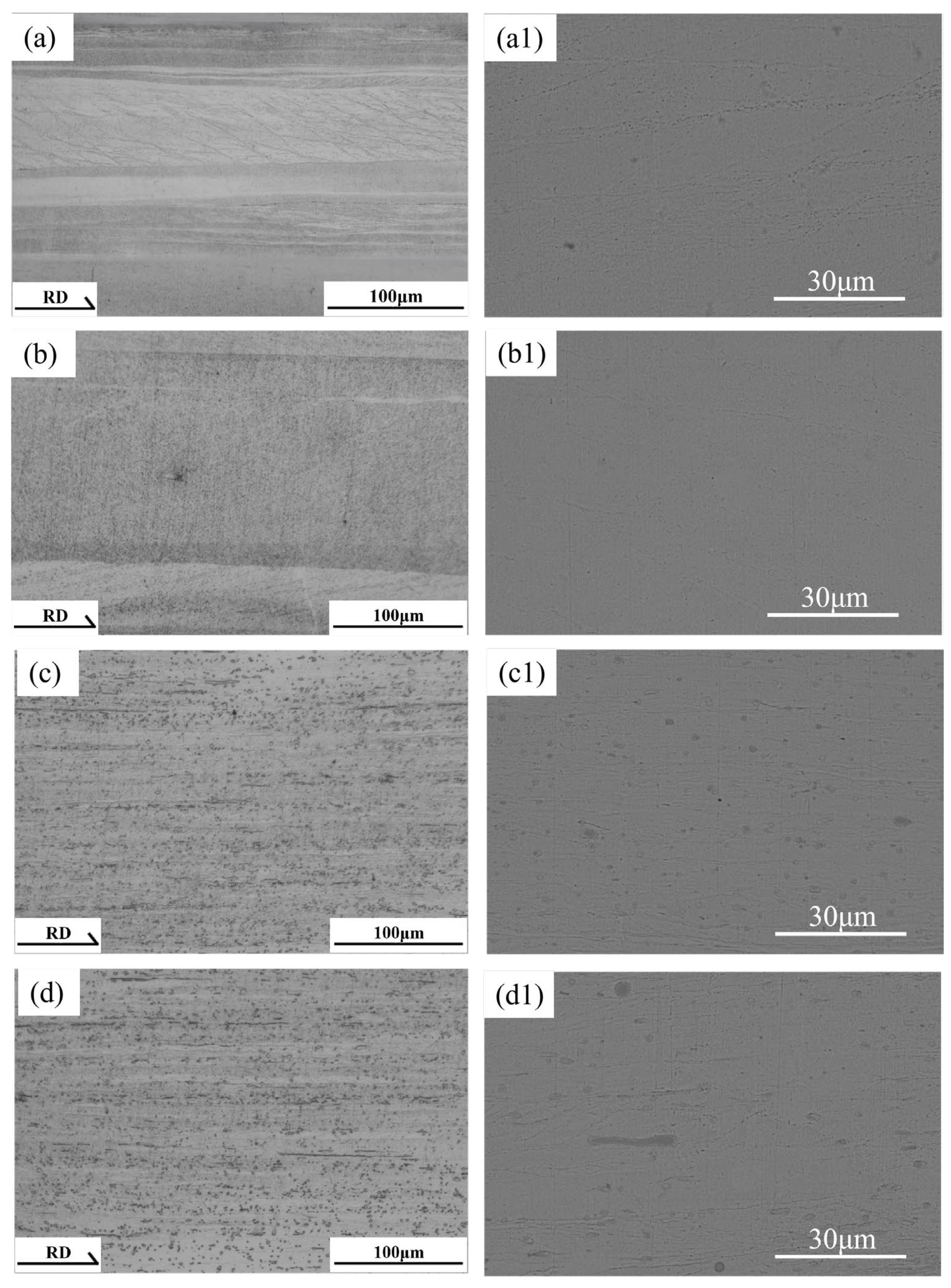
Figure 2 shows the OM and SEM micrographs of the Cu-xCr-0.1Zr alloys after cold rolling. After cold rolling, the 0Cr and 0.2Cr samples exhibit a lamellar structure, with no obvious fibrous structure or precipitates observed in the middle part. When the Cr content increases to 1.0 wt.%, the samples show a fibrous structure with elongated grains, and spherical precipitates are distributed along the rolling direction, with sizes ranging from approximately 1.69 to 3.16 μm. When the Cr content increases to 1.8 wt.%, the fibrous structure is similar to that of the 1.0Cr sample, but a small amount of rod-like precipitates begin to appear in the samples, with a length of about 15 μm.
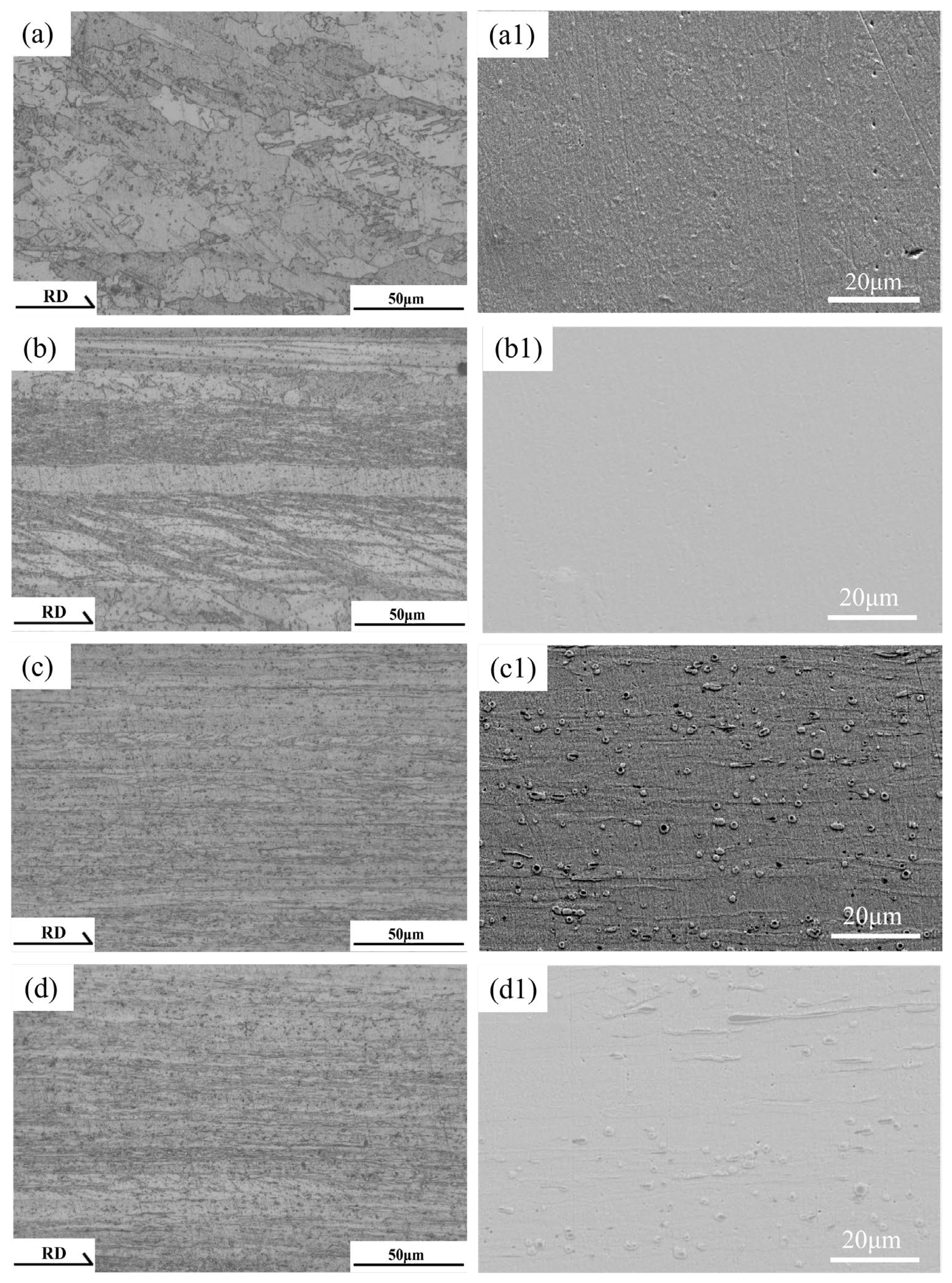
Figure 3 presents the optical microscopy (OM) micrographs of Cu-xCr-0.1Zr alloy samples after aging treatment at 450 °C for 0.5 h. It can be observed that after aging at 450 °C for 0.5 h, partial recrystallization of grains occurs in the 0Cr sample, and twins exist in the microstructure with almost no precipitates detected. The 0.2Cr sample shows a small number of precipitates. For the 1.0Cr sample, the quantity and density of spherical Cr precipitates increase significantly; most of these spherical precipitates have a size ranging from 1.6 μm to 2.7 μm, while a small amount of rod-like precipitates have a length between 4.8 μm and 8.9 μm. As for the 1.8Cr sample, after aging, the spherical Cr precipitates have a size of approximately 2.4 μm to 3.4 μm, and the rod-like precipitates have a length ranging from 10.9 μm to 19.2 μm, with a few individual ones having a larger size exceeding 45 μm.
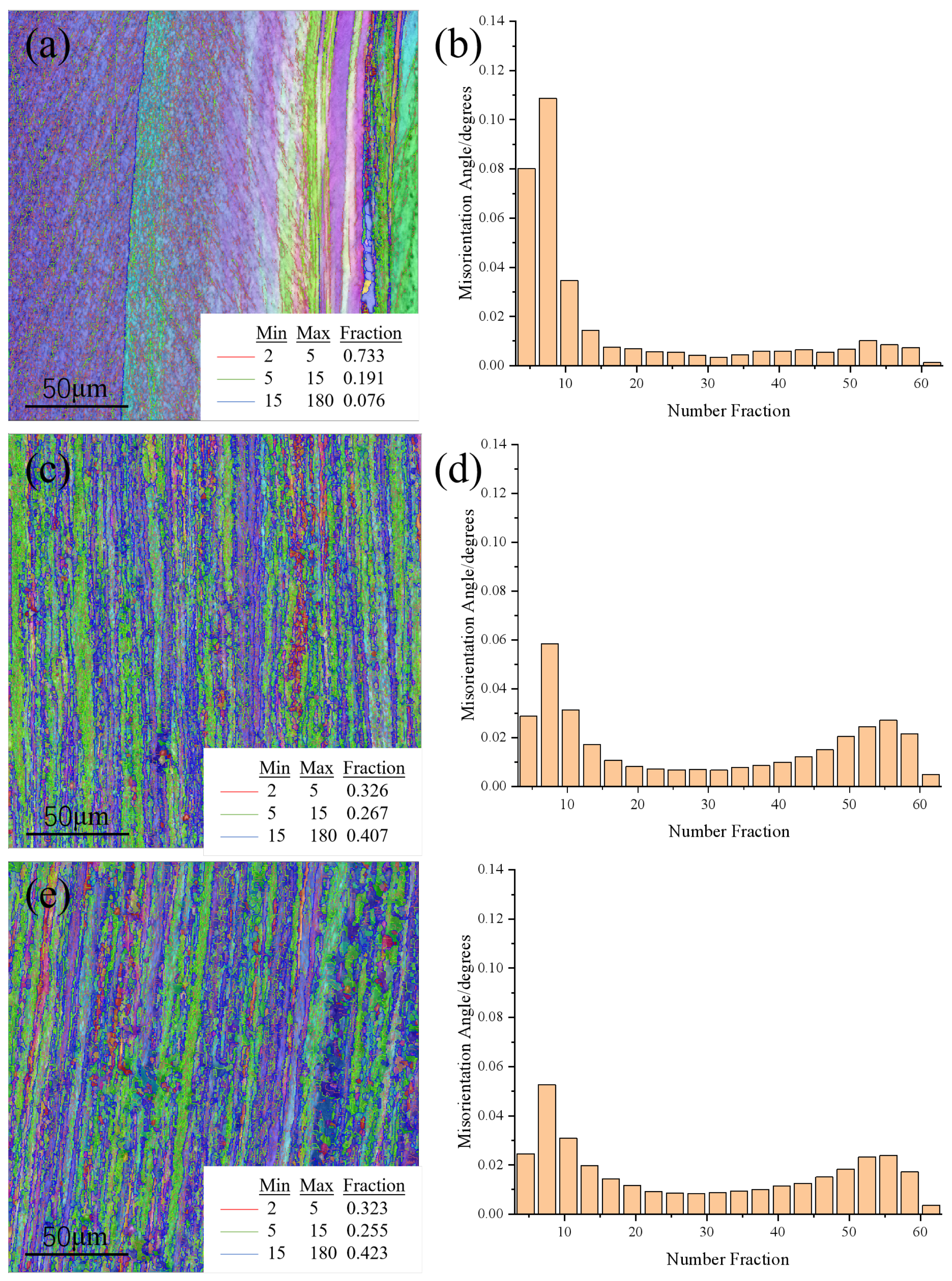
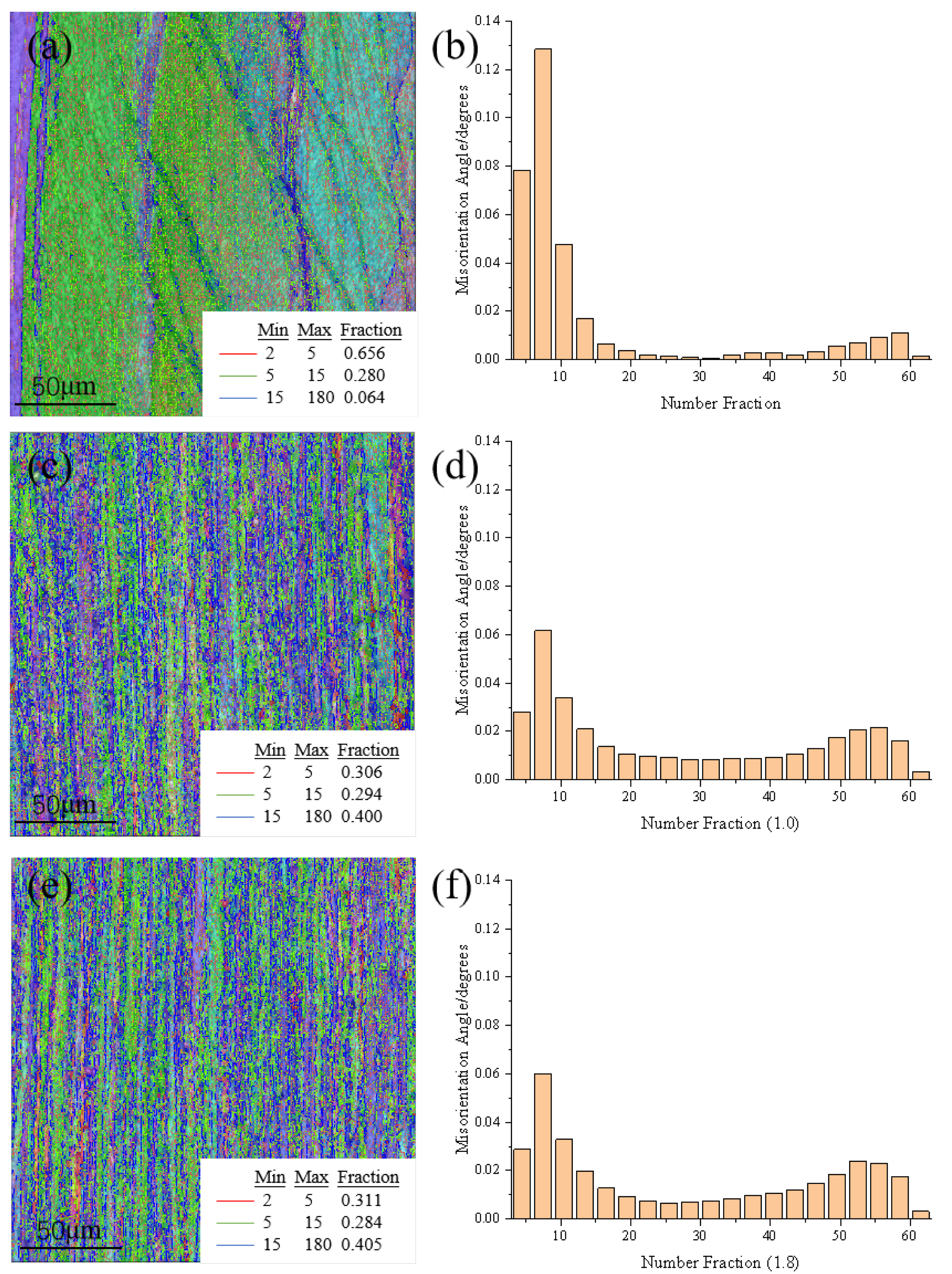
Figure 4 shows the distribution of low-angle and high-angle grain boundaries in the cold-rolled Cu-xCr-0.1Zr samples. It can be observed that after cold rolling, the proportion of low-angle grain boundaries in the 0.2Cr sample reaches 93.6%, while that of high-angle grain boundaries is only 6.4%. In contrast, the 1.0Cr and 1.8Cr samples exhibit a comparable proportion of high-angle grain boundaries, accounting for 40% and 40.5%, respectively. This indicates that the 0.2Cr sample is dominated by deformed grains with a high density of dislocations inside the grains. Figure 5 displays the distribution of low-angle and high-angle grain boundaries in the Cu-xCr-0.1Zr samples after aging treatment. High-angle grain boundaries with a misorientation of 60° are detected in the 1.0Cr and 1.8Cr samples, suggesting the presence of twins in these samples. After aging at 450 °C for 0.5 h, the proportion of low-angle grain boundaries in the 0.2Cr sample is 92.4%, with high-angle grain boundaries only accounting for 7.6%. For the 1.0Cr sample, the proportion of high-angle grain boundaries is 40.7%, and that of the 1.8Cr sample is 42.3%. The proportion of grain boundary types in the three samples shows little difference from that in the cold-rolled state, which demonstrates that the 0.2Cr, 1.0Cr and 1.8Cr samples undergo almost no recrystallization after aging at 450 °C for 0.5 h.
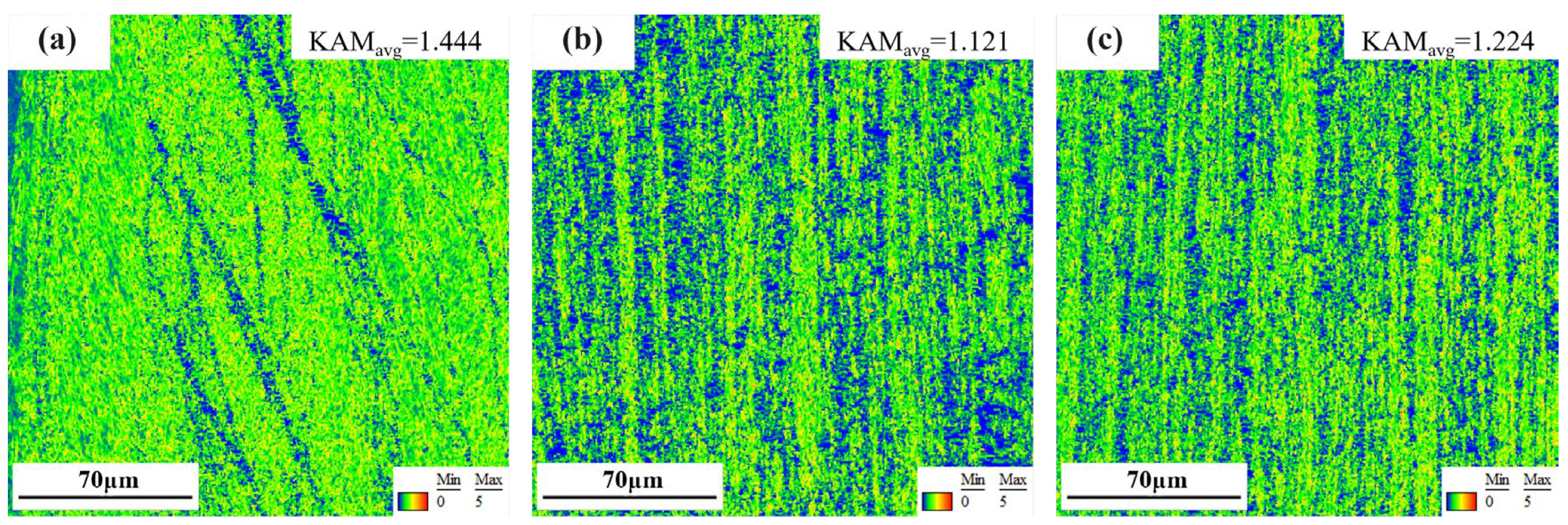
Figure 6 shows the kernel average misorientation (KAM) distribution maps of Cu-xCr-0.1Zr samples after cold rolling. The average KAM value of the 0.2Cr sample is 1.444, which is the highest among the three samples, while those of the 1.0Cr and 1.8Cr samples are 1.121 and 1.224, respectively. The geometrically necessary dislocation (GND) density in the samples was calculated according to Equations (1) and (2) [21]:
ρ G N D = 2 K A M / μ b
b = a / 2
where μ denotes the scanning step size of EBSD, with a value of 1.2 μm; a is the lattice constant of the Cu-Cr-Zr alloy, approximately equal to 0.3614 nm [22]; and b represents the magnitude of the Burgers vector, which is calculated to be 0.255 nm according to Equation (2). The results show that after cold rolling, the average geometrically necessary dislocation density of the 0.2Cr sample is 9.44 × 10⁹ m−2; those of the 1.0Cr and 1.8Cr samples are 7.33 × 10⁹ m−2 and 8 × 10⁹ m−2, respectively.
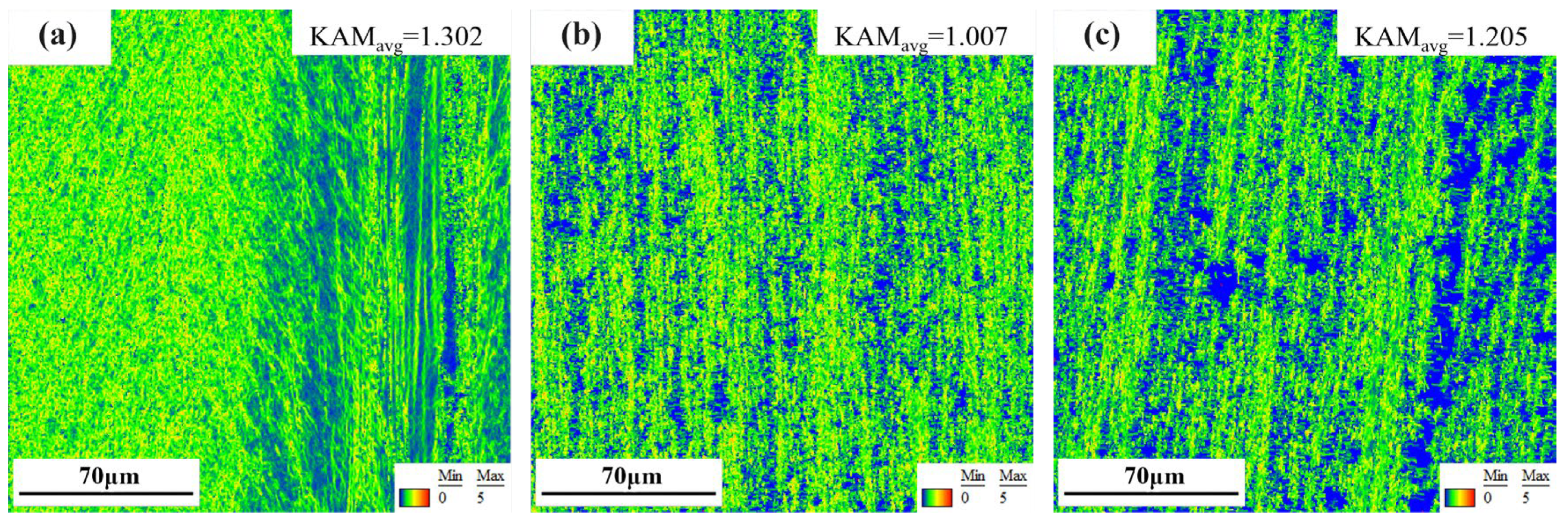
Figure 7 shows the kernel average misorientation (KAM) distribution maps of the Cu-xCr-0.1Zr alloys after aging treatment. The average KAM values of the 0.2Cr, 1.0Cr and 1.8Cr samples are 1.302, 1.007 and 1.205, respectively. The results indicate that after aging, the average geometrically necessary dislocation density of the 0.2Cr sample is 8.51 × 10⁹ m−2, that of the 1.0Cr sample is 6.58 × 10⁹ m−2, and that of the 1.8Cr sample is 7.88 × 10⁹ m−2. Compared with the cold-rolled samples, the dislocation density of all samples decreases, with the 0.2Cr sample showing the largest reduction amplitude.

3.2. Electrical Conductivity and Tensile Strength

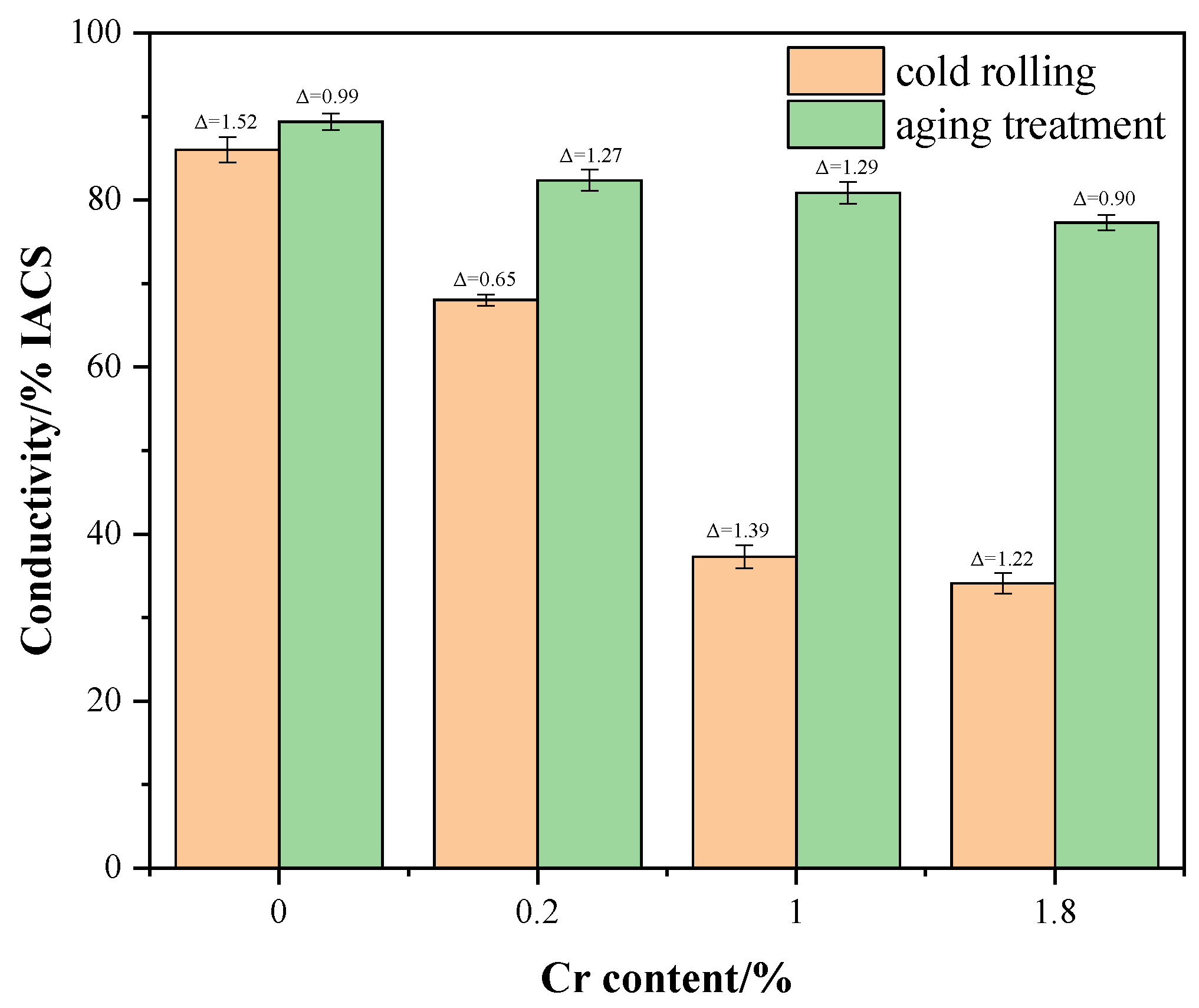
Figure 8 presents the electrical conductivity of Cu-xCr-0.1Zr alloys after cold rolling and aging treatment. It can be seen that after cold rolling, the electrical conductivity of the 0Cr sample is 86% IACS, and that of the 0.2Cr sample is 68.0% IACS. With the Cr content further increased to 1.0 wt.%, the electrical conductivity drops sharply to 37.3% IACS, while the 1.8Cr sample has an electrical conductivity of 34.11% IACS. The electrical conductivity of all samples after aging is higher than that after cold rolling. After aging, the electrical conductivity of the 0Cr sample reaches 89.4% IACS, and that of the 0.2Cr sample is 82.9% IACS; the electrical conductivity values of the 1.0Cr and 1.8Cr samples are 80.9% IACS and 77.3% IACS, respectively. Compared with the 0Cr sample after aging, the electrical conductivity of the 0.2Cr sample decreases by 7.3%, while that of the 1.0Cr and 1.8Cr samples decreases by 13.5%.
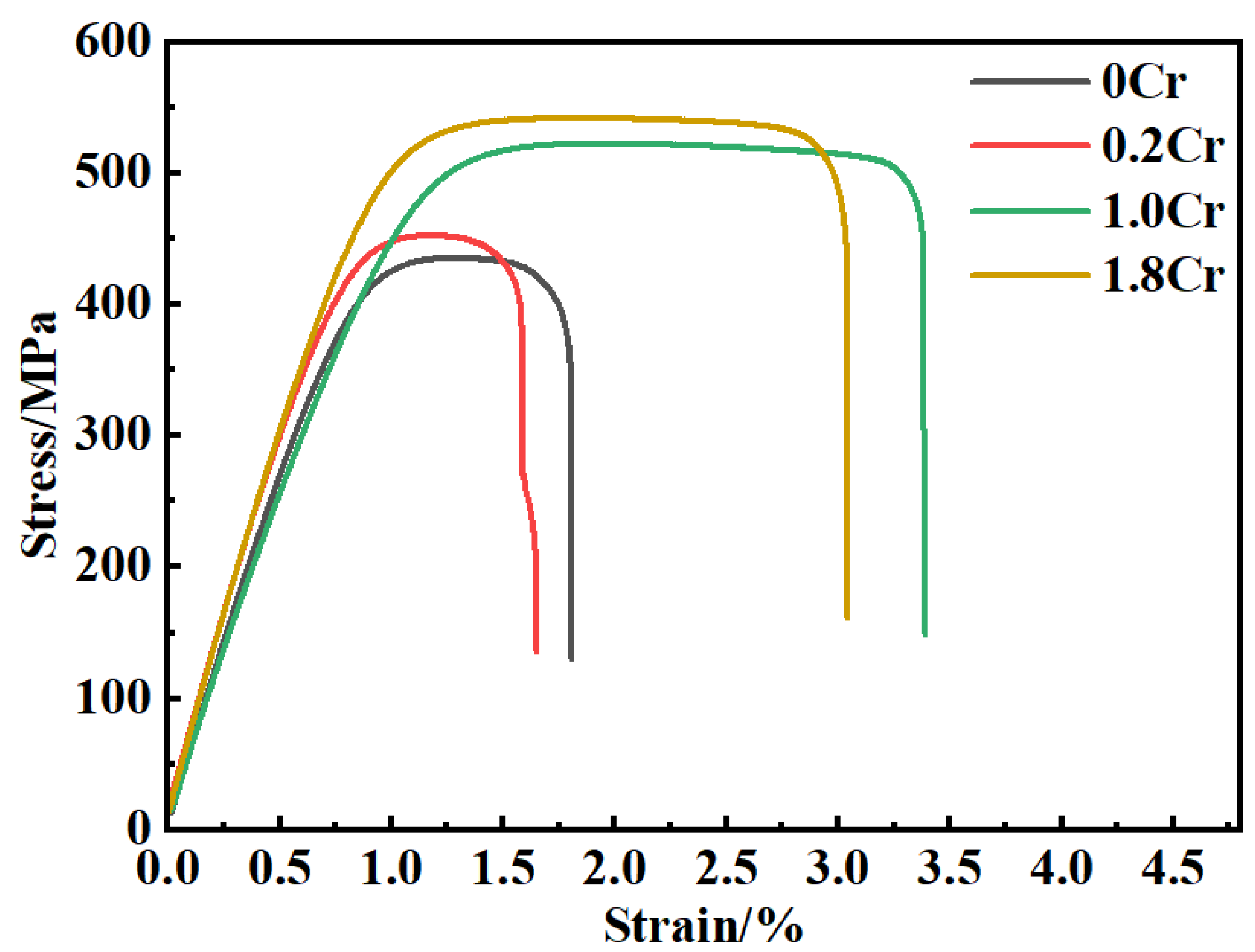
Figure 9 shows the engineering stress–strain curves of Cu-xCr-0.1Zr alloy samples after cold rolling. It can be observed from the figure that the tensile strength of the 0Cr sample is 435 MPa, while that of the 0.2Cr sample is 452 MPa, representing an increase of 3.9% compared with the 0Cr sample. The tensile strength of the 1.0Cr sample is 522 MPa, which is 20% higher than that of the 0Cr sample, and the 1.8Cr sample has a tensile strength of 542 MPa, showing an increase of 24% relative to the 0Cr sample. With the increase in Cr content, the tensile strength of the alloy samples increases significantly.
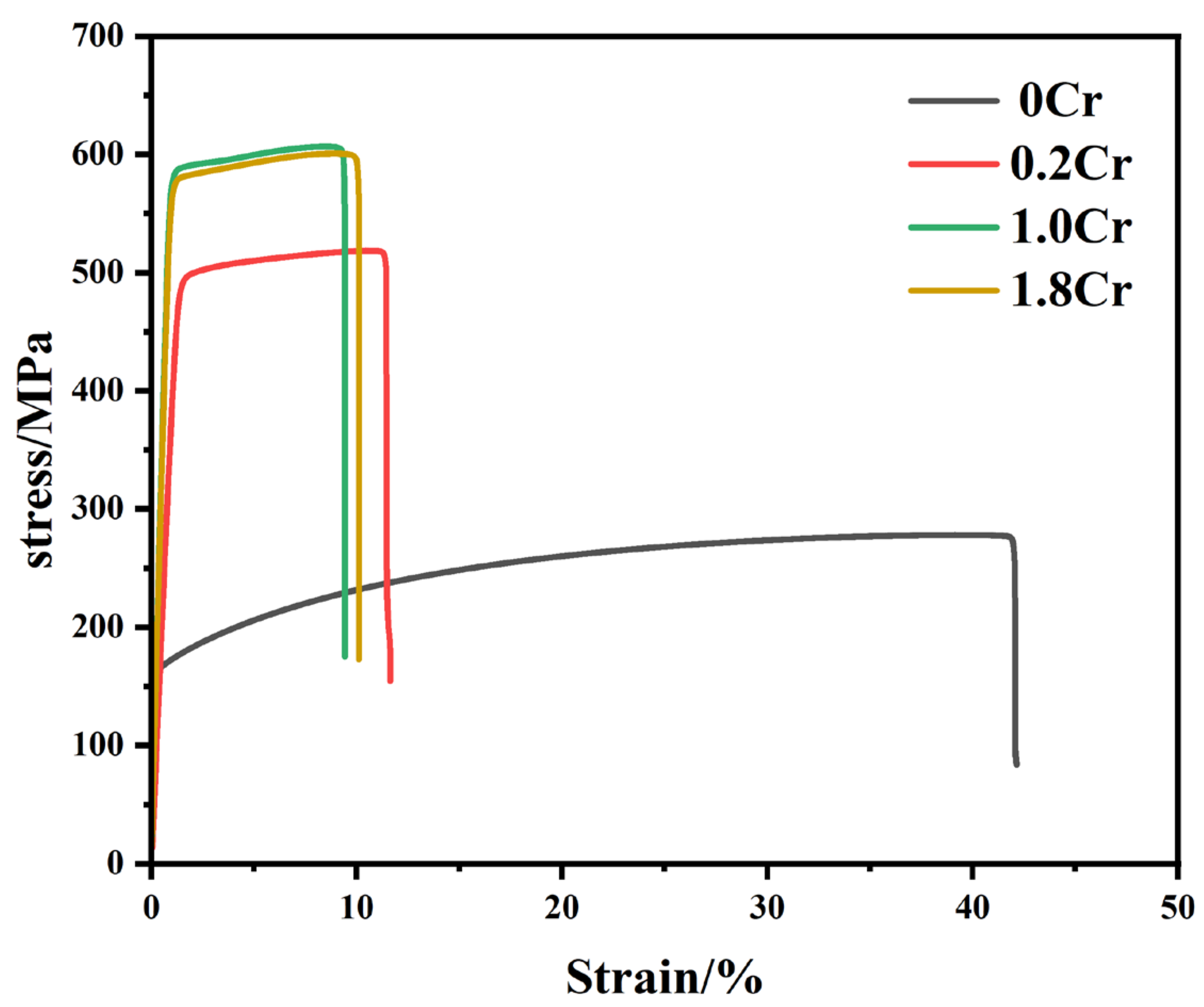
Figure 10 shows the engineering stress–strain curves of Cu-xCr-0.1Zr alloys after aging treatment at 450 °C for 0.5 h. After aging, the strength of the 0Cr sample decreases sharply to only 278 MPa, which is 157 MPa lower than that in the cold-rolled state, with a reduction of approximately 36.1%. In contrast, its elongation increases significantly to reach 42%. The tensile strength of the 0.2Cr sample is 519 MPa, which is 66 MPa higher than that in the cold-rolled state (an increase of about 14.82%), and 241 MPa higher than that of the aged 0Cr sample (an increase of about 86.7%), showing a substantial improvement in tensile strength. The tensile strength of the 1.0Cr sample is 607 MPa, which is 84 MPa higher than that in the cold-rolled state (an increase of about 16.1%) and 329 MPa higher than that of the aged 0Cr sample (an increase of about 118.4%). The tensile strength of the 1.8Cr sample is slightly lower than that of the 1.0Cr sample, reaching 601 MPa; it is 59 MPa higher than that in the cold-rolled state (an increase of about 10.89%) and 323 MPa higher than that of the aged 0Cr sample (an increase of about 116.2%). Except for the 0Cr sample, the tensile strength of the other alloys increases significantly after aging.

4. Discussion

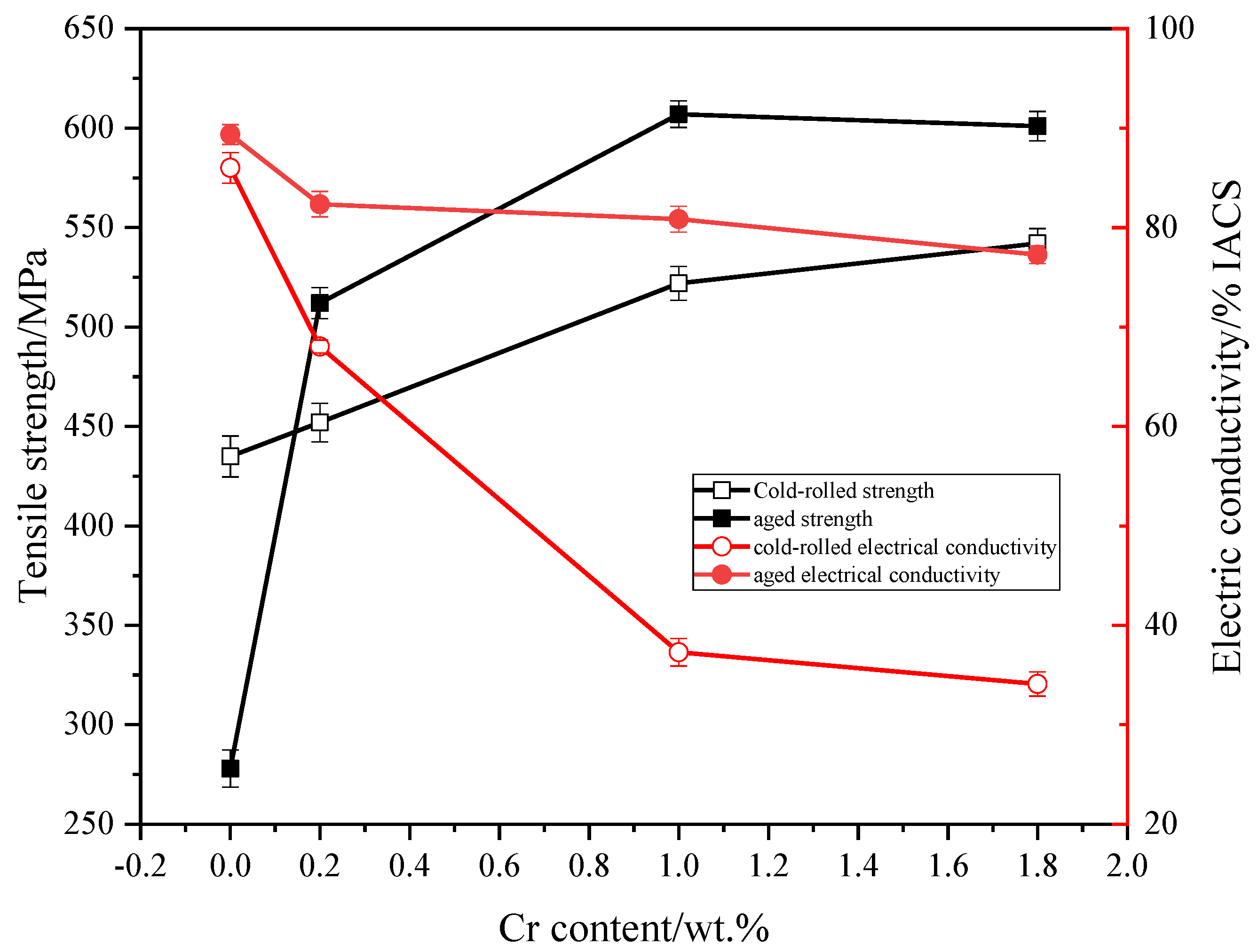
As a key indicator for characterizing the electrical conductivity of materials, the magnitude of electrical conductivity depends primarily on various scattering effects experienced by electrons during transmission. The specific influencing factors include the intrinsic lattice resistance of the copper matrix, as well as the resistance induced by solute atoms, grain boundaries, dislocations, and phonon scattering. Figure 11 shows the variations in tensile strength and electrical conductivity of Cu-xCr-0.1Zr alloys with Cr content after cold rolling and aging treatment. For the 0Cr sample, the electrical conductivity reaches 86% IACS and 89.4% IACS after cold rolling and aging, respectively, with negligible differences. The defects such as dislocations and grain boundaries introduced during cold rolling are partially recovered after aging, but their overall impact on electrical conductivity remains limited. The maximum solubility of Cr in copper alloys is 0.273 wt% at 950 °C, with that of Zr being 0.142 wt%. at 400 °C, the maximum solubility of Cr is approximately 0.0002 wt%, while that of Zr is 0.004 wt%. After cold rolling, the electrical conductivity of the sample decreases from 86.0% IACS for the 0Cr sample to 68.0% IACS for the 0.2Cr sample. Compared with the 0Cr sample, the 0.2 wt% Cr in the cold-rolled 0.2Cr sample is almost completely dissolved in the matrix. This is because a solution treatment at 960 °C was performed prior to cold rolling, resulting in almost no precipitated phases in the sample. From the perspective of the cold-deformed microstructure (Figure 2), both alloys exhibit a layered deformed structure. Although the dislocation density may vary between the two, solute atoms generally play a dominant role in affecting electrical conductivity. Therefore, the decrease of approximately 18% IACS in the electrical conductivity of the 0.2Cr sample is mainly attributed to the solid solution effect of approximately 0.2 wt% Cr in the matrix.
The electrical conductivities of the cold-rolled 1.0Cr and 1.8Cr samples are 37.3% IACS and 34.1% IACS, respectively. The contents of Cr in solid solution in the two samples are comparable. When the Cr content exceeds 0.3 wt%, the solid solubility of Zr in the Cu matrix decreases slightly with the increase in Cr content [23]. From this perspective, the Zr content in solid solution in the 1.0Cr sample is lower than that in the 1.8Cr sample, which is conducive to the improvement of electrical conductivity. The proportions of high-angle grain boundaries and the dislocation densities of the 1.0Cr and 1.8Cr samples are comparable, with the proportions of high-angle grain boundaries being 40% and 40.5%, respectively (Figure 4), and the dislocation densities being 7.33 × 10⁹ m−2 and 8 × 10⁹ m−2, respectively. After solution treatment at 960 °C, although the 1.0Cr sample may contain a small amount of primary precipitated phases such as Cu4Zr or Cu5Zr, the dominant precipitated phases in the alloy are spherical Cr-rich phases. Similarly, the 1.8Cr sample is also dominated by primary Cr-rich phases, but a small quantity of rod-like precipitated phases with sizes larger than 10 μm appear in the 1.8Cr sample. Therefore, the rod-like morphology of the primary phases has an adverse effect on electrical conductivity, but the extent of the influence is limited due to their low number density.
The electrical conductivity of the cold-rolled 1.0Cr sample is 56% IACS lower than that of the 0Cr sample and 30% IACS lower than that of the 0.2Cr sample. The proportion of low-angle grain boundaries in the 0.2Cr sample is 92.4%, which is much higher than that in the 1.0Cr sample (40.7%). The geometric mean dislocation density of the 0.2Cr sample is 9.44 × 10⁹ m−2, which is higher than that of the 1.0Cr sample (7.33 × 10⁹ m−2). When the Cr content reaches 1.0 wt.%, the Cr content in the Cu matrix is slightly higher than that in the 0.2Cr sample, and the number of primary Cr precipitated phases in the 1.0Cr sample is significantly greater than that in the 0.2Cr sample. The calculated dislocation densities of the three samples are in the same order of magnitude with negligible differences. Therefore, compared with the 0.2Cr sample, the decrease in electrical conductivity of the 1.0Cr sample is mainly attributed to the increase in the solid solubility of Cr in the matrix and the precipitation of a large number of spherical primary Cr secondary phases. Hence, in terms of microstructure control, the dislocation density has little effect on the decrease in electrical conductivity, and efforts should be made to minimize the formation of primary Cr-rich phases or other precipitated phases as much as possible.
In the temperature range of 400–1100 °C, the low-solute Cu-Cr-Zr alloy system is primarily composed of Cu-rich phases, Cr phases, and Cu5Zr phases [23]. The micro-addition of Zr (0.1 wt%) can induce the formation of Cu4Zr [24] or Cu5Zr [25]. A study by Xie et al. [26] demonstrated that after solution treatment at 920 °C, cold rolling with a 96% reduction, and subsequent aging at 400 °C for 3 h, a large number of highly dispersed spherical nanoparticles with sizes ranging from 3 to 15 nm precipitated in the matrix of the Cu-0.26Cr-0.08Zr alloy. Specifically, particles with diameters of 3–6 nm were identified as Cr-rich particles, while those with diameters of 10–15 nm corresponded to Cu4Zr phases. Both types of precipitates exhibited specific orientation relationships with the matrix. Given that the composition and processing parameters of the experimental alloy were similar to those reported in the literature, it can be inferred that after aging at 450 °C, the precipitated phases in the Cu-0.1Zr alloy were mainly Cu4Zr or Cu5Zr. With the addition of 0.2 wt% Cr, the dominant precipitated phases in the alloy transformed into Cu5Zr and Cr phases, all of which existed in the form of nanoparticles. After aging at 450 °C, the electrical conductivity of the 0Cr sample reached 89.4% IACS. Compared with the cold-rolled sample, the precipitation of Cu5Zr phases in the aged 0Cr sample led to a decrease in the solid solubility of Zr in the matrix, accompanied by a reduction in dislocation density. The electrical conductivity of the 0.2Cr sample increased to 82.9% IACS, representing a substantial enhancement relative to its cold-rolled counterpart. Chbihi et al. [27] reported that after solution treatment at 1050 °C for 1 h and aging at 440 °C for 2 h, the Cu-1.0Cr-0.1Zr alloy predominantly precipitated spherical Cr phases with sizes of 5–10 nm. Extending the aging time to 24 h resulted in the growth of spherical Cr phases to a size range of 10–40 nm, with the precipitate size in the unrecrystallized regions being smaller than that in the recrystallized regions. As indicated in Figure 4, Figure 5, Figure 6 and Figure 7, the proportions of grain boundary types in the three Cr-containing samples remained essentially unchanged in both the cold-rolled and aged states, and the dislocation density decreased slightly, whereas the electrical conductivity showed a distinct variation. The Cr and Zr atoms dissolved in the Cu matrix induced lattice distortion, which intensified electron scattering. In contrast, precipitation could alleviate lattice distortion in the matrix, thereby reducing lattice scattering resistance and increasing electrical conductivity [15]. This constitutes the primary reason why the electrical conductivity of aged samples is generally higher than that of cold-rolled samples. Optimizing the aging process to maximize the precipitation of Cr and Zr atoms from the copper matrix is a key strategy for improving the electrical conductivity of Cu-Cr-Zr alloys.
The strengthening mechanisms of Cu-Cr-Zr alloys mainly include solid solution strengthening, grain refinement strengthening, deformation strengthening, precipitation strengthening, and grain boundary strengthening. After aging, the tensile strength of the 0Cr sample is 278 MPa, which is approximately 36.1% lower than that in the cold-rolled state, while the elongation increases significantly to 42%. As shown in Figure 2 and Figure 3, the aged 0Cr sample undergoes partial recrystallization, with some grain sizes exceeding 10 μm. The work-hardening effect caused by grain deformation is significantly weakened. Although Cu4Zr or Cu5Zr phases precipitate in the alloy after aging, it is still insufficient to offset the softening effect induced by recrystallization. Cold rolling induces plastic deformation at room temperature, which elongates and flattens the alloy grains to form a fibrous deformed microstructure, while generating a large number of dislocations. This significantly increases the dislocation density and thus improves the alloy strength. Moreover, the formation of dislocation networks provides abundant nucleation sites for subsequent precipitation during aging, which is conducive to enhancing the precipitation strengthening effect in the subsequent aging process. During cold rolling, the grain orientation difference changes, the proportion of low-angle grain boundaries increases, and the formation and refinement of subgrains are promoted simultaneously. At the same deformation degree, the dislocation density of the 0.2Cr sample is slightly higher than that of the 1.0Cr and 1.8Cr samples, while the proportion of high-angle grain boundaries in the 0.2Cr sample is much lower than that in the latter two alloys. The number of primary Cr-rich phases in the 1.0Cr and 1.8Cr samples is higher than that in the 0.2Cr sample. The precipitated primary Cr-rich phases can inhibit dislocation slip, significantly reduce the formation of deformed microstructures, lead to a decrease in low-angle grain boundaries, increase the coalescence of subgrains, promote the increase in orientation difference, and thus form more high-angle grain boundaries. Meanwhile, due to the difference in electronic structure between Cr and Cu, local charge enrichment occurs around Cr atoms. The uneven charge distribution induces lattice distortion in the Cu matrix, enhances the hindrance effect on dislocation movement in the matrix, and thereby improves the tensile strength of the alloy in the cold-rolled state [28].
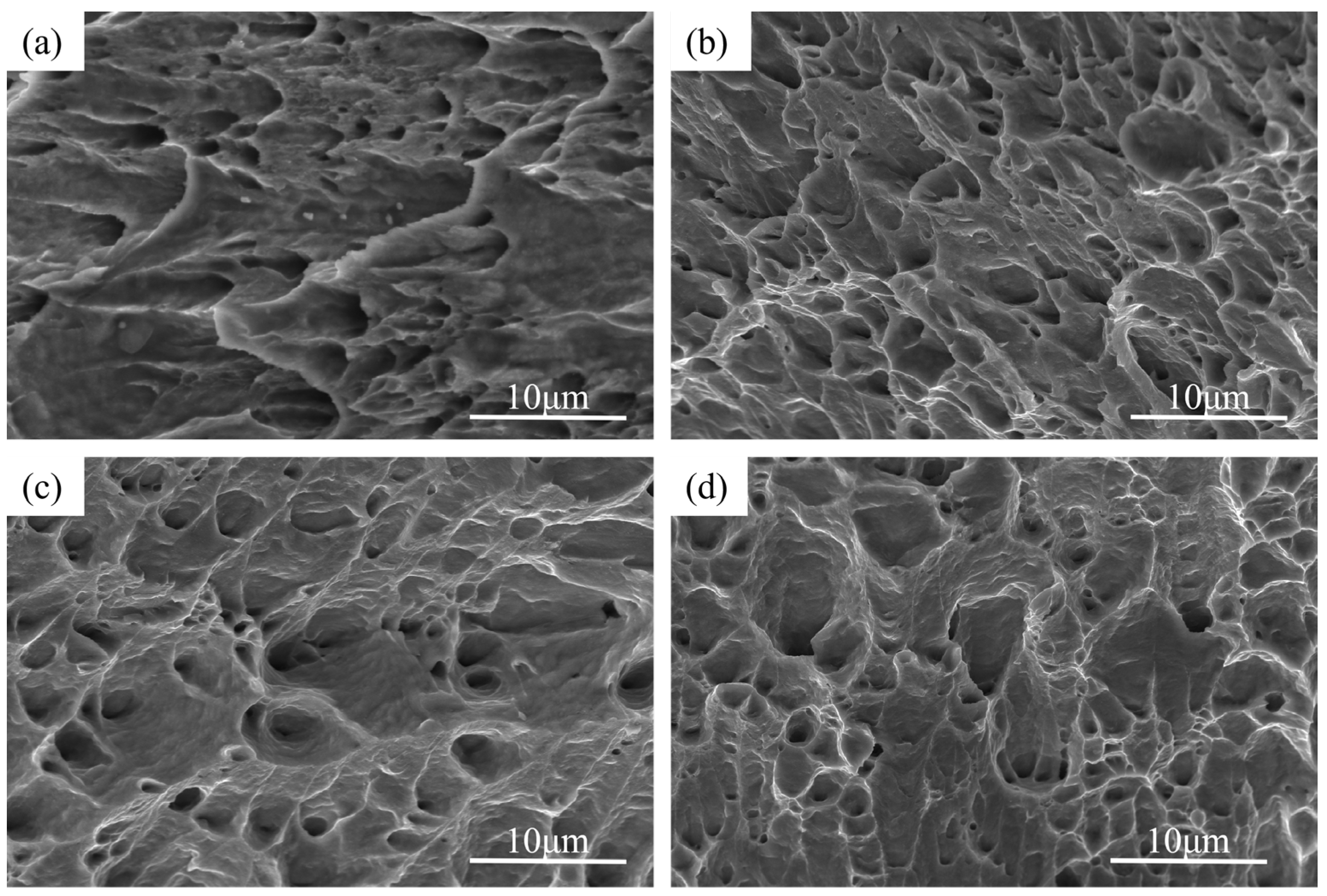
After aging, the tensile strength of all Cr-containing samples increased except for the 0Cr sample, while the ductility decreased with the increase in Cr content. Zel’dovich et al. [29] prepared a Cu-0.14%Cr-0.04%Zr alloy via dynamic channel angular pressing (DCAP); after aging at 450 °C for 1 h, the alloy achieved a tensile strength of 520 MPa with an elongation of 12%. The Cu-Cr-Zr-RE alloy fabricated by Chen et al. [30] exhibited a tensile strength ranging from 579 MPa to 642 MPa and an elongation of 8.7–11.4% after aging at 500 °C for 1.5 h. The aged Cr-containing experimental alloys showed an elongation of 9.4–11.6%. As presented in Figure 12, all tensile fracture surfaces of the samples were ductile fractures without brittle features. From the microstructural perspective, the proportion of grain boundary types remained basically unchanged after aging, the dislocation density decreased slightly, and the contents of Cr and Zr in solid solution in the copper matrix also reduced [31,32]. Therefore, the improvement in tensile strength after aging was mainly attributed to precipitation strengthening. During the aging process, supersaturated nanoscale Cr phases and a small amount of Cu5Zr phases precipitated from the matrix, forming a large number of dispersively distributed precipitates. These fine and stable secondary phase particles can effectively hinder dislocation motion through the Orowan mechanism and pinning effect, thereby enhancing the tensile strength of the material [33]. Based on the comprehensive analysis of electrical conductivity, strength and microstructure, to obtain high-strength and high-conductivity copper alloys, the alloying elements added into the matrix should ensure that the precipitated phases remain stable and fine during aging. Meanwhile, the content of alloying elements should be as low as possible while maintaining the dislocation-pinning effect to guarantee favorable electrical conductivity [3,34]. Dislocation multiplication induced by work hardening is the optimal approach to improve strength while retaining excellent electrical conductivity. Thus, a sufficient degree of work hardening should be ensured in the cold deformation stage to enhance the strength of copper alloys [35]. In the aging stage, efforts should be made to obtain a large quantity of fine, dispersive and stable precipitated phases to reduce lattice distortion and improve the electrical conductivity of copper alloys. Additionally, such fine and dispersive precipitates can also ensure the aging softening resistance of the alloy.

5. Conclusions

This paper investigates the microstructure evolution, electrical conductivity and mechanical property changes in Cu-0.1Zr alloys with different Cr contents after cold rolling and aging treatment at 450 °C for 0.5 h. The main conclusions are as follows:
(1)
After cold rolling, the low-Cr (0.2Cr) samples are dominated by a deformed microstructure with high dislocation density, showing a banded lamellar structure, and the proportion of low-angle grain boundaries reaches 93.7%. In contrast, the high-Cr (1.0Cr, 1.8Cr) samples exhibit a distinct fibrous microstructure, along with spherical and a small amount of rod-like precipitates; the proportion of high-angle grain boundaries is about 39%, and the dislocation density is reduced. After aging, the microstructure morphology remains basically unchanged without obvious recrystallization; however, the number of precipitates in the high-Cr (1.0Cr, 1.8Cr) samples increases and grows significantly, and the dislocation density generally decreases.
(2)
With the increase in Cr content, the number of Cr atoms dissolved in the matrix increases, and the degree of lattice distortion becomes more severe, resulting in a significant decrease in the electrical conductivity of the cold-rolled samples. The electrical conductivity decreases gradually from 86% IACS for the 0Cr sample to 34.11% IACS for the 1.8Cr sample. After aging, due to the precipitation of supersaturated Cr atoms, the number of electron scattering sources decreases, leading to a general improvement in electrical conductivity and a reduction in the conductivity gap among the samples. The downward trend of conductivity slows down at high Cr contents (1.0Cr, 1.8Cr), indicating that the influence of Cr dissolved in the matrix on electrical conductivity is much greater than that of the change in dislocation density.
(3)
With the increase in Cr content, the tensile strength of the cold-rolled samples increases, rising from 435 MPa for the 0Cr sample to 542 MPa for the 1.8Cr sample. After aging, the strength of the Cr-containing samples is further improved, with the 1.0Cr sample exhibiting the maximum tensile strength of 607 MPa. The low-Cr (0.2Cr) samples mainly rely on high dislocation density and solid solution strengthening to enhance strength, while the high-Cr (1.0Cr, 1.8Cr) samples improve strength by restricting dislocation slip and the presence of nanoscale Cr precipitates.

Author Contributions

Conceptualization, J.H. and J.P.; methodology, J.H.; validation, J.H., J.C. and S.G.; formal analysis, J.C.; investigation, J.C.; resources, J.C.; data curation, J.C., J.P. and S.G.; writing—original draft preparation, J.C.; writing—review and editing, L.F.; visualization, J.C.; supervision, L.F.; project administration, J.H. All authors have read and agreed to the published version of the manuscript.

Funding

This research was funded by Fundamental Research Funds for Inner Mongolia Universities, China (JY20220279), and First-Class Discipline Scientific Research Special Project (YLXKZX-NGD-002), Open Research Project of National Key Laboratory of Intensified Metallurgy of Nonferrous Metals (YSQH-ZYTS-25004) and Natural Science of Inner Mongolia Autonomous Region (NO.2024MS05022).

Data Availability Statement

The original contributions presented in this study are included in the article. Further inquiries can be directed to the corresponding author.

Conflicts of Interest

The authors declare no conflicts of interest.

References

  1. Dalan, F.C.; de Lima Andreani, G.F.; Travessa, D.N.; Faizova, S.; Faizov, I.A.; Cardoso, K.R. Effect of ECAP processing on hardness, electrical conductivity, and precipitation kinetics of the Cu-0.81 Cr-0.07 Zr alloy. J. Electron. Mater. 2021, 50, 6171–6182. [Google Scholar] [CrossRef] [Scilit]
  2. Wang, Y.D.; Wu, L.H.; Xue, P.; Zhang, H.; Ni, D.R.; Ma, Z.Y. Improved strength with good conductivity in Cu–Cr–Zr alloys: Determinant effect of under-aging treatment before rolling and aging. Mater. Sci. Eng. A 2022, 848, 143395. [Google Scholar] [CrossRef] [Scilit]
  3. Fu, H.D.; Xu, S.; Li, W.; Xie, J.X.; Zhao, H.B.; Pan, Z.J. Effect of rolling and aging processes on microstructure and properties of Cu-Cr-Zr alloy. Mater. Sci. Eng. A 2017, 700, 107–115. [Google Scholar] [CrossRef] [Scilit]
  4. Yang, K.; Wang, Y.H.; Guo, M.X.; Wang, H.; Mo, Y.D.; Dong, X.G.; Lou, H.F. Recent development of advanced precipitation-strengthened Cu alloys with high strength and conductivity: A review. Prog. Mater Sci. 2023, 138, 101141. [Google Scholar] [CrossRef] [Scilit]
  5. Pang, Y.; Xia, C.D.; Wang, M.P.; Li, Z.; Xiao, Z.; Wei, H.G.; Sheng, X.F.; Jia, Y.L.; Chen, C. Effects of Zr and (Ni, Si) additions on properties and microstructure of Cu–Cr alloy. J. Alloys Compd. 2014, 582, 786–792. [Google Scholar] [CrossRef] [Scilit]
  6. Han, S.Z.; Choi, E.-A.; Lim, S.H.; Kim, S.; Lee, J. Alloy design strategies to increase strength and its trade-offs together. Prog. Mater Sci. 2021, 117, 100720. [Google Scholar] [CrossRef] [Scilit]
  7. Yang, H.Y.; Li, K.Q.; Bu, Y.Q.; Wu, J.M.; Fang, Y.T.; Meng, L.; Liu, J.B.; Wang, H.T. Nanoprecipitates induced dislocation pinning and multiplication strategy for designing high strength, plasticity and conductivity Cu alloys. Scr. Mater. 2021, 195, 113741. [Google Scholar] [CrossRef] [Scilit]
  8. Wu, X.; Zhang, J.X.; Zhao, J.; Meng, Q.J.; Zhang, W.; Pan, F.; Liu, Y.Q.; Ximin, L.; Liu, Y.J.; Liu, X.C. Enhancing the strength and conductivity of commercialized Cu-Cr-Zr plate through simple high strain cold rolling and aging. Mater. Charact. 2023, 205, 113213. [Google Scholar] [CrossRef] [Scilit]
  9. Jiao, X.Y.; Zhang, K.; Bai, R.Y.; Ding, H. Enhanced synergistic strengthening and thermal stability of Ni-Si modified Cu-Cr-Zr alloy via regulating nano-precipitate behavior. Mater. Sci. Eng. A 2025, 943, 148853. [Google Scholar] [CrossRef] [Scilit]
  10. Yan, F.L.; Chen, W.G.; Feng, P.; Dong, L.L.; Yang, T.; Ren, S.X.; Fu, Y.Q. Microstructure evolution and enhanced properties of Cu–Cr–Zr alloys through synergistic effects of alloying, heat treatment and low-energy cyclic impact. J. Mater. Res. 2020, 35, 2746–2755. [Google Scholar] [CrossRef] [Scilit]
  11. Zhang, X.H.; Zhang, X.X.; Zhang, J.; Zhao, X.Y.; Yan, Q.Z. Enhancing high-temperature strength and thermal stability of Cu-Cr-Zr via twin structure by cryogenic rolling. Mater. Charact. 2025, 221, 114784. [Google Scholar] [CrossRef] [Scilit]
  12. Han, T.L.; Hou, C.; Zhao, Z.; Jiao, Z.B.; Li, Y.R.; Jiang, S.; Lu, H.; Wang, H.B.; Liu, X.M.; Nie, Z.R. Simultaneous enhancement of strength and conductivity via self-assembled lamellar architecture. Nat. Commun. 2024, 15, 1863. [Google Scholar] [CrossRef] [Scilit] [PubMed]
  13. Jiao, X.Y.; Zhang, Z.H.; Ding, H. Pre-aging combined with multi-stage rolling processing: Enhancing precipitate-dislocation interaction for strengthening of Cu-Cr-Zr-Ni-Si alloy. Mater. Des. 2025, 256, 114365. [Google Scholar] [CrossRef] [Scilit]
  14. Liu, Y.; Han, T.; Liu, Y.J.; Zheng, C.; Li, X.W.; Qiao, L.L.; Li, Y.C.; Li, J.B.; Meng, X.P. Relationship between microstructure and properties of high strength and high conductivity Cu-Cr-Zr alloy. Spec. Cast. Nonferrous Alloys 2025, 45, 1148–1159. [Google Scholar]
  15. Shen, Z.; Lin, Z.Z.; Shi, P.J.; Zhu, J.L.; Zheng, T.X.; Ding, B.; Guo, Y.F.; Zhong, Y.B. Enhanced electrical, mechanical and tribological properties of Cu-Cr-Zr alloys by continuous extrusion forming and subsequent aging treatment. J. Mater. Sci. Technol. 2022, 110, 187–197. [Google Scholar] [CrossRef] [Scilit]
  16. Ma, G.Y.; Wu, S.N.; Wang, R.Z.; Liu, D.H.; Niu, F.Y.; Bi, G.J.; Wu, D.J. Microstructure evaluation and resultant mechanical properties of laser-arc hybrid additive manufactured Cu-Cr-Zr alloy. J. Alloys Compd. 2022, 912, 165044. [Google Scholar] [CrossRef] [Scilit]
  17. Liu, H.B.; Zheng, Y.H.; La, P.Q.; Shen, J.; Ding, Y.L. Effect of rolling and aging treatment on microstructure and properties for Cu-Cr-Zr alloy. Trans. Nonferrous Met. Soc. China 2020, 30, 2075–2083. [Google Scholar]
  18. Liao, X.F.; Zhang, H.; He, X.Q.; Huang, Y.C.; Li, M. Thermal tensile deformation behavior of Cu-Cr-Zr alloy with different Cr content. Heat Treat. Met. 2021, 46, 28–35. [Google Scholar]
  19. Zhou, J.Q.; Huang, Y.S.; Li, Z.; Tong, X.; You, D.Q.; Yang, J.J.; Zhang, Q.M.; Li, W.; Wang, X.J. Effect of heat treatments on microstructure, mechanical and electrical properties of Cu–Cr–Zr alloy manufactured by laser powder bed fusion. Mater. Chem. Phys. 2023, 296, 127249. [Google Scholar] [CrossRef] [Scilit]
  20. GB/T 34505-2017; Copper and Copper Alloy Materials—Tensile Testing at Room Temperature. National Standard of the People’s Republic of China: Beijing, China, 2017.
  21. Konijnenberg, P.J.; Zaefferer, S.; Raabe, D. Assessment of geometrically necessary dislocation levels derived by 3D EBSD. Acta Mater. 2015, 99, 402–414. [Google Scholar] [CrossRef] [Scilit]
  22. Li, Q.; Ma, B.; Li, L.; Huang, G.J.; Xu, Y.L.; Chen, G.M. Precise Determination of Lattice Parameters and Estimation of the True Solubility in Cu-Cr Alloy. Rare Met. Mater. Eng. 2011, 40, 132–134. [Google Scholar]
  23. Ma, F.L. Thermomechanical Calculation of Cu-Cr-Zr Phase Diagram Experiment Research. Master’s Thesis, Northeastern University, Shenyang, China, 2011. [Google Scholar]
  24. Jha, K.; Neogy, S.; Kumar, S.; Singh, R.; Dey, G. Correlation between microstructure and mechanical properties in the age-hardenable Cu-Cr-Zr alloy. J. Nucl. Mater. 2021, 546, 152775. [Google Scholar] [CrossRef] [Scilit]
  25. Du, Y.; Zhou, Y.; Song, K.; Huang, T.; Hui, D.; Liu, H.; Cheng, C.; Yang, J.; Niu, L.; Guo, H. Zr-containing precipitate evolution and its effect on the mechanical properties of Cu–Cr–Zr alloys. J. Mater. Res. Technol. 2021, 14, 1451–1458. [Google Scholar] [CrossRef] [Scilit]
  26. Xie, H.; Mi, X.; Huang, G.; Gao, B.; Yin, X.; Li, Y. Effect of thermomechanical treatment on microstructure and properties of Cu-Cr-Zr-Ag alloy. Rare Met. 2011, 30, 650–656. [Google Scholar] [CrossRef] [Scilit]
  27. Chbihi, A.; Sauvage, X.; Blavette, D. Influence of plastic deformation on the precipitation of Cr in copper. J. Mater. Sci. 2014, 49, 6240–6247. [Google Scholar] [CrossRef] [Scilit]
  28. Sharma, P.; Tucker, W.C.; Balasubramanian, G. Optimal interplay of charge localization, lattice dynamics and slip systems drives structural softening in dilute W alloys with Re additives. Int. J. Refract. Met. Hard Mater. 2025, 128, 107086. [Google Scholar] [CrossRef] [Scilit]
  29. Zel’dovich, V.; Dobatkin, S.; Frolova, N.Y.; Khomskaya, I.; Kheifets, A.; Shorokhov, E.; Nasonov, P. Mechanical properties and the structure of chromium–zirconium bronze after dynamic channel-angular pressing and subsequent aging. Phys. Met. Metallogr. 2016, 117, 74–82. [Google Scholar] [CrossRef] [Scilit]
  30. Chen, G.; Wang, M.; Yu, H.; He, H. Effects of content ratio of Cr and Zr on a non-vacuum smelted Cu-Cr-Zr-RE alloy. J. Alloys Compd. 2025, 1011, 178430. [Google Scholar] [CrossRef] [Scilit]
  31. Huang, A.H.; Wang, Y.F.; Wang, M.S.; Song, L.Y.; Li, Y.S.; Gao, L.; Huang, C.X.; Zhu, Y.T. Optimizing the strength, ductility and electrical conductivity of a Cu-Cr-Zr alloy by rotary swaging and aging treatment. Mater. Sci. Eng. A 2019, 746, 211–216. [Google Scholar] [CrossRef] [Scilit]
  32. Miao, Y.P. The Effect of Aging Process on the Microstructure and Properties of Cu-Cr-Zr-Nb Alloy. Master’s Thesis, Guilin University of Technology, Guilin, China, 2024. [Google Scholar]
  33. Yan, P.; Zu, G.Q.; Zha, J.; Ye, F.; Zhu, W.W.; Han, Y.; Zou, H.H.; Zhao, Y.; Li, M.Y.; Ran, X. Effect of annealing and aging treatment on microstructure and properties of high deformation hot-rolled Cu-Cr-Zr alloy. J. Mater. Eng. Perform. 2025, 1–10. [Google Scholar] [CrossRef] [Scilit]
  34. Correia, J.B.; Davies, H.A.; Sellars, C.M. Strengthening in rapidly solidified age hardened Cu-Cr and Cu-Cr-Zr alloys. Acta Mater. 1997, 45, 177–190. [Google Scholar] [CrossRef] [Scilit]
  35. Bodyakova, A.; Tkachev, M.; Raab, G.I.; Kaibyshev, R.; Belyakov, A.N. Regularities of microstructure evolution in a Cu-Cr-Zr alloy during severe plastic deformation. Materials 2022, 15, 5745. [Google Scholar] [CrossRef] [Scilit]
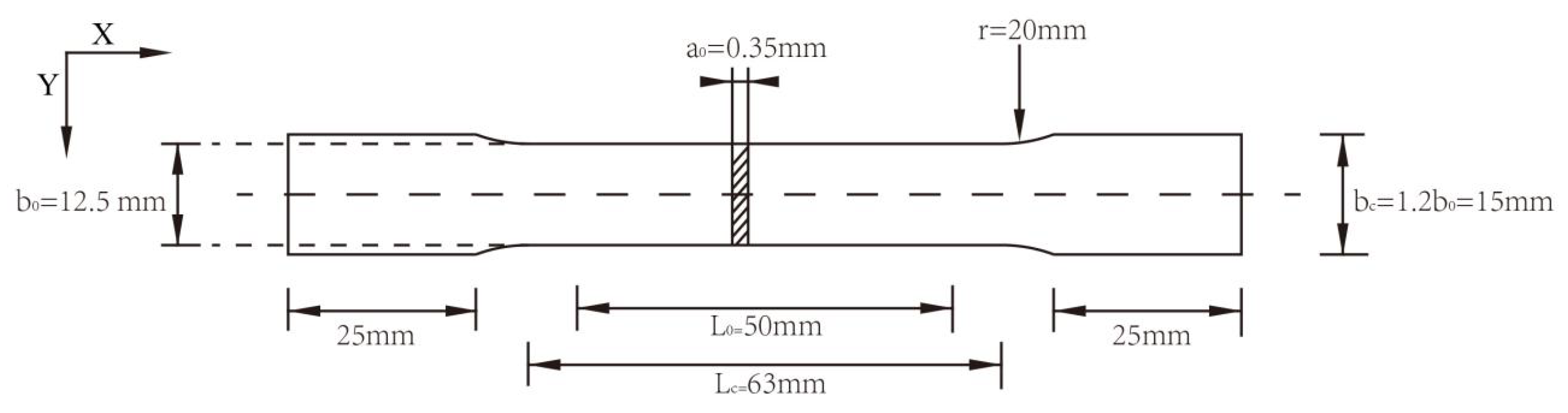
Figure 1. Schematic diagram of tensile specimen.
Metals 16 00093 g001
Figure 2. OM (ad) and SEM (a1d1) images of cold-rolled Cu-xCr-0.1Zr alloys: (a,a1) 0Cr; (b,b1) 0.2Cr; (c,c1) 1.0Cr; (d,d1) 1.8Cr.
Metals 16 00093 g002
Figure 3. OM (ad) and SEM (a1d1) images of Cu-xCr-0.1Zr alloys aged at 450 °C for 0.5 h: (a,a1) 0Cr; (b,b1) 0.2Cr; (c,c1) 1.0Cr; (d,d1) 1.8Cr.
Metals 16 00093 g003
Figure 4. Grain boundary distribution (a,c,e) and misorientation distribution (b,d,f) of cold-rolled Cu-xCr-0.1Zr alloys: (a,b) 0.2Cr; (c,d) 1.0Cr; (e,f) 1.8Cr.
Metals 16 00093 g004
Figure 5. Grain boundary distribution (a,c,e) and misorientation angle distribution (b,d,f) of Cu-xCr-0.1Zr alloy after aging at 450 °C for 0.5 h: (a,b) 0.2Cr; (c,d) 1.0Cr; (e,f) 1.8Cr.
Metals 16 00093 g005
Figure 6. Kernel average misorientation (KAM) distribution map of cold-rolled Cu-xCr-0.1Zr alloys: (a) 0.2Cr; (b) 1.0Cr; (c) 1.8Cr.
Metals 16 00093 g006
Figure 7. KAM distribution map of Cu-xCr-0.1Zr alloy aged at 450 °C for 0.5 h: (a) 0.2Cr; (b) 1.0Cr; (c) 1.8Cr.
Metals 16 00093 g007
Figure 8. The electrical conductivity of cold-rolled and aged Cu-xCr-0.1Zr alloys. (Δ represents the standard error).
Metals 16 00093 g008
Figure 9. Engineering stress–strain curves of cold-rolled Cu-xCr-0.1Zr alloys.
Metals 16 00093 g009
Figure 10. Stress–strain curves of Cu-xCr-0.1Zr alloys aged at 450 °C for 0.5 h.
Metals 16 00093 g010
Figure 11. Variations in tensile strength and electrical conductivity of Cu-xCr-0.1Zr alloys with Cr content after cold rolling and aging treatment.
Metals 16 00093 g011
Figure 12. Tensile fracture morphologies of Cu-xCr-0.1Zr alloys after aging at 450 °C for 0.5 h: (a) 0Cr; (b) 0.2Cr; (c) 1.0Cr; (d) 1.8Cr.
Metals 16 00093 g012
Table 1. Chemical Composition of Cu-xCr-0.1Zr Alloys.
Sample NameCr Content (wt.%)Zr Content (wt.%)
0.2Cr0.1810.092
1.0Cr0.9750.089
1.8Cr1.7840.102
Disclaimer/Publisher’s Note: The statements, opinions and data contained in all publications are solely those of the individual author(s) and contributor(s) and not of MDPI and/or the editor(s). MDPI and/or the editor(s) disclaim responsibility for any injury to people or property resulting from any ideas, methods, instructions or products referred to in the content.