Article

Influence of Cooling Process on Microstructure and Mechanical Properties of High-Strength, High-Ductility Ship Plate Steel


State Key Laboratory of Digital Steel, Northeastern University, Shenyang 110819, China
*
Authors to whom correspondence should be addressed.
Metals 2025, 15(11), 1214; https://doi.org/10.3390/met15111214
Submission received: 9 October 2025 / Revised: 29 October 2025 / Accepted: 30 October 2025 / Published: 1 November 2025

Abstract

This study investigated the influence of the cooling process on the microstructure and mechanical properties of high-strength, high-ductility ship plate steel. The transformation temperature ranges for ferrite (F) and bainite (B) for the experimental steel were determined through thermal simulation experiments. Based on these findings, hot-rolling experiments in laboratory were designed to elucidate the influence of three different cooling paths on the resultant microstructure and mechanical properties. The results demonstrate that the two-stage (air cooling + water cooling) and three-stage (water cooling + air cooling + water cooling) processes after rolling enhance the strength through phase transformation and precipitation strengthening mechanisms. The three-stage process provides an additional fine-grain strengthening effect. Compared to the F+Pearlite (P) or B microstructures produced by single-stage cooling, the F+B dual-phase steel obtained through these multi-stage cooling routes exhibits superior ductility at a comparable yield strength grade. Notably, the two-stage cooling mode proves particularly effective in enhancing ductility. These findings provide a theoretical foundation for designing cooling processes for high-strength, high-ductility ship plate steel.

1. Introduction

With the ongoing advancement of the shipbuilding industry, ship plate steels are increasingly being developed to exhibit higher strength, toughness, fatigue resistance, corrosion resistance, and superior welding performance [1,2,3,4,5,6,7]. Nevertheless, serious shipwrecks occur frequently worldwide each year, most of which result from collisions or groundings. Such maritime accidents have led to significant loss of life and property damage. Moreover, oil and gas leaks caused by vessel collisions can give rise to severe environmental pollution. Consequently, enhancing the maritime safety of ships has drawn considerable interest, leading to the proposal of several mitigation strategies. These measures primarily fall into two categories. Firstly, double-layer hull structures can be implemented to improve damage tolerance. For example, sandwich composite steel panels incorporating high-elasticity polymer materials, or LNG cabin partitions filled with hollow glass powders, have been shown to effectively dissipate stress and suppress crack initiation during collision events [8,9]. These structural solutions, however, come at the expense of increased hull weight, cost, and inspection requirements. To address this trade-off, improving the mechanical properties of the hull steel itself presents a viable pathway for enhancing collision safety, specifically by demanding high ductility in high-strength ship plate. By utilizing high-ductility steel in critical zones like the outer hull and fuel tank enclosures, the structure can absorb greater impact energy at equivalent strength levels. This effectively restrains damage to the hull shell and elevates the ship’s overall collision safety.
Contrary to the typical trade-off where material strength is inversely related to elongation [10,11,12], research shows that a dual-phase steel microstructure can overcome this limitation. When a soft ferrite matrix is reinforced with dispersed hard phases of bainite or martensite(M) distributed along grain boundaries, it enables a simultaneous enhancement of ductility and strength. Although F+M steels are prone to cracking due to the large strength difference between their constituents, the smaller disparity in F+B steels results in better overall ductility [13,14,15,16,17].
Ogawa et al. [18,19] reported that a smaller strength difference between the two phases enhances deformation compatibility, thereby improving the overall ductility of the steel. For F+B steel, the ductile ferrite matrix mitigates local stress concentration near potential crack sites, effectively inhibiting crack initiation and propagation during forming processes. Meanwhile, the bainite phase, characterized by fine grain size and dislocation substructures, significantly contributes to enhanced toughness. Similarly, the work of Chanakarn et al. [20] demonstrated that transitioning the microstructure from F+M to F+B promotes carbon redistribution within the bainite, leading to a more uniform hardness distribution in the steel. This homogeneity impedes crack propagation and results in superior ductility. However, most research on F+B dual-phase steels has been confined to thin strips, with few studies addressing thick plates, particularly in the context of high-strength, high-ductility shipbuilding steel.
This study investigates ship plate steel with a yield strength exceeding 500 MPa. The dynamic continuous cooling transformation (CCT) diagram of the experimental steel was first established through thermal simulation experiment. Based on this diagram, four distinct hot-rolling processes were designed and implemented in the laboratory. The effects of cooling paths—specifically “single-stage cooling (continuous cooling)”, “two-stage cooling (air cooling + water cooling)” and “ three-stage cooling (water cooling + air cooling + water cooling)”—on the resultant microstructure and mechanical properties were systematically investigated. These findings provide a theoretical foundation for industrial production of high-strength, high-ductility ship plate steel.

2. Experimental Procedure

2.1. Materials and Processing

The high-strength, high-ductility ship plate steel used in this work has a chemical composition listed in Table 1.
(1)
Thermal simulation experiment
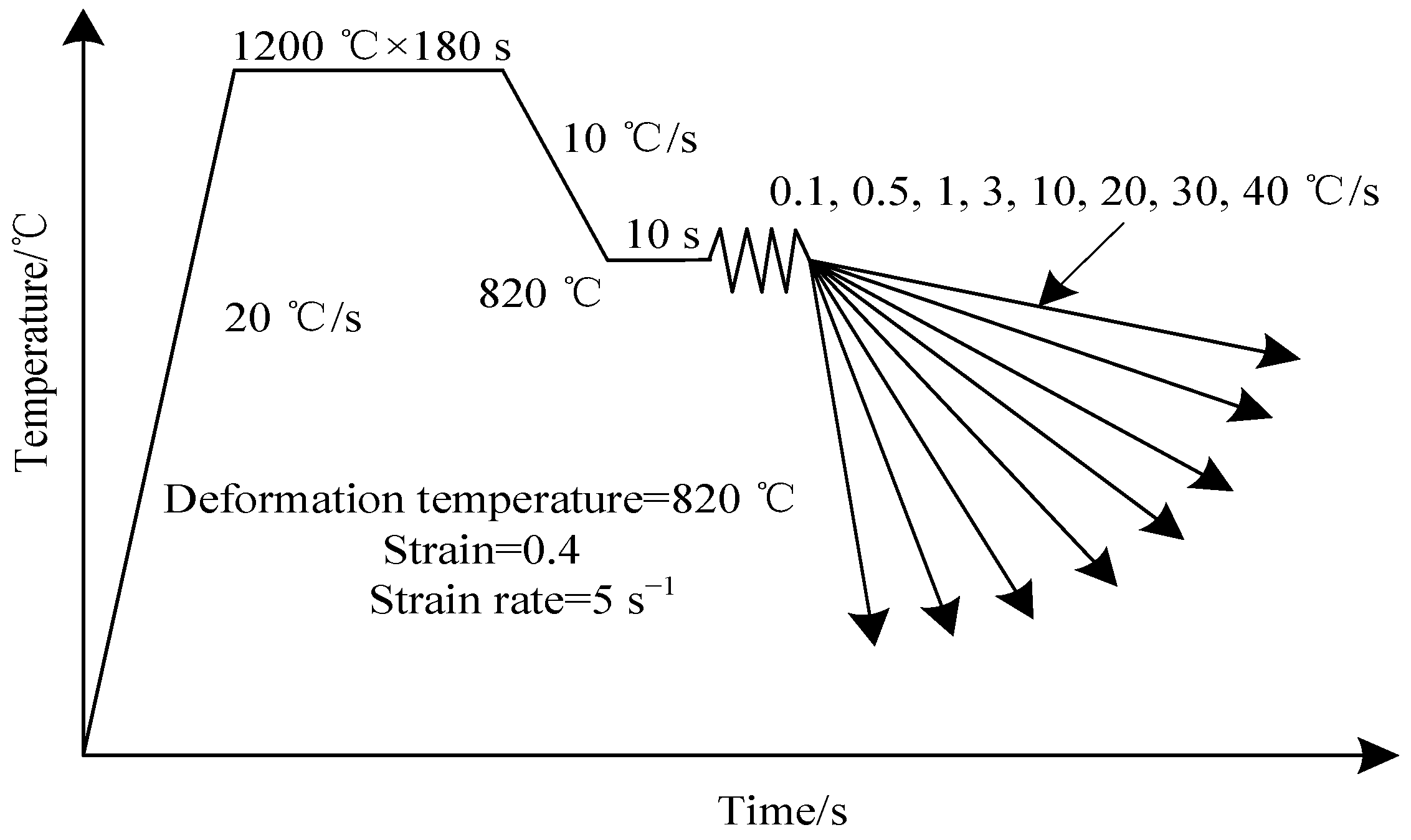
To determine the temperature ranges for ferrite and bainite transformation under various cooling rates, continuous cooling experiments were performed. Cylindrical specimens (ϕ8 mm × 15 mm) were machined from the experimental slab and tested using an MMS-200 thermomechanical simulator. The specific experimental procedure was as follows: The cylindrical specimens were heated to 1200 °C at a rate of 20 °C/s and held for 180 s for austenitization. They were then cooled to 820 °C at 10 °C/s, held for 10 s, and subsequently compressed to a true strain of 0.4 at a strain rate of 5 s−1. Finally, the deformed specimens were cooled to room temperature at various cooling rates (0.1 ~ 40 °C/s), during which the dilatation–temperature curves were recorded. The transformation temperature zones for ferrite and bainite for the experimental steel were determined from its CCT diagram, which was constructed by combining dilatometric curves with metallographic observations and applying the lever rule [21,22]. The schematic diagram of continuous cooling experiment is presented in Figure 1.
(2)
hot rolling experiment
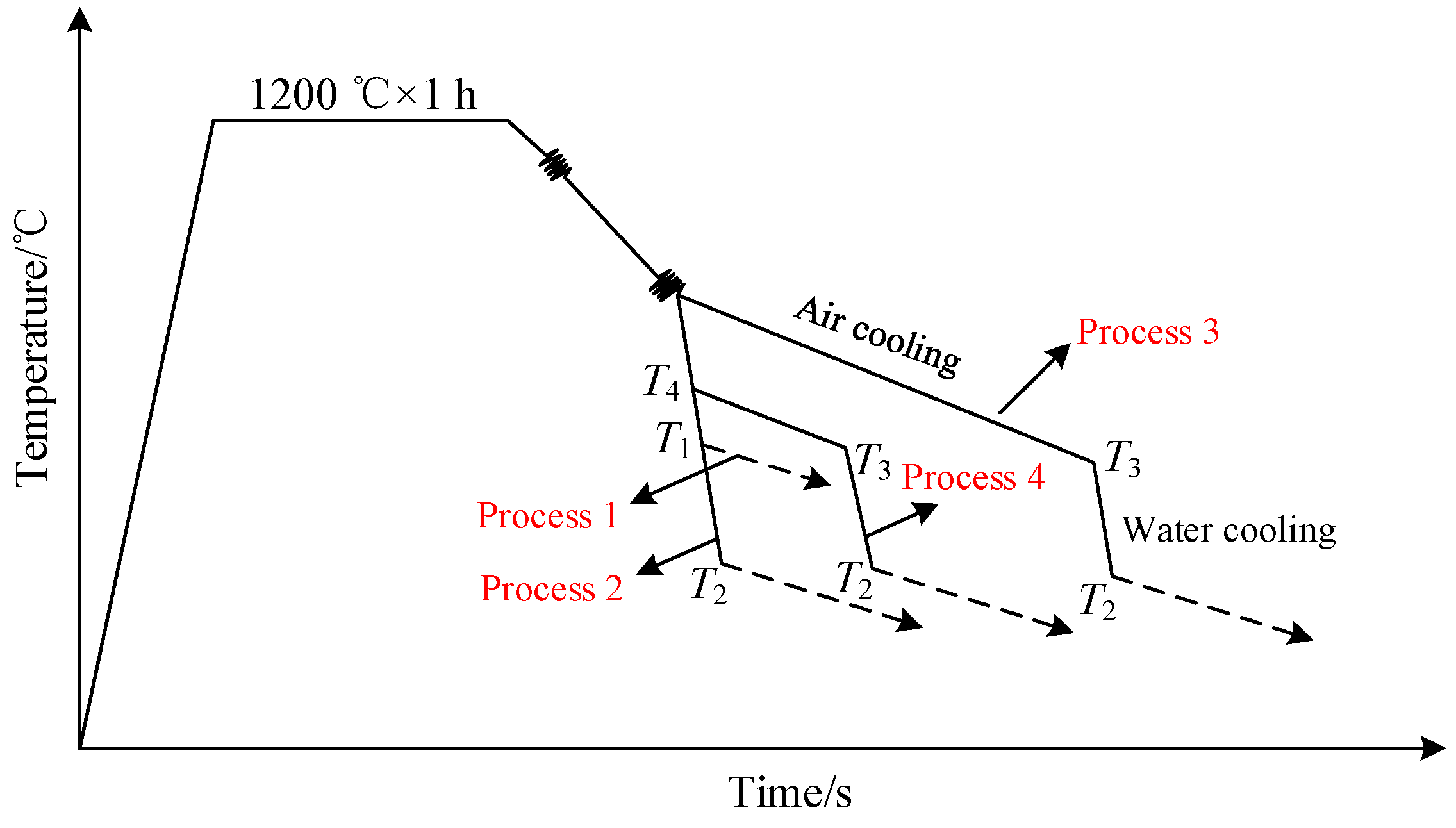
The 50 mm thick slabs were reheated at 1200 °C for 1 h and subsequently hot-rolled to a final thickness of 8 mm using a ϕ450 mm × 450 mm rolling mill. The specific pass reduction schedule was as follows: 50 mm → 38 mm → 28 mm → 22 mm → 16 mm → 12 mm → 9 mm → 8 mm. An average strain rate of 6.7 s−1 was applied for each pass during the hot rolling process. This process consisted of three roughing passes, with an intermediate slab thickness of 22 mm, followed by four finishing passes. The reduction during the finishing stage was 63.6%, and the rolling temperature for the finishing passes was controlled between 810 °C and 950 °C. Following rolling, the experimental steels were cooled according to the schedule detailed in Figure 2 and Table 2. The key temperatures T1, T3 and T4 lie within the ferrite transformation zone, while T2 corresponds to the bainite transformation zone. These critical temperatures were determined from the prior thermal simulation experiments.

2.2. Microstructural Characterization and Mechanical Properties Tests

Microstructural characterization was performed using BX53M optical microscopy (OM, Olympus Inc., Tokyo, Japan). The specimens for OM were mechanically ground, polished, and etched with a 4% nital solution. The precipitation behavior in the as-rolled steel plates was examined using a Tecnai G2 F20 transmission electron microscope (TEM, FEI Inc., Hillsboro, OR, USA). The volume fraction of polygonal ferrite was quantified with Image-Pro Plus V5.1 software, and the ferrite grain size was determined by the linear intercept method.
The standard tensile specimen featured an overall length of 150 mm and a grip section width of 25 mm. The gauge section consisted of an 80 mm long parallel segment with a constant width of 12.5 mm. Charpy V-notch impact specimens (7.5 mm × 10 mm × 55 mm) were machined from the as-rolled plates. Impact tests were conducted at −40 °C. To ensure data reliability, three tensile and impact specimens were tested for each cooling process to determine yield strength (YS), tensile strength (TS), elongation (A) and impact energy. The reported values are the averages of the three specimens.

3. Results and Discussion

3.1. Thermal Simulation Experiment Results and Analysis

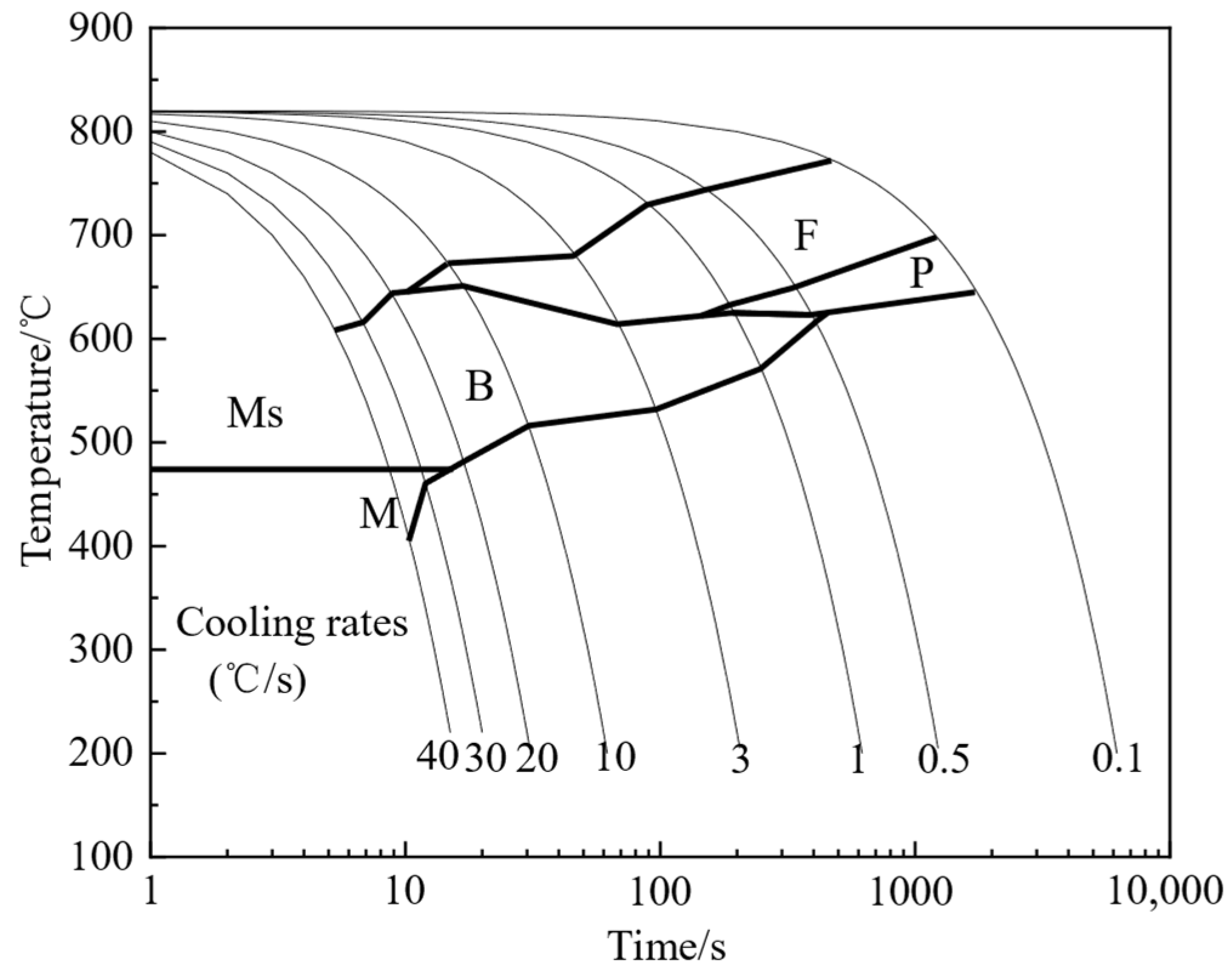
The CCT diagram of the experimental steel is presented in Figure 3. At a lower cooling rate (≤1 °C/s), the microstructure consists primarily of ferrite and pearlite (P). In contrast, a higher cooling rate (≥20 °C/s) promotes the formation of bainite. The ferrite and bainite transformation temperature zones were identified as 615–750 °C and 474–600 °C, respectively. Accordingly, the key temperatures T1, T2, T3 and T4 in Figure 2 and Table 2 were selected as 630 °C, 485 °C, 625 °C, and 670 °C, respectively.

3.2. Hot-Rolling Experiment Results and Analysis

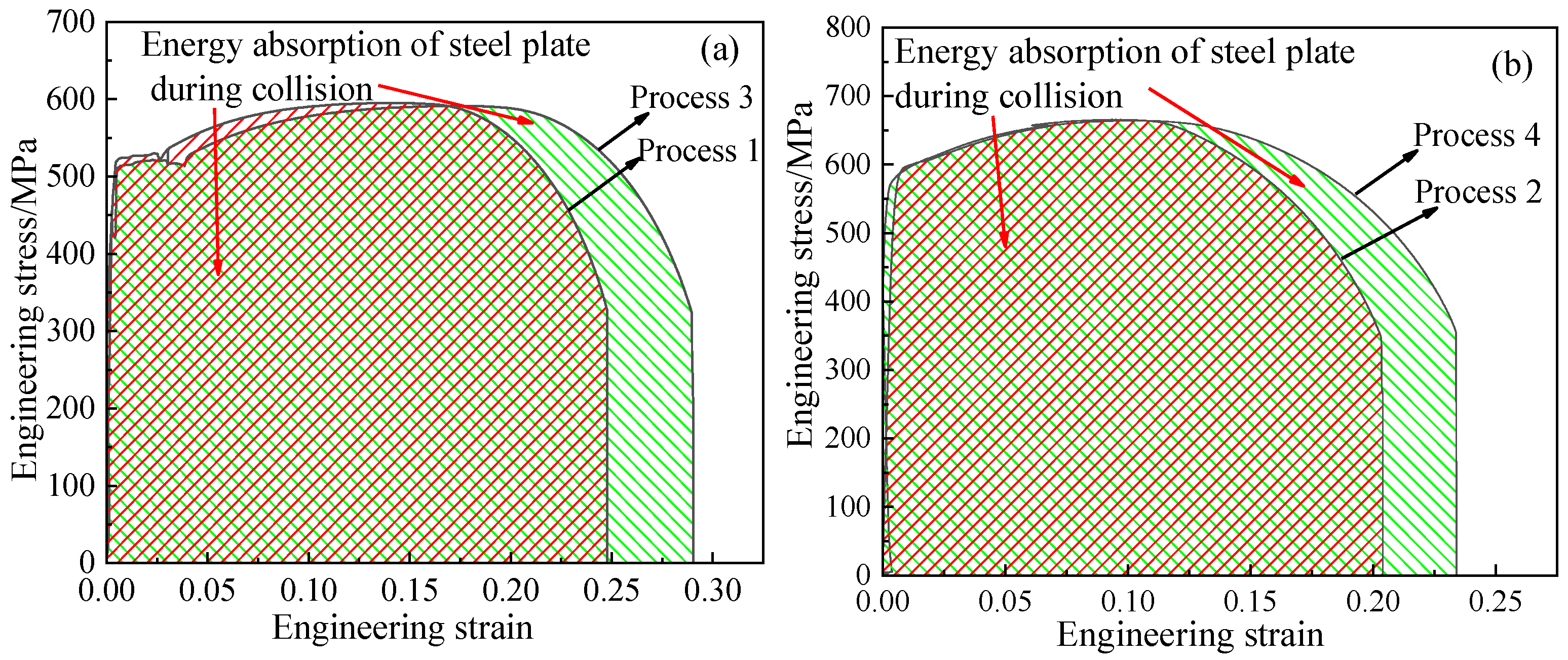
Figure 4 shows the engineering stress-engineering strain curves of the experimental steels under different cooling processing conditions obtained from tensile tests.
The area under the engineering stress-engineering strain curve represents the energy absorbed per unit volume during plate deformation in a collision. In Figure 4, the difference between the green and red shaded areas (green minus red) quantifies the excess energy absorption per unit volume achieved by the optimized process. The application of two-stage and three-stage cooling processes, which enable this enhanced energy absorption, thereby improves the collision safety of ships.
Table 3 shows the mechanical properties of the hot-rolled experimental steel.
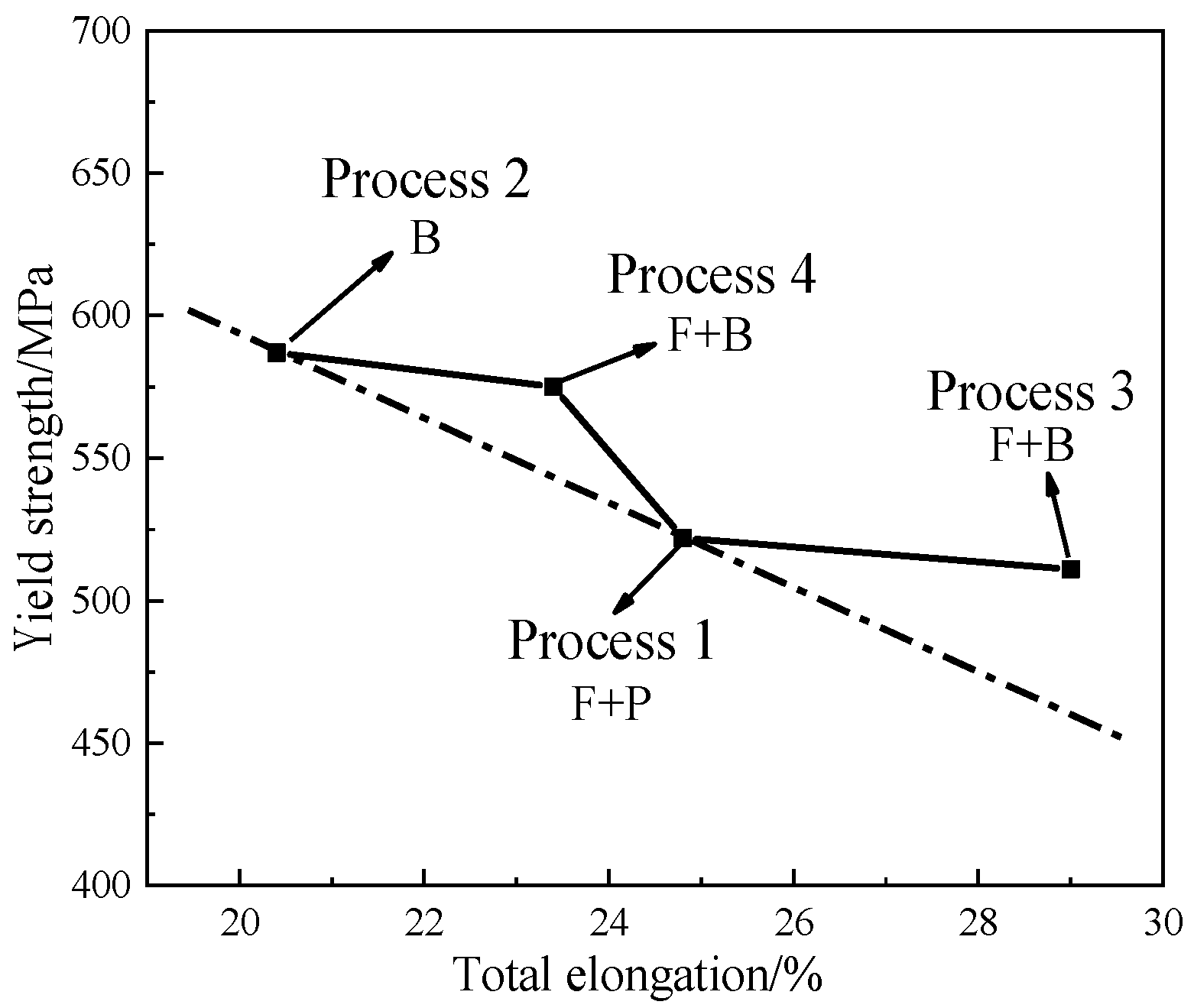
The yield strength and total elongation of the experimental steels are plotted in Figure 5, revealing the typical trade-off between these two properties. Notably, the F+B dual-phase steel strikes a better balance, offering markedly higher elongation than the F+P or B steels at equivalent yield strength levels. Among the processes, the three-stage cooling process (Process 4) effectively enhances the ductility of high-strength steel, while the two-stage cooling process (Process 3) provides a further ductility increase for ship plate steel.

3.2.1. Influence of the Final Cooling Temperature on the Microstructure and Mechanical Properties Under Single-Stage Cooling Conditions

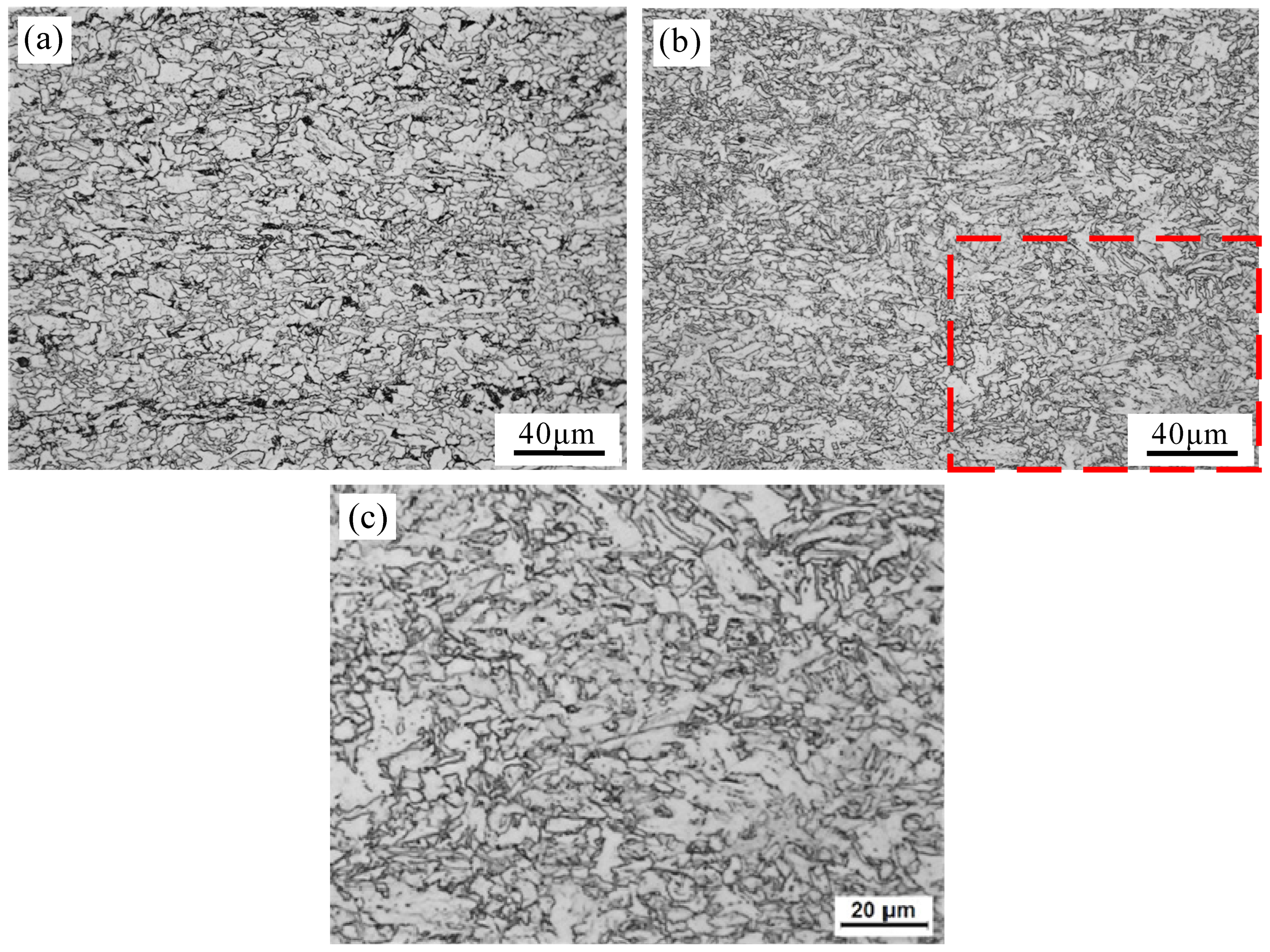
Figure 6 displays the microstructures of the experimental steel under single-stage cooling conditions. As summarized in Table 3 and shown in Figure 6, the sample from Process 1, cooled to a relatively high temperature of 630 °C, possesses a room-temperature microstructure consisting predominantly of polygonal ferrite (approximately 91% in volume fraction) and pearlite. In contrast, when the final cooling temperature is reduced to 485 °C (Process 2), the microstructure is comprised primarily of bainite with a minor fraction of ferrite.
The mechanical properties in Table 3 reveal a clear trade-off: the Process 1 experimental steel exhibits lower strength and higher elongation, whereas the Process 2 experimental steel shows the opposite trend. This divergence stems from the different cooling paths. Process 1 (cooled to 630 °C) facilitates extensive ferrite transformation during subsequent slow cooling, yielding a soft microstructure that favors ductility. Conversely, the rapid cooling in Process 2 (cooled to 485 °C) suppresses ferrite formation, leading to a predominantly bainitic microstructure that provides greater strength through transformation strengthening.

3.2.2. Comparison of Microstructure and Mechanical Properties Under Single-Stage Cooling and Multi-Stage Cooling Conditions

(1)
Grade with a yield strength of 510 MPa
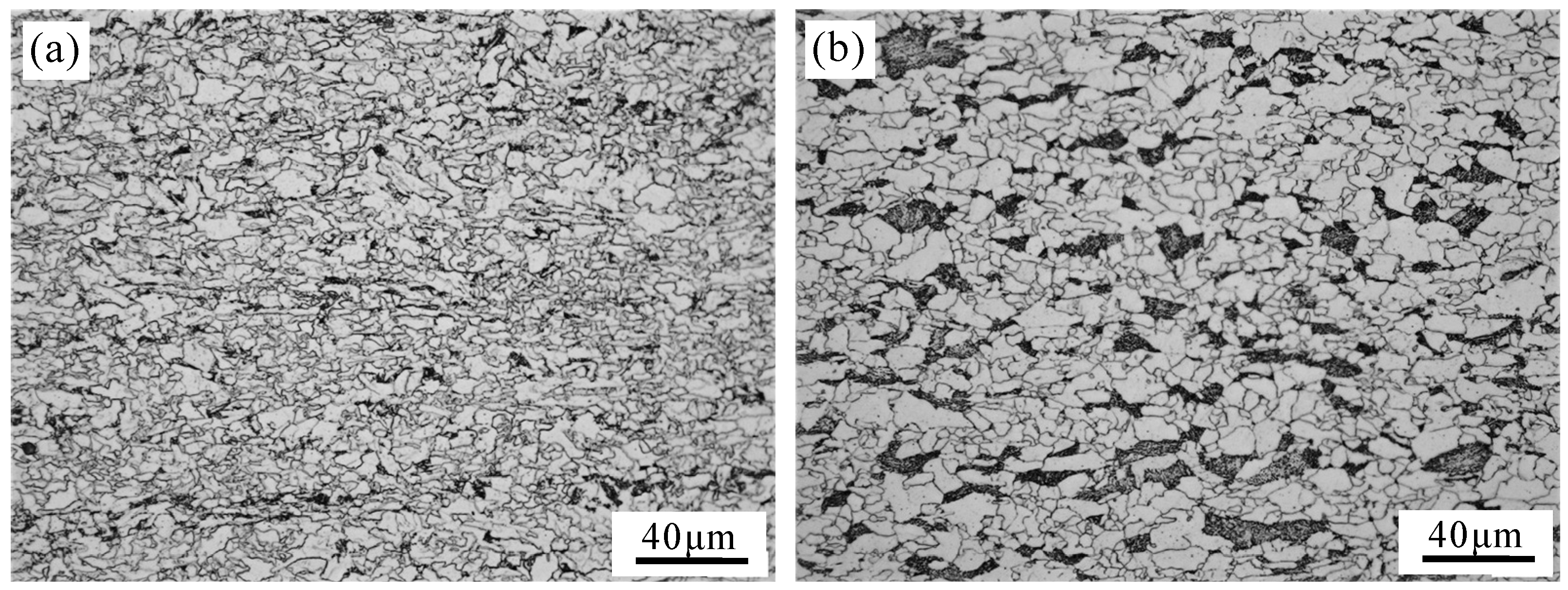
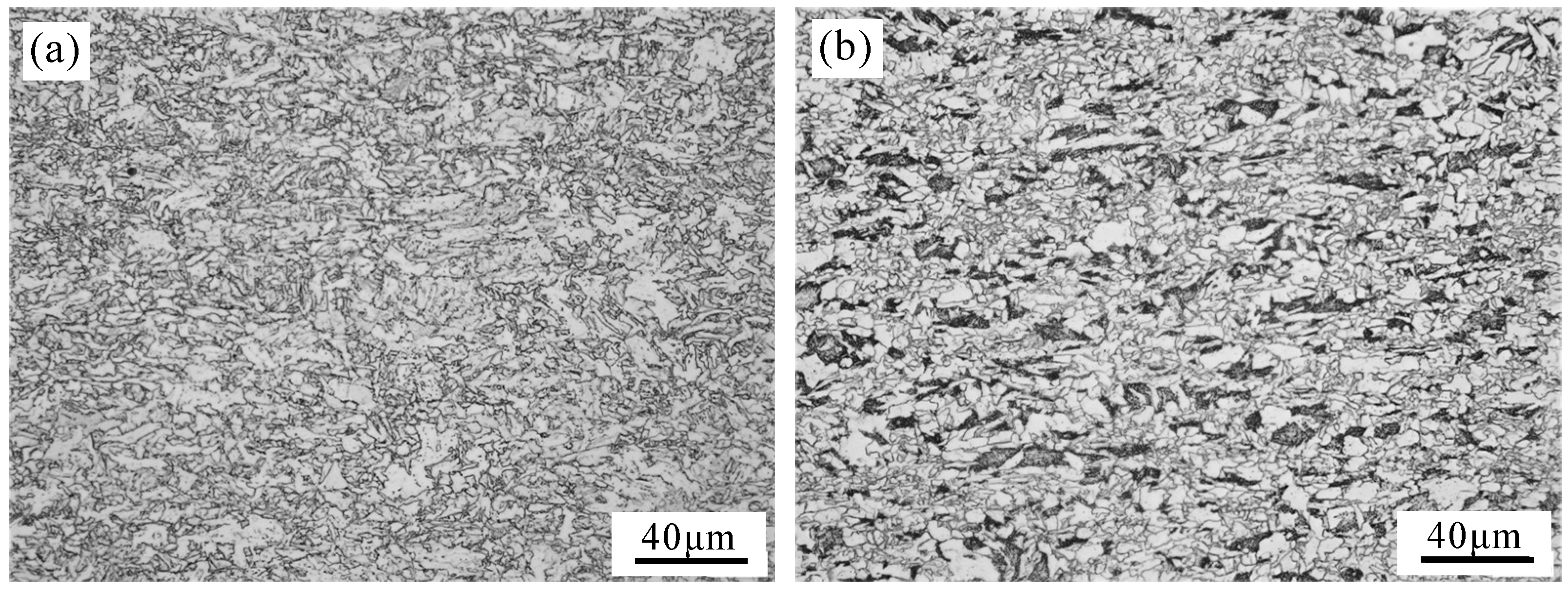
Figure 7 presents the corresponding metallographic microstructures of the experimental steels subjected to Process 1 and Process 3. As previously stated, the microstructure of the Process 1 experimental steel (Figure 7a) consists of fine ferrite and pearlite. In contrast, Process 3 employs a two-stage cooling strategy: the plate is first air-cooled to 620 °C within the ferrite transformation zone. This extended air cooling time allows for sufficient ferrite transformation, accompanied by significant ferrite grain growth. The remaining untransformed austenite subsequently transforms into bainite during the second-stage water cooling. Consequently, the final microstructure of the Process 3 experimental steel (Figure 7b) comprises coarse polygonal ferrite and a small amount of bainite.
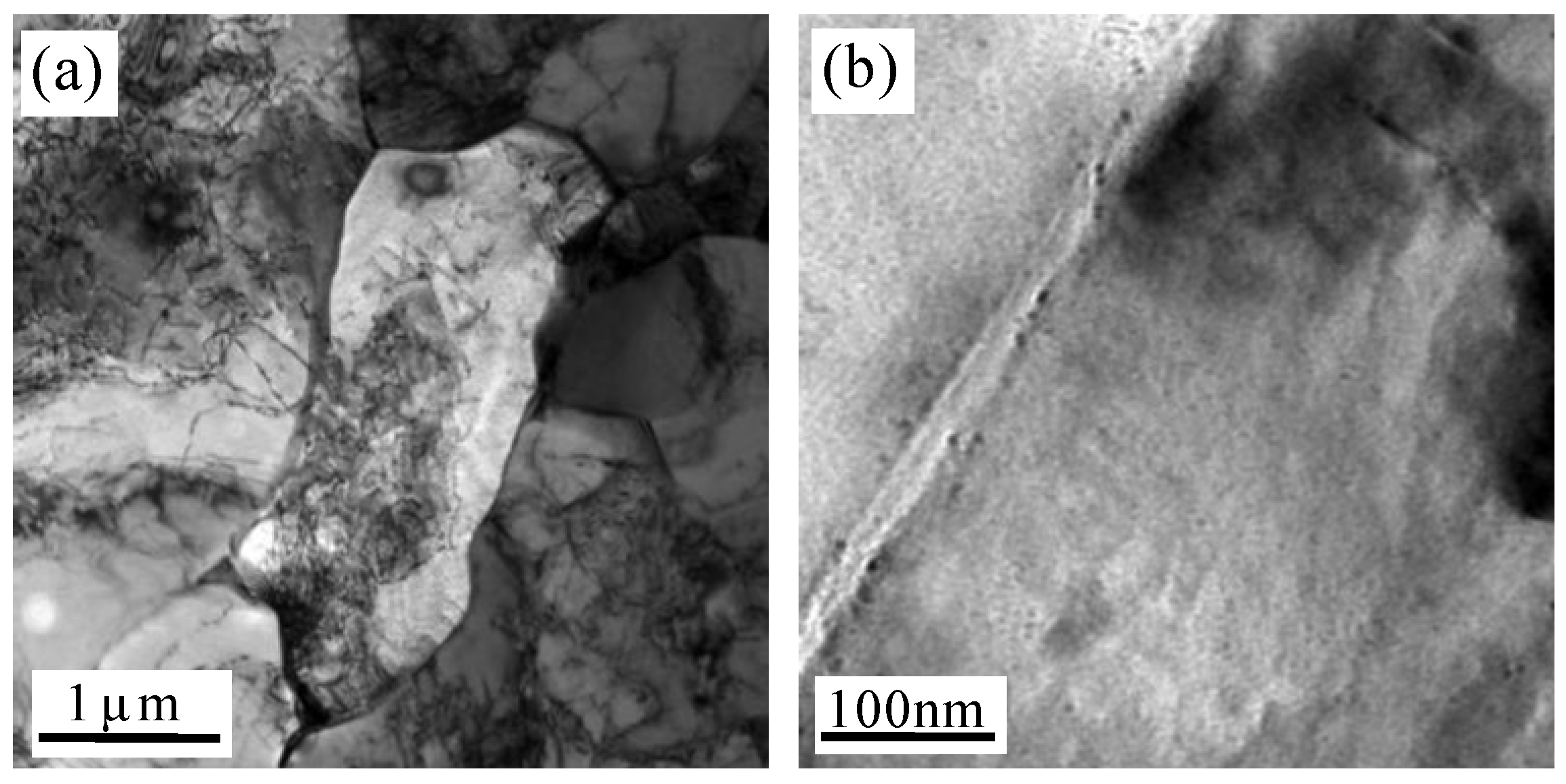
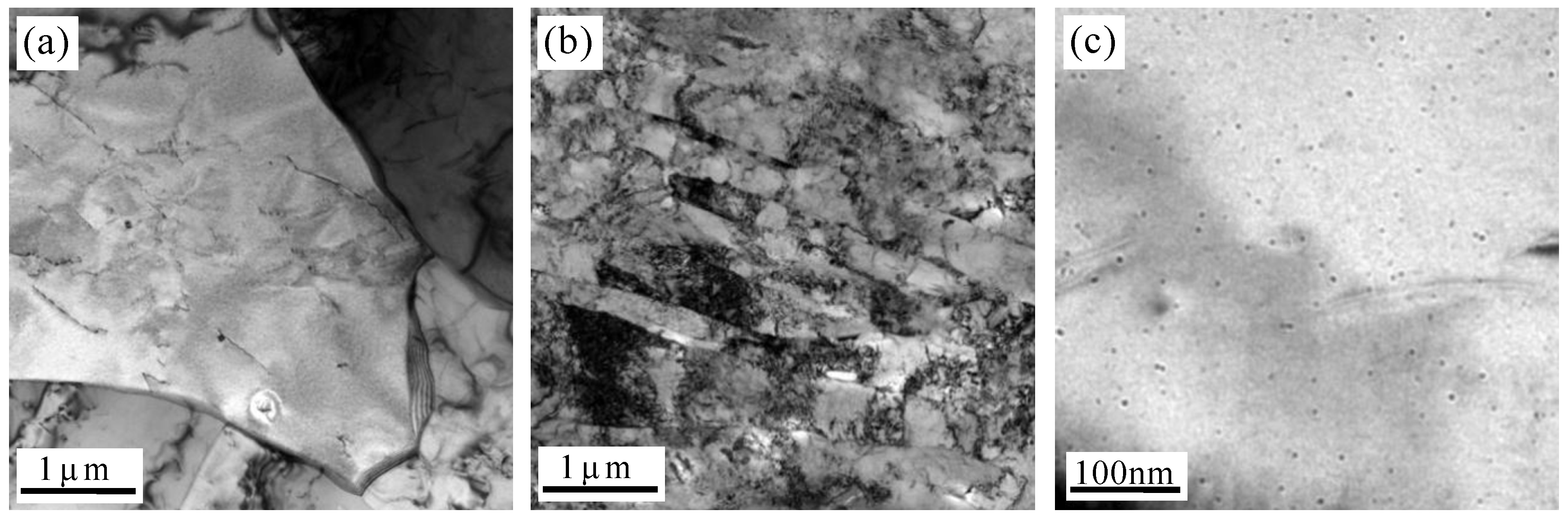
As presented in Table 3, the experimental steels from Process 1 and Process 3 exhibit comparable strength levels, with yield strengths of approximately 510 MPa. However, Process 3 experimental steel shows improved ductility, with its uniform and total elongation increased by 2.5% and 4.2%, respectively, compared to Process 1 experimental steel. The corresponding TEM morphologies are shown in Figure 8 and Figure 9. Figure 8 reveals that the Process 1 experimental steel consists mainly of polygonal ferrite containing a high density of entangled dislocations (Figure 8a), which strengthens the steel by impeding dislocation glide. The high cooling rate during single-stage water cooling also restricts the diffusion of microalloying elements, resulting in limited precipitation in matrix (Figure 8b). In contrast, the Process 3 experimental steel (Figure 9) exhibits a lower dislocation density within the ferrite matrix. Its microstructure comprises bainite blades with widths below 0.5 μm, containing a moderate dislocation density. Furthermore, the addition of 0.041% Nb and 0.017% Ti to the steel resulted in the fine precipitation of Nb-Ti(C, N) particles, which are dispersed within the ferrite matrix, contributing to strength via precipitation strengthening.
Therefore, although the Process 1 and Process 3 experimental steels possess comparable strength levels, their dominant strengthening mechanisms are distinctly different. The strength of the Process 1 experimental steel is primarily derived from fine-grain strengthening, whereas that of the Process 3 experimental steel is mainly attributed to a combination of phase transformation strengthening and precipitation strengthening. Furthermore, compared to conventional F+P steel, the F+B steel exhibits superior deformation compatibility, which accounts for its further enhanced ductility.
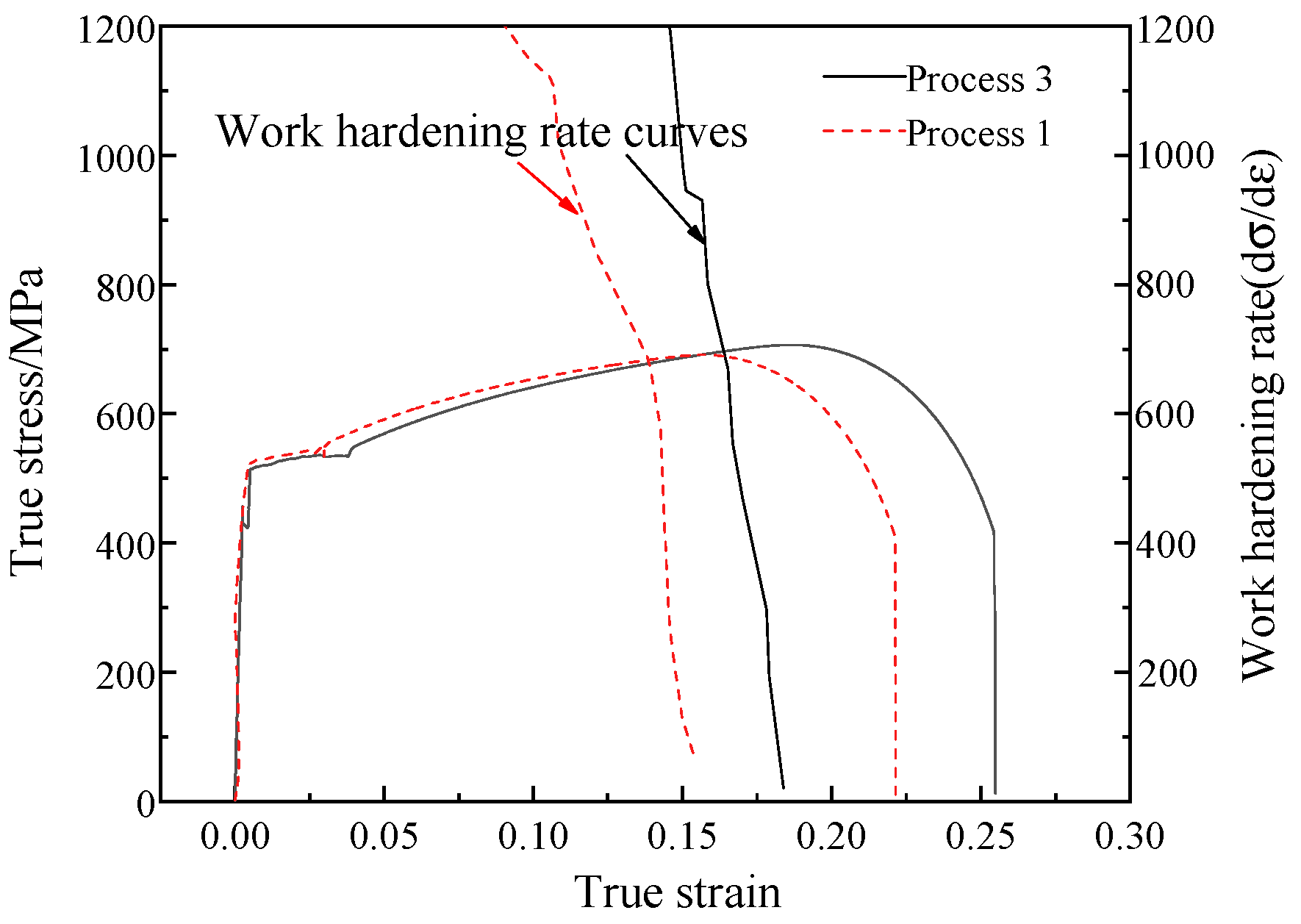
According to the plastic instability criterion, the abscissa of the intersection point between the work hardening rate curve and the true stress-true strain curve corresponds to the strain at the onset of necking [23,24]. The true stress–strain and work hardening rate curves are plotted in Figure 10. The bainite transformation introduces numerous mobile dislocations within the ferrite grains, resulting in a higher initial work hardening rate. Consequently, the steel processed via the two-stage cooling process exhibits an enhanced work hardening capability, which suppresses localized deformation. As a result, the intersection of the work hardening rate curve and the true stress-true strain curve occurs at a higher true strain, indicating superior uniform elongation.
In this paper, the influence of microstructure on work hardening behavior of experimental steels is studied by modified C−J analysis, and its mathematical expression is derived according to the Swift formula as follows [25,26,27,28]:
ε = ε 0 + C σ m
where σ is true stress, ε is true strain, ε 0 is the initial true strain, m is the stress index and C is the material constant. Taking the derivative of ε on both sides of Equation (1) and taking the logarithm of the two sides of the equation yields the following modified C–J analysis expression, given as Equation (2):
ln d σ / d ε = 1 m ln σ ln C m
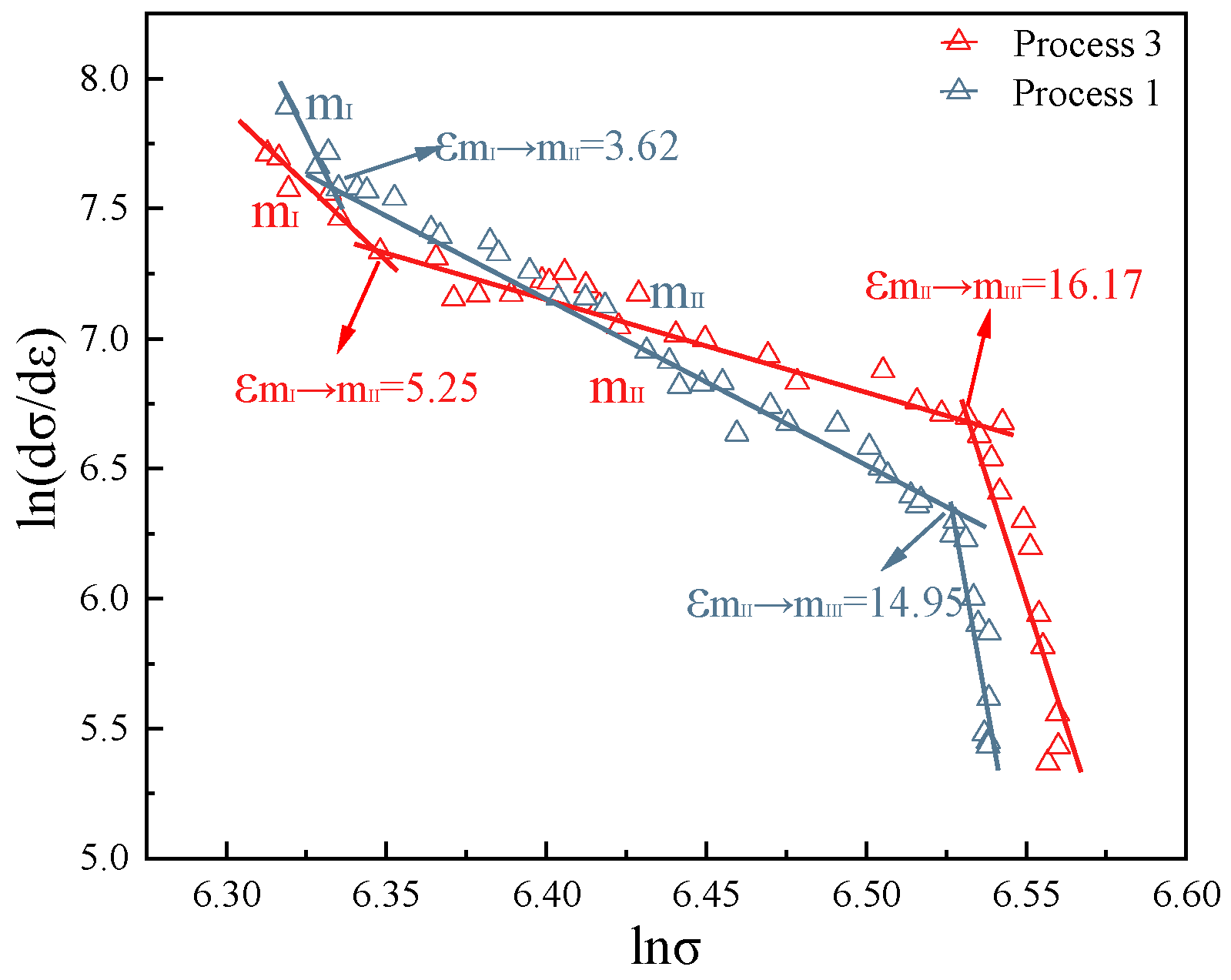
According to Equation (2), a linear relationship exists between the logarithm of the work hardening rate (ln(dσ/dε)) and the logarithm of true stress (lnσ), with a slope of 1 m. This indicates that a lower stress exponent (m) corresponds to a higher work hardening rate. As reported by Kumar et al. [23,29], the ln(dσ/dε) vs. lnσ plot for F+B dual-phase steels typically exhibits three distinct linear stages during tensile deformation. These are sequentially identified as: Stage I ( m I ), where ferrite undergoes uniform plastic deformation while bainite deforms elastically. Stage II ( m I I ), characterized by constrained plastic deformation of ferrite by the elastic bainite. and Stage III ( m I I I ), where both ferrite and bainite undergo cooperative plastic deformation. It is noted that when the ferrite content is low, Stages I and II tend to merge, resulting in a two-stage work hardening behavior [30]. The strain hardening behavior of the experimental steels, analyzed using this modified C–J method, is presented in Figure 11.
As shown in Figure 10, the uniform elongation values for Process 1 and Process 3 experimental steels are 13.87% and 16.38%, respectively. The higher uniform elongation of Process 3 experimental steel indicates its ability to sustain plastic deformation for a longer duration, which contributes to its superior mechanical performance. The modified C–J analysis of the tensile data reveals that the Stage II work-hardening exponents ( m I I ) for Process 1 and Process 3 experimental steels are 6.39 and 3.57, respectively. According to the model, a lower stress exponent (m) corresponds to a higher work-hardening rate. The significantly lower m I I value for Process 3 demonstrates that the microstructure comprising coarse polygonal ferrite and bainite effectively enhances the work-hardening capability of the F+B dual-phase steel during the second deformation stage.
According to the modified C–J analysis method, the transition points from the first stage (Stage I) to the second stage (Stage II) and the second stage (Stage II) to the third stage (Stage III) of deformation in Figure 11 ( ε m I m I I and ε m I I m I I I ) correspond to the strain values in the stress–strain curves of the tensile tests. Comparing ε m I m I I and ε m I I m I I I of Process 1 and Process 3, respectively, it can be seen that polygonal ferrite with bigger grain sizes and bainite raise ε m I m I I and ε m I I m I I I . This delay in the progression to the next deformation stage, achieved through microstructural optimization, contributes to the enhanced uniform and total elongation observed in the experimental steels.
(2)
Grade with a yield strength of 580 MPa
Figure 12 presents microstructures of the experimental steels subjected to Process 2 and Process 4, revealing distinct microstructural differences. As previously mentioned, the microstructure of the Process 2 experimental steel is predominantly bainite with a minor fraction of ferrite. In contrast, Process 4 employs a three-stage cooling procedure: the plate is first water-cooled to 670 °C, then air-cooled to 625 °C, and finally water-cooled to 485 °C. The air-cooling stage facilitates the formation of polygonal ferrite. During the final water-cooling stage, the cooling rate exceeds the critical rate for bainite transformation, and the final temperature lies within the bainite zone. Consequently, the resulting microstructure of the Process 4 experimental steel, shown in Figure 12b, consists of polygonal ferrite and bainite.
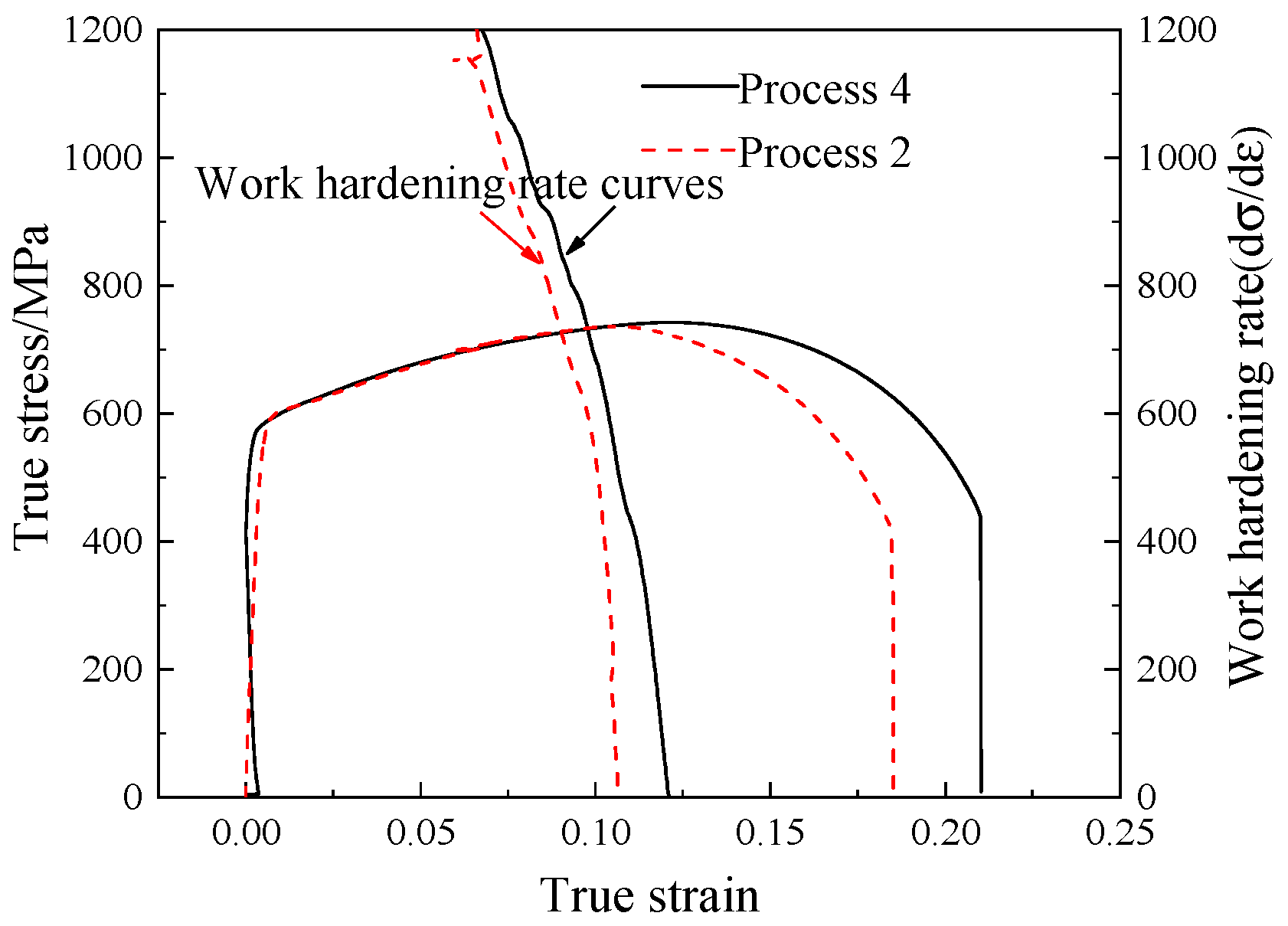
As indicated in Table 3, the experimental steels from Process 2 and Process 4 exhibit comparable strength, with yield strengths of approximately 580 MPa. However, the Process 4 experimental steel shows improved ductility, with its uniform and total elongation increased by 0.8% and 3.0%, respectively, compared to the Process 2 experimental steel.
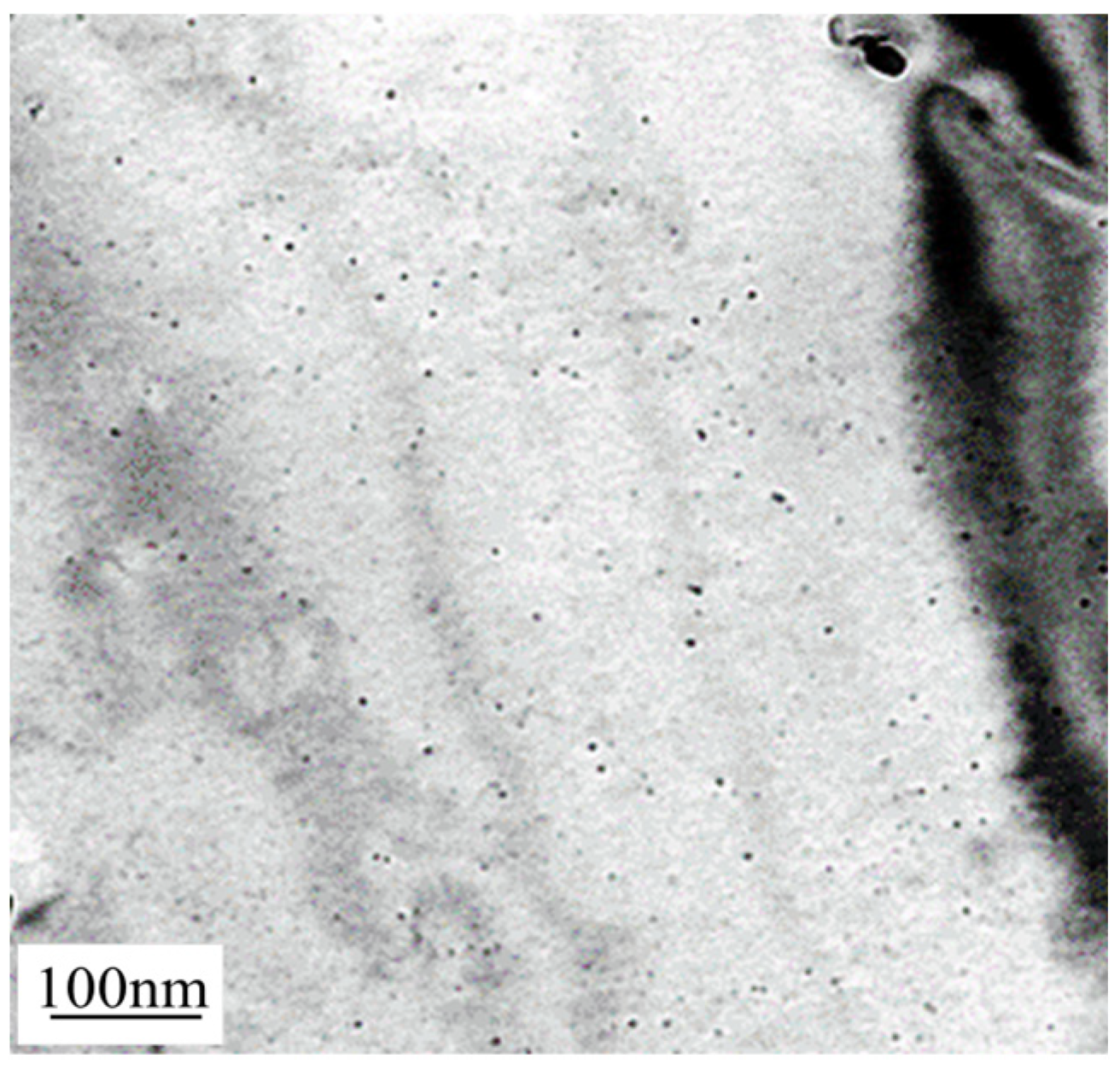
As discussed in Section 3.2.1, the high strength of the Process 2 experimental steel is primarily derived from transformation strengthening. In contrast, the Process 4 experimental steel, which consists of a ferrite matrix with a certain amount of bainite, achieves a comparable strength level through the combined effects of second-phase (bainite) transformation strengthening and precipitation strengthening. The TEM morphology in Figure 13 confirms the presence of numerous fine nano-scale precipitates in the Process 4 experimental steel. These particles significantly enhance the strength by effectively strengthening the matrix.
The true stress-true strain and work hardening rate curves are presented in Figure 14. The uniform elongation values for Process 2 and Process 4 experimental steels are 9.01% and 9.77%, respectively. The higher uniform elongation of Process 4 indicates its ability to sustain plastic deformation for a longer duration, which is indicative of better mechanical properties.
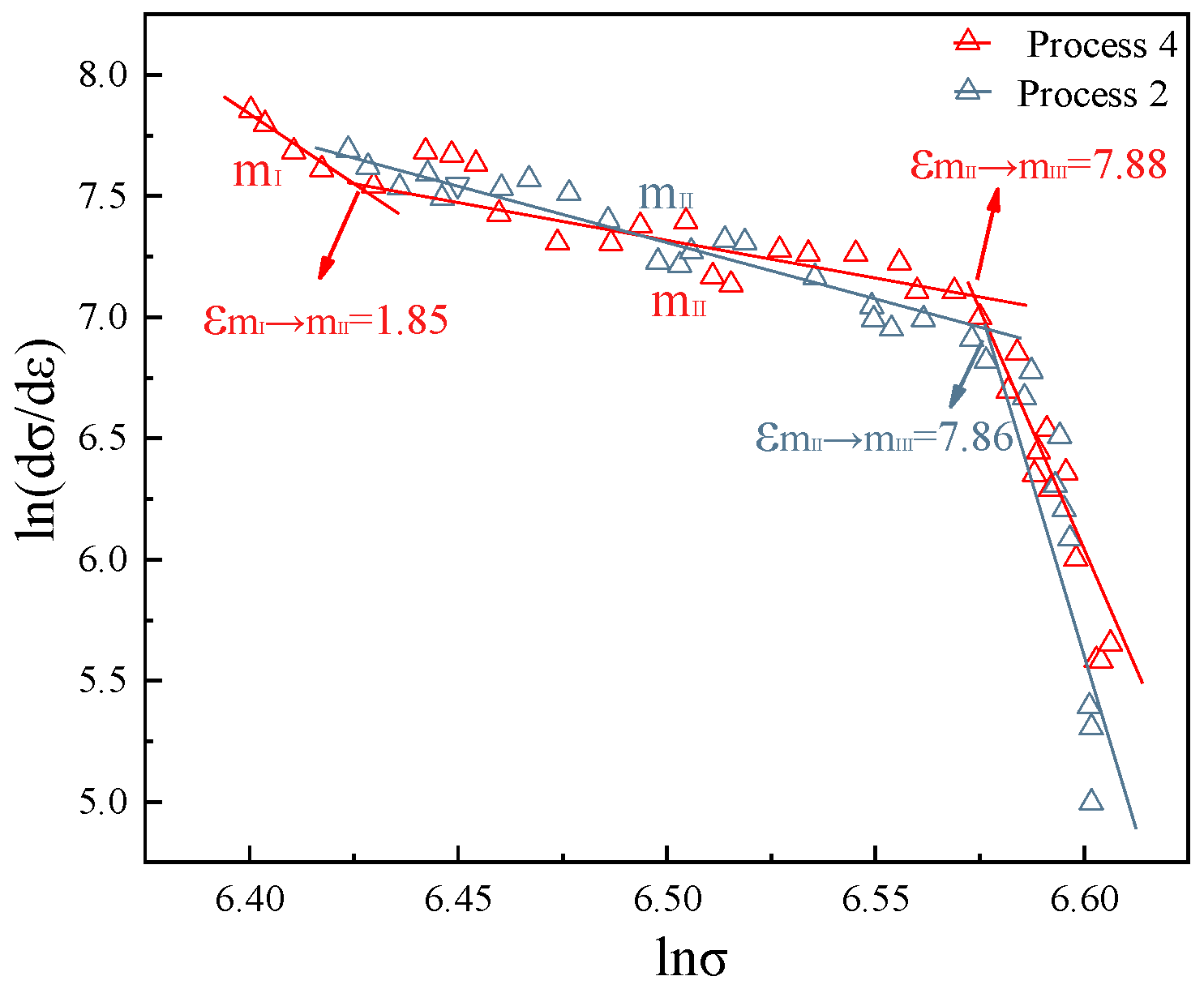
The strain hardening behavior of the experimental steels, analyzed using this modified C–J method, is presented in Figure 15.
The modified C–J analysis of the tensile data yields Stage II work-hardening exponents ( m I I ) of 4.64 and 3.12 for Process 2 and Process 4, respectively. As mentioned previously, a lower stress exponent (m) corresponds to a higher work-hardening rate. The significantly lower m I I value for Process 4 experimental steel confirms that a microstructure comprising a high volume fraction of ferrite combined with a small amount of bainite effectively enhances the work-hardening behavior of the F+B dual-phase steel during the second stage of deformation.
The ε m I m I I and ε m I I m I I I of Process 4 experimental steel are 1.85% and 7.88%, respectively. Due to its bainite-dominated microstructure with only a minor fraction of ferrite, the Process 2 experimental steel exhibits a merged Stage I and Stage II plastic deformation response. This coalescence of deformation stages limits the work-hardening capacity and consequently impairs the ductility of the steel. In contrast, microstructural optimization effectively delays the transition to subsequent deformation stages, thereby enhancing both the uniform and total elongation.

3.2.3. The Influence of Ferrite Grains on the Deformation Behavior for F+B Dual-Phase Steel

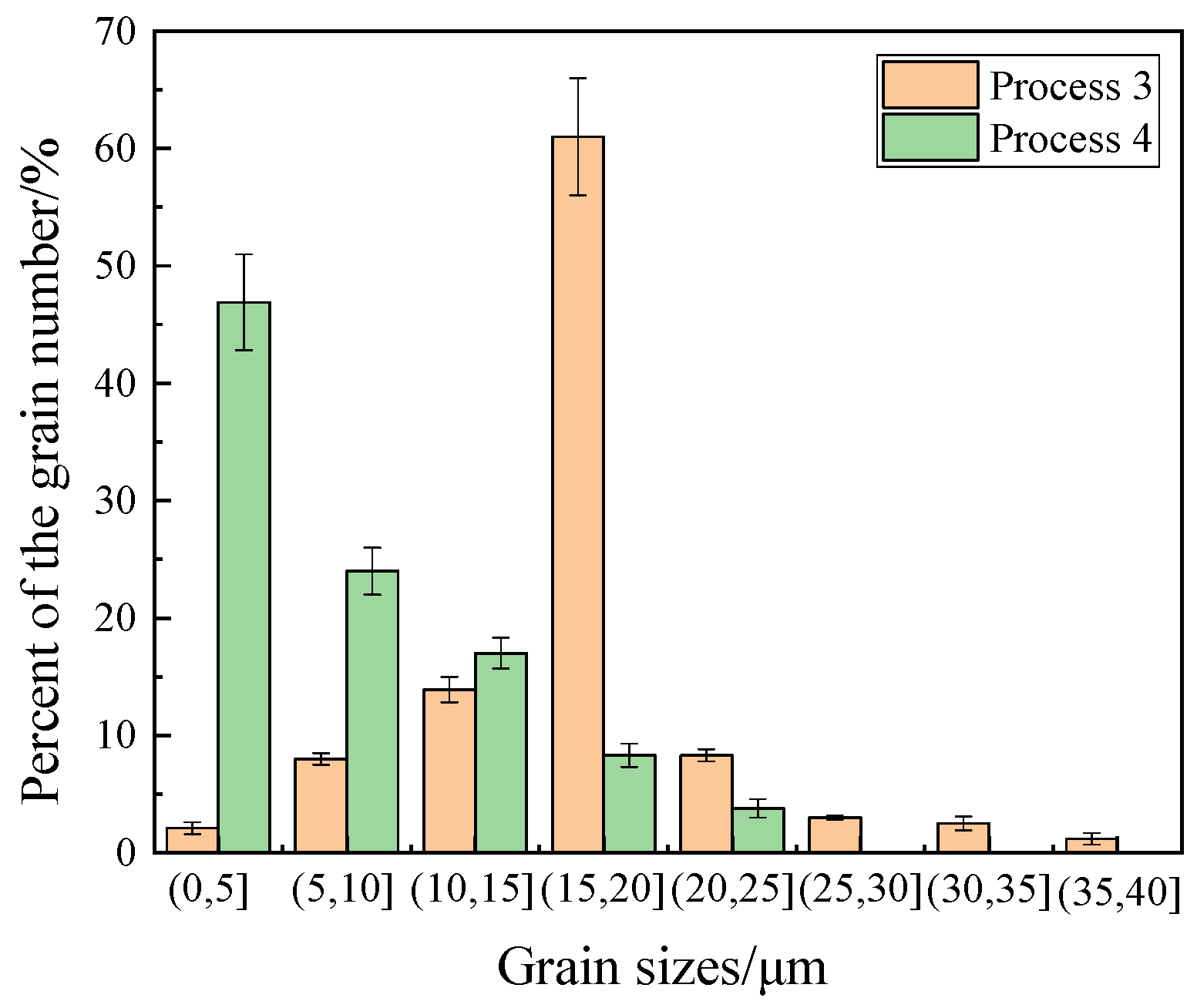
As demonstrated previously, the ductility of steels with a ferrite matrix containing dispersed bainite (obtained via Processes 3 and 4) is markedly superior to that of F+P or B steels. Notably, the Process 3 steel (two-stage cooling) exhibits even higher ductility than its Process 4 counterpart. Given that the volume fraction and morphologies of bainite are relatively consistent between these two processes, as observed in Figure 7b and Figure 12b, the superior ductility of Process 3 experimental steel can be attributed to differences in its ferrite structure—specifically, the ferrite grain size and the uniformity of its distribution. The average ferrite grain sizes and their distribution for both processes are quantitatively presented in Figure 16.
The extended air-cooling duration within the ferrite transformation zone of Process 3 results in a relatively coarse and uniform ferrite grain, with an average grain size of 17 μm. In contrast, the shorter air-cooling time in Process 4 restricts sufficient ferrite grain growth, leading to a significantly non-uniform distribution and a much finer average ferrite grain size of 7.4 μm. This grain refinement in Process 4 induces fine-grain strengthening, increasing its yield strength by 64 MPa over Process 3 but at the cost of a slight reduction in ductility.
The distribution of ferrite grain size significantly influences the deformation behavior of F+B dual-phase steel. The Process 3 experimental steel features a relatively coarse and uniform ferrite grain. Consequently, during deformation, all ferrite grains participate cooperatively in the initial stage (Stage I) of plastic deformation, as evidenced by the C–J analysis in Figure 11, with this stage extending to a strain of 5.25%. In contrast, the non-uniform grain size distribution in the Process 4 experimental steel results in only a small fraction of large ferrite grains activating during the initial stage (Stage I), reaching a strain of merely 1.85%, as seen in Figure 15. The finer ferrite grains remain undeformed initially and subsequently act to constrain the further deformation of the larger grains. Therefore, Uniform and coarse ferrite grains are crucial for ensuring the superior ductility of F+B dual-phase steel.

4. Conclusions

(1)
The ferrite and bainite transformation temperature zones for the experimental steel were determined to be 615–750 °C and 474–600 °C, respectively. Under single-stage cooling conditions, the Process 1 experimental steel exhibits lower strength but superior total elongation compared to the Process 2 experimental steel.
(2)
The strength of the experimental steel processed via the two-stage cooling process is primarily provided by a combination of phase transformation and precipitation strengthening, whereas an additional contribution from fine-grain strengthening is operative in the three-stage cooling process.
(3)
At a comparable yield strength grade, the F+B dual-phase steel produced by the two-stage cooling process exhibits an enhancement of 2.5% in uniform elongation and 4.2% in total elongation, respectively, compared to the F+P steel obtained via single-stage cooling. Similarly, when compared to the B steel from single-stage cooling, the F+B steel from the three-stage cooling process shows improvements of 0.8% in uniform elongation and 3.0% in total elongation.
(4)
Uniform and coarse ferrite grains are crucial for ensuring the superior ductility of F+B dual-phase steel obtained by a two-stage cooling process after rolling.

Author Contributions

Conceptualization, X.Z. (Xiaoguang Zhou) and Y.S.; Methodology, X.Z. (Xiaoguang Zhou) and X.Z. (Xuyuan Zhang); Validation, X.Z. (Xiaoguang Zhou) and W.Z.; Formal Analysis, S.W., G.C. and Z.L.; Investigation, X.Z. (Xiaoguang Zhou) and Y.S.; Resources, X.Z. (Xiaoguang Zhou), G.C. and Z.L.; Data curation, X.Z. (Xuyuan Zhang) and G.C.; Writing—Original Draft, Y.S.; Writing—Review and Editing, X.Z. (Xiaoguang Zhou), W.Z. and S.W.; Project Administration, X.Z. (Xiaoguang Zhou) and Z.L. All authors have read and agreed to the published version of the manuscript.

Funding

This research was funded by the National Science and Technology Major Project—Intelligent Manufacturing Systems And Robots (2025ZD1602200).

Data Availability Statement

The original contributions presented in this study are included in the article. Further inquiries can be directed to the corresponding author.

Conflicts of Interest

The authors declare no conflicts of interest.

References

  1. Pussegoda, L.N.; Malik, L.; Bouchard, R.; Tyson, W.R. Strain rate effects on fracture toughness of ship plate steels. J. Offshore Mech. Arct. Eng. 1996, 118, 127–134. [Google Scholar] [CrossRef]
  2. Cai, W.; Zhu, L.; Wang, F. Plastic deformation of ship plate subjected to repeated patch loads at different locations-Elastoplastic numerical analysis and design equation. Mar. Struct. 2020, 76, 102901. [Google Scholar] [CrossRef]
  3. Sekban, D.M. Effect of friction stir process on mechanical properties and bottom section ultimate strength of ship steel. J. Mater. Eng. Perform. 2025, 34, 9772–9780. [Google Scholar] [CrossRef]
  4. Cerik, B.C.; Park, B.; Park, S.J.; Choung, J. Modeling, testing and calibration of ductile crack formation in grade DH36 ship plates. Mar. Struct. 2019, 66, 27–43. [Google Scholar] [CrossRef]
  5. Fricke, W.; Lilienfeld-Toal, A.V.; Paetzold, H. Fatigue strength investigations of welded details of stiffened plate structures in steel ships. Int. J. Fatigue 2012, 34, 17–26. [Google Scholar] [CrossRef]
  6. Nemani, A.V.; Ghaffari, M.; Nasiri, A. Comparison of microstructural characteristics and mechanical properties of shipbuilding steel plates fabricated by conventional rolling versus wire arc additive manufacturing. Addit. Manuf. 2020, 32, 101086. [Google Scholar] [CrossRef]
  7. Melchers, R.E.; Paik, J.K. Effect of tensile strain on the rate of marine corrosion of steel plates. Corros. Sci. 2009, 51, 2298–2303. [Google Scholar] [CrossRef]
  8. Qi, E.; Cui, W.; Wan, Z. Comparative study of ultimate hull girder strength of large double hull tankers. Mar. Struct. 2005, 18, 227–249. [Google Scholar] [CrossRef]
  9. Xia, Y.S.; Xu, D.L.; Zhang, H.C.; Qi, E.R.; Hu, J.J. On retaining a multi-module floating structure in an amplitude death state. Ocean Eng. 2016, 121, 134–142. [Google Scholar] [CrossRef]
  10. Wang, R.; Lu, C.; Davis, B.; Zhang, C.; Li, J.; Tieu, K.A.; Gazder, A.A. Enhancing strength while preserving elongation: A study on copper after accumulative skin pass rolling. Int. J. Mech. Sci. 2021, 210, 106756. [Google Scholar] [CrossRef]
  11. Mazaheri, Y.; Jahanara, A.H.; Sheikhi, M.; Kalashami, A.G. High strength-elongation balance in ultrafine grained ferrite-martensite dual phase steels developed by thermomechanical processing. Mater. Sci. Eng. A 2019, 761, 138021. [Google Scholar] [CrossRef]
  12. Mishnev, R.; Borisova, Y.; Anna, P. Medium carbon Q&P steel with high Product of strength and elongation. Mater. Sci. Forum 2023, 1105, 117–122. [Google Scholar] [CrossRef]
  13. Qiao, G.Y.; Zhao, Z.T.; Shi, X.B.; Shan, Y.Y.; Xiao, F.R. Effect of bainite to ferrite yield strength ratio on the deformability of mesostructures for ferrite/bainite dual-phase steels. Materials 2021, 14, 5352. [Google Scholar] [CrossRef]
  14. Zhao, Z.T.; Wang, X.; Qiao, G.; Zhang, S.Y.; Liao, B.; Xiao, F. Effect of bainite morphology on deformation compatibility of mesostructure in ferrite/bainite dual-phase steel: Mesostructure-based finite element analysis. Mater. Des. 2019, 180, 107870. [Google Scholar] [CrossRef]
  15. Qu, S.; Zhang, Y.; Pang, X.; Gao, K. Influence of temperature field on the microstructure of low carbon microalloyed ferrite–bainite dual-phase steel during heat treatment. Mater. Sci. Eng. A 2012, 536, 136–142. [Google Scholar] [CrossRef]
  16. Wang, S.Y.; Yu, H.; Zhou, T.; Wang, T. Effects of non-recrystallization zone reduction on microstructure and precipitation behavior of a ferrite-bainite dual phase steel. Mater. Des. 2015, 88, 847–853. [Google Scholar] [CrossRef]
  17. Zhou, Y.L.; Jiang, B.; Cui, H.T.; Zhang, D.; He, J.Z.; Liu, Z.Y. Effect of strengthening phase on deformation behaviour during uniaxial tension of hot-rolled dual phase steel. J. Iron Steel Res. Int. 2014, 21, 1111–1115. [Google Scholar] [CrossRef]
  18. Ogawa, T.; Sugiura, N.; Maruyama, N.; Yoshinaga, N. Influence of state of Nb on recrystallization temperature during annealing in cold-rolled low-carbon steels. Mater. Sci. Eng. A 2013, 564, 42–45. [Google Scholar] [CrossRef]
  19. Solis-bravo, G.; Merwin, M.; Garcia, C.I. Impact of precipitate morphology on the dissolution and grain-coarsening behavior of a Ti-Nb microalloyed linepipe steel. Metals 2020, 10, 89. [Google Scholar] [CrossRef]
  20. Chanakarn, A.; Chaninee, S.; Siwaphan, L.; Surasak, S.; Vitoon, U. Effects of bainitic phase on mechanical properties of bainite aided multiphase steels. Steel Res. Int. 2017, 88, 1700004. [Google Scholar] [CrossRef]
  21. Hu, Z.W.; Xu, G.; Zhang, C.; Hu, H.J. Research on continuous cooling transformation curve of a C-Si-Mn steel. Appl. Mech. Mater. 2014, 556, 404–407. [Google Scholar] [CrossRef]
  22. Lee, S.; Na, H.; Kim, B.; Kim, D.J.; Kang, C.Y. Effect of Niobium on the ferrite continuous-cooling-transformation (CCT) curve of ultrahigh-thickness Cr-Mo steel. Metall. Mater. Trans. A 2013, 44, 2523–2532. [Google Scholar] [CrossRef]
  23. Kumar, A.; Singh, S.B.; Ray, K.K. Influence of bainite/martensite-content on the tensile properties of low carbon dual-phase steels. Mater. Sci. Eng. A 2008, 474, 270–282. [Google Scholar] [CrossRef]
  24. Cai, M.H. Effects of Si on microstructural evolution and mechanical properties of hot-rolled ferrite and bainite dual-phase steels. ISIJ Int. 2011, 51, 476–481. [Google Scholar] [CrossRef]
  25. Peng, H.C.; Preban, A.G. The effect of ferrite grain size and martensite volume fraction on the tensile properties of dual phase steel. Acta Metall. 1985, 33, 897–903. [Google Scholar] [CrossRef]
  26. Hua, M.; Garcia, C.I.; Deardo, A.J. Precipitation behavior in ultra-low-carbon steels containing titanium and niobium. Metall. Mater. Trans. A 1997, 28, 1769–1780. [Google Scholar] [CrossRef]
  27. Schöberl, T.; Gupta, H.S.; Fratzl, P. Measurements of mechanical properties in Ni-base superalloys using nanoindentation and atomic force microscopy. Mater. Sci. Eng. A 2003, 363, 211–220. [Google Scholar] [CrossRef]
  28. Zare, A.; Ekrami, A. Influence of martensite volume fraction on tensile properties of triple phase ferrite-bainite-martensite steels. Mater. Sci. Eng. A 2011, 530, 440–445. [Google Scholar] [CrossRef]
  29. Bag, A.; Ray, K.K.; Dwarakadasa, E.S. Influence of martensite content and morphology on tensile and impact properties of high-martensite dual-phase steels. Metall. Mater. Trans. A 1999, 30, 1193–1202. [Google Scholar] [CrossRef]
  30. Song, D.; Wang, G.; Yang, F.; Chen, H.; Ma, X. Microstructure and deformation behavior of a novel steel rebar: Effect of the heterogeneous microstructure of soft ferrite and hard bainite. J. Mater. Res. Technol. 2020, 9, 12281–12292. [Google Scholar] [CrossRef]
Figure 1. Schematic diagram of continuous cooling transformation experiment.
Metals 15 01214 g001
Figure 2. Schematic diagram of hot-rolled processes.
Metals 15 01214 g002
Figure 3. CCT diagram of the experimental steel.
Metals 15 01214 g003
Figure 4. Engineering stress-engineering strain curves of experimental steels. (a) Process 1 and Process 3; (b) Process 2 and Process 4.
Metals 15 01214 g004
Figure 5. Relationships between yield strength and total elongation.
Metals 15 01214 g005
Figure 6. Microstructures of experimental steel at single-stage cooling conditions. (a) Process 1; (b) Process 2; (c) Higher magnification of Process 2.
Metals 15 01214 g006
Figure 7. Microstructures at different cooling processes. (a) Process 1, Single-stage cooling; (b) Process 3, Two-stage cooling.
Metals 15 01214 g007
Figure 8. TEM morphologies of the experimental steel (Process 1). (a) Ferrite; (b) Precipitates.
Metals 15 01214 g008
Figure 9. TEM morphologies of the experimental steel (Process 3). (a) Ferrite; (b) Bainite blades; (c) Precipitates.
Metals 15 01214 g009
Figure 10. The true stress-true strain and work hardening rate curves of Process 1 and Process 3 experimental steels.
Metals 15 01214 g010
Figure 11. Plots of the strain hardening behavior of the Process 1 and Process 3 experimental steels obtained by using the modified C–J analysis.
Metals 15 01214 g011
Figure 12. Microstructures at different cooling processes. (a) Process 2, Single-stage cooling; (b) Process 4, Three-stage cooling.
Metals 15 01214 g012
Figure 13. TEM morphology of the Process 4 experimental steel.
Metals 15 01214 g013
Figure 14. The true stress-true strain and work hardening rate curves of Process 2 and Process 4 experimental steel.
Metals 15 01214 g014
Figure 15. Plots of the strain hardening behavior of the Process 2 and Process 4 experimental steels obtained by using the modified C–J analysis.
Metals 15 01214 g015
Figure 16. The average ferrite grain sizes and grain size distribution of the experimental steel.
Metals 15 01214 g016
Table 1. Steel composition in weight percent (wt. %), measured by spectral analysis.
CSiMnSPCrNiTiNbN
0.060.251.490.0020.0120.140.360.0170.0410.004
Table 2. Cooling process parameters.
Cooling ProcessProcess No.Cooling Process
Single-stage cooling1Continuous water-cooled (50 °C/s) to T1
2Continuous water-cooled (50 °C/s) to T2
Two-stage cooling3Firstly air-cooled to T3, then water-cooled (50 °C/s) to T2
Three-stage cooling4Firstly water-cooled to T4 (higher than T3), then air-cooled to T3, finally water-cooled (50 °C/s) to T2
Table 3. Mechanical properties of experimental steels.
Process No.Yield Strength/MPaTensile Strength/MPaImpact Energy/J (−40 °C)Uniform ElongationTotal Elongation
152259522513.9%24.8%
25876652219.0%20.4%
351159125116.4%29.0%
45756642309.8%23.4%
Disclaimer/Publisher’s Note: The statements, opinions and data contained in all publications are solely those of the individual author(s) and contributor(s) and not of MDPI and/or the editor(s). MDPI and/or the editor(s) disclaim responsibility for any injury to people or property resulting from any ideas, methods, instructions or products referred to in the content.