Article

Hydrothermal Surface Treatment of Mg AZ31 SPF Alloy: Immune Cell Biocompatibility and Antibacterial Potential for Orthopaedic Applications


1
Surgical Sciences and Technologies-SS Omics Science Platform for Personalized Orthopedics, IRCCS Istituto Ortopedico Rizzoli, 40136 Bologna, Italy
2
Department of Biological, Chemical and Pharmaceutical Sciences and Technologies (STEBICEF), University of Palermo, Viale delle Scienze, Bd. 16, 90128 Palermo, Italy
3
Department of Biomedicine Neuroscience and Advanced Diagnostic, University of Palermo, 90133 Palermo, Italy
4
Laboratory of Immunorheumatology and Tissue Regeneration, IRCCS Istituto Ortopedico Rizzoli, Via di Barbiano 1/10, 40136 Bologna, Italy
5
Department of Mechanics, Polytechnic University of Bari, 70124 Bari, Italy
6
Department of Chemistry, Materials and Chemical Engineering ‘G. Natta’, Politecnico di Milano, 20133 Milan, Italy
*
Author to whom correspondence should be addressed.
Metals 2025, 15(12), 1328; https://doi.org/10.3390/met15121328
Submission received: 23 October 2025 / Revised: 19 November 2025 / Accepted: 30 November 2025 / Published: 2 December 2025
(This article belongs to the Special Issue Surface Engineering and Properties of Metallic Biomaterials)

Abstract

Biodegradable magnesium (Mg) alloys are promising materials for temporary orthopaedic implants, combining favourable mechanical properties and superplastic behaviour with in vivo resorption. This enables (i) prolonged implant duration, (ii) fabrication of complex-shaped prostheses via superplastic forming (SPF), (iii) elimination of removal surgery, and (iv) reduced risk of long-term complications. However, rapid corrosion under physiological conditions remains a major limitation, highlighting the need for surface treatments that slow degradation while preserving implant integrity. This study investigates the effects of hydrothermal surface treatment on MgAZ31-SPF alloys, focusing on immunomodulatory responses, antibacterial potential, and degradation behaviour. Hydrothermally treated MgAZ31-SPF (MgAZ31-SPF-HT) extracts released lower Mg2+ concentrations (29.2 mg/dL) compared to untreated MgAZ31-SPF (47.5 mg/dL) while maintaining slightly alkaline pH (7–8.7), indicating improved control of early degradation. In vitro assays with human peripheral blood mononuclear cells (hPBMCs) and normal human dermal cells (NHDCs) showed that MgAZ31-SPF-HT extracts maintained higher cell viability over 24–72 h. Gene expression analysis revealed significant downregulation of pro-inflammatory markers CTSE and TNF-α, while protein quantification via ELISA and BioPlex confirmed reduced secretion of TNF-α, TGF-β1, TGF-β2, IL-6, and IL-8, suggesting mitigation of early immune activation. Antibacterial assays demonstrated limited Staphylococcus aureus colonisation on both MgAZ31-SPF and MgAZ31-SPF-HT scaffolds, with CFU counts (~105–106) well below the threshold for mature biofilm formation (~108), and SEM analysis confirmed sparse bacterial distribution without dense EPS-rich layers. Overall, hydrothermal treatment improves Mg alloy biocompatibility by controlling Mg2+ release, modulating early immune responses, and limiting bacterial adhesion, highlighting its potential to enhance clinical performance of Mg-based implants.

1. Introduction

Orthopaedic biomaterials are the subject of extensive research due to their critical role in repairing bone and cartilage defects [1,2]. Biodegradable magnesium (Mg) alloys have emerged as a highly promising class of orthopaedic implant materials owing to their unique combination of mechanical and biological properties. These alloys provide sufficient mechanical compliance to support the healing process and subsequently undergo controlled degradation [3], thereby obviating the need for secondary surgical removal and minimising the risk of long-term complications such as chronic inflammation.
Despite these encouraging results, further investigation is required into physical and chemical surface treatments that can improve corrosion resistance [4]. The accelerated corrosion of Mg alloys in chloride-rich physiological fluids requires substantially more rigorous control [5] to limit the release of hydrogen gas, which can cause local alkalisation, tissue necrosis, and other adverse effects [6,7]. Therefore, enhancing the corrosion resistance of Mg alloys is imperative for preserving structural integrity and improving biological performance, including biocompatibility and bioactivity [8]. Several manufacturing and surface modification strategies have demonstrated the ability to improve the corrosion behaviour of Mg alloys, thereby optimising their degradation profile and biological compatibility [9]. One such technique is superplastic forming (SPF), which allows for the fabrication of highly customised and complex geometries exploiting the favourable behaviour of Mg alloy AZ31 [10]. In fact, SPF offers low forming pressures, low-cost tooling, high dimensional accuracy, and improved surface quality, making it cost-effective for producing customised medical prostheses requiring precise shaping and proper surface quality [11]. However, irrespective of the microstructural changes induced by the SPF process, the high kinetics of degradation prevent direct implantation of the prosthesis without subsequent treatment. On the contrary, when combined with hydrothermal surface treatment, SPF offers a promising strategy to further improve the biological performance of Mg-based implants, as demonstrated by Tatullo et al. [12,13].
Hydrothermal treatment is particularly advantageous as it forms a compact and continuous layer of magnesium hydroxide (Mg(OH)2) on the implant surface [14]. The surface morphology of the AZ31 alloy before and after the hydrothermal treatment has been considered and presented in previous studies [14]. The topography and composition of the hydrothermal coating were unaffected by the previous SPF process, resulting in a 15 micron thick coating mainly composed of acicular-like magnesium hydroxide (Mg(OH)2, brucite) crystals, as highlighted by Pavarini et al. [14] and by Bellavia et al. [13].
This layer acts as an effective barrier against corrosion under physiological conditions, while being generally well tolerated by surrounding tissues and supportive of biological functions [15]. Recently, Costa et al. deepened this line of inquiry by demonstrating the biocompatibility of human mesenchymal stem cells on the surface of a hydrothermally treated MgAZ31, as well as its capability to promote osteoblast differentiation [16] and facilitate bone remodelling [17], further supporting its potential clinical utility.
However, despite these promising results, two critical challenges remain. First, a deeper understanding is needed of how hydrothermally treated Mg alloys interact with immune cells to assess their potential to modulate inflammatory responses and promote integration at the implant–host interface [18]. Second, implant-associated infections pose a serious risk to clinical success. Addressing this issue requires engineering implant surfaces that inhibit bacterial adhesion and biofilm formation—achievable through targeted surface treatments, antibacterial coatings, or modifications to surface topography [19,20] as well as through the control of surface physicochemical properties such as roughness, hydrophilicity, and surface charge [21].
Taking these factors into account, this study aimed to investigate the effects of hydrothermal surface treatment on MgAZ31-SPF alloy, with a particular focus on cytotoxicity toward immune cells and antibacterial activity. The growing interest in Mg alloys for temporary implants is driven by their favourable combination of biocompatibility, mechanical properties like bone, and inherent biodegradability. These characteristics eliminate the need for implant removal procedures, reducing surgical risk and healthcare costs [22,23,24]. Nevertheless, opportunistic pathogens such as Staphylococcus species remain a significant concern, as they can form antibiotic-resistant biofilms that lead to implant failure [25,26]. Therefore, there is a clear clinical need for orthopaedic implants and bone graft substitutes that not only promote bone regeneration but also prevent bacterial contamination and infection-related bone loss.

2. Materials and Methods

2.1. Sample Preparation

A benchmark AZ31 magnesium alloy component (whose chemical composition is reported in Table 1) with a hexagonal contour and a central flat zone was fabricated by Superplastic Forming (SPF) to assess the process capability for producing complex geometries while providing flat regions for sample extraction. Circular blanks (75 mm diameter, 1 mm thickness) were clamped between AISI 310S steel tools and heated up to 450 Celsius degrees via a PID-controlled induction system ensuring uniform temperature. Argon gas was then applied following a pressure profile optimised by finite element simulations (using the procedure described in [27]) to ensure a uniform thickness in the flat hexagonal area and regulated by a proportional valve. Circular (diameter 10 mm) samples were laser-cut from the flat region for the subsequent treatment. The microstructure was examined using an inverted optical microscope (Nikon MA200, Nikon, Leuven, Belgium). Prior to observation, each specimen was cut, hot-mounted, ground, polished, and etched by immersion for 5 s in an acetic–picral solution (5.0 mL acetic acid, 6.0 g picric acid, 10 mL water, and 100 mL ethanol). The average grain size, measured according to ASTM E112-13 using the Heyn lineal intercept method, was 15.5 μm.
Prior to applying the hydrothermal treatment, the circular 10 mm diameter samples were pretreated with an etching treatment to decontaminate the surface. AZ31 samples were immersed for 10 s in a solution of 1 M nitric acid (HNO3) and 4 M acetic acid (CH3COOH). Acid etching was followed by rinsing in deionized water in an ultrasonic bath for 5 min to remove any residual acid. Finally, the samples were dried with compressed air to prevent surface oxidation.
A one-step hydrothermal treatment was performed in deionized water at 160 Celsius degrees for 4 h and 30 min as previously described [15]. Based on the static grain growth model proposed by Miao et al. [28] for the AZ31 alloy, the change in grain size under this combination of temperature and time was considered negligible.
Deionized water was selected in accordance with our previous findings [14] which demonstrated its superiority relative to more complex chemical baths. In particular, this one-step treatment in deionized water was proven to reproducibly produce a compact mixed layer consisting primarily of magnesium hydroxide with minor contributions of magnesium oxide [13,14]. Energy-dispersive X-ray spectroscopy analyses of the treated surfaces, performed using an XFlash 6–30 probe (Bruker, Billerica, MA, USA), also showed a stable composition of the coating of ~58 at.% O, ~38 at.% Mg, and <2 at.% Al, confirming the formation of an oxygen-rich brucite-like layer, in agreement with previously reported XRD characterisation for the same coatings [14].

2.2. Extract Preparation

The extract was prepared following the procedure described by De Luca et al. [29]. Briefly, Mg discs were incubated in a 1:1 mixture of PBS (without Ca2+/Mg2+) and DMEM at 37 °C under 5% CO2 for 72 h. After centrifugation, the supernatant was collected and used as extract. In vitro testing demonstrated that a 25% dilution of the extract maintained cell viability above 80%, in compliance with ISO 10993-5 cytotoxicity standards [30]. Throughout the extraction period, the pH of each extract was measured using a CyberScan pH 1100/2100 m (Eutech Instruments Pte Ltd., Blk 55, Ayer Rajah Crescent, Singapore). The concentration of magnesium ions (Mg2+) released into the medium was quantified using a Magnesium Assay Kit (Sigma-Aldrich, Merck KGaA, Darmstadt, Germany) according to the manufacturer’s instructions. Absorbance was measured at 450 nm with a BioTek 800 TS microplate reader (BioTek Instruments, Winooski, VT, USA), and Mg2+ concentrations were determined from a standard calibration curve.

2.3. Cell Viability Assay

The cell viability assay was performed on human peripheral blood mononuclear cells (hPBMC, 45957, Lonza Bioscience, Milan, Italy) and human dendritic cells (NHDC, 39983 Lonza Bioscience, Milan, Italy). After being cultured in LGM-3™ culture medium (LGM-3™ Lymphocyte Growth Medium-3; Lonza Bioscience, Milan, Italy), hPBMC and NHDC were seeded at concentrations of 1 × 10⁶ and 1 × 10⁵ cells/mL, respectively, in 24-well plates. The cells were maintained in culture for 24 h at 37 Celsius degrees with 5% CO2. The next day, the cultures were indirectly exposed to the extracts obtained from MgAZ31-SPF discs, without and with hydrothermally treatment (HT, and opportunely diluted with the method identified by De Luca et al. (25% extracts in 75% DMEM) [29].
At experimental time points of 24 and 72 h, the WST-1 viability assay (ROCHE Cell Proliferation Reagent WST-1, Roche S.p.A, Monza, Italy) was conducted. This assay utilises the activity of mitochondrial dehydrogenases in metabolically active cells, which convert tetrazolium salt into formazan. The assay involves adding WST-1 to each well at a volume corresponding to 10% of the total volume. After incubating for 3 h at 37 °C, the produced formazan, which is directly proportional to cell viability, was quantified using a spectrophotometer (EL800 Plate Reader, BioTek Instruments, Winooski, VT, USA) by measuring absorbance at a wavelength of 450 nm.

2.4. Gene Expression Analysis

The analysis of gene expression was conducted using qRT-PCR technology to evaluate the effects on hPBMC and NHDCs. The gene expression of cathepsin E (CTSE), Krueppel-like factors 1 and 2 (KLF1, KLF2), and tumour necrosis factor alpha (TNFα), which are involved in activation, differentiation, and the release of inflammatory cytokines by immune cells, was assessed in hPBMC and NHDC cultures. Both cell cultures were indirectly exposed for 24 h and 72 h to extracts obtained from Mg alloy samples. Lipopolysaccharide (LPS) 10 ng/mL (Sigma-Aldrich Merck S.p.A, Milan, Italy) was used as a positive control to evaluate the activation of immune responses in hPBMCs and NHDCs.
After indirect culture, the NHDCs and hPBMCs were harvested and subjected to centrifugation. The pellet was resuspended in the recommended volume of TRIzol reagent, as specified in the user guide for TRIzol Reagent by Thermo Fisher Scientific (Segrate (MI), Italy). NanoDrop 2000 spectrophotometer (Thermo Fisher Scientific, Segrate, Italy) was used to measure the concentration and purity of the isolated RNA sample. RNA was reverse transcribed to cDNA using a High-Capacity cDNA Reverse Transcription Kit (Applied Biosystems, Fisher Scientific Italia, Segrate, Italy), and relative real-time PCR was performed in triplicate for each data point in LineGene 9640 Bioer (CaRli biotec S.r.l, Roma, Italy) using Fast SYBR Green Master Mix reagent (Applied Bio-systems™, Life Technologies—EuroClone S.p.A, Pero, Milan, Italy) and the QuantiTect Primers (Quiagen S.r.l, Venlo, The Netherlands) QT00000903 Hs_CTSE; QT00029162 Hs_TNF_alfa and QT01680476 Hs_ACTB_2. The 2−∆∆Ct method was used to determine changes in the target mRNA content relative to the housekeeping β-actin gene [31].

2.5. Protein Expression Analysis

Protein expression was assessed to determine the effects of indirect exposure to 25% extract from Mg alloy samples tested on hPBMCs and NHDCs, using the treatment with LPS as a positive control to evaluate the activation of immune responses in hPBMCs and NHDCs. Supernatants were collected from NHDC and hPBMC cultures after 24 and 72 h. The samples were then centrifuged and stored at −20 Celsius degrees until further analysis.

2.5.1. Enzyme-Linked ImmunoSorbent Assay (ELISA)

The ELISA was employed to quantitatively measure the concentration of the inflammatory cytokines IL-6 and IL-8 (Cloud-Clone Corp., Houston, TX, USA) in the supernatant. Following the recommended manufacturers’ protocols, the cytokine concentrations, expressed in pg/mL, were determined by spectrophotometric analysis (EL800 Plate Reader, BioTek Instruments, Winooski, VT, USA), measuring absorbance at a wavelength of 450 nm.

2.5.2. Bioplex Analysis

Biomolecule concentrations were quantified in cell culture supernatants by multiplex-bead immunoassay. Samples were assessed in duplicates and transforming growth factor (TGF)-β1, TGF-β2, and tumour necrosis factor (TNF) alpha concentrations were assayed using commercially available bead-based sandwich immunoassay kits (Luminex performance Assay multiplex kits, R&D Systems, Minneapolis, MN, USA), according to the manufacturer’s instructions. Antibody-coated fluorescent microparticles (50 µL) were incubated together with supernatant samples (50 µL) or standards (50 µL) in a 96-well plate. Subsequently, samples were washed and incubated with biotinylated antibody cocktails (50 µL) for one hour. After a washing step and addition of streptavidin-phycoerythrin conjugate (50 µL), the formation of different sandwich immune complexes on distinct microparticle sets was quantified by using the Bio-Plex Protein Array System (Bio-Rad Laboratories, Hercules, CA, USA). Data analyses were performed using the Bio-Plex Manager software version 6.0 (Bio-Rad Laboratories, Hercules, CA, USA). Sample concentrations were interpolated from standard curves generated by a five-parameter logistic (5 PL) curve fit.

2.6. Evaluation of Antibacterial Properties

2.6.1. Bacterial Growth Inhibition Assay

To evaluate in vitro antibacterial properties, AZ31 samples produced by SPF, uncoated and coated with HT (indicated in the following as MgAZ31-SPF and MgAZ31-SPF-HT, respectively), were placed in direct contact with specific bacterial strains, in particular Staphylococcus aureus ATCC® 25923™, 33592™ MRSA and BAA 2856™ MRSA (ATCC, Manassas, VA 20110, USA).
Specifically, overnight bacterial cultures (ca. 16 h) were established in the rich Luria–Bertani medium at an initial concentration of 108 colony-forming units per millilitre (CFU/mL) in the presence of each scaffold. Following incubation, each Mg-based scaffold was rinsed thrice with sterile saline solution (0.9% w/v NaCl) to eliminate planktonic and loosely adherent cells, ensuring that only the staphylococcal biofilm firmly attached to the material surface remained for subsequent analysis.
The scaffolds were then transferred to sterile tubes containing 2 mL of saline solution, vortexed for 10 s to initiate biofilm detachment, subjected to sonication treatment for 5 min at 35 kHz to facilitate thorough biofilm detachment from the scaffold surface, and vortexed again for 10 s. The resulting suspensions were serially diluted and plated to quantify viable bacterial colonies originating from biofilms formed on the tested scaffolds. The experiment was performed in triplicate, and the data expressed as the average value of CFU/mL on a logarithm scale with standard deviation.

2.6.2. Scanning Electron Microscope (SEM) Analysis

Staphylococcal biofilm-colonised MgAZ31-SPF and MgAZ31-SPF-HT scaffolds were gently rinsed with 5 mL of sterile saline solution under continuous agitation to effectively remove loosely adherent bacterial cells. Following this step, the remaining sessile cells and biofilm structures were chemically fixed by immersing the samples in a 2.5% (v/v) glutaraldehyde solution prepared in 0.1 M phosphate buffer for 1.5 h at room temperature. Residual fixative was subsequently eliminated through repeated rinsing with 0.1 M phosphate buffer.
Progressive dehydration of the specimens was performed via a graded ethanol series (30%, 50%, 70%, and 95% ethanol), with each dehydration step lasting 20 min. Final dehydration was completed by immersing the samples in absolute ethanol for one hour, followed by two consecutive five-minute treatments with hexamethyldisilazane (Sigma-Aldrich, Merck S.p.A, Milan, Italy).
The dehydrated specimens were then sputter-coated with a thin layer of gold using an Agar Sputter Coater B7340 (Agar Scientific, Sheffield, UK) to improve electrical conductivity. Morphological analyses were conducted using a Zeiss EVO HD15 scanning electron microscope (SEM) (Carl Zeiss S.p.A., Milan, Italy) operated under high-vacuum conditions. Imaging was performed at various magnifications (500×, 5000×, and 15,000×) with an IProbe current of 250 pA, an NTS-BSD detector, a working distance (WD) of 8 mm, and an accelerating voltage (EHT) of 10 kV.

2.7. Statistical Analysis

Statistical analyses were performed using R software (v.4.5.0; R Core Team, 2025. R: A Language and Environment for Statistical Computing. R Foundation for Statistical Computing, Vienna, Austria, https://www.R-project.org/ (accessed on 4 November 2025)). Data distribution and homogeneity of variances were assessed using the Shapiro–Wilk and Levene tests, respectively. A two-way ANOVA was then conducted to evaluate the effects of Treatment, Time, and their interaction, followed by Tukey’s post hoc multiple comparisons test. Adjusted p-values < 0.05 were considered statistically significant. Results are reported as mean ± standard deviation (SD). When data violated assumptions of normality or homoscedasticity, the non-parametric Kruskal–Wallis test was used, followed by Dunn’s post hoc test.

3. Results

3.1. Evaluation of pH and Magnesium Ion Concentration in AZ31 Alloy SPF Extracts

Figure 1A illustrates the pH evaluation of the Mg AZ31-SPF and SPF-HT extracts. The results reveal that both extracts are slightly alkaline, with values in the range of approximately 7–8.7 over the entire immersion period. The Mg2+ concentration measured in the extracts revealed that MgAZ31-SPF released a higher amount of magnesium (47.5 mg/dL) compared to MgAZ31-SPF-HT (29.2 mg/dL), indicating that hydrothermal treatment reduces Mg ion release from the alloy (Figure 1B).

3.2. Cytotoxicity Evaluation on Immune Cells

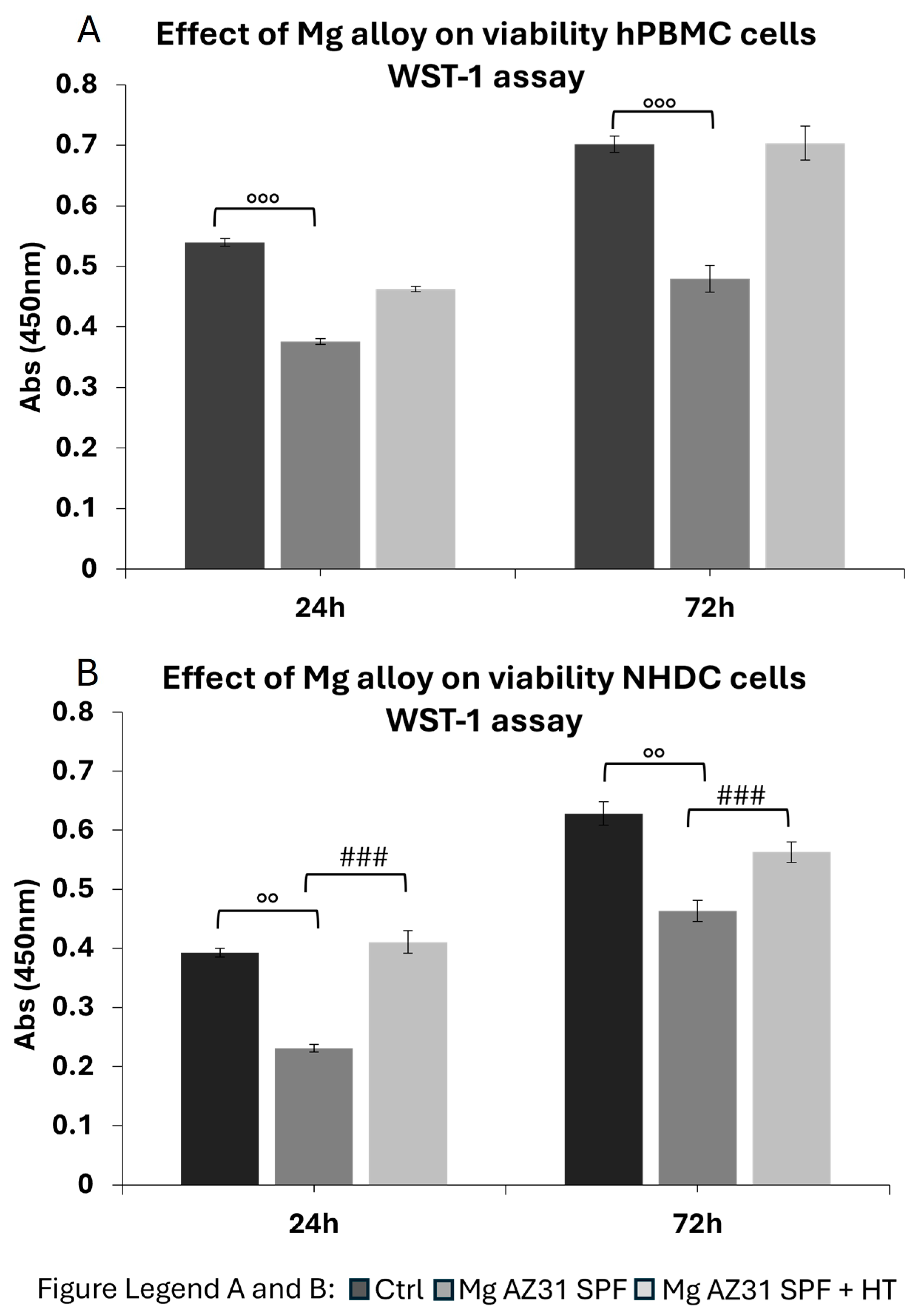
Figure 2 shows that the MgAZ31-SPF extract significantly reduced the viability of the hPBMC and NHDC lines compared to the untreated and hydrothermal treatment groups. These results suggest that hydrothermal chemical treatment favours immune cell viability.

3.3. Hydrothermal Treatment Modulates the Gene Expression Involved in the Immune Response

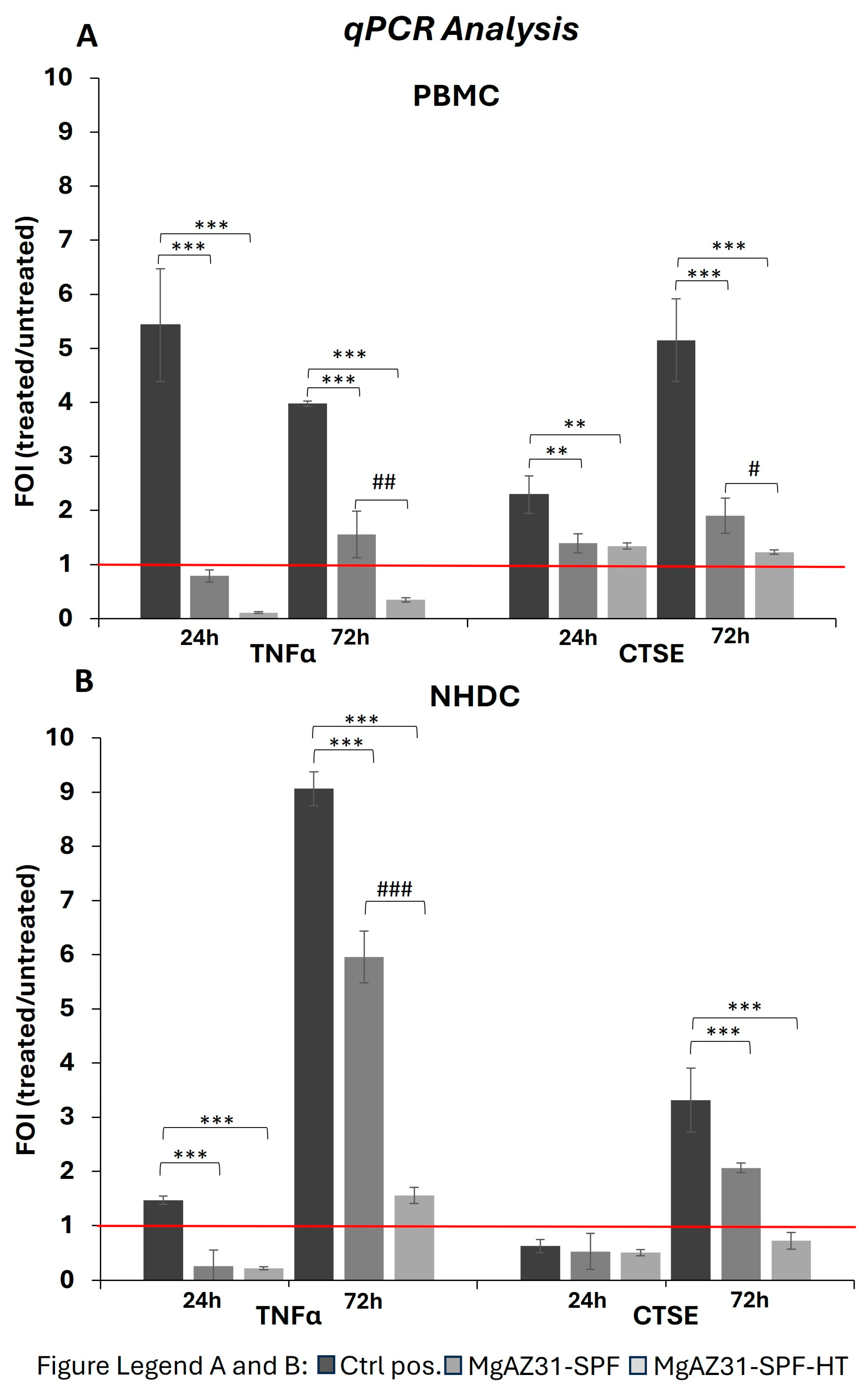
The qPCR analysis evaluated the mRNA expression levels of immune cell genes in response to treatment with different extracts from Mg alloy discs. As shown in Figure 3, a significant reduction in the expression of the analysed genes, cathepsin-E (CTSE) and tumour necrosis factor α (TNF-α), was observed after 72 h of exposure to Mg alloy extract that had undergone hydrothermal treatment, compared to the positive control of 10 ng/mL LPS. LPS was used to induce an immune response, highlighting that the Mg AZ31-SPF disc was well tolerated by immune cell lines. However, the hydrothermal treatment improved tolerance compared to the positive control.

3.4. Hydrothermal Treatment Reduces the Levels of Protein Involved in the Activation of the Immune Cells

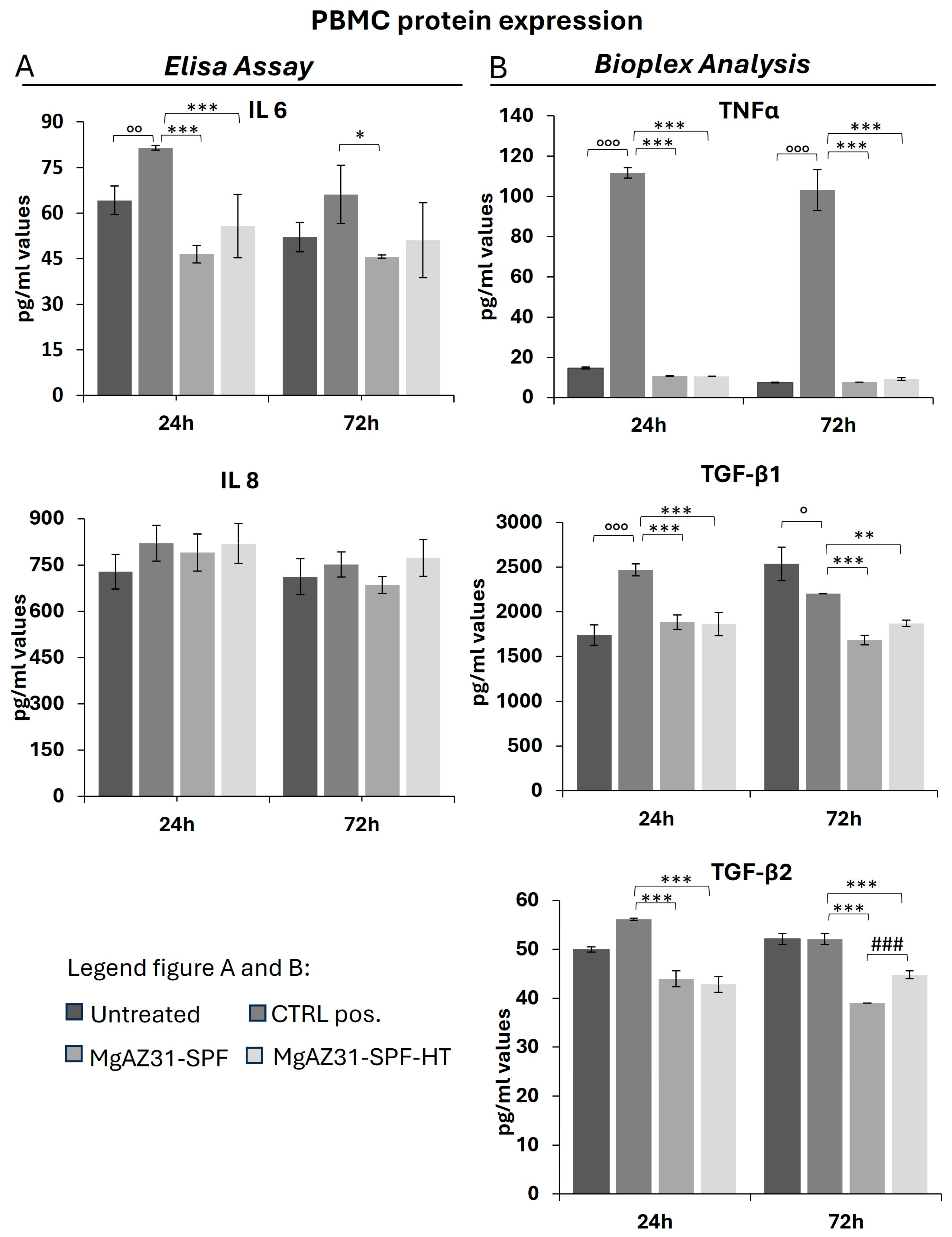
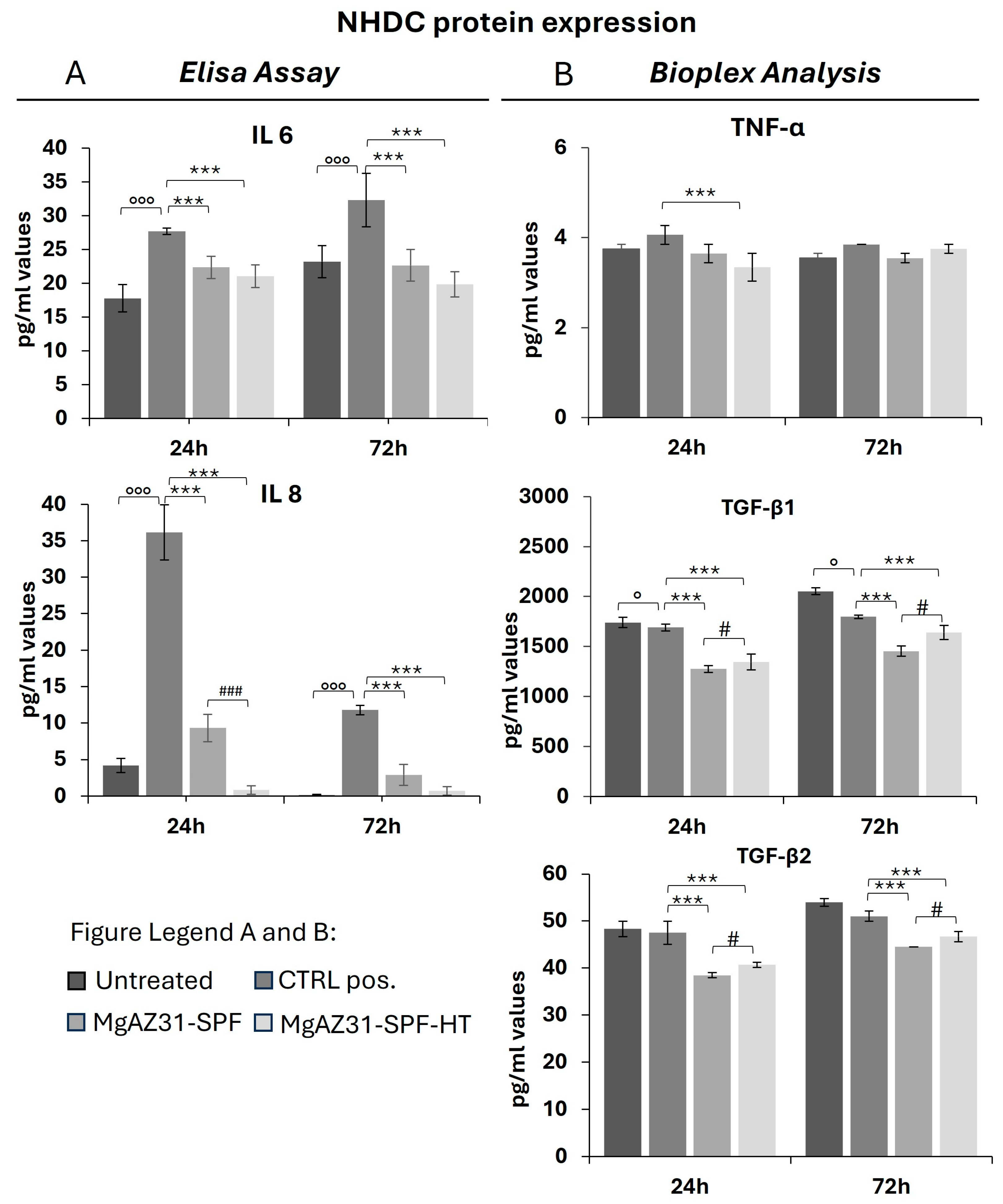
The ELISA and BioPlex immunoassay techniques were used to detect and quantify the proteins involved in immune response activation, as shown in Figure 4 and Figure 5. The supernatant of immune cells was therefore evaluated after indirect exposure to different extracts from MgAZ31 alloy for 24 and 72 h.
Different cytokine expressions were observed in each cell line. Analysing the levels of the cytokines IL6 and IL8 in hPBMC cell lines using an ELISA (Figure 4A) revealed a non-significant reduction in IL6 and IL8 levels, following exposure to the Mg alloy extract. Bioplex analysis (Figure 4B) of other cytokines revealed a significant reduction in TNF-α, and consequently in TGF-β1 and TGF-β2, following exposure to Mg extracts.
Conversely, different effects were observed on dendritic cells, where the hydrothermal extract produced a significant reduction in IL6 and IL8 levels (Figure 5A). Figure 5B shows the reduction in cytokine levels over time, particularly after treatment with the hydrothermal Mg disc extract.

3.5. Antibacterial Properties

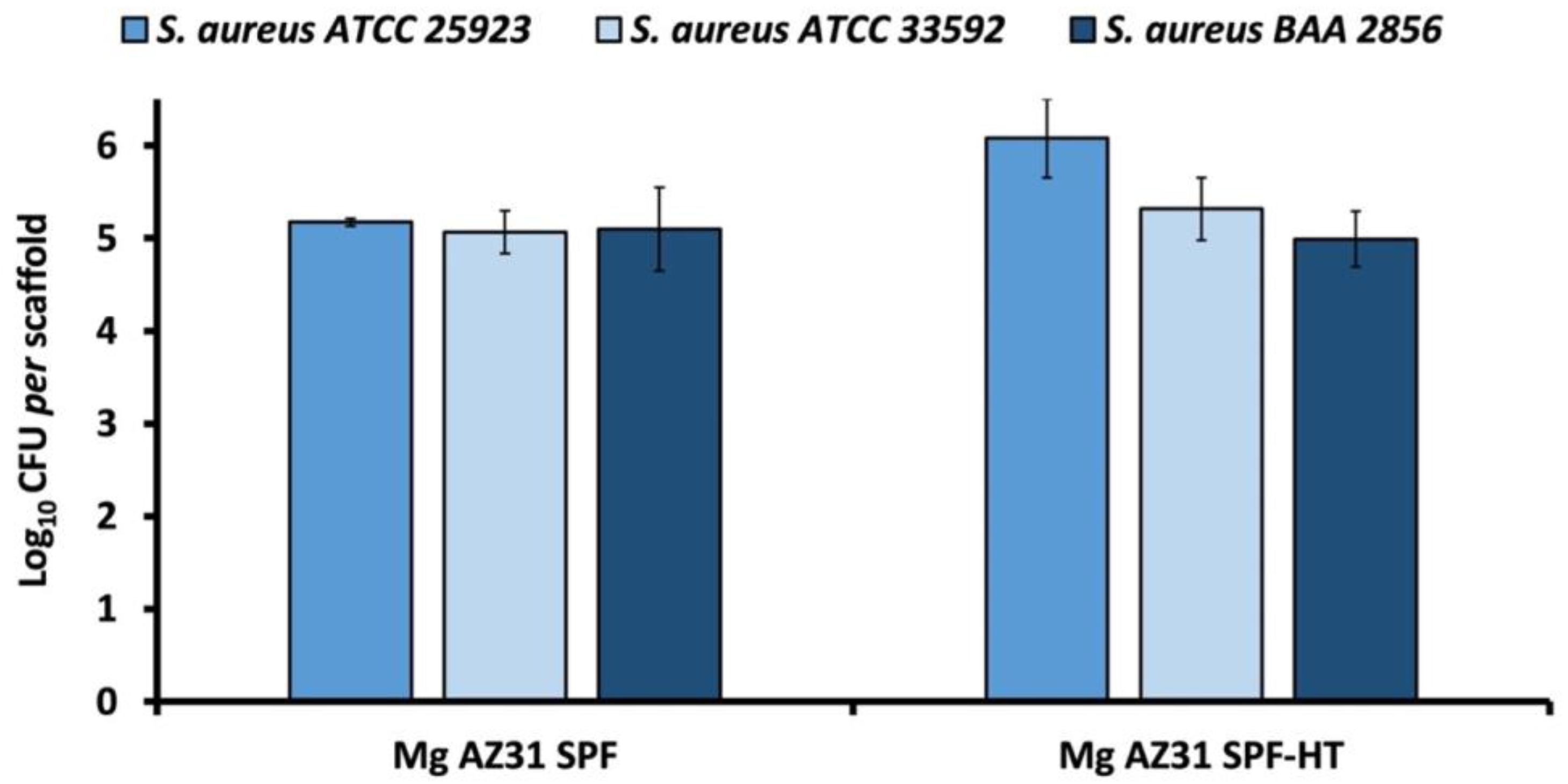
The ability of three Staphylococcus aureus strains (ATCC 25923, ATCC 33592, and BAA 2856) to form biofilms on MgAZ31-SPF and MgAZ31-SPF-HT scaffolds was evaluated by quantifying the number of colony-forming units (CFUs) after overnight incubation in presence of each scaffold (Figure 6). Across all strains, no statistically significant differences were observed between CFU values on the MgAZ31-SPF and MgAZ31-SPF-HT scaffolds, indicating that the hydrothermal process does not substantially alter the biofilm-forming potential of S. aureus under the tested conditions.
Although the data shows that Staphylococcus strains are capable of colonising both scaffold types, it is important to underscore that biofilm formation appears relatively limited, looking at the CFUs evaluated, particularly when compared to what is typically observed on more conventional or biofilm-permissive surfaces. The CFU counts consistently remained around 105–106 per scaffold, which is markedly lower than the threshold microbial load (ca. 108 CFU/mL) utilised to initiate a robust biofilm development. This finding highlights the intrinsically less supportive nature of the MgAZ31 surface for staphylococcal biofilm maturation, a feature that may be advantageous in biomedical applications.
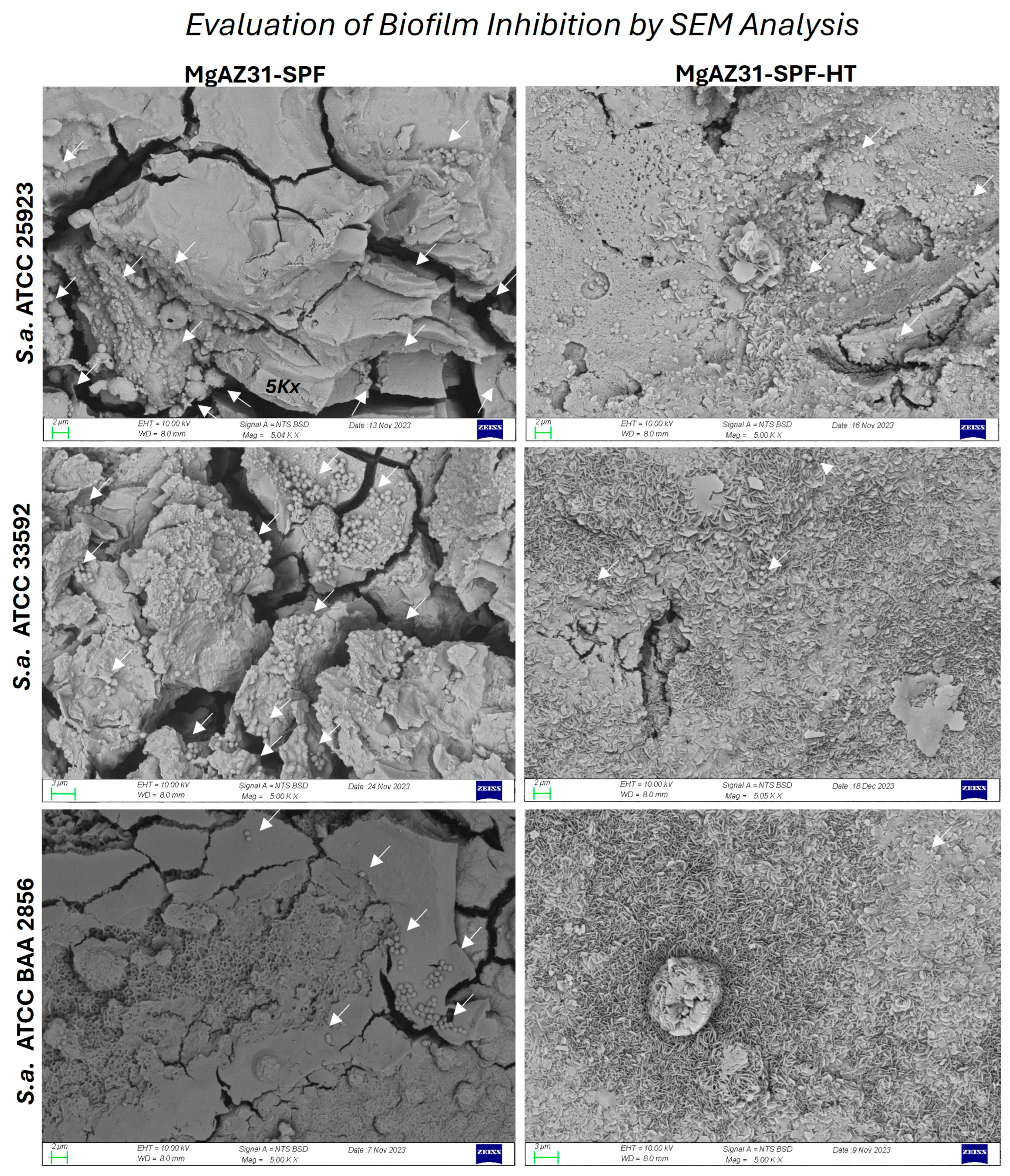
To complement the CFU quantification, scanning electron microscopy (SEM) was performed to visualise the ultrastructural surface of Mg discs (Figure S1) and features of biofilm formation by S. aureus strains on MgAZ31-SPF and MgAZ31-SPF-HT scaffolds (Figure 7). High-magnified (5K×) SEM images reveal the presence of sparse, isolated coccus-shaped bacterial cells scattered across the scaffold surfaces.
Crucially, no dense bacterial clusters or continuous layers embedded in extracellular polymeric substances (EPS)—hallmarks of a mature and structured biofilm—were observed.

4. Discussion

This study investigated two critical aspects of the interaction between the hydrothermally surface-treated MgAZ31-SPF alloys and immune cells, as well as bacterial biofilms. A preliminary assessment of hPBMC and NHDC tolerance to Mg alloy extracts was performed over 24 and 72 h exposure periods. Exposure to MgAZ31-SPF-HT extracts improved the viability of both immune cell lines, suggesting reduced cytotoxicity compared to MgAZ31-SPF alone (Figure 2). This increased viability can be attributed to the lower concentration of Mg2+ ions in the MgAZ31-SPF-HT extracts, which was approximately half that measured in MgAZ31-SPF extracts (Figure 1B). High concentrations of Mg2+ ions resulting from alloy degradation can be cytotoxic to immune and neighbouring cells [32,33]. Hydrothermal treatment probably reduces the release of Mg ions by acting as a physical barrier between the highly active surface of the magnesium alloy surface and the physiological medium. This limits ion diffusion and reduces interference with cellular functions. Indeed, the treatment led to the formation of a compact MgO/Mg(OH)2 layer, which is relatively thick (about 15 µm) and capable of significantly reducing ionic exchange with the physiological environment. This markedly improves corrosion resistance in physiological environments compared to both the uncoated AZ31 alloy and MgAZ31-SPF surfaces (down to a corrosion rate of 0.003 mm y−1 compared to about 3 mm y−1 for SPF and about 7 mm y−1 for AZ31) [13,14].
This barrier action can likely be ascribed to the increased surface homogeneity and shift in chemical composition, both of which dampen the reactivity against aggressive saline environment. As a result, pH fluctuations are better controlled, preventing abrupt local alkalisation (Figure 1B) and mitigating the cytotoxic effects, as demonstrated by da Silva et al. [34,35]. Moreover, the increased surface hydrophilicity may favour the adsorption of cell-adhesive proteins in bioactive conformations, thereby promoting immune cell compatibility [36,37]. Taken together, these results emphasise the importance of hydrothermal treatment for immune cell viability. To further explore the immunomodulatory potential of hydrothermal treatment, gene and protein expression was evaluated in immune cell lines.
To determine whether the alloys trigger an immune response, the results from the alloy extracts were compared with those from immune cells treated with LPS, which was used as a positive control. LPS, a component of Gram-negative bacteria, is a potent activator of the immune system. Its use enabled us to assess whether Mg alloy extracts elicit similar activation or inflammatory responses on hPBMC [38] and dendritic cells [39]. The qPCR analysis revealed that the MgAZ31-SPF-HT alloy extract decreases the expression of the CTSE and TNF-α genes in both hPBMC and NHDC over time (Figure 3). The downregulation of two pro-inflammatory genes, TNFα and CTSE, corresponds with a reduced release of pro-inflammatory cytokines in hPBMCs [40,41] and dendritic cells [42,43], as confirmed by protein expression analysis (Figure 4 and Figure 5). In this study, particularly those from MgAZ31-SPF-HT extracts, were found to reduce the release of TNFα and TGFβ1-2 cytokines in hPBMCs (Figure 4B) and NHDCs (Figure 5B), as determined by BioPlex analysis. Furthermore, a marked reduction in the release of IL-6 and IL-8 was observed in dendritic cells (Figure 5A). Focusing on early immune cell responses, these results suggest that the MgAZ31-SPF-HT alloy extract mitigates the typical early inflammatory response in immune cells (e.g., the activation of macrophages, neutrophils, mast cells and dendritic cells), which is generally induced by the release of ions and debris, leading to implant failure [18,44]. Further investigations using macrophage or osteoblast–macrophage co-culture models are required to assess the long-term immune tolerance and immunointegration of hydrothermally treated surfaces. Nevertheless, these findings highlight the importance of hydrothermal treatment in controlling the release of Mg2+ ions and debris from the surface [45], thereby reducing the inflammatory effects on immune cells. In addition to immune modulation, the same surface modifications may influence bacterial adhesion. Surface modifications that suppress macrophage activation through altered charge, hydrophilicity or Mg2+ ion release [46] may reduce bacterial adhesion simultaneously by weakening electrostatic interactions [47] and impairing bacterial viability via Mg2+-dependent osmotic or membrane effects [48]. Since Mg2+ release can also promote the polarisation of macrophages towards an anti-inflammatory M2 phenotype [49], these mechanisms likely converge. Therefore, immune-modulatory surface chemistries may inherently possess antibacterial properties, which could support the development of dual-function metal-based bioinstructive surfaces.
Indeed, antibacterial assays confirm this hypothesis because biofilm formation by S. aureus was markedly reduced on the tested Mg-based scaffolds. This finding is supported by the relatively low CFU counts (approximately 105–106; Figure 6), which fall well below the microbial load threshold of around 108 CFU/mL typically required for mature biofilm formation. In the literature, the S. aureus strains used in this study (ATCC 25923, ATCC 33592, and BAA-2856) are reported to form robust biofilms under standard laboratory conditions, reaching densities of 107–108 CFU/cm2 after 24 h of incubation on inert surfaces [50,51,52]. Therefore, the substantially lower CFU values observed on Mg AZ31 scaffolds—two to three orders of magnitude lower than those typically reported—suggest that biofilm development was effectively impaired by the intrinsic surface properties of the materials, rather than by experimental or environmental artefacts [53].
This inhibitory behaviour can be attributed to physicochemical modifications induced by the forming and hydrothermal treatments, which are known to affect surface roughness, hydrophilicity, and charge distribution. Such parameters have been shown to play a key role in the early stages of bacterial adhesion and subsequent biofilm maturation [54,55,56]. In particular, smoother and more hydrophilic Mg-based coatings have been reported to hinder bacterial attachment by promoting the formation of a hydration layer and by altering electrostatic interactions at the interface [57,58]. These mechanisms may therefore partially explain the reduced bacterial colonisation observed on the Mg AZ31-SPF and Mg AZ31-SPF-HT scaffolds.
Consistent with these findings, SEM analysis (Figure 7) revealed a sparse bacterial distribution and the absence of dense microcolonies, or EPS-rich layers typically associated with mature biofilms. This consistent morphological pattern, confirmed through repeated visualisation and quantitative CFU analyses performed in triplicate, reinforces the hypothesis that the Mg AZ31-SPF and Mg AZ31-SPF-HT scaffolds partially suppress bacterial adhesion and efficiently inhibit the formation of mature S. aureus biofilms. Similar results were obtained by Nocchetti et al. using functionalized Mg alloy surfaces [46], as well as by Tatullo et al. in their preliminary study on MgAZ31-SPF-HT [12], further confirming the beneficial influence of surface modification strategies on the antibacterial behaviour of Mg-based biomaterials.

5. Conclusions

Overall, the findings of this study highlight the potential of AZ31 Mg alloy, subjected to a hydrothermal surface treatment, for producing highly customised medical prostheses by SPF for orthopaedic applications, especially in cases where minimising immunotoxicity, inflammation, bacterial colonisation and biofilm-related infections are crucial. The results show that hydrothermal surface treatment effectively improves the biocompatibility and antibacterial properties of AZ31 samples produced by SPF. Specifically, the treatment reduced cytotoxicity and inflammatory responses in immune cells, as evidenced by the downregulation of pro-inflammatory markers. Additionally, it significantly limited bacterial adhesion and biofilm formation, which are critical factors in preventing implant-associated infections.
Taken together, these outcomes suggest that MgAZ31-SPF-HT is a strong candidate for use in biodegradable orthopaedic implants. However, further studies are needed to evaluate its long-term performance and clinical safety.

Supplementary Materials

The following supporting information can be downloaded at: https://www.mdpi.com/article/10.3390/met15121328/s1, Figure S1: Scanning electron microscopy (SEM) analysis was performed to visualize the inhibition of biofilm formation by Staphylococcus aureus strains on MgAZ31-SPF and MgAZ31-SPF-HT discs. Different magnifications revealed different surface aspects of the Mg discs.

Author Contributions

Conceptualisation: A.D.L., G.G. and R.A.; Methodology: A.D.L., A.P., D.B., G.P., A.C. (Angela Cusanno), L.C., L.P., L.R., R.A., M.P., R.C. and V.C.; Validation: A.C. (Aurora Cordaro), A.D.L., V.C., M.P. and L.R.; Formal Analysis: A.C. (Angela Cusanno), A.D.L., D.B., G.P., L.C., L.P., L.R. and R.C.; Investigation: A.C. (Aurora Cordaro), A.D.L., A.P. and L.R.; Resources: A.D.L. and G.G.; Data Curation: A.D.L., A.P., G.G. and R.A.; Writing—original draft preparation: A.D.L., A.P., G.G., L.C. and R.A.; Writing—Review and editing: A.D.L., L.R. and G.G.; Visualisation: A.D.L., A.P. and L.C.; Supervision: G.G.; Project administration: A.D.L. and G.G. Funding acquisition: G.G. All authors have read and agreed to the published version of the manuscript.

Funding

This research was funded by the CONTACT project (grant: ARS01_01205, PON R&I Funds 2014–2020 and FSC, Ministry of University and Research) “CustOm-made aNTibacterial/bioActive/bioCoated prosTheses”.

Data Availability Statement

The original contributions presented in this study are included in the article/Supplementary Material. Further inquiries can be directed to the corresponding author.

Conflicts of Interest

The authors declare no conflicts of interest.

References

  1. Carrascal-Hernández, D.C.; Martínez-Cano, J.P.; Rodríguez Macías, J.D.; Grande-Tovar, C.D. Evolution in Bone Tissue Regeneration: From Grafts to Innovative Biomaterials. Int. J. Mol. Sci. 2025, 26, 4242. [Google Scholar] [CrossRef]
  2. Łuczak, J.W.; Palusińska, M.; Matak, D.; Pietrzak, D.; Nakielski, P.; Lewicki, S.; Grodzik, M.; Szymański, Ł. The Future of Bone Repair: Emerging Technologies and Biomaterials in Bone Regeneration. Int. J. Mol. Sci. 2024, 25, 12766. [Google Scholar] [CrossRef]
  3. Giavaresi, G.; Bellavia, D.; De Luca, A.; Costa, V.; Raimondi, L.; Cordaro, A.; Sartori, M.; Terrando, S.; Toscano, A.; Pignatti, G.; et al. Magnesium Alloys in Orthopedics: A Systematic Review on Approaches, Coatings and Strategies to Improve Biocompatibility, Osteogenic Properties and Osteointegration Capabilities. Int. J. Mol. Sci. 2023, 25, 282. [Google Scholar] [CrossRef]
  4. Liu, Y.; Yin, J.; Zhu, G.-Z. Advances in Magnesium-Based Biomaterials: Strategies for Enhanced Corrosion Resistance, Mechanical Performance, and Biocompatibility. Crystals 2025, 15, 256. [Google Scholar] [CrossRef]
  5. Singh Raman, R.K.; Choudhary, L.; Shechtman, D. Simulated Body Fluid-Assisted Stress Corrosion Cracking of a Rapidly Solidified Magnesium Alloy RS66. Materials 2024, 17, 3967. [Google Scholar] [CrossRef]
  6. Khalili, M.A.; Tamjid, E. Controlled biodegradation of magnesium alloy in physiological environment by metal organic framework nanocomposite coatings. Sci. Rep. 2021, 11, 8645. [Google Scholar] [CrossRef] [PubMed]
  7. Müller, E.; Schoberwalter, T.; Mader, K.; Seitz, J.M.; Kopp, A.; Baranowsky, A.; Keller, J. The Biological Effects of Magnesium-Based Implants on the Skeleton and Their Clinical Implications in Orthopedic Trauma Surgery. Biomater. Res. 2024, 28, 0122. [Google Scholar] [CrossRef]
  8. Zhang, T.; Wang, W.; Liu, J.; Wang, L.; Tang, Y.; Wang, K. A review on magnesium alloys for biomedical applications. Front. Bioeng. Biotechnol. 2022, 10, 953344. [Google Scholar] [CrossRef] [PubMed]
  9. Yavuzyegit, B.; Karali, A.; De Mori, A.; Smith, N.; Usov, S.; Shashkov, P.; Bonithon, R.; Blunn, G. Evaluation of Corrosion Performance of AZ31 Mg Alloy in Physiological and Highly Corrosive Solutions. ACS Appl. Bio Mater. 2024, 7, 1735–1747. [Google Scholar] [CrossRef] [PubMed]
  10. Guglielmi, P.; Cusanno, A.; Bagudanch, I.; Centeno, G.; Ferrer, I.; Garcia-Romeu, M.; Palumbo, G. Experimental and numerical analysis of innovative processes for producing a resorbable cheekbone prosthesis. J. Manuf. Process. 2021, 70, 1–14. [Google Scholar] [CrossRef]
  11. Curtis, R.; Garriga Majo, D.; Soo, R.; Disilvio, L.; Gil, A.; Wood, R.; Atwood, R.; Said, R. Superplastic forming of dental and maxillofacial prostheses. In Dental Biomaterials; Woodhead Publishing: Cambridge, UK, 2008; pp. 428–474. [Google Scholar] [CrossRef]
  12. Tatullo, M.; Piattelli, A.; Ruggiero, R.; Marano, R.M.; Iaculli, F.; Rengo, C.; Papallo, I.; Palumbo, G.; Chiesa, R.; Paduano, F.; et al. Functionalized magnesium alloys obtained by superplastic forming process retain osteoinductive and antibacterial properties: An in-vitro study. Dent. Mater. 2024, 40, 557–562. [Google Scholar] [CrossRef]
  13. Bellavia, D.; Paduano, F.; Brogini, S.; Ruggiero, R.; Marano, R.M.; Cusanno, A.; Guglielmi, P.; Piccininni, A.; Pavarini, M.; D’Agostino, A.; et al. In vitro and in vivo characterization of novel magnesium alloy implants enhanced by hydrothermal and sol–gel treatments for bone regeneration. J. Mater. Chem. B 2025, 13, 14032–14046. [Google Scholar] [CrossRef]
  14. Pavarini, M.; Milanesi, N.; Moscatelli, M.; Chiesa, R. Harnessing Hydrothermal Treatments to Control Magnesium Alloy Degradation for Bioresorbable Implants: A Comprehensive Evaluation of Bath Chemistry Effect. Metals 2025, 15, 1056. [Google Scholar] [CrossRef]
  15. Mohammadi-Zerankeshi, M.; Zohrevand, M.; Alizadeh, R. Hydrothermal Coating of the Biodegradable Mg-2Ag Alloy. Metals 2023, 13, 1260. [Google Scholar] [CrossRef]
  16. Costa, V.; Raimondi, L.; Scilabra, S.D.; Pinto, M.L.; Bellavia, D.; De Luca, A.; Guglielmi, P.; Cusanno, A.; Cattini, L.; Pulsatelli, L.; et al. Effect of Hydrothermal Coatings of Magnesium AZ31 Alloy on Osteogenic Differentiation of hMSCs: From Gene to Protein Analysis. Materials 2025, 18, 1254. [Google Scholar] [CrossRef]
  17. Costa, V.; Raimondi, L.; Bellavia, D.; De Luca, A.; Guglielmi, P.; Cusanno, A.; Cattini, L.; Pulsatelli, L.; Pavarini, M.; Chiesa, R.; et al. Hydrothermal Magnesium Alloy Extracts Modulate MicroRNA Expression in RAW264.7 Cells: Implications for Bone Remodeling. J. Funct. Biomater. 2025, 16, 303. [Google Scholar] [CrossRef]
  18. Khodaei, T.; Schmitzer, E.; Suresh, A.P.; Acharya, A.P. Immune response differences in degradable and non-degradable alloy implants. Bioact. Mater. 2023, 24, 153–170. [Google Scholar] [CrossRef] [PubMed]
  19. Negut, I.; Albu, C.; Bita, B. Advances in Antimicrobial Coatings for Preventing Infections of Head-Related Implantable Medical Devices. Coatings 2024, 14, 256. [Google Scholar] [CrossRef]
  20. Rai, A.; Szczerba, M.; Karbowniczek, J.; Cichocki, K.; Krzyzanowski, M.; Bajda, S.; Sulka, G.D.; Szuwarzynsky, M.; Sokolowski, K.; Wiese, B. Enhancedcorrosion resistance of magnesium alloy via surface transfer of microwave-synthesized, non-toxic, and ultra-smooth nitrogen-doped amorphous carbon thin film. Appl. Surf. Sci. 2025, 695, 162847. [Google Scholar] [CrossRef]
  21. Bhojak, V.; Jain, J.; Singhal, T.; Saxena, K.; Prakash, C.; Agrawal, M.; Malik, V. Friction Stir Processing and Cladding: An Innovative Surface Engineering Technique to Tailor Magnesium-Based Alloys for Biomedical Implants. Surf. Rev. Lett. 2025, 32, 2340007. [Google Scholar] [CrossRef]
  22. Hendea, R.E.; Raducanu, D.; Claver, A.; García, J.A.; Cojocaru, V.D.; Nocivin, A.; Stanciu, D.; Serban, N.; Ivanescu, S.; Trisca-Rusu, C.; et al. Biodegradable Magnesium Alloys for Personalised Temporary Implants. J. Funct. Biomater. 2023, 14, 400. [Google Scholar] [CrossRef]
  23. Seetharaman, S.; Sankaranarayanan, D.; Gupta, M. Magnesium-Based Temporary Implants: Potential, Current Status, Applications, and Challenges. J. Funct. Biomater. 2023, 14, 324. [Google Scholar] [CrossRef]
  24. Aikin, M.; Shalomeev, V.S.; Kukhar, V.; Kostryzhev, A.; Kuziev, I.; Kulynych, V.; Dykha, O.; Dykha, V.; Shapoval, O.; Zagorskis, A.; et al. Recent Advances in Biodegradable Magnesium Alloys for Medical Implants: Evolution, Innovations, andClinical Translation. Crystals 2025, 15, 671. [Google Scholar] [CrossRef]
  25. Salamanna, F.; De Luca, A.; Vandenbulcke, F.; Di Matteo, B.; Kon, E.; Grassi, A.; Ballardini, A.; Morozzi, G.; Raimondi, L.; Bellavia, D.; et al. Preliminary osteogenic and antibacterial investigations of wood derived antibiotic-loaded bone substitute for the treatment of infected bone defects. Front. Bioeng. Biotechnol. 2024, 12, 1412584. [Google Scholar] [CrossRef]
  26. Song, Q.; Yang, L.; Yi, F.; Chen, C.; Guo, J.; Qi, Z.; Song, Y. Antibacterial Pure Magnesium and Magnesium Alloys for Biomedical Materials—A Review. Crystals 2024, 14, 939. [Google Scholar] [CrossRef]
  27. Sorgente, D.; Palumbo, G.; Piccininni, A.; Guglielmi, P.; Aksenov, S. Investigation on the thickness distribution of highly customized titanium biomedical implants manufactured by superplastic forming. Cirp J. Manuf. Sci. Technol. 2018, 20, 29–35. [Google Scholar] [CrossRef]
  28. Miao, Q.; Hu, L.; Wang, X.; Wang, E. Grain growth kinetics of a fine-grained AZ31 magnesium alloy produced by hot rolling. J. Alloys Compd. 2010, 493, 87–90. [Google Scholar] [CrossRef]
  29. De Luca, A.; Ruggiero, R.; Cordaro, A.; Marrelli, B.; Raimondi, L.; Costa, V.; Bellavia, D.; Aiello, E.; Pavarini, M.; Piccininni, A.; et al. Towards Accurate Biocompatibility: Rethinking Cytotoxicity Evaluation for Biodegradable Magnesium Alloys in Biomedical Applications. J. Funct. Biomater. 2024, 15, 382. [Google Scholar] [CrossRef] [PubMed]
  30. ISO 10993-5:2009; Biological Evaluation of Medical Devices—Part 5: Tests for In Vitro Cytotoxicity. International Organization for Standardization: Geneva, Switzerland, 2009.
  31. Livak, K.J.; Schmittgen, T.D. Analysis of relative gene expression data using real-time quantitative PCR and the 2(-Delta Delta C(T)) Method. Methods 2001, 25, 402–408. [Google Scholar] [CrossRef] [PubMed]
  32. Kim, J.; Pan, H. Effects of magnesium alloy corrosion on biological response—Perspectives of metal-cell interaction. Prog. Mater. Sci. 2023, 133, 101039. [Google Scholar] [CrossRef]
  33. Negrescu, A.M.; Necula, M.G.; Gebaur, A.; Golgovici, F.; Nica, C.; Curti, F.; Iovu, H.; Costache, M.; Cimpean, A. In Vitro Macrophage Immunomodulation by Poly(ε-caprolactone) Based-Coated AZ31 Mg Alloy. Int. J. Mol. Sci. 2021, 22, 909. [Google Scholar] [CrossRef]
  34. Hassan, H.W.; Rahmati, M.; Barrantes, A.; Haugen, H.J.; Mirtaheri, P. In Vitro Monitoring of Magnesium-Based Implants Degradation by Surface Analysis and Optical Spectroscopy. Int. J. Mol. Sci. 2022, 23, 6099. [Google Scholar] [CrossRef]
  35. da Silva, C. Study of ph effect on AZ31 magnesium alloy corrosion for using in temporaryimplants. Int. J. Adv. Med. Biotechnol. 2020, 3, 15–22. [Google Scholar] [CrossRef]
  36. Cheng, S.; Zhang, D.D.; Li, M.; Liu, X.Y.; Zhang, Y.; Qian, S.; Peng, F. Osteogenesis, angiogenesis and immune response of Mg-Al layered double hydroxide coating on pure Mg. Bioact. Mater. 2021, 6, 91–105. [Google Scholar] [CrossRef]
  37. Koga, A.; Thongsiri, C.; Kudo, D.; Phuong, D.N.D.; Iwamoto, Y.; Fujii, W.; Nagai-Yoshioka, Y.; Yamasaki, R.; Ariyoshi, W. Mechanisms Underlying the Suppression of IL-1β Expression by Magnesium Hydroxide Nanoparticles. Biomedicines 2023, 11, 1291. [Google Scholar] [CrossRef] [PubMed]
  38. Chaiwut, R.; Kasinrerk, W. Very low concentration of lipopolysaccharide can induce the production of various cytokines and chemokines in human primary monocytes. BMC Res. Notes 2022, 15, 42. [Google Scholar] [CrossRef] [PubMed]
  39. Anderson, A.E.; Swan, D.J.; Sayers, B.L.; Harry, R.A.; Patterson, A.M.; von Delwig, A.; Robinson, J.H.; Isaacs, J.D.; Hilkens, C.M. LPS activation is required for migratory activity and antigen presentation by tolerogenic dendritic cells. J. Leukoc. Biol. 2009, 85, 243–250. [Google Scholar] [CrossRef]
  40. Zhao, K.; Sun, Y.; Zhong, S.; Luo, J.L. The multifaceted roles of cathepsins in immune and inflammatory responses: Implications for cancer therapy, autoimmune diseases, and infectious diseases. Biomark. Res. 2024, 12, 165. [Google Scholar] [CrossRef]
  41. Tchetina, E.V.; Markova, G.A.; Satybaldyev, A.M.; Lila, A.M. Downregulation of Tumour Necrosis Factor α Gene Expression in Peripheral Blood Mononuclear Cells Cultured in the Presence of Tofacitinib Prior to Therapy Is Associated with Clinical Remission in Patients with Rheumatoid Arthritis. Curr. Issues Mol. Biol. 2022, 44, 1941–1949. [Google Scholar] [CrossRef] [PubMed]
  42. van Lieshout, A.W.; Barrera, P.; Smeets, R.L.; Pesman, G.J.; van Riel, P.L.; van den Berg, W.B.; Radstake, T.R. Inhibition of TNF alpha during maturation of dendritic cells results in the development of semi-mature cells: A potential mechanism for the beneficial effects of TNF alpha blockade in rheumatoid arthritis. Ann. Rheum. Dis. 2005, 64, 408–414. [Google Scholar] [CrossRef]
  43. Kakehashi, H.; Nishioku, T.; Tsukuba, T.; Kadowaki, T.; Nakamura, S.; Yamamoto, K. Differential regulation of the nature and functions of dendritic cells and macrophages by cathepsin E. J. Immunol. 2007, 179, 5728–5737. [Google Scholar] [CrossRef]
  44. Piatnitskaia, S.; Rafikova, G.; Bilyalov, A.; Chugunov, S.; Akhatov, I.; Pavlov, V.; Kzhyshkowska, J. Modelling of macrophage responses to biomaterials. Front. Immunol. 2024, 15, 1349461. [Google Scholar] [CrossRef]
  45. Zheng, T.; Hu, Y.; Zhang, Y.; Pan, F. Formation of a hydrophobic and corrosion resistant coating on magnesium alloy via a one-step hydrothermal method. J. Colloid. Interface Sci. 2017, 505, 87–95. [Google Scholar] [CrossRef]
  46. Nocchetti, M.; Piccinini, M.; Pietrella, D.; Antognelli, C.; Ricci, M.; Di Michele, A.; Jalaoui, L.; Ambrogi, V. The Effect of Surface Functionalization of Magnesium Alloy on Degradability, Bioactivity, Cytotoxicity, and Antibiofilm Activity. J. Funct. Biomater. 2025, 16, 22. [Google Scholar] [CrossRef] [PubMed]
  47. Hayat, S.; Muzammil, S.; Rasool, M.H.; Nisar, Z.; Hussain, S.Z.; Sabri, A.N.; Jamil, S. In vitro antibiofilm and anti-adhesion effects of magnesium oxide nanoparticles against antibiotic resistant bacteria. Microbiol. Immunol. 2018, 62, 211–220. [Google Scholar] [CrossRef]
  48. Oknin, H.; Steinberg, D.; Shemesh, M. Magnesium ions mitigate biofilm formation of Bacillus species via downregulation of matrix genes expression. Front. Microbiol. 2015, 6, 907. [Google Scholar] [CrossRef]
  49. Qiao, X.; Yang, J.; Shang, Y.; Deng, S.; Yao, S.; Wang, Z.; Guo, Y.; Peng, C. Magnesium-doped Nanostructured Titanium Surface Modulates Macrophage-mediated Inflammatory Response for Ameliorative Osseointegration. Int. J. Nanomed. 2020, 15, 7185–7198. [Google Scholar] [CrossRef]
  50. Manner, S.; Goeres, D.M.; Skogman, M.; Vuorela, P.; Fallarero, A. Prevention of Staphylococcus aureus biofilm formation by antibiotics in 96-Microtiter Well Plates and Drip Flow Reactors: Critical factors influencing outcomes. Sci. Rep. 2017, 7, 43854. [Google Scholar] [CrossRef] [PubMed]
  51. Reigada, I.; Guarch-Pérez, C.; Patel, J.Z.; Riool, M.; Savijoki, K.; Yli-Kauhaluoma, J.; Zaat, S.A.J.; Fallarero, A. Combined Effect of Naturally-Derived Biofilm Inhibitors and Differentiated HL-60 Cells in the Prevention of. Microorganisms 2020, 8, 1757. [Google Scholar] [CrossRef] [PubMed]
  52. Ueda, Y.; Mashima, K.; Miyazaki, M.; Hara, S.; Takata, T.; Kamimura, H.; Takagi, S.; Jimi, S. Inhibitory effects of polysorbate 80 on MRSA biofilm formed on different substrates including dermal tissue. Sci. Rep. 2019, 9, 3128. [Google Scholar] [CrossRef]
  53. Rahim, M.I.; Szafrański, S.P.; Ingendoh-Tsakmakidis, A.; Stiesch, M.; Mueller, P.P. Evidence for inoculum size and gas interfaces as critical factors in bacterial biofilm formation on magnesium implants in an animal model. Colloids Surf. B Biointerfaces 2020, 186, 110684. [Google Scholar] [CrossRef]
  54. Zheng, S.; Bawazir, M.; Dhall, A.; Kim, H.E.; He, L.; Heo, J.; Hwang, G. Implication of Surface Properties, Bacterial Motility, and Hydrodynamic Conditions on Bacterial Surface Sensing and Their Initial Adhesion. Front. Bioeng. Biotechnol. 2021, 9, 643722. [Google Scholar] [CrossRef]
  55. Mirani, Z.A.; Fatima, A.; Urooj, S.; Aziz, M.; Khan, M.N.; Abbas, T. Relationship of cell surface hydrophobicity with biofilm formation and growth rate: A study on. Iran. J. Basic. Med. Sci. 2018, 21, 760–769. [Google Scholar] [CrossRef]
  56. Bouloussa, H.; Mirza, M.; Ansley, B.; Jilakara, B.; Yue, J.J. Implant Surface Technologies to Prevent Surgical Site Infections in Spine Surgery. Int. J. Spine Surg. 2023, 17, S75–S85. [Google Scholar] [CrossRef]
  57. Emelyanenko, A.M.; Domantovsky, A.G.; Kaminsky, V.V.; Pytskii, I.S.; Emelyanenko, K.A.; Boinovich, L.B. The Mechanisms of Antibacterial Activity of Magnesium Alloys with Extreme Wettability. Materials 2021, 14, 5454. [Google Scholar] [CrossRef]
  58. Yan, S.; Cai, S.; Zuo, Y.; Zhang, H.; Yang, T.; Ling, L.; Lu, J.; He, B. Coated Mg Alloy Implants: A Spontaneous Wettability Transition Process with Excellent Antibacterial and Osteogenic Functions. Materials 2025, 18, 1908. [Google Scholar] [CrossRef]
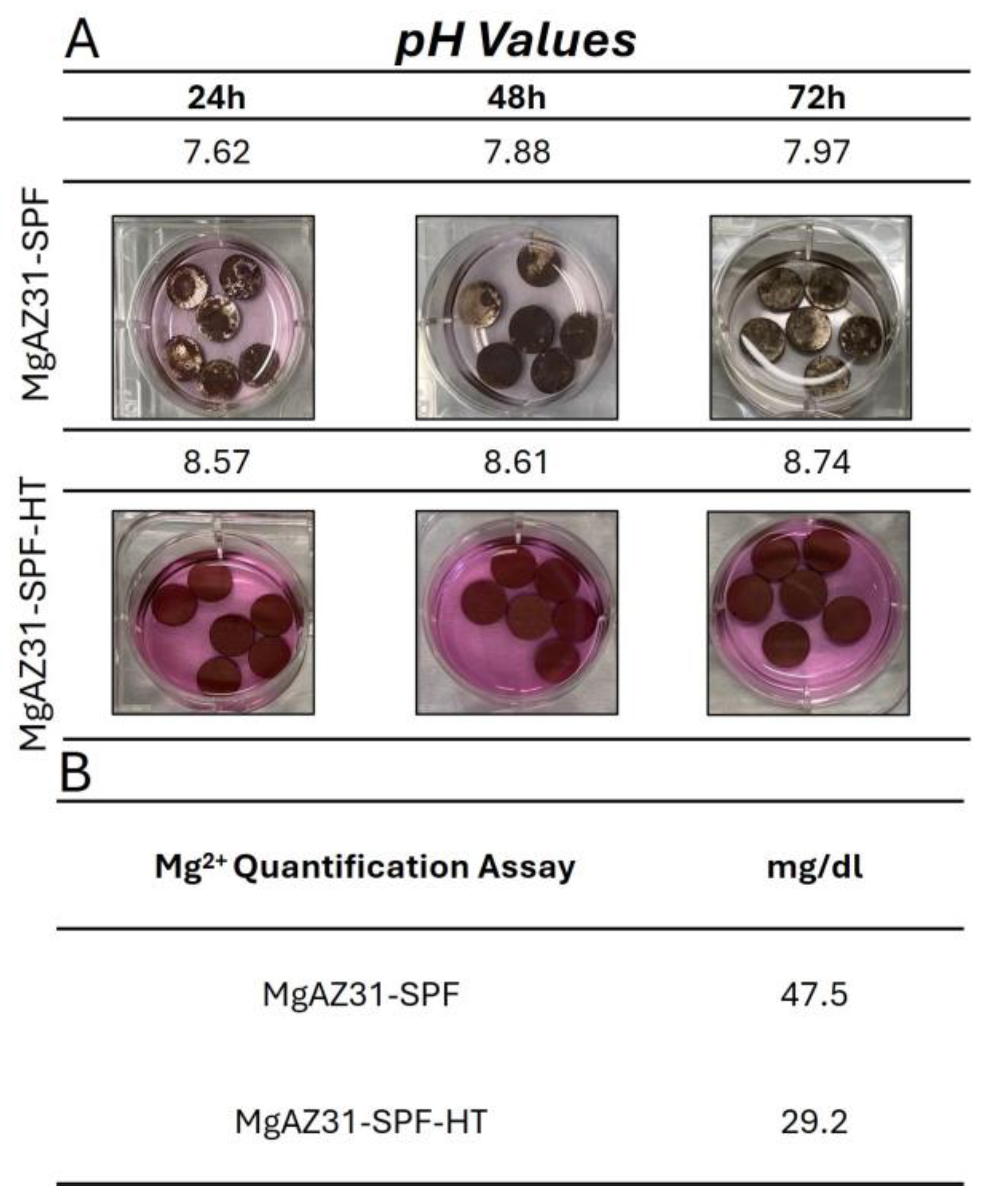
Figure 1. (A) pH values of MgAZ31 alloy extracts measured at 24, 48, and 72 h of immersion. Both extracts exhibit slightly alkaline pH values, with MgAZ31-SPF showing higher alkalinity compared to MgAZ31-SPF-HT. The corresponding images illustrate the visual appearance of the extracts and immersed discs at each time point. (B) Magnesium ion (Mg2+) concentration quantified in the extracts after immersion. MgAZ31-SPF extracts released a higher concentration of Mg2+ (47.5 mg/dL) compared to MgAZ31-SPF-HT extracts (29.2 mg/dL), indicating reduced Mg ion release after hydrothermal treatment.
Metals 15 01328 g001
Figure 2. The WST-1 viability assay was conducted on hPBMC (A) and NHDC (B) cell lines following exposure to extracts from MgAZ31-SPF and MgAZ31-SPF-HT for 24 and 72 h. Absorbance was measured at 450 nm, and results are expressed as mean ± standard deviation (SD). Statistical analysis was performed using the Kruskal–Wallis test, followed by Dunn’s post hoc test to assess differences between extract-treated groups and the control (°), or between Mg AZ31-SPF-HT and MgAZ31-SPF (#). Statistical significance was indicated as follows: two symbols, p < 0.005; three symbols, p < 0.0005. All experiments were performed in triplicate.
Metals 15 01328 g002
Figure 3. Gene expression analysis was conducted on hPBMC (A) and NHDCs (B) following exposure to extracts from Mg AZ31-SPF and MgAZ31-SPF-HT for 24 and 72 h. Lipopolysaccharide (LPS) was used as a positive control. Gene expression levels are shown as fold increase (FOI) relative to the untreated control, indicated by the red line. Expression was quantified using the 2−ΔΔCT method, with β-actin as the reference gene. Data are presented as mean ± standard deviation (SD), based on three independent experiments (n = 3). Statistical analysis was performed using two-way ANOVA followed by Tukey’s post hoc test to evaluate differences between treated groups and the LPS control (*), or between MgAZ31-SPF-HT and MgAZ31-SPF (#). Statistical significance is indicated as follows: one symbol, p < 0.05; two symbols, p < 0.005; three symbols, p < 0.0005.
Metals 15 01328 g003
Figure 4. Protein expression levels were measured in hPBMC cell lines following exposure to extracts from MgAZ3-SPF and MgAZ31-SPF-HT for 24 and 72 h. LPS was used as a positive control. (A) Quantification of IL6 and IL8 levels was performed using an ELISA. (B) Bioplex analysis was conducted to measure the expression levels of TNFα, TGF-β1 and TGF-β2. Two-way ANOVA followed by Tukey’s post hoc test was used to assess differences between treated groups and the untreated control (°). Statistical significance is indicated as follows: one symbol, p < 0.05; two symbols, p < 0.005; three symbols, p < 0.0005, relative to the LPS positive control (*), or between MgAZ31-SPF-HT and MgAZ31-SPF (#). Data are presented as mean ± standard deviation (SD) from three independent experiments (n = 3).
Metals 15 01328 g004
Figure 5. Protein expression levels were measured in NHDC lines following exposure to extracts from MgAZ31-SPF and MgAZ31-SPF-HT for 24 and 72 h. LPS was used as a positive control. (A) IL-6 and IL-8 were quantified by ELISA. (B) Bioplex analysis was used to determine the expression levels of TNFα, TGF-β1 and TGF-β2. Two-way ANOVA was used to evaluate differences between treated groups and the untreated control (°), the LPS positive control (*), or between MgAZ31-SPF-HT and MgAZ31-SPF (#). Statistical significance is indicated as follows: one symbol, p < 0.05; and three symbols, p < 0.0005. All experiments were performed in triplicate, and data are presented as mean ± standard deviation (SD).
Metals 15 01328 g005
Figure 6. Biofilm formation by Staphylococcus aureus strains ATCC 25923, ATCC 33592, and BAA 2856 on Mg AZ31 SPF and Mg AZ31 SPF-HT discs. No significant statistical differences were observed.
Metals 15 01328 g006
Figure 7. Scanning electron microscopy (SEM) analysis was performed to visualise the inhibition of biofilm formation by Staphylococcus aureus strains on MgAZ31-SPF and AZ31-SPF-HT discs. High-magnification (5K×) SEM images revealed sparse, isolated, coccus-shaped bacterial cells scattered across the scaffold surfaces, as indicated by white arrows.
Metals 15 01328 g007
Table 1. Chemical composition limits [wt.%] of the investigated AZ31.
AlZnMnCaCuFeNiSiOthersMg
Min2.50.70.20------Balance
Max3.51.30.400.040.050.0050.0050.050.30Balance
Disclaimer/Publisher’s Note: The statements, opinions and data contained in all publications are solely those of the individual author(s) and contributor(s) and not of MDPI and/or the editor(s). MDPI and/or the editor(s) disclaim responsibility for any injury to people or property resulting from any ideas, methods, instructions or products referred to in the content.