Article

Estimation of Iron Ore Pellet Softening in a Blast Furnace with Computational Thermodynamics

Process Metallurgy Research Unit, University of Oulu, P.O. Box 4300, FI-90014 Oulu, Finland
*
Author to whom correspondence should be addressed.
Metals 2021, 11(10), 1515; https://doi.org/10.3390/met11101515
Submission received: 31 August 2021 / Revised: 18 September 2021 / Accepted: 21 September 2021 / Published: 24 September 2021
(This article belongs to the Special Issue Thermodynamic Modeling of Metallurgical Processes)

Abstract

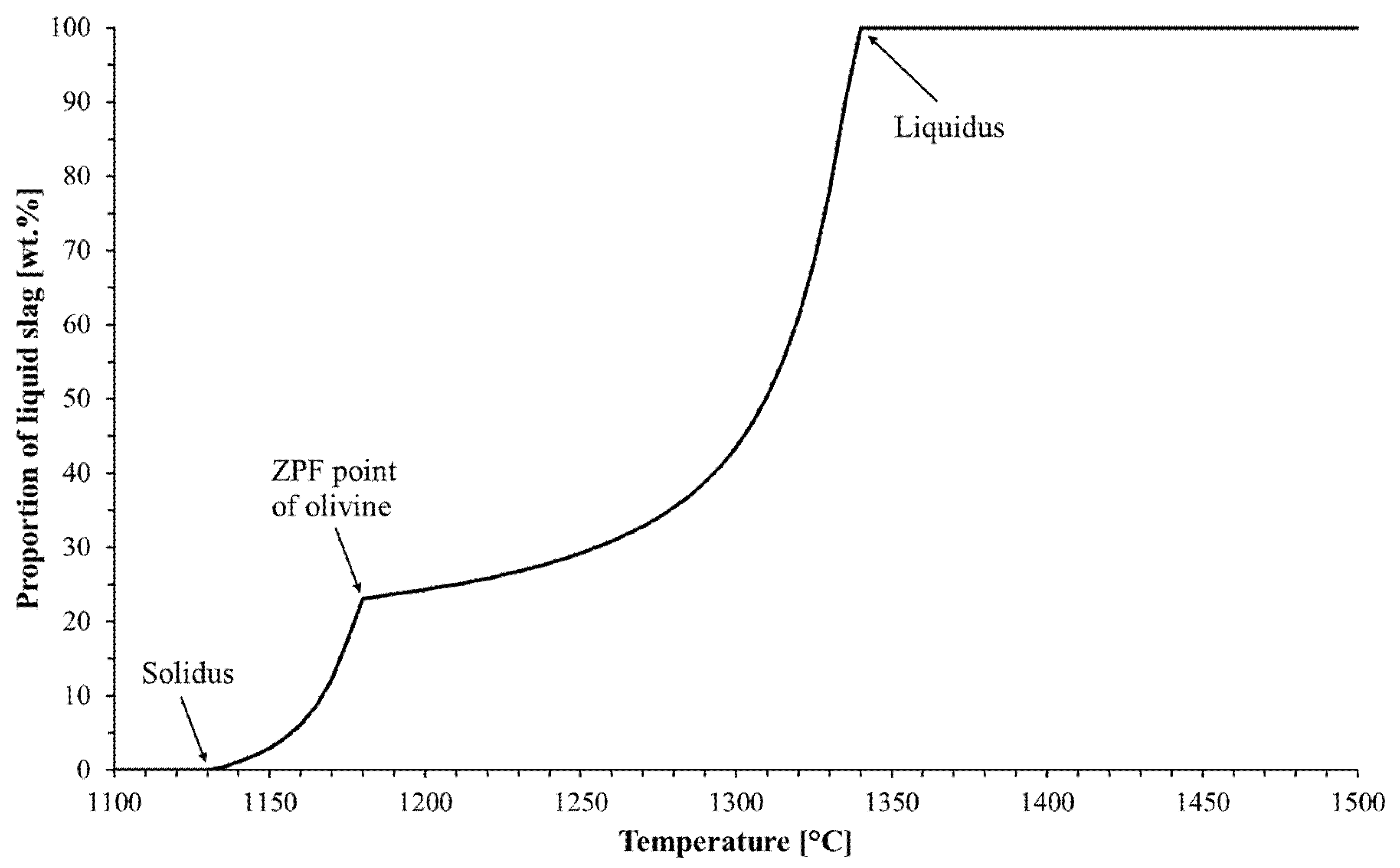
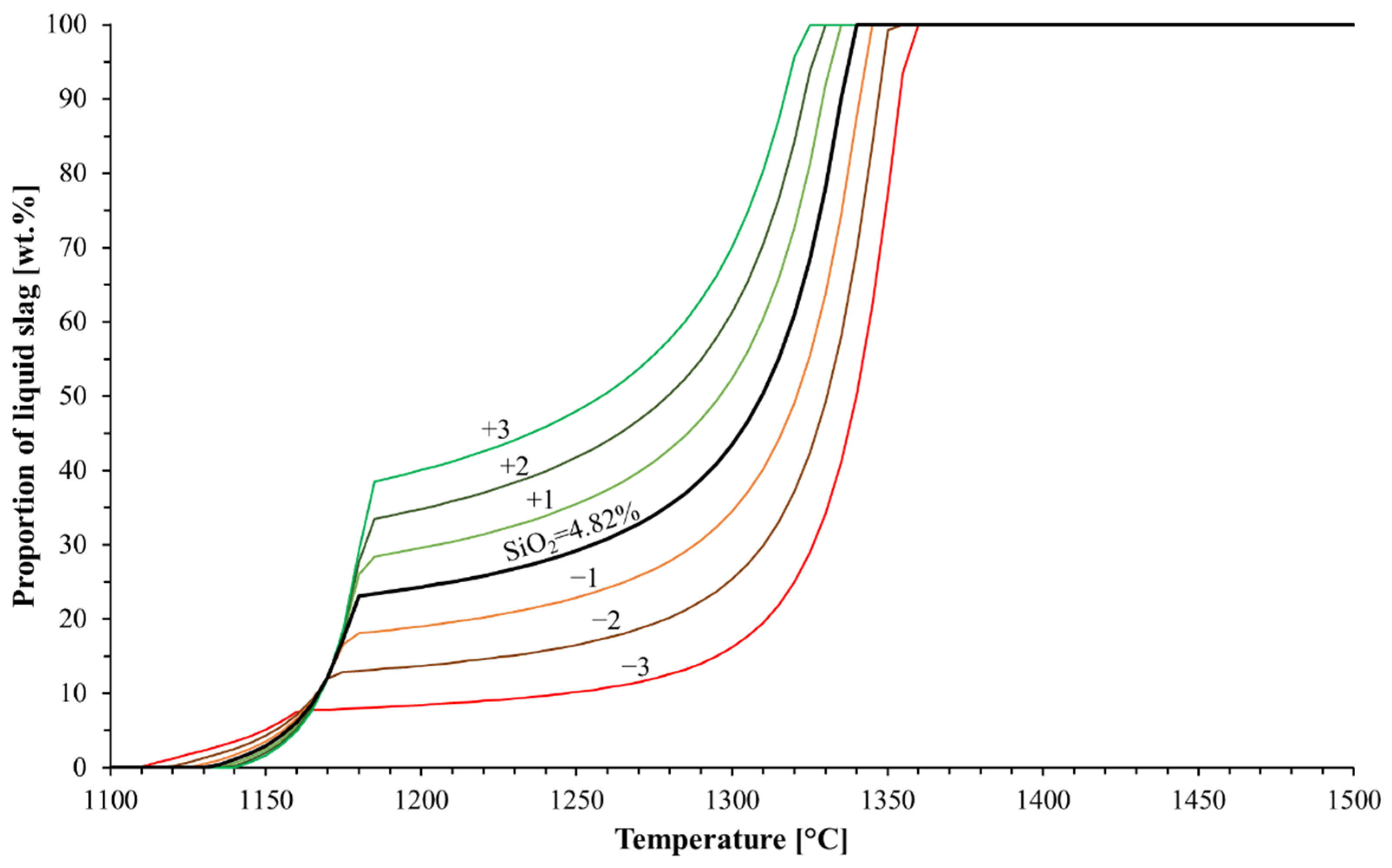
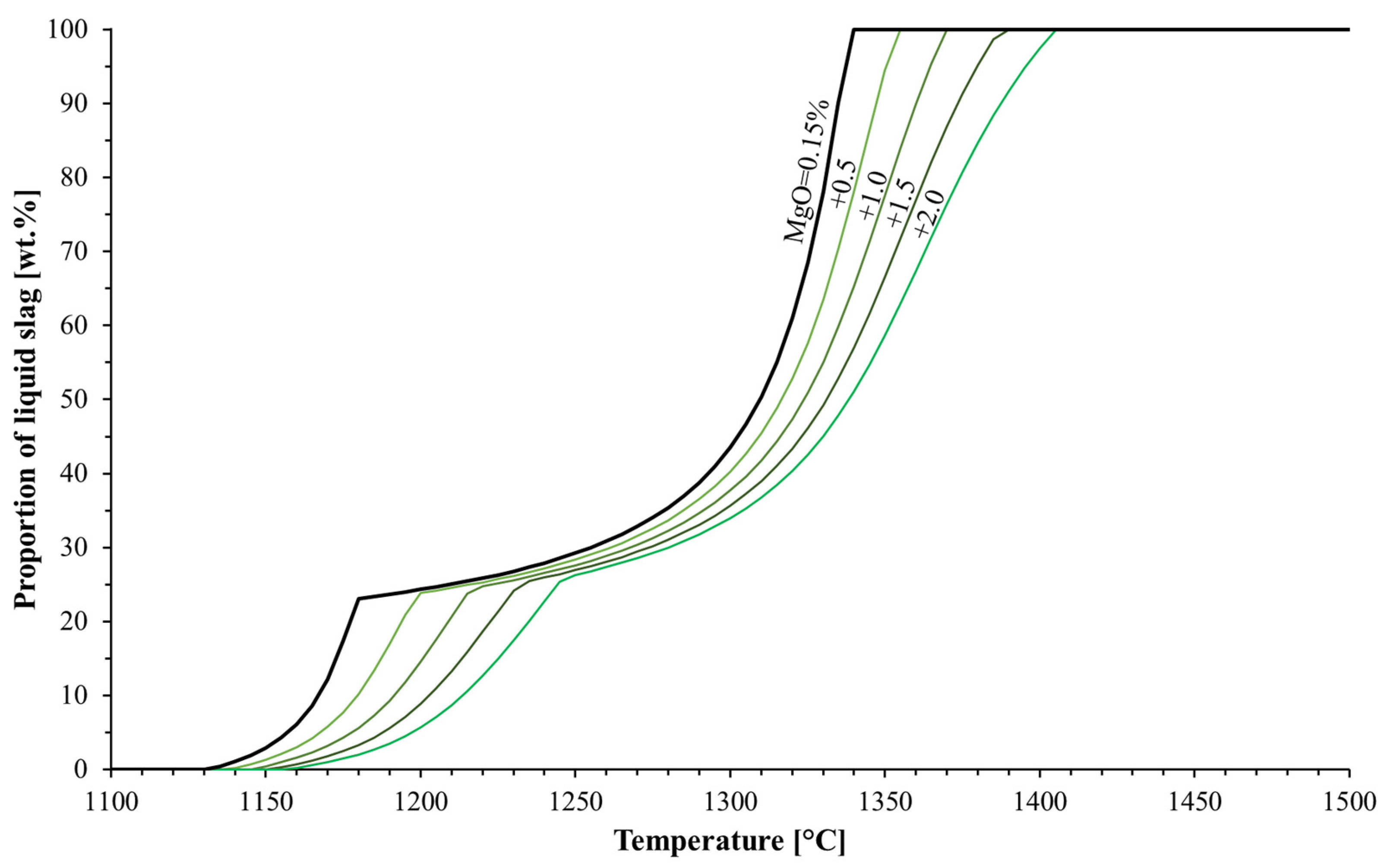
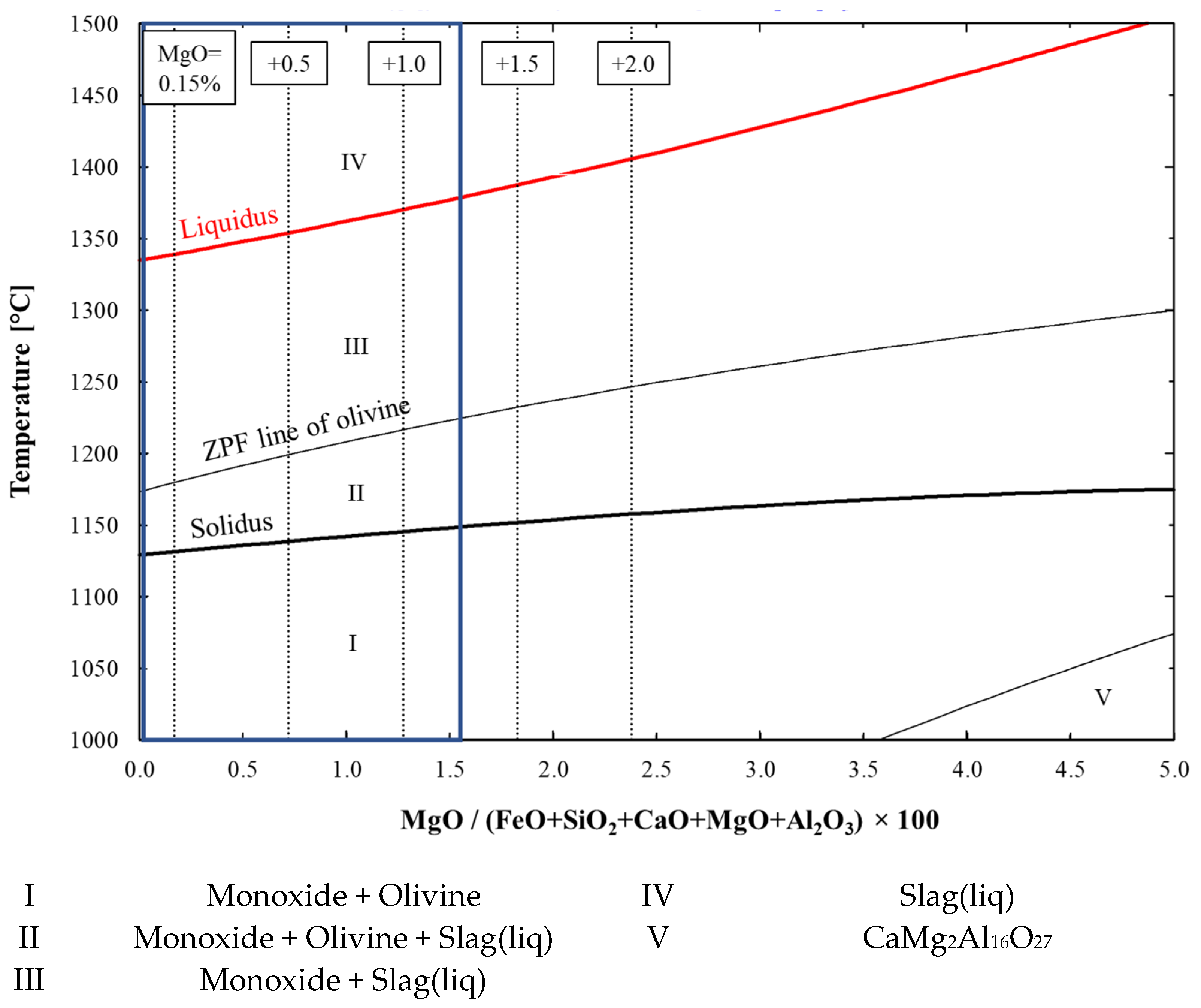
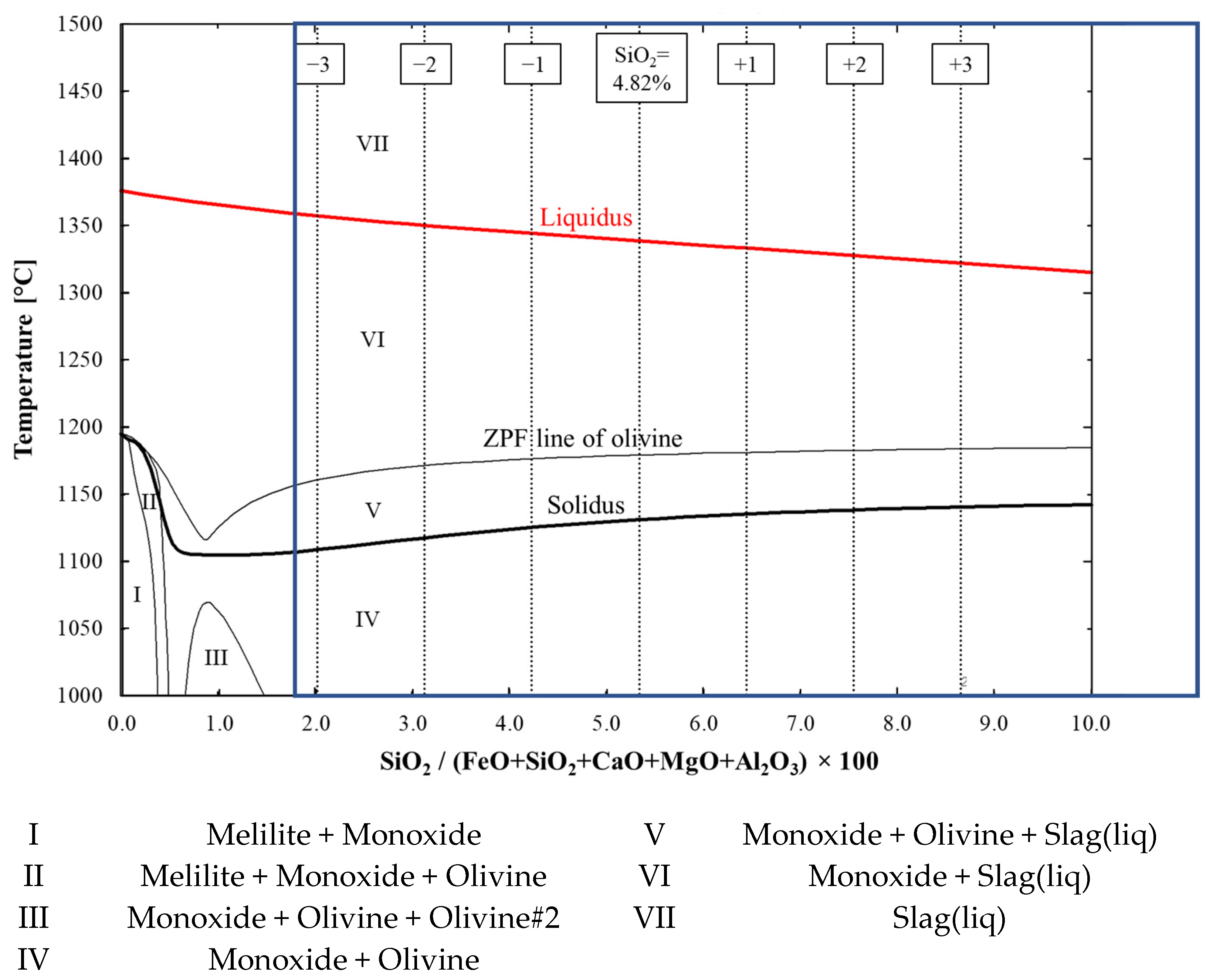
In blast furnaces it is desirable for the burden to hold a lumpy packed structure at as high a temperature as possible. The computational thermodynamic software FactSage (version 7.2, Thermfact/CRCT, Montreal, Canada and GTT-Technologies, Aachen, Germany) was used here to study the softening behavior of blast furnace pellets. The effects of the main slag-forming components (SiO2, MgO, CaO and Al2O3) on liquid formation were estimated by altering the chemical composition of a commercial acid pellet. The phase equilibria for five-component FeO-SiO2-CaO-MgO-Al2O3 systems with constant contents for three slag-forming components were computed case by case and the results were used to estimate the formation of liquid phases. The main findings of this work suggested several practical means for the postponement of liquid formation at higher temperatures: (1) reducing the SiO2 content; (2) increasing the MgO content; (3) reducing the Al2O3 content; and (4) choosing suitable CaO contents for the pellets. Additionally, the olivine phase (mainly the fayalitic type) and its dissolution into the slag determined the amount of the first-formed slag, which formed quickly after the onset of softening. This had an important effect on the acid pellets, in which the amount of the first-formed slag varied between 10 and 40 wt.%, depending on the pellets’ SiO2 content.
Keywords: iron ore; softening; ironmaking; thermodynamics; thermodynamic assessment; phase diagram; phase equilibria iron ore; softening; ironmaking; thermodynamics; thermodynamic assessment; phase diagram; phase equilibria