


Abstract
Sustainable machining is gaining attention in modern manufacturing due to its cleaner operations, improved resource utilization, and reduced environmental impact. Among sustainable machining methods, minimum quantity lubrication (MQL) successfully minimizes cutting fluid consumption while maintaining adequate cooling and lubrication. This review examines recent developments and future directions in MQL-assisted machining, with particular emphasis on machine learning (ML)-based modeling and optimization techniques. A systematic review comprising literature identification, screening, scientometric analysis, and critical evaluation was employed to analyze 120 papers published mainly between 2010 and 2026. The reviewed studies employed ML models such as artificial neural networks, support vector machines, random forests, gradient boosting, and hybrid optimization approaches to predict machinability parameters, including surface roughness, tool wear, cutting force, cutting temperature, energy consumption, and chip morphology. The findings indicate that ML-assisted MQL processes improve prediction accuracy, machining efficiency, process monitoring, and sustainability performance by reducing energy consumption, minimizing cutting fluid usage, and improving machining quality. The analysis also identifies key research gaps and prospects for intelligent and sustainable machining.
1. Introduction
Sustainable machining focuses on minimizing the environmental and societal impacts of machining processes while ensuring economic viability and maintaining product quality. It includes the adoption of energy-efficient, resource-optimized, and eco-friendly practices such as metal cutting, grinding, and turning [1,2]. In contrast, traditional machining methods have long been associated with high energy consumption, excessive use of metal cutting fluids, and substantial material waste. Considering that the manufacturing sector is one of the major consumers of global energy and natural resources, the transition toward sustainable machining practices has become necessary. This shift not only aims to reduce waste and emissions but also contributes to sustainable manufacturing for present and future generations. In response to increasing environmental regulations and societal demands, sustainable machining has emerged as a strategy to improve productivity, enhance process efficiency, and contribute to a better quality of life.
Several techniques have been developed to support sustainable machining by reducing environmental impact, improving process performance, and maintaining economic viability. Among these methods, dry machining has gained considerable attention because it eliminates the use of cutting fluids, thereby minimizing environmental risks and reducing manufacturing and cleaning costs [3,4,5,6]. It also reduces health risks to operators and helps prevent air and water pollution. Because of these benefits, dry machining has been widely explored in recent years. To comply with environmental regulations associated with the use and disposal of cutting fluids, researchers are exploring alternative lubrication approaches. One such method is minimum quantity lubrication (MQL), which uses a very small amount of lubricant applied directly at the tool-workpiece interface [7,8]. MQL provides a practical balance between dry and conventional machining by significantly reducing cutting fluid consumption and minimizing related environmental concerns. In sustainable machining, the use of eco-friendly lubricants, along with reduced lubricant consumption, plays an important role. Vegetable-based oils used in MQL systems are appropriate alternatives because they are biodegradable, non-toxic, renewable, and easily available [9]. These oils provide effective lubrication while minimizing the environmental concerns associated with conventional cutting fluids. Cryogenic machining is another sustainable approach that utilizes cryogenic fluids such as liquid nitrogen or carbon dioxide for cooling [10,11]. This method reduces cutting temperature, minimizes tool wear, improves surface quality, and enhances productivity. High-speed machining (HSM) is used to increase productivity and reduce machining costs by employing high cutting speeds and feed rates compared to conventional machining. It minimizes machining time, cutting forces, power consumption, and overall energy use. However, its application in machining lightweight and high-temperature alloys is often limited by machine tool capabilities and increased tool wear [12]. Advanced coatings can improve cutting tool performance by improving wear resistance, reducing friction, and increasing tool life. Cutting tools coated with TiN, TiAlN, TiCN, DLC, and NDC show superior performance compared to uncoated tools under dry machining conditions [13,14]. DLC-coated tools reduce cutting temperature, chip thickness, and surface roughness. Among these coatings, DLC/TiAlN shows excellent wear resistance and a long tool life. Another important approach is hybrid machining using solid lubricants in the form of nano- and microparticles [15,16]. These particles form a protective tribo-film at the tool-chip and tool-workpiece interfaces, reducing friction, wear, and cutting temperature, thereby increasing tool life and improving surface quality.
MQL has emerged as a favorable technique among the various machining approaches discussed above because of its ability to effectively balance machining performance, economic benefits, and environmental sustainability. Unlike conventional machining, which requires substantial volumes of cutting fluid and creates problems such as waste disposal issues, increased operating costs, and health risks to operators, MQL supplies a minimal quantity of lubricant directly to the tool-workpiece interface [17]. This significantly reduces cutting fluid usage while ensuring effective cooling and lubrication. As a result, MQL decreases the cutting temperature, reduces tool wear, improves surface finish, and lowers operating costs. MQL demonstrates excellent machining options compared to dry and conventional flood cooling methods, particularly in the machining of difficult-to-cut materials [18,19]. Advanced forms such as cryo-MQL and nano-MQL further reduce cutting forces and the cutting temperature while improving surface quality. Cryo-MQL techniques have also been shown in recent studies to extend tool life, reduce energy consumption, and increase productivity while providing environmental and economic benefits compared with standalone MQL systems [20]. Although the MQL system offers considerable benefits, the process remains highly complex due to the involvement of multiple factors, including fluid flow, heat transfer, tribology, chip formation, and material removal mechanisms [21,22]. Further, MQL performance depends on many parameters, including lubricant type, flow rate, air pressure, nozzle position, spray angle, cutting speed, feed rate, and depth of cut. These parameters often interact in a nonlinear manner, making the prediction of machinability characteristics difficult. In addition, localized aerosol lubrication and the short interaction time among the tool, workpiece, lubricant droplets, and chips further increase the complexity of the MQL process. To explore these relationships, researchers have used many methods such as design of experiments (DOE), Taguchi methods, analysis of variance (ANOVA), and response surface methodology (RSM) [23,24]. These methods are useful for parameter optimization and understanding process relationships, but they are often limited to specific machining conditions and are generally more suitable for linear and controlled processes. As a result, they cannot fully capture the complex nonlinear interactions among parameters involved in MQL processes.
The nonlinear behavior of MQL machining is strongly influenced by several coupled physical phenomena, including lubricant atomization, aerosol droplet penetration into the cutting zone, heat transfer at the tool-chip interface, tribological interactions, and chip formation dynamics. The effectiveness of MQL largely depends on the ability of fine lubricant droplets to penetrate the high-temperature cutting region and form a stable lubricating tribo-film, which directly affects friction, heat generation, tool wear, and surface quality. These highly coupled thermo-fluid and tribological interactions further increase the complexity of modeling and optimizing MQL-assisted machining processes.
Due to the above limitations, machine learning (ML) has emerged as an effective tool for modeling and optimizing MQL machining processes. Unlike statistical techniques, ML algorithms can learn complex and nonlinear relationships directly from experimental data and often provide more accurate predictions [25]. In MQL machining, ML has been successfully applied to predict machining performance in terms of surface roughness, tool wear, cutting forces, cutting temperature, and energy consumption. Several studies have shown that ML algorithms can accurately predict process performance, even for difficult-to-machine materials, with strong agreement observed between predicted and experimental results [26,27]. Furthermore, the integration of ML with genetic algorithms, the gray wolf optimizer, and teaching–learning-based optimization can further enhance machining performance and process efficiency [28,29,30,31]. These hybrid methods can improve surface finish, extend tool life, reduce energy consumption, and support sustainable manufacturing. Therefore, ML has significant potential to enable intelligent and high-performance MQL machining processes.
This review presents a comprehensive analysis of ML techniques in MQL machining by examining widely used ML models, machining input parameters, output responses, optimization strategies, hybrid intelligent algorithms, and future research directions. It also discusses the role of AI techniques in enhancing machining efficiency, process control, and sustainability. To the best of the authors’ knowledge, although many studies have applied ML techniques in MQL machining, a comprehensive comparative evaluation of ML models, input parameters, prediction targets, performance metrics, workpiece materials, optimization strategies, and sustainability indicators is still lacking. Most existing studies are restricted to specific materials, machining conditions, or individual ML models, thereby limiting the identification of suitable approaches for various MQL applications. Unlike previous review studies that mainly focused on general MQL techniques, the present review provides a comprehensive evaluation of ML models employed in MQL-assisted machining. Furthermore, the review identifies existing research gaps and highlights future research opportunities for the development of intelligent, adaptive, and sustainable MQL systems. The proposed approach aims to bridge theoretical advancements and practical industrial applications, thereby facilitating the effective and environmentally sustainable integration of ML techniques into MQL processes. In addition, the review seeks to support future innovations aimed at improving machining productivity while minimizing the environmental impact of manufacturing operations.
2. Overview of Existing Research
MQL has become an important technique in sustainable machining because it uses a minimal amount of lubricant while maintaining effective cooling and lubrication. Compared with conventional flood cooling, MQL reduces cutting fluid consumption, lowers the environmental impact, enhances tool life, and improves surface quality. However, analyzing MQL machining is complex because multiple process parameters simultaneously affect machining performance. Machining conditions such as cutting speed, feed rate, and depth of cut, along with MQL parameters such as lubricant flow rate, spray angle, and nozzle orientation, interact with machinability characteristics such as the cutting temperature, tool life, chip formation, and surface finish, thereby influencing machining performance and productivity. These interactions are often nonlinear, making process modeling and machining performance prediction difficult. Previous studies mainly used statistical methods such as design of experiments (DOE), the Taguchi method, analysis of variance (ANOVA), and response surface methodology (RSM) to analyze machining processes. These methods helped researchers understand how process parameters influence outputs such as surface finish, cutting force, temperature, and tool life. However, these methods are more suitable when the number of process parameters is limited and may not effectively handle the complex behavior of MQL processes involving multiple interacting parameters.
To improve the prediction accuracy of machining processes, researchers have explored artificial intelligence methods, particularly artificial neural networks (ANNs). Neural network models are able to predict machining performance more accurately than statistical models because they can learn nonlinear relationships from experimental data. In addition, advanced ML models such as support vector machines (SVMs), random forests (RFs), decision trees (DTs), gradient boosting (GB), and deep learning (DL) have been successfully applied. These models have been used to predict machining performance in terms of tool wear, cutting temperature, surface roughness, chip formation, and energy consumption. Studies have reported accurate predictions, particularly for difficult-to-machine materials such as titanium alloys and nickel-based superalloys. Researchers have also combined ML models with optimization techniques such as genetic algorithms (GAs), particle swarm optimization (PSO), and gray wolf optimization (GWO). These hybrid methods help identify optimal machining conditions to improve tool life, reduce energy consumption, and achieve better surface quality. Despite these improvements, several challenges still exist. Most studies use small experimental datasets and have not been extensively validated in industrial environments. In addition, many ML models function as black boxes, making their predictions difficult to interpret. Important factors such as ambient temperature, lubricant degradation, and machine condition are also often ignored. Therefore, further research is needed to develop reliable, explainable, and practical ML models for MQL machining.
3. Review Methodology
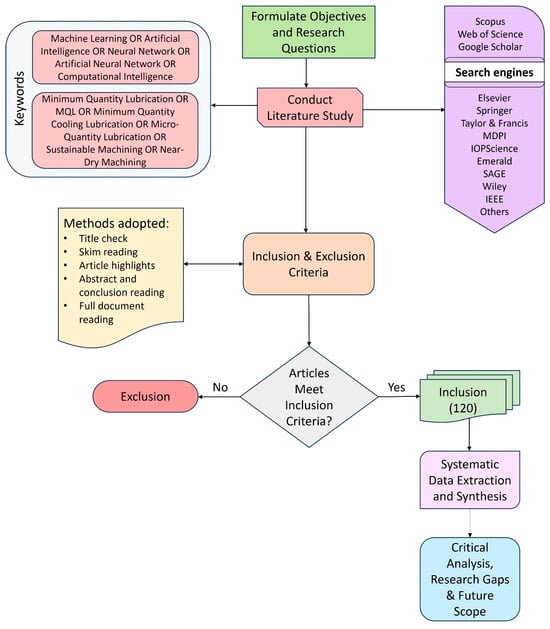
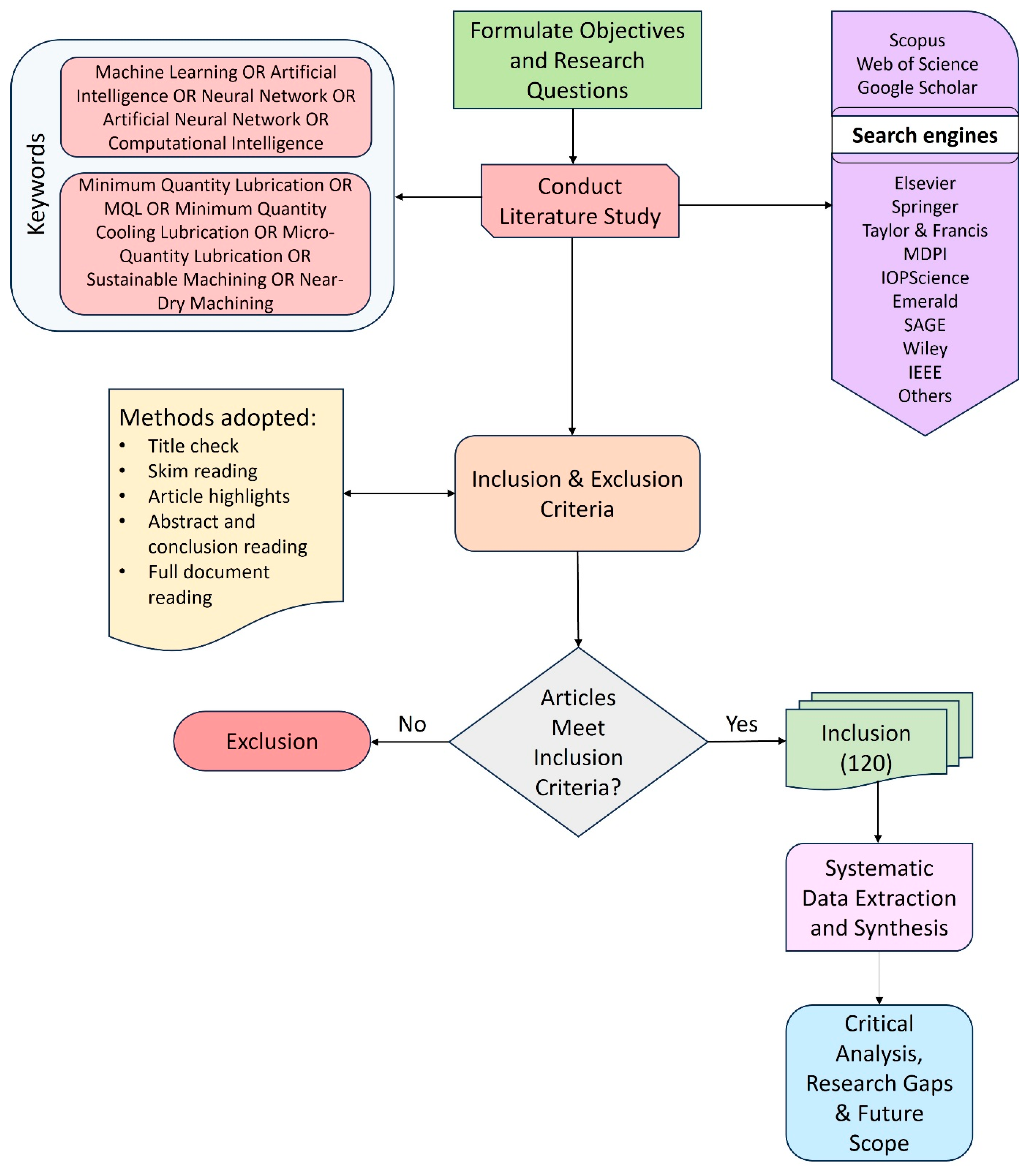
The main objective of this paper is to present a comprehensive review of different ML methods used in MQL machining. For this purpose, a structured review methodology consisting of six key steps was adopted to ensure the quality and depth of the study. These steps included defining the research questions and scope, collecting relevant literature, screening studies based on inclusion and exclusion criteria, performing bibliometric and scientometric analyses, extracting and organizing key information, and critically evaluating the findings to identify research gaps and future research directions. The framework of the proposed methodology and its sequential steps are illustrated in Figure 1.
Figure 1.
Proposed research methodology framework.
3.1. Formation of Research Questions
The first and most important step in conducting a review is the formulation of focused research questions, which help identify research gaps and provide future directions. Clear and well-structured questions also provide a coherent framework for readers, making the study easier to follow. In this review, eight research questions were developed to systematically examine the use of ML models in MQL machining. These questions aim to evaluate the role of ML techniques in enhancing MQL systems, assess the effectiveness of existing models, identify key challenges in modeling complex MQL processes, and explore pathways for improving sustainable and practical machining applications. The questions include the types of ML models used; the problems these models solve; the role of MQL in sustainable machining; the challenges in understanding complex machining processes; the methods used to evaluate ML performance; the ability of ML models to predict machining outputs such as tool wear, cutting force, surface finish, and temperature; consideration of sustainability factors such as energy efficiency and environmental impact; and the identification of research gaps and future research directions. These research questions provide a structured basis for systematically analyzing the literature and understanding current trends, limitations, and future directions in ML-based MQL machining.
3.2. Literature Sources
The present review draws upon a wide range of research databases, including Scopus, Web of Science, and others, covering literature published over more than a decade. To ensure comprehensive coverage, publications from leading publishers were included, such as Elsevier, Springer, MDPI, Taylor & Francis, Wiley, IEEE, Emerald, SAGE, Inderscience, AIP Publishing, IOPScience, and Cambridge University Press, as well as papers from the Indian Society for Education and Environment and SAE International. The literature search was conducted using a combination of topic-specific and methodology-specific keywords to identify relevant studies on ML applications in MQL machining. The detailed search parameters and keyword combinations used in the study are listed in Table 1. Furthermore, scientometric visualization and science mapping techniques were employed to analyze research trends; identify influential authors, key journals, and collaboration patterns; and assess recent advances in the field. This approach ensures that the review is both comprehensive and systematic, providing a robust foundation for evaluating the state-of-the-art in ML-based MQL machining.
Table 1.
Literature search strategy and selection criteria.
3.3. Criteria for Inclusion and Exclusion
Studies were included in this review if they focused on MQL-assisted machining and applied techniques such as ML, AI, or hybrid intelligent methods for prediction, monitoring, classification, or optimization. The studies reported important machining responses such as surface finish, cutting force, cutting temperature, tool life, chip formation, and energy consumption. Only studies published in English and indexed in leading databases such as Scopus, Web of Science, Google Scholar, and related publisher databases were considered. Journal articles, conference papers, technical papers, and relevant book chapters published between 2010 and 2026 were included.
Studies were excluded if they relied only on conventional statistical methods without incorporating ML or AI techniques. Review papers, editorials, theses, patents, unpublished manuscripts, and duplicate records were also excluded. In addition, research articles without sufficient methodological details, validation results, or clear information about the machining process and ML models were not considered. After the initial screening based on titles, abstracts, and keywords, the full texts of the remaining articles were examined to ensure their relevance, quality, and consistency with the objectives of the review.
3.4. Scientometric Analysis of the Literature
Scientometrics, introduced by Vasily Nalimov and Zinaida Mulchenko in the 1960s, refers to the quantitative evaluation of scientific research, research performance, and patterns of knowledge communication [32,33]. Over time, scientometric techniques have been widely used to identify important publications, examine collaboration networks, identify emerging research areas, and evaluate the development of a research field. In the present review, VOSviewer 1.6.20 was used as the primary tool for scientometric analysis to provide a deeper understanding of the research landscape in ML-based MQL systems.
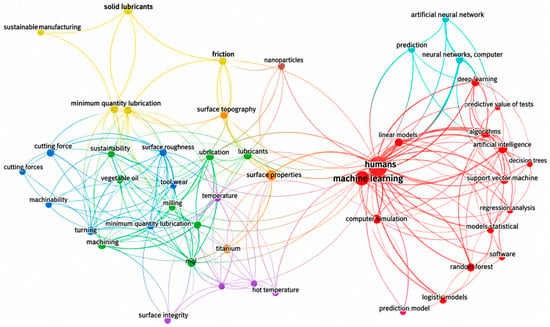
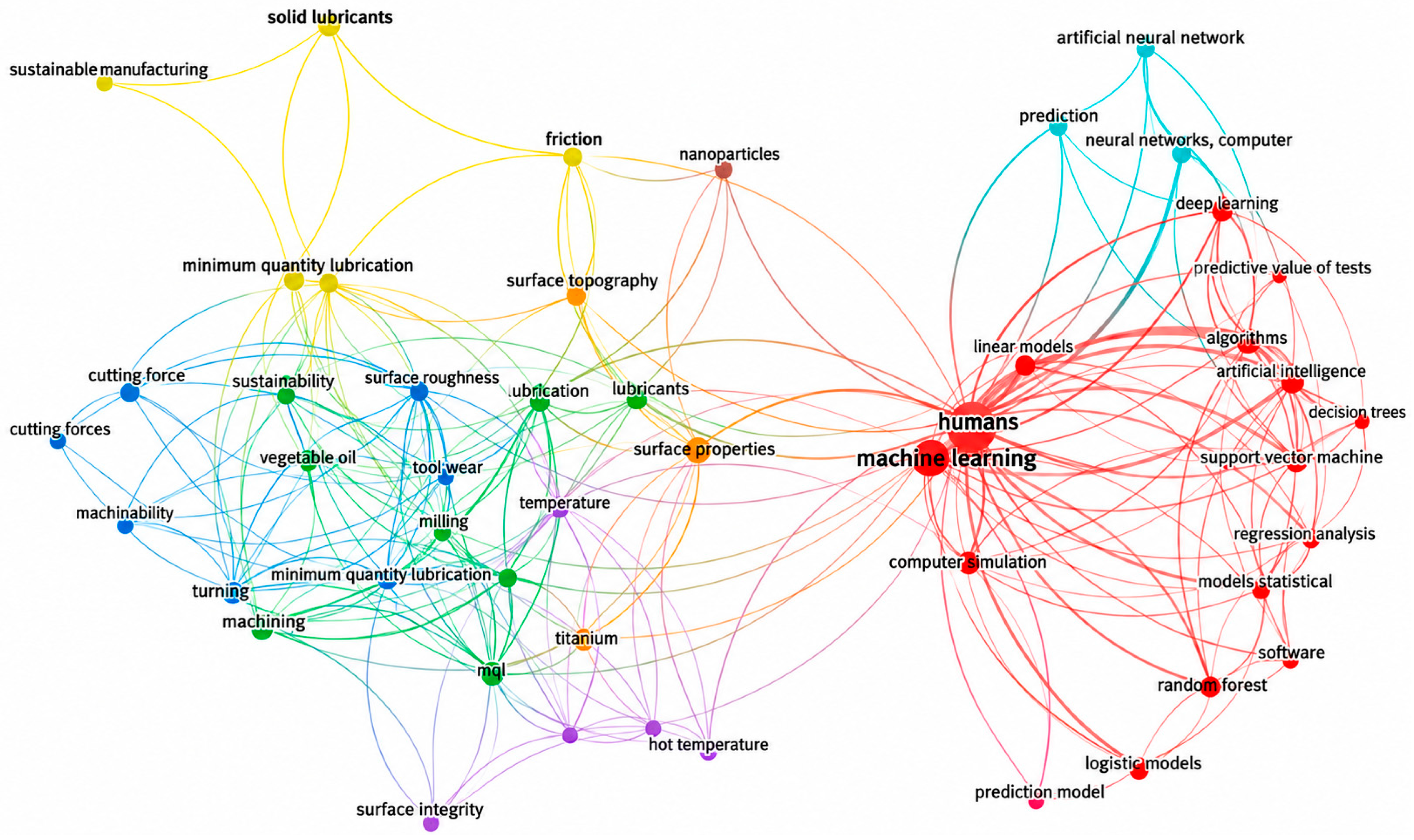
The scientometric analysis was performed in two stages. In the first stage, relational networks were developed using keyword co-occurrence analysis, document co-citation analysis, citation analysis, and co-authorship network analysis. These methods provide insights into the relationships among authors, publications, keywords, and research themes. In the second stage, visualization maps were generated to identify the conceptual, intellectual, and social structure of the selected literature [34]. Figure 2 illustrates the clustered keyword co-occurrence map representing the main research themes and their interrelationships in ML-assisted MQL machining. Frequently occurring keywords are grouped into different color-coded clusters based on their co-occurrence strength, where closely related terms appear closer to each other. The map highlights strong associations among keywords such as machine learning, artificial intelligence, MQL, sustainable machining, tool wear, surface roughness, cutting force, temperature, lubrication, nanoparticles, neural networks, support vector machines, deep learning, random forests, and optimization. These interconnections indicate the increasing research focus on integrating intelligent techniques with sustainable machining applications and demonstrate the strong relationship between ML algorithms and machinability characteristics in current research.
Figure 2.
Keyword co-occurrence network in ML-based MQL literature.
3.5. Data Analysis and Evaluation
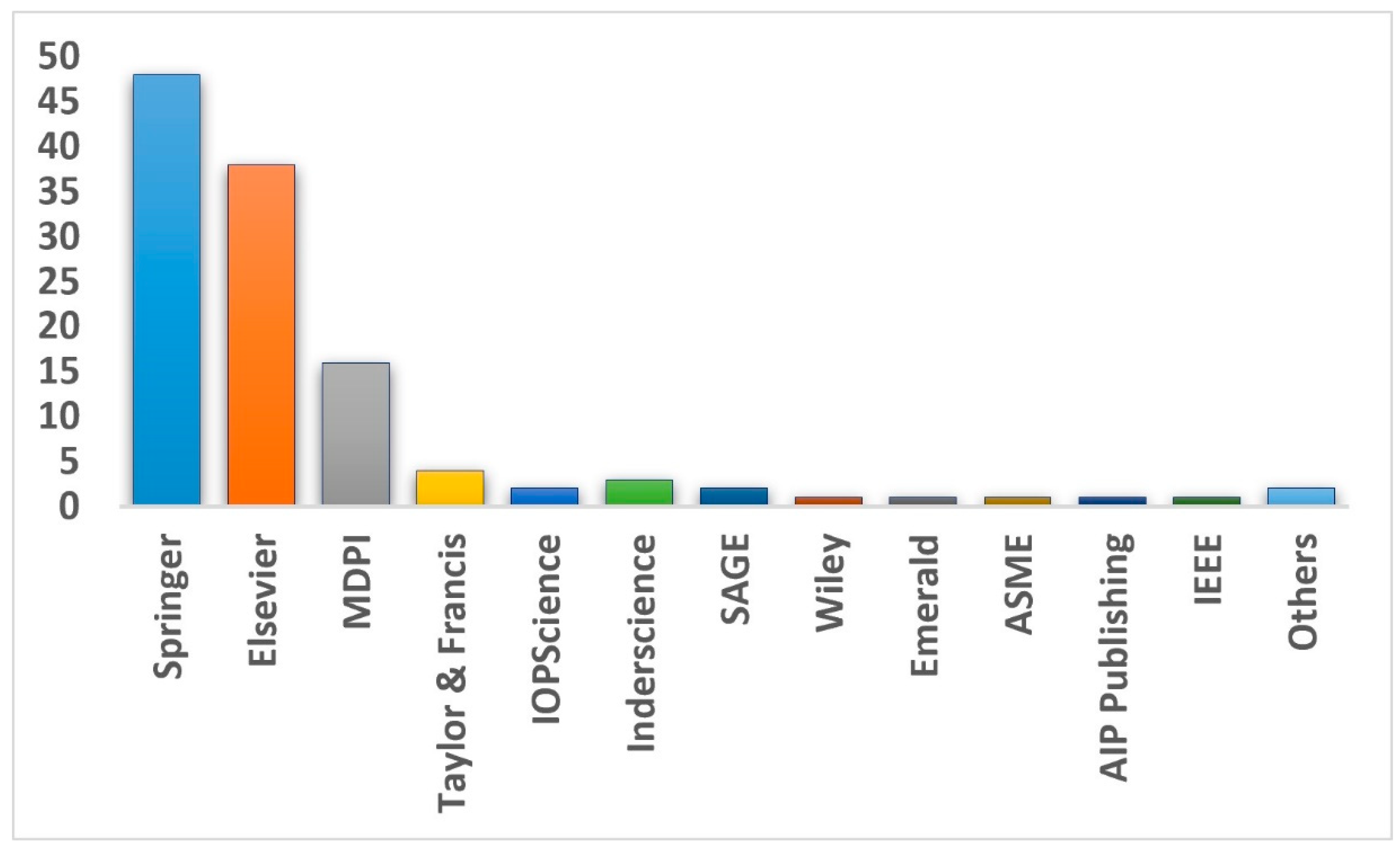
A total of 300 documents were initially identified during the literature review. After a comprehensive screening and exclusion process, 120 articles were selected. Figure 3 shows the distribution of articles among different publishers. Studies using ML models for the analysis of MQL machining parameters have been published across a wide range of journals and conference proceedings. As shown in Figure 3, most publications originate from three to four leading publishers, while the “Others” category includes publishers with a smaller number of publications.
Figure 3.
Article distribution among publishers.
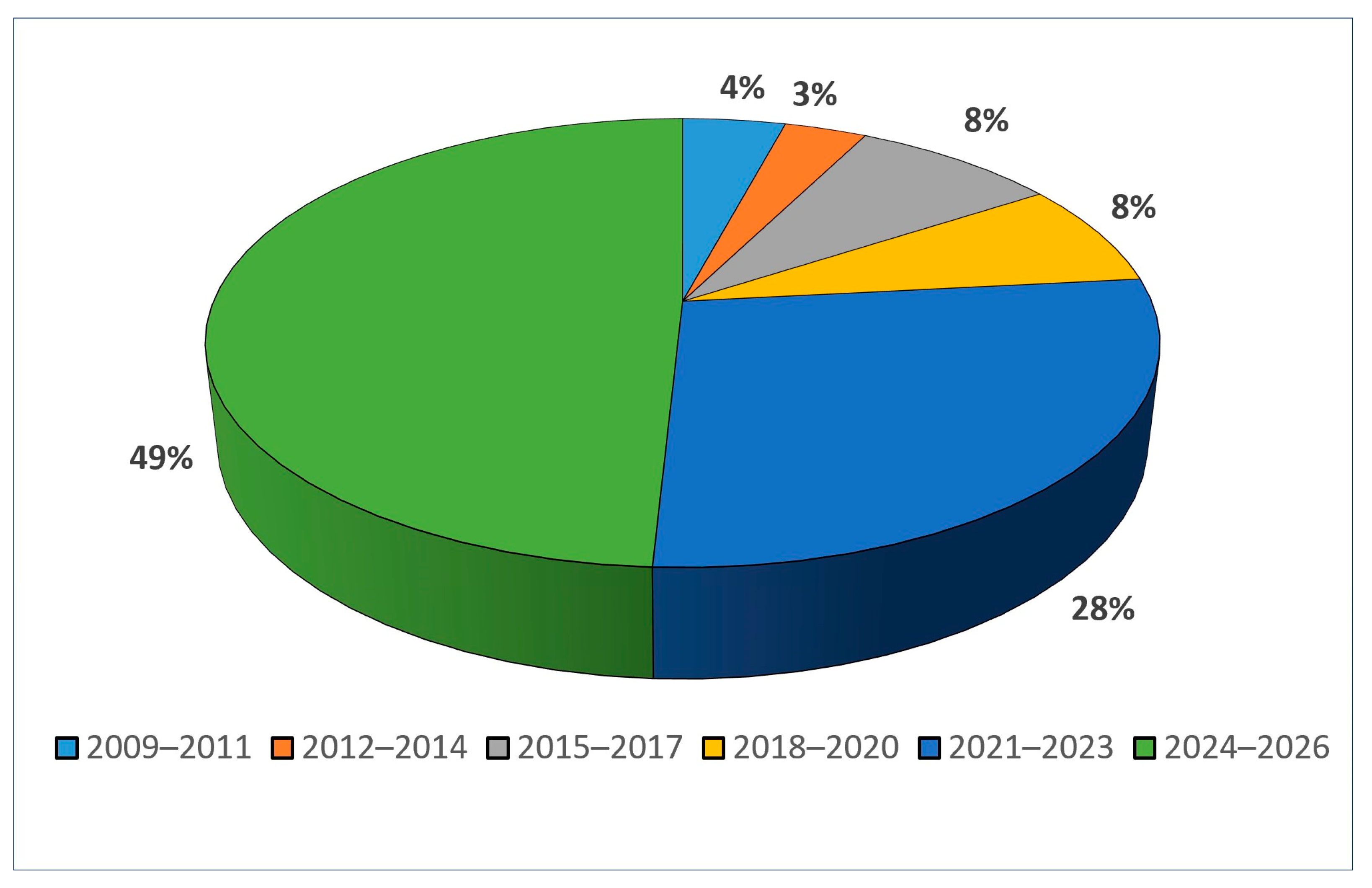
Figure 4 presents the distribution of articles along the publication timeline, highlighting the chronological progression of research in this domain. The timeline depicts the publication pattern from 2009 to 2026 in two-year intervals. Although research in this area began in the late 2000s, the application of ML techniques to capture the nonlinear relationships in MQL machining parameters gained noticeable momentum around 2012. As shown in Figure 4, the research scope has expanded significantly in recent years, with more than half of the selected articles published within the last three years. This increasing trend reflects the rapid adoption of ML techniques in complex engineering applications, driven by their self-adaptive and dynamic capabilities.
Figure 4.
Article distribution along the timeline.
4. Role of Machine Learning in Minimum Quantity Lubrication
AI and ML techniques are increasingly applied for parameter optimization in machining processes, including turning, milling, drilling, and grinding [35,36]. ML, a major branch of AI, has become an important tool for analyzing, modeling, and optimizing parameters in complex MQL machining processes [37,38]. MQL machining has gained substantial recognition as a sustainable cooling and lubrication approach over conventional flood cooling methods. In MQL machining, a very small amount of lubricant is delivered directly to the cutting interface as a fine aerosol mist, which helps reduce cutting fluid use while improving tool life, surface finish, and productivity. However, the performance of MQL systems is influenced by numerous process and operating factors, such as cutting speed, feed rate, depth of cut, lubricant flow rate, air pressure, nozzle position, droplet size, workpiece material, and cutting tool characteristics. Since these factors interact in a complex and nonlinear manner, traditional statistical techniques often fail to provide accurate predictions under different conditions. ML techniques can effectively model complex nonlinear interactions from experimental data, making them highly suitable for MQL process modeling and optimization.
ML algorithms used in MQL systems are generally classified into supervised, unsupervised, and reinforcement learning methods. Among these, supervised learning is the most commonly used because it can predict machining process outputs from known input variables. Algorithms such as ANN, SVM, RF, DT, GPR, and XGBoost have been widely applied in MQL studies. These models have been used to estimate important responses such as surface quality, cutting force, cutting temperature, tool life, material removal rate, energy consumption, and chip morphology [39,40,41]. In many cases, ML models have demonstrated superior prediction accuracy compared with conventional regression and response surface methods due to their better capability to capture nonlinear process behavior.
Different ML models utilized in MQL machining demonstrate distinct advantages and limitations depending on the machining application, dataset size, and prediction objectives. ANN and deep learning models are highly effective in capturing complex nonlinear relationships and process behavior; however, they generally require large datasets and high computational effort and may be prone to overfitting when trained with limited data. In particular, deep learning models require large training datasets and substantial computational resources, which may limit their practical applicability in machining studies with small experimental datasets. SVM and GPR models provide reliable prediction accuracy for smaller datasets, although their performance is influenced by parameter selection and computational complexity. Ensemble methods such as random forest, gradient boosting, XGBoost, and CatBoost offer robust prediction capability, improved feature importance analysis, reduced overfitting, and enhanced generalization performance. In many studies, k-fold cross-validation has been employed to improve model reliability and avoid biased prediction results; however, external validation using industrial-scale datasets remains limited in current MQL research. Furthermore, the explainability and interpretability of complex ML and deep learning models still require greater attention for practical industrial implementation. Hybrid intelligent approaches integrating ML models with optimization techniques such as GA, PSO, NSGA-II, GWO, and TLBO have demonstrated significant potential for the multi-objective optimization of machining performance, energy efficiency, and sustainability indicators. Therefore, the selection of an appropriate ML model depends on machining requirements, data availability, computational cost, model interpretability, and the desired prediction accuracy.
Another important role of ML in MQL machining is process optimization. ML models are frequently integrated with optimization methods such as GA, PSO, GWO, NSGA-II, and ANFIS. These hybrid methods help identify optimal machining conditions by simultaneously reducing surface roughness, cutting force, and energy consumption while improving tool life, productivity, and machining performance. Such optimization is especially important in lubrication methods such as nano-MQL, cryo-MQL, and hybrid lubrication systems. ML-based optimization, therefore, plays a significant role in improving both machining performance and sustainability. Although MQL is widely recognized as a sustainable machining method because of its lower cutting fluid consumption and improved machining efficiency, most reviewed studies focused on machinability indicators such as surface roughness, tool wear, cutting temperature, cutting force, chip morphology, and energy consumption. Only a few studies explored broader sustainability metrics such as carbon emissions, life-cycle assessment (LCA), and overall energy usage. According to the literature assessment, only a limited number of studies included carbon emission analysis, energy consumption, or LCA-based sustainability assessments, while most investigations focused on machining performance prediction and optimization. As a result, future ML-assisted MQL research should incorporate broader sustainability metrics along with machining performance indicators to provide a more comprehensive evaluation of sustainable manufacturing systems. Table 2 summarizes the ML models applied in MQL-assisted machining systems, along with their machining applications, predicted responses, sustainability-related outcomes, and predictive capabilities reported in the literature.
Table 2.
Machine learning models and their applications in MQL machining.
5. Conclusions
MQL is a highly complex machining process characterized by nonlinear relationships among machining parameters, lubrication conditions, and workpiece-tool material behavior. This inherent complexity makes AI and ML models particularly suitable for modeling nonlinear relationships, capturing process behavior, and establishing correlations between process inputs and outputs beyond the capability of conventional analytical and statistical methods. The main objective of this review was to establish the significance and effectiveness of ML algorithms in modeling, predicting, optimizing, and monitoring MQL-assisted machining processes, thereby promoting the development of sustainable machining research. A thorough and systematic review methodology was adopted, involving the organized collection, inclusion, exclusion, and critical evaluation of the literature. In total, 120 publications were analyzed to synthesize research findings and present them in a logical manner for readers, including those new to AI-based approaches for modeling MQL processes. The examined studies demonstrate that ML plays a crucial role in understanding MQL behavior under different operating conditions, enabling accurate prediction, optimization, and monitoring of machining performance. The review systematically examined key MQL properties and applications, as well as the research directions explored using various ML techniques such as ANN, SVM, RF, GPR, ensemble methods, DL models, and hybrid ML optimization frameworks.
The key findings of the review are summarized as follows:
- MQL is one of the important sustainable machining methods, as it significantly reduces cutting fluid consumption compared with traditional machining methods.
- The MQL process involves complex nonlinear relationships among machining parameters, lubrication conditions, and material behavior, which are difficult to model using traditional analytical and statistical methods.
- ML models have demonstrated superior capability in modeling and predicting important machining responses such as tool life, cutting force, temperature, surface roughness, energy consumption, and emissions under MQL conditions.
- Ensemble and hybrid ML models such as random forest, XGBoost, ANN-PSO, GPR, and ANFIS have demonstrated superior prediction capability compared with conventional statistical models in many reviewed studies, particularly for predicting tool wear, surface roughness, cutting temperature, cutting force, power consumption, and energy utilization under complex MQL conditions.
- Several reviewed studies reported prediction accuracies greater than 95% and significant reductions in cutting temperature, tool wear, surface roughness, energy consumption, and carbon emissions through ML-assisted optimization of nano-MQL, cryo-MQL, and hybrid lubrication systems.
- Hybrid optimization methods integrating ML models with evolutionary algorithms such as GA, PSO, NSGA-II, GWO, and TLBO demonstrate considerable potential for multi-objective optimization of machining performance, productivity, sustainability, and energy efficiency.
- ML-based tool condition monitoring and fault diagnosis using sensor data enables real-time monitoring and improves machining performance and reliability. Deep learning architectures and advanced AI frameworks have also demonstrated excellent capability in tool wear monitoring, surface classification, and intelligent process control.
- Despite the significant progress achieved, several limitations remain, including small experimental datasets, overfitting issues, computational complexity, limited industrial-scale validation, and reduced interpretability of complex deep learning models.
- Emerging reinforcement learning-based adaptive control approaches show strong potential for intelligent optimization of lubrication and machining parameters, improving performance while reducing lubricant utilization.
Overall, the reviewed literature confirms that the integration of ML techniques with MQL systems has strong potential to support the development of intelligent, adaptive, energy-efficient, and environmentally sustainable machining processes for future manufacturing applications.
6. Future Research Direction
Based on the reviewed literature, future MQL research should increasingly focus on computational intelligence models rather than conventional statistical approaches for modeling, prediction, and optimization. ANNs have shown a strong capability in handling nonlinear machining behavior, while SVM, RF, DT, fuzzy logic, and hybrid ML frameworks also demonstrate significant potential depending on the application. Future studies should develop robust and generalized ML frameworks applicable to different materials, nanofluids, and machining conditions, thereby reducing experimental effort and cost. Large-scale industrial datasets, standardized benchmarking methods, and external industrial validation are also required, as most existing studies are limited to laboratory-scale datasets. In addition, improving the explainability and interpretability of ML and deep learning models is essential for reliable industrial implementation.
Research should further focus on real-time closed-loop intelligent MQL systems, since most current studies are limited to offline prediction and optimization. The integration of edge computing, digital twins, IIoT, cloud manufacturing, reinforcement learning, and smart sensor networks can support adaptive control, predictive analytics, and Industry 4.0-based smart machining. Advanced deep learning models such as CNN-LSTM hybrids and transformer-based architectures can further improve tool condition monitoring, fault diagnosis, predictive maintenance, and multi-sensor data fusion. Future systems should also include occupational health and air-quality monitoring, including aerosol and PM10 diffusion prediction during machining operations.
From a sustainability perspective, future research should extend beyond conventional machinability indicators and include life-cycle assessment, energy consumption, carbon emissions, cost analysis, and process stability. Further research is also needed on multi-objective optimization under hybrid lubrication environments and for difficult-to-machine materials. Emerging areas such as bio-based nanofluids, cryo-MQL, vortex-assisted MQL, nano-MQL, and hybrid lubrication systems also require deeper investigation. Collectively, these developments can transform MQL from a lubrication technique into an intelligent, adaptive, and sustainable manufacturing approach.
Author Contributions
Conceptualization, U.M.R.P. and M.M.; methodology, U.M.R.P. and M.M.; validation, U.M.R.P. and N.G.S.R.; formal analysis, U.M.R.P. and N.G.S.R.; investigation, U.M.R.P., M.M. and S.H.; writing—original draft preparation, U.M.R.P.and M.M.; writing—review and editing, U.M.R.P. and N.G.S.R.; visualization, N.G.S.R. and S.H. All authors have read and agreed to the published version of the manuscript.
Funding
This research received no external funding.
Data Availability Statement
No new data were created or analyzed in this study. Data sharing is not applicable to this article.
Conflicts of Interest
The authors declare no conflict of interest.
References
- Shokrani, A.; Arrazola, P.J.; Biermann, D.; Mativenga, P.; Jawahir, I.S. Sustainable machining: Recent technological advances. CIRP Ann. 2024, 73, 483–508. [Google Scholar] [CrossRef] [Scilit]
- Wang, L.; Cai, W.; He, Y.; Peng, T.; Xie, J.; Hu, L.; Li, L. Equipment–process–strategy integration for sustainable machining: A review. Front. Mech. Eng. 2023, 18, 36. [Google Scholar] [CrossRef] [Scilit]
- Weinert, K.; Inasaki, I.; Sutherland, J.W.; Wakabayashi, T. Dry machining and minimum quantity lubrication. CIRP Ann. 2004, 53, 511–537. [Google Scholar] [CrossRef] [Scilit]
- Goindi, G.S.; Sarkar, P. Dry machining: A step towards sustainable machining-Challenges and future directions. J. Clean. Prod. 2017, 165, 1557–1571. [Google Scholar] [CrossRef] [Scilit]
- Elsheikh, A.; Ali, A.B.M.; Saba, A.; Faqeha, H.; Alsaati, A.A.; Maghfuri, A.M.; Abd-Elaziem, W.; El Ashmawy, A.A.; Ma, N. A review on sustainable machining: Technological advancements, health and safety considerations, and related environmental impacts. Results Eng. 2024, 24, 103042. [Google Scholar] [CrossRef] [Scilit]
- Bordin, A.; Sartori, S.; Bruschi, S.; Ghiotti, A. Experimental investigation on the feasibility of dry and cryogenic machining as sustainable strategies when turning Ti6Al4V produced by additive manufacturing. J. Clean. Prod. 2017, 142, 4142–4151. [Google Scholar] [CrossRef] [Scilit]
- Dhar, N.R.; Islam, M.W.; Islam, S.; Mithu, M.A.H. The Influence of Minimum Quantity of Lubrication (MQL) on Cutting Temperature, Chip and Dimensional Accuracy in Turning AISI-1040 Steel. J. Mater. Process. Technol. 2006, 171, 93–99. [Google Scholar] [CrossRef] [Scilit]
- Khan, A.M.; Rahat, M.R.; Ahmed, U.; Jamil, M.; Ali, M.A.; Zhao, G.; Abellán-Nebot, J.V. The Recent Advancements in Minimum Quantity Lubrication (MQL) and Its Application in Mechanical Machining—A State-of-the-Art Review. Lubricants 2025, 13, 401. [Google Scholar] [CrossRef] [Scilit]
- Sankaranarayanan, R.; Hynes, N.R.J.; Senthil Kumar, J.; Krolczyk, G.M. A Comprehensive Review on Research Developments of Vegetable-Oil-Based Cutting Fluids for Sustainable Machining Challenges. J. Manuf. Process. 2021, 67, 286–313. [Google Scholar] [CrossRef] [Scilit]
- Sharma, A.; Diwakar, V.; Kishore, K.; Chaudhari, A.; Awale, A.S.; Yusufzai, M.Z.K.; Vashista, M. Cryogenic Cooling in Sustainable Machining: A Review on Advancements and Applications for Difficult-to-Machine Materials. J. Tribol. 2026, 148, 040803. [Google Scholar] [CrossRef] [Scilit]
- Jawahir, I.S.; Attia, H.; Biermann, D.; Duflou, J.; Klocke, F.; Meyer, D.; Newman, S.T.; Pusavec, F.; Putz, M.; Rech, J.; et al. Cryogenic manufacturing processes. CIRP Ann. 2016, 65, 713–736. [Google Scholar] [CrossRef] [Scilit]
- Wertheim, R. High Speed Cutting. In CIRP Encyclopedia of Production Engineering; Laperrière, L., Reinhart, G., Eds.; Springer: Berlin/Heidelberg, Germany, 2014. [Google Scholar] [CrossRef] [Scilit]
- Zheng, G.; Zhao, G.; Cheng, X.; Xu, R.; Zhao, J.; Zhang, H. Frictional and Wear Performance of TiAlN/TiN Coated Tool against High-Strength Steel. Ceram. Int. 2018, 44, 6878–6885. [Google Scholar] [CrossRef] [Scilit]
- Ibrahim, M.S.; Sulaiman, M.H.; Samin, R.; Yaakob, Y.; Kamis, S.L.; Ridzuan, M.J.M.; Pauzi, A.A.; Sukindar, N.A.; Bienk, K. Tool Wear of DLC Coating as Top-Layered to CrN, TiAlSiN, TiAlN Coatings in Machining of Steel and Aluminum Alloys. Wear 2024, 558–559, 205574. [Google Scholar] [CrossRef] [Scilit]
- Paturi, U.M.R.; Maddu, Y.R.; Maruri, R.R.; Narala, S.K.R. Measurement and Analysis of Surface Roughness in WS2 Solid Lubricant Assisted Minimum Quantity Lubrication (MQL) Turning of Inconel 718. Procedia CIRP 2016, 40, 138–143. [Google Scholar] [CrossRef] [Scilit]
- Meng, Y.; Xu, J.; Jin, Z.; Prakash, B.; Hu, Y. A Review of Recent Advances in Tribology. Friction 2020, 8, 221–300. [Google Scholar] [CrossRef] [Scilit]
- Sen, B.; Mia, M.; Krolczyk, G.M.; Mandal, U.K.; Mondal, S.P. Eco-Friendly Cutting Fluids in Minimum Quantity Lubrication Assisted Machining: A Review on the Perception of Sustainable Manufacturing. Int. J. Precis. Eng. Manuf.-Green Technol. 2021, 8, 249–280. [Google Scholar] [CrossRef] [Scilit]
- Wang, Y.; Liu, C. State-of-the-Art on Minimum Quantity Lubrication in Green Machining. J. Clean. Prod. 2023, 429, 139613. [Google Scholar] [CrossRef] [Scilit]
- Kumar, A.; Sharma, A.K.; Katiyar, J.K. State-of-the-Art in Sustainable Machining of Different Materials Using Nano Minimum Quality Lubrication (NMQL). Lubricants 2023, 11, 64. [Google Scholar] [CrossRef] [Scilit]
- Villarrazo, N.; Caneda, S.; Pereira, O.; Rodríguez, A.; López de Lacalle, L.N. The Effects of Lubricooling Ecosustainable Techniques on Tool Wear in Carbon Steel Milling. Materials 2023, 16, 2936. [Google Scholar] [CrossRef] [Scilit] [PubMed]
- Sharma, V.S.; Singh, G.; Sørby, K. A Review on Minimum Quantity Lubrication for Machining Processes. Mater. Manuf. Process. 2015, 30, 935–953. [Google Scholar] [CrossRef] [Scilit]
- Duc, T.M.; Long, T.T.; Tuan, N.M. Performance Investigation of MQL Parameters Using Nano Cutting Fluids in Hard Milling. Fluids 2021, 6, 248. [Google Scholar] [CrossRef] [Scilit]
- Sarıkaya, M.; Güllü, A. Taguchi Design and Response Surface Methodology Based Analysis of Machining Parameters in CNC Turning under MQL. J. Clean. Prod. 2014, 65, 604–616. [Google Scholar] [CrossRef] [Scilit]
- Gariani, S.; El-Sayed, M.A.; Shyha, I. Optimisation of Cutting Fluid Concentration and Operating Parameters Based on RSM for Turning Ti–6Al–4V. Int. J. Adv. Manuf. Technol. 2021, 117, 539–553. [Google Scholar] [CrossRef] [Scilit]
- Kishore, K.; Chauhan, S.R.; Sinha, M.K. Application of Machine Learning Techniques in Environmentally Benign Surface Grinding of Inconel 625. Tribol. Int. 2023, 188, 108812. [Google Scholar] [CrossRef] [Scilit]
- Hamıd, M.W.H.; Özlü, B.; Ulaş, H.B.; Demir, H. Prediction of Cutting Parameters and Reduction of Output Parameters Using Machine Learning in Milling of Inconel 718 Alloy. Sci. Rep. 2025, 15, 33309. [Google Scholar] [CrossRef] [Scilit] [PubMed]
- Segreto, T.; D’Addona, D.; Teti, R. Tool Wear Estimation in Turning of Inconel 718 Based on Wavelet Sensor Signal Analysis and Machine Learning Paradigms. Prod. Eng. Res. Devel. 2020, 14, 693–705. [Google Scholar] [CrossRef] [Scilit]
- Lakshmi, V.V.K.; Subbaiah, K.V.; Vikram, K.A.; Shabana; Suresh, K.; Prasad, R.D.V. Eco-Friendly Machining of Ti-6Al-4V Alloy: Optimization Using a Hybrid Algorithm (Grey Wolf Algorithm and VIKOR Algorithm). J. Inst. Eng. India Ser. C 2022, 103, 1111–1124. [Google Scholar] [CrossRef] [Scilit]
- Zhang, X.; Yu, T.; Dai, Y.; Qu, S.; Zhao, J. Energy Consumption Considering Tool Wear and Optimization of Cutting Parameters in Micro Milling Process. Int. J. Mech. Sci. 2020, 178, 105628. [Google Scholar] [CrossRef] [Scilit]
- Pedrammehr, S.; Hejazian, M.; Chalak Qazani, M.R.; Parvaz, H.; Pakzad, S.; Ettefagh, M.M.; Suhail, A.H. Machine Learning-Based Modelling and Meta-Heuristic-Based Optimization of Specific Tool Wear and Surface Roughness in the Milling Process. Axioms 2022, 11, 430. [Google Scholar] [CrossRef] [Scilit]
- Abualhaj, M.M.; Venkatesh, B.; Parmar, K.D.; Mishra, A.; Arunkumar, D.T.; Singh, R.; Mahapatro, A.; Bupesh Raja, V.K.; Bhowmik, A.; Tamene, Y. Data-Driven Optimization of Machining Parameters for Hastelloy C276 Using PSO and TLBO Frameworks. Sci. Rep. 2026, 16, 5280. [Google Scholar] [CrossRef] [Scilit] [PubMed]
- Rousseau, R. Naukometriya, Nalimov and Mul’chenko. COLLNET J. Scientometr. Inf. Manag. 2021, 15, 213–224. [Google Scholar] [CrossRef] [Scilit]
- van Eck, N.J.; Waltman, L. Software survey: VOSviewer, a computer program for bibliometric mapping. Scientometrics 2010, 84, 523–538. [Google Scholar] [CrossRef] [Scilit] [PubMed]
- Donthu, N.; Kumar, S.; Mukherjee, D.; Pandey, N.; Lim, W.M. How to conduct a bibliometric analysis: An overview and guidelines. J. Bus. Res. 2021, 133, 285–296. [Google Scholar] [CrossRef] [Scilit]
- Ullrich, K.; von Elling, M.; Gutzeit, K.; Dix, M.; Weigold, M.; Aurich, J.C.; Wertheim, R.; Jawahir, I.S.; Ghadbeigi, H. AI-Based Optimisation of Total Machining Performance: A Review. CIRP J. Manuf. Sci. Technol. 2024, 50, 40–54. [Google Scholar] [CrossRef] [Scilit]
- Ko, J.H.; Yin, C. A Review of Artificial Intelligence Application for Machining Surface Quality Prediction: From Key Factors to Model Development. J. Intell. Manuf. 2026, 37, 775–798. [Google Scholar] [CrossRef] [Scilit]
- Özdüzgün, H.S.; Er, A.O. Optimizing Cutting Fluid Use via Machine Learning in Smart Manufacturing for Enhanced Sustainability. Lubricants 2025, 13, 519. [Google Scholar] [CrossRef] [Scilit]
- Asiltürk, İ.; Çunkaş, M. Modeling and Prediction of Surface Roughness in Turning Operations Using Artificial Neural Network and Multiple Regression Method. Expert Syst. Appl. 2011, 38, 5826–5832. [Google Scholar] [CrossRef] [Scilit]
- Danish, M.; Sarıkaya, M. Sustainable Machining of Nimonic 80A: Machine Learning-Driven Optimization of Energy Consumption under Environmentally Conscious Cooling Strategies. Arab. J. Sci. Eng. 2026. [Google Scholar] [CrossRef] [Scilit]
- Arumugam, B.; Sundaresan, T.K.; Ali, S. Hybrid ML-Based Cutting Temperature Prediction in Hard Milling Under Sustainable Lubrication. Lubricants 2025, 13, 498. [Google Scholar] [CrossRef] [Scilit]
- Almomani, O.; Venkatesh, B.; Chaudhary, S.P.; Mishra, A.; Sujai, S.; Juneja, S.; Pradhan, P.; Venkatesan, S.P.; Bhowmik, A.; Tamene, Y. Intelligent Tool Wear Monitoring Using XGBoost, SVR, and DNN Models in NMQL Environment. Sci. Rep. 2026, 16, 10030. [Google Scholar] [CrossRef] [Scilit] [PubMed]
- Kuntoğlu, M.; Demirpolat, H.; Binali, R.; Korkmaz, M.E.; Makhesana, M.; Kaya, K. Sustainable Lubrication Strategies in Eco-friendly Machining of AISI 4140 Steel: Performance and Environmental Impact Analysis Using Machine Learning. J. Mater. Eng. Perform. 2026, 35, 4962–4978. [Google Scholar] [CrossRef] [Scilit]
- Chohan, J.S.; Yadav, R.; Nagori, K.K.; Sharma, S.; Gupta, M.K.; Mia, M. Intelligent Hybrid Optimization of Sustainable Machining Parameters for Inconel 718 Using ANN Driven Evolutionary and Swarm Algorithms. Sci. Rep. 2026, 16, 52699. [Google Scholar] [CrossRef] [Scilit] [PubMed]
- Yoshizumi, T.; Murakami, H.; Katsuki, A. End Mill Tool Wear Prediction Method Using a Small Amount of Labeled Data and One-Class Support Vector Machine. Int. J. Adv. Manuf. Technol. 2026, 144, 857–874. [Google Scholar] [CrossRef] [Scilit]
- Abderazek, H.; Hamdi, A.; Yapan, Y.F.; Mia, M.; Gupta, M.K.; Korkmaz, M.E. Sustainable High-Precision Hard Turning Under Various Near-Dry Machining Conditions Using Vegetable Oil-Based Nanofluids: Neural Network Modeling and Metaheuristic Optimization. Process Integr. Optim. Sustain. 2026. [Google Scholar] [CrossRef] [Scilit]
- Manikanta, J.E.; Khalad, A.; Santosh, S.; Kumar, P.R.; Rao, C.S.P.; Reddy, M.V. Employing Artificial Neural Networks and Grey-Based Taguchi Approach for Optimization of Sustainable Turning of SS304 Alloy. Int. J. Interact. Des. Manuf. 2026, 20, 219–232. [Google Scholar] [CrossRef] [Scilit]
- França, P.H.P.; Fernandes, G.H.N.; Barbosa, L.M.Q.; da Silva, M.B.; Martins, P.S.; Machado, Á.R.; Hatem, A. Artificial Intelligence for Tool Wear Prediction Under Multiple Cooling Strategies in the Turning of Stainless Steel—AISI 304. Lubricants 2026, 14, 127. [Google Scholar] [CrossRef] [Scilit]
- Dehghanpour Abyaneh, M.; Sadegh Javadi, M.; Narimani, P.; Kiani, M.; Azizi, A.; Gupta, M.K. Enhancing Grinding Efficiency in Aluminum Alloys: An Ensemble-Stacking and Single Machine Learning Framework for Predicting Surface Roughness with SHAP-Based Interpretability. Int. J. Adv. Manuf. Technol. 2026. [Google Scholar] [CrossRef] [Scilit]
- Ganesh, M.; Arunkumar, N.; Siva, M.; Leo, G.L. Experimental investigation on sustainable machining of monel using vegetable oils as cutting fluids and machine learning-based surface roughness prediction. Eng. Res. Express 2024, 6, 045505. [Google Scholar] [CrossRef] [Scilit]
- Dubey, V.; Sharma, A.K.; Pimenov, D.Y. Prediction of Surface Roughness Using Machine Learning Approach in MQL Turning of AISI 304 Steel by Varying Nanoparticle Size in the Cutting Fluid. Lubricants 2022, 10, 81. [Google Scholar] [CrossRef] [Scilit]
- Sen, B.; Mia, M.; Mandal, U.K.; Mondal, S.P. GEP- and ANN-based tool wear monitoring: A virtually sensing predictive platform for MQL-assisted milling of Inconel 690. Int. J. Adv. Manuf. Technol. 2019, 105, 395–410. [Google Scholar] [CrossRef] [Scilit]
- Manikanta, J.E.; Abdullah, M.; Ambhore, N.; Kotteda, T.K. Analysis of Machining Performance in Turning with Trihybrid Nanofluids and Minimum Quantity Lubrication. Sci. Rep. 2025, 15, 12194. [Google Scholar] [CrossRef] [Scilit] [PubMed]
- Korkmaz, M.E.; Gupta, M.K.; Singh, G.; Kuntoğlu, M.; Patange, A.; Demirsoz, R.; Ross, N.S.; Prasad, B. Machine Learning Models for Online Detection of Wear and Friction Behaviour of Biomedical Graded Stainless Steel 316L under Lubricating Conditions. Int. J. Adv. Manuf. Technol. 2023, 128, 2671–2688. [Google Scholar] [CrossRef] [Scilit]
- Binali, R. Experimental and machine learning comparison for measurement of the machinability of nickel-based alloy in pursuit of sustainability. Measurement 2024, 236, 115142. [Google Scholar] [CrossRef] [Scilit]
- Sarma, D.; Ozah, R.; Chandrasekaran, M.; Sahoo, A.K.; Kumar, R.; Pattanayak, S. Material-specific machining optimization of Ti6Al4V alloy under MQL: A sustainability-centric approach. Next Mater. 2025, 8, 100586. [Google Scholar] [CrossRef] [Scilit]
- Ross, N.S.; Mashinini, P.M.; Mishra, P.; Ananth, M.B.J.; Mustafa, S.M.; Gupta, M.K.; Korkmaz, M.E.; Nag, A. Enhancing surface quality and tool life in SLM-machined components with dual-MQL approach. J. Mater. Res. Technol. 2024, 31, 1837–1852. [Google Scholar] [CrossRef] [Scilit]
- Paschoalinoto, N.W.; Batalha, G.F.; Bordinassi, E.C.; Ferrer, J.A.G.; Filho, A.F.d.L.; Ribeiro, G.d.L.X.; Cardoso, C. MQL Strategies Applied in Ti-6Al-4V Alloy Milling—Comparative Analysis between Experimental Design and Artificial Neural Networks. Materials 2020, 13, 3828. [Google Scholar] [CrossRef] [Scilit] [PubMed]
- Farooq, M.U.; Kumar, R.; Khan, A.; Singh, J.; Anwar, S.; Verma, A.; Haber, R. Sustainable machining of Inconel 718 using minimum quantity lubrication: Artificial intelligence-based process modelling. Heliyon 2024, 10, e34836. [Google Scholar] [CrossRef] [Scilit] [PubMed]
- Elsheikh, A.H.; Abd Elaziz, M.; Das, S.R.; Muthuramalingam, T.; Lu, S. A new optimized predictive model based on political optimizer for eco-friendly MQL-turning of AISI 4340 alloy with nano-lubricants. J. Manuf. Process. 2021, 67, 562–578. [Google Scholar] [CrossRef] [Scilit]
- Danish, M.; Gupta, M.K.; Irfan, S.A.; Ghazali, S.M.; Rathore, M.F.; Krolczyk, G.M.; Alsaady, A. Machine learning models for prediction and classification of tool wear in sustainable milling of additively manufactured 316 stainless steel. Results Eng. 2024, 22, 102015. [Google Scholar] [CrossRef] [Scilit]
- Cica, D.; Sredanovic, B.; Tesic, S.; Kramar, D. Predictive Modeling of Turning Operations under Different Cooling/Lubricating Conditions for Sustainable Manufacturing with Machine Learning Techniques. Appl. Comput. Inform. 2024, 20, 162–180. [Google Scholar] [CrossRef] [Scilit]
- Karim, M.R.; Tariq, J.B.; Morshed, S.M.; Shawon, S.H.; Hasan, A.; Prakash, C.; Singh, S.; Kumar, R.; Nirsanametla, Y.; Pruncu, C.I. Environmental, Economical and Technological Analysis of MQL-Assisted Machining of Al-Mg-Zr Alloy Using PCD Tool. Sustainability 2021, 13, 7321. [Google Scholar] [CrossRef] [Scilit]
- Prashanth, G.S.; Sekar, P.; Bontha, S.; Balan, A.S.S. Grinding Parameters Prediction under Different Cooling Environments Using Machine Learning Techniques. Mater. Manuf. Process. 2023, 38, 235–244. [Google Scholar] [CrossRef] [Scilit]
- Al Bukhari, S.; Pervaiz, S. Advanced Machine Learning Approaches for Predicting Machining Performance in Orthogonal Cutting Process. Lubricants 2025, 13, 83. [Google Scholar] [CrossRef] [Scilit]
- Yurtkuran, H.; Korkmaz, M.E.; Gupta, M.K.; Yılmaz, H.; Günay, M.; Vashishtha, G. Prediction of Power Consumption and Its Signals in Sustainable Turning of PH13-8Mo Steel with Different Machine Learning Models. Int. J. Adv. Manuf. Technol. 2024, 133, 2171–2188. [Google Scholar] [CrossRef] [Scilit]
- Mia, M.; Razi, M.H.; Ahmad, I.; Mostafa, R.; Rahman, S.M.; Ahmed, D.H.; Dey, P.R.; Dhar, N.R. Effect of Time-Controlled MQL Pulsing on Surface Roughness in Hard Turning by Statistical Analysis and Artificial Neural Network. Int. J. Adv. Manuf. Technol. 2017, 91, 3211–3223. [Google Scholar] [CrossRef] [Scilit]
- Jang, D.Y.; Jung, J.; Seok, J. Modeling and Parameter Optimization for Cutting Energy Reduction in MQL Milling Process. Int. J. Precis. Eng. Manuf.-Green Technol. 2016, 3, 5–12. [Google Scholar] [CrossRef] [Scilit]
- Nouioua, M.; Yallese, M.A.; Khettabi, R.; Belhadi, S.; Bouhalais, M.L.; Girardin, F. Investigation of the Performance of the MQL, Dry, and Wet Turning by Response Surface Methodology (RSM) and Artificial Neural Network (ANN). Int. J. Adv. Manuf. Technol. 2017, 93, 2485–2504. [Google Scholar] [CrossRef] [Scilit]
- Ross, N.S.; Rai, R.; Ananth, M.B.J.; Srinivasan, D.; Ganesh, M.; Gupta, M.K.; Korkmaz, M.E.; Królczyk, G.M. Carbon Emissions and Overall Sustainability Assessment in Eco-Friendly Machining of Monel-400 Alloy. Sustain. Mater. Technol. 2023, 37, e00675. [Google Scholar] [CrossRef] [Scilit]
- Bustillo, A.; Reis, R.; Machado, A.R.; Pimenov, D.Y. Improving the Accuracy of Machine-Learning Models with Data from Machine Test Repetitions. J. Intell. Manuf. 2022, 33, 203–221. [Google Scholar] [CrossRef] [Scilit]
- Bustillo, A.; Correa, M. Using Artificial Intelligence to Predict Surface Roughness in Deep Drilling of Steel Components. J. Intell. Manuf. 2012, 23, 1893–1902. [Google Scholar] [CrossRef] [Scilit]
- Hu, M.; Ming, W.; An, Q.; Chen, M. Tool Wear Monitoring in Milling of Titanium Alloy Ti–6Al–4V under MQL Conditions Based on a New Tool Wear Categorization Method. Int. J. Adv. Manuf. Technol. 2019, 104, 4117–4128. [Google Scholar] [CrossRef] [Scilit]
- Singh, G.; Appadurai, J.P.; Perumal, V.; Kavita, K.; Kumar, C.A.; Prasad, D.V.S.S.S.V.; Pazhani, A.J.; Umamaheswari, K. Machine Learning-Based Modelling and Predictive Maintenance of Turning Operation under Cooling/Lubrication for Manufacturing Systems. Adv. Mater. Sci. Eng. 2022, 2022, 9289320. [Google Scholar] [CrossRef] [Scilit]
- Korkmaz, M.E.; Gupta, M.K.; Yilmaz, H.; Ross, N.S.; Boy, M.; Sivalingam, V.K.; Chan, C.K.; Raman, J. Towards Specific Cutting Energy Analysis in the Machining of Inconel 601 Alloy under Sustainable Cooling Conditions. J. Mater. Res. Technol. 2023, 27, 4074–4087. [Google Scholar] [CrossRef] [Scilit]
- Nguyen, V.-C.; Tien, D.H.; Pham, V.-H.; Nguyen, T.-V.; Nguyen, T.-D. Toward Sustainable Machining of Hardened SKD11: Machine Learning-Based Evaluation and Optimization of Surface Roughness, Tool Wear, and CO2 Emissions. Results Eng. 2025, 26, 105249. [Google Scholar] [CrossRef] [Scilit]
- Nguyen, T.-C.; Tien, D.H.; Nguyen, B.-N.; Hsu, Q.-C. Multi-Response Optimization of Milling Process of Hardened S50C Steel Using SVM-GA Based Method. Metals 2023, 13, 925. [Google Scholar] [CrossRef] [Scilit]
- Nguyen, V.C.; Hoang Tien, D.; Pham, V.H.; Nguyen, T.D. Investigation and Optimization of Surface Roughness and Material Removal Rate in Face Finishing Milling of Ti-6Al-4V under MQL Condition. In The AUN/SEED-Net Joint Regional Conference in Transportation, Energy, and Mechanical Manufacturing Engineering (RCTEMME 2021); Le, A.T., Pham, V.S., Le, M.Q., Pham, H.L., Eds.; Lecture Notes in Mechanical Engineering; Springer: Singapore, 2022. [Google Scholar] [CrossRef] [Scilit]
- Dehghanpour Abyaneh, M.; Narimani, P.; Javadi, M.S.; Golabchi, M.; Attarsharghi, S.; Hadad, M. Predicting Surface Roughness and Grinding Forces in UNS S34700 Steel Grinding: A Machine Learning and Genetic Algorithm Approach to Coolant Effects. Physchem 2024, 4, 495–523. [Google Scholar] [CrossRef] [Scilit]
- Gupta, M.K.; Korkmaz, M.E.; Yılmaz, H.; Şirin, S.; Ross, N.S.; Jamil, M.; Królczyk, G.M.; Sharma, V.S. Real-Time Monitoring and Measurement of Energy Characteristics in Sustainable Machining of Titanium Alloys. Measurement 2024, 224, 113937. [Google Scholar] [CrossRef] [Scilit]
- Sen, B.; Saha, S.; Kumar, R.; Jhala, R.; Patil, N.; Mahapatro, A.; Bhowmik, A.; Santhosh, A.J. AI-Driven Wear Monitoring of PVD TiAlN Coated Carbide Insert in Sustainable Machining of Hastelloy C276: An Industry 4.0 Perspective. Results Eng. 2025, 25, 104457. [Google Scholar] [CrossRef] [Scilit]
- Aslan, A. Machine Learning Models and Machinability Analysis for Comparison of Various Cooling and Lubricating Mediums during Milling of Hardox 400 Steel. Tribol. Int. 2024, 198, 109860. [Google Scholar] [CrossRef] [Scilit]
- Korkmaz, M.E.; Gupta, M.K.; Kuntoğlu, M.; Patange, A.D.; Ross, N.S.; Yılmaz, H.; Chauhan, S.; Vashishtha, G. Prediction and Classification of Tool Wear and Its State in Sustainable Machining of Bohler Steel with Different Machine Learning Models. Measurement 2023, 223, 113825. [Google Scholar] [CrossRef] [Scilit]
- Ross, N.S.; Sheeba, P.T.; Shibi, C.S.; Gupta, M.K.; Korkmaz, M.E.; Sharma, V.S. A Novel Approach of Tool Condition Monitoring in Sustainable Machining of Ni Alloy with Transfer Learning Models. J. Intell. Manuf. 2024, 35, 757–775. [Google Scholar] [CrossRef] [Scilit]
- Ross, N.S.; Shibi, C.S.; Mustafa, S.M.; Gupta, M.K.; Korkmaz, M.E.; Sharma, V.S. Measuring Surface Characteristics in Sustainable Machining of Titanium Alloys Using Deep Learning-Based Image Processing. IEEE Sens. J. 2023, 23, 13629–13639. [Google Scholar] [CrossRef] [Scilit]
- Srinivas, V.V.; Ramanujam, R.; Rajyalakshmi, G. Application of MQL for Developing Sustainable EDM and Process Parameter Optimisation Using ANN and GRA Method. Int. J. Bus. Excell. 2020, 22, 521–537. [Google Scholar] [CrossRef] [Scilit]
- Hegab, H.; Salem, A.; Rahnamayan, S.; Kishawy, H.A. Analysis, Modeling, and Multi-Objective Optimization of Machining Inconel 718 with Nano-Additives Based Minimum Quantity Coolant. Appl. Soft Comput. 2021, 108, 107416. [Google Scholar] [CrossRef] [Scilit]
- Sen, B.; Bhowmik, A.; Prakash, C.; Ammarullah, M.I. Prediction of Specific Cutting Energy Consumption in Eco-Benign Lubricating Environment for Biomedical Industry Applications: Exploring Efficacy of GEP, ANN, and RSM Models. AIP Adv. 2024, 14, 085216. [Google Scholar] [CrossRef] [Scilit]
- Hadad, M.; Attarsharghi, S.; Dehghanpour Abyaneh, M.; Narimani, P.; Makarian, J.; Saberi, A.; Alinaghizadeh, A. Exploring New Parameters to Advance Surface Roughness Prediction in Grinding Processes for the Enhancement of Automated Machining. J. Manuf. Mater. Process. 2024, 8, 41. [Google Scholar] [CrossRef] [Scilit]
- Paturi, U.M.R.; Cheruku, S.; Pasunuri, V.P.K.; Salike, S. Modeling of Tool Wear in Machining of AISI 52100 Steel Using Artificial Neural Networks. Mater. Today Proc. 2021, 38, 2358–2365. [Google Scholar] [CrossRef] [Scilit]
- Gaitonde, V.N.; Karnik, S.R.; Davim, J.P. Study on the Influence of MQL and Cutting Conditions on Machinability of Brass Using Artificial Neural Network. Int. J. Mater. Prod. Technol. 2010, 37, 155–172. [Google Scholar] [CrossRef] [Scilit]
- Gupta, M.K.; Ross, N.S.; Shibi, C.S.; Chudy, R.; Nieslony, P.; Korkmaz, M.E.; Krolczyk, J.B.; Krolczyk, G.M. Deep Learning-Driven Models for Analyzing Numerical Control Power Signals and Surface Characteristics in Sustainable Milling of Additively Manufactured Al-Si Alloys. Int. J. Precis. Eng. Manuf.-Green Technol. 2026, 13, 373–392. [Google Scholar] [CrossRef] [Scilit]
- Namlu, R.H.; Turhan, C.; Sadigh, B.L.; Kılıç, S.E. Cutting Force Prediction in Ultrasonic-Assisted Milling of Ti–6Al–4V with Different Machining Conditions Using Artificial Neural Network. Artif. Intell. Eng. Des. Anal. Manuf. 2021, 35, 37–48. [Google Scholar] [CrossRef] [Scilit]
- Balasuadhakar, A.; Kumaran, S.T.; Ali, S. Sustainable Cooling Strategies in End Milling of AISI H11 Steel Based on ANFIS Model. Machines 2025, 13, 237. [Google Scholar] [CrossRef] [Scilit]
- Balasuadhakar, A.; Kumaran, S.T.; Uthayakumar, M. Machine Learning Prediction of Surface Roughness in Sustainable Machining of AISI H11 Tool Steel. Smart Mater. Manuf. 2025, 3, 100075. [Google Scholar] [CrossRef] [Scilit]
- Balasuadhakar, A.; Kumaran, S.T.; Uthayakumar, M. Machine Learning Models for Enhanced Cutting Temperature Prediction in Hard Milling Process. Int. J. Interact. Des. Manuf. 2024, 18, 3935–3950. [Google Scholar] [CrossRef] [Scilit]
- Garg, A.; Sarma, S.; Panda, B.N.; Zhang, J.; Gao, L. Study of Effect of Nanofluid Concentration on Response Characteristics of Machining Process for Cleaner Production. J. Clean. Prod. 2016, 135, 476–489. [Google Scholar] [CrossRef] [Scilit]
- Vardhanapu, M.; Chaganti, P.K.; Tarigopula, P. Characterization and Machine Learning-Based Parameter Estimation in MQL Machining of a Superalloy for Developed Green Nano-Metalworking Fluids. J. Braz. Soc. Mech. Sci. Eng. 2023, 45, 154. [Google Scholar] [CrossRef] [Scilit]
- Sinha, M.K.; Kishore, K.; Archana Kumar, R. Hybrid Approach for Modelling and Optimizing MQL Grinding of Inconel 625 with Machine Learning and MCDM Techniques. Int. J. Interact. Des. Manuf. 2024, 18, 4697–4713. [Google Scholar] [CrossRef] [Scilit]
- Hakmi, T.; Abderazek, H.; Yapan, Y.F.; Hamdi, A.; Uysal, A. Enhancing Sustainability in CNC Turning of POM-C Polymer Using MQL with Vegetable-Based Lubricant: Machine Learning and Metaheuristic Optimization Approaches. Int. J. Adv. Manuf. Technol. 2025, 139, 1661–1684. [Google Scholar] [CrossRef] [Scilit]
- Airao, J.; Gupta, A.; Nirala, C.K.; Hsue, A.W.J. Bayesian Neural Networks Modeling for Tool Wear Prediction in Milling Al 6061 T6 under MQL Conditions. Int. J. Adv. Manuf. Technol. 2024, 135, 2777–2788. [Google Scholar] [CrossRef] [Scilit]
- Manohar, G.R.; Rajaraman, R. Tribological impact and surface roughness prediction in nano-MQL assisted AA2024 machining. Proc. Inst. Mech. Eng. B J. Eng. Manuf. 2025, 240, 235–244. [Google Scholar] [CrossRef] [Scilit]
- Sarma, D.; Ozah, R.; Borah, J.; Chandrasekaran, M.; Sahoo, A.K. Intelligent machine learning strategies for minimizing machining power in minimum quantity lubrication machining of Ti6Al4V alloy. J. Mater. Eng. Perform. 2025, 34, 24415–24428. [Google Scholar] [CrossRef] [Scilit]
- Harnany, D.; Effendi, M.K.; Kis Agustin, H.C.; Soepangkat, B.O.P.; Sampurno; Norcahyo, R. Multi-objective optimization using backpropagation neural network and teaching–learning-based-optimization method in surface grinding under dry and minimum quantity lubrication conditions (MQL). In Recent Advances in Mechanical Engineering; Tolj, I., Reddy, M.V., Syaifudin, A., Eds.; Lecture Notes in Mechanical Engineering; Springer: Singapore, 2023. [Google Scholar] [CrossRef] [Scilit]
- Ginting, A.; Sidabutar, R.A.; Pranata, F.D.; Syam, K.; Situmorang, S.; Fikriawan, T. Productivity improvement in hard turning of AISI 4340 with response surface methodology and machine learning. Int. J. Mach. Mach. Mater. 2025, 27, 85–103. [Google Scholar] [CrossRef] [Scilit]
- Kuntoğlu, M.; Binali, R.; Makhesana, M. Characterizing machining indicators with machine learning models under cellulose nanocrystal and graphene-based nanofluid conditions. Arab. J. Sci. Eng. 2026, 51, 3089–3105. [Google Scholar] [CrossRef] [Scilit]
- Gupta, M.K.; Korkmaz, M.E.; Karolczuk, A.; Ross, N.S.; Vashishtha, G.; Królczyk, J.B.; Demirsöz, R.; Królczyk, G.M. A study on friction induced tribological characteristics of steel 316 L against 100 cr6 alloy under different lubricating conditions with machine learning model. Tribol. Int. 2024, 195, 109599. [Google Scholar] [CrossRef] [Scilit]
- Şap, S.; Acar, E.; Değirmenci, Ü.; Usca, Ü.A.; Memiş, S.; Şener, R. Machinability of different Cu-Gr composites in milling: Performance parameters prediction via machine learning models. Expert Syst. Appl. 2025, 272, 126770. [Google Scholar] [CrossRef] [Scilit]
- Hamdi, A.; Yapan, Y.F.; Uysal, A.; Abderazek, H. Multi-objective analysis and optimization of energy aspects during dry and MQL turning of unreinforced polypropylene (PP): An approach based on ANOVA, ANN, MOWCA, and MOALO. Int. J. Adv. Manuf. Technol. 2023, 128, 4933–4950. [Google Scholar] [CrossRef] [Scilit]
- Ross, N.S.; Mashinini, P.M.; Shibi, C.S.; Gupta, M.K.; Korkmaz, M.E.; Krolczyk, G.M.; Sharma, V.S. A new intelligent approach of surface roughness measurement in sustainable machining of AM-316L stainless steel with deep learning models. Measurement 2024, 230, 114515. [Google Scholar] [CrossRef] [Scilit]
- Amjath, Z.A.; Moorthy, R.G.; Ali, K.A.; Gnanavel, C. Machine Learning-Based Prediction of Surface Characteristics and Tool Wear in Mg–AZ91D Milling under Distinct Conditions. Surf. Rev. Lett. 2025. [Google Scholar] [CrossRef] [Scilit]
- Lavanya, G.; Sundaramurthy, K.; Subburam, V.; Makesh, M. Intelligent Prediction Using AI-Based Modeling and Optimization of Surface Roughness in Al7049 End Milling with Coconut Oil under Minimum Quantity Lubrication. J. Mech. Sci. Technol. 2024, 38, 2005–2014. [Google Scholar] [CrossRef] [Scilit]
- Pereira, R.B.D.; Gómez-Escudero, G.; Calleja-Ochoa, A.; González-Barrio, H.; Lauro, C.H.; Brandão, L.C.; López de Lacalle, L.N. Enhancing Productivity of Helical Milling of Inconel 718 by Optimization with Constraint Learning. Int. J. Adv. Manuf. Technol. 2025, 138, 783–804. [Google Scholar] [CrossRef] [Scilit]
- Huang, W.T.; Yang, S.C.; Chou, F.I.; Chou, J.H. Automatic Recognition of Grinding Quality of Titanium Alloy Based on the Convolutional Neural Network. Int. J. Adv. Manuf. Technol. 2024, 135, 3941–3959. [Google Scholar] [CrossRef] [Scilit]
- Arunkumar, E.; Devendiran, S. Investigation and Optimization of Multiple Objectives by Hybrid Evolutionary Algorithms for Turning of Nimonic 80A under Nano MQL Environment. Adv. Mater. Process. Technol. 2025, 11, 488–522. [Google Scholar] [CrossRef] [Scilit]
- Vashishtha, G.; Chauhan, S.; Gupta, M.K.; Korkmaz, M.E.; Ross, N.S.; Zimroz, R.; Krolczyk, G.M. Configuration of Tool Wear and Its Mechanism in Sustainable Machining of Titanium Alloys with Energy Signals. Int. J. Adv. Manuf. Technol. 2024, 134, 3561–3573. [Google Scholar] [CrossRef] [Scilit]
- Şap, E.; Usca, Ü.A.; Şap, S.; Polat, H.; Giasin, K.; Kalyoncu, M. Understanding the Effects of Machinability Properties of Incoloy 800 Superalloy under Different Machining Conditions Using Artificial Intelligence Methods. Mater. Today Commun. 2024, 38, 108521. [Google Scholar] [CrossRef] [Scilit]
- He, T.; Liu, N.; Chen, H.; Lu, H.; Zheng, Y.; Li, D.; Chen, Y. Establishment and Correction of the Model for Smoke Diffusion in Minimum Quantity Lubrication Cutting. Int. J. Adv. Manuf. Technol. 2024, 133, 1233–1249. [Google Scholar] [CrossRef] [Scilit]
- Paturi, U.M.R.; Devarasetti, H.; Fadare, D.A.; Narala, S.K.R. Application of Artificial Neural Network and Response Surface Methodology in Modeling of Surface Roughness in WS2 Solid Lubricant Assisted MQL Turning of Inconel 718. IOP Conf. Ser. Mater. Sci. Eng. 2018, 346, 012085. [Google Scholar] [CrossRef] [Scilit]
- Ponnusamy, P.; Tamilperuvalathan, S. Performance Evaluation and Hybrid Deep Recurrent Neural Network-Based Prediction of SS304 Turning Characteristics Using Nanoparticles Added Water Emulsified MQL. Biomass Convers. Biorefin. 2023, 13, 7349–7373. [Google Scholar] [CrossRef] [Scilit]
- Murthy, K.S.; Rajendran, I.G. Prediction and Analysis of Multiple Quality Characteristics in Drilling under Minimum Quantity Lubrication. Proc. Inst. Mech. Eng. Part B J. Eng. Manuf. 2012, 226, 1061–1070. [Google Scholar] [CrossRef] [Scilit]

Disclaimer/Publisher’s Note: The statements, opinions and data contained in all publications are solely those of the individual author(s) and contributor(s) and not of MDPI and/or the editor(s). MDPI and/or the editor(s) disclaim responsibility for any injury to people or property resulting from any ideas, methods, instructions or products referred to in the content. |
© 2026 by the authors. Licensee MDPI, Basel, Switzerland. This article is an open access article distributed under the terms and conditions of the Creative Commons Attribution (CC BY) license.