


Abstract
With the advancement of high-end manufacturing, the application of difficult-to-machine materials such as titanium alloys and superalloys is becoming increasingly widespread. Their inherent material properties pose challenges during machining, including high cutting temperatures, rapid tool wear, and difficulty in controlling surface quality. Nanofluid minimum quantity lubrication (NFMQL) technology, as an advanced lubrication and cooling method, enhances the thermal conductivity and lubricating properties of fluids by uniformly dispersing nanoparticles in the base oil. This paper reviews the preparation methods, advanced atomization techniques, and core mechanisms of NFMQL technology. It focuses on analyzing the effectiveness of this technology in four major machining processes, turning, milling, grinding, and drilling, for typical materials such as titanium alloys, steel, and superalloys. Compared to dry cutting, conventional MQL, and poured cooling, NFMQL reduces cutting forces/torque, cutting temperatures, tool wear, and surface roughness while improving material removal rates, machining accuracy, and surface integrity. This paper concludes by summarizing the technology’s advantages, current challenges, and future research directions.
1. Introduction
With the rapid advancement of high-end manufacturing sectors such as aerospace, energy equipment, and precision instruments, titanium alloys [1], superalloys [2], and stainless steels [3] have gained widespread application due to their exceptional properties. However, while delivering outstanding performance, these materials are also classified as difficult-to-machine materials. This classification stems from characteristics prevalent during their machining processes, including high cutting forces, extremely high cutting temperatures, severe tool wear, and challenges in controlling surface integrity. While traditional flow-type cutting provides some cooling and lubrication benefits, the extensive use of cutting fluids has led to increasingly severe operational cost and environmental and occupational health challenges [4]. Consequently, developing clean and sustainable green manufacturing technologies has become an urgent necessity in the advanced manufacturing sector.
As a piece of highly promising green machining technology, MQL achieves revolutionary reductions in lubricant consumption by atomizing and spraying minute quantities of lubricant mixed with compressed air into the cutting zone [5]. However, when confronting the extremely demanding cutting conditions of difficult-to-machine materials, traditional micro-lubrication still falls short in lubrication and cooling capabilities [6]. To overcome this bottleneck, the integration of nanotechnology with green lubrication principles has given rise to NFMQL technology. The core of this technology lies in preparing nanofluids, which involve uniformly and stably dispersing nanoscale solid additives within a base fluid [7]. These nanoparticles form a reinforced lubricating film at the tool–workpiece contact interface. Through synergistic effects such as unique rolling–sliding phenomena [8], surface repair mechanisms [9], and enhanced heat transfer [10], they improve friction and heat dissipation conditions at the microscopic level. Early nanofluid base fluids primarily utilize substances such as deionized water and ethylene glycol [10]. Plant oils (such as soybean oil and rapeseed oil) have emerged as highly promising green base fluid options due to their excellent lubricity, high viscosity index, low volatility, and outstanding biodegradability, balancing performance with environmental friendliness [11]. Consequently, bio-based NFMQL technology using plant oils as base fluids with added nanoparticles has garnered significant attention in the field of difficult-to-machine materials and demonstrated notable advantages [12].
This study conducted a systematic literature review of the past decade using the Web of Science and Google Scholar databases. Search keywords were defined as combinations of NFMQL and various machining processes. Original articles applying nanofluids to MQL and involving the removal of difficult-to-machine materials were summarized. Key information such as nanoparticle types, application scenarios, and machining performance metrics was extracted, providing a systematic review of NFMQL technology applications in the machining of difficult-to-machine materials. First, the preparation methods of nanofluids and the principles and characteristics of their advanced atomization processes will be introduced. Subsequently, focusing on three typical difficult-to-machine materials (titanium alloys, steel materials and superalloys), the application effects and mechanisms of this technology in four fundamental cutting processes (turning, milling, grinding, and drilling) will be comprehensively evaluated. Finally, the current development status of this technology will be summarized, and future research directions will be explored. This review aims to provide reference for further advancing the in-depth research and industrial application of this green and efficient technology.
2. Nanofluid MQL Technology
2.1. Nanofluid Preparation
The performance of nano-lubricants in machining processes is influenced by the physical properties of nanoparticles, base fluid type, preparation methods and dispersion characteristics [13]. The primary challenge in industrializing NFMQL technology lies in the poor stability of nano-lubricants, necessitating stricter requirements for their preparation processes. Preparation methods for nano-lubricants can be categorized into one-step and two-step approaches [14]. The single-step method refers to a technique that simultaneously prepares nanoparticles while directly dispersing and stabilizing them in the base solution. Typically, nano-lubricants prepared via a single-step method exhibit advantages such as high particle purity, excellent dispersibility, and superior suspension stability [15]. However, the single-step method is costly, makes it difficult to control nanoparticle size and distribution, and yields low production volumes, rendering it unsuitable for industrial batch production applications [16].
The two-step method involves first adding nanoparticles and dispersants to the base fluid to form a pre-dispersed liquid. Subsequently, mechanical stirring, magnetic stirring, or ultrasonic agitation is employed to achieve uniform and stable distribution of nanoparticles within the base fluid, resulting in a suspension-stabilized nano-bio-lubricant [17]. This process primarily encompasses preparation and dispersion stages, as illustrated in Figure 1. The combination of a mechanical stirrer and a magnetic stirrer ensures the uniform distribution of nano-additives throughout the base cutting fluid [18]. This method enables the direct preparation of bio-based nano-lubricants with varying materials and particle sizes, achieving exceptional particle size control [19]. It represents the most cost-effective approach for preparing nano-cutting fluids in large-scale machining applications [20]. It should also be noted that, while this method reduces costs, it requires more time and processing equipment.
Figure 1.
Steps involved in the preparation of nano-cutting fluid [18].
2.2. Atomization Technology
The size of mist droplets directly impacts the cooling and lubrication effectiveness of nano-lubricants in the cutting zone. Within the confined cutting/grinding interface, smaller droplets penetrate more readily, thereby enhancing lubrication efficiency [21]. Currently, ultrasonic atomization [22] and electrostatic atomization [23] represent the primary advanced atomization methods in the field of micro-lubrication. Ultrasonic atomization utilizes high-frequency vibrations to generate fine liquid droplets, offering low energy consumption and uniform mist distribution, thereby enhancing cooling and lubrication performance. For instance, in titanium alloy grinding, ultrasonic atomized micro-lubrication reduces grinding force by over 30% compared to dry grinding, while improving surface quality and minimizing thermal damage [24]. Simultaneously, ultrasonic action disperses nanoparticles within lubricants, maximizing their thermal conductivity to facilitate rapid heat dissipation from the cutting zone. This mitigates thermal damage and wear on cutting tools [25]. Electrostatic atomization primarily employs two methods to fragment droplets and impart charge: corona charging and contact charging [26]. In corona charging, when the electrode voltage rises to the breakdown voltage, a strong electric field forms at the discharge electrode tip, ionizing the surrounding air and generating numerous ions and free electrons. When bio-nano-lubricants are carried by airflow through this ionized zone, droplets collide with ions and adsorb charges, acquiring polarity matching the discharge electrode. Contact charging occurs when droplets directly contact high-voltage electrodes, accumulating charge on their surfaces. When the electric field force on the droplet surface exceeds its surface tension, the droplet breaks apart and refines [27]. The charged microdroplets can be transported in a controlled and directional manner toward the processing area under the traction of the electric field force. This technology enhances workpiece surface quality; for instance, in nickel-based alloy processing, electrostatic atomized micro-lubrication reduces surface roughness by 16.6% compared to traditional pneumatic atomization [28].
2.3. Friction Mechanism
The role of nanoparticles at the cutting interface extends beyond enhancing cooling performance through improved heat transfer; they can also induce various tribological mechanisms that influence lubrication behavior [29]. The existing literature predominantly categorizes the friction mechanisms of nanofluids into four primary modes based on response parameters during machining, such as friction coefficient and surface roughness, or post-machining scanning electron microscopy (SEM) characterization of surfaces and tools. These modes include the rolling effect, protective film effect, mending effect, and polishing effect, as illustrated in Figure 2.
Figure 2.
The friction mechanisms in nanofluids: (a) rolling, (b) protective film, (c) mending, (d) polishing [18].
As shown in Figure 2a, some researchers, assuming spherical nanoparticles, propose that they act as rolling bodies at the tool–workpiece or tool–chip interface, converting part of the sliding friction into rolling friction, thereby reducing contact area and frictional resistance [30]. Anandan et al. [31] observed reduced friction coefficients and decreased serrated chips during M42 steel turning, attributing this to the rolling bearing effect of nanoparticles. Eltaggaz et al. [32] indirectly demonstrated that the rolling effect of spherical nanoparticles shortens the tool–chip contact length (TCCL) by comparing SEM observations of material adhesion on tool rake faces under pure MQL and NFMQL conditions, providing a schematic illustration, as shown in Figure 3. Kumar et al. [33] directly observed spherical Al2O3 particles further in their prepared nanofluid via transmission electron microscope (TEM), providing morphological evidence for the rolling mechanism. The studies provide support for the rolling effect at different levels. Although mostly indirect inferences, they remain reasonably plausible when combined with improvements in tribological performance. However, it should be noted that Al2O3 nanoparticles may undergo morphological changes at high temperatures [34]. This factor has not been explicitly verified in studies applying NFMQL to difficult-to-machine materials and warrants further investigation.
Figure 3.
Schematic of NFMQL nanofluid nozzle orientation during machining. (a) TCCL at the tool–chip interface under pure MQL. (b) TCCL under NFMQL [32].
As shown in Figure 2b, nanoparticles can deposit onto the surfaces of friction pairs to form solid-phase protective films, which, together with liquid-phase media, constitute non-uniform lubricating layers [35]. The current literature discussions on the protective film effect are largely based on indirect inferences from improved tribological properties, lacking direct experimental verification of the lubricating film’s existence. For instance, Uslu et al. [36] observed that TiO2 nanoparticles outperformed dry cutting and pure MQL environments in reducing the coefficient of friction, a phenomenon attributed to protective film formation. Yilmaz et al. [37] confirmed, through tribological testing and surface topography analysis, that copper-based nano-additives lower the coefficient of friction and surface roughness; yet, their interpretation of the protective film mechanism remains largely speculative. In contrast, Vardhaman et al. [38] provided more direct evidence: their X-ray photoelectron spectroscopy (XPS) analysis of worn surfaces detected characteristic elements of ZnO and multi-walled carbon nanotubes (MWCNTs), confirming nanoparticle deposition at the friction interface. Although a few studies have indirectly supported protective film existence through surface analysis, direct in situ evidence observing lubrication film formation remains elusive to date.
As shown in Figure 2c, the mending effect refers to the ability of nanoparticles to deposit and fill microscopic grooves or microcracks on the workpiece surface, thereby reducing surface roughness and minimizing stress concentration [39]. Aydın et al. [40] attributed the reduction in surface defects during the hybrid nanofluid minimum quantity lubrication (HNMQL) milling of Ti-6Al-4V to the physical filling of nanoparticles. They proposed that nanoparticles settle into microscopic grooves and crevices during machining, repairing surface defects and thereby reducing friction and wear between the workpiece and tool. Similarly, Chen et al. [41] attributed the improved surface quality of carbon-fiber-reinforced polymer (CFRP) milled using NFMQL technology to near-spherical SiC nanoparticles entering the cutting zone. These particles fill microscopic pits formed by fiber extraction and fracture, resulting in a smoother surface. However, the studies only described the repair effect mechanism through schematic diagrams without providing direct evidence. In contrast, Cui et al. [42] studied oil-based WS2 nanofluid lubrication of steel–brass friction pairs. Through energy-dispersive X-ray spectroscopy (EDX) analysis, they simultaneously detected sulfur and tungsten elements in wear tracks, confirming that nano-WS2 participated in forming a friction layer. This layer mixed with the oleic acid friction film to jointly improve friction performance. They further noted that the friction layer formed by WS2 nanoparticles provided both solid lubrication and repair effects on mating surfaces. Nevertheless, the existing literature has yet to directly confirm nanoparticle embedding into subsurface defects using methods such as cross-sectional imaging or elemental distribution mapping. Consequently, this mechanism remains largely speculative, being based primarily on improvements in surface morphology.
As shown in Figure 2d, nanoparticles with high hardness and specific morphology are believed to exert micro-cutting or grinding effects on the machined surface under high-pressure and high-speed conditions, thereby achieving surface flattening [43]. Öndin et al. [44] attributed a 12% reduction in surface roughness during machining of PH 13-8 Mo stainless steel under NFMQL conditions containing MWCNTs to a polishing mechanism. Similarly, Seid et al. [45] observed a roughly 40% decrease in surface roughness during Ti6Al4V grinding using graphene nanofluids, also explaining this as micro-polishing behavior of nanoparticles. Current interpretations of the polishing effect largely follow this line of reasoning, inferring the potential polishing role of nanoparticles primarily based on reductions in surface roughness and improvements in surface quality [46]. While this explanation aligns with fundamental tribological understanding, direct evidence—such as micro-scratch morphology analysis, observation of subsurface damage layers, or single-particle scratch experiments—remains lacking. Therefore, the polishing effect should be regarded as a plausible hypothetical mechanism.
In summary, although the rolling effect, protective film effect, mending effect, and polishing effect have been widely employed to explain the lubrication mechanism of nanofluids in machining, most studies remain confined to indirect inferences based on macroscopic response parameters. They lack direct evidence from interfacial chemical and structural analyses, such as XPS, TEM cross-sectional imaging, and Raman spectroscopy. Future research should integrate high-resolution characterization techniques with in situ observation methods to further elucidate the true mechanisms of nanoparticle action at friction interfaces.
3. Process Application of NFMQL Technology
NFMQL technology demonstrates significant application potential in machining various difficult-to-cut materials due to its remarkable advantages in enhancing lubrication and cooling performance. Across diverse machining processes, including turning [47], milling [48], grinding [49], and drilling [50], the permeability, extreme pressure characteristics, and cooling capabilities of nanofluids address the demanding conditions of high temperatures and friction associated with difficult-to-cut materials. This results in improved tool life, machining accuracy, and surface quality.
3.1. Milling
3.1.1. Titanium Alloy
Titanium alloys are a classic example of difficult-to-machine materials, with their machining challenges primarily stemming from inherent material properties: low thermal conductivity causes cutting heat to accumulate near the cutting edge, generating high localized thermal stresses [51]. Simultaneously, their strong chemical affinity with most tool materials leads to adhesion and diffusion wear during machining, accelerating tool wear and surface damage on the workpiece [52]. In the high-end manufacturing sector, titanium alloy milling is a critical process. Traditional lubrication methods often pose significant challenges to both the working environment and personnel health [53]. Against this backdrop, NFMQL technology has emerged as a vital alternative solution due to its high efficiency and eco-friendly properties [54].
Aydin et al. [40] employed HNMQL technology for milling Ti-6Al-4V. The study revealed that, compared to dry cutting, under HNMQL conditions, cutting force, cutting temperature, and work hardening decreased by 63.5%, 65.8%, and 16.4%, respectively; surface roughness and surface morphology improved by 65.8% and 74.7%, respectively; total carbon emissions and total machining costs were reduced by 27.8% and 24.6%, respectively. Additionally, this method suppressed tool wear and damage. Lotfi et al. [55] found that Al2O3 nanofluid MQL reduces contact angle and surface tension, improving wettability. The Al2O3+CuO HNMQL exhibited optimal comprehensive performance. Compared to conventional cutting fluids, it reduced cutting force by up to 46.5%, improved surface roughness by 61.2%, enhanced surface morphology and finish, and decreased surface microhardness by approximately 6.6%. Ju et al. [56] employed a hybrid strategy combining NFMQL with cryogenic cooling. By synergistically reducing friction-induced heat generation through lubrication and enhancing heat dissipation via cryogenic cooling, they achieved a maximum reduction of 25.8% in cutting temperature, a 76.6% decrease in residual surface stress, and reduced tool wear, as illustrated in Figure 4. Manivel et al. [57] found that introducing Al2O3 nanoparticles can reduce tool temperature and improves workpiece surface quality. An optimization analysis based on an objective function revealed that the process combination of 2% nanoparticle concentration, 0.142 mm/rev feed rate, 104 m/min spindle speed, and 0.5 mm axial depth of cut simultaneously achieves optimal temperature control and surface roughness. Research by Mehmood et al. [58] indicates that, compared to conventional MQL, NFMQL improves surface roughness by 32.96%, increases material removal rate by 11.56%, reduces cutting temperature by 17.22%, and extends tool life by 326 s. Surface topography analysis reveals that NFMQL produces smoother surfaces free of adhesion and tool marks.
Figure 4.
(a) Surface images. (b) Cutting temperature. (c) Tool wear. (d) Residual stress under various cutting conditions [56].
3.1.2. Steel
The core challenge in steel milling stems from its interrupted cutting nature, which directly induces severe dynamic mechanical loads and thermal shocks [59]. Advanced cooling lubrication technologies, exemplified by NFMQL, leverage nanoparticle-enhanced lubricity and thermal conductivity to reduce friction and cutting temperatures at the tool–chip interface. This approach successfully addresses high heat, high friction, and the resulting tool adhesion and wear [60].
Rizal et al. [61] found that palm-oil-based nanofluids exhibited optimal lubrication performance when graphite was added at concentrations ranging from 0.3 wt% to 0.6 wt%. Compared to dry cutting, an addition of 0.3 wt% reduced cutting force and surface roughness by 29.6% and 57.2%, respectively. However, excessively high concentrations (0.9 wt%) diminished effectiveness due to nanoparticle agglomeration. Furthermore, this nanofluid facilitated the formation of more regular curled chips, indicating enhanced cooling efficiency. Sharma et al. [62] optimized process parameters for machining AISI 52100 steel under hexagonal boron nitride (hBN)-SiC hybrid nano-MQL conditions, targeting reduced tool edge wear and surface roughness. The Taguchi method combined with grey relational analysis yielded the optimal process parameter combination: lubricant flow rate of 150 mL/h, cutting depth of 0.2 mm, and nanofluid formulation of 0.8 wt% hBN and 0.2 wt% SiC. The study revealed that a higher proportion of hBN nanoparticles played a dominant role in reducing adhesive wear and improving surface quality. Aydin et al. [63] milled DIN-1.2738 steel under NFMQL conditions, achieving reductions of 30.1%, 22.3%, 26.3%, and 40.2% in cutting temperature, cutting force, feed force, and surface roughness, respectively, compared to dry cutting. The study also confirmed that cooling conditions exerted the most significant influence on cutting temperature, feed force, and surface roughness, contributing 81.6%, 41.7%, and 72%, respectively. Huang et al. [22] found that an ultrasonic atomized NFMQL system incorporating graphene delivered optimal performance when milling SKH-9 high-speed steel. Compared to the base fluid and MWCNTs nanofluid, it further reduced micro-milling force by up to 0.97% and lowered temperatures by up to 12.56%. The exceptional thermal conductivity of graphene enhances heat dissipation efficiency, thereby reducing thermal wear on cutting tools and improving the quality of workpiece burrs [64]. Hadjira et al. [65] investigated the effects of different lubrication conditions on the machinability of AISI 316L stainless steel. Compared to dry cutting, surface roughness, principal cutting force, and cutting temperature under NFMQL conditions decreased by 41.16%, 18.17%, and 25.27%, respectively, demonstrating markedly superior performance over pure MQL. For hard milling of SKD11 tool steel, Vu et al. [66] found that NFMQL improves surface quality, reduces cutting forces, and controls temperature. Cooling conditions exerted the most significant influence on surface roughness (contribution rate: 60.1%), while cutting depth had the greatest impact on cutting force (44.6%). Cutting speed emerged as the primary factor controlling cutting temperature (33.5%).
3.1.3. Superalloys
Milling superalloys requires balancing cutting force control, surface quality, and tool durability, and NFMQL provides an innovative and sustainable cooling lubrication solution for this purpose [67].
Research by Kursuncu et al. [46] demonstrates that adjusting the concentration of borax (BX) nanofluids can synergistically optimize cutting force control, surface quality, and tool durability during Inconel 718 machining. At a concentration of 1.5%, minimal cutting forces and optimal surface roughness are achieved; increasing the concentration to 3% extends tool life by 20%. Eltaggaz et al. [68] also found that nanoparticle concentration is a key factor affecting machining quality. Compared to pure MQL, when Al2O3 nanoparticles were added at a concentration of 4 wt%, the surface roughness of Inconel 718 improved by approximately 30%, cutting forces decreased by about 25%, and chip morphology became more regular and stable, indicating a smoother material removal process. Pan et al. [69] discovered, in nickel-based high-temperature alloy milling, that, compared to dry cutting, water-cooled lubrication, and conventional MQL, fullerene C60 NFMQL reduced residual stresses on machined surfaces by 41.6%, 28.1%, and 19.6%, respectively. This demonstrates that fullerene C60 nanofluid can control residual stresses and regulate machined surface integrity. Sen et al. [70] conducted milling experiments on Hastelloy C276 and found that, compared to dry cutting, cryogenic-assisted NMQL (Cryo-NMQL) significantly reduced cutting force, temperature, and surface roughness by 25.49%, 29.84%, and 42.50%, respectively, while reducing tool wear by 44.55%. This technology suppresses material adhesion and wear through the synergistic effects of cryogenic intensive heat dissipation and graphene nanoplatelets (GnPs) enhanced lubrication. It achieves finer grain structure, higher microhardness, and more regular chip morphology. Wang et al. [71] employed ultrasonic-assisted nanofluid minimum quantity lubrication milling (USNMQLM) for GH4169. Compared with conventional milling, ultrasonic-vibration-assisted milling (UVAM), and NFMQL milling, the surface roughness was reduced by 49.8%, 42.8%, and 15.2%, respectively, while the plastic deformation layer depth decreased by 64.6%, 61.2%, and 38.7%, respectively. Additionally, the microhardness of the machined surface increased by 20.8% compared to the substrate. As shown in Figure 5, under identical cutting parameters, the depth of the plastic deformation layer exhibited significant variations among different machining methods. Among these, USNMQLM, leveraging its combined lubrication, cooling, and ultrasonic assistance functions, substantially reduced cutting forces and heat generation. This resulted in a markedly diminished deformation layer depth and demonstrated superior surface integrity. Şirin et al. [20] found that, when milling nickel alloy X-750, compared to dry cutting, the hBN NFMQL environment reduced surface roughness by 47.2%, decreased cutting force by 6%, lowered cutting temperature by 27.8%, and produced smoother two-dimensional surface topography. However, they also discovered its complex effects, which may accelerate tool wear under specific conditions.
Figure 5.
Plastic deformation layer under different processing methods: (a) General milling, (b) UVAM, (c) NFMQL, (d) USNMQLM [71]. (In the SEM image, the red dashed line represents the boundary between the matrix material and the plastic deformation zone).
NFMQL technology, as an innovative green cutting process, demonstrates unique advantages in the milling of difficult-to-machine materials such as titanium alloys, superalloys, tool steels, and stainless steels. Multiple studies indicate that NFMQL reduces cutting forces and temperatures compared to dry cutting or conventional MQL while improving surface integrity. Combining NFMQL with cryogenic cooling or ultrasonic vibration yields particularly outstanding results in temperature control, surface hardness enhancement, and other aspects. Summarizing the above literature, the comprehensive application and effects of NFMQL in milling processes for various difficult-to-machine materials are summarized in Table 1. It is noteworthy that the numerical values of key performance indicators vary depending on the specific comparison process.
Table 1.
Application of NFMQL in the milling process of difficult-to-machine materials.
3.2. Turning
3.2.1. Titanium Alloy
Turning is a key method for achieving efficient and precise external shaping and dimensional control of titanium alloy components [72]. However, the machining process tends to generate high cutting temperatures and severe tool adhesion and diffusion wear. NF-MQL technology can mitigate heat-related issues, improve machined surface quality, and reduce tool wear.
Senthil et al. [73] found that, at an MWCNT concentration of 1%, the combination of cutting speed 100 m/min, feed rate 1.0 mm/rev, and depth of cut 0.5 mm achieved the lowest cutting temperature (316 °C) and highest material removal rate (0.05 g/min) during Ti6Al4V turning, while simultaneously controlling cutting force at 377 N. Makhesana et al. [74] demonstrated that NFMQL, when used in conjunction with textured cutting tools, reduces tool wear (29% reduction in flank wear) during titanium alloy machining, improves workpiece surface roughness, and decreases power consumption and specific cutting energy. The lubrication and heat transfer properties of hBN nanofluids, combined with the ability of textured cutting tools to enhance lubricant penetration, enable more efficient friction control and thermal management [75]. Çelik et al. [76] conducted turning experiments on Ti6Al4V using sunflower-oil-based MQL supplemented with hBN nanoparticles at different concentrations (0.5% and 1%). They found that the 0.5% concentration nanofluid delivered the best overall machining performance, while the 1% concentration proved most effective at suppressing tool wear during prolonged cutting operations. Simultaneously, the prediction accuracy of the artificial neural network (ANN) exceeded 98.5%, significantly surpassing the Taguchi method (80.8%). This demonstrates that optimizing nanoparticle concentration in conjunction with intelligent prediction models can enhance process controllability and machining efficiency in titanium alloy turning. Santos et al. [77] discovered, during the high-speed precision turning of Ti5553 alloy, that NFMQL supplemented with spherical copper nanoparticles extended polycrystalline diamond (PCD) tool life by 40% by forming a lubricating copper film that reduced cutting forces. NFMQL supplemented with carbon nanotubes also increased tool life by 30%. However, the hybrid nanoparticle mixture (copper + carbon nanotubes) HNMQL did not exhibit synergistic gains, with its performance being comparable to that of the base MQL. Research by Szczotkarz et al. [78] demonstrates that precisely controlling nanoparticle concentration achieves an optimal balance between lubrication effectiveness and fluid permeability, thereby extending tool life in titanium alloy machining. A concentration of 0.5 wt% most reduces tool flank wear, while 0.75 wt% is most effective in suppressing crescent-shaped wear on the rake face. Beyond the optimum concentration, the excessive viscosity of the nanofluid impairs its penetration into the cutting zone, thereby exacerbating adhesive wear.
3.2.2. Steel
NFMQL offers an innovative process solution for machining stainless steel, high-strength steel, and duplex steel materials [79,80]. It not only addresses tool wear, thermal damage, and surface quality issues through technical means, but also aligns with the lean, green, and sustainable development requirements of high-end manufacturing in terms of production models [81,82].
Shah et al. [83] applied hybrid nanoparticle-immersed electrostatic minimal quantity lubrication (HNEMQL) to the machining of 15-5 precipitation-hardened stainless steel. They found that HNEMQL demonstrated the most favorable energy consumption reduction, lowering energy consumption by 10.75%, 4.88%, and 2.25% compared to dry machining, electrostatic lubrication (EL) and electrostatic minimal quantity lubrication (EMQL), respectively. Simultaneously, HNEMQL achieved finer chip serrations and superior morphology control. Gupta et al. [84] found that the blended nanofluid outperformed pure Al2O3 nanofluid in turning SS-304 stainless steel, reducing surface roughness by 13.6% compared to the single-component nanofluid. By optimizing the mixing ratio of Al2O3 and MWCNTs, the thermal conductivity, wetting, and lubrication properties of the nanofluid can be synergistically enhanced, thereby improving surface integrity during stainless steel turning. Increasing the MWCNT proportion enhances thermal conductivity but also correspondingly increases viscosity. Ngoc [85] observed that, during the hard turning of 90CrSi-quenched steel using cubic boron nitride (CBN) tools, HNMQL demonstrated the most favorable overall performance compared to dry cutting and NFMQL. Tool life increased by 233.3% and 139%, respectively, while achieving lower surface roughness. In AISI 316L stainless steel turning, Oussama et al. [86] found that, compared to dry cutting, NFMQL reduced surface roughness, cutting temperature, and feed force by 39.16%, 42.38%, and 28.53%, respectively, with improvement rates superior to pure MQL. Simultaneously, optimal process parameters were determined through multi-objective optimization. Combined with NFMQL, these parameters reduced cutting forces and temperatures while achieving superior surface quality. Roy et al. [3] found that NFMQL not only reduces cutting forces, temperatures, and tool wear while improving surface finish, but also demonstrates superiority over conventional dry cutting and water-immersed machining in sustainability assessments. This advantage encompasses technical performance, economic cost (reducing unit cost to 54.17 rupees), and environmental friendliness across the entire lifecycle (such as reduced carbon emissions). Mahapatra et al. [87] achieved a tool life of 42 min when turning AISI H13 tool steel using AlTiSiN-coated carbide tools under optimal process parameters (cutting speed 55 m/min, depth of cut 0.2 mm, tool tip radius 1.2 mm, feed rate 0.07 mm/rev), with a unit processing cost of approximately 153.52 rupees. This demonstrates that AlTiSiN-coated tools can efficiently and economically achieve hard turning of tool steel under NFMQL conditions. Usluer et al. [88] discovered, in orthogonal turning experiments on S235JR steel, that 0.2% MWCNT-enhanced NFMQL reduced cutting forces and temperatures. Compared to dry cutting, conventional MQL, and hybrid nanofluid MQL, it lowered total machining costs by 76%, 73%, and 61%, respectively, while reducing total carbon emissions by 60% and 37%. Manikanta et al. [89] observed that graphene concentration affects machining performance during turning of SS 304 stainless steel, with an optimal concentration range identified. As graphene content increases, cutting force first rises then decreases, reaching an optimum level at this concentration, as shown in Figure 6a. However, when nanoparticle concentration exceeded 3%, excessive viscosity hindered effective lubricant penetration and cooling, accelerating tool wear, as depicted in Figure 6b. Consequently, a 2.5% graphene concentration demonstrated optimal performance in reducing friction, temperature control, and tool wear resistance. Khatai et al. [90] systematically evaluated the machinability and sustainability of 0.3% wt. ZrO2 nanofluid MQL with dual-nozzle assistance during hard turning of AISI D2 steel. Results indicate that ZrO2 nanofluid reduces cutting temperatures (by up to 65 °C), minimizes tool flank wear and surface roughness, and improves surface texture and roundness. Cutting depth and feed rate exert the greatest influence on energy consumption and carbon emissions, with optimal process parameters obtained through weighted aggregated sum of product assessment (WASPAS) multi-response optimization.
Figure 6.
(a) Cutting force and (b) tool wear under graphene nanoparticles with different volume fractions [89].
3.2.3. Superalloys
Machining superalloys such as Inconel 718 and GH4169 presents challenges including severe work hardening, high cutting forces, and tool wear prone to groove formation. Adding suitable surfactants to nanofluid cutting fluids can mitigate issues like tool wear, thermal damage, and surface quality defects [91].
Makhesana et al. [92] found that, at a MoS2 concentration of 1.5%, the surface roughness during turning of Inconel 625 decreased by 56%, 42%, and 22% compared to dry cutting, pure MQL, and graphite nanofluid, respectively. Simultaneously, the cutting temperature was reduced by 35% compared to dry cutting. Uslu et al. [36] subjected Inconel 601 alloy to boron diffusion treatment and subsequently performed turning operations under lubrication conditions using CuO and TiO2 nanofluids. They observed that the boron-diffused alloy exhibited a 17.81% reduction in wear depth and a significant decrease of up to 52.32% in average friction force when machined with TiO2 nanofluid under a 45 N load. Sirin et al. [93] discovered that, when machining Haynes 25 cobalt-based superalloys with metal–ceramic tools, a hybrid nanofluid composed of GnPs and MWCNTs combined with nitrogen (N2) exhibited optimal comprehensive performance. This formulation reduced tool edge wear by 45.13% and improved workpiece surface roughness by 36.36%. This indicates that nitrogen primarily controls temperature through oxidation isolation and effective cooling, while the hybrid nanofluid leverages its lubricity and thermal conductivity to protect the tool while achieving superior machined surface quality and chip morphology. Somayajula et al. [94] employed a 0.5 vol% carbon nanotube (CNT) nanofluid combined with cryogenic cooling during the turning process of Inconel 718. This approach yielded the most favorable results, reducing tool–chip interface temperature, surface roughness, and tool wear by 59.3%, 42.8%, and 66.5%, respectively, compared to dry cutting. Its performance comprehensively outperformed standalone MQL, cryogenic cooling, or other nanofluids. This improvement stems primarily from the synergistic effects of carbon nanotubes’ high thermal conductivity and ball-bearing lubrication effect with cryogenic intensive heat dissipation. This combination suppresses adhesive wear, notch wear, and built-up edge formation. When turning the superalloy Udimet 720, Özbek et al. [95] observed that, compared to dry cutting, the NFMQL reduced cutting zone temperatures by approximately 30%, decreased tool wear by 51.8%, and improved surface roughness by 43.9%, as illustrated in Figure 7. This improvement stems from the formation of an effective lubricating film at the tool–chip interface by MWCNT nanoparticles, which enhances both penetration and cooling effects.
Figure 7.
(a) Cutting temperature. (b) Surface roughness. (c) Tool wear under different machining conditions [95].
By incorporating nanoparticles such as hBN, MoS2, and carbon nanotubes, an efficient lubricating film forms at the tool–workpiece interface while enhancing heat dissipation. This approach universally reduces cutting temperatures, cutting forces, and surface roughness, while extending tool life. Performance optimization depends on nanoparticle type, concentration (typically within an optimal window), and synergistic integration with textured tools and cryogenic cooling. Intelligent process parameter optimization can be achieved through response surface methodology and artificial neural networks. NF-MQL technology not only enhances machining quality and efficiency, but also demonstrates sustainability advantages by reducing energy consumption, lowering carbon emissions (by up to 60%), and decreasing overall costs. Summarizing the above literature, the comprehensive application and results of NFMQL in turning processes for various difficult-to-machine materials are summarized in Table 2.
Table 2.
Application of NFMQL in the turning process of difficult-to-machine materials.
3.3. Grinding
3.3.1. Titanium Alloy
The application of NFMQL technology in titanium alloy grinding overcomes issues such as thermal damage and grinding wheel failure [96,97]. Huang et al. [98] found that an MQL system integrating nanofluid and ultrasonic atomization enhanced lubrication penetration and cooling performance by ultrasonically boosting nanoparticle dispersion and atomization. For Ti-6Al-4V grinding operations, this approach reduced grinding force, temperature, and surface roughness by 36.50%, 43.80%, and 53.60%, respectively. The study also established a grinding surface image database and introduced a convolutional neural network model to achieve automatic surface quality recognition. Taha-Tijerina et al. [29] employed green silicon carbide grinding wheels for grinding Ti-6Al-4V. Taking cutting temperature as an example, as shown in Figure 8, the three methods yielded similar results at lower feed rates (0.635 mm and 1.27 mm). However, at the higher feed rate (1.905 mm), the cutting temperature increased with conventional MQL, while the temperature remained relatively stable with NFMQL supplemented with γ-Al2O3 nanoparticles. Furthermore, NFMQL enhances lubrication and anti-wear properties due to the addition of nanoparticles. While improving surface finish, its coolant consumption is reduced by approximately 60% compared to full-flow lubrication, making it more environmentally friendly and economical.
Figure 8.
Grinding interface temperature of Ti-6Al-4V using flood, MQL, and NFMQL [29].
Zhang et al. [99] combined cryogenic air with nanofluid MQL for grinding Ti-6Al-4V. By establishing a convective heat transfer coefficient model and performing numerical simulations of the temperature field, this study revealed the critical influence of the vortex tube–cold air ratio on heat transfer performance and lubrication conditions. As the cold air ratio increased, the maximum temperature in the grinding zone first decreased and then increased, reaching an optimal equilibrium at a ratio of 0.35. At this ratio, the nanofluid maintained excellent lubricating film-forming capability while dissipating heat through boiling heat transfer. Both theoretical and experimental results validated the potential of the Cryo-NFMQL method in achieving synergistic cooling and lubrication, thereby enhancing grinding sustainability. Dambatta et al. [100] investigated the grinding performance of a ternary palm-oil-based nanofluid (ZnO/Al2O3/GO) on Ti-6Al-4V under MQL conditions. Results indicate that this nanofluid exhibits superior tribological and physicochemical properties: compared to single-component Al2O3, GO, and ZnO nanofluids, its dynamic viscosity increased by 12%, 5%, and 11.5%, respectively. During machining, the ternary nanofluid reduced surface roughness by 42%, decreased grinding volume by 40%, lowered grinding force ratio by 16.5%, and reduced tangential and normal grinding forces by 41.5% and 30%, respectively. These improvements enhance the machinability and environmental benefits of lubricants. Ibrahim [101] employed a water-based GnPs nanofluid for grinding Ti-6Al-4V under MQL conditions. Experiments demonstrated that the 0.35 mg/mL GnPs nanofluid reduced grinding force by 74.44% compared to dry grinding and by 33.37% compared to conventional MQL, while simultaneously improving surface roughness. Raman spectroscopy further confirmed the presence of graphene on the machined surface, indicating the nanofluid’s potential as an environmentally friendly machining medium that can enhance manufacturing sustainability.
3.3.2. Steel
The grinding of difficult-to-machine steels is prone to severe adhesion, which compromises surface finish quality. NFMQL achieves the efficient and environmentally friendly grinding of steel by regulating nanoscale friction and heat transfer [19].
Karthikeyan et al. [102] observed that, during external cylindrical grinding of AISI-4320 steel, a material removal rate of 0.0525 g/s was achieved with a surface roughness as low as 0.48 μm when the SiO2 nanoparticle concentration reached 1.5 wt%. The mechanism of action lies in the SiO2 particles, acting as micro-cutting edges at the cutting interface, facilitating smooth material removal [103]. This enables efficient machining while preventing surface burning and significant thermal damage to the workpiece. Zaman et al. [104] found that compressed air MQL supplemented with nanoparticles reduced cutting temperatures and improved workpiece surface roughness during grinding of AISI 1060 high-speed steel. The study also indicated that, while increasing grinding wheel speed could further enhance surface finish, it also led to a significant rise in cutting temperatures. Studies by Azami et al. [105] indicate that adding nanoparticles of varying concentrations and types to rapeseed oil and soybean-oil-based MQL can optimize the grinding performance of AISI D2 tool steel. Specifically, soybean oil nanofluids containing 4% CuO reduced normal grinding forces by 19%; at the same time, those with 2% MoS2 decreased tangential grinding forces by 35%, while adding 2% CuO to rapeseed oil substantially reduced surface roughness by 77%. This performance enhancement primarily stems from CuO’s high thermal conductivity, enhancing heat dissipation and MoS2 and forming an anti-friction oxide layer at elevated temperatures. Pal et al. [106] found that adding 1.0 wt% MoS2 nanoparticles to rapeseed-oil-based MQL improved the grinding performance of AISI 202 stainless steel. Compared to dry grinding, NFMQL reduced the specific normal force and tangential force by 43% and 33%, respectively, while also decreasing surface roughness and grinding temperature. Patil et al. [107] demonstrated that NFMQL technology using Al2O3 nanofluid in the grinding of hardened steel reduced grinding temperatures by 900–1300 °C compared to dry grinding, while decreasing grinding forces and improving workpiece surface finish. Concurrently, increasing nanoparticle concentration (2–6%) aids in forming a protective slurry layer, enhancing the grinding ratio and thereby extending grinding wheel life.
3.3.3. Superalloys
NFMQL addresses the extreme challenges of machining superalloys, including intense heat, ultra-high work hardening, and severe tool–material adhesion tendencies [108], making it highly suitable for cutting these exceptionally difficult-to-machine materials [109]. Under the extreme conditions of near-adiabatic grinding in superalloys, traditional high-flow coolants struggle to penetrate the microscopic contact zone between abrasive particles and workpieces [110]. NFMQL, leveraging the high permeability, thermal conductivity, and interfacial film-forming capabilities of its nanoparticles, achieves precise targeted treatment of the grinding arc zone [111]. Not only does it dissipate macroscopic heat like conventional coolants, but it also penetrates the microscopic realm of tribology. By reducing heat generation at its source, blocking heat transfer, and improving friction conditions, it systematically resolves a chain of challenges including burn marks, cracks, high grinding forces, and wheel clogging [112].
Zhang et al. [113] proposed using a texture grinding wheel combined with NFMQL technology for grinding the single-crystal nickel-based superalloy DD5. Results indicate that, compared to conventional dry grinding and cast grinding, this method reduces grinding force by 12%, grinding temperature by 9%, and surface roughness by 6%. It also decreases the thickness of the surface recrystallization layer by approximately 8% while improving surface morphology. This demonstrates the composite process’s advantages in suppressing grinding heat damage and enhancing surface integrity. Attar et al. [114] investigated the performance of Al2O3 /GnPs hybrid nanofluids in Nimonic-90 grinding. Results indicate that, compared to single-component nanofluids, the hybrid nanofluid can reduce specific cutting force, surface roughness and friction coefficient. Among the tested formulations, the 0.75% volume concentration hybrid nanofluid demonstrated optimal overall performance, enhancing material grindability while offering greater environmental friendliness and sustainability. Sinha et al. [115] employed ZnO nanofluid for grinding Inconel 718 under MQL conditions. Results demonstrated that this nanofluid outperformed silver-based nanofluids in both reducing grinding forces and generating favorable residual stresses, establishing itself as an effective medium for enhancing the grinding performance of this difficult-to-machine material. To address thermal damage issues during Inconel 718 grinding, Zhao et al. [116] combined a water-based graphene oxide (GO)/MWCNTs hybrid nanofluid with a porous self-lubricating internal cooling grinding wheel. This approach reduced grinding zone temperature by 34.2%, decreased surface roughness by 65.9%, promoted residual compressive stress, and eliminated subsurface damage. Peng et al. [117] combined an internally cooled wheel, a self-lubricating abrasive ring, and a water-based boron nitride nanosheets (BNNs) /MWCNTs composite nanofluid for grinding Inconel 718 superalloy. This approach ultimately achieved a 34.3% reduction in grinding temperature, a 37.6% decrease in surface roughness, an 11.2% reduction in work hardening, and a 41.6% increase in residual compressive stress. The core mechanism lies in the synergistic formation of a continuous lubricating film through interlayer sliding of BNNs and the bearing-like rolling effect of MWCNTs, which could suppressed plowing and adhesive wear [7].
NFMQL technology generally reduces grinding forces and temperatures while improving surface roughness through the addition of nanoparticles, suppressing thermal damage and subsurface defects. Its core mechanism involves nanoparticles forming an efficient lubricating film at the grinding interface, exerting a rolling effect, and synergistically enhancing heat dissipation. Combined with strategies such as ultrasonic atomization, cryogenic cooling, and porous internal cooling grinding wheels, this further strengthens cooling, lubrication penetration, and chip evacuation capabilities. Summarizing the above literature, the comprehensive application and results of NF-MQL in grinding processes for various difficult-to-machine materials are summarized in Table 3.
Table 3.
Application of NFMQL in the grinding process of difficult-to-machine materials.
3.4. Drilling
3.4.1. Titanium Alloy
Titanium alloy drilling is primarily used for machining connection holes in structural components within high-end manufacturing sectors, where these holes demand exceptional precision and surface quality [118]. Conventional lubrication techniques fail to meet these machining requirements, necessitating the adoption of new lubrication technologies for processing applications [119].
Nam et al. [120] discovered, in their study of micro-drilling processes on Ti-6Al-4, that nanodiamond-enhanced MQL reduces drilling torque and thrust compared to compressed air and pure MQL conditions, with particularly pronounced effects at low feed rates (10 mm/min). Additionally, employing small-sized (35 nm) and high-concentration (0.4 wt.%) nanodiamond particles further improved hole quality, reducing edge radius and roundness errors while suppressing chip adhesion and burr formation. This approach comprehensively enhanced micro-hole machining precision and tool performance. Yi et al. [121] compared the performance of graphene oxide-based suspension cutting fluids with conventional coolants in Ti-6Al-4V drilling operations. They found that graphene oxide-based fluids exhibit superior thermal conductivity. Under various drilling parameters, this novel cutting fluid reduced thrust by 17.21% and improved hole wall surface roughness by approximately 15.1%. It also suppressed tool wear and optimized chip morphology. Tognazzo et al. [122] compared the performance of pure soybean oil with MQL drilling of Ti-6Al-4V using a nanofluid containing 0.1 wt% Al2O3. The study revealed that the primary tool failure mechanisms were adhesion and wear. The Al2O3 nanofluid suppressed tool wear, reducing the cutting edge wear area by 42% for forged titanium alloy and 75% for electron-beam-melted (EBM) titanium alloy. Concurrently, EBM titanium alloy, characterized by higher hardness and acicular microstructure, achieved superior surface roughness and more stable machining performance under the nanofluid. Mosleh et al. [123] investigated the addition of MoS2 and hBN nanoparticles to aerosols in MQL processes. Through titanium alloy track drilling and four-ball friction tests, they found that MQL nanofluids containing these nanoparticles reduced titanium transfer film buildup on tungsten carbide tools while lowering friction torque fluctuations and surface temperatures, demonstrating excellent anti-wear performance [15]. Srivathsan et al. [124] simulated and analyzed the heat transfer performance of nanofluids containing different nanoparticles (copper, silver, and MWCNTs) during titanium alloy drilling using Ansys Fluent. As the volume fraction of nanoparticles and the Reynolds number increased, drilling temperatures decreased while the heat transfer coefficient improved substantially. At an 8% volume fraction, the MWCNTs-ionic coolant demonstrated optimal performance, achieving an average heat transfer coefficient 62.75% higher than pure ionic liquids while reducing drilling temperatures by 25.64%. Its performance outperformed copper and silver nanoparticles.
3.4.2. Steel
To overcome the drilling challenges posed by difficult-to-machine steels such as stainless steel and ultra-high-strength steel, NFMQL has evolved into a key technology for drilling these materials. It achieves this by softening the chips and reducing friction against the hole walls [125,126].
Pal et al. [127] compared the drilling performance of AISI 321 stainless steel using various oil-based nanofluids under MQL conditions. The study demonstrated that NFMQL consistently outperformed MQL under dry, flood, and pure MQL conditions, with NFMQL containing 1.5 wt.% Al2O3 yielding the best results. Compared to water-injected drilling, thrust, torque, surface roughness, and drilling temperature were reduced by 42.81%, 64.7%, 53.84%, and 20.97%, respectively, while tool wear was minimized. Al2O3 nanoparticles enhanced lubrication performance through mechanisms such as self-healing, rolling ball effect, polishing, and friction film formation [9]. Ozaner et al. [128] conducted drilling experiments on SS309L stainless steel under NFMQL conditions. MWCNT nanofluids demonstrated potent lubrication capabilities in heterogeneous interface regions, reducing cutting forces and suppressing tool wear. However, in ferrite-rich hardened zones, highly thermally conductive GnPs or MWCNTs may exacerbate chip–tool adhesion by enhancing localized heat transfer, thereby increasing cutting forces and promoting built-up edge formation. This highlights that the core challenge of NFMQL lies in achieving precise matching [129]. MirHosseini et al. [130] found that using graphene/water nanofluid NFMQL in drilling CK45 steel improved machining performance, reducing temperature by 43% and surface roughness by 55% compared to full lubrication. Compared to dry machining, these reductions further increased to 57% and 62%, respectively. The study also demonstrated that rectangular nozzles reduced temperatures by 16–20% and improved surface roughness by 30–43% compared to circular and square nozzles. The parameter combination of a 30° spray angle and 50 mm spacing prevented chip buildup while optimizing lubrication. Duc et al. [131] employed drilling of Hardox 500 steel using an Al2O3 nanofluid and Ranque-Hilsch vortex tube cooling. Compared to MQL without nanofluids, NFMQL, and MQL using pure fluid alone (MQL + vortex tube), this composite lubrication strategy improved machining performance and surface quality while reducing drilling thrust. Additionally, this method demonstrated favorable effects in enhancing chip morphology and reducing tool wear. Wang et al. [132] developed a novel cutting fluid by loading chlorinated paraffin additives onto carbon nanotubes. In drilling experiments on GCr9 steel, compared with conventional emulsions, this nanocomposite cutting fluid reduced drilling torque, drilling temperature, drill bit wear, and hole surface roughness by 31.2%, 29.1%, 21.5%, and 25.8%, respectively. Its lubrication mechanism lies in the controlled release of chlorinated paraffin from carbon nanotubes during cutting, forming a lubricating film on the machined surface to enhance processing efficiency and surface quality [7].
3.4.3. Superalloys
NFMQL technology serves as an efficient coolant in superalloys drilling, suppressing thermal damage at its source. It also functions as a super lubricant, directly reducing cutting forces and adhesion [64]; furthermore, it acts as an interface modifier, protecting cutting tools and improving chip morphology [133].
Sirin et al. [134] investigated the effects of different sustainable cooling lubrication strategies on the drilling performance of Hastelloy X alloy. Results indicated that cryo-NFMQL exhibited optimal cooling and lubrication properties, improving cutting forces, surface roughness, hole quality, and tool wear. Ganesh et al. [2] found that, when drilling Inconel 718 under NFMQL conditions, its superior cooling and lubrication effects improved surface roughness by 45%, 47%, and 38% compared to dry, reverse cooling, and MQL methods, respectively, while simultaneously reducing drilling temperatures by 34%, 56%, and 32%. Research indicates that NFMQL demonstrably outperforms other cooling methods in enhancing hole wall quality and reducing machining temperatures, enabling the efficient and high-quality drilling of Inconel 718. Khanafer et al. [135] demonstrated through micro-hole-drilling experiments on Inconel 718 that, compared to conventional overflow cooling and pure MQL, NFMQL exhibited superior performance in reducing thrust forces, minimizing tool wear, and controlling burrs, showcasing excellent machining capabilities and environmental potential. Du et al. [136] conducted drilling experiments on Inconel 690 using castor oil, nanofluid containing HBN nanoparticles (HBNNF), and mixed nanofluid cutting fluid (MNFCF). MNFCF reduced machining temperatures by 36.5% and suppressed built-up edge formation on the tool surface. As shown in Figure 9, chips produced using MNFCF exhibited smooth surfaces with minimal serrations and voids. This is attributed to the ionic liquid in MNFCF forming a lubricating film in the machining zone, reducing friction between the tool and workpiece, minimizing chip adhesion to the rake face, and enhancing cooling efficiency through the nanoparticle filling of the chip surface [11]. Patil et al. [137] conducted micro-drilling experiments on the nickel-based alloy Nimonic 90 using TiAlN-coated carbide drill bits. They compared machining performance under dry cutting, water-cooled lubrication, and NFMQL conditions at different spindle speeds. When the graphene addition concentration was 0.5 wt.%, NFMQL achieved the lowest drilling temperature and minimal tool wear.
Figure 9.
SEM images of chip surfaces at different scales under lubrication conditions: (a1–a3) Oil, (b1–b3) HBNNF, and (c1–c3) MNFCF [136].
NFMQL offers distinct advantages in drilling difficult-to-machine materials such as titanium alloys and superalloys. Through the lubrication, cooling, and interface regulation effects of nanoparticles, it reduces cutting forces and temperatures, minimizes tool wear, improves hole wall surface quality, and optimizes chip morphology. Its overall performance surpasses traditional coolant and pure MQL systems. Combining NFMQL with cryogenic media or vortex cooling equipment further enhances cooling capabilities during drilling. However, this technology still faces challenges such as complex nanoparticle selection and matching, relatively high costs, and the need for precise optimization of process parameters. Finally, summarizing the relevant literature, the comprehensive application and effectiveness of NFMQL in drilling processes for various difficult-to-machine materials are summarized in Table 4.
Table 4.
Application of NFMQL in the drilling process of difficult-to-machine materials.
4. Conclusions
This paper first reviews the preparation methods of nanofluids in NFMQL technology. The one-step method can improve nanoparticle dispersion but incurs higher production costs. The two-step method, however, is more suitable for industrial promotion due to its simplified process and controllable costs, though it requires mechanical stirring or ultrasonic dispersion to ensure stability. Subsequently, advanced atomization techniques such as ultrasonic atomization and electrostatic atomization are introduced, which enhance the penetration efficiency of lubricants in the cutting zone. Subsequently, the friction mechanisms enabling nanoparticle efficacy are summarized, including rolling effect, protective film effect, repair effect, and polishing effect. Research on these four mechanisms remains largely at the level of indirect inference based on macroscopic response parameters, lacking direct evidence from interfacial chemistry and structural analysis. Existing research indicates that, during the milling, turning, grinding, and drilling of difficult-to-machine materials, NFMQL typically outperforms dry cutting in cooling capacity, lubrication effectiveness, surface quality, tool life, and machining efficiency. Furthermore, combining NFMQL with technologies like cryogenic cooling, ultrasonic vibration, and textured tools may produce synergistic enhancement effects, as suggested by some studies, thereby further improving process performance under certain conditions.
However, existing research also highlights several common challenges. The type, concentration, and size of nanoparticles, along with their dispersion stability, are critical factors determining the efficacy of NFMQL. Yet, their effects often depend on specific material–process combinations. Although an optimal concentration window has been observed, predicting this window still largely relies on trial-and-error experimentation and lacks a universal concentration adaptation model. Furthermore, related suppression strategies are rarely explored. Regarding dispersion stability, most studies use short-term static stability as an indicator, while insufficient attention has been given to the dynamic agglomeration behavior induced by operating conditions such as temperature fluctuations and pressure shocks during actual machining, as well as long-term stability regulation mechanisms. Furthermore, systematic investigations into the influence of atomization parameters, such as nozzle aiming angles, spray distance, atomization gas pressure, and droplet size distribution, on penetration efficiency in the cutting zone and lubrication film formation are lacking. In most experimental designs, these parameters are treated as fixed variables, and their coupled relationships with rheological properties of nanofluids and surface tension remain unexplored.
Given the research limitations, future studies may explore the following directions for in-depth expansion. First, it is necessary to investigate the matching patterns between nano-additive concentrations and specific processing targets and conditions, establishing a mapping model that integrates process parameters, nanofluid characteristics, and processing responses. This will advance the on-demand configuration of nanofluids and intelligent processing recommendations. Second, greater attention should be paid to the long-term dispersion stability of nanofluids under complex operating conditions, developing more robust fluid formulations to lay the foundation for their commercialization and industrial application. Subsequently, the NFMQL system can be advanced toward integration and intelligence by deeply integrating advanced atomization units, online condition monitoring, and adaptive control modules to construct intelligent processing units capable of the real-time optimization of atomization parameters, fluid supply strategies, and processing parameters. Finally, research should investigate the migration and diffusion patterns of nanoparticles within processing environments alongside recovery strategies. The active exploration of the combined application potential of NFMQL with green manufacturing technologies such as cryogenic cooling and ultrasonic-assisted processing is essential to expand its applicability in emerging fields like additive manufacturing and micro-machining. Overall, NFMQL technology is progressively evolving toward higher performance, greater intelligence, and system integration. It demonstrates broad prospects in the green and sustainable processing of difficult-to-machine materials. However, significant challenges remain in understanding the underlying mechanisms and achieving practical engineering applications, necessitating continued in-depth exploration and validation.
Author Contributions
T.M.: Writing—review and editing, Writing—original draft. J.Y.: Writing—review and editing. J.C.: Writing—review and editing. J.D.: Writing—review and editing. Q.A.: Methodology. M.C.: Methodology. All authors have read and agreed to the published version of the manuscript.
Funding
This work is supported by National Natural Science Foundation of China (52305488).
Data Availability Statement
The data presented in this study are available on request from the corresponding author.
Conflicts of Interest
The authors declare no conflicts of interest.
Abbreviations
The following abbreviations are used in this manuscript:
| NFMQL | Nanofluid Minimum Quantity Lubrication |
| MQL | Minimum Quantity Lubrication |
| SEM | Scanning Electron Microscopy |
| TCCL | Tool–Chip Contact Length |
| TEM | Transmission Electron Microscope |
| XPS | X-ray Photoelectron Spectroscopy |
| MWCNTs | Multi-Walled Carbon Nanotubes |
| HNMQL | Hybrid Nanofluid Minimum Quantity Lubrication |
| EDX | Energy-Dispersive X-ray Spectroscopy |
| hBN | Hexagonal Boron Nitride |
| BX | Borax |
| Cryo-NFMQL | Cryogenic-Assisted NFMQL |
| GnPs | Graphene Nanoplatelets |
| USNMQLM | Ultrasonic-Assisted Nanofluid Minimum Quantity Lubrication Milling |
| UVAM | Ultrasonic Vibration-Assisted Milling |
| ANN | Artificial Neural Network |
| PCD | Polycrystalline Diamond |
| HNEMQL | Hybrid Nanoparticle-Immersed Electrostatic Minimal Quantity Lubrication |
| EL | Electrostatic Lubrication |
| EMQL | Electrostatic Minimal Quantity Lubrication |
| WASPAS | Weighted Aggregated Sum of Product Assessment |
| CBN | Cubic Boron Nitride |
| N2 | Nitrogen |
| CNT | Carbon Nanotube |
| GO | Graphene Oxide |
| BNNs | Boron Nitride Nanosheets |
| MNFCF | Mixed Nanofluid Cutting Fluid |
| HBNNF | Hexagonal Boron Nitride Nanoparticle Fluid (HBNNF) |
References
- Gupta, M.K.; Song, Q.H.; Liu, Z.Q.; Sarikaya, M.; Jamil, M.; Mia, M.; Khanna, N.; Krolczyk, G.M. Experimental characterisation of the performance of hybrid cryo-lubrication assisted turning of Ti-6Al-4V alloy. Tribol. Int. 2021, 153, 14. [Google Scholar] [CrossRef] [Scilit]
- Ganesh, M.; Arunkumar, N.; Balasubramanian, T.; Samrajith, R. Experimental investigation of drilling on Inconel 718 using eco-friendly nanofluid. Mater. Manuf. Process. 2025, 40, 9–19. [Google Scholar] [CrossRef] [Scilit]
- Roy, S.; Pradhan, A.; Padhan, S.; Das, A.; Das, S.R.; Dhupal, D. Investigation on Surface Roughness and Power Consumption for Sustainability Assessment in Hard Turning of HSLA Steel with SPPP-AlTiSiN-Coated Carbide Tool Under Various Cooling-Lubrications. Lubr. Sci. 2024, 36, 571–594. [Google Scholar] [CrossRef] [Scilit]
- Zhou, S.; Wang, D.; Wu, S.; Gu, G.; Dong, G.; An, Q.; Guo, H.; Li, C. Minimum quantity lubrication machining nickel base alloy: A comprehensive review. Int. J. Adv. Manuf. Technol. 2024, 131, 2407–2445. [Google Scholar] [CrossRef] [Scilit]
- Gu, G.; Wang, D.; Wu, S.; Zhou, S.; Zhang, B. Research status and prospect of ultrasonic vibration and minimum quantity lubrication processing of nickel-based alloys. Intell. Sustain. Manuf. 2024, 1, 10006. [Google Scholar] [CrossRef] [Scilit]
- Wang, Y.; Li, C.; Zhang, Y.; Yang, M.; Li, B.; Dong, L.; Wang, J. Processing characteristics of vegetable oil-based nanofluid MQL for grinding different workpiece materials. Int. J. Precis. Eng. Manuf.-Green Technol. 2018, 5, 327–339. [Google Scholar] [CrossRef] [Scilit]
- Kulkarni, P.; Chinchanikar, S. A review on machining of nickel-based superalloys using nanofluids under minimum quantity lubrication (NFMQL). J. Inst. Eng. (India) Ser. C 2023, 104, 183–199. [Google Scholar] [CrossRef] [Scilit]
- Gupta, S.K.; Rathore, V. A review of nanofluid lubrication as a cutting fluid in machining operations. Sigma 2025, 43, 1052–1066. [Google Scholar] [CrossRef] [Scilit]
- Wang, X.; Song, Y.; Li, C.; Zhang, Y.; Ali, H.M.; Sharma, S.; Li, R.; Yang, M.; Gao, T.; Liu, M. Nanofluids application in machining: A comprehensive review. Int. J. Adv. Manuf. Technol. 2024, 131, 3113–3164. [Google Scholar] [CrossRef] [Scilit]
- Zhang, Y.; Li, H.N.; Li, C.; Huang, C.; Ali, H.M.; Xu, X.; Mao, C.; Ding, W.; Cui, X.; Yang, M. Nano-enhanced biolubricant in sustainable manufacturing: From processability to mechanisms. Friction 2022, 10, 803–841. [Google Scholar] [CrossRef] [Scilit]
- Singh, T.; Singh, C.D.; Singh, R. A review on minimum quantity lubrication (MQL) assisted machining processes using mono and hybrid nanofluids. Ind. Lubr. Tribol. 2023, 75, 1054–1076. [Google Scholar] [CrossRef] [Scilit]
- Adibi, H.; Hatami, O.; Rezaei, S.M. Effects of minimum quantity lubrication (MQL) on grinding processes using eco-friendly nanofluids: A review. Adv. Mater. Process. Technol. 2024, 10, 1666–1707. [Google Scholar] [CrossRef] [Scilit]
- Altaf, S.F.; Parray, M.A.; Khan, M.J.; Wani, M.F.; Bhat, F.A. Machining with Minimum Quantity Lubrication and Nano-Fluid MQL: A Review. Tribol. Online 2024, 19, 209–217. [Google Scholar] [CrossRef] [Scilit]
- Devendiran, D.K.; Amirtham, V.A. A review on preparation, characterization, properties and applications of nanofluids. Renew. Sustain. Energy Rev. 2016, 60, 21–40. [Google Scholar] [CrossRef] [Scilit]
- Prasad, A.R.; Singh, S.; Nagar, H. A review on nanofluids: Properties and applications. Int. J. Adv. Res. Innov. Ideas Educ. 2017, 3, 3185–3209. [Google Scholar]
- Abellan-Nebot, J.V.; Ameen, K.H.; Khan, A.M.; Mondragon, R. Application of Hybrid Nanofluids in MQL Assisted Machining Operations: Exploring Synergies and Establishing Guidelines. Int. J. Precis. Eng. Manuf.-Green Technol. 2025, 12, 657–689. [Google Scholar] [CrossRef] [Scilit]
- Amin, A.R.; Ali, A.; Ali, H.M. Application of nanofluids for machining processes: A comprehensive review. Nanomaterials 2022, 12, 4214. [Google Scholar] [CrossRef] [Scilit]
- Yücel, A.; Yildirim, C.V.; Sarikaya, M.; Sirin, S.; Kivak, T.; Gupta, M.K.; Tomaz, I. Influence of MoS2 based nanofluid-MQL on tribological and machining characteristics in turning of AA 2024 T3 aluminum alloy. J. Mater. Res. Technol. 2021, 15, 1688–1704. [Google Scholar] [CrossRef] [Scilit]
- Khan, A.M.; Rahatuzzaman, R.M.; Umayar, A.; Muhammad, J.; Asad, A.M.; Zhao, G.; Abellán-Nebot, J.V. The recent advancements in minimum quantity lubrication (MQL) and its application in mechanical machining—A state-of-the-art review. Lubricants 2025, 13, 401. [Google Scholar] [CrossRef] [Scilit]
- Şirin, Ş.; Sarıkaya, M.; Yıldırım, Ç.V.; Kıvak, T. Machinability performance of nickel alloy X-750 with SiAlON ceramic cutting tool under dry, MQL and hBN mixed nanofluid-MQL. Tribol. Int. 2021, 153, 106673. [Google Scholar] [CrossRef] [Scilit]
- Jia, D.; Li, C.; Zhang, Y.; Yang, M.; Cao, H.; Liu, B.; Zhou, Z. Grinding performance and surface morphology evaluation of titanium alloy using electric traction bio micro lubricant. J. Mech. Eng. 2022, 58, 198–211. [Google Scholar]
- Huang, W.T.; Chou, F.I.; Tsai, J.T.; Chou, J.H. Application of Graphene Nanofluid/Ultrasonic Atomization MQL System in Micromilling and Development of Optimal Predictive Model for SKH-9 High-Speed Steel Using Fuzzy-Logic-Based Multi-objective Design. Int. J. Fuzzy Syst. 2020, 22, 2101–2118. [Google Scholar] [CrossRef] [Scilit]
- Jia, D.Z.; Li, C.H.; Liu, J.H.; Zhang, Y.B.; Yang, M.; Gao, T.; Said, Z.; Sharma, S. Prediction model of volume average diameter and analysis of atomization characteristics in electrostatic atomization minimum quantity lubrication. Friction 2023, 11, 2107–2131. [Google Scholar] [CrossRef] [Scilit]
- Madarkar, R.; Agarwal, S.; Attar, P.; Ghosh, S.; Rao, P. Application of ultrasonic vibration assisted MQL in grinding of Ti–6Al–4V. Mater. Manuf. Process. 2018, 33, 1445–1452. [Google Scholar] [CrossRef] [Scilit]
- Huang, W.-T.; Tsai, J.-T.; Hsu, C.F.; Ho, W.-H.; Chou, J.-H. Multiple performance characteristics in the application of taguchi fuzzy method in nanofluid/ultrasonic atomization minimum quantity lubrication for grinding inconel 718 alloys. Int. J. Fuzzy Syst. 2022, 24, 294–309. [Google Scholar] [CrossRef] [Scilit]
- Xu, W.; Li, C.; Zhang, Y.; Ali, H.M.; Sharma, S.; Li, R.; Yang, M.; Gao, T.; Liu, M.; Wang, X. Electrostatic atomization minimum quantity lubrication machining: From mechanism to application. Int. J. Extrem. Manuf. 2022, 4, 042003. [Google Scholar] [CrossRef] [Scilit]
- He, Z.; Jia, D.; Zhang, Y.; Qu, D.; Lv, Z.; Zeng, E. Investigation into the heat transfer behavior of electrostatic atomization minimum quantity lubrication (EMQL) during Grinding. Lubricants 2024, 12, 158. [Google Scholar] [CrossRef] [Scilit]
- De Bartolomeis, A.; Newman, S.T.; Shokrani, A. Initial investigation on surface integrity when machining Inconel 718 with conventional and electrostatic lubrication. Procedia CIRP 2020, 87, 65–70. [Google Scholar] [CrossRef] [Scilit]
- Taha-Tijerina, J.J.; Edinbarough, I.A. Comparative cutting fluid study on optimum grinding parameters of Ti-6Al-4V alloy using flood, minimum quantity lubrication (MQL), and nanofluid MQL (NMQL). Lubricants 2023, 11, 250. [Google Scholar]
- Eltaggaz, A.; Hegab, H.; Deiab, I.; Kishawy, H.A. Hybrid nano-fluid-minimum quantity lubrication strategy for machining austempered ductile iron (ADI). Int. J. Interact. Des. Manuf. 2018, 12, 1273–1281. [Google Scholar]
- Anandan, V.; Babu, M.N.; Sezhian, M.V.; Yildirim, C.V.; Babu, M.D. Influence of graphene nanofluid on various environmental factors during turning of M42 steel. J. Manuf. Process. 2021, 68, 90–103. [Google Scholar] [CrossRef] [Scilit]
- Eltaggaz, A.; Nouzil, I.; Deiab, I. Machining Ti-6Al-4V alloy using nano-cutting fluids: Investigation and analysis. J. Manuf. Mater. Process. 2021, 5, 42. [Google Scholar] [CrossRef] [Scilit]
- Kumar, G.; Ghosh, S.; Rao, P.V. A sustainable approach for the preparation and stability of mono and hybrid nanofluids in the milling of Nickel based superalloy. J. Clean. Prod. 2024, 467, 143015. [Google Scholar] [CrossRef] [Scilit]
- Lozhkomoev, A.S.; Rodkevich, N.G.; Vorozhtsov, A.B.; Lerner, M.I. Oxidation and oxidation products of encapsulated aluminum nanopowders. J. Nanoparticle Res. 2020, 22, 19. [Google Scholar] [CrossRef] [Scilit]
- Sharma, A.K.; Tiwari, A.K.; Dixit, A.R. Mechanism of nanoparticles functioning and effects in machining processes: A review. Mater. Today Proc. 2015, 2, 3539–3544. [Google Scholar] [CrossRef] [Scilit]
- Uslu, G.; Korkmaz, M.E.; Elkilani, R.H.R.; Gupta, M.K.; Vashishtha, G. Investigation of Tribological Properties of Inconel 601 under Environmentally Friendly MQL and Nano-Fluid MQL with Pack Boronizing. Lubricants 2024, 12, 353. [Google Scholar] [CrossRef] [Scilit]
- Yilmaz, A.C. Tribological Enhancement Features of Various Nanoparticles as Engine Lubricant Additives: An Experimental Study. Arab. J. Sci. Eng. 2020, 45, 1125–1134. [Google Scholar] [CrossRef] [Scilit]
- Vardhaman, B.S.A.; Amarnath, M.; Ramkumar, J.; Mondal, K. Enhanced tribological performances of zinc oxide/MWCNTs hybrid nanomaterials as the effective lubricant additive in engine oil. Mater. Chem. Phys. 2020, 253, 123447. [Google Scholar] [CrossRef] [Scilit]
- Su, J.; Ouyang, Y.; Yin, L.; Shi, Z.; Zhou, C.; Wang, H.; Hu, B. Advancing wind turbine gearbox durability with eco-friendly GO nanolubricants: CFD simulation–experiment synergy for understanding flow dynamics, wear suppression and surface restoration mechanisms. Tribol. Int. 2026, 213, 111034. [Google Scholar] [CrossRef] [Scilit]
- Aydin, A.; Sagdic, Ö.; Yücel, M.; Yapan, Y.F.; Kizilkaya, H.Z.; Uysal, A. Evaluation of Mono and Hybrid Nanofluids in MQL Milling of Ti-6Al-4V: Machining Performance, Surface Integrity and Sustainability. Int. J. Precis. Eng. Manuf.-Green Technol. 2025, 1–22. [Google Scholar] [CrossRef] [Scilit]
- Chen, H.; Liu, N.; Lu, H.; Li, X.; Zheng, Y. Evaluation of new nano-cutting fluids for the processing of carbon fiber-reinforced composite materials. J. Clean. Prod. 2024, 437, 140771. [Google Scholar] [CrossRef] [Scilit]
- Cui, W.; Wang, B.; Barber, G.C.; Wang, R.; Hu, M. Experimental evaluations on tribological performance of oil-based WS2 nanofluid applied on steel/brass friction pairs. Appl. Phys. A 2021, 127, 222. [Google Scholar] [CrossRef] [Scilit]
- Duan, Z.; Wang, S.; Li, C.; Wang, Z.; Bian, P.; Song, J.; Liu, X. Tribological and micro-milling performance of surfactant-free microwave plasma-modified Al2O3 nanoparticles biodegradable lubricants. J. Clean. Prod. 2025, 493, 144969. [Google Scholar] [CrossRef] [Scilit]
- Öndin, O.; Kıvak, T.; Sarıkaya, M.; Yıldırım, Ç.V. Investigation of the influence of MWCNTs mixed nanofluid on the machinability characteristics of PH 13-8 Mo stainless steel. Tribol. Int. 2020, 148, 106323. [Google Scholar] [CrossRef] [Scilit]
- Seid Ahmed, Y.; González, L.W.H. Ti6Al4V grinding using different lubrication modes for minimizing energy consumption. Int. J. Adv. Manuf. Technol. 2023, 126, 2387–2405. [Google Scholar] [CrossRef] [Scilit]
- Kursuncu, B. Optimization of cutting parameters using response surface methodology (RSM) in milling Inconel 718 superalloy using Borax-added nanofluid in (MQL) system. Ind. Lubr. Tribol. 2024, 76, 972–982. [Google Scholar] [CrossRef] [Scilit]
- Tiwari, S.; Amarnath, M.; Gupta, M.K.; Makhesana, M.A. Performance assessment of nano-Al2O3 enriched coconut oil as a cutting fluid in MQL-assisted machining of AISI-1040 steel. Int. J. Adv. Manuf. Technol. 2023, 129, 1689–1702. [Google Scholar] [CrossRef] [Scilit]
- ul Haq, M.A.; Hussain, S.; Ali, M.A.; Farooq, M.U.; Mufti, N.A.; Pruncu, C.I.; Wasim, A. Evaluating the effects of nano-fluids based MQL milling of IN718 associated to sustainable productions. J. Clean. Prod. 2021, 310, 127463. [Google Scholar] [CrossRef] [Scilit]
- Bayat, M.; Adibi, H.; Najafimehr, M.; Barzegar, A. Investigation of sustainability and performance of Ag-coated CuO cutting fluid in grinding of Inconel 738. Int. J. Adv. Manuf. Technol. 2023, 128, 3057–3075. [Google Scholar]
- Ezilarasan, C.; Nagaraj, M.S.; Kumar, A.J.P.; Velayudham, A.; Betala, R. Experimental analysis of process parameters in drilling nimonic C263 alloy under nano fluid mixed MQL environment. Manuf. Rev. 2021, 8, 20. [Google Scholar] [CrossRef] [Scilit]
- Hourmand, M.; Sarhan, A.A.; Sayuti, M.; Hamdi, M. A comprehensive review on machining of titanium alloys. Arab. J. Sci. Eng. 2021, 46, 7087–7123. [Google Scholar] [CrossRef] [Scilit]
- An, Q.; Yang, J.; Li, J.; Liu, G.; Chen, M.; Li, C. A state-of-the-art review on the intelligent tool holders in machining. Intell. Sustain. Manuf. 2023, 1, 10002. [Google Scholar]
- Yang, J.; Xue, Z.; Zhao, T.; Li, H.; Lin, L.; Liu, C.; An, Q.; Chen, M. Multi-source signals synthesized via CGAN as fused process signatures for space domain surface topography prediction. Mech. Syst. Signal Process. 2025, 233, 112784. [Google Scholar] [CrossRef] [Scilit]
- Mughal, K.; Mughal, M.P.; Farooq, M.U.; Anwar, S.; Ammarullah, M.I. Using nano-fluids minimum quantity lubrication (NF-MQL) to improve tool wear characteristics for efficient machining of CFRP/Ti6Al4V aeronautical structural composite. Processes 2023, 11, 1540. [Google Scholar] [CrossRef] [Scilit]
- Lotfi, B.; Namlu, R.H.; Kiliç, S.E. Machining performance and sustainability analysis of Al2O3-CuO hybrid nanofluid MQL application for milling of Ti-6Al-4V. Mach. Sci. Technol. 2024, 28, 29–73. [Google Scholar] [CrossRef] [Scilit]
- Ju, S.H.; Kim, T.G.; Lee, S.W.; Choi, H.J.; Nam, J. Machinability of Ti-6Al-4 V in the milling process using cryogenic cooling and nanofluid MQL. J. Manuf. Process. 2025, 152, 568–578. [Google Scholar] [CrossRef] [Scilit]
- Manivel, C.; Siva, P.; Vijayarajan, S.M.; Banu, M.A. Machining parameter investigation of Ti-6Al-4V alloy on milling process with Al2O3 Nano hybrid cutting fluid. J. Ceram. Process. Res. 2024, 25, 529–542. [Google Scholar] [CrossRef]
- Mehmood, T.; Khalil, M.S. Enhancement of Machining Performance of Ti-6Al-4V Alloy Though Nanoparticle-Based Minimum Quantity Lubrication: Insights into Surface Roughness, Material Removal Rate, Temperature, and Tool Wear. J. Manuf. Mater. Process. 2024, 8, 293. [Google Scholar] [CrossRef] [Scilit]
- Chen, J.; Li, S.; Leng, X.; Li, C.; Kurniawan, R.; Kwak, Y.; Ko, T.J. Bionic digital brain realizing the digital twin-cutting process. Robot. Comput.-Integr. Manuf. 2023, 84, 102591. [Google Scholar] [CrossRef] [Scilit]
- Balasuadhakar, A.; Kumaran, S.T.; Ahmed, F. A review on the role of nanoparticles in MQL machining. Mater. Today Proc. 2023, 72, 2828–2832. [Google Scholar] [CrossRef] [Scilit]
- Rizal, M.; Usman, H.; Zuhri, S.; Ghani, J.A. Experimental study on the feasibility of graphite nanoparticles with fruit tree-based vegetable oils for nanofluid MQL in milling AISI 304 stainless steel. J. Tribol. 2025, 44, 183–199. [Google Scholar]
- Sharma, V.K.; Singh, T.; Singh, K.; Rana, M.; Gehlot, A.; Verma, R. Influence of hybrid nanofluid on tool wear and surface roughness in MQL-assisted face milling of AISI 52100. Adv. Mater. Process. Technol. 2024, 10, 418–429. [Google Scholar] [CrossRef] [Scilit]
- Aydin, M.; Günay, Y.; Yapan, Y.F.; Livatyali, H.; Uysal, A. Machining performance analysis and optimization in the milling of mold steel under MQL with nanofluid. Mach. Sci. Technol. 2025, 1–25. [Google Scholar] [CrossRef] [Scilit]
- Vadnere, A.P.; Kalpande, S.D. A review on effects of process parameters in milling challenging materials under nanofluid-based MQL conditions. Ind. Lubr. Tribol. 2023, 75, 361–371. [Google Scholar] [CrossRef] [Scilit]
- Hadjira, L.; Nesrine, M.; Oussama, B.; Mustapha, T.; Yapan, Y.F.; Uysal, A. Evaluation of nano-MoS2-assisted MQL performances in end milling of AISI 316L austenitic stainless steel and multi-objective optimization via genetic algorithm. Int. J. Adv. Manuf. Technol. 2025, 141, 1469–1484. [Google Scholar] [CrossRef] [Scilit]
- Vu, M.H.; Do, T.V.; Thi, M.H.P.; Nguyen, Q.M. The Impact of Cutting Conditions and Cooling Lubrication on Hard Milling of SKD11 Alloy Steel—An Approach Using the Taguchi Method. Int. J. Mech. Eng. Robot. Res. 2024, 13, 1–10. [Google Scholar] [CrossRef] [Scilit]
- Patole, P.B.; Kulkarni, V.V.; Bhatwadekar, S.G. MQL Machining with nano fluid: A review. Manuf. Rev. 2021, 8, 13. [Google Scholar] [CrossRef] [Scilit]
- Eltaggaz, A.; Ali, S.; Badwal, K.; Deiab, I. Influence of nanoparticle concentration in nanofluid MQL on cutting forces, tool wear, chip morphology when milling of Inconel 718. Int. J. Adv. Manuf. Technol. 2023, 129, 1787–1800. [Google Scholar] [CrossRef] [Scilit]
- Pan, Z.R.; Yao, B.; Sheng, Z.H.; Sun, H.; Cai, Z.Q.; Lan, Q.X. Prediction of residual stress during end-milling Inconel 718 under C60 NMQL. Int. J. Adv. Manuf. Technol. 2025, 141, 1721–1739. [Google Scholar] [CrossRef] [Scilit]
- Sen, B.; Bhowmik, A. Application of minimum quantity GnP nanofluid and cryogenic LN2 in the machining of Hastelloy C276. Tribol. Int. 2024, 194, 18. [Google Scholar] [CrossRef] [Scilit]
- Wang, X.Z.; Mei, Z.X.; Wang, X.C.; Hou, N.; Wang, M.H. Study on surface quality of GH4169 superalloy milling with ultrasonic synergistic nanofluid minimal quantity lubrication. Sci. Rep. 2025, 15, 16820. [Google Scholar] [CrossRef] [Scilit]
- Aslan, A.; Salur, E. Applications of nanofluids in minimum quantity lubrication machining: A review. In Nanomaterials in Manufacturing Processes; CRC Press: Boca Raton, FL, USA, 2022; pp. 53–84. [Google Scholar]
- Senthil, K.L.; Savadamuthu, L.; Manivel, C. Multiobjective optimization process of Ti6Al4V alloy using MWCNTs dispersed cutting fluid in turning operation. J. Ceram. Process. Res. 2022, 23, 476–489. [Google Scholar] [CrossRef]
- Makhesana, M.; Patel, K.; Bagga, P. Machinability investigation of Ti-6Al-4V titanium alloy under dry, flood, MQL and nanofluid-MQL techniques using textured tools. Adv. Mater. Process. Technol. 2024, 10, 3202–3215. [Google Scholar] [CrossRef] [Scilit]
- Resende, A.A.d.; Gonçalves dos Santos, A. Combination of minimum quantity lubrication (MQL) with solid lubricant (SL): Challenges, predictions and implications for sustainability. Mach. Sci. Technol. 2024, 28, 777–818. [Google Scholar] [CrossRef] [Scilit]
- Çelik, M.; Sencan, A.; Sirin, S.; Erdogan, B.; Sencan, C. Effect of hBN and SDS added vegetable based cutting fluid application on the performance of turning Ti6Al4V alloys: A Comparative analysis with Taguchi and ANN approaches. Mater. Chem. Phys. 2024, 322, 129552. [Google Scholar] [CrossRef] [Scilit]
- dos Santos, R.G.; de Paiva, J.M.F., Jr.; Torres, R.D.; Amorim, F.L. Performance of cutting fluids with nanoparticles in the Ti5553 alloy turning process using high-speed cutting. Int. J. Adv. Manuf. Technol. 2025, 136, 4623–4645. [Google Scholar] [CrossRef] [Scilit]
- Szczotkarz, N.; Adamczuk, K.; Debowski, D.; Gupta, M.K. Influence of Aluminium Oxide Nanoparticles Mass Concentrations on the Tool Wear Values During Turning of Titanium Alloy under Minimum Quantity Lubrication Conditions. Adv. Sci. Technol.-Res. J. 2024, 18, 76–88. [Google Scholar] [CrossRef] [Scilit] [PubMed]
- Binali, R.; Demirpolat, H.; Kuntoglu, M.; Salur, E. Different Aspects of Machinability in Turning of AISI 304 Stainless Steel: A Sustainable Approach with MQL Technology. Metals 2023, 13, 1088. [Google Scholar] [CrossRef] [Scilit]
- Salur, E.; Okcu, N.; Korkmaz, M.E.; Kaya, K.; Binali, R.; Çetinkal, S.B. Effect of Cooling/Lubrication Conditions on Machining Performance: An Experimental Investigation of 1040 Steel Under Dry, MQL, and Nano-MQL Environments. Materials 2025, 18, 4063. [Google Scholar] [CrossRef] [Scilit]
- Luo, Z.Q.; Shi, Y.; Zhou, X.H.; Xue, X.Y. Low and elevated temperature mechanical properties of cold-formed Q1200 ultra-high strength steel sections: Experiment and constitutive model. J. Build. Eng. 2024, 97, 19. [Google Scholar] [CrossRef] [Scilit]
- Said, Z.; Gupta, M.; Hegab, H.; Arora, N.; Khan, A.M.; Jamil, M.; Bellos, E. A comprehensive review on minimum quantity lubrication (MQL) in machining processes using nano-cutting fluids. Int. J. Adv. Manuf. Technol. 2019, 105, 2057–2086. [Google Scholar] [CrossRef] [Scilit]
- Shah, P.; Khanna, N.; Zadafiya, K.; Bhalodiya, M.; Maruda, R.W.; Krolczyk, G.M. In-house development of eco-friendly lubrication techniques (EMQL, Nanoparticles plus EMQL and EL) for improving machining performance of 15-5 PHSS. Tribol. Int. 2020, 151, 106476. [Google Scholar] [CrossRef] [Scilit]
- Gupta, A.; Kumar, R.; Kansal, H.K.; Garg, H. Effect of nanoparticles mixing-ratio of Al2O3-MWCNT hybrid nano-cutting fluid during MQL turning. Mater. Manuf. Process. 2024, 39, 43–54. [Google Scholar] [CrossRef] [Scilit]
- Ngoc, T.B.; Duc, T.M.; Tuan, N.M.; Long, T.T. Influence of Al2O3/MoS2 hybrid nanofluid MQL on surface roughness, cutting force, tool wear and tool life in hard turning. Forces Mech. 2024, 16, 100285. [Google Scholar] [CrossRef] [Scilit]
- Oussama, B.; Yapan, Y.F.; Uysal, A.; Abdelhakim, C.; Mourad, N. Assessment of turning AISI 316L stainless steel under MWCNT-reinforced nanofluid-assisted MQL and optimization of process parameters by NSGA-II and TOPSIS. Int. J. Adv. Manuf. Technol. 2023, 127, 3855–3868. [Google Scholar] [CrossRef] [Scilit]
- Mahapatra, S.; Das, A.; Jena, P.C.; Das, S.R. Turning of hardened AISI H13 steel with recently developed S3P-AlTiSiN coated carbide tool using MWCNT mixed nanofluid under minimum quantity lubrication. Proc. Inst. Mech. Eng. Part C-J. Mech. Eng. Sci. 2023, 237, 843–864. [Google Scholar] [CrossRef] [Scilit]
- Usluer, E.; Emiroglu, U.; Yapan, Y.F.; Kshitij, G.; Khanna, N.; Sarikaya, M.; Uysal, A. Investigation on the effect of hybrid nanofluid in MQL condition in orthogonal turning and a sustainability assessment. Sustain. Mater. Technol. 2023, 36, e00618. [Google Scholar] [CrossRef] [Scilit]
- Manikanta, J.E.; Ambhore, N.; Nikhare, C.; Gurajala, N.K.; Krishna, C.H. Sustainable machining: Enhancing performance with vegetable oil-based nano cutting fluids. Discov. Mater. 2025, 5, 63. [Google Scholar] [CrossRef] [Scilit]
- Khatai, S.; Sahoo, A.K.; Kumar, R.; Panda, A. Sustainable hard machining under zirconia nano-cutting fluid: A step towards a green and cleaner manufacturing process. Measurement 2025, 242, 116087. [Google Scholar] [CrossRef] [Scilit]
- Junankar, A.A.; Parate, S.R.; Dethe, P.K.; Dhote, N.R.; Gadkar, D.G.; Gadkar, D.D.; Gajbhiye, S.A. A Review: Enhancement of turning process performance by effective utilization of hybrid nanofluid and MQL. Mater. Today Proc. 2021, 38, 44–47. [Google Scholar] [CrossRef] [Scilit]
- Makhesana, M.A.; Patel, K.M.; Krolczyk, G.M.; Danish, M.; Singla, A.K.; Khanna, N. Influence of MoS2 and graphite-reinforced nanofluid-MQL on surface roughness, tool wear, cutting temperature and microhardness in machining of Inconel 625. CIRP J. Manuf. Sci. Technol. 2023, 41, 225–238. [Google Scholar] [CrossRef] [Scilit]
- Sirin, S. Investigation of the performance of cermet tools in the turning of Haynes 25 superalloy under gaseous N2 and hybrid nanofluid cutting environments. J. Manuf. Process. 2022, 76, 428–443. [Google Scholar] [CrossRef] [Scilit]
- Somayajula, S.P.; Morampudi, P.; Babu, S.; Ahmed, A.A.; Kolhe, A.M.; Raju, R.S.; Babu, B.S. Experimental investigation on performance of cryogenic, MQL and Nano-Coolant machining environment in turning of inconel 718. Ind. Lubr. Tribol. 2025. [Google Scholar] [CrossRef] [Scilit]
- Özbek, O. Evaluation of nano fluids with minimum quantity lubrication in turning of Ni-base superalloy UDIMET 720. Lubricants 2023, 11, 159. [Google Scholar] [CrossRef] [Scilit]
- Chakule, R.R.; Chaudhari, S.S.; Chandratre, K.V.; Patole, P.B.; Talmale, P.S. Nanofluids, micro-lubrications and machining process optimisations—A review. Manuf. Rev. 2023, 10, 1. [Google Scholar]
- Jia, D.; Li, C.; Zhang, Y.; Yang, M.; Zhang, X.; Li, R.; Ji, H. Experimental evaluation of surface topographies of NMQL grinding ZrO2 ceramics combining multiangle ultrasonic vibration. Int. J. Adv. Manuf. Technol. 2019, 100, 457–473. [Google Scholar] [CrossRef] [Scilit]
- Huang, W.T.; Yang, S.C.; Chou, F.I.; Chou, J.H. Automatic recognition of grinding quality of titanium alloy based on the convolutional neural network. Int. J. Adv. Manuf. Technol. 2024, 135, 3941–3959. [Google Scholar] [CrossRef] [Scilit]
- Zhang, J.C.; Wu, W.T.; Li, C.H.; Yang, M.; Zhang, Y.B.; Jia, D.Z.; Hou, Y.L.; Li, R.Z.; Cao, H.J.; Ali, H.M. Convective Heat Transfer Coefficient Model Under Nanofluid Minimum Quantity Lubrication Coupled with Cryogenic Air Grinding Ti-6Al-4V. Int. J. Precis. Eng. Manuf.-Green Technol. 2021, 8, 1113–1135. [Google Scholar] [CrossRef] [Scilit]
- Dambatta, Y.S.; Li, B.K.; Zhang, Y.B.; Yang, M.; Xu, P.M.; Wang, W.; Zhou, Z.M.; Yang, Y.Y.; Dong, L.; Li, C.H. Tribological evaluation of Al2O3/GO/ZnO tripartite hybrid based nanofluid for grinding Ti-6Al-4V alloy with minimum quantity lubrication. Front. Mech. Eng. 2025, 20, 26. [Google Scholar] [CrossRef] [Scilit]
- Ibrahim, A.M.M.; Li, W.; Zeng, Z.X.; Bedairi, B.H.; Elsheikh, A. Graphene nanoplatelets-water nanofluids: A sustainable approach to enhancing Ti-6Al-4V grinding performance through minimum quantity lubrication. Tribol. Int. 2025, 201, 10. [Google Scholar] [CrossRef] [Scilit]
- Karthikeyan, B.; Babu, K. Experimental investigation on machining characteristics of minimum quantity lubrication grinding of AISI-4320 steel using finger millet husk biosilica nanofluid. Biomass Convers. Biorefinery 2023, 14, 8103–8113. [Google Scholar] [CrossRef] [Scilit]
- Khatai, S.; Kumar, R.; Panda, A.; Sahoo, A.K. WASPAS Based Multi Response Optimization in Hard Turning of AISI 52100 Steel under ZnO Nanofluid Assisted Dual Nozzle Pulse-MQL Environment. Appl. Sci. 2023, 13, 10062. [Google Scholar] [CrossRef] [Scilit]
- Zaman, P.B.; Tusar, M.I.H.; Dhar, N.R. Multi-criteria process optimization for better performance of grinding AISI 1060 hardened steel using different hybrid taguchi-based MCDM methods. Int. J. Interact. Des. Manuf. 2025, 19, 5313–5330. [Google Scholar] [CrossRef] [Scilit]
- Azami, A.; Salahshournejad, Z.; Shakouri, E.; Sharifi, A.R.; Saraeian, P. Influence of nano-minimum quantity lubrication with MoS2 and CuO nanoparticles on cutting forces and surface roughness during grinding of AISI D2 steel. J. Manuf. Process. 2023, 87, 209–220. [Google Scholar] [CrossRef] [Scilit]
- Pal, A.; Chatha, S.S.; Singh, K. Performance evaluation of minimum quantity lubrication technique in grinding of AISI 202 stainless steel using nano-MoS2with vegetable-based cutting fluid. Int. J. Adv. Manuf. Technol. 2020, 110, 125–137. [Google Scholar] [CrossRef] [Scilit]
- Patil, P.; Kardekar, N.; Yadav, R.; Kurhade, A.; Kamble, D. Nanofluids: An experimental study for MQL grinding. J. Mines Met. Fuels 2023, 71, 2751–2756. [Google Scholar]
- Tiwari, A.; Singh, D.; Mishra, S. A review on minimum quantity lubrication in machining of different alloys and superalloys using nanofluids. J. Braz. Soc. Mech. Sci. Eng. 2024, 46, 112. [Google Scholar] [CrossRef] [Scilit]
- Sivalingam, V.; Zan, Z.L.; Sun, J.; Selvam, B.; Gupta, M.K.; Jamil, M.; Mia, M. Wear behaviour of whisker-reinforced ceramic tools in the turning of Inconel 718 assisted by an atomized spray of solid lubricants. Tribol. Int. 2020, 148, 12. [Google Scholar] [CrossRef] [Scilit]
- Arul, K.; Mohanavel, V.; Kumar, S.R.; Maridurai, T.; Kumar, K.M.; Ravichandran, M. Investigation of machining attributes on machining of alloys under nano fluid MQL environment: A review. Mater. Today Proc. 2022, 59, 1312–1318. [Google Scholar]
- Shah, R.; Shirvani, K.A.; Przyborowski, A.; Pai, N.; Mosleh, M. Role of nanofluid minimum quantity lubrication (NMQL) in machining application. Lubricants 2022, 10, 266. [Google Scholar] [CrossRef] [Scilit]
- Abellán-Nebot, J.V.; Andreu-Sánchez, O.; Fito-López, C.; Mondragón, R. Nanofluid minimum quantity lubrication (NMQL): Overview of nanoparticle toxicity and safer-design guidelines. Lubricants 2024, 12, 359. [Google Scholar] [CrossRef] [Scilit]
- Zhang, G.F.; Deng, X.; Liu, D.; Song, T.J. A nano-MQL grinding of single-crystal nickel-base superalloy using a textured grinding wheel. Int. J. Adv. Manuf. Technol. 2022, 121, 2787–2801. [Google Scholar] [CrossRef] [Scilit]
- Attar, P.; Madarkar, R.; Ghosh, S.; Rao, P.V. Investigation of Water-Based Hybrid Nanofluid on Tribological Performance in Minimum Quantity Lubrication Grinding of Nimonic-90 Superalloy. J. Mater. Eng. Perform. 2025, 34, 13736–13750. [Google Scholar] [CrossRef] [Scilit]
- Sinha, M.K.; Kishore, K.; Sharma, P. Surface integrity evaluation in ecological nanofluids assisted grinding of Inconel 718 superalloy. Proc. Inst. Mech. Eng. Part E-J. Process Mech. Eng. 2025, 239, 75–86. [Google Scholar] [CrossRef] [Scilit]
- Zhao, L.F.; Peng, R.T.; Gao, J.X.; Li, Y.B.; Tang, X.Z.; Chen, X.; Tan, Z.Y. Synergistic Nanofluids-Porous self-lubricating Internal Cooling Wheel for Superalloy Grinding. Int. J. Mech. Sci. 2025, 302, 110576. [Google Scholar] [CrossRef] [Scilit]
- Peng, R.T.; Chen, X.; Zhao, L.F.; Yao, J.C.; Huang, X.F.; Chen, W.T. Enhanced tribological behavior and fatigue life of Inconel 718 via combined nanofluid internal cooling and self-lubricating grinding. Cirp J. Manuf. Sci. Technol. 2026, 64, 120–136. [Google Scholar] [CrossRef] [Scilit]
- Chen, J.; Zhang, X.; Xue, Z.; Yan, Y.; Fan, X.; An, Q.; Chen, M.; Ko, T.J. Multi-material stage-specific analysis and WSTVF based feature engineering for enhanced tool wear monitoring in CFRP/Ti stacks drilling. Mech. Syst. Signal Process. 2025, 234, 112829. [Google Scholar] [CrossRef] [Scilit]
- Yang, J.; Li, H.; Tao, X.; Wang, Q.; An, Q.; Chen, M.; Yu, D. Study on the densification drilling mechanism and evaluation system of polyurethane foam as a simulated material for alveolar bone. J. Mater. Res. Technol. 2025, 40, 3300–3316. [Google Scholar] [CrossRef] [Scilit]
- Nam, J.; Lee, S.W. Machinability of Titanium Alloy (Ti-6Al-4V) in Environmentally-Friendly Micro-Drilling Process with Nanofluid Minimum Quantity Lubrication Using Nanodiamond Particles. Int. J. Precis. Eng. Manuf.-Green Technol. 2018, 5, 29–35. [Google Scholar] [CrossRef] [Scilit]
- Yi, S.; Li, G.X.; Ding, S.L.; Mo, J. Performance and mechanisms of graphene oxide suspended cutting fluid in the drilling of titanium alloy Ti-6Al-4V. J. Manuf. Process. 2017, 29, 182–193. [Google Scholar] [CrossRef] [Scilit]
- Tognazzo, M.; Sorgato, M.; Bertolini, R.; Ghiotti, A.; Bruschi, S. On tool wear in drilling of wrought and additively manufactured Ti6Al4V alloy under nanofluid-assisted minimum quantity lubrication. Wear 2026, 584, 17. [Google Scholar] [CrossRef] [Scilit]
- Mosleh, M.; Shirvani, K.A.; Smith, S.T.; Belk, J.H.; Lipczynski, G. A Study of Minimum Quantity Lubrication (MQL) by Nanofluids in Orbital Drilling and Tribological Testing. J. Manuf. Mater. Process. 2019, 3, 5. [Google Scholar] [CrossRef] [Scilit]
- Srivathsan, B.; Thaniarasu, G.; Harish, R.; Ram, K.V. Multiphase simulation of sustainable nanoenhanced ionic liquid coolants for improved thermal performance in Ti-6Al-4V alloy drilling. Heliyon 2023, 9, e23020. [Google Scholar] [CrossRef] [Scilit]
- Chen, J.; An, Q.; Chen, M.; Ko, T.J.; Chen, T. Digital twin dynamic force-thermal physics sub-cell for CFRP drilling process. Compos. Part B Eng. 2025, 292, 112057. [Google Scholar]
- Chen, J.; Li, S.; Teng, H.; Leng, X.; Li, C.; Kurniawan, R.; Ko, T.J. Digital twin-driven real-time suppression of delamination damage in CFRP drilling. J. Intell. Manuf. 2025, 36, 1459–1476. [Google Scholar]
- Pal, A.; Chatha, S.S.; Sidhu, H.S. Assessing the lubrication performance of various vegetable oil-based nano-cutting fluids via eco-friendly MQL technique in drilling of AISI 321 stainless steel. J. Braz. Soc. Mech. Sci. Eng. 2022, 44, 26. [Google Scholar] [CrossRef] [Scilit]
- Ozaner, O.C.; Çavus, Y.; Karabulut, S.; Karakoç, H.; Sharma, A.; Talemi, R.; Tjahjowidodo, T. Microstructure-guided selection of nanofluid-assisted MQL strategies for machinability of WAAM-fabricated stainless steel-inconel bimetallic structures. Prog. Addit. Manuf. 2025, 11, 1227–1241. [Google Scholar] [CrossRef] [Scilit]
- Su, J.; Li, S.; Hu, B.; Yin, L.; Zhou, C.; Wang, H.; Hou, S. Innovative insights into nanofluid-enhanced gear lubrication: Computational and experimental analysis of churn mechanisms. Tribol. Int. 2024, 199, 109949. [Google Scholar] [CrossRef] [Scilit]
- MirHosseini, E.; Mirjalily, S.A.A.; Ahrar, A.J.; Oloomi, S.A.A.; Zare, M.H. Optimization of Lubrication Strategies in Drilling Process: The Impact of Nanofluids and Nozzle Design on Temperature Rise and Surface Roughness. J. Adv. Manuf. Syst. 2026, 25, 333–364. [Google Scholar] [CrossRef] [Scilit]
- Duc, T.M.; Long, T.T.; Thanh, D.V. Evaluation of minimum quantity lubrication and minimum quantity cooling lubrication performance in hard drilling of Hardox 500 steel using Al2O3 nanofluid. Adv. Mech. Eng. 2020, 12, 1687814019888404. [Google Scholar] [CrossRef] [Scilit]
- Wang, Y.; Gu, T.; Gu, K.W.; Guan, J.J. Study on Performance of Cutting Fluids with CNTs@T301 Composites for Drilling GCr9 Steel. J. Mater. Eng. Perform. 2025, 1–10. [Google Scholar] [CrossRef] [Scilit]
- Rifat, M.; Rahman, M.H.; Das, D. A review on application of nanofluid MQL in machining. In AIP Conference Proceedings; American Institute of Physics: College Park, MD, USA, 2017; p. 020015. [Google Scholar]
- Sirin, E.; Yildirim, C.V.; Kivak, T.; Sirin, S.; Sarikaya, M. Experimental research on sustainable drilling of Hastelloy X superalloy: Impact of hBN, GNP, LN2 and hybrid eco-friendly cooling/ lubrication strategies. Tribol. Int. 2024, 200, 16. [Google Scholar] [CrossRef] [Scilit]
- Khanafer, K.; Eltaggaz, A.; Deiab, I.; Agarwal, H.; Abdul-Latif, A. Toward sustainable micro-drilling of Inconel 718 superalloy using MQL-Nanofluid. Int. J. Adv. Manuf. Technol. 2020, 107, 3459–3469. [Google Scholar] [CrossRef] [Scilit]
- Du, X.; Zheng, J.M.; Chen, T.; Guo, B.; Li, X.B. Probing the tribology and drilling performance of high performance cutting fluid on Inconel 690 superalloy by minimum quantity lubrication technology. Alex. Eng. J. 2024, 88, 58–67. [Google Scholar] [CrossRef] [Scilit]
- Patil, P.A.; Patil, S.K. Investigation of graphene-based biodegradable acid oil as a plausible green metal working fluid in micro-drilling of Nimonic 90 superalloy. Int. J. Mach. Mach. Mater. 2024, 26, 97–112. [Google Scholar]
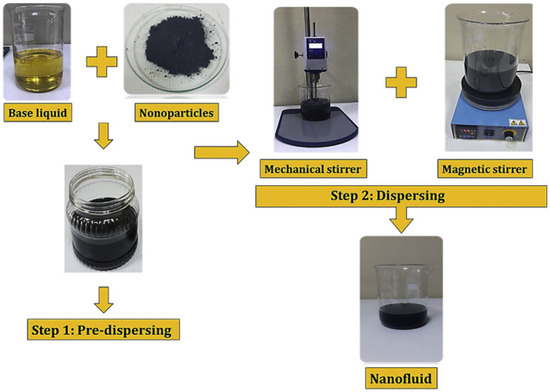
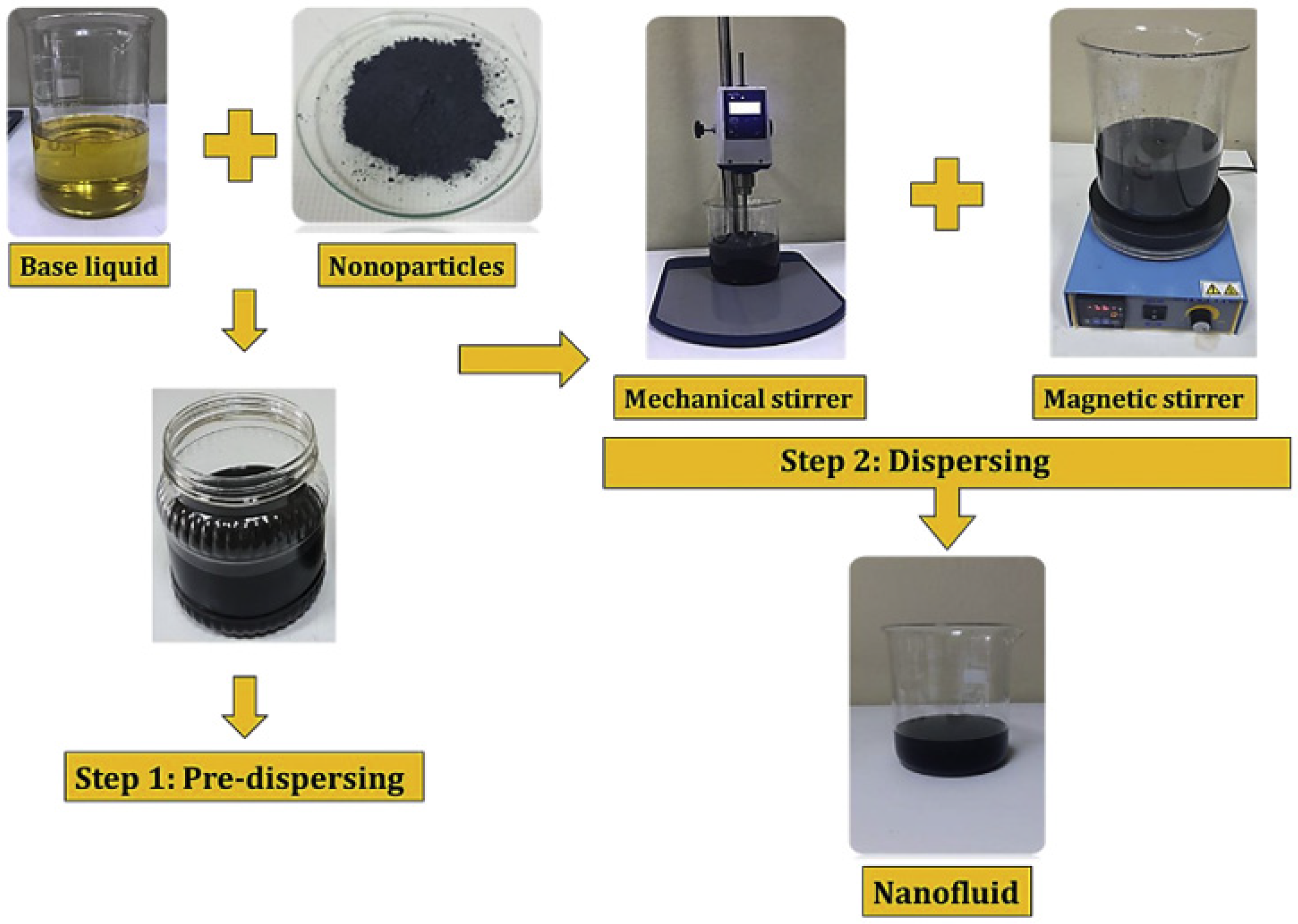
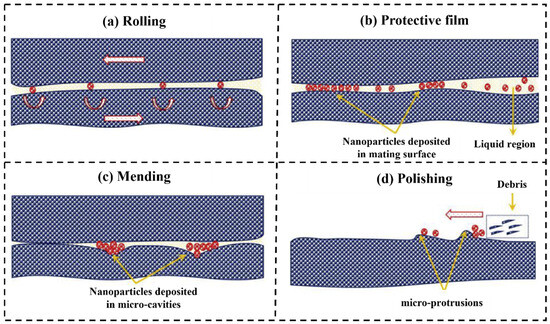
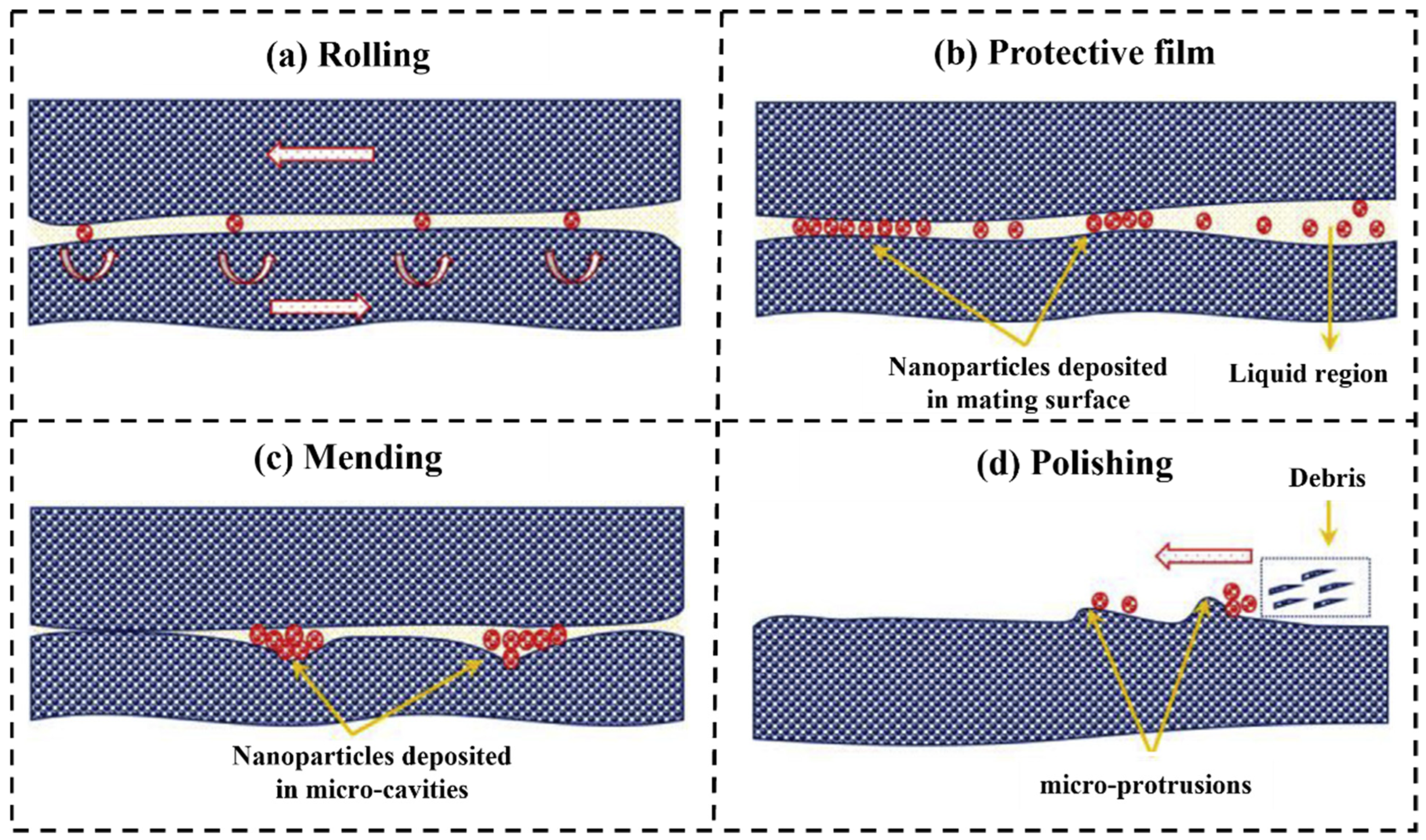
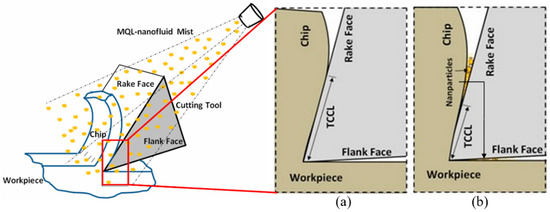
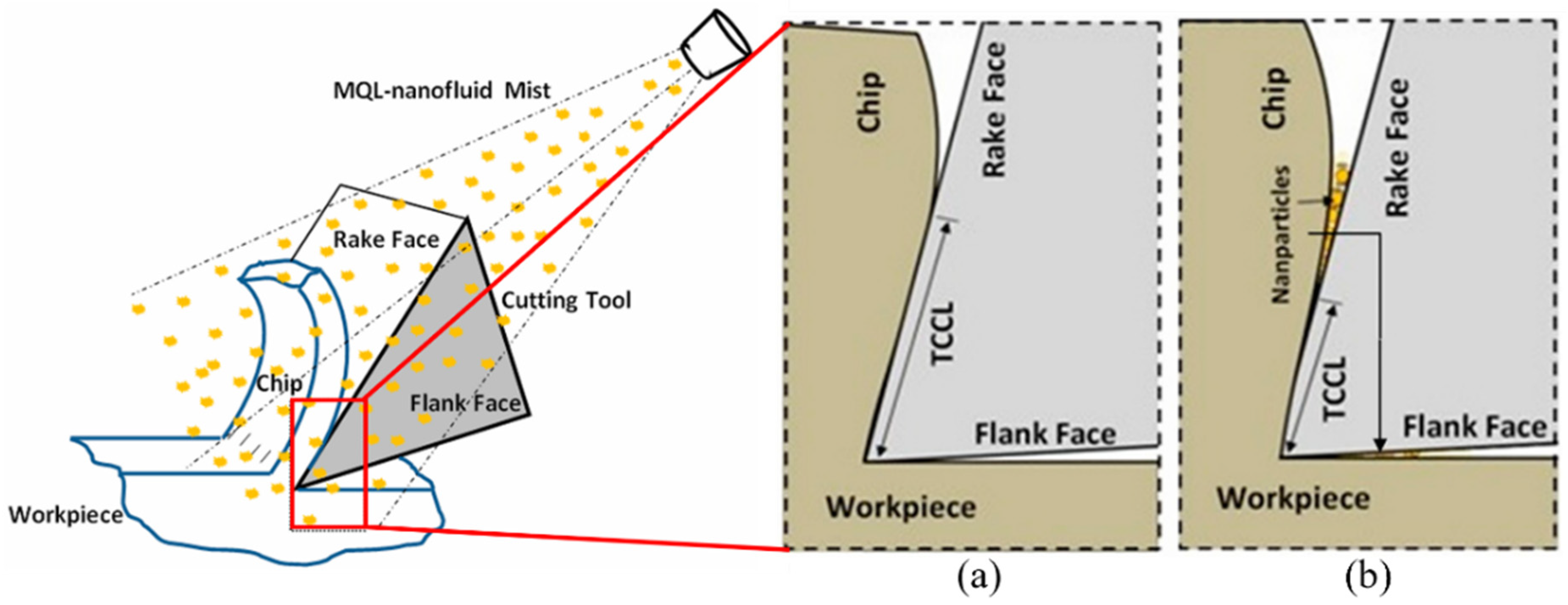
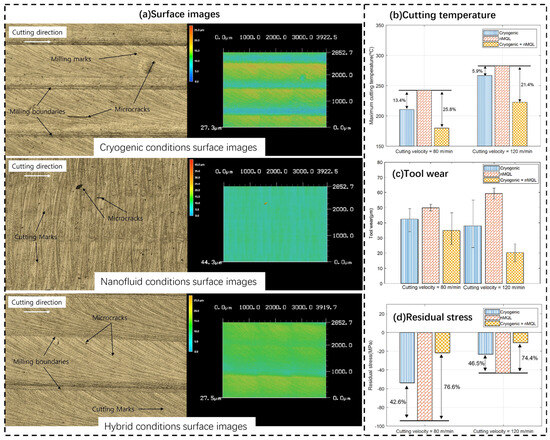
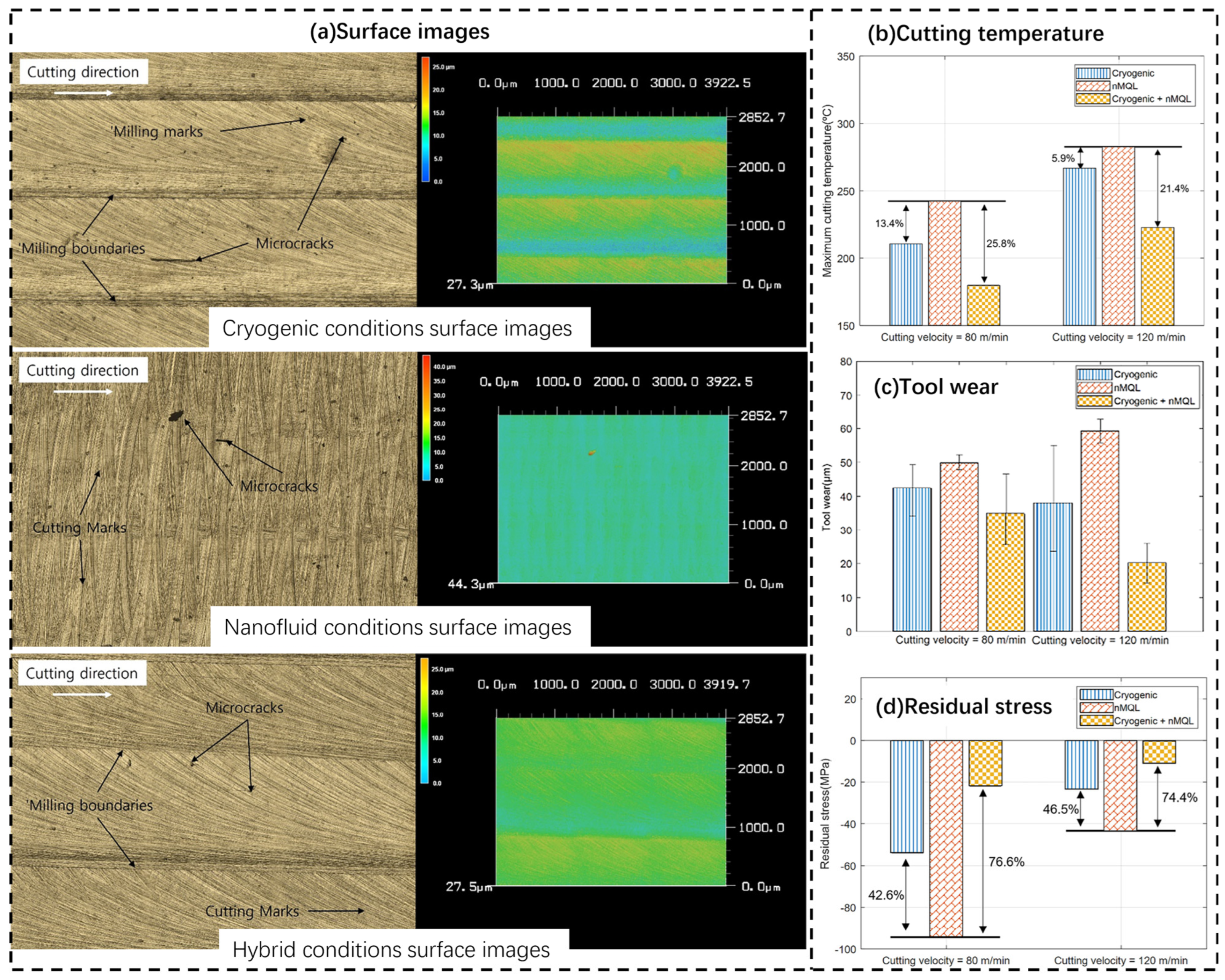
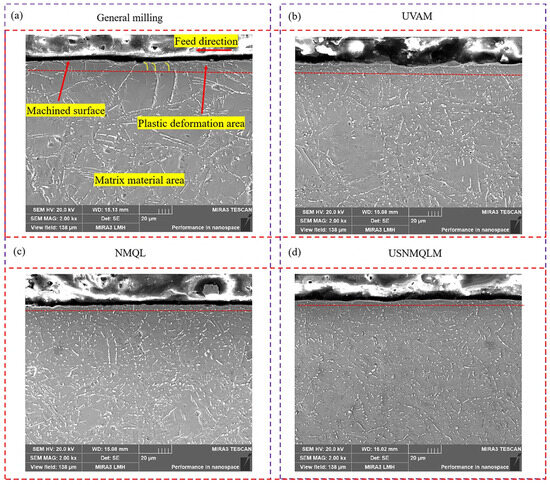
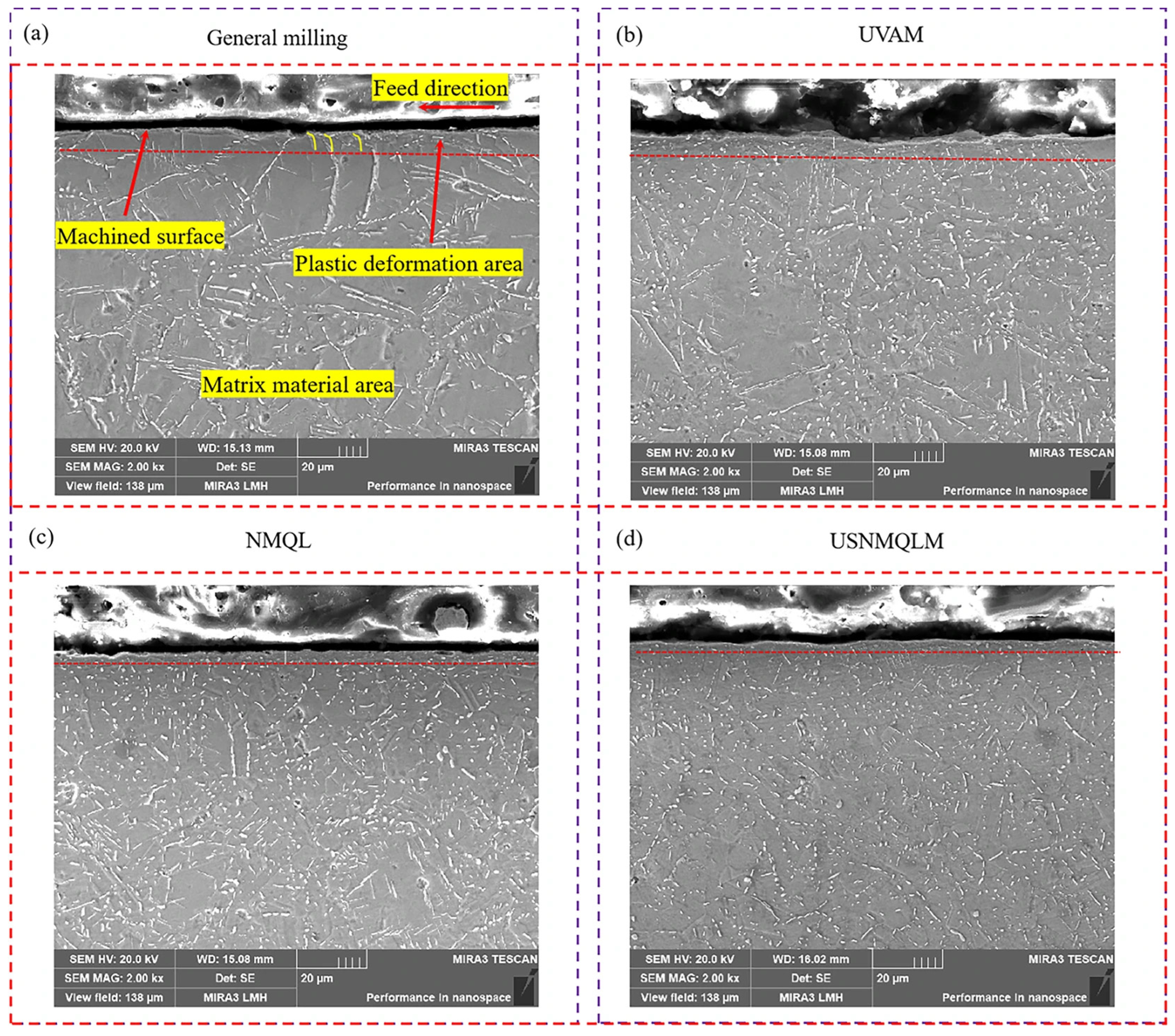
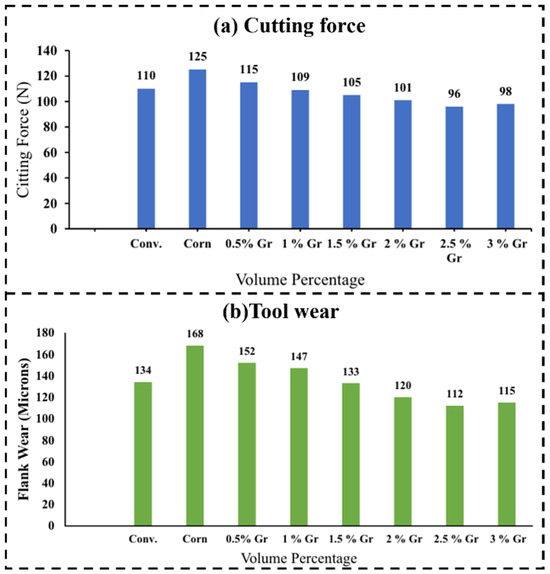
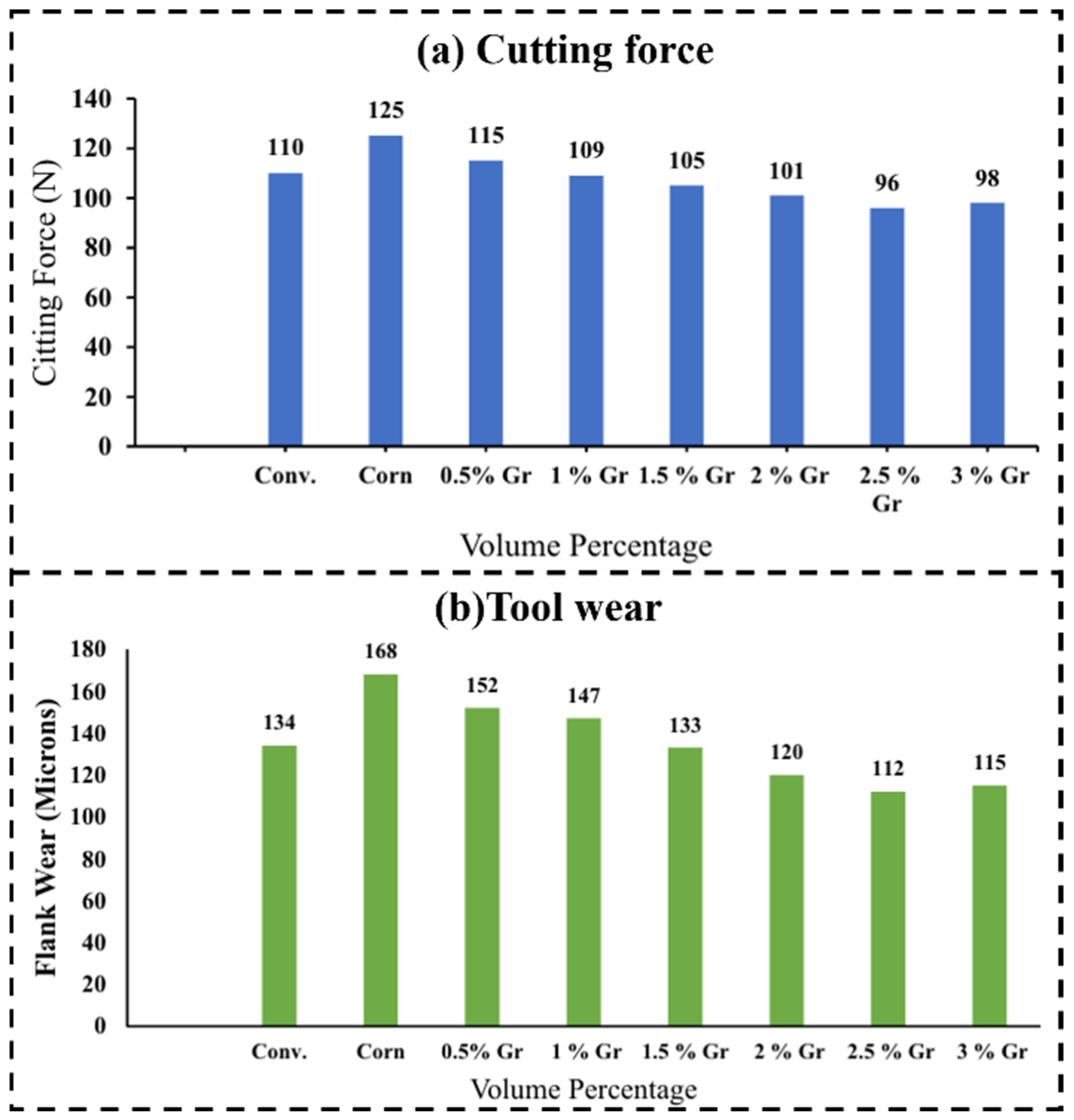
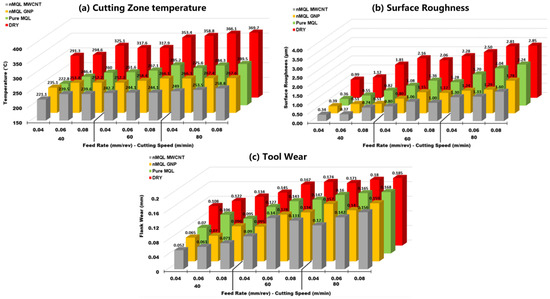
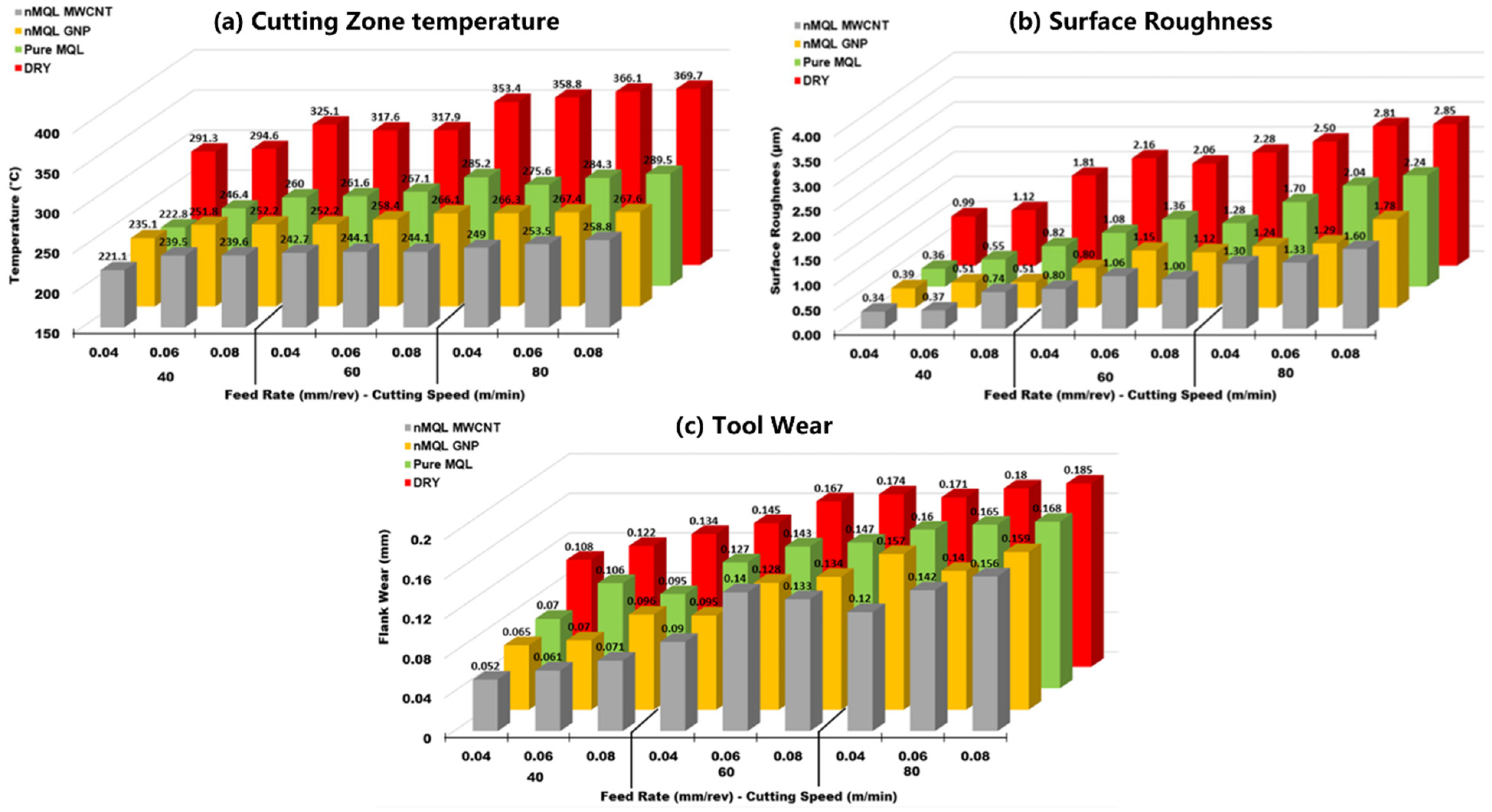
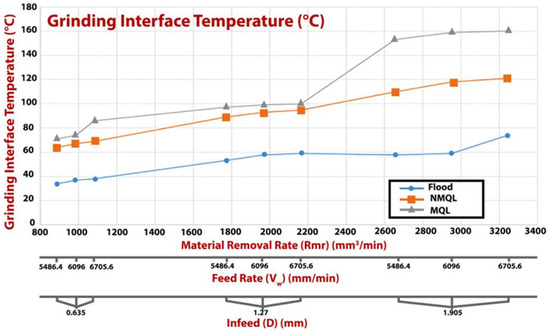
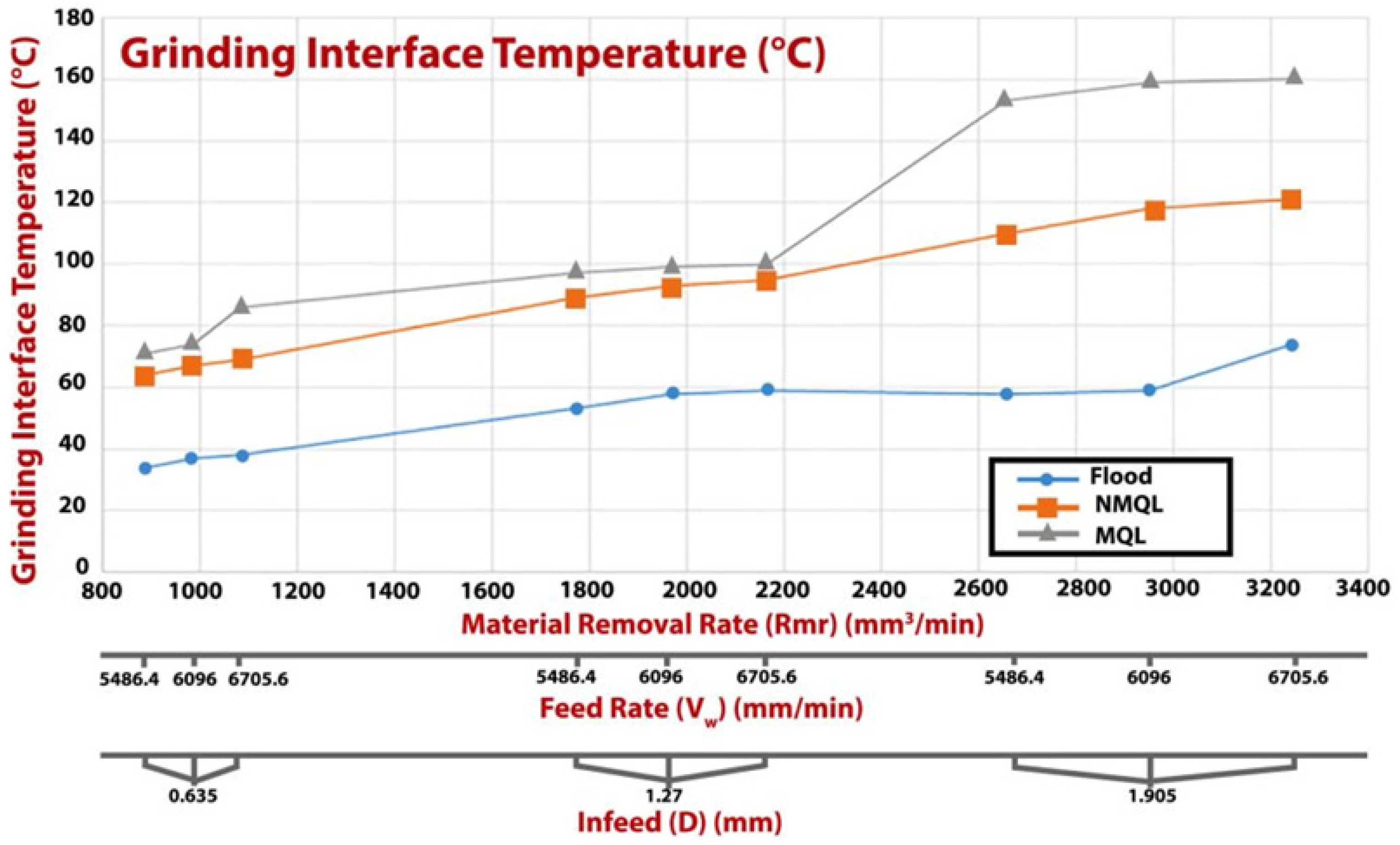
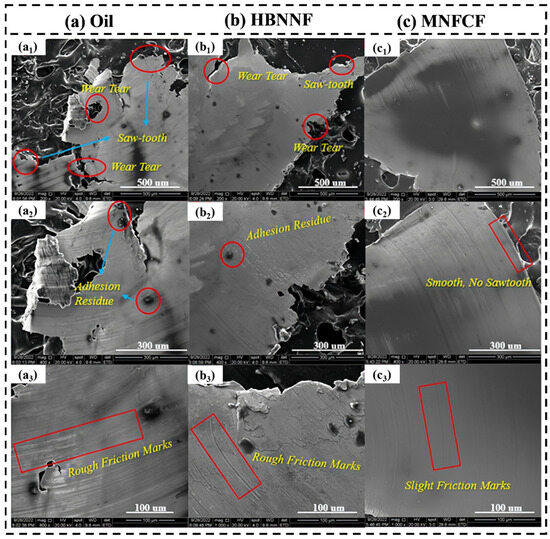
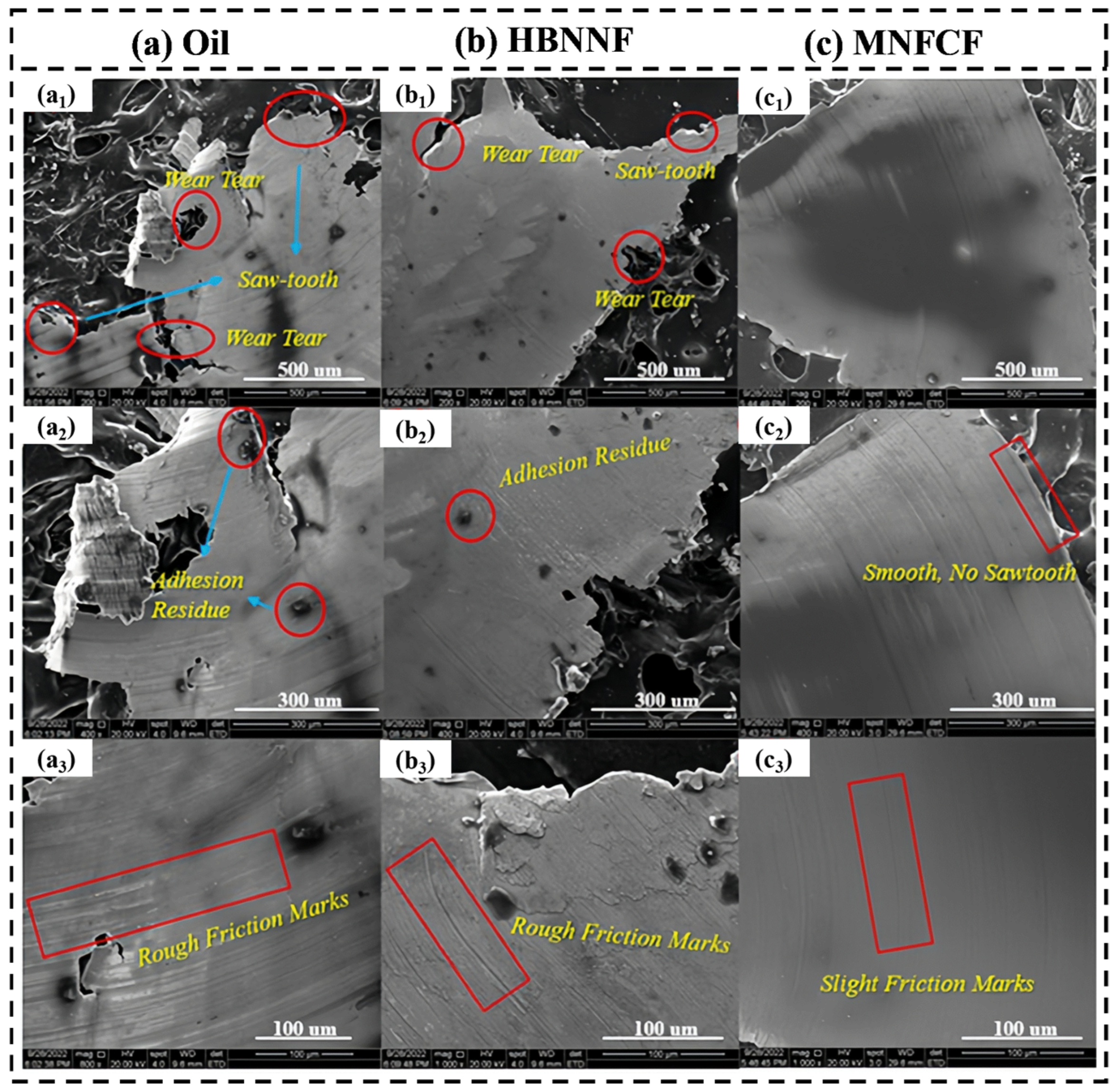

Disclaimer/Publisher’s Note: The statements, opinions and data contained in all publications are solely those of the individual author(s) and contributor(s) and not of MDPI and/or the editor(s). MDPI and/or the editor(s) disclaim responsibility for any injury to people or property resulting from any ideas, methods, instructions or products referred to in the content. |
© 2026 by the authors. Licensee MDPI, Basel, Switzerland. This article is an open access article distributed under the terms and conditions of the Creative Commons Attribution (CC BY) license.