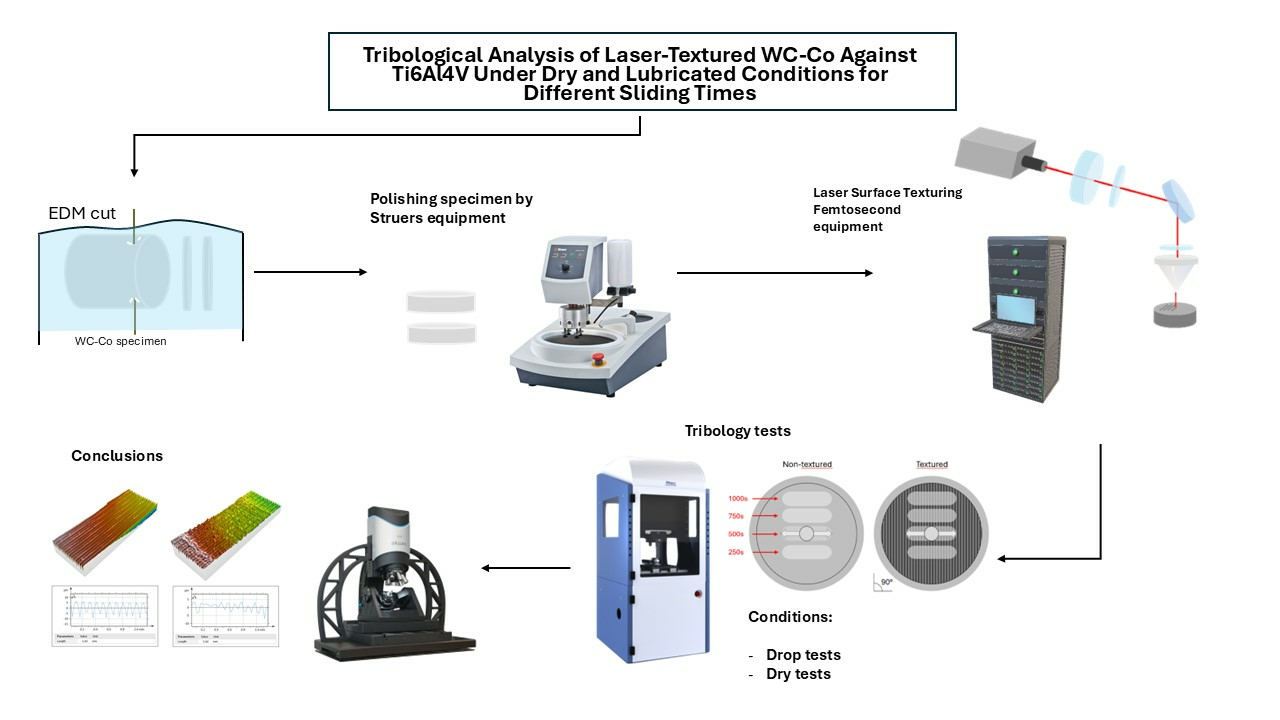
Tribological Analysis of Laser-Textured WC-Co Against Ti6Al4V Under Dry and Lubricated Conditions for Different Sliding Times

 ,
,  ,
,  ,
,  ,
,  and
and 
Abstract
Share and Cite
Garcia-Fernandez, J.; Batista, M.; Vazquez-Martinez, J.M.; Salguero, J.; Del Sol, I.; Ramirez-Peña, M. Tribological Analysis of Laser-Textured WC-Co Against Ti6Al4V Under Dry and Lubricated Conditions for Different Sliding Times. Lubricants 2025, 13, 36. https://doi.org/10.3390/lubricants13010036
Garcia-Fernandez J, Batista M, Vazquez-Martinez JM, Salguero J, Del Sol I, Ramirez-Peña M. Tribological Analysis of Laser-Textured WC-Co Against Ti6Al4V Under Dry and Lubricated Conditions for Different Sliding Times. Lubricants. 2025; 13(1):36. https://doi.org/10.3390/lubricants13010036
Chicago/Turabian StyleGarcia-Fernandez, Javier, Moises Batista, Juan Manuel Vazquez-Martinez, Jorge Salguero, Irene Del Sol, and Magdalena Ramirez-Peña. 2025. "Tribological Analysis of Laser-Textured WC-Co Against Ti6Al4V Under Dry and Lubricated Conditions for Different Sliding Times" Lubricants 13, no. 1: 36. https://doi.org/10.3390/lubricants13010036
APA StyleGarcia-Fernandez, J., Batista, M., Vazquez-Martinez, J. M., Salguero, J., Del Sol, I., & Ramirez-Peña, M. (2025). Tribological Analysis of Laser-Textured WC-Co Against Ti6Al4V Under Dry and Lubricated Conditions for Different Sliding Times. Lubricants, 13(1), 36. https://doi.org/10.3390/lubricants13010036