Advancing Wheat Productivity Through Nutrient Interactions, Fertilizer Practices, and Genetic Improvement



Abstract
1. Introduction
2. Method of Review
- Concepts and components of integrated nutrient management in wheat production systems.
- Synergistic and antagonistic interactions among macro- and micronutrients influencing wheat growth and grain quality.
- Agronomic biofortification strategies for enhancing micronutrient concentrations in wheat grain.
- Effects of integrated nutrient management on wheat yield performance and grain nutritional composition.
- System-specific nutrient management strategies for improving nutrient efficiency and sustainability in wheat-based cropping systems.
3. Scope and Limitations of the Review
4. Integrated Nutrient Management and Nutritional Enhancement in Wheat
4.1. Macronutrient Dynamics in Wheat
4.1.1. Nitrogen
4.1.2. Sulfur and the Critical Nitrogen–Sulfur (N × S) Interaction
4.1.3. Nitrogen–Sulfur Interaction and Wheat Grain Quality
4.1.4. Phosphorus (P) and Potassium (K)
4.2. Micronutrient Biofortification: Agronomic and Genetic Approaches
4.2.1. Zinc (Zn) Biofortification
4.2.2. Selenium (Se) Biofortification
4.2.3. Magnesium (Mg) Nutrition
4.3. System-Specific Responses: Organic Versus Conventional Production
4.3.1. Comparative Performance
4.3.2. Genotype × System Interactions
4.4. Nutrient Interaction Matrix: Synergies and Antagonisms
4.5. Breeding Acceleration and Genotype × Management Integration
4.5.1. Technological Evolution in Wheat Breeding

4.5.2. Current Frontiers: Gene Editing for Nutrient Efficiency
4.6. Synthesis and Future Perspectives
4.6.1. Yield–Quality Trade-Offs
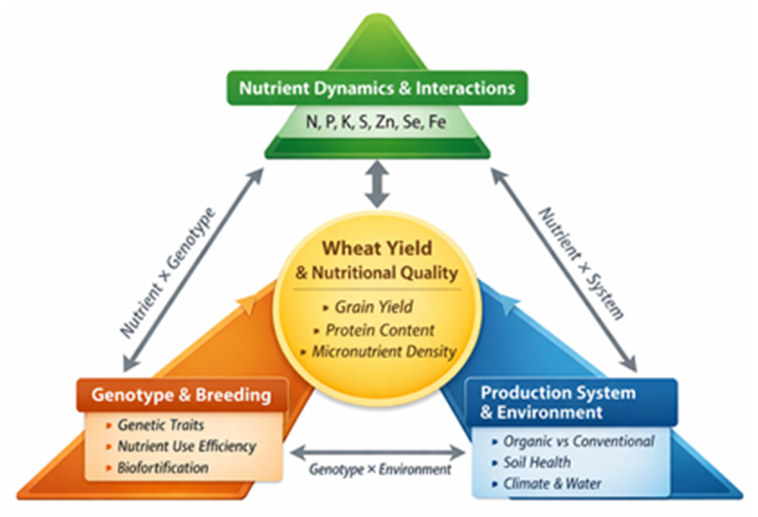
4.6.2. Integrated Nutrient Management (INM): A Path Forward
- Embraces Synergies: Applies N, S, and micronutrients in balanced, synergistic ratios based on quantitative interaction matrices. The N × S synergy is particularly critical for achieving high yields with superior grain quality.
- Leverages Biofortification: Combines agronomic and genetic tools to enhance grain nutritional density. Foliar Zn-Se applications provide immediate solutions [39], while breeding—accelerated by marker-assisted selection and genomic selection—builds long-term sustainability.
- Adapts to Systems: Develops tailored management practices and cultivars for organic, conventional, and intermediate systems. IC8’s superior performance under organic conditions and P5’s responsiveness to conventional fertilization demonstrate the importance of system-specific adaptation [91].
- Builds Resilience: Uses nutrition as a tool to bolster crop resilience against abiotic stresses, particularly through S, Zn, and K management. The K × Si synergy offers a non-nitrogen approach to enhancing heat-stress tolerance [50].
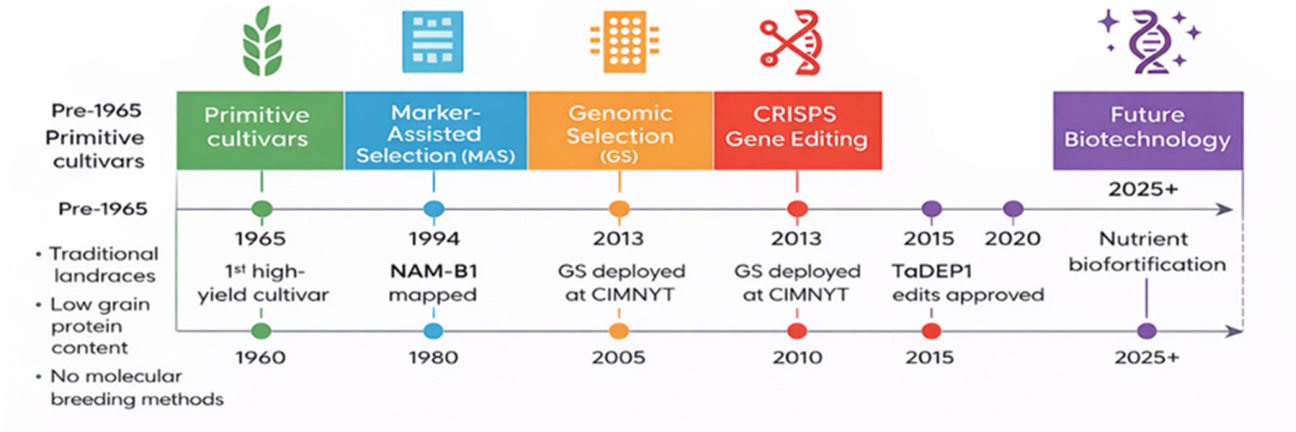
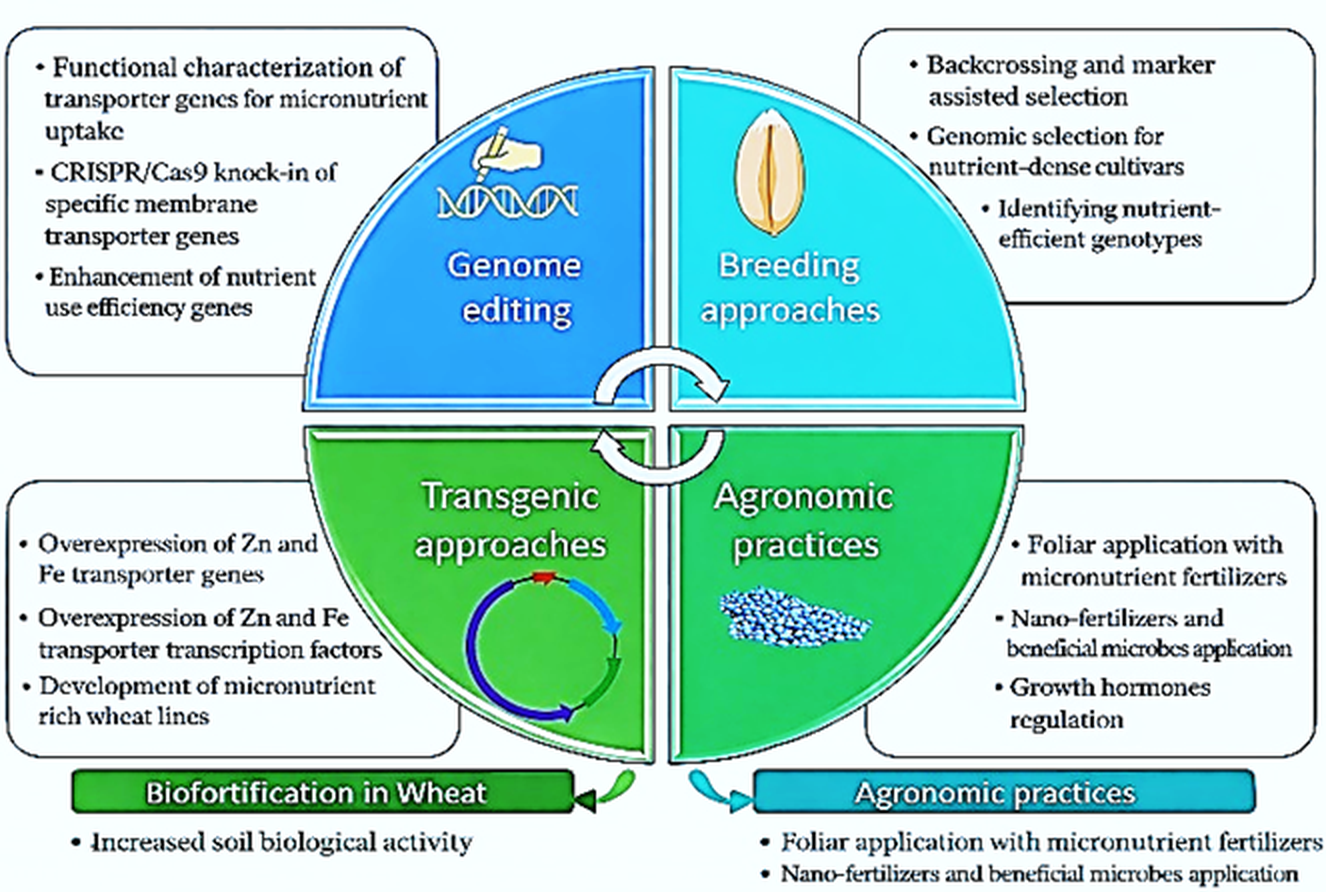
- Integrates Biotechnology: Employs marker-assisted selection, genomic selection, and CRISPR-mediated gene editing to accelerate development of nutrient-efficient cultivars [109]. The integrated strategies illustrated in the figure demonstrate the complementary roles of genetic, biotechnological, and agronomic approaches in improving micronutrient accumulation in wheat. Genome editing techniques, particularly CRISPR/Cas9-based modifications, enable the functional characterization and targeted manipulation of membrane transporter genes responsible for micronutrient uptake. These approaches enhance nutrient-use efficiency by introducing precise modifications in genes regulating Zn and Fe transport and assimilation (Figure 5).
- Efficient Input Use: Enhances nutrient-use efficiency through synergistic combinations, with the potential to reduce total nutrient inputs while maintaining yield and decreasing environmental footprint.
4.7. Research Gaps and Future Directions
4.7.1. Limited Understanding of Nutrient Interaction Mechanisms
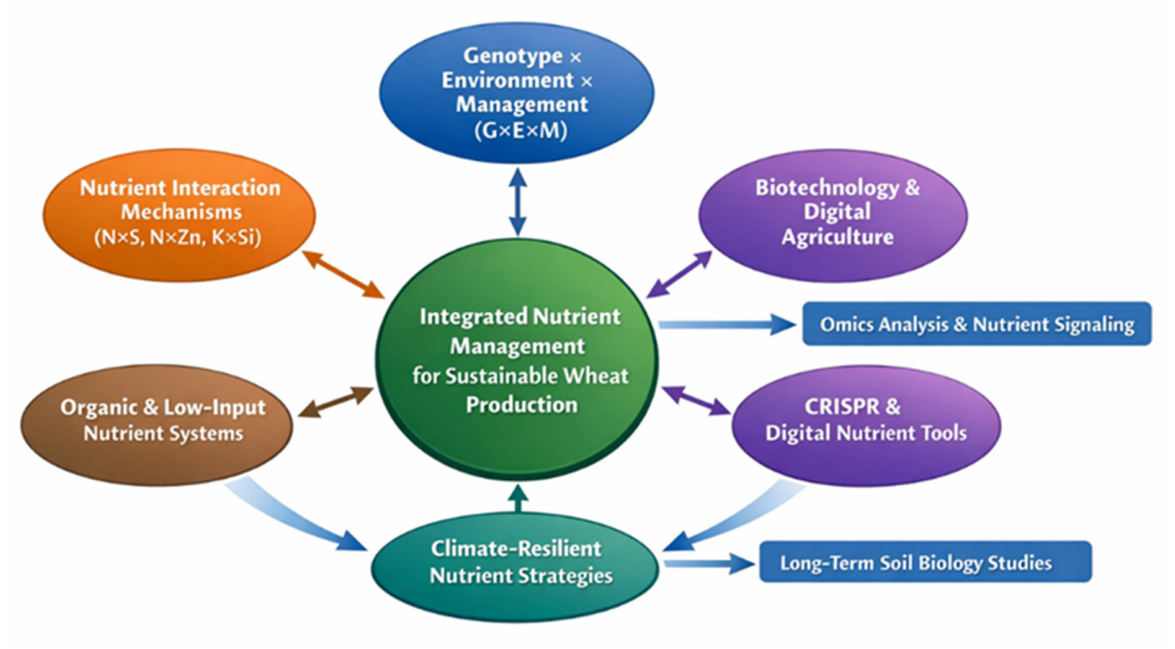
4.7.2. Integration of Genotype × Environment × Management (G × E × M) Interactions
4.7.3. Nutrient Management in Organic and Low-Input Systems
4.7.4. Climate-Resilient Nutrient Management Strategies
4.7.5. Emerging Biotechnological and Digital Agriculture Approaches
5. Conclusions
Supplementary Materials
Author Contributions
Funding
Institutional Review Board Statement
Informed Consent Statement
Data Availability Statement
Acknowledgments
Conflicts of Interest
References
- Shewry, P.R.; Hey, S.J. The contribution of wheat to human diet and health. Food Energy Secur. 2016, 5, 178–202. [Google Scholar] [CrossRef] [Scilit] [PubMed]
- Cakmak, I.; Kutman, U. Agronomic biofortification of cereals with zinc: A review. Plant Soil 2018, 433, 172–180. [Google Scholar] [CrossRef] [Scilit]
- Pingali, P.L. Green revolution: Impacts, limits, and the path ahead. Proc. Natl. Acad. Sci. USA 2012, 109, 12302–12308. [Google Scholar] [CrossRef] [Scilit]
- Fan, M.S.; Zhao, F.J.; Fairweather-Tait, S.J.; Poulton, P.R.; Dunham, S.J.; McGrath, S.P. Evidence of decreasing mineral density in wheat grain over the last 160 years. J. Trace Elem. Med. Biol. 2008, 22, 315–324. [Google Scholar] [CrossRef] [Scilit] [PubMed]
- Zhang, X.; Zeng, B.; Ding, D.; Zhou, W.; Dai, X.; He, M. Effects of sulfur fertilizer on the bread-making quality of wheat depend on the nitrogen input level. J. Integr. Agric. 2025. [Google Scholar] [CrossRef] [Scilit]
- Akchaya, K.; Parasuraman, P.; Pandian, K.; Vijayakumar, S.; Thirukumaran, K.; Mustaffa, M.R.A.F.; Rajpoot, S.K.; Choudhary, A.K. Boosting resource use efficiency, soil fertility, food security, ecosystem services, and climate resilience with legume intercropping: A review. Front. Sustain. Food Syst. 2025, 9, 1527256. [Google Scholar] [CrossRef] [Scilit]
- Kumar, A.; Prakash, R.; Pawar, Y.A.S.; Jain, M.; Shekhar, C.; Bochalya, R.S.; Mehta, L.; Dwibedi, S. Integrated Nutrient Management Practices for Sustainable Chickpea: A Review. J. Adv. Biol. Biotechnol. 2025, 28, 82–97. [Google Scholar] [CrossRef] [Scilit]
- Zenda, T.; Liu, S.; Dong, A.; Li, J.; Wang, Y.; Liu, X.; Wang, N.; Duan, H. Omics-facilitated crop improvement for climate resilience and superior nutritive value. Front. Plant Sci. 2021, 12, 774994. [Google Scholar] [CrossRef] [Scilit]
- Borrill, P.; Connorton, J.M.; Balk, J.; Miller, A.J.; Sanders, D.; Uauy, C. Biofortification of wheat grain with iron and zinc: Integrating novel genomic resources and knowledge from model crops. Front. Plant Sci. 2014, 5, 53. [Google Scholar] [CrossRef] [Scilit]
- Roy, C.; Kumar, S.; Ranjan, R.D.; Kumhar, S.R.; Govindan, V. Genomic Approaches for Improving Grain Zinc and Iron Content in Wheat. Front. Genet. 2022, 13, 1045955. [Google Scholar] [CrossRef] [Scilit]
- Ibba, M.I.; Gupta, O.P.; Govindan, V.; Johnson, A.A.T.; Brinch-Pedersen, H.; Nikolic, M.; Taleon, V. Editorial: Wheat biofortification to alleviate global malnutrition. Front Nutr. 2022, 9, 1001443. [Google Scholar] [CrossRef] [Scilit] [PubMed]
- Nayak, S.; Mandi, S.; Baral, K.; Prasanna, R.; Shivay, Y.S. Agronomic approaches for biofortification of staple food crops. In Biofortification of Staple Crops; Springer: Singapore, 2022; pp. 483–517. [Google Scholar] [CrossRef] [Scilit]
- Gupta, P.K.; Balyan, H.S.; Sharma, S.; Kumar, R. Biofortification and bioavailability of Zn, Fe and Se in wheat: Present status and future prospects. Theor. Appl. Genet. 2021, 134, 1–35. [Google Scholar] [CrossRef] [Scilit] [PubMed]
- Wani, S.H.; Gaikwad, K.; Razzaq, A.; Samantara, K.; Kumar, M.; Govindan, V. Improving Zinc and Iron Biofortification in Wheat through Genomics Approaches. Mol. Biol. Rep. 2022, 49, 8007–8023. [Google Scholar] [CrossRef] [Scilit] [PubMed]
- Wang, C.; Zeng, J.; Li, Y.; Hu, W.; Chen, L.; Miao, Y.; Deng, P.; Yuan, C.; Ma, C.; Chen, X.; et al. Enrichment of Provitamin A Content in Wheat (Triticum aestivum L.) by Introduction of the Bacterial Carotenoid Biosynthetic Genes CrtB and CrtI. J. Exp. Bot. 2014, 65, 2545–2556. [Google Scholar] [CrossRef] [Scilit]
- Morgun, B.; Sandetska, N.; Velykozhon, L. The Effect of the Gpc-B1 Gene on the Protein Content of Soft Winter Wheat Grain Against the Background of Genetic Environment of Ukrainian Varieties. Sci. Innov. 2023, 19, 31. [Google Scholar] [CrossRef] [Scilit]
- Virk, P.S.; Andersson, M.S.; Arcos, J.; Govindaraj, M.; Pfeiffer, W.H. Transition from Targeted Breeding to Mainstreaming of Biofortification Traits in Crop Improvement Programs. Front. Plant Sci. 2021, 12, 703990. [Google Scholar] [CrossRef] [Scilit]
- Connorton, J.M.; Jones, E.R.; Rodríguez-Ramiro, I.; Fairweather-Tait, S.; Uauy, C.; Balk, J. Wheat Vacuolar Iron Transporter TaVIT2 Transports Fe and Mn and Is Effective for Biofortification. Plant Physiol. 2017, 174, 2434–2444. [Google Scholar] [CrossRef] [Scilit]
- El Houssni, I.; Zahidi, A.; Khedid, K.; Hassikou, R. Review of Processes for Improving the Bioaccessibility of Minerals by Reducing the Harmful Effect of Phytic Acid in Wheat. Food Chem. Adv. 2023, 4, 100568. [Google Scholar] [CrossRef] [Scilit]
- Ghafoor, I.; Habib-ur-Rahman, M.; Ali, M.; Afzal, M.; Ahmed, W.; Gaiser, T.; Ghaffar, A. Slow-release nitrogen fertilizers enhance growth, yield, NUE in wheat crop and reduce nitrogen losses under an arid environment. Environ. Sci. Pollut. Res. 2021, 28, 43528–43543. [Google Scholar] [CrossRef] [Scilit]
- Hlisnikovský, L.; Menšík, L.; Kunzová, E. The Development of Winter Wheat Yield and Quality under Different Fertilizer Regimes and Soil-Climatic Conditions in the Czech Republic. Agronomy 2020, 10, 1160. [Google Scholar] [CrossRef] [Scilit]
- Dawar, R.; Karan, S.; Bhardwaj, S.; Meena, D.K.; Padhan, S.R.; Reddy, K.S.; Bana, R.S. Role of Sulphur Fertilization in Legume Crops: A Comprehensive Review. Int. J. Plant Soil Sci. 2023, 35, 718–727. [Google Scholar] [CrossRef] [Scilit]
- Roa, G.A.; Quintana-Obregón, E.A.; González-Renteria, M.; Ruiz Diaz, D.A. Increasing Wheat Protein and Yield through Sulfur Fertilization and Its Relationship with Nitrogen. Nitrogen 2024, 5, 553–571. [Google Scholar] [CrossRef] [Scilit]
- Salim, N.; Raza, A. Nutrient use efficiency (NUE) for sustainable wheat production: A review. J. Plant Nutr. 2020, 43, 297–315. [Google Scholar] [CrossRef] [Scilit]
- Peng, Y.; Zhao, Y.; Yu, Z.; Zeng, J.; Xu, D.; Dong, J.; Ma, W. Wheat quality formation and its regulatory mechanism. Front. Plant Sci. 2022, 13, 834654. [Google Scholar] [CrossRef] [Scilit]
- Gupta, O.P.; Pandey, V.; Narwal, S.; Sharma, P.; Ram, S.; Singh, G.P. (Eds.) Wheat and Barley Grain Biofortification; Woodhead Publishing: Duxford, UK, 2020. [Google Scholar]
- Liu, Y.; Zhang, L.; Zhu, A.; Shen, L.; Zhang, J.; Chen, J.; Chang, G.; Yin, C.; Wang, Z.; Sun, Z.; et al. Multi-omics identifies key genetic and metabolic networks regulating spike organ development in wheat. Plant Cell 2025, 37, koaf250. [Google Scholar] [CrossRef] [Scilit] [PubMed]
- Bohra, A.; Choudhary, M.; Bennett, D.; Joshi, R.; Mir, R.R.; Varshney, R.K. Drought-tolerant wheat for enhancing global food security. Funct. Integr. Genom. 2024, 24, 212. [Google Scholar] [CrossRef] [Scilit]
- Zhang, H.; Zhang, R.; Sun, L.; Li, H.; Xue, Y.; Zhao, X.; Liu, J.; Yuan, C. Optimized irrigation and fertilization for spring maize under warming and wetting climate in a semi-arid region of China. Front. Plant Sci. 2025, 16, 1600561. [Google Scholar] [CrossRef] [Scilit]
- Sharma, N.; Dixit, B.; Kayastha, R. Proactive approach to biofertilizers for sustainable agriculture. J. Plant Nutr. 2025, 48, 3534–3552. [Google Scholar] [CrossRef] [Scilit]
- Hawkesford, M.J. Reducing the reliance on nitrogen fertilizer for wheat production. J. Cereal Sci. 2014, 59, 276–283. [Google Scholar] [CrossRef] [Scilit]
- Fageria, N.K. The Use of Nutrients in Crop Plants; CRC Press: Boca Raton, FL, USA, 2016. [Google Scholar]
- Hawkesford, M.J.; Kopriva, S.; De Kok, L.J. Nutrient Use Efficiency in Plants; Springer: Cham, Switzerland, 2016. [Google Scholar]
- Hawkesford, M.J. Genetic variation in traits for nitrogen use efficiency in wheat. J. Exp. Bot. 2017, 68, 2627–2637. [Google Scholar] [CrossRef] [Scilit]
- Castellari, M.P.; Poffenbarger, H.J.; Van Sanford, D.A. Sulfur Fertilization Effects on Protein Concentration and Yield of Wheat: A Meta-Analysis. Field Crops Res. 2023, 302, 109061. [Google Scholar] [CrossRef] [Scilit]
- Fan, M.; Shen, J.; Yuan, L.; Jiang, R.; Chen, X.; Davies, W.J. Improving crop productivity and resource use efficiency to ensure food security and environmental sustainability. J. Exp. Bot. 2023, 74, 1047–1062. [Google Scholar] [CrossRef] [Scilit]
- Lassaletta, L.; Billen, G.; Grizzetti, B.; Anglade, J.; Garnier, J. Long term trends in agronomical and environmental performances of world cropping systems: The relationship between yield and nitrogen input to cropland at the country and regional scales. In Just Enough Nitrogen: Perspectives on How to Get There for Regions with Too Much and Too Little Nitrogen; Springer International Publishing: Cham, Switzerland, 2020; pp. 29–45. [Google Scholar]
- Xu, G.; Fan, X.; Miller, A.J. Plant nitrogen assimilation and use efficiency. Annu. Rev. Plant Biol. 2012, 63, 153–182. [Google Scholar] [CrossRef] [Scilit]
- Duncan, E.G.; O’Sullivan, C.A.; Roper, M.M.; Biggs, J.S.; Peoples, M.B. Influence of Co-Application of Nitrogen with Phosphorus, Potassium and Sulphur on the Apparent Efficiency of Nitrogen Fertiliser Use, Grain Yield and Protein Content of Wheat: Review. Field Crops Res. 2018, 226, 56–65. [Google Scholar] [CrossRef] [Scilit]
- Kretschmer, S. Rhizosphere Dynamics in Maize-Based Intercropping Systems. Doctoral Dissertation, Faculty of Agricultural and Nutritional Sciences at Christian-Albrechts-Universität zu Kiel, Kiel, Germany, 2025. [Google Scholar]
- Kutman, U.B.; Yildiz, B.; Cakmak, I. Effect of nitrogen on uptake, remobilization and partitioning of zinc and iron throughout the development of durum wheat. Plant Soil 2011, 342, 149–164. [Google Scholar] [CrossRef] [Scilit]
- Takahashi, H.; Kopriva, S.; Giordano, M.; Saito, K.; Hell, R. Sulfur assimilation in photosynthetic organisms: Molecular functions and regulations of transporters and assimilatory enzymes. Annu. Rev. Plant Biol. 2011, 62, 157–184. [Google Scholar] [CrossRef] [Scilit] [PubMed]
- Zhao, F.J.; Salmon, S.E.; Withers, P.J.A.; Monaghan, J.M.; Evans, E.J.; Shewry, P.R.; McGrath, S.P. Variation in the Breadmaking Quality and Rheological Properties of Wheat in Relation to Sulphur Nutrition under Field Conditions. J. Cereal Sci. 1999, 30, 19–31. [Google Scholar] [CrossRef] [Scilit]
- Kolbe, H. Meta-Study on Sulphur Supply of Various Crop Species in Organic Farming Between 1998 and 2023 in European Countries—Part 1: Effects of Sulphur Supply on Plant Dry Biomass, Nitrogen Uptake, Legume N2 Fixation and Sulphur Fertiliser Requirement Determinations. Agronomy 2024, 14, 2975. [Google Scholar] [CrossRef] [Scilit]
- Barnard, M.; McKenna, B.A.; Dalal, R.C.; McGrath, S.P.; Weng, Z.H.; Wykes, J.L.; Kopittke, P.M. Sulfur’s Long Game: 145 Years of Soil Sulfur Speciation in the World’s Oldest Agricultural Experiments. Glob. Change Biol. 2025, 31, e70136. [Google Scholar] [CrossRef] [Scilit]
- Lollato, R.P.; Mark, K.E.; Jaenisch, B.R. Wheat Grain Yield and Grain Protein Concentration Response to Nitrogen Rate During the 2018–2019 Growing Season in Kansas. Kans. Agric. Exp. Stn. Res. Rep. 2020, 6, 6. [Google Scholar] [CrossRef] [Scilit]
- Hu, C.; Sadras, V.; Lu, G.; Zhang, P.; Han, Y.; Liu, L.; Xie, J.; Zhang, S. A Global Meta-Analysis of Split Nitrogen Application for Improved Wheat Yield and Grain Protein Content. Soil Tillage Res. 2021, 213, 105111. [Google Scholar] [CrossRef] [Scilit]
- Melash, A.A.; Bogale, A.A.; Bytyqi, B.; Nyandi, M.S.; Ábrahám, É.B. Nutrient management: As a panacea to improve the caryopsis quality and yield potential of durum wheat (Triticum turgidum L.) under the changing climatic conditions. Front. Plant Sci. 2023, 14, 1232675. [Google Scholar] [CrossRef] [Scilit] [PubMed]
- Kahraman, A.; Tunc, M.; Ramazanoglu, E.; Almarie, V.; Sezer, R.; Basdemir, F.; Kaya, C.; Senbayram, M. Zinc outperforms other foliar fertilisers in enhancing lentil yield and harvest index in semi-arid regions. Acta Agric. Scand. Sect. B Soil Plant Sci. 2024, 74, 2412767. [Google Scholar] [CrossRef] [Scilit]
- Beier, S.; Marella, N.C.; Yvin, J.-C.; Hosseini, S.A.; von Wirén, N. Silicon mitigates potassium deficiency by enhanced remobilization and modulated potassium transporter regulation. Environ. Exp. Bot. 2022, 198, 104849. [Google Scholar] [CrossRef] [Scilit]
- Gupta, O.P.; Singh, A.; Pandey, V.; Sendhil, R.; Khan, M.K.; Pandey, A.; Kumar, S.; Hamurcu, M.; Ram, S.; Singh, G. Critical Assessment of Wheat Biofortification for Iron and Zinc: A Comprehensive Review of Conceptualization, Trends, Approaches, Bioavailability, Health Impact, and Policy Framework. Front. Nutr. 2024, 10, 1310020. [Google Scholar] [CrossRef] [Scilit] [PubMed]
- Al-Ghumaiz, N.S.; Motawei, M.I.; Abd-Elmoniem, E.M.; Al-Otayk, S.M. Selenium and zinc concentrations in spring wheat (Triticum aestivum) genotypes under organic and inorganic fertilization. J. Plant Nutr. 2020, 43, 1980–1987. [Google Scholar] [CrossRef] [Scilit]
- Rayman, M.P. Selenium and human health. Lancet 2012, 379, 1256–1268. [Google Scholar] [CrossRef] [Scilit]
- White, P.J.; Broadley, M.R. Biofortification of crops with mineral elements often lacking in human diets. New Phytol. 2009, 182, 49–84. [Google Scholar] [CrossRef] [Scilit]
- Lyons, G.; Stangoulis, J.; Graham, R. High-selenium wheat: Biofortification for better health. Nutr. Res. Rev. 2003, 16, 45–60. [Google Scholar] [CrossRef] [Scilit]
- Broadley, M.R.; White, P.J.; Bryson, R.J.; Meacham, M.C.; Bowen, H.C.; Johnson, S.E.; Hawkesford, M.J.; McGrath, S.P.; Zhao, F.; Breward, M.H.; et al. Biofortification of UK food crops with selenium. Proc. Nutr. Soc. 2006, 65, 169–181. [Google Scholar] [CrossRef] [Scilit]
- Tangjaidee, P.; Swedlund, P.; Xiang, J.; Yin, H.; Quek, S.Y. Selenium-enriched plant foods: Selenium accumulation, speciation, and health functionality. Front. Nutr. 2023, 9, 962312. [Google Scholar] [CrossRef] [Scilit]
- Li, I.B.Y.; Zhou, D.M.; Cang, L.; Zhang, L.; Fan, H.L.; Qin, S.W. Soil micronutrient availability to crops as affected by long-term inorganic and organic fertilizer applications. Soil Tillage Res. 2007, 96, 166–173. [Google Scholar] [CrossRef] [Scilit]
- Wang, F.; Wang, Z.; Kou, C.; Ma, Z.; Zhao, D. Responses of wheat yield, macro- and micro-nutrients, and heavy metals in soil and wheat following the application of manure compost on the North China plain. PLoS ONE 2016, 11, e0146453. [Google Scholar] [CrossRef] [Scilit]
- Cakmak, I. Magnesium in crop production, food quality and human health. Plant Soil 2013, 368, 1–4. [Google Scholar] [CrossRef] [Scilit]
- Farhat, N.; Elkhouni, A.; Zorrig, W.; Abdelly, C.; Smaoui, A.; Rabhi, M. Effects of magnesium deficiency on photosynthesis and carbohydrate partitioning. Acta Physiol. Plant. 2016, 38, 145. [Google Scholar] [CrossRef] [Scilit]
- Mayer, A.M.B.; Trenchard, L.; Rayns, F. Historical changes in the mineral content of fruit and vegetables in the UK from 1940 to 2019: A concern for human nutrition and agriculture. Int. J. Food Sci. Nutr. 2022, 73, 315–326. [Google Scholar] [CrossRef] [Scilit] [PubMed]
- Rosanoff, A. Changing crop magnesium concentrations: Impact on human health. Plant Soil 2013, 368, 139–153. [Google Scholar] [CrossRef] [Scilit]
- Guo, W.; Chen, S.; Hussain, N.; Cong, Y.; Liang, Z. Magnesium stress signaling in plant: Just a beginning. Plant Signal. Behav. 2020, 15, 1739446. [Google Scholar] [CrossRef] [Scilit] [PubMed]
- Tränkner, M.; Tavakol, E.; Jákli, B. Functioning of potassium and magnesium in photosynthesis, photosynthate translocation and photoprotection. Physiol. Plant. 2021, 171, 224–234. [Google Scholar] [CrossRef] [Scilit]
- Senbayram, M.; Gransee, A.; Wahle, V.; Thiel, H. Role of magnesium fertilizers in agriculture: Plant–soil continuum. Crop Pasture Sci. 2022, 73, 1219–1229. [Google Scholar] [CrossRef] [Scilit]
- Abd-Elmoniem, E.M.; Al-Ghumaiz, N.S.; Motawie, M.I.; Al-Otayk, S.; Rabhi, M. Investigation of the magnesium content and productivity of wheat genotypes under organic and conventional inorganic fertilizer application. Life 2025, 15, 543. [Google Scholar] [CrossRef] [Scilit] [PubMed]
- Gerendás, J.; Führs, H. The significance of magnesium for crop quality. Plant Soil 2013, 368, 101–128. [Google Scholar] [CrossRef] [Scilit]
- Verbruggen, N.; Hermans, C. Physiological and molecular responses to magnesium nutritional imbalance in plants. Plant Soil 2013, 368, 87–99. [Google Scholar] [CrossRef] [Scilit]
- Karley, A.J.; White, P.J. Moving Cationic Minerals to Edible Tissues: Potassium, Magnesium, Calcium. Curr. Opin. Plant Biol. 2009, 12, 291–298. [Google Scholar] [CrossRef] [Scilit]
- Muttucumaru, N.; Halford, N.G.; Elmore, J.S.; Dodson, A.T.; Parry, M.; Shewry, P.R.; Mottram, D.S. Formation of High Levels of Acrylamide during the Processing of Flour Derived from Sulfate-Deprived Wheat. J. Agric. Food Chem. 2006, 54, 8951–8955. [Google Scholar] [CrossRef] [Scilit]
- Wilson, T.L.; Guttieri, M.J.; Nelson, N.O.; Fritz, A.; Tilley, M. Nitrogen and Sulfur Effects on Hard Winter Wheat Quality and Asparagine Concentration. J. Cereal Sci. 2020, 93, 102969. [Google Scholar] [CrossRef] [Scilit]
- Zhang, Y.; Lu, X.; Yao, W.; Cheng, X.; Wang, Q.; Feng, Y.; Shen, W. Magnesium Hydride Confers Osmotic Tolerance in Mung Bean Seedlings by Promoting Ascorbate–Glutathione Cycle. Plants 2024, 13, 2819. [Google Scholar] [CrossRef] [Scilit] [PubMed]
- Balaji, V.; Chec, M.; Brahmadevi, R.; Holladay, S.; Czaja, K. Micronutrient Differences in Conventionally and Organically Produced Foods. Nutrients 2025, 18, 84. [Google Scholar] [CrossRef] [Scilit]
- He, H.; Peng, M.; Lu, W.; Hou, Z.; Li, J. Commercial organic fertilizer substitution increases wheat yield by improving soil quality. Sci. Total Environ. 2022, 851, 158132. [Google Scholar] [CrossRef] [Scilit]
- Yamini, V.; Singh, K.; Antar, M.; El Sabagh, A. Sustainable cereal production through integrated crop management: A global review of current practices and future prospects. Front. Sustain. Food Syst. 2025, 9, 1428687. [Google Scholar] [CrossRef] [Scilit]
- Wang, Y.; Ma, R.; Wei, J.; Fu, X.; Zhang, S.; Zhao, Z.; Lin, H.; Xu, Y.; Tan, D.; Gao, X.; et al. Enhancing micronutrient bioavailability in wheat grain through organic fertilizer substitution. Front. Nutr. 2025, 12, 1559537. [Google Scholar] [CrossRef] [Scilit]
- Tong, D.; Xu, R. Effects of urea and (NH4)2SO4 on nitrification and acidification of Ultisols from southern China. J. Environ. Sci. 2012, 24, 682–689. [Google Scholar] [CrossRef] [Scilit]
- Eghball, B.; Power, J.F. Phosphorus and nitrogen-based manure and compost application: Corn production and soil phosphorus. Soil Sci. Soc. Am. J. 1999, 63, 895–901. [Google Scholar] [CrossRef] [Scilit]
- Quansah, G.W. Effect of Organic and Inorganic Fertilizers and Their Combinations on the Growth and Yield of Maize in the Semi-Deciduous Forest Zone of Ghana. Master’s Thesis, Kwame Nkrumah University of Science and Technology, Kumasi, Ghana, 2010. [Google Scholar]
- Seufert, V.; Ramankutty, N.; Foley, J.A. Comparing the yields of organic and conventional agriculture. Nature 2012, 485, 229–232. [Google Scholar] [CrossRef] [Scilit]
- Alvarez, R. Comparing productivity of organic and conventional farming systems: A quantitative review. Arch. Agron. Soil Sci. 2022, 68, 1947–1958. [Google Scholar] [CrossRef] [Scilit]
- Drinkwater, L.E.; Snapp, S.S. Advancing the science and practice of ecological nutrient management for smallholder farmers. Front. Sustain. Food Syst. 2022, 6, 921216. [Google Scholar] [CrossRef] [Scilit]
- Li, Z.; Liu, M.; Wu, X.; Han, F.; Zhang, T. Effects of long-term chemical fertilization and organic amendments on dynamics of soil organic C and total N in paddy soil derived from barren land in subtropical China. Soil Tillage Res. 2010, 106, 268–274. [Google Scholar] [CrossRef] [Scilit]
- Lori, M.; Symnaczik, S.; Mäder, P.; De Deyn, G.; Gattinger, A. Organic farming enhances soil microbial abundance and activity—A meta-analysis and meta-regression. PLoS ONE 2017, 12, e0180442. [Google Scholar] [CrossRef] [Scilit]
- Stefan, L.; Hartmann, M.; Engbersen, N.; Six, J.; Schöb, C. Positive effects of crop diversity on productivity driven by changes in soil microbial composition. Front. Microbiol. 2021, 12, 660749. [Google Scholar] [CrossRef] [Scilit] [PubMed]
- Bender, S.F.; Schulz, S.; Martínez-Cuesta, R.; Laughlin, R.J.; Kublik, S.; Pfeiffer-Zakharova, K.; Vestergaard, G.; Hartman, K.; Parladé, E.; Römbke, J.; et al. Simplification of soil biota communities impairs nutrient recycling and enhances above-and belowground nitrogen losses. New Phytol. 2023, 240, 2020–2034. [Google Scholar] [CrossRef] [Scilit]
- Khan, I.; Mahmood, S.; Chattha, M.U.; Bilal Chattha, M.; Ahmad, S.; Awan, M.I.; Alqahtani, F.M.; Hashem, M.; Alhaithloul, H.A.S.; Qari, S.H.; et al. Organic amendments improved the productivity and bio-fortification of fine rice by improving physiological responses and nutrient homeostasis under salinity stress. Plants 2023, 12, 1644. [Google Scholar] [CrossRef] [Scilit]
- Galić, L.; Vukadinović, V.; Nikolin, I.; Lončarić, Z. Soil properties and microelement availability in crops for human health: An overview. Crops 2025, 5, 40. [Google Scholar] [CrossRef] [Scilit]
- Ryan, M.H.; Derrick, J.W.; Dann, P.R. Grain mineral concentrations and yield of wheat grown under organic and conventional management. J. Sci. Food Agric. 2004, 84, 207–216. [Google Scholar] [CrossRef] [Scilit]
- Al-Ghumaiz, N.S.; Motawei, M.I.; Aggag, A.M.; Al-Otayk, S.M.; Alzamil, A.A. Phenotypic stability and adaptability of wheat genotypes under organic and conventional farming systems over five years using AMMI and GGE biplot analysis. Front. Plant Sci. 2025, 16, 1693316. [Google Scholar] [CrossRef] [Scilit]
- Lynch, J.P.; Galindo-Castañeda, T.; Schneider, H.M.; Sidhu, J.S.; Rangarajan, H.; York, L.M. Root phenotypes for improved nitrogen capture. Plant Soil 2024, 502, 31–85. [Google Scholar] [CrossRef] [Scilit] [PubMed]
- Ren, H.; Liu, Z.; Wang, X.; Zhou, W.; Zhou, B.; Zhao, M.; Li, C. Long-term excessive nitrogen application decreases spring maize nitrogen use efficiency via suppressing root physiological characteristics. J. Integr. Agric. 2024, 24, 4195–4210. [Google Scholar] [CrossRef] [Scilit]
- Crossa, J.; Pérez-Rodríguez, P.; Cuevas, J.; Montesinos-López, O.; Jarquín, D.; De Los Campos, G.; Burgueño, J.; González-Camacho, J.M.; Pérez-Elizalde, S.; Beyene, Y.; et al. Genomic selection in plant breeding: Methods, models, and perspectives. Trends Plant Sci. 2017, 22, 961–975. [Google Scholar] [CrossRef] [Scilit]
- Cooper, M.; Messina, C.D. Breeding crops for drought-affected environments and improved climate resilience. Plant Cell 2023, 35, 162–186. [Google Scholar] [CrossRef] [Scilit]
- Paul, M.J.; Singh, G.M.; Puranik, S.; Griffiths, C.A.; Reynolds, M.P. Improving photosynthesis in agricultural environments. Trends Plant Sci. 2025, 31, 692–704. [Google Scholar] [CrossRef] [Scilit]
- Werner, C.R.; Gaynor, R.C.; Sargent, D.J.; Lillo, A.; Gorjanc, G.; Hickey, J.M. Genomic selection strategies for clonally propagated crops. Theor. Appl. Genet. 2023, 136, 74. [Google Scholar] [CrossRef] [Scilit] [PubMed]
- Adhikari, D.; Mukherjee, A. Novel Biotechnological Interventions for Sustainable Crop Production. J. Plant Sci. Biotechnol. 2026, 1, 22–33. [Google Scholar]
- Coskun, D.; Deshmukh, R.; Sonah, H.; Menzies, J.G.; Reynolds, O.; Ma, J.F.; Kronzucker, H.J.; Bélanger, R.R. The controversies of silicon’s role in plant biology. New Phytol. 2019, 221, 67–85. [Google Scholar] [CrossRef] [Scilit]
- Zhu, Y.; Gong, H. Beneficial effects of silicon on salt and drought tolerance in plants. Agron. Sustain. Dev. 2014, 34, 455–472. [Google Scholar] [CrossRef] [Scilit]
- Hura, T.; Hura, K.; Ostrowska, A.; Gadzinowska, J.; Urban, K.; Pawłowska, B. The role of invasive plant species in drought resilience in agriculture: The case of sweet briar (Rosa rubiginosa L.). J. Exp. Bot. 2023, 74, 2799–2810. [Google Scholar] [CrossRef] [Scilit]
- Wang, J. Root Dynamics and Nitrogen Interactions in Wheat/Faba Bean Mixtures: The Effect of Nutrient Availability, Light Signaling and Relative Emergence Time. Doctoral Dissertation, Wageningen University and Research, Wageningen, The Netherlands, 2025. [Google Scholar]
- Kobayashi, T.; Nishizawa, N.K. Iron uptake, translocation, and regulation in higher plants. Annu. Rev. Plant Biol. 2012, 63, 131–152. [Google Scholar] [CrossRef] [Scilit] [PubMed]
- Wang, B.; Yang, X.; van Dam, J.; Nan, T.; Du, T.; Kang, S.; Ritsema, C. Legume-Based Rotations Reduce Cereal Yield Loss and Water Use to Enhance System Yield Resilience in Response to Climate Change. Agriculture 2026, 16, 335. [Google Scholar] [CrossRef] [Scilit]
- Blinkov, A.O.; Kroupin, P.Y.; Dmitrieva, A.R.; Kocheshkova, A.A.; Karlov, G.I.; Divashuk, M.G. Speed Breeding: Protocols, application and achievements. Front. Plant Sci. 2025, 16, 1680955. [Google Scholar] [CrossRef] [Scilit] [PubMed]
- Wang, Y.; Sun, Q. Application of Speed Breeding in Wheat. Triticeae Genom. Genet. 2025, 16, 1. [Google Scholar]
- Chachar, Z.; Fan, L.; Chachar, S.; Ahmed, N.; Narejo, M.U.N.; Ahmed, N.; Lai, R.; Qi, Y. Genetic and genomic pathways to improved wheat (Triticum aestivum L.) yields: A review. Agronomy 2024, 14, 1201. [Google Scholar] [CrossRef] [Scilit]
- Elsharawy, H.; Refat, M. CRISPR/Cas9 genome editing in wheat: Enhancing quality and productivity for global food security—A review. Funct. Integr. Genom. 2023, 23, 265. [Google Scholar] [CrossRef] [Scilit]
- Srivastava, C.; Gupta, P.; Mishra, S.; Mishra, M.K. Artificial Intelligence for Advancing Plant Genome Editing and Precision Breeding. In AI in Plant Science and Precision Agriculture; CRC Press: Boca Raton, FL, USA, 2026; pp. 187–209. [Google Scholar]
- Saha, D.; Mishra, K.; Pattnayak, C.; Dey, P.; Singh, M.; Yadav, M.; Singh, C.; Singhal, R.K. Wheat improvement for nutritional quality and abiotic stress tolerances. Discov. Plants 2025, 2, 333. [Google Scholar] [CrossRef] [Scilit]
- Hazrati, R.; Asghari-Zakaria, R.; Zare, N. Crop Genome Editing for Nutrient Use Efficiency. In Omics and Genome Editing: Revolution in Crop Improvement for Sustainable Agriculture; Springer Nature: Cham, Switzerland, 2025; pp. 87–106. [Google Scholar]
- Uauy, C.; Distelfeld, A.; Fahima, T.; Blechl, A.; Dubcovsky, J. A NAC Gene Regulating Senescence Improves Grain Protein, Zinc, and Iron Content in Wheat. Science 2006, 314, 1298–1301. [Google Scholar] [CrossRef] [Scilit] [PubMed]
- Zhang, Y.; Liang, Z.; Zong, Y.; Wang, Y.; Liu, J.; Chen, K.; Qiu, J.L.; Gao, C. Efficient and transgene-free genome editing in wheat through transient expression of CRISPR/Cas9 DNA or RNA. Nat. Commun. 2016, 7, 12617. [Google Scholar] [CrossRef] [Scilit]
- Yigider, E.; Taspinar, M.S.; Agar, G. Advances in bread wheat production through CRISPR/Cas9 technology: A comprehensive review of quality and other aspects. Planta 2023, 258, 55. [Google Scholar] [CrossRef] [Scilit]
- Liu, Y.; Wang, H.; Jiang, Z.; Wang, W.; Xu, R.; Wang, Q.; Zhang, Z.; Li, A.; Liang, Y.; Ou, S.; et al. Genomic basis of geographical adaptation to soil nitrogen in rice. Nature 2021, 590, 600–605. [Google Scholar] [CrossRef] [Scilit] [PubMed]
- Marschner, P. Marschner’s Mineral Nutrition of Higher Plants, 4th ed.; Academic Press: Cambridge, MA, USA, 2019. [Google Scholar]
- Mitura, K.; Cacak-Pietrzak, G.; Feledyn-Szewczyk, B.; Szablewski, T.; Studnicki, M. Yield and grain quality of common wheat (Triticum aestivum L.) depending on the different farming systems (organic vs. integrated vs. conventional). Plants 2023, 12, 1022. [Google Scholar] [CrossRef] [Scilit]
- Hussain, A.; Larsson, H.; Kuktaite, R.; Johansson, E. Mineral composition of organically grown wheat genotypes: Contribution to daily minerals intake. Int. J. Environ. Res. Public Health 2010, 7, 3442–3456. [Google Scholar] [CrossRef] [Scilit]
- Mishra, M. Advancing Indo-Australia Agricultural Biotechnology Cooperation. Asian Biotechnol. Dev. Rev. 2022, 24, 3–26. [Google Scholar]
- Hawkesford, M.J.; Araus, J.L.; Park, R.; Calderini, D.; Miralles, D.; Shen, T.; Zhang, J.; Parry, M.A. Prospects of doubling global wheat yields. Food Energy Secur. 2013, 2, 34–48. [Google Scholar] [CrossRef] [Scilit]
- Varshney, R.K.; Bohra, A.; Yu, J.; Graner, A.; Zhang, Q.; Sorrells, M.E. Designing future crops: Genomics-assisted breeding comes of age. Trends Plant Sci. 2021, 26, 631–649. [Google Scholar] [CrossRef] [Scilit] [PubMed]
- Mäder, P.; Fliessbach, A.; Dubois, D.; Gunst, L.; Fried, P.; Niggli, U. Soil fertility and biodiversity in organic farming. Science 2002, 296, 1694–1697. [Google Scholar] [CrossRef] [Scilit]
- Fischer, R.A.; Byerlee, D.; Edmeades, G. Crop Yields and Global Food Security; ACIAR: Canberra, Australia, 2014.
- Basso, B.; Antle, J. Digital agriculture to design sustainable agricultural systems. Nat. Sustain. 2020, 3, 254–256. [Google Scholar] [CrossRef] [Scilit]
- Zhang, R.X.; Zhang, Y.F.; Yang, H.; Zhang, X.D.; Yang, Z.G.; Li, B.B.; Sun, W.H.; Yang, Z.; Liu, W.T.; Chen, K.M. An Optimized Editing Approach for Wheat Genes by Improving sgRNA Design and Transformation Strategies. Int. J. Mol. Sci. 2025, 26, 3796. [Google Scholar] [CrossRef] [Scilit]



| Factor | Response Range (%) | Key Conditions | Remarks |
|---|---|---|---|
| Grain Yield | +4 to +18 | Low soil sulfur availability (<7.2 mg kg−1); no-tillage systems; post-legume rotations | Stronger response under sulfur deficiency; requires balanced N supply; variability linked to soil sulfur status |
| Grain Protein | +2 to +6 | Observed across genotypes; more consistent under balanced fertilization | Moderate but relatively stable improvement; variability depends on sulfur availability |
| Protein Quality | Improved | Adequate sulfur availability | Enhances glutenin synthesis and dough strength |
| Nutrient | Primary Role | Effect on Yield | Effect on Quality | References |
|---|---|---|---|---|
| N | Chlorophyll synthesis, protein formation | • ↑ Tiller & spike density • ↑ Grain number | • ↑ Protein (S-dependent) | [34,39,116] |
| S | Sulfur amino acids, coenzymes | • ↑ N remobilization | • Enhances gluten & dough strength | [5,116] |
| P | ATP formation, nucleic acids, membranes | • ↑ Biomass • ↑ Spikelet development | • Maintains protein & starch | [116] |
| K | Osmotic balance, stomatal conductance | • ↑ Grain filling • ↑ Water-use efficiency | • ↑ Protein quality | [49] |
| Zn | Enzyme cofactor, root growth | • ↑ Nutrient uptake | • ↑ Grain Zn | [2,40] |
| Se | Antioxidant, stress tolerance | • Maintains yield under stress | • ↑ Grain Se | [117,118] |
| Mg | Photosynthesis, carbohydrate partitioning | • ↑ Biomass • ↑ Stress tolerance | • Supports protein stability | [49] |
| Strategy | Target Trait | Production System | References |
|---|---|---|---|
| Balanced N:P:K fertilization | Yield, protein quality | Conventional/Organic | [5,56] |
| Foliar Zn application | Grain Zn | Conventional/Organic | [40] |
| Selenium biofortification | Grain Se | All | [91] |
| Organic amendments/compost | Micronutrient density | Organic | [117] |
| Integrated nutrient management | Yield stability, nutrition | All | [34,36] |
| Trait | Physiological Basis | Breeding Approach | References |
|---|---|---|---|
| NUE | N assimilation & remobilization | Phenotypic selection, QTL mapping | [34,39] |
| SUE | Protein composition | Phenotypic selection, Genomic selection | [5] |
| Zn efficiency | Root uptake & translocation | QTL mapping, MAS | [2,40] |
| Se accumulation | Antioxidant activity | Genotype × environment selection | [91] |
| Mg stability | Photosynthesis | Genotypic selection | [49] |
Disclaimer/Publisher’s Note: The statements, opinions and data contained in all publications are solely those of the individual author(s) and contributor(s) and not of MDPI and/or the editor(s). MDPI and/or the editor(s) disclaim responsibility for any injury to people or property resulting from any ideas, methods, instructions or products referred to in the content. |
© 2026 by the authors. Licensee MDPI, Basel, Switzerland. This article is an open access article distributed under the terms and conditions of the Creative Commons Attribution (CC BY) license.
Share and Cite
Elbasyoni, I.S.; Al-Otayk, S.M.; Ghonimy, M.; Motawei, M.I. Advancing Wheat Productivity Through Nutrient Interactions, Fertilizer Practices, and Genetic Improvement. Life 2026, 16, 795. https://doi.org/10.3390/life16050795
Elbasyoni IS, Al-Otayk SM, Ghonimy M, Motawei MI. Advancing Wheat Productivity Through Nutrient Interactions, Fertilizer Practices, and Genetic Improvement. Life. 2026; 16(5):795. https://doi.org/10.3390/life16050795
Chicago/Turabian StyleElbasyoni, Ibrahim S., Soleman M. Al-Otayk, Mohamed Ghonimy, and Mohamad I. Motawei. 2026. "Advancing Wheat Productivity Through Nutrient Interactions, Fertilizer Practices, and Genetic Improvement" Life 16, no. 5: 795. https://doi.org/10.3390/life16050795
APA StyleElbasyoni, I. S., Al-Otayk, S. M., Ghonimy, M., & Motawei, M. I. (2026). Advancing Wheat Productivity Through Nutrient Interactions, Fertilizer Practices, and Genetic Improvement. Life, 16(5), 795. https://doi.org/10.3390/life16050795