The Role of Next-Generation Sequencing in Cardiovascular Disease: A New Era of Precision Cardiology
 ,
,  ,
,  and
and
Abstract
1. Introduction
2. The NGS Pipeline: From DNA to Data
3. Clinical Applications of NGS in Cardiology
4. Molecular Diagnosis of Mendelian Cardiovascular Diseases
4.1. Genetic Basis and Molecular Diagnosis of Inherited Cardiomyopathies
4.1.1. Hypertrophic Cardiomyopathy
4.1.2. Dilated Cardiomyopathy
4.1.3. Arrhythmogenic Right Ventricular Cardiomyopathy
4.2. Genetic Basis and Molecular Diagnosis of Inherited Arrhythmia Syndromes
4.2.1. Long QT Syndrome
4.2.2. Brugada Syndrome
4.2.3. Catecholaminergic Polymorphic Ventricular Tachycardia
4.3. Genetic Basis and Molecular Diagnosis of Familial Hypercholesterolemia
5. Risk Stratification for Complex Cardiovascular Diseases
6. Guiding Personalized Therapy (Pharmacogenomics)
7. Challenges
8. Future Directions
9. Conclusions
Funding
Institutional Review Board Statement
Informed Consent Statement
Data Availability Statement
Conflicts of Interest
Abbreviations
| Abbreviation | Full Term |
| ACM | Arrhythmogenic Cardiomyopathy |
| AD | Autosomal Dominant |
| AF | Atrial Fibrillation |
| AR | Autosomal Recessive |
| BP | Blood Pressure |
| CAD | Coronary Artery Disease |
| CNV | Copy Number Variation |
| CMP | Cardiomyopathy |
| CV | Cardiovascular |
| DCM | Dilated Cardiomyopathy |
| DNA | Deoxyribonucleic Acid |
| ECG | Electrocardiogram |
| EF | Ejection Fraction |
| ExAC | Exome Aggregation Consortium |
| GWAS | Genome-Wide Association Study |
| HCM | Hypertrophic Cardiomyopathy |
| HTN | Hypertension |
| INDEL | Insertion–Deletion Mutation |
| LDL | Low-Density Lipoprotein |
| LQTS | Long QT Syndrome |
| LV | Left Ventricle |
| MAF | Minor Allele Frequency |
| MI | Myocardial Infarction |
| mRNA | Messenger Ribonucleic Acid |
| NGS | Next-Generation Sequencing |
| PCR | Polymerase Chain Reaction |
| RNA | Ribonucleic Acid |
| SNP | Single-Nucleotide Polymorphism |
| SV | Structural Variant |
| VAF | Variant Allele Frequency |
| VF | Ventricular Fibrillation |
| VT | Ventricular Tachycardia |
| VUS | Variants of uncertain significance |
| WES | Whole-Exome Sequencing |
| WGS | Whole-Genome Sequencing |
References
- Li, W.; Shen, Y.; Hu, G. Lifestyle factors and cardiometabolic risk. Chin. Med. J. 2026, 139, 636–652. [Google Scholar] [CrossRef] [Scilit]
- Cardiovascular Diseases (CVDs). Available online: https://www.who.int/news-room/fact-sheets/detail/cardiovascular-diseases-(cvds) (accessed on 20 October 2025).
- Zhou, X.; Ruan, W.; Jie, H.; Liu, H.; Wang, T.; Li, J.; Lin, K.; Lin, J. Global Trends in Ischemic Heart Disease Mortality from 1990 to 2021 and 2036 Projections: Insights from GBD 2021 Data. Glob. Heart 2025, 20, 92. [Google Scholar] [CrossRef] [Scilit]
- Masaebi, F.; Salehi, M.; Kazemi, M.; Vahabi, N.; Azizmohammad Looha, M.; Zayeri, F. Trend analysis of disability adjusted life years due to cardiovascular diseases: Results from the global burden of disease study 2019. BMC Public Health 2021, 21, 1268. [Google Scholar] [CrossRef] [Scilit] [PubMed]
- Vrablik, M.; Dlouha, D.; Todorovova, V.; Stefler, D.; Hubacek, J.A. Genetics of Cardiovascular Disease: How Far Are We from Personalized CVD Risk Prediction and Management? Int. J. Mol. Sci. 2021, 22, 4182. [Google Scholar] [CrossRef] [Scilit]
- Musunuru, K.; Hershberger, R.E.; Day, S.M.; Klinedinst, N.J.; Landstrom, A.P.; Parikh, V.N.; Prakash, S.; Semsarian, C.; Sturm, A.C.; American Heart Association Council on Genomic and Precision Medicine; et al. Genetic Testing for Inherited Cardiovascular Diseases: A Scientific Statement From the American Heart Association. Circ. Genom. Precis. Med. 2020, 13, e000067. [Google Scholar] [CrossRef] [Scilit] [PubMed]
- Khera, A.V.; Kathiresan, S. Genetics of coronary artery disease: Discovery, biology and clinical translation. Nat. Rev. Genet. 2017, 18, 331–344. [Google Scholar] [CrossRef] [Scilit] [PubMed]
- D’Urso, S.; Hwang, L.D. New Insights into Polygenic Score-Lifestyle Interactions for Cardiometabolic Risk Factors from Genome-Wide Interaction Analyses. Nutrients 2023, 15, 4815. [Google Scholar] [CrossRef] [Scilit]
- Prashantha, C.N.; Ramachandra, R.; Guruprasad, N.M.; Reddy, V.D. Correlation of Differential Gene Expression and Clinical Variations in Hypertrophic Cardiomyopathy via Whole Genome Sequencing. Biotechnol. Appl. Biochem. 2025. [Google Scholar] [CrossRef] [Scilit]
- Gollob, M.H. Gene discovery: From biological plausibility to genetic evidence supporting disease causation. Heart Rhythm. 2019, 11, 1707–1709. [Google Scholar] [CrossRef] [Scilit]
- Satam, H.; Joshi, K.; Mangrolia, U.; Waghoo, S.; Zaidi, G.; Rawool, S.; Thakare, R.P.; Banday, S.; Mishra, A.K.; Das, G.; et al. Next-Generation Sequencing Technology: Current Trends and Advancements. Biology 2023, 12, 997. [Google Scholar] [CrossRef] [Scilit]
- The Cost of Sequencing a Human Genome. Available online: https://www.genome.gov/about-genomics/fact-sheets/Sequencing-Human-Genome-cost (accessed on 27 October 2025).
- Tcheandjieu, C.; Zhu, X.; Hilliard, A.T.; Clarke, S.L.; Napolioni, V.; Ma, S.; Lee, K.M.; Fang, H.; Chen, F.; Lu, Y.; et al. Large-scale genome-wide association study of coronary artery disease in genetically diverse populations. Nat. Med. 2022, 28, 1679–1692. [Google Scholar] [CrossRef] [Scilit] [PubMed]
- Luo, J.; Lu, W.; Liu, R.; Zhang, S.; Cao, J.; Ma, C. From Panels to Pathogen Networks: The Expanding Role of Targeted Sequencing in Veterinary Medicine. Biology 2025, 14, 1075. [Google Scholar] [CrossRef] [Scilit] [PubMed]
- Hoffmann, A.; Timm, A.; Johnson, C.; Rupp, S.; Grumaz, C. Automation of customizable library preparation for next-generation sequencing into an open microfluidic platform. Sci. Rep. 2024, 14, 17150. [Google Scholar] [CrossRef] [Scilit] [PubMed]
- Pagano, L.; Lagrotteria, D.; Facconi, A.; Saraceno, C.; Longobardi, A.; Bellini, S.; Ingannato, A.; Bagnoli, S.; Ducci, T.; Mingrino, A.; et al. Evaluation of Illumina and Oxford Nanopore Sequencing for the Study of DNA Methylation in Alzheimer’s Disease and Frontotemporal Dementia. Int. J. Mol. Sci. 2025, 26, 4198. [Google Scholar] [CrossRef] [Scilit]
- Alsharksi, A.N.; Sirekbasan, S.; Gürkök-Tan, T.; Mustapha, A. From Tradition to Innovation: Diverse Molecular Techniques in the Fight Against Infectious Diseases. Diagnostics 2024, 14, 2876. [Google Scholar] [CrossRef] [Scilit] [PubMed]
- Borgohain, T.; Suma, R.; Muttappagol, M.; Saikia, B.; Keithellakpam, A.; Laskar, A.; Hiremath, S.S.; Basu, U.; Velmurugan, N.; Palakolanu, S.R.; et al. Precision breeding in a changing climate: Unlocking resilience through omics and gene editing. Funct. Integr. Genom. 2026, 26, 26. [Google Scholar] [CrossRef] [Scilit]
- Samarakoon, P.S.; Fournous, G.; Hansen, L.T.; Wijesiri, A.; Zhao, S.; Alex, A.R.; Nandi, T.N.; Madduri, R.; Rowe, A.D.; Thomassen, G.; et al. Benchmarking accelerated next-generation sequencing analysis pipelines. Bioinform. Adv. 2025, 5, vbaf085. [Google Scholar] [CrossRef] [Scilit] [PubMed]
- Houge, G.; Bratland, E.; Aukrust, I.; Tveten, K.; Žukauskaitė, G.; Sansovic, I.; Brea-Fernández, A.J.; Mayer, K.; Paakkola, T.; McKenna, C.; et al. Comparison of the ABC and ACMG systems for variant classification. Eur. J. Hum. Genet. 2024, 32, 858–863. [Google Scholar] [CrossRef] [Scilit]
- Richards, S.; Aziz, N.; Bale, S.; Bick, D.; Das, S.; Gastier-Foster, J.; Grody, W.W.; Hegde, M.; Lyon, E.; Spector, E.; et al. Standards and guidelines for the interpretation of sequence variants: A joint consensus recommendation of the American College of Medical Genetics and Genomics and the Association for Molecular Pathology. Genet. Med. 2015, 17, 405–424. [Google Scholar] [CrossRef] [Scilit]
- Sprang, M.; Krüger, M.; Andrade-Navarro, M.A.; Fontaine, J.F. Statistical guidelines for quality control of next-generation sequencing techniques. Life Sci. Alliance 2021, 4, e202101113. [Google Scholar] [CrossRef] [Scilit]
- ECRI. Data Analysis Reveals Common Errors That Prevent Patients from Getting Timely, Accurate Diagnoses. Available online: https://home.ecri.org/blogs/ecri-news/data-analysis-reveals-common-errors-that-prevent-patients-from-getting-timely-accurate-diagnoses (accessed on 27 October 2025).
- Podvalnyi, A.; Kopernik, A.; Sayganova, M.; Woroncow, M.; Zobkova, G.; Smirnova, A.; Esibov, A.; Deviatkin, A.; Volchkov, P.; Albert, E. Quantitative Analysis of Pseudogene-Associated Errors During Germline Variant Calling. Int. J. Mol. Sci. 2025, 26, 363. [Google Scholar] [CrossRef] [Scilit]
- Sharo, A.G.; Zou, Y.; Adhikari, A.N.; Brenner, S.E. ClinVar and HGMD genomic variant classification accuracy has improved over time, as measured by implied disease burden. Genome Med. 2023, 15, 51. [Google Scholar] [CrossRef] [Scilit]
- Johnston, E.; Zair, Z.; Goodwin, L.; Carter, L.; Thistlethwaite, F.; Krebs, M.G.; Graham, D.M.; Duffus, K.; Darlington, E.; Cook, N. Patient and Clinician Perspectives on the Communication of Genomic Results in Cancer Care. Cancer Med. 2025, 14, e71287. [Google Scholar] [CrossRef] [Scilit] [PubMed]
- Lehmann, L.S.; Snyder Sulmasy, L.; Burke, W.; ACP Ethics, Professionalism and Human Rights Committee. Ethical Considerations in Precision Medicine and Genetic Testing in Internal Medicine Practice: A Position Paper From the American College of Physicians. Ann. Intern. Med. 2022, 175, 1322–1323. [Google Scholar] [CrossRef] [Scilit] [PubMed]
- Bhattacharya, S.; Fernandez, C.J.; Kamrul-Hasan, A.B.M.; Pappachan, J.M. Monogenic diabetes: An evidence-based clinical approach. World J. Diabetes 2025, 16, 104787. [Google Scholar] [CrossRef] [Scilit]
- Lubitz, S.A.; Ellinor, P.T. Next-generation sequencing for the diagnosis of cardiac arrhythmia syndromes. Heart Rhythm. 2015, 12, 1062–1070. [Google Scholar] [CrossRef] [Scilit]
- Yang, Y.; Del Gaudio, D.; Santani, A.; Scott, S.A. Applications of genome sequencing as a single platform for clinical constitutional genetic testing. Genet. Med. Open 2024, 2, 101840. [Google Scholar] [CrossRef] [Scilit]
- Pidaparti, M.; Geddes, G.C.; Durbin, M.D. Clinical Genetic and Genomic Testing in Congenital Heart Disease and Cardiomyopathy. J. Clin. Med. 2024, 13, 2544. [Google Scholar] [CrossRef] [Scilit]
- D’Agostino, Y.; Palumbo, D.; Rusciano, M.R.; Strianese, O.; Amabile, S.; Di Rosa, D.; De Angelis, E.; Visco, V.; Russo, F.; Alexandrova, E.; et al. Whole-Exome Sequencing Revealed New Candidate Genes for Human Dilated Cardiomyopathy. Diagnostics 2022, 12, 2411. [Google Scholar] [CrossRef] [Scilit]
- Brlek, P.; Bulić, L.; Bračić, M.; Projić, P.; Škaro, V.; Shah, N.; Shah, P.; Primorac, D. Implementing Whole Genome Sequencing (WGS) in Clinical Practice: Advantages, Challenges, and Future Perspectives. Cells 2024, 13, 504. [Google Scholar] [CrossRef] [Scilit] [PubMed]
- Nappi, F. In-Depth Genomic Analysis: The New Challenge in Congenital Heart Disease. Int. J. Mol. Sci. 2024, 25, 1734. [Google Scholar] [CrossRef] [Scilit]
- Mitsis, A.; Khattab, E.; Kyriakou, M.; Sokratous, S.; Sakellaropoulos, S.G.; Tzikas, S.; Kadogou, N.P.E.; Kassimis, G. Genomic and Precision Medicine Approaches in Atherosclerotic Cardiovascular Disease: From Risk Prediction to Therapy—A Review. Biomedicines 2025, 13, 1723. [Google Scholar] [CrossRef] [Scilit]
- Kääb, S.; Bondue, A. An update on the ESC Council on Cardiovascular Genomics: Out from the niche into the open. Eur. Heart J. 2025, 46, 1784–1786. [Google Scholar] [CrossRef] [Scilit] [PubMed]
- Orphanou, N.; Papatheodorou, E.; Anastasakis, A. Dilated cardiomyopathy in the era of precision medicine: Latest concepts and developments. Heart Fail. Rev. 2022, 27, 1173–1191. [Google Scholar] [CrossRef] [Scilit]
- Ramachandra, C.J.A.; Hernandez-Resendiz, S.; Crespo-Avilan, G.E.; Lin, Y.H.; Hausenloy, D.J. Mitochondria in acute myocardial infarction and cardioprotection. EBioMedicine 2020, 57, 102884. [Google Scholar] [CrossRef] [Scilit] [PubMed]
- Volobueva, A.; Grechko, A.; Yet, S.F.; Sobenin, I.; Orekhov, A. Changes in Mitochondrial Genome Associated with Predisposition to Atherosclerosis and Related Disease. Biomolecules 2019, 9, 377. [Google Scholar] [CrossRef] [Scilit]
- Charron, P.; Proukhnitzky, J. Modern clinical genetics in cardiology. Heart 2025, 111, 378–386. [Google Scholar] [CrossRef] [Scilit]
- Reza, N.; Alford, R.L.; Belmont, J.W.; Marston, N. The Expansion of Genetic Testing in Cardiovascular Medicine: Preparing the Cardiology Community for the Changing Landscape. Curr. Cardiol. Rep. 2024, 26, 135–146. [Google Scholar] [CrossRef] [Scilit]
- Grisorio, L.; Bongianino, R.; Gianeselli, M.; Priori, S.G. Gene therapy for cardiac diseases: Methods, challenges, and future directions. Cardiovasc. Res. 2024, 120, 1664–1682. [Google Scholar] [CrossRef] [Scilit] [PubMed]
- Hrazderova, H.; Petrkova, J.; Crhova, A.; Herkommerova, K.; Mahutova, K.; Nejezchlebova, J.; Petrkova, L.; Boucek, L.; Boday, A.; Tavandzis, S. Family-based NGS panel testing of cardiopathies and arrhythmic syndromes. Front. Genet. 2025, 16, 1677311. [Google Scholar] [CrossRef] [Scilit]
- Gasior, T. Advances in Cardiac Imaging and Genetic Testing for Diagnosis and Risk Stratification in Cardiomyopathies: 2024 Update. J. Clin. Med. 2024, 13, 7166. [Google Scholar] [CrossRef] [Scilit]
- Heliö, K.; Cicerchia, M.; Hathaway, J.; Tommiska, J.; Huusko, J.; Saarinen, I.; Koskinen, L.; Muona, M.; Kytölä, V.; Djupsjöbacka, J.; et al. Diagnostic yield of genetic testing in a multinational heterogeneous cohort of 2088 DCM patients. Front. Cardiovasc. Med. 2023, 10, 1254272. [Google Scholar] [CrossRef] [Scilit]
- Cirino, A.L.; Harris, S.; Lakdawala, N.K.; Michels, M.; Olivotto, I.; Day, S.M.; Abrams, D.J.; Charron, P.; Caleshu, C.; Semsarian, C.; et al. Role of Genetic Testing in Inherited Cardiovascular Disease: A Review. JAMA Cardiol. 2017, 2, 1153–1160. [Google Scholar] [CrossRef] [Scilit]
- Martin, S.; Jenewein, T.; Geisen, C.; Scheiper-Welling, S.; Kauferstein, S. Re-evaluation of variants of uncertain significance in patients with hereditary arrhythmogenic disorders. BMC Cardiovasc. Disord. 2024, 24, 390. [Google Scholar]
- Lopes, L.R.; Ho, C.Y.; Elliott, P.M. Genetics of hypertrophic cardiomyopathy: Established and emerging implications for clinical practice. Eur. Heart J. 2024, 45, 2727–2734. [Google Scholar] [CrossRef] [Scilit] [PubMed]
- Choi, E.-Y.; Chung, H.; Lee, K.-A. Genetic insights into hypertrophic cardiomyopathy: Pathogenesis, diagnosis, and therapeutic implications. J. Cardiovasc. Imaging 2025, 33, 9. [Google Scholar] [CrossRef] [Scilit]
- Schmid, M.; Toepfer, C.N. Cardiac myosin super relaxation (SRX): A perspective on fundamental biology, human disease and therapeutics. Biol. Open 2021, 10, bio057646. [Google Scholar] [CrossRef] [Scilit]
- Gal, D.B.; Morales, A.; Rojahn, S.; Callis, T.; Garcia, J.; Priest, J.R.; Truty, R.; Vatta, M.; Nussbaum, R.L.; Esplin, E.D.; et al. Comprehensive Genetic Testing for Pediatric Hypertrophic Cardiomyopathy Reveals Clinical Management Opportunities and Syndromic Conditions. Pediatr. Cardiol. 2022, 43, 616–623. [Google Scholar] [CrossRef] [Scilit]
- García Hernandez, S.; de la Higuera Romero, L.; Fernandez, A.; Luisa Peña Peña, M.; Mora-Ayestaran, N.; Basurte-Elorz, M.T.; Larrañaga-Moreira, J.M.; Cárdenas Reyes, I.; Villacorta, E.; Valverde-Gómez, M.; et al. Redefining the Genetic Architecture of Hypertrophic Cardiomyopathy: Role of Intermediate-Effect Variants. Circulation 2025, 152, 1060–1075. [Google Scholar] [CrossRef] [Scilit]
- Calabrese, S.; Cianci, V.; Sapienza, D.; Nicolosi, A.; Spadaro, B.; Ieni, A.; Speranza, D.; Gualniera, P.; Asmundo, A.; Mondello, C. Postmortem Diagnosis of Dilated Cardiomyopathy: A Systematic Review Revisiting Fundamentals. Diagnostics 2025, 15, 3063. [Google Scholar] [CrossRef] [Scilit] [PubMed]
- Angriman, F.; Bortolotti, F.; Perotto, M.; Artioli, R.; Radesich, C.; Paldino, A.; Collesi, C.; Zacchigna, S.; Sinagra, G.; Dal Ferro, M. Titin Cardiomyopathy, Emerging Evidence: More Than A Big Heart. Curr. Cardiol. Rep. 2025, 27, 170. [Google Scholar] [CrossRef] [Scilit] [PubMed]
- Castrichini, M.; Garmany, R.; Siontis, K.C.; Collins, J.D.; Bois, J.P.; Pereira, N.L.; Tester, D.J.; Gluscevic, M.; Huynh, T.; Neves, R.; et al. Variant-Specific Late Gadolinium Enhancement Patterns Influence Clinical Outcomes in LMNA-Related Cardiomyopathy. J. Am. Heart Assoc. 2025, 14, e041230. [Google Scholar] [CrossRef] [Scilit]
- Yang, Q.; Berkman, A.M.; Ezekian, J.E.; Rosamilia, M.; Rosenfeld, J.A.; Liu, P.; Landstrom, A.P. Determining the Likelihood of Disease Pathogenicity Among Incidentally Identified Genetic Variants in Rare Dilated Cardiomyopathy-Associated Genes. J. Am. Heart Assoc. 2022, 11, e025257. [Google Scholar] [CrossRef] [Scilit]
- Desai, Y.B.; Parikh, V.N. Genetic Risk Stratification in Arrhythmogenic Left Ventricular Cardiomyopathy. Heart Fail. Clin. 2026, 22, 97–105. [Google Scholar] [CrossRef] [Scilit]
- Christensen, A.H.; Platonov, P.G.; Jensen, H.K.; Chivulescu, M.; Svensson, A.; Dahlberg, P.; Madsen, T.; Frederiksen, T.C.; Heliö, T.; Lie, Ø.H.; et al. Genotype-phenotype correlation in arrhythmogenic right ventricular cardiomyopathy-risk of arrhythmias and heart failure. J. Med. Genet. 2022, 59, 858–864. [Google Scholar] [CrossRef] [Scilit] [PubMed]
- Carruth, E.D.; Wang, W.; Van Syoc, E.; Gordon, C.; Nevius, C.D.; Tichnell, C.; Murray, B.; Calkins, H.; James, C.A.; Haggerty, C.M. Genome-First Arrhythmogenic Right Ventricular Cardiomyopathy Penetrance Is Not Correlated With Lifetime Exercise History. JACC Adv. 2025, 5, 102464. [Google Scholar] [CrossRef] [Scilit] [PubMed]
- James, C.A.; Bhonsale, A.; Tichnell, C.; Murray, B.; Russell, S.D.; Tandri, H.; Tedford, R.J.; Judge, D.P.; Calkins, H. Exercise increases age-related penetrance and arrhythmic risk in arrhythmogenic right ventricular dysplasia/cardiomyopathy-associated desmosomal mutation carriers. J. Am. Coll. Cardiol. 2013, 62, 1290–1297. [Google Scholar] [CrossRef] [Scilit]
- Iezzi, L.; Sorella, A.; Galanti, K.; Gallina, S.; Chahal, A.A.; Bauce, B.; Cipriani, A.; Providencia, R.; Lopes, L.R.; Ricci, F.; et al. Arrhythmogenic cardiomyopathy diagnosis and management: A systematic review of clinical practice guidelines and recommendations with insights for future research. Eur. Heart J. Qual. Care Clin. Outcomes 2025, 11, 1033–1069. [Google Scholar] [CrossRef] [Scilit] [PubMed]
- Hayesmoore, J.B.; Bhuiyan, Z.A.; Coviello, D.A.; du Sart, D.; Edwards, M.; Iascone, M.; Morris-Rosendahl, D.J.; Sheils, K.; van Slegtenhorst, M.; Thomson, K.L. EMQN: Recommendations for genetic testing in inherited cardiomyopathies and arrhythmias. Eur. J. Hum. Genet. 2023, 31, 1003–1009. [Google Scholar] [CrossRef] [Scilit] [PubMed]
- Vadgama, N.; Ameen, M.; Sundaram, L.; Gaddam, S.; Genomics England Research Consortium; Gifford, C.; Nasir, J.; Karakikes, I. De novo and inherited variants in coding and regulatory regions in genetic cardiomyopathies. Hum. Genom. 2022, 16, 55. [Google Scholar] [CrossRef] [Scilit]
- Hassoun, R.; Budde, H.; Mügge, A.; Hamdani, N. Cardiomyocyte Dysfunction in Inherited Cardiomyopathies. Int. J. Mol. Sci. 2021, 22, 11154. [Google Scholar] [CrossRef] [Scilit]
- Morales, A.; Ing, A.; Antolik, C.; Austin-Tse, C.; Baudhuin, L.M.; Bronicki, L.; Cirino, A.; Hawley, M.H.; Fietz, M.; Garcia, J.; et al. Harmonizing the Collection of Clinical Data on Genetic Testing Requisition Forms to Enhance Variant Interpretation in Hypertrophic Cardiomyopathy (HCM): A Study from the ClinGen Cardiomyopathy Variant Curation Expert Panel. J. Mol. Diagn. 2021, 23, 589–598. [Google Scholar] [CrossRef] [Scilit]
- Schwartz, P.J.; Crotti, L.; Insolia, R. Long-QT syndrome: From genetics to management. Circ. Arrhythm. Electrophysiol. 2012, 5, 868–877. [Google Scholar] [CrossRef] [Scilit] [PubMed]
- Priori, S.G.; Napolitano, C.; Memmi, M.; Colombi, B.; Drago, F.; Gasparini, M.; DeSimone, L.; Coltorti, F.; Bloise, R.; Keegan, R.; et al. Clinical and molecular characterization of patients with catecholaminergic polymorphic ventricular tachycardia. Circulation 2002, 106, 69–74. [Google Scholar] [CrossRef] [Scilit]
- Antzelevitch, C.; Brugada, P.; Borggrefe, M.; Brugada, J.; Brugada, R.; Corrado, D.; Gussak, I.; LeMarec, H.; Nademanee, K.; Perez Riera, A.R.; et al. Brugada syndrome: Report of the second consensus conference. Heart Rhythm. 2005, 2, 429–440. [Google Scholar] [CrossRef] [Scilit]
- Ackerman, M.J.; Priori, S.G.; Willems, S.; Berul, C.; Brugada, R.; Calkins, H.; Camm, A.J.; Ellinor, P.T.; Gollob, M.; Hamilton, R.; et al. HRS/EHRA expert consensus statement on the state of genetic testing for the channelopathies and cardiomyopathies this document was developed as a partnership between the Heart Rhythm Society (HRS) and the European Heart Rhythm Association (EHRA). Heart Rhythm. 2011, 8, 1308–1339. [Google Scholar] [CrossRef] [Scilit]
- Rudquist, E.V.; Neves, R.; Bains, S.; Bos, J.M.; Giudicessi, J.R.; Ackerman, M.J. Prevalence, spectrum, and outcomes in patients with nonpenetrant long QT syndrome. Heart Rhythm. 2025, 23, e436–e441. [Google Scholar] [CrossRef] [Scilit] [PubMed]
- Di Taranto, M.D.; Fortunato, G. Genetic Heterogeneity of Familial Hypercholesterolemia: Repercussions for Molecular Diagnosis. Int. J. Mol. Sci. 2023, 24, 3224. [Google Scholar] [CrossRef] [Scilit]
- European Atherosclerosis Society Familial Hypercholesterolaemia Studies Collaboration. Familial hypercholesterolaemia in children and adolescents from 48 countries: A cross-sectional study. Lancet 2024, 403, 55–66. [CrossRef] [Scilit] [PubMed]
- Tada, H.; Kawashiri, M.A.; Nohara, A.; Sekiya, T.; Watanabe, A.; Takamura, M. Genetic Counseling and Genetic Testing for Familial Hypercholesterolemia. Genes 2024, 15, 297. [Google Scholar] [CrossRef] [Scilit]
- Gu, J.; Gupta, R.N.; Cheng, H.K.; Xu, Y.; Raal, F.J. Current treatments for the management of homozygous familial hypercholesterolaemia: A systematic review and commentary. Eur. J. Prev. Cardiol. 2024, 31, 1833–1849. [Google Scholar] [CrossRef] [Scilit] [PubMed]
- Ajoolabady, A.; Praticò, D.; Lin, L.; Mantzoros, C.S.; Bahijri, S.; Tuomilehto, J.; Ren, J. Inflammation in atherosclerosis: Pathophysiology and mechanisms. Cell Death Dis. 2024, 15, 817. [Google Scholar] [CrossRef] [Scilit]
- Boehmer, A.A.; Ninni, S.; Heijman, J.; Dobrev, D.; Nattel, S. The clinical pathophysiology of atrial fibrillation: Outstanding questions from bedside to bench and back. Physiol. Rev. 2026, 106, 1055–1121. [Google Scholar] [CrossRef] [Scilit]
- Li, W.; Wang, Y.; Huang, R.; Lian, F.; Xu, G.; Wang, W.; Xue, S. Rare and common coding variants in lipid metabolism-related genes and their association with coronary artery disease. BMC Cardiovasc. Disord. 2024, 24, 97. [Google Scholar] [CrossRef] [Scilit]
- Inouye, M.; Abraham, G.; Nelson, C.P.; Wood, A.M.; Sweeting, M.J.; Dudbridge, F.; Lai, F.Y.; Kaptoge, S.; Brozynska, M.; Wang, T.; et al. Genomic Risk Prediction of Coronary Artery Disease in 480,000 Adults: Implications for Primary Prevention. J. Am. Coll. Cardiol. 2018, 72, 1883–1893. [Google Scholar] [CrossRef] [Scilit] [PubMed]
- Zhbannikov, I.; Ginsburg, G.S.; Ferencik, M.; Foldyna, B.; Ruggles, K.V.; Kraus, W.E.; Pagidipati, N.; Lu, M.T.; Shah, S.; Douglas, P.S.; et al. Unbiased Discovery of Genetic Determinants of Resilience to CAD: Insights From PROMISE and CATHGEN. JACC Adv. 2026, 18, 102665. [Google Scholar] [CrossRef] [Scilit]
- Khera, A.V.; Won, H.H.; Peloso, G.M.; O’Dushlaine, C.; Liu, D.; Stitziel, N.O.; Natarajan, P.; Nomura, A.; Emdin, C.A.; Gupta, N.; et al. Association of Rare and Common Variation in the Lipoprotein Lipase Gene With Coronary Artery Disease. JAMA 2017, 317, 937–946. [Google Scholar] [CrossRef] [Scilit] [PubMed]
- Lo Sardo, V.; Chubukov, P.; Ferguson, W.; Kumar, A.; Teng, E.L.; Duran, M.; Zhang, L.; Cost, G.; Engler, A.J.; Urnov, F.; et al. Unveiling the Role of the Most Impactful Cardiovascular Risk Locus through Haplotype Editing. Cell 2018, 175, 1796–1810.e20. [Google Scholar] [CrossRef] [Scilit]
- Elliott, J.; Bodinier, B.; Bond, T.A.; Chadeau-Hyam, M.; Evangelou, E.; Moons, K.G.M.; Dehghan, A.; Muller, D.C.; Elliott, P.; Tzoulaki, I. Predictive Accuracy of a Polygenic Risk Score-Enhanced Prediction Model vs a Clinical Risk Score for Coronary Artery Disease. JAMA 2020, 323, 636–645. [Google Scholar] [CrossRef] [Scilit]
- Zito, E.; Bianchini, L.; Sommariva, E.; Costa, M.; Forleo, G.B.; Tondo, C.; Schiavone, M. The Genetic Mechanisms and Pathology of Atrial Fibrillation: A Narrative Review. Biomedicines 2025, 13, 654. [Google Scholar] [CrossRef] [Scilit]
- Lin, T.; Fan, X.; Zeng, L.; Li, Q.; Wang, F.; Lu, H. Association of phenotypic aging, lifestyle, and genetic risk with incidence of atrial fibrillation: A large prospective cohort study in the UK Biobank. J. Nutr. Health Aging 2025, 29, 100562. [Google Scholar] [CrossRef] [Scilit]
- Khera, A.V.; Chaffin, M.; Aragam, K.G.; Haas, M.E.; Roselli, C.; Choi, S.H.; Natarajan, P.; Lander, E.S.; Lubitz, S.A.; Ellinor, P.T.; et al. Genome-wide polygenic scores for common diseases identify individuals with risk equivalent to monogenic mutations. Nat. Genet. 2018, 50, 1219–1224. [Google Scholar] [CrossRef] [Scilit]
- Sun, L.; Pennells, L.; Kaptoge, S.; Nelson, C.P.; Ritchie, S.C.; Abraham, G.; Arnold, M.; Bell, S.; Bolton, T.; Burgess, S.; et al. Polygenic risk scores in cardiovascular risk prediction: A cohort study and modelling analyses. PLoS Med. 2021, 18, e1003498. [Google Scholar] [CrossRef] [Scilit]
- Hughes, J.; Shymka, M.; Ng, T.; Phulka, J.S.; Safabakhsh, S.; Laksman, Z. Polygenic Risk Score Implementation into Clinical Practice for Primary Prevention of Cardiometabolic Disease. Genes 2024, 15, 1581. [Google Scholar] [CrossRef] [Scilit]
- Klarin, D.; Natarajan, P. Clinical utility of polygenic risk scores for coronary artery disease. Nat. Rev. Cardiol. 2022, 19, 291–301. [Google Scholar] [CrossRef] [Scilit] [PubMed]
- Isselbacher, E.M.; Preventza, O.; Hamilton Black, J., 3rd; Augoustides, J.G.; Beck, A.W.; Bolen, M.A.; Braverman, A.C.; Bray, B.E.; Brown-Zimmerman, M.M.; Chen, E.P.; et al. 2022 ACC/AHA Guideline for the Diagnosis and Management of Aortic Disease: A Report of the American Heart Association/American College of Cardiology Joint Committee on Clinical Practice Guidelines. Circulation 2022, 146, e334–e482. [Google Scholar] [CrossRef] [Scilit] [PubMed]
- Milewicz, D.M.; Cecchi, A.C. Heritable Thoracic Aortic Disease Overview. In GeneReviews® [Internet]; Adam, M.P., Bick, S., Mirzaa, G.M., Pagon, R.A., Wallace, S.E., Amemiya, A., Eds.; University of Washington: Seattle, WA, USA, 2003; pp. 1993–2026. [Google Scholar]
- Ostberg, N.P.; Zafar, M.A.; Ziganshin, B.A.; Elefteriades, J.A. The Genetics of Thoracic Aortic Aneurysms and Dissection: A Clinical Perspective. Biomolecules 2020, 10, 182. [Google Scholar] [CrossRef] [Scilit] [PubMed]
- Poninska, J.K.; Bilinska, Z.T.; Franaszczyk, M.; Michalak, E.; Rydzanicz, M.; Szpakowski, E.; Pollak, A.; Milanowska, B.; Truszkowska, G.; Chmielewski, P.; et al. Next-generation sequencing for diagnosis of thoracic aortic aneurysms and dissections: Diagnostic yield, novel mutations and genotype phenotype correlations. J. Transl. Med. 2016, 14, 115. [Google Scholar] [CrossRef] [Scilit]
- Regalado, E.S.; Guo, D.C.; Santos-Cortez, R.L.; Hostetler, E.; Bensend, T.A.; Pannu, H.; Estrera, A.; Safi, H.; Mitchell, A.L.; Evans, J.P.; et al. Pathogenic FBN1 variants in familial thoracic aortic aneurysms and dissections. Clin. Genet. 2016, 89, 719–723. [Google Scholar] [CrossRef] [Scilit]
- Raghavan, A.; Pirruccello, J.P.; Ellinor, P.T.; Lindsay, M.E. Using Genomics to Identify Novel Therapeutic Targets for Aortic Disease. Arter. Thromb. Vasc. Biol. 2024, 44, 334–351. [Google Scholar] [CrossRef] [Scilit]
- Pilon, M.O.; Hindi, J.; Oussaïd, E.; Amani, F.; Cyr, M.C.; Mongrain, I.; Sandoval, J.; Lemieux Perreault, L.P.; Busseuil, D.; Tardif, J.C.; et al. Clinically actionable genetic variation in patients with or at high-risk of cardiovascular diseases from the Montreal Heart Institute. Pharmacogenomics 2026, 26, 659–672. [Google Scholar] [CrossRef] [Scilit]
- Johnson, J.A.; Cavallari, L.H. Pharmacogenetics and cardiovascular disease—Implications for personalized medicine. Pharmacol. Rev. 2013, 65, 987–1009. [Google Scholar] [CrossRef] [Scilit]
- Scott, S.A.; Sangkuhl, K.; Stein, C.M.; Hulot, J.S.; Mega, J.L.; Roden, D.M.; Klein, T.E.; Sabatine, M.S.; Johnson, J.A.; Shuldiner, A.R.; et al. Clinical Pharmacogenetics Implementation Consortium guidelines for CYP2C19 genotype and clopidogrel therapy: 2013 update. Clin. Pharmacol. Ther. 2013, 94, 317–323. [Google Scholar] [CrossRef] [Scilit] [PubMed]
- Wilke, R.A.; Ramsey, L.B.; Johnson, S.G.; Maxwell, W.D.; McLeod, H.L.; Voora, D.; Krauss, R.M.; Roden, D.M.; Feng, Q.; Cooper-Dehoff, R.M.; et al. The clinical pharmacogenomics implementation consortium: CPIC guideline for SLCO1B1 and simvastatin-induced myopathy. Clin. Pharmacol. Ther. 2012, 92, 112–117. [Google Scholar] [CrossRef] [Scilit]
- Aslam, F.N.; Schneider, A.; Jhawar, N.; Chirila, R. Clinical Application of Pharmacogenomics in the Administration of Common Cardiovascular Medications. Curr. Rev. Clin. Exp. Pharmacol. 2025, 20, 261–268. [Google Scholar] [CrossRef] [Scilit] [PubMed]
- Pan, Z.; Zaman, M.A.; Kalsoom, S.; Zhang, Y. Messenger interference RNA therapies targeting apolipoprotein C-III and angiopoietin-like protein 3 for mixed hyperlipidemia: The future of plozasiran and zodasiran. Expert. Rev. Clin. Pharmacol. 2024, 17, 1017–1023. [Google Scholar] [CrossRef] [Scilit] [PubMed]
- Lauerer, A.M.; Caravia, X.M.; Maier, L.S.; Chemello, F.; Lebek, S. Gene editing in common cardiovascular diseases. Pharmacol. Ther. 2024, 263, 108720. [Google Scholar] [CrossRef] [Scilit]
- Raal, F.J.; Mehta, V.; Kayikcioglu, M.; Blom, D.; Gupta, P.; Elis, A.; Turner, T.; Daniels, C.; Vest, J.; Mitchell, T.; et al. Lerodalcibep and evolocumab for the treatment of homozygous familial hypercholesterolaemia with PCSK9 inhibition (LIBerate-HoFH): A phase 3, randomised, open-label, crossover, non-inferiority trial. Lancet Diabetes Endocrinol. 2025, 13, 178–187. [Google Scholar] [CrossRef] [Scilit]
- Kalia, S.S.; Adelman, K.; Bale, S.J.; Chung, W.K.; Eng, C.; Evans, J.P.; Herman, G.E.; Hufnagel, S.B.; Klein, T.E.; Korf, B.R.; et al. Recommendations for reporting of secondary findings in clinical exome and genome sequencing, 2016 update (ACMG SF v2.0): A policy statement of the American College of Medical Genetics and Genomics. Genet Med. 2017, 19, 249–255. [Google Scholar] [CrossRef] [Scilit]
- Rehm, H.L. Evolving health care through personal genomics. Nat. Rev. Genet. 2017, 18, 259–267. [Google Scholar] [CrossRef] [Scilit]
- Mardis, E.R. The impact of next-generation sequencing technology on genetics. Trends Genet. 2008, 24, 133–141. [Google Scholar] [CrossRef] [Scilit] [PubMed]
- Gordon, A.S.; Lee, K.; Abul-Husn, N.S.; Amendola, L.M.; Brothers, K.; Chung, W.K.; Gollob, M.H.; Harrison, S.M.; Hershberger, R.E.; Richards, C.S.; et al. Consideration of disease penetrance in the selection of secondary findings gene-disease pairs: A policy statement of the American College of Medical Genetics and Genomics (ACMG). Genet. Med. 2024, 26, 101142. [Google Scholar] [CrossRef] [Scilit]
- Logsdon, G.A.; Vollger, M.R.; Eichler, E.E. Long-read human genome sequencing and its applications. Nat. Rev. Genet. 2020, 21, 597–614. [Google Scholar] [CrossRef] [Scilit]
- Deckerman, P.; Lee, J.; Binek, A.; Parker, S.; Luthringer, D.J.; Kittleson, M.M.; Richards, D.; Williamson, I.; Ma, D.; Czer, L.S.C.; et al. Exon Utilization Improves Risk Stratification for Advanced Heart Failure in Titin Cardiomyopathy. medRxiv 2025. [Google Scholar] [CrossRef] [Scilit]
- Hou, X.; Si, X.; Xu, J.; Chen, X.; Tang, Y.; Dai, Y.; Wu, F. Single-cell RNA sequencing reveals the gene expression profile and cellular communication in human fetal heart development. Dev. Biol. 2024, 514, 87–98. [Google Scholar] [CrossRef] [Scilit] [PubMed]
- Adachi, Y.; Grogan, A.; Kawakami, R.; Shiraki, T.; Sekimoto, T.; Tanaka, T.; Fujiyoshi, K.; Nakayama, T.; Hamana, T.; Williams, D.; et al. Recent Advances in Single-Cell Analysis of Atherosclerotic Plaque Biology. JMA J. 2026, 9, 24–37. [Google Scholar] [CrossRef] [Scilit] [PubMed]
- Topol, E.J. High-performance medicine: The convergence of human and artificial intelligence. Nat. Med. 2019, 25, 44–56. [Google Scholar] [CrossRef] [Scilit]


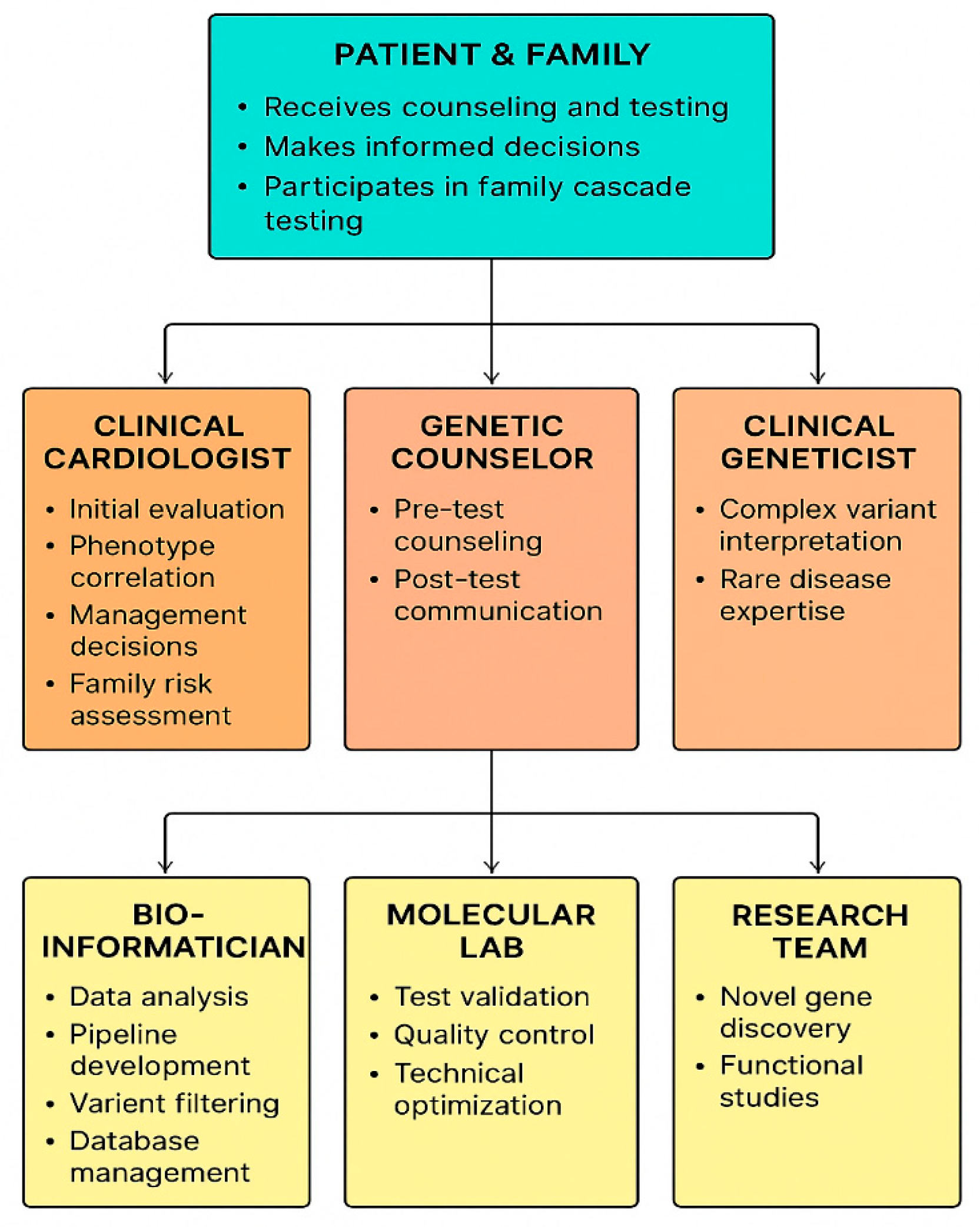
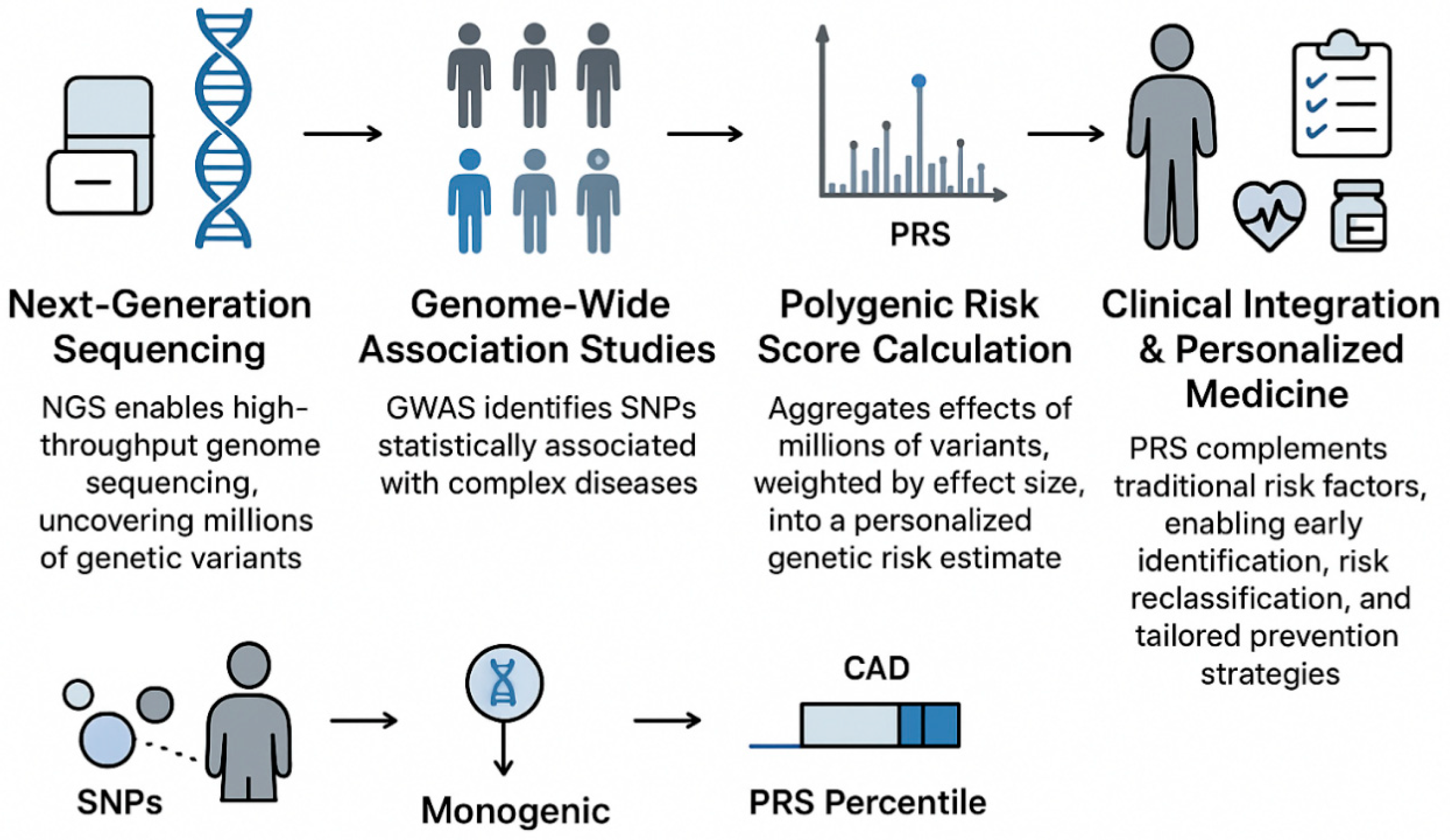


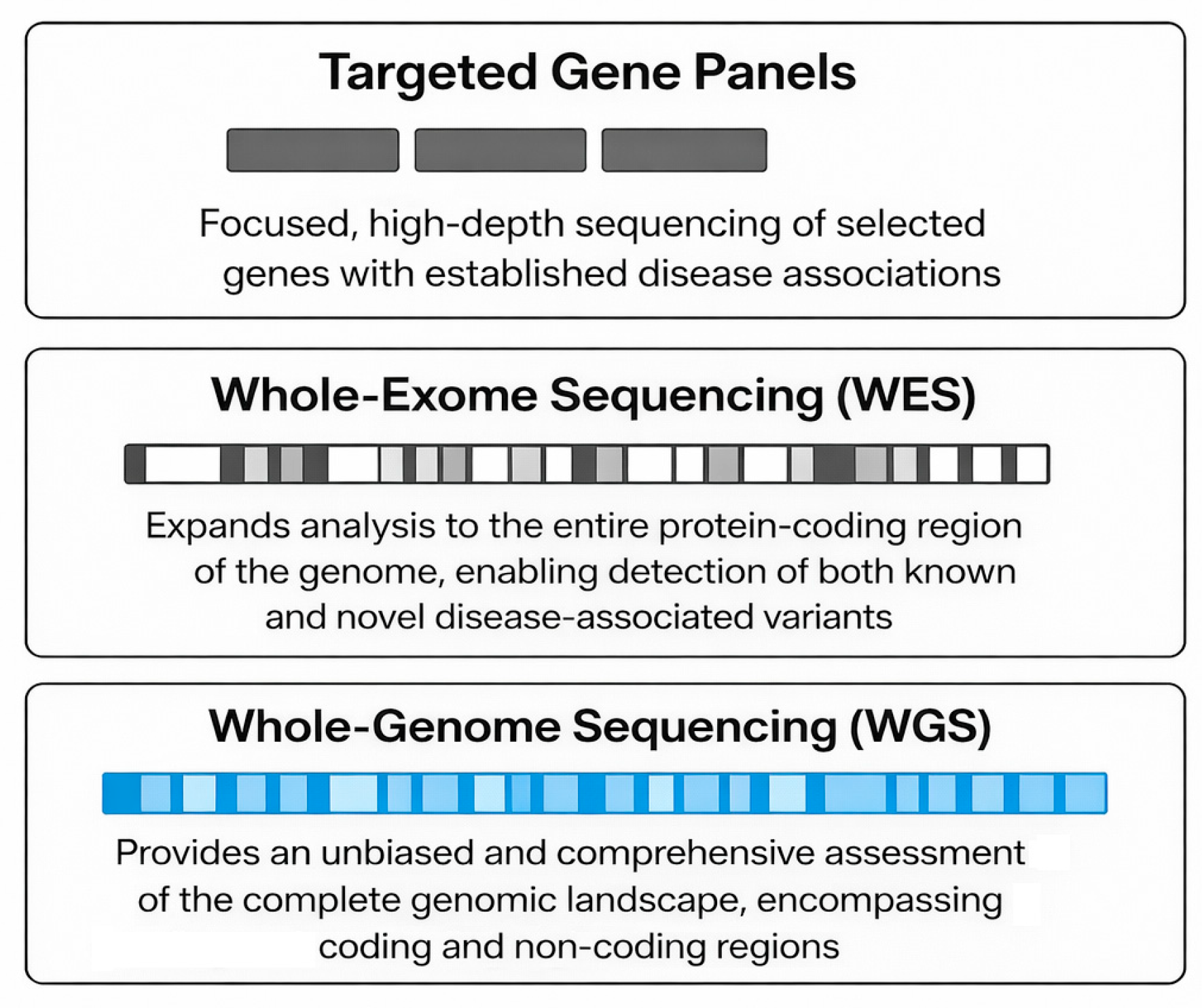
| Feature | Targeted Gene Panels | Whole-Exome Sequencing (WES) | Whole-Genome Sequencing (WGS) |
|---|---|---|---|
| Genomic Coverage | Focused on 50–200 clinically relevant genes | Covers ~1–2% of the genome (coding exons only) | Comprehensive coverage (~100% of the genome, including exons, introns, and non-coding regions) |
| Diagnostic Yield | High for known genes | Moderate to high | Highest, enabling detection of novel and rare variants |
| Turnaround Time | Fast (~2–4 weeks) | Intermediate (~4–8 weeks) | Longest (~8–12+ weeks) |
| Cost | Lowest | Moderate | Highest |
| Data Storage Requirements | Minimal (gigabytes) | Moderate (tens of gigabytes) | Extensive (hundreds of gigabytes) |
| Variant Interpretation Complexity | Relatively straightforward | Moderate complexity | Most complex due to non-coding regions, structural variants, and variant density |
| Cardiomyopathy | Key Genes | Typical Variant Types | Approx. Diagnostic Yield | Inheritance Pattern | Typical Age of Manifestation | Representative Clinical and Genetic Features |
|---|---|---|---|---|---|---|
| Hypertrophic Cardiomyopathy (HCM) | MYBPC3, MYH7, TNNT2, TNNI3, TPM1 | MYBPC3 truncating variants; MYH7 and others usually missense | ~30–60% in adults with confirmed phenotype | Autosomal dominant | Usually adulthood; MYH7-related forms may appear earlier | Pathogenic variants determine arrhythmic risk and heart failure progression. Identification of causative variants enables genotype-guided management and targeted family screening. |
| Dilated Cardiomyopathy (DCM) | TTN, LMNA, DSP, FLNC, RBM20, TNNT2, MYH7 | Primarily truncating (TTN, LMNA); occasional missense (LMNA, others) | ~15–25% among familial cases (highest for TTN) | Predominantly autosomal dominant | Typically, adulthood; LMNA variants can present earlier | LMNA-related disease carries elevated risk of malignant arrhythmias and may warrant prophylactic ICD placement. Expression is variable; family-based genetic evaluation is recommended. |
| Arrhythmogenic Right Ventricular Cardiomyopathy (ARVC) | PKP2, DSP, DSG2, DSC2, JUP | Mainly truncating and missense variants | 50–60% in individuals with a positive genotype, especially PKP2 | Autosomal dominant with incomplete penetrance | Usually, adolescence to early adulthood | High-intensity exercise accelerates progression and arrhythmic events. Genetic confirmation informs risk counseling, activity restriction, and cascade testing in relatives. |
| Syndrome | Key Genes | Inheritance Pattern | Approximate Genetic Detection Rate | Common Triggers or Clinical Features | Clinical Utility of Genetic Testing |
|---|---|---|---|---|---|
| Long QT Syndrome (LQTS) | KCNQ1 (LQT1), KCNH2 (LQT2), SCN5A (LQT3) | Autosomal dominant (most forms, including LQT1–3); autosomal recessive in rare Jervell and Lange-Nielsen syndrome | >75% in patients with a confirmed clinical diagnosis | LQT1: arrhythmias during physical activity (swimming); LQT2: triggered by emotional stress or sudden noise; LQT3: more likely at rest or during sleep | Supports genotype-informed risk stratification, guides tailored therapy (β-blockers or sodium channel blockers), and enables targeted family screening |
| Brugada Syndrome (BrS) | SCN5A (most commonly implicated) | Autosomal dominant with variable penetrance | ~20% | Arrhythmic events triggered by fever, certain medications, electrolyte imbalance | Confirms diagnosis in selected cases; helps identify at-risk relatives, though a negative result does not exclude the condition |
| Catecholaminergic Polymorphic Ventricular Tachycardia (CPVT) | RYR2 (dominant), CASQ2 (recessive) | RYR2: Autosomal dominant; CASQ2: autosomal recessive | ~60% in clinically affected individuals | Ventricular arrhythmias during exercise or emotional stress; resting ECG usually normal | Critical for definitive diagnosis, guides preventive measures (β-blockers, activity restriction), informs cascade family screening |
| Drug | Relevant Gene(s) | Genetic Impact | Recommended Clinical Action |
|---|---|---|---|
| Warfarin | VKORC1, CYP2C9 | Genetic variants alter dose requirement and sensitivity | Employ genotype-informed dosing algorithms prior to therapy |
| Clopidogrel | CYP2C19 | Poor-metabolizer phenotypes reduce active metabolite generation and efficacy | For poor metabolizers, switch to alternative P2Y12 inhibitors (e.g., prasugrel or ticagrelor) |
| Simvastatin | SLCO1B1 | Reduced transporter function increases risk of myopathy | Avoid high-dose simvastatin in at-risk genotypes; consider an alternative statin |
| Beta-blockers | ADRB1 | Variant alleles may modify receptor response | Consider genotype when evaluating response and dose, as evidence evolves |
Disclaimer/Publisher’s Note: The statements, opinions and data contained in all publications are solely those of the individual author(s) and contributor(s) and not of MDPI and/or the editor(s). MDPI and/or the editor(s) disclaim responsibility for any injury to people or property resulting from any ideas, methods, instructions or products referred to in the content. |
© 2026 by the authors. Licensee MDPI, Basel, Switzerland. This article is an open access article distributed under the terms and conditions of the Creative Commons Attribution (CC BY) license.
Share and Cite
Agiannitopoulos, K.; Papageorgiou, A.; Kouvidi, E.; Kalampoka, E.; Papadopoulou, A.; Philippou, A.; Papadodima, S.; Traikov, L.L.; Angouras, D.C. The Role of Next-Generation Sequencing in Cardiovascular Disease: A New Era of Precision Cardiology. Life 2026, 16, 796. https://doi.org/10.3390/life16050796
Agiannitopoulos K, Papageorgiou A, Kouvidi E, Kalampoka E, Papadopoulou A, Philippou A, Papadodima S, Traikov LL, Angouras DC. The Role of Next-Generation Sequencing in Cardiovascular Disease: A New Era of Precision Cardiology. Life. 2026; 16(5):796. https://doi.org/10.3390/life16050796
Chicago/Turabian StyleAgiannitopoulos, Konstantinos, Anastasios Papageorgiou, Elisavet Kouvidi, Eleni Kalampoka, Anna Papadopoulou, Anastassios Philippou, Stavroula Papadodima, Lubomir L. Traikov, and Dimitrios C. Angouras. 2026. "The Role of Next-Generation Sequencing in Cardiovascular Disease: A New Era of Precision Cardiology" Life 16, no. 5: 796. https://doi.org/10.3390/life16050796
APA StyleAgiannitopoulos, K., Papageorgiou, A., Kouvidi, E., Kalampoka, E., Papadopoulou, A., Philippou, A., Papadodima, S., Traikov, L. L., & Angouras, D. C. (2026). The Role of Next-Generation Sequencing in Cardiovascular Disease: A New Era of Precision Cardiology. Life, 16(5), 796. https://doi.org/10.3390/life16050796