Nano-Enabled Herbal Remedies for Malaria Treatment: A Review of Recent Advances

 ,
,  , ,
, ,  ,
, 
Abstract
1. Introduction
2. Overview of Plasmodium Life Cycle, Along with Possible Breakpoints for Antimalarial Drugs
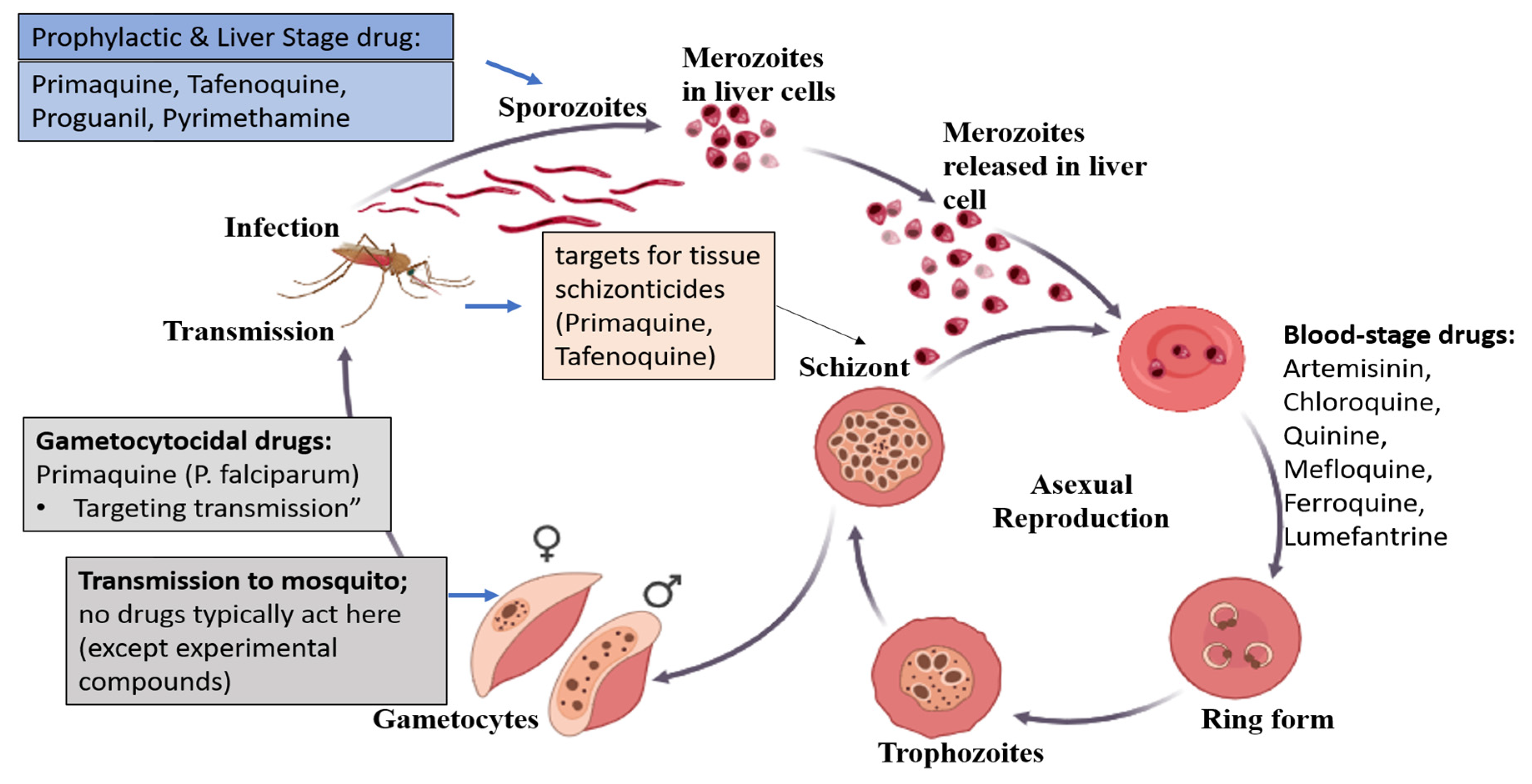
- Liver stage: The Plasmodium parasites are transmitted to the human blood circulation via the female mosquito as sporozoites [11]. After entering the bloodstream, sporozoites migrate to hepatocytes, where they develop into schizonts. The relapse might occur due to the fact that Plasmodium species such as P. ovale and P. vivax remain dormant in the liver as hypnozoites for months or even years after the initial infection. Prophylactic drugs, such as pyrimethamine, proguanil, and others, can be used to target the liver stage of the disease and prevent the development of the malaria parasite. In addition, tissue schizonticides, which are effective against hypnozoites, are needed to make a radical treatment ensuring clearance of the parasite from the liver of the host [12].
- Blood stage: After around five to ten days, merozoites develop and infiltrate the erythrocytes, causing spiked symptoms such as fever. During their intra-erythrocytic phase, the merozoites transform into trophozoites and schizonts, which are then discharged into the bloodstream to infect un-infected erythrocytes. Chances of severe malarial symptoms and probable mortality could be reduced by antimalarial medications applied at this stage [13,14]. Schizonticides are antimalarials, such as primaquine and pyrimethamine, which are used to target this stage. They work by stopping the illness from spreading to a human host [15]. Combination therapy is an effective way to treat malaria. The World Health Organization authorized the consumption of artemether–lumefantrine, artesunate–mefloquine, artesunate–amodiaquine, and dihydroartemisinic-piperaquine, along with artesunate–sulfadoxine–pyrimethamine as an antimalarial medication mixture for the treatment of P. falciparum [16]. Artemisinin derivatives primarily function as therapeutic and transmission-blocking pharmacological interventions in malaria rather than vector-control measures. These compounds rapidly clear asexual blood-stage Plasmodium parasites, achieving parasite reduction rates of up to 10,000 parasites/µL within a single 48 h asexual cycle. In addition to their potent blood-stage activity, artemisinin derivatives exhibit activity against immature gametocytes, thereby reducing parasite transmission to mosquitoes. When used in combination therapies, also termed artemisinin-based combination therapies (ACTs), they contribute to the elimination of residual parasites, lowering the risk of recrudescence and delaying the emergence of artemisinin resistance in Plasmodium species [17]. Furthermore, their short-term post-treatment prophylactic effect provides temporary protection against reinfection, positioning artemisinin derivatives as a key component of chemotherapeutic and transmission-blocking strategies for malaria control
- Transmission stage: The gametocytocidal medications utilized to target this stage, such as chloroquine and artemisinin, impede sexual gametocyte formation and growth [14]. Some merozoites undergo differentiation in the bone marrow to form sexual (female and male) gametocytes, which are then consumed by Plasmodium-free female Anopheles mosquitoes through a blood meal.
- Mosquito stage: Male and female gametocytes combine in the gut of the female Anopheles mosquito to form a zygote, which subsequently matures into an oocyst to eventually form sporozoites that can be transmitted to human hosts. The control of malarial transmission can be achieved by targeting five critical breakpoints: prevention of transmission by the vector; interruption of human–mosquito–human contact; treatment and prevention of infection during the human stage; disruption of parasite development within the mosquito; and modification of environmental and behavioral factors that influence transmission (Figure 1).
3. Non-Conventional Breakpoints in the Life Cycle of Malaria
4. Traditional Herbal Remedies for Malaria
5. Nanoparticle-Based Delivery Systems in Antimalarial Herbs
6. Antimalarial Effects of Herbal Nano-Formulations
7. Pharmacological and Therapeutic Potential
Drug-Resistance

| Gene | Variation | Antimalarial Drug | Risk of Clinical Failure | References |
|---|---|---|---|---|
| Pfcrt | K76T | Chloroquine | Increased risk of treatment failure | [65,66] |
| Pfmdr1 | N86Y | Multiple (e.g., Lumefantrine) | Increased risk of treatment failure | [65,66] |
| PfATPase6 | Various mutations | Artemisinin | Potentially increased risk | [66] |
| Pfk13 | C580Y | Artemisinin | Associated with delayed parasite clearance | [66,67] |
| Pfdhfr | S108N | Pyrimethamine | Moderate risk of treatment failure | [66,67] |
| Pfdhps | G437A, A581G | Sulfadoxine–Pyrimethamine | Moderate to high risk of treatment failure | [66,67] |
| cytB | Various mutations | Atovaquone | Increased risk of treatment failure | [68] |
8. Green Nanomaterials Against Malaria
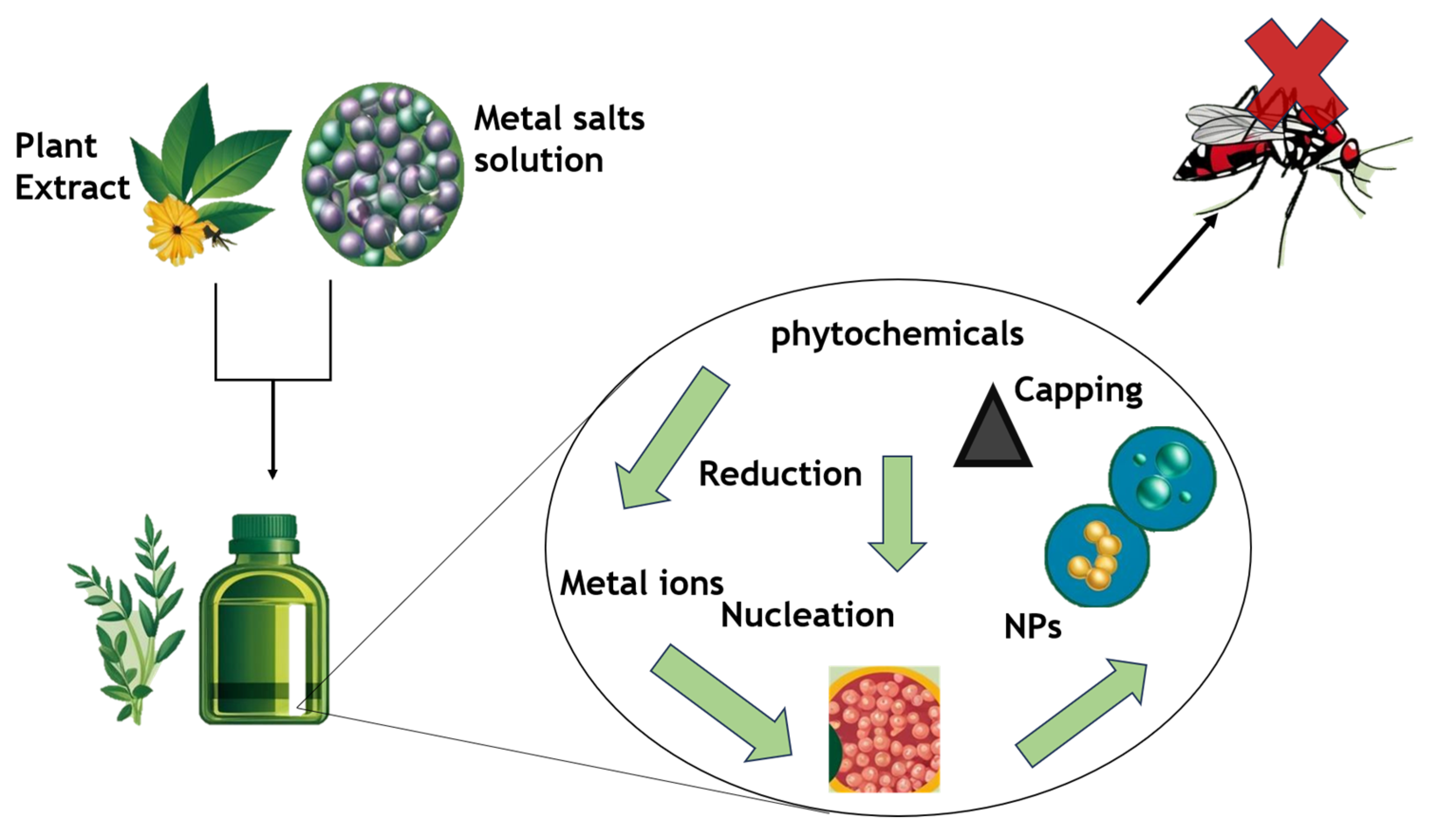
8.1. Green-Metallic Nanomaterials from Plants
8.2. Plant-Based Oil Nano-Formulations
8.3. Protein-Based Nanomaterials Against Malaria
8.4. Nanogels for Drug Delivery of Antimalarials
9. Challenges Connected with Herb-Based Nanomaterials Against Malaria
10. Malaria and Nanosensors: Advancements and Future Prospects
| Target Species/Biomarker | Type of Nanosensors | Features of Nanosensors | Reference |
|---|---|---|---|
| Plasmodium (P.) falciparum | ICP-MS-coupled gold nanoparticles | Early ring stage and mixed stage detection LoD = 1.5 pg/mL | [94] |
| Plasmodium berghei P. falciparum (Synthetic β-Hematin) | Gold–metal oxide nanoparticles | Separation of interfering signals LoD = 3.3 δ/m | [95] |
| P. falciparum (Pf-HRP-2) | Platinum nanoparticles with hydrazine | Non-enzymatic LoD = 2.2 pg/mL | [96] |
| P. falciparum | Magnetic beads and nano-rattles | Differentiates wild-type and resistant strains LoD = 100 attomoles | [97] |
| P. falciparum (pfLDH) P. vivax (pvLDH) | Colorimetric | LoD pf = 10.3–12.5 pM LoD pv = 8.3–8.7 pM | [98] |
| P. falciparum (PfHRP-2, PfMSP-1) | Carbon nanofibers on glass microballoons | Simultaneous immune-sensing LoD = 0.025 ng/mL | [99] |
| P. falciparum (PfHSP-70) | Gold nanoparticles | LoD = 2.4 μg/mL | [100] |
11. Conclusions
Author Contributions
Funding
Institutional Review Board Statement
Informed Consent Statement
Data Availability Statement
Acknowledgments
Conflicts of Interest
References
- Alghamdi, J.M.; Al-Qahtani, A.A.; Alhamlan, F.S.; Al-Qahtani, A.A. Recent Advances in the Treatment of Malaria. Pharmaceutics 2024, 16, 1416. [Google Scholar] [CrossRef]
- Tizifa, T.A.; Kabaghe, A.N.; McCann, R.S.; van den Berg, H.; Van Vugt, M.; Phiri, K.S. Prevention efforts for malaria. Curr. Trop. Med. Rep. 2018, 5, 41–50. [Google Scholar] [CrossRef]
- Shaw, W.R.; Marcenac, P.; Catteruccia, F. Plasmodium development in Anopheles: A tale of shared resources. Trends Parasitol. 2022, 38, 124–135. [Google Scholar] [CrossRef]
- Chemwor, G.C. Assessment of Plasmodium Species Prevalence, Antimalarial Drug Resistance Genes and Gametocytes in Malaria Infections Between 2018 and 2021 in Kombewa Sub-County, Kenya. Master’s Thesis, Maseno University, Kisumu, Kenya, 2024. [Google Scholar]
- Venkatesan, P. The 2023 WHO World malaria report. Lancet Microbe 2024, 5, e214. [Google Scholar] [CrossRef]
- World Malaria Report 2023: What You Need to Know—United to Beat Malaria. Available online: https://beatmalaria.org/blog/world-malaria-report-2023-what-you-need-to-know/ (accessed on 20 January 2026).
- Yadav, D.K.; Kumar, S.; Teli, M.K.; Yadav, R.; Chaudhary, S. Molecular targets for malarial chemotherapy: A review. Curr. Top. Med. Chem. 2019, 19, 861–873. [Google Scholar] [CrossRef]
- Kumar, S.; Bhardwaj, T.; Prasad, D.; Singh, R.K. Drug targets for resistant malaria: Historic to future perspectives. Biomed. Pharmacother. 2018, 104, 8–27. [Google Scholar] [CrossRef] [PubMed]
- World Health Organization. Global Report on Antimalarial Drug Efficacy and Drug Resistance: 2000–2010; World Health Organization: Geneva, Switzerland, 2010. [Google Scholar]
- Chaves, J.B.; Portugal Tavares de Moraes, B.; Regina Ferrarini, S.; Noé da Fonseca, F.; Silva, A.R.; Gonçalves-de-Albuquerque, C.F. Potential of nanoformulations in malaria treatment. Front. Pharmacol. 2022, 13, 999300. [Google Scholar] [CrossRef] [PubMed]
- Amin, R.; Melody Devi, C.; Sarkar, D.; Sharifi-Rad, J.; Sönmez Gürer, E.; Oana Docea, A.; Calina, D. Curcumin-loaded nanomedicines as therapeutic strategy in malaria management. Efood 2023, 4, e113. [Google Scholar] [CrossRef]
- Fernandes, V.d.S.; da Rosa, R.; Zimmermann, L.A.; Rogério, K.R.; Kümmerle, A.E.; Bernardes, L.S.; Graebin, C.S. Antiprotozoal agents: How have they changed over a decade? Archiv Pharmazie 2022, 355, 2100338. [Google Scholar] [CrossRef] [PubMed]
- Mehlhorn, H. Protozoans Attacking Humans Human Parasites: Diagnosis, Treatment, Prevention; Springer: Berlin/Heidelberg, Germany, 2023; pp. 19–129. [Google Scholar]
- Alven, S.; Aderibigbe, B.A. Nanoparticles formulations of artemisinin and derivatives as potential therapeutics for the treatment of cancer, leishmaniasis and malaria. Pharmaceutics 2020, 12, 748. [Google Scholar] [CrossRef]
- Belete, T.M. Recent progress in the development of new antimalarial drugs with novel targets. Drug Des. Dev. Ther. 2020, 14, 3875–3889. [Google Scholar] [CrossRef]
- Guitierrez, L. Assessing Global Cooperation as a Force for Health 2013 to 2018: Quantifying Interaction Among Select Portuguese and Non-Portuguese Speaking Countries in Dealings with Access to First-Line Medications, and Possible Impacts of SARS-CoV-2 on Access to Medical Services. Doctoral Dissertation, California State University San Marcos, San Marcos, CA, USA, 2020. [Google Scholar]
- Zheng, D.; Liu, T.; Yu, S.; Liu, Z.; Wang, J.; Wang, Y. Antimalarial Mechanisms and Resistance Status of Artemisinin and Its Derivatives. Trop. Med. Infect Dis. 2024, 9, 223. [Google Scholar] [CrossRef]
- Tajudeen, Y.A.; Oladipo, H.J.; Oladunjoye, I.O.; Oladipo, M.K.; Shittu, H.D.; Abdulmumeen, I.-F.; Afolabi, A.O.; El-Sherbini, M.S. Transforming malaria prevention and control: The prospects and challenges of gene drive technology for mosquito management. Ann. Med. 2023, 55, 2302504. [Google Scholar] [CrossRef]
- Fofana, A.; Yerbanga, R.S.; Bilgo, E.; Ouedraogo, G.A.; Gendrin, M.; Ouedraogo, J.-B. The strategy of paratransgenesis for the control of malaria transmission. Front. Trop. Dis. 2022, 3, 867104. [Google Scholar] [CrossRef]
- Minwuyelet, A.; Petronio, G.P.; Yewhalaw, D.; Sciarretta, A.; Magnifico, I.; Nicolosi, D.; Di Marco, R.; Atenafu, G. Symbiotic Wolbachia in mosquitoes and its role in reducing the transmission of mosquito-borne diseases: Updates and prospects. Front. Microbiol. 2023, 14, 1267832. [Google Scholar] [CrossRef]
- Stone, C.M.; Foster, W.A. Plant-Sugar Feeding and Vectorial Capacity Ecology of Parasite-Vector Interactions; Wageningen Academic: Wageningen, The Netherlands, 2013; pp. 35–79. [Google Scholar]
- The malERA Refresh Consultative Panel on Basic Science and Enabling Technologies. malERA: An updated research agenda for basic science and enabling technologies in malaria elimination and eradication. PLoS Med. 2017, 14, e1002451. [Google Scholar]
- Baindara, P.; Agrawal, S.; Franco, O. Host-directed therapies for malaria and tuberculosis: Common infection strategies and repurposed drugs. Expert Rev. Anti-Infect. Ther. 2022, 20, 849–869. [Google Scholar] [CrossRef] [PubMed]
- de Souza, W.; Barrias, E.S. Membrane-bound extracellular vesicles secreted by parasitic protozoa: Cellular structures involved in the communication between cells. Parasitol. Res. 2020, 119, 2005–2023. [Google Scholar] [CrossRef]
- Shahryari, A.; Burtscher, I.; Nazari, Z.; Lickert, H. Engineering gene therapy: Advances and barriers. Adv. Ther. 2021, 4, 2100040. [Google Scholar] [CrossRef]
- Ceravolo, I.P.; Aguiar, A.C.; Adebayo, J.O.; Krettli, A.U. Studies on activities and chemical characterization of medicinal plants in search for new Antimalarials: A ten year review on Ethnopharmacology. Front. Pharmacol. 2021, 12, 734263. [Google Scholar] [CrossRef] [PubMed]
- Okine, E.F. Impact of Western-Based Science on Traditional Medical Practice in Colonial Ghana: Case Studies of the Treatment of Malaria and Trypanosomiasis. Master’s Thesis, Bowling Green State University, Bowling Green, OH, USA, 2024. [Google Scholar]
- World Health Organization. Global Technical Strategy for Malaria 2016–2030; World Health Organization: Geneva, Switzerland, 2015. [Google Scholar]
- Kassimu, K.R.; Ali, A.M.; Omolo, J.J.; Mdemu, A.; Machumi, F.; Ngasala, B. The effect of an anti-malarial herbal remedy, Maytenus senegalensis, on electrocardiograms of healthy Tanzanian volunteers. Malar. J. 2024, 23, 103. [Google Scholar] [CrossRef]
- Abdou, A.M.; Seddek, A.-l.S.; Abdelmageed, N.; Badry, M.O.; Nishikawa, Y. Wild Egyptian medicinal plants show in vitro and in vivo cytotoxicity and antimalarial activities. BMC Complement. Med. Ther. 2022, 22, 130. [Google Scholar] [CrossRef]
- Tabuti, J.R.S.; Obakiro, S.B.; Nabatanzi, A.; Anywar, G.; Nambejja, C.; Mutyaba, M.R.; Omara, T.; Waako, P. Medicinal plants used for treatment of malaria by indigenous communities of Tororo District, Eastern Uganda. Trop. Med. Health 2023, 51, 34. [Google Scholar] [CrossRef]
- Mukherjee, P.K. Quality Control and Evaluation of Herbal Drugs: Evaluating Natural Products and Traditional Medicine; Elsevier: Amsterdam, The Netherlands, 2019. [Google Scholar]
- Opoku-Agyemang, F.; Dodoo, J.N.O.; Hlomador, T.E.; Gilday, K.; Amissah, J.N. Conservation and Sustainable Use of Cryptolepis sanguinolenta Herbs and Spices-New Advances; IntechOpen: London, UK, 2022. [Google Scholar]
- Wright, C.W. Recent developments in naturally derived antimalarials: Cryptolepine analogues. J. Pharm. Pharmacol. 2007, 59, 899–904. [Google Scholar] [CrossRef]
- Willcox, M.; Bodeker, G.; Rasoanaivo, P.; Addae-Kyereme, J. Traditional Medicinal Plants and Malaria; CRC Press: Boca Raton, FL, USA, 2004. [Google Scholar]
- Silva, L.R.; Montoia, A.; Amorim, R.; Melo, M.; Henrique, M.; Nunomura, S.; Costa, M.; Neto, V.A.; Costa, D.; Dantas, G. Comparative in vitro and in vivo antimalarial activity of the indole alkaloids ellipticine, olivacine, cryptolepine and a synthetic cryptolepine analog. Phytomedicine 2012, 20, 71–76. [Google Scholar] [CrossRef] [PubMed]
- Farahna, M.; Bedri, S.; Khalid, S.; Idris, M.; Pillai, C.R.; Khalil, E.A. Anti-plasmodial effects of Azadirachta indica in experimental cerebral malaria: Apoptosis of cerebellar Purkinje cells of mice as a marker. N. Am. J. Med. Sci. 2010, 2, 518. [Google Scholar] [CrossRef] [PubMed]
- Nortey, N.N.D.; Korsah, S.; Tagoe, M.; Apenteng, J.A.; Owusu, F.A.; Oppong, J.; Attah, A.E.; Allotey, S. Herbs Used in Antimalarial Medicines: A Study in the Greater Accra Region of Ghana. Evid.-Based Complement. Altern. Med. 2023, 2023, 6697078. [Google Scholar]
- Sahu, T.; Ratre, Y.K.; Chauhan, S.; Bhaskar, L.; Nair, M.P.; Verma, H.K. Nanotechnology based drug delivery system: Current strategies and emerging therapeutic potential for medical science. J. Drug Deliv. Sci. Technol. 2021, 63, 102487. [Google Scholar] [CrossRef]
- Mazayen, Z.M.; Ghoneim, A.M.; Elbatanony, R.S.; Basalious, E.B.; Bendas, E.R. Pharmaceutical nanotechnology: From the bench to the market. Future J. Pharm. Sci. 2022, 8, 12. [Google Scholar] [CrossRef] [PubMed]
- Opuni, K.F.; Kretchy, J.-P.; Agyabeng, K.; Boadu, J.A.; Adanu, T.; Ankamah, S.; Appiah, A.; Amoah, G.B.; Baidoo, M.; Kretchy, I.A. Contamination of herbal medicinal products in low-and-middle-income countries: A systematic review. Heliyon 2023, 9, e19370. [Google Scholar] [CrossRef]
- Yadav, N.; Singh Chandel, S.; Venkatachalam, T.; Fathima, S.N. Herbal Medicine Formulation, Standardization, and Commercialization Challenges and Sustainable Strategies for Improvement Herbal Medicine Phytochemistry: Applications and Trends; Springer: Berlin/Heidelberg, Germany, 2024; pp. 1769–1795. [Google Scholar]
- Mouhid, L.; Corzo-Martínez, M.; Torres, C.; Vázquez, L.; Reglero, G.; Fornari, T.; Ramírez de Molina, A. Improving in vivo efficacy of bioactive molecules: An overview of potentially antitumor phytochemicals and currently available lipid-based delivery systems. J. Oncol. 2017, 2017, 7351976. [Google Scholar] [CrossRef]
- Moradi, S.Z.; Momtaz, S.; Bayrami, Z.; Farzaei, M.H.; Abdollahi, M. Nanoformulations of herbal extracts in treatment of neurodegenerative disorders. Front. Bioeng. Biotechnol. 2020, 8, 238. [Google Scholar] [CrossRef]
- Onyeji, C.O. Prospects of integration of nanotechnology to antimalarial herbal remedies for improved therapeutic efficacy—A concise review. Afr. J. Tradit. Complement. Altern. Med. 2021, 18, 27–35. [Google Scholar] [CrossRef]
- Han, H.S.; Koo, S.Y.; Choi, K.Y. Emerging nanoformulation strategies for phytocompounds and applications from drug delivery to phototherapy to imaging. Bioact. Mater. 2022, 14, 182–205. [Google Scholar] [CrossRef]
- Jeevanandam, J.; Chan, Y.S.; Danquah, M.K. Nano-formulations of drugs: Recent developments, impact and challenges. Biochimie 2016, 128–129, 99–112. [Google Scholar] [CrossRef] [PubMed]
- Busari, Z.A.; Dauda, K.A.; Morenikeji, O.A.; Afolayan, F.; Oyeyemi, O.T.; Meena, J.; Sahu, D.; Panda, A.K. Antiplasmodial activity and toxicological assessment of curcumin PLGA-encapsulated nanoparticles. Front. Pharmacol. 2017, 8, 622. [Google Scholar] [CrossRef]
- Dende, C.; Meena, J.; Nagarajan, P.; Nagaraj, V.A.; Panda, A.K.; Padmanaban, G. Nanocurcumin is superior to native curcumin in preventing degenerative changes in experimental cerebral malaria. Sci. Rep. 2017, 7, 10062. [Google Scholar] [CrossRef] [PubMed]
- Oyeyemi, O.; Morenkeji, O.; Afolayan, F.; Dauda, K.; Busari, Z.; Meena, J.; Panda, A. Curcumin-artesunate based polymeric nanoparticle; antiplasmodial and toxicological evaluation in murine model. Front. Pharmacol. 2018, 9, 562. [Google Scholar] [CrossRef] [PubMed]
- Ghosh, A.; Banerjee, T.; Surolia, A.; Bhandary, S. Formulation of nanotized curcumin and demonstration of its antimalarial efficacy. Int. J. Nanomed. 2014, 9, 5373. [Google Scholar] [CrossRef]
- Gomes, G.S.; Maciel, T.R.; Piegas, E.M.; Michels, L.R.; Colomé, L.M.; Freddo, R.J.; de Ávila, D.S.; Gundel, A.; Haas, S.E. Optimization of Curcuma oil/quinine-loaded nanocapsules for malaria treatment. AAPS PharmSciTech 2018, 19, 551–564. [Google Scholar] [CrossRef]
- Memvanga, P.B.; Coco, R.; Préat, V. An oral malaria therapy: Curcumin-loaded lipid-based drug delivery systems combined with β-arteether. J. Control. Release 2013, 172, 904–913. [Google Scholar] [CrossRef] [PubMed]
- Biosca, A.; Cabanach, P.; Abdulkarim, M.; Gumbleton, M.; Gómez-Canela, C.; Ramírez, M.; Bouzón-Arnáiz, I.; Avalos-Padilla, Y.; Borros, S.; Fernàndez-Busquets, X. Zwitterionic self-assembled nanoparticles as carriers for Plasmodium targeting in malaria oral treatment. J. Control. Release 2021, 331, 364–375. [Google Scholar] [CrossRef]
- Sardana, M.; Agarwal, V.; Pant, A.; Kapoor, V.; Pandey, K.C.; Kumar, S. Antiplasmodial activity of silver nanoparticles: A novel green synthesis approach. Asian Pac. J. Trop. Biomed. 2018, 8, 268–272. [Google Scholar] [CrossRef]
- Veeragoni, D.; Deshpande, S.S.; Singh, V.; Misra, S.; Mutheneni, S.R. In vitro and in vivo antimalarial activity of green synthesized silver nanoparticles using Sargassum tenerrimum-a marine seaweed. Acta Trop. 2023, 245, 106982. [Google Scholar] [CrossRef]
- Kakkar, S.; Jha, R.K.; Hattila, D.; Singh, A.K.; Shukla, P.K.; Yadav, S.P.S.; Meena, A.S. Plant-Derived Natural Product-Based Nanoformulations for Healthcare Application. Nanotheranostics 2025, 9, 262. [Google Scholar] [CrossRef] [PubMed]
- Singh, S.; Arya, H.; Sahu, W.; Reddy, K.S.; Nimesh, S.; Alotaibi, B.S.; Kumar Bhatt, T. Green synthesized silver nanoparticles of Terminalia bellirica leaves extract: Synthesis, characterization, in-silico studies, and antimalarial activity. Artif. Cells Nanomed. Biotechnol. 2024, 52, 238–249. [Google Scholar] [CrossRef]
- Mohammadi, L.; Pal, K.; Bilal, M.; Rahdar, A.; Fytianos, G.; Kyzas, G.Z. Green nanoparticles to treat patients with Malaria disease: An overview. J. Mol. Struct. 2021, 1229, 129857. [Google Scholar] [CrossRef]
- Bloland, P.B.; World Health Organization. Drug Resistance in Malaria; (No. WHO/CDS/CSR/DRS/2001.4); World Health Organization: Geneva, Switzerland, 2001. [Google Scholar]
- Phillips-Howard, P.A.; ter Kuile, F.O. CNS adverse events associated with antimalarial agents: Fact or fiction? Drug Saf. 1995, 12, 370–383. [Google Scholar] [CrossRef]
- Ter Kuile, F.O.; Nosten, F.; Luxemburger, C.; Kyle, D.; Teja-Isavatharm, P.; Phaipun, L.; Price, R.; Chongsuphajaisiddhi, T.; White, N.J. Mefloquine treatment of acute falciparum malaria: A prospective study of non-serious adverse effects in 3673 patients. Bull. World Health Organ. 1995, 73, 631. [Google Scholar]
- Biot, C.; Nosten, F.; Fraisse, L.; Ter-Minassian, D.; Khalife, J.; Dive, D. The antimalarial ferroquine: From bench to clinic. Parasite J. Société Française Parasitol. 2011, 18, 207. [Google Scholar] [CrossRef]
- Wesche, D.L.; Schuster, B.G.; Wang, W.X.; Woosley, R.L. Mechanism of cardiotoxicity of halofantrine. Clin. Pharmacol. Ther. 2000, 67, 521–529. [Google Scholar] [CrossRef] [PubMed]
- Cowell, A.N.; Winzeler, E.A. The genomic architecture of antimalarial drug resistance. Brief. Funct. Genom. 2019, 18, 314–328. [Google Scholar] [CrossRef]
- Kale, S.; Uplekar, S.M.; Bandyopadhyay, N.; Rao, P.N.; Ali, S.Z.; Sharma, S.K.; Tandel, N.; Patel, A.; Singh, R.; Dank, A.; et al. Antimalarial drug resistance profiling of Plasmodium falciparum infections in India using Ion Torrent deep sequencing. Front. Malar. 2024, 2, 1363969. [Google Scholar] [CrossRef]
- Hussien, M.; Abdel Hamid, M.M.; Elamin, E.A.; Hassan, A.O.; Elaagip, A.H.; Salama, A.H.A.; Abdelraheem, M.H.; Mohamed, A.O. Antimalarial drug resistance molecular makers of Plasmodium falciparum isolates from Sudan during 2015–2017. PLoS ONE 2020, 15, e0235401. [Google Scholar] [CrossRef]
- White, N.J. Antimalarial drug resistance. J. Clin. Investig. 2004, 113, 1084–1092. [Google Scholar] [CrossRef]
- Megersa, D.M.; Luo, X.-S. Effects of Climate Change on Malaria Risk to Human Health: A Review. Atmosphere 2025, 16, 71. [Google Scholar] [CrossRef]
- Smith Gueye, C.; Newby, G.; Tulloch, J.; Slutsker, L.; Tanner, M.; Gosling, R.D. The central role of national programme management for the achievement of malaria elimination: A cross case-study analysis of nine malaria programmes. Malar. J. 2016, 15, 488. [Google Scholar] [CrossRef]
- Zaheer, T. New, Simple, and Cost-Effective Synthesis of Green Nanotechnology in Anti-Microbial Applications. In Green Nanomaterials; Apple Academic Press: Oakville, ON, Canada, 2022; pp. 131–146. [Google Scholar] [CrossRef]
- Marimuthu, S.; Rahuman, A.A.; Rajakumar, G.; Santhoshkumar, T.; Kirthi, A.V.; Jayaseelan, C.; Bagavan, A.; Zahir, A.A.; Elango, G.; Kamaraj, C. Evaluation of green synthesized silver nanoparticles against parasites. Parasitol. Res. 2011, 108, 1541–1549. [Google Scholar] [CrossRef]
- Kalpana, V.N.; Alarjani, K.M.; Rajeswari, V.D. Enhancing malaria control using Lagenaria siceraria and its mediated zinc oxide nanoparticles against the vector Anopheles stephensi and its parasite Plasmodium falciparum. Sci. Rep. 2020, 10, 21568. [Google Scholar] [CrossRef] [PubMed]
- Benelli, G. Green synthesized nanoparticles in the fight against mosquito-borne diseases and cancer—A brief review. Enzym. Microb. Technol. 2016, 95, 58–68. [Google Scholar] [CrossRef]
- Hawadak, J.; Kojom Foko, L.P.; Pande, V.; Singh, V. In vitro antiplasmodial activity, hemocompatibility and temporal stability of Azadirachta indica silver nanoparticles. Artif. Cells Nanomed. Biotechnol. 2022, 50, 286–300. [Google Scholar] [CrossRef]
- Yurtdaş-Kırımlıoğlu, G.; Görgülü, Ş. Surface modification of PLGA nanoparticles with chitosan or Eudragit® RS 100: Characterization, prolonged release, cytotoxicity, and enhanced antimicrobial activity. J. Drug Deliv. Sci. Technol. 2021, 61, 102145. [Google Scholar] [CrossRef]
- Contri, R.V.; Ribeiro, K.L.F.; Fiel, L.A.; Pohlmann, A.R.; Guterres, S.S. Vegetable oils as core of cationic polymeric nanocapsules: Influence on the physicochemical properties. J. Exp. Nanosci. 2013, 8, 913–924. [Google Scholar] [CrossRef]
- Gao, S.; Chen, J.; Peng, W.; Yang, Y.; Yang, Y.; Hua, L.; Guo, Y.; Wang, Y.; Zhang, X. The preparation and relative bioavailability of an artemisin in self-emulsifying drug delivery system. Drug Deliv. 2023, 30, 2168794. [Google Scholar] [CrossRef]
- Boateng-Marfo, Y.; Dong, Y.; Loh, Z.H.; Lin, H.; Ng, W.K. Intravenous human serum albumin (HSA)-bound artemether nanoparticles for treatment of severe malaria. Colloids Surfaces A Physicochem. Eng. Asp. 2018, 536, 20–29. [Google Scholar] [CrossRef]
- Ibrahim, N.; Ibrahim, H.; Dormoi, J.; Briolant, S.; Pradines, B.; Moreno, A.; Mazier, D.; Legrand, P.; Nepveu, F. Albumin-bound nanoparticles of practically water-insoluble antimalarial lead greatly enhance its efficacy. Int. J. Pharm. 2014, 464, 214–224. [Google Scholar] [CrossRef] [PubMed]
- Dandekar, P.P.; Jain, R.; Patil, S.; Dhumal, R.; Tiwari, D.; Sharma, S.; Vanage, G.; Patravale, V. Curcumin-loaded hydrogel nanoparticles: Application in anti-malarial therapy and toxicological evaluation. J. Pharm. Sci. 2010, 99, 4992–5010. [Google Scholar] [CrossRef]
- Lokole, P.B.; Byamungu, G.G.; Mutwale, P.K.; Ngombe, N.K.; Mudogo, C.N.; Krause, R.W.; Nkanga, C.I. Plant-based nanoparticles targeting malaria management. Front. Pharmacol. 2024, 15, 1440116. [Google Scholar] [CrossRef]
- Shater, A.F.; Saleh, F.M.; Mohammedsaleh, Z.M.; Gattan, H.; Al-Ahmadi, B.M.; Saeedi, N.H.; Panneerselvam, C. Green nanoarchitectonics of the silver nanocrystal potential for treating malaria and their cytotoxic effects on the kidney Vero cell line. Green Process. Synth. 2023, 12, 20228111. [Google Scholar] [CrossRef]
- Wang, S.; Huang, F.; Yan, H.; Yin, J.; Xia, Z. A review of malaria molecular markers for drug resistance in Plasmodium falciparum and Plasmodium vivax in China. Front. Cell. Infect. Microbiol. 2023, 13, 1167220. [Google Scholar] [CrossRef] [PubMed]
- Rana, A.; Yadav, K.; Jagadevan, S. A comprehensive review on green synthesis of nature-inspired metal nanoparticles: Mechanism, application and toxicity. J. Clean. Prod. 2020, 272, 122880. [Google Scholar] [CrossRef]
- Balke, I.; Zeltins, A. Recent advances in the use of plant virus-like particles as vaccines. Viruses 2020, 12, 270. [Google Scholar] [CrossRef] [PubMed]
- Kunle, O.F.; Egharevba, H.O.; Ahmadu, P.O. Standardization of herbal medicines—A review. Int. J. Biodivers. Conserv. 2012, 4, 101–112. [Google Scholar] [CrossRef]
- Król, G.; Fortunka, K.; Majchrzak, M.; Piktel, E.; Paprocka, P.; Mańkowska, A.; Bucki, R. Metallic nanoparticles and core-shell nanosystems in the treatment, diagnosis, and prevention of parasitic diseases. Pathogens 2023, 12, 838. [Google Scholar] [CrossRef]
- Borgheti-Cardoso, L.N.; San Anselmo, M.; Lantero, E.; Lancelot, A.; Serrano, J.L.; Hernández-Ainsa, S.; Fernàndez-Busquets, X.; Sierra, T. Promising nanomaterials in the fight against malaria. J. Mater. Chem. B 2020, 8, 9428–9448. [Google Scholar] [CrossRef]
- WHO. WHO, World Malaria Report 2020; World Health Organization: Geneva, Switzerland, 2020. [Google Scholar]
- Beier, J.C.; Keating, J.; Githure, J.I.; Macdonald, M.B.; Impoinvil, D.E.; Novak, R.J. Integrated vector management for malaria control. Malar. J. 2008, 7, S4. [Google Scholar] [CrossRef]
- Murray, C.K.; Gasser, R.A., Jr.; Magill, A.J.; Miller, R.S. Update on rapid diagnostic testing for malaria. Clin. Microbiol. Rev. 2008, 21, 97–110. [Google Scholar] [CrossRef] [PubMed]
- Gatton, M.L.; Dunn, J.; Chaudhry, A.; Ciketic, S.; Cunningham, J.; Cheng, Q. Implications of Parasites Lacking Plasmodium falciparum Histidine-Rich Protein 2 on Malaria Morbidity and Control When Rapid Diagnostic Tests Are Used for Diagnosis. J. Infect. Dis. 2017, 215, 1156–1166. [Google Scholar] [CrossRef]
- Mu, J.; Yu, L.L.; Wellems, T.E. Sensitive Immunoassay Detection of Plasmodium Lactate Dehydrogenase by Inductively Coupled Plasma Mass Spectrometry. Front. Cell. Infect. Microbiol. 2021, 10, 620419. [Google Scholar] [CrossRef]
- Obisesan, O.R.; Adekunle, A.S.; Oyekunle, J.A.O.; Sabu, T.; Nkambule, T.T.I.; Mamba, B.B. Development of Electrochemical Nanosensor for the Detection of Malaria Parasite in Clinical Samples. Front. Chem. 2019, 7, 89. [Google Scholar] [CrossRef]
- Dutta, G.; Nagarajan, S.; Lapidus, L.J.; Lillehoj, P.B. Enzyme-free electrochemical immunosensor based on methylene blue and the electro-oxidation of hydrazine on Pt nanoparticles. Biosens. Bioelectron. 2017, 92, 372–377. [Google Scholar] [CrossRef] [PubMed]
- Ngo, H.T.; Gandra, N.; Fales, A.M.; Taylor, S.M.; Vo-Dinh, T. Sensitive DNA detection and SNP discrimination using ultrabright SERS nanorattles and magnetic beads for malaria diagnostics. Biosens. Bioelectron. 2016, 81, 8–14. [Google Scholar] [CrossRef] [PubMed]
- Jeon, W.; Lee, S.; Manjunatha, D.H.; Ban, C. A colorimetric aptasensor for the diagnosis of malaria based on cationic polymers and gold nanoparticles. Anal. Biochem. 2013, 439, 11–16. [Google Scholar] [CrossRef]
- Gikunoo, E.; Abera, A.; Woldesenbet, E. A novel carbon nanofibers grown on glass microballoons immunosensor: A tool for early diagnosis of malaria. Sensors 2014, 14, 14686–14699. [Google Scholar] [CrossRef]
- Guirgis, B.S.; Sá e Cunha, C.; Gomes, I.; Cavadas, M.; Silva, I.; Doria, G.; Blatch, G.L.; Baptista, P.V.; Pereira, E.; Azzazy, H.M.; et al. Gold nanoparticle-based fluorescence immunoassay for malaria antigen detection. Anal. Bioanal. Chem. 2012, 402, 1019–1027. [Google Scholar] [CrossRef]
- Kissinger, P.T. Biosensors—A perspective. Biosens. Bioelectron. 2005, 20, 2512–2516. [Google Scholar] [CrossRef] [PubMed]


| Type | Uses | Product Names/Plant Species | Dose | WHO Approved | References |
|---|---|---|---|---|---|
| Market Products | |||||
| Antimalarial | Chloroquine-sensitive malaria | Plaquenil® (hydroxychloroquine) | 400 mg weekly prophylaxis | Yes | [30] |
| Combination Therapy | Uncomplicated malaria | Coartem® (artemether–lumefantrine) | Weight-based dosing (5–40 kg) | Yes | [37] |
| Artemisinin-based | Severe malaria treatment | Rectal Artesunate (Cipla RAS 100 mg) | 100 mg suppository for children < 6 yrs | Yes | [38] |
| Prophylaxis | Malaria prevention | Malarone® (atovaquone–proguanil) | 1 adult tablet daily | Yes | |
| Chemoprophylaxis | Prevention in endemic areas | Mefloquine | 228 mg base weekly | Yes | [38] |
| Herbal Remedies | |||||
| Fever reduction | Symptomatic malaria management | Vernonia amygdalina (Bitter leaf) | Leaf decoction (unstandardized) | No | [29] |
| Antipyretic | Malaria-associated fever | Azadirachta indica (Neem) | Leaf extract 2–3× daily | No | [31] |
| Antimalarial | Traditional treatment | Aloe nobilis | Sap or leaf infusion | No | [33] |
| Symptom relief | Management of malaria symptoms | Mangifera indica (Mango bark) | Bark decoction 500 mL/day | No | [34] |
| Prophylaxis | Community-based prevention | Warburgia ugandensis (East African greenheart) | Bark powder mixed with water | No | [35] |
| Adjunctive therapy | Used with conventional treatments | Artemisia annua (Sweet wormwood) | Dried herbal tea 1–2 cups daily | Partially 3 | [38] |
| Plants | Plant Part Extracted | Types of NPs | Size (nm) | Shape | Target Plasmodium Strains | Anti-Plasmodial Activity | References |
|---|---|---|---|---|---|---|---|
| Azadirachta indica | Leaves | Silver | 4.74–39.32 | Spherical | P. falciparum (3D7) | EC50: 0.3 μM | [55] |
| Ocimum sanctum | Leaves | Silver | 4.74-39.32 nm | Spherical | P. falciparum (3D7) | Moderate activity | [55] |
| Ocimum sanctum | Leaves | Silver | 4.74-39.32 nm | Spherical | P. falciparum | EC50 values ranging from 0.3 μM; enhanced activity when combined with neem extract | [55] |
| Sargassum tenerrimum | Whole plant | Silver | 7.71–23.93 | Spherical | P. falciparum, P. berghei | IC50: 7.71 µg/mL (P. falciparum), 23.93 µg/mL (P. berghei) | [56] |
| Cymbopogon citratus | Leaves | Gold | Not specified | Not specified | Not specified | Control of Anopheles and Aedes larval populations | [57] |
| Terminalia bellirica | leaves | Silver | 44.05 nm | cubic | P. falciparum | inhibit the parasitized red blood cells (pRBCs) | [58] |
| Sargassum wightii | Not specified | Zinc | Not specified | Not specified | Not specified | LC50 ranged from 4.330–7.430 ppm and 12.278–20.798 ppm | [59] |
| Ledebouria revoluta | Not specified | TiO2 | Not specified | Not specified | Not specified | larvicidal activity with Lc50(18.960 mg/mL) and LC50 (77.097 mg/mL) against Aedes aegypti. | [59] |
| Eclipta prostrate | leaves | Pd-NPs | Not specified | Not specified | P. berghei | IC50 values achieved were 9.84, 4.49 | [59] |
| Type of Nanoparticle | Carrier | Application | Therapeutic Outcome | Ref. |
|---|---|---|---|---|
| Artemisinin-Loaded Nanoparticles | Polymeric, metal-based, lipid nanoparticles | Treatment of malaria | Enhanced solubility, bioavailability, and therapeutic efficacy against Plasmodium species | [14] |
| Lipid Nanoparticles | Glycerophosphorylcholine | Kill parasite in-vivo | Longer retention half-life in the bloodstream, delayed recrudescence and improved survival | [14] |
| Curcumin–Artesunate Nanoparticle | Poly (D, L-lactic-co-glycolic acid) (PLGA) | Treatment of malaria | Significant suppression of P. berghei in mice; improved pharmacokinetics compared to free drugs | [50] |
| Silver Nanoparticles | Silver-based formulations | Mosquito larvicides | Effective against mosquito larvae; significant reduction in the population density of malaria vectors | [59] |
| Green Synthesized Nanoparticles | Plant extracts (e.g., Terminalia bellirica, Prosopis juliflora) | Antimalarial activity | Demonstrated anti-plasmodial activity with lower toxicity; eco-friendly alternative | [82] |
| Plant-Based Nanoparticles | Various plant extracts | Preventative and curative | Effective against Plasmodium falciparum at multiple lifecycle stages; enhances drug delivery systems; toxic against mosquito vectors like An. stephensi | [82] |
| Lipid Nanocarriers | Liposomes | Formulation of antimalarial drugs | Enhanced targeting and reduced side effects in drug therapy; improved pharmacokinetic profiles | [82] |
| Gold Nanoparticles | Gold-coated carriers | Vaccine development | Targeting P. falciparum antigen Pfs25; promising results in immunogenicity and protective efficacy | [82] |
| nanomimics | Not mentioned | block the entrance of the parasite into host red blood cells | Parasite is vulnerable to host‘s defence system and anti-plasmodial therapeutics | [88] |
| Dendrimers | Not mentioned | Drug delivery | Increase drug loading cpacity and excellent targetting of affected RBCs | [89] |
Disclaimer/Publisher’s Note: The statements, opinions and data contained in all publications are solely those of the individual author(s) and contributor(s) and not of MDPI and/or the editor(s). MDPI and/or the editor(s) disclaim responsibility for any injury to people or property resulting from any ideas, methods, instructions or products referred to in the content. |
© 2026 by the authors. Licensee MDPI, Basel, Switzerland. This article is an open access article distributed under the terms and conditions of the Creative Commons Attribution (CC BY) license.
Share and Cite
Xu, C.; Fatima, A.; Fatima, M.; Aqib, A.I.; Zaheer, T.; Rab, S.O.; Saeed, M.; Arif, Z.; Li, K. Nano-Enabled Herbal Remedies for Malaria Treatment: A Review of Recent Advances. Life 2026, 16, 322. https://doi.org/10.3390/life16020322
Xu C, Fatima A, Fatima M, Aqib AI, Zaheer T, Rab SO, Saeed M, Arif Z, Li K. Nano-Enabled Herbal Remedies for Malaria Treatment: A Review of Recent Advances. Life. 2026; 16(2):322. https://doi.org/10.3390/life16020322
Chicago/Turabian StyleXu, Chang, Arooj Fatima, Mahreen Fatima, Amjad Islam Aqib, Tean Zaheer, Safia Obaidur Rab, Mohd Saeed, Zeeshan Arif, and Kun Li. 2026. "Nano-Enabled Herbal Remedies for Malaria Treatment: A Review of Recent Advances" Life 16, no. 2: 322. https://doi.org/10.3390/life16020322
APA StyleXu, C., Fatima, A., Fatima, M., Aqib, A. I., Zaheer, T., Rab, S. O., Saeed, M., Arif, Z., & Li, K. (2026). Nano-Enabled Herbal Remedies for Malaria Treatment: A Review of Recent Advances. Life, 16(2), 322. https://doi.org/10.3390/life16020322