Article

Nasal Irrigation with Licorice Extract for Allergic Rhinitis: A Clinical Study Evaluated by Subjective Assessments and Meridian Electrical Conductance


1
Department of Traditional Chinese Medicine, Chang Gung Memorial Hospital, Chiayi 613, Taiwan
2
School of Traditional Chinese Medicine, College of Medicine, Chang Gung University, Taoyuan 333, Taiwan
3
Graduate Institute of Integrated Medicine, College of Medicine, China Medical University, Taichung 404, Taiwan
4
School of Medicine, College of Medicine, China Medical University, Taichung 404, Taiwan
5
Department of Otolaryngology—Head and Neck Surgery, Chang Gung Memorial Hospital, Chiayi 613, Taiwan
6
Faculty of Medicine, College of Medicine, Chang Gung University, Taoyuan 333, Taiwan
7
Graduate Institute of Clinical Medical Sciences, College of Medicine, Chang Gung University, Taoyuan 333, Taiwan
8
Head and Neck Infection Treatment Center, Chang Gung Memorial Hospital, Chiayi 613, Taiwan
*
Author to whom correspondence should be addressed.
Life 2025, 15(11), 1667; https://doi.org/10.3390/life15111667
Submission received: 19 September 2025 / Revised: 19 October 2025 / Accepted: 23 October 2025 / Published: 25 October 2025

Abstract

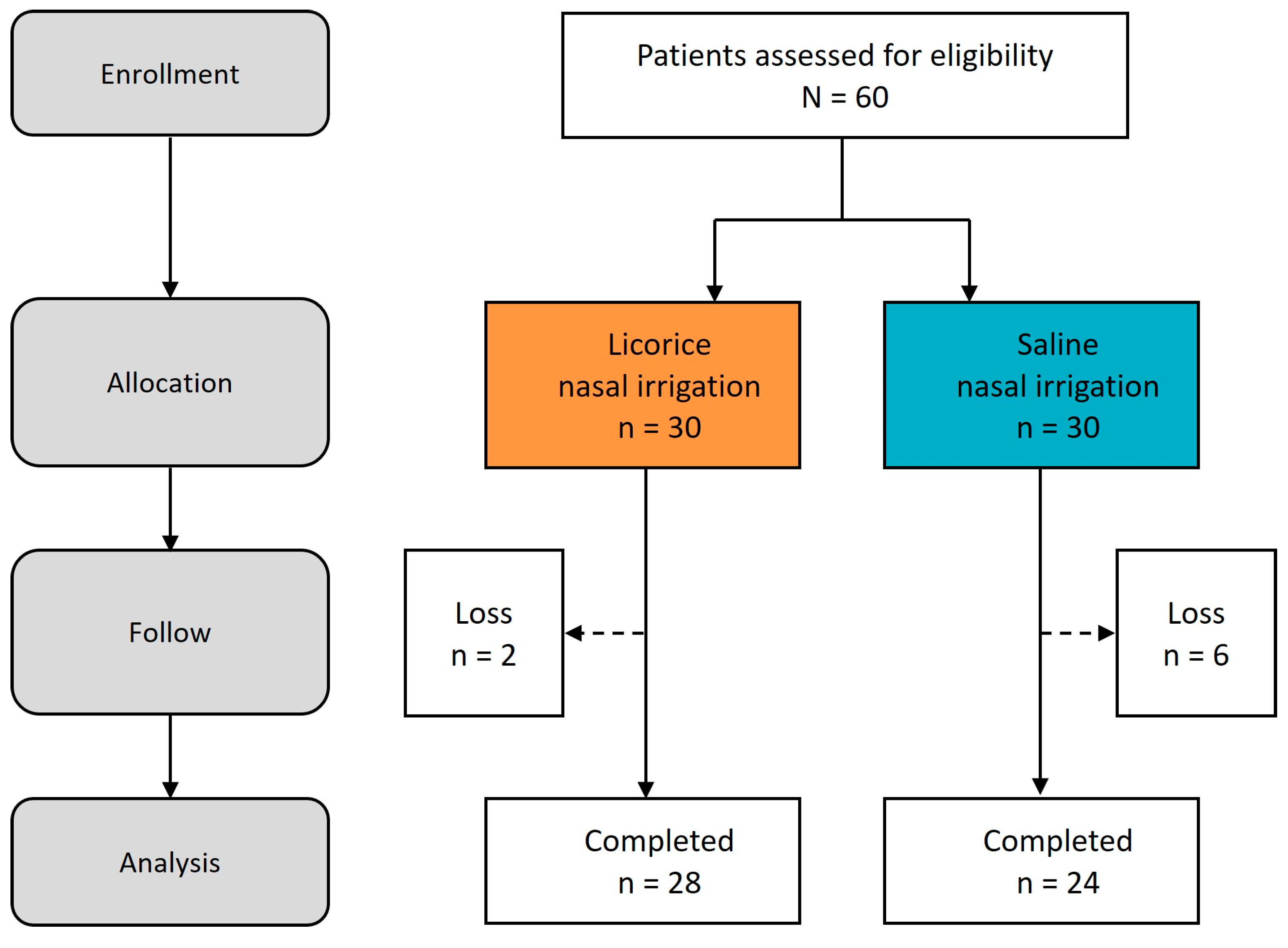
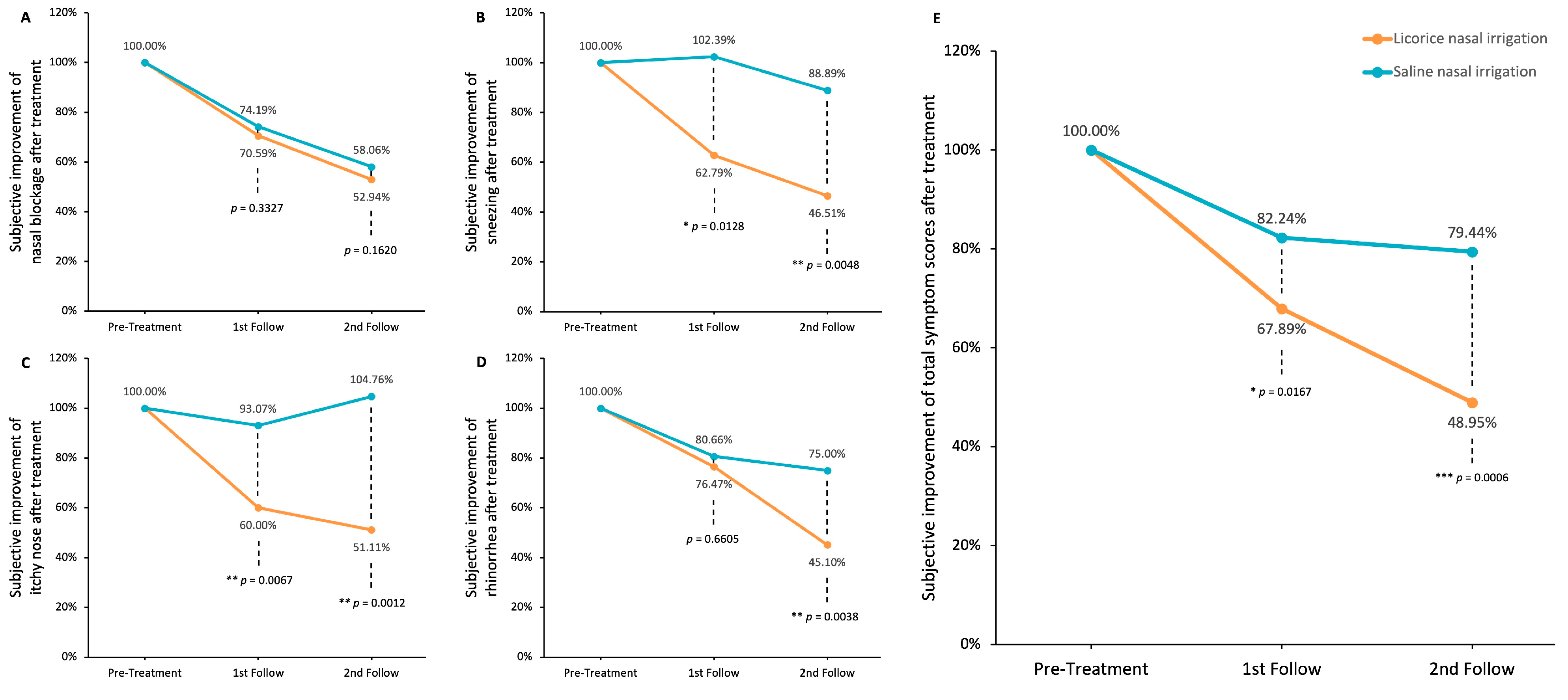
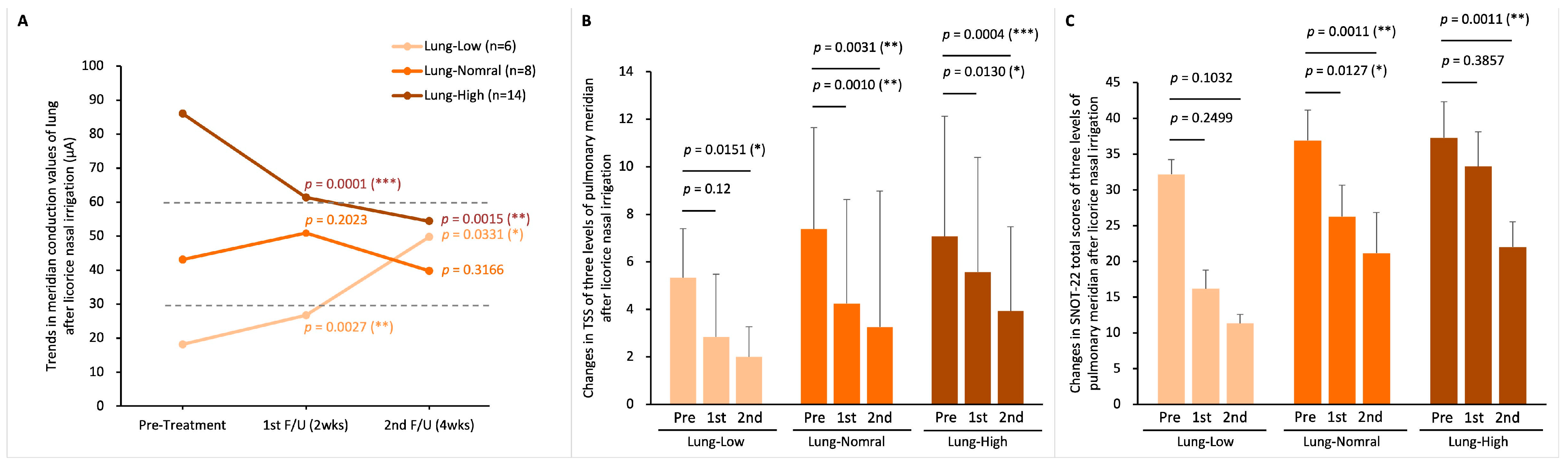
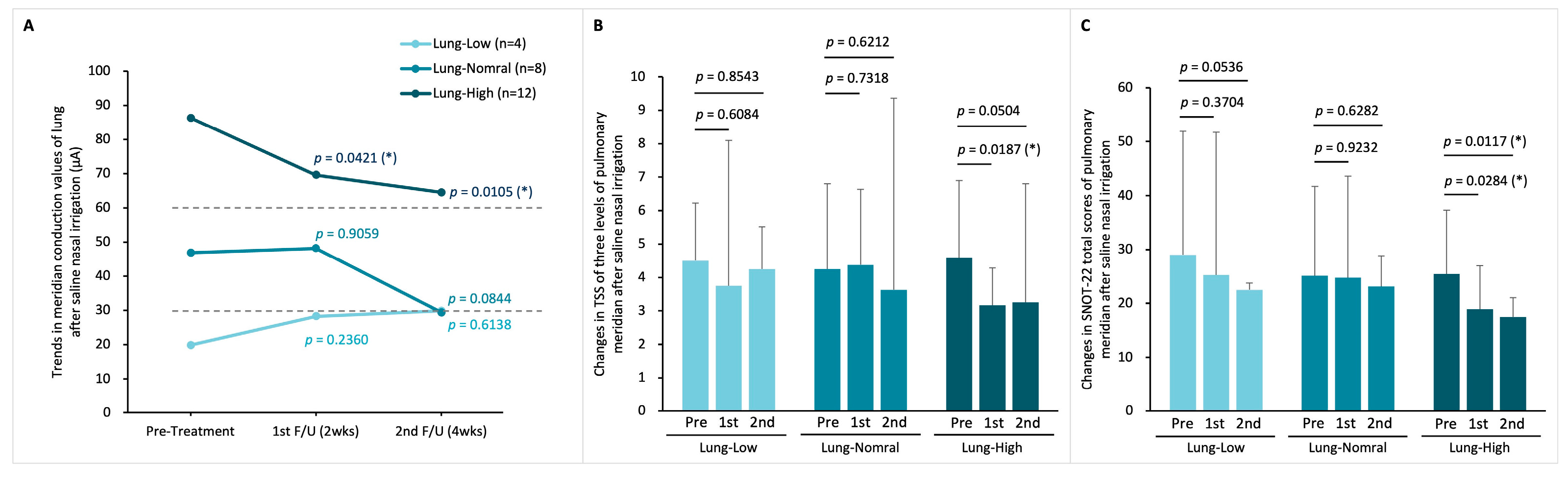
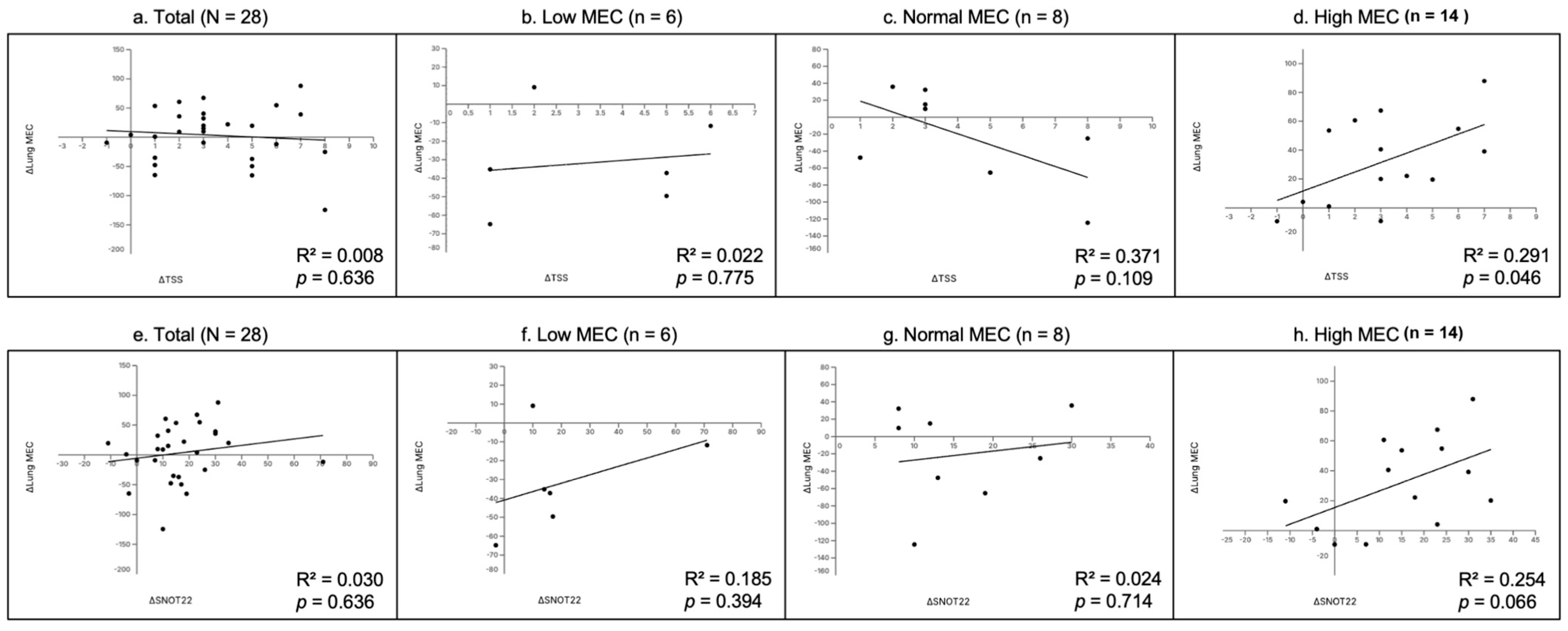
Objective: Allergic rhinitis (AR) continues to adversely affect the life quality of a substantial patient population, highlighting the necessity for enhanced treatment modalities. Our research utilized licorice extract (LE) in nasal irrigation for managing this condition, with its therapeutic efficacy gauged against traditional saline nasal irrigation (SNI) through clinical trials. Additionally, the study incorporated traditional Chinese medicine (TCM) principles, measuring not just subjective symptom relief but also the objective shifts in lung meridian electrical conductance (MEC), to provide a comprehensive evaluation of the treatment’s effectiveness. Methods: Based on our previous laboratory and animal studies, we developed an LE solution and applied it through nasal irrigation to treat AR. In a one-month controlled trial, 60 patients with AR received either licorice nasal irrigation (LNI) or SNI daily. We assessed treatment efficacy by subjective questionnaire scores (Total Nasal Symptom Score [TNSS] and 22-item Sino-Nasal Outcome Test [SNOT-22]) and objective lung MEC analysis. Result: In the trial, 30 participants were randomly allocated to each group, and 28 individuals in the LNI group and 24 in the SNI group finished the study without any side effects. The LNI group had better improvements in sneezing, nasal itchiness, and rhinorrhea, along with a greater overall TNSS reduction. On the SNOT-22, the LNI group scored better across most nasal and extra-nasal symptoms, sleep, and physiological and psychosocial well-being. Participants were sorted into low, normal, and high lung MEC subgroups. After treatment, those in the LNI group normalized their lung MEC levels in both the low and high subgroups, which was not observed in the SNI group. Conclusions: LNI markedly improves symptoms in patients with AR, enhancing their quality of life. This treatment method, integrating Western and TCM practices, also normalizes abnormal lung MEC values following therapy. It offers a method of objectively validating the effectiveness of treatments based on TCM theories.
Keywords: rhinitis; nasal irrigation; Glycyrrhiza; licorice; herbal; meridian; electrical conductance rhinitis; nasal irrigation; Glycyrrhiza; licorice; herbal; meridian; electrical conductance