Article

Heavy-Ion-Induced Lung Tumors: Dose- & LET-Dependence
1
Biosciences Division, SRI International, Menlo Park, CA 94025, USA
2
Biological Systems & Engineering Division, Lawrence Berkeley Laboratory, Berkeley, CA 94720, USA
*
Author to whom correspondence should be addressed.
Life 2022, 12(6), 907; https://doi.org/10.3390/life12060907
Submission received: 21 March 2022 / Revised: 13 June 2022 / Accepted: 15 June 2022 / Published: 17 June 2022
(This article belongs to the Special Issue Space Radiobiology)

Abstract

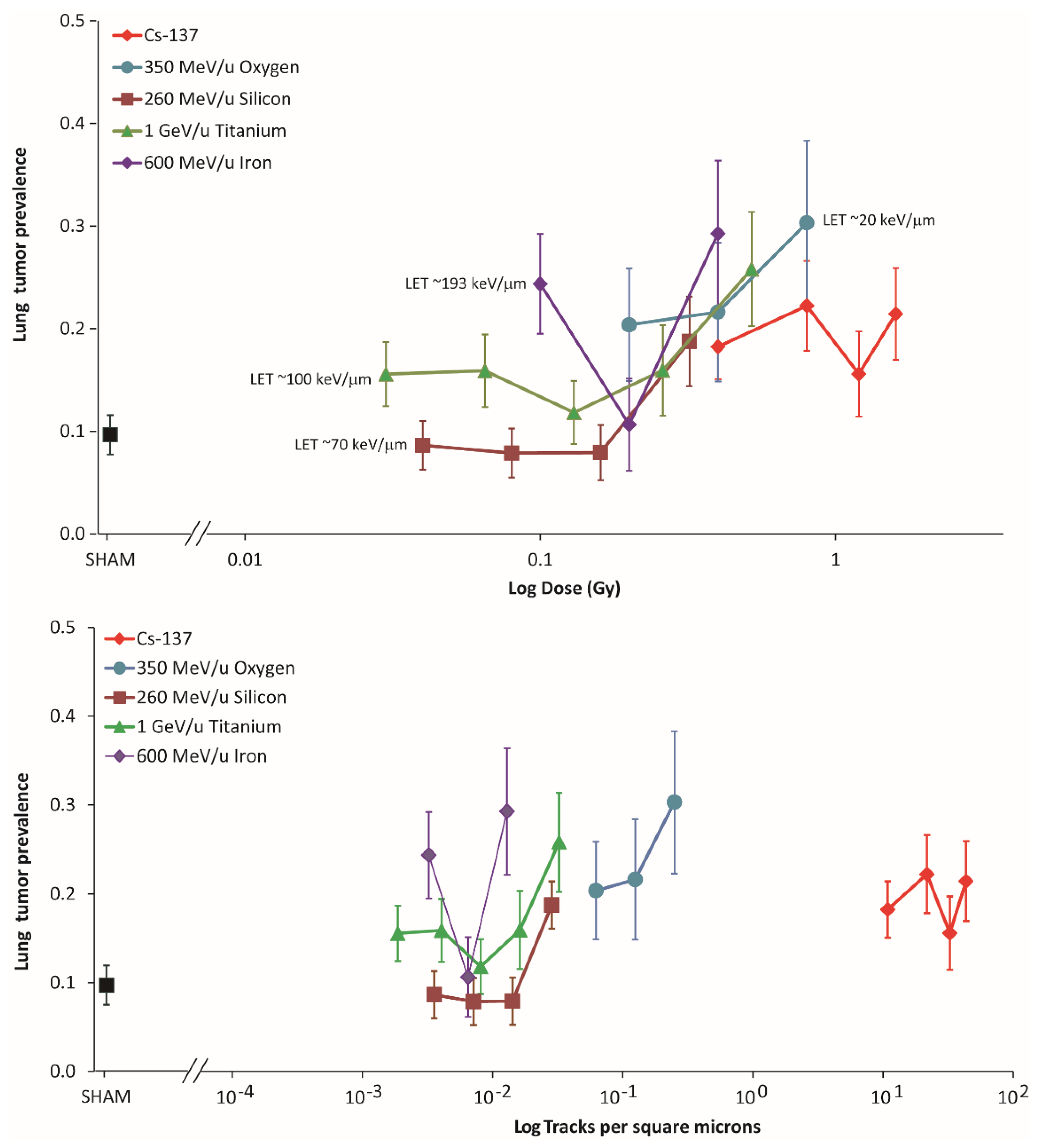
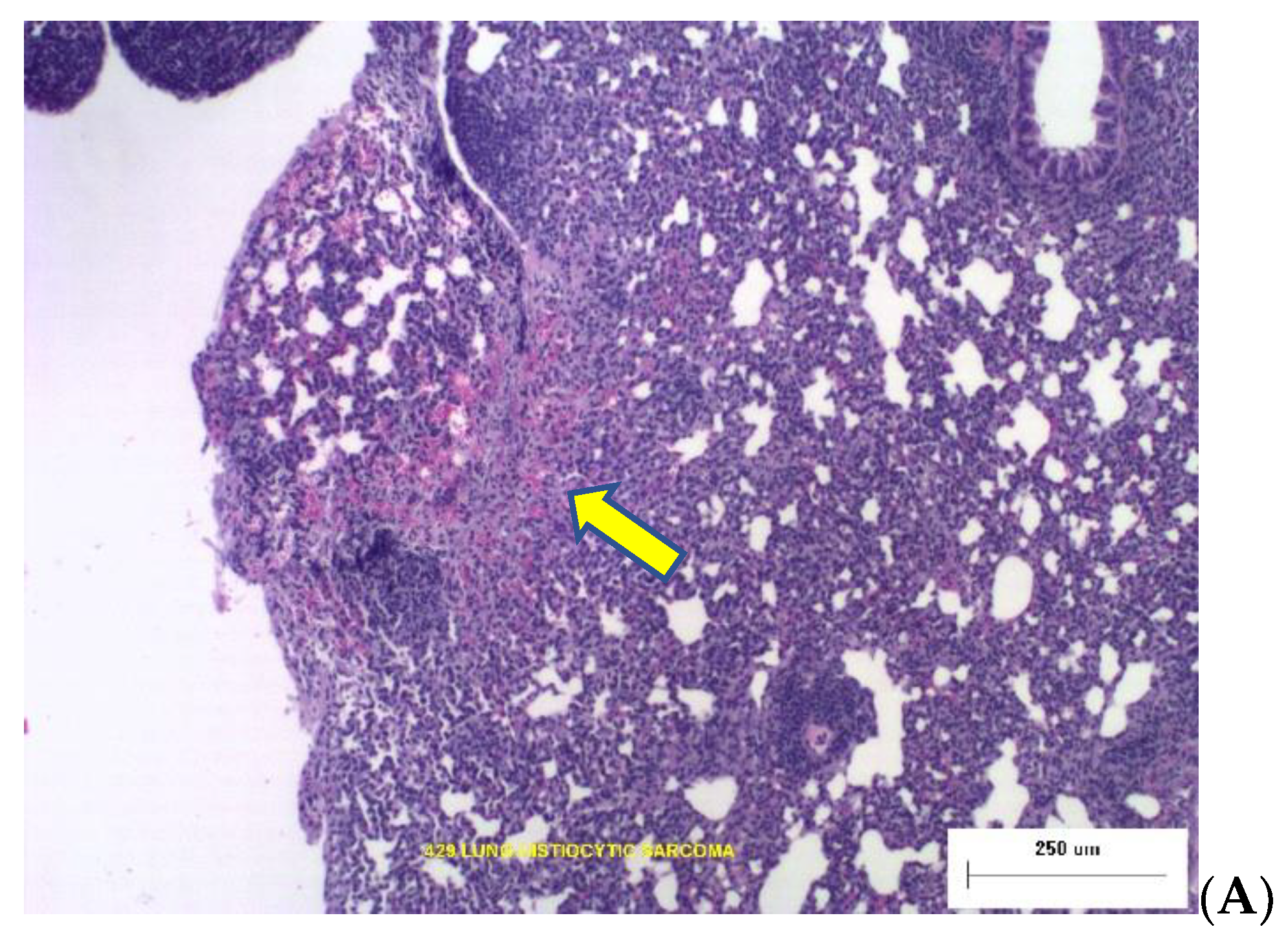
There is a limited published literature reporting dose-dependent data for in vivo tumorigenesis prevalence in different organs of various rodent models after exposure to low, single doses of charged particle beams. The goal of this study is to reduce uncertainties in estimating particle-radiation-induced risk of lung tumorigenesis for manned travel into deep space by improving our understanding of the high-LET-dependent dose-response from exposure to individual ion beams after low particle doses (0.03–0.80 Gy). Female CB6F1 mice were irradiated with low single doses of either oxygen, silicon, titanium, or iron ions at various energies to cover a range of dose-averaged LET values from 0.2–193 keV/µm, using 137Cs γ-rays as the reference radiation. Sham-treated controls were included in each individual experiment totally 398 animals across the 5 studies reported. Based on power calculations, between 40–156 mice were included in each of the treatment groups. Tumor prevalence at 16 months after radiation exposure was determined and compared to the age-matched, sham-treated animals. Results indicate that lung tumor prevalence is non-linear as a function of dose with suggestions of threshold doses depending on the LET of the beams. Histopathological evaluations of the tumors showed that the majority of tumors were benign bronchioloalveolar adenomas with occasional carcinomas or lymphosarcomas which may have resulted from metastases from other sites.
Keywords: particle radiation; lung; tumorigenesis; linear energy transfer (LET); low dose particle radiation; lung; tumorigenesis; linear energy transfer (LET); low dose