Review

The Mycobiota of the Deep Sea: What Omics Can Offer


by
Lluvia Vargas-Gastélum
and
Meritxell Riquelme
*
Department of Microbiology, Centro de Investigación Científica y Educación Superior de Ensenada (CICESE), Ctra.Ensenada-Tijuana No. 3918, Ensenada 22860, Baja California, Mexico
*
Author to whom correspondence should be addressed.
Life 2020, 10(11), 292; https://doi.org/10.3390/life10110292
Submission received: 30 October 2020 / Revised: 14 November 2020 / Accepted: 18 November 2020 / Published: 19 November 2020
(This article belongs to the Special Issue Advances in Fungal -Omics)

Abstract

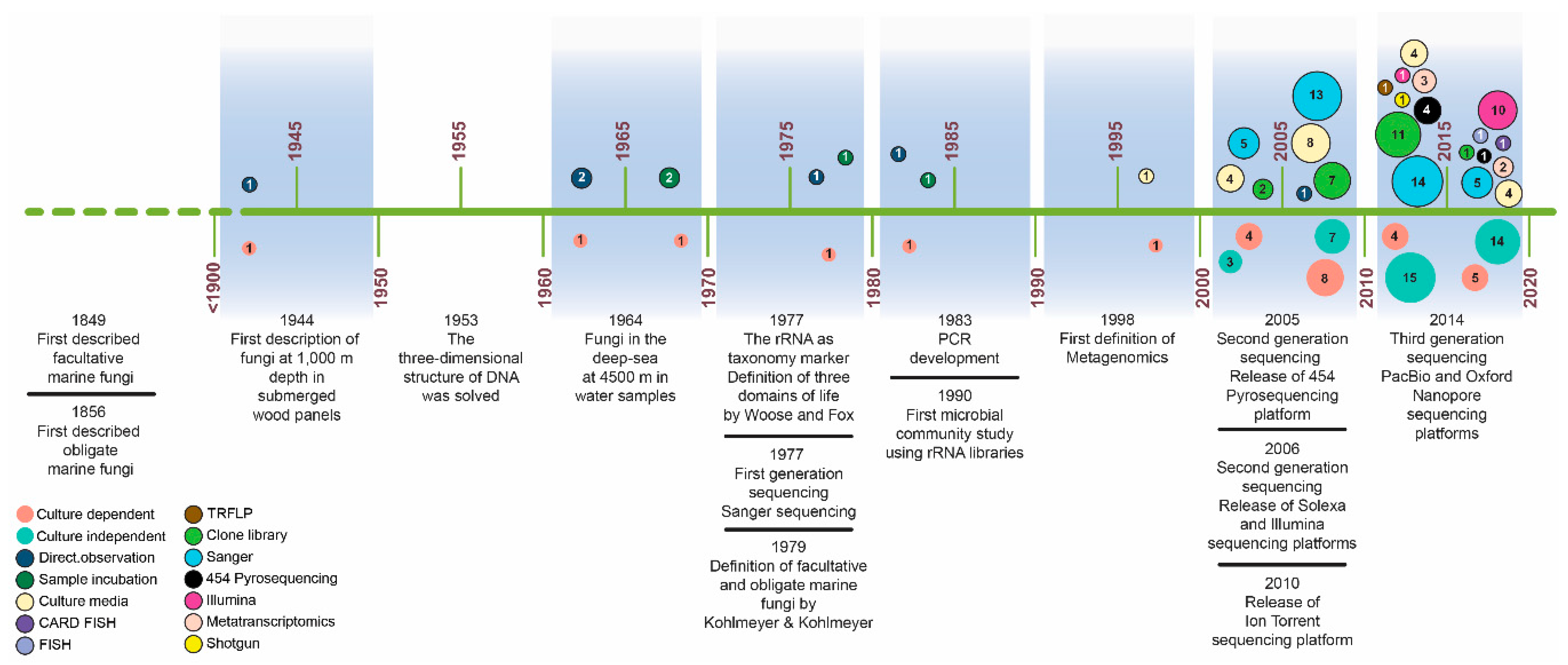
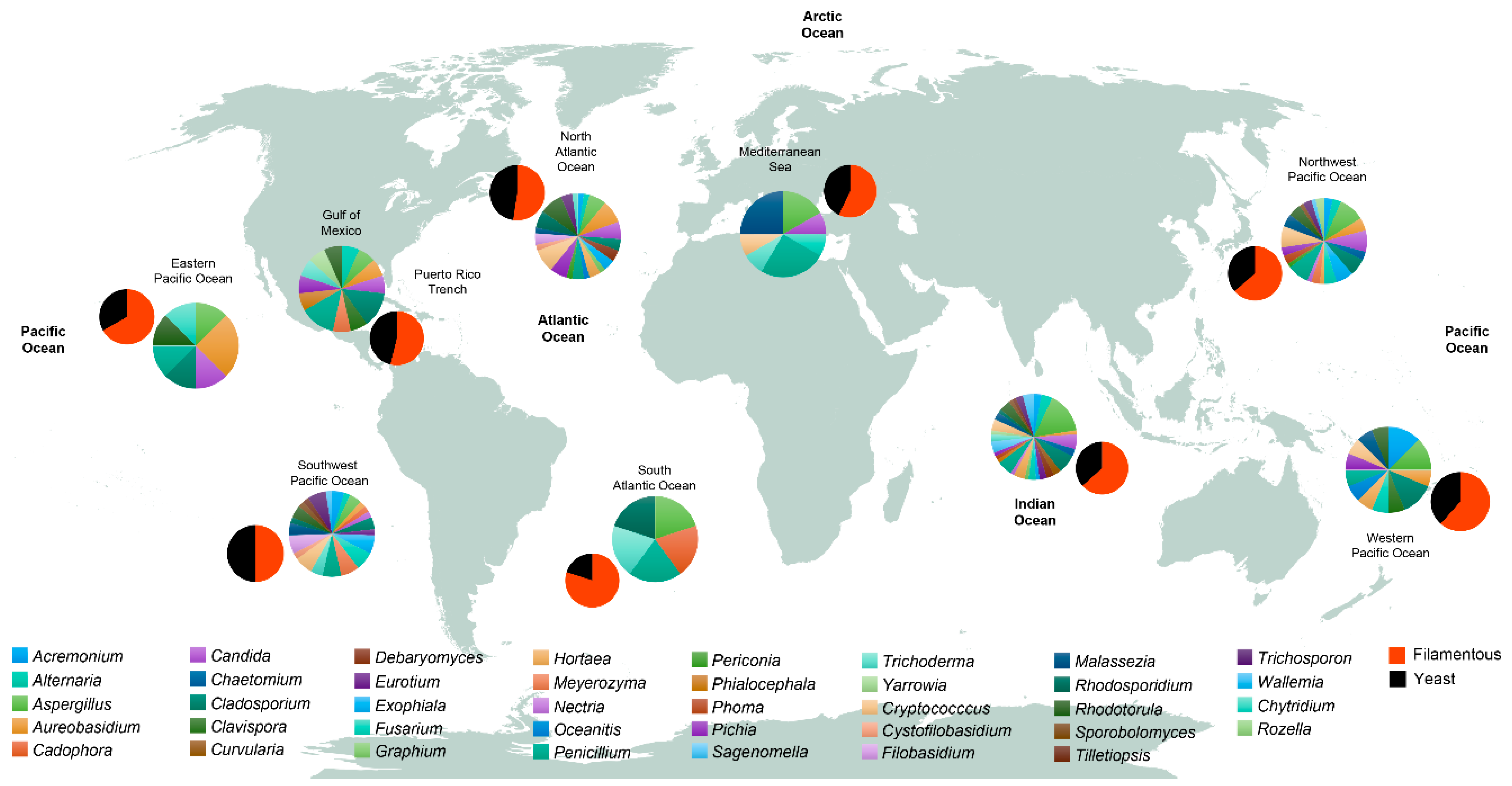
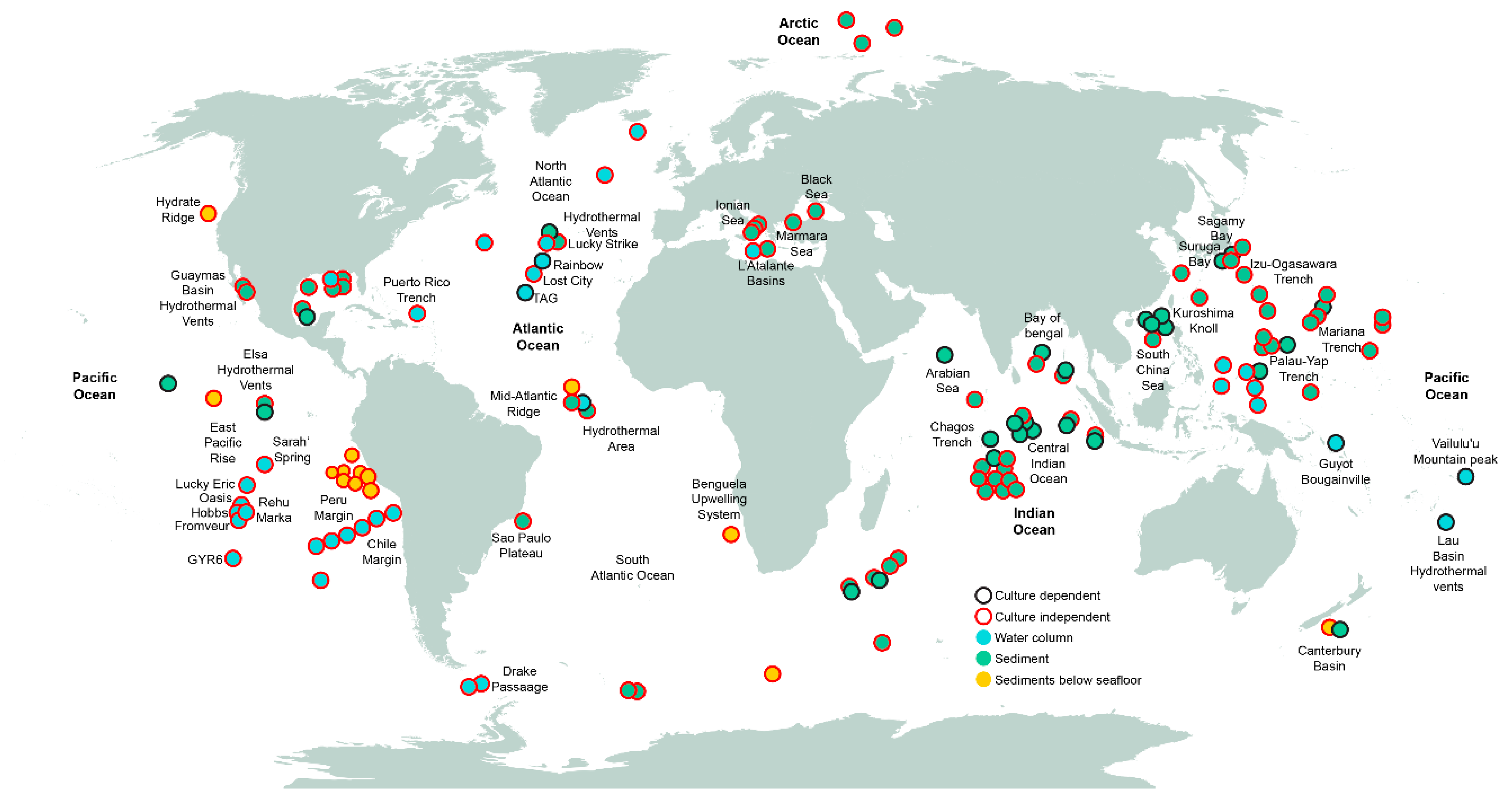
The deep sea (>1000 m below sea level) represents one of the most extreme environments of the ocean. Despite exhibiting harsh abiotic conditions such as low temperatures, high hydrostatic pressure, high salinity concentrations, a low input of organic matter, and absence of light, the deep sea encompasses a great fungal diversity. For decades, most knowledge on the fungal diversity of the deep sea was obtained through culture-dependent techniques. More recently, with the latest advances of high-throughput next generation sequencing platforms, there has been a rapid increment in the number of studies using culture-independent techniques. This review brings into the spotlight the progress of the techniques used to assess the diversity and ecological role of the deep-sea mycobiota and provides an overview on how the omics technologies have contributed to gaining knowledge about fungi and their activity in poorly explored marine environments. Finally, current challenges and suggested coordinated efforts to overcome them are discussed.
Keywords: fungi; deep sea; sediments; water; omics fungi; deep sea; sediments; water; omics